On the Mass Fractal Character of Si-Based Structural Networks in Amorphous Polymer Derived Ceramics
Abstract
1. Introduction
2. Experimental Methods
2.1. Synthesis
2.2. 29Si NMR SLR Spectroscopy
3. Results
4. Discussion
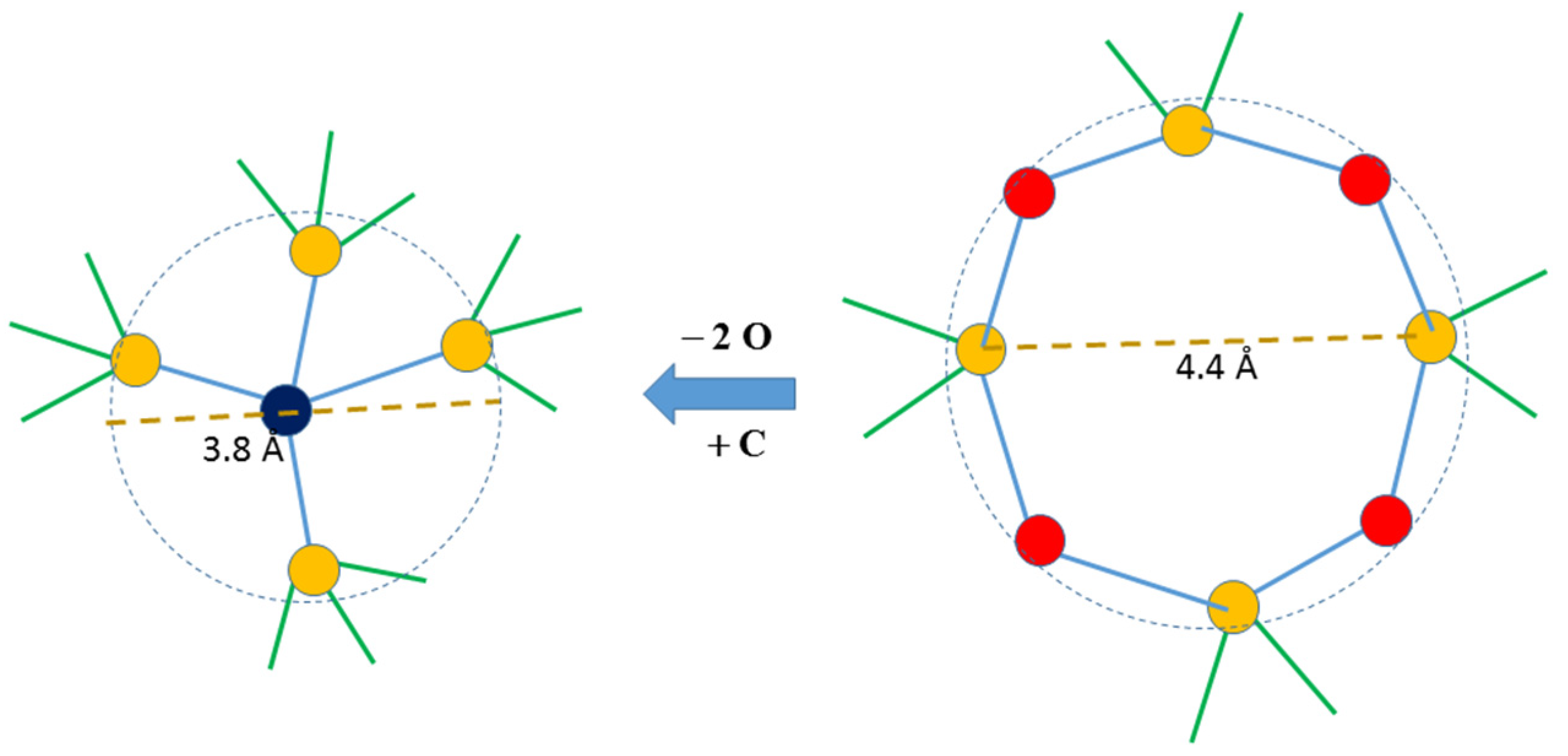
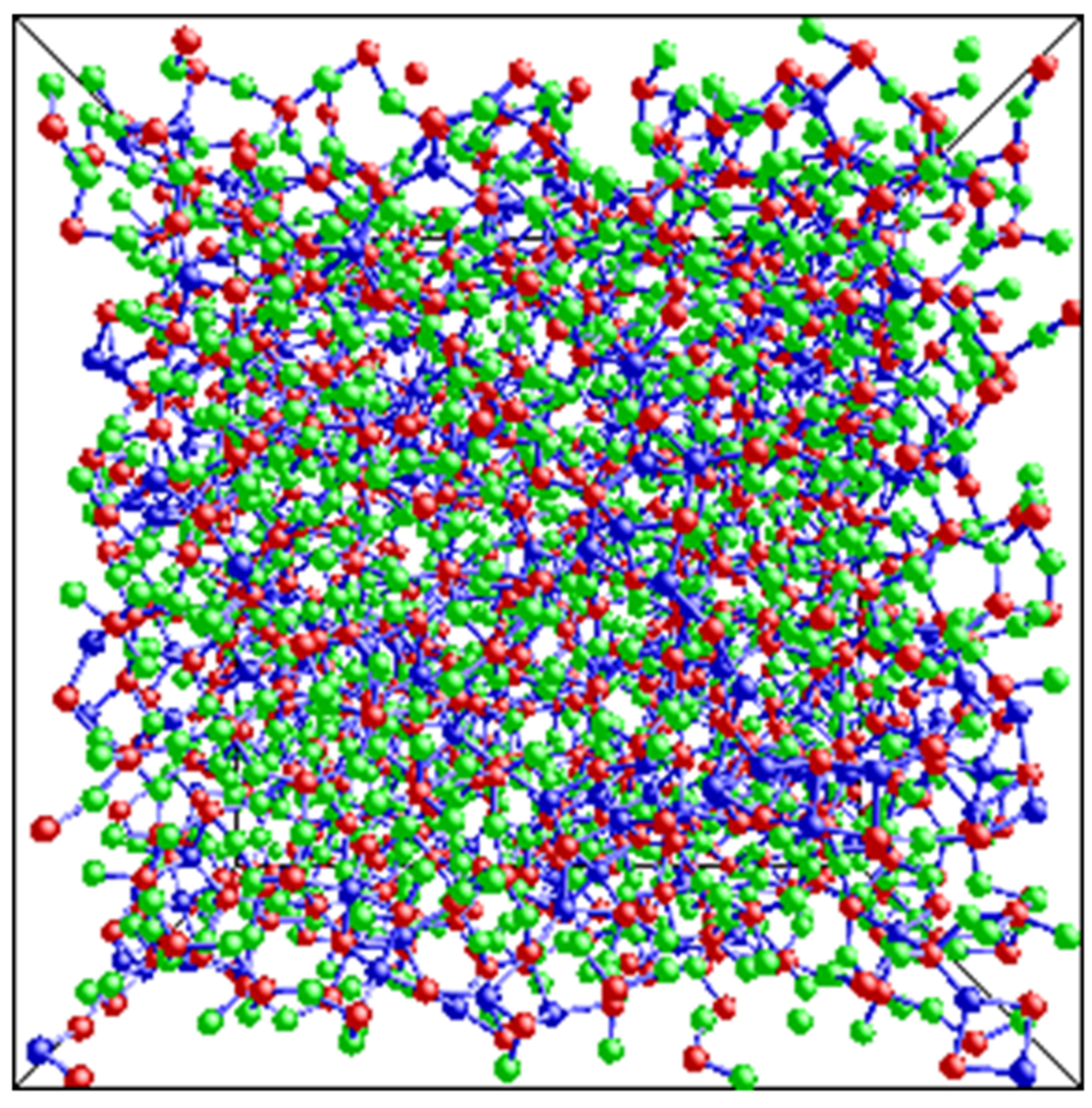
5. Conclusions
Acknowledgments
Author Contributions
Conflicts of Interest
References
- Mera, G.; Navrotsky, A.; Sen, S.; Kleebe, H.-J.; Riedel, R. Polymer-derived SiCN and SiOC ceramics–structure and energetics at the nanoscale. J. Mater. Chem. A 2013, 1, 3826–3836. [Google Scholar] [CrossRef]
- Mera, G.; Riedel, R. Polymer-Derived Ceramics: From Nanostructure to Applications; Colombo, P., Riedel, R., Sorarù, G.D., Kleebe, H., Eds.; DEStech Publications Inc.: Lancaster, PA, USA, 2009; pp. 51–89. [Google Scholar]
- Widgeon, S.J.; Sen, S.; Mera, G.; Ionescu, E.; Riedel, R.; Navrotsky, A. 29Si and13C solid-state NMR spectroscopic study of nanometer-scale structure and mass fractal characteristics of amorphous polymerderived silicon oxycarbide ceramics. Chem. Mater. 2010, 22, 6221–6228. [Google Scholar] [CrossRef]
- Widgeon, S.; Mera, G.; Gao, Y.; Stoyanov, E.; Sen, S.; Navrotsky, A.; Riedel, R. Nanostructure and energetics of carbon-rich SiCN ceramics derived from polysilylcarbodiimides: Role of the nanodomain interfaces. Chem. Mater. 2012, 24, 1181–1191. [Google Scholar] [CrossRef]
- Colombo, P.; Mera, G.; Riedel, R.; Sorarù, G.D. Polymer-derived ceramics: 40 years of research and innovation in advanced ceramics. J. Am. Ceram. Soc. 2010, 93, 1805–1837. [Google Scholar]
- Riedel, R.; Mera, G.; Hauser, R.; Klonczynski, A. Silicon-based polymer-derived ceramics: Synthesis, properties and applications—A review. J. Ceram. Soc. Jpn. 2006, 114, 425–444. [Google Scholar] [CrossRef]
- Gregori, G.; Turquat, C.; Kleebe, H.J.; Sorarù, G.D. Characterisation of SiCN/SiCO glasses via SEM and TEM. Key Eng. Mater. 2002, 206–213, 2061–2064. [Google Scholar] [CrossRef]
- Trimmel, G.; Badheka, R.; Babonneau, F.; Latournerie, J.; Dempsey, P.; Bahloul-Houlier, D.; Parmentier, J.; Soraru, G.D. Solid state NMR and TG/MS study on the transformation of methyl groups during pyrolysis of preceramic precursors to SiCO glasses. J. Sol-Gel Sci. Technol. 2003, 26, 279–283. [Google Scholar] [CrossRef]
- Mera, G.; Riedel, R.; Poli, F.; Müller, K. Carbon-rich SiCN ceramics derived from phenyl-containing poly(silylcarbodiimides). J. Eur. Ceram. Soc. 2009, 29, 2873–2883. [Google Scholar] [CrossRef]
- Li, Y.-L.; Kroke, E.; Riedel, R.; Fasel, C.; Gervais, C.; Babonneau, F. Thermal cross-linking and pyrolytic conversion of poly(ureamethylvinyl)silazanes to silicon-based ceramics. Appl. Organomet. Chem. 2001, 15, 820–832. [Google Scholar] [CrossRef]
- Kleebe, H.; Turquat, C.; Soraru, G.D. Phase Separation in an SiCO glass studied by transmission electron microscopy and electron energy-loss spectroscopy. J. Am. Ceram. Soc. 2001, 84, 1073–1080. [Google Scholar] [CrossRef]
- Saha, A.; Raj, R.; Williamson, D.L.; Kleebe, H.-J. Characterization of nanodomains in polymer-derived SiCN ceramics employing multiple techniques. J. Am. Ceram. Soc. 2004, 88, 232–234. [Google Scholar] [CrossRef]
- Brequel, H.; Parmentier, J.; Walter, S.; Badheka, R.; Trimmel, G.; Masse, S.; Latournerie, J.; Dempsey, P.; Turquat, C.; Desmartin-Chomel, A.; et al. Systematic structural characterization of the high-temperature behavior of nearly stoichiometric silicon oxycarbide glasses. Chem. Mater. 2004, 16, 2585–2598. [Google Scholar] [CrossRef]
- Turquat, C.; Kleebe, H.; Gregori, G.; Walter, S.; Soraru, G.D. Transmission electron microscopy and electron energy-loss spectroscopy study of nonstoichiometric silicon-carbon-oxygen glasses. J. Am. Ceram. Soc. 2001, 84, 2189–2196. [Google Scholar] [CrossRef]
- Saha, A.; Raj, R.; Williamson, D.L. A model for the nanodomains in polymer-derived SiCO. J. Am. Ceram. Soc. 2006, 89, 2188–2195. [Google Scholar]
- Kleebe, H.-J.; Blum, Y.D. SiOC ceramic with high excess free carbon. J. Eur. Ceram. Soc. 2008, 28, 1037–1042. [Google Scholar] [CrossRef]
- Gao, Y.; Mera, G.; Nguyen, H.; Morita, K.; Kleebe, H.-J.; Riedel, R. Processing route dramatically influencing the nanostructure of carbon-rich SiCN and SiBCN polymer-derived ceramics. Part I: Low temperature thermal transformation. J. Eur. Ceram. Soc. 2012, 32, 1857–1866. [Google Scholar]
- Mera, G.; Tamayo, A.; Nguyen, H.; Sen, S.; Riedel, R. Nanodomain structure of carbon-rich SiCN polymer-derived ceramics. J. Am. Ceram. Soc. 2010, 93, 1169–1175. [Google Scholar] [CrossRef]
- Bai, W.; Widgeon, S.; Sen, S. Structure and topological characteristics of amorphous silicon oxycarbide networks: Results from reverse Monte Carlo simulations. J. Non-Cryst. Solids 2014, 386, 29–33. [Google Scholar] [CrossRef]
- Pantano, C.G.; Singh, A.T.; Zhang, H. Silicon oxycarbide glasses. J. Sol-gel Sci. Technol. 1999, 14, 7–25. [Google Scholar] [CrossRef]
- Bois, L.; Maquet, J.; Babonneau, F.; Bahloul, D. Structural characterization of sol-gel derived oxycarbide glasses. 2. Study of the thermal stability of the silicon oxycarbide phase. Chem. Mater. 1995, 7, 975–981. [Google Scholar] [CrossRef]
- Blum, Y.D.; MacQueen, D.B.; Kleebe, H.J. Synthesis and characterization of carbon-enriched silicon oxycarbides. J. Eur. Ceram. Soc. 2005, 25, 143–149. [Google Scholar] [CrossRef]
- Tavakoli, A.H.; Golczewsky, J.A.; Bill, J.; Navrotsky, A. Effect of boron on the thermodynamic stability of amorphous polymer-derived Si–(B–)C–N ceramics. Acta Mater. 2012, 60, 4514–4522. [Google Scholar] [CrossRef]
- Bodart, J.R.; Bork, V.P.; Cull, T.; Fedders, P.A.; Leopold, D.J.; Norberg, R.E. Recovery of nuclear magnetization under extreme inhomogeneous broadening. Phys. Rev. B 1996, 54, 15291–15298. [Google Scholar] [CrossRef]
- Devreux, F.; Boilot, J.O.; Chaput, F.; Sapoval, B. NMR determination of the fractal dimension in silica aerogels. Phys. Rev. Lett. 1990, 65, 614–617. [Google Scholar] [CrossRef] [PubMed]
- O’Toole, P.I.; Hudson, T.S. New high-density packings of similarly sized binary spheres. J. Phys. Chem. C 2011, 115, 19037–19040. [Google Scholar] [CrossRef]
- Sen, S. Spectroscopic observation of fractal packing of oxygen in variably modified glassy tetrahedral networks. J. Phys. Chem. Lett. 2014, 5, 555–559. [Google Scholar] [CrossRef]
- First, E.L.; Gounaris, C.E.; Wei, J.; Floudas, C.A. Computational characterization of zeolite porous networks: An automated approach. Phys. Chem. Chem. Phys. 2011, 13, 17339–17358. [Google Scholar] [CrossRef] [PubMed]
- Enright, M.B.; Leitner, D.M. Mass fractal dimension and the compactness of proteins. Phys. Rev. E 2005, 71. [Google Scholar] [CrossRef]
© 2015 by the authors; licensee MDPI, Basel, Switzerland. This article is an open access article distributed under the terms and conditions of the Creative Commons Attribution license (http://creativecommons.org/licenses/by/4.0/).
Share and Cite
Sen, S.; Widgeon, S. On the Mass Fractal Character of Si-Based Structural Networks in Amorphous Polymer Derived Ceramics. Nanomaterials 2015, 5, 366-375. https://doi.org/10.3390/nano5010366
Sen S, Widgeon S. On the Mass Fractal Character of Si-Based Structural Networks in Amorphous Polymer Derived Ceramics. Nanomaterials. 2015; 5(1):366-375. https://doi.org/10.3390/nano5010366
Chicago/Turabian StyleSen, Sabyasachi, and Scarlett Widgeon. 2015. "On the Mass Fractal Character of Si-Based Structural Networks in Amorphous Polymer Derived Ceramics" Nanomaterials 5, no. 1: 366-375. https://doi.org/10.3390/nano5010366
APA StyleSen, S., & Widgeon, S. (2015). On the Mass Fractal Character of Si-Based Structural Networks in Amorphous Polymer Derived Ceramics. Nanomaterials, 5(1), 366-375. https://doi.org/10.3390/nano5010366