A Review of Nanomaterials in Heavy-Oil Viscosity Reduction: The Transition from Thermal Recovery to Cold Recovery

 ,
,  , ,
, ,  ,
,  , ,
, ,
Abstract
1. Introduction
1.1. Challenges in Heavy Oil Development in the Context of Energy Transition
1.2. Viscosity Thickening Mechanisms of Heavy Oil
1.3. Evolution of Viscosity-Reduction Technologies
2. Metal-Based Nanomaterials for Heavy Oil Thermal Recovery
2.1. Catalytic Aquathermolysis Mechanism
2.2. Representative Metal-Based Nanomaterials
2.3. Advantages of Metal-Based Nano-Systems
2.4. Limitations and Applicability Constraints
3. Non-Metal Nanomaterials for Heavy-Oil Viscosity Reduction
3.1. Silica-Based Nano-Systems: Interfacial Film Engineering and Wettability Regulation
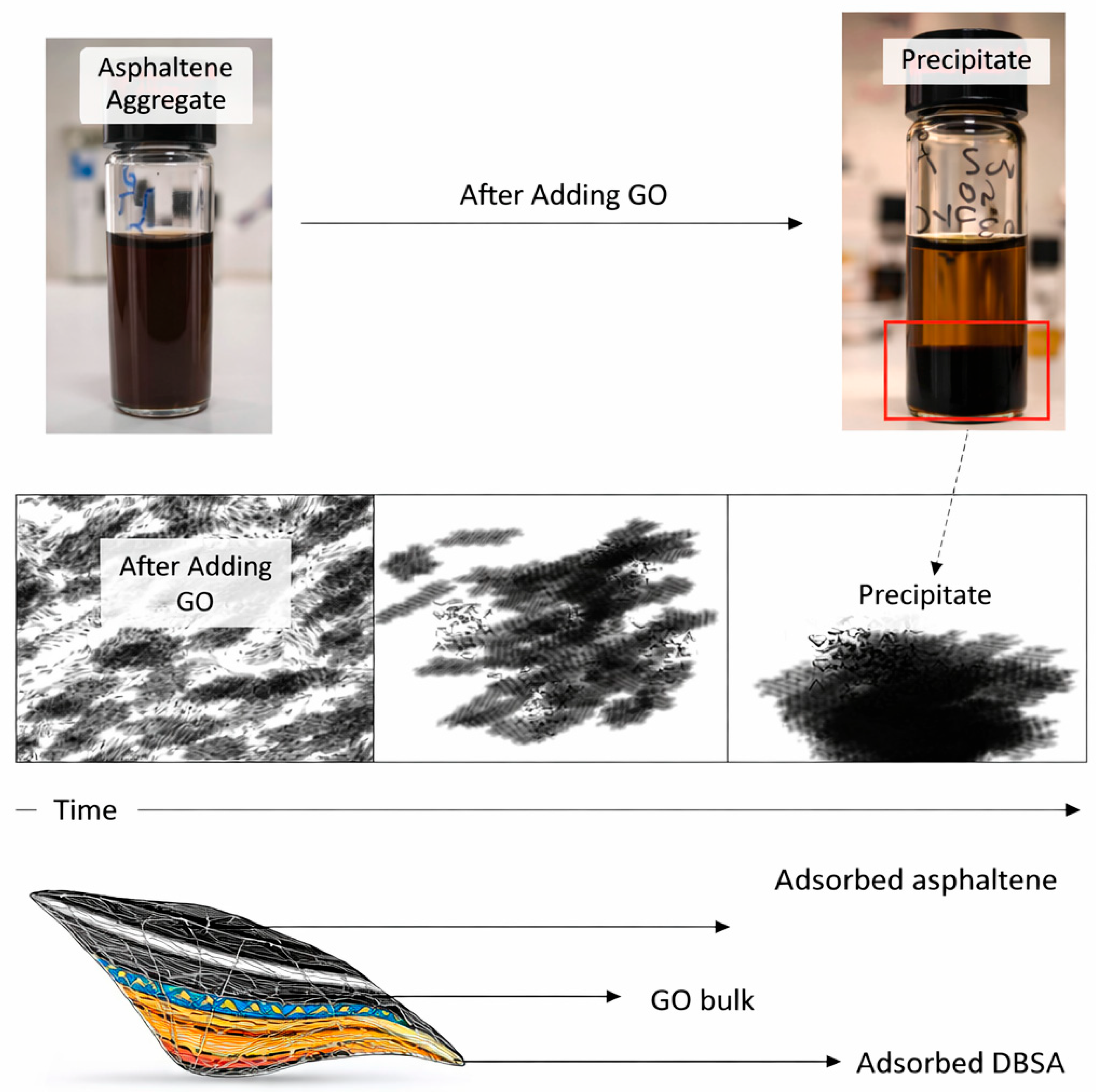
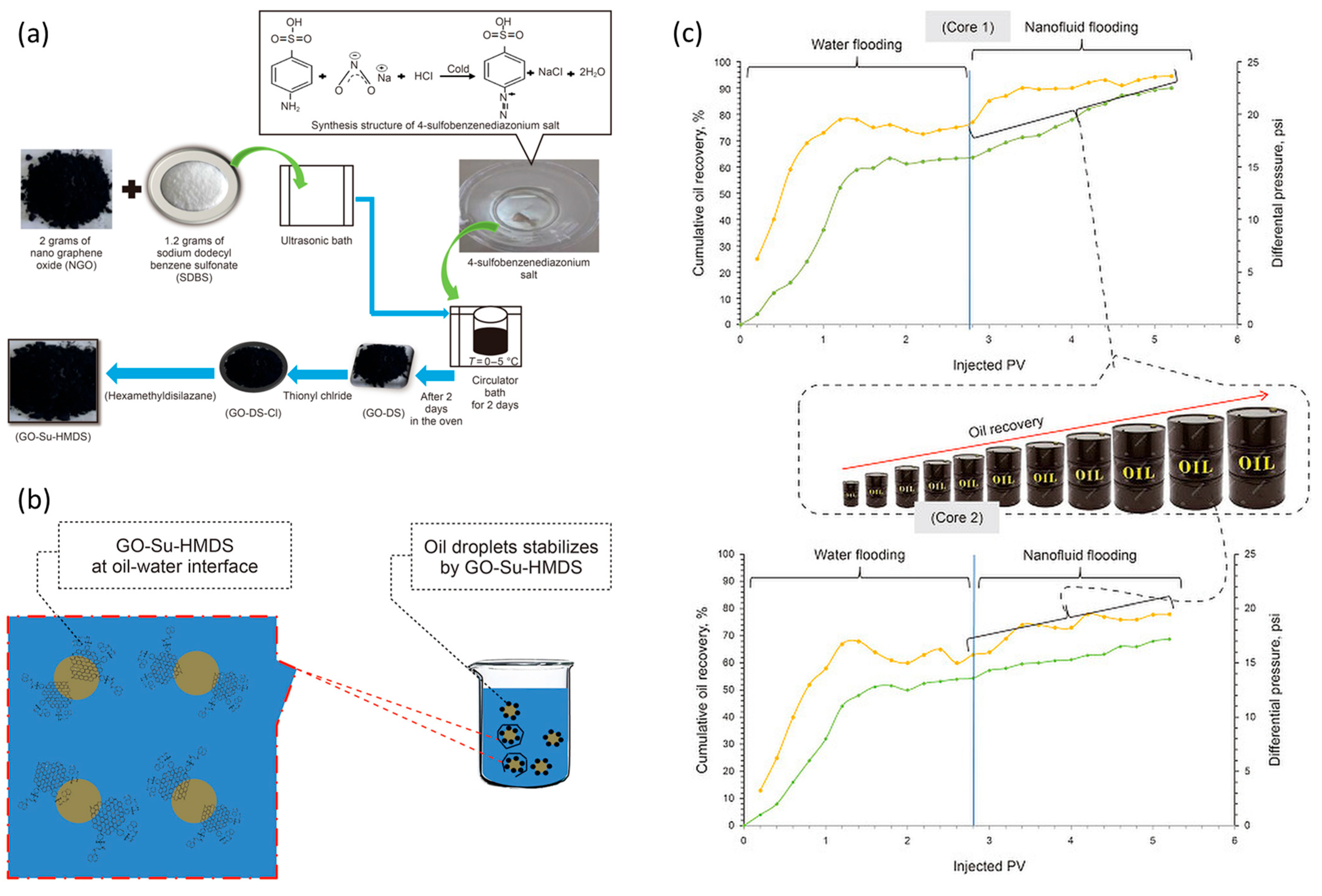
3.2. Carbon-Based Nano-Systems: Structural Interference with Asphaltene-Rich Networks
3.3. Mechanistic Comparison and Design Implications for Non-Metal Nano-Systems
4. Reservoir-Scale Evaluation of Nano-Assisted Viscosity Reduction Systems
4.1. NPs Transport and Stability in Porous Media
4.2. Comparative Performance of Nano-Assisted Viscosity Reduction Systems
4.3. Reservoir Applicability and System Selection Criteria
4.4. Challenges in Scaling Nano-Assisted Systems from Laboratory to Field
5. Reservoir-Oriented Design and Future Perspectives for Nano-Assisted Viscosity Reduction
5.1. Bridging Laboratory Mechanisms and Reservoir Applications
5.2. Design Principles for Nano-Assisted Viscosity Reduction Systems
5.3. Future Research Directions
6. Summary and Outlook
- (1)
- Mechanism-level conclusions. Nano-assisted viscosity reduction in heavy oil generally proceeds through two distinct mechanistic pathways. Metal-based NPs mainly catalyze aquathermolysis reactions under hydrothermal conditions, promoting bond cleavage and hydrogen-transfer reactions that partially upgrade heavy fractions and lead to persistent viscosity reduction during thermal recovery. In contrast, non-metal nanomaterials—particularly silica-based and graphene-derived systems—primarily operate through interfacial and structural regulation mechanisms, including wettability alteration, stabilization of oil–water interfacial films, modification of asphaltene aggregation behavior, and the formation of dispersed-flow regimes that reduce apparent flow resistance in multiphase systems.
- (2)
- Reservoir-scale insights. From a reservoir-engineering perspective, the effectiveness of nano-assisted viscosity reduction depends not only on NPs functionality but also on operational factors such as dispersion stability under reservoir brines, NPs transport and retention in porous media, and compatibility with injection processes. These factors determine whether laboratory-scale viscosity-reduction mechanisms can be sustained during field operations and therefore represent key constraints for practical implementation.
- (3)
- Comparative implications. Comparative analysis of nano-assisted systems indicates that metal-based nano-catalysts are most effective when integrated with thermal recovery processes, where sustained hydrothermal conditions activate catalytic upgrading reactions. In contrast, non-metal nano-systems are more suitable for cold or low-temperature production environments where mobility improvement is achieved mainly through interfacial regulation and structural disturbance rather than irreversible chemical upgrading.
- (4)
- Design framework for nano-assisted viscosity reduction. Successful field deployment of nano-assisted viscosity-reduction technologies requires reservoir-oriented formulation design rather than the selection of individual nanomaterials alone. Effective nano-systems should combine stable dispersion under reservoir brines, controlled transport and retention behavior in porous media, and sufficient interfacial activity to modify wettability or stabilize dispersed-flow regimes. In many cases, integrating nanomaterials with conventional chemical flooding agents such as surfactants or polymers may provide more robust and operationally feasible solutions for improving heavy-oil mobility.
Author Contributions
Funding
Data Availability Statement
Conflicts of Interest
References
- International Energy Agency. World Energy Outlook 2025; Published 12 November 2025; International Energy Agency: Paris, France, 2025. [Google Scholar]
- OPEC Secretariat. World Oil Outlook 2050; Organization of the Petroleum Exporting Countries: Vienna, Austria, 2025; ISBN 978-3-9505790-0-0. [Google Scholar]
- Energy Institute. Statistical Review of World Energy 2025; Energy Institute: London, UK, 2025. [Google Scholar]
- Li, H.; Wang, Q.; Wu, Y. Current status and development direction of Low-Carbon exploitation technology for heavy oil. Energies 2023, 16, 2219. [Google Scholar] [CrossRef]
- Li, X.; Zhang, F.; Liu, G. Review on new heavy oil viscosity reduction technologies. IOP Conf. Ser. Earth Environ. Sci. 2022, 983, 012059. [Google Scholar] [CrossRef]
- Lyu, C.; Zhong, L.; Wang, Q.; Zhang, W.; Han, X.; Chen, M.; Zhu, Y.; Yang, J. Core scale analysis of low viscosity oil injection in enhancing oil recovery of heavy oil reservoirs. Energy 2023, 275, 127432. [Google Scholar] [CrossRef]
- He, X.; Zhao, L.; Lu, X.; Ding, F.; Wang, Z.; Han, R.; Liu, P. A Critical Review Using CO2 and N2 of Enhanced Heavy-Oil-Recovery Technologies in China. Appl. Sci. 2022, 12, 12585. [Google Scholar] [CrossRef]
- Patel, H.; Shah, S.; Ahmed, R.; Ucan, S. Effects of nanoparticles and temperature on heavy oil viscosity. J. Pet. Sci. Eng. 2018, 167, 819–828. [Google Scholar] [CrossRef]
- Wang, H.M.; Wang, G.Q.; Qi, J.C.; Schandl, H.; Li, Y.M.; Feng, C.Y.; Yang, X.C.; Wang, Y.; Wang, X.Z.; Liang, S. Scarcity-weighted fossil fuel footprint of China at the provincial level. Appl. Energy 2020, 258, 114081. [Google Scholar] [CrossRef]
- Lee, J.; Babadagli, T. Mitigating greenhouse gas intensity through new generation techniques during heavy oil recovery. J. Clean. Prod. 2021, 286, 124980. [Google Scholar] [CrossRef]
- Hao, J.; Gong, Z.; Yang, Z.; Tian, Y.; Wang, C. Sulfur types distribution and the fast thermal-cracking behaviors of sulfur-containing compounds in Buton oil sand bitumen. Fuel 2022, 310, 122372. [Google Scholar] [CrossRef]
- Chen, Y.; Zhou, K.; An, Z.; Du, Q.; Hou, J.; Wei, Z. Phased optimization of multi-thermal fluid flooding for enhanced oil recovery. Geoenergy Sci. Eng. 2025, 244, 213395. [Google Scholar] [CrossRef]
- Hinkle, A.; Shin, E.J.; Liberatore, M.W.; Herring, A.M.; Batzle, M. Correlating the chemical and physical properties of a set of heavy oils from around the world. Fuel 2008, 87, 3065–3070. [Google Scholar] [CrossRef]
- Zhou, W.; Xin, C.; Chen, Y.; Mouhouadi, R.D.; Chen, S. Nanoparticles for enhancing heavy oil recovery: Recent progress, challenges, and future perspectives. Energy Fuels 2023, 37, 8057–8078. [Google Scholar] [CrossRef]
- Zhu, J.; Shi, C.; Dong, C.; Hu, G.; Wang, T.; Yao, Y. Ultra heavy oil production experience in China. Soc. Pet. Eng. 2024, 23, 192302. [Google Scholar]
- Chen, J.; Deng, C.; Wang, X.; Ni, Y.; Sun, Y.; Zhao, Z.; Liao, J.; Wang, P.; Zhang, D.; Liang, D. Formation mechanism of condensates, waxy and heavy oils in the southern margin of Junggar Basin, NW China. Sci. China Earth Sci. 2017, 60, 972–991. [Google Scholar] [CrossRef]
- Xiong, R.; Guo, J.; Kiyingi, W.; Gao, C.; Wang, L.; Luo, J.; Song, H.; Wang, X. Technical transformation of heavy/ultra-heavy oil production in China driven by low carbon goals: A review. J. Clean. Prod. 2024, 458, 142531. [Google Scholar] [CrossRef]
- Rudyk, S. Relationships between SARA fractions of conventional oil, heavy oil, natural bitumen and residues. Fuel 2018, 216, 330–340. [Google Scholar] [CrossRef]
- Zhang, J.; Zhu, B.; Yuan, H.; Peng, H.; Zhong, J.; Yan, Y.; Li, Z. Nonlinear relationship between heavy oil viscosity and asphaltene dispersion: A molecular dynamics simulation study. Chem. Eng. Sci. 2024, 295, 120173. [Google Scholar] [CrossRef]
- Minale, M.; Merola, M.C.; Carotenuto, C. Effect of solvents on the microstructure aggregation of a heavy crude oil. Fuel Process. Technol. 2018, 177, 299–308. [Google Scholar] [CrossRef]
- Wang, J.; Liu, R.; Tang, Y.; Zhu, J.; Sun, Y.; Zhang, G. Synthesis of Polycarboxylate Viscosity Reducer and the Effect of Different Chain Lengths of Polyether on Viscosity Reduction of Heavy Oil. Polymers 2022, 14, 3367. [Google Scholar] [CrossRef]
- Yang, Z.; Liu, Y.; Jiang, J.; Pan, L.; Wei, D.; Feng, X.; He, L.; Guo, J.; Zhang, Y. A Multi-Component and Multi-Functional Synergistic System for Efficient Viscosity Reduction of Extra-Heavy Oil. Molecules 2025, 30, 4446. [Google Scholar] [CrossRef]
- Guo, J.; Chen, C.; Wang, H.; An, N.; Cao, J. The influence of separated fractions on crude oil viscosity. Pet. Sci. Technol. 2012, 30, 2393–2400. [Google Scholar] [CrossRef]
- Wang, Q.; Zhang, W.; Wang, C.; Han, X.; Wang, H.; Zhang, H. Microstructure of heavy oil components and mechanism of influence on viscosity of heavy oil. ACS Omega 2023, 8, 10980–10990. [Google Scholar] [CrossRef]
- Gao, X.D.; Dong, P.C.; Cui, J.W.; Gao, Q.C. Prediction model for the viscosity of heavy oil diluted with light oil using machine learning techniques. Energies 2022, 15, 2297. [Google Scholar] [CrossRef]
- Derakhshani-Molayousefi, M.; McCullagh, M. Deterring Effect of Resins on the Aggregation of Asphaltenes in n-Heptane. Energy Fuels 2020, 34, 16081–16088. [Google Scholar] [CrossRef]
- Liu, H.F.; Xu, Y.Y.; Chen, H.; Zhang, J.; Xu, J.Y. Viscoelastic Behavior and Constitutive Relation of Heavy Crude Oils. ACS Omega 2022, 7, 30816–30822. [Google Scholar] [CrossRef] [PubMed]
- Lv, S.; Peng, S.; Zhang, R.; Guo, Z.; Du, W.; Zhang, J.; Chen, G. Viscosity reduction of heavy oil by ultrasonic. Pet. Chem. 2020, 60, 998–1002. [Google Scholar] [CrossRef]
- Sun, N.; Hu, J.; Ma, Y.; Dong, H. Study on the effect of polymer-modified magnetic nanoparticles on viscosity reduction of heavy oil emulsion. ACS Omega 2024, 9, 5002–5013. [Google Scholar] [CrossRef]
- Xue, L.; Liu, P.; Zhang, Y. Development and research status of heavy oil enhanced oil recovery. Geofluids 2022, 2022, 5015045. [Google Scholar] [CrossRef]
- Yu, J.; Liu, W.; Yang, Y.; Sun, M.; Cao, Y.; Meng, Z. Multiphysics Field Coupled to a Numerical Simulation Study on Heavy Oil Reservoir Development via Electromagnetic Heating in a SAGD-like Process. Energies 2024, 17, 5125. [Google Scholar] [CrossRef]
- Gomaa, S.; Salem, K.G.; El-hoshoudy, A. Recovery of heavy oil and extra heavy oil; current status, new trends, and enhancement techniques. Petroleum 2023, 10, 15–25. [Google Scholar]
- Zhao, Q.; Guo, L.; Wang, Y.; Jin, H.; Chen, L.; Huang, Z. Enhanced oil recovery and in situ upgrading of heavy oil by supercritical water injection. Energy Fuels 2020, 34, 360–367. [Google Scholar] [CrossRef]
- He, H.; Li, Q.; Zheng, H.; Liu, P.; Tang, J.; Ma, Y. Simulation and evaluation on enhanced oil recovery for steam huff and puff during the later phase in heavy oil Reservoir-A case study of block G in Liaohe oilfield, China. J. Pet. Sci. Eng. 2022, 219, 111092. [Google Scholar] [CrossRef]
- Yang, S.; Nie, Z.; Wu, S.; Li, Z.; Wang, B.; Wu, W.; Chen, Z. A critical review of reservoir simulation applications in key thermal recovery processes: Lessons, opportunities, and challenges. Energy Fuels 2021, 35, 7387–7405. [Google Scholar] [CrossRef]
- Xi, C.; Qi, Z.; Zhang, Y.; Liu, T.; Shen, D.; Mu, H.; Dong, H.; Li, X.; Jiang, Y.; Wang, H. CO2 Assisted Steam Flooding in Late Steam Flooding in Heavy Oil Reservoirs. Pet. Explor. Dev. 2019, 46, 1242–1250. [Google Scholar] [CrossRef]
- Yang, H.; Li, H.; Xu, H.; Wang, R.; Zhang, Y.; Xing, L.; Chen, X.; Peng, L.; Kang, W.; Sarsenbekuly, B. Enhanced CO2 foam stabilization with fluorescent nano polymer microspheres for improved oil recovery: Insights from microscopic and macroscopic displacement studies. Geoenergy Sci. Eng. 2025, 257, 214222. [Google Scholar] [CrossRef]
- Mokheimer, E.M.A.; Hamdy, M.; Abubakar, Z.; Shakeel, M.R.; Habib, M.A.; Mahmoud, M. A comprehensive review of thermal enhanced oil recovery: Techniques evaluation. J. Energy Resour. Technol.-Trans. ASME 2019, 141, 030801. [Google Scholar] [CrossRef]
- Olayiwola, S.O.; Dejam, M. A Comprehensive Review on Application and Perspectives of Nanomaterials in Enhanced Oil Recovery. Energy Fuels 2023, 37, 2235–2264. [Google Scholar]
- Kleshchenko, I.I.; Khalilov, M.M.; Kleshchenko, V.I.; Duyunov, A.A. Overview of Modern Methods and Technologies for the Well Production of High- and Extra-High-Viscous Oil. Energies 2025, 18, 1498. [Google Scholar]
- Wang, Z.; Li, S.; Jin, Z.; Li, Z.; Liu, Q.; Zhang, K. Oil and Gas Pathway to Net-Zero: Review and Outlook. Energy Strategy Rev. 2023, 45, 101048. [Google Scholar] [CrossRef]
- Cui, G.; Liu, T.; Xie, J.; Rong, G.; Yang, L. A Review of SAGD Technology Development and Its Possible Application Potential on Thin-Layer Super-Heavy Oil Reservoirs. Geosci. Front. 2022, 13, 101382. [Google Scholar] [CrossRef]
- Li, Y.; Zhang, S.; Luo, C.; Zhao, S.; Wei, B.; Pu, W. An Experimental Investigation in the Formation Damage Mechanism of Deposited Coke in In-Situ Combustion Process Using Nuclear Magnetic Resonance. Fuel 2022, 313, 122703. [Google Scholar] [CrossRef]
- Gomaa, S.; Salem, K.G.; El-hoshoudy, A.N. Enhanced Heavy and Extra Heavy Oil Recovery: Current Status and New Trends. Petroleum 2024, 10, 399–410. [Google Scholar] [CrossRef]
- Gao, C.; Xiong, R.; Guo, J.; Kiyingi, W.; Song, H.; Wang, L.; Zhang, W.; Chen, X. A Review of Chemical Viscosity Reducers for Heavy Oil: Advances and Application Strategies. Fuel Process. Technol. 2025, 269, 108185. [Google Scholar] [CrossRef]
- Wu, Q.; Liu, T.; Xu, X.; Yang, J. A Lignin-Based Zwitterionic Surfactant Facilitates Heavy Oil Viscosity Reduction via Interfacial Modification and Molecular Aggregation Disruption in High-Salinity Reservoirs. Molecules 2025, 30, 2419. [Google Scholar] [CrossRef] [PubMed]
- Soleimani, A.; Sobati, M.A.; Movahedirad, S. An investigation on the viscosity reduction of iranian heavy crude oil through dilution method. Iran J. Chem. Chem. Eng.-Int. Engl. Ed. 2021, 40, 934–944. [Google Scholar]
- Mohammadi, S.; Sobati, M.A.; Sadeghi, M. Viscosity reduction of heavy crude oil by dilution methods: New correlations for the prediction of the kinematic viscosity of blends. Iran. J. Oil Gas Sci. Technol. 2019, 8, 60–77. [Google Scholar]
- Lei, T.M.; Cao, J.; Li, A.F.; Ning, Y.F.; Xu, G.B.; Chen, Y.P.; Liu, D.D. Synthesis and oil displacement performance evaluation of a novel functional polymer for heavy oil recovery. J. Mol. Liq. 2024, 402, 124746. [Google Scholar] [CrossRef]
- Wu, R.N.; Yan, Y.H.; Li, X.X.; Tan, Y.B. Preparation and evaluation of double-hydrophilic diblock copolymer as viscosity reducers for heavy oil. J. Appl. Polym. Sci. 2023, 140, e53278. [Google Scholar] [CrossRef]
- Ratnakar, R.K.; Pandian, S.; Mary, H.; Choksi, H. Flow Assurance Methods for Transporting Heavy and Waxy Crude Oils via Pipelines without Chemical Additive Intervention. Pet. Res. 2025, 10, 204–215. [Google Scholar] [CrossRef]
- Tang, X.D.; Zhou, T.D.; Li, J.J.; Deng, C.L.; Qin, G.F. Experimental study on a biomass-based catalyst for catalytic upgrading and viscosity reduction of heavy oil. J. Anal. Appl. Pyrolysis 2019, 143, 104684. [Google Scholar] [CrossRef]
- Wang, L.; Guo, J.X.; Xiong, R.Y.; Gao, C.H.; Zhang, X.J.; Luo, D. In situ modification of heavy oil catalyzed by nanosized metal-organic framework at mild temperature and its mechanism. Chin. J. Chem. Eng. 2024, 67, 166–173. [Google Scholar] [CrossRef]
- Tang, X.D.; Chen, T.B.; Guo, E.P.; Guan, W.L.; Jiang, Y.W.; Li, J.J. Experiment on Enhanced Oil Recovery by In-situ Catalytic Reforming of Super-heavy Oil. Spec. Oil Gas Reserv. 2022, 29, 114–120. [Google Scholar]
- Sugai, Y.; Komatsu, K.; Sasaki, K.; Mogensen, K.; Bennetzen, M.V. Microbial-Induced Oil Viscosity Reduction by Selective Degradation of Long-Chain Alkanes. Abu Dhabi International Petroleum Exhibition and Conference, Abu Dhabi, United Arab Emirates, 10–13 November 2014. Paper SPE-171850-MS. [Google Scholar]
- Wang, H.; Taborda, E.A.; Alvarado, V.; Cortés, F.B. Influence of silica nanoparticles on heavy oil microrheology via time-domain NMR T2 and diffusion probes. Fuel 2019, 241, 962–972. [Google Scholar] [CrossRef]
- Chen, S.; Alsofi, A.M.; Wang, J.; Alotaibi, M.B. A Polycyclic–Aromatic Hydrocarbon-Based Water-Soluble Formulation for Heavy Oil Viscosity Reduction and Oil Displacement. Energy Fuels 2023, 37, 11864–11880. [Google Scholar] [CrossRef]
- Ke, H.; Yuan, M.; Xia, S. A Review of Nanomaterials as Viscosity Reducer for Heavy Oil. J. Dispers. Sci. Technol. 2020, 43, 1271–1282. [Google Scholar] [CrossRef]
- Kharisov, B.I.; González, M.O.; Quezada, T.S.; de la Fuente, I.G.; Longoria, F. Materials and Nanomaterials for the Removal of Heavy Oil Components. J. Pet. Sci. Eng. 2017, 156, 971–982. [Google Scholar] [CrossRef]
- Hashemi, R.; Nassar, N.N.; Almao, P.P. Nanoparticle technology for heavy oil in-situ upgrading and recovery enhancement: Opportunities and challenges. Appl. Energy 2014, 133, 374–387. [Google Scholar] [CrossRef]
- Bohorquez, L.C.; Insignares, J.J.; Montes, D.; Zabala, R.D.; Osorio, R.; Franco, C.A.; Henao, A.; Cortés, F.B.; Franco, C.A. Nanotechnology Applications for Viscosity Reduction of Heavy and Extra-Heavy Oils: A Review. In Nanoparticles: An Emerging Technology for Oil Production and Processing Applications; Nassar, N.N., Ed.; Lecture Notes in Nanoscale Science and Technology; Chapter 7; Springer: Cham, Switzerland, 2021; pp. 241–267. [Google Scholar]
- Medina, O.E.; Olmos, C.; Lopera, S.H.; Cortés, F.B.; Franco, C.A. Nanotechnology Applied to Thermal Enhanced Oil Recovery Processes: A Review. Energies 2019, 12, 4671. [Google Scholar] [CrossRef]
- Arab, D.; Kantzas, A.; Bryant, S.L. Nanoparticle stabilized oil in water emulsions: A critical review. J. Pet. Sci. Eng. 2018, 163, 217–242. [Google Scholar] [CrossRef]
- Kandiel, Y.E.; Attia, G.M.; Metwalli, F.I.; Khalaf, R.E.; Mahmoud, O. Nanoparticles in Enhanced Oil Recovery: State-of-the-Art Review. J. Pet. Explor. Prod. Technol. 2025, 15, 66. [Google Scholar] [CrossRef]
- Simão, A.; Domínguez-Álvarez, E.; Yuan, C.; Suwaid, M.A.; Varfolomeev, M.A.; Ancheyta, J.; Al-Mishaal, O.F.; Kudryashov, S.I.; Afanasiev, I.S.; Antonenko, D.A.; et al. On the Use of Metallic Nanoparticulated Catalysts for In-Situ Oil Upgrading. Fuel 2022, 313, 122677. [Google Scholar] [CrossRef]
- Wu, Z.; Chen, H.; Cai, X.; Gou, Q.; Jiang, L.; Chen, K.; Chen, Z.; Jiang, S. Current Status and Future Trends of In Situ Catalytic Upgrading of Extra Heavy Oil. Energies 2023, 16, 4610. [Google Scholar] [CrossRef]
- AL-Rubaye, A.H.; Suwaid, M.A.; Al-Muntaser, A.A.; Varfolomeev, M.A.; Rakhmatullin, I.Z.; Hakimi, M.H.; Saeed, S.A. Intensification of the Steam Stimulation Process Using Bimetallic Oxide Catalysts of MFe2O4 (M=Cu, Co, Ni) for In-Situ Upgrading and Recovery of Heavy Oil. J. Pet. Explor. Prod. Technol. 2022, 12, 577–587. [Google Scholar]
- Soliman, A.A.; Aboul-Fetouh, M.E.; Gomaa, S.; Aboul-Fotouh, T.M.; Attia, A.M. Optimizing in-Situ Upgrading of Heavy Crude Oil via Catalytic Aquathermolysis Using a Novel Graphene Oxide-Copper Zinc Ferrite Nanocomposite as a Catalyst. Sci. Rep. 2024, 14, 73953. [Google Scholar] [CrossRef] [PubMed]
- Zhang, D.; Zhang, L.; Wang, Y.; Zhou, J.; Sun, P.; Zhan, K. Experimental Study on the Mechanism of Steam Flooding for Heavy Oil in Pores of Different Sizes. Processes 2025, 13, 3083. [Google Scholar] [CrossRef]
- Thangaraj, B.; Lee, Y.-K. Recent Progress in Catalytic Aquathermolysis of Heavy Oils. Fuel 2024, 372, 132089. [Google Scholar] [CrossRef]
- Aliev, F.A.; Mukhamatdinov, I.I.; Sitnov, S.A.; Ziganshina, M.R.; Onishchenko, Y.V.; Sharifullin, A.V.; Vakhin, A.V. In-Situ Heavy Oil Aquathermolysis in the Presence of Nanodispersed Catalysts Based on Transition Metals. Processes 2021, 9, 127. [Google Scholar] [CrossRef]
- Pham, D.V.; Seo, P.W.; Yun, D.; Kang, K.H.; Park, S. Aquathermolysis of Heavy Oil Using a Mixed Nickel-Oxide/Iron-Oxide Catalyst: Effects Induced by Crystal Phase of Iron Oxide. Fuel 2023, 353, 129197. [Google Scholar] [CrossRef]
- Abdelsalam, Y.I.I.; Aliev, F.A.; Mirzayev, O.O.; Sitnov, S.A.; Katnov, V.E.; Akhmetzyanova, L.A.; Mukhamatdinova, R.E.; Vakhin, A.V. Aquathermolysis of Heavy Crude Oil: Comparison Study of the Performance of Ni(CH3COO)2 and Zn(CH3COO)2 Water-Soluble Catalysts. Catalysts 2023, 13, 873. [Google Scholar] [CrossRef]
- Morshedy, A.S.; Abdelhamid, M.M.; Mahmoud, T. Surfactant-Assisted Catalytic Aquathermolysis of Heavy Crude Oil Using CuO@TiO2 Nanocomposite. J. Pet. Explor. Prod. Technol. 2025, 15, 123. [Google Scholar] [CrossRef]
- Schacht-Hernández, P.; García-Gutiérrez, J.L.; Quintana-Solórzano, R.; Jiménez-Cruz, F.; Miranda-Olvera, A.D. In Situ Heavy Crude Oil Upgrading via Catalytic Aquathermolysis with a Nickel-Based Catalyst Deposited over a Rock Matrix. ACS Omega 2025, 11, 773–783. [Google Scholar] [CrossRef]
- Alonso, J.P.P.; Djimasbe, R.; Zairov, R.; Yuan, C.; Al-Muntaser, A.A.; Stepanov, A.; Nizameeva, G.; Dovzhenko, A.; Suwaid, M.A.; Varfolomeev, M.A.; et al. Use of Nickel Oxide Catalysts (Bunsenites) for In-Situ Hydrothermal Upgrading Process of Heavy Oil. Nanomaterials 2023, 13, 1351. [Google Scholar] [CrossRef] [PubMed]
- Li, N.; Ke, H.; Wang, T.; Xia, S. Recyclable Surface-Functionalized Fe3O4 Particles for Heavy Oil Viscosity Reduction. J. Pet. Sci. Eng. 2022, 211, 110112. [Google Scholar] [CrossRef]
- Yin, D.; Qiu, J.; Zhao, D.; Wang, Y.; Huang, T.; Long, Y.; Huang, X. Modified Fe3O4 Nanoparticles for Foam Stabilization: Mechanisms and Applications for Enhanced Oil Recovery. Nanomaterials 2025, 15, 395. [Google Scholar] [CrossRef] [PubMed]
- Gharibshahi, R.; Omidkhah, M.; Jafari, A.; Mehrooz, N. Parametric Optimization of In-Situ Heavy Oil Upgrading Using Simultaneous Microwave Radiation and Magnetic Nanohybrids via Taguchi Approach. Fuel 2022, 325, 124717. [Google Scholar] [CrossRef]
- Torkaman, P.; Karimzadeh, R.; Jafari, A. Assessment of the Synthesis Method of Fe3O4 Nanocatalysts and Its Effectiveness in Viscosity Reduction and Heavy Oil Upgrading. Sci. Rep. 2023, 13, 18151. [Google Scholar] [CrossRef]
- Félix, G.; Tirado, A.; Varfolomeev, M.A.; Suwaid, M.A.; Al-Muntaser, A.; Mukhamatdinov, I.I.; Sitnov, S.A.; Vakhin, A.V.; Kudryashov, S.I.; Ancheyta, J. Kinetic Model for Boca de Jaruco Heavy Crude Oil Catalytic Aquathermolysis Using NiSO4 Catalyst. Fuel 2024, 371, 131946. [Google Scholar] [CrossRef]
- Aryanzadeh, A.; Jafari, A.; Abdi-Khanghah, M. Kinetic Modeling and CFD Simulation of In-Situ Heavy Oil Upgrading Using Batch Reactors and Porous Media. Sci. Rep. 2025, 15, 13667. [Google Scholar] [CrossRef]
- Fadili, A.; Murtaza, A.; Zitha, P. Injectivity Decline by Nanoparticles Transport in High Permeable Rock. J. Pet. Sci. Eng. 2022, 211, 110121. [Google Scholar] [CrossRef]
- Lao, J.; Cheng, H.; Wang, Y.; Song, H. Micro/Nanoparticle Characteristics and Flow in Porous Media: A Review towards Enhanced Oil Recovery. Energies 2024, 17, 4136. [Google Scholar] [CrossRef]
- Oni, A.O.; Monsalve, I.C.T.; Kumar, A. The Development of Life Cycle Greenhouse Gas Emission Footprints of Novel Pathways for the Solvent-Assisted and Solvent-Electromagnetic Heating Oil Sands Extraction Processes. Fuel 2023, 346, 128399. [Google Scholar] [CrossRef]
- Hannouf, M.; Assefa, G.; Gates, I. Policy Insights to Accelerate Cleaner Steam-Assisted Gravity Drainage Operations. Energies 2022, 15, 86. [Google Scholar] [CrossRef]
- Franco, C.A.; Medina, O.E.; Galeano-Caro, D.; Salinas, L.M.; Alzate, L.G.; Molina, D.; Rendón, G.J.; Obregón, C.C.; Lopera, S.H.; Cortes, F.B. Enhancing Heavy Crude Oil Mobility at Reservoir Conditions by Nanofluid Injection in Wells with Previous Steam Stimulation Cycles: Experimental Evaluation and Field Trial Implementation. J. Mol. Liq. 2025, 424, 127024. [Google Scholar] [CrossRef]
- Sun, G.Y.; Zhang, H.; Liu, D.W.; Li, C.X.; Yang, F.; Yao, B.; Duan, Z.; Chen, X.Y.; Sheng, F.J. Co-Adsorption Behavior of Aggregated Asphaltenes and Silica Nanoparticles at Oil/Water Interface and Its Effect on Emulsion Stability. Pet. Sci. 2022, 19, 1793–1802. [Google Scholar] [CrossRef]
- Tao, Z.; Sarsenbekuly, B.; Kang, W.; Wu, W.; Zhang, G.; Yang, H.; Tian, Y.; Wang, Y.; Guo, S.; Liu, D. Synthesis and Evaluation of Novel Graphene Oxide-Based Comb-Polymer Viscosity Reducer for Heavy Oil. Energy Fuels 2026, 40, 2489–2500. [Google Scholar] [CrossRef]
- Farooq, U.; Patil, A.; Panjwani, B.; Simonsen, G. Review on Application of Nanotechnology for Asphaltene Adsorption, Crude Oil Demulsification, and Produced Water Treatment. Energy Fuels 2021, 35, 19191–19210. [Google Scholar] [CrossRef]
- Shadervan, A.; Jafari, A.; Teimouri, A.; Gharibshahi, R.; Saeedi Dehaghani, A.H. Mechanistic Understanding of Asphaltene Precipitation and Oil Recovery Enhancement Using SiO2 and CaCO3 Nano-Inhibitors. Sci. Rep. 2024, 14, 15249. [Google Scholar] [CrossRef]
- Zhang, Z.; Wang, Y.; Qin, B.; Ding, M.; Chen, W.; Chen, M.; Zhang, F.; Xu, L. Novel poly (catechol-amine)-modified graphene oxide nanosheets for enhancing conventional heavy oil recovery. Energy Fuels 2024, 38, 10778–10788. [Google Scholar] [CrossRef]
- Pei, H.; Liu, Y.; Shan, J.; Zhang, J.; Ma, Z.; Zhang, G. Synergistic effects of cellulose nanocrystals and zwitterionic surfactant on in-situ emulsification for enhanced heavy oil recovery. Int. J. Biol. Macromol. 2025, 331, 148430. [Google Scholar] [CrossRef]
- Dehghan Monfared, A.; Ghazanfari, M.H.; Kazemeini, M.; Jamialahmadi, M.; Helalizadeh, A. Wettability alteration modeling for oil-wet calcite/silica nanoparticle system using surface forces analysis: Contribution of DLVO versus non-DLVO interactions. Ind. Eng. Chem. Res. 2018, 57, 14482–14492. [Google Scholar] [CrossRef]
- Bila, A.; Torsæter, O. Experimental investigation of polymer-coated silica nanoparticles for EOR under harsh reservoir conditions of high temperature and salinity. Nanomaterials 2021, 11, 765. [Google Scholar] [CrossRef]
- Aghajanzadeh, M.R.; Ahmadi, P.; Sharifi, M.; Riazi, M. Wettability Modification of Oil-Wet Carbonate Reservoirs Using Silica-Based Nanofluid: An Experimental Approach. J. Pet. Sci. Eng. 2019, 178, 700–710. [Google Scholar] [CrossRef]
- Ntente, C.; Strekla, A.; Iatridi, Z.; Theodoropoulou, M.; Bokias, G.; Tsakiroglou, C.D. Polymer-coated nanoparticles and pickering emulsions as agents for enhanced oil recovery: Basic studies using a porous medium model. Energies 2023, 16, 8043. [Google Scholar] [CrossRef]
- Shi, Y.; Wang, X.; Mohanty, K. Effect of a nanoparticle on wettability alteration and wettability retainment of carbonate reservoirs. J. Pet. Sci. Eng. 2022, 215, 110684. [Google Scholar] [CrossRef]
- Kumar, G.; Mani, E.; Sangwai, J.S. Impact of Surface-Modified Silica Nanoparticles and Surfactant on the Stability and Rheology of Oil-in-Water Pickering and Surfactant-Stabilized Emulsions under High-Pressure and High-Temperature Conditions. J. Mol. Liq. 2023, 379, 121620. [Google Scholar] [CrossRef]
- Pei, H.H.; Zhao, J.W.; Liu, Y.; Zhang, J.; Zhang, G.C. Mechanistic Insights into Amine-Oxide-Modified Silica Nanoparticle-Stabilized Pickering Emulsions for Enhanced Heavy Oil Recovery in Heterogeneous Reservoirs. Pet. Sci. 2025, 23, 882–896. [Google Scholar] [CrossRef]
- Yusuff, A.O.; Yahya, N.; Zakariya, M.A.; Sikiru, S. Investigations of Graphene Impact on Oil Mobility and Physicochemical Interaction with Sandstone Surface. J. Pet. Sci. Eng. 2021, 198, 108250. [Google Scholar] [CrossRef]
- Induchoodan, G.; Jansson, H.; Swenson, J. Influence of Graphene Oxide on Asphaltene Nanoaggregates. Colloids Surf. A Physicochem. Eng. Asp. 2021, 630, 127614. [Google Scholar] [CrossRef]
- Aliabadian, E.; Sadeghi, S.; Rezvani Moghaddam, A.; Maini, B.; Chen, Z.; Sundararaj, U. Application of graphene oxide nanosheets and HPAM aqueous dispersion for improving heavy oil recovery: Effect of localized functionalization. Fuel 2020, 265, 116918. [Google Scholar] [CrossRef]
- Jafarbeigi, E.; Salimi, F.; Kamari, E.; Mansouri, M. Effects of modified graphene oxide (GO) nanofluid on wettability and IFT changes: Experimental study for EOR applications. Pet. Sci. 2022, 19, 1779–1792. [Google Scholar] [CrossRef]
- Liu, Y.; Liu, C.; Li, Y.; Xu, Y.; Han, Y.; Pu, W.; Rui, L. Experimental Study of an Amphiphilic Graphene Oxide Based Nanofluid for Chemical Enhanced Oil Recovery of Heavy Oil. New J. Chem. 2023, 47, 1945–1953. [Google Scholar] [CrossRef]
- Pakharukov, Y.; Shabiev, F.; Safargaliev, R.; Mavrinskii, V.; Vasiljev, S.; Ezdin, B.; Grigoriev, B.; Salihov, R. The Mechanism of Oil Viscosity Reduction with the Addition of Graphene Nanoparticles. J. Mol. Liq. 2022, 361, 119551. [Google Scholar] [CrossRef]
- Induchoodan, G.; Jansson, H.; Mohammadi, A.S.; Swenson, J. The Critical Role of Asphaltene Nanoaggregates in Stabilizing Functionalized Graphene in Crude Oil Derivatives. Colloids Surf. A Physicochem. Eng. Asp. 2023, 660, 130865. [Google Scholar] [CrossRef]
- Gómez-Delgado, J.L.; Rodriguez-Molina, J.J.; Perez-Angulo, J.C.; Santos-Santos, N.; Mejía-Ospino, E. Evaluation of the Wettability Alteration on Sandstone Rock by Graphene Oxide Adsorption. Emergent Mater. 2024, 7, 2045–2054. [Google Scholar] [CrossRef]
- de Vasconcelos, C.K.B.; Medeiros, F.S.; Diniz, B.R.; Viana, M.M.; Caliman, V.; Silva, G.G. Nanofluids Based on Hydrolyzed Polyacrylamide and Aminated Graphene Oxide for Enhanced Oil Recovery in Different Reservoir Conditions. Fuel 2022, 310, 122299. [Google Scholar] [CrossRef]
- Hamdi, S.S.; Al-Kayiem, H.H.; Alsabah, M.S.; Muhsan, A.S. A Comparative Study of Dispersed and Grafted Nanofluids of Graphene Nanoplatelets with Natural Polymer in High Salinity Brine for Enhanced Oil Recovery. J. Pet. Sci. Eng. 2022, 210, 110004. [Google Scholar] [CrossRef]
- Cao, J.; Chen, Y.; Zhang, J.; Wang, X.; Wang, J.; Shi, C.; Ning, Y.; Wang, X. Preparation and Application of Nanofluid Flooding Based on Polyoxyethylated Graphene Oxide Nanosheets for Enhanced Oil Recovery. Chem. Eng. Sci. 2022, 247, 117023. [Google Scholar] [CrossRef]
- Cao, J.; Chen, Y.; Wang, X.; Zhang, J.; Li, Y.; Wang, S.; Wang, X.; Liu, C. Janus Sulfonated Graphene Oxide Nanosheets with Excellent Interfacial Properties for Enhanced Oil Recovery. Chem. Eng. J. 2022, 443, 136391. [Google Scholar] [CrossRef]
- Arenas-Blanco, B.A.; Pérez-Rodríguez, E.M.; Hernández, R.C.; Santos-Santos, N.; Mejía-Ospino, E. Sulfonated Graphene Oxide Nanofluid: Potential Applications for Enhanced Oil Recovery. Energy Fuels 2021, 35, 20071–20078. [Google Scholar] [CrossRef]
- Behdadfar, M.H.; Sheng, J.J.; Esmaeilnezhad, E. Designing Effective Enhanced Oil Recovery Fluid: Combination of Graphene Oxide, D118 SuperPusher, and Chuback Surfactant. J. Mol. Liq. 2023, 390, 123081. [Google Scholar] [CrossRef]
- Xiong, P.; Yang, H.; Wu, P.; Liao, Y.; Tan, D.; Ma, Z.; Yan, X. Study on catalytic aquathermolysis of heavy oil by simple synthesis of highly dispersed nickel-loaded nitrogen-doped carbon catalysts. Mol. Catal. 2022, 529, 112528. [Google Scholar]
- Shi, H.; Mao, Z.; Ran, L.; Ru, C.; Guo, S.; Dong, H. Heavy oil viscosity reduction through aquathermolysis catalyzed by Ni20 (NiO)80 nanocatalyst. Fuel Process. Technol. 2023, 250, 107911. [Google Scholar] [CrossRef]
- Tong, Q.; Fan, Z.; Liu, Q.; Qiao, S.; Cai, L.; Fu, Y.; Zhang, X.; Sun, A. Research progress in nanofluid-enhanced oil recovery technology and mechanism. Molecules 2023, 28, 7478. [Google Scholar] [CrossRef]
- Chen, W.; He, R.; Liu, R.; Zeng, J.; Liu, R.; Wang, H.; Guan, W.; Lv, Z.; Fu, B.; Pu, W. Synthesis of a Novel Carbon-Based Nano-Emulsifier and Its Application in Viscosity Reduction of Emulsified Jurassic Oil in the Sichuan Basin. RSC Adv. 2024, 14, 31663–31674. [Google Scholar] [CrossRef]
- Geng, X.; Ding, B.; Guan, B.; Sun, H.; Zan, J.; Qu, M.; Liang, T.; Li, H.; Hu, S. New Insight of Nanosheet Enhanced Oil Recovery Modeling: Structural Disjoining Pressure and Profile Control Technique Simulation. Energies 2024, 17, 5897. [Google Scholar] [CrossRef]
- Masnadi, M.S.; McGaughy, K.; Falls, J.; Tarnoczi, T. LCA model validation of SAGD facilities with real operation data as a collaborative example between model developers and industry. iScience 2023, 26, 105859. [Google Scholar] [CrossRef] [PubMed]
- Hosny, R.; Zahran, A.; Abotaleb, A.; Ramzi, M.; Mubarak, M.F.; Zayed, M.A.; El Shahawy, A.; Hussein, M.F. Nanotechnology Impact on Chemical-Enhanced Oil Recovery: A Review and Bibliometric Analysis of Recent Developments. ACS Omega 2023, 8, 46325–46345. [Google Scholar] [CrossRef] [PubMed]
- El-Masry, J.F.; Bou-Hamdan, K.F.; Abbas, A.H.; Martyushev, D.A. A Comprehensive Review on Utilizing Nanomaterials in Enhanced Oil Recovery Applications. Energies 2023, 16, 691. [Google Scholar] [CrossRef]
- Rezk, M.Y.; Allam, N.K. Impact of Nanotechnology on Enhanced Oil Recovery. Ind. Eng. Chem. Res. 2019, 58, 16287–16295. [Google Scholar] [CrossRef]
- Pan, Y.; Zhang, C.; Yang, S.; Liu, Y.; Muhammad, A. Research Progress and Prospect of Silica-Based Polymer Nanofluids in Enhanced Oil Recovery. Nanotechnol. Rev. 2023, 12, 20220530. [Google Scholar] [CrossRef]
- Li, S.; Ng, Y.H.; Lau, H.C.; Torsæter, O.; Stubbs, L.P. Experimental investigation of stability of silica nanoparticles at reservoir conditions for enhanced oil-recovery applications. Nanomaterials 2020, 10, 1522. [Google Scholar] [CrossRef]
- Bijani, M.; Khamehchi, E.; Shabani, M. Comprehensive Experimental Investigation of the Effective Parameters on Stability of Silica Nanoparticles during Low Salinity Water Flooding with Minimum Scale Deposition into Sandstone Reservoirs. Sci. Rep. 2022, 12, 16472. [Google Scholar] [CrossRef]
- Rebello, L.R.B.; Nicolini, J.V.; Ferraz, H.C. Nanofluid formulation based on the combined effect of silica nanoparticles and low salinity water for Enhanced Oil Recovery in sandstones. Geoenergy Sci. Eng. 2023, 223, 211570. [Google Scholar] [CrossRef]
- Liao, K.; Ren, Z.; Fu, L.; Peng, F.; Jiang, L.; Gu, W.; Zhang, X.; Bai, J.; He, Y. Effects of Surfactants on the Dispersibility of Graphene Oxide and Its Potential Application in Enhanced Oil Recovery. J. Pet. Sci. Eng. 2022, 213, 110372. [Google Scholar] [CrossRef]
- Haruna, M.A.; Wen, D. Stabilization of polymer nanocomposites in high-temperature and high-salinity brines. ACS Omega 2019, 4, 11631–11641. [Google Scholar] [CrossRef] [PubMed]
- Nguyen, T.L.; Hoang, A.Q.; Nguyen, P.T.; Luu, A.T.; Pham, D.K.; Dinh, V.P.; Nguyen, Q.H.; Le, V.T.; Tran, H.N.; Luong, T.B. Stable dispersion of graphene oxide-copolymer nanocomposite for enhanced oil recovery application in high-temperature offshore reservoirs. Colloids Surf. A Physicochem. Eng. Asp. 2021, 628, 127343. [Google Scholar] [CrossRef]
- Iravani, M.; Simjoo, M.; Chahardowli, M.; Moghaddam, A.R. Experimental insights into the stability of graphene oxide nanosheet and polymer hybrid coupled by ANOVA statistical analysis. Sci. Rep. 2024, 14, 18448. [Google Scholar] [CrossRef]
- Abou-alfitooh, S.A.M.; Mohamed, A.S.; Abdelhafiz, F.M.; Zahran, A.; Hosny, R. Enhanced oil recovery from sandstone reservoir using cationic hyperbranched polyamidoamine dendrimer surfactant flooding under real reservoir conditions. Sci. Rep. 2025, 15, 32509. [Google Scholar] [CrossRef]
- Maia, K.C.B.; Francisco, A.D.d.S.; do Nascimento, A.S.; da Cruz, G.C.; Macedo, F.A.M.M.; Raitz, C.; Grasseschi, D. Development of Graphene Oxide@Hyperbranched Polyglycerol Nanofluids for Application in Enhanced Oil Recovery. J. Appl. Polym. Sci. 2025, 142, e57758. [Google Scholar] [CrossRef]
- Daneshfar, R.; Ashoori, S.; Soulgani, B.S. Transport and Retention of Silica Nanoparticles in Glass-Bead Columns: Effects of Particle Size, Type, and Concentration of Ionic Species. Sci. Rep. 2024, 14, 685. [Google Scholar] [CrossRef]
- Danelon, T.; Farajzadeh, R.; Bedrikovetsky, P.; Chapiro, G. Modeling Nanoparticle-Stabilized Foam Flow in Porous Media Accounting for Particle Retention and Permeability Reduction. InterPore J. 2025, 2, IPJ260225-3. [Google Scholar] [CrossRef]
- Chen, C.; Shang, J.; Zheng, X.; Zhao, K.; Yan, C.; Sharma, P.; Liu, K. Effect of Physicochemical Factors on Transport and Retention of Graphene Oxide in Saturated Media. Environ. Pollut. 2018, 236, 168–176. [Google Scholar] [CrossRef] [PubMed]
- Kakati, A.; Bera, A.; Al-Yaseri, A. A Review on Advanced Nanoparticle-Induced Polymer Flooding for Enhanced Oil Recovery. Chem. Eng. Sci. 2022, 262, 117994. [Google Scholar] [CrossRef]
- Seidy-Esfahlan, M. Advancements in Enhanced Oil Recovery with Surface-Modified Silica Nanoparticles: Synthesis, Mechanisms, and Experimental Insights. J. Mol. Liq. 2025, 435, 128157. [Google Scholar] [CrossRef]
- Sircar, A.; Rayavarapu, K.; Bist, N.; Yadav, K.; Singh, S. Applications of Nanoparticles in Enhanced Oil Recovery. Pet. Res. 2022, 7, 77–90. [Google Scholar] [CrossRef]
- Tavakkoli, O.; Kamyab, H.; Shariati, M.; Mohamed, A.M.; Junin, R. Effect of nanoparticles on the performance of polymer/surfactant flooding for enhanced oil recovery: A review. Fuel 2022, 312, 122867. [Google Scholar] [CrossRef]
- Fu, C.; Huang, K.; Chen, H.; Huang, B.; Zhang, W. From fundamental mechanisms to applications and challenges of nanofluid flooding in enhanced oil recovery: A review. Fuel 2025, 396, 135317. [Google Scholar] [CrossRef]
- Nyah, F.; Ridzuan, N.; Nwaichi, P.I.; Umunnawuike, C.; Agi, A. Comprehensive review on the role of salinity on oil recovery mechanisms during chemical flooding. J. Mol. Liq. 2024, 415, 126308. [Google Scholar] [CrossRef]
- Khoramian, R.; Issakhov, M.; Pourafshary, P.; Gabdullin, M.; Sharipova, A. Surface modification of nanoparticles for enhanced applicability of nanofluids in harsh reservoir conditions: A comprehensive review for improved oil recovery. Adv. Colloid Interface Sci. 2024, 333, 103296. [Google Scholar] [CrossRef]
- Hemmati, M.; Ahmadi, Y. Recent advances in applications of green nanocomposites in enhanced oil recovery: A comprehensive review of different characterization methods and effective parameters. J. Pet. Explor. Prod. Technol. 2025, 15, 14. [Google Scholar] [CrossRef]
- Xing, Z.; Hugenholtz, C.; Barchyn, T.E.; Vollrath, C. Satellite observations indicate a declining trend of methane emissions from heavy oil production in Canada. Environ. Sci. Technol. Lett. 2025, 12, 1334–1339. [Google Scholar] [CrossRef]
- Festa-Bianchet, A.; Tyner, D.R.; Seymour, D.; Johnson, M.R. Characterization of Methane Venting from Cold Heavy Oil Production with Sand (CHOPS) Facilities. Environ. Sci. Technol. 2023, 57, 3021–3030. [Google Scholar] [CrossRef]



| Reference | Main Theme/Key Findings (Condensed) | Cited Literature Year Range | Main Materials/Nano-Systems | Limitations/Constraints |
|---|---|---|---|---|
| Ke, H. et al. [58] | General review of nanomaterials for viscosity reduction, covering mechanisms like catalytic aqua thermolysis, magnetic effects, and functionalization. | 2010–2020 | SiO2, metal oxides (Fe3O4, Al2O3, NiO), CNTs, nanocomposites. | NP aggregation, stability issues, and limited reservoir-scale evidence. |
| Kharisov, B. I. et al. [59] | Focuses on materials for the removal/adsorption of heavy oil components (asphaltenes, resins), a key cold-reduction mechanism. | 2005–2016 | Nanostructured iron oxides, nickel-containing NPs, and graphene oxide (GO). | Strong dependence on surface chemistry; unpredictable adsorption in real reservoirs. |
| Li, X. et al. [4] | Reviews various new viscosity reduction technologies, including non-chemical/non-thermal physical methods (e.g., ultrasonic and magnetic techniques). | 2015–2021 | Covers chemical and physical technologies. | The scope is very broad, extending to non-nanomaterial methods. |
| Hashemi, R. et al. [60] | Overview of NPs for in situ upgrading and recovery enhancement. Reviews catalytic upgrading and EOR mechanisms. | 2008–2014 | Metal NPs (Ni, Mo), supported oxides (SiO2, Al2O3, CeO2). | Challenges facing NP applications, including reduction in costs, transport, and stability. |
| Gao, C. et al. [45] | Reviews chemical reducers (surfactants, polymers, catalytic) to avoid high energy consumption and carbon emission from thermal recovery. Focuses on application strategies and green circulation. | 2000–2024 | Primarily chemical agents. Mentions NPs as surfactant additives. | High energy consumption/carbon emissions. Need for green development and cost control of reducers. |
| Bohorquez, L. C. et al. [61] | Review of nanotechnology for viscosity reduction, discussing physicochemical properties and mechanisms like adsorption, IFT reduction, and deasphalting. | 1990s−2017 | SiO2 (functionalized), carbon materials, metal oxides. | High viscosity negatively impacts production/recovery/transport costs. |
| Zhou, W. et al. [14] | Comprehensive review covering NP applications in nanofluid flooding and as hybrids with traditional methods (thermal, chemical, gas). | 2018–2023 | SiO2, Fe3O4, Al2O3, CNTs, graphene, nanocellulose. | High costs, significant energy/water consumption, and GHG emissions of traditional methods. |
| Medina, O. E. et al. [62] | Review of nanotechnology in thermal EOR (steam flooding, ISC, EM heating); highlights catalytic thermal cracking and NP–asphaltene interactions. | 2000–2019 | Catalytic metal oxides (e.g., NiO–PdO functionalized SiO2). | Thermal EOR is energy-intensive; uncertain NP performance under harsh conditions |
| Arab, D.; Kantzas, A.; Bryant, S. L. [63] | Reviews NPs-stabilized oil-in-water emulsions for heavy-oil mobility improvement; highlights interfacial adsorption and wettability effects; viscosity reduction mainly arises from dispersed-flow behavior. | Up to 2017 | Silica NPs; surface-modified NPs; emulsion-based systems. | Strong dependence on surface chemistry and emulsion stability; separation challenges. |
| Kandiel, Y. E. et al. [64] | Reviews a broad range of NPs for EOR, including silica, metal oxides, and carbon-based materials; highlights emerging trends in environmentally friendly nanomaterials. | Up to 2024 | Silica, metal oxides, carbon-based nanomaterials, and emerging nanomaterials. | Limited discussion on specific material classes for heavy-oil viscosity reduction; field-scale validation is still limited. |
| Nano-Catalysts | Temperature (°C) | Concentration (ppm) | Viscosity Reduction | Limitations/Constraints | Mechanism | Reference |
|---|---|---|---|---|---|---|
| Fe3O4 NPs | 240–260 | 1000–3000 | 50–75% | Asphaltene ↓, Saturates ↑ | catalytic aquathermolysis and hydrogen transfer | [77] |
| NiO NPs | 260–300 | 1000–2000 | 60–85% | Resin ↓, Light fractions ↑ | C–S bond cleavage and hydrogen redistribution | [76] |
| Ni–Fe bimetallic NPs | 280–300 | 1000 | 70–90% | Asphaltene ↓ | synergistic catalytic upgrading | [72] |
| Fe2O3 NPs | 220–260 | 500–1000 | 40–65% | Moderate reduction in heavy fractions | aquathermolysis catalysis | [70,71] |
| CeO2 supported catalysts | 200–240 | 500 | 30–55% | Limited SARA change | catalytic activation of heavy fractions | [65] |
| Screening Dimension | Metal Nano-Catalysts (Thermal-Oriented) | Non-Metal Nano-Systems (Cold-Oriented) | Representative Refs. |
|---|---|---|---|
| Dominant lever | Reaction-driven upgrading (aqua thermolysis; bond cleavage; H-transfer) | Interfacial regulation + structural control (wettability, interfacial films, dispersion/emulsification, network weakening) | [70,88,99,116,118] |
| Temperature window | Strongest under steam/hot-water conditions | Effective at low-to-moderate temperatures if stable and transportable | [70,116,118,121] |
| Brine stability as a gating factor | Stabilization required; aggregation undermines delivery | Often, the primary design challenge is surface modification/formulation critical | [64,122,124,125,126,127,128,129,130,131] |
| Transport/retention and injectivity (often the limiting factor for field deployment) | Retention risk must be managed; near-wellbore impacts can dominate | Same constraint: aggregation-driven size increase is particularly penalizing | [83,122,124,134,135] |
| Role of adsorption | Can aid contact, but excessive adsorption increases retention | Prefer partially reversible adsorption as an enabler, not the main driver | [83,88,98,125] |
| Surface-facility implications | Typically, not emulsification-driven | Dispersion/emulsification can aid mobility, but must remain manageable | [64,88,99] |
| Scalability and cost | Tied to thermal-input economics and footprint | More scalable if low-cost materials + robust formulation are achieved | [64,120,138] |
| Environmental/monitoring burden | Needs fate/retention assessment | Increased scrutiny for functionalized carbon nanomaterials | [124,138,139] |
| Nano-System (Typical) | Concentration Window | Initial Oil Viscosity (Typical) | Temperature | Brine Condition Sensitivity | Dominant Mechanism | Key Refs. |
|---|---|---|---|---|---|---|
| Silica (Pickering-type) | 100–5000 ppm | ~103–106 mPa·s | Low–moderate | needs dispersion under salinity; divalent ions matter | Interfacial-film strengthening; dispersed-flow regime; apparent-viscosity reduction | [63,97,100] |
| GO/functionalized GO | ~10–1000 ppm | ~103–106 mPa·s | Low–moderate | salinity/pH/divalent-ion sensitivity; retention risk | Interfacial regulation + weakening of asphaltene-rich associations; mobility control | [92,103,105,108] |
| Nano + chemical formulation (emulsification/dispersion) | Depends on the recipe | ~103–106 mPa·s | Low–moderate | brine tolerance and separation constraints | Formulation-stabilized dispersion/emulsification for mobility improvement | [103,105,114,124,134] |
| Metal/metal-oxide (thermal-bound) | case-specific | often higher-viscosity fractions | Hydrothermal | transport/retention under steam | Catalytic aqua thermolysis/partial upgrading (thermal-bound) | [65,70,72,76] |
Disclaimer/Publisher’s Note: The statements, opinions and data contained in all publications are solely those of the individual author(s) and contributor(s) and not of MDPI and/or the editor(s). MDPI and/or the editor(s) disclaim responsibility for any injury to people or property resulting from any ideas, methods, instructions or products referred to in the content. |
© 2026 by the authors. Licensee MDPI, Basel, Switzerland. This article is an open access article distributed under the terms and conditions of the Creative Commons Attribution (CC BY) license.
Share and Cite
Tao, Z.; Ji, B.; Sarsenbekuly, B.; Kang, W.; Yang, H.; Wu, W.; Tian, Y.; Turtabayev, S.; Ismailova, J.; Beisenbayeva, A. A Review of Nanomaterials in Heavy-Oil Viscosity Reduction: The Transition from Thermal Recovery to Cold Recovery. Nanomaterials 2026, 16, 452. https://doi.org/10.3390/nano16080452
Tao Z, Ji B, Sarsenbekuly B, Kang W, Yang H, Wu W, Tian Y, Turtabayev S, Ismailova J, Beisenbayeva A. A Review of Nanomaterials in Heavy-Oil Viscosity Reduction: The Transition from Thermal Recovery to Cold Recovery. Nanomaterials. 2026; 16(8):452. https://doi.org/10.3390/nano16080452
Chicago/Turabian StyleTao, Zhen, Borui Ji, Bauyrzhan Sarsenbekuly, Wanli Kang, Hongbin Yang, Wenwei Wu, Yuqin Tian, Sarsenbek Turtabayev, Jamilyam Ismailova, and Ayazhan Beisenbayeva. 2026. "A Review of Nanomaterials in Heavy-Oil Viscosity Reduction: The Transition from Thermal Recovery to Cold Recovery" Nanomaterials 16, no. 8: 452. https://doi.org/10.3390/nano16080452
APA StyleTao, Z., Ji, B., Sarsenbekuly, B., Kang, W., Yang, H., Wu, W., Tian, Y., Turtabayev, S., Ismailova, J., & Beisenbayeva, A. (2026). A Review of Nanomaterials in Heavy-Oil Viscosity Reduction: The Transition from Thermal Recovery to Cold Recovery. Nanomaterials, 16(8), 452. https://doi.org/10.3390/nano16080452