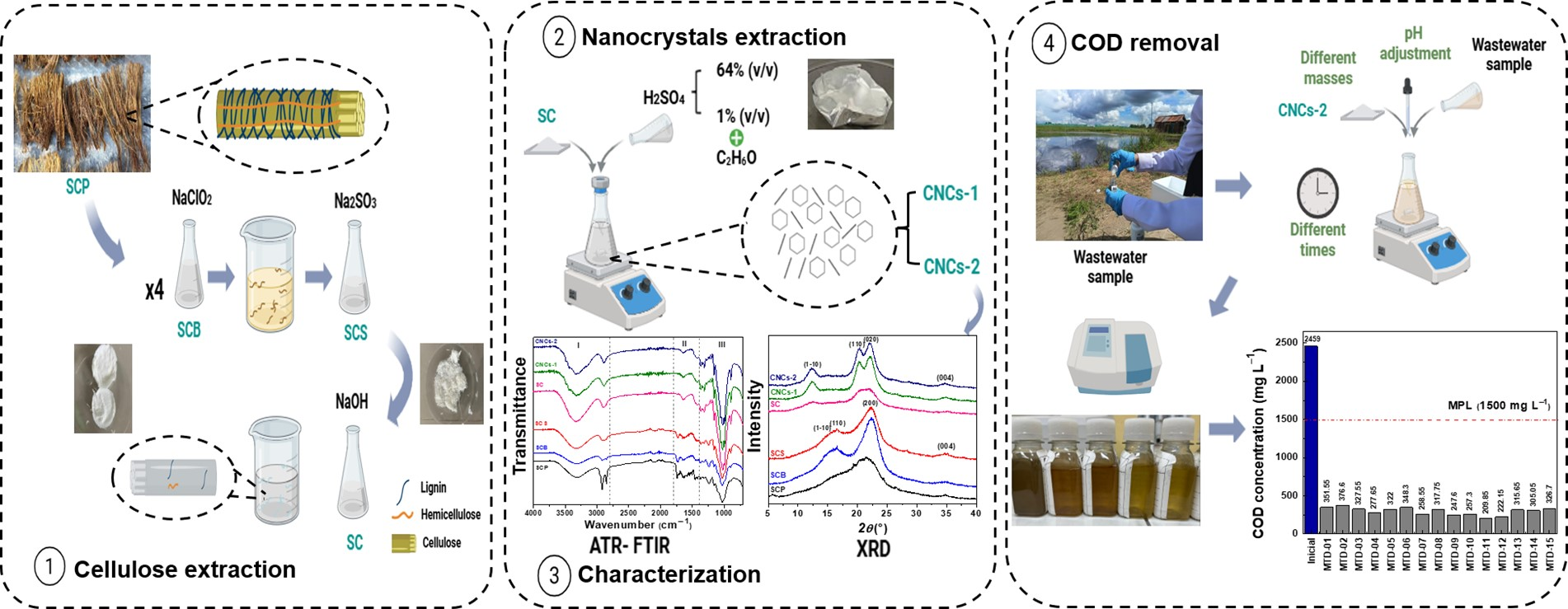
Polymorph II Cellulose Nanocrystals Derived from Oil Palm Empty Fruit Bunches for High-Efficiency COD Removal in Industrial Wastewater
 , and
, and 
Abstract
1. Introduction
2. Materials and Methods
2.1. Chemical Reagents
2.2. Preparation of CNCs
2.2.1. Cellulose Isolation from Empty Bunches of Oil Palm Fruit
2.2.2. Synthesis of CNCs
2.3. Selection of CNCs for COD Removal Experiments
2.4. Characterization
2.4.1. ATR-FTIR Experimental Conditions
2.4.2. XRD Experimental Conditions
2.5. COD Removal Studies with CNCs
2.5.1. Experimental Design
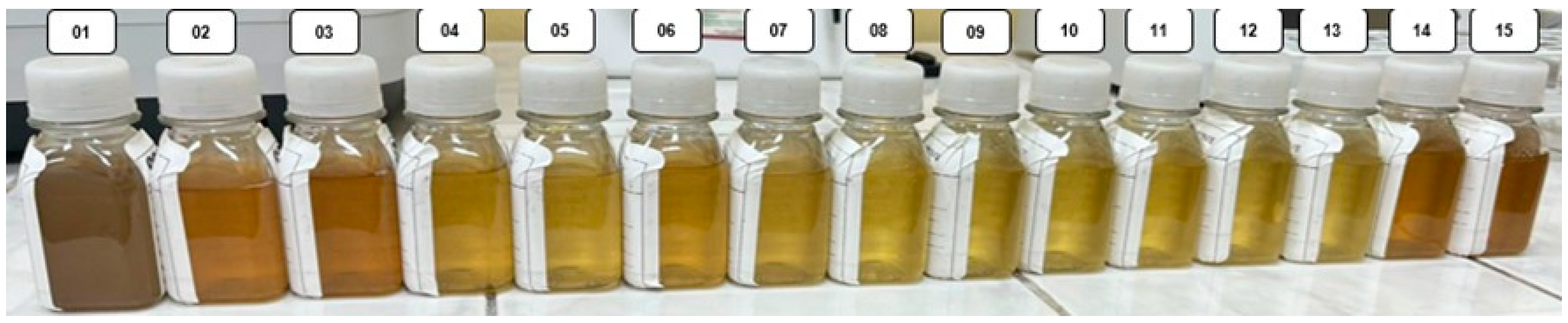
2.5.2. COD Removal Process
3. Results and Discussion
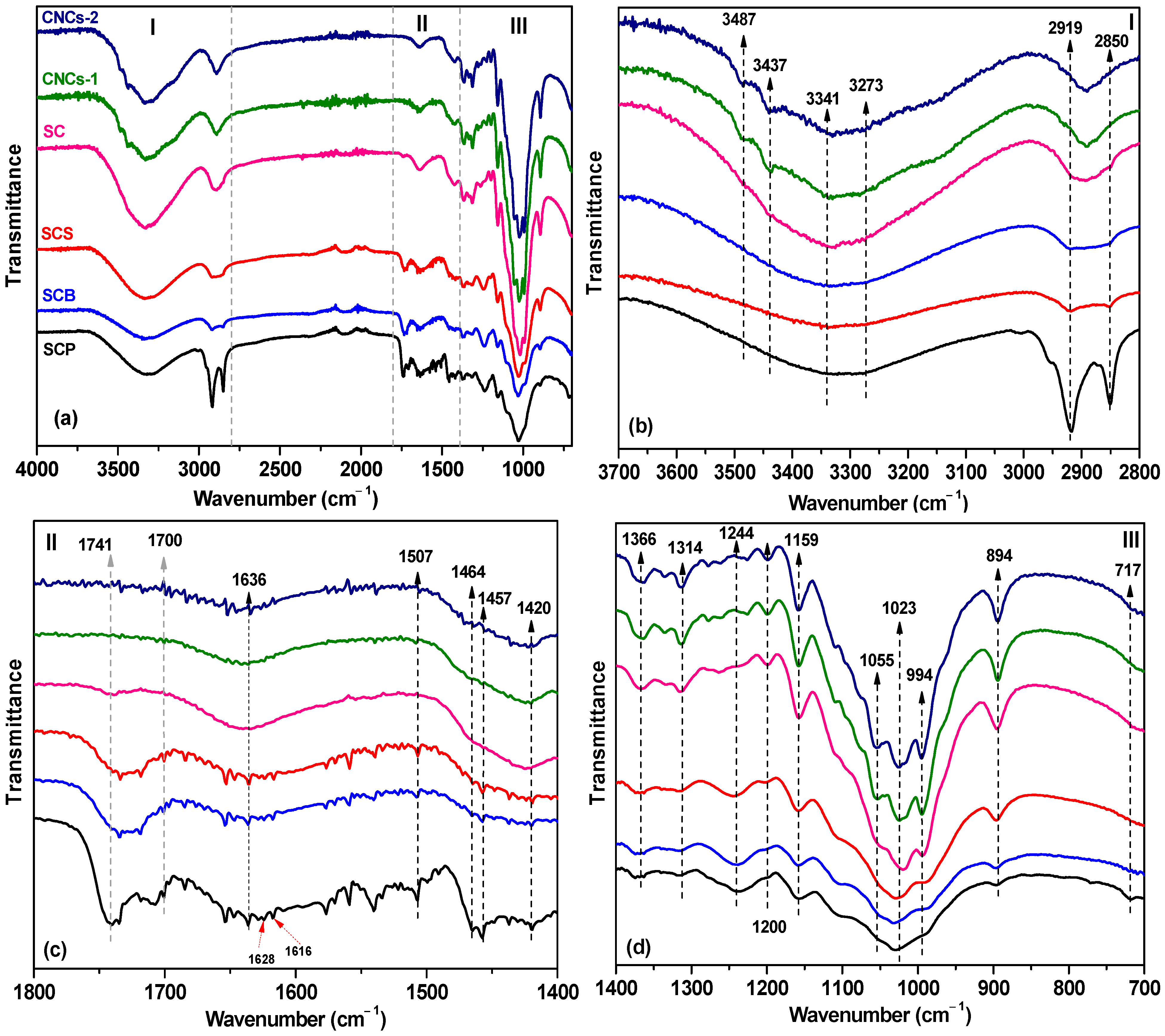
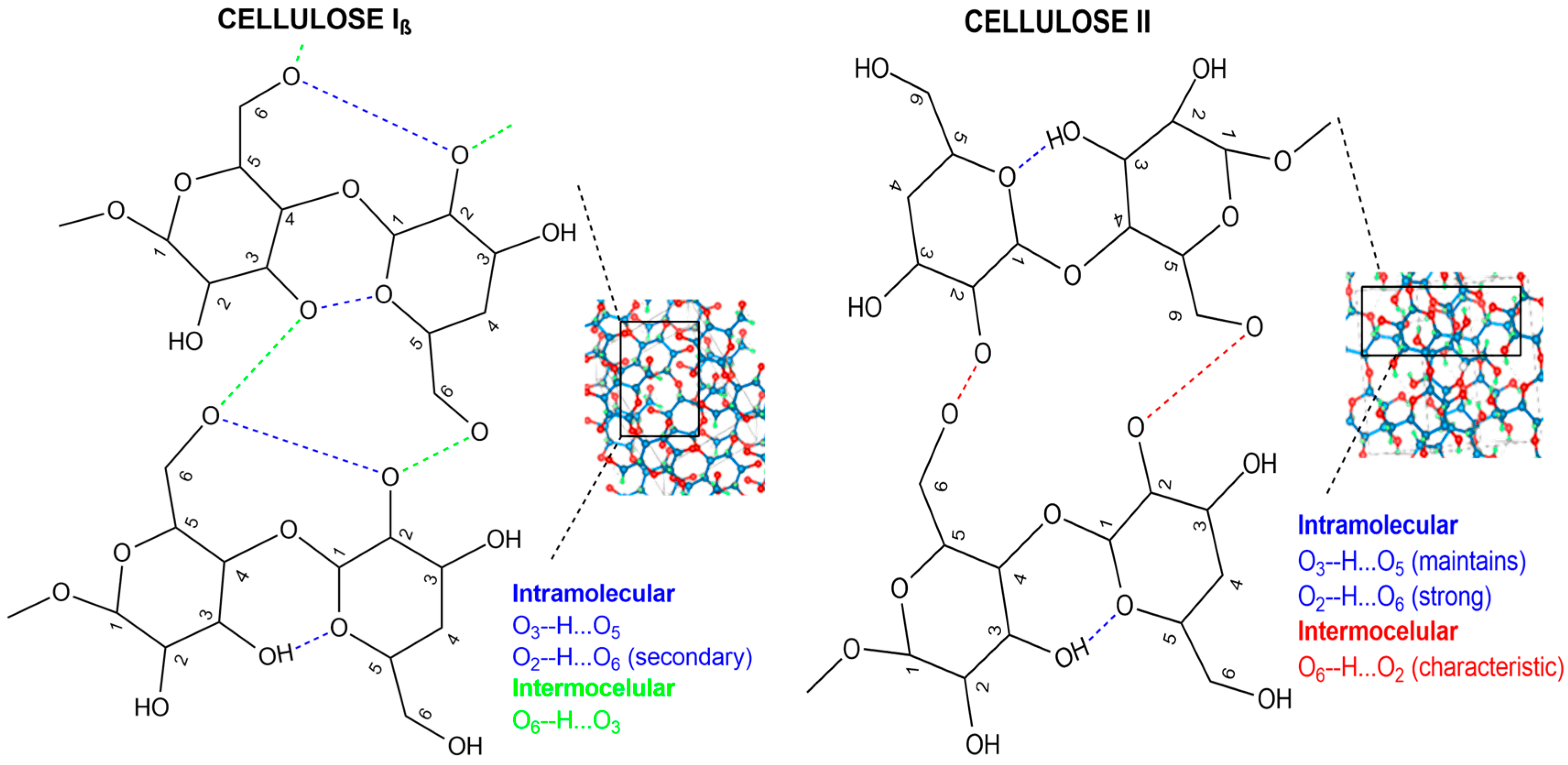
3.1. ATR-FTIR Spectroscopy Analysis
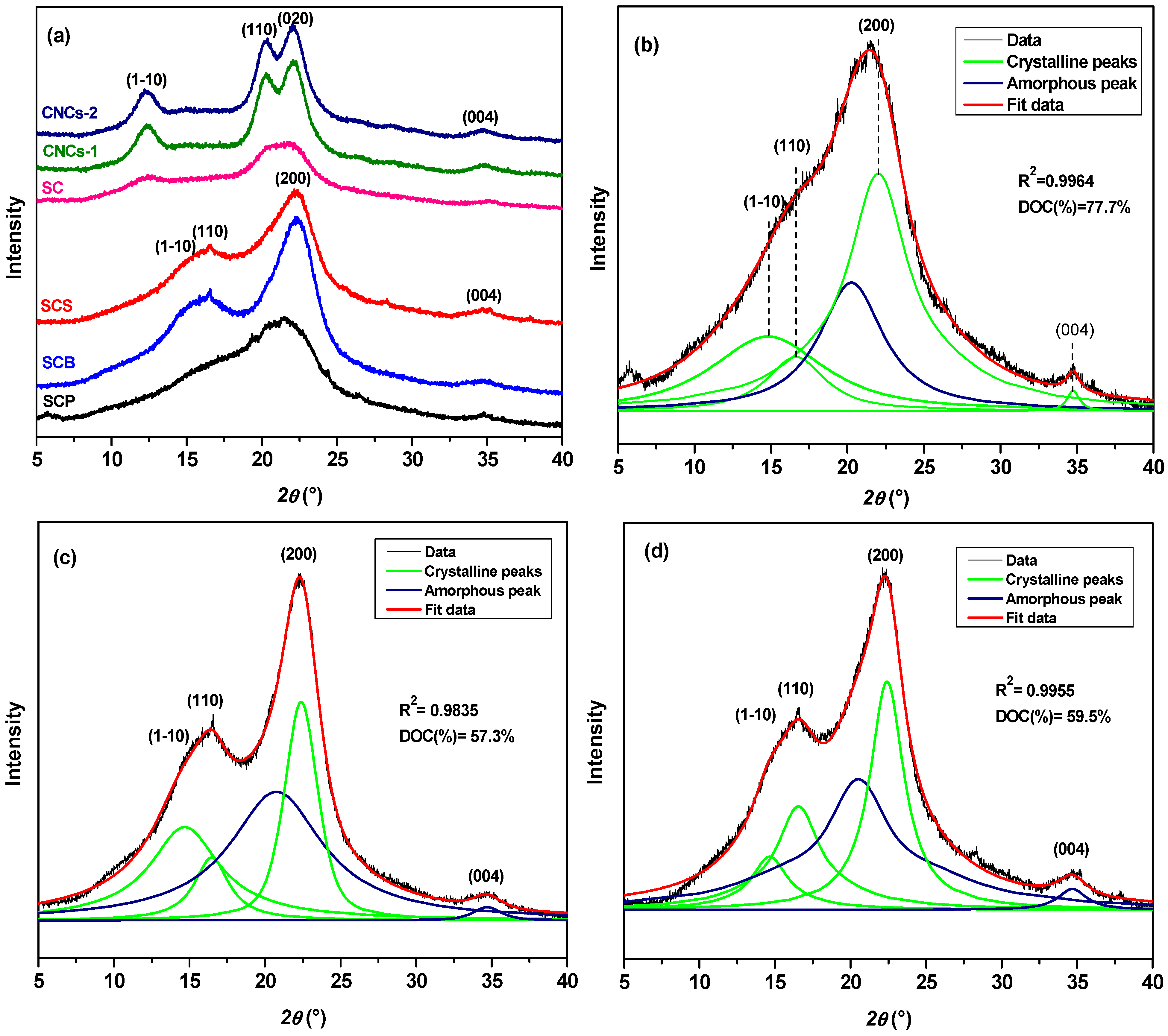
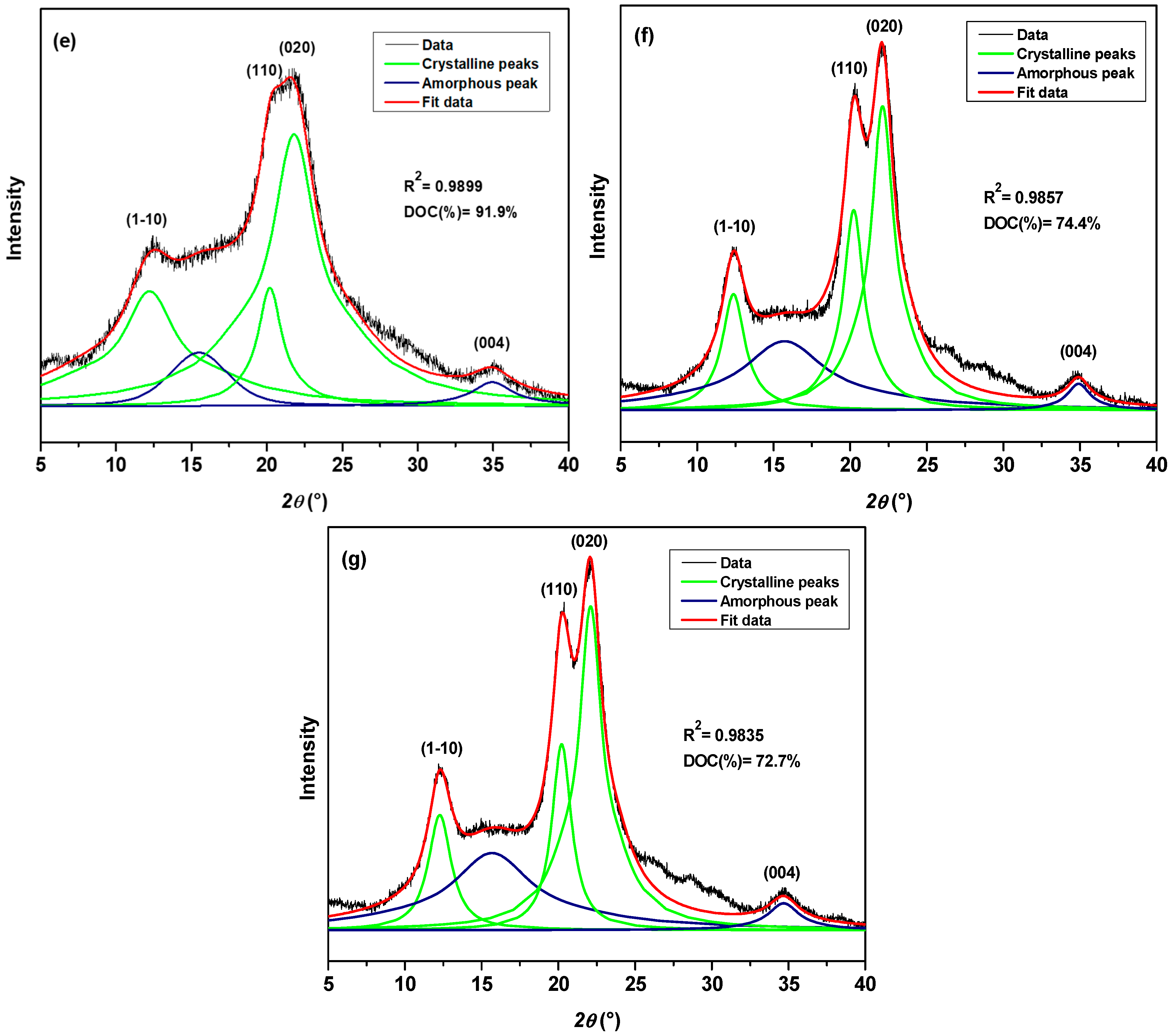
3.2. X-Ray Diffraction and Rietveld Analysis
3.3. Box–Behnken Design
3.4. Effect of CNCs-2 Mass
3.5. Effects of Contact Time
3.6. Effects of pH
3.7. Response Surface 3D Graph and Contour Plots of Interactive Effects
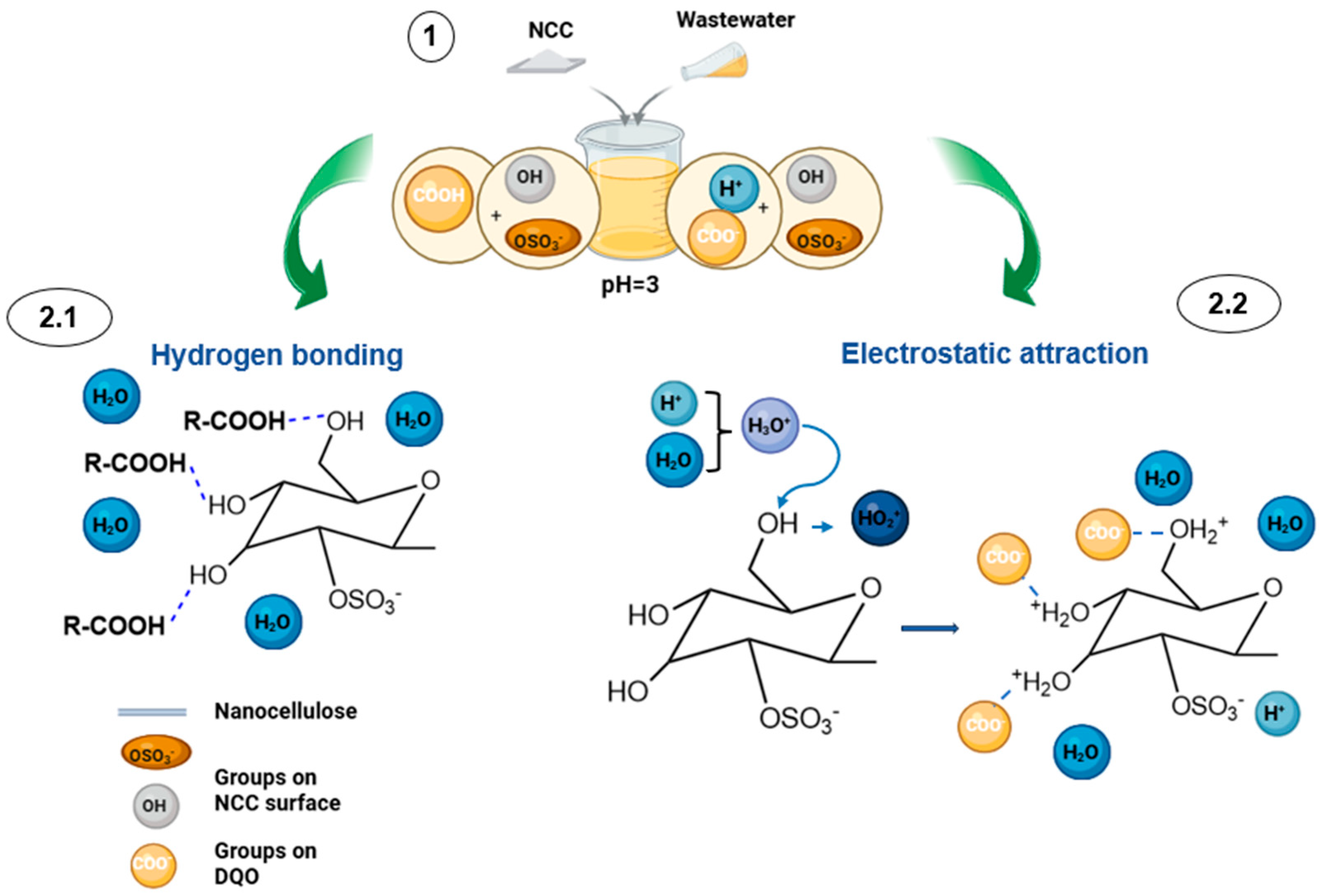
3.8. Possible Mechanism of Interaction
4. Conclusions
Author Contributions
Funding
Data Availability Statement
Acknowledgments
Conflicts of Interest
References
- Informes de Expertos. Visión General del Mercado de Aceite de Palma. 2016. Available online: https://www.informesdeexpertos.com/informes/mercado-de-aceite-de-palma/toc (accessed on 18 February 2026).
- Adetunji, A.I.; Olaniran, A.O. Treatment of industrial oily wastewater by advanced technologies: A review. Appl. Water Sci. 2021, 11, 98. [Google Scholar] [CrossRef] [Scilit]
- Awere, E.; Appiah Obeng, P.; Bonoli, A. Water consumption and wastewater generation from small-scale crude palm oil extraction in Ghana. Water Pract. Technol. 2023, 18, 86–101. [Google Scholar] [CrossRef] [Scilit]
- Digal, L.; Priyadarshini, P.; Kar, D.K.; Mohanty, J. Removal of Chemical Oxygen Demand (COD) from the Wastewater using Plant Based Nanobiomass. Water Conserv. Sci. Eng. 2025, 10, 17. [Google Scholar] [CrossRef] [Scilit]
- Ministerio De Ambiente y Desarrollo Sostenible. RN° 0631-Parámetros Fisicoquímicos y Sus Valores Límites Máximos Permisibles en los Vertimientos Puntuales de Aguas Residuales no Domésticas—ARnD a Cuerpos de Aguas Superficiales; Ministerio De Ambiente y Desarrollo Sostenible: Bogotá, Colombia, 2015.
- Bassyouni, M.; Zoromba MSh Abdel-Aziz, M.H.; Mosly, I. Extraction of Nanocellulose for Eco-Friendly Biocomposite Adsorbent for Wastewater Treatment. Polymers 2022, 14, 1852. [Google Scholar] [CrossRef] [Scilit]
- Metcalf, E.; Eddy, E. Wastewater Engineering Treatment and Reuse, 4th ed.; McGraw Hill Inc.: New York, NY, USA, 2003. [Google Scholar]
- Som, A.M.; Ramlee, A.A.; Puasa, S.W.; Hamid, H.A.A. Optimisation of operating conditions during coagulation-flocculation process in industrial wastewater treatment using Hylocereus undatus foliage through response surface methodology. Environ. Sci. Pollut. Res. 2021, 30, 17108–17121. [Google Scholar] [CrossRef] [Scilit]
- Rajabi, S.; Ahmadian, F.; Maleky, S.; Hashemi, H. Chemical coagulation/flocculation process in organic load reduction of machining oily effluent (Z1): RSM-CCD optimization. Appl. Water Sci. 2025, 15, 252. [Google Scholar] [CrossRef] [Scilit]
- Javeed, T.; Nawaz, R.; Al-Hussain, S.A.; Irfan, A.; Irshad, M.A.; Ahmad, S.; Zaki, M.E.A. Application of Advanced Oxidation Processes for the Treatment of Color and Chemical Oxygen Demand of Pulp and Paper Wastewater. Water 2023, 15, 1347. [Google Scholar] [CrossRef] [Scilit]
- Naguib, A.M.; Abdel-Gawad, S.A.; Mahmoud, A.S. Reduction of organic contaminants from industrial effluent using the advanced oxidation process, chemical coagulation, and green nanotechnology. Sci. Rep. 2024, 14, 15221. [Google Scholar] [CrossRef] [Scilit]
- Jiang, J.; Zhang, Q.; Zhan, X.; Chen, F. A multifunctional gelatin-based aerogel with superior pollutants adsorption, oil/water separation and photocatalytic properties. Chem. Eng. J. 2019, 358, 1539–1551. [Google Scholar] [CrossRef] [Scilit]
- Dawood, E.; Mohammed, T.J.; Al-Timimi, B.A.; H Khader, E. Photocatalytic Degradation of Petroleum Wastewater Using ZnO-Loaded Pistachio Shell Biochar: A Sustainable Approach for Oil and COD Removal. Reactions 2025, 6, 38. [Google Scholar] [CrossRef] [Scilit]
- Munien, C.; Kweinor Tetteh, E.; Govender, T.; Jairajh, S.; Mguni, L.L.; Rathilal, S. Turbidity and COD Removal from Municipal Wastewater Using a TiO2 Photocatalyst—A Comparative Study of UV and Visible Light. Appl. Sci. 2023, 13, 4766. [Google Scholar] [CrossRef] [Scilit]
- Awad, A.M.; Shaikh, S.M.R.; Jalab, R.; Gulied, M.H.; Nasser, M.S.; Benamor, A.; Adham, S. Adsorption of organic pollutants by natural and modified clays: A comprehensive review. Sep. Purif. Technol. 2019, 228, 115719. [Google Scholar] [CrossRef] [Scilit]
- Mohaiyiddin, M.S.; Lin, O.H.; Owi, W.T.; Chan, C.H.; Chia, C.H.; Zakaria, S.; Villagracia, A.R.; Akil, H.M. Characterization of nanocellulose recovery from Elaeis guineensis frond for sustainable development. Clean Technol. Environ. Policy 2016, 18, 2503–2512. [Google Scholar] [CrossRef] [Scilit]
- Muryanto Triwahyuni, E.; Abimayu, H.; Cahyono, A.; Cahyono, E.T.; Sudiyani, Y. Alkaline Delignification of Oil Palm Empty Fruit Bunch Using Black Liquor from Pretreatment. Procedia Chem. 2015, 16, 99–105. [Google Scholar] [CrossRef] [Scilit]
- Marinho, E. Cellulose: A comprehensive review of its properties and applications. Sustain. Chem. Environ. 2025, 11, 100283. [Google Scholar] [CrossRef] [Scilit]
- Vartiainen, J.; Pöhler, T.; Sirola, K.; Pylkkänen, L.; Alenius, H.; Hokkinen, J.; Tapper, U.; Lahtinen, P.; Kapanen, A.; Putkisto, K.; et al. Health and environmental safety aspects of friction grinding and spray drying of microfibrillated cellulose. Cellulose 2011, 18, 775–786. [Google Scholar] [CrossRef] [Scilit]
- French, A.D. Idealized powder diffraction patterns for cellulose polymorphs. Cellulose 2014, 21, 885–896. [Google Scholar] [CrossRef] [Scilit]
- Lee, C.M.; Mittal, A.; Barnette, A.L.; Kafle, K.; Park, Y.B.; Shin, H.; Johnson, D.K.; Park, S.; Kim, S.H. Cellulose polymorphism study with sum-frequency-generation (SFG) vibration spectroscopy: Identification of exocyclic CH2OH conformation and chain orientation. Cellulose 2013, 20, 991–1000. [Google Scholar] [CrossRef] [Scilit]
- Wang, H.; Li, S.; Wu, T.; Wang, X.; Cheng, X.; Li, D. A Comparative Study on the Characterization of Nanofibers with Cellulose I, I/II, and II Polymorphs from Wood. Polymers 2019, 11, 153. [Google Scholar] [CrossRef] [Scilit]
- Hubbe, M.A.; Rojas, O.J.; Lucia, L.A.; Sain, M. Cellulosic Nanocomposites: A Review. Bioresources 2008, 3, 929–980. [Google Scholar]
- Oh, S.Y.; Yoo, D.I.; Shin, Y.; Seo, G. FTIR analysis of cellulose treated with sodium hydroxide and carbon dioxide. Carbohydr. Res. 2005, 340, 417–428. [Google Scholar] [CrossRef] [Scilit] [PubMed]
- Brodeur, G.; Yau, E.; Badal, K.; Collier, J.; Ramachandran, K.B.; Ramakrishnan, S. Chemical and Physicochemical Pretreatment of Lignocellulosic Biomass: A Review. Enzym. Res. 2011, 2011, 787532. [Google Scholar] [CrossRef] [Scilit]
- Cheng, Y.-S.; Zheng, Y.; Yu, C.W.; Dooley, T.M.; Jenkins, B.M.; VanderGheynst, J.S. Evaluation of High Solids Alkaline Pretreatment of Rice Straw. Appl. Biochem. Biotechnol. 2010, 162, 1768–1784. [Google Scholar] [CrossRef] [Scilit] [PubMed]
- Haque, M.d.A.; Barman, D.N.; Kang, T.H.; Kim, M.K.; Kim, J.; Kim, H.; Yun, H.D. Effect of dilute alkali pretreatment on structural features and enhanced enzymatic hydrolysis of Miscanthus sinensis at boiling temperature with low residence time. Biosyst. Eng. 2013, 114, 294–305. [Google Scholar] [CrossRef] [Scilit]
- Vancov, T.; McIntosh, S. Alkali Pretreatment of Cereal Crop Residues for Second-Generation Biofuels. Energy Fuels 2011, 25, 2754–2763. [Google Scholar] [CrossRef] [Scilit]
- Ferro, M.; Mannu, A.; Panzeri, W.; Theeuwen, C.H.J.; Mele, A. An Integrated Approach to Optimizing Cellulose Mercerization. Polymers 2020, 12, 1559. [Google Scholar] [CrossRef] [Scilit]
- Gong, J.; Li, J.; Xu, J.; Xiang, Z.; Mo, L. Research on cellulose nanocrystals produced from cellulose sources with various polymorphs. RSC Adv. 2017, 7, 33486–33493. [Google Scholar] [CrossRef] [Scilit]
- Potenza, M.; Bergamonti, L.; Lottici, P.P.; Righi, L.; Lazzarini, L.; Graiff, C. Green Extraction of Cellulose Nanocrystals of Polymorph II from Cynara scolymus L.: Challenge for a “Zero Waste” Economy. Crystals 2022, 12, 672. [Google Scholar] [CrossRef] [Scilit]
- Wulandari, W.T.; Rochliadi, A.; Arcana, I.M. Nanocellulose prepared by acid hydrolysis of isolated cellulose from sugarcane bagasse. IOP Conf. Ser. Mater. Sci. Eng. 2016, 107, 012045. [Google Scholar] [CrossRef] [Scilit]
- Kusmono Listyanda, R.F.; Wildan, M.W.; Ilman, M.N. Preparation and characterization of cellulose nanocrystal extracted from ramie fibers by sulfuric acid hydrolysis. Heliyon 2020, 6, e05486. [Google Scholar] [CrossRef] [Scilit]
- Brinchi, L.; Cotana, F.; Fortunati, E.; Kenny, J.M. Production of nanocrystalline cellulose from lignocellulosic biomass: Technology and applications. Carbohydr. Polym. 2013, 94, 154–169. [Google Scholar] [CrossRef] [Scilit]
- Septevani, A.A.; Rifathin, A.; Sari, A.A.; Sampora, Y.; Ariani, G.N.; Sudiyarmanto; Sondari, D. Oil palm empty fruit bunch-based nanocellulose as a super-adsorbent for water remediation. Carbohydr. Polym. 2020, 229, 115433. [Google Scholar] [CrossRef] [Scilit]
- Dash, B.; Mohanty, J. Effect of chemical pre-treatment on bioethanol production from defoliated dried neem (Azadirachta indica) leaves. Mater. Today Proc. 2024, 102, 283–290. [Google Scholar] [CrossRef] [Scilit]
- NTP 214.005:1987 (revisada el 2016); Agua Potable. Toma de Muestra. Instituto Nacional de Calidad (INACAL): Lima, Peru, 2016.
- NTP-ISO 5667-10:2012; Calidad de Agua. Muestreo. Parte 10: Guía Para el Muestreo de Aguas Residuales. Comisión de Normalización y de Fiscalización de Barreras Comerciales No Arancelarias (CNB-INDECOPI): Lima, Peru, 2012.
- Ichwan, M.; Onyianta, A.J.; Trask, R.S.; Etale, A.; Eichhorn, S.J. Production and characterization of cellulose nanocrystals of different allomorphs from oil palm empty fruit bunches for enhancing composite interlaminar fracture toughness. Carbohydr. Polym. Technol. Appl. 2023, 5, 100272. [Google Scholar] [CrossRef] [Scilit]
- Rodriguez-Carvajal, J. Study of Micro-Structural Effects by Powder Diffraction Using the Program FULLPROF; Laboratoire Léon Brillouin (CEA-CNRS), CEA/Saclay: Gif-sur-Yvette, France, 2003; p. 91191. [Google Scholar]
- Thompson, P.; Cox, D.E.; Hastings, J.B. Rietveld refinement of Debye–Scherrer synchrotron X-ray data from Al2O3. J. Appl. Crystallogr. 1987, 20, 79–83. [Google Scholar] [CrossRef] [Scilit]
- Langan, P.; Nishiyama, Y.; Chanzy, H. X-ray Structure of Mercerized Cellulose II at 1 Å Resolution. Biomacromolecules 2001, 2, 410–416. [Google Scholar] [CrossRef] [Scilit]
- Nishiyama, Y.; Langan, P.; Chanzy, H. Crystal Structure and Hydrogen-Bonding System in Cellulose Iβ from Synchrotron X-ray and Neutron Fiber Diffraction. J. Am. Chem. Soc. 2002, 124, 9074–9082. [Google Scholar] [CrossRef] [Scilit]
- Balzar, D.; Audebrand, N.; Daymond, M.R.; Fitch, A.; Hewat, A.; Langford, J.I.; Le Bail, A.; Louër, D.; Masson, O.; McCowan, C.N.; et al. Size–strain line-broadening analysis of the ceria round-robin sample. J. Appl. Crystallogr. 2004, 37, 911–924. [Google Scholar] [CrossRef] [Scilit]
- Chiriac, A.I.; Pastor, F.I.J.; Popa, V.I.; Aflori, M.; Ciolacu, D. Changes of supramolecular cellulose structure and accessibility induced by the processive endoglucanase Cel9B from Paenibacillus barcinonensis. Cellulose 2014, 21, 203–219. [Google Scholar] [CrossRef] [Scilit]
- Montgomery, D.C. Diseño y Análisis de Experimentos, 2nd ed.; Limusa Wiley: Mexico City, Mexico, 2004. [Google Scholar]
- American Public Health Association (APHA); American Water Works Association; Water Environment Federation. Standard Methods for the Examination of Water and Wastewater, 24th ed.; Method 5220 D: Chemical Oxygen Demand (COD), Closed Reflux, Colorimetric Method; APHA, AWWA, WEF: Washington, DC, USA, 2023. [Google Scholar]
- Hindi, S.S. Novel Recycling, Defibrillation, and Delignification Methods for Isolating α-Cellulose from Different Lignocellulosic Precursors for the Eco-Friendly Fiber Industry. Polymers 2024, 16, 2430. [Google Scholar] [CrossRef] [Scilit]
- Ajayi, S.M.; Olusanya, S.O.; Sodeinde, K.O.; Didunyemi, A.E.; Atunde, M.O.; Fapojuwo, D.P.; Olumayede, E.G.; Lawal, O.S. Hydrophobic modification of cellulose from oil palm empty fruit bunch: Characterization and application in Pickering emulsions stabilization. Carbohydr. Polym. Technol. Appl. 2023, 5, 100282. [Google Scholar] [CrossRef] [Scilit]
- Makarov, I.; Palchikova, E.; Vinogradov, M.; Golubev, Y.; Legkov, S.; Gromovykh, P.; Makarov, G.; Arkharova, N.; Karimov, D.; Gainutdinov, R. Characterization of Structure and Morphology of Cellulose Lyocell Microfibers Extracted from PAN Matrix. Polysaccharides 2025, 6, 10. [Google Scholar] [CrossRef] [Scilit]
- Adsul, M.; Soni, S.K.; Bhargava, S.K.; Bansal, V. Facile Approach for the Dispersion of Regenerated Cellulose in Aqueous System in the Form of Nanoparticles. Biomacromolecules 2012, 13, 2890–2895. [Google Scholar] [CrossRef] [Scilit]
- Uppal, N.; Pappu, A.; Gowri, V.K.S.; Thakur, V.K. Cellulosic fibres-based epoxy composites: From bioresources to a circular economy. Ind. Crops Prod. 2022, 182, 114895. [Google Scholar] [CrossRef] [Scilit]
- Ruckenstein, E.; Guo, W. Crosslinked mercerized cellulose membranes and their application to membrane affinity chromatography. J. Memb. Sci. 2001, 187, 277–286. [Google Scholar] [CrossRef] [Scilit]
- Ling, Z.; Chen, S.; Zhang, X.; Xu, F. Exploring crystalline-structural variations of cellulose during alkaline pretreatment for enhanced enzymatic hydrolysis. Bioresour. Technol. 2017, 224, 611–617. [Google Scholar] [CrossRef] [Scilit] [PubMed]
- Yue, Y.; Han, J.; Han, G.; Zhang, Q.; French, A.D.; Wu, Q. Characterization of cellulose I/II hybrid fibers isolated from energycane bagasse during the delignification process: Morphology, crystallinity and percentage estimation. Carbohydr. Polym. 2015, 133, 438–447. [Google Scholar] [CrossRef] [Scilit]
- Abidi, N.; Cabrales, L.; Haigler, C.H. Changes in the cell wall and cellulose content of developing cotton fibers investigated by FTIR spectroscopy. Carbohydr. Polym. 2014, 100, 9–16. [Google Scholar] [CrossRef] [Scilit]
- García-García, D.; Balart, R.; Lopez-Martinez, J.; Ek, M.; Moriana, R. Optimizing the yield and physico-chemical properties of pine cone cellulose nanocrystals by different hydrolysis time. Cellulose 2018, 25, 2925–2938. [Google Scholar] [CrossRef] [Scilit]
- Chieng, B.; Lee, S.; Ibrahim, N.; Then, Y.; Loo, Y. Isolation and Characterization of Cellulose Nanocrystals from Oil Palm Mesocarp Fiber. Polymers 2017, 9, 355. [Google Scholar] [CrossRef] [Scilit]
- Md Salim, R.; Asik, J.; Sarjadi, M.S. Chemical functional groups of extractives, cellulose and lignin extracted from native Leucaena leucocephala bark. Wood Sci. Technol. 2021, 55, 295–313. [Google Scholar] [CrossRef] [Scilit]
- Ferreira, R.; Garcia, H.; Sousa, A.F.; Freire, C.S.R.; Silvestre, A.J.D.; Rebelo, L.P.N.; Pereira, C.S. Isolation of suberin from birch outer bark and cork using ionic liquids: A new source of macromonomers. Ind. Crops Prod. 2013, 44, 520–527. [Google Scholar] [CrossRef] [Scilit]
- Lani, N.S.; Ngadi, N.; Johari, A.; Jusoh, M. Isolation, Characterization, and Application of Nanocellulose from Oil Palm Empty Fruit Bunch Fiber as Nanocomposites. J. Nanomater. 2014, 2014, 1702538. [Google Scholar] [CrossRef] [Scilit]
- Zhang, Q.; Li, H.; Guo, Z.; Xu, F. High Purity and Low Molecular Weight Lignin Nano-Particles Extracted from Acid-Assisted MIBK Pretreatment. Polymers 2020, 12, 378. [Google Scholar] [CrossRef] [Scilit]
- Tian, W.; Li, H.; Zhou, J.; Guo, Y. Preparation, characterization and the adsorption characteristics of lignin/silica nanocomposites from cellulosic ethanol residue. RSC Adv. 2017, 7, 41176–41181. [Google Scholar] [CrossRef] [Scilit]
- Le Troedec, M.; Sedan, D.; Peyratout, C.; Bonnet, J.P.; Smith, A.; Guinebretiere, R.; Gloaguen, V.; Krausz, P. Influence of various chemical treatments on the composition and structure of hemp fibres. Compos. Part A Appl. Sci. Manuf. 2008, 39, 514–522. [Google Scholar] [CrossRef] [Scilit]
- El Oudiani, A.; Chaabouni, Y.; Msahli, S.; Sakli, F. Crystal transition from cellulose I to cellulose II in NaOH treated Agave americana L. fibre. Carbohydr. Polym. 2011, 86, 1221–1229. [Google Scholar] [CrossRef] [Scilit]
- Montoya-Escobar, N.; Ospina-Acero, D.; Velásquez-Cock, J.A.; Gómez-Hoyos, C.; Serpa Guerra, A.; Gañan Rojo, P.F.; Acosta, L.M.V.; Escobar, J.P.; Correa-Hincapié, N.; Triana-Chávez, O.; et al. Use of Fourier Series in X-ray Diffraction (XRD) Analysis and Fourier-Transform Infrared Spectroscopy (FTIR) for Estimation of Crystallinity in Cellulose from Different Sources. Polymers 2022, 14, 5199. [Google Scholar] [CrossRef] [Scilit] [PubMed]
- Idrees, M.; Adnan, A.; Qureshi, F.A. Optimization of Sulfide/Sulfite Pretreatment of Lignocellulosic Biomass for Lactic Acid Production. Biomed Res. Int. 2013, 934171. [Google Scholar] [CrossRef] [Scilit] [PubMed]
- Mantovan, J.; Giraldo, G.A.G.; Marim, B.M.; Garcia, P.S.; Baron, A.M.; Mali, S. Cellulose-based materials from orange bagasse employing environmentally friendly approaches. Biomass Convers. Biorefin. 2023, 13, 1633–1644. [Google Scholar] [CrossRef] [Scilit]
- Liu, Y.; Sun, B.; Zheng, X.; Yu, L.; Li, J. Integrated microwave and alkaline treatment for the separation between hemicelluloses and cellulose from cellulosic fibers. Bioresour. Technol. 2018, 247, 859–863. [Google Scholar] [CrossRef] [Scilit]
- Rana, M.d.S.; Rahim, M.d.A.; Mosharraf, M.d.P.; Tipu, M.d.F.K.; Chowdhury, J.A.; Haque, M.R.; Kabir, S.; Amran, S.; Chowdhury, A.A. Morphological, Spectroscopic and Thermal Analysis of Cellulose Nanocrystals Extracted from Waste Jute Fiber by Acid Hydrolysis. Polymers 2023, 15, 1530. [Google Scholar] [CrossRef] [Scilit]
- Mahmud, M.M.; Perveen, A.; Jahan, R.A.; Matin, M.A.; Wong, S.Y.; Li, X.; Arafat, M.T. Preparation of different polymorphs of cellulose from different acid hydrolysis medium. Int. J. Biol. Macromol. 2019, 130, 969–976. [Google Scholar] [CrossRef] [Scilit] [PubMed]
- Kasyapi, N.; Chaudhary, V.; Bhowmick, A.K. Bionanowhiskers from jute: Preparation and characterization. Carbohydr. Polym. 2013, 92, 1116–1123. [Google Scholar] [CrossRef] [Scilit] [PubMed]
- Leong, S.L.; Tiong, S.I.X.; Siva, S.P.; Ahamed, F.; Chan, C.-H.; Lee, C.L.; Chew, I.M.L.; Ho, Y.K. Morphological control of cellulose nanocrystals via sulfuric acid hydrolysis based on sustainability considerations: An overview of the governing factors and potential challenges. J. Environ. Chem. Eng. 2022, 10, 108145. [Google Scholar] [CrossRef] [Scilit]
- Jin, E.; Guo, J.; Yang, F.; Zhu, Y.; Song, J.; Jin, Y.; Rojas, O.J. On the polymorphic and morphological changes of cellulose nanocrystals (CNC-I) upon mercerization and conversion to CNC-II. Carbohydr. Polym. 2016, 143, 327–335. [Google Scholar] [CrossRef] [Scilit]
- Zlenko, D.V.; Vtyurina, D.N.; Usachev, S.V.; Skoblin, A.A.; Mikhaleva, M.G.; Politenkova, G.G.; Nikolsky, S.N.; Stovbun, S.V. On the orientation of the chains in the mercerized cellulose. Sci. Rep. 2021, 11, 8765. [Google Scholar] [CrossRef] [Scilit] [PubMed]
- Buenaño, L.; Ali, E.; Jafer, A.; Zaki, S.H.; Hammady, F.J.; Khayoun Alsaadi, S.B.; Karim, M.M.; Ramadan, M.F.; Omran, A.A.; Alawadi, A.; et al. Optimization by Box–Behnken design for environmental contaminants removal using magnetic nanocomposite. Sci. Rep. 2024, 14, 6950. [Google Scholar] [CrossRef] [Scilit]
- Ahmad, A.; Lajis, M.A.; Yusuf, N.K.; Ab Rahim, S.N. Statistical Optimization by the Response Surface Methodology of Direct Recycled Aluminum-Alumina Metal Matrix Composite (MMC-AlR) Employing the Metal Forming Process. Processes 2020, 8, 805. [Google Scholar] [CrossRef] [Scilit]
- Schmidt, A.F.; Finan, C. Linear regression and the normality assumption. J. Clin. Epidemiol. 2018, 98, 146–151. [Google Scholar] [CrossRef] [Scilit]
- Piñeiro, G.; Perelman, S.; Guerschman, J.P.; Paruelo, J.M. How to evaluate models: Observed vs. predicted or predicted vs. observed? Ecol. Model. 2008, 216, 316–322. [Google Scholar] [CrossRef] [Scilit]
- Solhi, L.; Guccini, V.; Heise, K.; Solala, I.; Niinivaara, E.; Xu, W.; Mihhels, K.; Kröger, M.; Meng, Z.; Wohlert, J.; et al. Understanding Nanocellulose–Water Interactions: Turning a Detriment into an Asset. Chem. Rev. 2023, 123, 1925–2015. [Google Scholar] [CrossRef] [Scilit]
- Nagendran, V.; Goveas, L.C.; Vinayagam, R.; Varadavenkatesan, T.; Selvaraj, R. Challenges and advances in nanocellulose-based adsorbents for dye removal: Mechanisms and future directions. Discov. Appl. Sci. 2024, 7, 14. [Google Scholar] [CrossRef] [Scilit]
- Huaman Meza, B.L.; Peña Pineda, K.J. Aerogel Compuesto de Nanofibrillas de Celulosa y Micropartículas de Quitosano Para el Tratamiento de Aguas Mieles de Café. Bachelor’s Thesis, Universidad Césa Vallejo, Lima, Perú, 2022. [Google Scholar]
- Zhang, Y.; Wang, F.; Wang, Y. Electrospun Cellulose Acetate/Chitosan Fibers for Humic Acid Removal: Construction Guided by Intermolecular Interaction Study. ACS Appl. Polym. Mater. 2021, 3, 5022–5029. [Google Scholar] [CrossRef] [Scilit]
- Villabona-Ortíz, Á.; Figueroa-Lopez, K.J.; Ortega-Toro, R. Kinetics and Adsorption Equilibrium in the Removal of Azo-Anionic Dyes by Modified Cellulose. Sustainability 2022, 14, 3640. [Google Scholar] [CrossRef] [Scilit]
- Lambertz, S.; Franke, M.; Stelter, M.; Braeutigam, P. Sensing of chemical oxygen demand (COD) by amperometric detection—Dependence of current signal on concentration and type of organic species. Environ. Monit. Assess. 2023, 195, 630. [Google Scholar] [CrossRef] [Scilit] [PubMed]
- Abdelaziz, R.M.; El-Maghraby, A.; Sadik, W.A.-A.; El-Demerdash, A.-G.M.; Fadl, E.A. Biodegradable cellulose nanocrystals hydrogels for removal of acid red 8 dye from aqueous solutions. Sci. Rep. 2022, 12, 6424. [Google Scholar] [CrossRef] [Scilit]
- Klučáková, M. New possibility for characterization of dissociation behaviour of supramolecular electrolytes: Results obtained for the International Humic Substances Society standard and reference samples by coulometry. Chem. Biol. Technol. Agric. 2021, 8, 30. [Google Scholar] [CrossRef] [Scilit]
- Vysotsky, Y.B.; Kartashynska, E.S.; Vollhardt, D.; Fainerman, V.B. Surface p K a of Saturated Carboxylic Acids at the Air/Water Interface: A Quantum Chemical Approach. J. Phys. Chem. C 2020, 124, 13809–13818. [Google Scholar] [CrossRef] [Scilit]
- Ismail, M.; Dhiss, T.; Ben Marzoug, K.; Ben Amor, H.; Koheil, H.; Hosseini-Bandegharaei, A.; Keshta, B.E. Reduction of COD level in real textile effluent using natural Tunisian clay as a low-cost adsorbent. Results Chem. 2025, 18, 102734. [Google Scholar] [CrossRef] [Scilit]
- Li, T.; Yu, Z.; Yang, T.; Xu, G.; Guan, Y.; Guo, C. Modified Fe3O4 magnetic nanoparticles for COD removal in oil field produced water and regeneration. Environ. Technol. Innov. 2021, 23, 101630. [Google Scholar] [CrossRef] [Scilit]
- Heydari Orojlou, S.; Rastegarzadeh, S.; Zargar, B. Experimental and modeling analyses of COD removal from industrial wastewater using the TiO2–chitosan nanocomposites. Sci. Rep. 2022, 12, 11088. [Google Scholar] [CrossRef] [Scilit] [PubMed]
- Atiyah, Z.Y.; Muallah, S.K.; Abbar, A.H. Removal of COD from petroleum refinery wastewater by adsorption using activated carbon derived from avocado plant. S. Afr. J. Chem. Eng. 2024, 48, 467–483. [Google Scholar] [CrossRef] [Scilit]
- Kiani, R.; Mirzaei, F.; Ghanbari, F.; Feizi, R.; Mehdipour, F. Real textile wastewater treatment by a sulfate radicals-Advanced Oxidation Process: Peroxydisulfate decomposition using copper oxide (CuO) supported onto activated carbon. J. Water Process Eng. 2020, 38, 101623. [Google Scholar] [CrossRef] [Scilit]
- Waskito, P.; Zakir, M.; Taba, P. Chemical oxygen demand removal by modified carbon with H2SO4 from oil palm fruit bunches. Int. J. Environ. Anal. Chem. 2024, 104, 9616–9631. [Google Scholar] [CrossRef] [Scilit]
- Ibrahim, M.A.; Salama, A.; Zahran, F.; Abdelfattah, M.S.; Alsalme, A.; Bechelany, M.; Barhoum, A. Fabrication of cellulose nanocrystals/carboxymethyl cellulose/zeolite membranes for methylene blue dye removal: Understanding factors, adsorption kinetics, and thermodynamic isotherms. Front. Chem. 2024, 12, 1330810. [Google Scholar] [CrossRef] [Scilit] [PubMed]




| Variables | Symbol | Unit | Range and Level | ||
|---|---|---|---|---|---|
| −1 | 0 | +1 | |||
| CNCs-2 mass | A | g | 0.03 | 0.09 | 1.5 |
| Contact time | B | min | 20 | 50 | 80 |
| pH of the treatment | C | - | 3 | 5 | 7 |
| Sample | DOC (%) |
|---|---|
| SCP | 77.7 |
| SCB | 57.3 |
| SCS | 59.5 |
| SC | 91.9 |
| CNCs-1 | 74.4 |
| CNCs-2 | 72.7 |
| Refinement Parameter | SCB | SCS | CNCs-1 | CNCs-2 |
|---|---|---|---|---|
| 8.216 (1) | 8.107 (2) | 7.926 (2) | 7.945 (2) | |
| 6.084 (1) | 6.314 (4) | 9.025 (1) | 9.042 (1) | |
| 9.916 (2) | 10.447 (9) | 7.409 (3) | 7.399 (3) | |
| 90.00 (0) | 90.00 (0) | 90.00 (0) | 90.00 (0) | |
| 90.00 (0) | 90.00 (0) | 90.00 (0) | 90.00 (0) | |
| 105.47 (2) | 99.58 (4) | 117.32 (1) | 117.43 (1) | |
| 477.68 (1) | 527.25 (6) | 470.82 (2) | 471.82 (2) | |
| FWHM parameters | ||||
| U | 1.898 | 3.321 | 0.1766 | 0.2087 |
| V | −0.7533 | −0.2606 | −0.6239 | −0.6021 |
| W | 2.703 | 2.661 | 0.9584 | 0.9169 |
| Microstructural parameters | ||||
| Mean maximum strain | 79.38 (2) | 98.42 (1) | 36.96 (3) | 72.69 (7) |
| Mean crystallite size (nm) | 5.03 (5) | 3.73 (7) | 4.99 (2) | 5.43 (2) |
| Statistical goodness-of-fit (GoF) parameters | ||||
| 6.42 | 8.93 | 5.27 | 5.36 | |
| 6.26 | 8.65 | 5.66 | 5.72 | |
| 5.37 | 6.55 | 4.36 | 4.50 | |
| χ2 | 1.36 | 1.74 | 1.68 | 1.62 |
| Treatment | CNCs-2 Mass (g) | pH | Contact Time (min) | COD Removal | ||||
|---|---|---|---|---|---|---|---|---|
| I | II | Average (mg L−1) | % | SD (±) * | ||||
| MTD-01 | 0.15 | 7 | 50 | 369.9 | 357.2 | 351.55 | 85.22 | 12.7 |
| MTD-02 | 0.09 | 7 | 80 | 345.5 | 359.7 | 376.60 | 85.66 | 14.2 |
| MTD-03 | 0.09 | 5 | 50 | 326.4 | 328.7 | 327.55 | 86.68 | 2.3 |
| MTD-04 | 0.15 | 5 | 20 | 271.1 | 284.2 | 277.65 | 88.71 | 13.1 |
| MTD-05 | 0.03 | 5 | 80 | 326.4 | 317.6 | 322.00 | 86.91 | 8.8 |
| MTD-06 | 0.15 | 5 | 80 | 353.7 | 342.9 | 348.30 | 85.84 | 10.8 |
| MTD-07 | 0.09 | 3 | 80 | 263.7 | 253.4 | 258.55 | 89.49 | 10.3 |
| MTD-08 | 0.09 | 5 | 50 | 317.1 | 318.3 | 317.75 | 86.15 | 1.3 |
| MTD-09 | 0.03 | 3 | 50 | 235.6 | 259.6 | 247.6 | 89.93 | 24.0 |
| MTD-10 | 0.03 | 5 | 20 | 256.5 | 258.1 | 257.30 | 89.54 | 1.6 |
| MTD-11 | 0.09 | 3 | 20 | 214.0 | 205.7 | 209.85 | 91.47 | 8.3 |
| MTD-12 | 0.15 | 3 | 50 | 220.7 | 223.6 | 222.15 | 90.97 | 2.9 |
| MTD-13 | 0.09 | 5 | 50 | 312.0 | 319.3 | 315.65 | 87.16 | 7.3 |
| MTD-14 | 0.03 | 7 | 50 | 311.0 | 299.1 | 305.05 | 87.59 | 11.9 |
| MTD-15 | 0.09 | 7 | 20 | 332.1 | 321.3 | 326.70 | 86.71 | 10.8 |
| Source | Sum of Squares | df | Mean Square | F-Value | p-Value |
|---|---|---|---|---|---|
| Model | 61.64 | 6 | 8.81 | 29.73 | 0.0001 |
| A | 1.30 | 1 | 1.30 | 4.40 | 0.0741 |
| B | 9.10 | 1 | 9.10 | 30.71 | 0.0009 |
| C | 34.78 | 1 | 34.78 | 117.42 | <0.0001 |
| AC | 2.91 | 1 | 2.91 | 9.81 | 0.0165 |
| A2 | 3.53 | 1 | 3.53 | 11.91 | 0.0107 |
| B2 | 2.88 | 1 | 2.88 | 9.71 | 0.0169 |
| C2 | 8.99 | 1 | 8.99 | 30.34 | 0.0009 |
| Residual | 2.07 | 7 | 0.2962 | ||
| Lack of Fit | 1.07 | 5 | 0.2130 | 0.4226 | 0.8108 |
| Pure Error | 1.01 | 2 | 0.5041 | ||
| Cor Total | 63.71 | 14 | |||
| R2 | 0.9675 | Std. Dev. | 0.5442 | ||
| Adjusted R2 | 0.9349 | Mean | 87.71 | ||
| Predicted R2 | 0.8908 | C.V.% | 0.6205 | ||
| Adeq precision | 16.0964 |
| Adsorbent | (mg L−1) | Dose (g L−1) | pH | Contact Time (min) | Treated Water | % Removal | Reference |
|---|---|---|---|---|---|---|---|
| Natural clay | 1145.0 | 0.5 | 7.4 | 180 | Textile effluent | 66 | [89] |
| Fe3O4-IDA-Cu2+ nanoparticles | - | 1 | 4 | 60 | Oilfield-produced water | 66.7 | [90] |
| TiO2 nanoparticles with chitosan | - | 25 | 7.4 | 180 | Petrochemical effluent | 94.5 | [91] |
| Activated carbon from avocado seeds | 550.0 | 5 | 3 | - | Petroleum refinery wastewater | 94.54 | [92] |
| CuO–activated carbon composite | - | 1 | 7 | 60 | Textile wastewater | 72 | [93] |
| Activated carbon | 88.4 | 20 | 2 | 90 | Synthetic wastewater | 63.35 | [94] |
| Modified carbon | 75.41 | ||||||
| Nanocellulose (NCS05) | 1304.4 | - | 7 | - | River water | 67.89 | [35] |
| Nanocellulose acetate (NCA) | 352.0 | 3 | 2 | 40 | Synthetic wastewater | 86 | [4] |
| Cellulose nanocrystals (CNCs-2) | 2459.0 | 0.5 | 3 | 20 | Palm oil plant wastewater | 91.47 | (This study) |
Disclaimer/Publisher’s Note: The statements, opinions and data contained in all publications are solely those of the individual author(s) and contributor(s) and not of MDPI and/or the editor(s). MDPI and/or the editor(s) disclaim responsibility for any injury to people or property resulting from any ideas, methods, instructions or products referred to in the content. |
© 2026 by the authors. Licensee MDPI, Basel, Switzerland. This article is an open access article distributed under the terms and conditions of the Creative Commons Attribution (CC BY) license.
Share and Cite
Pomalaya-Velasco, J.; Bendezú-Roca, Y.; Canchanya-Huaman, Y.; Ramos-Guivar, J.A. Polymorph II Cellulose Nanocrystals Derived from Oil Palm Empty Fruit Bunches for High-Efficiency COD Removal in Industrial Wastewater. Nanomaterials 2026, 16, 374. https://doi.org/10.3390/nano16060374
Pomalaya-Velasco J, Bendezú-Roca Y, Canchanya-Huaman Y, Ramos-Guivar JA. Polymorph II Cellulose Nanocrystals Derived from Oil Palm Empty Fruit Bunches for High-Efficiency COD Removal in Industrial Wastewater. Nanomaterials. 2026; 16(6):374. https://doi.org/10.3390/nano16060374
Chicago/Turabian StylePomalaya-Velasco, Jemina, Yéssica Bendezú-Roca, Yamerson Canchanya-Huaman, and Juan A. Ramos-Guivar. 2026. "Polymorph II Cellulose Nanocrystals Derived from Oil Palm Empty Fruit Bunches for High-Efficiency COD Removal in Industrial Wastewater" Nanomaterials 16, no. 6: 374. https://doi.org/10.3390/nano16060374
APA StylePomalaya-Velasco, J., Bendezú-Roca, Y., Canchanya-Huaman, Y., & Ramos-Guivar, J. A. (2026). Polymorph II Cellulose Nanocrystals Derived from Oil Palm Empty Fruit Bunches for High-Efficiency COD Removal in Industrial Wastewater. Nanomaterials, 16(6), 374. https://doi.org/10.3390/nano16060374