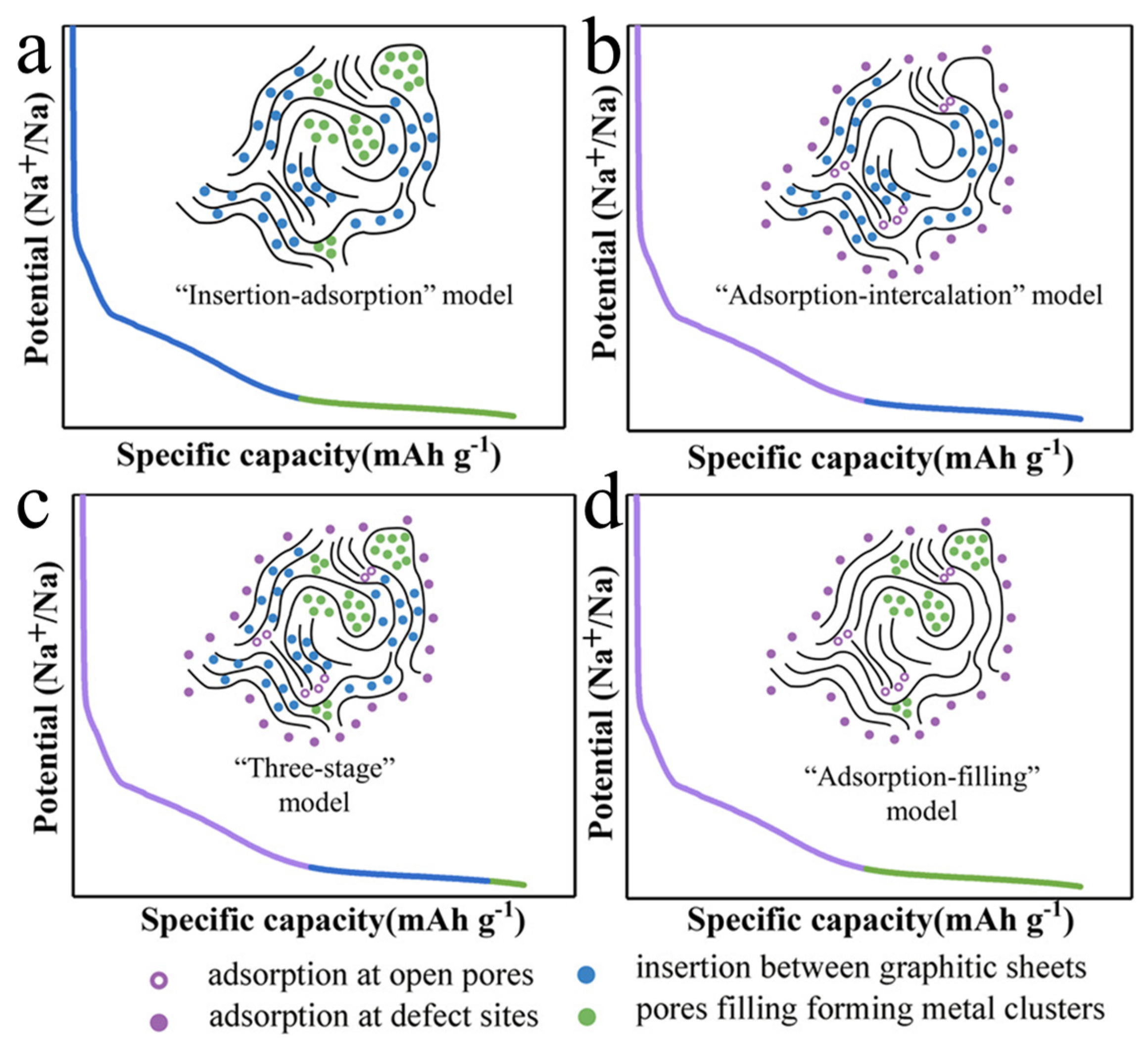
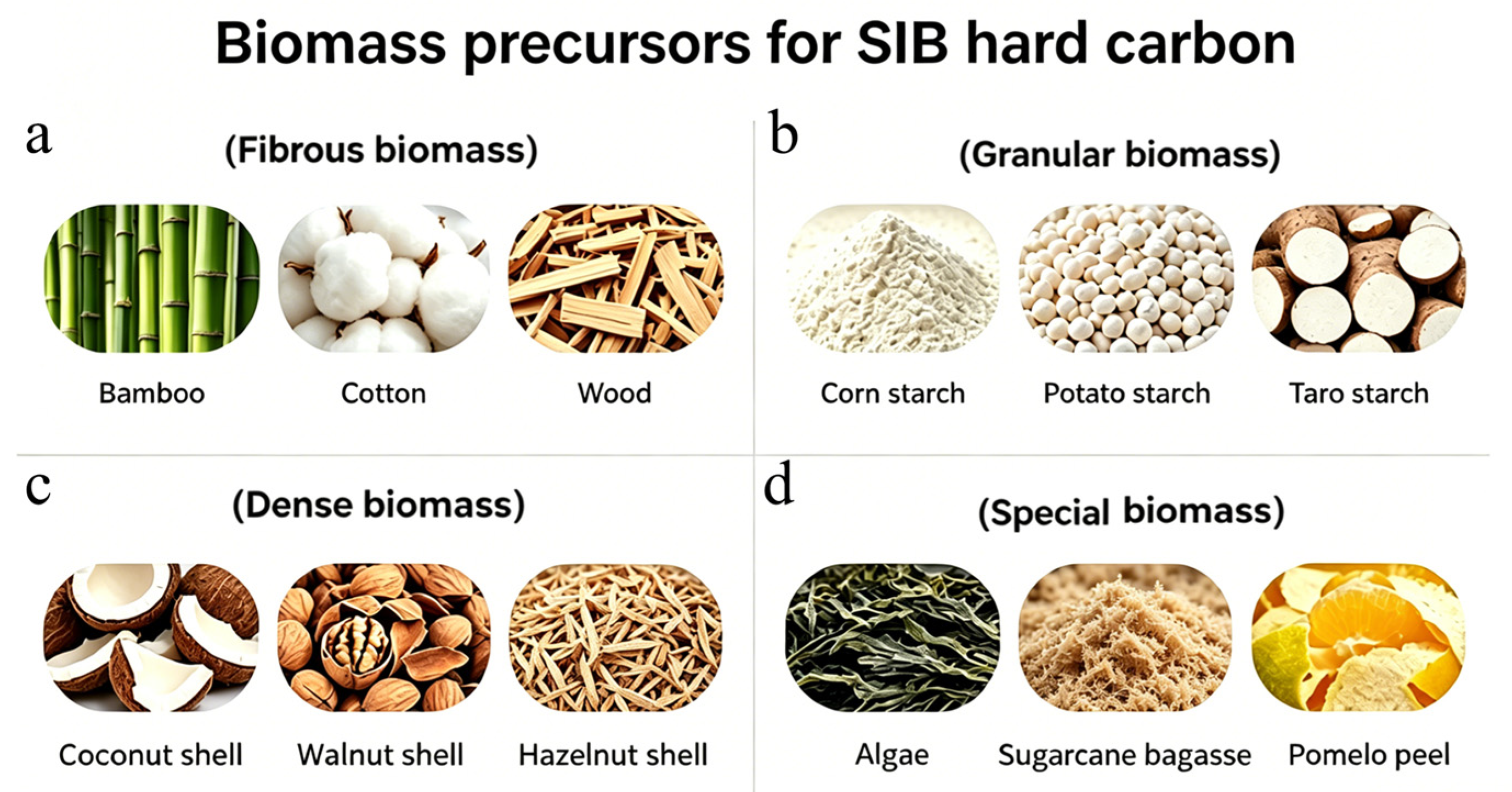
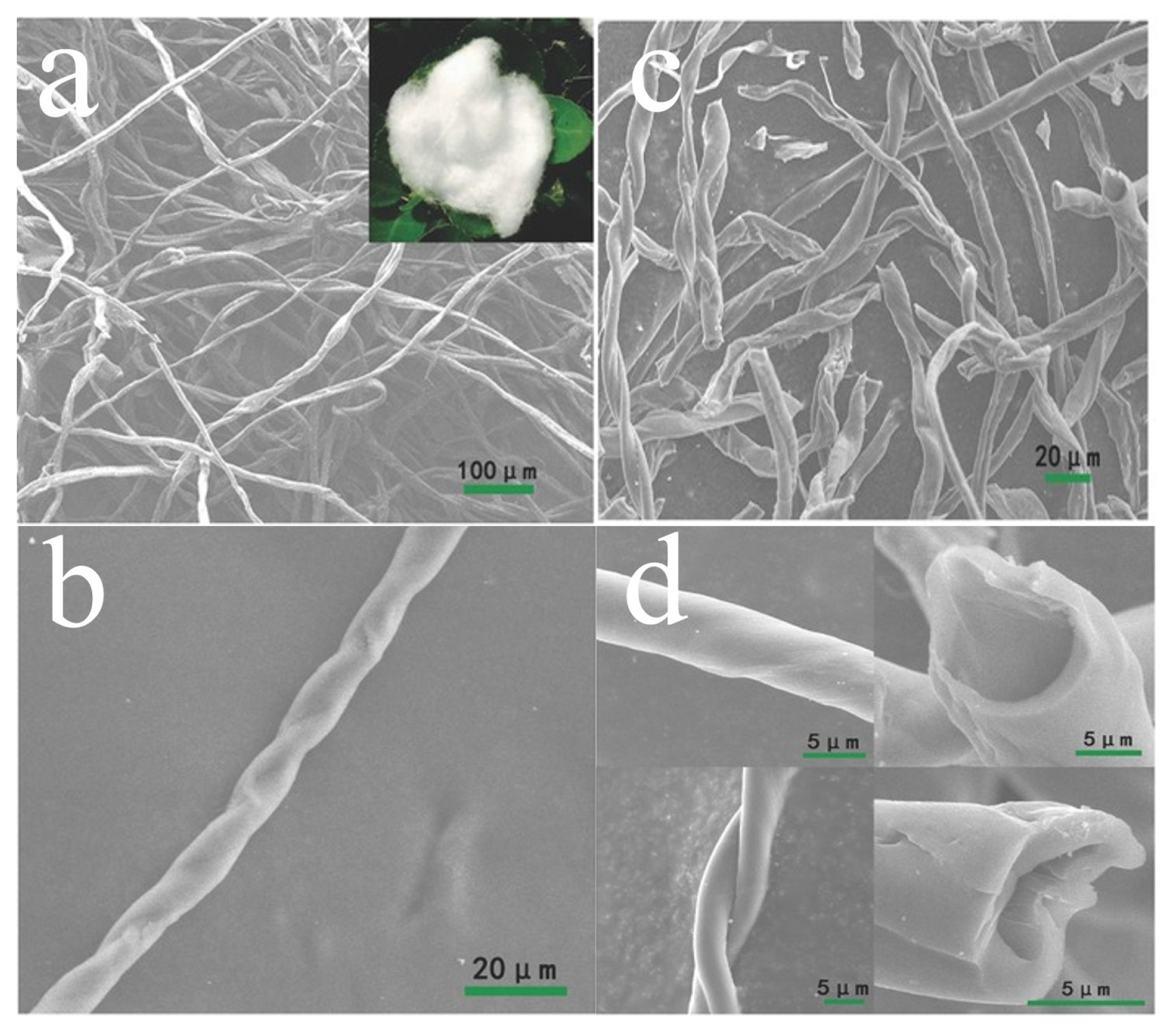
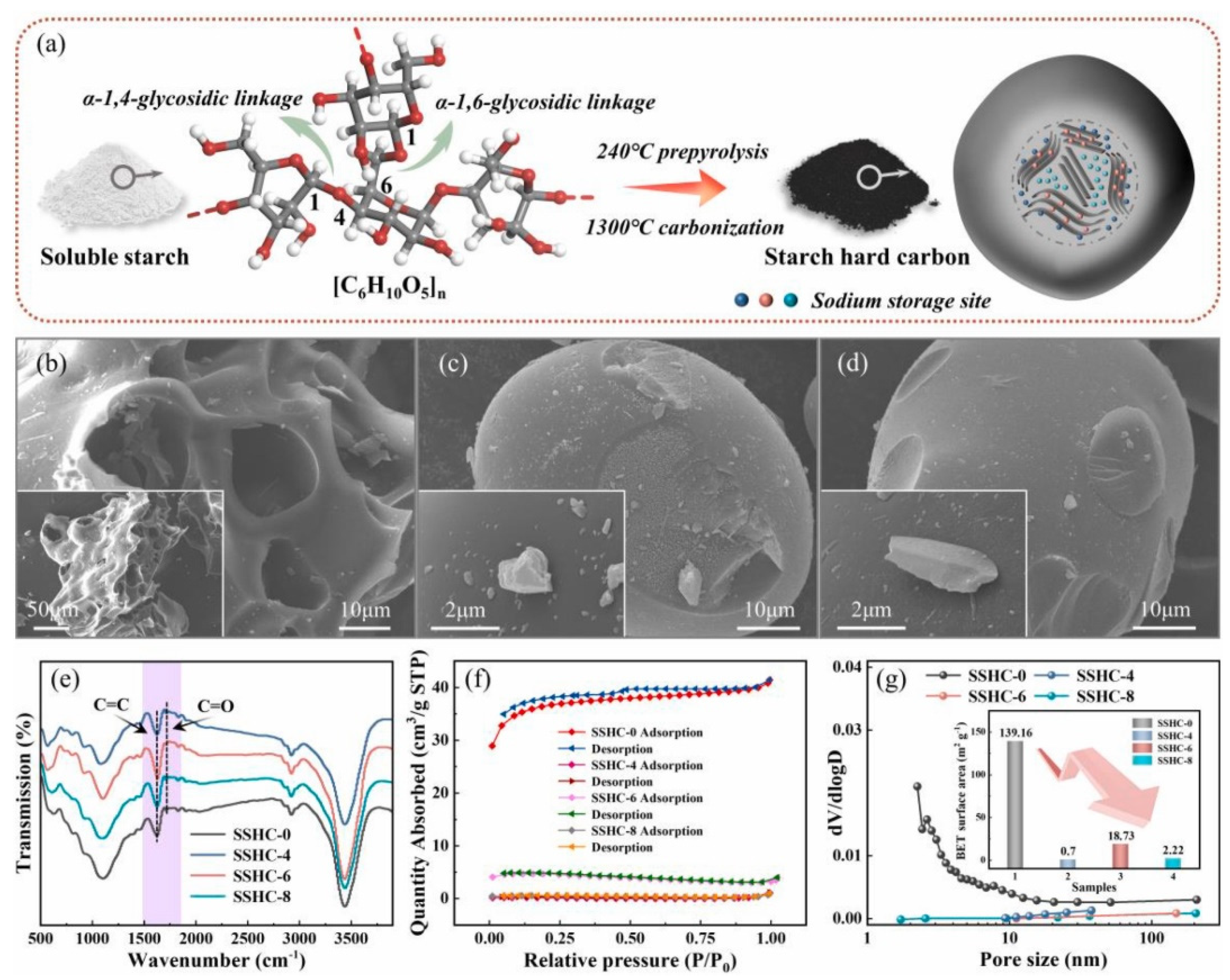
Biomass Precursors for Hard Carbon Anodes in Sodium-Ion Batteries: Structural Characteristics and Performance Relationships

Abstract
Share and Cite
Kang, M.; Huang, L.; Zhang, Y.; Wang, F.; Li, X.; Wu, X. Biomass Precursors for Hard Carbon Anodes in Sodium-Ion Batteries: Structural Characteristics and Performance Relationships. Nanomaterials 2026, 16, 879. https://doi.org/10.3390/nano16140879
Kang M, Huang L, Zhang Y, Wang F, Li X, Wu X. Biomass Precursors for Hard Carbon Anodes in Sodium-Ion Batteries: Structural Characteristics and Performance Relationships. Nanomaterials. 2026; 16(14):879. https://doi.org/10.3390/nano16140879
Chicago/Turabian StyleKang, Man, Luyao Huang, Yuxuan Zhang, Fei Wang, Xiaowei Li, and Xiaodong Wu. 2026. "Biomass Precursors for Hard Carbon Anodes in Sodium-Ion Batteries: Structural Characteristics and Performance Relationships" Nanomaterials 16, no. 14: 879. https://doi.org/10.3390/nano16140879
APA StyleKang, M., Huang, L., Zhang, Y., Wang, F., Li, X., & Wu, X. (2026). Biomass Precursors for Hard Carbon Anodes in Sodium-Ion Batteries: Structural Characteristics and Performance Relationships. Nanomaterials, 16(14), 879. https://doi.org/10.3390/nano16140879