Article

An Overview of Mechanical Properties of Diamond-like Phases under Tension

by
Julia A. Baimova
1,2
1
Institute for Metals Superplasticity Problems, Russian Academy of Sciences, 450001 Ufa, Russia
2
The World-Class Advanced Digital Technologies Research Center, Peter the Great St. Petersburg Polytechnic University, 195251 St. Petersburg, Russia
Nanomaterials 2024, 14(2), 129; https://doi.org/10.3390/nano14020129
Submission received: 1 December 2023 / Revised: 28 December 2023 / Accepted: 2 January 2024 / Published: 5 January 2024
(This article belongs to the Special Issue Nanodiamond Applications: From Biomedicine to Quantum Optics)

Abstract

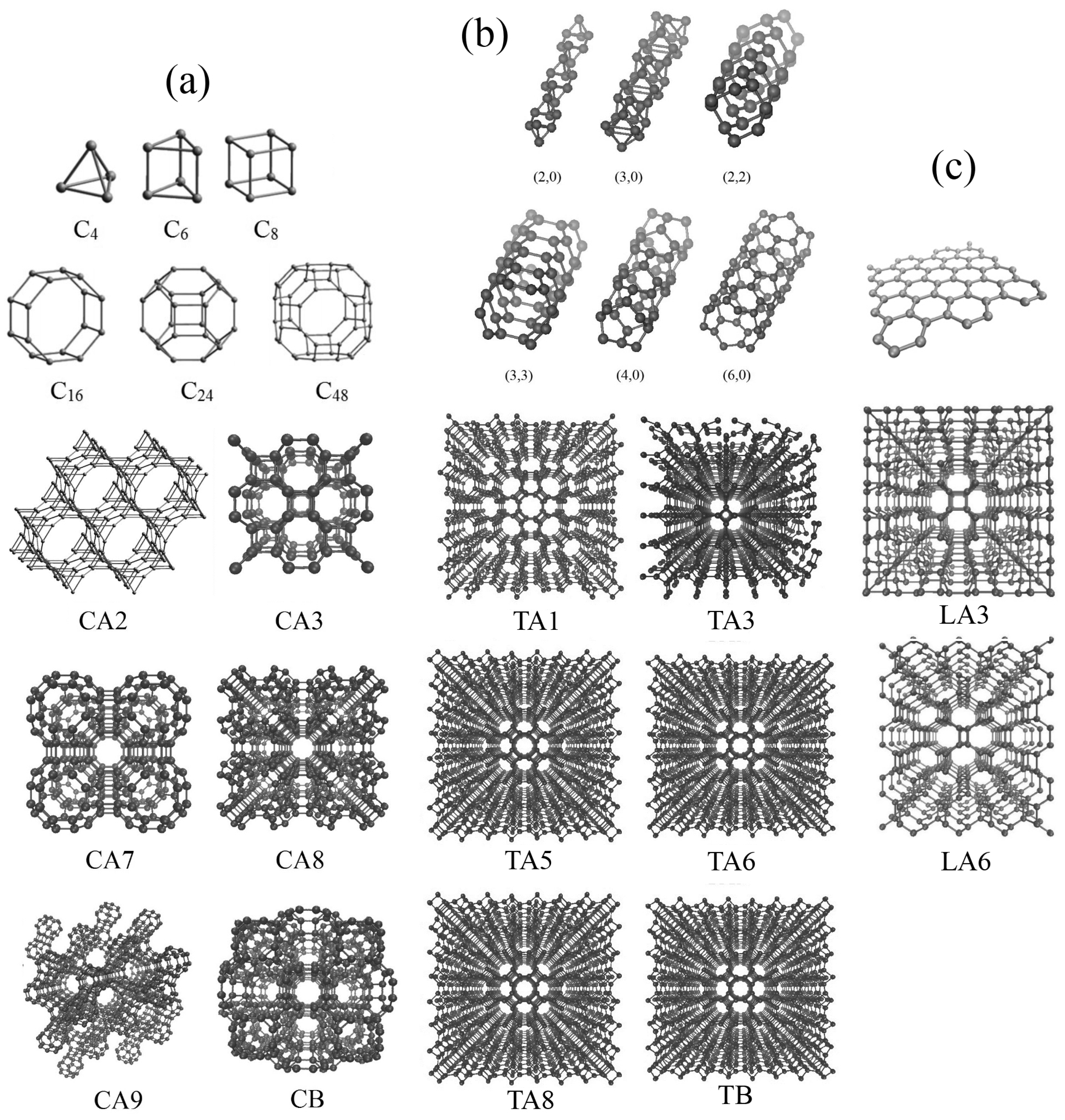
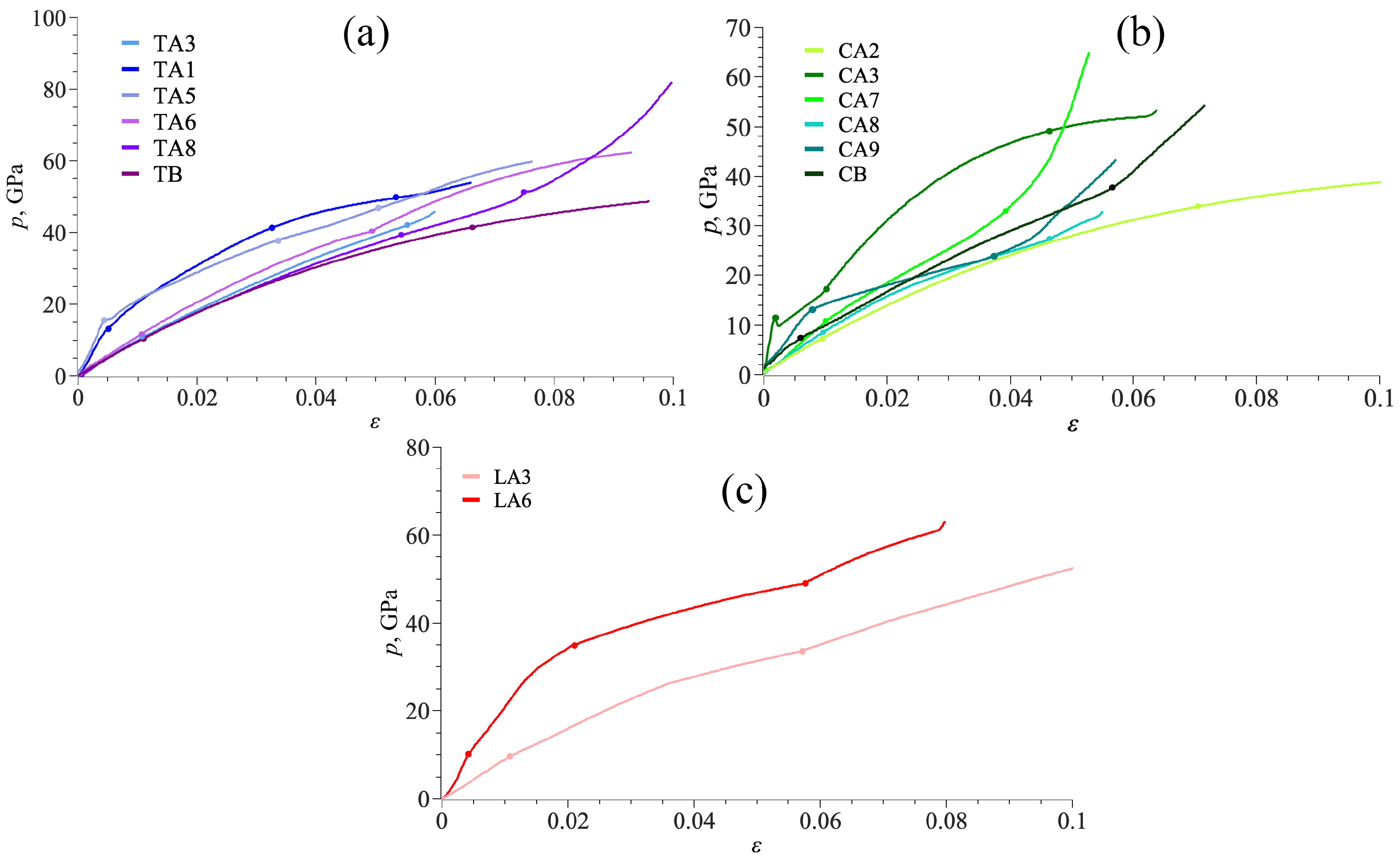
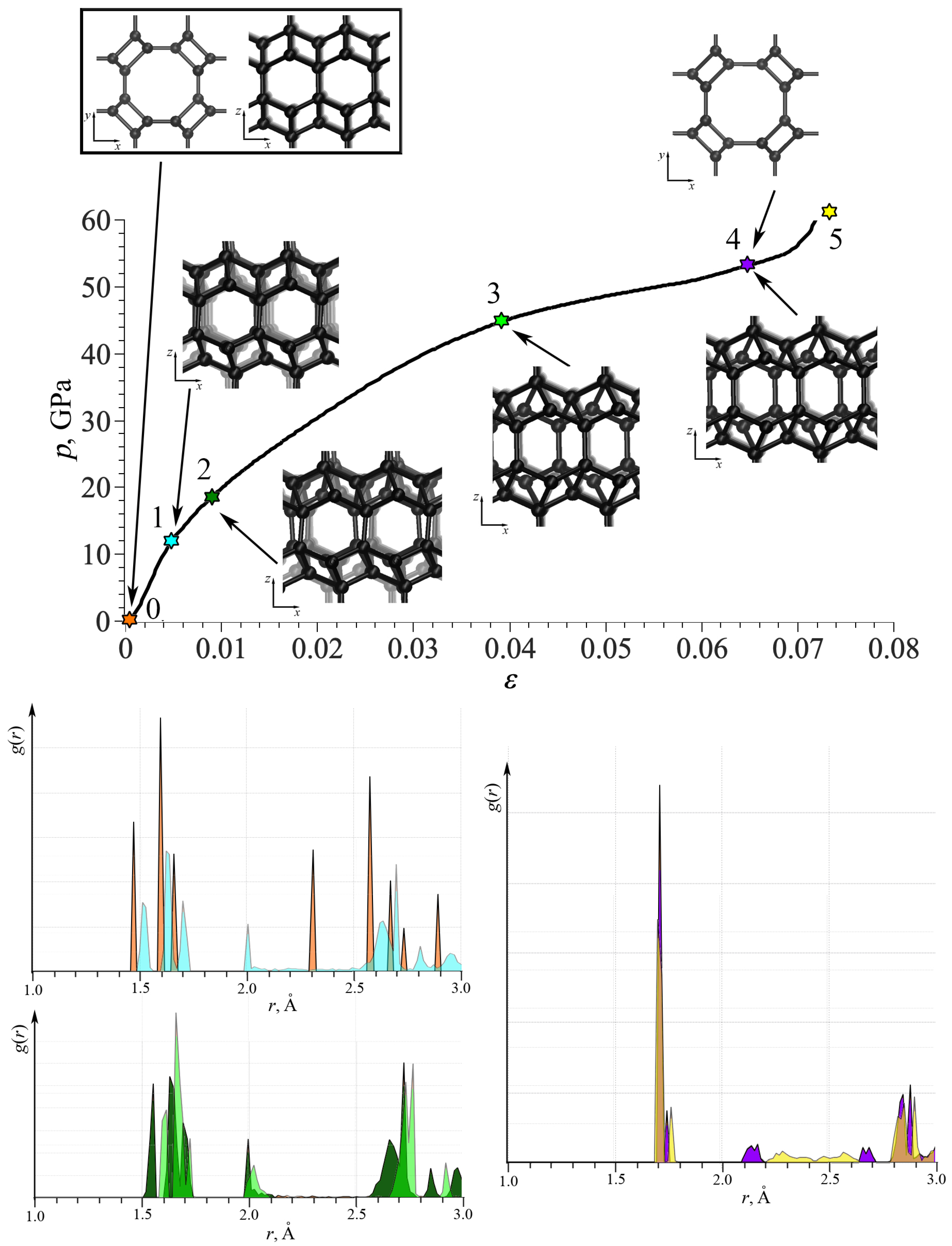
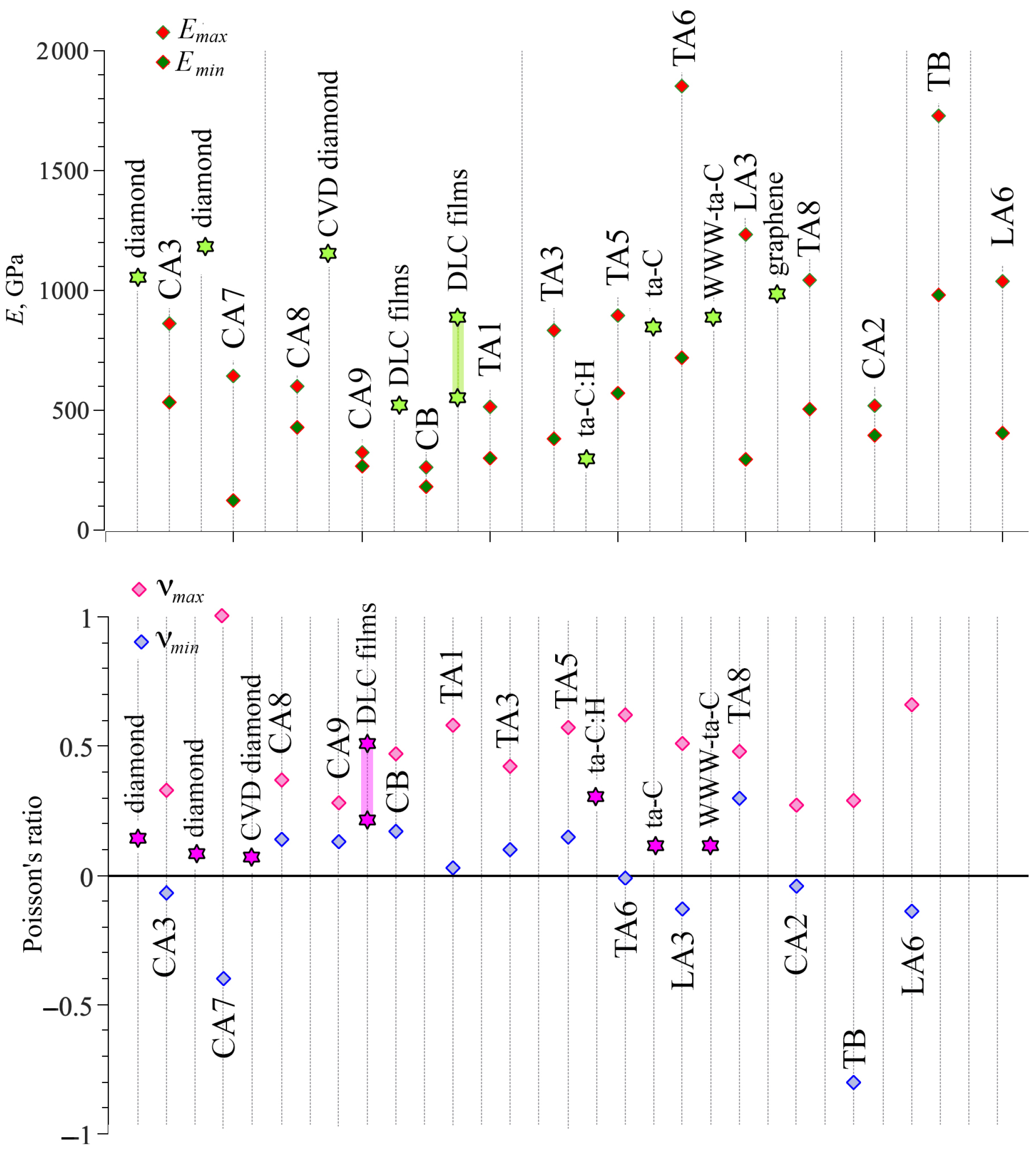
Diamond-like phases are materials with crystal lattices very similar to diamond. Recent results suggest that diamond-like phases are superhard and superstrong materials that can be used for tribological applications or as protective coatings. In this work, 14 stable diamond-like phases based on fullerenes, carbon nanotubes, and graphene layers are studied via molecular dynamics simulation. The compliance constants, Young’s modulus, and Poisson’s ratio were calculated. Deformation behavior under tension is analyzed based on two deformation modes—bond rotation and bond elongation. The results show that some of the considered phases possess very high Young’s modulus (E1) TPa, even higher than that of diamond. Both Young’s modulus and Poisson’s ratio exhibit mechanical anisotropy. Half of the studied phases are partial auxetics possessing negative Poisson’s ratio with a minimum value of −0.8. The obtained critical values of applied tensile strain confirmed that diamond-like phases are high-strength structures with a promising application prospect. Interestingly, the critical limit is not a fracture but a phase transformation to the short-ordered crystal lattice. Overall, our results suggest that diamond-like phases have extraordinary mechanical properties, making them good materials for protective coatings.
Keywords: graphene; diamond-like phases; elastic constants; molecular dynamics; mechanical properties graphene; diamond-like phases; elastic constants; molecular dynamics; mechanical properties