Article

Magnetization States and Coupled Spin-Wave Modes in Concentric Double Nanorings

by
Bushra Hussain
1,† and
Michael G. Cottam
2,*,†
1
Department of Natural Sciences, University of Michigan, Dearborn, MI 48197, USA
2
Department of Physics and Astronomy, University of Western Ontario, London, ON N6A 3K7, Canada
*
Author to whom correspondence should be addressed.
These authors contributed equally to this work.
Nanomaterials 2024, 14(19), 1594; https://doi.org/10.3390/nano14191594
Submission received: 30 August 2024 / Revised: 23 September 2024 / Accepted: 29 September 2024 / Published: 2 October 2024
(This article belongs to the Section Theory and Simulation of Nanostructures)

Abstract

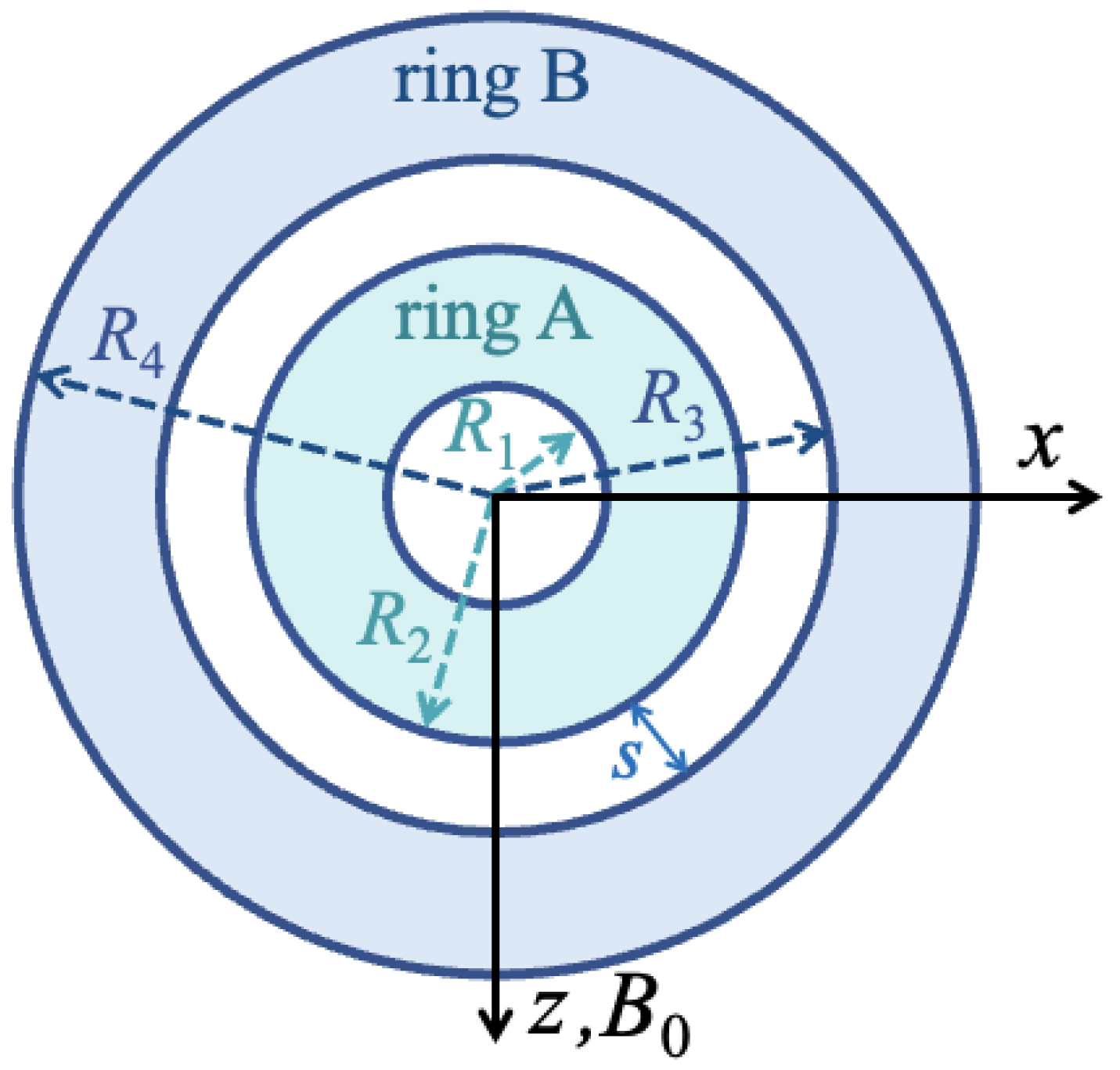
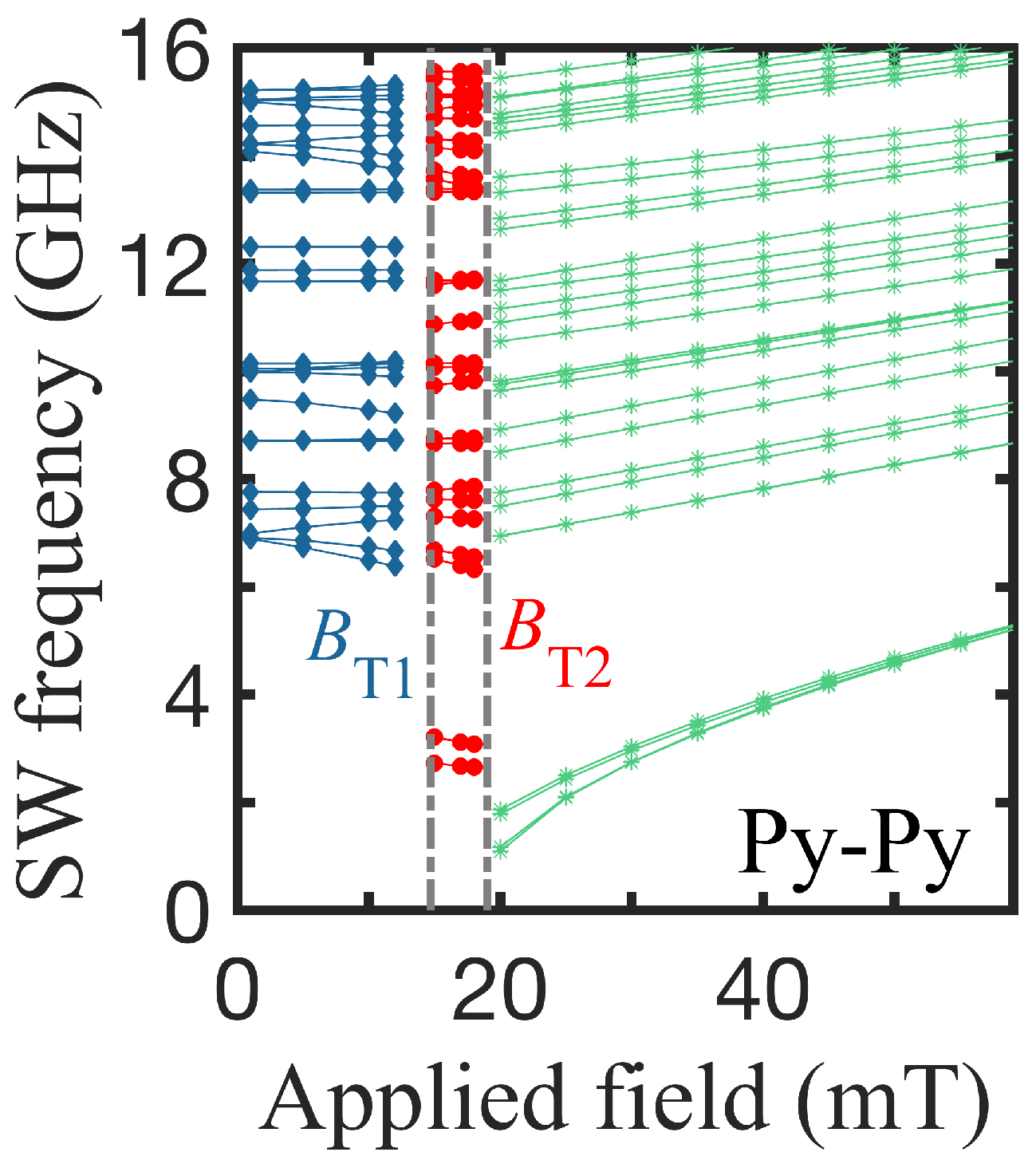
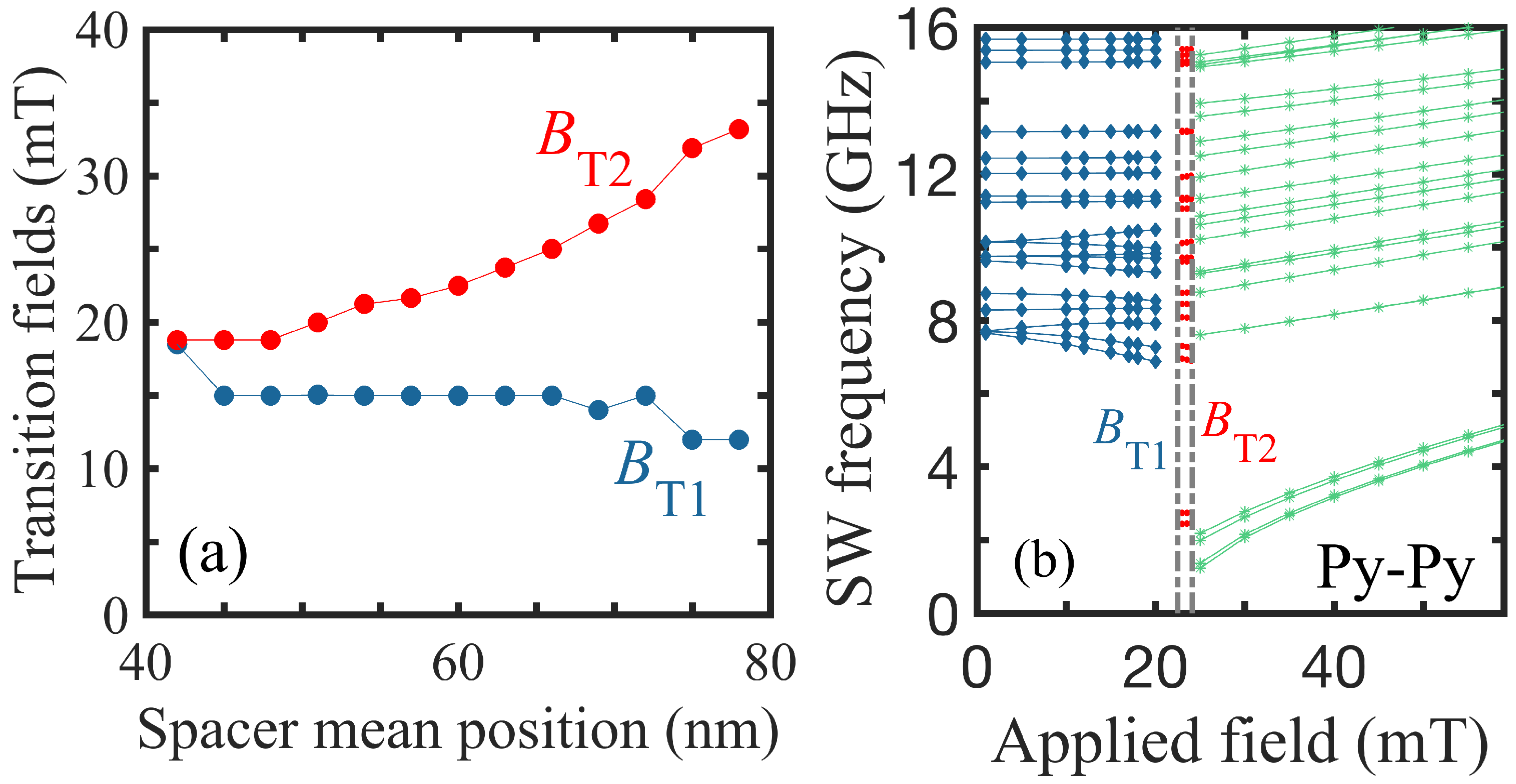
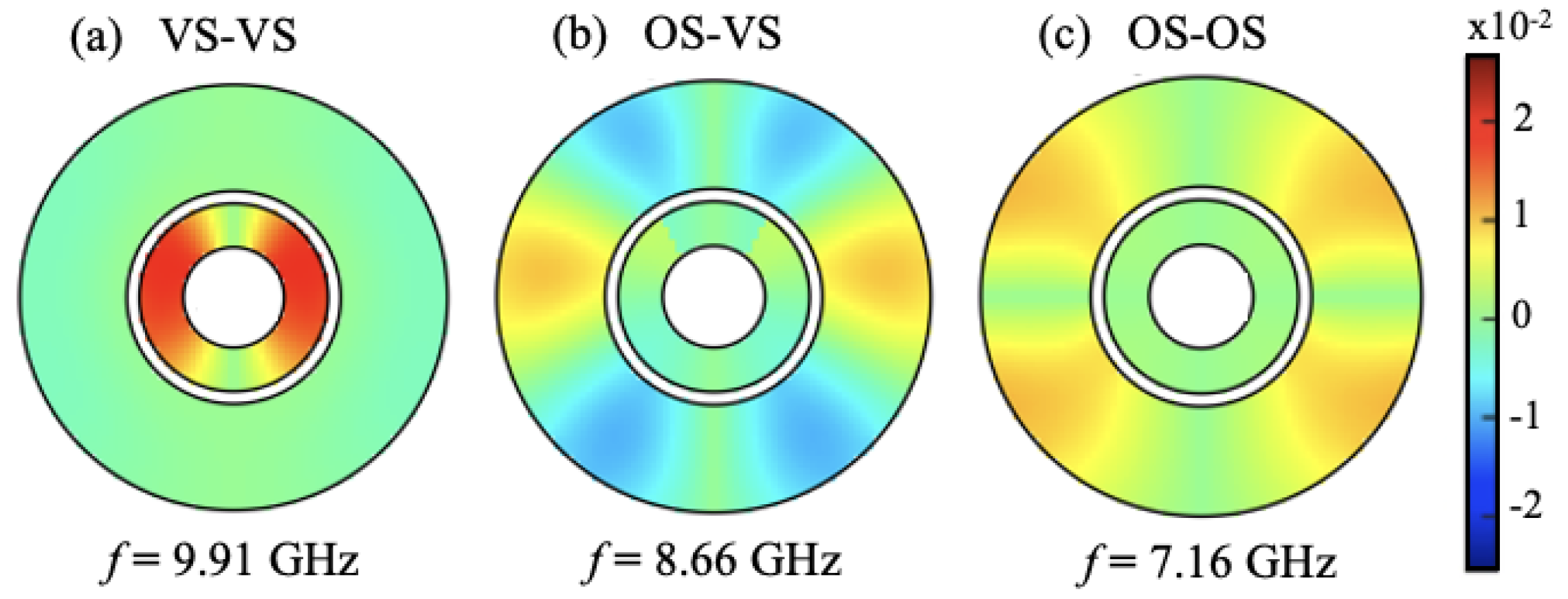
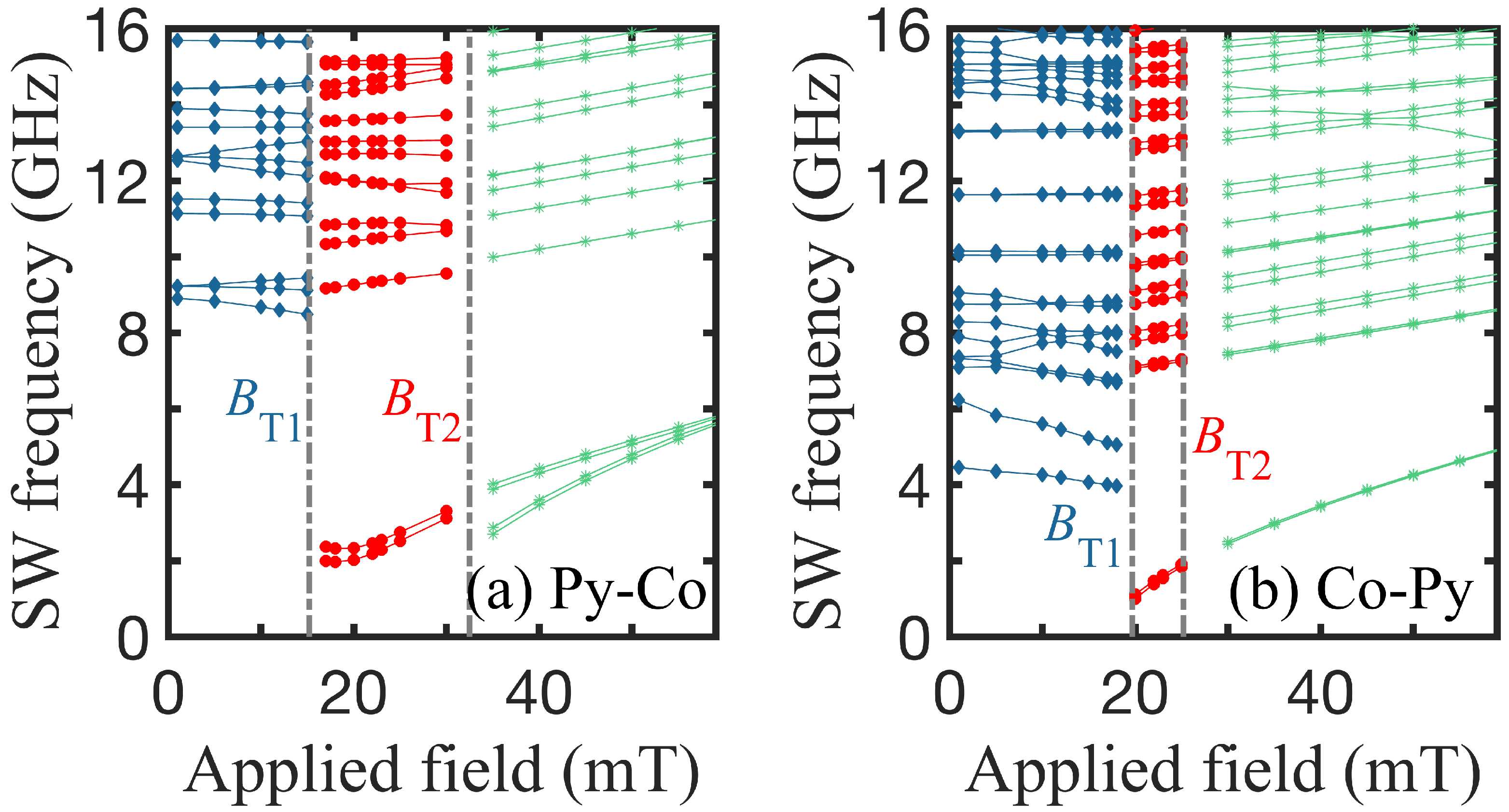
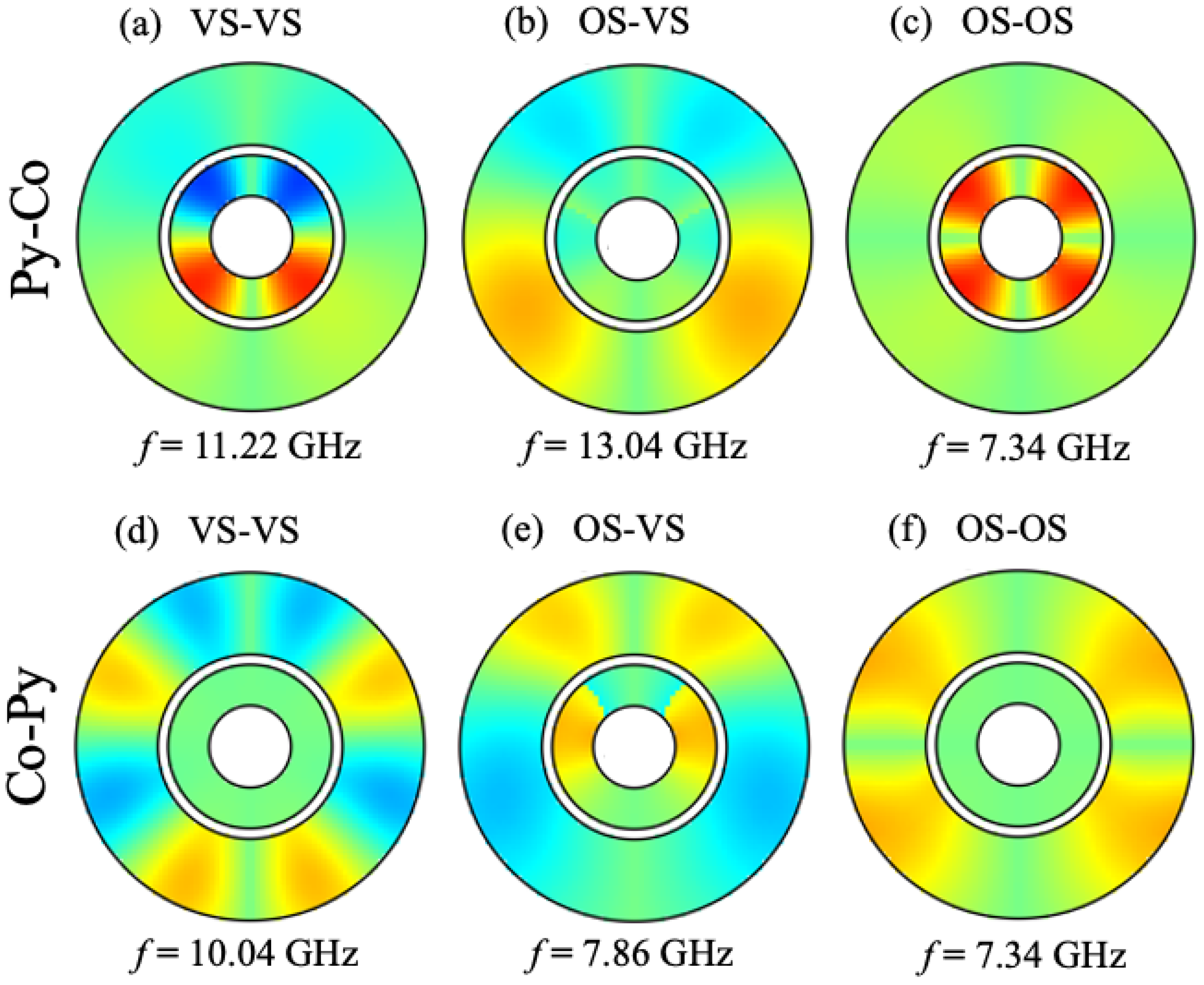
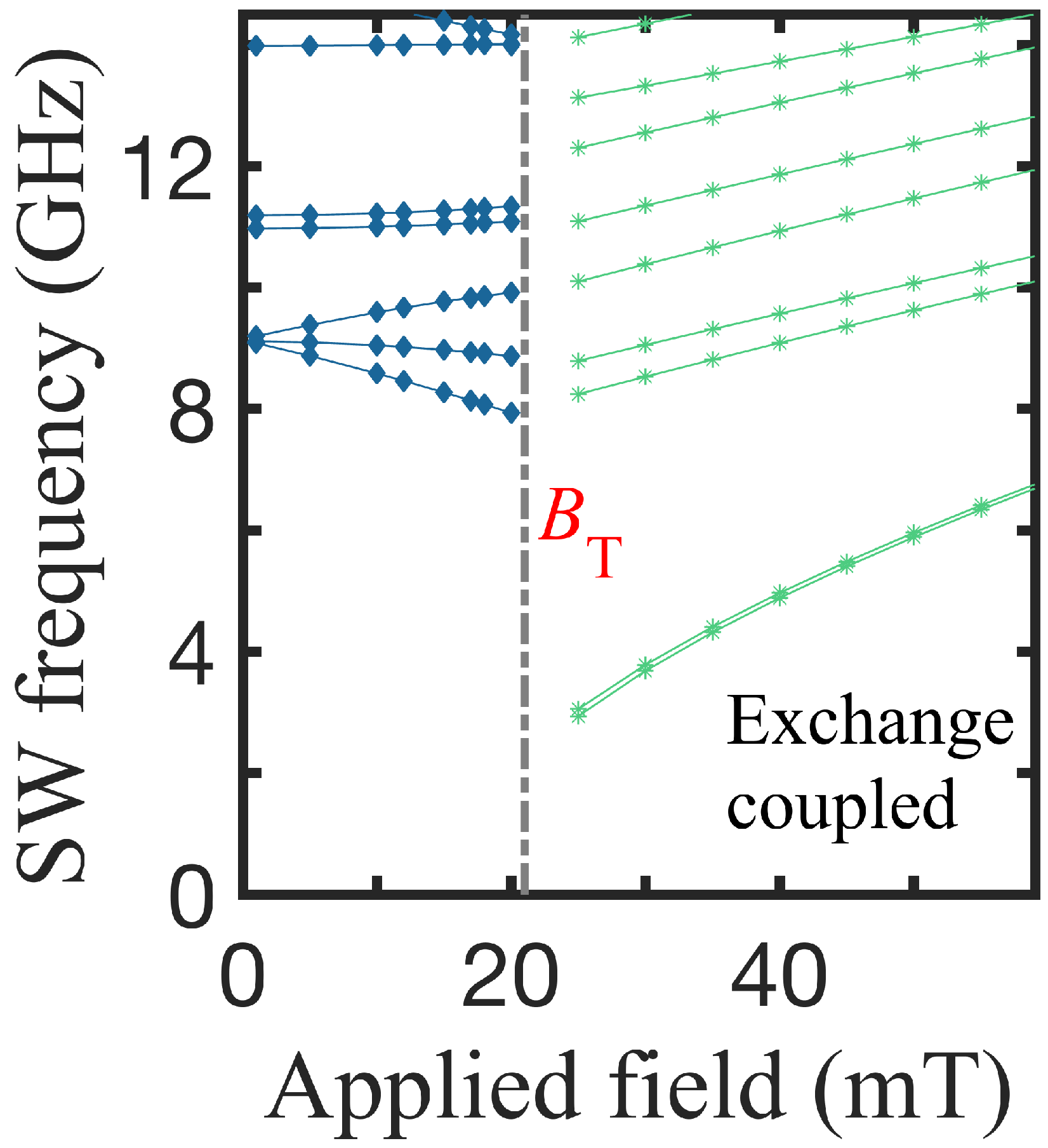
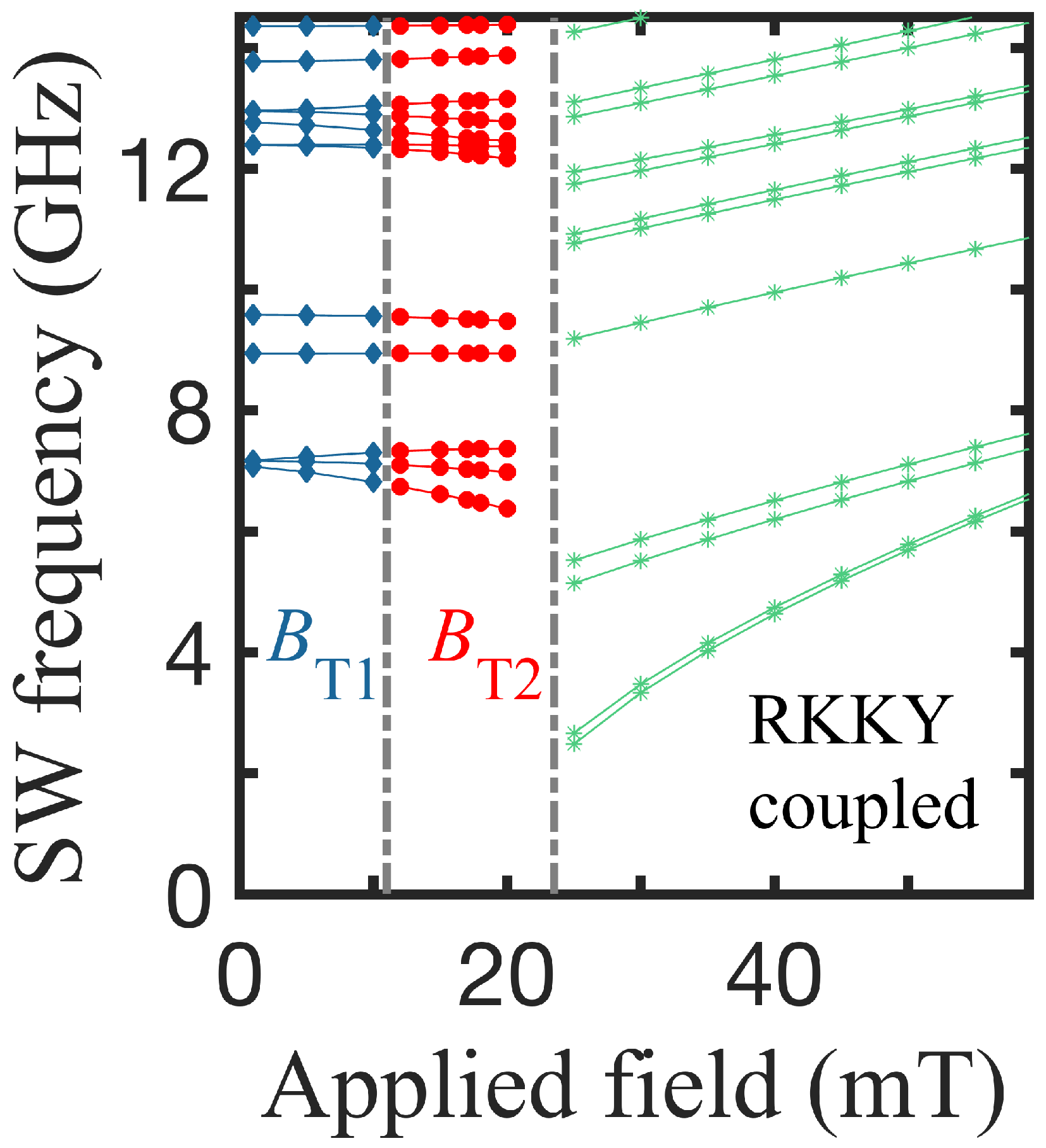
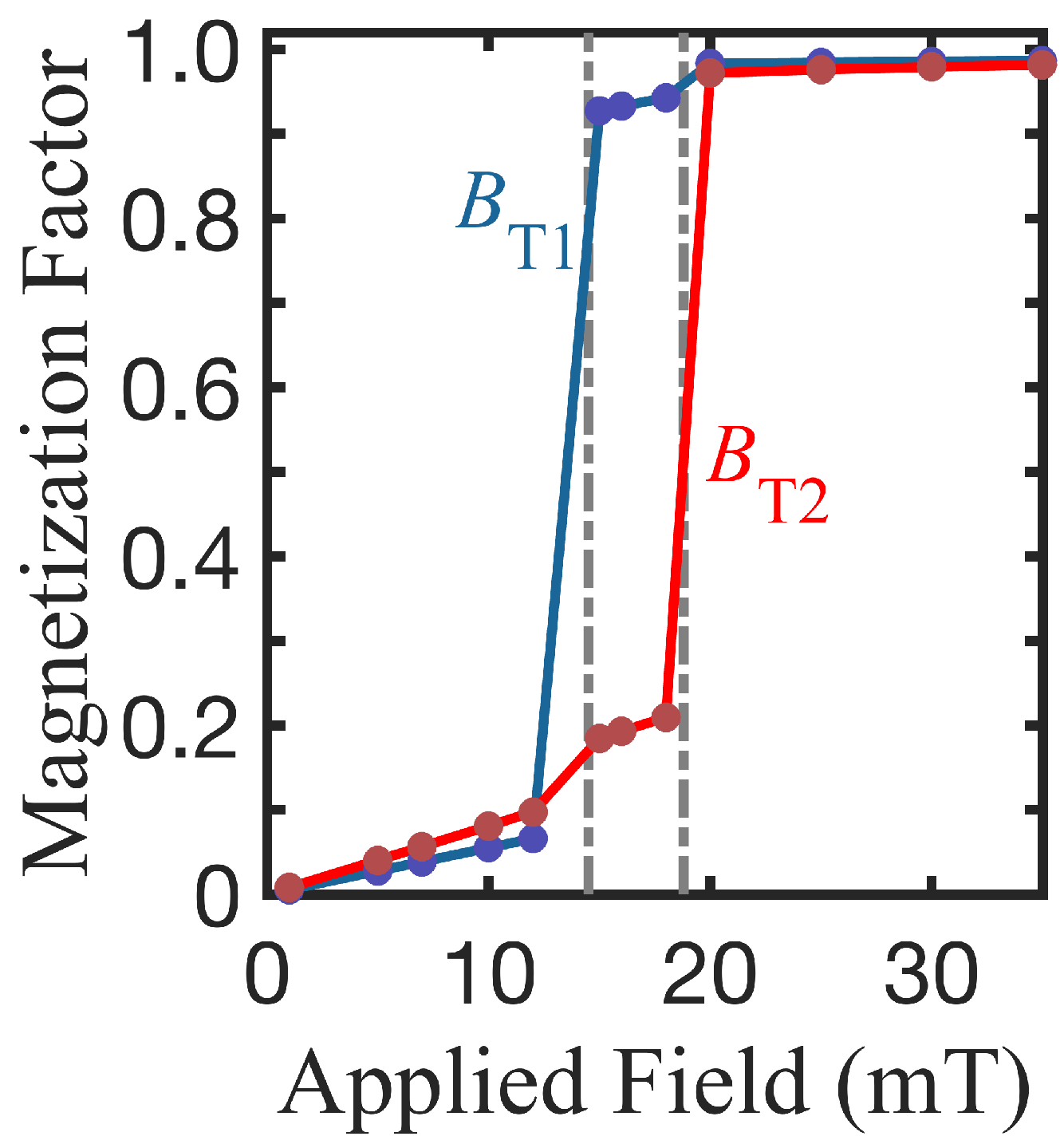
Concentric multiple nanorings have previously been fabricated and investigated mainly for their different static magnetization states. Here, we present a theoretical analysis for the magnetization dynamics in double nanorings arranged concentrically, where there is coupling across a nonmagnetic spacer due to the long-range dipole–dipole interactions. We employ a microscopic, or Hamiltonian-based, formalism to study the discrete spin waves that exist in the magnetic states where the individual rings may be in either a vortex or an onion state. Numerical results are shown for the frequencies and the spatial amplitudes (with relative phase included) of the spin-wave modes. Cases are considered in which the magnetic materials of the rings are the same (taken to be permalloy) or two different materials such as permalloy and cobalt. The dependence of these properties on the mean radial position of the spacer were studied, showing, in most cases, the existence of two distinct transition fields. The special cases, where the radial spacer width becomes very small (less than 1 nm) were analyzed to study direct interfaces between dissimilar materials and/or effects of interfacial exchange interactions such as Ruderman–Kittel–Kasuya–Yoshida coupling. These spin-wave properties may be of importance for magnetic switching devices and sensors.
Keywords: spin waves; ferromagnetic nanorings; concentric double nanorings; dipole–dipole interactions; dipole-exchange modes spin waves; ferromagnetic nanorings; concentric double nanorings; dipole–dipole interactions; dipole-exchange modes