Article

All-Dielectric Metasurface-Based Beam Splitter with Arbitrary Splitting Ratio
International Collaborative Laboratory of 2D Materials for Optoelectronics Science & Technology of Ministry of Education, Engineering Technology Research Center for 2D Material Information Function Devices and Systems of Guangdong Province, Institute of Microscale Optoelectronics, Shenzhen University, Shenzhen 518060, China
*
Author to whom correspondence should be addressed.
These authors contributed equally to this work.
Nanomaterials 2021, 11(5), 1137; https://doi.org/10.3390/nano11051137
Submission received: 5 March 2021 / Revised: 19 April 2021 / Accepted: 23 April 2021 / Published: 28 April 2021
(This article belongs to the Section Nanophotonics Materials and Devices)

Abstract

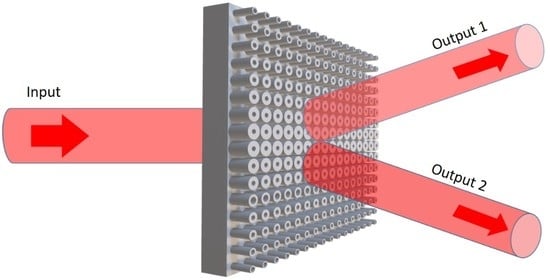
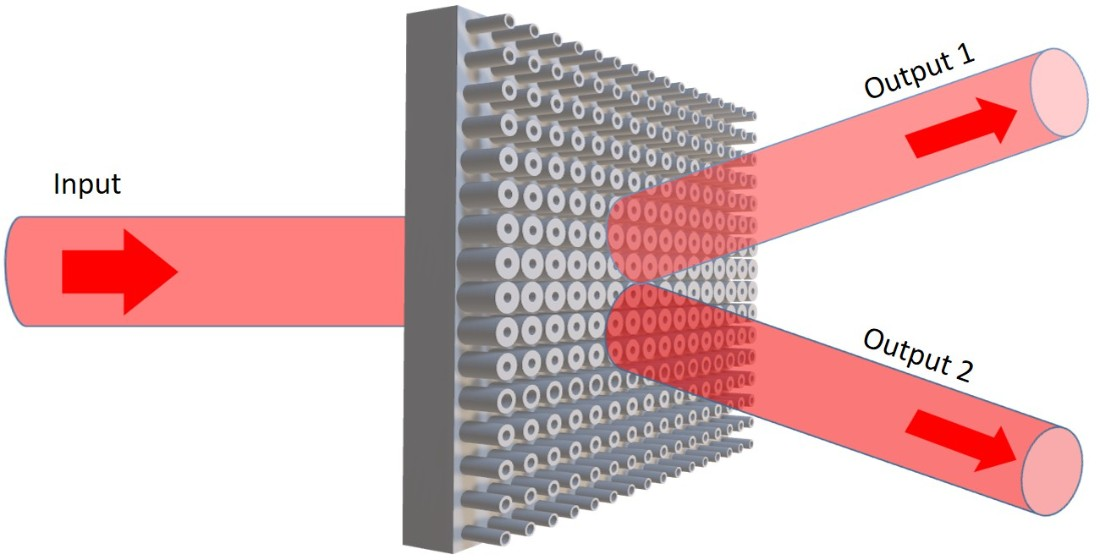
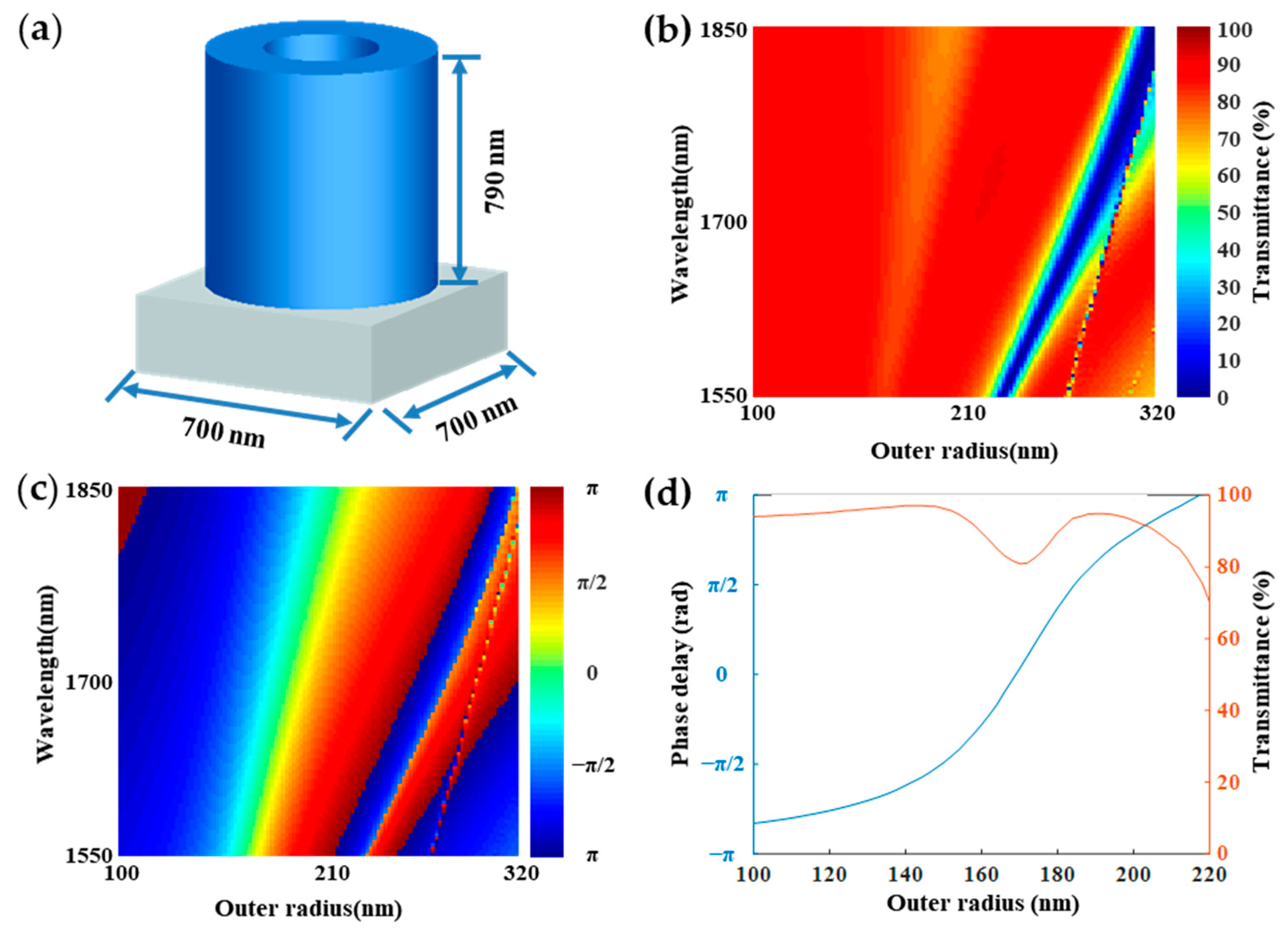
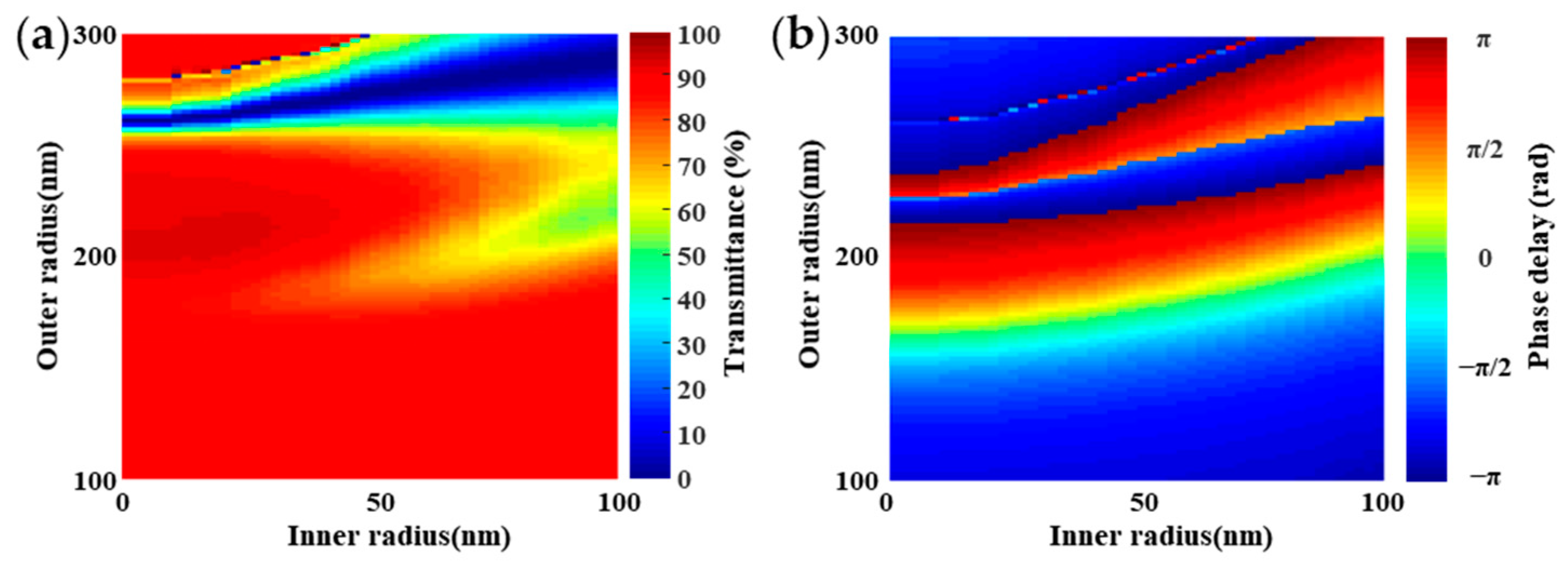
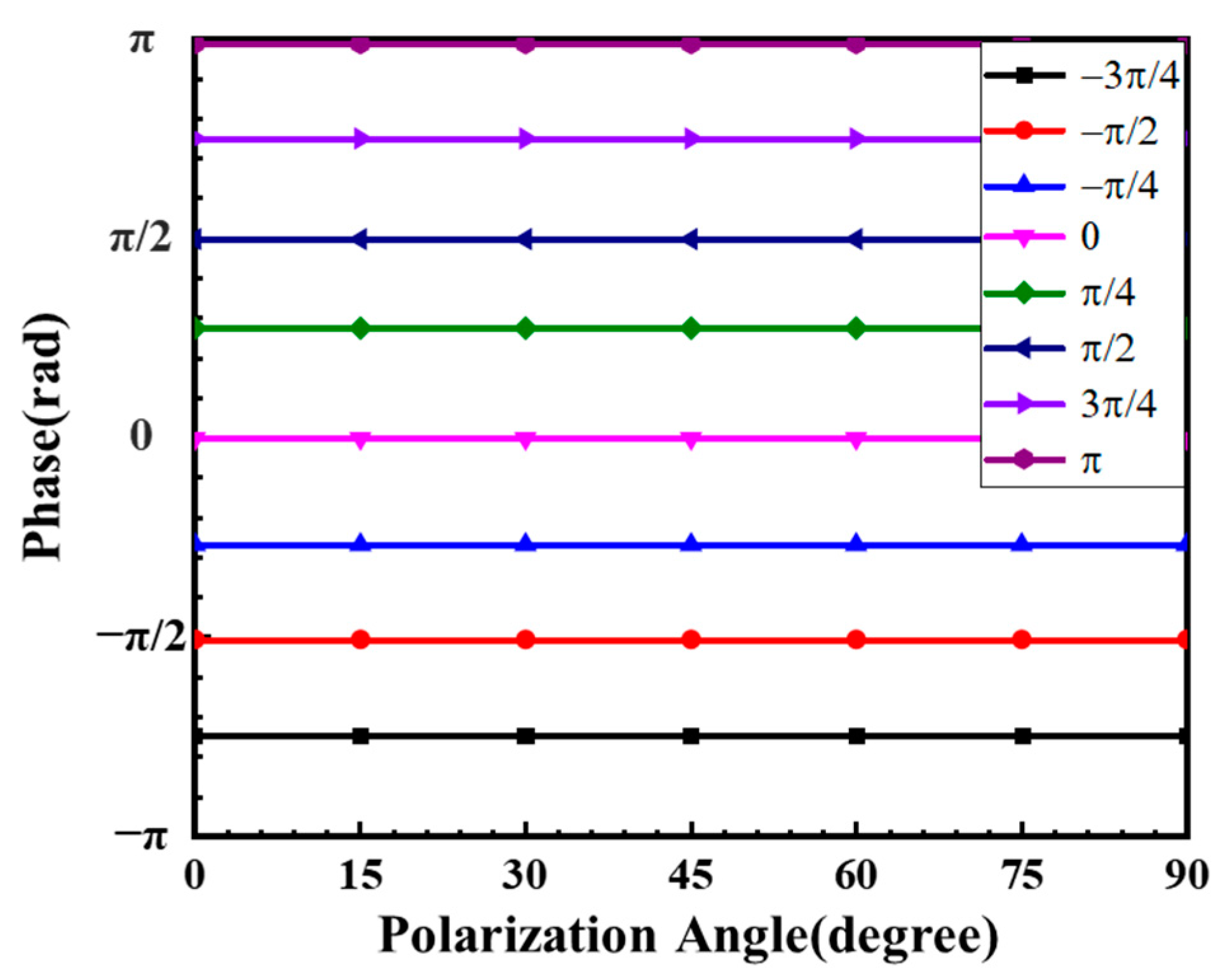
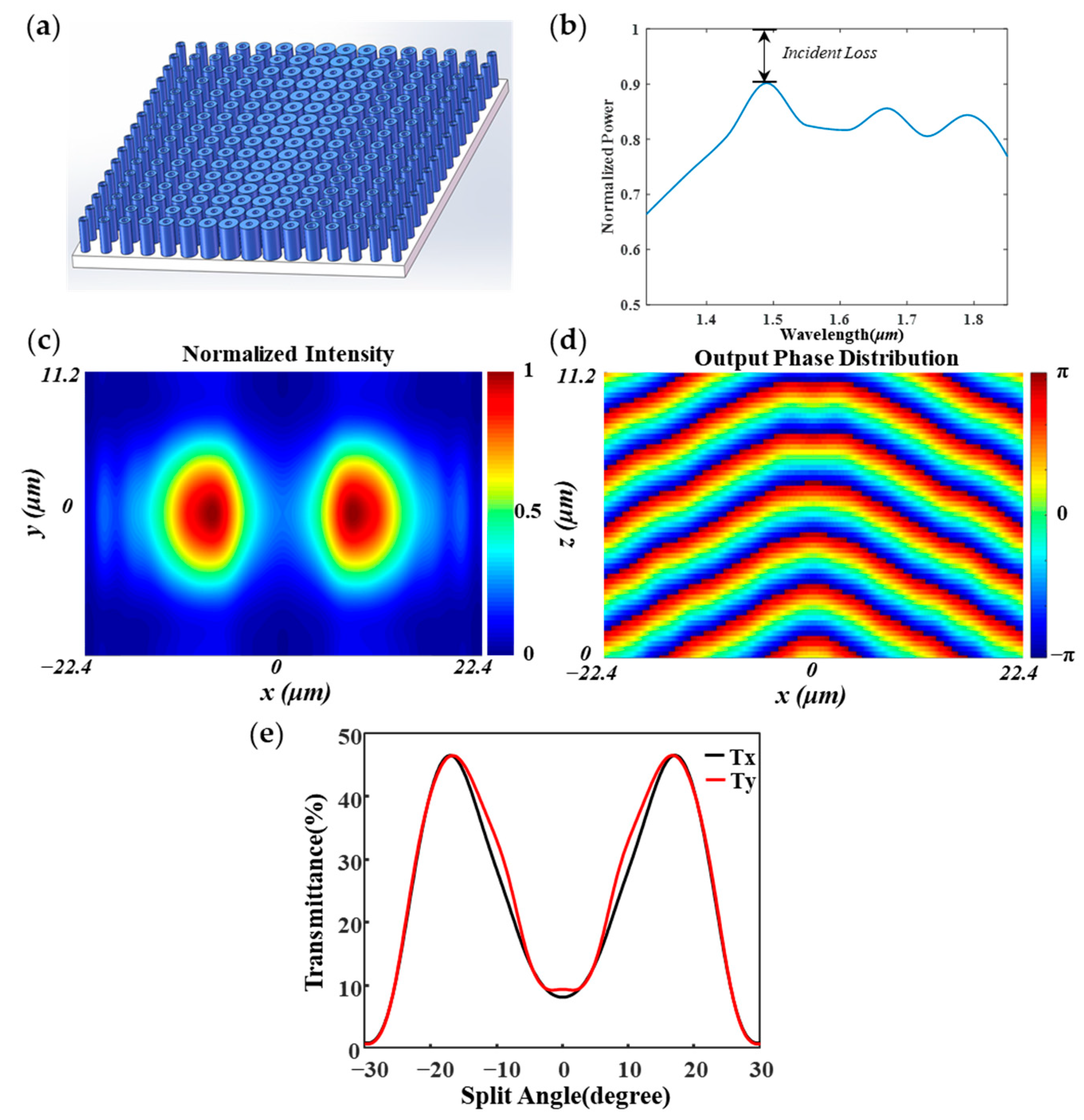
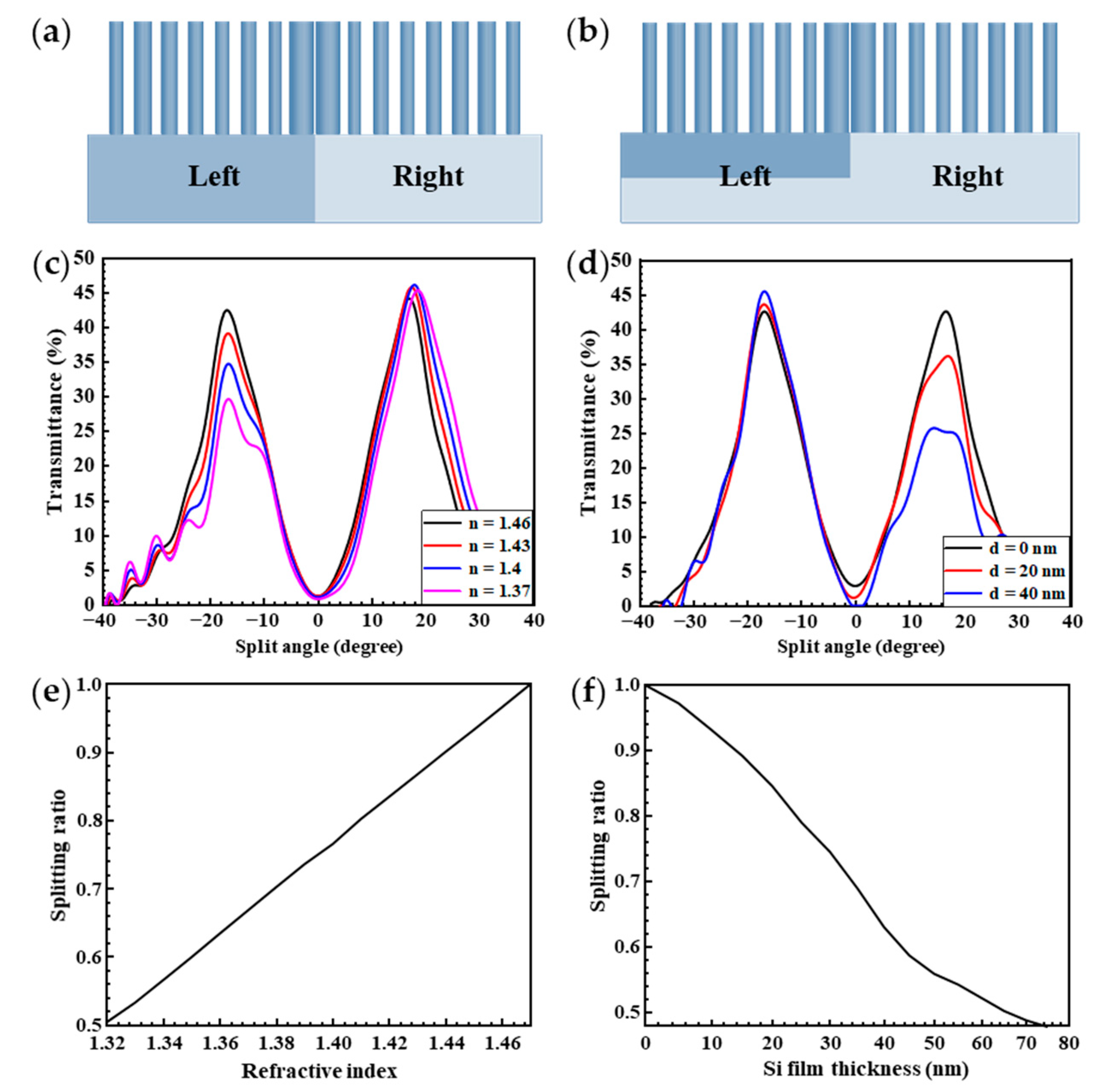
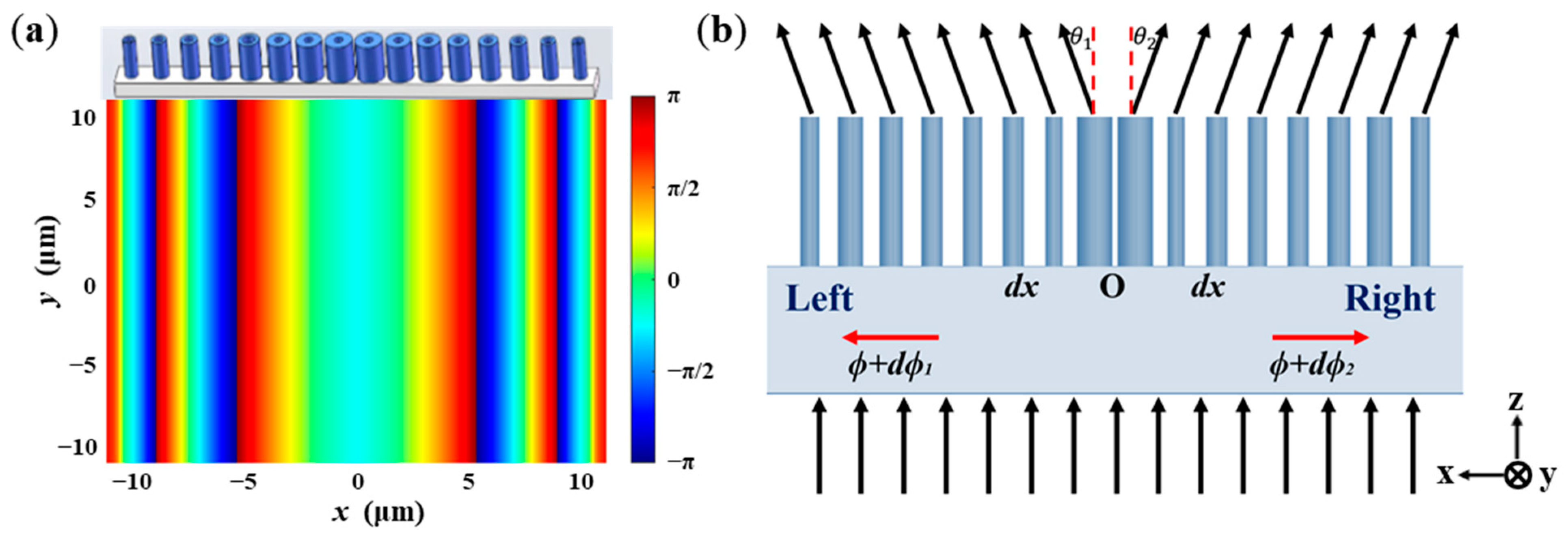
The development of optical systems is heading to multi-branch circuit design and miniaturization. A beam splitter is a common device for dividing an incident beam into two separate beams. Conventional beam splitters are constructed using coated prisms or glass plate. Their bulky size, right-angled output direction, and fixed splitting ratio greatly limit the design of optical arrangement and also hinder the system integration. Here, an all-dielectric metasurface composed of symmetric nano-rings as a beam splitter are designed by Finite-Difference Time-Domain method. By changing the inner and outer radiuses of the nano-rings, the wavefront phase of the emergence beam can be adjusted to form a phase gradient, and the incident beam of arbitrary polarization is divided into two beams according to the designed transmittance and angle. The initial phase of the emergence beam can be changed by adjusting the refractive index of the substrate or adding the silicon film to the substrate, and the splitting ratio can be adjusted from 0.5:1 to 1:1. The simulation demonstrates that the metasurface-based beam splitter is independent of polarization and the power efficiency is over 92% with a compact area of 33.6 μm × 33.6 μm. This compact metasurface-based beam splitter has promising potential for enabling new types of compact optical systems and advancing metasurface-based functional integrated photonic applications.
Keywords: beam splitter; metasurface; nano-ring; integrated optics beam splitter; metasurface; nano-ring; integrated optics
Graphical Abstract