
The Effect of Biomechanical Loading Parameters on the Stress and Strain Behavior of Orthodontic Mini-Implants: A Finite Element Study

 ,
,  , and
, and
Abstract
1. Introduction
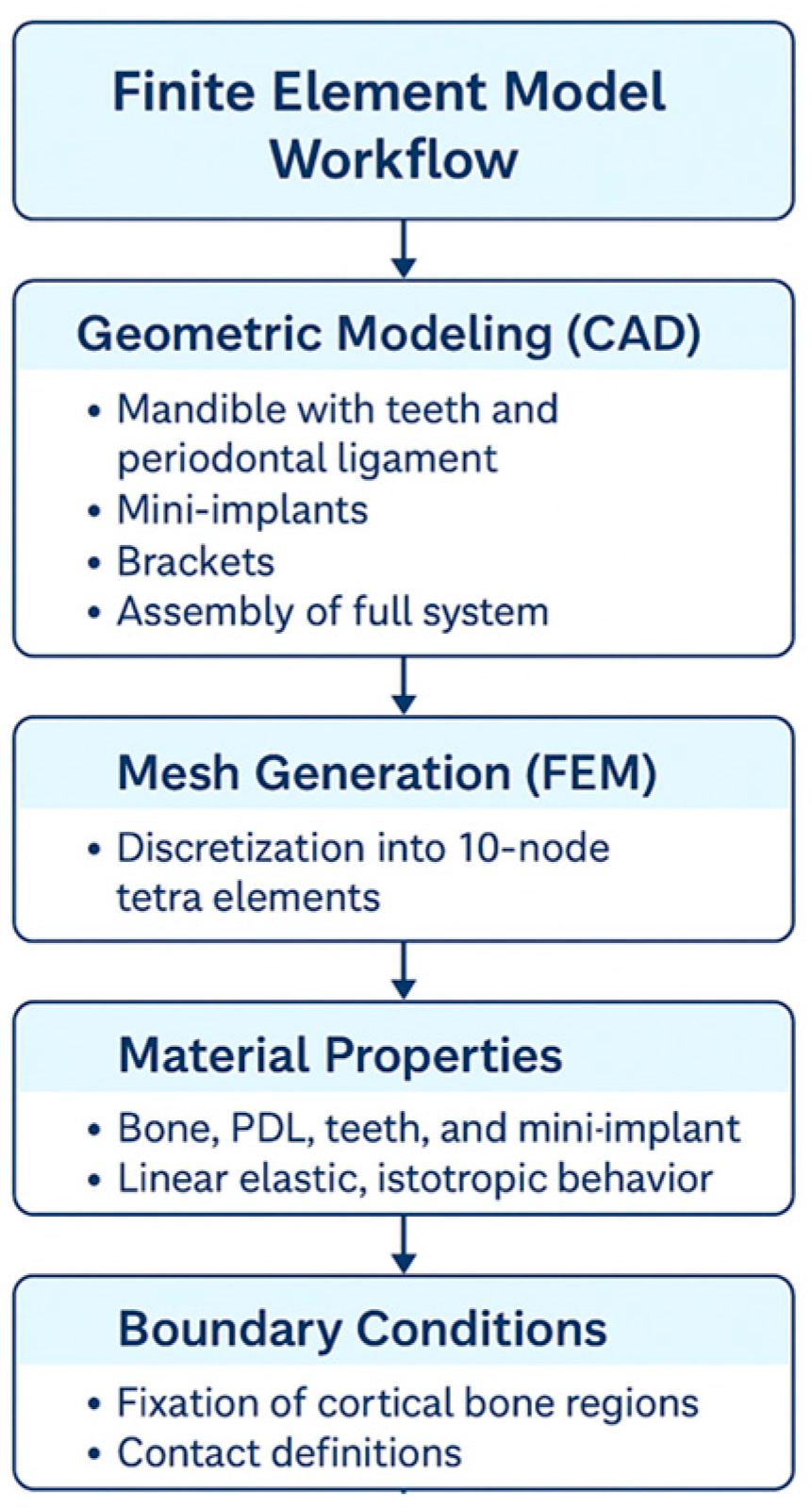
2. Materials and Methods
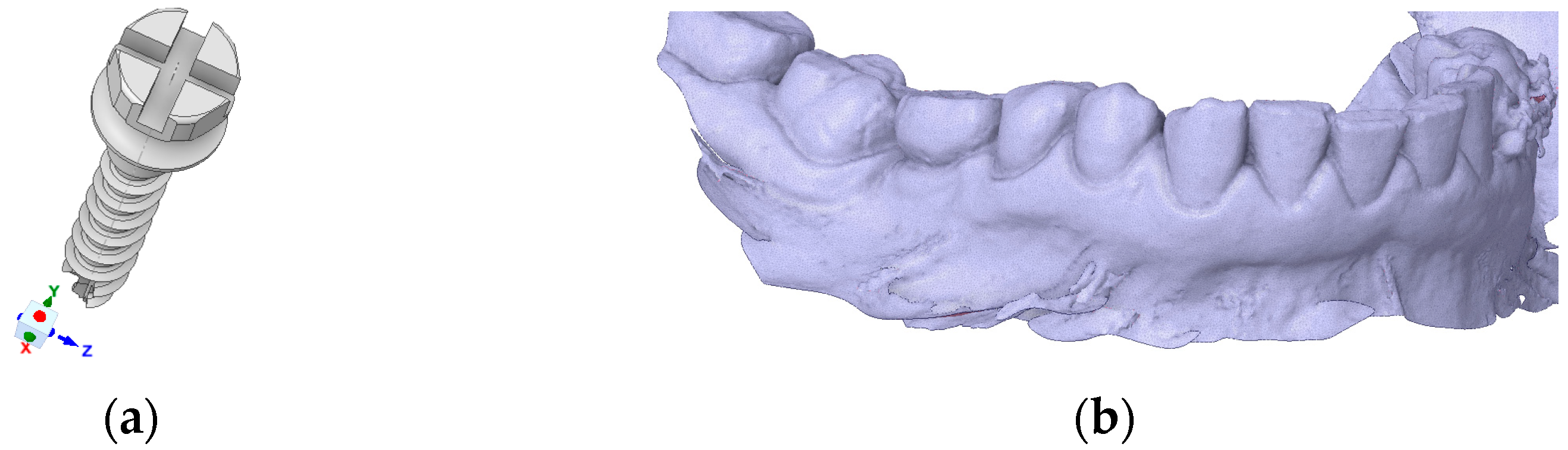
2.1. Geometric Modeling
2.2. Simulation Parameters
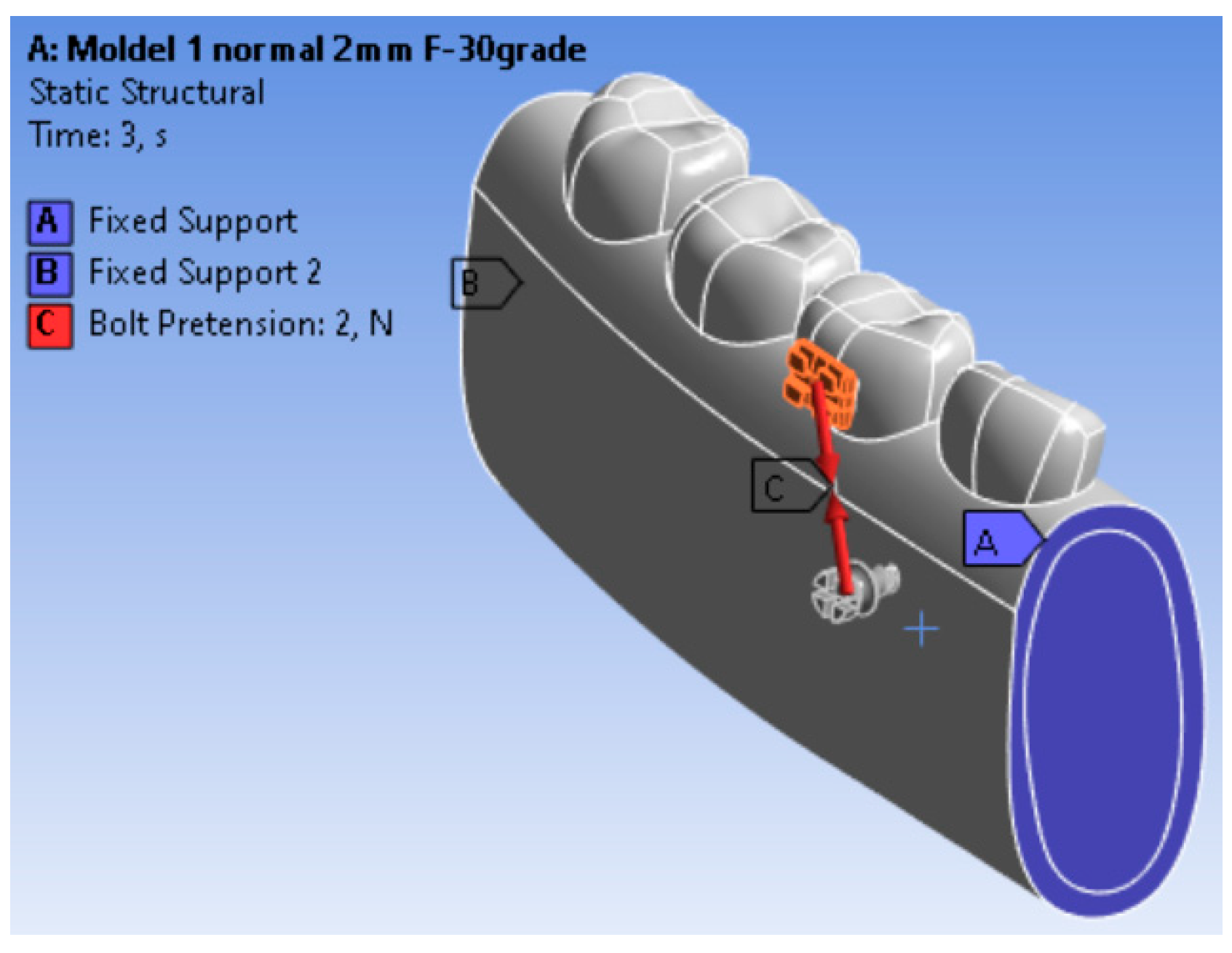
2.3. Boundary Conditions and Loading
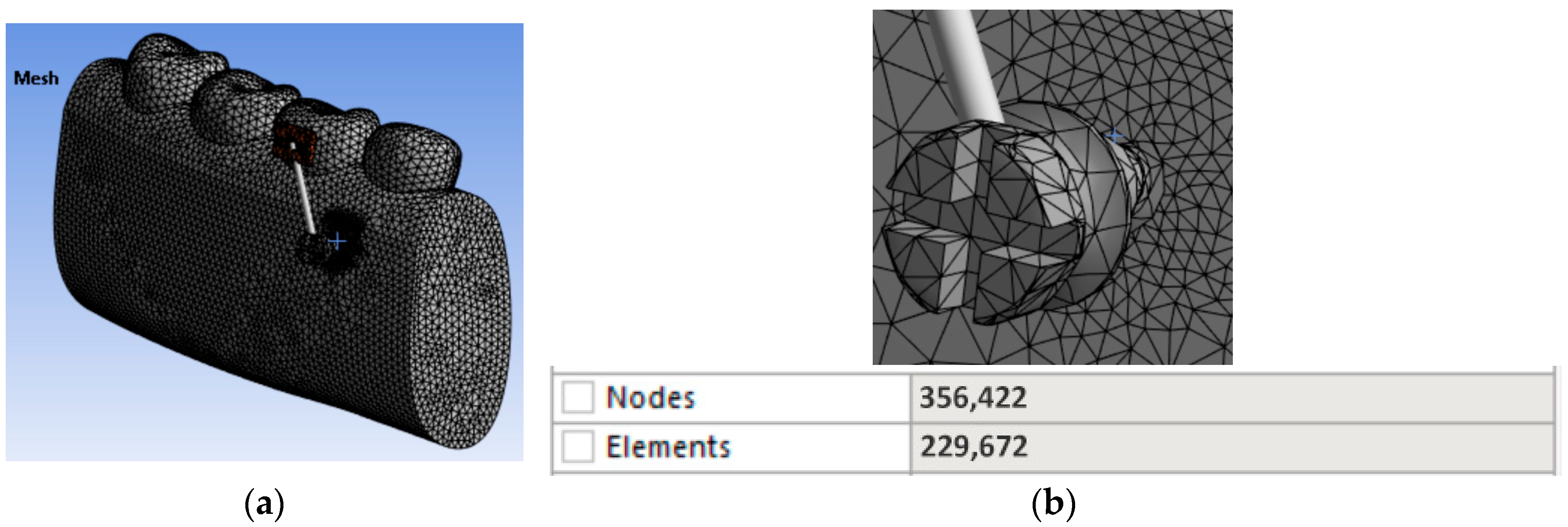
2.4. Mesh Convergence and Model Validation
2.5. Analysis of the Parameters Imposed in the Finite Element Analysis
2.6. Post-Processing and Evaluation Parameters
- Von Mises equivalent stress (σvM) in the implant and surrounding bone;
- Total displacement (U) at the implant head;
- Contact pressure distribution at the bone–implant interface.
2.7. Model Verification
3. Results
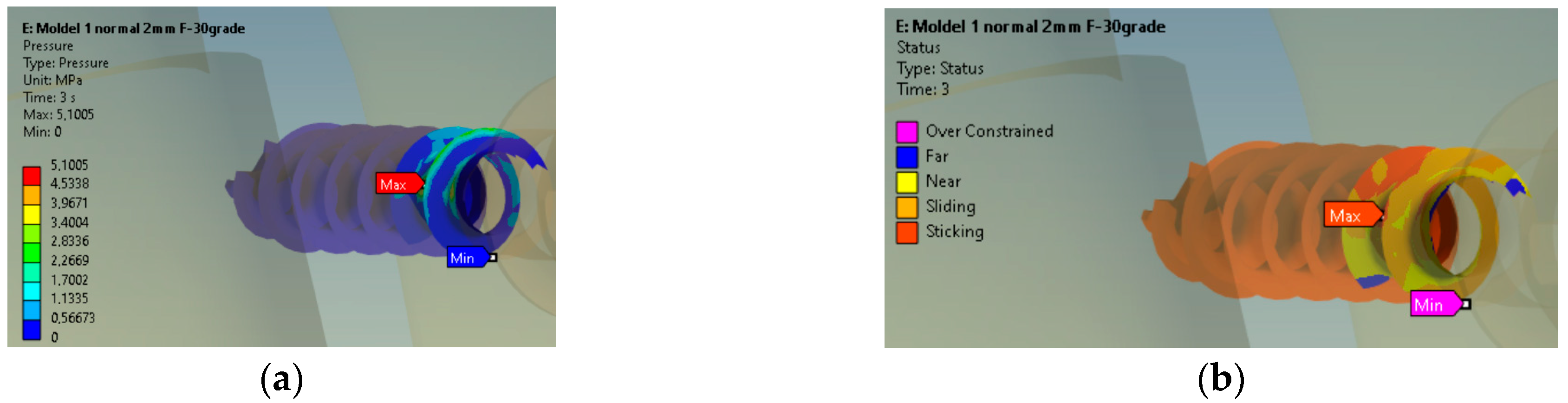
3.1. Contact Pressure and Interface Behavior
3.2. Influence of Orthodontic Force
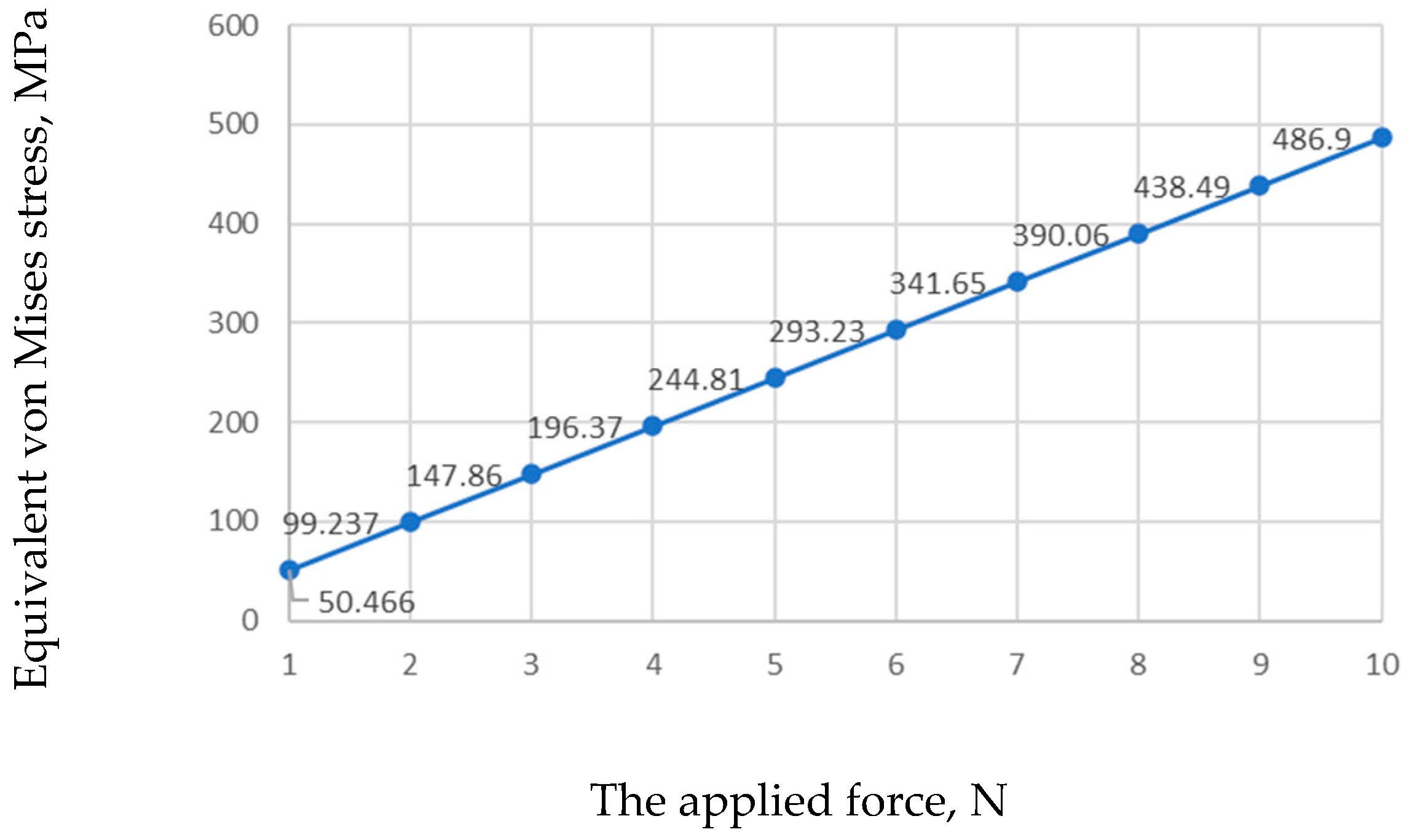
3.2.1. Influence of Force Magnitude
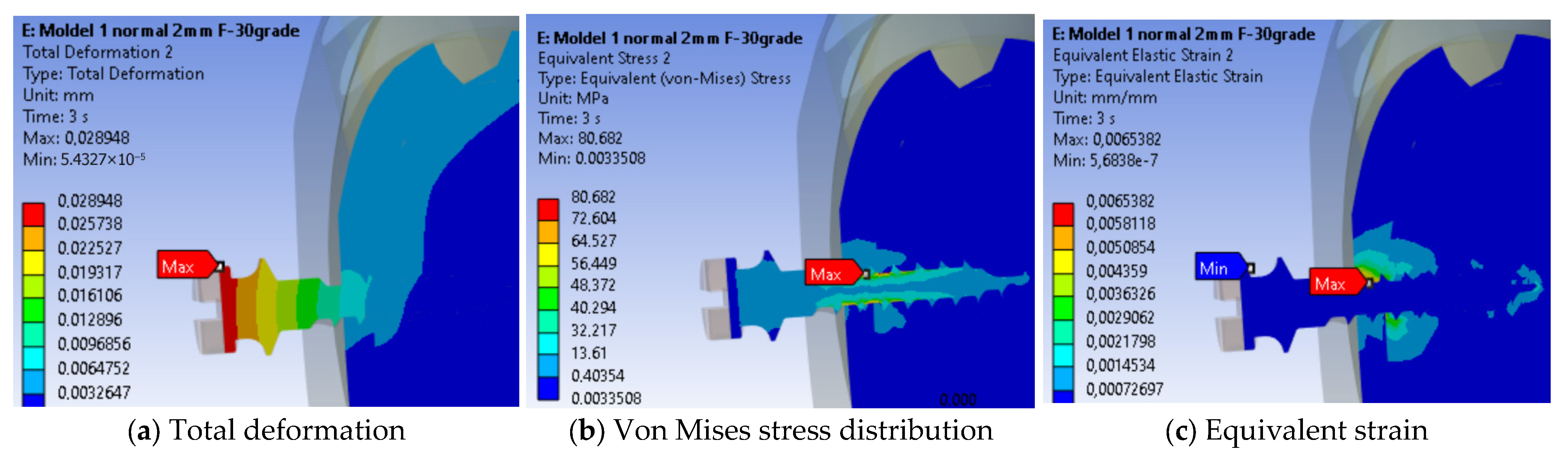
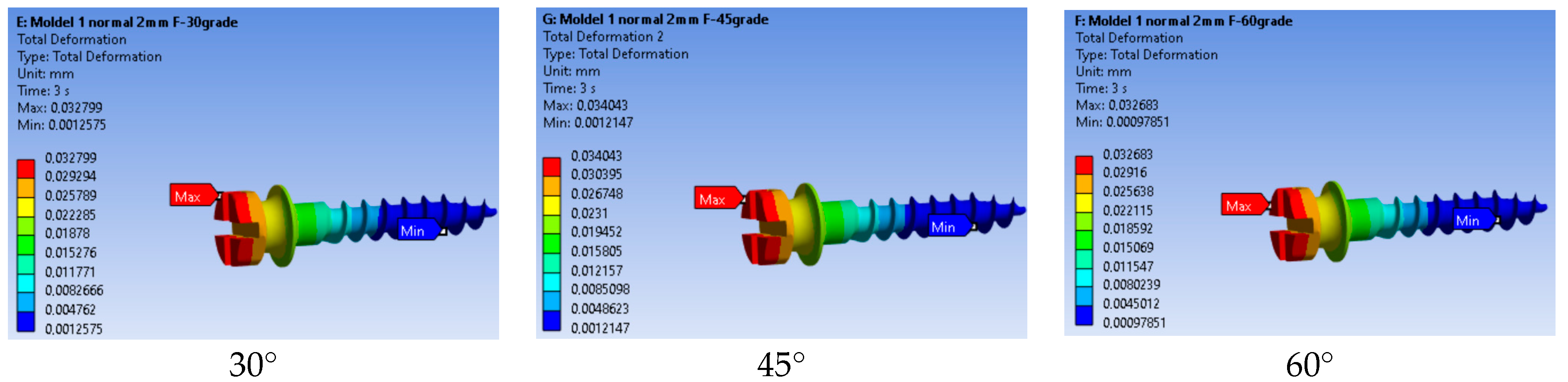
3.2.2. Influence of Force Application Angle
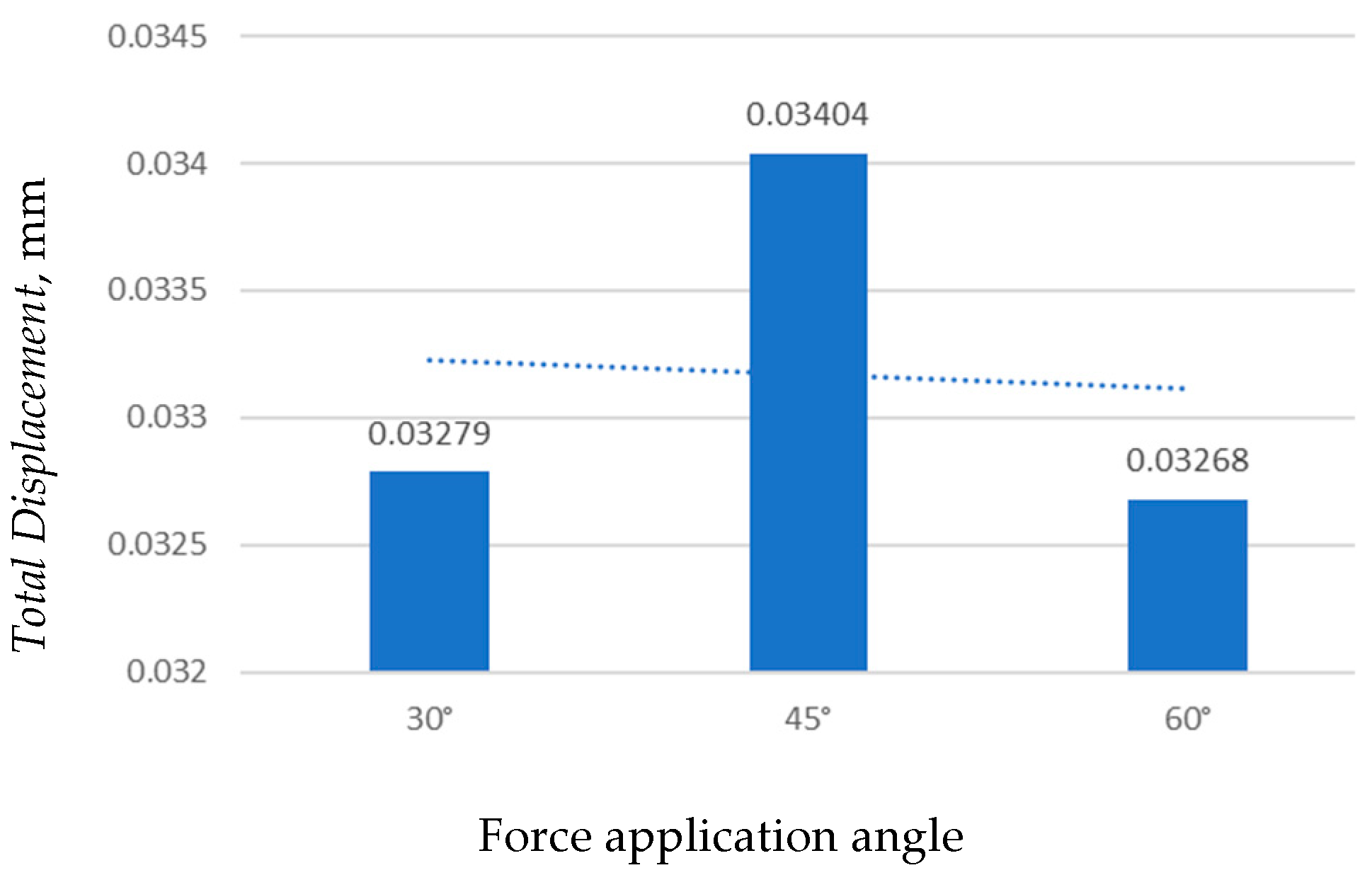
Effect of Force Application Angle on Total Displacement
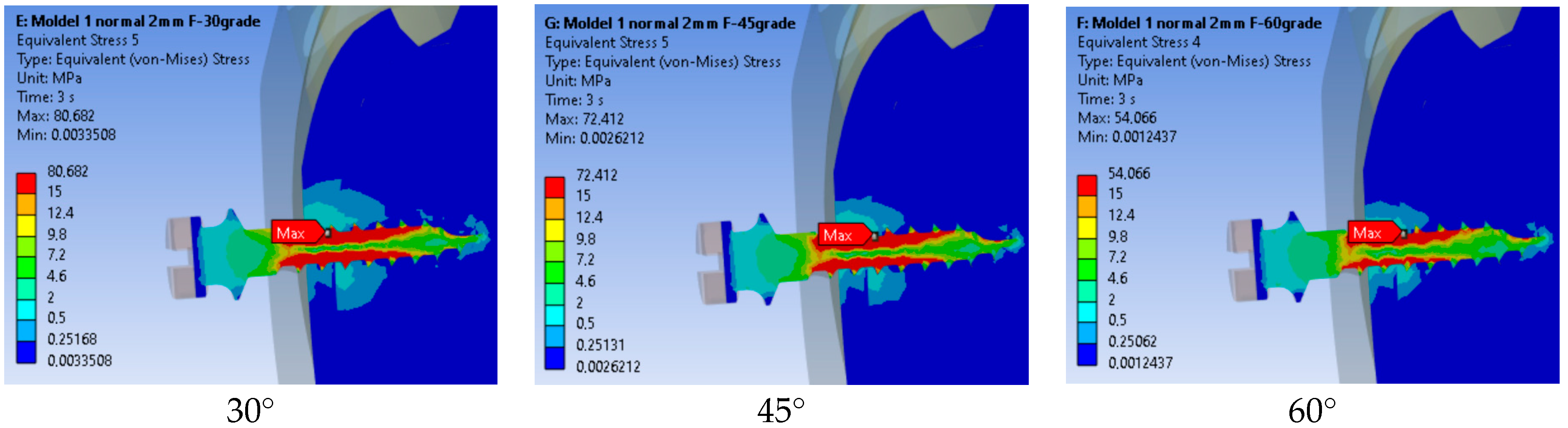
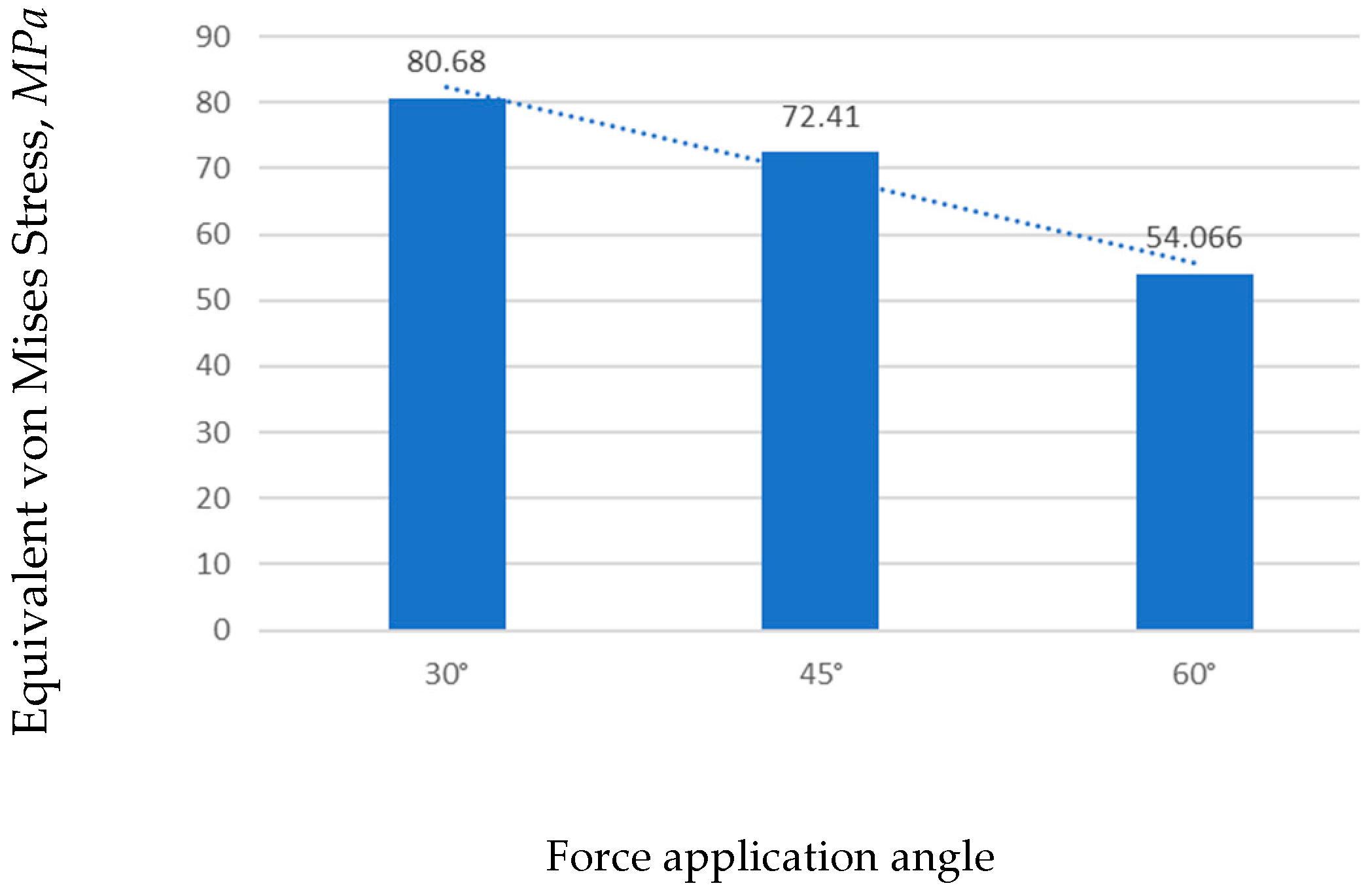
Equivalent Von Mises Stress
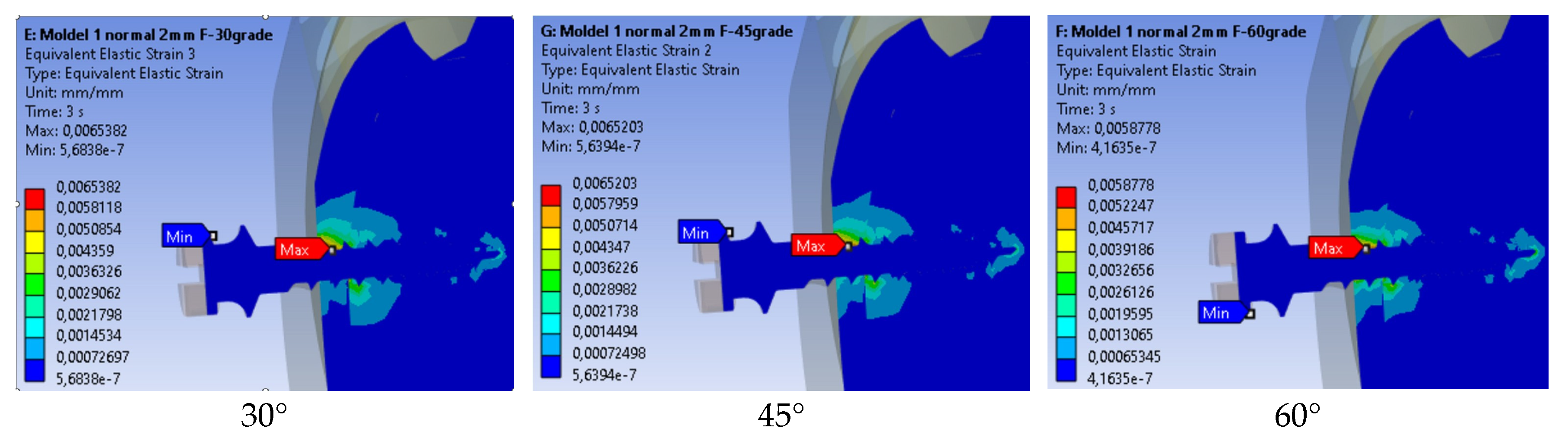
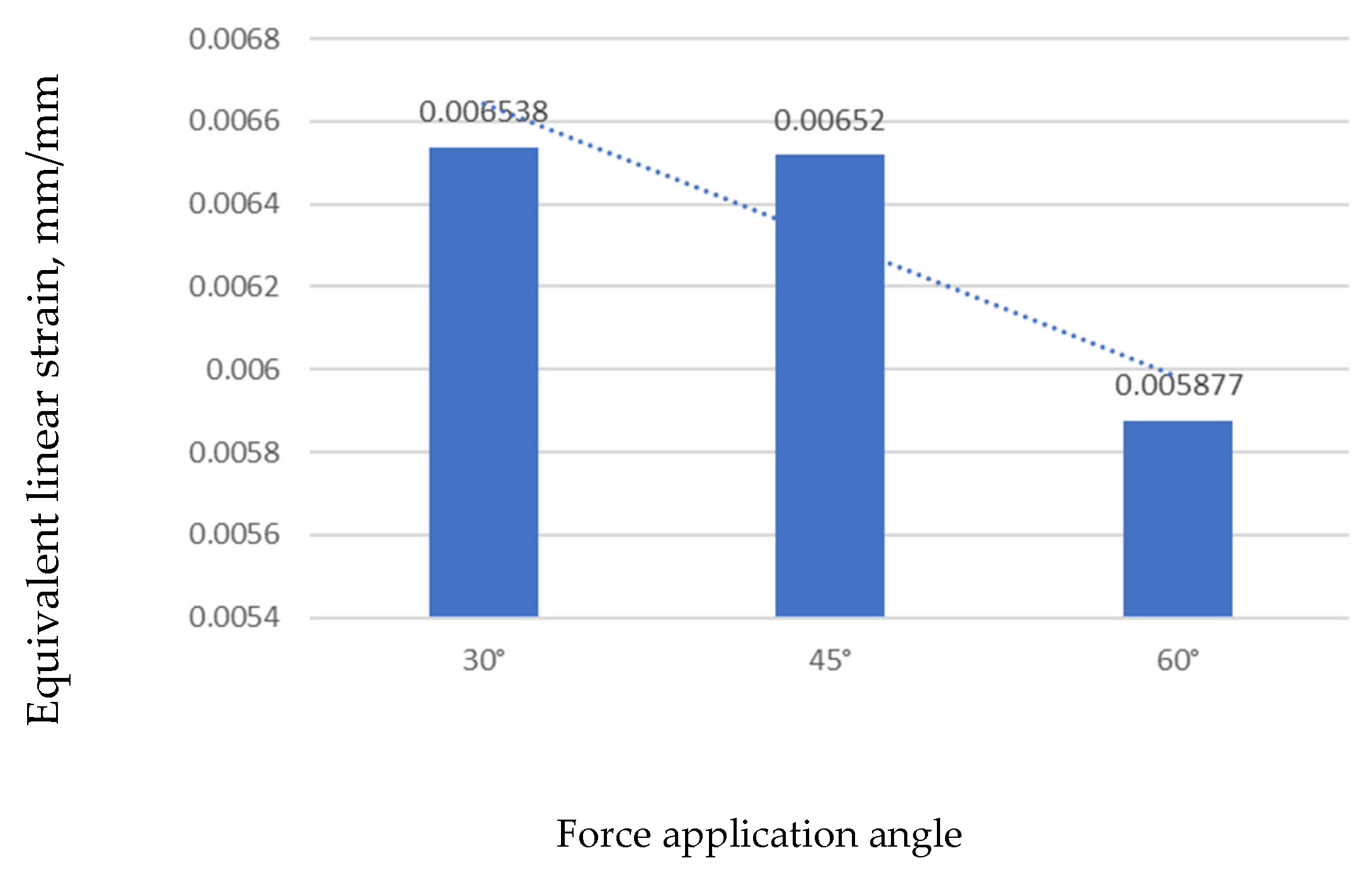
Equivalent Strain
3.3. Influence of Mini-Implant Insertion Depth
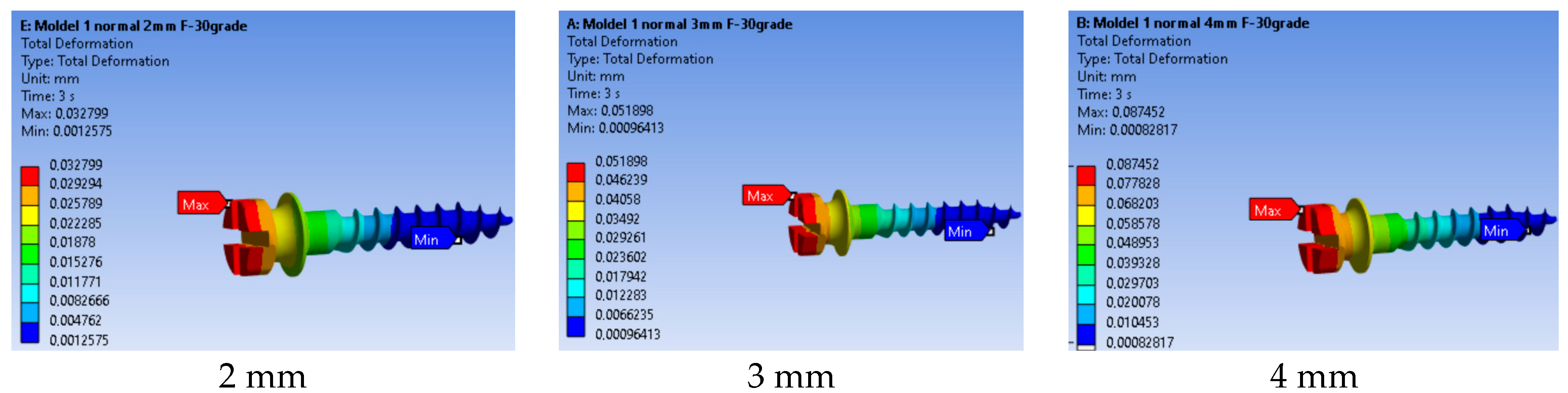
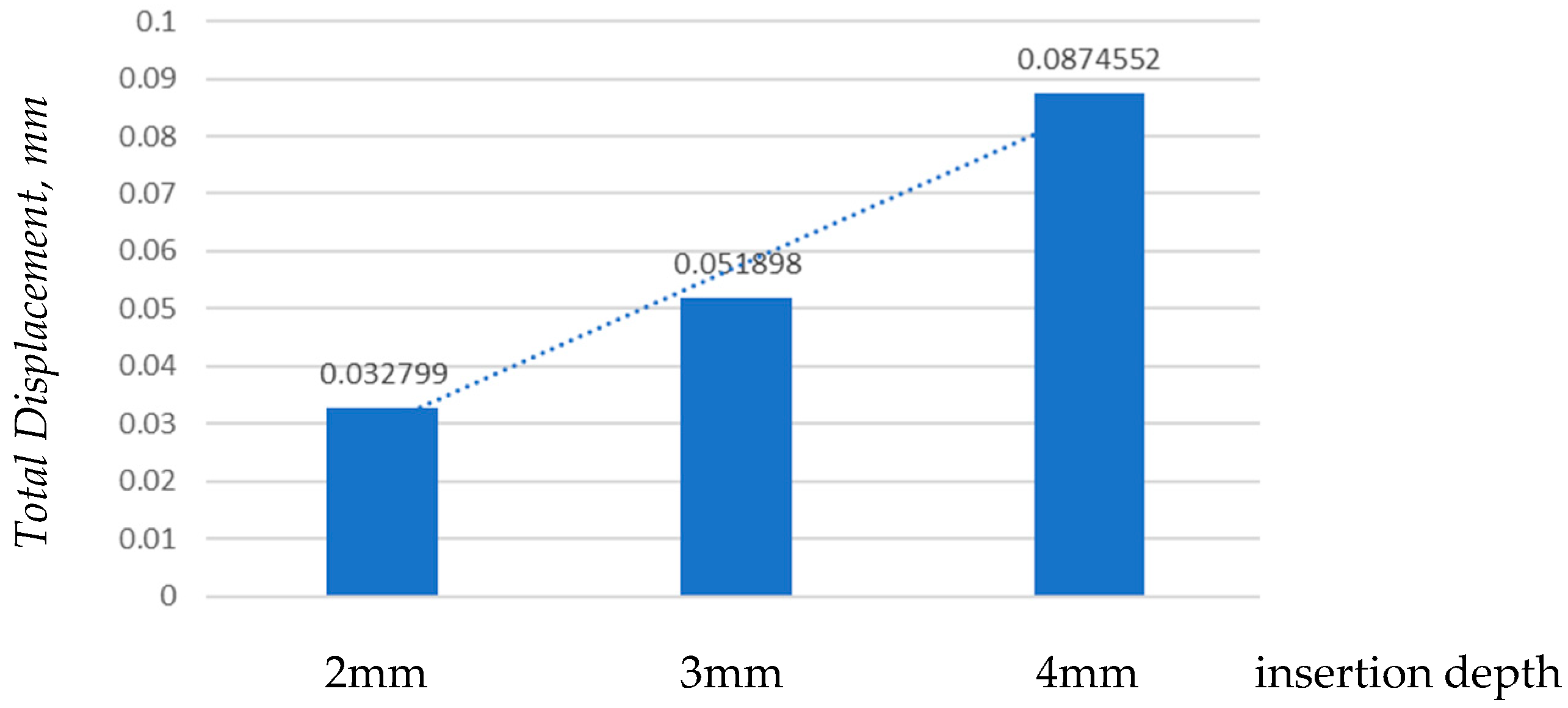
3.3.1. Total Displacement
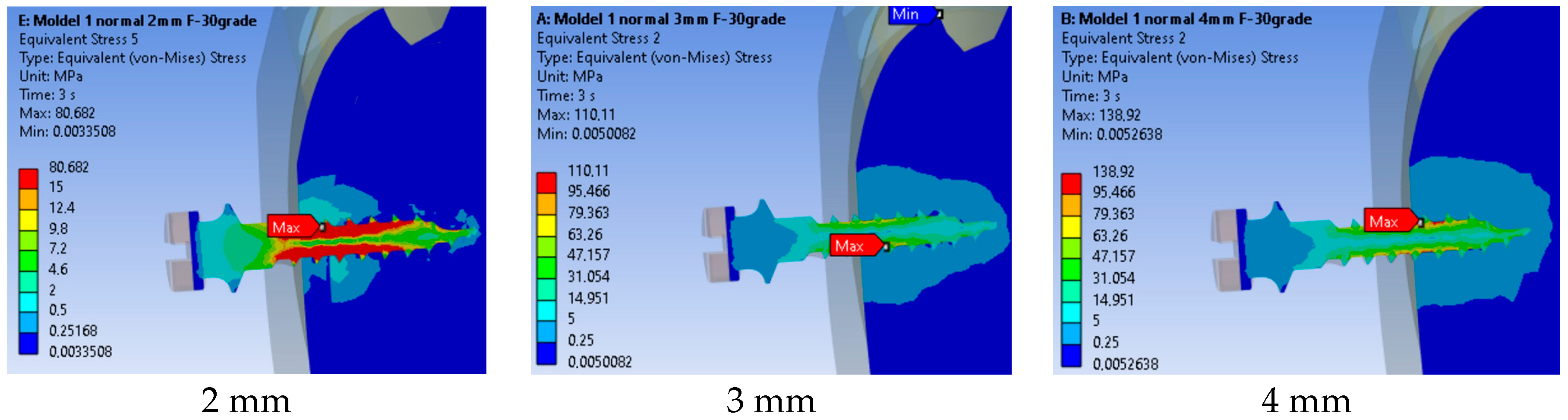
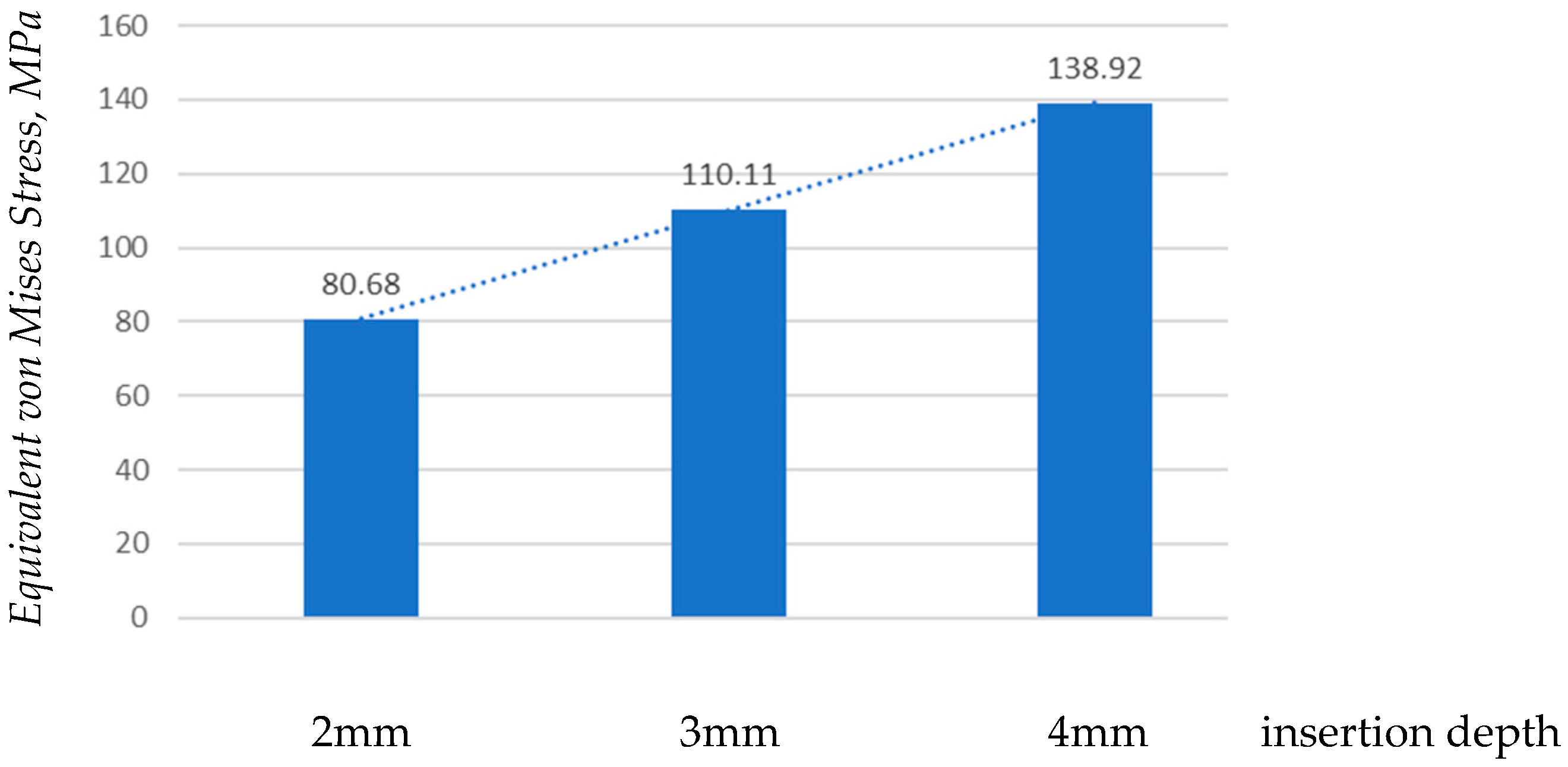
3.3.2. Equivalent Von Mises Stress
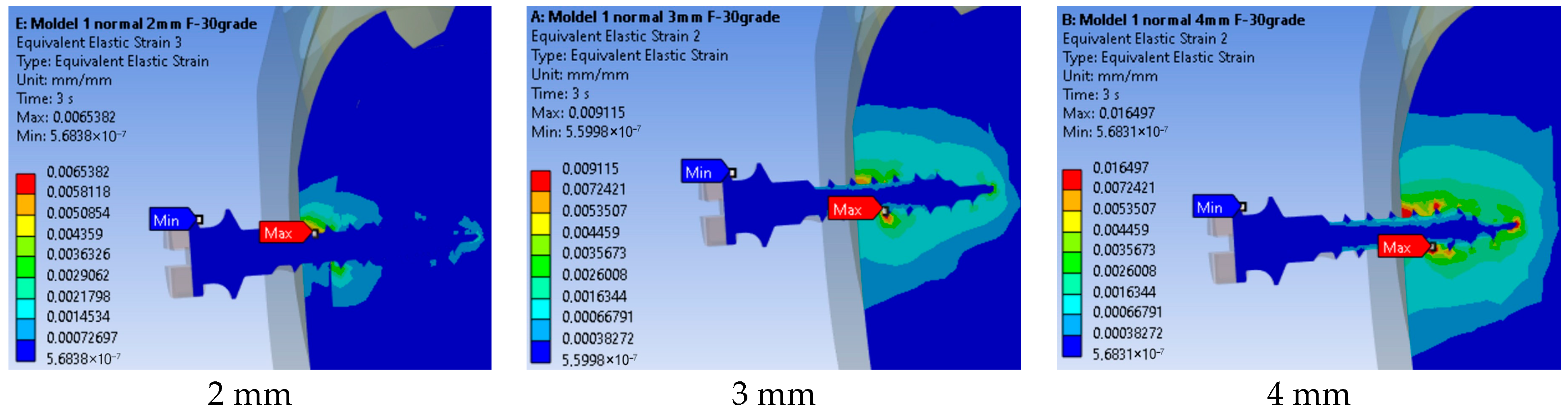
3.3.3. Equivalent Strain
4. Discussion
4.1. Contact Pressure and Interfacial Load Transfer
4.2. Loading Direction
4.2.1. Mechanism of Load Angle Influence
4.2.2. Comparison with Previous Studies on Loading
4.3. Insertion Depth
4.3.1. Mechanism of Insertion Depth Influence
4.3.2. Comparison with Previous Studies on Insertion Depth
4.4. Study Limitations
- The finite element model relied on simplified representations of bone geometry and material properties, which may not fully capture the structural complexity of human bone.
- This study did not include direct experimental validation. The model was verified by comparison with previously published finite element analyses rather than in vitro or in vivo measurements. Empirical validation is essential to assess the clinical applicability of finite element models. Previous studies have reported varying degrees of agreement between FEA predictions and experimental findings. For example, Mazhari et al. demonstrated a strong correlation between simulated stress distributions and experimental measurements when evaluating different miniscrew–tooth connection types, supporting the predictive capacity of FEA in orthodontic biomechanics [48].Conversely, Mešić et al., through experimental pull-out testing of mini-implants, showed that while FEA accurately reflected relative differences in implant behavior, quantitative discrepancies were observed depending on implant design and insertion technique [49]. These findings suggest that although finite element analysis is a valuable tool for comparative and parametric evaluation, its results should be interpreted with caution in the absence of direct experimental validation.
- Bone and implant materials were modeled as homogeneous and isotropic to allow numerical convergence, although this does not reflect their true anisotropic behavior. The assumption of isotropy in finite element models overlooks this intrinsic anisotropic nature, which could lead to inaccurate predictions of stress distributions and failure points. Studies indicate that explicitly including anisotropic material properties in finite element models enhances the prediction accuracy of local stress distributions significantly [50,51].
- Static loading conditions were applied, without simulating cyclic forces, fatigue behavior, or time-dependent biological processes such as bone remodeling. These factors may affect the long-term clinical performance of orthodontic mini-implants.
- The finite element model was based on a single mandibular geometry and therefore does not account for inter-individual anatomical variability. Differences in cortical bone thickness, trabecular density, and implant positioning may influence stress and strain distribution in clinical scenarios. Consequently, the present findings should be interpreted as representative of a specific anatomical configuration rather than universally applicable conditions.
- Biological processes, including bone remodeling and inter-individual anatomical variability, were not incorporated into the model.
5. Conclusions
Author Contributions
Funding
Institutional Review Board Statement
Informed Consent Statement
Data Availability Statement
Acknowledgments
Conflicts of Interest
Abbreviations
| FEM | Finite Element Method |
| FEA | Finite Element Analysis |
| MI | Mini-implant |
| CT | Computed Tomography |
| CAD | Computer-Aided Design |
| Ti-6Al-4V | Titanium alloy (90% Ti, 6% Al, 4% V) |
| PDL | Periodontal Ligament |
| von Mises stress | Equivalent stress criterion (no abbreviation, but often used as term) |
| MPa | Megapascal |
| mm | Millimeter |
| N | Newton |
| STL | Standard Tessellation Language (file format for 3D printing/geometry) |
| ANSYS | Analysis System (commercial FEM software) |
| 3D | Three-dimensional |
| ° | Degrees (angle measurement) |
References
- Arqub, S.; Gandhi, V.; Mehta, S.; Palo, L.; Upadhyay, M.; Yadav, S. Survival estimates and risk factors for failure of palatal and buccal mini-implants. Angle Orthod. 2021, 91, 756–763. [Google Scholar] [CrossRef]
- Kovuru, V.; Aileni, K.; Mallepally, J.; Kumar, K.; Sursala, S.; Pramod, V. Factorial analysis of variables affecting bone stress adjacent to mini-implants used for molar distalization by direct anchorage—A finite element study. J. Orthod. Sci. 2023, 12, 18. [Google Scholar] [CrossRef]
- Büchter, A.; Wiechmann, D.; Koerdt, S.; Wiesmann, H.; Piffko, J.; Meyer, U. Load-related implant reaction of mini-implants used for orthodontic anchorage. Clin. Oral Implant. Res. 2005, 16, 473–479. [Google Scholar] [CrossRef]
- Guimarães, G.; Morais, L.; Elias, C.; Meyers, M. Sequential bone response to immediately loaded mini-implants, in vivo study. MRS Proc. 2006, 925, 307. [Google Scholar] [CrossRef]
- Sana, S.; Reddy, R.; Talapaneni, A.; Hussain, A.; Bangi, S.; Fatima, A. Evaluation of stability of three different mini-implants based on thread shape factor and numerical analysis of stress around mini-implants with different insertion angles under en-masse retraction force. Dent. Press J. Orthod. 2020, 25, 59–68. [Google Scholar] [CrossRef]
- Sharma, V.; Singla, A.; Jaj, H.; Mahajan, V.; Thakur, S.; Nadda, P. Comparison of mini-implants placed at different heights and angulations for retraction and intrusion of maxillary incisors: A finite element model study. J. Indian Orthod. Soc. 2024, 59, 36–45. [Google Scholar] [CrossRef]
- Sivamurthy, G.; Sundari, S. Stress distribution patterns at mini-implant site during retraction and intrusion—A three-dimensional finite element study. Prog. Orthod. 2016, 17, 4. [Google Scholar] [CrossRef]
- Choi, J.; Kim, M.; Kim, S.; Chung, K.; Nelson, G. Effect of different head hole positions on the rotational resistance and stability of orthodontic miniscrews: A three-dimensional finite element study. Sensors 2021, 21, 3798. [Google Scholar] [CrossRef] [PubMed]
- Abbas, S.; Alhuwaizi, A. Buccal cortical bone thickness in Iraqi Arab adults by cone beam computed tomography for orthodontic mini-implants. J. Baghdad Coll. Dent. 2017, 29, 183–187. [Google Scholar] [CrossRef][Green Version]
- Laursen, M.; Melsen, B.; Cattaneo, P. An evaluation of insertion sites for mini-implants. Angle Orthod. 2013, 83, 222–229. [Google Scholar] [CrossRef]
- Lim, J.; Lee, S.; Kim, Y.; Lim, W.; Chun, Y. Comparison of cortical bone thickness and root proximity at maxillary and mandibular interradicular sites for orthodontic mini-implant placement. Orthod. Craniofacial Res. 2009, 12, 299–304. [Google Scholar] [CrossRef]
- Ramagoni, N. Effect of different angulation of forces on mini implant and abutment at various levels. J. Dent. Panacea 2022, 4, 39–45. [Google Scholar] [CrossRef]
- Sadek, A.; Negm, I.; Aboulazm, K. Effect Of changing various parameters on stress distribution in mini-screws and surrounding alveolar bone: A three dimensional finite element analysis. Egypt. Orthod. J. 2019, 55, 7–24. [Google Scholar] [CrossRef]
- Sawant, H.; Gangurde, P.; Shetty, N.; Sachdev, S.; Gaikwad, S.; Jadhav, S. Use of Orthodontic Mini-Implants in Conjunction with Elastics for Extrusion of Impacted Canines and Correction of Bimaxillary Protrusion. J. Pharm. Bioallied Sci. 2024, 16, S2864–S2867. [Google Scholar] [CrossRef]
- Selvaraj, S.; Tandon, A.; Chandrasekaran, D.; Purushothaman, D.; Katepogu, P.; Mohan, R.; Angrish, N. Anchorage and Stability of Orthodontic Mini Implants in Relation to Length and Types of Implants. Cureus 2024, 16, e73056. [Google Scholar] [CrossRef]
- Brum, J.; Macedo, F.; Oliveira, M.; Paranhos, L.; Brito-Junior, R.; Ramacciato, J. Assessment of the stresses produced on the bone implant/tissue interface to the different insertion angulations of the implant—A three-dimensional analysis by the finite elements method. J. Clin. Exp. Dent. 2020, 12, e930–e937. [Google Scholar] [CrossRef] [PubMed]
- Rito-Macedo, F.; Barroso-Oliveira, M.; Paranhos, L.R.; Rodrigues-Brum, J.; Pereira-Lima, I.F.; Gomes-França, F.M.; de Brito-Junior, R.B. Implant insertion angle and depth: Peri-implant bone stress analysis by the finite element method. J. Clin. Exp. Dent. 2021, 13, e1167–e1173. [Google Scholar] [CrossRef] [PubMed]
- Sugiura, T.; Yamamoto, K.; Horita, S.; Murakami, K.; Tsutsumi, S.; Kirita, T. Effects of implant tilting and the loading direction on the displacement and micromotion of immediately loaded implants: An in vitro experiment and finite element analysis. J. Periodontal Implant. Sci. 2017, 47, 251–262. [Google Scholar] [CrossRef] [PubMed]
- Thil, N.; Mehreganian, N.; Moatamedi, M.; Louca, L.; Fallah, A. Dynamic plastic response of beams subjected to localised pulse loads. Int. J. Prot. Struct. 2018, 10, 198–228. [Google Scholar] [CrossRef]
- Maheshwari, A.; Chawda, D.N.; Kushwah, A.; Agarwal, R.K.; Golwara, A.K.; Dixit, P.B. Comparative evaluation of displacement and stress distribution pattern during mandibular arch distalization with extra and inter-radicular mini-implants: A three-dimensional finite element study. Dent. Press J. Orthod. 2023, 28, e2321373. [Google Scholar] [CrossRef]
- Benaissa, A.; Merdji, A.; Bendjaballah, M.Z.; Ngan, P.; Mukdadi, O.M. Stress influence on orthodontic system components under simulated treatment loadings. Comput. Methods Programs Biomed. 2020, 195, 105743. [Google Scholar] [CrossRef] [PubMed]
- Katić, V.; Kamenar, E.; Blažević, D.; Špalj, S. Geometrical design characteristics of orthodontic mini-implants predicting maximum insertion torque. Korean J. Orthod. 2014, 44, 177. [Google Scholar] [CrossRef]
- Motoyoshi, M.; Inaba, M.; Ueno, S.; Shimizu, N. Mechanical anisotropy of orthodontic mini-implants. Int. J. Oral Maxillofac. Surg. 2009, 38, 972–977. [Google Scholar] [CrossRef]
- Motoyoshi, M.; Ueno, S.; Okazaki, K.; Shimizu, N. Bone stress for a mini-implant close to the roots of adjacent teeth—3D finite element analysis. Int. J. Oral. Maxillofac. Surg. 2009, 38, 363–368. [Google Scholar] [CrossRef]
- Lu, Y.; Chang, S.-H.; Ye, J.; Shan, Y.; Yu, Y. Finite element analysis of bone stress around micro-implants of different diameters and lengths with application of a single or composite torque force. PLoS ONE 2015, 10, e0144744. [Google Scholar] [CrossRef]
- Sarika, K.; Kumar, N.K.; Seralathan, S.; Sathishkumar, R.K.; Preethi, S.K. A three-dimensional finite element analysis of the stress distribution around the bone mini-implant interface based on the mini-implant angle of insertion, diameter, and length. J. Pharm. Bioallied Sci. 2023, 15, S535–S539. [Google Scholar] [CrossRef] [PubMed]
- Bhat, S.; Priyanka, P.K.; Kamalakanth, S. Stress distribution around single short dental implants: A Finite Element Study. J. Indian Prosthodont. Soc. 2014, 14, 161–167. [Google Scholar] [CrossRef] [PubMed]
- Shunmugavel, M.; Polishetty, A.; Goldberg, M.; Singh, R.; Littlefair, G. A comparative study of mechanical properties and machinability of wrought and additive manufactured (selective laser melting) titanium alloy—Ti-6Al-4V. Rapid Prototyp. J. 2017, 23, 1051–1056. [Google Scholar] [CrossRef]
- Lee, M.; Kim, K.; Han, J.; Eckert, J.; Sordelet, D. High strength porous Ti–6Al–4V foams synthesized by solid state powder processing. J. Phys. D Appl. Phys. 2008, 41, 105404. [Google Scholar] [CrossRef]
- Lv, Z.; Li, H.; Che, L.; Chen, S.; Zhang, P.; He, J.; Wu, Z.; Niu, S.; Li, X. Effects of HIP Process Parameters on Microstructure and Mechanical Properties of Ti-6Al-4V Fabricated by SLM. Metals 2023, 13, 991. [Google Scholar] [CrossRef]
- Zhou, G.; Zhang, X.; Qie, H.; Li, C.; Lin, L.; Lihua, S. Three-dimensional finite element analysis of the stability of mini-implants close to the roots of adjacent teeth upon application of bite force. Dent. Mater. J. 2018, 37, 851–857. [Google Scholar] [CrossRef]
- Wahengbam, P.; Kalra, T.; Kumar, M.; Bansal, A. Evaluation of stress distribution in implant body and surrounding bone with and without splinting—A three-dimensional finite element analysis: An in vitro study. Dent. J. Adv. Stud. 2022, 10, 15–20. [Google Scholar] [CrossRef]
- Yazıcıoğlu, D.; Bayram, B.; Oğuz, Y.; Çınar, D.; Uçkan, S. Stress distribution on short implants at maxillary posterior alveolar bone model with different bone-to-implant contact ratios: Finite element analysis. J. Oral Implantol. 2015, 42, 26–33. [Google Scholar] [CrossRef] [PubMed]
- Geramizadeh, M.; Katoozian, H.; Amid, R.; Kadkhodazadeh, M. Finite Element Analysis of Dental Implants with and without Microthreads under Static and Dynamic Loading. J. Long-Term Eff. Med. Implant. 2017, 27, 25–35. [Google Scholar] [CrossRef] [PubMed]
- Jarrahi, A.; Shirazi, H.; Asnafi, A.; Ayatollahi, M. Biomechanical analysis of a radial functionally graded dental implant–bone system under multi-directional dynamic loads. J. Braz. Soc. Mech. Sci. Eng. 2018, 40, 249. [Google Scholar] [CrossRef]
- Martí-Farré, J. Linearly dependent vectorial decomposition of clutters. Electron. Notes Discret. Math. 2014, 46, 209–216. [Google Scholar] [CrossRef][Green Version]
- Martí-Farré, J.; Mier, A. Completion and decomposition of a clutter into representable matroids. Linear Algebra Its Appl. 2015, 472, 31–47. [Google Scholar] [CrossRef]
- Lin, D.; Wen, S.; Ye, Z.; Yi, Y.; Yuan, X.; Lai, W.; Long, H. Evaluation of optimal insertion sites and angles for orthodontic mini-implants at the anterior nasal spine region based on cone-beam computed tomography. J. Clin. Med. 2024, 13, 837. [Google Scholar] [CrossRef]
- Popa, A.; Dehelean, C.; Călniceanu, H.; Watz, C.; Brad, S.; Sinescu, C.; Szuhanek, C. A custom-made orthodontic mini-implant—Effect of insertion angle and cortical bone thickness on stress distribution with a complex in vitro and in vivo biosafety profile. Materials 2020, 13, 4789. [Google Scholar] [CrossRef]
- Wilmes, B.; Su, Y.; Drescher, D. Insertion angle impact on primary stability of orthodontic mini-implants. Angle Orthod. 2008, 78, 1065–1070. [Google Scholar] [CrossRef]
- Xavier, J.; Sarika, K.; Ajith, V.; Varma, N. Evaluation of strain and insertion torque of mini-implants at 90° and 45° angulations on a bone model using three-dimensional finite element analysis. Contemp. Clin. Dent. 2022, 14, 25–31. [Google Scholar] [CrossRef] [PubMed]
- Marimuthu, V.; Kumar, K.; Sadhasivam, N.; Arasappan, R.; Jayamurugan, A.; Rathinasamy, R. Finite element analysis of stress and displacement around mini-implants using different insertion angles and various directions of orthodontic force in maxilla and mandible. J. Indian Orthod. Soc. 2015, 49, 61–66. [Google Scholar] [CrossRef]
- Pan, C.; Chou, S.; Tseng, Y.; Yang, Y.; Wu, C.; Lan, T.; Chang, H. Influence of different implant materials on the primary stability of orthodontic mini-implants. Kaohsiung J. Med. Sci. 2012, 28, 673–678. [Google Scholar] [CrossRef] [PubMed]
- Petrey, J.; Saunders, M.; Kluemper, G.; Cunningham, L.; Beeman, C. Temporary anchorage device insertion variables: Effects on retention. Angle Orthod. 2010, 80, 634–641. [Google Scholar] [CrossRef]
- Ichinohe, M.; Motoyoshi, M.; Inaba, M.; Uchida, Y.; Kaneko, M.; Matsuike, R.; Shimizu, N. Risk factors for failure of orthodontic mini-screws placed in the median palate. J. Oral Sci. 2019, 61, 13–18. [Google Scholar] [CrossRef]
- Hirai, Y.; Watanabe, K.; Deguchi, T.; Ueda, K.; Hamada, K.; Tanaka, E. Influence of insertion depth on stress distribution in orthodontic miniscrew and the surrounding bone by finite element analysis. Dent. Mater. J. 2021, 40, 1270–1276. [Google Scholar] [CrossRef]
- Nienkemper, M.; Pauls, A.; Ludwig, B.; Drescher, D. Stability of paramedian inserted palatal mini-implants at the initial healing period: A controlled clinical study. Clin. Oral Implant. Res. 2013, 26, 870–875. [Google Scholar] [CrossRef]
- Mazhari, M.; Moradinejad, M.; Mazhary, M.; Rekabi, A.; Rakhshan, V. Effects of Rigid and Nonrigid Connections between the Miniscrew and Anchorage Tooth on Dynamics, Efficacy, and Adverse Effects of Maxillary Second Molar Protraction: A Finite Element Analysis. BioMed Res. Int. 2022, 2022, 4714347. [Google Scholar] [CrossRef]
- Mešić, E.; Muratović, E.; Redžepagić-Vražalica, L.; Pervan, N.; Muminović, A.J.; Delić, M.; Glušac, M. Experimental & FEM Analysis of Orthodontic Mini-Implant Design on Primary Stability. Appl. Sci. 2021, 11, 5461. [Google Scholar] [CrossRef]
- Hammond, M.; Wallace, J.; Allen, M.; Siegmund, T. Incorporating tissue anisotropy and heterogeneity in finite element models of trabecular bone altered predicted local stress distributions. Biomech. Model. Mechanobiol. 2017, 17, 605–614. [Google Scholar] [CrossRef] [PubMed]
- Oftadeh, R.; Perez-Viloria, M.; Villa-Camacho, J.; Vaziri, A.; Nazarian, A. Biomechanics and Mechanobiology of Trabecular Bone: A Review. J. Biomech. Eng. 2015, 137, 0108021–01080215. [Google Scholar] [CrossRef] [PubMed]





| Material/Component | Young’s Modulus (MPa) | Poisson’s Ratio |
|---|---|---|
| Mini-implant (Ti-6Al-4V) | 110,000 | 0.30 |
| Cortical Bone | 17,000 | 0.30 |
| Cancellous Bone | 350 | 0.25 |
| FEA Parameter | Property |
|---|---|
| Discretization (nodes/elements) | 356,422/229,672 |
| Element Type | 10-node tetrahedral element |
| Software | ANSYS |
| Material Model | Isotropic, homogeneous, and linear elastic |
| Contact Model | Frictional (nonlinear, friction coefficient = 0.3 µ between mini-implant and bone); bonded (linear) |
| Loading | Oblique (0.1–10 N) (30°, 45°, 60°) |
| Model Component | Elements | Nodes |
|---|---|---|
| Mini-implant | 2644 | 5184 |
| Bracket | 1556 | 3007 |
| Teeth | 53,879 | 81,478 |
| PDL | 3681 | 7383 |
| Cortical bone | 57,004 | 95,034 |
| Cancellous bone | 110,721 | 163,906 |
| Adhesive | 187 | 430 |
| Total | 229,672 | 356,422 |
| Parameter | Scenario | Max Displacement (mm) | Max von Mises Stress (MPa) | Max Equivalent Strain (mm/mm) |
|---|---|---|---|---|
| Force angle | 30° | 0.0328 | 80.682 | 0.0065382 |
| 45° | 0.03404 | — | — | |
| 60° | 0.0267 | 54.066 | 0.0058778 | |
| Insertion depth | 2 mm | Highest displacement | — | 0.016497 |
| 3 mm | — | — | — | |
| 4 mm | Lowest displacement | 80.682 | 0.0065382 |
| Present FEM Study (2025) | Findings from Literature |
|---|---|
|
|
|
|
|
|
|
|
|
|
|
|
| Parameter/Finding | Present Fem Study (2025) | Findings from Literature | References |
|---|---|---|---|
| Insertion depth analyzed | 2 mm–4 mm | Typically 4–7 mm in most studies | Pan et al. [43] Petrey et al. [44] |
| Maximum equivalent strain | 0.01650 mm/mm at 2 mm; ~2.5× higher than at 4 mm | Higher strain at shallower insertions due to increased lever arm effect | Ichinohe et al. [45]; |
| Implant displacement | Increased at 2 mm; minimal at 4 mm | Deeper insertion reduces micromovement and bending | Petrey et al. [44] Hirai et al. [46] |
| Stress distribution pattern | Larger strained volume near cortical surface at 4 mm; reduced at 2 mm | Deeper engagement distributes load across more threads and reduces cortical stress | Pan et al. [43]; Wilmes & Drescher [40] |
| Predicted stability | 2–4 mm insertion depth provides best rigidity and lowest strain | Depths ≥ 6 mm generally enhance torque and pull-out resistance | Nienkemper et al. [47]; Ichinohe et al. [45] |
Disclaimer/Publisher’s Note: The statements, opinions and data contained in all publications are solely those of the individual author(s) and contributor(s) and not of MDPI and/or the editor(s). MDPI and/or the editor(s) disclaim responsibility for any injury to people or property resulting from any ideas, methods, instructions or products referred to in the content. |
© 2026 by the authors. Licensee MDPI, Basel, Switzerland. This article is an open access article distributed under the terms and conditions of the Creative Commons Attribution (CC BY) license.
Share and Cite
Panaite, T.; Romanec, C.L.; Dragomir, B.R.; Sîrghie, A.; Amititeloaie, C.; Balcos, C.; Savin, C.D.N. The Effect of Biomechanical Loading Parameters on the Stress and Strain Behavior of Orthodontic Mini-Implants: A Finite Element Study. J. Funct. Biomater. 2026, 17, 114. https://doi.org/10.3390/jfb17030114
Panaite T, Romanec CL, Dragomir BR, Sîrghie A, Amititeloaie C, Balcos C, Savin CDN. The Effect of Biomechanical Loading Parameters on the Stress and Strain Behavior of Orthodontic Mini-Implants: A Finite Element Study. Journal of Functional Biomaterials. 2026; 17(3):114. https://doi.org/10.3390/jfb17030114
Chicago/Turabian StylePanaite, Tinela, Cristian Liviu Romanec, Bogdan Radu Dragomir, Ana Sîrghie, Carmen Amititeloaie, Carina Balcos, and Carmen Diana Nicoleta Savin. 2026. "The Effect of Biomechanical Loading Parameters on the Stress and Strain Behavior of Orthodontic Mini-Implants: A Finite Element Study" Journal of Functional Biomaterials 17, no. 3: 114. https://doi.org/10.3390/jfb17030114
APA StylePanaite, T., Romanec, C. L., Dragomir, B. R., Sîrghie, A., Amititeloaie, C., Balcos, C., & Savin, C. D. N. (2026). The Effect of Biomechanical Loading Parameters on the Stress and Strain Behavior of Orthodontic Mini-Implants: A Finite Element Study. Journal of Functional Biomaterials, 17(3), 114. https://doi.org/10.3390/jfb17030114