

Development and In Vivo Evaluation of a Novel Bioabsorbable Polylactic Acid Middle Ear Ventilation Tube

 , ,
, , 
Abstract
1. Introduction
2. Materials and Methods
2.1. Design and Fabrication of PLA Middle Ear Ventilation Tubes
2.2. Mechanical and Biocompatibility Assessments
2.3. Animal Model Development and In Vivo Safety Evaluation
2.4. Audiological Evaluations
2.5. Imaging and Histological Studies
2.6. Statistical Analysis
3. Results
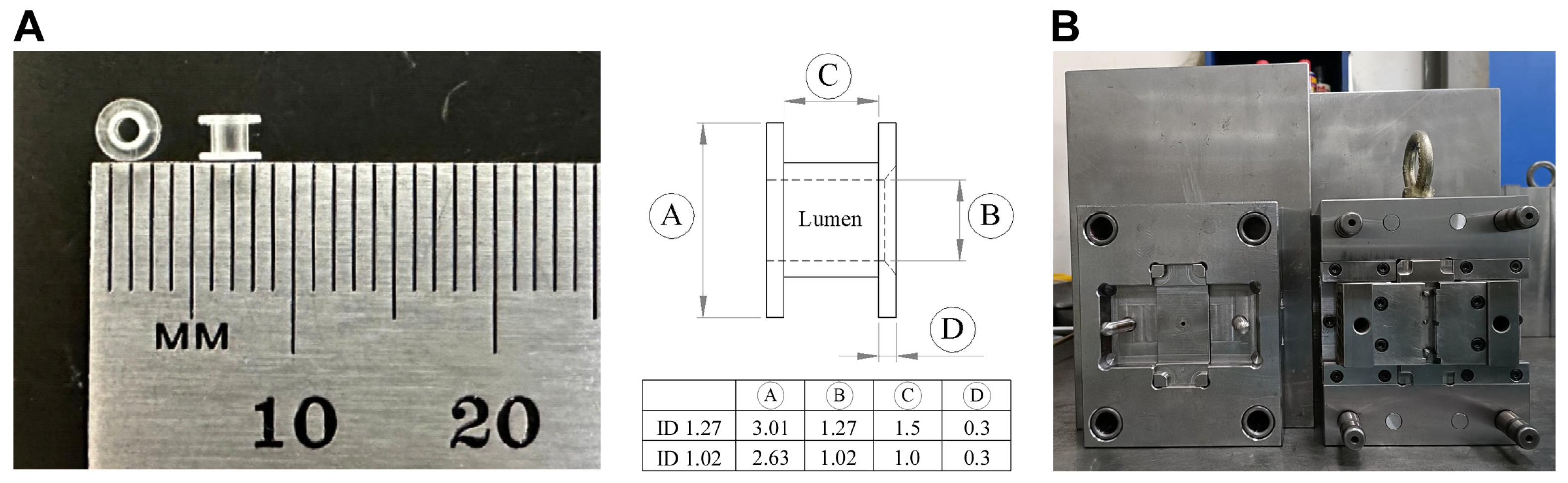
3.1. Design and Fabrication of PLA Middle-Ear Ventilation Tube
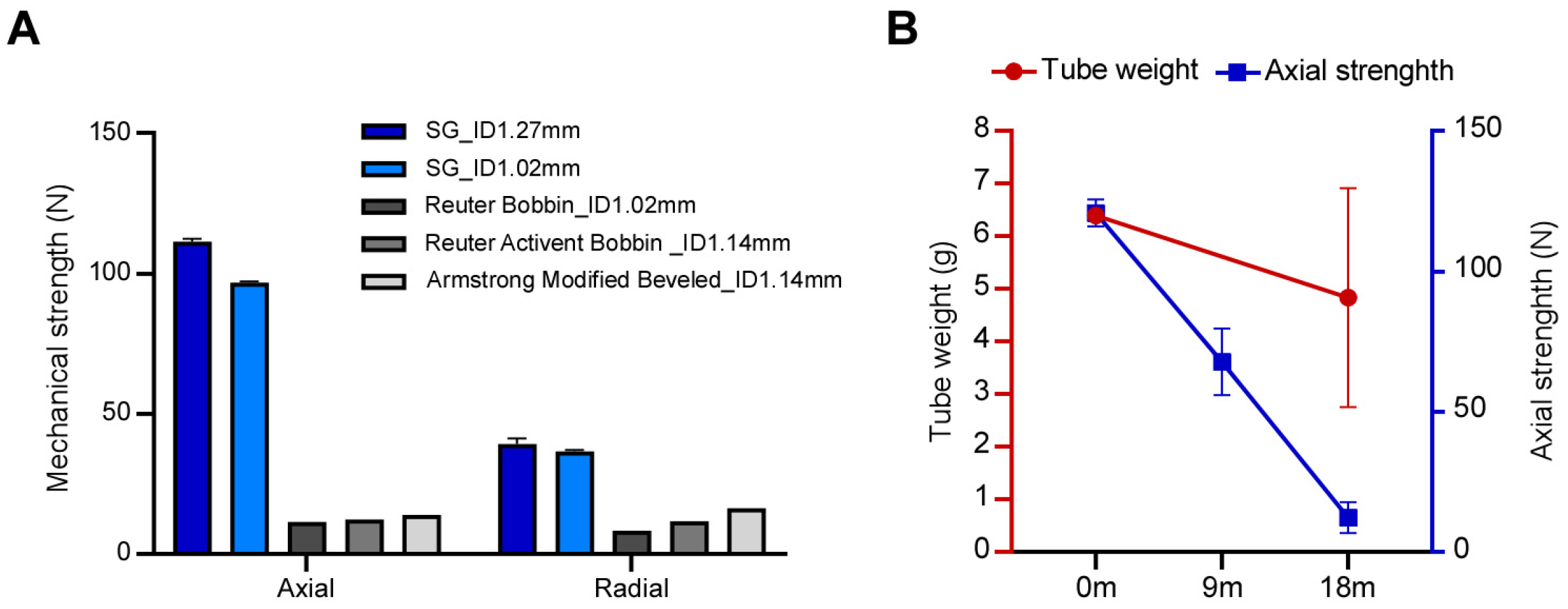
3.2. Mechanical Strength and In Vitro Degradation
3.3. Biocompatibility
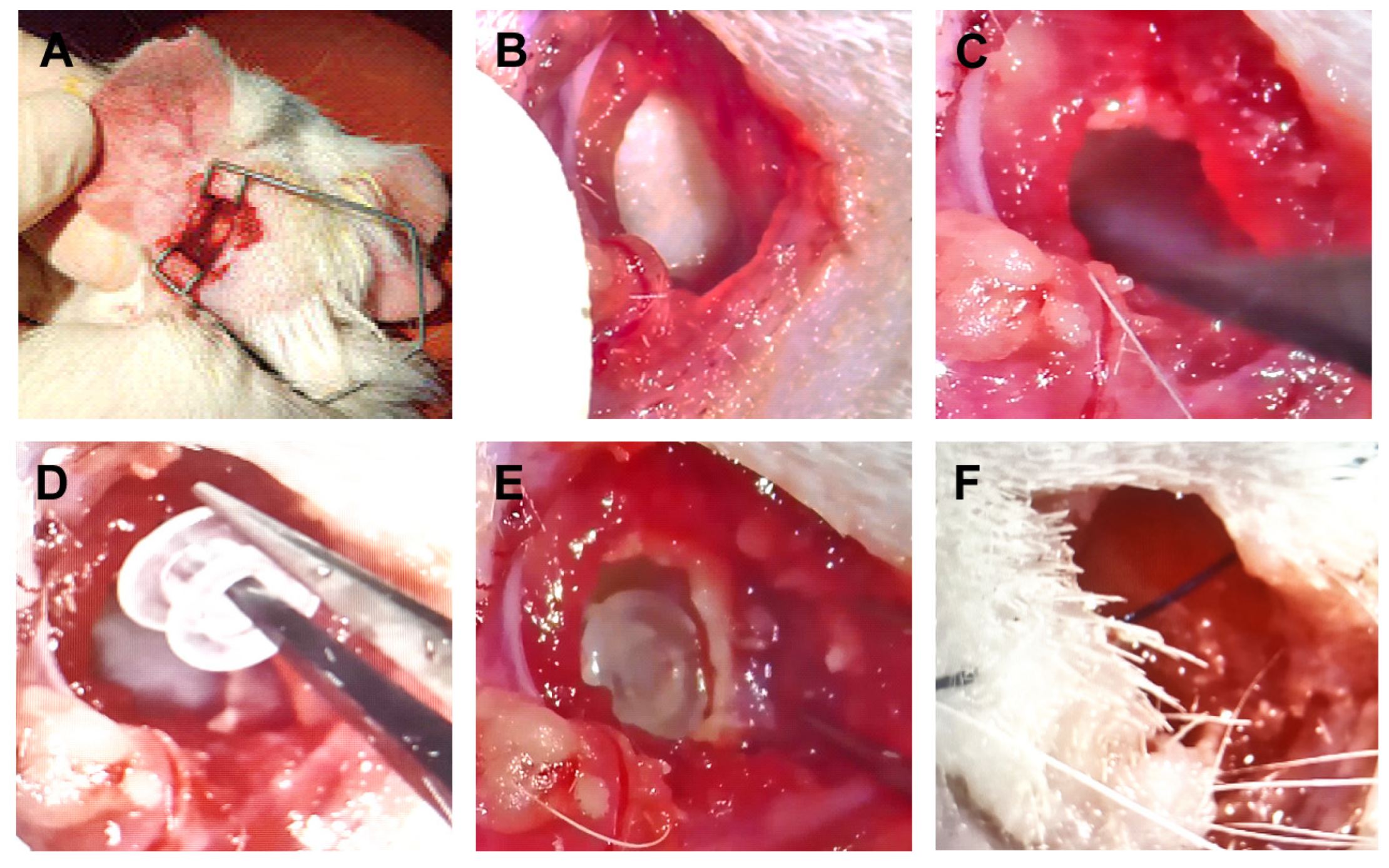
3.4. Animal Model Development
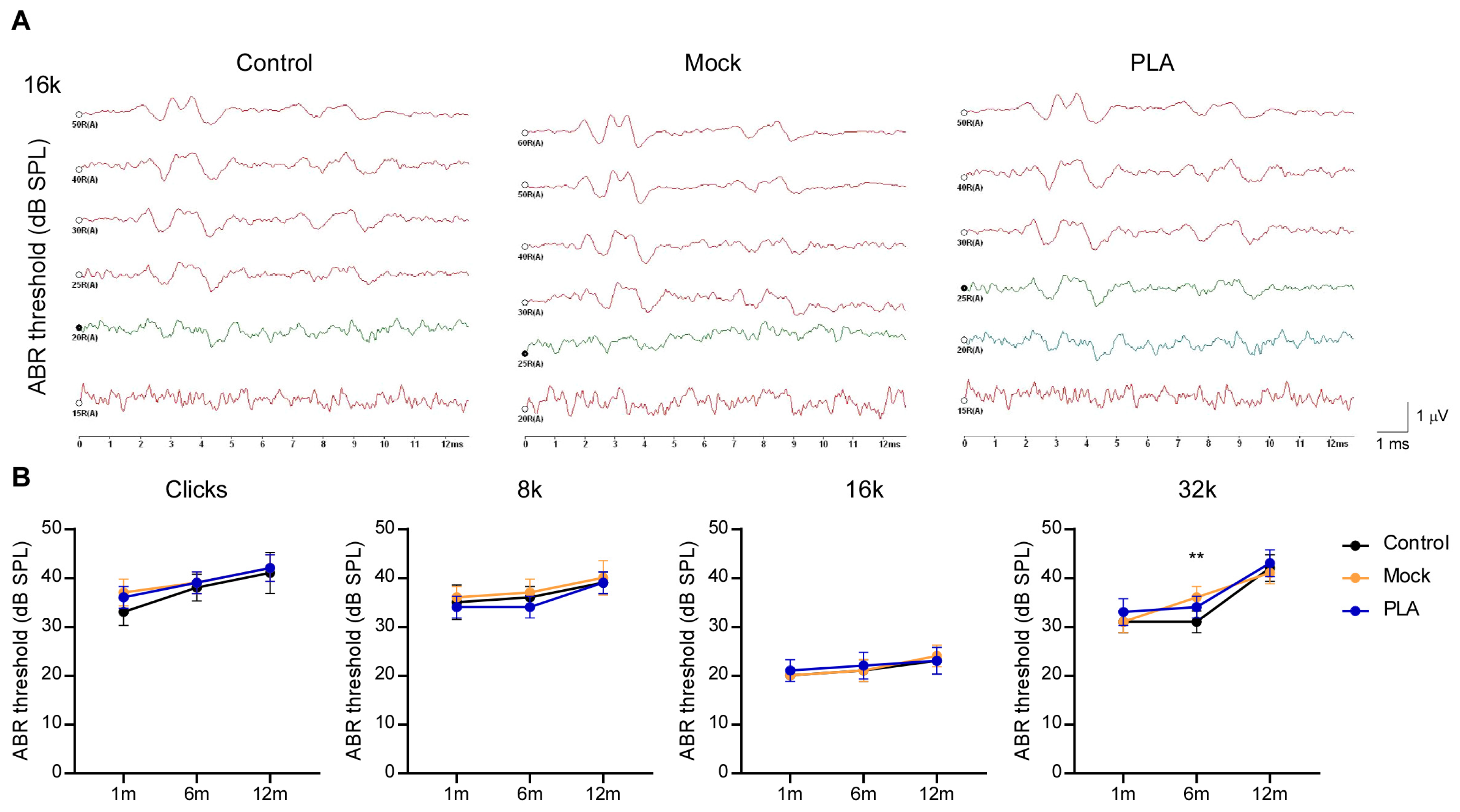
3.5. Audiological Results
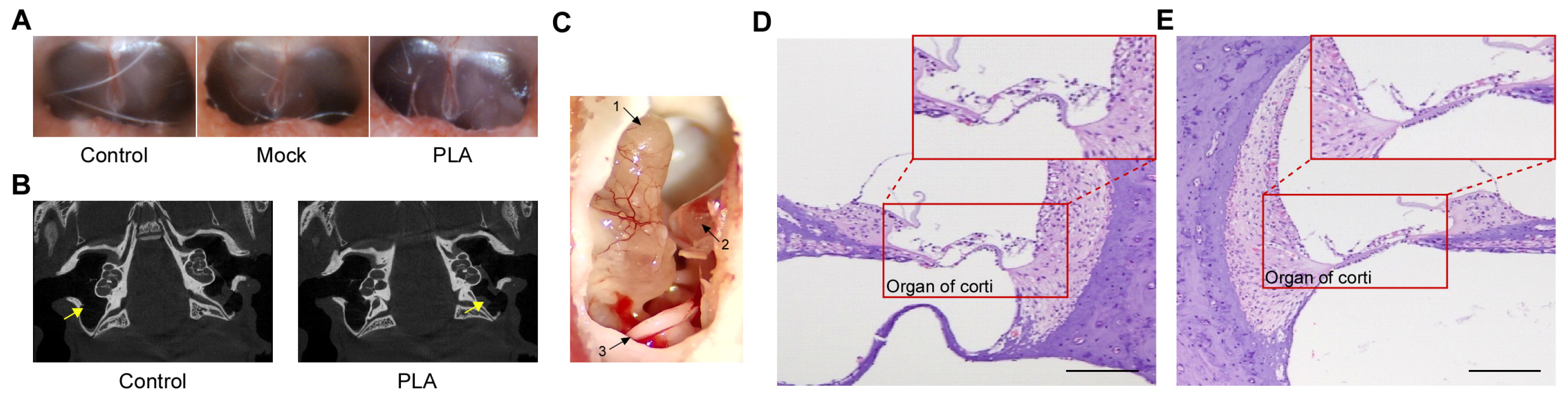
3.6. Imaging and Histology Results
4. Discussion
4.1. Summary of Key Findings
4.2. Advantages over Existing Products
4.3. Correlation with In Vitro and In Vivo Data
4.4. Future Directions and Clinical Translation
4.5. Study Limitations and Future Directions
5. Conclusions
Author Contributions
Funding
Institutional Review Board Statement
Informed Consent Statement
Data Availability Statement
Conflicts of Interest
References
- Simon, F.; Haggard, M.; Rosenfeld, R.M.; Jia, H.; Peer, S.; Calmels, M.N.; Couloigner, V.; Teissier, N. International consensus (ICON) on management of otitis media with effusion in children. Eur. Ann. Otorhinolaryngol. Head. Neck Dis. 2018, 135, S33–S39. [Google Scholar] [CrossRef] [PubMed]
- Mahadevan, M.; Navarro-Locsin, G.; Tan, H.K.; Yamanaka, N.; Sonsuwan, N.; Wang, P.C.; Dung, N.T.; Restuti, R.D.; Hashim, S.S.; Vijayasekaran, S. A review of the burden of disease due to otitis media in the Asia-Pacific. Int. J. Pediatr. Otorhinolaryngol. 2012, 76, 623–635. [Google Scholar] [CrossRef] [PubMed]
- Armstrong, B.W. A new treatment for chronic secretory otitis media. AMA Arch. Otolaryngol. 1954, 59, 653–654. [Google Scholar] [CrossRef] [PubMed]
- Aernouts, J.; Aerts, J.R.; Dirckx, J.J. Mechanical properties of human tympanic membrane in the quasi-static regime from in situ point indentation measurements. Hear. Res. 2012, 290, 45–54. [Google Scholar] [CrossRef]
- Soons, J.A.; Aernouts, J.; Dirckx, J.J. Elasticity modulus of rabbit middle ear ossicles determined by a novel micro-indentation technique. Hear. Res. 2010, 263, 33–37. [Google Scholar] [CrossRef]
- Lim, D.J. Structure and function of the tympanic membrane: A review. Acta Otorhinolaryngol. Belg. 1995, 49, 101–115. [Google Scholar]
- Aernouts, J.; Soons, J.A.; Dirckx, J.J. Quantification of tympanic membrane elasticity parameters from in situ point indentation measurements: Validation and preliminary study. Hear. Res. 2010, 263, 177–182. [Google Scholar] [CrossRef]
- Aernouts, J.; Dirckx, J.J. Viscoelastic properties of gerbil tympanic membrane at very low frequencies. J. Biomech. 2012, 45, 919–924. [Google Scholar] [CrossRef]
- Theissing, J.; Rettinger, G.; Werner, J.A.; Hoppe, F.; Rudack, C.; Larkin, G.; Telger, T.; Hanns, E.W.; Baumann, R. ENT-Head and Neck Surgery Essential Procedures; Thieme: Stuttgart, Germany, 2010. [Google Scholar]
- Derkay, C.S.; Carron, J.D.; Wiatrak, B.J.; Choi, S.S.; Jones, J.E. Postsurgical follow-up of children with tympanostomy tubes: Results of the American Academy of Otolaryngology-Head and Neck Surgery Pediatric Otolaryngology Committee National Survey. Otolaryngol. Head. Neck Surg. 2000, 122, 313–318. [Google Scholar] [CrossRef]
- Weigel, M.T.; Parker, M.Y.; Goldsmith, M.M.; Postma, D.S.; Pillsbury, H.C. A prospective randomized study of four commonly used tympanostomy tubes. Laryngoscope 1989, 99, 252–256. [Google Scholar] [CrossRef]
- Kay, D.J.; Nelson, M.; Rosenfeld, R.M. Meta-analysis of tympanostomy tube sequelae. Otolaryngol. Head. Neck Surg. 2001, 124, 374–380. [Google Scholar] [CrossRef] [PubMed]
- Goel, A.N.; Omorogbe, A.; Hackett, A.; Rothschild, M.A.; Londino, A.V., 3rd. Risk Factors for Multiple Tympanostomy Tube Placements in Children: Systematic Review and Meta-Analysis. Laryngoscope 2021, 131, E2363–E2370. [Google Scholar] [CrossRef] [PubMed]
- Tan, G.X.; Hamilton, A.; MacArthur, C.J. A Systematic Review and Meta-Analysis: Timing of Elective Removal of Tympanostomy Tubes. Laryngoscope 2022, 132, 2063–2070. [Google Scholar] [CrossRef] [PubMed]
- Brown, C.; Behar, P. Factors affecting persistent tympanic membrane perforation after tympanostomy tube removal in children. Int. J. Pediatr. Otorhinolaryngol. 2020, 130, 109779. [Google Scholar] [CrossRef]
- Post, J.C. Direct evidence of bacterial biofilms in otitis media. Laryngoscope 2001, 111, 2083–2094. [Google Scholar] [CrossRef]
- Ojano-Dirain, C.P.; Silva, R.C.; Antonelli, P.J. Biofilm formation on coated silicone tympanostomy tubes. Int. J. Pediatr. Otorhinolaryngol. 2013, 77, 223–227. [Google Scholar] [CrossRef]
- Franklin, D.J.; Starke, J.R.; Brady, M.T.; Brown, B.A.; Wallace, R.J., Jr. Chronic otitis media after tympanostomy tube placement caused by Mycobacterium abscessus: A new clinical entity? Am. J. Otol. 1994, 15, 313–320. [Google Scholar]
- Kim, C.W.; Jin, J.W.; Rho, Y.S. Tuberculous otitis media developing as a complication of tympanostomy tube insertion. Eur. Arch. Otorhinolaryngol. 2007, 264, 227–230. [Google Scholar] [CrossRef]
- D’Eredità, R.; Marsh, R.R. Tympanic membrane healing process and biocompatibility of an innovative absorbable ventilation tube. Otol. Neurotol. 2006, 27, 65–70. [Google Scholar] [CrossRef]
- Park, A.H.; Hoyt, D.; Britt, D.; Chase, S.; Tansavatdi, K.; Hunter, L.; McGill, L.; Sheng, X.; Skardal, A.; Prestwich, G.D. Cross-linked hydrogel and polyester resorbable ventilation tubes in a Chinchilla model. Laryngoscope 2013, 123, 1043–1048. [Google Scholar] [CrossRef]
- Rokkanen, P.U.; Bostman, O.; Hirvensalo, E.; Makela, E.A.; Partio, E.K.; Patiala, H.; Vainionpaa, S.I.; Vihtonen, K.; Tormala, P. Bioabsorbable fixation in orthopaedic surgery and traumatology. Biomaterials 2000, 21, 2607–2613. [Google Scholar] [CrossRef]
- Eppley, B.L. Use of resorbable plates and screws in pediatric facial fractures. J. Oral. Maxillofac. Surg. 2005, 63, 385–391. [Google Scholar] [CrossRef] [PubMed]
- Perego, G.; Cella, G.D.; Bastioli, C. Effect of molecular weight and crystallinity on poly(lactic acid) mechanical properties. J. Appl. Polym. Sci. 1996, 59, 37–43. [Google Scholar] [CrossRef]
- Lunt, J. Large-scale production, properties and commercial applications of polylactic acid polymers. Polym. Degrad. Stabil. 1998, 59, 145–152. [Google Scholar] [CrossRef]
- Merkli, A.; Tabatabay, C.; Gurny, R.; Heller, J. Biodegradable polymers for the controlled release of ocular drugs. Prog. Polym. Sci. 1998, 23, 563–580. [Google Scholar] [CrossRef]
- Garlotta, D. A literature review of poly(lactic acid). J. Polym. Environ. 2001, 9, 63–84. [Google Scholar] [CrossRef]
- Alexis, F. Factors affecting the degradation and drug-release mechanism of poly(lactic acid) and poly[(lactic acid)--(glycolic acid)]. Polym. Int. 2005, 54, 36–46. [Google Scholar] [CrossRef]
- Massey, B.L.; Wen, X.; Rohr, L.R.; Tresco, P.A.; Dahlstrom, L.; Park, A.H. Resorption rate and biocompatibility characteristics of two polyester ventilation tubes in a guinea pig model. Otolaryngol. Head. Neck Surg. 2004, 131, 921–925. [Google Scholar] [CrossRef]
- Middleton, J.C.; Tipton, A.J. Synthetic biodegradable polymers as orthopedic devices. Biomaterials 2000, 21, 2335–2346. [Google Scholar] [CrossRef]
- ISO 11137-2:2013; Sterilization of Health Care Products—Radiation—Part 2: Establishing the Sterilization Dose. International Organization for Standardization: Geneva, Switzerland, 2013.
- ISO 10993-1:2018; Biological Evaluation of Medical Devices—Part 1: Evaluation and Testing Within a Risk Management Process. International Organization for Standardization: Geneva, Switzerland, 2018.
- Lu, Y.C.; Wu, C.C.; Shen, W.S.; Yang, T.H.; Yeh, T.H.; Chen, P.J.; Yu, I.S.; Lin, S.W.; Wong, J.M.; Chang, Q.; et al. Establishment of a knock-in mouse model with the SLC26A4 c.919-2A>G mutation and characterization of its pathology. PLoS ONE 2011, 6, e22150. [Google Scholar] [CrossRef]
- Ludwick, J.J.; Rossmann, S.N.; Johnson, M.M.; Edmonds, J.L. The bacteriostatic properties of ear tubes made of absorbable polylactic acid. Int. J. Pediatr. Otorhinolaryngol. 2006, 70, 407–410. [Google Scholar] [CrossRef]
- Skovlund, S.; Cofer, S.; Weinreich, H. Feasibility of an Innovative Absorbable Ventilation Tube Designed to Provide Intermediate-Term Middle Ear Ventilation. Otolaryngol. Head. Neck Surg. 2022, 166, 598–600. [Google Scholar] [CrossRef]



| Material | Test Subjects | Degradation Time | Dimensions (ID/OD) | Biocompatibility | Manufacturing Method | Refs |
|---|---|---|---|---|---|---|
| Poly(bis(ethyl glycol)phosphazene) (PBE) | 28 Hartley guinea pigs | 53% degraded at 30 days, 25% functionality retained at 60 days | 1.0 mm/ 1.8 mm | No infection or inflammatory response | N.A. | D’Eredità and Marsh [20] |
| 50/50 Poly(D,L-lactide-co-glycolide) (PLGA-50) and Poly(L-lactic acid) (PLA) | 20 Hartley guinea pigs | PLGA-50: 18.8 ± 8.1 days PLA: 63.2 ± 19.3 days | 0.76 mm/1.36 mm | No infection, inflammation, or hearing loss | N.A. | Massey et al. [29] |
| Crosslinked glycosaminoglycan hydrogels (CMHA-SX, CSx) and polyesters (PLA, PLGA) | 43 chinchillas | CMHA-SX, CSx: 7–8 days PLGA: 18.9 ± 6.4 days PLA: >30 days | 1.27 mm/ 8 mm | CMHA-SX, CSx: High inflammation PLGA: Moderate PLA: Low | Hydrogel: centrifugal casting Polyester: silicone mold injection molding | Park et al. [21] |
| Gelatin with antibiotics and steroid suspension | 14 adult patients | 21–84 days (average 63 days) | N.A. | No obstruction or complications | N.A. | Skovlund et al. [35] |
| Polylactic acid (PLA) (70% D/30% L) | None (in vitro bacterial assay only) | N.A. | 1.02 mm/ 2.7 mm | N.A. | Machined from solid PLA rods | Ludwick, et al. [34] |
| Poly(L-lactic acid) (PLA) | 20 guinea pigs | >270 days | 1.27 mm/ 3.0 mm & 1.02 mm/ 2.7 mm | No infection, inflammation, or hearing loss. Cytotoxicity and sensitization test passed. | Injection molding | This study |
Disclaimer/Publisher’s Note: The statements, opinions and data contained in all publications are solely those of the individual author(s) and contributor(s) and not of MDPI and/or the editor(s). MDPI and/or the editor(s) disclaim responsibility for any injury to people or property resulting from any ideas, methods, instructions or products referred to in the content. |
© 2025 by the authors. Licensee MDPI, Basel, Switzerland. This article is an open access article distributed under the terms and conditions of the Creative Commons Attribution (CC BY) license.
Share and Cite
Lu, Y.-C.; Chang, C.-C.; Teng, P.-T.; Wu, C.-H.; Wu, H.-H.; Lin, C.-J.; Liu, T.-C.; Chan, Y.-H.; Wu, C.-C. Development and In Vivo Evaluation of a Novel Bioabsorbable Polylactic Acid Middle Ear Ventilation Tube. J. Funct. Biomater. 2026, 17, 25. https://doi.org/10.3390/jfb17010025
Lu Y-C, Chang C-C, Teng P-T, Wu C-H, Wu H-H, Lin C-J, Liu T-C, Chan Y-H, Wu C-C. Development and In Vivo Evaluation of a Novel Bioabsorbable Polylactic Acid Middle Ear Ventilation Tube. Journal of Functional Biomaterials. 2026; 17(1):25. https://doi.org/10.3390/jfb17010025
Chicago/Turabian StyleLu, Ying-Chang, Chi-Chieh Chang, Ping-Tun Teng, Chien-Hsing Wu, Hsuan-Hsuan Wu, Chiung-Ju Lin, Tien-Chen Liu, Yen-Hui Chan, and Chen-Chi Wu. 2026. "Development and In Vivo Evaluation of a Novel Bioabsorbable Polylactic Acid Middle Ear Ventilation Tube" Journal of Functional Biomaterials 17, no. 1: 25. https://doi.org/10.3390/jfb17010025
APA StyleLu, Y.-C., Chang, C.-C., Teng, P.-T., Wu, C.-H., Wu, H.-H., Lin, C.-J., Liu, T.-C., Chan, Y.-H., & Wu, C.-C. (2026). Development and In Vivo Evaluation of a Novel Bioabsorbable Polylactic Acid Middle Ear Ventilation Tube. Journal of Functional Biomaterials, 17(1), 25. https://doi.org/10.3390/jfb17010025