Cognitive Modifiability of Mental Rotation: Effects of Mediation, Sex, and Working Memory Among Third-Grade Students


Abstract
1. Introduction
1.1. Sex Differences in Mental Rotation
1.2. The Effect of Degree of Rotation on MR Performance
1.3. The Relation Between Mental Rotation and Working Memory
1.4. Rationale of the Study
1.5. Hypotheses
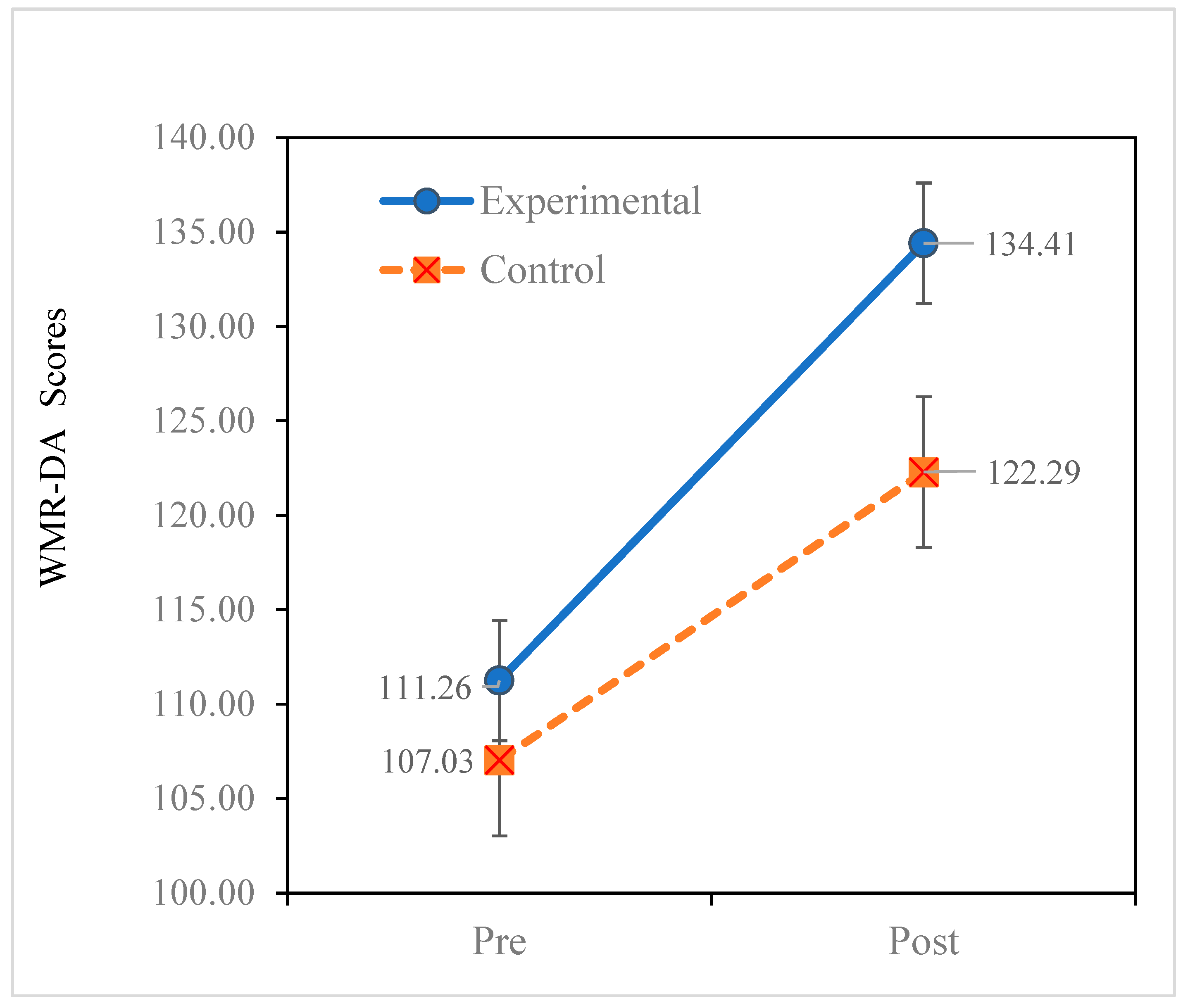
- Children in the experimental group are expected to show greater gains in mental rotation (WMR) performance from pre- to post-teaching compared with children in the control group, reflecting a near-transfer effect of the intervention.
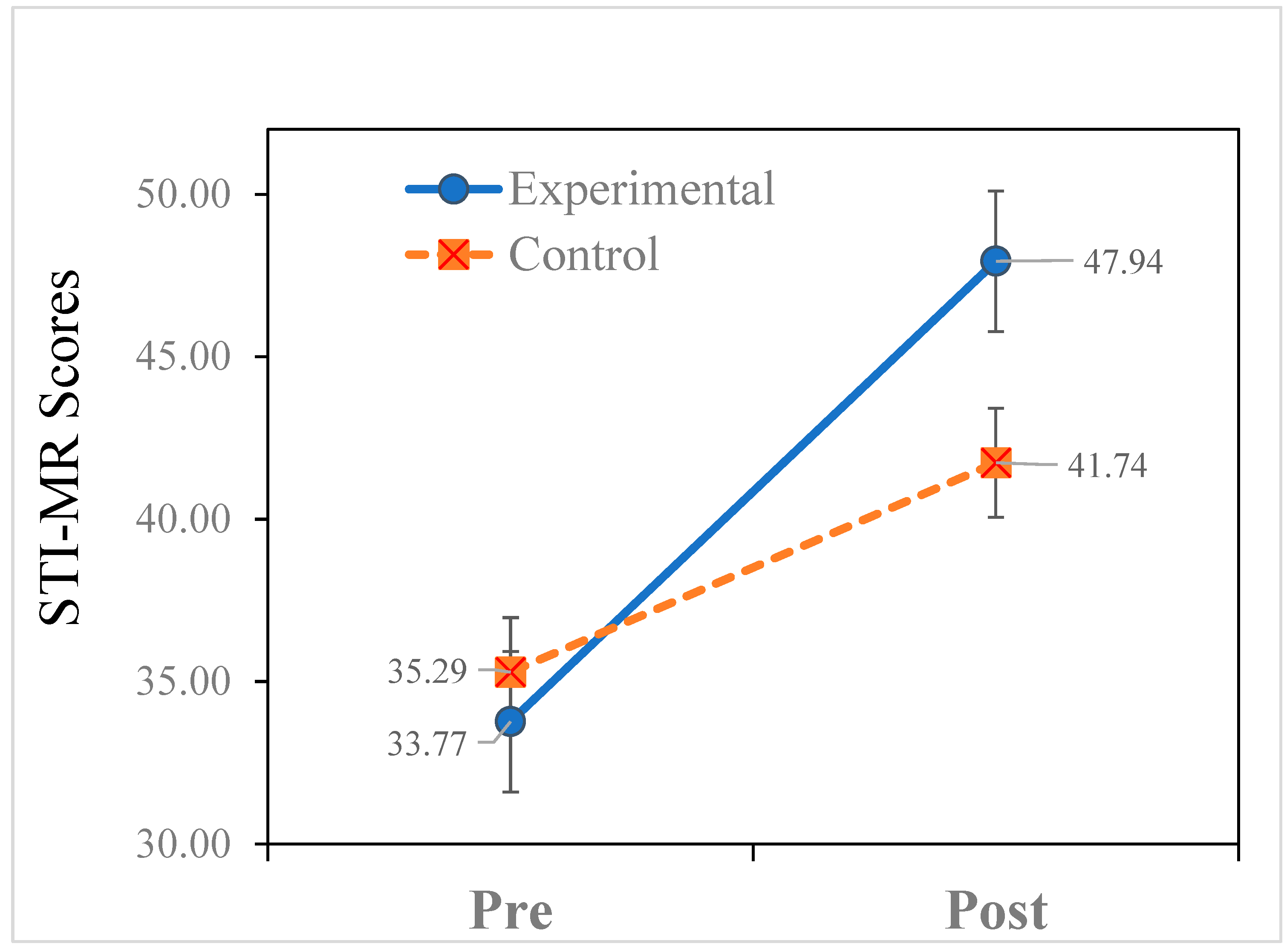
- Children in the experimental group are expected to exhibit greater improvement from pre- to post-teaching on the STI-MR test than children in the control group, indicating a far-transfer effect of the intervention.
- Consistent with prior research showing early sex differences in spatial processing and strategy use, boys are expected to outperform girls on both MR tasks (WMR and STI-MR) during the pre-intervention phase. However, because spatial skills are highly malleable and responsive to targeted instruction, the intervention is expected to reduce these initial disparities. Following the intervention phase, girls are expected to close the performance gap, leading to comparable MR outcomes between boys and girls.
- MR performance in the full sample will be positively correlated across the pre- and post-intervention phases. However, the strength of this correlation is expected to decrease from pre- to post-intervention. This reduction is anticipated because, following the intervention, children are likely to develop more efficient strategies or greater familiarity with the MR tasks, thereby reducing WM’s relative contribution to MR performance.
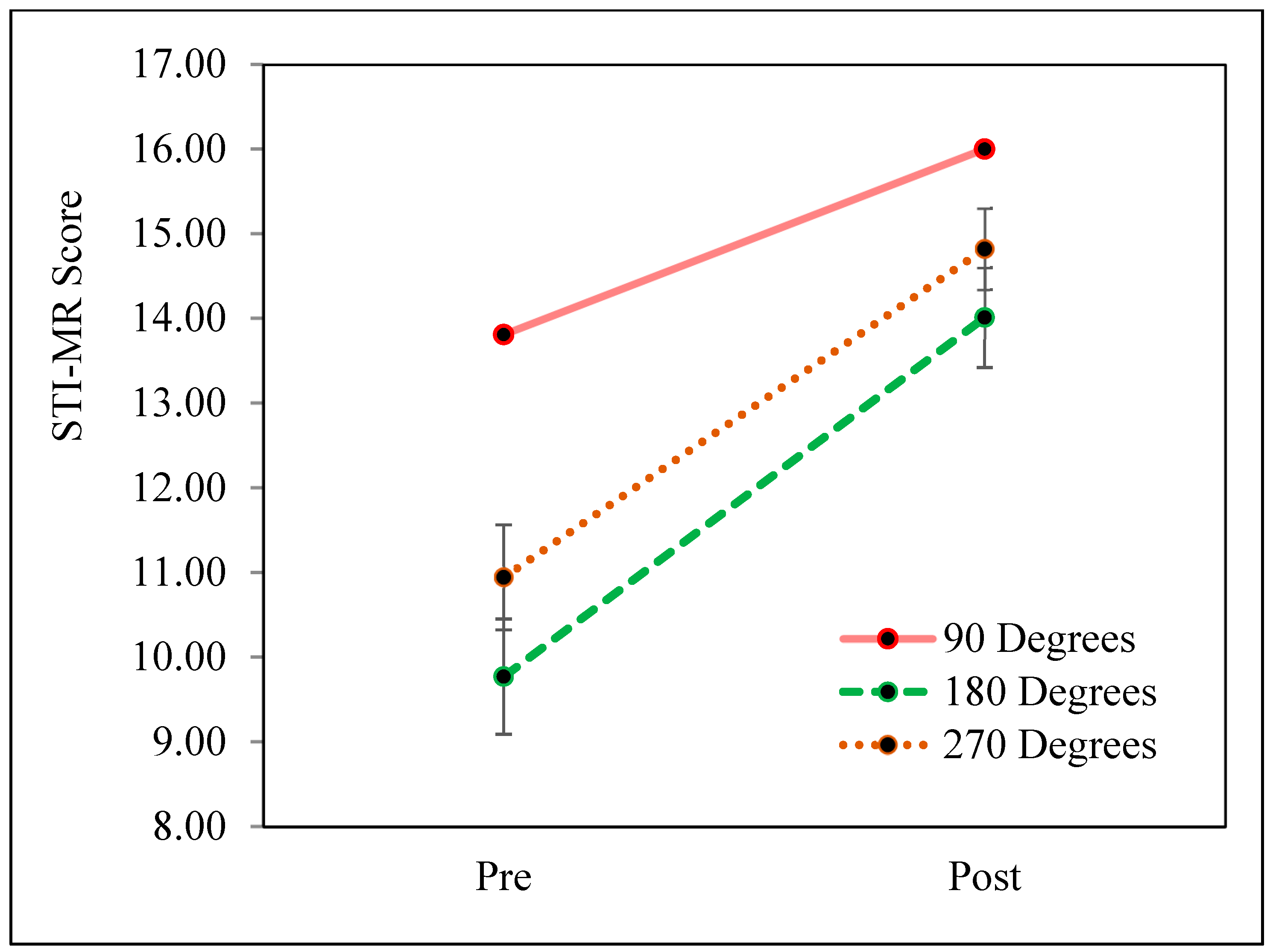
- Improvements in MR performance from pre- to post-intervention are expected to be greater at higher rotation angles. This prediction is grounded in theory and prior research suggesting that children benefit more from mediation when task difficulty increases, making larger rotation angles particularly sensitive to intervention effects.
2. Methods
2.1. Participants
2.2. Measures
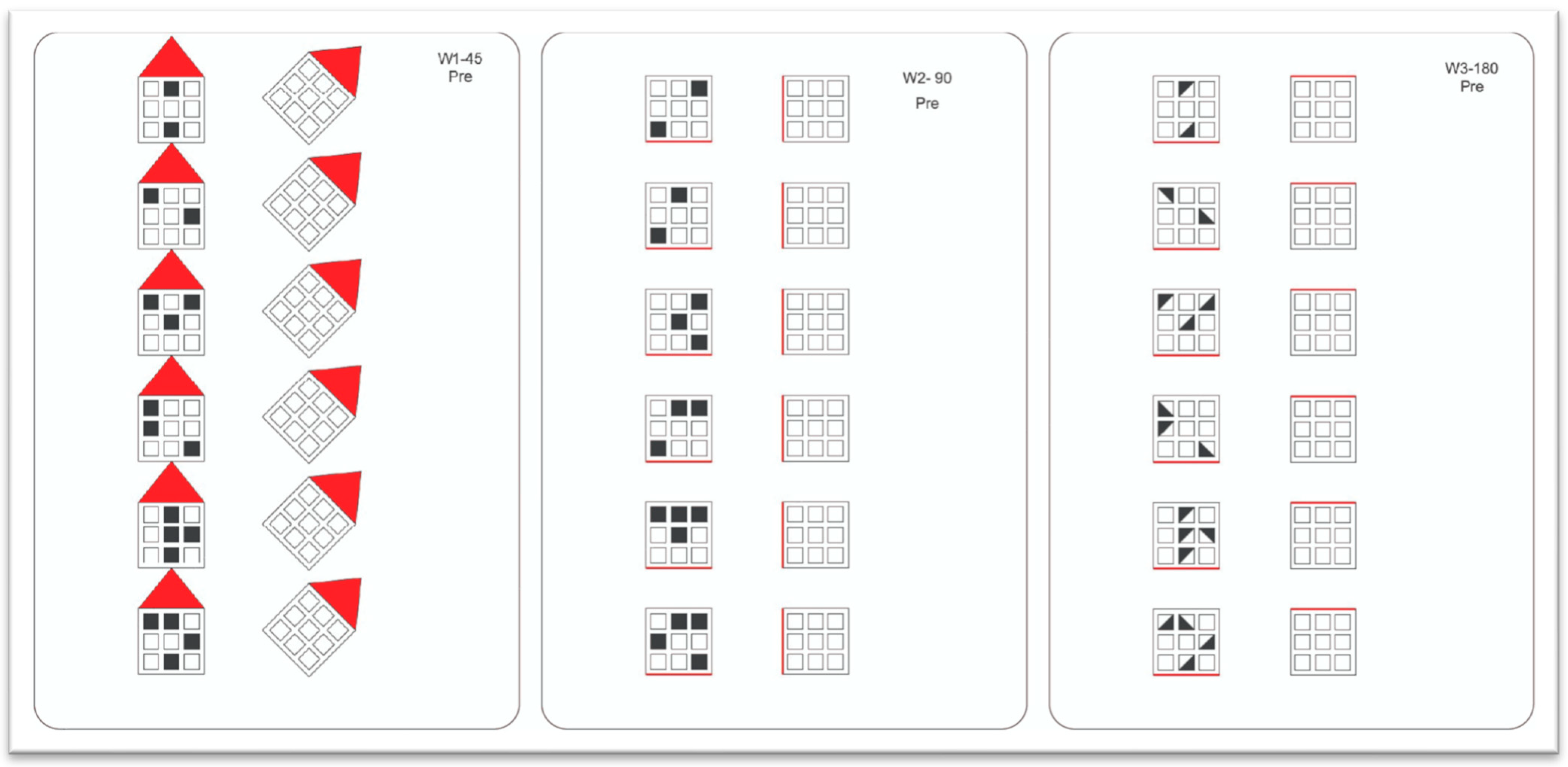
2.2.1. The Windows Mental Rotation–Dynamic Assessment (WMR-DA)
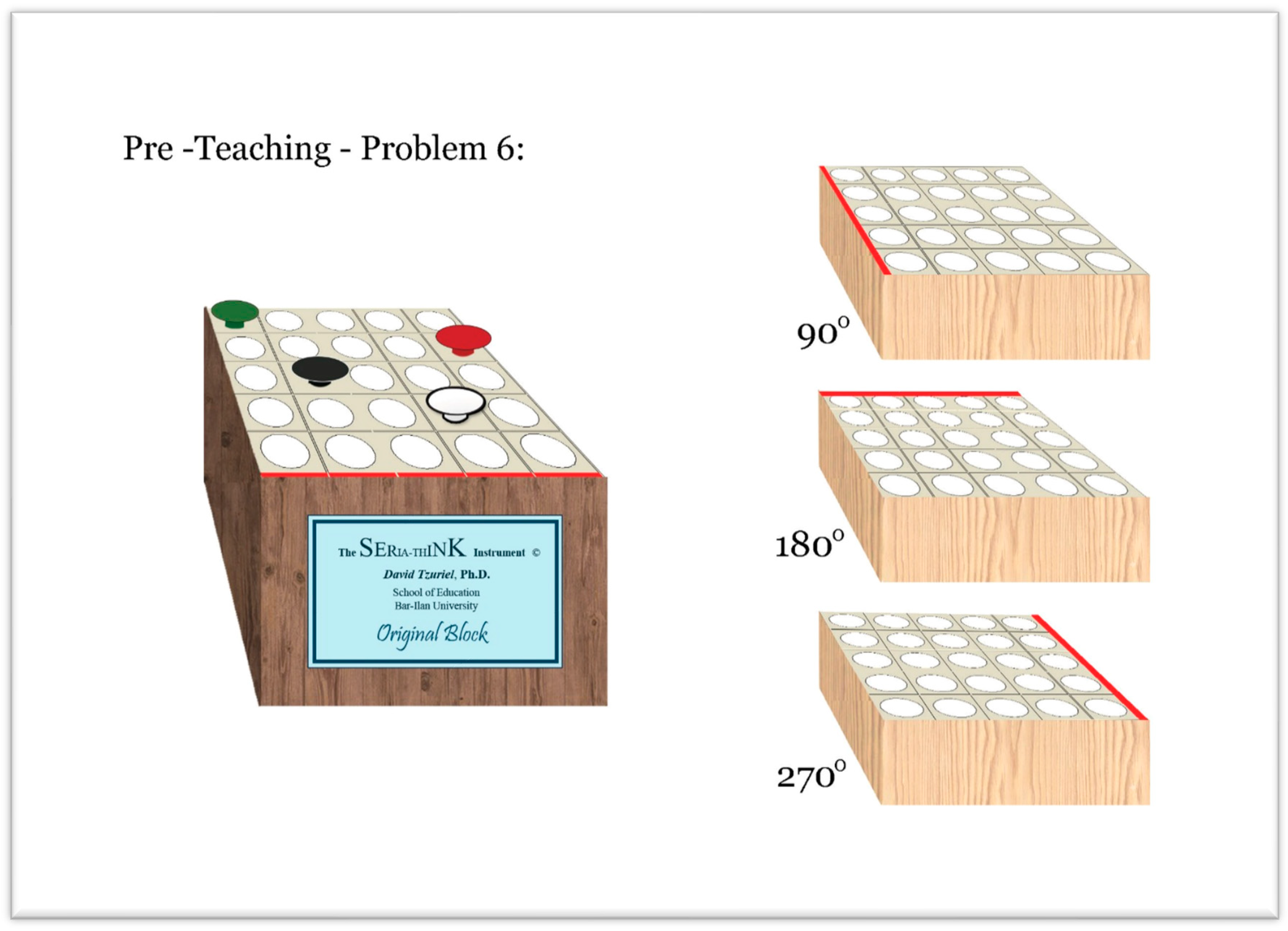
2.2.2. The Seria-Think Instrument–Mental Rotation (STI-MR) Test
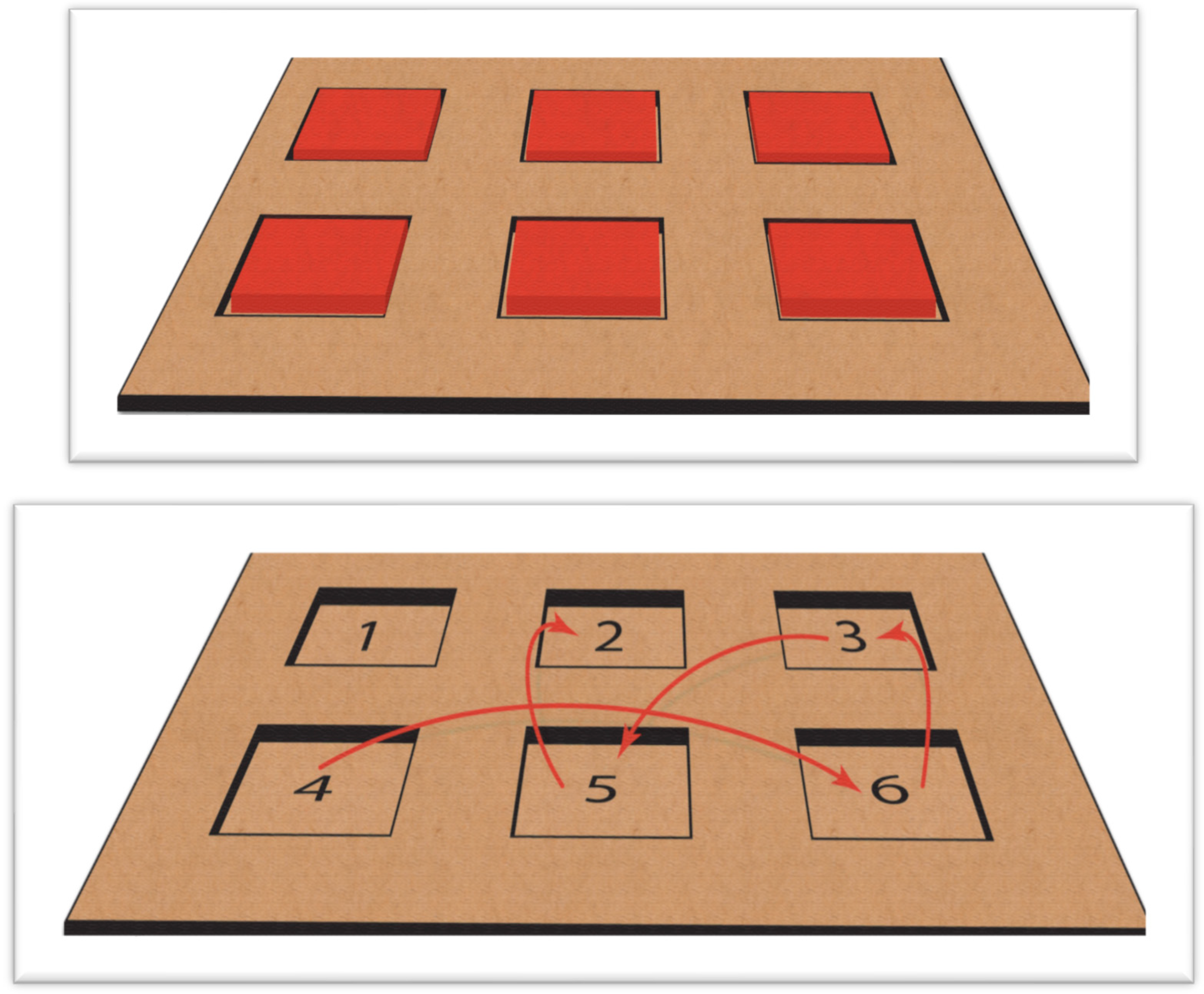
2.2.3. The Children’s Spatial Working Memory (CSWM) Test
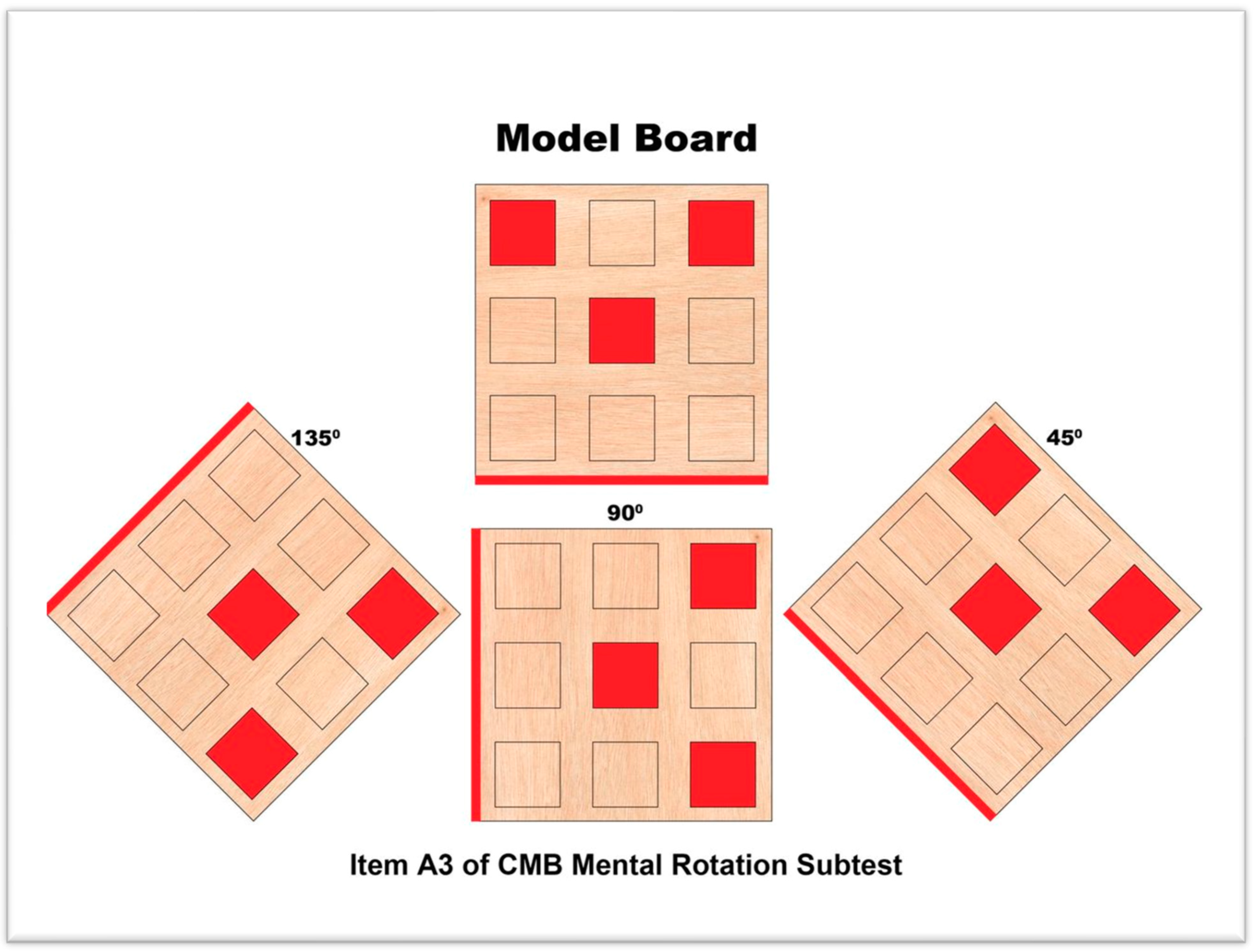
2.2.4. The Cognitive Modifiability Battery–Mental Rotation (CMB-MR) Subtest
2.3. Procedure
3. Results
3.1. Statistical Analysis Plan
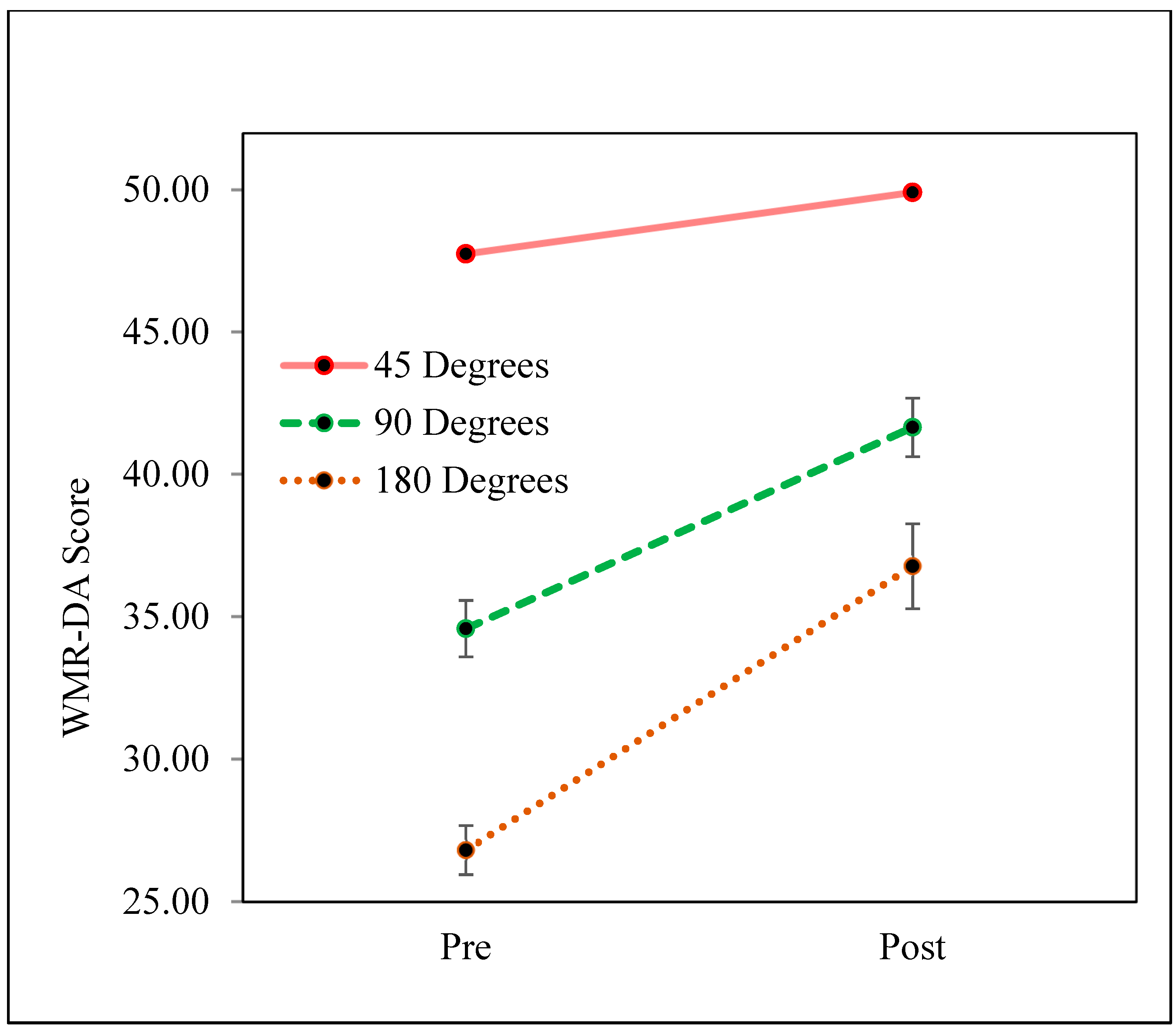
3.2. WMR-DA Performance in Pre- and Post-Intervention: Effects of Treatment, Sex, and Degree of Rotation
3.3. STI-MR Performance in Pre- and Post-Intervention: Effects of Treatment, Sex, and Degree of Rotation
3.4. The Relationship Between Working Memory and Mental Rotation
4. Discussion
4.1. Effectiveness of Motoric Mediation
4.2. The Effect of Mediation on Generalization
4.3. Rotation Angle Effects
4.4. Absence of Sex Differences
4.5. How the Relationship Between Working Memory and Mental Rotation Changes with Training
4.6. Theoretical and Educational Implications
4.7. Cognitive Developmental Implications
4.8. Limitations of the Study and Future Directions
4.9. Conclusions
Author Contributions
Funding
Institutional Review Board Statement
Informed Consent Statement
Data Availability Statement
Acknowledgments
Conflicts of Interest
References
- Beckner, A. G., Katz, M., Tompkins, D. N., Voss, A. T., Winebrake, D., LoBue, V., Oakes, L. M., & Casasola, M. (2023). A novel approach to assessing infant and child mental rotation. Journal of Intelligence, 11(8), 168. [Google Scholar] [CrossRef] [Scilit] [PubMed]
- Bersier, N. M., Arbula, S., Ionta, S., & Rumiati, R. I. (2024). Mental rotation-related neural interactions between gender and cognitive strategy. Imaging Neuroscience, 2, imag-2-00310. [Google Scholar] [CrossRef] [Scilit] [PubMed]
- Bruce, C. D., & Hawes, Z. (2015). The role of 2D and 3D mental rotation in mathematics for young children: What is it? Why does it matter? And what can we do about it? ZDM Mathematics Education, 47, 331–343. [Google Scholar] [CrossRef] [Scilit]
- Casey, M. B., Nuttall, R., Pezaris, E., & Benbow, C. P. (1995). The influence of spatial ability on gender differences in mathematics college entrance test scores across diverse samples. Developmental Psychology, 31(4), 697–705. [Google Scholar] [CrossRef]
- Cooper, L. A., & Shepard, R. N. (1973). Chronometric studies of the rotation of mental images. In W. G. Chase (Ed.), Visual information processing. Academic Press. [Google Scholar]
- Dong, L., Ke, Y., Zhao, X., Liu, S., & Ming, D. (2025). Long-term cognitive and neurophysiological effects of mental rotation training. Science of Learning, 10, 16. [Google Scholar] [CrossRef] [Scilit] [PubMed]
- Ebert, W. M., Jost, L., Jansen, P., Stevanovski, B., & Voyer, D. (2024). Visual working memory as the substrate for mental rotation: A replication. Psychonomic Bulletin & Review, 32, 1204–1216. [Google Scholar] [CrossRef] [Scilit] [PubMed]
- Faul, F., Erdfelder, E., Buchner, A., & Lang, A.-G. (2009). Statistical power analyses using GPower 3.1: Tests for correlation and regression analyses. Behavior Research Methods, 41(4), 1149–1160. [Google Scholar] [CrossRef] [Scilit] [PubMed]
- Feuerstein, R., Rand, Y., & Hoffman, M. B. (1979). The dynamic assessment of retarded performers. University Park Press. [Google Scholar]
- Frick, A., & Pichelmann, S. (2023). Measuring spatial abilities in children: A comparison of mental-rotation and perspective-taking tasks. Journal of Intelligence, 11(8), 165. [Google Scholar] [CrossRef] [Scilit] [PubMed]
- Gerlach, C., & Poirel, N. (2018). Navon’s classical paradigm concerning local and global processing relates systematically to visual object classification performance. Scientific Reports, 8(1), 324. [Google Scholar] [CrossRef] [Scilit] [PubMed]
- Gilligan, K. A., Flouri, E., & Farran, E. K. (2017). The contribution of spatial ability to mathematics achievement in middle childhood. Journal of Experimental Child Psychology, 163, 107–125. [Google Scholar] [CrossRef] [Scilit] [PubMed]
- Gizzonio, V., Bazzini, M. C., Marsella, C., Papangelo, P., Rizzolatti, G., & Fabbri-Destro, M. (2021). Supporting preschoolers’ cognitive development: Short- and mid-term effects of fluid reasoning, visuospatial, and motor training. Child Development, 93(1), 134–149. [Google Scholar] [CrossRef] [Scilit] [PubMed]
- Harris, D. (2023). Spatial reasoning in context: Bridging cognitive and educational perspectives of spatial–mathematics relations. Frontiers in Education, 8, 1302099. [Google Scholar] [CrossRef] [Scilit]
- Hegarty, M. (2018). Ability and sex differences in spatial thinking: What does the mental rotation test really measure? Psychonomic Bulletin & Review, 25(3), 1212–1219. [Google Scholar] [CrossRef] [Scilit] [PubMed]
- Hoover, K. L., & Davis, A. S. (2017). Woodcock-Johnson IV. In J. Kreutzer, J. DeLuca, & B. Caplan (Eds.), Encyclopedia of clinical neuropsychology. Springer. [Google Scholar] [CrossRef] [Scilit]
- Hyun, J.-S., & Luck, S. J. (2007). Visual working memory as the substrate for mental rotation. Psychonomic Bulletin & Review, 14(1), 154–158. [Google Scholar] [CrossRef] [Scilit] [PubMed]
- Jacobs, O. L., Andrinopoulos, K., Steeves, J. K. E., & Kingstone, A. (2024). Sex differences persist in visuospatial mental rotation under 3D VR conditions. PLoS ONE, 19(11), e0314270. [Google Scholar] [CrossRef] [Scilit] [PubMed]
- Jansen, P., & Kellner, J. (2015). The role of rotational hand movements and general motor ability in children’s mental rotation performance. Frontiers in Psychology, 6, 984. [Google Scholar] [CrossRef] [Scilit] [PubMed]
- Jansen, P., Schmelter, A., Quaiser-Pohl, C., Neuburger, S., & Heil, M. (2013). Mental rotation performance in primary school age children: Are there gender differences in chronometric tests? Cognitive Development, 28, 51–62. [Google Scholar] [CrossRef] [Scilit]
- Jost, L., & Jansen, P. (2024). The influence of the design of mental rotation trials on performance and possible differences between sexes: A theoretical review and experimental investigation. Quarterly Journal of Experimental Psychology, 77(6), 1250–1271. [Google Scholar] [CrossRef] [Scilit] [PubMed]
- Judd, N., & Klingberg, T. (2021). Training spatial cognition enhances mathematical learning in a randomized study of 17,000 children. Nature Human Behaviour, 5(11), 1548–1554. [Google Scholar] [CrossRef] [Scilit] [PubMed]
- Kaufman, S. B. (2007). Sex differences in mental rotation and spatial visualization ability: Can they be accounted for by differences in working memory capacity? Intelligence, 35(3), 211–223. [Google Scholar] [CrossRef] [Scilit]
- Kimchi, R. (1992). Primacy of wholistic processing and global/local paradigm: A critical review. Psychological Bulletin, 112(1), 24–38. [Google Scholar] [CrossRef] [PubMed]
- Lauer, J. E., Ilkowska, M., & Willoughby, M. T. (2019). Executive function and academic achievement: A latent variable analysis. Developmental Psychology, 55(12), 2500–2512. [Google Scholar] [CrossRef] [Scilit] [PubMed]
- Lidz, C. S., & Peña, E. D. (2020). Dynamic assessment: A comprehensive approach to individualized learning and assessment. Guilford Press. [Google Scholar]
- Linn, M. C., & Petersen, A. C. (1985). Emergence and characterization of sex differences in spatial ability: A meta-analysis. Child Development, 56(6), 1479–1498. [Google Scholar] [CrossRef]
- Logan, G. D. (1988). Toward an instance theory of automatization. Psychological Review, 95(4), 492–527. [Google Scholar] [CrossRef]
- Michel, E., Roethlisberger, M., Neuenschwander, R., & Roebers, C. M. (2011). Development of cognitive skills in children with motor coordination impairments. Child Neuropsychology, 17(2), 151–172. [Google Scholar] [CrossRef] [Scilit] [PubMed]
- Mix, K. S., Levine, S. C., Cheng, Y.-L., Young, C., Hambrick, D. Z., & Konstantopoulos, S. (2022). The latent structure of spatial skills and mathematics: A meta-analytic structural equation modeling approach. Journal of Experimental Psychology: General, 151(1), 60–81. [Google Scholar] [CrossRef] [Scilit] [PubMed]
- Mix, K. S., Levine, S. C., Cheng, Y.-L., Young, C., Hambrick, D. Z., Ping, R., & Konstantopoulos, S. (2016). Separate but correlated: The latent structure of space and mathematics across development. Journal of Experimental Psychology: General, 145(9), 1206–1227. [Google Scholar] [CrossRef] [Scilit] [PubMed]
- Navon, D. (1977). Forest before trees: The precedence of global features in visual perception. Cognitive Psychology, 9(3), 353–383. [Google Scholar] [CrossRef] [Scilit]
- Neubauer, A. C., Bergner, S., & Schatz, M. (2010). Two- vs. Three-dimensional presentation of mental rotation tasks: Sex differences and effects of training on performance and brain activation. Intelligence, 38(5), 529–539. [Google Scholar] [CrossRef] [Scilit] [PubMed]
- Newcombe, N. S. (2018). Three kinds of spatial cognition. In D. Reisberg (Ed.), The Oxford handbook of cognitive psychology (pp. 1–16). Oxford University Press. [Google Scholar] [CrossRef] [Scilit]
- Odom, S. L., Cox, A. W., & Brock, M. E. (2010). Implementation science, professional development, and autism spectrum disorders. Exceptional Children, 77(2), 207–250. [Google Scholar]
- Pardo-Vazquez, J. L., & Fernández-Rey, J. (2012). Working memory capacity and mental rotation: Evidence for a domain-general view. The Spanish Journal of Psychology, 15(3), 881–890. [Google Scholar] [CrossRef] [Scilit] [PubMed]
- Perepletchikova, F., & Kazdin, A. E. (2005). Treatment integrity and therapeutic change: Issues and research recommendations. Clinical Psychology: Science and Practice, 12(4), 365–383. [Google Scholar] [CrossRef]
- Pickering, S., & Gathercole, S. E. (2001). Working memory test battery for children (WMTB-C). Psychological Corporation. [Google Scholar]
- Piek, J. P., Dawson, L., Smith, L. M., & Gasson, N. (2007). Early motor development and later working memory. Human Movement Science, 26(3), 395–412. [Google Scholar] [CrossRef] [Scilit] [PubMed]
- Piek, J. P., Hands, B., & Licari, M. K. (2012). Assessment of motor functioning in the preschool period. Neuropsychology Review, 22(4), 402–413. [Google Scholar] [CrossRef] [Scilit] [PubMed]
- Ponitz, C. C., McClelland, M. M., Matthews, J. S., & Morrison, F. J. (2009). A structured observation of behavioral self-regulation and its contribution to kindergarten outcomes. Developmental Psychology, 45(3), 605–619. [Google Scholar] [CrossRef] [Scilit] [PubMed]
- Ponitz, C. E. C., McClelland, M. M., Jewkes, A. M., Connor, C. M., Farris, C. L., & Morrison, F. J. (2008). Touch your toes! Developing a direct measure of behavioral regulation in early childhood. Early Childhood Research Quarterly, 23(2), 141–158. [Google Scholar] [CrossRef] [Scilit]
- Rahe, M., Schürmann, L., & Jansen, P. (2023). Self-concept explains gender differences in mental rotation performance after stereotype activation. Frontiers in Psychology, 14, 1168267. [Google Scholar] [CrossRef] [Scilit] [PubMed]
- Reuter, D., & Reinhold, F. (2025). The interaction of task complexity and gender on mental rotation skills in primary school students. International Electronic Journal of Mathematics Education, 20(3), em0834. [Google Scholar] [CrossRef] [Scilit] [PubMed]
- Richardson, J. T. E. (2005). Knox’s cube imitation test: A historical review and an experimental analysis. Brain and Cognition, 59, 183–213. [Google Scholar] [CrossRef] [Scilit] [PubMed]
- Richardson, J. T. E. (2011). Eta squared and partial eta squared as measures of effect size in educational research. Educational Research Review, 6(2), 135–147. [Google Scholar] [CrossRef] [Scilit]
- Sala, G., & Gobet, F. (2019). Cognitive training does not enhance general cognition. Trends in Cognitive Sciences, 23(1), 9–20. [Google Scholar] [CrossRef] [Scilit] [PubMed]
- Schenck, K. E., & Nathan, M. J. (2024). Navigating spatial ability for mathematics education: A review and roadmap. Educational Psychology Review, 36, 90. [Google Scholar] [CrossRef] [Scilit]
- Shepard, R., & Metzler, J. (1971). Mental rotation of three-dimensional objects. Science, 17(3972), 701–703. [Google Scholar] [CrossRef] [Scilit] [PubMed]
- Taragin, D., Tzuriel, D., & Vakil, E. (2019). Mental rotation: The effects of processing strategy, gender, and task characteristics on children’s accuracy, reaction time, and eye movement patterns. Journal of Eye Movement Research, 12(8), 1–19. [Google Scholar] [CrossRef] [Scilit] [PubMed]
- Tzuriel, D. (1995). The cognitive modifiability battery: Assessment and intervention—Instruction manual. Faculty of Education, Bar-Ilan University. [Google Scholar]
- Tzuriel, D. (2000). The cognitive modifiability battery: Assessment and intervention. In C. S. Lidz, & J. Elliott (Eds.), Dynamic assessment: Prevailing models and applications (pp. 375–406). Elsevier. [Google Scholar]
- Tzuriel, D. (2001). Dynamic assessment of young children. Kluwer Academic/Plenum Press. [Google Scholar] [CrossRef] [Scilit]
- Tzuriel, D. (2013). Mediated learning experience strategies and cognitive modifiability. Journal of Cognitive Education and Psychology, 12(1), 59–80. [Google Scholar] [CrossRef] [Scilit]
- Tzuriel, D. (2019). The children’s verbal working memory (CVWM) test: Instruction manual. Bar-Ilan University. [Google Scholar]
- Tzuriel, D. (2021). Mediated learning and cognitive modifiability. Springer Nature. [Google Scholar] [CrossRef] [Scilit]
- Tzuriel, D., & Egozi, G. (2007). Dynamic assessment of spatial abilities of young children: Effects of gender and task characteristics. Journal of Cognitive Education and Psychology, 6(2), 219–247. [Google Scholar] [CrossRef] [Scilit]
- Tzuriel, D., & Egozi, G. (2010). Gender differences in spatial ability of young children: The effects of training and processing strategies. Child Development, 81, 1417–1430. [Google Scholar] [CrossRef] [Scilit] [PubMed]
- Tzuriel, D., Hanuka-Levi, D., & Weiss, T. (2026). The working memory modifiability: Effects of mediation on working memory and analogical thinking. Acta Psychologica, 262, 106061. [Google Scholar] [CrossRef] [Scilit] [PubMed]
- Tzuriel, D., Weiss, T., & Kashy-Rosenbaum, G. (2024). The effects of working memory training on working memory, self-regulation, and analogical reasoning of preschool children. British Journal of Educational Psychology, 94(4), 1132–1160. [Google Scholar] [CrossRef] [Scilit] [PubMed]
- Uttal, D. H., & Cohen, C. A. (2012). Spatial thinking and STEM education: When, why, and how? Psychology of Learning and Motivation, 57, 147–181. [Google Scholar] [CrossRef] [Scilit]
- Uttal, D. H., Meadow, N. G., Tipton, E., Hand, L. L., Alden, A. R., Warren, C., & Newcombe, N. S. (2013). The malleability of spatial skills: A meta-analysis of training studies. Psychological Bulletin, 139(2), 352–402. [Google Scholar] [CrossRef] [Scilit] [PubMed]
- Vandenberg, S. G., & Kuse, A. R. (1978). Mental rotations, a group test of three-dimensional spatial visualization. Perceptual and Motor Skills, 47(2), 599–604. [Google Scholar] [CrossRef] [Scilit] [PubMed]
- Velázquez-Vargas, C. A., & Taylor, J. A. (2024). Working memory constraints for visuomotor retrieval strategies. Journal of Neurophysiology, 131, 748–764. [Google Scholar] [CrossRef] [Scilit] [PubMed]
- Voyer, D., Voyer, S., & Bryden, M. P. (1995). Magnitude of sex differences in spatial abilities: A meta-analysis and consideration of critical variables. Psychological Bulletin, 117(2), 250–270. [Google Scholar] [CrossRef] [Scilit] [PubMed]
- Wang, H., Zhao, X., Zhao, X., Luo, Y., & Yu, D. (2026). Unraveling children’s mental rotation: Insights from behavior and eye tracking. Scientific Reports, 16(1), 11690. [Google Scholar] [CrossRef] [Scilit] [PubMed]
- Wright, R., Thompson, W. L., Ganis, G., Newcombe, N. S., & Kosslyn, S. M. (2008). Training generalized spatial skills. Psychonomic Bulletin & Review, 15, 763–771. [Google Scholar] [CrossRef] [Scilit] [PubMed]
- Xu, T., Siyu, S., & Qiping, K. (2025). Spatial reasoning and its contribution to mathematical performance across different content domains: Evidence from Chinese students. Journal of Intelligence, 13(4), 41. [Google Scholar] [CrossRef] [Scilit] [PubMed]
- Zhao, B., Della Sala, S., & Gherri, E. (2026). Visuo-spatial working memory abilities modulate mental rotation: Evidence from event-related potentials. Cognitive Neuroscience, 17(1), 1–12. [Google Scholar] [CrossRef] [Scilit] [PubMed]
- Zhu, C., Leung, C. O.-Y., Lagoudaki, E., Velho, M., Segura-Caballero, N., Jolles, D., Duffy, G., Maresch, G., Pagkratidou, M., & Klapwijk, R. (2023). Fostering spatial ability development in and for authentic STEM learning. Frontiers in Education, 8, 1138607. [Google Scholar] [CrossRef] [Scilit]





| WMR | STI-MR | |||||
|---|---|---|---|---|---|---|
| Phase | Treatment | Sex | M | SD | M | SD |
| Pre-Intervention | Experimental | Boys | 112.88 | 17.13 | 34.94 | 11.91 |
| Girls | 109.65 | 15.44 | 32.59 | 11.40 | ||
| Total | 111.26 | 16.14 | 33.76 | 11.54 | ||
| Control | Boys | 107.29 | 19.55 | 36.65 | 13.93 | |
| Girls | 106.76 | 22.43 | 33.94 | 13.57 | ||
| Total | 107.03 | 20.72 | 35.29 | 13.61 | ||
| Post-Intervention | Experimental | Boys | 134.88 | 19.09 | 46.53 | 5.79 |
| Girls | 133.94 | 15.10 | 49.35 | 5.52 | ||
| Total | 134.41 | 16.96 | 47.94 | 5.75 | ||
| Control | Boys | 122.00 | 27.67 | 43.65 | 13.12 | |
| Girls | 122.59 | 29.73 | 39.82 | 12.14 | ||
| Total | 122.29 | 28.28 | 41.73 | 12.60 | ||
| WMR | STI-MR | ||||||||
|---|---|---|---|---|---|---|---|---|---|
| Source of Variation | df | MS | F | p | ηp2 | MS | F | p | ηp2 |
| Treatment (A) | 1 | 757.67 | 2.88 | .10 | 0.04 | 61.96 | 0.84 | .364 | 0.01 |
| Sex (B) | 1 | 12.10 | 0.05 | .83 | 0.00 | 26.00 | 0.35 | .556 | 0.00 |
| A × B | 1 | 12.71 | 0.05 | .83 | 0.00 | 34.71 | 0.47 | .496 | 0.01 |
| Error | 64 | 790.21 | |||||||
| Degree of Rotation (C) | 2 | 10,085.47 | 248.40 | .001 | 0.80 | 319.68 | 36.40 | .001 | 0.36 |
| A × C | 2 | 99.83 | 2.46 | .090 | 0.04 | 2.46 | 0.51 | .603 | 0.01 |
| B × C | 2 | 1.03 | 0.03 | .975 | 0.00 | 1.33 | 0.15 | .860 | 0.00 |
| A × B × C | 2 | 31.57 | 0.56 | .518 | 0.01 | 0.16 | 0.02 | .981 | 0.00 |
| Error | 128 | 40.60 | 8.78 | ||||||
| Time (D) | 1 | 4180.48 | 100.66 | .001 | 0.61 | 1204.41 | 100.13 | .001 | 0.61 |
| A × D | 1 | 176.04 | 4.24 | .044 | 0.06 | 169.53 | 14.09 | .001 | 0.18 |
| B × D | 1 | 8.25 | 0.20 | .657 | 0.00 | 11.70 | 0.97 | .328 | 0.02 |
| A × B × D | 1 | 0.98 | 0.02 | .878 | 0.00 | 28.06 | 2.33 | .132 | 0.04 |
| Error | 64 | 41.53 | 12.03 | ||||||
| C × D | 2 | 529.81 | 39.57 | .001 | 0.39 | 40.59 | 10.14 | .001 | 0.14 |
| A × C × D | 2 | 27.72 | 2.07 | .130 | 0.03 | 5.19 | 1.30 | .277 | 0.02 |
| B × C × D | 2 | 16.55 | 1.24 | .294 | 0.02 | 3.18 | 0.80 | .45 | 0.01 |
| A × B × C × D | 2 | 8.11 | 0.61 | .547 | 0.01 | 6.94 | 1.74 | .18 | 0.03 |
| Error (C × D) | 128 | 13.39 | 4.00 | ||||||
| Test | Pre-Intervention | Post-Intervention | Fisher Z |
|---|---|---|---|
| WMR-DA | r = 0.32, p < .01 | r = 0.14, p = 0.30 | 3.20, p < .002 |
| STI-MR | r = 0.27, p = .02 | r = 0.21, p = .08 | −1.10, p > .050 |
Disclaimer/Publisher’s Note: The statements, opinions and data contained in all publications are solely those of the individual author(s) and contributor(s) and not of MDPI and/or the editor(s). MDPI and/or the editor(s) disclaim responsibility for any injury to people or property resulting from any ideas, methods, instructions or products referred to in the content. |
© 2026 by the authors. Licensee MDPI, Basel, Switzerland. This article is an open access article distributed under the terms and conditions of the Creative Commons Attribution (CC BY) license.
Share and Cite
Tzuriel, D.; Hozez Sagi, R. Cognitive Modifiability of Mental Rotation: Effects of Mediation, Sex, and Working Memory Among Third-Grade Students. J. Intell. 2026, 14, 162. https://doi.org/10.3390/jintelligence14080162
Tzuriel D, Hozez Sagi R. Cognitive Modifiability of Mental Rotation: Effects of Mediation, Sex, and Working Memory Among Third-Grade Students. Journal of Intelligence. 2026; 14(8):162. https://doi.org/10.3390/jintelligence14080162
Chicago/Turabian StyleTzuriel, David, and Ravit Hozez Sagi. 2026. "Cognitive Modifiability of Mental Rotation: Effects of Mediation, Sex, and Working Memory Among Third-Grade Students" Journal of Intelligence 14, no. 8: 162. https://doi.org/10.3390/jintelligence14080162
APA StyleTzuriel, D., & Hozez Sagi, R. (2026). Cognitive Modifiability of Mental Rotation: Effects of Mediation, Sex, and Working Memory Among Third-Grade Students. Journal of Intelligence, 14(8), 162. https://doi.org/10.3390/jintelligence14080162