Using Coding to Improve Executive Functioning in Children with Sickle Cell Disease: A Multiple-Baseline Single-Case Study

 , ,
, ,
Abstract
1. Introduction
1.1. Executive Function Impairment in Children with Sickle-Cell Disease
1.2. Computational Thinking and Coding Programs for Cognitive Training
1.3. Study Aim and Research Questions
- Could a coding-based intervention be suitable for the children with sickle cell disease (SCD) involved in the study? Specifically, could the three children effectively learn through coding activities?
- Could a short coding-based intervention be associated with improvements in the children’s verbal and nonverbal executive functions?
- How do the children’s neuropsychological profiles modulate the effects of the intervention?
2. Participants and Methods
2.1. Participants
- (a)
- a diagnosis of homozygous (HbSS) or heterozygous (HbSC) SCD
- (b)
- age 7–8 years and enrollment in Grade 2 or 3
- (c)
- EF impairments reported in the most recent clinical examination
- (d)
- Italian as the dominant language
- (e)
- family/child compliance: defined as availability to participate regularly in the baseline, assessment, and intervention phases for the full duration of the study.
2.2. Design and Procedure
2.2.1. Coding Baseline and Treatment Phases
2.2.2. Neuropsychological Pre- and Post-Intervention Assessment
2.3. Analytic Procedure
2.3.1. Baseline-Intervention Trends
2.3.2. Effect-Size (ESs) Computation
3. Results
3.1. Learning Trends in Coding: Baseline-Treatment Trends
3.2. Social Validity: Generalization of Training Effects to Executive Functions
4. Discussion
4.1. Response to the Coding Intervention: Feasibility, Adherence and Efficacy
4.2. Social Validity: Generalization to Executive Functions
4.3. Child × Treatment Interaction: Differential Effects by Child Profile
4.4. Limitations and Future Directions
5. Conclusions
Supplementary Materials
Author Contributions
Funding
Institutional Review Board Statement
Informed Consent Statement
Data Availability Statement
Acknowledgments
Conflicts of Interest
Abbreviations
| SCD | Sickle Cell Disease |
| EF | Executive Function |
| AIEOP | Associazione Italiana di Ematologia e Oncologia Pediatrica |
References
- Ahmed, Y., Kent, S. C., & Keller-Margulis, M. (2023). Reading-to-writing mediation model of higher-order literacy. Frontiers in Psychology, 14, 1033970. [Google Scholar] [CrossRef]
- Allen, T. M., Anderson, L. M., Brotkin, S. M., Rothman, J. A., & Bonner, M. J. (2020). Computerized cognitive training in pediatric sickle cell disease: A randomized controlled pilot study. Clinical Practice in Pediatric Psychology, 8(4), 390–401. [Google Scholar] [CrossRef]
- Amunts, J., Camilleri, J. A., Eickhoff, S. B., Heim, S., & Weis, S. (2020). Executive functions predict verbal fluency scores in healthy participants. Scientific Reports, 10(1), 11141. [Google Scholar] [CrossRef]
- Arfé, B., Montanaro, M., Mottura, E., Scaltritti, M., Manara, R., Basso, G., Sainati, L., & Colombatti, R. (2018). Selective difficulties in lexical retrieval and nonverbal executive functioning in children with HbSS sickle cell disease. Journal of Pediatric Psychology, 43(6), 666–677. [Google Scholar] [CrossRef]
- Arfé, B., Vardanega, T., Montuori, C., & Lavanga, M. (2019). Coding in primary grades boosts children’s executive functions. Frontiers in Psychology, 10, 2713. [Google Scholar] [CrossRef]
- Arfé, B., Vardanega, T., & Ronconi, L. (2020). The effects of coding on children’s planning and inhibition skills. Computers & Education, 148, 103807. [Google Scholar] [CrossRef]
- Associazione Italiana di Ematologia e Oncologia Pediatrica (AIEOP). (2023, April). Recommendations for the management of sickle cell disease in childhood in Italy. Available online: https://www.aieop.org/web/aggiornamento-raccomandazioni-malattia-drepanocitica/ (accessed on 21 August 2025).
- Bargagna, S., Castro, E., Cecchi, F., Cioni, G., Dario, P., Dell’Omo, M., Di Lieto, M. C., Inguaggiato, E., Martinelli, A., Pecini, C., & Sgandurra, G. (2019). Educational robotics in down syndrome: A feasibility study. Technology, Knowledge and Learning, 24(2), 315–323. [Google Scholar] [CrossRef]
- Bers, M. U., Flannery, L., Kazakoff, E. R., & Sullivan, A. (2014). Computational thinking and tinkering: Exploration of an early childhood robotics curriculum. Computers & Education, 72, 145–157. [Google Scholar] [CrossRef]
- Bisiacchi, P. S., Cendron, M., Gugliotta, M., Tressoldi, P. E., & Vio, C. (2005). BVN 5-11—Batteria di valutazione neuropsicologica per l’età evolutiva. Erickson. [Google Scholar]
- Blair, C. (2017). Educating executive function. WIREs Cognitive Science, 8(1–2), e1403. [Google Scholar] [CrossRef] [PubMed]
- Bocconi, S., Chioccariello, A., Kampylis, P., Dagienė, V., Wastiau, P., Engelhardt, K., Earp, J., Horvath, M. A., Jasutė, E., Malagoli, C., Masiulionytė-Dagienė, V., & Stupurienė, G. (2022). Reviewing computational thinking in compulsory education. Publications Office of the European Union. [Google Scholar] [CrossRef]
- Bombonato, C., Del Lucchese, B., Ruffini, C., Di Lieto, M. C., Brovedani, P., Sgandurra, G., Cioni, G., & Pecini, C. (2024). Far transfer effects of trainings on executive functions in neurodevelopmental disorders: A systematic review and metanalysis. Neuropsychology Review, 34(1), 98–133. [Google Scholar] [CrossRef] [PubMed]
- Brossart, D. F., Laird, V. C., & Armstrong, T. W. (2018). Interpreting Kendall’s Tau and Tau-U for single-case experimental designs. Cogent Psychology, 5(1), 1518687. [Google Scholar] [CrossRef]
- Brossart, D. F., Vannest, K. J., Davis, J. L., & Patience, M. A. (2014). Incorporating nonoverlap indices with visual analysis for quantifying intervention effectiveness in single-case experimental designs. Neuropsychological Rehabilitation, 24(3–4), 464–491. [Google Scholar] [CrossRef]
- Chen, M., Hyppa-Martin, J. K., Reichle, J. E., & Symons, F. J. (2016). Comparing single case design overlap-based effect size metrics from studies examining speech generating device interventions. American Journal on Intellectual and Developmental Disabilities, 121(3), 169–193. [Google Scholar] [CrossRef]
- Diamond, A. (2013). Executive functions. Annual Review of Psychology, 64, 135–168. [Google Scholar] [CrossRef]
- Diamond, A., & Lee, K. (2011). Interventions shown to aid executive function development in children 4 to 12 years old. Science, 333(6045), 959–964. [Google Scholar] [CrossRef]
- Diamond, A., & Ling, D. S. (2016). Conclusions about interventions, programs, and approaches for improving executive functions that appear justified and those that, despite much hype, do not. Developmental Cognitive Neuroscience, 18, 34–48. [Google Scholar] [CrossRef] [PubMed]
- Di Lieto, M. C., Castro, E., Pecini, C., Inguaggiato, E., Cecchi, F., Dario, P., Cioni, G., & Sgandurra, G. (2020a). Improving executive functions at school in children with special needs by educational robotics. Frontiers in Psychology, 10, 2813. [Google Scholar] [CrossRef]
- Di Lieto, M. C., Inguaggiato, E., Castro, E., Cecchi, F., Cioni, G., Dell’Omo, M., Laschi, C., Pecini, C., Santerini, G., Sgandurra, G., & Dario, P. (2017). Educational robotics intervention on executive functions in preschool children: A pilot study. Computers in Human Behavior, 71, 16–23. [Google Scholar] [CrossRef]
- Di Lieto, M. C., Pecini, C., Castro, E., Inguaggiato, E., Cecchi, F., Dario, P., Cioni, G., & Sgandurra, G. (2020b). Empowering executive functions in 5- and 6-year-old typically developing children through educational robotics: An RCT study. Frontiers in Psychology, 10, 3084. [Google Scholar] [CrossRef]
- Downes, M., Kirkham, F. J., Telfer, P. T., & de Haan, M. (2018). Altered neurophysiological processing of auditory attention in preschool children with sickle cell disease. Journal of Pediatric Psychology, 43(8), 856–869. [Google Scholar] [CrossRef]
- Fancello, G. S., Vio, C., & Cianchetti, C. (2021). ToL, torre di londra. Test di valutazione delle funzioni esecutive (pianificazione e problem solving). Erickson. [Google Scholar]
- Fingerhut, J., Xu, X., & Moeyaert, M. (2021). Selecting the proper Tau-U measure for single-case experimental designs: Development and application of a decision flowchart. Evidence-Based Communication Assessment and Intervention, 15(3), 99–114. [Google Scholar] [CrossRef]
- Friesen, D. C., Luo, L., Luk, G., & Bialystok, E. (2015). Proficiency and control in verbal fluency performance across the lifespan for monolinguals and bilinguals. Language, Cognition and Neuroscience, 30, 238–250. [Google Scholar] [CrossRef]
- Ganz, J. B., & Ayres, K. M. (2018). Methodological standards in single-case experimental design: Raising the bar. Research in Developmental Disabilities, 79, 3–9. [Google Scholar] [CrossRef]
- Gugliotta, M., Bisiacchi, P., Cendron, M., Tressoldi, P. E., & Vio, C. (2009). BVN 12-18 batteria di valutazione neuropsicologica per l’adolescenza. Erickson. [Google Scholar]
- Hardy, S. J., Bills, S. E., Meier, E. R., Schatz, J. C., Keridan, K. J., Wise, S., & Hardy, K. K. (2021). A randomized controlled trial of working memory training in pediatric sickle cell disease. Journal of Pediatric Psychology, 46(8), 1001–1014. [Google Scholar] [CrossRef]
- Hardy, S. J., Hardy, K. K., Schatz, J. C., Thompson, A. L., & Meier, E. R. (2016). Feasibility of home-based computerized working memory training with children and adolescents with sickle cell disease. Pediatric Blood & Cancer, 63(9), 1578–1585. [Google Scholar] [CrossRef]
- Hoyt, C. R., Hurwitz, S., Varughese, T. E., Yaeger, L. H., & King, A. A. (2023). Individual-level behavioral interventions to support optimal development of children with sickle cell disease: A systematic review. Pediatric Blood & Cancer, 70(3), e30178. [Google Scholar] [CrossRef]
- Hurley, G., Skidmore, E., Varughese, T., Picinich, A., Qashou, N., Adu, O., & King, A. A. (2025). Empowering minds: A pilot study to assess feasibility of ADAPT-SCD to enhance cognitive function in adolescents and young adults with sickle cell disease. Pediatric Blood & Cancer, 72, e31942. [Google Scholar] [CrossRef]
- Kelly, D. L., Buchbinder, D., Duarte, R. F., Auletta, J. J., Bhatt, N., Byrne, M., DeFilipp, Z., Gabriel, M., Mahindra, A., Norkin, M., Schoemans, H., Shah, A. J., Ahmed, I., Atsuta, Y., Basak, G. W., Beattie, S., Bhella, S., Bredeson, C., Bunin, N., … Shaw, B. E. (2018). Neurocognitive dysfunction in hematopoietic cell transplant recipients: Expert review from the late effects and quality of life working committee of the center for international blood and marrow transplant research and complications and quality of life working party of the european society for blood and marrow transplantation. Biology of Blood and Marrow Transplantation, 24(2), 228–241. [Google Scholar] [CrossRef] [PubMed]
- Kim, Y.-S. G. (2024). Writing fluency: Its relations with language, cognitive, and transcription skills, and writing quality using longitudinal data from kindergarten to grade 2. Journal of Educational Psychology, 116(4), 590–607. [Google Scholar] [CrossRef]
- Korkman, M., Kirk, U. E., & Kemp, S. (2007). NEPSY-II: A developmental neuropsychological assessment. The Psychological Corporation. [Google Scholar]
- Longoria, J. N., Heitzer, A. M., Hankins, J. S., Trpchevska, A., & Porter, J. S. (2022). Neurocognitive risk in sickle cell disease: Utilizing neuropsychology services to manage cognitive symptoms and functional limitations. British Journal of Haematoly, 197(3), 260–270. [Google Scholar] [CrossRef]
- Maggin, D. M., Cook, B. G., & Cook, L. (2018). Using single–Case research designs to examine the effects of interventions in special education. Learning Disabilities Research & Practice, 33(4), 182–191. [Google Scholar] [CrossRef]
- Mammarella, I. C., Cardillo, R., & Semrud-Clikeman, M. (2022). Do comorbid symptoms discriminate between autism spectrum disorder, ADHD and nonverbal learning disability? Research in Developmental Disabilities, 126, 104242. [Google Scholar] [CrossRef]
- Montuori, C., Gambarota, F., Altoé, G., & Arfé, B. (2024). The cognitive effects of computational thinking: A systematic review and meta-analytic study. Computers & Education, 210, 104961. [Google Scholar] [CrossRef]
- Montuori, C., Pozzan, G., Padova, C., Ronconi, L., Vardanega, T., & Arfé, B. (2023). Combined unplugged and educational robotics training to promote computational thinking and cognitive abilities in preschoolers. Education Sciences, 13(9), 858. [Google Scholar] [CrossRef]
- Montuori, C., Ronconi, L., Pozzan, G., Padova, C., Vardanega, T., & Arfé, B. (2025). Age-related effects of coding interventions. International Journal of Child-Computer Interaction, 44, 100747. [Google Scholar] [CrossRef]
- Morgan, P. L., Farkas, G., Wang, Y., Hillemeier, M. M., Oh, Y., & Maczuga, S. (2019). Executive function deficits in kindergarten predict repeated academic difficulties across elementary school. Early Childhood Research Quarterly, 46(1), 20–32. [Google Scholar] [CrossRef]
- Paap, K. R., & Sawi, O. (2016). The role of test-retest reliability in measuring individual and group differences in executive functioning. Journal of Neuroscience Methods, 274, 81–93. [Google Scholar] [CrossRef]
- Parker, R. I., & Vannest, K. J. (2012). Bottom-up analysis of single-case research designs. Journal of Behavioral Education, 21(3), 254–265. [Google Scholar] [CrossRef]
- Parker, R. I., Vannest, K. J., & Davis, J. L. (2011a). Effect size in single-case research: A review of nine nonoverlap techniques. Behavior Modification, 35(4), 303–322. [Google Scholar] [CrossRef]
- Parker, R. I., Vannest, K. J., Davis, J. L., & Sauber, S. B. (2011b). Combining nonoverlap and trend for single-case research: Tau-U. Behavior Therapy, 42(2), 284–299. [Google Scholar] [CrossRef] [PubMed]
- Peacock, J. L., Lo, J., Rees, J. R., & Sauzet, O. (2021). Minimal clinically important difference in means in vulnerable populations: Challenges and solutions. BMJ Open, 11(11), e052338. [Google Scholar] [CrossRef]
- Petersen-Brown, S., Karich, A. C., & Symons, F. J. (2012). Examining estimates of effect using non-overlap of all pairs in multiple baseline studies of academic intervention. Journal of Behavioral Education, 21(3), 203–216. [Google Scholar] [CrossRef]
- Prussien, K. V., Jordan, L. C., DeBaun, M. R., & Compas, B. E. (2019). Cognitive function in sickle cell disease across domains, cerebral infarct status, and the lifespan: A meta-analysis. Journal of Pediatric Psychology, 44(8), 948–958. [Google Scholar] [CrossRef]
- Pustejovsky, J. E., Chen, M., Grekov, P., & Swan, D. M. (2024). Single case ES: A calculator for single-case effect sizes indices (Version 0.7.3) [Computer software]. R Package. Available online: https://jepusto.github.io/SingleCaseES/ (accessed on 21 August 2025).
- Rakap, S. (2015). Effect sizes as result interpretation aids in single-subject experimental research: Description and application of four nonoverlap methods. British Journal of Special Education, 42(1), 11–33. [Google Scholar] [CrossRef]
- Reggiani, G., Coppadoro, B., Boaro, M. P., Trapanese, R., Baido, I., Biffi, A., Viaro, F., Pieroni, A., Minerva, M., Barcelos, G., Manara, R., Baracchini, C., & Colombatti, R. (2025). Residual cerebrovascular morbidity despite treatment in pediatric sickle cell disease highlights opportunities for earlier, intensified monitoring and treatment. American Journal of Hematology, 100(4), 717–719. [Google Scholar] [CrossRef] [PubMed]
- Sahu, T., Pande, B., Sinha, M., Sinha, R., & Verma, H. K. (2022). Neurocognitive changes in sickle cell disease: A comprehensive review. Annals of Neurosciences, 29(4), 255–268. [Google Scholar] [CrossRef]
- Schatz, J., Finke, R. L., Kellett, J. M., & Kramer, J. H. (2002). Cognitive functioning in children with sickle cell disease: A meta-analysis. Journal of Pediatric Psychology, 27(8), 739–748. [Google Scholar] [CrossRef]
- Schatz, J., & McClellan, C. B. (2006). Sickle cell disease as a neurodevelopmental disorder. Mental Retardation and Developmental Disabilities Research Reviews, 12(3), 200–207. [Google Scholar] [CrossRef] [PubMed]
- Schäfer, J., Reuter, T., Leuchter, M., & Karbach, J. (2024). Executive functions and problem-solving-The contribution of inhibition, working memory, and cognitive flexibility to science problem-solving performance in elementary school students. Journal of Experimental Child Psychology, 244, 105962. [Google Scholar] [CrossRef]
- Scherer, R., Siddiq, F., & Sánchez Viveros, B. (2019). The cognitive benefits of learning computer programming: A meta-analysis of transfer effects. Journal of Educational Psychology, 111, 764–792. [Google Scholar] [CrossRef]
- Schmidt, C. S. M., Schumacher, L. V., Römer, P., Leonhart, R., Beume, L., Martin, M., Dressing, A., Weiller, C., & Kaller, C. P. (2017). Are semantic and phonological fluency based on the same or distinct sets of cognitive processes? Insights from factor analyses in healthy adults and stroke patients. Neuropsychologia, 99, 148–155. [Google Scholar] [CrossRef] [PubMed]
- Scionti, N., Cavallero, M., Zogmaister, C., & Marzocchi, G. M. (2020). Is cognitive training effective for improving executive functions in preschoolers? A systematic review and meta-analysis. Frontiers in Psychology, 10, 2812. [Google Scholar] [CrossRef]
- Smith, K. E., & Schatz, J. (2016). Working memory in children with neurocognitive effects from sickle cell disease: Contributions of the central executive and processing speed. Developmental Neuropsychology, 41(4), 231–244. [Google Scholar] [CrossRef]
- Snodgrass, M. R., Chung, M. Y., Meadan, H., & Halle, J. W. (2018). Social validity in single-case research: A systematic literature review of prevalence and application. Research in Developmental Disabilities, 74, 160–173. [Google Scholar] [CrossRef]
- Stotesbury, H., Kirkham, F. J., Kölbel, M., Balfour, P., Clayden, J. D., Sahota, S., Sakaria, S., Saunders, D. E., Howard, J., Kesse-Adu, R., Inusa, B., Pelidis, M., Chakravorty, S., Rees, D. C., Awogbade, M., Wilkey, O., Layton, M., Clark, C. A., & Kawadler, J. M. (2018). White matter integrity and processing speed in sickle cell anemia. Neurology, 90(23), e2042–e2050. [Google Scholar] [CrossRef]
- Takacs, Z. K., & Kassai, R. (2019). The efficacy of different interventions to foster children’s executive function skills: A series of meta-analyses. Psychological Bulletin, 145(7), 653–697. [Google Scholar] [CrossRef]
- Tate, R. L., Perdices, M., Rosenkoetter, U., Shadish, W., Vohra, S., Barlow, D. H., Horner, R., Kazdin, A., Kratochwill, T., McDonald, S., Sampson, M., Shamseer, L., Togher, L., Albin, R., Backman, C., Douglas, J., Evans, J. J., Gast, D., Manolov, R., … Wilson, B. (2016). The single-case reporting guideline in behavioural interventions (SCRIBE) 2016 statement. Archives of Scientific Psychology, 4(1), 1–9. [Google Scholar] [CrossRef]
- Traverso, L., Viterbori, P., & Usai, M. C. (2019). Effectiveness of an executive function training in Italian preschool educational services and far transfer effects to pre-academic skills. Frontiers in Psychology, 10, 2053. [Google Scholar] [CrossRef] [PubMed]
- Walters, M. C. (2015). Update of hematopoietic cell transplantation for sickle cell disease. Current Opinion in Hematology, 22(3), 227–233. [Google Scholar] [CrossRef]
- Weafer, J., Baggott, M. J., & de Wit, H. (2013). Test–retest reliability of behavioral measures of impulsive choice, impulsive action, and inattention. Experimental and Clinical Psychopharmacology, 21(6), 475–481. [Google Scholar] [CrossRef]
- Wechsler, D. (2003). Wechsler intelligence scale for children, fourth edition (WISC-IV). APA PsycTests. Pearson. [Google Scholar] [CrossRef]
- What Works Clearinghouse. (2022). What works clearinghouse procedures and standards handbook, version 5.0. U.S. Department of Education, Institute of Education Sciences, National Center for Education Evaluation and Regional Assistance (NCEE). Available online: https://ies.ed.gov/ncee/wwc/Handbooks (accessed on 21 August 2025).
- Wing, J. M. (2006). Computational thinking. Communications of the ACM, 49(3), 33–35. [Google Scholar] [CrossRef]


| Haemoglobin Type | Age (Months) | Background | IQ | VCI | PRI | PSI | WMI | |
|---|---|---|---|---|---|---|---|---|
| P. (girl) | HbSS | 89 | Cameroon | 81 | 58 | 119 | 94 | 73 |
| V. (girl) | HbSC | 91 | Togo | 71 | 92 | 82 | 62 | 70 |
| N. (boy) | HbSS | 99 | Algeria | 82 | 68 | 100 | 91 | 91 |
| Coding Baseline Code.org Games Course C, 2021 | Coding Training Program Code.org Games Course C, 2021 | Pre/Post-Intervention Neuropsychological Assessment |
|---|---|---|
| Coding Baseline of different lengths: | Coding Training sessions transition to training occurs at different time points across the three tiers: | Neuropsychological assessment |
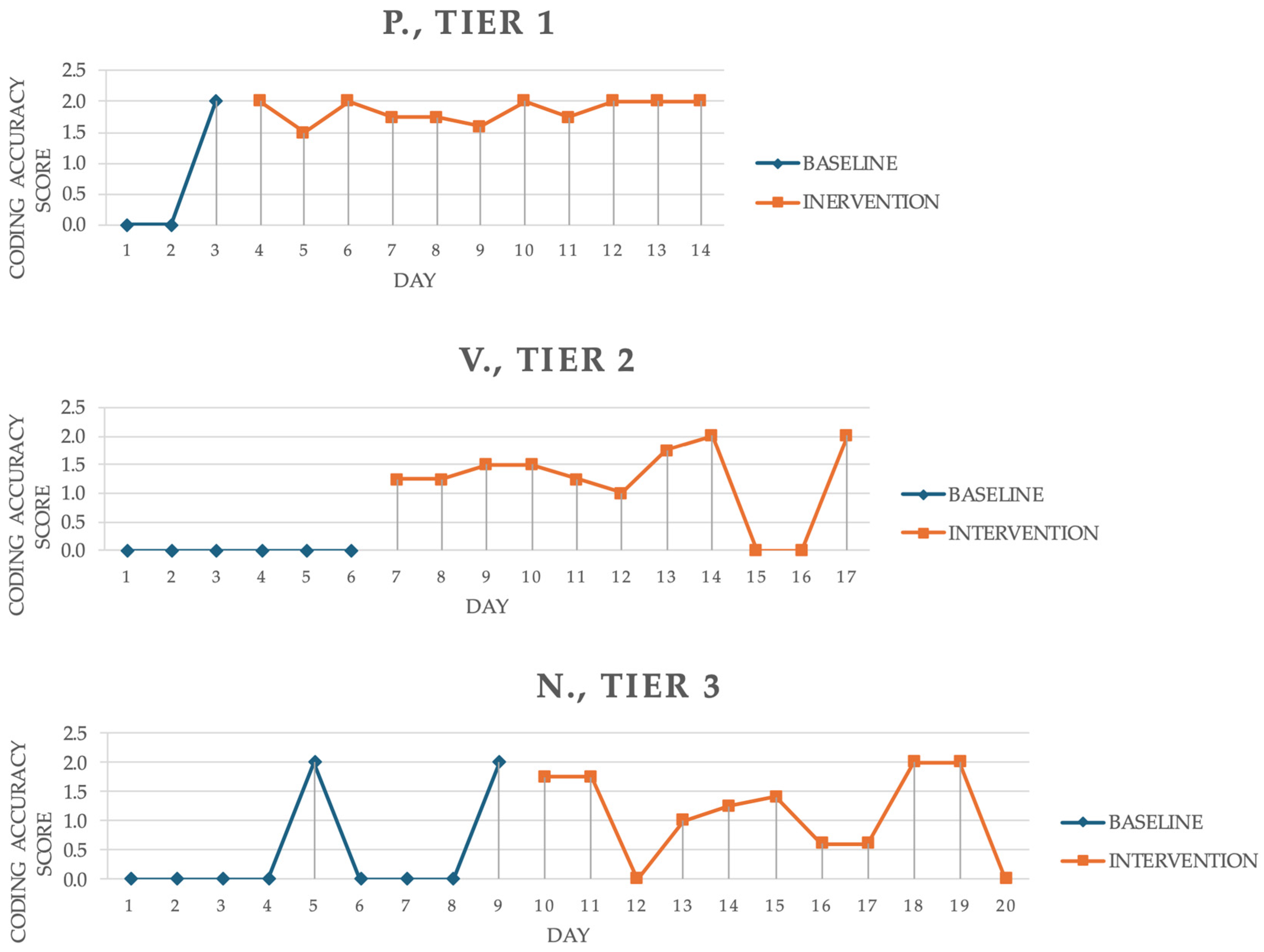
| P.’s baseline = 3 data points V.’s baseline = 6 data points N.’s baseline = 9 data points | P. = training starts at session 4 V. = training starts at session 7 N. = training starts at session 10 | Nonverbal EFs Planning: ToL, Elithorn Inhibition: NEPSY-II Switching: NEPSY-II Verbal EFs Verbal WM: WISC-IV digit span Verbal fluency: Semantic fluency (BVN 5–11); Phonological fluency (BVN 5–11) |
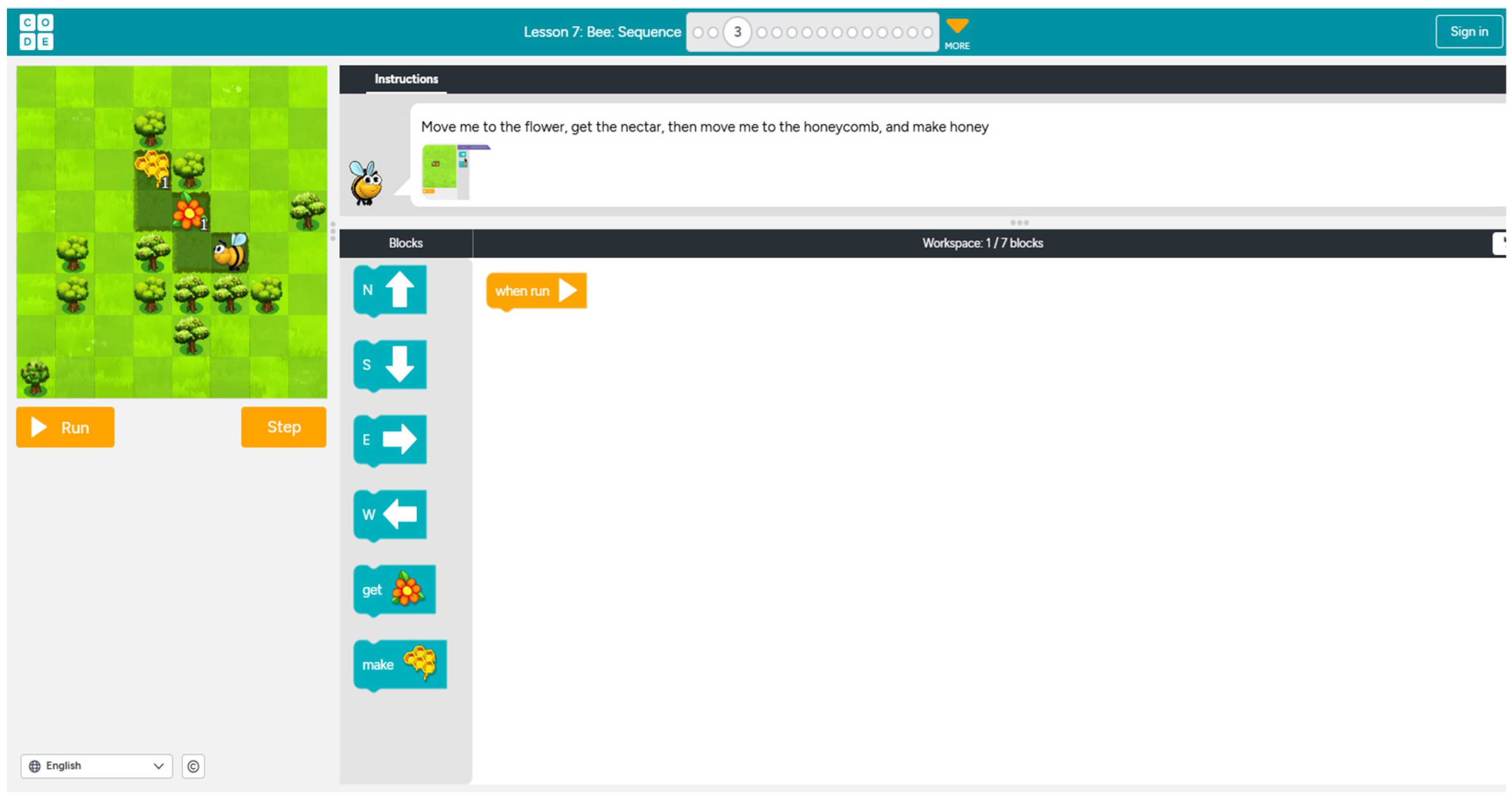
| Duration/L (overall length): 5 weeks Duration/N (number of coding sessions): 11 coding sessions Dose/L (session length): ~45 min Dose/N (number of coding trials per session): 4–5 coding games each session/1 coding trail last three sessions Frequency: 2 weekly training sessions |
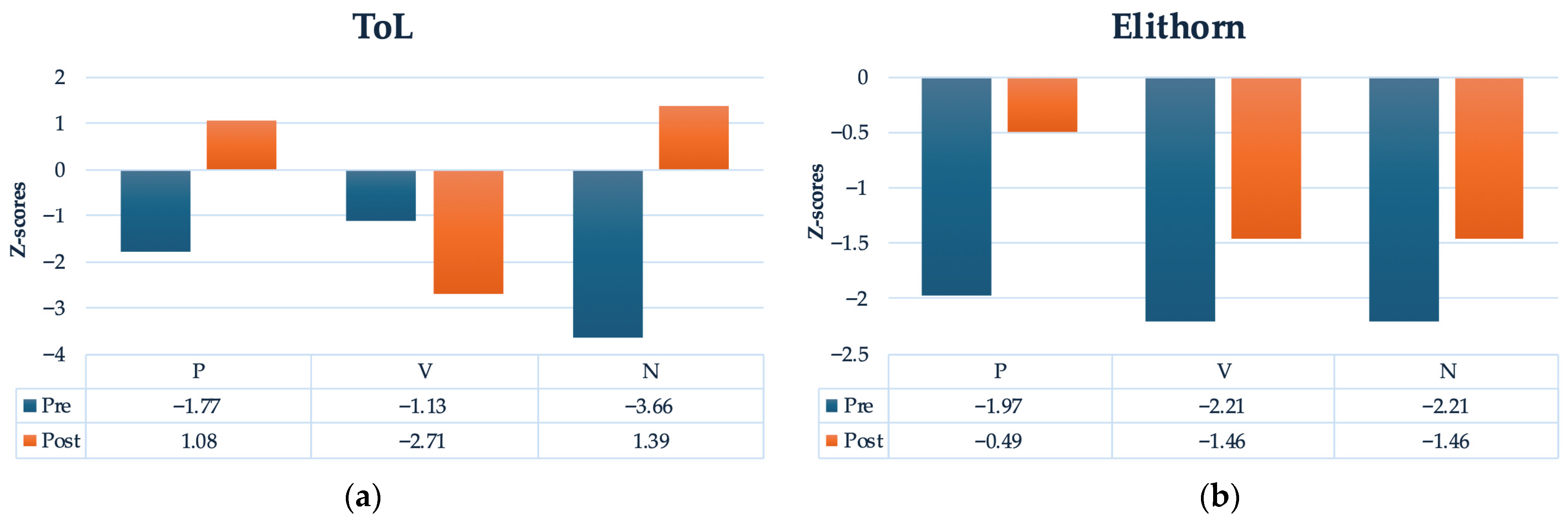
| Participant | Phase | ToL (z-sc) | Elithorn (z-sc) | NEPSY-II Inhib. (Errors Percentile) | NEPSY-II Switch. (Errors Percentile) | Sem. Flu. (z-sc) | Phon. Flu. (z-sc) | WISC-IV Digit Span (Scaled sc) |
|---|---|---|---|---|---|---|---|---|
| P. | pre | −1.77 | −1.97 | 2 [51–75] | 4 [>75] | 0.33 | −1.34 | 9 |
| post | 1.08 | −0.49 | 0 [>75] | 0 [>75] | 0.06 | −0.87 # | 13 | |
| V. | pre | −1.13 | −2.21 | 2 [51–75] | 23 [2–5] | −0.6 | −0.98 | 8 |
| post | −2.71 | −1.46 | 1 [>75] | 4 [>75] | −0.2 | −0.75 | 6 | |
| N. | pre | −3.66 | −2.21 | 4 [26–50] | 12 [26–50] | −2.06 | −1.38 | 9 |
| post | 1.39 | −1.46 | 6 [11–25] | 15 [11–25] | −1.02 | −0.87 | 4 |
Disclaimer/Publisher’s Note: The statements, opinions and data contained in all publications are solely those of the individual author(s) and contributor(s) and not of MDPI and/or the editor(s). MDPI and/or the editor(s) disclaim responsibility for any injury to people or property resulting from any ideas, methods, instructions or products referred to in the content. |
© 2026 by the authors. Licensee MDPI, Basel, Switzerland. This article is an open access article distributed under the terms and conditions of the Creative Commons Attribution (CC BY) license.
Share and Cite
Arfé, B.; Fave, M.E.d.; Montuori, C.; Ronconi, L.; Carbone, S.; Colombatti, R. Using Coding to Improve Executive Functioning in Children with Sickle Cell Disease: A Multiple-Baseline Single-Case Study. J. Intell. 2026, 14, 55. https://doi.org/10.3390/jintelligence14040055
Arfé B, Fave MEd, Montuori C, Ronconi L, Carbone S, Colombatti R. Using Coding to Improve Executive Functioning in Children with Sickle Cell Disease: A Multiple-Baseline Single-Case Study. Journal of Intelligence. 2026; 14(4):55. https://doi.org/10.3390/jintelligence14040055
Chicago/Turabian StyleArfé, Barbara, Maria Elisa delle Fave, Chiara Montuori, Lucia Ronconi, Sofia Carbone, and Raffaella Colombatti. 2026. "Using Coding to Improve Executive Functioning in Children with Sickle Cell Disease: A Multiple-Baseline Single-Case Study" Journal of Intelligence 14, no. 4: 55. https://doi.org/10.3390/jintelligence14040055
APA StyleArfé, B., Fave, M. E. d., Montuori, C., Ronconi, L., Carbone, S., & Colombatti, R. (2026). Using Coding to Improve Executive Functioning in Children with Sickle Cell Disease: A Multiple-Baseline Single-Case Study. Journal of Intelligence, 14(4), 55. https://doi.org/10.3390/jintelligence14040055