Article

Computational Analysis of the Performance Characteristics of a Supercritical CO2 Centrifugal Compressor


Department of Mechanical Engineering, Andong National University, 1375 Gyeongdong-ro, Andong-si 36729, Gyeongsangbuk-do, Korea
*
Author to whom correspondence should be addressed.
Computation 2018, 6(4), 54; https://doi.org/10.3390/computation6040054

Submission received: 16 August 2018 / Revised: 15 October 2018 / Accepted: 17 October 2018 / Published: 19 October 2018
(This article belongs to the Special Issue Computational Heat, Mass and Momentum Transfer)

Abstract

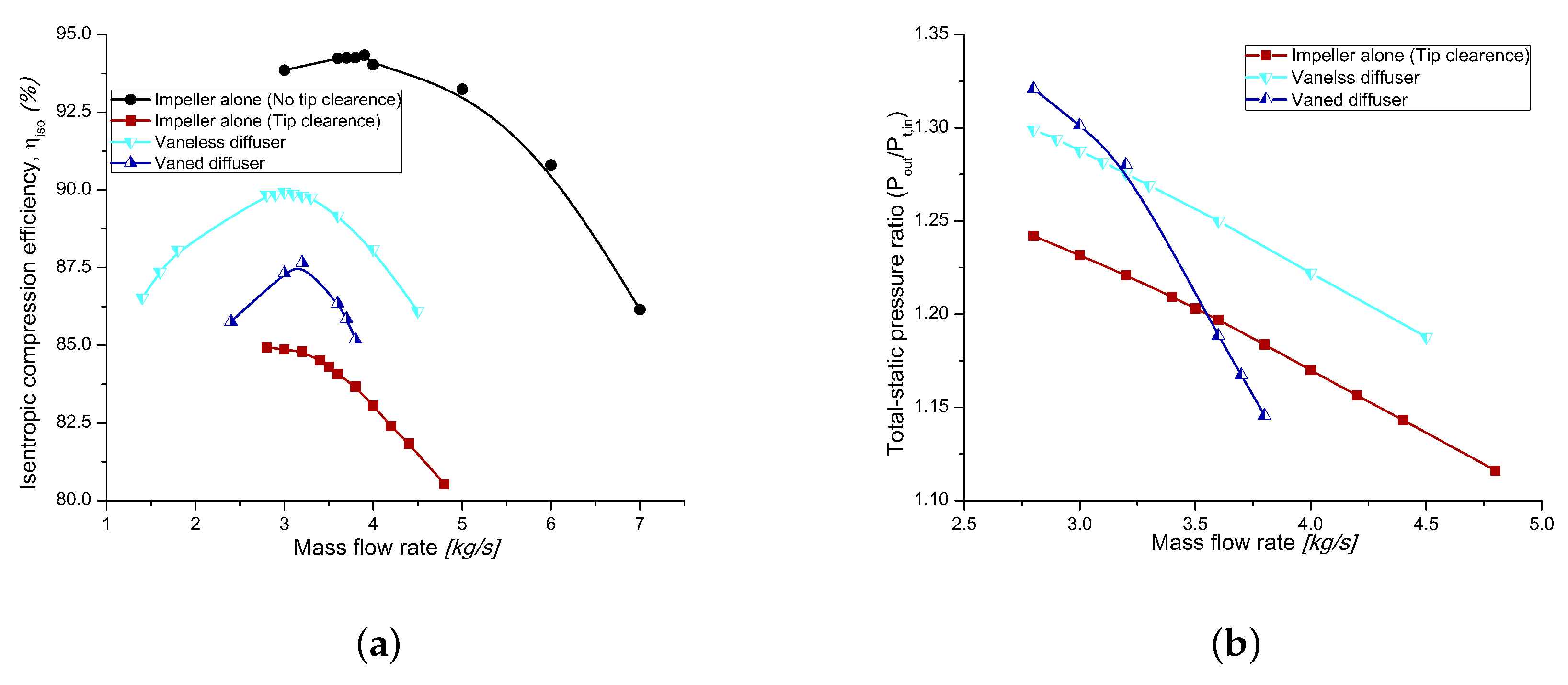
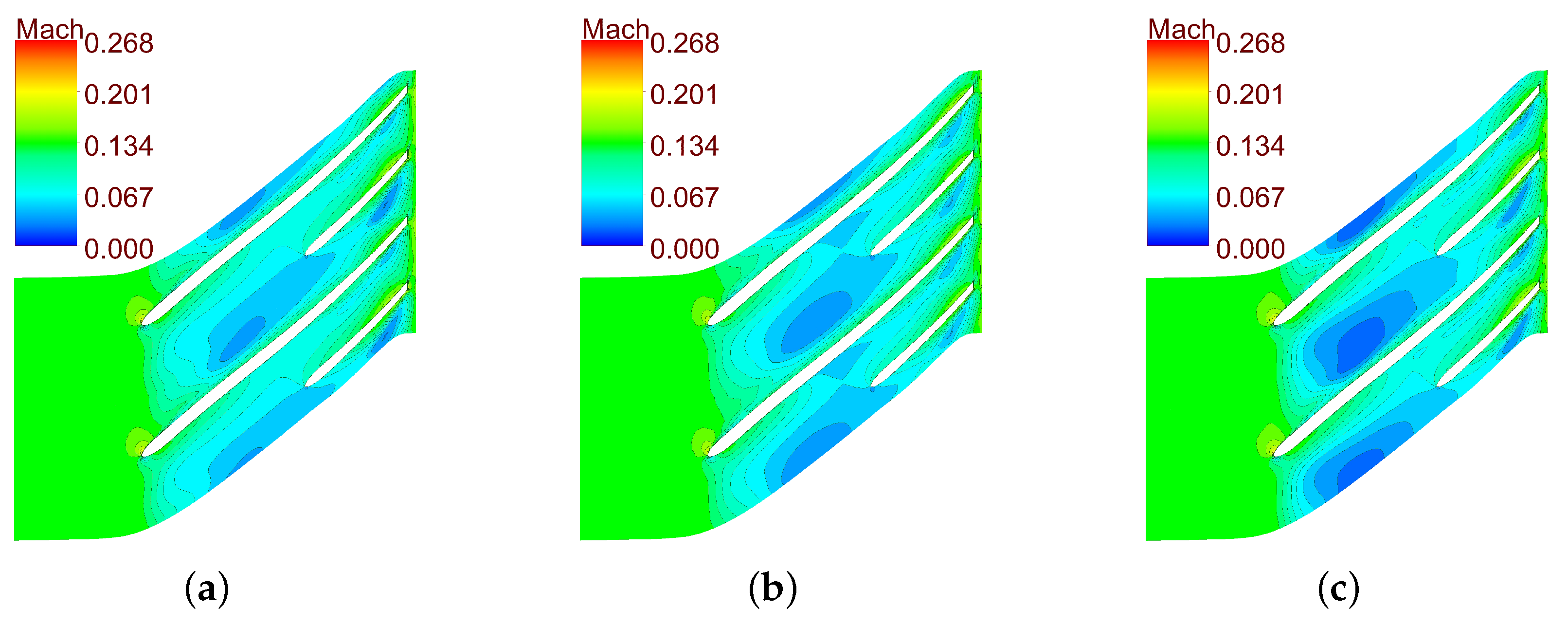
A centrifugal compressor working with supercritical CO 2 (S-CO 2 ) has several advantages over other supercritical and conventional compressors. S-CO 2 is as dense as the liquid CO 2 and becomes difficult to compress. Thus, during the operation, the S-CO 2 centrifugal compressor requires lesser compression work than the gaseous CO 2 . The performance of S-CO 2 compressors is highly varying with tip clearance and vanes in the diffuser. To improve the performance of the S-CO 2 centrifugal compressor, knowledge about the influence of individual components on the performance characteristics is necessary. This present study considers an S-CO 2 compressor designed with traditional engineering design tools based on ideal gas behaviour and tested by SANDIA national laboratory. Three-dimensional, steady, viscous flow through the S-CO 2 compressor was analysed with computational fluid dynamics solver based on the finite volume method. Navier-Stokes equations are solved with K- ω (SST) turbulence model at operating conditions in the supercritical regime. Performance of the impeller, the main component of the centrifugal compressor is compared with the impeller with vaneless diffuser and vaned diffuser configurations. The flow characteristics of the shrouded impeller are also studied to analyse the tip-leakage effect.
Keywords: supercritical carbon dioxide; centrifugal compressor; real gas effect; tip clearance; diffuser supercritical carbon dioxide; centrifugal compressor; real gas effect; tip clearance; diffuser