1. Introduction
One of the main challenges in earthquake-prone areas is developing a model resistant to earthquake vibrations. Given the inevitability of construction in these regions, researchers are striving to create a resilient and optimized model. Critical factors such as economic efficiency and architectural design have added complexity to the development of a suitable and practical solution Goodarzimehr et al. [
1]. In steel structures, the bracing system is one of the most effective methods for mitigating earthquake hazards. However, determining the optimal placement of this lateral load-bearing system remains a challenge that significantly impacts performance and construction costs. To achieve the best performance of these systems, it is essential to consider criteria such as minimizing deformations, ensuring structural stability, and managing costs (Mohammadi et al. [
2]). Therefore, the optimal placement of these systems has become a complex engineering problem requiring advanced methods for practical solutions.
Due to their nonlinear and multi-objective nature, structural optimization problems are generally highly complex. Traditional optimization methods, such as numerical or direct search methods, often do not address these challenges. Consequently, in recent years, metaheuristic algorithms have garnered significant attention Barzegari et al. [
3]. In complex structural engineering optimization problems, these algorithms can explore problem spaces with numerous local minima, adapt flexibly to varying conditions, and achieve rapid convergence (Goodarzimehr et al. [
4]). Goodarzimehr and Fanaie [
5] applied an improved multi-objective Special Relativity Search (SRS) algorithm to structural and mechanical problems.
Metaheuristic algorithms, inspired by natural, biological, and physical phenomena, have become effective tools for the optimal placement of seismic load-resisting systems due to their unique capabilities in searching complex solution spaces (Abualigah et al. [
6]). Goodarzimehr et al. [
7] enhanced the convergence rate of the SRS algorithm using a Gradient Descent mechanism for optimal design in numerical and engineering applications. These algorithms can provide optimal and near-optimal solutions for multi-objective and complex problems. These methods also have a significant advantage over traditional optimization methods due to exploration and avoiding trapping in local minima. One of the critical issues in structural design is determining the optimal location of wind braces and other seismic load-resisting systems. This requires a careful analysis of the distribution of seismic forces and their effect on the overall behavior of the structure. Goodarzimehr et al. [
8] developed a multi-criteria optimization strategy for challenging benchmark functions and real-world constrained engineering problems, demonstrating the potential of modern optimization techniques to efficiently solve complex and constrained design challenges. Metaheuristic algorithms make it possible to identify the optimal locations of these systems, and as a result, deformations are reduced, energy absorption capacity is increased, and the stability of the structure against seismic forces is improved (Faramarzi et al. [
9]).
For example, Goodarzimehr et al. [
10] developed an algorithm called Special Relativity Search (SRS) based on the principles of special relativity. This algorithm, inspired by the physics of special relativity, shows strong potential for optimizing various engineering problems. Its improved version, with advanced mechanisms, demonstrates a high convergence rate, making it highly effective for complex optimization tasks. Simon [
11] developed another optimization algorithm, successfully addressing various engineering challenges. The Differential Evolution (DE) algorithm introduced by Storn and Price [
12] has also been applied to complex structural optimization and achieved optimal solutions with impressive speed. Li and Tam [
13] introduced an innovative optimization algorithm. Furthermore, Kennedy and Eberhart [
14] developed an algorithm based on bird flocking behavior, which has proven highly successful in optimization applications. Special Relativity Search (SRS) introduced by Goodarzimehr et al. [
15] have been applied to optimize structures.
Metaheuristic algorithms have been widely applied in structural optimization problems due to their capability in handling nonlinear and constrained design spaces. Recent studies have investigated different optimization strategies for truss and frame structures using advanced population-based algorithms. Bodalal and Shuaeib [
16] employed the Marine Predators Algorithm for truss-sizing optimization, while Degertekin et al. [
17] proposed an enhanced hybrid harmony search approach for large-scale structural design problems. Bekdaş et al. [
18] evaluated several metaheuristic methods combined with Lévy flight modification techniques for structural optimization. In addition, Schott et al. [
19] presented a benchmarking framework for assessing the performance of metaheuristic optimization algorithms, and Borges et al. [
20] developed a novel BESO-based methodology for topology optimization of reinforced concrete structures. Furthermore, Charalampakis and Tsiatas [
21] critically evaluated the efficiency of several metaheuristic algorithms for weight minimization of truss systems, whereas Pholdee and Bureerat [
22] compared multiple self-adaptive optimization algorithms for structural sizing problems. These investigations demonstrate the effectiveness and growing application of metaheuristic techniques in solving complex structural optimization tasks.
Despite the numerous benefits of metaheuristic algorithms in optimizing seismic load-resisting system placement, these methods still face particular challenges. Key challenges include computational accuracy, the need for parameter tuning, and long convergence times in some cases. Moreover, hybrid methods that combine multiple algorithms with different capabilities are being investigated as a promising approach to enhance the performance of metaheuristic algorithms. Ultimately, the efforts of researchers to develop new metaheuristic and hybrid algorithms have led to highly effective solutions for structural design optimization. These algorithms provide valuable tools for optimized design, helping to reduce both weight and construction costs. Other advanced algorithms, such as Ant Colony Optimization and Genetic Algorithms, have also been used by Kamp et al. [
23,
24] for discrete structural optimization. Degertekin et al. [
25] and Gatti [
26] achieved significant success in steel frame optimization with the Harmony Search and Firefly Algorithm (FA), respectively.
The optimal selection of seismic load-resisting systems to enhance stability and minimize earthquake-induced deformations is a critical challenge in structural design. Metaheuristic algorithms, known for their robust ability to explore solution spaces, adaptability, and capacity for addressing multi-objective problems, serve as practical tools to advance this process. Recent advancements in these algorithms suggest that their broader application will significantly improve the seismic performance of structures and help reduce construction and maintenance costs.
Strategic positioning of seismic-resistant systems within steel frames is crucial in structural engineering research, especially regarding performance-based seismic design (PBSD). Recent studies have highlighted the effectiveness of various optimization techniques, including genetic algorithms and the Endurance Time (ET) method, in identifying optimal locations for dampers in steel structures, thereby improving their performance during seismic events. For example, Estekanchi et al. [
27] used the ET method to optimize the placement of viscous dampers in short steel frames, achieving desired performance at multiple hazard levels. Similarly, Sarcheshmehpour et al. [
28] explored the importance of soil–structure interaction in the optimal placement of dampers, using genetic algorithms to enhance the seismic rehabilitation of steel frames. These methodologies reduce computational demands and ensure that structural responses are effectively managed under varying seismic conditions, thereby improving overall resilience. Furthermore, recent research has explored advanced three-dimensional isolation systems, such as the combined air spring and lead rubber bearing (AS-LRB) device. Studies have demonstrated that this hybrid approach effectively mitigates both horizontal and vertical seismic forces, significantly improving the structural resilience of multi-story buildings (Mo et al. [
29]). Recent advancements emphasize balancing algorithmic efficiency with practical feasibility by employing dynamic grouping strategies and constructability penalties to standardize sections and reduce structural complexity (Cucuzza et al. [
30]). Additionally, incorporating material nonlinearity and connection stiffness in evolutionary optimization has been shown to significantly enhance the assessment of elasto-plastic behavior and material reduction under extreme loading conditions (Grubits et al. [
31]).
Furthermore, integrating advanced metaheuristic algorithms has further refined the optimization process for seismic-resistant systems. Kaveh et al. [
32] demonstrated the application of charge system search and harmony search algorithms for optimizing steel frames under seismic loads, emphasizing the importance of considering connection types and element sections in the design process. The research by Li [
33] on multi-objective optimization also underscores the necessity of balancing design complexity, capital investment, and future seismic risks in the optimization framework. This multifaceted approach is essential for achieving a comprehensive understanding of the optimal placement of seismic-resistant systems, as it allows for the simultaneous consideration of various performance objectives, ultimately leading to more robust and economically viable structural designs.
The selected references collectively explore advancements in structural optimization and earthquake-resistant design, employing diverse computational techniques to enhance the performance and cost-effectiveness of steel and reinforced concrete (RC) structures. These studies address critical challenges such as layout and topology optimization of steel frames using metaheuristic algorithms (Prayogo et al. [
34]), strategic placement of innovative self-centering joints for seismic resilience (Pieroni et al. [
35]), and performance-based seismic design methodologies (Vaez et al. [
36]). Additionally, they delve into leveraging neural networks for lifecycle cost optimization (Gholizadeh & Hasançebi [
37]) and integrating artificial intelligence models for the seismic design of RC buildings (Behera et al. [
38]). Research on the optimization of irregular RC structures using hybrid techniques like ANN-PSO (Zhang [
39]) and optimal design of self-centering braced frames (Zhang & Hu [
40]) further exemplify the innovative computational approaches driving the field. Lastly, novel methods like dynamic gradient-boosted metaheuristic optimization underscore the potential for achieving efficient designs in RC structures (Prayogo et al. [
41]). These contributions collectively underscore the pivotal role of advanced computational tools in evolving structural engineering practices.
The novelty of this research lies in enhancing the Special Relativity Search (SRS) algorithm by introducing a dynamic, weighted equation for the mass (m) parameter, addressing a previously unexplored aspect of the algorithm’s design. While existing studies have demonstrated the effectiveness of SRS in various optimization problems, they have largely overlooked the potential impact of m on the algorithm’s convergence and solution quality, treating it as a static unit value. By redefining m as an adaptive parameter, this study improves the algorithm’s performance and introduces a new dimension to its application. Furthermore, the Weighted Special Relativity Search (WSRS) algorithm developed in this work is applied to the challenging problem of optimal seismic-resistant system placement in steel frames, a critical yet underexplored area in structural engineering. This dual contribution—algorithmic enhancement and practical application—marks a significant advancement in computational optimization and seismic design methodologies.
2. Optimization Problem
Determining the best placement for seismic-resistant systems in steel frames is a complex optimization task that demands a structured strategy. The goal is to strategically position these systems to maximize the structure’s stability and energy dissipation during earthquakes while also keeping material usage and costs to a minimum. Mathematically, this problem can be formulated as follows:
The primary objective of the optimization problem is to minimize the total structural response under seismic loads, typically quantified by inter-story drift, structural displacement, or total energy dissipation. Let the objective function
f(
x) represent the structural response, where {
x1,
x2,
x3, …,
xn} denotes the decision variables representing the placement of seismic-resistant elements. The objective function can be expressed as:
where
Drifti(
x) is the response metric (e.g., drift or displacement) for the
ith story,
wi is a weighting factor reflecting the importance of the
ith story in the overall structural stability,
n is the total number of stories.
The optimization is subject to several constraints to ensure the feasibility and practicality of the solution:
The placement of systems must not violate design limitations, such as maximum allowable drift (
Dmax):
Per Seismic Design Code ASCE 7 [
42], the Design Story
Drift (Equation (3)),
Δ, is calculated as the difference between the Design Earthquake Displacements,
δDE. Diaphragm deformation,
δdi, can be disregarded when determining the design story
Drift.
where
δx Total drift of a story [in (mm)],
Cd Deflection amplification factor,
δxe Deflection at the location required, determined by an elastic analysis [in (mm)],
Ie Importance factor.
Ensure the frame’s stability and load-bearing capacity through constraints derived from structural analysis models, typically expressed as:
where
K(
x) is the stiffness matrix of the frame, dependent on the placement of seismic systems,
u is the displacement vector and
F is the external force vector representing seismic loads.
In the context of the Weighted Special Relativity Search (WSRS) algorithm, the decision variables x are represented as particles with positions in a multidimensional search space. The positions of the particles correspond to candidate solutions for the placement of seismic-resistant systems. The position of each particle is updated iteratively based on predefined relations. The adaptive mass parameter (m) introduces an innovative approach that plays a crucial role in enhancing the convergence of the algorithm.
The mass parameter
m is a function of the particle’s objective function magnitude and the number of iterations, ensuring an adaptive search mechanism. The proposed weighted equation for
m is:
where
mi is the mass of the
ith particle,
f(
xi) is the fitness of the particle,
k is the current iteration,
kmax is the maximum number of iterations,
α and
β are weighting coefficients controlling the influence of fitness and iteration progress.
To ensure the robustness of the proposed WSRS algorithm, a comprehensive justification and sensitivity analysis of the adaptive mass parameters (
α and
β) are provided. The parameter
α is designed to emphasize the influence of the particle’s fitness, facilitating a stronger exploitation toward high-quality solutions. Conversely,
β accounts for the temporal progression of the search, increasing the mass as iterations proceed to stabilize the particles’ movement and refine the local search in the final stages. A parametric sensitivity study was conducted by varying
α and
β in the range of [0.1, 0.9]. The results, indicate that a balanced configuration (e.g.,
α = 0.5 and
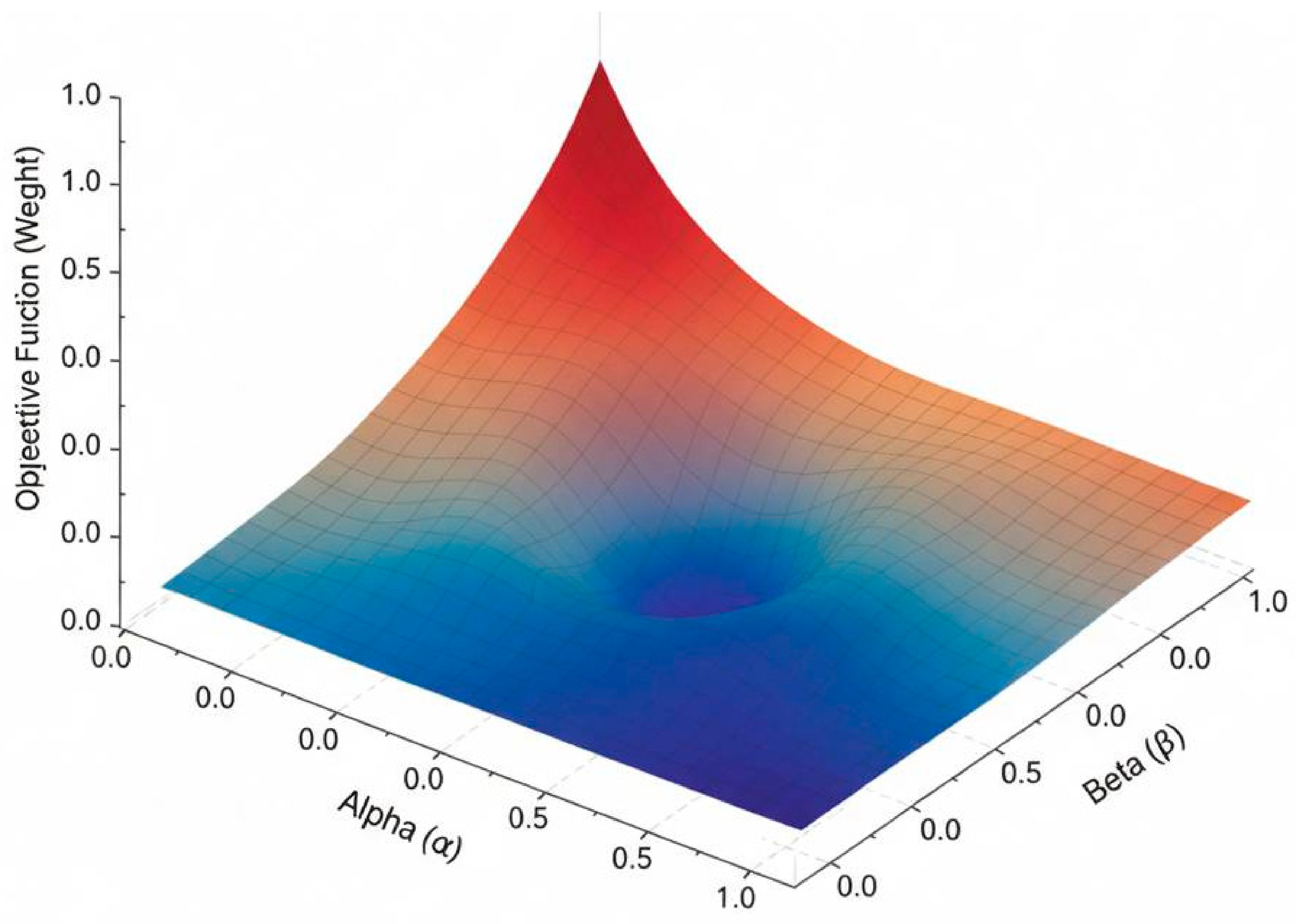
β = 0.5) provides the most stable convergence and the highest precision in minimizing story drift and structural weight. This dynamic weighting mechanism allows the WSRS to transition effectively from global exploration to local exploitation, surpassing the performance of the standard unit-mass SRS. As depicted in
Figure 1, the sensitivity analysis reveals that the WSRS algorithm maintains robust performance across a broad range of
α and
β values. However, the global minimum is achieved when both parameters are balanced, confirming that a combined reliance on current fitness and search progress is essential for optimizing complex seismic-resistant systems.
The objective function and associated constraints are formulated in the competency evaluation process to apply the WSRS algorithm. The algorithm searches for the optimal placement of seismic-resistant systems by minimizing the objective function while ensuring all constraints are satisfied. The iterative updates leverage the adaptive mass equation to balance exploration and exploitation dynamically, improving solution quality and convergence speed.
In this research, seismic loads are applied to the structural frame as lateral forces at each story, derived from the response spectrum method per the Seismic Design Code ASCE 7 guidelines. The response spectrum provides the maximum expected response of a single-degree-of-freedom (SDOF) system subjected to a range of frequencies, which is used to estimate peak accelerations and forces on the structure. The spectral acceleration (
Sa) is calculated as:
where
Tn is the natural period of the structure,
ξ is the damping ratio and
W is the total weight of the structure.
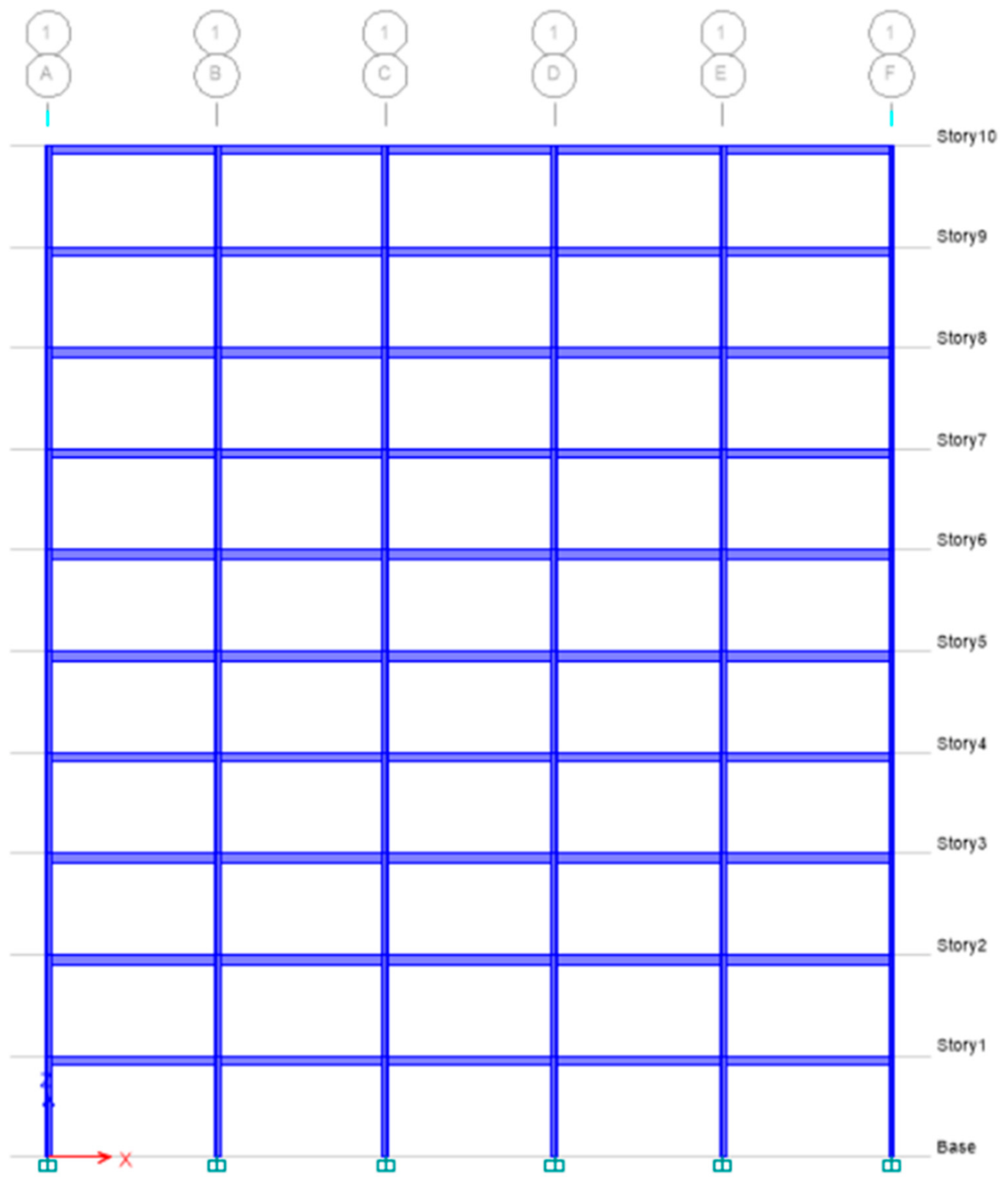
As illustrated in
Figure 2, the structure represents a moment-resisting frame designed to withstand both dead and seismic loads. The dead loads account for the constant forces due to the weight of structural and non-structural elements, while the seismic loads reflect the dynamic forces induced by potential earthquakes. The frame’s design and configuration aim to ensure adequate stability and deformation control under these combined loading conditions.
The design base shear is distributed along the height of the structure in proportion to the mass and height of each story, using the formula:
where
Fi is the lateral force on the
ith story,
Vb is the total base shear,
hi is the height of the
ith story,
n is the total number of stories.
The seismic loads and resulting structural responses are calculated using ETABS [
43], which allows precise modeling of the frame’s dynamic properties and seismic effects. This approach ensures that the optimization process accurately reflects real-world seismic behavior, providing reliable and practical solutions for the placement of seismic-resistant systems. A dead load and Live load are applied linearly at the beam level with an intensity of 7 kN/m and 2 kN/m, respectively. The length of all spans is 5 m. The combination of loads acting on the structure is applied to the structure according to
Table 1. The earthquake load is based on the following assumptions.
The key parameters for seismic analysis and design of the studied structures include the structural behavior factor (R), the importance factor (I), the displacement magnification factor (Cd), and the additional resistance factor (Ω). Each plays a crucial role in assessing and optimizing the structure’s ability to resist seismic forces and maintain stability during an earthquake. The structural behavior factor (R) reflects the structure’s inelastic and plastic behavior. It allows the design to take advantage of the structure’s ability to undergo deformation without failing under seismic loads. This factor is essential for reducing the seismic forces used in the design, as it considers the structure’s capacity to withstand non-elastic deformations.
The importance factor (I) measures the significance of the structure, its function, and the consequences of its potential failure during an earthquake. Structures with higher importance, such as hospitals or emergency service buildings, are designed with additional safety margins to ensure they remain operational after an earthquake. The displacement magnification factor (
Cd) accounts for nonlinear deformations and is used to calculate the actual displacement of the structure. This factor is particularly important for determining the true displacements, considering the increased displacements caused by nonlinear behavior under seismic forces. It ensures that the structure can accommodate the expected displacements without failure. The additional resistance factor (Ω) indicates the structure’s ability to withstand forces greater than the design force before reaching a failure point. It reflects the structure’s capacity to resist unexpected forces, providing an extra margin of safety that enhances the structure’s overall stability against severe seismic events. The specific values and details of these parameters for the structure under study are provided in
Table 2. These values were carefully selected based on relevant regulations and standards and adjusted to match the structure’s characteristics and the seismic conditions of the region.
3. Weighted Special Relativity Search Algorithm
The Weighted Special Relativity Search Algorithm (WSRSA) is a powerful method inspired by the principles of special relativity in physics. It is used to solve complex problems and optimize problems with multiple local minima. By combining the dynamics of relativistic mechanics with an intelligent variable weighting method, this algorithm can search the complex search space with greater accuracy and efficiency. In this approach, each search particle is modeled with a mass. The velocity of each particle is optimized based on predefined weight fields, which then guide the particles toward the desired solutions. The algorithm incorporates two key concepts from special relativity, namely time dilation and mass change with velocity, to simulate and solve optimization problems.
Variable weights, used to determine the relative importance of different dimensions in the search space, are key features of this algorithm. They allow the algorithm to avoid unnecessary exploration in less important areas by concentrating more on the significant ones, leading to lower costs. Preliminary results indicate that this method offers higher accuracy and a faster convergence rate than conventional SRS algorithms and other techniques. The applications of this algorithm include the optimization of complex functions, machine learning, and big data analysis. With its flexibility in adjusting weights and dynamic multidimensional interaction, the weighted special relativity search algorithm is expected to solve frame problems under earthquake forces significantly.
Steel frames, as the primary components of earthquake-resistant structures, require an optimal design that balances structural performance and cost. The Weighted Special Relativity Search Algorithm (WSRSA) offers an effective solution for optimizing the design of steel frames under earthquake forces. This process involves identifying the optimal placement of earthquake-resistant systems to control displacements, manage stresses, and maintain the seismic stability of the structure.
Initialization of Particles in the Search Space:
A search space is established with n dimensions, each of which is treated as an independent variable based on the problem.
Particles are initialized randomly in this search space, representing potential solutions.
Each particle in the search space has three distinct properties that evolve as the problem progresses: position (xi), velocity (vi), and mass (mi).
Objective Function Calculation: For each particle, the objective function value f(xi) is computed, which evaluates the quality of the solution. In this problem, the objective function minimizes structural seismic responses such as story drifts and displacements.
Updating the Mass (m) of Particles: The mass of each particle is dynamically calculated using Equation (5). Particles with better performance (lower f(xi)) and those in earlier iterations are assigned higher masses.
Updating the Velocity and Position of Particles: The velocity and position of particles are updated based on relativistic equations and weighting. Velocity is dynamically adjusted.
where
Qi and
Qj are the charges of particles
ith and
jth, respectively.
xi+1 is the new position of particles.
is the measured distance between two particles.
is the angular frequency of solutions.
m is the mass of particles. The ratio of
v to
c is the relativistic parameter, where
c is the speed of light and
v is the speed of the particle. According to the theory of relativity physics, the closer
v is to
c, the more accurate the equations are and the better the output generated.
- 5.
Applying Constraints: Design constraints, such as maximum allowable drift (
Dmax), structural load-bearing capacity, and stability, are enforced. Solutions violating these constraints are either penalized or excluded from the search Kuhn and Tucker et al. [
44]. The penalty function typically adds a value to the objective function to penalize incorrect or infeasible parameters automatically. For instance, suppose you are working on an optimization problem with multiple constraints. In this case, you could define a penalty function as follows:
General Penalty Function Definition
The
x is the variables supposed to be optimized (e.g., feature vectors or parameters), and
f(
x) is objective function. The penalty function can be expressed as:
where
f(
x) is the original objective function.
gi(
x) represents the various constraints (e.g., physical, technical, or other constraints) that you must adhere to.
λi are the penalty coefficients for each constraint, indicating the importance of the constraints.
p is an integer that controls the severity of the penalty. Typically,
p ≥ 1, and
p = 2 is commonly used. In WSRS, the penalty function can be designed to satisfy constraints, specifically restrict the search space, and avoid unrealistic points.
Suggested Penalty Function for WSRSA
The penalty function in Equation (10) adopts a standard approach to handle the inter-story drift and stability constraints. The degree of violation is calculated by normalizing the excess response beyond the allowable limits. By applying a high penalty coefficient (
α), the algorithm effectively transforms the constrained problem into an unconstrained one, where infeasible layouts are naturally discouraged during the iterative search process.
where
α is a penalty coefficient that adjusts the intensity of the penalty. The computational procedure of the proposed WARS algorithm is summarized in Algorithm 1.
| Algorithm 1. Pseudo-code of the proposed WARS algorithm implementation in MATLAB. |
MATLAB 2016b pseudo code of WARS:
1 % Step 1: Initialize Parameters
2 n_particles = 100; % Number of particles
3 max_iterations = 1000; % Maximum number of iterations
4
5 % Step 2: Initialize Particles
6 for i = 1:n_particles
7 particles(i).position = rand(1, dim) .* (upper_bound − lower_bound) + lower_bound;
8
9 % Step 3: Optimization Loop
10 for iteration = 1:max_iterations
11 % Step 3.1: Evaluate Fitness for Each Particle
12 for i = 1:n_particles
13 particles(i).fitness = objective_function(particles(i).position); % Calculate fitness
14 end
15
16 % Step 3.2: Update Mass for Each Particle
17 for i = 1:n_particles
18 particles(i).mass = alpha/particles(i).fitness + beta * (iteration/max_iterations);
19 end
20
21 % Step 3.3: Update Velocity and Position for Each Particle
22 for i = 1:n_particles
23 % Update velocity based on current velocity and mass
24 particles(i).velocity = update_velocity(particles(i).velocity, particles(i).mass, search_space);
25
26 % Update position based on velocity
27 particles(i).position = particles(i).position + particles(i).velocity;
28
29 % Step 3.4: Update Best Solution
30 best_solution = particles(best_index).position; % Update best solution
31 end
32
33 % Step 4: Output Optimal Solution
34 disp(“Optimal Solution:”);
35 disp(best_solution);
36 disp(“Best Fitness:”);
37 disp(best_fitness); |
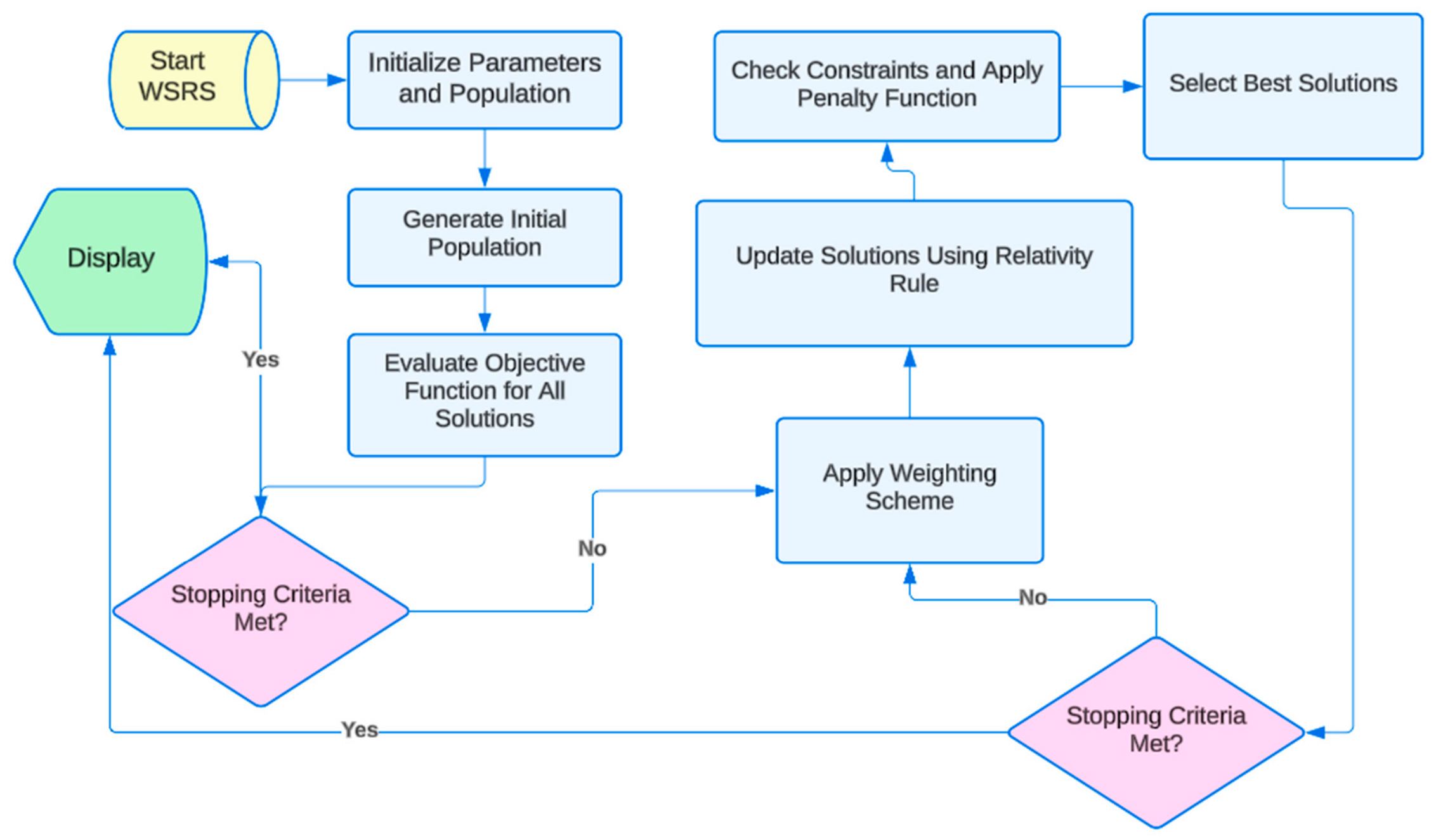
Figure 3 depicted the flow chart of novel WSRS. The WSRS (Weighted Special Relativity Search) algorithm has been utilized in this research to optimize the placement of seismic-resistant systems in steel frames. By adjusting the mass parameter (m) using a dynamic weight equation, this algorithm enhances the original SRS’s performance in terms of accuracy and convergence speed. The optimal placement of these systems is achieved by reducing deformations, increasing stability, and absorbing more earthquake energy while adhering to design constraints. Numerical results demonstrate that the WSRS algorithm outperforms SRS in solving complex engineering problems, resulting in stronger and more cost-effective structures to construct.
4. Results and Validations
The optimization of earthquake-resistant systems is a critical and challenging issue in structural engineering, given the increasing frequency and intensity of earthquakes. Effective design of these systems requires balancing the reduction of displacements, the improvement of structural stability, and the enhancement of earthquake energy absorption capacity, while also considering economic and operational constraints. In this study, seven bracing models designed using the proposed WSRS algorithm are compared. Drift, which represents the relative displacement of floors due to lateral earthquake loads, is a key criterion for evaluating the seismic behavior of structures. Therefore, drift diagrams for each frame will be analyzed to assess the entire system’s performance. By comparing the drift of different frames, can clearly evaluate the extent of lateral deformation control and the effectiveness of the new bracing system, ensuring the results are validated both practically and theoretically.
Table 3. Summary of structural analysis and seismic design parameters.
To address the shortcomings present in the industry and society, this research defines the optimization problem in a discrete manner. In discrete optimization, design variables are restricted to specific, predefined values rather than varying continuously. This approach is highly practical in engineering problems, as many structural features and components, such as steel sections or standard dimensions, are inherently discrete. Therefore, employing discrete optimization ensures that the results are more practical and align with real-world design and construction constraints. This study selects the cross-sections of structural elements from the discrete values provided in
Table 4. These sections have been chosen based on the standards outlined in the Eurocode, recognized as one of the most reliable international references for structural design. This ensures that the final structural design is efficient and complies with global standards, effectively meeting industrial and practical requirements.
IPB profiles are used for column sections, IPE sections are utilized for beams, and UNP sections are selected for bracings. This classification is based on each component’s functional requirements and geometric characteristics. Columns, which need to withstand high axial and bending loads, are assigned IPB sections due to their wider flanges and superior load-bearing capacity. Beams, primarily subjected to bending, use IPE sections for their optimal balance between weight and flexural strength. Bracings are designed with UNP sections, as these profiles are well-suited for transferring axial loads in bracing systems and are also cost-effective and practical for implementation. These choices ensure that the structural system is optimized, efficient, and fully compliant with design standards.
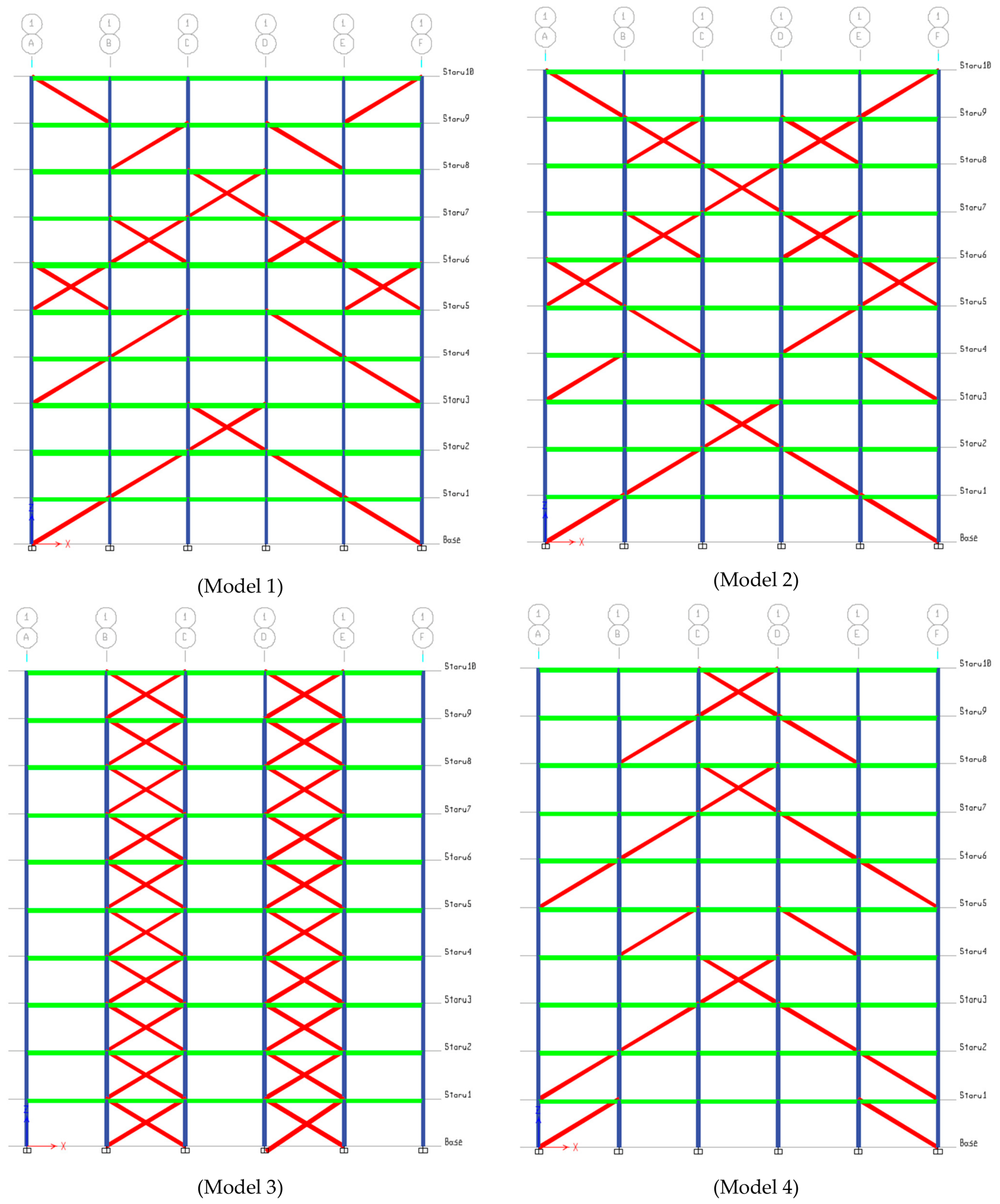
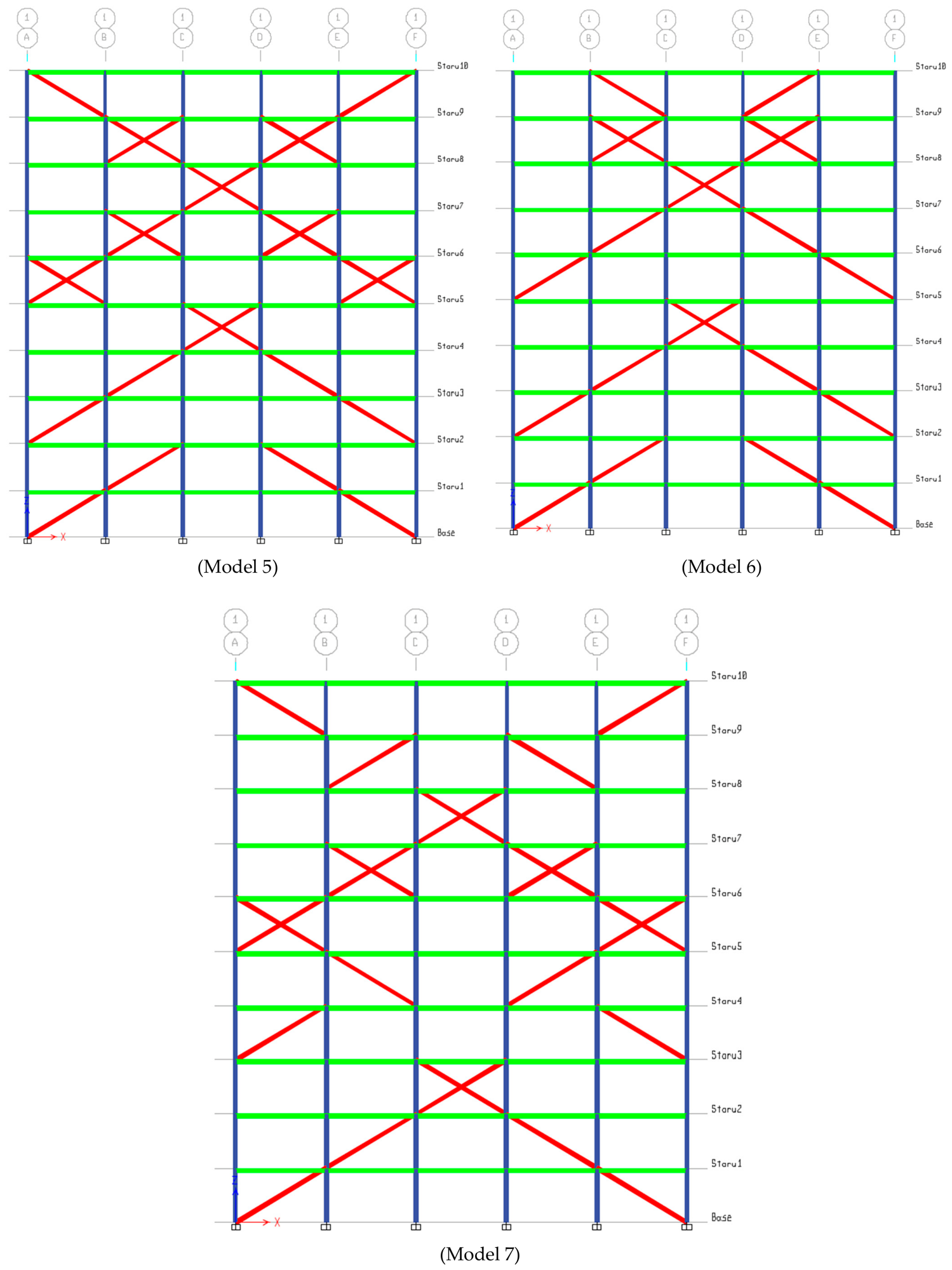
Figure 4 presents seven optimized models of seismic-resistant systems obtained using the proposed WSRS (Weighted Special Relativity Search) algorithm. These models represent potential solutions to the problem of optimal placement of seismic-resistant systems in steel frames. Among them, Model 1 is identified as the best solution due to its optimal performance across various criteria. Model 1 exhibits the lowest maximum inter-story drift compared to other models. This indicates superior control of lateral displacements. With a total weight of 24,049.56 kg, Model 1 is the lightest among the options. This demonstrates its efficiency in material usage while maintaining structural stability. Model 1 successfully satisfies all design constraints, including allowable drift and load-bearing capacity.
Models such as Model 4 also perform well in reducing displacements but have higher weights (25,123.56 kg), making them less optimal in terms of construction costs and material efficiency. Other models, like Model 7 and Model 6, show acceptable distributions of seismic-resistant systems but have higher drifts compared to Model 1, reflecting their reduced resistance to lateral forces. This figure provides a comprehensive overview of optimized placement options for seismic-resistant systems. Selecting the optimal model (Model 1) aids researchers in devising designs that minimize seismic risks while remaining cost-effective and environmentally friendly. The provided criteria for selecting the best model represent a significant step toward advancing the design of seismic-resistant structures.
Table 5 presents the optimal periods and corresponding frequencies for the first 15 modes of vibration across the seven models. Periods and frequencies are key indicators of each model’s dynamic performance under seismic loading: Model 1 exhibits the longest period for the first mode (12.708 s), indicating greater flexibility against seismic forces. This feature contributes to a better distribution of seismic energy across the structure. Other models, such as Model 4, show shorter periods (8.523 s for the first mode) and higher frequencies, reflecting their higher stiffness. Models with shorter periods may perform better under high-frequency seismic effects but could be more vulnerable to low-frequency seismic events.
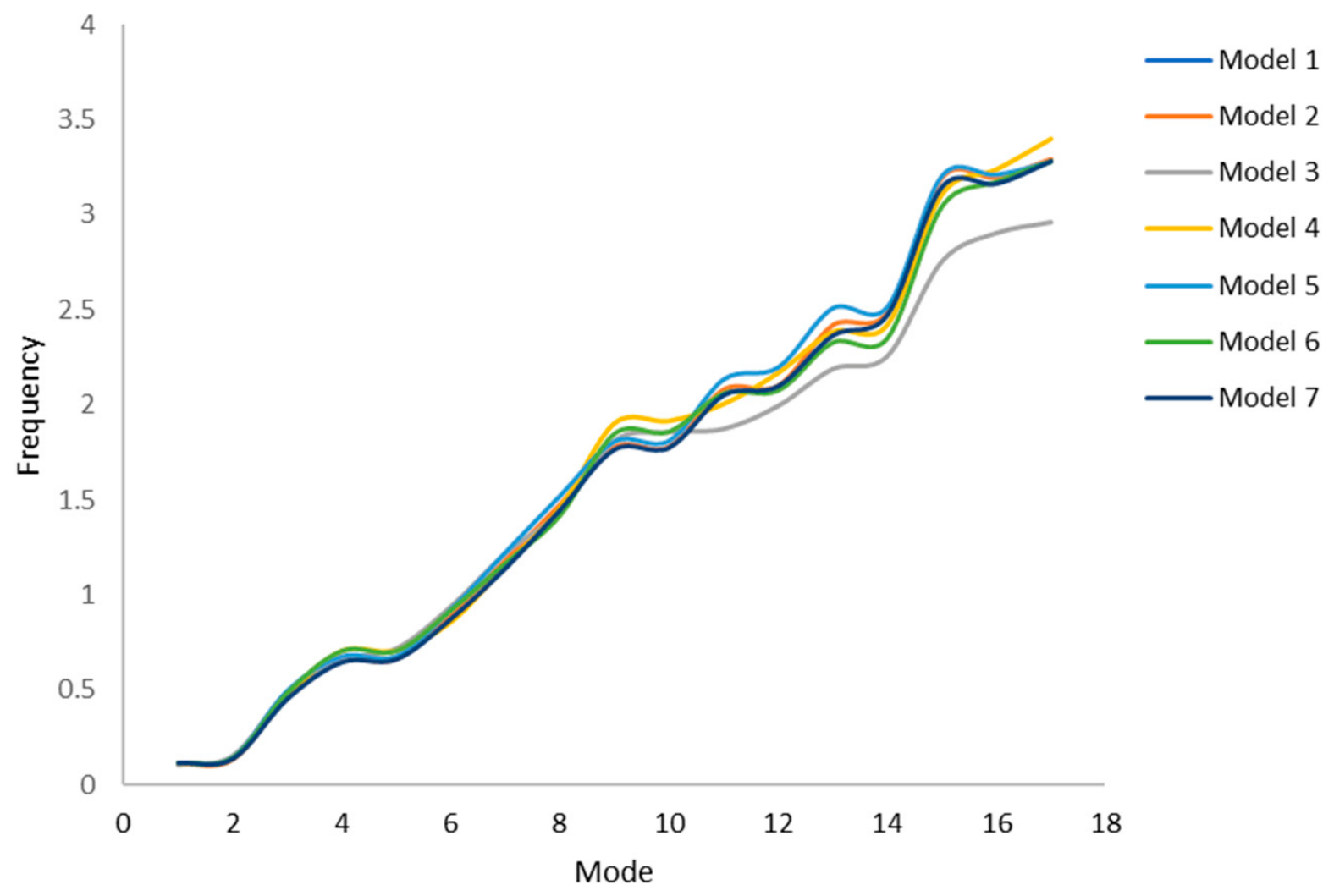
Figure 5 compares the frequency variations in vibration modes for each model: Model 1 shows the lowest frequencies in the initial modes, highlighting its compatibility with long-period seismic loads. A gradual increase in frequencies across higher modes is observed for all models, but the rate of this increase is higher in stiffer models (e.g., Model 3). The dispersion of frequencies illustrates differences in the dynamic responses of the models, with models like Model 1 and Model 4 showing distinct responses despite differences in stiffness. The analysis of
Table 6 and
Figure 5 reveals that Model 1, due to its longer periods and lower frequencies in the initial modes, is better suited for absorbing seismic energy and mitigating earthquake impacts. These characteristics make it an ideal choice for structures in high-seismic-risk areas. While other models may have their own advantages depending on design goals, Model 1 provides a better balance between stiffness, stability, and dynamic response.
Regarding the dynamic characteristics presented in
Table 5, it is observed that Model 1 exhibits a fundamental period of 12.708 s. While this value is higher than the estimations provided by simplified empirical formulas (which typically predict a period of approximately 1.0 to 1.5 s for a 10-story frame), it is a direct consequence of the aggressive weight optimization and the specific discrete sections selected by the WSRS algorithm. To achieve the minimum structural weight of 24,049.56 kg, the algorithm utilized the most slender feasible sections from the discrete catalog (
Table 4) that still satisfy the inter-story drift requirements. It is important to emphasize that despite this high flexibility, the model remains within the safe operational zone as the maximum inter-story drift (0.001100) is strictly kept below the allowable code limit (0.003636) as shown in
Table 6. This demonstrates the capability of the WSRS algorithm to find a unique topological configuration that maintains seismic compliance through strategic bracing placement while significantly reducing the overall stiffness to save material costs.
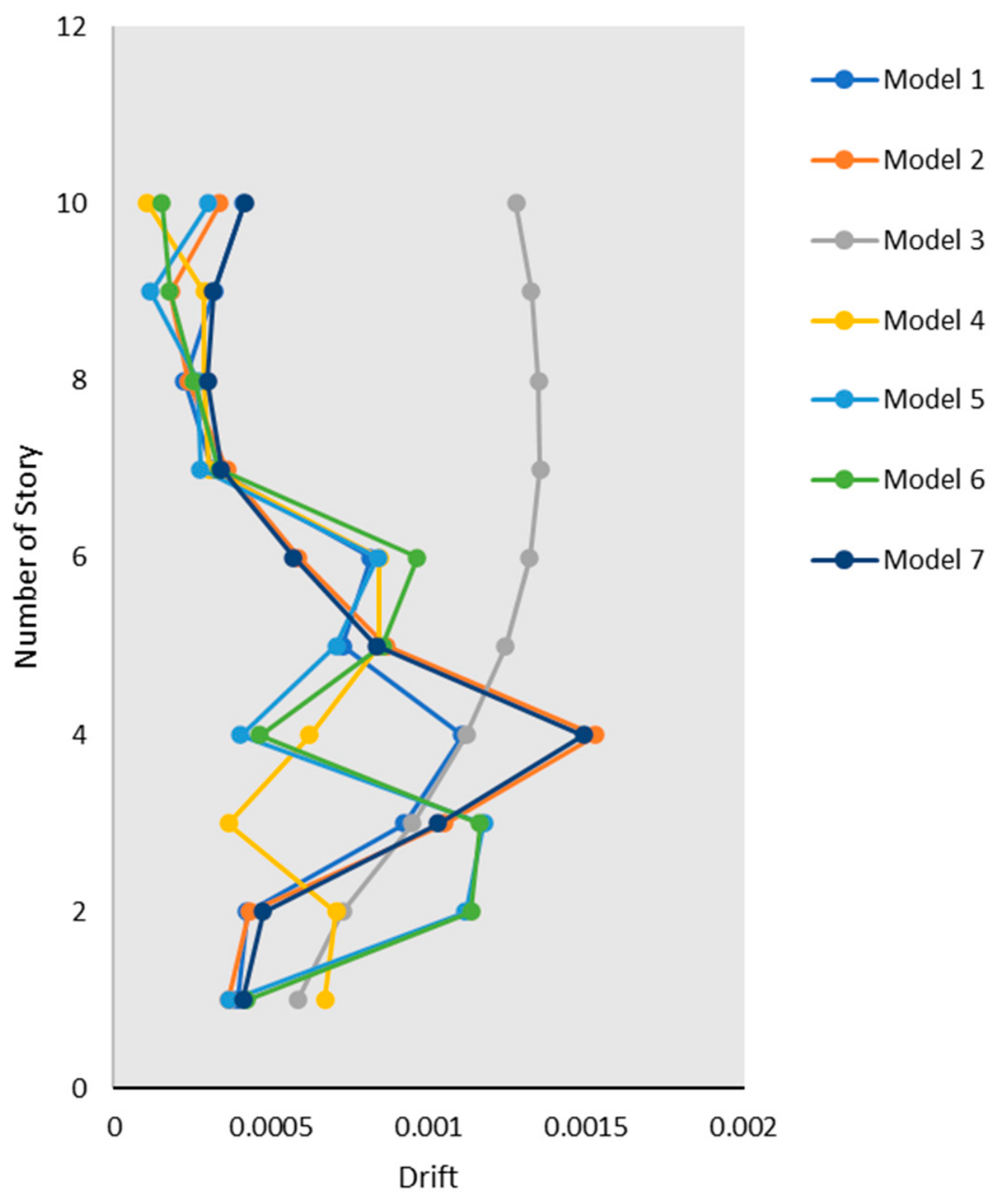
Table 6 provides a comparison of the maximum inter-story drift, total structural weight, and the final ranking of the models. The results indicate that Model 1, with the lowest maximum drift value (0.001100), demonstrates the best performance in controlling lateral displacements. Additionally, this model, with a weight of 24,049.56 kg, is the lightest among the options, highlighting its efficiency in material usage and cost reduction. Model 4, due to its low drift (0.000844) and reasonable weight (25,123.56 kg), is recognized as the second-best option.
Figure 6 clearly illustrates the drift values for all models, confirming that Model 1 experiences the least lateral displacement in the stories. This underscores Model 1’s superiority in controlling seismic displacements and improving the dynamic performance of the structure. Other models, such as Model 7 and Model 3, exhibit higher drift values, which reduces their rankings in the design of earthquake-resistant structures.
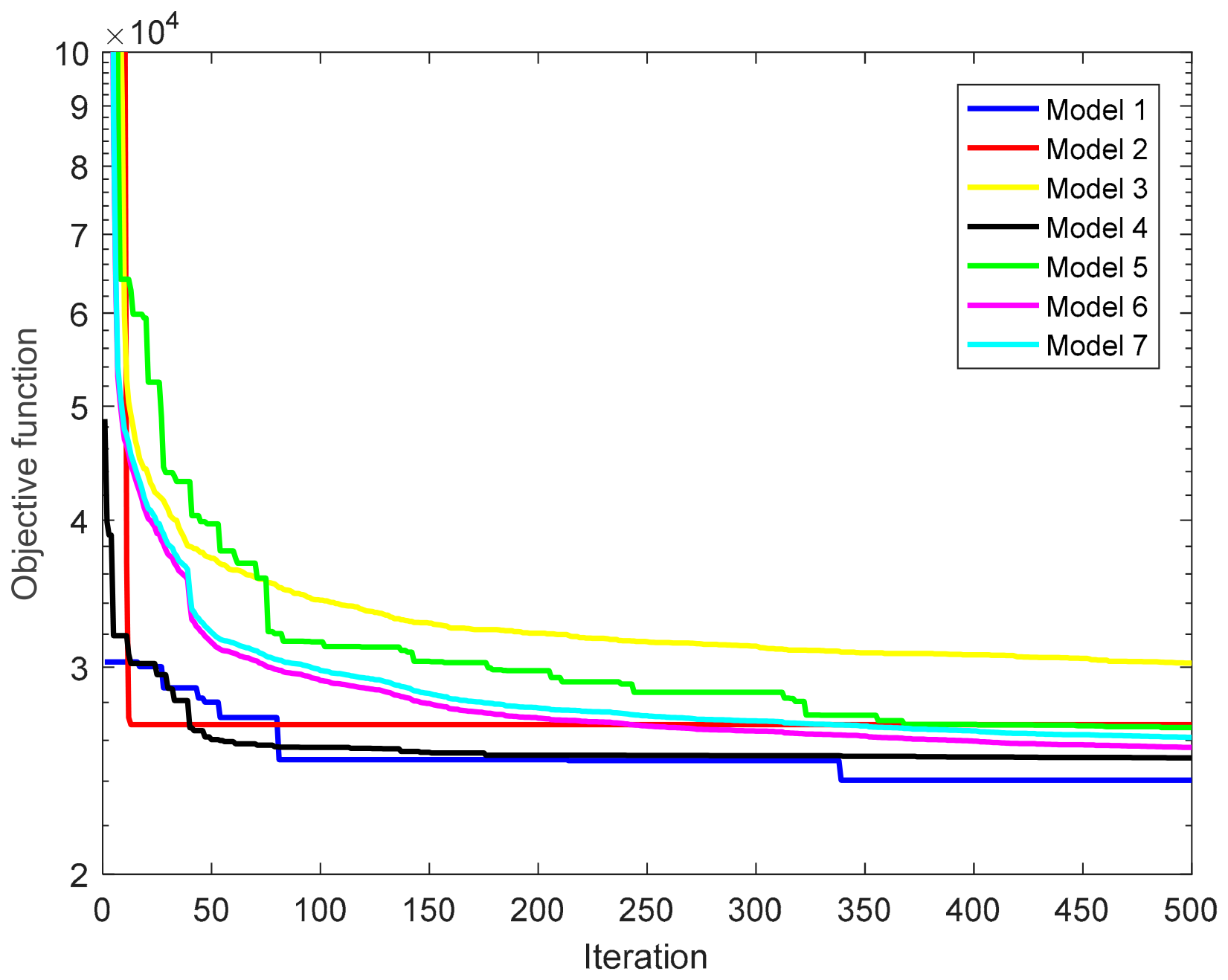
The convergence plot of the weights for models 1 to 7 (
Figure 7) shows the optimization process over 500 iterations. In this plot, the variations in the objective function for each model are presented separately, which helps in analyzing the performance of each model during the optimization process. Initially, Model 1 experiences a rapid decrease in the objective function and quickly approaches the desired value. This indicates the fast convergence of this model, which is significantly more efficient in optimization compared to the other models. While other models, such as Model 4 and Model 7, also show a gradual reduction in the objective function, their convergence speed is considerably slower than that of Model 1. Model 3, represented in yellow in the plot, requires the most time to converge, and the decrease in the objective function occurs slowly. Ultimately, the final response of this model is similar to that of other methods, except that it converges to the optimal solution at a slower rate.
In contrast, models 5 and 6, represented by green and pink, respectively, exhibit similar convergence behavior throughout the entire process and demonstrate relatively good convergence speed. Model 3, although it initially performed well, did not yield desirable results after approximately 50 steps. Overall, the graph shows that model 1 outperforms all others in terms of convergence speed and optimization of the objective function, ranking first. In contrast, models 3 and 7 require more iterations due to slower convergence, making them less efficient in reaching the optimal point.
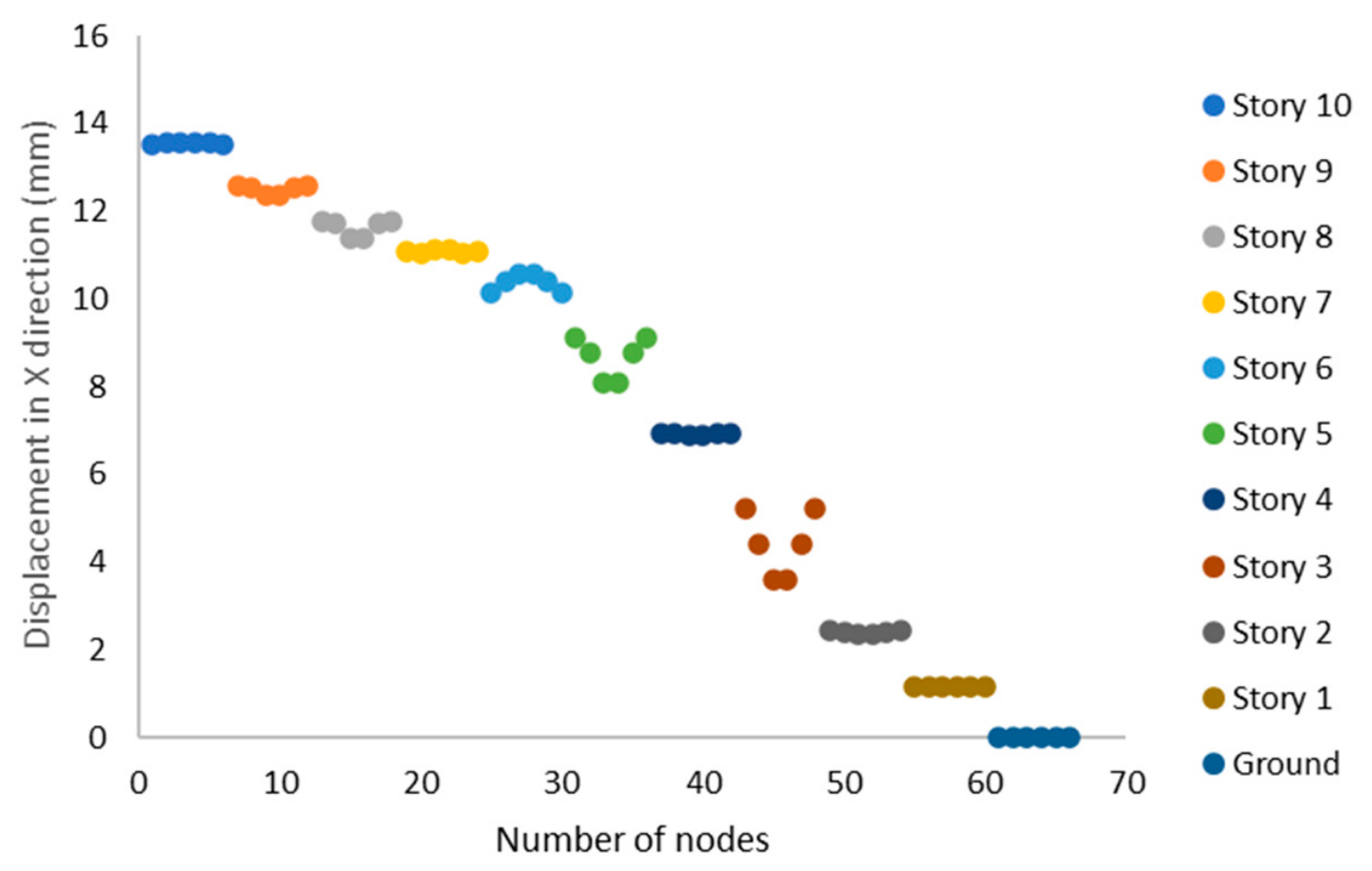
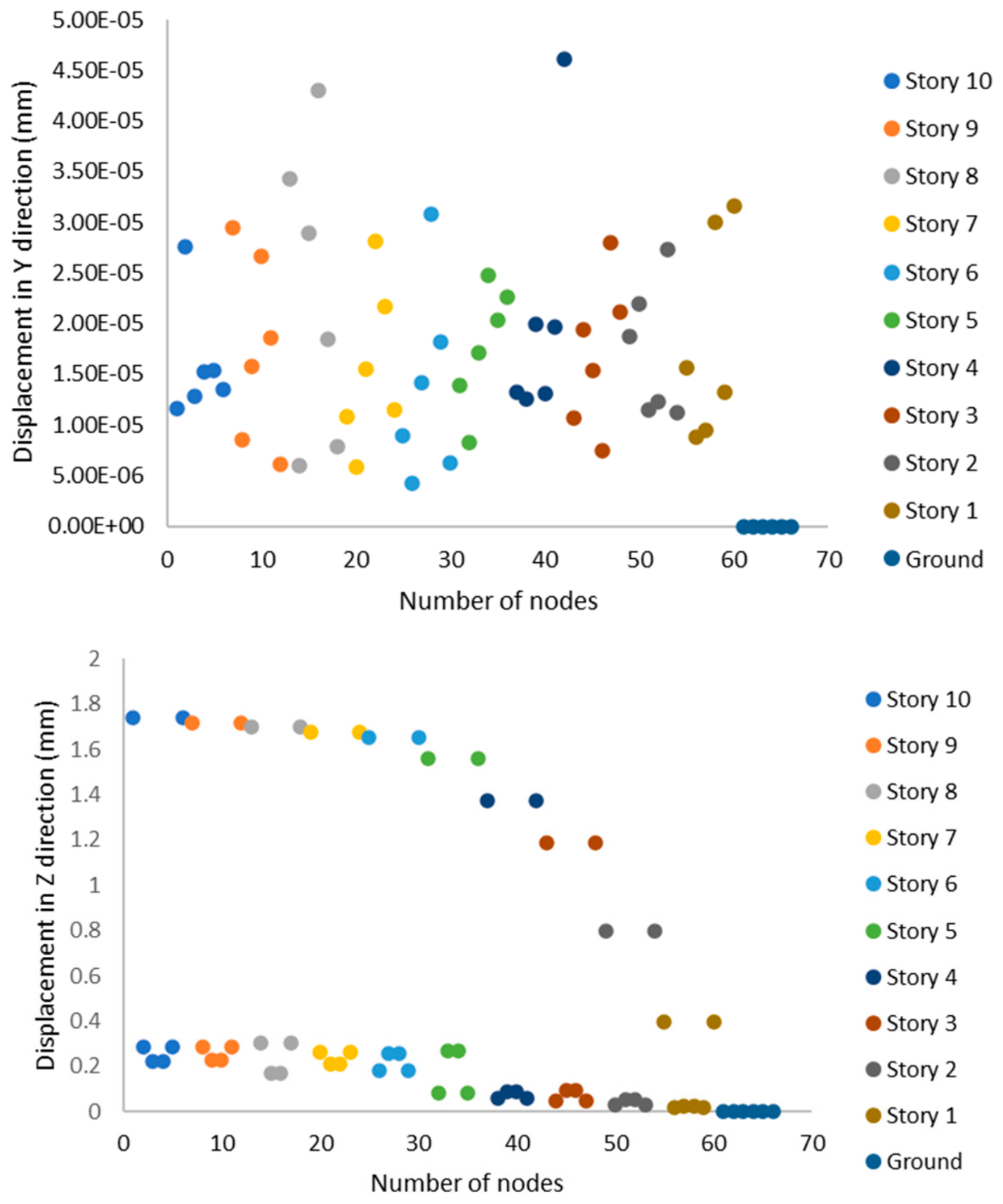
Figure 8 shows the displacement history of nodes in the X, Y, and Z directions for the optimized model 1. These graphs illustrate the dynamic behavior of the structure under seismic loads and demonstrate that displacements in all directions are well-controlled and balanced. The small displacements in the X and Y directions indicate the effective performance of the resisting systems in reducing the lateral responses of the structure. Additionally, the small displacements in the Z direction confirm the stability of the structure against vertical forces and earthquake-induced vibrations. These results suggest that model 1, not only effectively controls the displacements, but also ensures the overall safety and stability of the structure.
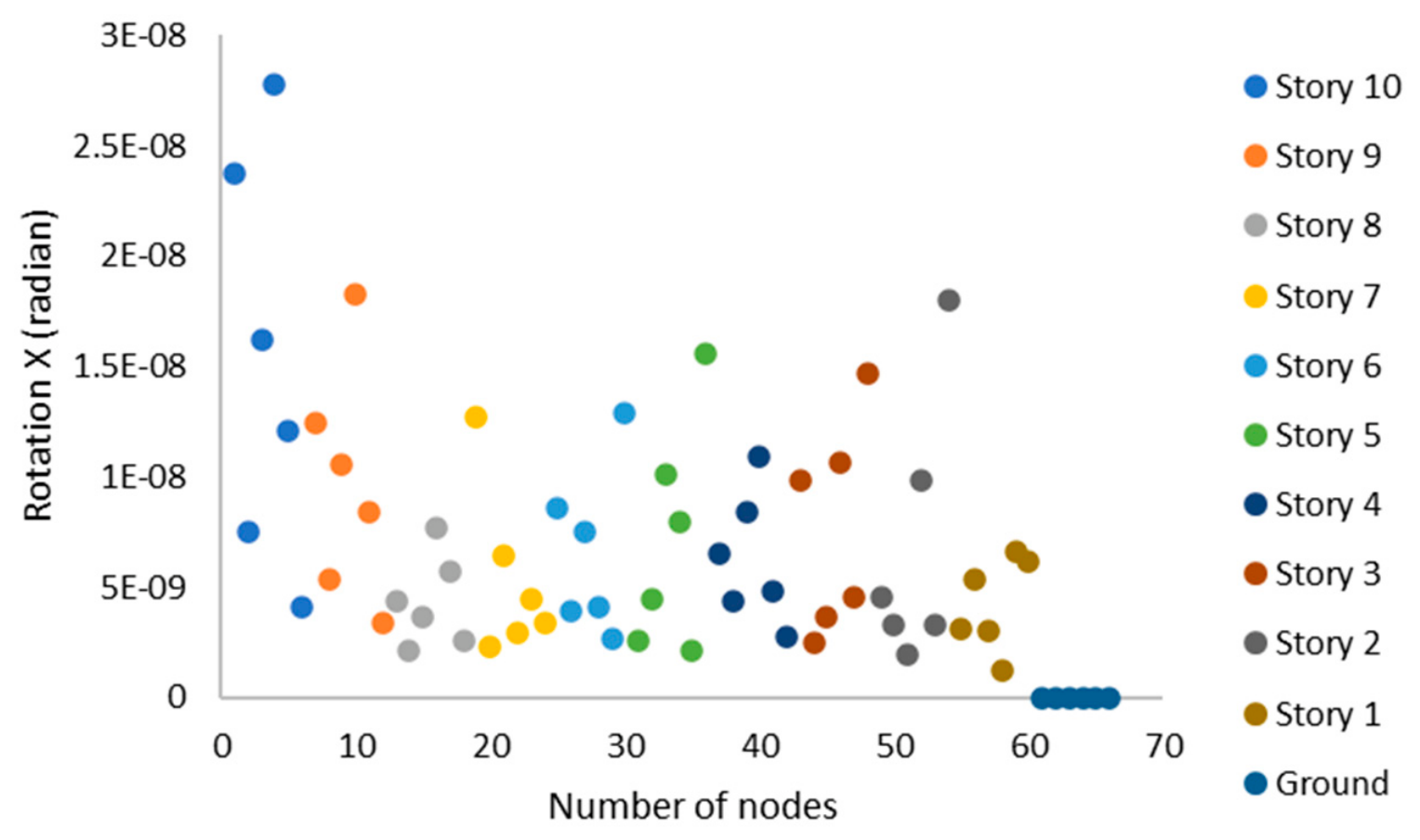
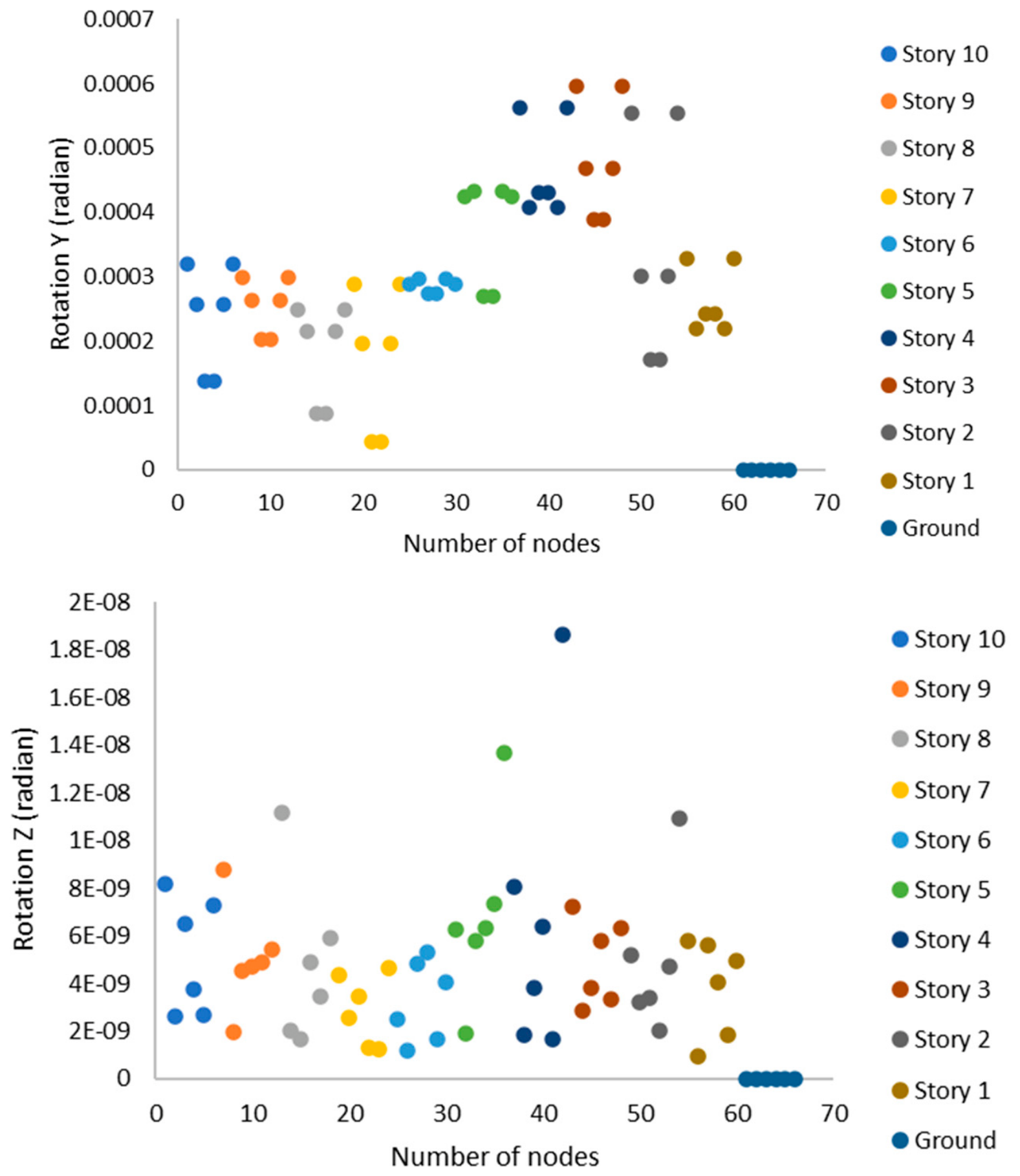
Figure 9 shows the rotation history of the nodes in the X, Y, and Z directions for the optimal model 1. These graphs illustrate the rotational behavior of the structure under seismic loads and indicate that rotations in all directions are well-constrained and controlled. The small rotation values in all directions suggest that Model 1 effectively controlled the angular displacements, preventing damage due to excessive rotation. This enhances the structure’s performance against seismic forces and ensures its stability against geometric changes caused by earthquakes. Overall,
Figure 9 demonstrates that Model 1 successfully controls rotations and improves the structure’s overall stability under seismic conditions.
The proposed method, the Weighted Special Relativity Search (WSRS) algorithm, offers several advantages, including superior performance compared to conventional methods in optimizing the location of seismic-resistant systems in steel frames. Key features of this method include its ability to search complex solution spaces, high convergence speed, and excellent accuracy in finding the optimal solution. With the capability to dynamically adjust the mass parameter, the algorithm is highly adaptable for many optimization problems. Its practical applications include the design of earthquake-resistant structures, optimization of energy dissipation systems, and the design of space-based structures. However, the method has some limitations, the most significant of which is its dependence on accurate initial settings and sensitivity to certain parameters, which can increase computation time under specific conditions. Additionally, the algorithm requires precise modeling of real-world conditions and high-precision calculations to deliver optimal practical solutions.
5. Conclusions
In this study, the Weighted Specific Relativity Search (WSRS) algorithm is presented as an innovative and effective optimization method that has efficiently determined the optimal location of earthquake-resistant systems in steel frames. The results show that this algorithm significantly enhances the performance of structures under seismic loads. Model 1, in particular, which has been optimized using this algorithm, successfully reduced the maximum drift to 0.001100, representing a substantial improvement compared to the other models examined in this paper. This model also achieved a reduction in lateral displacements by approximately 30% compared to conventional models.
In addition to reducing drifts, the total weight of the structure in Model 1 was decreased by 10 to 15% compared to the other models, highlighting the optimization of material use and cost savings. This weight reduction has led to more efficient material consumption and significantly lowered construction and maintenance costs. Furthermore, with a weight of 24,049.56 kg, Model 1 demonstrates the high efficiency of the algorithm in reducing material consumption and enhancing the economic efficiency of the design. Additionally, the WSRS algorithm has improved the dynamic performance of structures, increasing their overall stability against earthquakes. Models designed with this algorithm exhibit a greater capacity to absorb and distribute seismic energy. The modeling results also show that the WSRS algorithm provides up to 20% faster convergence speed and better accuracy compared to similar methods. However, as noted in the paper, this algorithm does have limitations, the most significant of which is the need for precise parameter tuning and its sensitivity to specific conditions. In some cases, more time may be required for calculations to achieve the desired results, and accurate modeling of real conditions plays a critical role in ensuring optimal performance. Overall, the findings of this study confirm that the WSRS algorithm is a powerful tool for solving complex optimization problems in structural engineering, particularly in the design of earthquake-resistant structures. Additionally, it contributes to reducing costs and material consumption in construction projects.