

Seven Means, Generalized Triangular Discrimination, and Generating Divergence Measures

Abstract
:1. Introduction
 ,
,  ,
,
 , let us consider two groups of measures:
 ,
,
 ,
,
 .
.
- (i)
![Information 04 00198 i007]() ;
;- (ii)
![Information 04 00198 i008]() .
.


 ,
,
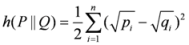
 .
.
 ,
,  and
and  are respectively known as triangular discrimination, Hellingar’s divergence and symmetric chi-square divergence. These measures allow the following inequalities among the measures.
 .
.

 .
.
 . The measure
  is generalized J-divergence extensively studied in Taneja [2,3]. It admits the following particular cases:
- (i)
![Information 04 00198 i020]() ;
;- (ii)
![Information 04 00198 i021]() ;
;- (iii)
![Information 04 00198 i022]() .
.




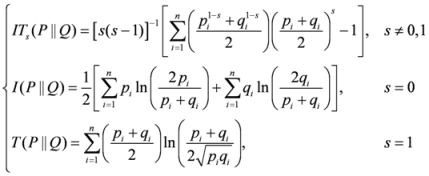 . The measure
  known as generalized arithmetic and geometric mean divergence. It also admits the following particular cases:
- (i)
![Information 04 00198 i026]() ;
; - (ii)
![Information 04 00198 i027]() ;
;- (iii)
![Information 04 00198 i028]() ;
;- (iv)
![Information 04 00198 i029]() .
.
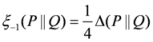



 ,
,  and
and  . The non-negativity of the arithmetic-geometric mean divergence,
  is based on the well-known arithmetic and geometric means, i.e., we can write it as
 ,
,
 and
and  are arithmetic and geometric means respectively. Moreover, the measure
  can also be written in terms of arithmetic mean
 .
.
2. Seven Means
 be two positive numbers. Eves [4] studied the geometrical interpretation of the following seven means:
- Arithmetic mean:
![Information 04 00198 i040]() ;
; - Geometric mean:
![Information 04 00198 i041]() ;
; - Harmonic mean:
![Information 04 00198 i042]() ;
; - Heronian mean:
![Information 04 00198 i043]() ;
; - Contra-harmonic mean:
![Information 04 00198 i044]() ;
; - Root-mean-square:
![Information 04 00198 i045]() ;
; - Centroidal mean:
![Information 04 00198 i046]() .
.





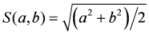


 , where
  stands for any of the above seven means, then we have

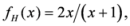



 ,
, 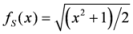 and
and  ,
,  ,
,  . In all cases, we would have equality sign if
  , i.e.,
  . and , the means
  ,
,  ,
,  ,
,  and
and  may also be written in terms of the means and .
 2.1. Inequalities among Differences of Means

 , with
  . Thus, according to (3), the inequality (1) admits 21 non-negative differences. These differences satisfy some simple inequalities given by the following pyramid:
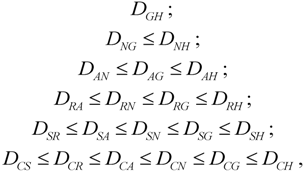
 ,
,  , etc. After simplifications, we have the following equalities among some of these measures:
- (i)
![Information 04 00198 i079]() ;
;- (ii)
![Information 04 00198 i080]() ;
;- (iii)
![Information 04 00198 i081]() .
.



 and
and  are the well know triangular discsrimination [5] and Hellinger’s distance [6] given by
  and
and 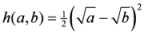 respectively. Not all the measures appearing in the above pyramid (4) are convex in the pair
  . Recently, the author [7] has proved the following theorem for the convex measures.
 be a convex and differentiable function satisfying
  . Consider a function
 ,
,  ,
,
 is convex in
  . Additionally, if
  , then the following inequality hold:
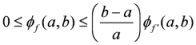 .
.
 be two convex functions satisfying the assumptions:
- (i)
![Information 04 00198 i097]() ,
, ![Information 04 00198 i098]() ;
;- (ii)
![Information 04 00198 i099]() and
and ![Information 04 00198 i100]() are twice differentiable in
are twice differentiable in ![Information 04 00198 i101]() ;
;- (iii)
- there exists the real constants
![Information 04 00198 i102]() such that
such that ![Information 04 00198 i103]() and
and
![Information 04 00198 i104]() ,
, ![Information 04 00198 i105]() ,
for all
,
for all![Information 04 00198 i106]() then we have the inequalities:
then we have the inequalities:
![Information 04 00198 i107]() ,
for all
,
for all![Information 04 00198 i108]() , where the function
, where the function ![Information 04 00198 i109]() is as defined in Lemma 2.1.
is as defined in Lemma 2.1.
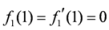
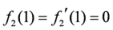





2.2. Generalized Triangular Discrimination
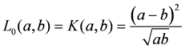
consider the following measure generalizing triangular discrimination
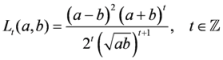
 ,
,
 ,
,
 ,
,


 (reference Jain and Srivastava [10]),
  (reference Kumar and Johnson [11]) and
  , the latter being symmetric to
  measure [12].
  will be considered here for the first time. The generalization (6) considered above is little different from the one considered by Topsoe [13]:
 .
.
 ,
,  , where
 .
.
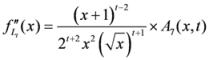
 is given by
 ,
,

 when the function is positive. But for at least
  ,
,  , , we have
  . Also, we have
  . Thus according to Lemma 1.1, the measure
  is convex for all ,
  . Testing individually to fix
  , we can check the convexity for other measures as well, for example
  ,
,  is convex. with respect to , we have
 .
.
 ,
,  . This proves that the function is monotonically increasing with respect to . This gives

 and
and  . Thus combining Equations (5) and (8), we have


3. New Inequalities
3.1. First Stage

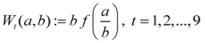
 ,
,  ,
,  , etc. We can write
![Information 04 00198 i152]() ,
, ![Information 04 00198 i153]() ,
, ![Information 04 00198 i154]() ,
, ![Information 04 00198 i155]() ,
, ![Information 04 00198 i156]() ,
, ![Information 04 00198 i157]() ,
, ![Information 04 00198 i158]() ,
, ![Information 04 00198 i159]() , and
, and![Information 04 00198 i160]() .
.









![Information 04 00198 i161]() ,
, ![Information 04 00198 i162]() ,
, ![Information 04 00198 i163]() ,
, ![Information 04 00198 i164]() ,
, ![Information 04 00198 i165]() ,
, ![Information 04 00198 i166]() ;
; ![Information 04 00198 i167]() ,
, ![Information 04 00198 i168]() , and
, and![Information 04 00198 i169]() .
.









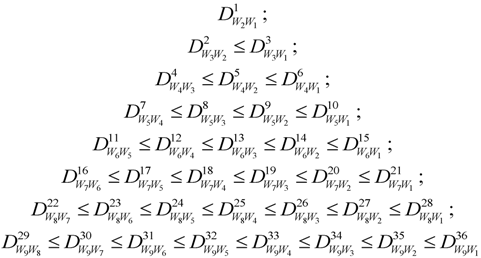
 ,
,  , etc. After simplifications, we have equalities among first four lines of the pyramid:
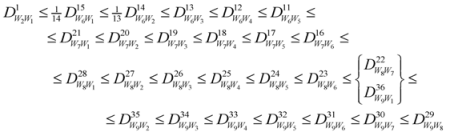
 : We shall apply two approaches to prove this result.
 ,
,
 ,
, 

 .
.
 . In order to prove the result, we need to show that
  . By considering the difference
  , we have

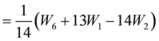
 ,
,
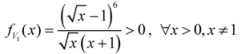
 , we get the required result.
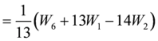
 : Let us consider a function
  . After simplifications, we have
 ,
, 


 : Let us consider a function
  . After simplifications, we have
 ,
, 


 .
.
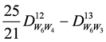
 : Let us consider a function
  . After simplifications, we have
 ,
, 

 .
.
 : Let us consider a function
  . After simplifications, we have
 ,
, 


 .
.
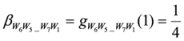
 : Let us consider a function
  . After simplifications, we have
 ,
, 


 ,
,
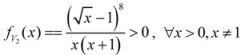
 : Let us consider a function
  . After simplifications, we have
 ,
, 


 ,
,

 : Let us consider a function
  . After simplifications, we have
 ,
, 

 .
.
 : Let us consider a function
  . After simplifications, we have
 ,
, 


 .
.
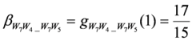
 : Let us consider a function
  . After simplifications, we have
 ,
, 

 .
.
 : Let us consider a function
  . After simplifications, we have
 ,
, 

 ,
,
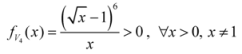
 : Let us consider a function
  . After simplifications, we have
 ,
, 


 ,
,

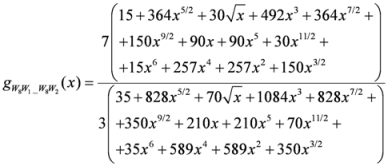
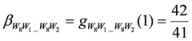
 : Let us consider a function
  . After simplifications, we have
 ,
, 

 ,
,

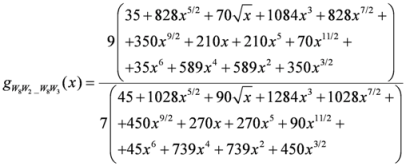
 : Let us consider a function
  . After simplifications, we have
 ,
, 
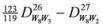
 .
.
 : Let us consider a function
  . After simplifications, we have
 ,
, 

 .
.
 : Let us consider a function
  . After simplifications, we have
 ,
, 

 .
.
 : Let us consider a function
  . After simplifications, we have
 ,
, 

 ,
,

 : Let us consider a function
  . After simplifications, we have
 ,
, 

 ,
,

 : Let us consider a function
  . After simplifications, we have
 ,
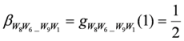
, 

 ,
,

 : Let us consider a function
  . After simplifications, we have
 ,
, 

 ,
,

 : Let us consider a function
  . After simplifications, we have
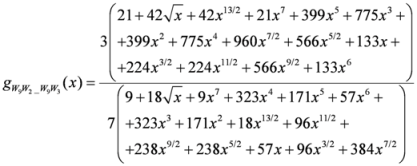 ,
, 

 .
.
 : Let us consider a function
  . After simplifications, we have
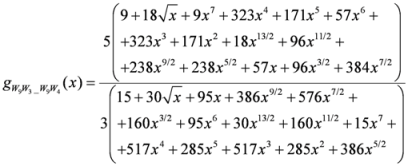 ,
, 

 .
.
 : Let us consider a function
  . After simplifications, we have
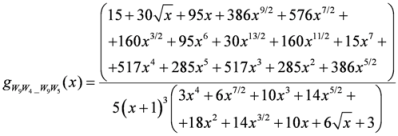 ,
, 
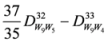
 .
.
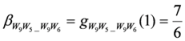
 : Let us consider a function
  . After simplifications, we have
 ,
, 

 ,
,

 : Let us consider a function
  . After simplifications, we have
 ,
, 

 ,
,

 : Let us consider a function
  . After simplifications, we have
 ,
, 

 ,
,

 : Let us consider a function
  . After simplifications, we have
 ,
, 

 ,
,

- (i)
![Information 04 00198 i381]() ;
;- (ii)
![Information 04 00198 i382]() ;
;- (iii)
![Information 04 00198 i383]() ;
;- (iv)
![Information 04 00198 i384]() ;
;- (v)
![Information 04 00198 i385]() ;
;- (vi)
![Information 04 00198 i386]() ;
;- (vii)
![Information 04 00198 i387]() ;
;- (viii)
![Information 04 00198 i388]() ;
;- (ix)
![Information 04 00198 i389]() ;
;- (x)
![Information 04 00198 i390]() ;
;- (xi)
![Information 04 00198 i391]() ;
;- (xii)
![Information 04 00198 i392]() .
.












3.1.1. Reverse Inequalities
- (i)
![Information 04 00198 i393]()
![Information 04 00198 i394]()
- (ii)
![Information 04 00198 i395]()
![Information 04 00198 i396]()
- (iii)
![Information 04 00198 i397]()
![Information 04 00198 i398]() ;
;- (iv)
![Information 04 00198 i399]()
![Information 04 00198 i400]() .
.








3.2. Second Stage

 ,
,  are given by (16)–(29) respectively. In all the cases we have
  , . By the application of Lemma 2.1, we can say that the above 14 measures are convex. We may try to connect 14 measures given in (30) through inequalities.

![Information 04 00198 i407]() ,
, ![Information 04 00198 i408]() ,
, ![Information 04 00198 i409]() ,
, ![Information 04 00198 i410]() ,
, ![Information 04 00198 i411]() ,
, ![Information 04 00198 i412]() ,
, ![Information 04 00198 i413]() ,
, ![Information 04 00198 i414]() ,
, ![Information 04 00198 i415]()
![Information 04 00198 i416]() ,
, ![Information 04 00198 i417]() ,
, ![Information 04 00198 i418]() ,
, ![Information 04 00198 i419]() and
and![Information 04 00198 i420]() .
.














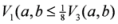 : Let us consider a function
  . After simplifications, we have
 ,
, 
 ,
,
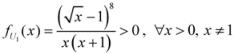
 : Let us consider a function
  . After simplifications, we have
 ,
, 
 .
.
 : Let us consider a function
  . After simplifications, we have
 ,
, 
 ,
,
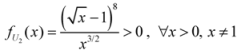
 : Let us consider a function
  . After simplifications, we have
 ,
, 
 ,
,

 : Let us consider a function
  . After simplifications, we have
 .
.
 . Let us consider now, and
 ,
,

 : Let us consider a function
  . After simplifications, we have
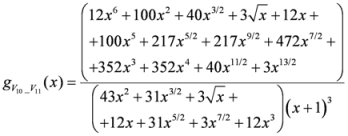 ,
, 
 ,
,

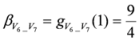
 : Let us consider a function
  . After simplifications, we have
 ,
, 
 ,
,

 : Let us consider a function
  . After simplifications, we have
 ,
, 
 .
.
 : Let us consider a function
  . After simplifications, we have
 ,
, 
 ,
,

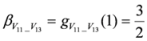
 : Let us consider a function
  . After simplifications, we have
 ,
, 
 ,
,

 : Let us consider a function
  . After simplifications, we have
 ,
, 
 ,
,

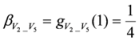
 : Let us consider a function
  . After simplifications, we have
 ,
, 
 ,
,
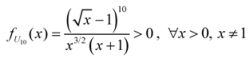
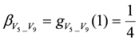
 : Let us consider a function
  . After simplifications, we have
 ,
, 
 ,
,

 : Let us consider a function
  . After simplifications, we have
 ,
, 
 .
.
3.3. Third Stage

 ,
,  are given by (33)–(43) respectively. In all the cases, we have
  , . By the application of Lemma 2.1, we can say that the above 11 measures are convex. Here follows the second derivatives of the functions (33)–(43), applied frequently in the next theorem.
![Information 04 00198 i506]() ,
, ![Information 04 00198 i507]() ,
, ![Information 04 00198 i508]() ,
, ![Information 04 00198 i509]() ,
, ![Information 04 00198 i510]() ,
, ![Information 04 00198 i511]() ,
, ![Information 04 00198 i512]() ,
, ![Information 04 00198 i513]() ,
, ![Information 04 00198 i514]() ,
, ![Information 04 00198 i515]() and
and![Information 04 00198 i516]() .
.












 , .
, .  : Let us consider a function
  . After simplifications, we have
 ,
, 
 .
.
 : Let us consider a function
  . After simplifications, we have
 ,
, 
 .
.
 : Let us consider a function
  . After simplifications, we have
 ,
, 
 ,
,

 : Let us consider a function
  . After simplifications, we have
 ,
, 
 .
.
 : Let us consider a function
  . After simplifications, we have
 ,
,
 ,
,
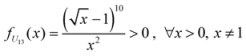
 : Let us consider a function
  . After simplifications, we have
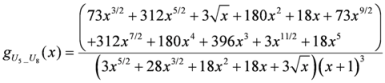 ,
, 
 ,
,

 : Let us consider a function
  . After simplifications, we have
 ,
, 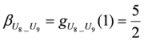
 .
.
 : Let us consider a function
  . After simplifications, we have
 ,
, 
 .
.
3.4. Forth Stage
 to
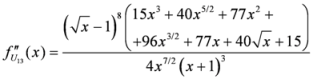
to  . This comparison is given in the theorem below. Here below are the second derivatives of the functions given by (46)–(58).
 ,
,
 ,
,
 .
.

 : Let us consider a function
  . After simplifications, we have
 ,
, 
 ,
,
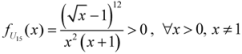
 : Let us consider a function
  . After simplifications, we have
 ,
, 
 .
.
 : Let us consider a function
  . After simplifications, we have
 ,
, 
 .
.
 : Let us consider a function
  . After simplifications, we have
 ,
, 
 .
.
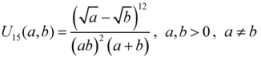
 given by
3.5. Equivalent Expressions
- Measures appearing in Theorem 3.2. We can write
![Information 04 00198 i591]()
![Information 04 00198 i592]() ,
, ![Information 04 00198 i593]() ,
, ![Information 04 00198 i594]()
![Information 04 00198 i595]()
![Information 04 00198 i596]() ,
, ![Information 04 00198 i597]() ,
, ![Information 04 00198 i598]()
![Information 04 00198 i599]()
![Information 04 00198 i600]() ,
, ![Information 04 00198 i601]() ,
, ![Information 04 00198 i602]() ,
, ![Information 04 00198 i603]()
![Information 04 00198 i604]()
![Information 04 00198 i605]() ,
, ![Information 04 00198 i606]() ,
, ![Information 04 00198 i607]() ,
, ![Information 04 00198 i608]() .
.
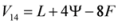
- Measures appearing in Theorems 3.3 and 3.4. We could write
![Information 04 00198 i609]() ,
, ![Information 04 00198 i610]() ,
, ![Information 04 00198 i611]() ,
, ![Information 04 00198 i612]() ,
, ![Information 04 00198 i613]() ,
, ![Information 04 00198 i614]() ,
, ![Information 04 00198 i615]() ,
, ![Information 04 00198 i616]() ,
, ![Information 04 00198 i617]() ,
, ![Information 04 00198 i618]() ,
, ![Information 04 00198 i619]() ,
, ![Information 04 00198 i620]() ,
, ![Information 04 00198 i621]() ,
, ![Information 04 00198 i622]() ,
, ![Information 04 00198 i623]() .
.
































4. Generating Divergence Measures and Exponential Representations
4.1. First Generalization of Triangular Discrimination
, let us consider the following measures

 ,
,
 ,
,


 .
. Now we will prove its convexity. We can write
.
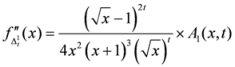
. Now we will prove its convexity. We can write  , , where

 is given by
 ,
,
 .
.
 , , , we have
  . Also we have
  . In view of Lemma 1.1, the measure
  is convex for all , .

 ,
,
 are the constants. For simplicity we will choose,




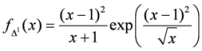

4.2. Second Generalization of Triangular Discrimination
, let us consider the following measures


 .
. Now we will prove its convexity. We can write
.
. Now we will prove its convexity. We can write  , , where
 .
.
 is given by
 ,
,
 .
, , , we have
.
, , , we have  . Also we have
  . In view of Lemma 2.1, the measure
  is convex for all , . is given by
 .
.
4.3. First Generalization of the Measure ![Information 04 00198 i116]()
, let us consider the following measures

![Information 04 00198 i662]() ,
, ![Information 04 00198 i663]() ,
, ![Information 04 00198 i664]()
![Information 04 00198 i665]() and
and![Information 04 00198 i666]()
![Information 04 00198 i667]() .
.





 given by (3). We will prove now its convexity. We might write
  , , where
 .
.
 is given by
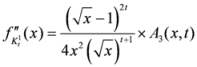 ,
,
 .
, , , we have
.
, , , we have  . Also we have
  . In view of Lemma 1.1, the measure
  is convex for all , . is given by
 .
.
4.4. Second Generalization of the Measure ![Information 04 00198 i116]()
, let us consider the following measures

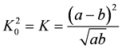
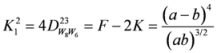 .
given by (1.3). We will now prove its convexity. We can write
.
given by (1.3). We will now prove its convexity. We can write 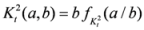 , , where
 .
.
 is given by
 ,
,
 .
, , , we have
.
, , , we have  . Also we have
  . In view of Lemma 1.1, the measure
  is convex for all , . is given by
 .
.
4.5. Generalization of Hellingar’s Discrimination
, let us consider the following measures

![Information 04 00198 i690]() ,
, ![Information 04 00198 i691]() ,
, ![Information 04 00198 i692]() ,
, ![Information 04 00198 i693]() and
and![Information 04 00198 i694]() .
.
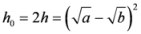




 , , where
 .
.
 is given by
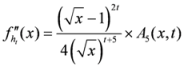 ,
,
 .
, , , we have
.
, , , we have  . Also
  . In view of Lemma 2.1, the measure
  is convex for all , . is given by
 .
.
4.6. New Measure
 , let us consider the following measures
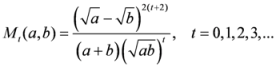
![Information 04 00198 i706]() ,
, ![Information 04 00198 i707]() ,
, ![Information 04 00198 i708]() ,
, ![Information 04 00198 i709]() and
and![Information 04 00198 i710]()
![Information 04 00198 i711]() .
.






 , , where
 .
.
 is given by
 ,
,
 .
, , , we have
.
, , , we have  . Also we have
  . In view of Lemma 2.1, the measure
  is convex for all , . is given by
 .
.
- (i)
- The first 10 measures appearing in the second pyramid (13) represents the same measure (14) and is same as
![Information 04 00198 i721]() . The last measure given by (51) is the same as
. The last measure given by (51) is the same as ![Information 04 00198 i722]() . The measure (51) is the only one that appears in all the four parts of the Theorem 3.4. Both these measures generate the interesting measure shown in (60).
. The measure (51) is the only one that appears in all the four parts of the Theorem 3.4. Both these measures generate the interesting measure shown in (60). - (ii)
- (iii)
- Following the similar lines of (54) and (55), the exponential representation of the principal measure
![Information 04 00198 i133]() appearing in (6) is given by
appearing in (6) is given by
![Information 04 00198 i724]()



Acknowledgements
References and notes
- Taneja, I.J. Refinement inequalities among symmetric divergence measures. Austr. J. Math. Anal. Appl. 2005, 2, 1–23. [Google Scholar]
- Taneja, I.J. New developments in generalized information measures. In Advances in Imaging and Electron Physics; Hawkes, P.W., Ed.; Elsevier Publisher: New York, NY, USA, 1995; Volume 91, pp. 37–135. [Google Scholar]
- Taneja, I.J. On symmetric and non-symmetric divergence measures and their generalizations. In Advances in Imaging and Electron Physics; Hawkes, P.W., Ed.; Elsevier Publisher: New York, NY, USA, 2005; Volume 138, pp. 177–250. [Google Scholar]
- Eves, H. Means appearing in geometrical figures. Math. Mag. 2003, 76, 292–294. [Google Scholar]
- LeCam, L. Asymptotic Methods in Statistical Decision Theory; Springer: New York, NY, USA, 1986. [Google Scholar]
- Hellinger, E. Neue Begründung der Theorie der quadratischen Formen von unendlichen vielen Veränderlichen. J. Reine Aug. Math. 1909, 136, 210–271. [Google Scholar]
- Taneja, I.J. Inequalities having seven means and proportionality relations. 2012. Available online: http://arxiv.org/abs/1203.2288/ (accessed on 7 April 2013).
- Taneja, I.J.; Kumar, P. Relative information of type s, Csiszar’s f-divergence, and information inequalities. Inf. Sci. 2004, 166, 105–125. [Google Scholar] [CrossRef]
- Taneja, I.J. Refinement of inequalities among means. J. Combin. Inf. Syst. Sci. 2006, 31, 357–378. [Google Scholar]
- Jain, K.C.; Srivastava, A. On symmetric information divergence measures of Csiszar’s f-divergence class. J. Appl. Math. Stat. Inf. 2007, 3, 85–102. [Google Scholar]
- Kumar, P.; Johnson, A. On a symmetric divergence measure and information inequalities. J. Inequal. Pure Appl. Math. 2005, 6, 1–13. [Google Scholar]
- Taneja, I.J. Bounds on triangular discrimination, harmonic mean and symmetric chi-square divergences. J. Concr. Appl. Math. 2006, 4, 91–111. [Google Scholar]
- Topsoe, F. Some inequalities for information divergence and related measures of discrimination. IEEE Trans. Inf. Theory 2000, 46, 1602–1609. [Google Scholar] [CrossRef]
- Dragomir, S.S.; Sunde, J.; Buse, C. New inequalities for jefferys divergence measure. Tamsui Oxf. J. Math. Sci. 2000, 16, 295–309. [Google Scholar]
© 2013 by the authors; licensee MDPI, Basel, Switzerland. This article is an open access article distributed under the terms and conditions of the Creative Commons Attribution license (http://creativecommons.org/licenses/by/3.0/).
Share and Cite
Taneja, I.J. Seven Means, Generalized Triangular Discrimination, and Generating Divergence Measures. Information 2013, 4, 198-239. https://doi.org/10.3390/info4020198
Taneja IJ. Seven Means, Generalized Triangular Discrimination, and Generating Divergence Measures. Information. 2013; 4(2):198-239. https://doi.org/10.3390/info4020198
Chicago/Turabian StyleTaneja, Inder Jeet. 2013. "Seven Means, Generalized Triangular Discrimination, and Generating Divergence Measures" Information 4, no. 2: 198-239. https://doi.org/10.3390/info4020198
APA StyleTaneja, I. J. (2013). Seven Means, Generalized Triangular Discrimination, and Generating Divergence Measures. Information, 4(2), 198-239. https://doi.org/10.3390/info4020198
