Article

Exploring the Perceived Impact of Smart City Dimensions on Supply Chain Management: A Case Study of a South African Municipality


by
Alexander Bradley Samuels
North-West University Business School, Potchefstroom 2531, South Africa
Information 2026, 17(5), 450; https://doi.org/10.3390/info17050450
Submission received: 17 March 2026 / Revised: 9 April 2026 / Accepted: 11 April 2026 / Published: 7 May 2026

Abstract

Municipalities in South Africa face increasing pressure to improve service delivery, operational efficiency, and sustainability amid growing urbanisation and governance challenges. The integration of smart city dimensions such as smart governance, mobility, and infrastructure offers a transformative approach to improve public sector supply chain management. However, limited empirical research exists on how these dimensions are being applied in South African municipal contexts. This study aimed to evaluate the extent to which smart city dimensions are integrated into supply chain management practices within a South African municipality and to assess the impact of these initiatives on supply chain efficiency, transparency, and sustainability. A qualitative, exploratory case study design was employed. Twenty senior managers and key stakeholders from the supply chain department of the selected municipality were purposively sampled. Data were collected through semi-structured face-to-face interviews and analysed thematically using NVivo software. Lincoln and Guba’s trustworthiness framework guided the study’s rigour. The findings revealed partial and uneven integration of smart city dimensions, with notable developments in smart governance and mobility, but limited progress in areas such as infrastructure digitalisation and citizen-centric data platforms. Participants highlighted both innovation drivers and institutional barriers affecting the transition to smart-enabled supply chain practices. Smart city dimensions present significant potential to improve municipal supply chain management; however, effective integration requires structural alignment, digital investment, and organisational readiness. This study provides context-specific insights into the uneven and fragmented integration of smart city dimensions within municipal supply chain systems in a developing country context, emphasising the impact of institutional constraints, digital capability gaps, and governance misalignments on implementation outcomes.

1. Introduction

The development of smart cities has emerged as a critical focal point in urban planning and governance, particularly in the context of the rapidly expanding urban populations spanning the globe. The term “smart cities” denotes the integration of cutting-edge technologies, data analytics, and innovative urban governance to improve urban services, promote sustainable growth, and improve the quality of life [1]. The global significance of smart city development is derived from its capacity to address a variety of urban challenges, such as economic disparities, infrastructure strain, and environmental sustainability. The urgent need for smart city initiatives to be a fundamental component of urban development strategies in emerging economies, including those in Africa, has been acknowledged [2].
The anticipated increase in the global urban population, which is expected to reach approximately 5 billion by 2030, emphasises the pressing need for the implementation of intelligent solutions as cities continue to develop [3]. Cities must ensure that their resources are utilised effectively by implementing responsive service delivery frameworks and smart governance in response to this demographic shift. Such technological adoption has the potential to significantly improve public service delivery, economic productivity, and the connectivity of diverse socio-economic segments in the African context [1,4]. Additionally, the potential for the implementation of digital technologies in urban management is particularly pertinent as governments endeavour to improve their operational efficiencies, as it improves infrastructural capabilities and is consistent with sustainable development objectives [5,6].
Nevertheless, the development of smart cities is not without its challenges, particularly in developing regions where financial constraints, governance issues, and the realities of informal economies present significant challenges [6,7]. For example, in the South African municipal context, a variety of initiatives are being implemented to create smart infrastructure that integrates a variety of digital technologies, which are crucial for the development of innovative urban environments [5,6]. The complexity of implementing smart city models in the Global South is emphasised by this, as the efficacy and acceptance of such projects can be significantly influenced by political and social contexts [8].
Furthermore, research suggests that the integration of smart technologies into SCM is particularly compelling, as smart city initiatives have the potential to significantly improve SCM performance [9,10]. The integration of big data and IoT in smart cities can result in more transparent and responsive supply chains, which can lead to improved operational efficiencies and service delivery [11]. This intersection of urban development and economic management is essential for municipalities that aspire to improve their infrastructure capabilities and economic outcomes, particularly in developing nations where such innovations can facilitate broader socio-economic progress [12,13].
Within the evolving context of smart cities, SCM is widely acknowledged as a critical component of urban governance, where the efficient coordination of resources underpins service delivery and infrastructure development [9,10]. SCM centres on the optimisation of the flow of financial resources, information, and materials across interconnected networks to improve operational efficiency and responsiveness [14]. In smart city environments, this role becomes more prevalent as municipalities are able to improve transparency, coordination, and service delivery outcomes through the use of digital technologies and data-driven systems.
The integration of smart technologies is a significant challenge in urban governance in relation to SCM. The implementation of blockchain and IoT technologies is essential for improving the efficiency and transparency of supply chains [2,15]. These technologies have the potential to improve supply chain visibility, thereby addressing challenges such as food security and operational disruptions in urban areas [16,17]. However, the successful integration of smart technologies is subject to variation across various urban environments because of factors such as the business practices, existing technological infrastructure, and policy environments [18]. For example, better technological coordination is necessary to address inefficiencies that result from disconnections between various modes of transport, particularly in urban multi-floor manufacturing processes [19].
A critical issue in urban SCM is environmental sustainability. In response to environmental challenges and the growing populations of urban areas, there is a growing pressure to implement sustainable practices [20]. The implementation of green SCM practices is imperative for the mitigation of the negative environmental consequences associated with urban logistics. Research emphasises the importance of sustainable supply chain measures, which have the potential to significantly improve urban sustainability and decrease carbon footprints [21]. Additionally, the environmental consequences of frequent deliveries and traffic congestion in urban logistics can be more effectively managed by smart cities that employ advanced data-driven SCM approaches [22,23].
Furthermore, the COVID-19 pandemic has revealed potential vulnerabilities in urban supply chains, emphasising the importance of resilience in supply chain systems [24]. The significance of adaptive governance structures that are capable of promptly responding to unforeseen challenges was underscored by the disruptions that occurred during the pandemic. Cities worldwide have been compelled to re-evaluate their supply chain strategies in order to improve resilience and guarantee food security for urban populations as a result of the lessons learnt from the pandemic [25]. The increased emphasis on digitalisation and responsiveness in SCM has led to the implementation of innovative governance models that involve a variety of stakeholders to collaboratively address urban challenges [14,26].
Although existing research has emphasised the potential of smart city initiatives to improve supply chain performance, a significant portion of the literature is conceptual or focuses on urban contexts that have been developed. While empirical research has investigated the operationalisation of these dimensions within municipal supply chain systems in developing regions, particularly in South Africa, it has been limited. Additionally, current research frequently focuses on technological advantages without adequately considering the socio-technical misalignments, governance complexities, and institutional constraints that affect implementation. In an environment that is resource-constrained, this study addresses this lacuna by offering context-specific insights into the interaction between smart city dimensions and municipal supply chain processes.
The study’s focus on a South African municipality, specifically eThekwini, is both timely and significant considering the country’s growing urbanisation, service delivery challenges, and the importance of sustainable development. SCM practices are directly impacted by the constraints imposed by corruption, infrastructure backlogs, and poor governance in South Africa’s municipalities. Cities worldwide are striving to become smart cities; however, South African municipalities encounter distinctive contextual realities that require localised strategies for smart urban development. eThekwini, as one of the major metropolitan municipalities, provides a valuable argument for the integration of smart city dimensions, including smart mobility, smart governance, and smart environment, to improve the efficiency, responsiveness, and sustainability of the supply chain. Additionally, the necessity of strategic innovation and integrated supply chain thinking is further emphasised by the digital divide, limited citizen engagement, and fragmented systems within municipalities. Valuable insights will be provided by this study to inform broader policy, practice, and academic discourse within the South African context.
In addition to broader digitalisation efforts, artificial intelligence (AI) and advanced analytics are increasingly recognised as critical enablers of smart city ecosystems and supply chain transformation. AI-driven tools, such as predictive analytics, automated decision-support systems, and anomaly detection, improve the ability of municipalities to optimise supply chain operations, improve forecasting accuracy, and strengthen transparency. Within the context of this study, AI is conceptualised as part of the broader technological infrastructure underpinning smart city dimensions, particularly in relation to data-driven governance and operational efficiency.
South African municipalities are under increasing pressure to improve service delivery, resource efficiency, and sustainability in the face of rapid urbanisation, infrastructural constraints, and governance challenges. Despite the global trend towards the development of smart cities, there is a scarcity of empirical evidence regarding the impact of smart city dimensions on SCM at the municipal level in South Africa. Smart technologies’ potential benefits have been limited by fragmented systems, digital divides, and inadequate stakeholder integration. This study aims to fill the research gap by assessing the impact of smart city dimensions on SCM practices in a specific South African municipality to improve operational efficiency, sustainability, and strategic service delivery.
Limited empirical research has investigated the operationalisation of smart city dimensions within municipal supply chain management systems in developing country contexts, despite the expanding corpus of literature on digital supply chain transformation and smart cities. Existing research frequently emphasises technological potential without adequately accounting for the institutional, governance, and socio-technical constraints that affect implementation in public sector environments. Additionally, the Global South’s municipal supply chains are relatively unexplored in terms of the function of emerging technologies, including artificial intelligence. This study fills the gap by offering context-specific insights into the perceived impact of smart city dimensions on supply chain management practices within a South African municipality.
The research objectives and research questions for the study are:
  • To explore the extent to which smart city dimensions are perceived to be integrated into the supply chain management (SCM) practices of a South African municipality.
  • To examine stakeholders’ perceptions of how smart city initiatives influence the efficiency, transparency, and sustainability of municipal SCM processes.
  • How are smart city dimensions perceived to be integrated into the SCM practices of a South African municipality?
  • How do stakeholders perceive the influence of smart city initiatives on the efficiency, transparency, and sustainability of SCM within the selected municipality?
This study contributes to the literature by offering a context-specific analysis of the inconsistent integration of smart city dimensions into municipal supply chain management systems in a developing country. This research emphasises the institutional, governance, and capability-related constraints that influence implementation outcomes, in contrast to previous studies that emphasise technological potential. The study also makes a further contribution by demonstrating the socio-technical misalignment between digital systems and organisational structures, which provides a more complex understanding of why smart city initiatives frequently fail to result in improved supply chain performance in practice.

2. Literature Review

2.1. Overview of Smart City Dimensions

Giffinger and Fertner [27] have established their framework as one of the most widespread models for the conceptualisation of smart city dimensions. The model specifies six interrelated components, namely: smart governance, smart economy, smart people, smart mobility, smart environment, and smart living, that collectively provide a comprehensive lens for analysing technological integration and urban development. Its significance is derived from its comprehensive approach, which allows researchers to investigate the relationship between digital innovation, governance structures, and socio-economic factors in smart city ecosystems. As a result, this framework is particularly well-suited for evaluating the integration of smart city dimensions into municipal SCM practices.
First and foremost, the integration of smart city dimensions into SCM practices can improve operational efficiency by leveraging improved governance and technology. Smart governance guarantees stakeholder engagement and collaborative decision-making, which is consistent and emphasises the importance of transparent communication and data sharing within supply chains to improve adaptability and responsiveness [28]. Furthermore, the optimisation of supply chain logistics, logistics tracking, and inventory management is significantly influenced by innovative technologies, particularly information and communication technologies (ICT) [29]. For instance, the integration of blockchain technology can improve the traceability and security of supply chains, which is particularly important in urban areas where resource distribution must be sustainable and efficient [30,31].
Additionally, the implementation of intelligent mobility solutions can substantially improve the transportation logistics of supply chains, thereby addressing urban challenges such as pollution and congestion. Municipalities can increase the quality of service and reduce operational costs by optimising the movement of goods through the implementation of smart transport systems, including real-time traffic management tools and integrated public transport options [10].
Understanding the long-term effects of smart initiatives on supply chains is contingent upon the sustainability dimension, which is emphasised in Giffinger’s model and numerous studies [32,33]. The carbon footprint of SCM operations is reduced while environmental standards are maintained through strategies such as smart waste management and the emphasis on renewable energy sources [34]. According to research, municipalities that implement smart city initiatives are more likely to report improved efficiency as a result of the more effective utilisation of data, which is consistent with the United Nations Sustainable Development Goals (SDGs) [32,33]. This not only improves resource management but also strengthens the overall resilience of supply chains, thereby promoting sustainability in urban ecosystems [35].
Finally, the assessment of the precise influence of smart city initiatives on SCM within a South African municipality reveals distinctive contextual challenges and opportunities. The efficiency and transparency of supply chain practices can be significantly impacted by the integration of smart technologies that are specifically designed to meet the needs of the local community, thereby providing a competitive advantage in an increasingly urbanised world [10]. Therefore, it is imperative to implement smart city frameworks in a contextualised manner, ensuring that they address specific urban challenges, including infrastructure limitations and socio-economic disparities [36,37].

2.2. Integration of Smart City Dimensions into Municipal Supply Chain Management Practices

The current integration of smart city dimensions into SCM frequently necessitates the implementation of advanced technologies, including blockchain and the IoT. Yigit and Dağ [18] emphasise that the implementation of smart contracts is a prime example of how technology can be leveraged to improve supply chain operations by automating processes and facilitating collaboration among partners, even though territorial capabilities may vary. The implementation of IoT devices also enables the collection and sharing of real-time data, which is crucial for the efficiency and transparency of SCM [15]. When integrated into municipal systems, these technologies promote collaborative environments among a variety of stakeholders by facilitating improved resource management and operational synergies.
Furthermore, the integration of sustainable practices into the supply chain framework is a common focus of smart city initiatives, particularly in the areas of energy management and waste management systems. The prospects for effective energy utilisation and planning in smart cities, showcasing data analytics as a mechanism to improve resource allocation and management, thereby promoting sustainability [38]. Ahmad and Salah [39] further emphasise that this emphasis on sustainability is consistent with the overarching municipal objectives of minimising environmental impact, as evidenced by the implementation of innovative practices to improve energy efficiency and waste processing. Consequently, a framework that is conducive to the sustainable and effective resolution of urban challenges is established by aligning municipal SCM with smart city dimensions.
The efficiency, transparency, and sustainability of SCM are significantly impacted by these integrations. Blockchain technology has been demonstrated to offer immutable transparency throughout the supply chain, thereby improving trust among stakeholders and decreasing the occurrence of fraud and information manipulation [40]. In municipal applications where public trust and accountability are of the utmost importance, this transformation is indispensable. Furthermore, research suggests that the incorporation of smart technologies results in a more efficient supply chain by reducing operational costs and improving coordination [41]. Municipalities are anticipated to experience improved service delivery and increased overall efficiency in urban logistics as they implement these innovations.

2.3. Impact of Smart City Initiatives on Efficiency, Transparency, and Sustainability in Public Supply Chains

The integration of smart city dimensions into SCM practices is becoming increasingly recognised as a critical enabler of operational efficiency, sustainability, and transparency within urban systems [9,10]. Empirical research indicates that the integration of digital technologies improves accountability and reduces inefficiencies by increasing visibility across supply chain networks [15]. Additionally, the integration of Information and Communication Technology (ICT) into urban governance systems enables municipalities to improve service delivery outcomes and optimise resource utilisation by facilitating real-time data exchange and informed decision-making [2].
The implementation of blockchain and IoT technologies is a critical element of smart city initiatives, as they improve transparency and efficiency. For example, the availability of real-time data regarding the flow of goods can be improved by smart supply chains that are enabled by IoT, thereby reducing operational delays and improving decision-making accuracy [15]. This dynamic information flow is essential for the effective fulfilment of demands in urban settings, as it enables supply chain partners to be more responsive [2]. The integration of smart contracts, which automate a variety of SCM functions, can also mitigate human error and optimise processes [42].
Additionally, the influence of blockchain technology is not limited to efficiency; it also makes a substantial contribution to the transparency and traceability of supply chains. The trust and accountability of stakeholders within the supply chain ecosystem are improved by blockchain, which offers a tamper-proof ledger of transactions [43]. This technological framework is advantageous for the advancement of urban public services, including energy distribution and waste management, in accordance with sustainability objectives [44].
Smart city frameworks facilitate sustainability in public supply chains, which is also evident in energy management practices. The overall carbon footprint can be significantly reduced by incorporating energy-efficient technologies and renewable energy sources into urban infrastructures [45]. Furthermore, initiatives that promote the integration of intelligent waste management systems and smart public lighting systems contribute to the improvement of the quality of urban living and the conservation of resources [46].
The role of smart city initiatives in encouraging collaboration among various stakeholders further emphasises the connection between SCM and these initiatives. The efficiency of SCM in municipalities can be improved by utilising resilient partnerships and improved data sharing mechanisms, which can reduce barriers to collaboration [47]. This collaborative model is fundamental to the sustainable development of urban contexts, as it addresses social responsibilities and inclusivity while also adhering to the principles of efficient SCM [48].

2.4. Theoretical Frameworks Underpinning the Integration of Smart City Dimensions and SCM

Smart city dimensions are incorporated into SCM practices to demonstrate the extent to which technological advancements empower urban municipalities. The fundamental characteristic of smart cities is their use of ICT to improve operational efficiencies in a variety of sectors, such as supply chain management. This technological foundation is central to the smart city ethos, as it supports improved decision-making and resource distribution and promotes innovation in public service delivery, according to studies [30,49]. Additionally, municipalities in a variety of countries, including select municipalities in South Africa, are beginning to implement smart technologies that are designed to optimise their supply chain processes, thereby improving overall operational efficiency [10].
Supply chain management’s sustainability, transparency, and efficiency have been demonstrated to be significantly impacted by smart city initiatives. Consequently, the transparency and traceability of supply chains are improved through the implementation of smart technologies, which enable real-time monitoring and data exchange [15,50]. These developments not only increase productivity but also match supply chain procedures with sustainability objectives, which are essential in today’s urban governance. The necessity of eco-friendly practices within supply chains is underscored by smart cities, which advocate for approaches that integrate socio-ecological considerations [51,52].
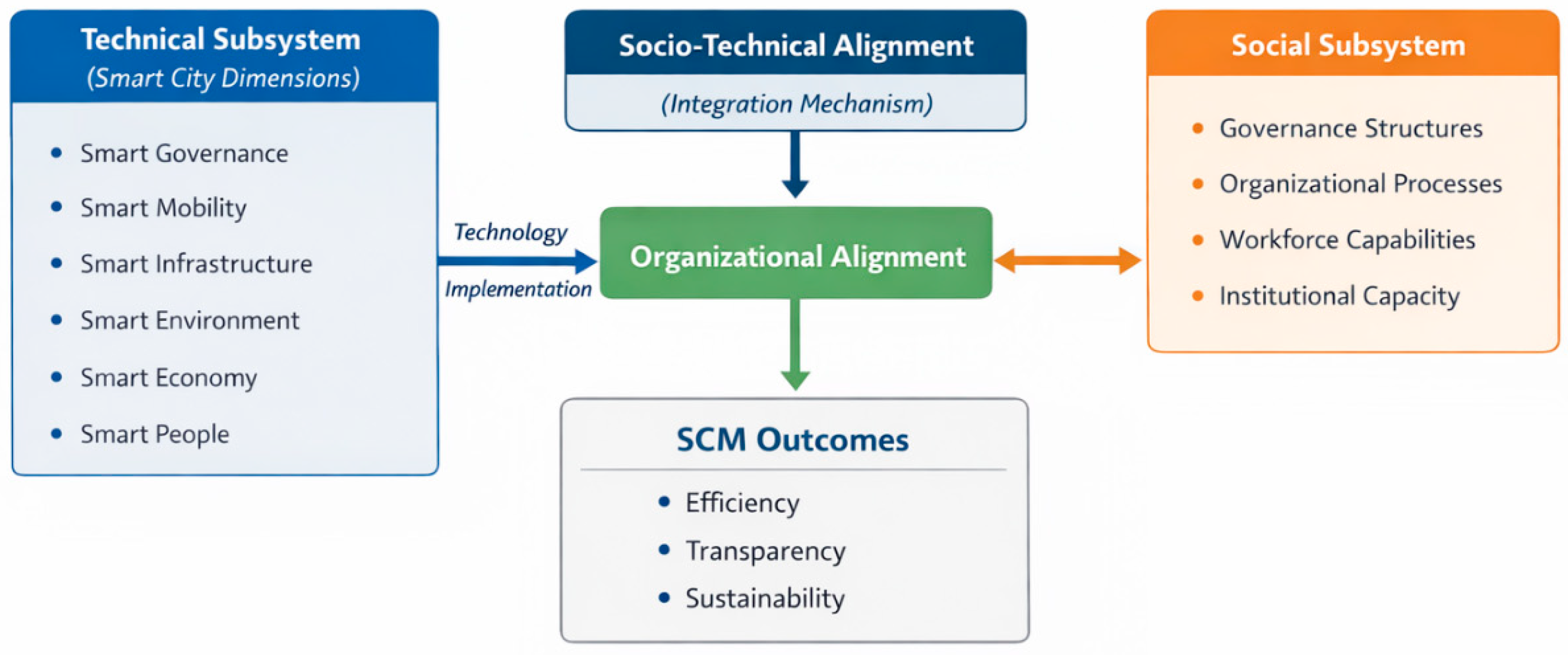
This study employs Socio-Technical Systems Theory as a guiding prism to investigate the integration of smart city dimensions into municipal supply chain management. The theory emphasises the interdependence of technological systems and social structures, which includes human capabilities, governance mechanisms, and organisational processes. Social subsystems are represented by institutional frameworks, personnel capacity, and governance structures, while technical subsystems are represented by smart city initiatives in the context of this study. As a result, the efficacy of supply chain transformation is contingent upon the coordination of these subsystems. This perspective establishes a basis for examining the reasons why the implementation of smart technologies does not inevitably result in improved supply chain performance in the municipal environment.
Furthermore, the socio-technical systems theory offers a framework for comprehending the complexities that are linked to the transformation of urban environments into smart cities. The successful implementation of smart solutions must consider human behaviours and organisational cultures, as this theory acknowledges the complex relationships between technological systems and societal dimensions [53]. Municipalities can unlock new capacities for innovative SCM practices that are responsive to both local needs and broader sustainability challenges by encouraging collaborative governance structures that leverage diverse stakeholder inputs [54].
The socio-technical framework that underpins this study is depicted in Figure 1, which emphasises the interaction between smart city dimensions (technical subsystem) and organisational and institutional factors (social subsystem). Reinforcing the significance of integrated implementation strategies, the framework illustrates that the alignment of these elements is the key to achieving effective supply chain performance.

3. Methodology

3.1. Research Design

A qualitative research design with an exploratory orientation is employed in this study to investigate the integration of smart city dimensions into SCM within a specific South African municipality. The study is based on a phenomenological paradigm and aims to capture the lived experiences and insights of key informants, such as senior managers and strategic stakeholders in the municipality’s SCM division. Given the qualitative nature of the study, the research focuses on participants’ perceptions and experiences rather than measuring impact through quantitative performance indicators. Twenty participants with comprehensive knowledge of public sector supply chain operations and smart city initiatives were selected using a non-probability purposive sampling technique. The data were collected through semi-structured face-to-face interviews, which provided a wealth of descriptive insights into the impact of smart governance, infrastructure, mobility, and related dimensions on the performance of municipal supply chains. Thematic analysis, which was facilitated by NVivo 12 software, was implemented to identify recurring patterns and themes. This methodological approach offers an in-depth understanding of the opportunities and challenges that are linked to the integration of smart city principles into public sector supply chain management.

3.2. Data Collection Methods

This study exclusively utilised qualitative methods to collect primary data to guarantee a thorough comprehension of the ways in which SCM is influenced by smart city dimensions in the selected South African municipality. A semi-structured interview protocol was implemented to facilitate data capture. This protocol encompassed critical thematic areas such as supply chain management practices, perceived challenges and opportunities, and smart city dimensions. Open-ended questions were incorporated into the protocol to facilitate the acquisition of detailed insights from participants, thereby enabling the flexible use of follow-up enquiries and probing. The interviews were conducted over a period of one month and lasted an estimated 45–60 min.
Twenty senior managers and key stakeholders who were directly involved in the municipality’s SCM processes participated in semi-structured face-to-face interviews. These interviews offered extensive, context-specific insights into the perception, implementation, and experience of smart city dimensions, including infrastructure, mobility, and governance in municipal operations. The interview format was adaptable, allowing participants to elaborate on complex topics and provide detailed narratives. While formal data saturation was not fully achieved, the study generated sufficient depth of insight across a diverse group of participants, including senior managers and key stakeholders involved in municipal supply chain processes. The sample provided rich, context-specific perspectives that enabled the identification of recurring themes and patterns relevant to the study objectives. The focus of the research was therefore on depth and diversity of insights rather than statistical generalisation.
NVivo software was employed to analyse the data using thematic analysis, which facilitated the identification of recurring themes and patterns. This qualitative approach guaranteed a comprehensive and complex examination of the practical realities, innovations, and challenges associated with the integration of smart city principles into public sector supply chain management.

3.3. Sampling Strategy

Purposive sampling was implemented within the eThekwini Municipality to identify participants who possessed a wealth of information regarding sustainable supply chain management. The inclusion criteria were focused on senior managers and key stakeholders within the SCM department who were actively involved in the implementation, oversight, or strategic planning of sustainable practices and had a minimum of five years of experience. Participants were additionally required to have direct experience with smart city initiatives to guarantee their ability to offer informed perspectives on the integration of smart city dimensions, including smart governance, mobility, and infrastructure into municipal supply chain operations. This process of deliberate selection facilitated the collection of contextually relevant, complex data that reflects both innovative strategies and operational challenges in urban supply chain management. The study formulated a strong foundation for assessing the alignment of sustainable supply chain practices with smart city objectives in the municipal context by providing decision-makers with first-hand experience.

3.4. Data Analysis Techniques

Thematic analysis was the primary method employed in the study, with NVivo software providing support. The study employs a purely qualitative data analysis approach. This method entailed the systematic coding of transcribed interview data to identify recurring patterns, themes, and insights that reflect the integration of smart city dimensions into SCM within the eThekwini Municipality. The analytical process commenced with open coding, which involved the identification of significant statements and phrases. Subsequently, thematic categories were established to capture both anticipated and emergent issues. The NVivo software facilitated the organisation, retrieval, and interpretation of extensive qualitative data, thereby improving the coherence and transparency of the analytical process. The participants’ lived experiences were deeply examined through this method, which provided rich, contextualised insights into the opportunities and challenges of integrating smart city principles into municipal supply chain operations. Consequently, thematic analysis guaranteed that the findings were based on empirical evidence while simultaneously preserving the breadth and complexity necessary to comprehend complex social and organisational phenomena.

3.5. Ethical Considerations and Limitations

The study strictly followed ethical research protocols to protect the rights of participants and maintain the integrity of the research process. Ethical clearance was obtained from the appropriate institutional review board, and a gatekeeper’s letter was obtained from the eThekwini Municipality to guarantee compliance with municipal procedures and appropriate access. Written informed consent was obtained from all participants before data collection, and they were fully informed about the study’s purpose. Data was securely stored and accessible only to the research team, ensuring that confidentiality and anonymity were rigorously maintained. Nevertheless, the generalisability of the study’s findings to other municipal contexts beyond eThekwini may be restricted by the purposive sample of twenty participants and qualitative design. Furthermore, the potential for researcher bias and subjectivity is introduced by the interpretive nature of thematic analysis and the reliance on self-reported data. Future research could expand the sample size and utilise mixed methods or data triangulation to address these limitations, thereby improving the strength and transferability of the findings.

3.6. Reliability and Validity

To guarantee the reliability and validity of this qualitative study on the evaluation of smart city dimensions and their impact on SCM within a South African municipality, numerous rigorous measures were implemented. The study was informed by Lincoln and Guba’s framework of trustworthiness, which includes credibility, transferability, dependability, and confirmability. A standardised semi-structured interview protocol was implemented with all twenty participants to ensure the comparability of responses and to maintain consistency. To guarantee credibility, member checking was implemented, which enabled participants to verify the accuracy of their responses. The use of NVivo software was instrumental in reinforcing dependability and confirmability, as it facilitated transparent coding procedures and systematic thematic analysis. The comprehensive documentation of the research process improved the study’s auditability, while in-depth contextual descriptions facilitated transferability. These measures, when taken together, established a solid foundation for reliable findings and offered valuable insights into the integration of smart city dimensions into municipal SCM practices.

4. Research Findings

4.1. Participant Profile

The sample composition and its relevance to the study objectives must be contextualised before the participant profile is presented. Participants who were chosen for this study hold strategic positions within the municipal supply chain environment, offering a wide variety of viewpoints on governance, procurement, infrastructure, digital systems, and sustainability. This diversity was intentionally pursued to guarantee that the data accurately represents both strategic and operational perspectives on the integration of smart city dimensions into supply chain management practices. The depth and credibility of the findings are bolstered by the inclusion of participants with a variety of functional responsibilities and years of experience, as it enables a comprehensive comprehension of the perception and implementation of smart city initiatives across various organisational levels. In order to help the interpretation of the empirical findings, Table 1 gives a thorough summary of the participants, including their responsibilities, areas of expertise, sector exposure, and years of experience.

4.2. Emergent Themes

Giffinger’s smart city framework, which conceptualises urban development across six interrelated dimensions, is the framework in which the findings of this study are structured. Efficiency, transparency, and sustainability are among the dimensions that are prioritised in relation to their impact on supply chain management outcomes. The analysis also emphasises the extent to which each dimension is perceived to either improve or delay supply chain performance in the municipal context.
Thematic analysis of interviews with senior managers and key stakeholders within the SCM unit of the designated South African municipality has identified the primary themes, which are detailed in this section. The integration of smart city dimensions, particularly smart governance, smart mobility, smart environment, and smart infrastructure, into municipal SCM practices is reflected in these themes, which are informed by the professional insights and lived experiences of the participants. These findings also illustrate the extent to which these dimensions impact the sustainability, transparency, and operational efficacy of procurement and logistics processes. The strategic direction and current state of implementation of smart-enabled supply chain initiatives within the municipality are both revealed by the narratives of participants. Furthermore, the themes offer a thorough comprehension of the impact of governance structures, digital transformation, and organisational preparedness on supply chain performance. The analysis also emphasises critical institutional challenges, such as fragmented systems, capacity constraints, and limited technological integration, as well as emergent opportunities associated with data-driven decision-making, automation, and innovation. Within the municipal context, these themes collectively provide critical insights into the changing relationship between public sector SCM and smart city development.
This study’s results are organised in accordance with the primary smart city dimensions proposed by Rudolf Giffinger, with a specific emphasis on the ways in which these dimensions affect supply chain management outcomes, such as sustainability, transparency, and efficiency. The analysis emphasises the extent to which each dimension is perceived to either improve or delay supply chain performance in the municipal context. This theme reflects how key smart city dimensions, particularly governance, mobility, and infrastructure, are perceived to influence awareness and integration within supply chain management practices.

4.2.1. Theme One: Smart City Dimensions and Their Influence on SCM Awareness and Integration

“From what I have observed within the municipality, there is a growing awareness of the six smart city dimensions, particularly smart governance and mobility, although the understanding is still not consistent across all departments.” (P7)
“Most employees are familiar with aspects of smart governance because of its link to compliance and reporting, but the other dimensions are not always clearly articulated in daily operations.” (P2)
“The concept of smart mobility is quite visible through transport and logistics systems, but there is less emphasis placed on how it connects with other dimensions like smart environment.” (P10)
“What became evident in practice is that while staff may be exposed to smart city initiatives, not everyone understands the full framework of the six dimensions.” (P5)
“There has been a gradual shift toward recognising smart city principles, especially governance and economy, but the integration of all six dimensions is still developing.” (P12)
“In many instances, smart governance is the most understood dimension because it directly affects procurement processes, transparency, and accountability.” (P3)
“The awareness of smart environment initiatives is increasing, particularly around sustainability and reducing paper-based processes, although it is not yet fully embedded.” (P9)
“One of the challenges is that the six dimensions are not always formally communicated, so understanding tends to depend on individual roles and exposure.” (P14)
“While there is some familiarity with smart economy concepts through budgeting and innovation systems, these are not always recognised as part of a broader smart city framework.” (P6)
“The idea of smart people, especially in terms of skills development and training, is acknowledged, but more structured programmes are still required.” (P1)
“There is a general understanding that smart city dimensions are important, but the municipality is still in a learning phase when it comes to full implementation.” (P11)
“Technology has helped increase awareness of certain dimensions like governance and mobility, but others, such as smart living, receive less attention.” (P8)
“Although the municipality is moving toward becoming smarter, the integration of all six dimensions into supply chain practices remains uneven.” (P13)
“The recognition of smart city dimensions has improved over time, but consistent training and alignment are still needed to ensure a shared understanding across the organisation.” (P4)
The municipality’s institutional alignment and structured knowledge dissemination are indicated by the disparate comprehension of smart city dimensions among departments. This could be ascribed to the absence of formal training frameworks that integrate smart city principles into daily operational practices and to fragmented organisational communication systems. Therefore, the effective implementation of smart city initiatives is restricted by the fact that awareness is role-dependent rather than organisation-wide. This discovery is indicative of a more extensive socio-technical misalignment, in which technological concepts are introduced without the corresponding organisational preparedness and capacity development.
This discovery can be further comprehended by applying the socio-technical systems theory perspective, which emphasises the interdependence of technological systems and organisational structures, such as governance processes, communication systems, and human capabilities. The municipality’s institutional readiness and knowledge dissemination structures are misaligned with the introduction of digital concepts, as evidenced by the unequal comprehension of smart city dimensions in this context. Therefore, the implementation of smart city principles is still fragmented and contingent upon individual responsibilities, rather than being integrated at an organisational level. This reinforces the importance of aligning social and technical elements in achieving effective smart city-driven supply chain transformation.
This theme captures how different smart city dimensions are perceived to shape both current implementation and future development of supply chain management practices within the municipality.

4.2.2. Theme Two: Smart City Dimensions and Their Influence on Current and Future SCM Practices

“From what I have observed, the municipality is gradually aligning its current supply chain initiatives with smart city dimensions, although the integration is still not fully coordinated across all units.” (P7)
“There is a clear shift toward incorporating digital tools and automation into supply chain processes, which reflects future-oriented smart city thinking.” (P2)
“Many of the current initiatives focus on improving efficiency, but there is growing recognition that future systems must also prioritise sustainability and data integration.” (P10)
“What is becoming evident is that future initiatives are strongly driven by technology, particularly automation and data analytics, to improve supply chain performance.” (P5)
“The municipality has started to introduce smart systems, but there is still a gap between current practices and the envisioned smart city framework.” (P12)
“Workforce development is becoming increasingly important, especially as new technologies require staff to develop digital competencies.” (P3)
“There are ongoing efforts to improve performance through smart dashboards and monitoring tools, which are expected to play a bigger role in future initiatives.” (P9)
“One of the key challenges is that organisational structures are not always aligned with the pace of technological change, which affects implementation.” (P14)
“Automation is gradually being introduced into supply chain operations, but its full potential has not yet been realised within the municipality.” (P6)
“Future initiatives are expected to focus more on integrating systems across departments to improve coordination and transparency.” (P1)
“The municipality is moving toward more data-driven decision-making, although there is still a need for better system integration and data quality.” (P11)
“There is a growing emphasis on innovation and smart technologies, but resource constraints continue to limit the speed of implementation.” (P8)
“Overall, the direction is toward a more connected and automated supply chain system but achieving this will require stronger strategic alignment and investment.” (P13)
The municipality is currently in a transitional phase, characterised by incremental adoption rather than strategic integration, as evidenced by the gradual and inconsistent implementation of smart initiatives. This could be attributed to the implementation of rigid governance structures, institutional inertia, and resource constraints that delay the velocity of digital transformation. Furthermore, the absence of coordination between technological developments and organisational structures implies that the difficulties of implementation are not solely technical, but rather profoundly rooted in institutional and governance dynamics. This emphasises the necessity of coordinating strategies that align digital innovation with long-term planning objectives and organisational capacity.
A disconnect between technological development and organisational capacity is emphasised by the gradual and unequal implementation of smart initiatives from a socio-technical systems perspective. Digital tools and systems are being implemented; however, the institutional frameworks, mechanisms for skill development, and governance alignment are inadequate. This misalignment restricts the efficacy of smart city initiatives, indicating that successful implementation necessitates a coordinated strategy that integrates technological innovation with organisational transformation.

4.3. Comparative Analysis of Smart City Dimensions and SCM Impact

The comparative analysis emphasises that the most substantial influence on supply chain management within the municipality is derived from smart governance and mobility, which are in close alignment with the municipality’s extant operational systems. Conversely, the infrastructure and digital integration dimensions are still in the process of being developed, which restricts their ability to contribute to the performance of the supply chain. Furthermore, the analysis suggests that institutional, technological, and capacity-related constraints limit the practical application of certain dimensions, despite their conceptual significance.
A comparative visual representation is included to strengthen the analysis. The relationship between the level of implementation of smart city dimensions and their respective impact on supply chain management outcomes is illustrated in Table 2. Additionally, the figure identifies key enabling factors and constraints that influence performance within the municipal context.
Approximately two-thirds of participants emphasised the significance of governance systems, while most participants indicated that governance-related factors and coordination mechanisms play the most critical role in influencing supply chain performance. In contrast, the municipality’s limited implementation of infrastructure digitalisation was reflected in the fact that fewer participants identified it as having a significant current impact.
The findings indicate that most participants identified governance and mobility as the most influential dimensions, which suggests a perceived order of influence on supply chain performance. In contrast, the lower levels of implementation were reflected in the less frequent association between infrastructure and people-related dimensions and immediate supply chain improvements.

5. Discussion

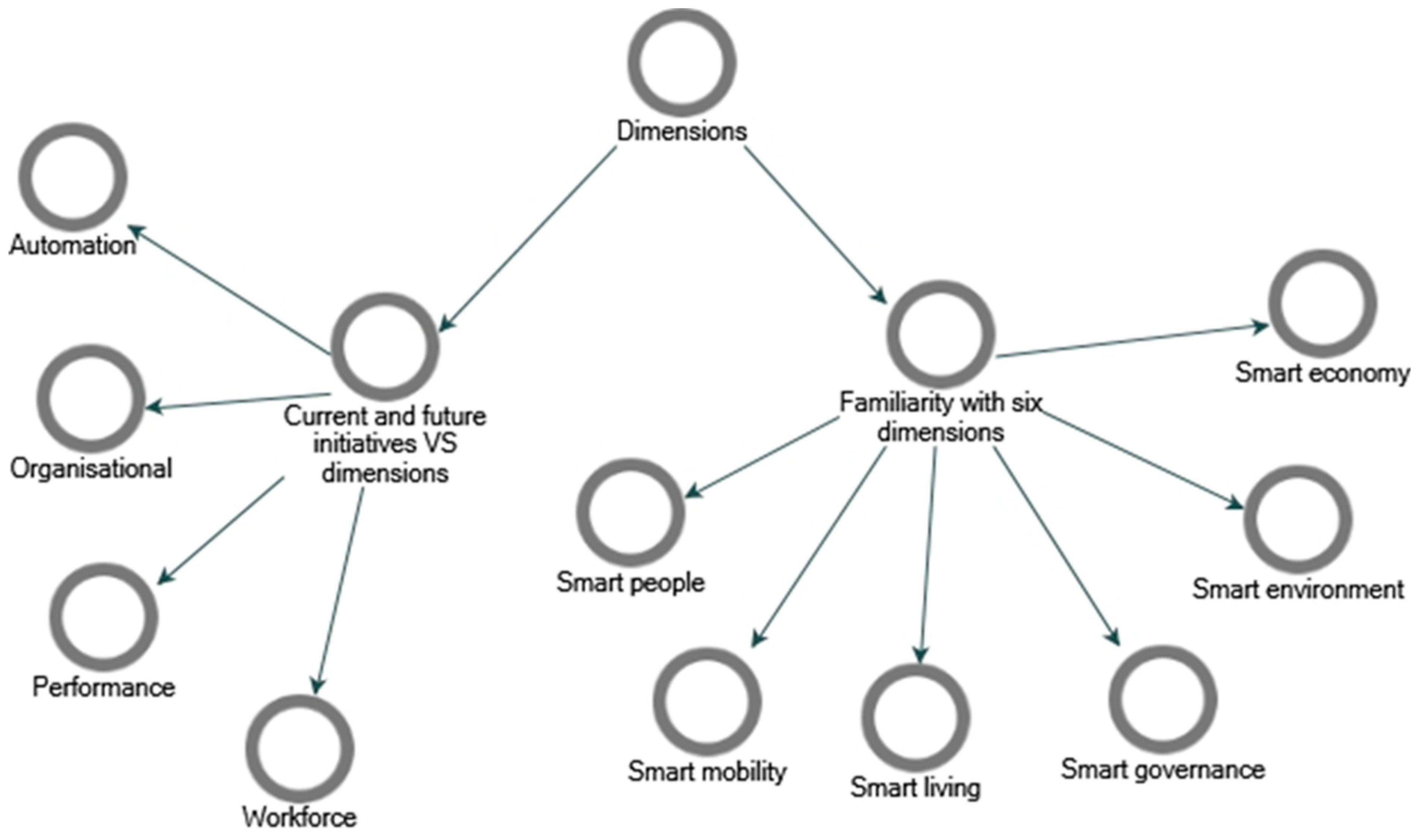
The figure shows the different dimensions available for the smart city and its relationship to supply chain management practices at eThekwini Municipality.
A comparative visual representation is included to facilitate the discussion on the transition to smart-enabled supply chain systems. Figure 2 below demonstrates the contrast between the current dimensions of smart cities and their anticipated future state, emphasising the advancement toward improved technological integration, system interoperability, and strategic alignment within municipal supply chain practices.
Figure 2. Different types of dimensions and their contrast with future dimensions. Source: Authors.
Information 17 00450 g002

5.1. Theme One: Familiarity with Six Dimensions

The findings suggest that digital governance mechanisms are being increasingly acknowledged within the municipality as crucial instruments for improving transparency and coordination in supply chain processes. Nevertheless, their implementation is still inconsistent, with limited integration across departments and systems. This indicates that institutional fragmentation and inconsistent system adoption within the municipal environment limit the efficacy of digital governance, which has the potential to improve information flows and communication.
According to the results of this investigation, the integration of smart city dimensions into municipal supply chain management is still fragmented and unequal. Although significant progress has been observed in areas such as smart governance and mobility, other dimensions, particularly infrastructure digitalisation and integrated data systems, remain underdeveloped. This implies that the adoption of smart city initiatives is not consistent across dimensions but rather is influenced by the degree to which these dimensions are in alignment with existing institutional processes and operational priorities. The results suggest that the transition to smart supply chain systems is influenced by organisational readiness and institutional capacity, in addition to technological availability.
The findings also suggest that the most progressive dimensions of the municipality’s supply chain environment are wise governance and mobility. This can be ascribed to their strong alignment with existing administrative and operational systems, such as procurement compliance structures and logistics coordination processes. The relative success of these dimensions implies that initiatives that capitalise on extant institutional frameworks are more readily accepted. The transformative potential of smart city initiatives is, however, restricted by the municipality’s prioritisation of areas that necessitate minimal structural disruption, which is indicative of a path-dependent approach.
Conversely, the significant challenges to the attainment of fully intelligent supply chain operations have been emphasised by the limited progress made in infrastructure digitalisation and integrated data systems. The findings indicate that these constraints are the result of resource constraints, insufficient technological integration, and fragmented systems. This suggests that the municipality’s capacity to effectively integrate and administer these systems across departments is the real challenge, rather than the mere availability of digital technologies.
The study also emphasises that the effective implementation of smart city initiatives is prevented by a significant gap in digital skills and organisational capacity. The results indicate that the workforce is inadequately prepared to utilise technological systems, which has a limited impact on supply chain performance, despite the introduction of these systems. This emphasises the necessity of strategically aligning technological investment with workforce development to guarantee significant transformation.
Additionally, the results indicate that the implementation of smart city initiatives is influenced by more profound institutional and governance-related challenges, in addition to technological and skills-related challenges. These consist of bureaucratic structures, rigid procurement processes, and restricted interdepartmental coordination, which collectively impede system integration and innovation. This implies that the challenges to smart supply chain transformation are not solely technical, but rather are ingrained in the broader institutional environment.
Governance and mobility are presently the most influential factors on supply chain performance, according to a comparative analysis of the smart city dimensions. Infrastructure and digital integration are the least developed. The necessity of a more balanced and coordinated approach to the implementation of smart cities is made evident by this irregular distribution. This approach should ensure that all dimensions are developed in tandem to optimise supply chain efficiency.
The results further demonstrate the significance of socio-technical systems theory in comprehending the implementation of smart cities within municipal supply chains. The results indicate that the pursuit of meaningful transformation is contingent upon the alignment of human capabilities, organisational structures, and technological systems, rather than the mere adoption of technology. This emphasises the significance of promoting the alignment of social and technical components to achieve a successful smart city-driven supply chain transformation.

5.2. Theme Two: Current and Future Initiatives vs. Dimensions

According to the results, the municipality is gradually transitioning to the implementation of smart supply chain practices; however, this transition is still inconsistent and does not yet fully integrate across departments. Although there is evidence of a growing prevalence of data-driven decision-making, automation, and digital tools, these initiatives are implemented in a fragmented manner rather than through a coordinated strategic framework. This implies that the municipality is presently in an intermediate stage of digital transformation, in which future-oriented initiatives are acknowledged but not yet fully integrated into operational systems.
In addition, the findings indicate that this fragmented implementation is influenced by structural and institutional constraints, such as insufficient alignment between strategic objectives and operational execution, organisational inertia, and limited financial resources. There is frequently a gap between the municipality’s smart city concept and its actual execution because current organisational structures and procedures are not made to handle quick technological change. This emphasises that the challenges associated with developing future smart initiatives are not solely technological, but rather profoundly rooted in institutional dynamics and governance.
The findings have revealed a significant insight: the increasing importance of data-driven decision-making and system integration as essential components of future supply chain transformation. Nevertheless, the municipality’s capacity to completely capitalise on these capabilities is restricted by the inadequate digital infrastructure, lack of system interoperability, and limited quality of data. This suggests that, despite the conceptual alignment of future initiatives with smart city principles, their effectiveness is substantially constrained by their implementation capacity.
From a socio-technical systems perspective, these results demonstrate a distinct misalignment between organisational readiness and technological innovation. Although new technologies are being introduced, the social systems that support them, including governance structures, workforce capabilities, and organisational processes, are not yet sufficiently developed to facilitate their effective use. As an outcome, the municipality experiences suboptimal and partial implementation of clever initiatives. This adds to the significance of unifying technical and social components to execute a successful smart city-driven supply chain transformation. The effectiveness of smart city initiatives is contingent upon the alignment between technological innovation and organisational structures, as evidenced by these findings, which further emphasise the relevance of Socio-Technical Systems Theory.

5.3. Practical Implications

The practical implications of the results of this study are substantial for municipal governance, supply chain managers, and policymakers who are involved in the transformation of urban service delivery through smart city initiatives. This study provides actionable insights for improving operational efficiency, transparency, and sustainability in public procurement and logistics by examining the impact of specific smart city dimensions, including infrastructure, mobility, digital integration, and smart governance, on SCM processes. The study emphasises the necessity of aligning digital innovations with institutional capabilities and human resource development to fully realise the benefits of smart technologies for municipal supply chain practitioners. The study also emphasises the significance of data-driven decision-making and interdepartmental collaboration as fundamental components of the integration of smart solutions into municipal operations. These findings can be used by policymakers to develop targeted strategies that prioritise technological investments in areas with the greatest potential to improve supply chain performance. The study also offers a roadmap for identifying implementation challenges, including digital divides, organisational resistance, and capacity limitations, that must be addressed to guarantee long-term success. These insights are especially pertinent in the South African context, where municipalities are under increasing pressure to modernise infrastructure and improve service delivery amidst limited resources. The study ultimately contributes to the development of urban supply chains that are resilient, responsive, and citizen-centred. It provides practical advice that can be applied to other municipalities that are interested in transitioning to smart city models while maintaining fiscal responsibility and social inclusivity.

5.4. Theoretical Implications

The study’s theoretical implications stem from its addition to the growing body of knowledge regarding the relationship between public sector SCM and smart city development, especially in developing nations. The study advances comprehension of the way technological advancements (smart city dimensions such as smart governance, mobility, and infrastructure) interact with human and organisational systems to influence supply chain performance by incorporating the Socio-Technical Systems (STS) Theory as an underpinning framework. The results substantiate the STS perspective by illustrating that the successful integration of smart city components into municipal supply chain operations is contingent upon institutional culture, stakeholder collaboration, and leadership, in addition to digital infrastructure. The study also contributes to the contextual adaptation of smart city theory in the Global South by emphasising the distinctive barriers and enablers that municipalities encounter when adopting such innovations. The linear application of smart city frameworks designed for developed nations is challenged, and it advocates for more complex, inclusive models that account for socio-economic disparities and capacity constraints. The research thereby broadens the theoretical perspective through which smart city initiatives are viewed, providing a multidimensional approach that integrates operational efficiency, governance, and sustainability in localised urban supply chain systems.

5.5. Recommendations for Future Research

A comparative analysis across various urban contexts in South Africa should be considered in future research, which should consider expanding the geographical scope beyond a single municipality. This would improve the generalisability of the results and offer a better understanding of the regional differences in the adoption and impact of smart city dimensions on supply chain management. Furthermore, researchers may investigate the integration of mixed-methods approaches by combining qualitative interviews with quantitative performance metrics to improve comprehension and provide empirical validation of significant discoveries. In addition, longitudinal studies could be implemented to evaluate the long-term effects of smart city initiatives on the sustainability, transparency, and efficiency of municipal supply chains. In the future, research may examine the direct impact of specific technologies, including blockchain, AI, and IoT, on procurement, logistics, and stakeholder collaboration in the public sector within smart city ecosystems. A more comprehensive understanding of the socio-technical dynamics that influence the transformation of smart city-oriented supply chains in urban environments could be achieved by integrating the perspectives of technology vendors, service providers, and citizens.

6. Conclusions

The findings indicate that, despite the growing recognition of smart city dimensions within municipal supply chain systems, their implementation is still unequal and constrained by institutional fragmentation, limited digital capacity, and governance challenges. The integration of smart city initiatives is the result of a broader socio-technical transformation that necessitates the alignment of human capabilities, organisational structures, and digital systems, rather than an exclusively technological transition. These results challenge the concept that technological adoption alone can improve supply chain performance, emphasising the necessity of implementation strategies that are institutionally grounded and context-sensitive.
The results indicated that smart city components, particularly smart governance, smart infrastructure, and smart mobility, are being increasingly acknowledged as strategic enablers of operational efficiency, transparency, and sustainability in municipal supply chain practices. The study also revealed a few challenges, such as fragmented digital systems, limited interdepartmental coordination, and insufficient technical capacity, which impede the full realisation of the benefits of smart cities. Participant responses were analysed thematically to reveal that the successful integration of smart city initiatives necessitates a culture of innovation, inclusive policy frameworks, strong institutional leadership, and significant technological investment. Based on the analysis, it is evident that the implementation of smart city dimensions in a coherent and context-sensitive manner has the potential to significantly alter public sector supply chain management. The research makes a valuable contribution to both theory and practice by providing empirical evidence from the Global South and emphasising the necessary socio-technical interaction for sustainable urban development. These observations emphasise the necessity of adaptive strategies that reconcile the aspirations of smart cities with the practical governance realities of South African municipalities. The study relies on subjective perceptions of internal stakeholders and does not incorporate objective performance metrics such as cost efficiency, procurement cycle times, or service delivery indicators. As a result, the findings reflect perceived rather than empirically measured impacts. This limitation should be considered when interpreting the results, as the study does not provide quantifiable evidence of performance improvement.

6.1. This Study Makes Several Distinct Scientific Contributions, Which Are Directly Aligned with the Research Objectives and Questions

In response to the objective of exploring the extent to which smart city dimensions are integrated into municipal supply chain management practices, the study provides empirical evidence that integration remains partial, uneven, and dimension-specific. The findings demonstrate that smart governance and mobility are more advanced, while infrastructure digitalisation and integrated data systems remain underdeveloped. This contributes to the literature by offering a context-specific understanding of how smart city dimensions are operationalised within municipal supply chains in a developing country context.
In addressing the objective of examining how smart city initiatives influence efficiency, transparency, and sustainability, the study reveals that these outcomes are not uniformly realised but are contingent upon institutional alignment, organisational readiness, and digital capability. The findings show that while smart city initiatives are perceived to enhance supply chain performance, their effectiveness is mediated by governance structures, system integration, and workforce capabilities. This extends existing literature by shifting the focus from technological potential to implementation realities.
The study contributes theoretically by applying Socio-Technical Systems Theory to explain the interaction between technological innovation (smart city dimensions) and organisational and institutional factors within municipal supply chains. The findings demonstrate that successful integration depends on the alignment between social and technical subsystems, thereby reinforcing and extending the applicability of socio-technical perspectives in public sector supply chain transformation.
The study provides a Global South perspective by highlighting the unique institutional, governance, and resource-related constraints that shape the implementation of smart city initiatives in South African municipalities. This contribution addresses the under-representation of developing country contexts in smart city and supply chain management research and offers insights that are relevant to similar urban environments.

6.2. Practical Recommendations for Municipal Supply Chain Management

  • Strengthen Digital Governance Systems
Municipalities should improve digital governance systems by integrating real-time data platforms and decision-support tools to improve transparency and coordination across supply chain processes. This will enable more efficient monitoring, reporting, and accountability in procurement and logistics operations.
  • Invest in Integrated Digital Infrastructure
There is a need to develop an integrated digital infrastructure that enables seamless data sharing across departments. Municipalities should prioritise system interoperability and platform integration to reduce fragmentation and improve overall supply chain efficiency.
  • Develop Workforce Digital Capabilities
Municipalities should invest in targeted training and capacity-building initiatives to improve digital skills among supply chain personnel. Strengthening workforce capabilities will improve the effective utilisation of smart technologies and support long-term sustainability.
  • Improve Interdepartmental Coordination Mechanisms
Establishing structured coordination mechanisms across departments will improve alignment between strategic objectives and operational execution. This includes developing cross-functional teams and integrated planning systems to support smart supply chain initiatives.
  • Explore AI-Driven Supply Chain Solutions
Municipalities should explore the adoption of artificial intelligence (AI) and advanced analytics tools, such as predictive forecasting, anomaly detection, and automated decision-support systems, to improve supply chain performance. However, successful implementation requires alignment with organisational structures and data governance frameworks.

Funding

This research received no external funding. The APC was not funded by any external source.

Institutional Review Board Statement

The study was conducted in accordance with the Declaration of Helsinki, and approved by Humanities and Social Sciences Research Ethics Committee (HSSREC) (protocol code HSSREC/00004872/2022 and 10 October 2022).

Informed Consent Statement

Informed consent was obtained from all subjects involved in the study.

Data Availability Statement

The original contributions presented in this study are included in the article. Further inquiries can be directed to the corresponding author.

Conflicts of Interest

The author declares no conflict of interest.

References

  1. Tan, S.Y.; Taeihagh, A. Smart City Governance in Developing Countries: A Systematic Literature Review. Sustainability 2020, 12, 899. [Google Scholar] [CrossRef]
  2. Ahmad, Y.A.B.A.; Verma, N.; Sarhan, N.; Awwad, E.M.; Arora, A.; Nyangaresi, V.O. An IoT and Blockchain-Based Secure and Transparent Supply Chain Management Framework in Smart Cities Using Optimal Queue Model. IEEE Access 2024, 12, 51752–51771. [Google Scholar] [CrossRef]
  3. Makhdoom, I.; Zhou, I.; Abolhasan, M.; Lipman, J.; Ni, W. PrivySharing: A Blockchain-Based Framework for Privacy-Preserving and Secure Data Sharing in Smart Cities. Comput. Secur. 2020, 88, 101653. [Google Scholar] [CrossRef]
  4. Guma, P.K. Smart Cities and Their Settings in the Global South: Informality as a Marker. Dialogues Hum. Geogr. 2023, 14, 411–414. [Google Scholar] [CrossRef]
  5. Oke, A.E.; Aghimien, D.; Aigbavboa, C.; Akinradewo, O. Appraisal of the Drivers of Smart City Development in South Africa. Constr. Econ. Build. 2020, 20, 109–126. [Google Scholar] [CrossRef]
  6. Toit, B.R.D.; Stimie, J.E. Towards Smart Cities in South Africa: Evolution, Definitions, and Future Cities. South Afr. J. Ind. Eng. 2023, 34, 85–96. [Google Scholar] [CrossRef]
  7. Prasad, D.; Alizadeh, T.; Dowling, R. Smart City Planning and the Challenges of Informality in India. Dialogues Hum. Geogr. 2023, 14, 385–402. [Google Scholar] [CrossRef]
  8. Duca, F.; Mutua, A.; Tetley-Brown, L.; Karuri-Sebina, G.; Backhouse, J. Smart Cities Governance in the Southern African Development Community (SADC) Region: A Systematic Review of the Literature. arXiv 2024. [Google Scholar] [CrossRef]
  9. Abdalla, A.A.; Abdalla, Y.A.; Haddad, A.M.; Bhavani, G.; Zabalawi, E. Connections Between Big Data and Smart Cities From the Supply Chain Perspective: Understanding the Impact of Big Data. Sustainability 2022, 14, 16161. [Google Scholar] [CrossRef]
  10. Sharma, H.; Shanker, S.; Barve, A. Role of Smart City Development in Supply Chain Performance. In Recent trends in Management and Commerce; REST Publisher: Krishnagiri, India, 2020; Volume 1. [Google Scholar]
  11. Ahmad, I.; Anyanwu, A.; Onwusinkwue, S.; Dawodu, S.O.; Akagha, O.V.; Ejairu, E. Cybersecurity Challenges in Smart Cities: A Case Review of African Metropolises. Comput. Sci. It Res. J. 2024, 5, 254–269. [Google Scholar] [CrossRef]
  12. Cornelius, F.P.; van Rensburg, S.K.J.; Kader, S. The Value of Criminological Theories in Explaining Cybersecurity in South African Smart Cities. Int. Ann. Criminol. 2022, 60, 220–240. [Google Scholar] [CrossRef]
  13. Lamola, K. Building Sustainable Smart Cities and the Green Building Agenda. Resourceedings 2023, 3, 43–49. [Google Scholar] [CrossRef]
  14. Haichang, T. Smart Technology Trends, Smart Supply Chain Management Implementation, and Smart Supply Chain Innovation Performance in China. J. Electr. Syst. 2024, 20, 1221–1233. [Google Scholar] [CrossRef]
  15. Azizi, N.; Malekzadeh, H.; Akhavan, P.; Haass, O.; Saremi, S.; Mirjalili, S. IoT–Blockchain: Harnessing the Power of Internet of Thing and Blockchain for Smart Supply Chain. Sensors 2021, 21, 6048. [Google Scholar] [CrossRef]
  16. Jo, S.-S.; Han, H.; Leem, Y.; Lee, S.H. Sustainable Smart Cities and Industrial Ecosystem: Structural and Relational Changes of the Smart City Industries in Korea. Sustainability 2021, 13, 9917. [Google Scholar] [CrossRef]
  17. Rizwan, A.; Karras, D.A.; Kumar, J.; Sánchez-Chero, M.; Taboada, M.M.M.; Altamirano, G.C. An Internet of Things (IoT) Based Block Chain Technology to Enhance the Quality of Supply Chain Management (SCM). Math. Probl. Eng. 2022, 2022, 9679050. [Google Scholar] [CrossRef]
  18. Yigit, E.; Dağ, T. Improving Supply Chain Management Processes Using Smart Contracts in the Ethereum Network Written in Solidity. Appl. Sci. 2024, 14, 4738. [Google Scholar] [CrossRef]
  19. Wiśnicki, B.; Dzhuguryan, T. Integrated Sustainable Freight Transport System for City Multi-Floor Manufacturing Clusters. Multidiscip. Asp. Prod. Eng. 2019, 2, 151–160. [Google Scholar] [CrossRef][Green Version]
  20. Dos-Santos, M.J.P.L.; Baptista, N.; Machado-Santos, C. Smart and Sustainable Cities in the Mediterranean Region: The Contribution of Short Supply Chains of Food. Ecocycles 2021, 7, 8–17. [Google Scholar] [CrossRef]
  21. Zadeh, S.B.I.; Garay-Rondero, C.L. Enhancing Urban Sustainability: Unravelling Carbon Footprint Reduction in Smart Cities Through Modern Supply-Chain Measures. Smart Cities 2023, 6, 3225–3250. [Google Scholar] [CrossRef]
  22. Feroz, A.K.; Zo, H.; Chiravuri, A. Digital Transformation and Environmental Sustainability: A Review and Research Agenda. Sustainability 2021, 13, 1530. [Google Scholar] [CrossRef]
  23. Rossolov, A.; Lobashov, O.; Kopytkov, D.; Botsman, A.; Lyfenko, S. A Two-Echelon Green Supply Chain for Urban Delivery. Sci. Tech. 2019, 18, 495–503. [Google Scholar] [CrossRef][Green Version]
  24. Ju, C.; Zhao, J.; Li, K.; Bao, F.; Xu, C.; Ran, J. Supply Chain Recovery Strategies for High Demand Products Based on the Impact of Capacity and Transportation Disruptions. Systems 2022, 10, 88. [Google Scholar] [CrossRef]
  25. Xue, H.; Zhai, Y.; Su, W.H.; He, Z. Governance and Actions for Resilient Urban Food Systems in the Era of COVID-19: Lessons and Challenges in China. Agriculture 2023, 13, 1681. [Google Scholar] [CrossRef]
  26. Talukder, B.; vanLoon, G.W.; Hipel, K.W.; Orbinski, J. COVID-19’s Implications on Agri-Food Systems and Human Health in Bangladesh. Curr. Res. Environ. Sustain. 2021, 3, 100033. [Google Scholar] [CrossRef]
  27. Giffinger, R.; Fertner, C.; Kramar, H.; Kalasek, R.; Pichler-Milanovic, N.; Meijers, E.J. Smart Cities. Ranking of European Medium-Sized Cities; Final Report; Centre of Regional Science (SRF), Vienna University of Technology: Vienna, Austria, 2007. [Google Scholar]
  28. Lerman, L.V.; Benitez, G.B.; Müller, J.M.; de Sousa, P.R.; Frank, A.G. Smart Green Supply Chain Management: A Configurational Approach to Enhance Green Performance Through Digital Transformation. Supply Chain Manag. Int. J. 2022, 27, 147–176. [Google Scholar] [CrossRef]
  29. Ismagilova, E.; Hughes, L.; Dwivedi, Y.K.; Raman, K. Smart Cities: Advances in Research—An Information Systems Perspective. Int. J. Inf. Manag. 2019, 47, 88–100. [Google Scholar] [CrossRef]
  30. Sahoo, S.; Kumar, S.; Sivarajah, U.; Lim, W.M.; Westland, J.C.; Kumar, A. Blockchain for Sustainable Supply Chain Management: Trends and Ways Forward. Electron. Commer. Res. 2022, 24, 1563–1618. [Google Scholar] [CrossRef]
  31. Wu, S.R.; Shirkey, G.; Celik, I.; Shao, C.; Chen, J. A Review on the Adoption of AI, BC, and IoT in Sustainability Research. Sustainability 2022, 14, 7851. [Google Scholar] [CrossRef]
  32. Sabory, N.R.; Senjyu, T.; Danish, M.S.S.; Hosham, A.F.; Noorzada, A.; Amiri, A.S.; Muhammdi, Z. Applicable Smart City Strategies to Ensure Energy Efficiency and Renewable Energy Integration in Poor Cities: Kabul Case Study. Sustainability 2021, 13, 11984. [Google Scholar] [CrossRef]
  33. Tarek, S. Smart Eco-Cities Conceptual Framework to Achieve UN-SDGs: A Case Study Application in Egypt. Civ. Eng. Archit. 2023, 11, 1383–1406. [Google Scholar] [CrossRef]
  34. Bibri, S.E.; Krogstie, J. Smart Eco-City Strategies and Solutions for Sustainability: The Cases of Royal Seaport, Stockholm, and Western Harbor, Malmö, Sweden. Urban Sci. 2020, 4, 11. [Google Scholar] [CrossRef]
  35. Bibri, S.E. On the Sustainability of Smart and Smarter Cities in the Era of Big Data: An Interdisciplinary and Transdisciplinary Literature Review. J. Big Data 2019, 6, 25. [Google Scholar] [CrossRef]
  36. Asarpota, K.; Nadin, V. Energy Strategies, the Urban Dimension, and Spatial Planning. Energies 2020, 13, 3642. [Google Scholar] [CrossRef]
  37. Janik, A.; Ryszko, A.; Szafraniec, M. Smart and Sustainable Cities: In Search of Comprehensive Theoretical Framework. Sci. Pap. Silesian Univ. Technol. Organ. Manag. Ser. 2019, 9, 109–139. [Google Scholar] [CrossRef]
  38. Nurulin, Y.; Skvortsova, I.; Kalchenko, O. Energy Planning and Energy Efficiency in Smart City Areas. SHS Web Conf. 2019, 61, 01017. [Google Scholar] [CrossRef]
  39. Ahmad, R.W.; Salah, K.; Jayaraman, R.; Yaqoob, I.; Omar, M. Blockchain for Waste Management in Smart Cities: A Survey. IEEE Access 2021, 9, 131520–131541. [Google Scholar] [CrossRef]
  40. Chen, C.L.; Chiang, M.L.; Deng, Y.Y.; Weng, W.; Wang, K.; Liu, C.-C. A Traceable Firearm Management System Based on Blockchain and IoT Technology. Symmetry 2021, 13, 439. [Google Scholar] [CrossRef]
  41. Bottoni, P.; Gessa, N.; Massa, G.; Pareschi, R.; Selim, H.; Arcuri, E. Intelligent Smart Contracts for Innovative Supply Chain Management. Front. Blockchain 2020, 3, 535787. [Google Scholar] [CrossRef]
  42. Groschopf, W.; Dobrovnik, M.; Herneth, C. Smart Contracts for Sustainable Supply Chain Management: Conceptual Frameworks for Supply Chain Maturity Evaluation and Smart Contract Sustainability Assessment. Front. Blockchain 2021, 4, 506436. [Google Scholar] [CrossRef]
  43. Venkatesh, V.G.; Kang, K.; Wang, B.; Zhong, R.Y.; Zhang, A. System Architecture for Blockchain Based Transparency of Supply Chain Social Sustainability. Robot. Comput. Integr. Manuf. 2020, 63, 101896. [Google Scholar] [CrossRef]
  44. Traoré, M.K. High-Level Architecture for Interoperable Digital Twins. arXiv 2023. [Google Scholar] [CrossRef]
  45. Sami, M.S.; Abrar, M.; Akram, R.; Hussain, M.M.; Nazir, M.H.; Khan, M.S.; Raza, S. Energy Management of Microgrids for Smart Cities: A Review. Energies 2021, 14, 5976. [Google Scholar] [CrossRef]
  46. Morwanto, G.; Sidabutar, Y.F.; Suciati, H.; Panusunan, P. Planning and Evaluation of Technological System Development in Public Street Lighting to Support Sustainable Development of the Integrated City of Batam. J. Manaj. Kepemimp. Supervisi Pendidik. 2023, 8, 1298–1309. [Google Scholar] [CrossRef]
  47. Kazantsev, N.; Pishchulov, G.; Mehandjiev, N.; Sampaio, P.; Zolkiewski, J. Investigating Barriers to Demand-Driven SME Collaboration in Low-Volume High-Variability Manufacturing. Supply Chain Manag. Int. J. 2022, 27, 265–282. [Google Scholar] [CrossRef]
  48. Sengupta, U.; Sengupta, U. SDG-11 and Smart Cities: Contradictions and Overlaps Between Social and Environmental Justice Research Agendas. Front. Sociol. 2022, 7, 995603. [Google Scholar] [CrossRef]
  49. Sancino, A.; Hudson, L. Leadership In, Of, and for Smart Cities—Case Studies From Europe, America, and Australia. Public Manag. Rev. 2020, 22, 701–725. [Google Scholar] [CrossRef]
  50. Russo, A. Towards Nature-Positive Smart Cities: Bridging the Gap Between Technology and Ecology. Smart Cities 2025, 8, 26. [Google Scholar] [CrossRef]
  51. Chen, S.; Brahma, S.; Mackay, J.; Cao, C.; Aliakbarian, B. The Role of Smart Packaging System in Food Supply Chain. J. Food Sci. 2020, 85, 517–525. [Google Scholar] [CrossRef]
  52. Kutty, A.A.; Abdella, G.M.; Küçükvar, M.; Onat, N.C.; Bulu, M. A System Thinking Approach for Harmonizing Smart and Sustainable City Initiatives With United Nations Sustainable Development Goals. Sustain. Dev. 2020, 28, 1347–1365. [Google Scholar] [CrossRef]
  53. Biloria, N. Smart Cities: A Socio-Technical Perspective; Qatar Univesrity Press: Doha, Qatar, 2019. [Google Scholar]
  54. Jurado-Zambrano, D.A.; Vélez-Ocampo, J.; López-Zapata, E. Smart Governance Strategies and Their Relationships With SDGs in Three Latin American Cities. Manag. Res. J. Iberoam. Acad. Manag. 2022, 21, 7–33. [Google Scholar] [CrossRef]
Figure 1. Socio-Technical Framework for Smart City Integration in Municipal Supply Chains. Source: Author Construction.
Information 17 00450 g001
Table 1. Participant Profile of Interviewed Municipal Supply Chain Stakeholders.
Participant Role/Position Area of Expertise Sector Exposure Years of
Experience
P1Supply Chain DirectorStrategic supply chain governance and procurement oversightMunicipal supply chain administration15+ years
P2Senior Procurement ManagerPublic procurement management and supplier coordinationMunicipal procurement operations10–15 years
P3Infrastructure Programme ManagerInfrastructure procurement and project delivery systemsMunicipal infrastructure development15+ years
P4SCM Compliance ManagerProcurement compliance and regulatory frameworksMunicipal governance and audit compliance10–15 years
P5Strategic Planning ManagerSupply chain strategy and sustainability integrationMunicipal strategic planning10–15 years
P6Digital Systems ManagerDigital procurement systems and supply chain technologiesMunicipal ICT and supply chain digitalisation5–10 years
P7Supplier Development SpecialistSupplier management and enterprise developmentMunicipal supplier engagement programmes5–10 years
P8Risk and Governance ManagerSupply chain risk management and governance frameworksMunicipal risk management15+ years
P9Sustainability Programme CoordinatorEnvironmental sustainability and green procurement initiativesMunicipal environmental management10–15 years
P10Infrastructure Procurement SpecialistInfrastructure procurement frameworks and contract managementMunicipal infrastructure procurement10–15 years
P11Financial Control ManagerBudget management and procurement financial oversightMunicipal financial management10–15 years
P12Supply Chain Operations ManagerOperational supply chain coordination and logisticsMunicipal supply chain operations10–15 years
P13Urban Development PlannerSmart city planning and sustainable urban systemsMunicipal urban development10–15 years
P14Renewable Energy CoordinatorRenewable energy initiatives and sustainability projectsMunicipal energy and environmental programmes5–10 years
P15Food Security Programme ManagerUrban agriculture and food system sustainabilityMunicipal community development programmes10–15 years
P16Procurement Policy AdvisorProcurement policy development and governance frameworksMunicipal policy and regulatory environment15+ years
P17Infrastructure Systems AnalystInfrastructure delivery and management systems (CIDMS/FIDPM)Municipal infrastructure systems planning5–10 years
P18Stakeholder Engagement ManagerStakeholder collaboration and public–private partnershipsMunicipal partnership development10–15 years
P19Sustainability ConsultantSustainable procurement strategies and ESG practicesMunicipal advisory and sustainability consulting10–15 years
P20Senior Supply Chain AdvisorSupply chain optimisation and municipal service deliveryMunicipal supply chain advisory15+ years
Source: Author construction.
Table 2. Smart City Dimensions vs. SCM Impact.
Smart City
Dimension
Level of
Implementation
Impact on SCMKey EnablersKey Barriers
Smart GovernanceHighHighCompliance systems, transparency frameworksBureaucracy, rigid processes
Smart MobilityHighHighLogistics coordination, transport systemsInfrastructure limitations
Smart EnvironmentModerateModerateSustainability initiativesLimited integration
Smart InfrastructureLowLowDigital systems (emerging)Fragmented systems, poor integration
Smart EconomyModerateModerateInnovation initiativesResource constraints
Smart PeopleLow-ModerateLow-ModerateTraining initiativesSkills gap
Source: Author construction.
Disclaimer/Publisher’s Note: The statements, opinions and data contained in all publications are solely those of the individual author(s) and contributor(s) and not of MDPI and/or the editor(s). MDPI and/or the editor(s) disclaim responsibility for any injury to people or property resulting from any ideas, methods, instructions or products referred to in the content.