Article

Participatory Digital Traceability Systems for Information Governance: Design and Real-World Deployment in Urban Afforestation Programs


1
Instituto de Informática, Universidad Austral de Chile, Valdivia 5090000, Chile
2
Instituto de Conservación, Biodiversidad y Territorio, Universidad Austral de Chile, Valdivia 5090000, Chile
3
Unidad de Sustentabilidad, Universidad Austral de Chile, Valdivia 5090000, Chile
4
Unidad de Gestión Ambiental, Universidad Austral de Chile, Valdivia 5090000, Chile
*
Author to whom correspondence should be addressed.
Information 2026, 17(4), 348; https://doi.org/10.3390/info17040348
Submission received: 27 February 2026 / Revised: 25 March 2026 / Accepted: 28 March 2026 / Published: 5 April 2026

Abstract

Large-scale urban tree donation campaigns are widely implemented worldwide as nature-based solutions for climate adaptation and mitigation; however, most programs lack individual-level traceability and post-donation monitoring, limiting accountability and evidence-based management. A fundamental prerequisite for longitudinal survival assessment is the existence of a reliable traceability infrastructure capable of linking individual trees to verified planting records over time. This study proposes and empirically evaluates a participatory digital traceability system that establishes this foundational infrastructure, conceptualized as a distributed data validation architecture for donation-based urban afforestation programs. The framework integrates (i) persistent digital identifiers, (ii) geospatial registration, (iii) distributed multi-stage validation, and (iv) structured citizen reporting, and is operationalized through an installation-free progressive web application (ArborizaCL). The approach was deployed in five real-world campaigns conducted in Valdivia, Chile (May–September 2025), registering 642 trees distributed to 240 participants. A total of 190 georeferenced planting reports were submitted, corresponding to an overall reporting rate of 29.6%. Reporting behavior varied substantially by institutional follow-up strategy: campaigns with active follow-up achieved a mean reporting rate of 54.0%, compared with 13.0% under passive strategies, yielding a 41.0 percentage point difference (315.8% relative increase). Spatial analysis of reported plantings showed a predominance of urban (51.1%) and peri-urban (42.1%) locations, enabling differentiated territorial assessment. These results indicate that while digital infrastructure enables traceability and transparent monitoring, sustained citizen engagement is strongly associated with institutional coordination mechanisms. Beyond environmental monitoring, the proposed framework contributes to information governance by demonstrating how participatory digital traceability systems can support distributed public-sector oversight and outcome-oriented evaluation. The framework provides a transferable methodological basis for strengthening monitoring capacity, transparency, and governance design in publicly funded afforestation initiatives and other distributed civic programs.

Graphical Abstract

1. Introduction

Climate change constitutes one of the most pressing challenges of the 21st century. Rising greenhouse gas concentrations driven by fossil fuel combustion and land-use change are generating sustained increases in global temperatures, biodiversity loss, and disruptions in hydrological cycles [1,2]. Within this context, afforestation and urban tree planting have emerged as key nature-based solutions (NBSs) that contribute simultaneously to climate mitigation, adaptation, and urban resilience [3,4,5]. Urban trees provide multiple ecosystem services, including carbon sequestration, thermal regulation, and air quality improvement, which contribute to human well-being [6,7,8,9].
Across multiple regions, governments and civil society organizations have implemented large-scale tree donation and planting campaigns. In Chile, for example, more than 20 million trees were distributed between 2010 and 2023 through public afforestation programs [10]. Similar large-scale initiatives have been reported in North America, Europe, and Asia, often involving millions of trees annually, as illustrated in Table 1, which summarizes representative programs and their associated traceability limitations [11,12,13].
While these initiatives demonstrate substantial institutional commitment to afforestation, official documents from the National Forestry Corporation (CONAF) acknowledge persistent challenges related to long-term monitoring and survival verification [14].
However, a critical structural limitation persists: the absence of systematic post-donation traceability and long-term monitoring mechanisms at the individual tree level. This monitoring deficit is not confined to a single national context but reflects a systemic governance gap in large-scale urban greening initiatives worldwide, where program success is frequently measured by the number of trees distributed rather than by verified establishment, survival, or long-term ecological performance. While commercial forestry sectors operate under certified traceability systems [15], urban afforestation programs typically rely on manual registration processes (e.g., spreadsheets and online forms) that do not enable longitudinal survival verification or performance assessment. As a result, fundamental questions remain unresolved: What proportion of distributed trees survive after one or more years? Which species or management practices yield higher survival rates? How effective is public investment in generating sustained ecological benefits?
This monitoring gap has significant implications for sustainability governance. Without reliable survival and performance data, it is not possible to evaluate environmental impact, optimize species selection, design adaptive management strategies, or assess the efficiency of public resource allocation. The challenge is not purely technological but methodological: existing approaches lack an integrated framework that simultaneously combines unique tree identification, geospatial registration, structured validation processes, and sustained citizen participation in reporting.
Digital technologies offer opportunities to address this gap. Smart city initiatives have increasingly emphasized the role of integrated urban data infrastructures and digital representations of cities for supporting decision-making and governance processes [16,17,18]. Recent research emphasizes that effective smart governance requires the integration of digital infrastructures with institutional coordination mechanisms and data governance strategies [18,19]. However, green infrastructure monitoring has received comparatively less attention [20]. Emerging citizen-sensing approaches suggest that beneficiaries of tree donation programs could act as active contributors of longitudinal environmental data [21]. Nevertheless, evidence indicates that technological availability alone does not guarantee sustained engagement, highlighting the need for governance-oriented digital frameworks.
Existing international platforms, such as i-Tree and TreeMap, demonstrate the potential of digital urban forest inventories [22]. However, these tools are generally oriented toward inventory and analytical modeling rather than participatory post-donation monitoring, and often depend on specific regional datasets. At the national level in Chile, forest information systems focus primarily on landscape-scale inventories rather than operational management of community-based urban afforestation campaigns [23]. Consequently, no integrated methodological approach currently addresses individual tree traceability within donation-based programs while incorporating structured citizen reporting and validation mechanisms. This absence limits the ability of governments and institutions to transition from input-based metrics (trees distributed) toward outcome-based evaluation frameworks grounded in verified ecological performance.
In response to this gap, this study proposes a methodological framework implemented through a participatory digital traceability system for monitoring donated trees in urban afforestation programs. This framework defines the conceptual structure of the approach, while the system operationalizes its components within real-world governance contexts. The proposed approach is deployed in five urban campaigns conducted in Valdivia, Chile. The objectives of the study are:
1.
To develop a four-component methodological framework integrating unique digital identifiers, geospatial registration, multi-stage validation, and structured citizen participation.
2.
To implement an operational monitoring system covering the full cycle from distribution to longitudinal follow-up.
3.
To assess technical and operational feasibility through real-world campaign deployment.
4.
To analyze the influence of institutional engagement strategies on sustained citizen participation.
The scientific contribution of this work is threefold from an information systems perspective: (i) a four-component methodological framework that links beneficiaries, donated trees, verified planting records, and longitudinal monitoring within a single governance-integrated structure, a configuration not addressed by existing inventory platforms (e.g., i-Tree and TreeMap [6,22]), supply-chain traceability systems [24], or general-purpose citizen science platforms (e.g., iNaturalist [25] and eBird [26]); (ii) empirical evidence from real-world deployment on the relationship between institutional engagement strategies and citizen reporting behavior in participatory environmental monitoring; and (iii) a technology-agnostic reference model whose components are transferable beyond the urban afforestation domain.
By bridging digital traceability mechanisms with sustainability governance requirements, this research contributes a replicable information systems design foundation for enhancing transparency, accountability, and adaptive management in large-scale urban afforestation initiatives.
Unlike existing approaches, which address inventory assessment, regulatory oversight, or open-ended citizen reporting separately, the proposed framework integrates individual tree traceability, beneficiary linkage, and longitudinal monitoring within a unified governance-oriented structure.
The remainder of this article is organized as follows: Section 2 reviews related work on digital monitoring and urban forest management. Section 3 presents the proposed methodological framework and its operational implementation. Section 4 reports the empirical results. Section 5 discusses implications for sustainability governance and citizen engagement. Finally, Section 6 concludes the study.

2. Related Work

Digital technologies have progressively been incorporated into urban forest management, primarily through Geographic Information Systems (GISs), remote sensing tools, and ecosystem service modeling platforms [22,27]. International initiatives such as the i-Tree Suite and TreeMap have enabled municipalities and researchers to quantify carbon storage, air pollutant removal, and other ecosystem services based on urban tree inventories [6]. These systems provide robust analytical capabilities for estimating environmental benefits at aggregated spatial scales. However, they are generally oriented toward inventory assessment and modeling rather than the operational management of donation-based afforestation campaigns, where individual tree assignment, beneficiary linkage, and post-distribution monitoring are central requirements.
At the policy level, national forest information systems support territorial planning, regulatory compliance, and large-scale ecological assessment. In Chile, for example, the Native Vegetation Resources Cadastre (CRVN) provides detailed cartographic and ecological data on forest resources [23]. Similarly, the Virtual Office of CONAF and related environmental oversight systems facilitate regulatory management and technical documentation [28,29]. While these tools are essential for governance and compliance, they are not designed to manage community-based urban afforestation campaigns or to enable individual-level traceability of donated trees.
Beyond technical platforms, large-scale urban tree planting initiatives are increasingly implemented worldwide as components of climate mitigation and biodiversity strategies.
Table 1 presents selected examples of major afforestation programs across different regions. The selection was based on program scale, geographic diversity, and the availability of documented information regarding traceability and monitoring limitations.
Table 1. Selected large-scale urban tree planting programs and associated traceability limitations.
Country/ProgramApproximate ScaleReported Traceability LimitationRefs.
Chile (CONAF—
Siembra por Chile)
20.4 million/yearDistribution records rely primarily on manual processes without standardized individual-level post-donation monitoring[14]
United States (multiple initiatives)∼31.4 million/year (target)Fragmented programs across organizations, lacking unified tree-level traceability and longitudinal verification systems[11,30]
China (Beijing 2012–2015 Project)13 million/year (average)Large-scale governmental planting initiative without structured citizen-based survival monitoring mechanisms[13]
European Union (Forest Strategy 2030)330–375 million/year (estimated)Continental planting targets without standardized survival verification or individual traceability framework[12]
United Kingdom (England 2024–2025)10.4 million/yearDecentralized reporting across local authorities without integrated national traceability systems[31]
As shown in Table 1, large-scale afforestation initiatives across diverse geopolitical contexts share a common structural limitation: while distribution targets are clearly defined, mechanisms for standardized individual-level traceability and longitudinal monitoring remain underdeveloped. In many cases, success is primarily measured through the number of trees distributed rather than through verified post-planting performance indicators.
Emerging research on smart governance and citizen participation suggests that digital platforms can enable distributed environmental monitoring through active beneficiary involvement [16,21,32,33]. Recent studies highlight that sustained participation in smart city platforms depends on governance design, feedback mechanisms, and perceived institutional responsiveness [34,35,36]. However, empirical evidence from citizen science programs consistently indicates that technological availability alone does not guarantee sustained engagement: participation rates in voluntary environmental monitoring initiatives tend to decline rapidly without structured institutional support, highlighting the need for frameworks that integrate traceability, monitoring, and engagement mechanisms within operational governance processes [21].
Digital traceability mechanisms have been extensively developed and evaluated in supply chain management, particularly in the food and pharmaceutical sectors, where individual-level identification, multi-stage validation, and longitudinal record-keeping are regulatory requirements [24,37]. These systems demonstrate that combining unique identifiers with distributed reporting across heterogeneous actors is technically feasible and operationally effective at scale. However, supply chain traceability frameworks operate within closed, professionally mediated chains with contractual accountability structures, and are not designed for open citizen participation or voluntary reporting in public governance contexts. Adapting their core design principles to donation-based afforestation programs, where beneficiaries are voluntary citizens rather than regulated supply chain actors, requires a fundamentally different governance and engagement model.
Citizen science platforms such as iNaturalist [25] and eBird [26] have demonstrated that large-scale distributed environmental monitoring through voluntary citizen participation is achievable, generating scientifically valuable biodiversity datasets across broad geographic scales. However, these platforms operate on open, self-initiated observation models where any user may contribute records independently of any prior institutional assignment. In contrast, donation-based afforestation monitoring requires linking each reporting citizen to a specific previously assigned tree, introducing a beneficiary-asset traceability requirement that general-purpose citizen science architectures do not address.
Volunteered Geographic Information (VGI) and participatory GIS approaches have expanded the role of citizens as active producers of georeferenced environmental data [38,39]. These frameworks have been applied to urban green infrastructure assessment, hazard mapping, and land-use monitoring, demonstrating both the potential and the limitations of citizen-generated spatial data in terms of accuracy, completeness, and sustained contribution [39]. While VGI principles inform the geospatial reporting component of the proposed framework, existing VGI systems do not incorporate persistent individual identifiers, structured validation workflows, or beneficiary-specific longitudinal monitoring, which are central requirements in donation-based program management.
Taken together, these platforms provide valuable capabilities for urban forest assessment, biodiversity monitoring, and citizen science participation, but their functional scope differs significantly from the requirements of donation-based afforestation governance. To clarify these differences, Table 2 presents a comparative analysis of representative international platforms, national initiatives in Chile, and the proposed system (ArborizaCL, presented in Section 4).
As shown in Table 2, most existing platforms focus primarily on urban forest inventory, ecological assessment, biodiversity observation, or regulatory oversight. For instance, i-Tree and TreeMap provide analytical tools for ecosystem service estimation, while citizen science platforms such as iNaturalist emphasize open biodiversity reporting. National initiatives in Chile, including the CRVN registry and the CONAF Virtual Office, mainly support forest documentation and regulatory processes. However, none of these systems integrates individual tree traceability, beneficiary linkage, participatory reporting, and campaign-oriented monitoring within a single operational framework.
Collectively, the reviewed literature reveals a structural gap: existing digital tools emphasize inventory and ecosystem service modeling, national systems prioritize regulatory oversight, and large-scale planting programs lack standardized individual-level monitoring mechanisms. This gap motivates the need for an integrated, traceability-oriented approach that explicitly links individual trees, beneficiaries, and longitudinal monitoring within a governance framework. Unlike existing platforms, which address these components in isolation, the proposed framework combines them into a single operational model, providing a structured approach to support traceability in donation-based urban afforestation programs.

3. Methodology

The contribution of this study extends beyond the operational deployment of a specific platform. The framework is conceived as a reusable socio-technical model whose four technology-agnostic components constitute a transferable design pattern applicable to any distributed participatory monitoring system requiring individual asset linkage and verified citizen reporting over time. To evaluate this model empirically, the methodology integrates conceptual design, platform-based operationalization, and multi-level validation within five real-world afforestation campaigns conducted in Valdivia, Chile, directly addressing the research objectives outlined in Section 1.

3.1. Conceptual Framework

To address the gaps identified in the literature, this study adopts the following operational definitions:
  • Traceability: The capacity to track each individual tree from donation to planting through persistent unique identifiers linked to beneficiaries and georeferenced locations.
  • Longitudinal monitoring: Periodic post-planting reporting of survival and condition over time.
  • Verification: Assessment of whether system functionalities operate as specified.
  • Validation: Evaluation of whether the system meets user and institutional requirements.
The proposed framework is structured around four interrelated components:
1.
Persistent digital identifiers for tree-level traceability.
2.
Active citizen participation through accessible digital interfaces.
3.
Distributed multi-stage validation across the afforestation workflow.
4.
Geospatial data integration to enable spatial analysis and monitoring.
These components are technology-agnostic and define a transferable methodological structure applicable beyond the specific implementation used in this study. Throughout this article, the term “framework” refers to the conceptual and methodological structure of the approach, while “system” denotes its software-based operational implementation. The term “architecture” is used specifically to describe the technical organization of system components and data flows.
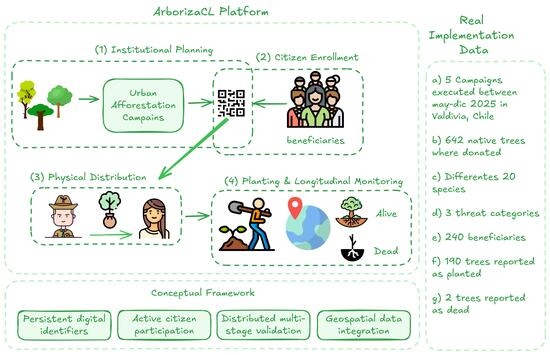
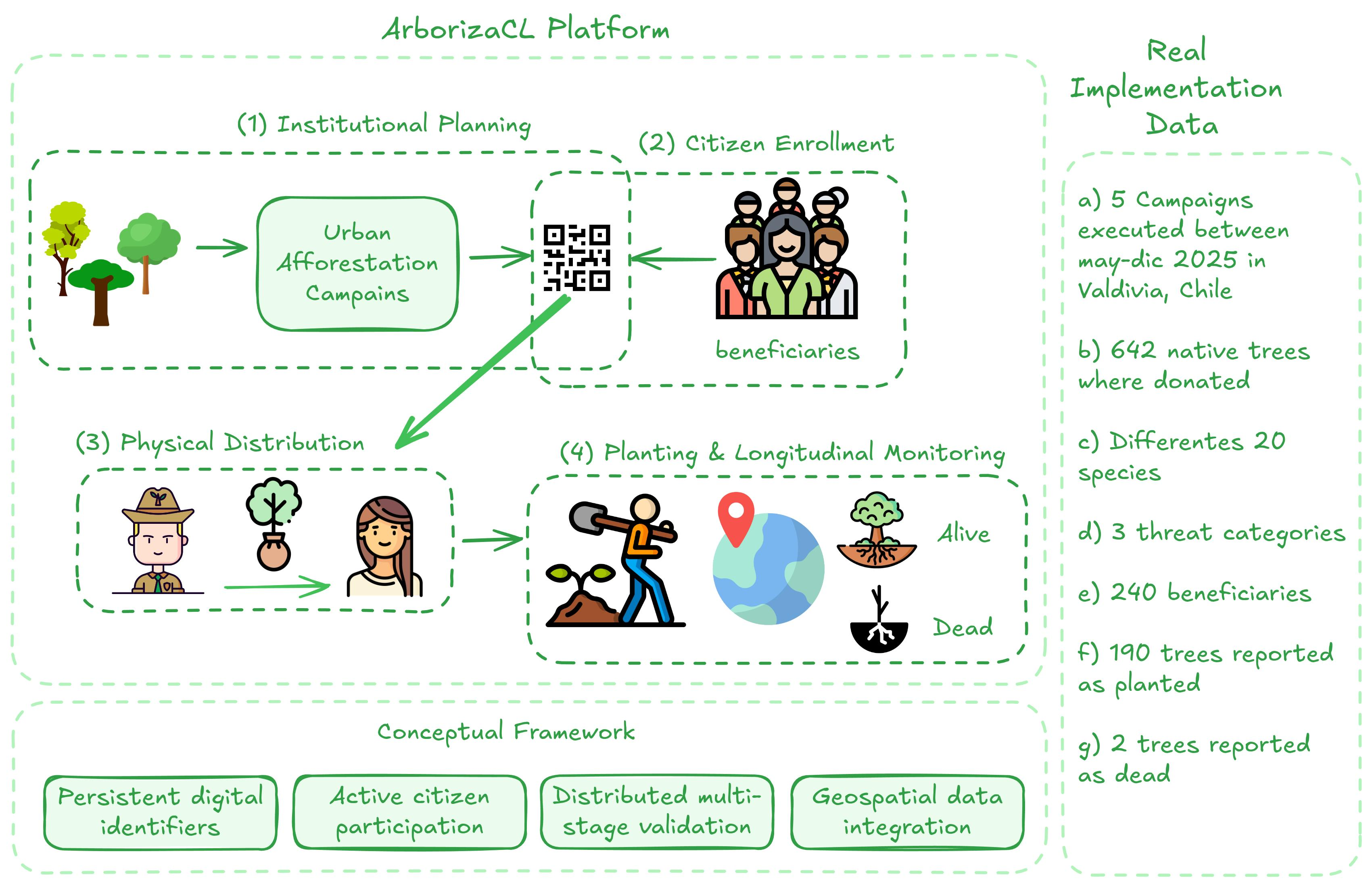
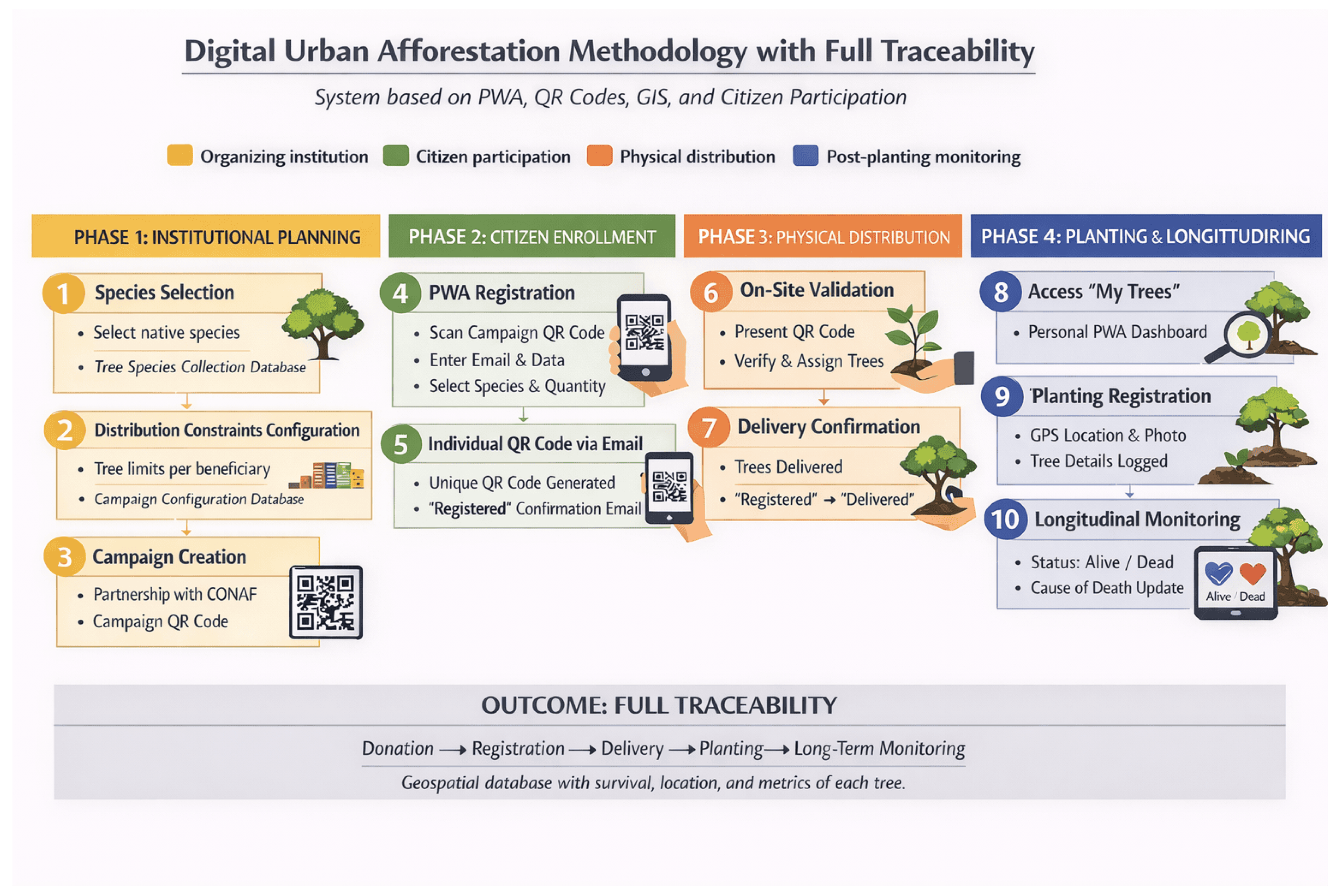
Figure 1 illustrates the four principal phases of the afforestation process: institutional planning, citizen enrollment, specimen distribution, and longitudinal monitoring.

3.2. Study Design

A comparative observational design was adopted to assess how different institutional follow-up strategies influence citizen participation in post-planting monitoring. The primary unit of analysis was the individual tree assigned within each campaign, while campaign-level reporting rates were used for descriptive comparison of institutional follow-up strategies. The study involved five afforestation campaigns implemented between May and September 2025 in Valdivia, Chile. No experimental manipulation was performed; instead, naturally occurring variations in institutional engagement strategies enabled comparative analysis of reporting frequency and temporal persistence across campaigns.
Given that only five campaigns were available (two under active follow-up, two under passive strategies, and one semi-supervised), campaign-level statistical inference was not appropriate. This constraint is common in real-world implementation research, where the number of deployable program units is determined by institutional and logistical conditions rather than experimental design requirements [40]. Accordingly, between-strategy comparisons are presented as descriptive empirical patterns, consistent with an exploratory evaluation approach. The observed differences are interpreted in terms of their practical magnitude and directional consistency rather than statistical significance, following established conventions for small-n comparative case analysis [41].

3.3. Platform Implementation

The framework was operationalized through a progressive web application (ArborizaCL) developed in collaboration with the Sustainability Unit of Universidad Austral de Chile and CONAF. The platform enables campaign creation, QR-based beneficiary identification, georeferenced planting records, photographic documentation, and longitudinal status updates.
This implementation operationalizes the four methodological components defined in the conceptual framework, ensuring that each tree record is uniquely identifiable, georeferenced, and verifiable throughout the monitoring lifecycle.
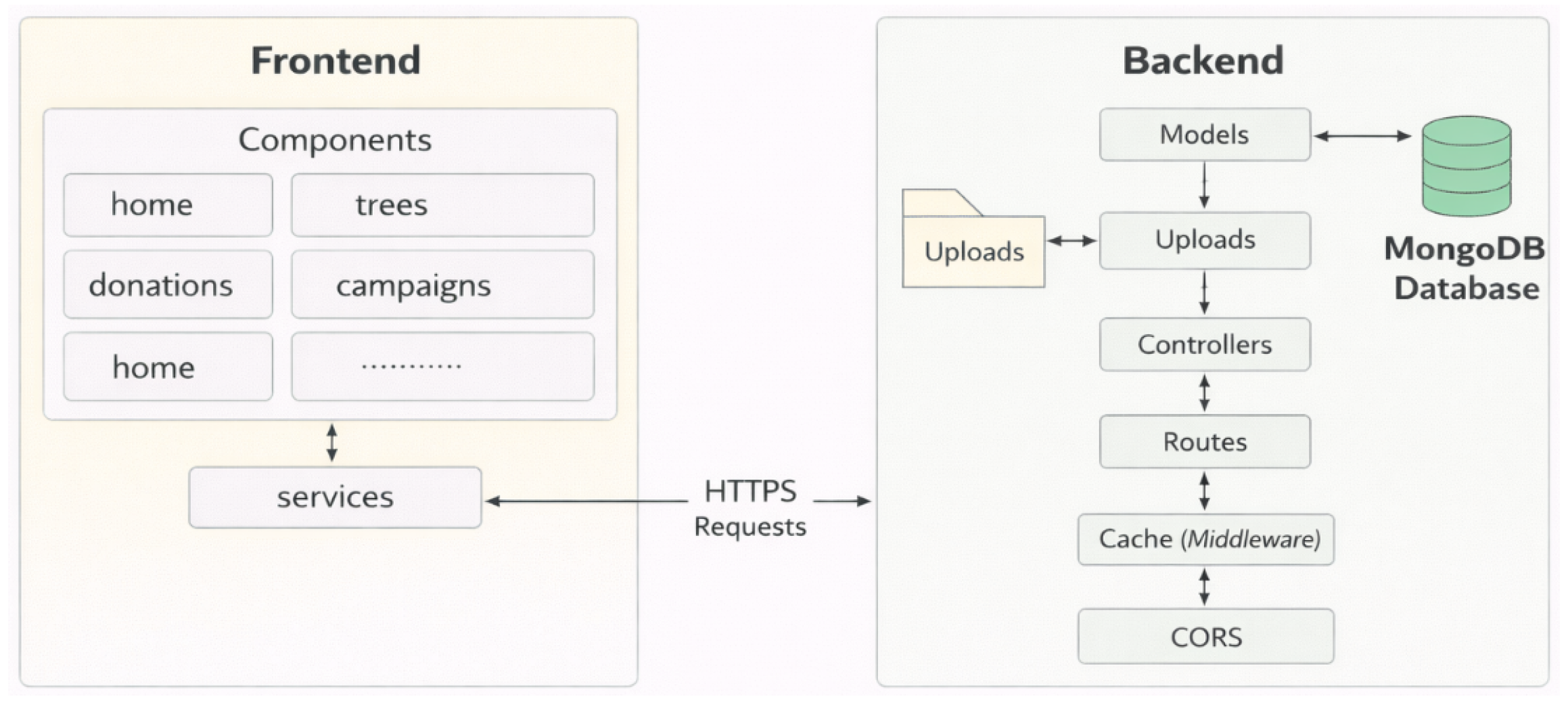
The system architecture follows a standard three-layer structure (presentation, service, and persistence layers) ensuring scalability and separation of concerns. A NoSQL database with geospatial indexing supports spatial queries and survival pattern analysis.
Figure 2 presents the system architecture of the ArborizaCL platform, illustrating the interaction between frontend components, backend services, and the database layer. The frontend manages user interaction through modular components and service calls, while the backend handles data processing, routing, and validation through a layered architecture. This structure supports scalable communication between users and the system, enabling real-time data registration and retrieval during afforestation campaigns.
The operational workflow spans ten stages from campaign creation to mortality reporting, ensuring end-to-end traceability within the monitored lifecycle. During distribution, beneficiaries are linked to trees via QR codes. During planting, users submit species data, initial measurements, photographs, and GPS-based geolocation automatically captured by the reporting device.

3.4. System Verification and Validation

System reliability was evaluated across three dimensions:
Functional verification: Critical workflows (campaign creation, citizen enrollment, QR-based distribution, and planting documentation) were tested using behavior-driven test cases grounded in behavior-driven development (BDD) principles [42], ensuring alignment between specified user requirements and system functionality.
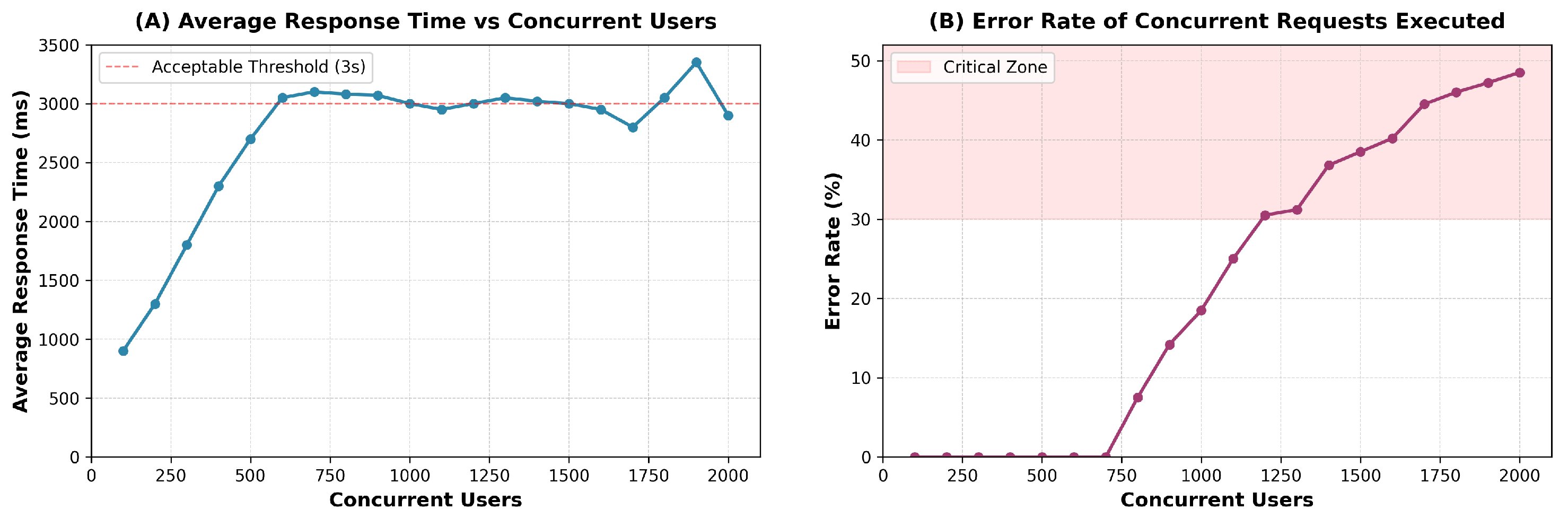
Performance assessment: Load testing was conducted on the most computationally demanding endpoint (geospatial data retrieval endpoint, hereafter referred to as full_map_points), selected as a proxy for system behavior under realistic campaign conditions where multiple participants submit georeferenced reports simultaneously. The testing process was conducted using Apache JMeter, a widely adopted open-source tool in software quality assurance for evaluating system performance under controlled load conditions.
Test scenarios progressively increased the number of concurrent simulated users to assess system stability within the expected operational range of campaign participation. Each test scenario lasted approximately 5 min, providing sufficient time to observe response time behavior under sustained load conditions.
The application was deployed on a cloud-based server environment with a standard web stack configuration (Nginx, application backend, and relational database). The evaluation objective was not to determine the absolute maximum throughput capacity of the system, but rather to verify stable performance under realistic operational conditions.
As shown in Figure 3, the system maintains stable response times within the expected operational range of campaign participation, with no critical degradation under typical usage scenarios. Performance degradation under higher simulated loads was identified as attributable to server infrastructure configuration rather than application-level bottlenecks, and is therefore addressable through deployment scaling without requiring architectural changes.
Usability validation: Perceived usability was evaluated using the System Usability Scale (SUS), a widely adopted standardized instrument for rapid usability assessment [43]. The SUS questionnaire was distributed digitally through the ArborizaCL platform during the final stage of the monitored campaigns.
Two groups of users were invited to participate: institutional users directly involved in campaign management (n = 7) and beneficiary users who actively utilized the reporting interface during the study period (n = 12). Invitations were sent after participants had completed at least one interaction with the system (tree registration or follow-up reporting). All invited participants completed the questionnaire, resulting in a 100% response rate within the study sample.
Mean SUS scores were 90.0 for institutional users and 82.71 for beneficiary users, both exceeding the 68-point reference threshold commonly interpreted as indicating acceptable usability. These results suggest high perceived usability among both administrative and citizen users. Qualitative feedback identified minor navigation improvements and highlighted the importance of accessibility considerations for older participants.
All methodological steps were designed to ensure reproducibility under similar campaign conditions, thereby enabling the proposed approach to be applied in comparable urban afforestation contexts.

3.5. Data Collection and Monitoring Strategies

To evaluate participation dynamics, three institutional follow-up strategies were observed across campaigns, reflecting variations in organizational decisions and logistical conditions:
Passive: No post-distribution follow-up beyond initial instructions.
Active: Systematic reminders through email, messaging applications, and direct contact.
Semi-supervised: Collective planting events with on-site technical support but without sustained follow-up.
This differentiation enabled comparative analysis of reporting behavior across campaigns. Participation rates and longitudinal monitoring outcomes are presented in Section 4.

4. Results

4.1. Study Area

Validation campaigns were conducted in Valdivia, Los Ríos Region, Chile. The area is characterized by a temperate oceanic climate (Cfb, Köppen–Geiger classification) [44]. The campaigns were implemented in urban and peri-urban zones through collaboration between Universidad Austral de Chile (UACh) and CONAF. The territorial context provided a real-world urban and peri-urban setting for evaluating the operational performance of the proposed digital traceability framework.

4.2. System Deployment and Operational Workflow

The ArborizaCL platform was deployed across five afforestation campaigns conducted between May and September 2025. During this period, 642 trees were registered and assigned to 240 participants. No technical incidents affecting system availability were recorded during the campaign period.
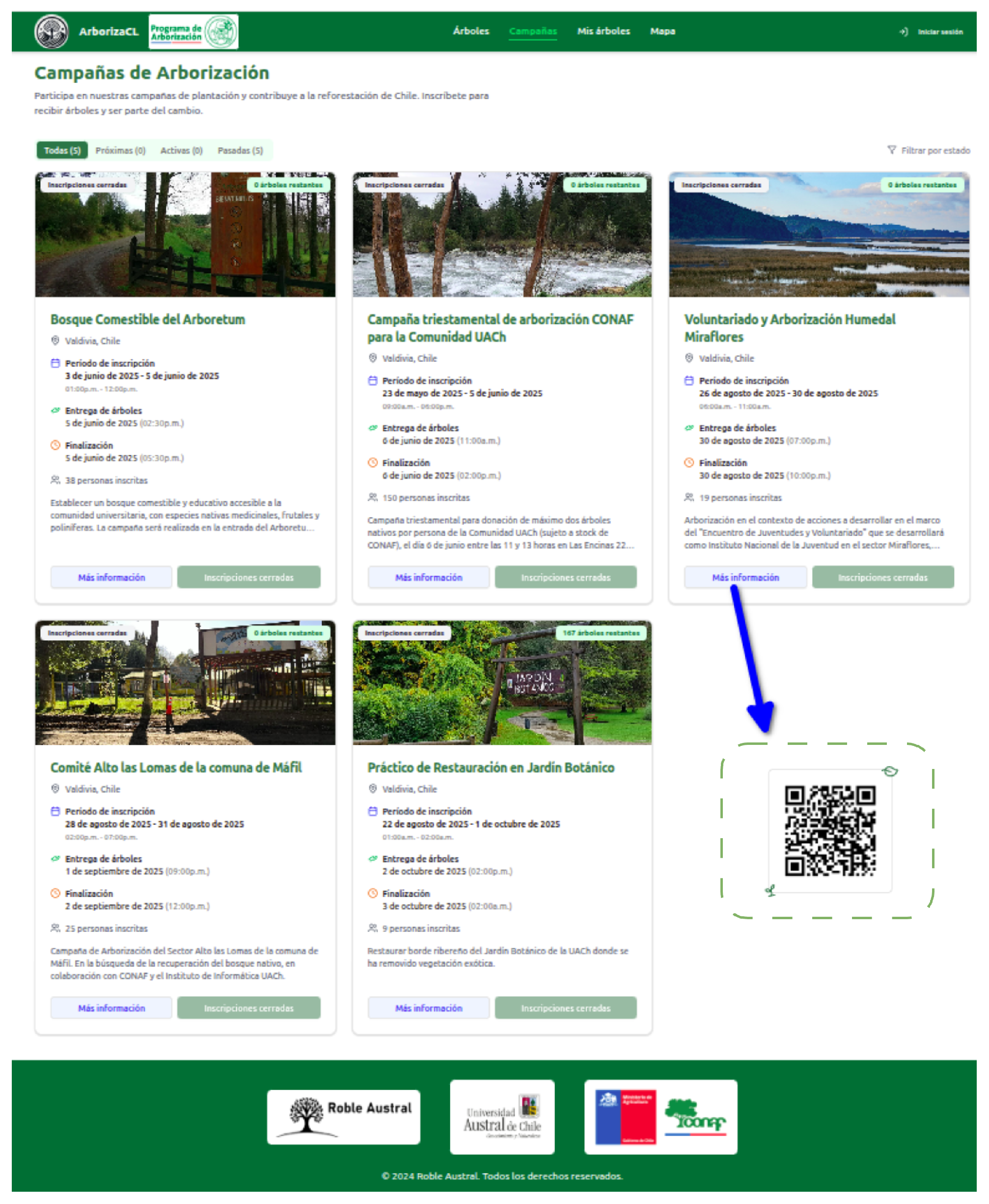
Figure 4 shows the public campaign interface of the ArborizaCL platform. Through this interface, citizens accessed campaigns using QR codes, completed mobile registration forms, and received unique identifiers associated with individual trees. This interaction flow enables the initial linkage between beneficiaries and distributed trees, forming the basis for subsequent traceability and monitoring processes.
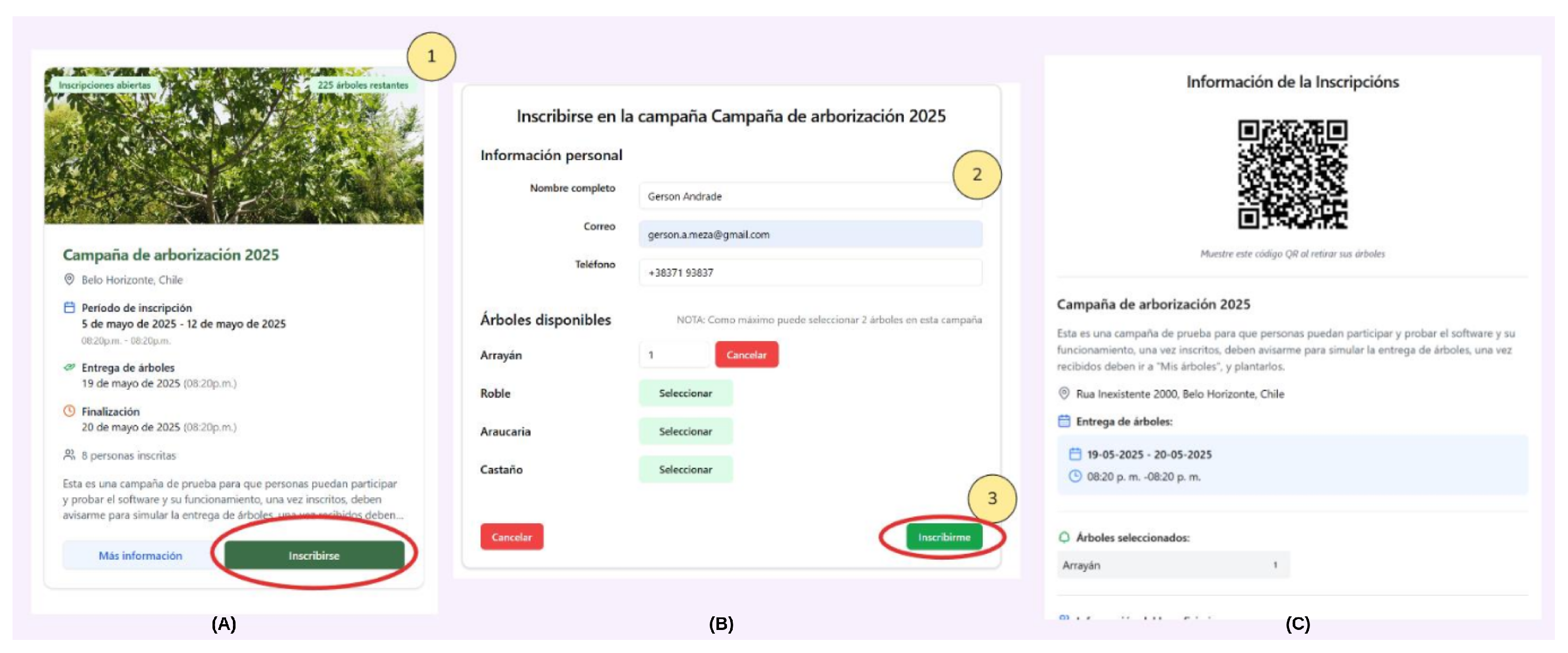
Figure 5 illustrates the citizen enrollment workflow within the ArborizaCL platform. The process begins with campaign access through a QR code, followed by the completion of a mobile registration form where users provide demographic information (e.g., name, email, phone number) and select the tree species to be received.
After submission, the system performs an email-based verification step, through which each participant receives a unique QR code. This identifier establishes a persistent link between the beneficiary, the assigned trees, and the corresponding campaign, enabling subsequent authentication and traceability throughout the monitoring process.
Figure 6 presents the tree collection, planting, and reporting workflow implemented through the ArborizaCL platform, corresponding to the operational stages of the proposed methodology (see Figure 1).
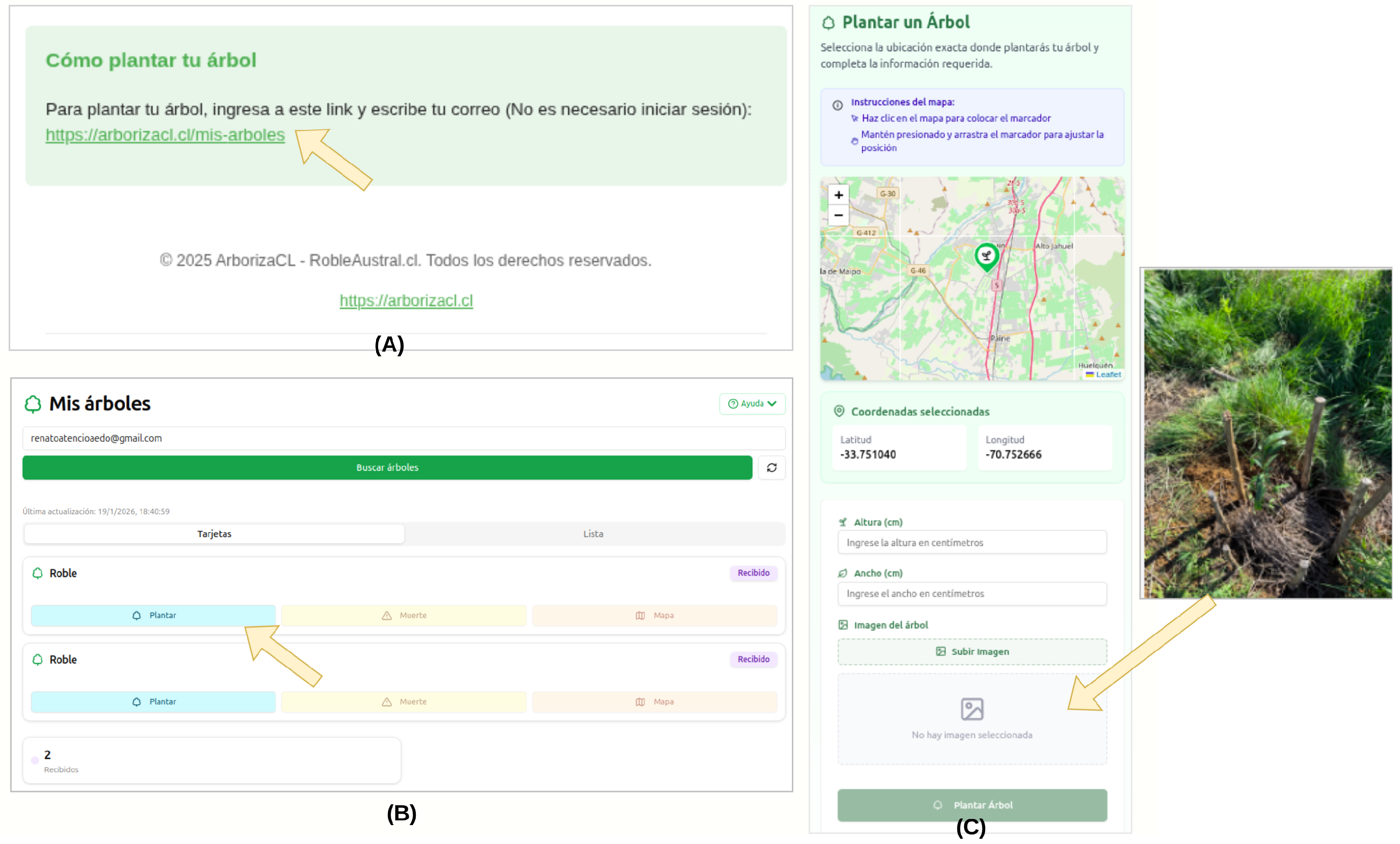
During the distribution event, institutional staff scan the unique QR code assigned to each beneficiary to verify identity and confirm the delivery of the assigned trees. Subsequently, beneficiaries access their personal My Trees dashboard via a link provided in the confirmation email, where they document each planted tree using GPS-based geolocation, photographic records, and initial measurements (e.g., height and diameter).
This workflow establishes a continuous link between tree distribution and field reporting, enabling end-to-end traceability from donation to initial establishment.
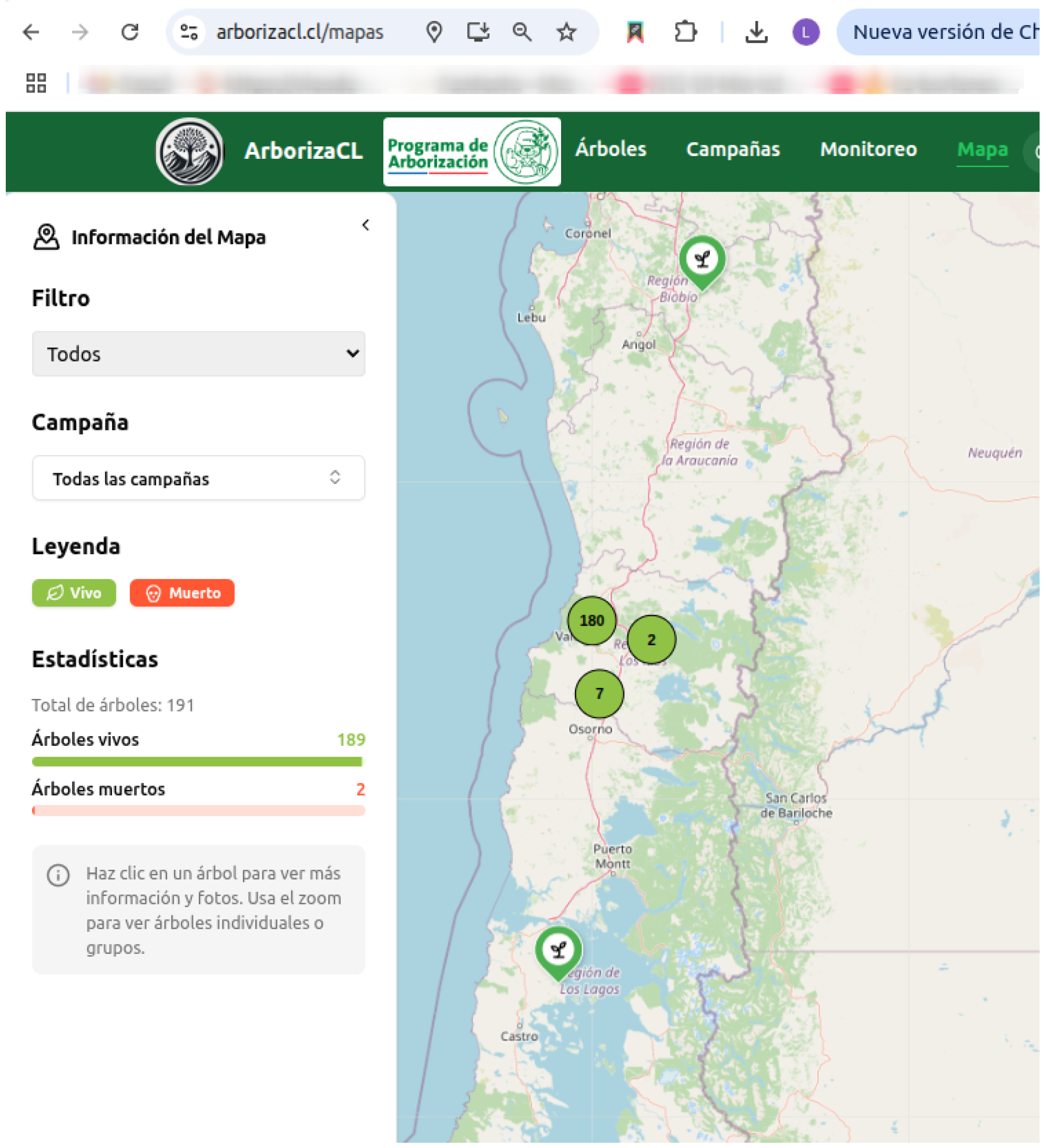
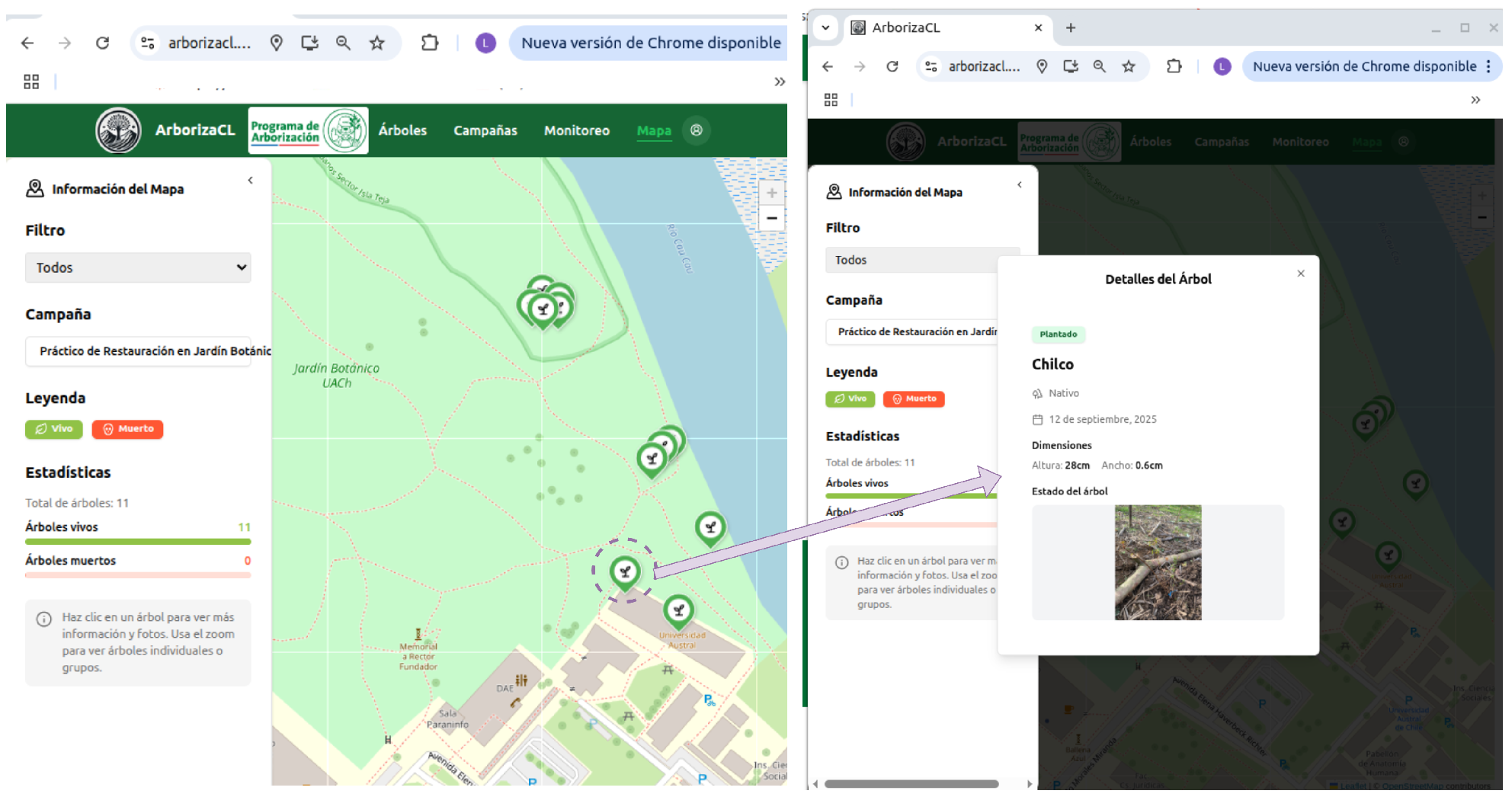
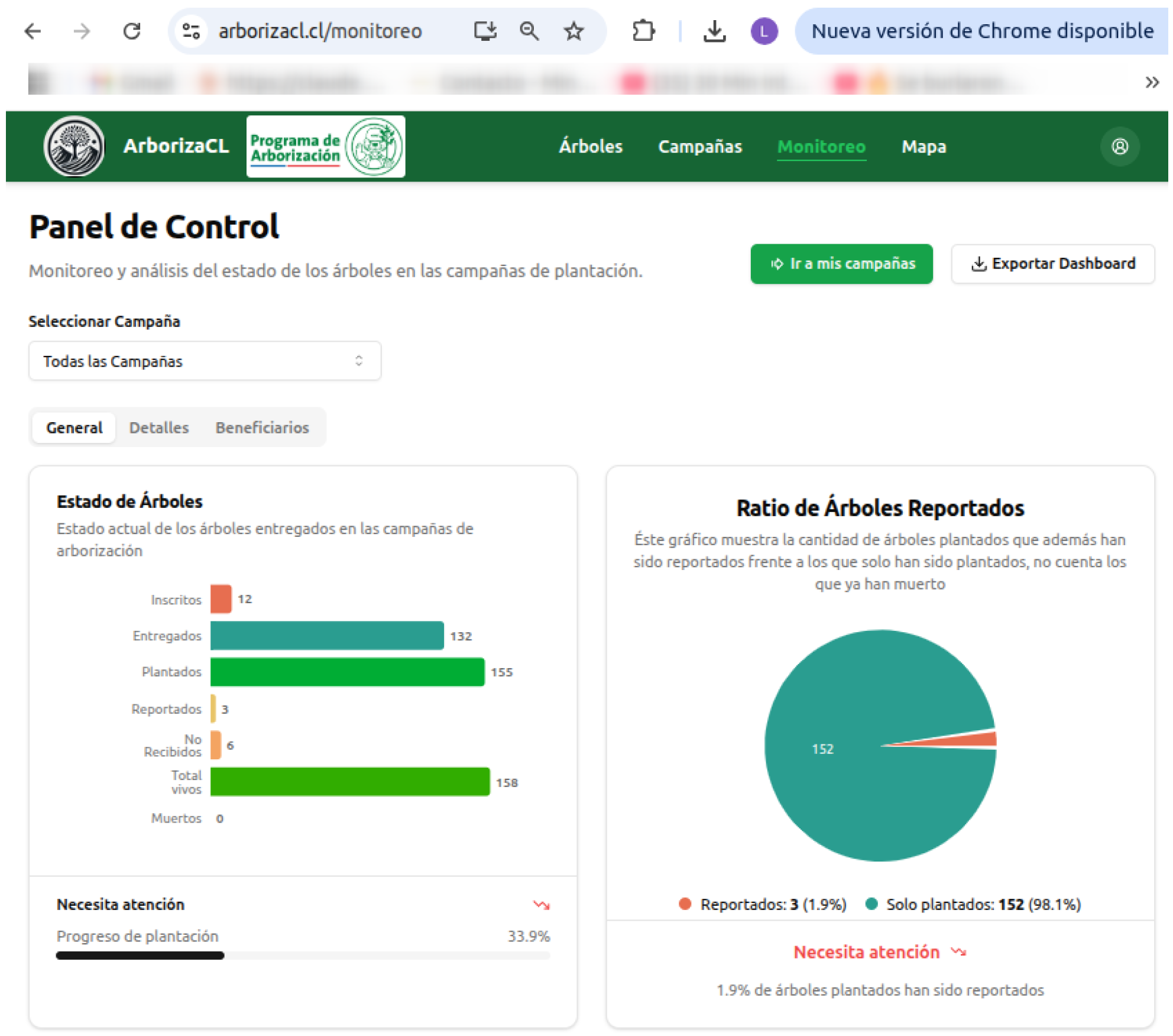
The platform provides two visualization modules: a public georeferenced community map (Figure 7) and an administrative dashboard with aggregated campaign metrics (Figure 8).
Figure 7 presents the community visualization interface, which provides a publicly accessible georeferenced map of planted trees. Through this interface, users can explore the spatial distribution of plantings and access key information such as species, planting records, and current status. Only tree−level information is displayed, without exposing personal data of beneficiaries, ensuring privacy while enabling transparent access to urban afforestation data.

4.3. Species Distribution

Across the five campaigns, 642 native trees representing 20 species were distributed (Table 3). Of these, 521 individuals (81.2%) were identified to the species level. Three species corresponded to IUCN threat categories (Vulnerable, Endangered, and Near Threatened) according to the IUCN Red List of Threatened Species [45], representing 45 individuals (7.0% of total).
Table 4 summarizes key distribution metrics.

4.4. Campaign Participation Metrics

Table 5 summarizes the five campaigns. A total of 642 trees were distributed to 240 participants, resulting in 190 georeferenced planting reports (overall reporting rate: 29.6%).
To evaluate how institutional engagement influences sustained participation within the digital traceability framework, reporting behavior was compared across campaigns implementing different follow-up strategies (Table 6).
The reporting rate was calculated as:
Reporting Rate ( % ) = Trees Reported Trees Distributed × 100
Campaigns employing active follow-up strategies achieved reporting rates of 55.7% and 52.4%, with a mean of 54.0%. In contrast, campaigns implementing passive strategies recorded rates of 14.7% and 11.3%, with a mean of 13.0%.
The magnitude of the difference between active and passive strategies was calculated as:
Δ = 54.0 % 13.0 % = 41.0 percentage points
This corresponds to a relative increase of 315.8% in reporting rates under active institutional support.
Temporal evolution of reporting behavior further illustrates participation dynamics. Only two participants submitted second monitoring reports documenting mortality. Additionally, 86 reports were submitted between September and December 2025, increasing the overall reporting rate from 16.2% to 29.6%. These additional submissions were predominantly associated with campaigns where direct reporting requests were issued, suggesting an association between continued institutional engagement and reporting persistence over time.

4.5. Spatial Distribution and Territorial Classification

Georeferenced planting records reveal a clear spatial concentration of reported trees in the municipalities of Valdivia and Máfil (Figure 9). While the campaigns were implemented locally, two trees were recorded outside the original study region, indicating geographic mobility of beneficiaries and highlighting the relevance of location-independent digital traceability. Beyond descriptive visualization, spatial classification provides a structured basis for analyzing participation patterns within the monitored campaigns.
To enable systematic territorial analysis beyond visual inspection, planting locations were classified along an urban–peri-urban–rural gradient. Distance-based classification approaches are widely employed in urban–rural gradient analysis, where proximity to a reference urban center serves as a proxy for territorial integration and accessibility [46].
Accordingly, territorial classification was performed using Euclidean distance to municipal centers (Algorithm 1). Each planting location was assigned to the nearest municipality and categorized according to standardized distance thresholds: urban (<5 km), peri-urban (5–15 km), and rural (>15 km). These thresholds were defined based on exploratory analysis of the spatial distribution of planting locations and their relation to municipal centers in the study area. This approach was selected for its replicability and independence from road network or land-use datasets, which may not be consistently available or readily accessible across Chilean municipalities.
Algorithm 1 Urban–Peri-urban–Rural Territorial Classification Algorithm
Require: 
Tree geolocation coordinates, Chilean municipal boundary database
Ensure: 
Municipality assignment, territorial zone classification, distance to municipal center
1:
Query all municipalities in the Chilean database
2:
Identify the nearest municipality to each tree location
3:
Calculate the Euclidean distance to the corresponding municipal center
4:
Apply standardized distance thresholds:
5:
   If distance < 5 km → Urban
6:
   If distance 5–15 km → Peri-urban
7:
   If distance > 15 km → Rural
The selected thresholds approximate typical spatial structures of medium-sized Chilean cities such as Valdivia, where urban activity is concentrated within a relatively compact municipal core and peri-urban residential expansion commonly occurs within a limited radius surrounding the city center. In this context, distances below 5 km generally correspond to consolidated urban areas, while distances between 5 and 15 km capture transitional peri-urban zones characterized by mixed residential, semi-rural, and emerging development patterns. Distances beyond 15 km typically correspond to rural or low-density areas with limited urban influence.
This interpretation is consistent with urban expansion models in which cities grow outward from existing urban cores, generating peri-urban transition zones characterized by mixed land uses and lower densities [47].
While this classification does not capture functional accessibility patterns or transportation network effects, it provides a consistent and transparent operational criterion for distinguishing territorial contexts within the monitored campaigns. Similar distance-based approximations have been employed in large-scale global urban classification frameworks to ensure comparability across regions with heterogeneous data availability [46].
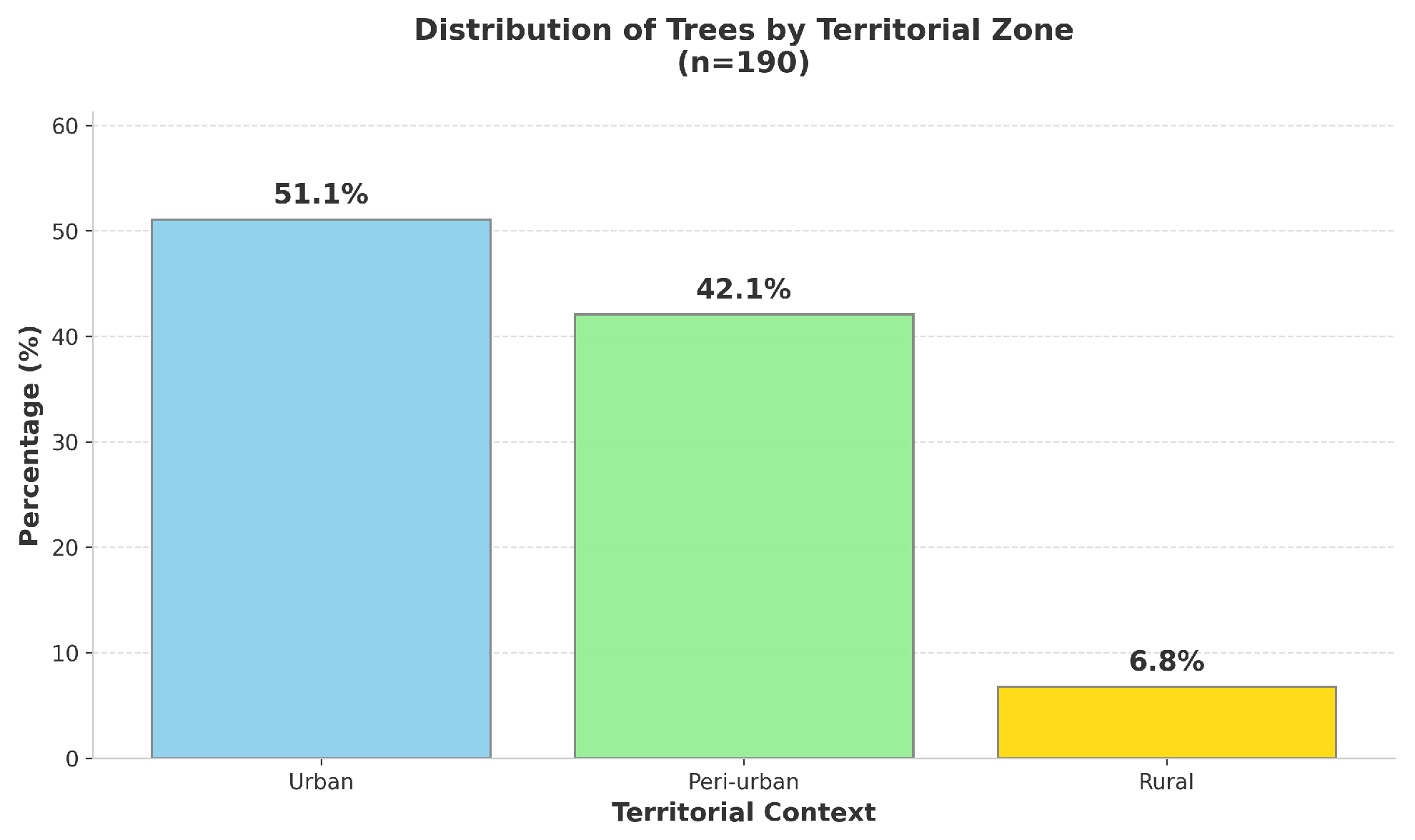
Figure 10 presents the aggregated territorial distribution of reported plantings: 51.1% urban ( n = 97 ), 42.1% peri-urban ( n = 80 ), and 6.8% rural ( n = 13 ).
Disaggregating results by campaign reveals differentiated spatial patterns. Three campaigns exhibited predominantly urban characteristics, whereas the Alto Las Lomas campaign showed a strong peri-urban concentration (89.7%). The UACh Triestamental campaign displayed a mixed territorial distribution across multiple municipalities.

5. Discussion

5.1. Digital Traceability and Citizen Engagement

The results indicate that digital infrastructure alone does not ensure sustained citizen participation in urban afforestation programs. Although all campaigns operated under identical technological conditions, participation levels varied substantially according to institutional follow-up strategies. Campaigns implementing active engagement achieved reporting rates exceeding 50%, whereas passive approaches remained near 13%.
Given the observational design of this study, these differences should be interpreted as consistent empirical patterns rather than strict causal effects. Nevertheless, the magnitude of the observed differential (41 percentage points) highlights the practical relevance of institutional mediation in translating technological capacity into citizen action. These findings align with smart governance frameworks that emphasize socio-technical integration, wherein digital platforms must be embedded within structured organizational processes to generate measurable outcomes [16,17].
From a socio-technical perspective, the observed variation suggests that digital participation in distributed monitoring systems is mediated by institutional signaling and reinforcement mechanisms. This interpretation is consistent with prior research indicating that voluntary participation in digital civic platforms depends not only on interface usability, but also on structured feedback mechanisms, institutional support, and perceived responsiveness of managing organizations [34,35,36]. It is further supported by recent smart governance research emphasizing that digital platforms must be embedded within structured governance frameworks and data coordination strategies to generate sustained engagement [18].
These findings are reflected in the present study, where campaigns with active institutional follow-up achieved substantially higher participation rates than those relying solely on platform availability.
Urban afforestation thus emerges not merely as an environmental intervention but as a coordinated socio-technical process. Digital traceability systems can enhance transparency, accountability, and monitoring capacity; however, sustained engagement depends on communication strategies, feedback mechanisms, and institutional coordination. The observed gap between active and passive strategies reinforces that smart city initiatives must combine technological tools with governance design. Future implementations may further leverage behavioral design principles [48] and gamification mechanisms [49] to sustain citizen participation through automated prompts and social feedback, reducing dependency on manual institutional follow-up while preserving the engagement effects observed under active strategies.

5.2. Spatial and Conservation Implications

The predominance of urban (51.1%) and peri-urban (42.1%) plantings demonstrates that reported plantings were predominantly concentrated in areas where population density is highest. Concentration in these zones maximizes direct ecosystem service delivery, including microclimate regulation, air quality improvement, stormwater interception, and enhanced access to green spaces [7].
The inclusion of threatened native species (7.0% of distributed individuals) indicates that traceable urban afforestation may contribute to distributed conservation strategies by dispersing vulnerable species across multiple planting locations. Although long-term survival was not assessed within the study timeframe, the digital monitoring infrastructure established herein enables future evaluation of ex situ conservation contributions and species-specific performance in urban contexts.

5.3. Governance and Policy Implications

The findings yield several implications for urban green infrastructure governance.
First, digital traceability can serve as a mechanism for improving transparency and accountability in publicly funded afforestation programs. Transitioning from distribution-based metrics (“trees delivered”) toward outcome-based indicators (documented plantings and monitored status) would strengthen evidence-based evaluation frameworks. This perspective aligns with established information governance principles emphasizing accountability, data stewardship, and structured decision rights in digital environments [50], where data generation, validation, and access control must be formally embedded within organizational processes.
Second, the substantial differential between active and passive follow-up strategies indicates that effective smart city policies must allocate resources not only to technological infrastructure but also to institutional engagement mechanisms. Smart governance requires investment in socio-technical systems rather than digital platforms alone.
Third, the multi-layer data access model implemented in this study illustrates how transparency and privacy can be balanced in participatory environmental monitoring. Public visualization of anonymized geospatial data, combined with restricted institutional access for administrative purposes, offers a replicable governance structure applicable to other domains of citizen-centered urban sustainability initiatives.
This design also reflects a privacy-by-design approach, in which public interfaces expose only tree-level information while restricting access to beneficiary data. This separation enables transparency in environmental reporting while ensuring compliance with data protection requirements.
Collectively, these implications suggest that digital traceability systems can serve not only as technical monitoring tools but also as governance instruments capable of reshaping evaluation logics in urban sustainability programs.

5.4. Limitations

Several limitations should be acknowledged.
First, reporting data correspond primarily to initial planting documentation, and longitudinal survival rates were not assessed within the study period. This is consistent with the scope of the framework, which addresses a prerequisite stage, namely establishing the traceability infrastructure without which survival monitoring is operationally unfeasible in donation-based programs. Survival assessment requires a minimum monitoring window of 12 months or more to yield ecologically meaningful data [6] and is identified as a first-order objective of the ongoing longitudinal phase.
Second, the observational design and the small number of campaign-level units (five campaigns, two per main strategy category) preclude causal inference. Accordingly, between-strategy comparisons should be interpreted as consistent empirical patterns rather than statistically generalizable findings [41].
Third, territorial classification was based on Euclidean distance to municipal centers, which does not account for transportation networks, topographical barriers, or functional land-use patterns. Future implementations could incorporate road-network distance or official land-use classifications where these data are available.
Fourth, the empirical implementation was conducted within a specific regional context. Further application across diverse institutional and territorial settings is required to evaluate broader generalizability. Future implementations in other national or institutional contexts would require adaptation to local regulatory frameworks, data protection regimes, and administrative capacities, while preserving the core traceability architecture and distributed validation logic.
An additional limitation relates to the potential effects of the digital divide on citizen participation. The proposed system relies on access to mobile devices and internet connectivity, which may not be uniformly available across all population groups. Consequently, participation in reporting activities may be biased toward users with higher levels of digital access and literacy, potentially limiting the representativeness of the collected data. This issue is particularly relevant in peri-urban and rural contexts, where connectivity constraints and lower levels of digital inclusion may reduce participation rates.
An additional limitation relates to the use of citizen-reported data, which introduces potential sources of bias and variability in data quality [51], including incomplete reports, inaccurate geolocation, and heterogeneous reporting frequency across participants. While the system incorporates basic quality control mechanisms, such as structured reporting forms, automatic georeferencing, and multi-stage validation processes, these mechanisms do not fully eliminate the risk of reporting bias or data inconsistency. These limitations should be considered when interpreting the results, particularly in relation to participation metrics and spatial analysis.

5.5. Future Work: Automating Institutional Support

Building upon the identified limitations related to participation bias and data quality, future research by the authors will focus on the development of scalable mechanisms that preserve citizen engagement while improving inclusiveness and data reliability.
Campaigns employing active follow-up strategies suggest that sustained citizen engagement is achievable under systematic institutional coordination. The principal challenge for large-scale implementation lies in replicating these engagement effects without continuous manual intervention.
This research will also explore the development and evaluation of automated engagement mechanisms integrated within the digital traceability framework. These mechanisms aim to approximate the engagement dynamics observed under active institutional support while reducing dependency on continuous human resource allocation.
Planned developments include tiered automated notifications triggered at predefined post-planting intervals (e.g., 7, 30, and 90 days), personalized digital planting certificates designed to enhance social recognition, and community-level visualization tools that provide collective feedback on participation levels. These strategies are informed by behavioral design and decision architecture principles [48], which suggest that structured digital prompts can influence voluntary participation behaviors. Gamification elements [49] may further reinforce engagement through progressive feedback and visibility of individual contributions within shared dashboards.
A second research line to be pursued by the authors involves the integration of artificial intelligence techniques to enhance data quality and scalability. Computer vision models will be evaluated for automated validation of uploaded images, enabling identification of irrelevant, duplicate, or low-quality submissions. Partial automation of this process would reduce institutional workload while preserving data integrity for longitudinal analysis.
Future implementations by the authors will assess the effectiveness of automated engagement mechanisms across extended monitoring periods (≥12 months) and diverse urban contexts, thereby advancing the evolution of digital traceability systems from manually mediated socio-technical arrangements toward semi-automated governance infrastructures capable of supporting large-scale urban afforestation programs.

6. Conclusions

This study proposes and empirically evaluates a digital traceability framework for donation-based urban afforestation programs that integrates persistent identifiers, citizen participation, distributed validation, and geospatial monitoring within a unified methodological structure. The framework is technology-agnostic and adaptable to diverse institutional contexts.
Implementation across five urban campaigns (642 trees, 240 participants, 190 confirmed reports) indicates that institutional engagement strategies significantly influence citizen reporting behavior. While digital infrastructure enables traceability and data capture, sustained participation is strongly associated with structured follow-up mechanisms. These findings reinforce the importance of socio-technical integration in smart governance initiatives, particularly within participatory environmental management systems.
Collectively, the results contribute a replicable socio-technical model for integrating digital traceability with citizen-centered governance in urban afforestation, advancing outcome-oriented sustainability management. From an information systems perspective, the study advances the design of participatory digital traceability systems that integrate persistent identifiers, distributed validation mechanisms, and multi-level data access structures within real-world governance contexts. The framework demonstrates how distributed data validation processes can be embedded into operational workflows to enhance accountability, transparency, and longitudinal monitoring capacity.
Beyond the environmental domain, the proposed approach illustrates a transferable model for digital governance systems applicable to other distributed public-sector programs requiring traceability, citizen participation, and structured data validation. This broader applicability positions the framework not only as an environmental monitoring solution, but as a replicable information governance design for distributed civic infrastructures.
  • Ethical Considerations and Data Governance
All participants provided informed consent prior to data submission. Data collection procedures complied with Chilean data protection legislation (Law 19.628 on the Protection of Private Life) and institutional ethical standards.
The platform operates under a three-tier data governance model designed to balance transparency and privacy protection: (1) public access to anonymized georeferenced tree records and aggregate campaign statistics without personally identifiable information; (2) restricted institutional access to detailed campaign-level data under confidentiality agreements; and (3) anonymized research datasets available upon reasonable request to the corresponding author, subject to applicable privacy and data protection constraints.

Author Contributions

Conceptualization, L.V.-C.; methodology, L.V.-C. and G.A.; software, G.A. and C.L.; validation, L.V.-C., G.A. and C.L.; formal analysis, L.V.-C.; investigation, L.V.-C. and G.A.; resources, M.A. and M.H.; data curation, G.A. and T.L.; writing—original draft preparation, L.V.-C.; writing—review and editing, L.V.-C., G.A., C.L., T.L., I.D., M.A. and M.H.; visualization, G.A.; supervision, L.V.-C.; project administration, L.V.-C.; funding acquisition, L.V.-C. All authors have read and agreed to the published version of the manuscript.

Funding

This research was supported by the Faculty of Engineering Sciences, Universidad Austral de Chile, through the “Desafío Innoving 2025” internal competitive funding scheme, and by the Vice-Rectorate for Research, Development and Artistic Creation, Universidad Austral de Chile.

Institutional Review Board Statement

The study was observational, non-interventional, and classified as minimal risk. Email addresses were collected solely to verify participant identity during the tree distribution campaigns and were stored separately from survey responses. All data used for analysis were anonymized, and participants may request deletion of their records in accordance with applicable data protection regulations. Data processing complied with Chilean Law No. 19.628 on the Protection of Private Life, which regulates the treatment of personal data. According to Chilean Law No. 20.120, ethical review by a Scientific Ethics Committee is required only for biomedical or interventional research involving human subjects; therefore, formal ethical approval was not required for this study. All procedures were conducted in accordance with internationally recognized ethical standards, including the principles of the Declaration of Helsinki.

Informed Consent Statement

Informed consent was obtained from all subjects involved in the study. Participants provided their consent digitally prior to participation, at the time of registration for the afforestation campaigns. During the registration process, participants were informed about the purpose of the research, the voluntary nature of their participation, the use of their data for academic research purposes, and their right to withdraw at any time without consequences.

Data Availability Statement

Anonymized datasets generated during the current study are available from the corresponding author upon reasonable request, subject to privacy and data protection restrictions. The methodological framework described in this study is fully documented within the manuscript. Access to platform source code may be provided for academic purposes upon justified request and institutional agreement.

Acknowledgments

The authors acknowledge the Sustainability Unit of Universidad Austral de Chile and CONAF Los Ríos Region for their collaboration in the implementation of the afforestation campaigns. The authors also thank the National Youth Institute (INJUV) Valdivia for collaboration during the Miraflores Wetland event and recognize Tomás Contreras and Renato Atencio for technical field support.

Conflicts of Interest

The authors declare no conflicts of interest.

References

  1. IPCC. Climate Change 2021: The Physical Science Basis. Contribution of Working Group I to the Sixth Assessment Report of the Intergovernmental Panel on Climate Change; Cambridge University Press: Cambridge, UK, 2021. [Google Scholar] [CrossRef]
  2. Singh, V. Global Warming and Climate Change. In Textbook of Environment and Ecology; Springer: Singapore, 2024. [Google Scholar] [CrossRef]
  3. Kole, A.; Ellison, J.C. Local government climate change mitigation and adaptation ranking assessment. Int. J. Glob. Warm. 2018, 16, 461–484. [Google Scholar] [CrossRef]
  4. Gillner, S.; Vogt, J.; Tharang, A.; Dettmann, S.; Roloff, A. Role of street trees in mitigating effects of heat and drought at highly sealed urban sites. Landsc. Urban Plan. 2015, 143, 33–42. [Google Scholar] [CrossRef]
  5. De Montis, A.; Ledda, A.; Serra, V.; Manunta, A.; Calia, G. Urban Green Spaces and Climate Changes: Assessing Ecosystem Services for the Municipality of Sassari (Italy). Land 2025, 14, 1308. [Google Scholar] [CrossRef]
  6. Nowak, D.J.; Crane, D.E.; Stevens, J.C. Air pollution removal by urban trees and shrubs in the United States. Urban For. Urban Green. 2008, 4, 115–123. [Google Scholar] [CrossRef]
  7. Livesley, S.J.; McPherson, E.G.; Calfapietra, C. The Urban Forest and Ecosystem Services: Impacts on Urban Water, Heat, and Pollution Cycles at the Tree, Street, and City Scale. J. Environ. Qual. 2016, 45, 119–124. [Google Scholar] [CrossRef] [PubMed]
  8. Liang, D.; Huang, G. Influence of Urban Tree Traits on Their Ecosystem Services: A Literature Review. Land 2023, 12, 1699. [Google Scholar] [CrossRef]
  9. Hintural, W.P.; Jeon, H.J.; Kim, S.Y.; Go, S.; Park, B.B. Quantifying Regulating Ecosystem Services of Urban Trees: A Case Study of a Green Space at Chungnam National University Using i-Tree Eco. Forests 2024, 15, 1446. [Google Scholar] [CrossRef]
  10. Senado de la República de Chile. Informe de Evaluación del Programa de Arborización de CONAF 2024; Senado de la República de Chile: Valparaíso, Chile, 2024. [Google Scholar]
  11. Nowak, D.J.; American Forests. Climate Change and Urban Forests: How Many Urban Trees Do We Need? American Forests: Washington, DC, USA, 2021; Available online: https://www.americanforests.org/tools-research-reports-and-guides/research-reports/climate-change-urban-forests/ (accessed on 27 March 2026).
  12. European Commission. New EU Forest Strategy for 2030; Communication COM(2021) 572 final; European Commission: Brussels, Belgium, 2021. Available online: https://eur-lex.europa.eu/legal-content/EN/TXT/?uri=celex:52021DC0572 (accessed on 27 March 2026).
  13. Yao, N.; Konijnendijk van den Bosch, C.C.; Yang, J.; Devisscher, T.; Wirtz, Z.; Jia, L.; Duan, J.; Ma, L. Beijing’s 50 million new urban trees: Strategic governance for large-scale urban afforestation. Urban For. Urban Green. 2019, 44, 126392. [Google Scholar] [CrossRef]
  14. Corporación Nacional Forestal (CONAF). Programa Siembra por Chile: Estadísticas de Distribución 2024; Technical report; CONAF: Santiago, Chile, 2024. [Google Scholar]
  15. Instituto Forestal (INFOR). Directorio de la Industria Forestal Primaria de Chile 2023; INFOR, Área de Información y Economía Forestal: Santiago, Chile, 2023; Available online: https://wef.infor.cl/index.php/publicaciones/boletines-estadisticos/directorio-industria-forestal (accessed on 27 March 2026).
  16. Bibri, S.E.; Krogstie, J. Smart sustainable cities of the future: An extensive interdisciplinary literature review. Sustain. Cities Soc. 2017, 31, 183–212. [Google Scholar] [CrossRef]
  17. Kitchin, R. The real-time city? Big data and smart urbanism. GeoJournal 2014, 79, 1–14. [Google Scholar] [CrossRef]
  18. Almulhim, A.I.; Yigitcanlar, T. Understanding Smart Governance of Sustainable Cities: A Review and Multidimensional Framework. Smart Cities 2025, 8, 113. [Google Scholar] [CrossRef]
  19. Tomor, Z.; Przeybilovicz, E.; Leleux, C. Smart governance in institutional context: An in-depth analysis of Glasgow, Utrecht, and Curitiba. Cities 2021, 114, 103195. [Google Scholar] [CrossRef]
  20. Hollands, R.G. Will the real smart city please stand up? Intelligent, progressive or entrepreneurial? City 2008, 12, 303–320. [Google Scholar] [CrossRef]
  21. Gabrys, J. Programming environments: Environmentality and citizen sensing in the smart city. Environ. Plan. D Soc. Space 2014, 32, 30–48. [Google Scholar] [CrossRef]
  22. van Doorn, N.S.; Roman, L.A.; McPherson, E.G.; Scharenbroch, B.C.; Henning, J.G.; Östberg, J.P.A.; Mueller, L.S.; Koeser, A.K.; Mills, J.R.; Hallet, R.A.; et al. Urban tree monitoring: Applications and considerations for urban tree health. Arboric. Urban For. 2020, 46, 235–254. [Google Scholar]
  23. CONAF. Catastro de los Recursos Vegetacionales Nativos de Chile; CONAF: Santiago, Chile, 2021; Available online: https://sit.conaf.cl/varios/Catastros_Recursos_Vegetacionales_Nativos_de_Chile_Nov2021.pdf (accessed on 27 March 2026).
  24. Bosona, T.; Gebresenbet, G. Food traceability as an integral part of logistics management in food and agricultural supply chain. Food Control 2013, 33, 32–48. [Google Scholar] [CrossRef]
  25. Callaghan, C.T.; Poore, A.G.B.; Mesaglio, T.; Moles, A.T.; Nakagawa, S.; Roberts, C.; Rowley, J.J.L.; Vergés, A.; Wilshire, J.H.; Cornwell, W.K. Three frontiers for the future of biodiversity research using citizen science data. BioScience 2021, 71, 55–63. [Google Scholar] [CrossRef]
  26. Sullivan, B.L.; Aycrigg, J.L.; Barry, J.H.; Bonney, R.E.; Bruns, N.; Cooper, C.B.; Damoulas, T.; Dhondt, A.A.; Dietterich, T.; Farnsworth, A.; et al. The eBird enterprise: An integrated approach to development and application of citizen science. Biol. Conserv. 2014, 169, 31–40. [Google Scholar] [CrossRef]
  27. Sharma, G.; Morgenroth, J.; Richards, D.R.; Ye, N. Advancing urban forest and ecosystem service assessment through the integration of remote sensing and i-Tree Eco: A systematic review. Urban For. Urban Green. 2025, 95, 128659. [Google Scholar] [CrossRef]
  28. CONAF. Oficina Virtual de CONAF; CONAF: Santiago, Chile, 2025; Available online: https://oficinavirtual.conaf.cl/login/index.php (accessed on 27 March 2026).
  29. SEIA. Sistema de Evaluación de Impacto Ambiental. Available online: https://www.conaf.cl/tramites/sistema-de-evaluacion-de-impacto-ambiental/ (accessed on 27 March 2026).
  30. Arbor Day Foundation. Arbor Day Foundation Plants, Distributes a Record 1.7 Million Urban Trees in 2023; Press Release, March 2024; Arbor Day Foundation: Lincoln, NE, USA, 2024; Available online: https://www.arborday.org/news/arbor-day-foundation-plants-distributes-record-17-million-urban-trees-2023 (accessed on 27 March 2026).
  31. Forestry Commission. Key Performance Indicators Report 2024–2025; Forestry Commission: Bristol, UK, 2024. Available online: https://assets.publishing.service.gov.uk/media/685c093b89ba18761d97612a/FC-Key-Performance-Indicators-Report-2024-25.pdf (accessed on 27 March 2026).
  32. Bastardo, R.; Pavão, J.; Rocha, N.P. Crowdsourcing Technologies to Promote Citizens’ Participation in Smart Cities: A Scoping Review. Procedia Comput. Sci. 2023, 219, 303–311. [Google Scholar] [CrossRef]
  33. Koedel, U.; Dietrich, P.; Herrmann, T.; Liang, C.; Ritter, O.; Roettenbacher, J.; Schuetze, F.M.; Schuetze, S.V.; Thoboell, J.C.; Schuetze, C. Enhancing citizen science impact in environmental monitoring: Targeted engagement strategies with stakeholder groups. Front. Environ. Sci. 2024, 12, 1375675. [Google Scholar] [CrossRef]
  34. Meijer, A.; Grimmelikhuijsen, S. Digital platforms and citizen participation: A systematic review of the literature. Gov. Inf. Q. 2020, 37, 101–117. [Google Scholar] [CrossRef]
  35. Ferguson, S.; Jäger, N.; Pärn, E. Digital engagement and citizen participation in smart cities: A systematic review. Sustain. Cities Soc. 2021, 68, 102766. [Google Scholar] [CrossRef]
  36. Meijer, A.; Hitters, E.; Hoppe, T. Smart Governance Toolbox: A Systematic Literature Review. Smart Cities 2023, 6, 878–896. [Google Scholar] [CrossRef]
  37. Olsen, P.; Borit, M. How to define traceability. Trends Food Sci. Technol. 2012, 29, 142–150. [Google Scholar] [CrossRef]
  38. Goodchild, M.F. Citizens as sensors: The world of volunteered geography. GeoJournal 2007, 69, 211–221. [Google Scholar] [CrossRef]
  39. See, L.; Mooney, P.; Foody, G.; Bastin, L.; Comber, A.; Estima, J.; Fritz, S.; Kerle, N.; Jiang, B.; Laakso, M.; et al. Crowdsourcing, citizen science or volunteered geographic information? The current state of crowdsourced geographic information. ISPRS Int. J. Geo-Inf. 2016, 5, 55. [Google Scholar] [CrossRef]
  40. Robson, C. Real World Research: A Resource for Users of Social Research Methods in Applied Settings, 3rd ed.; Wiley-Blackwell: Chichester, UK, 2011. [Google Scholar]
  41. Gerring, J. Case Study Research: Principles and Practices; Cambridge University Press: Cambridge, UK, 2007. [Google Scholar]
  42. North, D. Introducing Behavior-Driven Development. Available online: https://dannorth.net/introducing-bdd/ (accessed on 27 March 2026).
  43. Brooke, J. SUS: A “Quick and Dirty” Usability Scale. In Usability Evaluation in Industry; Jordan, P.W., Thomas, B., Weerdmeester, B.A., McClelland, I.L., Eds.; Taylor & Francis: London, UK, 1996; pp. 189–194. [Google Scholar]
  44. Peel, M.C.; Finlayson, B.L.; McMahon, T.A. Updated world map of the Köppen-Geiger climate classification. Hydrol. Earth Syst. Sci. 2007, 11, 1633–1644. [Google Scholar] [CrossRef]
  45. IUCN. The IUCN Red List of Threatened Species. Available online: https://www.iucnredlist.org/ (accessed on 27 March 2026).
  46. Cattaneo, A.; Nelson, A.; McMenomy, T. Global mapping of urban–rural catchment areas reveals unequal access to services. Proc. Natl. Acad. Sci. USA 2021, 118, e2011990118. [Google Scholar] [CrossRef]
  47. Angel, S.; Parent, J.; Civco, D.L.; Blei, A.M.; Potere, D. The dimensions of global urban expansion: Estimates and projections for all countries, 2000–2050. Prog. Plan. 2011, 75, 53–107. [Google Scholar] [CrossRef]
  48. Thaler, R.H.; Sunstein, C.R. Nudge: Improving Decisions About Health, Wealth, and Happiness; Yale University Press: New Haven, CT, USA, 2008. [Google Scholar]
  49. Deterding, S.; Dixon, D.; Khaled, R.; Nacke, L. From Game Design Elements to Gamefulness: Defining “Gamification”. In Proceedings of the 15th International Academic MindTrek Conference: Envisioning Future Media Environments, Tampere, Finland, 28–30 September 2011; pp. 9–15. [Google Scholar] [CrossRef]
  50. Khatri, V.; Brown, C.V. Designing Data Governance. Commun. ACM 2010, 53, 148–152. [Google Scholar] [CrossRef]
  51. Kosmala, M.; Wiggins, A.; Swanson, A.; Simmons, B. Assessing data quality in citizen science. Front. Ecol. Environ. 2016, 14, 551–560. [Google Scholar] [CrossRef]
Figure 1. Digital traceability framework for donation-based urban afforestation, structured into four phases integrating citizen participation and geospatial monitoring.
Information 17 00348 g001
Figure 2. Three-layer architecture supporting digital traceability and geospatial monitoring.
Information 17 00348 g002
Figure 3. System performance under simulated concurrent load. Response time is evaluated as the number of concurrent users increases.
Information 17 00348 g003
Figure 4. Public campaign interface of the ArborizaCL platform, including access via QR codes and mobile-based registration.
Information 17 00348 g004
Figure 5. Citizen Citizen enrollment workflow, where: (A) campaign registration link; (B) beneficiary information and selected trees; (C) automatically generated QR code for user identification.
Information 17 00348 g005
Figure 6. Tree collection, planting, and reporting workflow in ArborizaCL: (A) reporting instructions; (B) My Trees dashboard; (C) mobile reporting interface with geolocation, photos, and measurements.
Information 17 00348 g006
Figure 7. Public georeferenced map of planted trees in ArborizaCL, enabling visualization of individual records and associated information.
Information 17 00348 g007
Figure 8. Administrative dashboard in ArborizaCL displaying aggregated campaign metrics, including participation levels, reporting activity, and spatial distribution of plantings.
Information 17 00348 g008
Figure 9. Geographic distribution of reported tree plantings across municipalities, showing concentration in Valdivia and Máfil, with isolated records outside the primary study area.
Information 17 00348 g009
Figure 10. Distribution of reported plantings across territorial zones (urban, peri-urban, and rural), derived from the distance-based spatial classification algorithm.
Information 17 00348 g010
Table 2. Comparative analysis of digital platforms for urban forest management.
PlatformIndividual TraceabilityCitizen ParticipationGPS GeolocationLongitudinal MonitoringLocal ContextCampaign Management
International Platforms
i-Tree Suite (USDA, USA)No (inventory-based)Passive (visualization)No (manual)Limited (static)No (USA species/climate)No (analytical)
TreeMap (Azavea, USA)Limited (aggregated)Passive (visualization)Yes (map-based)Limited (no reporting)No (USA species/climate)No (inventory)
iNaturalist (Global)No (species observation)Active (citizen science)Yes (automatic)Limited (observation history)No (biodiversity focus)No (not campaign-oriented)
GlobalTree Portal (Global)No (population-level)No (institutional)Partial (regional)Yes (conservation-oriented)No (global species)No (conservation)
National Initiatives
CRVN (CONAF, Chile)No (landscape-scale)No (governmental)Yes (regional)No (static inventory)Yes (native flora)No (territorial)
CONAF Virtual Office (Chile)No (regulatory)No (permitting)No (procedural)No (compliance-focused)Yes (national regulation)No (commercial forestry)
Proposed Solution
Proposed system (this study)Yes (unique QR)Active (mobile PWA)Yes (automatic)Yes (periodic reports)Yes (native species)Yes (community-based)
Table 3. Native species distributed across the five afforestation campaigns.
Common NameScientific NameCountIUCN Conservation Status
ArrayánLuma apiculata171Least Concern (LC)
OlivilloAextoxicon punctatum101Least Concern (LC)
CaneloDrimys winteri40Least Concern (LC)
RobleNothofagus obliqua36Least Concern (LC)
Mañío de hojas largasPodocarpus salignus35Vulnerable (VU)
MaiténMaytenus boaria35Least Concern (LC)
ChilcoFuchsia magellanica20Least Concern (LC)
QuillayQuillaja saponaria18Least Concern (LC)
MurtaUgni molinae15Data Deficient (DD)
HuevilVestia foetida10Least Concern (LC)
MaticoBuddleja globosa9Least Concern (LC)
ChaquihueCrinodendron hookerianum6Least Concern (LC)
PelúSophora cassioides5Least Concern (LC)
MañíoPodocarpus nubigenus5Near Threatened (NT)
AraucariaAraucaria araucana5Endangered (EN)
ChupónGreigia sphacelata5Least Concern (LC)
MeliAmomyrtus meli2Least Concern (LC)
CalafateBerberis microphylla1Data Deficient (DD)
Calle-calleLibertia chilensis1Least Concern (LC)
CorcolénAzara petiolaris1Least Concern (LC)
Not identified121
Total 642
Note: “Not identified” includes individuals lacking species-level identification or with pending database records.
Table 4. Summary statistics for native species distribution.
MetricValuePercentage
Total trees distributed642100%
Identified to species level52181.2%
Not identified12118.8%
Native species identified20
Threatened species (VU, EN, NT)315% of species
Individuals of threatened species457.0% of total
Table 5. Overview of the five afforestation campaigns conducted.
CampaignPeriodInst.TreesSpp.Part.Rep.
UACh TriestamentalMay–Jun 2025UACh284515032
Edible Forest ArboretumJun 2025CONAF6393833
Miraflores Wetland InitiativeAug 2025CONAF8021936
Alto Las Lomas (Máfil)Aug 2025CONAF14042578
Botanical Garden WorkshopAug–Sep 2025CONAF756811
TotalMay–Sep 202564220 *240190
Abbreviations: Inst. = Institution; Spp. = Species; Part. = Participants; Rep. = Reports. Note: * Total unique species (some occur in multiple campaigns).
Table 6. Participation metrics by follow-up strategy.
CampaignInst.StrategyTreesPart.Rep.Rate (%)
Alto Las Lomas (Máfil)CONAFActive140257855.7
Edible Forest ArboretumCONAFActive63383352.4
Miraflores Wetland Initiative *CONAFSemi-sup. *80193645.0
Botanical Garden WorkshopCONAFPassive7581114.7
UACh TriestamentalUAChPassive2841503211.3
TotalMixed64224019029.6
Abbreviations: Inst. = Institution; Part. = Participants; Rep. = Reported. * Semi-supervised: collective planting event with on-site technical assistance.
Disclaimer/Publisher’s Note: The statements, opinions and data contained in all publications are solely those of the individual author(s) and contributor(s) and not of MDPI and/or the editor(s). MDPI and/or the editor(s) disclaim responsibility for any injury to people or property resulting from any ideas, methods, instructions or products referred to in the content.