A Bayesian-Optimized XGBoost Approach for Money Laundering Risk Prediction in Financial Transactions
 ,
, 
Abstract
1. Introduction
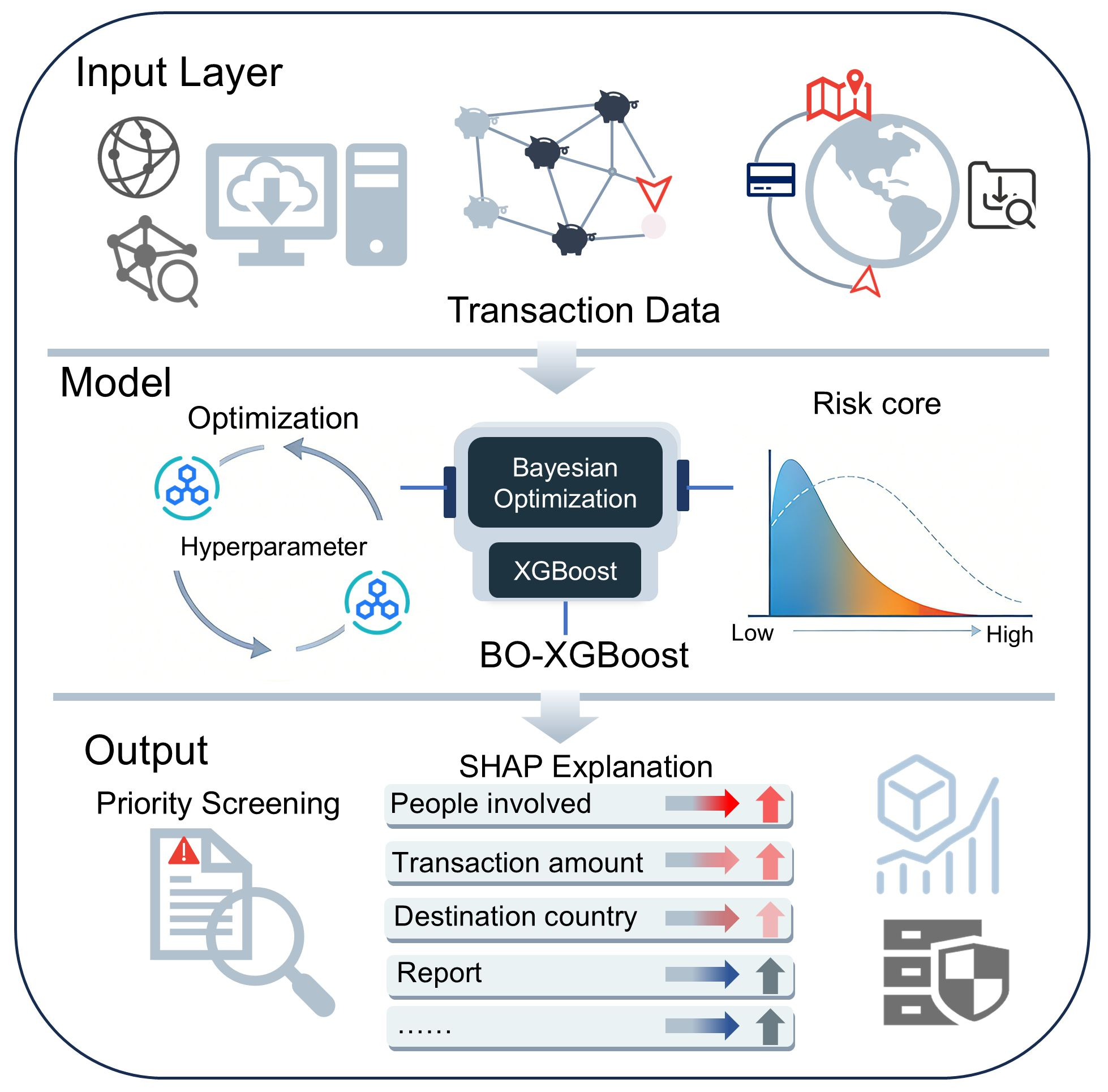
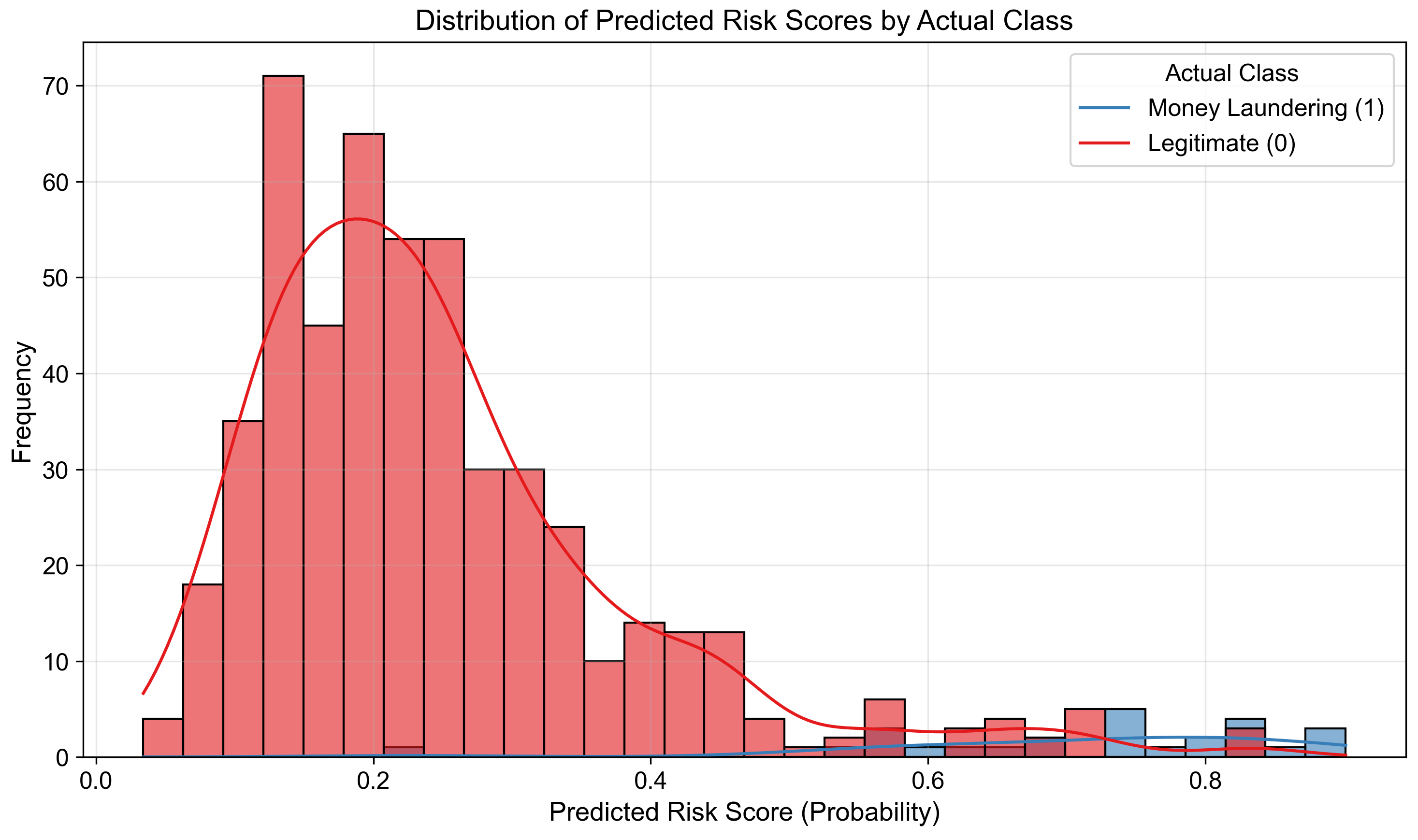
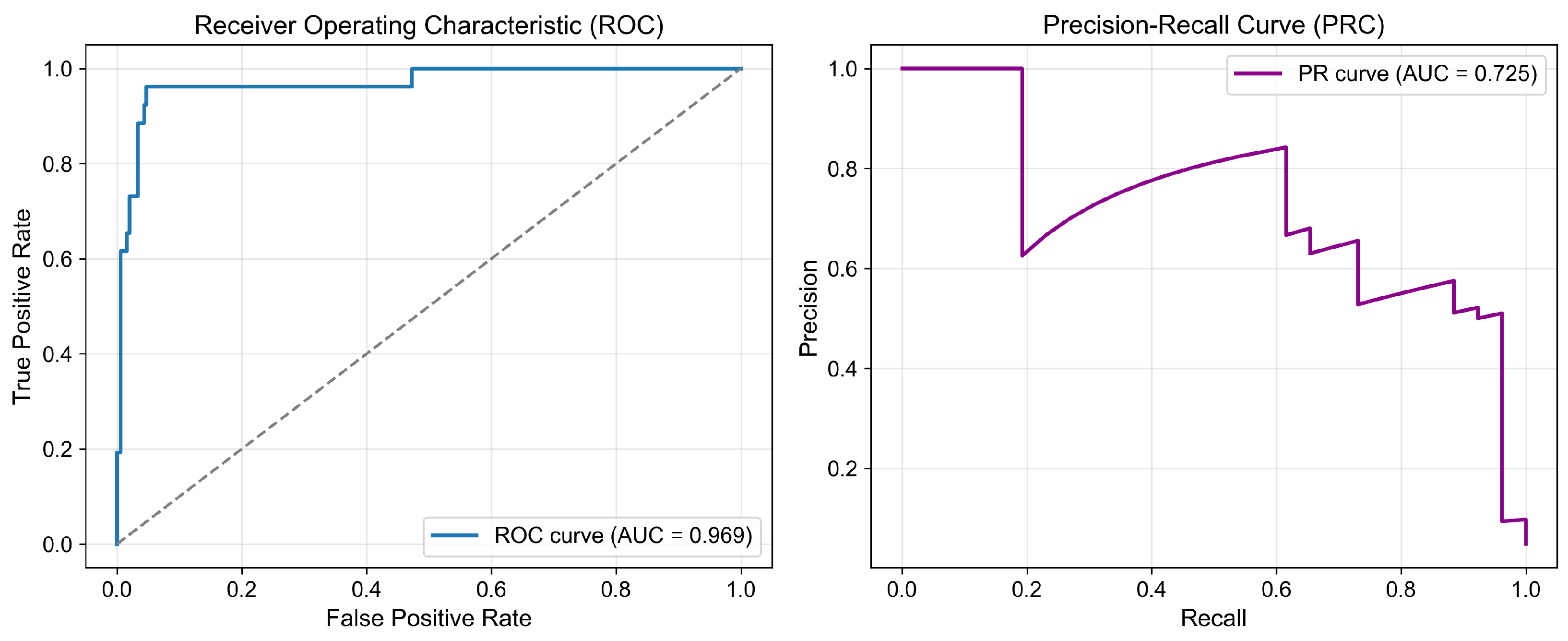
- Task Reformulation for Practical AML: Instead of framing the task as a conventional hard-threshold binary classification, we explicitly optimize the BO-XGBoost model to maximize the PR-AUC metric and output continuous risk probabilities. This approach directly addresses the real-world operational need for transaction-level risk ranking and prioritization.
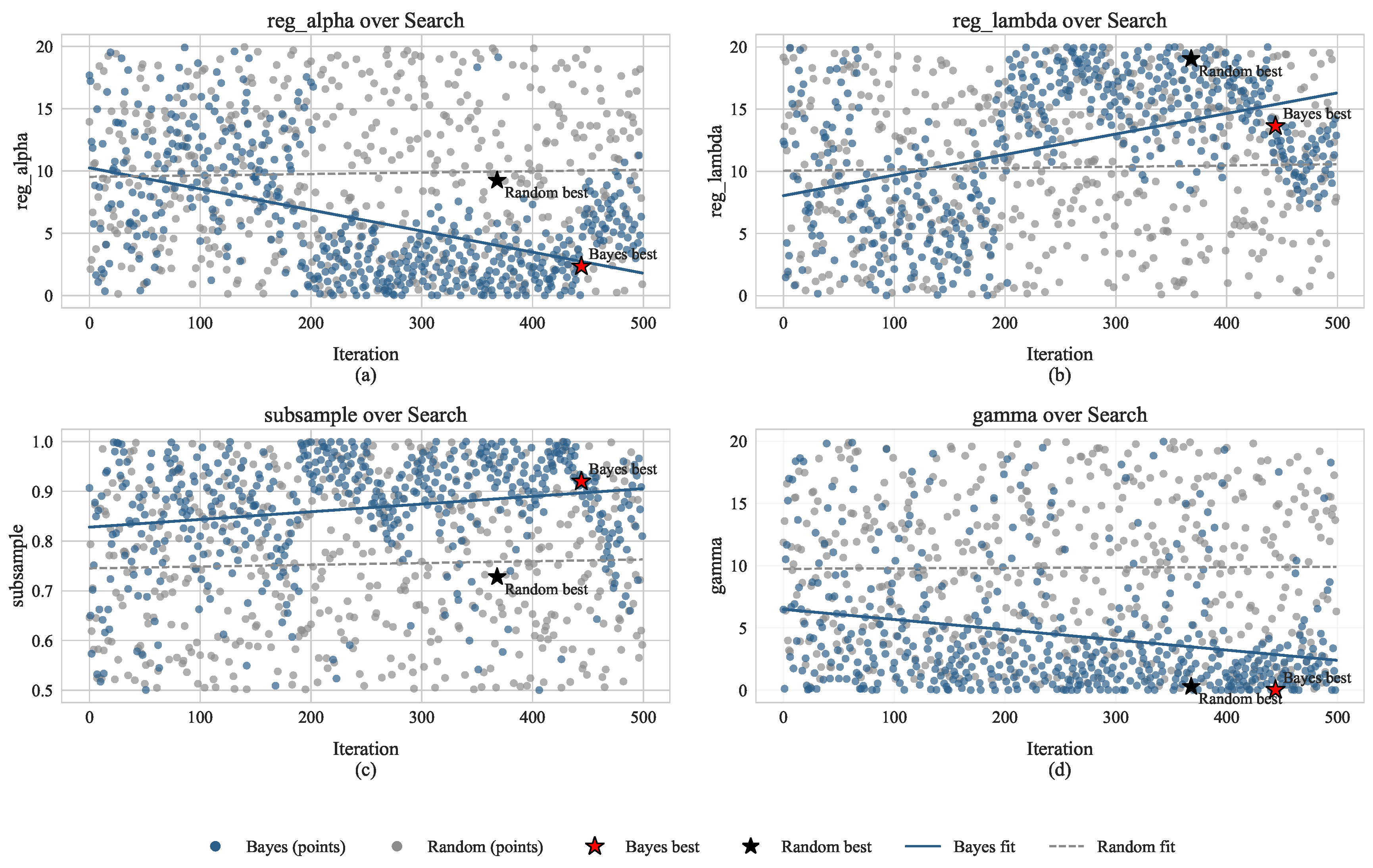
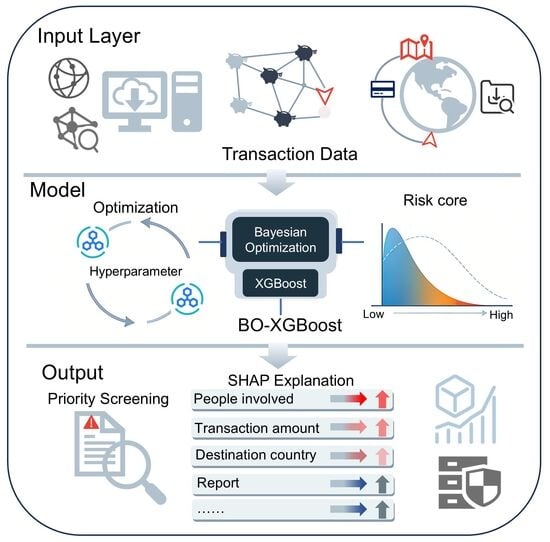
- Automated Non-linear Pattern Extraction: By integrating the TPE algorithm with XGBoost, the proposed framework autonomously identifies optimal hyperparameter configurations. This significantly improves the model’s ability to capture complex, non-linear laundering patterns within tabular financial data without the biases and suboptimalities of manual tuning [17].
- Enhanced Operational Value: Through rigorous evaluation using risk-oriented and ranking metrics, this method demonstrates superior capability in prioritizing high-risk transactions while maintaining a near-perfect Precision@1% at the highest investigative tier, providing regulators with actionable technical support.
2. Related Work
2.1. Rule-Based, Expert Systems, and Regulatory Frameworks
2.2. Classical Machine Learning Approaches
2.3. Deep Learning and Graph-Based Methods
2.4. Ensemble and Optimization-Based Approaches
3. Methodology and Approach
3.1. Datasets
Dataset Limitations
3.2. Data Preprocessing
3.3. Proposed Solution
3.4. BO-XGBoost Model Design
3.4.1. Bayesian Optimization for Hyperparameter Tuning
3.4.2. XGBoost Algorithm
3.4.3. BO-XGBoost Prediction Model Design
4. Experimental Setup and Analysis
4.1. Experimental Platform and Configuration
4.2. Evaluation Metrics and Methodology
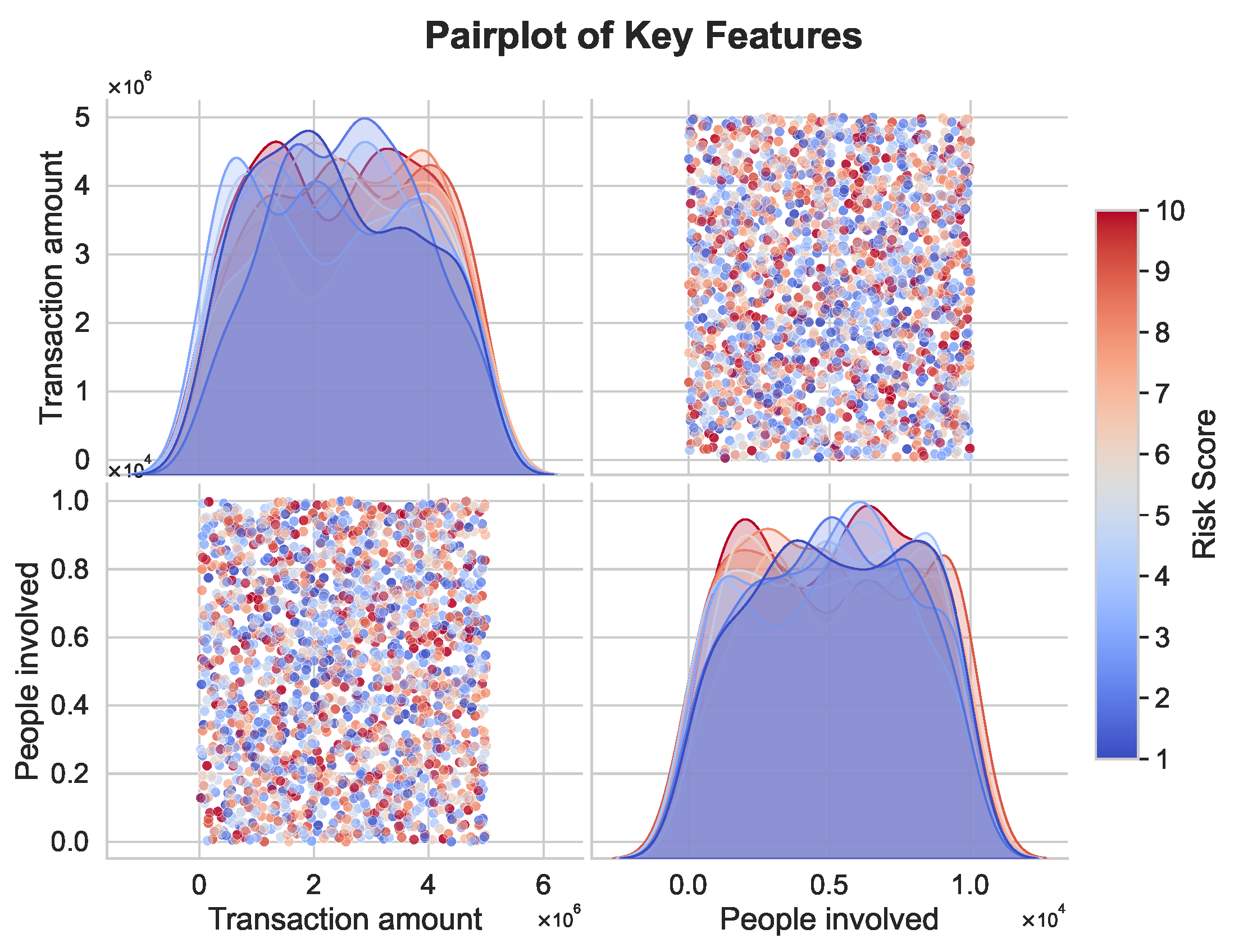
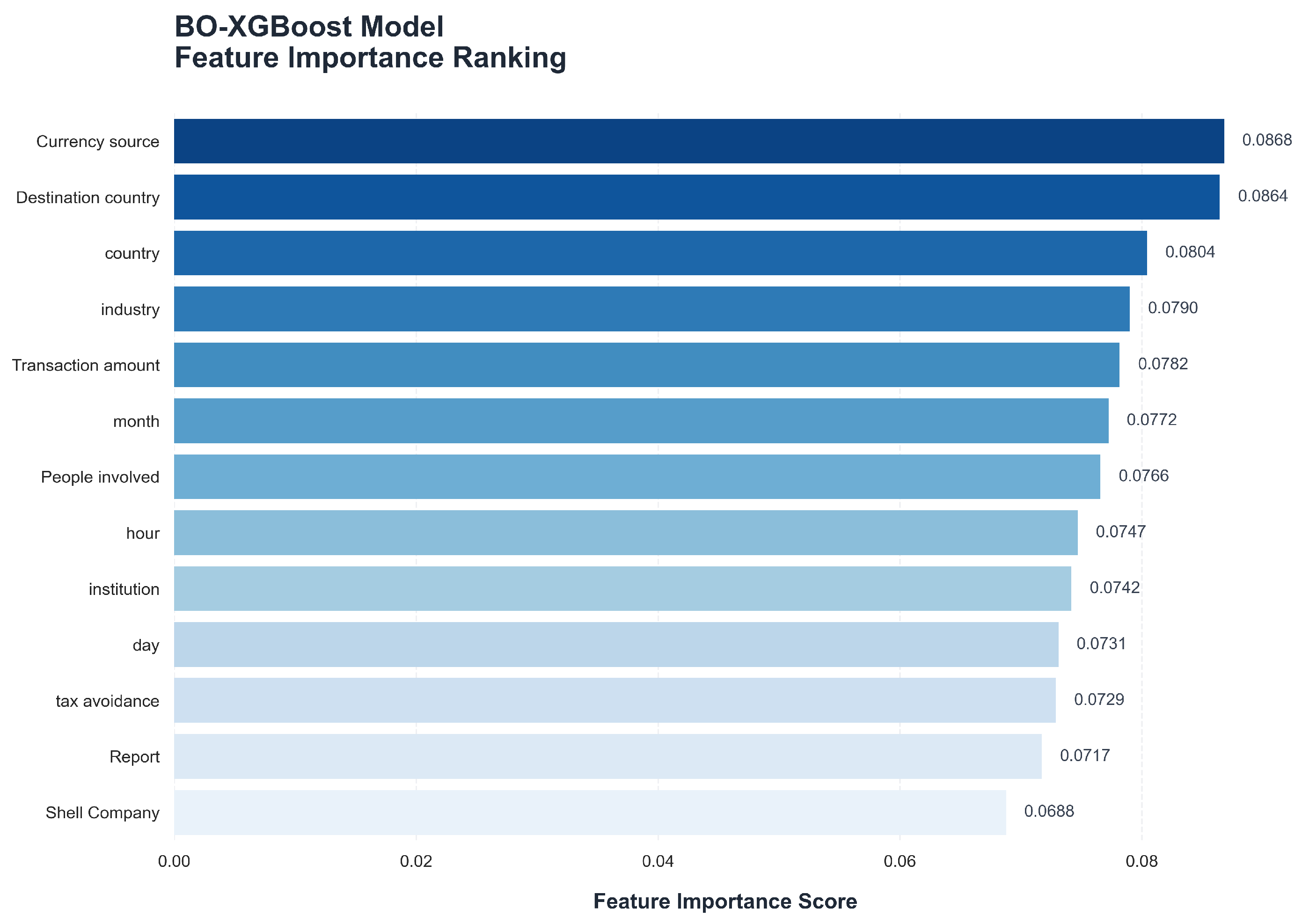
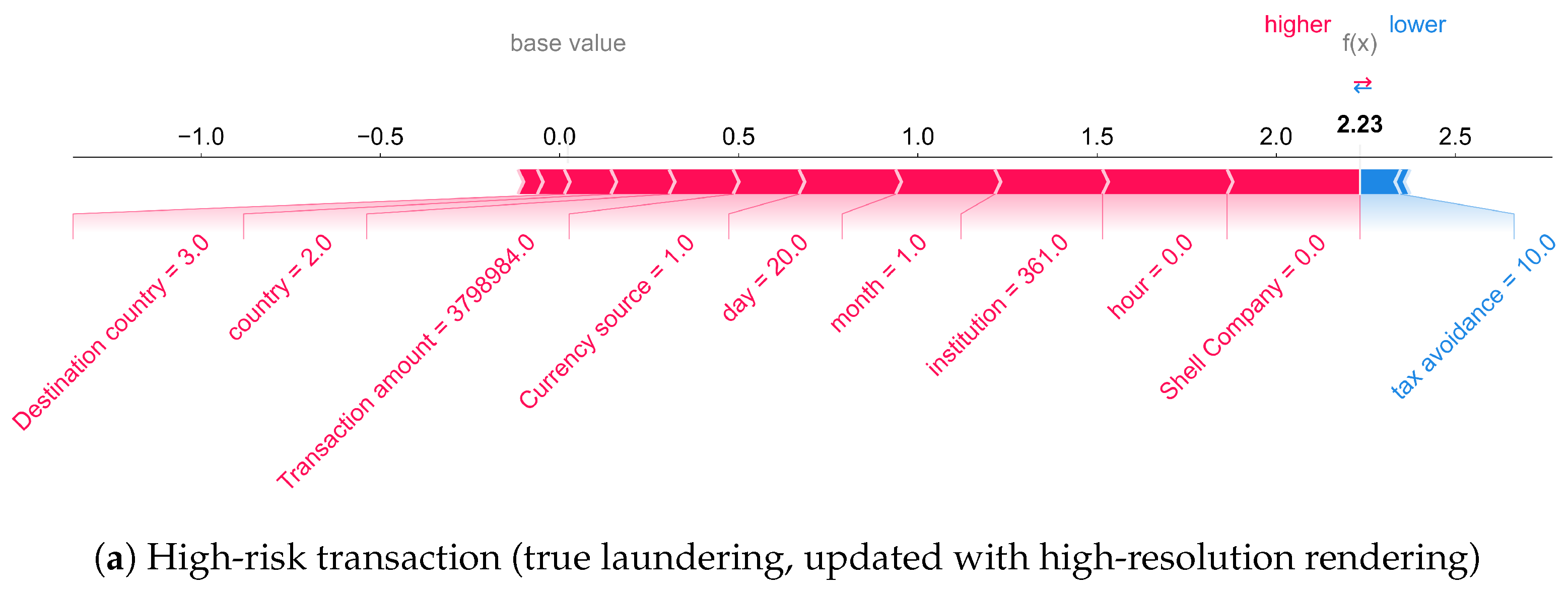
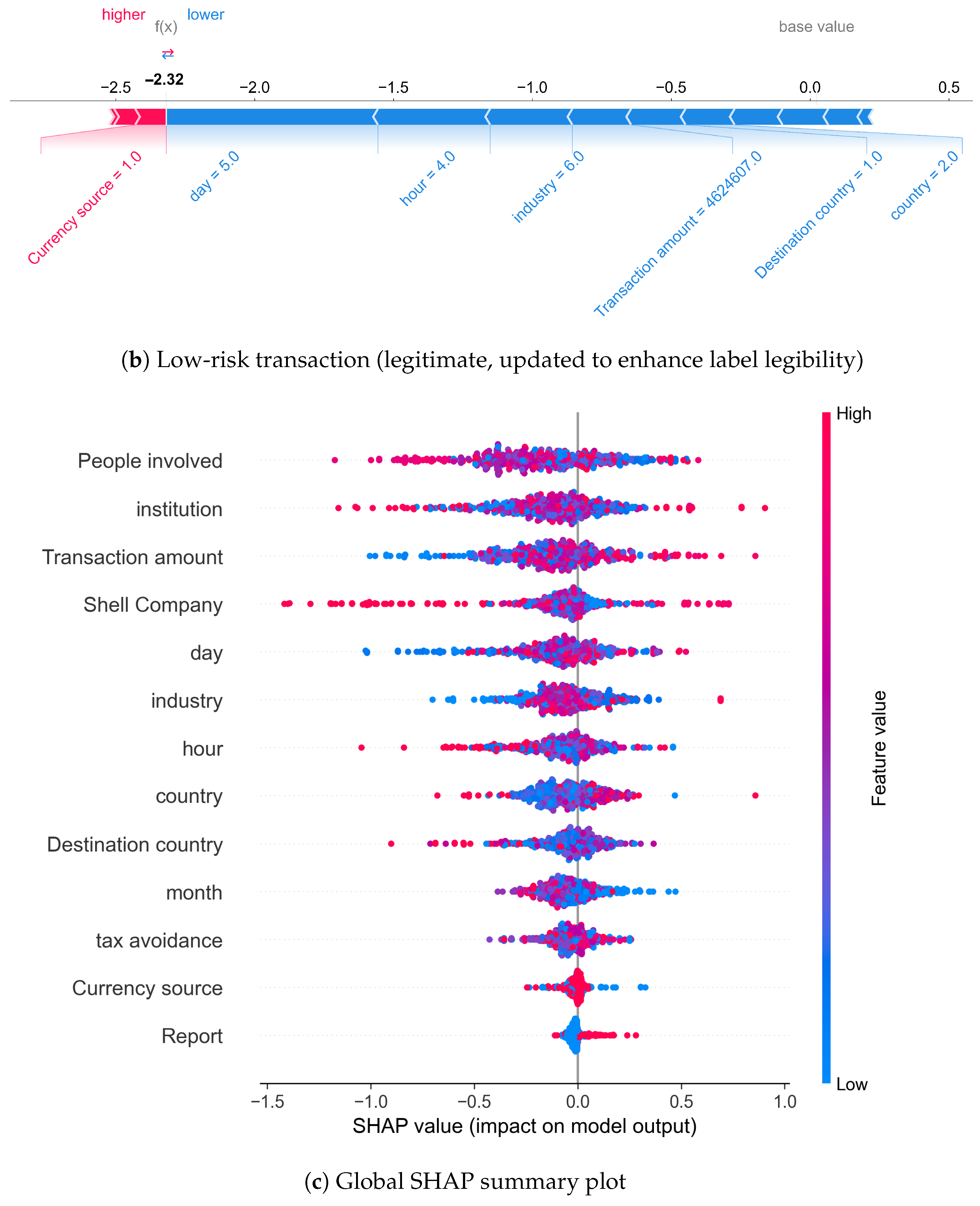
4.3. Feature Visualization
5. Experimental Results and Discussion
6. Conclusions and Perspectives
Author Contributions
Funding
Institutional Review Board Statement
Informed Consent Statement
Data Availability Statement
Conflicts of Interest
References
- Unger, B. The Scale and Impacts of Money Laundering; Edward Elgar Publishing: Cheltenham, UK, 2007. [Google Scholar]
- Tiwari, M.; Gepp, A.; Kumar, K. A review of money laundering literature: The state of research in key areas. Pac. Account. Rev. 2020, 32, 271–303. [Google Scholar] [CrossRef] [Scilit]
- People’s Bank of China (PBoC). Anti-Money Laundering Law of the People’s Republic of China (Draft for Public Comment). Published on 1 June 2021. Original Document in Chinese. 1 June 2021. Available online: https://www.pbc.gov.cn/ (accessed on 12 March 2026).
- Tiwari, M.; Ferrill, J.; Allan, D.M. Trade-based money laundering: A systematic literature review. J. Account. Lit. 2025, 47, 1–26. [Google Scholar] [CrossRef] [Scilit]
- Dhawan, A.; Putnins, T.J. A New Wolf in Town? Pump-and-Dump Manipulation in Cryptocurrency Markets. Rev. Financ. 2023, 27, 935–975. [Google Scholar] [CrossRef] [Scilit]
- Pernell, K.; Jung, J. Rethinking moral hazard: Government protection and bank risk-taking. Socio-Econ. Rev. 2024, 22, 625–653. [Google Scholar] [CrossRef]
- Brogi, M.; Lagasio, V. New but naughty. The evolution of misconduct in FinTech. Int. Rev. Financ. Anal. 2024, 95, 103489. [Google Scholar] [CrossRef] [Scilit]
- Hernandez Aros, L.; Bustamante Molano, L.X.; Gutierrez-Portela, F.; Moreno Hernandez, J.J.; Rodríguez Barrero, M.S. Financial fraud detection through the application of machine learning techniques: A literature review. Humanit. Soc. Sci. Commun. 2024, 11, 1130. [Google Scholar] [CrossRef] [Scilit]
- Tong, G.; Shen, J. Financial transaction fraud detector based on imbalance learning and graph neural network. Appl. Soft Comput. 2023, 149, 110984. [Google Scholar] [CrossRef] [Scilit]
- Peng, Y.; Jiang, Y.; Zuo, Z.; Gu, S.; Wang, Z.; Tian, Z. A rehabilitation design concept based on brain–computer interface and McKibben artificial muscle. Healthc. Rehabil. 2026, 2, 100066. [Google Scholar] [CrossRef] [Scilit]
- Ngai, E.W.; Hu, Y.; Wong, Y.H.; Chen, Y.; Sun, X. The application of data mining techniques in financial fraud detection: A classification framework and an academic review of literature. Decis. Support Syst. 2011, 50, 559–569. [Google Scholar] [CrossRef] [Scilit]
- Mao, Z.; Suzuki, S.; Nabae, H.; Miyagawa, S.; Suzumori, K.; Maeda, S. Machine learning-enhanced soft robotic system inspired by rectal functions to investigate fecal incontinence. Bio-Des. Manuf. 2025, 8, 482–494. [Google Scholar] [CrossRef] [Scilit]
- Wu, Z.; Pan, S.; Chen, F.; Long, G.; Zhang, C.; Yu, P.S. A comprehensive survey on graph neural networks. IEEE Trans. Neural Netw. Learn. Syst. 2020, 32, 4–24. [Google Scholar] [CrossRef] [Scilit]
- He, X.; Zhao, K.; Chu, X. AutoML: A survey of the state-of-the-art. Knowl.-Based Syst. 2021, 212, 106622. [Google Scholar] [CrossRef] [Scilit]
- Snoek, J.; Larochelle, H.; Adams, R.P. Practical bayesian optimization of machine learning algorithms. Adv. Neural Inf. Process. Syst. 2012, 25, 2951–2959. [Google Scholar]
- Chen, T.; Guestrin, C. Xgboost: A scalable tree boosting system. In Proceedings of the 22nd Acm Sigkdd International Conference on Knowledge Discovery and Data Mining; Association for Computing Machinery: New York, NY, USA, 2016; pp. 785–794. [Google Scholar]
- Wang, Z.; Chen, L.; Wang, F.Y. Fuzzy Inference Attention Module for Unsupervised Domain Adaptation. IEEE Trans. Fuzzy Syst. 2024, 32, 1706–1718. [Google Scholar] [CrossRef] [Scilit]
- Premti, A.; Jafarinejad, M.; Balani, H. The impact of the Fourth Anti-Money Laundering Directive on the valuation of EU banks. Res. Int. Bus. Financ. 2021, 57, 101397. [Google Scholar] [CrossRef] [Scilit]
- Paul, P.; Iyelolu, T. Anti-Money laundering compliance and financial inclusion: A technical analysis of Sub-Saharan Africa. GSC Adv. Res. Rev. 2024, 19, 336–343. [Google Scholar] [CrossRef] [Scilit]
- Eddin, A.N.; Bono, J.; Aparício, D.; Polido, D.; Ascensão, J.T.; Bizarro, P.; Ribeiro, P. Anti-money laundering alert optimization using machine learning with graphs. arXiv 2021, arXiv:2112.07508. [Google Scholar]
- Gupta, A.; Dwivedi, D.N.; Shah, J.; Jain, A. Data quality issues leading to sub optimal machine learning for money laundering models. J. Money Laund. Control 2022, 25, 551–555. [Google Scholar] [CrossRef] [Scilit]
- Fan, L.; Zhao, S. Credit rating of bank customers and money laundering risk prediction based on pattern recognition: Take Chongqing City as an example. In Proceedings of the 2021 1st International Conference on Control and Intelligent Robotics; Association for Computing Machinery: New York, NY, USA, 2021; pp. 699–703. [Google Scholar]
- Wronka, C. Money laundering through cryptocurrencies-analysis of the phenomenon and appropriate prevention measures. J. Money Laund. Control 2022, 25, 79–94. [Google Scholar] [CrossRef] [Scilit]
- Colladon, A.F.; Remondi, E. Using social network analysis to prevent money laundering. Expert Syst. Appl. 2017, 67, 49–58. [Google Scholar] [CrossRef] [Scilit]
- Usman, A.; Naveed, N.; Munawar, S. Intelligent anti-money laundering fraud control using graph-based machine learning model for the financial domain. J. Cases Inf. Technol. JCIT 2023, 25, 1–20. [Google Scholar] [CrossRef] [Scilit]
- Mhammad, A.F.; Agarwal, R.; Columbo, T.; Vigorito, J. Generative & responsible ai-llms use in differential governance. In Proceedings of the 2023 International Conference on Computational Science and Computational Intelligence (CSCI); IEEE: New York, NY, USA, 2023; pp. 291–295. [Google Scholar]
- Borisov, V.; Leemann, T.; Seßler, K.; Haug, J.; Pawelczyk, M.; Kasneci, G. Deep neural networks and tabular data: A survey. IEEE Trans. Neural Netw. Learn. Syst. 2024, 35, 7499–7519. [Google Scholar] [CrossRef] [Scilit] [PubMed]
- Xia, P.; Zhu, X.; Charles, V.; Zhao, X.; Peng, M. A novel heuristic-based selective ensemble prediction method for digital financial fraud risk. IEEE Trans. Eng. Manag. 2024, 71, 8002–8018. [Google Scholar] [CrossRef] [Scilit]
- Gadimov, E.; Birihanu, E. Real-time suspicious detection framework for financial data streams. Int. J. Inf. Technol. 2025, 17, 1–17. [Google Scholar] [CrossRef] [Scilit]
- Fernández, A.; Garcia, S.; Herrera, F.; Chawla, N.V. SMOTE for learning from imbalanced data: Progress and challenges, marking the 15-year anniversary. J. Artif. Intell. Res. 2018, 61, 863–905. [Google Scholar] [CrossRef] [Scilit]
- Wang, Z.; Chen, L.; He, J.; Yang, L.; Wang, F.Y. Exploring Latent Transferability of feature components. Pattern Recognit. 2025, 160, 111184. [Google Scholar] [CrossRef] [Scilit]
- Peng, Y.; Wang, Y.; Hu, F.; He, M.; Mao, Z.; Huang, X.; Ding, J. Predictive modeling of flexible EHD pumps using Kolmogorov–Arnold Networks. Biomim. Intell. Robot. 2024, 4, 100184. [Google Scholar] [CrossRef] [Scilit]
- Wang, Z.; Chen, L.; Xie, X.; Zhang, Y.; Cai, Y.; Ding, W. Teacher-Student Instance-level Adversarial Augmentation for Single Domain Generalized Medical Image Segmentation. IEEE Trans. Med. Imaging 2025, 45, 764–776. [Google Scholar] [CrossRef] [Scilit]
- Peng, Y.; Sakai, Y.; Funabora, Y.; Yokoe, K.; Aoyama, T.; Doki, S. Funabot-Sleeve: A Wearable Device Employing McKibben Artificial Muscles for Haptic Sensation in the Forearm. IEEE Robot. Autom. Lett. 2025, 10, 1944–1951. [Google Scholar] [CrossRef] [Scilit]
- Li, B.; Wang, Q.; Yu, T.; Chen, Y.; Bin, Y.; Sun, B.; Huang, X.; Ding, J.; Gu, S.; Mao, Z.; et al. Quad-wing FWMAV with Thrust Vector Yaw Steering. Biomim. Intell. Robot. 2026, 6, 100327. [Google Scholar] [CrossRef] [Scilit]
- Verma, H.; Siruvuri, S.V.; Budarapu, P. A machine learning-based image classification of silicon solar cells. Int. J. Hydromechatron. 2024, 7, 49–66. [Google Scholar] [CrossRef] [Scilit]
- Cunegatto, E.H.T.; Zinani, F.S.F.; Rigo, S.J. Multi-objective optimisation of micromixer design using genetic algorithms and multi-criteria decision-making algorithms. Int. J. Hydromechatron. 2024, 7, 224–249. [Google Scholar] [CrossRef] [Scilit]
- Financial Action Task Force (FATF). Virtual Assets: Red Flag Indicators of Money Laundering and Terrorist Financing. Report, Financial Action Task Force. 2020. Available online: https://www.fatf-gafi.org/content/dam/fatf-gafi/reports/Virtual-Assets-Red-Flag-Indicators.pdf (accessed on 12 March 2026).
- Shadrooh, S.; Nørvåg, K. SMoTeF: Smurf money laundering detection using temporal order and flow analysis. Appl. Intell. 2024, 54, 7461–7478. [Google Scholar] [CrossRef] [Scilit]
- Hudson, M.; Chaudhary, N.I.; Johnson, M.I. Eye movements and emotional memory images (EMIs): Unravelling the path to adult health from childhood adversity. Healthc. Rehabil. 2025, 1, 100037. [Google Scholar] [CrossRef] [Scilit]
- Huang, X.; Xiang, H.; Wu, C.; Xu, J.; Ding, J.; Peng, Y.; Funabora, Y. CRAB-EDM: A Multi-Modal Underwater Crab-Inspired Robot With Temporally Sequenced Electro-Discharge Modulation. IEEE Robot. Autom. Lett. 2026, 11, 3939–3946. [Google Scholar] [CrossRef] [Scilit]






| Author(s) & Ref. | Method | Techniques | Principal Conclusion |
|---|---|---|---|
| Gupta et al. [21] | Empirical analysis | Data curation; event definition | Data quality and event definitions are primary determinants of AML model reliability. |
| Fan et al. [22] | Transaction modelling | SVM; logistic regression | Transaction-level scoring enables risk stratification and improves flagging of suspicious clients. |
| Wronka [23] | Crypto analysis | Anomaly detection | Cryptocurrency flows show distinctive anomalous patterns needing tailored detection. |
| Premti et al. [18] | Regulatory assessment | Policy evaluation (EU 4AMLD) | AML regulatory changes significantly affect bank valuation and compliance burden. |
| Colladon et al. [24] | Network analysis | Social network analysis (SNA) | Network topology uncovers suspicious relationships beyond single-transaction signals. |
| Eddin et al. [20] | Hybrid modelling | Rule-based filters + ML classifiers | Rule + ML hybrids reduce false positives while maintaining detection coverage. |
| Usman et al. [25] | Cross-border study | Graph ML; synthetic data | Graph-based models capture cross-border linkages and aid detection in complex flows. |
| Mhammad et al. [26] | Suspicion enhancement | Generative models; network analytics | Generative models with network context help surface subtle anomalies. |
| Xia et al. [28] | Ensemble design | K-means++ + optimization; ensemble fusion | Optimized clustering-based ensembles better handle high-dimensional financial features. |
| Paul et al. [19] | Policy vs. inclusion review | Literature synthesis; data analysis | Balancing AML tightening and financial inclusion requires localized, proportionate measures. |
| Item | Value | Note |
|---|---|---|
| Total transactions | 200,000 | |
| Money laundering cases | 100,760 | TRUE-like values interpreted as positive. |
| Positive rate (%) | 50.3800 | |
| Number of features | 14 | (13 numeric/1 categorical). |
| Transaction date range | 1 January 2024–31 December 2024 | |
| Transaction amount (mean/median) | 2.50 × 10⁶/2.50 × 106 | (min, max) = (1.00 × 10⁴, 4.99 × 10⁶). Values shown in scientific notation. |
| Name | Formula |
|---|---|
| ROC-AUC | |
| PR-AUC | |
| Precision@K | |
| Brier Score |
| Parameter Name | Parameter Space (As in Code) | Default | BO Optimal Parameter |
|---|---|---|---|
| Uniform (1, 100) | 100 | 98 | |
| Uniform (1 × 10⁻⁵, 1) | 0.1 | 0.7546 | |
| QUniform (1, 20, 1) (cast int) | 6 | 19 | |
| subsample | Uniform (0.5, 1.0) | 1.0 | 0.9007 |
| QUniform (1, 10, 1) (cast int) | 1 | 3 | |
| colsample_bytree | Uniform (0.5, 1.0) | 1.0 | 0.6647 |
| Uniform (0, 20) | 0 | 0.0042 | |
| Uniform (0, 20) | 0 | 0.6918 | |
| Uniform (0, 20) | 1.0 | 6.9043 |
| Model | ROC-AUC | PR-AUC | Precision@1% | Precision@5% | Brier Score |
|---|---|---|---|---|---|
| Logistic Regression | 0.5115 | 0.0544 | 0.0723 | 0.0537 | 0.1733 |
| CNN | 0.6165 | 0.0930 | 0.4000 | 0.1154 | 0.2589 |
| LSTM | 0.7044 | 0.1172 | 0.0000 | 0.1538 | 0.2414 |
| MLP | 0.9379 | 0.5157 | 0.8000 | 0.3462 | 0.0651 |
| LightGBM | 0.9226 | 0.6059 | 0.9719 | 0.5341 | 0.1295 |
| GBR-XGBoost | 0.9750 | 0.5649 | 0.4000 | 0.5385 | 0.1057 |
| Cat-Boost Stacking | 0.9443 | 0.7426 | 1.0000 | 0.6846 | 0.0290 |
| Random Forest | 0.9656 | 0.8100 | 1.0000 | 0.7562 | 0.0530 |
| BO-XGBoost (Ours) | 0.9686 | 0.7253 | 1.0000 | 0.6538 | 0.0796 |
Disclaimer/Publisher’s Note: The statements, opinions and data contained in all publications are solely those of the individual author(s) and contributor(s) and not of MDPI and/or the editor(s). MDPI and/or the editor(s) disclaim responsibility for any injury to people or property resulting from any ideas, methods, instructions or products referred to in the content. |
© 2026 by the authors. Licensee MDPI, Basel, Switzerland. This article is an open access article distributed under the terms and conditions of the Creative Commons Attribution (CC BY) license.
Share and Cite
Zuo, Z.; Jiang, Y.; Liang, R.; Xu, J.; Jiang, H.; Zhang, S.; Chen, Y.; Peng, Y. A Bayesian-Optimized XGBoost Approach for Money Laundering Risk Prediction in Financial Transactions. Information 2026, 17, 324. https://doi.org/10.3390/info17040324
Zuo Z, Jiang Y, Liang R, Xu J, Jiang H, Zhang S, Chen Y, Peng Y. A Bayesian-Optimized XGBoost Approach for Money Laundering Risk Prediction in Financial Transactions. Information. 2026; 17(4):324. https://doi.org/10.3390/info17040324
Chicago/Turabian StyleZuo, Zihao, Yang Jiang, Rui Liang, Jiabin Xu, Hong Jiang, Shizhuo Zhang, Yunkai Chen, and Yanhong Peng. 2026. "A Bayesian-Optimized XGBoost Approach for Money Laundering Risk Prediction in Financial Transactions" Information 17, no. 4: 324. https://doi.org/10.3390/info17040324
APA StyleZuo, Z., Jiang, Y., Liang, R., Xu, J., Jiang, H., Zhang, S., Chen, Y., & Peng, Y. (2026). A Bayesian-Optimized XGBoost Approach for Money Laundering Risk Prediction in Financial Transactions. Information, 17(4), 324. https://doi.org/10.3390/info17040324