Rate-Splitting Multiple Access for Spatial Non-Stationary Extremely Large-Scale Antenna Array


Abstract
1. Introduction
1.1. Our Contributions
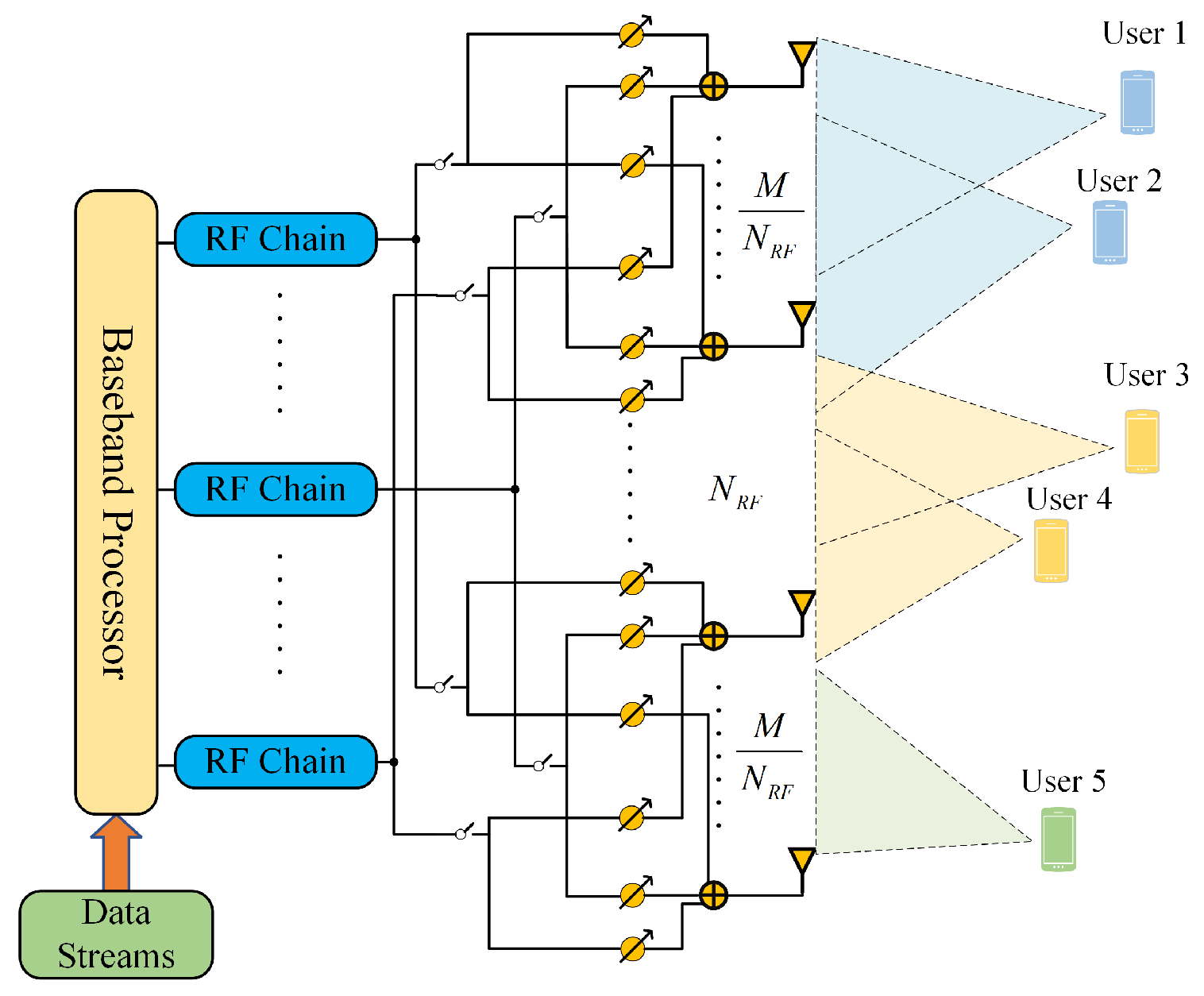
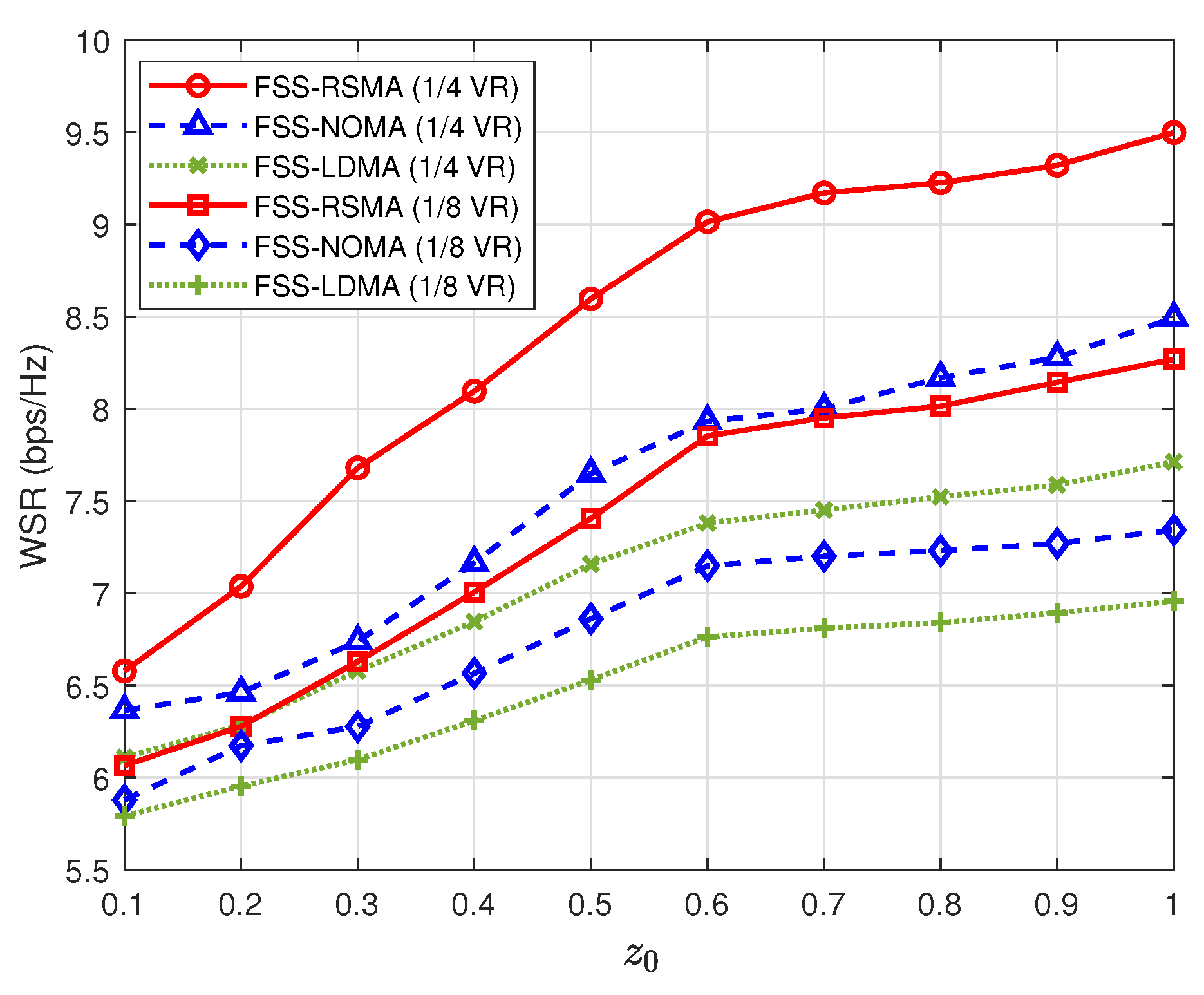
- To address performance degradation caused by the spatial non-stationarity in near-field communication, this paper proposes a hybrid precoding architecture based on a switching network. The system employs a fixed subarray selection (FSS) [25] strategy to select antenna subarrays with superior channel quality. Then, an RF chain controlled by the switching network is dynamically connected to the antenna subarray set associated with the user group’s VR, thus suppressing noise and interference from antenna elements outside the VR.
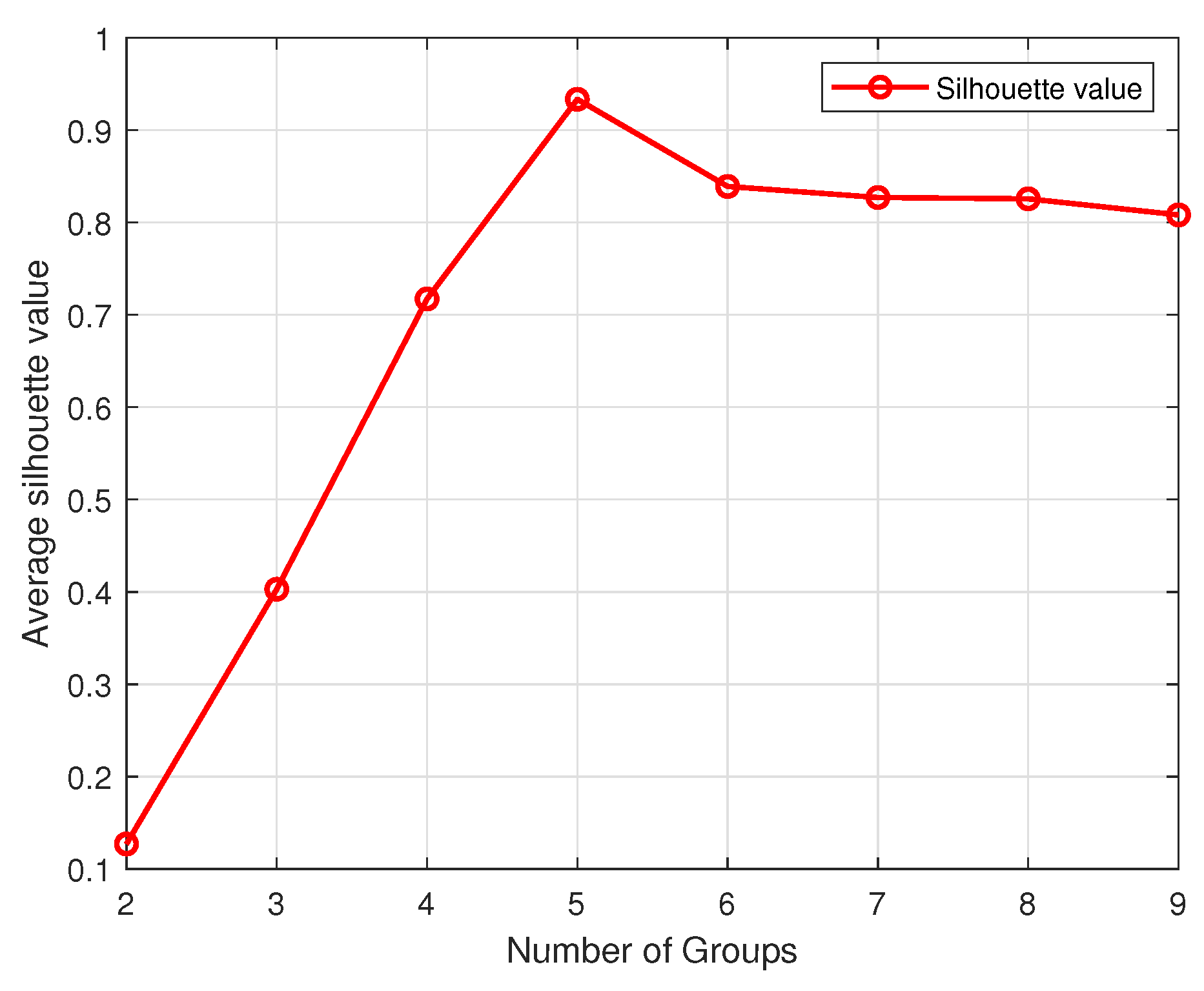
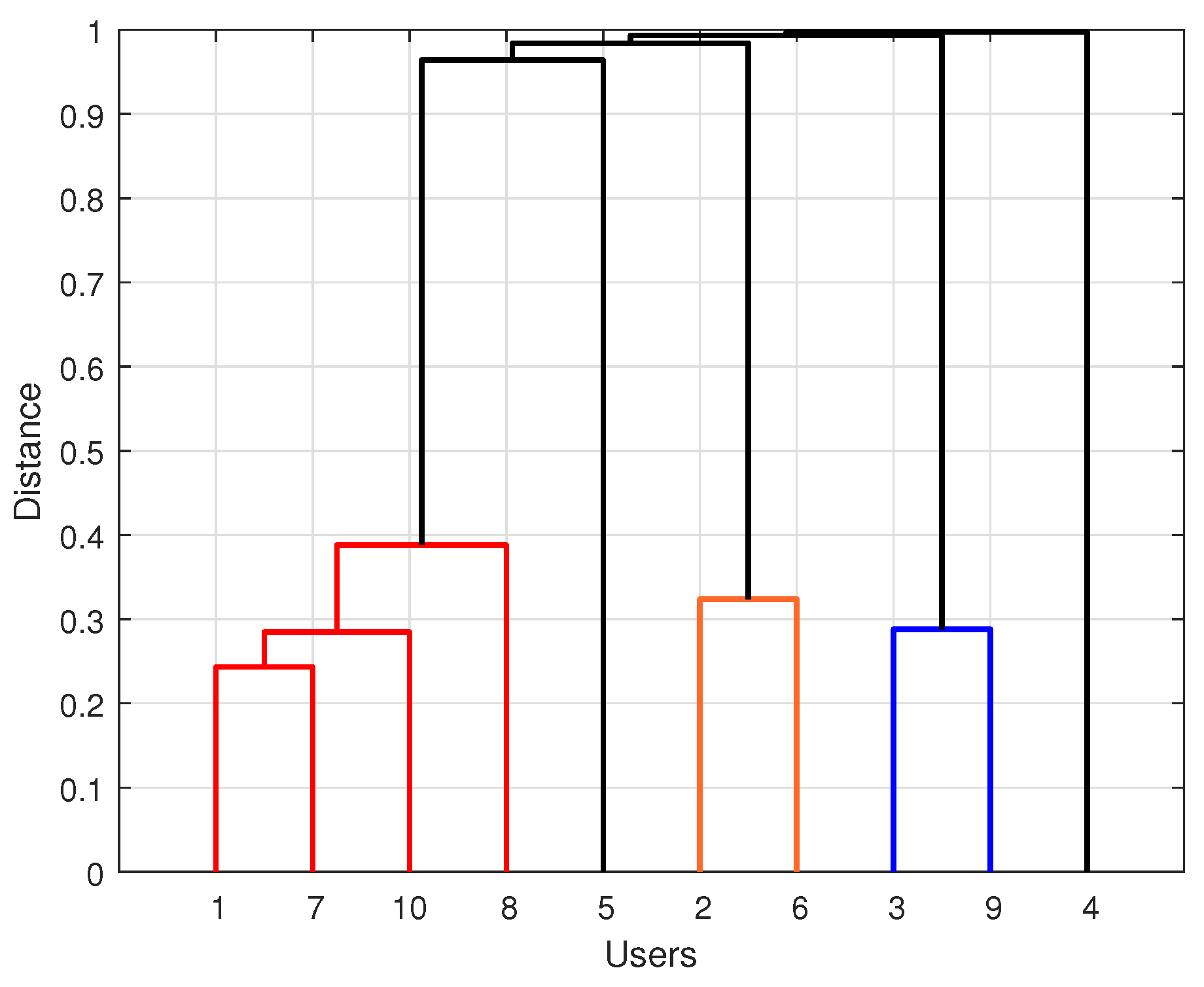
- To achieve a robust RS strategy, this paper proposes a user grouping method based on channel correlation and a phase-aligned analog precoding scheme. This approach employs the agglomerative hierarchical clustering (AHC) algorithm and the average linkage criterion to group users, utilizing the silhouette coefficient, which could determine the optimal number of clusters. Based on the grouping results, the analog precoding is designed to align with the aggregated channels of user groups, thus maximizing array gain.
- This paper formulates the weighted sum-rate (WSR) maximization problem as a non-convex mixed-integer nonlinear programming (MINLP) problem subject to constraints on transmit power, user achievable data rates, and common data rates. A three-step suboptimal algorithm is designed that jointly optimizes user grouping, digital precoding, and RS vectors. First, antenna selection is performed to mitigate the impact of spatial non-stationarity. Next, users are grouped based on channel correlation. Finally, the problem is solved using a semidefinite relaxation (SDR) iterative method according to the user grouping results.
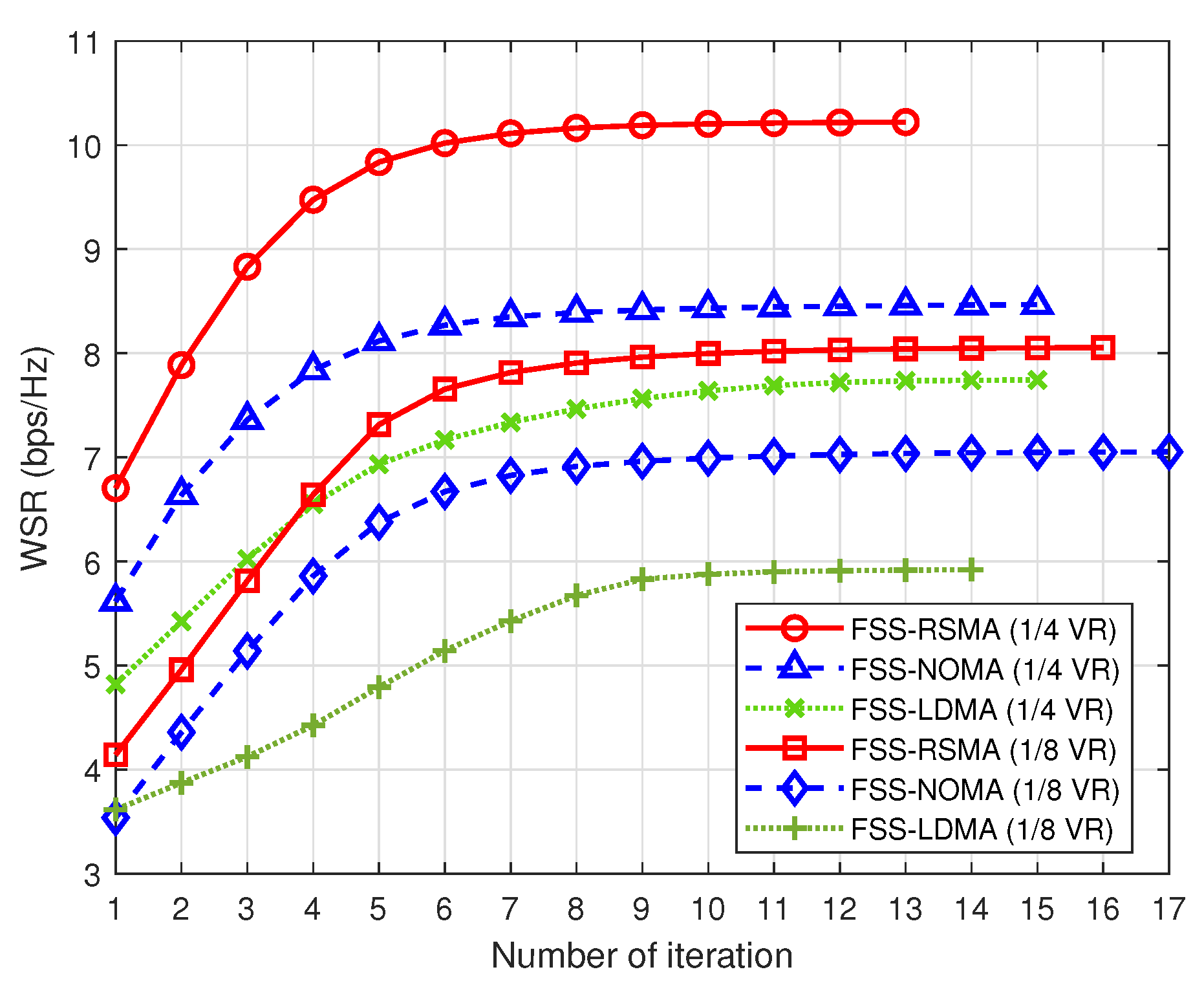
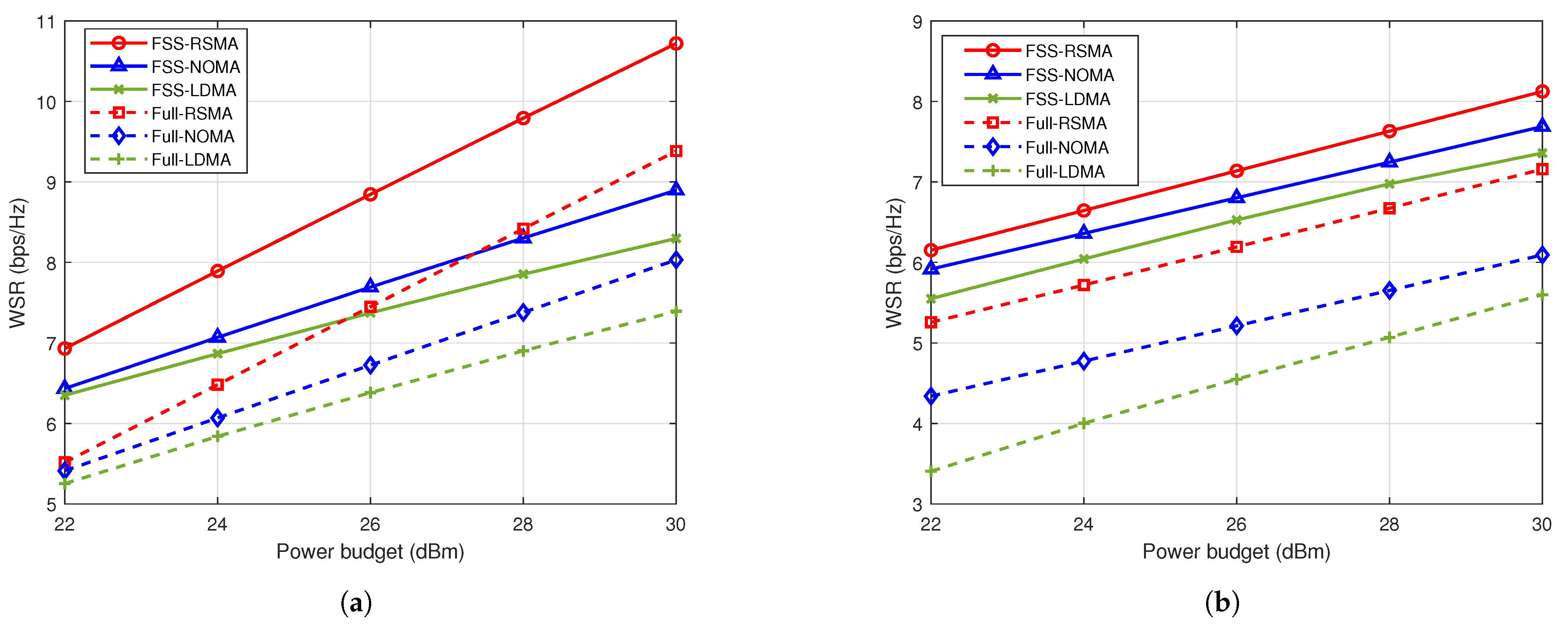
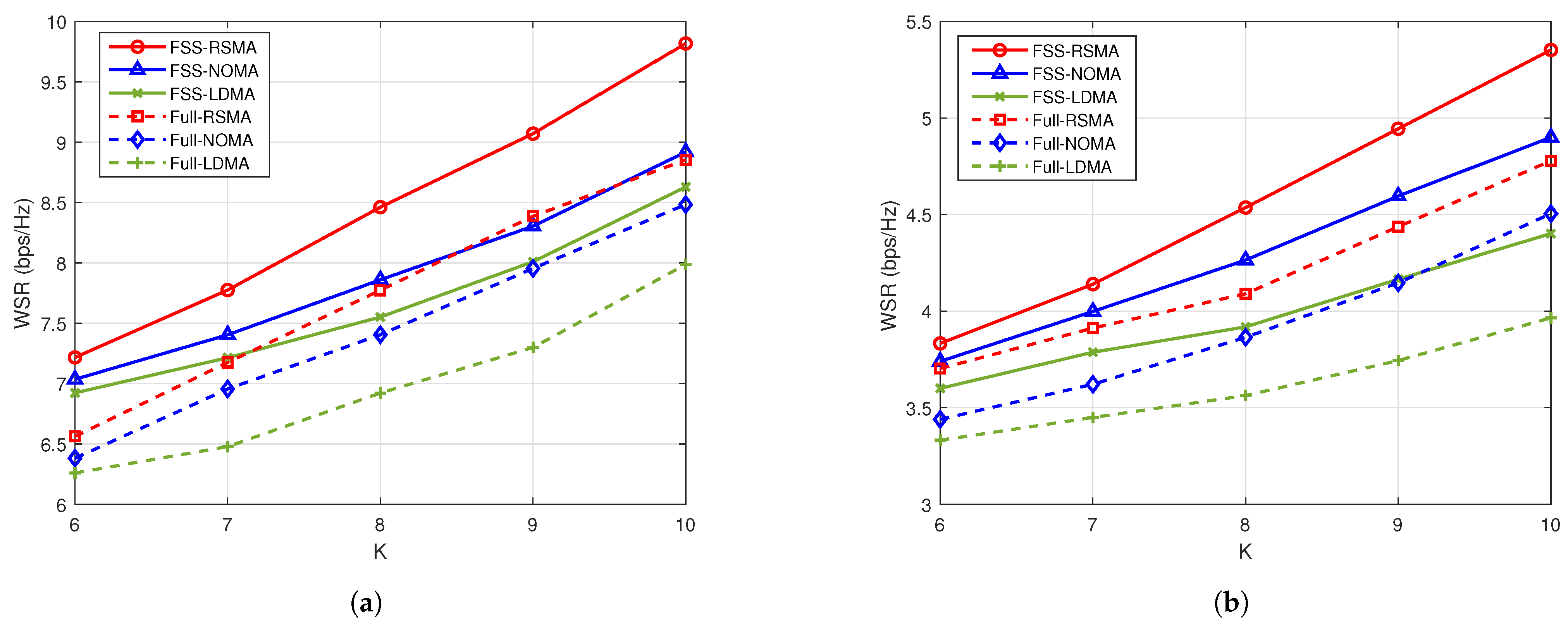
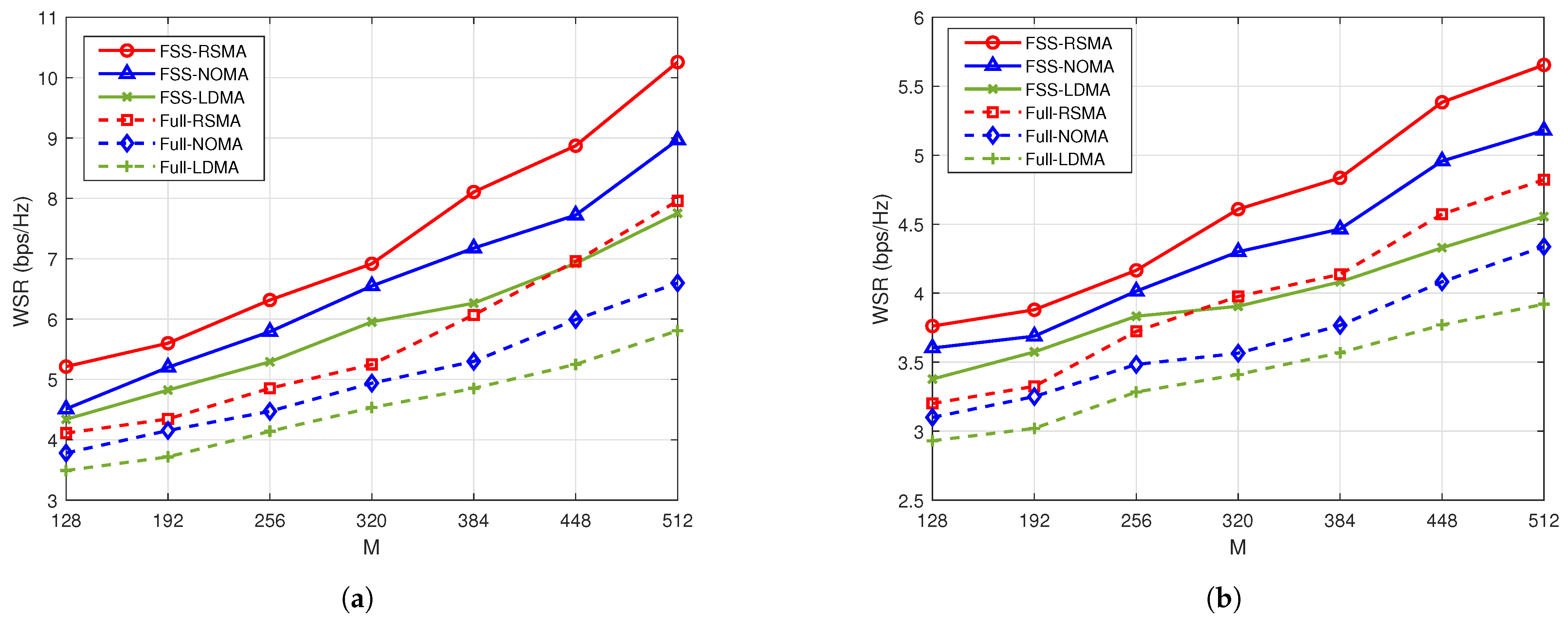
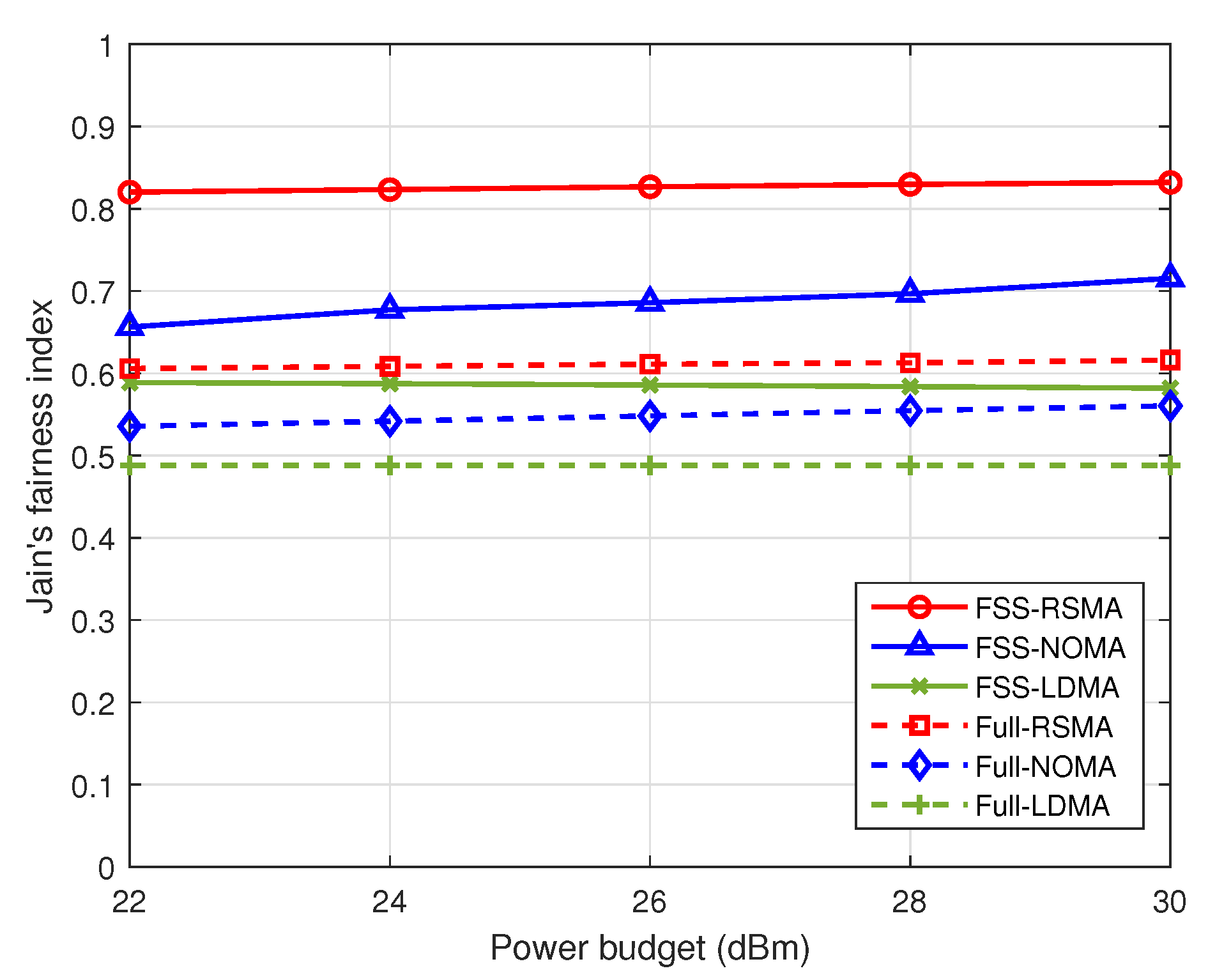
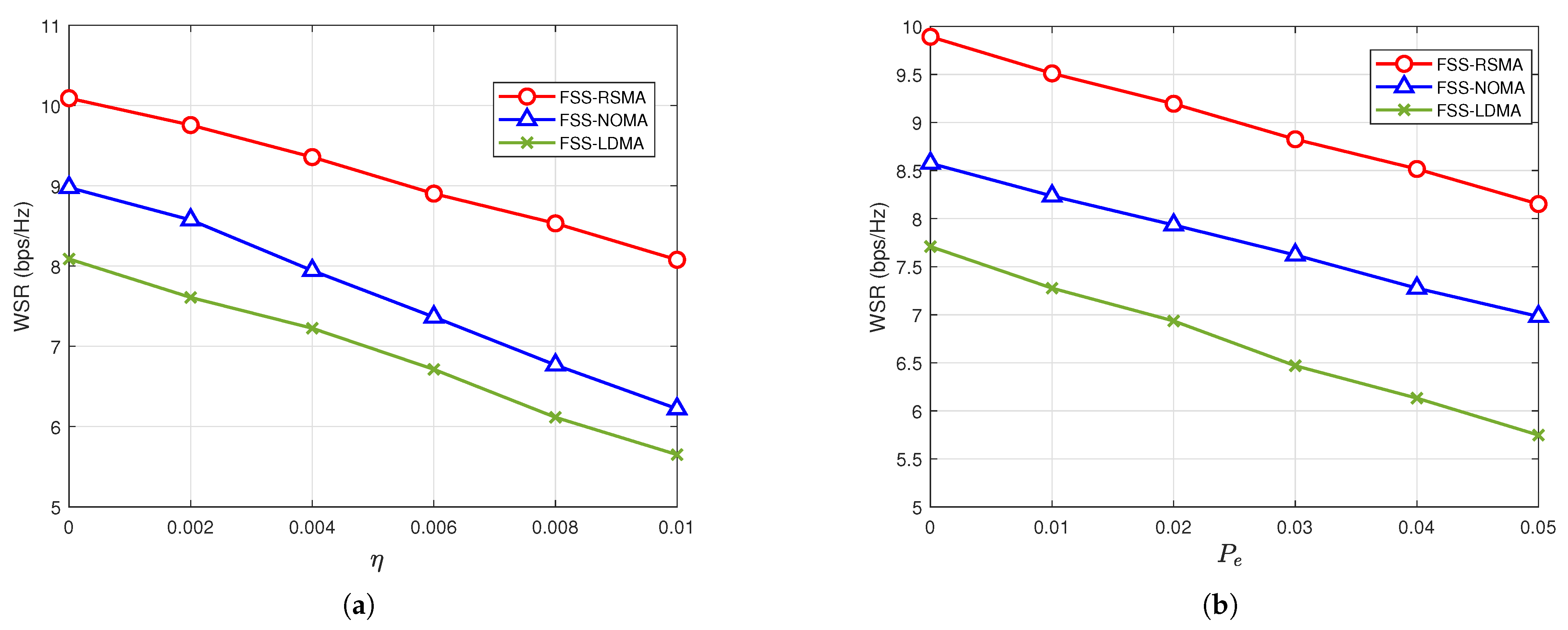
- Numerical simulation results confirm the effectiveness of the proposed RSMA scheme, which demonstrates significant WSR gains compared to the baseline schemes. Moreover, the robustness of the scheme is validated under different configurations of the number of users, number of antennas, and power budget, confirming its ability to manage spatial non-stationarity in ELAA systems.
1.2. Differences from Existing Studies
2. Spatial Non-Stationary Near-Field Channel Model and Proposed RSMA Scheme
2.1. Spatial Non-Stationary Near-Field Channel Model
2.2. Proposed RSMA Transmission Scheme
3. Weighted Sum-Rate Maximization
3.1. Fixed Subarray Selection
| Algorithm 1 Fixed subarray selection strategy |
| Input: channel matrix , antenna selection coefficient , number of subarrays N. Output: .
|
3.2. User Grouping and Analog Precoding Design
| Algorithm 2 Correlation-based hierarchical user grouping |
| Input: Effective channel matrix , range of group numbers. Output: Optimal user grouping strategy . |
| Algorithm 3 Phase-aligned analog precoding design |
| Input: Effective channel matrix , user grouping result , phase resolution B. Output: Analog precoding matrix .
|
3.3. Proposed SDR-Based Algorithm
| Algorithm 4 SDR-based iterative algorithm |
| Input: , . Output: , .
|
4. Simulation Results
- FSS-NOMA Scheme: In this baseline scheme, signals are transmitted via NOMA while maintaining the same FSS and user grouping strategy as FSS-RSMA.
- FSS-LDMA Scheme: This baseline scheme employs the same FSS and user grouping strategy as the proposed FSS-RSMA, but utilizes LDMA [8] for transmission.
- Full-RSMA Scheme: This scheme employs RSMA over the full array without applying the FSS strategy.
- Full-NOMA Scheme: As a counterpart to Full-RSMA, this scheme uses NOMA with all antenna elements active.
- Full-LDMA Scheme: This baseline scheme activates the entire array for LDMA transmission.
5. Conclusions
Author Contributions
Funding
Institutional Review Board Statement
Informed Consent Statement
Data Availability Statement
Conflicts of Interest
References
- Elayan, H.; Amin, O.; Shihada, B.; Shubair, R.M.; Alouini, M.-S. Terahertz Band: The Last Piece of RF Spectrum Puzzle for Communication Systems. IEEE Open J. Commun. Soc. 2020, 1, 1–32. [Google Scholar] [CrossRef]
- Giordani, M.; Polese, M.; Mezzavilla, M.; Rangan, S.; Zorzi, M. Toward 6G Networks: Use Cases and Technologies. IEEE Commun. Mag. 2020, 58, 55–61. [Google Scholar] [CrossRef]
- You, X.; Wang, C.X.; Huang, J.; Gao, X.; Zhang, Z.; Wang, M.; Liang, Y.C. Towards 6G Wireless Communication Networks: Vision, Enabling Technologies, and New Paradigm Shifts. Sci. China Inf. Sci. 2021, 64, 110301. [Google Scholar] [CrossRef]
- Lu, H.; Zeng, Y. Communicating with Extremely Large-Scale Array/Surface: Unified Modeling and Performance Analysis. IEEE Trans. Wirel. Commun. 2022, 21, 4039–4053. [Google Scholar] [CrossRef]
- Björnson, E.; Sanguinetti, L. Power Scaling Laws and Near-Field Behaviors of Massive MIMO and Intelligent Reflecting Surfaces. IEEE Open J. Commun. Soc. 2020, 1, 1306–1324. [Google Scholar] [CrossRef]
- Carvalho, E.D.; Ali, A.; Amiri, A.; Angjelichinoski, M.; Heath, R.W. Non-Stationarities in Extra-Large Scale Massive MIMO. IEEE Wirel. Commun. 2020, 27, 74–80. [Google Scholar] [CrossRef]
- Zhang, H.; Shlezinger, N.; Guidi, F.; Dardari, D.; Imani, M.F.; Eldar, Y.C. Beam Focusing for Near-Field Multiuser MIMO Communications. IEEE Trans. Wirel. Commun. 2022, 21, 7476–7490. [Google Scholar] [CrossRef]
- Wu, Z.; Dai, L. Multiple Access for Near-Field Communications: SDMA or LDMA? IEEE J. Sel. Areas Commun. 2023, 41, 1918–1935. [Google Scholar] [CrossRef]
- Han, Y.; Jin, S.; Wen, C.-K.; Ma, X. Channel Estimation for Extremely Large-Scale Massive MIMO Systems. IEEE Wirel. Commun. Lett. 2020, 9, 633–637. [Google Scholar] [CrossRef]
- Wang, Z.; Mu, X.; Liu, Y. Near-Field Integrated Sensing and Communications. IEEE Commun. Lett. 2023, 27, 2048–2052. [Google Scholar] [CrossRef]
- Lu, H.; Zeng, Y.; You, C.; Han, Y.; Zhang, J.; Wang, Z.; Zhang, R. A Tutorial on Near-Field XL-MIMO Communications Toward 6G. IEEE Commun. Surv. Tutor. 2024, 26, 2213–2257. [Google Scholar] [CrossRef]
- Ali, A.; Carvalho, E.D.; Heath, R.W. Linear Receivers in Non-Stationary Massive MIMO Channels with Visibility Regions. IEEE Wirel. Commun. Lett. 2019, 8, 885–888. [Google Scholar] [CrossRef]
- Chen, Y.; Dai, L. Non-Stationary Channel Estimation for Extremely Large-Scale MIMO. IEEE Trans. Wirel. Commun. 2024, 23, 7683–7697. [Google Scholar] [CrossRef]
- Yuan, Z.; Zhang, J.; Ji, Y.; Pedersen, G.F.; Fan, W. Spatial Non-Stationary Near-Field Channel Modeling and Validation for Massive MIMO Systems. IEEE Trans. Antennas Propag. 2023, 71, 931–943. [Google Scholar] [CrossRef]
- Wang, Z.; Zhang, J.; Du, H.; Sha, W.E.; Ai, B.; Niyato, D.; Debbah, M. Extremely Large-Scale MIMO: Fundamentals, Challenges, Solutions, and Future Directions. IEEE Wirel. Commun. 2024, 31, 117–124. [Google Scholar] [CrossRef]
- Clerckx, B.; Mao, Y.; Jorswieck, E.A.; Yuan, J.; Love, D.J.; Erkip, E.; Niyato, D. A Primer on Rate-Splitting Multiple Access: Tutorial, Myths, and Frequently Asked Questions. IEEE J. Sel. Areas Commun. 2023, 41, 1265–1308. [Google Scholar] [CrossRef]
- Mao, Y.; Dizdar, O.; Clerckx, B.; Schober, R.; Popovski, P.; Poor, H.V. Rate-Splitting Multiple Access: Fundamentals, Survey, and Future Research Trends. IEEE Commun. Surv. Tutor. 2022, 24, 2073–2126. [Google Scholar] [CrossRef]
- Zhou, G.; Mao, Y.; Clerckx, B. Rate-Splitting Multiple Access for Multi-Antenna Downlink Communication Systems: Spectral and Energy Efficiency Tradeoff. IEEE Trans. Wirel. Commun. 2022, 21, 4816–4828. [Google Scholar] [CrossRef]
- Yang, Z.; Chen, M.; Saad, W.; Xu, W.; Shikh-Bahaei, M. Sum-Rate Maximization of Uplink Rate Splitting Multiple Access (RSMA) Communication. IEEE Trans. Mob. Comput. 2022, 21, 2596–2609. [Google Scholar]
- Mishra, A.; Mao, Y.; Dizdar, O.; Clerckx, B. Rate-Splitting Multiple Access for Downlink Multiuser MIMO: Precoder Optimization and PHY-Layer Design. IEEE Trans. Commun. 2022, 70, 874–890. [Google Scholar] [CrossRef]
- Bansal, A.; Singh, K.; Clerckx, B.; Li, C.; Alouini, M.-S. Rate-Splitting Multiple Access for Intelligent Reflecting Surface Aided Multi-User Communications. IEEE Trans. Veh. Technol. 2021, 70, 9217–9229. [Google Scholar] [CrossRef]
- Dizdar, O.; Kaushik, A.; Clerckx, B.; Masouros, C. Energy Efficient Dual-Functional Radar-Communication: Rate-Splitting Multiple Access, Low-Resolution DACs, and RF Chain Selection. IEEE Open J. Commun. Soc. 2022, 3, 986–1006. [Google Scholar] [CrossRef]
- Zheng, G.; Wen, M.; Wen, J.; Shan, C. Joint Hybrid Precoding and Rate Allocation for RSMA in Near-Field and Far-Field Massive MIMO Communications. IEEE Wirel. Commun. Lett. 2024, 13, 1034–1038. [Google Scholar] [CrossRef]
- Zhou, J.; Zhou, C.; Mao, Y.; Tellambura, C. Joint Beam Scheduling and Resource Allocation for Flexible RSMA-Aided Near-Field Communications. IEEE Wirel. Commun. Lett. 2025, 14, 554–558. [Google Scholar] [CrossRef]
- Ubiali, G.A.; Marinello, J.C.; Abr ao, T. Energy-Efficient Flexible and Fixed Antenna Selection Methods for XL-MIMO Systems. AEU Int. J. Electron. Commun. 2021, 130, 153568. [Google Scholar] [CrossRef]
- Liu, P.; Li, Y.; Cheng, W.; Dong, X.; Dong, L. Active Intelligent Reflecting Surface Aided RSMA for Millimeter-Wave Hybrid Antenna Array. IEEE Trans. Commun. 2023, 71, 5287–5302. [Google Scholar] [CrossRef]
- Zhao, H.; Kong, Z.; He, Y.; Ding, B.; Huang, H.; Ni, Y.; Gui, G.; Sari, H.; Adachi, F. A Joint Optimization Framework for Sum-Rate Maximization in Air Reconfigurable Intelligent Surface Assisted MIMO-NOMA Systems. IEEE Internet Things J. 2025, 12, 9372–9382. [Google Scholar] [CrossRef]
- Johnson, S.C. Hierarchical Clustering Schemes. Psychometrika 1967, 32, 241–254. [Google Scholar] [CrossRef]
- Rousseeuw, P.J. Silhouettes: A Graphical Aid to the Interpretation and Validation of Cluster Analysis. J. Comput. Appl. Math. 1987, 20, 53–65. [Google Scholar] [CrossRef]
- Dai, L.; Wang, B.; Peng, M.; Chen, S. Hybrid Precoding-Based Millimeter-Wave Massive MIMO-NOMA with Simultaneous Wireless Information and Power Transfer. IEEE J. Sel. Areas Commun. 2019, 37, 131–141. [Google Scholar] [CrossRef]
- Wang, J.; Xu, H.; Zhu, B.; Fan, L.; Zhou, A. Hybrid Beamforming Design for mmWave Joint Unicast and Multicast Transmission. IEEE Commun. Lett. 2018, 22, 2012–2015. [Google Scholar] [CrossRef]
- Xu, D.; Yu, X.; Sun, Y.; Ng, D.W.K.; Schober, R. Resource Allocation for IRS-Assisted Full-Duplex Cognitive Radio Systems. IEEE Trans. Commun. 2020, 68, 7376–7394. [Google Scholar] [CrossRef]



| Notation | Description |
|---|---|
| a | Scalar |
| Vector | |
| Matrix | |
| Set | |
| Transpose of a vector or matrix | |
| Conjugate transpose | |
| Absolute value of scalar a | |
| Cardinality of set | |
| Euclidean norm | |
| ⊙ | Hadamard product |
| Trace of matrix | |
| Rank of matrix | |
| Set difference between and | |
| Matrix is positive semidefinite | |
| Hermitian matrices | |
| N-dimension complex vectors | |
| Complex normal distributions with mean and variance |
Disclaimer/Publisher’s Note: The statements, opinions and data contained in all publications are solely those of the individual author(s) and contributor(s) and not of MDPI and/or the editor(s). MDPI and/or the editor(s) disclaim responsibility for any injury to people or property resulting from any ideas, methods, instructions or products referred to in the content. |
© 2026 by the authors. Licensee MDPI, Basel, Switzerland. This article is an open access article distributed under the terms and conditions of the Creative Commons Attribution (CC BY) license.
Share and Cite
Liu, Y.; Liu, P.; Zhang, W.; Cao, D.; Liao, Z. Rate-Splitting Multiple Access for Spatial Non-Stationary Extremely Large-Scale Antenna Array. Information 2026, 17, 223. https://doi.org/10.3390/info17030223
Liu Y, Liu P, Zhang W, Cao D, Liao Z. Rate-Splitting Multiple Access for Spatial Non-Stationary Extremely Large-Scale Antenna Array. Information. 2026; 17(3):223. https://doi.org/10.3390/info17030223
Chicago/Turabian StyleLiu, Yuxuan, Penglu Liu, Wenjie Zhang, Dun Cao, and Zhuofan Liao. 2026. "Rate-Splitting Multiple Access for Spatial Non-Stationary Extremely Large-Scale Antenna Array" Information 17, no. 3: 223. https://doi.org/10.3390/info17030223
APA StyleLiu, Y., Liu, P., Zhang, W., Cao, D., & Liao, Z. (2026). Rate-Splitting Multiple Access for Spatial Non-Stationary Extremely Large-Scale Antenna Array. Information, 17(3), 223. https://doi.org/10.3390/info17030223