Review

Cybersecurity Challenges of Digital Transformation in the Entertainment Industry

Department of Computer Information Systems, College of Computer Science and Information Technology, Imam Abdulrahman Bin Faisal University, P.O. Box 1982, Dammam 31441, Saudi Arabia
*
Author to whom correspondence should be addressed.
Information 2026, 17(3), 219; https://doi.org/10.3390/info17030219
Submission received: 15 December 2025 / Revised: 6 February 2026 / Accepted: 18 February 2026 / Published: 25 February 2026
(This article belongs to the Special Issue Digital Privacy and Security, 3rd Edition)

Abstract

Digital transformation has transformed human work practices, organizational processes, and the way of entertainment. Such transformations have resulted in improvements in entertainment content quality, personalized delivery of content and faster production cycles. However, cybersecurity threats and vulnerabilities have also increased and require agile cybersecurity processes and tools. In this paper, we have carried out a literature review to understand cybersecurity implications in the digital transformation of the entertainment sector. We have found that many studies have explored the cybersecurity challenges in sports, gaming, live streaming, games, and gambling domains; however, there is a need for more systematic studies to further strengthen this body of knowledge. We have presented a taxonomy of related themes as well as challenges faced to enhance the cybersecurity practices in this sector. The findings will provide an interesting research agenda for researchers and practitioners to explore this sector as well.

1. Introduction

Leisure and entertainment are essential for helping people relax, refocus, and even acquire a fresh viewpoint. Historically, the main source of entertainment has been a variety of physical pursuits, including games, social events, hobbies, and travel. However, new forms of entertainment have surfaced because of the quick development of technology. With the digital transformation of social, economic, and technological processes, the volume of data produced and stored in the digital world is currently increasing at an exponential rate. Automated control systems, artificial intelligence, blockchain technologies, and cloud services are also actively being implemented [1]. Digital material, video games, and social media platforms are the main sources of amusement in modern civilization. Production, distribution, and consumption of entertainment content have all undergone significant change as a result of this digital revolution [2,3]. In the fields of electronic video games, video on demand (VOD), electronic publishing, and digital music, digital content creation has supplanted traditional analog-based content [4]. The development of interactive content and the availability of applications such as Metaverse have led to the integration of users’ virtual and physical experiences [5]. Furthermore, advances in artificial intelligence and virtual and augmented reality opened many opportunities for the entertainment industry in delivering interactive content and live streaming, which can be personalized for the end users. As a result, entertainment businesses incorporate AI in their business models; for example, Netflix integrated AI into its recommendation engine by using deep learning and computer vision algorithms on viewer data analytics [6]. Moreover, generative AI models are used readily in many texts, images, sound, animation, and other forms of generative media. Although digital transformation has provided immense opportunities and benefits [7], it also resulted in cybersecurity risks and challenges for organizations to protect their infrastructure as well as data [8]. Cyber threats such as phishing, distributed denial of service, and ransomware attacks can disrupt organizational operations as well as theft of data, which not only results in financial loss but also negatively affects the reputation of an organization [9]. By protecting data against tampering, breaches, and unauthorized disclosure, cybersecurity plays a crucial role in fostering confidence in data integrity and confidentiality. This in turn promotes a transparent and safe digital environment for information sharing, which improves institutional performance and lowers operating expenses brought on by technical malfunctions or security breaches [10]. To effectively address the cybersecurity problems, organizations must enhance their cybersecurity resilience and cyber threat intelligence [11].
To comprehend cybersecurity issues relating to the entertainment sector, we have performed a literature study by examining the literature that has been published in the past six years. Given this, we have developed a methodology to address the cybersecurity problems that the entertainment industry faces. The paper is structured as follows: Section 2 discusses the methodology of collecting the scientific literature, followed by the literature review in Section 3. Section 4 provides a discussion on the findings and provides a framework to further improve cybersecurity in the entertainment industry, followed by a conclusion.

2. Materials and Methods

This section describes the approach used to retrieve the research papers for our analysis. By examining the existing studies, we conducted a literature review of scientific papers [12]. Our primary source of scientific papers was the Google Scholar database. We used a range of keywords to search the repository in order to find research publications that were relevant to our subject. The search terms used were (cybersecurity) AND (Entertainment industry), (sports) AND (entertainment industry), (online game) AND (entertainment industry), (gambling) AND (entertainment industry), (live streaming media), AND (entertainment industry), (Intellectual property) AND (entertainment industry). After applying the duration filter for each search result from 2019 to 2025, we selected the top 30 results for each search result, yielding 103 papers in total. The following were among the requirements we have for a research paper qualification:
  • The paper is published in the period of 2019–2025.
  • The paper focuses on both digital transformation and cybersecurity implications in entertainment.
  • The paper is available in the English language.
  • The paper is not a review paper, book, or thesis.
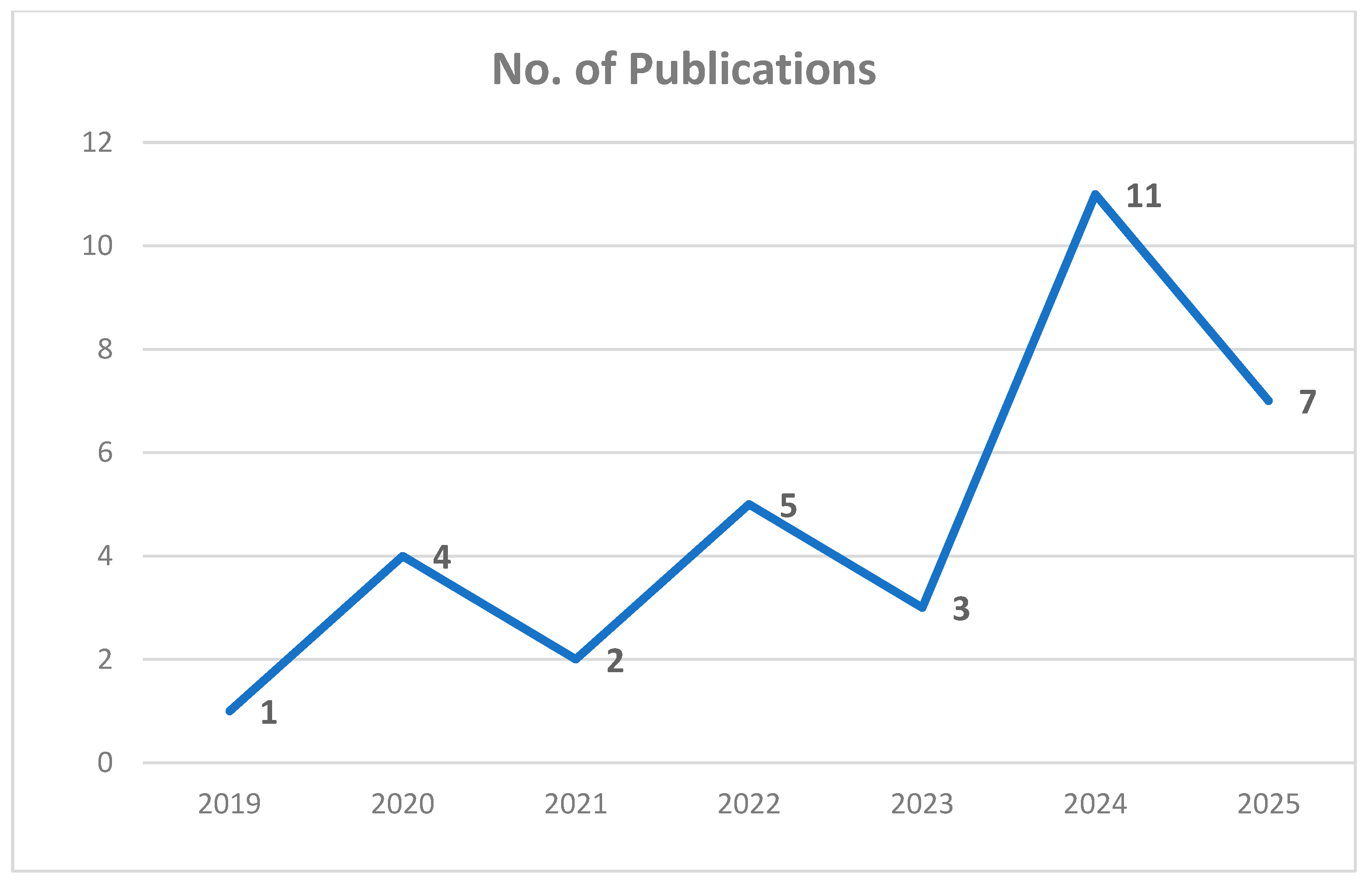
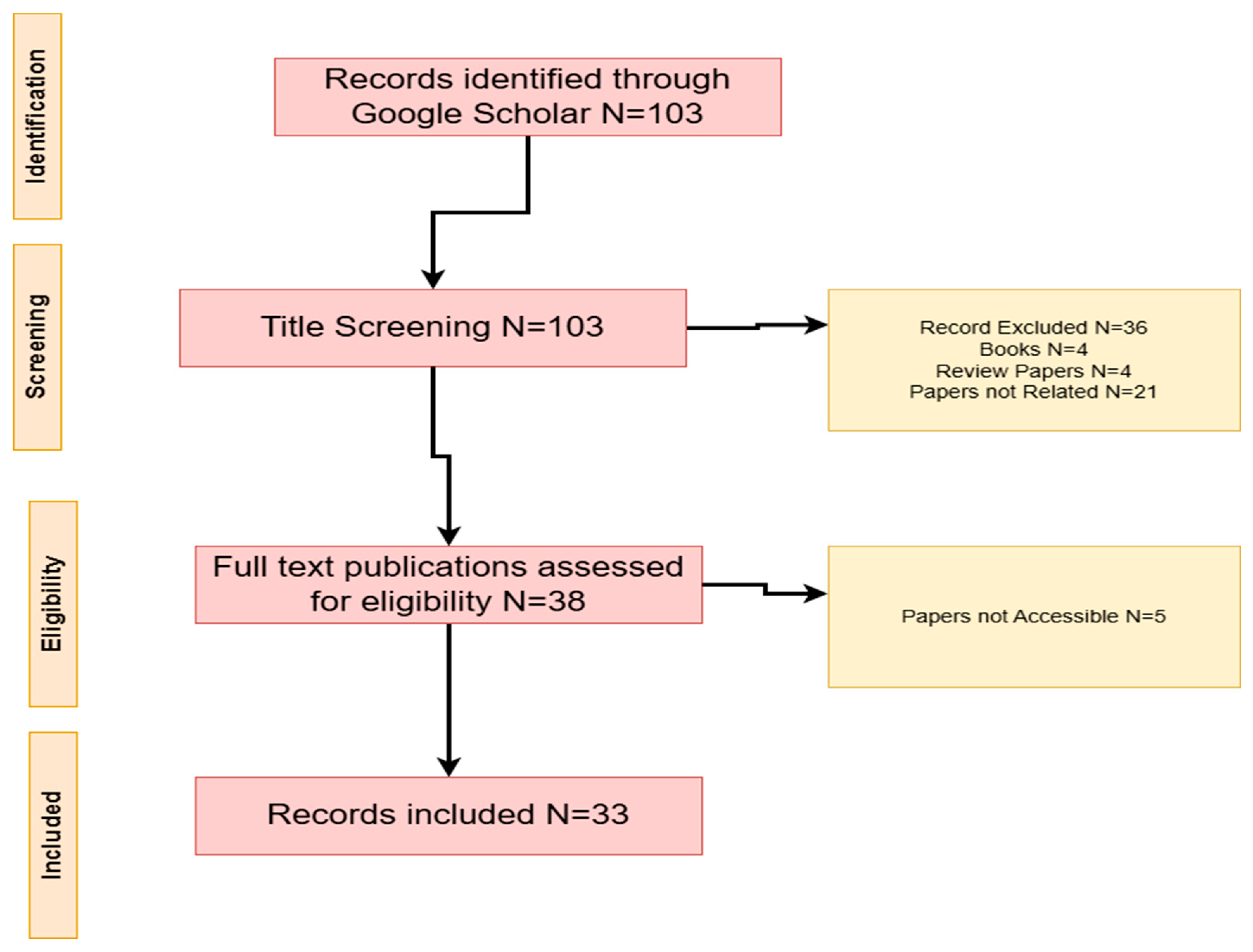
Based on this, we first filtered by title, then by abstract, and lastly by paper contents as follows. We eliminated thirty-six records since their titles did not meet our requirements. The results included four books and four review papers, but they were also eliminated. Twenty-one publications were also eliminated because the content was not aligned with the topic of cybersecurity in digital transformation. We only included publications that specifically addressed cybersecurity issues in the context of digital transformation because some were solely concerned with digital transformations, while others were only relevant to cybersecurity. Following that, thirty-eight records were evaluated for eligibility; however, five papers were not available and were therefore eliminated, leaving us with thirty-three records to include. Literature review methodology and year wise publication history is given in Figure 1 and Figure 2 respectively.

3. Results

This section contains the results of our investigation, which was based on the literature on the implications of cybersecurity in the entertainment sector.

3.1. Cybersecurity in Entertainment

Due to changing consumer habits, modern technology, and heightened competition, the global entertainment industry is rapidly changing. Social media, the gaming industry, music, live concerts, films, and OTT platforms are creating new opportunities. For instance, currently, the market for digital entertainment and communication is dominated by OTT platforms and VoIP services. As a fact, the global market for the Android TV (ATV) platform alone was $5.6 billion in 2023. In spite of this fact, security risks have increased as customers depend more and more on digital services for entertainment [13]. One noteworthy example in the entertainment sector is TikTok, whose extensive usage in the United States has sparked serious privacy and cybersecurity issues [14]. Hence, it is important to understand that cybersecurity plays a pivotal role in the entertainment industry, because it protects user information, proprietary information, and electronic assets from possible dangers [15]. A study by Fulton et al. [16] focused on how the entertainment industry’s fictional portrayal of cybersecurity is influencing the general public’s perception of the term computer security. To find out what people learned about this subject from mass media, such as television and movies, the writers conducted interviews. Their results demonstrated how entertainment and cybersecurity representations in movies and TV shows can work together to reshape a sound understanding of cybersecurity that reflects practical applications. Similarly, Shires [17] conducted a study about the implications of cybersecurity in entertainment. The author puts forward the concept of cyber-noir to capture the interaction between two discourses: an expert discourse of cybersecurity and a wider noir discourse circulating primarily in popular culture artifacts such as films, books, and television series. The study approaches this interaction from a post-structural perspective. Quyyum [18] presented the results of a co-design activity with ten children between 9 and 12 years to explore how children think about different cybersecurity issues and parents’ roles in those cybersecurity-related situations. Their findings show that children expect various adult roles to provide support to ensure their safety online and especially expect their parents to take a supportive role in cybersecurity experiences by informing them about the risks, offering suggestions on mitigating or protective measures, and helping them take protective measures or actions against any entity posing the risks. Overall, the study contributes to understanding children’s perceptions of cybersecurity and parental involvement through storytelling. Bischoff et al. [19] highlighted the importance of cybersecurity in the hospitality sector, especially for big, integrated hotels that host a lot of guests each year. The authors believe that in addition to causing immediate financial loss, cyberattacks on these locations may also cause operational interruption, erode consumer confidence, and harm the resort’s reputation. Due to the large concentration of integrated resorts, the Las Vegas resort corridor on the Strip offers a unique setting for hospitality cybersecurity, making it a prime target for hackers. The authors presented the case studies based on 2023 cyberattacks on Caesars Entertainment and MGM Grand, two well-known integrated resort enterprises in Las Vegas. A thorough analysis is conducted of the consequences of the crisis management procedures and remediation choices made by each resort. There is also a discussion of the implications for hoteliers and the hospitality sector. Stals et al. [20] investigated how the Serious Slow Game Jam helped young people between the ages of 11 and 16 who had no previous cybersecurity education learn about cybersecurity. Additionally, the results were validated and compared to earlier research that used the same SSGJ methodology with a different target demographic. Results indicate that after taking the Serious Slow Game Jam, participants’ trust in their understanding of cybersecurity increased for both groups. Free-text responses show that a quarter of young people have a better understanding of cybersecurity in general. Singh et al. [21] investigate how AI-powered cybersecurity capabilities can be included in Smart TVs to protect user privacy and secure connected devices, including home automation systems, smart speakers, and thermostats. Smart TVs are capable of real-time network traffic monitoring, vulnerability discovery, and cyber threat mitigation by utilizing sophisticated AI techniques such as anomaly detection, behavioral analytics, and federated learning. For instance, by proactively detecting and thwarting IoT-based botnet attacks such as Mirai, these solutions can stop illegal access to residential networks. Furthermore, Smart TVs can precisely categorize and enhance the functionality of linked devices thanks to AI-driven device typing, improving user experience and interoperability. Manufacturers have many options to profit from altering Smart TVs into reliable IoT hubs. Offering bundled IoT device packages, customized automation services, and premium AI-powered security subscriptions are examples of ethical monetization techniques that can increase income while putting customer trust first. Federated learning and edge computing are two privacy-preserving AI strategies that guarantee insights are made profitable without gathering unprocessed user data. Manufacturers are combining Smart TVs with complementary smart home products to create a seamless, secure environment, opening up opportunities for upselling and cross-selling. Partnerships with IoT developers and cybersecurity companies also increase revenue streams, guaranteeing long-term growth. AI-powered Smart TVs offer native, real-time protection without the need for typical IoT security solutions.

3.2. Digital Transformation in Sports

The sports sector, which is frequently linked to travel, telecommunications, and technology, has become a major force in the world economy and society [22]. The digital transformation of sports businesses has been essential to enhancing profitability and fostering high-quality development since the dawn of the digital era [23,24,25]. As more digital technologies are being incorporated into operations, fan interaction, and performance statistics, cybersecurity has become crucial [26]. Wearable technology, big data analytics, social media, and sensor technologies have completely changed how sports are played, evaluated, and enhanced in today’s connected world. But these changes have also posed security risks in the sports industry, which led to the implication of cybersecurity in this sector. The literature has demonstrated a number of attempts to address cybersecurity in the sports sector because of digital transformation. For instance, research emphasizes how important intrinsic mechanisms are in steering the sports sector toward digital change. It examines the nuances of organizational strategies, advertising methods, and problem analysis, highlighting their critical significance in creating successful market approaches [27]. With the help of case studies, emerging trends, and practical frameworks for industry-wide adoption, research also examines the critical role that technology plays in propelling the transition to a resilient, sustainable sports scene [28]. Al-Dosari [29] conducted a study to understand the cyber threats that might emerge at the Qatar World Cup in 2022. He also investigated ways to prevent these dangers. He used a variety of techniques, including principal component analysis (PCA), cross-sectional linear regression analysis, one-way ANOVA, and correlation frequencies, after relying on quantitative surveys to gather their data. After testing the hypothesis, he found that there is a high potential for cyberattacks on fans, sponsors, online ticket sales, and the FIFA website. He came up with a solution to this problem, which is engaging cybersecurity with machine learning and AI big data training to detect these threats so they can be prevented. Similarly, in another study [30] about the use of unmanned aircraft vehicles (UAVs) in Qatar’s mega sporting events, the authors developed a new UAV-based cybersecurity framework to ensure security in these events and prevent cyber threats. They conducted a survey to develop a UAV-based cybersecurity framework for the FIFA mega sporting event and to find out that traceability, security and privacy, trust, acceptability, and preparedness were positively correlated, which indicates the complexity of managing security in these events. Edelman et al. [31] discussed the importance of cybersecurity in the field of fantasy sports. They investigated the growth of daily fantasy sports in the United States and the cybersecurity concerns that appeared with it. The concerns are related to the customers’ privacy and identification, and platforms and servers’ security. Oconnor et al. [32] found that there is an opportunity to integrate e-sports and cybersecurity methods and then share this approach, experiences, materials, and lessons learned in developing their cybersecurity team to compete in the International Cyber Competition (ICC) to serve as a model to benefit the cybersecurity team for security competitions. Yadav et al. [33] explored the influence of cybersecurity on the semantic orientation of sports consumers. Focusing on both sport and e-sports, their study finds the social media factors contributing to the sentiment formation and commenting behavior on Twitter and proposes a scheme for attitude modulation through the identification of highly engaged nano-influencers. Additionally, Grow and Shackelford [34] found that professional sports leagues are realizing that cybersecurity is now affecting the boardroom, locker room, and playing field in addition to the government and tech companies. By analyzing the four main professional sports leagues in the United States, this article pioneers a new approach. Watchers et al. [35] carried out comprehensive interviews on the areas of cybersecurity, people security, and physical security with 12 participants from major U.S. professional sports teams. The study’s findings demonstrated a general awareness of and success with human and physical security, but they also showed a worrying lack of knowledge about cybersecurity hazards. This deficiency highlights how urgently the sports sector needs creative cybersecurity solutions to protect the safety and integrity of professional sports organizations in a challenging setting. Professional sports companies can improve their capacity to successfully tackle cybersecurity threats by implementing such creative strategies, protecting their operations and all parties concerned. Ivanova [36] examines the main cybersecurity issues that digital sports platforms confront and suggests thorough risk management techniques. Recently, cyber incidents were analyzed, current security frameworks were assessed, and a new threat detection and response algorithm was developed as part of the research. To guarantee the integrity and resilience of digital sports platforms, the results emphasize the significance of a multi-layered security approach, ongoing monitoring, and proactive risk management.

3.3. Intellectual Property Implications in the Movie Industry

Given the importance of cybersecurity, the protection of intellectual property (IP) in today’s digitally connected world cannot be overstated [37]. Due to the growing digitization of processes for production, post-production, sale, and screening, cybersecurity plays a crucial role in the film business. Mavani [37] carried out a study to determine the relationship between cybersecurity measures and IP asset management in various sectors. She examined current dangers, including hacking, data breaches, and internal threats that pose a serious risk to the confidentiality and integrity of intellectual property. Additionally, this study focuses on how emerging and existing technologies and initiatives can be used to avoid and manage threats; pertinent topics covered include encryption, access controls, and consciousness monitoring, which are important IP shield principles. By examining case studies and current industry practices, this work aimed to identify significant cybersecurity benchmarks and creative concepts that the company should adopt and implement to lower vulnerability and safeguard the long-term security of its priceless intellectual property. Potluri et al. [38] discussed online copyright infringement, which is related to mass media creation. They suggest that online copyright infringement can now be seen as a cybersecurity threat that needs to be looked at as a serious crime to be prevented. They conducted a study to investigate the forms of this issue, the reason for it to be considered a cybersecurity threat, and how it can be blocked. They collected data from case studies and relied on questionnaires to understand the perspectives of this issue from intellectual property owners about online copyright infringement. They found out that once the intellectual property is created online and is accessible to the masses, it can become a cybersecurity threat. Noerhadi [39] aimed to analyze the violation of IPR in the context of cybercrimes in Indonesia, particularly those where foreign investors are involved, and an alternative arbitrary mechanism was adopted. The data was collected through a review of archives, the previous literature and the government regulations that regulate foreign arbitration in international agreements. Alam et al. [40] highlighted that the production and dissemination of digital films has changed for the sake of efficiency, innovation, and global accessibility. However, it has brought with it a number of cybersecurity issues, including data breaches that reveal private or business information, resulting in identity theft, harm to one’s reputation, and monetary loss. In addition to digital distribution network vulnerabilities, the film business also faces the issue of intellectual property theft during the production process. Their study focuses on cybersecurity as a crucial element of digital film properties, covering ransomware, insider threats, and piracy. They argued for robust security designs by using real-world case studies and learning about the state of the digital film ecosystem. The study offers workable answers, including DRMs, cutting-edge encryption, and emerging technologies like blockchain and artificial intelligence (AI)-based cybersecurity. All things considered, this study demonstrates the necessity of a comprehensive cybersecurity strategy to safeguard the future of digital filmmaking and distribution. Rasoti [41] highlighted that the film industry has been impacted by generative artificial intelligence (or “AI”) and is investigating its possible applications. On the one hand, film studios have taken enforcement measures through legal action after identification of issues, and they have started to include warnings against unauthorized third-party uses of their material, including for AI training. From the standpoint of the film business, their study maps and critically assesses pertinent concerns pertaining to the creation, use, and deployment of AI models. Their study suggested that exclusive rights under copyright and related rights may be applied when AI models produce infringing outputs, such as simply mimicking style or regurgitating input material. Both the model developer or provider and the model’s user may be held liable as a result. Due to the latter factor, it may eventually be determined that clauses that disclaim any such obligation are ineffectual against rightsholders and unenforceable against users. The goal of the study by Afan et al. [42] is to provide a sophisticated IPTDS framework for identifying online intellectual property theft. The main goals of the framework’s training, which uses data up to October 2023, are improved detection reliability, lower false positive rates, and optimal computing efficiency to handle contemporary data scales. Python is used to implement the IPTDS framework, which makes use of contemporary web technologies and algorithms. Existing literature, accepted procedures, and real-world situations serve as its guiding principles. Important measures, including detection rate, false positive rate, and computing efficiency are used to evaluate performance. The suggested IPTDS greatly lowers false positives while outperforming state-of-the-art systems in terms of detection accuracy, according to the results. Its practical relevance is further confirmed by the fact that it satisfies computational efficiency criteria. Celestine [43] highlighted that the importance of intellectual property (IP) law in protecting innovations has increased due to the digital economy’s quick development, especially in a multinational marketplace. This study investigates how well-suited current intellectual property (IP) regulations are for safeguarding digital assets, the function of cutting-edge technologies like blockchain and artificial intelligence (AI), and how international collaboration might improve cross-border enforcement. The study examined statistical trends from 2019 to 2023 using a secondary data research design, taking into account technological developments, legal case studies, and regulatory frameworks. Strong intellectual property rules and lower rates of infringement were found to be significantly correlated by a chi-square test (p = 0.0012). While an ANOVA test (F = 9.34, p < 0.01) showed that countries that participate in several international treaties have greater compliance rates, regression analysis (R2 = 0.81) showed that blockchain implementation considerably improves IP security. The results show that even though technology-driven solutions enhance enforcement, there are still legal gaps, especially in developing nations. Businesses are encouraged to incorporate blockchain-based patent authentication and AI-powered monitoring, and legislators should advocate for stronger IP regulations and standardized international standards. The study emphasizes that to successfully handle digital IP issues, law enforcement must continue to innovate.

3.4. Live Streaming Media and Digital Transformation

Live streaming media is one of the entertainment forms that is getting very popular in many sectors such as sports, e-commerce, live shopping, gaming, education, e-learning, fitness and lifestyle etc. It is supported by a variety of innovative technologies and is utilized in various forms throughout businesses, not basic video transmission. For instance, slow live streaming of locations is a new tourist technology that provides a real-time, low-narrative picture of the site [44]. Moreover, millions of people use free live streaming sites, frequently interacting with these risky platforms due to the thrill of live events. Despite the widespread use, these platforms are dangerous and are prone to cyber threats frequently and the need for cybersecurity in this domain is essential [45]. Faragallah et al. [46] conducted a study on multimedia cybersecurity applications. Their focus was to introduce a cybersecurity framework that protects video streaming throughout the internet. They investigated an efficient cybersecurity framework for protecting high-efficiency video coding (HEVC) frames. They carried out an investigation for the selection of a (HEVC) cybersecurity framework based on watermarking and selective encryption to maintain copyright protection and confidentiality for the transmitted information. According to their findings, HECV SE is the most fitting algorithm against these attacks, which relies on watermarking schemes and selective encryption. Hwang et al. [47] studied the cyber threats that may appear in live streaming services in South Korea, since they rely on peer-to-peer schemes instead of relying on authenticated servers to deal with reducing the traffic loads. Their study focused on identifying the vulnerabilities of grid computing systems. They did an analysis on the vulnerabilities of grid computing-based live streaming services by doing an experiment on configuring system threats, data flow analysis, and STRIDE-based threat modeling. They proposed a three-step vulnerability discovery framework since the need for authentication between the users and the data integrity is crucial for using grid computing systems. Similarly, Faragallah et al. [48] introduced a scheme for self-embedding-based High-Efficiency Video Coding (HEVC) transmission and an integrity verification framework is presented. This framework is robust and reliable for verifying the integrity of HEVC frames transmitted through insecure communication channels. Hussen et al. [49] aimed to improve the efficiency of the full-stream big data framework for cybersecurity by integrating two parallel optimization algorithms: Adam and RMSprop. Alam et al. [40] focus on cybersecurity as a crucial element of digital film properties, covering ransomware, insider threats, and piracy. They also argue for robust security designs by using real-world case studies and learning about the state of the digital film ecosystem. The study offers workable answers, including DRMs, cutting-edge encryption, and emerging technologies like blockchain and artificial intelligence (AI)-based cybersecurity. All things considered, this study demonstrates the necessity of a comprehensive cybersecurity strategy to safeguard the future of digital filmmaking and distribution, i.e., studios should concentrate on incorporating state-of-the-art cybersecurity tools into their workflows, especially IoT device management and secure cloud collaboration. Furthermore, to combat common assaults and develop comprehensive security solutions, cybersecurity experts, technology suppliers, and the film industry must work together.

3.5. Digital Transformation and Online Gambling

The growth of internet gambling around the world brings numerous ethical and legal issues into light. Serious issues regarding cyber fraud are raised by theft, fraud, and money laundering through online gambling. In order to legitimize illicit gains and finance terrorists, fraudsters utilize contemporary financial services and products offered by banking organizations [50,51]. Therefore, another domain that needs implication of cybersecurity is online gambling. Min et al. [52] focused on and discussed the issue of illegal online gambling and the cyber threats that accompany it. They came up with a new system to detect SMS spam. The system extracts the URL information from the SMS that is classified as spam. They collected phone numbers that are prone to receiving SMS spam, and they applied machine learning algorithms to the dataset to classify them. The result of this research is a new system: a readable transformation technique that can distinguish and interpret the disguised spam URL to protect users from cyber threats that are caused by illegal online gambling. A study by Min and Lee [53] used data collected from public websites and a machine-learning-driven methodology to develop the idea of absolute unlawful online gambling (AIOG). The suggested approach categorizes important features such as URLs (Uniform Resource Locator), WHOIS, INDEX, and landing page information by analyzing 11,172 websites to identify illicit online gambling. The suggested model provides the ensemble combination of attributes for high detection performance, with the verification of common qualities from metadata in online gambling by combining text and picture analysis with a machine learning-driven methodology. Their finding proposes a dynamic utilization of resource techniques to improve the current setting’s precision for classification. Consequently, by continuously updating data to accomplish content-based filtering, this technique broadens the application of hybrid web mining. Another study [54] improves the ability to identify and quickly notify authorities of hidden gambling adverts within Thai university domains in response to the growing problems caused by online gambling, especially its intentional promotion on university websites. Authors developed a simplified approach using Beautiful Soup for thorough retrieval and evaluation of current gambling ads by utilizing methodical URL extraction from Google search results. Their solution quickly alerts network administrators to hidden gaming activities when combined with automatic reporting methods. Harahap et al. [55] highlighted that various educational institutions have been the target of numerous cases of web defacement in the form of online gambling sites. These occurrences pose serious risks to these institutions’ reputation and integrity, making the creation of a detection system necessary. A network software program called an intrusion detection system (IDS) was developed by authors to keep an eye on traffic and spot potentially dangerous activity. An IDS that is frequently used, Suricata, is essential to this procedure. Strictly constructed criteria based on attack patterns are necessary for Suricata to detect online gambling web defacement. These patterns were based on a list of thirty keywords that are frequently connected to online vandalism in academic settings. The bigram TF-IDF (Term Frequency-Inverse Document Frequency) approach is first used to extract the keywords. A Chi-square test is used to evaluate the statistical significance of each keyword’s correlation with defaced web pages to further improve the precision of this keyword collection. With a True Positive Rate (TPR) of 0.95, a True Negative Rate (TNR) of 0.99, a Positive Predictive Value (PPV) of 0.99, a Negative Predictive Value (NPV) of 0.96, an overall accuracy of 0.97, and an F1-Score of 0.97, the improved rules have demonstrated their excellent efficacy.

3.6. Digital Games and Technological Advancements

By linking millions of players globally through cloud-based platforms, multiplayer settings, and mobile applications, the online gaming business has expanded to become one of the biggest industries in the digital economy. However, due to their popularity and handling of sensitive data, a variety of games and gaming systems are susceptible to cybersecurity threats [56]. In this context, all users, specifically children and teenagers, are increasingly vulnerable to the dangers of online gaming in today’s fast-paced, heavily internet-driven environment. Although parental control solutions are available on many platforms, their efficacy is still dispersed because of poor implementation, technological constraints, and changing online risks [57]. Therefore, in order to safeguard player data, digital assets, and the integrity of gaming systems, cybersecurity is crucial in online gaming [58]. Zolkiffli et al. [59] conducted a study on Malaysian online gamers to examine their knowledge and behavior against cybersecurity threats. They evaluated and analyzed the awareness of those gamers from different social media (Facebook, Discord, Twitch, and Twitter) to propose a framework to evaluate online gamers awareness. The study was done by going through articles related to cybersecurity vulnerabilities in online games; they also conducted a quantitative analysis to outline the characteristics of the respondents using Excel and Statistical Package for Social Sciences (SPSS). According to their findings, the financial factor is the main driver of online game cybercrimes, and the lack of gamers awareness of the importance of cybersecurity is causing it. Tian et al. [60] studied the data security governance strategy based on the tripartite evolutionary game involving three core subjects: digital service platforms, third-party testing organizations, and government regulators. These subjects play different roles in the process of data security governance, and the game and cooperation among them have a crucial impact on enhancing the effectiveness of data security governance. Alexander et al. [61] explored the dynamic intersection of the media and entertainment industry with a focus on online video games and the components that drive the sector’s development of gaming platforms and monetization strategies through e-games to come up with more robust security measures. Fakhru et al. [62] conducted a study to explain the theory of reasoned action to predict human behavior. It encompasses belief, attitude, and subjective norm elements that can shape an individual’s intention to engage in a particular behavior. Interviews were conducted with electronic game addicts and bullies through these sites, and it became clear that they need to strengthen the legislative framework, the need to build the moral and ethical capabilities of the individual, and increase awareness and education about the dangers of cyberbullying. ANN model for cyber-risk management for DDoS attacks in massively multiplayer online gaming in this study, the six kinds of DDoS attacks that we analyze for cyber-risk exploit different IT assets and deny access to various IT ecosystem components. DDoS attacks chiefly disrupt the “availability” aspect of the CIA triad, but hackers may also tamper with information, and steal credentials. Sharma and Mukhopadhyay [63] used a dataset of DDoS attacks in the MMOG industry captured by a popular CDN through a cybersecurity service. The dataset contains 10,329 records with six attack attributes each. Features: These are bits per second (bps), packets per second (pps), start timestamp, end timestamp, and attack type. It indicates the severity of the attack, its duration, and the Internet protocol used to implement it. Ibrahim [64] clarifies important topics including data protection, fair play, and intellectual property security, while highlighting the crucial role that cybersecurity plays in the gaming industry. They explored how stakeholders, developers, and gamers all have a shared obligation to preserve the integrity of the gaming industry. Strong authentication procedures, frequent upgrades to fortify defenses, and the necessity of cooperation are some of the salient features. According to them, cybersecurity continues to be the key that protects the gaming experience’s vitality in this dynamic environment. Moreover, they are of the opinion that the gaming community can create a secure atmosphere that maintains the fun and friendship that are essential to the gaming world by working together to combat new dangers. With an emphasis on the examination of typical threats like ransomware, DDoS attacks, and data breaches, a study by Sztamary et al. [58] attempts to explore the cybersecurity issues that are frequent in the gaming sector. The study examines possible remedies and emphasizes their effects on gamers and gaming firms. They believe that strong cybersecurity measures, such as cutting-edge anti-cheat software, frequent security audits, and community education are essential, according to the report. Proactive security tactics are crucial, as evidenced by successful mitigation initiatives like Riot Games’ DDoS defenses and Nintendo’s adoption of two-factor authentication. In order to prevent cybercrime and safeguard intellectual property, legal action and regulatory compliance are also essential. Establishing a culture of security awareness and working with cybersecurity specialists are crucial actions for the sector. Guo et al. [65] highlighted the widespread adoption of virtual reality in developing metaverse applications. According to them, the majority of virtual reality operating systems (OSs) are based on off-the-shelf mobile operating systems (like Android). As a result, VR apps inherit traditional mobile apps’ privacy and security features. Authors created the VR-SP detector for VR apps, a tool for evaluating security and privacy. Program static analysis tools and privacy-policy analysis techniques are combined into the VR-SP detector. Using the VR-SP detector, they do an extensive empirical analysis of 500 well-known VR applications. They use the Meta OculusQuest 2 device to extract APK files after obtaining the original apps from the well-known Oculus and SideQuest app stores. Through VR app analysis, taint analysis, and privacy-policy analysis, we assess these VR apps’ security flaws and privacy data leakage. They discovered that there are several security flaws and privacy breaches in VR applications. Furthermore, their findings also show that many apps’ privacy policies contain contradictory statements. Guo et al. [66] emphasized that children and teenagers are playing more and more online user-generated content games (UGCGs) for social connection and more imaginative online pleasure. They do, however, increase the likelihood of being exposed to explicit material, which is causing worries about children’s and teenagers’ internet safety to grow. The authors investigated the dangers of illegally promoting dangerous UGCGs. The 2924 photos in the real-world dataset show a variety of violent and sexually explicit content that is utilized by the game developers to market UGCGs. They developed a state-of-the-art system, UGCG-Guard, to help social media platforms detect photos used for illegal UGCG promotions. This system uses chain-of-thought (CoT) reasoning for contextual identification, recently introduced big vision–language models (VLMs), and a novel conditional prompting technique for zero-shot domain adaptation. With an accurate rate of 94% in identifying these photos used for the illegal promotion of such games in real-world situations, UGCG-Guard produces exceptional results. By suggesting a training program that includes pre-game and post-game phishing assaults, pre-game and post-game surveys, and an interactive zero-day game with embedded threat scenarios, Amara et al. [67] raised the cybersecurity awareness of the staff. In addition, they provide five flowcharts that mimic typical cyberattacks. There were five stages in the zero-day game. Employees were trained to use difficult passwords at the first level. Social engineering attacks were covered in two stages: one teaches staff members about dubious links and online survey tactics, and the other teaches gamers about the company’s security procedures. The fourth level informs staff members about malware that is distributed through spoof programs. The final stage informed staff members about phishing email scams. In order to help players complete the various game levels, they also created a chatbot within the game. Additionally, to gauge the employees’ level of awareness regarding cybersecurity issues, two questionnaires and two phishing attacks are conducted. Twenty-three staff were enrolled in the zero-day cybersecurity awareness training. According to experimental findings, the zero-day cybersecurity awareness campaign outperforms conventional awareness programs in terms of effectiveness and engagement. The findings also showed that the suggested program measures and raises employees’ level of cybersecurity knowledge. Sanghvi et al. [68] indicated that artificial intelligence (AI), blockchain technology (BC), and Web 3.0 are revolutionizing multiplayer online gaming in the metaverse. There are safety and inclusive issues with this development. The peace of these online groups is seriously threatened by hate speech. The enormous amount of user-generated content is too much for traditional moderation techniques to handle, so creative solutions are required. Their research suggests a brand-new architecture called MetaHate that uses AI and BC to identify and stop hate speech in metaverse online gaming contexts. Gradient boosting is the most successful machine learning (ML) model, with an accuracy of 86.01%, when used to evaluate datasets containing mixed Hindi and English codes. AI systems play a key role in spotting hazardous language trends, while BC technology guarantees openness and user responsibility. Additionally, a smart contract built on BC is suggested to help regulate hate speech in the game chat. The safety and inclusivity of the metaverse can be greatly improved by integrating AI and BC, highlighting the significance of these technologies in the continuous fight against hate speech and in promoting user participation. This study highlights the necessity for ongoing development and implementation of these technologies while demonstrating the possibility for AI and BC to work together to create a safer metaverse. Ni [69] highlighted that due to the multitude of sensors included in VR headsets, virtual reality (VR) technology, which is widely used in social networking, gaming, and online collaboration has sparked serious security concerns. Their research highlights several of our current studies that investigate sensor weaknesses in VR headsets and suggests suitable countermeasures. They pay particular attention to three kinds of embedded sensors included in VR headsets: eye-tracking, optical, and unconstrained motion sensors. The possible attacks that could take advantage of these sensor vulnerabilities are described in their analysis. They also go into detail on how to create and put into place efficient defenses against these dangers. Overview of studies included are given in Table 1.

4. Discussion

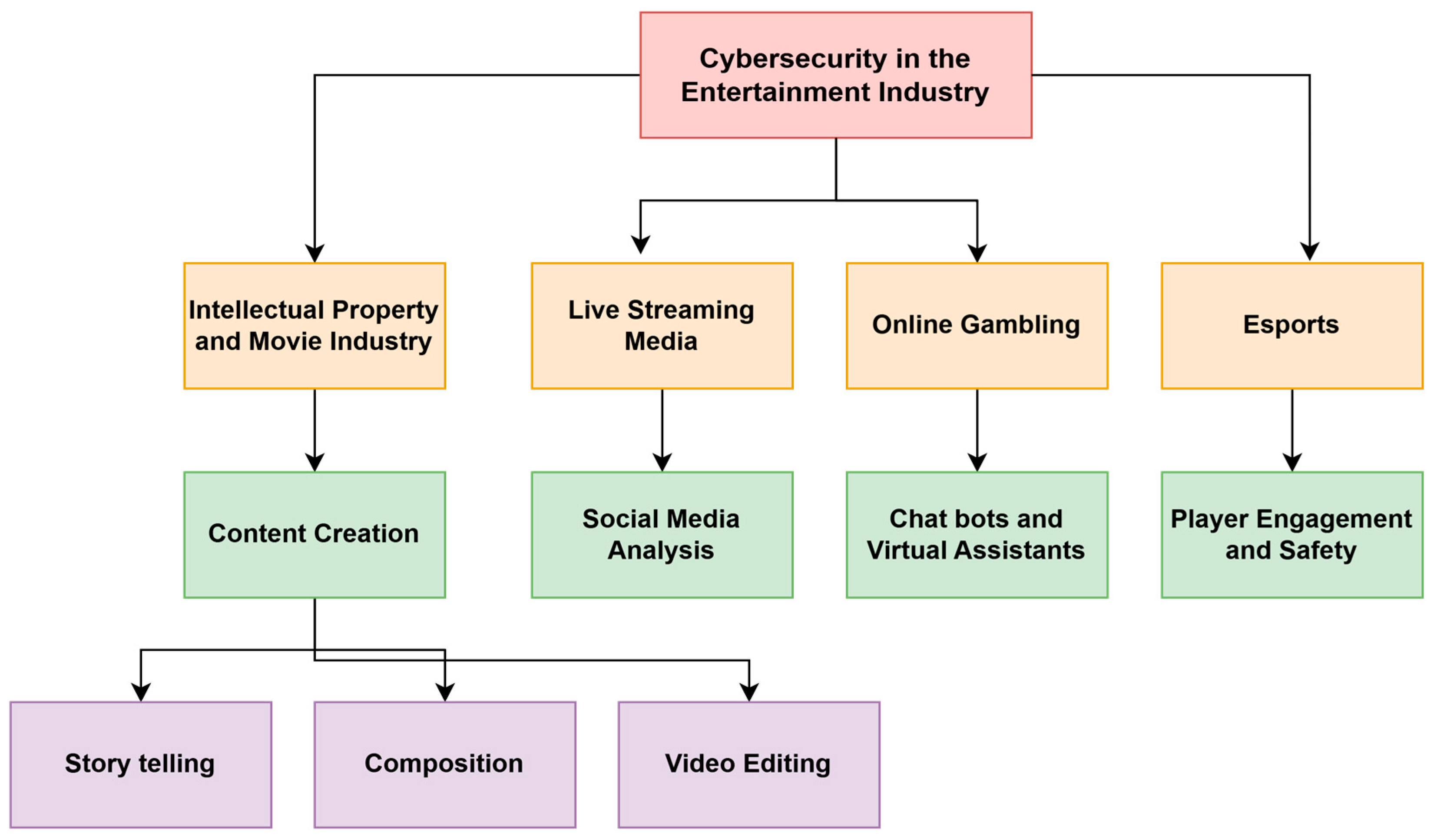
In this literature review, some articles highlight the cyber threats that could occur with technological advancement in the entertainment industry, such as video games, sports, movies, live streaming, and other domains. For instance, in the sports sector, the authors [43] wrote about using drones to ensure the safety of the spectators and how these drones may be vulnerable to cyberattacks. In the movie industry, the authors [34] focused on the field from the intellectual property perspective, stating that violating IP rights online can be considered a form of cybersecurity attack. Also, in live streaming media, the authors [36] showed that the frames that are being encrypted may be prone to cyberattacks; furthermore, online gambling sites are struggling with cyber threats through SMS spam [40]. Video games can be exposed to cyberattacks through online games and the players’ lack of awareness of how dangerous cyber threats can be [46]. All these examples pointed out the demand for using technology in the entertainment industry and the importance of cybersecurity. We can categorize the relevant aspect in a taxonomy as shown in Figure 3:
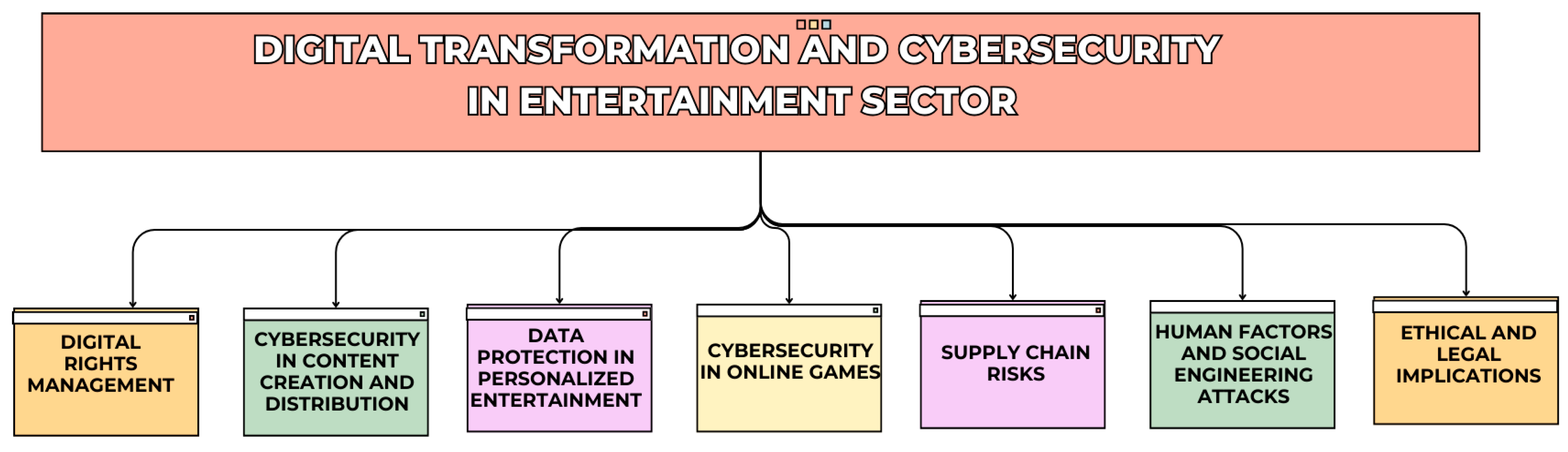
Based on our analysis, we come up with key cybersecurity challenges in the entertainment sector as shown in Figure 4. Managing intellectual property rights in the entertainment sector has become more complex due to the digital transformation in this sector. There is a need to develop robust encryption and watermarking mechanisms to secure the content during the visual effects (VFX) and special effects (SFX) pipeline [70]. Quantum cryptography [71,72], blockchain-based applications [73] and AI-based automated privacy detection technologies [74] can help entertainment sector in fostering digital rights management [75].
Additionally, AI can be used in dynamic content creation; it can use the players’ data to generate environments and gameplay that suit their preferences, and based on their reactions, the content can be made to analyze and understand the cyber threats that online players often encounter [76]. In the movie industry, AI can be used in a variety of ways for content creation by using OpenAI. For instance, in storytelling, AI can find successful plot patterns and give suggestions to writers to improve their story development, which also applies to music composition and video editing; however, this can also cause concerns regarding intellectual property and creative integrity if not used ethically. Such adoption [6] also needs to be secured to ensure that recommendation engines and content management systems are secure from adversarial attacks. Furthermore, in the case of live events, the probability of cybersecurity attacks increases [77]; therefore, for smart stadiums, theaters, concert halls, etc., creating live feeds should have appropriate security controls involving internet of things (IOT) components [78,79]. As a result, deploying state-of-the-art cybersecurity solutions is another critical challenge to optimize security as well as performance overheads to avoid latency. Furthermore, the majority of content editing, rendering, and storage relies on cloud-based technologies in the entertainment sector [80,81], so it is critical to explore appropriate security models for effective sharing of security responsibilities among content creators, entertainment houses, and cloud providers.
In order to improve user experiences, entertainment applications have developed user customized features [81,82,83] which store large amounts of user data. Therefore, there is a need to comply with data protection regulations such as GDPR [77] as well as adopting secure protocols and techniques to protect this data. Similarly, in the sports sector, AI can play a notable role in enhancing spectator engagement and experience by using interactive content generation to create more immersive environments and platforms [84,85]. Such data analytics applications analyze users’ behaviors, so this user data needs to be secured against unauthorized access. Online video games use AI as well. AI can be used to analyze the players’ data in real time and automate the process of detecting cyber threats to avoid encountering unwanted events for the players and securing game servers. Chatbots and virtual assistants are using AI heavily to interact, understand and help users when they are applying to websites. Online gambling sites can benefit from this approach to assist users and help them avoid cyber threats that may appear. Adoption of these technologies significantly improves user experience but is vulnerable to cybersecurity attacks such as Denial of Service [86], piracy and theft of digital artifacts [87] as well as the personal information of stakeholders [88]. Appropriate identity and access management [89], advanced encryption software [90], and behavioral analytics of users can enhance the trust of users in the digital gaming ecosystem [91].
Furthermore, content creators, studios, distribution partners, digital technology providers, infrastructure and service providers and other stakeholders actively collaborate in the entertainment sector which brings into account different supply chain security risks [92]. Therefore, vendor risk assessment processes, cybersecurity segregation across supply chain partners and continuous cybersecurity surveillance become very critical to secure the complete ecosystem against service disruptions, intellectual property theft, and unauthorized access [93]. Cybersecurity literature has highlighted humans as the weakest link; therefore, human factors and social engineering implications [93] have gained special attention. Cybersecurity awareness [94], multifactor authentication, and security-first organizational culture need to be prioritized in digital entertainment ecosystems. Digital transformation has also resulted in challenges in differentiating between real and fake content like deep-fake technology [95]. Considering the use of AI in audience engagement through social media interactions in live streaming, AI can aid cybersecurity in this context. Adoption of cybersecurity technologies should also be balanced with user rights and transparency [21]. Furthermore, in the digital entertainment sector, there is a need to align cybersecurity practices with legal frameworks for regulatory compliance [96,97].

5. Conclusions

Digital transformation has fundamentally altered entertainment, organizational processes, and human labor behaviors. This transition has not only led to advancements in the entertainment industry, but it has also introduced cybersecurity dangers. With an increasing number of cybersecurity threats and vulnerabilities, it is imperative to implement agile cybersecurity procedures and tools. Cybersecurity concerns in the domains of e-sports, live streaming, the movie industry, and gambling have been the subject of numerous studies; however, we carried out a rigorous study to expand this body of knowledge. We have provided a taxonomy of connected topics and issues in order to improve the cybersecurity challenges. We connected these difficulties to results from earlier research, exhibiting good evidence-based alignment. Furthermore, the results clearly show how the suggested method might help various entertainment industries, enhancing the synthesis’ overall efficacy, consistency, and critical depth. The results will also offer researchers and practitioners an intriguing study agenda to investigate within this field as well.

Author Contributions

Conceptualization, H.G. and S.S.; methodology, S.Z.I., S.A.M.A., and M.S.H.; validation, S.S., M.S. and S.Z.I.; data curation, M.S.H.; writing—original draft preparation, M.S.H., S.A.M.A., H.G. and S.S.; writing—review and editing, M.S., S.A.M.A. and S.Z.I.; supervision, S.S.; project administration, S.S. All authors have read and agreed to the published version of the manuscript.

Funding

This research received no external funding.

Institutional Review Board Statement

Not applicable.

Informed Consent Statement

Not applicable.

Data Availability Statement

There is no new data for this study. However, internal working data for paper collection can be acquired upon request from the corresponding author.

Conflicts of Interest

The authors declare no conflicts of interest.

References

  1. Bataiev, S.; Maidanevych, L.; Snieosikov, O.; Yemelianov, S.; Kharytonov, O. Digital Transformation: Cybersecurity in the Age of Digitization. OIDA Int. J. Sustain. Dev. 2025, 18, 187–198. [Google Scholar]
  2. Nelsa, P.; Paradita, A.X.; Hermawan, F.F.; Ghifari, M.Y.; Lubis, M. Netflix’s Digital Transformation Strategy: A Systematic Review of Challenges and Risk Mitigation Approaches. JIPI (Jurnal Ilm. Penelit. dan Pembelajaran Inform.) 2025, 10, 1133–1143. [Google Scholar] [CrossRef]
  3. Putra, A.; Firnanda, A.; Gunawan, M.A.F.; Batubara, S. Media Technology Innovation in the Transformation of the Entertainment Industry. J. Inf. Technol. Comput. Sci. Electr. Eng. 2024, 1, 60–62. [Google Scholar]
  4. Saeed, S.; Suayyid, S.A.; Al-Ghamdi, M.S.; Al-Muhaisen, H.; Almuhaideb, A.M. A Systematic Literature Review on Cyber Threat Intelligence for Organizational Cybersecurity Resilience. Sensors 2023, 23, 7273. [Google Scholar] [CrossRef] [PubMed]
  5. Iliescu, D.; Ioanid, A. Streaming ahead: Technological innovations redefining new product development in the entertainment industry. J. Entrep. Sustain. Issu. 2024, 11, 227–237. [Google Scholar] [CrossRef]
  6. Prasad, R.; Makesh, D. Impact of AI on Media & Entertainment Industry. In Media & Journalism Transformations-Emerging Trends and Paradigm Shifts; Eureka Publications: Pune, India, 2024; pp. 41–71. ISBN 978-81-19567-30-0. [Google Scholar]
  7. Saeed, S. Practice based Computing for Sustainable Digital Transformation. In Proceedings of the 2024 International Conference on IT Innovation and Knowledge Discovery (ITIKD), Manama, Bahrain, 13–15 April 2025; IEEE: New York, NY, USA, 2025; pp. 1–2. [Google Scholar]
  8. Saeed, S. Digital Transformation in Governmental Public Service Provision and Usable Security Perception in Saudi Arabia. Information 2025, 16, 247. [Google Scholar] [CrossRef]
  9. Saeed, S.; Gull, H.; Aldossary, M.M.; Altamimi, A.F.; Alshahrani, M.S.; Saqib, M.; Zafar Iqbal, S.; Almuhaideb, A.M. Digital Transformation in Energy Sector: Cybersecurity Challenges and Implications. Information 2024, 15, 764. [Google Scholar] [CrossRef]
  10. Henen, B. Cybersecurity in the Digital Era: Between Digital Transformation and Protection Challenges. Law World 2025, 35, 111–125. [Google Scholar] [CrossRef]
  11. Saeed, S.; Altamimi, S.A.; Alkayyal, N.A.; Alshehri, E.; Alabbad, D.A. Digital Transformation and Cybersecurity Challenges for Businesses Resilience: Issues and Recommendations. Sensors 2023, 23, 6666. [Google Scholar] [CrossRef]
  12. Snyder, H. Literature review as a research methodology: An overview and guidelines. J. Bus. Res. 2019, 104, 333–339. [Google Scholar] [CrossRef]
  13. Singh, N.; Kumar, S. AI-driven cybersecurity strategies for ISPs: Balancing threat mitigation and monetization. In Proceedings of the 20th International Conference on Cyber Warfare and Security (ICCWS 2025), Williamsburg, VA, USA, 28–29 March 2025; Academic Conferences International Ltd.: South Oxfordshire, UK, 2025; Volume 20, pp. 689–698. [Google Scholar]
  14. Choi, S.; Thompson, L. Exploring the Impact of Media Awareness on Privacy Concerns Among Social Media Users: A Case Study of TikTok. J. Appl. Secur. Res. 2026, 21, 112–137. [Google Scholar] [CrossRef]
  15. Gull, H.; Saeed, S.; Alaied, H.A.K.; Alajmi, A.N.A.; Saqib, M.; Iqbal, S.Z.; Almuhaideb, A.M. Digital transformation of marketing processes, customer privacy, data security, and emerging challenges in fostering sustainable digital marketing. In Advances in Marketing, Customer Relationship Management, and E-Services; IGI Global: Hershey, PA, USA, 2024; pp. 71–88. ISBN 9798369366608. [Google Scholar]
  16. Fulton, K.R.; Gelles, R.; McKay, A.; Abdi, Y.; Roberts, R.; Mazurek, M.L. The Effect of Entertainment Media on Mental Models of Computer Security. In Proceedings of the Fifteenth Symposium on Usable Privacy and Security (SOUPS 2019), Santa Clara, CA, USA, 11–13 August 2019; USENIX Association: Santa Clara, CA, USA, 2019; pp. 79–95. [Google Scholar]
  17. Shires, J. Cyber-noir: Cybersecurity and popular culture. Contemp. Secur. Policy 2020, 41, 82–107. [Google Scholar] [CrossRef]
  18. Quayyum, F. Co-designing cybersecurity-related stories with children: Perceptions on cybersecurity risks and parental involvement. Entertain. Comput. 2025, 52, 100753. [Google Scholar] [CrossRef]
  19. Bischoff, J.; Garlington, J.; Erdem, M. What Happens in Vegas No Longer Stays in Vegas—Cybersecurity Attacks on Las Vegas Integrated Resorts. J. Hosp. Tour. Cases 2025, in press. [Google Scholar] [CrossRef]
  20. Stals, S.; Baillie, L.; Shah, R.; Ferguson, J.I.; Maarek, M. Evaluating and validating the Serious Slow Game Jam methodology as a mechanism for co-designing serious games to improve understanding of cybersecurity for different demographics Computer Standards & Interfaces mechanism for co-designing serious games to improve understanding of. Comput. Stand. Interfaces 2025, 92, 103924. [Google Scholar] [CrossRef]
  21. Singh, N.; Kumar, S.; Singh, T.; Kumar, P. Building Trust in Smart TVs: AI-Enhanced Cybersecurity for User Privacy and Ethical Monetization. In Proceedings of the 24th European Conference on Cyber Warfare and Security, Kaiserslautern, Germany, 26–27 June 2025; Academic Conferences International Limited: San Francisco, CA, USA, 2025; pp. 647–655. [Google Scholar]
  22. Saleh, H.M.; Thajeel, E.K. Transformations in the global sports industry: Reality challenges and investment prospects—The english premier league as a model. Multilateral 2025, 24, 224. [Google Scholar] [CrossRef]
  23. Chen, H. Digital transformation of sports enterprises and construction of governance performance evaluation indicators. Front. Soc. Sci. Technol. 2025, 7, 39–47. [Google Scholar] [CrossRef]
  24. Li, F.; Ren, H.; Yoon, J. Artificial Intelligence–Enhanced Analytics in Sport Communication: Advancing Environmental Sustainability Through Stakeholder-Centered Strategies. Int. J. Sport Commun. 2026, 19, 72–83. [Google Scholar] [CrossRef]
  25. Coşkun, A.; Öncül, U. Beyond usefulness: Unveiling the factors driving visitor acceptance of technology in sports museums. J. Consum. Mark. 2025, 43, 51–65. [Google Scholar] [CrossRef]
  26. Ráthonyi, G.; Éva, B.; Müller, A.; Kinga, R.-O. How Digital Technologies Are Changing Sport? Appl. Stud. Agribus. Commer. 2018, 12, 89–96. [Google Scholar] [CrossRef]
  27. Zhou, H.; Xiong, Z. Navigating the Digital Frontier: Inherent Mechanisms, Challenges, and Strategies for Sports Consumption Upgrade in the Digital Economy. J. Knowl. Econ. 2024, 16, 8687–8726. [Google Scholar] [CrossRef]
  28. Kaur, D.; Ahsan, M.; Gill, G.S. Digital transformation in the sports industry. In Advances in Finance, Accounting, and Economics; IGI Global: Hershey, PA, USA, 2024; pp. 65–90. ISBN 9798337305783. [Google Scholar]
  29. Al-Dosari, K. Identification and prevention of expected cybersecurity threats during 2022 fifa world cup in qatar. J. Poverty Invest. Dev. 2020, 5, 49–84. [Google Scholar] [CrossRef]
  30. AL-Dosari, K.; Deif, A.M.; Kucukvar, M.; Onat, N.; Fetais, N. Security Supply Chain Using UAVs: Validation and Development of a UAV-Based Model for Qatar’s Mega Sporting Events. Drones 2023, 7, 555. [Google Scholar] [CrossRef]
  31. Edelman, M.; Holden, J.; Wandt, A.U.S. Fantasy Sports Law: Fifteen Years after UIGEA. Ohio State Law J. 2022, 83, 117. [Google Scholar]
  32. Oconnor, T.; Brown, D.; Jackson, J.; Schmeelk, S.; Payne, B. Compete to Learn: Toward Cybersecurity as a Sport. J. Cybersecurity Educ. Res. Pract. 2023, 2023, 6. [Google Scholar]
  33. Yadav, J.; Misra, M.; Rana, N.; Singh, K. Exploring the synergy between nano-influencers and sports community: Behavior mapping through machine learning. Inf. Technol. People 2021. ahead-of-print. [Google Scholar] [CrossRef]
  34. Grow, N.; Shackelford, S.J. The sport of cybersecurity: How professional sports leagues can better protect the competitive integrity of their games. Bost. Coll. Law Rev. 2020, 61, 473. [Google Scholar]
  35. Watchers, S.; Fowler, B.; Smith, J. Beyond Gates and Metal Detectors: Understanding Security for Professional Sports Facilities. Sport. Innov. J. 2024, 5, 20–37. [Google Scholar] [CrossRef]
  36. Ivanova, S. Cybersecurity Challenges and Risk Management Strategies in Digital Sports Project Platforms. Int. J. Emerg. Trends Comput. Sci. Inf. Technol. 2022, 3, 23–31. [Google Scholar] [CrossRef]
  37. Mavani, C. The role of cybersecurity in protecting intellectual property. Int. J. Recent Innov. Trends Comput. Commun. 2024, 12, 529–538. [Google Scholar]
  38. Potluri, V.; Potluri, S.S.; Tummala, G.; Bolla, S. Online Copyright Infringement. Int. J. Eng. Res. Technol. 2021, 10, 127–133. [Google Scholar]
  39. Noerhadi, C.C. Cybercrimes and Alternative Settlement of Intellectual Property (IPR) Disputes in Indonesia. Int. J. Cyber Criminol. 2022, 16, 89–109. [Google Scholar] [CrossRef]
  40. Alam, M.; Khan, S.R.; Khan, I.R.; Siddiquee, A.Q. The Role of Cybersecurity in Digital Film Production and Distribution: Challenges and Solutions. CyberSystem J. 2024, 1, 9–20. [Google Scholar] [CrossRef]
  41. Rosati, E. The future of the movie industry in the wake of generative {AI}: A perspective under {EU} and {UK} copyright law. Comput. Law Secur. Rev. 2025, 59, 106207. [Google Scholar] [CrossRef]
  42. Afan, I.A.; Olugbenga, A.M.; Ohwo, O.B.; Onyinye, J.N.; Ibukun, A.O.; Jonathan, O.E.; Opeyemi, J.A. Implementation of an Intellectual Property Theft Detection System for Safeguarding Digital Content. Asian J. Comput. Sci. Technol. 2025, 14, 6–14. [Google Scholar] [CrossRef]
  43. Celestin, M. The future of intellectual property law in the digital age: How companies are protecting their innovations in A globalized market. Brainae J. Business, Sci. Technol. 2025. [Google Scholar] [CrossRef]
  44. Wang, S.; Zhang, L.; Li, Q.; Wang, Y. Slow live streaming of destinations: Enchantment and digital transformation in China’s sacred mountains. J. Destin. Mark. Manag. 2026, 40, 101064. [Google Scholar] [CrossRef]
  45. Muruganandham, N.; Sharma, Y.; Keshvadi, S. An In-Depth Measurement of Security and Privacy Risks in the Free Live Sports Streaming Ecosystem. J. Cybersecur. Priv. 2026, 6, 8. [Google Scholar] [CrossRef]
  46. Faragallah, O.; El-Shafai, W.; Sallam, A.; Elashry, I.; El-Rabaie, E.-S.; Afifi, A.; AlZain, M.; Al-Amri, J.; Abd El-Samie, F.; El-sayed, H. Cybersecurity Framework of Hybrid Watermarking and Selective Encryption for Secure HEVC Communication. J. Ambient Intell. Humaniz. Comput. 2022, 13, 1215–1239. [Google Scholar] [CrossRef]
  47. Hwang, S.-H.; Kim, G.-Y.; Myeong, S.-H.; Yun, T.-S.; Yoon, S.-M.; Kim, T.-H.; Euom, I.-C. Vulnerabilities of Live-Streaming Services in Korea. Sensors 2022, 22, 3766. [Google Scholar] [CrossRef]
  48. Faragallah, O.; Afifi, A.; El-sayed, H.; AlZain, M.; Al-Amri, J.; Abd El-Samie, F.; El-Shafai, W. Efficient HEVC Integrity Verification Scheme for Multimedia Cybersecurity Applications. IEEE Access 2020, 8, 167069–167089. [Google Scholar] [CrossRef]
  49. Hussen, N.; Elghamrawy, S.M.; El-desouky, A.L.I.I. A Fully Streaming Big Data Framework for Cyber Security Based on Optimized Deep Learning Algorithm. IEEE Access 2023, 11, 65675–65688. [Google Scholar] [CrossRef]
  50. Taubayev, B.R.; Seriev, B.A.; Issakhov, B.S. Gambling in the digital era and criminological challenges of crimes in online gambling. Bull. L.N. Gumilyov Eurasian Natl. Univ. Law Ser. 2025, 150, 176–190. [Google Scholar] [CrossRef]
  51. Mithun, M.; Khan, M.M.I.; Rahman, M.H. Nexus between Cybercrime Financial Fraud and Online Gambling in Bangladesh. Commonw. Cyber J. 2025, 3, 145. [Google Scholar]
  52. Min, M.; Lee, J.J.; Park, H.; Lee, K. Honeypot system for automatic reporting of illegal online gambling sites utilizing SMS Spam. In Proceedings of the 2021 World Automation Congress (WAC), online, 1–5 August 2021; pp. 180–185. [Google Scholar]
  53. Min, M.; Lee, D.A. Illegal Online Gambling Site Detection using Multiple Resource-Oriented Machine Learning. J. Gambl. Stud. 2024, 40, 2237–2255. [Google Scholar] [CrossRef]
  54. Teppap, P.; Tipauksorn, P.; Surathong, S.; Ponglangka, W.; Luekhong, P. Automating Hidden Gambling Detection in Web Sites: A BeautifulSoup Implementation. In Proceedings of the 2024 21st International Joint Conference on Computer Science and Software Engineering (JCSSE), Phuket, Thailand, 19–22 June 2024; IEEE: New York, NY, USA, 2024; pp. 132–139. [Google Scholar]
  55. Harahap, H.; Ridho, F. Detection of Online Gambling Web Defacement in University Domains Using Attack Signatures. In Proceedings of the 2024 International Conference on Artificial Intelligence, Blockchain, Cloud Computing, and Data Analytics (ICoABCD), Bali, Indonesia, 20–21 August 2024; pp. 73–78. [Google Scholar]
  56. Nardone, M. Games Targeted by Cybersecurity Attacks. In Cybersecurity Threats and Attacks in the Gaming Industry; Nardone, M., Ed.; Apress: Berkeley, CA, USA, 2025; pp. 51–79. ISBN 979-8-8688-1492-1. [Google Scholar]
  57. Mhavan, N.V.; Singh, P.R. A safe digital future. In Integrating Parental Consent and Child Engagement With Digital Protection Rules; IGI Global: Hershey, PA, USA.; MIT Art, Design, and Technology University: Maharashtra, India, 2025; pp. 137–162. ISBN 9798337327167. [Google Scholar]
  58. Szatmáry, K.S. Cybersecurity of the Gaming Industry. In Proceedings of the 2024 IEEE 22nd Jubilee International Symposium on Intelligent Systems and Informatics (SISY), Pula, Croatia, 19–21 September 2024; pp. 441–446. [Google Scholar]
  59. Zolkiffli, J.; Bakar, N.A.A.; Ya’acob, S.; Salehuddin, H.; Hussien, S.S. The Assessment of Online Games’ Cyber Security Awareness Level Based on Knowledge, Attitudes, and Behaviour Model BT—Knowledge Management in Organisations. In Proceedings of the Knowledge Management in Organisations. KMO 2023. Communications in Computer and Information Science; Uden, L., Ting, I.-H., Eds.; Springer Nature: Cham, Switzerland, 2023; pp. 314–328. [Google Scholar]
  60. Tian, Z.; Han, M.; Jiang, C. Research on platform data security governance strategy based on three-party evolutionary game. Heliyon 2024, 10, e36391. [Google Scholar] [CrossRef]
  61. Alexander, R.; Rana, M.E.; Tan, C.I. Navigating Dynamics, Challenges and Cloud-Powered Transformations in Online Video Game Immersion within the Entertainment Industry. In Proceedings of the 2023 IEEE 21st Student Conference on Research and Development (SCOReD), Kuala Lumpur, Malaysia, 13–14 December 2023; pp. 391–396. [Google Scholar]
  62. Fakhru, M.; Che, R.; Abdullah, N.A.; Saad, M.N. Prevention of Cyberbullying in Online Games: Intervention of Cybersecurity Strategies. Pak. J. Life Soc. Sci. 2024, 22, 285–299. [Google Scholar] [CrossRef]
  63. Sharma, K.; Mukhopadhyay, A. Kernel naïve Bayes classifier-based cyber-risk assessment and mitigation framework for online gaming platforms. J. Organ. Comput. Electron. Commer. 2021, 31, 343–363. [Google Scholar] [CrossRef]
  64. Ibrahim, A. Guarding the Future of Gaming: The Imperative of Cybersecurity. In Proceedings of the 2nd International Conference on Cyber Resilience, ICCR 2024, Dubai, United Arab Emirates, 26–28 February 2024; Institute of Electrical and Electronics Engineers Inc.: New York, NY, USA, 2024. [Google Scholar]
  65. Guo, H.; Dai, H.-N.; Luo, X.; Zheng, Z.; Xu, G.; He, F. An Empirical Study on Oculus Virtual Reality Applications: Security and Privacy Perspectives. In Proceedings of the ICSE’24: Proceedings of the IEEE/ACM 46th International Conference on Software Engineering, Lisbon, Portugal, 14–20 April 2024; pp. 1–13. [Google Scholar]
  66. Guo, K.; Utkarsh, A.; Ding, W.; Ondracek, I.; Zhao, Z.; Freeman, G.; Vishwamitra, N.; Hu, H. Moderating illicit online image promotion for unsafe user-generated content games using large vision-language models. In Proceedings of the SEC’24: Proceedings of the 33rd USENIX Conference on Security Symposium, Philadelphia, PA, USA, 14–16 August 2024; pp. 5787–5804. [Google Scholar]
  67. Abu-Amara, F.; Al Hosani, R.; Al Tamimi, H.; Al Hamdi, B. Spreading cybersecurity awareness via gamification: Zero-day game. Int. J. Inf. Technol. 2024, 16, 2945–2953. [Google Scholar] [CrossRef]
  68. Sanghvi, H.; Bhavsar, R.; Hundlani, V.; Gohil, L.; Vyas, T.; Nair, A.; Desai, S.; Jadav, N.K.; Tanwar, S.; Sharma, R.; et al. MetaHate: AI-based hate speech detection for secured online gaming in metaverse using blockchain. Secur. Priv. 2024, 7, e343. [Google Scholar] [CrossRef]
  69. Ni, T. Sensor Security in Virtual Reality: Exploration and Mitigation. In Proceedings of the 22nd Annual International Conference on Mobile Systems, Applications and Services, Tokyo, Japan, 3–7 June 2024; Association for Computing Machinery: New York, NY, USA, 2024; pp. 758–759. [Google Scholar]
  70. Rathi, P.; Budhani, S.; Upadhyay, G.M.; Vats, P.; Kaur, R.; Saini, A. Unmasking Deepfakes: Understanding the Technology, Risks, and Countermeasures. In Proceedings of the 2024 4th International Conference on Innovative Practices in Technology and Management (ICIPTM), Noida, India, 21–23 February 2024; pp. 1–6. [Google Scholar]
  71. Farooq, A. cryptography and network security The Role of Cryptography in Protecting Digital Content in the Entertainment Industry. Am. J. Cryptogr. Netw. Secur. 2025, 11, 11–15. [Google Scholar]
  72. Radanliev, P. Artificial intelligence and quantum cryptography. J. Anal. Sci. Technol. 2024, 15, 4. [Google Scholar] [CrossRef]
  73. Liyanaarachchi, G.; Viglia, G.; Kurtaliqi, F. Addressing challenges of digital transformation with modified blockchain. Technol. Forecast. Soc. Change 2024, 201, 123254. [Google Scholar] [CrossRef]
  74. Enrique, O.; Castro, L.; Deng, X.; Park, J.H. Comprehensive Survey on AI-Based Technologies for Enhancing IoT Privacy and Security: Trends, Challenges, and Solutions. Hum.-Centric Comput. Inf. Sci. 2023, 13, 39. [Google Scholar]
  75. Hallur, G.G.; Aslekar, A.; Prabhu, S.G. Digital Solution for Entertainment: An Overview of Over the Top (OTT) and Digital Media. In Digital Entertainment as Next Evolution in Service Sector: Emerging Digital Solutions in Reshaping Different Industries; Das, S., Gochhait, S., Eds.; Springer Nature: Singapore, 2023; pp. 35–53. ISBN 978-981-19-8121-0. [Google Scholar]
  76. Oliveira, C.V.; Rito, P.N. Enhancing Player Experience Through Generative Artificial Intelligence: Custom Interaction in Game Design BT—Videogame Sciences and Arts; Marto, A., Prada, R., Gouveia, P., Espinosa, R.C., Gonçalves, A., Abrantes, E., Ribeiro, R., Eds.; Springer Nature: Cham, Switzerland, 2025; pp. 259–268. [Google Scholar]
  77. Tapkir, R.S. Privacy in Peril: Rise of Data Breaches in the Entertainment and Media Industry. Jus. Corpus Law J. 2024, 4, 443–465. [Google Scholar]
  78. Wan, B.; Xu, C.; Mahapatra, R.P.; Selvaraj, P. Understanding the Cyber-Physical System in International Stadiums for Security in the Network from Cyber-Attacks and Adversaries using AI. Wirel. Pers. Commun. 2022, 127, 1207–1224. [Google Scholar] [CrossRef]
  79. Laith Hussein, J.S. Analysing the Implementation of IoT Infrastructure in Stadiums and Sports Venues to Enhance Operations, Security, and Overall Fan Experience. In Advances in Sports Science and Technology; CRC: Boca Raton, FL, USA, 2025; p. 4. [Google Scholar]
  80. Edwards, T.; O’Malley, J. Media and Entertainment Sustainability on the Cloud. SMPTE Motion Imaging J. 2023, 132, 20–26. [Google Scholar] [CrossRef]
  81. Wan, Z. Smart Home Entertainment System with Personalized Recommendation and Speech Emotion Recognition Support. Int. J. Smart Home 2016, 10, 129–142. [Google Scholar] [CrossRef]
  82. Lee, B.C.; Johar, G.V. The Effect of Personalized Content in Media Entertainment on Engagement with the Domain. J. Consum. Res. 2026, 52, 892–913. [Google Scholar] [CrossRef]
  83. Geng, S. Application of digital entertainment experience based on intelligent interactive system in personalized fitness training system. Entertain. Comput. 2025, 52, 100841. [Google Scholar] [CrossRef]
  84. Cui, Q.; Yan, Y.; Li, X. Design of Sports Event Audience Experience Optimization System Based on Big Data. In Proceedings of the Advances in Computational Vision and Robotics; Tsihrintzis, G.A., Favorskaya, M.N., Kountcheva, R., Patnaik, S., Eds.; Springer Nature: Cham, Switzerland, 2025; pp. 540–550. [Google Scholar]
  85. Glebova, E.; Book, R.; Su, Y.; Perić, M.; Heller, J. Sports venue digital twin technology from a spectator virtual visiting perspective. Front. Sport. Act. Living 2023, 5, 1289140. [Google Scholar] [CrossRef]
  86. Shmatikov, V.; Mahimkar, A. Game-Based Analysis of Denial-of-Service Prevention Protocols. In Proceedings of the 18th IEEE Computer Security Foundations Workshop, Santa Cruz, CA, USA, 16–20 June 2005; pp. 287–301. [Google Scholar]
  87. Rumbles, W. Theft in the digital: Can you steal virtual property? Canterb. Law Rev. 2011, 17, 354–374. [Google Scholar]
  88. Shrivastava, S.T. Cyber-Security and Data Privacy Challenges in Online Gaming. In Analyzing the Cyber-Security Risks and Challenges Faced by Online Gaming Platforms in India; CRC: Boca Raton, FL, USA, 2024; p. 8. [Google Scholar]
  89. Robinson, L. The identity curation game: Digital inequality, identity work, and emotion management. Inf. Commun. Soc. 2018, 21, 661–680. [Google Scholar] [CrossRef]
  90. Gök, S.Z.A.; Ergün, S.; Kırlar, B.B.; Özcan, İ.; Tayman, A. Fuzzy Perspective of Online Games by Using Cryptography and Cooperative Game Theory. Int. J. Uncertain. Fuzziness Knowl.-Based Syst. 2023, 31, 891–915. [Google Scholar] [CrossRef]
  91. Alsaleh, M.N.; Al-Shaer, E.A. Security configuration analytics using video games. In Proceedings of the 2014 IEEE Conference on Communications and Network Security, San Francisco, CA, USA, 29–31 October 2014; pp. 256–264. [Google Scholar]
  92. Chalaby, J.K. Hedging against disaster: Risk and mitigation in the media and entertainment industries. Int. J. Digit. Telev. 2018, 9, 167–184. [Google Scholar] [CrossRef]
  93. Denny, K. Hacking hollywood: The entertainment industry’s constant concerns with cybersecurity. Bus. Rev. 2019, 18, 31. [Google Scholar]
  94. Amjad, K.; Ishaq, K.; Nawaz, N.A.; Rosdi, F.; Dogar, A.B.; Khan, F.A. Unlocking Cybersecurity: A Game-Changing Framework for Training and Awareness—A Systematic Review. Hum. Behav. Emerg. Technol. 2025, 2025, 9982666. [Google Scholar] [CrossRef]
  95. Lundberg, E.; Mozelius, P. The potential effects of deepfakes on news media and entertainment. AI Soc. 2025, 40, 2159–2170. [Google Scholar] [CrossRef]
  96. Bouraffa, T.; Hui, K.-L. Regulating Information and Network Security: Review and Challenges. ACM Comput. Surv. 2025, 57, 126. [Google Scholar] [CrossRef]
  97. Mohsin, D.K. Cybercrime and privacy in the digital age: Legal frameworks, emerging challenges, and future trends. SSRN eLibrary 2025. preprint. [Google Scholar] [CrossRef]
Figure 1. Literature review methodology.
Information 17 00219 g001
Figure 2. Year-wise publication history.
Information 17 00219 g002
Figure 3. Taxonomy of literature.
Information 17 00219 g003
Figure 4. Key cybersecurity challenges in entertainment sector.
Information 17 00219 g004
Table 1. Overview of the studies.
Publication DateAuthorsMain FindingsMethods and Technologies
2019Fulton et al. [16] The representation of cybersecurity in the entertainment industry, such as films and televisions will contribute to the masses’ understanding of cybersecurity in real life.Semi-structured interviews
2020J. Shires [17]Popular culture and social media both reflect and mold societal attitudes toward cybersecurity, establishing a common narrative space that affects public trust in digital systems, policy discussions, and educational initiatives.Text and cultural analysis to look at how cybersecurity is portrayed in popular culture, including media discourse, television, movies, and books.
2020Al-Dosari [29]The use of machine learning and big data AI training may help prevent cyberattacks during the Qatar World Cup to protect the fans, sponsors and the online ticket sales and the FIFA website from such issues.Quantitative surveys,
statistical analysis,
machine learning.
2020Grow and Shackelford [34]The results show that cyber threats targeting sensitive operational data, including player analytics, scouting reports, and trade discussions, are becoming more prevalent in U.S. sports leagues.Qualitative case study and policy analysis approach.
2020Faragallah et al. [48]The framework is robust and reliable for verifying the integrity of HEVC frames transmitted through insecure communication channels.Presented scheme for self-embedding-based High-Efficiency Video Coding (HEVC) transmission and integrity verification framework.
2021Yadav et al. [33]The results demonstrate that social media users exhibit a generally positive attitude toward cybersecurity adoption in both sports and e-sports contexts. Factors such as the volume of tweets, the availability of positive linguistic indicators, and the legitimacy of the information source considerably boost users’ engagement and reinforce their existing attitudes.Data mining and sentiment analysis.
2021Potluri et al. [38]The results showed that once the intellectual property is created online and is accessible to the masses, this can lead to cybersecurity threats.Questionnaires and case studies.
2022Edelman et al. [31]The need for cybersecurity in fantasy sports nowadays is crucial to protect customers’ data and privacy.Examines the federal and state regulatory frameworks controlling the fantasy sports market in the US using a qualitative legal analysis technique.
2022Ivanova [36]The results emphasize the significance of a multi-layered security approach, ongoing monitoring, and proactive risk management.Developed threat detection and response algorithm.
2022Noerhadi [39]The study comes to the conclusion that although Indonesia’s IPR framework is developing and becoming closer to international norms, there are still a lot of loopholes in the laws governing intellectual property infringement connected to cybercrime.Analysis of government regulations and statutory frameworks.
2022Faragallah et al. [46]HECV SE is the most fitting algorithm against cybersecurity attacks in multimedia video streaming.Watermarking schemes and
encryption techniques.
2022Hwang et al. [47]The need for authentication between the users and the data integrity verification is crucial for using grid computing systems to avoid cybersecurity threats.Grid computing systems.
2023AL-Dosari et al. [30]A new UAV-based cybersecurity framework to ensure security in mega sporting events and to prevent cyber threats.Unmanned Aircraft Vehicles (UAVs), survey questionnaires, systematic literature review.
2023Oconnor et al. [30]According to the study, gamified cybersecurity education combined with e-sports dynamics provides a very interesting and successful way to build cybersecurity abilities.Case study and experiential learning approach.
2023Zolkiffli et al. [60]The financial factor is the main driver for online game-based cybercrimes and this is caused by a lack of gamer awareness regarding the importance of cybersecurity.Surveys,
Microsoft Excel,
Statistical Package for Social Sciences (SPSS).
2024Watchers et al. [35]The study’s findings demonstrated a general awareness of and success with human and physical security.Interviews.
2024Alam et al. [40]This study demonstrates the necessity of a comprehensive cybersecurity strategy to safeguard the future of digital filmmaking and distribution.Case studies and academic literature.
2024Lee [53]Based on their findings, they propose a dynamic utilization of resources to improve the current setting’s precision for classification. Consequently, by continuously updating data to accomplish content-based filtering, this technique broadens the application of hybrid web mining.Data collected from government websites,
machine learning.
2024Teppap et al. [54]The solution quickly alerts network administrators to hidden gaming activities when combined with automatic reporting methods.Developed a simplified approach using Beautiful Soup for thorough retrieval and evaluation of current gambling ads by utilizing methodical URL extraction from Google search results.
2024Harahap et al. [55]System kept an eye on traffic and spotted potentially dangerous activity.Developed an intrusion detection system (IDS).
2024Fakhru et al. [62] The results show that incorporating cybersecurity techniques into online gaming settings can significantly increase user security and lower instances of cyberbullying.Purposive sampling technique.
2024Sharma and Mukhopadhyay [63]Three-party evolutionary game.Kernel naïve Bayes classifier.
2024Guo et al. [65] The study concludes that although Indonesia’s IPR framework is developing and becoming closer to international norms, there are still a lot of loopholes in the laws governing intellectual property infringement connected to cybercrime.Dataset of popular 50 VR systems was adopted. The VR-SP detector was designed in line with code-level security scanning with policy-level privacy assessment to automatically analyze VR applications.
2024Guo et al. [66]The findings show that UGCG-Guard outperformed baseline models that just used visual or textual data in detecting illegal UGCG promotions, achieving state-of-the-art performance.AI-based model development and evaluation based on UGCG (user-generated content games) promotional images. Presents UGCG-Guard, a pioneering AI-based detection framework.
2024Amara et al. [67]According to experimental findings, the zero-day cybersecurity awareness campaign outperforms conventional awareness programs in terms of effectiveness and engagement. The findings also showed that the suggested program measures and raises employees’ level of cybersecurity knowledge.Gamification to raise cybersecurity awareness.
2024Sanghvi et al. [68]The study shows that a revolutionary approach to hate speech moderation in online gaming metaverses is provided by a combination of AI and blockchain technology. The suggested framework effectively blends BC-enabled transparency and decentralization with AI-driven contextual detection, creating a safe, effective, and fair moderation ecosystem.Developed a framework based on machine learning (ML) models and blockchain technology.
2025Quayyum [18]Their findings show that children expect various adult roles to provide support to ensure their safety online and especially expect their parents to take a supportive role in cybersecurity experiences by informing them about the risks, offering suggestions on mitigating or protective measures, and helping them take protective measures or actions against any entity posing risks.Co-design activity.
2025Bischoff et al. [19]Cyberattacks caused immediate financial loss, operational interruption, eroded consumer confidence, and harmed the resort’s reputation.Case studies.
2025Stals et al. [20]After taking the Serious Slow Game Jam, participants’ trust in their understanding of cybersecurity increased for both groups. In particular, free-text responses show that a quarter of young people have a better understanding of cybersecurity in general.Serious Slow Game Jam.
2025Singh et al. [21]The findings show that threat detection and mitigation skills are much improved by AI-driven cybersecurity, allowing ISPs to transition from reactive defense to proactive threat prevention.Mixed-methods approach combining quantitative and qualitative techniques.
2025Rostai [41]This study suggested that exclusive rights under copyright and related rights may be applied when AI models produce infringing outputs, such as simply mimicking style or regurgitating input material. Both the model developer and provider and the model’s user may be held liable as a result. Due to the latter factor, it may eventually be determined that clauses that disclaim any such obligation are ineffectual against rightsholders and unenforceable against users.Generative AI models.
2025Afan et al. [42]The suggested IPTDS framework greatly lowers false positives while outperforming state-of-the-art systems in terms of detection accuracy, according to the results. Its practical relevance is further confirmed by the fact that it satisfies computational efficiency criteria.Framework-development experimentation.
2025Celestine [43]The results show that even though technology-driven solutions enhance enforcement, there are still legal gaps, especially in developing nations. Businesses are encouraged to incorporate blockchain-based patent authentication and AI-powered monitoring, and legislators should advocate for stronger IP regulations and standardized international standards. The study emphasizes that in order to successfully handle digital IP issues, law enforcement must continue to innovate.Secondary data collection ANOVA test.
Disclaimer/Publisher’s Note: The statements, opinions and data contained in all publications are solely those of the individual author(s) and contributor(s) and not of MDPI and/or the editor(s). MDPI and/or the editor(s) disclaim responsibility for any injury to people or property resulting from any ideas, methods, instructions or products referred to in the content.