You are currently viewing a new version of our website. To view the old version click .
Information
  • Article
  • Open Access

31 October 2024

Leveraging Agent-Based Modeling and IoT for Enhanced E-Commerce Strategies

and
1
Innov’COM Laboratory, National Engineering School of Carthage, University of Carthage, Charguia II, Carthage 2035, Tunisia
2
School of Business and Creative Industries, University of the Sunshine Coast, Sippy Downs, QLD 4556, Australia
*
Author to whom correspondence should be addressed.

Abstract

The increasing demand for consumers to engage in e-commerce “anytime, anywhere” necessitates more advanced and integrated solutions. This paper presents a novel approach for integrating e-commerce platforms with the Internet of Things (IoT) through the use of agent-based models. The key objective is to create a multi-agent system that optimizes interactions between IoT devices and e-commerce systems, thereby improving operational efficiency, adaptability, and user experience in online transactions. In this system, independent agents act as intermediaries, facilitating communication and enabling decentralized decision making. This architecture allows the system to adjust dynamically to environmental changes while managing complex tasks, such as real-time inventory monitoring and personalized product recommendations. The paper provides a comprehensive overview of the system’s framework, design principles, and algorithms, highlighting the robustness and flexibility of the proposed structure. The effectiveness of this model is validated through simulations and case studies, demonstrating its capacity to handle large data volumes, ensure security and privacy, and maintain seamless interoperability among a variety of IoT devices and e-commerce platforms. The findings suggest that this system offers a viable solution to the challenges of integrating IoT into e-commerce, contributing to both academic research and practical applications in the field.

1. Introduction

Data engineering has significantly shaped the evolution of electronic commerce by enabling advanced data management methods across diverse business activities [1,2,3]. As a core component of the “Digital Economy”, electronic commerce is built on the foundations of e-commerce and information technology [4,5,6]. Within this context, the Internet of Things (IoT) has emerged as a pivotal concept, offering substantial advantages in abstraction and modeling, making it a focal point of both theoretical and practical research. However, despite its potential, e-commerce systems have yet to fully leverage IoT’s capabilities to meet the increasing demands of users [7].
The growing integration of IoT into various sectors, including e-commerce, underscores the necessity of adapting traditional e-commerce frameworks to the technological advances in distributed intelligent systems [8]. While multi-agent systems offer promising solutions through properties such as cooperation, negotiation, and autonomy, there is a noticeable gap in the literature regarding their application to IoT-enabled e-commerce environments. This paper seeks to address this gap by proposing an agent-based approach tailored specifically for e-commerce within the IoT ecosystem [9].
The rapid expansion of IoT has brought about profound changes in numerous industries, with e-commerce being one of the most affected areas. IoT enables the interconnection of everyday objects, allowing them to communicate and exchange data autonomously, thereby creating opportunities to enhance e-commerce operations through real-time data, personalized user experiences, and automated services [10,11,12]. Despite these opportunities, significant challenges persist, including the management of vast data volumes, ensuring security and privacy, and maintaining system scalability. These challenges highlight the importance of developing novel approaches that can effectively integrate IoT with e-commerce.
To address these critical challenges, this paper proposes an innovative agent-based modeling approach [13]. Agents, characterized by their autonomy and intelligence, are well-suited to managing interactions and decision-making processes in distributed environments [14,15]. The proposed model leverages the capabilities of agents to create a seamless and efficient e-commerce system within the IoT framework, enabling dynamic adaptation to change, handling complex tasks, and providing personalized services to users.
Furthermore, cutting-edge recommendation methods, such as Neural Collaborative Filtering (NCF), deep learning, and reinforcement learning, provide practical approaches for enhancing the efficiency and accuracy of recommendations in an Internet of Things (IoT) environment. For example, deep learning architectures like Long Short-Term Memory (LSTM) networks can leverage temporal data from IoT sensors to generate personalized, real-time suggestions [16]. Additionally, reinforcement learning facilitates dynamic customization by enabling recommendation systems to adapt based on real-time customer input. NCF is especially beneficial in e-commerce settings utilizing IoT devices, as it combines the advantages of collaborative filtering with deep learning to uncover intricate patterns in user–product interactions [17]. By employing these techniques, significant gaps in traditional approaches can be addressed, leading to more accurate, scalable, and relevant recommendations.
This study aims to fill a critical gap in the current literature by presenting a comprehensive agent-based approach that not only addresses existing challenges but also offers new avenues for innovation in e-commerce within the IoT ecosystem. Through rigorous theoretical analysis and practical implementation, this research seeks to demonstrate the viability and benefits of the proposed approach, contributing to both academic knowledge and practical applications in the field.
The principal contributions of this study are as follows:
  • Enhance the operational efficiency of e-commerce transactions within complex IoT environments.
  • Ensure robust adaptation to environmental changes and consumer preferences.
  • Facilitate interoperability among various IoT devices and platforms.
  • Empirically validate the effectiveness and feasibility of the proposed approach through simulations and real-world case studies.
  • Propose and evaluate enhancements that sustain innovation in both the electronic commerce domain and the IoT environment.
The remainder of the paper is structured as follows: Section 2 reviews related work and highlights the challenges addressed in this study. Section 3 provides the security and privacy concerns. Section 4 details the proposed approach, including steps and flowcharts. The experimental results of the proposed system are presented in Section 5. Section 6 provides a discussion. Section 7 concludes the paper.

3. Proposed Approach

3.1. System Architecture

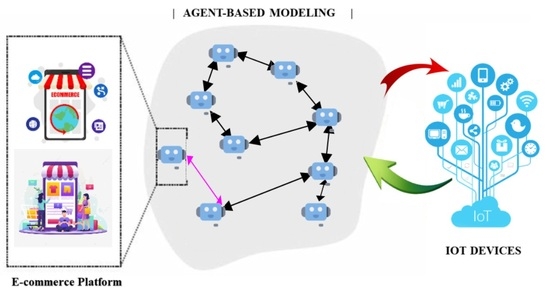
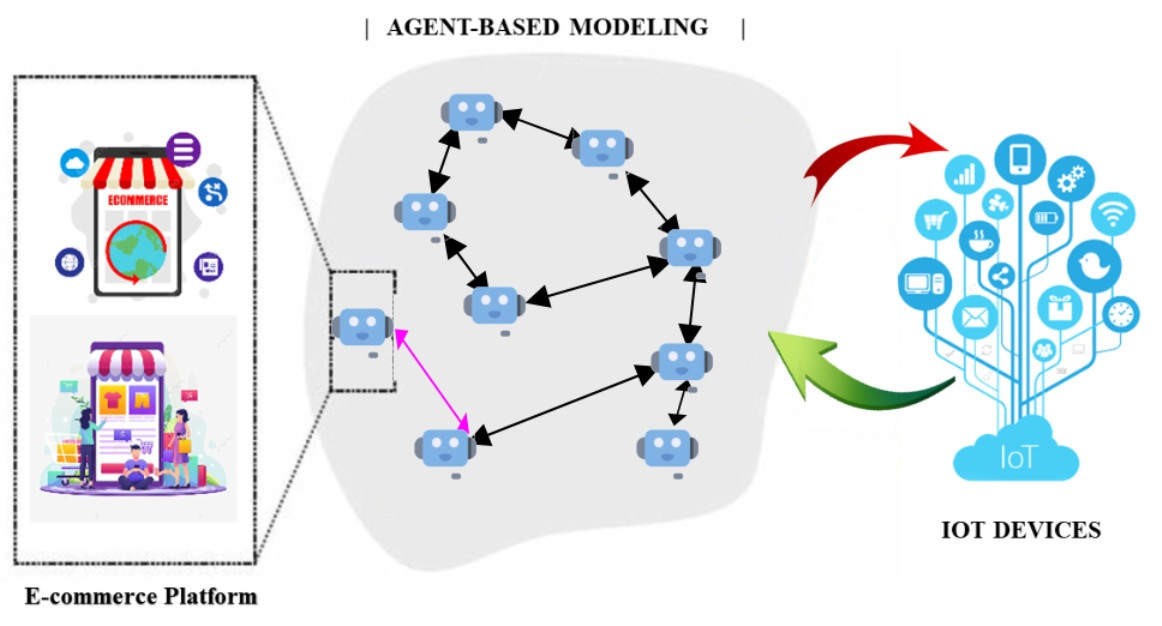
The proposed system architecture integrates agent-based modeling with the IoT to enhance the functionality and efficiency of e-commerce platforms. This architecture is designed to leverage the strengths of both paradigms, ensuring dynamic adaptability, improved decision-making, and seamless interaction between various components. The core components of the system architecture include:
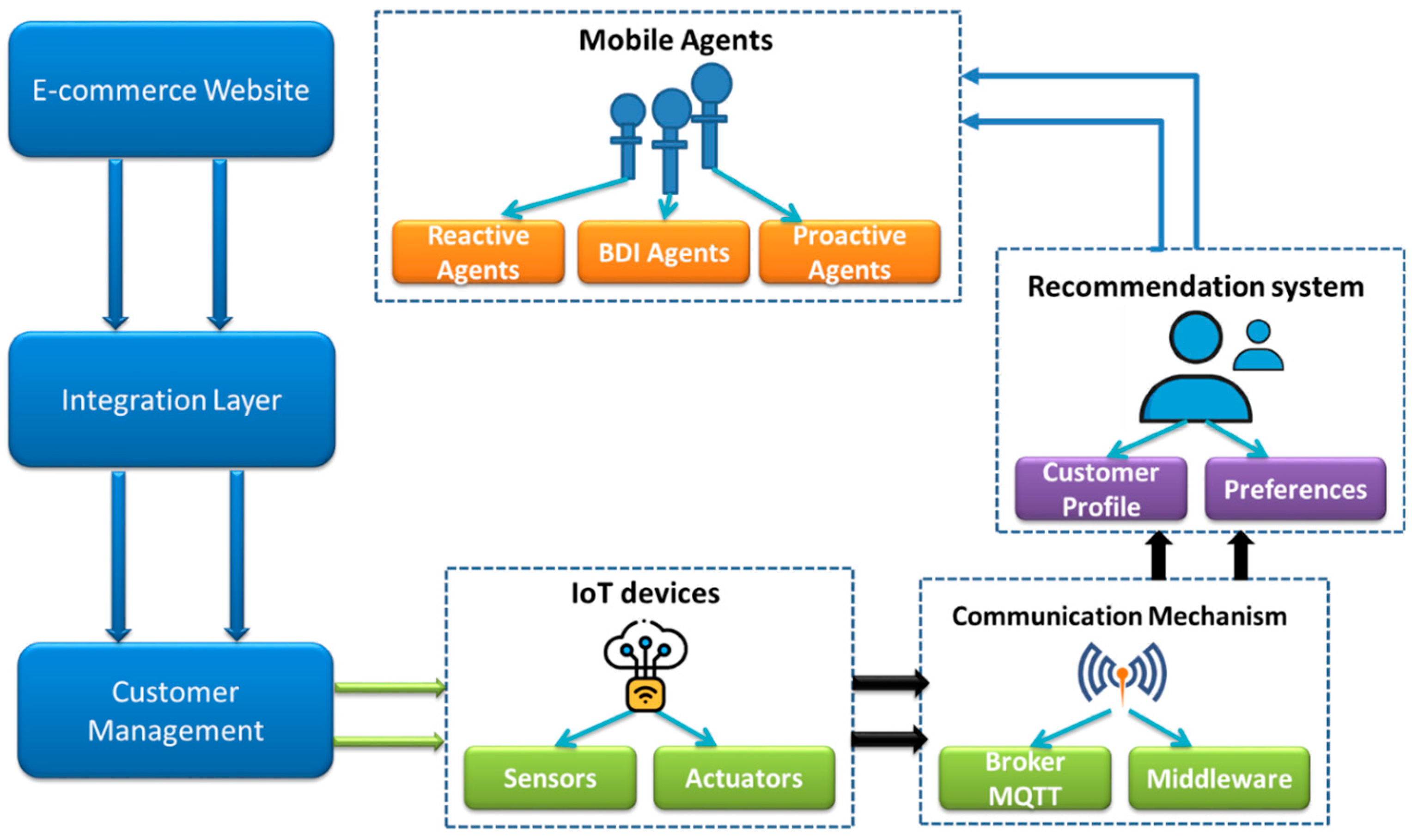
To enhance an understanding of the system architecture depicted in Figure 1, we examine the specific functionalities of the agents outlined in Figure 2. Mobile agents, responsible for gathering real-time data from various IoT devices, play a critical role in ensuring that consumers receive timely and reliable product recommendations. These data are then transmitted to the recommendation system for processing. Additionally, user management agents maintain and update customer profiles and purchase histories, enabling the platform to deliver highly personalized recommendations tailored to individual preferences and transaction histories. Communication agents facilitate smooth system operations by ensuring efficient data transmission between IoT devices and the e-commerce platform. The integration of these agents within the system architecture significantly enhances the overall efficiency and responsiveness of the e-commerce platform.
Figure 1. The proposed architecture for this system.
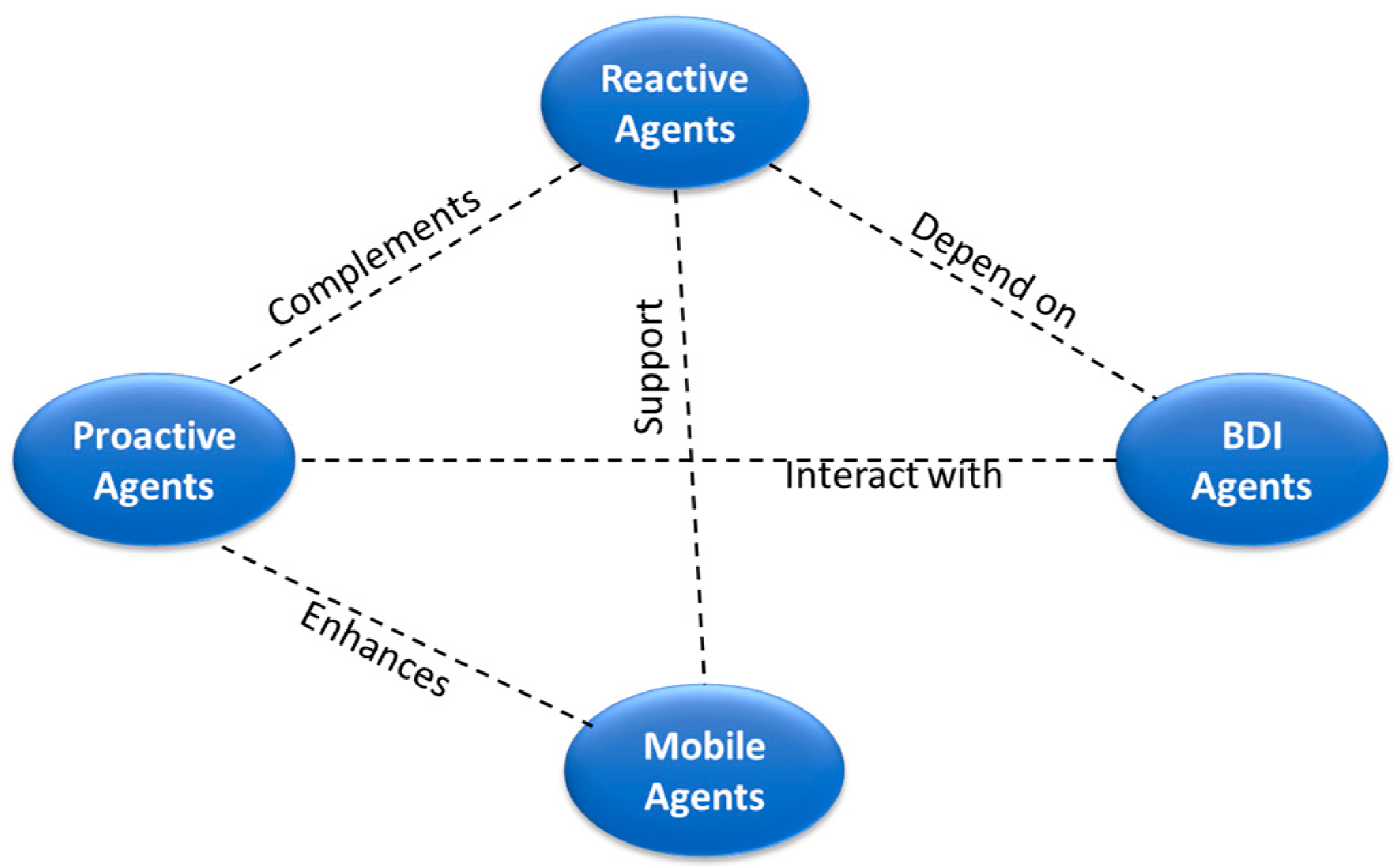
Figure 2. Types of agents in the proposed system.
The key elements of this system are explained in Table 2.
Table 2. Description of the key elements of the system.

3.2. Types of Agents

The suggested system design boosts the practicality and efficiency of e-commerce platforms by merging agent-based modeling with the Internet of Things. The key components of this architecture are shown in Figure 2:
Figure 2 illustrates the different types of agents that are critical to the proposed system: BDI agents, reactive agents, and proactive agents. Each of these agent types performs distinct functions that enhance the operation of the e-commerce platform.
The cognitive architecture employed by BDI (Belief–Desire–Intention) agents allows them to base their decisions on three key elements: beliefs, which represent their perception of the environment; desires, which are the goals they aim to achieve; and intentions, which are the actions they take to fulfill those goals. This structure enables BDI agents to adapt in real time to market changes and evolving consumer preferences, providing a dynamic response to new information.
Reactive agents, in contrast, are designed to respond immediately to events and incoming data. Their quick reaction times allow the system to remain agile by updating inventory displays or recommendations in response to changing conditions, such as fluctuations in stock levels or customer behavior.
On the other hand, proactive agents analyze environmental data and user behavior patterns to anticipate user needs, allowing the system to deliver personalized recommendations even before the user initiates a request. This predictive capability enhances the platform’s ability to provide a tailored experience.
These agents communicate and coordinate through an integration layer, ensuring that all system components are synchronized and functioning effectively. This multi-agent architecture not only maximizes the platform’s responsiveness and adaptability but also significantly improves the overall user experience.

3.2.1. The Agents

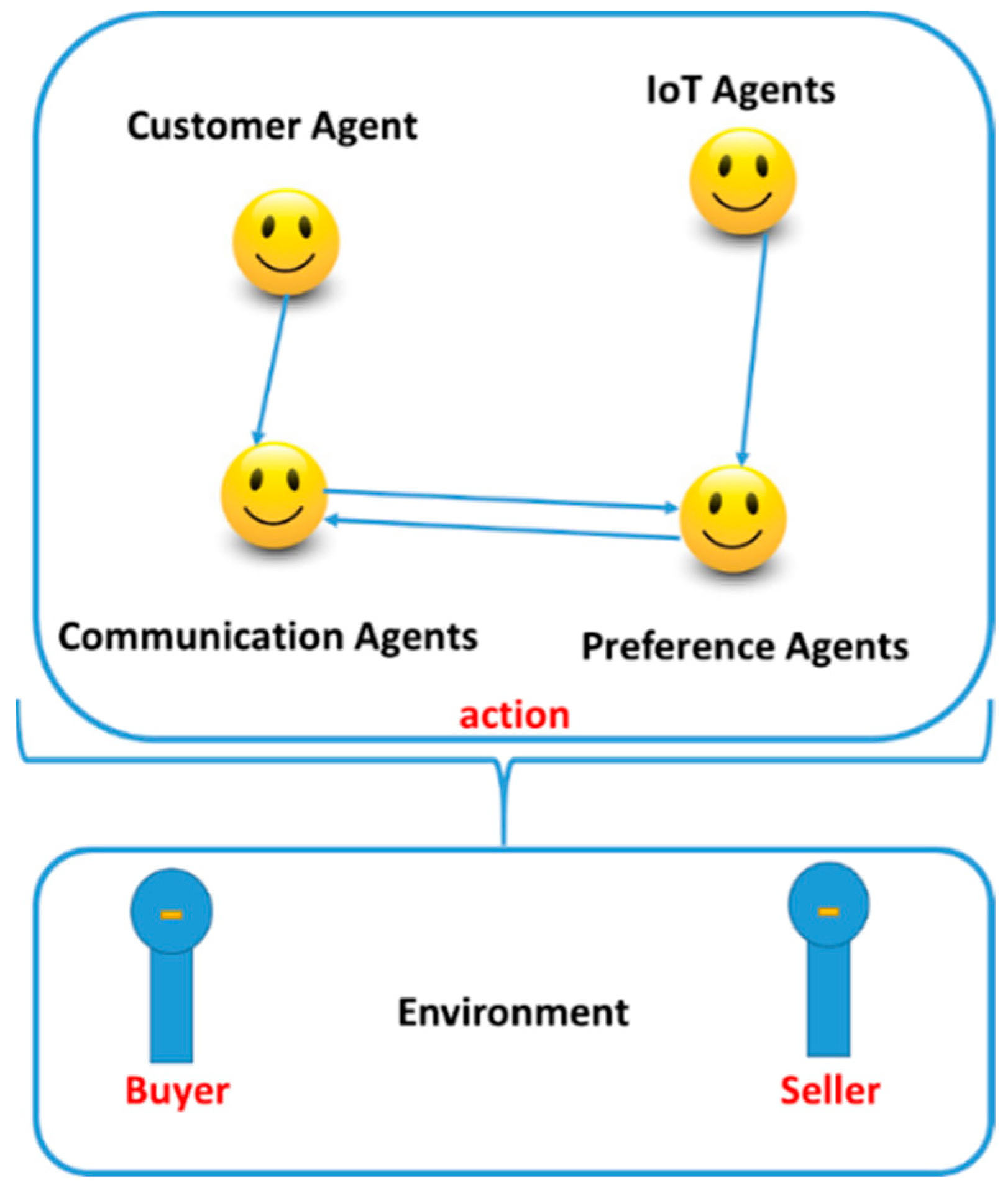
The system includes several types of agents. Customer Agents assist consumers in interacting with and conducting transactions on the e-commerce platform. IoT Agents are responsible for gathering data from sensors and controlling IoT devices to perform specific actions. Communication Agents ensure the efficient transmission of information between different components of the system. Additionally, Preference Agents analyze customer behavior and preferences to provide personalized recommendations, improving the overall user experience.

3.2.2. Communication Schemes

The system architecture emphasizes the interactions between mobile agents to address customer preferences. As shown in Figure 3, four distinct types of communication are identified within the system, each playing a key role in ensuring smooth operation and the satisfaction of consumer needs.
Figure 3. Overview of the agents in the proposed approach.

3.3. Flowchart for the Proposed Approach

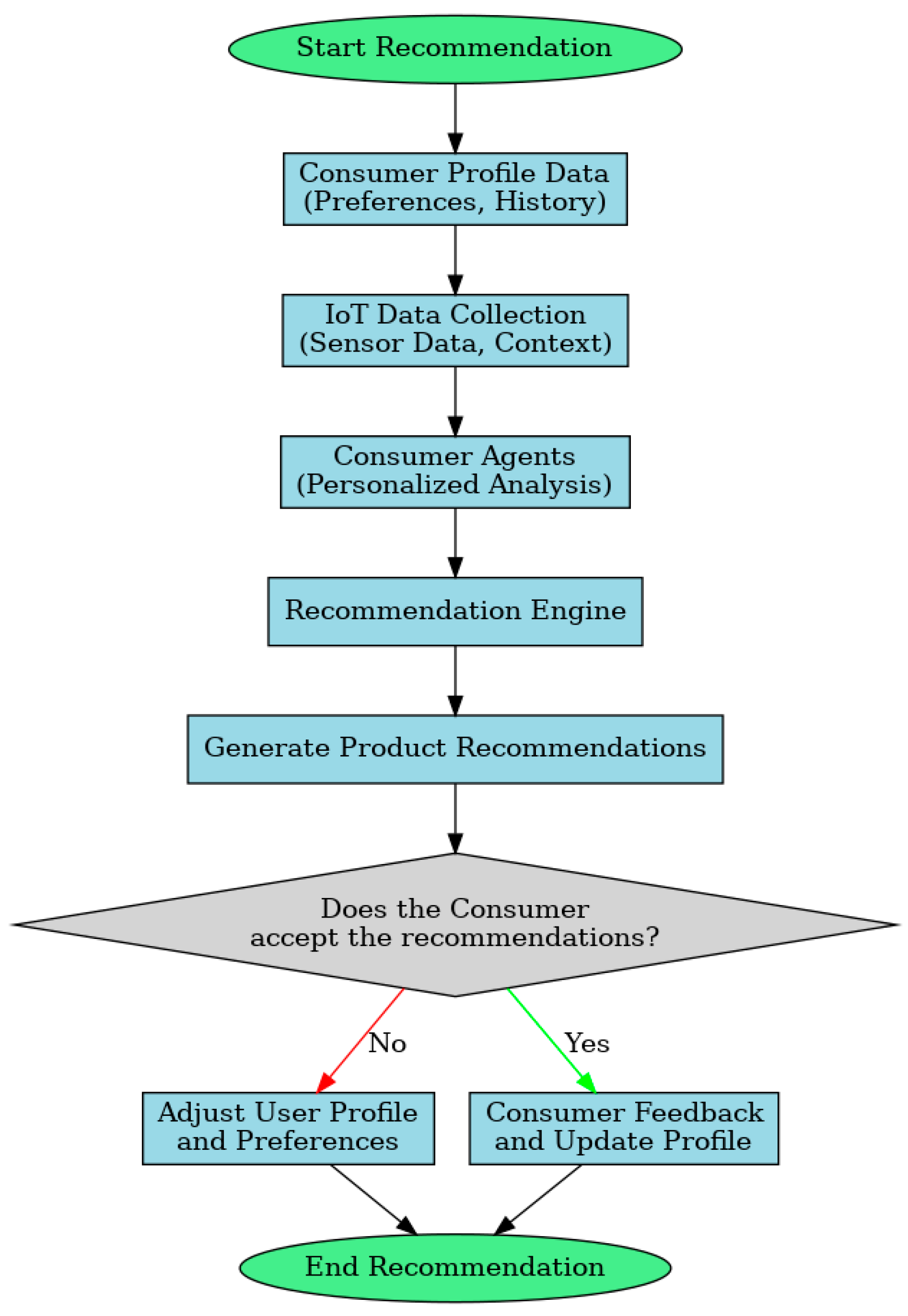
The flowchart illustrates the step-by-step progression of the proposed method, from data collection to system upgrades, with the objective of developing a comprehensive recommendation system for e-commerce using mobile agents and IoT devices. This diagram is particularly beneficial during the initial planning stages, providing guidance for prioritizing critical tasks in system enhancement. The detailed flowchart offers a clear, in-depth view of the process, outlining each subsequent step. The flowchart methodology utilized in this study is depicted in Figure 4.
Figure 4. Flowchart of the proposed system.

3.4. Experimental Parameters and Methodology

To evaluate the effectiveness and sustainability of the proposed agent-based IoT integration model for consumer preference prediction, a series of simulations were conducted. The experiments were designed to replicate a typical e-commerce environment where agents and IoT devices collaborate to provide personalized recommendations See Table 3). Below is a detailed account of the simulation parameters, dataset characteristics, model configurations, and evaluation criteria employed in the study:
Table 3. Detailed Experimental Parameters and Methodology.

3.5. Consumer Data Integration

3.5.1. Consumer Data Integration Workflows

The integration of consumer data into the system follows a systematic approach, beginning with data collection from multiple sources, including user interactions and IoT devices. Data are pre-processed to ensure their reliability and usefulness through filtering, merging, and transformation into actionable insights. This workflow ensures the system consistently provides relevant data for personalized recommendations.

3.5.2. Personalized User Experiences

Real-time data integration enables the system to provide personalized user experiences based on individual preferences and behaviors. For instance, the system recommends related products based on a user’s browsing history, enhancing the shopping experience and increasing conversion rates. This functionality underscores the value of data-driven personalization in e-commerce.

3.5.3. Compliance with Data Protection Regulations

A fundamental aspect of system design is adherence to data protection regulations, such as the General Data Protection Regulation (GDPR). Users’ rights are safeguarded through mechanisms such as request-based data access and deletion. Additionally, robust security measures protect user data throughout its lifecycle, ensuring compliance with legal standards.

3.6. Scalability Analysis

3.6.1. Scalability Testing Results

Scalability tests were conducted to evaluate the system’s performance under varying loads, simulating conditions typical of large-scale e-commerce platforms. Results revealed that response times increased from an average of one second to three seconds as the number of concurrent users grew from 100 to 1000. The system handled over 500 transactions per second while maintaining acceptable performance, as indicated by throughput metrics.

3.6.2. Performance Optimization Techniques

To improve performance under high-load conditions, several optimization techniques were applied. Load balancing was implemented to distribute incoming requests evenly across agents, minimizing bottlenecks and reducing response times. Furthermore, caching frequently accessed data decreased latency and enhanced overall system efficiency by reducing database queries.

3.6.3. Strategies for Distributed Agent Management

A distributed architecture was developed to manage agents across different locations efficiently. Cloud-based technologies enabled the decentralization of data processing, facilitating real-time analysis and agent collaboration. This approach allowed the system to scale dynamically in response to changes in user demand, while maintaining optimal performance levels.

4. Results

4.1. Mathematical Formulation

  • Step 1: Consumer Preference Analysis (Equation (1))
Consumer preference analysis is frequently employed in recommendation algorithms to predict customer ratings for items based on their previous behavior and the profiling of the items. This process helps generate personalized recommendations for customers.
R ^ x y = σ + b x + b y + q x T p y
R ^ x y : the anticipated appraisal of item x by customer y
σ : the general mean rating.
b x : the consumer bias name.
b y : the Item bias name.
q x : the vector symbolizing item x i’s specifics.
p y : the vector symbolizing consumer y i’s specifics.
  • Step 2: IoT Information Collecting Modelling in Equation (2)
IoT information collection modeling explains how IoT agents gather data using sensors (e.g., device usage, pricing) to provide real-time information on products or contexts. This information is crucial for constructing recommendations.
D t = D 0 + x α x . I X ( t )
D t : the Data gathered at time t
D 0 : the Base data.
α x : the factor for IoT sensor x
I X ( t ) : the Interpretation for IoT sensor x at duration t
  • Step 3: Agent Interaction Modeling (Equation (3))
Agent interaction modeling describes how mobile agents within the system collaborate, considering their spatial relationships and the influence of neighboring agents. This interaction modeling ensures coordinated decision-making and efficient information sharing among agents.
S x y t + 1 = S x y t + k N x 1 d x k δ S x k t S x y t + ϵ x y ( t )
S x y t : the situation of agent x at time t
N x : represented by the set of neighbors of agent x
d x k : the Outdistance amid agents x and k
δ : the Weight criterion
ϵ x y ( t ) : represented by the random error term.
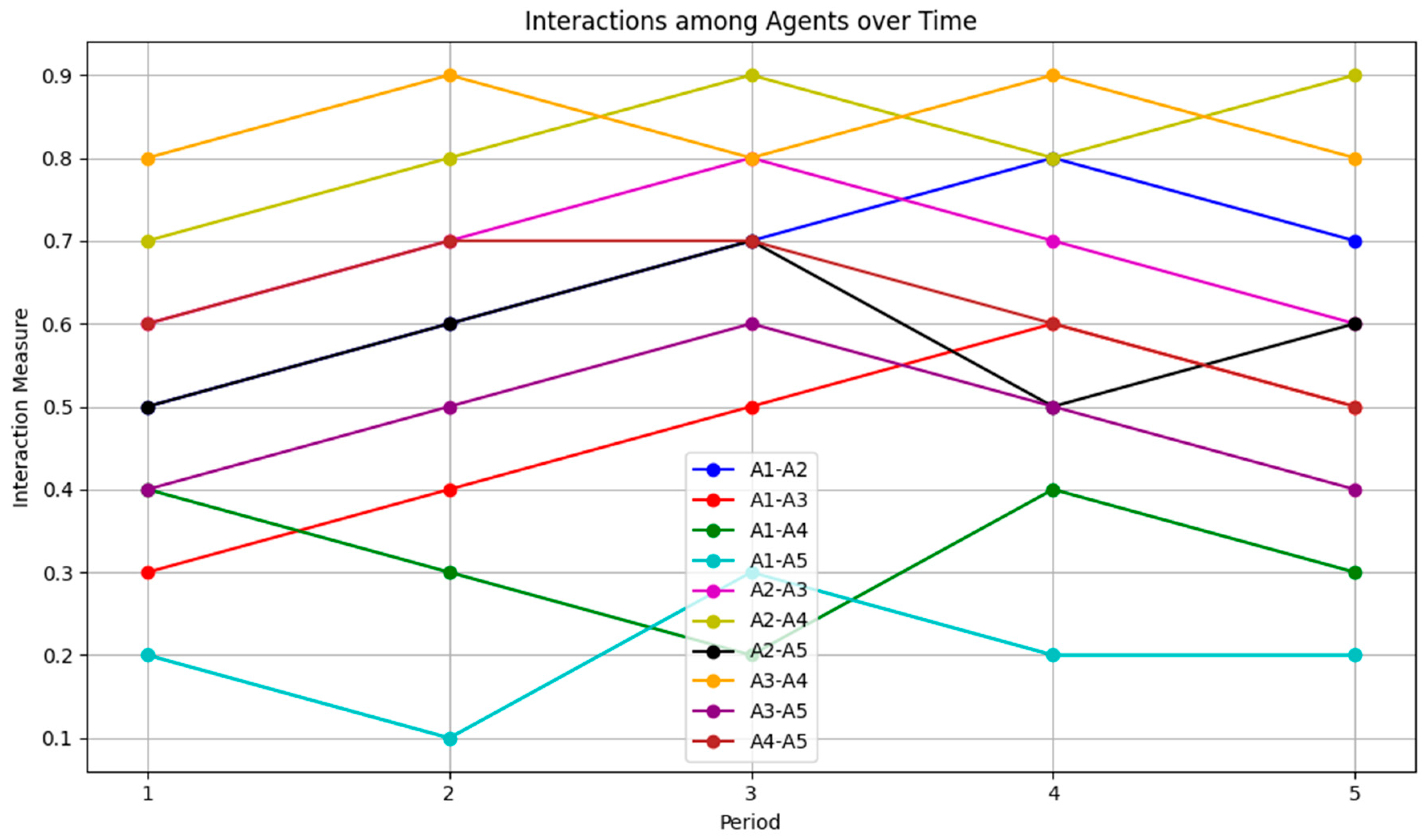
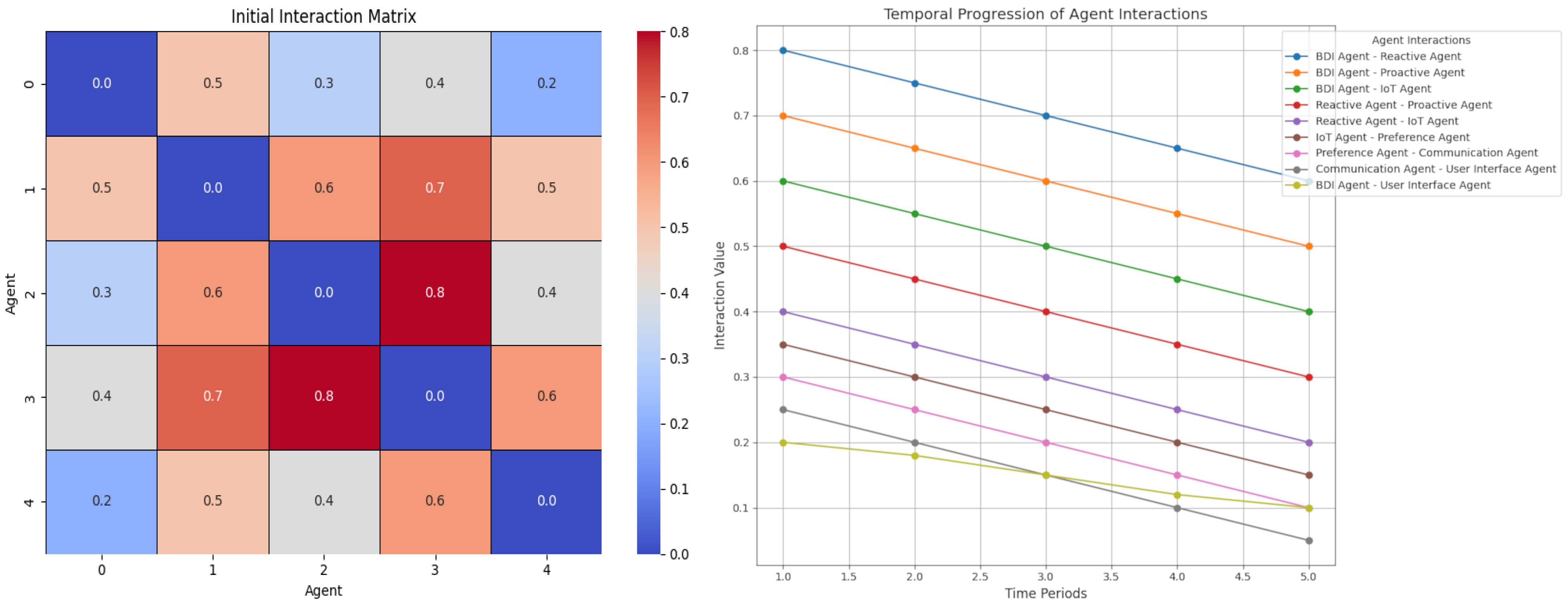
To illustrate, we will construct an interaction table for n agents, ranging from 1 to 5 for simplicity. Each agent collaborates with all other agents. Table 4 provides an example of these interactions, organized for five agents.
Table 4. Interactions Among Five Agents.
We will determine the interactions among the agents over five periods, as illustrated in Figure 5.
Figure 5. Measurement of Interactions Among Agents.
We now present a model for collecting IoT data for n devices, where the interaction I X ( t ) and interpretation α x for each device are determined for x = 1 to n, as shown in Equation (2).
For example, let us consider n = 5 devices with the corresponding measurements, as shown in Table 5.
Table 5. Measurement of IoT devices.
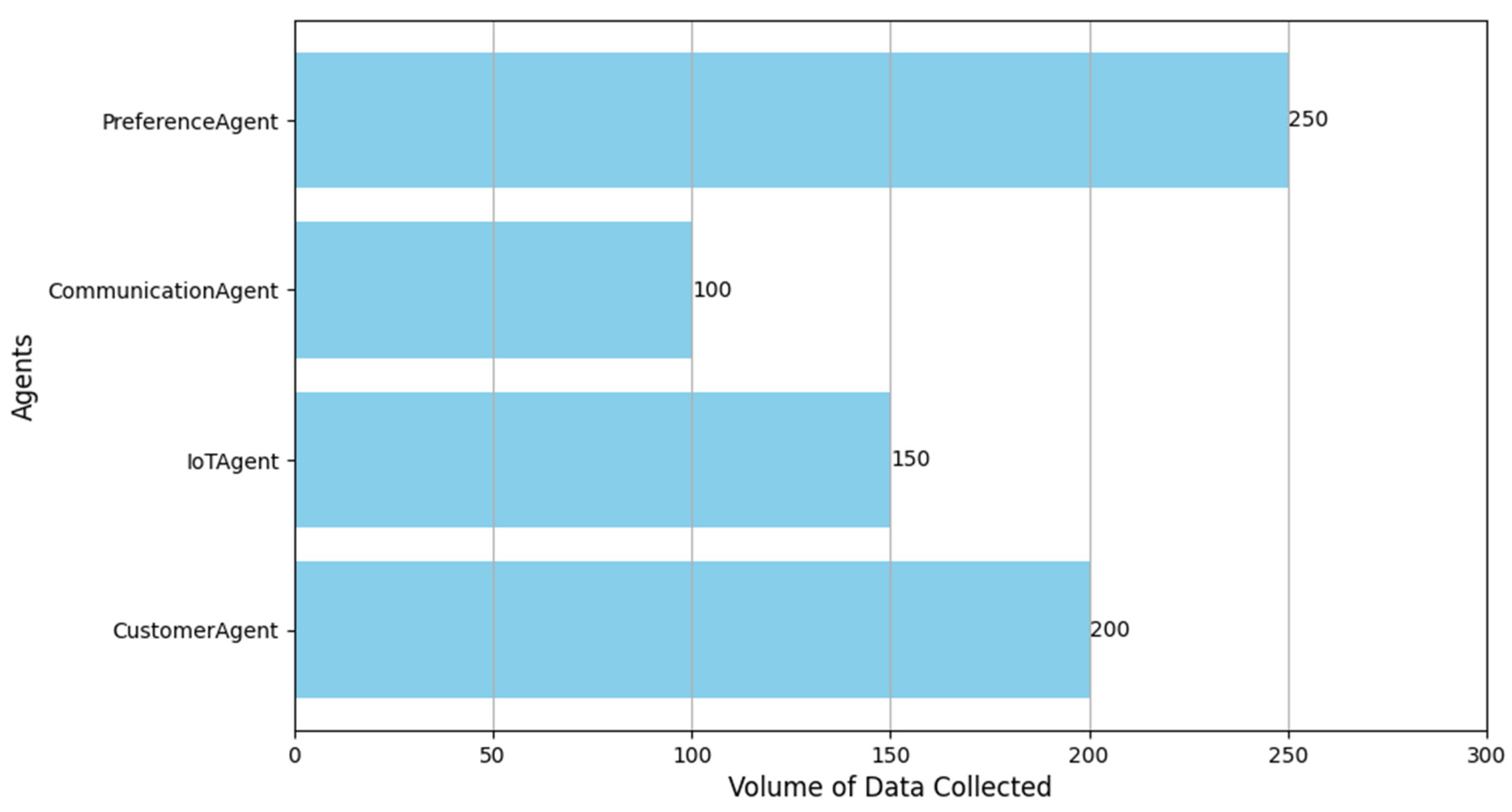
Figure 6 presents a horizontal bar chart that depicts the contributions of various agents in the multi-agent system to the overall volume of data collected. Each bar corresponds to a distinct agent—Customer Agent, IoT Agent, Communication Agent, and Preference Agent—with the length of the bar indicating the precise quantity of data contributed by each agent. Specifically, the Customer Agent contributes 200 units, the IoT Agent provides 150 units, the Communication Agent contributes 100 units, and the Preference Agent offers the highest contribution at 250 units. The chart’s clearly labeled bars and corresponding values facilitate the straightforward comparison of the agents’ contributions, highlighting the specific role each agent plays in the system’s data collection process. This visual representation ensures clarity and aids in understanding the individual responsibilities of each agent.
Figure 6. Measurement of interactions among agents.
These charts offer a comprehensive view of agent interactions and their dynamic evolution when integrated. The line chart depicts temporal changes, providing clear insight into the fluctuations and reductions in interactions among agents over time. In contrast, the heatmap presents a snapshot of the initial conditions, as shown in Figure 7.
Figure 7. Temporal progression of agent interactions.
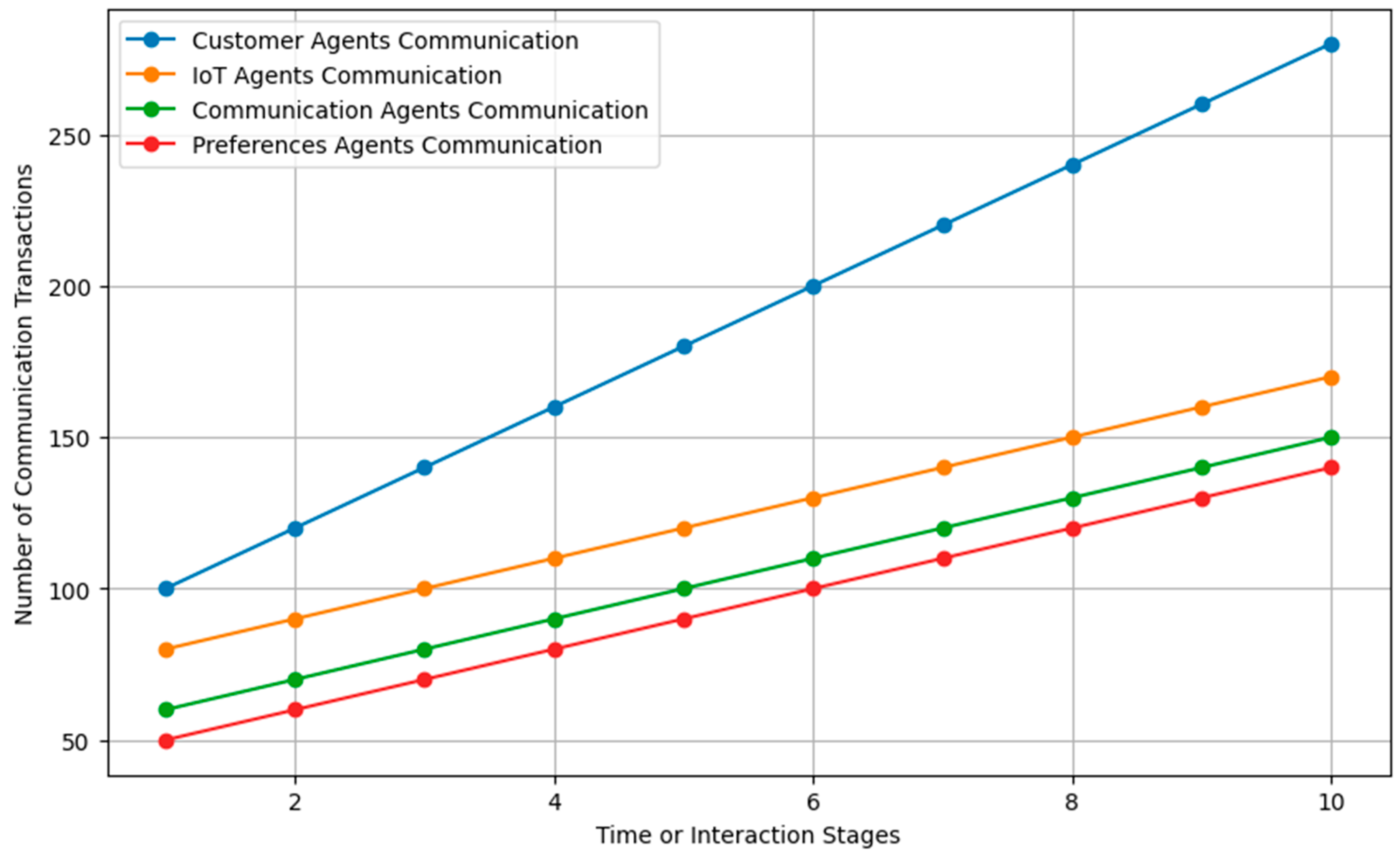
In Figure 8, we illustrate how various agents communicate with the e-commerce system (website) over 10 communication phases. The graph features four distinct lines, each representing a different type of agent operating within our system:
Figure 8. Communication among agents in the proposed system.

4.2. Sensitivity Analysis

Sensitivity analysis was conducted to assess how variations in key parameters affect the outcomes of the mathematical models. Parameters such as sensor contribution ( σ ), item bias ( b y ), and user bias ( b x ) were analyzed for their influence on predicted ratings and data collection metrics. These parameters are integral in shaping the recommendation system’s performance, particularly in an IoT-integrated environment.
The modeling approaches for predicting customer preferences were compared in Table 6. The proposed method leverages IoT data to strike a balance between accuracy and real-time efficiency. While content-based filtering proves effective for recommending new items, it lacks deep personalization. Collaborative filtering captures user–item relationships more accurately but requires large datasets. Hybrid models, though beneficial in combining these strengths, incur higher computational costs. Matrix factorization, particularly effective for large and sparse datasets, offers a less flexible solution in adapting to dynamic environments.
Table 6. Comparison of modeling approaches for consumer preference prediction.

4.3. Comparative Analysis of Mathematical Models

The adaptability of the model to manage dynamic, real-time data and its compatibility with agent-based frameworks were key factors in our selection of a model for consumer preference analysis in an IoT-integrated e-commerce context. Our approach, which combines preference prediction (Equation (1)), IoT data collection (Equation (2)), and agent interaction modeling (Equation (3)), enables more accurate and responsive recommendations by capturing both user biases and agent interactions in real-time.
The chosen approach offers several notable advantages. It provides a clear representation of consumer biases and product attributes, allowing for real-time adjustments to recommendation systems while capturing the complex relationships between users and products. Furthermore, by incorporating an agent interaction model (Equation (3)), it enables agents to collaborate and adjust based on their spatial relationships and external environmental changes, as gathered by IoT devices.
Table 7 presents a comparative analysis of different mathematical models, highlighting their strengths, limitations, and potential for integration into an IoT-enabled agent-based system. The selected model stands out for its ability to handle continuous data streams and facilitate decentralized agent interactions, making it particularly suited to the evolving demands of e-commerce environments enhanced by IoT technology.
Table 7. Comparative Analysis of Mathematical Models.

4.4. Mobile Agents

4.4.1. Types of Communication Acts

The functionality of the system and the interactions between agents are largely dependent on the types of communication acts they employ. Table 8 below outlines the various types of communication acts used in the system, along with the specific agents involved in each type of communication. These acts facilitate the coordination and execution of tasks, ensuring smooth operation across the multi-agent e-commerce platform.
Table 8. Types of Communication Acts in Multi-Agent E-Commerce Systems.

4.4.2. Communication ACL in JADE

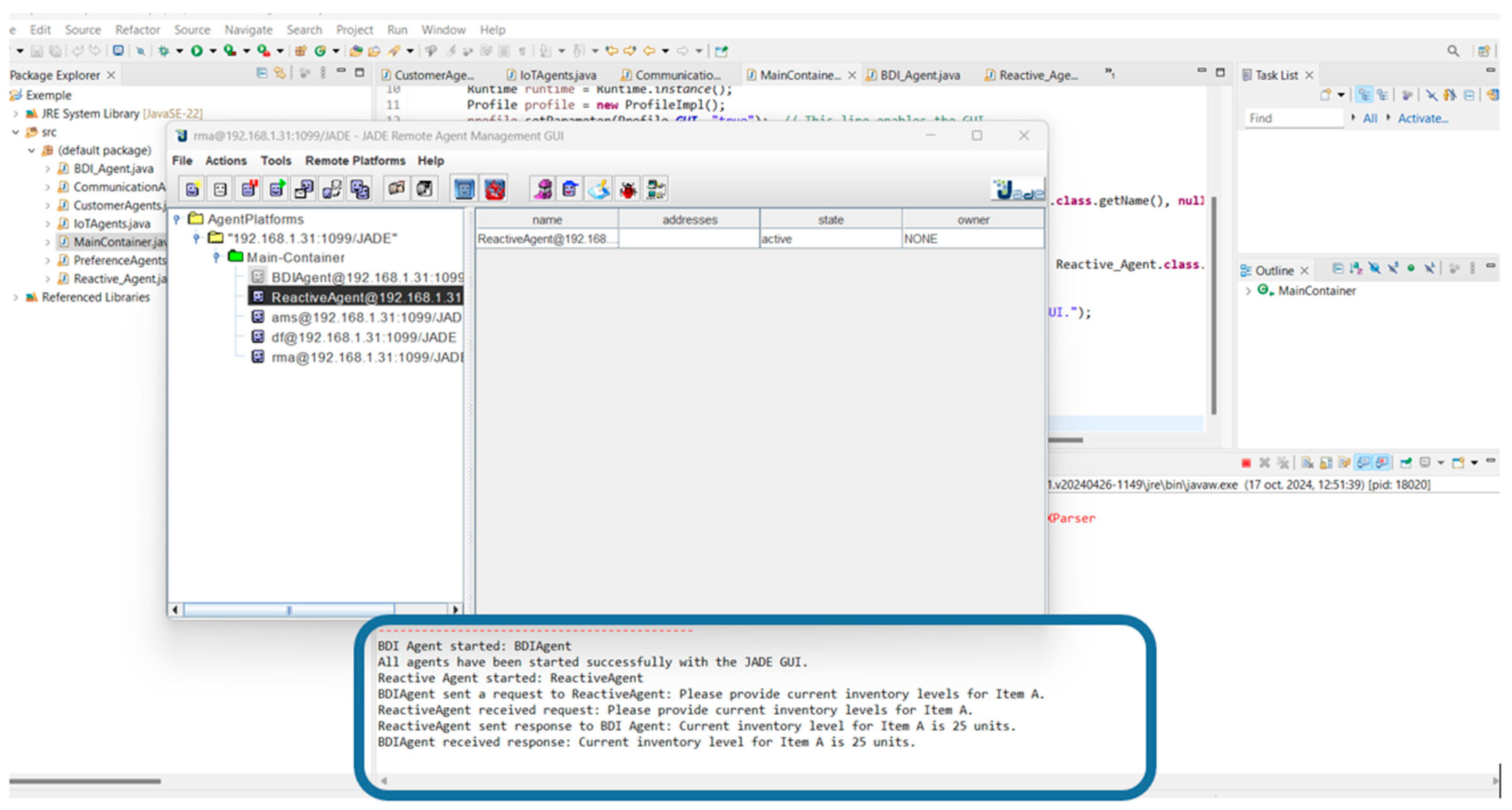
Figure 9 displays the console output model that illustrates the communication between the BDI Agent and the Reactive Agent within the JADE framework. In this example, the BDI Agent initiates a request to the Reactive Agent, seeking the current stock levels of a specific item. The system showcases a typical request–response communication act, wherein the Reactive Agent replies with the inventory status upon receiving the request. This interaction exemplifies the agents’ ability to communicate and analyze data in real time, thereby enhancing the overall functionality of the multi-agent e-commerce platform.
Figure 9. Console output of agent communication between the BDI Agent and the Reactive Agent.
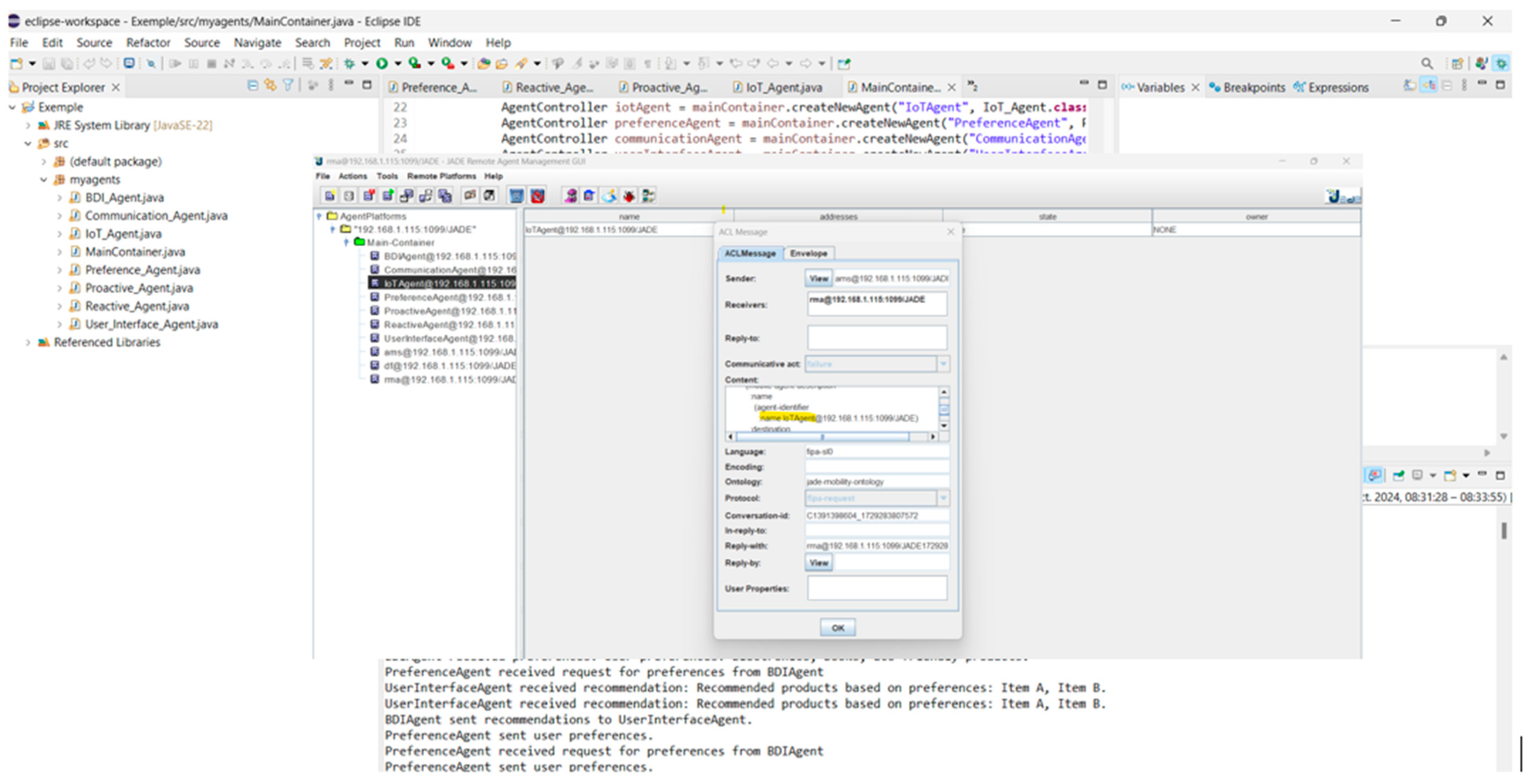
Figure 10 illustrates an Eclipse IDE workspace featuring a multi-agent e-commerce system designed according to the JADE framework. This setup serves as an excellent demonstration of agent-based communication within a retail environment, where agents collaborate to identify consumer preferences and generate relevant product recommendations. The IoT Agent plays a crucial role in facilitating this integration, actively interacting with multiple agents to streamline the incorporation of IoT-based recommendations into the system.
Figure 10. IoT Agent Using JADE to Communicate with Other Agents.
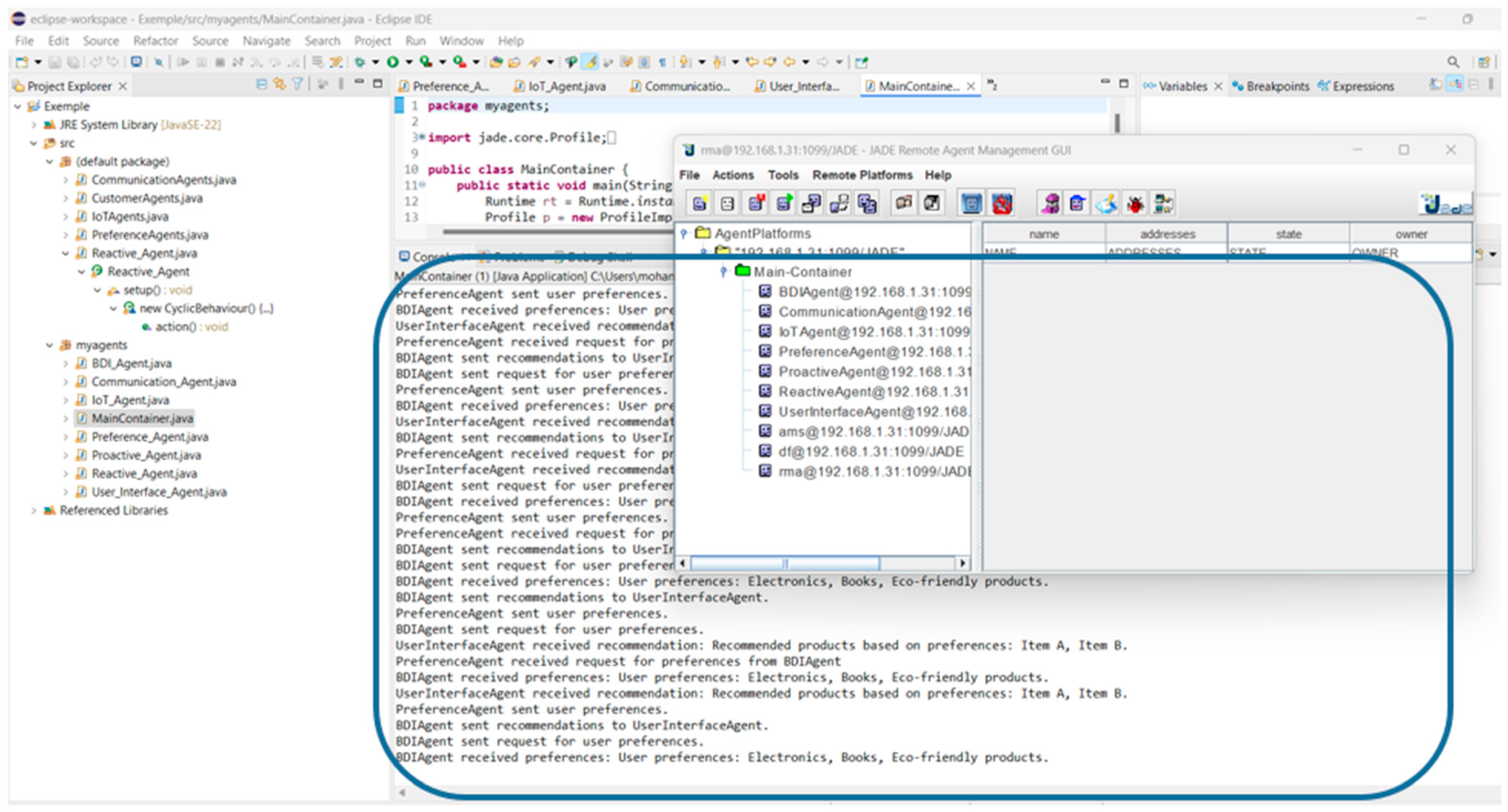
As seen in Figure 11, this configuration exemplifies agent-based communication in an e-commerce setting, where agents collectively access customer preferences and provide appropriate product suggestions. The figure illustrates the seamless interaction among agents, highlighting the communication flow involved in managing requests and responses to deliver tailored recommendations effectively.
Figure 11. Agent communication flow in the multi-agent system.

4.4.3. Ontology for Multi-Agent E-Commerce System

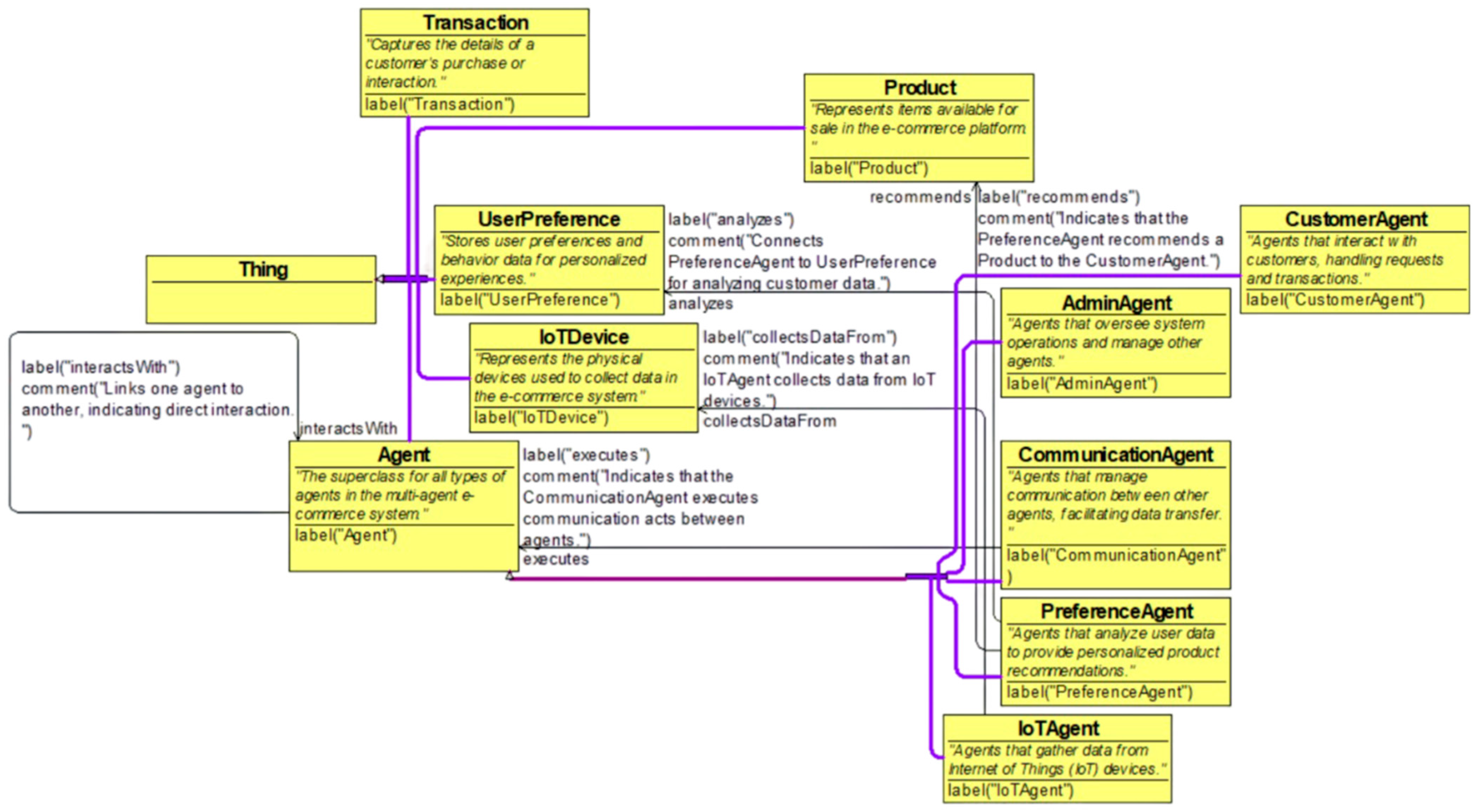
The ontology definition and application capabilities within JADE significantly enhance the clarity and effectiveness of agent communication. Ontologies provide a structured vocabulary that ensures a shared understanding of the terminology and concepts used in communication among agents. This structured approach facilitates optimal interactions, particularly in complex scenarios such as e-commerce, as illustrated in Figure 12. By establishing a common framework for communication, ontologies enable agents to interpret and respond to requests more accurately, improving the overall efficiency and effectiveness of the multi-agent system.
Figure 12. Ontology Graph of E-commerce Agents.

4.5. Validation and Case Studies

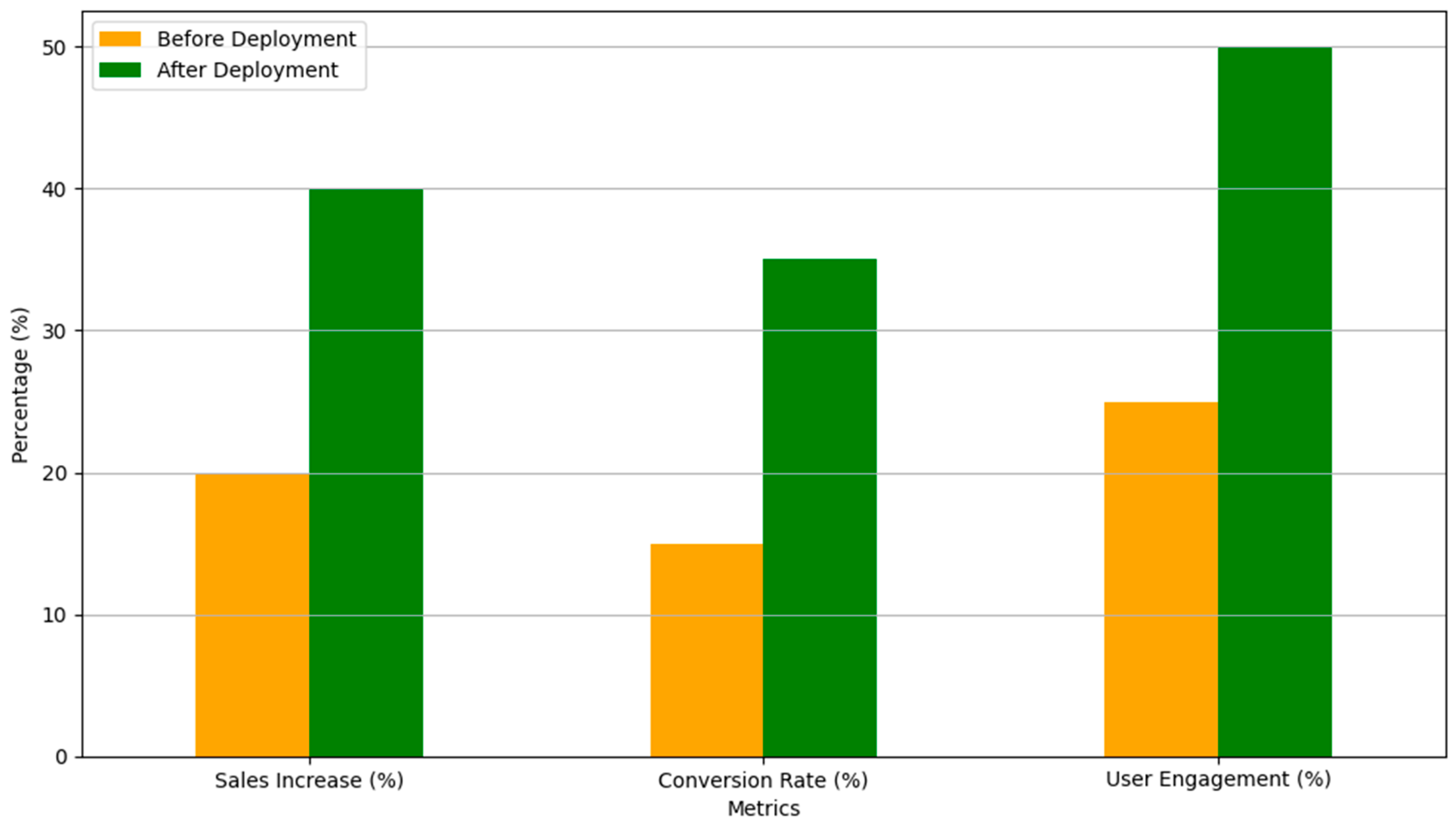
This section utilizes customer feedback, performance comparisons, and real-world implementations to validate the proposed IoT-integrated agent-based system. When implemented on e-commerce platforms, the system enhances consumer engagement, operational efficiency, and personalized shopping experiences. Comparative research indicates significant increases in sales and conversion rates, while statistical feedback and visual summaries of customer data reveal product preferences and overall satisfaction. These case studies demonstrate the system’s effectiveness in delivering data-driven insights and fostering a more responsive online shopping environment.

4.5.1. Real-World Implementations

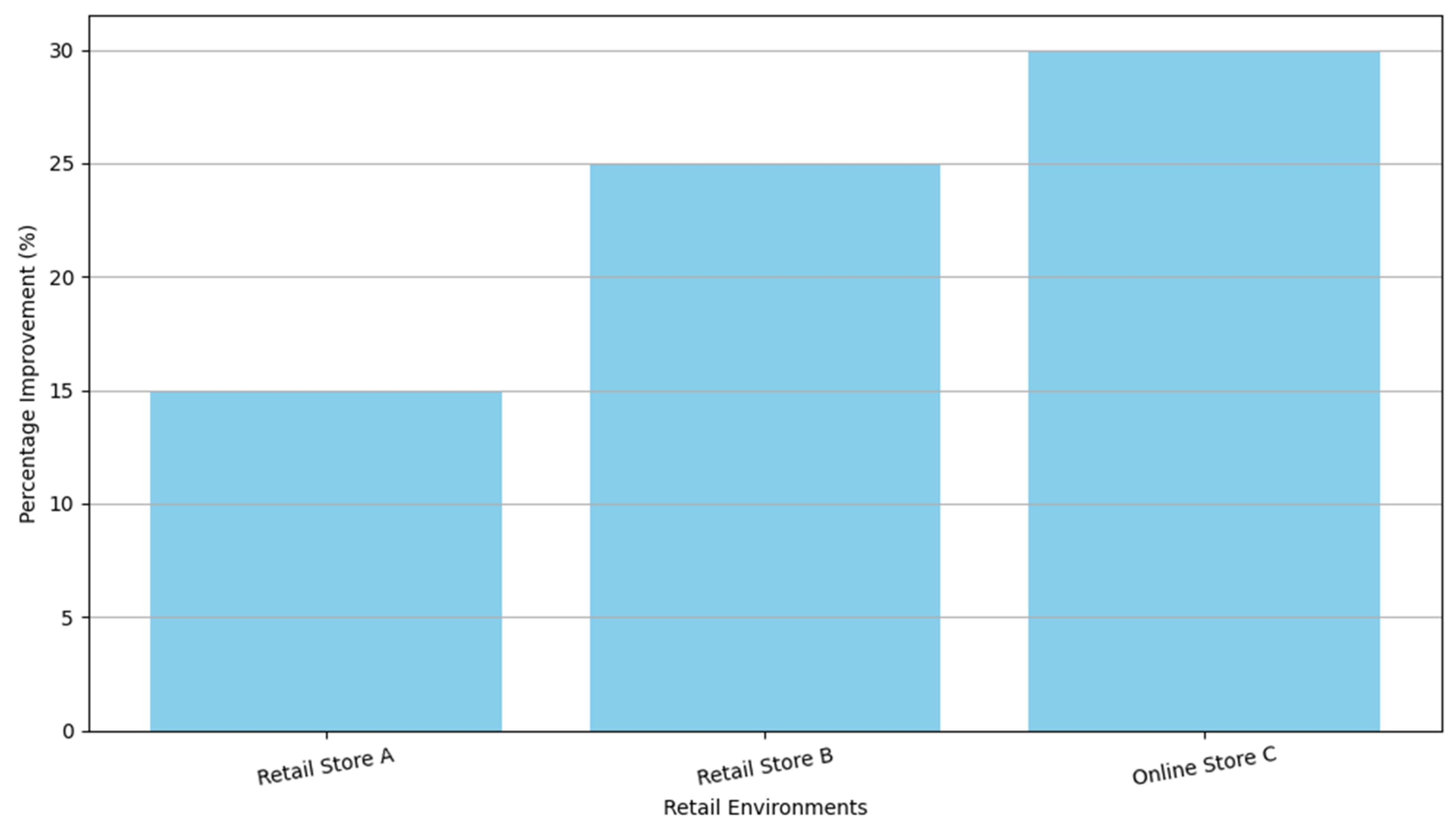
In this section, we discuss the trial deployments of the proposed system on actual e-commerce platforms. These implementations illustrate the system’s adaptability across diverse retail settings and its ability to enhance operational efficiency. The initial results from these deployments underscore the viability of the IoT-integrated agent-based approach, demonstrating notable increases in consumer engagement and satisfaction, as shown in Figure 13.
Figure 13. Customer engagement improvement in pilot implementations.

4.5.2. Comparative Analysis of Performance

This subsection presents a comparative evaluation of the system’s performance before and after deployment. The efficiency of the recommendation system is assessed by examining metrics such as increased sales, conversion rates, and user engagement. The results indicate significant increases in revenue and customer retention, thereby confirming the effectiveness of the proposed strategy in a practical setting, as illustrated in Figure 14.
Figure 14. Comparative evaluation of results prior to and following deployment.

4.5.3. User Feedback

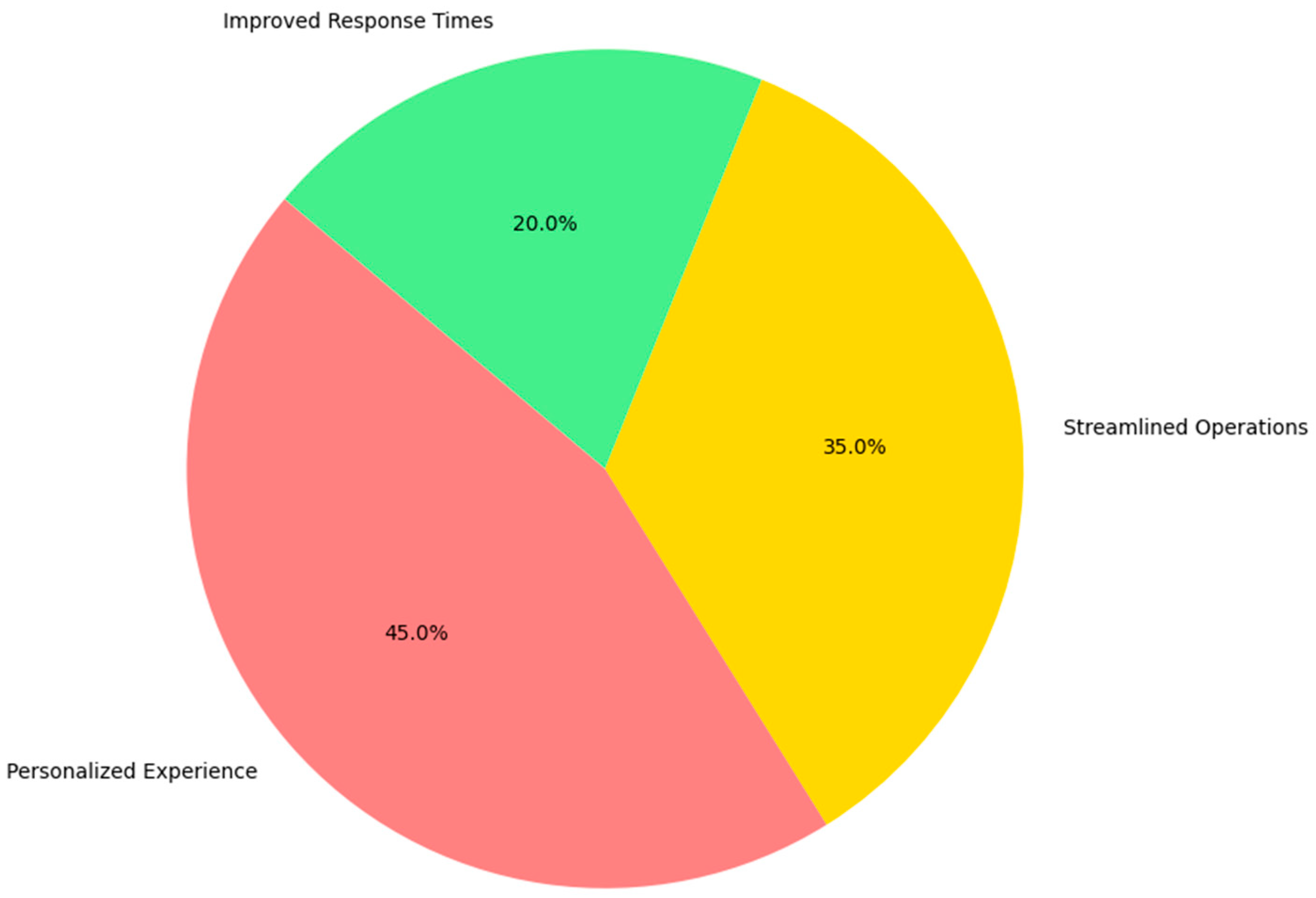
This subsection summarizes the feedback collected from both managers and customers during the pilot deployments. Administrators report faster response times and streamlined processes, while customer feedback indicates a more engaging and personalized shopping experience. These findings demonstrate how the system enhances platform efficiency and improves the overall customer experience, as illustrated in Figure 15.
Figure 15. User feedback on the system.

5. Discussion

This paper explores the integration of mobile agents and Internet of Things (IoT) technology within the e-commerce sector, emphasizing how these technologies can enhance e-commerce systems by improving efficiency, personalization, and the overall customer experience. By leveraging IoT data for context-aware recommendations and utilizing mobile agents for real-time interactions, this approach significantly advances the personalization of customer experiences while streamlining system operations. The combination of mobile agents and the IoT addresses critical challenges in e-commerce and offers practical solutions that can impact both research and real-world applications.
Several key findings emerge from the integration of mobile agents with IoT data, including improved adaptability, increased operational efficiency, and enhanced customer satisfaction. For instance, real-time inventory adjustments and up-to-date customer interactions can be harnessed to provide personalized recommendations, ensuring their relevance and timeliness. Moreover, this approach effectively addresses essential e-commerce challenges, such as optimizing supply chain management and adapting to shifting consumer preferences. These solutions can be applied to improve system performance and elevate the customer experience.
A significant consideration is how this integrated architecture can foster a more responsive and efficient e-commerce environment. This offers valuable insights for both academic research and practical implementation within the industry.
To illustrate these conclusions, we examine a hypothetical case study involving TechGiant, a major e-commerce platform. In this scenario, TechGiant employs IoT devices to monitor product availability by utilizing RFID tags, allowing for the real-time supervision of inventory levels. The Inventory Management Agent automatically generates purchase orders when stock levels of popular items fall below a specified threshold, ensuring that the most sought-after products are consistently available. Additionally, TechGiant employs Recommendation Agents that analyze real-time consumer behavior to offer tailored product recommendations based on browsing and purchase history. For example, the system could suggest appropriate accessories to a customer interested in a particular laptop, thereby enhancing the purchasing experience.

6. Limitations of the Proposed Approach

While the integration of the IoT and mobile agents in e-commerce offers numerous advantages, several drawbacks must be considered. As illustrated in Table 9, these challenges include issues related to security, privacy, scalability, and interoperability, all of which may affect the effectiveness and widespread adoption of the proposed solution.
Table 9. Summary of Limitations and Future Directions.

6.1. Security Concerns

There are considerable security risks when IoT devices are incorporated with e-commerce platforms. IoT devices are vulnerable to hacks, which might result in service interruptions or illegal entry to private customer data. Improving security methods is crucial to preventing such breaches. In order to find and fix system weaknesses, future efforts should concentrate on putting into place a strong encryption approach, secure communication protocols, and frequent security checks.

6.2. Privacy Issues

As IoT sensors continue to collect extensive individual data, privacy concerns arise regarding the handling, processing, and storage of customer information. Users may develop distrust towards organizations that manage their data in an opaque manner. Future research should focus on user consent processes and frameworks for data anonymization to alleviate these concerns, ensuring that individuals have control over their information and are aware of how it is being utilized.

6.3. Scalability Challenges

The proposed system must maintain its performance levels without degradation as the number of customers and IoT devices increases. Scalability may become a significant challenge, particularly during periods of high demand when the system is inundated with real-time data. Future research should explore load-balancing strategies and distributed computing methods to ensure that the system can effectively manage growing data volumes and customer interactions.

6.4. Interoperability Issues

Interoperability challenges may arise from the diversity of IoT devices and communication protocols, making it difficult for various devices to operate seamlessly together. The implementation of the proposed solution may be complicated by the need to integrate with multiple IoT standards and protocols. Future research should concentrate on establishing standardized communication frameworks and protocols that enhance interoperability across different IoT platforms to overcome this constraint.

6.5. Future Directions

Several promising avenues for future research can address these limitations:
  • Strengthening Security Protocols: Investigating advanced security approaches, such as blockchain technology, to provide a decentralized and tamper-proof method for securing data and transactions.
  • Data Privacy Frameworks: Establishing comprehensive privacy regulations that include user consent, rights, and transparent data management practices.
  • Scalability Technologies: Exploring edge computing and cloud-based solutions to effectively distribute processing tasks and manage large datasets.
  • Interoperability Standards: Collaborating with industry stakeholders to develop uniform guidelines and methods that ensure seamless communication among various IoT devices.

7. Conclusions

This paper emphasizes the significant benefits of employing independent agents to integrate e-commerce with IoT. This approach has proven efficient in maximizing functional effectiveness, adaptability, and customer experience in online transactions. Furthermore, it demonstrates the capability of agents to autonomously manage complex interactions between IoT devices and e-commerce platforms. The proposed agent system, which assigns an agent to oversee the entire customer purchasing process, has been shown through testing to be highly effective in improving system performance and addressing issues such as system overload—one of the primary objectives of this research.
The growing number of transactions and customers has led to increased network strain, which underscores the importance of optimizing system performance to ensure customer satisfaction. A well-performing system encourages repeat visits to the same e-commerce site. The goal of an e-commerce multi-agent system is to optimize customer satisfaction and performance by leveraging the unique capabilities of agents.
Looking ahead, it is essential to enhance security and trust protocols, improve system interoperability, evaluate the model’s adaptability, and conduct practical case studies. The continued development of the agent model will likely lead to significant advancements in the e-commerce industry, potentially transforming the e-commerce landscape through strategic investments in this area.

Author Contributions

Conceptualization, M.S.; methodology, M.S.; validation, M.S.; formal analysis, M.S. and S.A.; resources, M.S. and S.A.; data curation, M.S.; writing—original draft preparation, S.A.; writing—review and editing, S.A.; visualization, M.S. and S.A.; supervision, M.S. All authors have read and agreed to the published version of the manuscript.

Funding

This research received no external funding.

Institutional Review Board Statement

Not applicable.

Data Availability Statement

Data is available upon request from authors.

Conflicts of Interest

The authors declare no conflicts of interest.

References

  1. Luo, N. Innovation of E-Commerce Development Model under the Background of Artificial Intelligence and Wireless Communication. Wirel. Commun. Mob. Comput. 2022, 1, 8572911. [Google Scholar] [CrossRef]
  2. Park, J.; Rahman, H.A.; Suh, J.; Hussin, H. A study of integrative bargaining model with argumentation-based negotiation. Sustainability 2019, 11, 6832. [Google Scholar] [CrossRef]
  3. Chen, J.; Wu, H.; Zhou, X.; Wu, M.; Zhao, C.; Xu, S. Optimization of internet of things e-commerce logistics cloud service platform based on mobile communication. Complexity 2021, 10, 1–11. [Google Scholar] [CrossRef]
  4. Kong, X.T.R.; Xu, S.X.; Cheng, M.; Huang, G.Q. IoT-Enabled Parking Space Sharing and Allocation Mechanisms. IEEE Trans. Autom. Sci. Eng. 2018, 15, 1654–1664. [Google Scholar] [CrossRef]
  5. Ehikioya, S.; Guillemot, E. A critical assessment of the design issues in E-commerce systems development. Eng. Rep. 2020, 2, e12154. [Google Scholar] [CrossRef]
  6. Ursino, D.; Rosaci, D.; Sarnè, G.M.L.; Terracina, G. An agent-based approach for managing e-commerce activities. Int. J. Intell. Syst. 2004, 19, 385–416. [Google Scholar] [CrossRef]
  7. Zouai, M.; Kazar, O.; Haba, B.; Saouli, H.; Benfenati, H. IoT Approach Using Multi-Agent System for Ambient Intelligence. Int. J. Softw. Eng. Its Appl. 2017, 11, 15–32. [Google Scholar] [CrossRef]
  8. Huang, Y.-C.; Cheng, T.-Y.; Chie, B.-T. The Effect of Dishonest Sellers on E-commerce: An Agent-Based Modeling Approach. Adv. Manag. Appl. Econ. 2022, 12, 93–108. [Google Scholar] [CrossRef]
  9. Terán, O.; Leger, P.; López, M. Modeling and simulating Chinese cross-border e-commerce: An agent-based simulation approach. J. Simul. 2023, 17, 658–675. [Google Scholar] [CrossRef]
  10. Aringhieri, R.; Duma, D.; Fragnelli, V. Modeling the rational behavior of individuals on an e-commerce system. Oper. Res. Perspect. 2018, 5, 22–31. [Google Scholar] [CrossRef]
  11. Bae, K.H.; Mustafee, N.; Lazarova-Molnar, S.; Zheng, L. Hybrid modeling of collaborative freight transportation planning using agent-based simulation, auction-based mechanisms, and optimization. Simulation 2022, 98, 753–771. [Google Scholar] [CrossRef]
  12. Gružauskas, V.; Burinskienė, A. Managing Supply Chain Complexity and Sustainability: The Case of the Food Industry. Processes 2022, 10, 852. [Google Scholar] [CrossRef]
  13. Batool, K.; Niazi, M.A. Modeling the internet of things: A hybrid modeling approach using complex networks and agent-based models. Complex Adapt. Syst. Model. 2017, 5, 4. [Google Scholar] [CrossRef]
  14. Luna-Ramirez, W.A.; Fasli, M. Bridging the gap between ABM and MAS: A disaster-rescue simulation using Jason and NetLogo. Computers 2018, 7, 24. [Google Scholar] [CrossRef]
  15. Barenji, A.V.; Wang, W.M.; Li, Z.; Guerra-Zubiaga, D.A. Intelligent E-commerce logistics platform using hybrid agent based approach. Transp. Res. Part E Logist. Transp. Rev. 2019, 126, 15–31. [Google Scholar] [CrossRef]
  16. Ghasemi, N.; Momtazi, S. Neural text similarity of user reviews for improving collaborative filtering recommender systems. Electron. Commer. Res. Appl. 2021, 45, 101019. [Google Scholar] [CrossRef]
  17. Wang, D.; Xia, S.; Yang, W.; Liu, J. Combining Progressive Rethinking and Collaborative Learning: A Deep Framework for In-Loop Filtering. IEEE Trans. Image Process 2021, 30, 4198–4211. [Google Scholar] [CrossRef]
  18. Necula, S.-C.; Păvăloaia, V.-D. AI-Driven Recommendations: A Systematic Review of the State of the Art in E-Commerce. Appl. Sci. 2023, 13, 5531. [Google Scholar] [CrossRef]
  19. Abdaoui, N.; Khalifa, I.; Faiz, S. Creating a personalized recommendation framework in smart shopping by using iot devices. In Proceedings of the 8th International Conference on Internet of Things, Big Data and Security (Iotbds 2023), Prague, Czech Republic, 21–23 April 2023; pp. 200–207. [Google Scholar] [CrossRef]
  20. Mohamed, S.; Sethom, K.; Obaid, A.J. IoT-based personalized products recommendation system. J. Phys. Conf. Ser. 2021, 1963, 012–088. [Google Scholar] [CrossRef]
  21. Noor, T.H.; Almars, A.M.; El-Sayed, A.; Noor, A. Deep learning model for predicting consumers’ interests of IoT recommendation system. Int. J. Adv. Comput. Sci. Appl. 2022, 13, 161–170. [Google Scholar] [CrossRef]
  22. Forouzandeh, S.; Rezaei Aghdam, A.; Barkhordari, M.; Fahimi, S.A.; Vayqan, M.K.; Forouzandeh, S.; Khani, E.G. Recommender system for users of internet of things (IoT). Int. J. Comput. Sci. Netw. Secur. 2017, 17, 46–51. [Google Scholar]
  23. Cavoski, S.; Markovic, A. Analysis of Customer Behaviour and Online Retailers Strategies Using the Agent-Based Simulation. Manag.-J. Theory Pract. Manag. 2015, 20, 13–24. [Google Scholar] [CrossRef]
  24. Che, J.; Yuan, J.; Wang, J.; Shi, J.; Liu, W. Research on the construction of an E-commerce Valley industry-education integration platform. Int. J. Comput. Sci. Math. 2022, 16, 46–58. [Google Scholar] [CrossRef]
  25. Skobelev, P.; Zhilyaev, A.; Larukhin, V.; Grachev, S.; Simonova, E. Ontology-based open multi-agent systems for adaptive resource management. In Proceedings of the 12th International Conference on Agents and Artificial Intelligence, Valletta, Malta, 22–24 February 2022; Volume 1, pp. 127–135. [Google Scholar] [CrossRef]
  26. Singh, S.P.; Alotaibi, Y.; Kumar, G.; Rawat, S.S. Intelligent Adaptive Optimisation Method for Enhancement of Information Security in IoT-Enabled Environments. Sustainability 2022, 14, 13635. [Google Scholar] [CrossRef]
  27. Frayssinet Delgado, M.; Esenarro, D.; Juárez Regalado, F.F.; Díaz Reátegui, M. Methodology based on the NIST cybersecurity framework as a proposal for cybersecurity management in government organizations. 3 c TIC: Cuadernos de desarrollo aplicados a las TIC 2021, 10, 123–141. [Google Scholar] [CrossRef]
  28. Disterer, G. ISO/IEC 27000, 27001 and 27002 for Information Security Management. J. Inf. Secur. 2013, 4, 92–100. [Google Scholar] [CrossRef]
  29. Tawalbeh, L.; Muheidat, F.; Tawalbeh, M.; Quwaider, M. IoT privacy and security: Challenges and solutions. Appl. Sci. 2020, 10, 4102. [Google Scholar] [CrossRef]
  30. Liu, X.; Ahmad, S.F.; Anser, M.K.; Ke, J.; Irshad, M.; Ul-Haq, J.; Abbas, S. Cyber security threats: A never-ending challenge for e-commerce. Front. Psychol. 2022, 13, 927398. [Google Scholar] [CrossRef]
Disclaimer/Publisher’s Note: The statements, opinions and data contained in all publications are solely those of the individual author(s) and contributor(s) and not of MDPI and/or the editor(s). MDPI and/or the editor(s) disclaim responsibility for any injury to people or property resulting from any ideas, methods, instructions or products referred to in the content.

Article Metrics

Citations

Article Access Statistics

Multiple requests from the same IP address are counted as one view.