Article

Precision Agriculture: A Remote Sensing Monitoring System Architecture †

by
Anna Triantafyllou
*,
Panagiotis Sarigiannidis
* and
Stamatia Bibi
*
Department of Electrical and Computer Engineering, University of Western Macedonia, Kozani 50100, Greece
*
Authors to whom correspondence should be addressed.
This paper is an extended version of our paper published in International Workshop on IoT Applications and Industry 4.0 (IoT4 2019), co-located with IEEE DCOSS 2019, Santorini Island, Greece.
Information 2019, 10(11), 348; https://doi.org/10.3390/info10110348

Submission received: 29 September 2019 / Revised: 3 November 2019 / Accepted: 3 November 2019 / Published: 9 November 2019
(This article belongs to the Special Issue IoT Applications and Industry 4.0)

Abstract

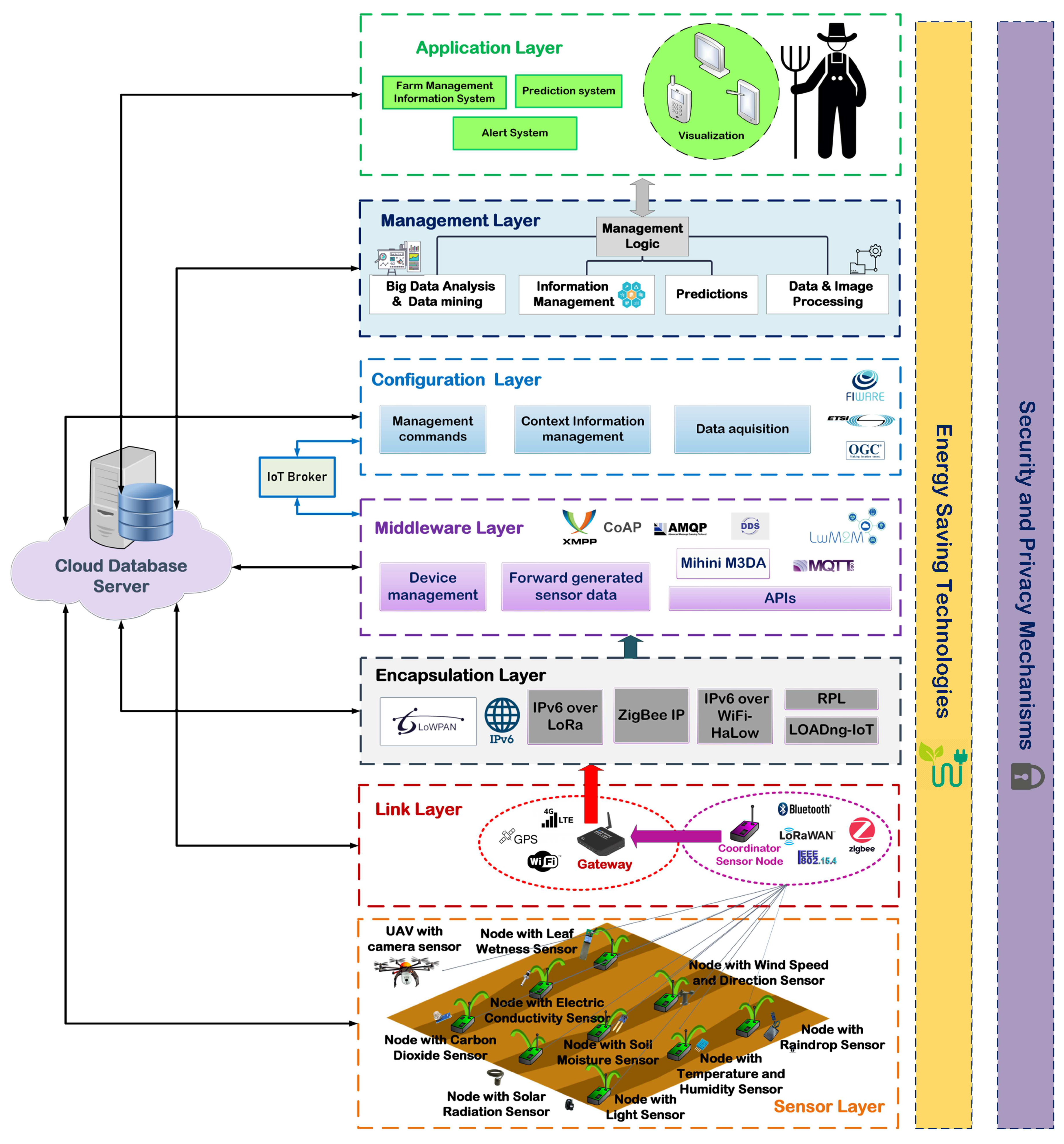
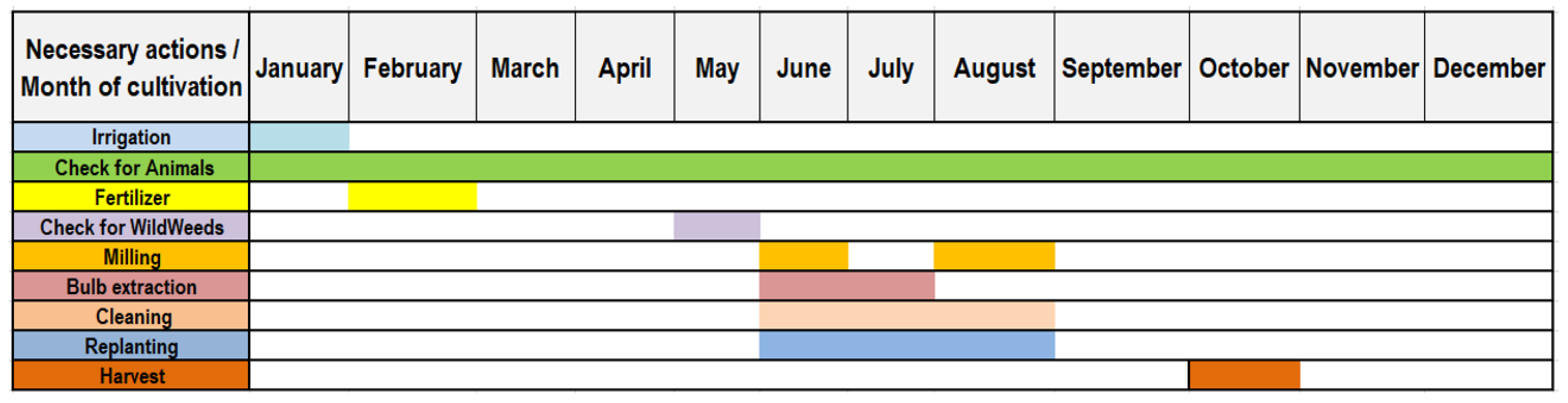
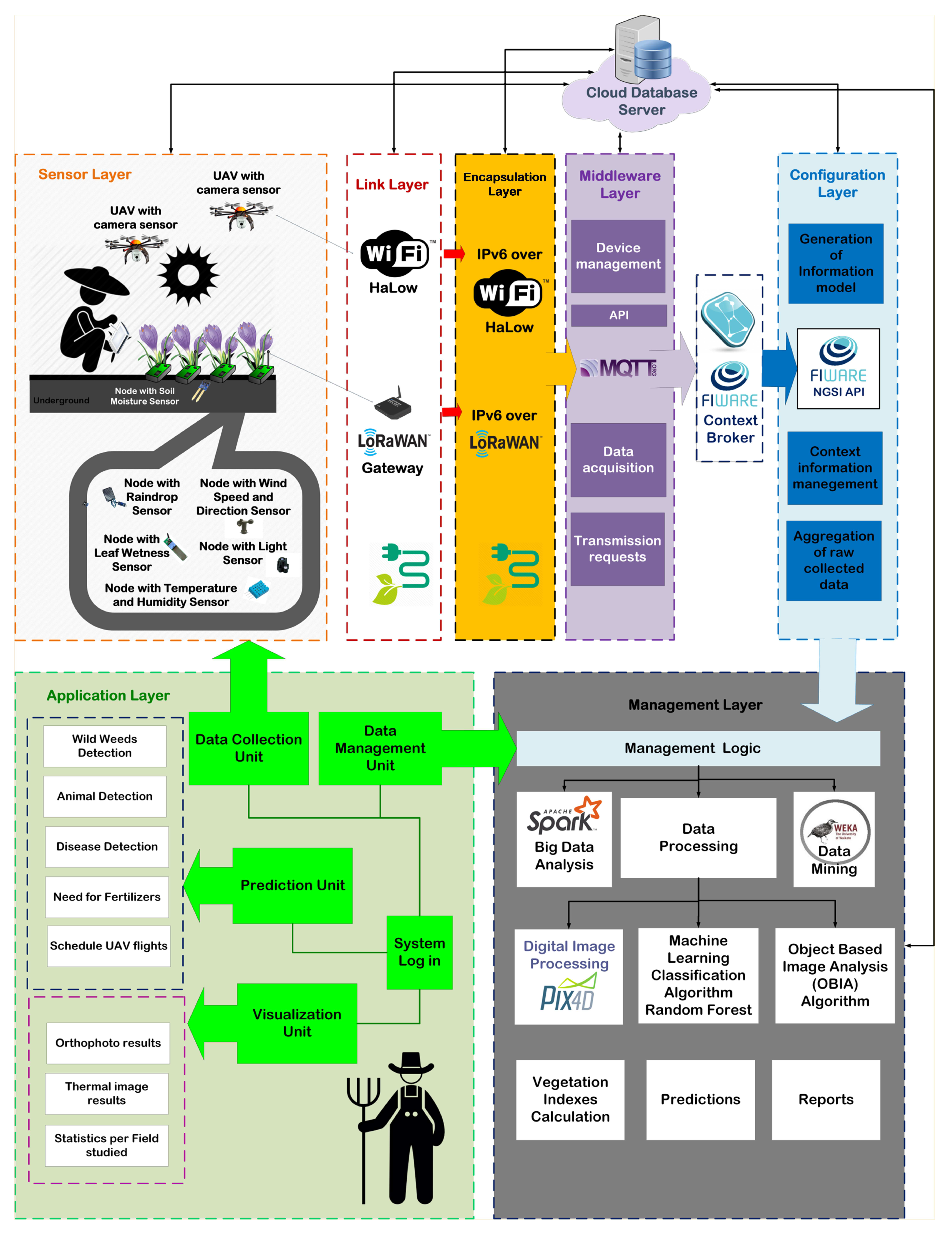
Smart Farming is a development that emphasizes on the use of modern technologies in the cyber-physical field management cycle. Technologies such as the Internet of Things (IoT) and Cloud Computing have accelerated the digital transformation of the conventional agricultural practices promising increased production rate and product quality. The adoption of smart farming though is hampered because of the lack of models providing guidance to practitioners regarding the necessary components that constitute IoT-based monitoring systems. To guide the process of designing and implementing Smart farming monitoring systems, in this paper we propose a generic reference architecture model, taking also into consideration a very important non-functional requirement, the energy consumption restriction. Moreover, we present and discuss the technologies that incorporate the seven layers of the architecture model that are the Sensor Layer, the Link Layer, the Encapsulation Layer, the Middleware Layer, the Configuration Layer, the Management Layer and the Application Layer. Furthermore, the proposed Reference Architecture model is exemplified in a real-world application for surveying Saffron agriculture in Kozani, Greece.
Keywords: Wireless Sensor Networks; Internet of Things; precision agriculture; smart farming; communication technologies; Cloud Computing Wireless Sensor Networks; Internet of Things; precision agriculture; smart farming; communication technologies; Cloud Computing