
Perspective

Embodied Neuroplasticity: Exploring Biological and Molecular Pathways of Inner Development for Planetary Health


by
Karen B. Kirkness
Health Professions Education Unit, Hull York Medical School, York HU6 7RX, UK
Challenges 2026, 17(1), 6; https://doi.org/10.3390/challe17010006
Submission received: 22 October 2025 / Revised: 21 January 2026 / Accepted: 28 January 2026 / Published: 30 January 2026

Abstract

Understanding how inner development capacities are embodied at biological levels remains an underexplored dimension of planetary health research. The aim of this viewpoint is to provide transdisciplinary integration across neuroscience, cell biology, education, and social systems toward addressing planetary health challenges. Despite growing recognition of the Inner Development Goals (IDG) framework as complementary to the UN Sustainable Development Goals, the biophysical dynamics underlying personal and collective transformation remain largely unexplored. This viewpoint presents key molecular pathways that may underpin the Embodied Neuroplastic Resilience Model (ENRM) via calcium signaling and hyaluronan (the CHA axis). This viewpoint explores educational and therapeutic implications while simultaneously illuminating how socioeconomic inequalities constrain access to neuroplasticity-supporting practices. Four key conclusions emerge: (1) The CHA axis provides a compelling mechanistic framework for understanding how bodily experiences can reshape neural circuits through calcium signaling and hyaluronic acid matrix dynamics; (2) Mapping molecular mechanisms to complex human inner development capacities remains provisional, requiring further interdisciplinary investigation; (3) Socioeconomic inequality creates structural barriers to neuroplasticity and inner development, necessitating an integrated approach that connects mechanistic understanding with equitable access to transformative practices; (4) Enhanced understanding of embodied neuroplasticity must serve compassion and systemic transformation, moving beyond individual optimization toward collective well-being. By bridging neuroscience and sustainability frameworks, this viewpoint calls for a nuanced understanding of inner development that transcends individual optimization and emphasizes collective transformation.

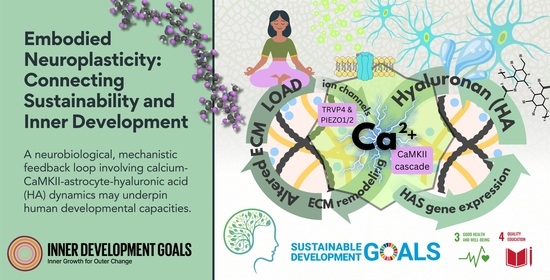
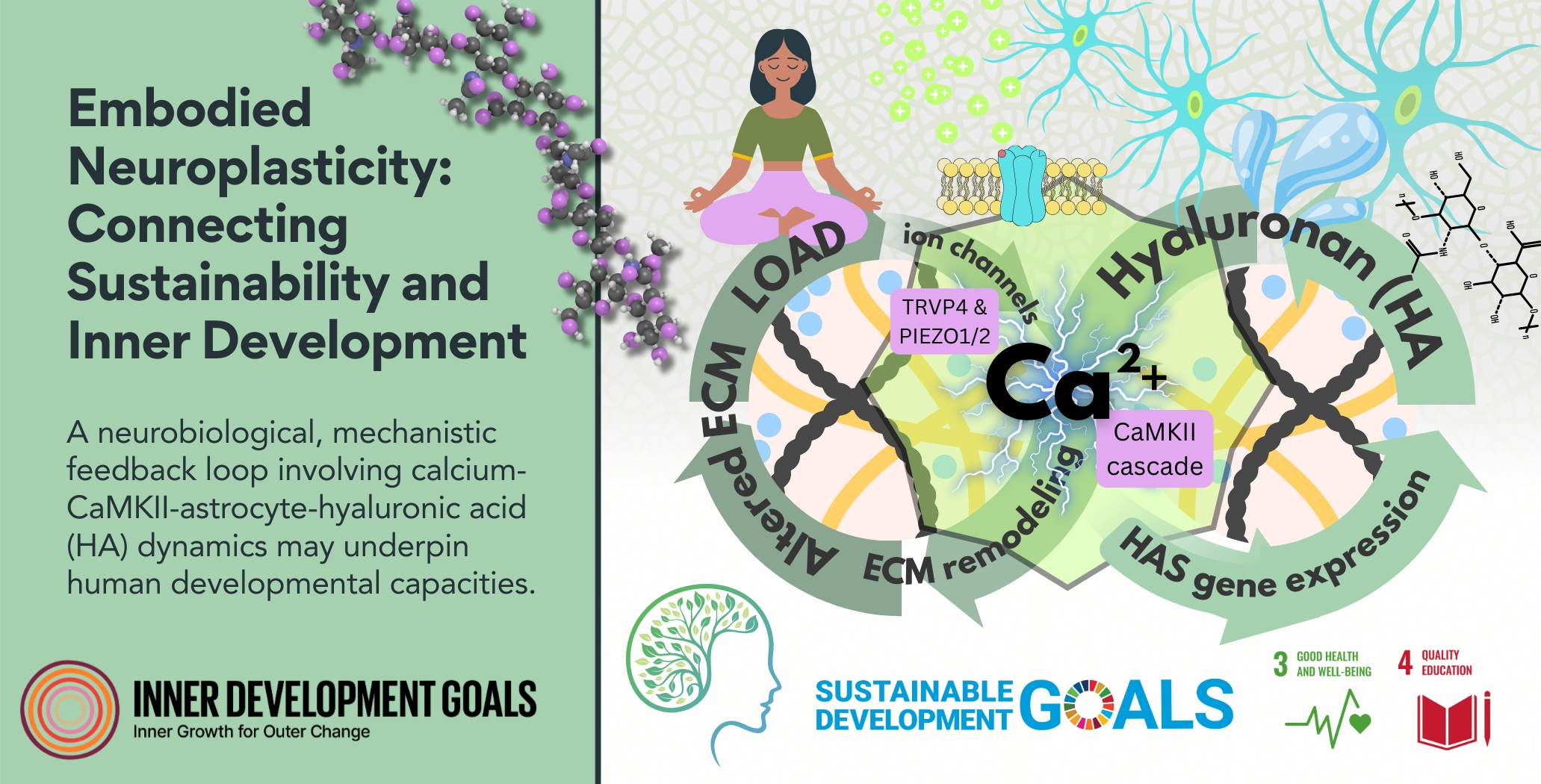
Graphical Abstract

1. Introduction—Toward Sustainability

Planetary health provides an integrated framework for transdisciplinary approaches that address ecological and health challenges holistically, including the psychological, cultural, and neurobiological dimensions of human behavior [1]. Despite this, neurobiological insights remain marginalized in broader planetary health efforts, underscoring the need for greater integration of brain–body science into sustainability and health policies [2]. This exploratory viewpoint takes the position that an understanding of the molecular and neural mechanisms underlying emotional and psychological development has the potential to strengthen our capacity to systematically cultivate the qualities identified as essential for sustainability.
The United Nations adopted the 17 global Sustainable Development Goals (SDGs) in 2015 to address many dimensions of human and planetary health by 2030 [3,4]. However, progress to address inter-connected economic, social, and environmental dimensions of planetary health has been disappointing. One reason for the lack of progress with advancing the SDG’s is the failure to address the personal and collective capacities (mindsets and higher-level skills) needed to achieve these goals. This has led to calls to integrate the ‘inner dimensions’ of change) for sustainable well-being at all scales, including the Inner Development Goals (discussed below, Section 2), which also depends on understanding the underling biological determinants of behavior and psychosocial frameworks—from molecules to matrices, neurons to fascia. This mechanistic understanding has profound implications beyond individual development and may foster the capacity for change and awareness of the interconnectedness of all living systems.
Transdisciplinary integration is key. Sustainability frameworks have often neglected the internal, personal dimensions of change and the potential underpinning biological pathways. Neurobiology and mechanistic science have been largely overlooked in sustainability and planetary health discussions, despite their critical relevance. The brain mediates all aspects of human experience. Planetary-scale environmental damage directly impacts brain biology, contributing to a collective increase in biological and psychological stress that underlies the mental health crisis [5]. Interpersonal Neurobiology (IPNB) highlights that the mind is relational and embodied, extending beyond individuals to social, cultural, and planetary systems, linking mental health with planetary well-being [6]. Microbiome research further connects environmental biodiversity with human immune function and mental health, emphasizing how ecological degradation affects personal and public health through biological pathways [7].
This viewpoint provides a Multi-Level Framework (Box 1) and synthesizes well-established neuroscience literature to explore the biological pathways that can help us understand embodied neuroplasticity—how bodily experiences (movement, touch, breath) produce lasting changes in brain structure and function. It presents an exploratory, theory-driven, integrative viewpoint designed to stimulate interdisciplinary and transdisciplinary discussion, rather than a conventional review.
Central to this viewpoint is neuroplasticity, the brain’s dynamic ability to reorganize its structure and function in response to experience, development, and injury, occurring throughout life [8,9]. It involves multiple mechanisms, including synaptic plasticity, structural remodeling, neurogenesis, and functional reorganization. These adaptive processes support learning, memory, recovery from brain lesions, and adaptation to environmental changes [10,11].
Box 1. A Multi-Level Framework: From Molecules to Social Capacity.
    This viewpoint integrates evidence across five interconnected organizational levels that comprehensively map the complex mechanisms underlying human transformative experiences. These levels represent a nested, dynamically interactive system of biological and psychological processes:
  • Molecular Mechanisms: Focusing on Ca2+-CaMKII-HA signaling cascades and epigenetic modifications that modulate cellular responsiveness and genetic expression.
  • Tissue-Level Dynamics: Examining mechanotransduction processes within fascia, extracellular matrix (ECM), skin, and mesenchymal HA-rich tissues that translate mechanical signals into biochemical responses.
  • Neural Systems: Analyzing synaptic plasticity, network reorganization, and structural brain changes that underpin neurological adaptation and learning.
  • Psychological Functions: Investigating interoceptive awareness, emotional regulation, memory consolidation, and stress response modulation.
  • Social Capacities: Exploring the Inner Development Goals dimensions of Relating, Collaborating, and Caring as emergent social behavioral patterns.
    These levels demonstrate a bidirectional, hierarchical influence in which molecular signals can cascade through psychological and social domains, while complex social experiences may simultaneously modulate underlying molecular and neurological processes.

2. The IDG Framework and Embodied Neuroplasticity

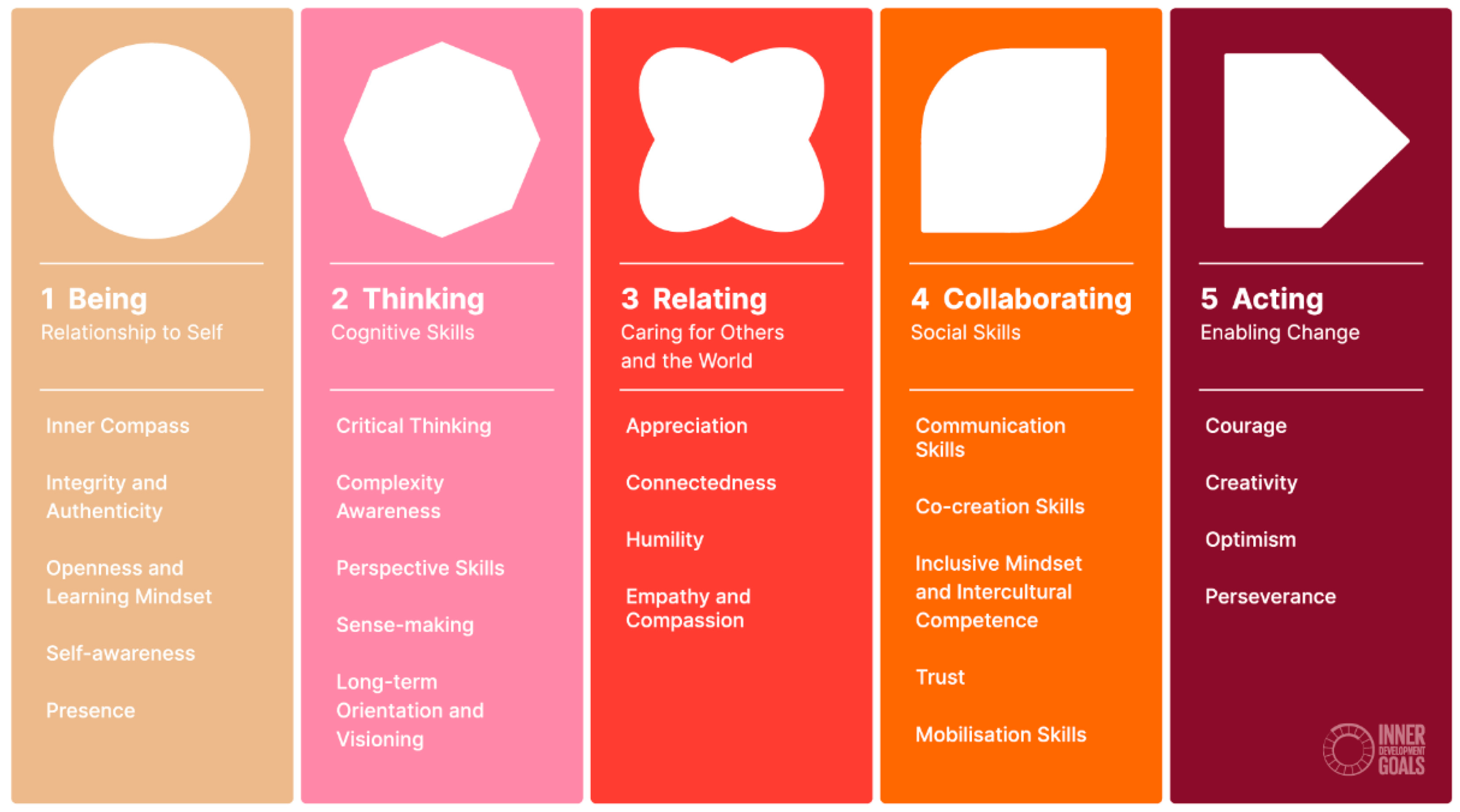
The Inner Development Goals (IDG) framework (Figure 1) has emerged as a complementary pathway to accelerate SDG realization by focusing on the personal and collective capacities (mindset, skills, and collaboration) needed to achieve sustainable development [4,12]. These capacities range from self-awareness and compassion to systems thinking and perseverance, offering a comprehensive map for cultivating the inner resources necessary to address complex global challenges [12,13,14]. Achieving the SDGs requires coordinated efforts across governments, civil society, and the private sector, with the IDG framework providing the inner development foundation for this collective action [15,16].
Recent literature highlights the importance of inner dimensions—such as values, mindsets, consciousness, and cognitive skills—for sustainability outcomes, but primarily from psychological, philosophical, or educational perspectives rather than neurobiological ones [12,13,18,19], with a few notable exceptions [20,21]. This viewpoint addresses the gap by integrating the IDG framework with recent advances in neuroscience, mapped to specific goals—Being, Thinking, Relating, and Collaborating. Evidence is presented linking calcium ion (Ca2+) signaling pathways (particularly CaMKII) with neuroplasticity mechanisms and the body wide hyaluronic acid (HA) gel-like fascial matrix.
CaMKII, highly abundant in excitatory synapses, is activated by calcium influx and triggers receptor trafficking, cytoskeletal remodeling, and gene transcription underlying learning and memory [22,23]. Its multi-state activity functions as a molecular integrator of diverse signal patterns [24], providing mechanistic insight for the cognitive, emotional, and behavioral flexibility required across IDG dimensions. This viewpoint holds that understanding the molecular and neural mechanisms that may underlie inner development can strengthen our capacity to systematically cultivate the qualities identified as essential for sustainability [25] and planetary flourishing.
While psychological and educational research has demonstrated that embodied practices can support inner development capacities essential for sustainability [12,19,26], this viewpoint addresses the complementary question of how these practices may work at the molecular and cellular level. This viewpoint draws on established findings from neuroscience, cell biology, and epigenetics linking bodily experiences to neural change through conserved molecular mechanisms. The “embodied neuroplasticity” concept has gained traction through the recently proposed Embodied Neuroplastic Resilience Model (ENRM) [27], which operationalizes how somatic practices influence mental health and resilience. This mechanistic understanding can inform more effective approaches to cultivating the inner capacities—self-awareness, empathy, systems thinking, perseverance—identified by the IDG framework as essential for addressing global sustainability challenges.
Substantial evidence demonstrates that physical activity, sensorimotor experiences, and environmental enrichment induce structural and functional changes in the brain, supporting the embodied nature of neuroplasticity [10,28,29,30,31,32,33,34,35,36]. Manual therapies, somatic practices, and mindfulness interventions also modulate brain networks and promote adaptive neuroplasticity [32,37,38]. Theories of embodied cognition emphasize that cognitive processes are deeply rooted in the body’s interactions with the world, and empirical studies confirm that these interactions shape neural circuits and plasticity [29,31,36,39]. The gap addressed here is that of plasticity, the biology of change, which may be seated in the extracellular matrix (ECM) and fascial tissue. This viewpoint identifies calcium signaling, CaMKII, and hyaluronan (HA) in an epigenetic feedback loop that encodes transient oscillations into memory and lasting change.

3. Molecular Mechanisms: Calcium Signaling and CaMKII

At the molecular level, fundamental signaling cascades initiate transformative biological responses. To build this comprehensive framework, we begin by examining calcium signaling as the universal cellular mechanism that translates experiences into lasting biological changes. By exploring how calcium ions act as fundamental molecular messengers across diverse cell types, we can understand the core process by which bodily experiences create neuroplastic transformations. Evidence shows how these dynamics operate across tissues—from skin cells to connective tissue to neural support cells—revealing a common yet adaptable molecular strategy for encoding experience. Ultimately, these molecular insights can inform practical applications in clinical interventions, education, and sustainable human development.

3.1. The Universal Signal That Translates Experience into Lasting Change

To understand how bodily experiences may translate into lasting neural changes, we must first examine the molecular dynamics that enable cells to encode and retain information from transient signals. Decades of research across cellular biology have established that calcium ions (Ca2+)—ancient intracellular messengers—regulate cellular processes across all life domains [40]. In neurons, extensive literature confirms that Ca2+ is crucial for synaptic transmission (communication between nerves), gene expression (determining which genes are turned on or off), and the structural plasticity (physical remodeling of neural connections) underlying learning and memory [41,42]. Importantly, calcium’s role extends far beyond the nervous system, making it a particularly relevant mechanism for understanding embodied neuroplasticity: how physical experiences throughout the body may shape brain function and structure.
Well-characterized mechanisms demonstrate that Ca2+ functions as a cellular “first responder” to activity. When a neuron fires, when skin stretches, or when muscle contracts, Ca2+ floods into cells through specialized channels (protein pores in the cell membrane). What makes Ca2+ uniquely suited as a signal is its precision: cells maintain extremely low resting Ca2+ concentrations compared to the extracellular environment, creating a steep gradient that allows rapid, localized signals [43,44]. Ca2+ signals can be confined to specific cellular compartments and encode information through their amplitude (signal strength), frequency, and duration.

3.2. From Momentary Burst to Lasting Memory and Plasticity

In neurons, Ca2+ orchestrates brain plasticity by triggering neurotransmitter release, activating transcription factors, and driving structural changes [45]. All learning and adaptation to a changed environment is encoded in Ca2+ signals, which initiate the molecular cascades that remodel neural circuits. Ca2+ signals are fleeting, lasting milliseconds to seconds. Yet behavioral changes like learning a skill or cultivating empathy can persist for months or a lifetime. A fundamental question this viewpoint addresses: How does a transient signal produce enduring structural change?
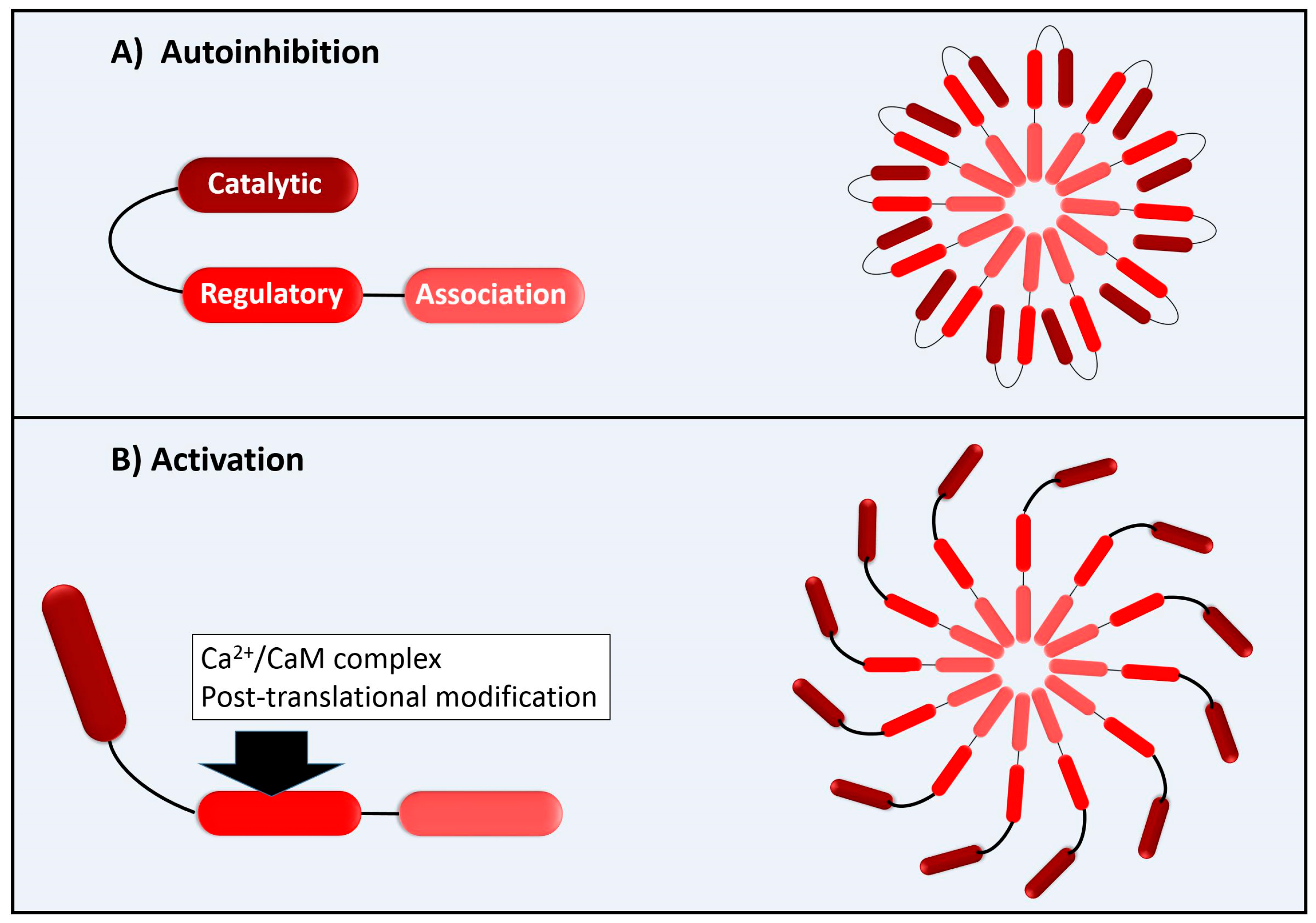
To understand plasticity, we highlight the role of Ca2+/calmodulin-dependent protein kinase II (CaMKII, pronounced “cam kay two”), the most abundant protein in excitatory synapses [22] (Figure 2). Decades of neuroscience research confirm that CaMKII bridges ephemeral signals and lasting patterns. When Ca2+ enters a cell, it binds to calmodulin (a calcium-sensing protein), activating CaMKII. The well-characterized mechanism that follows is critical: CaMKII adds chemical tags to its own structure, a process called autophosphorylation), converting from a Ca2+-dependent state to one that remains active even after Ca2+ levels return to baseline [22,46]. This tagging leaves lasting molecular traces—modifying synaptic proteins, activating genes, and triggering structural remodeling—long after the initial signal fades [47].

3.3. CaMKII as a Weighted Flywheel

CaMKII integrates the rhythm of calcium influx to modulate both immediate HA metabolism and lasting epigenetic programs (how genes are expressed). CaMKII’s autonomous activity—persisting after Ca2+ levels return to baseline—enables brief Ca2+ surges to encode experiences into tissue architecture. The dynamic can be likened to a spinning wheel with a weighted flywheel. Give the wheel a push (Ca2+ influx), and it starts spinning (CaMKII activates). Crucially, this wheel has a flywheel that keeps it spinning through momentum (autophosphorylation). The harder and more frequently you push, the faster and longer it spins.
This is how transient mechanical signals—a touch, a stretch, a synaptic activation—can produce lasting changes in tissue architecture. This bidirectional feedback operates continuously: mechanical experiences trigger Ca2+ influx, activating CaMKII-mediated HA remodeling and epigenetic changes; altered ECM architecture then modulates mechanoreceptor and HA receptor signaling, influencing subsequent Ca2+ dynamics and cellular responses.

3.4. When Calcium Goes Wrong

The importance of precise Ca2+ control becomes evident in disease states that have been extensively characterized in the clinical literature with Ca2+/calmodulin-dependent kinases—particularly CaMKII and CaMKIV—emerging as central mediators linking calcium dysregulation to altered synaptic plasticity, mood regulation, and cognition [49,50]. Calcium oscillation is characteristic of the wider oscillatory nature of organismic life [51]. Disruptions in Ca2+ homeostasis (the cell’s ability to maintain stable calcium levels) are well-documented as contributing factors in neuropsychiatric and neurodegenerative conditions, as excessive or dysregulated Ca2+ signaling leads to neuronal dysfunction and death [52,53,54].
In schizophrenia, for example, research has consistently shown that parvalbumin interneurons—fast-spiking inhibitory cells enriched in the calcium-binding protein parvalbumin—exhibit reduced function. The condition disrupts gamma-frequency brain rhythms (neural oscillations at 30–100 Hz) associated with perception and attention [55,56,57]. Their vulnerability stems from high metabolic demand and reliance on Ca2+-permeable receptors, illustrating how cellular calcium dysregulation cascades into network deficits and psychiatric symptoms [49,58,59]. Consistent with this vulnerability, chronic social stress has been shown to alter the expression of multiple calcium-related genes in the hippocampus, linking prolonged experiential stress to sustained changes in calcium signaling pathways associated with learning, memory, and affective regulation [60].

3.5. Evidence from Contemplative Practices

Emerging research demonstrates that intentional behavioral interventions can modulate these well-established calcium-dependent pathways. Experienced meditators show enhanced gamma oscillations—rhythms generated by parvalbumin interneurons—suggesting optimized Ca2+ buffering (the cell’s ability to manage calcium levels) and network stability [61]. A recent 7-day meditation retreat study found molecular shifts consistent with enhanced neuroplasticity: participants’ plasma promoted neurite outgrowth (the growth of neuronal branches) in cultured neurons and showed BDNF upregulation (brain-derived neurotrophic factor, a Ca2+-dependent protein that supports neuron survival and growth [62]. Systematic reviews demonstrate that meditation downregulates stress-inflammatory pathways (NF-κB), modulates histone marks (chemical tags on DNA packaging proteins) and epigenetic aging clocks, and enhances NMDA-ERK-BDNF pathways—all interacting with Ca2+ at multiple levels [63,64]. Put simply, NMDA senses activity → ERK transmits the signal → BDNF rewires and stabilizes the change. These findings suggest that contemplative practices may create a physiological milieu favoring the Ca2+-dependent plasticity mechanisms that have been well-characterized in basic neuroscience research.

4. Beyond Neurons: A Conserved Mechanism Across Tissues

Tissue-level dynamics reveal how mechanical signals are translated into biochemical and cellular adaptations across interconnected biological systems. Critically, Ca2+ signaling and CaMKII are not confined to neurons. The same molecular dynamics operate anywhere the body learns. Extensive research has documented that CaMKII is not unique to brain cells—it operates across diverse cell types, including muscle cells, heart cells, skin cells, connective tissue cells, immune cells, and glia (the support cells of the nervous system) (Table 1).
To understand embodied neuroplasticity, we must examine how Ca2+-driven mechanotransduction operates across tissue types with different functional demands. Mechanotransduction is the process by which cells convert mechanical forces like stretch, pressure, or movement into biochemical signals. Recent research has proposed the CHA axis, in which calcium–HA dynamics form the major mechanotransductive pathway by which cells modify their ECM [65]. HA is a hydration lubricant widely secreted in the ECM, composed of highly hydrophilic (water-loving) sugar chains of various molecular weights. HA is not merely structural; its various weights, arising from fragmentation of chains, are widely recognized for their signaling properties [66,67,68].
Table 1. Table showing CaMKII’s adaptive roles in key cell types.
Cell TypeCaMKII’s Role in Learning/AdaptationCitations
Muscle cellsAdapts to load, tone, and coordination; regulates gene expression and muscle memory[69,70]
Heart cellsRegulates heart rhythm, contractility, and adapts to physiological stress[71,72,73,74,75,76,77,78]
Brain cellsCentral to memory, learning, synaptic plasticity, and skill formation[52,69,79,80,81]
Fascial/connective tissue cellsResponds to mechanical cues, mediates mechanotransduction, and tissue adaptation[69,82]
Having established calcium signaling and CaMKII as universal mechanisms in neurons, we now expand this framework beyond the nervous system to understand how the body as a whole may encode experience. This conservation across tissues suggests that the same molecular learning mechanism we see in neurons may operate throughout the body. The following sections explore three cell types that all deploy the CHA axis but tune it toward opposite ends of a functional spectrum: rapid synthesis, balanced remodeling, or strategic degradation of extracellular scaffolding. Keratinocytes, mesenchymal cells, and astrocytes are paradigmatic Ca2+- and HA-sensitive ECM remodelers spanning the major tissue classes; other stromal/immune cells are context-specific modifiers of the same adaptive logic.

4.1. Tissue-Specific Tuning of the Calcium–Hyaluronan Axis

Established research demonstrates that keratinocytes (ectoderm), mesenchymal cells (mesoderm), and astrocytes (neuroectoderm) deploy conserved Ca2+/HA machinery to regulate HA, but with fundamentally different functional biases. Across different germ layers, these cells exemplify plastic, substrate-adherent, highly interactive “niche regulators. All three cell types utilize calcium channels, CaMKII-like signaling cascades that amplify/encode/remember transient bursts, hyaluronan synthase enzymes (HAS1-3, enzymes that build HA chains), and hyaluronidases (enzymes that cut HA chains). See Table 2. Yet studies show that each tunes this system toward synthesis-dominant, balanced, or degradation-dominant modes depending on tissue context. This differential tuning, well characterized in the literature, illuminates how transient mechanical signals trigger calcium influx, activating signaling cascades and driving both immediate responses and lasting epigenetic programs that encode experiences into tissue architecture.
The CHA axis synthesizes established findings showing that HA function emerges from balanced synthesis (via HAS enzymes) and degradation (via hyaluronidases, and reactive oxygen species) with Ca2+-dependent signaling regulating both processes [83,84,85]. Hyaluronidases can be thought of as molecular scissors that cells use to cut long HA chains (high molecular weight HA) into shorter ones (low molecular weight HA). Research across multiple cell types supports that CHA represents a conserved mechanism in ECM-synthesizing cells such as keratinocytes, mesenchymal cells, and astrocytes, with each cell type employing tissue-specific signaling pathways and isoforms.
Table 2. Tissue-specific bias of Ca2+–HA feedback loops.
Cell ContextDominant HA DirectionKey HA RegulatorsFunctional EmphasisCitations
KeratinocytesNet ↑ HMW-HA, then pH-guided trimmingHAS2/3, HYAL1, CD44Barrier repair, hydration, controlled inflammation[86,87,88,89]
Mesenchymal (fascia, fibroblasts)Intermediate: robust synthesis + active remodelingHAS2, HYALs, ROS, CD44/RHAMMTensile integrity vs. fibrotic remodeling, immune cell retention[83,84,85,90]
Astrocytes/CNSNet ECM loosening, LMW-HA increaseAstrocyte/microglial hyaluronidases, MMPsSynaptic plasticity, with risk of hyperexcitability[91,92,93,94]

4.2. Astrocytic CHA: Degradation-Dominant Promotion of Plasticity

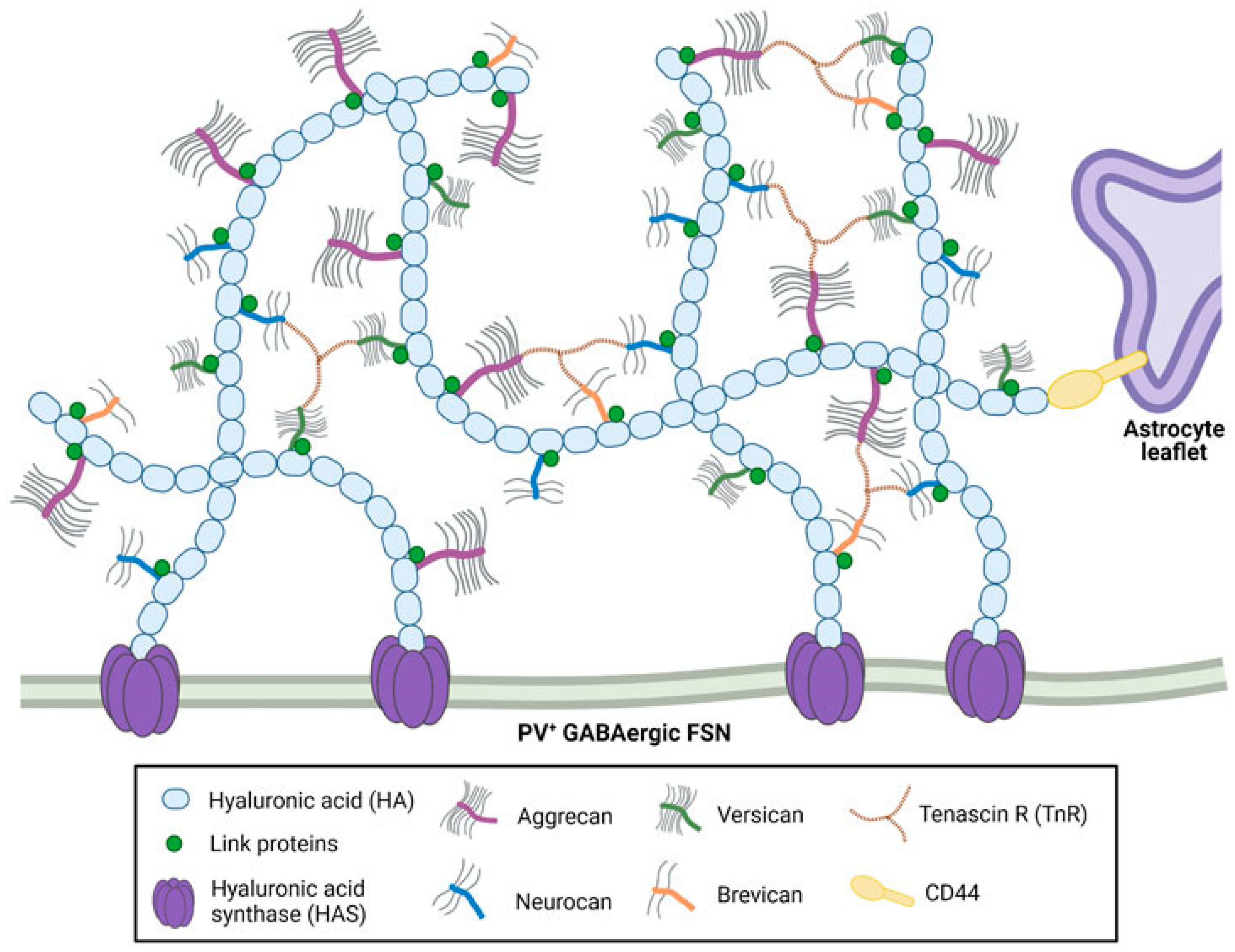
Astrocytes are the star-shaped support cells of the central nervous system. As the bridge between neural and non-neuronal tissue, astrocytes deserve special attention. While astrocytes synthesize HA and contribute to the neural ECM and HA-rich perineuronal nets [92,93] (Figure 3), their CHA system is naturally tuned toward matrix degradation, which promotes plasticity.
Acute perturbation experiments demonstrate this bias. Hyaluronidase application produces immediate neuronal depolarization and Ca2+ influx through NMDA and L-type Ca2+ channels within seconds [91,94]. This calcium surge activates neuronal CaMKII, driving enhanced long-term potentiation (LTP)—the cellular basis of learning and memory. CaMKII phosphorylates synaptic proteins, strengthening connections and encoding memories. Under certain conditions, HA degradation drives epileptiform “superbursts”—synchronized hyperactivity indicating that matrix degradation directly unlocks neuronal excitability and maximal CaMKII activation [91,94].
Astrocytes reinforce this degradation bias through CaMKII-mediated positive feedback. When cultured in matrices with reduced HA content, astrocytes shift toward a reactive, inflammatory phenotype, upregulating matrix metalloproteinases (MMPs) and hyaluronidases [92]. CaMKII modulates this reactive phenotype, tuning inflammatory response and degradation machinery. Rather than responding to sparse matrices by increasing synthesis—as keratinocytes do—astrocytes amplify degradation through CaMKII-driven upregulation of degradative enzymes, creating positive feedback that loosens the matrix and increases plasticity.
This degradation-dominant pattern directly supports embodied neuroplasticity, which involves constant revision. Motor skill acquisition, memory formation, and sensory adaptation all require ECM remodeling. Plasticity occurs as astrocytes degrade ECM to permit neuronal rewiring, with CaMKII in both astrocytes and neurons enabling and encoding that rewiring. Mechanical experience—repeated neural circuit activation—triggers calcium signals that activate CaMKII, which modulates HA degradation in astrocytes and synaptic strengthening in neurons, enabling lasting synaptic remodeling. This represents embodied neuroplasticity at the molecular level, an extension of CHA: bodily experience translated into lasting neural change through the CHA axis.

4.3. From Spinning Signal to Lasting Pattern: Calcium, Epigenetics, and Memory

Understanding the bursting nature of calcium influx raises the deeper question: how do these transient spinning signals—Ca2+ rushing in, CaMKII phosphorylating targets, threads being woven or cut—become lasting patterns that persist long after the initial signal fades? This is where epigenetics comes in as the mechanism that transforms transient calcium signals into lasting structural memory.
Across neuroplasticity, mood-disorder, and astrocyte studies, epigenetic regulation is consistently placed downstream of activity-dependent Ca2+ signaling and upstream of long-term circuit change [96,97,98]. The Ca2+ influx activates CaMKII, which tells the cell when to spin or cut threads, and epigenetic machinery, e.g., DNA methyltransferases (DNMTs), “remembers” what was woven and ensures the pattern persists.

5. Epigenetic Encoding and Tissue-Specific CHA Patterns

Calcium Signaling as the Entry Point to Epigenetic Pattern-Setting

Epigenetic mechanisms are key processes that constantly reshape genome activity carrying out physiological responses to environmental stimuli. A recent study showed that meditation influences brain and body systemwide, eliciting structural/morphological changes as well as modulating the levels of circulating factors and the expression of genes linked to the HPA axis and the immune and neuroimmune systems [99]. Extensive research confirms that transient changes in intracellular calcium can give rise to long-lasting changes in cell structure and function by shaping gene regulatory processes [100,101,102,103]. Activity-dependent Ca2+ entry activates CaMKII and related kinases, which in turn influence chromatin-regulating proteins, including DNA methyltransferases and enzymes involved in histone modification. Through these mechanisms, short-lived Ca2+ signals can be translated into stable patterns of gene expression that support cellular plasticity [96,97,98].
Importantly, Nayak et al. (2022) showed that changes in gene regulation triggered by neural activity are essential for learning-related plasticity [96]. When the gene-regulating enzyme Dnmt3a was removed from excitatory neurons, synaptic development and learning were disrupted, indicating that lasting change requires neural activity to be translated into stable patterns of gene expression. Experimental manipulation of Ca2+ dynamics further illustrates the sensitivity of epigenetic states to activity patterns. Low-intensity magnetic stimulation of cortical astrocytes downregulates genes involved in Ca2+ signaling and neural plasticity, suggesting that altered Ca2+ activity can rapidly shift glial phenotypes through changes in gene regulation, including epigenetic mechanisms [104]. Consistent with this broader principle, a large number of chromatin-regulating proteins have been causally implicated in neurodevelopmental and psychiatric disorders, underscoring the central role of epigenetic regulation in maintaining brain function and adaptability [98].
Although calcium–CaMKII–epigenetic signaling pathways are shared across many cell types, their downstream effects are strongly context dependent. In epithelial, mesenchymal, and glial systems, calcium signaling is integrated with HA metabolism and mechanosensing, yet the relative balance between HA synthesis and degradation differs across tissues. As a result, similar activity-dependent signaling pathways can give rise to distinct structural and functional outcomes, reflecting tissue-specific modes of plasticity and remodeling.

6. Clinical Translation: Molecular Mechanisms Underlying the Embodied Neuroplastic Resilience Model

6.1. Three ENRM Pathways

Each pathway demonstrates integration across organizational levels—from molecular signaling (Ca2+-CaMKII-HA) through tissue dynamics and neural circuits to psychological outcomes. The CHA-epigenetic framework implicates a fascial substrate for the Embodied Neuroplastic Resilience Model (ENRM) proposed by Kumar and Kapil (2025), which outlines three pathways through which embodied practices influence mental health [27]:
  • Embodiment-Interoception. Embodied practices modulate tissue mechanics—fascial tension, HA density, ECM stiffness—altering mechanoreceptor sensitivity and Ca2+ influx patterns in interoceptive circuits (insula, somatosensory cortex). These altered Ca2+ patterns could drive synaptic plasticity in interoceptive hubs, potentially explaining enhanced bodily awareness and emotional literacy reported by practitioners.
  • Neuroplastic-Autonomic Regulation. Repeated breath-focused practices may produce sustained, rhythmic Ca2+ oscillations in autonomic circuits, triggering epigenetic changes at genes controlling autonomic function and stress response. Early-life stress shifts DNA methylation at glucocorticoid receptor and plasticity genes, altering HPA-axis function long-term [97]. If contemplative practices operate through similar Ca2+→CaMKII→epigenetic mechanisms in reverse, they may provide a means to modify maladaptive stress-response patterns. This could explain why regular practitioners show baseline differences in heart rate variability and autonomic flexibility that persist between practice sessions.
  • Mindfulness-Resilience. Contemplative attention may modulate Ca2+ dynamics in cortical circuits—particularly PV interneurons maintaining gamma oscillations and prefrontal-amygdala pathways—driving epigenetic changes at stress-response genes (BDNF, Arc, Fos) and potentially reducing reactivity to previously threatening stimuli.

6.2. Integration and Intervention Design

These three pathways can be considered as an integrated system in which the Ca2+-CaMKII-epigenetic machinery operates across interoceptive, autonomic, and cortical circuits. Bidirectional feedback may create self-reinforcing cycles: practice alters tissue and circuit architecture, which changes Ca2+ signaling patterns, which modifies subjective experience, motivating continued practice and strengthening epigenetic encoding. Importantly, studies of meditation and mindful movement practices indicate that repeated patterns of cognitive and bodily activity are associated with measurable changes in gene expression and epigenetic marks in peripheral tissues, including pathways related to stress regulation and plasticity [105]. These findings extend activity-dependent epigenetic regulation beyond neural circuits, suggesting that sustained patterns of movement, attention, and physiological regulation can shape gene expression across multiple tissues.
This framework suggests precision in intervention design. For interoception deficits (trauma, alexithymia, dissociation), emphasize practices modulating tissue mechanics: fascial release, sustained postures, body scans. For autonomic dysregulation (anxiety, PTSD, panic), prioritize breath-focused practices entraining rhythmic Ca2+ oscillations: slow pranayama, coherent breathing. For cognitive-emotional rigidity (depression, rumination), emphasize mindfulness practices modulating cortical Ca2+ dynamics: focused attention meditation, open monitoring, contemplative inquiry. Combining modalities may produce synergistic effects by engaging multiple Ca2+ signaling pathways simultaneously, though this requires empirical testing.
Environmental inputs—stress, training, meditation, physical activity—may modify chromatin in defined brain circuits through Ca2+-dependent signaling pathways, suggesting both pharmacological (HDAC inhibitors, histone methylation modulators) and activity-based interventions as potential approaches to modulate maladaptive plasticity.

7. Social Capacities and Transformative Applications

7.1. Linking Molecular Mechanisms to IDG Capacities

By mapping social capacities through an interdisciplinary lens, we demonstrate how individual neurobiological shifts manifest in collective behavioral patterns. The CHA axis provides a molecular pathway for exploring the five core IDG dimensions. Neuroscience has yet to fully characterize how molecular and cellular processes give rise to complex psychological phenomena. Yet the evidence demonstrates a mechanistic, molecular route for understanding how embodied practices may cultivate inner development. CaMKII-mediated synaptic plasticity serves as a central molecular mechanism within CHA, providing transdisciplinary integration for supporting IDG capacities across dimensions. Ultimately, any vision for improving planetary health involves humans changing their ways. Fostering conversations that examine how we do that can only be a step in the right direction.

7.1.1. Provisional IDG Mappings

Thinking: CaMKII’s role in modifying synaptic strength supports perspective-taking, complexity awareness, and mental model updating—capacities essential for integrating multiple information streams and adapting cognitive frameworks.
Being: The CHA axis may support self-awareness and presence through both neural and fascial pathways. Astrocyte-HA interactions modulate affective states, while proprioceptive and interoceptive signals from fascial tissues provide continuous embodied awareness of bodily states.
Relating: The same Ca2+-CaMKII pathways supporting cognitive learning also mediate emotional learning and affective responses [106,107,108,109]. Empathy and compassion require encoding emotional experiences and recognizing affective states in others—processes dependent on plasticity in limbic and prefrontal circuits, with astrocytes modulating emotional processing and synchronizing social cognition networks [110,111].
Collaborating, Acting, and Caring: These interconnected dimensions depend on prefrontal networks integrating CaMKII-mediated plasticity to support executive functions, trust, and holding multiple viewpoints. CaMKII consolidates new behavioral patterns into stable yet modifiable circuits, enabling sustained transformation. The capacity to care integrates affective, somatic, and cognitive processes [112,113,114], supporting collective action for sustainability through practices engaging body, mind, and relational context.

7.1.2. On the Relationship Between Biology and Normative Goals

The Inner Development Goals represent normative aspirations: capacities we seek to cultivate for individual and collective flourishing. This manuscript does not claim that CHA dynamics determine or fully explain these capacities. Rather, this viewpoint proposes that understanding the biology of embodied learning may illuminate how contemplative and somatic practices support inner development.
Crucially, we must not oversell such practices. Western versions of traditional contemplative practices are often applied as one-size-fits-all approaches—in clinical settings, suburban wellness centers, and corporate environments—without adequate consideration of individual differences and vulnerabilities. Growing evidence demonstrates that people with a history of trauma often experience adverse reactions to mindfulness-based interventions [115]. Research indicates that childhood trauma and subclinical PTSD symptoms predict adverse effects and worse outcomes across mindfulness-based programs, particularly for individuals with active depression [116]. These findings underscore the need for trauma-informed, individualized approaches rather than universal prescriptions.
Biology provides enabling conditions and possibility spaces, but IDG capacities emerge through complex interactions between biological, psychological, social, and cultural factors. The CHA framework offers one lens (the molecular and cellular) for understanding why body-based practices may be effective for some individuals under appropriate conditions, without reducing empathy, collaboration, or systems awareness to biochemical events. This is analogous to how understanding synaptic plasticity informs educational practice without reducing learning to neuroscience.

7.2. Embodied Education: Teaching Interconnection

Understanding the pathways of inner development may have profound implications for how we approach education, therapy, and sustainability practice. When students learn that the same Ca2+ channels mediating their own heartbeat also enable synaptic plasticity, immune response, and even plant root signaling to soil microbes, anatomy becomes a study of interconnection rather than isolation. This understanding deepens when students grasp that mechanical cues—movement, pressure, tissue deformation—are converted into biochemical signals through the ECM’s dynamic network of integrins, HA homeostasis, mechanosensitive ion channels and effectors [117,118,119,120]. This shift—from body-as-parts to body-as-process—cultivates practitioners who see health not as individual optimization but as relational flourishing within living systems.

7.3. Movement and Manual Therapies: Mechanistic Foundations

This mechanistic (unfortunately, this is the prevailing term) understanding opens promising avenues for movement, allied health interventions, and therapies to harness these pathways for inner development and mind–body integration. Practices that engage the fascial system can alter ECM properties and modulate mechanotransductive signaling, as per the “quiet or riot” CD44/RHAMM dynamics of HA [65]. Mechanical stimulation activates Ca2+-permeable channels, leading to Ca2+ influx in neurons and glia—a process crucial for plasticity, neurogenesis, and astrocyte function [91,121]. Critically, enzymatic remodeling of HA triggers rapid Ca2+ influx and enhances NMDA receptor-dependent synaptic plasticity, directly linking ECM changes to neuronal signaling and long-term potentiation.

7.4. Movement Therapies

Mechanistic frameworks such as the BERN model (Behavior, Exercise, Relaxation, Nutrition) demonstrate that movement-based interventions modulate neurobiological pathways [122]. These interventions can influence gene expression, particularly by downregulating stress-induced inflammatory pathways which may reduce inflammation-related disease risk [123]. Movement therapies—including yoga, tai chi, and dance/movement therapy—leverage bidirectional brain–body communication to alleviate stress, depression, anxiety, and pain, with meta-analyses confirming significant reductions in anxiety and depression across modalities [81,124]. These practices also enhance cognitive function, especially in older adults and those with mild cognitive impairment [125].

7.5. Mind–Body Integration Therapies

Embodied approaches in psychotherapy and allied health empower individuals to develop self-awareness, emotional regulation, and coping skills through experiential learning and body-based practices [126,127]. The CHA axis demonstrates that practices engaging the body influence not only neuronal plasticity but also glial function and ECM remodeling, supporting the embodied dimensions of empathy and self-regulation central to the IDG framework [119,120]. See Table 3. Future research should focus on integrative programs combining meditation, ethical living, and lifestyle modification are designed to foster sustained mental health and flourishing [128], aligning with the IDG emphasis on integrating inner and outer development.

8. Limitations and Responsibilities

8.1. Socioeconomic Barriers and the Social Determination of Capacity

Socioeconomic inequality constrains not only material well-being but also access to the resources, education, and conditions necessary to cultivate inner development capacities. Structural barriers systematically undermine opportunities for those in lower socioeconomic positions to engage in practices that support neuroplasticity, self-awareness, and behavioral change—from contemplative movement to therapeutic interventions to educational programs emphasizing embodied learning.
Lower SES is associated with higher risks of unhealthy behaviors, worse physical and mental health outcomes, increased rates of depression and anxiety, and persistent effects of early-life poverty that extend across the lifespan [129,130,131,132,133,134]. Experimental and longitudinal studies demonstrate that poverty and inequality directly increase unhealthy behaviors through stress and anxiety, revealing these are not personal choices but are deeply shaped by structural context [135,136].
Recognizing the full weight of neurobiological determinants undermines unjust systems of moral blame and punishment. By acknowledging that behavior emerges from complex, intertwined biology and environment over which individuals have limited control, society can move toward more compassionate, less punitive responses [137,138]. This aligns with the IDG emphasis on compassion and systems thinking: inner development work must be accompanied by structural changes accounting for the biological and environmental factors shaping human behavior. Enhanced understanding of embodied neuroplasticity—from molecules to matrices, neurons to fascia—can support cultivating the inner capacities necessary for addressing global challenges such as planetary health with both scientific insight and ethical humility.

8.2. Limitations of CHA as a Neurobiological Rationale for Embodied Neuroplasticity

The aim of this viewpoint is to present an exploratory, theory-driven, integrative viewpoint designed to stimulate interdisciplinary and transdisciplinary discussion, rather than a conventional review. Meaningful discussion requires acknowledging current limitations of using CHA as a rationale for embodied neuroplasticity. A fundamental challenge lies in the dramatic temporal discordance between fascial remodeling and synaptic plasticity. Synaptic plasticity operates on timescales from milliseconds to minutes, with CaMKII autonomous activity persisting for approximately one minute—a critical window for synaptic tag-and-capture mechanism [139,140,141]. In contrast, fascial ECM remodeling occurs over hours to days, driven by transcriptional changes and subsequent protein synthesis [118]. This orders-of-magnitude difference makes it unlikely that acute fascial changes can directly modulate rapid neural plasticity events.
However, this temporal mismatch does not preclude fascial influence on neural plasticity—it simply redirects attention toward slower, homeostatic mechanisms. Rather than acutely shaping rapid synaptic events, fascial changes could alter the baseline state of neural circuits or prime them for future plasticity. Importantly, research on CNS ECM demonstrates that ECM remodeling influences synaptic plasticity induction and consolidation, but through longer timescales and homeostatic mechanisms [142,143,144]. While direct evidence linking peripheral fascial remodeling to central neural circuits remains absent, the CNS ECM literature provides a compelling suggestion that ECM-mediated plasticity operates through homeostatic adjustment rather than acute modulation.

9. Conclusions

1. The CHA axis provides a compelling hypothesis-generating scaffold for embodied neuroplasticity. Extensive research suggests an extended CHA feedback loop: bodily experiences (movement, touch, breath) → fascial mechanotransduction and Ca2+ signaling → HA matrix remodeling → astrocyte Ca2+ dynamics → modulation of neural plasticity → changes in perception, emotion, and behavior → altered movement patterns and bodily experiences. This cycle operates bidirectionally: neural activity patterns can influence fascial properties through motor output and autonomic regulation, while somatic experiences can shape neural circuits through mechanoreceptor input and matrix-mediated signaling. The CHA framework remains speculative and requires empirical validation.
2. Mapping molecular mechanisms to complex IDG capacities remains provisional; IDGs can be considered as a normative framework informed by, but not biologically determined by, CHA Dynamics.
While CHA interactions provide molecular insight illuminating capacities such as empathy, compassion, and systems thinking, neuroscience has yet to fully characterize how these biological processes give rise to higher-order psychological phenomena. The reductionist leap from molecular signaling to subjective human experience requires substantial additional investigation.
3. Socioeconomic inequality creates structural barriers to neuroplasticity and inner development. Poverty and inequality systematically constrain access to resources, education, and practices (contemplative movement, therapy, embodied learning) that support neuroplasticity. Cultivating IDG capacities for sustainability requires integrating mechanistic understanding with social justice. Rigorous investigation is required for understanding biological substrates alongside structural changes ensuring equitable access.
4. Enhanced understanding of embodied neuroplasticity must serve compassion and systemic transformation to support planetary health. Biological insights should not normalize inequality or promote individual optimization divorced from collective responsibility. Rather, these insights should support more compassionate, less punitive responses that account for complex biology–environment interactions shaping human behavior. This integration of mechanistic knowledge with ethical commitment represents a defining challenge of our times.

Funding

This research received no external funding.

Institutional Review Board Statement

Not applicable.

Informed Consent Statement

Not applicable.

Data Availability Statement

No new data were created or analyzed in this study. This viewpoint synthesizes existing published literature. All cited sources are available through their respective publishers.

Acknowledgments

The author wishes to thank David Muehsam for valuable correspondence, especially as related to the significance of CaMKII. Special thanks to Suzanne Scarlata for ongoing collaborative investigation of the CHA axis. The author would also like to thank the reviewers for their diligent and generous guidance during the peer review process. During the preparation of this manuscript, the author used Consensus.ai for literature search. The author has reviewed and critically evaluated all sources and takes full responsibility for the content of this publication.

Conflicts of Interest

The author declares no conflicts of interest.

References

  1. Prescott, S.L.; Logan, A.C.; Bristow, J.; Rozzi, R.; Moodie, R.; Redvers, N.; Haahtela, T.; Warber, S.; Poland, B.; Hancock, T.; et al. Exiting the Anthropocene: Achieving Personal and Planetary Health in the 21st Century. Allergy 2022, 77, 3498–3512. [Google Scholar] [CrossRef]
  2. Logan, A.C.; Berryessa, C.M.; Callender, J.S.; Caruso, G.D.; Hagenbeek, F.A.; Mishra, P.; Prescott, S.L. The Land That Time Forgot? Planetary Health and the Criminal Justice System. Challenges 2025, 16, 29. [Google Scholar] [CrossRef]
  3. ScopeAboutAdmin. UN Sustainable Development Goals on ScienceOpen; ScienceOPEN: Berlin, Germany, 2021. [Google Scholar]
  4. Khalid, H. UN Sustainable Development Goals; Department of Economic and Social Affairs Sustainable Development: New York, NY, USA, 2024. [Google Scholar]
  5. Chen, C.; Nakagawa, S. Planetary Health and the Future of Human Capacity: The Increasing Impact of Planetary Distress on the Human Brain. Challenges 2018, 9, 41. [Google Scholar] [CrossRef]
  6. Siegel, D.J.; Drulis, C. An Interpersonal Neurobiology Perspective on the Mind and Mental Health: Personal, Public, and Planetary Well-Being. Ann. Gen. Psychiatry 2023, 22, 5. [Google Scholar] [CrossRef] [PubMed]
  7. Prescott, S.L.; Wegienka, G.; Logan, A.C.; Katz, D.L. Dysbiotic Drift and Biopsychosocial Medicine: How the Microbiome Links Personal, Public and Planetary Health. Biopsychosoc. Med. 2018, 12, 7. [Google Scholar] [CrossRef]
  8. Ismail, F.Y.; Fatemi, A.; Johnston, M.V. Cerebral Plasticity: Windows of Opportunity in the Developing Brain. Eur. J. Paediatr. Neurol. 2017, 21, 23–48. [Google Scholar] [CrossRef] [PubMed]
  9. Gazerani, P. The Neuroplastic Brain: Current Breakthroughs and Emerging Frontiers. Brain Res. 2025, 1858, 149643. [Google Scholar] [CrossRef]
  10. Mateos-Aparicio, P.; Rodríguez-Moreno, A. The Impact of Studying Brain Plasticity. Front. Cell. Neurosci. 2019, 13, 66. [Google Scholar] [CrossRef]
  11. Baroncelli, L.; Lunghi, C. Neuroplasticity of the Visual Cortex: In Sickness and in Health. Exp. Neurol. 2021, 335, 113515. [Google Scholar] [CrossRef]
  12. Wamsler, C.; Osberg, G.; Janss, J.; Stephan, L. Revolutionising Sustainability Leadership and Education: Addressing the Human Dimension to Support Flourishing, Culture and System Transformation. Clim. Change 2023, 177, 4. [Google Scholar] [CrossRef]
  13. Blanc, J.; Meißner, A. Towards a Holistic Approach to Sustainable Development: Inner Development as a Missing Link for Sustainability Transformation. Religions 2025, 16, 76. [Google Scholar] [CrossRef]
  14. Wamsler, C.; Bristow, J. At the Intersection of Mind and Climate Change: Integrating Inner Dimensions of Climate Change into Policymaking and Practice. Clim. Change 2022, 173, 7. [Google Scholar] [CrossRef]
  15. Costanza, R.; Fioramonti, L.; Kubiszewski, I. The UN Sustainable Development Goals and the Dynamics of Well-Being. Front. Ecol. Environ. 2016, 14, 59. [Google Scholar] [CrossRef]
  16. Biermann, F.; Kanie, N.; Kim, R.E. Global Governance by Goal-Setting: The Novel Approach of the UN Sustainable Development Goals. Curr. Opin. Environ. Sustain. 2017, 26–27, 26–31. [Google Scholar] [CrossRef]
  17. Framework—Inner Development Goals. Available online: https://innerdevelopmentgoals.org/ (accessed on 25 November 2025).
  18. Shtaltovna, Y.; Carreon, V.R.; Lindencrona, F.; Donald, W.E. Cognitive Skills within the Inner Development Goals (IDG) Framework: Empowering Sustainable Careers and Sustainable Development. GILE J. Ski. Dev. 2024, 4, 74–94. [Google Scholar] [CrossRef]
  19. Woiwode, C.; Schäpke, N.; Bina, O.; Veciana, S.; Kunze, I.; Parodi, O.; Schweizer-Ries, P.; Wamsler, C. Inner Transformation to Sustainability as a Deep Leverage Point: Fostering New Avenues for Change through Dialogue and Reflection. Sustain. Sci. 2021, 16, 841–858. [Google Scholar] [CrossRef]
  20. Brevers, D.; Baeken, C.; Maurage, P.; Sescousse, G.; Vögele, C.; Billieux, J. Brain Mechanisms Underlying Prospective Thinking of Sustainable Behaviours. Nat. Sustain. 2021, 4, 433–439. [Google Scholar] [CrossRef]
  21. Lockwood, P.L.; Apps, M.A.J.; Valton, V.; Viding, E.; Roiser, J.P. Neurocomputational Mechanisms of Prosocial Learning and Links to Empathy. Proc. Natl. Acad. Sci. USA 2016, 113, 9763–9768. [Google Scholar] [CrossRef]
  22. Yasuda, R.; Hayashi, Y.; Hell, J.W. CaMKII: A Central Molecular Organizer of Synaptic Plasticity, Learning and Memory. Nat. Rev. Neurosci. 2022, 23, 666–682. [Google Scholar] [CrossRef]
  23. Hassan, A.; Rao, M.; Yogesh, R.; Sateesh, A.; Fateh, R.; Acharya, Y. Calcium Calmodulin-Dependent Protein Kinase II (CaMKII) Versatile Player for Synaptic Plasticity. Int. Educ. Res. J. 2017, 3, 189–191. [Google Scholar]
  24. Bayer, K.U.; Giese, K.P. A Revised View of the Role of CaMKII in Learning and Memory. Nat. Neurosci. 2025, 28, 24–34. [Google Scholar] [CrossRef]
  25. Bristow, J.; Bell, R.; Wamsler, C.; Björkman, T.; Tickell, P.; Kim, J.; Scharmer, O. The System Within: Addressing the Inner Dimensions of Sustainability and Systems Change. The Club of Rome. Earth4All: Deep-Dive Paper 17. 2024. Available online: https://www.clubofrome.org/publication/earth4all-bristow-bell/ (accessed on 8 December 2025).
  26. Wamsler, C. Education for Sustainability: Fostering a More Conscious Society and Transformation towards Sustainability. Int. J. Sustain. High. Educ. 2020, 21, 112–130. [Google Scholar] [CrossRef]
  27. Kumar, M.V.V.; Kapil, D.K. Yoga for Mental Health: A Theoretical Synthesis of Embodiment, Neuroplasticity, and Integrative Resilience in Contemporary Psychological Models. Int. J. Res. Innov. Appl. Sci. 2025, 10, 1435–1439. [Google Scholar] [CrossRef]
  28. Sweatt, J.D. Neural Plasticity and Behavior—Sixty Years of Conceptual Advances. J. Neurochem. 2016, 139, 179–199. [Google Scholar] [CrossRef]
  29. Nguyen, L.; Murphy, K.; Andrews, G. Cognitive and Neural Plasticity in Old Age: A Systematic Review of Evidence from Executive Functions Cognitive Training. Ageing Res. Rev. 2019, 53, 100912. [Google Scholar] [CrossRef]
  30. Laube, C.; van den Bos, W.; Fandakova, Y. The Relationship between Pubertal Hormones and Brain Plasticity: Implications for Cognitive Training in Adolescence. Dev. Cogn. Neurosci. 2020, 42, 100753. [Google Scholar] [CrossRef]
  31. Tregub, P.P.; Komleva, Y.K.; Kukla, M.V.; Averchuk, A.S.; Vetchinova, A.S.; Rozanova, N.A.; Illarioshkin, S.N.; Salmina, A.B. Brain Plasticity and Cell Competition: Immediate Early Genes Are the Focus. Cells 2025, 14, 143. [Google Scholar] [CrossRef]
  32. Bryck, R.L.; Fisher, P.A. Training the Brain: Practical Applications of Neural Plasticity from the Intersection of Cognitive Neuroscience, Developmental Psychology, and Prevention Science. Am. Psychol. 2012, 67, 87–100. [Google Scholar] [CrossRef]
  33. Chatterjee, D.; Hegde, S.; Thaut, M. Neural Plasticity: The Substratum of Music-Based Interventions in Neurorehabilitation. NeuroRehabilitation 2021, 48, 155–166. [Google Scholar] [CrossRef]
  34. Cicchetti, D. Neural Plasticity, Sensitive Periods, and Psychopathology. Dev. Psychopathol. 2015, 27, 319–320. [Google Scholar] [CrossRef]
  35. Maier, M.; Ballester, B.R.; Verschure, P.F.M.J. Principles of Neurorehabilitation After Stroke Based on Motor Learning and Brain Plasticity Mechanisms. Front. Syst. Neurosci. 2019, 13, 74. [Google Scholar] [CrossRef]
  36. Andrade-Talavera, Y.; Rodríguez-Moreno, A. Synaptic Plasticity and Oscillations in Alzheimer’s Disease: A Complex Picture of a Multifaceted Disease. Front. Mol. Neurosci. 2021, 14, 696476. [Google Scholar] [CrossRef]
  37. Chapman, S.B.; Aslan, S.; Spence, J.S.; Hart, J.J., Jr.; Bartz, E.K.; Didehbani, N.; Keebler, M.W.; Gardner, C.M.; Strain, J.F.; DeFina, L.F.; et al. Neural Mechanisms of Brain Plasticity with Complex Cognitive Training in Healthy Seniors. Cereb. Cortex 2015, 25, 396–405. [Google Scholar] [CrossRef]
  38. Harrison, D.; Rorot, W.; Laukaityte, U. Mind the Matter: Active Matter, Soft Robotics, and the Making of Bio-Inspired Artificial Intelligence. Front. Neurorobot. 2022, 16, 880724. [Google Scholar] [CrossRef]
  39. Li, S.-C.; Brehmer, Y.; Shing, Y.L.; Werkle-Bergner, M.; Lindenberger, U. Neuromodulation of Associative and Organizational Plasticity across the Life Span: Empirical Evidence and Neurocomputational Modeling. Neurosci. Biobehav. Rev. 2006, 30, 775–790. [Google Scholar] [CrossRef]
  40. Berridge, M.J.; Bootman, M.D.; Roderick, H.L. Calcium Signalling: Dynamics, Homeostasis and Remodelling. Nat. Rev. Mol. Cell Biol. 2003, 4, 517–529. [Google Scholar] [CrossRef]
  41. Li, B.; Tadross, M.R.; Tsien, R.W. Sequential Ionic and Conformational Signaling by Calcium Channels Drives Neuronal Gene Expression. Science 2016, 351, 863–867. [Google Scholar] [CrossRef]
  42. Kawamoto, E.M.; Vivar, C.; Camandola, S. Physiology and Pathology of Calcium Signaling in the Brain. Front. Pharmacol. 2012, 3, 22359. [Google Scholar] [CrossRef]
  43. Berridge, M.J. Calcium Signalling and Psychiatric Disease: Bipolar Disorder and Schizophrenia. Cell Tissue Res. 2014, 357, 477–492. [Google Scholar] [CrossRef]
  44. Bootman, M.D.; Collins, T.J.; Peppiatt, C.M.; Prothero, L.S.; MacKenzie, L.; De Smet, P.; Travers, M.; Tovey, S.C.; Seo, J.T.; Berridge, M.J.; et al. Calcium Signalling—An Overview. Semin. Cell Dev. Biol. 2001, 12, 3–10. [Google Scholar] [CrossRef]
  45. Miyata, M.; Finch, E.A.; Khiroug, L.; Hashimoto, K.; Hayasaka, S.; Oda, S.-I.; Inouye, M.; Takagishi, Y.; Augustine, G.J.; Kano, M. Local Calcium Release in Dendritic Spines Required for Long-Term Synaptic Depression. Neuron 2000, 28, 233–244. [Google Scholar] [CrossRef]
  46. Zalcman, G.; Federman, N.; Romano, A. CaMKII Isoforms in Learning and Memory: Localization and Function. Front. Mol. Neurosci. 2018, 11, 445. [Google Scholar] [CrossRef]
  47. Ataei, N.; Sabzghabaee, A.M.; Movahedian, A. Calcium/Calmodulin-Dependent Protein Kinase II Is a Ubiquitous Molecule in Human Long-Term Memory Synaptic Plasticity: A Systematic Review. Int. J. Prev. Med. 2015, 6, 88. [Google Scholar] [CrossRef]
  48. Junho, C.V.C.; Caio-Silva, W.; Trentin-Sonoda, M.; Carneiro-Ramos, M.S. An Overview of the Role of Calcium/Calmodulin-Dependent Protein Kinase in Cardiorenal Syndrome. Front. Physiol. 2020, 11, 735. [Google Scholar] [CrossRef]
  49. Sałaciak, K.; Koszałka, A.; Żmudzka, E.; Pytka, K. The Calcium/Calmodulin-Dependent Kinases II and IV as Therapeutic Targets in Neurodegenerative and Neuropsychiatric Disorders. Int. J. Mol. Sci. 2021, 22, 4307. [Google Scholar] [CrossRef]
  50. Baracaldo-Santamaría, D.; Avendaño-Lopez, S.S.; Ariza-Salamanca, D.F.; Rodriguez-Giraldo, M.; Calderon-Ospina, C.A.; González-Reyes, R.E.; Nava-Mesa, M.O. Role of Calcium Modulation in the Pathophysiology and Treatment of Alzheimer’s Disease. Int. J. Mol. Sci. 2023, 24, 9067. [Google Scholar] [CrossRef]
  51. Muehsam, D.; Ventura, C. Life Rhythm as a Symphony of Oscillatory Patterns: Electromagnetic Energy and Sound Vibration Modulates Gene Expression for Biological Signaling and Healing. Glob. Adv. Health Med. 2014, 3, 40–55. [Google Scholar] [CrossRef]
  52. Nicole, O.; Pacary, E. CaMKIIβ in Neuronal Development and Plasticity: An Emerging Candidate in Brain Diseases. Int. J. Mol. Sci. 2020, 21, 7272. [Google Scholar] [CrossRef]
  53. Griffioen, G. Calcium Dyshomeostasis Drives Pathophysiology and Neuronal Demise in Age-Related Neurodegenerative Diseases. Int. J. Mol. Sci. 2023, 24, 13243. [Google Scholar] [CrossRef]
  54. Zhu, W.-L.; Xiao, S.-W. Neuronal Calcium Signaling: Mechanisms, Function and Clinical Implications in Neurological Diseases. New Cell 2025, 1–16. [Google Scholar] [CrossRef]
  55. Marín, O. Parvalbumin Interneuron Deficits in Schizophrenia. Eur. Neuropsychopharmacol. 2024, 82, 44–52. [Google Scholar] [CrossRef]
  56. Carceller, H.; Guirado, R.; Ripolles-Campos, E.; Teruel-Marti, V.; Nacher, J. Perineuronal Nets Regulate the Inhibitory Perisomatic Input onto Parvalbumin Interneurons and γ Activity in the Prefrontal Cortex. J. Neurosci. 2020, 40, 5008–5018. [Google Scholar] [CrossRef]
  57. El Rawas, R.; Amaral, I.M.; Hofer, A. The Anti-Social Brain in Schizophrenia: A Role of CaMKII? Front. Psychiatry 2022, 13, 868244. [Google Scholar] [CrossRef]
  58. Ruden, J.B.; Dugan, L.L.; Konradi, C. Parvalbumin Interneuron Vulnerability and Brain Disorders. Neuropsychopharmacology 2021, 46, 279–287. [Google Scholar] [CrossRef]
  59. Ferguson, B.R.; Gao, W.-J. PV Interneurons: Critical Regulators of E/I Balance for Prefrontal Cortex-Dependent Behavior and Psychiatric Disorders. Front. Neural Circuits 2018, 12, 37. [Google Scholar] [CrossRef]
  60. Pavlova, M.B.; Smagin, D.A.; Kudryavtseva, N.N.; Dyuzhikova, N.A. Changes in the Expression of Genes, Associated with Calcium Processes, in the Hippocampus of Mice under the Influence of Chronic Social Defeat Stress. Mol. Biol. 2023, 57, 373–383. [Google Scholar] [CrossRef]
  61. Mannekote Thippaiah, S.; Pradhan, B.; Voyiaziakis, E.; Shetty, R.; Iyengar, S.; Olson, C.; Tang, Y.-Y. Possible Role of Parvalbumin Interneurons in Meditation and Psychiatric Illness. J. Neuropsychiatry Clin. Neurosci. 2022, 34, 113–123. [Google Scholar] [CrossRef]
  62. Jinich-Diamant, A.; Simpson, S.; Zuniga-Hertz, J.P.; Chitteti, R.; Schilling, J.M.; Bonds, J.A.; Case, L.; Chernov, A.V.; Dispenza, J.; Maree, J.; et al. Neural and Molecular Changes during a Mind-Body Reconceptualization, Meditation, and Open Label Placebo Healing Intervention. Commun. Biol. 2025, 8, 1525. [Google Scholar] [CrossRef]
  63. Crosswell, A.D.; Mayer, S.E.; Whitehurst, L.N.; Picard, M.; Zebarjadian, S.; Epel, E.S. Deep Rest: An Integrative Model of How Contemplative Practices Combat Stress and Enhance the Body’s Restorative Capacity. Psychol. Rev. 2024, 131, 247–270. [Google Scholar] [CrossRef]
  64. Kadupitiya, N.; Dissanayake, D. Molecular Basis of Mind Training: A Review of Cellular Signaling, Neurochemical and Epigenetic Modifications Associated with Meditation. Ceylon J. Med. Sci. 2024, 61, 10–28. [Google Scholar] [CrossRef]
  65. Kirkness, K.B.; Scarlata, S. Understanding Fascial Tissue on the Molecular Level—How Its Unique Properties Enable Adaptation or Dysfunction. Int. J. Mol. Sci. 2025, 27, 160. [Google Scholar] [CrossRef]
  66. Galgoczi, E.; Katko, M.; Borbely, S.; Orsos, I.; Molnar, Z.; Ujhelyi, B.; Steiber, Z.; Nagy, E.V. Agarose Gel Electrophoresis Reveals the Molecular Weight Distribution of Hyaluronan Produced by Orbital Fibroblasts. Gels 2025, 11, 406. [Google Scholar] [CrossRef]
  67. Carvalho, E.M.; Ding, E.A.; Saha, A.; Weldy, A.; Zushin, P.-J.H.; Stahl, A.; Aghi, M.K.; Kumar, S. Viscoelastic High-Molecular-Weight Hyaluronic Acid Hydrogels Support Rapid Glioblastoma Cell Invasion with Leader-Follower Dynamics. BioRxiv Prepr. Serv. Biol. 2024, 36, e2404885. [Google Scholar] [CrossRef]
  68. Kawano, Y.; Patrulea, V.; Sublet, E.; Borchard, G.; Iyoda, T.; Kageyama, R.; Morita, A.; Seino, S.; Yoshida, H.; Jordan, O.; et al. Wound Healing Promotion by Hyaluronic Acid: Effect of Molecular Weight on Gene Expression and In Vivo Wound Closure. Pharmaceuticals 2021, 14, 301. [Google Scholar] [CrossRef]
  69. Gaido, O.E.R.; Nkashama, L.J.; Schole, K.L.; Wang, Q.; Umapathi, P.; Mesubi, O.O.; Konstantinidis, K.; Luczak, E.D.; Anderson, M.E. CaMKII as a Therapeutic Target in Cardiovascular Disease. Annu. Rev. Pharmacol. Toxicol. 2023, 63, 249–272. [Google Scholar] [CrossRef]
  70. Chin, E.R. Role of Ca2+/Calmodulin-Dependent Kinases in Skeletal Muscle Plasticity. J. Appl. Physiol. 2005, 99, 414–423. [Google Scholar] [CrossRef]
  71. Beckendorf, J.; van den Hoogenhof, M.M.G.; Backs, J. Physiological and Unappreciated Roles of CaMKII in the Heart. Basic Res. Cardiol. 2018, 113, 29. [Google Scholar] [CrossRef]
  72. Swaminathan, P.D.; Purohit, A.; Hund, T.J.; Anderson, M.E. Calmodulin-Dependent Protein Kinase II: Linking Heart Failure and Arrhythmias. Circ. Res. 2012, 110, 1661–1677. [Google Scholar] [CrossRef]
  73. Vinogradova, T.M.; Lakatta, E.G. Ca2+/Calmodulin-Dependent Protein Kinase II (CaMKII) Regulates Basal Cardiac Pacemaker Function: Pros and Cons. Cells 2025, 14, 3. [Google Scholar] [CrossRef]
  74. Bers, D.M. Ca2+-Calmodulin-Dependent Protein Kinase II Regulation of Cardiac Excitation-Transcription Coupling. Heart Rhythm 2011, 8, 1101–1104. [Google Scholar] [CrossRef]
  75. Hund, T.J.; Mohler, P.J. Role of CaMKII in Cardiac Arrhythmias. Trends Cardiovasc. Med. 2015, 25, 392–397. [Google Scholar] [CrossRef]
  76. Feng, N.; Anderson, M.E. CaMKII Is a Nodal Signal for Multiple Programmed Cell Death Pathways in Heart. J. Mol. Cell. Cardiol. 2017, 103, 102–109. [Google Scholar] [CrossRef]
  77. Onal, B.; Unudurthi, S.D.; Hund, T.J. Modeling CaMKII in Cardiac Physiology: From Molecule to Tissue. Front. Pharmacol. 2014, 5, 9. [Google Scholar] [CrossRef]
  78. Said, M.; Becerra, R.; Valverde, C.A.; Kaetzel, M.A.; Dedman, J.R.; Mundiña-Weilenmann, C.; Wehrens, X.H.; Vittone, L.; Mattiazzi, A. Calcium-Calmodulin Dependent Protein Kinase II (CaMKII): A Main Signal Responsible for Early Reperfusion Arrhythmias. J. Mol. Cell. Cardiol. 2011, 51, 936–944. [Google Scholar] [CrossRef]
  79. Hudmon, A.; Schulman, H. Neuronal Ca2+/Calmodulin-Dependent Protein Kinase II: The Role of Structure and Autoregulation in Cellular Function. Annu. Rev. Biochem. 2002, 71, 473–510. [Google Scholar]
  80. Rostas, J.A.P.; Skelding, K.A. Calcium/Calmodulin-Stimulated Protein Kinase II (CaMKII): Different Functional Outcomes from Activation, Depending on the Cellular Microenvironment. Cells 2023, 12, 401. [Google Scholar] [CrossRef]
  81. Chu, B.; Qiao, X.; Ye, H.; Cui, X.; Zhang, S.; Su, W.; Zhang, Y.; Sun, C.; Wu, X.; Wang, T.; et al. S-Nitros(Yl)Ation of CaMKIIα and Its Precision Redox Regulation by SNOTAC Plays a Critical Role in Learning and Memory. Redox Biol. 2025, 86, 103784. [Google Scholar] [CrossRef]
  82. Shimazaki, A.; Wright, M.O.; Elliot, K.; Salter, D.M.; Millward-Sadler, S.J. Calcium/Calmodulin-Dependent Protein Kinase II in Human Articular Chondrocytes. Biorheology 2006, 43, 223–233. [Google Scholar] [CrossRef]
  83. Garantziotis, S.; Savani, R.C. Hyaluronan Biology: A Complex Balancing Act of Structure, Function, Location and Context. Matrix Biol. 2019, 78–79, 1–10. [Google Scholar] [CrossRef]
  84. Berdiaki, A.; Neagu, M.; Spyridaki, I.; Kuskov, A.; Perez, S.; Nikitovic, D. Hyaluronan and Reactive Oxygen Species Signaling—Novel Cues from the Matrix? Antioxidants 2023, 12, 824. [Google Scholar] [CrossRef]
  85. Monslow, J.; Govindaraju, P.; Puré, E. Hyaluronan—A Functional and Structural Sweet Spot in the Tissue Microenvironment. Front. Immunol. 2015, 6, 231. [Google Scholar] [CrossRef]
  86. Rauhala, L.; Hämäläinen, L.; Salonen, P.; Bart, G.; Tammi, M.; Pasonen-Seppänen, S.; Tammi, R. Low Dose Ultraviolet B Irradiation Increases Hyaluronan Synthesis in Epidermal Keratinocytes via Sequential Induction of Hyaluronan Synthases Has1–3 Mediated by P38 and Ca2+/Calmodulin-Dependent Protein Kinase II (CaMKII) Signaling. J. Biol. Chem. 2013, 288, 17999–18012. [Google Scholar] [CrossRef]
  87. Rauhala, L.; Jokela, T.; Kärnä, R.; Bart, G.; Takabe, P.; Oikari, S.; Tammi, M.I.; Pasonen-Seppänen, S.; Tammi, R.H. Extracellular ATP Activates Hyaluronan Synthase 2 (HAS2) in Epidermal Keratinocytes via P2Y2, Ca2+ Signaling, and MAPK Pathways. Biochem. J. 2018, 475, 1755–1772. [Google Scholar] [CrossRef]
  88. Marunaka, K.; Shu, S.; Kobayashi, M.; Goto, M.; Katsuta, Y.; Yoshino, Y.; Ikari, A. Elevation of Hyaluronan Synthase by Magnesium Supplementation Mediated through the Activation of GSK3 and CREB in Human Keratinocyte-Derived HaCaT Cells. Int. J. Mol. Sci. 2022, 23, 71. [Google Scholar] [CrossRef]
  89. Abe, M.; Masuda, M.; Mizukami, Y.; Inoue, S.; Mizutani, Y. Epidermal Keratinocytes Regulate Hyaluronan Metabolism via Extracellularly Secreted Hyaluronidase 1 and Hyaluronan Synthase 3. J. Biol. Chem. 2024, 300, 107449. [Google Scholar] [CrossRef]
  90. Kobayashi, T.; Chanmee, T.; Itano, N. Hyaluronan: Metabolism and Function. Biomolecules 2020, 10, 1525. [Google Scholar] [CrossRef]
  91. Sokolov, R.; Krut’, V.; Belousov, V.; Rozov, A.; Mukhina, I.V. Hyaluronidase-Induced Matrix Remodeling Contributes to Long-Term Synaptic Changes. Front. Neural Circuits 2025, 18, 1441280. [Google Scholar] [CrossRef]
  92. Jimenez-Vergara, A.C.; Van Drunen, R.; Cagle, T.; Munoz-Pinto, D.J. Modeling the Effects of Hyaluronic Acid Degradation on the Regulation of Human Astrocyte Phenotype Using Multicomponent Interpenetrating Polymer Networks (mIPNs). Sci. Rep. 2020, 10, 20734. [Google Scholar] [CrossRef]
  93. Peters, A.; Sherman, L.S. Diverse Roles for Hyaluronan and Hyaluronan Receptors in the Developing and Adult Nervous System. Int. J. Mol. Sci. 2020, 21, 5988. [Google Scholar] [CrossRef]
  94. Vedunova, M.; Sakharnova, T.; Mitroshina, E.; Perminova, M.; Zakharov, Y.; Pimashkin, A.; Dityatev, A.; Mukhina, I. Seizure-like Activity in Hyaluronidase-Treated Dissociated Hippocampal Cultures. Front. Cell. Neurosci. 2013, 7, 58373. [Google Scholar] [CrossRef]
  95. Woo, A.M.; Sontheimer, H. Interactions between Astrocytes and Extracellular Matrix Structures Contribute to Neuroinflammation-Associated Epilepsy Pathology. Front. Mol. Med. 2023, 3, 1198021. [Google Scholar] [CrossRef]
  96. Nayak, M.; Das, D.; Pradhan, J.; Ahmed, R.G.; Laureano-Melo, R.; Dandapat, J. Epigenetic Signature in Neural Plasticity: The Journey so Far and Journey Ahead. Heliyon 2022, 8, e12292. [Google Scholar] [CrossRef]
  97. Fass, D.M.; Schroeder, F.A.; Perlis, R.H.; Haggarty, S.J. Epigenetic Mechanisms in Mood Disorders: Targeting Neuroplasticity. Neuroscience 2014, 264, 112–130. [Google Scholar] [CrossRef]
  98. Ricq, E.L.; Hooker, J.M.; Haggarty, S.J. Toward Development of Epigenetic Drugs for Central Nervous System Disorders: Modulating Neuroplasticity via H3K4 Methylation. Psychiatry Clin. Neurosci. 2016, 70, 536–550. [Google Scholar] [CrossRef]
  99. Venditti, S. Remodeling the Epigenome Through Meditation: Effects on Brain, Body, and Well-Being. In Neuroepigenetics Mechanisms in Health and Disease; van Zundert, B., Montecino, M., Eds.; Springer Nature: Cham, Switzerland, 2025; pp. 231–260. ISBN 978-3-031-75980-2. [Google Scholar]
  100. Arjun McKinney, A.; Petrova, R.; Panagiotakos, G. Calcium and Activity-Dependent Signaling in the Developing Cerebral Cortex. Development 2022, 149, dev198853. [Google Scholar] [CrossRef]
  101. Dewenter, M.; von der Lieth, A.; Katus, H.A.; Backs, J. Calcium Signaling and Transcriptional Regulation in Cardiomyocytes. Circ. Res. 2017, 121, 1000–1020. [Google Scholar] [CrossRef]
  102. Prakriya, M. Calcium and Cell Function. J. Physiol. 2020, 598, 1647–1648. [Google Scholar] [CrossRef]
  103. Thiel, G.; Schmidt, T.; Rössler, O.G. Ca2+ Microdomains, Calcineurin and the Regulation of Gene Transcription. Cells 2021, 10, 875. [Google Scholar] [CrossRef]
  104. Clarke, D.; Beros, J.; Bates, K.A.; Harvey, A.R.; Tang, A.D.; Rodger, J. Low Intensity Repetitive Magnetic Stimulation Reduces Expression of Genes Related to Inflammation and Calcium Signalling in Cultured Mouse Cortical Astrocytes. Brain Stimul. Basic Transl. Clin. Res. Neuromodul. 2021, 14, 183–191. [Google Scholar] [CrossRef]
  105. Venditti, S.; Verdone, L.; Reale, A.; Vetriani, V.; Caserta, M.; Zampieri, M. Molecules of Silence: Effects of Meditation on Gene Expression and Epigenetics. Front. Psychol. 2020, 11, 1767. [Google Scholar] [CrossRef]
  106. Klimecki, O.M.; Leiberg, S.; Lamm, C.; Singer, T. Functional Neural Plasticity and Associated Changes in Positive Affect After Compassion Training. Cereb. Cortex 2013, 23, 1552–1561. [Google Scholar] [CrossRef]
  107. Klimecki, O.M.; Leiberg, S.; Ricard, M.; Singer, T. Differential Pattern of Functional Brain Plasticity after Compassion and Empathy Training. Soc. Cogn. Affect. Neurosci. 2014, 9, 873–879. [Google Scholar] [CrossRef]
  108. Appelbaum, L.G.; Shenasa, M.A.; Stolz, L.; Daskalakis, Z. Synaptic Plasticity and Mental Health: Methods, Challenges and Opportunities. Neuropsychopharmacology 2023, 48, 113–120. [Google Scholar] [CrossRef]
  109. Arioli, M.; Cattaneo, Z.; Ricciardi, E.; Canessa, N. Overlapping and Specific Neural Correlates for Empathizing, Affective Mentalizing, and Cognitive Mentalizing: A Coordinate-Based Meta-Analytic Study. Hum. Brain Mapp. 2021, 42, 4777–4804. [Google Scholar] [CrossRef] [PubMed]
  110. Santello, M.; Toni, N.; Volterra, A. Astrocyte Function from Information Processing to Cognition and Cognitive Impairment. Nat. Neurosci. 2019, 22, 154–166. [Google Scholar] [CrossRef]
  111. Lyon, K.A.; Allen, N.J. From Synapses to Circuits, Astrocytes Regulate Behavior. Front. Neural Circuits 2022, 15, 786293. [Google Scholar] [CrossRef] [PubMed]
  112. Holopainen, G.; Nyström, L.; Kasén, A. The Caring Encounter in Nursing. Nurs. Ethics 2019, 26, 7–16. [Google Scholar] [CrossRef]
  113. Karlsson, M.; Pennbrant, S. Ideas of Caring in Nursing Practice. Nurs. Philos. 2020, 21, e12325. [Google Scholar] [CrossRef] [PubMed]
  114. Power, E.R. Assembling the Capacity to Care: Caring-with Precarious Housing. Trans. Inst. Br. Geogr. 2019, 44, 763–777. [Google Scholar] [CrossRef]
  115. Britton, W.B.; Lindahl, J.R.; Cooper, D.J.; Canby, N.K.; Palitsky, R. Defining and Measuring Meditation-Related Adverse Effects in Mindfulness-Based Programs. Clin. Psychol. Sci. J. Assoc. Psychol. Sci. 2021, 9, 1185–1204. [Google Scholar] [CrossRef]
  116. Canby, N.K.; Cosby, E.A.; Palitsky, R.; Kaplan, D.M.; Lee, J.; Mahdavi, G.; Lopez, A.A.; Goldman, R.E.; Eichel, K.; Lindahl, J.R.; et al. Childhood Trauma and Subclinical PTSD Symptoms Predict Adverse Effects and Worse Outcomes across Two Mindfulness-Based Programs for Active Depression. PLoS ONE 2025, 20, e0318499. [Google Scholar] [CrossRef] [PubMed]
  117. Pirri, C.; Fede, C.; Petrelli, L.; De Rose, E.; Biz, C.; Guidolin, D.; De Caro, R.; Stecco, C. Immediate Effects of Extracorporeal Shock Wave Therapy in Fascial Fibroblasts: An In Vitro Study. Biomedicines 2022, 10, 1732. [Google Scholar] [CrossRef] [PubMed]
  118. Pirri, C.; Pirri, N.; Petrelli, L.; Fede, C.; De Caro, R.; Stecco, C. An Emerging Perspective on the Role of Fascia in Complex Regional Pain Syndrome: A Narrative Review. Int. J. Mol. Sci. 2025, 26, 2826. [Google Scholar] [CrossRef]
  119. Zhao, Y.; Ou, M.; Liu, J.; Jiang, J.; Zhang, D.; Ke, B.; Wu, Y.; Chen, Y.; Jiang, R.; Hemmings, H.C.; et al. Astrocytes Modulate a Specific Paraventricular Thalamus→Prefrontal Cortex Projection to Enhance Consciousness Recovery from Anesthesia. J. Neurosci. 2024, 44, e1808232024. [Google Scholar] [CrossRef]
  120. Chighizola, M.; Dini, T.; Lenardi, C.; Milani, P.; Podestà, A.; Schulte, C. Mechanotransduction in Neuronal Cell Development and Functioning. Biophys. Rev. 2019, 11, 701–720. [Google Scholar] [CrossRef]
  121. Wachtler, N.; O’Brien, R.; Ehrlich, B.E.; McGuone, D. Exploring Calcium Channels as Potential Therapeutic Targets in Blast Traumatic Brain Injury. Pharmaceuticals 2025, 18, 223. [Google Scholar] [CrossRef]
  122. Esch, T.; Stefano, G.B. The BERN Framework of Mind-Body Medicine: Integrating Self-Care, Health Promotion, Resilience, and Applied Neuroscience. Front. Integr. Neurosci. 2022, 16, 913573. [Google Scholar] [CrossRef] [PubMed]
  123. Muehsam, D.; Lutgendorf, S.; Mills, P.J.; Rickhi, B.; Chevalier, G.; Bat, N.; Chopra, D.; Gurfein, B. The Embodied Mind: A Review on Functional Genomic and Neurological Correlates of Mind-Body Therapies. Neurosci. Biobehav. Rev. 2017, 73, 165–181. [Google Scholar] [CrossRef]
  124. Tarsha, M.S.; Park, S.; Tortora, S. Body-Centered Interventions for Psychopathological Conditions: A Review. Front. Psychol. 2020, 10, 2907. [Google Scholar] [CrossRef]
  125. Suk, J.-W.; Kim, K.; Kim, J.U. A Meta-Analysis of Studies of the Effect of Mind Body Exercise on Various Domains of Cognitive Function in Older People with or Without Mild Cognitive Impairment. J. Evid.-Based Integr. Med. 2025, 30, 2515690X251363709. [Google Scholar] [CrossRef]
  126. Fugate, J.M.B.; Macrine, S.L.; Hernandez-Cuevas, E.M. Therapeutic Potential of Embodied Cognition for Clinical Psychotherapies: From Theory to Practice. Cogn. Ther. Res. 2024, 48, 574–598. [Google Scholar] [CrossRef]
  127. Cook-Cottone, C.P. Brain Integration, Embodied Mindfulness, and Movement-Based Approaches to Facilitate Positive Body Image and Embodiment. In Handbook of Positive Body Image and Embodiment: Constructs, Protective Factors, and Interventions; Piran, N., Tylka, T.L., Piran, N., Tylka, T.L., Eds.; Oxford University Press: Oxford, UK, 2019; ISBN 978-0-19-084187-4. [Google Scholar]
  128. Bringmann, H.C.; Bringmann, N.; Jeitler, M.; Brunnhuber, S.; Michalsen, A.; Sedlmeier, P. Meditation-Based Lifestyle Modification: Development of an Integrative Mind-Body Program for Mental Health and Human Flourishing. Complement. Med. Res. 2020, 28, 252–262. [Google Scholar] [CrossRef] [PubMed]
  129. Gautam, N.; Dessie, G.; Rahman, M.M.; Khanam, R. Socioeconomic Status and Health Behavior in Children and Adolescents: A Systematic Literature Review. Front. Public Health 2023, 11, 1228632. [Google Scholar] [CrossRef]
  130. Steptoe, A.; Zaninotto, P. Lower Socioeconomic Status and the Acceleration of Aging: An Outcome-Wide Analysis. Proc. Natl. Acad. Sci. USA 2020, 117, 14911–14917. [Google Scholar] [CrossRef] [PubMed]
  131. Meyer, O.L.; Castro-Schilo, L.; Aguilar-Gaxiola, S. Determinants of Mental Health and Self-Rated Health: A Model of Socioeconomic Status, Neighborhood Safety, and Physical Activity. Am. J. Public Health 2014, 104, 1734–1741. [Google Scholar] [CrossRef] [PubMed]
  132. Kivimäki, M.; Batty, G.D.; Pentti, J.; Shipley, M.J.; Sipilä, P.N.; Nyberg, S.T.; Suominen, S.B.; Oksanen, T.; Stenholm, S.; Virtanen, M.; et al. Association between Socioeconomic Status and the Development of Mental and Physical Health Conditions in Adulthood: A Multi-Cohort Study. Lancet Public Health 2020, 5, e140–e149. [Google Scholar] [CrossRef] [PubMed]
  133. Wang, J.; Geng, L. Effects of Socioeconomic Status on Physical and Psychological Health: Lifestyle as a Mediator. Int. J. Environ. Res. Public Health 2019, 16, 281. [Google Scholar] [CrossRef]
  134. Wise, P.H. Child Poverty and the Promise of Human Capacity: Childhood as a Foundation for Healthy Aging. Acad. Pediatr. 2016, 16, S37–S45. [Google Scholar] [CrossRef] [PubMed]
  135. Bratanova, B.; Loughnan, S.; Klein, O.; Claassen, A.; Wood, R. Poverty, Inequality, and Increased Consumption of High Calorie Food: Experimental Evidence for a Causal Link. Appetite 2016, 100, 162–171. [Google Scholar] [CrossRef]
  136. Huang, Y.; Sparks, P.J. Longitudinal Exposure to Neighborhood Poverty and Obesity Risk in Emerging Adulthood. Soc. Sci. Res. 2023, 111, 102796. [Google Scholar] [CrossRef]
  137. Sapolsky, R. Life without Free Will: Does It Preclude Possibilities? Possibility Stud. Soc. 2024, 2, 272–281. [Google Scholar] [CrossRef]
  138. Sapolsky, R.M. Determined: A Science of Life Without Free Will. Perspect. Sci. Christ. Faith 2025, 77, 76–78. [Google Scholar] [CrossRef]
  139. Murakoshi, H.; Shin, M.E.; Parra-Bueno, P.; Szatmari, E.M.; Shibata, A.C.E.; Yasuda, R. Kinetics of Endogenous CaMKII Required for Synaptic Plasticity Revealed by Optogenetic Kinase Inhibitor. Neuron 2017, 94, 37–47.e5. [Google Scholar] [CrossRef] [PubMed]
  140. Pinho, J.; Marcut, C.; Fonseca, R. Actin Remodeling, the Synaptic Tag and the Maintenance of Synaptic Plasticity. IUBMB Life 2020, 72, 577–589. [Google Scholar] [CrossRef] [PubMed]
  141. Redondo, R.L.; Morris, R.G.M. Making Memories Last: The Synaptic Tagging and Capture Hypothesis. Nat. Rev. Neurosci. 2011, 12, 17–30. [Google Scholar] [CrossRef]
  142. Lazarevich, I.; Stasenko, S.; Rozhnova, M.; Pankratova, E.; Dityatev, A.; Kazantsev, V. Activity-Dependent Switches between Dynamic Regimes of Extracellular Matrix Expression. PLoS ONE 2020, 15, e0227917. [Google Scholar] [CrossRef]
  143. De Luca, C.; Colangelo, A.M.; Virtuoso, A.; Alberghina, L.; Papa, M. Neurons, Glia, Extracellular Matrix and Neurovascular Unit: A Systems Biology Approach to the Complexity of Synaptic Plasticity in Health and Disease. Int. J. Mol. Sci. 2020, 21, 1539. [Google Scholar] [CrossRef] [PubMed]
  144. Chelini, G.; Mirzapourdelavar, H.; Durning, P.; Baidoe-Ansah, D.; Sethi, M.K.; O’Donovan, S.M.; Klengel, T.; Balasco, L.; Berciu, C.; Boyer-Boiteau, A.; et al. Focal Clusters of Peri-Synaptic Matrix Contribute to Activity-Dependent Plasticity and Memory in Mice. Cell Rep. 2024, 43, 114112. [Google Scholar] [CrossRef]
Figure 1. The IDG framework is increasingly recognized as a foundational tool for educators, leaders, and organizations aiming to bridge the gap between inner growth and global sustainability goals. Structured around five key dimensions (Being, Relating, Collaborating, Thinking, and Acting), the framework identifies 23–25 skills deemed essential for sustainable transformation. Reproduced with permission from the Inner Development Goals Initiative (https://innerdevelopmentgoals.org/) URL accessed on 25 November 2025 under a Creative Commons license for non-commercial educational use [17].
Challenges 17 00006 g001
Figure 2. Schematic illustration of CaMKII structure and activation states. (A) Autoinhibited conformation of the CaMKII holoenzyme, composed of twelve monomeric subunits, in which the regulatory domain blocks the catalytic site. (B) Activation of CaMKII monomers following binding of the Ca2+/calmodulin (Ca2+/CaM) complex, resulting in displacement of the autoinhibitory domain, or via post-translational modifications such as oxidative signaling, leading to autonomous kinase activity. Adapted from Frontiers in Physiology (2020) [48], 10:735, under the Creative Commons Attribution License (CC BY 4.0).
Challenges 17 00006 g002
Figure 3. Perineuronal nets are comprised of long hyaluronic acid (HA) chains linked together with the CSPG lecticans aggrecan, versican, neurocan and brevican. HA and proteoglycan link (Hapln) proteins and tenascin-R stabilize the CSPGs. These net-like structures are anchored by HA and hyaluronic acid synthase (HAS) on the enveloped neurons, and by HA-CD44 interactions on nearby astrocytes. Image by CC 4.0 [95].
Challenges 17 00006 g003
Table 3. Multi-Level Integration: From Molecular Mechanisms to Social Capacity in Embodied Neuroplasticity.
Organizational LevelKey Mechanisms/ProcessesRepresentative EvidenceConnection to Sustainability/IDG
Molecular Mechanisms Ca2+-CaMKII signaling cascades, HA synthesis, protein phosphorylationSection 2: Detailed discussion of cellular signal transduction mechanisms involving calcium-mediated protein kinase activation and molecular pathway modulationSupports cellular resilience and adaptive capacity; enables fundamental biological plasticity required for systemic transformation
Tissue-Level DynamicsMechanotransduction, ECM remodelingSection 4: Examination of mechanical signal translation into biochemical adaptations across interconnected biological systemsDemonstrates biomechanical foundations of adaptive response; illustrates embodied mechanisms of systemic change
Neural SystemsSynaptic plasticity, network reorganization, neuroplastic reconfigurationSection 5 and Section 6: Explanation of neural network connectivity and adaptive reconfiguration patternsProvides neurological substrate for learning, behavioral modification, and collective cognitive transformation
Psychological FunctionsSomatic integration, emotional regulation, memory reconsolidationSection 7: Exploration of psychological transformation mechanismsSupports individual psychological resilience and adaptive capacity; enables personal development trajectories
Social CapacitiesRelational dynamics, collective behavioral patterns, intersubjective resonanceSection 7: Mapping social capacities through interdisciplinary neurobiological lensDirectly connects individual neurobiological shifts to collective behavioral transformation; supports collaborative social innovation
Disclaimer/Publisher’s Note: The statements, opinions and data contained in all publications are solely those of the individual author(s) and contributor(s) and not of MDPI and/or the editor(s). MDPI and/or the editor(s) disclaim responsibility for any injury to people or property resulting from any ideas, methods, instructions or products referred to in the content.