The Patronage of Yŏm Sŭngik: Buddhist Art and Ritual Efficacy in Late Koryŏ


Abstract
1. Introduction
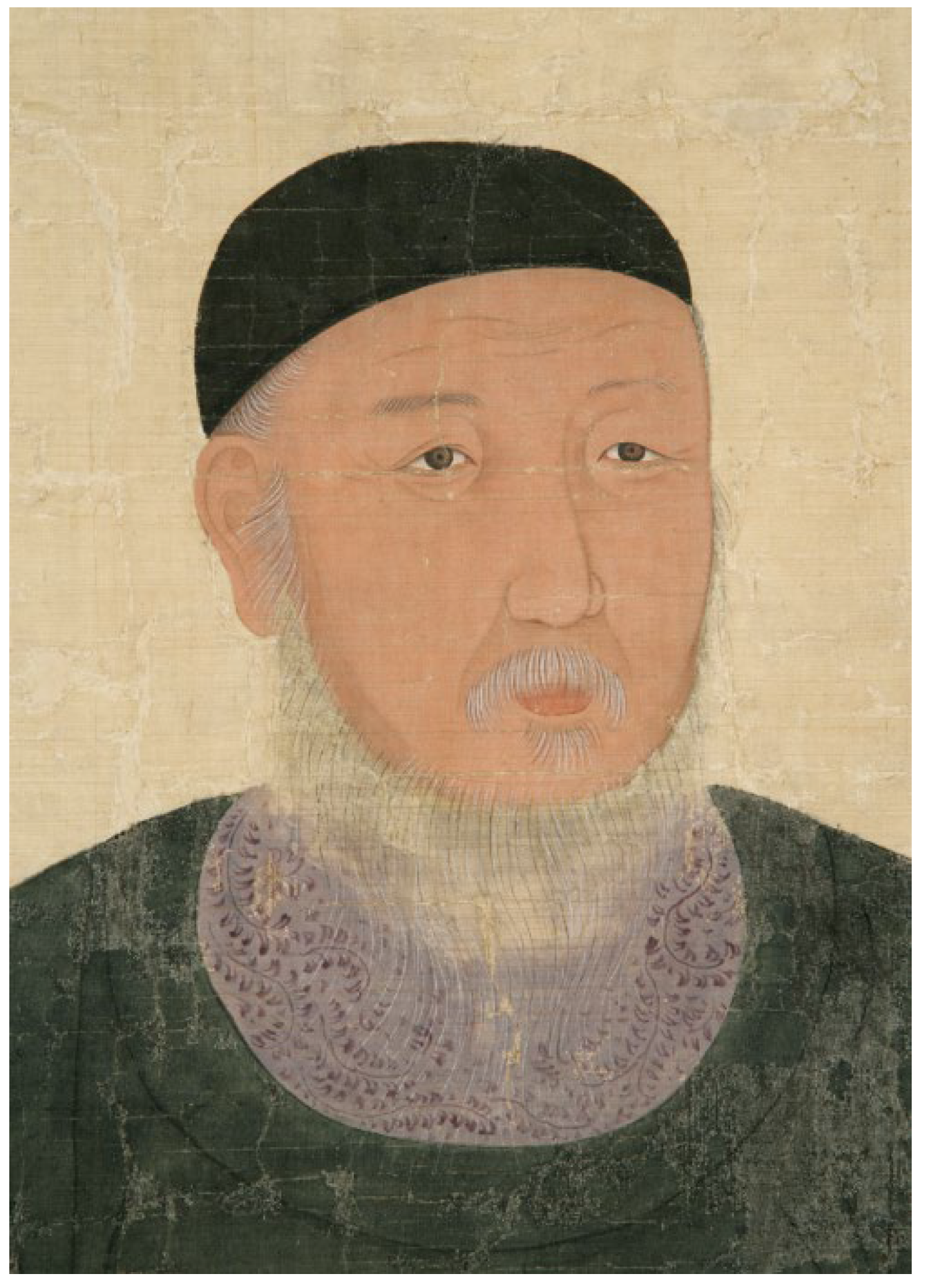
2. Yŏm Sŭngik (廉承益, ?–1302) and the Political-Buddhist Networks of Late Koryŏ
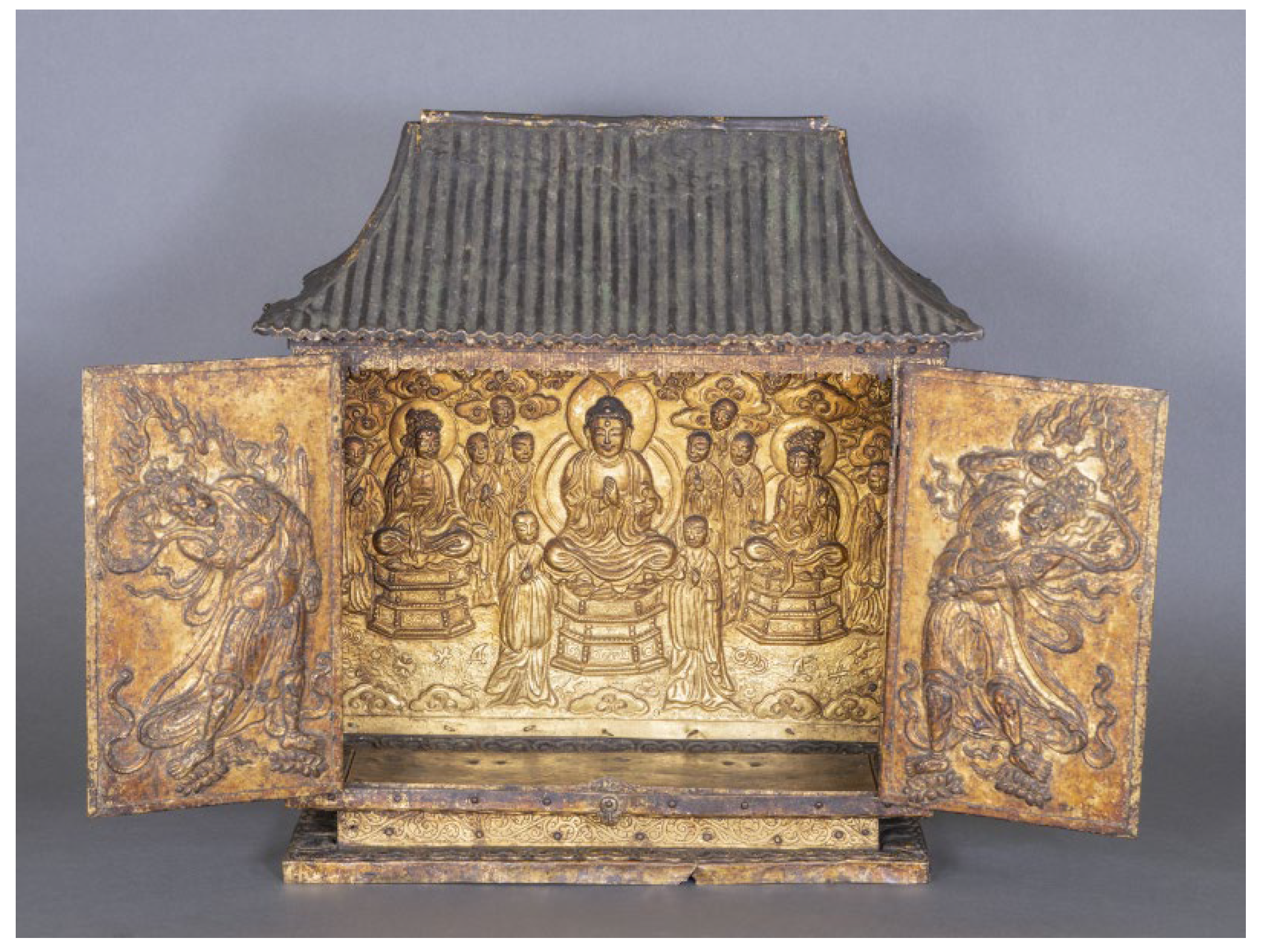
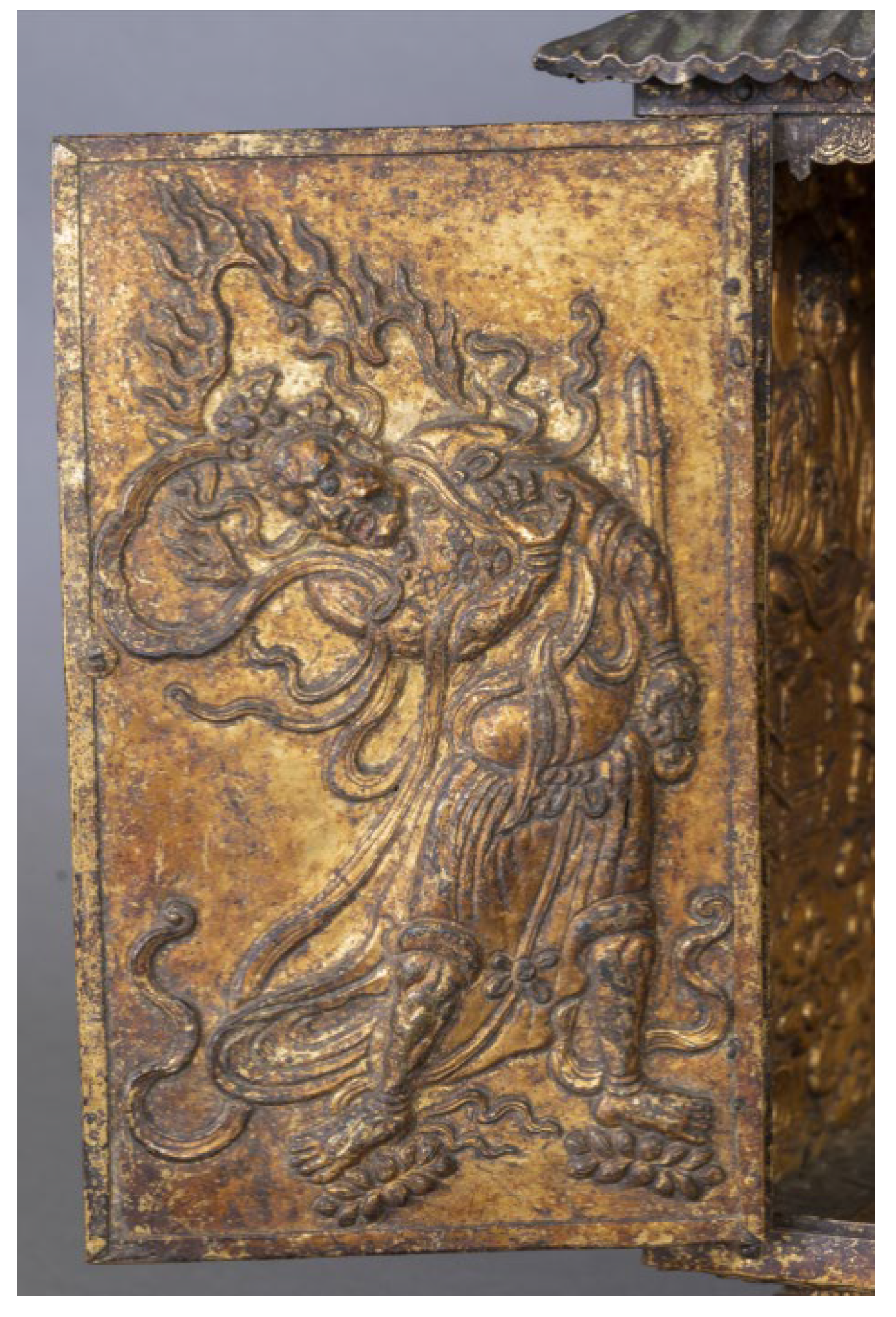
3. Materializing Devotion: Buddhist Art Commissioned by Yŏm Sŭngik
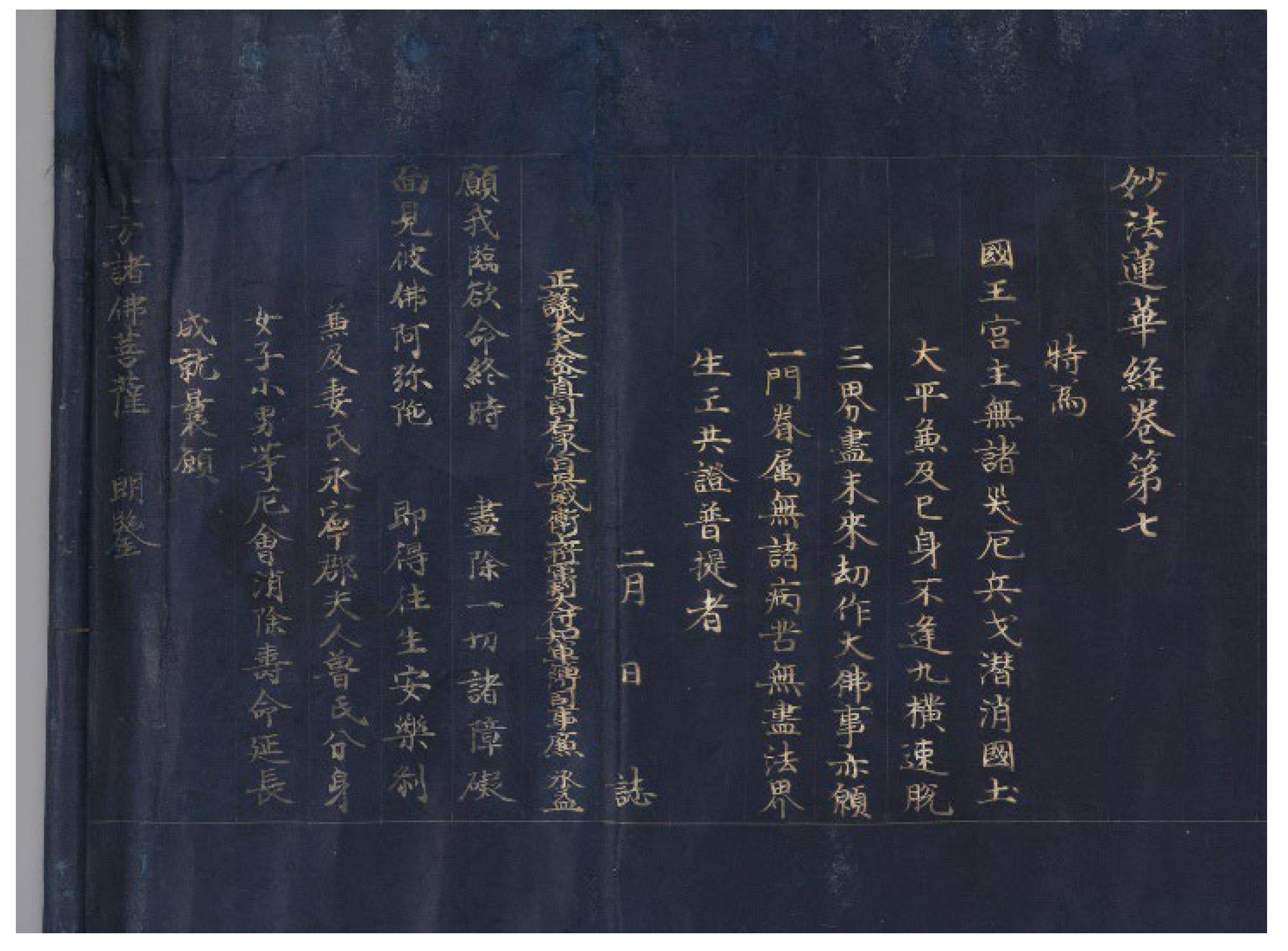
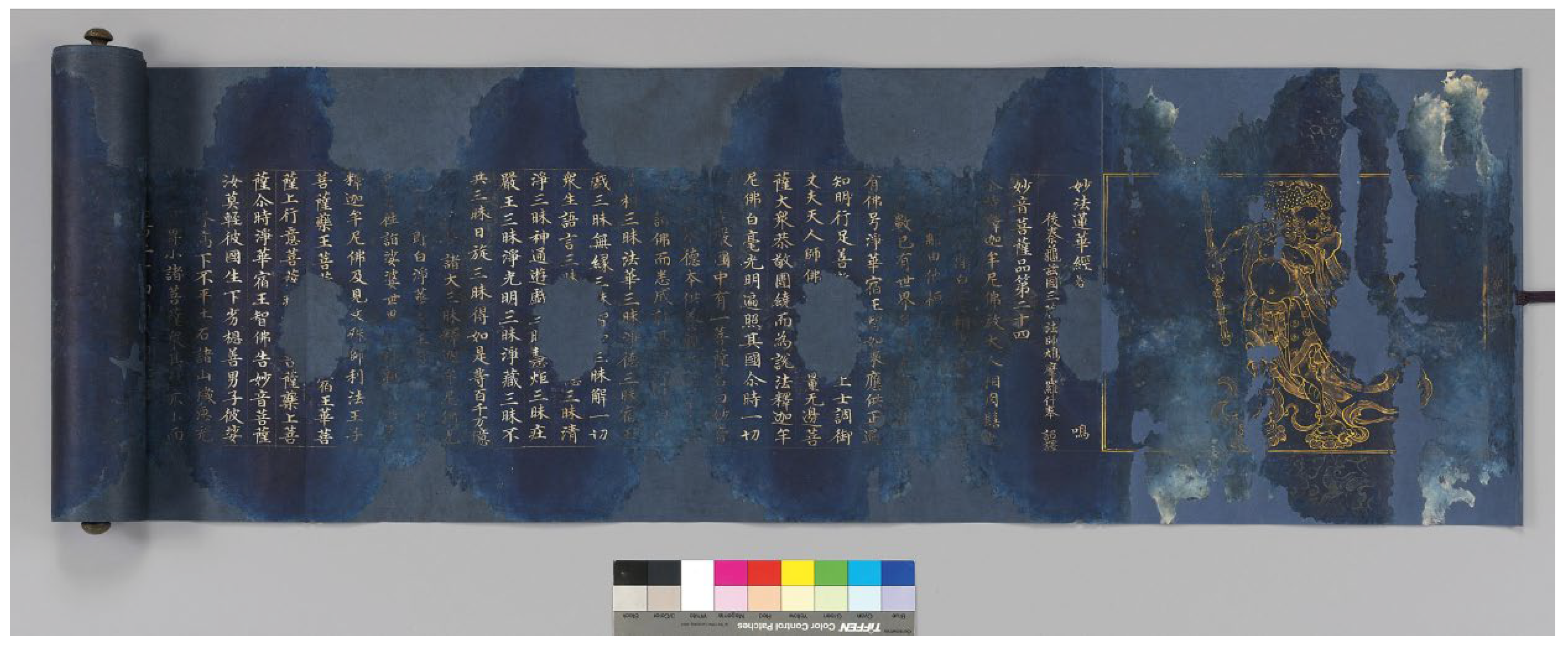
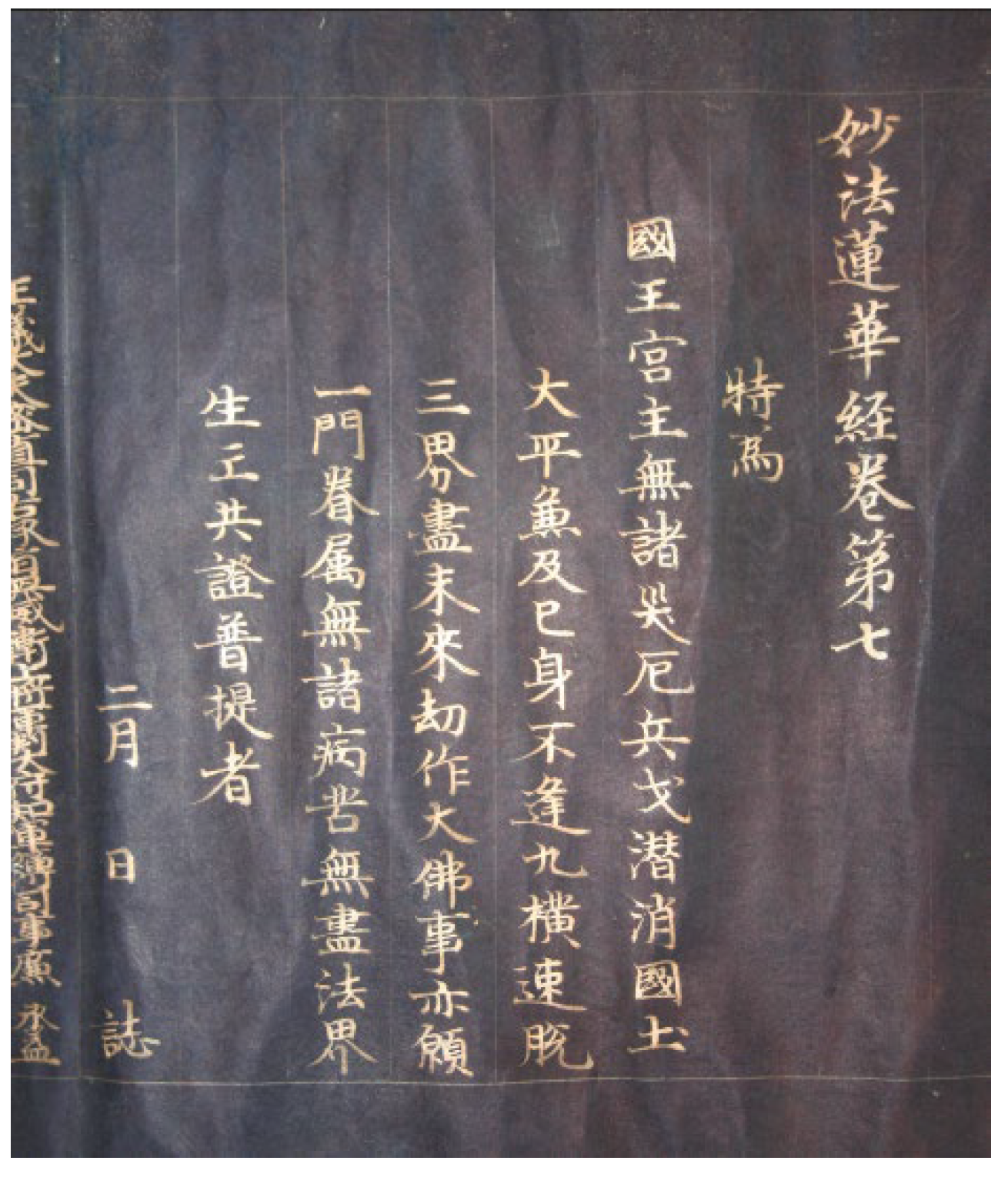
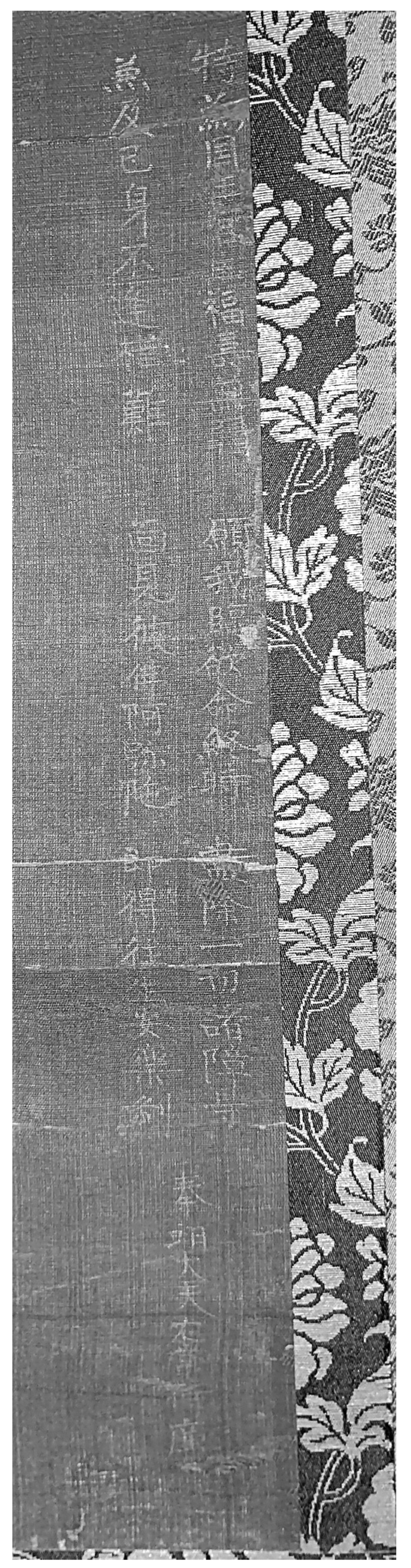
This is especially dedicated to ensuring that the king and the royal consort are free from all calamities, that warfare is quelled, and that the realm attains peace. It is further vowed that the supplicant may encounter none of the Nine Untimely Deaths [jiuheng 九橫], swiftly transcend the Three Realms [sanjie 三界], and, throughout future kalpas, perform great Buddhist acts. It is also vowed that all members of the household and kin be free from illness and suffering, and that, throughout the boundless dharma-realm, both the living and the deceased alike may attain bodhi (Figure 6).38
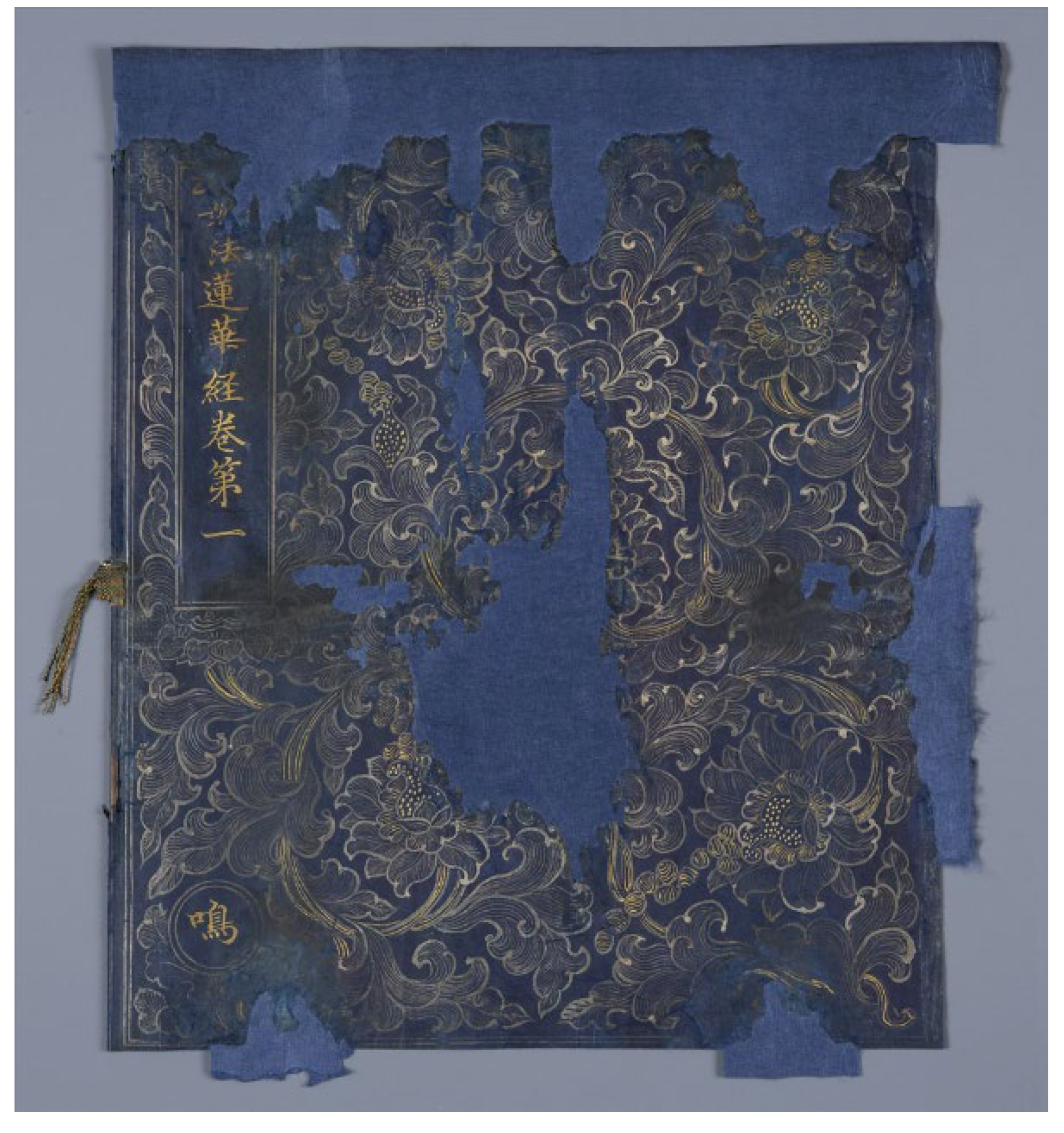
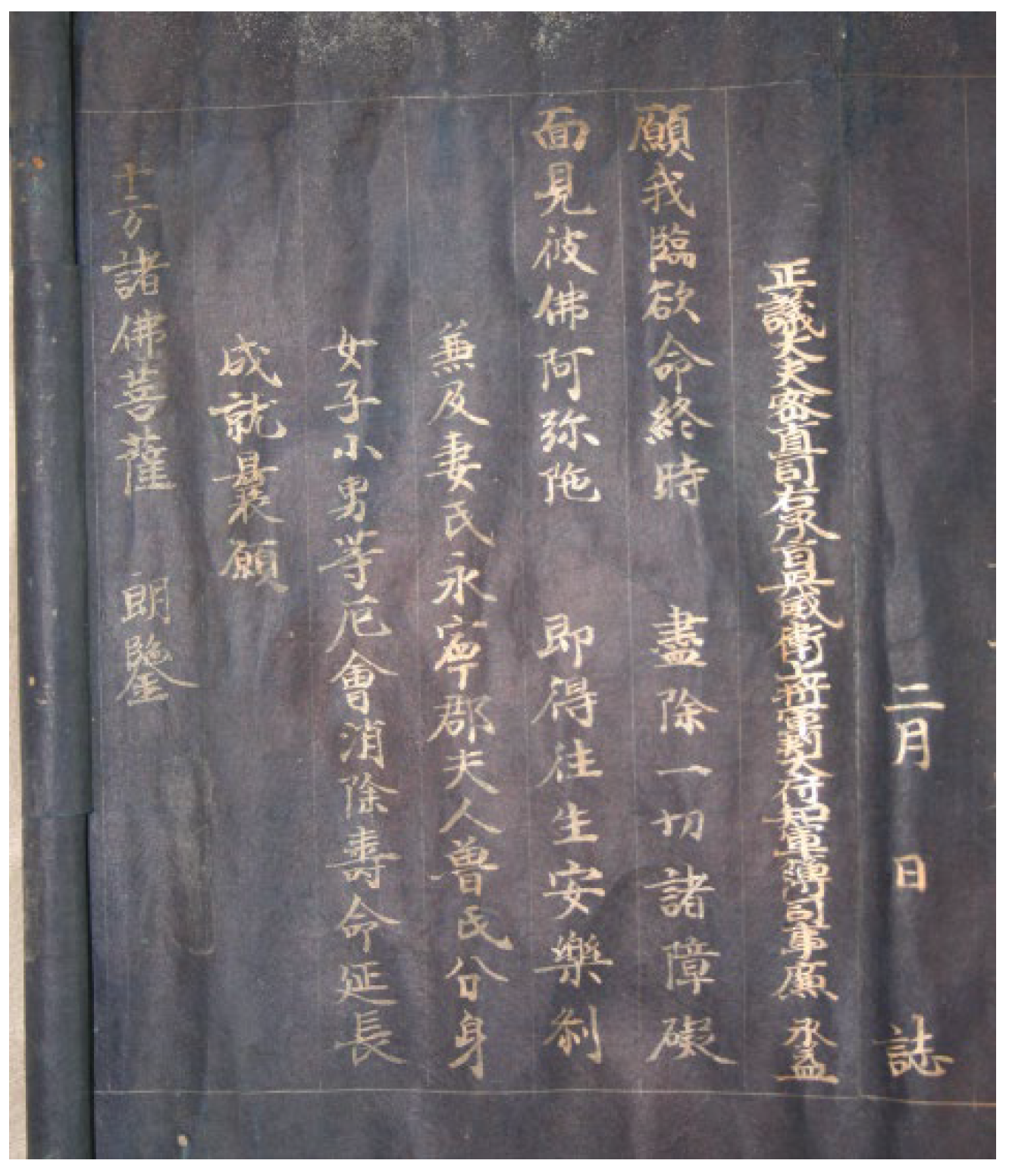
Extending also to the wife, Lady No [魯氏], Lady of Yŏngnyŏng-gun [永寧郡夫人], together with all those belonging to her person; it is prayed that the calamitous encounters affecting daughters, young sons, and others be eliminated, and that their lifespans be prolonged; that the vows harbored within their hearts be brought to fulfillment; and that all bodhisattvas of the ten directions clearly illumine and bear witness (Figure 7).40
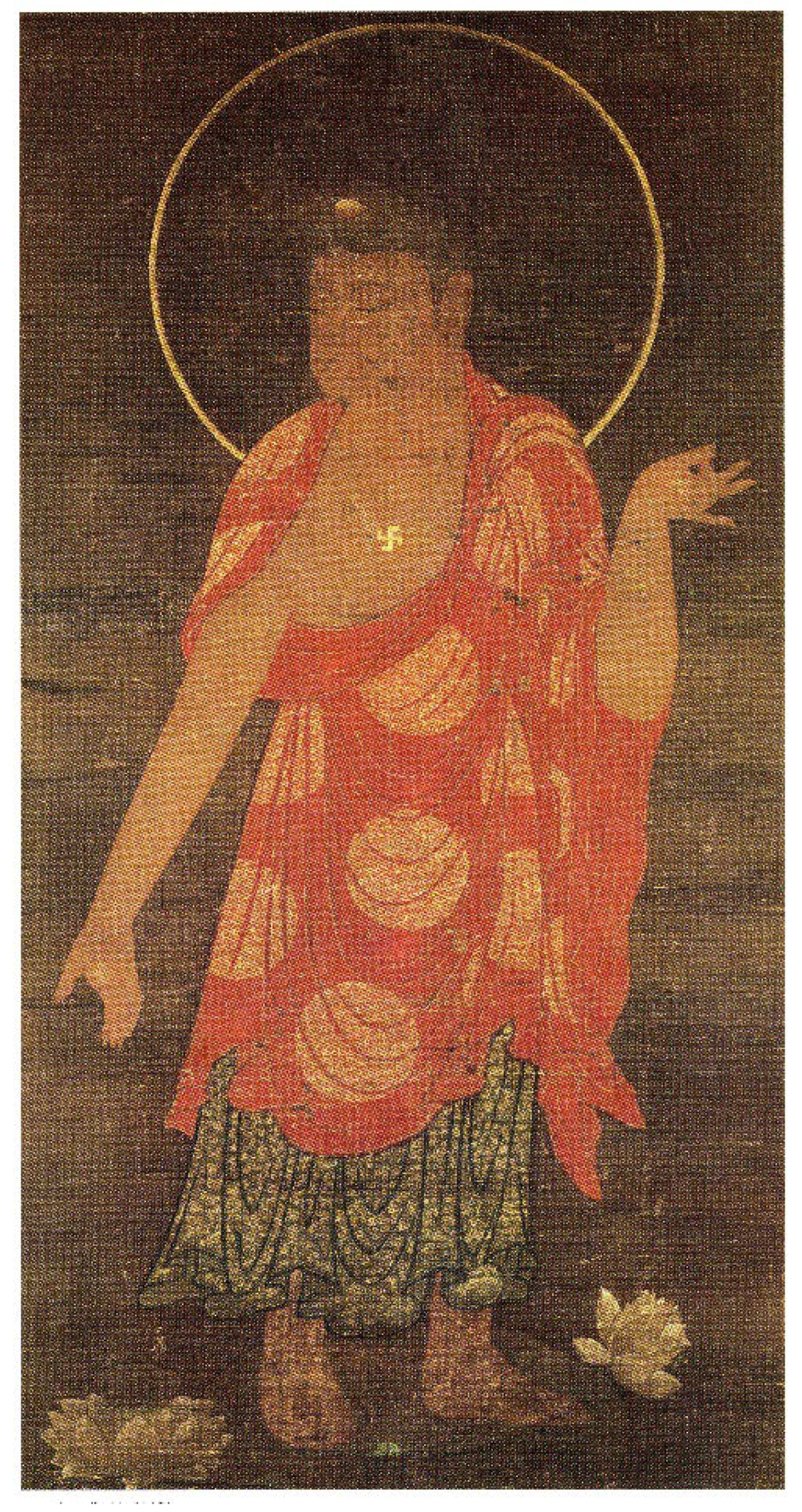
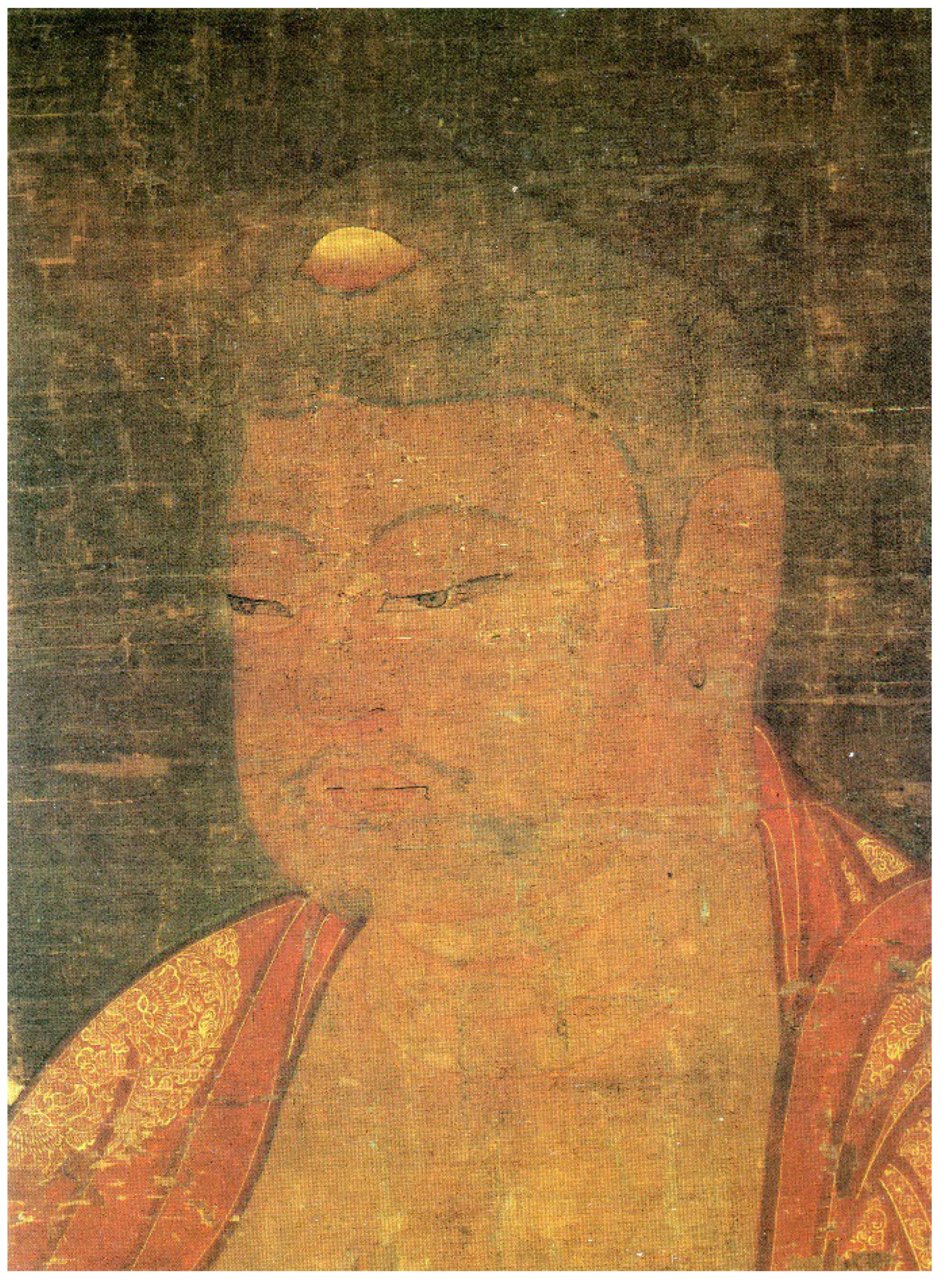
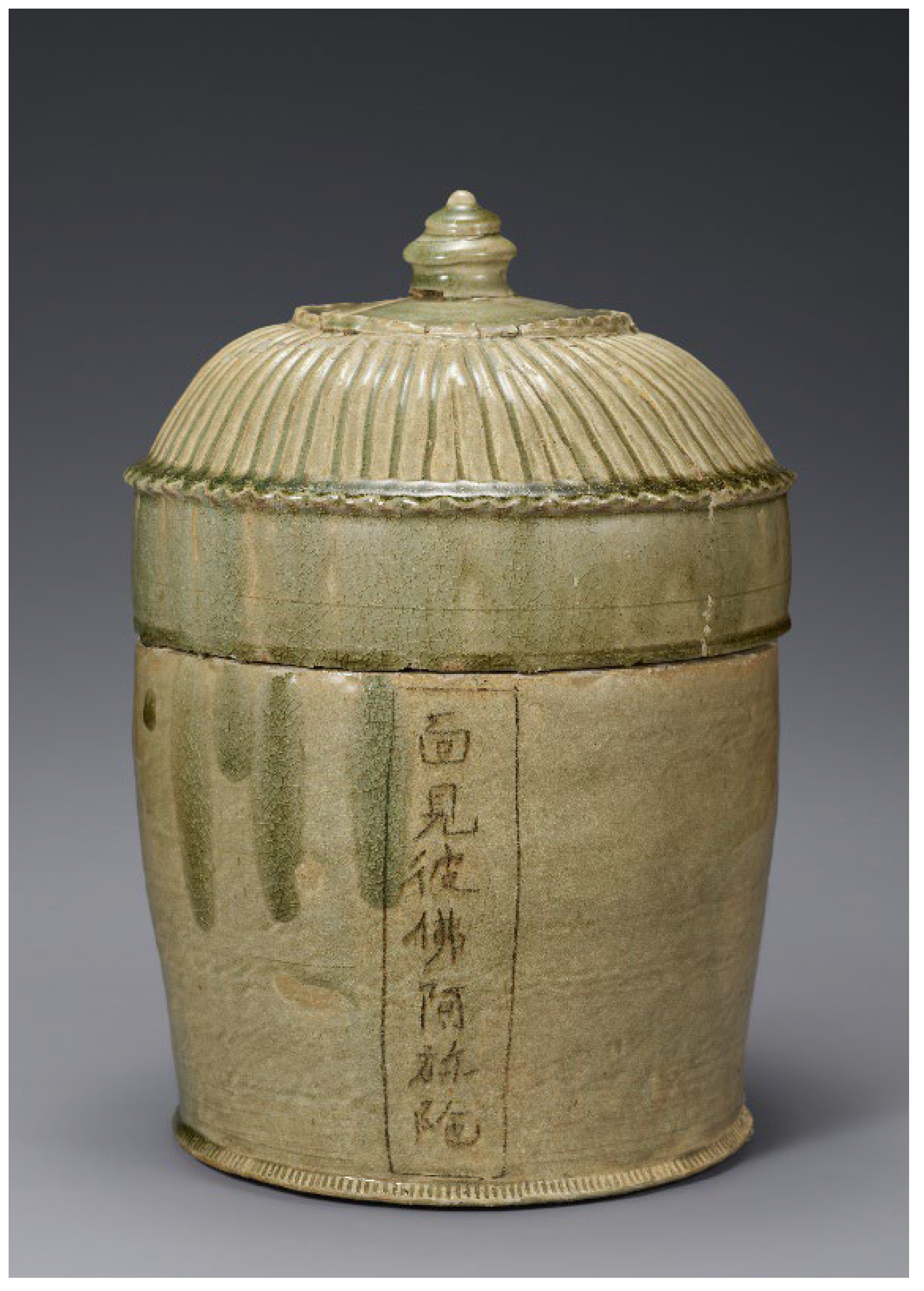
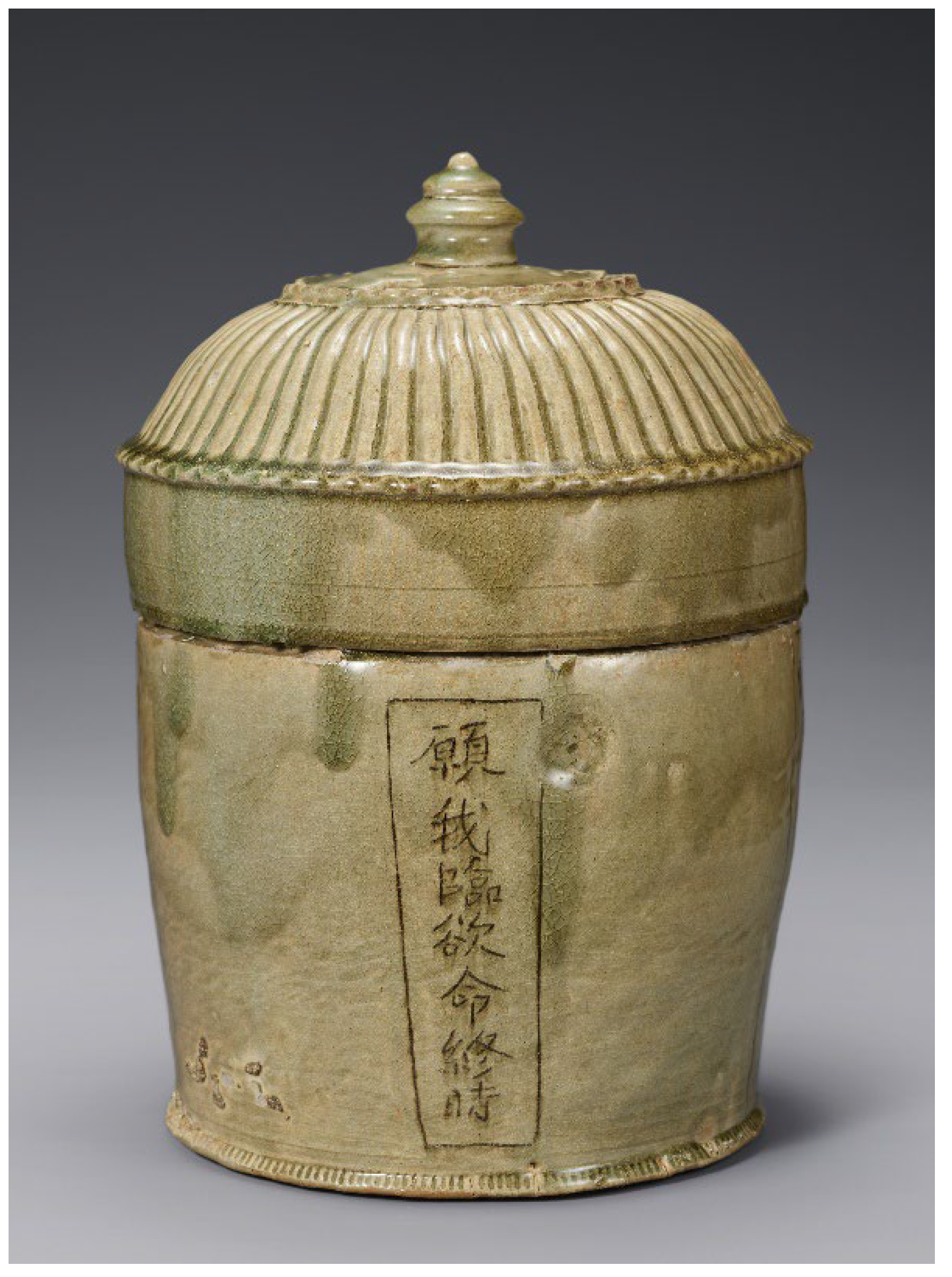
This identical four-line gāthā reappears verbatim in the Amitābha Tathāgata painting examined below. Its significance will be revisited in conjunction with that work.I vow that, at the moment of death, all hindrances be completely removed; that I may behold Amitābha Buddha face to face; and that I may immediately attain rebirth in the Land of Bliss (Sukhāvatī).45
Especially dedicated for the boundless felicity and longevity of the King and the Princess Consort, and furthermore for the protection of my own person from encountering calamity and misfortune. May it be that, at the moment when my life draws to its end, all obstacles and hindrances are utterly removed, that I may behold Amitābha Buddha face to face, and that I may immediately attain rebirth in the Land of Bliss (Sukhāvatī). Pongik taebu Chwa sangsi Yŏm□□.48
4. Ritual Efficacy: Repentance, Karmic Eradication, and Pure Land Rebirth
5. Conclusions
Funding
Institutional Review Board Statement
Informed Consent Statement
Data Availability Statement
Conflicts of Interest
| 1 | “嘗得惡疾 念浮屠神祝 穿掌貫索 精勤疾愈 遂以禳人疾病爲事.” Koryŏsa 高麗史 123, “Yŏlchŏn” 列傳 36, “P’yehaeng” 嬖幸 1, “Yŏm Sŭngik” 廉承益. |
| 2 | Koryŏsa chŏryo 高麗史節要 19, Ch’ungnyŏl wang 3rd year, 7th month; National Institute of Korean History, Korean History Database, Koryŏ-period sources DB, Accessed 5 April 2026 https://db.history.go.kr/goryeo/gskoCompareViewer.do?levelId=gsko_001_0760. |
| 3 | The rank of chŏngnang (正郞) corresponds to a fifth-rank senior position in the late Koryŏ bureaucratic system. Koryŏsa chŏryo 高麗史節要 19, Ch’ungnyŏl wang 3rd year, 7th month. |
| 4 | In the late Koryŏ period, ch’ansŏngsa ranked approximately third or fourth within the overall hierarchy of official positions. |
| 5 | “The king ordered Yŏm Sŭngik and Kong Yu to repair Hyŏnhwasa and also to restore the stone pagodas of Namgyewŏn and Wangnyunsa” (命廉承益·孔愉, 修玄化寺, 又修南溪院·王輪寺石塔). Koryŏsa vol. 29, “Sega,” Ch’ungnyŏl wang 9th year, 7th month. |
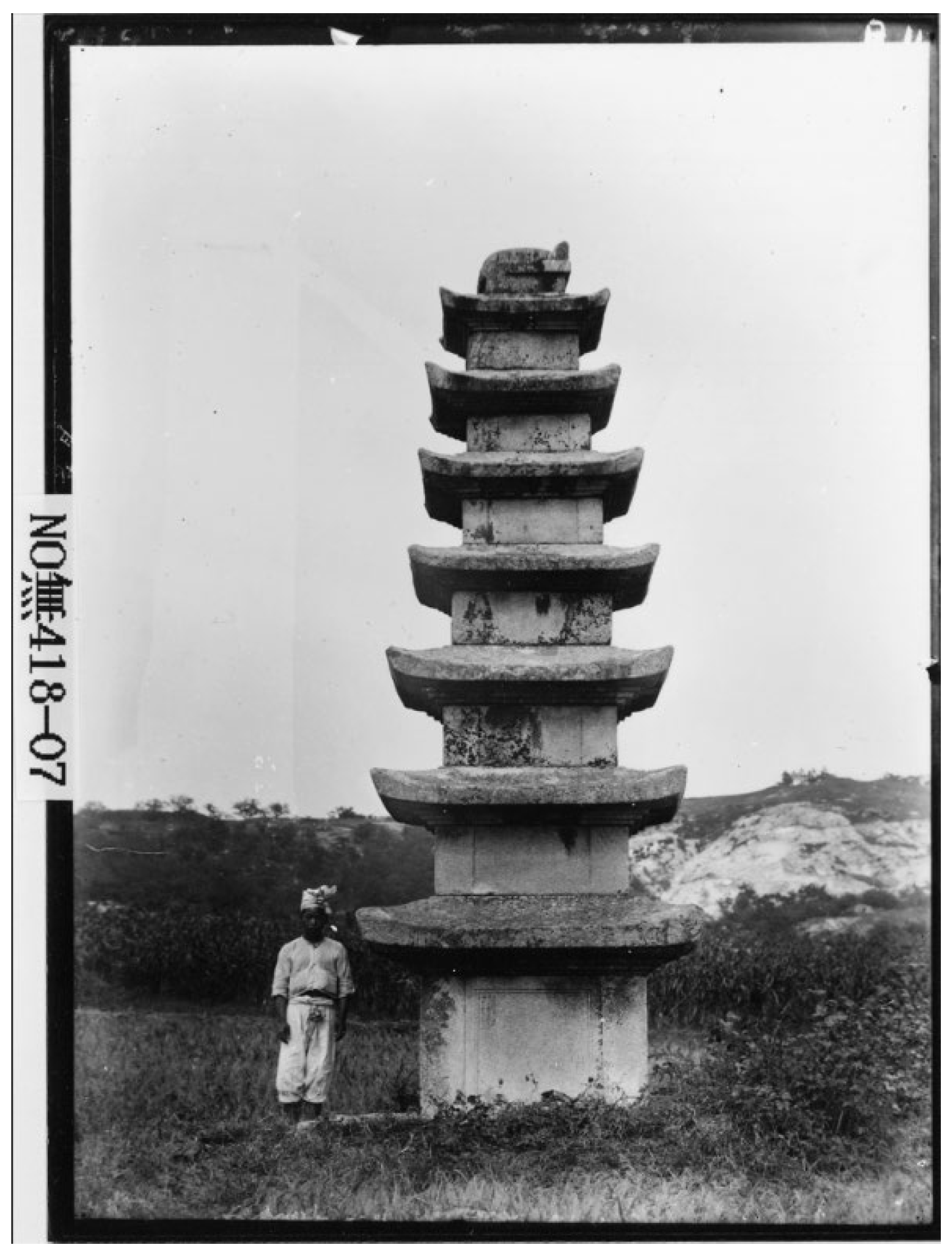
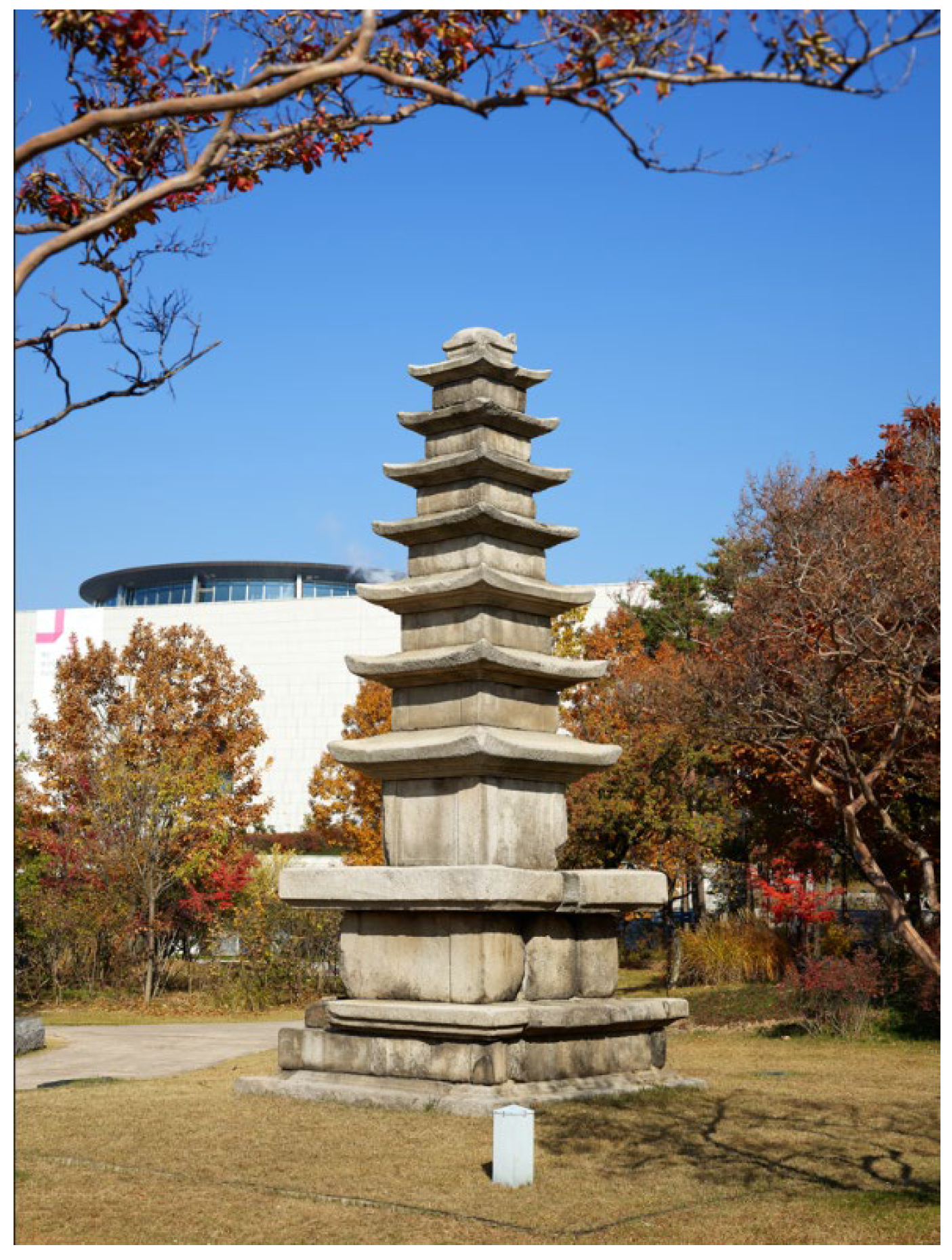
| 6 | The Seven-Story Stone Pagoda of Hyŏnhwasa was originally erected at Hyŏnhwasa in Wŏlgo-ri, Hwanghae Province. It is currently located in the outdoor exhibition area of the Kaesong Koryo Museum in North Korea. For a detailed discussion of the Hyŏnhwasa pagoda, see (Tongi Kim 2021, pp. 51–95). |
| 7 | See Note 1 of this article. |
| 8 | “The king’s illness somewhat improved, and he moved his residence to Ch’ŏnhyosa… At that time, Chŏngnang Yŏm Sŭngik, having gained the king’s favor through Buddhist ritual incantations, was attending upon him during his illness” (正郞廉承益以浮屠神呪得幸于王, 侍疾). Koryŏsa chŏryo 高麗史節要 19, Ch’ungnyŏl wang 3rd year, 7th month. |
| 9 | See Note 3 of this article. |
| 10 | “The king and the princess went to Hyŏnhwasa and ordered sŭngji Yŏm Sŭngik to construct a Buddhist hall” (王與公主, 如玄化寺, 命承旨廉承益, 作佛殿). Koryŏsa vol. 29, “Sega,” Ch’ungnyŏl wang 6th year, 2nd month. By 1280, Yŏm Sŭngik had already attained the office of sŭngji or royal secretary. |
| 11 | “In the autumn, seventh month on the kyemyo day, the king moved his residence to the home of sŭngji Yŏm Sŭngik” (秋七月 癸卯 移御承旨廉承益第). Koryŏsa vol. 29, “Sega,” Ch’ungnyŏl wang 6th year, 7th month. |
| 12 | “[Yŏm Sŭngik], assisting King Ch’ungnyŏl together with Hŏ sijung [Hŏ Kong] and Cho sijung [Cho Ingyu], successively held political power, and at the time even renowned high-ranking officials did not dare treat them as equals” (忠烈王與許侍中趙侍中相次秉政一時名公卿無敢抗禮者). Yi Saek 李穡, “Yŏm Chesin sindobi” 廉濟臣神道碑, 1382, in Mogŭn mungo 牧隱文藁 15. |
| 13 | “His son Sech’ung served up the post of Annam busa. His wife was a daughter of Chungch’an Cho Ingyu” (子世忠, 仕至安南副使. 其妻中贊趙仁規女). Koryŏsa 高麗史, “Yŏlchŏn” 列傳 36, “Yŏm Sŭngik” 廉承益. |
| 14 | Koryŏsa 高麗史, “Yŏlchŏn” 列傳 36, “Yŏm Sŭngik” 廉承益; Koryŏsa 高麗史, “Yŏlchŏn” 列傳 24, “Yŏm Chesin” 廉悌臣. |
| 15 | The record states that Yŏm Chesin was called Yŏm Pullo (廉佛奴), literally “Buddha’s servant.” Koryŏsa 高麗史, “Yŏlchŏn” 列傳 24, “Yŏm Chesin” 廉悌臣; Yi Saek 李穡, “Ch’unggyŏnggong Yŏmgong sindobi” 忠敬公廉公神道碑, in Mogŭn mungo 牧隱文藁 15, “Pimyŏng” 碑銘. |
| 16 | |
| 17 | “Cho Ingyu myojimyŏng,” trans. and annot. (Y. Kim 2006, p. 1123). |
| 18 | It is estimated that Cho Ingyu traveled to the Yuan court approximately thirty times. Koryŏsa chŏryo 高麗史節要 23, Ch’ungnyŏl wang 34th year, 4th month; (Y. Kim 2006, p. 1123). |
| 19 | Koryŏsa, “Sega” 30, Ch’ungnyŏl wang 15th year (1289), 11th month; Koryŏsa, “Sega” 30, Ch’ungnyŏl wang 19th year (1293), 10th month. |
| 20 | Cho Ingyu was widely known for his intensive devotion to the study of Mongolian. His commitment to learning the language was so great that he mastered Mongolian after shutting himself indoors for three years. “The state selected bright and capable young men to study the Mongolian language, and Ingyu was among those chosen. Because he had not yet distinguished himself from his peers, he shut his doors for three years and applied himself day and night without rest, eventually becoming renowned [for his mastery]…” (國家選子弟通敏者, 習蒙古語, 仁規與是選. 以未能出儕輩, 閉戶三年, 晝夜不懈, 遂知名…). Koryŏsa 高麗史 105, “Yŏlchŏn” 列傳 18. |
| 21 | “The emperor once said to him, ‘You are not a man of Koryŏ. How is it that your explanations are so detailed and lucid, and that your speech, expression, and bearing are in no way like those of an easterner?’” (世祖甞謂曰汝非國人也何其敷對詳明辭色擧止絶不類東人也). Yi Kok 李穀, “Cho Chŏngsuk kong sadanggi” 趙貞肅公祠堂記, in Kajŏngjip 稼亭集 3. |
| 22 | |
| 23 | There are three principal historical sources concerning Cho Ingyu: (1) Koryŏsa 高麗史 105, “Yŏlchŏn” 列傳 18; (2) “Cho Chŏngsuk kong sadanggi” 趙貞肅公祠堂記; and (3) “Cho Ingyu myojimyŏng” 趙仁規墓誌銘. The title “Chŏngsuk kong” 貞肅公 in the second source is Cho Ingyu’s posthumous appellation, bestowed after his death. |
| 24 | Cho Ingyu was later slandered in connection with this matter and consequently endured hardship, even living in Yuan as an exile for a period, but he returned to Koryŏ in 1305. Yi Kok 李穀, “Cho Chŏngsuk kong sadanggi” 趙貞肅公祠堂記, in Kajŏngjip 稼亭集 3. |
| 25 | “尤篤於釋敎剏淸溪佛寺爲上祝釐金書妙典墨印海藏繪塐梵像.” “Cho Chŏngsuk kong sadanggi” 趙貞肅公祠堂記, in Kajŏngjip 稼亭集. |
| 26 | “初公夢見觀音尊像竟天而立今欲畵成等身一幀當病劇之時擧身傍壁標點之卽命工手摹出草圖雖在病中其快活自在如此.” Yongsŏn Kim, Yŏkchu Koryŏ myojimyŏng chipsŏng (ha), 1122. |
| 27 | “至昏時向西胡跪奉香爐念讚佛古偈端坐而逝享年七十二.” “Cho Ingyu myojimyŏng.” |
| 28 | “元求術士王進承益.” Koryŏsa 高麗史 123, “Yŏlchŏn” 列傳 36, “P’yehaeng” 嬖幸 1, “Yŏm Sŭngik chŏn” 廉承益傳. |
| 29 | Koryŏsa 高麗史, “Yŏlchŏn” 列傳 36, “Yŏm Sŭngik” 廉承益 “承益尋以病免, 未幾丁母憂, 公主病, 命脫衰入內, 設法席, 穿掌祈佛.” |
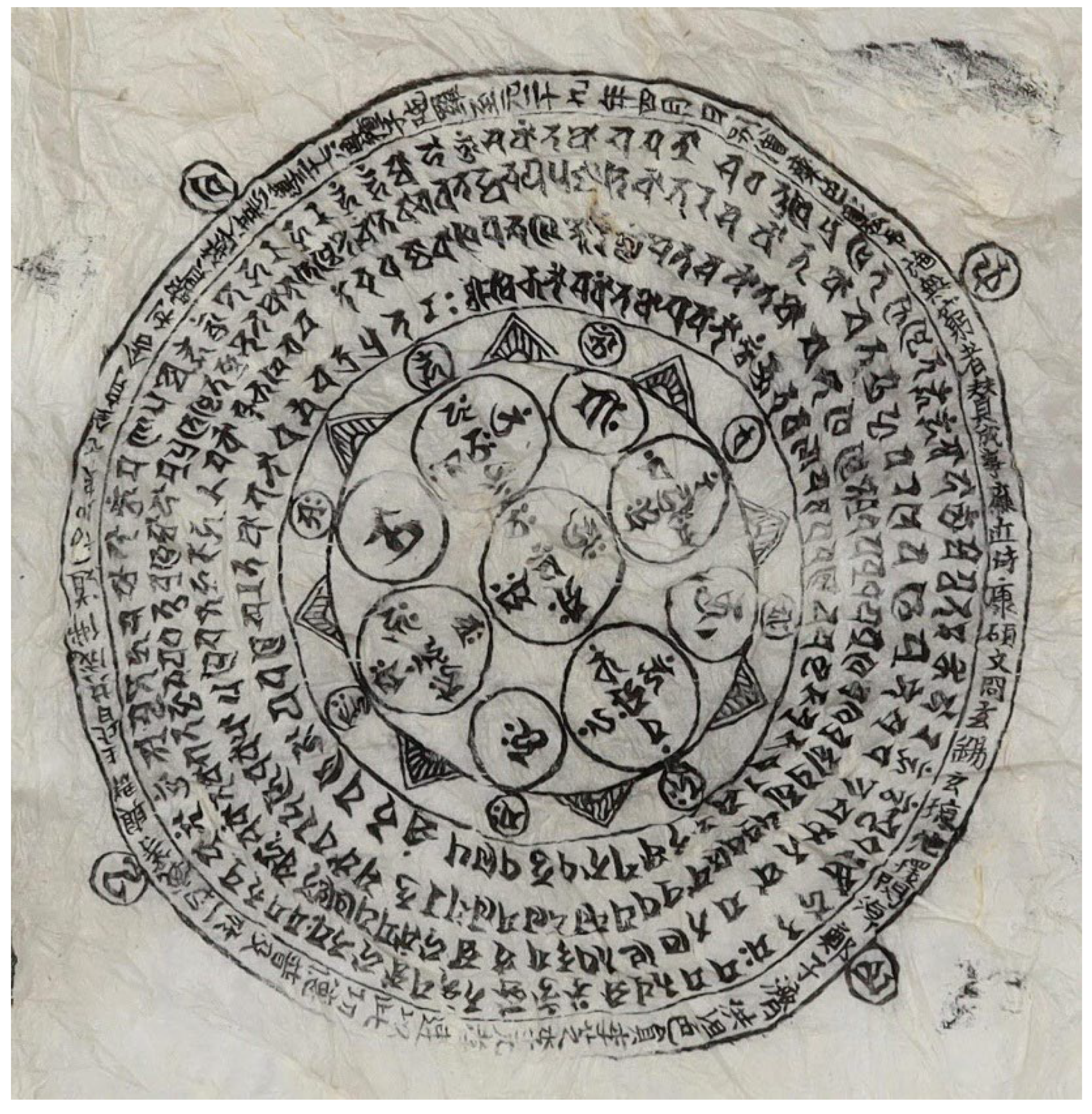
| 30 | The full title of the Baoqieyin tuoluoni jing is the Yiqie rulai xin mimi quanshen sheli baoqieyin tuoluoni jing (一切如來心秘密全身舍利寶篋印陀羅尼經) (T19, no. 1022A: 710c18–711a4). In most cases, the dhāraṇī excerpted from the end of the text is referred to simply as the Baoqieyin jing. Because a printed edition of the Baoqieyin tuoluoni jing produced at Ch’ongji-sa (摠持寺) in Koryŏ in 1007 is still extant, the scripture was clearly known in Koryŏ well before Yŏm Sŭngik’s lifetime. Although Yŏm himself would almost certainly have been familiar with the Baoqieyin jing, his decision to extract and print only the concluding dhāraṇī, the ritual core of the scripture, may well have been inspired or reinforced by his exposure to the flourishing Buddhist culture of the Yuan court. |
| 31 | On Yŏm Sŭngik as a patron of Koryŏ Buddhist paintings, see (Chŏnghŭi Kim 2003, pp. 105–26). |
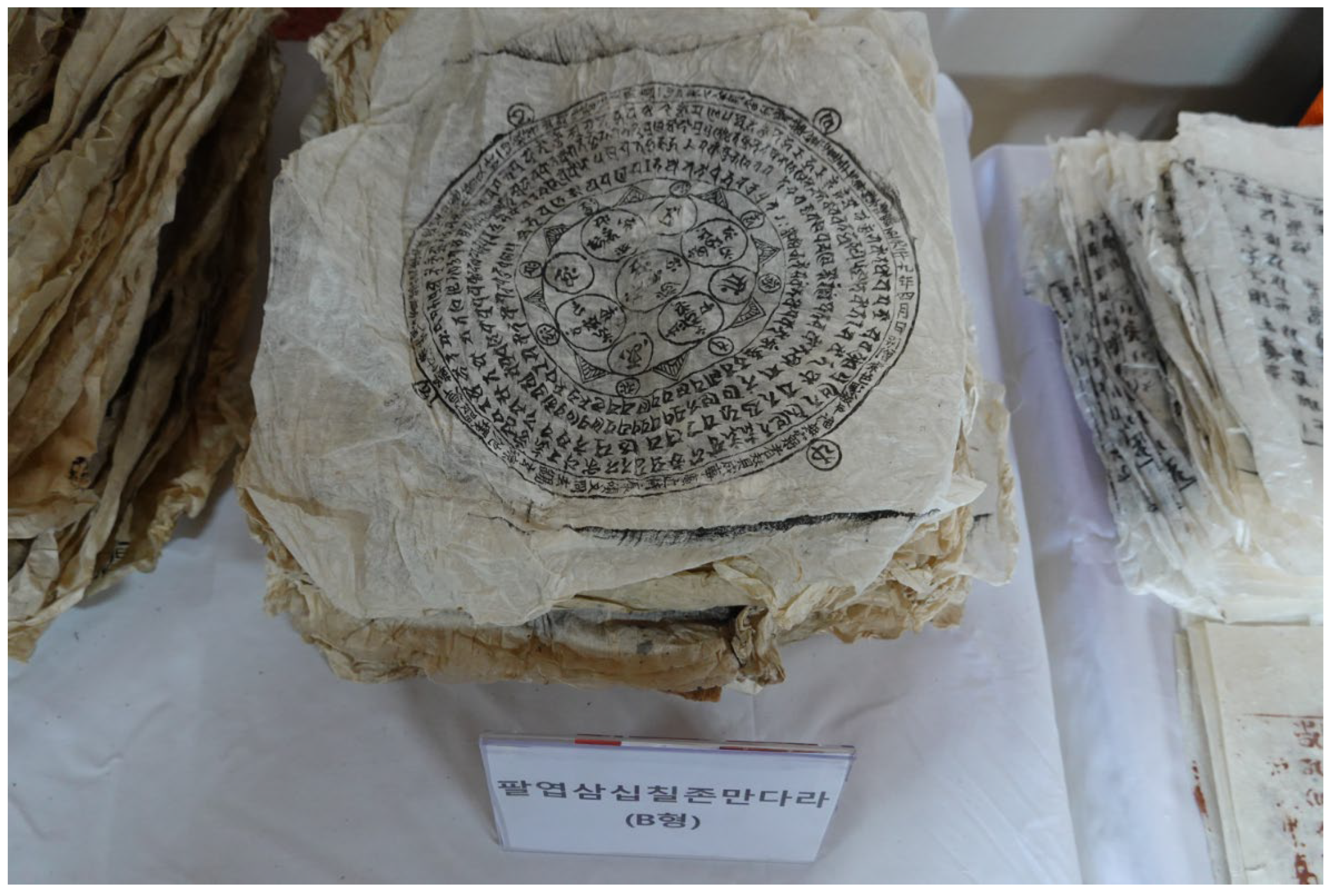
| 32 | To date, more than one hundred printed impressions have been discovered in four Buddhist sculptures, including the Dry-lacquer Seated Amitābha from Taedunsa, Kumi produced in 1295. It also expected that additional examples will continue to be discovered in the future. |
| 33 | For scholarship on the copied Lotus Sūtra manuscript, see (Kwŏn 2003, pp. 12–13). |
| 34 | Although it is clear that the Namgyewŏn pagoda was associated with the royal court, neither the precise date of its construction nor other related details are known. Judging from its stylistic features, however, it is presumed to have been erected before the mid-Koryŏ period. |
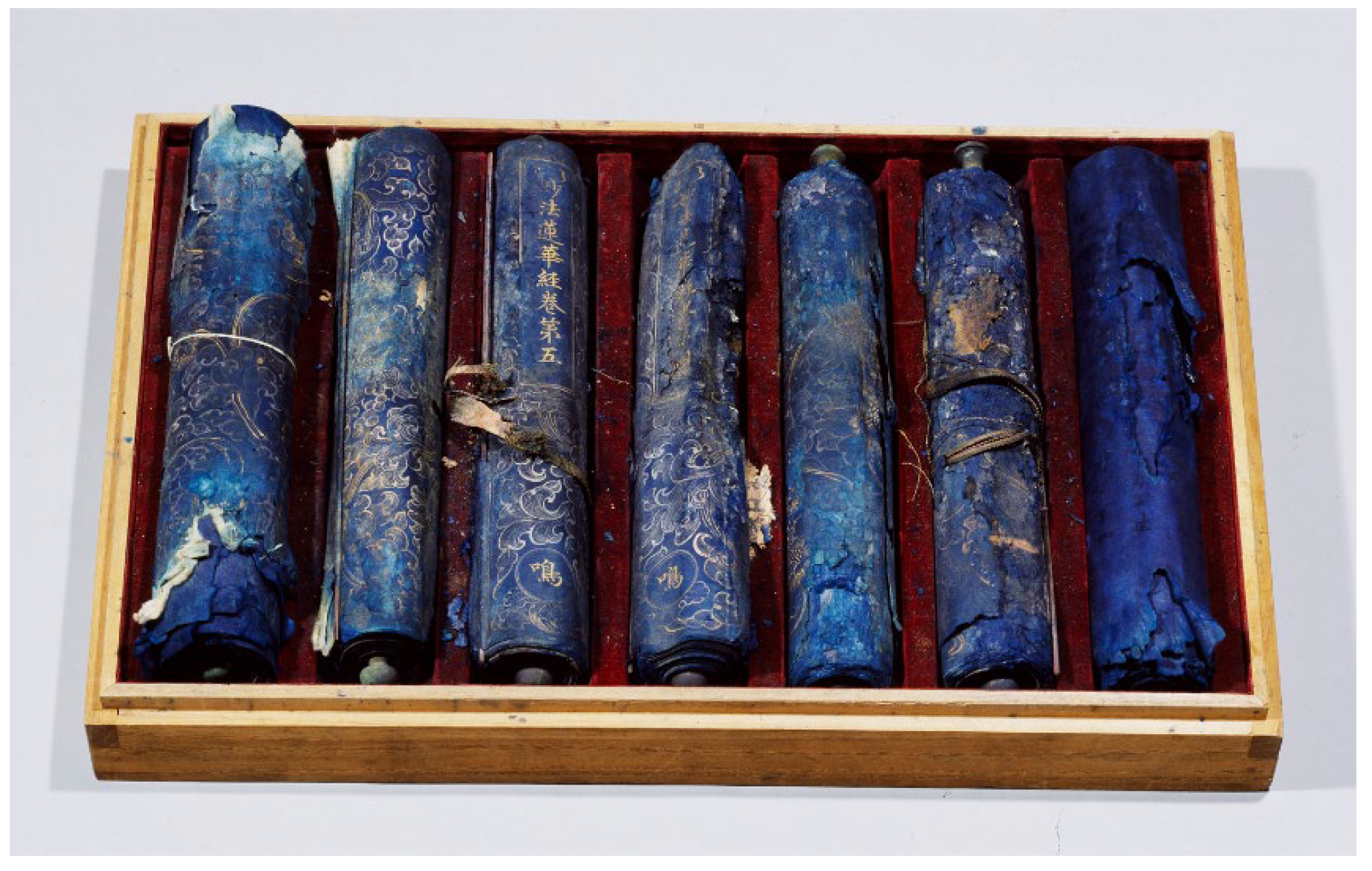
| 35 | Chōsen koseki zufu records that the manuscript was discovered in a seven-story stone pagoda at the site of Kaeguksa 開國寺 in Ch’ŏnggyo-myŏn, Kaesŏng-gun of Kyŏnggi Province. The designation was later changed after the site was identified as the former location of Namgyewŏn. (Chosen Sōtokufu 1918, pp. 735–36). |
| 36 | See Note 5 of this article. |
| 37 | The seven scrolls of the Lotus Sūtra manuscript are in extremely poor condition and, to this day, have not been fully unrolled. |
| 38 | “特爲; 國王宮主無諸災厄兵戈潛消國土; 太平兼及己身不逢九橫速脫; 三界盡未來劫作大佛事亦願; 一門眷屬無諸病苦無盡法界; 生亡共證菩提者.” Votive inscription from fascicle 7 of the Lotus Sutra manuscript commissioned by Yŏm Sŭngik, ca. 1283. |
| 39 | “願我臨欲命終時 盡除一切諸障; 面見彼佛阿彌陀 卽得往生安樂.” The “obstacles” referred to in the four-line verse (saguge 四句偈) signify the sins one has committed.” Votive inscription from fascicle 7 of the Lotus Sutra manuscript. |
| 40 | “兼及妻氏永寧郡夫人魯氏分身; 女子小男等厄會消除壽命延長; 成就囊願; 十方諸菩薩 朗鑒.” Votive inscription from fascicle 7 of the Lotus Sutra manuscript. |
| 41 | The exact identity of Yŏm Sŭngik’s wife, Lady No of Yŏngnyŏng County (永寧郡夫人 魯氏), remains unknown. Yŏngnyŏng County corresponds to present-day P’yŏngsan-gun (平山郡), North Hwanghae Province (黃海北道). |
| 42 | The copied Lotus Sutra commissioned by Yŏm Sŭngik follows the standard seven-fascicle translation by Kumārajīva (鳩摩羅什, 344–413), completed in 406 CE. It does not exhibit any known textual variations from the recension that circulated most widely in China and East Asia. |
| 43 | “On one occasion, he privately conscripted fifty men to construct a residence. Fearing censure from the princess, he petitioned that it be dedicated as a scriptorium for the copying of the Buddhist canon (Tripiṭaka), and this was approved.” Koryŏsa 高麗史 123, “Yŏlchŏn” 列傳 36, “P’yehaeng” 嬖幸, “Yŏm Sŭngik” 廉承益; “In the third month, sŭngji (royal secretary) Yŏm Sŭngik requested that a section of his residence be designated as a scriptorium for the copying of the gold-ink Tripiṭaka, and this was approved” (三月. 承旨廉承益請以其家一區爲金字大藏寫經所, 許之). Koryŏsa chŏryo 高麗史節要 20, Ch’ungnyŏl wang 7th year, 3rd month; The Koryŏsa refers to the institution as a “Taejanggyŏng sagyŏngso”(大藏經寫經所), whereas the Koryŏsa chŏryo calls it a “Kŭmja sagyŏngso” (金字寫經所). |
| 44 | Designated as a National Treasure, the manuscript was executed in silver script and gold pigment on indigo-dyed paper. It is currently in the collection of the Leeum Museum of Art. |
| 45 | “願我臨欲命終時 盡除一切諸障碍 面見彼佛阿彌陀 卽得往生安樂刹.” Painting inscription at the lower right of Amitābha Tathāgata Painting commissioned by Yŏm Sŭngik, 1286. |
| 46 | The dimensions of the painting measure 203.5 by 105.1 centimeters. Formerly in the collection of the Shimazu family (島津家) in Tokyo, Japan, the painting is currently housed at the Tokyo National Museum. |
| 47 | The inscription states that the Chan monk Chahoe “executed [the work] with a p’il (brush 筆).” As the inscription employs the term p’il rather than hwa (painted 畵), some scholars have questioned whether Chahoe should in fact be credited as the painter. Nevertheless, the prevailing view is that the painting was executed by Chahoe. For a more detailed discussion, see Note 62 in (Chŏnghŭi Kim 2003, p. 149). |
| 48 | “特爲國王宮主福壽無彊 兼及己身不逢楛難; 願我臨欲命終時 盡除一切諸障碍; 面見彼佛阿彌陀 卽得往生安樂刹; 奉翊大夫左常侍廉□□.” Here, “ae” (碍) and “ae” (礙) are variants of the same character and thus used interchangeably. The forty-fascicle Huayan jing, the Yenyŏm mit’a toryang ch’ambŏp (禮念彌陀道場懺法), the Lotus Sutra manuscript of 1283, and the reliquary bottle housed in the Leeum Museum of Art use the standard form of “ae” (礙), whereas the Amitābha Tathāgata painting of 1286 and the Kwan’gyŏng sibyuk kwan pyŏnsangdo (觀經十六觀變相圖) of 1323 employ the abbreviated form of “ae”(碍). |
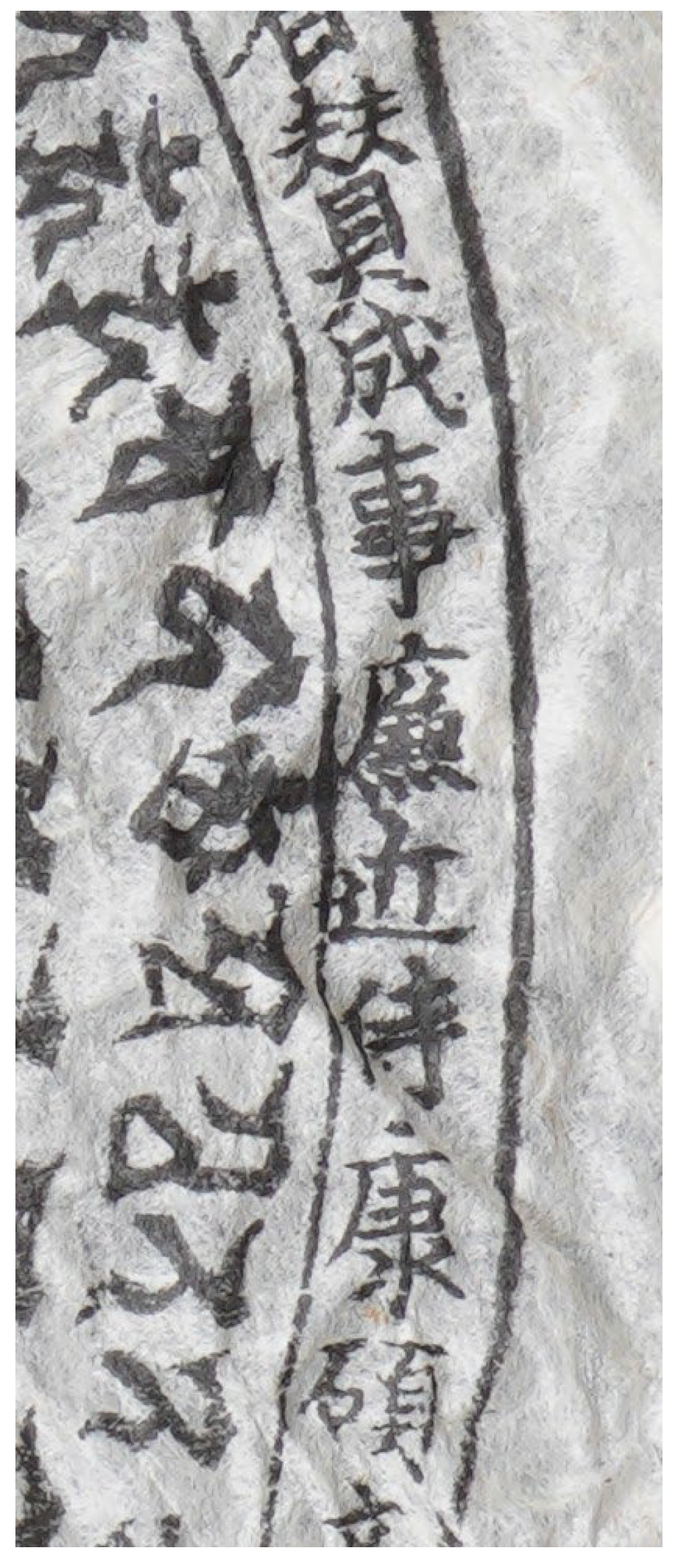
| 49 | Both the 1291 Tomb Epitaph of Hŏ Kong (許珙墓誌銘) and the 1295 Kunwi Ingak-sa Pogak Kuksa Stele (軍威 麟角寺 普覺國師碑) explicitly refer to “ch’ansŏngsa Yŏm Sŭngik” (贊成事 廉承益). Accordingly, the “ch’ansŏngsa Yŏm” (贊成事廉) named in the colophon of the dhāraṇī may be securely identified as Yŏm Sŭngik. For a detailed study on the print of the text Baoqieyin jing, whose production was supervised by Yŏm Sŭngik, see (Im 2024, pp. 572–76; Im 2025, pp. 57–100). |
| 50 | Siddhaṃ is an Indic script used in India from approximately the sixth through the thirteenth centuries and was employed particularly frequently for the transcription of dhāraṇī. (An 2005, p. 38). |
| 51 | “Hŏ Kong myojimyŏng” 許珙 墓誌銘, trans. and annot. (Y. Kim 2006, p. 659). |
| 52 | The view that the painting represents an Amitābha image reflecting Huayan thought is advanced in the following scholarship: (Ide 1995, pp. 12–32; Ide 2017, pp. 132–34). Additional studies on this painting include the following: (Yoshida 1979, pp. 22–24; Chŏng 1988, pp. 17–34). |
| 53 | (Chŏnghŭi Kim 2001, p. 146; Chŏnghŭi Kim 2003, p. 151). For research on the painting inscription (畵記, hwagi) of the 1323 Buddhist painting, see (Yu 1995, pp. 44–45). |
| 54 | The seven-character four-line gāthā inscribed on the funerary urn was first introduced and discussed by scholar Son Ch’aehun. See (Son 2024, pp. 164–65). |
| 55 | Forty-fascicle Dafangguang fo huayan jing 大方廣佛華嚴經, T10, no. 293: 0848. The forty-fascicle version (Zhenyuan ben;貞元本), compiled in 798 during the late Tang period and consisting solely of the “Entering the Dharma Realm” section of the Huayan jing, is particularly known as the Huayan jing Puxian xingyuan pin (華嚴經普賢行願品). The “Puxian xingyuan pin” (Samantabhadra’s Practices and Vows) circulated independently apart from the complete forty-fascicle Huayan jing. |
| 56 | For related research, see (Toyun Kim 2022, pp. 333–63). |
| 57 | Although the Yenyŏm mit’a toryang ch’ambŏp circulated widely within both Yuan and Koryŏ Buddhist communities, the extent to which its ritual performance or liturgical practice underwent regional adaptation remains unclear and warrants further investigation. Studies of other East Asian Buddhist liturgical traditions have demonstrated that local ritual performance could generate distinctive regional variations. However, comparable evidence has not yet been identified for the transmission of the Yenyŏm mit’a toryang ch’ambŏp between Yuan China and Koryŏ. |
| 58 | Yenyŏm Mit’a toryang ch’ambŏp, X74 1467:0123c17-18; K1511 47:365a01. The edition printed in 1376 is currently regarded as the earliest extant version of the text. Portions of this edition are preserved in the libraries of Dongguk University and Keimyung University, among others, and the copy housed at Keimyung University in particular has been designated as a National Treasure. |
| 59 | King Ch’ungsŏn’s mother, Princess Cheguk Taejang (齊國大長公主), was likewise a princess of the Yuan imperial house. |
| 60 | “Tripiṭaka Master Sunam, in accordance with the emperor’s decree… the master himself reflected, saying, ‘In my youth, I once [resided] at Myoryŏnsa…’” (三藏順菴法師奉天子之詔...師自念曰幼時嘗於妙蓮寺….). Yi Chehyŏn 李齊賢, “Myoryŏnsa sŏkchi chogi” 妙蓮寺石池竈記, in Ikchae nan’go 益齋亂藁, kwŏn 6. |
| 61 | Within the Sŏn tradition, the highest ecclesiastical rank was that of taesŏnsa 大禪師, followed by sŏnsa 禪師. Thus, by his early twenties, he had already risen to a position approaching the very apex of the Buddhist hierarchy. |
| 62 | See Note 60 of this article. |
| 63 | By 1312–1313, Ŭisŏn was serving as abbot of Manŭisa 萬義寺 in Suwŏn. “Suwŏn Manŭisa ch’uksang Hwaŏm Pŏphwa pŏphoe chungmokki” 水原萬義寺祝上華嚴法華法會衆目記, in Tongmun sŏn 東文選 78, “Ki” 記. |
| 64 | “Yŏm Sŭngik wielded power so immense that it overshadowed the entire state, to the extent that even the censorial officials (臺諫, taegan) dared not call him to account” (承益權傾一國, 臺諫莫敢問). Koryŏsa 高麗史 123, “Yŏlchŏn” 列傳 36, “P’yehaeng” 嬖幸 1, “Yŏm Sŭngik chŏn” 廉承益傳. |
| 65 | A search of the Chinese Buddhist Canon (漢文大藏經) indicates that this four-line gāthā is quoted in more than sixty Buddhist texts, from the Longshu zengguang jingtu wen (龍舒增廣淨土文) compiled by Wang Rixiu (王日休) in 1160 (T47, no. 1970: 288a07) to the Taixu dashi quanshu (太虛大師全書) published in the first half of the twentieth century (TX12, no. 7: 1086a11). |
| 66 | Among the more than sixty texts preserving the four-line gāthā, only the forty-fascicle Avataṃsaka Sūtra (大方廣佛華嚴經; K.1262, 36:0001a–0230b) and the Yenyŏm mit’a toryang ch’ambŏp; K.1511, 47:0264a–0375b) were included in the Koryŏ Tripiṭaka. This observation does not establish the precise textual source from which Yŏm Sŭngik adopted the verse, but it provides additional context for understanding the devotional literature through which he was most likely to have encountered it. |
| 67 | The renowned Silla monk Wŏnhyo (元曉, 617–686) likewise stated that “all sinful karmic obstacles are eradicated through repentance” (一者諸惡業障 懺悔除滅). Dasheng qixin lun shu 大乘起信論疏 2, T44: 221c17–18. |
References
Primary Sources
Avataṃsaka Sūtra 大方廣佛華嚴經 (The Flower Garland Sūtra).Baoqieyin jing寶篋印經 (The Baoqieyin Dhāraṇī Sūtra).Koryŏsa 高麗史 (History of Koryŏ).Koryŏsa chŏryo 高麗史節要 (Essentials of Koryŏ History).Min Chi 閔漬. Koryŏguk taejanggyŏng ian’gi 高麗國大藏經移安記 (Record of the Relocation and Enshrinement of the Koryŏ Tripiṭaka).Taesŭng kisinnon so 大乘起信論疏 (Commentary on the Awakening of Faith in the Mahāyāna).Tongmun sŏn 東文選 (Selected Writings of the Eastern Kingdom).Yenyŏm Mit’a toryang ch’ambŏp 禮念彌陀道場懺法 (Ritual Manual for Repentance and Recollection of Amitābha Buddha).Yi Chehyŏn 李齊賢. Ikchae nan’go 益齋亂藁 (Collected Works of Ikchae).Yi Kok 李穀. Kajŏngjip 稼亭集 (Collected Works of Kajŏng).Yi Saek 李穡. Mogŭn mun’go 牧隱文藁 (Collected Writings of Mogŭn).Secondary Sources
- An, Chuho 안주호. 2005. Pulbokchang munhŏn charyo ŭi p’yŏgi yangsang (A Study on the Spelling of Remains Inside the Abdomen of Buddha Statues 佛腹藏 文獻資料의 表記 樣相 硏究). Ŏmunhak 88: 29–52. [Google Scholar]
- Chang, Tongik 장동익, ed. 1997. Wŏndae yŏsa charyojipnok 元代麗史資料集錄 [Sourcebook of Historical Materials on Koryŏ under the Yuan]. Seoul: Seoul National University Press. [Google Scholar]
- Chosen Sōtokufu 朝鮮總督府. 1918. Chōsen koseki zufu 朝鮮古蹟圖譜. Hansŏng: Chosen Sōtokufu, vol. 6. [Google Scholar]
- Chŏng, Ut’aek 鄭于澤. 1988. Nihon Ginkō zō (Tōkyō Kokuritsu Hakubutsukan kitaku) no Amida nyōraizu (Painting of Amitābha Buddha Deposited in the Tokyo National Museum by the Bank of Japan 日本銀行藏(東京國立博物館寄託)の阿彌陀如來圖). Museum 453: 17–34. [Google Scholar]
- Hwang, Ingyu 黃仁奎. 1998. Cho Ingyu kamun kwa Suwŏn Manŭisa (The Cho Ingyu Family and Manŭisa Temple in Suwŏn 趙仁規家門과 水原 萬義寺). Suwŏn Munhwasa Yŏn’gu 2: 78–95. [Google Scholar]
- Ide, Seinosuke 井手誠之輔. 1995. Kōrai no Amida gazō to Fugen gyōganbon (Koryŏ Amitābha Paintings and the Fugen Gyōganbon 高麗の阿彌陀畫像と普賢行願品). Bijutsu Kenkyū 362: 1–32. [Google Scholar]
- Ide, Seinosuke 井手誠之輔. 2017. Kegon to Tendai no yūgō—Kōrai no Amida gazō o tegakari ni (The Convergence of Huayan and Tendai: A Study of Koryŏ Amitābha Paintings 華嚴と天台の融合—高麗の阿彌陀畫像を手がかりに). In Kōrai butsuga: Kaoritatsu Sōshokubi 高麗佛畫—香りたつ裝飾美. Tokyo: Nezu Bijutsukan, pp. 132–34. [Google Scholar]
- Im, Yŏngae (Lim Youngae) 林玲愛. 2024. Koryŏ hugi Yŏm Sŭngik ŭi ‘Pohyŏp indarani·mandara’ chejak kwa chusul ch’iyu (Yŏm Sŭngik 廉承益 and Healing through the Production of the Baoqieyin Dhāraṇī-Maṇḍala Image in the Late Koryŏ Dynasty 고려 후기 염승익의 〈보협인다라니·만다라〉 제작과 주술 치유). Ŭisahak 33: 563–97. [Google Scholar]
- Im, Yŏngae (Lim Youngae) 林玲愛. 2025. Kumi Taedun-sa kŏnch’il Amit’a yŏrae chwasang pokchang ‘Pohyŏp chinŏn·p’aryŏp samsipch’iljon mandara’ ŭi chejak chuch’e wa chosŏng ŭido (The Patronage and Intent behind the Production of the ‘Bhautrkā Dhāraṇī Sūtra and Eight-petaled Lotus Maṇḍala of Thirty-seven Deities’ Enshrined in the Dry-Lacquer Seated Amitābha Image of Kumi Taedun-sa 〈구미 대둔사 건칠아미타여래좌상〉 복장 〈보협진언·팔엽삼십칠존만다라〉의 제작주체와 조성의도). Tongguk Sahak 84: 57–100. [Google Scholar]
- Kim, Chongmin 김종민. 2019. Kamji kŭmja 『Paekch’ŏn int’arani kyŏng sagyŏng happu』 sagyŏng ŭl t’onghae pon Koryŏ sidae wangsil parwŏn sagyŏng—Ch’ungnyŏl wangdae ŭi kungwang parwŏn sagyŏng ŭl chungsim ŭro (A Study on Royally Sponsored Sutra Manuscripts of the Koryŏ Dynasty through the Indigo-paper Gold-script 『Baekcheonin Dharani Sutra Compilation』, Focusing on Royal Votive Sutras during the Reign of King Ch’ungnyŏl 感紙金字 『百千印陀羅尼經四經合部』 사경을 통해 본 고려시대 왕실발원 사경—충렬왕대의 국왕발원사경을 중심으로). Pulgyo Misulsahak 28: 347–70. [Google Scholar] [CrossRef] [Scilit]
- Kim, Chŏnghŭi 김정희. 2001. Koryŏ wangsil ŭi pulhwa chejak kwa wangsil parwŏn pulhwa ŭi yŏn’gu (A Study on Buddhist Paintings Sponsored by the Royal Family of the Koryŏ Dynasty 고려왕실의 불화제작과 왕실발원불화의 연구). Kangjwa Misulsa 17: 127–53. [Google Scholar] [CrossRef] [Scilit]
- Kim, Chŏnghŭi 김정희. 2003. Koryŏ pulhwa ŭi parwŏnja Yŏm Sŭngik ko (A Study on Yŏm Sŭngik as a Patron of Koryŏ Buddhist Paintings 高麗佛畫의 發願者 廉承益考). Misulsa Hakpo 20: 135–62. [Google Scholar]
- Kim, Tongi 김동이. 2021. Koryŏ Hyŏnjongdae Hyŏnhwasa ch’anggŏn kwa kŭ ŭiŭi (The Foundation of Hyŏnhwasa and Its Significance during the Reign of King Hyŏnjong of Koryŏ 고려 현종대 현화사 창건과 그 의의). Han’guk Saron 67: 51–95. [Google Scholar]
- Kim, Toyun 김도윤. 2022. Yŏmal sŏnch’o ‘Yenyŏm Mit’a toryang ch’ambŏp’ ŭi chŏnrae wa chŏn’gae—‘So Mit’a ch’am’ ŭi yurae wa kwallyŏn hay (Introduction and Development of the Yenyŏm Mit’a toryang ch’ambŏp during the Late Koryŏ and Early Chosŏn Periods in Relation to the So Mit’a ch’am —麗末선초 『예념미타도량참법』의 전래와 전개—『소미타참』의 유래와 관련하여—). Han’guk Pulgyosa Yŏn’gu 22: 333–63. [Google Scholar]
- Kim, Yongsŏn 김용선, trans. 2006. Yŏkchu Koryŏ myojimyŏng chipsŏng 역주 고려묘지명집성. Ch’unch’ŏn: Hallim University Press, vol. 2. [Google Scholar]
- Kwŏn, Hŭigyŏng 권희경. 2003. Sagyŏngwŏn kwa Yŏm Sŭngik parwŏn ŭi sagyŏng Myobŏp yŏnhwa kyŏng 7-kwŏnbon ilbu (A Study on the Seven-scroll Manuscript of the Lotus Sutra Sponsored by Yŏm Sŭngik and the Scriptorium 사경원과 염승익 발원의 사경 『묘법연화경』 7권본 1부). Han’guk Kirokhak Hoeji 3: 1–22. [Google Scholar]
- Kye, Mihyang 계미향. 2022. Koryŏ Ŭisŏn ŭi samjang pŏpsa pŏpho koch’al (A Study on How Ŭisŏn Was Appointed as a Tripiṭaka-ācārya 고려 義璇의 삼장법사 법호 고찰). Han’guk Pulgyohak 101: 221–50. [Google Scholar]
- Min, Hyŏn’gu 閔賢九. 1976. Cho Ingyu wa kŭ ŭi kamun (sang) (Cho Ingyu and His Clan, Part 1 趙仁規와 그의 家門 (上)). Chindan Hakpo 42: 17–28. [Google Scholar]
- Min, Hyŏn’gu 閔賢九. 1977. Cho Ingyu wa kŭ ŭi kamun (chung) (Cho Ingyu and His Clan, Part 2 趙仁規와 그의 家門 (中)). Chindan Hakpo 43: 5–32. [Google Scholar]
- O, Yongsŏp 오용섭. 2002. Koryŏguk taejanggyŏng ian’gi e taehan koch’al (A Study on the Koryŏguk Taejanggyŏng Ian’gi 『高麗國大藏經移安記』에 대한 硏究). Sŏjihak yŏn’gu 24: 61–88. [Google Scholar]
- Son, Ch’aehun 손채훈. 2024. Koryŏ hugi Amit’a Naeyŏngdo ŭi Yŏnwŏn kwa Suyong Yŏn’gu (Study on the Origins and Reception of Amitābha Descent Paintings in the Late Koryŏ Dynasty 고려후기 아미타내영도의 연원과 수용 연구). Master’s thesis, Dong-A University, Busan, Republic of Korea. [Google Scholar]
- Yoshida, Hiroshi 吉田宏志. 1979. Shigen nijūsan-nen mei Kōrai Amida nyōraizō o megutte (Regarding the Amitābha Buddha of the Twenty-third Year of Zhiyuan 至元二十三年銘高麗阿彌陀如來像をめぐって). Gekkan Bunkazai 186: 22–24. [Google Scholar]
- Yu, Mari 유마리. 1995. 1323-nyŏn 4-wŏl chak Kwan’gyŏng sibyuk kwan pyŏnsangdo (Ilbon Rinshō-ji sojang)—Kwan’gyŏngdo ŭi yŏn’gu III (The Illustrations of the Sixteen Visualizations Dated April 1323 [Held by Rinshō-ji, Japan]: A Study of Amitāyurdhyāna Sūtra Paintings III 1323년 4월작 觀經十六觀變相圖(日本 隣松寺藏)—觀經圖의 연구 III). Munhwajae 28: 33–56. [Google Scholar]










Disclaimer/Publisher’s Note: The statements, opinions and data contained in all publications are solely those of the individual author(s) and contributor(s) and not of MDPI and/or the editor(s). MDPI and/or the editor(s) disclaim responsibility for any injury to people or property resulting from any ideas, methods, instructions or products referred to in the content. |
© 2026 by the author. Licensee MDPI, Basel, Switzerland. This article is an open access article distributed under the terms and conditions of the Creative Commons Attribution (CC BY) license.
Share and Cite
Lim, Y.-a. The Patronage of Yŏm Sŭngik: Buddhist Art and Ritual Efficacy in Late Koryŏ. Religions 2026, 17, 769. https://doi.org/10.3390/rel17070769
Lim Y-a. The Patronage of Yŏm Sŭngik: Buddhist Art and Ritual Efficacy in Late Koryŏ. Religions. 2026; 17(7):769. https://doi.org/10.3390/rel17070769
Chicago/Turabian StyleLim, Young-ae. 2026. "The Patronage of Yŏm Sŭngik: Buddhist Art and Ritual Efficacy in Late Koryŏ" Religions 17, no. 7: 769. https://doi.org/10.3390/rel17070769
APA StyleLim, Y.-a. (2026). The Patronage of Yŏm Sŭngik: Buddhist Art and Ritual Efficacy in Late Koryŏ. Religions, 17(7), 769. https://doi.org/10.3390/rel17070769