1. Introduction
Rodosçuk (present-day Tekirdağ) was incorporated into Ottoman rule in the mid-fourteenth century, at a time when the empire was consolidating its permanent control over Thrace (
Ostrodogorsky 1981, p. 321;
Şeref Efendi 1995, p. 52). Following the conquest, much of the Greek population was left in place, while Turkmen groups brought from various regions of Anatolia were settled in both the town and its rural hinterland. From the late sixteenth century onward, the arrival of Armenian communities further contributed to the town’s transformation into a settlement inhabited by multiple religious and ethnic groups (
Ateş 2011, p. 360). Owing to its position linking overland and maritime routes, Rodosçuk developed into a major port within the Istanbul-centered provisioning and commercial networks, and this economic vitality fostered a social environment marked by everyday interactions among Muslims and Greek, Armenian, Jewish, and Romani communities (
Berov 1975, p. 74;
Faroqhi 1980, p. 140;
Ortaylı 1999, pp. 215–17;
Şahiner 2023, pp. 70–71;
Ekin and Kerim 2024, pp. 3–4). This demographic landscape reflected a broader Ottoman pattern of coexistence, in which Muslims of diverse ethnic backgrounds and non-Muslim populations lived within a shared urban framework while remaining embedded in distinct religious and social boundaries.
Although these religious and social boundaries were legally defined, they were not rigid but rather dynamic and permeable. This flexibility was continually reproduced through practices of transition and transformation, especially in multi-layered settlements such as Rodosçuk. One of the most visible and traceable of these practices in the sources was ihtid
ā (conversion), the conversion of non-Muslim Ottoman subjects to Islam.
İhtidā was not merely a religious change but also a profound shift in social status. In Ottoman society, political authority and the ruling stratum were identified with Islam, while non-Muslims occupied a distinct legal and social position as
dhimmīs outside this dominant order (
Fayda 2013, p. 428;
Barkey 2008, pp. 109–10). For a Jew or a Christian, conversion to Islam represented the principal means of crossing these confessional boundaries and entering a social sphere more open to both horizontal and vertical mobility. For this reason, ihtidā functioned as a process that fundamentally reshaped not only religious identity but also family structures, economic relations, and patterns of inheritance, becoming a concrete expression of these permeable social frontiers.
The conversion of non-Muslims to Islam in the Ottoman Empire has been relatively well studied in the historiography, giving rise to a substantial and specialized body of scholarship. Much of this literature has focused in particular on Christian communities in the Balkan provinces. Processes of conversion have been examined through a wide range of sources including
tahrir and
temettuat registers,
salnames,
mühimme registers, petitions for
kisve bahası, consular reports, communal court records, and above all the
kadı court registers allowing scholars to analyze the legal, social, and economic dimensions of religious change and to explore the multilayered character of conversion in Ottoman society from multiple perspectives.
1As is well known, conversion to Islam was a complex process with social, legal, and economic dimensions, and court registers occupy a central place in tracing this process. For the study of Ottoman social history,
kadı court records are indispensable sources, as they capture the legal, administrative, and social pulse of the provinces and allow close observation of the everyday lives, social relations, and shifting identities of ordinary people. The sixteenth- to nineteenth-century court registers of the district of Rodosçuk, in particular, shed light on striking patterns of social mobility centered on cases of ihtidā. These records reveal not only the multi-ethnic and multi-religious character of Ottoman society but also the ways in which this social fabric was continually reshaped through processes of conflict, accommodation, negotiation, and reconfiguration (
Çetin 1999, p. 3;
Gradeva 2012, p. 202;
Kasumovıć 2016, pp. 509–12;
Yücetürk 2021, pp. 353–55;
Aslan 2008, p. 13;
Karagedikli 2025, p. 207).
This study aims to reconstruct the operation of religious conversion in the Ottoman provinces by analyzing, within a coherent thematic framework, the records of ihtidā preserved in the Rodosçuk court registers from the sixteenth century to the mid-nineteenth century. Situated within the district’s documented demographic diversity, these registers provide exceptionally rich material for tracing how conversion was embedded in everyday life. They record not only the processes by which non-Muslims embraced Islam but also the conflicts that arose within families, transfers of property and inheritance arrangements, disputes over child custody, master–slave relations,
2 and cases involving collective conversion as well as apostasy (
Karagedikli 2025, p. 210).
3 Examining conversion across nearly three centuries allows us to move beyond event-centered interpretations and to assess long-term patterns of continuity and transformation. A longue durée perspective makes it possible to evaluate whether judicial approaches to conversion shifted significantly across different political and administrative contexts, including the period before and after the Tanzimat reforms initiated in 1839.
The present study identifies all recorded instances explicitly referring to conversion or its legal consequences within the Rodosçuk registers dated between 1546 and 1846. While court records do not capture unregistered or socially silent conversions, they provide a structured view of cases that required formal legal recognition or dispute resolution. This archival limitation forms part of the methodological framework of the study.
Within this framework, it is useful to identify the quantitative patterns reflected in the conversion records preserved in the kadı registers. In terms of overall distribution and gender composition, a total of 265 converts recorded in seventy-six Rodosçuk court registers dated between 1546 and 1846 provide significant insight into the demographic profile of ihtidā in the Ottoman provinces. Of these, 228 were men (86 percent) and 37 were women (14 percent). The pronounced predominance of male converts indicates that ihtidā operated as a gendered and asymmetrical process in Ottoman society. The relatively limited number of females converts suggests that conversion was more closely associated with men, for whom public life, legal representation, and economic integration were more directly accessible.
Among the converts, the registers identify seven children and fourteen şâbb-ı emred (beardless and moustacheless adolescent males) all of whom were male (RŞS. no: 1572, 16a-2; 1573, 39a-4; 1725, 1a-3; 1729, 1b-7). The explicit use of the term şâbb-ı emred in the court records indicates that in Ottoman legal and social discourse, bodily appearance and perceived biological maturity played a decisive role in juridical and social classification. This suggests that ihtidā was understood not only as a matter of individual belief but also as a process closely linked to physical maturity, legal capacity, and social recognition. The conversion of şâbb-ı emred, in particular, points to a contested domain in which the limits of individual consent and the scope of familial intervention were especially salient.
The ethnic and religious backgrounds of the converts display marked diversity. The largest groups consist of 115 Greeks and 60 Armenians (three of whom were identified as Romani) (
Dingeç 2023, pp. 139–40; Also see
Shapiro 2018, p. 151), followed by 15 Jewish converts, 3 Bulgarians, 1 of Austrian (
Nemçe) origin, and 1 from Wallachia. For seventy individuals, neither ethnic origin nor prior religious affiliation is explicitly stated in the registers. This distribution indicates that ihtidā was not confined to a single community, although Greeks and Armenians clearly predominated in quantitative terms. This pattern is closely related to the demographic structure of the town, the concentration of Orthodox populations in the Balkans, and the framework of Ottoman administrative and legal organization. In proportional terms, the overall distribution by origin is as follows: Greek 44 percent, Armenian 23 percent, Jewish 6 percent, other 1 percent, and 26 percent unrecorded.
4The fact that the ethnic or religious background of approximately 26 percent of the converts is not specified in the registers highlights an important feature of the recording logic of the kadı courts. This absence does not necessarily reflect a lack of information; rather, it suggests that the legal validity of the act of conversion was considered more significant than the detailed documentation of prior identities. In this sense, the registers define the convert primarily through the lens of a newly acquired legal status, while former affiliations were treated as secondary or even dispensable.
Taken together, the patterns identified in the Rodosçuk records indicate that ihtidā functioned largely as a male-centered process that included younger age groups such as şâbb-ı emred, was more visible among Greek and Armenian communities in line with their demographic weight, and was closely intertwined with legal status and social integration.
Focusing on cases of ihtidā recorded in the Rodosçuk court registers over a period of roughly three centuries, this study reassesses dominant historiographical narratives of “forced Islamization,”
5 “one-directional economic incentive,” and “judicial discrimination” in light of local and empirical evidence (
Minkov 2004, p. 95;
Kuran and Lusting 2012, p. 631;
Baer 2004, p. 428;
Deringil 2017, pp. 38–39;
Shapiro 2018, p. 141;
Ekin and Kerim 2024, pp. 2–3). The Rodosçuk material demonstrates that conversion was not merely an act of individual belief but a multilayered process intertwined with legal status, communal relations, and social belonging, one that displayed continuity across major historical junctures, including the period before and after the Tanzimat period (
Akman 2021, pp. 54–70;
Çetin 1999, pp. 4–5;
Deringil 2017, p. 41;
Gradeva 2012, p. 202;
Pala 2020, p. 2552;
Selçuk 2014, p. 52;
Shapiro 2018, pp. 147–48;
Özdemir Kızılkan 2011, p. 38).
However, prevailing macro-level interpretations of Ottoman conversion-whether centered on coercive Islamization, structural judicial discrimination, or economic determinism-have rarely been tested systematically against long-term judicial records from a single locality. Accordingly, this study addresses the following interrelated questions: How did conversion actually unfold in everyday provincial court practice? Which social groups most frequently appear in recorded conversion cases? How were inheritance claims, family disputes, youth transitions, and issues of guardianship managed following conversion? Did the kadı courts demonstrate systematic preference for Muslim litigants, or do the records indicate procedural parity? To what extent can economic incentives such as kisve bahası grants or exemption from the cizye (a tax paid by non-Muslim populations) adequately explain observed patterns? Approaching ihtidā within this problematique, the study moves beyond reductive causal explanations and situates conversion within a framework of reciprocal interaction in which incentives and outcomes mutually reinforced one another. Legal protection, social recognition, and economic opportunities recorded in the registers functioned in some cases not merely as consequences of conversion but also as conditions that encouraged it. Conversion, therefore, can be understood not simply as a change of faith, but as a rational process through which individuals renegotiated their position vis-à-vis the state, the law, and society.
Claims in the literature that Ottoman courts (and Muslim society more broadly) operated with systematic bias/discrimination against non-Muslims are not clearly supported by the Rodosçuk evidence. On the contrary, the
kadı courts appear to have provided an accessible forum for members of different religions and communities, and the process of ihtidā was conducted publicly through procedures of declaration, witness testimony, and legal oversight. This suggests that conversion functioned not as an arbitrary or coercive administrative measure, but as a transformation whose legitimacy was established within both legal and social frameworks (
Shapiro 2018, pp. 141–42;
Rozen 2002, p. 26;
Çiçek 2001, pp. 43–49;
Ekin and Kerim 2024, pp. 2–3).
Economic interpretations in the literature (centered on incentives such as
kisve bahası grants or exemption from the
cizye tax) also have limited explanatory power in the Rodosçuk case (
Minkov 2004, p. 95;
Antov 2000, pp. 102–3). While this study does not exclude the relevance of material considerations, it suggests that economic factors operated more as facilitating conditions than as sole or determining causes of conversion.
The findings confirm that conversion operated predominantly through men (86 percent), yet they also reveal the distinct ways in which young people and women (particularly in the context of family and guardianship) were drawn into the process (
Çetin 1999, pp. 90–91). Intra-familial tensions, as well as the search for protection and belonging, appear to have been as influential as economic considerations, especially for children. From this perspective, ihtidā cannot be understood solely as a strategy of adult men aimed at tax relief or status acquisition; rather, it functioned as a broader mechanism of vertical mobility and social repositioning that encompassed different segments of society.
In summary, drawing upon the case of Rodosçuk, this study aligns itself with the body of scholarship which argues that conversion in the Ottoman provinces was fundamentally shaped within an open-ended and multi-layered sphere of human relations and social needs (
Gradeva 2012, p. 202;
Shapiro 2018, p. 148;
Aslan 2008, p. 5;
Ekin and Kerim 2024, p. 3). This historiographical analysis, based on multifaceted phenomena reflected in long-term court registers, emphasizes that conversion was a complex social process that cannot be explained by solitary causes. In this framework, the study offers a locally grounded, micro-historical reading that challenges the dominant macro-level assumptions prevalent in the scholarship on conversion in the Ottoman Empire.
3. The Social and Family Dimensions of Conversion
Conversion was not merely a matter of religious choice but a multilayered social process that reshaped an individual’s position within the household and relations with the wider community. The
kadı registers provide valuable insight into the tensions and strategies of accommodation that this phenomenon generated within families. When the conversion of women and children was involved, issues such as marital ties, guardianship, protection, and belonging were redefined and often became subjects of legal contestation (
Çetin 1999, pp. 91–94;
Karagedikli 2025, p. 209).
For this reason, the conversion experiences of women and children who may be seen as the more vulnerable elements of the family structure are of particular importance for understanding the social dimensions of ihtidā. Drawing on selected cases from the registers, the conversions of women and children are examined in separate subsections.
3.1. Women’s Conversion
The kadı court registers show that women’s conversion often had legal consequences that went far beyond a matter of religious preference, directly affecting family ties, guardianship relations, and intercommunal boundaries. In this process, the courts played a decisive role both in confirming the act of conversion and in resolving the disputes that followed.
Because a marriage between a Muslim woman and a non-Muslim man was considered invalid, a woman’s conversion frequently led to the dissolution of the marital bond (
Deringil 2017, p. 95;
Karagedikli 2025, pp. 214–15;
Yücetürk 2021, p. 358). In several cases, married non-Muslim women converted to Islam before the court, after which their husbands were given the choice either to convert as well or to divorce. In all the cases examined in this study, the husbands declined to convert and opted instead for separation.
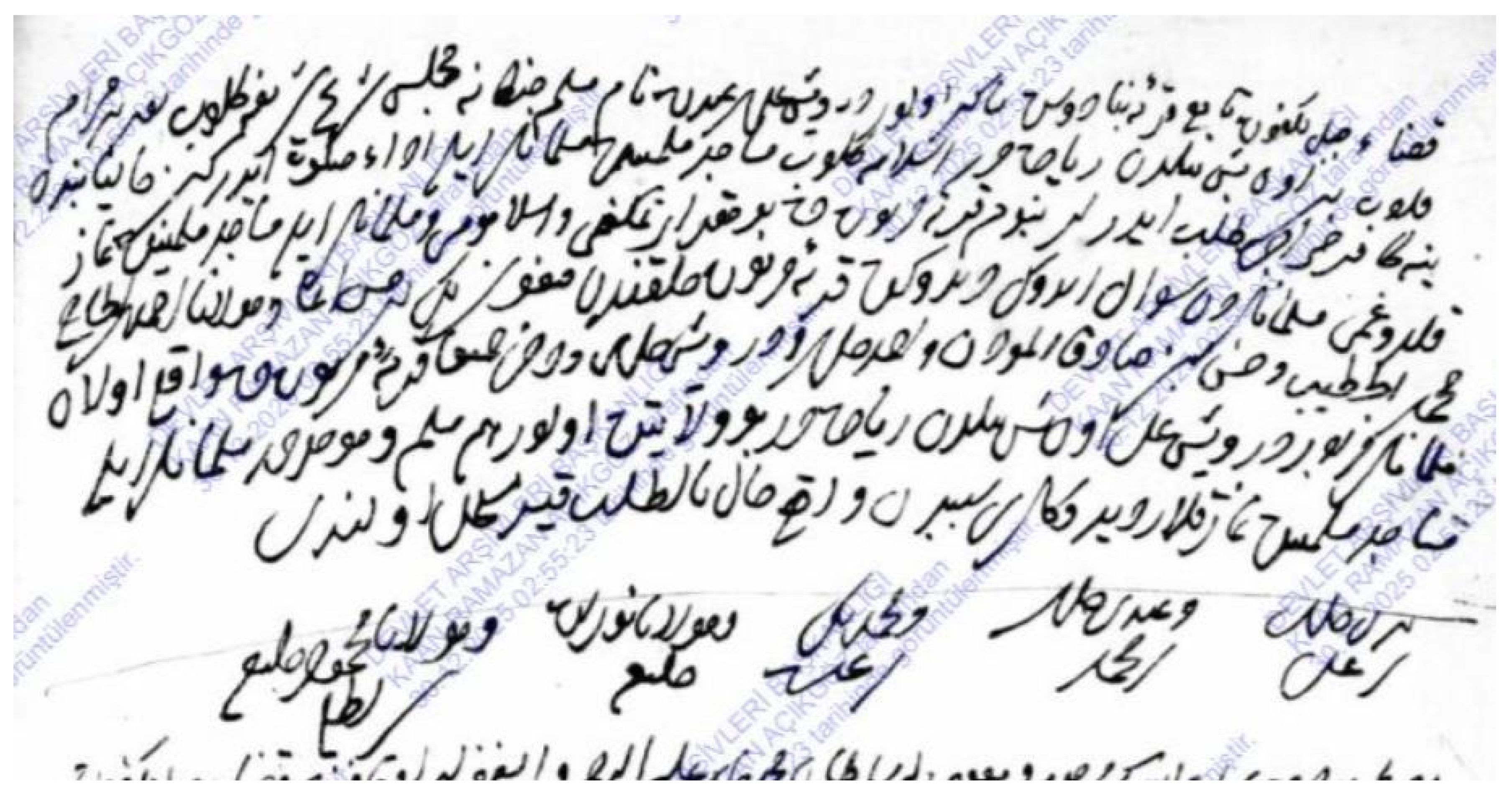
7In one record, the husband of a woman who had become Muslim (Yorgi veled-i Bezo) was invited to embrace Islam; when he refused, their marriage was dissolved with the ruling that “their union was separated” (beynleri müfterik olundu) (RŞS. no: 1610/1b-1; the relevant document is in
Figure A3). Under Islamic law, religious difference thus constituted sufficient grounds for divorce.
This dynamic can also be understood in terms of divorce as strategy. Conversion functioned not only as a basis on which men could repudiate their wives, but also as a means by which women could separate from their husbands. The use of the
kadı court by Christian women as a pathway to divorce is well documented in Ottoman historiography (
Krstic 2011, p. 157;
Shapiro 2018, p. 147;
Çetin 1999, p. 93;
Yücetürk 2021, p. 358). Indeed, the cases in the registers indicate that women’s conversions were often linked to efforts to secure custody of children, to escape adverse family conditions, or to respond to forced or coerced marriages (
Baer 2004, p. 427;
Deringil 2017, p. 95).
For example, the complex case of Fatma (formerly Gazi bint Sedo, an Armenian as recorded in the registers) reflects a tragic familial conflict in which coercion, abduction, and conversion intersected. With the consent of her father Sedo, Fatma had been married to Topçu Ali b. Abdullah for a
mehr-i müeccel (deferred dower) of 1000 akçe.
8 This marriage was interrupted when Topçu Ali left the town. During his absence, her father, without Fatma’s consent, forcibly married her to a non-Muslim man named Ardoğdu b. Savta through coercion and compulsion.
Before the court, Topçu Ali asserted that Fatma was his lawful wife and that this could be proven by witnesses. Ardoğdu, by contrast, claimed that he had been unaware of her prior marriage and that she had been given to him “while still an infidel,” based on which the marriage had been concluded. These statements show how conversion, marriage, and guardianship could become intertwined within a single legal dispute. The decisive development in the course of the case, however, was Ardoğdu’s conversion to Islam while the proceedings were still ongoing.
After converting to Islam and taking the name Rıza, Ardoğdu’s marriage to Fatma was ended when Fatma declared that she had been divorced by
ṭalāq-ı bāʾin (divorce after marriage, but without sexual intercourse and without valid seclusion) (
Ekin 2009, p. 199;
Kasumovıć 2016, p. 523). She further stated explicitly that she had no remaining rights, claims, or disputes arising from that marriage, and the case was accordingly closed (RŞS. no: 1572, 6b-1). This entry in the
kadı register offers a concrete illustration of the invalidity of marriages contracted under coercion and of the court’s regulatory role in resolving disputes that emerged after conversion, thereby shedding light on the functioning of Ottoman family law in practice.
In another case dated 1609 (1018 AH), an Armenian woman named Anuş converted to Islam and took the name Ayşe. When Islam was offered to her husband, he refused, and the court consequently ruled for their separation. Ayşe declared that she had received her deferred dower of one thousand akçe along with her
esbâb (personal belongings) (RŞS. no: 1553, 58b-4). Such examples could easily be multiplied (RŞS. no:1554, 58b-1; 1553; Also see
Shapiro 2018, pp. 147–48).
In some cases, concerning women’s conversion to Islam, the very occurrence of ihtidā became a matter of dispute before the court. In one instance, a Muslim petitioner claimed that a woman named Ağlak had converted to Islam in his presence; the woman denied this assertion. On the basis of testimony provided by Muslim witnesses, however, the court ruled that she had indeed embraced Islam (RŞS. no: 1552-1512, 8b-2). Records of this kind demonstrate that conversion acquired legal certainty not solely through personal declaration, but through witness testimony and judicial adjudication.
In some cases, the subsequent disappearance of women who had converted gave rise to new legal problems within their families and communities. In the case of a woman named Vesinli, her conversion to Islam was confirmed through witness testimony. When she later disappeared and no news of her could be obtained for a prolonged period, the court (apparently concerned that she might have faced retaliation from her family or even been killed) obliged her father to locate her and recorded in the register that non-Muslim guarantors were to provide security for twenty days for this purpose (RŞS. no: 1546-1510, 33a-2).
9 This case is revealing of the court’s effort to monitor individuals after conversion and to ensure the continuity and protection of the process of religious change.
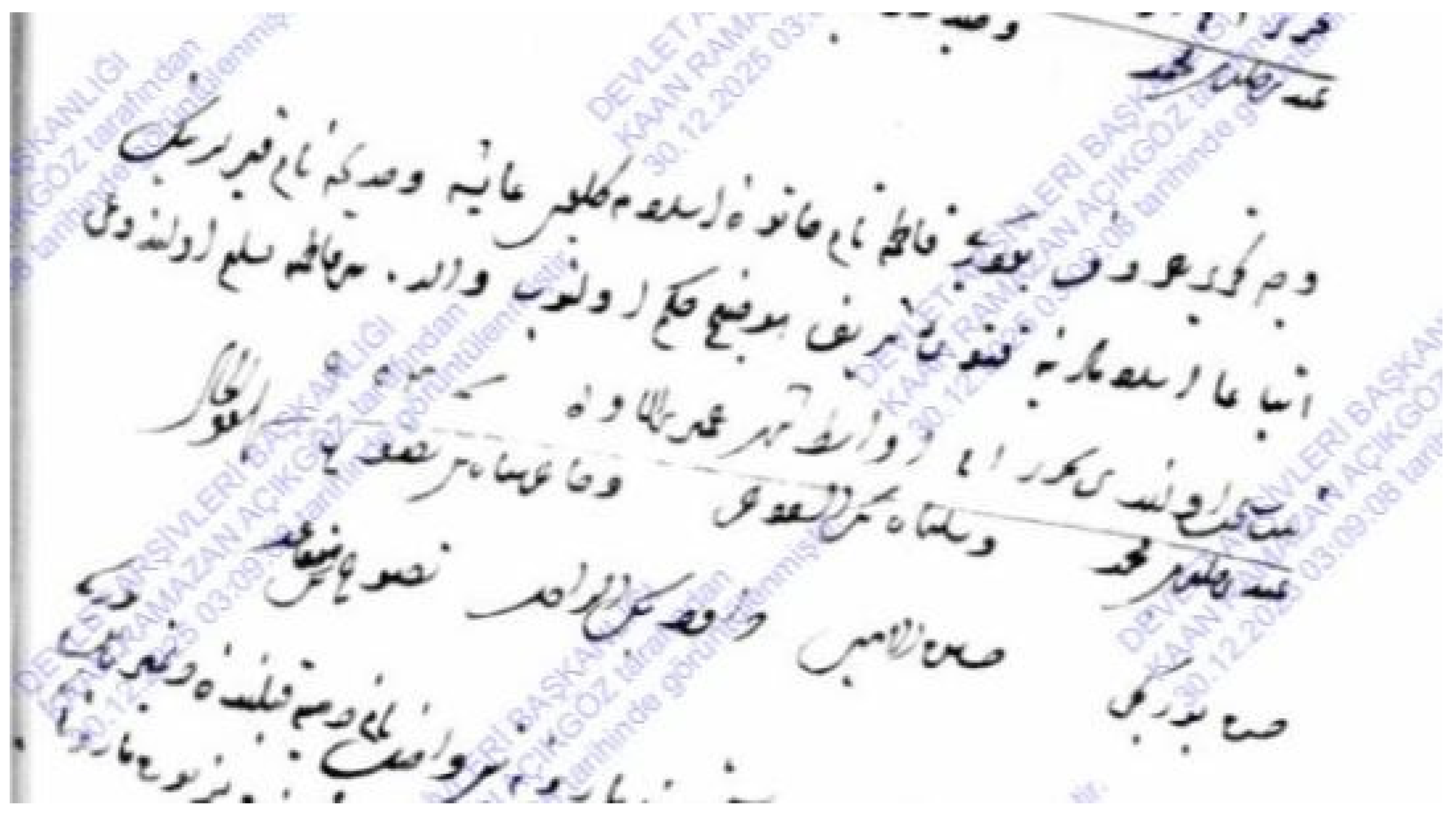
The conversion of women with children raised the issue of custody in a particularly direct way. After a woman named Fatma embraced Islam, her daughters Ayşe and Hatice were also ruled to be Muslim
itbā’an (by following their mother), and custody was awarded to her (RŞS. no: 1510, 15-a2; the relevant document is in
Figure A4). Similarly, Sare bint Yuvan converted and took the name Havva, and together with her two young children who were renamed Ahmed and Mustafa she was registered as Muslim (RŞS. no: 1647, b-6). These rulings show that in Ottoman law the religious status of the mother, by virtue of parenthood, was decisive for the custody and religious affiliation of minor children. This finding also accords with H. Selçuk’s observations in the Vidin case, which suggest that some women may have converted to avoid losing custody of their children (
Selçuk 2014, p. 54). Indeed, the registers contain no cases in which women were required to convert because their husbands had done so (nor was this necessary), indirectly indicating that women may have embraced Islam in connection with their husbands’ conversion to secure custody of their children (RŞS. no: 1572, 5b-5).
Such conversions, undertaken under social and legal pressures, indicate that religious change could also function as a strategic choice aimed at preserving family unity. Women’s conversion in Ottoman society was therefore not merely a personal transformation, but a multidimensional process that reshaped family structures, activated legal mechanisms such as custody and surety, and placed the
kadı courts at the center of these negotiations (
Dinç 2025, pp. 67–69). In this sense, women’s ihtidā may be seen as occupying a critical space at the intersection of religion, law, and family relations in the Ottoman Empire.
3.2. Children’s Conversion
Children’s conversion can generally be divided into two categories according to age and circumstances. The first consists of children whose ages are not explicitly recorded but who, as noted above, were evidently minors when they converted together with their parents. These children were legally regarded as Muslim as a result of a parent’s conversion, without an independent act of will (RŞS. no: 1647, b-6; 1510, a-2;
Kasumovıć 2016, pp. 521–24;
Çetin 1999, pp. 69–92;
Aslan 2008, p. 55). The second category includes those who had just reached puberty or were described as
şâbb-ı emred. Individuals in this group typically embraced Islam while working under a Muslim master and were subsequently claimed back by their families. In such cases, the courts based their rulings on the child’s expressed consent and the testimony supporting it. Whether young children or adolescents, however, the conversion of minors frequently generated serious tension and conflict within families (
Aslan 2008, pp. 29–180).
When the reasons behind the conversions of these youths (situated between childhood and adulthood) are considered, it becomes clear, as noted above, that ihtidā was shaped by multiple, overlapping social, cultural, economic, and psychological dynamics. Children who worked in the households or workshops of Muslim families may have spent considerable time with Muslims and received from them forms of care and attention that they did not experience within their own families, thereby developing an affinity for Islam that could culminate in conversion (
Kocaoğlu 2020, p. 793). Undoubtedly, pragmatic motives such as the desire to belong to a new social environment and concerns about future economic prospects also played a role in this orientation.
The twelve-year-old son of Petro, a
mutafçı (hair-cloth weaver) (
Pakalın 1983, p. 588), named İstimad, converted to Islam while apprenticed to a Muslim named Muhiddin and took the name Yusuf. His father’s petition to the court to recover his son illustrates the shock and helplessness that children’s conversion could generate within families (RŞS. no: 1531, 7b-2). Similarly, a father named Manol learned that his missing son Kumyasus had become Muslim and was serving in the household of Mehmed Ağa; he pledged not to pursue legal action in return for his son’s restitution (RŞS. no: 1578, 13b-2). In another case, a little boy named Dimo, who was an apprentice in the cloth trade “was honored with the glory of Islam” and given the name Hasan (RŞS. no: 1572, 16b-5).
A significant proportion of the children who converted were apprentices working under Muslim masters. This pattern suggests that religious change was closely intertwined with motivations such as economic security, social protection, and occupational affiliation. As has also been emphasized in previous scholarship, many children embraced Islam within the context of the master-apprentice relationship (
Çetin 1999, p. 92;
Kocaoğlu 2020, p. 793;
Pala 2020, p. 2549). In these cases, conversion sometimes led to the rupture of family ties, while in others it resulted in accommodation within a newly negotiated social order.
Another record documents the tension and confrontation between a newly converted youth named Ahmed b. Abdullah and his Armenian father Murad over the young man’s right to convert and over his custody. According to the entry, the father attempted to take his son back and, in the words of the document, “to make him an Armenian,” but was prevented by Muslims. Murad gathered the
yasakçıs (law-enforcement officers), raided Ahmed’s room, and tried to seize him, declaring, “He is my son.” The altercation occurred just before Ahmed’s circumcision ceremony. The only explanation offered for the youth’s conversion is the statement that Ahmed b. Hüseyin, under whom the boy had been working, was the cause of his embracing Islam. The father appears to have attempted to remove him before the circumcision could be completed. Although the register does not specify whether the conversion was voluntary or coerced, the case sheds light on the intense familial conflict and interreligious tension surrounding such episodes (RŞS. no: 1551, 59b-2; Shapiro has also drawn attention to this case:
Shapiro 2018, p. 149).
The case of Yani, a şâbb-ı emred (a beardless youth of about twelve) from the villages of Malkara who became Muslim and took the name Ahmed, offers a striking illustration of the social and psychological dimensions of child and youth conversion in the Ottoman provinces (RŞS. no: 1573, 39a-4). At the threshold of adolescence, such a conversion is better understood not as a fully autonomous act of religious choice but within a framework of psychosocial needs such as protection, belonging, and security. For individuals in this age group, ihtidā was often shaped by adult authority and surrounding circumstances.
Indeed, the adoption of Ahmed by a man named Hızır Dede from the village of Büyük Kılıçlı and the child’s placement in his household show that conversion entailed not only a change of religion but also a social repositioning. Ahmed’s statement, “I choose the aforementioned Hızır Dede and will remain with him”, was recorded by the court as a symbolic expression of consent, yet it was necessarily formed within a constrained sphere of agency defined by age and dependency. Here the court acted as an intermediary, both registering the child’s new religious identity and securing social order by placing him within a protective family structure.
This case demonstrates that the conversion of children and youths was closely tied, at the psychological level, to processes of identity formation and the search for security, and, at the social level, to household and patronage relations. For Ahmed, conversion signified not only a change of faith but also incorporation into a new family, the acquisition of a new name and status, and a redefinition of his place within the Muslim community. The episode is therefore significant in showing that practices of child conversion in the Ottoman provinces were shaped less by autonomous individual choice than by structures of social protection and psychological need.
In another case, a şâbb-ı emred of about twelve (previously registered as a dhimmī under the name Yorgaki b. Mihail) converted to Islam and took the name Mehmed. This episode, too, is better understood not as the result of a fully autonomous and mature religious choice, but in terms of the child’s social environment, need for protection, and the influence of guiding adult figures. A striking feature of the case is that the child’s familial ties became a site of conflict after the conversion. A dhimmī named İstimad b. Dimitri, who presented himself as Mehmed’s uncle, attempted to ihlâl (violate) the child by returning him to his former religion, indicating that conversion was perceived not only as an individual act but as a matter affecting the family and the wider community.
From the perspective of the non-Muslim family and community, such a conversion implied both a loss of population and a challenge to religious and social authority, turning control over the child into a legal dispute. The intervention of Muslim witnesses in the proceedings reflects a concern not with the psychological dimension of conversion but with securing its legal and social legitimacy. The testimony of Mehmed Çelebi b. Kadrî and Seyyid Yusuf b. Ahmed that the child had recited the shahāda in their presence served to “objectify” his religious will through witness evidence (RŞS. no: 1574, 7a-3). At this point, the child’s age and cognitive capacity receded into the background; the decisive issue became proof that the conversion had taken place in accordance with sharʿī procedure.
On the one hand stood the child’s biological family and former religious milieu; on the other was the Muslim community into which he was incorporated together with his new name. The court’s ruling in favor of his Muslim status can be read as a regulatory intervention aimed at removing Mehmed from this duality and situating him within a single, clearly defined sphere of belonging. This case thus illustrates how child conversion in the Ottoman provinces constituted a complex process in which family ties were renegotiated, communal boundaries were protected through legal means, and the child’s psychological vulnerability was often rendered invisible amid conflicts among adults. In this process, the court emerges as both the registrar of conversion and the principal actor in consolidating the child’s new social position.
4. Inheritance Law and Transfer of Property
Conversion directly affected the distribution of inheritance, since under Islamic law Muslims and non-Muslims could not inherit from one another. Newly converted individuals therefore often entered into inheritance disputes with their non-Muslim relatives or reached settlements through compromise (
Aktan 2008, p. 49;
Aslan 2008, pp. 171–76;
Karagedikli 2025, p. 215;
Shapiro 2018, p. 146). In other words, converts transferred their inheritance shares to their non-Muslim kin, converted property into cash to resolve conflicts, and in some cases severed property ties with their biological families. The registers frequently record the transfer of inheritance shares through sale, the liquidation of property, and the settlement of disputes through
ṣulḥ and
ibrāʾ (settlement and discharge).
Converts commonly reached settlement by selling their inheritance shares to their non-Muslim relatives. Mehmed b. Abdullah, for example, sold to his brother Panus the share of the estate left by their mother, who had died before his conversion. Similarly, an Armenian named Ağik, who later became Mehmed, sold his share of his father’s estate consisting of a vineyard and a house to his mother Kinar after embracing Islam (RŞS. no: 1606, 50b-1). Such transactions were frequently used to avert potential disputes and to clarify property relations.
A particularly revealing case illustrating how property, debt, and inheritance relations were legally restructured after conversion concerns Mehmed b. Abdullah, an Armenian by origin who embraced Islam while residing in the Dudu Hatun quarter of Rodosçuk. Mehmed stated that he had sold to his sons, for 87.5 kuruş (ottoman coin), his two-room, single-storey house with a garden together with certain household goods, and that they had accepted the sale. Of this amount, 62.5 kuruş was paid in court to Hacı Ali Ağa, the trustee of the Sarımsakçı Hacı Nasuh Foundation, to cover Mehmed’s debt to the waqf; 12.5 kuruş was paid to the trustee Mehmed b. Mustafa for a debt owed to the neighborhood imam; and 12.5 kuruş was paid to Ahmed Ağa, the trustee of the Mahmud Bey Foundation, to settle another outstanding obligation. Mehmed further declared that the house and goods now belonged entirely to his sons, who in turn undertook to maintain him from their own resources for the rest of his life and to provide for his needs. The court confirmed and recorded this arrangement (RŞS. no: 1604, 25b-2).
Although Mehmed b. Abdullah’s sale of his house and some household goods to his sons may at first appear to be an ordinary transaction, it was in fact a deliberate strategy aimed at preventing legal disputes that might arise after conversion. The ambiguities surrounding inheritance and property relations following ihtidā especially in connection with the religious status of children could create significant risks. By transferring his property to his sons through a sale rather than a gift, Mehmed sought to render the transaction indisputable under Islamic law. In this way, he both precluded potential future claims over inheritance or ownership and ensured that the property was redefined as part of a Muslim estate. The registration of the sale before the court further reinforced the legal legitimacy of this transformation.
The use of the sale proceeds directly for the settlement of debts points to the economic dimension of conversion. The payment of these obligations to Islamic foundations and their trustees indicates that Mehmed was integrating into local Muslim economic networks through his new religious identity. Conversion thus entailed a process of repositioning not only in legal but also in financial and trust-based relations. Another noteworthy element in the record is the sons’ undertaking to “maintain their father from their own property until his death” in return for the transfer of the estate. This commitment shows that classical expectations of inheritance were replaced by a contractually defined relationship of care. The practical difficulties that changes in religious status could create within inheritance law were thereby compensated through such reciprocal obligations, transforming family solidarity into a legally secured arrangement (
Aktan 2008, p. 49;
Shapiro 2018, p. 146;
Karagedikli 2025, p. 215).
Taken together, this case demonstrates that conversion was a transformative force that directly reshaped property, debt, and inheritance relations. Here, ihtidā operated in conjunction with economic rationality; through the sale of property, the liquidation of debts, and the contractualization of maintenance obligations, both the individual and his family sought to secure their future. In this respect, the record exemplifies how religious change in the Ottoman provinces was intertwined, at the socio-economic level, with pragmatic solutions devised to mitigate the legal risks arising from confessional difference.
A similar court record dated 1699 (1111 AH) concerns a legal dispute over whether the property of a person who had converted to Islam and subsequently disappeared belonged to the
Bayt al-Māl (treasury) or to his family (
Akgündüz 1986, p. 283).
10 Acting on behalf of the treasury, Mehmed Ağa b. Osman claimed that Boğos (an Armenian by origin who had taken the name Mustafa after converting six years earlier) had gone missing and that it was unknown whether he was still alive and therefore demanded that Boğos’s house and goods be seized for the state. Boğos’s sons, Vertan, Zârûn, and Arut, objected, stating that about six months before his disappearance their father had sold them the house and goods for 680 kuruş, that the price had been paid, and that the property had been physically delivered to them. The record shows that the status of a missing Muslim’s estate was contested on the basis of prior transactions of sale and delivery, and that the boundaries between state and family property were determined before the court (RŞS. no: 1628, 95a-2).
Another case illustrating how post-conversion tensions in inheritance and property relations were negotiated and resolved arose after the death of Evanil b. Mıgırdıç, an Armenian resident of the Mahalle-i Cedîd in Rodosçuk. His estate passed to his three sons and to his daughter, who had converted to Islam and taken the name Hadice bint Abdullah. The sons, Bagdesar and Bedros, declared before the court that they had previously sold their shares in a house in Rodosçuk to another Armenian, Beldos b. Bal, for 5000 akçe (ottoman coin) and that the sale had been completed. When their Muslim sister asserted a claim to the property, however, family relations over ownership became contentious. At this point, the dispute ceased to be merely a matter of inheritance among siblings and was transformed into a legal issue shaped by confessional difference and brought under the jurisdiction of the court. The brothers’ attempt to recover the house reflects the practical uncertainties surrounding the impact of Hatice’s new religious status on inheritance rights.
In resolving the dispute, the court appointed an inspection committee composed of the chief architect and Muslim experts to determine the house’s actual value and to assess the additional expenses incurred by the purchaser Beldos. The investigation concluded that the property was worth no more than the original sale price of 5000 akçe, and that Beldos had spent 2000 akçe on renovations. Following this assessment, Hadice withdrew her claim, and the brothers acknowledged receipt of their respective shares and formally released Beldos from all claims and litigation. The court recorded and confirmed this settlement. In this way, a conversion-related inheritance and property dispute was resolved through judicial oversight and valuation, based on compromise (RŞS. no: 1599, 46b-4;
Sarı 2019, pp. 245–46).
This case shows that a dispute centered on the inheritance rights of a daughter who had converted to Islam could be resolved despite confessional difference by grounding the settlement in the economic value of the property and through the court’s regulatory intervention. The record thus illustrates that while conversion unsettled established patterns of family inheritance, the resulting tensions were rendered manageable through the mechanisms of shar‘i law.
5. Economic Motivations and the Question of Taxation
Exemption from taxes levied on non-Muslims such as the
ʿöşr, cizye,
harâc,
avarız and
ispençe constituted one of the economic attractions of conversion (
Duka 1991, p. 70;
Aslan 2008, p. 35 (footnote)). Those who embraced Islam were relieved of these obligations, yet they continued to pay taxes incumbent upon all
reâyâ (public), including
öşr and
avarız; the fiscal burden was therefore reduced only in relative terms rather than eliminated altogether. The state, moreover, distinguished between individual exemptions and collective conversions that would entail a loss of revenue. Fiscal privileges were not absolute but were subject to state control. Because exemption from the
cizye tax in particular had direct financial consequences especially in cases of mass conversion ihtidā became not only a religious matter but also a fiscal and administrative concern, at times giving rise to disputes between the state and the tax-paying population (
İnalcık 1965, p. 66;
Ercan 1991, p. 377;
Himmetoğlu 2020, p. 139;
Ercan 1986, pp. 691–98).
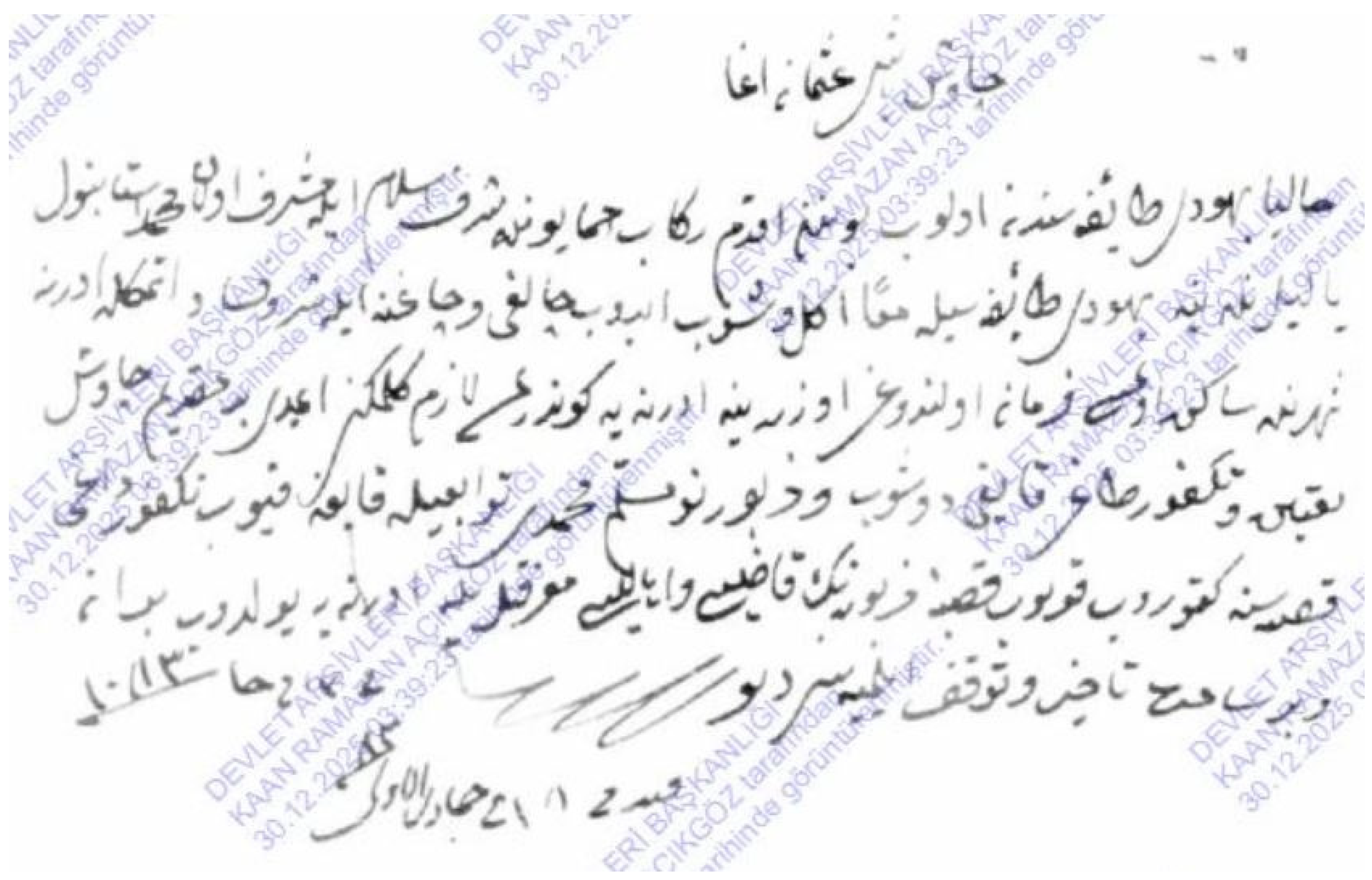
For example, a Muslim Romani named Derviş Ali b. Abdullah complained that although he had been Muslim for fifteen years and could produce witnesses to the fact that he prayed in mosques, he was still being asked to pay the
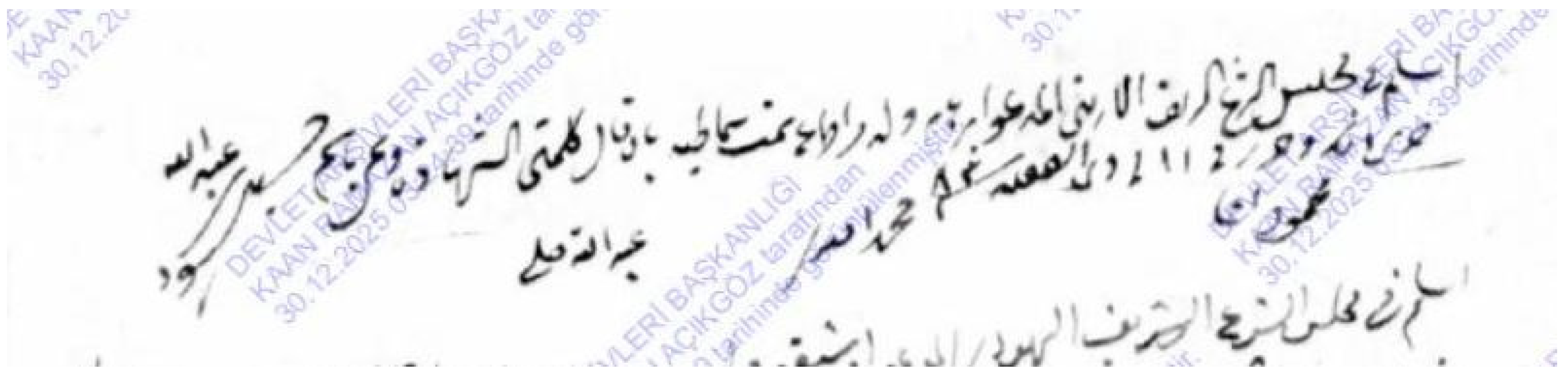
cizye tax. The court confirmed his Muslim status based on village testimony and thereby secured his tax exemption (RŞS. no: 1514, 82a-1; The relevant document is in
Figure A2).
11 This case demonstrates that conversion, like an individual declaration of faith, also required social recognition and, at times, active effort to obtain it. As O. Çetin has likewise noted for the Bursa case, converts could find themselves required to pay the
cizye tax even after becoming Muslim (
Çetin 1999, p. 78).
In the case of Derviş Ali, individual conversion constituted a valid basis for exemption from the
cizye tax. Claims of collective conversion, however, could provoke state concerns over revenue loss. After the inhabitants of Bulduklu village converted en masse, they refused to pay the cash tax of 1500 akçe that had been recorded under
the timar of Sipahi Ahmed (fiscal unit). A decree from the
Dīvān (imperial council) ruled that the villagers’ conversion did not automatically cancel their pre-established monetary tax obligations and that collection was therefore to continue (RŞS. no: 1599, 95b-1;
Sarı 2019, p. 480). This episode shows that while ihtidā could secure personal tax exemption, it did not necessarily eliminate a community’s previously assessed fiscal liabilities to the state. As K. Çolak has argued, in the sixteenth century the
cizye tax alone was not a sufficiently heavy burden to drive conversion (
Çolak 2000, pp. 88–89). The individual cases from Rodosçuk support this view, yet the Bulduklu village example indicates that in situations of mass conversion the fiscal dimension could become considerably more complex.
Leaving aside cases of mass conversion, the social mobility and privileges acquired by converts especially between the fifteenth and seventeenth centuries created new opportunities, including preferential access to bureaucratic positions in comparison with non-Muslims. The advantages extended by the state to new Muslims thus made conversion not only a religious transformation but also a mechanism of social advancement and status acquisition.
After the Tanzimat period, however, the state’s attitude toward converts shifted. As the Ottoman Empire weakened within the global balance of power, it came under increasing pressure from European states and began to view conversion with suspicion, introducing bureaucratic obstacles designed to discourage it and to keep individuals within their former religions (
Çetin 1999, p. 4;
Akman 2021, pp. 54–60). The imposition of lengthy and complex procedures was clearly intended to deter potential converts. Moreover, the presence of non-Muslim subjects or representatives of foreign powers among the witnesses at court demonstrates the extent to which external actors intervened in the Ottoman judicial process (
Açıkel 2004, p. 175;
Özdemir Kızılkan 2011, pp. 37–38).
6. Social Integration, Social Control, and Apostasy (Irtidād)
In Muslim societies, Christians and Jews were deliberately excluded from certain rights and opportunities as a consequence of their legal status. Obligations such as the payment of the
cizye tax, restrictions on dress, and regulations limiting public visibility were among the principal expressions of this differentiation. By contrast, the fact that these benefits became accessible after conversion, with the backing of the state, significantly enhanced the appeal of ihtidā. The sudden and visible change in a convert’s social status and legal position meant that conversion was not merely a matter of personal belief, but also a decision shaped by powerful socio-economic incentives. In this context, the state’s explicit recognition of the material and symbolic gains accompanying conversion enabled individuals to regard ihtidā as a conscious strategy for improving or safeguarding their social position (
Şeker 2007, p. 77;
Krstic 2015, p. 39;
Çetin 1999, pp. 64–65;
Minkov 2004, p. 75;
Selçuk 2002, pp. 95–96;
Duka 1991, p. 65;
Ercan 1986, pp. 704–5). These incentives, of course, varied over time (
Antov 2000, p. 103;
Selçuk 2002, pp. 94–96).
12This transformation was not limited to a change in legal status but was completed through a symbolic and behavioral process of reidentification. The convert was expected to display publicly that he or she had “found the right path” by shedding former, allegedly “impure” clothing and being dressed in white garments representing Islam, making the symbolic break with the past visibly manifest (
Baer 2009, p. 306). As E. Himmetoğlu has noted based on a
fatwā by Ebussuûd Efendi, it was not sufficient for a convert merely to recite the
shahāda; adopting Muslim dress was also considered obligatory (
Himmetoğlu 2020, p. 138). The state’s provision of clothing and money under the rubric of
kisve bahası (money given by the state to a person who has converted to a new religion to buy new clothes) served both to encourage and to supervise this new identity (
Antov 2000, p. 90;
Güneş 2025, p. 425). When a non-Muslim expressed the desire to become Muslim, the
shahāda was administered and the treasurer was ordered, in accordance with law, to provide the individual with money and clothing (
Çolak 2000, pp. 90–91).
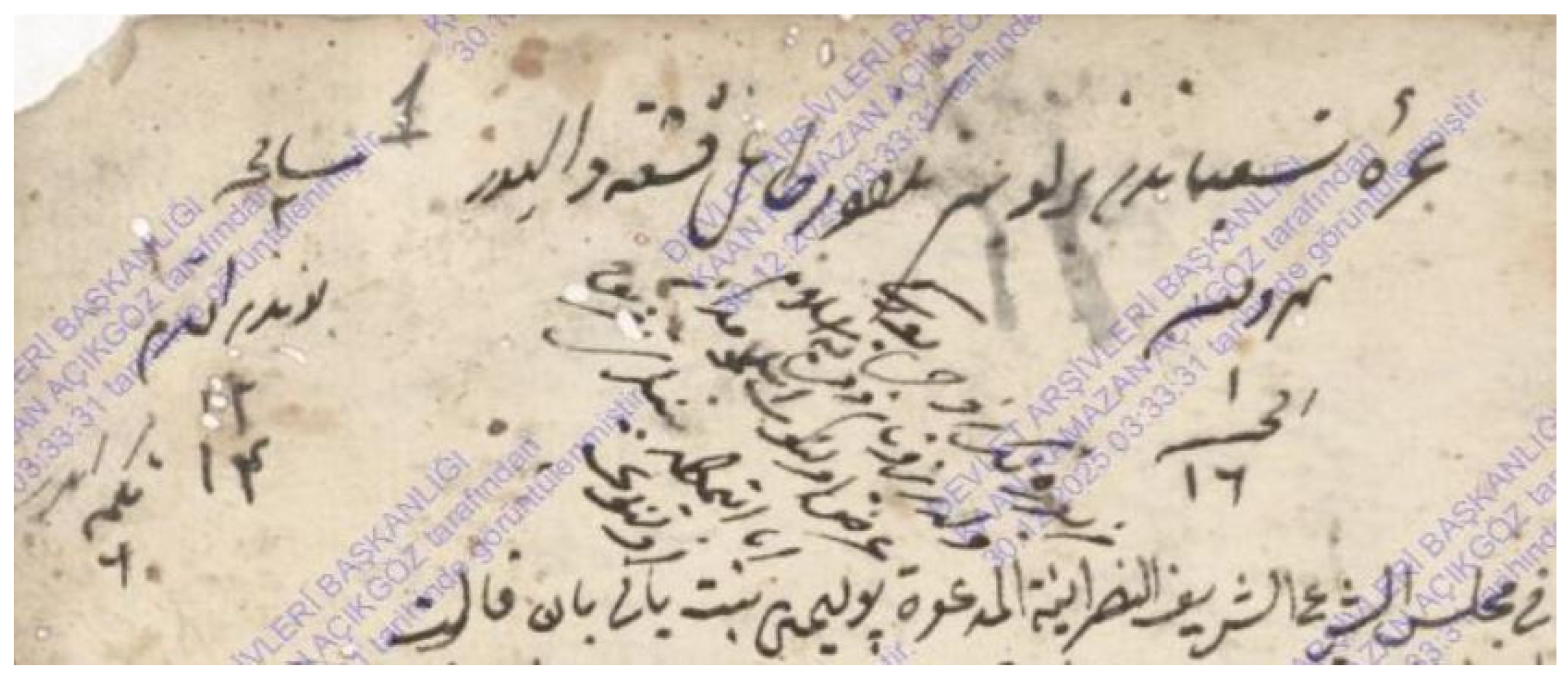
New Muslims, however, passed through a transitional phase between their former communities and the religious collectivity into which they were incorporated, and this phase was subject to state supervision. The case of a convert named Mehmed, formerly Jewish and originally from Edirne, illustrates this dynamic. After being found drinking with his former Jewish associates in Istanbul, he was sent back to Edirne, as recorded in the Rodosçuk court registers. The episode suggests that ihtidā was understood not merely as a legal change of status but as a broader social transformation encompassing behavior, affiliation, and lifestyle (RŞS. no: 1604, 93a-2; see
Figure A5 for the document). Thus, while the state encouraged conversion through material and symbolic support, it also exercised a measure of control to ensure that the new Muslim identity was properly formed and maintained (
Deringil 2017, pp. 39–40).
The court registers show that conversion in the Ottoman provinces was not always a one-way or irreversible process; some individuals were accused of returning to their former religions after having embraced Islam. In this context,
irtidād (apostasy) was treated in Islamic law not merely as a personal change of belief but as a grave offense threatening the religious and political order(
Aslan 2008, p. 193;
Çetin 1999, pp. 84–85;
Özçelik 2000, p. 348).
13 The Rodosçuk registers clearly reveal two different modes of practice in cases of apostasy.
The first consists of cases in which return was permitted. A record concerning Niko b. Dimo, who first became Muslim, then apostasized, and subsequently recited the shahāda again before the court to return to Islam, indicates that repentance and reversion could open the way to a second conversion (RŞS. no: 1521, 24-5). In such cases, the court assumed a conciliatory rather than punitive role, seeking to preserve religious order by reintegrating the individual into Islam.
By contrast, the second group consists of cases in which punitive sanctions were imposed. A record dated 1699 reports that Ostepan b. Mardiros, an Armenian who had taken the name Mustafa upon converting to Islam, apostasized only seventeen days later. Although he was offered the opportunity to return to Islam, he “persisted in unbelief and apostasy.” Following an investigation by the
Rumeli kazasker (judicial official), a ruling of “execution according to the law” (şerʿan katline hükm) was issued and an order was sent for the sentence to be carried out, documenting concretely that apostasy could be punished by death under Ottoman law (RŞS. no: 1628, 131b-2).
14These cases indicate that conversion was understood as a process requiring continuity and behavioral consistency, while apostasy was regarded as both a legal and a political threat (
Özçelik 2000, pp. 350–52). Indeed, some converts were expected to reinforce their new religious identity through their conduct in everyday life. As in the case of the former Jew who was exiled for drinking and causing disorder (RŞS. no: 1604, 93a-2), the state treated conversion not merely as a legal act but as a transformation that had to be upheld in social practice as well.
Taken together, these cases show that the Ottoman state exercised both conciliatory and punitive authority in matters of conversion and apostasy. This dual function has been widely discussed in the literature on both the classical and the modern periods (
Gradeva 2012, pp. 202–17;
Dinç 2025, pp. 54–56;
Akman 2021, pp. 54–60;
Selçuk 2014, p. 52). The Tanzimat Edict and the practices that followed it mark a significant turning point in this respect. Whereas in the classical period religious change was largely treated as an individual choice binding upon the person concerned, in the post-Tanzimat era non-Muslim communities and churches began to intervene more directly in decisions of conversion. Indeed, the sources indicate that some non-Muslims who had converted before the Tanzimat returned to their former religions in this new context, transforming apostasy from an individual offense into a field shaped by intercommunal and international dynamics (
Çetin 1999, pp. 4–5;
Özçelik 2000, p. 357;
Açıkel 2004, pp. 174–75;
Akman 2021, p. 54;
Selçuk 2014, p. 52;
Dinç 2025, pp. 56–62).
7. Conclusions
Based on the Rodosçuk kadı court registers, this study demonstrates that ihtidā can be reduced neither to state-driven policies of encouragement nor to purely economic calculation. In the Ottoman provinces, conversion emerges as a multilayered social phenomenon shaped at the intersection of law, family, economy, and religion. For individuals, it functioned simultaneously as a change of legal status, a repositioning within economic networks, a redefinition of family relations, and a pathway to social integration. In this sense, ihtidā generated transformative effects across a wide spectrum, from household structures and property relations to fiscal obligations, communal ties, and perceptions of social status.
By contrast, apostasy was not treated as a private matter of belief but as an act threatening the existing social and political order, and it was met with severe sanctions. This asymmetry between conversion and apostasy makes visible how the boundaries of identity were drawn in Ottoman society and where tensions arose between family, community, and the state. The dual structure underscores that religious change was not merely a theological issue but a critical arena in which social order was reproduced and contested.
The study rejects narratives that portray ihtidā as a coercive and one-directional policy of Islamization. Instead, it argues that conversion was a multidimensional process shaped by political, economic, and legal transformations and characterized by reciprocal interaction. In the Rodosçuk case, elements such as legal protection, economic opportunity, and social acceptance sometimes operated not only as outcomes of conversion but also as enabling conditions that encouraged it. These findings also call into question widespread assumptions that Ottoman courts were systematically biased against non-Muslims, showing instead that kadı courts provided a functioning forum in which legitimacy was publicly established for members of different communities.
In a setting where ethnic and religious groups coexisted, conversion took place under the influence of multiple, shifting factors. Shaped by the combined force of economic, religious, psychological, and social motivations, conversion appears as a complex and negotiable phenomenon that must be understood within its historical context. In this context, further studies focusing on non-Muslim inheritance inventories, along with the inheritance disputes and estate settlements of converts, promise to offer new and illuminating perspectives on the dynamics of ihtidā in Ottoman society.