1. Introduction
In terms of the quantity of available material, Khotanese painting cannot compete with the extensive records found at other sites across the Tarim Basin, notably in the oases of Kucha (Qiuci 龟兹) and Turfan (Tulufan 吐鲁番). The uncertainties affecting the chronological framework, a common issue in the region’s artistic production, are particularly pronounced in the case of Khotan (Hetian 和田). This is due to the varied and often unsystematic nature of documentation from the late nineteenth century to the present day, as well as to the fragmentary state of the evidence and its dispersal across multiple museum collections worldwide.
Despite the incomplete record and the comparatively little scholarly attention received by Khotanese painting, the available documentation nonetheless attests to the artistic originality of the Khotan oasis. Rather than attempting a reconstruction of the history of research, a topic for which comprehensive overviews are readily accessible
1, this article aims to outline the key features of Khotanese painting. It will highlight the results of recent fieldwork and studies, discuss the most significant aspects of its figurative repertoire, and address the chronological issue. It will also consider the persistent uncertainties surrounding the formative phases of this tradition, prior to its recognised flourishing in the 7th and 8th centuries, and of the artistic evidence that has been dated to an earlier period.
Beyond offering a descriptive overview, the article argues that Khotanese painting constitutes a highly selective and coherent visual tradition, shaped by specific doctrinal, ritual, and socio-political conditions. Recent archaeological discoveries—particularly in the Dandan Oiliq (Dandan Wulike 丹丹乌里克) and the Domoko (Damagou 达玛沟) area—not only expand the corpus of known material, but also invite a reassessment of long-standing assumptions about chronology, iconographic priorities, and mechanisms of artistic transmission.
Rather than adopting narrative or biographical cycles widespread elsewhere in Buddhist Asia, Khotanese painters privileged iconic and hieratic imagery—such as Vairocana, protective deities, and repetitive Buddha schemes—closely aligned with Mahāyāna ritual practice and temple architecture. At the same time, evidence of a dynamic process of appropriation and adaptation of external models emerges, ranging from South Asian and Gandharan to Central Asian and Chinese traditions. By integrating new fieldwork with a critical reading of earlier material, this study aims to highlight the defining features of the Khotanese pictorial repertoire and to reassess its position within the artistic networks of the southern Tarim Basin.
2. Architectural and Ritual Context of the Painting
As the entire corpus of Khotanese paintings can essentially be traced back to a single original context—Buddhist temples—it is fitting to start with a brief description of these temples and the role of their pictorial decorations.
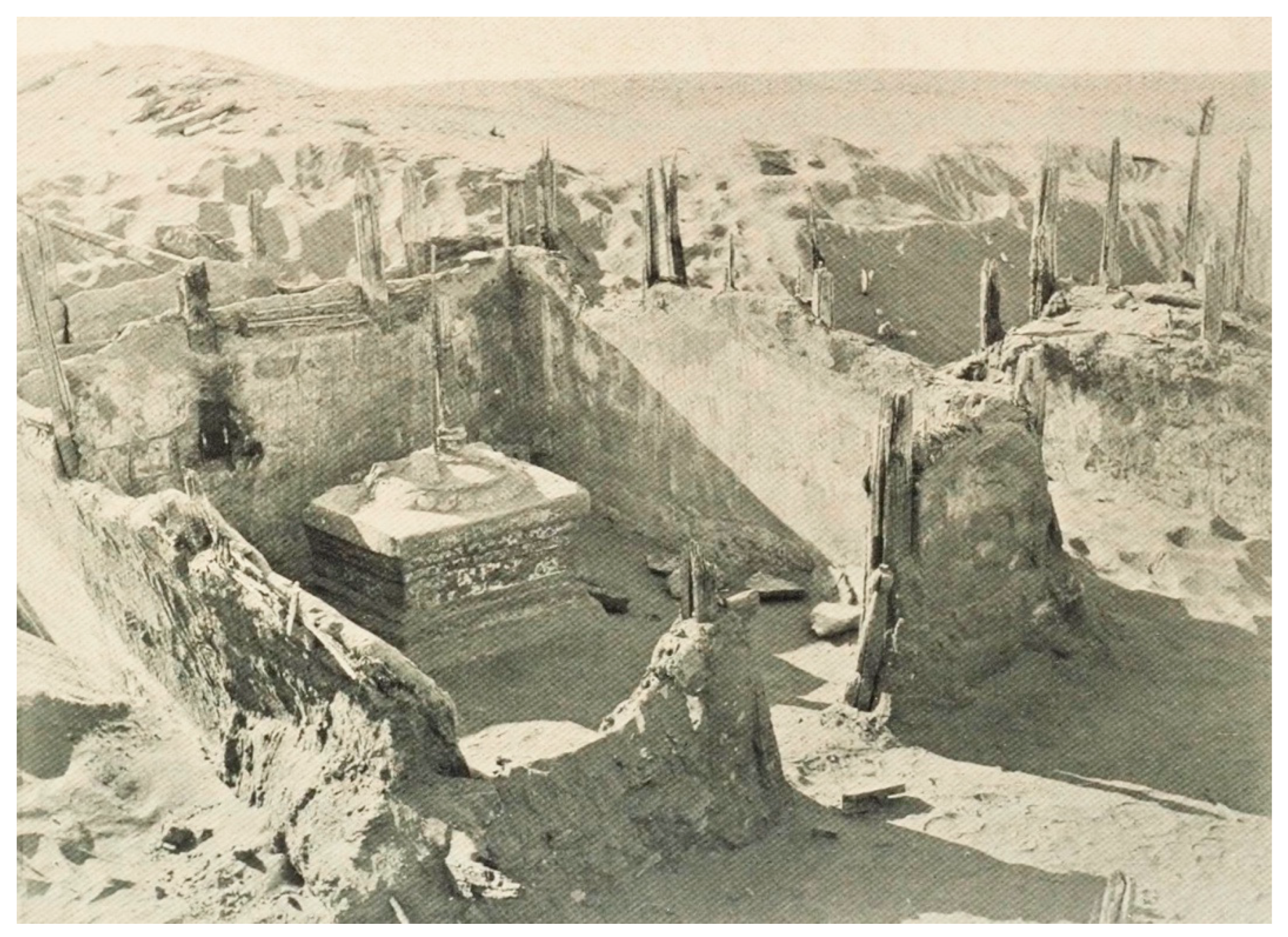
Buddhist temples in the Khotanese region usually had a similar architectural layout consisting of a central chamber surrounded by one or more circumambulatory corridors (
pradakṣiṇā) (
Figure 1). Within these religious spaces, painting and sculpture were not merely juxtaposed, but rather functioned as complementary media that enhanced each other’s impact
2.
At the heart of the sanctuary, a main sculpture—or occasionally a group of sculptures—would be positioned on a raised pedestal. Meanwhile, the sanctuary’s walls and the surrounding corridors were fully adorned with religious paintings. In some cases, this interplay between media became even more integrated. Paintings would serve as backdrops for high-relief clay sculptures, which were also painted. An example of this can be seen at the site of Rawak (Rewake 热瓦克) (
Stein 1907, p. 492;
Gropp 1974, pp. 71–73, 97–101;
Lo Muzio 2022c, pp. 237, 241–43).
Alongside murals, the corpus of Khotanese painting includes painted wooden panels, which are typically rectangular with a triangular top. These were intended as votive offerings and placed in front of principal sculptures in temple shrines. Often, both sides of the panels were painted, typically depicting Buddhas, bodhisattvas, or deities, and occasionally scenes with a narrative
3.
Due to the poor preservation of the original walls and their painted layers, our understanding of the overall compositions is often incomplete. Nevertheless, certain broader patterns can be discerned. Despite their fragmentary nature, the artistic evidence aligns with ancient written sources describing the doctrinal identity of the Khotan oasis, a major centre of Mahayana Buddhism. Until future excavations substantially alter our current understanding, we can only assume that the iconographic programmes of Khotanese Buddhist shrines were inspired by the Mahayana repertoire. These programmes would have included images of Buddhas of various sizes, depicted either standing or seated on lotus flowers. Based on specific mandalic schemes, these images were likely would have included bodhisattvas and/or deities, arranged in hierarchical compositions that unfolded across all the walls of the shrine chamber. So far, these compositions have only occasionally been the subject of thorough analysis, partly due to their often unsatisfactory state of preservation.
Narrative subjects related to the biography of Buddha Śākyamuni, the legends of his previous incarnations (
jātakas) or any other category of Buddhist moral tales—which were considered very important in the thematic repertoire of the Hīnayāna—are so far unattested in Khotanese painting. There are only sporadic examples of subjects related to local legends
4.
The general iconographic layout described above can be partially reconstructed in Buddhist temples excavated at several sites in the oasis in the early 20th century, as well as in temples unearthed more recently. One of the best-preserved examples is provided by the smallest temple discovered thus far in the Khotan oasis, located at Toplukdong (Tuopulukedun 托普鲁克墩) in the Domoko (Damagou 玛达沟) area (
Jia 2014;
Wu 2014;
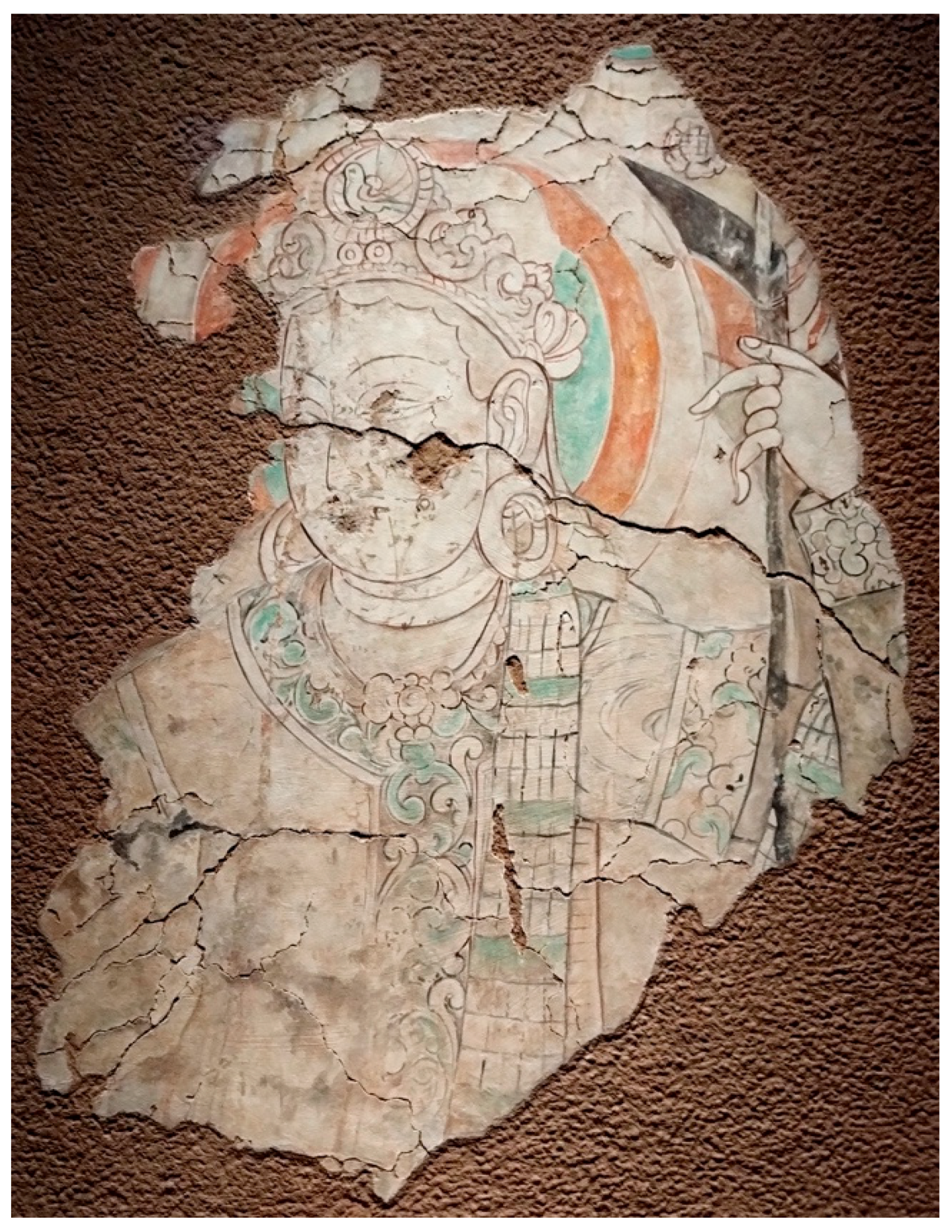
Chen 2015). Known as Toplukdong 1, this shrine was unearthed in 2002 by a team of the Xinjiang branch Institute of Archaeology at the Chinese Academy of Social Sciences. Alongside the seated Buddha sculpture on a pedestal—the shrine’s ritual fulcrum—the paintings on the northern, eastern and western walls reveal six large standing Buddha images and two standing Bodhisattvas flanking one of the Buddhas on the western wall. Several smaller seated Buddha images of various sizes can be seen in the spaces between the larger ones. The entrance in the southern wall is flanked by two guardian deities, which are thought to represent two of the highly venerated Eight Protectors of Khotan. The deity on the western side of the door is in a better state of preservation and is most likely to be identified as Saṃjñāya, accompanied by a deer (
Figure 2) (
Forte 2014;
Chen 2015). The image of a seated Bodhisattva, which is only partially preserved and detached from the wall, was originally located above the entrance.
The architectural layout and ritual function of Khotanese Buddhist temples provide an essential framework for understanding the pictorial choices discussed below. The predominance of circumambulatory corridors and the centrality of iconic cult images favoured non-narrative, hieratic compositions designed to structure ritual movement and visual contemplation. In this context, the prominence of cosmic Buddhas—most notably Vairocana—and the systematic absence of biographical or jātaka cycles appear as deliberate and coherent choices, closely aligned with the doctrinal identity of Khotan as a major Mahāyāna centre.
3. The Khotanese Repertoire
Joanna G. Williams’ extensive article on Khotanese painting remains one of the most comprehensive studies on the subject and can still be considered a landmark in the field. However, recent archaeological discoveries have not only clarified the context of certain motifs that were previously only known from scattered fragments, but have also stimulated further research into Khotanese pictorial art
5.
One of the most prominent figures in both mural and panel paintings is the Vairocana Buddha, who is associated with the
Avataṃsaka Sūtra—a particularly important text in Khotan (
Williams 1973, pp. 117–24). This depiction shows a cosmic manifestation of Śākyamuni, who is typically depicted standing or seated wearing a simple loincloth instead of the traditional monastic robe. He is also adorned with emblems and decorative motifs that have symbolic meaning. While not all of these features have been conclusively identified or interpreted, their placement across the body suggests ritual and doctrinal significance.
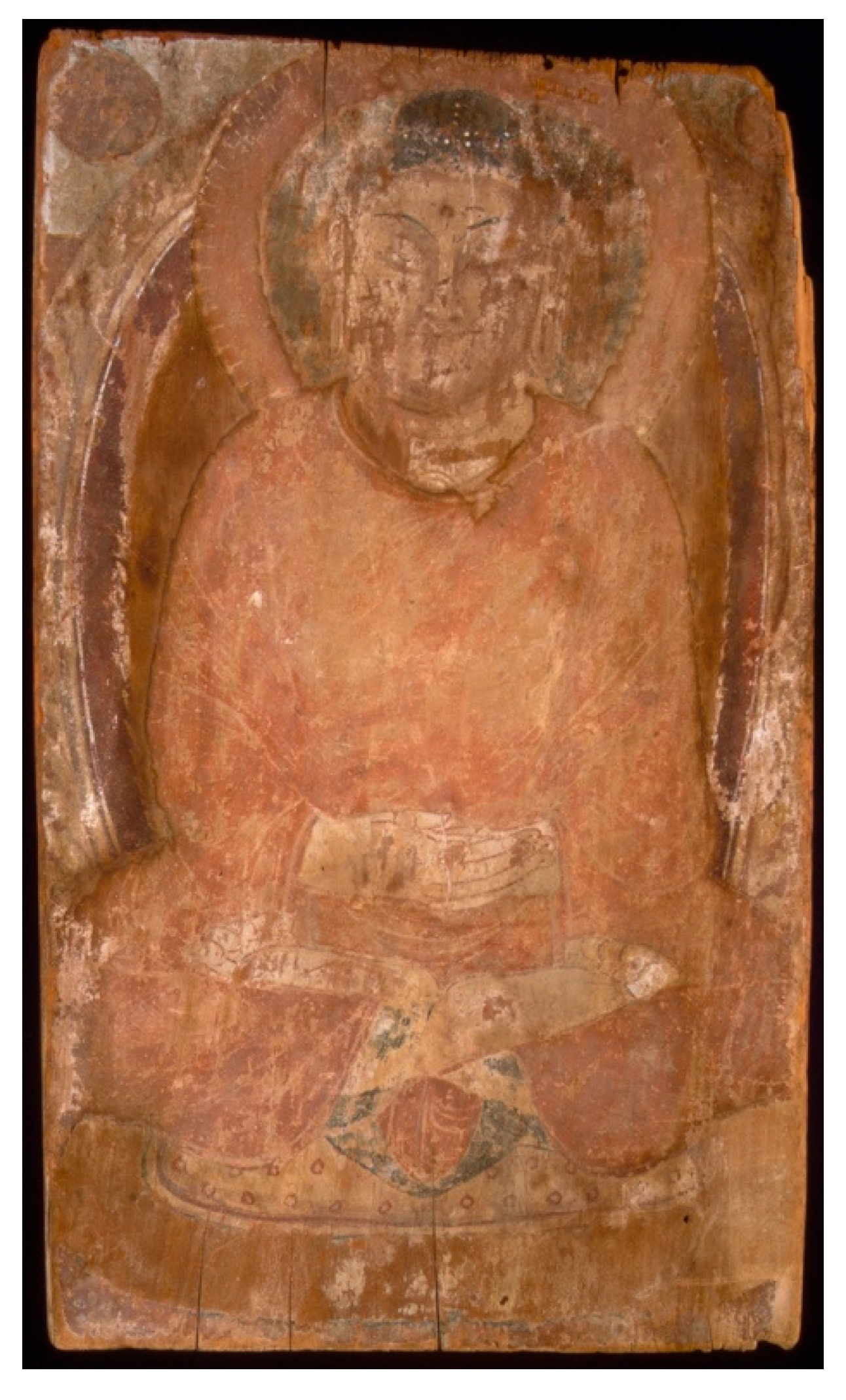
The prominence of Vairocana images highlights the doctrinal and ritual foundations of the Khotanese repertoire. However, this visual landscape was not limited to cosmological formulations of Buddhahood. Other images of the Buddha from Khotan have been tentatively linked to the concept of ‘Auspicious Images’ (or ‘Famous Images’) (
Figure 3), pointing to a complementary dimension of Buddhist visuality, centred on devotion, replication, and the perceived efficacy of images themselves.
These are painted representations of sculptures, including Buddhas, Bodhisattvas and narrative scenes, which were believed to have ‘flown’ from India to Central and East Asia. It was also believed that these reproductions possessed miraculous powers, and the legends surrounding their origin often formed part of devotional lore. References to such images in Khotan can be found in the travel accounts of the Chinese pilgrims Songyun (early 6th century) (
Beal 1884, I, p. lxxxvi) and Xuanzang (mid-7th century) (
Beal 1884, II, pp. 313, 314, 322–24)
6.
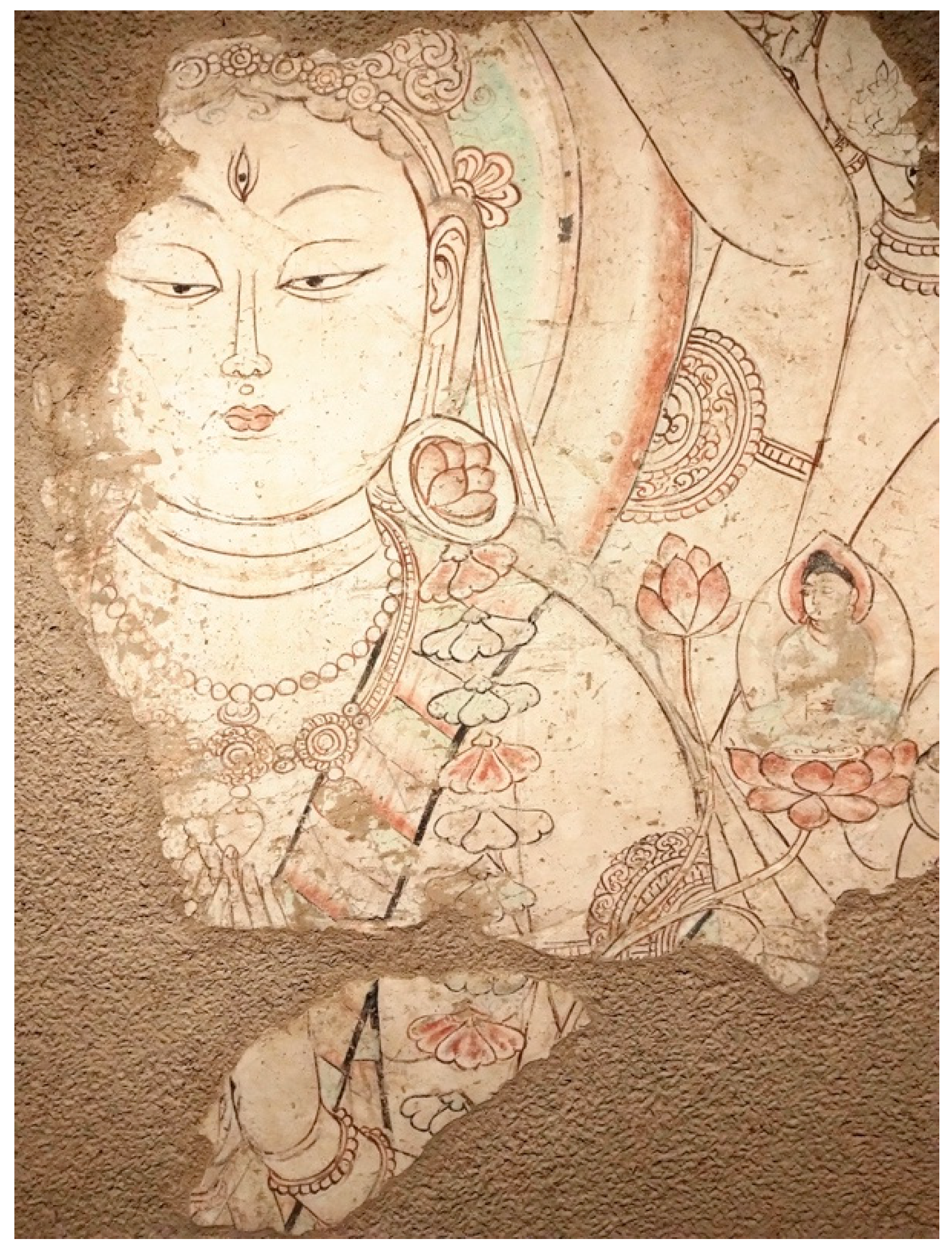
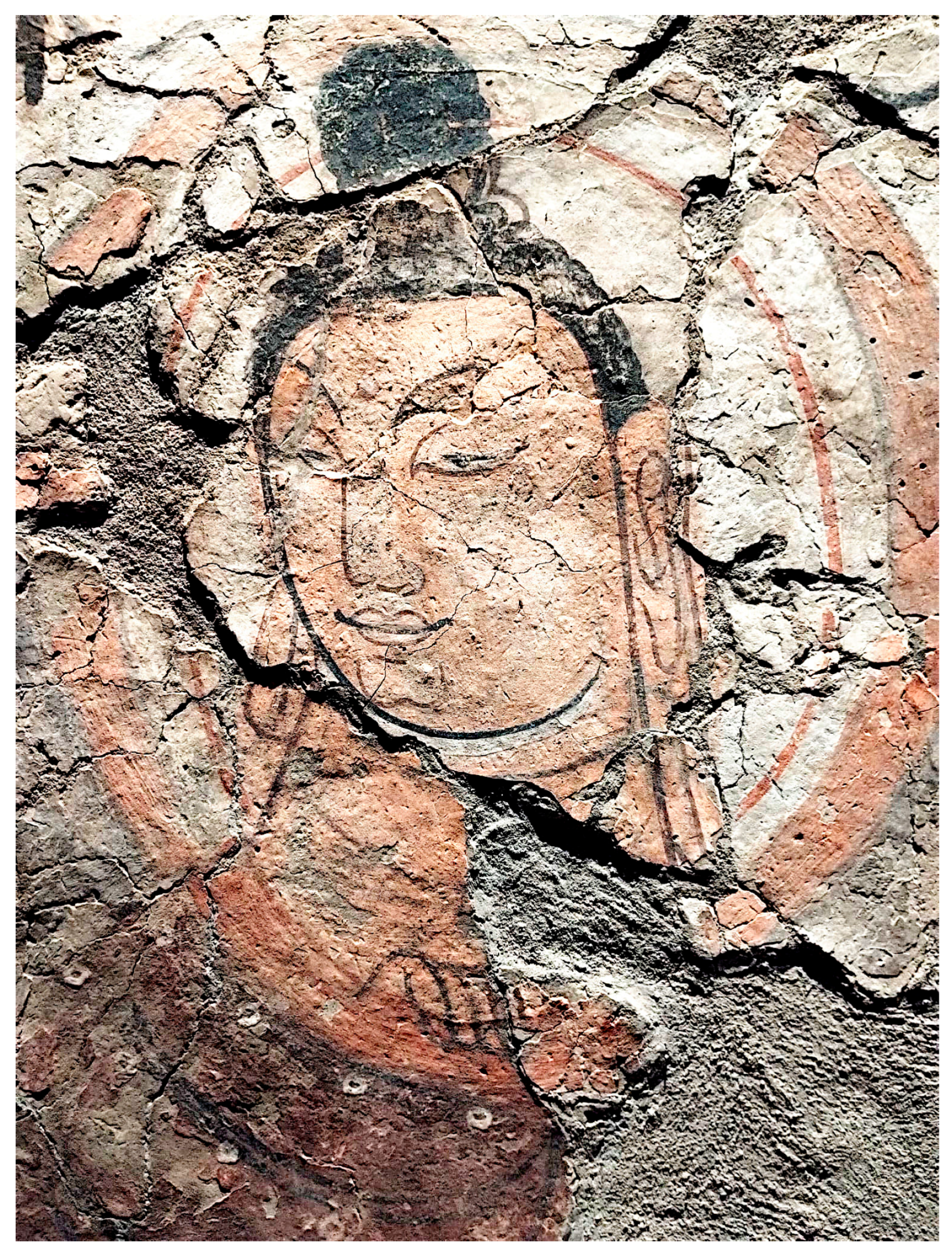
The most prominent bodhisattva seems to be Avalokiteśvara, who is usually recognisable by the small image of Amitābha Buddha depicted in his headdress, but who is also attested in other more complex manifestations (
Figure 4)
7. Other bodhisattvas, such as Maitreya, are depicted less frequently, and are more difficult to identify. The highly worshipped
lokapālas Vaiśravaṇa and Sañjaya, closely associated with the protection of the Khotan kingdom, have been identified in murals and wooden painted panels.
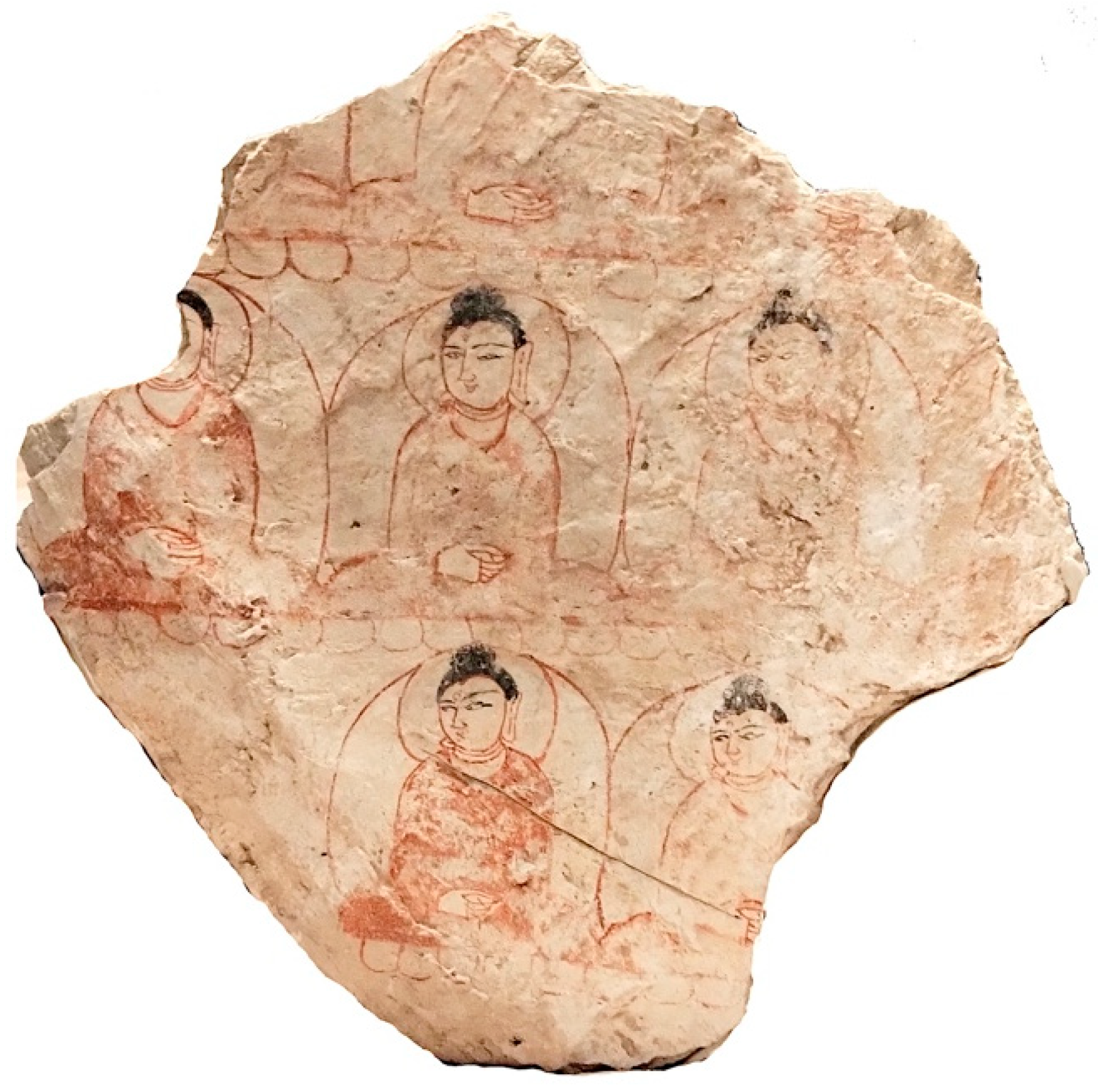
As well as individual cult images of Buddhas, bodhisattvas, and protective deities, Khotanese painting extensively employed repetitive visual schemes that structured devotional space and ritual movement. One of the most distinctive and recurring decorative schemes employed in the shrines, particularly in the circumambulatory corridors, is the so-called ‘Thousand Buddhas’ motif, which often covers the entire walls (
Figure 5). The subject is connected with the belief in the existence of multiple Buddhas. This belief is attested in Khotan by textual sources in both Sanskrit and Khotanese, such as the
Bhadrakalpikasūtra (
Emmerick 1990;
Chen 2024, pp. 79–80). Rows of small images of seated Buddhas, which can be differentiated by the direction of their gaze, their symbolic hand gestures (
mudrās), or the colours of their robes, cover part of the wall or extend across its entire surface, particularly in the corridors surrounding the cell.
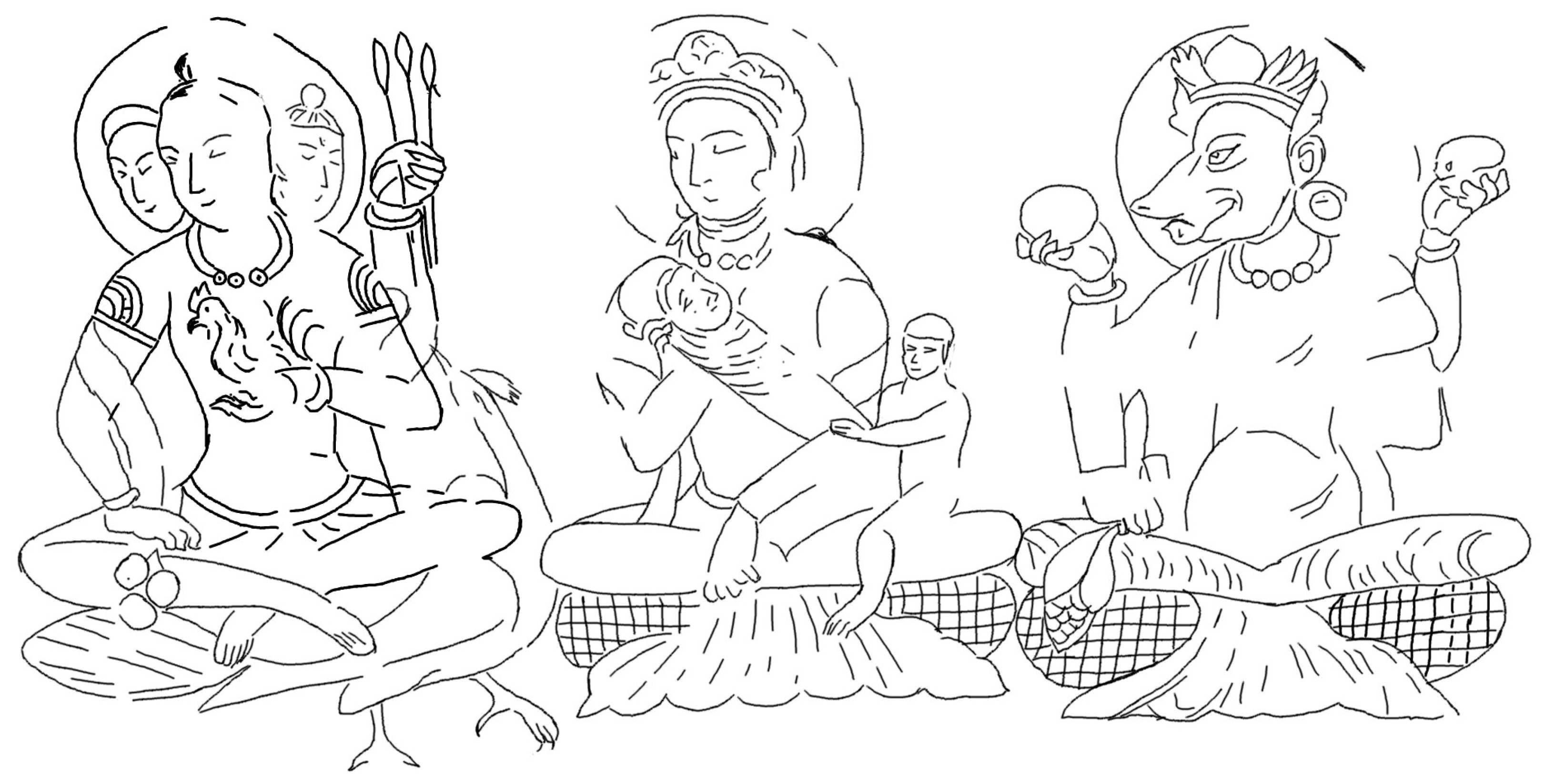
This new evidence comprises groups of male and female deities, including Brahmanical figures such as Skanda/Kārttikeya, Maheśvara, and potentially Mahākāla (
Figure 6). Female figures, such as the goddess Hārītī, as well as animal-headed female beings, also appear. This is most likely connected to the ancient South Asian worship of
grahas: malevolent spirits that were believed to endanger pregnant women and infants. This belief was rooted in traditional medicine. The
grahas formed part of the cultural heritage shared by Brahmanism and Buddhism, spreading well beyond the Indian subcontinent alongside these religions
9. The Khotanese pictorial evidence is particularly valuable because iconographic depictions of these sinister entities in groups, as shown in the Dandan Oiliq murals and consistent with their descriptions in Sanskrit sources, are extremely rare in South Asian art and date from the Kushan period.
While the evidence from Dandan Oiliq sheds light on the integration of Brahmanical deities within the Buddhist pantheon, recent discoveries at Toplukdong reveal a different yet closely related dimension of Khotanese religious imagery, namely, its role in articulating the relationship between monastic communities and local elites. Apart from the small temple named Toplukdong 1, already mentioned above, the site comprises the remains of a residential structure (Toplukdong 3) with an adjacent Buddhist shrine (Toplukdong 2). The three structures are believed to have belonged to a Buddhist monastery (
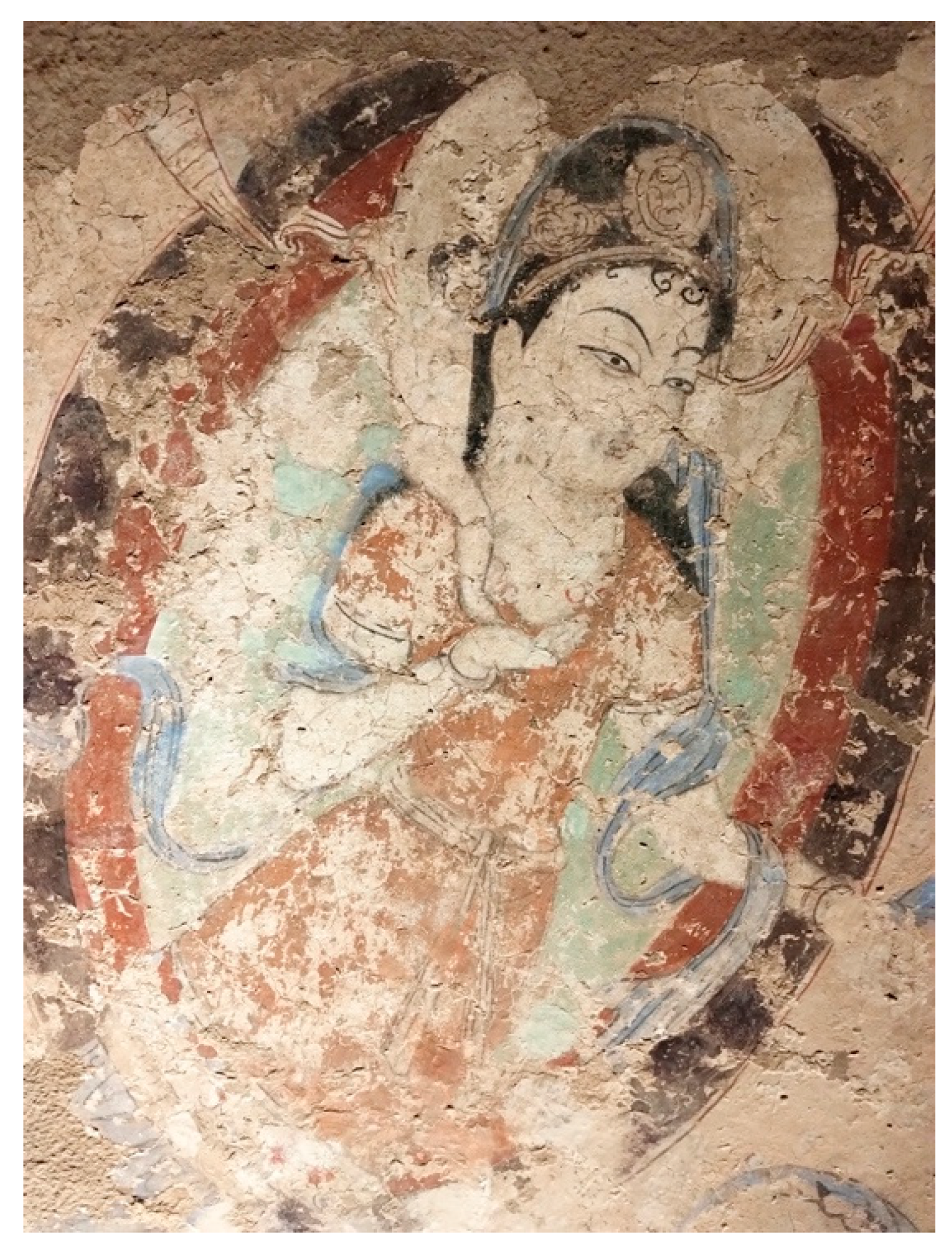
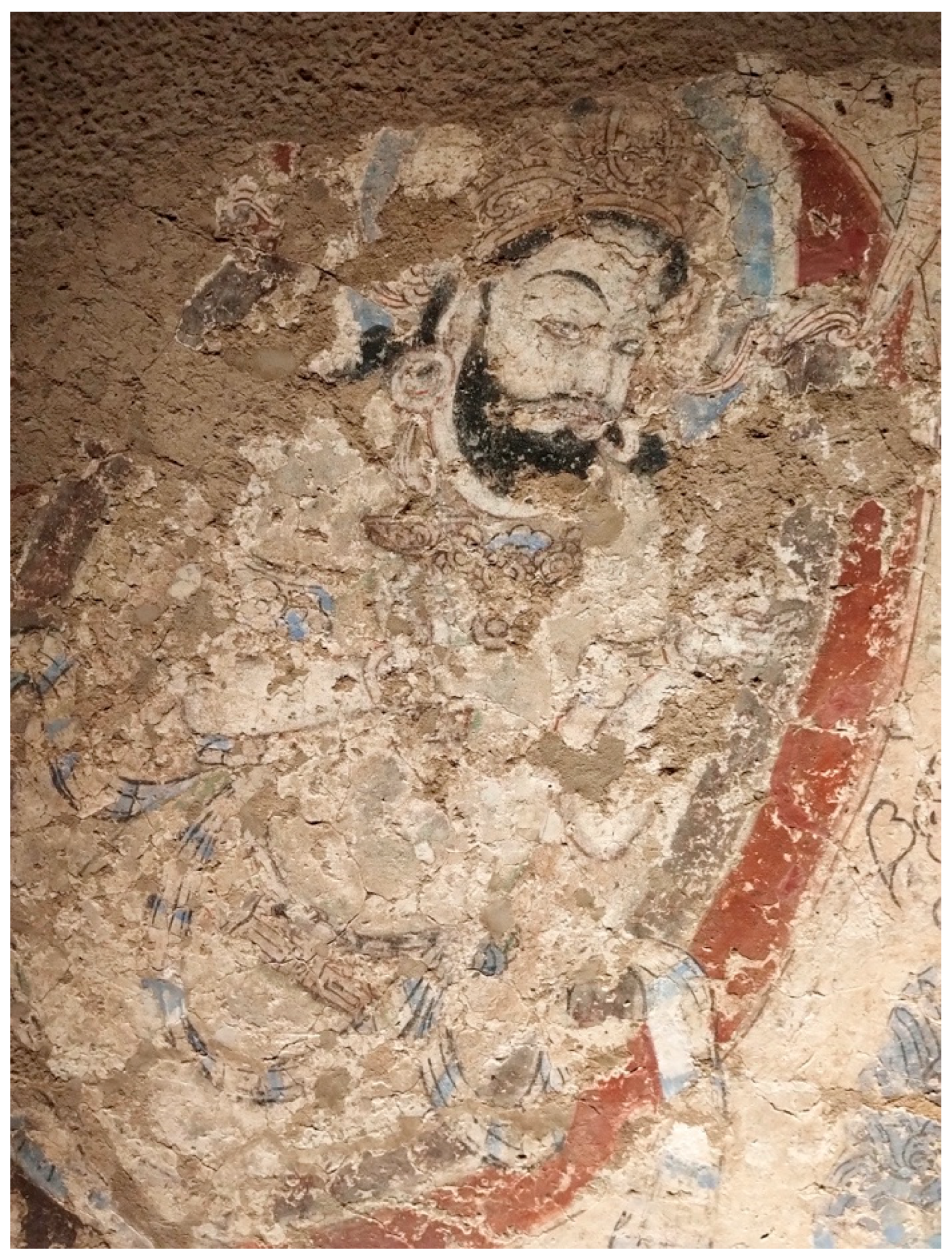
Wu 2012). Several heaps of painting fragments, in Toplukdong 3, which once adorned the west wall of a courtyard, have revealed numerous images of male and female deities bearing halos and mandorlas. Two distinct groups can be identified among these images, differentiated by their scale.
According to Erika Forte’s detailed study of the fragments (
Forte 2023), ten smaller-scale figures still exist. All of these figures are depicted as if floating and dressed in the local aristocratic attire. Eight of these possibly formed a coherent group of male and female deities depicted in three-quarter view facing to the right and leaning slightly forward, and displaying fierce expressions. They hold various attributes (
Figure 7 and
Figure 8).
What was represented below these deities has largely been lost, aside from some fragments depicting lay figures. These figures are rendered on a larger scale than the deities above and include an individual with an elaborate head ornament, likely denoting high status. No fragments attributable to images of Buddhas or bodhisattvas were found.
Forte proposes that the eight male and female figures may represent the Eight Protectors of the Kingdom of Khotan, alongside members of the royal establishment within a larger composition. This suggests that Toplukdong 3 might have served as a ceremonial space for both the royal court and the monastic community. The purpose of these ceremonies was to proclaim dynastic support for Buddhism and legitimise kingship simultaneously.
Discoveries such as those from Toplukdong expand the thematic range of Khotanese painting and underscore the difficulties of situating this material within a secure chronological framework—an issue that remains central to the study of the oasis.
4. The Chronology and Artistic Development of Khotanese Painting
Any discussion of the chronology of Khotanese painting must necessarily rely on a combination of archaeological, stylistic, and iconographic criteria, none of which is independently decisive. Relative dating is primarily informed by compositional schemes, ornamental motifs, and technical features, as well as by comparative evidence from neighbouring regions of the Tarim Basin and beyond. While such criteria allow for the rejection of excessively early chronologies proposed for certain sites, it should be acknowledged that uncertainties persist, particularly for material predating the 7th century CE. The following discussion therefore aims not to establish a definitive timeline, but to clarify the limits and implications of the available evidence.
The current scholarly consensus is that most Khotanese paintings, including both murals and painted wooden panels, were produced between the late 7th and 8th centuries CE
10. This dating largely follows the framework established by Aurel Stein, who used a combination of archaeological and textual evidence—specifically the dated Chinese documents found at Dandan Oiliq—to propose the late 8th century as a
terminus ante quem.
Despite some variation in style and iconography, the artistic material discovered at various sites in the Khotan oasis—including Dandan Oiliq, Balawaste (Balawasite 巴拉瓦斯特), Khadalik (Hadalike 哈达里克), Tarishlak (Talishilake 塔里什拉克), Farhad Beg Yailaki (Fahate boke yayilake 法哈特伯克亞依拉克) and Domoko—exhibits a high degree of coherence. This consistency lends weight to the idea that these works belong to the same broad chronological period. Furthermore, the close stylistic similarities between the murals and painted panels suggest that they were produced during the same period
11.
While we now have a general chronological framework, a more nuanced periodisation of Khotanese painting remains elusive. The formative stages of this tradition are particularly obscure. Paintings found at the Karadong (Kaladun 喀拉墩) site, located northwest of the main Khotan oasis along the Keriya River (Keliyahe 克里雅河), offer intriguing evidence (
Debaine-Francfort et al. 1994;
Debaine-Francfort and Idriss 2000, pp. 82–105). While these murals exhibit a peculiar inclination towards stylisation (
Figure 9), they fundamentally share the features of late Khotanese imagery, particularly in terms of their compositional layout. This includes large standing Buddhas on lotus pedestals and the Thousand Buddhas motif in the upper section of the wall.
Based on the presence of decorative and iconographic motifs of ultimate Classical origin, such as the meander and the so-called ‘Lateran Sophocles’ hand gesture, visible in some of the Buddha images (
Figure 9) (
Debaine-Francfort and Idriss 2000, p. 93;
Lo Muzio 2022a, p. 108)—the murals and the temples containing them have been dated to the first half of the 3rd century CE
12.
However, this chronology seems far too early, given the fundamental coherence of the iconographic scheme evident in both temples. Furthermore, it is unlikely that both patterns of Greco-Roman origin would point to a 3rd century date, given that the meander is found in South Asian art—ranging from Ajanta to Kashmir—from the late 5th to the 7th century. Both the meander and the aforementioned gesture are also present in murals in the Tarim Basin, in murals dating from the 6th to 8th centuries CE. Therefore, it seems reasonable to date the Karadong murals to no earlier than the 6th century CE
13.
5. Key Evidence for Artistic Transmission: The Garland-Bearers as a Case Study
Issues of chronology are particularly acute when dealing with isolated or atypical motifs, whose appearance may reflect long-term transmission processes rather than local innovation.
The question of artistic transmission represents one of the most complex aspects of the study of Khotanese painting. While contacts with Gandharan, Central Asian, and Chinese visual traditions are generally acknowledged, the selective presence—or notable absence—of specific motifs raises important questions concerning chronology and patterns of mediation.
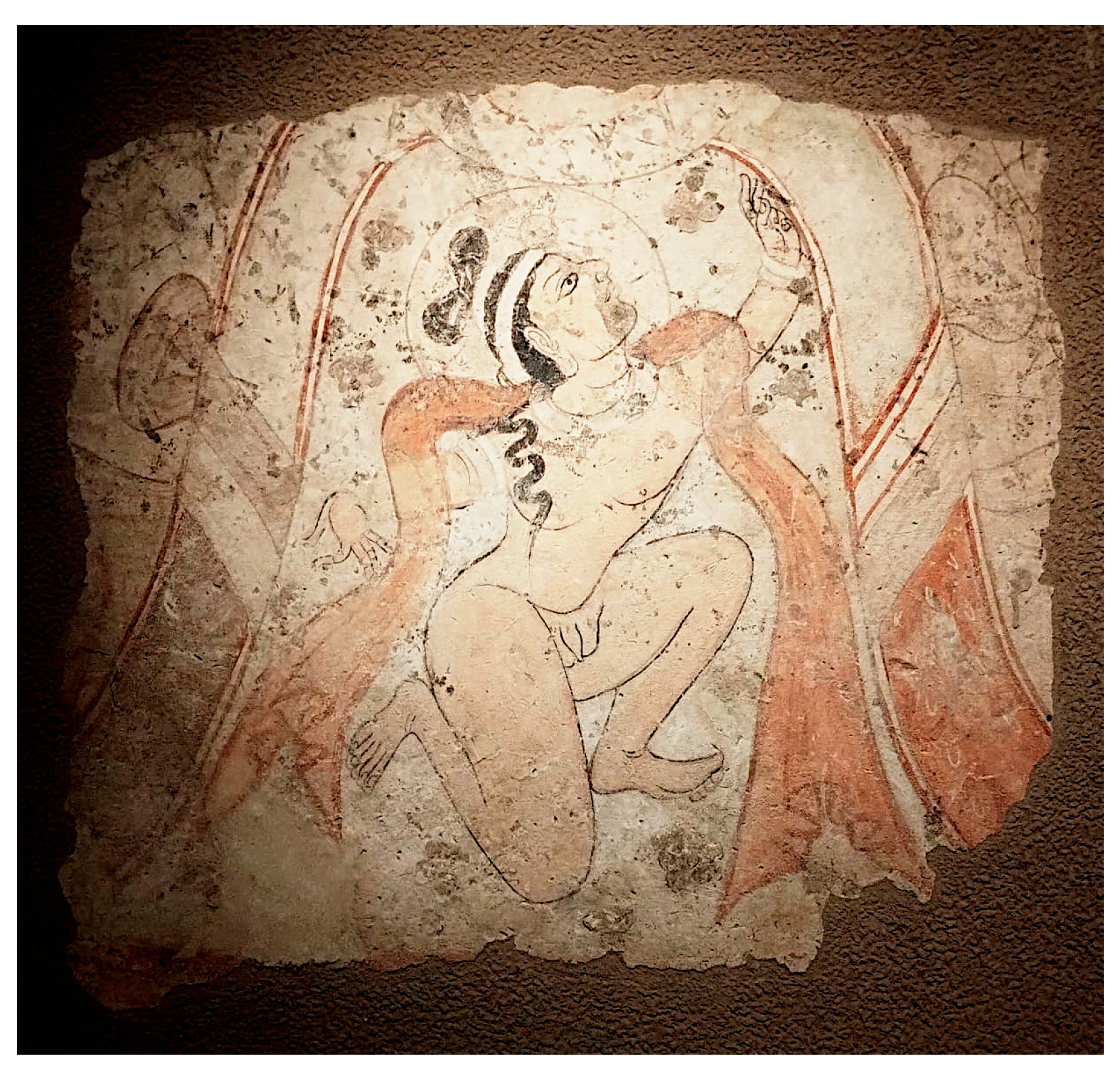
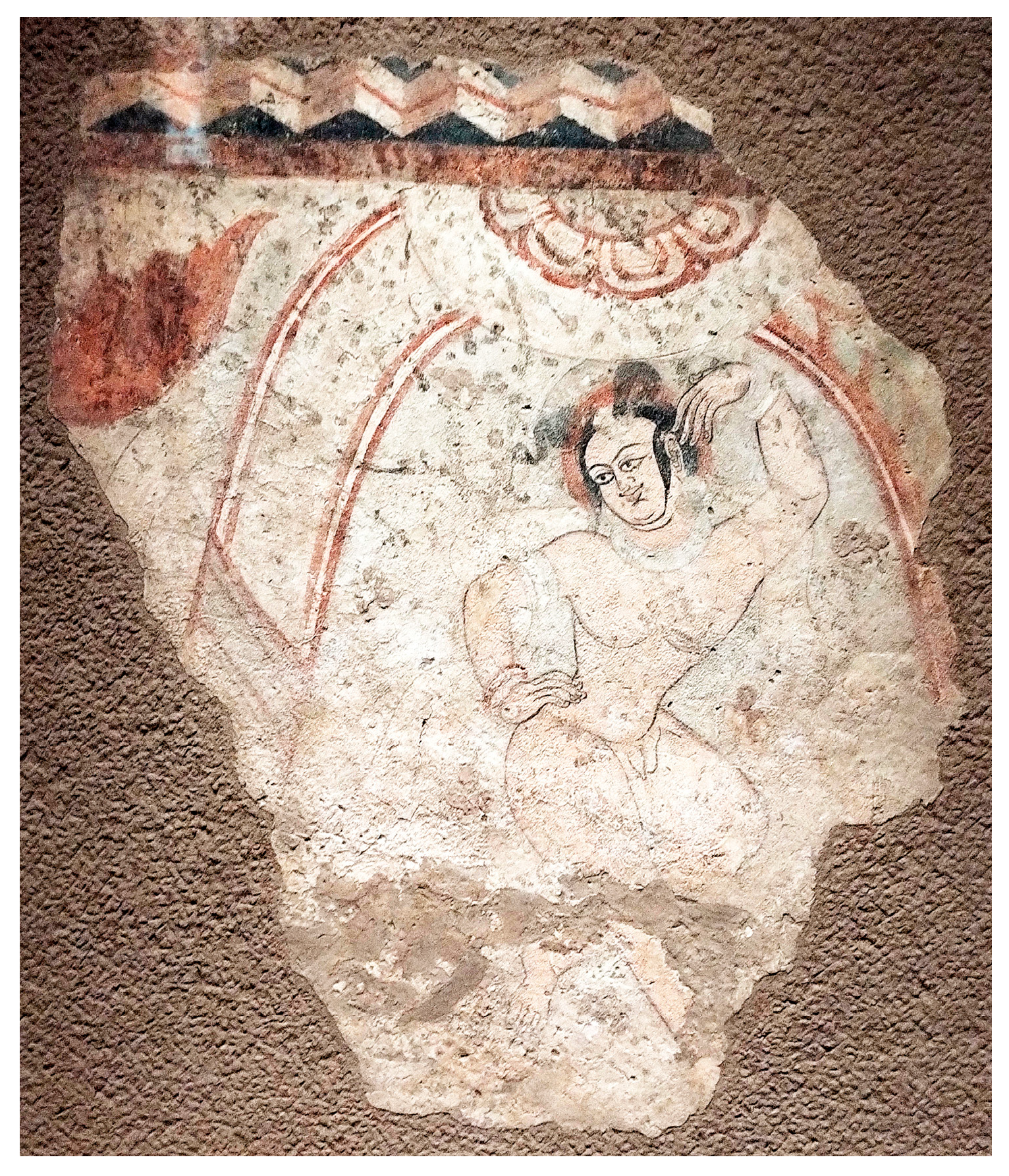
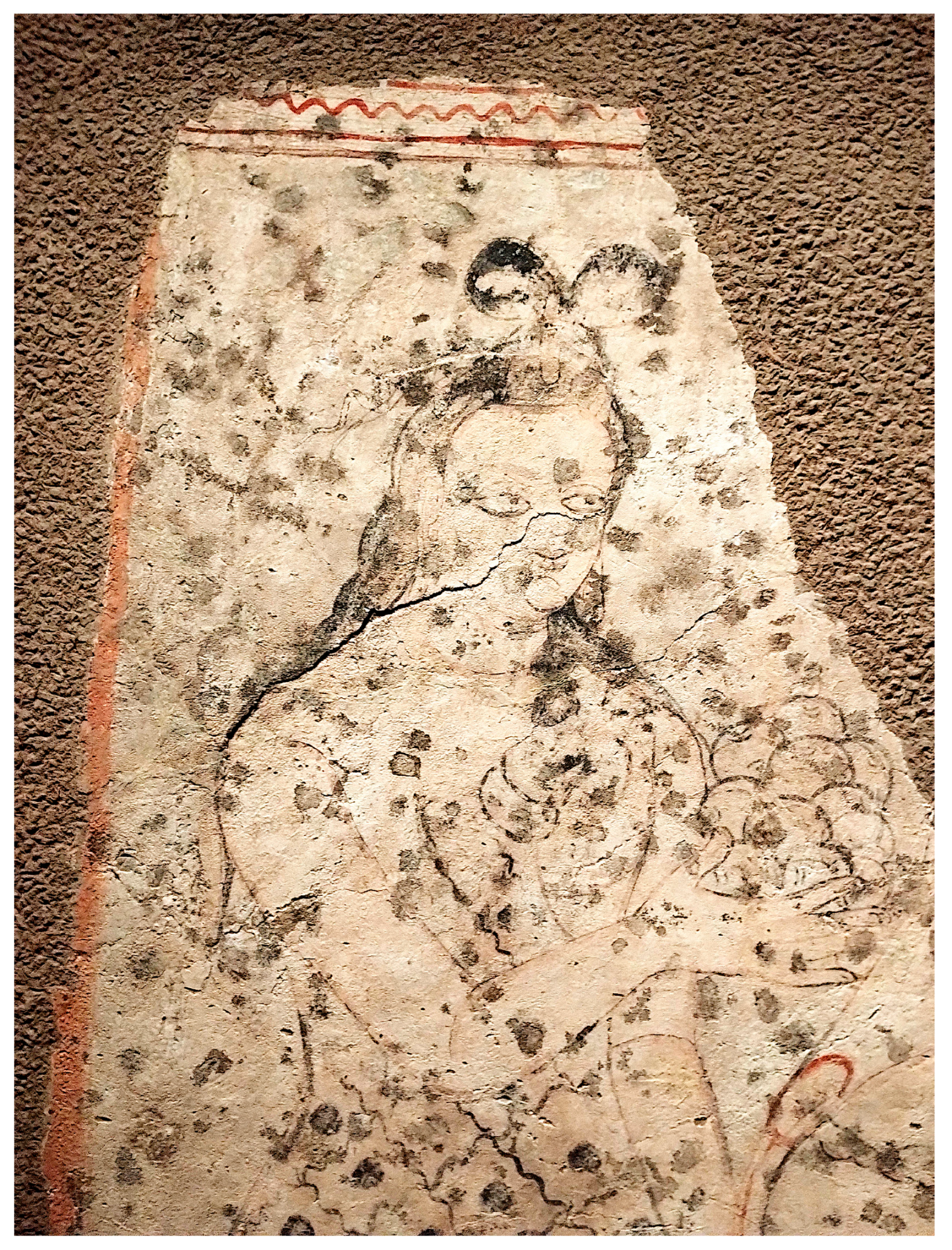
A group of mural fragments unearthed in 2011 during illegal excavations at a previously unknown site in the Domoko area provided intriguing clues about the issue of early Khotanese painting. The site was later identified as the Buddhist temple of Yalangan 亚兰干 (referred to as ‘Huyangdun 胡杨墩’, in the earliest publications). The fragments depict eight images of Erotes supporting a garland (
Figure 10 and
Figure 11), as well as part of a narrative or worship scene including a male figure—apparently a young Brahmanical ascetic—and a partial female figure (
Figure 12). The finds are now stored in the Hetian Cultural Museum
14.
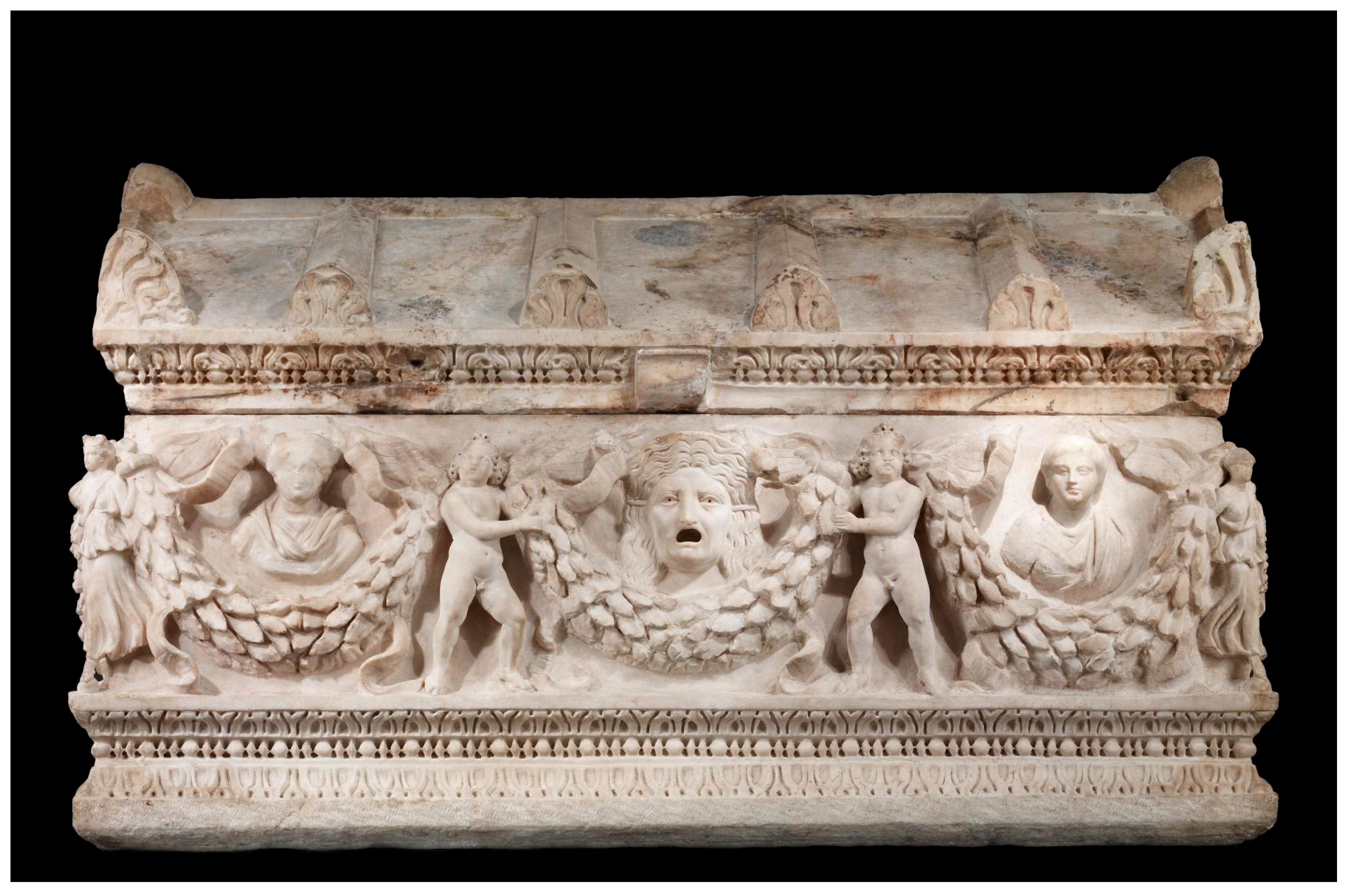
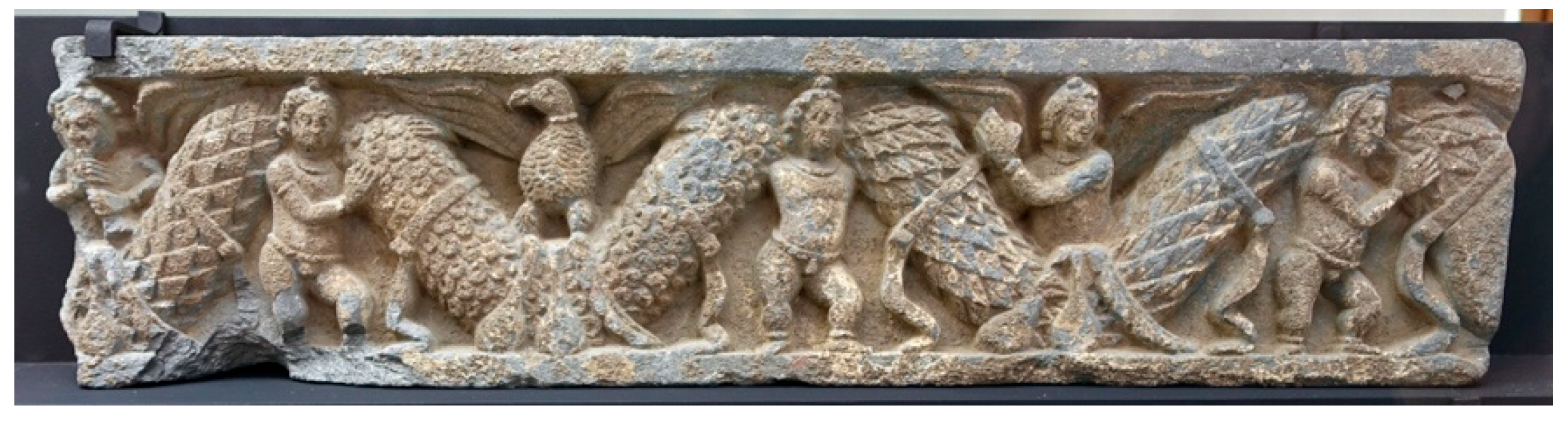
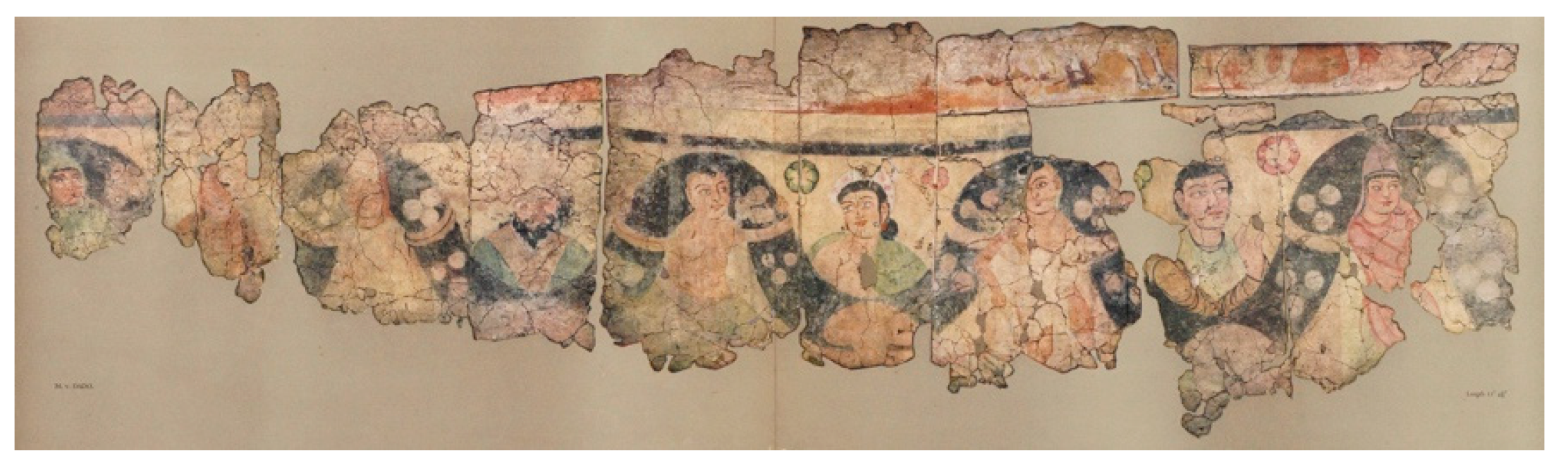
The garland bearers in particular deserve a few remarks. So far unattested in Khotanese art, the motif is of Greco-Roman origin and was widely used in funerary contexts (
Figure 13). It had already entered the Gandharan repertoire (
Figure 14) and spread into Central Asian Buddhist art from there
15. A well-known example in the Tarim Basin was found at Miran (Milan 米兰) (
Figure 15) (
Stein 1921, I, pp. 523–29;
Lo Muzio 2014;
Zhu 2018, pp. 20–23;
Chen 2024, pp. 55–64). Its occurrence in the Khotan oasis is significant because motifs of explicit Classical derivation, however mediated by Gandharan art, are otherwise extremely rare in Khotanese painting. The Yalangan fragments thus provide valuable evidence of the persistence of, and the delayed reception of, Gandharan-mediated Classical themes in the southern Tarim Basin. Furthermore, they raise specific questions about the chronology of early Khotanese painting.
The Yalangan murals diverge strikingly from the established Khotanese tradition in terms of both style and iconography. The Erotes are corpulent, with pronounced facial features. They wear diadems and transparent scarves and hold a segmented floral garland. Some features diverge from the traditional iconography of garland-bearers; the most notable examples are the addition of haloes and, in one case, a lotus seat. These attributes confer a divine quality that is absent from both the Mediterranean and Gandharan prototypes.
The Yalangan finds were initially dated to the 2nd–3rd centuries CE
16, in line with their supposed Gandharan derivation; however, several features suggest a later date. As Zhu Jixiang rightly observes (
Zhu 2018, p. 27), the ornamental band bearing an accordion-like motif along the upper border of the composition (
Figure 11) is also found in wall paintings at sites in Kucha and elsewhere in the Tarim Basin, as well as in Chinese sculpture
17. According to Zhu, these parallels suggest that the Yalangan Erotes date to the 5th-6th centuries CE.
Further research into the iconographic and stylistic features of the mural fragments, as well as on their relationship with the other paintings preserved in the temple, would certainly improve our understanding of the chronological and artistic context of these remarkable finds. The Yalangan fragments illustrate the adaptation of a Classical motif within the pictorial programme of a Buddhist temple, shaped by specifically Khotanese conventions.
Although the garland-bearers are the most explicit case discussed here, they should be understood within a broader, more complex landscape of artistic transmission. Other vectors of influence—such as Kashmiri sculptural idioms, Central Asian ornamental schemes and Chinese iconographic and stylistic elements—are intermittently visible in the Khotanese material, though rarely with the same clarity. Often, the absence or fragmentary preservation of evidence makes it difficult to trace direct lines of transmission, which highlights the importance of contextualised case studies such as Yalangan for reconstructing these complex processes.
6. Conclusions
A deeper understanding of Khotanese Buddhist art hinges on the continuation of methodologically rigorous archaeological fieldwork, ideally involving systematic documentation and stratigraphic control. It is equally crucial to thoroughly re-examine known materials, focusing on stylistic, iconographic, and technical diversity.
A highly desirable goal for future research is to situate Khotanese painting within broader artistic networks, including other centres of the Tarim Basin and regions beyond, such as the Gandharan area, the Hindu Kush, Kashmir, and Central Asia. Tracing these connections would provide a clearer picture of the cultural and religious dynamics that shaped Khotanese pictorial art.
This survey has sought to demonstrate that Khotanese painting, despite the fragmentary nature of its surviving corpus, displays a remarkable degree of internal coherence in terms of iconographic selection, ritual function, and visual language. Recent discoveries at sites such as Dandan Oiliq, Toplukdong, and Yalangan not only refine the archaeological and chronological framework, but also shed light on the distinctive ways in which external models were absorbed and transformed within a local Mahāyāna context. By reassessing both well-known and newly excavated material, the article contributes to a more nuanced understanding of Khotanese pictorial traditions as an integral yet distinctive component of the artistic networks of the Tarim Basin.
Given the dispersal of the material record throughout diverse collections worldwide, it goes without saying that an international collaborative effort would be the best strategy.