Article

Mapping the Spatio-Temporal Heterogeneity and Trends of Global Catholic Development After WWII
1
College of Sociology and History, Fujian Normal University, Fuzhou 350117, China
2
College of Urban and Environmental Sciences, Peking University, Beijing 100871, China
3
School of Geography and Planning, Sun Yat-sen University, Guangzhou 510006, China
*
Author to whom correspondence should be addressed.
Religions 2025, 16(8), 1056; https://doi.org/10.3390/rel16081056
Submission received: 2 July 2025 / Revised: 5 August 2025 / Accepted: 11 August 2025 / Published: 15 August 2025
(This article belongs to the Special Issue Global Catholicism)

Abstract

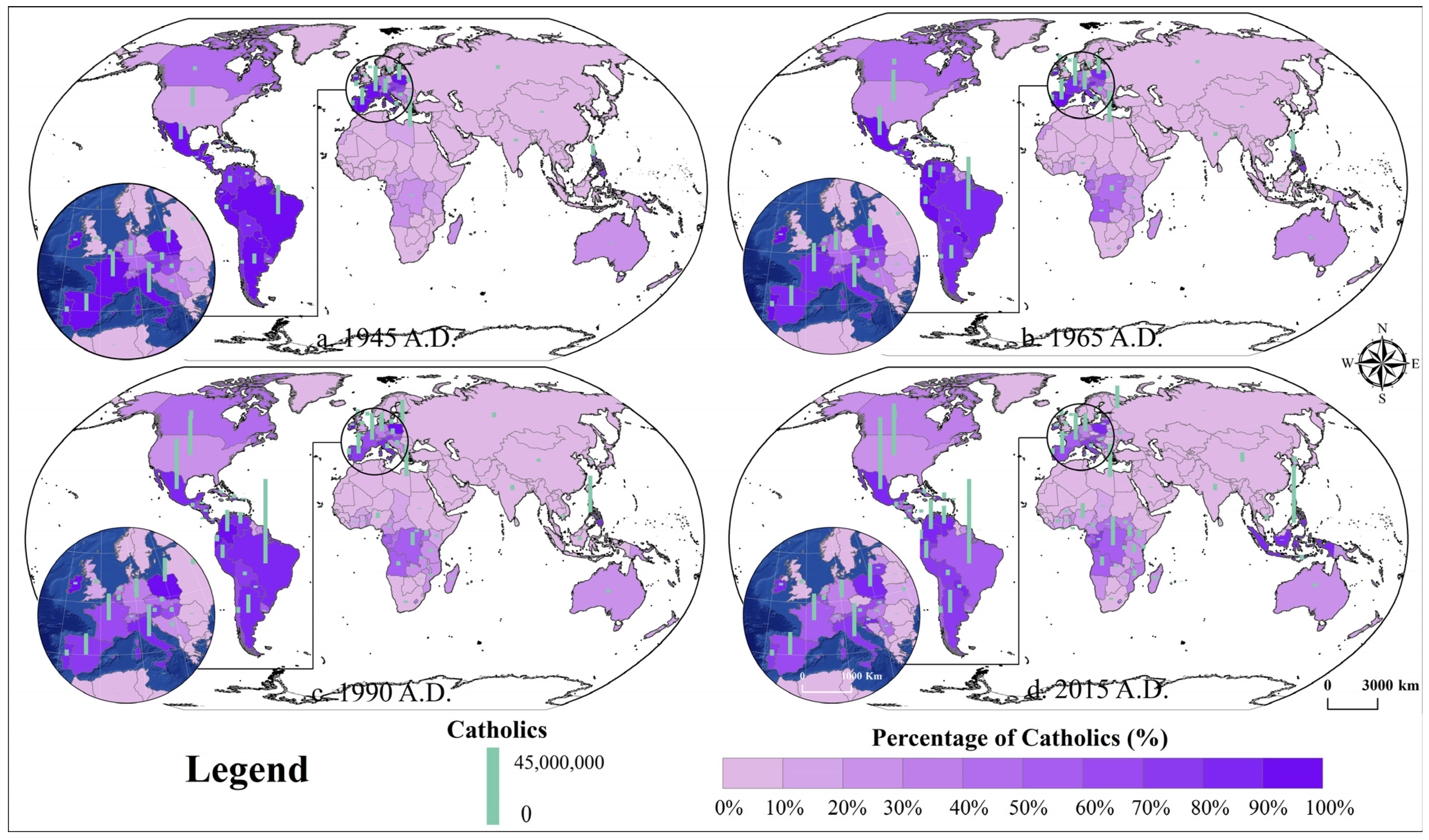
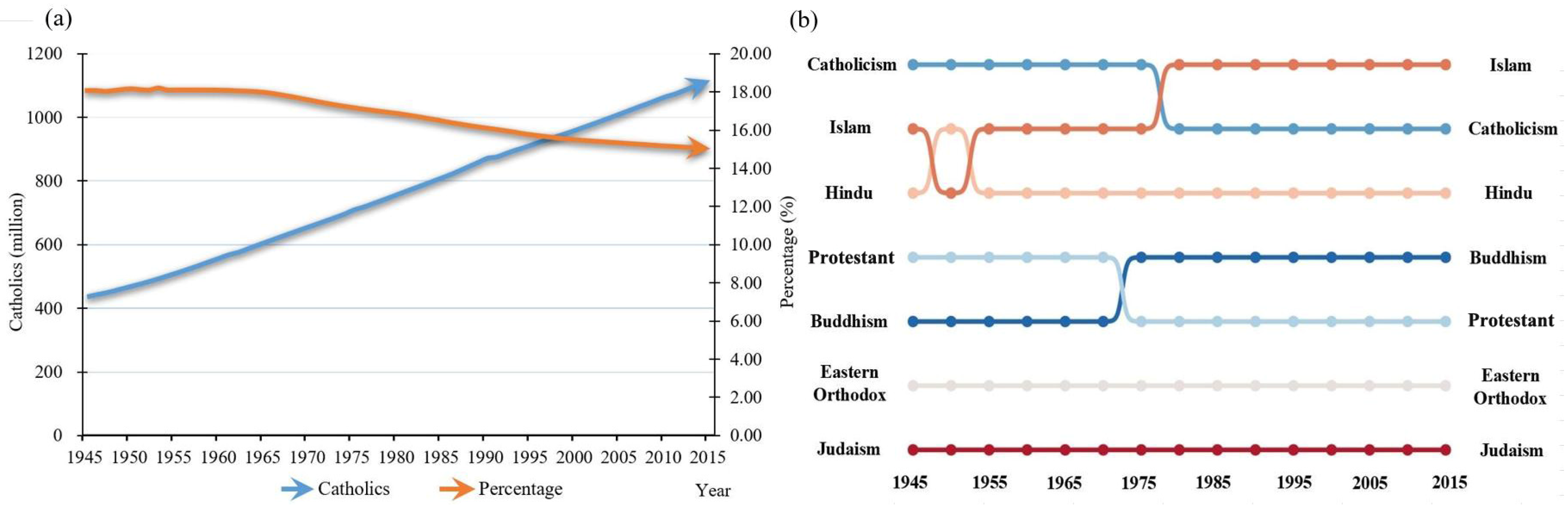
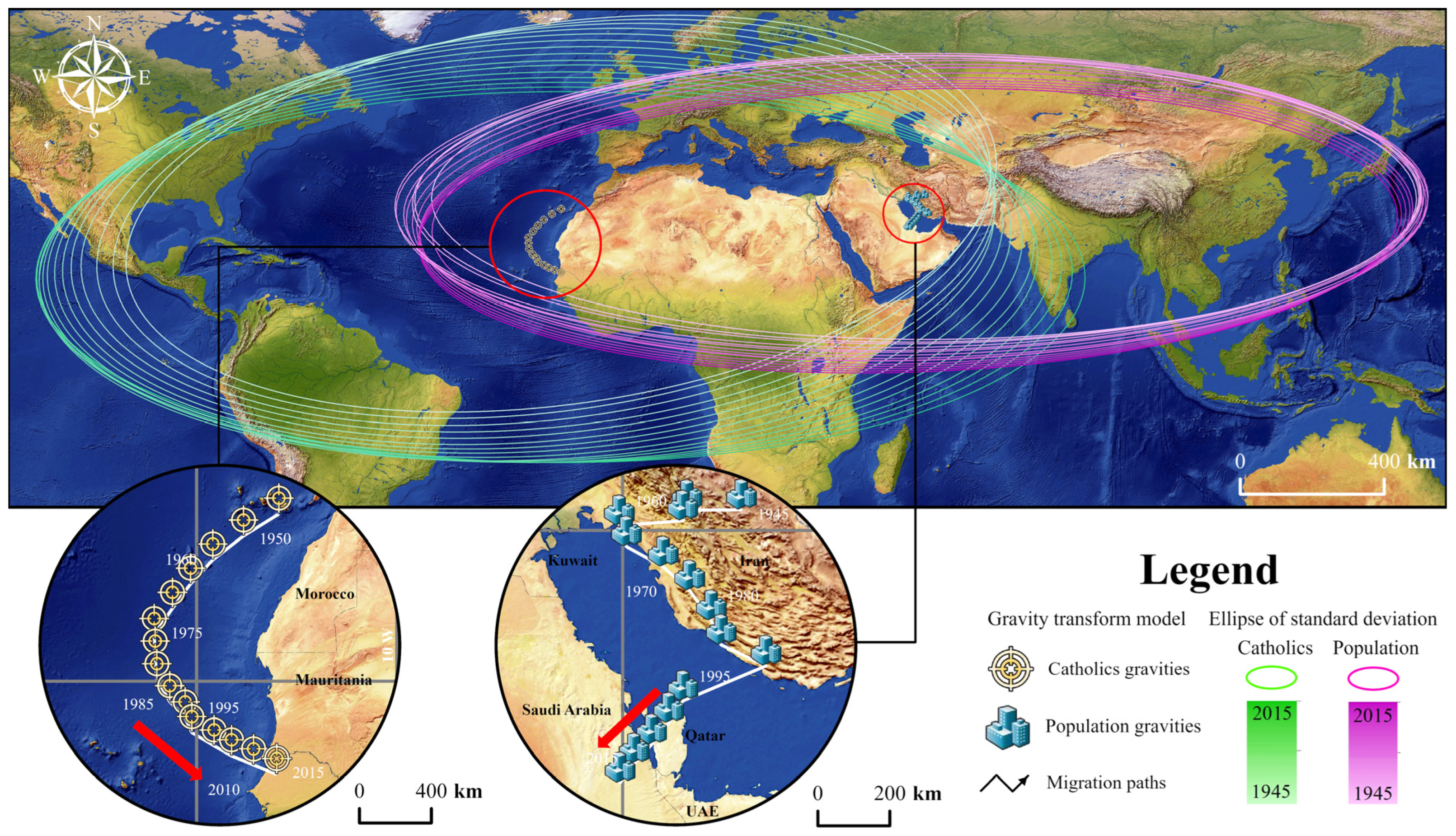
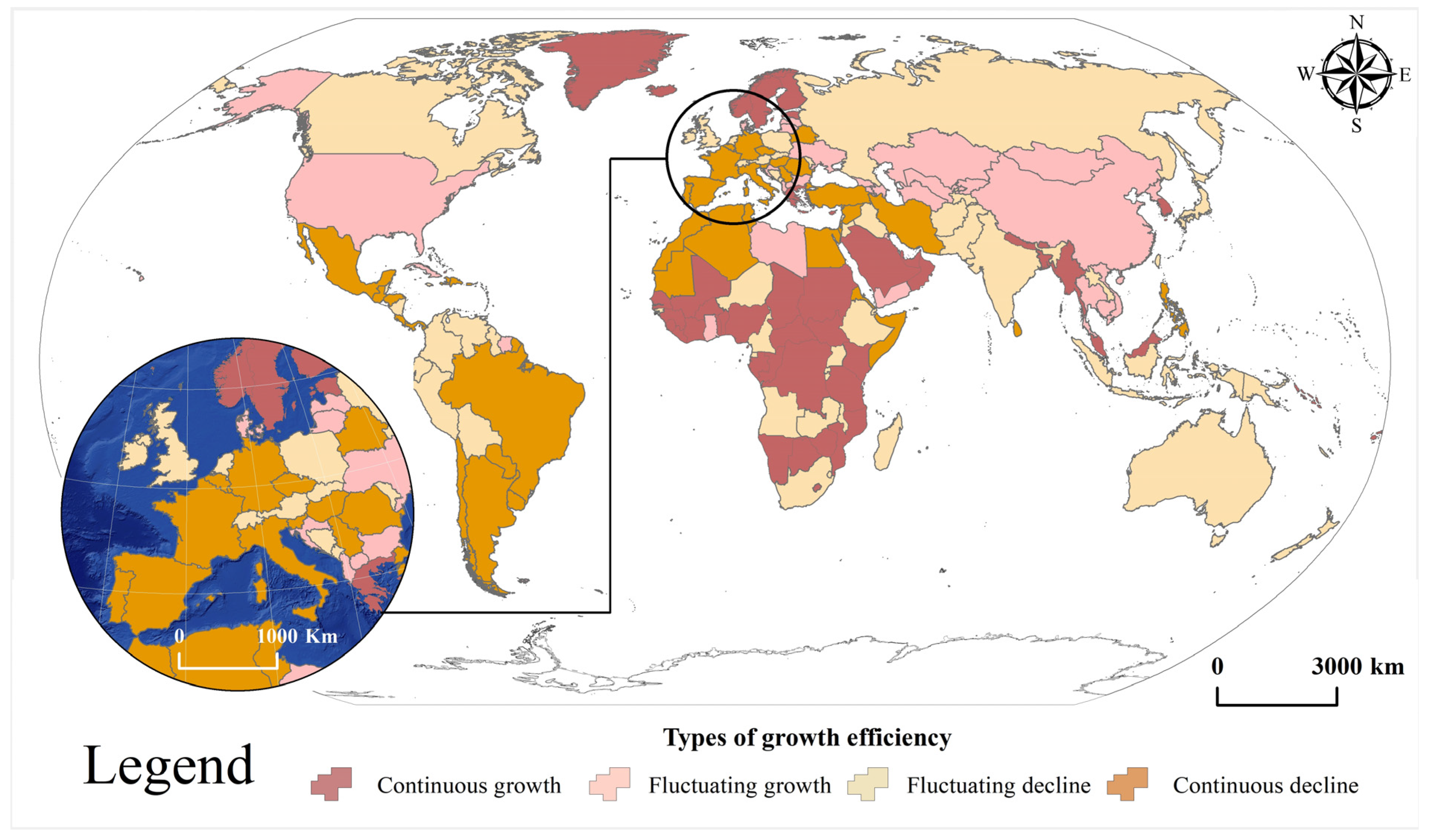
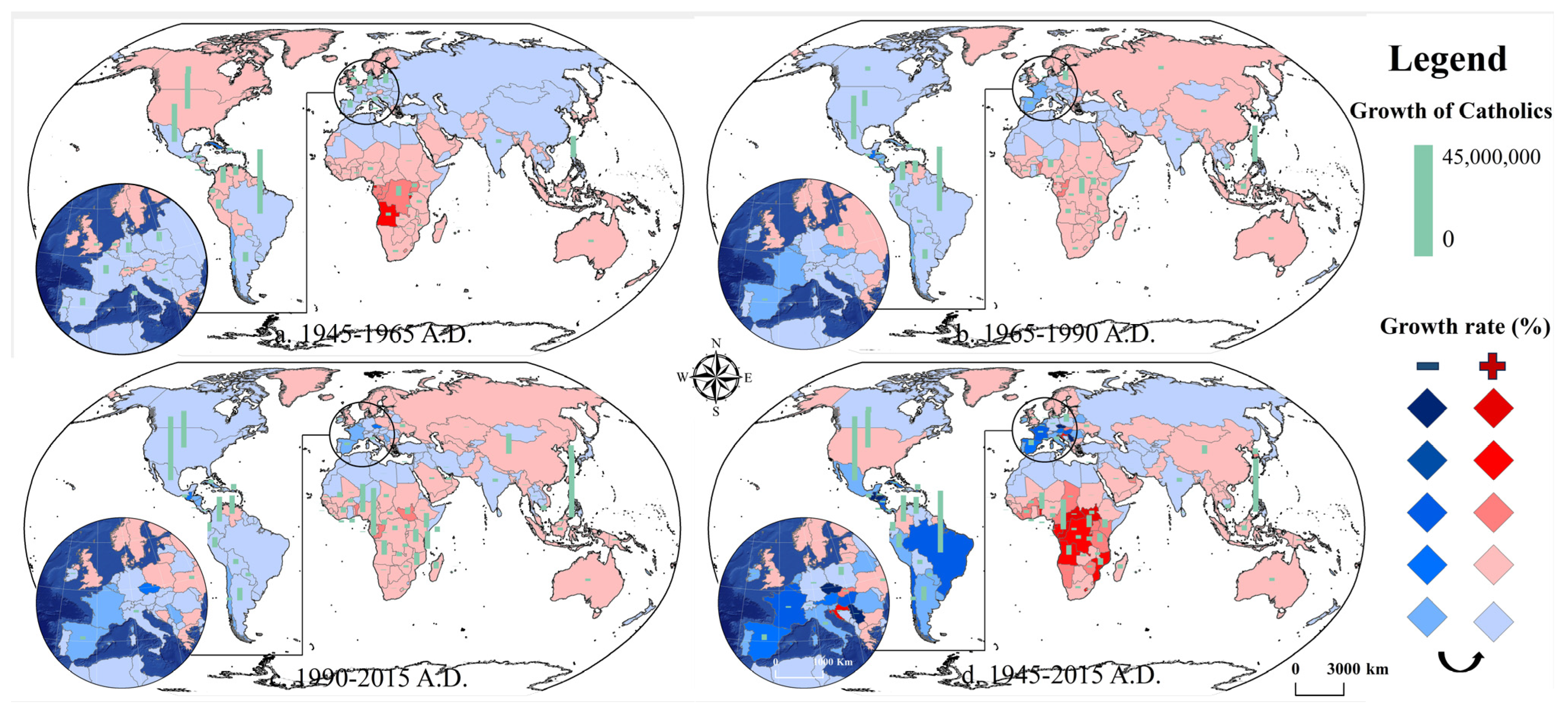
Understanding the spatio-temporal dynamics of religion is crucial for explaining cultural and geopolitical transformations. Based on multi-source religious demographic data, this study analyzes the spatio-temporal dynamics of global Catholicism after WWII using gravity migration and standard deviational ellipse models, revealing spatial heterogeneity and tracing the migration of its developmental center. Spatial typology techniques are further employed to classify patterns of Catholic growth efficiency. Our findings reveal that: (1) The absolute number of global Catholics has steadily increased, exhibiting a west-heavy, east-light pattern, with particularly notable growth in the Americas and Sub-Saharan Africa. The proportion of Catholics has declined—especially in traditional strongholds such as Europe and the Americas—while rising in emerging missionary regions, notably in Africa. (2) The macro-trend of Catholic development demonstrates a continuous southward shift in its global center of gravity, transitioning from Europe to the Global South—particularly regions like Africa, Asia, and Latin America. The standard deviational ellipse reveals pronounced oscillation, with an increasing rotation angle and a southward tilt, suggesting an accelerating pace of change in the global distribution of Catholicism. (3) Post-WWII, Catholic growth outpaced population in 75.57% of countries, though modestly. Developmental efficiency temporally followed a trajectory of “broad weak positive—drastic polarization—weak equilibrium”, while spatially reflecting pronounced regional heterogeneity shaped by the combined effects of colonial legacies, social demands, political dynamics, and modernity shocks. Overall, our study provides empirical support for understanding the links between religious spatial patterns and social transformation.
Keywords: Catholicism; spatio-temporal heterogeneity; growth trend; growth efficiency types; post-WWII Catholicism; spatio-temporal heterogeneity; growth trend; growth efficiency types; post-WWII