1. Introduction
In recent years, the trajectory tracking control of surface vessels has interested a wide range of scholars, becoming a theoretical and practical research topic. The trajectory tracking control problem of marine surface vessels is a typical vessel motion control problem. Trajectory tracking involves designing a control law and guiding the system to track the required time reference trajectory. It is of great significance in many scenarios such as reconnaissance, surveillance, and waypoint navigation.
From the perspective of actual vessel navigation safety, vessel system variables need to operate under a specific constraint. Once these constraints are violated, it may lead to system dynamic performance degradation, instability and even dangerous accidents. In recent years, the barrier Lyapunov function method for dealing with system variable constraints has been gradually developed [
1,
2,
3,
4,
5,
6,
7,
8,
9], among which typical reference [
6] solves the trajectory tracking control problem of a class of fully actuated vessel system with output or full-state constraints, respectively. Furthermore, the barrier Lyapunov function method can ensure that the system full-state will not violate the constraints, but this method can only solve the convergence region of the tracking error in theory, and cannot effectively restrict the dynamic process of the tracking error over time, which makes it difficult to satisfy the requirements of the dynamic characteristics of the control system, i.e., it ignores the transient performance and steady-state error performance of the system.
To solve the dynamic performance constraint problem, the typical solution is the prescribed performance control method. In [
10,
11,
12,
13,
14], the prescribed performance method is used to solve the control problem of a class of nonlinear systems with dynamic performance constraints. In reference [
15], the prescribed performance method was applied to the design of altitude controller and speed controller for morphing aircraft. In reference [
16], a new performance function is constructed to solve finite-time prescribed performance trajectory tracking problem of dynamic positioning ship. It should be noted that these methods are for control when time tends to infinity and cannot satisfy the control objective in finite-time. Reference [
17] solves a class of nonlinear system control problems that require dynamic performance of the system. It constructs a new type of performance function to make the tracking error converge in finite-time and satisfy the transient and steady-state requirements. However, it does not solve the system state constraint requirements under the requirement of dynamics.
The above problems can be summarized as the soft constraint problem of the system. However, the actual system actuator will lead to input saturation constraints due to physical factors, which can be attributed to the hard constraints of the system. For related work dealing with input saturation constraint [
18,
19,
20,
21,
22], they focused on dynamic positioning (DP) ship system positioning control and underactuated vessel system tracking control and uncertain nonlinear system design the anti-saturation controller to compensate for the effects of input saturation. Reference [
23] uses the asymmetric saturation approach to solve a kind of fully actuated surface vessel trajectory tracking problem.
In addition, the unknown time-varying disturbances in the system, including the external and internal uncertainties of the system, are also a problem that cannot be ignored. Many references do not take the disturbances into consideration in the entire process of control design. To solve this problem [
24] proposed a robust adaptive neural controller for the dynamic positioning system, where ship unknown model dynamics and time-varying disturbances are compensated for by adaptive radial basis function (RBF) neural networks. In the presence of ship unknown dynamic parameters, unavailable velocities, and unknown time-varying disturbances, while [
25] developed an adaptive robust output feedback controller for the DP system by incorporating adaptive RBF neural networks and the high-gain observer into the vectorial backstepping method. Reference [
26] applied dynamic sliding mode control method to improve underwater vehicles (UVs) systems robustness under the effects of the ocean current and model uncertainties, similarly [
27], combined with multiple sliding surfaces to solve a nonlinear single input-single output (SISO) system with matched and unmatched uncertainties.
From the perspective of nonlinear system design, backstepping is currently an important method. Backstepping can be combined with many methods, such as barrier Lyapunov function, prescribed performance, neural network/fuzzy system, sliding mode control, etc. Combined with the Lyapunov method, the stability of the closed-loop system can be guaranteed. The control design method in this paper is mainly based on backstepping technique, combined with prescribed performance and disturbance observer to solve the problem of finite time constraint of marine surface vessel trajectory tracking. The specific contributions of this manuscript can be summarized as follows:
- (1)
The finite-time full-state prescribed performance method is introduced into the trajectory tracking control of marine surface vessel with full-state constraints.
- (2)
The generalized inverse of the matrix is used to design the virtual control law. The auxiliary signal is constructed by the augmented system, and a piecewise smooth matrix and Nussbaum function are combined to design the control law of the system under the input saturation constraint.
- (3)
The fractional order theory is used to construct a fractional order adaptive disturbance observer to estimate the uncertainties in the system, which improves the robustness of the system.
- (4)
Using Lyapunov analysis method, all the closed-loop system signals are ensured to be bounded.
The organization structure of this manuscript are as follows:
Section 2 and
Section 3 present the mathematical symbols, preliminaries and problem formulation used in this manuscript.
Section 4 is the trajectory tracking control design for marine surface vessel.
Section 5 simulation verifies the valid of the proposed method in this manuscript.
Section 6 is a discussion.
Section 7 presents the conclusions of the full manuscript.
3. Problem Formulation
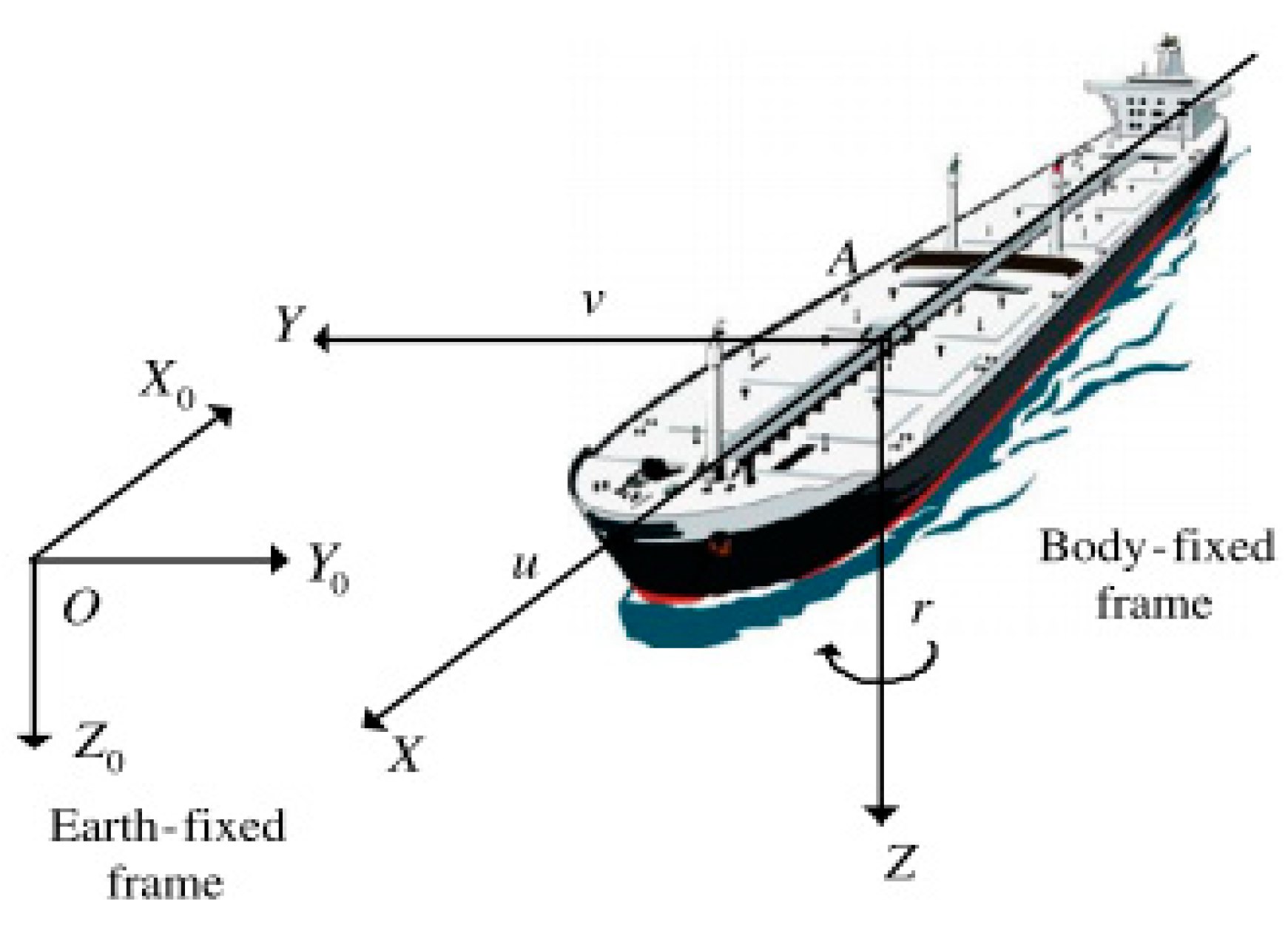
Figure 1 shows the marine surface vessel (MSV) in its coordinate system [
19]. The coordinate system with O as the origin O-X
0Y
0Z
0 is the Earth-fixed frame, also known as the North-East coordinate system, in which the direction of OX
0 axis is north, OY
0 axis is east, and the direction of OZ
0 axis is to the Earth center. The coordinate system A-XYZ with A as the origin is the body-fixed frame, which is also known as the moving coordinate system with the MSV. The origin A can also be called the position of the center of gravity of the MSV. The AX axis to the forward direction of the MSV, and the AY axis to the MSV. The right side of the forward direction is perpendicular to the AX axis, and the AZ axis is perpendicular to the AX axis and the AY axis, respectively. Then the MSV three-degree-of-freedom model is established as follows.
where
,
is the NE positions
and heading
of the vessel, respectively;
is denoted the body-fixed frame velocities
and the yaw rate
of the vessel, respectively.
is a transformation matrix defined by:
with the property
and
.
,
and
represent the non-singular positive and definite inertia matrix of symmetric, the Coriolis matrix, and the damping matrix, respectively.
is the unknown time-varying disturbances from the environment, consisting of disturbance forces in surge, sway and moment in yaw. Considering the physical limitations of the propulsion system, the equivalent control force and torque of the ship provided by the propulsion system are limited. This problem is described as:
where
and
are the upper and lower bounds of the saturation constraint of the propulsion system, respectively;
is the command control signal calculated by the vessel control law, including the surge control force
, the sway control force
, and the yaw control torque
.
For input saturation constraint (5), we augmented the system (3). For the convenience of subsequent control design derivation, we defined , and .
Let
and
, then the vessel system model (3) can be written as:
Then, can be expressed as . Where is a bounded function, satisfying , and , , and is a auxiliary signal that we will design next. In this manuscript, a smooth matrix is introduced to approximate the non-smooth matrix. However, is relatively difficult to relate to , which is difficult for the actual control input signal design and stability analysis. Therefore, in order to solve this problem, an augmented system is introduced, i.e., the third Equation in (6) is introduced.
To effectively apply backstepping technique, we define
as:
The control objective of this manuscript is the marine surface vessel system (3) with input saturation constraints and unknown time-varying disturbances, the system output variable tracks the desired target , and the system variable satisfies the constraint conditions, i.e., , satisfying , , . The tracking error of the closed-loop system satisfies the transient and steady-state performance in finite-time.
Assumption 1. The unknown time-varying disturbance is bounded and there is a constant vector , satisfying .
Remark 1. Since the marine environment is constantly changing and has finite energy, the interference acting on marine surface vessel can be regarded as an unknown time-varying but bounded signal. Therefore, assumption 1 is reasonable.
Assumption 2. The target trajectory of the vessel is bounded, and there are bounded first-order, second-order and third-order derivatives , , , that is, there is a compact set, such that , where.
4. Control Design
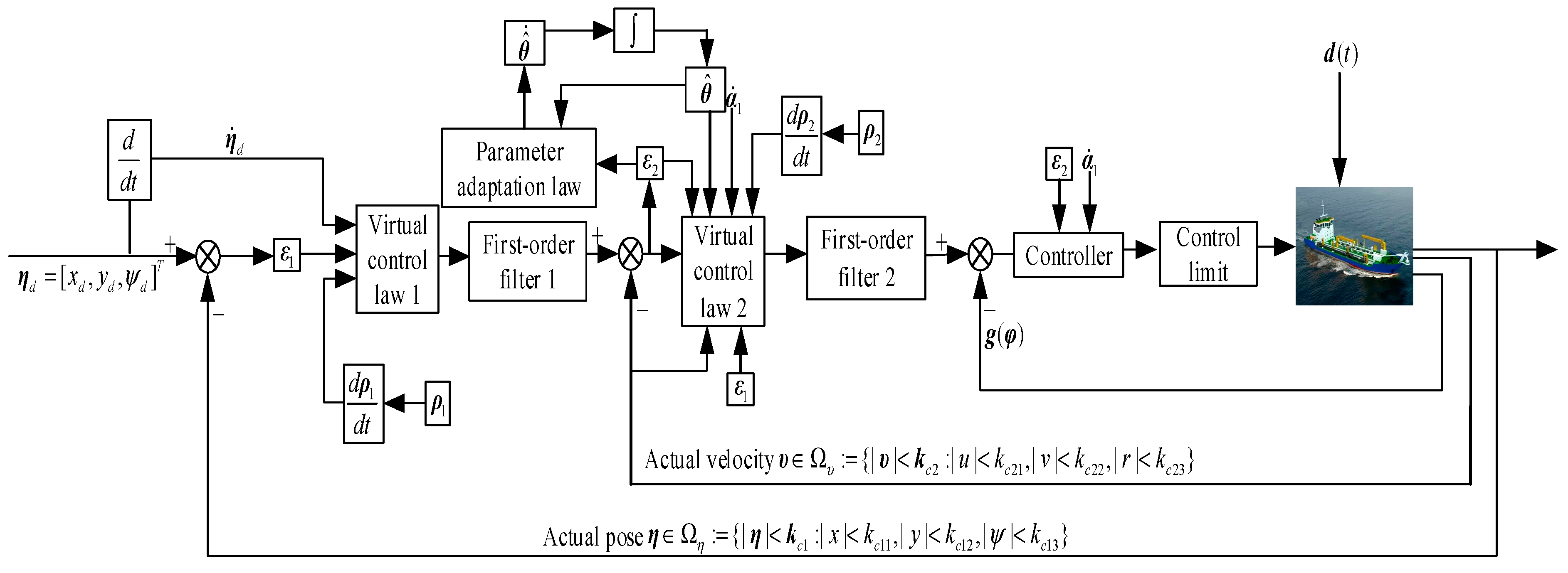
In this section, we design the trajectory tracking control law for the marine surface vessel based on the backstepping prescribed performance method to achieve the control objective. Before the control design, the finite-time performance function is introduced. The entire control design process consists of three steps. In step 1, select the appropriate Lyapunov function to design the virtual control law so that the transient and steady-state performance of the system pose tracking error can satisfy the prescribed requirements; In step 2, as in step 1, an appropriate Lyapunov function is selected to design a virtual control law to make the transient and steady-state performance of the system velocity tracking error can satisfy the prescribed requirements. Further, select an appropriate method so that the full-state of the system does not violate the constraints, and use an adaptive estimation method to estimate the bounds of the total disturbances of the system; the last step is to design auxiliary signals to further design the actual control law. Finally, the stability of the closed-loop system is analyzed. To clearly describe the entire control design process, an intuitive control design block diagram is given as shown in
Figure 2.
Before the control design begins, we give the following performance functions definition.
Definition 1. Smooth performance function, for any , simultaneously satisfies three properties: (1) ; (2) ; (3) and for any , andare arbitrarily small constants and set time, respectively.
According to definition 1, the finite-time performance function is expressed as follows.
where
and
are design parameters. It is easy to see that the
finite-time performance function satisfies all the properties mentioned in Definition 1. It is easy to see that (8) satisfies all the properties mentioned in definition 1 and that the initial condition of
is
. The smoothness proof is given below.
Proof of Smoothness 1. When , , means is continuous and . Let , , can be rewritten as . □
(a). Taking the derivative
with respect to time
, and using
and
and L ‘Hopital’s rule, we get:
This shows that is continuous and is differentiable.
(b). Take the second derivative
with respect to time
, and we get
where
,
,
,
.
Take the limit of Equation (10) at , and we get . Therefore, is continuous and is secondarily differentiable.
(c).
can be expressed as a polynomial of
and
, so
,
, and through a and b, and then we get:
together with
,
, we can get
. Similarly, since
leads to
being continuous,
is
times differentiable. In this way, by settling
to
, it is easy to know that
holds. Therefore, the finite-time performance function
is
nth differentiable and smooth, and the proof is complete.
It should be emphasized that the key difference between (8) and
or
is the property of finite time convergence, but the traditional performance functions
and
do not have this property in [
14,
29], where
,
,
and
are normal numbers.
4.1. Controller Design
The nonlinear function is introduced as follows
where
,
,
.
is defined as
. The form of
is shown in (8). Next, an adaptive dynamic surface controller is designed for the augmented system (6) with backstepping:
Step 1: Considering the first subsystem system in the augmented system (6) and defining the pose tracking error as follows.
where
is the
j-th component of
, and
is the
j-th component of
. The initial condition of
satisfies
.
To satisfy the output tracking error dynamics in the control objective, that is,
, we select the candidate Lyapunov function for the first subsystem as follows:
where
. From Equation (12), we know that that for
,
is strictly positive definite and differentiable, then
is a valid candidate Lyapunov function.
Following the trajectories of the solutions of (14), taking the derivative with respect to time
, we get:
According to Equation (15), the derivative of
is required. Therefore, when
, the derivative of Equation (12) is obtained:
The derivative of
with respect to time
according to (16) is then obtained:
According to (15)–(17), we get:
where
and
.
For the second subsystem in the augmented system (6), define the velocity tracking error as follows:
where
is the output of the first-order filter. To apply the dynamic surface technique, let the virtual control law
to be designed, which is also the input of the first-order filter, through the following first-order filter.
where
is the output state vector of the first-order filter, and
is the design constant. Meanwhile, we define the boundary layer as follows.
To design the virtual control law
, we consider the following candidate Lyapunov function:
Following the trajectories of the solutions of (22), take the derivative of
with respect to time
, and substitute
and
to obtain:
According to Definition 1,
is bounded. According to the extreme value theory of continuous function, it is easy to know that for
, there is a positive definite diagonal matrix
and every element in
is greater than zero and bounded. Therefore, there is an invertible matrix
, so the virtual control law
is designed as follows:
where
is a positive definite design matrix, and according to Young’s inequality, we have the following inequality holds.
where
is a constant such that
, and
is a constant to be designed.
Substituting the virtual control law
and (25) into
to obtain:
where, item
in (26) will be eliminated in Step 2.
Step 2: Select the performance function
for the second subsystem in the augmented system (6) and the initial condition satisfies
. According to the error system
, we get:
For the third subsystem in the augmented system (6), the error vector
is defined as follows:
where
is the output state vector of the first-order filter. Similarly, in order to apply dynamic surface technique, we let the virtual control law to be designed also be the input
of the first-order filter through the following first-order filter.
where
is the design constant.
Remark 2. The state differential term of the filter can be obtained directly fromto replace the first derivative term of. That is to say, in the process of traditional backstepping design, this fraction replaces. The purpose of doing this is to replace differential operation by simple algebraic operation, which simplifies the structure of the control law and makes it easier for engineering implementation.
We define the boundary layer as follows:
From assumption 1, it can be known that the time-varying disturbance satisfies . Since is a positive definite symmetric matrix, we set , and define and as the estimation vector and estimation error vector of .
To design the virtual control law
and the adaptive law
, we consider the candidate Lyapunov functions as follows:
where
,
is the adjustable parameter. It can be seen from Equation (12) that
is strictly positive definite and differentiable for
, then
is also a valid candidate Lyapunov function. Following the trajectories of the solutions of (31), take the derivative of
with respect to time
, and we can obtain:
We first deal with the derivative of
. When
, taking the derivative of Equation (12), we get:
Then take the derivative of
with respect to time
according to (33), and get:
According to (28), (30), and (32)–(34), we can get:
where:
, .
Similarly, according to definition 1,
is bounded. According to the extreme value theory of continuous functions, it is easy to know that for
,
is a positive definite diagonal matrix and each element in
is greater than zero and bounded. Therefore, there is an invertible matrix
, and using Lemma 2, we have the following inequality holds:
In inequality (36),
and
. Then inequality (35) can be written as:
According to the Moore-Penrose generalized inverse
of matrix
, yields:
When
, we know that
, which means that when
, according to Equation (12), we know that
, that is,
,
. Then, when
and
, the pose tracking error will converge to the prescribed region in finite time
. When
, it can be known that
. We design the virtual control law and adaptive law of the second subsystem as follows:
where
is a positive definite design matrix, and
is a constant design parameter.
In summary, we define the following function:
Finally, the virtual control law
and adaptive law
of the second subsystem are expressed as follows:
Using Young’s inequality again, the following inequality holds:
where
is a constant such that
, and
is a constant to be designed.
Substituting (42)–(45) into (37) yields:
where
in inequality (46) will be eliminated in Step 3. To satisfy the requirements of the full-state
of the vessel system, that is,
,
. In practical application, the boundary vector
of state
and the desired boundary vector
of state
are usually given, and the boundary vector error can be expressed as
. To make the state
of the system satisfy the constraint conditions, we guarantee that the tracking error satisfies
. Then we only need to select the performance parameters
and
to satisfy
, and then the full state of the ship system can satisfy the constraint condition
.
Remark 3. The constraints can be satisfied by selecting appropriate performance parameters, so that the designed method does not need to add additional designs, such as set invariance theory [
30]
, the model-predictive control theory [
31]
, and barrier Lyapunov function [
1]
, can solve the problem of the system full-sate constraints, which makes the controller structure, parameters, and stability prove more concise. Step 3: In this step, we will design the actual control law for
. Then, according to system (6) and Equation (28), we have
where
. In order to obtain the auxiliary signal
, while simplifying the control design and analysis, and avoiding calculating
, we introduce the Nussbaum function matrix
.
with
.
For the third subsystem in the augmented system (6), we consider the following candidate Lyapunov function:
Following the solution trajectory of (50), and taking the derivative of
with respect to time
and substitute
into it
, we get:
Finally, we design the control law for
as follows.
where
is a positive definite design matrix. Further derivation of Equation (51) gives:
Combining (26), (46) and (54), we can obtain:
where
.
Next, the main stability analysis results are given. We will prove that the designed virtual control law , control law for and adaptive law can guarantee the stability of the system, and all signals of the closed-loop system are uniformly ultimately bounded.
Theorem 1. Under the conditions of assumption 1 and assumption 2, consider the nonlinear system of the marine surface vessel (3) with input saturation constraint and time-varying uncertainty disturbances. Then, under the virtual control law (24), (42), actual control law for(52) and adaptive law (43),by appropriately selecting the positive definite design parameter matrix,, and positive design parameters,,,, and , the system has the following properties.
- (1)
The tracking error and of the vessel system satisfy the convergence to the prescribed set in finite time, and simultaneously satisfies the requirements of transient performance and steady-state performance. In addition, the full-state vectors of the system always satisfy the given constraint conditions, that is, satisfies , .
- (2)
All signals in a closed-loop system are bounded.
Proof of Theorem 1. (1) From inequality (55), it can be seen that if appropriate design parameters
,
,
are selected to ensure that
,
, then
satisfies
and
,
are constant. According to the lemma in reference [
1], it can be further known that for
, such that
, that is,
. In other words, the tracking error of the system satisfies the prescribed transient and steady-state performance requirements. By selecting appropriate performance parameters
and
to satisfy
, the full-state
of the system can satisfy the constraint condition
,
.
(2) Multiplying both sides of inequality (56) by
and integrating (56) on
produces:
where
.
From inequality (57) and Lemma 1, we know that and are bounded, and according to the expression of , we know that , , and , are also bounded. According to assumption 2, , are bounded and the properties of the performance function show that is bounded. Then according to the definition of , it can be known that is bounded, and further that the derivative of is also bounded. Since is a positive definite diagonal matrix and each diagonal element is greater than zero and bounded with , it means that is also bounded. If is bounded, the hyperbolic tangent function is bounded, and conclude that is bounded to know that is bounded, then according to the definition of , it can be known that is bounded, and further that the derivative of is also bounded. From the fact that is bounded, we know that is also bounded. From the fact that , , , , and are bounded, we know that is bounded. In addition, we know that is bounded according to , and then we know that the control signal is bounded according to the third subsystem in the system (6). Therefore, all signals of the closed-loop system are bounded. The proof is thus complete. □
Remark 4. The boundedness of,, andcan be obtained by the following expression
where
and
.
Remark 5. Similar to [
17]
, by appropriately selecting the controller parameters, the tracking error will converge to a prescribed area within finite-time . In particular, the larger , , and , and the smaller , , , will provide a sufficiently small tracking error, but the control input signal will be larger. Therefore, the control parameters should be adjusted reasonably, and a trade-off should be made between improving the tracking performance and satisfying the input saturation constraint. In addition, theorem 1 shows that all closed-loop signals are bounded and will not violate the full-state constraints, and the upper bound of the total disturbances of the system is estimated and compensated by adaptive law (40). Therefore, the controller is robust to finite disturbances.
Remark 6. Comparing (26) with the semi-global practical finite-time stability lemma proposed in reference [
32]
, it is easy to find that the sufficient conditions provided are simpler and less restrictive. Specifically, the settling times , , , and in references [
33,
34,
35,
36,
37]
are given as follows:
where
,
,
,
,
,
,
,
,
,
,
,
,
,
and parameters
and
and
,
,
,
as initial conditions. In addition,
,
,
and
are positive odd numbers and satisfy
,
. From (61)–(65), the settling time of the above five inequalities are all related to system parameters, initial conditions or design parameters. However, according to Equation (8), the set time
given in this article does not depend on the initial conditions and design parameters, that is to say, it can be set to any value. It means that the convergence time
can be selected to be smaller than
,
that is, the proposed method makes the tracking error convergence faster than [
33,
34,
35,
36,
37]. In addition, not only can a shorter settling time be specified, but also the transient and steady-state performance of the tracking error, such as the maximum overshoot and steady-state error.
4.2. Fractional Order Disturbance Observer Design
In the above-mentioned control design, an adaptive method is used to estimate the upper bound of the system disturbance, which is somewhat conservative. At the same time, in the field of control engineering, the theory of fractional calculus has been continuously developed. People have found that fractional calculus can well describe some non-classical phenomena in natural science and its engineering applications. Inspired by the reference [
19] and the application of fractional calculus control, this manuscript designs an adaptive observer based on the fractional calculus control theory to observe the disturbances in the marine surface vessel system.
According to the definition of Caputo fractional derivative [
38] and Mittag-Leffler stability [
39], combined with the design method of the adaptive disturbance observer [
19], the following fractional adaptive disturbance is designed:
where
is the estimation value of
,
is the Caputo fractional derivative of
order,
is the auxiliary state vector of the disturbance observer, and
is a positive definite design matrix. Then the derivative of the auxiliary state vector
is:
To test the performance of the observer, it is necessary to analyze the stability of the observer. Therefore, it is necessary to analyze the error between the actual value of the total disturbance and its observed value . Before the analysis, we need to further discuss, divided into time-varying disturbance is slow changing and non-slow changing. When considering that is slowly changing, that is, ; when considering that is not slowly changing and has a finite rate of change, satisfying .
Define the disturbance observation error as
, and take the
order Caputo derivative on both sides of the observer error, we can obtain the equation as follows.
when
changes slowly,
, and when
does not change slowly,
. The solution of the above equation can be based on Mittag-Leffler stability, and then the observation error is convergent.
Remark 7. Whenis considered,is the first derivative of integer order, and Equation (68) becomes, which is similar to the method of adaptive disturbance observer proved in [
19]
. When , consider choosing Lyapunov function , such that ; When , , also chose the Lyapunov function , such that and satisfies , then the adaptive disturbance observer is practical stable. In summary, an adaptive dynamic surface finite-time constrained control law for marine surface vessel with fractional-order adaptive disturbance observer can be obtained
5. Simulations
To illustrate the effectiveness of the finite-time constraint controller designed in this manuscript based on the backstepping dynamic surface technique, we will carry out numerical simulations on the control method in the MATLAB environment. The ship model under consideration is a 1:70 model Cybership II designed by the Norwegian University of Science and Technology. The specific parameters are shown in
Table 1.
The simulation verification is carried out from four aspects:
- (1)
Comparison from different control methods.
- (2)
Comparison of tracking effects from different fractional derivatives.
- (3)
Comparison of observation effects from different disturbances.
- (4)
Comparison from different settling time Tf.
For the finite-time constraint method based on backstepping dynamic surface proposed in this manuscript, without loss of generality, we introduce the standard backstepping method and PD method to make a comparison.
For the standard method, the constraints and prescribed performance in step 1 and step 2 are removed respectively, and the input saturation constraint is removed. Then the virtual control law, the actual control law and the disturbance observer are designed as follows:
For PD method, we design the following control law:
where the design parameters in (70) and (71) are given later. Before the numerical simulation, the target trajectory tracked by the vessel, the time-varying disturbance that the vessel is subjected to, the relevant constraints and the relevant control parameters are given first.
Let
,
and
. According to the reference [
40], we set the following target trajectory:
In order to simulate the disturbance under actual conditions, we adopt the same method as in reference [
40] to approximate the time-varying disturbance the vessel is subjected to by superposition of a group of triangular waves. The disturbance is selected as follows:
The initial position and velocity of the marine surface vessel are set as and , respectively. The initial value of disturbance estimation is set as . The full-state constraints of the system are respectively vessel pose constraint , vessel velocity constraint , pose error constraint , and velocity error constraint . The range of control force and torque is , and . The finite-time performance function are selected as , ; , ; , ; ,; , ; , ; .
In the simulation case, the same control parameters are used for the first two overall controls based on the backstepping method: , , . The parameters of the fractional disturbance observer and the order of the fractional derivative are set to and , respectively. The PD controller parameters are selected as , . Other parameters are set to , , . For reasonable comparison, is assumed to be and the simulation time is set to 30 s.
- (1)
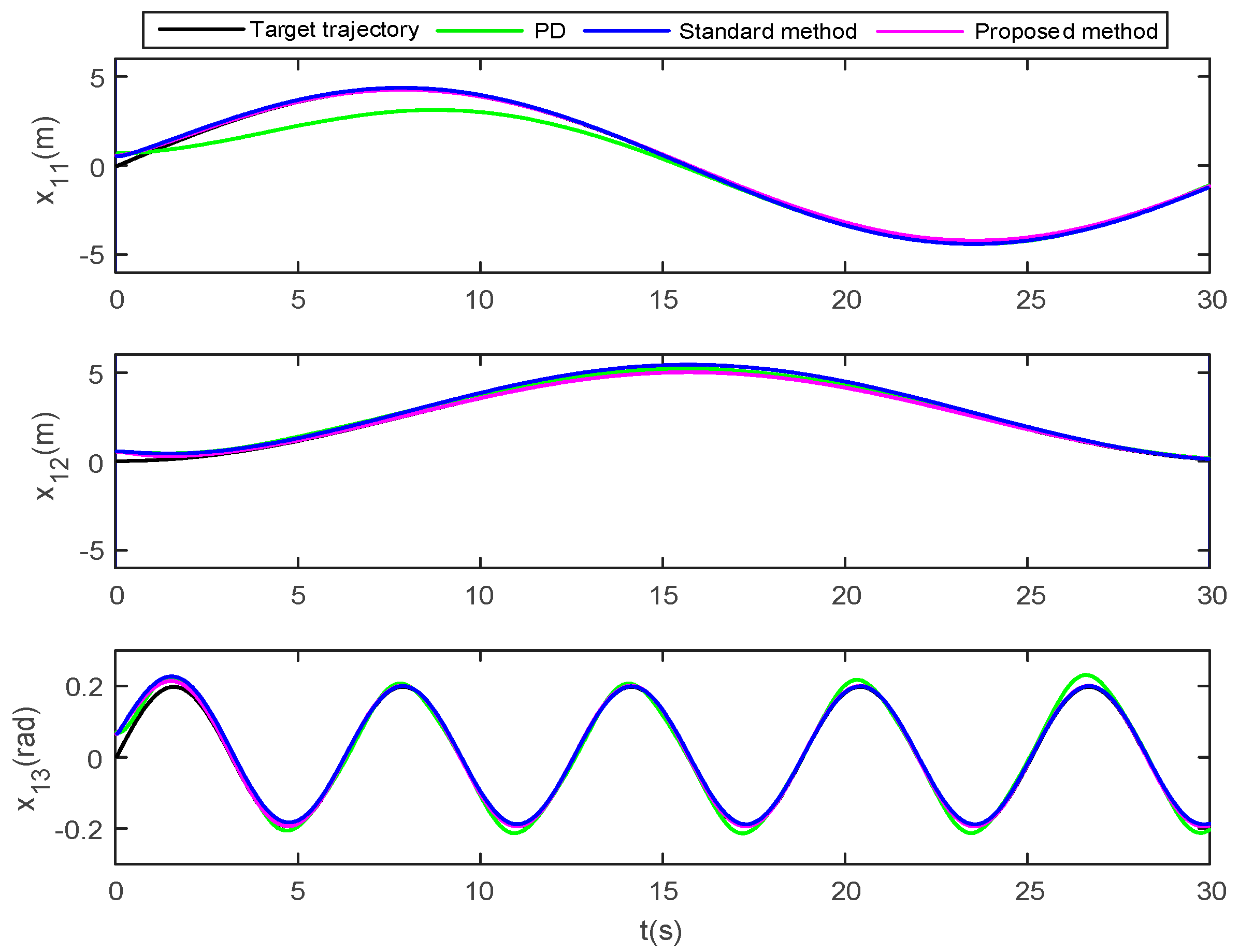
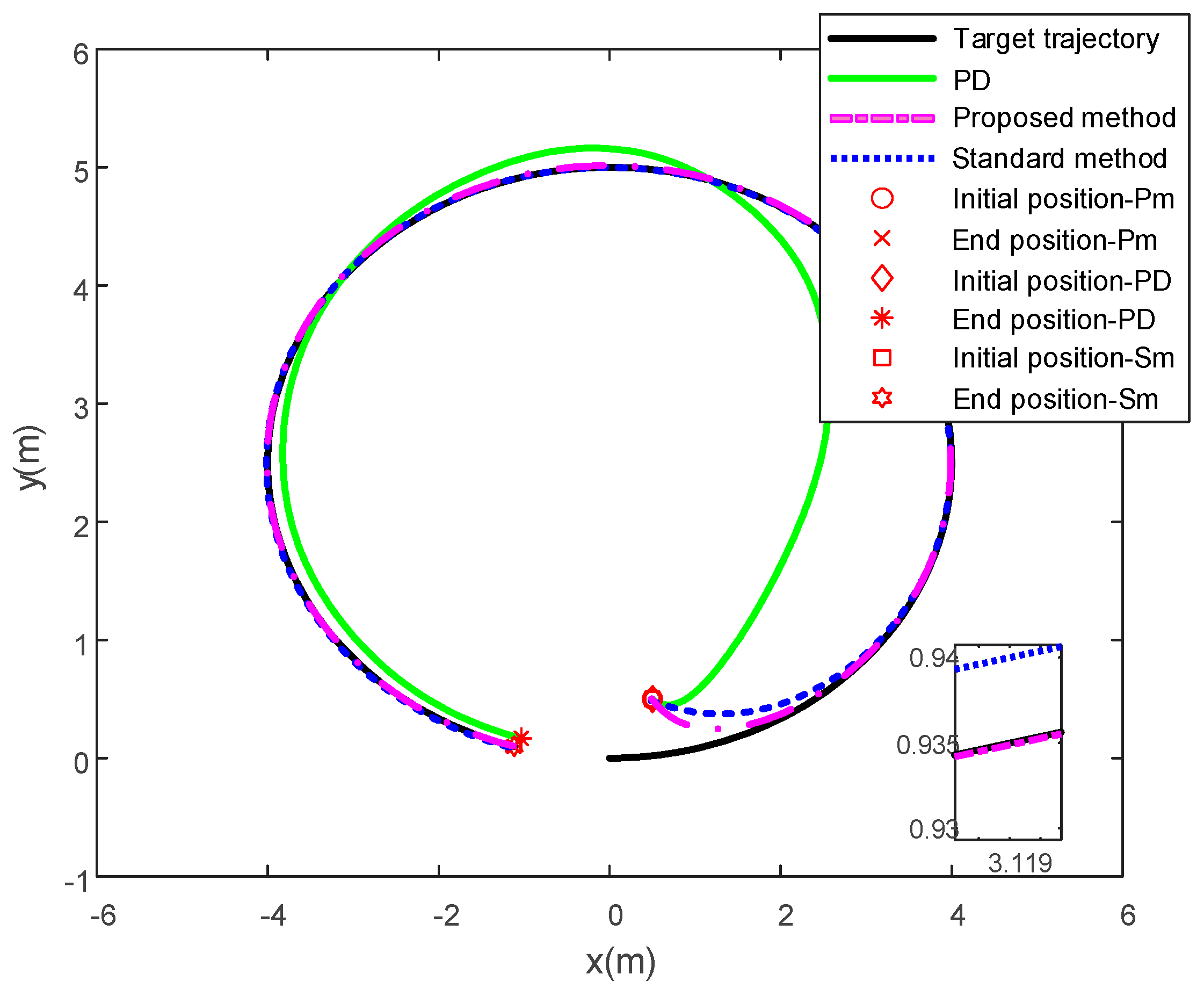
Figure 3 shows the XY plane position of the ship under three control methods. It can be clearly seen from the overall and partial enlarged pictures that the tracking effect of the method proposed in this manuscript is better than that of the standard backstepping method and PD control method. Further, it can be seen from
Figure 4 that the proposed method can make the vessel pose (surge
, sway
and yaw
) fast track the target trajectory (surge
, sway
and yaw
) within 0–5 s, and it can also be seen that the pose tracking curves under this control method do not exceed the preset constraints
.
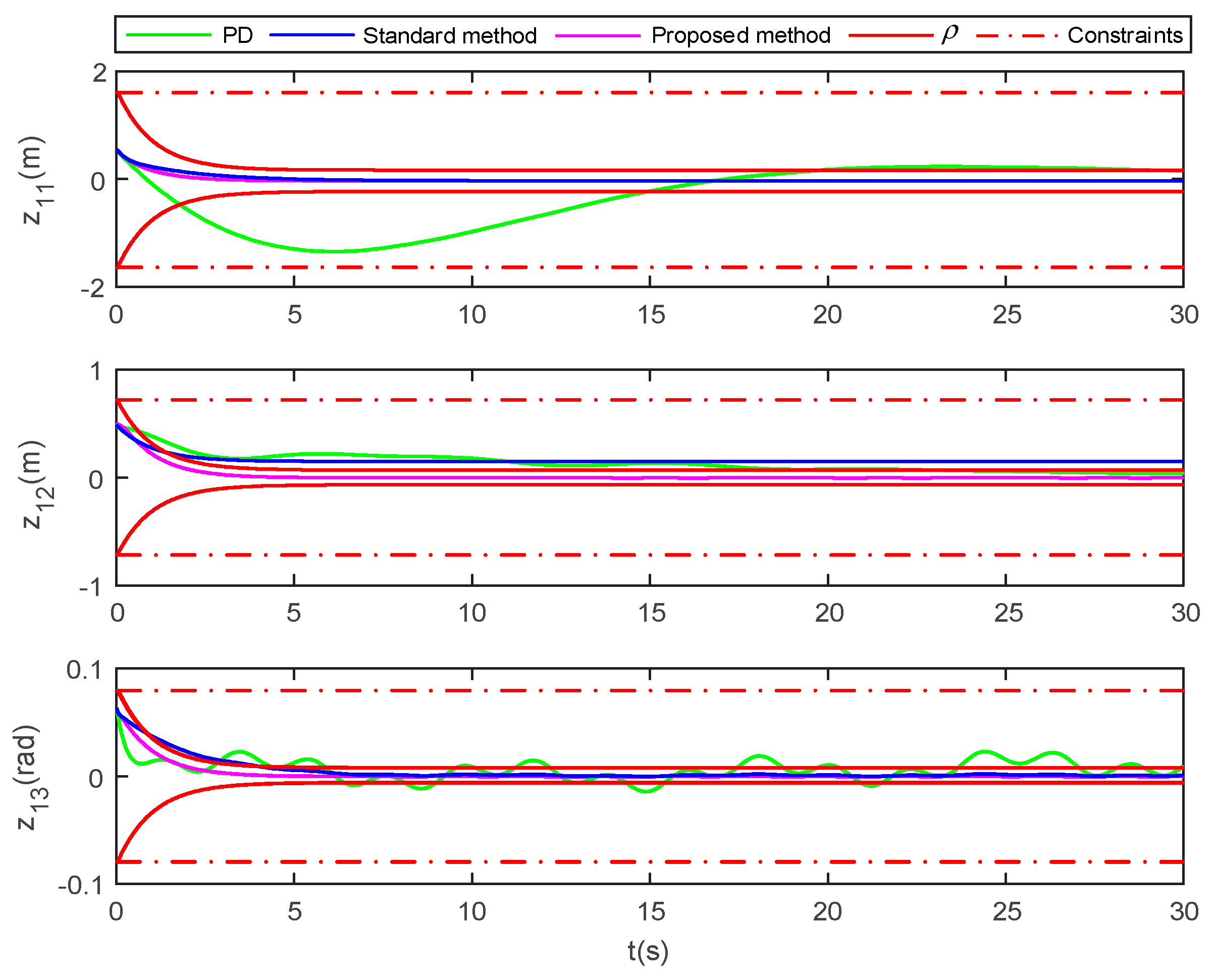
Figure 5 shows the pose tracking error of the vessel under the three control methods. From the figure, it can be seen that when the set time
Tf = 4 s, the proposed enables the pose tracking error to converge quickly in finite-time and satisfies the transient and steady-state performance and does not violate the preset constraints
, while the standard backstepping method and PD control method cannot ensure that each pose tracking error quickly converges to the prescribed set.
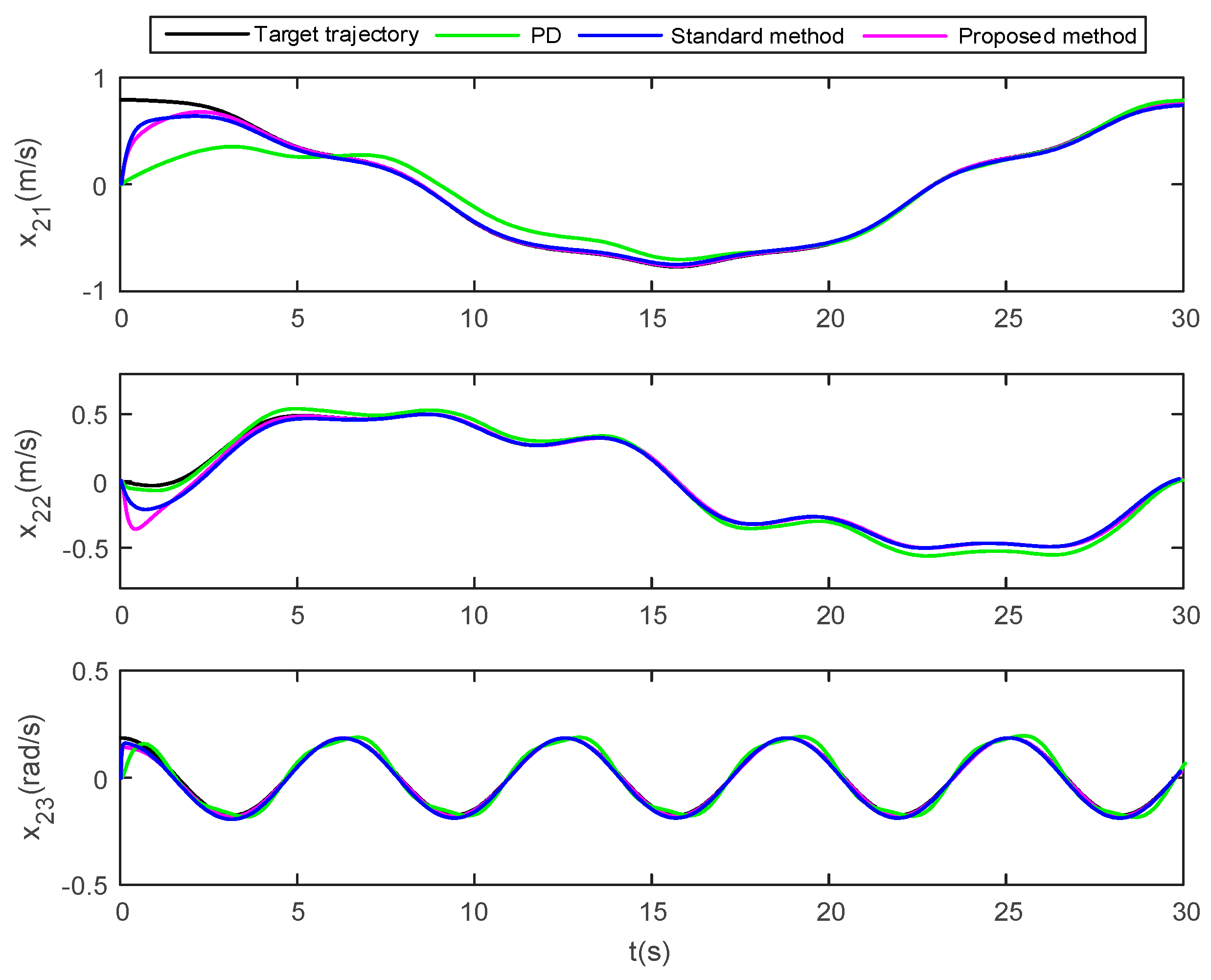
Figure 6 corresponds to the velocity tracking of the vessel under the three control methods. It can be seen from the figure that the proposed method can make the vessel velocity (surge velocity
, sway velocity
and yaw velocity) fast track the target trajectory at around 0 s–5 s, and the vessel velocity tracking curve under the proposed control method does not exceed the preset constraint
.
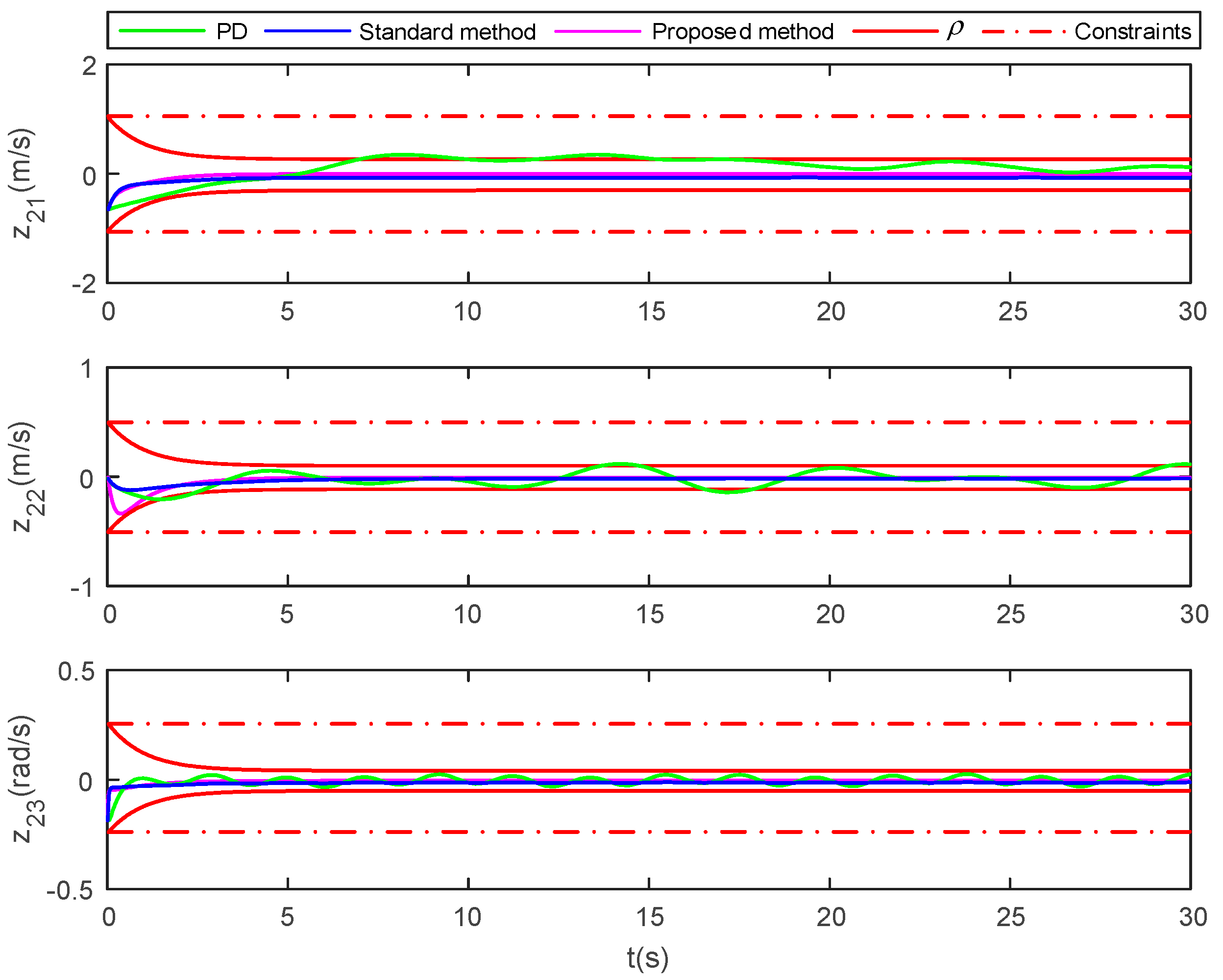
Figure 7 corresponds to the velocity tracking error of the vessel under the three control methods. From
Figure 7, when the set time
Tf = 4 s, the proposed method makes the velocity tracking error quickly converge to the prescribed set within finite-time and satisfies the transient and steady-state performance and does not violate the preset constraint
. Although the velocity tracking error of the standard method is within the constraint
, the error convergence speed is slower than the proposed method, when
Tf = 4s. For the PD control method, the surge velocity and sway velocity tracking errors cannot converge quickly to the prescribed set. In addition, although both of these methods satisfy the constraint interval to some extent, they cannot theoretically satisfy the prescribed error performance requirements.
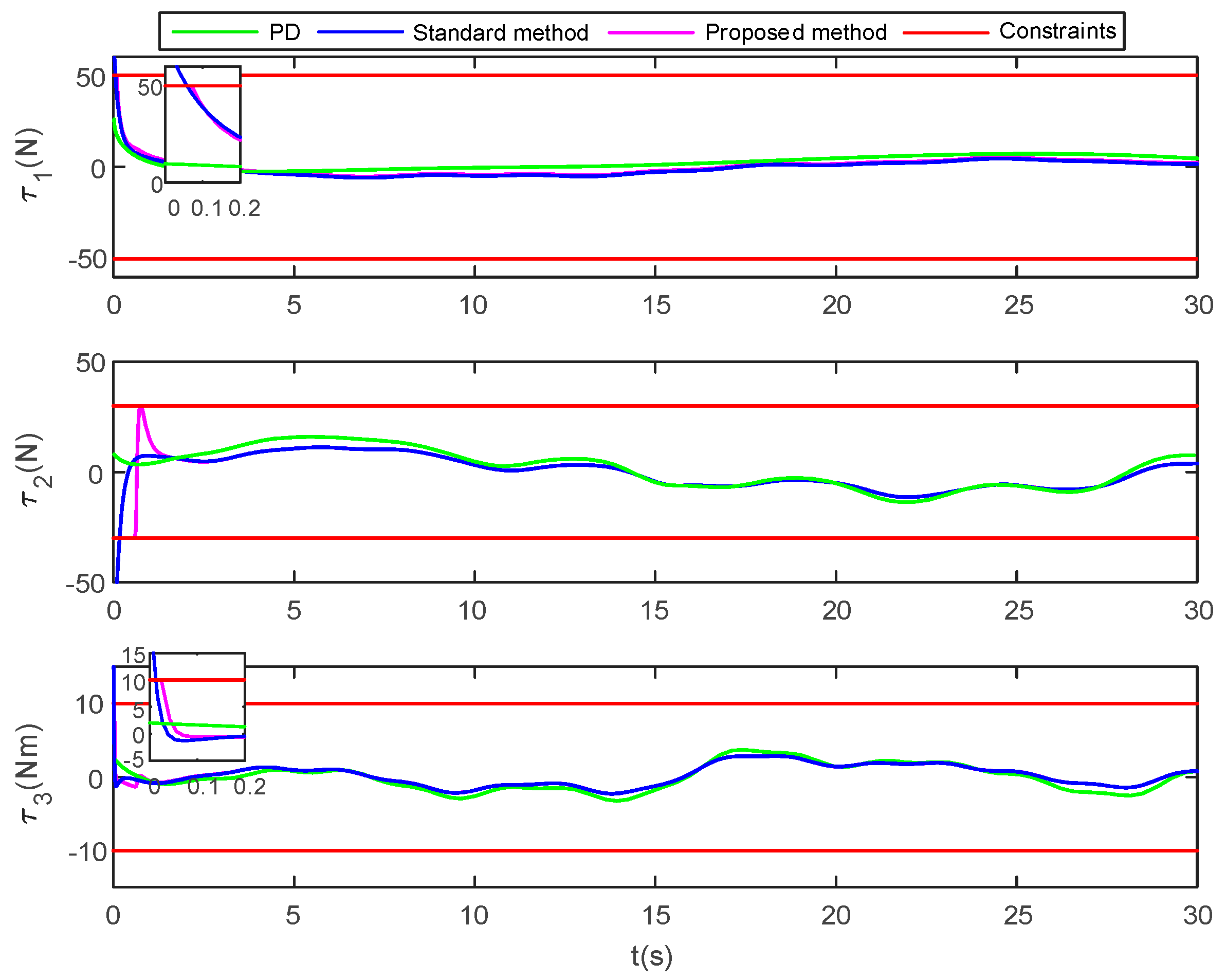
Figure 8 shows the control force curves of the three control methods. It can be seen that the system model is augmented, and the piecewise smooth hyperbolic tangent function and Nussbaum function are used in combination with the third subsystem of the augmented system to solve the control law, thus effectively dealing with the input saturation constraint problem. It can be seen from the figure that the surge force
, sway force
and yaw moment
of the vessel do not exceed the constraint range, and the standard method cannot effectively deal with the input saturation problem.
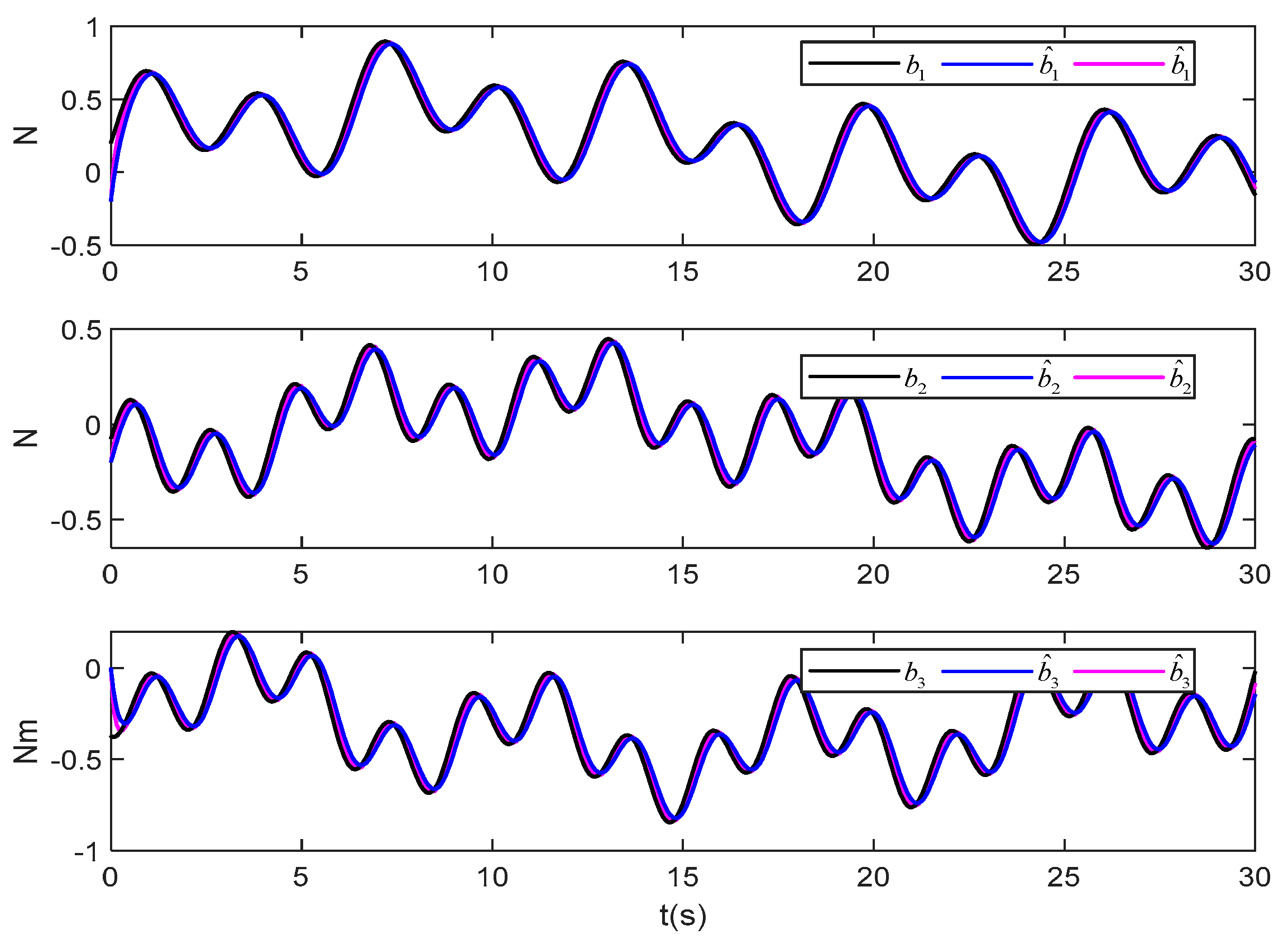
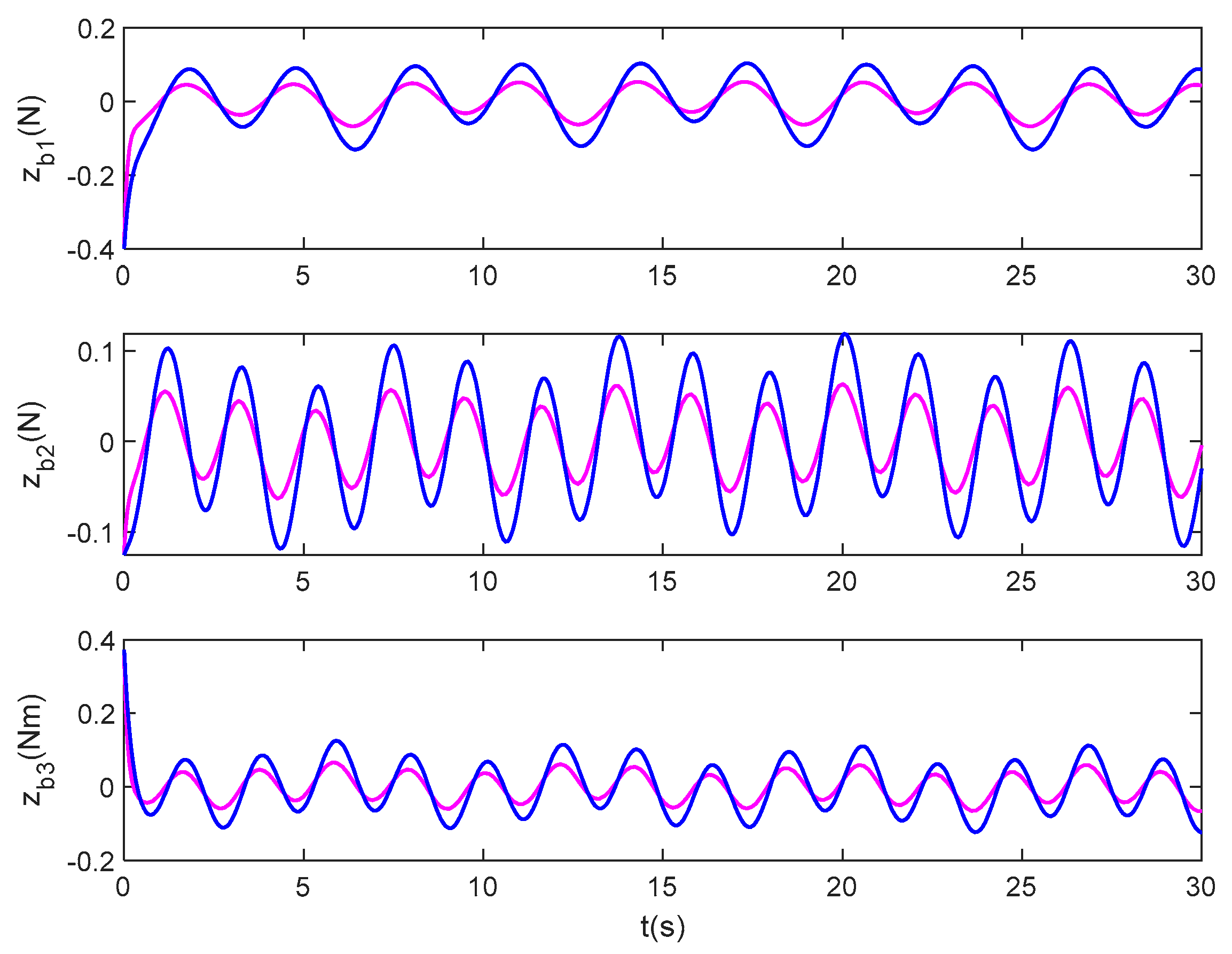
Figure 9 shows the disturbance estimation at fractional order
. It can be seen from the figure that the disturbance estimation value under both the standard method and the proposed method can be well close to the true value of the disturbance. However, it can be further seen from
Figure 10 that the estimation effect of the proposed method is obvious, and the estimation error is stable within the numerical range around 0–1.5 s.
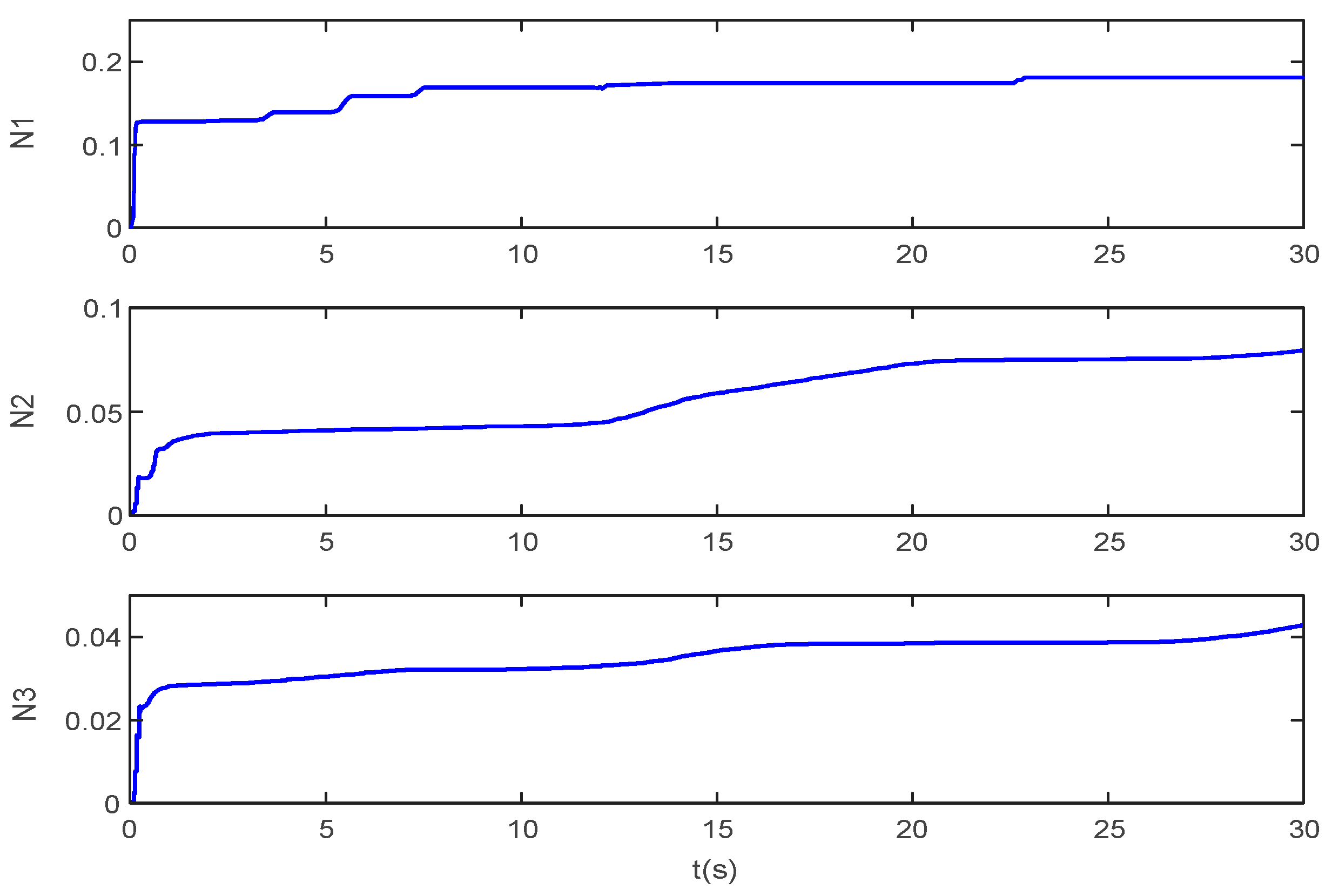
Figure 11 shows the variation of Nussbaum parameters.
- (2)
Comparison of tracking effects from different fractional derivatives
For (1), we set the fractional order
, and this part will continue to analyze the performance of fractional adaptive disturbance observer. Derivative order
and
are set respectively. For further comparison, integer order
is introduced into simulation verification. The initial value of the system, the full-state constraints range, the force and moment constraints range and the control parameters remain unchanged, and the observer parameters remain unchanged. The simulation results are shown in
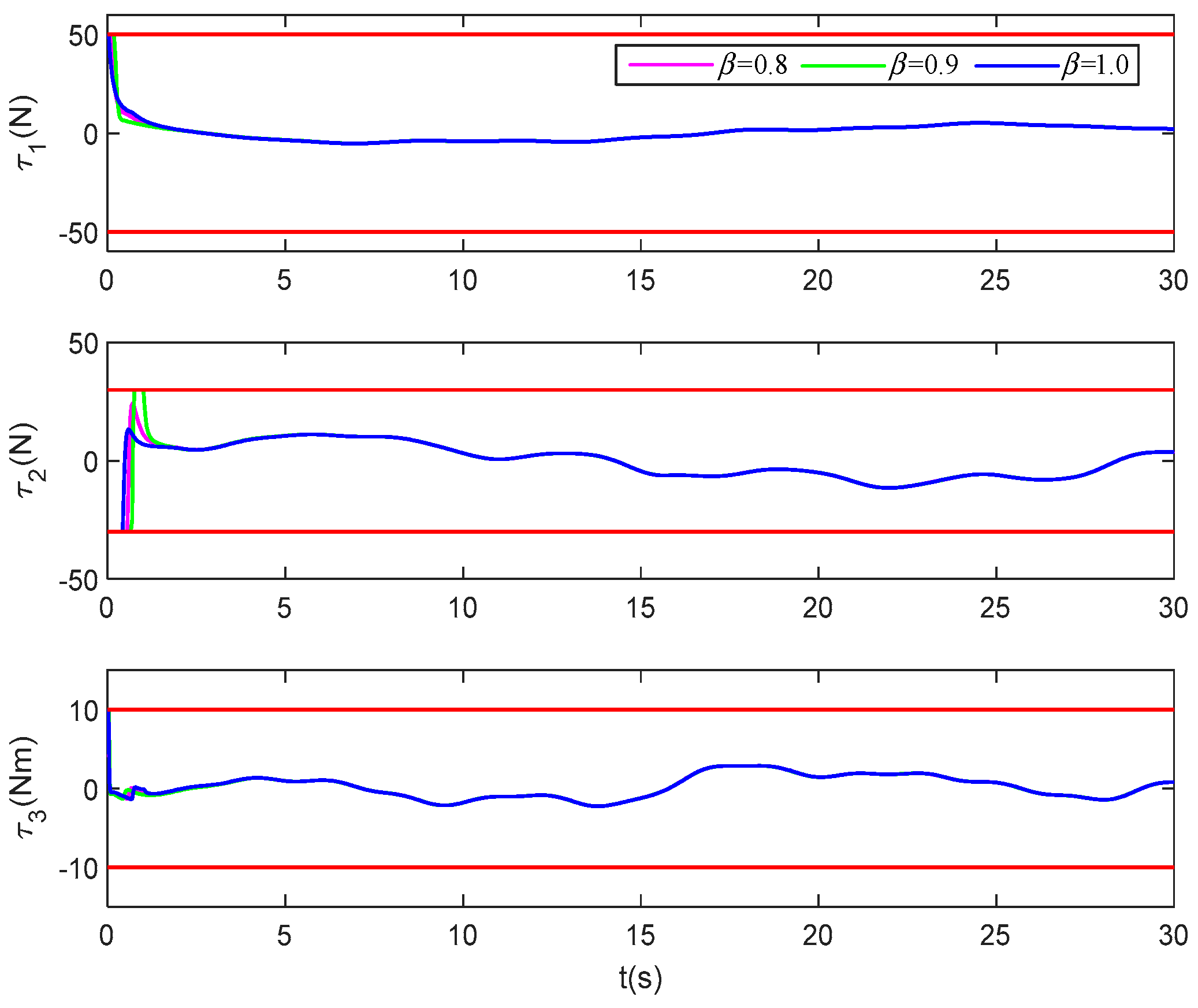
Figure 12,
Figure 13,
Figure 14,
Figure 15,
Figure 16,
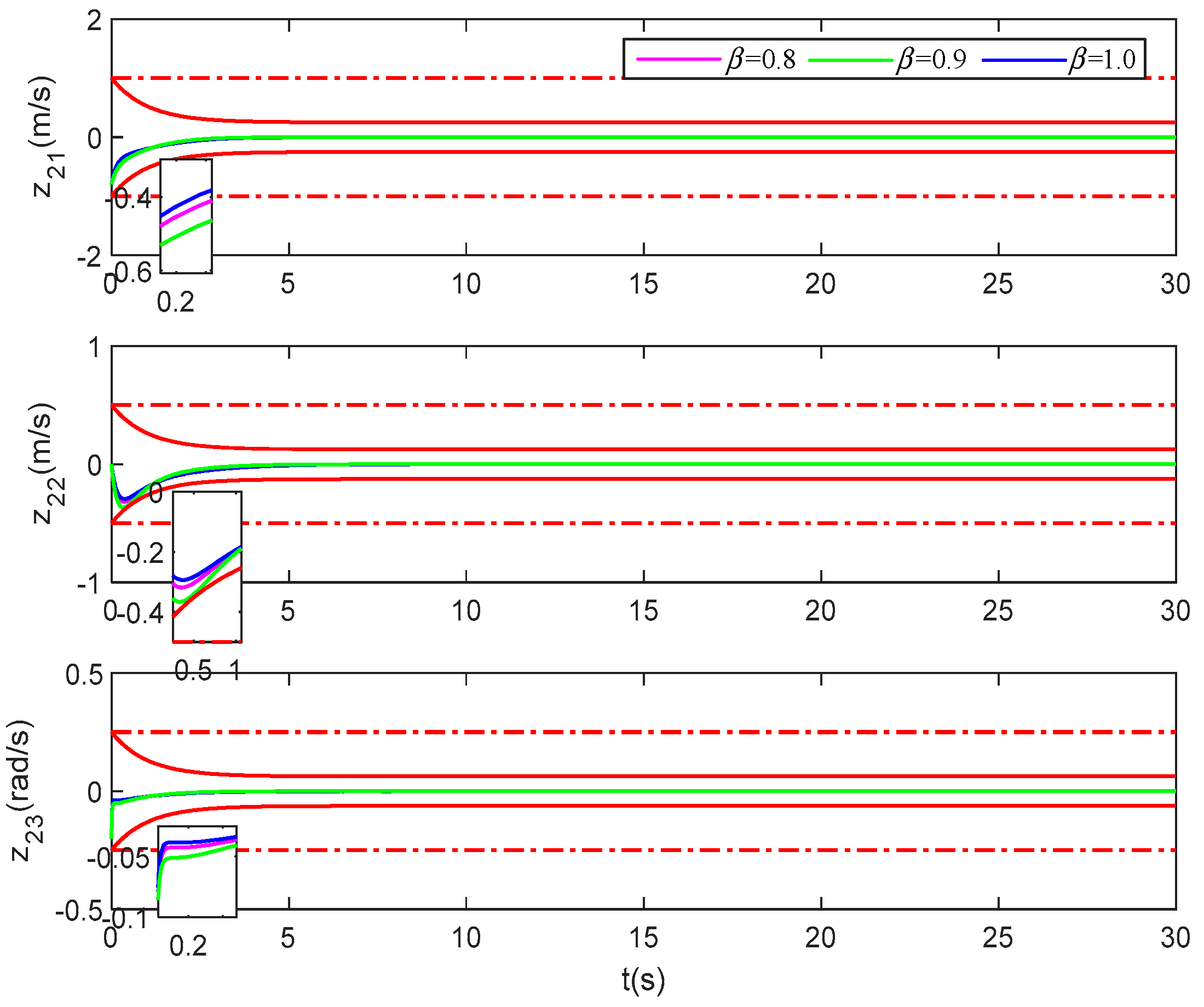
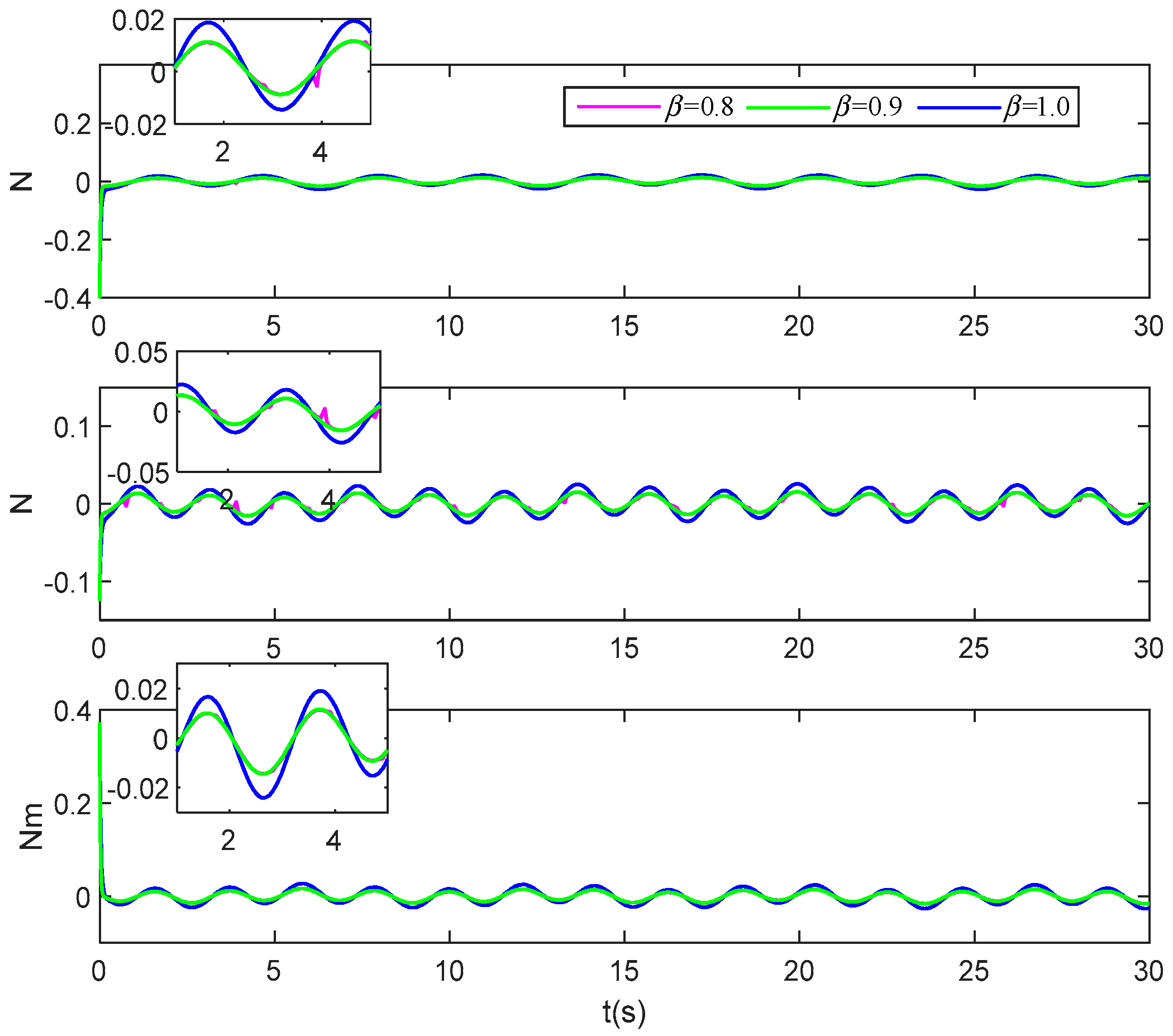
Figure 17 and
Figure 18.
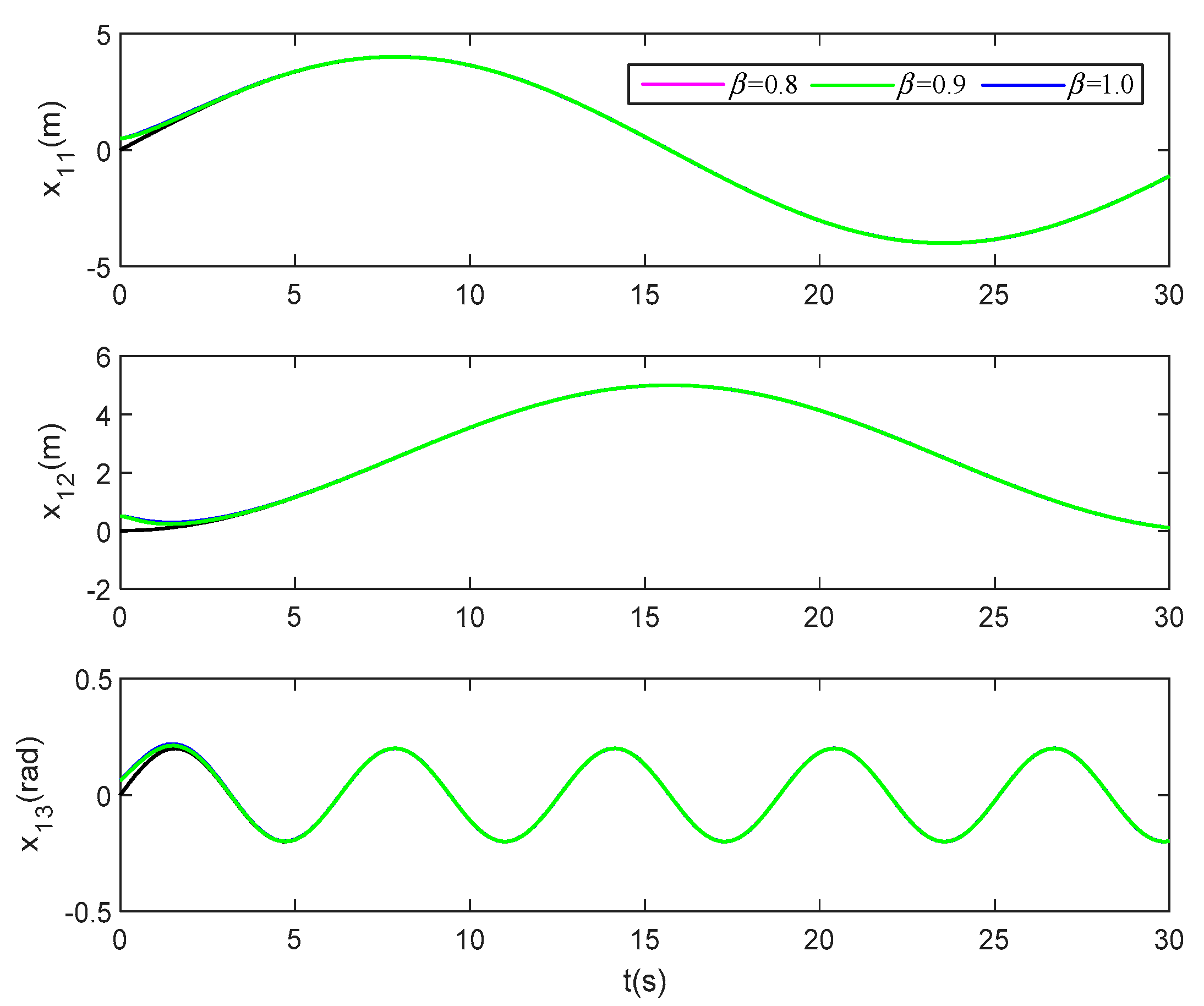
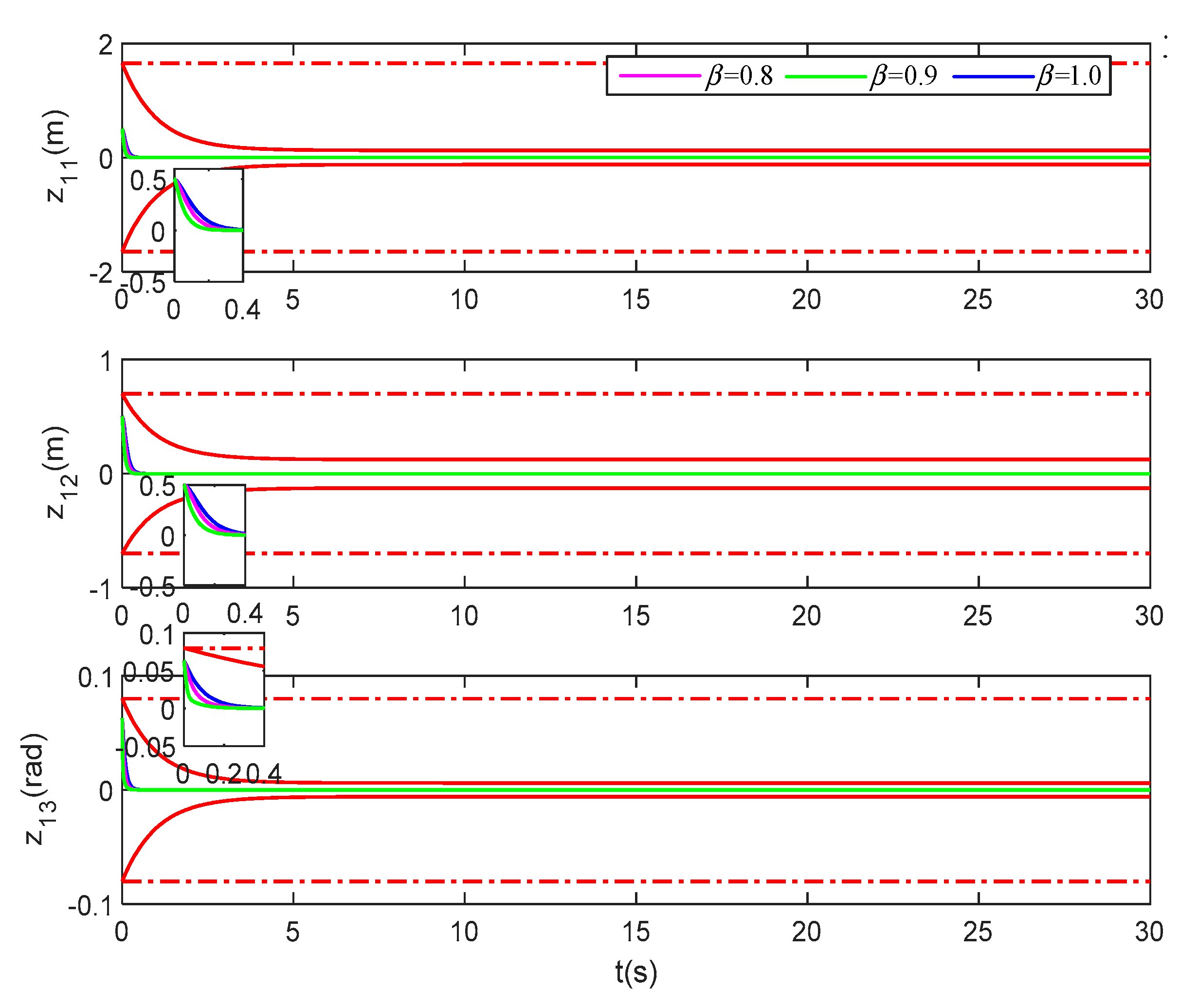
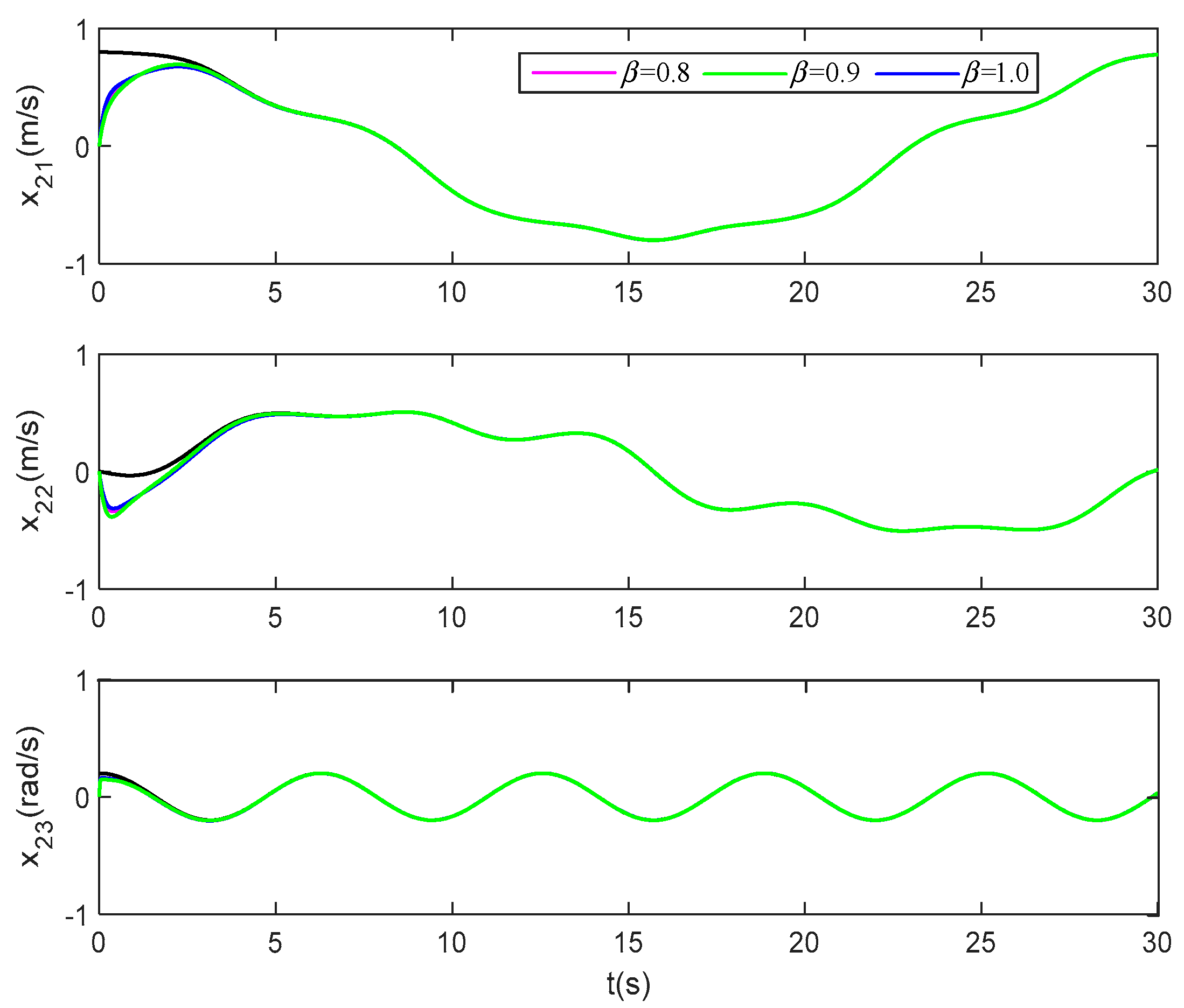
Figure 12,
Figure 13,
Figure 14 and
Figure 15 respectively show the vessel pose tracking, pose tracking error, velocity tracking and velocity tracking error under different orders. It can be seen from
Figure 12 and
Figure 14 that the pose tracking and velocity tracking are almost the same, when the fractional derivative orders
,
and
. Furthermore, it can be seen from
Figure 13 and
Figure 15 that when order
, the steady-state error of pose tracking and velocity tracking of the vessel is closer to zero and has better steady-state performance.
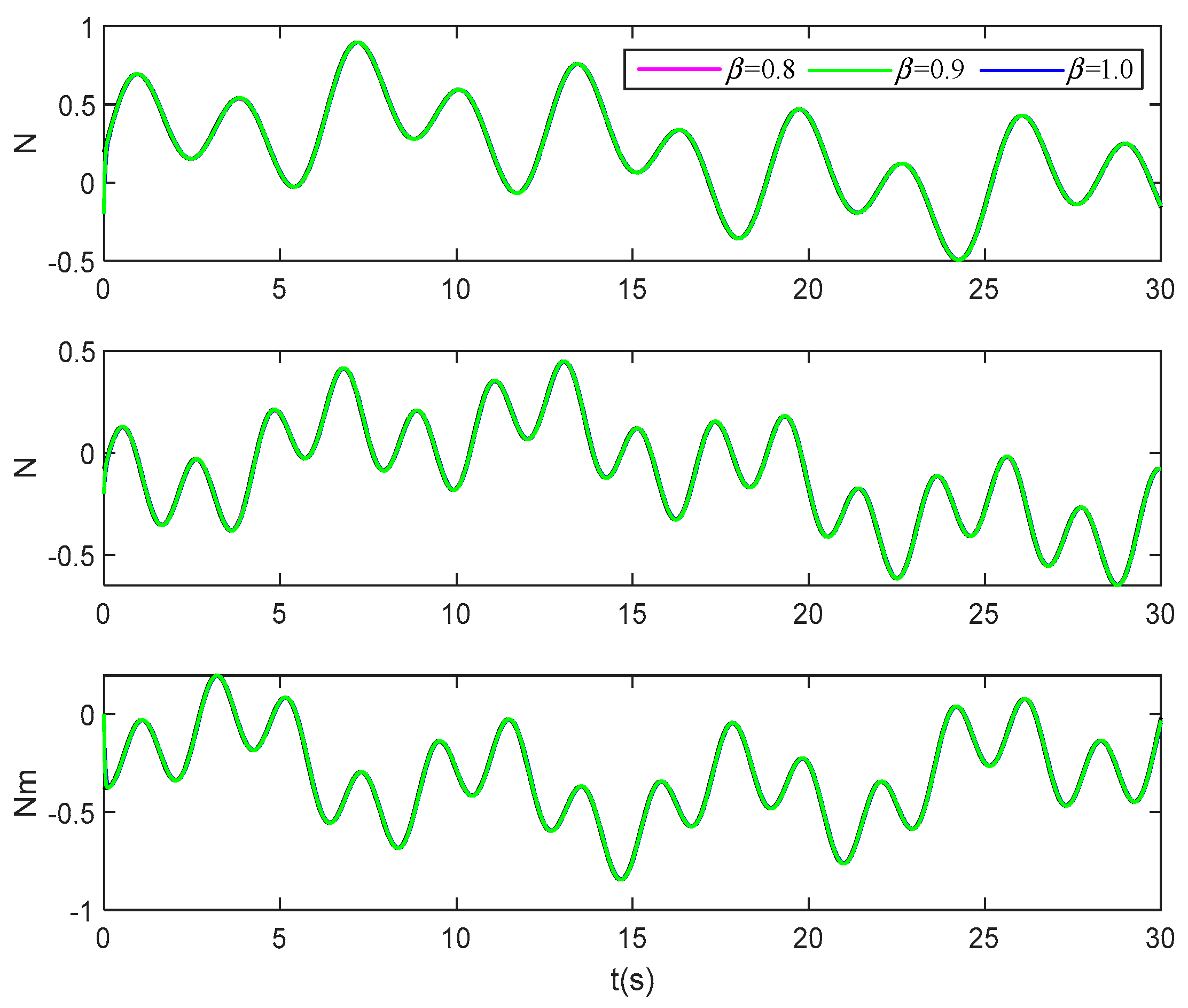
Figure 16 shows the control force change curves under the action of three fractional orders. It can be seen that when
,
and
, the control force curves of three-degree-of-freedom do not exceed their respective constraints, that is, they satisfy
and
. However, when
, the decreasing trend of the control force is obviously faster than
and
, indicating that the fractional disturbance observer can better compensate the system uncertainties when
.
It can be seen from
Figure 17 that the disturbance observer is highly sensitive to the changes in the vessel system disturbance and can accurately compensate for the disturbance in the system in a short time, which improves the vessel system. From the local plots of the disturbance estimation error corresponding to the three sub-graphs in
Figure 18, it can be seen that the similar transient response and tracking convergence can be obtained by changing the fractional derivative order of the observer, which indicates that the disturbance observer designed in this manuscript has good robustness to system disturbances. In fact, compared to the integer-order disturbance observer, the observation result of the fractional disturbance observer has a relatively small static error, because reducing
is to reduce the order of the fractional integrator in the fractional differentiator. The reduction of the order
will speed up the estimation, especially when the fractional order is
, the steady-state error is the smallest.
- (3)
Comparison of observation effects from different disturbances.
To better reflect the observation performance and to be closer to the real disturbance, we adopt the disturbance expression form according to the reference [
23], where the wave drift force
;
,
are the Gaussian white noise process, related parameters
,
,
,
and
. The observer parameters remain unchanged. Set the derivative order
,
,
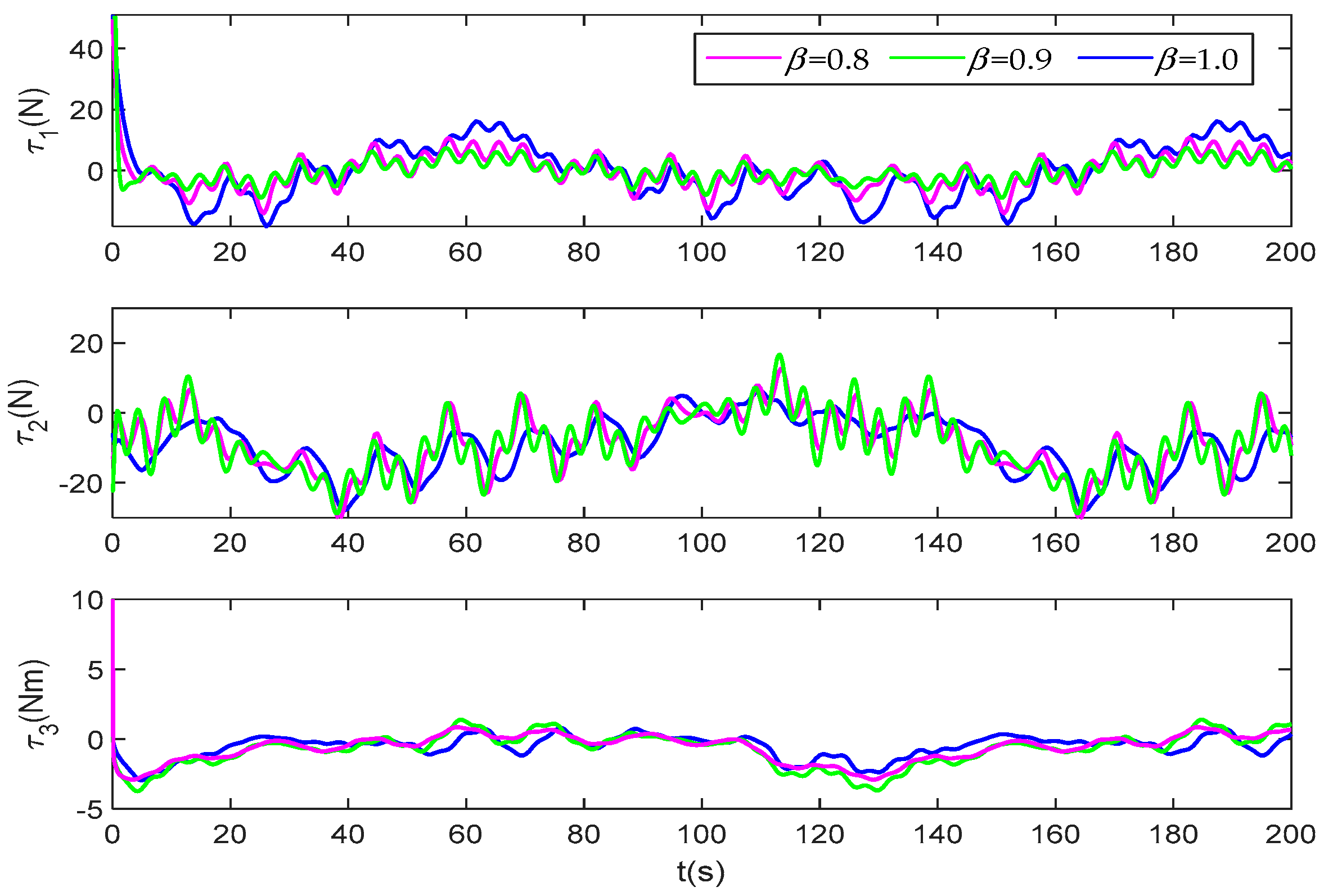
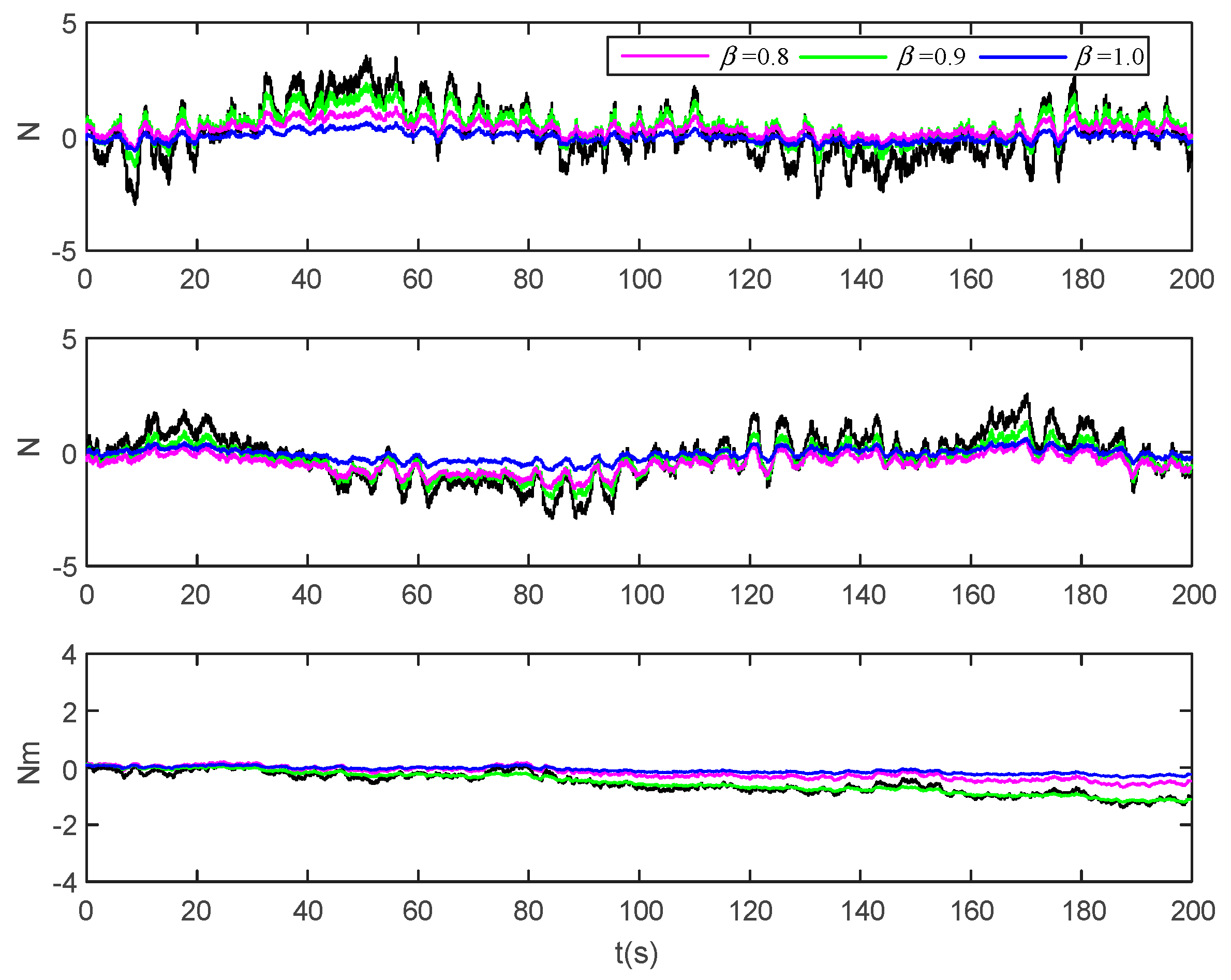
. Other control parameters remain unchanged, the simulation time is set to 200 s, and the simulation result is shown in
Figure 19.
From
Figure 19, it can be clearly seen that the observation effect in the case of order
is closer to the true value than that in the case of
and
, which further verifies that for the disturbance observer of integer order, the observation result of fractional order disturbance observer has relatively small static error, and lowering the value of
will accelerate the estimation. The simulation verification in (2) and (3) shows that under the condition of system disturbance, the proposed control method can compensate the disturbance in the system quickly and effectively by using fractional order adaptive disturbance observer.
Figure 20 shows the change curves of control force under different disturbances and different fractional orders. Similarly, it can be seen that when
,
and
, the control force of three-degree-of-freedom does not exceed their respective constraint range. However, when
, the decreasing trend of the control force is faster than the other two orders, which also indicates that the observer can better compensate the system uncertainties when the order is 2.
- (4)
Comparison from different settling time Tf
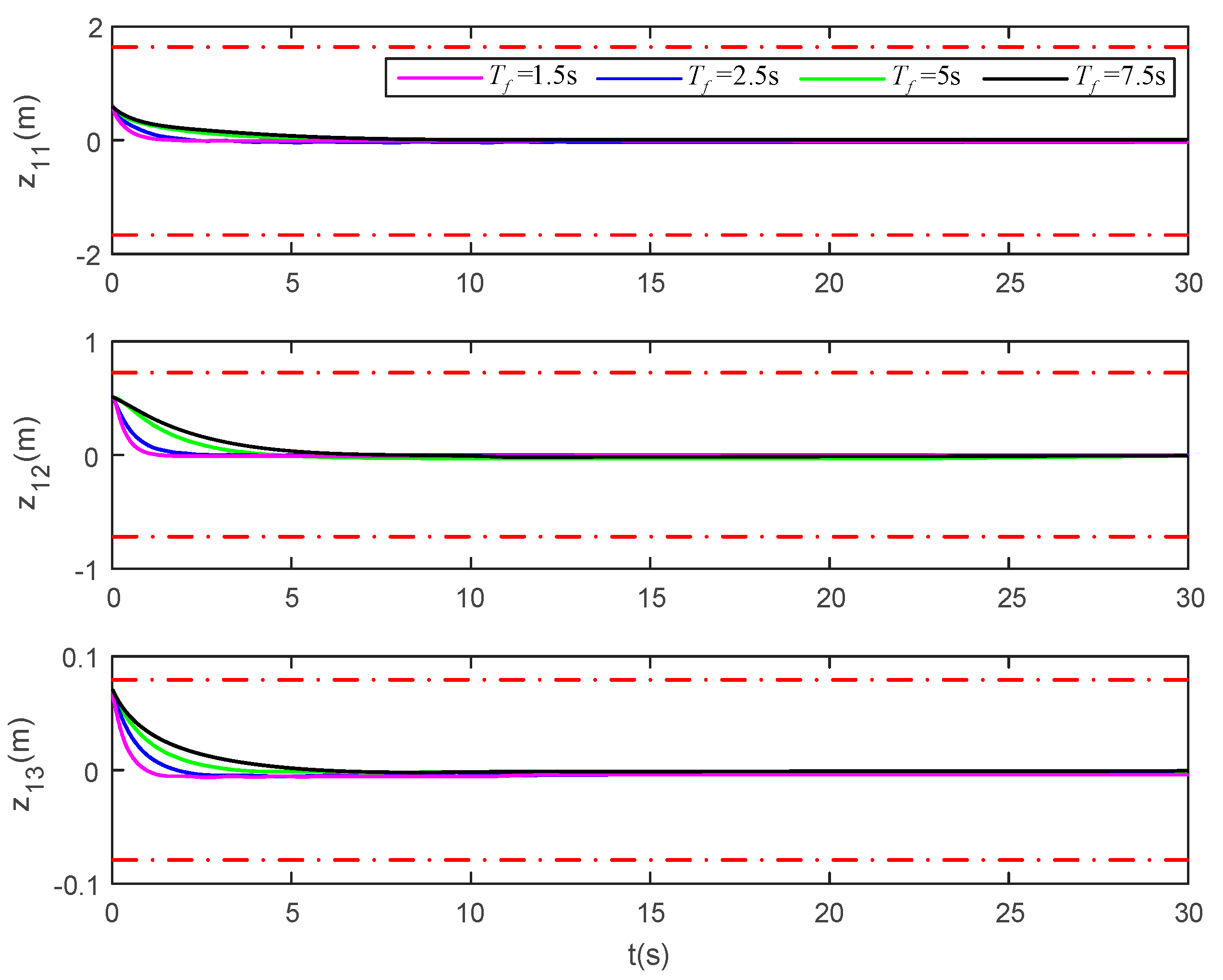
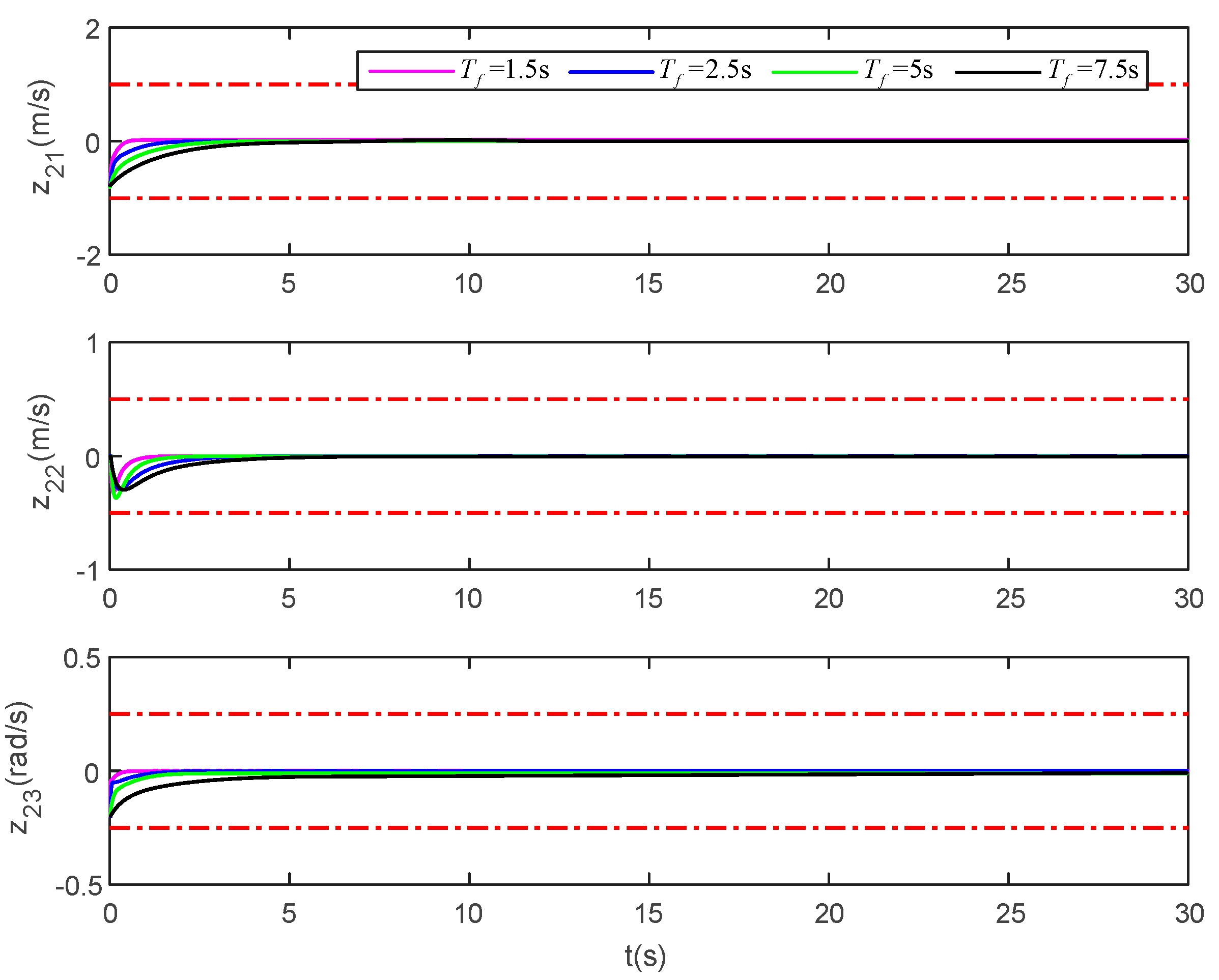
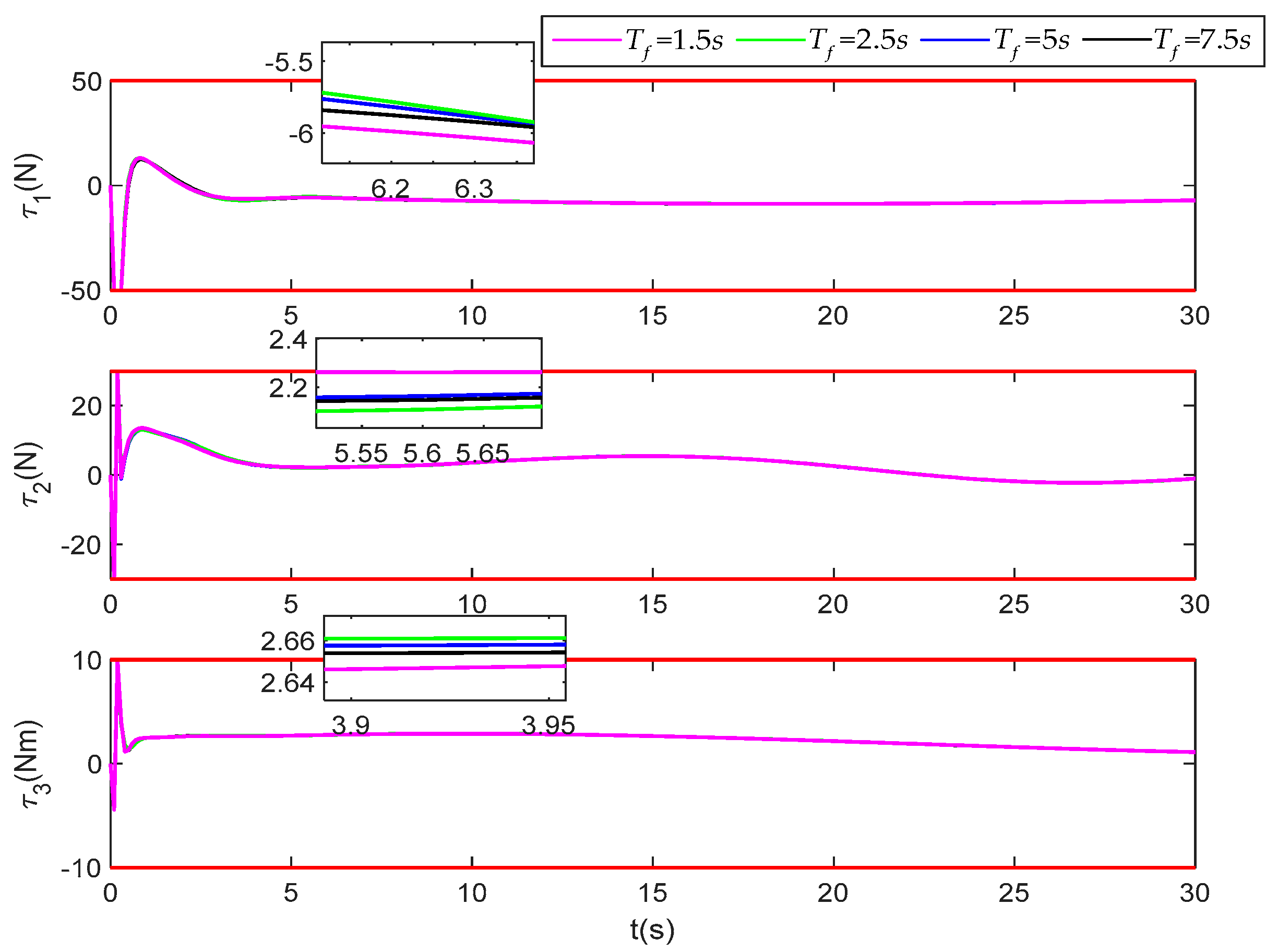
In (1), we make the settling time
in the performance function
. This part makes the settling time
,
,
and
, respectively, and the other parameters remain unchanged. The simulation time is set to 30 s, and the pose and velocity tracking error simulation results are shown in
Figure 21 and
Figure 22.
Figure 21 and
Figure 22 show the tracking error difference under different settling times
,
,
and
. It can be seen that the tracking error of these two figures converges to near zero. Combined with the settling time
, it can be seen that no matter what the settling time
Tf is, the tracking error will satisfy the prescribed transient and steady-state performance. The simulation results further show that the method proposed in this manuscript is effective, and the full-state constraints and the performance of tracking error can be satisfied by the proposed method.
Figure 23 corresponds to the control force change curves under different settling time. It can be seen that the control curves of three-degree-of-freedom do not exceed their respective constraint ranges. When
,
,
and
the corresponding control force curve has the same general trend. Further, it can be seen that the transient requirement of error can be satisfied within the specified time by only adjusting
Tf in the performance function without adjusting
again.