1. Introduction
Offshore wind energy has become a key driver of global renewable energy, offering stable, high-quality wind resources for large-scale commercialization. According to the World Wind Energy Association, the annual global offshore market is expected to grow from 10.8 GW in 2023 to 66.2 GW by 2033 [
1,
2]. However, offshore wind turbines are typically designed for a 20 to 25-year service life, and their structures face significant engineering challenges [
3]. These structures endure continuous degradation from synergistic environmental stressors, including marine corrosion (both atmospheric and submerged), cyclic wave loading, and biofouling effects [
4]. Particularly concerning is the reduction in load-bearing capacity and fatigue resistance of structural components due to corrosion [
5]. Current industry practice increasingly incorporates time-dependent corrosion models into structural health monitoring, improving predictions of remaining life and optimizing maintenance for aging offshore wind assets, a crucial factor for extending operational life without premature decommissioning.
Retrofitting existing wind turbine foundations has become a key strategy for extending the service life of offshore wind turbines [
6,
7], which also calls for the development of more advanced corrosion models to enable more accurate assessment of corrosion-affected structural states. Qin et al. [
8] derived a Weibull-based formulation that unified multiple existing corrosion models through analysis of low-carbon steel degradation data. Wong et al. [
9] further developed a robust statistical approach using a two-parameter Weibull distribution to characterize the inherent variability of corrosion data from ship ballast tanks, demonstrating improved agreement with experimental observations. Recent studies have increasingly incorporated advanced numerical and experimental approaches to enhance corrosion prediction accuracy. Zou et al. [
10] conducted experimental investigations on Q355 steel, a commonly used material in offshore wind turbines, analyzing mass loss and electrochemical behavior to characterize corrosion evolution under different marine environments. Zhang et al. [
11] validated Weibull-based corrosion rate models using field monitoring data from offshore platforms and established component-level corrosion evolution models. However, existing time-dependent corrosion models primarily describe the evolution of wall depth over time, focusing on geometric degradation, while often neglecting the progressive degradation of material properties (e.g., yield strength reduction), which may lead to biased structural strength assessments.
Moreover, several studies have been carried out to develop corrosion degradation impacts on the structural performance of marine steel infrastructure, particularly for offshore wind turbines and platforms. Bai et al. [
12] and Li et al. [
13] established fundamental correlations between generalized corrosion progression and structural capacity reduction in jacket platforms and wind turbines, respectively, using wall depth reduction techniques. Feng et al. [
14,
15] conducted systematic finite element investigations of pitting parameters (depth, distribution, intensity) on various structural components under different loading conditions. Jiang et al. [
16] proposed a time-variant non-probabilistic reliability framework for offshore wind turbine monopile foundations under lateral loading, considering the coupled effects of corrosion and seabed scour to characterize the evolution of structural response and reliability indices. McAuliffe et al. [
17] present a modeling approach that integrates corrosion-induced material degradation with fatigue analysis to assess the structural fatigue life of offshore wind turbines under combined wind and wave loading. Recent advances have further incorporated machine learning-based methods and high-fidelity geometric reconstruction techniques. Ossai et al. [
18] combined subspace clustering neural networks with particle swarm optimization algorithms to predict corrosion defect propagation in subsea pipelines, enabling Weibull-distribution-based failure probability assessment. Zhu et al. [
19] reverse-reconstructed FE models of corroded cylindrical shells that accurately capture buckling behavior. These developments collectively highlight the increasing development of corrosion assessment, ranging from geometric reduction and pitting analysis to reliability-based, data-driven, and high-fidelity numerical reconstruction methods. However, most existing approaches remain limited in their ability to simultaneously capture progressive material degradation, complex environmental loading conditions, and long-term structural evolution under multi-decade service scenarios. Therefore, there is a need to develop a more comprehensive framework that can integrate these coupled effects and enable more reliable and efficient lifecycle assessment of offshore wind turbine structures.
The rapid advancement of big data analytics and artificial intelligence has revolutionized structural health monitoring, transforming traditional simulation models into intelligent digital twins capable of handling incomplete or sparse datasets. The digital twin frameworks developed by Cao’s team have demonstrated strong adaptability in marine engineering applications, including flow field prediction for tidal turbines, inverse stress field reconstruction of deep-sea structures, and rapid response prediction of offshore platforms [
20,
21,
22]. Zhang et al. [
23] introduced correlation-based extrapolation for stress data imputation in large-scale steel structures, laying the foundation for data-driven approaches. Ren et al. [
24] enhanced predictive accuracy through an incremental Bayesian matrix framework that leveraged spatiotemporal databases and tensor decomposition to recover missing structural response data. Sun et al. [
25] employed hierarchical probabilistic modeling via matrix factorization to reconstruct missing measurements by capturing complex spatiotemporal dependencies. And Nhung et al. [
26] developed a CNN-GRU hybrid model, which combines convolutional neural networks with gated recurrent units to achieve state-of-the-art performance in time-series modeling and missing data imputation for bridge monitoring. These advancements collectively enable (1) robust digital twin development despite data scarcity, (2) precise long-term performance forecasting through advanced machine learning imputation, and (3) comprehensive structural integrity assessment by merging data-driven insights with physics-based models. These technological evolutions are particularly critical for offshore wind turbines and marine infrastructure, where harsh environmental conditions and limited sensor deployment pose persistent challenges to reliable structural health evaluation.
However, the traditional equivalent static methods fail to capture complex dynamic responses under combined aerodynamic and hydrodynamic loading, and while fluid–structure interaction (FSI) simulations offer superior fidelity, the application to time-dependent corrosion problems still remains constrained by prohibitive computational costs, numerical instabilities from evolving boundary conditions, and challenges in coupling material degradation with hydrodynamic responses. And the structural health monitoring systems also face practical implementation barriers, including exorbitant offshore costs, sensor survivability issues, and data transmission reliability problems, resulting in sparse, discontinuous datasets that undermine accurate condition assessment and model validation.
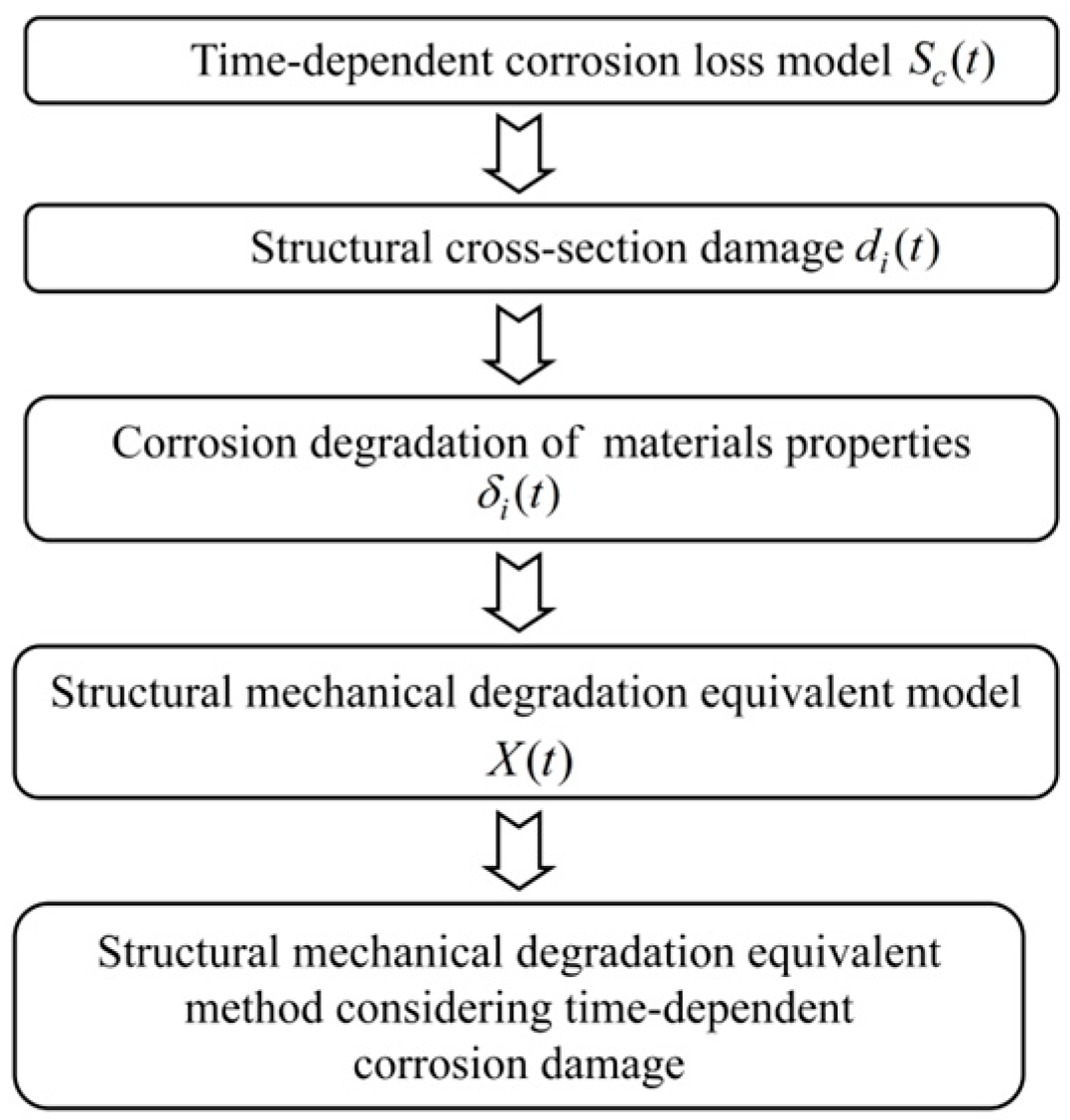
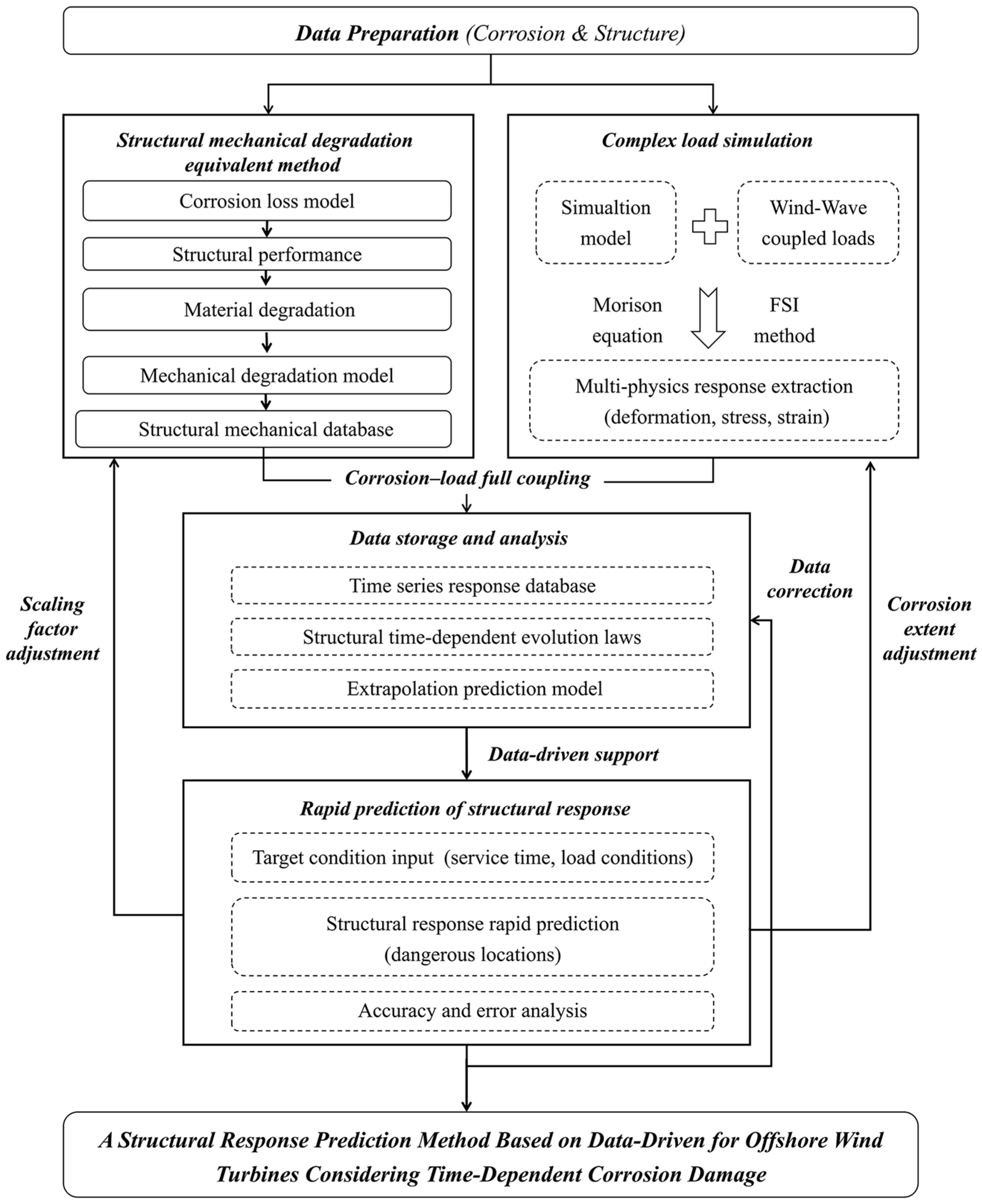
This study presents a computational framework for rapid lifecycle assessment of offshore wind turbine structural response under time-dependent corrosion effects. Unlike conventional approaches that repeatedly update structural models to represent corrosion evolution, this work introduces a structural mechanical degradation equivalent method that simultaneously accounts for cross-sectional damage and material property degradation within a unified formulation. Based on this method, a material database is constructed to provide time-dependent inputs for FSI simulations. Through batch updating of material parameters and data-interface coupling, structural responses across different service stages are generated, resulting in a full-service-life structural response database. Subsequently, the temporal reorganization of the disordered simulation database is constructed, enabling the analysis of response evolution patterns. Finally, an extrapolation-based prediction algorithm is introduced to rapidly reconstruct and predict the deformation and stress fields throughout the lifecycle. By linking corrosion progression, environmental simulation, and extrapolation method, the framework enables accurate predictions without repeated high-cost simulations. This work offers a practical, cost-effective tool for lifecycle assessments of corrosion-affected offshore wind turbines.
3. Case Study
3.1. Structural Model Considering Corrosion
This study adopts the 5 MW offshore monopile wind turbine structural model provided by the National Renewable Energy Laboratory [
47]. The basic design parameters of the structure are shown in
Table 1.
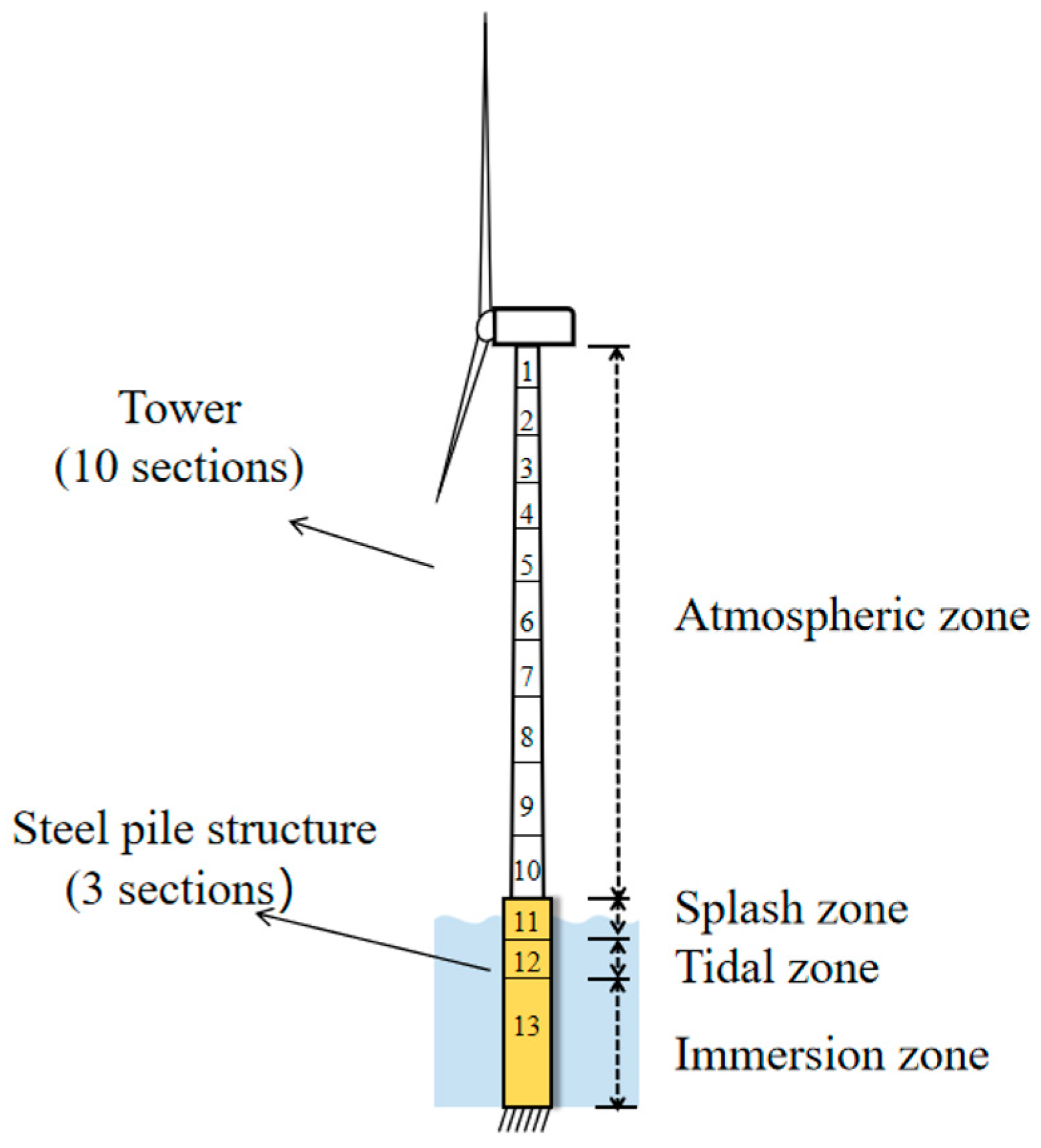
To account for the variation in corrosion rates under different marine environments, the support structure is divided into the immersion zone, tidal zone, splash zone, and atmospheric zone along the vertical direction. Furthermore, to capture the non-uniform corrosion behavior during the service period, the tower section within the atmospheric zone is subdivided into ten segments. In subsequent calculations, the structural material properties of each segment are modified in batches to simulate the effect of corrosion, thereby accumulating the time-dependent structural response database. The divided zones of support structural models considering corrosion are illustrated in
Figure 4.
3.2. Structural Mechanical Performance Database
The applicable corrosion loss model, cross-sectional damage characteristics, and material degradation due to corrosion are identified and systematically integrated to construct a structural mechanical performance database.
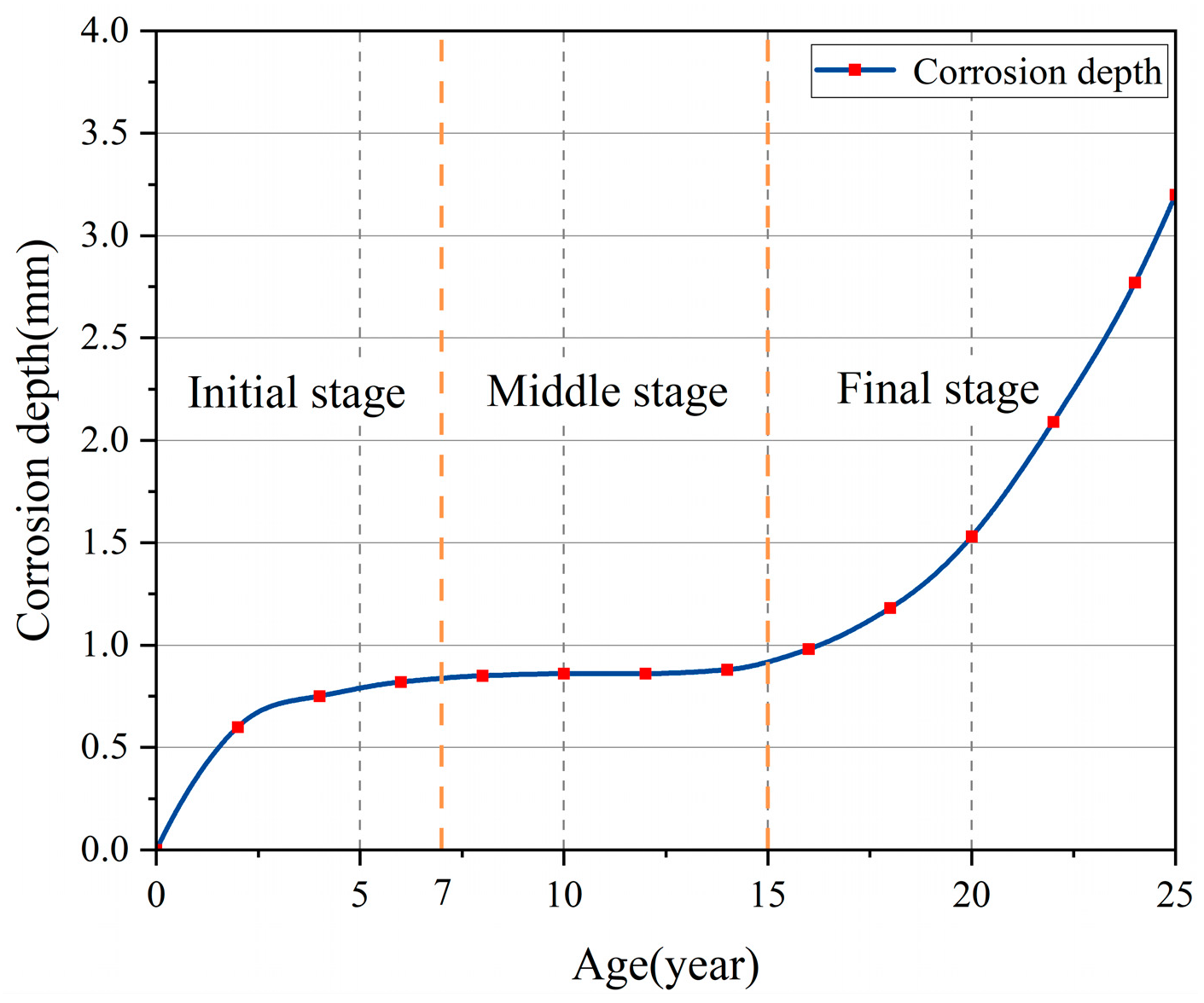
Under marine environments, the evolution of structural corrosion depth can be generally divided into three stages. At the initial service stage, the stable rust layer has not yet formed, and the corrosion rate increases rapidly. At the middle service stage, the rust layer gradually develops and partially impedes the intrusion of corrosive media, leading to a gentle corrosion rate. At the final service stage, localized pitting corrosion intensifies continuously, resulting in a rapid accumulation of corrosion depth [
48]. In this study, the design service life
Te is set to 25 years, and the CDF value is taken as 0.7. The shape parameter
and scale parameter
of the time-dependent corrosion loss model are both expressed as cubic functions of time, as shown below [
29]:
The time-dependent relationship between corrosion depth and service life of the support structure for OWT is presented in
Figure 5.
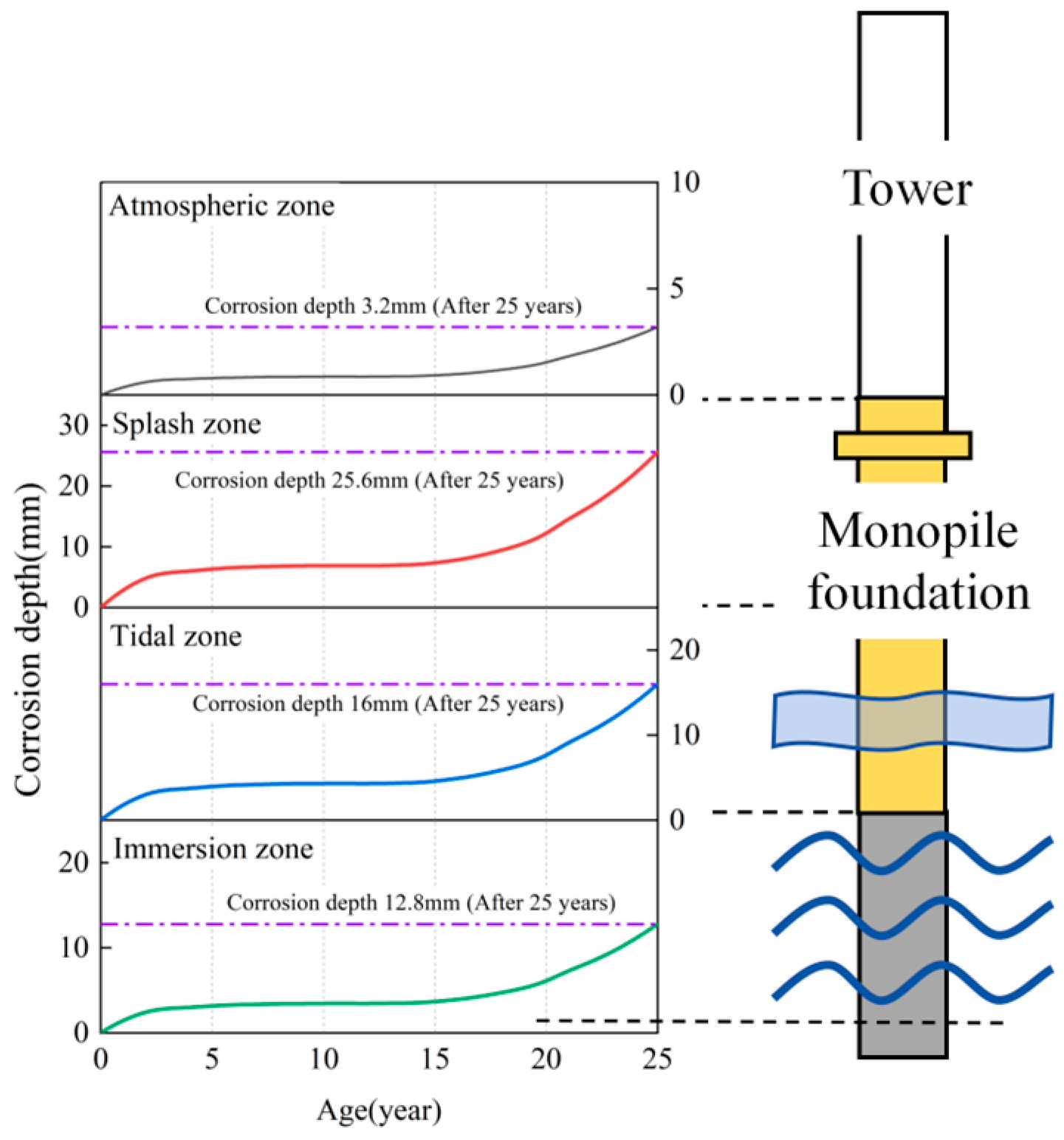
In marine environments, corrosion characteristics of different zones differ greatly owing to changes in salinity, temperature, wave action, and wet–dry cycles. The splash zone typically experiences corrosion rates approximately 3 to 10 times higher than other zones [
49]. Although there are significant variations in corrosion degree across different zones, the corrosion depth in these zones can be defined by selecting a reference zone and applying corresponding multiplication factors based on corrosion rate ratios. The corrosion rate complies with the requirements specified in the design standard NB/T 31006-2011 [
50]. In this study, the atmospheric zone is adopted as the reference zone, and its corrosion depth is taken as the baseline value. The corrosion depths in other zones are then converted based on the proportional relationships between their average corrosion rates and that of the atmospheric zone, thereby establishing equivalent corrosion depth relationships among different corrosion zones. The average corrosion rates specified in the standard and the corrosion depth in different corrosion zones are given in
Table 2. And the corresponding corrosion depth for different zones is presented in
Figure 6.
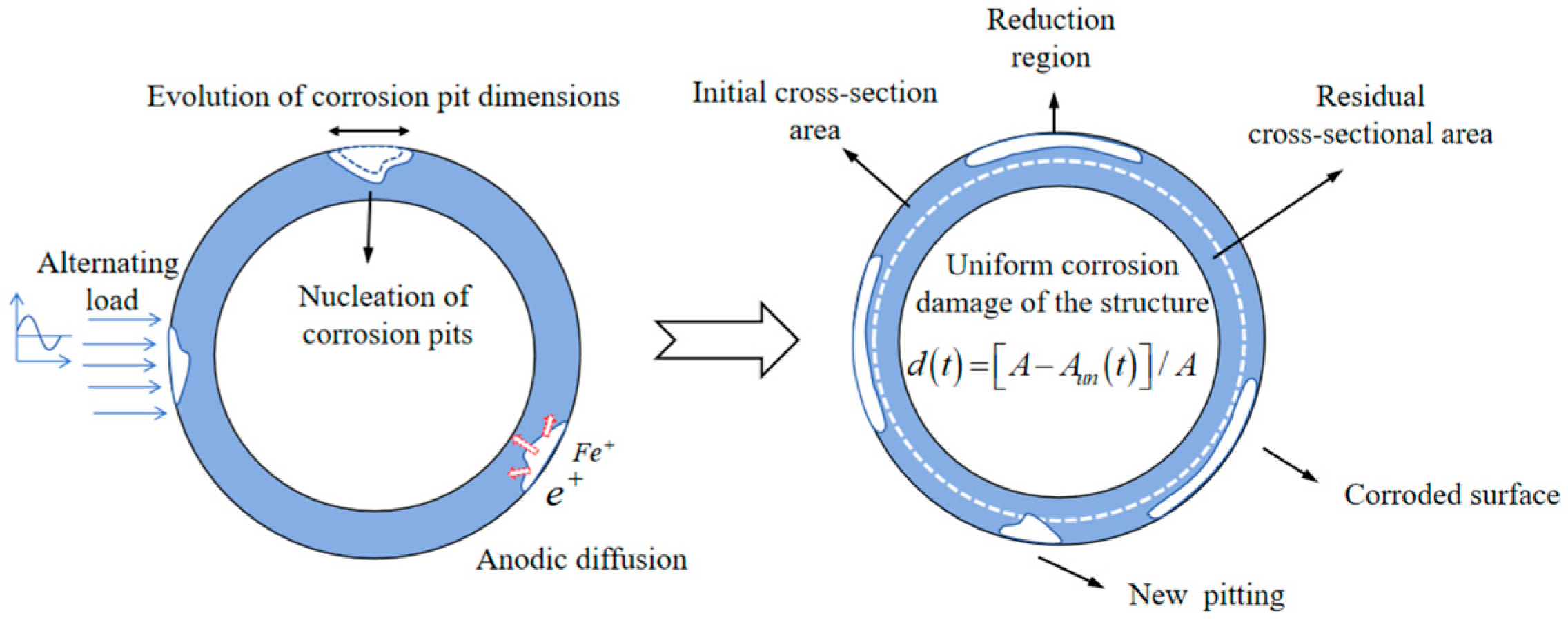
Based on the established corrosion model, cross-sectional damage can be quantitatively assessed according to Equation (5). To further investigate the impact of corrosion on structural mechanical performance, the degradation of material properties under corrosive conditions must also be considered. A typical material, NV-D36 steel for marine engineering applications, is selected as the structural material for the offshore wind turbine structure. To establish the corrosion degradation model of its properties after corrosion, galvanostatic electrochemical accelerated corrosion tests were conducted in a 5% NaCl solution to simulate the typical marine chloride corrosion environment. Tensile tests were then performed on the corroded specimens, and the material constitutive equations were revised accordingly. The specific parameters in Equations (8)–(10) are presented as follows [
34]:
Subsequently, the residual mechanical properties of the material are calculated via Equation (11) and compiled into a dedicated database to support numerical simulations and structural analyses. This material database enables dynamic adjustment of material properties, serving a dual purpose: it facilitates the analysis of structural performance degradation trends; it also provides reliable input conditions for predicting the response of the tower structure. The structural performance database based on the mechanical degradation equivalent method is given in
Table 3.
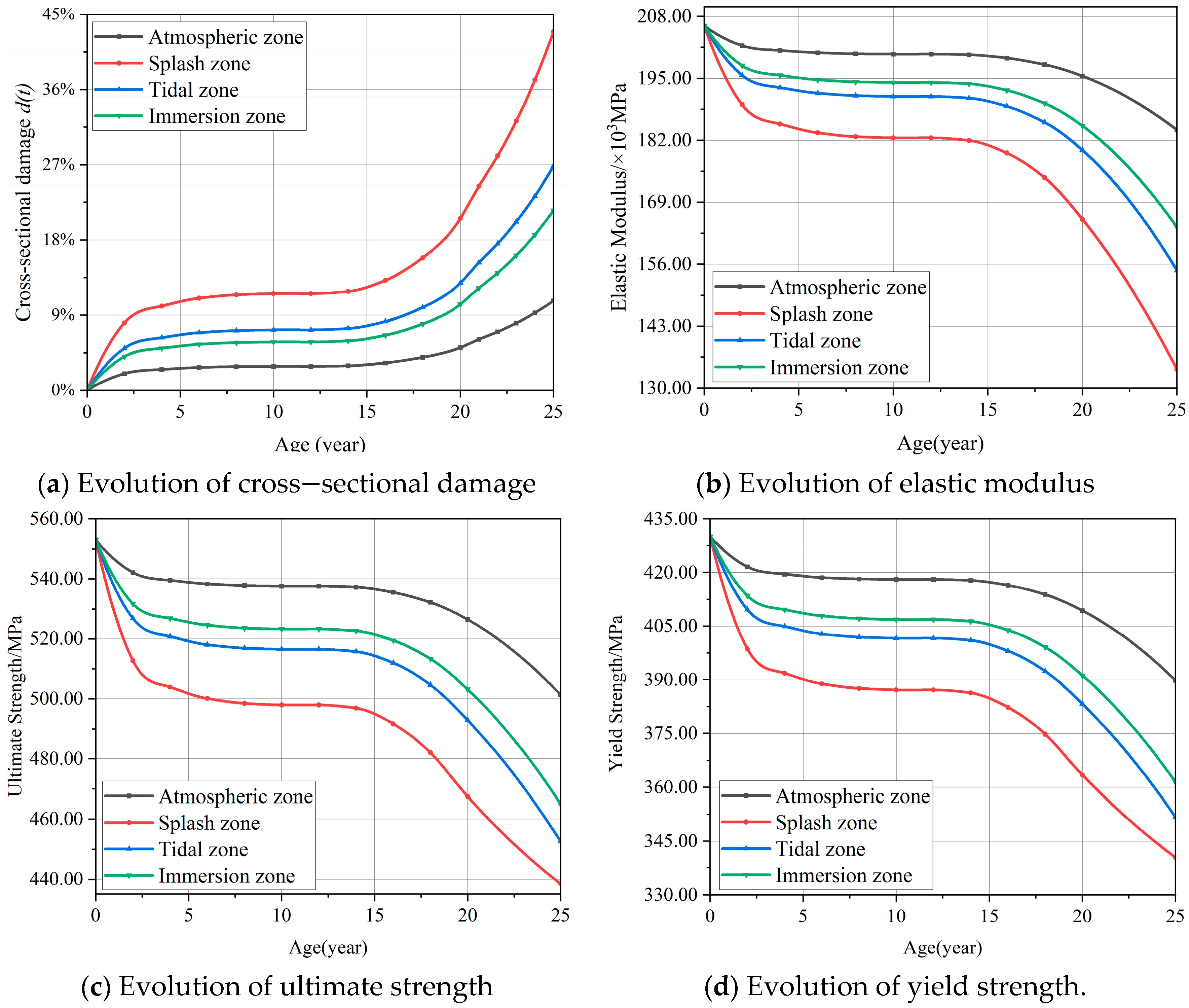
The evolution of cross-sectional damage and material properties degradation in different zones is given in
Figure 7. Corrosion loss not only contributes to an increase in cross-sectional damage but also leads to a degradation of material mechanical properties. It shows that the corrosion-induced changes are most pronounced in the splash zone and least evident in the atmospheric zone. In addition, both the accumulation of cross-sectional damage and the decline in mechanical properties evolve in the non-linear degradation, which exhibits a three-stage characteristic: an initial accelerated phase, followed by a transitional moderate phase, and culminating in a late-stage rapid escalation.
3.3. Simulation and Verification
By performing numerical simulations of the tower structure under various operating conditions and different levels of corrosion degradation, high-fidelity time-dependent structural response data can be obtained, providing a reliable basis for subsequent large-scale data expansion. In this study, the wind load on the wind turbine is calculated using the CFD method and applied to the structure in the form of surface pressure. Meanwhile, the wave load is computed via the Morison equation and applied to the structural model. Finally, the structural response analysis under the applied loads is carried out.
The CFD-based method is developed to simulate the environmental loads acting on the offshore wind turbine, in which the steady-state Multiple Reference Frame (MRF) approach is employed in the numerical simulations [
51]. It not only ensures representative flow characteristics but also significantly reduces computational cost and enables efficient exploration of multiple operating conditions, thereby providing a robust basis for constructing a long-term corrosion-induced structural response database. Accordingly, material properties are updated at successive service time points to establish a time-dependent response database covering different stages of the operational lifecycle. The proposed framework integrates steady-state CFD, the MRF approach, and an equivalent material method to capture corrosion-driven structural response evolution, while maintaining a balance between computational efficiency and accuracy for long-term degradation assessment.
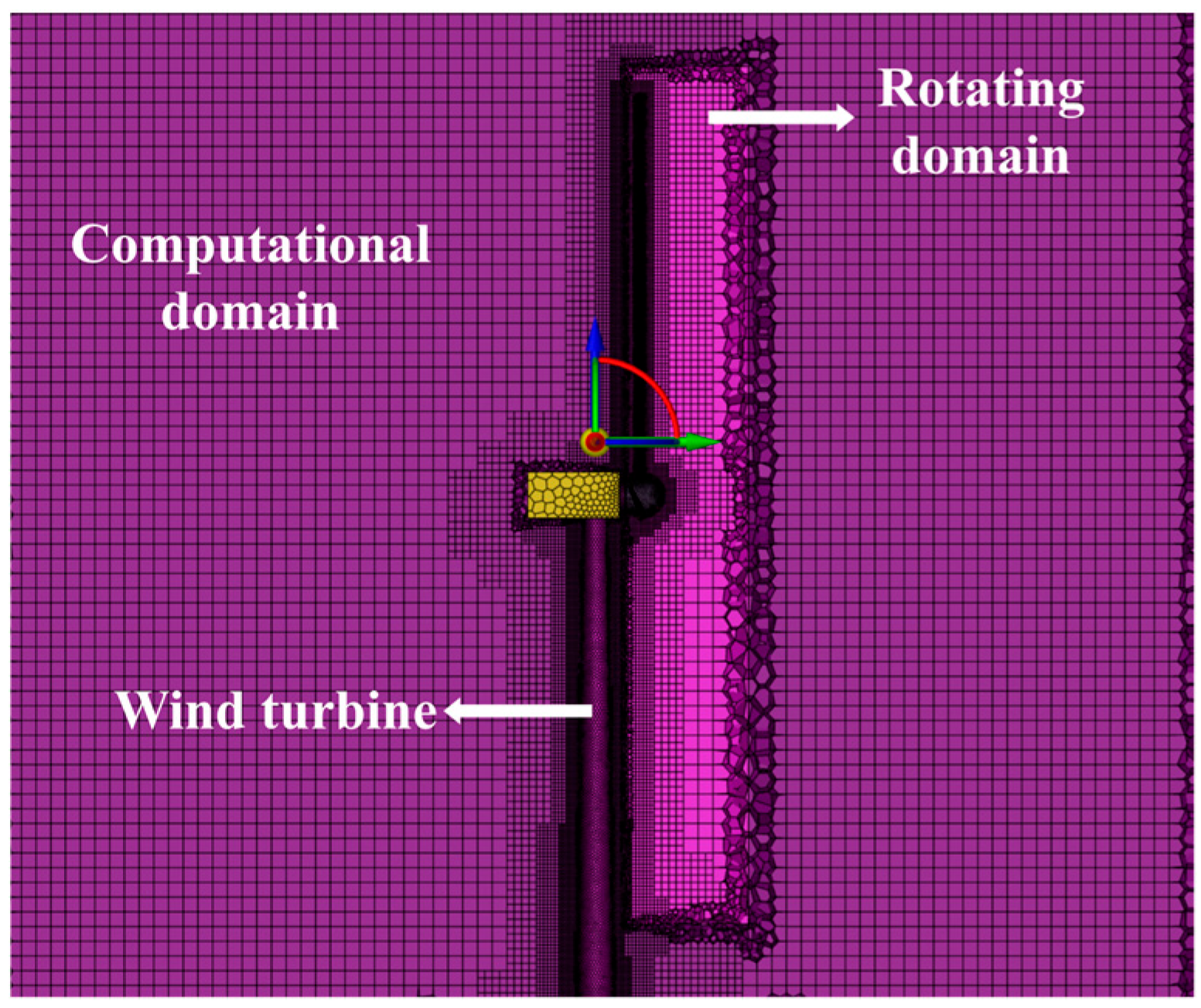
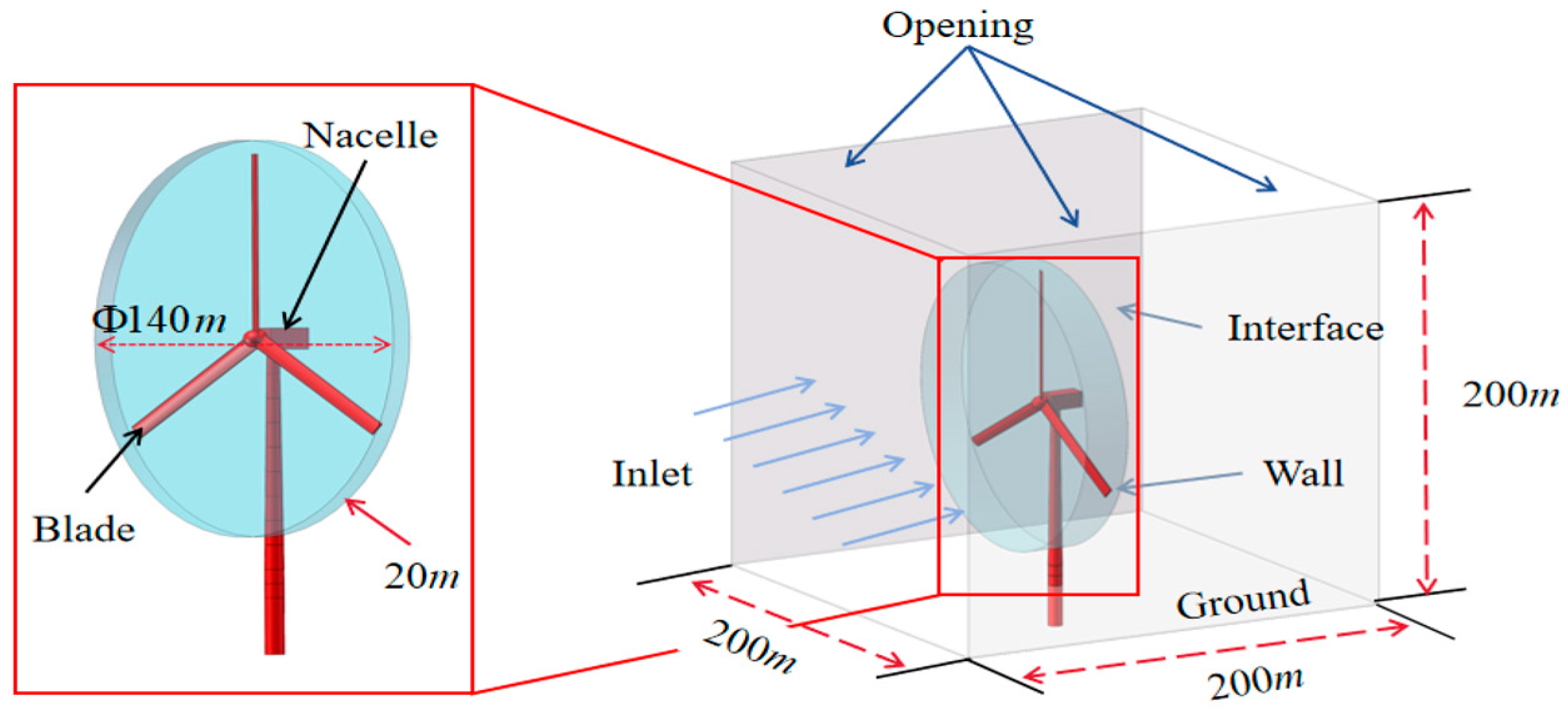
The computational domain for the CFD analysis is divided into two parts: a cylindrical rotating domain centered on the turbine rotor, measuring 140 m in diameter and 20 m in height, and an external computational domain surrounding both the turbine and the rotating region, with dimensions of 200 m × 200 m × 200 m (length × width × height). The support structure and blade surfaces are discretized using polyhedral elements with boundary layers, while the outer domain is meshed with structured hexahedral grids.
The turbulence model selected is the
k −
ω model. Compared with the
k −
ε model, it provides improved accuracy in near-wall regions and under adverse pressure gradients, enabling better prediction of flow separation around the tower and rotor. The
k −
ω SST model generally offers higher accuracy for complex separated flows; however, it requires higher computational cost and is more sensitive to mesh quality and convergence behavior [
52,
53]. Considering the large number of steady-state simulations required for different loading conditions over the service life, the
k −
ω model is employed as a reasonable model for engineering applications.
The pressure–velocity coupling is handled using a coupled solver. Second-order upwind schemes are used to discretize the momentum equations, as well as the turbulent kinetic energy and specific dissipation rate equations. To ensure both numerical accuracy and stability in steady-state calculations, the number of iterations is set to no fewer than 1000 steps. The CFD model of an offshore wind turbine is shown in
Figure 8.
Here, the fifth-order Stokes wave theory is adopted as the wave model, which is suitable for simulating wave behavior in finite water depths. And the drag coefficient
Cd is taken as 1.2 and the inertia coefficient
Cm as 2 [
54].
The structural model uses NV-D36 steel (Elastic modulus 206.00 × 10³ MPa, Yield strength 430.0 MPa, Ultimate strength 553.0 MPa, Poisson’s ratio 0.3, and Density 7850 kg/m3). To efficiently construct a full-life-cycle response database for time-dependent corrosion-based prediction, a fully fixed boundary is applied at the bottom of the wind turbine structure, and bonded connections are used between structural segments, in order to improve the computational efficiency for large-scale long-term simulations. The structural mesh is generated using SOLID186 solid elements with a mesh size of 100 mm; further mesh refinement shows no obvious increase in structural deformation. The surface pressure loads on the wind turbine obtained from CFD flow field calculations are mapped onto the structural model as surface loads. A self-gravity load of 3.5 × 10⁶ N is applied at the top of the structure. Wave loads are applied on the structural surface within the tidal and splash zones, which cover the wave height conditions encountered during the service life of the offshore wind turbine. This study focuses on the tidal and splash zones, where wave action is most intense and corrosion degradation is most severe, making them the zones with the greatest impact on structural performance. By concentrating the load in these critical zones, the model effectively simulates the dominant loading scenarios for structural integrity under coupled environmental effects, providing a reliable basis for long-term performance assessment. Although this approach simplifies the application of wave loads by focusing on the most critical zones, it still captures the key wave-induced responses for structural response analysis under corrosion effects. Structural response analysis is then performed under these loading conditions to obtain the corresponding structural response states.
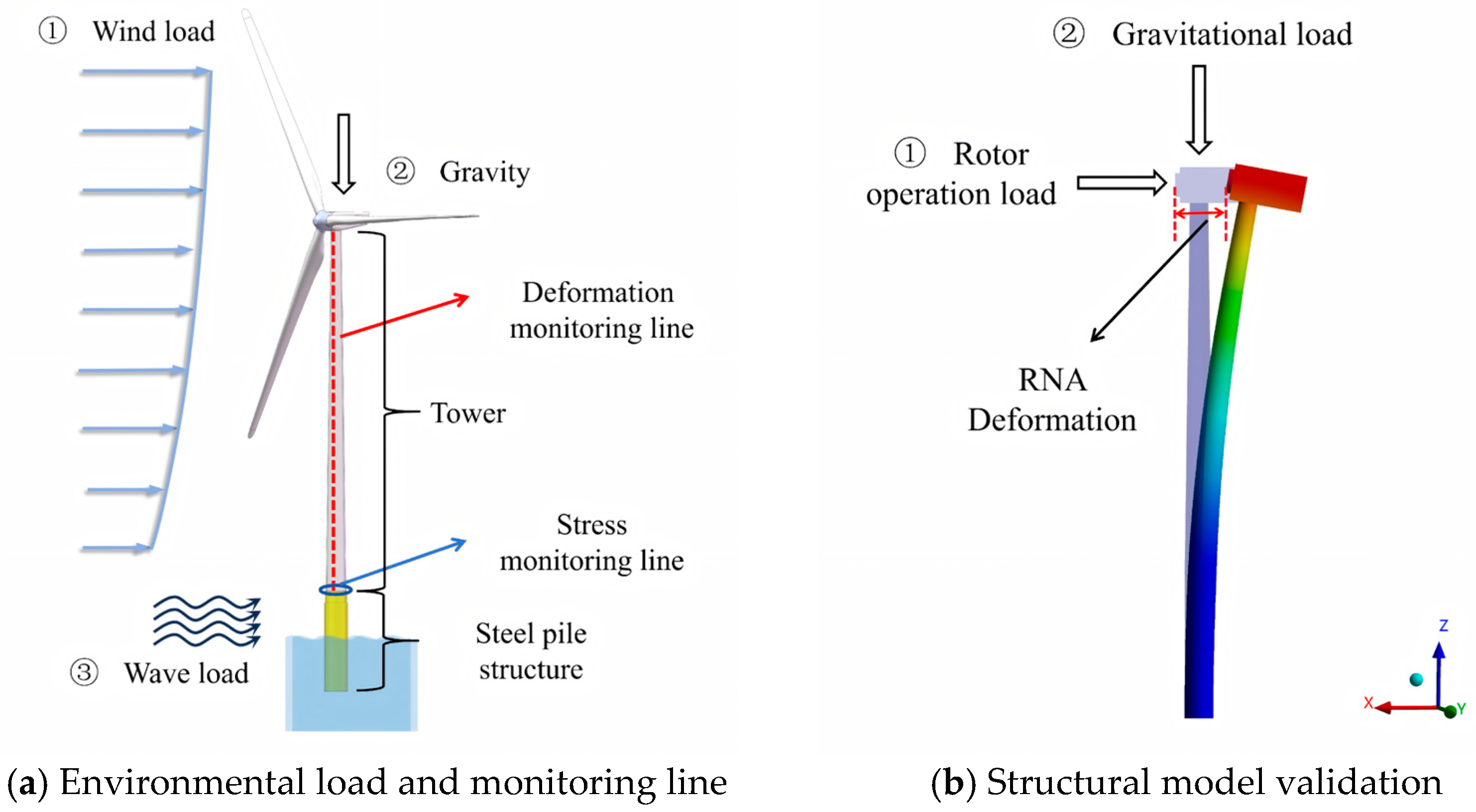
Structural response data are extracted using two types of monitoring lines, with fifty monitoring points arranged along each line. A deformation monitoring line is set along the windward side of the tower within the atmospheric zone, extending straight downward from the top of the tower to the transition section between the atmospheric zone and the splash zone, capturing time-dependent deformation data along a vertical path. A circle stress monitoring line is set at the junction of the tower and the steel pile. As the transition section between the tower and the steel pile, this location exhibits stress concentration induced by stiffness discontinuity; it can be designated as a critical hazard monitoring zone for capturing the temporal variation pattern of stress distribution. The environmental load model and monitoring line locations are shown in
Figure 9a.
The accuracy of the structural model has been validated using deformation, stress, and modal responses [
55]. Tower-top deformation, obtained through applied loading, is widely used for model verification and corrosion impact assessment due to its high sensitivity to global stiffness variations [
56]. Under time-dependent corrosion effects, this metric effectively captures the overall structural response, making it suitable for model validation in this study. To further validate the model, a horizontal rotor operation load of 2 MN and a vertical self-weight equivalent gravitational load of 3.5 × 10
5 kg were applied at the top of the tower as shown in
Figure 9b. The simulation results show that the tower-top-X-deformation of 1.528 m, closely matching the 1.649 m reported by Gentils et al. [
57], with a relative error of 6.73%. It confirms that the simulation model of the offshore wind turbine tower is reliable and accurately captures the structural behavior.
To verify the reliability of the CFD results, a grid independence study was performed under a wind speed of 20 m/s and a rotor speed of 11.2 rpm. Three mesh schemes with different resolutions were generated, containing approximately 1.2 million, 1.8 million, and 2.6 million cells, respectively. Comparison of the average surface pressure distribution results for the tower under different grid schemes showed that the relative change in average surface pressure was less than 3% when the grid density increased from 1.8 million to 2.6 million, indicating that grid independence has been essentially achieved. The mesh scheme with 1.8 million cells was selected for subsequent CFD simulations, with the grid division shown in
Figure 10.
3.4. CFD Simulation Samples
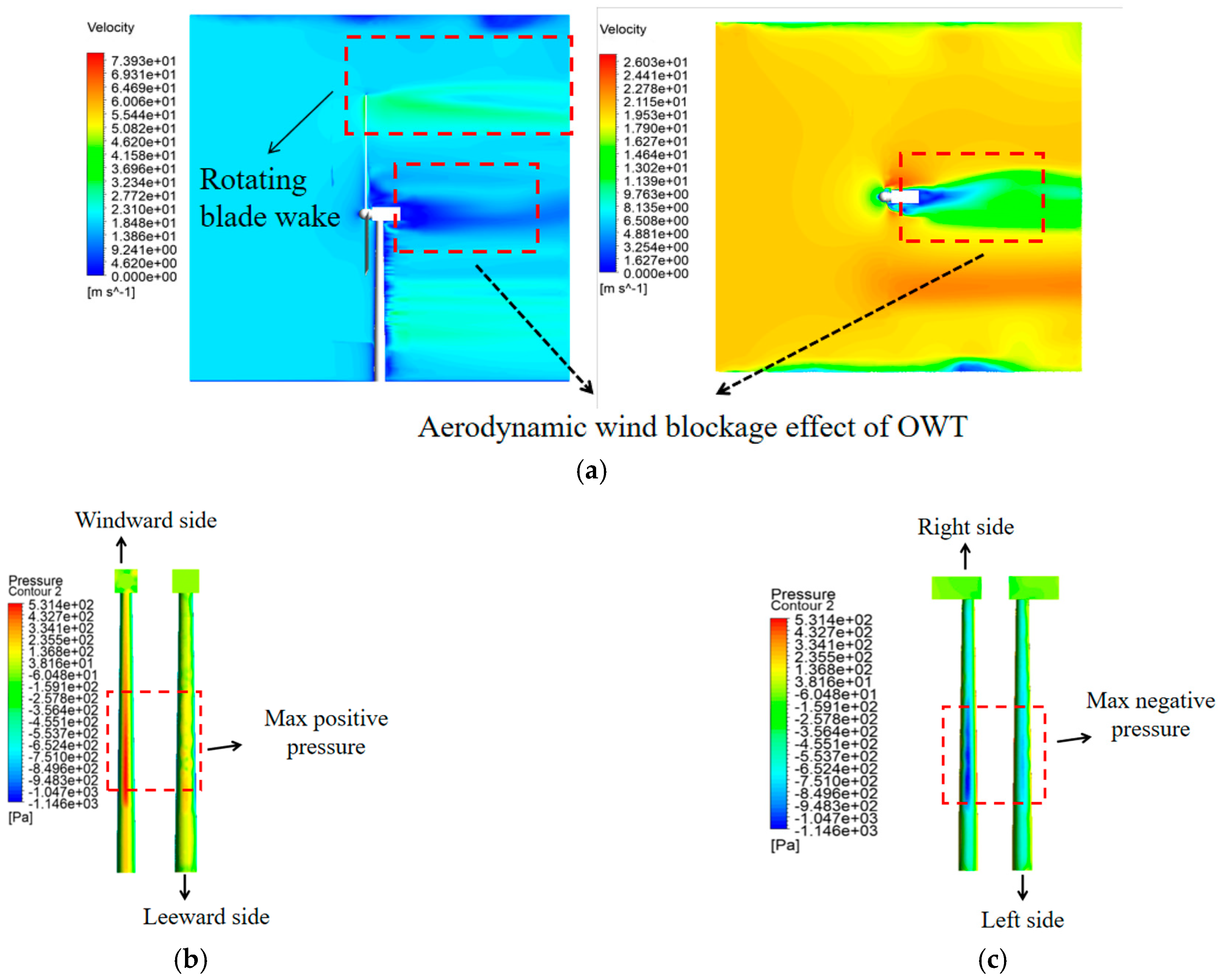
The following section presents the CFD simulation sample under operational conditions with a wind speed of 20 m/s and a rotor speed of 11.2 rpm. The flow field distributions around the wind turbine are illustrated in
Figure 11.
As shown in
Figure 11a, the wake effect induced by the rotation of the wind turbine blades significantly influences the flow field distribution around the tower. In the region near the rotor, the wind speed shows clear variations, forming a distinct velocity gradient, which indicates a strong blocking effect of the offshore wind turbine on the incoming flow. On the windward side of the tower, the wind speed is significantly higher than on the leeward side. Here, it is resulting in a high-pressure zone that exerts substantial positive pressure on the tower structure.
The pressure contour plots on the tower surface, as shown in
Figure 11b,c, indicate that the windward sides of the tower and nacelle are subjected to significant positive pressure, while the leeward side of the tower experiences negative pressure. Obviously, due to the rotational motion of the blades, the pressure difference between the upper and lower surfaces of the blades alters the surrounding flow field, resulting in the concentration of both maximum positive and negative pressures at the mid-to-lower section of the tower. Moreover, blade-induced disturbances and vortex shedding in the downstream region led to asymmetrical flow patterns on both sides of the tower, resulting in an uneven pressure distribution. And the support structure will generate lateral forces and significantly increase the risk of instability or buckling damage.
3.5. Response Analysis Considering Structural Performance Degradation
By integrating the constructed time-dependent structural degradation database with environmental load simulations, a large amount of time-dependent structural response data is efficiently generated through batch updating of key material parameters, without modifying the finite element model, mesh, or boundary conditions. Based on the generated dataset and the proposed framework. Cases 1 and 2 are analyzed using the initial intact state and the state after 25 years of service to investigate the evolution of structural stress and deformation under different loading conditions. The corrosion progression, structural model, mesh generation, and boundary constraints are kept consistent for both cases, with the only difference being the applied loading conditions, as detailed in
Table 4.
3.5.1. Stress Response Analysis
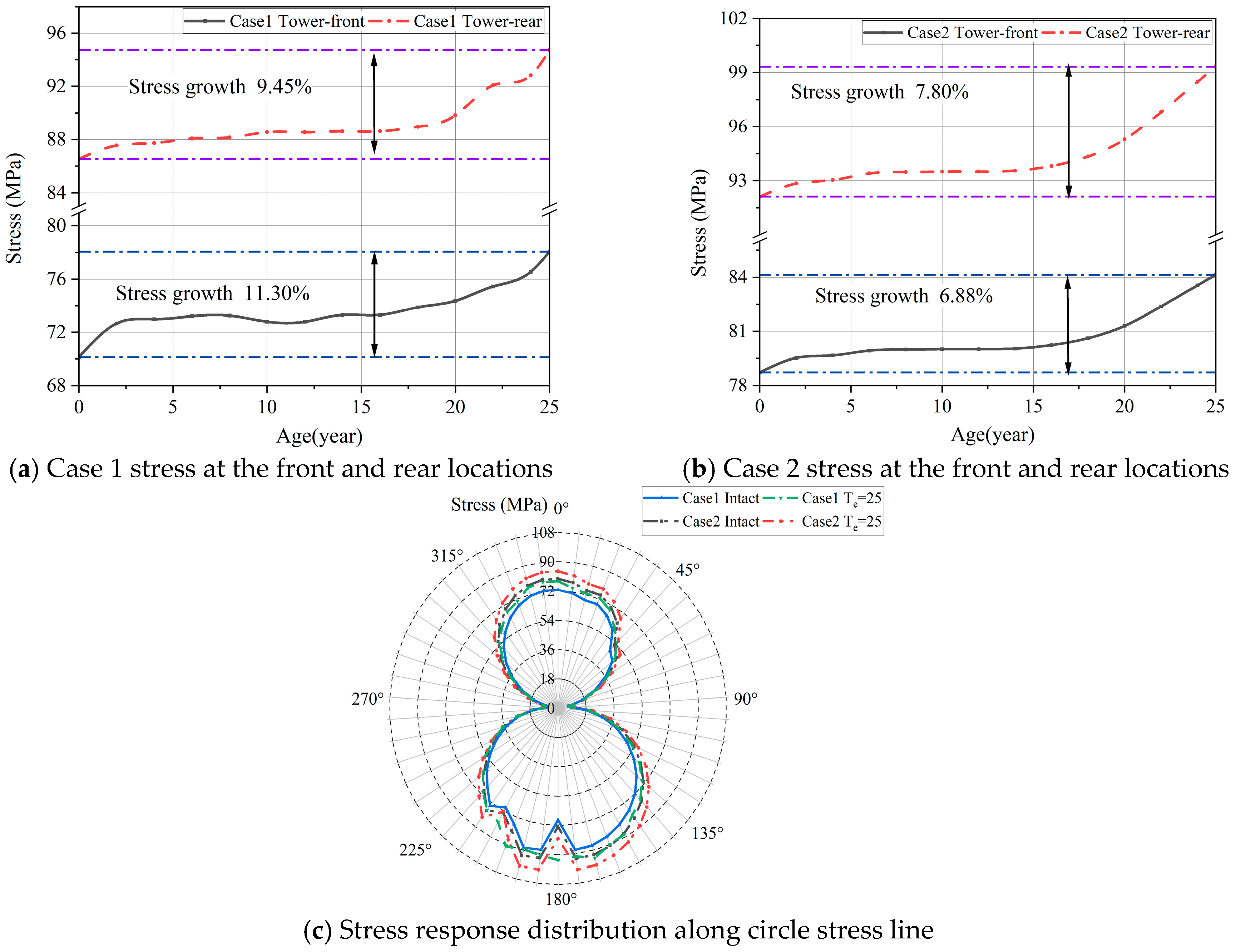
The circular stress distributions of the support structure under different service years are illustrated in
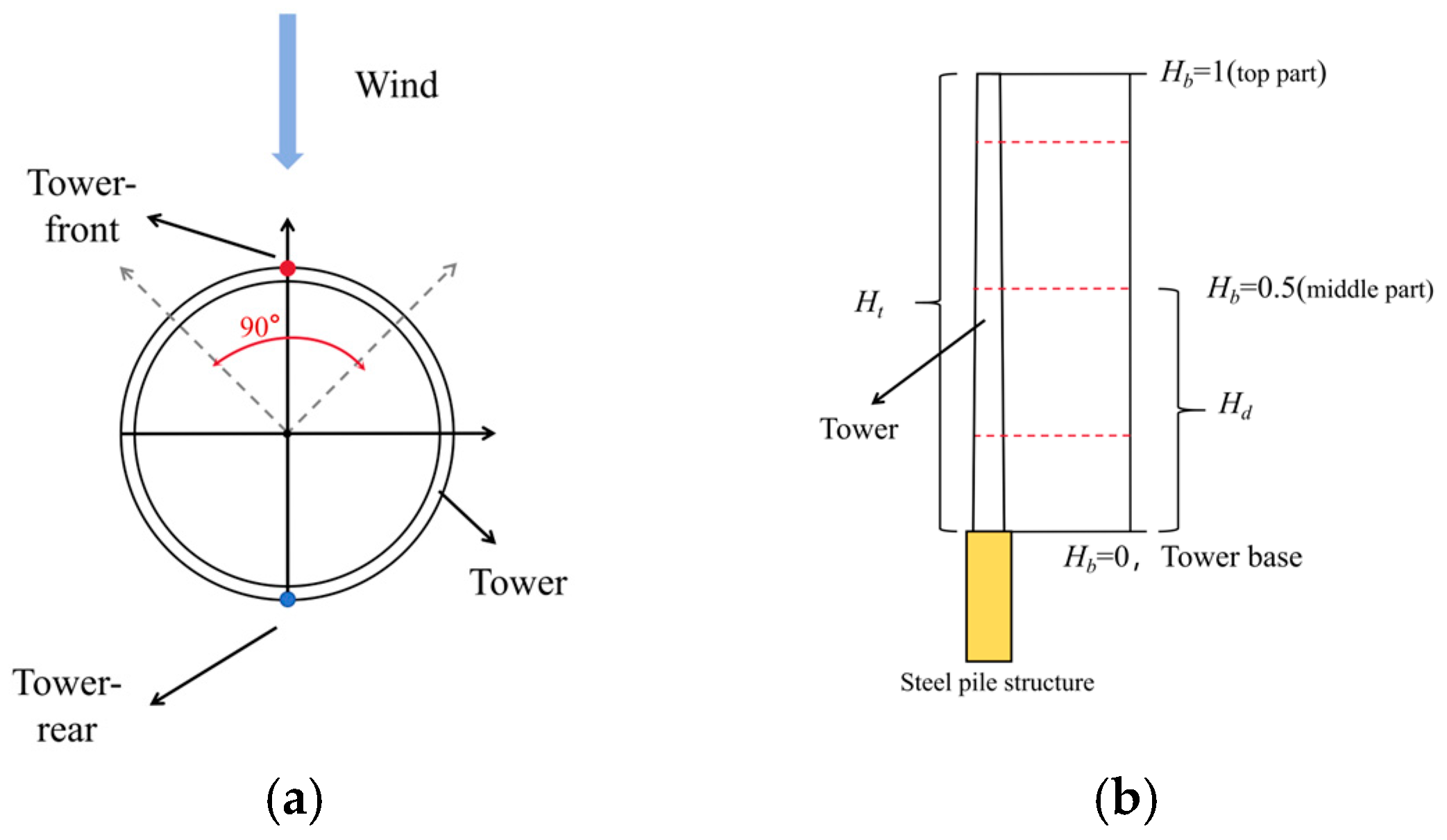
Figure 12, along with the stress variation characteristics of two monitoring points arranged at the front and rear sides. The specific locations of the two points are shown in
Figure 13a.
As shown in
Figure 12a,b, the time-dependent stress trend exhibits a clear positive correlation with the corrosion model. When the service life reaches 25 years, the stress increases on the front and rear sides of the tower under Case 1 are 11.30% and 9.45%, respectively, while the corresponding increases under Case 2 are 6.88% and 7.80%. Furthermore,
Figure 12c indicates that the high-stress distribution area showed an expanding trend of Cases 1 and 2. It can be found that while time-dependent corrosion has a moderate effect on stress amplitude, it significantly influences the distribution range of circumferential high-stress zones. The stress-affected area on the rear side of the tower exhibits more pronounced expansion compared to the front side. This corrosion-induced circumferential stress non-uniformity causes severely corroded regions to become susceptible to localized stress concentrations, increasing the risk of structural instability.
3.5.2. Deformation Response Analysis
By converting deformation zones at different heights into standardized values ranging from 0 (Tower-base) to 1 (Tower-top) using the position-height ratio
Hb, the relative positions of the deformation zones can be compared intuitively. The schematic diagram is shown in
Figure 13b, and the specific expression is given:
where
represents the height at which the deformation occurred from the bottom baseline;
represents the total height of the tower.
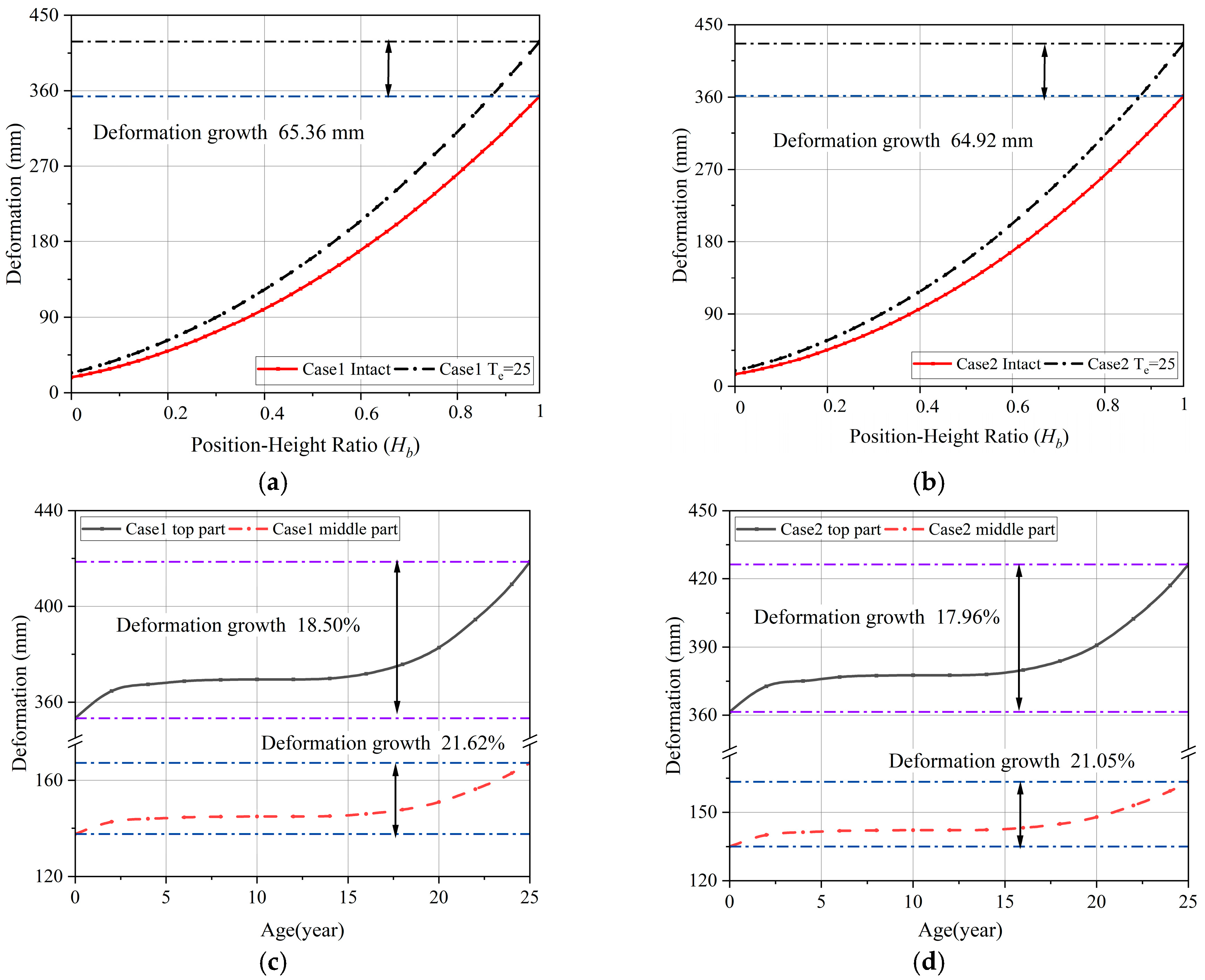
As shown in
Figure 14a,b, significant differences in deformation characteristics are observed between the initial service state and the state after 25 years of service under the corresponding operating conditions. Under Case 1, the deformation at the top of the wind turbine increases by 65.36 mm, while under Case 2, the top deformation increases by 64.92 mm. Based on the analysis of
Figure 14c,d, it is evident that the tower deformation exhibits a strong positive correlation with the corrosion evolution model, with a clear monotonic increasing trend as corrosion progresses. After 25 years, the increases in top deformation for the two cases are 18.50% and 17.96%, respectively. Notably, the mid-section of the tower in Case 1 shows a more pronounced deformation growth rate, reaching 21.62%. It indicates that corrosion progressively reduces the bending stiffness of the support structure over time. Under identical loading conditions, this degradation compromises structural stability, increases susceptibility to bending, and leads to cumulative deformation amplification.
4. The Database Extrapolation with Multiple Variables
4.1. Database Settings
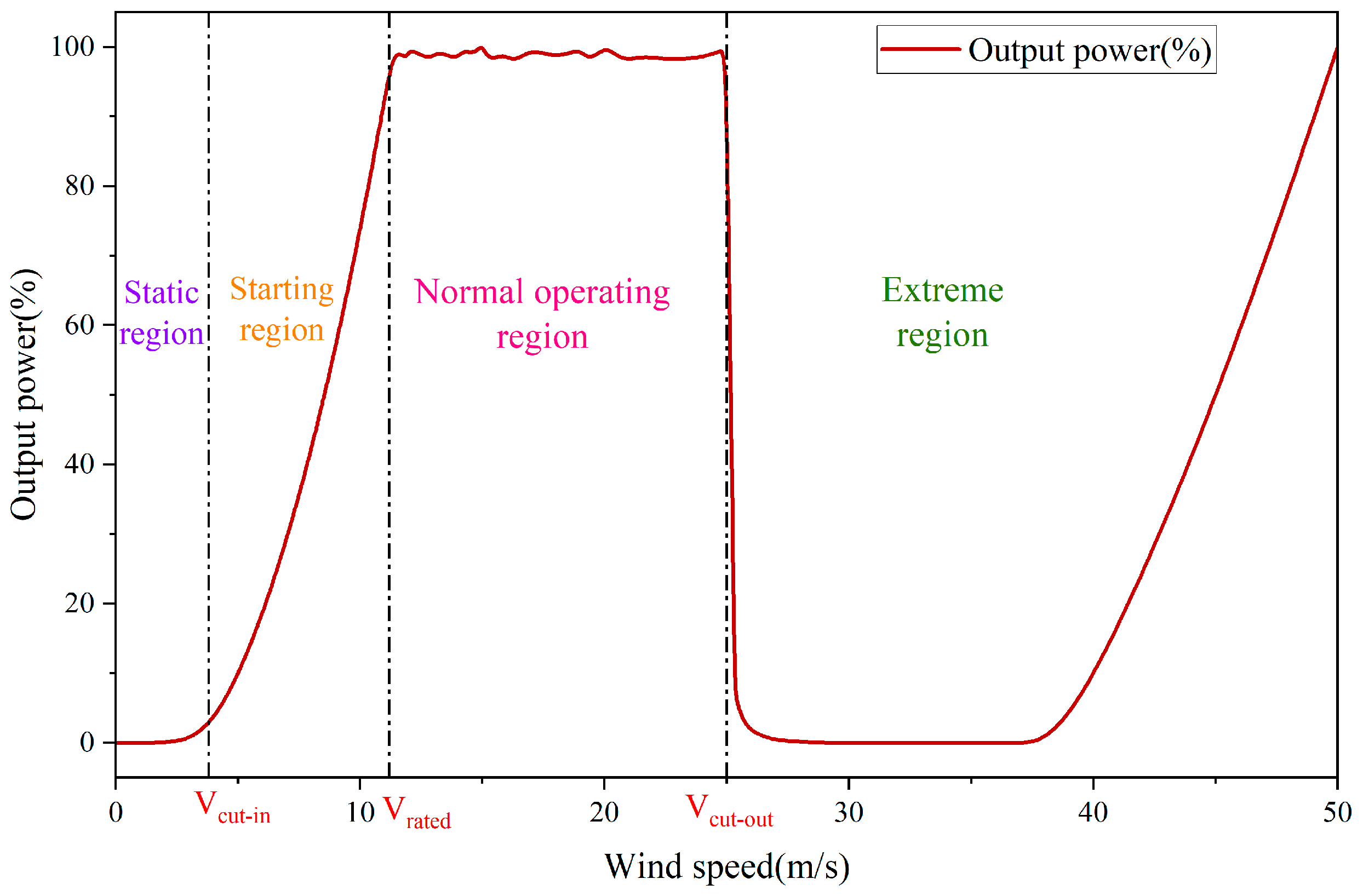
The establishment of the ordered time-series response database forms the foundation of data-driven methodology. Batch computation was performed on the basis of previously developed structural mechanical performance data and simulation to cover the expected marine environmental conditions during the wind turbine’s service life. Based on the wind speed–power curve of the offshore wind turbine, the operating conditions were defined to cover both the starting region and normal operating region [
58].
The environmental load cases are generated through combinations of wind speed, rotational speed, and wave parameters. A total of 13 wind speed conditions is considered, each corresponding to 1 rotational speed condition and 4 wave conditions. Taking Case 1 as an example, when the wind speed is 20 m/s and the blade speed is taken as 11.2 rpm, 4 wave conditions are considered: (1) a wave height of 5.5 m with a period of 9.2 s; (2) a wave height of 5.5 m with a period of 10.5 s; (3) a wave height of 7.5 m with a period of 9.2 s; and (4) a wave height of 7.5 m with a period of 10.5 s. For each environmental load case, a time-series simulation is conducted over a 25-year service period with a one-year time step, resulting in a total of 1300 time-dependent operating conditions. This database not only captures the long-term evolution characteristics of structural responses but also provides flexibility for further extension by adding or removing load cases as needed.
The relationship between wind speed and output power of the offshore wind turbine is shown in
Figure 15, and the corresponding operating conditions are listed in
Table 5.
4.2. The Design of Database Extrapolation
The temporal resolution and distribution of sample points within the database significantly influence the accuracy and stability of extrapolated predictions. An excessively large time window may fail to capture localized variations and dynamic corrosion effects, while an overly narrow window increases sample correlation and computational costs. A balanced temporal resolution is therefore critical to ensuring both representativeness and efficiency in long-term structural response forecasting.
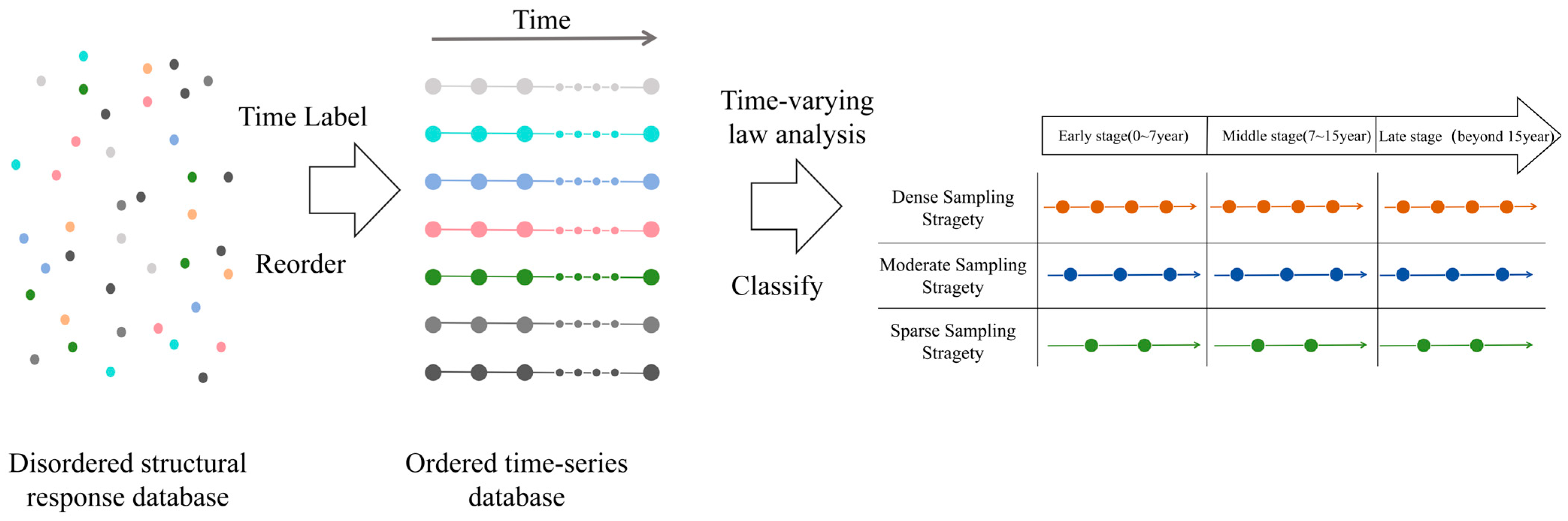
Figure 16 illustrates the conceptual design and implementation procedure of the proposed strategy. Initially, raw data are organized chronologically to reveal underlying temporal patterns. The evolution of structural responses under time-dependent corrosion is then analyzed across three distinct stages: early service (0–7 years), mid-life (7–15 years), and late service (>15 years). Subsequently, the data required for structural analysis are selected from each stage, and three time-point sampling strategies are defined and evaluated, such as (1) dense sampling strategy (four points per stage, 12 time points total) to provide a detailed characterization of trends. (2) Moderate sampling strategy (three points per stage, 9 time points total). (3) Sparse sampling strategy (two points per stage, 6 time points total) to capture the overall evolution trend with minimal sampling.
During the extrapolation process, after computing a structural response data point, the procedure is iteratively advanced to the next step, while the overall structural response state is progressively updated, until a complete response sequence over the entire service life is obtained. A structural response data point refers to a high-dimensional structural state characterized by multi-field information, including stress and deformation distributions, whereas a time point represents a sampling instant along the service timeline, associated with a corresponding structural response state. Accordingly, at each time point, the model processes high-dimensional structural state information, enabling the capture of complex spatiotemporal evolution characteristics of structural responses.
The proposed extrapolation workflow is as follows: First, the corrosion damage evolution process is divided into multiple intervals according to its progression characteristics. Second, different data sampling methods are applied to extract nodal data within each interval. Third, the slopes between adjacent nodes are calculated and substituted into Equations (26) and (27) to determine the corresponding weights. Finally, the derivative is obtained through weighted calculation using Equation (28), enabling the extrapolation of values beyond the defined intervals.
In accordance with the above sampling strategies, structural response data for any missing service years can be supplemented. The extrapolated structural responses at the 25th service year are subsequently analyzed and compared. The numerical simulations were performed on an Intel(R) Core™ i7-14700HX processor platform (Intel Corporation, Santa Clara, CA, USA). During actual computation, 10 cores and 14 threads were utilized in parallel execution. Under this hardware configuration, the computation time required for extrapolation prediction was approximately 1.2 s, which is far shorter than the approximately 7300 s consumed by the traditional CFD simulation. The results indicate the data-driven prediction method enables efficient and rapid estimation at any time node. This approach eliminates the need for repeated modeling and simulation, thereby substantially reducing computational cost and significantly enhancing engineering applicability.
4.3. Extrapolated Prediction of Stress Distribution
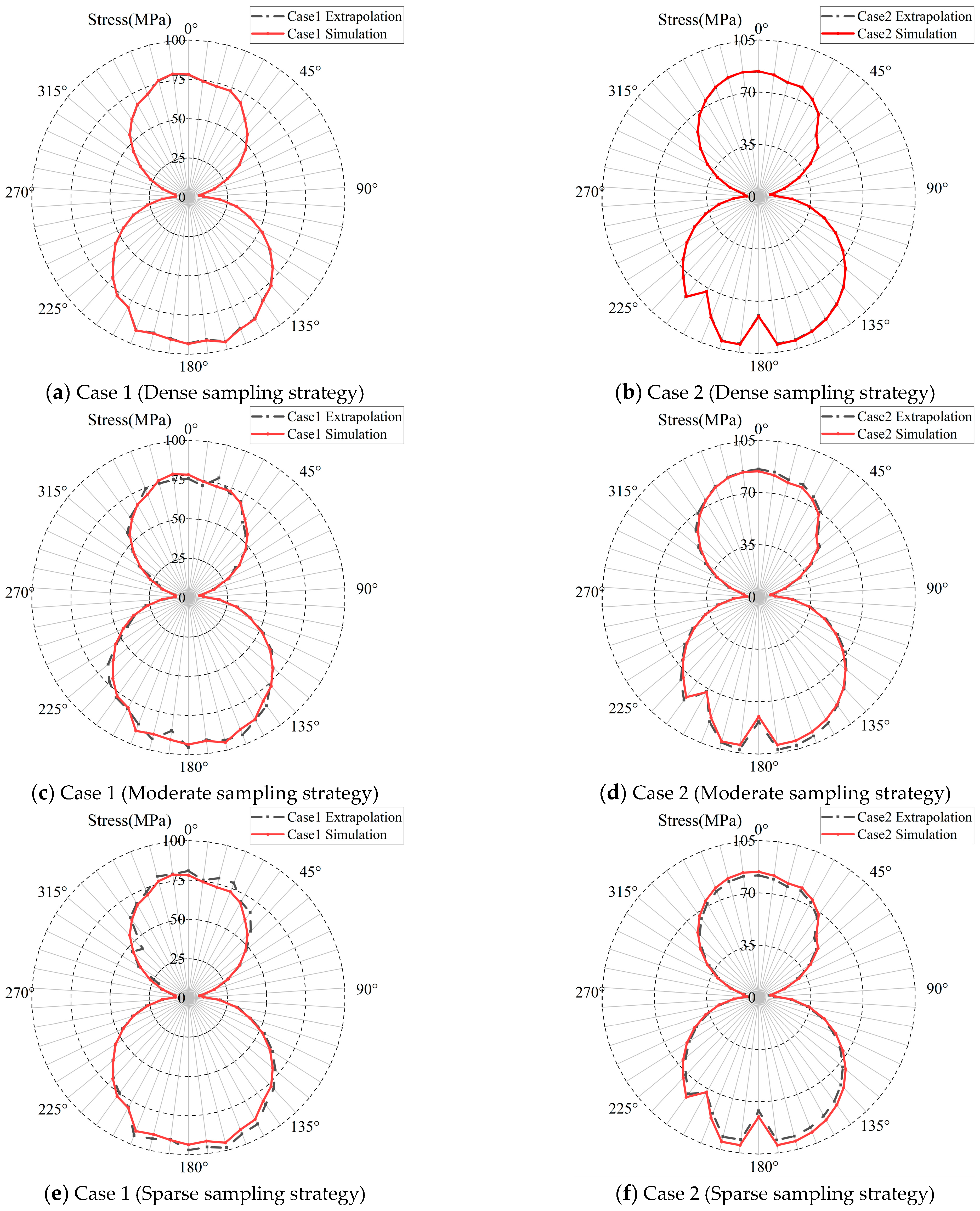
The extrapolated stress distribution along the circumferential direction under different sample extrapolation strategies in Case 1 and Case 2 was compared with the simulated data, as shown in
Figure 17.
As shown in
Figure 17, the prediction results obtained using the dense sampling strategy demonstrate strong agreement with the simulation data, with high overall fitting accuracy and an effective representation of the stress distribution trend. In comparison, the moderate sampling and sparse sampling strategies exhibit a slight reduction in fitting precision, though the overall similarity to the simulation results remains acceptable.
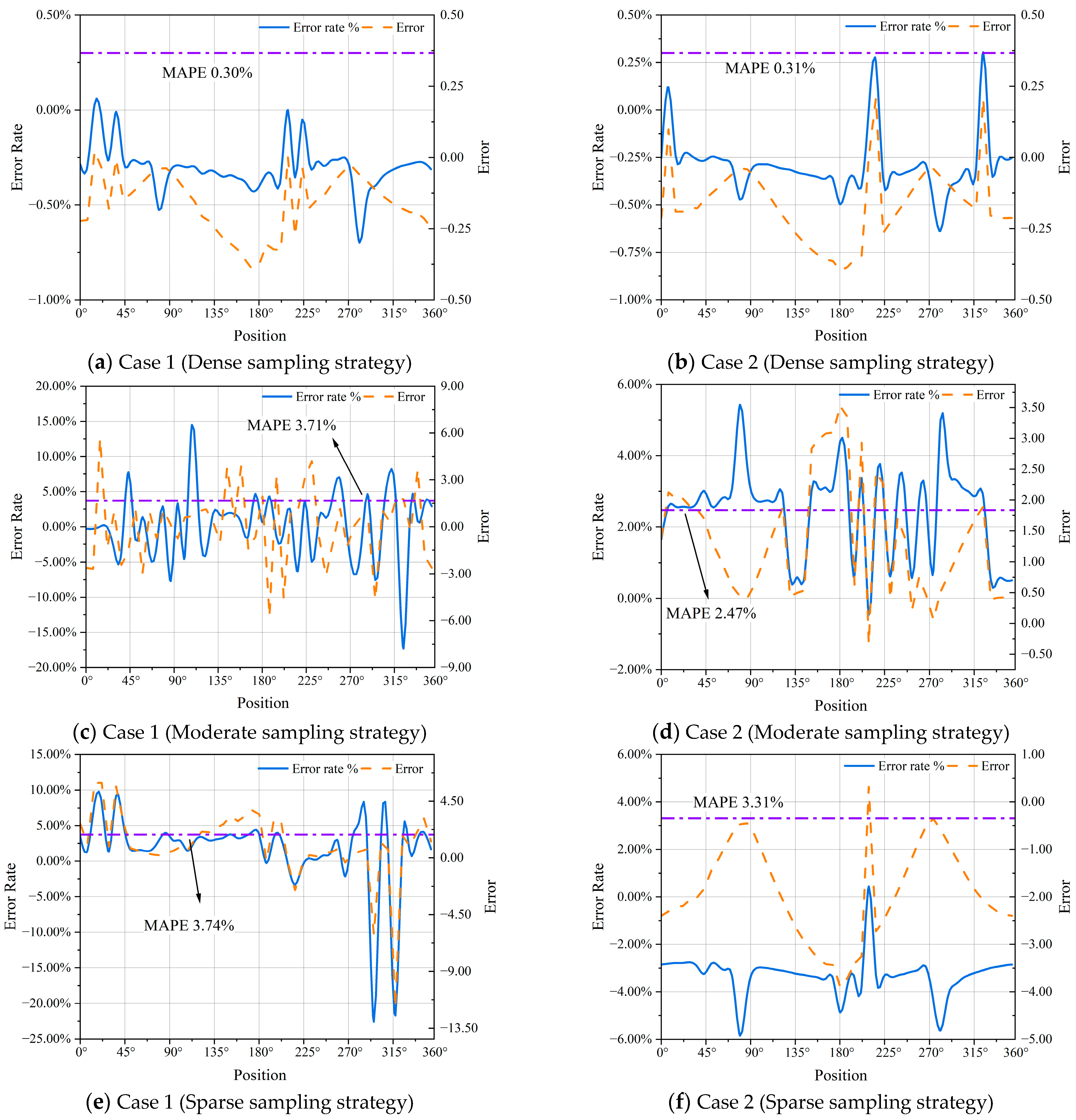
The corresponding error distributions for each extrapolation method are illustrated in
Figure 18. In terms of Mean Absolute Percentage Error (MAPE), the dense sampling strategy achieves values of 0.30% and 0.31% in Case 1 and Case 2, respectively, indicating the highest predictive accuracy and demonstrating its ability to reliably reproduce the actual stress distribution trend. The moderate sampling strategy shows moderately increased prediction errors, with MAPE values of 3.71% and 2.47%, respectively. The sparse sampling strategy yields MAPE values of 3.74% and 3.31%, which are comparable to those of the moderate sampling strategy. This suggests that even with a further reduction in temporal samples, the prediction accuracy does not degrade significantly, confirming the robustness of the approach.
4.4. Extrapolated Prediction of Deformation Distribution
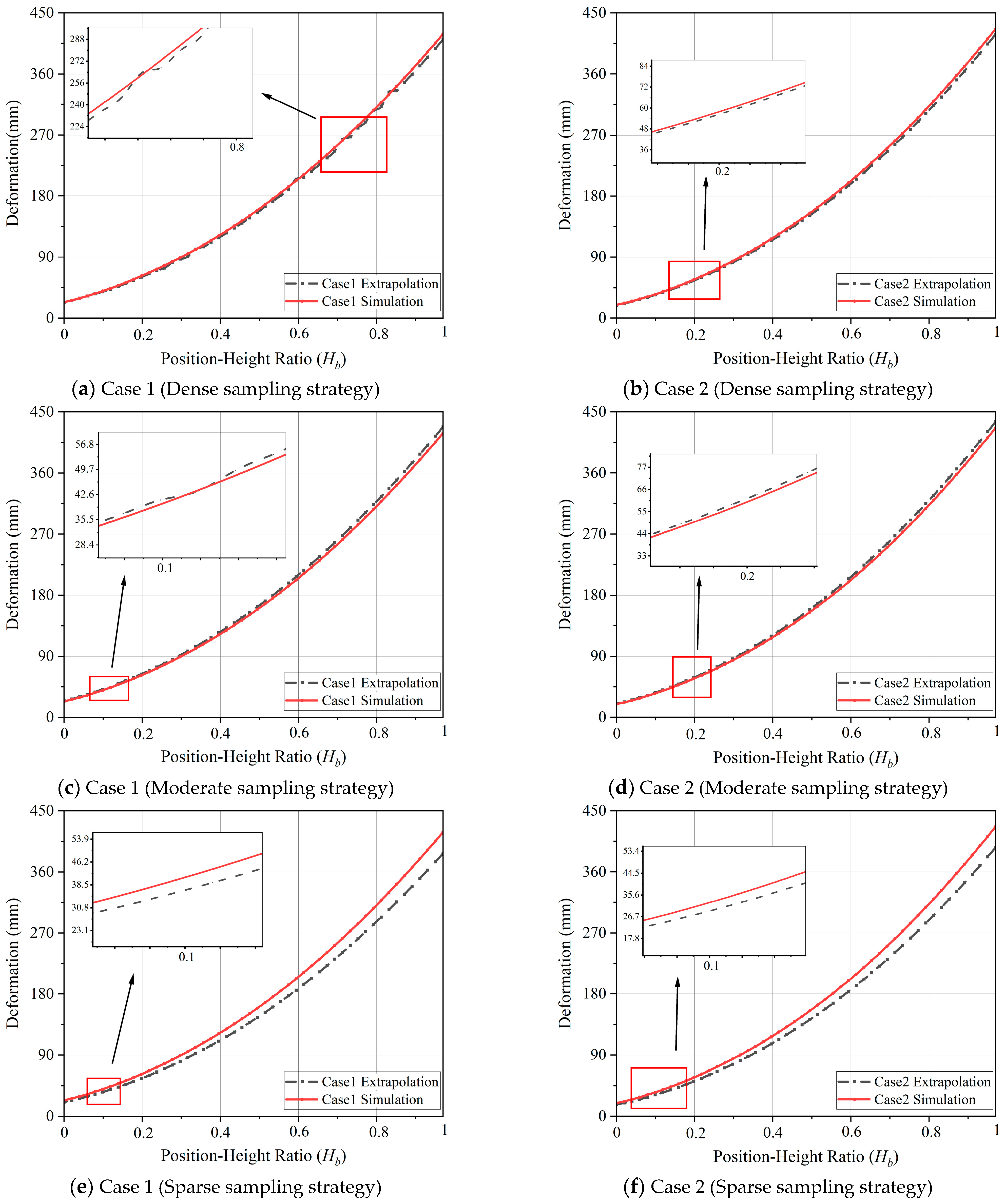
The extrapolated deformation distribution along the height direction under different sampling strategies in Case 1 and Case 2 was compared with the simulated data as shown in
Figure 19.
As shown in
Figure 19, the prediction results generated by the dense sampling strategy align closely with the simulation results, demonstrating high fitting accuracy despite a slight overall underestimation. In comparison, the moderate sampling strategy exhibits a moderate decline in accuracy, with a tendency toward overestimation. The sparse sampling strategy shows more significant deviation, characterized by substantial underestimation and overall poor fitting performance.
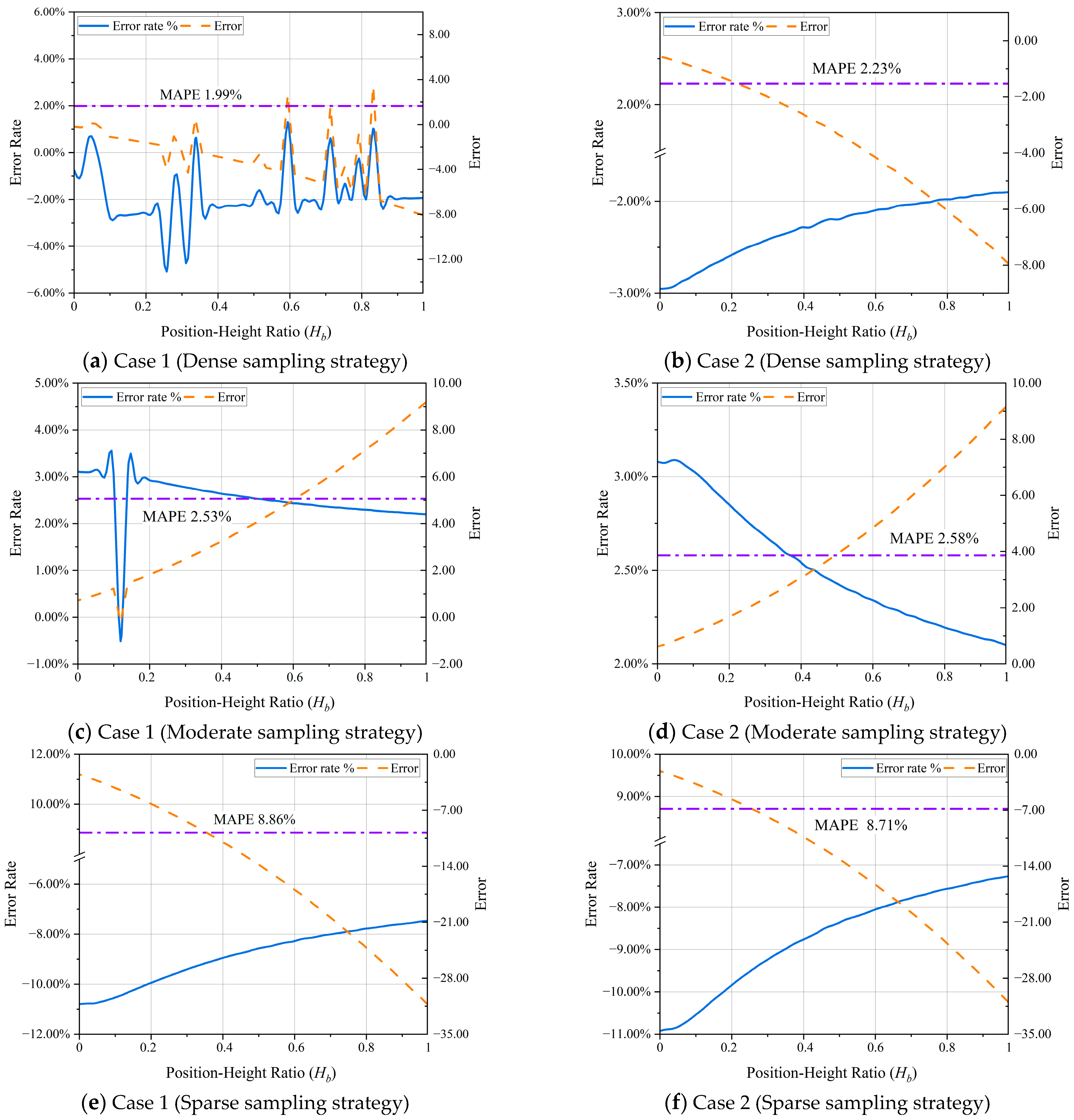
As illustrated in
Figure 20, the MAPEs of the two cases using the dense sampling strategy are 1.99% and 2.23%, respectively, indicating high prediction accuracy. The MAPE values of the moderate sampling strategy increased slightly to 2.53% and 2.58%. In contrast, the sparse sampling strategy shows significantly larger prediction errors, with MAPE values of 8.86% and 8.71%, respectively. It could be seen that the prediction errors are higher at the tower base and decrease roughly linearly toward the top, with only a few notable fluctuations. It indicates that the prediction method is suitable for time-dependent deformation response estimation of wind turbine towers.
Based on the extrapolation results of both stress and deformation, a clear trend can be observed: as the number of time-dependent samples decreases, the MAPE of the predictions increases. The error growth is more pronounced for deformation, indicating higher sensitivity to sample size, whereas stress predictions remain relatively robust and maintain satisfactory accuracy even under sparse sampling conditions.
Further analysis indicates that the accuracy of the extrapolation model hinges on its ability to estimate the local derivatives that define the evolution trend. In the sparse strategy, with only two time points sampled per stage, the derivative is effectively calculated from a single interval. This linear approximation cannot capture the local curvature of the response trajectory, which is particularly critical during the nonlinear, accelerated degradation phase in the late service stage. Consequently, the model underestimates the rate of change, leading to significant prediction errors. Adding one or two more datasets per stage, as in the moderate or dense strategies, provides multiple adjacent intervals. This allows the model to compute a more representative, weighted estimate of the local derivative by incorporating information from these intervals. With this enriched local data, the model can better approximate the curvature of the evolving trend, leading to a substantially more accurate fit.
From the perspective of sampling strategy applicability, dense and moderate sampling enable high-accuracy extrapolation and effectively capture structural tipping points, while also providing a reliable representation of the three-stage evolution of time-dependent structural responses, as illustrated in
Figure 5. In contrast, a sparse sampling strategy, due to the limited number of sampling points, is less capable of accurately describing the nonlinear trends in the later service stage, which may lead to significant deviations and consequently larger prediction errors.
5. Conclusions
This study presents a data-driven framework for predicting the structural response of offshore wind turbines under time-dependent corrosion damage. The proposed structural mechanical degradation equivalent method, incorporating time-dependent corrosion damage, effectively characterizes the evolution of corrosion damage and its impact on the material properties of offshore wind turbine support structures over service life. Moreover, a database extrapolation technique is introduced to forecast the future evolution of key structural responses, enabling efficient assessment of the long-term performance of offshore wind support structures. It indicates that the framework achieves high computational efficiency while maintaining satisfactory predictive accuracy, offering practical value for the design optimization and maintenance planning of offshore wind energy infrastructure. The main conclusions are as follows:
- (1)
Based on the corrosion loss model, the structural mechanical degradation equivalent method predicts the progressive reduction in depth and systematically converts it into a cross-sectional damage model. By integrating the degradation behavior of material properties, it enables a quantitative assessment of the residual structural bearing performance. A structural mechanical database is subsequently constructed for numerical simulations by modifying material properties instead of frequently updating the structural geometry. This strategy significantly streamlines the fluid–structure coupling simulation process, reduces computational complexity, and efficiently generates time-dependent structural response datasets that provide reliable support for safety evaluation and life-cycle management of offshore wind turbine structures.
- (2)
By integrating CFD simulations with a database construction framework, a high-fidelity full-lifecycle structural response database was established. The results indicate that structural responses exhibit a clear nonlinear evolution under corrosion progression, characterized by a rapid increase in the early service stage, a relatively stable mid-life stage, and an accelerated deterioration stage in the late service period. Overall, the long-term corrosion evolution induces a persistent degradation in the global safety performance of offshore wind turbine support structures.
- (3)
Based on the established time-dependent structural response database, data completion and extrapolation analyses were performed. The dense sampling strategy achieved the highest accuracy, with stress prediction error of 0.31% and deformation error of 2.23%. The moderate sampling strategy yielded stress errors of 2.47% and deformation errors of 2.58%. In contrast, the sparse sampling strategy showed reduced accuracy, with stress and deformation errors increasing to 3.31% and 8.71%, respectively, although it still captured the overall evolution trend of structural responses. The proposed approach enables high-precision prediction of structural performance and its evolutionary trends, providing a scientific basis and effective reference for structural optimization and lifetime extension strategies in engineering design and maintenance phases.
The proposed method for predicting the structural response of offshore wind turbines under time-dependent corrosion damage enables fast and accurate prediction of structural response distributions at different service years, providing an efficient approach for long-term performance assessment of support structures. In engineering applications, the proposed method can be used to optimize inspection strategies based on the time-dependent evolution of structural responses, provide decision support for the retrofit of tower components, and predict the remaining service life. Future research will incorporate stochastic wind and wave conditions to perform transient dynamic response analysis. Additionally, non-uniform corrosion models will be developed, and soil-structure interaction models will be integrated, enabling a more comprehensive evaluation of structural performance. To address the challenges posed by strong nonlinearity in time-series data, machine learning-based algorithms, such as neural networks or deep learning techniques, will also be explored as potential solutions to improve the accuracy of modeling complex nonlinear relationships.




 ,
,