An Empirical Examination of the Adverse and Favorable Effects of Marine Environmental Conditions on the Durability of Optical-Fiber Submarine Cables
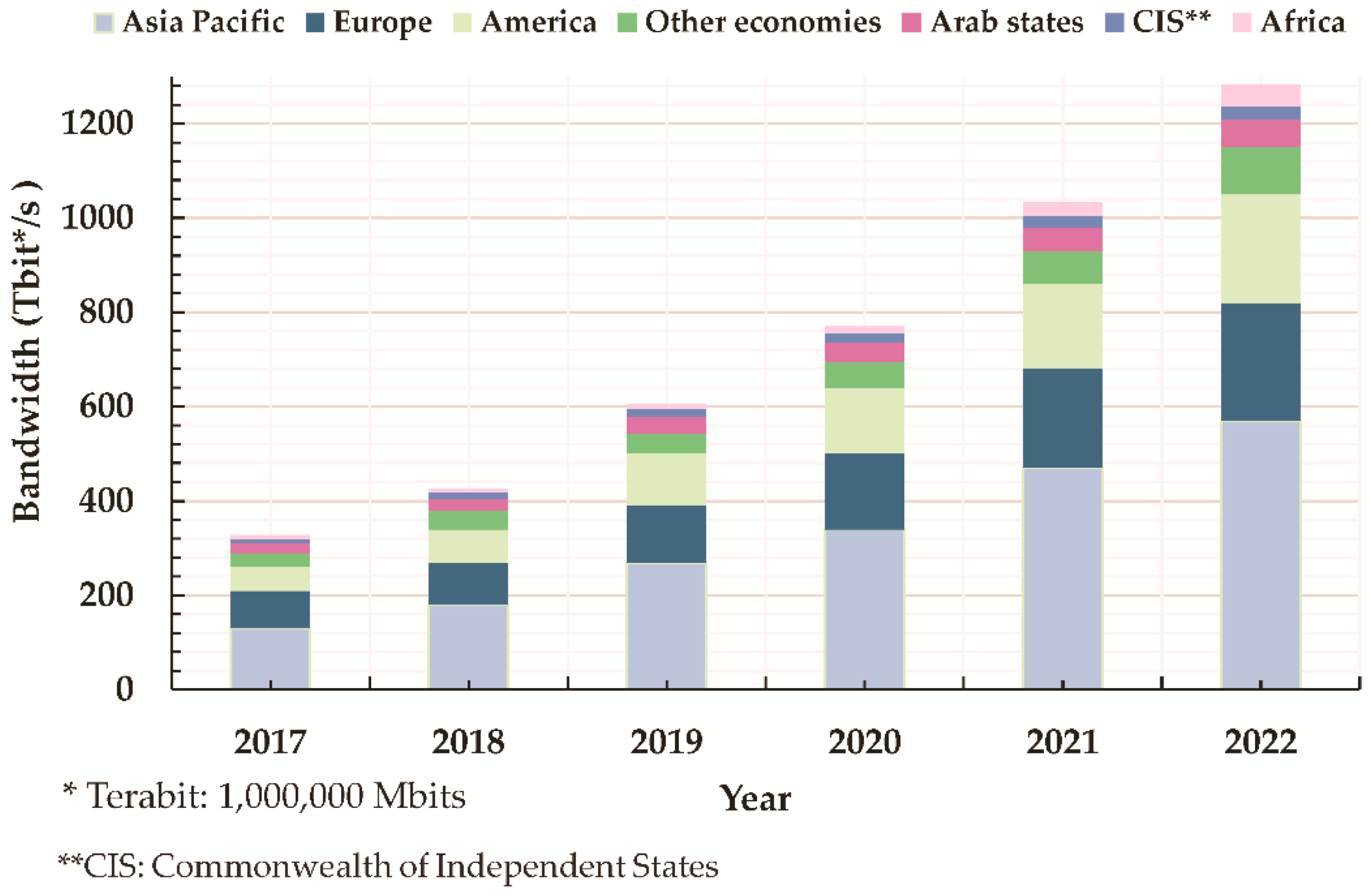
Abstract
1. Introduction
2. Overview of Mechanical Cable Design, Physical Characteristics, and Typical Failures Caused by the Marine Environment
2.1. Mechanical OFS Cable Structures
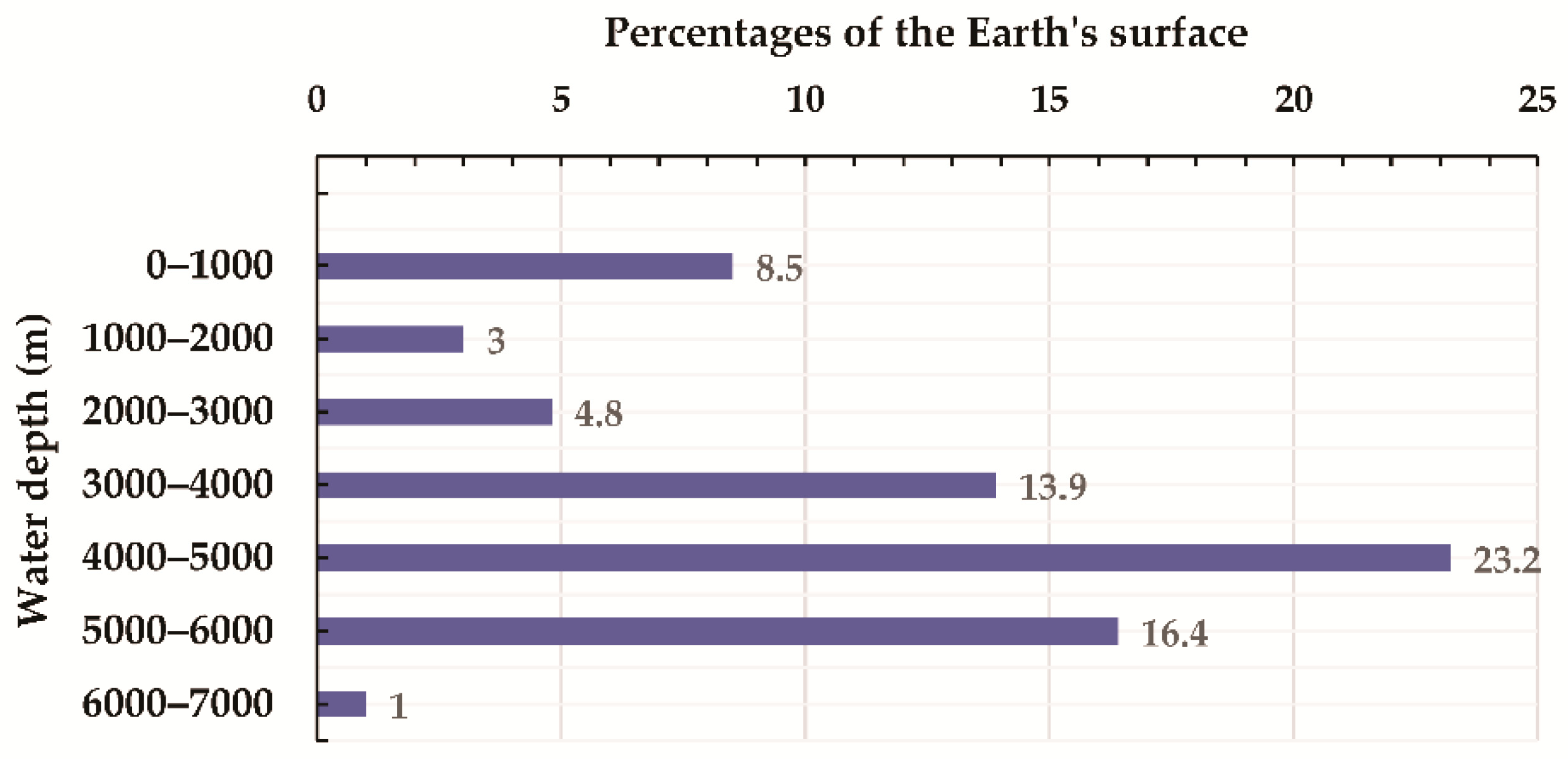
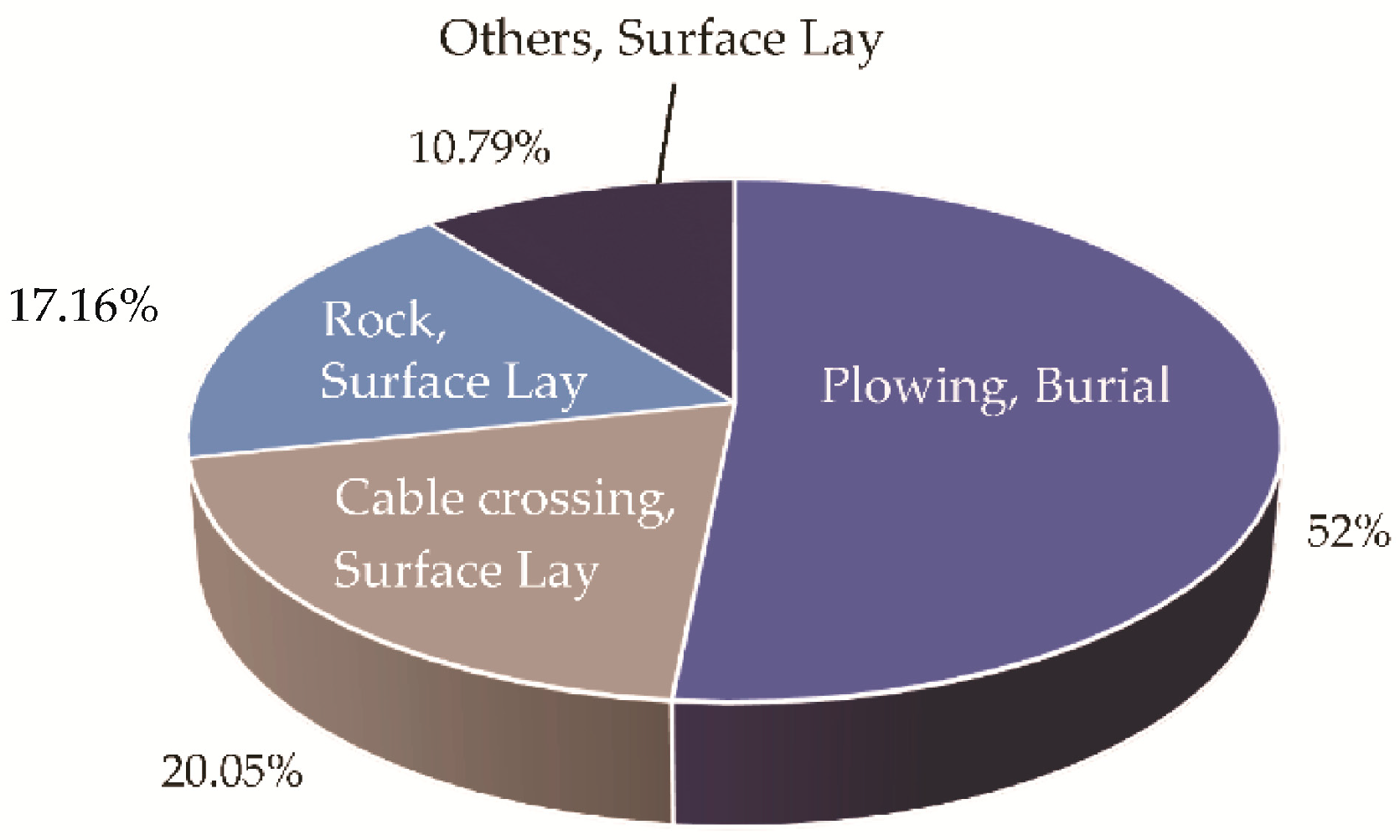
2.1.1. The Application Ratio of Cable Types on a Global Scale
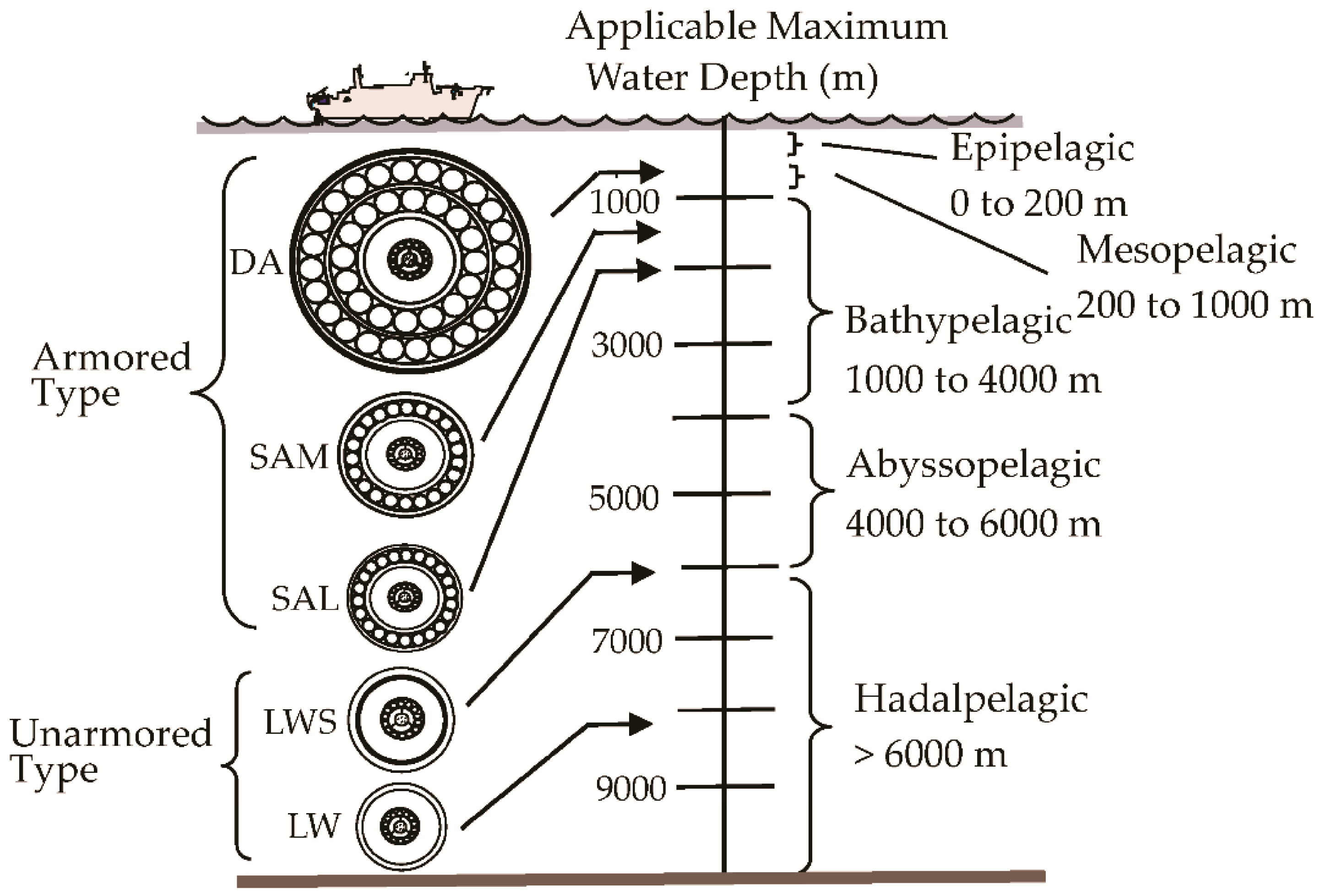
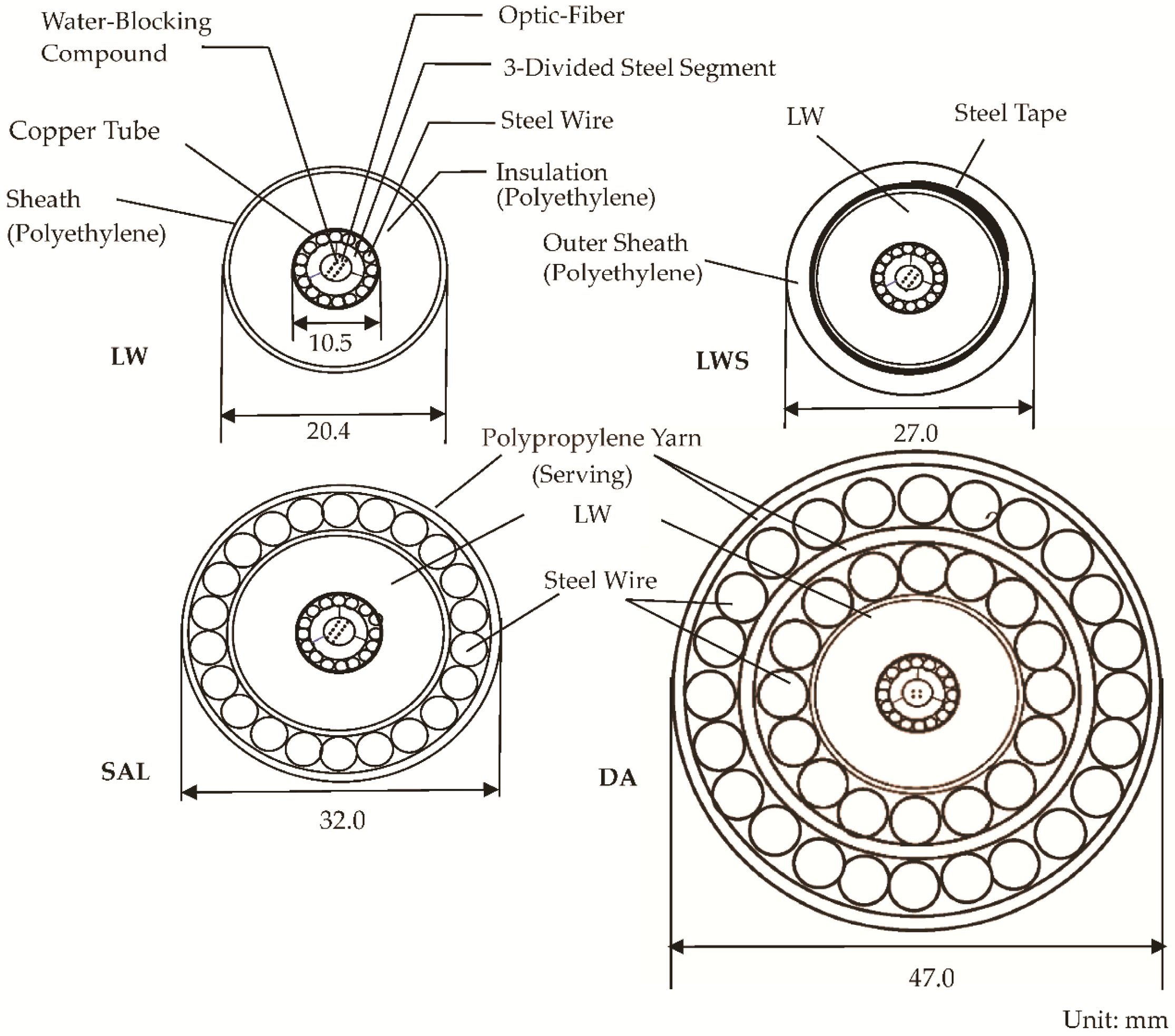
2.1.2. Armor Design
2.1.3. Details of Mechanical Protection for the Cable Core (LW)
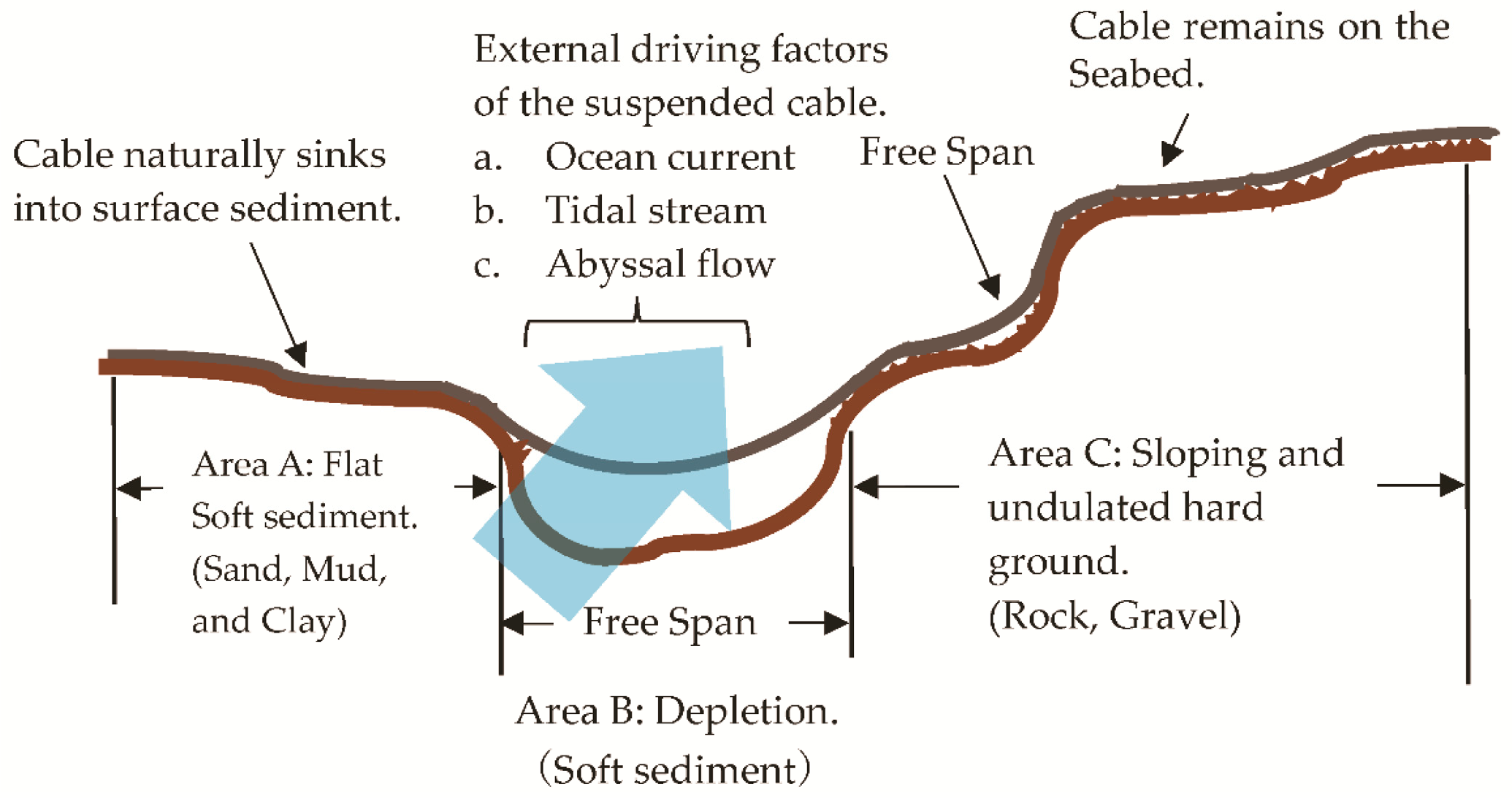
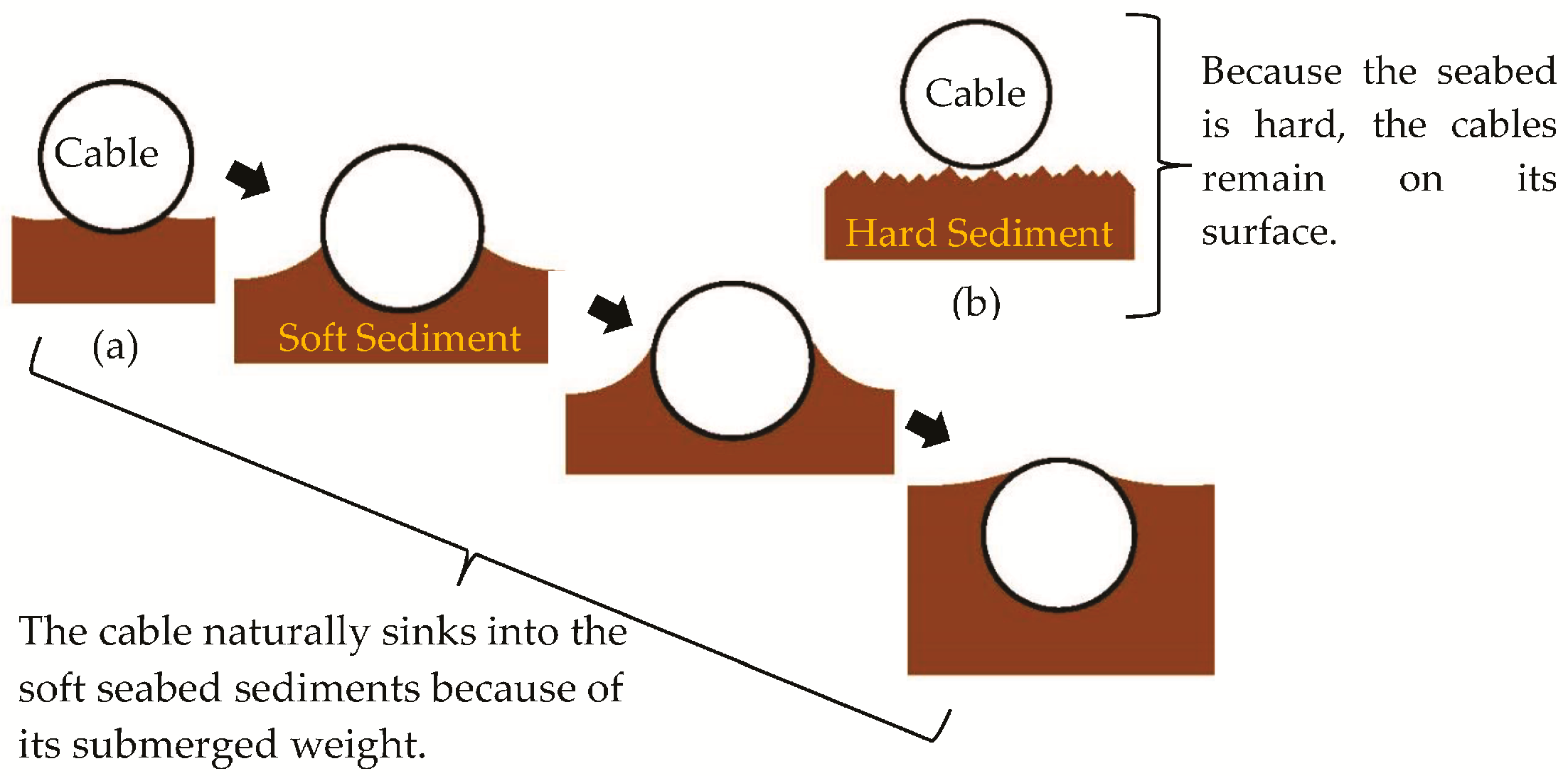
2.2. Behavior of Cables on the Seabed
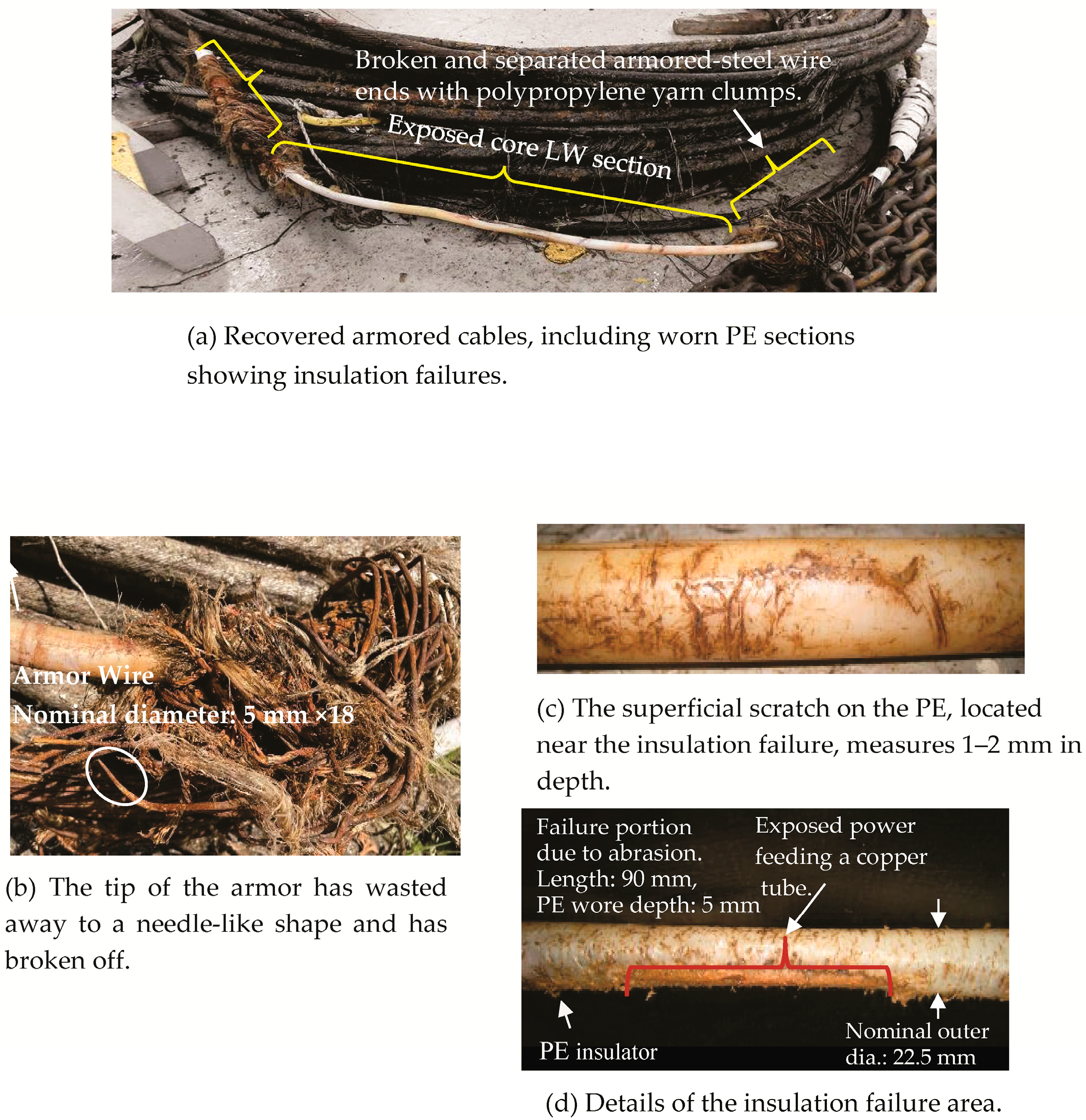
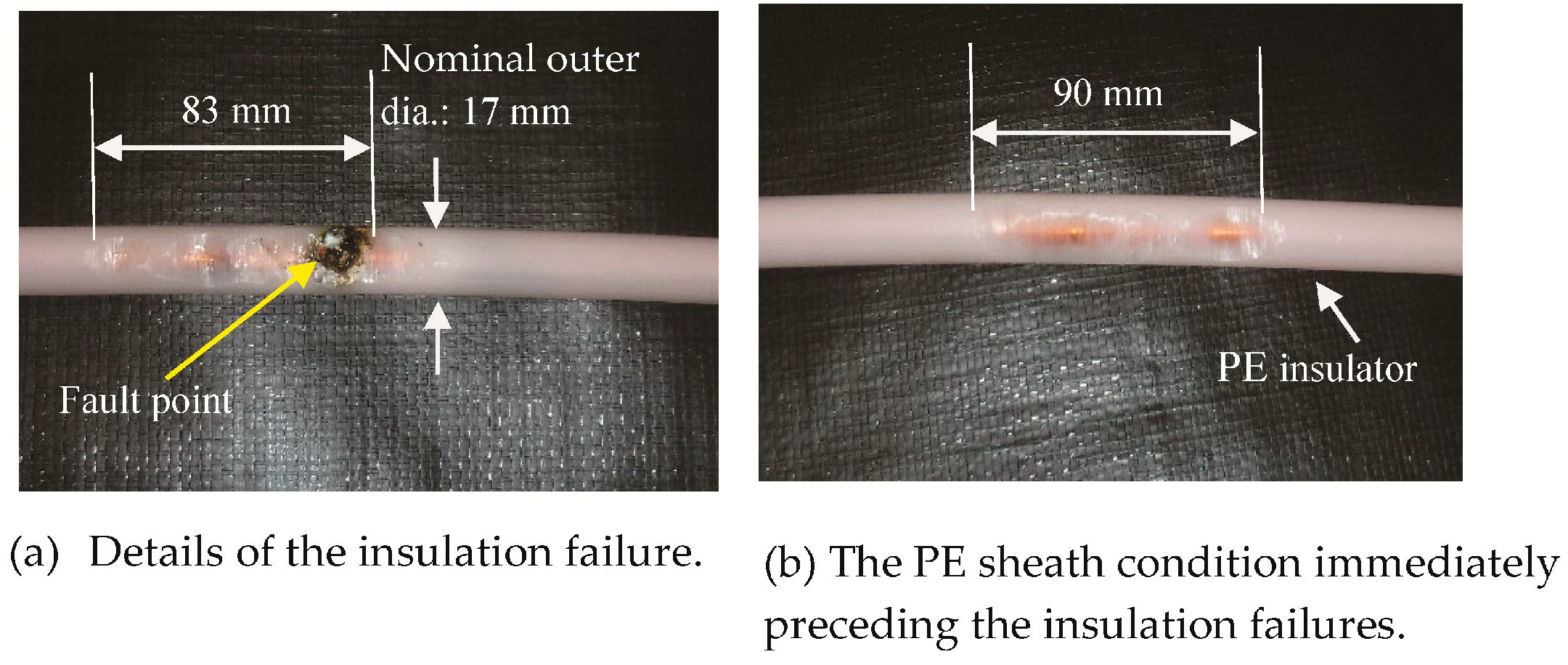
2.3. Examples of Damage to the PE Insulation Layer
3. Analysis of Armor Degradation
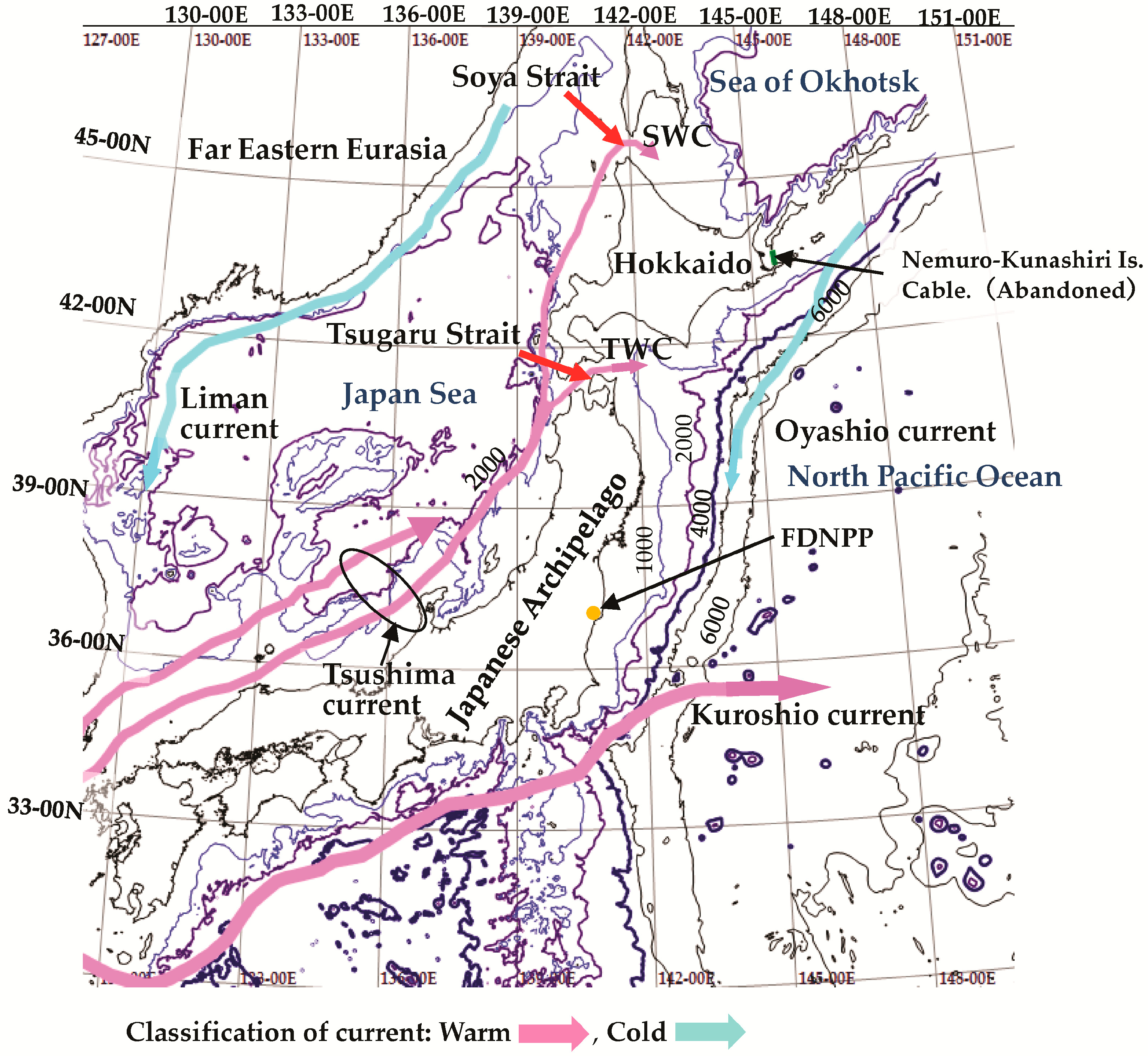
3.1. A Geographical Overview of the Studied Area
3.1.1. Location of the Cable System Under Study
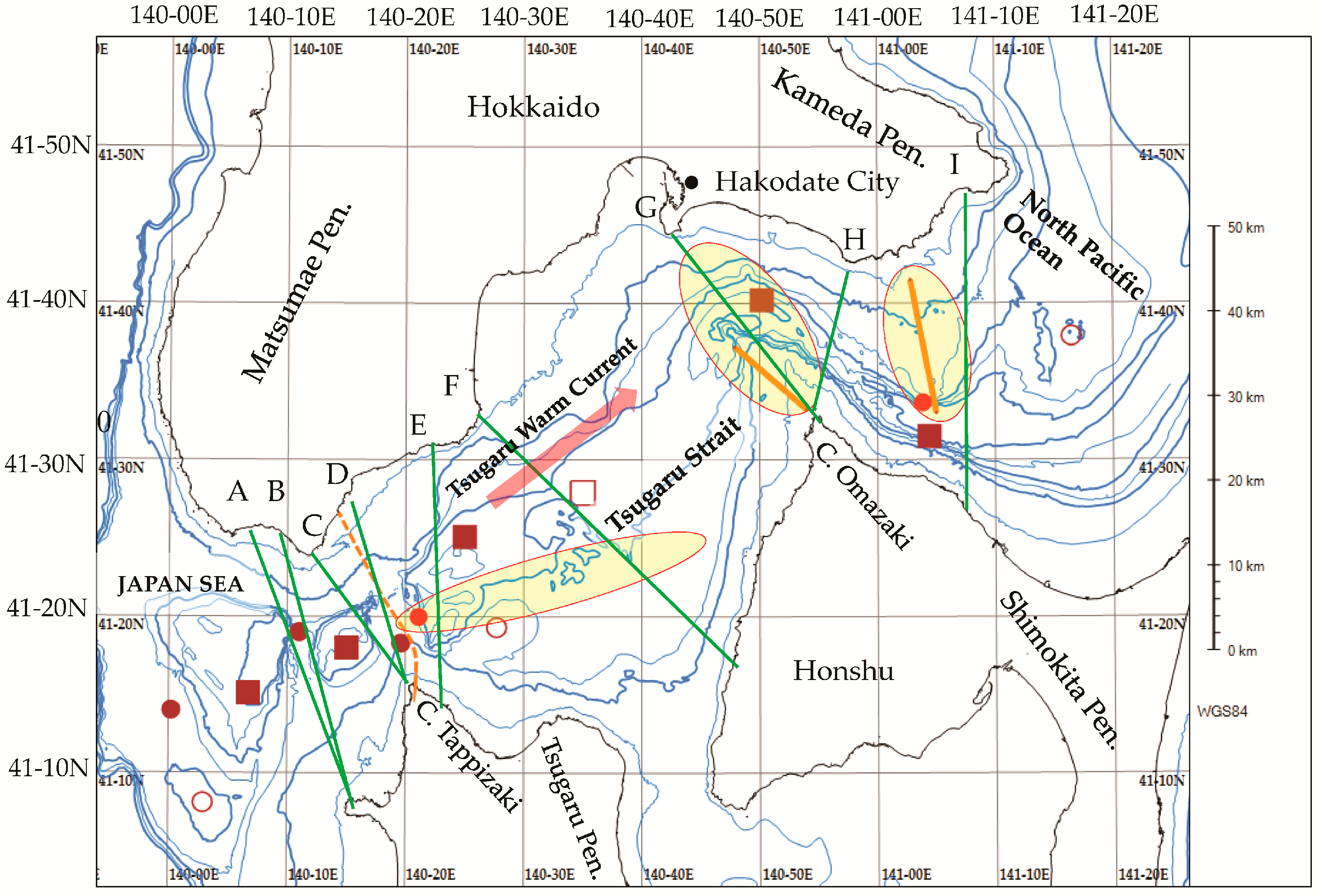
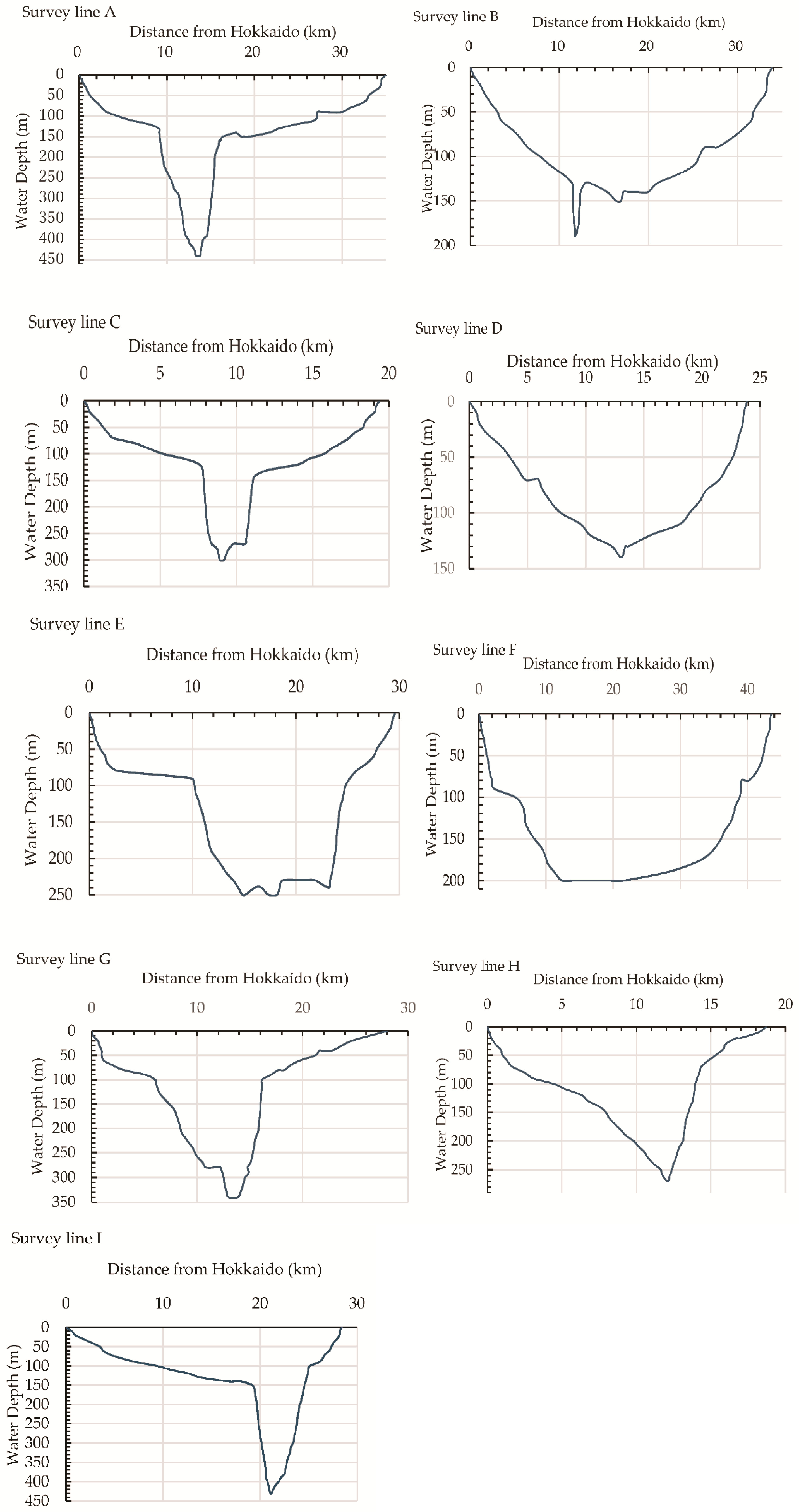
3.1.2. Characteristics of the Tsugaru Strait
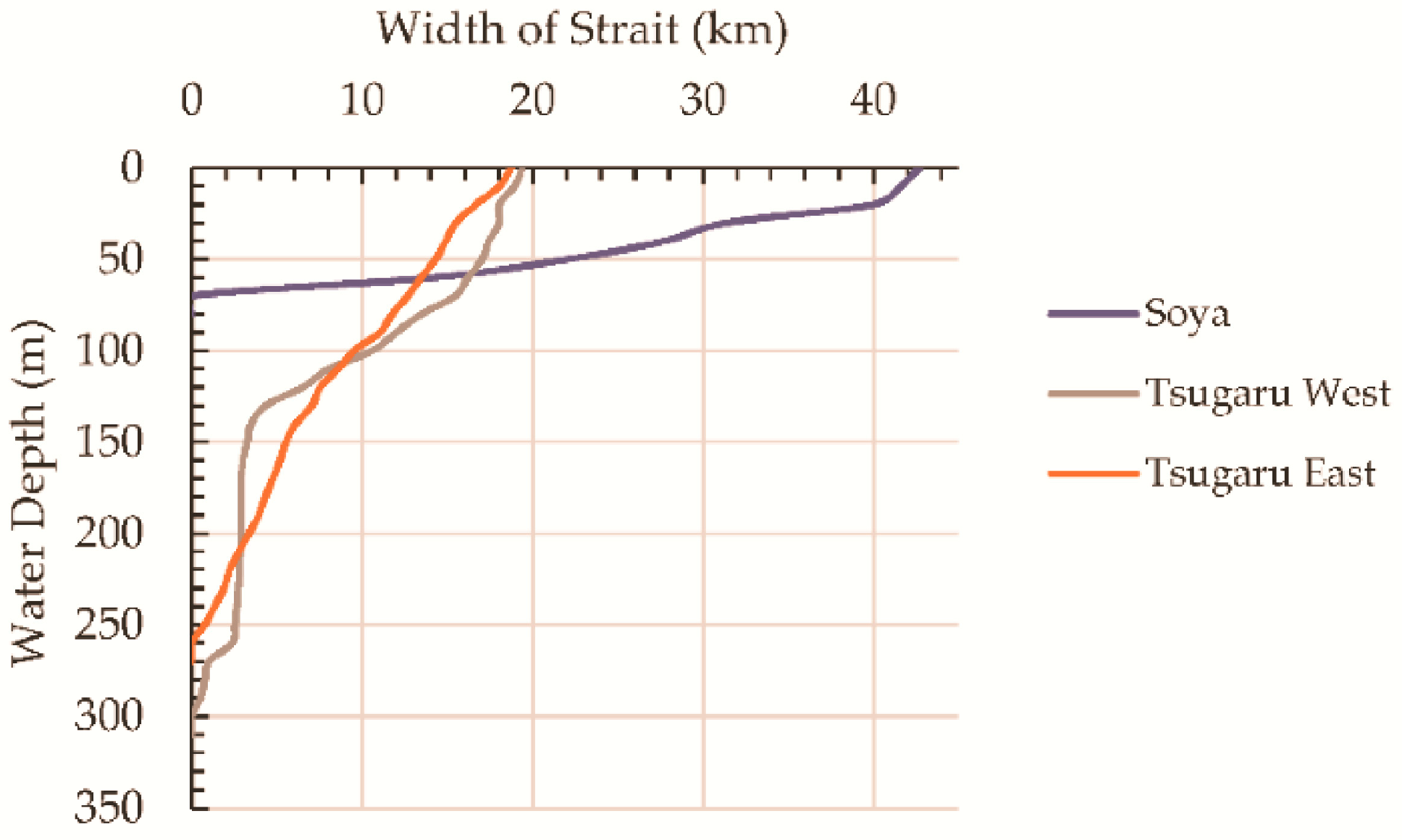
3.1.3. Geological Comparison of the Tsugaru and Soya Straits
3.2. Comparison of Cable Failures (See Figure 10 and Figure 11)
3.3. Consideration of Cable Failures
3.4. Similar Instances of Armor Degradation Caused by Environmental Influences in the Waters Surrounding Japan
4. The Relationship Between the Physical Characteristics of Deep-Sea Sediments and the Durability of Unarmored Cables
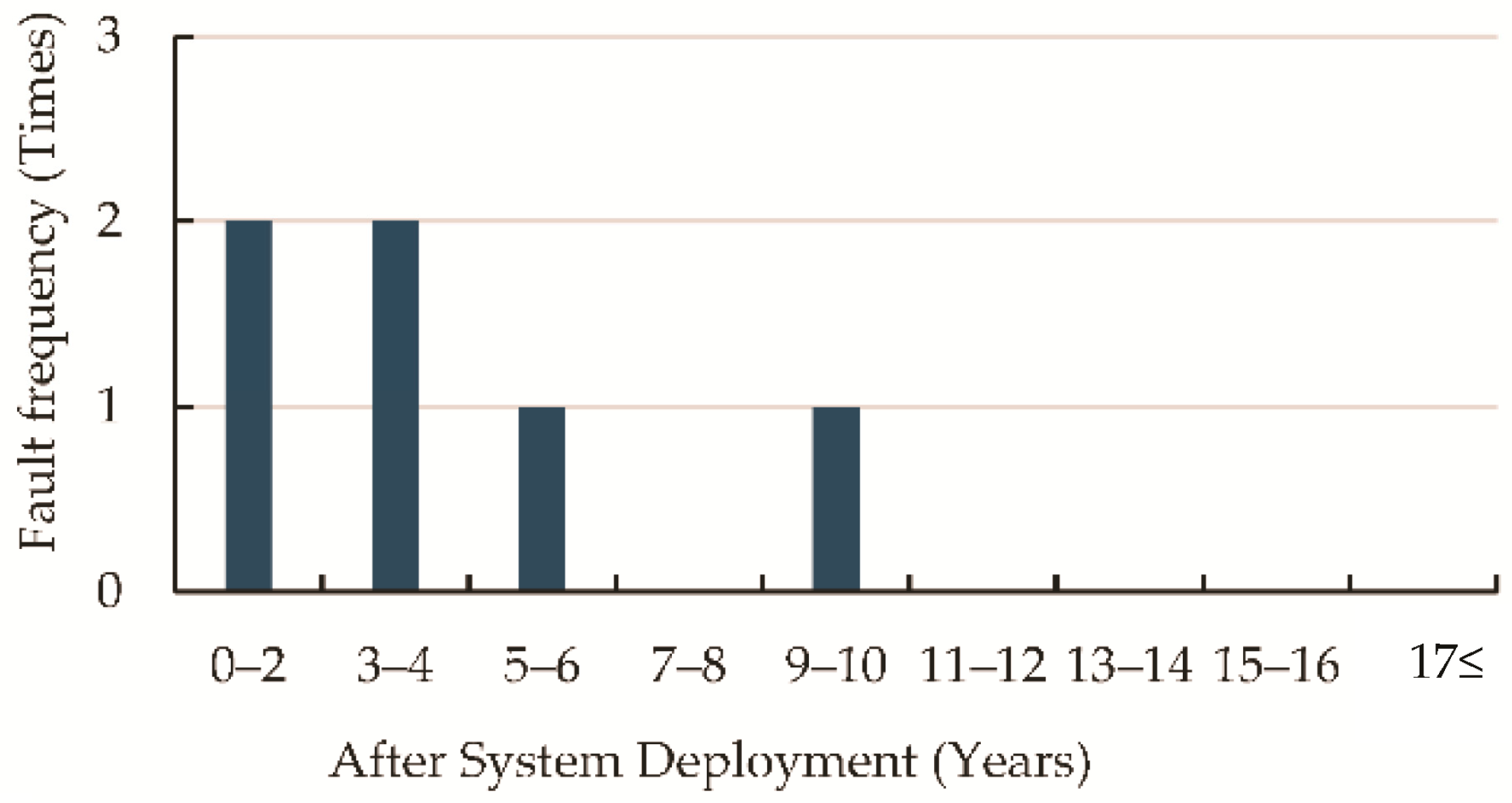
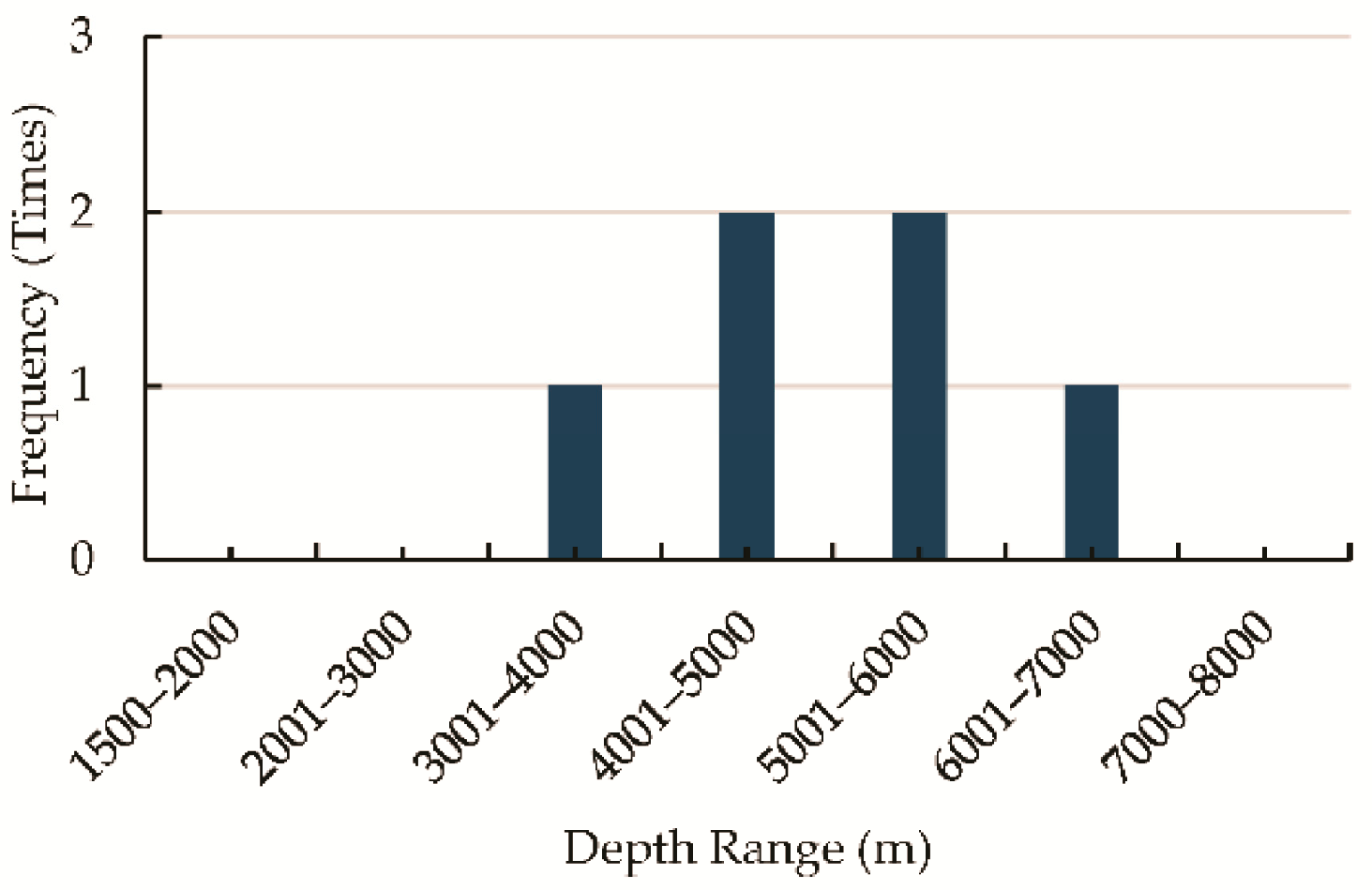
4.1. Statistics of LW Cable Failures in the Deep-Sea Region
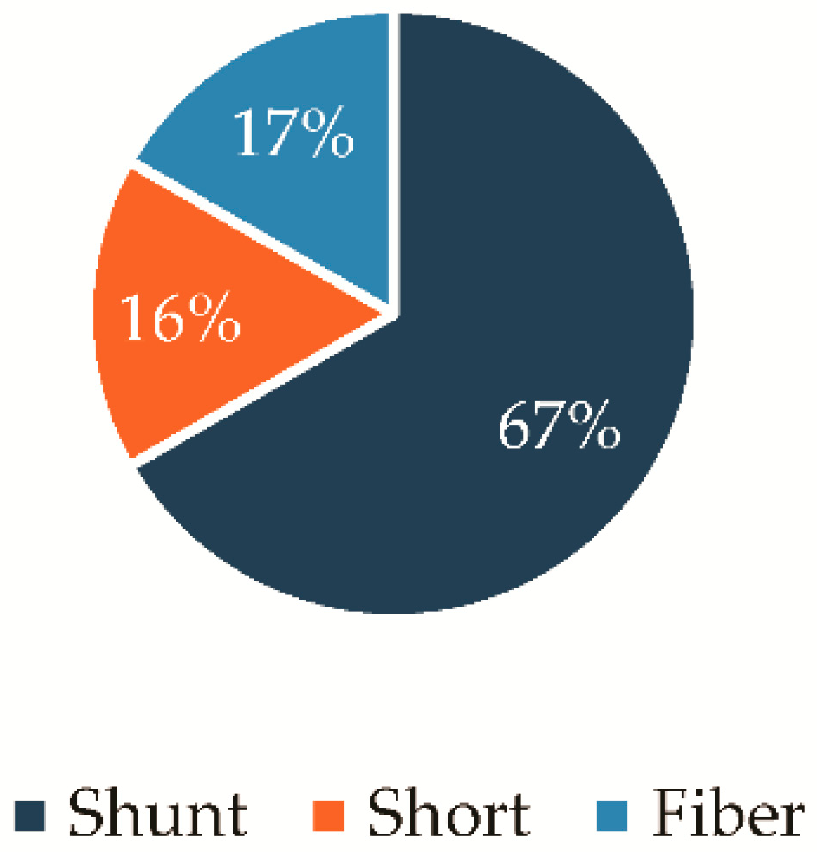
4.2. Results of Failure Analysis
4.3. Distribution of Principal Sediment Types in the North Pacific Ocean
4.4. Mechanical Properties of Deep-Sea Sediments
4.4.1. Vane Share Strength (VSS)
4.4.2. Consideration of VSS
4.4.3. VSS Evaluation
4.5. Observed Thickness of Seafloor Surface Sediments
4.5.1. Subduction Zone
4.5.2. Ocean Basin
4.6. Validation of Results
5. Armor Corrosion, Durability, and Impacts of Ionizing Radiation on Optical Fibers
5.1. Definition of Corrosion
5.2. Fundamental Factors of Metal Corrosion in Marine Environments
5.2.1. Composition of Seawater
5.2.2. Conductivity
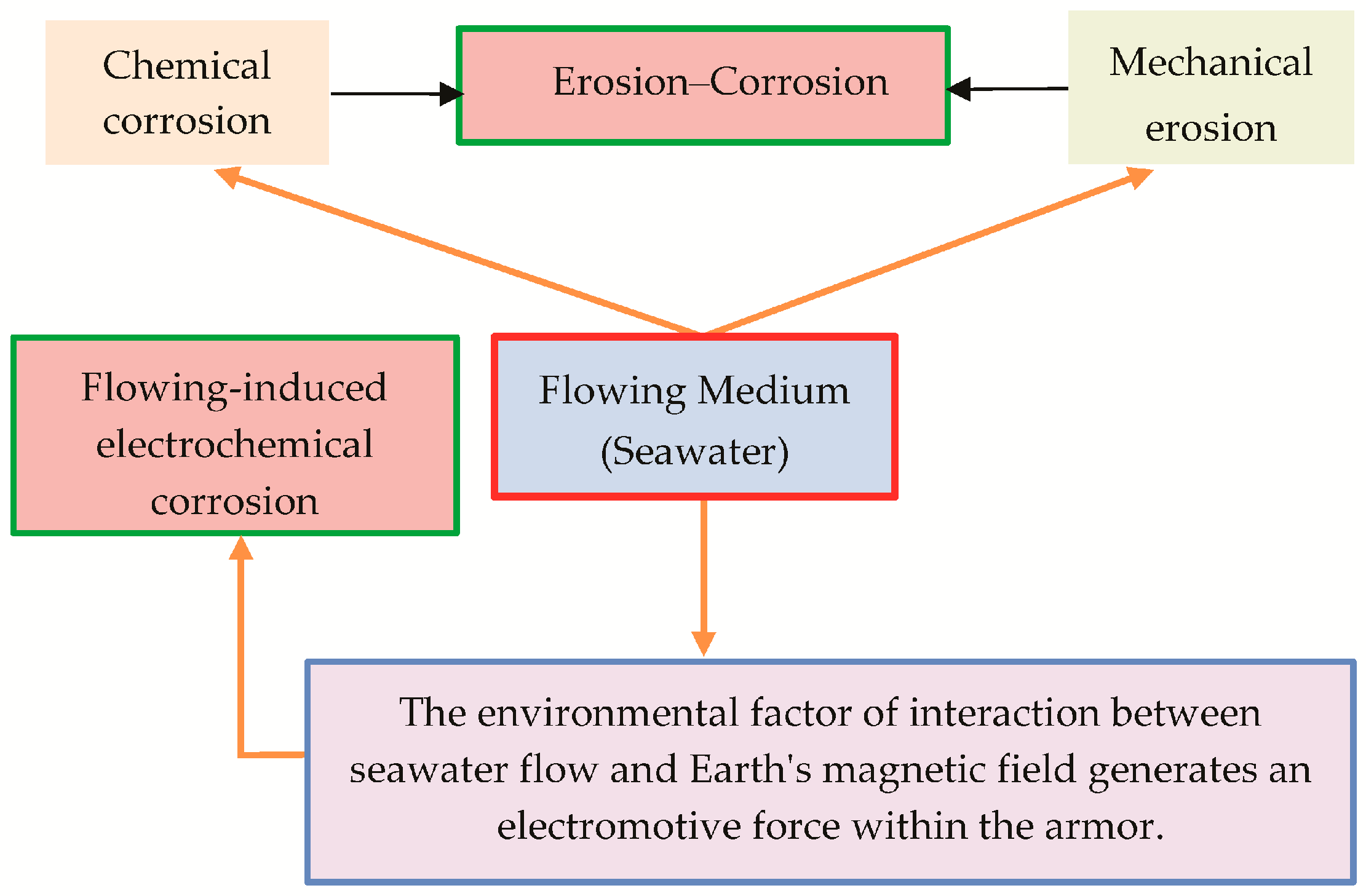
5.2.3. Interaction Between Erosion, Corrosion, and the Fluid Environment
- Corrosion leads to the formation of metal oxides and hydroxides on the armor’s surface.
- The swift seawater flow over the metal surface dislodges oxides and hydroxides, thereby exposing the underlying fresh metal.
- The exposed fresh metal surface corrodes.
- Steps (1)–(3) repeat continuously until the metal component fails.
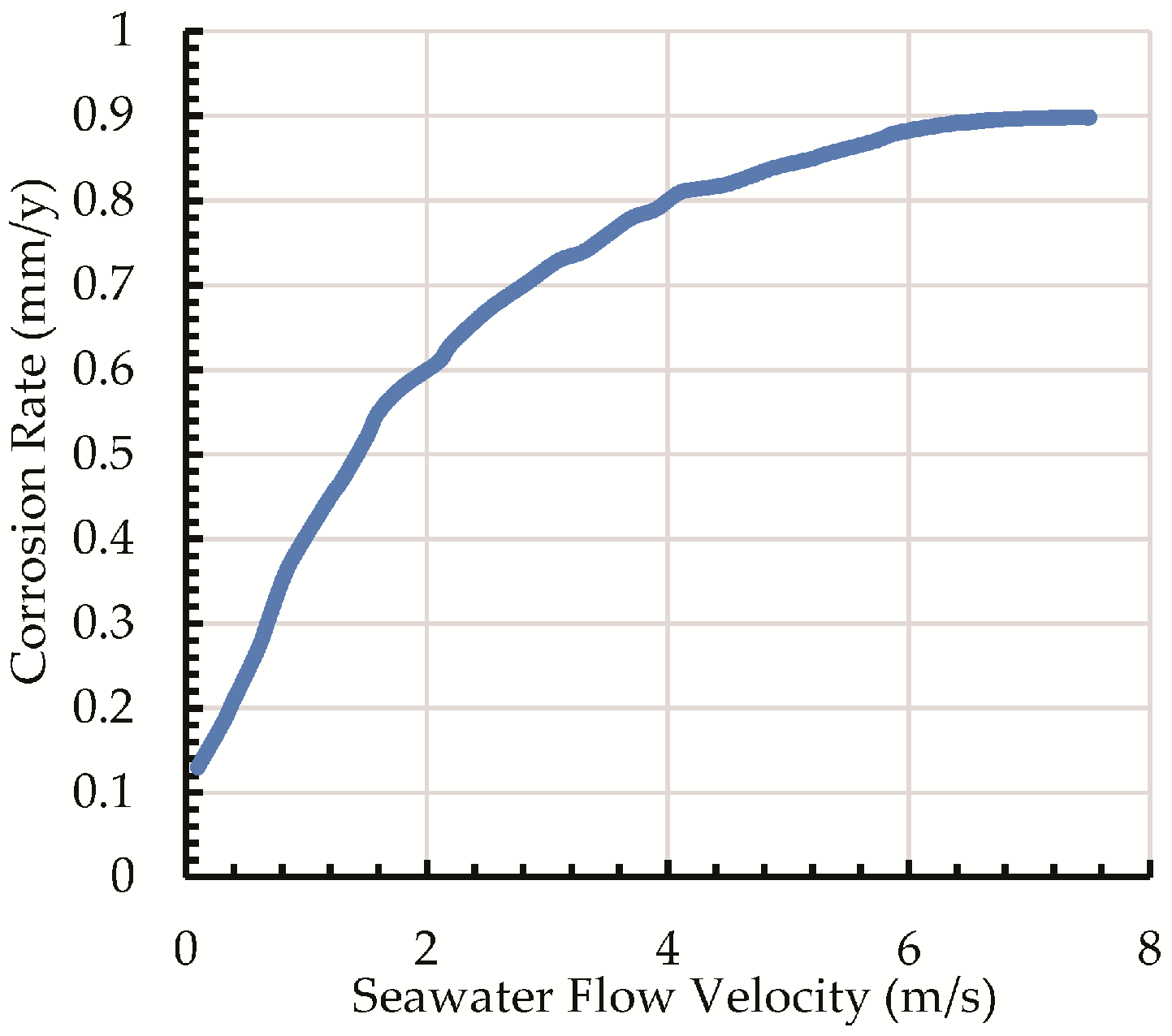
5.2.4. Seawater Velocity-Induced Corrosion
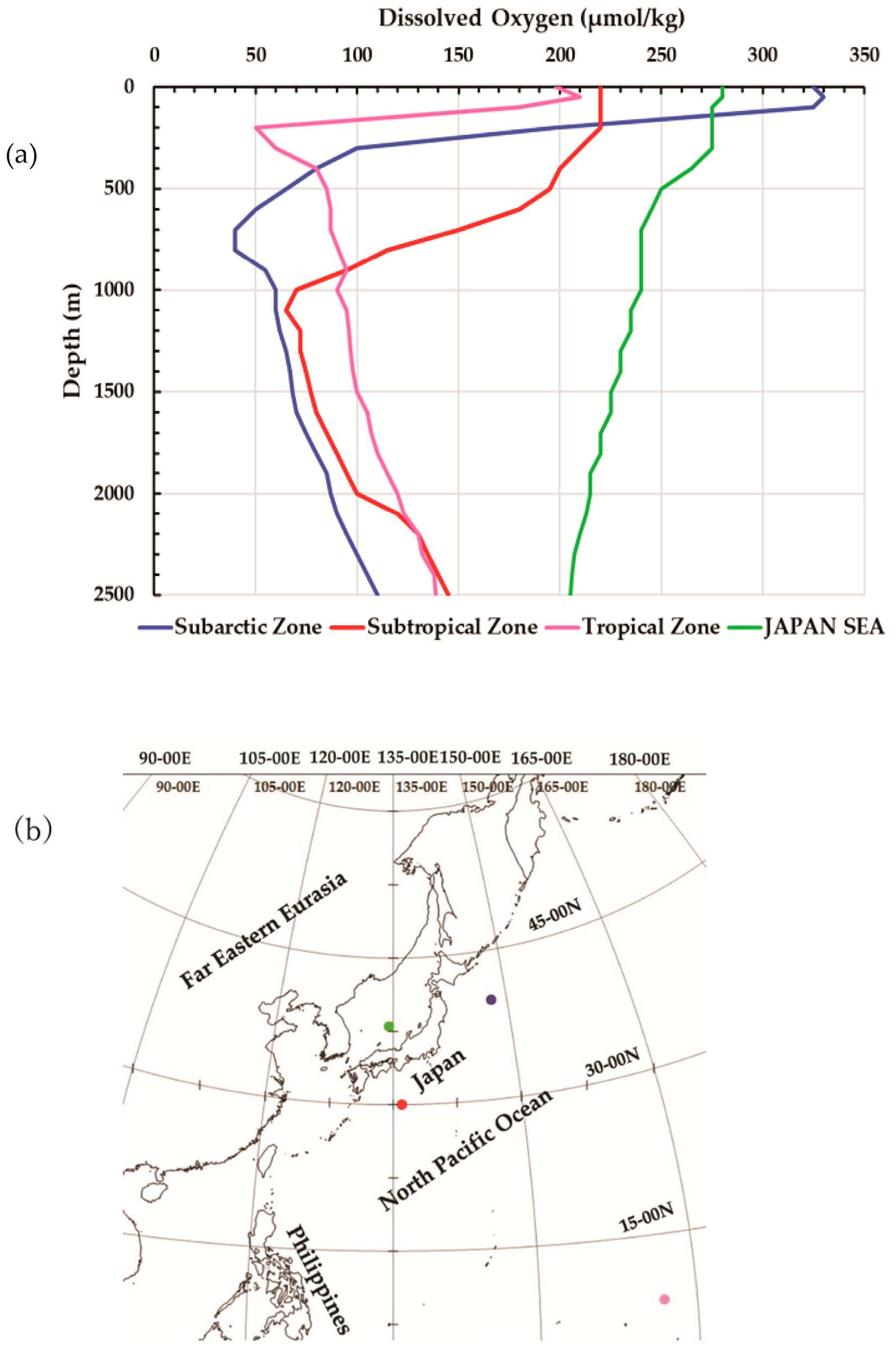
5.2.5. Dissolved Oxygen
5.3. Analysis of Armor Corrosion
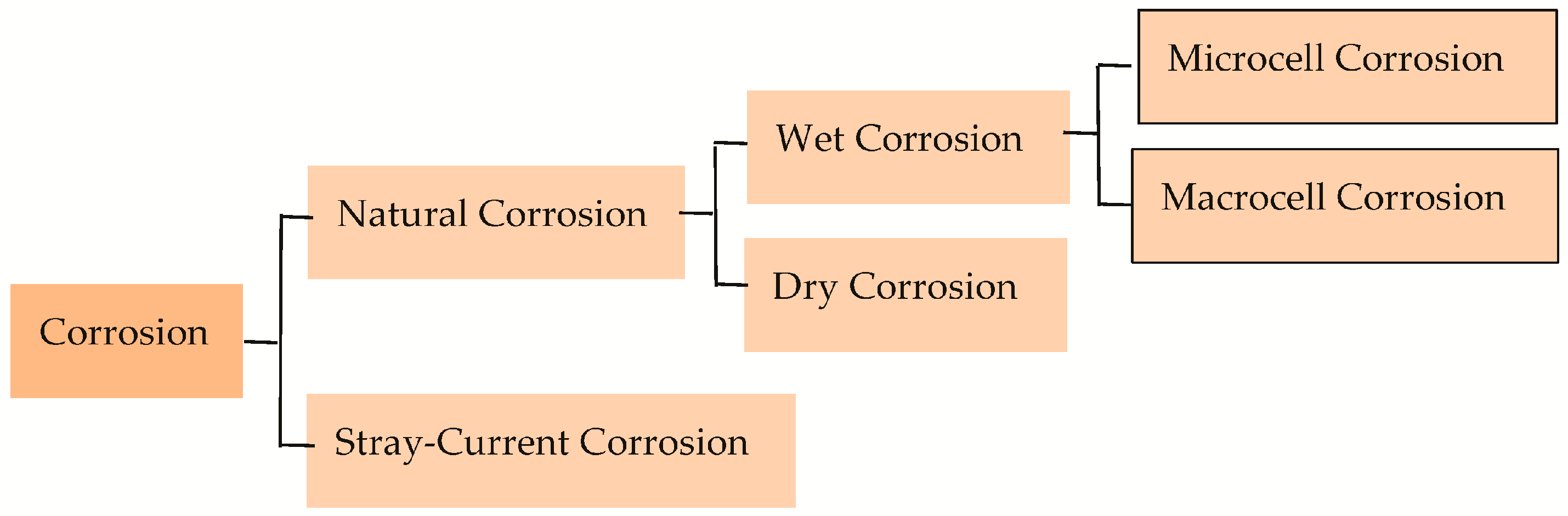
5.3.1. Corrosion Classification
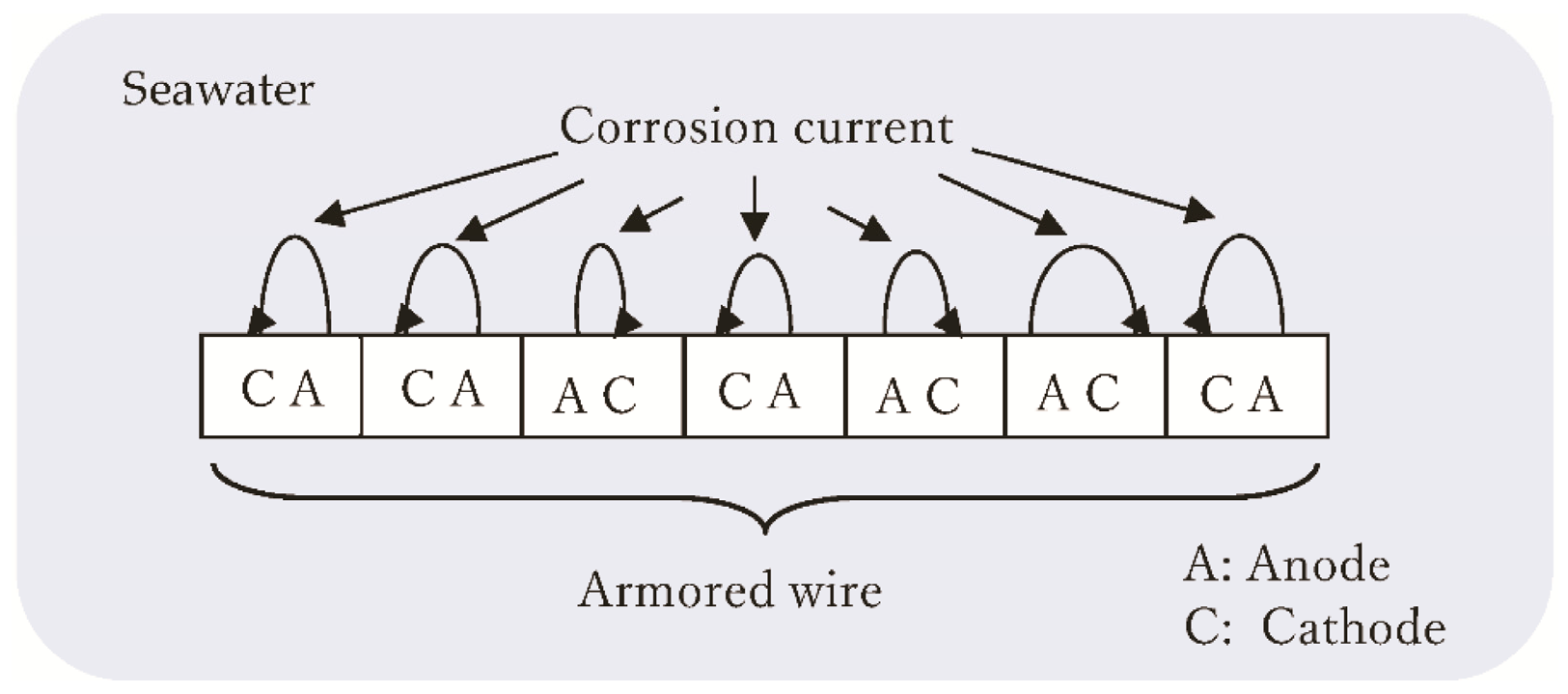
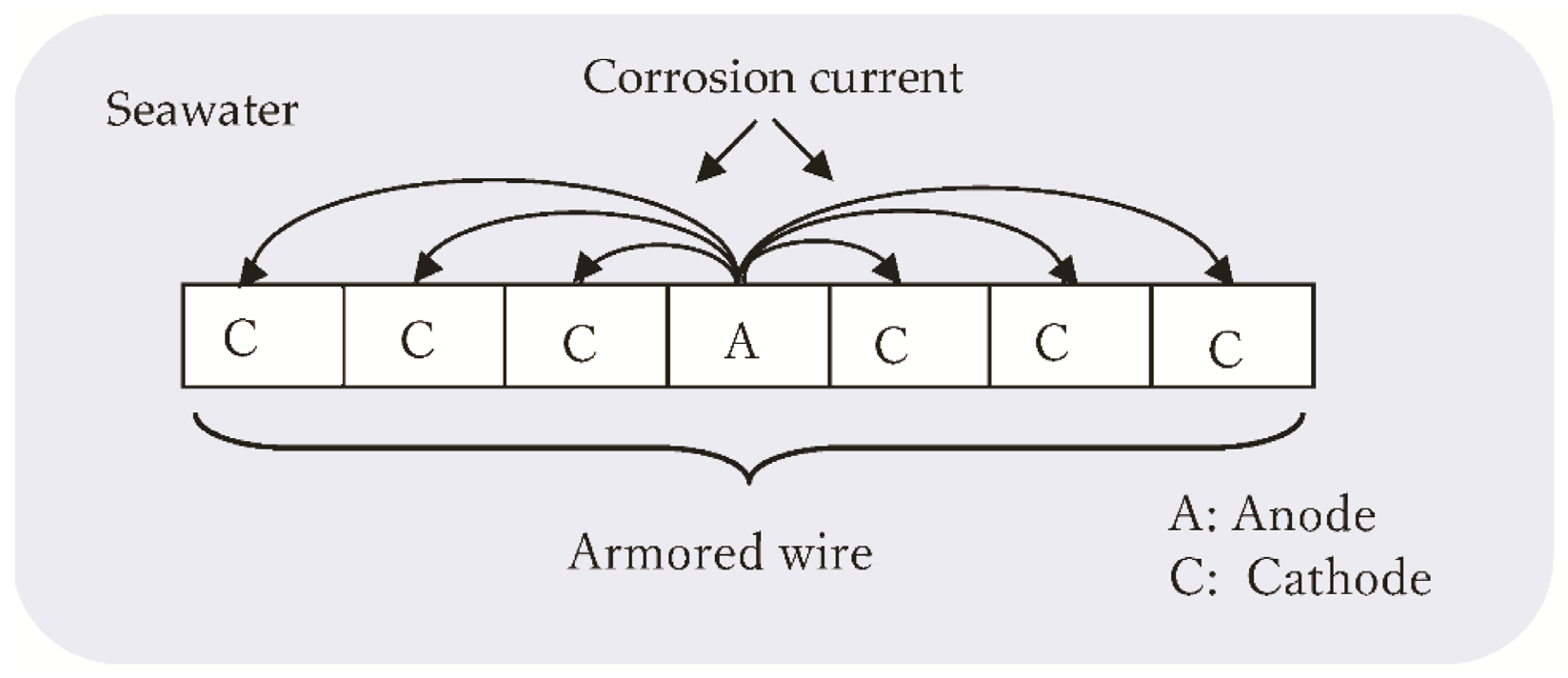
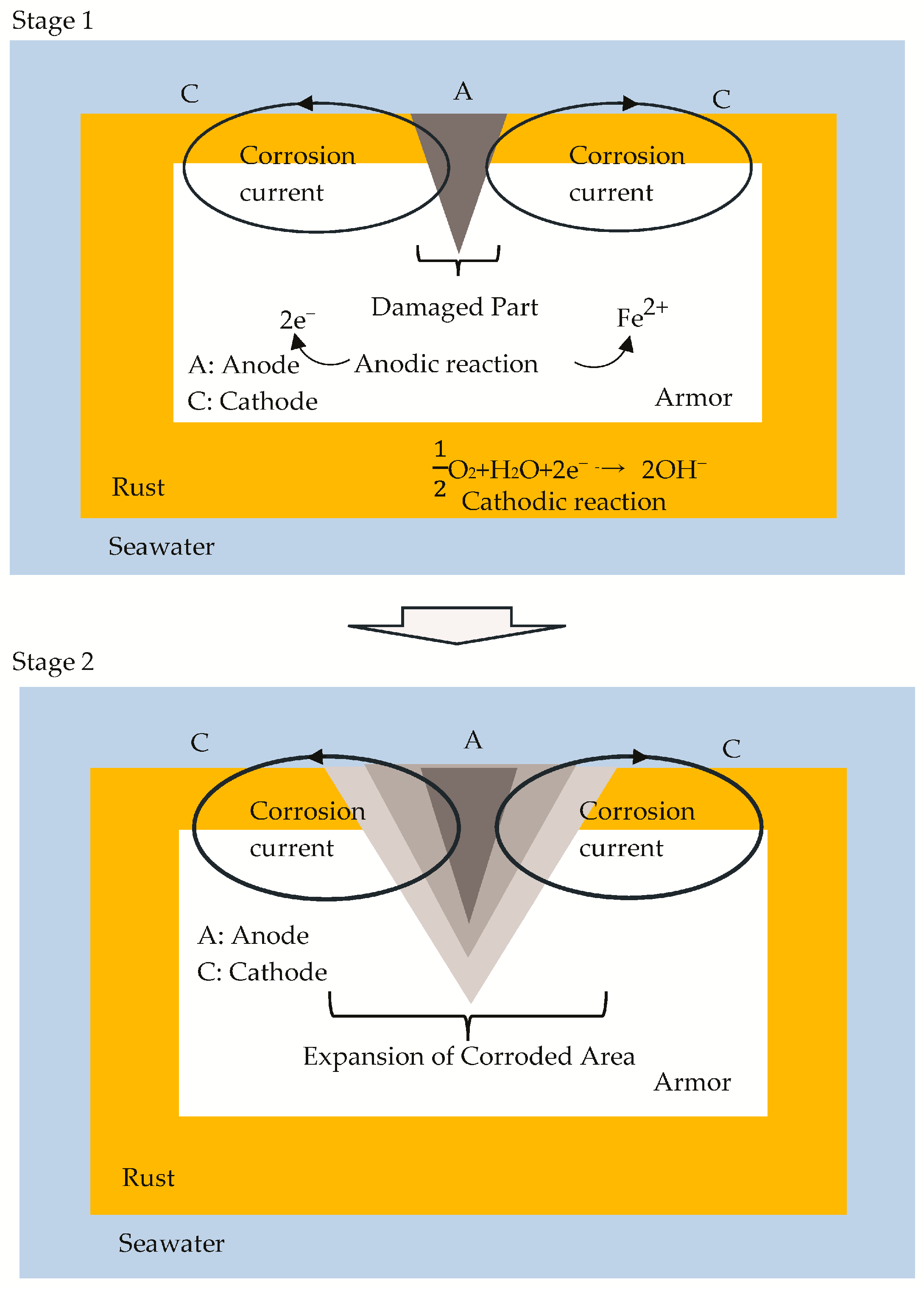
Microcell and Macrocell Corrosion
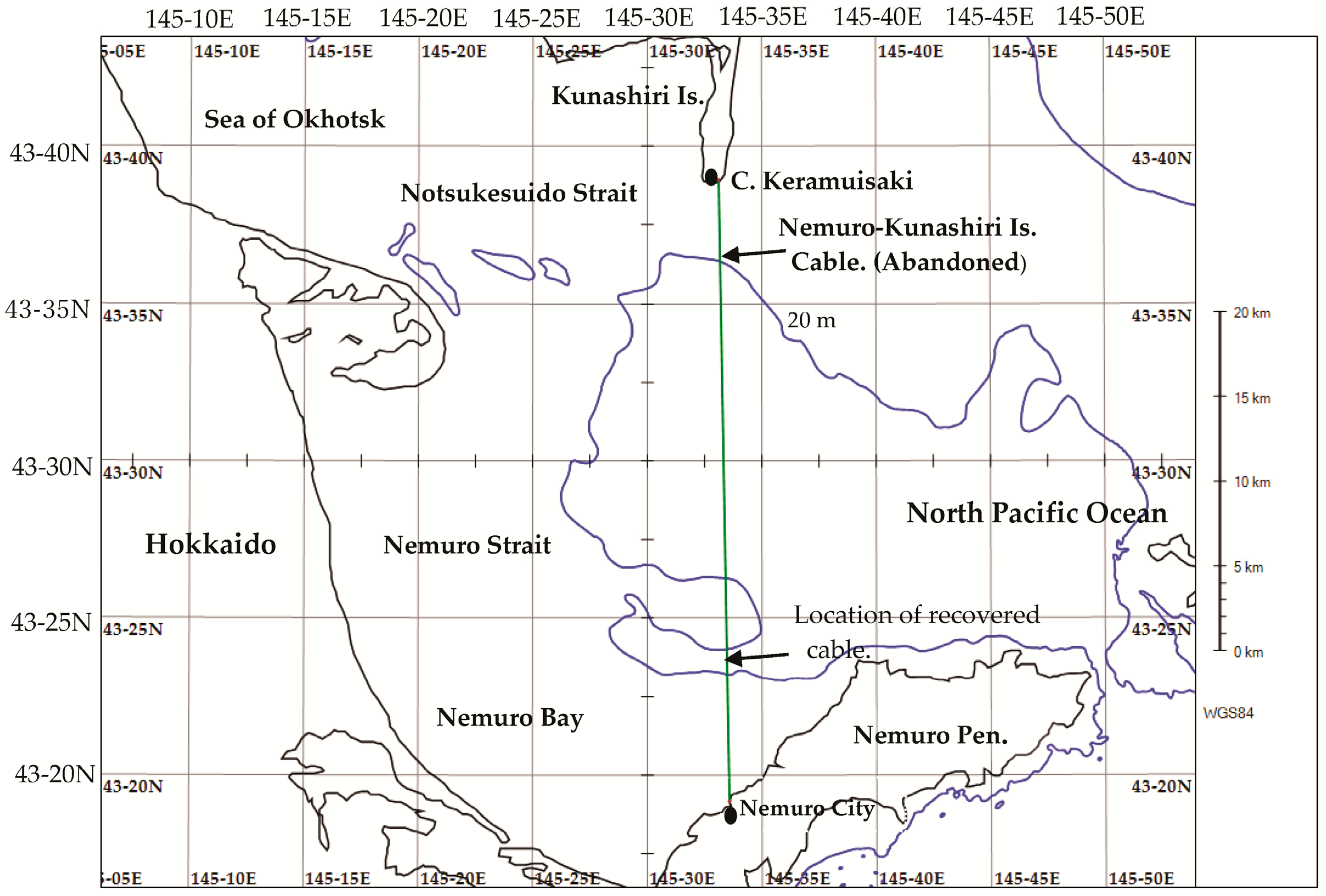
5.4. Case Study on Armor Corrosion
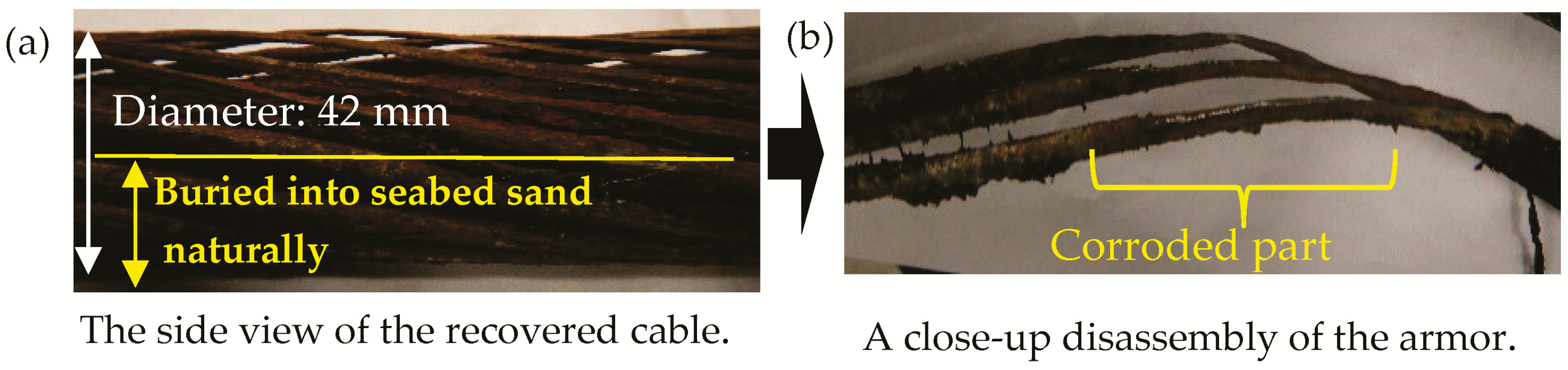
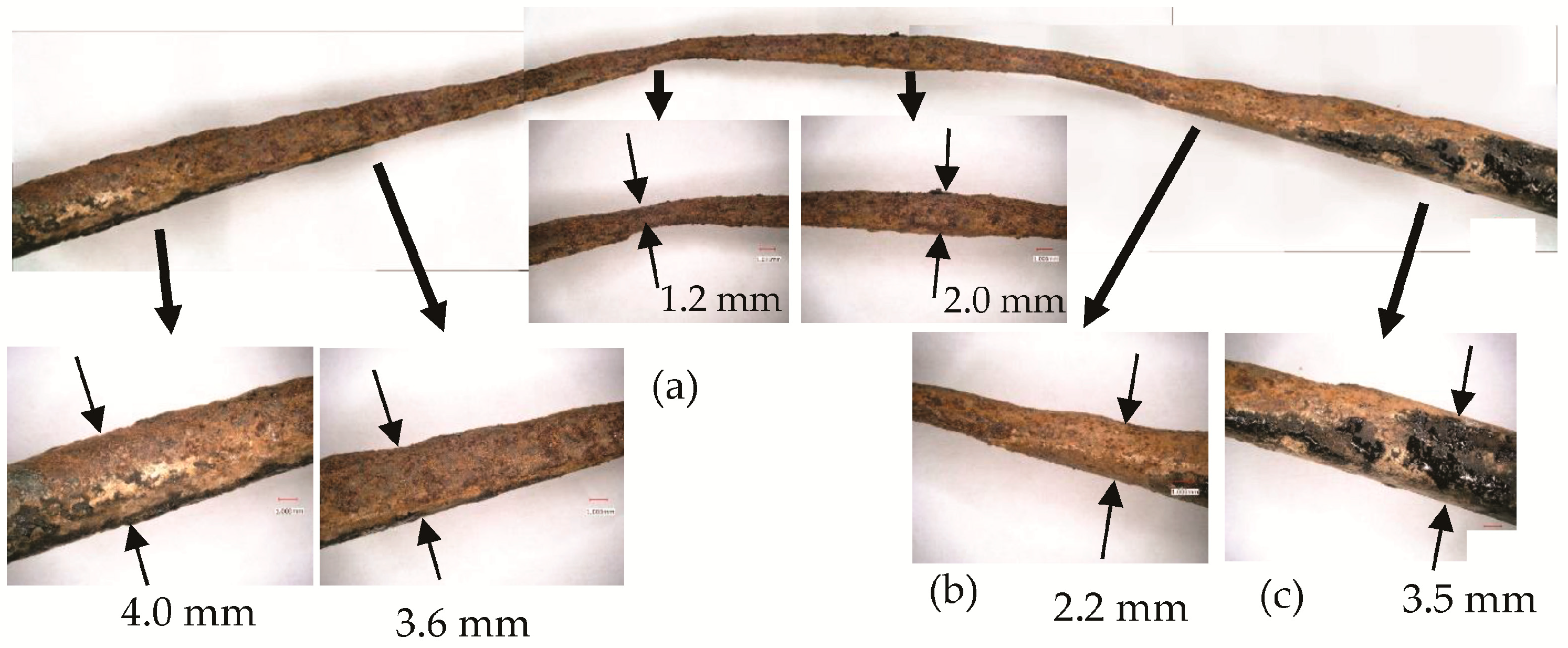
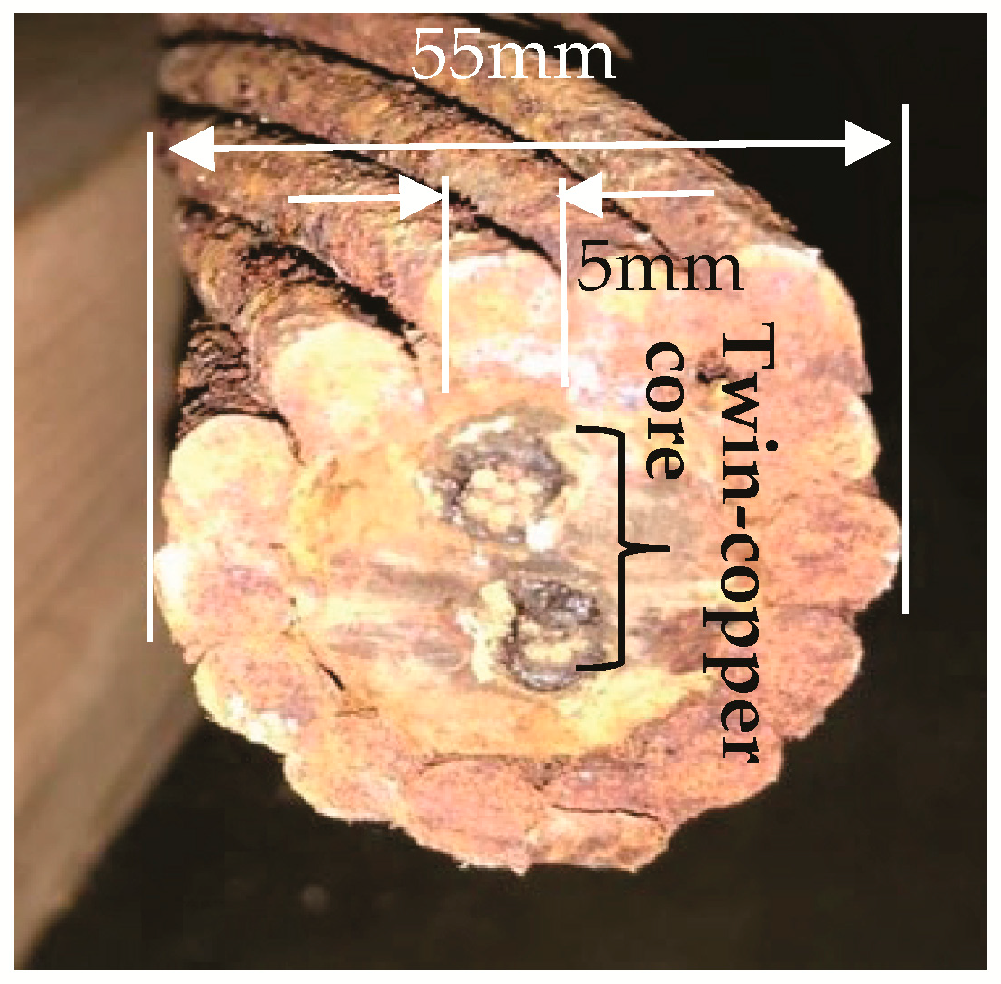
5.4.1. Condition of Recovered Cable
5.4.2. Corrosion Behavior Observed via Visual Inspection and SEM
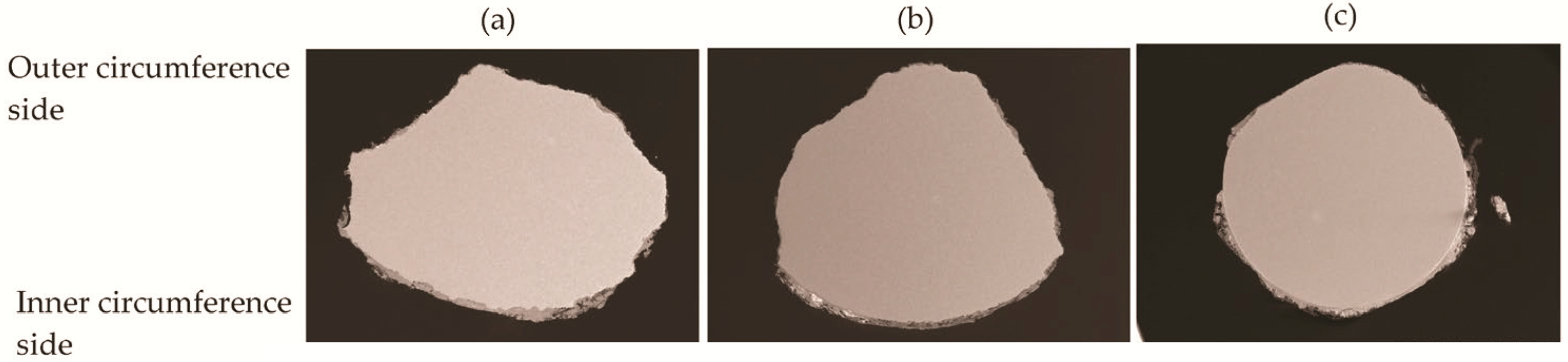
5.4.3. SEM Observations of Corrosion Behavior
- The progression of corrosion is contingent upon the overall geometry of each cross-section. One side corrodes and loses material, whereas the other retains its original configuration of armor.
- The less corroded side has a zinc plating layer that inhibits further corrosion.
- Furthermore, the triangular corrosion shapes observed on the cross-sections of the armor are thought to be due to the proximity of adjacent armor.
- Therefore, armor corrosion is thought to occur when the outer layer of the bitumen-impregnated polypropylene yarn degrades or is damaged, allowing seawater to penetrate and corrode the galvanized surface. As a result, the protective layer is partially corroded by seawater, accelerating the corrosion of the armor substrate.
- As corrosion progresses, the armor’s mechanical strength decreases, leading to its failure.
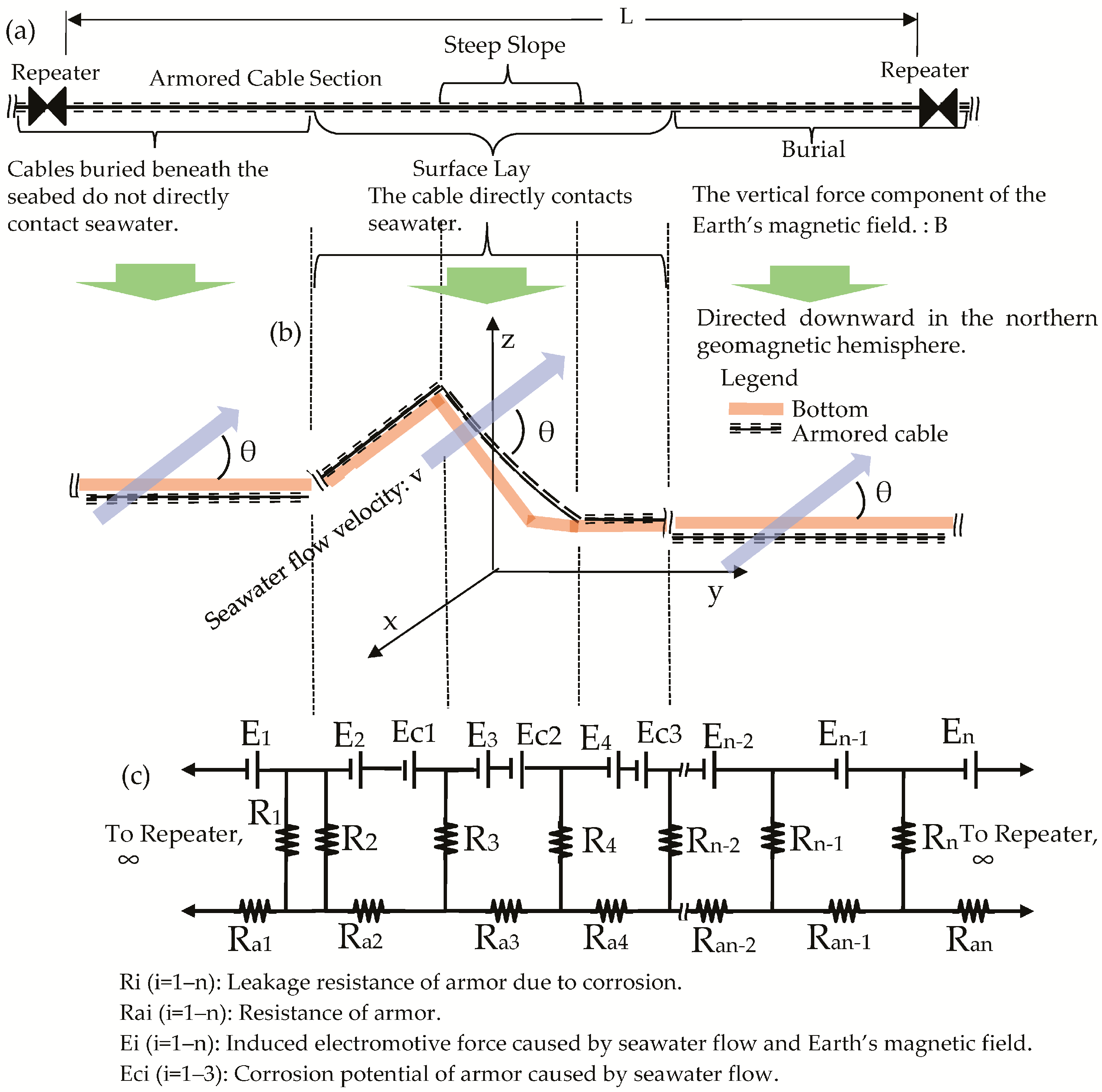
5.5. Equivalent Circuit of Armor Related to Corrosion
5.5.1. Comparison of Buried and Surface-Laid Cable Sections
Buried Section
Surface-Laid Section
5.6. Experimental Validation of Electromotive Force Induced by Seawater Flow Interacting with Earth’s Magnetic Field
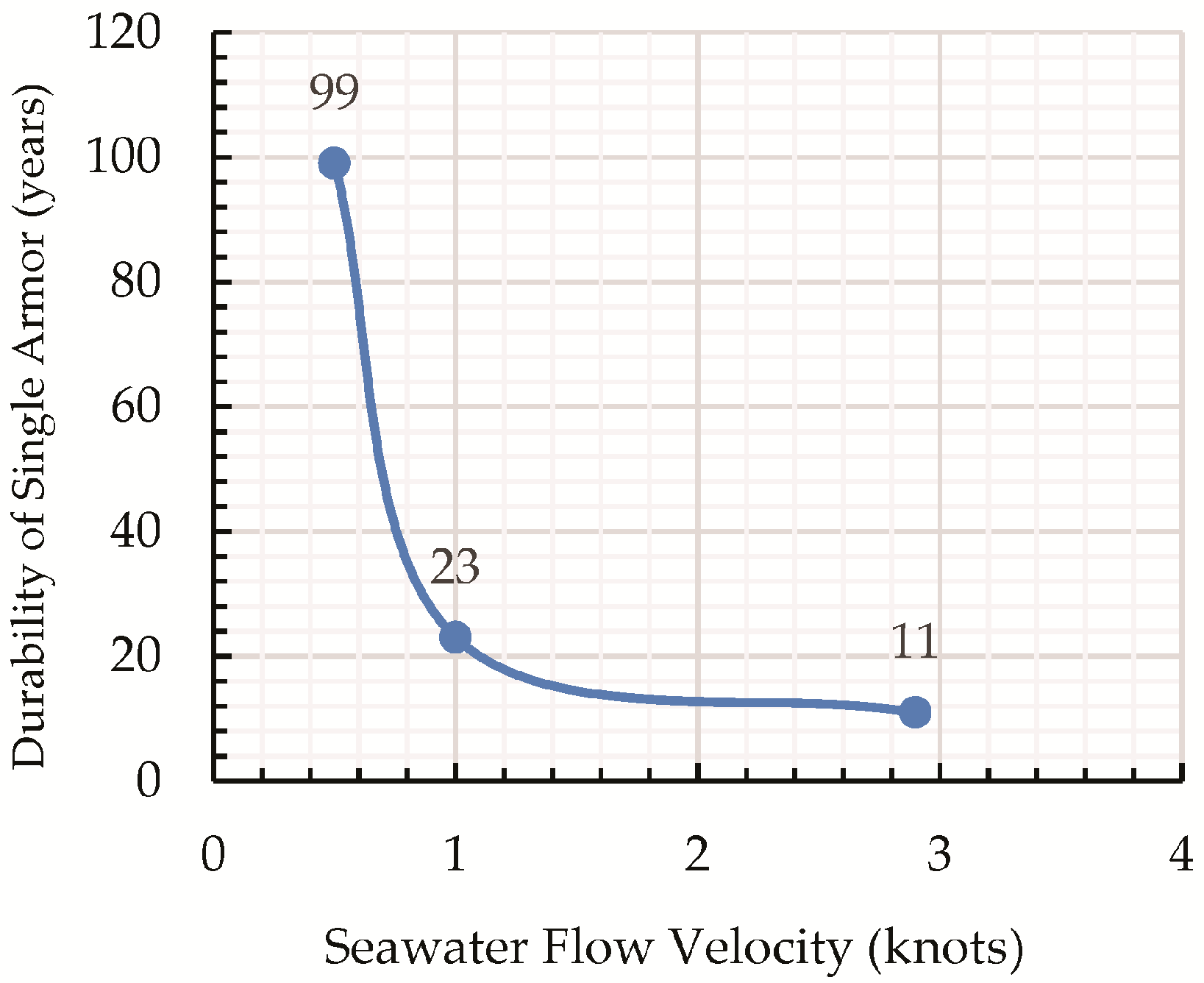
5.7. Expected Service Life of Armor Based on a Proven Record
Considerations on Corrosion for Armor
5.8. Evidence-Based Expectation of SAM Cable Longevity
5.9. Proposed Measures to Address Armor Corrosion and a Comparative Analysis of Their Economic Impact
5.10. The Impacts of Ionizing Radiation on Optical Fibers
Consideration
6. Conclusions
- (1)
- Environmentally Coupled Multi-Factor Armor Corrosion of Armor (Excluding Seawater Composition)
- The velocity of seawater flowing along the armored OFS cable.
- The electromotive force induced in the armor by the ocean current crossing the vertical component of the Earth’s magnetic field.
- (2)
- A Factor In Extending the Lifespan of Unarmored OFS Cables
- The fundamental composition and thickness of the deep-sea sediments in the ocean basin.
- (3)
- The Impacts of Ionizing Radiation on ULL-SM-PSC Fibers
- It is considered highly unlikely that natural background radiation will affect the RIA of fibers.
Funding
Data Availability Statement
Acknowledgments
Conflicts of Interest
References
- International Telecommunication Union (ITU). Development Sector, Measuring Digital Development: Facts and Figures; Electronic Version; Telecommunication Development Bureau: Geneva, Switzerland, 2022; p. 22. Available online: https://www.itu.int/dms_pub/itu-d/opb/ind/d-ind-ict_mdd-2022-pdf-e.pdf (accessed on 12 September 2025).
- Kang, X.; Ma, X.; Feng, R.; Zhao, Y.; Shao, S.; Jiang, M.; Ma, X. Review of Submarine Cable Design Lifetime. In Proceedings of the International Joint Conference on Civil and Marine Engineering (JCCME 2023), IET Conference Proceedings, Dalian, China, 3–6 November 2023; Volume 2023. [Google Scholar] [CrossRef]
- Rao, P.; Mulky, L. Erosion-Corrosion of Materials in Industrial Equipment: A Review; European Chemical Societies Publishing: Brussels, Belgium, 2023; p. e202300152. [Google Scholar] [CrossRef]
- Guedes Soares, C.; Garbatov, Y.; Zayed, A. Effect of environmental factors on steel plate corrosion under marine immersion conditions. Corros. Eng. Sci. Technol. 2011, 46, 524–541. [Google Scholar] [CrossRef]
- Ezoe, T.; Suzuki, K. On the Failures of Submarine Cable by Electrolytic Corrosion. IEEJ J. 1956, 76, 609–616. (In Japanese) [Google Scholar] [CrossRef]
- Kiyono, T.; Ezoe, T.; Suzuki, K. Theoretical Consideration of Submarine Cable Failures by Electrolytic Corrosion due to Tidal Flow. IEEJ J. 1958, 78, 322–334. (In Japanese) [Google Scholar] [CrossRef]
- Saruwatari, A.; Tajima, Y.; Yoneko, Y.; Saito, I. Effects of the Ocean Current on the Tidal Energy Resource in the Tsugaru Strait. Jpn. J. JSCE B2 2013, 69, I_1296–I_1300. (In Japanese) [Google Scholar] [CrossRef]
- Yamazaki, T.; Tsurusaki, K.; Handa, K.; Inagaki, T. Geotechnical Properties of Deep Ocean Sediment Layer. J. Min. Mater. Process. Inst. Jpn. 1995, 111, 309–315. (In Japanese) [Google Scholar] [CrossRef]
- Sayre, R.; Wright, D.J.; Breyer, S.; Butler, K. A New Map of Global Ecological Marine Units—An Environmental Stratification Approach; The American Association of Geographers in Collaboration with the U.S. Geological Survey (USGS), Esri, and the Group on Earth Observations (GEO): Washington, DC, USA, 2017; p. 8. Available online: https://www.researchgate.net/publication/316486658_A_New_Map_of_Global_Ecological_Marine_Units_-_An_Environmental_Stratification_Approach/link/5900b1bda6fdcc8ed50e91a8/download?_tp=eyJjb250ZXh0Ijp7ImZpcnN0UGFnZSI6InB1YmxpY2F0aW9uIiwicGFnZSI6InB1YmxpY2F0aW9uIn19 (accessed on 25 September 2025).
- Anikouchine, W.A.; Sternberg, R.W. The World Ocean, An Introduction to Oceanography, 2nd ed.; Prentice-Hall, Inc.: Englewood Cliffs, NJ, USA, 1981; p. 14. [Google Scholar]
- Nishida, T.; Nagatomi, O. Latest Technologies and the OCC-SC300 Optical Submarine Cable. NEC Tech. J. 2010, 5, 18–22. Available online: https://www.nec.com/en/global/techrep/journal/g10/n01/pdf/100105.pdf (accessed on 12 September 2025).
- Writing Committee of Optical Submarine Cable; Optical Submarine Cable; PARADE: Tokyo, Japan, 2010; p. 82. (In Japanese)
- Allan, P.G. Hydrographic Information and the Submarine Cable Industry. Proceedings, Hydro 2001; Norwich, UK. p. 3. Available online: https://www.yumpu.com/en/document/read/11750371/hydrographic-information-and-the-submarine-cable-industry-allan (accessed on 25 September 2025).
- Worzyk, T. Submarine Power Cables, 1st ed.; Springer: Berlin/Heidelberg, Germany, 2009; p. 39. [Google Scholar] [CrossRef]
- Maritime Domain Awareness (MDA). Situational Indication Linkages. Available online: https://www.msil.go.jp/msil/htm/topwindow.html (accessed on 29 July 2025).
- Study Group for the Development of Long-Distance Undersea DC Power Transmission, Inter-Regional Interconnection in Japan Using Undersea DC Power Transmission. 2021 March 15, Ministry of Economy, Trade, and Industry (METI). pp. 3–4. Available online: https://www.meti.go.jp/shingikai/energy_environment/chokyori_kaitei/pdf/001_06_00.pdf (accessed on 9 April 2025). (In Japanese)
- National Atlas of Japan. Geospatial Information Authority of Japan, 1st ed.; 8.2 Bottom Materials of the Adjacent Seas; Geospatial Information Authority of Japan: Tsukuba, Japan, 1977; p. 32. Available online: https://www.gsi.go.jp/atlas/archive/j-atlas-d_e_08.pdf (accessed on 10 April 2025).
- Magnetic Diagram: Vertical Force Component in 2020. Available online: https://www.gsi.go.jp/common/000236996.pdf (accessed on 29 July 2025). (In Japanese)
- Isoda, Y.; Baba, K. Tides and Tidal currents in the Tsugaru Strait. Bull. Fac. Fish. Hokkaido Univ. 1998, 49, 117–130. Available online: https://hdl.handle.net/2115/24174 (accessed on 17 December 2025). (In Japanese)
- Ebuchi, N.; Fukachi, Y.; Ohshima, K.I.; Shirasawa, K.; Ishikawa, M.; Takatsuka, T.; Daibo, T.; Wakatsuchi, M. Observation of the Soya Warm Current Using HF Ocean Radar. J. Oceanogr. 2006, 62, 47–61. [Google Scholar] [CrossRef]
- Hydrographic Service and Standards Committee. Report of the International Cable Committee, Docs: HSSC16-07.10A, ICPC Activities Affecting HSSC, 2024, p. 3. Available online: https://iho.int/uploads/user/Services%20and%20Standards/HSSC/HSSC16/HSSC16_2024_07.10A_EN_ICPC%20activities%20affecting%20HSSC.pdf (accessed on 12 September 2025).
- Ogasawara, Y.; Natsu, W. Proposal for reducing failure rate of fiber-optic submarine cables in deep-sea based on failure analysis and experiments. J. Adv. Mar. Sci. Technol. Soc. 2020, 25, 1–12. [Google Scholar] [CrossRef]
- Ogasawara, Y.; Natsu, W. A Cost-Effective Approach to the Risk Reduction of Cable Fault Triggered by Laying Repeaters of Fiber-Optic Submarine Cable Systems in Deep-Sea. J. Mar. Sci. Eng. 2021, 9, 939. [Google Scholar] [CrossRef]
- Dutkiewicz, A.; Müller, R.D.; O’Callaghan, S.; Jónasson, H. Census of Seafloor Sediments in the World’s Ocean Basins. Geol. Soc. Am. Data Repos. 2015, 1–20. [Google Scholar] [CrossRef]
- Terzaghi, K.; Peck, R.B.; Mesri, G. Soil Mechanics in Engineering Practice, 3rd ed.; John Wiley & Sons, Inc.: Hoboken, NJ, USA; New York, NY, USA, 1996; p. 22. Available online: https://cequcest.wordpress.com/wp-content/uploads/2015/09/terzaghi129883967-soil-mechanics-in-engineering-practice-3rd-edition-karl-terzaghi-ralph-b-peck-gholamreza-mesri-1996.pdf (accessed on 13 January 2026).
- British Standard 8004: 1986; Code of Practice for Foundations. Chiswick High Road. British Standards Institution: London, UK; p. 19. Available online: https://www.scribd.com/document/371114440/244692477-BS-8004-1986-pdf-pdf (accessed on 13 January 2026).
- Goughnour, R.D.; Sallberg, J.R. Evaluation of the Laboratory Vane Shear Test, Highway Research Board. 1964. Issue No. 48. pp. 19–33. Available online: https://onlinepubs.trb.org/Onlinepubs/hrr/1964/48/48-002.pdf (accessed on 16 January 2026).
- Hirata, K.; Aoyagi, M.; Mikada, H.; Kawaguchi, K.; Kaiho, Y.; Iwase, R.; Morita, S.; Fujisawa, I.; Sugioka, H.; Mitsuzawa, K.; et al. Real-Time Geophysical Measurements on the Deep Seafloor Using Submarine Cable in the Southern Kurile Subduction Zone. IEEE J. Ocean. Eng. 2002, 27, 170–181. [Google Scholar] [CrossRef]
- Takahashi, H.; Asakawa, E.; Kawai, Y.; Ogasawara, Y.; Saeki, T. Study on the Deployment of Accelerometers in Reflection Seismic Surveys. In Proceedings of the 2007 Symposium on Underwater Technology and Workshop on Scientific Use of Submarine Cables and Related Technologies, Tokyo, Japan, 17–20 April 2007; pp. 420–426. [Google Scholar] [CrossRef]
- Hara, N. Fundamentals of Corrosion of Metals. J. Vac. Soc. Jpn. 2001, 44, 860–867. (In Japanese) [Google Scholar] [CrossRef]
- Bhandari, J.; Khan, F.; Abbassi, R.; Garaniya, V.; Ojeda, R. Modelling of pitting corrosion in marine and offshore steel structures—A technical review. J. Loss Prev. Process Ind. 2015, 37, 39–62. [Google Scholar] [CrossRef]
- Sea Water, National Oceanic and Atmospheric Administration, U.S. Department of Commerce. Available online: https://www.noaa.gov/jetstream/ocean/sea-water (accessed on 10 September 2025).
- Kuwamoto, Y. Inorganic components of seawater, Bioscience, Biotechnology, and Biochemistry, 2009. Volume 22, pp. 439–445. Available online: https://katosei.jsbba.or.jp/download_pdf.php?aid=101572 (accessed on 14 June 2025). (In Japanese)
- Wiater, J. Electric Shock Hazard Limitation in Water During Lightning Strike. PRZEGLĄD ELEKTROTECHNICZNY 2012, R, 88 NR 8, Electrotechnical Review, Wydawnictwo Sigma-Not Sp Zoo. Available online: https://www.researchgate.net/profile/Jaroslaw-Wiater-2/publication/267975875_Electric_shock_hazard_limitation_in_water_during_lightning_strike/links/5f7332c6299bf1b53efcd6a4/Electric-shock-hazard-limitation-in-water-during-lightning-strike.pdf?origin=publication_detail&_tp=eyJjb250ZXh0Ijp7ImZpcnN0UGFnZSI6InB1YmxpY2F0aW9uIiwicGFnZSI6InB1YmxpY2F0aW9uRG93bmxvYWQiLCJwcmV2aW91c1BhZ2UiOiJwdWJsaWNhdGlvbiJ9fQ&__cf_chl_tk=RjD3F_dye.hHPuM8LJ020OZOYGrJvZf9tYceN3BkU1E-1757655069-1.0.1.1-czkP74EQPpYs6CKuXKYZHrOBV2YJLLgNLAx4kl7zUKg (accessed on 12 September 2025).
- Zadeh, S.A. Introduction to Corrosion—Basics and Advances, Chapter Erosion-Corrosion, Open Access Peer-Reviewed Chapter, 2022. Available online: www.intechopen.com (accessed on 17 December 2025). [CrossRef]
- JMA (Japan Meteorological Agency) HP. Knowledge/Explanation, Knowledge of the Ocean Interior, Dissolved Oxygen Content. Available online: https://www.data.jma.go.jp/kaiyou/db/mar_env/knowledge/koyusui/yozonox.html (accessed on 29 July 2025).
- Miyazato, S.; Otsuki, N. Measurement Method for Macrocell Corrosion in Concrete Specimen using a Segmented Steel Bar. J. Adv. Concr. Technol. 2022, 20, 222–235. [Google Scholar] [CrossRef]
- Kuriyama, Y.; Kato, K.; Ozaki, Y. Classification of coastal current velocity distribution and investigation of controlling factors. Proc. Coast. Eng. Jpn. Soc. Civ. Eng. 1992, 39, 196–200. (In Japanese) [Google Scholar] [CrossRef]
- Utsuno, S.; Yamaji, T.; Yonamine, K.; Akira, Y.; Kobayashi, H.; Watanabe, Y.; Yoshida, M.; Maezono, Y.; Kawase, Y.; Matsumoto, S. Studies on the cathodic protection characteristics in seabed soil and the cathodic protection design of the port steel structures in consideration of the soil resistivity. J. Jpn. Soc. Civ. Eng. E2 Mater. Concr. Struct. 2017, 73, 220–238. (In Japanese) [Google Scholar] [CrossRef]
- NTT Docomo Business; NTT world Engineering Marine, Inc., HP. Chronology of Submarine Communication Cables in Japan. Available online: https://www.nttwem.co.jp/special/cable_history/chronological_table/ (accessed on 12 September 2025). (In Japanese)
- Newspapers, The Hokkaido Shimbun Press. The Abandoned Submarine Cable Linking Nemuro and Kunashiri Island was Recovered Off the Coast of Nemuro. Morning Paper, 20 January 1999. p. 29. (In Japanese)
- Mori, F.; Isoda, Y.; Syoko, A.B.E.; Kobayashi, N.; Yahaba, H.; Isogai, Y. Seasonal Variations of Surface Flow Patterns in the Nemuro Strait. Oceanogr. Jpn. 2010, 19, 89–110. [Google Scholar] [CrossRef] [PubMed]
- ITU-T Telecommunication Standardization Sector of ITU. G-Series Recommendations—Supplement 59, 2018, Guidance on Optical Fiber and Cable Reliability; Series G: Transmission Systems and Media, Digital Systems and Networks; ITU: Geneva, Switzerland; p. 19. Available online: https://www.itu.int/rec/T-REC-G.Sup59-201802-I (accessed on 12 September 2025).
- Corning Inc, HP, Vascade® Optical Fibers Product Information. Available online: https://www.tlc.unipr.it/cucinotta/cfa/datasheet_Vascade.pdf (accessed on 19 March 2026).
- Morana, A.; Campanella, C.; Vidalot, J.; De Michele, V.; Marin, E.; Reghioua, I.; Boukenter, A.; Ouerdane, Y.; Paillet, P.; Girard, S. Extreme Radiation Sensitivity of Ultra-Low Loss Pure-Silica-Core Optical Fibers at Low Dose Levels and Infrared Wavelengths. Sensors 2020, 20, 7254. [Google Scholar] [CrossRef] [PubMed]
- Weninger, L.; Morana, A.; Campanella, C.; Vidalot, J.; Marin, E.; Ouerdane, Y.; Boukenter, A.; Alía, R.G.; Girard, S. Radiation Monitoring with Radiosensitive Pure-Silica Core Ultralow Loss Optical Fiber. In IEEE Transactions On Nuclear Science; IEEE: Piscataway, NJ, USA, 2024; Volume 71, pp. 1813–1820. [Google Scholar] [CrossRef]
- Nuclear Regulation Authority (NRA), Japan. Environmental Radiation Monitoring Data Search Site About the Great East Japan Earthquake. Available online: https://radioactivity.nra.go.jp/e (accessed on 19 March 2026).
- International Commission on Radiological Protection (ICRP) Publication 72, Age-dependent Doses to Members of the Public from Intake of Radionuclides: Part 5 Compilation of Ingestion and Inhalation Does Coefficients; ICRP Publication: London, UK, 1996; Volume 26, p. 27. Available online: https://journals.sagepub.com/doi/pdf/10.1177/ANIB_26_1 (accessed on 19 March 2026).







| Cable Type | Outer Diameter (mm) | Weight in Air (kN/km) | Weight in Water (kN/km) | Breaking Load (kN) | Applicable Water Depth (m) |
|---|---|---|---|---|---|
| DA: Double Armored | 47.0 | 64.2 | 50.0 | 800 | ≤500 |
| SAM: Single Armored Medium | 34.0 | 30.6 | 22.9 | 380 | ≤1500 |
| SAL: Single Armored Light | 32.0 | 23.5 | 16.8 | 310 | ≤2000 |
| LWS: Light Weight Screened | 27.0 | 11.0 | 5.4 | 98 | ≤6000 |
| LW: Light Weight | 20.4 | 7.9 | 4.7 | 98 | ≤8000 |
| Cable Type | Protection Method of Core LW | Protection Method of Armor | Amount of Cable Twist Due to the Dynamic Change in Cable Load |
|---|---|---|---|
| LWS | It is wrapped in thin steel tape. | Not applicable | The LWS has the protection structure described in the left column, minimizes twisting during dynamic changes in cable loads by laying, offers excellent operability, and has a proven history of usability beyond the design depth. |
| SAL | φ3.2 × 22 Galvanized steel wires. | Polypropylene yarn with bitumen impregnation. | Compared with DA, twisting is less pronounced, but careful management remains essential. |
| DA | φ4.6 × 16 (inner) φ4.6 × 24 (outer). Galvanized steel wires. | Polypropylene yarn (inner, outer) with bitumen impregnation. | During installation and repair operations, particularly during dynamic changes in cable loads, significant twisting occurs, posing a substantial risk of optical fiber damage due to cable kinking. |
| Area | Topography and Surface Sediment | Description |
|---|---|---|
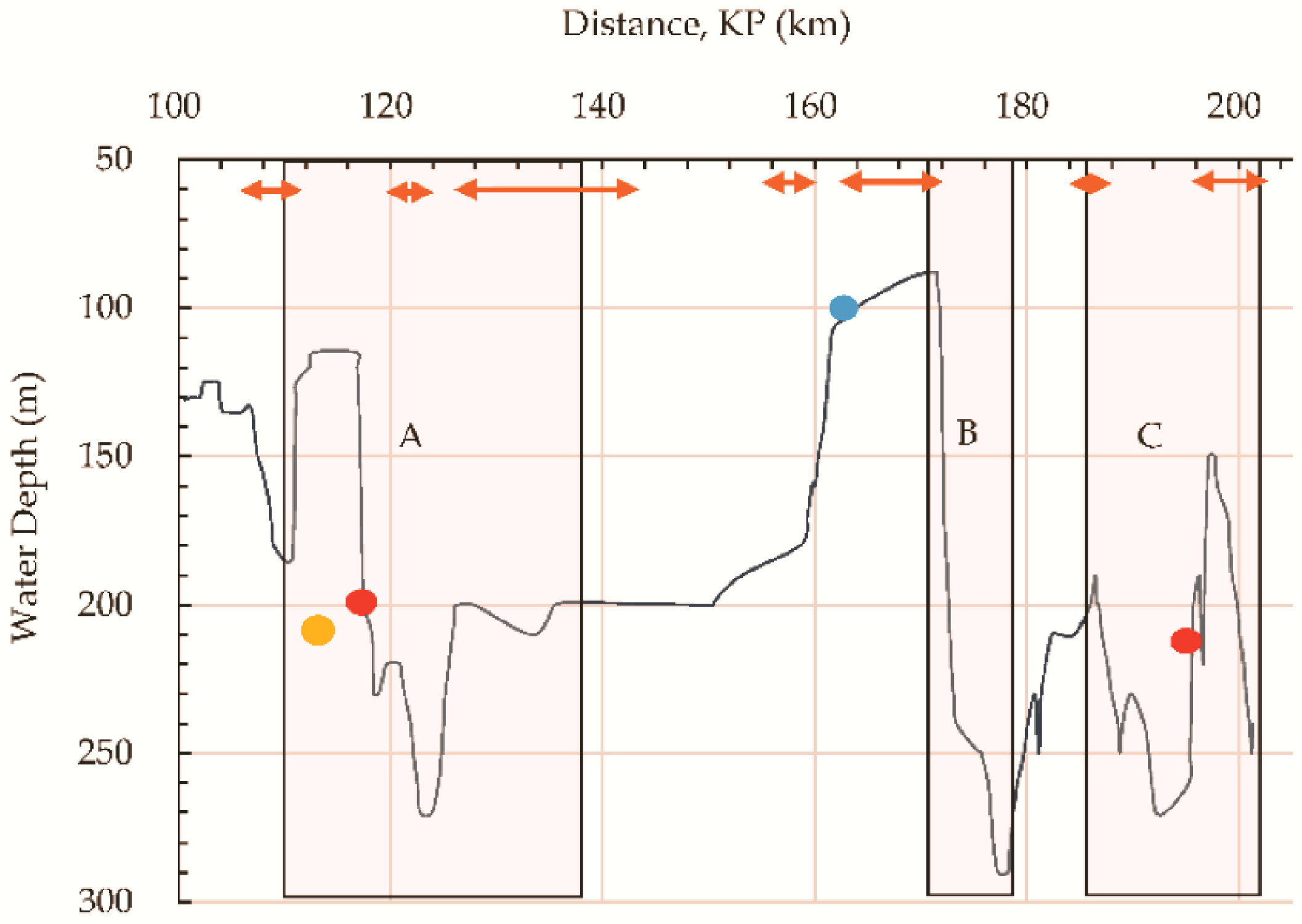
| A | Flat, soft ooze | Over time, the cable’s submerged weight causes it to naturally sink into the sediment. As a result, isolated from external forces such as ocean currents, tides, and abyssal currents, they remain stable due to static frictional forces exerted by the surrounding deposits. |
| B | Depression, soft ooze | Because of the cable’s bending stiffness, the Free Span (FS) section cannot conform to the depression, resulting in a suspended cable. When the seawater flows pass through the FS, there is a risk of abrasion damage to the cable, especially at the support points at both ends. |
| C | Slope, Rocky | Because the seabed has a hard surface, the cable stays in position on the seabed, and currents can easily shift the cables due to the lower friction from sediment in the seabed. Small-scale FS occurs. |
| Ref. Figure | Cable Type | Water Depth (m) | Laying Method | Changes in Cable Condition Affect Insulation Failure | Identification of Failure Locations and the Undersea Environment |
|---|---|---|---|---|---|
| 7 | Single armored (SAM) | 200 | Surface Lay (The application of the burial method was not possible due to the underlying feature forming a steep slope of rock.) |
| Tsugaru Strait. Within narrow straits, cauldrons sculpt the seabed, setting up steep valleys. The Tsugaru Warm Current, which flows eastward through this topography, interacts with tidal streams that periodically vary in response to tidal-level fluctuations on both sides of the strait, producing intricate, rapidly flowing currents. Details will be described in Section 3. |
| |||||
| |||||
| |||||
| 8 | Un- armored (LW) | 4000–6000 | Surface Lay | The contact surface between the cable and the seabed in a hanging section has sharp edges which cause localized damage to the PE sheath due to friction, exposing part of the power-feeding conductor. | A decreasing thickness of surface sediments has been reported in the subduction zone of the Northwest Pacific; see Section 4 for details. |
| Symbol Line and Mark Type | Name | Remarks |
|---|---|---|
Bright orange dashed line:  | Seikan-tunnel | Beneath the seabed, the 100-m designated railway runs on a 25 kV AC, 50 Hz electrical system. |
| Bright yellow-filled and delicate red oval | Region of high flow velocity | The geographical regions of Western, Central, and Eastern. |
Red-filled circle:  | Cable FP (Failure Point) | The geographical location of Western and Eastern. |
Rectangle filled with brown:  | Caldron | Matsumae, Tayama, Suda, Oma, and Shiokubi (From the West) |
Brown-filled circle:  | Saddle | Shirakami and Tappi (From the West) |
Brown rectangle:  | Basin | Tsugaru |
Brown circle:  | Bank | Nishi Tsugaru and Tappi (From the West) |
Orange bold line:  | Spur | Oma and Shiokubi (From the West) |
Green solid line:  (A–I) | Not applicable | Survey line for the cross-section of topography. |
| Items | Details |
|---|---|
| Operational Voltage, Capacity | 250 kV DC, 600 MW |
| Circuit Type | Bipolar with a Dedicated Metallic Return Path for Monopolar Operation |
| Cable Protection | Buried or artificial pipes are installed at depths of up to 60 m below the water surface. |
| Strait/Comparison Items | Narrowest Width Points (km) | Terrain Profile (See Figure 13 and Figure 14) | Water Depth (m) (See Figure 14) | Geology on the Seabed [17] | Variation in West-East Sea Level (cm) | Mean Volume Transport (Sv *) | Maximum Flow Velocity (cm/s) | Vertical Component of the Earth’s Magnetic Field in 2020 (nT) [18] |
|---|---|---|---|---|---|---|---|---|
| Tsugaru | 19.4 (West) 18.7 (East) | V-Shaped Canyon | 310 (West) 260 (East) | Rock, Gravel, Sand | 10–27 [19] | 1.0–2.3 [19] | 150 [19] | 41,000 |
| Soya | 42.7 | Gentle | 70 | Rock, Gravel, Sand | 10 [20] | 1.0–2.0 [20] | 60 [20] | 46,000 |
| Comparison Result | Approx. double Soya > Tsugaru | Tsugaru: Steep slope Soya: Gentle | Approx. 3.7 to 4.4 times Tsugaru > Soya | Almost the same | Approx. 1.0–2.7 times Tsugaru > Soya | Approx. 1.0–1.15 times Tsugaru > Soya | Approx. 2.5 times Tsugaru > Soya | Almost equal |
| Failure Location and Comparative Items | West | East |
|---|---|---|
| System completion year | 1999 | Identical to the west |
| The time of failure and the number of years since completion. | 2010: 11 years later | 2021: 22 years later |
| Cable type | Single armored type (SAM) | Identical to the west |
| Location | KP117 | KP195 |
| Region of swift flow velocity. | KP111–137, Zone A | KP187–201, Zone C |
| Water Depth (m) | 205 | 219 |
| Geographical Features: | Caldron | Spur |
| Terrain gradient (degrees) | >20 | Identical to the west |
| Bottom feature | Rock | Identical to the west |
| Failure category | Insulation failure | Identical to the west |
| Laying Method | Surface Lay | Identical to the west |
| Failure Cause | See Table 4, SAM | Identical to the west |
| Distance and direction from artificial structures that intersect the system under investigation. | 2 km northeast of the railway tunnel. | 24 km northeast of the power cable. |
| North Pacific Ocean | Clay (%) | Calcareous Ooze (%) | Fine-Grained Calcareous Sediment (%) | Radiolarian Ooze (%) | Diatom Ooze (%) | Mixed Ooze (%) | Other (%) |
|---|---|---|---|---|---|---|---|
| 120° E to 100° W, 59.5° N to 20° N and 120° E to 80° W, 20° N to 0° N | 62 | 16 | 5 | 3 | 4 | 1 | 9 |
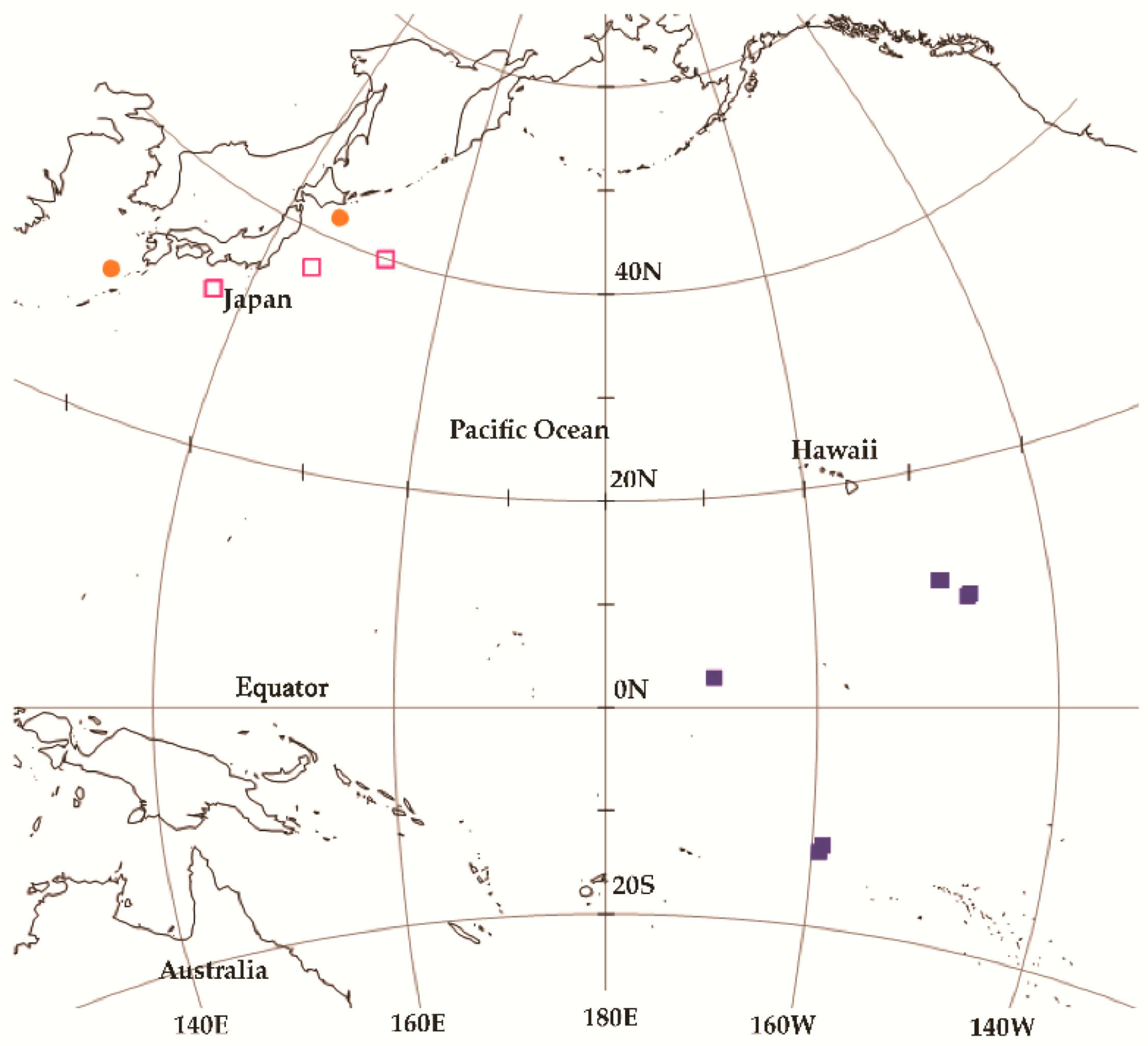
| Mark Type | Remarks | Reference |
|---|---|---|
Rectangle filled with blue:  | The vane shear strength of seabed surface sediment in the Central and East Pacific Basin. | [8] |
Red rectangle:  | Location of recovered repeater. | [23] |
Orange-filled circle:  | A Remotely Operated Vehicle (ROV) measured the thickness of surface sediment on the seabed. | Section 4.5 |
| Consistency | UCS, Qu (kPa) |
|---|---|
| Hard | Over 400 |
| Very stiff | 200–400 |
| Stiff | 100–200 |
| Medium, Firm | 50–100 |
| Soft | 25–50 |
| Very soft | Less than 25 |
| Latitude (N) | Longitude (E) | Water Depth (m) | Thickness of Surface Sediment (cm) | Seabed Slope * (Degree, a Falling Gradient) |
|---|---|---|---|---|
| 41°52.914′ | 145°04.638′ | 3786 | 10 | Approx. 1.5 |
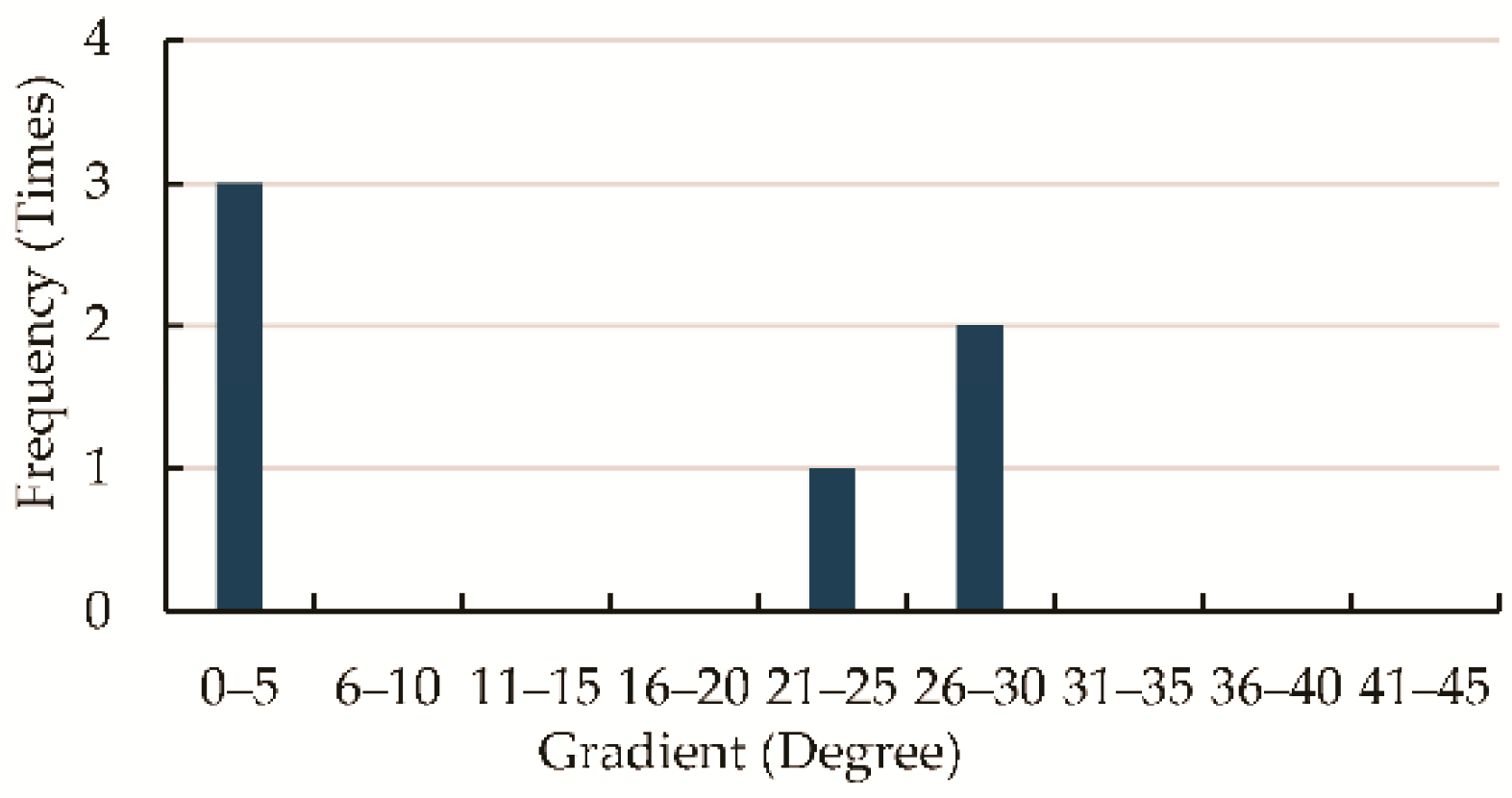
| 41°39.909′ | 144°20.695′ | 2630 | 2–3 | Approx. 5.4 |
| Physical | Chemical | Biological | Metallurgical |
|---|---|---|---|
| Temperature | High chloride ion concentration | Bacterial | Alloy composition |
| pH | Dissolved oxygen | Marine growths | Steel types |
| Salinity | High carbon content | Fouling | Surface conditions |
| Conductivity | Hydroxide ion | Pollutants | Surface roughness/Surface finish |
| High velocity of water | Carbon dioxide | Biomass | Protective coating |
| Anion | g/kg Seawater (35%) | g/kg/Cl% | Cation | g/kg Seawater (35%) | g/kg/Cl% |
|---|---|---|---|---|---|
| Cl− | 19.354 | 0.9989 | Na+ | 10.77 | 0.5560 |
| SO42− | 2.712 | 0.1400 | Mg2+ | 1.290 | 0.0665 |
| Br− | 0.0673 | 0.00347 | Ca2+ | 0.4121 | 0.02127 |
| BO3− | 0.0045 | 0.000232 | K+ | 0.399 | 0.0206 |
| F− | 0.0013 | 0.000067 | Sr2+ | 0.0079 | 0.00041 |
| Type of Water | Resistivity ϼ | Conductivity ϭ |
|---|---|---|
| [Ω·cm] | [µS/cm] | |
| Pure water | 20,000,000 | 0.05 |
| Distilled water | 500,000 | 2 |
| Rainwater | 20,000 | 50 |
| Tap water | 1000–5000 | 200–1000 |
| River water (typical) | 2500 | 400 |
| River water (brackish) | 200 | 5000 |
| Sea water (coastal) | 30 | 33,000 |
| Sea water (open sea) | 20–25 | 40,000–50,000 |
| Item | Description |
|---|---|
| Cable Types | SAM |
| Armor wire | φ5.0 × 18 Galvanized steel wires. |
| Laying method at the construction stage. | Surface lay |
| Number of years since system completion. | 23 |
| Seabed Feature | Sand and flat |
| Water depth (m) | 219 |
| Flow velocity throughout the year. | Approximately 1 knot [38]. |
| Event | Date | Remarks | Reference |
|---|---|---|---|
| Installation | 1900, September | [40] | |
| End of operation | 1945, About September | After World War II ended, the cable was intentionally cut and left abandoned. | |
| Partial cable recovery | 1999, January | Location: 10 km north of Nemuro, Water Depth: 20 m | [41] |
| Classification of Strategies | Illustrations of Specific Measures to Address | Cost Impact | Remarks |
|---|---|---|---|
| Fundamental |
| High | Candidate material: Fiber Reinforced Plastic (FRP) A new development is needed. |
| Ditto | --- | |
| Ditto | Seawater flow velocity: Less than 1.0 knots. | |
| Mitigative |
| Low | Methodologies for Practical Repair Work in SAM cable. |
| Ditto | In areas with strong currents or at the shoreline, a polyurethane sheath protects the armor. | |
| --- | The diver’s working depth is limited to 30 m. |
Disclaimer/Publisher’s Note: The statements, opinions and data contained in all publications are solely those of the individual author(s) and contributor(s) and not of MDPI and/or the editor(s). MDPI and/or the editor(s) disclaim responsibility for any injury to people or property resulting from any ideas, methods, instructions or products referred to in the content. |
© 2026 by the author. Licensee MDPI, Basel, Switzerland. This article is an open access article distributed under the terms and conditions of the Creative Commons Attribution (CC BY) license.
Share and Cite
Ogasawara, Y. An Empirical Examination of the Adverse and Favorable Effects of Marine Environmental Conditions on the Durability of Optical-Fiber Submarine Cables. J. Mar. Sci. Eng. 2026, 14, 701. https://doi.org/10.3390/jmse14080701
Ogasawara Y. An Empirical Examination of the Adverse and Favorable Effects of Marine Environmental Conditions on the Durability of Optical-Fiber Submarine Cables. Journal of Marine Science and Engineering. 2026; 14(8):701. https://doi.org/10.3390/jmse14080701
Chicago/Turabian StyleOgasawara, Yukitoshi. 2026. "An Empirical Examination of the Adverse and Favorable Effects of Marine Environmental Conditions on the Durability of Optical-Fiber Submarine Cables" Journal of Marine Science and Engineering 14, no. 8: 701. https://doi.org/10.3390/jmse14080701
APA StyleOgasawara, Y. (2026). An Empirical Examination of the Adverse and Favorable Effects of Marine Environmental Conditions on the Durability of Optical-Fiber Submarine Cables. Journal of Marine Science and Engineering, 14(8), 701. https://doi.org/10.3390/jmse14080701