Article

Design of a Sensor–Actuator Integrated Flexible Pectoral Fin for Bioinspired Manta Robots

1
School of Marine Science and Technology, Northwestern Polytechnical University, Xi’an 710072, China
2
Unmanned Vehicle Innovation Center, Ningbo Institute of Northwestern Polytechnical University, Ningbo 315103, China
3
College of Polymer Science and Engineering, Sichuan University, Chengdu 610065, China
*
Authors to whom correspondence should be addressed.
J. Mar. Sci. Eng. 2026, 14(8), 693; https://doi.org/10.3390/jmse14080693
Submission received: 5 March 2026 / Revised: 2 April 2026 / Accepted: 7 April 2026 / Published: 8 April 2026
(This article belongs to the Section Ocean Engineering)

Abstract

To meet the practical application requirements of underwater biomimetic robots, this paper presents the design of a flexible pectoral fin with integrated sensing and actuation capabilities, based on a “material-structure-function” integrated approach. The sensor film is embedded into the pectoral fin via an embedded cast-molding method, ensuring synchronized deformation and long-term cyclic stability. Experimental results demonstrate that the integrated pectoral fin can accurately perceive its own bending deformation and external environmental disturbances, enabling corresponding obstacle avoidance maneuvers in a manta robot prototype. This design strategy endows the manta robot with environmental adaptability for real-world applications and offers a novel paradigm for the intelligent design of other underwater equipment.

1. Introduction

Underwater biomimetic robots, particularly those inspired by manta rays, have garnered increasing attention due to their exceptional maneuverability, stealth, and bio-affinity [1,2,3,4,5,6]. These characteristics make them ideal candidates for various underwater tasks, including environmental monitoring, resource exploration, and ecological surveys. However, despite significant advancements in fluid mechanics research [7,8,9], control system design [10,11,12], and advanced energy systems [13,14,15], most existing prototypes still exhibit limited capabilities in perceiving and adapting to dynamic underwater environments-precisely the critical requirement for practical applications.
In nature, manta rays leverage a sensory network distributed across their flexible pectoral fins to monitor real-time fin deformation and surrounding flow field disturbances, dynamically adjusting their swimming postures based on this perceptual information to achieve exceptional environmental adaptability and maneuverability [16,17,18]. Inspired by this, extensive research has been conducted on biomimetic actuation, leading to the development of various pectoral fin actuators based on soft material actuation [19,20,21]. Concurrently, underwater sensing technologies have made substantial progress, with flexible pressure sensors [22,23] and strain sensors [24,25] being widely employed for robotic state monitoring. However, emulating this biological intelligence requires not only biomimetic actuation and underwater sensing, but more importantly, the in situ integration and synergistic coupling of actuation and sensing functions. The aforementioned studies typically design sensing and actuation as independent modules, resulting in issues such as structural mismatch, signal distortion, and poor long-term stability. These limitations hinder the development of truly intelligent underwater robots capable of closed-loop perception and feedback control.
To address these challenges, this paper proposes a “material-structure-function” integrated design paradigm. Flexible sensor films with an ultrawide linear response range are embedded into the deformable restriction layer of the biomimetic pectoral fin via an embedded cast-molding method, achieving physical fusion and synchronized deformation of sensing and actuation functions. Combining the biomimetic pectoral fin integrated sensor system and a perception-feedback control architecture, the manta robot can perceive fin bending deformations and environmental disturbances, thereby triggering corresponding obstacle avoidance behaviors. This work provides a new idea for the intelligent design of underwater biomimetic robots.

2. Materials and Methods

2.1. Flexible Sensor Film

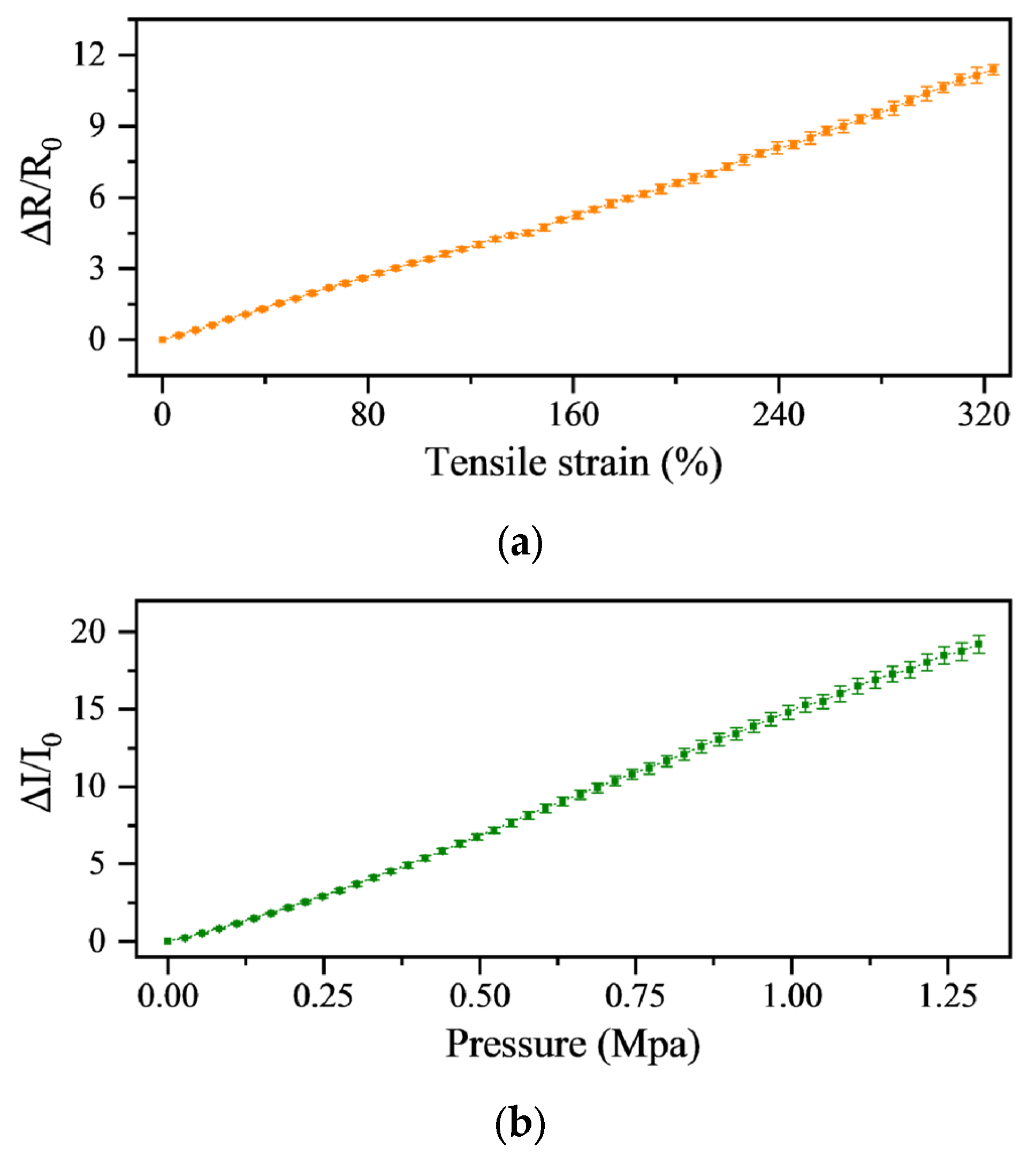
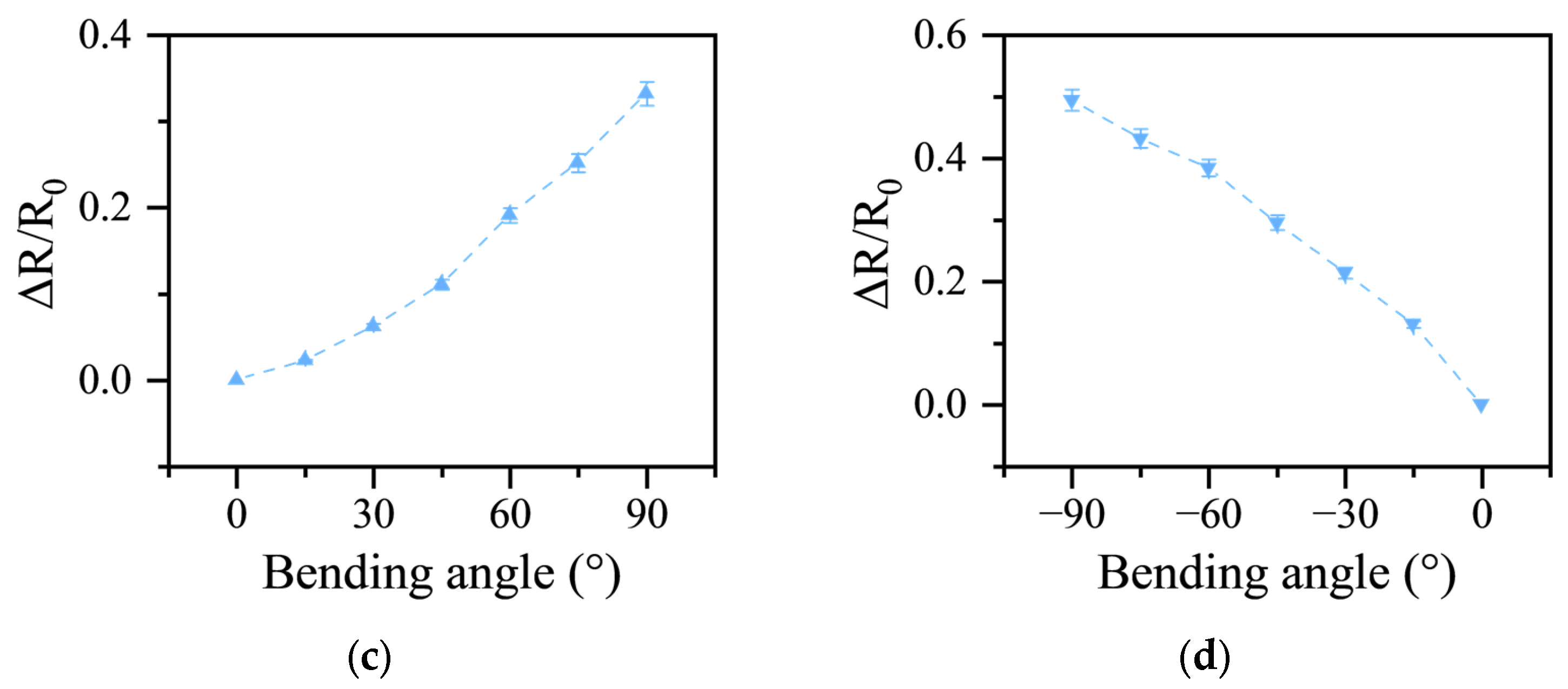
Following previous work [26], flexible mechanical sensors were fabricated using a thermoplastic elastomer ethylene-α-octene random copolymer incorporated with hybrid fillers of carbon nanofiber and carbon black (3 wt%: 3 wt%) via melt compounding followed by water etching. The resulting composites were subsequently hot-pressed into strips and equipped with wire electrodes to assemble flexible sensors capable of multimodal mechanical sensing, specifically exhibiting resistive responses to tensile strain, pressure, and bending (Figure 1). Such multifunctional sensors with an ultrawide linear working range hold significant promise for applications in underwater soft robots.

2.2. Manta Robot Model

This study took the manta as a biomimetic object to conduct the design of a manta robot model. Inspired by the pectoral fin structure of manta, a flexible biomimetic pectoral fin design driven by fluidic actuators was proposed. This design was based on the structure-function integration characteristics of manta pectoral fins, abstracted as a “skeleton + muscle” biomimetic model. According to existing research, manta exhibits distinct morphological features characterized by a thick central body and two lightweight pectoral fins. The two large pectoral fins account for over two-thirds of the dorsal projection area. Deakos [27] et al. established a significant linear correlation between pectoral fin length (DL) and width (DW) in manta, expressed as:
D W = 1.958 D L + 0.469 ( r 2 = 0.923 )
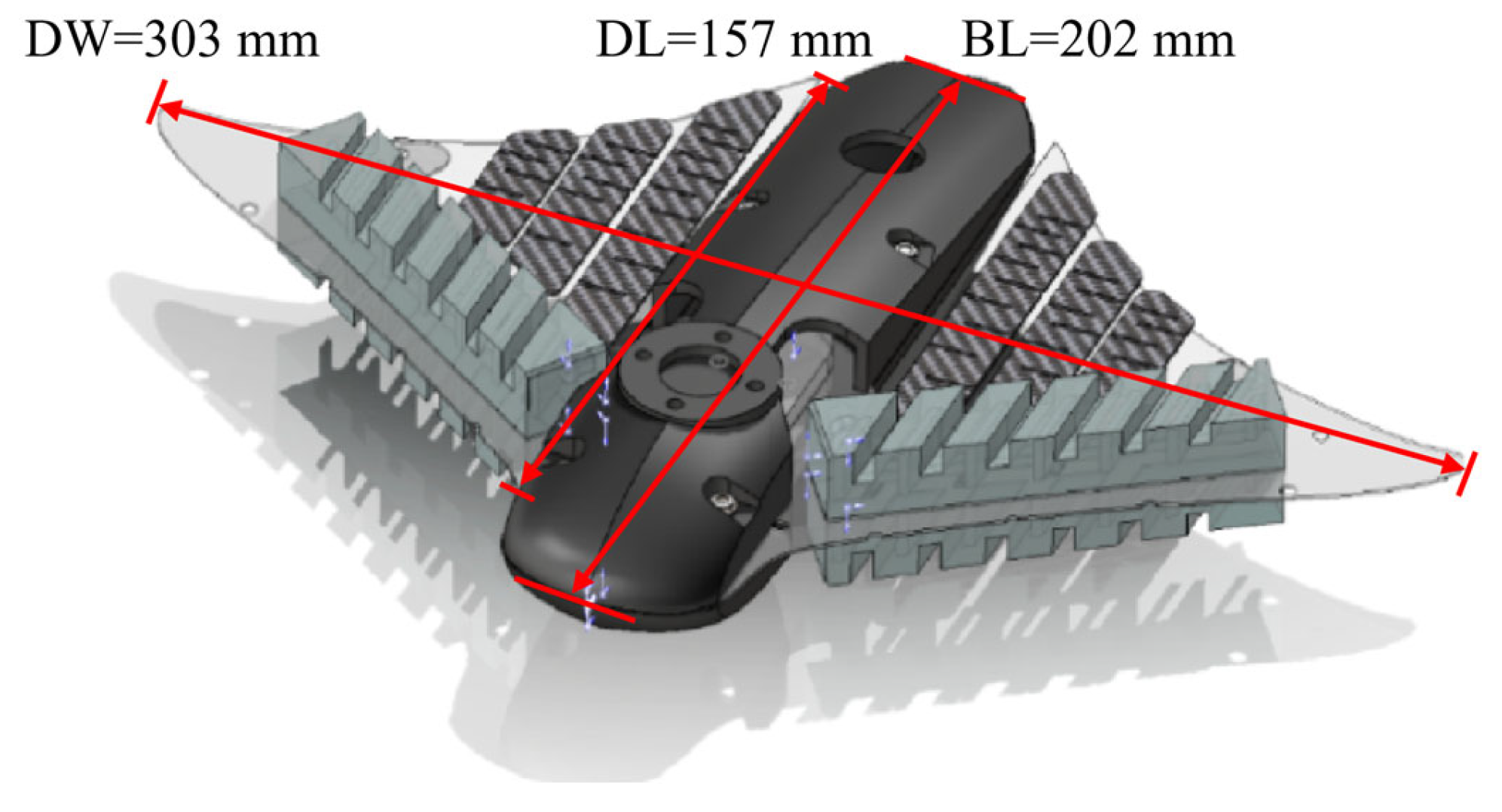
Based on the above formula, the manta robot model was designed with the following morphological parameters: a body length (BL) of 202 mm, pectoral fin length (DL) of 157 mm and width (DW) of 303 mm, as shown in Figure 2.

2.3. Fabrication Process of Sensor–Actuator Integrated Pectoral Fin

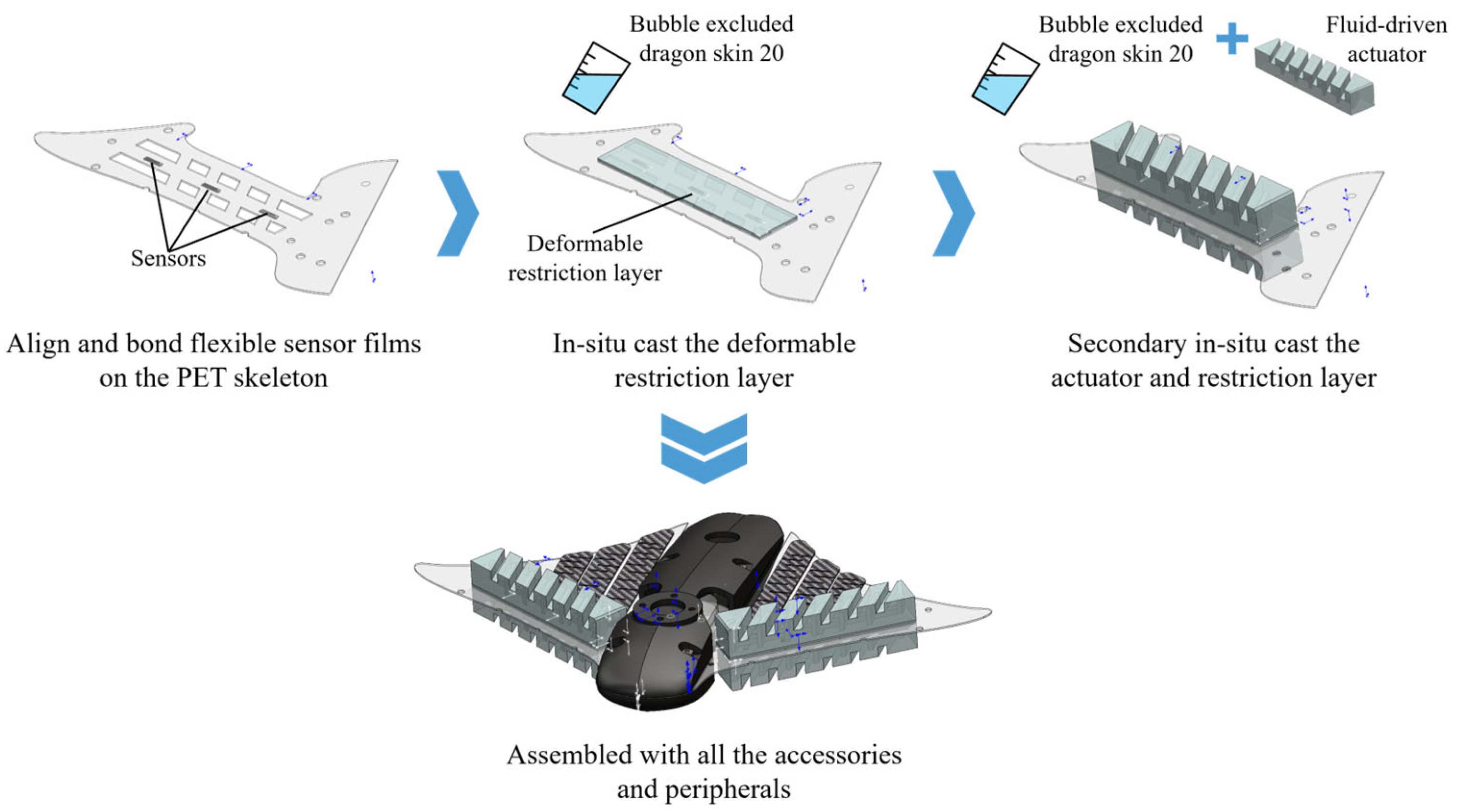
As shown in Figure 3, the PET skeleton was fabricated using a laser cutting machine (model 4060, Liaocheng Mingchuang Laser Equipment Co., Ltd., Liaocheng, China). Following the predefined layout design, the flexible sensor film was in situ integrated onto the PET skeleton using VHB tape (3M™, St. Paul, MN, USA, thickness: 0.5 mm), ensuring both accurate positioning and effective isolation from subsequent silicone materials. The deformable restriction layer was then in situ cast onto the PET skeleton using liquid silicone, achieving mechanical bonding between the restriction layer and the PET skeleton while simultaneously encapsulating the flexible sensor film. Subsequently, a secondary casting process was employed to affix the fluidic actuator onto the deformable restriction layer, yielding the sensor–actuator integrated pectoral fin.

2.4. Perception-Feedback Control Architecture

The environmental adaptability of the proposed sensor–actuator integrated flexible pectoral fin was validated in a laboratory pool. It should be noted that the integrated fin was developed on a miniaturized fluid-driven prototype (body length = 202 mm). Due to the limited space of this small prototype to accommodate a full control system, the “perception” functionality was validated on the small fluid-driven prototype, while the “decision-execution” functionality was validated using a larger-scale manta prototype developed by our team, which already integrates a complete control architecture.
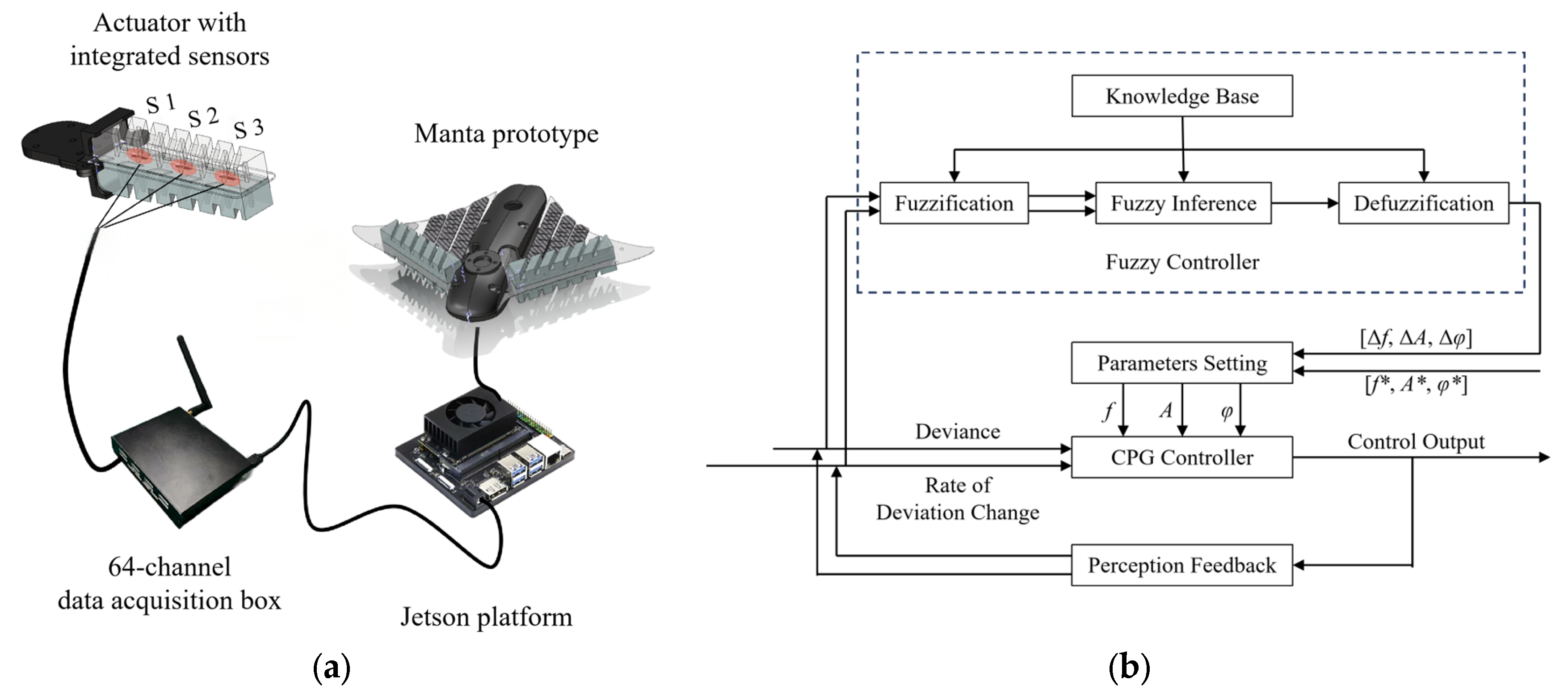
The physical implementation of this control loop is shown in Figure 4a. During operation, the sensor array embedded in the pectoral fins undergoes resistance changes due to bending deformation caused by self-flapping or external environmental contact. These resistance signals are acquired by a custom-designed 64-channel data acquisition box (64-channel box) and transmitted to the NVIDIA Jetson Orin Nano SUPER embedded computing platform (NVIDIA Corporation, Santa Clara, CA, USA) for data storage, reading, and recognition. Raw resistance signals are sampled at 125 Hz per channel and filtered with a moving average filter (window size 5) to reduce high-frequency noise. The deviation e is calculated as the normalized difference between the current signal and the nominal flapping pattern, and the rate of change Δe is derived by numerical differentiation. The Jetson platform identifies the disturbance type (e.g., side collision or bottom contact) and generates corresponding control parameters, which are then sent to the main control board. The main control board executes the fuzzy-CPG control logic based on the received parameters, which consists of three sequential stages (Figure 4b):
  • Fuzzification: The incoming sensing signals (e.g., resistance change rates) are normalized and mapped to linguistic variables using membership functions that characterize the deviation level from normal flapping patterns.
  • Fuzzy Inference: A predefined rule base—derived from heuristic obstacle avoidance logic—determines the necessary adjustments to the CPG parameters based on the current deviation level and its rate of change. For example: IF e is High AND Δe is Positive, THEN adjust CPG parameters; IF e is Medium AND Δe is Zero, THEN maintain CPG parameters.
  • Defuzzification: The fuzzy inference results are converted into crisp adjustment values for the CPG parameters.
The CPG parameters are updated at a frequency of 10 Hz. The nominal values for normal flapping are set to f = 0.4 Hz, A = 45° and φ = −40°, which correspond to the operating conditions selected for the prototype validation experiments. Adjustments Δf, ΔA and Δφ are limited to ±20% of the nominal values to ensure smooth motion transitions [28]. The updated CPG parameters generate corresponding motion commands, which are sent to the actuators driving the pectoral fins. This establishes a complete “perception-decision-execution” validation loop.

2.5. Measurement and Experimental Procedures

2.5.1. Tensile Testing of Materials

Dragon Skin series silicones and Smooth-Sil 945 silicone (Smooth-On, Inc., Macungie, PA, USA), which are commonly employed in flexible biomimetic robots, were selected as candidate materials for the biomimetic muscle. Mechanical properties were characterized via standard tensile testing according to GB/T 528-2009 [29] and GB/T 1040.3-2006 [30]. Specimens were prepared with dimensions of 120 mm in length and 6 mm in width. Each sample was mounted on a high-low temperature electronic universal testing machine (model UTM4104-GD, KASON, Jinan, China) equipped with a 10 kN load cell. The tensile rate was set to 200 mm/min throughout the tests. Shore A hardness was obtained as the median of five measurements per specimen. Tensile strength and elongation at break were measured from three independent specimens and are reported as mean values ± SD. The stress–strain curves were also obtained from three independent specimens and represent the mean response of these three specimens.

2.5.2. Flapping Curvature Measurement of the Biomimetic Pectoral Fin

To evaluate the bending deformation performance of biomimetic pectoral fins fabricated from different silicone materials, flapping amplitude characterization was conducted in air at room temperature. The relationship between the input liquid volume and the resulting bending angle was systematically investigated. 45 mL liquid was injected into the fluidic actuator to ensure consistent driving input across all material specimens, and the leading-edge profile of the biomimetic pectoral fin during bending deformation was extracted via image processing. For each material, three independent specimens were tested.

2.5.3. Morphology Characterization of Material Interface

The interface morphology between the flexible sensor film and the deformable restriction layer was observed using a polarizing microscope (Leica DM2700P, Leica Microsystems, Wetzlar, Germany), with micrographs acquired under a 5× objective lens.

2.5.4. Cyclic Stability and Hysteresis Characterization of the Flexible Sensor Film

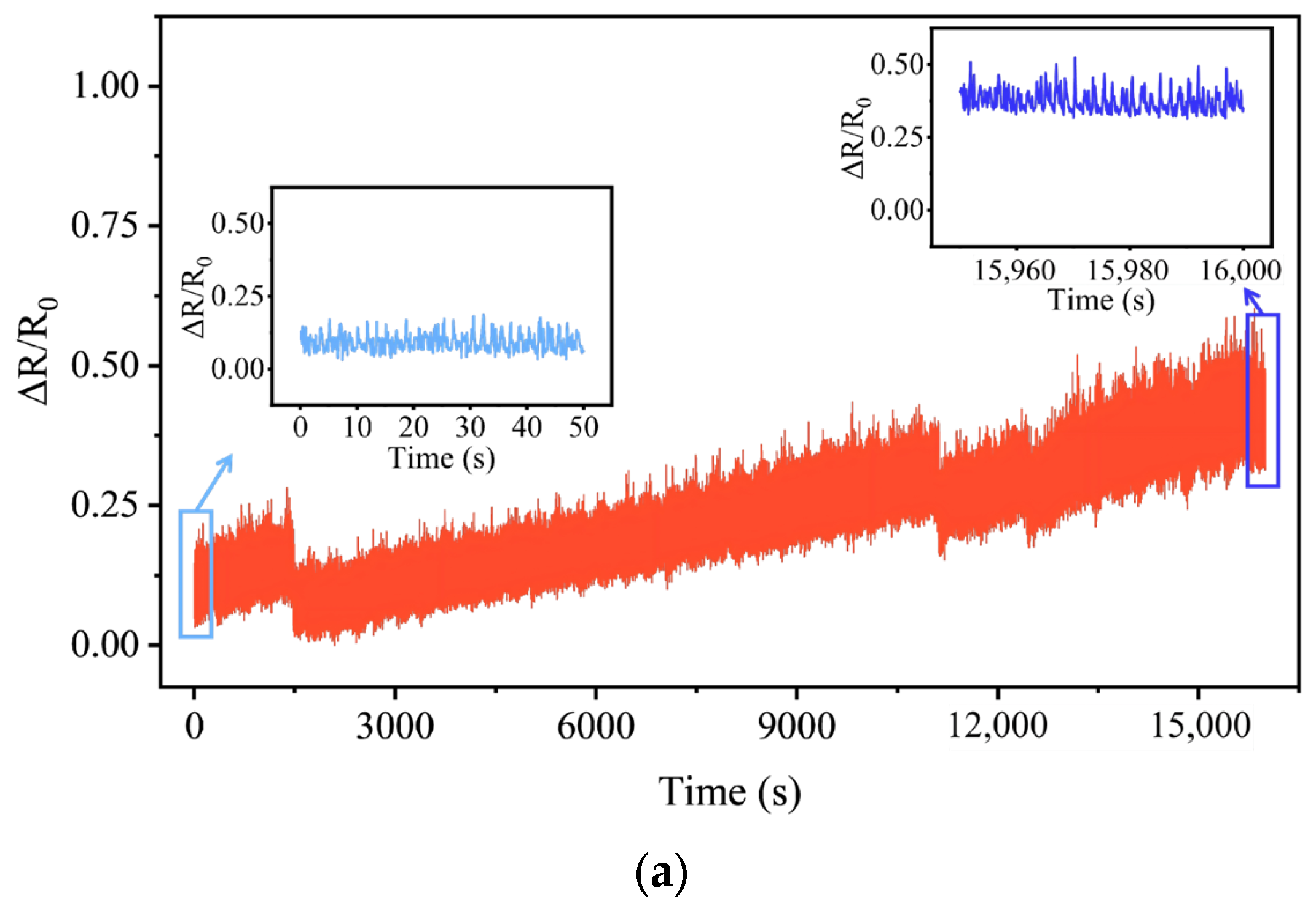
Cyclic stability tests were conducted in water at room temperature. The biomimetic pectoral fin was actuated symmetrically at a frequency of 0.6 Hz with an amplitude of 60° for approximately 9600 consecutive cycles. Throughout the test, the electrical signal output of sensor S1 was continuously monitored. To ensure consistency, identical testing protocols were applied to both surface-attached and embedded sensors for comparative evaluation. All cyclic stability tests were repeated on three independent samples. Baseline drift is quantified by the difference between the mean resistance change rate (ΔR/R0_mean) of the first 10 cycles and that of the last 10 cycles. Drift rate per hour was calculated as (ΔR/R0_drift)/total test time (s) × 3600 (s).
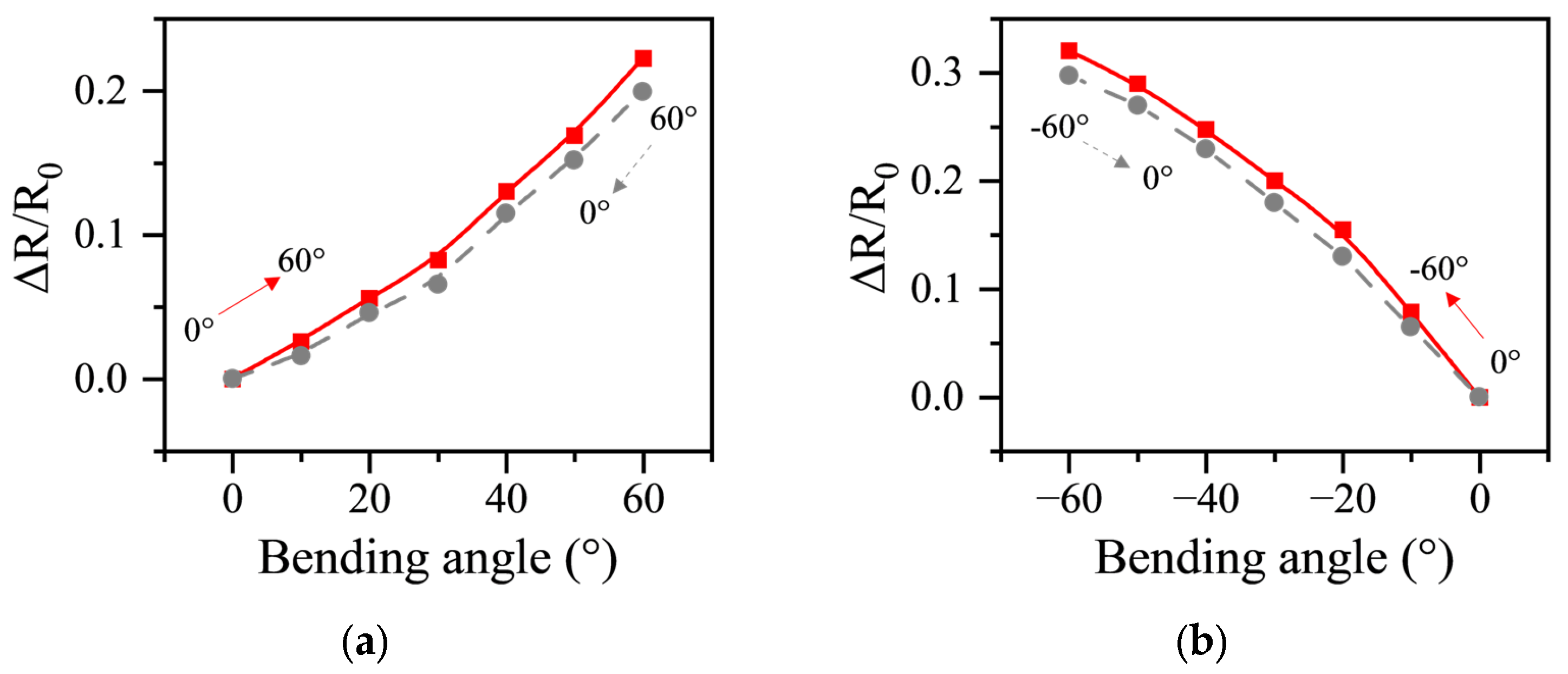
Hysteresis tests were conducted in water at room temperature. The biomimetic pectoral fin was actuated symmetrically at a frequency of 0.6 Hz with an amplitude of 60°. The resistance change rate of sensor S1 during a complete bending cycle (0° → 60° → 0°, 0° → −60° → 0°) was recorded. The hysteresis error was determined by dividing the maximum difference between the loading and unloading curves by the full-scale output. The test was repeated three times to confirm consistency. The loading curves from the hysteresis test were also used to evaluate the linearity and sensitivity of the integrated sensor.

2.5.5. Sensing Performance Characterization of the Biomimetic Pectoral Fin

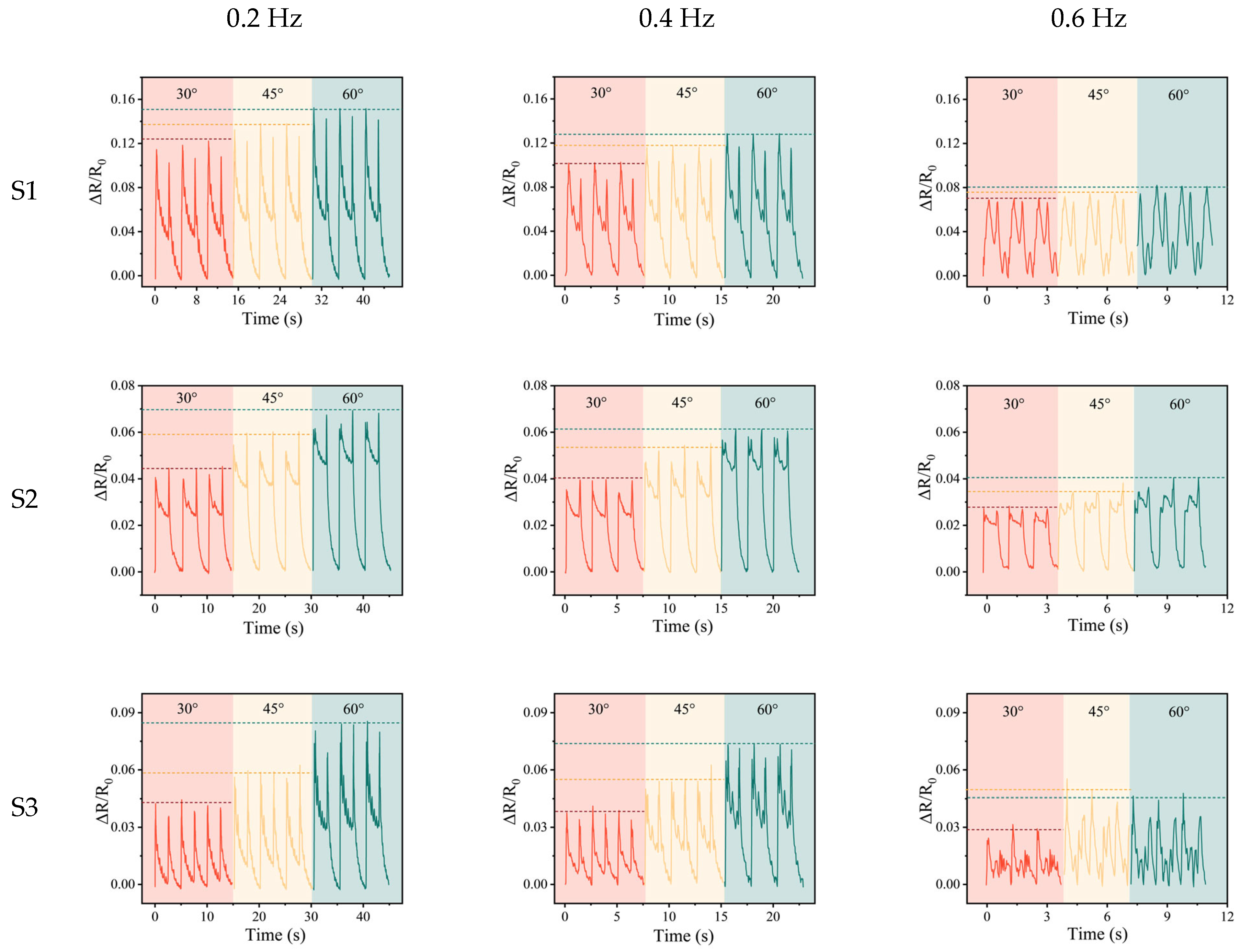
Sensing performance characterization was conducted in water at room temperature. The self-sensing capability during bending deformation was evaluated under varying actuation conditions, with frequencies ranging from 0.2 to 0.6 Hz and amplitudes from 30° to 60°. External disturbances, including side and bottom interference, were introduced under the conditions of 0.4 Hz frequency and 45° amplitude within the same aqueous environment. Measurements were performed on three independent specimens for each testing condition.

3. Results and Discussion

3.1. Material Design of Biomimetic Muscle

The high biomimetic flapping maneuverability of the manta robot is driven by the biomimetic muscle of its pectoral fin, and the actuation performance of this biomimetic muscle depends on its structural and material design. Since our team has previously detailed the structural design of the biomimetic muscle and conducted systematic research on its structural parameters [31], this paper focuses on the design and investigation of the material properties of the biomimetic muscle.
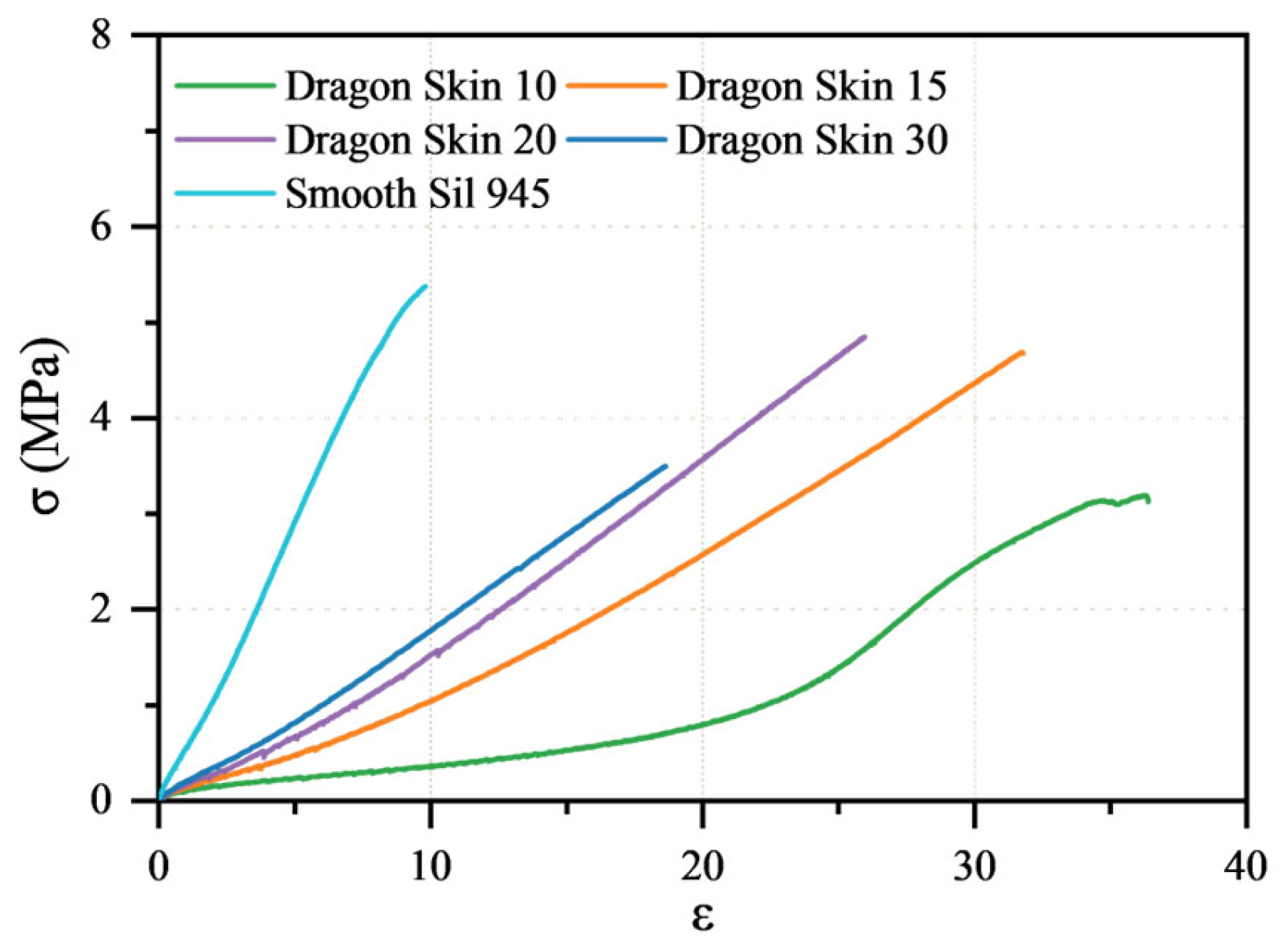
Table 1 and Figure 5 present the test results of the mechanical properties of Dragon Skin series silicone and Smooth Sil 945 silicone (Smooth-On, Inc., Macungie, PA, USA). Compared to the Dragon Skin series silicones (Smooth-On, Inc., Macungie, PA, USA), Smooth Sil 945 exhibited the highest hardness and tensile strength but the lowest elongation at break. It demonstrated brittleness during elastic deformation, failing to meet the requirements for large deformations of the biomimetic muscle. Dragon Skin 30 had a relatively minimal elongation at break, making it equally unsuitable for the large deformation demands of the biomimetic muscle. While Dragon Skin 10 exhibited a larger elongation at break, its hardness and tensile strength were relatively low, resulting in reduced stiffness of the biomimetic muscle during large deformations and compromised force transmission efficiency. In contrast, Dragon Skin 15 and Dragon Skin 20 demonstrated the most outstanding and balanced comprehensive performance.
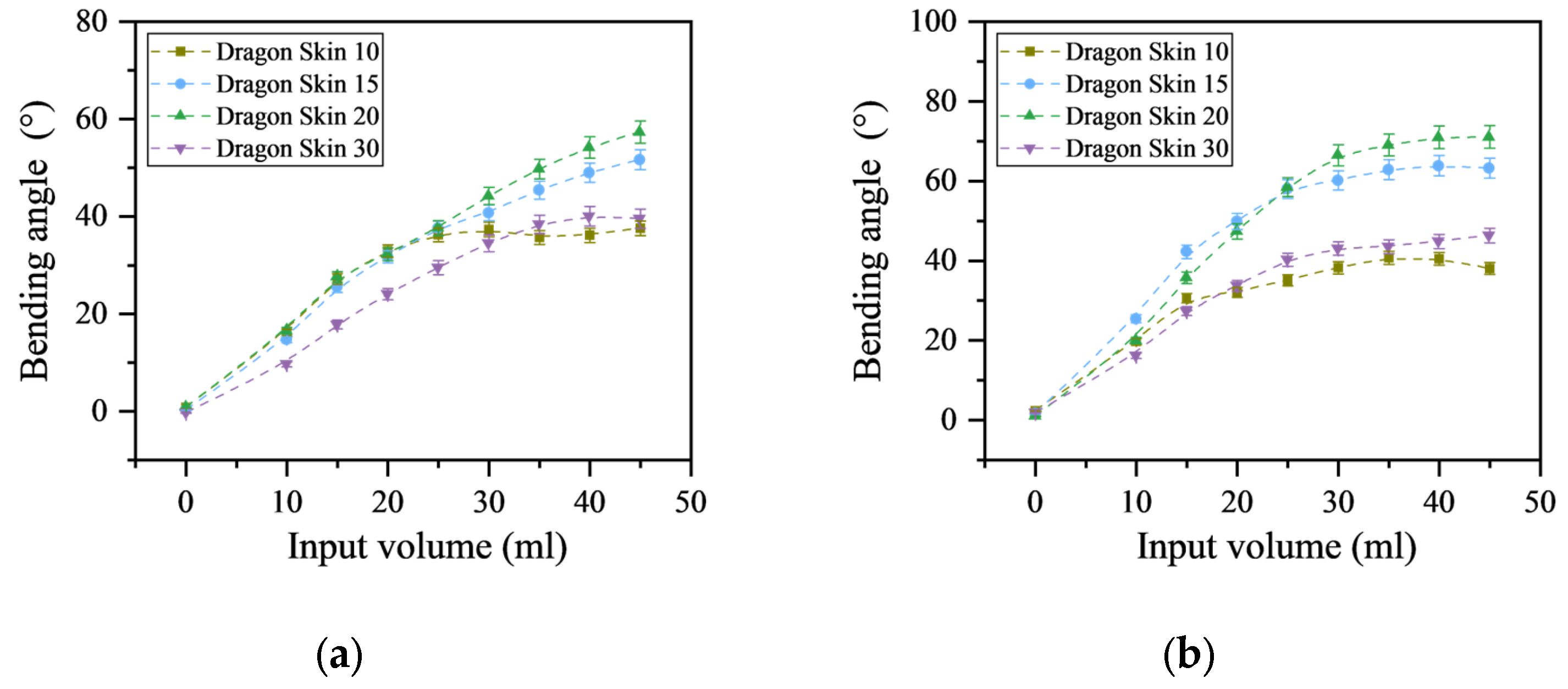
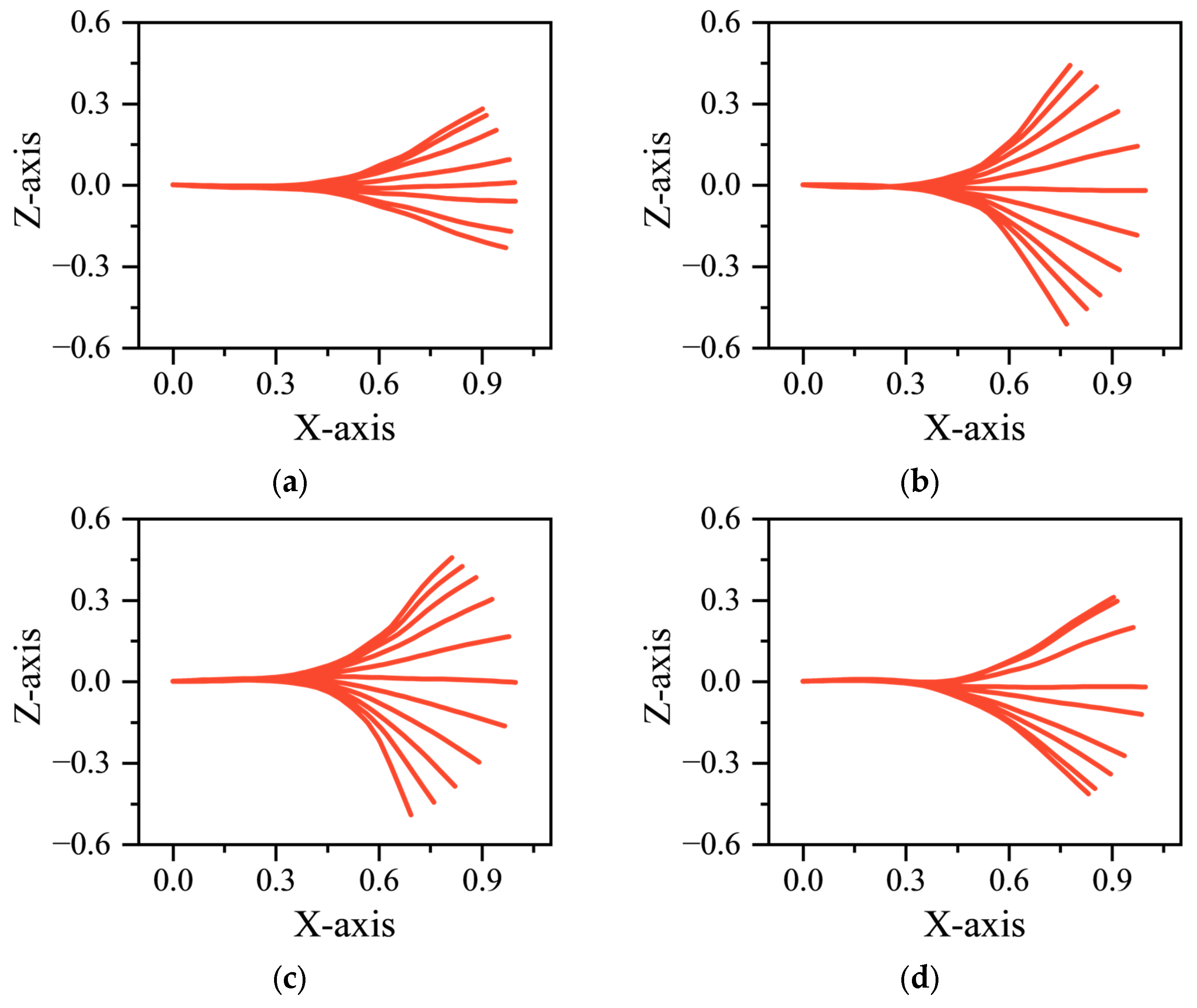
A comparative study was further conducted to evaluate the bending deformation performance of biomimetic muscles fabricated from different Dragon Skin series silicones under actuation conditions. As shown in Figure 6, The relationship between the input liquid volume and the resulting bending angle was systematically tested. The maximum down-flapping and up-flapping amplitudes for biomimetic pectoral fins made of Dragon Skin 15 and Dragon Skin 20 exceeded 65° and 50°, and 70° and 60°, respectively. Both were significantly greater than those observed for Dragon Skin 10 and Dragon Skin 30. Analyzing the reasons, due to the lower elastic modulus of Dragon Skin 10, large inelastic deformation occurred locally in the biomimetic muscle under high-volume input conditions, resulting in reduced output force and an inability to produce significant overall bending deformation. Conversely, the higher elastic modulus of Dragon Skin 30 limited its bending amplitude; when one side of the biomimetic muscle underwent bending deformation, the other side failed to maintain continuous bending, and the bending angle was limited. 45 mL liquid was injected into the fluidic actuator to ensure consistent driving input across all material specimens, and the leading-edge profile of the biomimetic pectoral fin during bending deformation was presented in Figure 7. The results indicated that, compared to Dragon Skin 10 and Dragon Skin 30, the pectoral fins with biomimetic muscles made of Dragon Skin 15 and Dragon Skin 20 exhibited a larger flapping range in the Z-axis direction.
Based on the results from experiments, it was concluded that Dragon Skin 20, as a biomimetic muscle material, could provide sufficient structural strength while undergoing large deformations and enable effective transmission of driving force, thereby fully meeting the requirements of the biomimetic pectoral fin’s flapping motion.

3.2. Integrated Design of Sensing and Actuation for Biomimetic Pectoral Fin

To enable the manta robot to perceive its own pectoral fin deformation and external environmental disturbances during underwater operation, this part designed a biomimetic pectoral fin with integrated sensing and actuation.
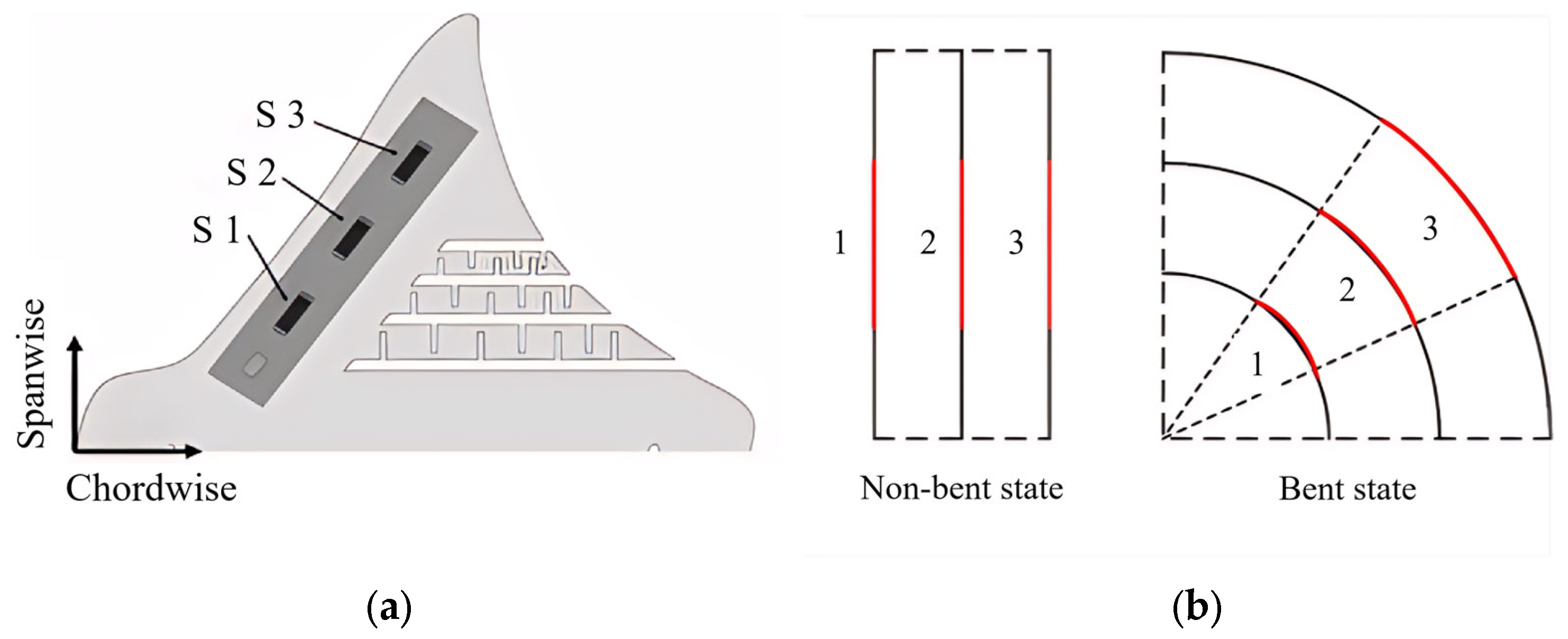
Previous research has indicated that during flapping, the maximum bending of the manta ray pectoral fin occurs at approximately one-third of its spanwise length [31]. Building upon this finding and considering the structural characteristics of the biomimetic pectoral fin in this work, we arranged flexible sensor films in a geometric array along the spanwise direction of the fin. As shown in Figure 8a, three sensors (S1, S2, and S3) were sequentially positioned along the spanwise direction: S1 and S3 were placed near the two spanwise ends, with S1 located at the most deformation-active one-third position, while S2 was situated midway between them.
Further research was conducted on the integration method for the flexible sensor films. Considering the thickness of the biomimetic muscle, a surface-attached sensor would fail to accurately capture the true deformation of the biomimetic pectoral fin. As illustrated in Figure 8b, sensors placed at test points 1 and 3 represent surface-attached sensors, while the sensor at test point 2 represents the actual neutral plane during bending deformation. When the measured object bends, sensors at points 1 and 3 exhibit positional integration errors, manifested as ∆ε_1 < ∆ε_2 < ∆ε_3, with the measurement error varying according to the thickness of the object. To address this issue, this study employed an embedded cast-molding method to integrate the sensors within the deformable restriction layer of the biomimetic pectoral fin, ultimately achieving integrated unification of the actuating muscle and sensing skin.
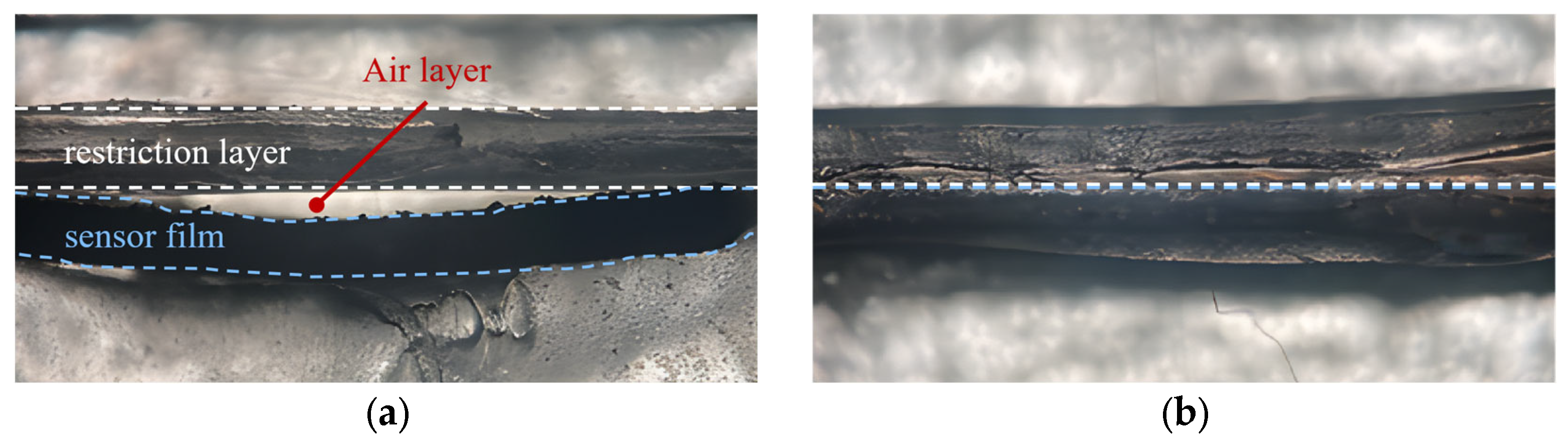
The interface morphology between the flexible sensor film and the deformable restriction layer was examined for both the conventional surface-attached method (Figure 9a) and the embedded cast-molding method (Figure 9b). The results revealed a clear contrast between the two approaches. For the conventional surface-attached method, distinct air gaps were observed at the sensor–restriction layer interface (Figure 9a). These interfacial gaps not only compromise measurement accuracy but also lead to signal distortion under cyclic loading—a key limitation of modular sensing-actuation designs identified in previous studies. In contrast, the sensor film integrated via embedded cast-molding maintained intimate contact with the restriction layer (Figure 9b), ensuring synchronized deformation with the pectoral fin and enabling precise electrical signal output.
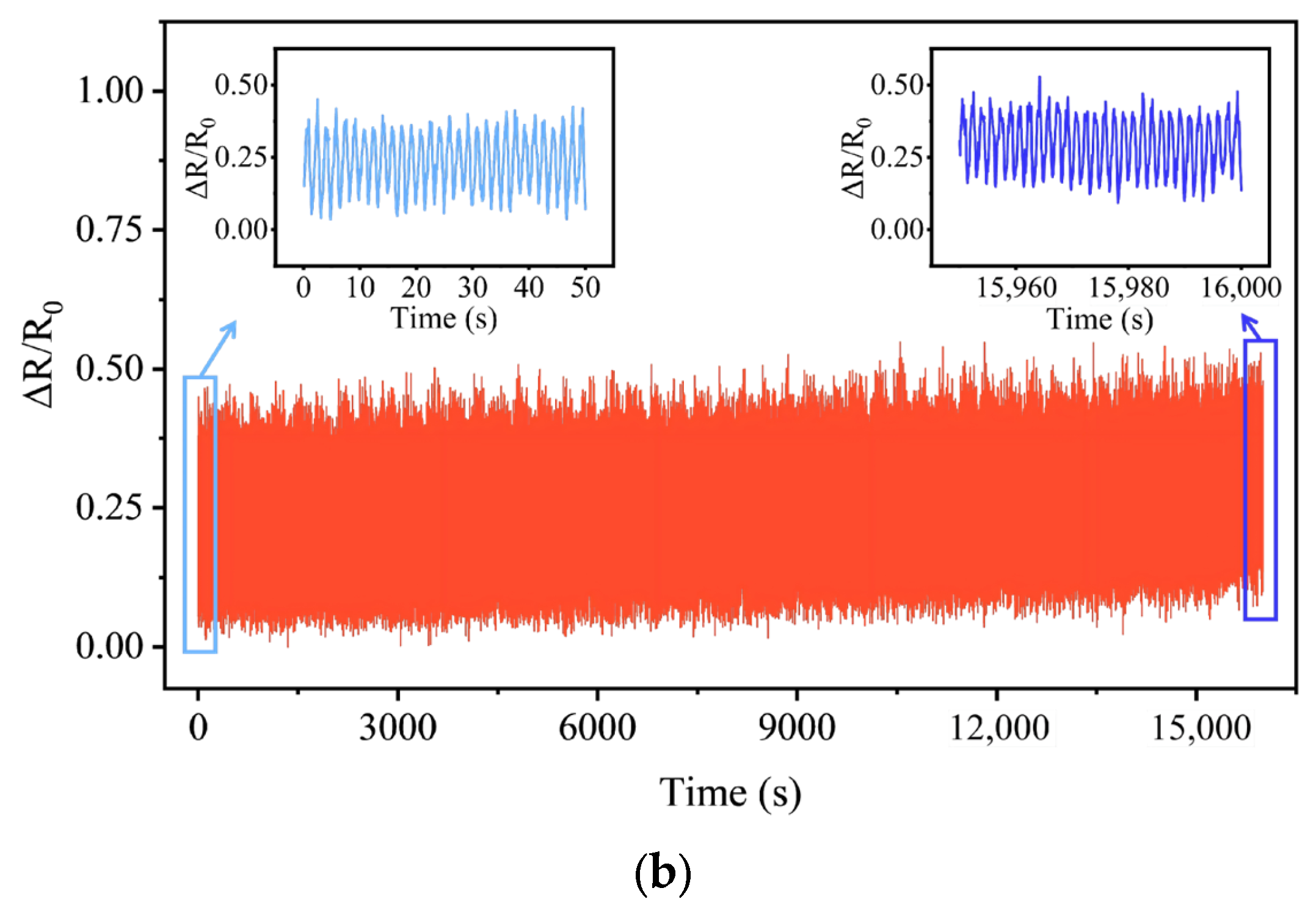
To evaluate the cyclic operational stability of the flexible sensor film under flapping conditions of the biomimetic pectoral fin, comparative tests were conducted between the surface-attached sensor (point 3) and the embedded sensor (point 2). As shown in Figure 10, the embedded sensor maintained stable signal output throughout 9600 continuous oscillation cycles, with minimal baseline drift. In contrast, the surface-attached sensor exhibited severe baseline drift and a narrowed response amplitude. Quantitative analysis shows that over 16,000 s, the embedded sensor drifted 0.0693 (0.0156/h), while the surface-attached sensor drifted 0.2775 (0.0624/h). This instability is attributed to the positional integration error illustrated in Figure 8b. During bending, the surface-attached sensor (point 3) is located away from the neutral plane, resulting in a mismatch between the actual deformation of the pectoral fin and the strain experienced by the sensor. This strain mismatch generates shear stress at the sensor-fin interface. Under cyclic flapping, the accumulated shear stress leads to progressive interfacial slip and, eventually, partial debonding of the sensor from the fin surface. In comparison, the embedded sensor (point 2) is fully encapsulated within the deformable restriction layer, ensuring synchronized deformation with the pectoral fin and maintaining intimate contact throughout the cyclic loading process. These results indicate that the embedded cast-molding method mitigates the shortcomings of conventional surface-attached designs, thereby offering a more reliable basis for further prototype validation.
The hysteresis of the embedded sensor S1 was evaluated during a complete underwater bending cycle of the biomimetic pectoral fin. As shown in Figure 11, the loading and unloading curves exhibited a maximum difference of 0.0230 at 60°, corresponding to a hysteresis error of approximately 7.18% of full scale. This indicates good repeatability for bidirectional bending detection, which is essential for closed-loop control.
Complementing the hysteresis analysis, the loading curves from the same test were used to verify the linearity and sensitivity of the integrated sensor. Linear regression yielded R2 = 0.999 for both upward and downward bending, confirming excellent linearity across the operational range. The bending sensitivities were approximately 0.0037/° (upward) and 0.0053/° (downward), respectively. The sensitivity shows a slight difference between upward and downward bending, yet remains of the same order of magnitude, which is sufficient to support bidirectional bending detection. These results confirm that the embedded sensor maintains excellent linearity and sufficient sensitivity for bidirectional deformation monitoring within the integrated system.

3.3. Sensing Performance of Biomimetic Pectoral Fin

In multi-scenario operational environments, the manta robot’s perception of its own pectoral fin state and the external environment is critical for ensuring safe and efficient task execution. Leveraging the inherent property of the flexible sensor film, which generates corresponding electrical signals in response to bending deformation, real-time monitoring of the manta robot’s pectoral fin motion and dynamic perception of the surrounding environment were achieved in the water tank.
Figure 12 demonstrates the mapping relationship between the bending deformation of the biomimetic pectoral fin and its corresponding sensing signals. Longitudinal comparison reveals that under the same flapping frequency, the resistance change rate increases with flapping amplitude, indicating that the sensor film can effectively identify the degree of bending deformation of the pectoral fin. Notably, the sensing signal intensity of S1 is the highest, indicating maximum bending deformation at this position, which aligns with the established conclusion that the maximum bending occurs at one-third of the spanwise length of the pectoral fin. Horizontal comparison shows that under the same flapping amplitude, the resistance change rate decreases with increasing flapping frequency. This result further verifies that the sensor film can effectively identify the bending deformation of the pectoral fin. Overall, the sensor film array exhibits unique electrical signal outputs corresponding to different bending deformations across all operational conditions. This one-to-one mapping relationship between fin kinematics and sensor responses enables estimation of the pectoral fin’s motion state in actual service environments and establishes a foundation for subsequent underwater environmental perception.
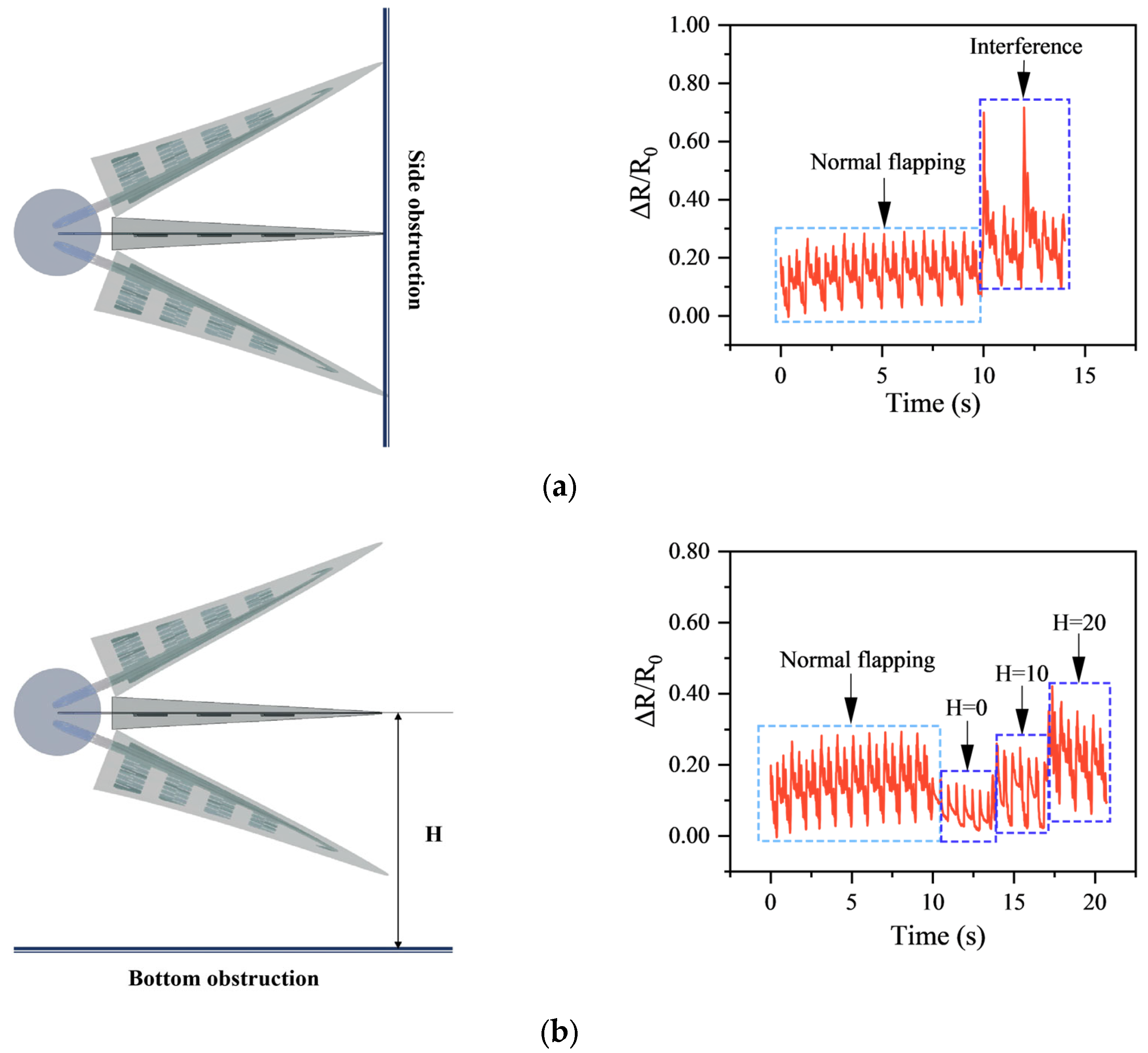
Figure 13 demonstrates the mapping relationship between underwater environmental disturbances acting on the biomimetic pectoral fin and its corresponding sensing signals. As shown in Figure 13a, when the pectoral fin is subjected to lateral interference from the side, the sensor film achieves effective detection through instantaneous spikes in the resistance change rate, with the signal deviating significantly from the pattern observed during normal flapping operation. Similarly, when the pectoral fin contacts the bottom of the water tank, the resistance change rate of the sensor film exhibits distinctly different responses compared to normal flapping: it decreases at H = 0 and 10 mm, while increasing at H = 20 mm. This indicates that the sensor film can not only effectively identify bottom contact interference but also distinguish the distance to the bottom obstacle by sensing the amplitude of the electrical signal. Compared to lateral interference, bottom interference exhibits temporal continuity in electrical signal output, enabling the biomimetic pectoral fin to effectively identify different types of disturbances, such as wall collision and bottom contact in practical obstacle scenarios. Furthermore, the sensing system can identify bottom contact conditions at varying distances by analyzing the characteristics of the electrical signals.

3.4. Environmental Perception-Feedback Control of Manta Robot

The environmental adaptability of the proposed sensor–actuator integrated flexible pectoral fin was validated in a laboratory pool. The “perception” functionality was validated on the small fluid-driven prototype, and the “decision-execution” functionality was validated using a larger-scale manta prototype that integrates a full control architecture.
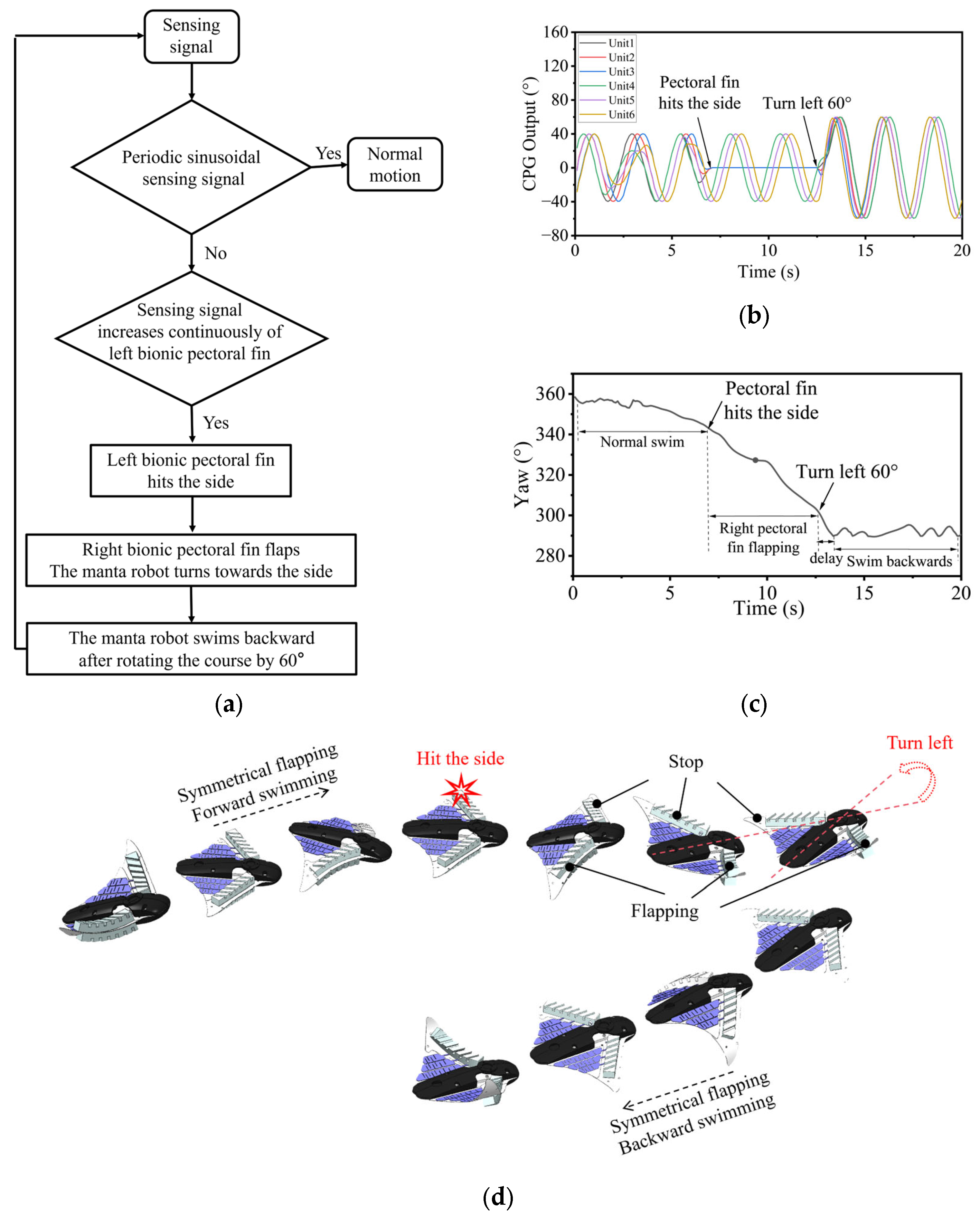
Under the operating condition of 0.4 Hz frequency and 45° amplitude, the biomimetic pectoral fins maintain normal flapping while the control system receives periodic sinusoidal sensing signals, enabling the manta robot to sustain steady swimming. When encountering side contact, the control system detects abruptly amplified sensing signals, identifies the disturbance type, and subsequently initiates an obstacle avoidance response. As illustrated in Figure 14, when the left pectoral fin contacts the side wall, the control system processes the abnormal sensing signal and executes the following avoidance maneuver: (1) the left fin ceases flapping while the right fin continues normal motion, inducing a 60° left turn; (2) after completely disengaging from the side wall contact, the manta robot initiates backward swimming to achieve safe separation. The sequential motion pattern during obstacle avoidance is presented in Figure 14c.
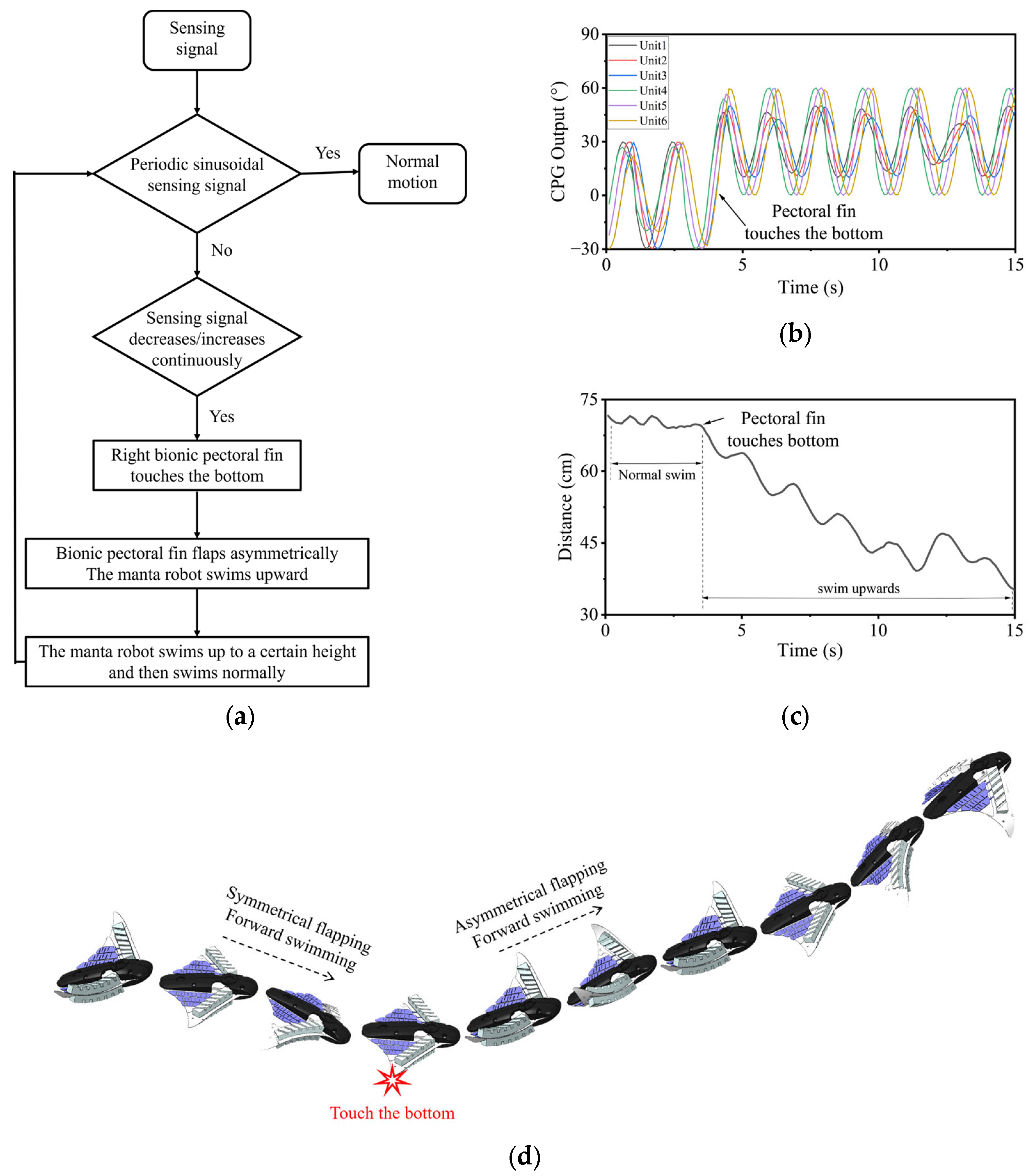
Similarly, under the same operating conditions, when encountering bottom contact, the control system detects abnormal sensing signals, identifies the disturbance type, and triggers the corresponding avoidance response. As shown in Figure 15, upon bottom contact, the control system transitions both pectoral fins from a symmetrical up-down flapping pattern (across the horizontal plane) to an asymmetrical flapping pattern confined above the horizontal plane, thereby lifting the manta robot away from the bottom. The corresponding avoidance trajectory is illustrated in Figure 15c.

4. Conclusions

This study proposed a “material-structure-function” integrated design paradigm and developed a flexible biomimetic pectoral fin with embedded sensing and actuation capabilities, successfully achieving the integration of actuation and perception functions. The main conclusions are as follows:
(1)
Material optimization: Through systematic evaluation of the mechanical properties of candidate silicone materials, Dragon Skin 20 was identified as the optimal material for the biomimetic muscle. It combines large deformation capability with sufficient structural strength, meeting the requirements of the pectoral fin’s flapping motion.
(2)
Integration method: An embedded cast-molding method was employed to integrate the flexible sensor within the deformable restriction layer, eliminating interfacial air gaps and ensuring synchronized deformation between the sensing film and actuating muscle. Cyclic tests demonstrated that the embedded sensor maintained stable output throughout 9600 oscillation cycles.
(3)
Sensing performance: The distributed sensor array can effectively detect electrical signals generated by bending deformations of the pectoral fin caused by self-flapping or external environmental contact. By establishing a mapping relationship between electrical signal features under normal and abnormal conditions, the fin motion state as well as the external disturbances can be identified.
(4)
Control validation: The “environmental perception-feedback control” functionality was validated through water tank experiments. The robot could identify side collision or bottom contact disturbances based on abnormal sensing signals and trigger corresponding obstacle avoidance responses, such as turning or lifting, by modulating CPG parameters.
Collectively, the proposed “material-structure-function” integrated design paradigm achieves physical fusion, enhanced reliability, and functional synergy of sensing-actuation systems. This provides a feasible solution for the manta prototype to achieve self-sensing and environmental adaptation in underwater conditions, and also offers new insights for the intelligent design of underwater robots. Future work will focus on the miniaturization of the sensing and control system to achieve onboard integration in the current fluid-driven prototype.

Author Contributions

Conceptualization, Y.C. (Yong Cao) and L.G.; methodology, J.H., K.L. and J.G.; software, J.H. and K.L.; validation, J.H. and K.L.; formal analysis, M.Z.; investigation, M.Z., J.H. and K.L.; resources, Y.C. (Yong Cao) and G.P.; data curation, M.Z., J.H. and K.L.; writing—original draft preparation, M.Z.; writing—review and editing, M.Z. and L.G.; visualization, M.Z. and J.H.; supervision, Y.C. (Yonghui Cao) and L.G.; project administration, Y.C. (Yonghui Cao) and L.G.; funding acquisition, Y.C. (Yong Cao) and G.P. All authors have read and agreed to the published version of the manuscript.

Funding

This research was funded by the National Key Research and Development Program, grant number 2022YFC2805200; the National Natural Science Foundation of China, grant number 52371338; the Zhejiang Province Key Research and Development Program, grant number 2023C03G1752982; the Ningbo Key Research and Development Program, grant number 2023Z052; the National Postdoctoral Foundation, grant number 2023M732847; and the Fundamental Research Funds for the Central Universities, grant number 24GH0201078, 25GH02010344.

Data Availability Statement

The datasets presented in this article are not readily available because the data are part of an ongoing study. Requests to access the datasets should be directed to the corresponding author’s e-mail.

Conflicts of Interest

The authors declare no conflicts of interest.

Abbreviations

The following abbreviations are used in this manuscript:
PETPolyethylene terephthalate
VHBVery High Bond (tape)
CPGCentral Pattern Generator
DLPectoral fin length
DWPectoral fin width
BLBody length

References

  1. Zhang, Y.; Zhang, J.; Guo, Z.; Zhang, L.; Shang, Y.; Chen, W. The study on dynamic modeling and path planning of a manta ray-inspired underwater glider. Brodogradnja 2025, 76, 76208. [Google Scholar] [CrossRef]
  2. Meng, Y.; Wu, Z.; Dong, H.; Wang, J.; Yu, J. Toward a novel robotic manta with unique pectoral fins. IEEE Trans. Syst. Man Cybern. Syst. 2022, 52, 1663–1673. [Google Scholar] [CrossRef]
  3. Cai, Y.; Bi, S.; Li, G.; Hildre, H.P.; Zhang, H. From natural complexity to biomimetic simplification: The realization of bionic fish inspired by the cownose ray. IEEE Robot. Autom. Mag. 2019, 26, 27–38. [Google Scholar] [CrossRef]
  4. Arastehfar, S.; Chew, C.-M.; Jalalian, A.; Gunawan, G.; Yeo, K.S. A relationship between sweep angle of flapping pectoral fins and thrust generation. J. Mech. Robot. 2019, 11, 011014. [Google Scholar] [CrossRef]
  5. Glushko, I.; Olenew, E.; Komar, M.; Kniese, L.; Sokolovskyi, R.; Kebkal, O.; Bannasch, R.; Kebkal, K. Software control architecture for the BOSS Manta Ray AUV actuation system. In Proceedings of the 2018 IEEE/OES Autonomous Underwater Vehicle Workshop (AUV), Porto, Portugal, 6–9 November 2018. [Google Scholar]
  6. Li, T.; Li, G.; Liang, Y.; Cheng, T.; Dai, J.; Yang, X.; Liu, B.; Zeng, Z.; Huang, Z.; Luo, Y.; et al. Fast-moving soft electronic fish. Sci. Adv. 2017, 3, e1602045. [Google Scholar] [CrossRef] [PubMed]
  7. Guo, Y.; Li, Y.; Yu, X.; Han, L.; Niu, W.; Sun, T. Design, hydrodynamic analysis, and test of a manta ray-inspired soft wing for flapping wing propulsion of underwater gliders. Ocean Eng. 2025, 327, 120998. [Google Scholar] [CrossRef]
  8. Huang, H.; Sheng, C.; Wu, J.; Wu, G.; Zhou, C.; Wang, H. Hydrodynamic analysis and motion simulation of fin and propeller driven manta ray robot. Appl. Ocean Res. 2021, 108, 102528. [Google Scholar] [CrossRef]
  9. Cai, W.H.; Zhan, J.M.; Luo, Y.Y. A study on the hydrodynamic performance of manta ray biomimetic glider under unconstrained six-DOF motion. PLoS ONE 2020, 15, e0241677. [Google Scholar] [CrossRef]
  10. Xie, Y.; Ma, S.; Zhang, Y.; Liu, X.; Cao, Y.-H.; Shi, Y.; Pan, G.; Yu, J.; Cao, Y. Dynamic modeling and tube-MPC based landing control for a robotic manta with flexible fins. IEEE/ASME Trans. Mechatron. 2025, 31, 151–161. [Google Scholar] [CrossRef]
  11. Wang, R.; Wang, S.; Wang, Y.; Cheng, L.; Tan, M. Development and motion control of biomimetic underwater robots: A survey. IEEE Trans. Syst. Man Cybern. Syst. 2022, 52, 833–844. [Google Scholar] [CrossRef]
  12. Wang, W.; Li, Y.; Zhang, X.; Wang, C.; Chen, D.; Xie, G. Three-dimensional modeling of a fin-actuated robotic fish with multimodal swimming. IEEE/ASME Trans. Mechatron. 2018, 23, 1641–1652. [Google Scholar] [CrossRef]
  13. Ishihara, S.; Kusuda, R. Variations in viable cell counts of released Edwardsiella tarda from experimentally infected eel at different temperatures. Nippon Suisan Gakkaishi 1983, 49, 1341–1345. [Google Scholar] [CrossRef]
  14. Li, B.; Mao, Z.; Song, B.; Tian, W.; Wang, Y.; Sundén, B.; Lu, C. Thermal management performance improvement of phase change material for autonomous underwater vehicles’ battery module by optimizing fin design based on quantitative evaluation method. Int. J. Energy Res. 2022, 46, 15756–15772. [Google Scholar] [CrossRef]
  15. Chen, Z.; Wang, Z.; Wu, W.; Xia, T.; Pan, E. A hybrid battery degradation model combining arrhenius equation and neural network for capacity prediction under time-varying operating conditions. Reliab. Eng. Syst. Saf. 2024, 252, 110471. [Google Scholar] [CrossRef]
  16. Fish, F.E.; Kolpas, A.; Crossett, A.; Dudas, M.A.; Moored, K.W.; Bart-Smith, H. Kinematics of swimming of the manta ray: Three-dimensional analysis of open-water maneuverability. J. Exp. Biol. 2018, 221, jeb166041. [Google Scholar] [CrossRef] [PubMed]
  17. Lauder, G.V. Fish locomotion: Recent advances and new directions. Annu. Rev. Mar. Sci. 2015, 7, 521–545. [Google Scholar] [CrossRef] [PubMed]
  18. Dewar, H.; Mous, P.; Domeier, M.; Muljadi, A.; Pet, J.; Whitty, J. Movements and site fidelity of the giant manta ray, Manta birostris, in the Komodo Marine Park, Indonesia. Mar. Biol. 2008, 155, 121–133. [Google Scholar] [CrossRef]
  19. Wang, R.; Zhang, C.; Zhang, Y.; Yang, L.; Qin, H.; Zhang, Q.; Yang, Y.; Liu, L. Soft manta ray robot based on bilateral bionic muscle actuator. IEEE Robot. Autom. Lett. 2024, 9, 7723–7730. [Google Scholar] [CrossRef]
  20. Sun, Y.; Feng, H.; Liang, X.; Goh, A.J.Y.; Qi, P.; Li, M.; Ang, M.H., Jr.; Yeow, R.C.H. Powerful 2D soft morphing actuator propels giant manta ray robot. Adv. Intell. Syst. 2022, 4, 2200186. [Google Scholar] [CrossRef]
  21. Chen, Z.; Um, T.I.; Bart-Smith, H. Bio-inspired robotic manta ray powered by ionic polymer–metal composite artificial muscles. Int. J. Smart Nano Mater. 2012, 3, 296–308. [Google Scholar] [CrossRef]
  22. Cheng, S.; Zhang, C.; Dai, H.; Zheng, C.; Wen, Z. Crack-controllable waterproof strain sensor with high linearity for underwater soft robot monitoring. J. Colloid Interface Sci. 2026, 672, 678–688. [Google Scholar] [CrossRef]
  23. Wu, S.; Kim, D.; Tang, X.; King, M.W.; Zhu, Y. Encapsulated stretchable amphibious strain sensors. Mater. Horiz. 2024, 11, 5070–5080. [Google Scholar] [CrossRef] [PubMed]
  24. Hosseini, E.S.; Chakraborty, M.; Roe, J.; Petillot, Y.; Dahiya, R.S. Porous elastomer based wide range flexible pressure sensor for autonomous underwater vehicles. IEEE Sens. J. 2022, 22, 9914–9921. [Google Scholar] [CrossRef]
  25. Liu, S.; Zhang, D.; Fu, X.; Mo, L.; Miao, Q.; Huang, R.; Huang, X.; Guo, W.; Li, Y.; Zheng, Q.; et al. Tactile sensing for soft robotic manipulators in 50 MPa hydrostatic pressure environments. Adv. Intell. Syst. 2023, 6, 2300296. [Google Scholar] [CrossRef]
  26. Gong, T.; Shao, H.; Sun, X.; Guo, J.; Hou, J.; Ke, K.; Gong, L.; Cao, Y.; Cao, Y.-H.; Bao, R.-Y.; et al. Spatial hetero-structured composites with ultrawide linear range for positive-negative pressure sensing and e-skin of bionic fish. Nano Energy 2024, 120, 109173. [Google Scholar] [CrossRef]
  27. Deakos, M.H. Paired-laser photogrammetry as a simple and accurate system for measuring the body size of free-ranging manta rays Manta alfredi. Aquat. Biol. 2010, 10, 1–10. [Google Scholar] [CrossRef]
  28. Hao, Y.; Cao, Y.; Cao, Y.-H.; Huang, Q.; Pan, G. Course control of a manta robot based on amplitude and phase differences. J. Mar. Sci. Eng. 2022, 10, 285. [Google Scholar] [CrossRef]
  29. GB/T 528-2009; Rubber, Vulcanized or Thermoplastic-Determination of Tensile Stress-Strain Properties. Standards Press of China: Beijing, China, 2009.
  30. GB/T 1040.3-2006; Plastics-Determination of Tensile Properties—Part 3: Test Conditions for Films and Sheets. Standards Press of China: Beijing, China, 2009.
  31. Hou, J.; Gong, L.; Liu, X.; Liu, B.; Lu, Y.; Pan, G.; Cao, Y.-H.; Cao, Y. Design of bio-manta based on continuously programmable soft pneumatic actuators (CPSPAs). IEEE Robot. Autom. Lett. 2025, 10, 1266–1273. [Google Scholar] [CrossRef]
Figure 1. Relative resistance changes in the flexible sensors as functions of (a) tensile strain; (b) pressure; (c) up and (d) down bending angles, measured at room temperature under ambient conditions. Data points are mean values ± standard deviation (SD, n = 3).
Jmse 14 00693 g001aJmse 14 00693 g001b
Figure 2. Manta robot model.
Jmse 14 00693 g002
Figure 3. Fabrication process of sensor–actuator integrated pectoral fin.
Jmse 14 00693 g003
Figure 4. Perception-Feedback Control Architecture: (a) Physical implementation of the perception-feedback control loop: resistance signals from the embedded sensor array are acquired by a 64-channel box and processed by the Jetson platform, which generates control parameters that are sent to the main control board for actuator motion execution; (b) Fuzzy-CPG control logic. The “*” indicates the adjusted values of frequency (f), amplitude (A), and phase offset (φ) output from the fuzzy controller.
Jmse 14 00693 g004
Figure 5. Stress–strain curves of Dragon Skin series silicone and Smooth Sil 945 silicone. Each curve represents the mean response from three independent samples.
Jmse 14 00693 g005
Figure 6. (a) upward and (b) downward bending angles as a function of input liquid volume. Data points are mean values ± SD (n = 3).
Jmse 14 00693 g006
Figure 7. Leading-edge deformation profiles of the biomimetic pectoral fin fabricated with different Dragon Skin series silicones: (a) Dragon Skin 10; (b) Dragon Skin 15; (c) Dragon Skin 20; (d) Dragon Skin 30. Representative patterns (n = 3) with consistent trends are shown.
Jmse 14 00693 g007
Figure 8. (a) Layout design of flexible sensor films array; (b) Schematic diagram of sensor integration positions. Numbers 1 and 3 indicate surface-attached sensors, and number 2 indicates the sensor embedded at the neutral plane.
Jmse 14 00693 g008
Figure 9. Interface morphology between the flexible sensor film and deformable restriction layer: (a) conventional surface-attached; (b) embedded cast-molding.
Jmse 14 00693 g009
Figure 10. Cyclic stability test of the sensor S1: (a) surface-attached sensor (point 3); (b) embedded sensor (point 2). Representative results (n = 3) with consistent signals are shown.
Jmse 14 00693 g010aJmse 14 00693 g010b
Figure 11. Hysteresis of the embedded sensor S1 during bidirectional bending of biomimetic pectoral fin: (a) upward bending (0° → 60° → 0°); (b) downward bending (0° → −60° → 0°). Representative results (n = 3) with consistent trends are shown.
Jmse 14 00693 g011
Figure 12. Mapping relationship between the bending deformation of biomimetic pectoral fin and its corresponding sensing signals. Representative results (n = 3) with consistent signals are shown.
Jmse 14 00693 g012
Figure 13. Mapping relationship between environmental interference and perception signals of biomimetic pectoral fins: (a) schematic diagram of side contact interference and the electrical signal output by sensor S1; (b) schematic diagram of bottom contact interference and the electrical signal output by sensor S1. Representative results (n = 3) with consistent signals are shown.
Jmse 14 00693 g013
Figure 14. “Side contact-feedback control” of the manta robot: (a) Hierarchical control architecture; (b) CPG output and (c) yaw angle of the manta robot during swimming; (d) Sequential motion pattern during obstacle avoidance of the manta robot.
Jmse 14 00693 g014
Figure 15. “Bottom contact-feedback control” of the manta robot: (a) Hierarchical control architecture; (b) CPG output and (c) yaw angle of the manta robot during swimming; (d) Sequential motion pattern during obstacle avoidance of the manta robot.
Jmse 14 00693 g015
Table 1. Mechanical properties of Dragon Skin series silicone and Smooth Sil 945 silicone.
MaterialsShore A Hardness (HA)Tensile Strength (Mpa)Elongation at Break (%)
Dragon Skin 10103.28 ± 0.121000 ± 35
Dragon Skin 15153.70 ± 0.15771 ± 28
Dragon Skin 20203.79 ± 0.14620 ± 24
Dragon Skin 30303.45 ± 0.11364 ± 18
Smooth-Sil 945454.83 ± 0.18320 ± 15
NoteThe median of five
measurements per sample
Mean values ± SD (n = 3)
Disclaimer/Publisher’s Note: The statements, opinions and data contained in all publications are solely those of the individual author(s) and contributor(s) and not of MDPI and/or the editor(s). MDPI and/or the editor(s) disclaim responsibility for any injury to people or property resulting from any ideas, methods, instructions or products referred to in the content.