1. Introduction
Shallow waters, commonly found in areas such as estuaries and bays, are often characterized by complex water flow patterns that make ship maneuvering difficult. The navigable boundaries in such areas are influenced by the effects of shallow water and tidal fluctuations, increasing the likelihood of accidents. One key solution to this issue is to enhance ship automation, reduce human involvement in maneuvering and collision avoidance, and gradually achieve autonomous navigation [
1,
2,
3].
In recent years, significant progress has been made in the field of autonomous ship navigation [
4]. However, achieving fully autonomous navigation remains a challenging task, requiring a transition from assisted navigation decision-making to fully autonomous decision-making [
5]. The core common content of these processes involves providing assisted maneuvering suggestions and executing the autonomous navigation plan. For large merchant ships, many ports and waterways cannot be considered deep waters. In this case, the water depth affects the motion characteristics and navigation safety of ships in multiple ways. The navigational environment, applicable regulations (including the International Regulations for Preventing Collisions at Sea (COLREGs), local regulations, and good seamanship), and ship maneuverability differ significantly between shallow waters and open waters. Solving the collision avoidance problem of ships in narrow waterways and conducting research on autonomous decision-making methods under multi-factor constraints for complex shallow water vessel maneuvering are extremely important in achieving ship intelligence.
The field of intelligent ship navigation has long been a focus of academic research, and many countries around the world have made the development of intelligent ships and intelligent shipping a key direction for future scientific and technological research [
6,
7,
8]. So far, research on autonomous navigation in the maritime field is maturing, and various autonomous navigation systems and models are gradually emerging [
9]. The research on the autonomous navigation of ships has achieved fruitful results, effectively ensuring the safety of ship navigation. However, due to limitations in ship equipment, communication, and algorithm capabilities, research on navigation decision-making mainly focuses on individual modules such as ship tracking, collision avoidance, and path planning. Gao and Zhang [
10] introduced an autonomous navigation decision-making method, considering the uncertainty of target ships due to the complexity of the environment and traffic flow. The proposed method can effectively predict the trajectory of the target ship, which helps humans to make wise collision avoidance decisions. Li et al. [
11] designed an evaluation model that combines human experience and algorithmic efficiency to make optimal decisions in complex collision avoidance scenarios. Huang et al. [
12] proposed a human–machine collaborative collision avoidance system for ships in complex scenarios, integrating human experience and algorithmic effectiveness. However, the above studies mostly focus on the collision avoidance of ships in wide waters, and most of them plan a safe and collision-free path in the maritime navigation environment, providing the most effective collision avoidance decision path.
In order to overcome the limitations of the above methods, some scholars have gradually explored hybrid algorithms that reasonably integrate the advantages of different methods. The main approach involves the integration of methods such as Artificial Potential Field (APF) [
13], Velocity Obstacle (VO) [
14], Particle Swarm Optimization (PSO) [
15], Swarm Search Algorithm (SSA) [
16], BP Neural Network [
17], deep learning (DL) [
18] and reinforcement learning (RL) [
19]. The characteristics and limitations of commonly used ship collision avoidance algorithms are summarized in
Table 1. Some research methods start from the perspective of providing the optimal planning path for ships, without considering ship collision avoidance rules, multiple constraint conditions, and external environmental interference. Although some studies have considered the constraints of collision avoidance rules, they have not taken into account the maneuverability of shallow water vessels, making it unsuitable for decision-making in ship collision avoidance in complex shallow water areas with multiple constraints. As an emerging trend in future ship collision avoidance, Xu et al. [
20] propose a hybrid collision avoidance model based on the Deep Deterministic Policy Gradient (DDPG) algorithm. This model is suitable for dynamic and static mixed environments, but it is not applicable to continuous multi-ship collision avoidance. To address the issues of autonomous ship navigation safety and collision avoidance in intelligent maritime systems, Yu et al. [
21] propose a robust multi-ship collision avoidance control framework under dynamic and uncertain maritime environments, based on expert-guided and action-compensation deep reinforcement. In order to consider the nonlinear motion characteristics of unmanned ships and integrate COLREGs, Liu et al. [
22] proposed a path planning algorithm that combines the dynamic window method (DWA) of nonlinear characteristics with collision avoidance rules, making the motion trajectory of unmanned surface vehicles (USVs) more in line with the engineering reality. This framework combines expert guidance and action compensation mechanisms. To achieve intelligent ship collision avoidance path planning, Wu [
23] proposes an optimal safe path planning method based on a hybrid ant colony algorithm and artificial potential field method. This model can compensate for the poor global search capability of the artificial potential field method, enabling the algorithm to achieve precise path planning. The ship collision avoidance decision-making method based on hybrid methods has improved the accuracy and generalization ability of the algorithm to varying degrees, providing broad prospects for future research and application.
Shallow waters are limited by navigation boundaries and water depth, and ship collision avoidance decisions in this area are subject to multiple constraints. Wu et al. [
28] proposed a ship collision avoidance method for narrow and shallow waterways, based on Q-learning and artificial potential fields. This algorithm combines the advantages of the Q-learning algorithm and artificial potential field to generate effective avoidance paths. Gan et al. [
29] propose a real-time ship path planning model for narrow inland waterways, based on an improved artificial potential field (APF) algorithm, to improve the safety of inland ship navigation. In order to solve the problem of collision avoidance among multiple ships in restricted waters, Du et al. [
30] propose a multi-scale risk assessment framework that incorporates trajectory uncertainty. The proposed uncertainty detection method significantly improves the effectiveness of potential collision risk detection. In order to solve the problem of collision avoidance for ships in restricted waters, Zhang et al. [
31] proposes a method that considers multi-segment routes. The proposed method can achieve collision risk and collision avoidance decision-making schemes in three different encounter situations. In order to effectively integrate the ship domain, restricted water action areas, and COLREGs, Hao et al. [
32] proposed a collision avoidance decision optimization strategy for unmanned surface vehicles (USVs) in restricted waters, based on an improved nearest neighbor policy optimization (PPO) algorithm.
The current research mainly focuses on ship collision avoidance decisions in open or complex waters, with little attention paid to collision avoidance decisions in shallow water areas with restricted ship maneuvering, due to fluctuations in the navigation range. There is an urgent need for a method oriented towards autonomous navigation to address the complexities of shallow waters, such as uneven water depths, tidal influence on navigable areas, changes in maneuvering characteristics, and special navigation rule constraints. Therefore, it is necessary to study the autonomous decision-making method for complex shallow water ship maneuvering, considering multiple factor constraints.
In this study, an autonomous decision-making method for ship maneuvering in complex shoal waters is proposed, and the main contributions are as follows:
- (1)
This paper proposes a digital traffic environment model that considers both dynamic and static information, as well as a navigable water area model. This model integrates dynamic and static information, such as water depth, tides, and channel boundaries, solving the problem of the existing models being difficult to adapt to complex scenarios such as uneven water depth and multiple channel obstacles in shallow water areas. It provides more practical environmental support for autonomous decision-making.
- (2)
A coupled adaptive maneuvering decision-making method for complex shallow water areas is proposed. This method considers the ship maneuverability, ship domain, route tracking, and navigation decision-making, overcoming the problem of insufficient safety and stability in ship navigation decision-making in complex shallow water areas with the existing methods.
The remainder of this paper is organized as follows:
Section 2 describes the digital traffic environment method. In
Section 3, the proposed ship motion model in shallow water is described.
Section 4 presents a multi-factor constrained autonomous decision-making method.
Section 5 shows the case study to verify the effectiveness and the feasibility of the proposed method.
Section 6 discusses the advantages of the proposed method in complex shallow water vessel collision avoidance decision-making. Finally, the conclusion is drawn in
Section 7.
2. Digital Traffic Environment Model
In contrast to the obtained information from shipborne navigation devices by humans, autonomous navigation decision-making requires basic information from an autonomous established traffic environment model [
33]. Digital modeling of the traffic environment and navigation decision-making are coupled; thus, the modeling and methods for constructing the traffic environment need to be studied. It is necessary to classify and model features based on the needs of navigation decision-making. In other words, unlike nautical charts that provide basic information to humans, the traffic environment information needs to be highly specific, according to the requirements of decision-making.
The traffic environment is divided into static and dynamic components, both composed of various elements. Information about static elements is obtained through the navigation equipment and other means, driving these element models to compose a static digital traffic environment (traffic environment database). It includes fairways, channels, separation zones/lines, caution areas, anchorages, buoys, nearby shallow areas, and reefs. However, the dynamic environmental elements include tides, currents, navigable boundaries, regular ships, and various special ships, such as fishing ships, anchored ship, restricted maneuverability ships, and uncontrollable ships.
The relevant environmental information affecting ship navigation decisions on nautical charts is extracted and modeled, then categorized into point, circular, linear, and polygonal marker models, as detailed in
Table 2.
For the convenience of the research, it is necessary to establish a generic model based on decision-making requirements, providing a foundational model for the study of other similar water areas.
denotes the j-th line of the
-th Traffic Separation Scheme (TSS) in shallow water, which can be shown as follows.
where
represents the i-th vertex of the TSS, i = 1, 2, …, j.
denotes the m-th channels of this TSS, which can be shown as follows.
The planned route is constituted by the midpoint of the line connecting the two boundary line points of the navigable sub-channel, as in Equation (3).
Regular circular areas in waters, such as beacons, lightships, etc., are represented by Equation (4). Irregular areas, such as warning areas, anchorages, etc., are given by Equation (5).
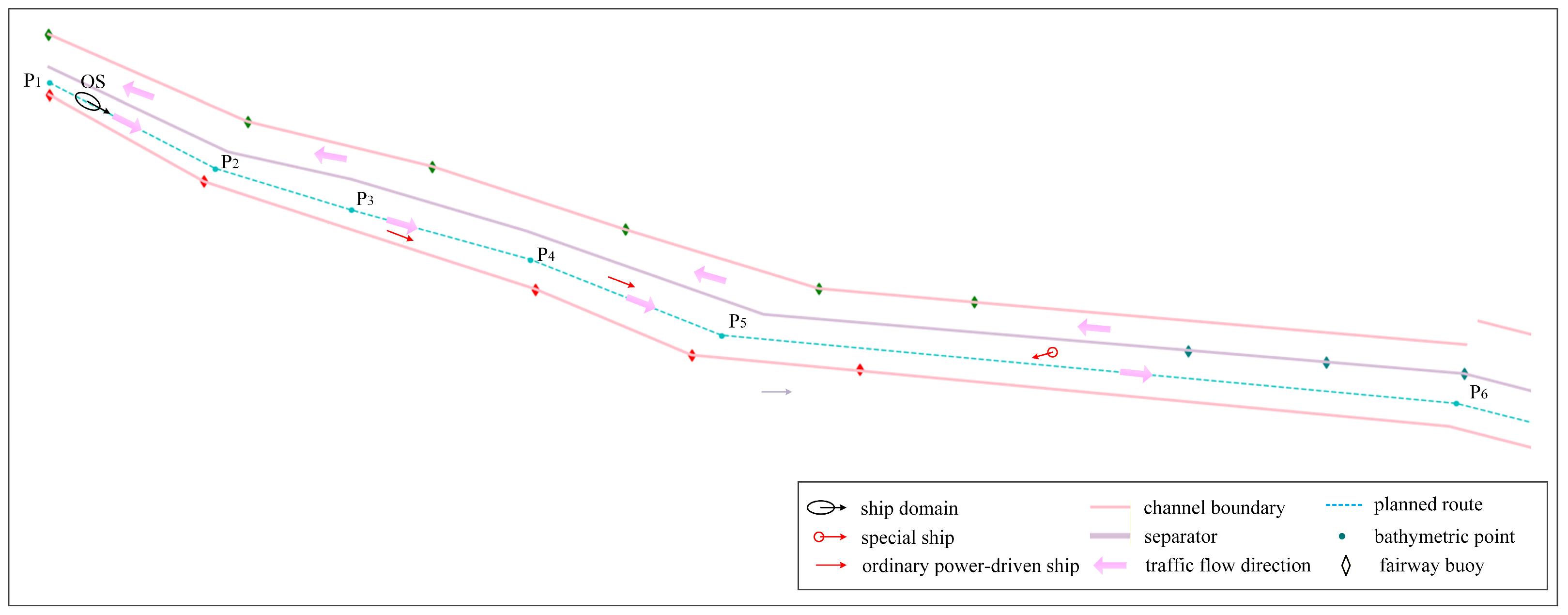
The south trough of the Yangtze River Estuary is affected by the barrier gate sand, sediments, sand, gravel and other substances, which are accumulated in the water flow to form shallow waters. Taking part of the navigation section of the water area as an example, a digital traffic environment model is established, including the navigation division, channel boundary line, separation belt (line), planned route, navigation mark and navigable boundary line, as shown in Formulas (6) and (7).
where
is the TSS of the W area, i = 1, 2, …, N, and N represents the number of divided regions.
represents the i-th line in the W area. (
) is the center of the circle of the e-th buoy area, and
is the radius,
.
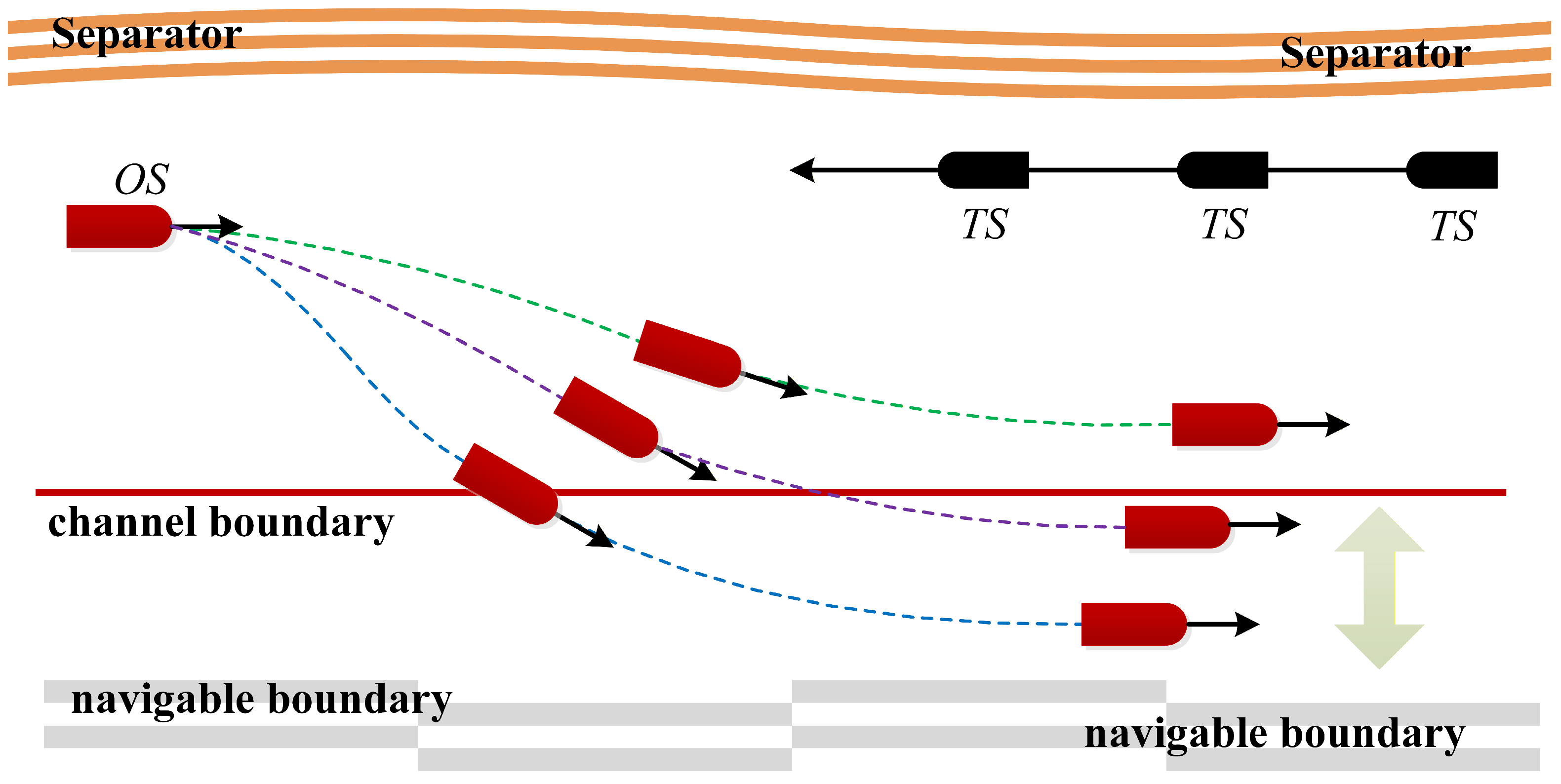
The navigational channels are established for ship navigation to facilitate ship passage in shallow water areas. In this scenario, it is necessary to consider the constraints of the channel boundaries on ship movement. If the water depth meets the requirements, ships can navigate outside the channel boundaries to give way. Therefore, the navigable boundary lines can be adjusted based on the vessel’s draft and the impact of tidal changes on the water depth. Assuming the vessel’s draft is
, and the required surplus water depth is
, points
with water depth greater than the required depth are extracted from the Electronic Chart Display and Information System (ECDIS). These points are then connected to form the navigable boundary lines,
, as shown in Equations (8)–(10).
where
and
represent the actual water depths and chart water depths, while
and
represent the chart water depth reference plane and the tidal height reference plane.
represents the tidal height at time
.
To facilitate the ship passage, shallow waters are equipped with navigation channels for ships to navigate. At this time, it is necessary to consider the constraints imposed by the channel boundaries on ship movement. If the water depth meets the requirements, ships can navigate beyond the channel boundaries for avoidance. The navigable boundary lines can be adjusted based on the water depth under the influence of ship draft and tidal changes. The schematic diagram of the navigable waters for ships is shown in
Figure 1.
The dynamic navigable boundary is constructed through the following steps. First, the raw water-depth data are extracted from the SOUNDG layer of the ENC for the study area and stored as discrete points with coordinates and chart depths. Second, to account for the time-varying effect of tides, the initial chart depth at each point is corrected using the real-time tidal height, . Third, because the corrected soundings are irregularly scattered, an inverse distance weighting (IDW) interpolation method is applied to generate a continuous depth grid over the study area. Fourth, the minimum allowable water depth for safe navigation is determined, which considers the ship’s draught, tide level, and required under-keel clearance (UKC). Finally, grid cells with interpolated depths greater than or equal to this threshold are identified as navigable, and the boundary of the largest connected navigable region is extracted using a contour tracing algorithm. This navigable boundary is updated dynamically, based on real-time tidal information; in this study, an update is triggered every 30 min or whenever the tidal height changes by more than 0.2 m.
The above models are derived by obtaining relevant elemental information from the ECDIS of the watershed, which is combined into a digital transportation environment, re-visualized in
Figure 2.
The digital environment model is constructed based on the official S-57 ENC of the Yangtze Estuary (CN444128, CN444129), provided by the Maritime Safety Administration of China. The key ENC layers and their corresponding attributes used in this study are listed in
Table 3.
3. Ship Motion Model in Shallow Water
The 3-DOF MMG is a classic ship motion model, which is applicable to the three degrees of freedom MMG model that only considers pitch, sway, and surge. The 3-DOF MMG motion equation is represented by Formula (11). The vessel’s pitch, heave, and roll are not only needed to consider the vessel’s motion in a two-dimensional plane. The meanings of the symbols are referenced in the literature [
1,
30].
When ships navigate in shallow water, the additional mass and added moment of inertia of the ship are larger compared to deep water, significantly impacting the ship’s motion. Among them, u, v, and r are state variables; δ,
and
are control variables; and wind load
, flow load
, and the shallow water correction term are disturbance variables. The calculation of ship mass in deep and shallow waters can refer to reference [
34].
When the ship sails in shallow water, the additional ship mass
,
and additional moment of inertia
are larger than the corresponding values in deep water, which leads to an increase in the ship mass and affects the ship’s motion. The calculation formula for the additional mass and additional moment of inertia of shallow water vessels in deep waters is represented by Formula (12), which is applicable to deep waters.
The calculation formula for the additional mass and additional moment of inertia of shallow water vessels in shallow water is represented by Formula (13), which is applicable to shallow water areas.
where
are the ship’s mean draught, ship’s block coefficient, ship’s breadth, ship’s gross mass and water depth, respectively.
are the additional mass and additional moment of inertia generated by the ship in deep water in the direction of the
x,
y and
z-axes. The derivation process and specific parameters of the above formula can be found in reference [
34].
The wind disturbance model during ship navigation is presented in Equation (14).
where
is the air density;
and
are the positive and lateral projected areas above the waterline of the ship; and
is the relative wind speed.
,
, and
are the wind pressure coefficients in the
and
-axis directions, and the wind moment coefficient around the
z-axis, respectively. They can be calculated using the regression formula proposed by [
35], as shown in Equation (15).
where
,
, and
represent the wind pressure force coefficient, wind pressure force angle, and the location of the wind pressure point, respectively.
The current in the large scale is a relatively stable velocity and direction, which does not affect the vessel’s state but only influences the ground speed of the ship, as shown in Equation (16).
where
and
represent the components of the ship’s velocity, relative to water, in the
and
-axis directions, respectively.
and
denote the current speed and current direction. Among them, u and v are state variables, and
,
, and
are disturbance quantities.
4. Multi-Factor Constrained Autonomous Decision-Making Method
4.1. Ship Domain Model Constraints
We establish a coordinate system:
and
xoy for the earth and ship.
X,
Y,
x and
y are pointing towards the east, north, bow, and right transverse directions, respectively, and the conversion relationship is shown in Equation (17).
where
and
are the coordinates of the ship at
and
, respectively, and
is the true heading.
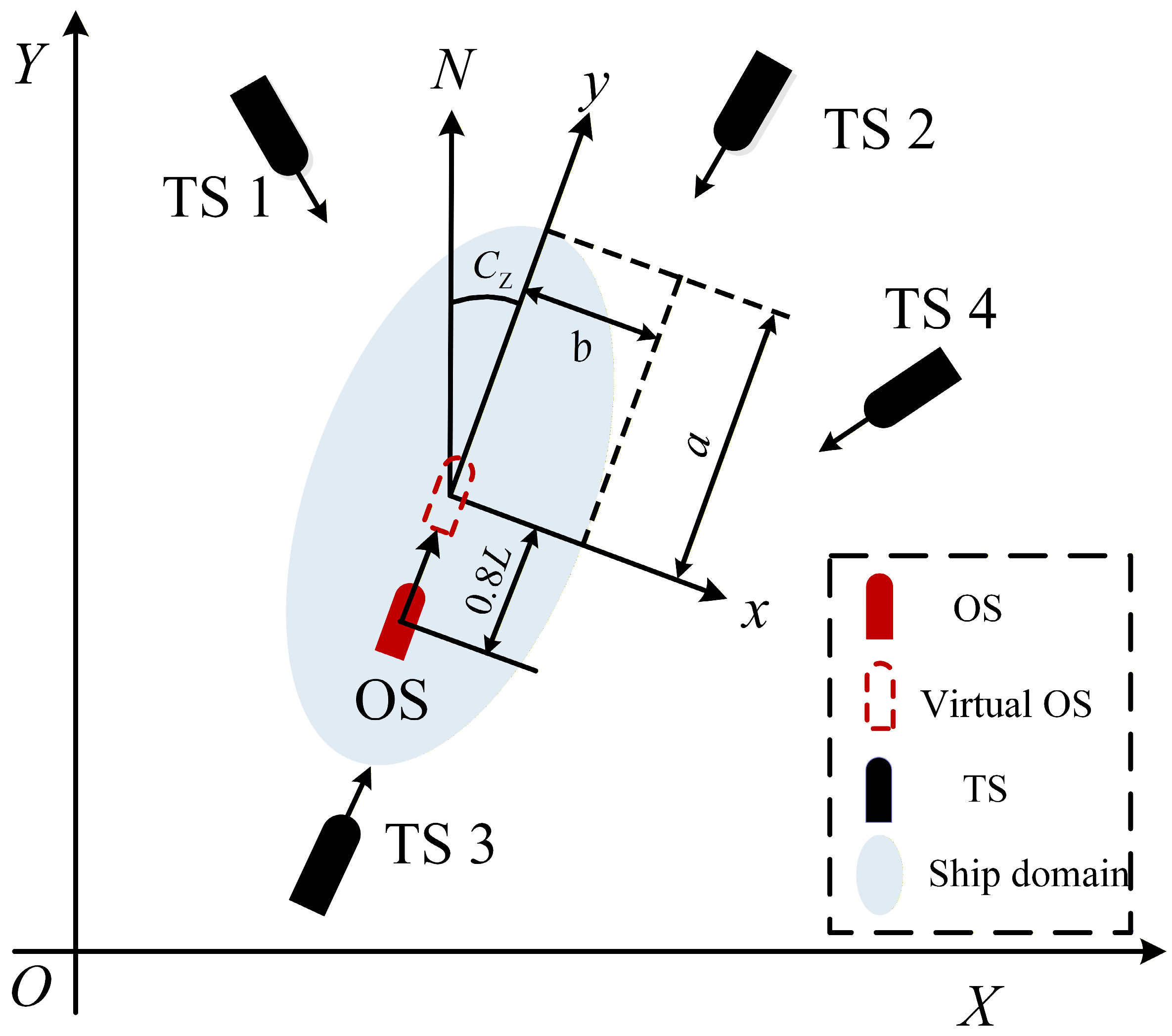
The elliptical ship domain model [
33] is employed as shown in
Figure 3, where the parameters are closely associated with the environment and maneuverability of the vessel according to research and practice. It is not feasible to use a fixed set of parameters that are applicable to all water areas. However, the ship’s captain can autonomously select and input the parameters based on the navigation environment before entering a specific water area. In this study, the long and short axes are determined to be 2.5L and 0.8L (where L is the ship length), respectively, which will automatically be executed by the system.
While the relative speed is faster when two ships driven by the power are in a head-on encounter situation, the relative speed is slower during an overtaking situation. Therefore, the required safe distance from the bow direction to the stern direction is greater, where the actual ship is offset by 0.8 along the long axis from the center towards the stern in this study.
4.2. Route-Tracking Methods
Route tracking refers to the navigational process in which a vessel follows a planned route, steering sequentially from the starting point, through designated course change points, until it reaches the final destination. This process includes deviations from the intended route due to factors like collision avoidance and the environment, with a timely return to the planned route. It primarily relies on tracking the current ship position along route segments and target turning points, using route-tracking methods to determine the desired heading and follow the planned course. The methodology for determining target turning points can be found in reference [
36]. To ensure that the vessel smoothly returns to and travels along the planned route, adjustments to the target heading must be continuously made, based on the relative position between the vessel and the target turning point, as described in Equation (18).
where
and
represent the target course and relative true bearing of the target turning point.
denotes the direction of the planned route.
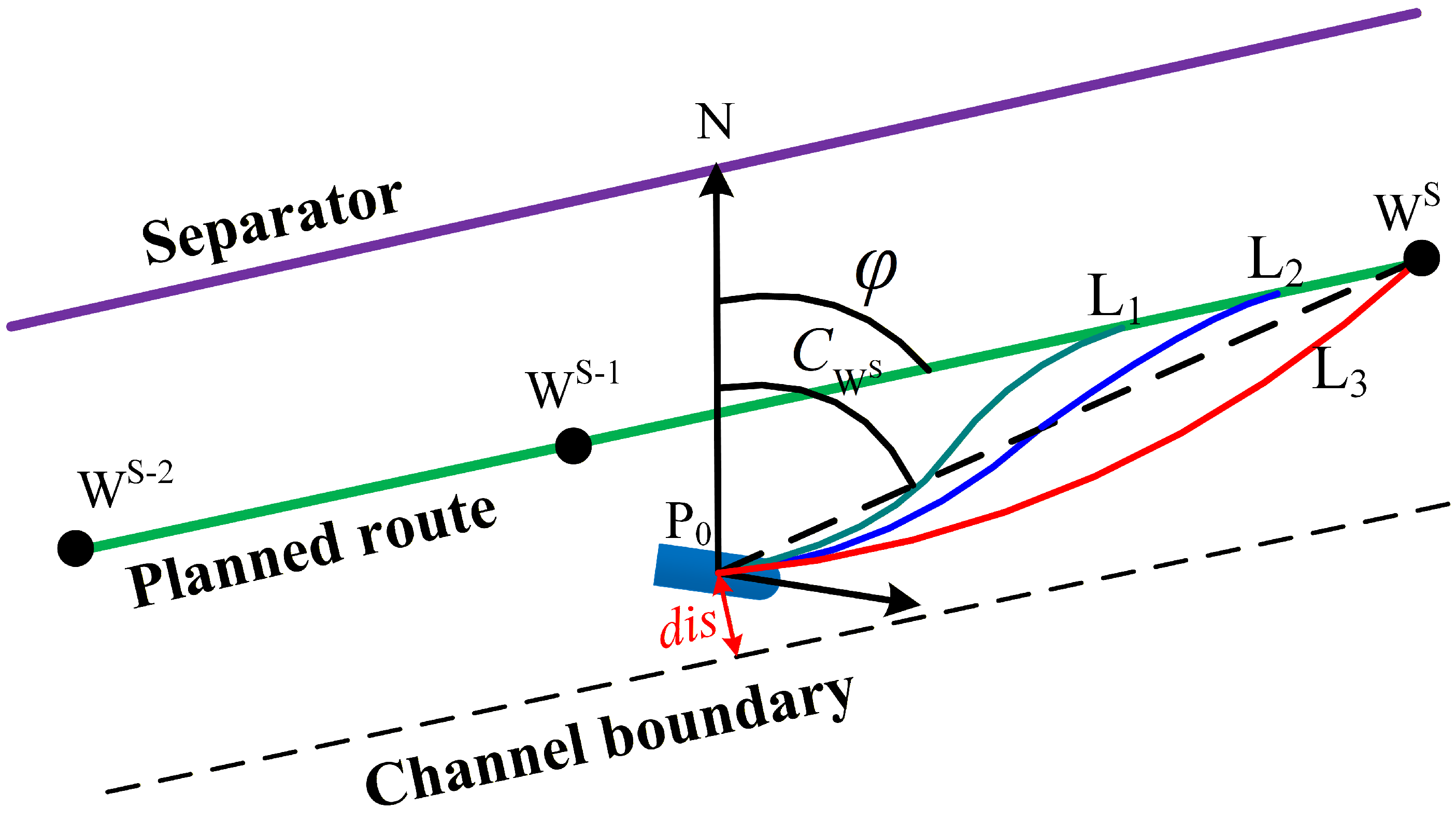
is the heading tracking coefficient, and its value affects the magnitude of the course change for the ship, as shown in
Figure 4, when the vessel is moving along
,
and
at points
,
,
. From a standpoint of good seamanship, the vessel should make a slight adjustment to return to the planned route, aiming to shorten the time needed for heading stabilization. Therefore, option
aligns more closely with practical maritime considerations. After multiple experiments, a value of
is selected.
4.3. Navigation Decision-Making
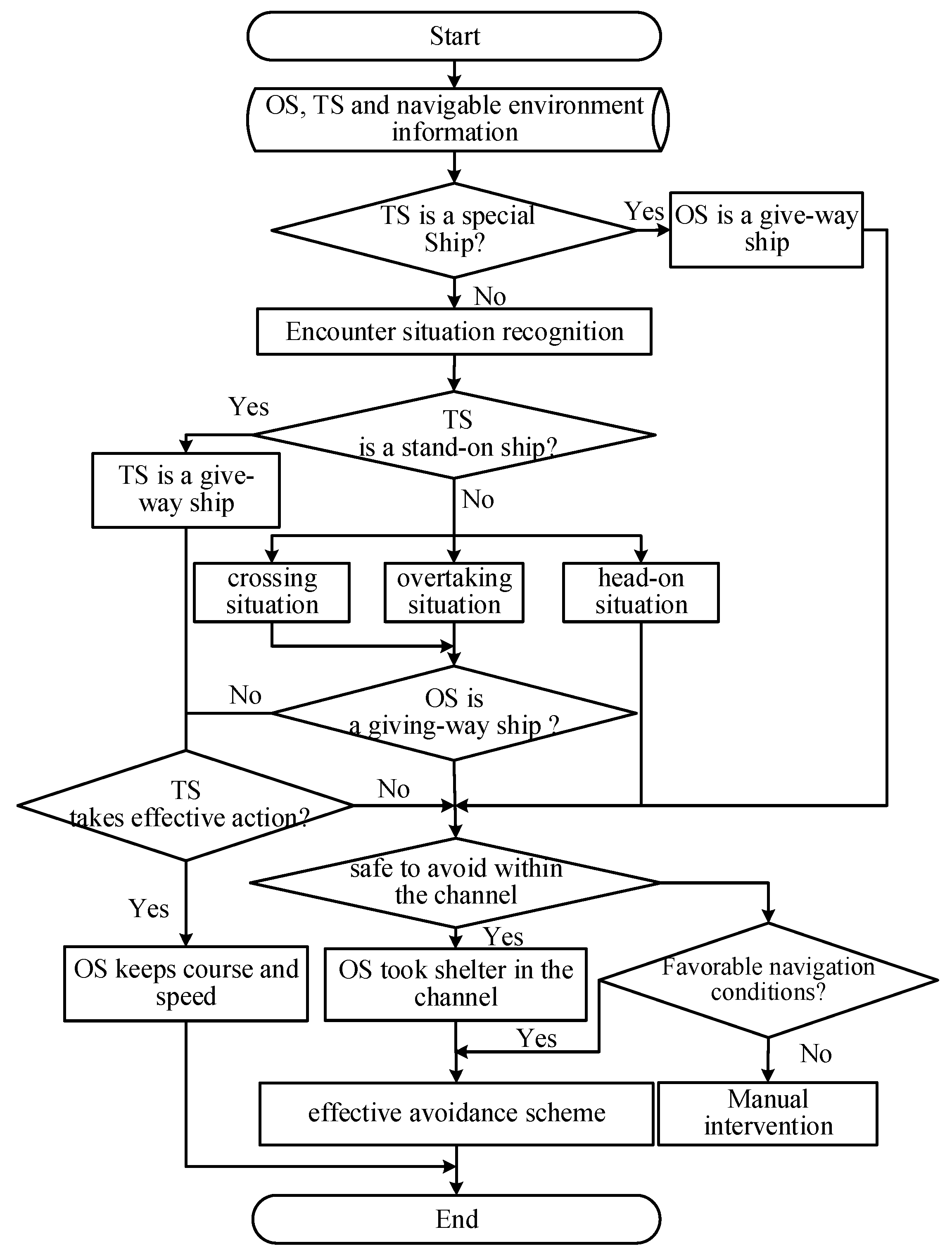
According to the navigation rules, the collision avoidance principles are determined based on the encounter situations between the own ship and the target ship, as shown in
Figure 5. According to the relevant provisions of collision avoidance rules, while fully considering the factors of navigation channels, we establish the ship encounter situation identification rules to guide ship navigation decisions. There are three types of encounter situations for two ships based on the COLREGs, which are the head-on situation, the crossing situation and the overtaking situation. When the two ships encounter situations, there is a risk of collision: if
,
, and
, it belongs to a head-on situation; if
,
and
, then it belongs to the overtaking situation; and if it does not constitute an encounter, overtaking, or crossing situation, it is a cross-encounter situation.
The dynamic feasible control interval, including variable speed and variable direction under multi-factor constraints, can be expressed by the following equation. The method for obtaining dynamic feasible intervals can be referred to in reference [
6]. The telegraph and heading command are paired one by one to form a feasible speed set. Under the collision avoidance rules and good ship skill constraints, the feasible turning ranges for encountering, crossing, and overtaking situations are [0°, 45°], [0°, 45°], and [−45°, 45°], respectively.
where
represents the dynamic feasible control interval at time t, and
and
represent the number of collision avoidance schemes corresponding to the vehicle clocks in the
and
gears, respectively.
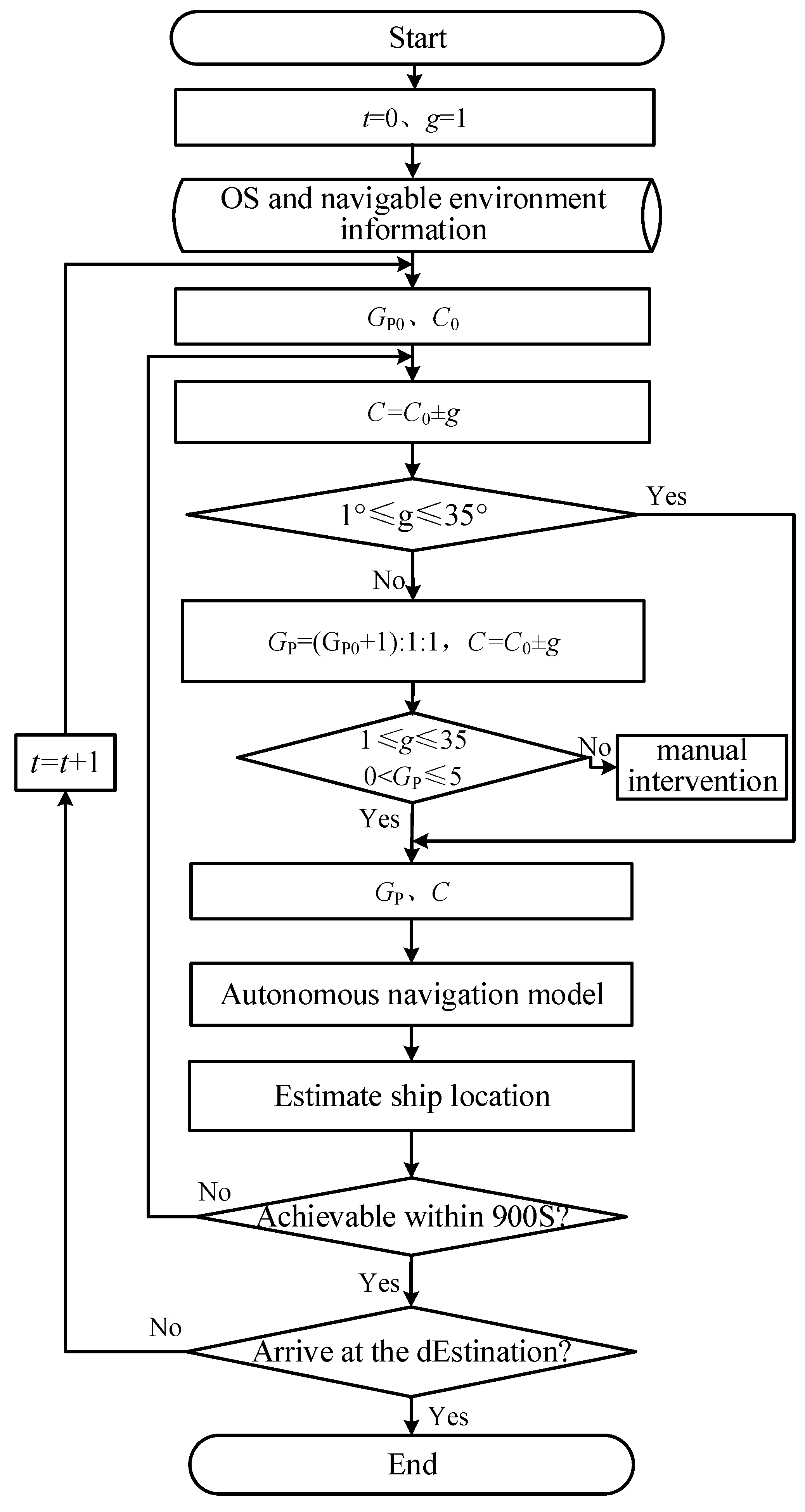
The south channel of the Yangtze River Estuary has shallow waters and a narrow navigable area. In the presence of shallow water effects, the maneuvering performance of vessels deteriorates. When steering alone is insufficient for effective avoidance, a combination of steering and speed adjustment should be employed. The process of obtaining a feasible maneuvering plan for changing course or combining course change with speed adjustment is illustrated in
Figure 6. This study uses route-tracking to determine the own ship’s yaw. When the vertical distance between the own ship’s position and the original route is less than 20 m, it is considered to not have deviated, and the own ship continues to maintain its course and speed. When the deviation of the own ship’s position is greater than 20 m, based on the calculation of the target ship’s motion posture, whether there is a risk of collision with the ship after returning to the original route is determined. If there is no collision risk, the route tracking decision is executed to resume the voyage. Otherwise, we continue to maintain the course and speed. The steps are as follows:
- (1)
and
represent the current speed gear and heading. Priority is given to changing course for avoidance. According to
Figure 6, iterate through Starboard (or port) turning angles one by one and check if
is within the interval [1, 35]. If there is a valid turning angle, proceed to step (3); otherwise, it indicates that there is no feasible turning angle for safe avoidance. In such cases, a combination of changing course and speed adjustment is needed, leading to step (2).
- (2)
Starting from , iterate downward through the target speed gears and headings, combining the throttle gear, target heading, and own ship position from each scenario to form a maneuvering plan.
- (3)
Input the plan into the automatic navigation model, perform position calculation, and judge whether the own ship will remain within the navigable area for the next 900 s without other vessels or obstacles entering the own ship’s domain. If the plan is feasible, output it as a feasible maneuvering plan. Otherwise, proceed to step (4).
- (4)
Repeat steps (2) and (3), changing the target heading and/or target speed gear until a feasible combination plan , is found. If a feasible plan cannot be found, the system issues an alert for manual intervention.
The advantages and disadvantages of the trajectory generated by each prediction need to be quantified by the trajectory evaluation function, which is as follows:
where
is the track value of the ship under the velocity
;
is the normalization coefficient;
is the angular difference between the course of the ship at the end of the trajectory and the course of the target;
is the shortest distance between the position of the vehicle at the end of the trajectory and the obstacle;
is the speed of the vehicle at the end of the track; and α, β and λ are the weight coefficients of the three values in
.
4.4. Autonomous Navigation Decision-Making Based on Kalman Filter Algorithm
Shallow water areas often have complex traffic flows, with a diverse range of vessels and a multitude of situations that are difficult to predict. In order to adapt to the dynamic maneuvers of target vessels and compensate for errors in situational perception, the motion model, and control parameters of the own vessel, a self-adaptive navigation decision framework is constructed, based on time-sequential scrolling, rapid data updates, and feedback correction. Based on the current moment information at time t, the adaptive system will calculate and execute decision plans at fixed time intervals Δt until a future time (t + Δt). The smaller the time interval, the smaller the error. If the system, based on information after a time step Δt, cyclically recalculates and executes new decision plans, the error from t to t + Δt will be compensated for.
Shallow waters are often difficult to predict, due to complex traffic flow, the number and variety of ships, and the likelihood that a ship will encounter changing situations. In order to adapt the maneuvering of the target ship and compensate for the situation awareness error, the ship motion model and the control parameter error, an adaptive navigation decision framework based on Kalman’s filter algorithm is constructed to quickly update the data and feedback correction.
where x is the status of the obstacle at the current time; A is the state transition matrix; Q is the process noise covariance matrix; H is the measurement matrix; R is the covariance matrix in the measurement noise; Z is the measurement value of the obstacle at time k; Pk is the current covariance matrix; and K is the Kalman gain. Among them, the estimated quantity is the ship’s position and velocity, and the course can be calculated from the velocity component. The R of observation noise is determined based on the calibration results of the sensor accuracy; the expression formula for R is as follows:
The parameters in R are determined from sensor-error statistics after coordinate unification. Specifically, recorded AIS/GNSS/ARPA measurements under stable-navigation conditions are compared with the reference trajectories, and the sample variances of the position and velocity residuals are used to determine , , , and .
The Q of process noise is combined with the target ship motion model and the interference characteristics of the ocean environment, and is obtained through simulation and real ship data debugging.
which yields
where
characterize the unmodeled maneuvering intensity of the target ship and the influence of external disturbances, such as the wind, current, and short-term motion fluctuations. These parameters are calibrated using recorded target-ship trajectories. The candidate values are tested iteratively, and the final values are selected by jointly considering the one-step prediction error and the innovation consistency, so that the filter remains both responsive and numerically stable.
The TS state is defined as , where is the TS’s position and is the TS’s velocity. The course and speed can be obtained as and A discrete-time constant-velocity model is adopted: with . The measurement model is used as follows: , and set .
Based on the current moment information, , the adaptive system will calculate and execute the decision scheme at a fixed time interval until the future time (). The smaller the , the smaller the error. Using a time-series rolling calculation method to quickly update the input information and compensate for the impact of residual errors on the manipulation scheme, if the system loops, recalculates, and executes a new decision scheme based on the information after the time step, the error from to will be compensated for.
Compared to open water areas, vessels in shallow water areas cannot deviate too far from the planned route, and the trajectory control requirements are higher. Therefore, based on this framework, coupled with the variable-speed maneuvering of vessels in shallow water areas, a new manipulation decision framework is proposed. This framework prioritizes trajectory control and improves the transit efficiency while complying with the navigation rules and ensuring the safety of vessels.
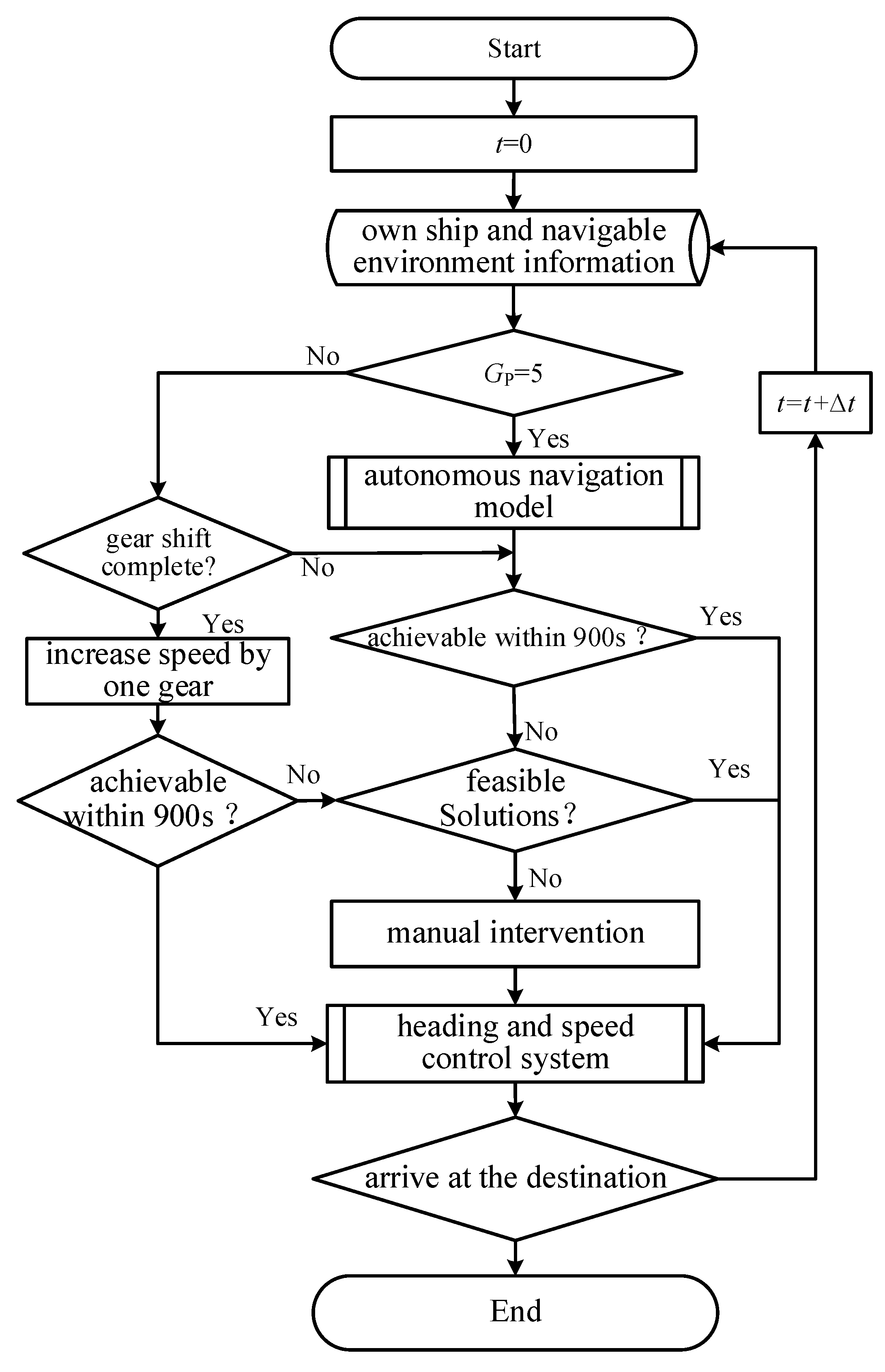
Figure 7 illustrates the new manipulation decision framework. The figure represents the vessel’s engine order telegraph (EOT), where 1 = “Dead Slow Ahead”; 2 = “Slow Ahead”; 3 = “Half Ahead”; 4 = “Full Ahead”; and 5 = “Full Speed”. The process is as follows:
- (1)
Obtain real-time information about the own ship, target ships, and navigational environment at fixed intervals from navigation instruments and devices such as GPS (Global Position System), BeiDou Navigation Satellite System (BDS), AIS (Automatic Identification System), ECDIS (Electronic Chart Display and Information System), ARPA (Automatic Radar Plotting Aid), etc.
- (2)
To ensure navigation efficiency, first check if the initial speed of the own ship is full ahead. If not, proceed to step (3); if yes, proceed to (4).
- (3)
If the initial speed of the own ship is not full ahead, check if the ship is currently shifting gears. If not, proceed to step (4). If the gear shift is complete and the speed matches, check if increasing the speed by one level is feasible. If feasible, implement the plan to increase speed by one level and proceed to step (6); otherwise, go to (5).
- (4)
Calculate the future ship position based on the current navigation intention, and check whether other vessels or obstacles will enter the ship’s domain within the next 900 s. If feasible, proceed to step (6); otherwise, go to (5).
- (5)
Check if it is possible to calculate a feasible combination of change in direction and variable speed. If yes, proceed to step (6); otherwise, the system issues an alert for manual intervention.
- (6)
Input the manipulation plan into the heading and speed control system.
- (7)
Check if the own ship has reached the destination. If yes, end the process; otherwise, repeat the above steps.
5. Case Study
The simulation experiment simulated the ship sailing from the nine-segment light ship down to the south channel light ship, with a total length of 26 nm. In order to get closer to the real water traffic environment, the heading angle weight coefficient α is 0.10, the distance weight coefficient β is 0.40, the velocity weight coefficient λ is 0.50, and the trajectory prediction time is 900 s; the wind speed of 5 m/s, the wind direction of 058°, the flow rate of 0.4 kn and the flow direction of 158° are set according to the observation.
To verify the accuracy of the route-tracking method proposed in this paper, a series of experiments were conducted first. The initial routes of the vessel were configured as shown in
Table 4.
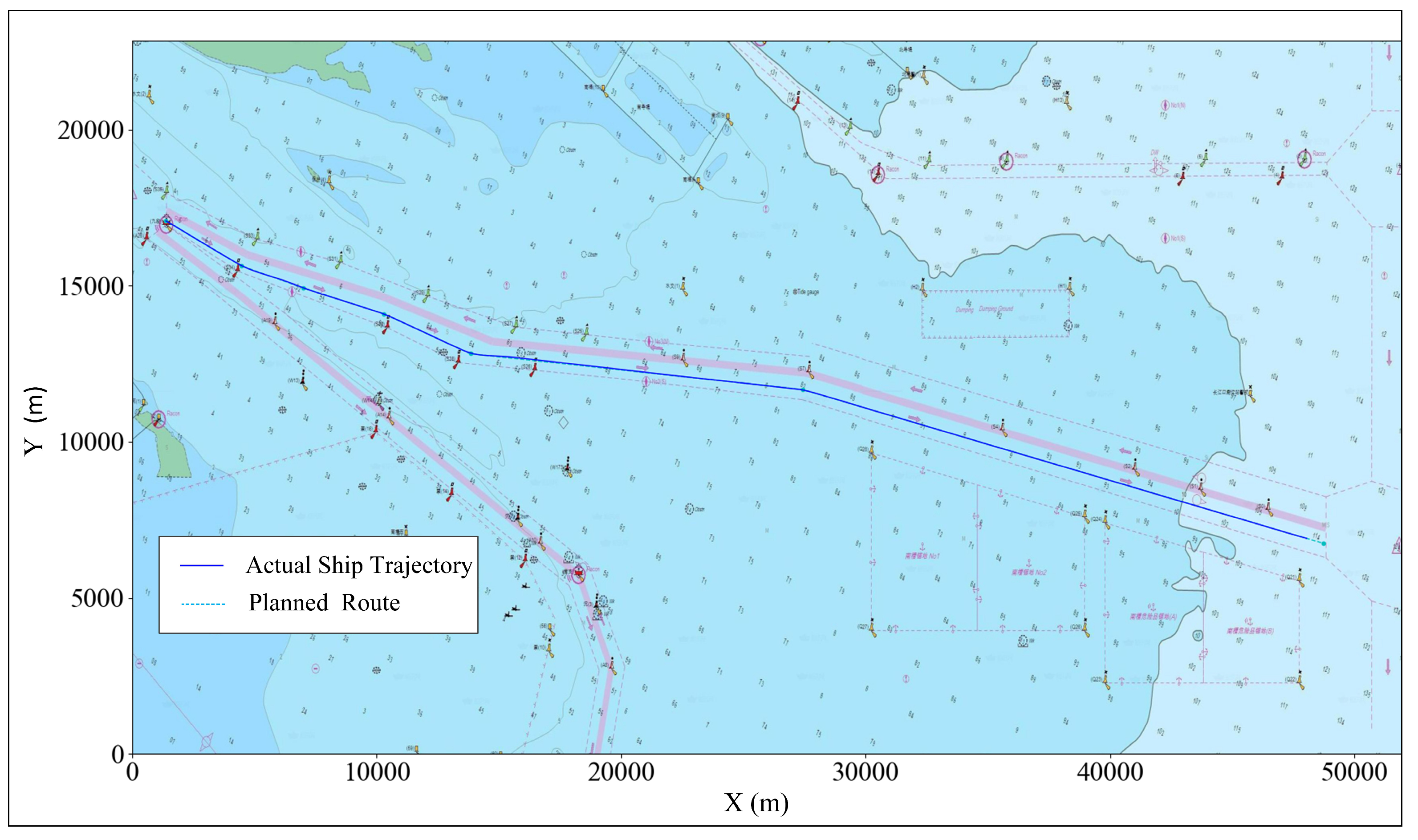
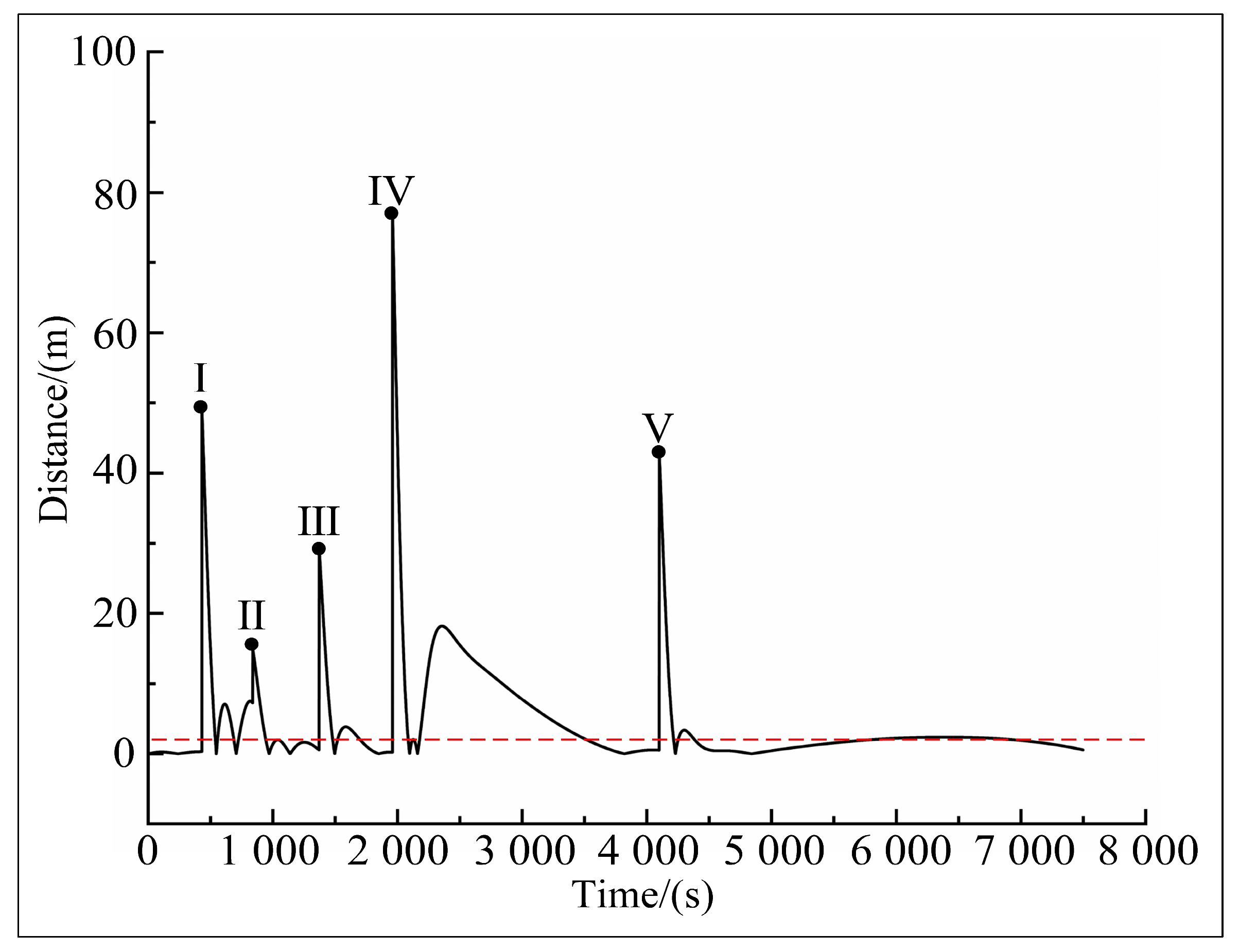
Figure 8 and
Figure 9 respectively depict the route-tracking trajectory diagram of the vessel under the collision-free scenario and the deviation distribution diagram between the actual navigation trajectory and the planned route. The peak position in
Figure 9 corresponds to the maximum deviation distance between the vessel and the planned route at the waypoint. After the vessel completes the course change and enters the next voyage segment, the position deviation fluctuates within a relatively narrow range due to the hull inertia, with an average fluctuation amplitude of approximately 4.5 m. The above experimental results demonstrate that the proposed route-tracking method can ensure that the vessel strictly follows the planned route, and restrict the position deviation to a minimal range around the planned route. This method exhibits excellent path-following performance, which can fully satisfy the engineering application requirements of vessel navigation decision-making.
It is assumed that the initial state information of the own ship and the target ship is shown in
Table 5. In the multi-ship encounter situations experienced in the experiment, there are three kinds of encounter situations: head-on, overtaking, and crossing situations. The avoidance behavior of the ship in different traffic environments is used to verify whether the proposed maneuvering decision method can guide the ship to safe avoidance.
The initial motion state of the ship is shown in
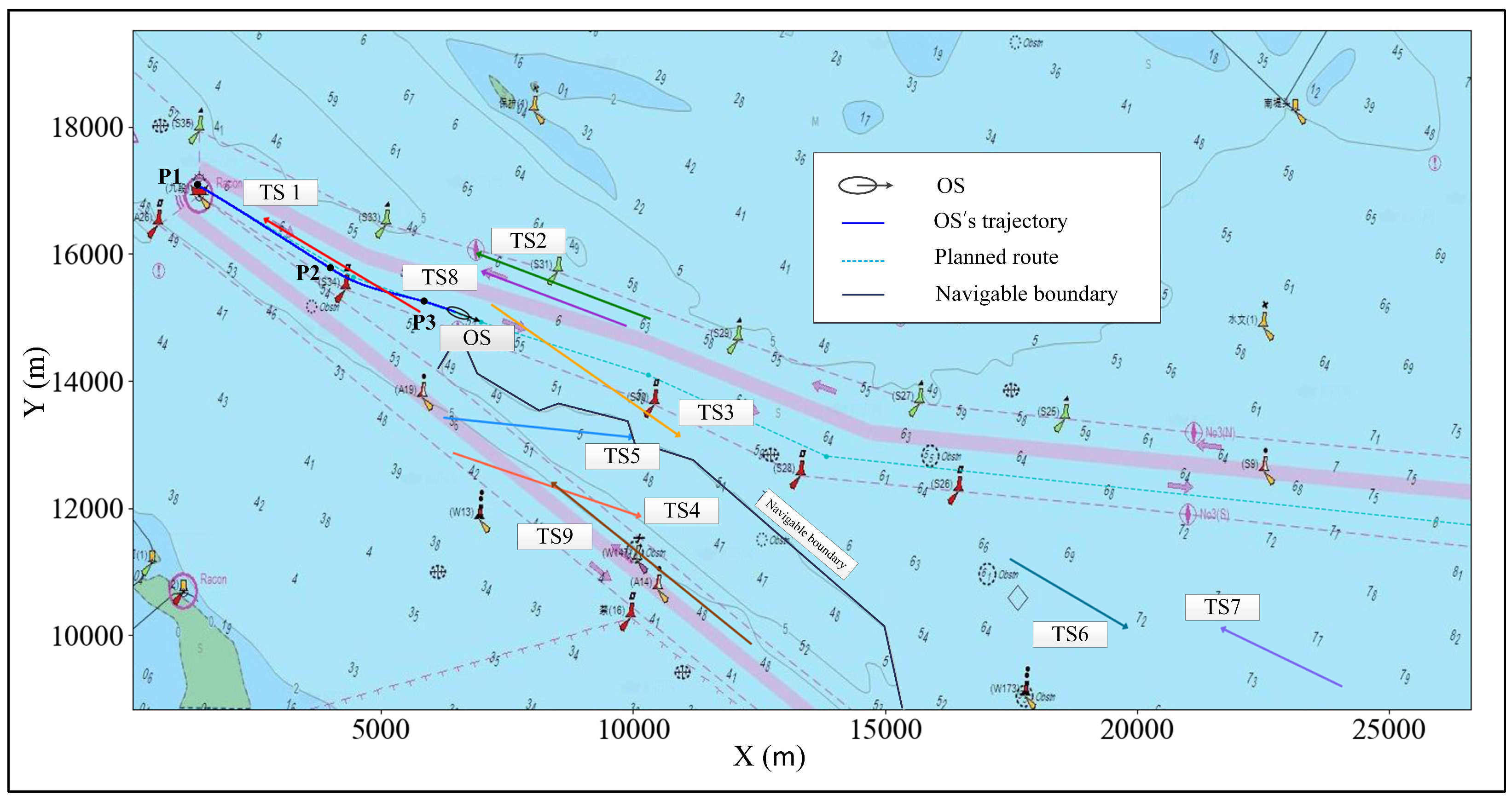
Table 3, the speed is 13 kn, and the course is 112°, as shown in
Figure 10. Taking the “nine-segment” light ship as the starting point and the ship’s position calculation, combined with the collision risk model and the encounter situation identification model, it is judged that there is a collision danger between the ship and target ship 1, and the situation is an encounter. In accordance with the principles and methods of avoidance, the ship shall avoid towards the starboard.
In order to avoid the navigation mark, the avoidance plan of slowing down and changing to the starboard by 5° is adopted. At 448 s, the ship sails to P2, and the sailing speed drops to 12 knots. At this time, it is judged that the ship can track the course. The distance from target ship 1 is shown in
Figure 10. Within the safe range, we avoided target ship 1 safely. At 898 s the ship reached P3, heading to 106°, returning to the planned course.
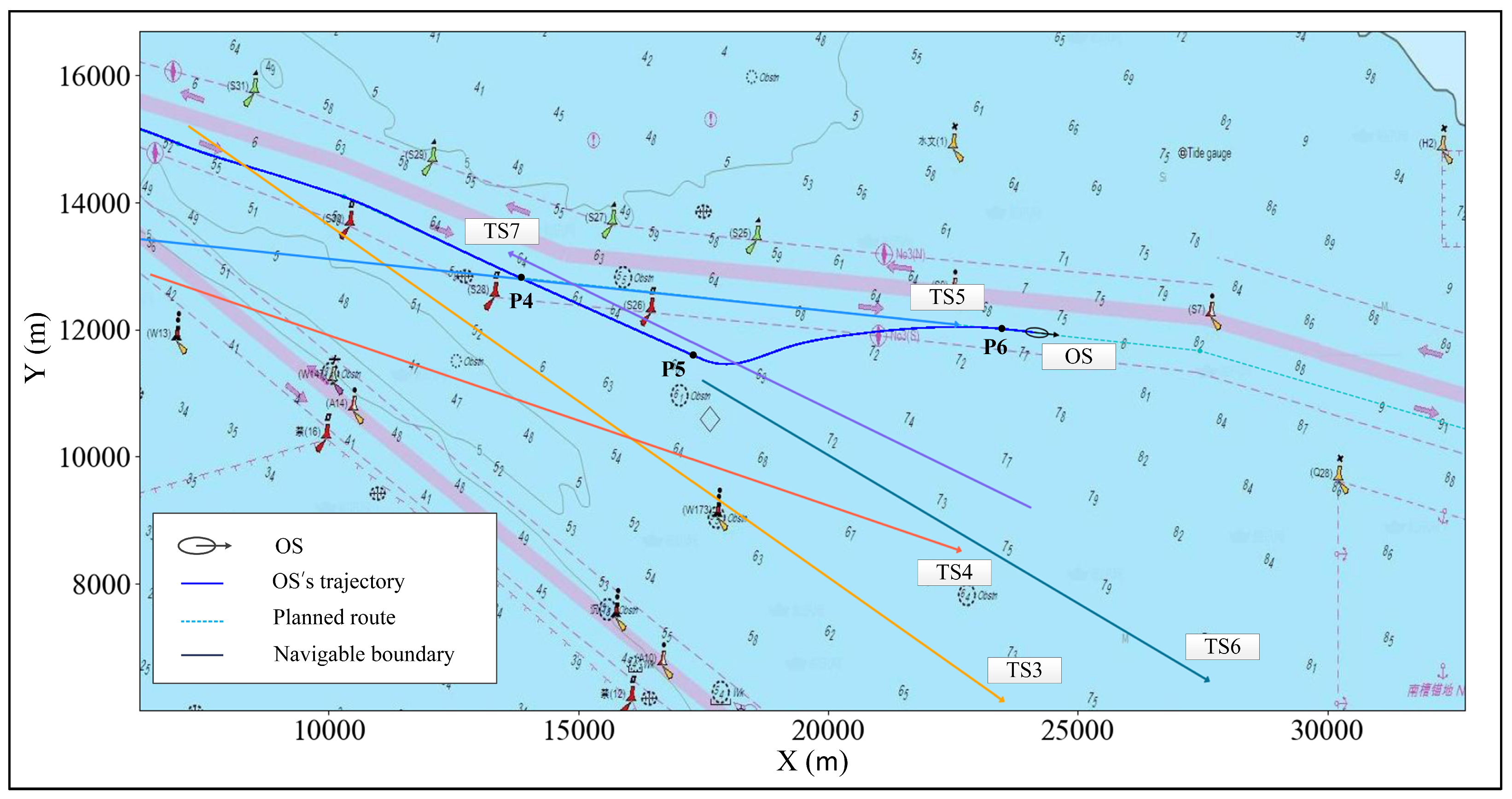
In the scene shown in
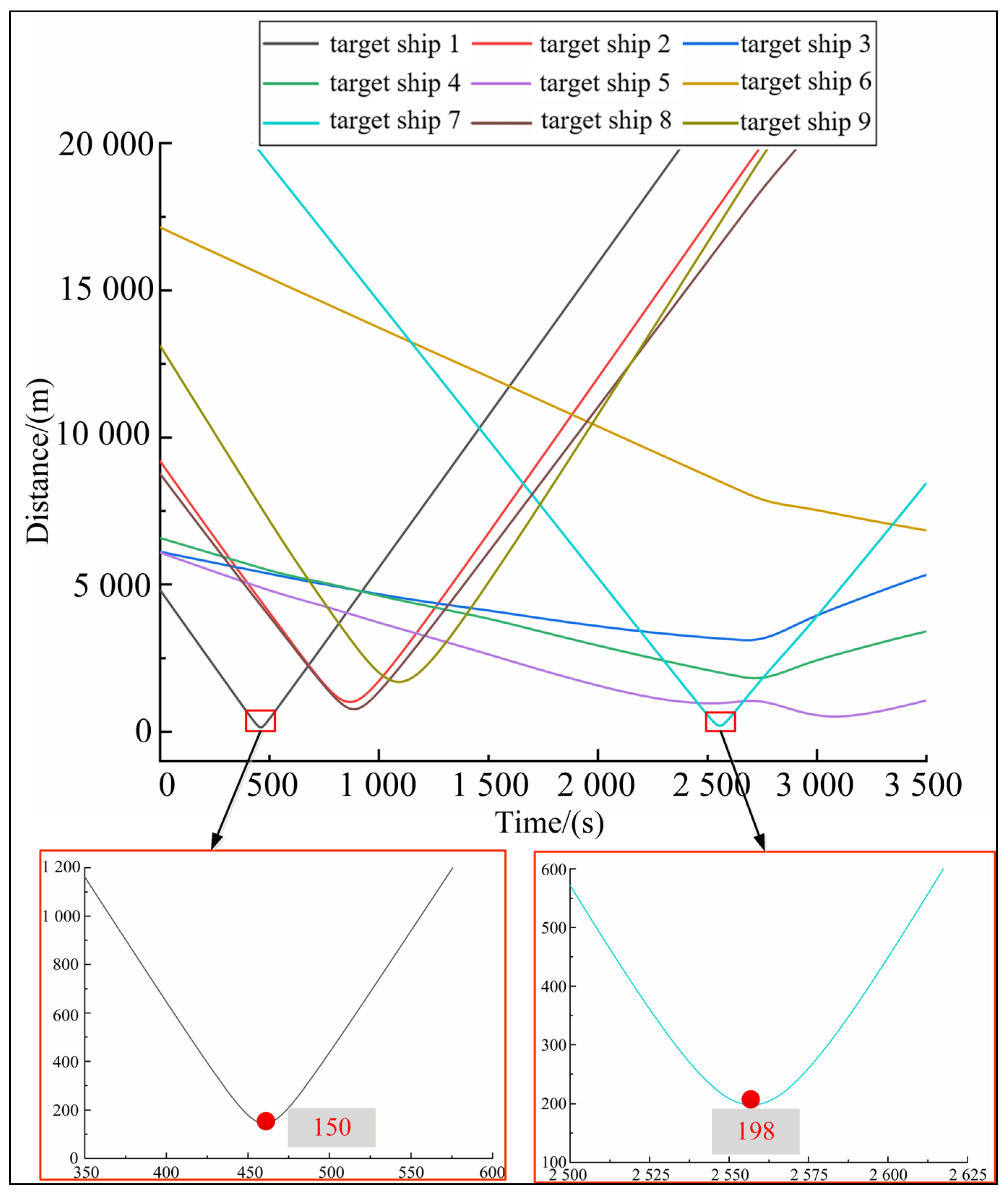
Figure 11, the ship and target ship 5 and target ship 7 are in danger of collision at the same time, forming the overtaking situation and the crossing situation, respectively. According to the principle and method of avoidance, the ship can turn to the right and avoid the two ships at the same time. The ship was sailing at 012 s to P4, at a speed of 13 knots and course of 109°. We turned 15° to the right, with the speed unchanged, and sailed to P5 at 2 541 s, at which point it was judged that the ship could follow the course. The distance from target ships 5 and 7 is shown in
Figure 12. Within the safe range, we avoided target ships 5 and 7 safely. We tracked to P6 at 4478 s, heading 95°, and returned to the planned course.
In the multi-vessel encounter experimental scenario illustrated in
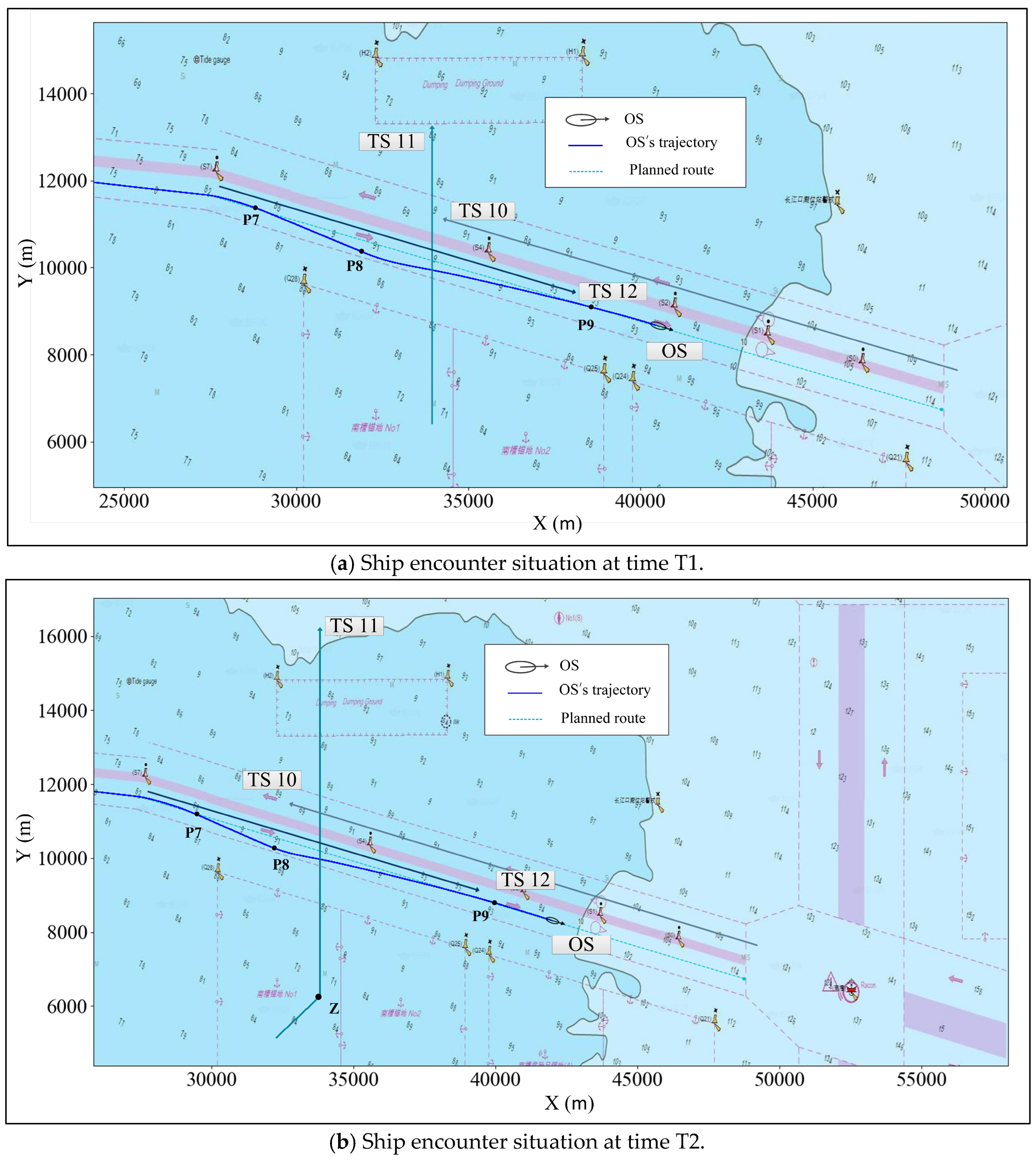
Figure 13, the own vessel sailed to the preset waypoint P7 at 4060 s, forming a typical crossing encounter situation with target ship 11, which suddenly altered its course and accelerated at point Z. In accordance with the COLREGs, combined with the relative positional relationship between the two vessels, target ship 11 was located on the starboard side of the own vessel; thus, the own vessel was identified as the statutory give-way vessel and was required to take active collision avoidance measures to ensure navigation safety. To balance collision avoidance effectiveness and route recovery efficiency, the own vessel implemented a 4° starboard turn adjustment. It continued sailing until reaching coordinate point P8 at 4943 s, where the vessel’s course stabilized at 107°, and then the route-tracking control module was activated to gradually converge to the planned route. By 6035 s, the own vessel successfully tracked to the preset path point P9 with a course of 103°, fully returning to the original planned route.
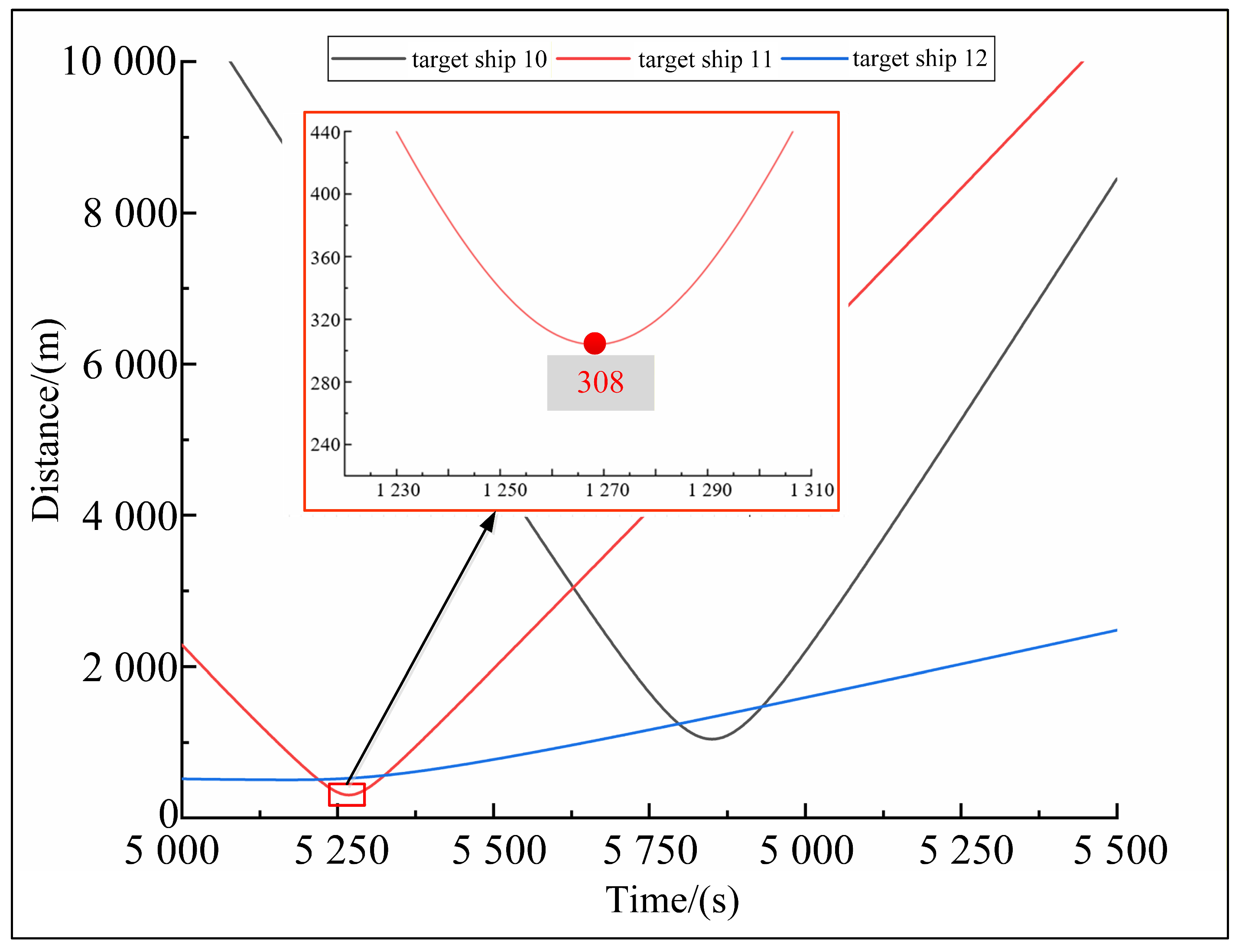
Figure 14 quantitatively presents the real-time distance variation characteristics between the own vessel and target ships 10, 11, and 12 throughout the collision avoidance process. The data indicates that no target vessel entered the preset ship domain of the own vessel during the entire process, verifying the effectiveness and reliability of the adopted collision avoidance decision-making algorithm, which meets the navigation safety requirements in complex encounter scenarios.
6. Discussion
This paper designs a complex multi-ship simulation scenario to verify the feasibility and effectiveness of the proposed autonomous decision-making method for ship maneuvering in complex shoal waters. The results and discussion are as follows.
The method proposed in this paper can solve the problem of close-range collision avoidance for ships in complex shallow water areas. The generated maneuvering decision scheme can safely avoid and accurately track the planned route in multi-ship scenarios in complex shallow water areas, demonstrating its applicability in ship collision avoidance in complex shallow water areas. In addition, the method proposed in this article integrates collision avoidance rules and navigation rules at sea, which is in line with the driving habits of ships in navigation practice and is consistent with the motion characteristics of ships in such environments.
According to the simulation trajectory in
Figure 10,
Figure 11 and
Figure 13, it can be seen that the ship can efficiently return to the planned route and continue sailing along the planned route after completing one or more collision avoidance decisions. During this process, the trajectory tracking process was smooth and consistent with the ship navigation practice, indicating the stability and reliability of the ship trajectory tracking effect. According to
Figure 10,
Figure 11,
Figure 12 and
Figure 13 from two sets of simulation experiments, it can be seen that using the generated collision avoidance decision scheme for this ship can achieve multiple avoidance decisions in the scenario of encountering ships, and after making collision avoidance decisions, it can return to the original route. In addition, from the simulation parameters of collision avoidance decision experiments in
Figure 12 and
Figure 14, it can be seen that in both cases, the minimum distance between the ship and the target ship is 150 m, which is greater than the safe distance in the ship domain, proving the effectiveness of the proposed method in this paper.
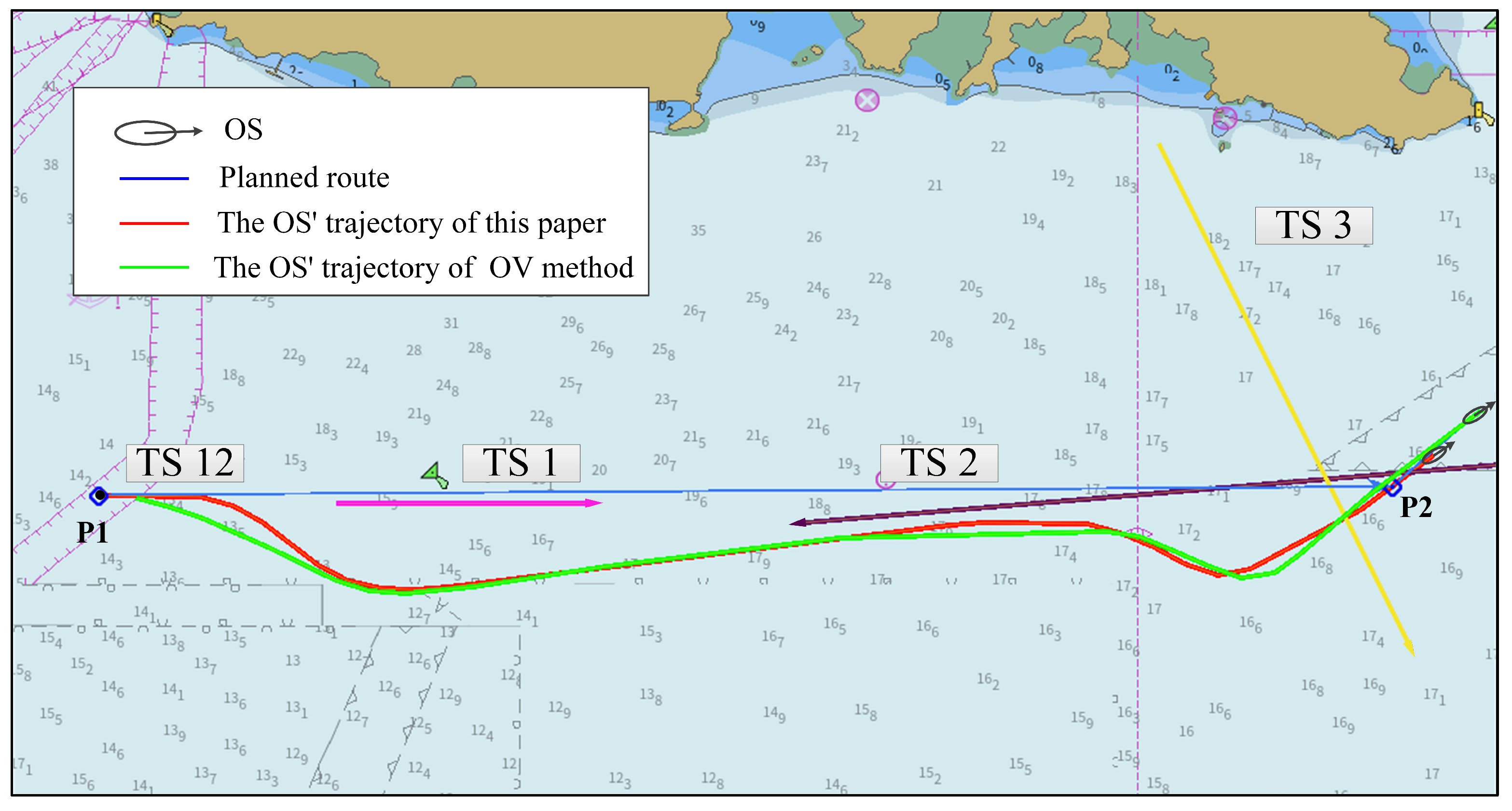
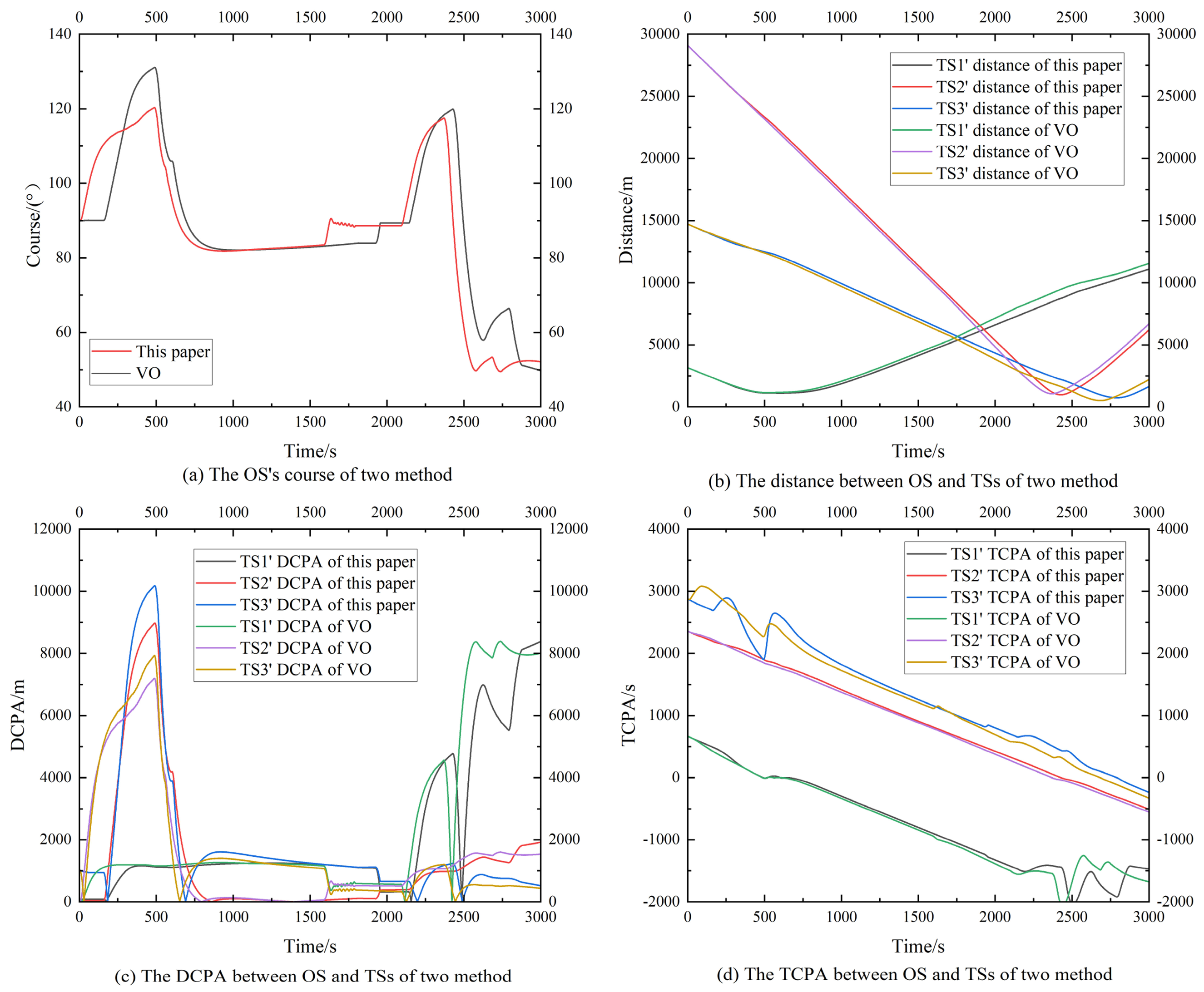
Furthermore, in order to verify the effectiveness of the complex shallow water manipulation autonomous decision-making algorithm proposed in this paper, a set of comparative experiments was conducted to compare it with the classical speed obstacle method. In the comparative experiment, the initial information parameters of the ships were all the same. The collision avoidance trajectory of the ships in the comparative experiment is shown in
Figure 15, and the variation information for the collision avoidance parameters of the ships is shown in
Figure 16.
From
Figure 15, it can be seen that the method proposed in this article can safely avoid collisions with multiple target ships multiple times within a limited channel, taking into account the navigation rules, channel boundaries, and ship maneuverability. Compared to other methods, the avoidance path proposed in this article is smoother and in line with the ship’s maneuverability. From
Figure 16, it can be seen that the method proposed in this paper can make collision avoidance decisions for ships from a smaller angle, taking into account the safety distance of the ship and the limitations of the waterway and water depth. Overall, the autonomous decision-making method for the complex shallow water vessel maneuvering proposed in this article has high reliability and effectiveness in dealing with ship collision avoidance in complex situations.
In the selected water area studied in this article, a digital model of the navigation scene was constructed by loading electronic navigation map information without involving particularly complex model calculations. In addition, the method proposed in this article has good scene adaptability and can be applied to typical complex navigation waters, such as restricted navigation areas and shallow waters. It can also be applied to intelligent ships for assisted driving, autonomous navigation and other working modes. After slight adjustments, it can be embedded and applied to the autonomous navigation system of ships in the above modes. Therefore, this article can basically achieve the generation of autonomous navigation decision schemes in seconds. For a completely new water area, generating collision avoidance decision plans may require a long time and high cost, due to the involvement of modules such as obtaining navigation environment information, modeling navigation constraints, and calculating navigation rules in the water area. In the future, through the pre-fabricated loading of relevant modules, the system can be applied in ship loading to achieve real-time generation of autonomous navigation decision-making schemes for complex shallow water vessels. In summary, the main contributions of this article are reflected in the following aspects: based on the constructed digital model of complex shallow water traffic environment elements, this article further considers the constraints of ship navigation rules and various factors such as wind flow, tides, and shallow water effects, and proposes a navigable water range model for shallow water areas. Based on constraints such as ship maneuverability and the navigation environment, a maneuvering motion model was constructed for shallow water and wind flow, providing support for generating high-precision ship collision avoidance decision-making schemes. Based on the ship maneuvering motion model and optimal heading control method, an adaptive maneuvering decision method for complex shallow water areas is proposed, using time-series rolling update information. This study can provide a theoretical basis for intelligent navigation research in other similar water bodies.
7. Conclusions
To solve the problem of ship collision avoidance decision-making in complex shallow water areas, this paper proposes an autonomous decision-making method for ship maneuvering in complex shallow water areas, considering multiple constraints such as uneven water depth, limited navigable range, changes in maneuvering characteristics, and navigation rules. We established different types of dynamic and static obstacle models and constructed a digital transportation environment model that considers dynamic information such as water depth, tides, and channel boundaries. Considering constraints such as ship maneuverability and the navigation environment, a ship maneuvering motion model was constructed under shallow water and wind flow interference, providing support for generating high-precision ship collision avoidance decision-making schemes. A complex shallow water adaptive maneuvering coupled decision-making method was constructed by integrating the ship domain models, route tracking, and navigation decision-making methods, taking into account the influence of ship navigation rules, constraints, and other factors. However, this study did not include non-uniform flow or consider interference with ship motion; it only used steady-state wind parameters for simulation verification; and did not involve more complex dynamic collision avoidance decision models. But, through the previous research results, namely the use of a time-series rolling calculation method, the input information was quickly updated to compensate for the impact of residual errors on the manipulation scheme, thereby achieving the adaptive correction of errors. Future research will seek to address these issues in order to further improve.





 ,
,