1. Introduction
The overall objective of a conventional oil tanker structural design process is to achieve an economically efficient structure that satisfies the requirements prescribed by the International Association of Classification Societies (IACS) Harmonized Common Structural Rules for Bulkers and Oil Tankers (CSR BC & OT) [
1]. In such a rule-driven context, safety is commonly addressed implicitly through compliance, while explicit safety-related objectives are rarely included as optimization drivers in early design stages.
The concept design phase (CDP) and preliminary design phase (PDP) are characterized by decisions with the strongest downstream consequences—particularly those related to structural topology and arrangement. At this stage, only a limited set of key design parameters can be negotiated with stakeholders, yet these choices largely determine the attainable balance between weight, producibility and structural safety. For this reason, there is a clear motivation to introduce safety-related measures already in CDP, where topology-related improvements are still feasible and have the largest influence on structural crash response.
The main goal of this paper is to propose and demonstrate a practical early-stage structural design methodology that explicitly incorporates ship crashworthiness as a safety-related objective. In the present context, crashworthiness is understood as the ability of a tanker structure to dissipate impact energy through deformation mechanisms during collision or grounding, thereby mitigating damage severity and accident consequences. In this paper, crashworthiness is treated as a design performance attribute rather than solely as a post-accidental assessment metric. Hull-girder ultimate strength is considered as an additional global safety-related measure to demonstrate the extensibility of the framework toward multiple objectives, while the main methodological focus remains on crashworthiness.
A central obstacle to explicit crashworthiness-driven design is the computational cost of high-fidelity nonlinear impact analysis. Depending on the model extent and level of detail, a single nonlinear finite element analysis (NLFEA) variant may require from hours to several days, making direct optimization impractical for routine CDP design iterations. A pragmatic solution is to replace expensive analyses by surrogate models trained on a limited number of carefully selected simulations, enabling efficient design-space exploration and multi-objective optimization [
2,
3,
4,
5].
From the accidental limit state (ALS) perspective, International Ship and Offshore Structures Congress (ISSC) reports consistently emphasize the energy-based nature of impact events, where collision energy is primarily dissipated through structural deformations, while also noting that explicit ALS design methodologies have not yet been widely adopted in routine ship design and are often addressed indirectly through prescriptive requirements [
6]. These observations motivate the present work, which operationalizes an energy-based crashworthiness metric in a CDP-centred optimization workflow with interface toward PDP verification while maintaining consistency with existing rule-based design practice.
The crashworthiness of double-hull tanker structures has been extensively assessed using explicit finite element (FE) simulations of collision and grounding scenarios, where the energy absorption and damage extent are natural response measures for comparing structural variants. Design-oriented frameworks have been proposed to support the systematic evaluation of damage severity and energy absorption for collision and grounding scenarios based on representative accident statistics [
7]. Grounding-oriented crashworthiness studies further investigated progressive failure modes and the influence of seabed conditions using FE simulations and energy-based formulations [
8,
9]. Recent contributions also demonstrate surrogate-assisted crashworthiness optimization approaches for ship structures under multiple operating or impact conditions [
10]. Despite this progress, the integration of crashworthiness measures into comprehensive early-stage tanker structural design frameworks that remain consistent with CSR-driven adequacy checks is still limited. However, these studies typically focus on crashworthiness assessment or optimization in isolation, and fewer works address its systematic integration into rule-consistent early-stage tanker structural design workflows.
Surrogate modeling, response surfaces and other metamodels are widely used in deterministic computer experiments to enable optimization under expensive numerical simulations. In ship structural design, surrogate-assisted methodologies have been demonstrated as practical enablers of multi-criteria design synthesis and decision support in early design stages [
2]. These approaches are particularly relevant when discrete topology decisions and multiple conflicting objectives require the exploration of broad design spaces. This substitution of high-fidelity analyses by metamodels is therefore not merely a computational convenience but a necessary enabler for embedding crashworthiness into iterative CDP design workflows.
Multi-objective optimization and Pareto-based decision support have been increasingly adopted in ship structural design to handle conflicting requirements such as weight, safety and performance. Structured procedures for selection among nondominated design variants have been proposed for CDP and its interface toward PDP, supporting traceable and transparent design decisions [
11]. In this context, an explicit inclusion of crashworthiness as an optimization objective provides additional insight into safety–weight trade-offs and enables topology-driven improvements when design freedom is still high.
Existing crashworthiness studies typically evaluate the collision performance of a predefined structural arrangement, while structural optimization studies usually address scantling optimization after the structural topology has already been fixed. In contrast, this paper introduces crashworthiness as an explicit objective in the concept design phase, where topological design decisions such as the arrangement and number of structural members are still adjustable. The proposed surrogate-assisted optimization framework therefore enables safety-oriented selection among alternative structural topologies rather than only improving an already selected configuration.
The proposed methodology combines CSR-based adequacy filtering with surrogate-assisted multi-objective optimization. Crashworthiness is quantified by the internal energy absorption, , which is obtained from explicit LS-DYNA collision simulations of a double-hull side structure, and it is incorporated into optimization using response surface surrogate models. Hull-girder ultimate strength is evaluated through a progressive collapse method implemented in Bureau Veritas Mars 2000 and it is used as an additional global safety-related objective.
Since surrogate models require a training dataset generated by NLFEA runs, special considerations are necessary to reduce the number of simulations to an acceptable level while maintaining accuracy suitable for optimization. An increase in the number of control parameters leads to a nonlinear increase in the required number of simulations for comparable surrogate quality, motivating a careful reduction of crashworthiness control variables to those with significant effect. Furthermore, a rational reduction of the design space is required to avoid structurally unrealistic variants, and in the proposed workflow, this is supported by CSR BC & OT Stage I calculations used as an early screening. This design-space reduction is closely linked to the rule-consistent feasibility filtering stage introduced later in the methodology.
Parts of the underlying research have been previously disseminated in conference proceedings, including COMPIT 2016 [
12], IMDC 2018 [
13], and MARSTRUCT 2019 [
14]. These earlier works addressed surrogate model evaluation for collision energy absorption, surrogate-assisted multi-criteria structural optimization, and preliminary elements of tanker structural design methodology with safety considerations, respectively.
This paper consolidates and extends these developments into a coherent end-to-end framework aligned with CSR practice, revises the presentation to improve clarity and reproducibility, and places emphasis on the practical integration of crashworthiness measures into early-stage structural decision making. Compared to these earlier publications, this paper emphasises methodological coherence, full workflow integration, and alignment with CSR-based design practice.
The remainder of the paper is organized as follows.
Section 2 describes the crashworthiness-driven structural design methodology for the CDP.
Section 3.1 presents an example implementation architecture of the CDP-related methodology.
Section 3 presents an application of the methodology to an Aframax tanker case study and discusses the resulting safety–weight trade-offs. Finally,
Section 4 summarizes conclusions and outlines directions for future research. Detailed information on the crashworthiness surrogate model and the reliability-based hull-girder safety index is provided in
Appendix A and
Appendix B, respectively.
2. Crashworthiness-Driven Structural Design Methodology for CDP
In conventional concept and preliminary ship structural design, the evaluation of crashworthiness under collision or grounding scenarios is typically not performed as a standard design criterion, which is mainly due to the computational cost of nonlinear impact simulations and the absence of design-oriented simplified procedures. However, this early stage is precisely where discrete (topological) structural decisions are made (e.g., arrangement of longitudinal stiffeners and structural segmentation), which strongly condition the subsequent crash response and are difficult to modify later without major redesign. To address this mismatch between design leverage and analysis feasibility, this paper introduces a crashworthiness safety measure already at the concept/preliminary design stage by means of surrogate modeling. The proposed approach enables an efficient exploration of discrete topology variants together with continuous scantling variables within a single optimization workflow.
The proposed methodology follows the development of rule-consistent ship structural design approaches in which topology-related design variables and optimization-based procedures are progressively integrated into CDP and PDP activities [
11,
15,
16]. In this context, an initial formulation of a safety-oriented extension of such workflows, including the introduction of crashworthiness-related considerations, was outlined in [
14]. The workflow presented in
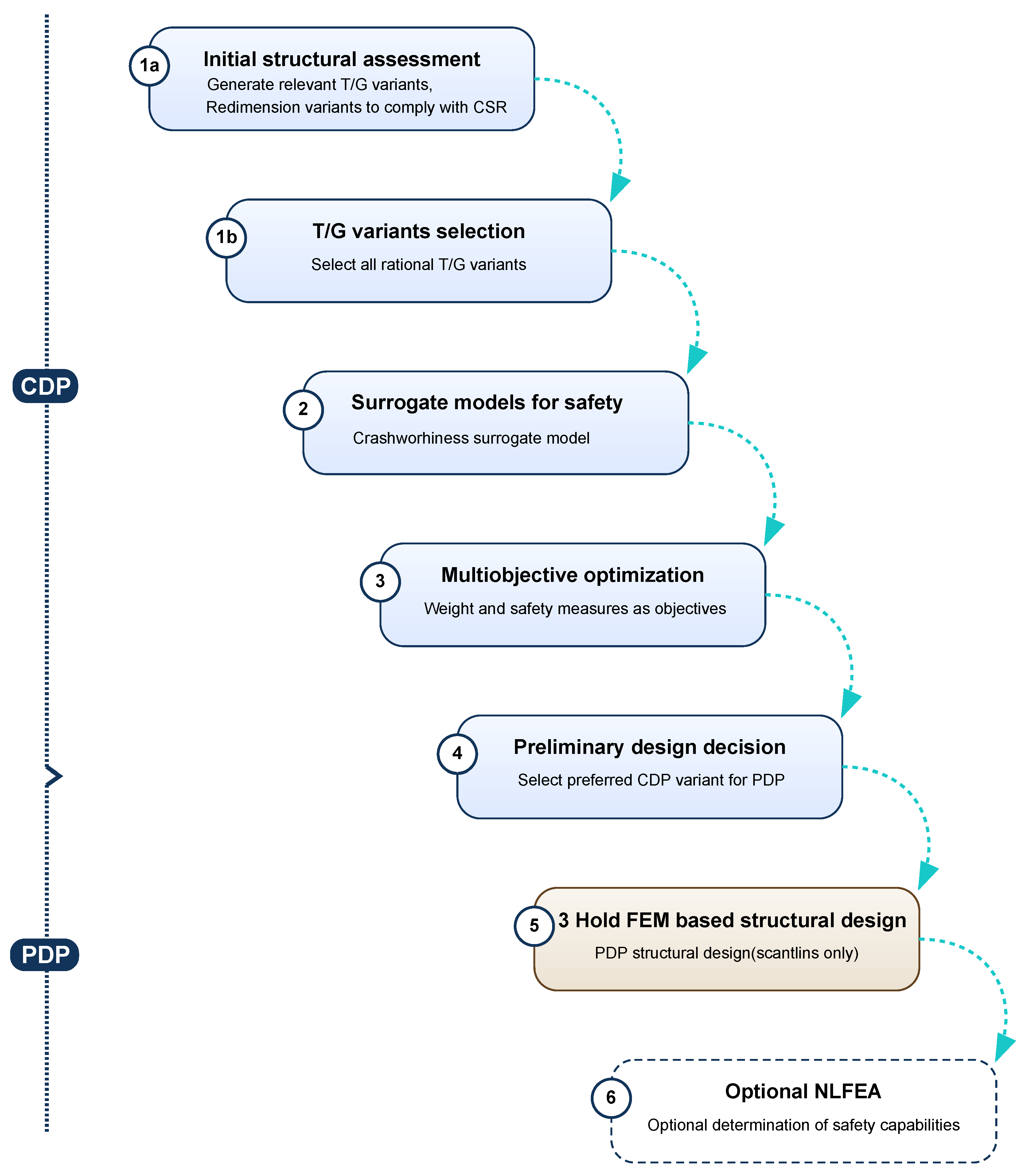
Figure 1 retains the conventional requirement that the design process starts and ends with comprehensive structural analyses, represented by Blocks 1a and 5, which correspond to standard engineering practice in design offices and shipyards.
Between these two stages, the present procedure introduces additional blocks that enable a systematic consideration of topology and geometry (T/G) variants together with safety-related performance measures that are not directly addressed through conventional rule-based checks. In particular, crashworthiness, expressed through the selected energy-based measure, is incorporated into a multi-criteria optimization framework alongside structural weight and other safety indicators. The first three block levels are associated with CDP, while the final block corresponds to PDP.
The main methodological contribution is therefore positioned in CDP, where decisions on topology and principal geometric arrangements are still open and where such choices have a dominant influence on the structural crash response. Although further refinements may be introduced during PDP, their impact is inherently more limited compared to the design leverage available at the earlier CDP stage. The overall procedure is conceived so as to remain compatible with established industrial practice while extending it to include an explicit evaluation of T/G alternatives and crashworthiness within a unified optimization-based framework applicable in a real design environment.
In the proposed framework, the ship structure is defined by a set of design variables , comprising topological variables , geometric variables , and scantling variables , which collectively define the design space.
Block 1a provides the initial rule-consistent feasibility assessment of each topology/geometry (T/G) variant using standard 2D cross-section structural analysis. Its purpose is to establish a structurally admissible baseline configuration for every considered combination of topology variables and geometry descriptors . For each T/G variant, the scantling variables are adjusted so as to obtain a feasible or near-feasible solution with respect to CSR-based adequacy requirements while maintaining a realistic structural weight level. This step does not represent final dimensioning but rather defines a normalized starting state for each T/G alternative, ensuring that subsequent crashworthiness evaluation and optimization are performed on engineering-relevant and mutually comparable structural configurations. In this way, Block 1a maps the broader T/G design space into a subset of rule-consistent baseline designs compatible with established industrial modeling practice and suitable for the following surrogate modeling and multi-criteria analysis blocks.
Block 1b performs a pre-selection of topology/geometry (T/G) variants obtained from Block 1a with the objective of retaining only structurally feasible and practically relevant candidates for further analysis. In principle, many T/G variants produced in Block 1a can be made rule-consistent by adjusting scantlings, yet some are irrational or clearly unattractive in an early-stage sense (e.g., weight-dominated) and are therefore screened out before the computationally demanding Blocks 2 and 3. This step excludes variants associated with excessive structural weight or otherwise unfavorable performance characteristics that would make them unrealistic options in a real design context. The filtering is based on engineering judgement and project-relevant criteria consistent with early-stage design practice. By reducing the number of candidates to a manageable and meaningful subset, Block 1b ensures that the subsequent computationally demanding crashworthiness analyses are carried out only for variants of practical design interest. In this way, the methodology maintains compatibility with industrial workflows while directing advanced analyses toward the most relevant regions of the T/G design space.
Block 2 is devoted to the generation of a surrogate (response surface) model of the internal energy
absorbed during collision or grounding, which is used here as a quantitative measure of crashworthiness. The set of control variables comprises the selected topology descriptors
, geometry parameters
, and the subset of scantling variables
identified as having a dominant influence on the crashworthiness response. In ship structural design practice, global strength criteria such as the hull-girder ultimate strength can be treated through established design-oriented procedures embedded in classification workflows, while nonlinear FE-based analyses remain valuable as benchmark and sensitivity references [
17]. In contrast, for accidental limit states (ALSs), explicit ALS design methodologies are not widely implemented in routine ship design and are frequently addressed through prescriptive requirements rather than performance-based analysis [
6]. Accordingly, this block employs a set of high-fidelity nonlinear collision simulations to generate the training dataset for the surrogate model of
, thereby enabling the inclusion of crashworthiness within the multi-criteria concept design optimization framework at an acceptable computational cost. The collision scenario is treated as an external input to the proposed workflow and should be selected to reflect the intended operational context. Accordingly, the methodology requires that the striking-ship model and collision conditions (impact velocity, angle, and impact location) are defined prior to the NLFEA campaign used for surrogate training. In this paper, a representative Adriatic Sea benchmark scenario adopted from [
12] is used to illustrate the approach. The detailed numerical setup of this application example (models, boundary conditions, and parameters) is provided in
Section 4.
Block 3 performs the multi-criteria optimization of the selected T/G variants, considering structural weight and safety-related measures as performance indicators. In this paper, crashworthiness expressed through the surrogate model of is treated as a primary safety measure within this optimization framework. Additional safety indicators, such as those related to hull-girder ultimate strength or other limit-state criteria, can be incorporated in the same manner wherever suitable design-oriented measures are available. The optimization is carried out under the constraints prescribed by CSR BC & OT with scantling variables treated as continuous design variables and those topology and geometry variables that can be parametrically modified included where feasible. If certain T/G descriptors cannot be handled directly within a unified optimization model, the procedure is applied separately to representative subsets of T/G variants generated through a recombination of admissible topology and geometry levels. For each considered T/G configuration, the optimization produces a set of trade-off designs representing different balances between weight and safety-related responses. All resulting non-dominated solutions are collected into a common pool of candidate designs to be evaluated and selected in the subsequent decision block. In this way, Block 3 provides a structured link between surrogate-based crashworthiness evaluation, other safety measures, and rule-consistent design exploration within a framework compatible with practical engineering workflows.
Block 4 represents the decision stage in which a preliminary design variant is selected from the set of non-dominated solutions generated in Block 3. This step marks the transition from design-space exploration to engineering decision making and corresponds to the final stage of CDP while simultaneously serving as the entry point to PDP. The selection is based on project-specific preferences, acceptable safety margins, weight or cost considerations, and other practical design constraints that cannot be fully captured within the optimization model. By translating trade-off information into a concrete structural configuration, Block 4 ensures that the chosen variant reflects both quantified safety–weight relationships and real design priorities. The resulting design is then passed to PDP-level modeling and verification in the subsequent block.
Block 5 represents the PDP-level structural design stage in which the selected CDP variant is analyzed using a three-hold finite element model to verify structural adequacy and refine the dimensioning of components that cannot be reliably assessed using the simplified CDP models, such as transverse bulkheads, web frames, and double-bottom structures [
18,
19]. This modeling level provides a more realistic representation of global hull girder behavior and local structural interactions and corresponds to conventional classification-oriented design practice. Unlike the preceding optimization-oriented blocks, this stage may follow a traditional engineering design procedure without formal optimization, reflecting current limitations of software environments that combine optimization capabilities with rule-based admissibility checks. The focus of the present methodology is therefore not on redefining PDP procedures but rather on ensuring that the design entering this stage has already been improved through a systematic consideration of topology/geometry alternatives and crashworthiness-related performance in CDP. If the PDP assessment indicates rule non-compliance, adjustments are made primarily to secondary scantling parameters not treated as control variables in earlier blocks so as to preserve the safety–weight balance established during optimization. If compliance cannot be achieved without substantial structural modifications, the procedure returns to Block 4 for a reconsideration of the selected trade-off design. In this way, Block 5 serves as the conventional verification and refinement stage, which is embedded within a feedback loop that connects advanced CDP decision making with established PDP design practice. At this stage, the topology and principal geometric arrangement selected in CDP are retained, and the design activities are focused primarily on a refinement of scantling parameters.
Block 6 represents an optional, high-fidelity assessment stage in which a detailed NLFEA of the selected PDP variant is performed to further evaluate its safety performance under extreme loading scenarios. This block extends beyond conventional classification-oriented design practice and is intended primarily for advanced verification, sensitivity studies, or a research-oriented assessment of structural behavior. Within this stage, both global and local structural response can be investigated, including progressive collapse mechanisms and energy dissipation characteristics in selected collision and/or grounding scenarios. The analysis provides additional insight into structural robustness and failure modes, complementing the surrogate-based and rule-oriented evaluations carried out in earlier blocks. Although not mandatory for routine design, Block 6 enables a deeper understanding of the safety margins of the selected configuration and supports a validation of the modeling assumptions adopted throughout the methodology.
Together, Blocks 1–4 extend conventional CDP practice by introducing topology-aware, crashworthiness-informed multi-criteria design exploration, while Blocks 5 and 6 ensure consistency with established PDP verification procedures and, where required, provide a higher-fidelity safety assessment beyond standard design practice.
3. Application of Proposed Methodology to Aframax Tanker Structural Design
A generic Aframax class oil tanker is selected for a test case for application of the proposed methodology. This application serves as a demonstrative case study illustrating the practical use of Blocks 1–4 of the proposed CDP methodology rather than a design for a specific vessel. Basic ship characteristics are given in
Table 1.
3.1. Implementation Architecture for the Aframax Tanker Structural Design Example
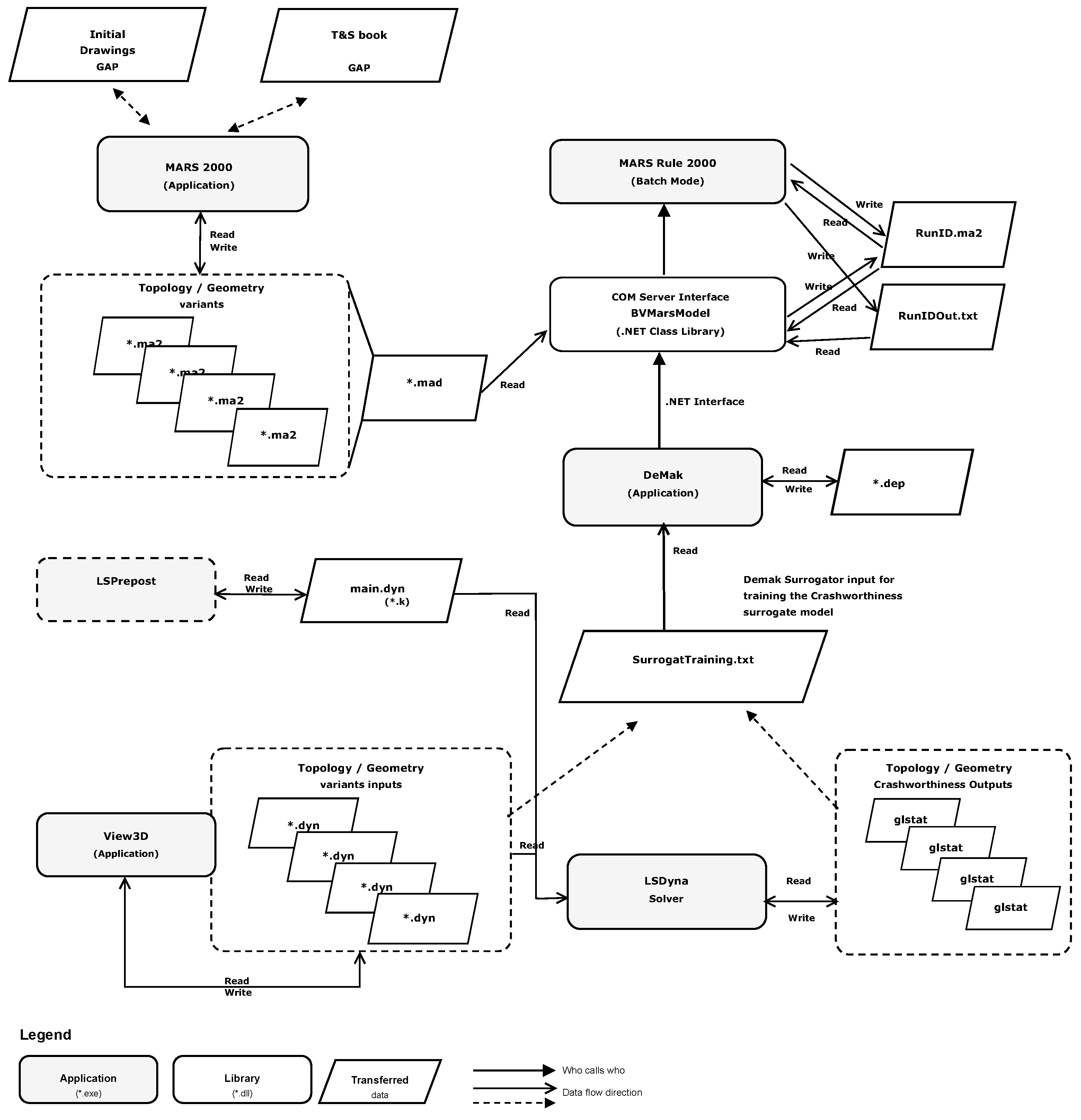
This section presents one possible implementation architecture of the CDP-related blocks of the proposed methodology, which was developed within the available software environment of the authors’ research group. The methodology itself is not tied to specific tools, and equivalent implementations could be realized using different analysis and synthesis platforms, provided that the required rule-based structural assessment, surrogate modeling, and optimization capabilities are available. The implementation shown in
Figure 2 covers Blocks 1a and 1b (rule-consistent structural assessment and T/G variant filtering), Block 2 (generation of the crashworthiness surrogate model), and Block 3 (multi-criteria design exploration), while PDP-level activities (Blocks 5 and 6) follow conventional practice and are therefore not part of the core implementation architecture described here.
Within this architecture, DeMak acts as the workflow orchestrator and optimization environment, the CSR-based structural assessment is performed through Mars-related modules, and crashworthiness surrogate training is enabled through the automated generation and analysis of finite element method (FEM) models.
The CSR BC & OT-based structural assessment relies on the Mars 2000 application for model generation and rule-based calculations, which are integrated through dedicated interfaces that allow the automated handling of multiple topology/geometry variants. This part of the implementation realizes the rule-consistent feasibility checks corresponding to Blocks 1a and 1b of the methodology and ensures that only structurally admissible T/G variants are propagated to subsequent stages.
Crashworthiness-related analyses required for surrogate model training are supported by the in-house module MAGIC (Mesh Generator for Ship Crashworthiness in CDP) developed within the View3D environment. View3D MAGIC was developed to enable the automated generation of a large number of parametrically defined crashworthiness FEM models while preserving a consistent meshing strategy across topology and geometry variants. Its primary role in the implementation is not only to reduce modeling effort but also to ensure mesh uniformity and geometric consistency, which are essential for reliable surrogate model training and for limiting the mesh-induced variability in the crashworthiness response. The module allows simplified yet representative structural models of the midship region to be generated with a predominantly quad-dominant layout and relatively fine element resolution, thereby supporting both computational efficiency and an adequate resolution of deformation and energy absorption mechanisms. Parametric control is provided over topology variables (e.g., number of web frames, number of side stringers, stiffener spacing), geometry parameters (e.g., double-side width, web height, flange breadth), and key scantling variables, enabling the systematic generation of T/G design variants. The approach is tailored to regular midship tanker structures, where geometric regularity permits automated modeling without any loss of representativeness for the considered crash scenarios.
High-fidelity nonlinear collision simulations are then carried out for the generated models, and the resulting crashworthiness outputs are transferred to the surrogate training module within DeMak. In this way, Block 2 of the methodology is implemented as a structured data-generation and surrogate-training loop, which is integrated into the overall design support system.
Block 3 is realized through the optimization and synthesis capabilities of DeMak, which coordinates rule-based constraints, surrogate-based crashworthiness predictions, and structural weight evaluation within a unified multi-criteria design exploration process. This layer enables the systematic investigation of trade-offs between weight and safety-related performance measures across the set of admissible T/G variants while remaining compatible with the rule-based design environment. Overall, the presented implementation demonstrates the practical feasibility of integrating rule-compliant structural assessment, automated crashworthiness model generation, surrogate modeling, and optimization into a coherent design support framework for CDP.
3.2. Design Block 1
As explained in
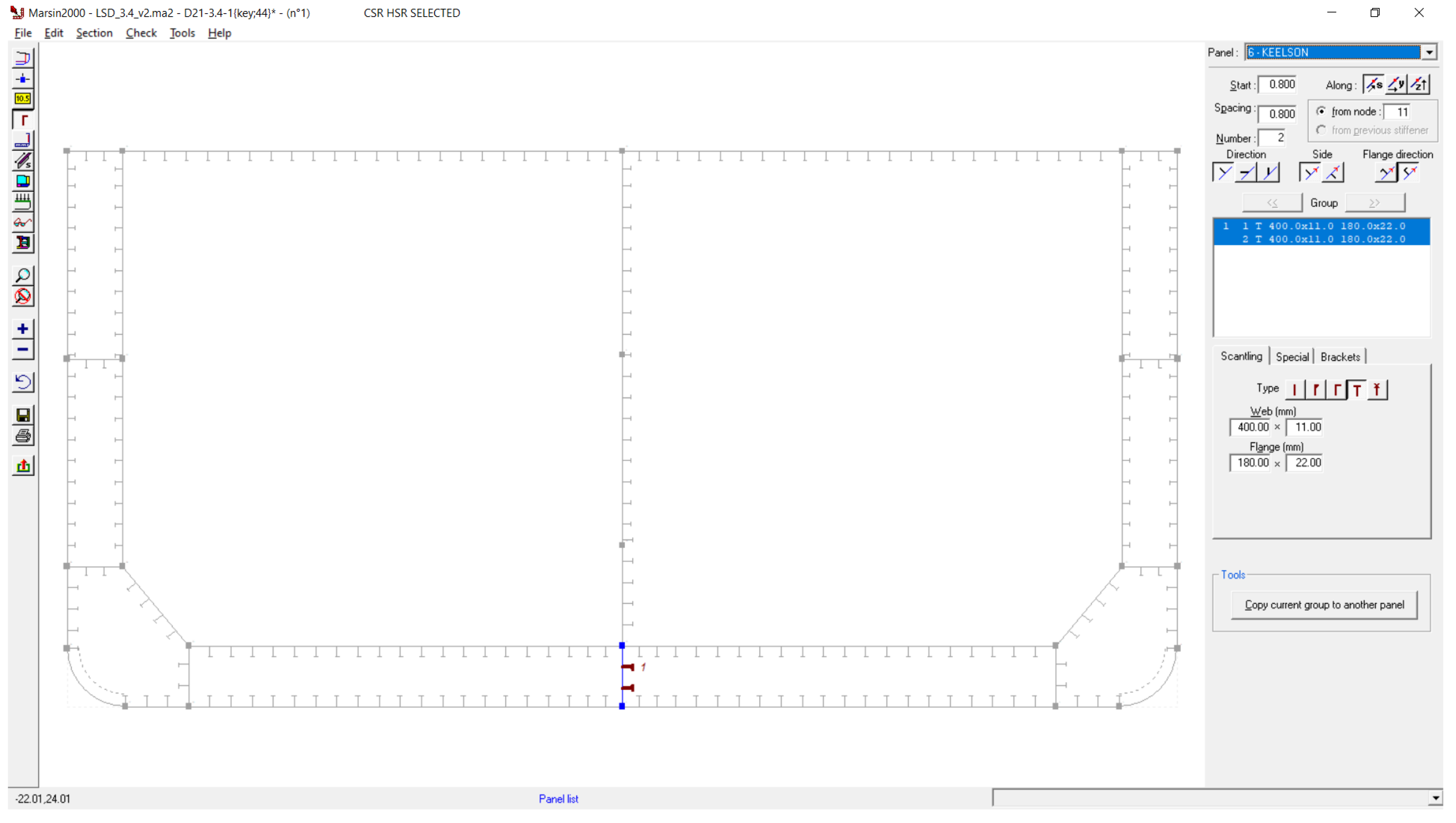
Section 4, Bureau Veritas Mars 2000 Application is used for the modeling and calculations of structural adequacy of 2D cross-section according to CSR BC & OT Stage 1 rules. The initial prototype midship section (
Figure 3) is based on a representative midship structural arrangement of a similar vessel. Scantlings have been changed manually in order to obtain a near feasible solution.
Based on the general ship–design constraints and the expected impact on structural safety (in particular, side–collision crashworthiness), one topology variable—the number of side stringers (
)—and two geometric variables—double-side width (
) and web frame spacing (
)—were selected for the generation of additional T/G variants. Each variable was discretized into three representative levels within the feasible design range. The resulting full-factorial combination of levels yields
section variants, all of which were verified as structurally feasible after the resizing of scantlings.
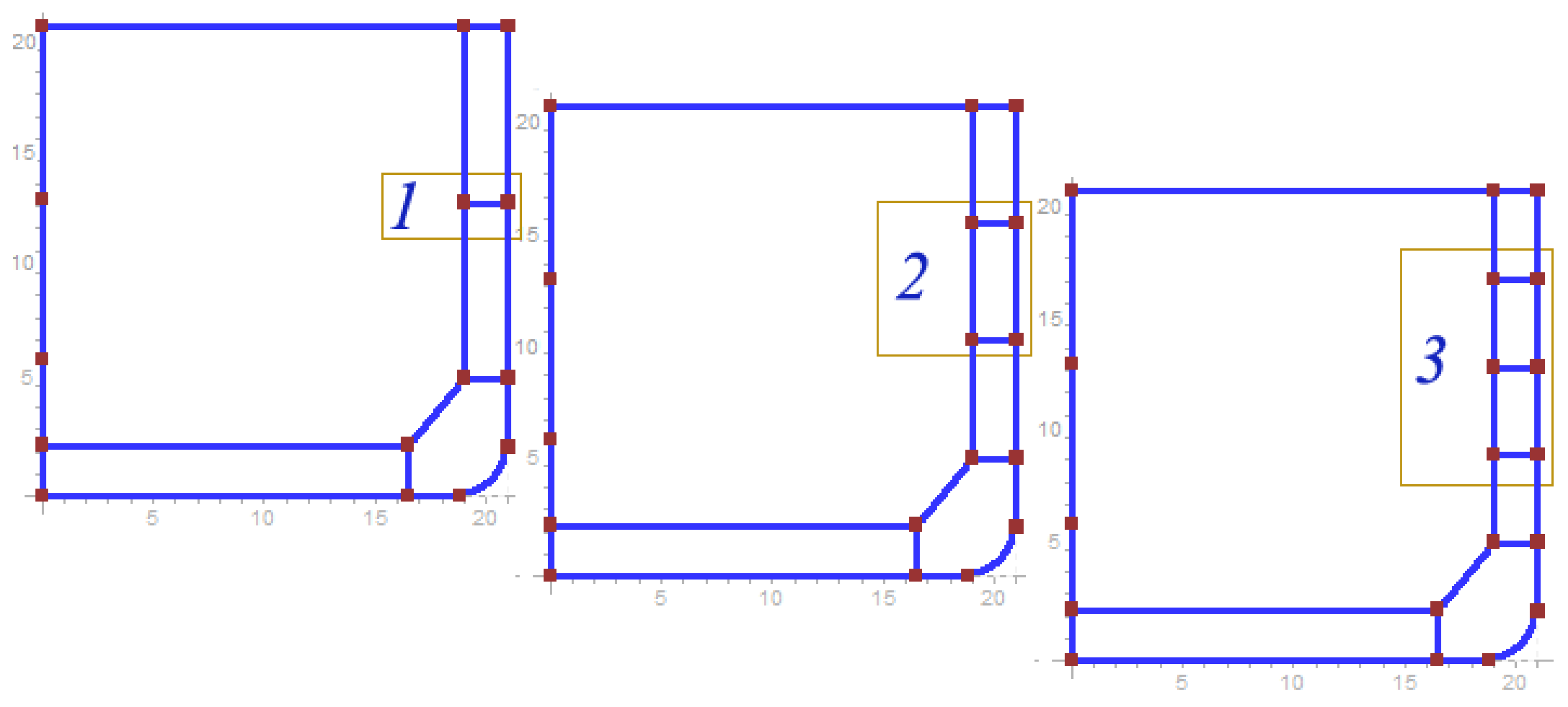
Figure 4 shows three sections with different numbers of side stringers. Since the purpose of this step is to define the design space for the subsequent crashworthiness assessment rather than to compare individual section variants, only the topology/geometry parameter levels are reported here (
Table 2), while the full list of generated variants is omitted for brevity.
After the redimensioning of all T/G variants, it has been identified that all of them are feasible structural design variants with respect to the used criteria. This step therefore establishes the rule-consistent T/G design space that forms the input for the subsequent crashworthiness-oriented surrogate modeling and optimization stages.
For the subsequent collision design of experiments (DOE) and NLFEA-based surrogate modeling, the topology space was further reduced by excluding the variants. These variants were consistently associated with higher structural weight and were therefore considered less attractive from an early-stage design perspective, while their inclusion would significantly increase the NLFEA modeling and computational effort. The reduction represents an engineering screening step consistent with Block 1b of the methodology, which is aimed at focusing advanced analyses on practically relevant regions of the T/G design space rather than exhaustively covering all theoretical combinations. The dataset was therefore limited to the and configurations, which still capture the dominant structural arrangement trends relevant for the considered crashworthiness and weight trade-offs.
3.3. Design Block 2–Crashworthiness Surrogate Model Development
A representative collision scenario typical of tanker operations in restricted or coastal waters is considered in order to define the crashworthiness loading case used in the surrogate modeling framework. Such operational conditions are commonly encountered during port approaches, terminal operations, and navigation in traffic-constrained sea areas, where reduced maneuvering space and mixed traffic increase the likelihood of low- to moderate-speed side collision events. The purpose of this scenario definition is to provide a realistic and operationally relevant loading case for the crashworthiness measure rather than to represent a location-specific or historical accident.
The collision scenario adopted in this paper is defined as a representative Adriatic Sea case-study benchmark, which was adopted from our earlier detailed collision modeling work (COMPIT 2016, [
12]). The struck ship is an Aframax-class tanker, while the striking ship is a typical international passenger ferry operating on Adriatic routes. This choice reflects a practically relevant combination for the considered operational context and provides a realistic bow geometry and inertia for side-impact events.
To enable a large batch of nonlinear FE simulations required for surrogate modeling, both vessel models are reduced outside the collision zone while retaining sufficient local fidelity in the bow region and in the struck side-structure within the impact area to capture penetration and progressive deformation mechanisms. The impact is defined as an orthogonal side collision on the portside cargo-hold region. The selected impact location is representative of a mid-hold case and minimizes boundary effects from nearby transverse structures, enabling consistent comparison across the design space. The impact speed is kept fixed across all analyzed designs to isolate the effect of structural design variables on the crashworthiness response. The proposed methodology is scenario-agnostic and remains applicable to alternative striking ships, impact velocities, impact angles, and impact locations by updating the corresponding simulation inputs without changing the overall workflow.
In this application example, the nonlinear collision simulations required for surrogate training are performed using LS-DYNA. A collision calculation model was developed using the commercial software package LS-DYNA. v R9.0 It consists of two ships involved:
A struck ship, being a (designed) Aframax class tanker.
A striking ship representing a medium-size passenger or Ro–Pax vessel commonly encountered in coastal and port-approach traffic.
The main striking ship particulars are listed in
Table 3. Due to the complexity of the problem, both ship models are reduced in order to enable the study of all of the most important physical aspects of their collision and yet at the same time enable the reasonably fast calculation. Such a model reduction is consistent with the surrogate-modelling objective of capturing the dominant energy-absorption mechanisms while maintaining computational tractability for a large number of simulations required by the design-of-experiments framework. A more elaborate description of the preparation of models and evaluation of the particular response surface method (RSM) model can be found in a preliminary study given in [
12]. A broader discussion of how different ship collision modelling techniques influence predicted consequences is provided in [
20].
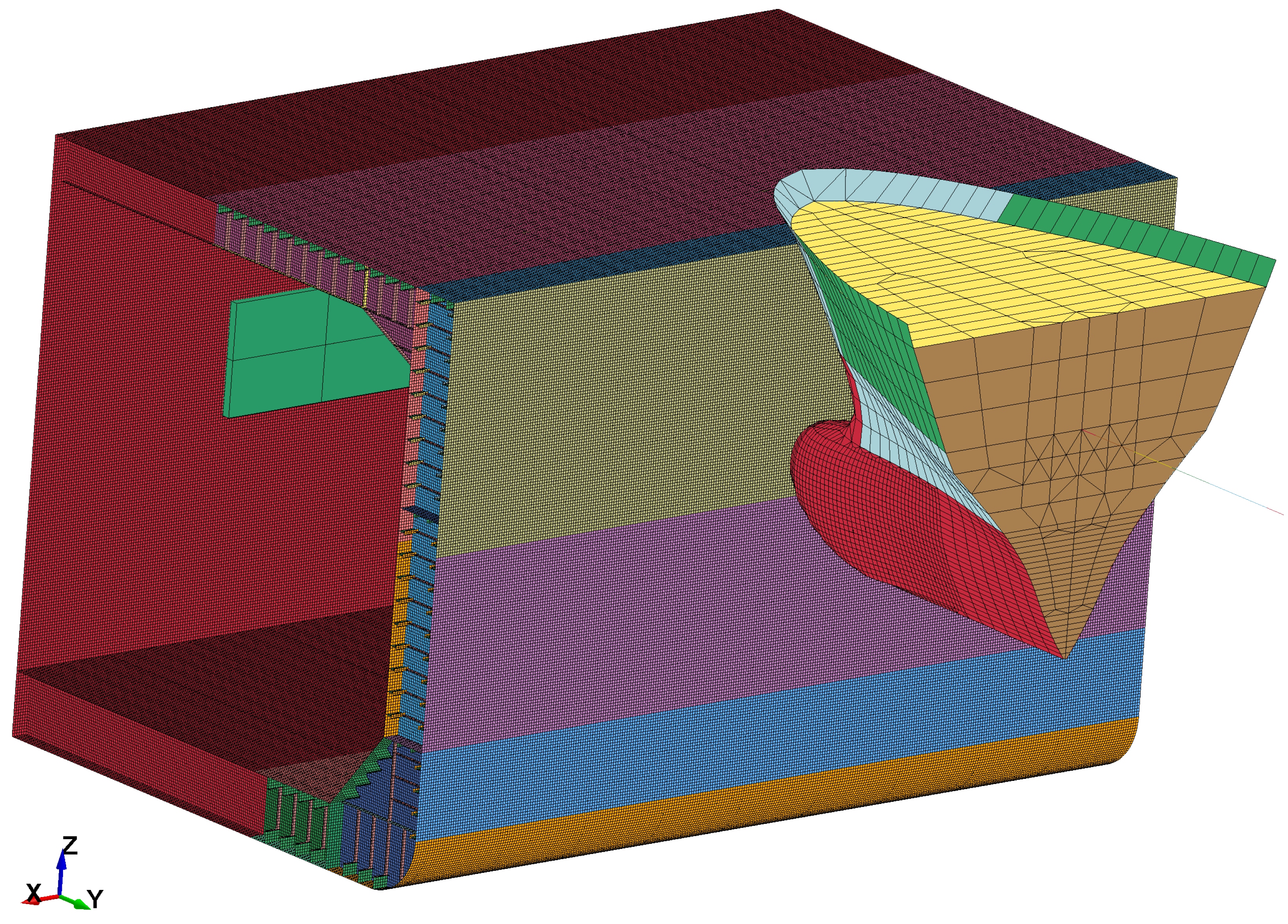
The struck ship model is generated using an in-house software MAGIC enabling the quick generation of FE models by changing geometric parameters such as the double-side width, number of web frames, number and position of side stringers, etc. Since a fine mesh is required in the collision zone, the size of the finite elements in that area is approximately . The struck ship model consists of the portside cargo hold and is entirely made of fine-mesh shell finite elements. The rest of the ship is taken into account by the concentrated ship mass (excluding the portside cargo hold), which is modeled using eight solid elements and located at the exact position of the ship’s center of gravity.
The striking ship model is modeled in detail in the bow section, while the rest of the ship is represented using simple beam elements with the appropriate mass. In this way, the bow shape realistically affects the penetration into the struck ship side, while the rest of the ship (inertia) is adequately taken into account. Both models are shown in
Figure 5, where the orthogonal collision scenario is set: the portside cargo hold of a tanker is subjected to the impact of a ferry bow.
The reference collision scenario parameters are as follows:
Ferry is located in front of the middle cargo hold of the tanker;
Collision is orthogonal;
Speed of the tanker is ;
Speed of the ferry is ;
Draft of the tanker is ;
Draft of the ferry is .
Ship collision analysis was performed by the explicit modelling of both the striking and the struck ship. An initial velocity was assigned to the striking ship. The striking ship bow (and thus the striking ship) was constrained from moving in the transverse direction (x-axis), while the remaining degrees of freedom were left unconstrained.
The struck ship side boundaries were constrained from moving in the vertical direction (
z-axis), while the struck ship was otherwise left unconstrained. The hydrodynamic added mass was accounted for by adding a concentrated mass represented by solid elements located along the struck ship centerline (see
Figure 5, green solid elements on the left-most side). The mass of the explicitly modeled struck-ship cargo-hold segment is
, while the total struck-ship mass is
. An added-mass coefficient
was adopted, resulting in an equivalent added mass of
. Accordingly, the mass assigned to the solid-element mesh representing the remaining inertia (including added mass) is
.
The failure criterion is one of the most influential modeling choices in crashworthiness analysis, as it defines the maximum strain that a finite element can sustain before rupture and erosion. Different approaches to determine the failure strain exist in the literature, including formulations in which the failure strain depends on the characteristic element length and the element thickness t (e.g., Germanischer Lloyd/Peschmann-type criteria). In the present work, the Peschmann criterion was adopted to define a strain-to-failure value for element erosion. The constant strain parameter was set to , and the necking strain factor was set to for . The resulting failure strain was . For simplicity, the same value was used throughout the model, which is justified by the consistent mesh size in the collision zone and the relatively low variation in element thickness.
3.3.1. Preliminary Study on Ship Crashworthiness Surrogate Model
This section presents a preliminary study focused on the identification of a suitable crashworthiness measure and its surrogate representation. Based on the analysis of structural response during ship collision scenarios, this paper establishes the basis for the formulation of a complete surrogate model intended for optimization, which is developed and presented in the subsequent section (
Section 3.3.2). This preliminary investigation therefore supports the formulation of a robust crashworthiness measure for Block 2 of the proposed methodology. The preliminary study includes two control parameters: one geometry parameter (double-side width
) and one scantling parameter (thickness of the side shell) (see
Table 4). Both parameters were tested on three levels.
In order to prepare a surrogate model of the struck ship side-structure crashworthiness, first it is necessary to select the relevant measures of crashworthiness. The internal energy absorbed by the structure during collision is usually used as a crashworthiness criteria (see e.g., [
21,
22]). Although the maximum internal energy is commonly reported as a crashworthiness indicator in detailed collision simulations, its direct use in surrogate-based design optimization is computationally inefficient and may introduce response irregularities associated with local rupture events and late-stage contact/relaxation phenomena. In this paper, this quantity is approximated by the internal energy absorbed during the first 1.2 s of collision,
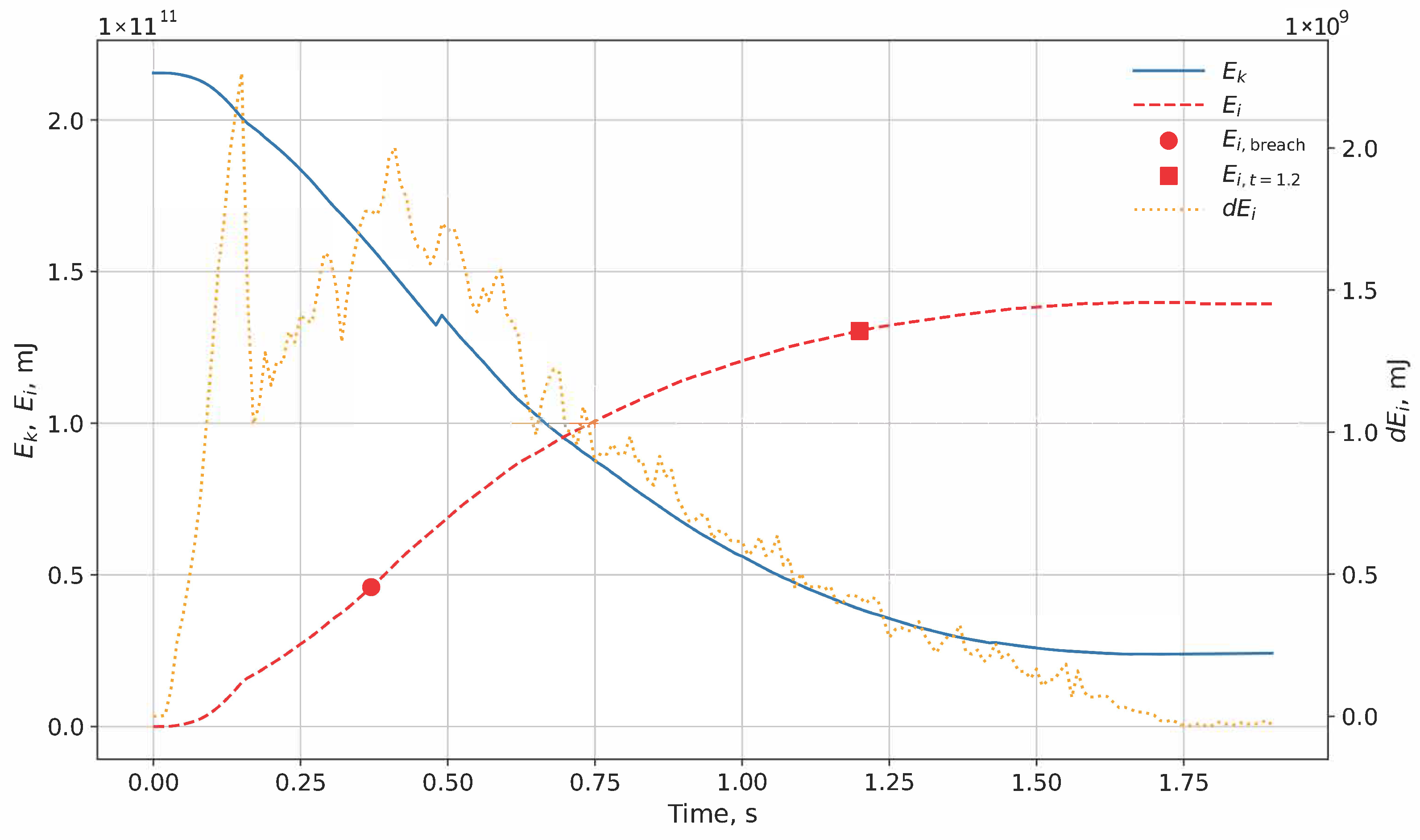
. The cut-off time was selected based on the observed evolution of the energy rate
: the dominant phase of energy dissipation (and associated progressive structural deformation) takes place early, while
decays markedly and
approaches an asymptotic level by about 1.2 s. The same qualitative behavior was observed across the analyzed simulation set, which makes
a consistently defined scalar response over the entire design space. Extending the simulations beyond this time yields only marginal changes in
while increasing computational cost and potentially amplifying late-stage contact artefacts. Therefore, all collision simulations were run up to 1.2 s, and
was adopted as the crashworthiness measure in the surrogate-based workflow.
Figure 6 illustrates the time histories of kinetic, internal and total energy for the representative collision case (Model C20,
Table 5). The blue line represents the kinetic energy of the system, which is initially defined by the mass and velocity of the striking vessel. Once contact occurs, the available kinetic energy is progressively transformed into structural deformation work and dissipative losses (e.g., friction). The red dashed line denotes the internal energy, i.e., the energy accumulated through elastic and plastic deformation of the struck ship structure. In the adopted erosion formulation, this energy is accumulated at the level of individual finite elements until the critical strain is reached and the element is removed from the calculation. Consequently, the total internal energy represents the deformation work dissipated by the struck structure during the impact event and can be used as a scalar proxy for the structural demand under a fixed collision scenario.
The gray curve shows the total system energy in LS-DYNA, which is defined as the sum of the initial total energy and the external work, while the red marker indicates the internal energy level at the instant of inner-hull breach. Finally, the green dotted curve represents the time derivative of the internal energy, highlighting the rate at which the structure absorbs energy during the impact event. For the analyzed case, the breach of the inner hull occurs within approximately 0.35–0.40 s, whereas the rate of increase of internal energy rapidly decays after about 1.0–1.2 s, indicating that the dominant phase of structural deformation and energy absorption is completed within this interval.
In this context, the internal energy absorbed during the first 1.2 s of collision, , may be interpreted as a physically meaningful post-breach energy level that characterizes the completed collision event at the scale of a single cargo hold. At the same time, provides a smooth and consistently defined scalar response across the entire design space, which makes it particularly suitable for use as a crashworthiness measure in surrogate-based structural design and multi-objective optimization. The use of a time-limited internal energy measure thus ensures numerical stability, physical interpretability, and compatibility with surrogate-based optimization across the considered design space.
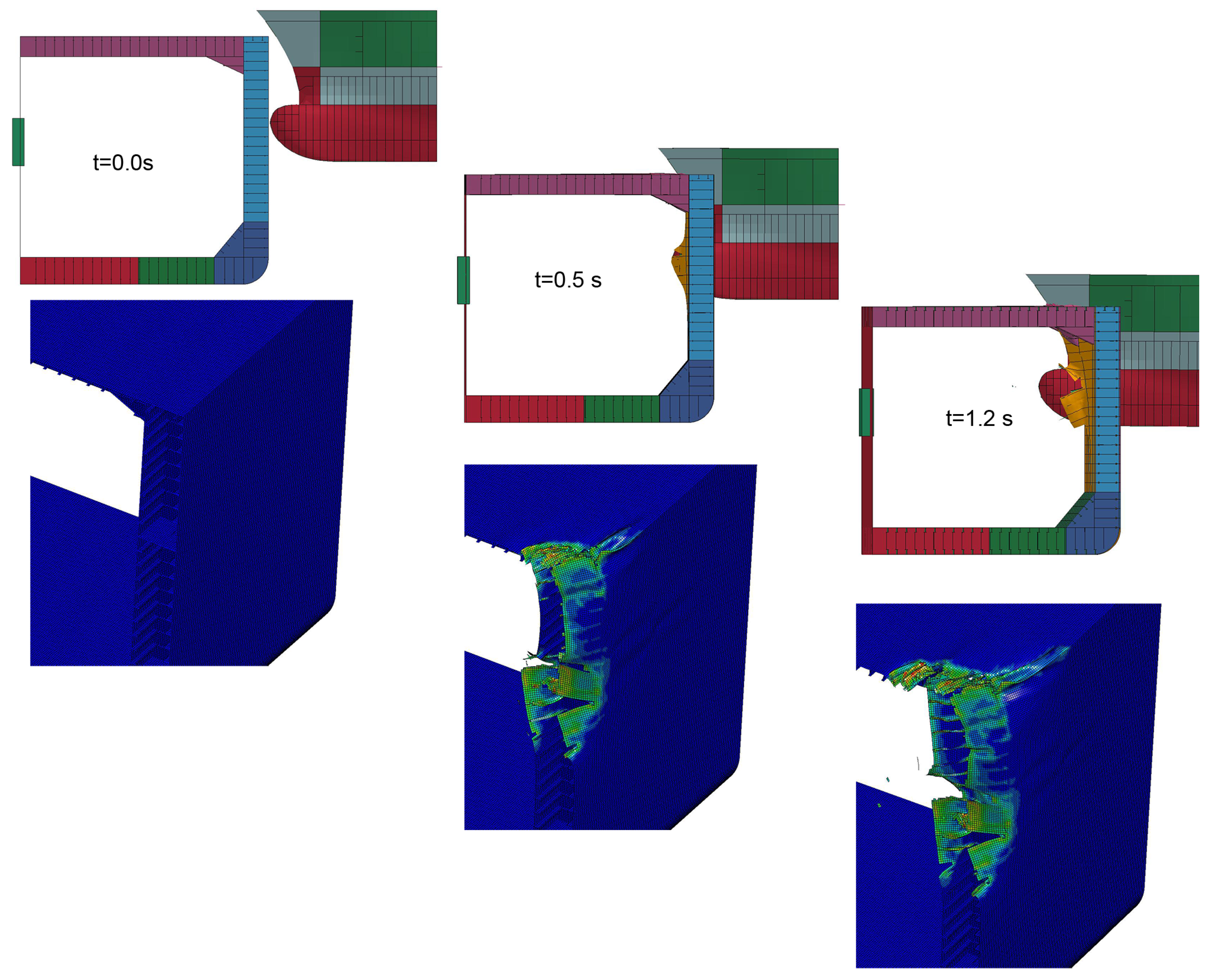
Figure 7 presents a progression of the collision for one of the tested models, showing a sequential penetration of the striking bow, plastic deformation and local collapse of the side structure up to the inner-hull breach.
To investigate the influence of all considered effects, a full factorial design comprising nine experiments is employed (see
Table 5). For a full quadratic response surface model with two design variables, six coefficients must be identified, requiring six experiments for model calibration, while the remaining experiments are used to assess the surrogate model error.
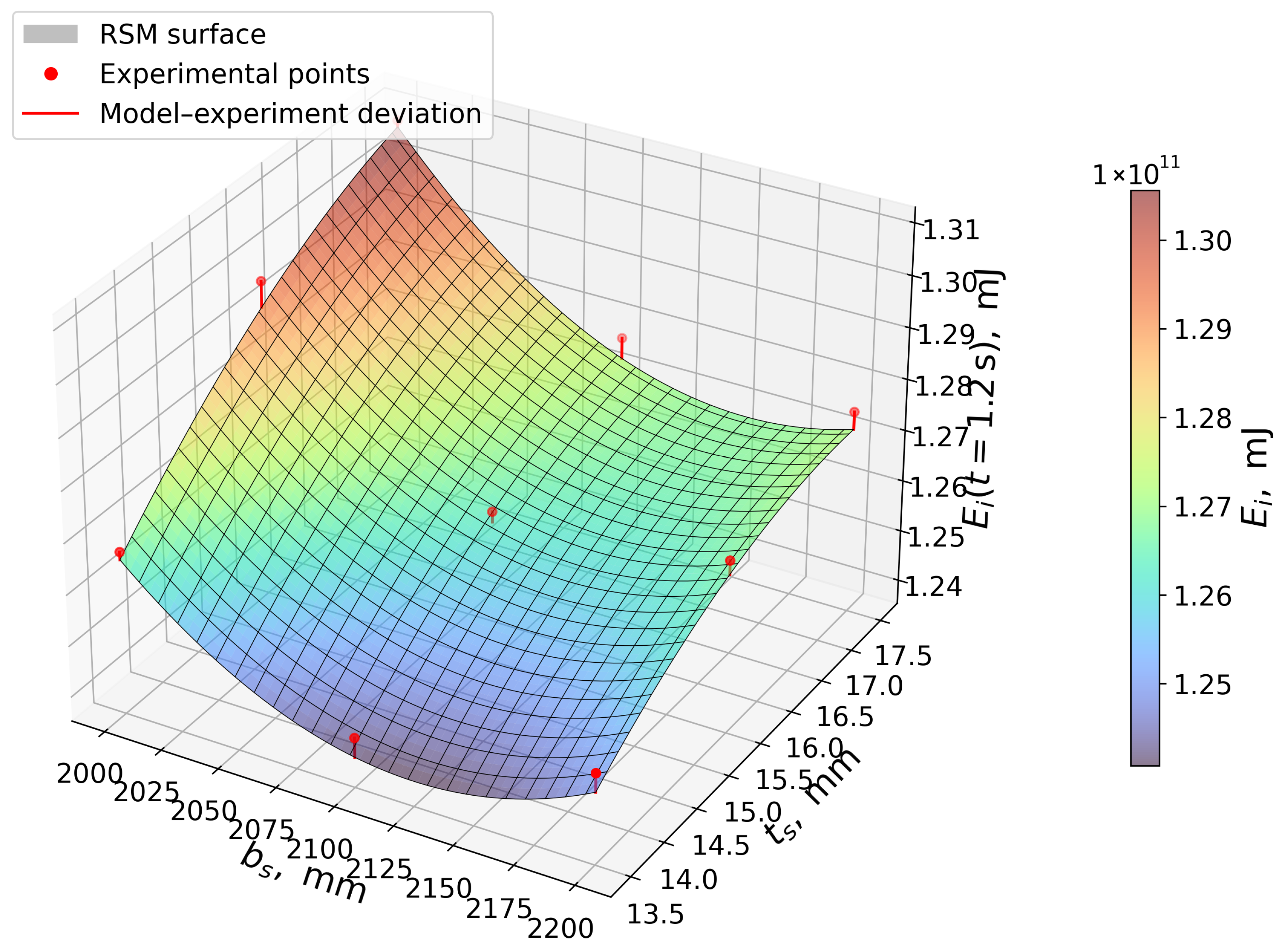
The statistical evaluation of the preliminary crashworthiness response-surface model, given in Equation (
1), yielded
,
,
, and
, demonstrating an excellent agreement between the surrogate and the numerical simulation results. The obtained quadratic approximation of
may therefore be regarded as sufficiently accurate for application in surrogate-based structural design optimization within the analysed parameter range.
Figure 8 shows the resulting surrogate model of
in a 3D plot together with the numerical experiments used for the generation (marked with spheres).
where
and
are given in mm and
is given in mJ.
3.3.2. Crashworthiness Surrogate Model for Optimization
The crashworthiness surrogate model is developed in the framework of a DACE (Design and Analysis of Computer Experiments) approach (see e.g., [
23,
24]), where the underlying finite-element collision simulations are deterministic and replication is therefore not required. In this context, the design points are selected to optimize the prediction capability of the surrogate model rather than to estimate experimental noise. Based on the preliminary crashworthiness study and the prototype assessment performed in Block 1, five quantitative structural variables (
) and two discrete design variables (
) were retained for the generation of the crashworthiness surrogate, as shown in
Table 6.
The admissible parameter ranges were defined consistently with the global design constraints of the Aframax tanker and discretized into three representative levels for each quantitative variable (see
Table 6). To construct the surrogate, an I-optimal quadratic response-surface design was generated from a three-level candidate grid including the selected interaction terms. The I-optimality criterion minimizes the average prediction variance over the feasible design region, which is particularly suitable for surrogate-based crashworthiness optimization, where uniform predictive accuracy across the design space is more important than parameter-estimation efficiency. The resulting design comprises 46 finite-element collision simulations. This number follows the usual RSM/DACE guideline
, where
p is the number of regression coefficients in the quadratic model, providing a full-rank system for all retained terms and a satisfactory balance between model richness and computational cost. For each design point, the internal energy absorbed during the first 1.2 s,
, is adopted as the crashworthiness response. To improve interpretability, the normalized crashworthiness index
(Equation (
2)) is evaluated relative to the minimum value within the design set.
The normalized crashworthiness index is defined as
The lowest value obtained in the 46 simulations, , is used for normalization. The index expresses the percentage improvement relative to .
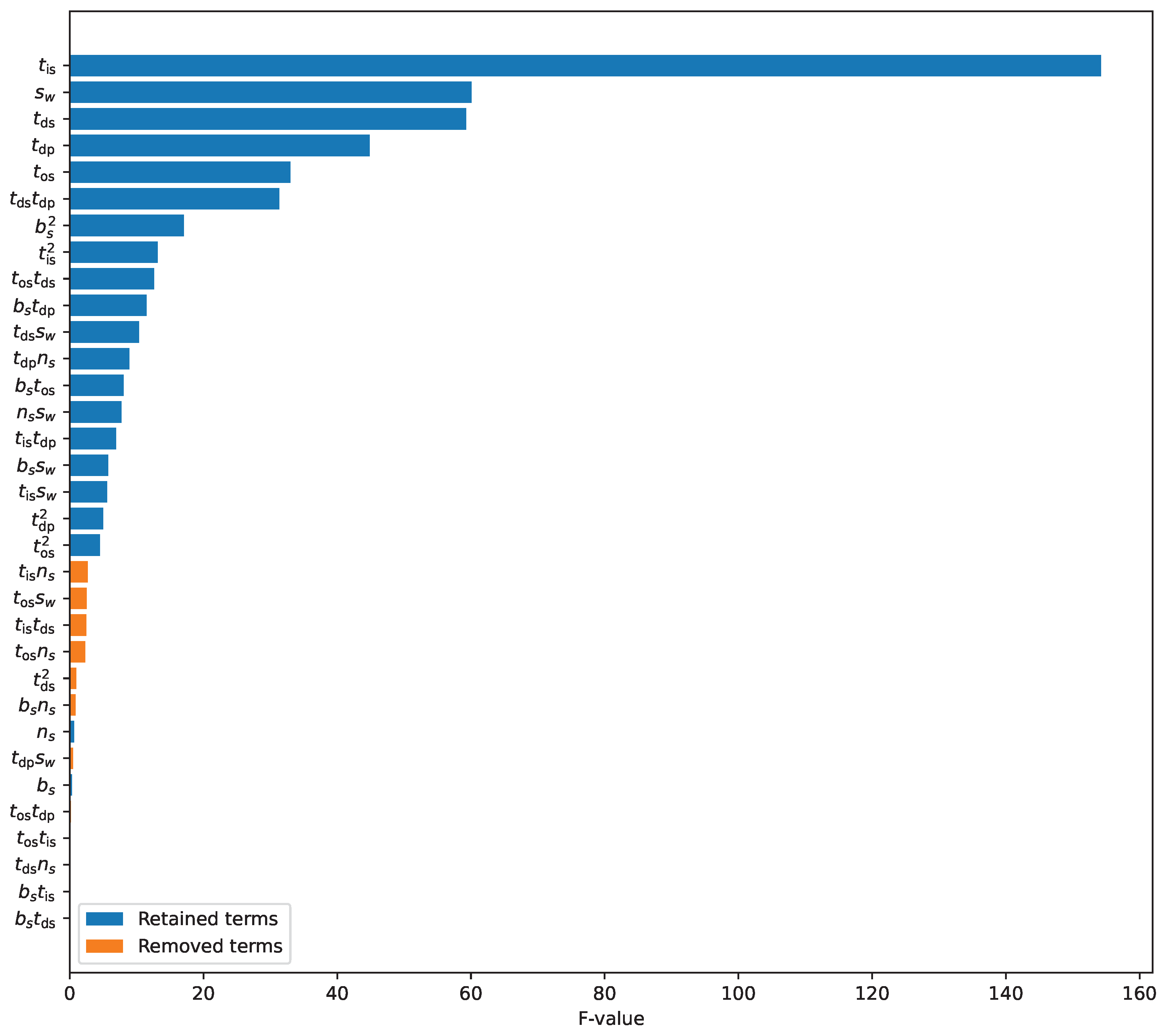
The statistical significance of the regression terms and interaction effects was verified by analysis of variance (ANOVA) and
F-statistics; see
Appendix A. This confirms that the surrogate formulation is sufficiently robust for integration into the multi-objective optimization loop without introducing significant modeling bias.
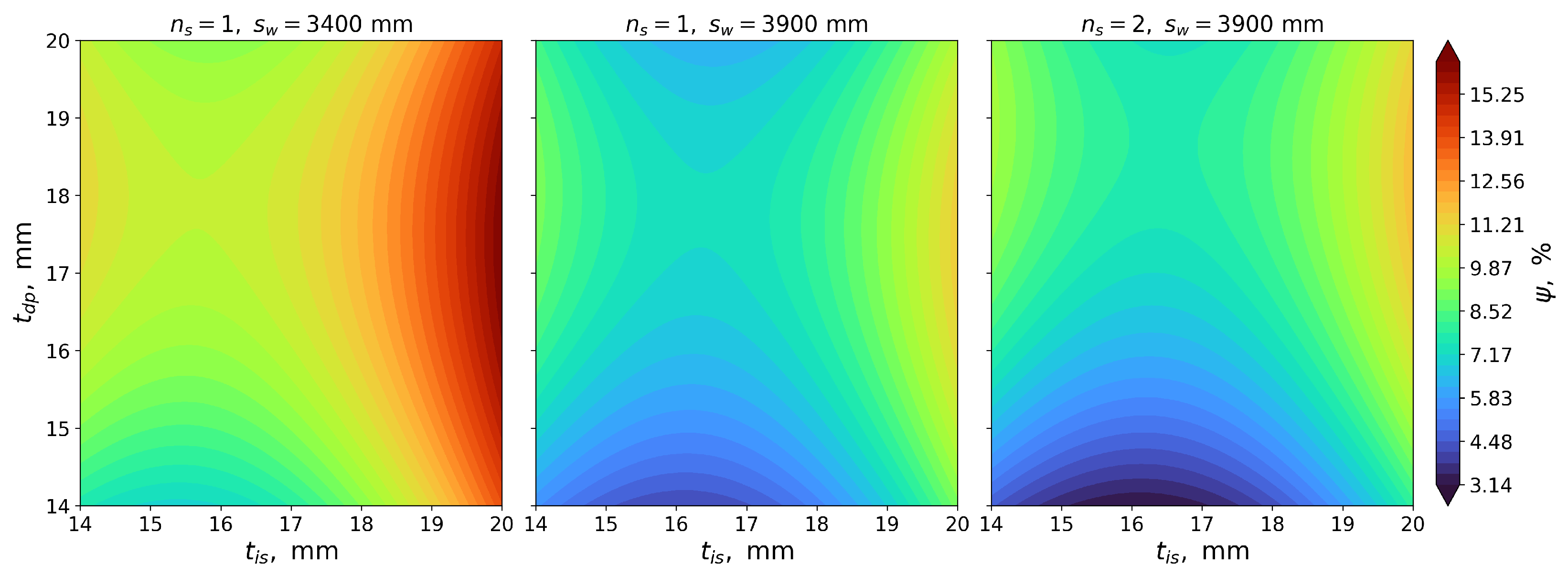
For design interpretation, representative
combinations are shown as two-dimensional response maps for selected discrete configurations in
Figure 9. A common color scale is used across all maps to enable a direct comparison of the sensitivity trends between different categorical configurations.
Within the analyzed parameter range, a significant improvement of
may be achieved with only a moderate increase in local scantling thicknesses, which is an important practical advantage when the crashworthiness measure is integrated into the conceptual design and subsequent multi-objective optimization procedure. The full polynomial surrogate expressions corresponding to each
configuration are provided in
Appendix A. The resulting surrogate formulation provides a computationally efficient crashworthiness representation compatible with the multi-criteria optimization framework introduced in
Section 2.
3.4. Design Block 3
In this application, Block 3 realizes the multi-criteria design exploration stage by combining rule-based structural constraints, surrogate-based crashworthiness evaluation, and a reliability-oriented safety index within a unified optimization problem. The summarized test case design problem definition is given in the sequel.
3.4.1. Design Variables
The design variable set considered in Block 3 combines the topology and geometry descriptors introduced in Block 1 (
Table 2) with the structural scantling parameters of the midship section. For the plate thickness variables, the adopted lower and upper bounds as well as the discretization steps are summarized in
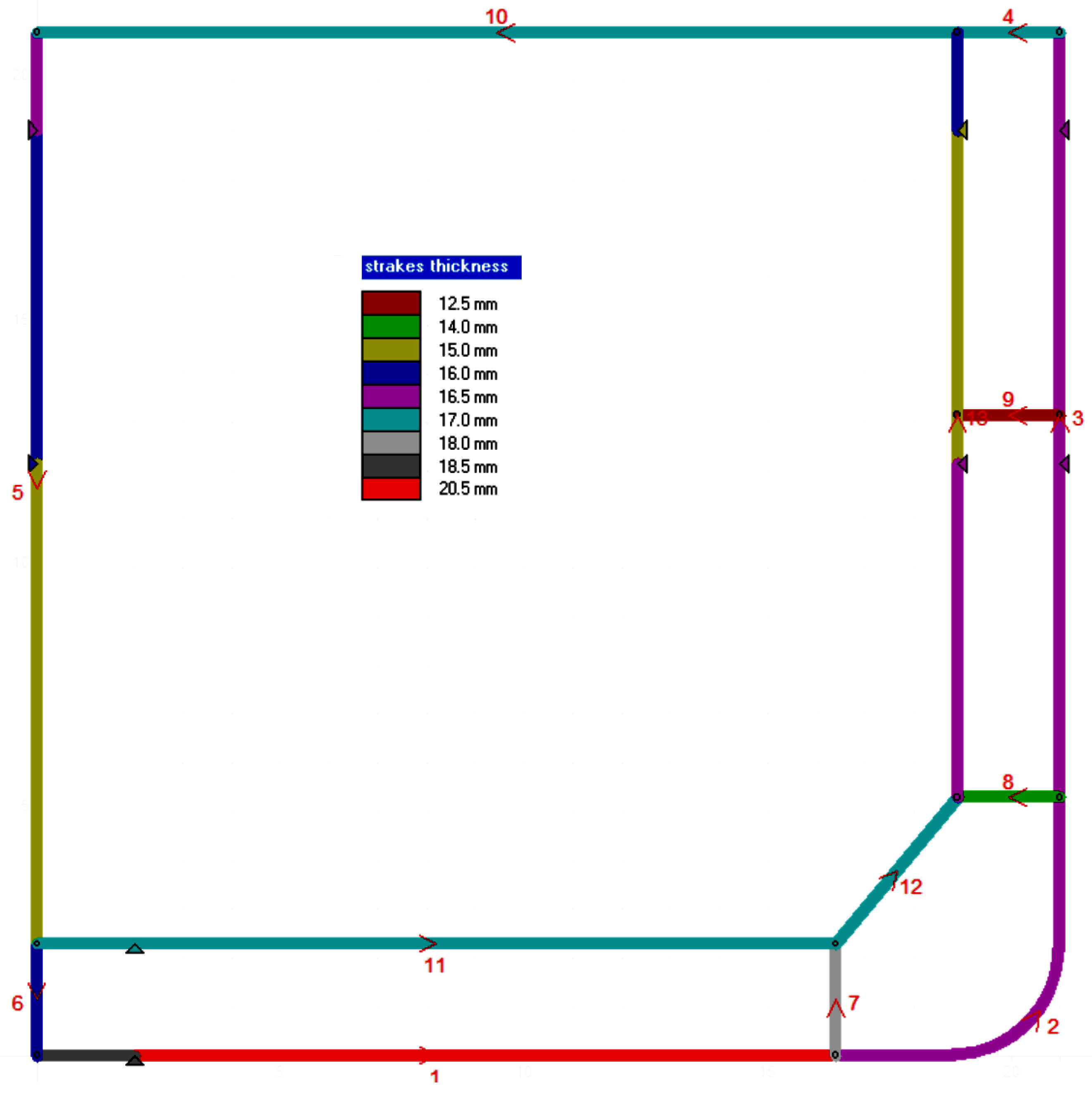
Table 7. This table also provides the correspondence between panel identifiers used in the Mars 2000 environment and the aliases adopted within the DeMak framework. The spatial arrangement of the panels within the cross-section model is illustrated in
Figure 10.
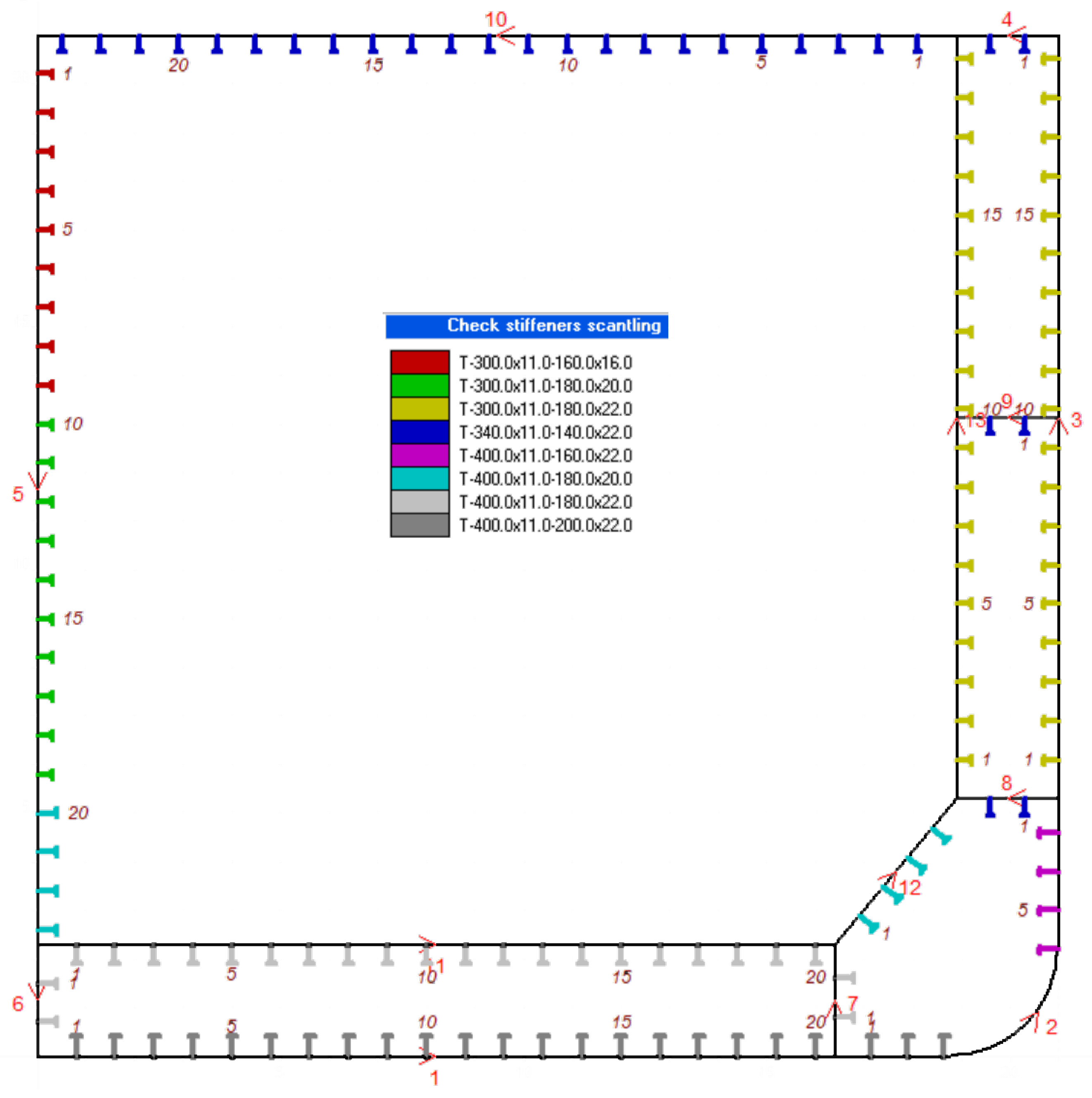
Table 8 summarizes the definitions and characteristic parameters of the stiffener scantling variables considered in the study. For modeling consistency and to limit the dimensionality of the design space, identical parameter definitions are adopted for all stiffener groups. The location of the individual stiffener groups within the cross-section model is shown in
Figure 11.
The spacing between stiffeners is not treated as a design variable in this study, and it is kept fixed across the investigated configurations.
3.4.2. Design Constraints
As outlined earlier, all design variants are required to satisfy the structural adequacy constraints prescribed by CSR BC & OT. Rule-based checks of panel, stiffener and global strength criteria are performed using the Bureau Veritas Mars 2000 environment.
In addition to local panel and stiffener constraints, the hull girder ultimate strength is evaluated within the same framework. For the present study, the intact sagging condition is adopted as the governing global strength constraint, since preliminary assessments indicated it to be critical for all investigated structural variants.
The integration of Mars 2000 calculation results is performed via an automated post-processing of batch output files, which enables an efficient coupling with the optimization framework.
3.4.3. Design Objectives
As outlined in
Section 3 and
Figure 1, the proposed set of design objectives includes structural weight (as a proxy for cost), a crashworthiness measure, and a reliability-based safety index related to hull-girder ultimate strength in sagging. The optimization is formulated as a three-objective problem:
where
W is the structural weight objective,
is the crashworthiness objective, and
is the reliability-based safety index objective. The vector
denotes the design variables and
is the feasible design space defined by the prescribed bounds and geometric/technological constraints.
The weight objective W is computed from the Mars 2000 cross-sectional area of the longitudinal structure. However, the design variables include the web frame spacing, which directly affects the number of transverse web frames within the considered structural segment. To ensure a realistic ranking of design variants with respect to total structural weight, the contribution of the transverse structure is therefore also included in W. In the adopted implementation, the transverse mass is estimated from the corresponding unit mass per web frame and the number of web frames implied by the selected spacing, and it is added to the longitudinal mass.
The crashworthiness objective
is evaluated using surrogate models derived from nonlinear explicit FE collision simulations, as described in
Section 4. In the optimization loop,
is computed according to Equations (
A1)–(
A6) in
Appendix A. Depending on the selected configuration
, the corresponding polynomial expression from Equations (
A1)–(
A6) is applied.
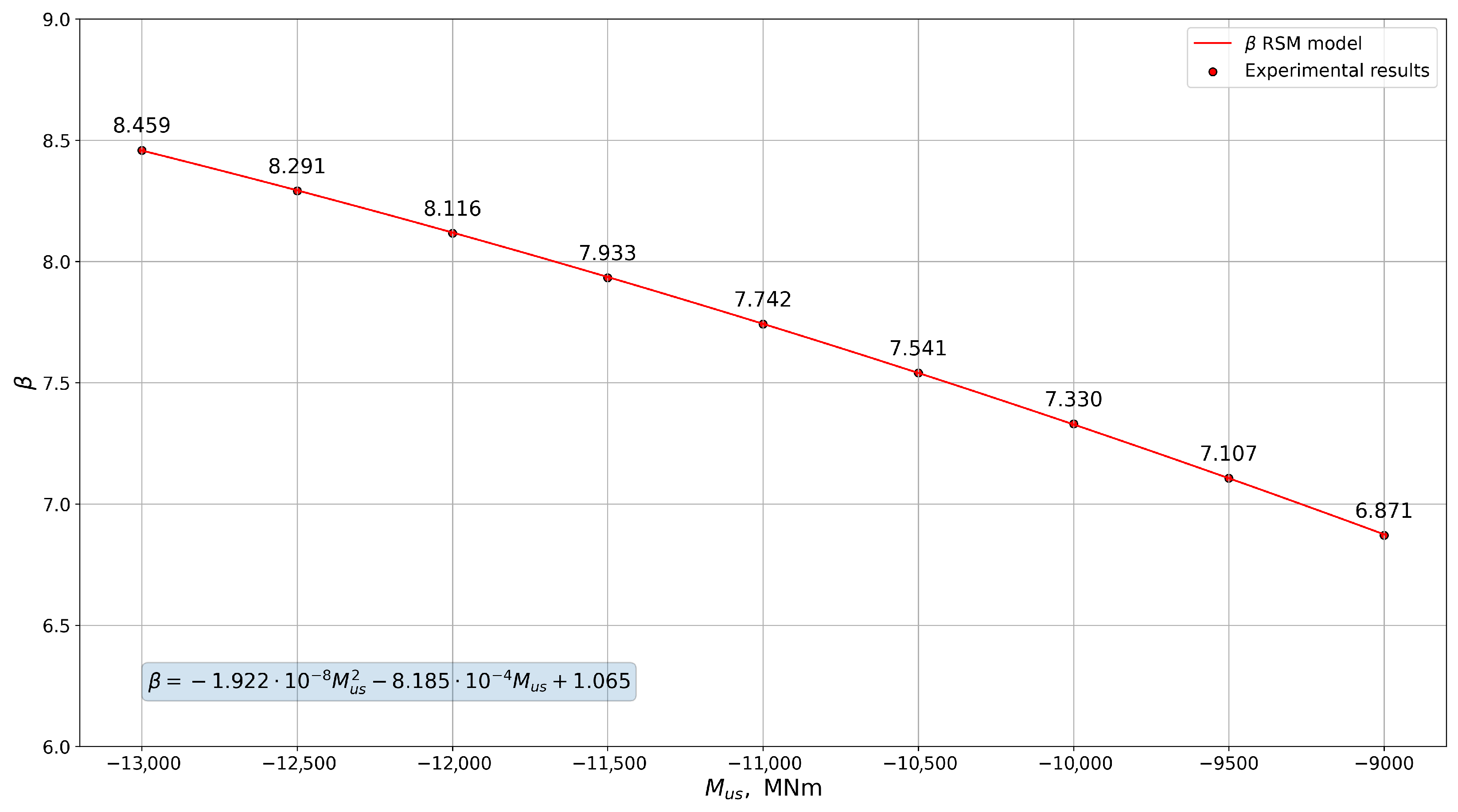
The safety index objective
is evaluated using a surrogate model in order to enable efficient inclusion within the optimization loop. The surrogate model is expressed as a function of the ultimate hull-girder bending moment in sagging,
:
where
is given in MNm. Details of the underlying reliability model and the corresponding stochastic assumptions are provided in
Appendix B.
The reader should note that is used for surrogate-based screening within the multi-objective optimization and is not a substitute for final rule compliance. Since Design Block 5 relies on a higher-fidelity structural FE model that captures three-dimensional effects, the design selected at the end of the CDP is re-checked and, if necessary, locally adjusted to comply with the relevant CSR local and global acceptance criteria using responses obtained directly from the detailed FE analysis.
3.4.4. Optimization Results
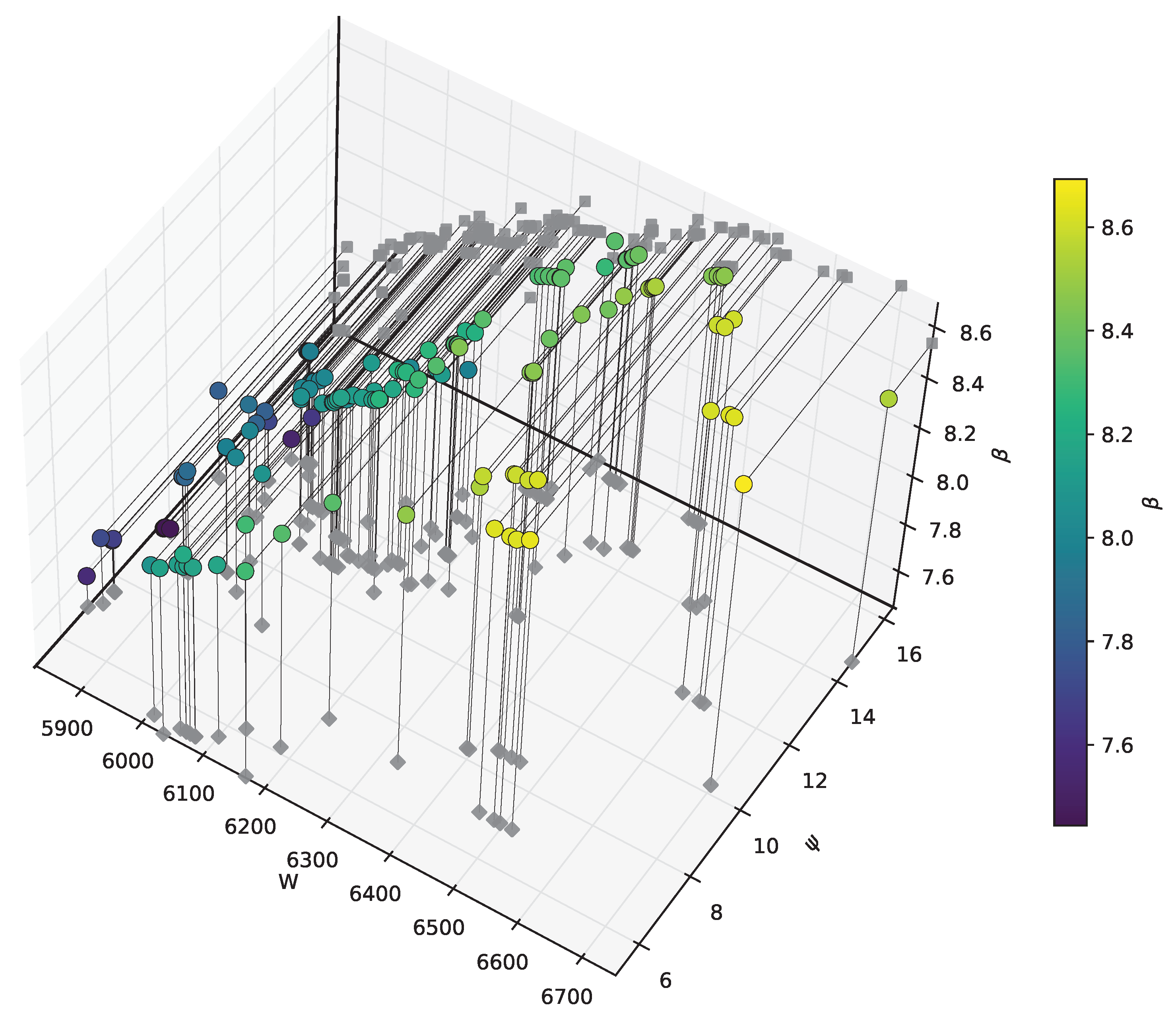
The previously defined multi-objective optimization problem was solved using a multi-objective particle swarm optimization (MOPSO) algorithm with hypercube-based archiving, which was implemented within the in-house design support environment DeMak. The optimization produced a Pareto set comprising 149 non-dominated design solutions, as illustrated in
Figure 12.
The total optimization time was approximately 10 h. The obtained Pareto frontier is relatively sparse, reflecting the use of standardized scantling values and discrete design variable levels. A notable feature of the Pareto set is that substantially higher levels of crashworthiness can be achieved while maintaining nearly unchanged values of the remaining objectives. This behavior can be attributed to the fact that crashworthiness is governed primarily by a limited subset of local structural variables, whereas the other objectives are influenced by a broader range of scantling parameters.
This finding indicates that meaningful improvements in crashworthiness can be achieved without significant increases in structural weight. The case study therefore confirms the feasibility of embedding crashworthiness-oriented decision criteria within the conceptual design phase using surrogate-based optimization.
3.5. Design Block 4—Design Selection
In the present application, Block 4 corresponds to the decision stage in which one variant would be selected from the Pareto-optimal set obtained in Block 3. The objective functions used in Block 3 serve as the primary decision criteria, while additional project-specific considerations may be introduced by the designer when identifying the preferred solution. A specific design is not selected in this paper, since the aim is to demonstrate the methodology and its capability to guide the design toward improved structural integrity rather than to produce a single optimized configuration.
This result confirms that the inclusion of a crashworthiness-related measure in CDP can influence local structural design decisions without necessarily imposing a significant penalty on global structural weight or longitudinal strength performance. The selected concept would subsequently enter the PDP-level structural refinement stage (Block 5), which lies outside the scope of the present application.
4. Conclusions
This paper proposes and demonstrates a crashworthiness-driven tanker structural design methodology intended primarily for the concept design phase (CDP), with a direct interface toward PDP verification, where discrete topology decisions are still actionable and have long-term consequences for structural safety. The core contribution is the integration of an energy-based crashworthiness measure into a multi-objective early-stage optimization workflow through surrogate modeling, thereby enabling computationally feasible design-space exploration under accidental limit state considerations. By positioning crashworthiness assessment within the CDP design loop, the methodology shifts accidental limit state considerations from late verification toward early decision making, where structural topology and arrangement choices can still be effectively influenced. The presented framework does not aim to replace detailed accidental limit state verification but rather to improve crashworthiness-related structural safety already at the concept design stage, thereby enhancing the quality of designs entering subsequent PDP verification.
Crashworthiness was quantified through the internal energy absorption, , obtained from explicit LS-DYNA collision simulations of a double-hull side structure. A set of response surface surrogate models was constructed for selected topology, geometry and scantling parameters, allowing the crashworthiness objective to be evaluated efficiently within the optimization loop. The numerical tools used for collision analysis represent one possible implementation, while the methodological framework itself remains independent of specific software environments.
The methodology was applied to an Aframax tanker case study using multi-objective optimization with objectives related to structural weight and crashworthiness. The resulting Pareto-optimal solutions illustrate that noticeable improvements in crashworthiness can be achieved without disproportionate increases in structural weight, supporting the value of considering crashworthiness already in the CDP stage. This confirms that topology and arrangement decisions made at early design stages can influence collision performance in a measurable manner without necessarily compromising primary design drivers such as structural weight or longitudinal strength. An additional objective related to hull-girder ultimate strength was included to demonstrate the extensibility of the framework toward multiple safety-related measures.
The main practical limitation remains the computational effort required to generate the training dataset for the crashworthiness surrogate models, since a relatively large number of nonlinear impact simulations is required. However, these simulations are embarrassingly parallel and can be performed efficiently on modern multi-core workstations or distributed computing resources, making the approach compatible with contemporary design office capabilities and feasible for early-stage design studies. The adopted crashworthiness measure is based on the energy absorption metric
, which is evaluated as a time-dependent response of the struck structure during the collision event. While
provides a physically meaningful and computationally robust proxy for energy dissipation capacity, other safety-relevant measures may be equally or even more informative from the consequence viewpoint, such as the extent and geometry of structural damage and the residual structural capacity after damage. Accordingly, future extensions of the methodology should consider combined assessment frameworks that integrate a collision-induced damage description with consequence-oriented measures, including post-accidental strength evaluation [
7,
25].
Moreover, the safety relevance of any crashworthiness metric depends on the assumed impact scenario and the characteristics of the striking ship, which are uncertain in practice and should be accounted for through scenario sets and uncertainty-aware evaluation strategies. Future work should address a systematic reduction of the required number of simulations through adaptive sampling strategies, an extension toward multiple collision/grounding scenarios, and uncertainty-aware modeling of the crashworthiness response. Overall, the study demonstrates that crashworthiness-oriented criteria can be embedded within concept-level structural design through surrogate modeling and optimization, thereby extending conventional rule-based practice toward a more performance-informed and safety-aware design paradigm.