Article

Optimization Design of Marine Centrifugal Pump Blade Profile Based on Hybrid Clonal Selection Algorithm Integrating Slime Mold Algorithm and Tangent Flight Mechanism

School of Energy and Power, Jiangsu University of Science and Technology, Zhenjiang 212100, China
*
Author to whom correspondence should be addressed.
J. Mar. Sci. Eng. 2026, 14(5), 488; https://doi.org/10.3390/jmse14050488
Submission received: 29 January 2026 / Revised: 22 February 2026 / Accepted: 27 February 2026 / Published: 3 March 2026
(This article belongs to the Section Ocean Engineering)

Abstract

The marine centrifugal pump is one of the most energy-intensive pieces of equipment in ship auxiliary machinery, and the efficient design of its hydraulic components can effectively reduce the total energy consumption of the ship system. Aiming at the complex three-dimensional twisted blade profile structure of the marine centrifugal pump, this paper optimized the clonal selection algorithm and constructed an automatic hydraulic optimization design method for the high-efficiency centrifugal pump impeller. Considering the multi-condition operation characteristics of the marine centrifugal pump, a performance test platform for the marine centrifugal pump was built, and the actual operating conditions of the model pump were tested to obtain its performance characteristics under operating conditions. The numerical simulation method was employed to capture and analyze the internal flow field and flow characteristics of the model pump. Addressing the design challenges of the marine centrifugal pump impeller, which involve multiple parameters with significant interactions, a traditional clonal selection algorithm was enhanced using a Slime Mold Algorithm, and a hybrid Clonal Selection Algorithm integrated with Slime Mold and Tangent Flight mechanisms was established. Based on the MATLAB and ANSYS platforms, an automated hydraulic optimization design framework for the centrifugal pump impeller was established. Using the optimized clonal selection algorithm, with the operational efficiency of the model pump as the optimization objective and controlling ten key geometric parameters of the blade profile through Bézier curves, the blade profile optimization design was achieved. The pump hydraulic efficiency under the rated flow condition increased by 7%. The unsteady internal flow efficiency of the optimized marine centrifugal pump was significantly improved. The blade optimization alleviated flow separation phenomena on the tangential surface of the impeller and in partial regions of the volute, reduced the flow loss area, and significantly decreased overall flow losses.

1. Introduction

With the rapid development of green ship technology, achieving high-efficiency operation of ship systems has become a key design objective [1]. In marine fluid systems, centrifugal pumps serve as the power equipment for fluid transportation, accounting for approximately 20% of the total electrical energy consumption in fluid systems, highlighting a substantial potential for energy savings [2]. Therefore, enhancing the operational efficiency of the marine centrifugal pump holds significant engineering importance for reducing the overall energy consumption of ships and achieving green shipping objectives.
Centrifugal pumps increase the kinetic and pressure energy of fluids through the interaction between the impeller blades and the internal fluid. The hydraulic design of the impeller is a critical process determining its operational efficiency. In the mid-to-late 20th century, hydraulic design of centrifugal pumps relied on the model conversion method and the speed coefficient method, which relied on Euler’s theory, one-dimensional flow theory, and hydrodynamic similarity theory. This approach depends heavily on empirical formulas and experimental databases [3]. While efficient and fast, this approach is still used today for the preliminary determination of key dimensions in centrifugal pump impellers with special structures, providing a foundation for subsequent detailed optimization [4,5]. Furthermore, cavitation operation is a common operating condition encountered by centrifugal pumps in practical engineering, which can cause a sudden and significant drop in the output pressure of the pump [6,7]. The cavitation generally occurs at the pump impeller inlet. The anti-cavitation design based on the speed coefficient method mainly involves changing the flow pattern at the impeller inlet by optimizing the impeller inlet parameters, including the impeller inlet diameter, blade inlet angle, blade profile, etc., to increase the fluid pressure at the impeller inlet [8,9]. However, optimization based on this method has certain limitations. Firstly, the design results are highly dependent on the selection of empirical coefficients and the variety of available model databases. Secondly, due to its reliance on simplified theories, it struggles to meet the demands of modern pump design for precise control of complex internal flow fields, adaptation to specific operating conditions, and breakthroughs in extreme performance [10].
Since the 21st century, the rapid development of Computational Fluid Dynamics (CFD) and its integration with parametric three-dimensional modeling technology have fundamentally transformed the hydraulic design methods for centrifugal pumps. This shift has moved the hydraulic design of centrifugal pumps from traditional approaches based on experience and similarity principles toward modern design methods centered on three-dimensional flow field analysis. Orthogonal experimental design has been employed for the preliminary screening of hydraulic parameters in centrifugal pumps, enabling targeted optimization of hydraulic components through 3D modeling and numerical simulations to achieve high-performance hydraulic models. The impeller of a vortex pump was optimized by this method, and the pump efficiency was significantly improved [11], while the operational efficiency of a high-specific-speed centrifugal pump was enhanced under off-design conditions by this method [12]. The cavitation performance of a centrifugal pump is improved [13], and under cavitation conditions, the vortex force characteristics within the impeller passage are enhanced and the flow structure is optimized [14]. Although orthogonal experimental design is effective in parameter screening, it is essentially a grid-based search strategy that relies on predefined discrete levels. When dealing with high-dimensional, complex problems characterized by strong nonlinearity and multiple local optima, such as centrifugal pump blade profile optimization, the discrete and grid-like search strategy inherent to orthogonal design can easily miss the region containing the optimal solution. Moreover, its optimization efficiency and accuracy heavily depend on the designer’s prior knowledge, resulting in limited autonomous optimization capability. With the advancement of three-dimensional parametric modeling technology, continuous parametric design has gradually been applied to turbomachinery. Sakran [15] used mathematical tools such as Bézier curves to achieve continuous parametric control over the blade profile and trailing edge shape, allowing arbitrary adjustment of local geometric features and significantly improving unit performance. Similarly, De [16] performed optimization design of a model pump by conducting global optimization in a continuous design space based on the three-dimensional geometric parameters of the centrifugal pump.
In recent years, with the widespread application of intelligent algorithms, optimization design methods based on intelligent algorithms have begun to be applied in the hydraulic design of centrifugal pumps. Intelligent algorithms enable adaptive exploration within continuous, high-dimensional design spaces, providing a novel solution for achieving efficient and global automated optimization. Among them, algorithm-based performance optimization for pump impellers has become a research focus in the field of centrifugal pump design, as it can effectively break through the limitations of traditional design methods and significantly improve the operational efficiency of the pump. Fundamental algorithms, represented by the Genetic Algorithm (GA) and Particle Swarm Optimization (PSO), have achieved specific performance improvements in centrifugal pump blade profiles and other hydraulic components by simulating natural evolution or collective collaboration mechanisms [17,18]. However, fundamental algorithms are prone to issues such as falling into local optima and low iterative efficiency. Algorithms that incorporate more complex natural phenomena or mathematical principles, such as the Slime Mold Algorithm (SMA) [19] and the Tangent Flight Algorithm [20], can enhance the global exploration capability and convergence speed of algorithms, thereby addressing optimization design challenges for complex structures.
The impeller is the most critical component of a marine centrifugal pump, and its blade profile design determines the high-efficiency operation of the pump. Therefore, focusing on algorithm-based performance optimization of pump impellers is crucial to realizing the high-efficiency and energy-saving operation of a marine centrifugal pump, which also constitutes the core research direction of this study. The marine centrifugal pump blade typically employs a three-dimensional twisted profile, the design of which constitutes a highly nonlinear and multimodal complex optimization problem. To enhance the actual operational efficiency of marine centrifugal pumps, this study established a performance testing platform for marine centrifugal pumps and conducted experimental tests on the actual operating conditions of a model centrifugal pump. The numerical simulation method was adopted to capture and analyze the internal flow characteristics. Considering the multiparameter design features of marine centrifugal pump impellers and the significant interactions among these parameters, an improved clone selection algorithm was developed by integrating the Slime Mold Algorithm with Tangent Flight mechanisms. Using the operational efficiency of the model pump as the optimization objective and based on ten key geometric parameters of the blade profile, a hydraulic automatic optimization design method for centrifugal pump impellers was established utilizing Matlab and Ansys platforms. This provides a theoretical foundation for the optimization design and engineering application of marine centrifugal pumps.

2. Materials and Methods

2.1. Marine Centrifugal Pump Model

The research object of this paper is a marine centrifugal pump, which is directly driven by an electric motor through a connecting shaft. Its rated operating conditions include the flow rate of 12.5 m3/h, the head of 30 m, and the rotational speed of 2900 r/min. The flow-passing components of the model pump mainly consist of a suction chamber, a centrifugal impeller, and a spiral volute casing. The key design, geometric, and performance parameters are listed in Table 1.

2.2. Experimental Devices and Methods

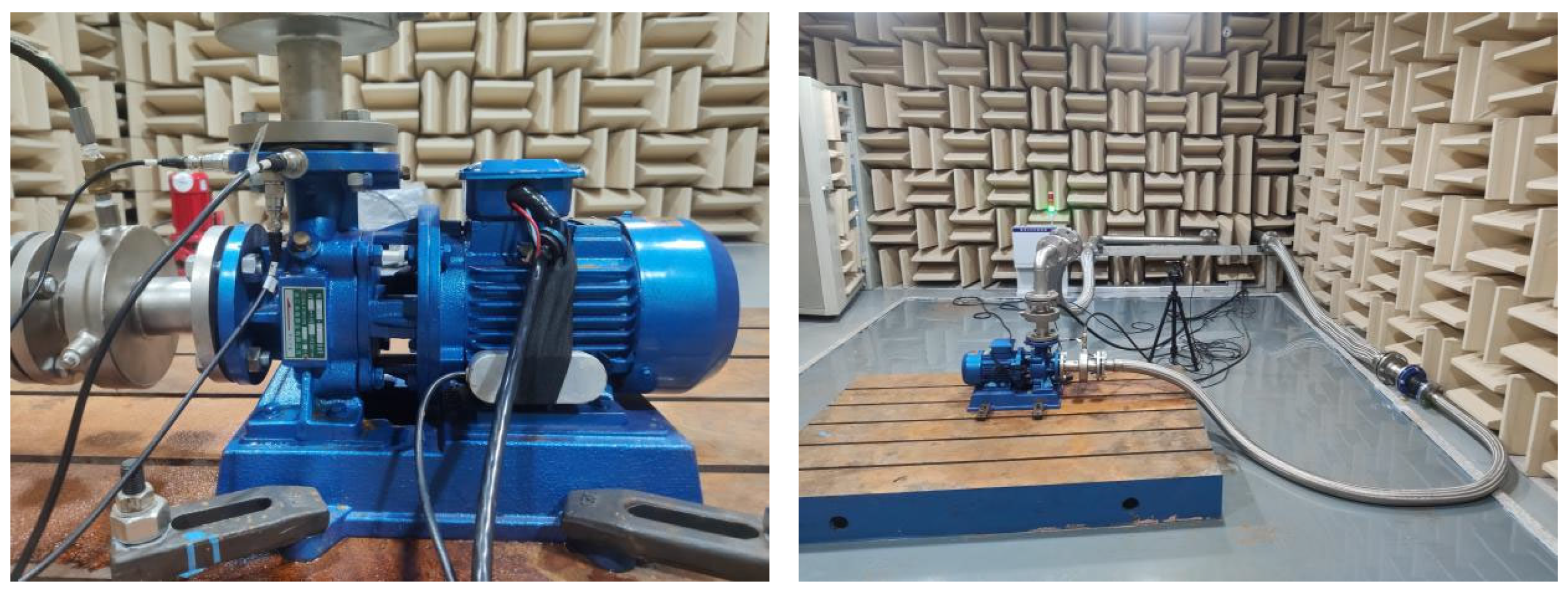
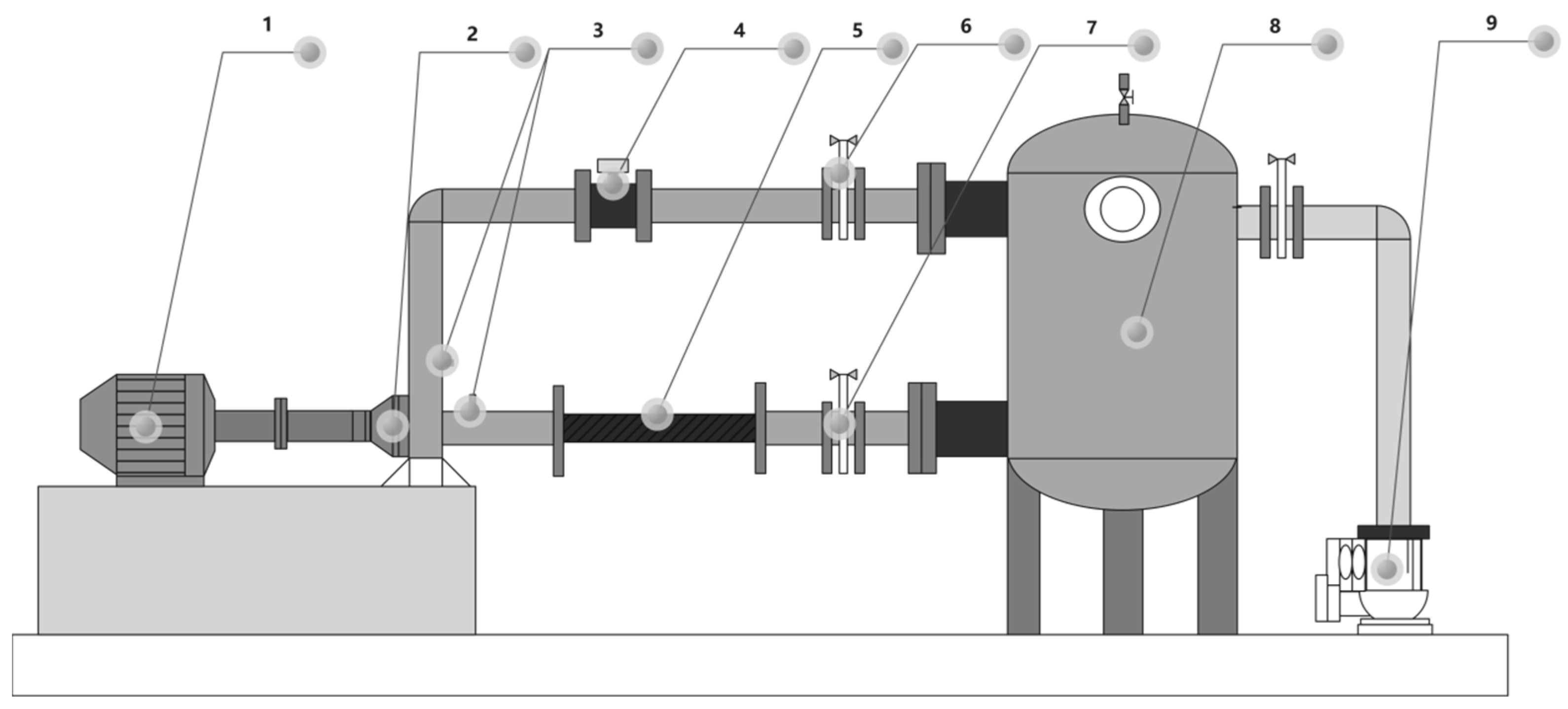
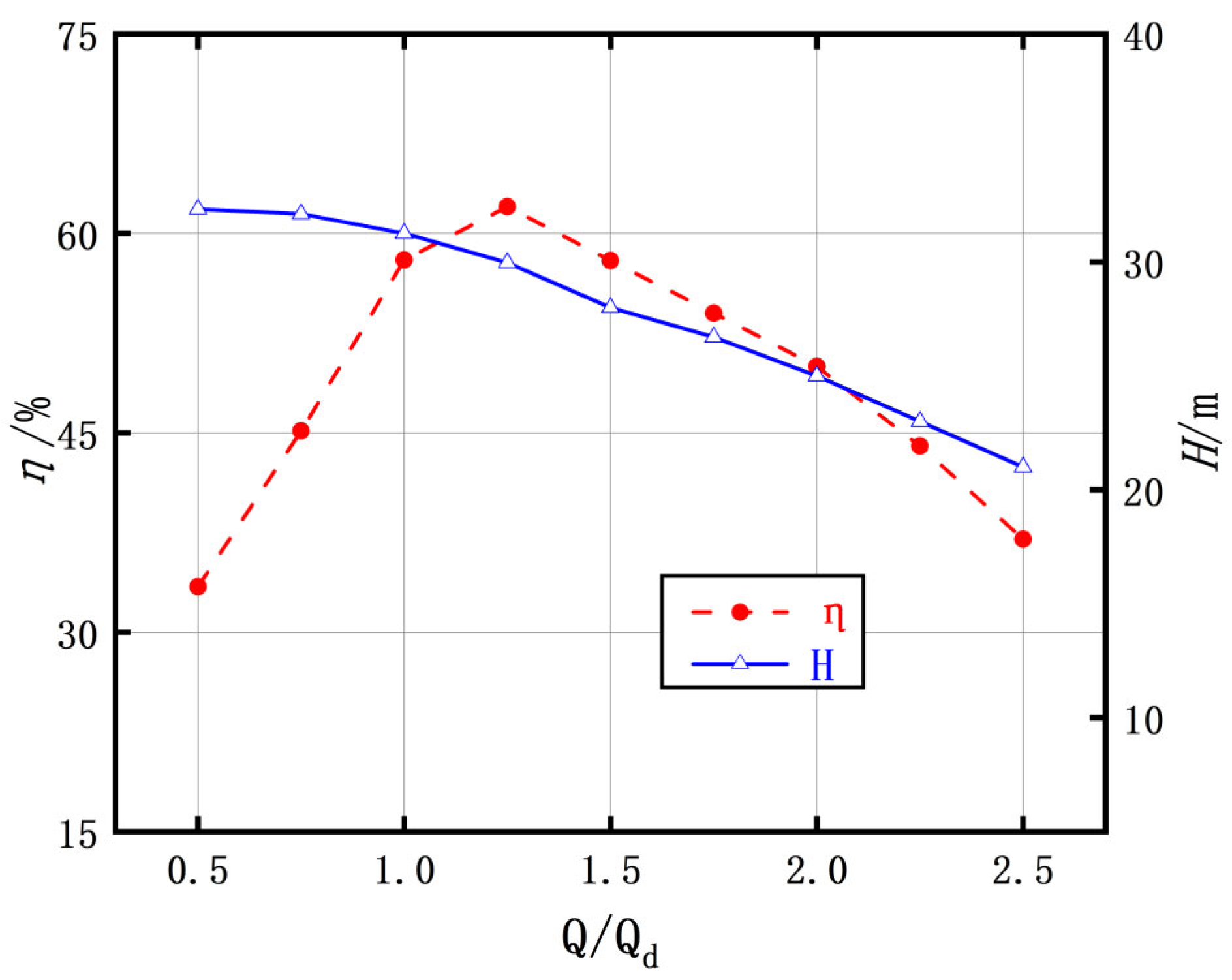
To investigate the performance characteristics of the marine centrifugal pump across the full flow range, this paper established a performance test platform. The test platform consists of a marine centrifugal pump, a drive motor, a water supply tank, an electrically controlled butterfly valve, and a pipeline system, as shown in Figure 1. An electromagnetic flow meter was installed on the discharge pipeline of the model pump to measure the flow rate. Pressure sensors at the pump’s inlet and outlet were used to collect the upstream and downstream pressures for calculating the pump head. The input power of the model pump was obtained using the electrical measurement method, from which the pump operating efficiency was calculated. Figure 2 shows the on-site installation of the marine centrifugal pump test setup. The pump was tested in an anechoic room to provide a stable and low-disturbance test environment, which ensures the reliability and accuracy of the test data. The performance characteristics of the marine centrifugal pump over the full flow range were measured, as shown in Figure 3. As the flow rate through the model pump increased, the head exhibited a gradual declining trend. The efficiency first increased until reaching a peak and then decreased. The highest measured efficiency of 62.5% was achieved at the operating condition of 1.25 times the rated flow rate. At the rated flow condition, the operating efficiency of the model pump was 58%.

2.3. Numerical Simulation Methodology

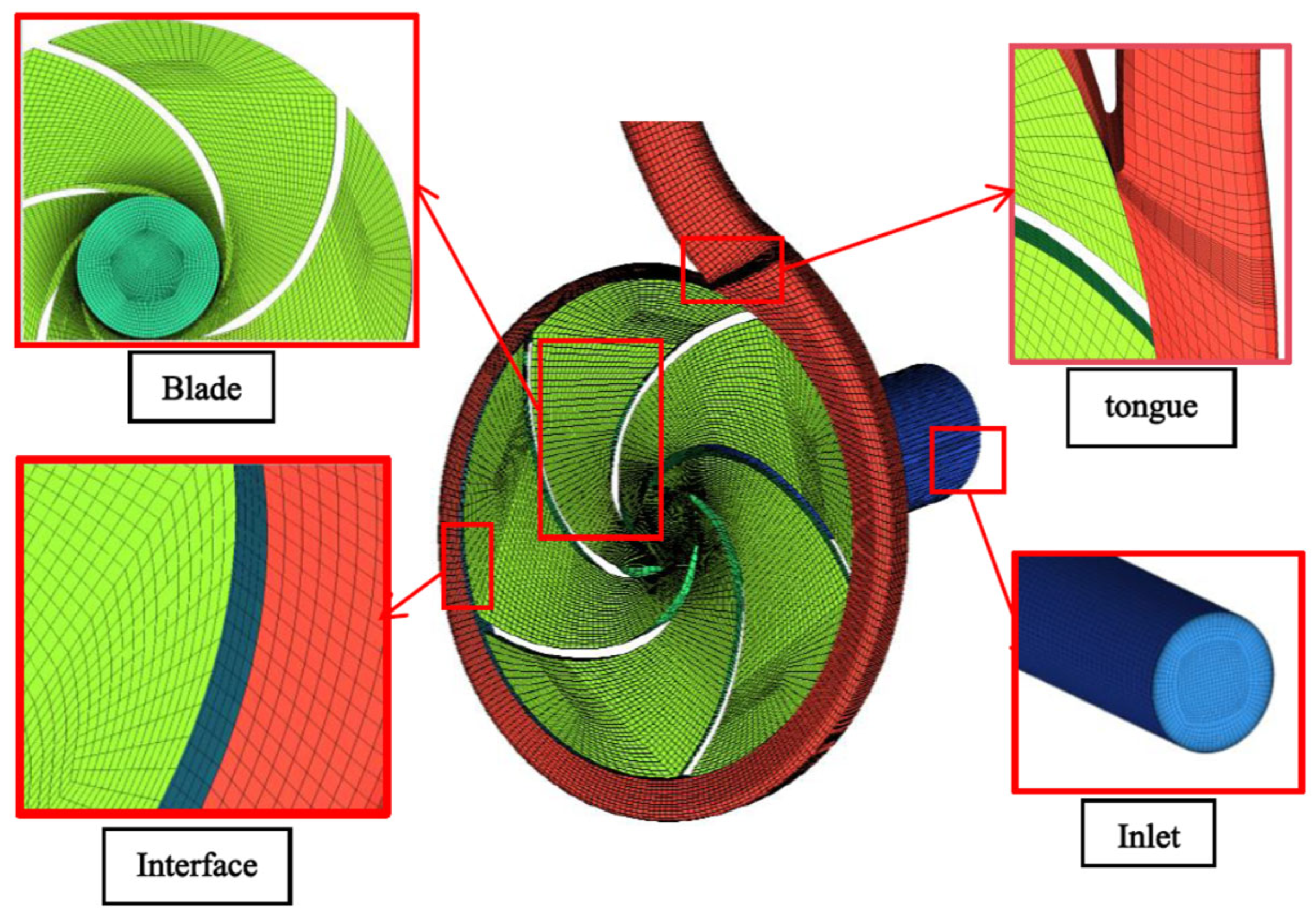
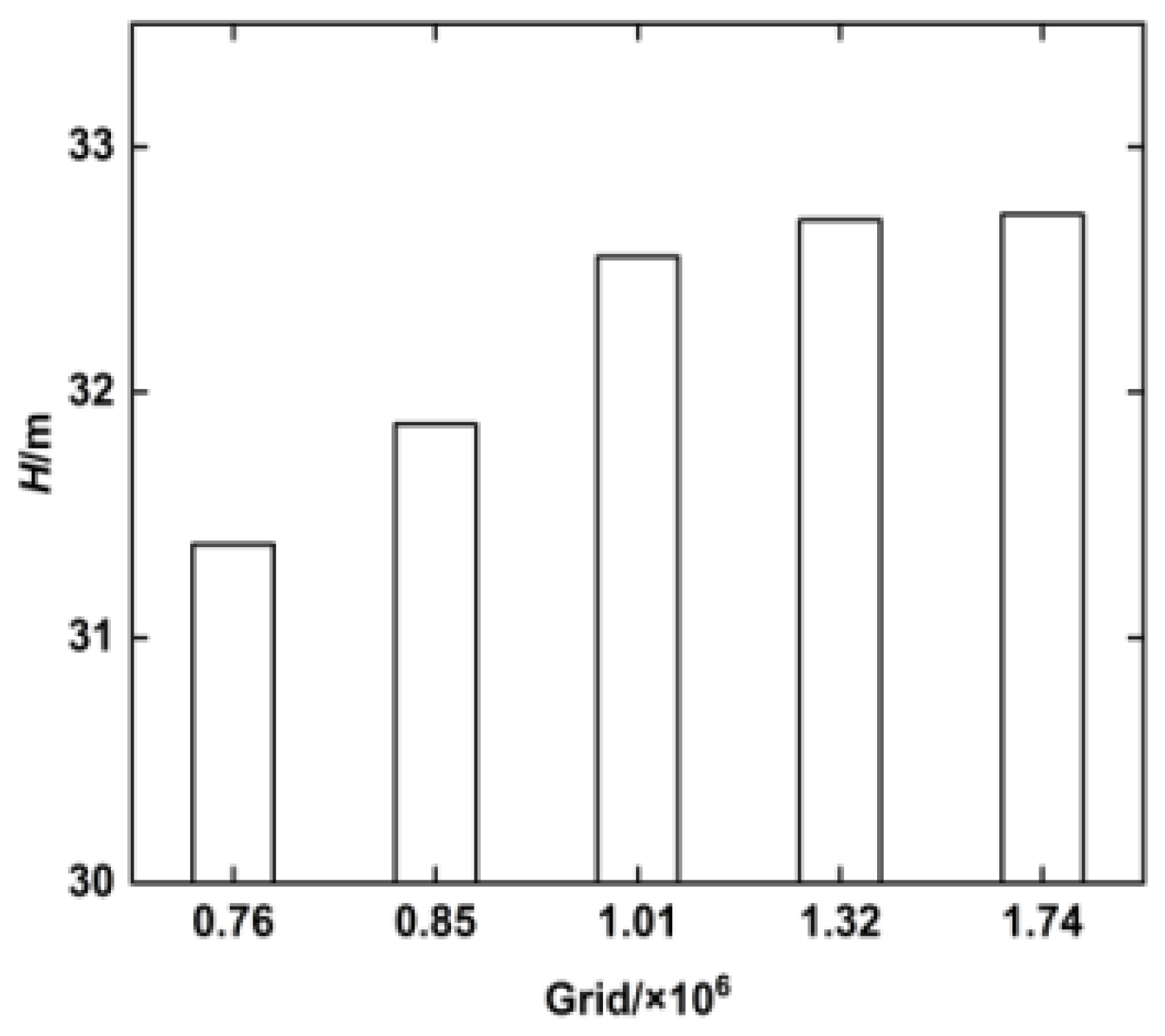
The numerical simulation method was employed to investigate the flow variation features within the impeller passages of the marine centrifugal pump. A numerical computational domain for the marine centrifugal pump was established, which includes the inlet extension section, impeller, volute, and outlet extension pipe of the model pump. The computational domain was discretized using hexahedral structured grids, as shown in Figure 4. Different components and their interfaces using distinct colors are depicted to illustrate the pump structure clearly. A grid independence analysis was conducted for the computational domain mesh. As the grid number increased, the simulated head value showed a noticeable rise. When the grid count reached 1.32 × 10⁶, the head gradually stabilized with further grid refinement, indicating that the influence of the grid on the computational results became minimal at this level, as illustrated in Figure 5. The entire computational domain, including the inlet extension section, impeller, volute and outlet extension pipe, was discretized with high-quality hexahedral structured grids for better numerical accuracy and convergence performance. Targeted local mesh refinement was implemented for the core flow regions: the impeller, as the rotational domain, was refined significantly on blade surfaces, leading and trailing edges as well as blade passages, with boundary layer grids arranged on the blade wall to ensure the y+ value close to 1, matching the calculation requirements of the SST k-ω turbulence model. The volute was meshed along its flow channel profile to maintain good grid orthogonality and smoothness, while the inlet and outlet extension sections adopted gradually expanded grids to realize a smooth transition from the far field to the core flow domain, avoiding numerical errors caused by abrupt grid changes.
The SST k-ω turbulence model was employed to solve the governing equations for the internal fluid flow, as shown in Equations (1)–(4). This model accurately captures turbulent effects in rotating flows by coupling the transport equations for turbulent kinetic energy (k) and specific dissipation rate (ω), and its effectiveness for centrifugal pump internal flow simulations has been widely validated [14]. The inlet boundary condition was set as a velocity inlet, and the outlet was defined as a pressure outlet. The interface between the impeller and the volute was configured as a rotor–stator interface. The solution was considered converged when all residuals fell below 1 × 10⁻⁵.
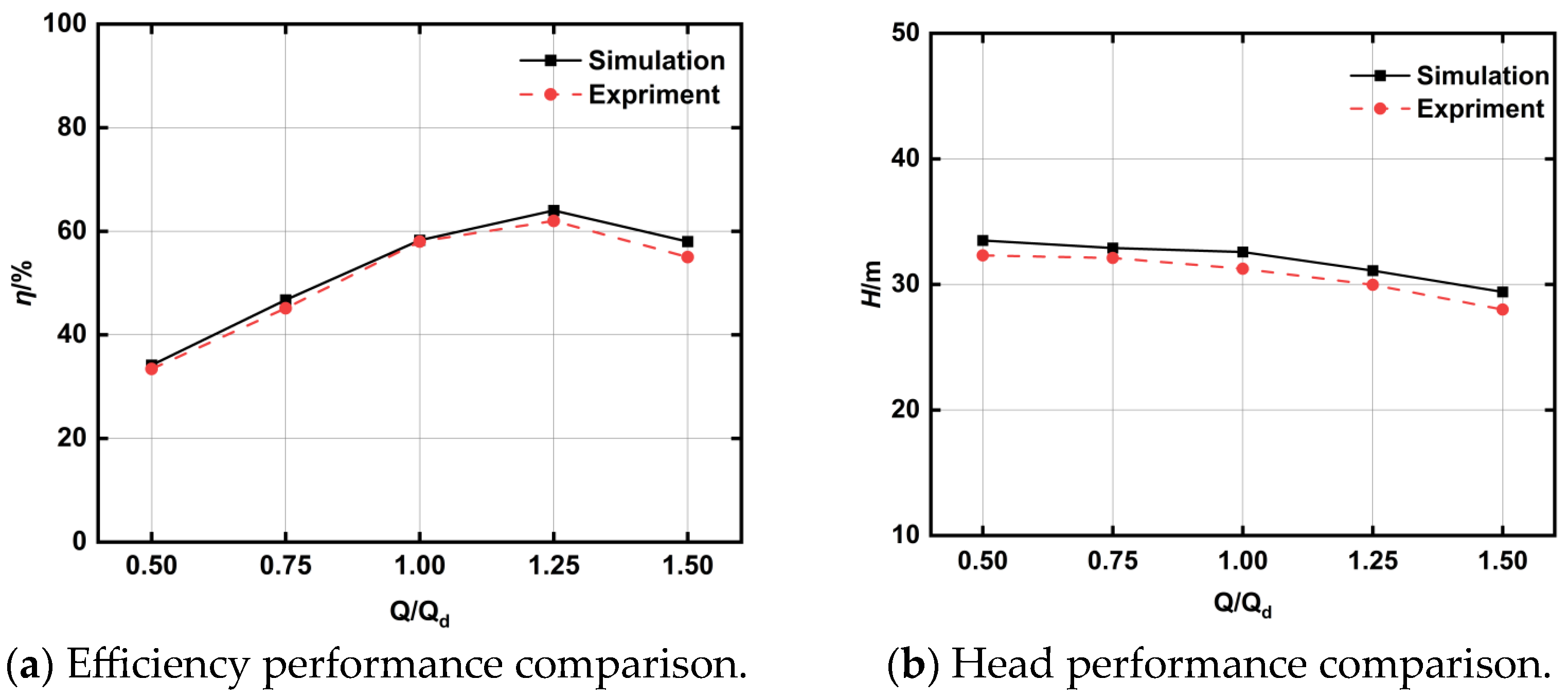
The numerical simulation and experimental test results for the head and efficiency of the marine centrifugal pump are compared in Figure 6. The external characteristic curves from the numerical simulation and experimental tests show a consistent trend. The errors between the experimental and calculated head values were 2.80%, 2.30%, 4.08%, 0.43%, and 4.76%, respectively, at the main operating points of the model pump, including 0.50 Qd, 0.75 Qd, 1.00 Qd, 1.25 Qd, and 1.50 Qd. The maximum head error of 4.76% occurred at the 1.50 Qd condition. The errors between the experimental and simulated efficiency values were 2.17%, 3.44%, 0.46%, 3.12%, and 4.98%, respectively. The maximum efficiency error of 4.98% also occurred at the 1.50 Qd condition. This finding is consistent with the conclusion proposed by Wang [21], which states that numerical simulations across the full flow range should cover conditions from part-load to over-rated operation. This agreement confirms the feasibility of the numerical simulation method adopted in this study.
t ( ρ u - i ) + x j ( ρ u - i u - j ) = p - x i + x j μ u - i x j τ i j x j
The equation is the momentum equation for compressible fluids, which describes the transport and variation laws of fluid momentum and is one of the most fundamental equations in fluid mechanics. The term t ( ρ u - i )   +   x j ( ρ u - i u - j ) represents the rate of change in momentum with respect to time and space. The term p - x i denotes the effect of the pressure gradient in the i direction, while x j μ u - i x j τ i j x j represents the viscous stress term.
ρ t + x i ( ρ u - i ) = 0
The equation is the continuity equation for compressible fluids, which describes the law of conservation of mass during fluid motion and is one of the most fundamental equations in fluid mechanics. The term ρ t represents the local rate of change in density, indicating the variation in fluid mass per unit volume over time. The term x i ( ρ u - i ) represents the convective rate of change in mass, describing the transport and variation in mass in space due to the macroscopic motion of the fluid.
ρ k t + ρ u j k x j = [ ( μ + μ t σ k ) k x j ]   + P k ρ β * k ω + S k
The equation is the transport equation for turbulent kinetic energy k, used to describe the generation, dissipation, and transport of turbulent kinetic energy. On the left side, the term ρ k t   represents the time derivative term, and the term ρ u j k x j represents the convective term, which describes the transport of turbulent kinetic energy over time and due to fluid motion. The term [ ( μ + μ t σ k ) k x j ] represents the diffusion term of turbulent kinetic energy due to molecular viscosity and turbulent viscosity. The term P k denotes the generation term of turbulent kinetic energy induced by the average velocity gradient. The term ρ β * k ω represents the dissipation term of turbulent kinetic energy. The term S k   denotes the additional source term of turbulent kinetic energy (set to 0 in this study).
ρ ω t + ρ u j ω x j = x j μ + μ t σ w + α w k P K + ρ β w 2 + 2 1 f 1 ρ σ w 2 1 w k x j w x j + S W
The equation is the transport equation for the specific dissipation rate ω, describing the production, dissipation, and transport of ω. The terms ρ ω t   +   ρ u j ω x j represent the time derivative and convective terms, describing the transport of ω. The term x j μ   +   μ t σ w represents the diffusion term, describing the spatial diffusion of ω due to molecular viscosity and turbulent viscosity. The term α w k P K represents the production term, indicating the production of ω from turbulent kinetic energy. The term ρ β w 2 represents the dissipation term, describing the dissipation of ω. The term 2 1 f 1 ρ σ w 2 1 w k x j w x j represents the cross diffusion term, which reduces sensitivity to turbulence parameters.
Figure 6. Comparison of numerical simulation and experimental test results for model pump.
Jmse 14 00488 g006

3. Optimization of the Blade Profile for a Marine Centrifugal Pump

3.1. Clonal Selection Algorithm Integrating Slime Mold and Tangent Flight

The hybrid Clonal Selection Algorithm integrated with Slime Mold and Tangent Flight mechanisms (STCSA) was built upon the traditional Clonal Selection Algorithm (CSA). The traditional CSA achieves optimization through an immune evolutionary mechanism involving clonal proliferation, mutation, and selection, but it is prone to becoming trapped in local optima when dealing with high-dimensional problems [22]. To optimize the search process, the position update strategy from the Slime Mold Algorithm and the tangent flight strategy were incorporated. The potential of such hybrid algorithms in solving multi-dimensional problems was demonstrated by Coello [23]. Therefore, the aim of this optimization algorithm is to enhance its performance in solving complex and high-dimensional problems, and to effectively avoid local optima. The hybrid algorithm STCSA, integrating the Slime Mold Algorithm (SMA) and Tangent Flight mechanism, can effectively avoid falling into local optima in high-dimensional, nonlinear complex problems and possesses high computational efficiency, thus being suitable for centrifugal pump impeller optimization. The adaptive position update strategy of SMA balances global exploration and local exploitation, efficiently addressing the high dimensionality and strong parameter coupling in blade profile design. Moreover, the Tangent Flight mechanism breaks through multimodal local optima induced by complex flow fields through triggering targeted large-angle jumps, overcoming the premature convergence issue of traditional algorithms. Their synergy achieves fast convergence and high-precision optimization, significantly reducing the computational cost of Computational Fluid Dynamics (CFD), and outperforming other modern metaheuristic algorithms in adapting to the requirements of impeller optimization.

3.1.1. Position Update Strategy of Slime Mold Algorithm

During the iteration process, the Slime Mold Algorithm updates the positions of individuals based on their fitness within the current population, while utilizing v d to regulate the search scope, thereby achieving a balance between global exploration and local exploitation [18]. The curve convergence factor v d controls the transition speed from global search to local search during the iteration process, and its calculation formula is as follows:
v d   =   1 1 + l o g ( 1 + k × i t e r )   ×   m a x _ i t e r i t e r m a x _ i t e r
where k is a preset value. A larger k accelerates convergence but may lead to premature convergence, while a smaller k allows the algorithm to maintain a larger search range for an extended period, resulting in slower convergence. Here, i t e r denotes the current iteration number, and max_iter represents the maximum number of iterations.
The fitness difference probability p determines the position update method for an individual. Depending on the p value, the updated position of an individual, denoted as new_x, is calculated using one of two distinct modes, as defined by the following formula:
p   =   t a n h ( | c l o n e d _ f i t n e s s b e s t _ f i t n e s s | )
n e w _ x   = b e s t _ s o l   + v b   ×   ( X A X B )   ( r a n d   <   p ( i ) )
n e w _ x   = v d   ×   c l o n e d _ p o p ( i , : )   ( r a n d     p ( i ) )
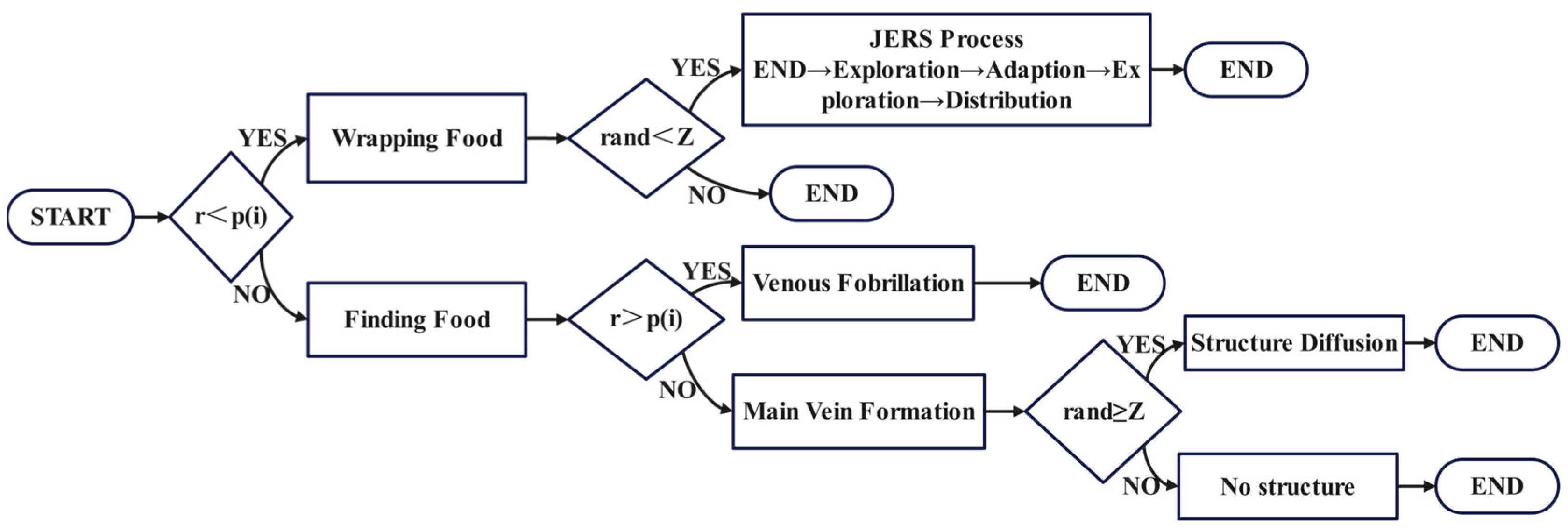
where tanh represents the hyperbolic tangent function that maps the absolute difference in fitness values to the interval (0,1). The term cloned_fitness represents the fitness of an individual in the cloned population, best_fitness denotes the current best fitness value, best_sol is the current optimal solution, X A and X B   are the optimal individuals in the population, and v d is a random variable. Here, cloned_pop(i,:) refers to the i-th individual in the cloned population. The term rand represents a uniformly distributed random number in the interval (0,1). The term p ( i ) denotes the fitness difference probability of the i-th individual. The workflow of the Slime Mold Algorithm is illustrated in Figure 7.

3.1.2. Tangent Flight Jump Exploration Strategy

During the iteration, when the algorithm detects that the optimal solution has not been updated for multiple consecutive generations, a large-angle jump is triggered to drive the population toward new regions. This aims to break out of local optima and increase the likelihood of exploring the global optimum.
The condition for triggering tangent flight (i.e., the criterion for iteration stagnation) is given as follows:
t iter L   +   1 ,   iter ,     f ( t ) f ( t 1 ) δ  
The equation is the criterion for judging iterative stagnation to trigger the tangent flight strategy in the hybrid algorithm, which helps the algorithm escape local optima. The term L represents the threshold for stagnation generations, determined according to the complexity of the objective function. The term represents the universal quantifier meaning “for all”. The term t denotes the iteration time within the interval [iter L + 1, iter]. The term iter represents the current iteration number. The term f ( t ) denotes the optimal fitness value of the t-th generation. The term f ( t 1 ) denotes the optimal fitness value of the ( t 1 ) -th generation. The term δ denotes the fitness change threshold.
The step size calculation provides the neighborhood of the objective function for the tangent flight, while the tangent angle generation determines the jump angle. The updated position is then obtained, as expressed in the following formula:
s t e p   =     ×   ( e l i t e p o p b e s t s o l )  
θ = unifrnd ( π 2 + ,   π 2 ,   elite _ size , dim )  
n e w e l i t e p o p   = e l i t e p o p + s t e p   ×   t a n ( θ )
where ∂ is the step-size scaling, e l i t e p o p denotes the elite population from each iteration, and b e s t s o l is the global optimal solution. The term is introduced to prevent the jump angle from being overly vertical, thereby avoiding ineffective vertical jumps.
The geometric interpretation of the final updated population position is that the original population performs a jump in the tangent direction, with s t e p as the adjacent edge and t a n ( θ ) as the slope.

3.1.3. Validation and Comparison of the Optimization Algorithm

To quantitatively test the optimization performance of the proposed STCSA, three classical benchmark test functions covering unimodal and multimodal characteristics were selected for algorithm validation. The unimodal function (Sphere function) is used to evaluate the convergence accuracy and local exploitation capability of the algorithm, while the multimodal functions (Rastrigin function and Griewank function) are adopted to verify the global exploration capability and local optimum escape performance of the algorithm.
To ensure the fairness and consistency of the performance comparison, the Genetic Algorithm (GA), Particle Swarm Optimization (PSO), standalone Slime Mold Algorithm (SMA), and classical Clonal Selection Algorithm (CSA) were selected as benchmark algorithms for parallel validation. All algorithms were tested under completely consistent parameter settings: the population size was set to 20 (consistent with the population size in the subsequent centrifugal pump optimization), the variable dimension was 10, the maximum number of iterations was set to 1000, the upper and lower bounds of the variables were [−10, 10], and each test function was independently run 30 times to eliminate the randomness of the algorithm calculation. The specific expressions and theoretical optimal values of the three test functions are shown in Table 2, and the optimization performance evaluation results of all algorithms are summarized.
The convergence success rate was used to further evaluate the stability and reliability of each algorithm. The convergence criterion is defined as follows: in a single independent run, if the error between the optimal solution obtained by the algorithm and the theoretical optimal value is less than the preset convergence threshold, the run is judged as a successful convergence. The convergence thresholds are set as 1 × 10⁻⁶ for the Sphere function, 1 × 10⁻⁴ for the Rastrigin function, and 1 × 10⁻⁵ for the Griewank function, which follows the general specification for performance verification of intelligent optimization algorithms. The convergence success rates of all algorithms on the three test functions are shown in Table 3.
The results presented in Table 2 and Table 3 demonstrate that the proposed STCSA algorithm can achieve the theoretical optimal value for all three test functions after 1000 iterations, and the standard deviation at convergence remains consistently zero across 30 independent runs. In contrast, the benchmark algorithms (GA, PSO, and CSA) fail to reach the theoretical optimal value under the same experimental conditions, and their convergence success rates are considerably lower than that of STCSA. Although the SMA algorithm also yields a zero standard deviation on the three test functions, as consistently observed with STCSA, it can be seen from Table 3 that the convergence speed of STCSA is significantly faster than that of SMA. These results fully verify that the STCSA algorithm possesses stable optimization performance, excellent global convergence capability, as well as high optimization precision and fast convergence speed during the optimization process. With significantly improved optimization precision, the computational cost of the proposed algorithm is comparable to that of traditional algorithms, demonstrating its excellent engineering practicability.
For the unimodal Sphere function, the STCSA algorithm exhibits absolute advantages in convergence accuracy and stability compared with other algorithms, which verifies that the integration of the slime mold position update strategy significantly enhances the local exploitation capability of the traditional Clonal Selection Algorithm (CSA). For the multimodal Rastrigin and Griewank functions with numerous local optimal solutions, the STCSA algorithm can still achieve a 100% convergence success rate while maintaining a roughly consistent convergence speed with other traditional algorithms (GA, PSO and CSA), whereas other benchmark algorithms struggle to escape from local optima. These results demonstrate that the tangent flight jump exploration strategy effectively improves the global exploration capability of the algorithm and solves the problem that the traditional CSA is prone to premature convergence in high-dimensional complex optimization problems. The selection of test functions and the evaluation method for algorithm performance follow the standardized verification scheme proposed by Bonabeau [24], which ensures the scientificity and reliability of the experimental results.

3.2. Marine Centrifugal Pump Impeller Blade Profile Optimization

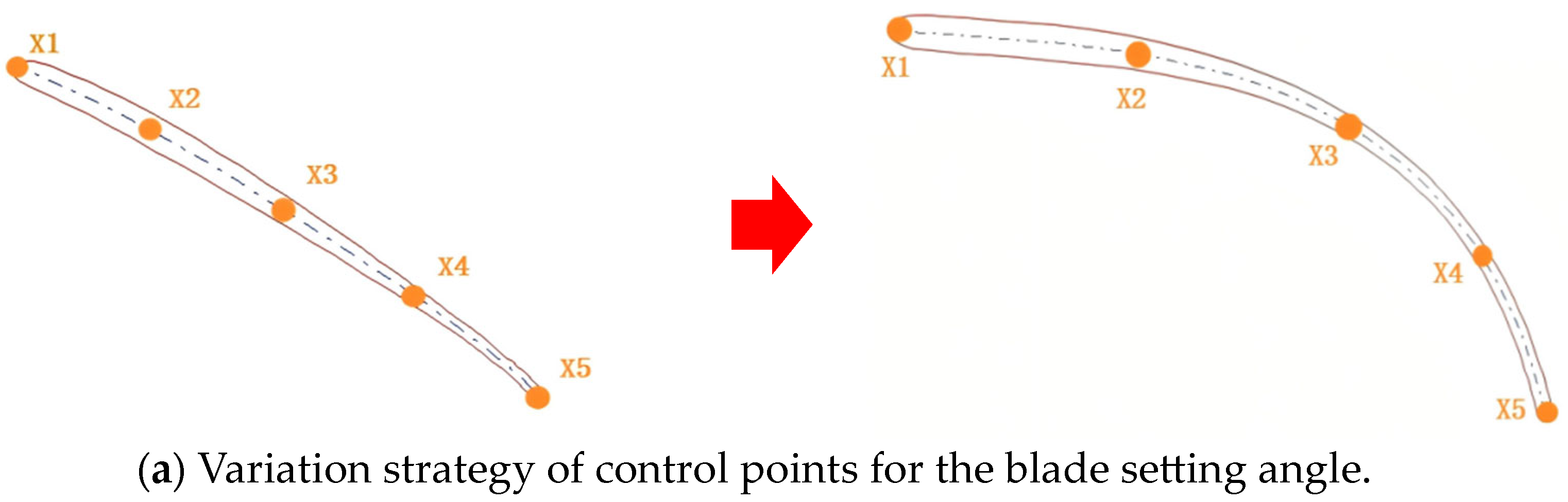
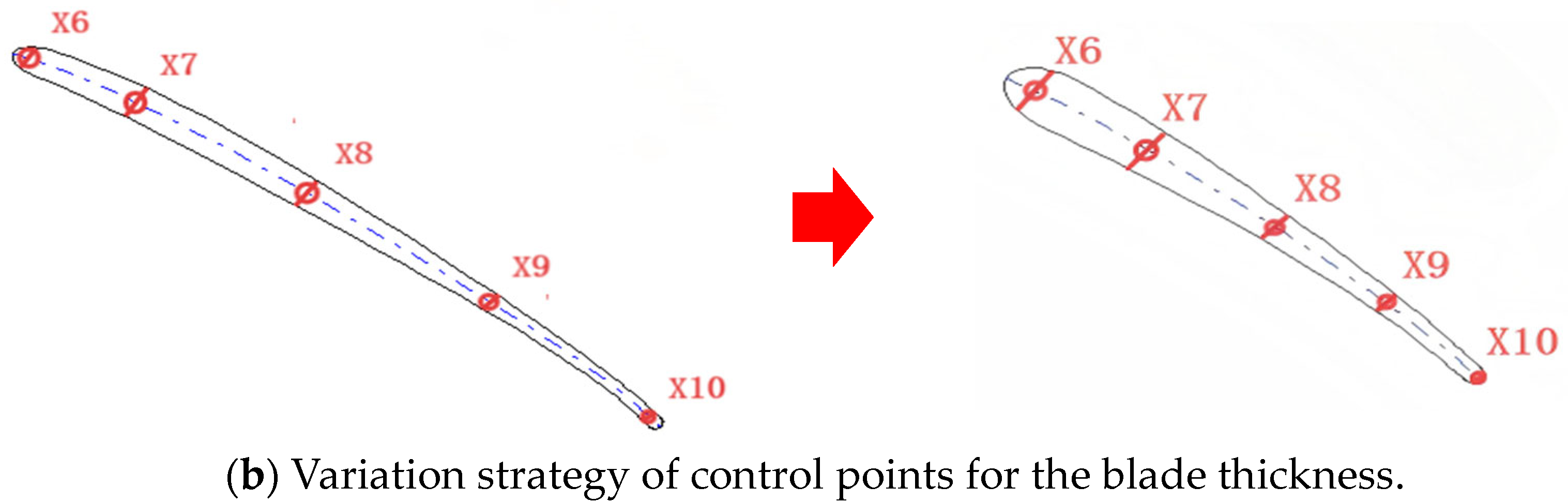
The impeller blades are the most critical components influencing the energy exchange in a marine centrifugal pump. This paper focused on the optimization design of the blade profile. The method employed control points on a Bézier curve to parametrically design the blade wrap angle and blade thickness, which has been validated as effective in centrifugal pump impeller profile design. The blade contour of a centrifugal pump impeller is optimized by using Bézier curves, and the control points of the curve can precisely regulate the blade inlet and outlet angles. Li [25] utilized Bézier curves to control blade thickness, thereby reducing flow separation within the blade passages. These Bézier curves correspond respectively to the curves controlling the blade wrap angle and blade thickness along the camber line of the blade profile. The control points on the Bézier curves were each set to five points, resulting in a total selection of ten points as design parameters. Among these, the blade wrap angle has five control variables (x1, x2, x3, x4, x5), and the blade thickness has five control variables (x6, x7, x8, x9, x10). Figure 8 illustrates the variation patterns of blade wrap angle and blade thickness control points. Points x1 to x10 are all located on the camber line of the blade profile. These ten points are evenly distributed along the length of the model’s blade camber line. The horizontal coordinate values of x1 to x10 are fixed uniformly based on equal divisions of the profile scale, while their vertical coordinates can move freely. The red arrows clearly demonstrate the distinct manner in which the pump impeller blade profile changes when the horizontal and vertical coordinates from x1 to x10 are adjusted. Figure 8a illustrates the intuitive variation in the blade profile resulting from different control points of the Bézier curve controlling the wrap angle. Figure 8b shows the intuitive variation in the blade thickness resulting from different control points of the Bézier curve controlling thickness.
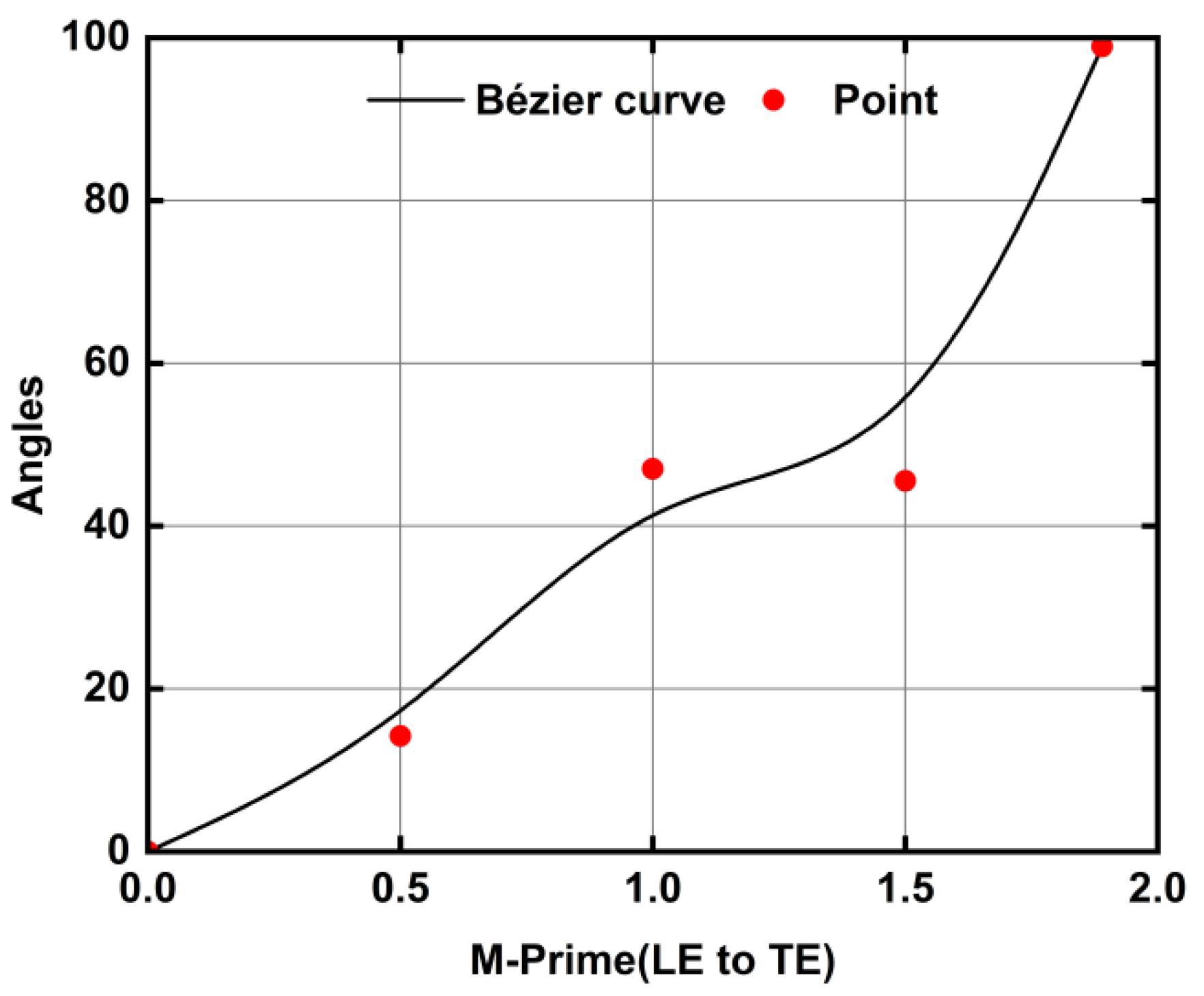
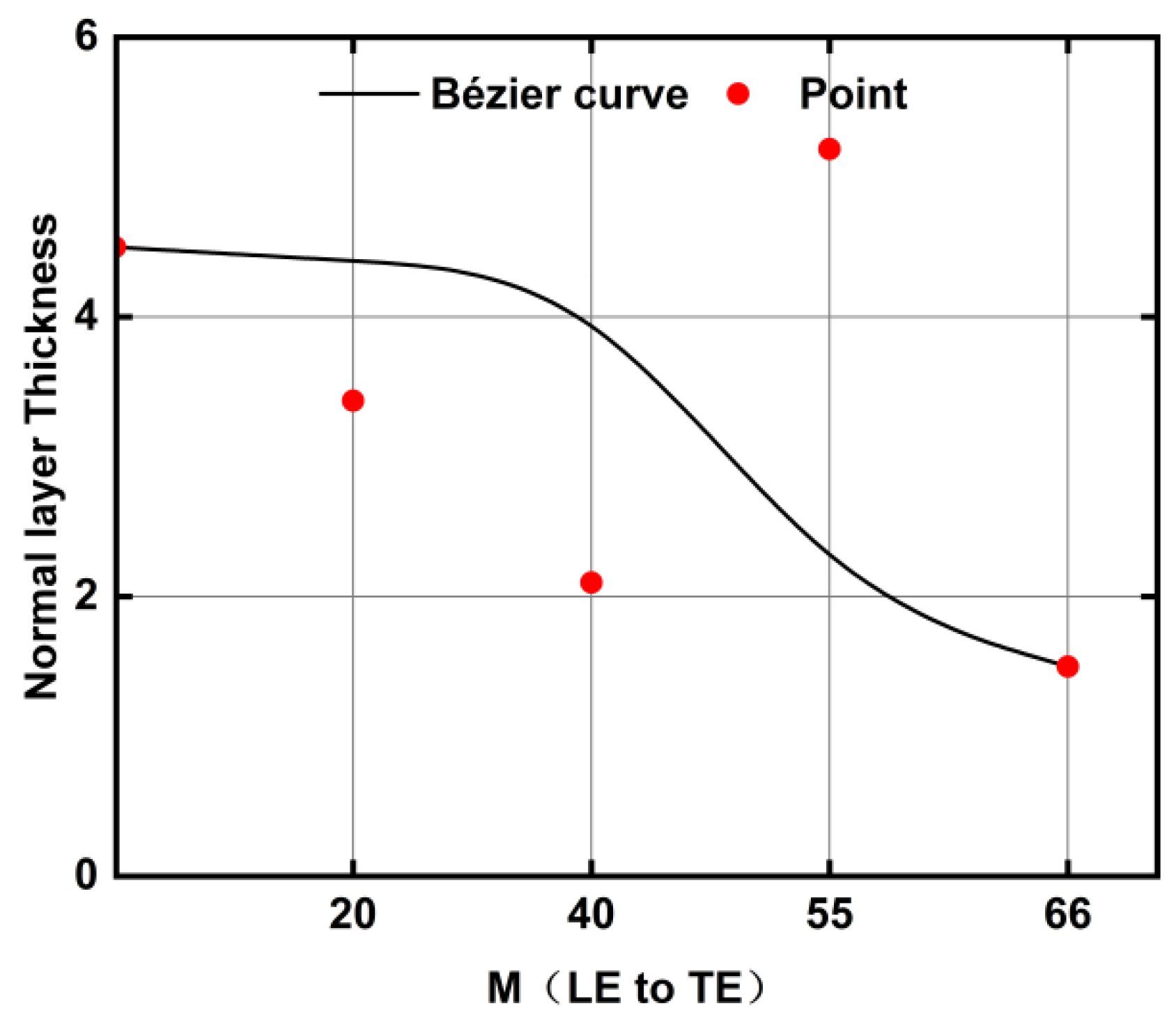
A set of ten design parameters was selected in Table 4. The three-dimensional impeller model was created using the BladeGen software (ANSYS Workbench, including the BladeGen module). The profile curves defining the blade shape were extracted from the 3D model in BladeGen and imported into DesignModeler (ANSYS Workbench, including the DesignModeler module), with the control points of the Bézier curves configured as output parameters, as shown in Figure 9 and Figure 10.
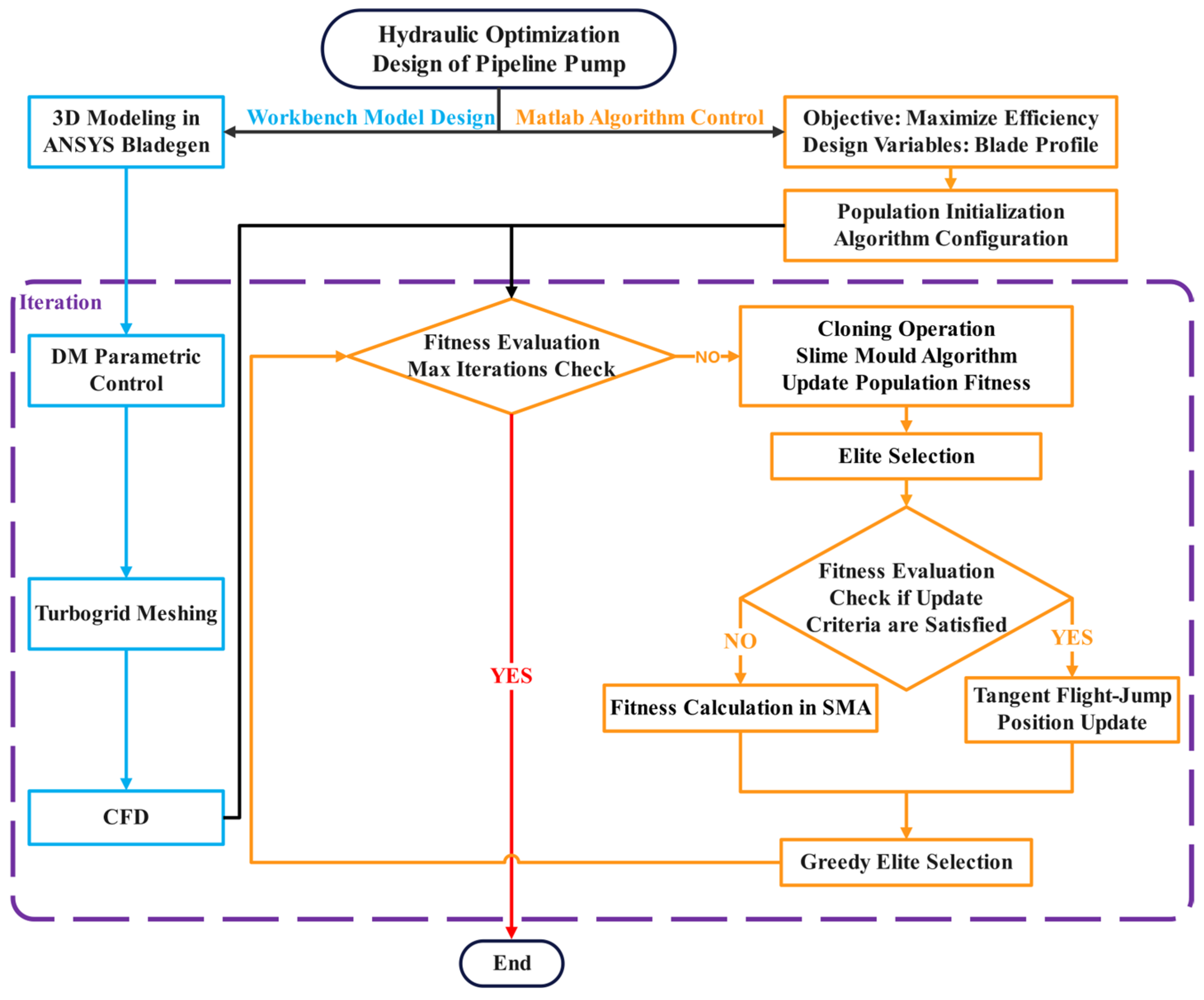
Based on the STCSA algorithm, an automated three-dimensional optimization design method was constructed for the blade profile of a marine centrifugal pump. MATLAB was utilized to implement the updated iterations of the STCSA algorithm, Ansys BladeGen was used for blade profile parametric design and updates, and CFX software (ANSYS Workbench, including the CFX module) simulated the head and efficiency of the model pump, providing updated data for the STCSA algorithm. This formed an automated three-dimensional optimization design framework for the centrifugal pump blade profile. The workflow for optimizing the pump model based on STCSA is illustrated in Figure 11. The blue segment denotes the workflow within ANSYS Workbench, encompassing the centrifugal pump modeling, structured mesh generation, and CFX numerical simulation. The orange segment represents the algorithm development, control, and execution process implemented in MATLAB. Black arrows linking CFD and the STCSA algorithm illustrate the integration of the STCSA algorithm with ANSYS Workbench simulations. The area bounded by the purple frame depicts the STCSA-driven iterative optimization of the pump impeller blade profile to maximize hydraulic efficiency. The red segment indicates the output of final optimization results upon the completion of iterative calculations. In programming the intelligent optimization of pump efficiency using the hybrid clonal algorithm integrating the Slime MoldMold Algorithm and Tangent Flight strategy, the min function in the algorithm was modified to a max function. The optimization objective function was defined as the pump efficiency, with individuals having higher fitness values being selected during each iteration to achieve efficiency maximization. If a population particle in this algorithm fails during 3D modeling in DesignModeler Geometry or during automatic meshing in TurboGrid, preventing the final output of the efficiency value for that particle. By programming, the scheme is automatically stopped, the impeller blade profile is re-optimized, and the optimized target efficiency is not output. It is discarded during elite population screening and is considered as an invalid value.
Taking the efficiency of the marine centrifugal pump at the design condition as the optimization objective, the pressure at the pump’s inlet and outlet, and the impeller torque are obtained by numerical simulations to derive the pump efficiency. The simulation formula is as follows:
η   =   Q d / 3600   ×   P 2 tot P 1 tot T × ω
where Q d   is the flow rate at the design condition, m3/h. P 2 tot   and   P 1 tot are the total pressures at the inlet and outlet of the marine centrifugal pump, respectively, Pa. T is the impeller torque, N · m . ω is the impeller rotational angular velocity, rad / s .
Based on the research on population size, Clerc [26] suggested that the population size of the clonal algorithm should be twice the number of optimization variables. Therefore, this paper selects a population size of 20 (corresponding to 10 optimization variables). Zhan [27] proposed that the elite population size should be 10–20% of the total population size. The maximum number of iterations was set to 40, the stagnation generation threshold was set to 5 by default, the fitness change threshold was set to 1 × 10⁻⁴, and K (an influencing factor of the convergence factor) was set to 0.03. To verify the repeatability and robustness of the optimization results for the pump blade profile, five independent optimization runs were conducted under the completely consistent parameter settings (including population size, iteration number, variable bounds, and CFD simulation environment). Among them, three pre-test runs were completed in the early stage to determine the final optimization parameter configuration, and two formal independent runs were carried out for the final result verification. All runs adopted the same MATLAB-ANSYS automated optimization framework, with no changes to the CFD solver settings, grid scheme and boundary conditions, which eliminates the interference of non-algorithm factors on the optimization results.

4. Results and Discussion

4.1. Optimization of Model Pump Blade Profile

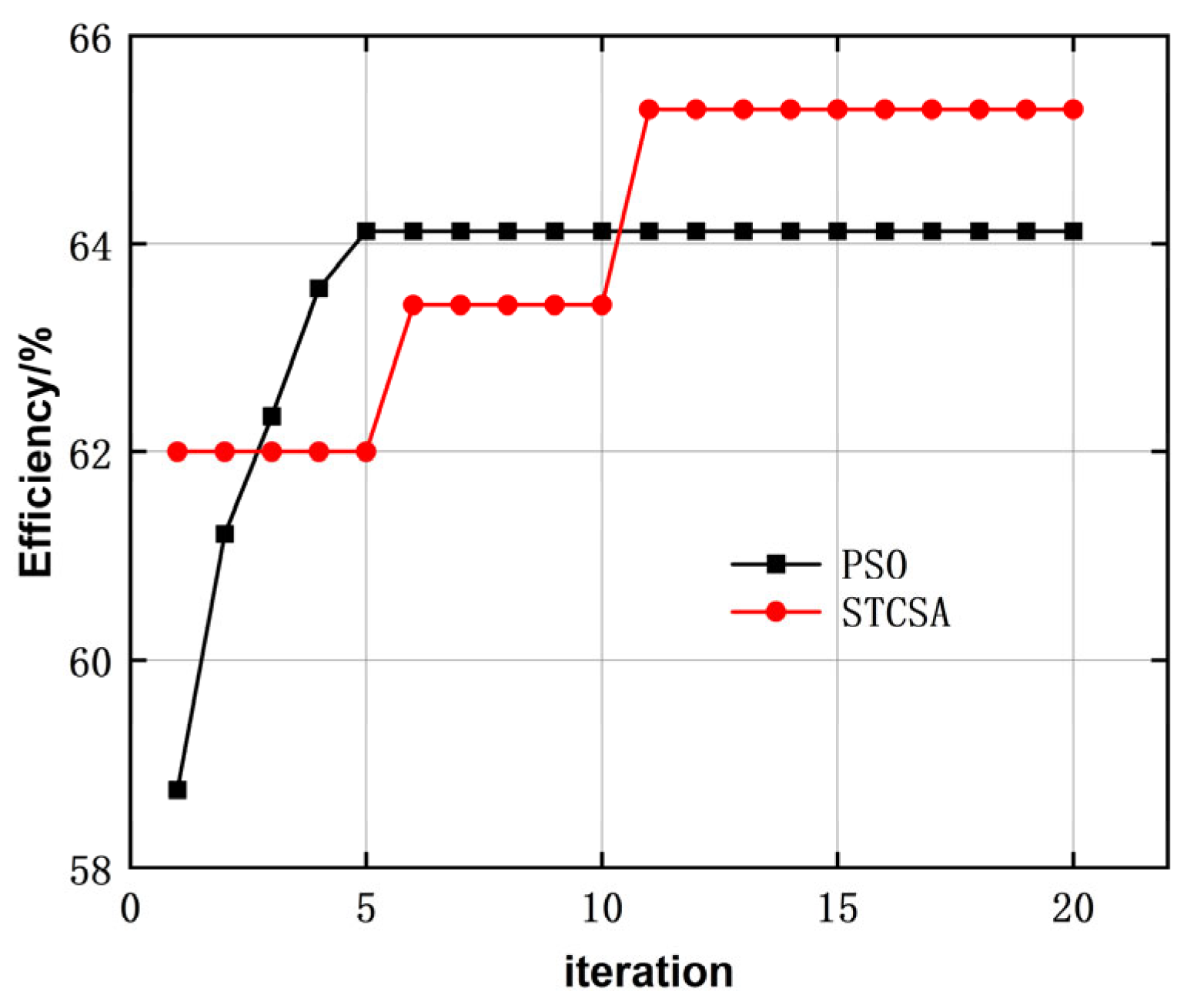
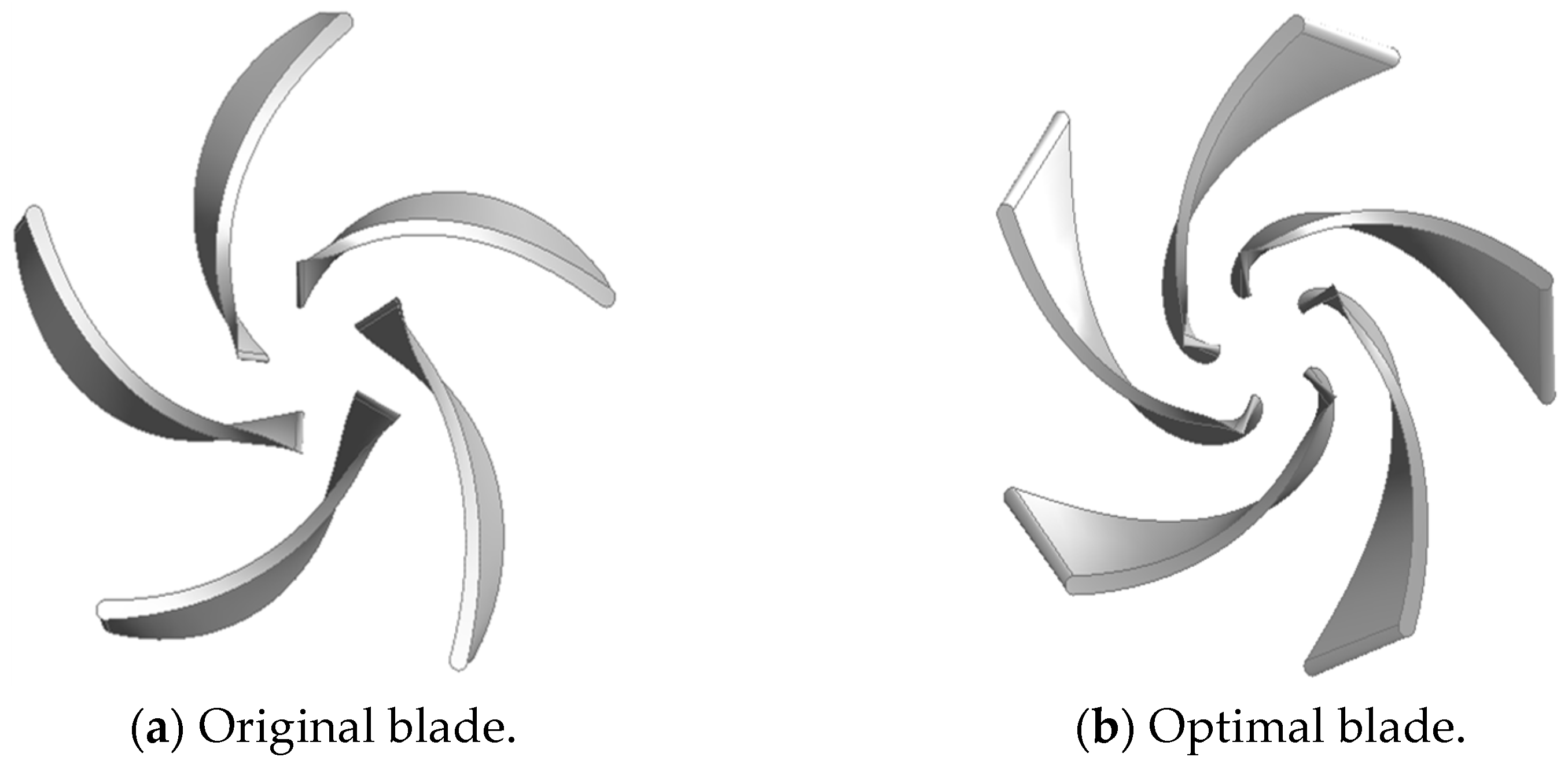
The clonal selection algorithm based on slime mold and tangent flight continuously sought the optimal value for the model pump efficiency in iterative calculations. The maximum number of optimization iterations was set to 40. The stagnation generation threshold is set to 5 by default, which means that a tangent flight jump is executed for the optimization objective every five iterations. If the optimization objective value remains unchanged after one tangent flight jump, the convergence condition is considered to be satisfied. To save computational cost, it is unnecessary to run the algorithm until the preset maximum number of iterations is reached. As shown in Figure 12, a tangent flight jump is performed at the 15th iteration. After this jump, the objective value of the Slime Mold Algorithm does not change during the local calculation process, which indicates that the convergence condition set by the algorithm is achieved. The comparison of the blade profile control points before and after optimization is presented in Table 5. The improved clonal selection algorithm demonstrated fast convergence and an enhanced ability to escape local optima. Since the parameter K for tangent flight was set to 5, the output efficiency values exhibited significant fluctuations after every fifth iteration in the early stages. However, the curve stabilized as the search essentially reached the maximum efficiency for the model pump in the later stages. The pump efficiency variations in the PSO and STCSA algorithms throughout the process are shown in Figure 12. At the initial stage of the algorithm search, the pump efficiency was 58.27%, and after convergence, the efficiency value reached 65.29%. The five independent optimization runs all yielded highly consistent optimal results, with a small fluctuation in the final efficiency (within 0.5%), which confirms that the 7% absolute efficiency improvement is a stable output of the STCSA rather than a random extreme value. After optimization, the pump’s absolute efficiency increased by 7%, meeting the design requirements. The geometric models of the blade before and after optimization are illustrated in Figure 13.

4.2. Performance Characteristics of Model Pump After Blade Profile Optimization

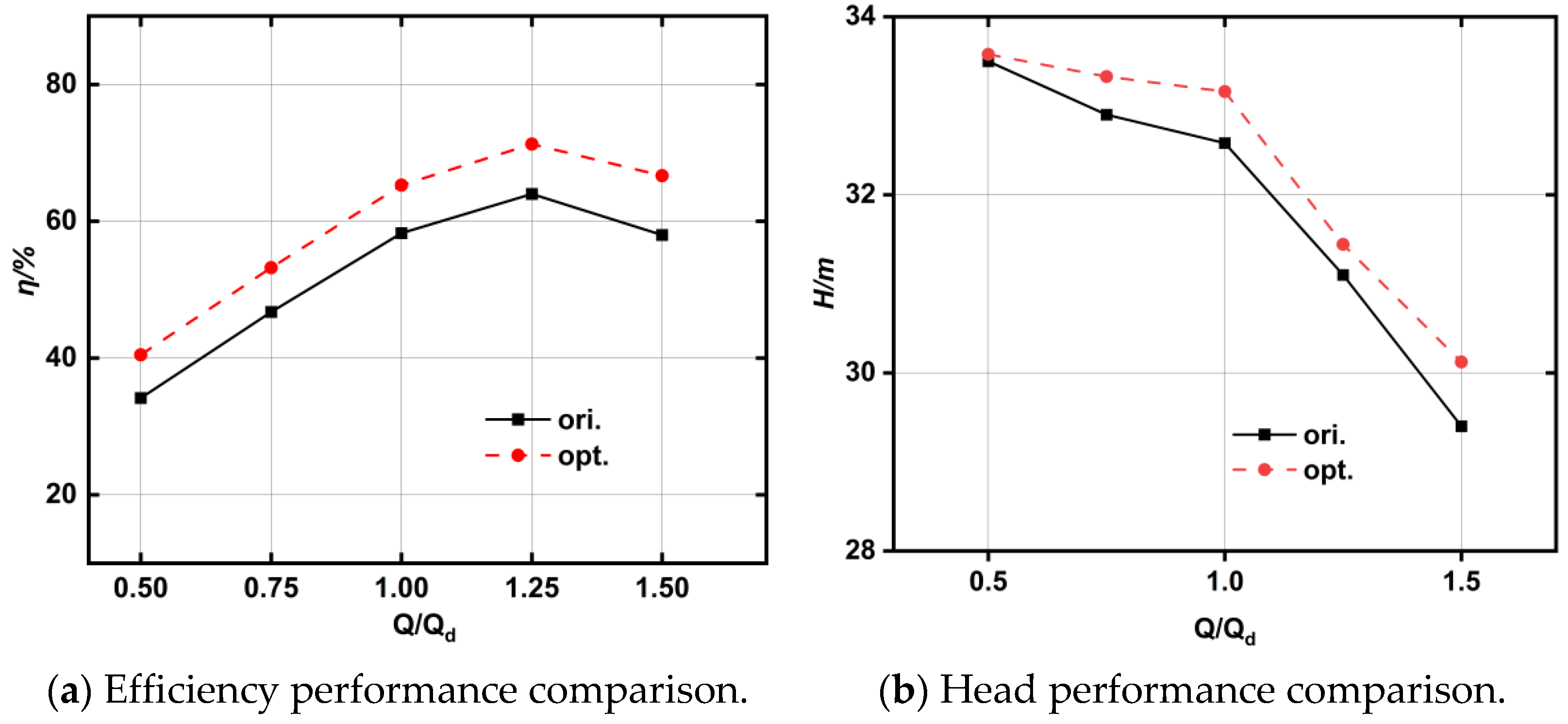
The performance characteristics of the model pump before and after blade profile optimization were compared and analyzed at five different operating flow rates, including 0.50 Qd, 0.75 Qd, 1.00 Qd, 1.25 Qd, and 1.50 Qd as shown in Figure 14. After blade profile optimization, the operating efficiencies of the pump increased under all tested conditions. This is because after optimizing the blade profile using the STCSA algorithm, the linear characteristics of the blade profile are more consistent with the flow characteristics of the fluid. The backward-bending trend of the blade profile trailing edge is more pronounced, resulting in greater kinetic energy of the fluid passing through the outlet section of the impeller passage and reduced hydraulic losses. Therefore, even if the flow rate of the model pump changes, its operating efficiency is improved.
The efficiencies of the optimized model pump have been improved under all tested flow rates. After optimizing the blade profile, the pump head shows an obvious increase. The core reason for the simultaneous improvement in head and efficiency lies in the fact that the blade profile optimization improves the energy conversion efficiency of the fluid inside the impeller. On the one hand, adjusting the blade inlet angle and the curvature of the leading edge allowed fluid to enter the impeller more smoothly, reducing impact losses. On the other hand, optimizing the blade wrap angle and thickness helped avoid flow separation caused by local high-pressure to low-pressure gradients, minimized vortex generation, and consequently reduced inefficient energy dissipation. These findings are consistent with the results reported by Liu [28], who optimized a centrifugal pump using a genetic algorithm.
The blade profile optimization reduces the high-speed region at the impeller inlet, lower turbulent kinetic energy loss, and subsequently enhance pump performances under all operating conditions. Firstly, after optimization using the STCSA algorithm, by adjusting the blade inlet angle and optimizing the surface contour of the inlet edge, the fluid enters the impeller smoothly, avoiding impact-induced vortex loss, reducing impact loss, minimizing energy loss at the inlet, and enhancing effective head. Secondly, optimizing the blade profile improves wake and vortex loss, optimizes the outlet flow field, and enhances energy conversion efficiency. By optimizing the blade wrap angle, surface, and blade thickness, the pressure distribution on the blade surface becomes more reasonable, avoiding fluid separation caused by local high and low pressure, reducing vortex generation, preventing fluid blockage caused by excessively thick blades, and ensuring smooth fluid flow within the impeller. Thirdly, due to the centrifugal force generated by the rotating impeller and the difference in blade load, the lateral circulation of fluid in the flow channel consumes a significant amount of energy. Simultaneously, the ineffective flow of fluid leaking from the pressure side of the blade through the gap between the blade and the pump casing to the suction side directly reduces the amount of fluid that effectively performs work. Optimizing the blade profile suppresses secondary flow and gap flow, reducing energy waste in non-main flow channels. Therefore, while pump efficiency increases under different operating conditions, the pump head also increases within a small range. Under the rated condition, the optimized pump head is 33.16 m, an increase of 0.58 m compared to the original design.

4.3. Internal Flow Characteristics of Model Pump After Blade Profile Optimization

4.3.1. Flow Characteristics Within Impeller Passages

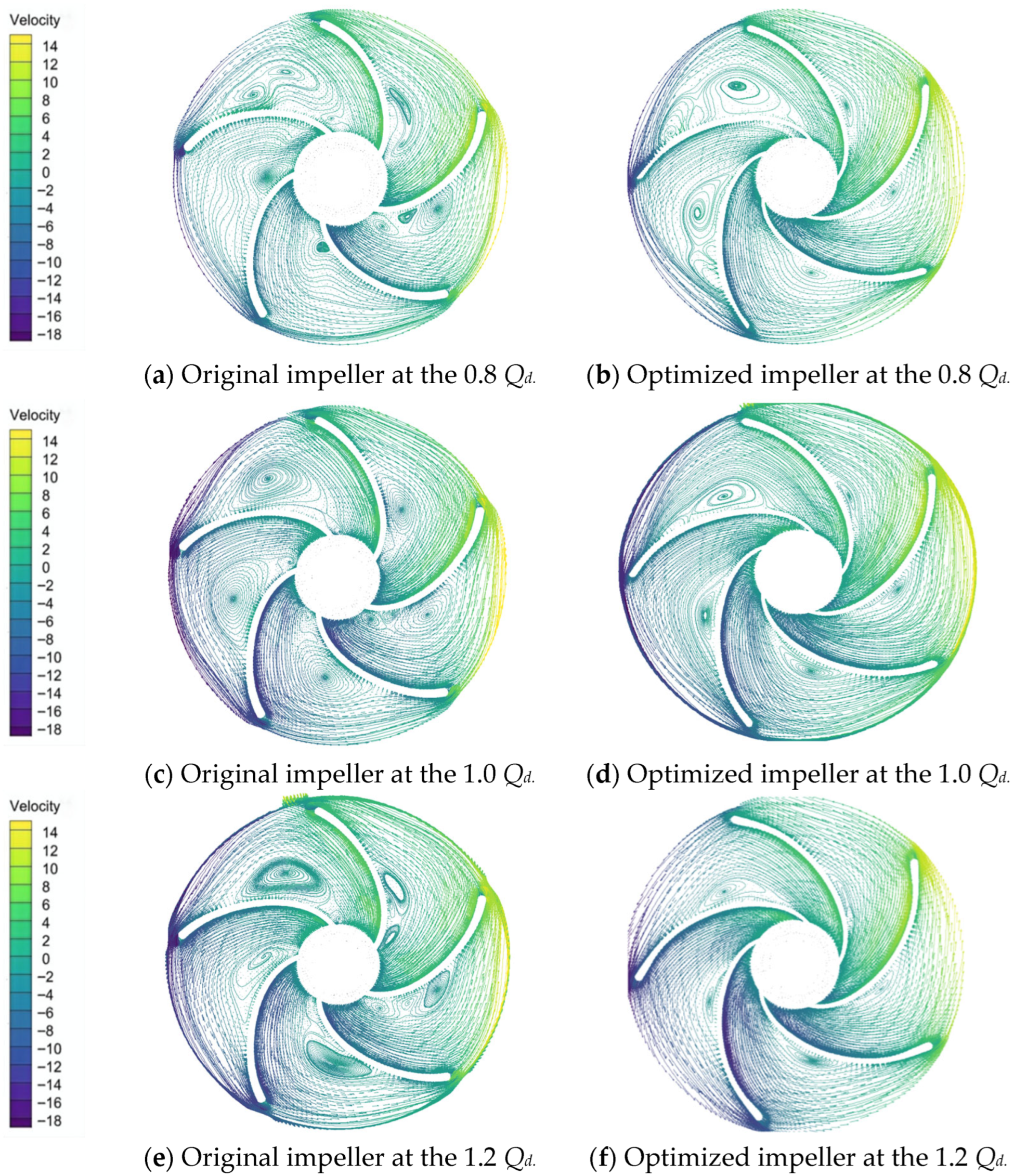
The blade is a crucial component for energy exchange with the fluid inside the marine pump, and its blade profile design is the most important aspect that determines the distribution of kinetic energy and potential energy changes within the blade passage. Due to changes in the blade profile, the fluid within the blade passage experiences abrupt variations in flow velocity or flow lines. If the blade profile does not conform to the trend of fluid flow and impeller rotation, it can lead to a disorderly distribution of flow lines and flow separation between the fluid and the impeller surface, forming vortexes and inducing hydraulic losses.
By comparing and analyzing the internal flow characteristics in the blade passage before and after optimization, this paper investigates the improvement of flow loss sources by blade profile optimization and explains the inherent mechanism of efficiency enhancement. Operating conditions at 0.8 Qd, 1.0 Qd, and 1.2 Qd were selected as the core conditions for analyzing the internal flow comparison of the marine centrifugal pump before and after blade optimization. The range of 0.8 Qd to 1.2 Qd represents the most frequently encountered high-efficiency operating zone for the centrifugal pump, where the influence of blade profile design on flow losses is most pronounced and the flow remains relatively stable. Losses such as vortex flow and separated flow are mainly determined by the rationality of the blade profile rather than extreme flow disturbances, allowing for the accurate comparison of the flow smoothness of the blade passage before and after optimization. Liu [28] found by genetic algorithm optimization that the sensitivity of blade profile adjustment to entropy production under 0.8 Qd to 1.2 Qd operating conditions is 5.3-times higher than that under low-flow conditions, confirming that flow loss in this interval is mainly determined by the rationality of the blade profile, rather than a common problem caused by flow overload or insufficiency. The low-flow condition (such as 0.5 Qd) can lead to extreme flow states such as severe backflow and flow separation within the blade passage, which are more common problems caused by insufficient flow rather than core defects in the blade profile design, making it difficult to accurately reflect the value of profile optimization. Conversely, high-flow conditions (such as 1.5 Qd and 2.5 Qd) are prone to issues, such as insufficient flow capacity and increased interference between the volute and impeller due to rotor–stator interaction. The flow state is complex, and there are many interfering factors, making it difficult to clearly distinguish between the effects of blade profile optimization and the impact of flow overload.
Figure 15 illustrates the flow distribution within the blade passage of a marine centrifugal pump under different operating conditions (0.8 Qd, 1.0 Qd, and 1.2 Qd) before and after blade optimization. On the working surfaces of the baseline impeller model under different conditions, several small vortices appeared in the region near the blade leading edge. This is due to the change in flow direction as fluid enters the blade passage, resulting in a velocity gradient distribution, which induces flow separation and vortex phenomena, ultimately leading to hydraulic losses. For the original impeller, multiple large-area vortices appear in the middle section of the blade passage under different operating conditions, indicating a mismatch between the blade profile and the natural flow tendency. Large backflow areas appear in each blade passage, blocking the passage and causing significant hydraulic losses. After blade profile optimization, notable changes occur in the leading edge and middle section of the blade passage. Compared to the original impeller, the design of the leading edge of the impeller blades is modified, significantly reducing the area and number of vortices in the blade passage near the blade’s leading edge, resulting in smoother flow lines in this region. By modifying the design of the middle section of the impeller blade, the vortex area is significantly reduced, the blade passage becomes unobstructed, and hydraulic losses are noticeably decreased. Compared to the original impeller, the phenomenon of flow separation is reduced, the flow lines become more stable, and hydraulic losses are minimized. The optimized blade profile through algorithms significantly improves the flow. This improvement in flow conditions reduces energy loss during the impeller operation, achieving a notable increase in the efficiency of model pump.

4.3.2. Hydraulic Loss Within Impeller Passages

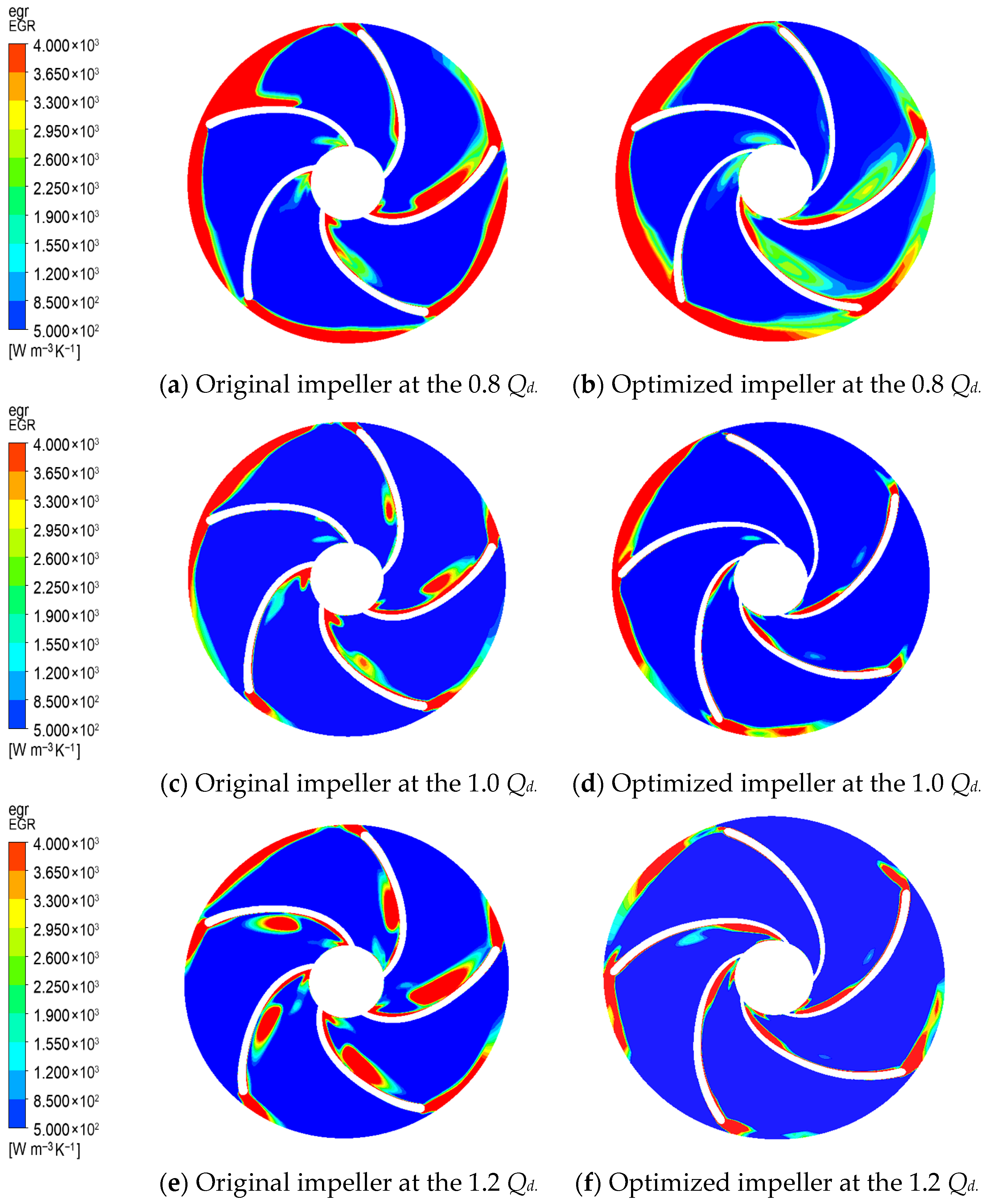
The entropy generation method is employed to analyze the hydraulic losses within the impeller passages of a marine centrifugal pump. Entropy generation is a key physical quantity in thermodynamics that describes the dissipation of energy caused by irreversible processes within a system. Any irreversible process leads to an increase in entropy, and a higher entropy production rate indicates more significant energy loss in that region [29]. Figure 16 illustrates the hydraulic losses within the impeller passages of the original and optimized model pumps under conditions of 0.8 Qd, 1.0 Qd, and 1.2 Qd.
Based on the comparative analysis of the entropy generation contours of the original and optimized impellers, it can be observed that each passage of the original impeller exhibits a region of high entropy generation in the middle section at the 1.2 Qd operating condition, compared to the optimized model. The entropy increase area in the leading edge of the optimized blade is significantly reduced by more than 60%, while in the middle section of the blade, there is a notable improvement in both the magnitude and area of entropy increase, with the maximum magnitude of entropy production rate decreased by 45%~50% and the high entropy generation area shrunk by nearly 70%. A slight decreasing trend (about 20%) in the magnitude of entropy generation is also observed at the blade trailing edge compared to the original impeller. At the 1.0 Qd condition, certain passages of the original impeller still contained relatively large entropy generation zones in the middle section, and a noticeable entropy generation region is also identified at the leading edge, both of which are mitigated after optimization: the high entropy area at the leading edge is reduced by over 50% and the entropy production rate in the middle section is lowered by around 40%. At the 0.8 Qd condition, the contrast in entropy generation between the original and optimized impellers is less pronounced than at the 1.0 Qd and 1.2 Qd conditions. An overall examination of the high-entropy-generation regions shows that the area of high entropy generation in the optimized impeller is, on average, 50% smaller than that in the original impeller. Specifically, for the optimized impeller at 0.8 Qd, the area of high entropy generation in the mid-section and near the trailing edge of individual blade passages is notably reduced relative to the original impeller. Since a higher local entropy generation rate corresponds to greater energy dissipation, this improvement in the flow state reduces energy loss during the impeller operation, thereby decreasing the associated hydraulic loss.

4.3.3. Vortical Flow Characteristics Within Impeller Passages

The blade profile optimization of the model pump results in better alignment between the blade geometry and the natural flow tendency within the passages, which reduces the occurrence of flow separation and improves the distribution of vortex structures. The Q-criterion [29] and Omega method [30] for the vortex identification are employed to capture and analyze the vortex dynamic characteristics within the impeller passages. Jiang [31] found that the primary origin of energy loss lay in the high-intensity vortex structures triggered by blade-surface flow separation. Both the Q-criterion and the Omega method are based on the decomposition of the velocity gradient tensor · V . This tensor can be decomposed into a symmetric part A (representing the strain rate) and an anti-symmetric part B (representing the rotation rate), characterizing the local deformation and rotation, respectively. The Omega method further partitions the vorticity of a fluid element into rotational and non-rotational components. By defining a ratio of the rotational vorticity magnitude to the total vorticity magnitude, this method identifies vortex structures without being highly sensitive to threshold selection, thus offering higher identification accuracy [30]. Accordingly, the vorticity can be expressed as the sum of its rotational and non-rotational parts, as given by the following formula:
w   =   R   +   S
where R represents the rotational vorticity, and S denotes the non-rotational vorticity.
A parameter Ω is introduced to represent the ratio of the rotational vorticity to the total vorticity. The formulation of Ω is given by:
Ω   =   B F 2 B F 2 + A F 2
The equation is the calculation formula for the Omega parameter in the Omega vortex identification method, which characterizes the intensity of vortex structures. The term B denotes the antisymmetric part of the velocity gradient tensor that characterizes fluid rotation. The term A denotes the symmetric part of the velocity gradient tensor that characterizes fluid strain. The term · F 2 denotes the squared Frobenius norm of a matrix.
The Q-criterion is based on the second invariant of the velocity gradient tensor, and its expression is given by:
Q   =   1 2 ( B F 2 A F 2 )  
A = 1 2 ( · V + · V T )  
B = 1 2 ( · V · V T )  
where the term · V denotes the velocity gradient tensor. The term · V T represents the transpose of the velocity gradient tensor.
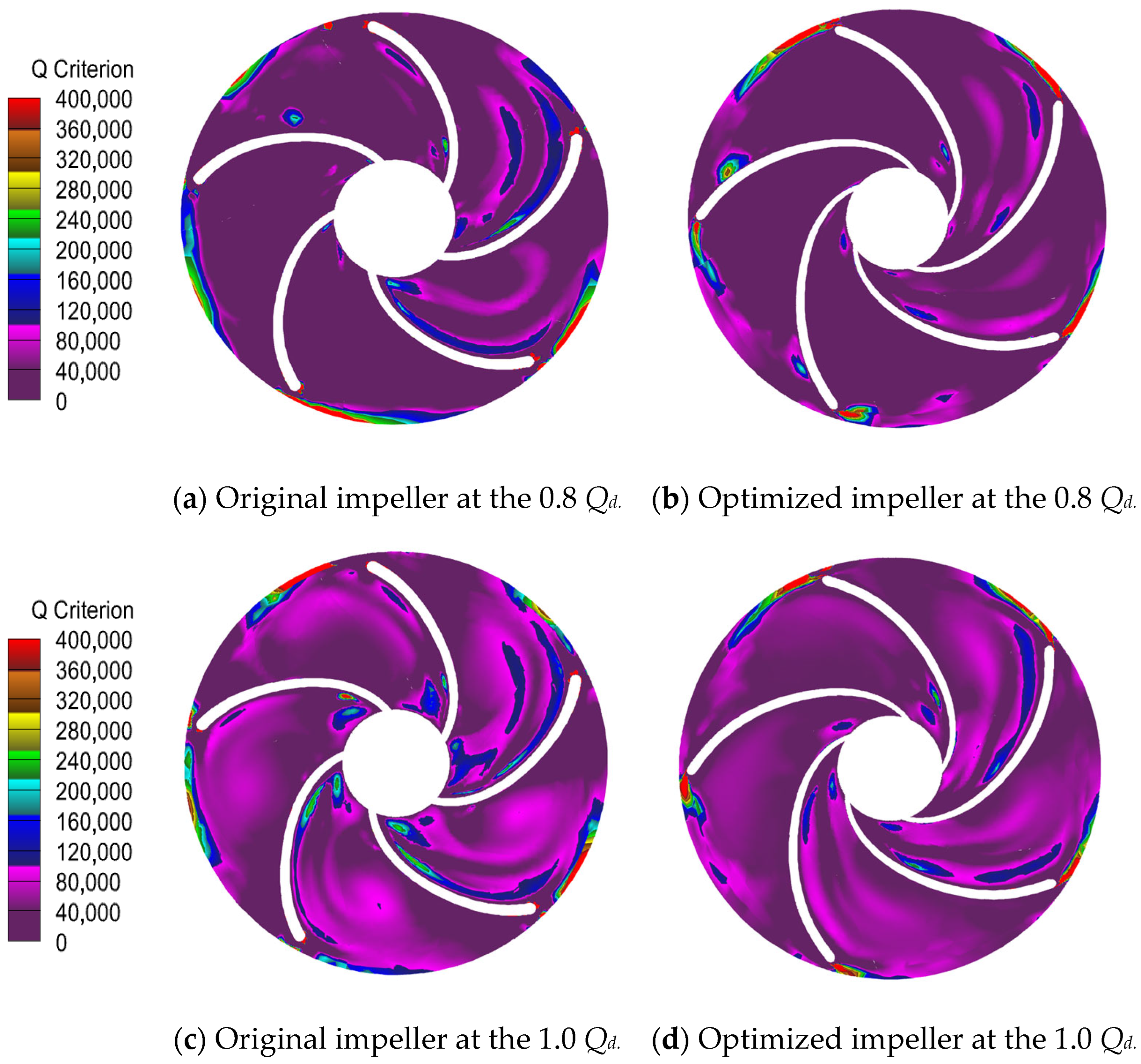
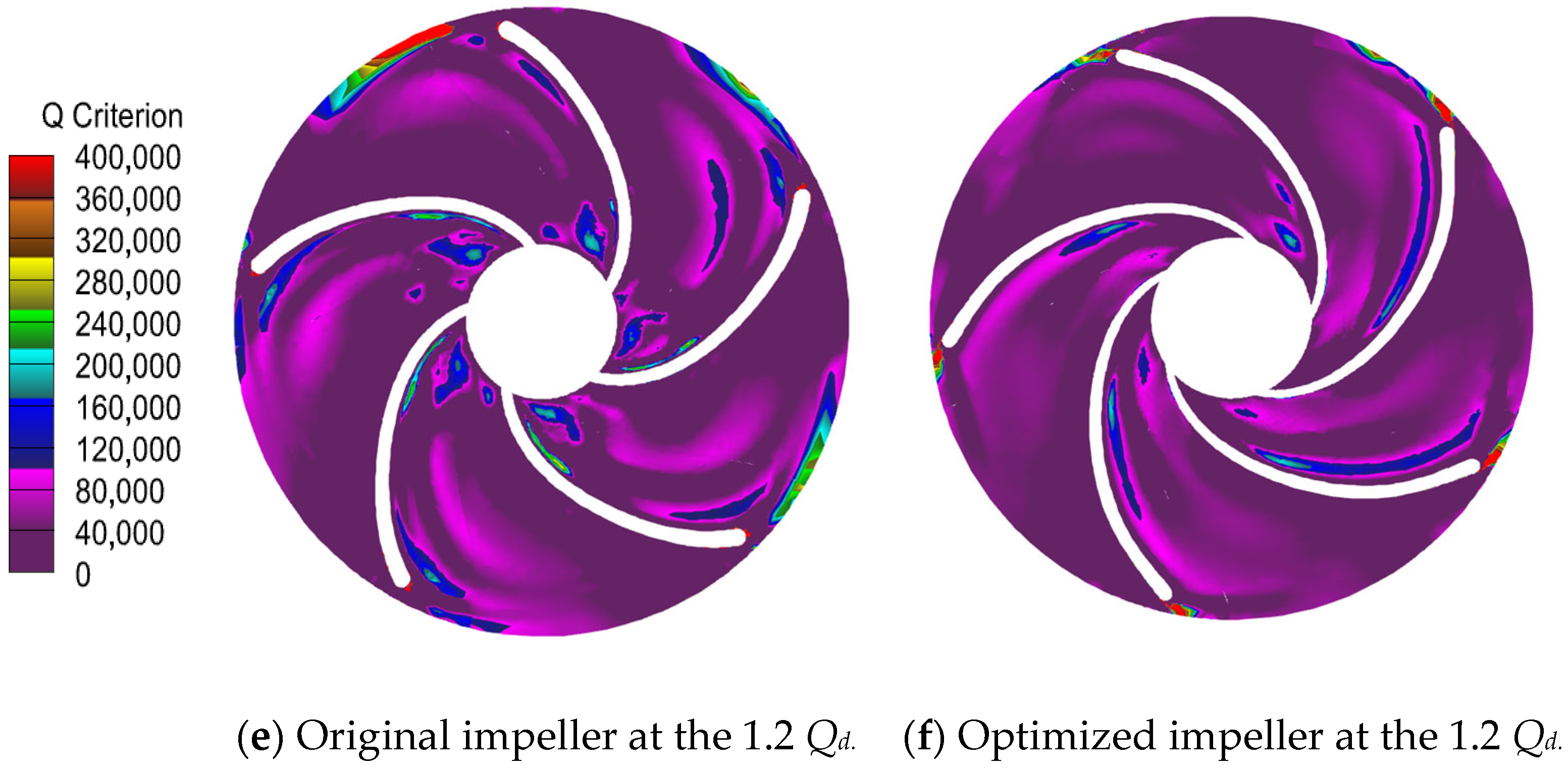
For vortex identification using the Q-criterion, a region where Q > 0 indicates that fluid rotation dominates over strain at that location. It is noted that the Q-criterion is sensitive to the chosen iso-surface threshold value. The rotation rate refers to the proportion of rotational vorticity of the fluid in the flow in turbomachinery. A higher local Q value signifies a greater rotation rate, implying a higher likelihood of a coherent vortex structure. Contours of the Q-criterion for both the original and optimized impellers at 0.8 Qd, 1.0 Qd, and 1.2 Qd operating conditions are presented in Figure 17.
Some vortices with high rotational rates appear at the leading edge of the original impeller under the 1.0 Qd and 1.2 Qd operating conditions. These vortices are likely induced by the flow separation caused by changes in the inlet flow direction as the fluid enters the blade passages. The unreasonable design of the original blade’s leading edge makes it difficult to mitigate these unwanted flow structures. At 0.8 Qd, the flow velocity within the impeller decreases, and the vortex intensity weakens, yet there is still a noticeable secondary flow phenomenon. Under various operating conditions, large-scale vortices with significant rotation rates appear near the trailing edge of the original blades. This is attributed to the interaction between the high-velocity flow exiting the impeller and the relatively low-velocity fluid within the volute, which generates pronounced vortex structures. In the middle region of each flow passage in the original impeller, there is a widespread increase in fluid rotational rate, which is caused by the significant mismatch between the blade profile and the flow direction, inducing vortex structures with high rotational rates. The high rotational rate vortex structures at the blade leading edge (Figure 17a) indicate significant flow separation. After optimization, the rotational rate decreases (Figure 17b), which is consistent with the conclusion drawn by Jiang [31] that vorticity intensity weakens and flow separation improves with leading-edge optimization in a centrifugal pump. Therefore, analyzing the magnitude and spatial distribution of the Q-criterion values in the vicinity of the blade surfaces can assess the impact of profile modifications on the primary vortex structures within the impeller, and further infer the trend of variations in the streamlines, thereby analyzing the reasons for changes in efficiency due to the blade profile redesign.
Comparing the flow structure within the impeller passage before and after optimization, by changing the blade profile design at the leading edge of the blade, the rotation rate and vortex area of the secondary flow in the blade leading edge flow field under operating conditions have been significantly improved. The optimization of the blade trailing edge profile effectively mitigated the rotor–stator interaction between the impeller and the volute, leading to a clear refinement of the vortex structures at the impeller outlet. Furthermore, in the optimized passages, no vortex structures appear directly on the blade pressure side, with smaller intensity vortex structures appearing slightly away from the blade pressure surface, and obvious and regular vortex structures appearing on the blade suction surface. High-speed fluid is concentrated at the pressure surface of the blade, while low-speed fluid is concentrated at the suction surface of the blade, indicating that the flow distribution within the impeller passage is uniform, the fluid energy changes are uniform, and the energy exchange loss between the blade and fluid is small, which has a significant impact on improving the operating efficiency of model pump.
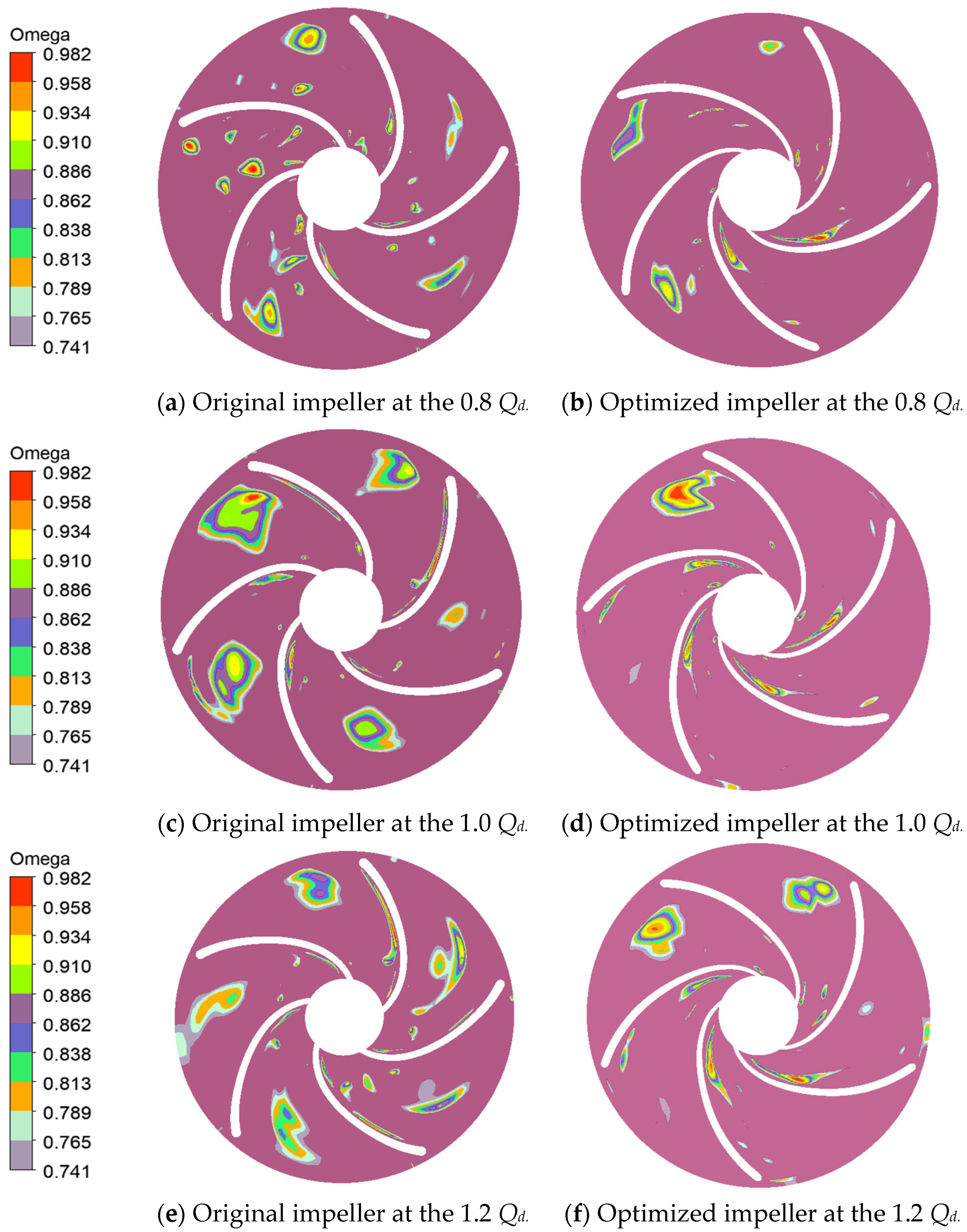
The Omega vortex identification method can simultaneously capture vortices of different intensities in the flow field. Unlike the Q-criterion, which is highly sensitive to threshold effects, the Omega method is threshold-independent, thereby significantly enhancing the accuracy of vortex identification [31,32]. Figure 18 presents the vortex structures identified by the Omega method within the blade passages before and after blade profile optimization under 0.8 Qd, 1.0 Qd, and 1.2 Qd conditions. Some regions with high Omega values and large spatial extent are observed in the middle of the original impeller outlet passage under operating conditions, indicating the presence of intense vortex structures in these areas. These vortex structures are primarily induced by rotor–stator interaction between the impeller and the volute. After blade profile optimization, both the number of vortices and the local Omega values are significantly reduced in the passage, demonstrating that the optimized design effectively mitigates the large-scale vortex structures near the impeller outlet. Compared to vortex identification based on the Q-criterion, the Omega method captures the vortices generated by rotor–stator interaction with greater clarity and robustness.
Based on the Omega vortex identification method, the original impeller exhibits irregular, multi-regional, and small-scale vortex structures in the middle of the blade passage. After optimization, the vortex development in the optimized passage becomes more uniform and organized, exhibiting regular vortex patterns that evolve consistently with the main flow. For the vortex structures at the inlet and middle regions of the blade passage, the Q-criterion can more clearly capture the regional vortex characteristics, especially the separated flow induced by changes in inlet flow direction. Meanwhile, the Omega method more clearly reveals the variation in fluid rotation and shear effects on the blade surfaces. The optimized blade profile effectively reduces the area and number of unnecessary strong vortices within the passage, resulting in more stable and orderly fluid motion, which has a significant impact on enhancing the operational efficiency of the model pump.

5. Conclusions

In order to enhance the hydraulic efficiency of marine centrifugal pumps, this paper focuses on the complex three-dimensional twisted design of the pump blade profile. The clonal selection algorithm was optimized, and an automated hydraulic optimization design method for the high-efficiency centrifugal pump impeller was developed. The impeller of the model pump was optimally designed, and the performance characteristics and internal flow features of the pump before and after optimization were compared and analyzed. The research results are as follows:
A performance test platform for the marine centrifugal pump was established to test the performance characteristics of the model pump under all operating conditions. The pump performance characteristics under multiple operating conditions were analyzed, and the accuracy of the numerical simulation method was validated. At the rated flow condition, the error between the experimental and calculated heads was 4.08%, and the error for efficiency was 0.46%, indicating that the numerical simulation method is feasible.
The Clonal Selection Algorithm (CSA) was enhanced by integrating mechanisms from the Slime Mold Algorithm and Tangent Flight strategy, forming a hybrid algorithm (STCSA) that addresses issues such as premature convergence to local optima and long iteration cycles in the original algorithm. An automated hydraulic optimization design framework for centrifugal pump impellers was established based on the MATLAB and ANSYS platforms. Employing the improved STCSA, with the operational efficiency of the model pump as the objective function, the blade profile was optimized by controlling 10 key geometric parameters using Bézier curves.
The optimization design method was performed on the impeller of a marine centrifugal pump. After optimization, the ineffective flows, such as the separated flow and the secondary vortex within the impeller passage, were significantly improved. The vortex intensity was notably reduced, leading to decreased hydraulic loss and improved energy exchange efficiency between the blades and the fluid. The optimized model pump achieved a head increase of 0.58 m and an efficiency improvement of 7% under the rated operating condition. These results validate the feasibility of the blade profile optimization method proposed in this paper, which holds significant theoretical value and practical engineering implications for enhancing the operational efficiency of marine centrifugal pumps.

Author Contributions

Data curation, Q.C.; funding acquisition, Y.Y.; investigation, Q.C.; methodology, Q.C. and S.W.; project administration, Y.Y.; writing—original draft, Y.Y. and Q.C. All authors have read and agreed to the published version of the manuscript.

Funding

This research was funded by the Jiangsu Province Industry-University-Research Cooperation Project (Grant No. BY20240057).

Data Availability Statement

The data presented in this study are available upon request from the corresponding author.

Conflicts of Interest

The authors declare no conflicts of interest.

References

  1. Elkafas, A.G.; Shouman, M.R. A study of the performance of ship diesel-electric propulsion systems from an environmental, energy efficiency, and economic perspective. Mar. Technol. Soc. J. 2022, 56, 52–58. [Google Scholar] [CrossRef]
  2. Kalaiseivan, A.S.V.; Subramaniam, U.; Shanmugam, P.; Hanigovszki, N. A comprehensive review on energy efficiency enhancement initiatives in centrifugal pumping system. Appl. Energy 2016, 181, 495–513. [Google Scholar] [CrossRef]
  3. Yuan, Y.; Fang, Y.; Tang, L. Effects of non-uniform elbow inflow on the unsteady flow and energy development characteristics of a centrifugal pump. Phys. Fluids 2023, 35, 015152. [Google Scholar] [CrossRef]
  4. Wang, C.; Yao, Y.; Yang, Y.; Chen, X.; Wang, H.; Ge, J.; Cao, W.; Zhang, Q. Automatic optimization of centrifugal pump for energy conservation and efficiency enhancement based on response surface methodology and computational fluid dynamics. Eng. Appl. Comput. Fluid Mech. 2023, 17, 2227686. [Google Scholar] [CrossRef]
  5. Kan, K.; Li, Y.; Chen, H.; Gao, S.; Chen, J. A method for parameterized design and rapid optimization of axial flow pumps. Eng. Appl. Comput. Fluid Mech. 2025, 19, 2506814. [Google Scholar] [CrossRef]
  6. Li, Z.; Ding, H.; Shen, X.; Jiang, Y. Performance optimization of high specific speed centrifugal pump based on orthogonal experiment design method. Processes 2019, 7, 728. [Google Scholar] [CrossRef]
  7. Kaya, M.; Ayder, E. Prediction of cavitation performance of radial flow pumps. J. Appl. Fluid Mech. 2017, 10, 1397–1408. [Google Scholar] [CrossRef]
  8. Dehnavi, E.; Danlos, A.; Solis, M.; Kebdani, M.; Bakir, F. Cavitation performance of a pump with independently rotating inducer and impeller in co-rotation and counter-rotation modes by varying rotor speeds. J. Fluids Eng.-Transctions ASME 2025, 147, 061203. [Google Scholar] [CrossRef]
  9. Murovec, J.; Curovic, L.; Novakovic, T.; Prezelj, J. Psychoacoustic approach for cavitation detection in centrifugal pumps. Appl. Acoust. 2020, 165, 107323. [Google Scholar] [CrossRef]
  10. Kamino, Y.; Kanemaru, M.; Shinozuka, R.; Iwawaki, T.; Hirakida, K.; Irikiin, K.; Miyauchi, T. Cavitation detection method for pumps based on motor current signature analysis. Electr. Eng. Jpn. 2025, 145, 46–52. [Google Scholar]
  11. Yang, J.H.; Li, X.Y.; Cheng, D.H.; Ji, J.T.; Zhao, M.W.; Guo, W.; He, L.L. Numerical simulation for impeller structure optimization for vortex pump based on orthogonal design method. Appl. Sci. 2025, 15, 2265. [Google Scholar] [CrossRef]
  12. Ghamkhar, K.; Ebrahimi, A.; Shariloo, K. Wavelet analysis of the flow field around an oscillating airfoil undergoing pure pitching motion at low Reynolds number. Phys. Fluids 2023, 35, 063607. [Google Scholar] [CrossRef]
  13. Dönmez, A.H.; Yumurtaci, Z.; Kavurmacioglu, L. Cavitation performance enhancement of a centrifugal pump impeller based on taguchi’s orthogonal optimization. Arab. J. Sci. Eng. 2025, 50, 13869–13885. [Google Scholar] [CrossRef]
  14. Yang, G.; Zhang, D.S.; Shen, X.; Pan, Q.; Pang, Q.Z. Investigation on flow instability in the hump region of the large vertical centrifugal pump under cavitation conditions based on proper orthogonal decomposition. Phys. Fluids 2024, 36, 115134. [Google Scholar] [CrossRef]
  15. De Donno, R.; Fracassi, A.; Ghidoni, A.; Morelli, A.; Noventa, G. Surrogate-based optimization of a centrifugal pump with volute casing for an automotive engine cooling system. Appl. Sci. 2021, 11, 11470. [Google Scholar] [CrossRef]
  16. Guo, T.; Pan, J.; Tao, R.; Xiao, R. Optimal design of a micro reversible pump turbine for balancing generation mode and storage mode. Energy Sci. Eng. 2025, 13, 1995–2010. [Google Scholar] [CrossRef]
  17. Bashiri, M.; Derakhshan, S.; Shahrabi, J. Design optimization of a centrifugal pump using particle swarm optimization algorithm. Int. J. Fluid Mach. Syst. 2019, 12, 322–331. [Google Scholar] [CrossRef]
  18. Li, S.; Chen, H.; Wang, M.; Heidari, A.A.; Mirjalili, S. Slime Mold algorithm: A new method for stochastic optimization. Future Gener. Comput. Syst. 2020, 111, 300–323. [Google Scholar] [CrossRef]
  19. Layeb, A. Tangent search algorithm for solving optimization problems. Neural Comput. Appl. 2022, 34, 8853–8884. [Google Scholar] [CrossRef]
  20. Tu, Y.; Zhao, X.; Lu, L.; Zhou, W.; Li, S.; Dai, J.; Wang, Z.; Zheng, Y.; Yang, C. Flow characteristics and pressure pulsation analysis of cavitation induced in a double-volute centrifugal pump. Water 2025, 17, 445. [Google Scholar] [CrossRef]
  21. Wang, K.; Luo, G.; Li, Y.; Xia, R.; Liu, H. Multi-condition optimization and experimental verification of impeller for a marine centrifugal pump. Int. J. Nav. Archit. Ocean Eng. 2020, 12, 71–84. [Google Scholar] [CrossRef]
  22. McEwan, C.; Hart, E. On clonal selection. Theor. Comput. Sci. 2011, 412, 502–516. [Google Scholar] [CrossRef]
  23. Meng, Q.; Shen, X.; Zhao, X.; Yang, G.; Zhang, D. Numerical Investigation on Cavitation Vortex Dynamics of a Centrifugal Pump Based on Vorticity Transport Method. J. Mar. Sci. Eng. 2023, 11, 1424. [Google Scholar] [CrossRef]
  24. Oro, J.M.F.; Perotti, R.B.; Vega, M.G.; González, J. Effect of the radial gap size on the deterministic flow in a centrifugal pump due to impeller-tongue interactions. Energy 2023, 278, 127820. [Google Scholar] [CrossRef]
  25. Li, H.; Chen, Y.; Yang, Y.; Wang, S.; Bai, L.; Zhou, L. CFD simulation of centrifugal pump with different impeller blade trailing edges. J. Mar. Sci. Eng. 2023, 11, 402. [Google Scholar] [CrossRef]
  26. Clerc, M.; Kennedy, J. The particle swarm-explosion, stability, and convergence in a multidimensional complex space. IEEE Trans. Evol. Comput. 2002, 6, 58–73. [Google Scholar] [CrossRef]
  27. Zhan, Z.H.; Zhang, J.; Li, Y.; Chung, H.S. Adaptive particle swarm optimization. IEEE Trans. Syst. Man Cybern. Part B (Cybern.) 2009, 39, 1362–1381. [Google Scholar] [CrossRef] [PubMed]
  28. Liu, Z.; Ji, L.; Pu, W.; Li, W.; Shi, W.; Zhou, L. Research on efficiency improvement technology of wide range centrifugal pump based on genetic algorithm and internal flow loss diagnosis. Water 2024, 16, 3402. [Google Scholar] [CrossRef]
  29. Kock, F.; Herwig, H. Local entropy production in turbulent shear flows: A high-Reynolds number model with wall functions. Int. J. Heat Mass Transf. 2004, 47, 2205–2215. [Google Scholar] [CrossRef]
  30. Chong, M.S.; Perry, A.E.; Cantwell, B.J. A general classification of three-dimensional flow fields. Phys. Fluids A Fluid Dyn. 1990, 2, 765–777. [Google Scholar] [CrossRef]
  31. Liu, C.; Wang, Y.; Yang, Y.; Duan, Z. New omega vortex identification method. Sci. China Phys. Mech. Astron. 2019, 59, 684711. [Google Scholar] [CrossRef]
  32. Jiang, L.; Wang, W.; Shi, Y.; Chen, J.; Bai, L.; Zhou, L. Vortex dynamics analysis of an energy loss mechanism in a centrifugal pump impeller. Phys. Fluids 2025, 37, 025164. [Google Scholar] [CrossRef]
Figure 1. Schematic diagram of centrifugal pump hydraulic test platform. 1. Drive motor; 2. test centrifugal pump; 3. pressure sensor; 4. electromagnetic flowmeter; 5. bellows; 6. solenoid valve; 7. ball valve; 8. water supply tank; 9. vacuum pump.
Jmse 14 00488 g001
Figure 2. Experimental test rig for model pump.
Jmse 14 00488 g002
Figure 3. Test performance curves.
Jmse 14 00488 g003
Figure 4. Computational mesh of the domain.
Jmse 14 00488 g004
Figure 5. Mesh independence analysis.
Jmse 14 00488 g005
Figure 7. Workflow of the Slime Mold Algorithm.
Jmse 14 00488 g007
Figure 8. Bézier control method for blade thickness and setting angle using curves.
Jmse 14 00488 g008aJmse 14 00488 g008b
Figure 9. Control points of the Bézier curve for the angle.
Jmse 14 00488 g009
Figure 10. Control points of the Bézier curve for the thickness.
Jmse 14 00488 g010
Figure 11. Flowchart of the STCSA algorithm.
Jmse 14 00488 g011
Figure 12. Variation in pump efficiency during the iteration process.
Jmse 14 00488 g012
Figure 13. Blade models before and after optimization.
Jmse 14 00488 g013
Figure 14. Comparison of performance curves for the pipeline centrifugal pump before and after optimization.
Jmse 14 00488 g014
Figure 15. Comparison of internal streamlines between the original and optimized impellers under different operating conditions.
Jmse 14 00488 g015
Figure 16. Distribution of turbulent dissipation on an impeller cross-section.
Jmse 14 00488 g016
Figure 17. Comparison of Q-criterion contours under different operating conditions.
Jmse 14 00488 g017aJmse 14 00488 g017b
Figure 18. Comparison of Omega method-based vortex identification under different operating conditions.
Jmse 14 00488 g018
Table 1. Basic parameters of model pump.
Design Parameter (s)Value
Impeller inlet diameter Dj/m0.044
Impeller outlet diameter D2/m0.159
Blade outlet width b2/m0.0052
Number of impeller blades Zim5
Blade inlet angle β 1 / (°)22
Blade outlet angle β 2 / (°)27.5
Volute inlet width b5/m0.017
Table 2. Performance evaluation of different optimization algorithms on test functions.
LabelTest FunctionDimensionTheoretical z OptimumAlgorithmOptimal SolutionSD
1 f ( x )   = i = 1 n x i 2 10[0,0,…,0]GA2.25 × 10−42.32 × 10⁻³
PSO00
SMA00
CSA2.4 × 10−84.2 × 10⁻⁸
STCSA00
2 f ( x )   = i = 1 n [ x i 2 - 10 cos ( 2 π x i )   +   10 ] 10[0,0,…,0]GA21.4414.42
PSO3.741.86
SMA00
CSA11.981.92
STCSA00
3 f ( x ) = 1 4000 i = 1 n x i 2 - i = 1 n cos ( x i i ) + 1 10[0,0,…,0]GA6.58 × 10−10.2
PSO7.15 × 10−23.29 × 10⁻²
SMA00
CSA4.01 × 10−28.7 × 10⁻⁴
STCSA00
Table 3. Convergence success rates of different optimization algorithms on the three test functions.
LabelAlgorithmConvergence Success RateMinimum Duration of a Single RunMaximum Duration of a Single RunAverage Duration of a Single Run
1GA00.67860.73350.6915
PSO100%0.18370.22930.192
SMA100%2.19822.26142.2096
CSA01.0111.12551.1038
STCSA100%0.17650.22970.2014
2GA00.69850.76050.7283
PSO00.38180.42080.3951
SMA100%2.2082.34682.2674
CSA01.09011.17171.1312
STCSA100%0.58640.75120.6761
3GA00.46150.51060.4756
PSO00.39410.57250.4875
SMA100%2.29262.93752.3364
CSA01.24961.34671.2641
STCSA100%0.40120.52130.4831
Table 4. Design parameter range.
Design VariableUpper BoundLower BoundDesign VariableUpper BoundLower Bound
x1−3030x6110
x2−3050x7110
x3085x8110
x4085x9110
x50140x10110
Table 5. Comparison of impeller blade profile parameter sets before and after optimization.
3D ModelM-Premie
(1)
M-Premie
(2)
M-Premie
(3)
M-Premie
(4)
M-Premie
(5)
M
(1)
M
(2)
M
(3)
M
(4)
M
(5)
Initial014.20447.02045.55198.9384.53.42.15.21.5
Optimal8.221−25.5697.85780.714118.5424.73.12.42.32.0
Disclaimer/Publisher’s Note: The statements, opinions and data contained in all publications are solely those of the individual author(s) and contributor(s) and not of MDPI and/or the editor(s). MDPI and/or the editor(s) disclaim responsibility for any injury to people or property resulting from any ideas, methods, instructions or products referred to in the content.