Article

Study on the Different Thermal Insulation Methods to Control the Wellbore Temperature in Deepwater Wells

1
School of Mechanical and Electrical Engineering, Beijing University of Chemical Technology, Beijing 100029, China
2
CNPC Research Institute of Safety and Environment Technology, Beijing 102206, China
3
CNPC Engineering Technology R & D Co., Ltd., Beijing 102206, China
4
Jidong Oilfield Company, PetroChina, Tangshan 063000, China
5
PetroChina Research Institute of Petroleum Exploration and Development, Beijing 100083, China
6
Greatwall Drilling Company, CNPC, Panjin 124000, China
*
Authors to whom correspondence should be addressed.
J. Mar. Sci. Eng. 2026, 14(5), 411; https://doi.org/10.3390/jmse14050411
Submission received: 25 January 2026 / Revised: 19 February 2026 / Accepted: 22 February 2026 / Published: 24 February 2026
(This article belongs to the Topic Advanced Technology for Oil and Nature Gas Exploration)

Abstract

Thermal insulation is necessary for deepwater wells to achieve safe and effective production. Based on the comparison of different thermal insulation measures and the control requirements, this paper proposes two indicators to analyze thermal insulation performance. A model is established by considering the wellbore radial thermal resistance and wellbore-formation heat transfer process in order to calculate the two indicators. The analysis shows that there exists an overlapping effective range between vacuum-insulated tubing and insulation-coated tubing, and a similar overlap is observed between insulating liquid and insulated tubing. When comparable insulation performance can be achieved, insulating liquid should be prioritized, while vacuum-insulated tubing should be considered only as the final option. Under high production or a high geothermal gradient, annular temperature change is the primary control objective, whereas under low-production or low-temperature conditions, wellhead temperature becomes the dominant control target. The combination of insulated tubing and insulating liquid exhibits pronounced synergistic effects. In the case of a well under high-temperature and high-production conditions, the composite insulation reduces annular temperature change by 64.26%, and in low-temperature, low-production wells, it increases wellhead temperature by 100.43%. In practical applications, insulating fluids should be preferred, with insulated tubing employed as a supplementary measure.

1. Introduction

Deepwater oil and gas have become the primary findings for major global hydrocarbon discoveries in recent years, such as Brazil Santos Basin [1,2] and Africa Orange Basin [3]. However, deepwater oil and gas development is characterized by high risk and high cost, requiring long-term production to offset costs while maintaining strict safety to prevent catastrophic events such as blowouts, wellbore integrity failure, and hydrocarbon leakage [4]. Among the numerous technical challenges, wellbore temperature control is particularly critical. In deepwater environments, the low temperature near the mud line leads to significant heat exchange with the wellbore. As a result, the temperature of the production fluid decreases, while the temperature of the annulus and surrounding formations increases correspondingly [5,6]. The heat exchange may trigger hydrate blockage in production tubing [7,8], paraffin deposition in crude oil [9], annular pressure buildup [10,11], and even wellhead instability induced by shallow-water hydrate dissociation [12,13]. As reported, several deepwater wells in Mexico Gulf have experienced casing collapse accidents caused by annular pressure, like Pompano A-31 well [14] and Mad Dog Slot W1 well [15]. Therefore, effective control of wellbore temperature is not only essential for ensuring production, but also vital for reducing risks and achieving efficient development.
In general, the primary objectives of wellbore temperature control are to maintain the production tubing temperature and to limit the temperature rise in casing annuli. Active heating is a technique used to increase the temperature inside the production tubing, including electrical heating [16,17] and hot-fluid injection [18]. These measures are mainly suitable for low-production, low-temperature wells or heavy-oil thermal recovery wells. However, they are costly and simultaneously increase annular temperature. Thermal insulation measures can improve the wellbore temperature distribution by reducing radial heat transfer. Common approaches include insulated tubing [19,20], annular insulating fluids [21,22], thermal-insulated cement sheath [23], and nitrogen injected into the annulus [24]. In deepwater wells in Mexico Gulf, annular insulating fluids are widely used to control annular temperature and mitigate annular pressure buildup [25,26]. Ferreira et al. [27] discussed the use of insulated tubing to control annular temperature rise in Brazilian deepwater wells. Guan et al. [28] proposed a dual-layer configuration using insulated tubing and insulated casing to control annular temperature and developed a model to analyze the influence of parameters such as setting depth. Zeng et al. [29] established a model to investigate the effects of coupling-gap size at insulated tubing joints, production rate, and water cut on the wellbore temperature. Zhang et al. [30] examined the effect of nitrogen and insulating fluids on annular temperature–pressure behavior, focusing primarily on the peak value of annular pressure. Śliwa et al. [31] evaluated the application of vacuum-insulated tubing in deep well heat extraction and suggested that it has broad potential in enhancing geothermal energy utilization.
Although previous studies have analyzed insulation performance under different engineering conditions, deepwater wells require simultaneous control of both production fluid temperature and annular fluid temperature. Excessive cooling of production fluids compromises flow assurance, whereas excessive annular heating may trigger high annular pressure buildup [32], posing risks to well integrity, including potential damage to casing [33], cement sheath [34], and other safety barriers. However, available studies primarily focused on the role of thermal insulation in controlling trapped annular pressure by analyzing either insulated tubing or insulated annular liquids. Little research has made systematic comparisons of the control effectiveness and applicability of these two insulation measures. Therefore, this paper selects two key indicators to evaluate the control performance of thermal insulation on trapped annular pressure and flow assurance, including the average annular temperature rise and the temperature of the production fluid at the wellhead. A mathematical model is then developed to quantitatively compare the performance of different types of insulated tubing and thermal-insulated annular liquids. Through analysis, the applicability of various insulation strategies under different conditions is evaluated. Furthermore, a combined insulation approach is proposed to enhance control performance under both high-temperature, high-production and low-temperature, low-production scenarios, thereby providing theoretical guidance for the safe and reliable operation of deepwater wells.

2. Materials and Methods

2.1. Analysis of Typical Wellbore Thermal Insulation Measures

2.1.1. Insulated Tubing

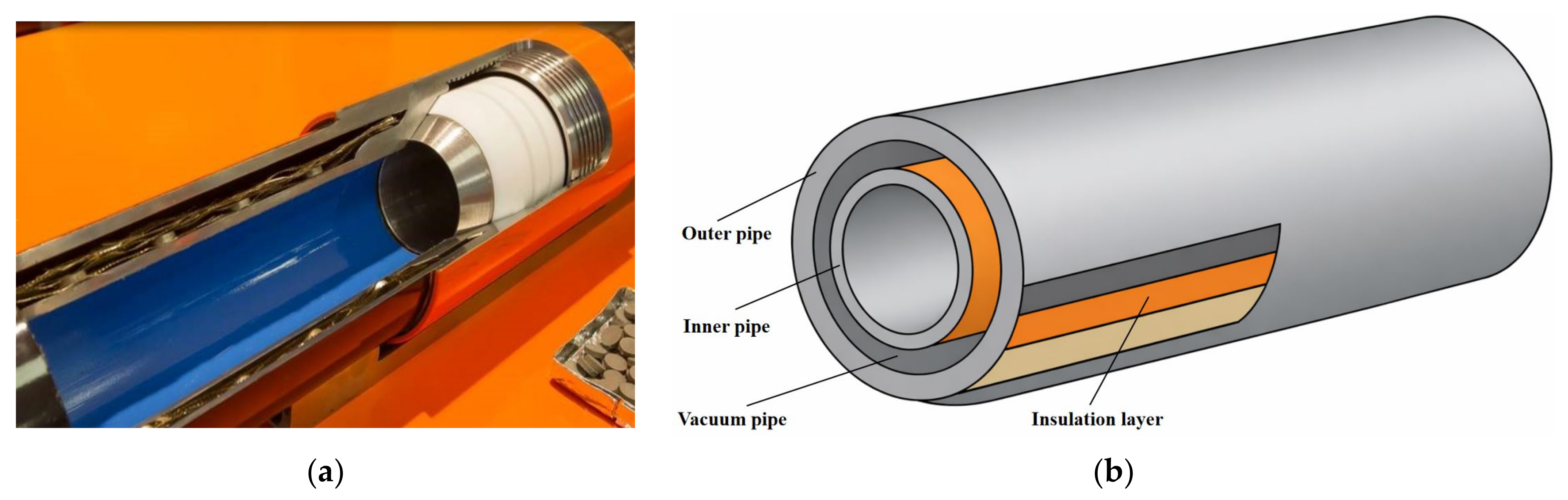
Insulated tubing can be divided into vacuum insulation, filled insulation, and insulation coatings. These approaches increase the wellbore radial thermal resistance and thereby mitigate the temperature rise in the annulus. Vacuum-insulated tubing (VIT) typically consists of a double-walled structure (inner and outer pipes). The space between the double walls is evacuated and filled with multilayer thermal barriers—such as reflective foils, multilayer fibers, or nano-insulation material, as shown in Figure 1. The key insulation parameters of VIT include thermal conductivity, vacuum level, temperature tolerance range, and thermal behavior at the connection joints [35,36]. The typical thermal conductivity of VIT ranges from 0.01 to 0.08 W/(m·K). The main advantage of VIT is its vacuum annulus, which effectively suppresses convective heat transfer, while reflective layers and multilayer insulation materials reduce radiative and solid-phase conduction. As a result, its thermal conductivity is an order of magnitude lower than that of conventional insulated pipes. However, VIT also faces challenges, including complex structure, high cost, and a sharp increase in heat loss once the vacuum is compromised [37,38]. This type of tubing has been used for paraffin control and annular pressure management [39,40].
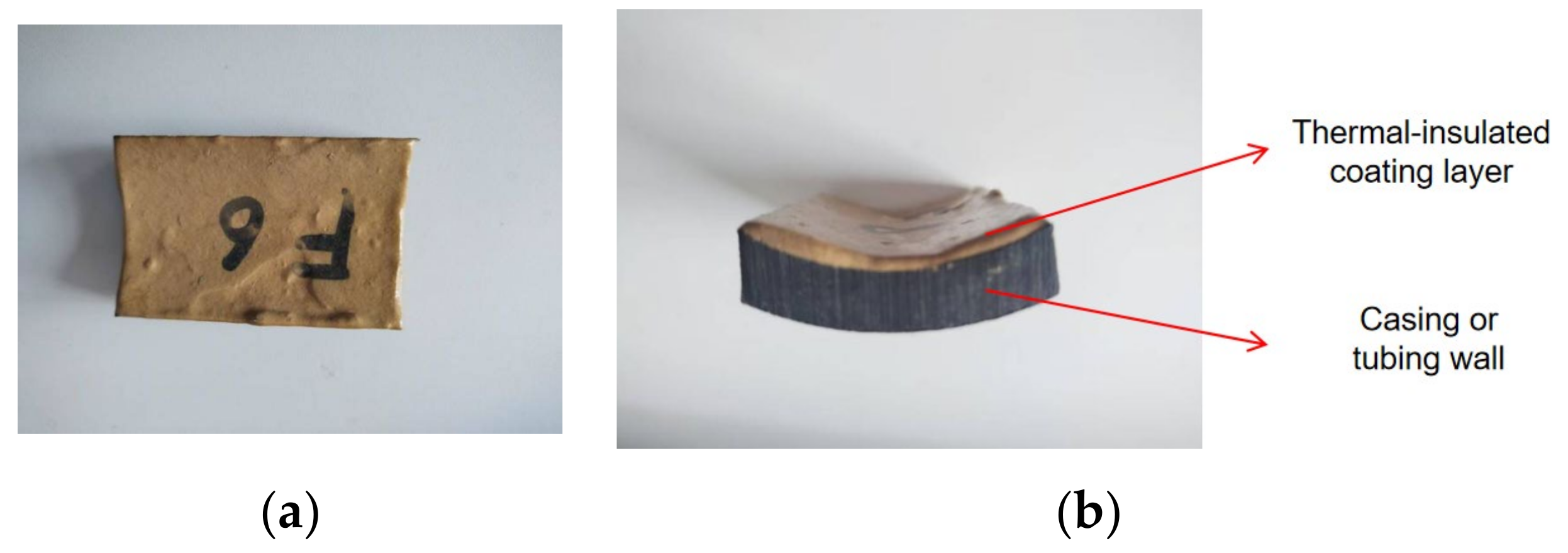
Filled insulated tubing typically fills the space between the inner and outer pipes with thermal insulation materials, like inert gases, insulating fluids, foamed materials, aerogels, or insulation fiber blankets. When a low-conductivity oil-based insulating fluid is used, its thermal conductivity is approximately 0.14 W/(m·K) [41]. Filling the annulus with inert gases can significantly increase annular temperature and reduce heat loss, although maintaining the gas-tight integrity of the string is essential [42]. Insulation coatings generally use low-thermal-conductivity materials—such as aerogels, hollow glass microspheres, nano-ceramic insulators, microporous silica, or polyurethane foams—sprayed or lined onto the pipe surface to form a thermal-resistance barrier. When an aerogel-based coating is applied, the thermal conductivity can be reduced to approximately 0.024 W/(m·K) (for a coating thickness of about 10 mm) [43]. For insulation coatings, thermal and mechanical endurance is crucial, including resistance to high temperatures, high pressures, and acid/alkali corrosion. In deepwater or high-temperature wells, the coating must withstand temperatures from several tens to several hundreds of degrees Celsius while resisting seawater, corrosive fluids, cyclic thermal loading, vibration, and mechanical impact [44]. Failure of the coating can drastically reduce its insulation performance. Figure 2 illustrates an insulation coating capable of withstanding 200 °C and 60 MPa.

2.1.2. Nitrogen for Thermal Insulation

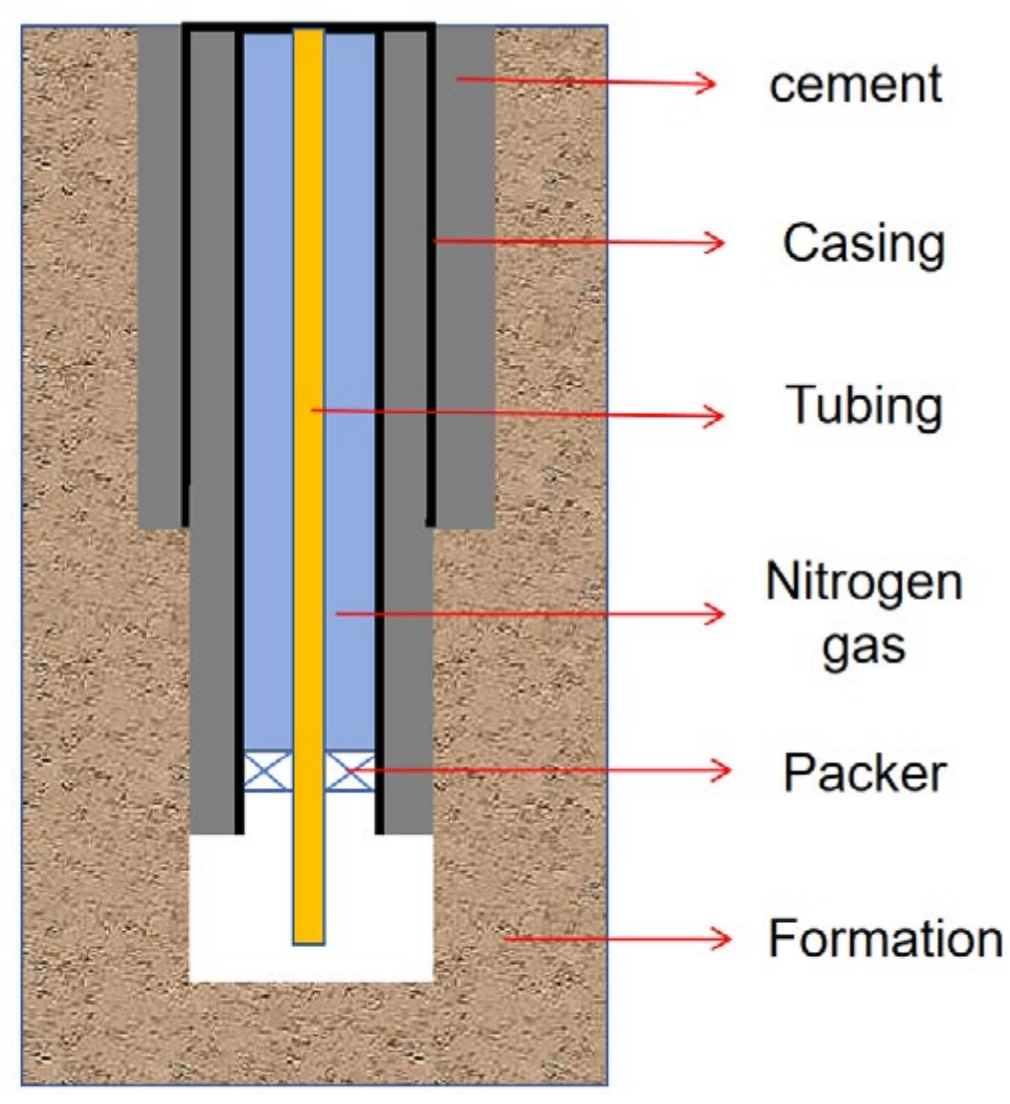
As shown in Figure 3, the nitrogen gas can be injected into the tubing–casing annulus, forming a low-thermal-conductivity and low-density gas layer [45]. At 20 °C, the thermal conductivity of nitrogen is approximately 0.025 W/(m·K) and at 100 °C it is about 0.028 W/(m·K), showing low sensitivity to temperature. This makes nitrogen insulation particularly suitable for thermal steam injection wells [46]. Moreover, nitrogen does not corrode wellbore barriers such as tubing and casing. For deepwater wells, however, the liquid in the tubing–casing annulus also functions to balance the pressure across the tubing and maintain the packer setting pressure [47,48]. Replacing the annular liquid with nitrogen may lead to packer unsetting or tubing rupture [49,50]. Therefore, nitrogen injection is rarely used as a thermal insulation method in deepwater wells.

2.1.3. Annular Insulating Fluids

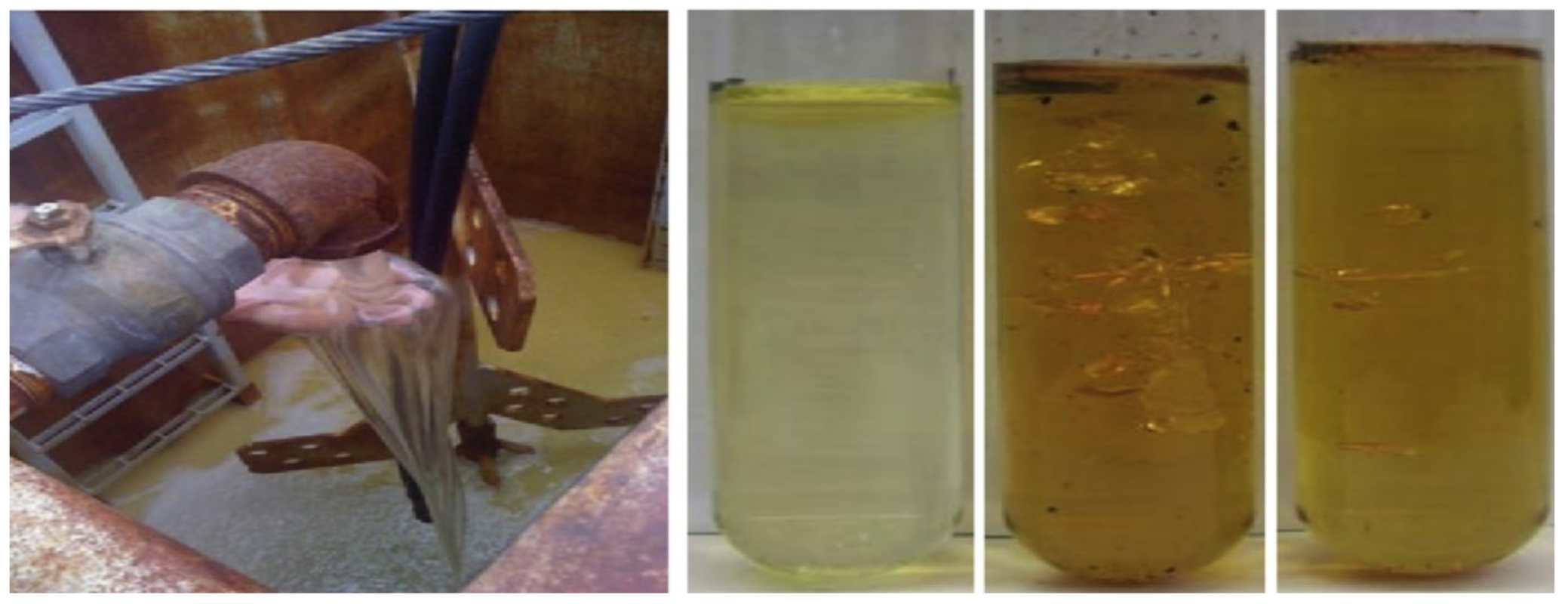
Annular insulating fluids work by introducing low-conductivity components such as polyols [51], cellulose nanocrystals [52], and acrylic formulations [53]. Available insulating fluids exhibit high thermal resistance, low corrosivity, and good temperature stability. They typically possess high viscosity at elevated temperatures to maintain insulation performance while retaining low viscosity during pumping at lower temperatures. Halliburton’s insulating fluids exhibit a thermal conductivity of 0.3–0.4 W/(m·K), whereas acrylic-enhanced fluids maintain conductivity as low as 0.18 W/(m·K). The development of solids-free water-based insulating fluids further eliminates sedimentation issues. For example, the solids-free insulating fluid shown in Figure 4 [54] employs nanotechnology and intermolecular associative polymers to construct a gel network, offering temperature resistance up to 260 °C with a thermal conductivity of only 0.21–0.28 W/(m·K).

2.1.4. Applicability Analysis

As summarized in Table 1, insulated tubing provides the lowest thermal conductivity but is also the most expensive. To enhance insulation performance, some deepwater wells have adopted this technology. Although nitrogen-filled annuli also exhibit low thermal conductivity, such measures change the pressure distribution in the tubing–casing annulus and therefore are not used in deepwater wells. Instead, nitrogen injection is mainly applied in thermal injection wells, while in deepwater wells, nitrogen is injected into annuli primarily as a trapped-annular-pressure control method, functioning through volume compensation rather than thermal insulation [55,56]. Annular insulating fluids, by contrast, are relatively cheaper, though they offer moderate thermal conductivity. Their lower cost makes them widely used in deepwater wells. Accordingly, the insulation methods examined in this study focus primarily on insulated tubing and insulating fluids.

2.2. Determination of the Evaluation Indicators

2.2.1. Magnitude of Annular Temperature Variation

In deepwater wells, completion fluids or residual drilling fluids remain in the annulus. During production, these annular fluids receive heat transferred radially from the production tubing, resulting in an increase in annular temperature. According to the principle of volume compatibility, the ability of the confined annulus to accommodate the thermal-expanded fluid is restricted due to the differences in thermo-physical properties between the fluid and casing. This induces a compressive effect on the annular fluid volume and leads to a rise in annular pressure—commonly referred to as trapped annular pressure [57]—as expressed in Equation (1):
d p a = p a T a Δ T a + p a V a Δ V a + p a m Δ m
where pa is the annular pressure, MPa; Ta is the temperature of annular fluid, °C; ΔTa is temperature change in the annular fluid, °C; Va is the annular volume, m3; ΔVa is the annular volume change, m3; m is the annular fluid mass, kg/m3; and Δm is the annular fluid mass change, kg/m3.
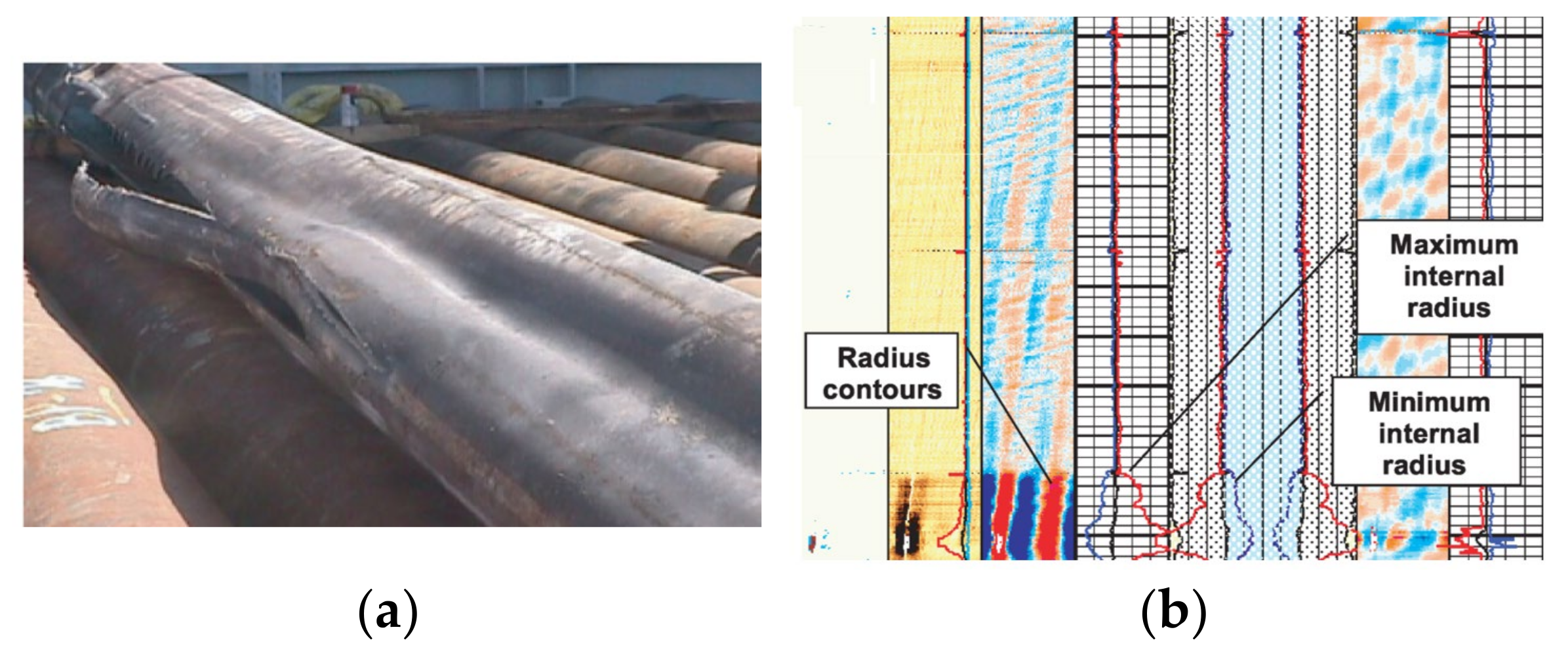
Deepwater wells often experience rapid annular pressure buildup [58], exceeding 50 MPa within 2–3 days [15]. Excessive annular pressure can severely compromise well integrity, leading to casing collapse [59] and cement sheath failure [60], as illustrated in Figure 5 [14,15]. Moreover, deepwater wells are typically far away from land and have limited platform space, making the consequences of integrity failure extremely severe, as demonstrated by the Deepwater Horizon incident [61]. Studies show that annular temperature rise is the dominant factor contributing to trapped annular pressure, accounting for more than 80% of the pressure increase under sealed-annulus conditions [62]. Therefore, the temperature change in the annulus is a key indicator to evaluate the performance of thermal insulation measures.

2.2.2. Wellhead Temperature of Production Fluid

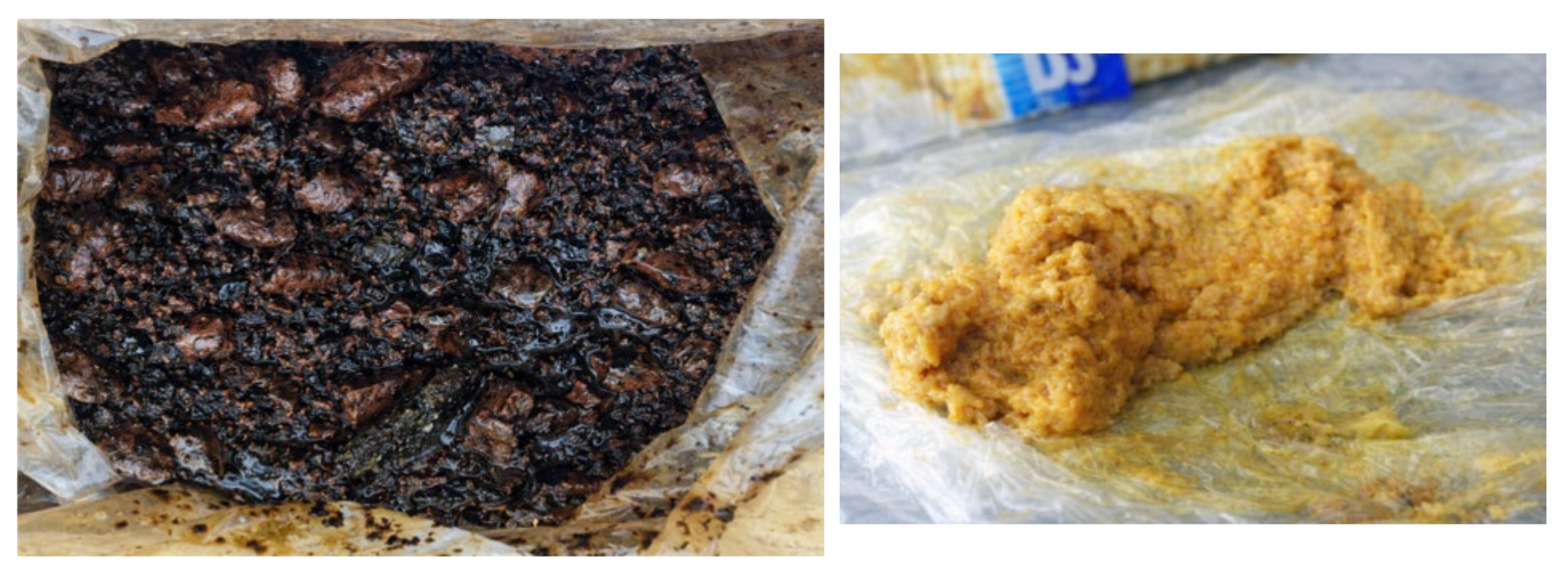
During production, the production fluid continuously undergoes radial heat transfer, causing a temperature decrease from the reservoir to the wellhead. Therefore, the wellhead temperature represents the lowest temperature in the entire production tubing. Low temperature can adversely affect flow assurance in three major aspects. First is hydrate formation. In the high-pressure, low-temperature deepwater environment, natural gas combines with water to form solid hydrates [63], which can plug the production tubing. Second is wax deposition. Low temperatures cause wax components in the fluid to precipitate, adhere to the tubing wall along with other solid particles, and form blockages, as shown in Figure 6 [64,65]. Third is pipeline transport risks: if the production fluid reaches excessively low temperature, hydrate or wax plugging may also occur in the pipeline. Once plugging occurs, production must be stopped, resulting in high operational costs and significant safety risks. Although it is an effective method to prevent hydrate or wax deposition by using chemicals and paraffin inhibitors, thermal insulation can strengthen the control performance and reduce the cost [66]. Therefore, the wellhead temperature of the production fluid must be considered as a key indicator for evaluating the effectiveness of thermal insulation.

2.3. Thermal Insulation Performance Analysis Model During Production

2.3.1. Characterization of Heat Transfer in Production Fluids

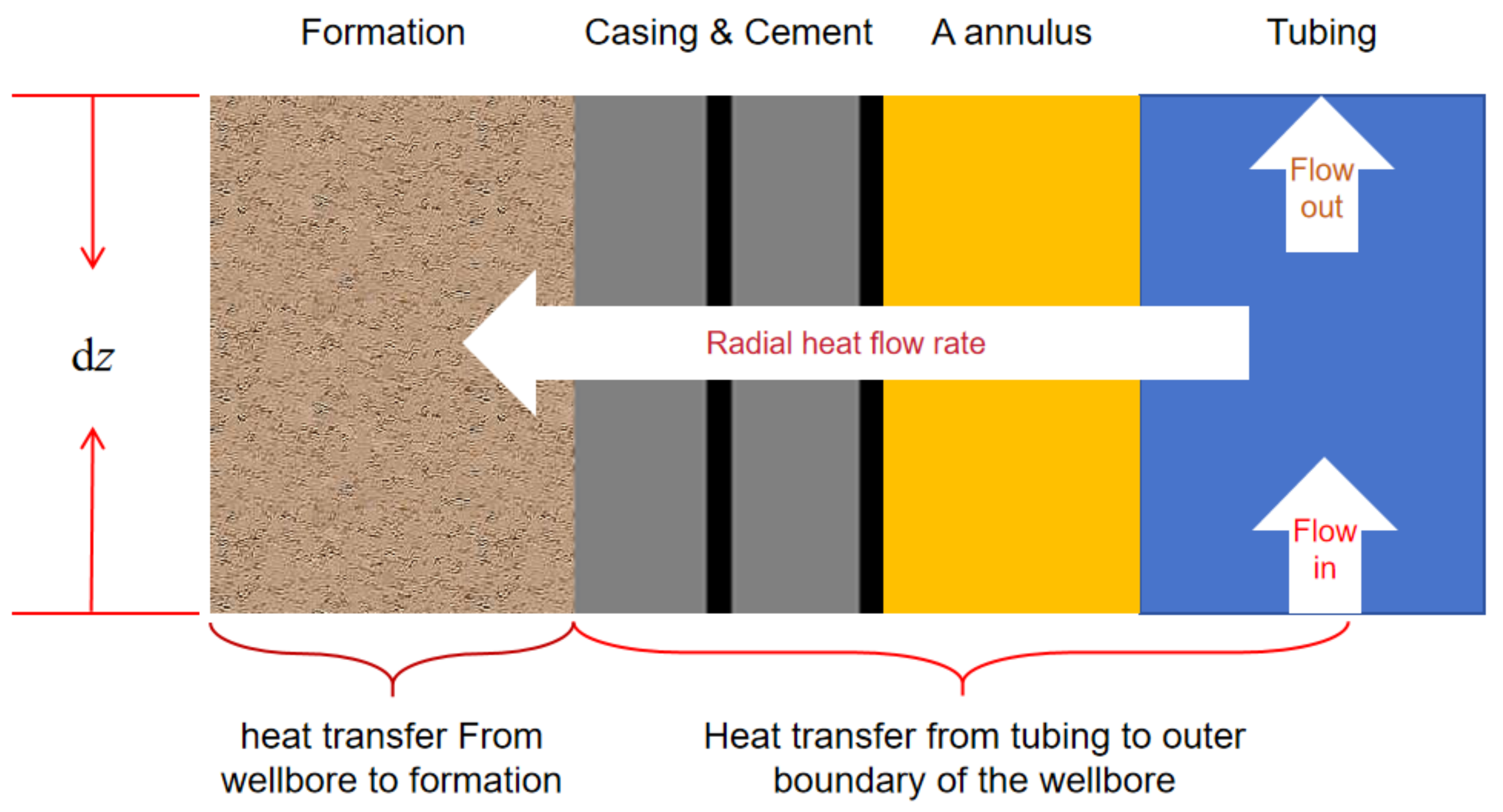
To simplify the calculation, the cement sheath is assumed to have a uniform thickness and the tubing is assumed to be centered in the wellbore. As illustrated in Figure 7, a micro-element of length dz is selected along the wellbore. This micro-element satisfies both momentum and energy conservation law. Momentum conservation includes friction, acceleration, and gravity terms, whereas energy conservation primarily accounts for kinetic, internal, potential, pressure, and thermal energy transfer, as expressed in Equation (2):
d p d z + ρ f g sin θ + f ρ f v f 2 2 d tn + ρ v f d v f d z = 0 C f d T f d z + v f d v f d z + 1 ρ f d p d z + g sin θ + 1 w f d Q d z = 0
where p is pressure, Pa; ρf is the fluid density inside the tubing, kg/m3; g is gravitational acceleration, m/s2; θ is well deviation angle, °; f is the friction factor, dimensionless; vf is fluid velocity, m/s; Cf is fluid specific heat capacity, J/(kg·°C); Tf is fluid temperature, °C; wf is fluid mass flow rate, kg/s; and Q is radial heat flux in the wellbore, J/s.
During production, friction caused by fluid flow leads to the conversion between kinetic and thermal energy. This process is primarily governed by flow velocity and the friction factor [67], as expressed by Equation (3):
f 0.5 = 2 log R a / d to 3.7065 5.0452 R e log R a / d to 1.1098 2.8257 + 5.8506 R e 0.8981
where Ra is tubing roughness, m; dto is tubing inner diameter, m; and Re is Reynolds number, dimensionless.
Heat transfer between the wellbore and the formation follows the principle of radial heat-flow conservation. Radial heat transfer consists of two processes. First is steady-state heat transfer from the tubing center to the outer boundary of the cement sheath. Second is transient heat transfer from the cement sheath to the surrounding formation. Under the semi-steady-state assumption, radial heat-flow conservation applies to both processes. Heat transfer at the cement–formation interface follows Fourier’s law [68], as expressed in Equations (4) and (5):
d Q r w = d Q r f
d Q r w = T f T h R to d z d Q r f = 2 π λ e T h T e T D d z
The dimensionless formation temperature has several formulations, among which the Hasan correlation provides high accuracy. Hasan and Kabir [69] applied this formulation to evaluate formation temperature near the wellbore. The corresponding expressions are given in Equations (6) and (7):
T D = 1.1281 t D 1 0.3 t D t D 1.5 0.4063 + 0.5 ln t D 1 + 0.6 / t D t D > 1.5
t D = t α e r w 2
where t is production time, s; αe is formation thermal diffusivity, m2/s; and rw is wellbore radius, m.

2.3.2. Calculation of Wellhead Temperature and Annular Temperature Change

The mechanisms of insulated tubing and annular insulating fluid are similar. They work by increasing the radial thermal resistance due to their low thermal conductivity, thereby reducing radial heat flux, increasing the temperature of the produced fluid, and limiting heat accumulation in the annulus. Therefore, the first step is determining the radial thermal resistance distribution. The conductive thermal resistance between the inner/outer walls of the tubing, casing, and cement sheath, as well as within the annular fluid, is calculated by Equation (8):
R tc = 1 2 π λ tc ln r 2 r 1
where Rtc is conductive thermal resistance, m·°C/W; λtc is thermal conductivity, W/(m·°C); and r2 and r1 are the outer and inner radii, m.
The total radial thermal resistance is the sum of serial resistances. Under multi-annulus conditions, the number of cement sheaths, casings, and annular fluid layers increases accordingly. Thus, the overall radial thermal resistance is as expressed by Equation (9):
R to = R cht + R tct + k = 1 m R tcc k + j = 1 n R tcs j + y = 1 u R tcf y
where Rcht is convective thermal resistance inside the tubing, m·°C/W; Rtct is tubing conductive resistance, m·°C/W; Rtcc is casing conductive resistance, m·°C/W; k is casing number, dimensionless; m is number of casing layers, dimensionless; Rtcs is annular fluid thermal resistance, m·°C/W; j is annulus number, dimensionless; n is total number of annuli, dimensionless; Rtcf is cement sheath conductive resistance, m·°C/W; y is cement sheath number, dimensionless; and u is number of cement sheath layers, dimensionless.
Once the radial thermal resistance is determined, it can get the radial heat flux by combining Equations (4) and (5), as shown in Equation (10):
d Q d z = 2 π λ e T e T f T D + 2 π λ e R to
A first-order linear nonhomogeneous differential equation can be obtained for the temperature of the production fluid by substituting Equations (10) and (3) into Equation (2), as expressed in Equation (11):
d T f d z = 2 π λ e T e T f W f C f T D + 2 π λ e R to + f v f 2 2 C f d tn
Considering that geothermal gradient, fluid temperature, and well structure vary along the wellbore, Equation (11) is solved using a spatial discretization approach. Specifically, the tubing is divided into segments of length Δz from the bottom to the wellhead, within which pressure and temperature are assumed to be constant. For each segment, Equation (11) yields Equation (12):
T f i + 1 = 1 A + Δ z A T f i t + Δ z T es i + 1 + A Δ z f i + 1 v f i + 1 2 2 C f d tn A = w f C f T D + 2 π λ e R to 2 π λ e
where i is the segment index, i = 1, 2, 3 …, and Δz is segment length, m.
The wellhead temperature of the produced fluid corresponds to the temperature at the final segment, as expressed in Equation (13):
T fw = T f N L
where Tfw is the temperature of production fluid in the wellhead, °C, and NL is the number of well segments at the depth of wellhead, dimensionless.
The annular temperature at any position can be obtained from radial heat-flow conservation and radial thermal resistance distribution [70], as shown in Equation (14):
T a i = T f i + T h i T f i R to i R zro i = T f i 1 + T D + 2 π λ e T e i R to i - R zro i T D + 2 π λ e R to i
where Ta is the annular temperature in a segment, °C, and Rzro is thermal resistance between the annulus and the outer edge, m·K/W.
Prior to production, the wellbore temperature is typically stable and assumed equal to the formation temperature [71,72]. Therefore, the average annular temperature rise is the mean of temperature changes across all segments, as given in Equation (15):
Δ T a = i = N a N L T a i T e i / N L N a + 1
where Na is the number of well segments at the depth of the annular liquid level, dimensionless.

3. Results

The insulation performance is evaluated by the case well presented in Reference [28]. The water depth of this well is 1200 m, the geothermal gradient is 4.3 °C/100 m, and the mud line temperature is 4 °C. Other key calculation parameters are listed in Table 2. After substituting the calculation parameters, the mathematical model established in Section 2 can be solved for analysis. The wellbore is first divided into segments, and the temperature is calculated sequentially from the bottomhole to the wellhead. In this way, both the wellhead temperature and the average annular temperature can be obtained.

3.1. Analysis of Insulation Performance

3.1.1. Insulation Performance of Insulated Tubing

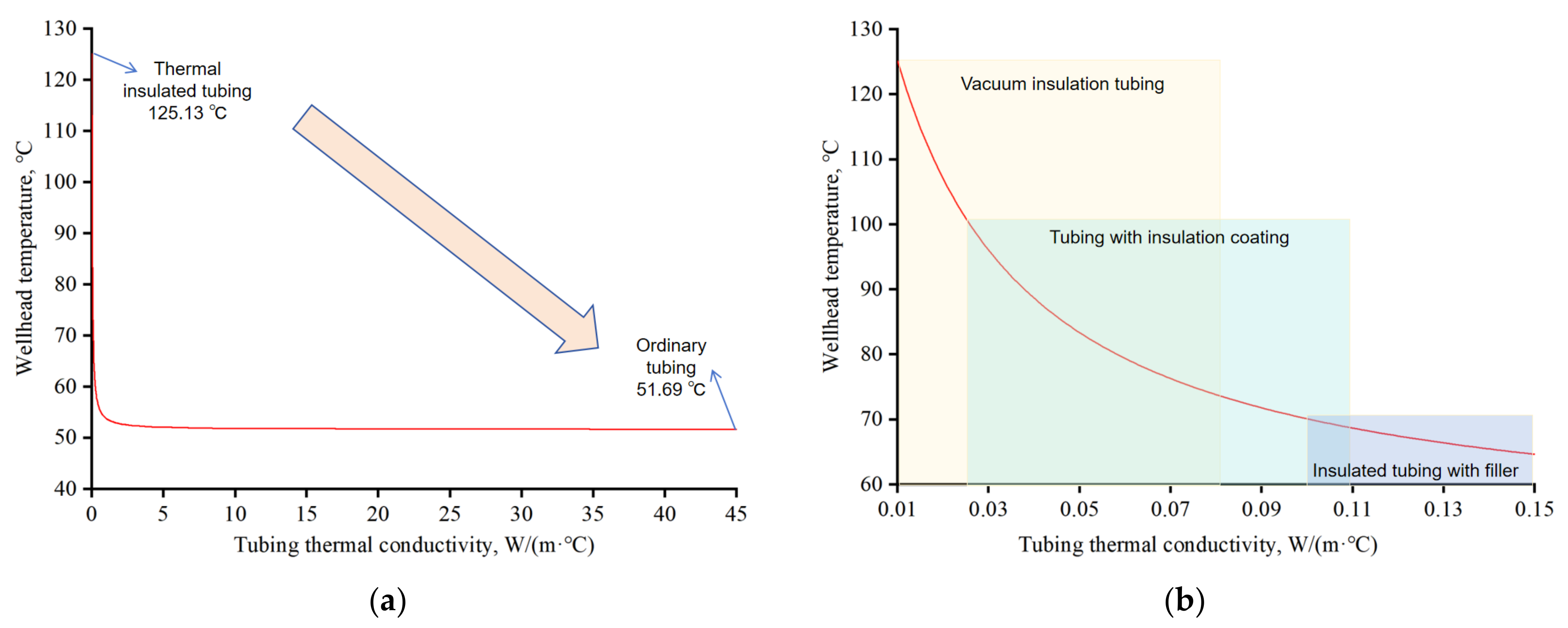
Figure 8 illustrates the response of wellhead temperature to tubing thermal conductivity. As shown in Figure 8a, when the tubing type shifts from insulated to ordinary, the wellhead temperature of the production fluid decreases rapidly and then becomes nearly stable. When the thermal conductivity is 0.01 W/(m·°C), the wellhead temperature reaches 125.13 °C. However, at a thermal conductivity of 45 W/(m·°C) (ordinary steel tubing), the corresponding temperature is only about 40.59 °C. This demonstrates that tubing insulation has a significant effect on wellhead temperature. Figure 8b further compares different types of insulated tubing. Vacuum-insulated tubing provides the best performance, maintaining wellhead temperatures within 110–125 °C. Meanwhile, there is an overlap between vacuum-insulated tubing and insulation-coated tubing, whereas tubing with thermal fillers shows comparatively poorer performance. Considering cost, insulation-coated tubing should be prioritized when it can achieve comparable performance, but attention must be paid to the durability of the coating.
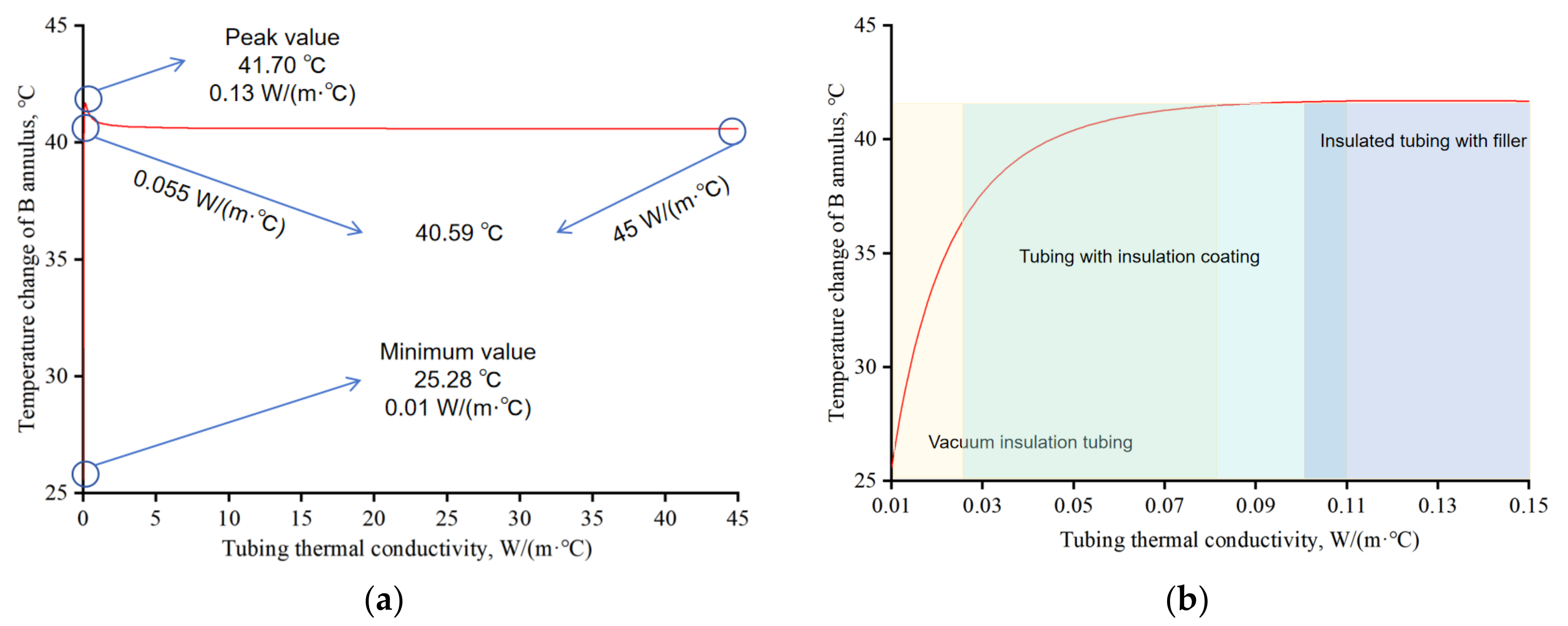
Figure 9 shows the relationship between the temperature change in annulus B and tubing thermal conductivity. In general, the annular temperature change rises rapidly with thermal conductivity and then stabilizes. In some cases, insulated tubing and ordinary tubing exhibit similar performances—for example, at a thermal conductivity of 0.055 W/(m·°C) and 45 W/(m·°C), the temperature change is the same (40.59 °C). Moreover, a peak value of 41.70 °C appears at a thermal conductivity of 0.13 W/(m·°C). This occurs because insulated tubing elevates the temperature of the production fluid, increasing the radial temperature gradient, while the increased radial thermal resistance is insufficient to compensate for the enhanced heat transfer caused by this increased gradient. As shown in Figure 9b, the conductivity range associated with filler-insulated tubing has a very weak influence on temperature increase, whereas vacuum insulation has a more pronounced effect. These results indicate that filler-type insulated tubing is not the optimal choice for annulus temperature control, and the insulation conductivity must be properly selected to avoid ineffective or counterproductive performance.

3.1.2. Insulation Performance of Annular Insulating Fluids

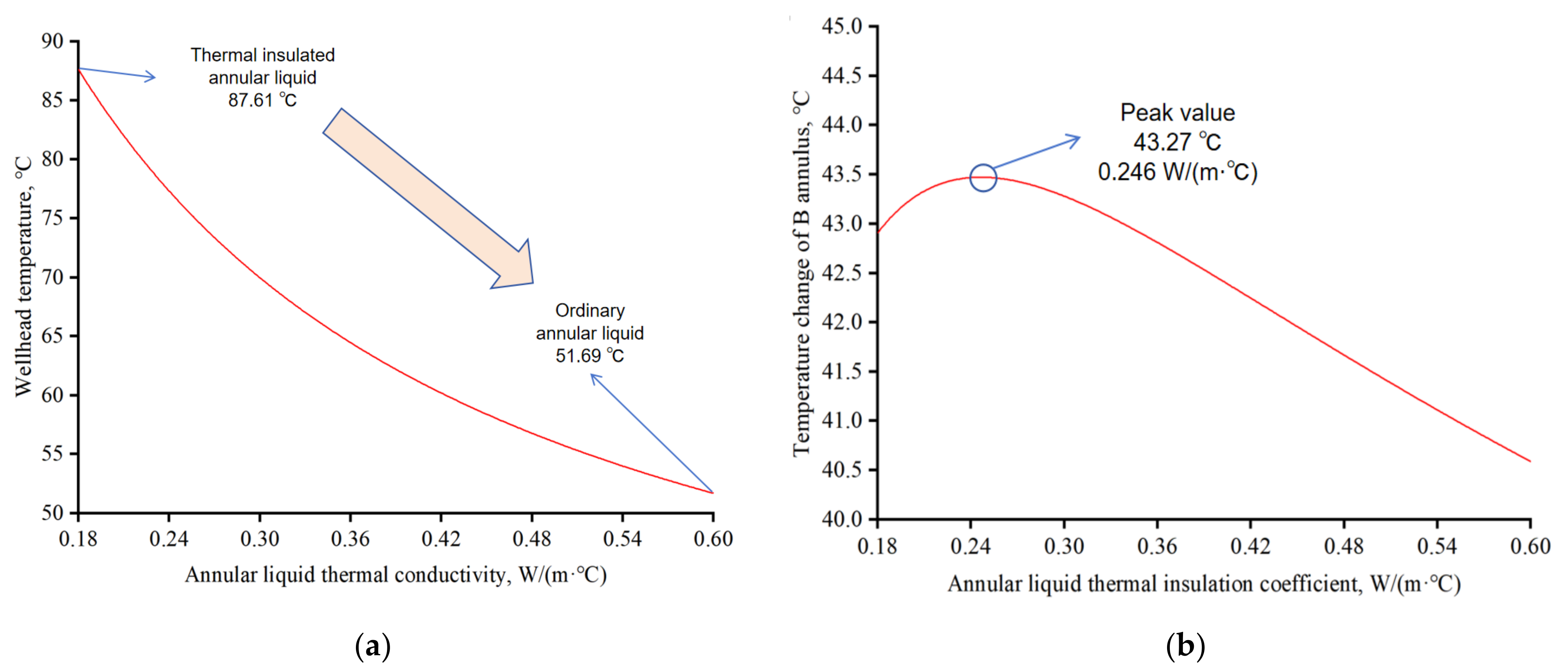
As shown in Figure 10, the performance of annular insulating fluids is broadly similar to that of insulated tubing. The wellhead temperature decreases steadily as the annular fluid thermal conductivity increases. When the conductivity is 0.18 W/(m·°C), the wellhead temperature is 87.61 °C. However, replacing it with an ordinary annulus fluid with a conductivity of 0.60 W/(m·°C) reduces the wellhead temperature to 51.69 °C. Similarly, the annulus temperature variation also exhibits a peak—43.27 °C at 0.246 W/(m·°C), as shown in Figure 10b. This indicates that inappropriate selection of insulating fluid may not reduce annulus temperature and can even have the opposite effect. Overall, annular insulating fluids have weaker control capability over wellhead temperature compared with insulated tubing. The annulus temperature control must be evaluated on a case-by-case basis to achieve optimal performance.

3.2. Analysis of Key Influencing Factors

3.2.1. Influence of Production Rate on the Performance of Insulated Tubing

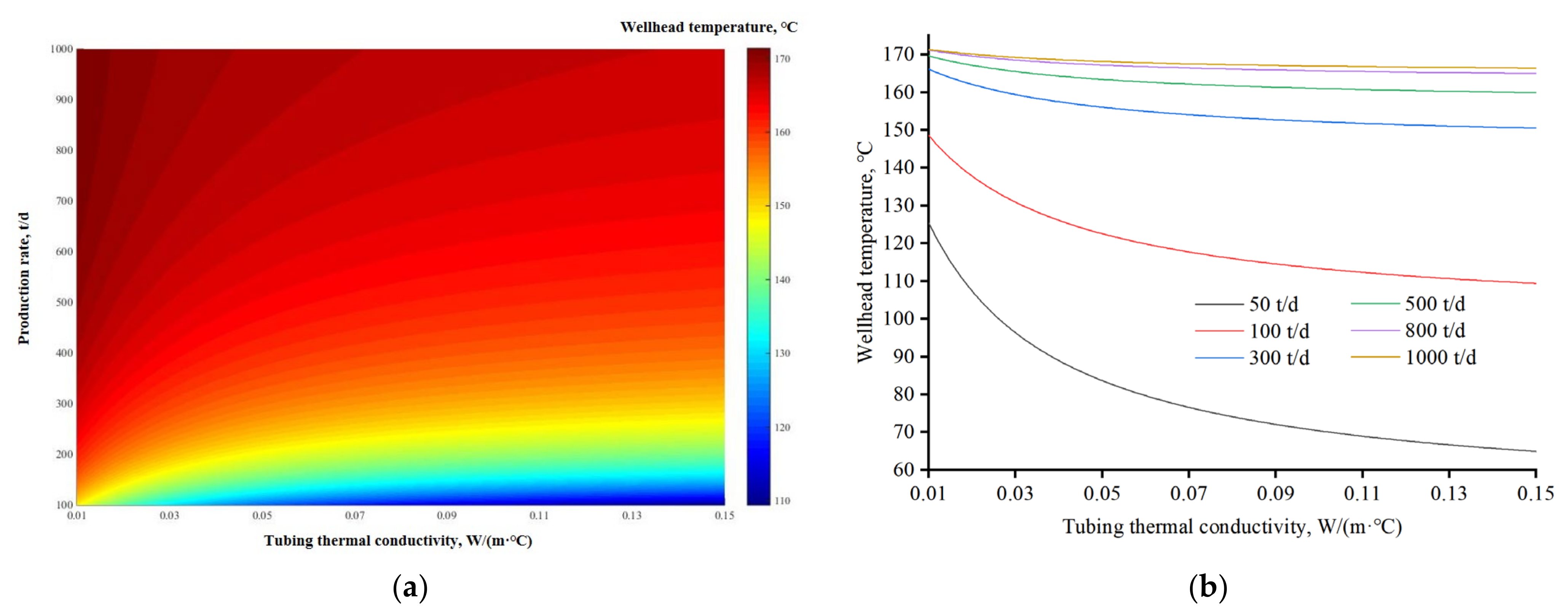
As shown in Figure 11, the wellhead temperature still decreases as the tubing thermal conductivity increases. However, under high-production conditions, the magnitude of this decrease becomes significantly smaller. For example, under the condition that the production rate reaches 1000 t/d, only a 2.90% reduction is obtained in wellhead temperature when the tubing thermal conductivity increases from 0.01 W/(m·°C) to 0.15 W/(m·°C). In contrast, at a production rate of 50 t/d, the reduction reaches 48.27%. This occurs because higher production rates lead to higher flow velocities of the produced fluid and lower heat loss along the wellbore. Therefore, under high-production conditions, insulated tubing is not necessary to maintain wellhead temperature, whereas under low-production conditions, attention should be focused on wellhead temperature.
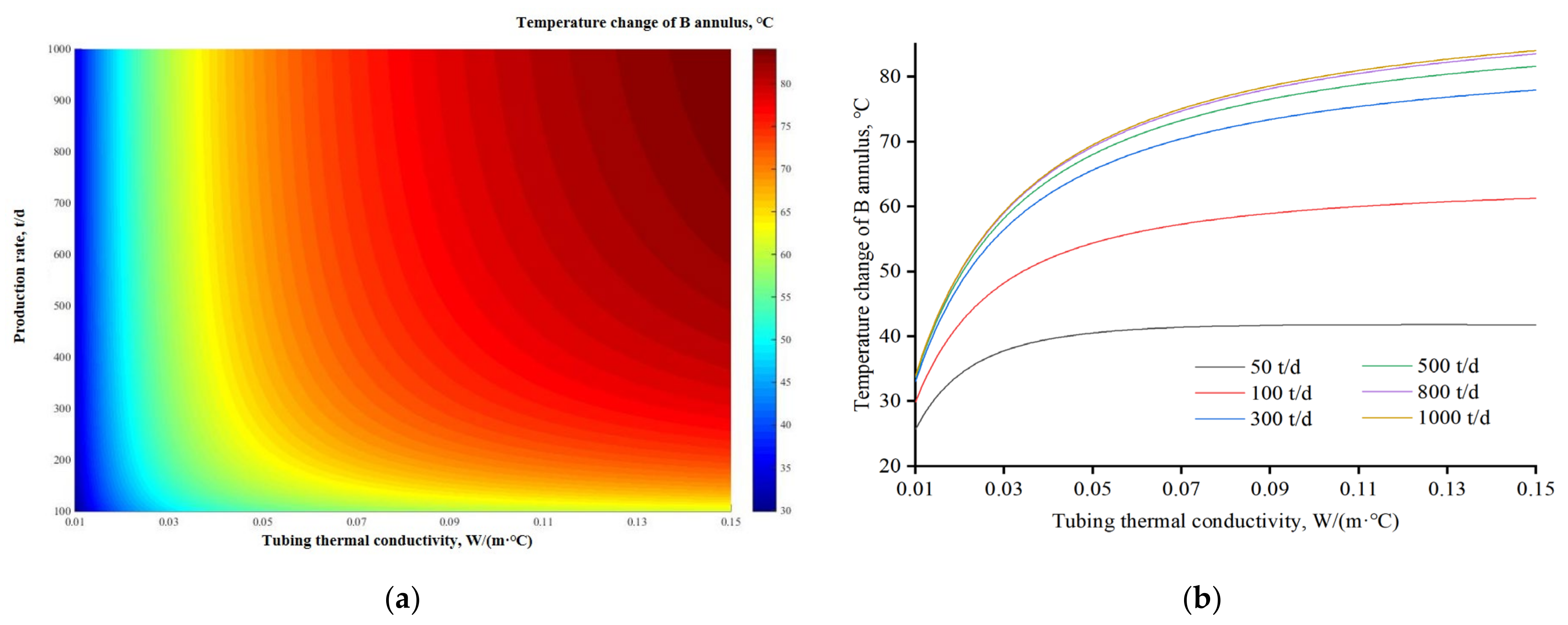
As shown in Figure 12, regardless of high or low production rate, the tubing thermal conductivity has a significant impact on annular temperature change, and this influence is even more pronounced under high-production conditions. In addition, the difference in annular temperature change under different production rates becomes smaller as tubing thermal conductivity decreases. For example, when the production rate reaches 1000 t/d, increasing tubing thermal conductivity from 0.01 W/(m·°C) to 0.15 W/(m·°C) results in a 147.59% increase in annular temperature change, whereas at a production rate of 50 t/d, the increase reaches 63.04%. Considering that excessive annular temperature change leads to elevated annular pressure, annular temperature control under high-production condition is especially critical, and insulated tubing shows excellent performance in this regard.

3.2.2. Influence of Production Rate on the Performance of Insulated Liquid

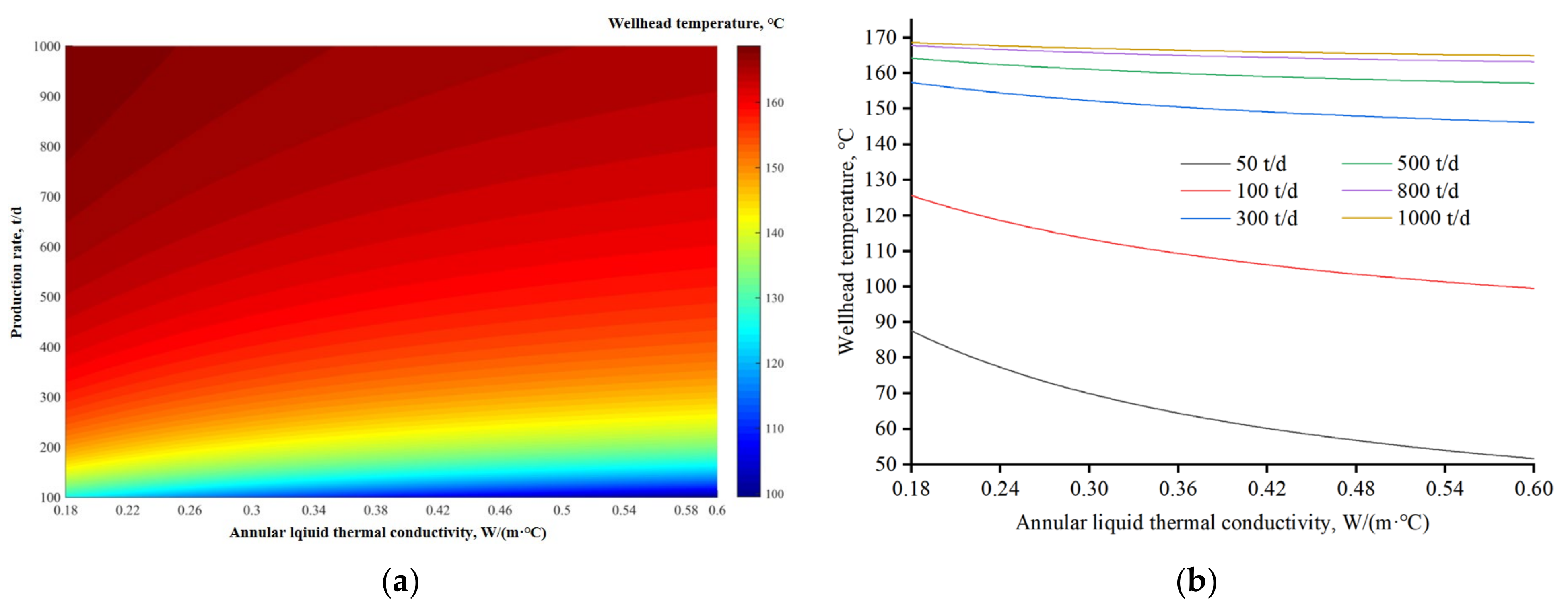
As shown in Figure 13, the curves of insulated liquid under different production rates have similar changing trends to those of insulated tubing. By comparing Figure 13 and Figure 12, it can be determined that insulated liquid can provide temperature-control capabilities comparable to insulated tubing under certain conditions. For example, at a production rate of 100 t/d, when the annular liquid thermal conductivity is 0.24 W/(m·°C) and the tubing thermal conductivity is 0.0655 W/(m·°C), the wellhead temperatures are close to 118 °C for both cases. This indicates that under specific conditions, insulated liquid can serve as a cost-effective alternative to insulated tubing for maintaining wellhead temperature.
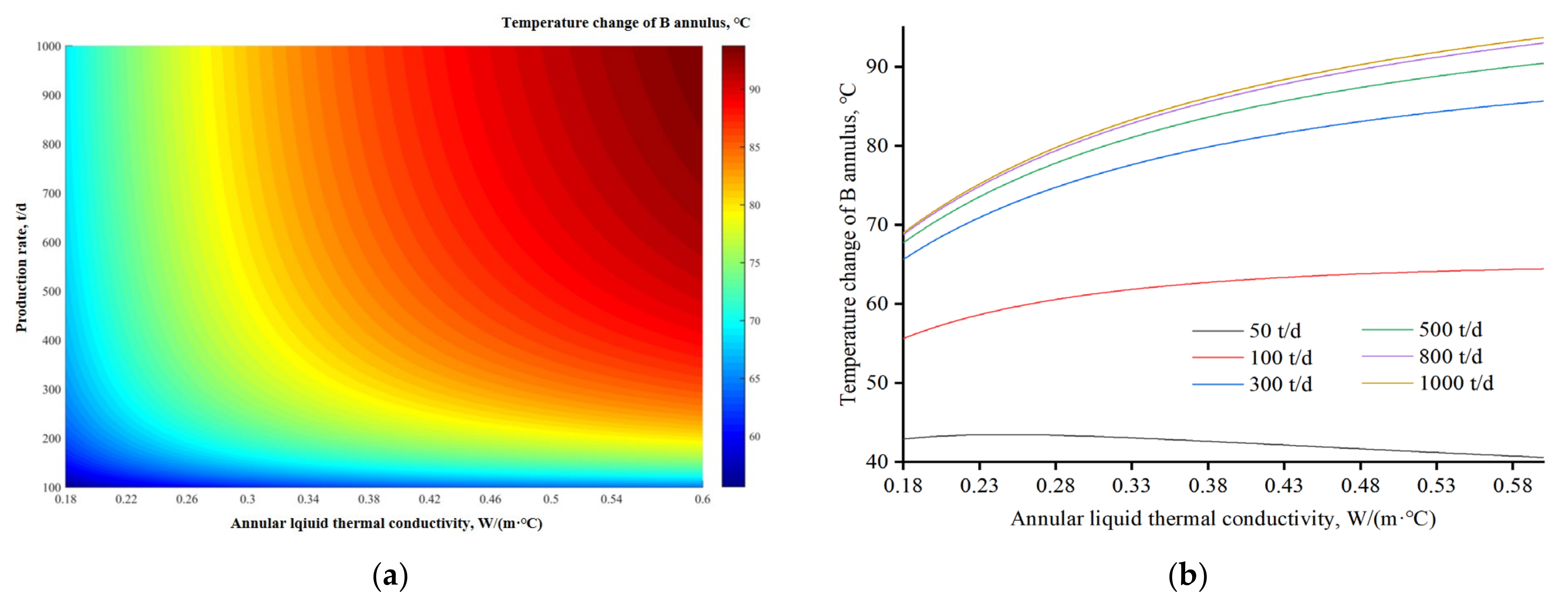
As shown in Figure 14, the curves of annular temperature change show different changing trends. In Figure 14b, under low production (50 t/d), annular temperature change initially increases and then decreases with annular liquid thermal conductivity. The remaining curves exhibit a monotonically increasing trend. Considering that low-production wells mainly prioritize maintaining wellhead temperature, this difference does not significantly affect the application of insulated annular liquid. Additionally, under high-production conditions, the annular-temperature-control performance of insulated liquid overlaps with that of insulated tubing.

3.2.3. Influence of Geothermal Gradient on the Performance of Insulated Tubing

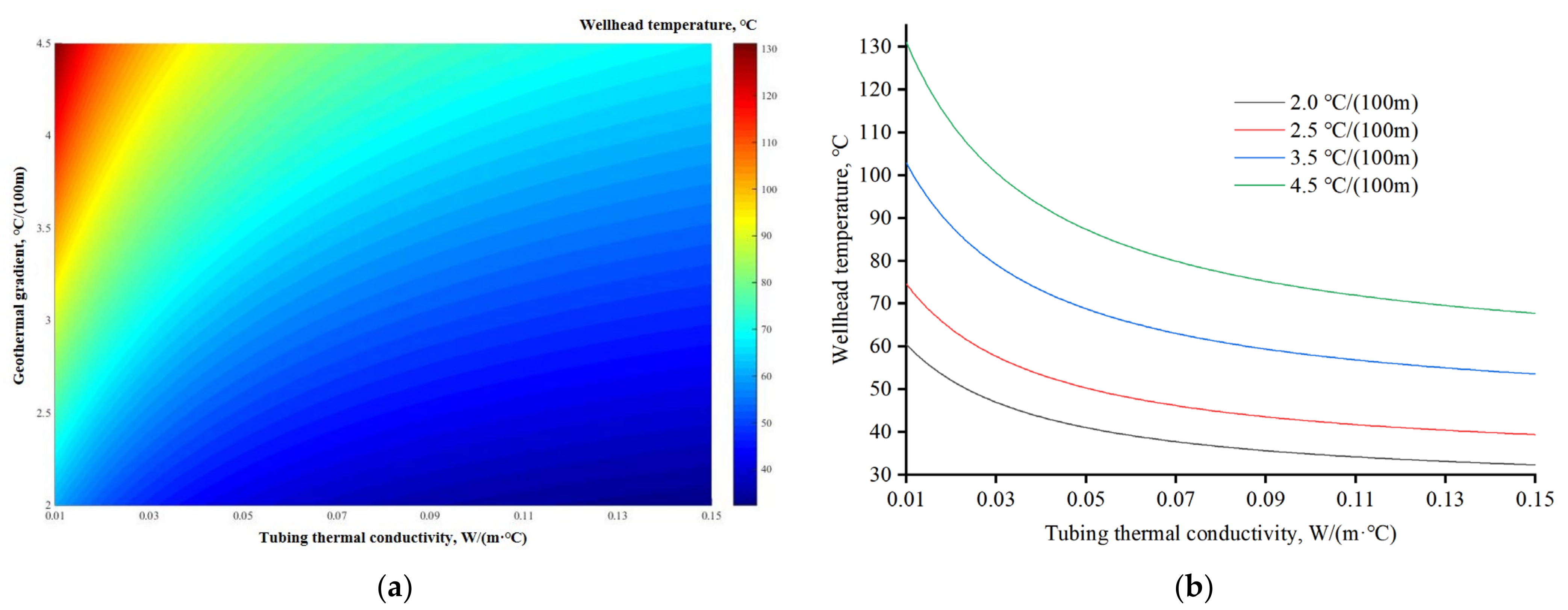
As shown in Figure 15, geothermal gradient does not change the trend of wellhead temperature curves with tubing thermal conductivity. The impact is mainly reflected in the absolute values. A higher geothermal gradient indicates a higher formation temperature, so maintaining wellhead temperature is not the primary objective under such conditions. For example, in Figure 15b, when the geothermal gradient is 2.5 °C/(100 m), the wellhead temperature is 74.64 °C with a tubing thermal conductivity of 0.01 W/(m·°C). However, when the geothermal gradient increases to 3.5 °C/(100 m), a wellhead temperature of 74.73 °C can be achieved even when the tubing thermal conductivity is 0.037 W/(m·°C). Thus, insulated tubing is not required for high-temperature reservoirs to maintain wellhead temperature but is important for low-temperature reservoirs.
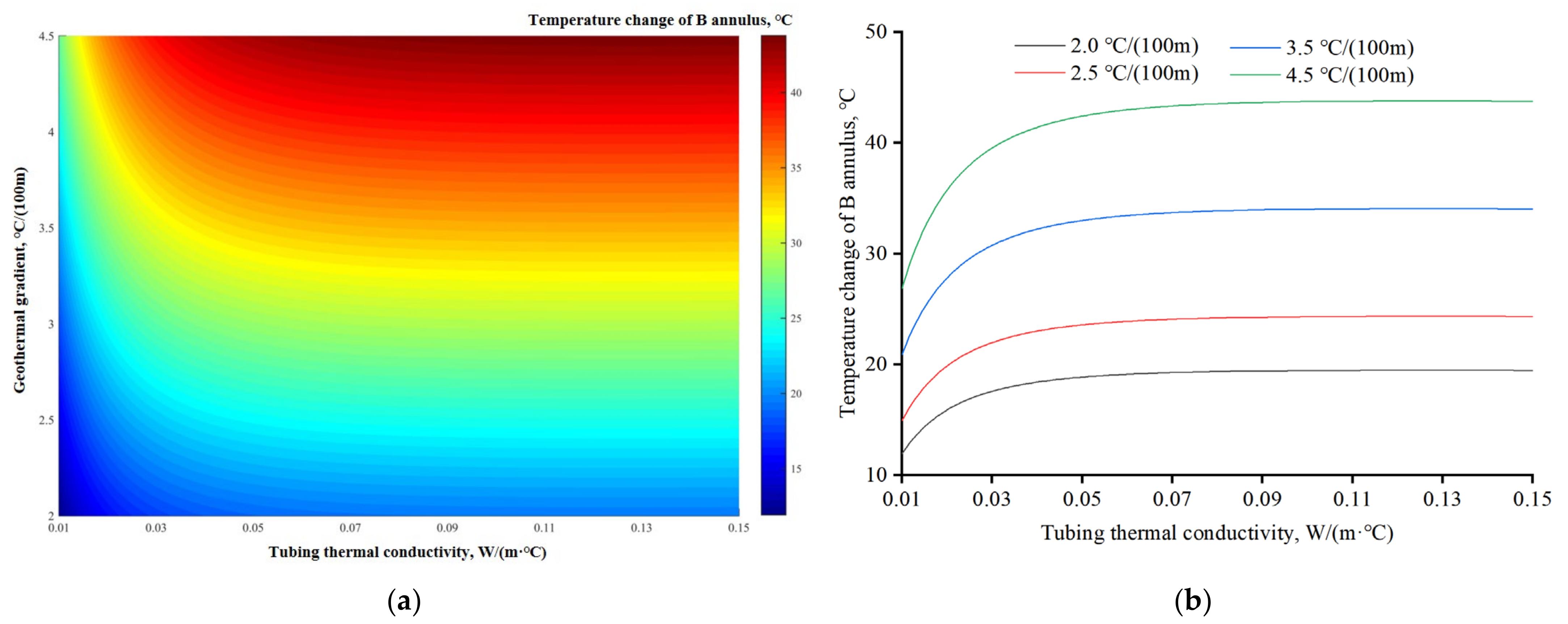
Figure 16 clearly indicates that high-temperature reservoirs require measures to control annular temperature. Overall, the trend of annular temperature change with tubing thermal conductivity remains unchanged under different geothermal gradients. The production rate in Figure 16 is 50 t/d. Combined with the analysis in Section 3.2.1, high production coupled with high geothermal gradient results in more pronounced annular temperature change. Insulated tubing can bring a greater reduction in annular temperature rise, especially under high-geothermal-gradient conditions. Therefore, vacuum-insulated tubing shows excellent potential for annular temperature control in high-temperature reservoirs.

3.2.4. Influence of Geothermal Gradient on the Performance of Insulated Fluids

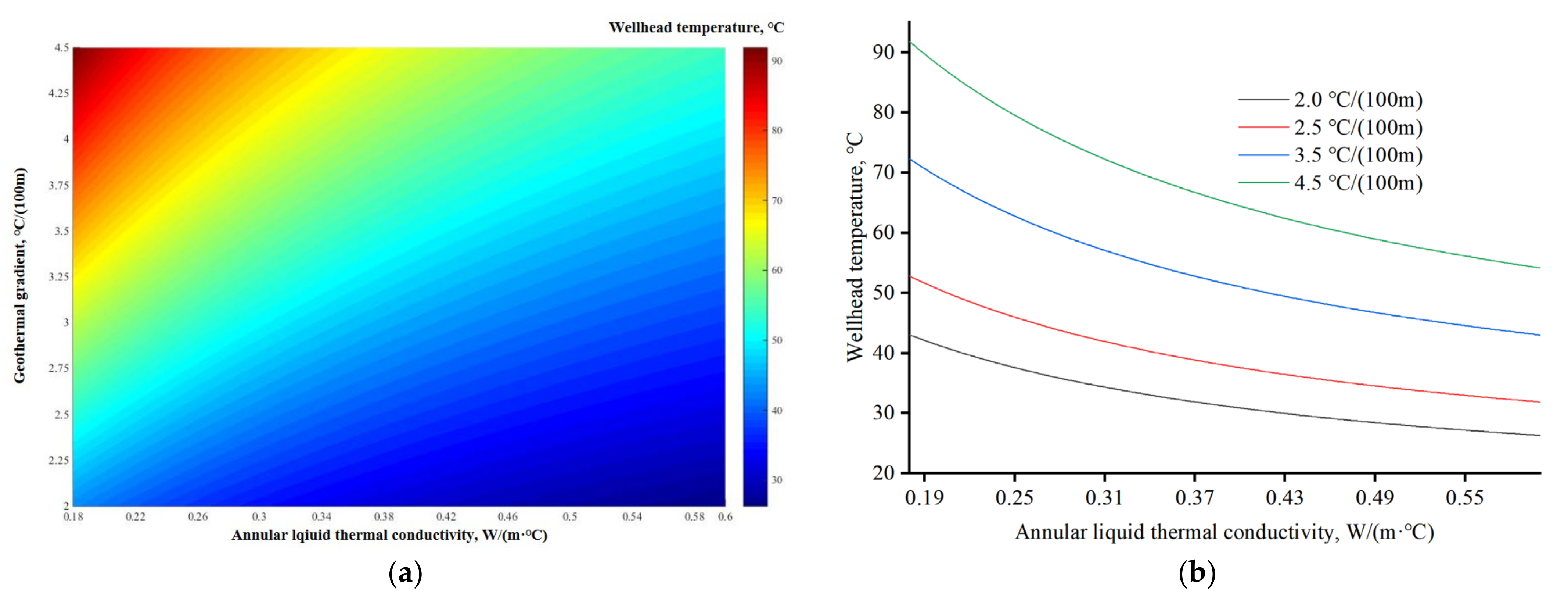
As shown in Figure 17, the geothermal gradient does not change the trend of wellhead temperature curves, and annular insulated fluid exhibits a stable effect on wellhead temperature under different geothermal gradients. However, at high geothermal gradients, the enhancement effect of insulated liquid on wellhead temperature is weaker than that of insulated tubing. Similarly, wellhead temperature is not the core control target for high-temperature reservoirs, and priority should be placed on low-temperature reservoirs. When the geothermal gradient is low, insulated liquid can offer control performance comparable to insulated tubing and may be used as the preferred method.
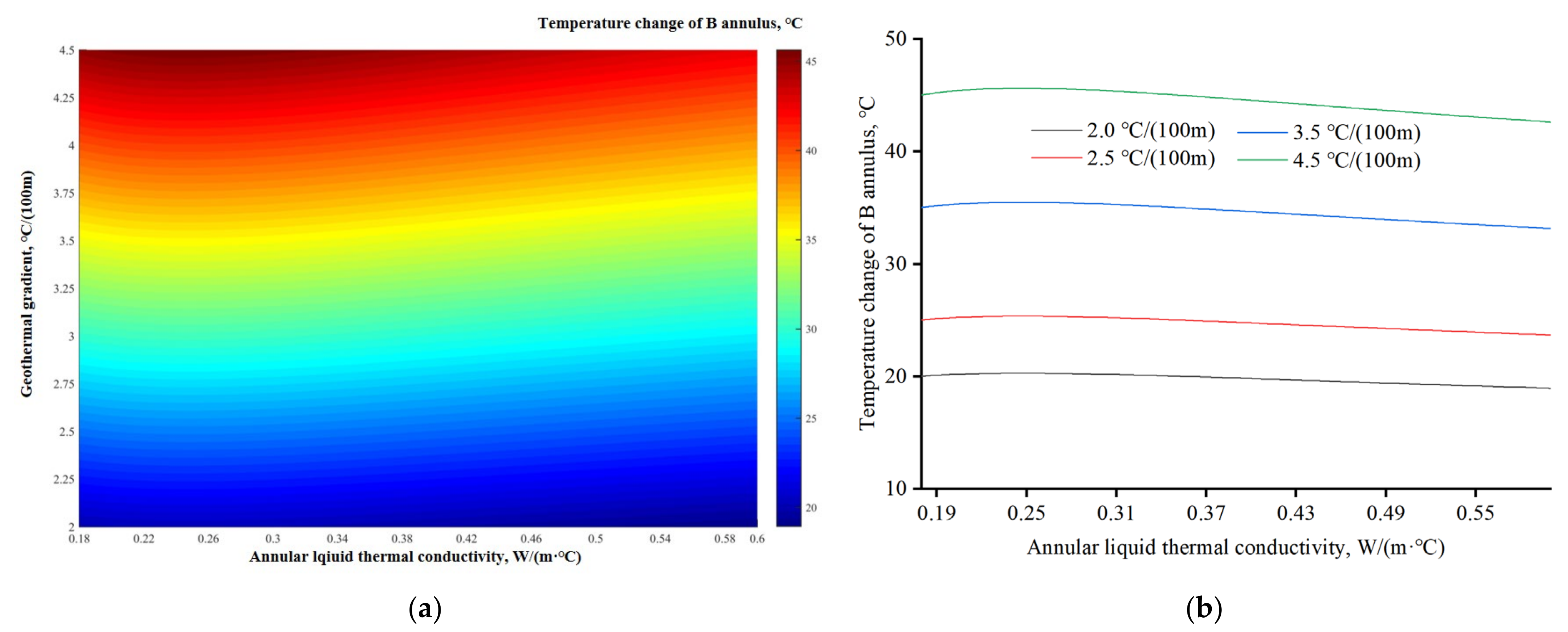
Figure 18 shows that annular temperature change is only mildly affected by the thermal conductivity of insulated liquid, regardless of whether geothermal gradients are high or low. Combined with the analysis in Section 3.2.2, this is because Figure 17 corresponds to a low production rate (50 t/d), where radial heat flux is inherently small. Together with the conclusions in Section 3.2.3, insulated liquid provides weaker performance than insulated tubing under low-production conditions in high-temperature reservoirs. Therefore, insulated tubing should be considered for controlling annular temperature under such conditions, while the insulated liquid may be negligible.

4. Discussion

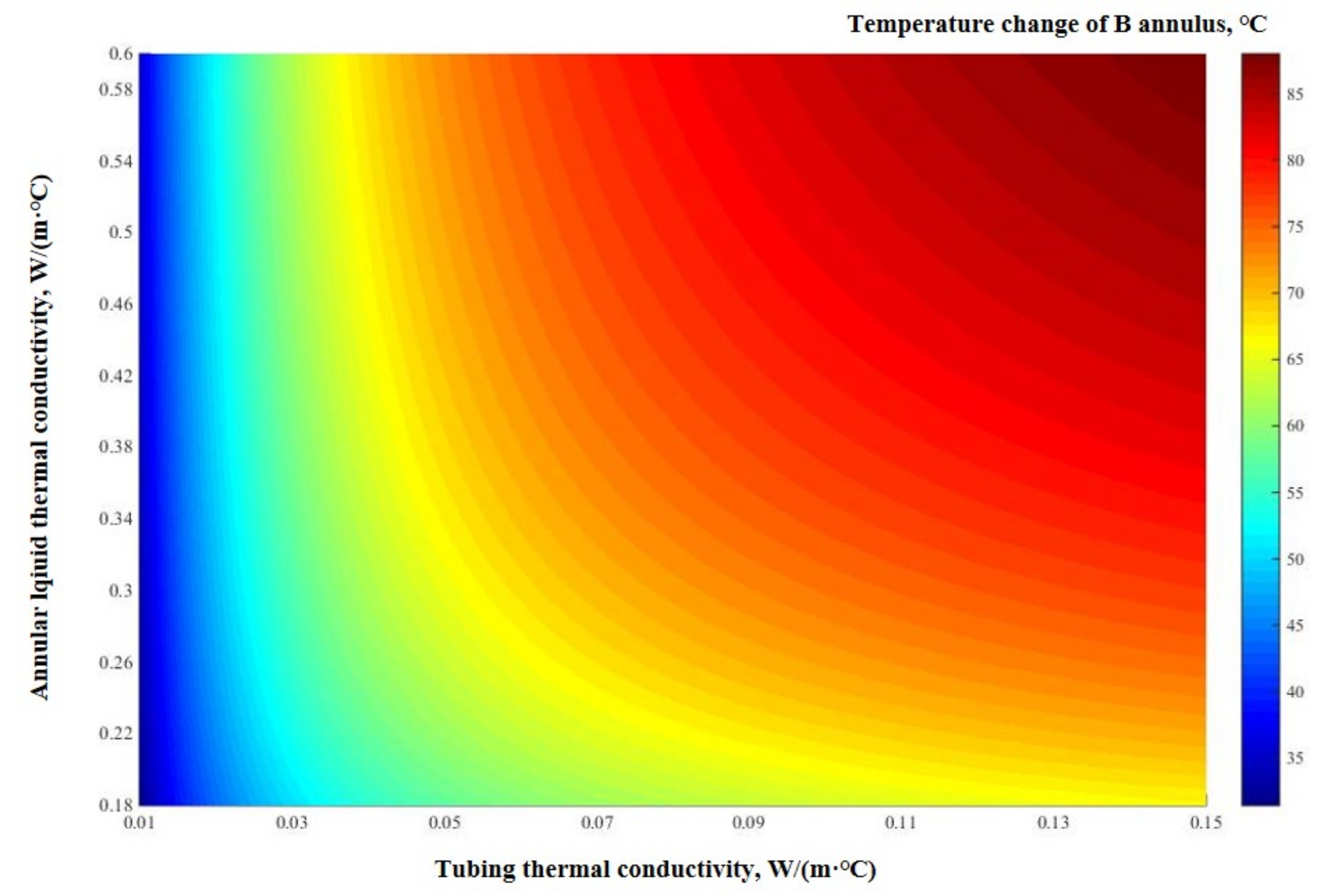
The above analysis demonstrates that annular temperature is the primary control objective under high-temperature, high-production conditions, whereas wellhead temperature is the primary focus under low-temperature, low-production conditions. As shown in Figure 19, the production rate is as high as 1000 t/d and the geothermal gradient is as high as 4.5 °C/(100 m). It can be seen that the annular temperature change increases with both tubing and annular liquid thermal conductivity, but combined insulation achieves a stronger control effect. The maximum annular temperature change is 87.99 °C, while the minimum is 31.45 °C, representing a 64.26% reduction. Considering the stability and low cost of insulated liquid, high-performance insulated liquid should be prioritized for annular temperature control in high-temperature, high-production deepwater wells. If the expected effect cannot be achieved, low-grade insulated tubing can be added to enhance insulation.
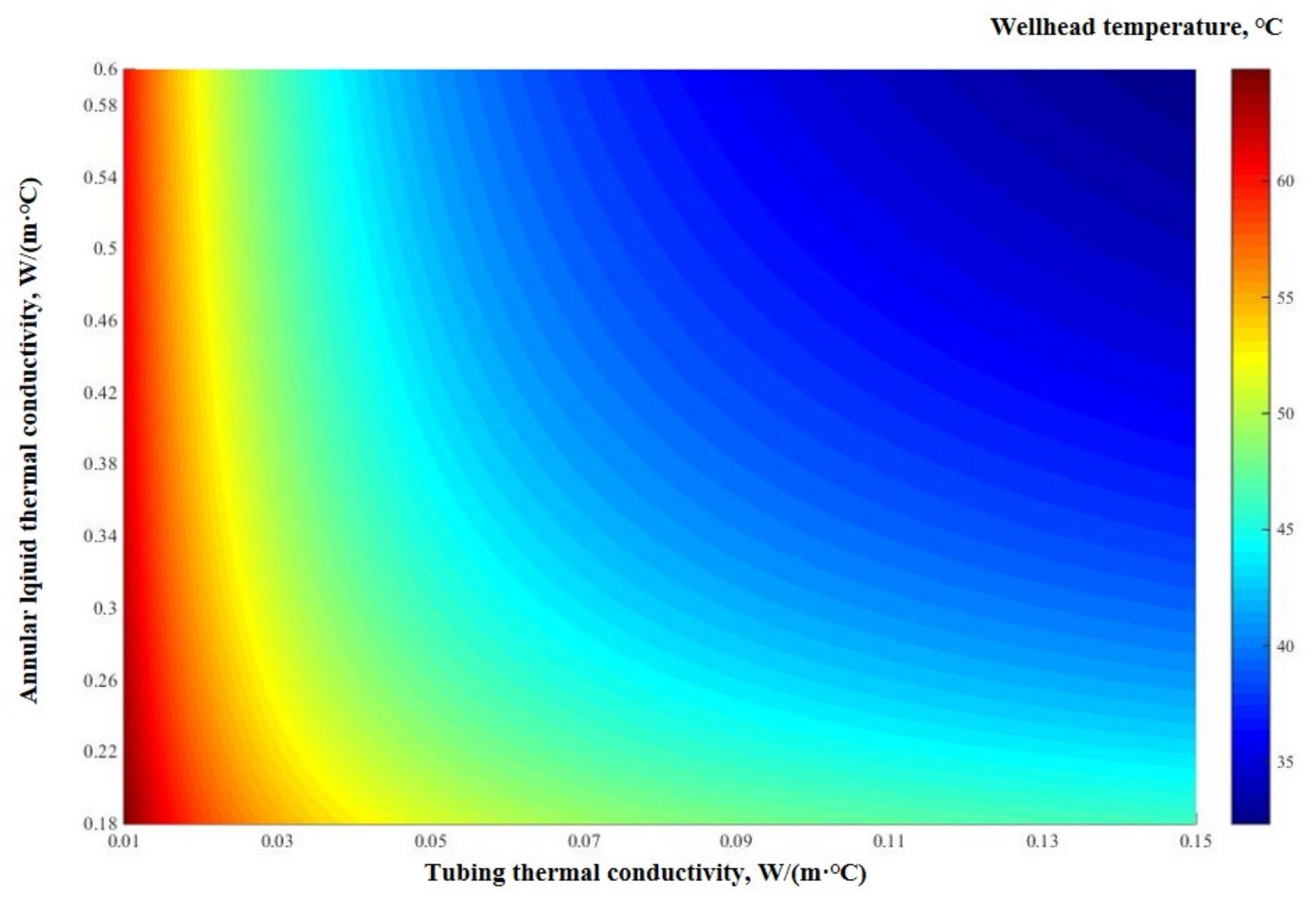
Figure 20 illustrates the wellhead temperature under low-temperature, low-production conditions, where the production rate is 50 t/d and the geothermal gradient is 2.0 °C/(100 m)). The maximum wellhead temperature reaches 64.80 °C and the minimum is 32.33 °C, representing a 100.43% increase. Combined insulation thus shows excellent performance in enhancing wellhead temperature in low-temperature, low-production deepwater wells. Similarly, for such wells, high-performance insulated liquid should be used as the primary control measure. If the expected performance cannot be achieved, low-grade insulated tubing may be used as an auxiliary measure. If both remain insufficient, active heating technologies must be considered.

5. Conclusions

(1)
Thermal insulation is critical for ensuring well integrity and flow assurance in deepwater wells. Annular temperature variation and wellhead temperature can effectively characterize insulation performance, corresponding respectively to wellbore integrity and flow assurance. Among available insulation technologies, insulated tubing and annular insulating liquid have good applicability in deepwater wells.
(2)
Vacuum-insulated tubing and insulation-coated tubing have overlapping effective ranges, and a similar overlap exists between annular insulating liquid and insulated tubing. Under certain conditions, insulation measures may bring about counterproductive effects on annular temperature control, which depend on the relative relationship between radial temperature gradients and thermal resistance. When performance is comparable, annular insulating liquid should be prioritized, whereas vacuum-insulated tubing should be considered only as a last option due to its high cost.
(3)
Under high production or high geothermal gradients, annular temperature variation is the primary control target, while under low-production or low-temperature conditions, wellhead temperature becomes the dominant objective. Insulated tubing demonstrates superior annular temperature control under high-production conditions, whereas annular insulating fluids exhibit a weaker capability for regulating annular temperature in high-temperature reservoirs at low production rates.
(4)
Composite insulation—combining insulated tubing with annular insulating liquid—shows outstanding performance. In high-temperature, high-production wells, the composite insulation reduces annular temperature change by 64.26%, and in low-temperature, low-production wells, it increases wellhead temperature by 100.43%. In practical applications, high-performance annular insulating fluids should be adopted as the primary measure, with insulated tubing used as a supplementary option to reduce cost while maintaining long-term insulation effectiveness.

Author Contributions

Conceptualization, B.Z. and T.S.; methodology, B.Z., N.L., J.S. and M.C.; software, B.Z., B.Y., Q.W. and N.L.; formal analysis, W.F. and J.S.; resources, T.S. and J.S.; data curation, B.Z.; writing—original draft preparation, B.Z., B.Y., J.S., N.L., W.F. and N.L.; writing—review and editing, Q.W., M.C. and T.S.; visualization, B.Z.; supervision, B.Z., N.L. and T.S.; funding acquisition, B.Z., N.L. and T.S. All authors have read and agreed to the published version of the manuscript.

Funding

This research was funded by National Natural Science Foundation of China (52434002), Beijing Nova Program (20230484365), Fundamental Research Funds for the Central Universities (buctrc202404) and CNPC Key Scientific Research Project (2023ZZ19).

Institutional Review Board Statement

Not applicable.

Informed Consent Statement

Not applicable.

Data Availability Statement

Dataset available on request from the authors.

Conflicts of Interest

Author Jipei Sun was employed by CNPC Research Institute of Safety and Environment Technology. Author Qing Wang was employed by CNPC Engineering Technology R & D Co., Ltd. Author Wei Fan was employed by Jidong Oilfield Company, PetroChina. Author Nu Lu was employed by PetroChina Research Institute of Petroleum Exploration and Development. Author Mengzhe Cai was employed by Greatwall Drilling Company, CNPC. The remaining authors declare that the research was conducted in the absence of any commercial or financial relationships that could be construed as a potential conflict of interest.

References

  1. Yan, K.; Zuo, Y.; Zhang, Y.; Yang, L.; Pang, X.; Wang, S.; Yao, Y. A study on the accumulation model of the Santos basin in Brazil utilizing the source–reservoir dynamic evaluation method. Sci. Rep. 2024, 14, 19296. [Google Scholar] [CrossRef]
  2. Mendes, L.D.C.; Basso, M.; Morales, J.V.; Chinelatto, G.F.; Blanco, J.M.; Correia, U.M.; Vidal, A.C. The influence of major faults and fractures on the development of non-matrix porosity system in a pre-salt carbonate reservoir, Santos Basin–Brazil. J. Struct. Geol. 2024, 189, 105271. [Google Scholar] [CrossRef]
  3. Yelwa, N.A.; Mustapha, K.A.; Opuwari, M.; Qadri, S.T.; Christanis, K. Hydrocarbon prospectivity of the South Atlantic Orange Basin. J. Sediment. Environ. 2024, 9, 747–789. [Google Scholar] [CrossRef]
  4. Xu, Y.; Guan, Z.; Jin, Y.; Liu, Y.; Sun, Y.; Zhang, B.; Sheng, Y. Risk assessment method of subsea wellhead instability in consideration of uncertain factors in deepwater drilling. Arab. J. Sci. Eng. 2018, 43, 2659–2672. [Google Scholar] [CrossRef]
  5. Zhang, B.; Guan, Z.; Wang, Q.; Xuan, L.; Liu, Y.; Sheng, Y. Appropriate completion to prevent potential damage of annular pressure buildup in deepwater wells. In Proceedings of the IADC/SPE Asia Pacific Drilling Technology Conference and Exhibition, Bangkok, Thailand, 7 August 2024. [Google Scholar]
  6. Chen, X.; Wang, S.; He, M.; Xu, M. A comprehensive prediction model of drilling wellbore temperature variation mechanism under deepwater high temperature and high pressure. Ocean Eng. 2024, 296, 117063. [Google Scholar] [CrossRef]
  7. Li, Y.; Gao, D.; Liu, S.; Zhao, Y.; Li, L.; Li, S. Hydrate Formation and Mitigation Methods Under Multiple Operational Conditions in Deepwater Drilling. Processes 2025, 13, 3008. [Google Scholar] [CrossRef]
  8. Wang, D.; Gan, B.; Li, Y.; Li, Z.; Zhang, H.; Yu, F. The Control Effect of Equipment Operation on the Formation of Wellbore Hydrates Under the Production Conditions of Deepwater Gas Wells. Processes 2025, 13, 1028. [Google Scholar] [CrossRef]
  9. Cao, L.; Yuan, H.; Pan, Z.; Liu, Z.; Zhang, B.; Sun, T.; Wu, H. Dynamic scaling prediction model and application in near-wellbore formation of ultradeep natural gas reservoirs. SPE J. 2024, 29, 2476–2493. [Google Scholar] [CrossRef]
  10. dos Santos Vasconcelos, T.; dos Santos Escarpini Filho, R.; Lages, E.N. Analysis of APB in vertical wells with evaporite layers: A 1D axisymmetric multilayer thermomechanical model. Mech. Res. Commun. 2024, 139, 104304. [Google Scholar] [CrossRef]
  11. Xie, R.; Zhang, L. A New Prediction Model of Annular Pressure Buildup for Offshore Wells. Appl. Sci. 2024, 14, 9768. [Google Scholar] [CrossRef]
  12. Cheng, Y.; Xue, M.; Shi, J.; Li, Y.; Yan, C.; Han, Z.; Yang, J. Numerical simulating the influences of hydrate decomposition on wellhead stability. Processes 2023, 11, 1586. [Google Scholar] [CrossRef]
  13. Wei, J.; Cheng, Y.; Yan, C.; Li, Q.; Zou, D.; Zhang, H. Drilling parameter optimizing strategies to prevent hydrate decomposition risks. Appl. Therm. Eng. 2019, 146, 405–412. [Google Scholar] [CrossRef]
  14. Pattillo, P.D.; Cocales, B.W.; Morey, S.C. Analysis of an annular pressure buildup failure during drill ahead. Spe Drill. Complet. 2006, 21, 242–247. [Google Scholar] [CrossRef]
  15. Bradford, D.W.; Fritchie, D.G.; Gibson, D.H.; Gosch, S.W.; Pattillo, P.D.; Sharp, J.W.; Taylor, C.E. Marlin failure analysis and redesign: Part 1—Description of failure. SPE Drill. Complet. 2004, 19, 104–111. [Google Scholar] [CrossRef]
  16. Zhang, Z.; Montilla, M.J.B.; Xie, Z.; Li, S.; Hu, Y.; Li, X. Comparative analysis of wellbore electrical heating, low-frequency heating, and steam injection for in-situ conversion in continental shale oil reservoirs. Case Stud. Therm. Eng. 2024, 64, 105512. [Google Scholar] [CrossRef]
  17. Shang, S.; Gao, K.; Zhang, X.; Zhao, Q.; Chen, G.; Tao, L.; Gao, Y. Research on the temperature distribution in electrically heated offshore heavy oil wellbores. Energies 2024, 17, 995. [Google Scholar] [CrossRef]
  18. Zafar, A.; Su, Y.; Li, L.; Mehmood, A.; Wang, H.; Fu, J. The numerical simulation and wellbore modelling of steam injection and stored heat recovery from light oil reservoir. Energy Sources Part A Recovery Util. Environ. Eff. 2021, 43, 1–16. [Google Scholar]
  19. Pattillo, P.D.; Bellarby, J.E.; Ross, G.R.; Gosch, S.W.; McLaren, G.D. Thermal and mechanical considerations for design of insulated tubing. SPE Drill. Complet. 2004, 19, 181–188. [Google Scholar] [CrossRef]
  20. Carpenter, C. What Vacuum-Insulated Tubings and Casings Bring to Thermal Wells. J. Pet. Technol. 2017, 69, 73–74. [Google Scholar] [CrossRef]
  21. Wang, X.; Javora, P.; Qu, Q.; Pearcy, R. A new thermal insulating fluid and its application in deepwater riser insulation in the gulf of mexico. SPE Prod. Facil. 2005, 20, 35–40. [Google Scholar] [CrossRef]
  22. Abid, K.; Sharma, A.; Ahmed, S.; Srivastava, S.; Toledo Velazco, A.; Teodoriu, C. A review on geothermal energy and HPHT packers for geothermal applications. Energies 2022, 15, 7357. [Google Scholar] [CrossRef]
  23. Zhou, W.; Wang, C.; Meng, R.; Chen, Z.; Lu, H.; Chi, J. Study on thermal insulation cement and its thermal insulation characteristics for geothermal wells. Sci. Rep. 2023, 13, 4157. [Google Scholar] [CrossRef] [PubMed]
  24. Yu, X.; Cen, X.; Kan, C.; Hu, Y.; Yang, Y.; Tao, S.; Hu, Z. Numerical simulation analysis of wellbore integrity and casing damage in High-Temperature injection and production of shale oil. Processes 2023, 11, 3053. [Google Scholar] [CrossRef]
  25. Wang, G.; Li, W.; Xiang, Y.; Wang, Y.; Liu, Y.; Liu, J.; Cao, J. Deepwater Oil and Gas Well Annulus Pressure Management Strategy. Chem. Technol. Fuels Oil 2024, 60, 629–638. [Google Scholar] [CrossRef]
  26. Ezzat, A.M.; Miller, J.J.; Ezell, R.G.; Perez, G.P. High-performance water-based insulating packer fluids. In Proceedings of the SPE Annual Technical Conference and Exhibition, Anaheim, CA, USA, 14 November 2025. [Google Scholar]
  27. Ferreira, M.V.; Santos, A.R.; Vanzan, V. Thermally insulated tubing application to prevent annular pressure buildup in Brazil offshore fields. In Proceedings of the SPE Deepwater Drilling and Completions Conference, Kuala Lumpur, Malaysia, 22 September 2025. [Google Scholar]
  28. Guan, Z.C.; Zhang, B.; Wang, Q.; Liu, Y.W.; Xu, Y.Q.; Zhang, Q. Design of thermal-insulated pipes applied in deepwater well to mitigate annular pressure build-up. Appl. Therm. Eng. 2016, 98, 129–136. [Google Scholar] [CrossRef]
  29. Zeng, D.; Ke, R.; Luo, J.; Yang, J.; Li, F.; Zeng, W.; Guo, Y. Simulation of thermal loss of interference fit coupling of thermal insulation tubing in heavy oil well. Pet. Sci. Technol. 2025, 1–25. [Google Scholar] [CrossRef]
  30. Zhang, B.; Cao, L.; Lu, N.; Zou, B.; Xie, J.; Li, C.; Deng, J. Comparison of Nitrogen Gas and Thermal-Insulation Liquid to Control the Temperature–Pressure Effect in Deep Gas Well. Iran. J. Sci. 2023, 47, 389–400. [Google Scholar] [CrossRef]
  31. Tomasz, Ś.; Kruszewski, M.; Zare, A.; Assadi, M.; Sapińska-Śliwa, A. Potential application of vacuum insulated tubing for deep borehole heat exchangers. Geothermics 2018, 75, 58–67. [Google Scholar] [CrossRef]
  32. Jing, Y.; Wang, T.; Zhang, B.; Zheng, Y.; Li, X.; Lu, N. Safety Risk Analysis of Well Control for wellbore with sustained annular pressure and Prospects for Technological Development. Chem. Technol. Fuels Oil 2025, 61, 110–119. [Google Scholar] [CrossRef]
  33. Huang, W.; Gao, D. A theoretical study of the critical external pressure for casing collapse. J. Nat. Gas. Sci. Eng. 2015, 27, 290–297. [Google Scholar] [CrossRef]
  34. Arjomand, E.; Bennett, T.; Nguyen, G.D. Evaluation of cement sheath integrity subject to enhanced pressure. J. Pet. Sci. Technol. 2018, 170, 1–13. [Google Scholar] [CrossRef]
  35. Feeney, S. Vacuum-Insulated Tubing for Subsea Completions. J. Pet. Technol. 1997, 49, 802–803. [Google Scholar] [CrossRef]
  36. Wang, Z.H.; Zhao, H.Q. Research of vacuum degree influence on performance of vacuum heat insulation oil pipe. J. Mater. Res. 2013, 732, 172–175. [Google Scholar] [CrossRef]
  37. Vacuum Insulated Tubing. Available online: https://www.tmk-group.com/VIT (accessed on 1 December 2025).
  38. Zhou, C.; Zhu, G.; Xu, Y.; Yu, J.; Zhang, X.; Sheng, H. Novel methods by using non-vacuum insulated tubing to extend the lifetime of the tubing. Front. Energy 2015, 9, 142–147. [Google Scholar] [CrossRef]
  39. Singh, P.; Walker, J.; Lee, H.S.; Gharfeh, S.; Thomason, B.; Blumer, D. An application of vacuum-insulation tubing for wax control in an Arctic environment. Spe Drill. Complet. 2007, 22, 127–136. [Google Scholar] [CrossRef]
  40. Azzola, J.H.; Tselepidakis, D.P.; Pattillo, P.D.; Richey, J.F.; Tinker, S.J.; Miller, R.A.; Segreto, S.J. Application of Vacuum–Insulated Tubing to Mitigate Annular Pressure Buildup. SPE Drill. Complet. 2007, 22, 46–51. [Google Scholar] [CrossRef]
  41. Qu, Q.; Wang, X. Methods and Compositions for Thermal Insulation. U.S. Patent No. 7,923,419, 12 April 2011. [Google Scholar]
  42. Wang, H.; Li, M.; Zhao, Q.; Hao, W.; Zhang, H.; Li, Y.; Zou, Y. Study on Casing Safety Evaluation in High-Temperature Wells with Annular Pressure Buildup. Processes 2023, 11, 1915. [Google Scholar] [CrossRef]
  43. Cao, J.; Ma, W.; Huang, W.; Su, Z.; Zhu, Y.; Wang, J. A novel inner wall coating-insulated oil pipeline for scale and wax prevention. Processes 2023, 11, 1964. [Google Scholar] [CrossRef]
  44. Li, W.L.; Xie, T.; Xu, K.; Huo, H.B.; Sun, L.P.; Li, W.B.; Wang, J.X.; Zhou, Y. Thermal insulation performance evaluation and installation length optimization of inner coating thermal insulation drillpipe. Chem. Technol. Fuels Oil 2023, 59, 1003–1011. [Google Scholar] [CrossRef]
  45. Zhang, B.; Zheng, Y.; Deng, J.; Lu, N.; Cao, L.; Wang, Q.; Luo, L. Modeling analysis of the temperature profile and trapped annular pressure induced by thermal-expanded liquid in a deep gas well. Front. Phys. 2022, 10, 1014842. [Google Scholar] [CrossRef]
  46. Tao, S.; Cen, X.; Yu, X.; Hu, J.; Kan, C. Study on Critical Parameters of Nitrogen Injection during In Situ Modification in Oil Shale. Energies 2022, 15, 8034. [Google Scholar] [CrossRef]
  47. Jin, L.; Xue, Z.; Wang, Z.; Li, R.; Liu, J. Mechanical response of the sealing packer based on two rubber materials at high temperatures. Polym. Test. 2023, 124, 108073. [Google Scholar] [CrossRef]
  48. Zhang, B.; Lu, N.; Guo, Y.; Wang, Q.; Cai, M.; Lou, E. Modeling and analysis of sustained annular pressure and gas accumulation caused by tubing integrity failure in the production process of deep natural gas wells. J. Energy Resour. Technol. 2022, 144, 063005. [Google Scholar] [CrossRef]
  49. Ahmed, S.; Salehi, S. Failure mechanisms of the wellbore mechanical barrier systems: Implications for well integrity. J. Energy Resour. Technol. 2021, 143, 073007. [Google Scholar] [CrossRef]
  50. Wang, P.; Cai, M.; Liu, Z.; Ma, W.; Li, J. Research on key technology of packer rubber barrel for integrated fracturing and completion of gas well. J. Pet. Explor. Prod. Technol. 2024, 14, 825–838. [Google Scholar] [CrossRef]
  51. Wieczorek, K.; Bobak, Ł.; Bukowski, P. From Construction Industry Waste to High-Performance Insulation: Sustainable Rigid Polyurethane Foams with Recycled Polyol. Materials 2025, 18, 4179. [Google Scholar] [CrossRef]
  52. da Câmara, P.C.F.; de Morais, S.C.; do Nascimento Marques, N.; de Souza, E.A.; de Carvalho Balaban, R. Cellulose nanocrystals reinforcement for glycerol-based gels: Effects on gelation behavior and thermal insulation performance. J. Mol. Liq. 2025, 428, 127562. [Google Scholar] [CrossRef]
  53. Vasconcelos, A.N.; do Nascimento Marques, N.; de Morais, S.C.; de Sousa, E.A.; de Carvalho Balaban, R. Shrinking and insulating thermally induced properties of poly(acrylic acid) systems. J. Mol. Liq. 2025, 434, 127994. [Google Scholar] [CrossRef]
  54. Ezell, R.G.; Harrison, D.J. Ultra High-temperature solids-free insulating packer fluid for oil and gas production, steam injection and geothermal wells. In Proceedings of the SPE International Thermal Operations and Heavy Oil Symposium, Calgary, AB, Canada, 20 October 2008. [Google Scholar]
  55. da Veiga, A.P.; Martins, I.O.; Barcelos, J.G.; Ferreira, M.V.D.; Alves, E.B.; da Silva, A.K.; Barbosa, J.R., Jr. Predicting thermal expansion pressure buildup in a deepwater oil well with an annulus partially filled with nitrogen. J. Pet. Sci. Technol. 2022, 208, 109275. [Google Scholar] [CrossRef]
  56. Wang, L.; Gao, B.; Hu, T.; Ma, C. Design and application of foamed spacer to mitigate annular pressure induced by fluid thermal expansion. Appl. Therm. Eng. 2020, 165, 114524. [Google Scholar] [CrossRef]
  57. Liu, J.; Song, X.; Zhang, Z.; Ding, J.; Ding, Y. Prediction Method for Annular Pressure Buildup in Deepwater Wells Based on Fluid Solid Phase Deposition. Processes 2025, 13, 890. [Google Scholar] [CrossRef]
  58. Semwogerere, D.; Sangesland, S.; Pavlov, A.; Colombo, D. Soft Sensor Fusion Model for Multi-Annuli Temperature and Pressure Monitoring in Oil and Gas Wells. In Proceedings of the SPE Norway Subsurface Conference, Bergen, Norway, 17 April 2024. [Google Scholar]
  59. Brown, J.; Kenny, N.; Slagmulder, Y. Unique cement design to mitigate trapped annular pressure TAP between two casing strings in steam injection wells. In Proceedings of the SPE International Heavy Oil Conference and Exhibition, Kuwait, Kuwait, 6 December 2016. [Google Scholar]
  60. Zhang, B.; Zhao, J.; Sun, J.; Lu, N.; Liao, H.; Zhang, Q.; Sun, T. Explanation of Tie-Back Cement Sheath Leakage Caused by Microannulus in Ultra-Deep Gas Wells and Control Strategy. Energy Technol. 2026, 14, e202502342. [Google Scholar] [CrossRef]
  61. Kujawinski, E.B.; Reddy, C.M.; Rodgers, R.P.; Thrash, J.C.; Valentine, D.L.; White, H.K. The first decade of scientific insights from the Deepwater Horizon oil release. Nat. Rev. Earth Environ. 2020, 1, 237–250. [Google Scholar] [CrossRef]
  62. Oudeman, P.; Kerem, M. Transient behavior of annular pressure build-up in HP/HT wells. Spe Drill. Complet. 2006, 21, 234–241. [Google Scholar] [CrossRef]
  63. Zhang, J.; Li, P.; Liu, S.; Xu, Y.; Tong, S.; Wang, Z.; Sun, B. Experimental study on effects of non-ionic anti-agglomerants in preventing deposition of hydrate particles microscopically and macroscopically. Chem. Eng. Sci. 2024, 284, 119538. [Google Scholar] [CrossRef]
  64. Cao, L. Study on Rising Mechanism and Control Methods of Tubing-Casing Annular Pressure in Ultra-Deep Gas Well. Ph.D. Thesis, China University of Petroleum (East China), Qingdao, China, 31 December 2024. [Google Scholar]
  65. Cao, L.; Sun, J.; Liu, J. Experiment and Application of Wax Deposition in Dabei Deep Condensate Gas Wells with High Pressure. Energies 2022, 15, 6200. [Google Scholar] [CrossRef]
  66. Bęben, D. The effectiveness of chemicals used in the process of transmitting crude oil from the well to the processing plant. Naft.-Gaz 2020, 76, 774–783. [Google Scholar] [CrossRef]
  67. Chen, A.H. An explicit equation for (calculating the) friction factor in a pipe. Ind. Eng. Chem. Res. Fundam. 1979, 18, 296–297. [Google Scholar] [CrossRef]
  68. Hasan, A.R.; Kabir, C.S.; Wang, X. Wellbore two-phase flow and heat transfer during transient testing. SPE J. 1998, 3, 174–180. [Google Scholar] [CrossRef]
  69. Hasan, A.R.; Kabir, C.S. Heat transfer during two-phase flow in wellbores: Part I—Formation temperature. In Proceedings of the SPE Annual Technical Conference and Exhibition, Dallas, TX, USA, 6 October 1991. [Google Scholar]
  70. Hasan, A.R.; Kabir, C.S. Wellbore heat-transfer modeling and applications. J. Pet. Sci. Eng. 2012, 86, 127–136. [Google Scholar] [CrossRef]
  71. Zhang, B.; Sun, B.; Deng, J.; Lu, N.; Zhang, Z.; Fan, H.; Chen, W. Method to optimize the volume of nitrogen gas injected into the trapped annulus to mitigate thermal-expanded pressure in oil and gas wells. J. Nat. Gas. Sci. Eng. 2021, 96, 104334. [Google Scholar] [CrossRef]
  72. Ding, L.; Yang, X.; Chen, W.; Li, S.; Zhang, Q. Prediction of annulus liquid level depth in high-temperature and high-pressure gas wells based on sustained casing pressure. Measurement 2022, 193, 110991. [Google Scholar] [CrossRef]
Figure 1. (a) Vacuum-insulated tubing; (b) sketch map of vacuum-insulated tubing.
Jmse 14 00411 g001
Figure 2. (a) Front view of insulation coating; (b) lateral view of insulation coating.
Jmse 14 00411 g002
Figure 3. Sketch map of nitrogen for thermal insulation.
Jmse 14 00411 g003
Figure 4. Solids-free insulating fluid.
Jmse 14 00411 g004
Figure 5. (a) Casing damaged by annular pressure buildup in Pompano A-31; (b) logging results of the liner damage caused by annular pressure in Marlin A2.
Jmse 14 00411 g005
Figure 6. Wax deposition in the production tubing.
Jmse 14 00411 g006
Figure 7. Sketch map of the heat transfer from the wellbore to formation.
Jmse 14 00411 g007
Figure 8. (a) Changing law of wellhead temperature with tubing thermal conductivity; (b) performances of thermal insulating tubing with different structures.
Jmse 14 00411 g008
Figure 9. (a) Changing law of annular temperature change with tubing thermal conductivity; (b) performances of thermal insulating tubing with different structures.
Jmse 14 00411 g009
Figure 10. (a) Changing law of wellhead temperature with annular liquid thermal conductivity; (b) changing law of annular temperature change with annular liquid thermal conductivity.
Jmse 14 00411 g010
Figure 11. (a) Cloud map of wellhead temperature with production rate and tubing thermal conductivity; (b) changing law of wellhead temperature with tubing thermal conductivity under different production rates.
Jmse 14 00411 g011
Figure 12. (a) Cloud map of annular temperature change with production rate and tubing thermal conductivity; (b) changing law of annular temperature change with tubing thermal conductivity under different production rates.
Jmse 14 00411 g012
Figure 13. (a) Cloud map of wellhead temperature with production rate and annular liquid thermal conductivity; (b) changing law of wellhead temperature with annular liquid thermal conductivity under different production rates.
Jmse 14 00411 g013
Figure 14. (a) Cloud map of annular temperature change with production rate and annular liquid thermal conductivity; (b) changing law of annular temperature change with annular liquid thermal conductivity under different production rates.
Jmse 14 00411 g014
Figure 15. (a) Cloud map of wellhead temperature with geothermal gradient and tubing thermal conductivity; (b) changing law of wellhead temperature with tubing thermal conductivity under different geothermal gradients.
Jmse 14 00411 g015
Figure 16. (a) Cloud map of annular temperature change with geothermal gradient and tubing thermal conductivity; (b) changing law of annular temperature change with tubing thermal conductivity under different geothermal gradients.
Jmse 14 00411 g016
Figure 17. (a) Cloud map of wellhead temperature with geothermal gradient and annular liquid thermal conductivity; (b) changing law of wellhead temperature with annular liquid thermal conductivity under different geothermal gradients.
Jmse 14 00411 g017
Figure 18. (a) Cloud map of annular temperature change with geothermal gradient and annular liquid conductivity; (b) changing law of annular temperature change with annular liquid thermal conductivity under different geothermal gradients.
Jmse 14 00411 g018
Figure 19. Cloud map of annular temperature change with tubing thermal conductivity and annular liquid thermal conductivity under high-temperature and high-production rate.
Jmse 14 00411 g019
Figure 20. Cloud map of wellhead temperature with tubing thermal conductivity and annular liquid thermal conductivity under low-temperature and low-production rate.
Jmse 14 00411 g020
Table 1. Analysis of thermal insulation measures.
MeasuresTypesThermal Conductivity, W/(m∙K)Analysis
Insulated
tubing
Vacuum0.012~0.14Lowest thermal conductivity;
applied in deepwater well; high cost
Filled insulation
Insulation coating
NitrogenInjection to the A annulus0.025~0.028Impacts the pressure file in the tubing–casing annulus;
mainly applied in thermal injection heavy oil wells
Insulating fluidsContaining solids0.18~0.40Relatively low cost; easy to operate;
widely applied in deepwater wells
Solids-free
Table 2. Calculation parameters.
ParameterValue
Production rate50 t/d
Specific heat of production fluid3600 J/(°C·kg)
Density of production fluid920 kg/m3
Formation specific heat1850 J/(°C·kg)
Formation density2100 kg/m3
Ordinary casing or tubing thermal conductivity45.7 W/(m·°C)
Ordinary annular liquid thermal conductivity0.6 W/(m·°C)
Cement thermal conductivity0.72 W/(m·°C)
Formation thermal diffusivity8 × 10−7 m2/s
Production time900 d
Disclaimer/Publisher’s Note: The statements, opinions and data contained in all publications are solely those of the individual author(s) and contributor(s) and not of MDPI and/or the editor(s). MDPI and/or the editor(s) disclaim responsibility for any injury to people or property resulting from any ideas, methods, instructions or products referred to in the content.