Article

Development of Initial Scantling Formulas for Submarine Deep Frames Based on Numerical Analysis

1
Naval Ship Design Department, Hanwha Ocean, 3370 Geoje-daero, Geoje-si 53302, Republic of Korea
2
Department of Naval Architecture and Ocean Engineering, Hongik University, Sejong 30016, Republic of Korea
*
Author to whom correspondence should be addressed.
J. Mar. Sci. Eng. 2026, 14(4), 386; https://doi.org/10.3390/jmse14040386
Submission received: 18 January 2026 / Revised: 13 February 2026 / Accepted: 14 February 2026 / Published: 18 February 2026

Abstract

Submarine structures are typically classified into pressure hulls and non-pressure hulls. The pressure hull is a critical component designed to withstand external pressure at operational depths while ensuring internal structural integrity. It is generally composed of ring frames and bulkheads. However, in modern large-scale submarines, bulkheads are often replaced with deep frames to improve equipment layout flexibility. Deep frames serve as essential structural reinforcements, compensating for the loss of stiffness due to the absence of bulkheads. Despite their importance, research on the design of deep frames remains scarce, and in the absence of established design standards, engineers rely on conservative approaches based on practical experience. Therefore, the objective of this study is to propose initial scantling formulas for deep frames in submarine pressure hulls based on finite element analysis (FEA) and parametric studies. To this end, six design cases reflecting actual ship design ranges were selected, and the structural integrity of the pressure hull ring frames was verified through material and geometric nonlinear analysis using ANSYS Mechanical APDL. Subsequently, a total of 82,440 parametric studies were conducted with the reinforced shell thickness, effective length, height and thickness of the deep frame web, and the width and thickness of the deep frame flange as variables. As a result, the proposed formulas satisfied all Validation cases in terms of structural integrity and were found to be applicable within the section length range of 1.5 to 2.0 times the pressure hull diameter. The results of this study are expected to be effectively utilized in the initial design of deep frames for submarine pressure hulls.

1. Introduction

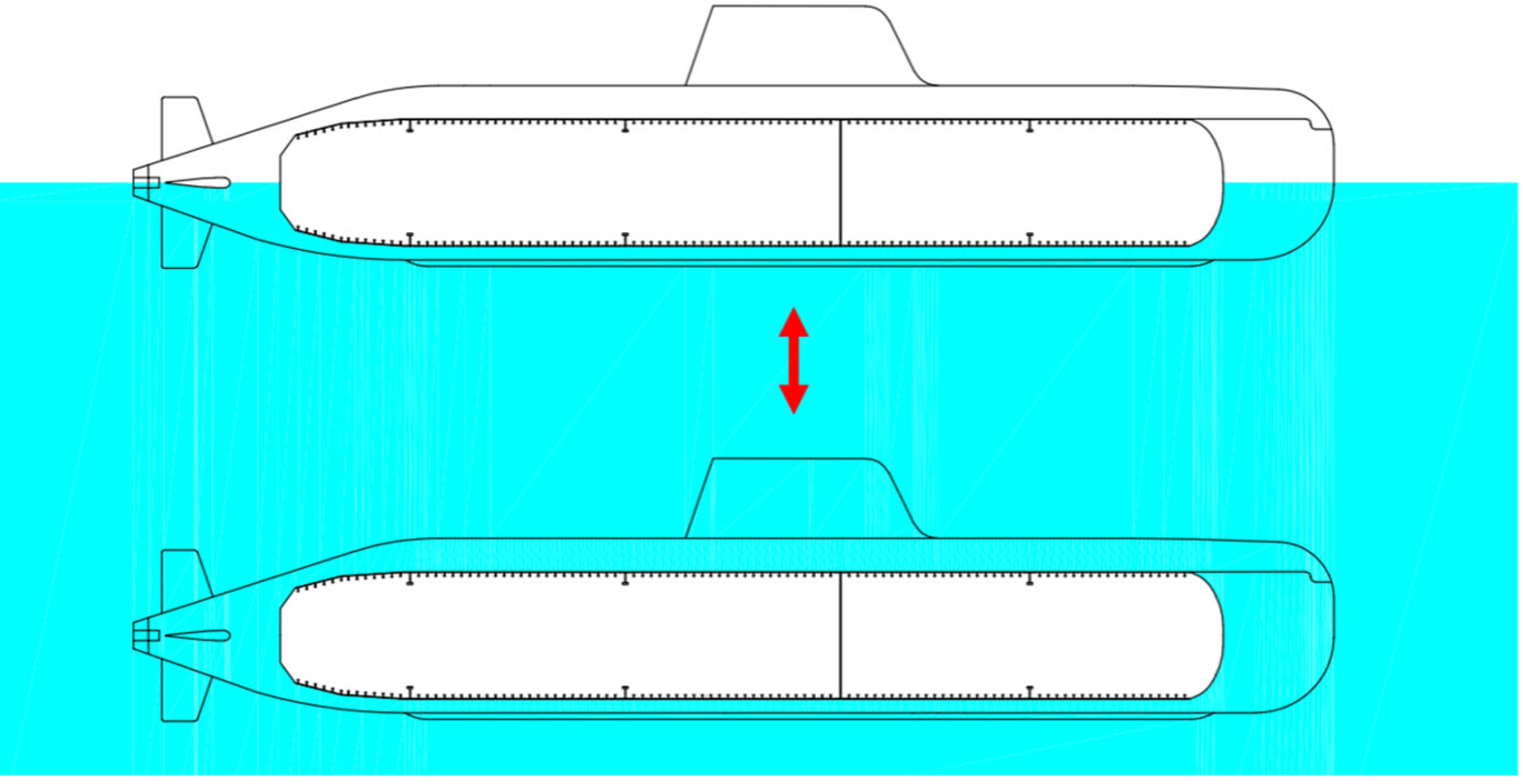
Submarines are essential naval weapon systems capable of conducting covert operations in deep waters, performing various missions such as anti-surface warfare, anti-submarine warfare, reconnaissance, and maritime surveillance. As shown in Figure 1, the hull structure of a submarine is categorized into the pressure hull, which resists external hydrostatic pressure while maintaining atmospheric conditions inside, and the non-pressure hull, which is not subjected to external pressure. Among them, the pressure hull is the most critical structural component, responsible for ensuring the safety of both crew and onboard equipment. It must maintain structural integrity under extreme conditions and withstand the high pressures encountered at depths. Although a spherical shape offers the most stable form for a pressure hull, a cylindrical structure reinforced with ring frames is generally adopted due to its superior spatial efficiency and favorable hydrodynamic characteristics. Ring frames, typically of T-section and installed on the interior side of the shell, serve to reinforce the plating and prevent buckling. Bulkheads, which support the pressure hull and divide the internal compartments, are usually placed at regular intervals. However, in modern large submarines, the installation of bulkheads is often restricted due to design constraints and the need for optimal internal space utilization. In such cases, deep frames are employed to compensate for the loss of stiffness caused by the absence of bulkheads. Deep frames are arranged at intervals of approximately 1.5 to 2 times the diameter of the pressure hull to prevent the simultaneous buckling of the ring frames and shell plating. Compared to ring frames, they possess greater stiffness and size and are required to exhibit structural rigidity comparable to that of bulkheads.
Since the 1920s, numerous studies have been conducted, primarily by the David Taylor Model Basin (DTMB), to establish empirical formulas for the design of submarine pressure hulls. Von Sander and Gunther investigated the theoretical stress distribution in shell plating supported by ring frames [1], and Faulkner subsequently proposed a corrected formulation to address errors identified in the original von Sander and Günther equations [2]. Lunchick also conducted a study focusing on shell yielding behavior under external pressure, contributing to the understanding of axisymmetric buckling [3]. Early investigations into shell buckling (asymmetric buckling) pressures of shell plating were carried out by Bryan and von Mises [4,5], while Windenburg and Trilling presented a simplified form of von Mises’ formulation [6]. Studies on overall or general instability were conducted by Bryant and Kendrick [7,8]. Van der Neut investigated the buckling behavior of bulkhead-end plates and Ross later compiled theoretical analyses and experimental results on the collapse behavior of externally pressurized cylindrical, conical, and domed shells [9,10]. Based on these studies, several advanced countries have developed structural strength criteria applicable to their domestic submarine design and construction processes by systematically analyzing pressure hull collapse behavior. However, detailed and practical design information for pressure hulls remains limited. While considerable research has been conducted on shell plate thickness and ring frame spacing during the initial design phase, there is a relative lack of research on the primary structural elements of ring frames, namely the web and flange.
In recent years, numerous studies have been conducted to improve the structural efficiency of submarine pressure hulls. Oh and Koo proposed empirical formulas for the preliminary estimation of main dimensional parameters of ring-stiffened pressure hulls, including shell thickness, frame spacing, web height and thickness, and flange width and thickness [11]. These formulas offer valuable guidance during the initial design stage. Kine investigated the influence of frame space and shell thickness on the buckling behavior of pressure hulls [12]. Rathinam et al. performed a comparative study between numerical and experimental buckling results, demonstrating the significant impact of initial geometric imperfections on buckling strength [13]. Şenol proposed a structural optimization method for pressure hulls, aiming at minimum weight and maximum internal volume [14]. Shinoka and Netto compared the efficiency of three metaheuristic algorithms: differential evolution (DE), particle swarm (PS), and simulated annealing (SA) for minimizing the structural weight of submarine pressure hulls [15]. Moreover, Burak Eyiler et al. studied the optimum structure of pressure hulls reinforced with various types of stiffeners [16]. However, these studies are all limited to ring frame structures, and studies on deep frames are difficult to find.
Deep frames, which possess significantly larger cross-sectional areas and higher stiffness than ring frames, play a critical role in supporting the pressure hull in place of bulkheads. Nevertheless, there are currently no clearly defined design standards or empirical formulas for deep frames, and publicly available data is scarce. Although some guidance suggests that deep frames should be designed with approximately three times the cross-sectional area and ten times the moment of inertia compared to ring frames, no standardized formulas or design methodologies based on this guidance have been established [17]. Moreover, DNV presents various analysis criteria and Validation procedures to ensure the structural safety of deep frames. However, these provisions merely require the designer to demonstrate the structural integrity of deep frames, and they do not offer empirical formulas or practical design guidelines for direct application in engineering practice [18].
In this study, six design cases with different design pressures and pressure hull diameters were selected to derive the initial scantling formulas for the design of deep frames in submarine pressure hulls. The principal dimensions of the ring frames in each case were determined based on the estimation formulas proposed by Oh and Koo [11]. Structural integrity was verified using nonlinear buckling analysis through finite element analysis (FEA) and analytical calculations based on DNV [18]. Subsequently, a total of 82,440 parametric studies were conducted using FEA, in which the design variables included the section length (Lsec) of the pressure hull, the reinforced shell thickness, the effective length of the deep frame, and the web height and thickness, as well as the flange width and thickness of the deep frames. The FEA was performed using the general-purpose software ANSYS Mechanical APDL 2024 R2, and both linear buckling analysis and nonlinear buckling analysis incorporating material and geometric nonlinearities were conducted. Based on the results, initial scantling formulas for the principal dimensions of deep frame members are proposed.

2. Failure Modes of Submarine Pressure Hulls

The failure modes of submarine pressure hulls are highly complex due to the influence of various structural components. However, as the pressure hull is typically cylindrical to maximize internal space efficiency, it is highly vulnerable to buckling. Therefore, the most critical consideration in pressure hull design is failure due to buckling. A ring-frame-stiffened pressure hull must be designed to prevent elastic buckling, which can occur before the material reaches its yield stress, and the buckling strength must be greater than the hydrostatic pressure corresponding to the submarine’s design depth.
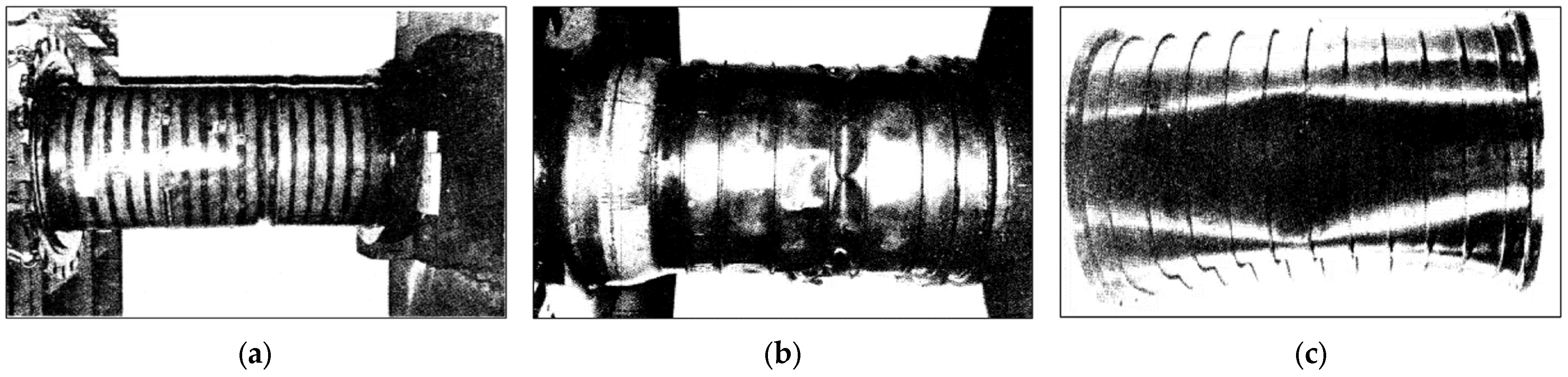
Representative buckling modes of a ring-frame-stiffened pressure hull include shell yielding, shell buckling, and general instability. As shown in Figure 2a, shell yielding occurs at the center of the shell between ring frames when the shell is relatively thick and the ring frame spacing is narrow. This type of failure exhibits axisymmetric accordion-like wrinkling. As shown in Figure 2b, shell buckling occurs between ring frames when the shell is relatively thin and the frame spacing is wide, resulting in small circumferential wrinkles along the shell. In Figure 2c, general instability occurs when both the shell and ring frames collapse simultaneously. This happens when the spacing between high-stiffness reinforcements or bulkheads is large, or when the strength of the ring frames is insufficient.


3. Design Cases

3.1. Initial Dimensions of Ring Frames

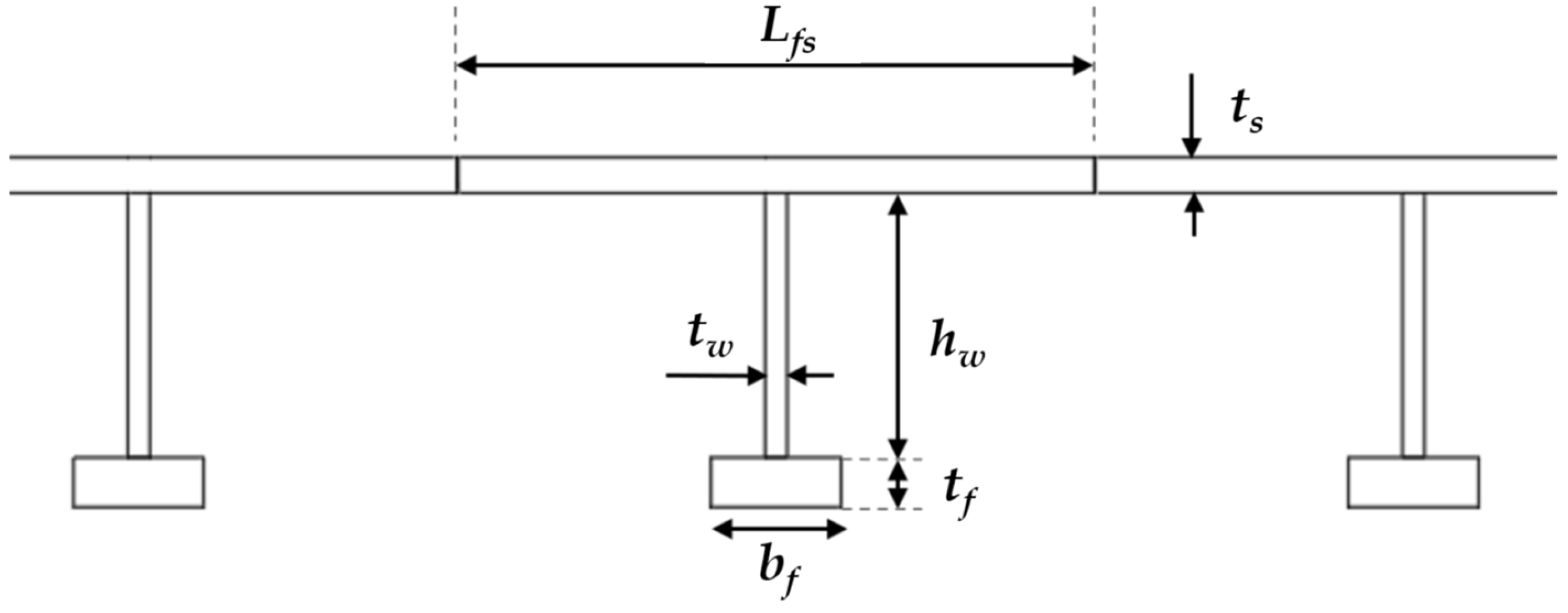
In this study, six cases with different combinations of design pressure and pressure hull diameter were selected based on a survey of actual submarine design data, and the initial dimensions of the ring frames for each case were established. As shown in Figure 3, the ring frame dimensions include the shell thickness (ts), frame space (Lfs), web height (hw) and thickness (tw), and flange width (bf) and thickness (tf). These values were calculated based on the estimation formulas proposed by Oh and Koo [11]. The corresponding data are presented in Table 1 and Table 2.
The design pressure applied to a submarine pressure hull corresponds to the Collapse Diving Pressure (CDP), which is defined as the Nominal Diving Pressure (NDP) multiplied by a safety factor. The nominal diving depth (NDD) defines the maximum diving depth for unrestricted diving operations in seawater of the submarine [18]. In this study, the design pressures were determined based on a survey of existing submarines, using the safety factor specified by DNV [18], as described in Equation (1).
CDP / NDP = 8 / NDP + 1.6   (bar)
Table 1. Case Data of Pressure hull.
CaseDesign Pressure (MPa)Diameter (mm)Ring Frame MaterialDeep Frame Material
15.56200HY80HY80
26.07600HY100HY80
35.58000HY80HY80
46.09000HY80HY80
57.010,000HY100HY80
67.512,000HY100HY80
Table 2. Initial Dimensions of ring frame (mm).
CaseShell Thickness (ts)Frame Space (Lfs)Web Height (hw)Web Thickness (tw)Flange Width (bf)Flange Thickness (tf)
124.543018515.59035.0
227.050020017.510538.0
331.555023520.012044.5
438.565029025.014550.0
540.570030526.015555.0
652.587039033.520073.5

3.2. Material Properties

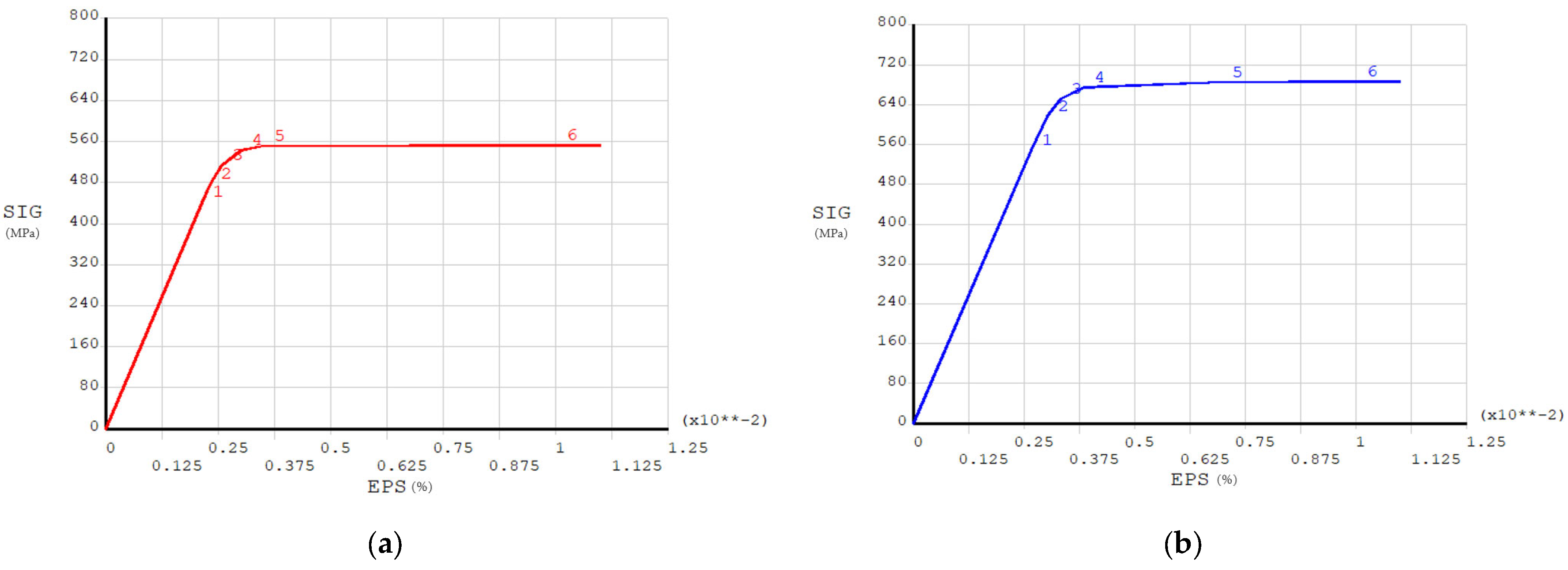
In submarine design, HY-80 steel is commonly used for the pressure hull, although HY-100 steel is sometimes applied to reduce structural weight. Therefore, in this study, HY-80 and HY-100 steels were applied as ring frame material. However, for deep frames, HY-80 steel was used in all cases due to its superior weldability and lower cost. The mechanical properties and yield strengths of both materials are presented in Table 3, as specified in MIL-S-16216K [20]. Finite element analysis was conducted using ANSYS Mechanical APDL. As shown in Figure 4, material nonlinearity was modeled by applying a multi-linear material model based on the stress–strain curve. The allowable stress in this curve was defined with reference to the yield strength of the material.

3.3. Mesh Convergence Study for Finite Element Method

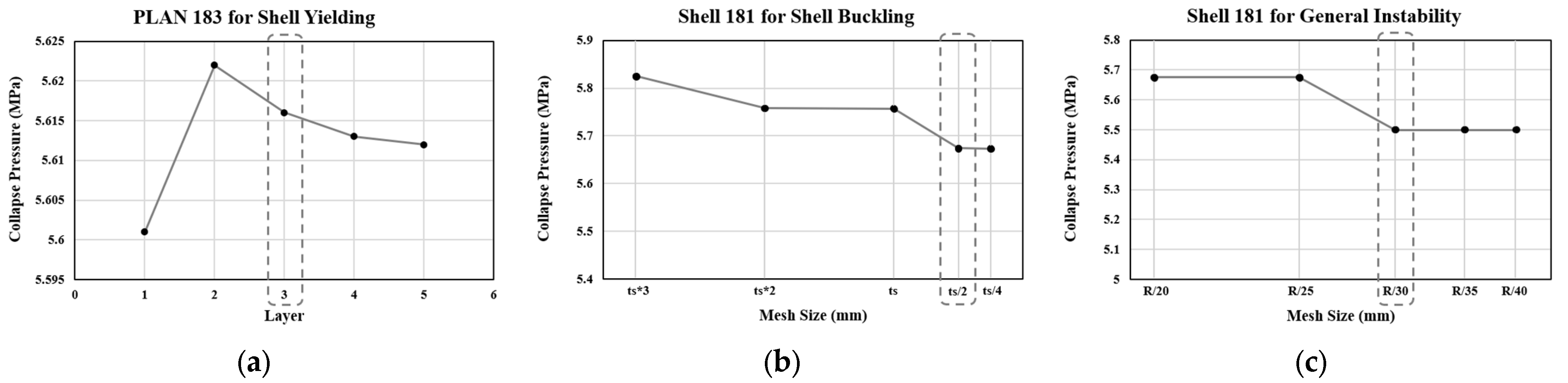
To ensure numerical accuracy and solution convergence, a mesh convergence study was carried out for the three analyses, namely shell yielding, shell buckling, and general instability. PLAN183 was used for shell yielding, and 3 layers through the thickness were selected in consideration of both convergence and computational efficiency. For shell buckling and general instability, SHELL181 was used with convergence achieved at mesh sizes of t/2 and R/30, respectively. These mesh configurations were applied throughout the parametric study. Convergence results are shown in Figure 5.

4. Structural Integrity Evaluation of Ring Frames

4.1. Boundary Conditions and Modeling for FEA

The buckling analysis was divided into three categories based on the intended failure mode: shell yielding, shell buckling, and general instability. For shell yielding analysis, the two-dimensional structural continuum element PLAN183 was used. This element enables axisymmetric characteristics to be activated in a 2D plane, allowing for results like those of 3D analysis. In contrast, SHELL181, a four-node element with six degrees of freedom, was used for shell buckling and general instability analysis. This element is suitable for both linear and nonlinear analysis involving large deformations.
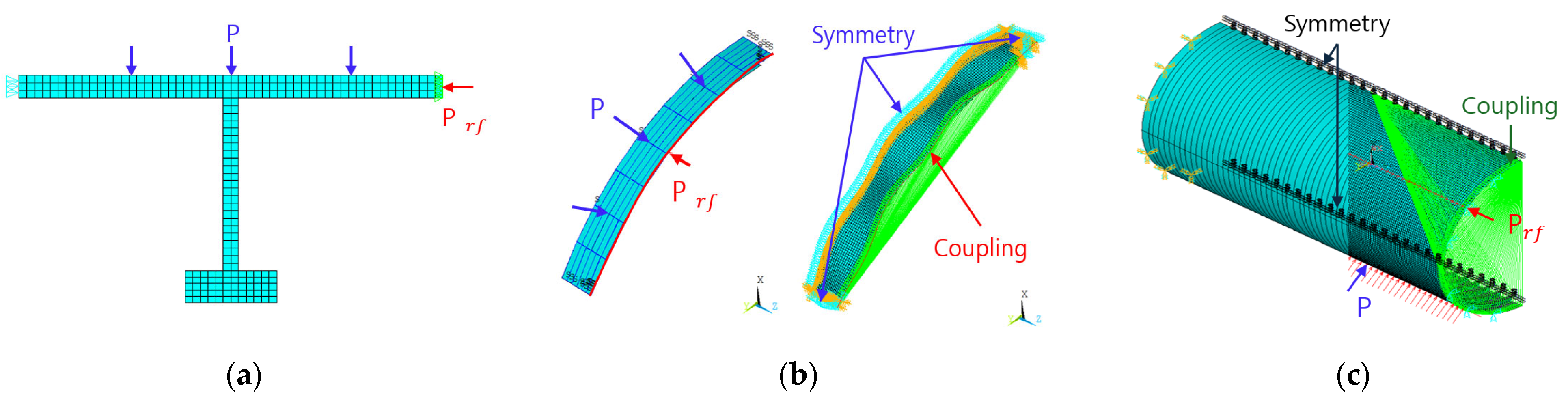
In all buckling analyses, the shell plating was subjected to pressure higher than the design pressure. In addition, ring force and coupling loads were applied at the fore and aft ends in the axial direction. Boundary conditions were applied according to the characteristics of each buckling mode, as summarized in Table 4, and the corresponding modeling approaches are illustrated in Figure 6.
The section length, defined as the spacing between bulkheads or deep frames in the pressure hull, is typically 1.5 to 2 times the diameter of the pressure hull. Therefore, in the general instability analysis, the section length was set to twice the pressure hull diameter, which is the maximum considered in this study.
Figure 6. (a) FEA for Shell Yielding; (b) FEA for Shell Buckling; (c) FEA for General Instability.
Jmse 14 00386 g006
Table 4. Boundary Condition for Buckling.
Shell YieldingShell BucklingGeneral Instability
ElementPLAN 183SHELL 181SHELL 181
Boundary
Condition
ConstrainCoupling and
Fixed to longitudinal
direction
Coupling and
Symmetry
Coupling, Fixed all,
Fixed to circumferential direction and Symmetry
Loading P = α   ×   P D e s i g n   and   P r f   = R o u t 2 R o u t 2 R i n 2 × P

4.2. Buckling Analysis Results

From the shell yielding analysis incorporating initial imperfections, all design cases satisfied the design pressure. This confirms that the ring frame dimensions determined by the initial scantling formulas ensure structural stability against shell yielding. Furthermore, as shown in Table 5, the deviation between the analytically calculated buckling strength and the value estimated through finite element analysis was within 5.0%. This validates the accuracy of the numerical approach.
Similarly, the shell buckling analysis with initial imperfections showed that all design cases satisfied the design pressure. Therefore, the ring frame dimensions based on the initial scantling formulas were also confirmed to be structurally stable against shell buckling. As presented in Table 6, the difference between the analytically and numerically obtained buckling strengths was within 5.8%.
For the general instability analysis, an initial imperfection corresponding to 0.2% of the pressure hull diameter was applied. This value represents the maximum allowable out-of-roundness [12]. As shown in Table 7, the buckling strength of all design cases exceeded the design pressure under these conditions. This result confirms that the ring frame dimensions derived from the initial scantling formulas maintain structural integrity under general instability when the section length equals twice the pressure hull diameter. Therefore, within the section length range considered in this study (1.5 to 2.0 times the pressure hull diameter), the selected ring frame dimensions are considered appropriate.

5. Parametric Study

5.1. Bounds and Discrete Value

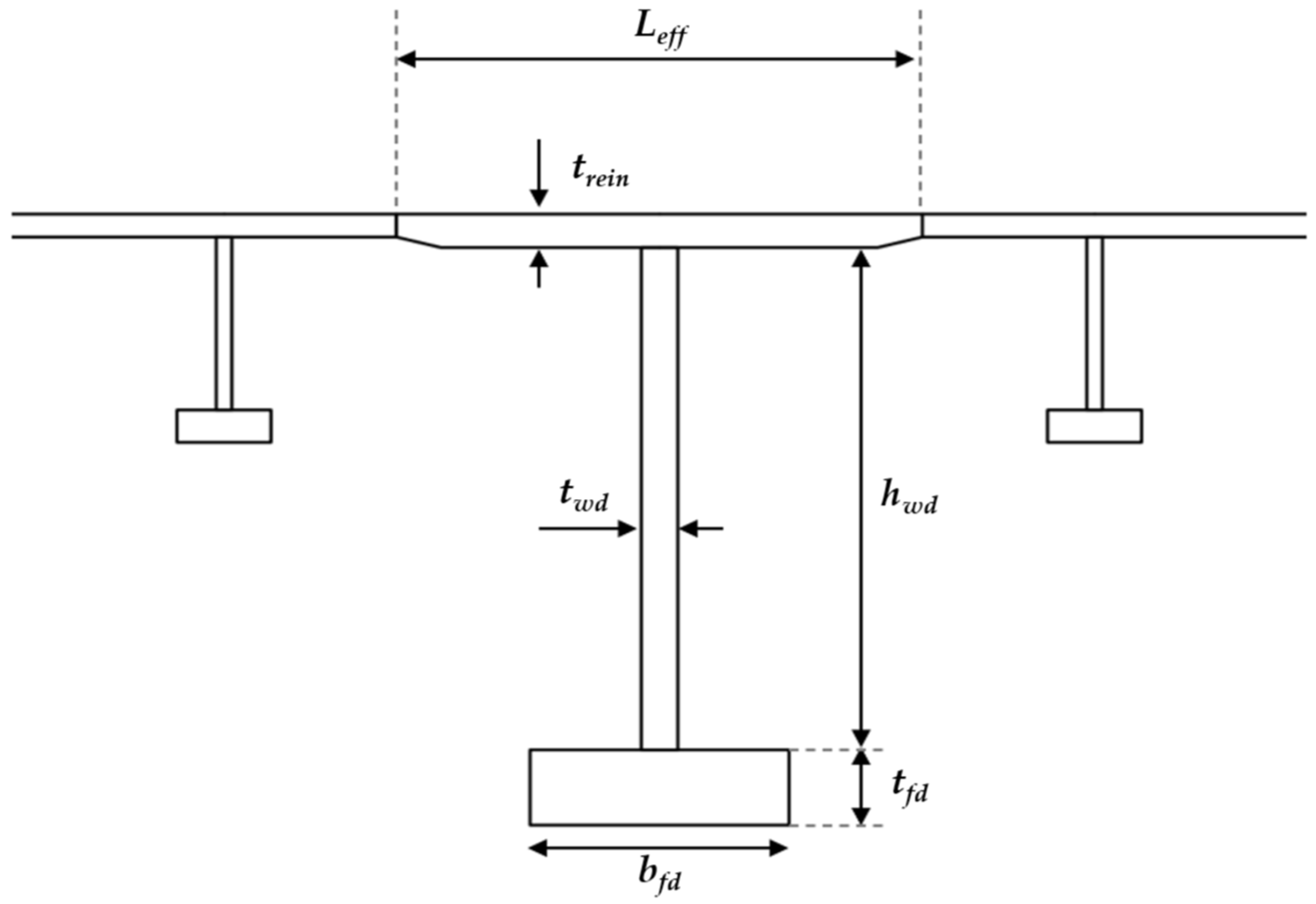
A total of 82,440 parametric studies were conducted using finite element analysis for six design cases with different combinations of design pressure and pressure hull diameter. The design variables included the section length ( L sec ), reinforced shell thickness ( t rein ), effective length ( L eff ), deep frame web height ( h wd ) and thickness ( t wd ), and deep frame flange width ( b fd ) and thickness ( t fd ). The overall geometry of the deep frame and the definition of each design variable are shown in Figure 7. The parametric bounds for each design variable were selected based on structural efficiency, under the assumption that deep frames function similarly to bulkheads. Among the parameters, t rein and L eff were applied with the same design range for all section lengths, as shown in Table 8. The remaining variables were defined with separate design ranges depending on the section length, as presented in Table 9, Table 10, Table 11, Table 12, Table 13 and Table 14.

5.2. Constraints

The constraints applied in the parametric study include the allowable fatigue stress, the design pressure, and the general instability strength. As shown in Equation (2), the allowable fatigue stress of the material must not be less than the numerical fatigue stress of the structure. According to DNV, submarine pressure hulls are required to satisfy the allowable fatigue stress corresponding to 10,000 cycles at the nominal diving depth [18].
σ allowable fatigue stress > σ numerical fatigue stress
The design pressure must also be lower than the collapse strength of the structure, as indicated in Equation (3).
P cr > P design
For general instability strength, the critical load of the buckling mode in which the deep frame acts as a bulkhead must not be lower than the critical load of the mode in which the deep frame collapses together with the shell, as expressed in Equation (4).
P cr_bulkhead > P cr_togerther

5.3. Boundary Conditions and Modeling

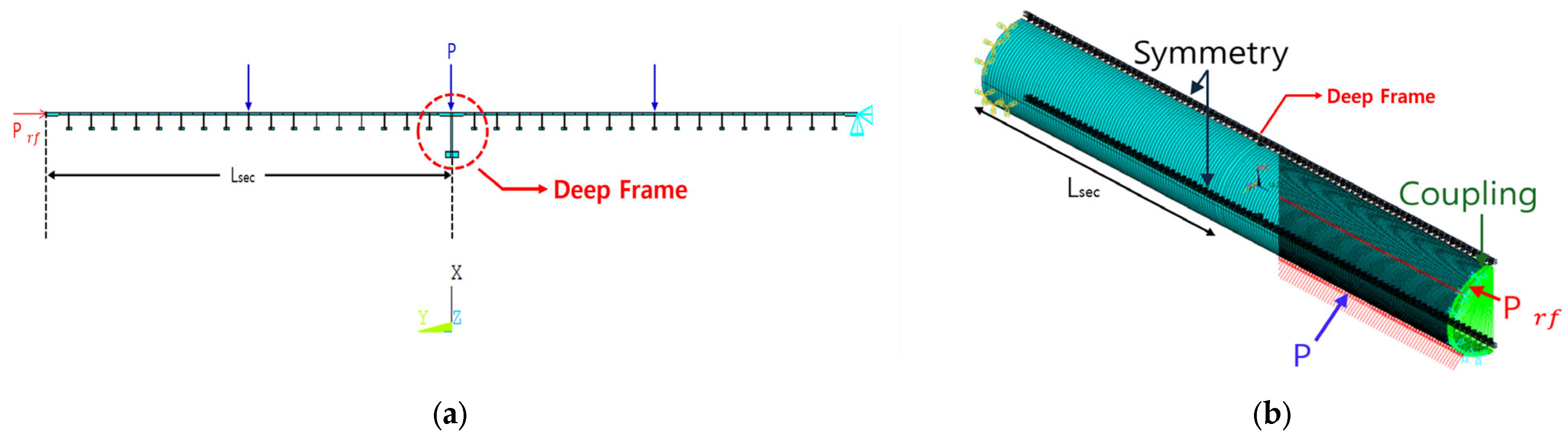
The fatigue and structural strength analysis of the deep frames for the parametric study was performed using PLAN 183 elements. The boundary conditions and modeling approach are shown in Figure 8a and Table 15.
Table 15. Boundary Conditions for Parametric Study.
Fatigue and Structural StrengthShell Buckling
ElementPLAN 183SHELL 181
Boundary
Condition
ConstrainCoupling, Fixed allCoupling, Fixed all,
Fixed to circumferential direction
and Symmetry
LoadingLinear P =   P N D D P r f = R o u t 2 R o u t 2 R i n 2 × P P = 1   M P a P r f = R o u t 2 R o u t 2 R i n 2 × P
Nonlinear P = α × P D e s i g n P = α × P D e s i g n
Fatigue strength analysis was carried out through linear analysis, where the nominal diving pressure ( P NDD ) as shown in Table 16 was calculated using Equation (1) based on DNV [18]. Structural strength analysis was conducted through nonlinear analysis using the design pressure as the load condition.
The general instability strength analysis of the deep frames was modeled as shown in Figure 8b. For the linear buckling analysis, an external pressure of 1 MPa was applied to the shell plating of the pressure hull. The analysis was repeated until the target buckling mode shape was obtained. And nonlinear analysis with initial imperfection was then performed to assess structural integrity.
Table 16. Nominal Diving Pressure for each design case (MPa).
Case123456
PNDD (MPa)3.003.253.003.253.884.19
Figure 8. (a) FEA Model for Fatigue and Structural Strength of Deep frame; (b) FEA Model for General Instability of Deep frame. (The dotted line indicates the deep frame structure).
Jmse 14 00386 g008

6. Initial Scantling Formulas for Submarine Deep Frames

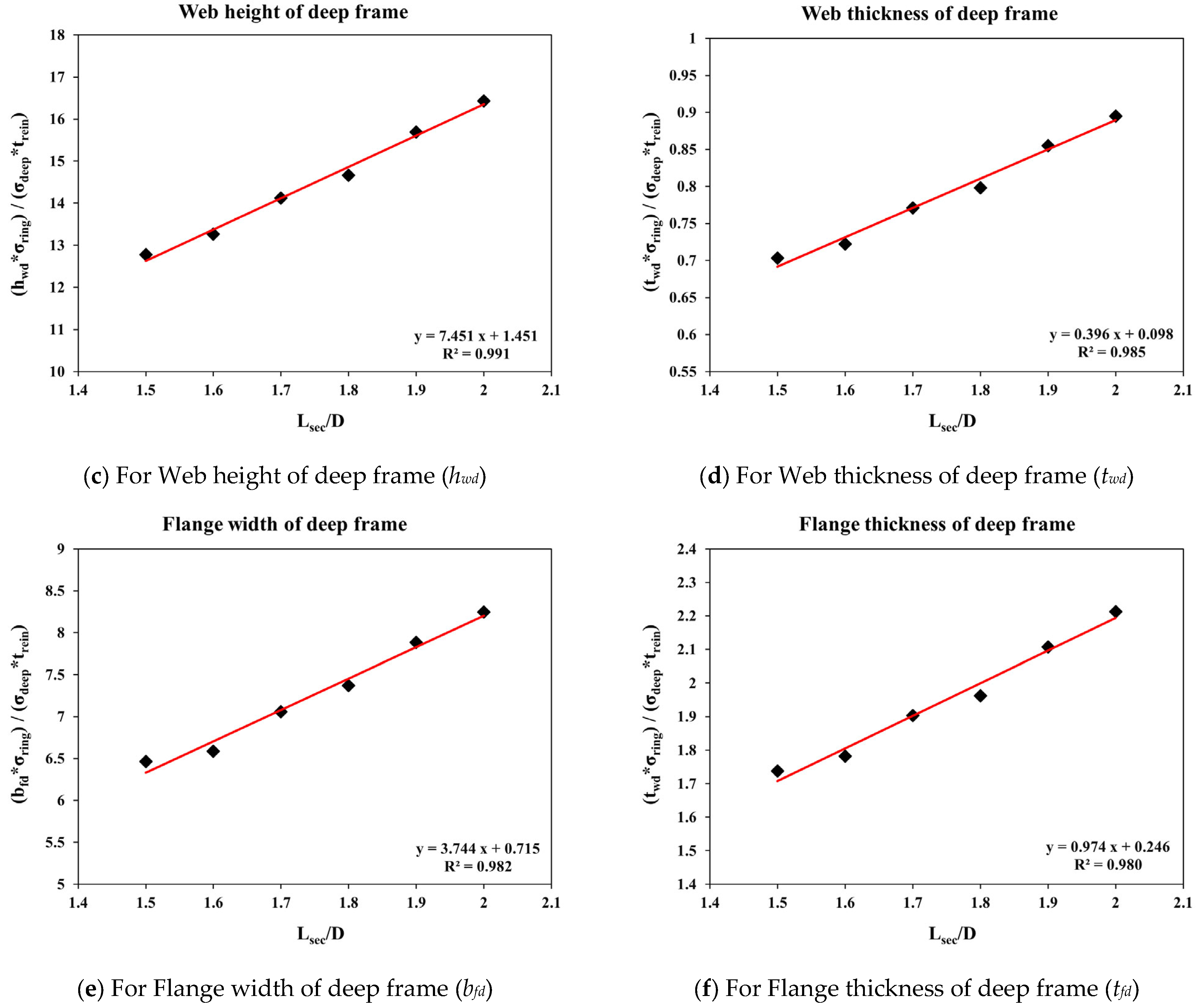
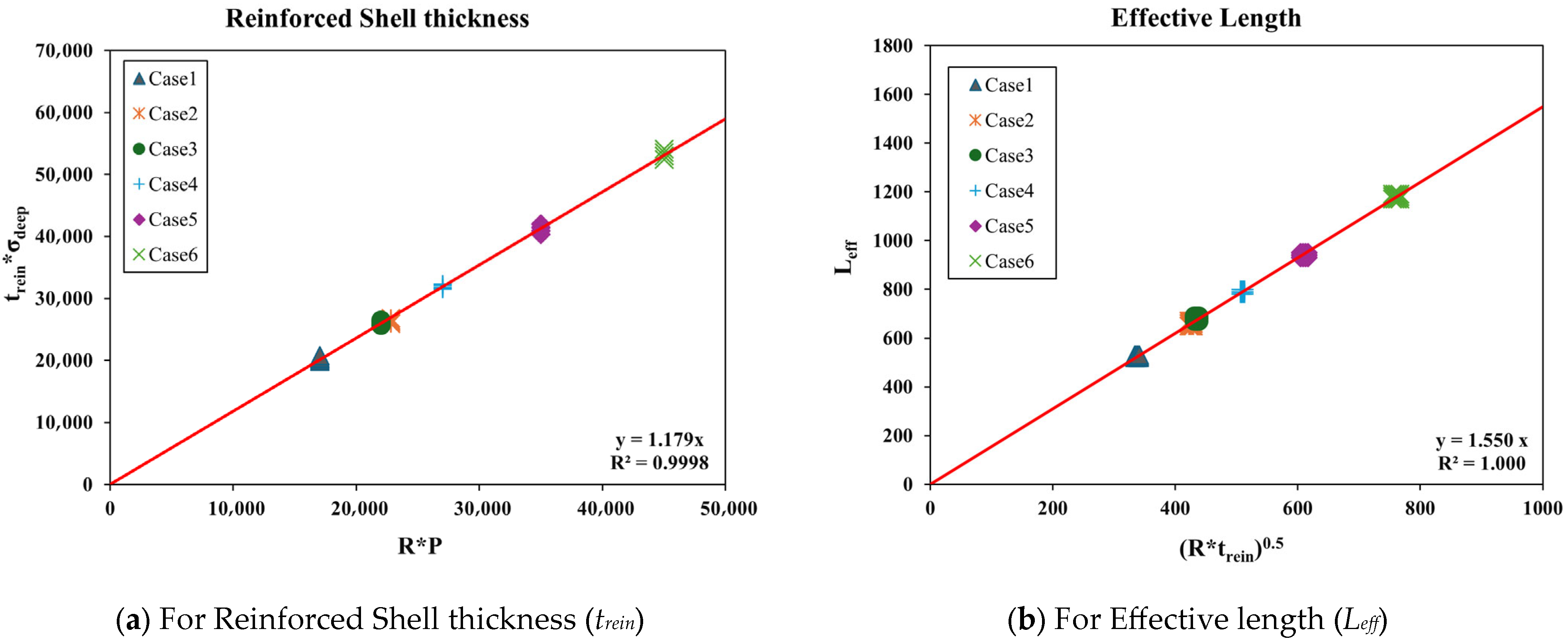
Based on parametric study, initial scantling formulas for submarine deep frames were derived, as summarized in Table 17. These formulas were obtained using a curve fitting method, and the corresponding plots are shown in Figure 9a–f. σ r i n g   is the yield strength of the ring frame material, and σ d e e p   is that of the deep frame material.

7. Validation of the Initial Scantling Formulas for Deep Frames

7.1. Validation Cases

To validate the applicability of the initial scantling formulas proposed in this study, several Validation cases with different section lengths were evaluated. For each case, the deep frame dimensions were estimated using the derived formulas, and structural stability was assessed accordingly. The section lengths for the Validation cases were selected within the range of 1.5 to 2.0 times the pressure hull diameter, as shown in Table 18. The estimated deep frame dimensions obtained from the formulas are listed in Table 19. The boundary conditions and modeling for the FEA are identical to those presented in Figure 8 and Table 16.

7.2. Review Results

The fatigue strength analysis evaluated whether the stress occurring at the connection between the deep frame web and the reinforced shell plate was within the allowable fatigue stress. The allowable fatigue stress of HY-80 steel was reported to be 499.435 MPa by Oh and Ahn (2019) [21], and as shown in Table 20, all Validation cases satisfied the fatigue strength requirements. This confirms that the deep frames designed using the proposed initial scantling formulas are appropriate in terms of fatigue strength.
The structural strength analysis was performed using geometric and material nonlinear analysis to evaluate whether the collapse strength of the structure exceeded the design pressure. As shown in Table 21, the results indicated that the collapse strength was 1.05 to 1.12 times greater than the design pressure for all cases, confirming sufficient structural strength. This verifies that the deep frames designed using the proposed initial scantling formulas are appropriate in terms of structural strength.
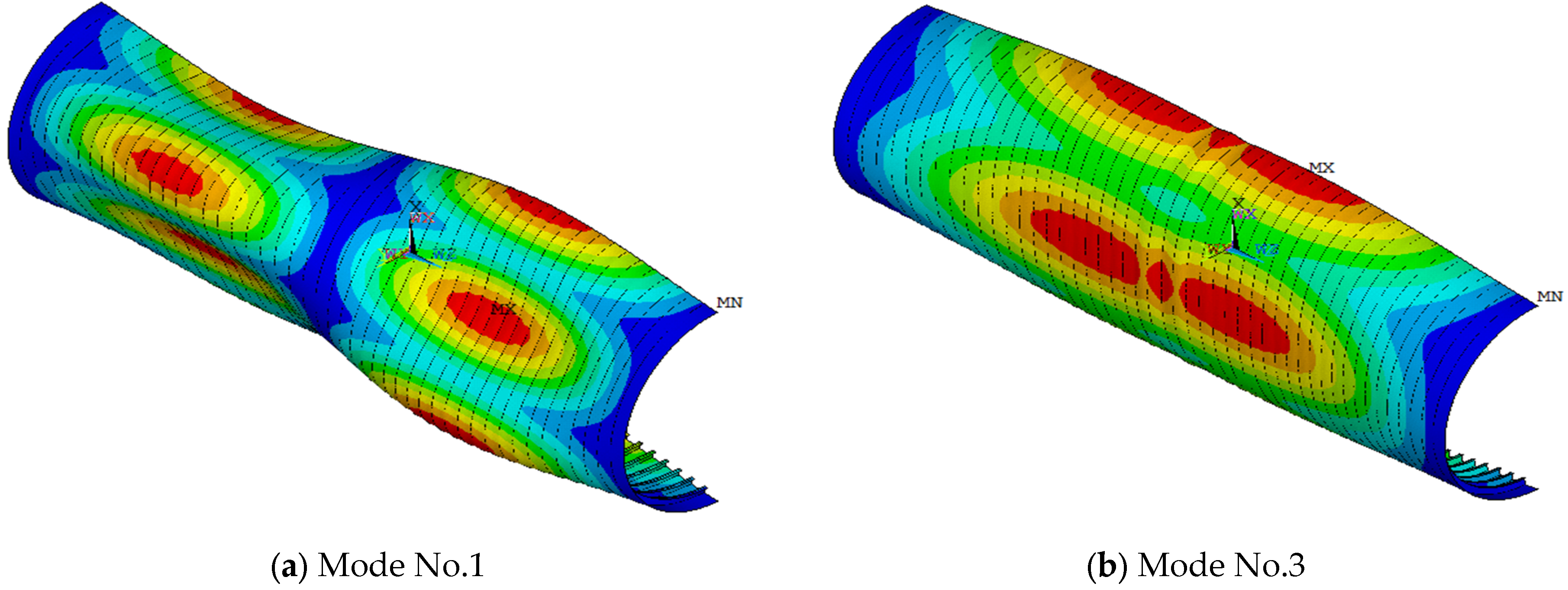
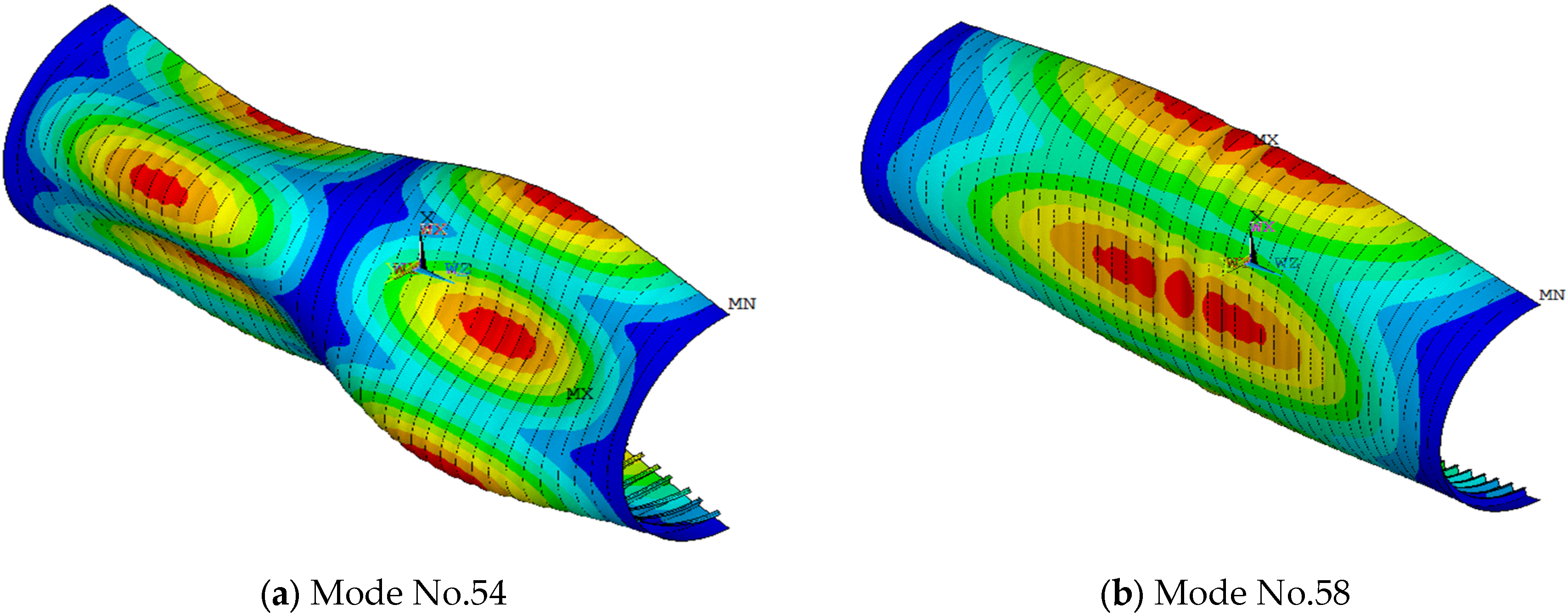
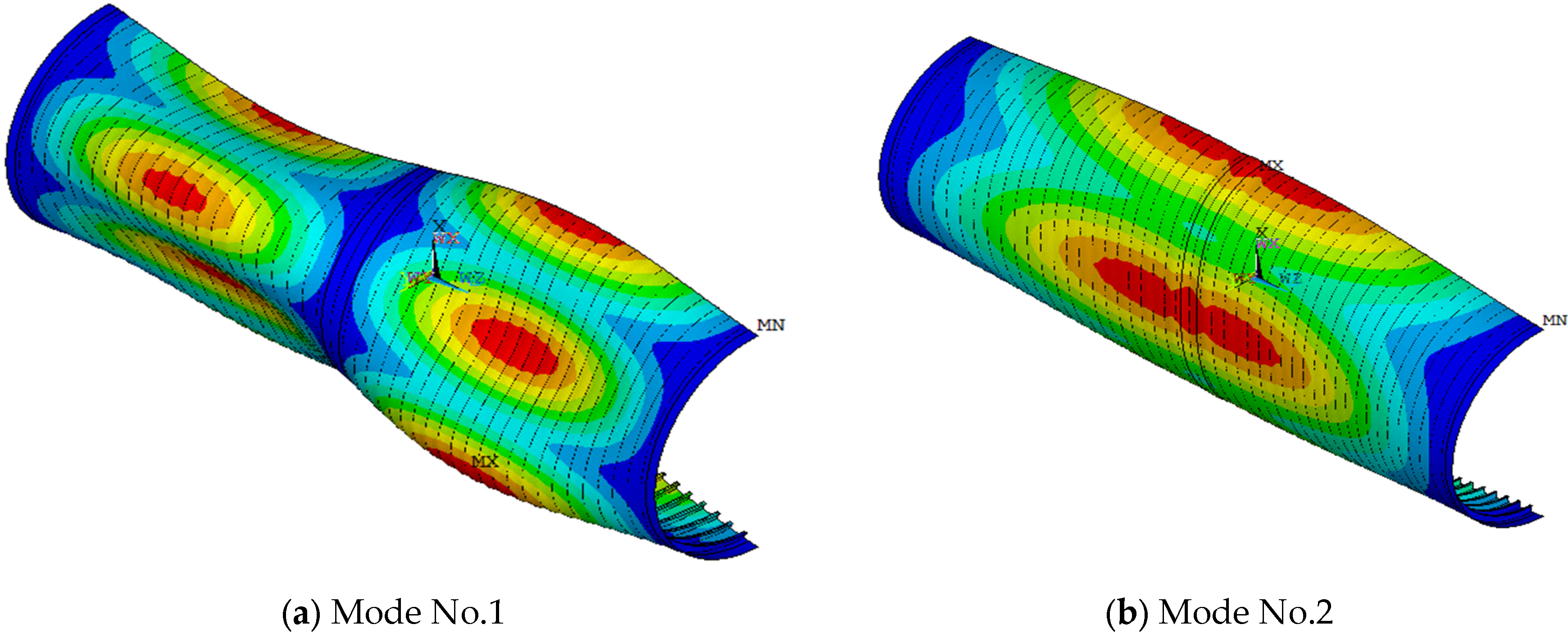
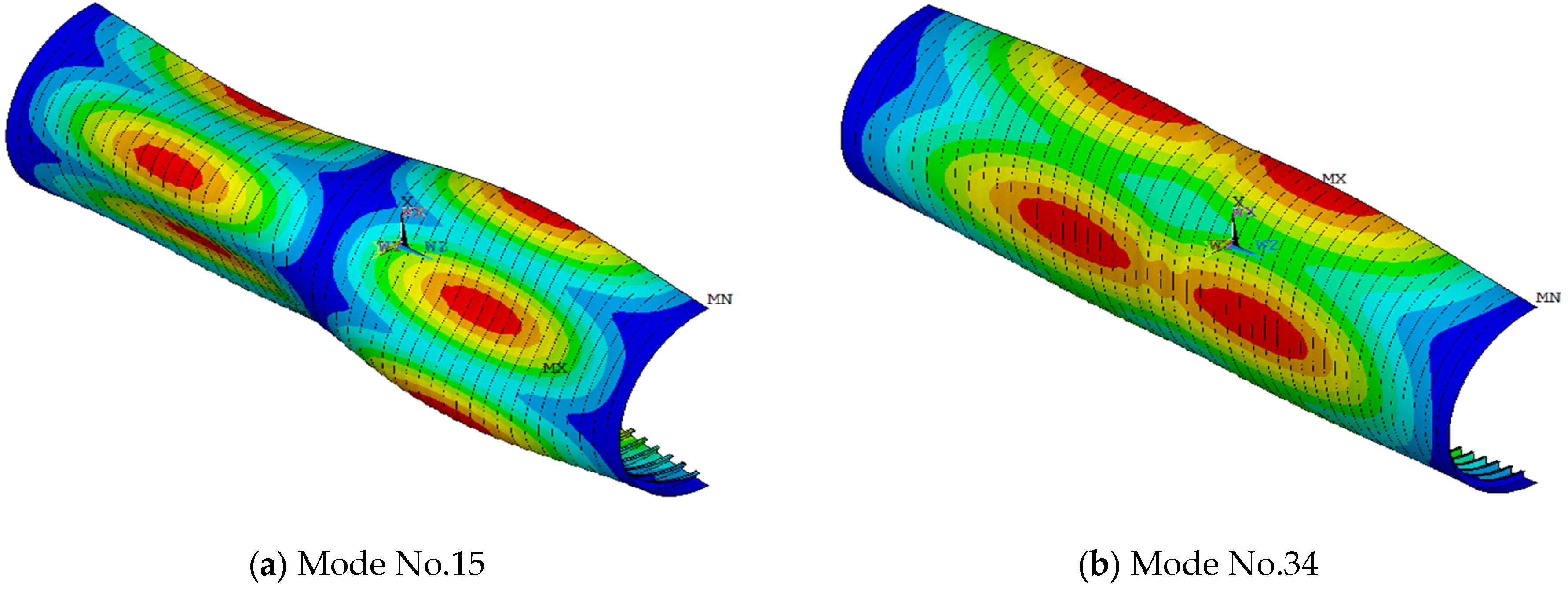
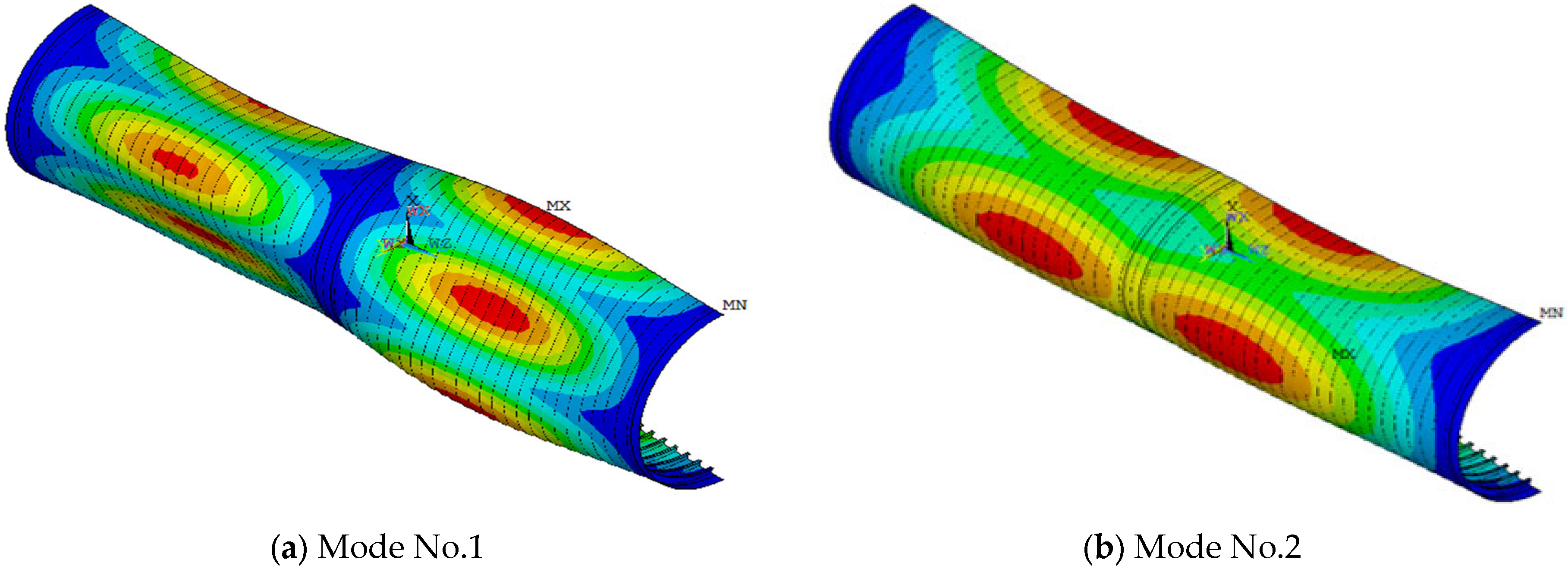
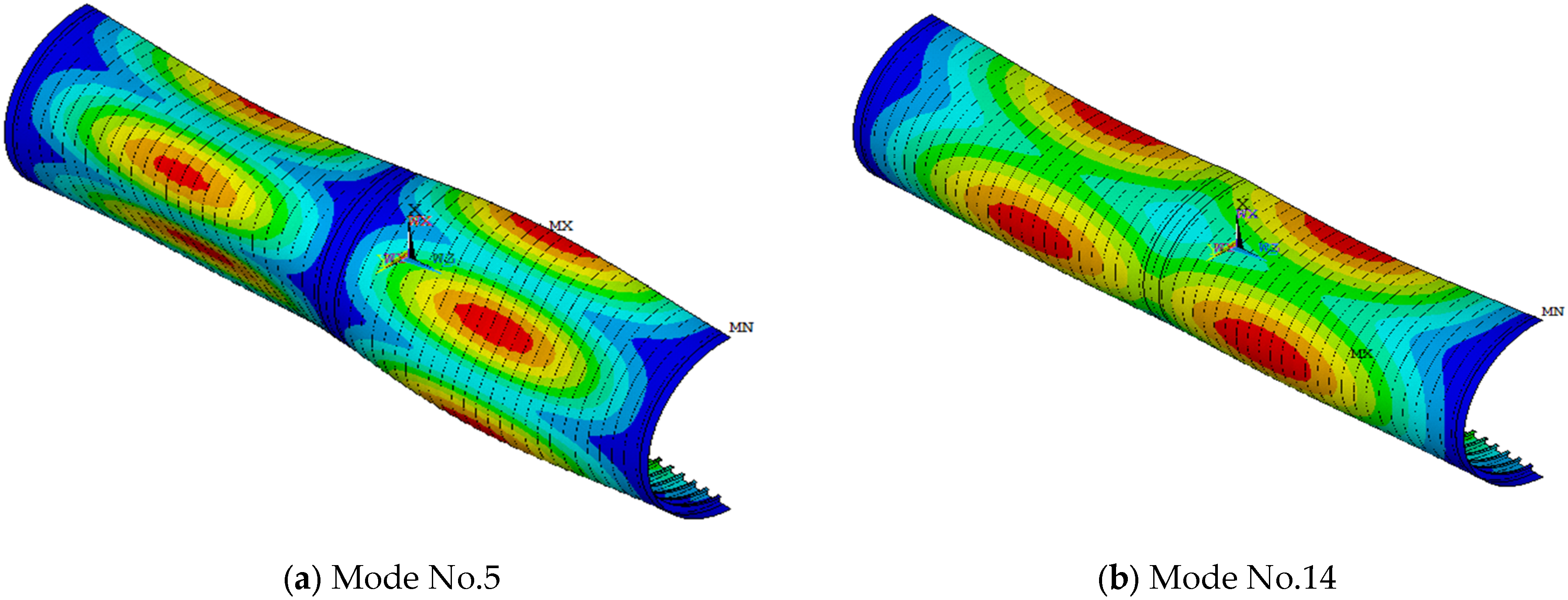
The results of the linear analysis for general instability revealed two distinct buckling modes in all cases, as illustrated in Figure 10, Figure 11, Figure 12, Figure 13, Figure 14 and Figure 15. As summarized in Table 22, the buckling mode in which the deep frame behaves as a bulkhead occurred prior to the mode where the deep frame deforms together with the shell. The latter mode does not enable the deep frame to perform its intended bulkhead function and is therefore structurally unfavorable if it occurs first. Therefore, to further verify the structural safety against buckling, a nonlinear analysis incorporating initial imperfections was performed for the buckling mode in which the deep frame acts as a transverse bulkhead. The results of the subsequent nonlinear analysis with initial imperfection, shown in Table 23, confirmed that the pressure hull and deep frame structures designed using the proposed formulas satisfy the design pressure under general instability conditions.

8. Conclusions

In this study, six design cases with varying design pressures and pressure hull diameters were selected, and the corresponding ring frame dimensions were determined. The structural safety of each case was verified through analyses of shell yielding (axisymmetric buckling), shell buckling (asymmetric buckling), and general instability. Based on these results, a total of 82,440 parametric studies were conducted for a section length range of 1.5 D ≤ Lsec ≤ 2.0 D, using the following design variables: pressure hull section length (Lsec), reinforced shell thickness (trein), effective length (Leff), web height (hwd) and thickness (twd), and flange width (bfd) and thickness (tfd) of the deep frames. The initial scantling formulas for the deep frame dimensions were derived accordingly, as summarized in Table 17. The validity of the proposed formulas was then confirmed by conducting Validation analyses on selected cases, which demonstrated structural safety in terms of fatigue strength, structural strength, and general instability.

Author Contributions

Conceptualization, D.O.; Methodology, D.O.; Software, M.L. and D.O.; Validation, M.L. and D.O.; Formal analysis, M.L.; Investigation, M.L.; Resources, D.O.; Data curation, M.L.; Writing—original draft, M.L.; Writing—review and editing, D.O.; Visualization, M.L.; Supervision, D.O.; Project administration, D.O.; Funding acquisition, D.O. All authors have read and agreed to the published version of the manuscript.

Funding

This work was supported by the Hongik University new faculty research support fund.

Institutional Review Board Statement

Not applicable.

Informed Consent Statement

Not applicable.

Data Availability Statement

The data presented in this study are available on request from the corresponding author.

Acknowledgments

In this paper, ChatGPT-5.2 was used solely for English translation and minor sentence expression refinement. Its use was strictly limited to language-related assistance, and it was not used for generating or modifying the scientific content of the manuscript.

Conflicts of Interest

Author Minwoo Lee was employed by the company Naval Ship Design Department, Hanwha Ocean Co., Ltd. The remaining authors declare that the research was conducted in the absence of any commercial or financial relationships that could be construed as a potential conflict of interest.

References

  1. Von Sanden, K.; Gunther, K. The Strength of Cylindrical Shells, Stiffened by Frames and Bulkheads, Under Uniform External Pressure on All Sides; David Taylor Model Basin: Carderock, MD, USA, 1952. [Google Scholar]
  2. Faulkner, D. The Collapse Strength and Design of Submarines, RINA Symposium on Naval Submarine. 1983. Available online: https://www.scribd.com/document/437158582/Falkner-collapse-Strength-and-Design-of-Submarine-by-d-Falkner (accessed on 5 May 2025).
  3. Lunchick, M.E. Plastic Axisymmetric Buckling of Ring-Stiffened Cylindrical Shells Fabricated from Strain-Hardening Materials and Subjected to External Hydrostatic Pressure; Report No. 1393; David Taylor Model Basin: Carderock, MD, USA, 1961. [Google Scholar]
  4. Bryan, G.H. Application of the Energy Test to the Collapse of a Long Thin Pipe under External Pressure. In Proceedings of the Cambridge Philosophical Society; Cambridge University Press: Cambridge, UK, 1888; Volume 6, pp. 287–292. Available online: https://books.google.co.kr/books?id=zGlNC3UrYfsC&pg=PR3&hl=ko&source=gbs_selected_pages&cad=1#v=onepage&q&f=true (accessed on 5 May 2025).
  5. Von Mises, R. Der Kritische Aussendruck für Allseits Belastete Zylindrische Rohre. In Festschrift: Prof. Dr. A. Stodola zum 70. Geburtstag; Orell Füssli: Zürich, Switzerland, 1929; pp. 418–430. Available online: https://archive.org/details/criticalexternal01vonm/mode/2up (accessed on 5 May 2025).
  6. Windenburg, D.F.; Trilling, C. Collapse by Instability of Thin Cylindrical Shells Under External Pressure; Report No. 385; United States Experimental Model Basin: Washington, DC, USA, 1934. [Google Scholar]
  7. Bryant, A.R. Hydrostatic Pressure Buckling of a Ring-Stiffened Tube; Report No. 306; NCRE: London, UK, 1954. [Google Scholar]
  8. Kendrick, S. The Buckling Under External Pressure of Circular Cylindrical Shells with Evenly Spaced, Equal Strength, Circular Ring-Frames: Part III; NCRE Report No. R244; National Committee on Research in Engineering: London, UK, 1953. [Google Scholar]
  9. Van der Neut, A. A General Solution of the Buckling of Spherical Shells, Considering Also Unsymmetric Buckling. Ph.D. Thesis, Delft University of Technology, Delft, The Netherlands, 1932. [Google Scholar]
  10. Ross, C.T.F. Pressure Vessels: External Pressure Technology, 2nd ed.; Woodhead Publishing: Philadelphia, PA, USA, 2011. [Google Scholar]
  11. Oh, D.; Koo, B. Empirical Initial Scantling Equations on Optimal Structural Design of Submarine Pressure Hull. J. Adv. Res. Ocean Eng. 2018, 4, 7–15. [Google Scholar]
  12. Kine, H. Collapse Design Optimization of Ring-Stiffened Cylindrical Pressure Hulls. Master’s Thesis, University of Stavanger, Stavanger, Norway, 2020. [Google Scholar]
  13. Rathinam, N.; Prabu, B.; Anbazhaghan, N. Buckling analysis of ring stiffened thin cylindrical shell under external pressure. J. Ocean Eng. 2021, 6, 360–366. [Google Scholar] [CrossRef]
  14. Serkan, Ş. A Structural Design Approach for Submarine Resistant Hull and Structural Optimization Based on Finite Element Method. Master’s Thesis, ITU Institute of Science and Technology, İstanbul, Türkiye, 2021. [Google Scholar]
  15. Thiago Kenji Leão, S.; Theodoro Antoun, N. Structural Optimization Applied to Submarine Pressure Hulls. J. Ocean. Eng. Mar. Energy 2025, 11, 169–182. [Google Scholar] [CrossRef]
  16. Eyiler, B.; Bayraktarkatal, E. Investigation of Optimum Structures at Submarine Pressure Hulls under Hydrostatic Pressure with Finite Element Method. J. Nav. Archit. Mar. Technol. 2024, 2024, 25–35. [Google Scholar] [CrossRef]
  17. Lee, J. Ship and Offshore Structures; Sejong Publishing: Seoul, Republic of Korea, 1996. (In Korean) [Google Scholar]
  18. DNV, AS. Rules for Classification—Naval Vessels: Part 8 Submarines; Chapter 2, Structure; DNV: Høvik, Norway, 2024. [Google Scholar]
  19. MIL-S-16216K; Military Specification: Steel Plate, Alloy, Structural, High Yield Strength. United States Department of Defense: Washington, DC, USA, 1987.
  20. Pulos, J.G. Structural Analysis and Design Considerations for Cylindrical Pressure Hulls; Report No. 1639; The David Taylor Model Basin: Carderock, MD, USA, 1963. [Google Scholar]
  21. Oh, D.; Ahn, N. Review of the Structural Shape for Aft Transition Ring of Submarine. J. Korean Soc. Mar. Environ. Saf. 2019, 25, 936–944. [Google Scholar] [CrossRef]
Figure 1. Pressure hull and Non-Pressure hull of Submarine Jmse 14 00386 i001 indicates the submerged condition.
Jmse 14 00386 g001
Figure 2. (a) Shell Yielding; (b) Shell Buckling; (c) General Instability [19].
Jmse 14 00386 g002
Figure 3. Section of Ring frame with Main Parameters.
Jmse 14 00386 g003
Figure 4. (a) Stress–Strain Curve of HY80; (b) Stress–Strain Curve of HY100. (The symbol ** signifies scientific notation).
Jmse 14 00386 g004
Figure 5. Mesh Convergence study results of the mesh size and collapse pressure for Finite Element Analysis: (a) for Shell Yielding; (b) for Shell Buckling; (c) for General Instability. (Dotted line represents the selected mesh size, and the symbol “*” indicates multiplication).
Jmse 14 00386 g005
Figure 7. Section of Deep frame with Main Parameters.
Jmse 14 00386 g007
Figure 9. Estimated Curves of Deep frame Parameters (“*” denotes multiplication).
Jmse 14 00386 g009aJmse 14 00386 g009b
Figure 10. Linear Buckling Analysis Results for Case 1.
Jmse 14 00386 g010
Figure 11. Linear Buckling Analysis Results for Case 2.
Jmse 14 00386 g011
Figure 12. Linear Buckling Analysis Results for Case 3.
Jmse 14 00386 g012
Figure 13. Linear Buckling Analysis Results for Case 4.
Jmse 14 00386 g013
Figure 14. Linear Buckling Analysis Results for Case 5.
Jmse 14 00386 g014
Figure 15. Linear Buckling Analysis Results for Case 6.
Jmse 14 00386 g015
Table 3. Material Properties of HY80 and HY100.
PropertyHY80HY100
Young’s Modulus (MPa)206,000206,000
Poisson’s Ratio0.30.3
Density (ρ) (g/mm3)7.85 × 10−37.85 × 10−3
Yield Strength (MPa)552686
Table 5. Comparison of Shell Yielding Pressure by Analytic Method and Numerical Method.
Case123456
Pcr_analytical (MPa)6.3487.1456.3447.0618.5208.874
Pcr_numerical (MPa)6.5196.8746.5217.1458.0198.836
Difference (%)2.73.82.81.25.00.4
Table 6. Comparison of Shell Buckling Pressure by Analytic Method and Numerical Method.
Case123456
Pcr_analytical (MPa)6.6076.4196.6907.6678.0948.776
Pcr_numerical (MPa)6.6716.7396.5427.2208.0648.743
Difference (%)0.25.02.25.80.40.4
Table 7. Comparison of Design Pressure and General Instability Pressure by Numerical.
Case123456
PDesign (MPa)5.5006.0005.5006.0007.0007.500
Pcr (MPa)6.1006.1756.1006.7757.3508.175
Pcr/PDesign Ratio1.111.031.111.131.051.09
Table 8. Bounds and Discrete values of trein and Leff (mm).
CasetreinLeff
1Bound36.0~38.0520~530
Discrete value0.55
2Bound46.5~48.5650~670
Discrete value0.510
3Bound46.5~48.5670~690
Discrete value0.510
4Bound57.0~59.0780~800
Discrete value0.510
5Bound72.0~76.0930~950
Discrete value110
6Bound95.0~99.01170~1190
Discrete value110
Table 9. Bounds and Discrete values for Section length 1.5 D (mm).
Casehwdtwdbfdtfd
1Bound465~48025.0~26.0225~23565.5~68.5
Discrete value50.551
2Bound505~52028.0~29.0250~26071.5~74.5
Discrete value50.551
3Bound590~60531.5~33.5300~31076~78
Discrete value5151
4Bound715~74540.0~42.0365~38094~97
Discrete value10151
5Bound745~77541.5~43.5375~390104~107
Discrete value10151
6Bound970~100053.0~56.0500~520133~136
Discrete value101101
Table 10. Bounds and Discrete values for Section length 1.6 D (mm).
Casehwdtwdbfdtfd
1Bound485~50026.0~27.0235~24568~71
Discrete value50.551
2Bound525~54028.5~30.5255~26575~77
Discrete value5151
3Bound615~63533~35310~32078~81
Discrete value10151
4Bound780~81041.5~43.5380~39099~102
Discrete value10151
5Bound770~80042.5~44.5385~395106~109
Discrete value10151
6Bound1000~103054.0~56.0510~520134~138
Discrete value101101
Table 11. Bounds and Discrete values for Section length 1.7 D (mm).
Casehwdtwdbfdtfd
1Bound505~52027.5~28.5245~25573~75
Discrete value50.551
2Bound560~57531.0~32.5275~28579~81
Discrete value50.551
3Bound655~67035.0~37.0330~34083~86
Discrete value5151
4Bound800~83044.0~46.0400~415104~107
Discrete value10151
5Bound835~86545.5~47.5410~425115~117
Discrete value10151
6Bound1075~110558.0~60.0550~565146~149
Discrete value10151
Table 12. Bounds and Discrete values for Section length 1.8 D (mm).
Casehwdtwdbfdtfd
1Bound525~54028.5~29.5255~26575~76
Discrete value50.551
2Bound580~60032.0~33.0285~29581~84
Discrete value50.551
3Bound680~70036.5~37.5345~35586~89
Discrete value50.551
4Bound840~86045.5~47.5415~430108~111
Discrete value5151
5Bound870~90047.5~49.5425~440118~121
Discrete value10151
6Bound1115~114560.0~62.0575~590151~154
Discrete value10151
Table 13. Bounds and Discrete values for Section length 1.9 D (mm).
Casehwdtwdbfdtfd
1Bound560~57530.5~31.5275~28580~83
Discrete value50.551
2Bound625~64034.0~35.0305~31587~90
Discrete value50.551
3Bound725~74038.5~40.5365~37592~95
Discrete value5151
4Bound895~91049.0~51.0445~465115~118
Discrete value5151
5Bound935~95051.0~53.0460~475127~129
Discrete value5151
6Bound1200~123064.5~66.5610~630162~165
Discrete value10151
Table 14. Bounds and Discrete values for Section length 2.0 D (mm).
Casehwdtwdbfdtfd
1Bound590~60531.5~32.5290~30585~86
Discrete value50.551
2Bound655~67536.0~38.0320~33091~94
Discrete value5151
3Bound760~78041.0~43.0385~39596~99
Discrete value5151
4Bound950~96551.0~53.0465~475121~123
Discrete value5151
5Bound980~99553.0~55.0485~495133~135
Discrete value5151
6Bound1250~128067.5~69.5640~655170~173
Discrete value10151
Table 17. Initial Scantling Formulas for Submarine Deep frames by Parametric Study.
ParametersInitial Scantling Formulas
Reinforced Shell Thickness (trein) t r e i n   = 1.179 × P R σ d e e p
Effective Length of Deep frame (Leff) L e f f = 1.550 × R t r e i n
Web height of Deep frame (hwd) h w d = ( 7.451 × L s e c D + 1.451 ) × t r e i n × σ d e e p σ r i n g h w d = ( 8.785 × L s e c D + 1.711 ) × P R σ r i n g
Web thickness of Deep frame (twd) t wd = ( 0.396 × L s e c D + 0.098 ) × t r e i n × σ d e e p σ r i n g t wd = ( 0.467 × L s e c D + 0.116 ) × P R σ r i n g
Flange height of Deep frame (bfd) b f d = ( 3.744 × L s e c D + 0.715 ) × t r e i n × σ d e e p σ r i n g b f d = ( 4.414 × L s e c D + 0.843 ) × PR σ r i n g
Flange thickness of Deep frame (tfd) t f d = ( 0.974 × L s e c D + 0.246 ) × t rein × σ d e e p σ r i n g t f d = ( 1.148 × L s e c D + 0.290 ) × PR σ r i n g
Table 18. Section lengths by Case for Validation.
CaseLsecCaseLsec
11.5 D41.8 D
21.6 D51.9 D
31.7 D62.0 D
Table 19. Dimensions of Deep frame for Validation (mm).
CasetreinLeffhwdtwdbfdtfd
136.552046525.023065
248.566552529.026570
347.067066536.533590
457.579086047.0430115
575.095094052.0475125
696.01180126070.0635170
Table 20. Results of Fatigue Strength Analysis for Validation.
CaseNumerical Fatigue Stress (MPa)Result
1375.412Safe
2371.526Safe
3411.297Safe
4431.808Safe
5425.408Safe
6449.725Safe
Table 21. Comparison of Design Pressure and Collapse Pressure for Structural Strength.
Case123456
PDesign (MPa)5.5006.0005.506.0007.0007.500
Pcr (MPa)6.1756.3256.1756.7257.4508.100
Pcr/PDesign Ratio1.121.051.121.121.061.08
Table 22. Results of Linear Buckling Analysis for Validation.
CaseMode No.Pcr (MPa)CaseMode No.Pcr (MPa)
15420.8541523.78
5820.893424.30
2114.825120.25
215.00220.39
3119.466524.30
320.031424.52
Table 23. Comparison of Design Pressure and Collapse Pressure for General Instability.
Case123456
PDesign (MPa)5.5006.0005.506.0007.0007.500
Pcr (MPa)6.1006.2756.1006.6807.5008.100
Pcr/PDesign Ratio1.111.031.111.111.071.07
Disclaimer/Publisher’s Note: The statements, opinions and data contained in all publications are solely those of the individual author(s) and contributor(s) and not of MDPI and/or the editor(s). MDPI and/or the editor(s) disclaim responsibility for any injury to people or property resulting from any ideas, methods, instructions or products referred to in the content.