


Abstract
The simulation accuracy of triaxial tests for oversolidated clay in transient finite element analysis is affected by soil constitutive model, permeability coefficient, overconsolidation ratio, shear rate and mesh size. This study introduces the concepts of overconsolidation parameters, potential strength, and hardening parameters from the unified hardening model into the modified Cam-Clay model. By integrating the generation mechanism of pore water pressure, a constitutive model for overconsolidated clay incorporating pore water pressure was developed, and its accuracy was validated through triaxial tests. By invoking the UMAT subroutine, accurate simulation of the undrained triaxial tests of overconsolidated clay was achieved in the static/general analysis in Abaqus. Based on this, model parameters for simulating triaxial tests of overconsolidated clay in transient analysis (Soils) were calibrated. The relationships between shear rate, mesh size, and soil parameters were quantified, providing a reference for similar engineering numerical simulations.
1. Introduction
Overconsolidated clay is widely distributed in the surface layer of marine soils, and its mechanical properties are significantly different from those of normally consolidated clay [1,2,3]. The stress–strain response and evolution mechanism of pore water pressure in overconsolidated soils are crucial for studying soil–structure interaction in marine engineering. In geotechnical engineering numerical analysis, transient analysis is often used as an important method for simulating triaxial tests of saturated clays, as it can reveal the evolution of pore water pressure. However, the modified Cam-Clay model embedded in ABAQUS transient analysis fails to accurately capture the mechanical response of overconsolidated clay during the loading process [4], and the results are susceptible to factors such as soil parameters and model parameters. Therefore, it is necessary to systematically analyze the influence of these parameters and quantify their relationships in the simulation of triaxial tests.
The overconsolidation ratio, as a key parameter characterizing the stress history of soil, is crucial for accurately simulating the engineering mechanical properties of soils. Pender, in 1978, proposed a constitutive model for overconsolidated clay relatively early and extended it to the stress–strain relationship under complex stress paths [5]). Dafalias, in 1986, introduced a boundary surface constitutive model for overconsolidated soil, providing a new direction for research in this field [6]. Based on this, Suebsuk, Sternik, and Jockovic proposed constitutive models describing the stress–strain response of overconsolidated clays based on boundary theory, the structured Cam-Clay model and the modified Cam-Clay model. These models were validated using both drained and undrained triaxial tests, with the main differences among them being the plastic hardening modulus [7,8,9]. Hashiguchi et al. proposed the concept of the subloading yield surface, which assumes that within the normal yield surface, there exists an inner subloading yield surface that is geometrically similar to the normal one. In this model, the plastic modulus is determined by the ratio between these two surfaces, and loading and unloading are controlled by expanding or contracting the current stress point, enabling it to effectively capture the mechanical behavior of overconsolidated clays [10,11]. Zhang improved the modified Cam-Clay model and derived the subloading-modified Cam-Clay model. This constitutive model incorporates the concept of soil density proposed by Nakai and the subloading surface introduced by Hashiguchi. By adding a state variable related to the overconsolidation ratio and a material parameter ‘α’ that reflects the rate of change, the model can reasonably describe the mechanical and deformation characteristics of overconsolidated clays [12,13]. Yao et al. developed a constitutive model for overconsolidated clay based on the Hvorslev surface, which describes the state of overconsolidated clay at loading and characterizes the stress–strain behaviors such as hardening, softening, contraction and dilation [14]. Compared to the modified Cam-Clay model, this approach introduces one additional material parameter, the slope of the Hvorslev surface tangent, making it relatively convenient to use. Clearly, existing constitutive models for overconsolidated clays have matured in simulating soil stress histories. However, due to the deformation characteristics of overconsolidated soils exhibiting contraction followed by dilation during shearing, accompanied by the transition of pore water pressure from positive to negative, it is particularly crucial to reasonably predict the evolution of pore water pressure when simulating triaxial tests. None of the aforementioned models adequately account for pore water pressure, constituting a significant limitation in practical applications.
The transient analysis in ABAQUS employs iterative solutions to the Biot equation to calculate pore water pressure during consolidation and shear processes, serving as a crucial method for simulating pore water pressure in saturated clays. Yadav et al. investigated the response of sand under undrained transient loading conditions using the finite element method, comparing the different behaviors of granular materials under steady-state and transient analyses. They concluded that transient analysis is necessary for simulating saturated sand, and the coupling mechanism between solid and liquid phases delays the onset of instability and reduces the level of plastic deformation in the material [15]. Cui et al. proposed a “θ method” to obtain a constrained time step, which combines different types of pore water pressure shape functions and displacement shape functions in transient finite element analysis to establish time step constraints for coupled consolidation analysis [16]. However, the loading rate, as a key factor in transient finite element analysis, directly determines the accuracy of the results. Sheng et al. simulated triaxial tests under varying axial strain rates to investigate non-uniformity caused by insufficient drainage in drainage tests. They found that under high strain rate conditions, drainage at the specimen ends leads to uneven distribution of internal pore water pressure, resulting in weaker soil in the middle section of the specimen [17]. Shang et al. established a direct shear numerical model that couples seepage and stress, simulating direct shear of clay under three consolidation stresses at different shear rates. The study revealed that the failure shear stress decreases nonlinearly with increasing shear rate, and the magnitude of this decrease significantly increases with increasing consolidation pressure. Although these studies performed related calculations during the transient analysis, there is still limited research on shear rates and the influencing factors in transient analysis [18].
To address the issues, this study introduces the concepts of overconsolidation parameters, potential strength, and hardening parameters from the unified hardening model into the modified Cam-Clay model, combined with the mechanism of pore water pressure generation. A constitutive model for overconsolidated clay incorporating pore water pressure was developed, and its accuracy was validated through triaxial tests. By invoking the UMAT subroutine, an accurate simulation of the undrained triaxial test of overconsolidated clay in the static/general analysis in Abaqus was achieved. Based on this, the model parameters for simulating the triaxial test of overconsolidated clay in the transient analysis (Soils) were calibrated, and then the influence of these parameters was quantified, providing a reference for numerical analysis of overconsolidated clay unit tests.
2. Constitutive Methods and Validation
2.1. Mathematical Model for Overconsolidated Clay
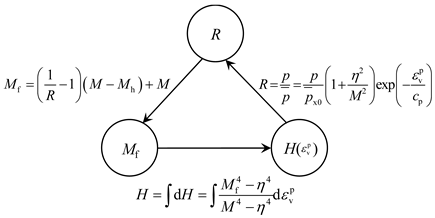
Based on the modified Cam-Clay model, Yao et al. proposed the concept of potential strength based on the relationship between the Hvorslev surface, current yield surface, and reference yield surface. They suggested using a hardening parameter related to the potential strength (Mf) and the critical state stress ratio (M) to describe the dilation and contraction behavior and the hardening and softening characteristics of overconsolidated clay [19]. And the evolution of the current yield surface, reference yield surface, and overconsolidation parameters during the shearing process of overconsolidated clay were elaborated in detail [14] The equation for the current yield surface in the constitutive model is given by Equation (1):
In the equation, p is the effective average principal stress at the current stress point, kPa; q is the generalized shear stress at the current stress point, kPa; px0 is the intersection of the current yield surface with the p axis, kPa; H is the hardening parameter of the current yield surface; and cp = (λ − κ)/(1 + e0). The definitions of these parameters in the constitutive model and their relationships are shown in Table 1.
Table 1.
Parameters and relationships of overconsolidated clay.
2.2. Calculation Method for Pore Water Pressure
Pore water pressure directly influences the effective stress of soil, thereby affecting its strength and stability. The existing constitutive models for overconsolidated soil cannot account for the effects of pore water pressure in static analysis. Therefore, this section establishes a numerical method for calculating pore water pressure based on the mechanism of pore water pressure generation.
Under undrained conditions, saturated soils exhibit slight volume change (ΔV) that occurs under applied loads, corresponding to the volumetric strain (εv) calculated as Equation (2):
The change in pore water volume equals the change in pore volume. The volumetric strain of water (εw) is calculated as shown in Equation (3):
Assuming that the volume deformation of the soil skeleton is negligible, it can be approximated that the total volume change is primarily due to the change in pore water:
Ultimately, the relationship between the volumetric strain of water and the volumetric strain of soil and porosity under undrained conditions is as follows:
Based on the mechanism of pore water pressure generation, the pore water stiffness matrix is incorporated into the overconsolidated clay constitutive model under the static/general analysis in ABAQUS. A UMAT subroutine is developed to simulate the stress–strain behavior under total stress conditions. According to the research by Qiu and Yi et al. [20,21], assuming that pore water can induce small volumetric deformation, a calculation method for pore water pressure under undrained conditions can be derived:
Kw is the bulk modulus of water, taken as 2.08 × 10⁶ kPa at 20 °C. The stiffness matrix of water [Dw] is given by Equation (7):
The total stress matrix is composed of the effective stress matrix and the pore water pressure matrix. Following the aforementioned approach, the improved Euler integration algorithm with automatic error control proposed by Sloan was adopted to compile the UAMT subroutine, and a constitutive model for overconsolidated clay with coupled pore water pressure was developed [22].
2.3. Drained Tests and Validation
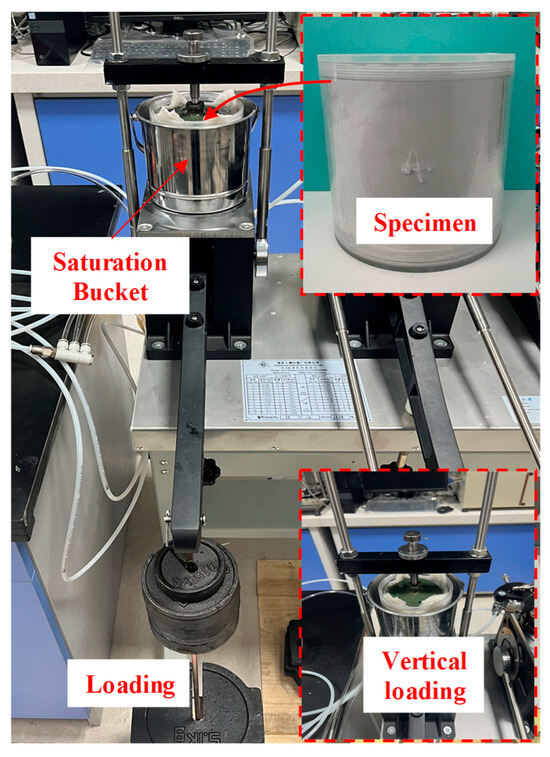
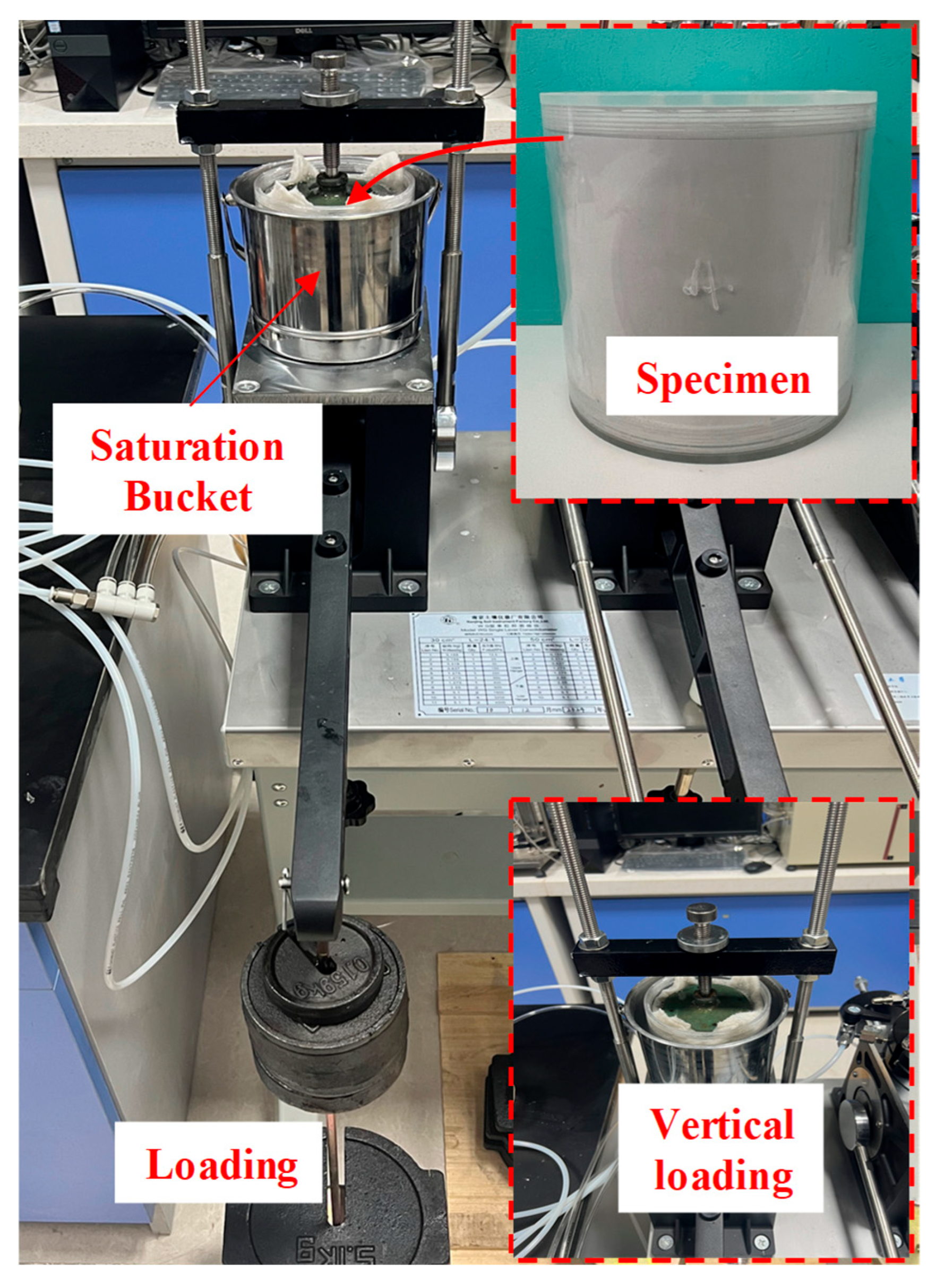
Triaxial tests were conducted on remodeled Kaolin overconsolidated clay to obtain soil stress–strain curves for validating the constitutive model. The specimen preparation and testing procedures are as follows: apply pre-consolidation pressure, pc, to the specimen under saturated conditions, with values set at 100 kPa, 200 kPa, 400 kPa, and 800 kPa, and maintain pc constant until consolidation reaches equilibrium. Subsequently, unload to the existing overburden pressure p0 = 100 kPa until the soil reaches rebound stability. The consolidation test process is illustrated in Figure 1.
Figure 1.
Preparation for overconsolidated clay.
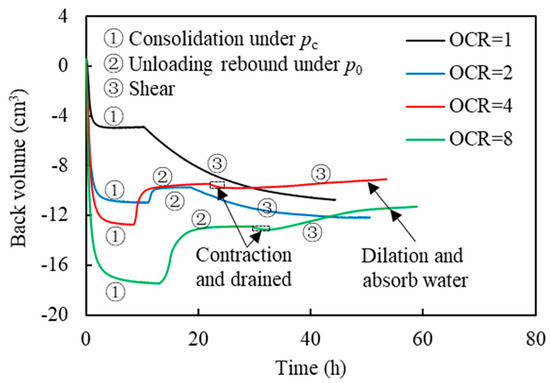
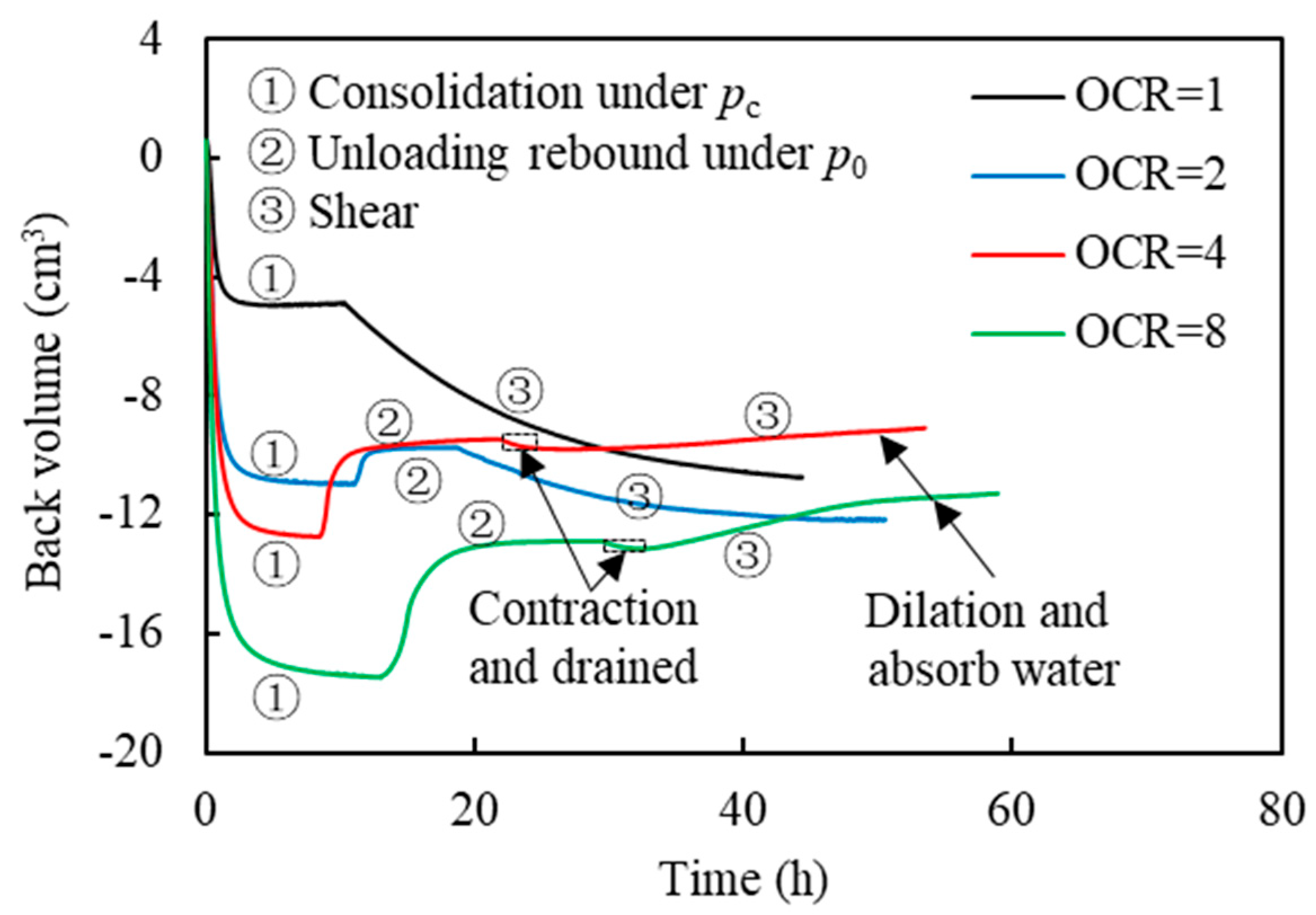
In triaxial tests, specimens are first subjected to isotropic consolidation under pc until no further drainage occurs, signifying the completion of primary consolidation. Subsequently, the specimens are subjected to isotropic consolidation under p0 until no further water absorption occurs, signifying the completion of rebound. Finally, the drainage shear test is conducted. Throughout the testing process, the drainage and water absorption of the specimens are represented by the back volume, as shown in Figure 2.
Figure 2.
Drainage and water absorption process in triaxial tests.
As shown in Figure 2, normally consolidated and slightly overconsolidated clays continuously drain water during shear testing, and the volume of the specimens continues to contract. For highly overconsolidated clays, the specimens exhibit drainage during the initial stage, followed by a rapid transition into water absorption. Furthermore, as the overconsolidation ratio increases, the initial drainage capacity diminishes, while the later water absorption capacity enhances.
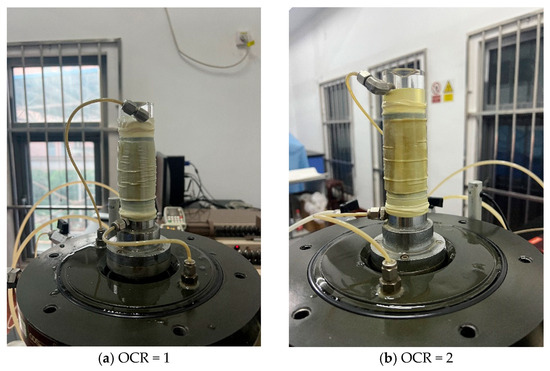
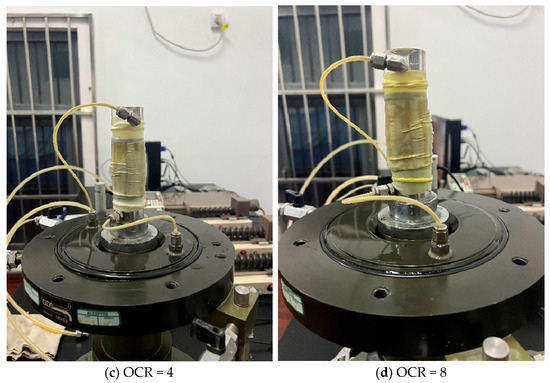
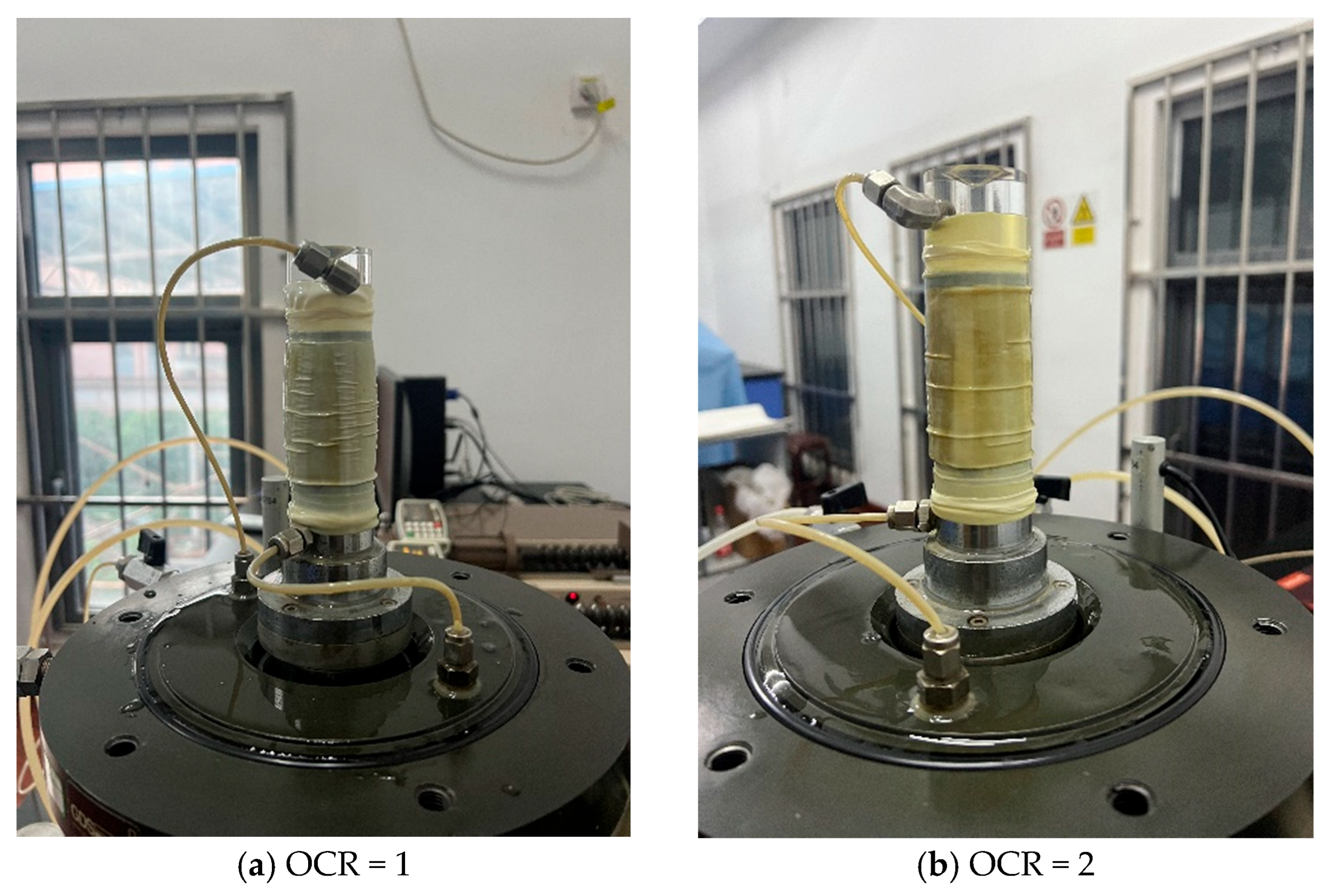
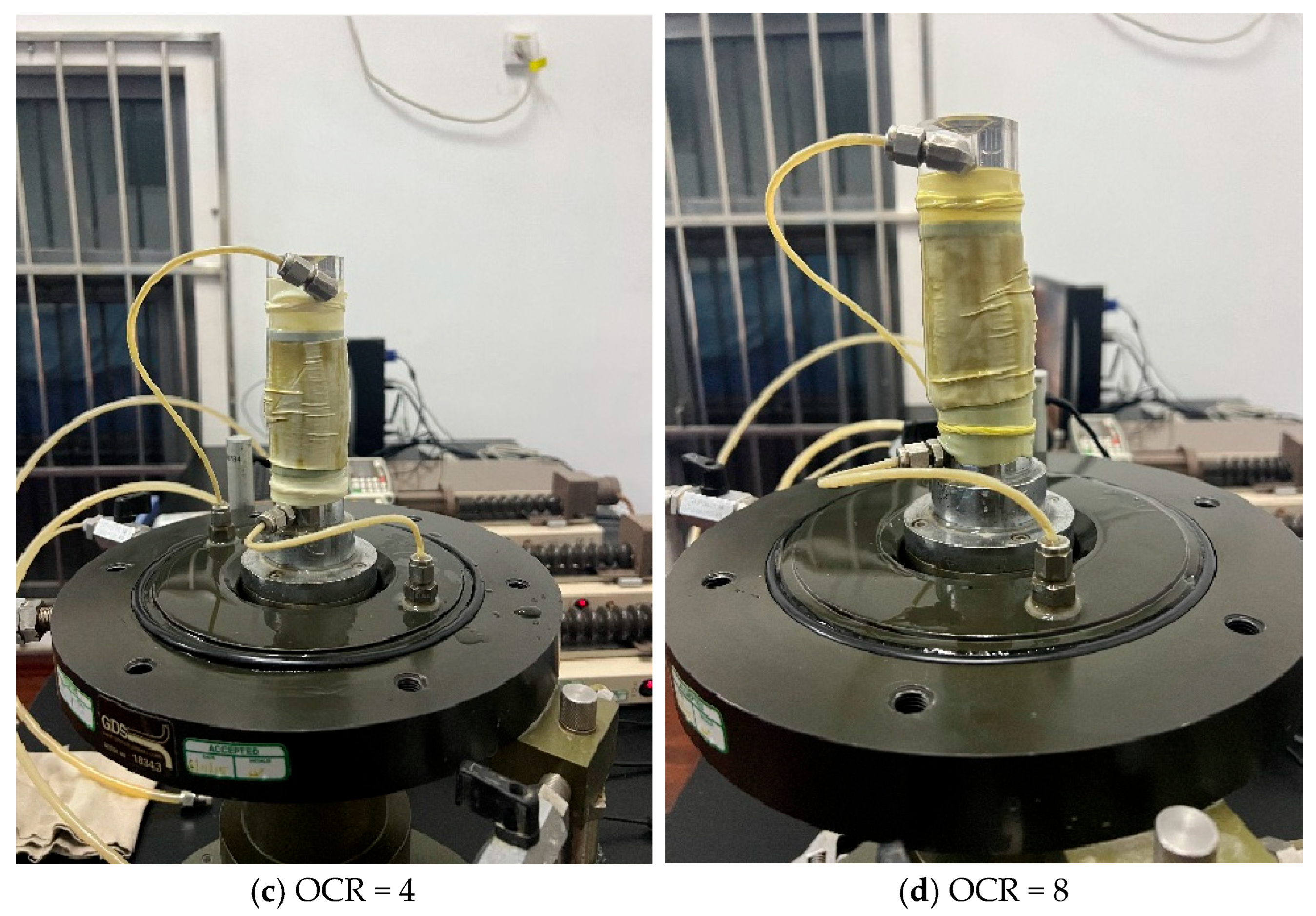
The failure states of the specimens are shown in Figure 3.
Figure 3.
Failure state with different overconsolidation ratios.
As shown in Figure 3, normally consolidated and slightly overconsolidated clays exhibit a “bulging” failure mode. Highly overconsolidated clays begin to exhibit distinct failure surfaces at OCR = 4, and these surfaces become increasingly observable as the overconsolidation ratio increases. The reason is that as the overconsolidation ratio increases, the soil structure becomes denser, its brittleness intensifies, and deformation tends to concentrate in localized shear failure, resulting in a clear failure surface.
The developed constitutive model for overconsolidated clay with coupled pore water pressure was validated using the triaxial test results from Kaolin and Fujinomori clay [12]. The clay parameters are listed in Table 2.
Table 2.
Parameters of Kaolin and Fujinomori clay.
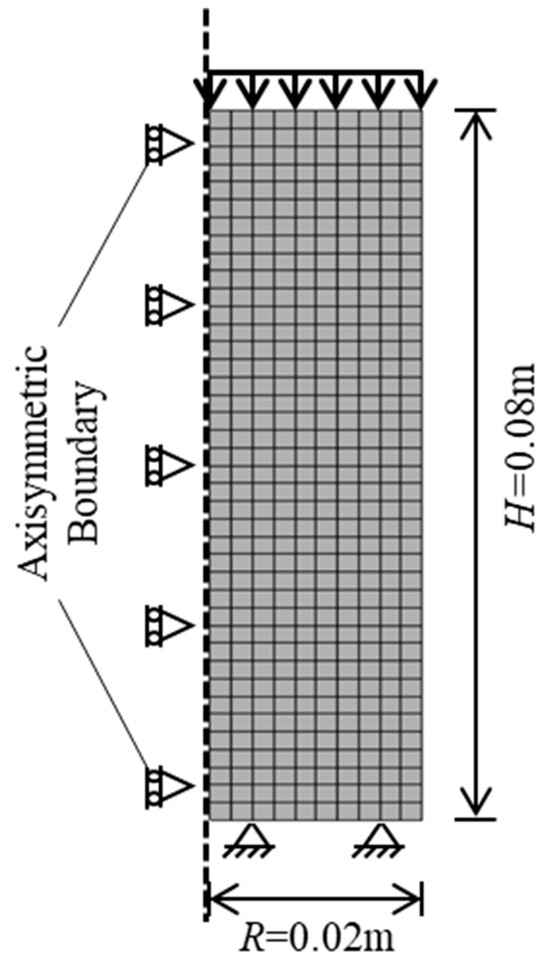
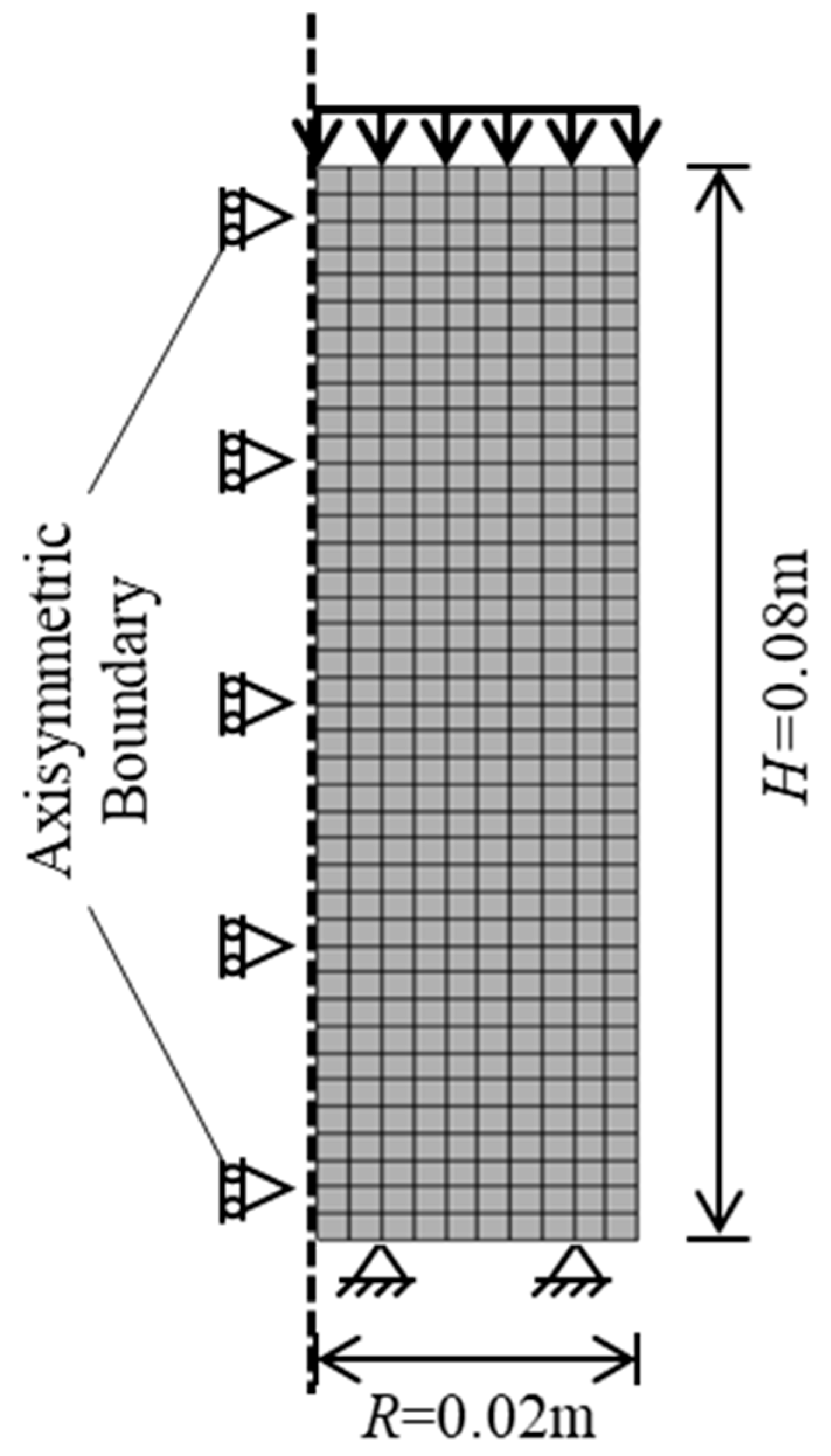
A 2D axisymmetric model was adopted for the numerical analysis. The model dimensions were identical to those of the triaxial specimen, enabling the 3D stress state of the cylindrical soil sample under vertical loading to be represented, and the schematic of the computational model is shown in Figure 4. The bottom boundary was fully fixed, the left boundary was assigned an axisymmetric condition, and the triaxial shearing process was simulated by applying a vertical displacement at the top. The imposed vertical displacement was 0.016 m, corresponding to an axial strain of 20%. The numerical model was conducted under static/general analysis, employing a two-dimensional axisymmetric model with Kw = 0 during the drainage test simulation. The adopted constitutive model was developed for overconsolidated clay and incorporates pore water pressure, and the corresponding model parameters are listed in Table 2.
Figure 4.
Numerical calculation model.
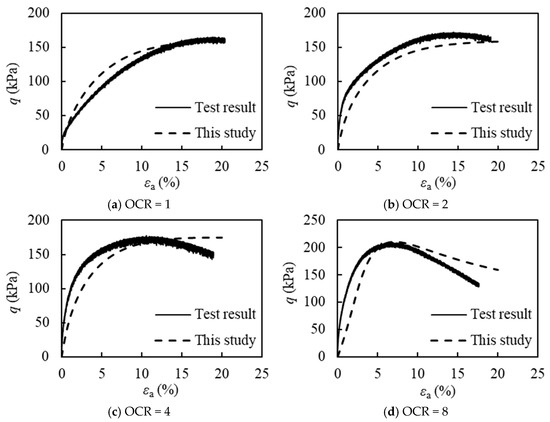
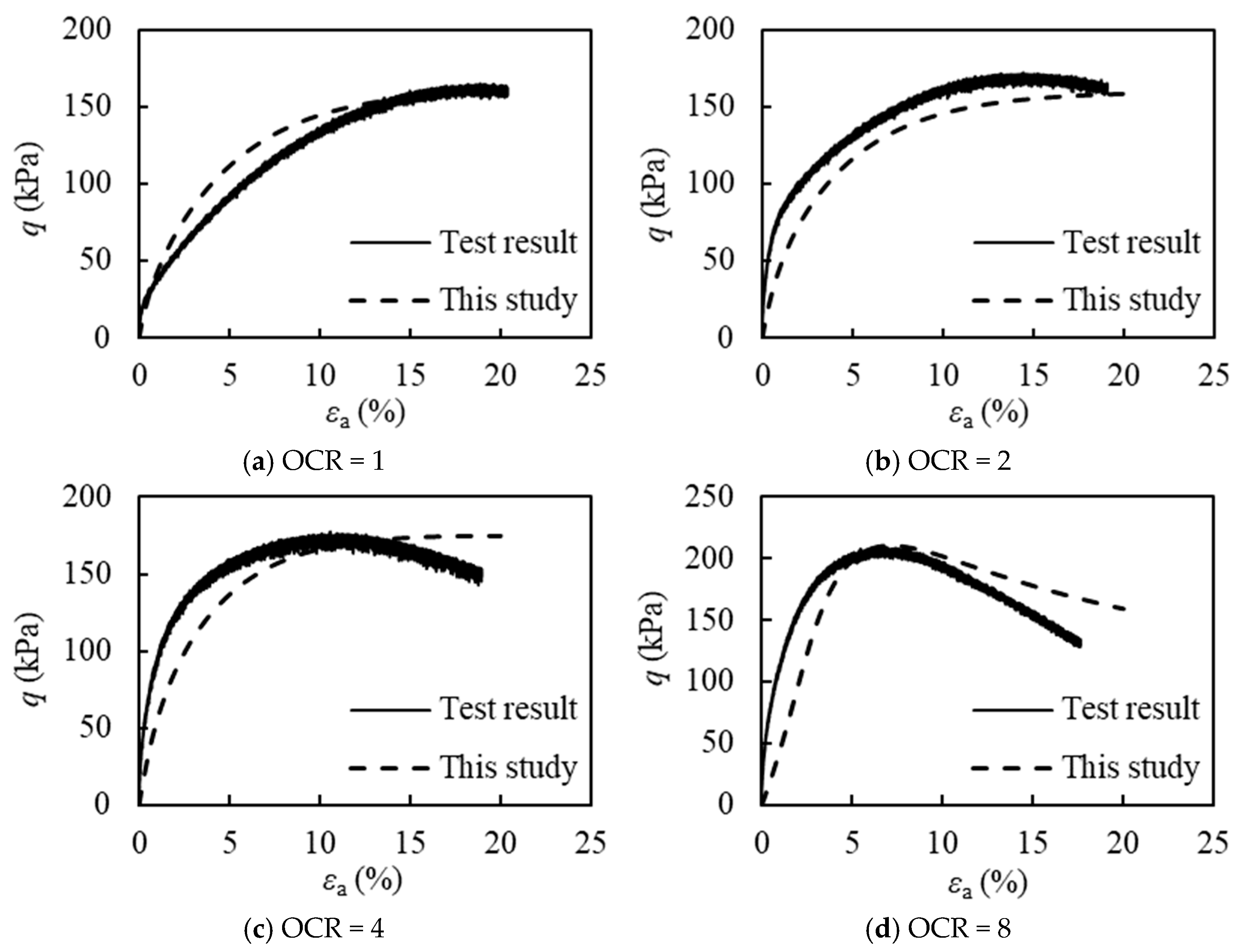
Figure 5.
Validation of drained triaxial tests for Kaolin overconsolidated clay.
Figure 6.
Validation of of drained triaxial tests for Fujinomori overconsolidated clay.
As shown in Figure 5 and Figure 6, the stress–strain curves obtained from numerical simulations for remolded normally consolidated and overconsolidated clay agree well with the test results. They effectively reproduce the strain softening characteristics observed in the drained shear tests of overconsolidated clay, thereby validating the accuracy of the model.
2.4. Undrained Tests and Validation
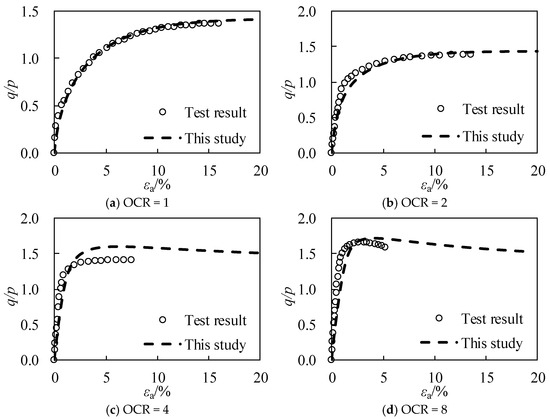
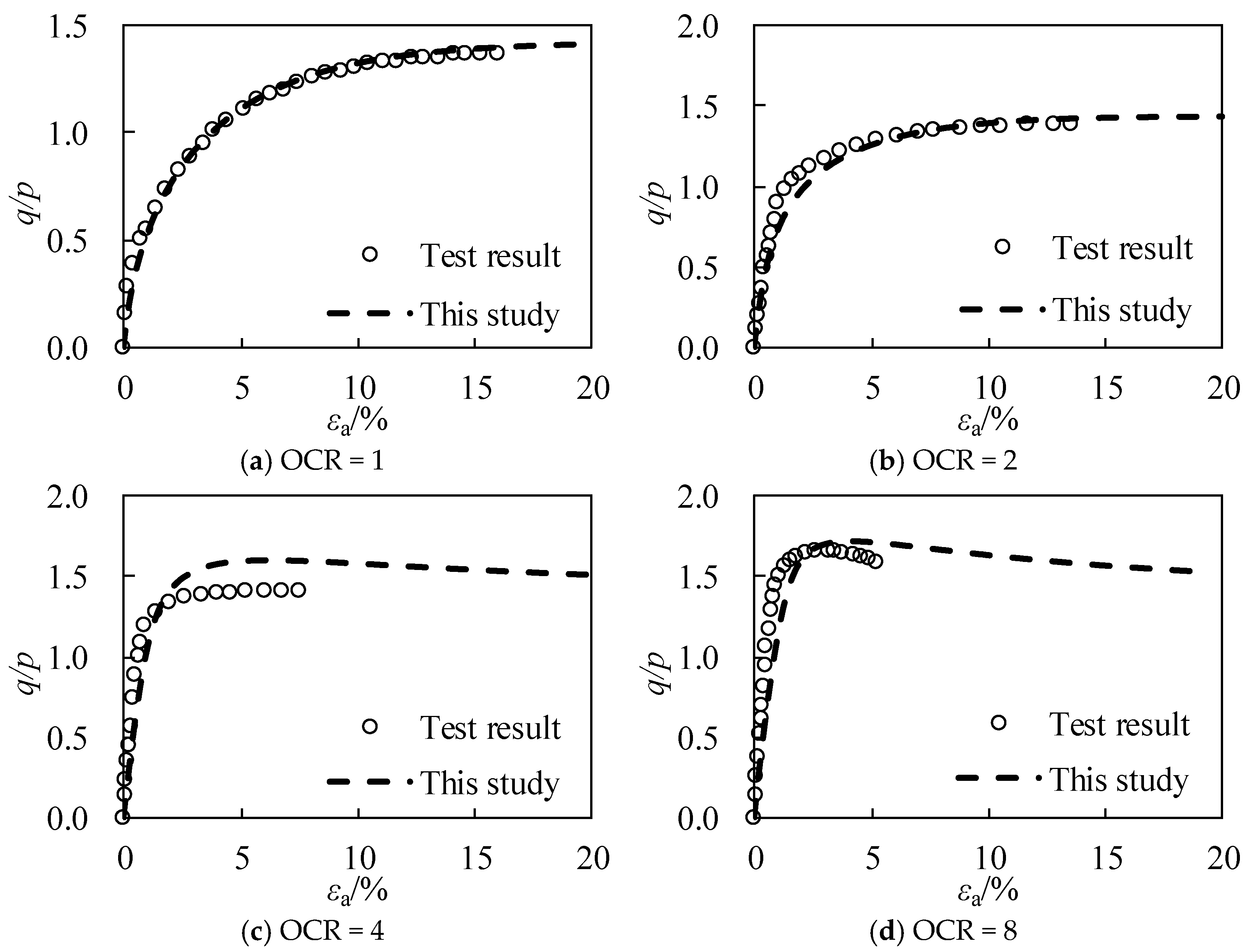
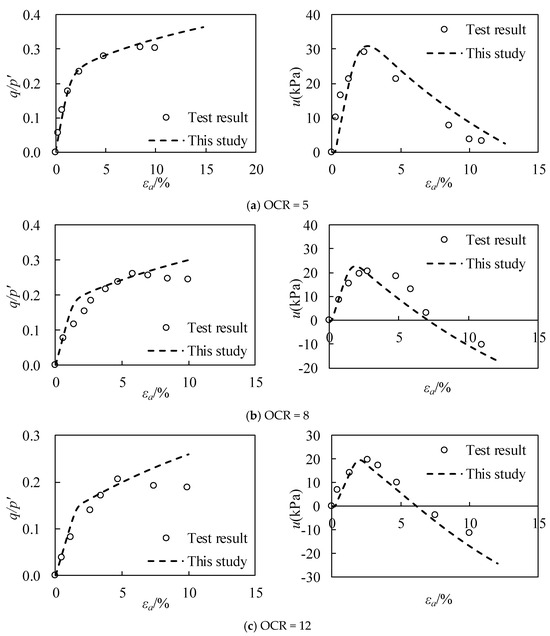
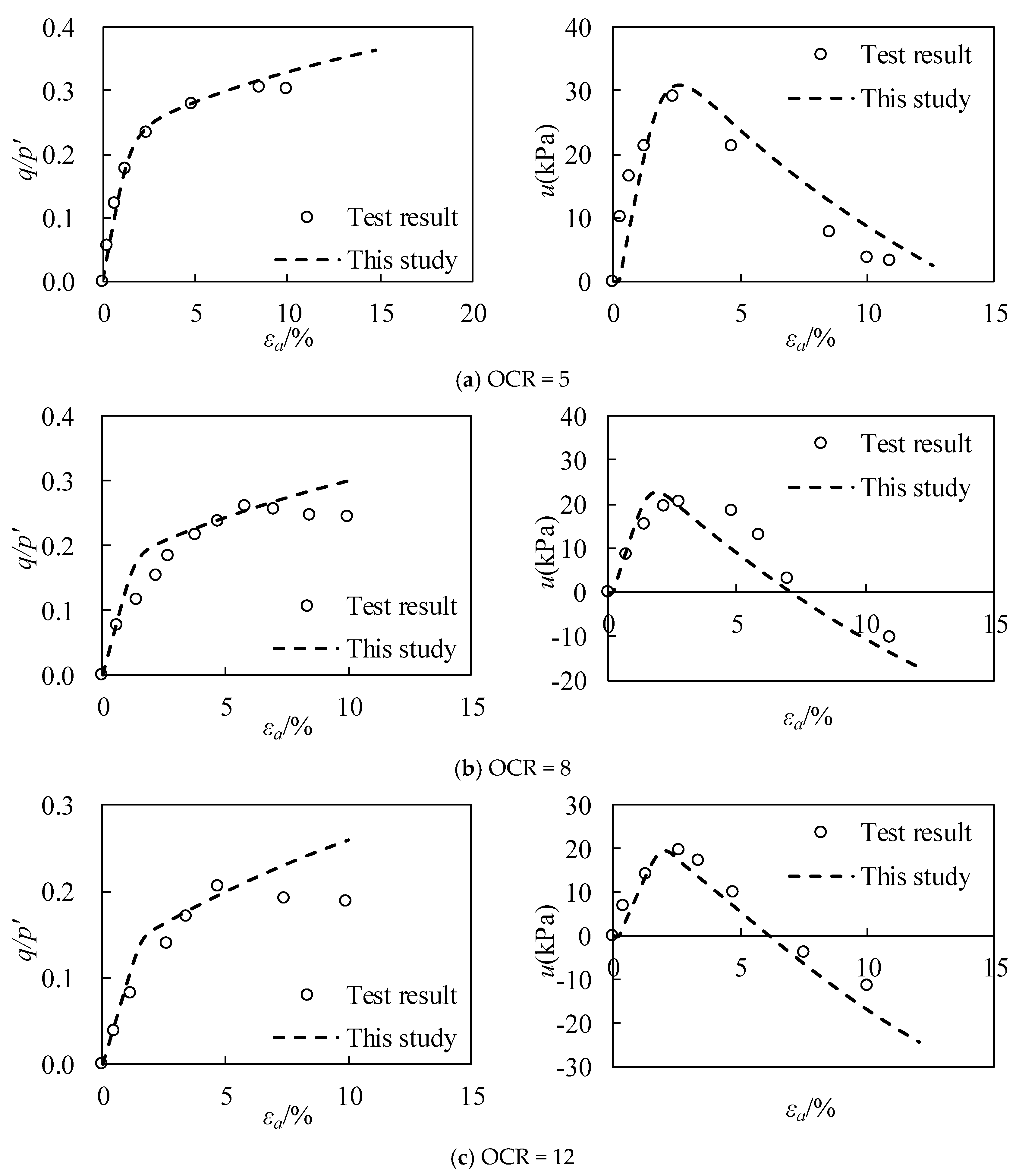
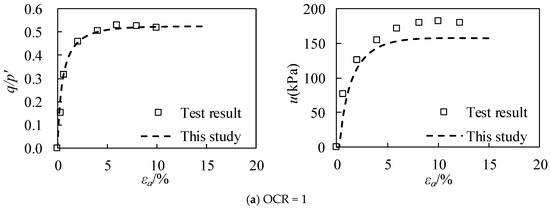
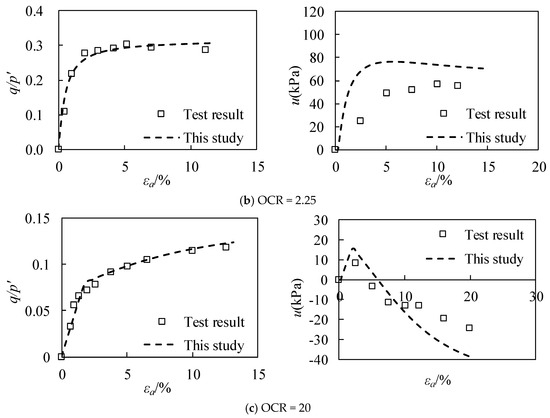
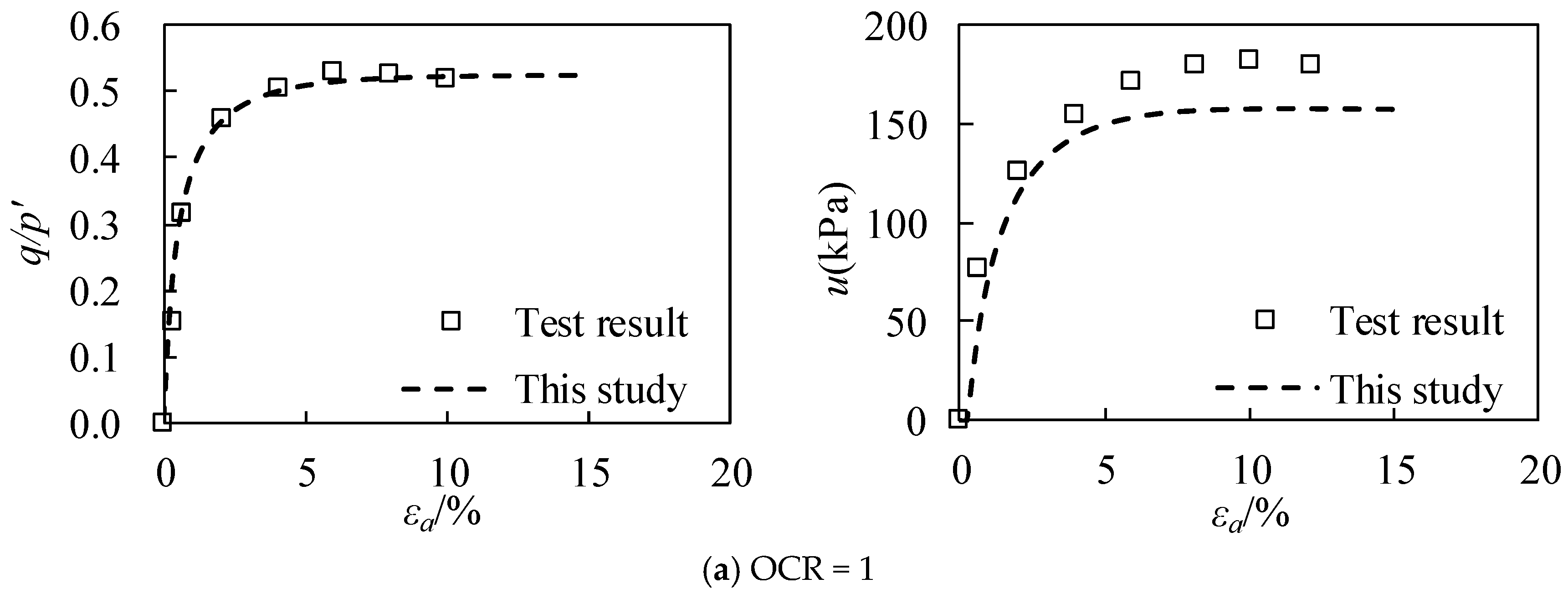
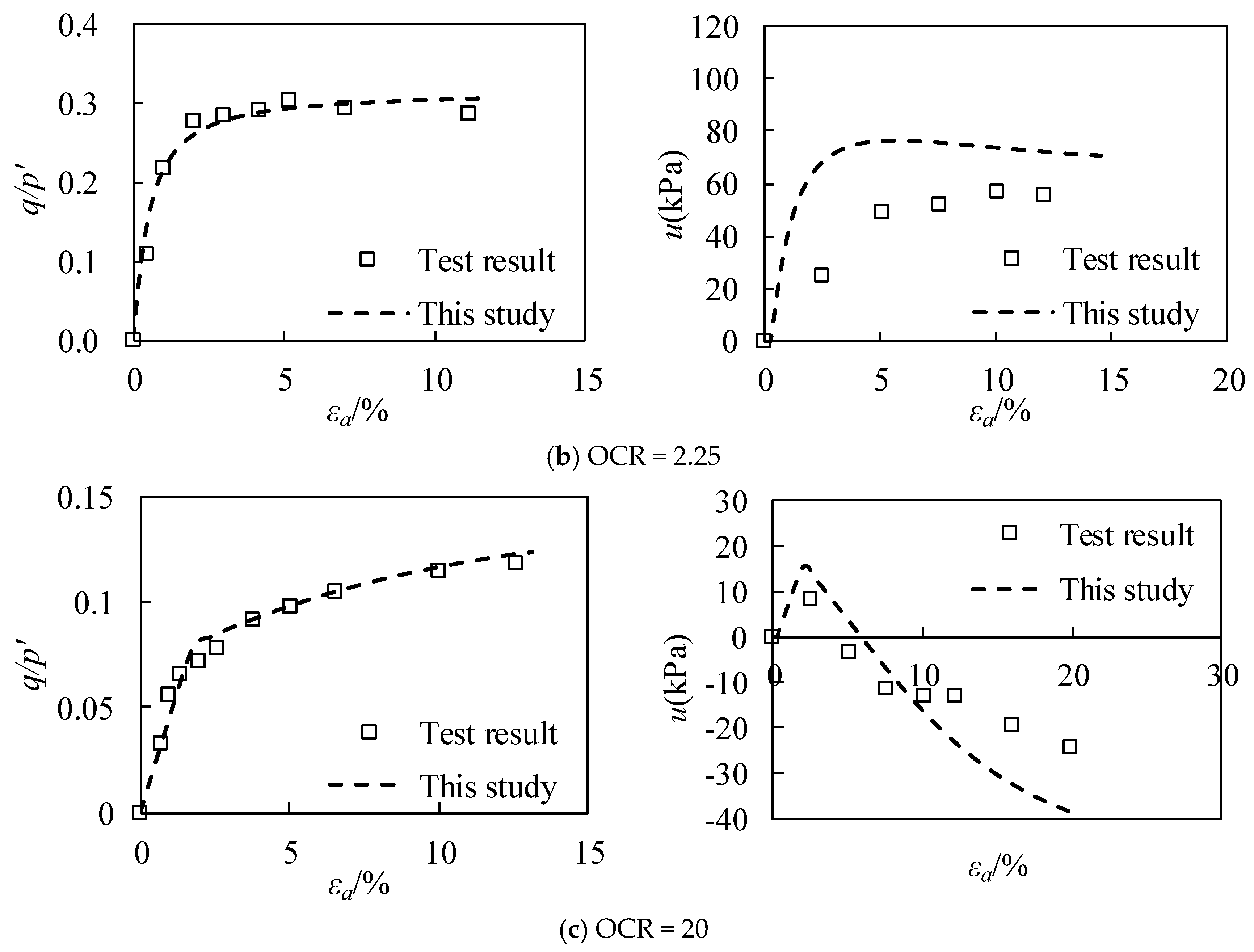
The triaxial test results of Kaolin overconsolidated clay [23] and London overconsolidated clay [24] serve as representative results for undrained shear triaxial tests on overconsolidated clay. Several scholars have used these test results to validate constitutive models [25,26,27,28]. This study also employs these test results to validate the developed constitutive model for overconsolidated clay with coupled pore water pressure. The parameters of the clay and the initial confining pressure are shown in Table 3.
Table 3.
Parameters of Kaolin and London clay.
The constitutive model proposed in this study predicts the variation in stress ratio and pore water pressure with axial strain for Kaolin clay and London clay, as shown in Figure 7 and Figure 8.
Figure 7.
Validation of undrained triaxial tests for Kaolin overconsolidated clay.
Figure 8.
Validation of undrained triaxial tests for London overconsolidated clay.
Figure 7 and Figure 8 indicate that the predictions of stress and pore water pressure variations with axial strain closely align with the results of typical undrained triaxial shear tests on overconsolidated soils. It reasonably describes the phenomenon of pore water pressure changing from positive to negative during the shearing process of overconsolidated soil, validating the correctness of the constitutive model that takes pore pressure into consideration.
3. Model Parameter Calibration
According to the ASTM D4767 standard [29], the shear rate for undrained triaxial tests on saturated clay is typically controlled within the range of 0.01–0.1%/min to maintain quasi-static pore water pressure equilibrium. However, in transient analysis, the shear rates are significantly influenced by the permeability coefficient, overconsolidation ratio, and mesh size, which determine the reasonableness of pore water pressure.
3.1. Numerical Model
A two-dimensional axisymmetric model was established to simulate the undrained shear test of saturated overconsolidated soil under transient analysis. The model parameters are taken from Kaolin clay and London clay in Section 2.4, and the initial state parameters and initial pressure of the soil are the same as those in Section 2.4. Firstly, the initial stress state was set during the geostatic analysis step in the numerical model; in the second analysis step, effective confining pressure was applied; and in the third analysis step, the drainage valve was opened to allow drainage of the soil sample’s top and bottom surfaces until consolidation was completed. Finally, axial strain was applied under undrained conditions to complete the undrained shearing process. A schematic diagram of the numerical calculation model is shown in Figure 4.
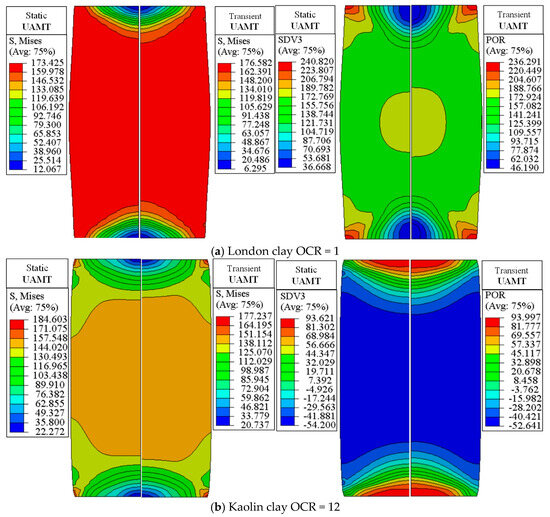
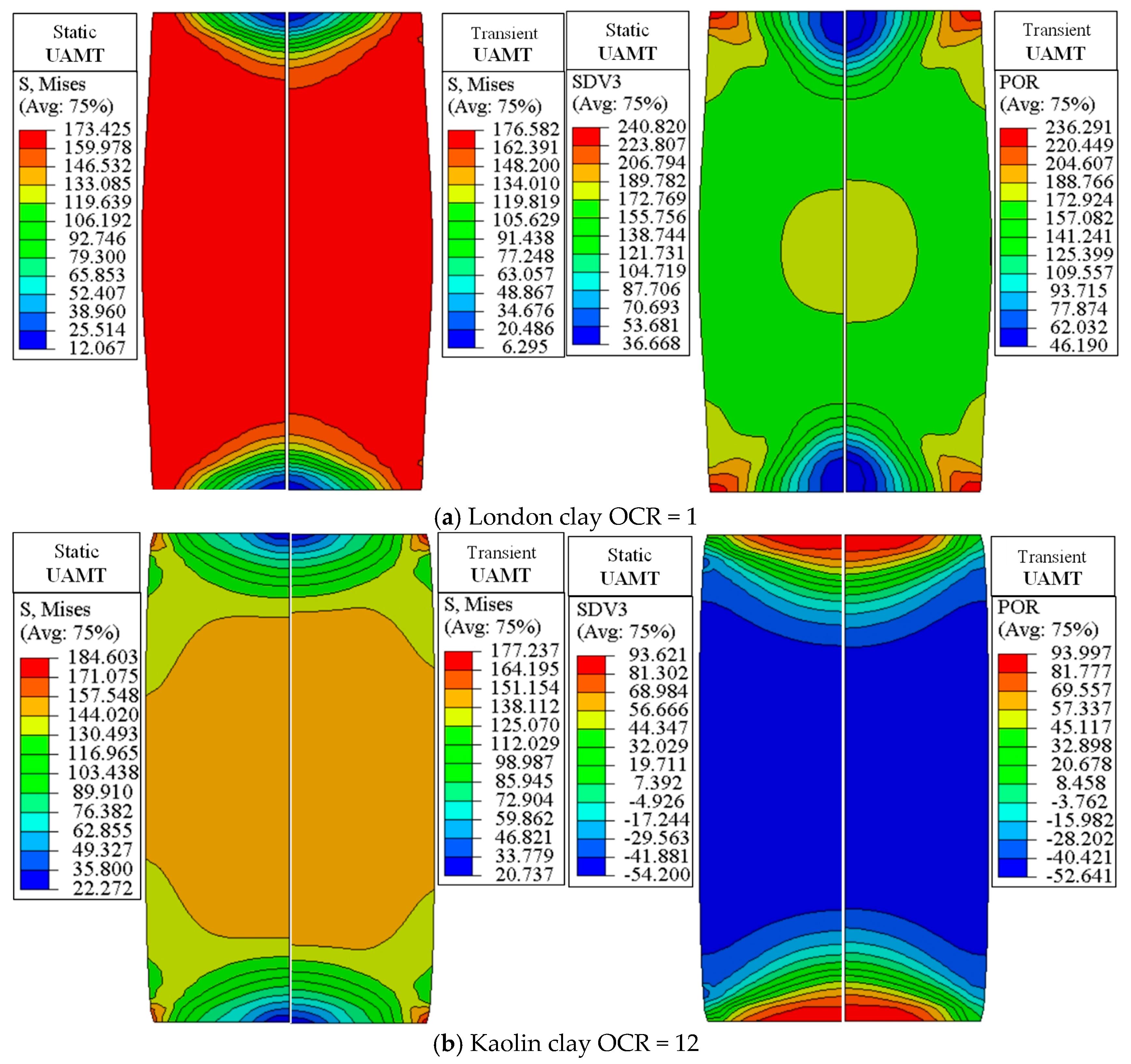
Using the axial stress distribution contour and pore water pressure distribution contour calculated from the constitutive model for overconsolidated soil considering pore pressure under static/general as the standard, adjustments were made to the permeability coefficient, shear rate, and mesh size to ensure that the axial stress contour and pore water pressure contour calculated for overconsolidated soil under transient analysis closely match the results obtained under static/general (as shown in Figure 9). This approach established the relationship between shear rate, mesh size, and soil parameters for overconsolidated soil during the transient analysis step.
Figure 9.
Comparison of stress and pore water pressure.
Figure 9 is a schematic diagram measuring the accuracy of the calculation results. SDV3 represents the pore water pressure described by the state variable under the static/general analysis step, kPa; POR denotes the pore water pressure calculated under the transient analysis step in kPa. In subsequent calculations, adjustments were made to the shear rate and mesh size, and the shear rate and permeability coefficient, to ensure consistency in the contour and to ensure that the calculation results are accurate and reliable.
3.2. Model Parameter Calibration
In this section, the calculations shown in Figure 9 serve as the standard to study the relationship between shear rate, mesh size, and permeability coefficient under different overconsolidation ratios. The soil parameters in the numerical analysis model were selected from the Kaolin clay and London clay in Section 2.4, with overconsolidation ratios of 1, 5, 8, 12, and 20.
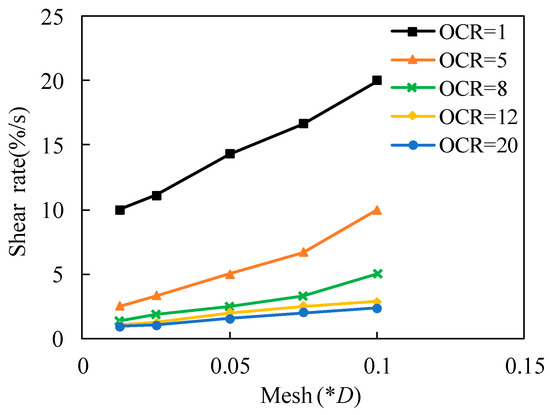
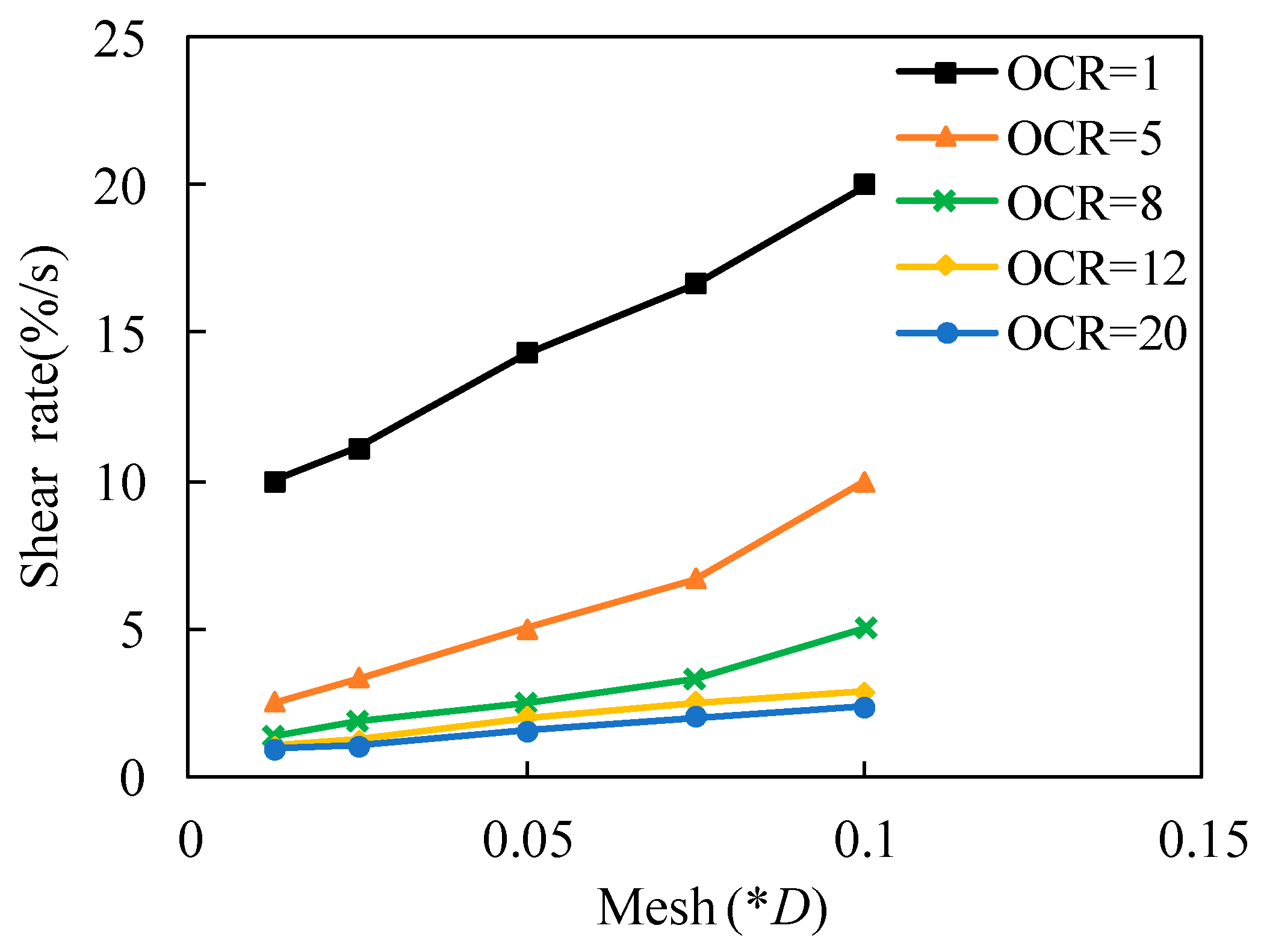
Using a single variable method, the permeability coefficient of the soil was fixed at 1 × 10⁻⁹ m/s to investigate the relationship between shear rate and mesh size under different overconsolidation ratios. In each computational condition, the initial increment time step and the maximum increment time step were set at 1‰ and 1% of the step time, respectively, to minimize the impact of time increment step length on the results. The relationship between shear rate and mesh size under different overconsolidation ratios is shown in Figure 10.
Figure 10.
Relationship between shear rate and mesh size. Note: *D represents the multiple of the diameter.
Figure 10 shows that the relationship between shear rate and mesh size exhibits an approximately linear trend under different overconsolidation ratios. As the mesh size increases, the corresponding shear rate for each overconsolidation ratio also increases. The greater the overconsolidation ratio, the slower the increase in shear rate with increasing mesh size.
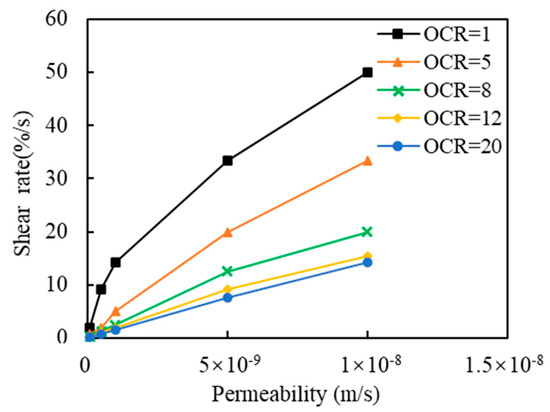
To investigate the relationship between shear rate and permeability coefficient under different overconsolidation ratios, the range for the permeability coefficient was set from 1 × 10⁻¹⁰~1 × 10⁻⁸ m/s. The shear rate was adjusted to ensure that the stress contour and deformation contour obtained under transient analysis align with the results from the static analysis subroutine. The relationship between shear rate and permeability coefficient under different overconsolidation ratios is shown in Figure 11.
Figure 11.
Relationship between shear rate and permeability coefficient.
Figure 11 shows that as the permeability coefficient increases, the corresponding shear rates for each overconsolidation ratio significantly rise, exhibiting an approximately linear relationship. The greater the overconsolidation ratio, the weaker the influence of the permeability coefficient on shear rate, reflecting the characteristics of overconsolidated soil, which is dense due to prior consolidation pressure and has a smaller void ratio.
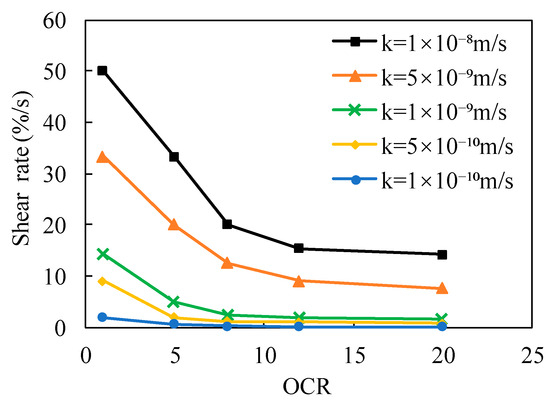
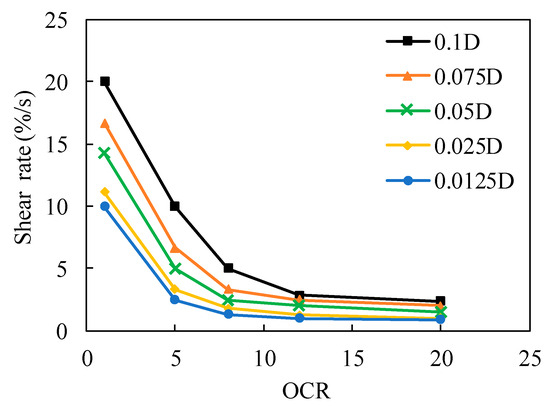
Based on the results in Figure 10 and Figure 11, the relationship between shear rate and overconsolidation ratio at different permeability coefficients is established, as shown in Figure 12, and the relationship between shear rate and overconsolidation ratio at different mesh sizes is shown in Figure 13.
Figure 12.
Relationship between shear rate and overconsolidation ratio at different permeability coefficients.
Figure 13.
Relationship between shear rate and overconsolidation ratio at different mesh sizes.
From Figure 12 and Figure 13, it can be seen that the shear rate decreases with an increase in overconsolidation ratio. The shear rate is relatively high in the low OCR range (OCR < 8), but it decreases rapidly as the OCR increases. This result also demonstrates that highly overconsolidated soil requires a lower shear rate to obtain reliable strength parameters. Figure 12 and Figure 13 indicate that there is a power function relationship between shear rate and overconsolidation ratio. After fitting the two data sets, the fitting relationships for shear rate and overconsolidation ratio at different permeability coefficients and different mesh sizes are obtained as Equations (8) and (9):
By solving Equations (8) and (9) simultaneously, the fitting relationship between mesh size and permeability coefficient can be obtained as Equation (10):
In the equation, k represents the permeability coefficient of the soil, m/s; k0 is the reference permeability coefficient, with k0 = 1 × 10⁻⁹ m/s; d is the mesh size, m; D is the diameter of the soil element, m; and OCR is the overconsolidation ratio of the soil.
From the calculation results in Figure 10, it can be seen that when the mesh size (d/D) < 0.01, reducing the mesh size for overconsolidated soil has a minimal effect on shear rate. Therefore, considering computational efficiency, a minimum mesh size of 0.01D is recommended. By combining Equations (8)–(10), during the transient analysis step, given the soil permeability coefficient and overconsolidation ratio, the mesh size and shear rate in the numerical model can be determined.
4. Conclusions
This study proposed a constitutive model for overconsolidated soil that incorporates pore water pressure, and its validity is verified through existing test results. On this basis, the axial stress results and pore water pressure results calculated using this model are used as standards to calibrate the relationships between shear rate, mesh size, permeability coefficient, and overconsolidation ratio in finite element transient analysis. The following conclusions are drawn:
- (1)
- A constitutive model for overconsolidated clay with coupled pore water pressure was established, which can directly predict the evolution of pore water pressure in the undrained triaxial tests of overconsolidated clay during the finite element static analysis step.
- (2)
- The proposed model was rigorously validated using laboratory test data, demonstrating its capability to reproduce both axial stress and pore water pressure responses with high fidelity, and this model can serve as a reliable reference for assessing the accuracy of transient analyses.
- (3)
- The parameters of the numerical model in the transient analysis were calibrated, quantifying the relationships between shear rate, mesh size, and soil parameters, providing a reference for similar engineering numerical simulations. The findings contribute to improving the reliability of transient consolidation analysis for overconsolidated clay and can be extended to element-level simulations and boundary-value problems in marine geotechnical engineering.
Author Contributions
Methodology, Y.J.; Validation, Z.X.; Writing—original draft, Y.J.; Writing—review & editing, R.L. All authors have read and agreed to the published version of the manuscript.
Funding
This research work was financially supported by the National Key R&D Program of China (2022YFB2603000). Finally, we deeply appreciate the warm and efficient work of editors and reviewers.
Data Availability Statement
All data, models, or code generated or used during the study are available from the corresponding author upon request.
Conflicts of Interest
The authors declare no conflict of interest.
References
- Andersen, K.H.; Rosenbrand, W.F.; Brown, S.F.; Pool, J.H. Cyclic and static laboratory tests on Drammen clay. J. Geotech. Eng. Div. 1980, 106, 499–529. [Google Scholar] [CrossRef] [Scilit]
- Ren, Y.B. Study on the Mechanism of Cyclic Softening and Thixotropy Harding of Strong Structural Deep-Sea Soft Clay; Dalian University of Technology: Dalian, China, 2021. [Google Scholar]
- Wang, K.J.; Jia, Z.Y.; Shen, K.M.; Tang, Y. Joint laboratory and in-situ calibration of strength characteristics for Taizhou coastal soft clay. Rock Soil Mech. 2023, 44, 2851–2859. [Google Scholar]
- Yao, Y.P.; Li, Z.Q.; Hou, W.; Wan, Z. Constitutive model of superconsolidated soil based on improved Hvoslev line. J. Hydraul. Eng. 2008, 39, 1244–1250. [Google Scholar]
- Pender, M.J. A model for the behaviour of overconsolidated soil. Geotechnique 1978, 28, 1–25. [Google Scholar] [CrossRef] [Scilit]
- Dafalias, Y.F. Bounding surface plasticity. I: Mathematical foundation and hypoplasticity. J. Eng. Mech. 1986, 112, 966–987. [Google Scholar] [CrossRef] [Scilit]
- Suebsuk, J.; Horpibulsuk, S.; Liu, M.D. A critical state model for overconsolidated structured clays. Comput. Geotech. 2011, 38, 648–658. [Google Scholar] [CrossRef] [Scilit]
- Sternik, K. Elasto-plastic constitutive model for overconsolidated clays. Int. J. Civ. Eng. 2017, 15, 431–440. [Google Scholar] [CrossRef] [Scilit]
- Jockovic, S.; Vukicevic, M. Bounding surface model for overconsolidated clays with new state parameter formulation of hardening rule. Comput. Geotech. 2017, 83, 16–29. [Google Scholar] [CrossRef] [Scilit]
- Hashiguchi, K. Subloading surface model in unconventional plasticity. Int. J. Solids Struct. 1989, 25, 917–945. [Google Scholar] [CrossRef] [Scilit]
- Hashiguchi, K.; Chen, Z.P. Elastoplastic constitutive equation of soils with the subloading surface and the rotational hardening. Int. J. Numer. Anal. Methods Geomech. 1998, 22, 197–227. [Google Scholar] [CrossRef]
- Nakai, T.; Hinokio, M. A simple elastoplastic model for normally and over consolidated soils with unified material parameters. Soils Found. 2004, 44, 53–70. [Google Scholar] [CrossRef] [Scilit]
- Zhang, F. Computational Soil Mechanics; China Communications Press: Beijing, China, 2007. [Google Scholar]
- Yao, Y.P.; Hou, W.; Zhou, A.N. UH model: Three-dimensional unified hardening model for overconsolidated clays. Geotechnique 2009, 59, 451–469. [Google Scholar] [CrossRef] [Scilit]
- Yadav, P.; Parol, V.; Prashant, A. Transient Analysis of Instability in Saturated Sand under Undrained Triaxial Loading Condition. In Proceedings of the International Congress on Environmental Geotechnics, Chania, Greece, 25–28 June 2023. [Google Scholar]
- Cui, W.; Gawecka, K.A.; Taborda, D.M.G.; Potts, D.M.; Zdravkovic, L. Time-step constraints in transient coupled finite element analysis. Int. J. Numer. Methods Eng. 2016, 106, 953–971. [Google Scholar] [CrossRef] [Scilit]
- Sheng, D.; Westerberg, B.; Mattsson, H.; Axelsson, K. Effects of end restraint and strain rate in triaxial tests. Comput. Geotech. 1997, 21, 163–182. [Google Scholar] [CrossRef] [Scilit]
- Shang, X.Y.; Zhang, W.L.; Diao, Z.X.; Zhu, Q.Y. Numerical study of the effect of the shear rate on the determination of direct shear strength of deep clay. J. Eng. Geol. 2024, 32, 1479–1487. [Google Scholar]
- Yao, Y.P.; Gao, Z.W.; Zhao, J.D.; Wan, Z. Modified UH model: Constitutive modeling of overconsolidated clays based on a parabolic Hvorslev envelope. J. Geotech. Geoenviron. Eng. 2012, 138, 860–868. [Google Scholar] [CrossRef] [Scilit]
- Qiu, G.; Jurgen, G. Explicit modeling of cone and strip footing penetration under drained and undrained conditions using a visco-hypoplastic model. Geotechnik 2011, 34, 205–217. [Google Scholar] [CrossRef] [Scilit]
- Yi, J.T.; Zhao, B.; Li, Y.P.; Yang, Y.; Lee, F.K.; Goh, S.H.; Zhang, X.Y.; Wu, J.F. Post-installation pore-pressure changes around spudcan and long-term spudcan behaviour in soft clay. Comput. Geotech. 2014, 56, 133–147. [Google Scholar] [CrossRef] [Scilit]
- Sloan, S.W. Substepping schemes for the numerical integration of elastoplastic stress–strain relations. Int. J. Numer. Methods Eng. 1987, 24, 893–911. [Google Scholar] [CrossRef] [Scilit]
- Banerjee, P.K.; Stipho, A.S. An elasto-plastic model for undrained behaviour of heavily overconsolidated clays. Int. J. Numer. Anal. Methods Geomech. 1979, 3, 97–103. [Google Scholar] [CrossRef] [Scilit]
- Gasparre, A. Advanced Laboratory Characterisation of London Clay; Imperial College London: London, UK, 2005. [Google Scholar]
- Xiao, Y.; Desai, C.S. Constitutive modeling for overconsolidated clays based on disturbed state concept. II: Validation. Int. J. Geomech. 2019, 19, 04019102. [Google Scholar] [CrossRef] [Scilit]
- Li, X.Q.; Lu, D.C.; Dong, X.Q.; Miao, J.B.; Lin, Q.T.; Du, X.L. A simple 3D elastoplastic constitutive model for overconsolidated soils based on the improved Hvorslev envelope. Comput. Geotech. 2023, 162, 105657. [Google Scholar] [CrossRef] [Scilit]
- Chen, K.H.; Pang, R.; Xu, B.; Wang, X.L. Elastoplastic constitutive model for overconsolidated clays with an advanced dilatancy relation. Int. J. Numer. Anal. Methods Geomech. 2024, 48, 3475–3493. [Google Scholar] [CrossRef] [Scilit]
- Xu, B.; Chen, K.; Pang, R. A bounding surface model for overconsolidated clays with unified plastic potential function in triaxial and general stress state. Comput. Geotech. 2024, 172, 106429. [Google Scholar] [CrossRef] [Scilit]
- ASTM D4767-11; Standard Test Method for Consolidated Undrained Triaxial Compression Test for Cohesive Soils. American Society for Testing and Materials: West Conshohocken, PA, USA, 2020.

Disclaimer/Publisher’s Note: The statements, opinions and data contained in all publications are solely those of the individual author(s) and contributor(s) and not of MDPI and/or the editor(s). MDPI and/or the editor(s) disclaim responsibility for any injury to people or property resulting from any ideas, methods, instructions or products referred to in the content. |
© 2026 by the authors. Licensee MDPI, Basel, Switzerland. This article is an open access article distributed under the terms and conditions of the Creative Commons Attribution (CC BY) license.