3D Obstacle Avoidance Path Planning Algorithm and Software Design for UUV Based on Improved D* Lite-APF
Abstract
1. Introduction
- (1)
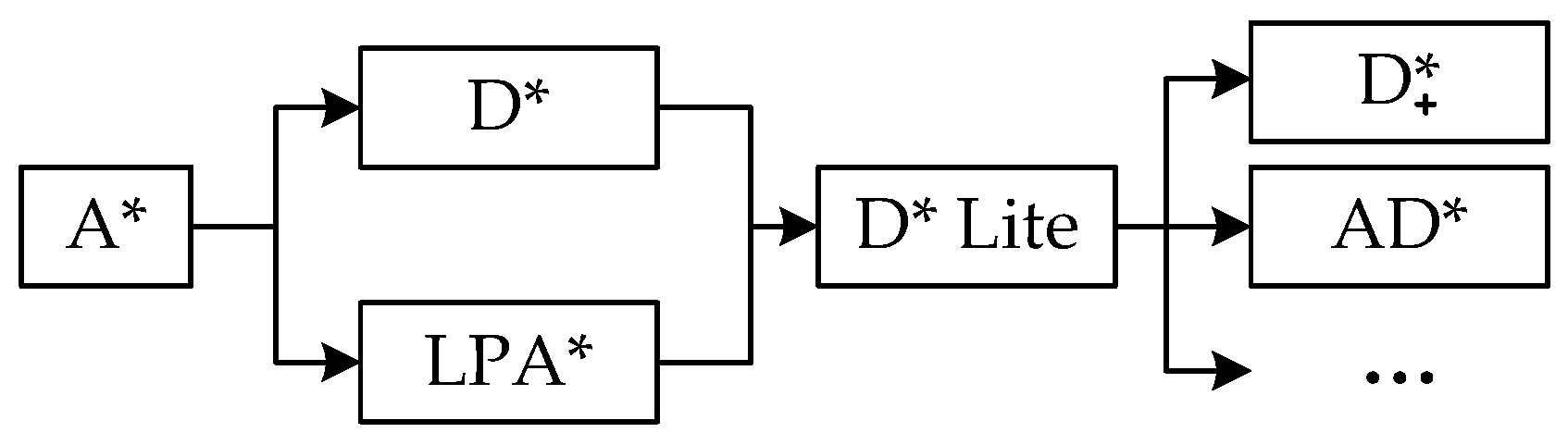
- Research Overview of Path Planning Algorithms
- (2)
- Research Overview of UUV Simulation Platforms
- (3)
- Related Work
- A UUV 3D obstacle avoidance path planning algorithm with superior advantages in safety, real-time obstacle avoidance and engineering realizability is designed, namely the global–local fusion path planning algorithm based on the improved D* Lite-APF.
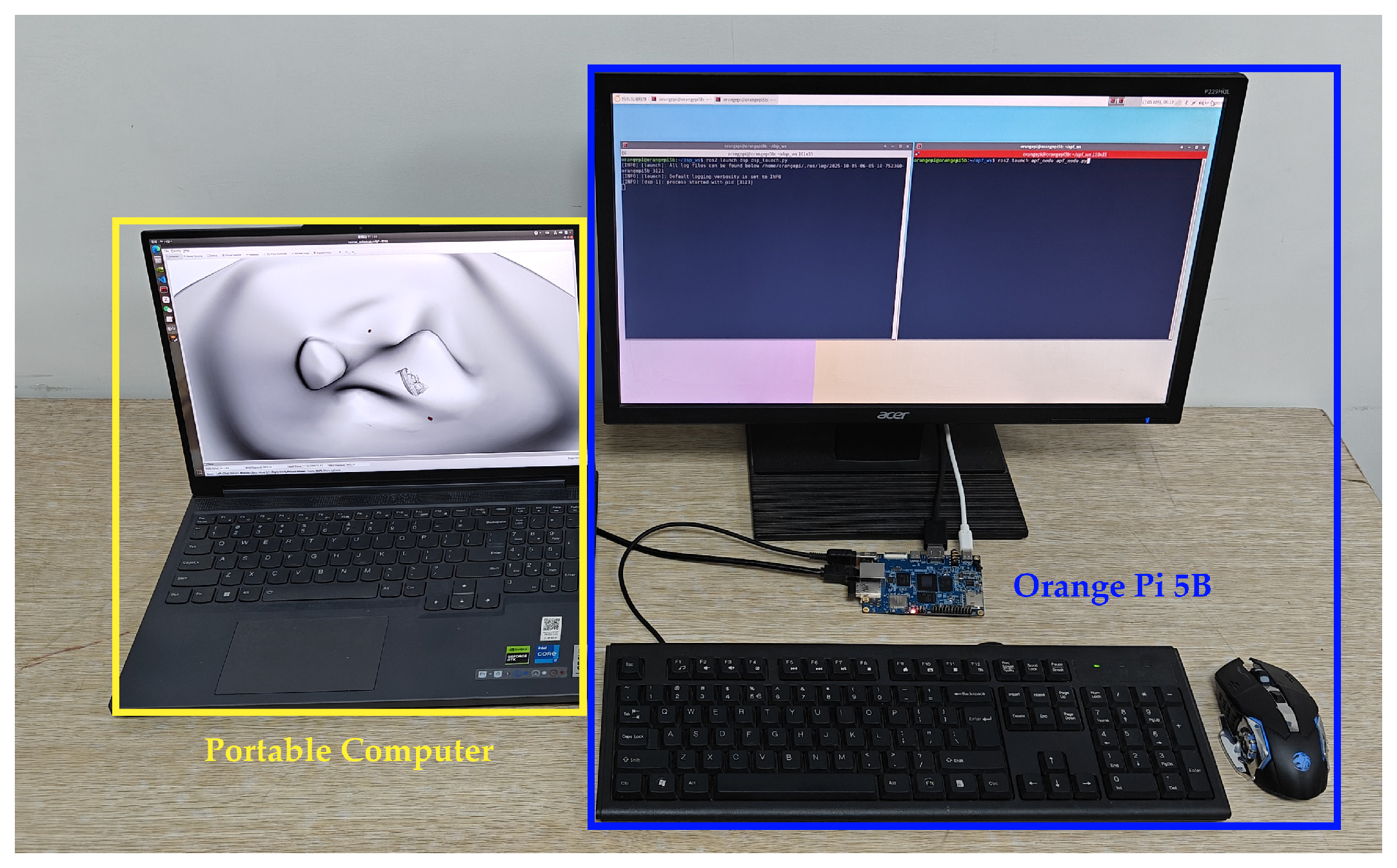
- A deployable software system based on ROS 2 is constructed and verified via HIL: the above algorithm is implemented as a set of modular software running on ROS 2 and deployed on the Orange Pi 5B embedded hardware. The establishment of the HIL simulation platform provides a practical and repeatable engineering verification environment for algorithm validation, going beyond pure numerical simulation.
- A comprehensive evaluation method for path planning is established: a multi-dimensional cost function is proposed to comprehensively evaluate collision risk, depth risk, path length and planning time, providing a comprehensive performance evaluation method for path planning beyond single indicators such as path length.
2. 3D Obstacle Avoidance Path Planning Algorithm Design
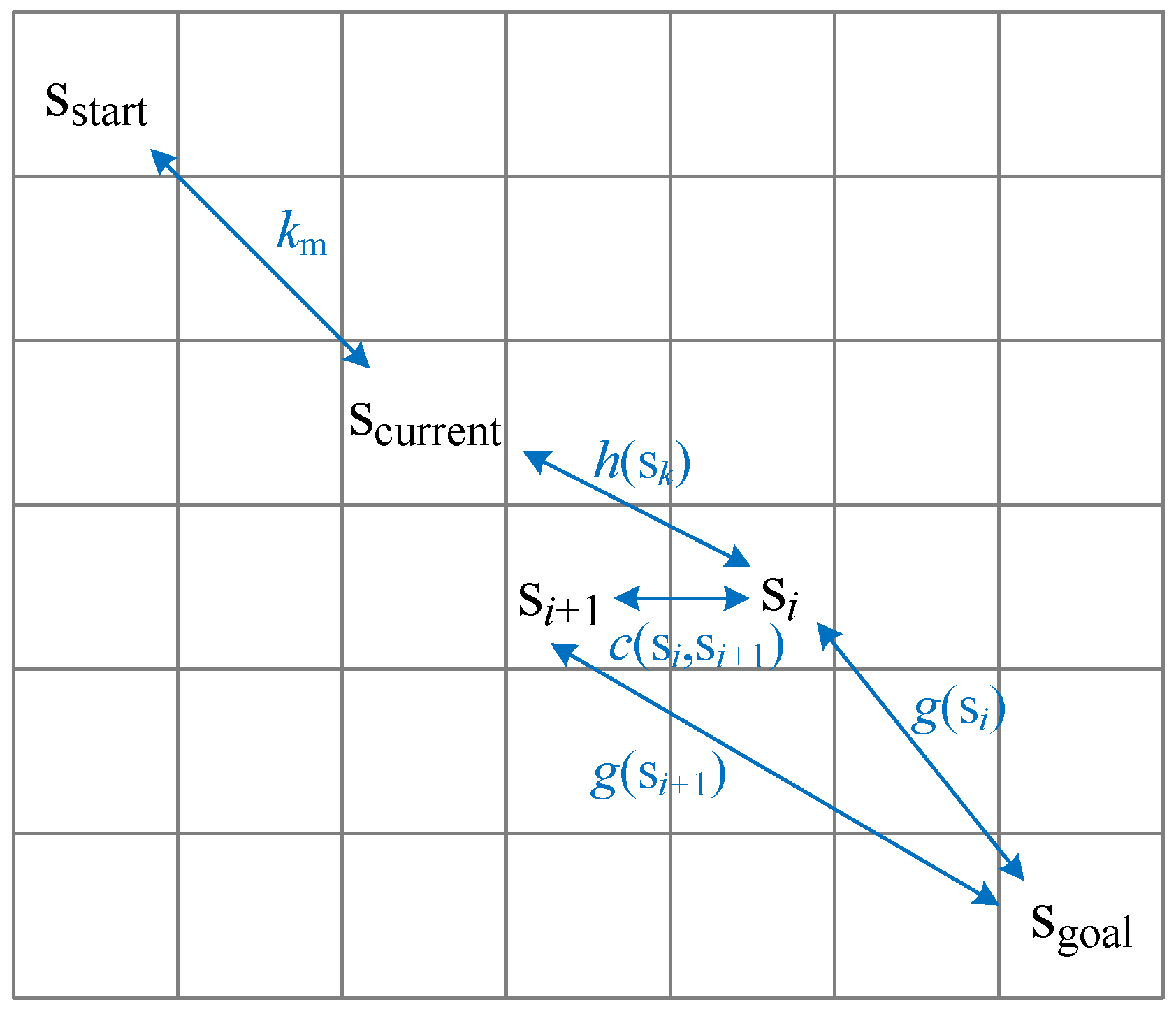
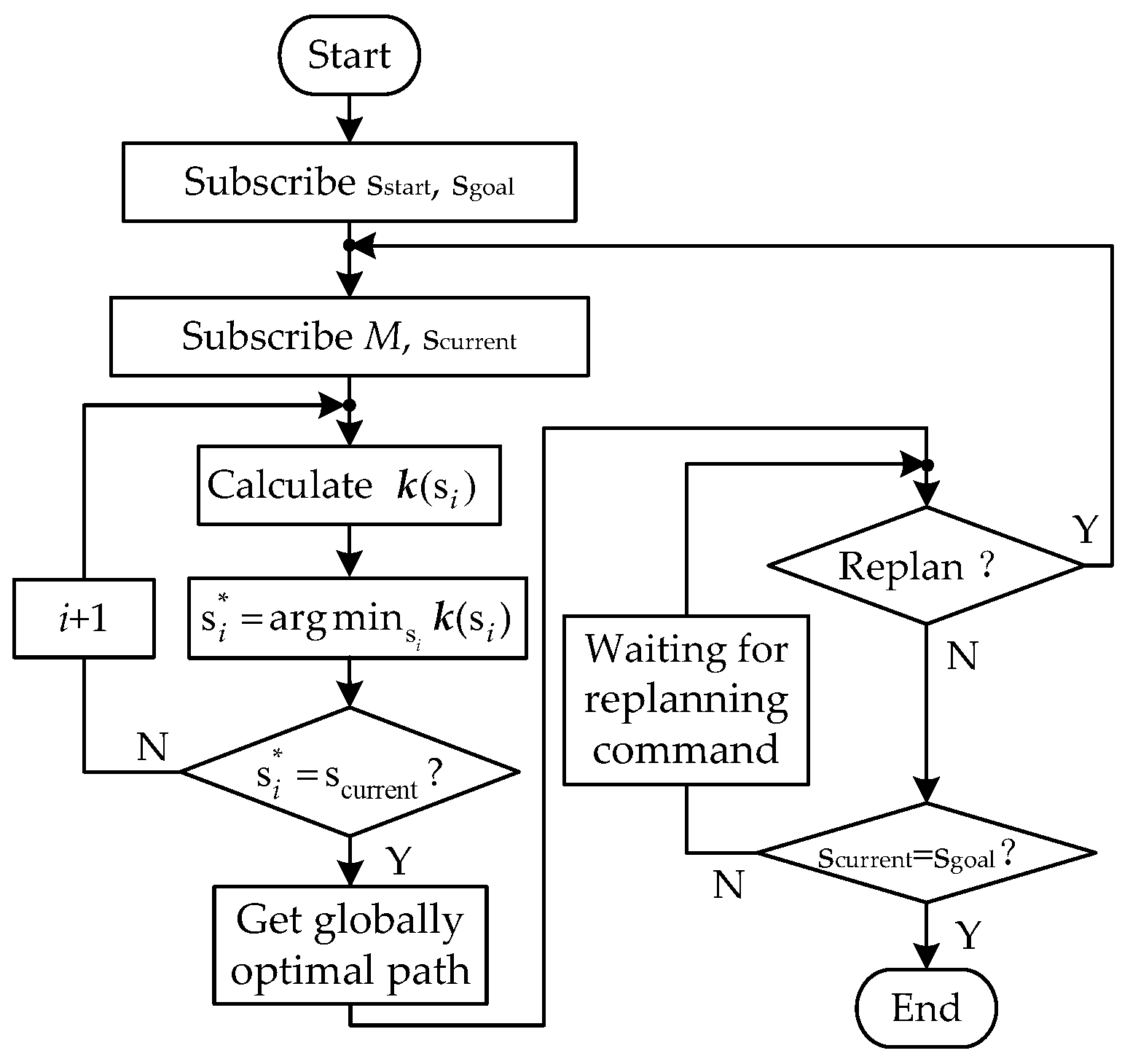
2.1. Global Path Planning Algorithm Design
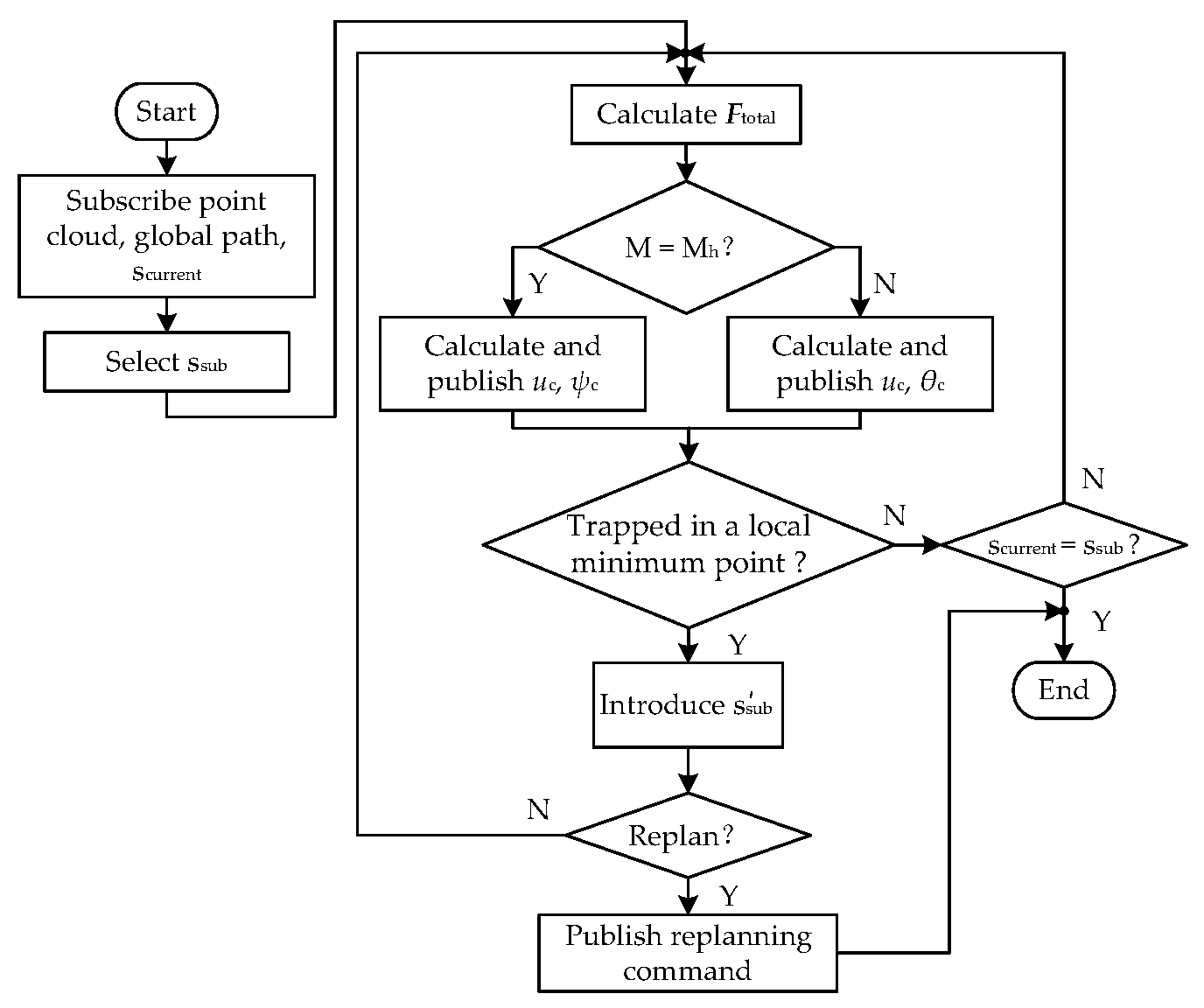
2.2. Local Path Planning Algorithm Design
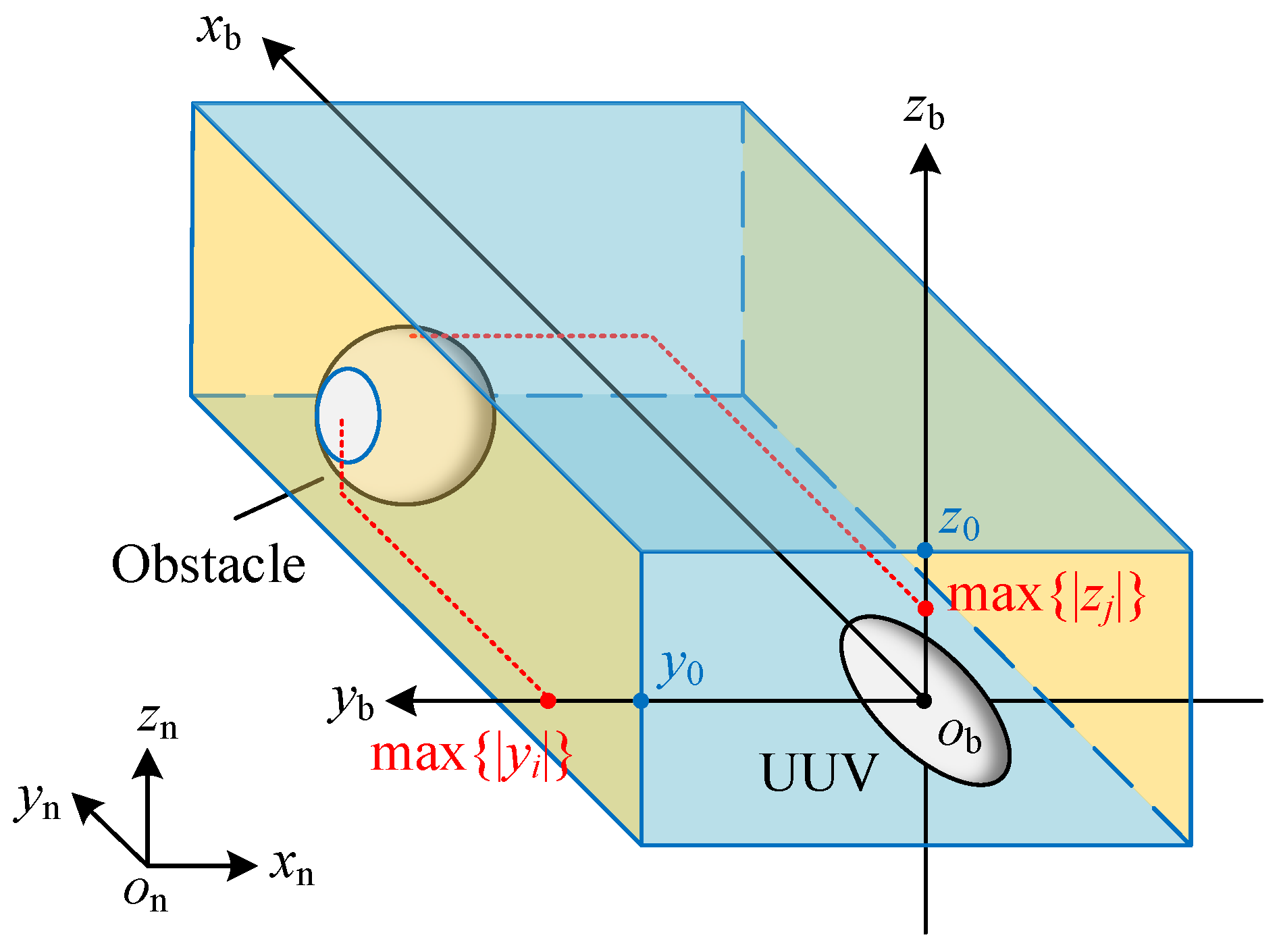
2.2.1. 3D Obstacle Avoidance Strategy
2.2.2. Improved APF Algorithm
- (1)
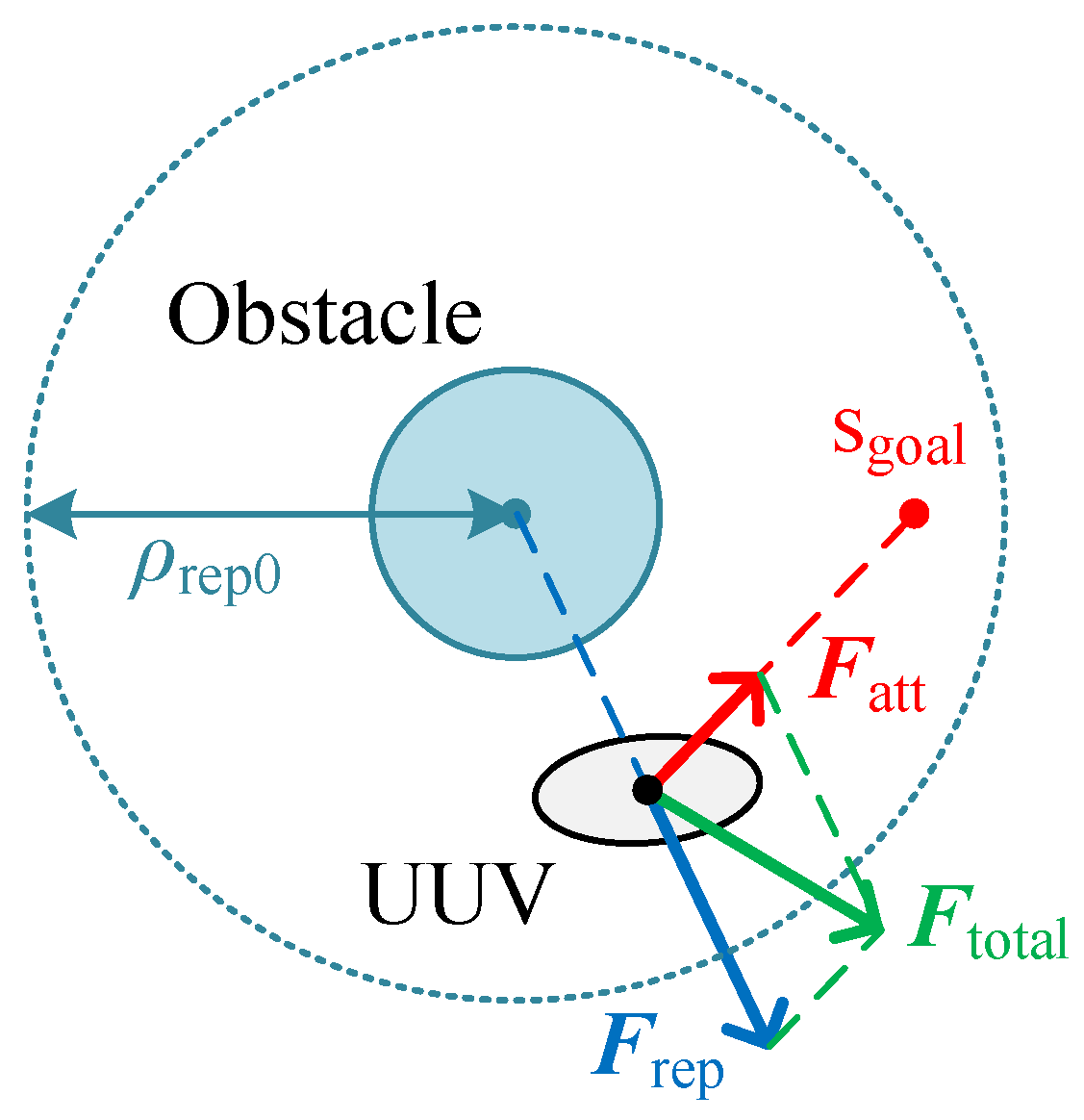
- Traditional APF Algorithm
- (2)
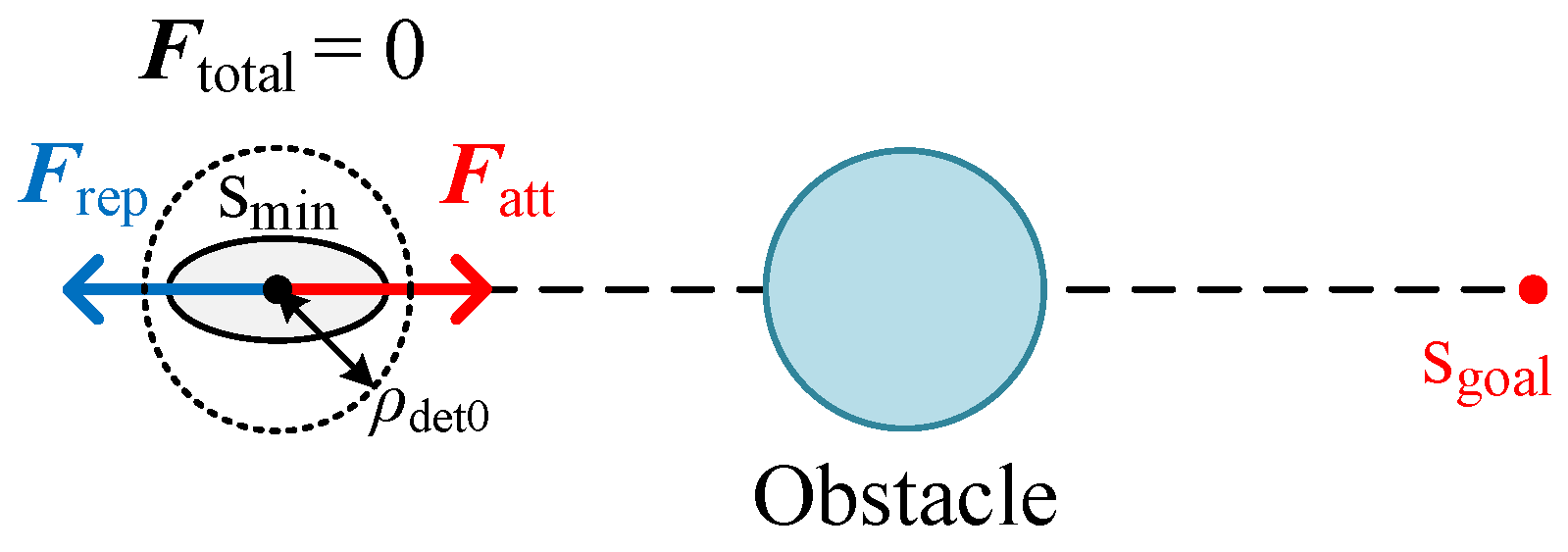
- Improvement for the Local Minima Problem
- (3)
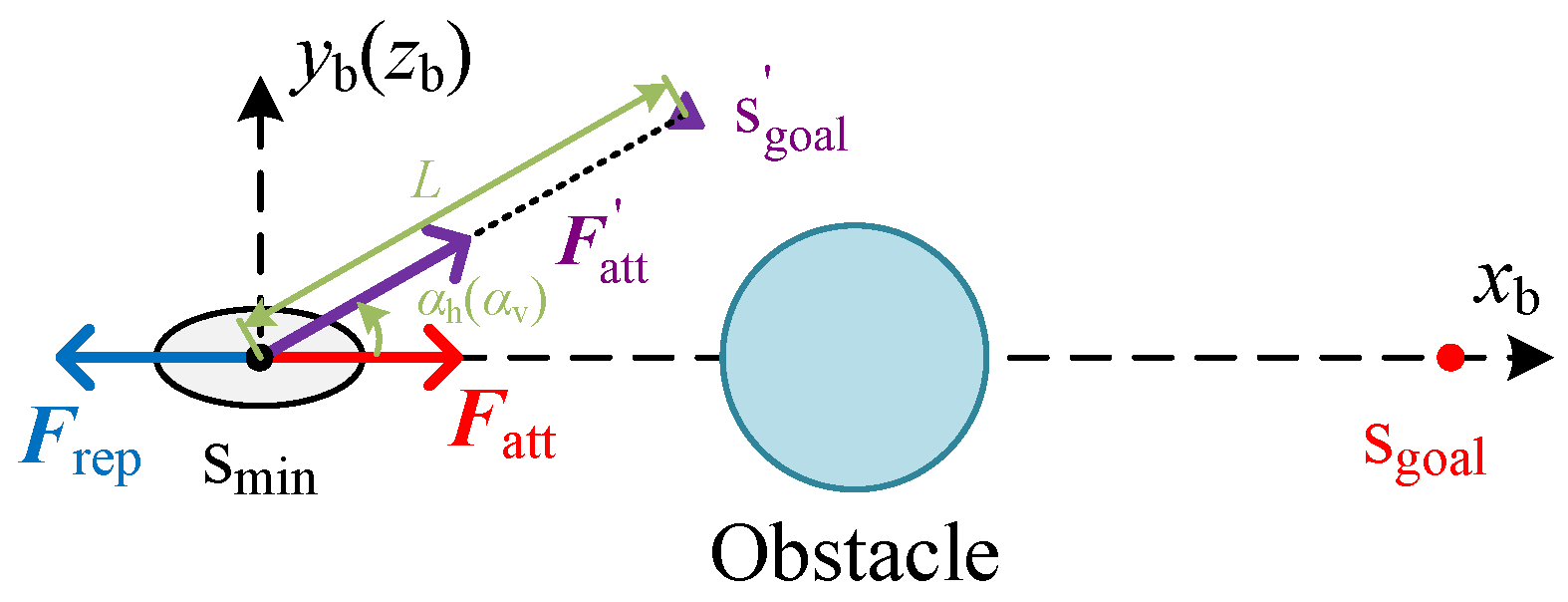
- Improvement for the Target Unreachability Problem
- (4)
- Calculation of Commanded Speed, Yaw Angle and Pitch Angle
- (5)
- Convergence and Completeness Analysis
2.3. Comprehensive Path Planning Cost Function Design
- (1)
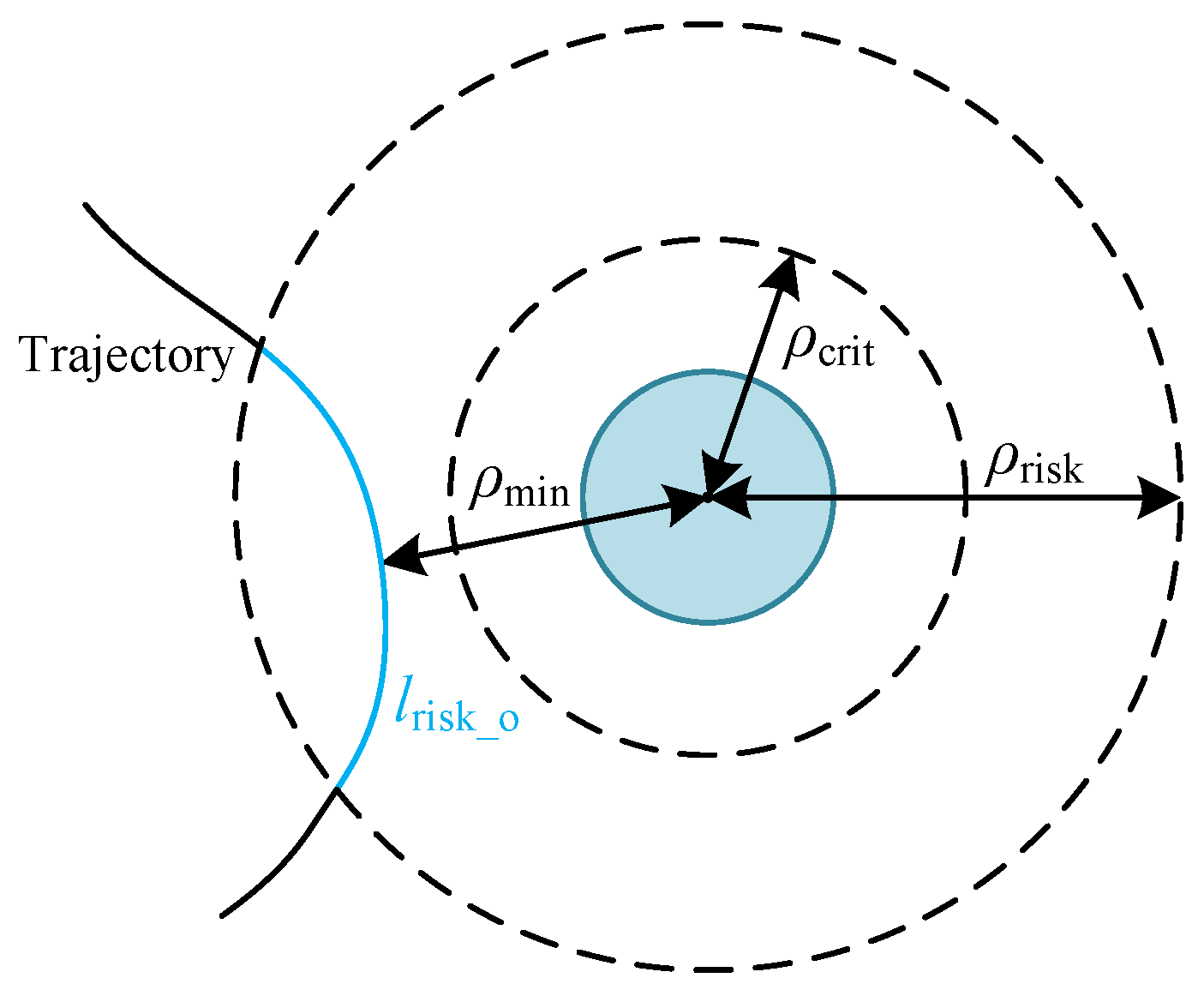
- Collision Risk Function
- (2)
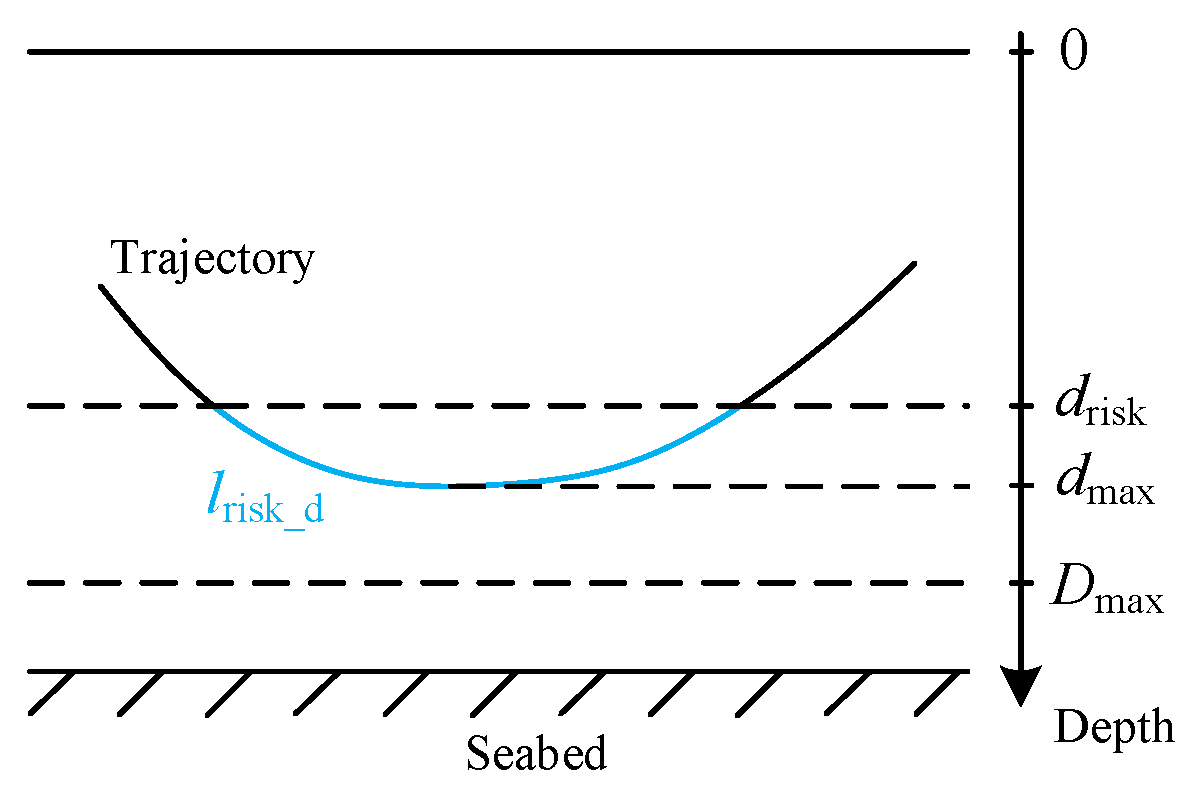
- Depth Risk Function
- (3)
- Navigation Distance Cost Function
- (4)
- Planning Time Cost Function
3. Path Planning Software Design and UUV Autonomous Navigation HIL Simulation System Construction
3.1. Overall Design
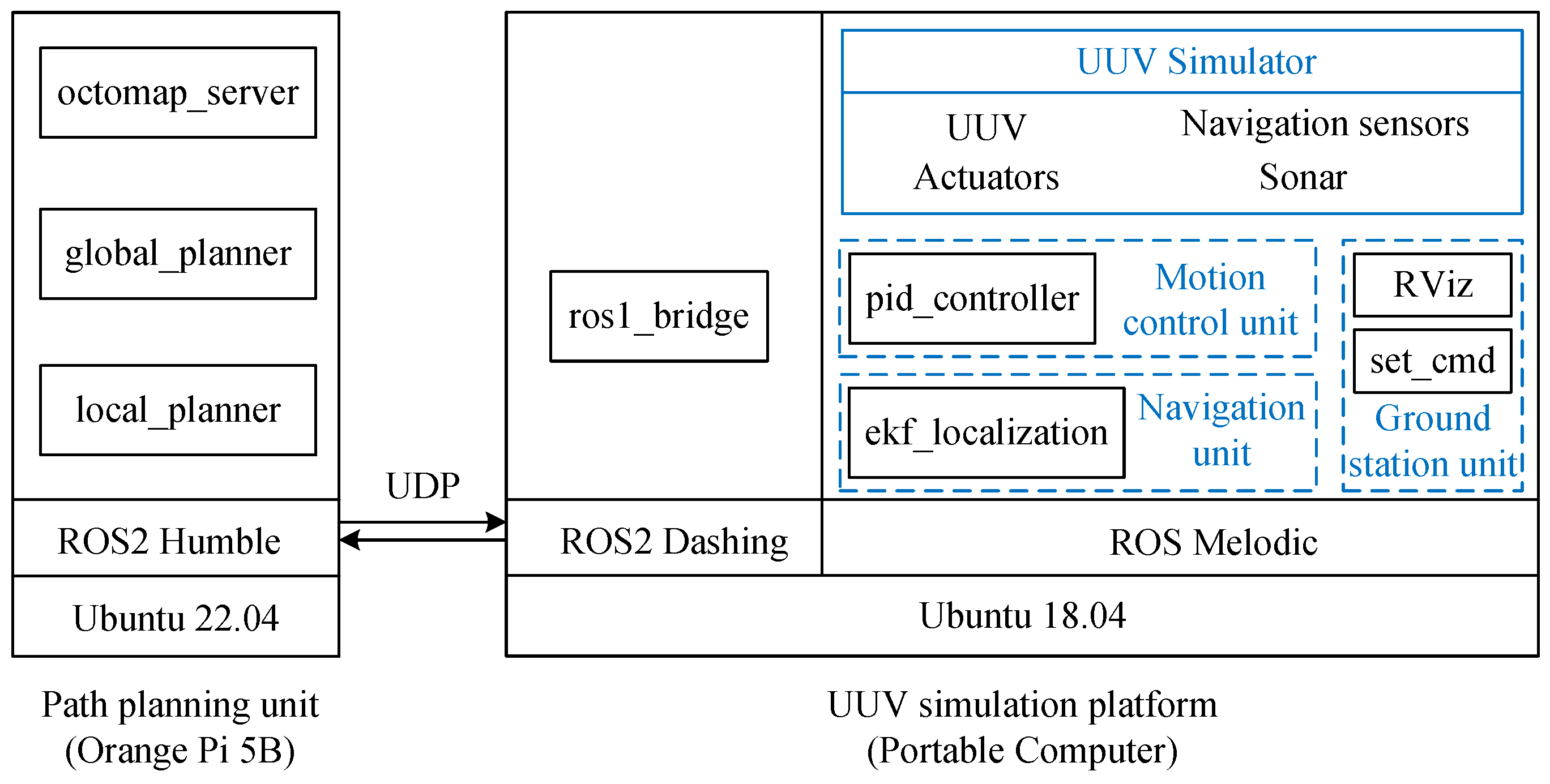
3.1.1. System Composition and Functions
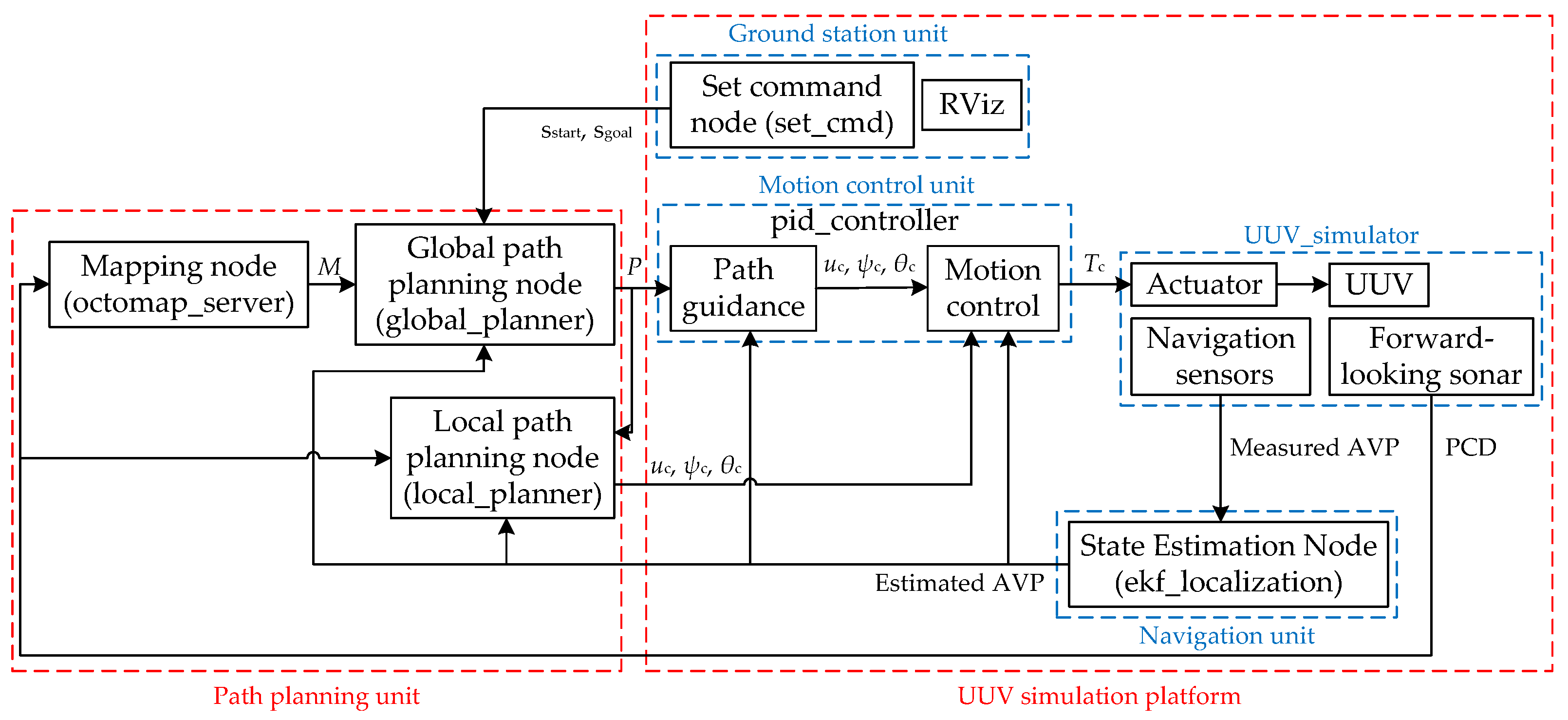
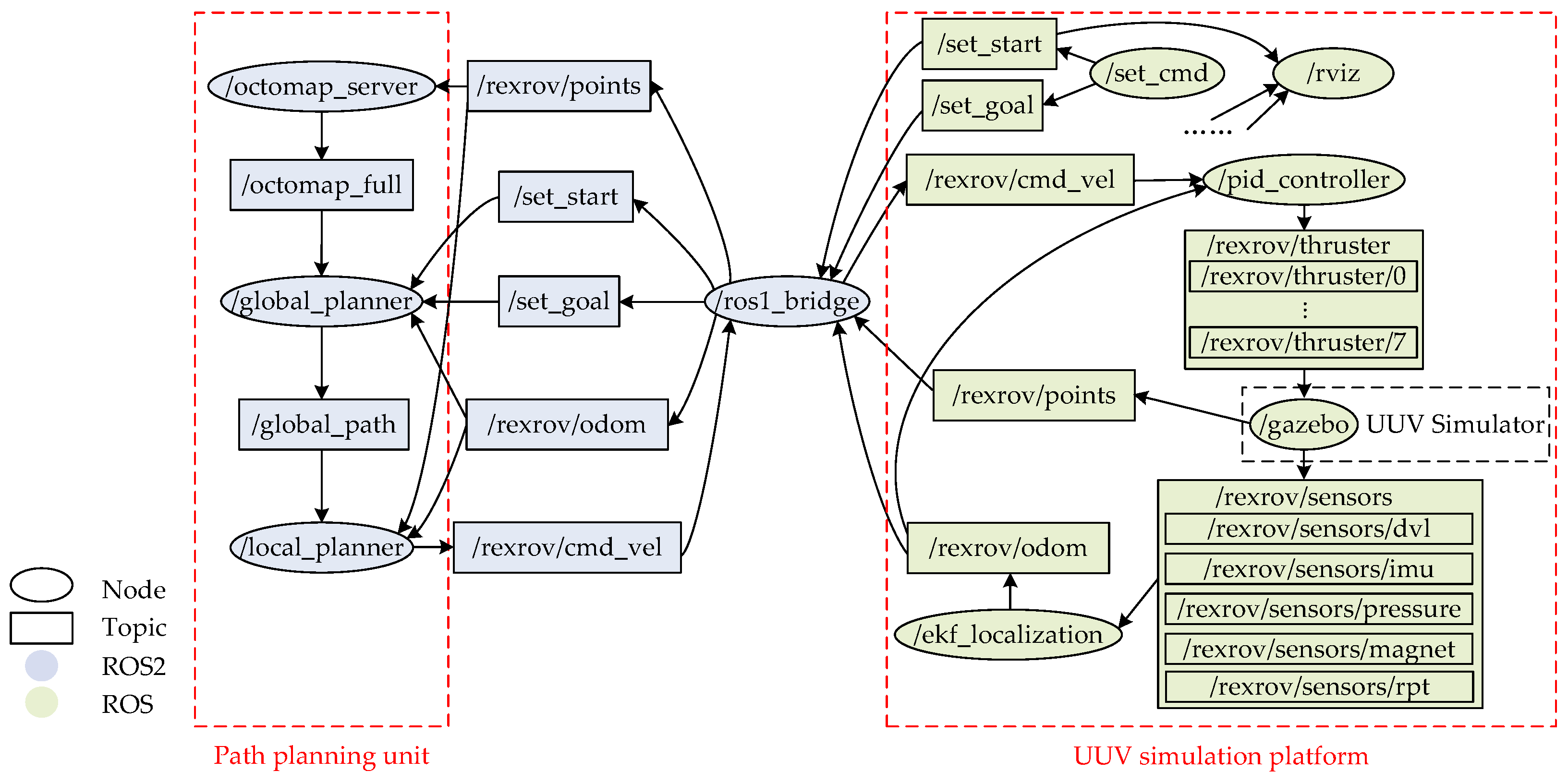
3.1.2. Software Architecture
3.2. Path Planning Software Design
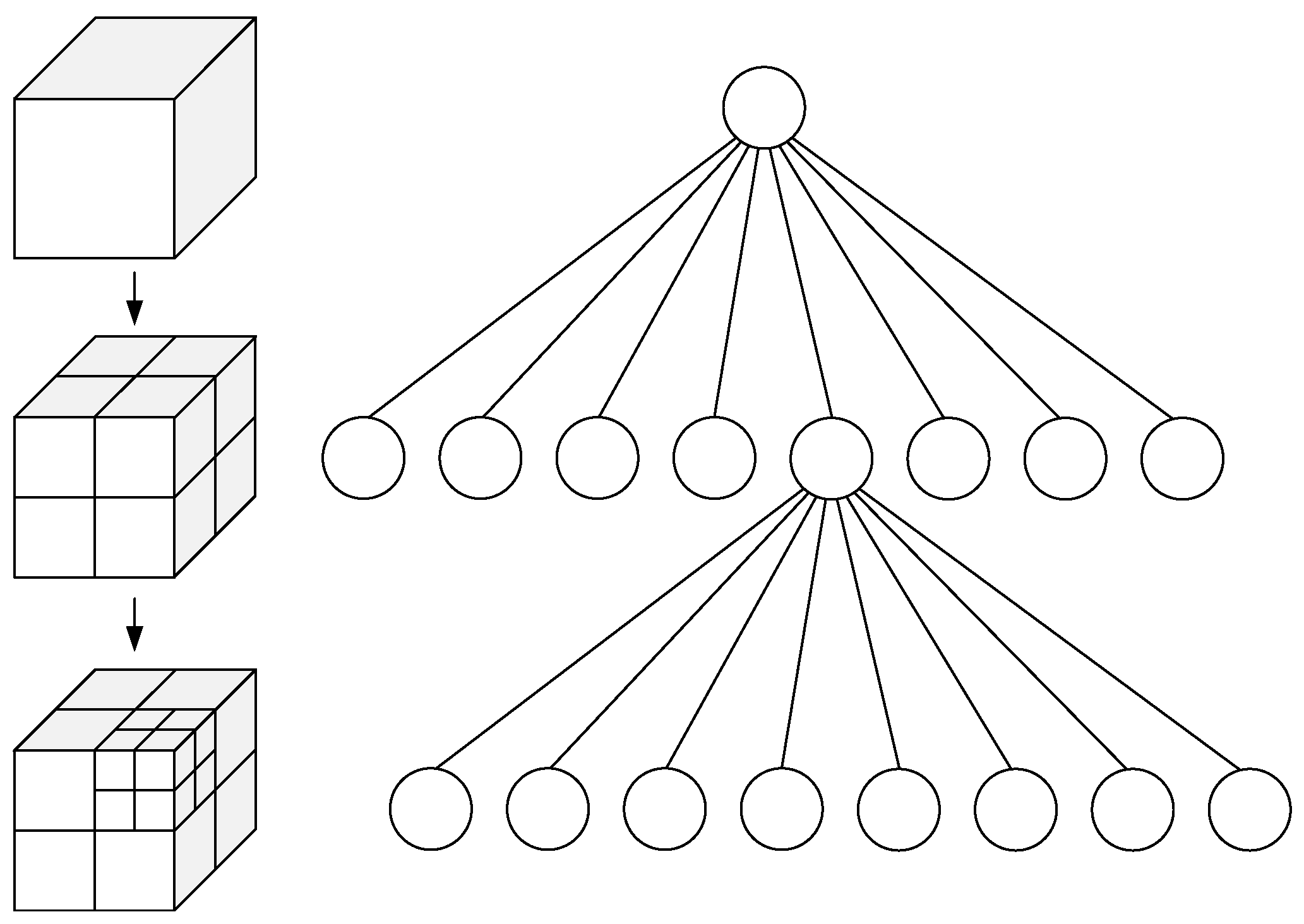
3.2.1. Mapping Node Design
3.2.2. Global Path Planning Node Design
3.2.3. Local Path Planning Node Design
- is a global path point that the UUV has not yet reached;
- For all , is always satisfied, where n is the number of obstacles’ point clouds and is the center point of the i-th obstacle.
3.3. UUV Simulation Platform Software Design
- (1)
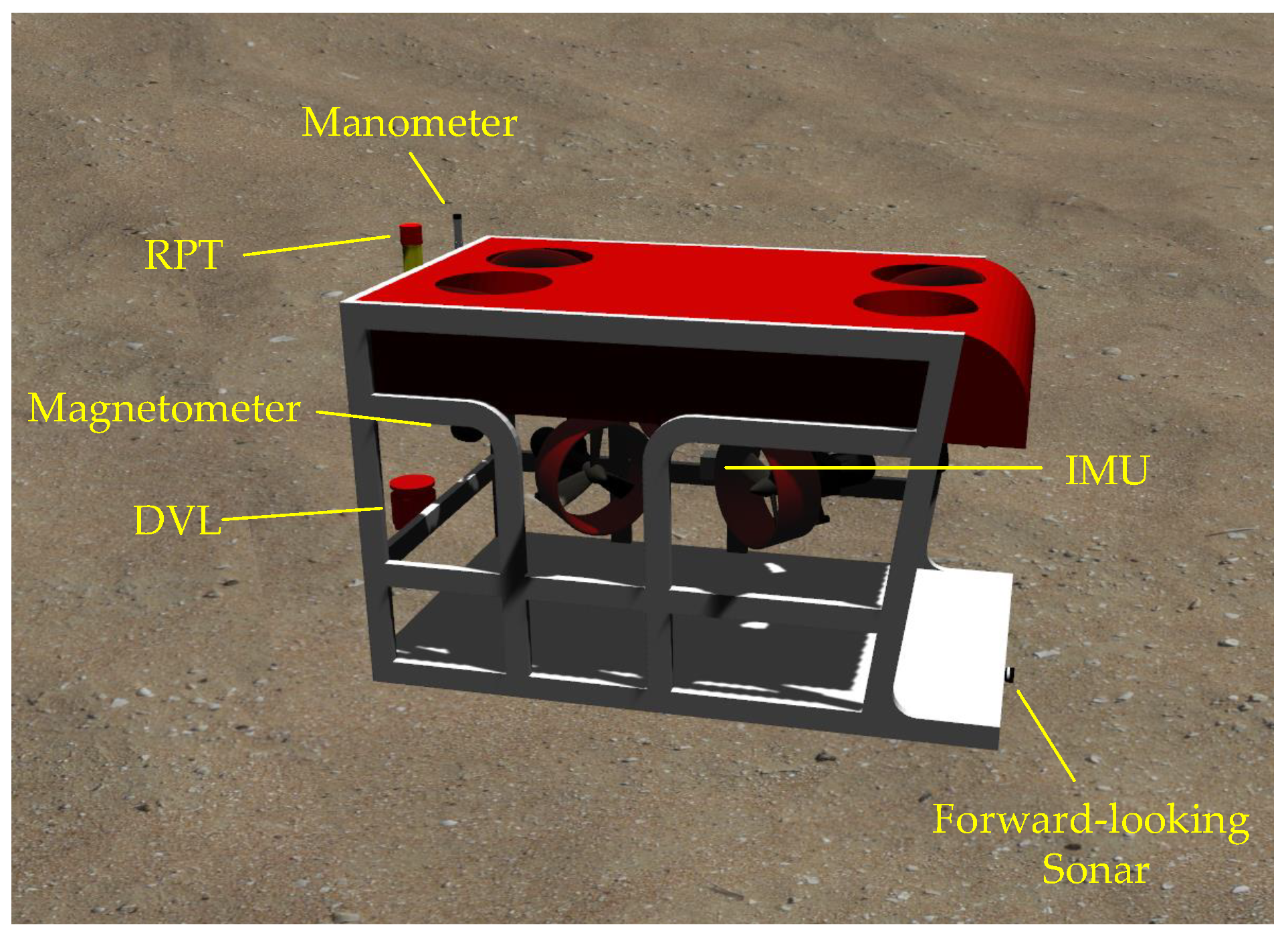
- UUV Simulator Configuration
- (2)
- Software Design of the Navigation Unit
- (3)
- Software Design of the Motion Control Unit
- (4)
- Software Design of the Ground Station Unit
4. HIL Simulation Experiments and Analysis
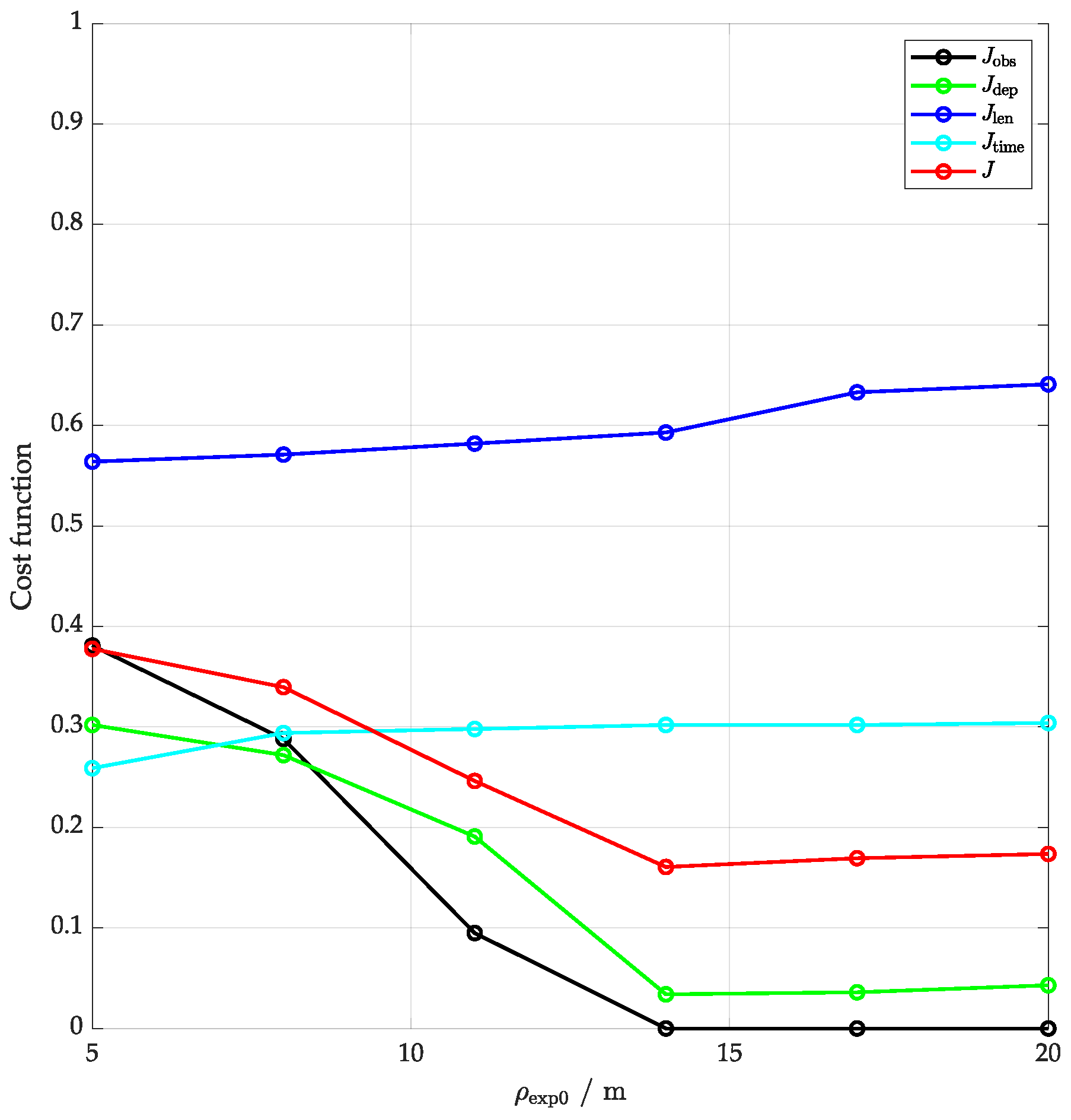
4.1. Global Obstacle Avoidance Path Planning Experiment
4.2. Local Obstacle Avoidance Path Planning Experiment
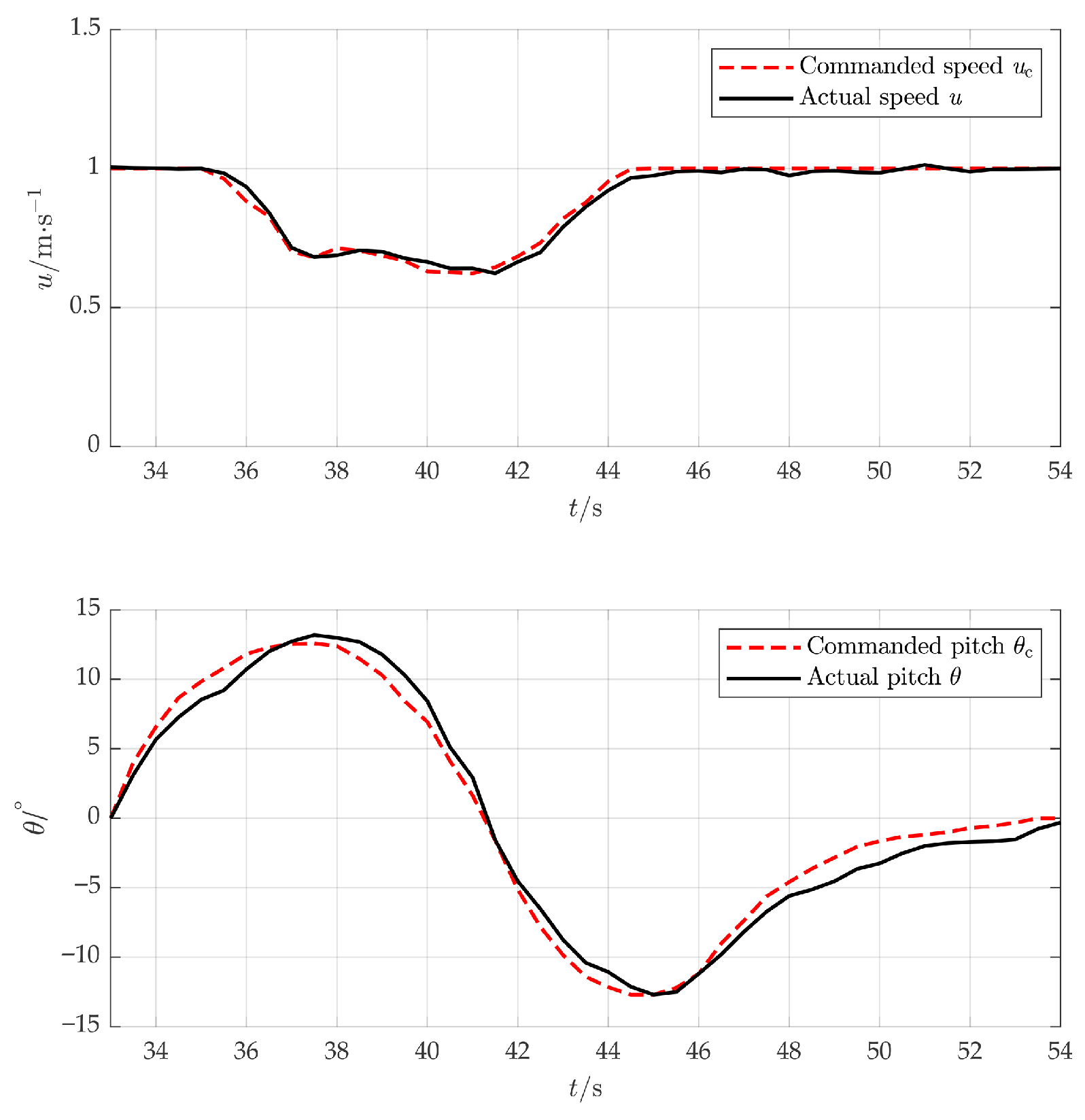
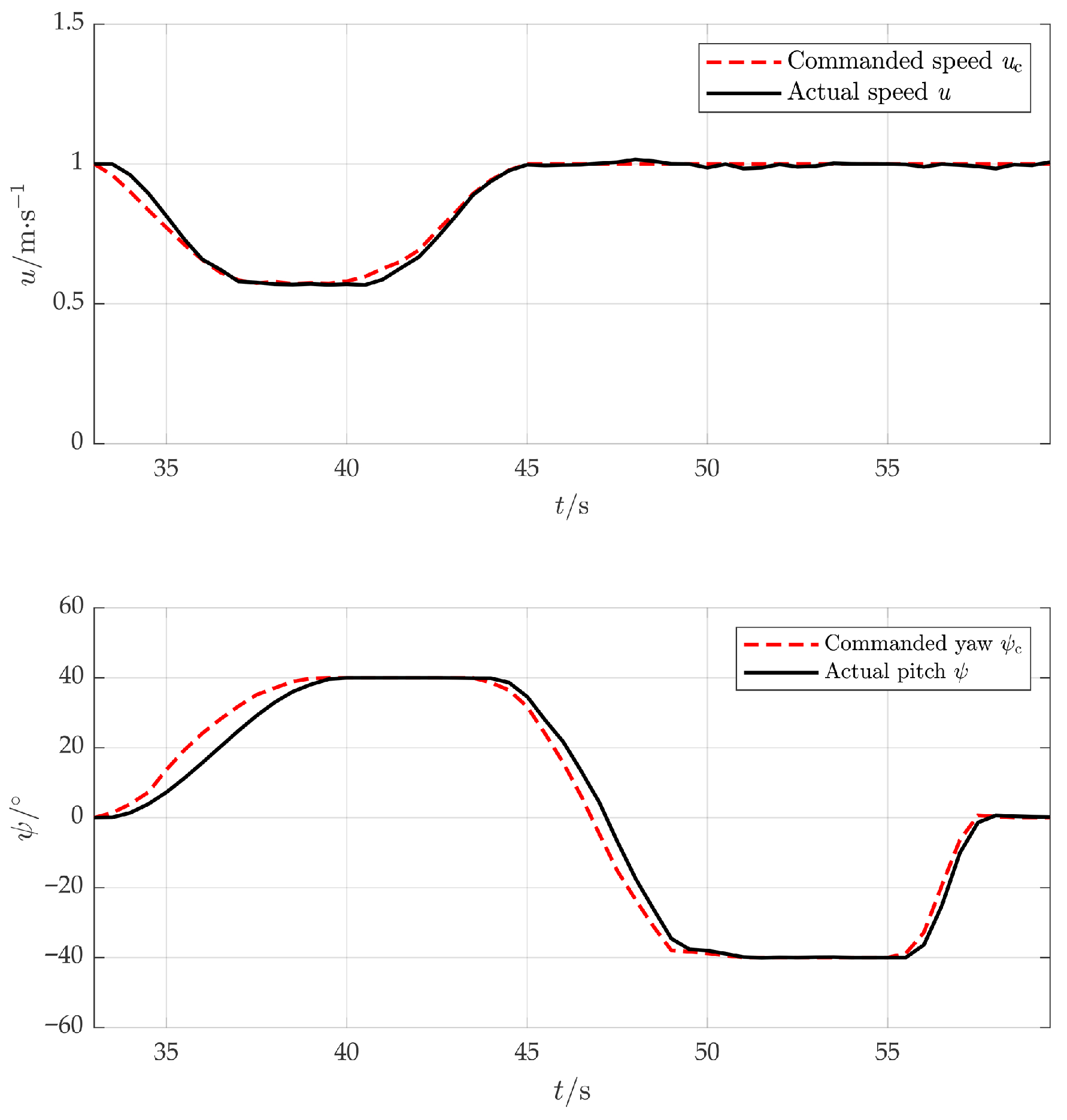
4.2.1. Dynamic Obstacle Avoidance Experiment
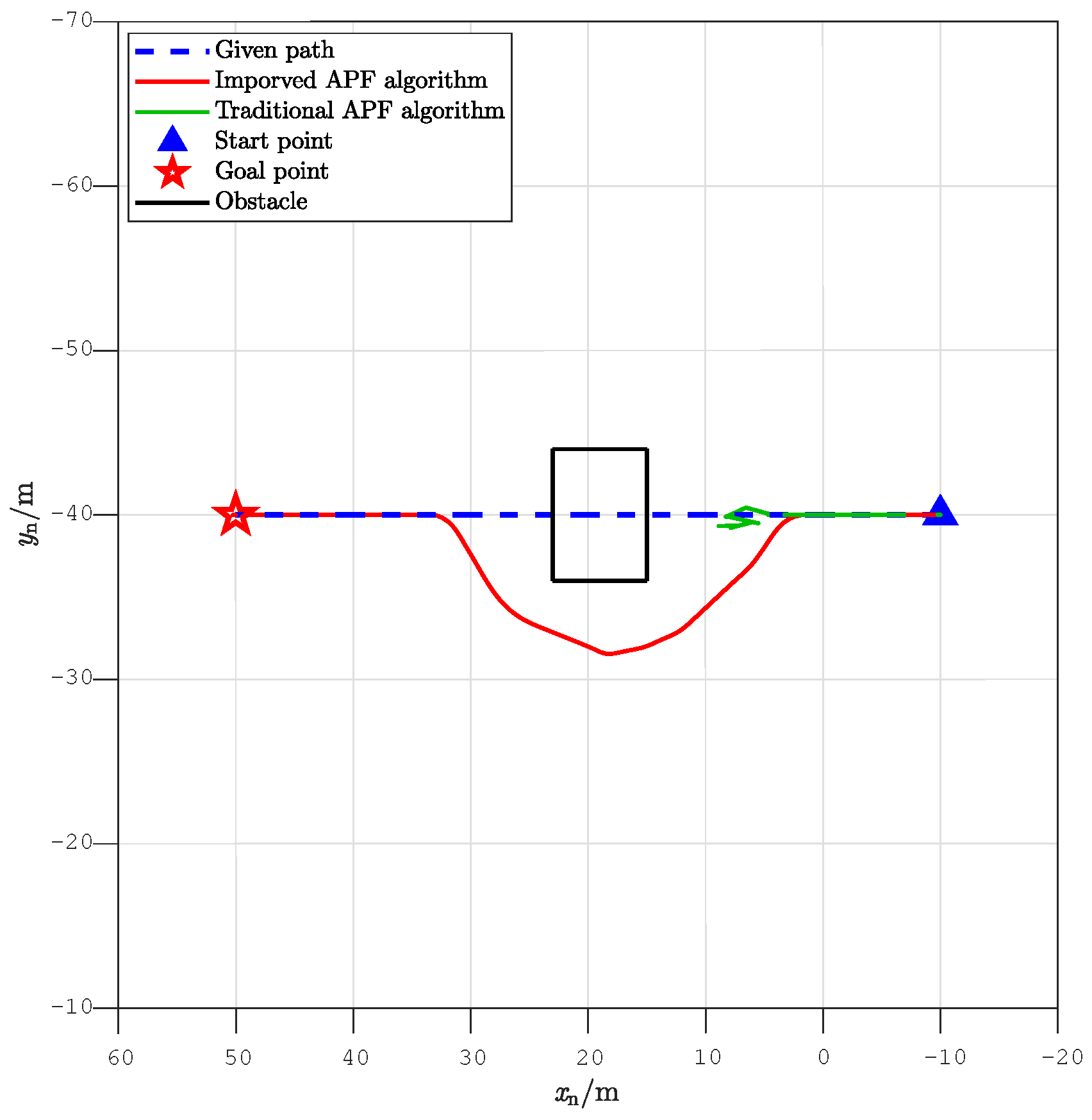
4.2.2. Obstacle Avoidance Experiment with Local Minimum Point
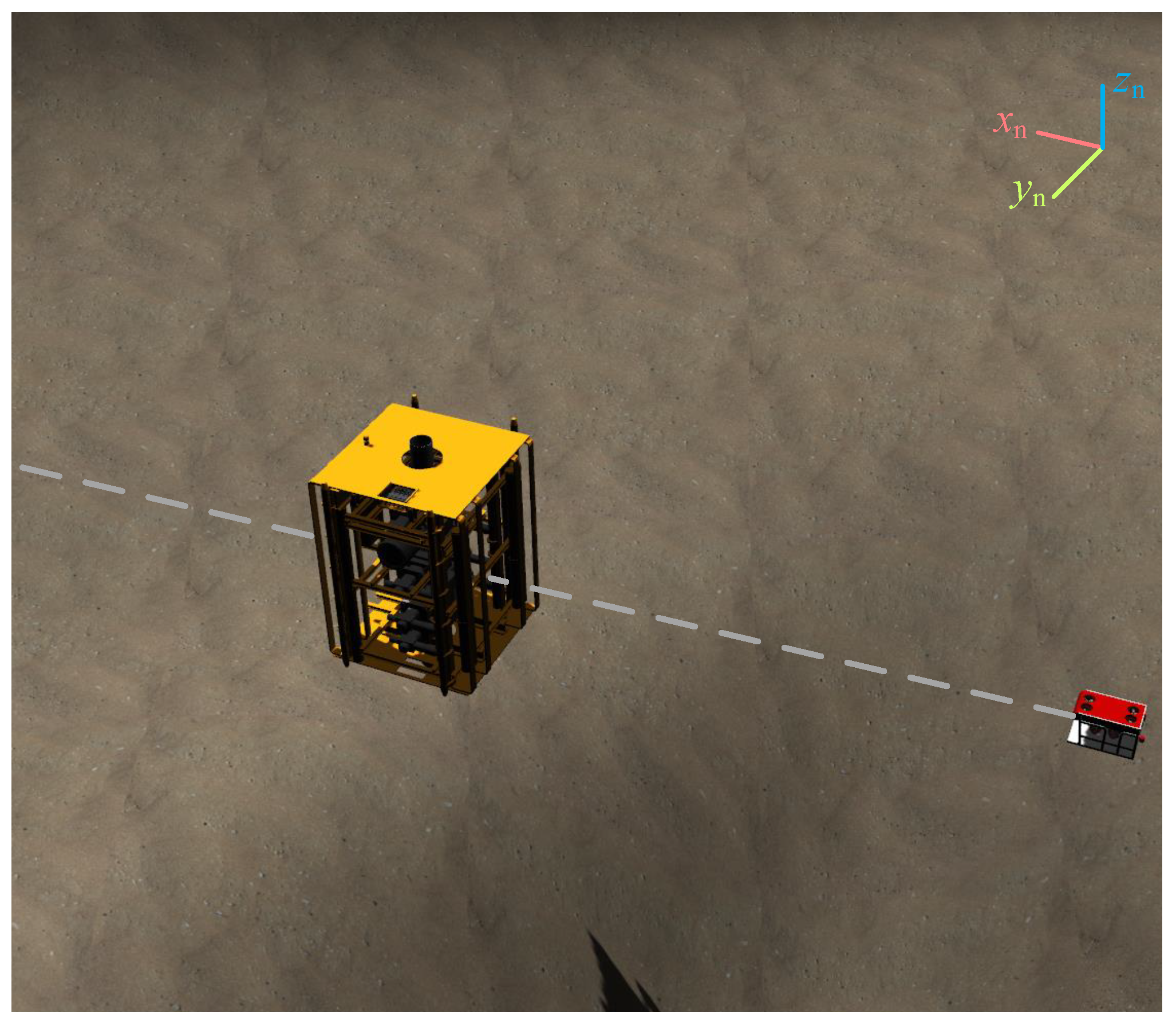
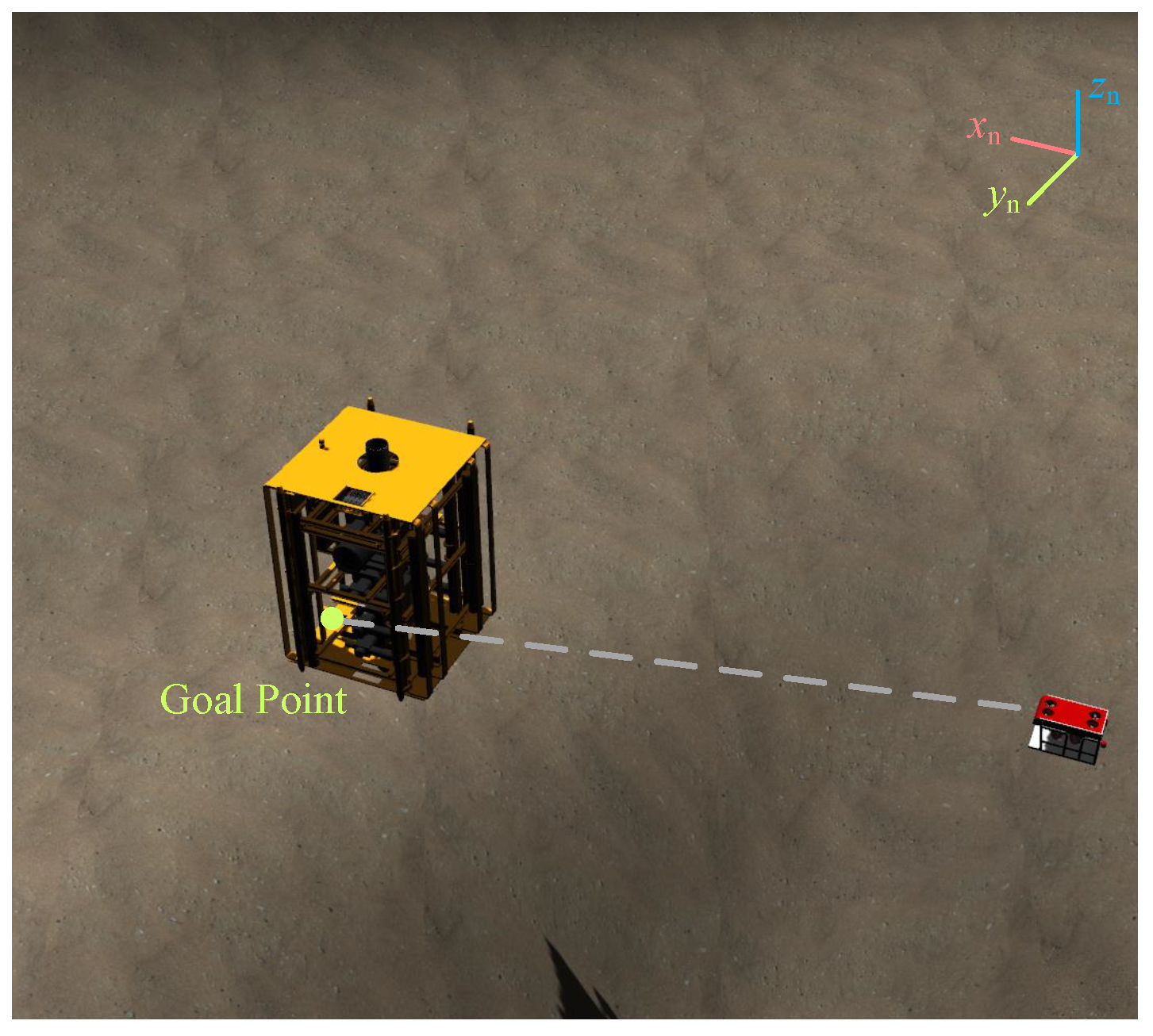
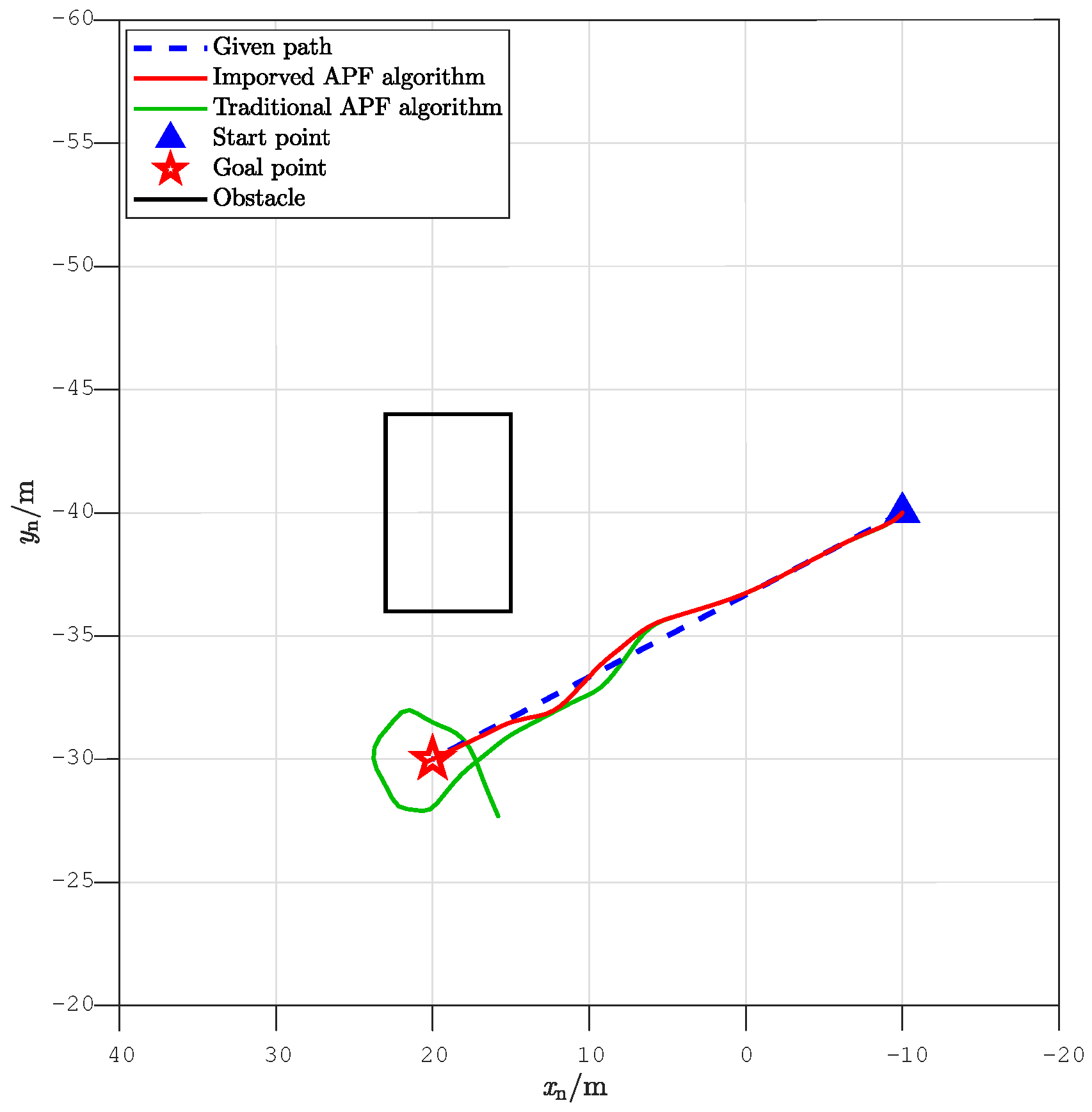
4.2.3. Obstacle Avoidance Experiment near the Goal Point
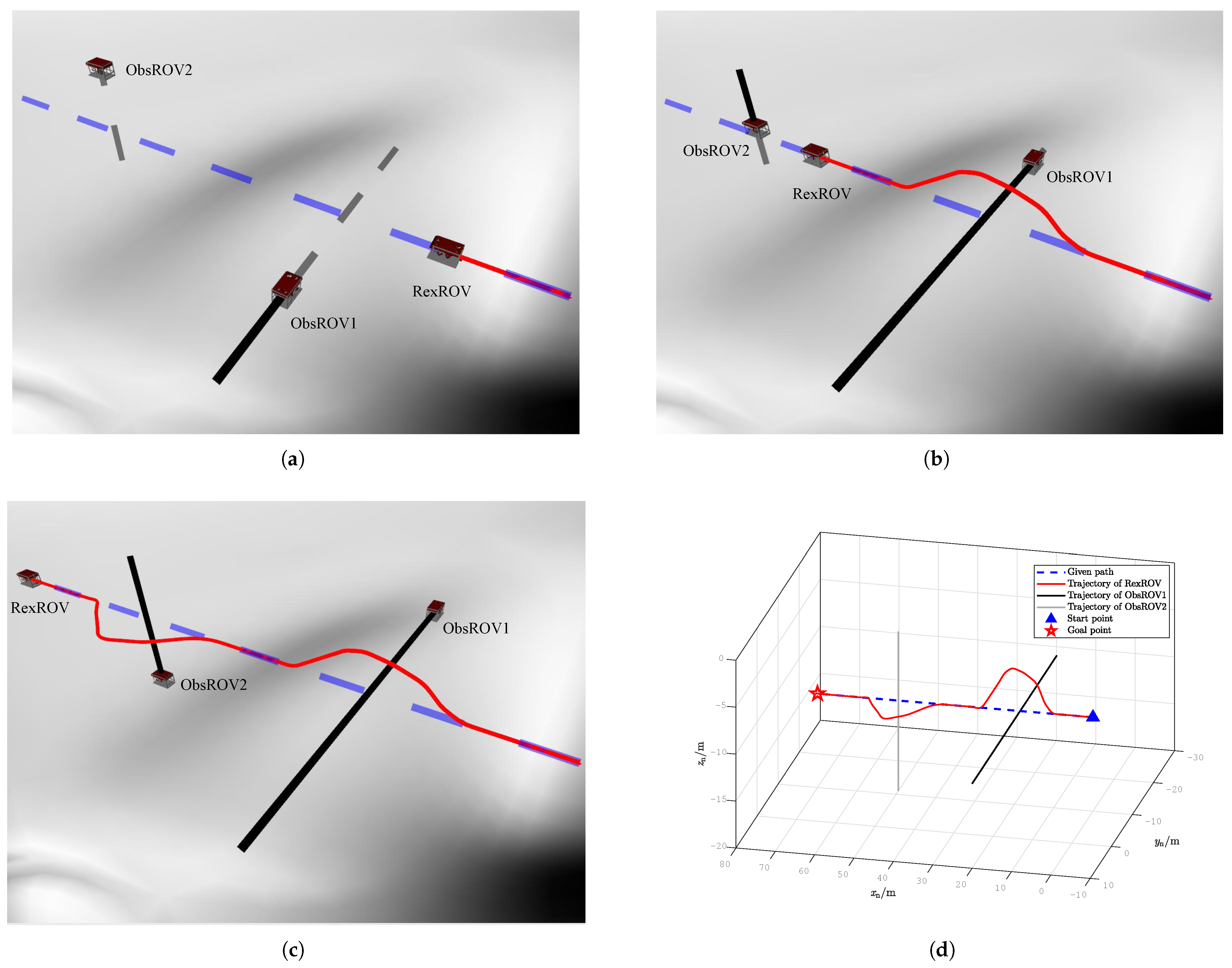
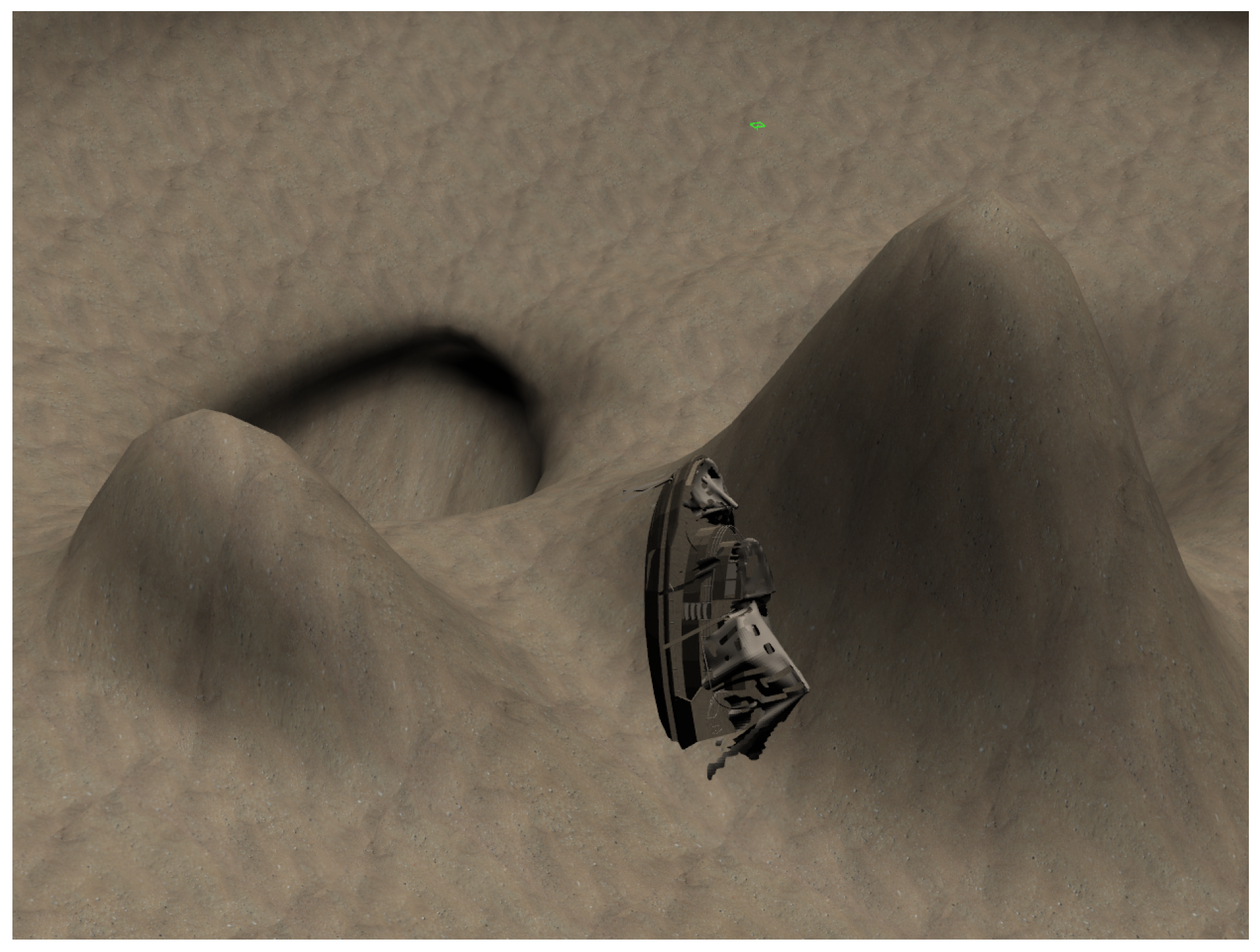
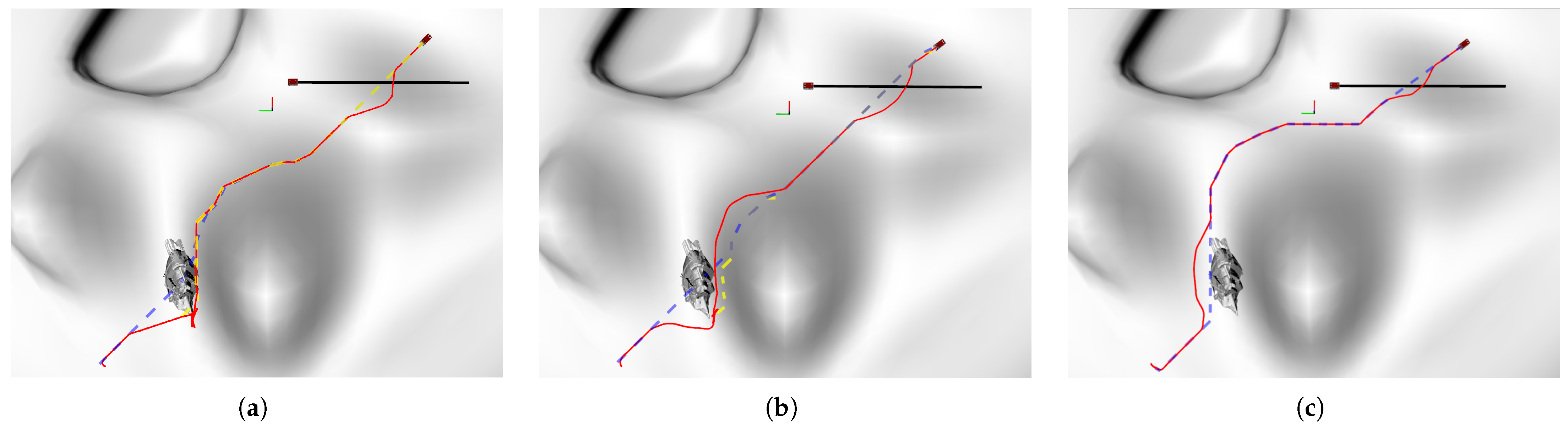
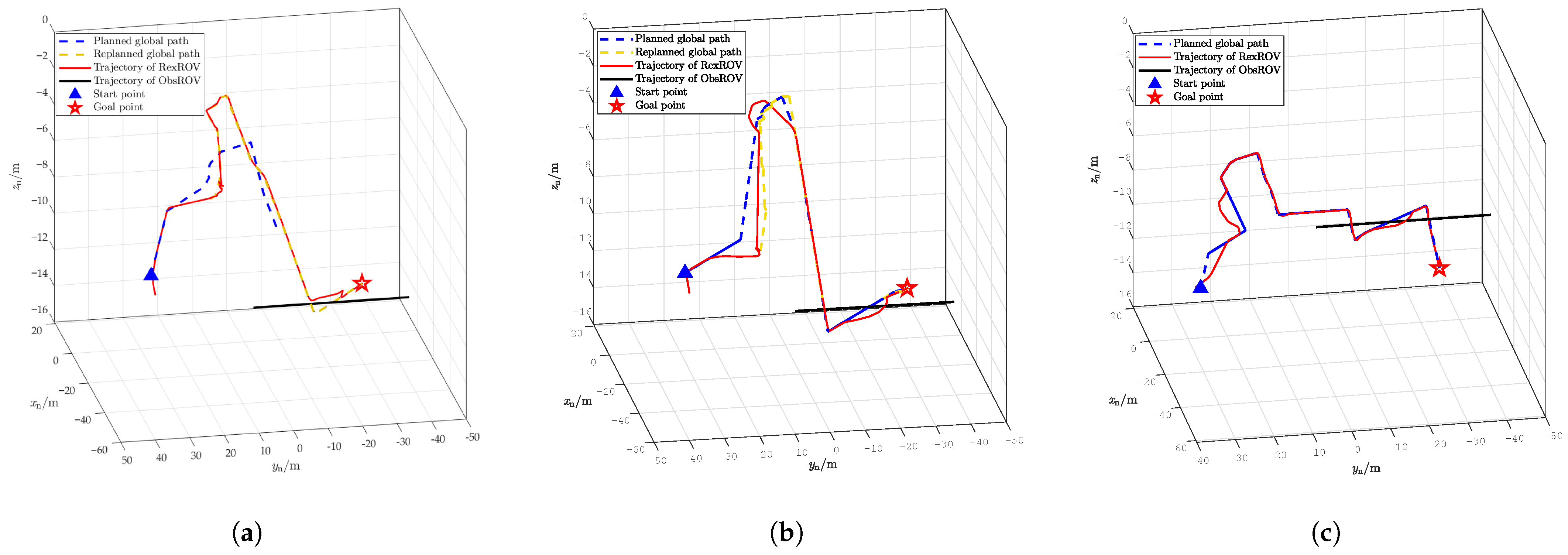
4.3. Comprehensive Obstacle Avoidance Experiment
5. Discussion and Limitations
- (1)
- Neither the algorithm nor the simulation environment takes into account dynamic disturbances in the marine environment, especially the influence of ocean currents. Ocean currents can significantly alter the position and energy consumption of UUVs: sailing downstream can greatly reduce propulsion energy consumption, whereas upstream or cross-stream sailing requires extra energy to overcome resistance and maintain the trajectory, and may even render the planned path untrackable. Neglecting ocean current effects restricts the path optimality to disturbance-free environments, creating a discrepancy with practical applications.
- (2)
- The algorithm performance is sensitive to parameters including inflation layer thickness, attractive/repulsive force coefficients, and virtual target point position. Parameter tuning relies on experience and prior scene knowledge, which may lead to degraded obstacle avoidance performance when insufficient calibration is conducted or the environment changes drastically.
- (3)
- Gaps still exist between HIL simulation results and actual lake or sea trial results. Although the HIL simulation platform integrates high-fidelity sensors and dynamic models, it cannot fully replicate the full complexity of the real marine environment. The real underwater environment involves higher uncertainties: for instance, acoustic sensors are vulnerable to reverberation and noise, causing false alarms or missed detections; underwater positioning suffers from errors; and environmental disturbances such as ocean currents are present, all of which may degrade safety. Therefore, HIL simulation experiments can only validate the obstacle avoidance performance of the algorithm and software under disturbance-free conditions.
- (1)
- UUV path planning considering ocean current disturbances: Rational utilization of ocean currents can effectively reduce the energy consumption of UUVs. Cui et al. [30] considered the influence of ocean currents on AUV energy consumption, and introduced an energy consumption cost based on current direction into the cost function of the D* algorithm, enabling the AUV to actively avoid upstream and cross-stream currents in global path planning and achieve energy-efficient navigation. Sun et al. [31] proposed the QuatAPF method, which guides the UUV to sail downstream by introducing an ocean current potential field, thus significantly reducing energy consumption. Therefore, in future work, an energy consumption cost will be introduced into the cost function of the improved D* Lite algorithm, and an ocean current potential field term will be added to the improved APF algorithm so that the UUV can take the influence of ocean currents into account in both global path planning and real-time obstacle avoidance, achieving safe and energy-efficient path planning.
- (2)
- Adaptive Parameter Optimization: Intelligent optimization algorithms demonstrate favorable performance in the automatic optimization of algorithm parameters. El Moutaouakil et al. [32] utilized a genetic algorithm to automatically optimize the key parameters of Fuzzy-C-Means SMOTE, with entropy minimization as the core objective to suppress noise generation during the oversampling process, thereby significantly improving the generalization ability of classifiers on imbalanced data. For the iterative solution process of the fractional-order continuous Hopfield network (FRAC-CHN), El Moutaouakil et al. [33] proposed an adaptive time step selection method based on the analytical solution of the gradient information of the energy function, achieving the dynamic optimal configuration of iterative step sizes. Therefore, in future work, intelligent optimization algorithms such as genetic algorithms, particle swarm optimization, or reinforcement learning will be introduced to perform online or offline optimization on the sensitive parameters in the obstacle avoidance algorithm, so as to reduce the dependence on manual parameter tuning and enhance the adaptive ability.
- (3)
- Practical UUV system integration and verification by lake or sea trials: Engineering implementation and verification from HIL simulation to the actual UUV system will be carried out, including the development of software and hardware interfaces, system integration, onboard debugging, and lake or sea trials, so as to verify the practicality and engineering feasibility of the algorithm.
6. Conclusions
Author Contributions
Funding
Data Availability Statement
Conflicts of Interest
Abbreviations
| UUV | Unmanned Underwater Vehicle |
| 3D | Three Dimensions |
| APF | Artificial Potential Field |
| ROS | Robot Operating System |
| HIL | Hardware-in-the-loop |
| LPA* | Lifelong Planning A* |
| AD* | Anytime Dynamic A* |
| MSS | Marine System Simulator |
| PCD | Point Cloud Data |
| AVP | Attitude–Velocity–Position |
| DVL | Doppler Velocity Log |
| IMU | Inertial Measurement Unit |
| RPT | Relative Position Transducer |
| EKF | Extended Kalman Filter |
| PID | Proportion–Integration–Differentiation |
References
- Kot, R. Review of Collision Avoidance and Path Planning Algorithms Used in Autonomous Underwater Vehicles. Electronics 2022, 11, 2301. [Google Scholar] [CrossRef]
- Chen, C.; Sha, Q.; He, B. Path planning and obstacle avoidance for AUV: A review. Ocean Eng. 2021, 235, 109355. [Google Scholar] [CrossRef]
- Hart, P.E.; Nilsson, N.J.; Raphael, B. A Formal Basis for the Heuristic Determination of Minimum Cost Paths. IEEE Trans. Syst. Sci. Cybern. 1968, 4, 100–107. [Google Scholar] [CrossRef]
- Macenski, S.; Martin, F.; White, R.; Clavero, J. The Marathon 2: A Navigation System. In Proceedings of the 2020 IEEE/RSJ International Conference on Intelligent Robots and Systems (IROS), Las Vegas, NV, USA, 24 October 2020–24 January 2021; pp. 2718–2725. [Google Scholar] [CrossRef]
- Stentz, A. Optimal and efficient path planning for partially-known environments. In Proceedings of the IEEE International Conference on Robotics and Automation, San Diego, CA, USA, 8–13 May 1994; pp. 3310–3317. [Google Scholar] [CrossRef]
- Koenig, S.; Likhachev, M.; Furcy, D. Lifelong Planning A*. Artif. Intell. 2004, 155, 93–146. [Google Scholar] [CrossRef]
- Koenig, S.; Likhachev, M. D* Lite. In Proceedings of the Eighteenth National Conference on Artificial Intelligence and Fourteenth Conference on Innovative Applications of Artificial Intelligence, Edmonton, AL, Canada, 28 July–1 August 2002; pp. 476–483. [Google Scholar]
- Karlsson, S.; Koval, A.; Kanellakis, C.; Nikolakopoulos, G. D+*: A risk aware platform agnostic heterogeneous path planner. Expert Syst. Appl. 2023, 215, 119408. [Google Scholar] [CrossRef]
- Likhachev, M.; Ferguson, D.I.; Gordon, G.J.; Stentz, A.; Thrun, S. Anytime Dynamic A*: An Anytime, Replanning Algorithm. In Proceedings of the Fifteenth International Conference on Automated Planning and Scheduling, Monterey, CA, USA, 5–10 June 2005; pp. 262–271. [Google Scholar]
- Khatib, O. Real-Time Obstacle Avoidance for Manipulators and Mobile Robots. Int. J. Rob. Res. 1986, 5, 90–98. [Google Scholar] [CrossRef]
- Gao, J.; Xu, X.; Pu, Q.; Petrovic, P.B.; Rodic, A.; Wang, Z. A Hybrid Path Planning Method Based on Improved A* and CSA-APF Algorithms. IEEE Access 2024, 12, 39139–39151. [Google Scholar] [CrossRef]
- Sun, M.; Xiao, X.; Luan, T.; Zhang, X.; Wu, B.; Zhen, L. The path planning algorithm for UUV based on the fusion of grid obstacles of artificial potential field. Ocean Eng. 2024, 306, 118043. [Google Scholar] [CrossRef]
- Szczepanski, R.; Tarczewski, T.; Erwinski, K. Energy Efficient Local Path Planning Algorithm Based on Predictive Artificial Potential Field. IEEE Access 2022, 10, 39729–39742. [Google Scholar] [CrossRef]
- Fernandez-Chaves, D.; Ruiz-Sarmiento, J.; Jaenal, A.; Petkov, N.; Gonzalez-Jimenez, J. Robot@VirtualHome, an ecosystem of virtual environments and tools for realistic indoor robotic simulation. Expert Syst. Appl. 2022, 208, 117970. [Google Scholar] [CrossRef]
- Readme of Marine Systems Simulator (MSS). Available online: https://github.com/cybergalactic/MSS (accessed on 20 January 2026).
- Nie, Y.; Luan, X.; Gan, W.; Ou, T.; Song, D. Design of Marine Virtual Simulation Experiment Platform Based on Unity3D. In Proceedings of the Global Oceans 2020: Singapore—U.S. Gulf Coast, Biloxi, MS, USA, 5–30 October 2020; pp. 1–5. [Google Scholar] [CrossRef]
- Manhães, M.; Scherer, S.; Voss, M.; Douat, L.; Rauschenbach, T. UUV Simulator: A Gazebo-based package for underwater intervention and multi-robot simulation. In Proceedings of the OCEANS 2016 MTS/IEEE Monterey, Monterey, CA, USA, 19–23 September 2016; pp. 1–8. [Google Scholar] [CrossRef]
- Xu, S.; Zhang, K.; Wang, S. AQUA-SLAM: Tightly Coupled Underwater Acoustic-Visual-Inertial SLAM With Sensor Calibration. IEEE Trans. Rob. 2025, 41, 2785–2803. [Google Scholar] [CrossRef]
- Chen, M.; Zhu, D. Application and Exploration of an Open-Source Underwater Vehicle Simulation Platform in ROS Practical Teaching. In Proceedings of the 2025 11th International Conference on Education and Training Technologies (ICETT), Macao, China, 23–25 May 2025; pp. 148–152. [Google Scholar] [CrossRef]
- Xu, H.; Xiang, X.; Yan, C.; Li, Z.; Zhou, H.; Wang, N. Grey wolf optimization enhanced collaborative path planning for UUV swarms. Ocean Eng. 2025, 329, 121082. [Google Scholar] [CrossRef]
- Du, B.; Chen, D.; Huang, C.; Wang, Y.; Liu, Y. Path Tracking Control of Autonomous Underwater Vehicle Based on Deep Reinforcement Learning and Sonar Image Processing Technology. In Proceedings of the 2025 8th International Conference on Transportation Information and Safety (ICTIS), Granada, Spain, 16–19 July 2025; pp. 548–554. [Google Scholar] [CrossRef]
- An, D.; Mu, Y.; Wang, Y.; Li, B.; Wei, Y. Intelligent Path Planning Technologies of Underwater Vehicles: A Review. J. Intell. Robot. Syst. 2023, 102, 22. [Google Scholar] [CrossRef]
- Li, D.; Wang, P.; Du, L. Path Planning Technologies for Autonomous Underwater Vehicles-A Review. IEEE Access 2019, 7, 9745–9768. [Google Scholar] [CrossRef]
- Readme of ros1_bridge. Available online: https://github.com/ros2/ros1_bridge (accessed on 20 January 2026).
- Hornung, A.; Wurm, K.M.; Bennewitz, M.; Stachniss, C.; Burgard, W. OctoMap: An efficient probabilistic 3D mapping framework based on octrees. Auton. Robot. 2013, 34, 189–206. [Google Scholar] [CrossRef]
- Dukan, F. ROV Motion Control Systems. Ph.D. Thesis, Norwegian University of Science and Technology, Trondheim, Norway, 2014. [Google Scholar]
- Moore, T.; Stouch, D. A Generalized Extended Kalman Filter Implementation for the Robot Operating System. In Proceedings of the 13th International Conference on Intelligent Autonomous Systems, Padua, Italy, 15–18 July 2014; pp. 335–348. [Google Scholar] [CrossRef]
- Fossen, T. Handbook of Marine Craft Hydrodynamics and Motion Control, 2nd ed.; Wiley: Hoboken, NJ, USA, 2021. [Google Scholar]
- Documentation of RViz. Available online: https://wiki.ros.org/rviz (accessed on 20 January 2026).
- Sun, B.; Zhang, W.; Li, S.; Zhu, X. Energy optimised D* AUV path planning with obstacle avoidance and ocean current environment. J. Navig. 2022, 75, 1–18. [Google Scholar] [CrossRef]
- Cui, C.; Wu, S.; Chen, X. QuatAPF: Safety-aware and energy-efficient dynamic path planning and tracking control for deep-sea mining vehicles via a quatre-artificial potential field method. Ocean Eng. 2025, 321, 120236. [Google Scholar] [CrossRef]
- El Moutaouakil, K.; Roudani, M.; Ouissari, A.E. Optimal Entropy Genetic Fuzzy-C-Means SMOTE (OEGFCM-SMOTE). Knowl.-Based Syst. 2023, 262, 110235. [Google Scholar] [CrossRef]
- El Moutaouakil, K.; Bouhanch, Z.; Ahourag, A.; Aberqi, A.; Karite, T. OPT-FRAC-CHN: Optimal Fractional Continuous Hopfield Network. Symmetry 2024, 16, 921. [Google Scholar] [CrossRef]







| Name | Symbol [Unit] | Value |
|---|---|---|
| Dimensions | [m] | 2.6 × 1.5 × 1.6 |
| Number of horizontal thrusters | [−] | 4 |
| Number of vertical thrusters | [−] | 4 |
| Maximum speed | [] | 1.5 |
| Economic speed | [] | 1 |
| Maximum depth | [m] | 25 |
| Senseors | Parameter [Unit] | Value |
|---|---|---|
| Forward-looking sonar | Maximum detection range [m] | 16 |
| Horizontal field of view [°] | ||
| Vertical field of view [°] | ||
| RPT | Noise standard deviation [m] | 0.1 |
| DVL | Noise standard deviation [m] | 0.05 |
| IMU | Gyroscope dynamic bias stability [] | 0.133 |
| Accelerometer dynamic bias stability [mg] | 0.408 | |
| Manometer | Measurement range [kPa] | 30,000 |
| Noise standard deviation [kPa] | 3 | |
| Magnetometer | Noise standard deviation [] | 1 |
| Name | Symbol [Unit] | Value |
|---|---|---|
| Cost of occupied voxel | [m] | 10,000 |
| Cost of free voxel | [m] | 1 |
| Thickness threshold of the inflation layer | [m] | 5, 8, 11, 14, 17, 20 |
| Name | Symbol [Unit] | Value |
|---|---|---|
| Weight coefficient of | [−] | 0.35 |
| Weight coefficient of | [−] | 0.35 |
| Weight coefficient of | [−] | 0.2 |
| Weight coefficient of | [−] | 0.1 |
| Critical collision distance | [m] | 2 |
| Collision risk distance | [m] | 12 |
| Risk depth | [m] | 12 |
| Maximum allowable planning time | [s] | 1 |
| [m] | J | ||||
|---|---|---|---|---|---|
| 5 | 0.384 ± 0.014 | 0.302 ± 0.012 | 0.564 ± 0.008 | 0.268 ± 0.015 | 0.380 ± 0.007 |
| 8 | 0.288 ± 0.017 | 0.272 ± 0.015 | 0.571 ± 0.007 | 0.280 ± 0.019 | 0.338 ± 0.008 |
| 11 | 0.095 ± 0.018 | 0.190 ± 0.014 | 0.582 ± 0.009 | 0.298 ± 0.021 | 0.246 ± 0.008 |
| 14 | 0.000 ± 0.000 | 0.033 ± 0.015 | 0.593 ± 0.007 | 0.302 ± 0.013 | 0.160 ± 0.006 |
| 17 | 0.000 ± 0.000 | 0.036 ± 0.017 | 0.633 ± 0.008 | 0.304 ± 0.018 | 0.170 ± 0.006 |
| 20 | 0.000 ± 0.000 | 0.045 ± 0.019 | 0.643 ± 0.011 | 0.306 ± 0.019 | 0.175 ± 0.007 |
| Classification | Name | Symbol [Unit] | Value |
|---|---|---|---|
| Improved APF | Repulsive coefficient | [] | 16 |
| Attractive coefficient | [] | 0.5 | |
| Coefficient of virtual force | [] | 0.25 | |
| Distance of virtual goal point | L [m] | 15 | |
| Horizontal angle of virtual goal point | [°] | 30 | |
| Vertical angle of virtual goal point | [°] | 25 | |
| Repulsive force threshold | [m] | 12 | |
| Max pitch angle correction | [°] | 15 | |
| Max yaw angle correction | [°] | 40 | |
| Local minimum detection | Detection period | T [s] | 2 |
| Detection distance threshold | [m] | 3 | |
| 3D obstacle avoidance strategy | Horizontal thresholds | [m] | 7 |
| Vertical thresholds | [m] | 5 |
| Algorithm Type | J | ||||
|---|---|---|---|---|---|
| A*-APF | 0.668 ± 0.031 | 0.245 ± 0.025 | 0.668 ± 0.024 | 0.731 ± 0.017 | 0.526 ± 0.015 |
| Traditional D* Lite-APF | 0.637 ± 0.035 | 0.290 ± 0.030 | 0.635 ± 0.023 | 0.461 ± 0.011 | 0.498 ± 0.017 |
| Improved D* Lite-APF | 0.297 ± 0.032 | 0.024 ± 0.028 | 0.604 ± 0.024 | 0.302 ± 0.014 | 0.263 ± 0.016 |
Disclaimer/Publisher’s Note: The statements, opinions and data contained in all publications are solely those of the individual author(s) and contributor(s) and not of MDPI and/or the editor(s). MDPI and/or the editor(s) disclaim responsibility for any injury to people or property resulting from any ideas, methods, instructions or products referred to in the content. |
© 2026 by the authors. Licensee MDPI, Basel, Switzerland. This article is an open access article distributed under the terms and conditions of the Creative Commons Attribution (CC BY) license.
Share and Cite
Jin, P.; Li, W.; Zhan, J.; Shan, C. 3D Obstacle Avoidance Path Planning Algorithm and Software Design for UUV Based on Improved D* Lite-APF. J. Mar. Sci. Eng. 2026, 14, 373. https://doi.org/10.3390/jmse14040373
Jin P, Li W, Zhan J, Shan C. 3D Obstacle Avoidance Path Planning Algorithm and Software Design for UUV Based on Improved D* Lite-APF. Journal of Marine Science and Engineering. 2026; 14(4):373. https://doi.org/10.3390/jmse14040373
Chicago/Turabian StyleJin, Peisen, Wenkui Li, Jinlin Zhan, and Chenyang Shan. 2026. "3D Obstacle Avoidance Path Planning Algorithm and Software Design for UUV Based on Improved D* Lite-APF" Journal of Marine Science and Engineering 14, no. 4: 373. https://doi.org/10.3390/jmse14040373
APA StyleJin, P., Li, W., Zhan, J., & Shan, C. (2026). 3D Obstacle Avoidance Path Planning Algorithm and Software Design for UUV Based on Improved D* Lite-APF. Journal of Marine Science and Engineering, 14(4), 373. https://doi.org/10.3390/jmse14040373