Article

Toxic Effect of UV-Pre-Irradiated TiO2 Nanoparticles on the Sand Dollar Scaphechinus mirabilis Sperm

by
Sergey Petrovich Kukla
*,
Victor Pavlovich Chelomin
,
Valentina Vladimirovna Slobodskova
,
Andrey Alexandrovich Mazur
and
Nadezhda Vladimirovna Dovzhenko
V.I. Il’ichev Pacific Oceanological Institute, Far Eastern Branch of the Russian Academy of Sciences, Baltiyskaya, 43, 690041 Vladivostok, Russia
*
Author to whom correspondence should be addressed.
J. Mar. Sci. Eng. 2026, 14(3), 275; https://doi.org/10.3390/jmse14030275
Submission received: 16 December 2025 / Revised: 22 January 2026 / Accepted: 27 January 2026 / Published: 29 January 2026

Abstract

Over the past few decades, the production and application of nanoparticle-contained products have been increasing. With increasing production, nanoparticles (NPs) entered water and terrestrial environments, posing a threat to living organisms because their ecotoxicological characteristics are not yet fully understood. Upon entering the marine environment, NPs are subjected to various factors that can alter their properties. This could lead to changes in their toxic effects on marine organisms. One potential physical factor that affects NPs is UV radiation. The toxicity of different concentrations of UV-pre-irradiated TiO2 NPs on dollars Scaphechinus mirabilis sperm was studied, which allowed comparison of the effects of UV-activated and non-activated NPs. According to the resazurin and comet assays, a significant toxic effect is observed at lower concentrations for pre-irradiated TiO2 NPs compared to non-irradiated ones. Additionally, high concentrations of pre-irradiated TiO2 resulted in a significant increase in levels of malondialdehyde (MDA) compared to non-irradiated. Thus, it was demonstrated that the UV pre-irradiation NPs caused a more pronounced toxic effect than the non-irradiated TiO2 NPs.

1. Introduction

According to the nomenclature of the International Union of Pure and Applied Chemistry (IUPAC), nanoparticles (NPs) are isolated particles with a size from 1 to 100 nm in any of the three dimensions, possessing properties not characteristic of larger-sized particles of the same material. Titanium dioxide (TiO2) NPs are the most common in industry and have a wide range of applications in various fields of human activity [1], which has led to an increase in the production and consumption of products containing NPs in different forms. TiO2 NPs can be found in products that intensively interact with the environment, such as paints and coatings, pharmacological products, and cosmetics [2,3]. NPs, including TiO2, pose a potential threat to the environment and its inhabitants, particularly humans [4,5]. NPs are able to freely enter any organism due to their specific sizes (from 1 to 100 nm) and characteristics, possessing properties not typical for larger particles of the same substance [1].
However, alongside the growth in the number of products containing NPs, the risk of NPs entering the environment, primarily into water and soil, is also increasing. The major anthropogenic sources of NPs release into the environment are industrial and municipal wastewater [6,7], agricultural runoff after soil treatment, NPs emissions during production, and polymer degradation [8,9,10]. Because of long-term forecasts, when nanoparticles enter the environment in such volumes, a gradual increase in their concentration in water and bottom sediments of coastal waters is expected [11,12]. Modern analytical methods have demonstrated growing evidence of nanoparticle accumulation in marine and freshwater systems [5,11,12]. Some authors have also shown direct pathways for NPs to enter the aquatic environment, for example, through the use of various creams, including sunscreens containing TiO2 NPs. For example, during the summer on Lake Old Danube, an increase in the concentration of TiO2 NPs was observed in the water, attributed to the use of sunscreen by visitors [3]. It has also been shown that from a sunscreen containing TiO2 NPs, up to >45% of the NPs can be released during use, depending on environmental conditions [13]. The chemical composition of wastewater entering reservoirs in northern China was analyzed in another study. Studies have shown that during the purification process through municipal wastewater treatment plants, a large proportion of TiO2 NPs (74–85%) are removed by activated sludge. However, after urban wastewater treatment, the non-removed part of NPs and their aggregates penetrate open reservoirs [4]. Field and experimental studies have shown that the penetration and accumulation of TiO2 NPs in different concentrations in the aquatic environment pose a serious threat to various groups of organisms of different trophic groups. The negative effects of TiO2 NPs on sea urchins Paracentrotus lividus and Lytechinus variegatus, mollusks Crassostrea gigas, Tegilarca granosa, Meretrix meretrix, Cyclina sinensis, microalgae Scenedesmus sp., Chlorella sp., freshwater crustaceans Daphnia sp., and fish were evaluated in laboratory conditions [8,14,15,16,17]. It should be noted that each of the listed species is a link in the food chain, and some of them are both a delicacy and part of the daily diet that are actively consumed by humans.
When released into the marine environment, TiO2 NPs undergo various transformations, which can affect their bioavailability and toxicity. In this case, it is necessary to focus on the toxic effect of NPs on aquatic organisms, including TiO2 NPs, which is determined by a number of chemical and physical parameters of the medium (organic and inorganic substances dissolved in water, ionic strength, pH, temperature, illumination, and UV radiation) [18,19]. These important features were confirmed by studies on the giant oyster Crassostrea gigas, where the toxic effect of TiO2 NPs was observed with an increase in salinity (from 5 g/L to 35 g/L) [20]. On the bivalves Tegilarca granosa, Meretrix meretrix, Cyclina sensis, a decrease in the pH of seawater (acidification) promotes the accumulation of TiO2 NPs in shellfish tissues [4]. Fu and co-authors also showed the toxicity of UV-irradiated NPs to the freshwater green microalgae Pseudokirchneriella subcapitata and associated it with the formation of reactive oxygen species (ROS) since the effect of UV radiation on TiO2 NPs leads to their photoactivation and ROS production. The authors showed that exposure to agglomerates of UV-irradiated NPs inhibits algae growth [18].
The photoactivity of TiO2 NPs is the main property that makes them widely used in consumer products.
Based on their uptake risks and overall toxicity, TiO2 NPs are classified as potentially hazardous nanomaterials [21]. To date, evidence of TiO2 NP toxicity has been documented for various living organisms, from bacteria, invertebrates, and microalgae to higher plants and vertebrates [14,21,22]. Experiments have shown that exposure to TiO2 NPs leads to their accumulation in specific organs and systems, disruptions in enzymatic activity, altered expression of individual genes, damage to cellular lipids, proteins, DNA and other destructive processes at the biochemical and physiological levels. The primary cause of these adverse effects is the induction of oxidative stress [15].
The principal property of TiO2 that makes it widely used in consumer goods is its photoactivity. This phenomenon involves the formation of an electron–hole pair (negative and positive charges) inside the TiO2 particle under the influence of UV radiation, followed by the transfer of the charge to the crystal surface and the interaction of the surface charge with the medium surrounding the particle [16]. The bulk and surface recombination of the electron–hole pair reduces the efficiency of photocatalysis by TiO2. Reducing particle size diminishes the efficiency of these recombination processes. Furthermore, the reduction in particle size leads to an increase in the surface area of the particles, which provides more available surface-active sites and higher photon efficiency due to a higher charge carrier transfer rate. Owing to these effects, TiO2 NPs are more photoactive than larger-sized TiO2 particles [17].
Simultaneously, the ability to become photoactivated, which gives TiO2 NPs a commercial advantage in some applications, is the reason for increasing their potential toxicity in the aquatic environment. It is known that TiO2 NPs, under UV light, can generate hydroxyl radicals (OH), superoxide anions (O2•−), singlet oxygen (1O2), and hydrogen peroxide (H2O2) [23,24]. ROS are highly toxic, short-lived agents that cause a wide range of adverse biochemical changes in living cells—from oxidative stress and cell membrane damage to DNA damage and cellular process dysfunction. These changes trigger various intracellular pathological processes of biological systems, such as impaired cell homeostasis, dystrophy, metabolism, necrosis, and carcinogenesis [5].
In this regard, over the past three decades, the study of the potential toxic effects of NPs on living organisms, especially marine organisms, has become an important research area for environmental scientists and ecotoxicologists. Despite documented data on the release of TiO2 NPs into the aquatic environment, the potential toxic effects of photoactivated TiO2 NPs remain poorly understood. In addition, given that most of the experimental and monitoring studies with TiO2 NPs have been conducted on freshwater organisms, the behavior of NPs in seawater is also under active study [5].
Sea urchins and their gametes (mainly spermatozoa) are a common model in ecotoxicological studies, including those with nanoparticles [25,26]. Sea urchins are characterized by external fertilization, the development of larvae with a planktonic lifestyle, and metamorphosis into adults. In this regard, gametes, zygotes, and larvae, which are located in the photic zone of the water column, are exposed to various factors, including, as we assume, photoactive TiO2 NPs.
Previously, we have shown the possibility of using the sand dollar Scaphechinus mirabilis to assess the genotoxic effects of microplastics. This species is widespread and sensitive to the effects of natural and anthropogenic factors, and it is also a promising commercial species for use in pharmacology and medicine. Therefore, we decided to continue our research on this species of sand dollar, and this study aimed to evaluate the effect of UV pre-irradiation on the toxicity of TiO2 NPs. A series of acute toxicology experiments was conducted to assess the effects of different high concentrations (1, 10, and 100 mg/L) of pre-irradiated and non-irradiated TiO2 NPs on the sperm of the sand dollar Scaphechinus mirabilis.

2. Materials and Methods

2.1. Description of the Experiment

2.1.1. Animal Collection

The study was conducted at the “Popov Island” Marine Experimental Station of the Pacific Oceanological Institute (POI). Adult specimens of S. mirabilis (47 ± 3 mm in diameter) were collected by divers in the southwestern part of Peter the Great Bay (Sea of Japan) at a depth of 4–5 m and delivered to the laboratory within 1 h in a dry thermal container (4–6 °C). In the laboratory, the sand dollars were acclimated for a period of 48 h at a temperature of 17 ± 0.5 °C, a salinity of 32.2–32.6‰, and with constant aeration.

2.1.2. Experimental Design

After acclimation, gametes were collected from S. mirabilis by inducing spawning via injection of 0.2 mL of a 0.5 M KCl solution (extra pure; Helicon, Moscow, Russia) into the body cavity. The eggs obtained were processed using a standard method [27]. Sperm from each male was collected into 10 mL of sterile seawater. Seawater for the experiment was sampled from a depth of 5–6 m in Alekseeva Bay and then filtered through a three-stage gravel filter to remove suspended particles. UV sterilization was performed using a JEBO UV-H5 lamp (power 5 W, radiation range 255 nm, manufacturer Zibo, Shandong, China). The stock was then diluted at a ratio of 1 mL of sperm to 9 mL of seawater. Sperm count in each group was performed in the Goryaev chamber. The measured concentration was 1 ± 0.3 × 10⁷ cells/mL. Before testing the quality of the obtained gametes, a control fertilization was performed (sperm-to-egg ratio of 200:1, applied to all experimental groups). If the fertilization rate was below 95%, the gametes were discarded.
Following dilution and quality control, the sperm were exposed to both UV-pre-irradiated (UV-TiO2 NPs) and non-irradiated TiO2 NPs (Sigma Aldrich, Darmstadt, Germany; particle size ≤ 20 nm; 99.5% pure) at different concentrations (1, 10, and 100 mg/L) in accordance with protocol EPS 1/RM/27 [28]. The working concentrations were selected based on the toxicological studies of TiO2 NPs on sea urchins from the Sea of Japan [29]. Detailed characteristics of the NPs used are provided in a previous study [30].
After exposure, the following analyses were conducted: sperm viability (resazurin reduction test), assessment of malondialdehyde (MDA) content, evaluation of DNA damage (Comet assay), and fertilization assay. All procedures in this study and methods of sand dollar disposal after the experiment were approved by the Bioethics Commission of the V.I. Il’ichev Pacific Oceanological Institute of the Far Eastern Branch of the Russian Academy of Sciences (protocol No. 16, approved on 15 April 2021), Vladivostok, Russia.

2.1.3. NP Solution Preparation

A Supratec HTC 400-241 lamp (Osram, Munich, Germany; nominal power of 460 W, voltage of 230 V, frequency of 50 Hz) was used for pre-irradiation. The lamp spectral distribution ranges from 275 to 470 nm. The total UV radiation power is 100 W (percent contributed by UV-B is 15%). The duration of UV pre-irradiation was 1 h. The distance from the lamp to the NP surface was maintained at 3 cm throughout the exposure. Non-irradiated TiO2 NPs were kept in the dark for 1 h. Sperm from the control group were kept under the same conditions without the addition of any NPs.

2.2. Fertilization Assay

To assess the fertilizing capacity of sperm exposed to UV-pre-irradiated and non-irradiated TiO2 NPs at the studied concentrations, fertilization was carried out in clean, sterile seawater. After 20 min, the proportion of formed zygotes was visually counted based on the presence of a fertilization membrane [28]. The counting of random 100 zygotes was performed for each 4 parent pairs, each in 3 replicates (n = 12) for every experimental group.

2.3. Resazurin Cytotoxicity Assay

The assay procedure was based on the method described by Czekanska [31], with minor modifications. The principle of the assay is that within the cell, resazurin, a weakly fluorescent indicator dye, undergoes enzymatic reduction in the mitochondria to highly fluorescent pink resorufin, facilitated by a series of enzymes. The reduced dye is released from healthy cells into the surrounding medium, causing a visible color change from blue to pink, the intensity of which reflects the number of viable cells. For each individual assay, a 300 µL aliquot of the sperm suspension was sampled, and 30 µL (1:10 ratio) of a resazurin solution (Merck KGaA, Darmstadt, Germany, CAS-no 62758-13-8) in phosphate buffer was added. The sample was then incubated for 4 h at 20 °C on a TS-100C thermoshaker (Biosan, Riga, Latvia). The analysis was performed by measuring absorbance at wavelengths of 570 nm and 600 nm using a UV-2550 spectrophotometer (Shimadzu, Kyoto, Japan).

2.4. Determination of Concentration of Malondialdehyde

The determination of lipid peroxidation was performed according to the method described by Buege and Aust [32] with minor modifications. The method is based on the ability of malondialdehyde (MDA), a breakdown product of polyunsaturated fatty acids, to react with thiobarbituric acid (TBA) (Merck KGaA, Darmstadt, Germany, CAS-no 504-17-6) to form a red-colored complex. To 0.75 mL of the sperm suspension from each experimental group, including the control, 0.5 mL of 30% trichloroacetic acid (TCA) (AppliChem GmbH, Darmstadt, Germany, CAS-no 76-03-9) and 0.5 mL of 0.75% TBA were added sequentially. The resulting mixture was vortexed and incubated for 20 min in a water bath at 95 °C. Subsequently, the samples were rapidly cooled and centrifuged using a Heraeus Labofuge 400R desktop refrigerated centrifuge (Thermo Fisher Scientific, Waltham, MA, USA) at 3000 rcf and 4317 rpm for 30 min. The optical density was measured using a Shimadzu UV-2550 spectrophotometer (Shimadzu, Kyoto, Japan) at wavelengths of 580 and 532 nm.
When determining the concentration of MDA in the experimental samples, a negative control was used, implying that the control group of sperm was kept under the same conditions without the addition of any NPs.

2.5. Comet Assay

DNA damage was assessed using the alkaline version of the DNA comet assay, as previously described by Mitchelmore et al. [33]. Sperm from all experimental groups were immobilized (in an Eppendorf tube, 100 µL of agarose is mixed with 50 µL of cell suspension) in 1% low-melting point agarose (MP Bio-medicals, Eschwege, Germany) and subsequently layered onto microscope slides pre-coated with 1% normal-melting point agarose. To lyse cellular organelles, the gel slides were placed in a cold high-salt lysis buffer (2.5 M NaCl (extra pure; Helicon, Moscow, Russia), 0.1 M Na2EDTA (Merck KGaA, Darmstadt, Germany, CAS-no 6381-92-6), 1% Triton X-100 (extra pure; Helicon, Moscow, Russia), 10% DMSO (Merck KGaA, Darmstadt, Germany, CAS-no D8418), 0.02 M Tris-HCl (Merck KGaA, Darmstadt, Germany, CAS-no 108315), pH 10) for 1 h. The gel slides were then rinsed with distilled water and subjected to alkaline denaturation to detect single-strand DNA breaks and alkali-labile sites. For this purpose, slides with cells were transferred to a SE-2 horizontal electrophoresis chamber (170 × 180 mm) (Helikon, Moscow, Russia) and laid out in a single layer across the entire chamber. They were then filled with alkaline electrophoresis buffer (300 mM NaOH (extra pure; Helicon, Moscow, Russia), 1 mM Na2EDTA), cooled to 4 °C, and left in a refrigerator without access to light at a temperature of 4 °C for 40 min. Following denaturation, electrophoresis was performed in the same solution at 2 V/cm for 20 min. An Elf-4 power supply (DNA-Technology, Moscow, Russia), designed for nucleic acid electrophoresis in voltage stabilization, current stabilization, or power stabilization modes, was used for electrophoresis. After electrophoresis, the gel slides were neutralized (0.4 M Tris-HCl, pH 7.4) and fixed in ethanol (extra pure; Helicon, Moscow, Russia). The slides were then air-dried and stained with SYBR Green I. DNA comets were visualized using fluorescence microscopy with an AxioImager A1 microscope (Carl Zeiss, Oberkochen, Germany) equipped with an AxioCam MRc digital camera (Carl Zeiss, Oberkochen, Germany). The comets were analyzed using the software package CASP V 1.2.2 (Wroclaw, Poland, https://casplab.com, accessed on 30 September 2025) to determine the percentage of DNA in the comet tail. Weakly fluorescent DNA comets with a wide, diffuse tail and a barely visible head (apoptotic) were excluded from the analysis. The study included a careful count of comets; each parallel included 50 comets.

2.6. Statistical Analysis

The results of the experiment were processed using the MS Excel and Statistica 10 software packages. The data did not achieve normality (Levene’s and Shapiro–Wilk’s tests), and therefore, a non-parametric Kruskal–Wallis ANOVA was performed, followed by a series of Mann–Whitney tests to identify significant differences between pairs of data sets. The Bonferroni correction was applied to control the overall error level. A difference at p < 0.05 was considered statistically significant.

3. Results

3.1. Resazurin Test

The results of the resazurin reduction assay indicated that exposure to TiO2 NPs at concentrations of 1 and 10 mg/L did not significantly affect the metabolic activity of sand dollar sperm (Figure 1). However, exposure to a concentration of 100 mg/L resulted in an approximately 30% reduction in activity compared to the control group. The pre-irradiated NPs had a significant toxic effect at the lowest concentration tested (1 mg/L). Furthermore, exposure to 100 mg/L of pre-irradiated NPs caused a significant decrease in metabolic activity compared with the control and non-irradiated NPs groups.

3.2. Concentration of Malondialdehyde

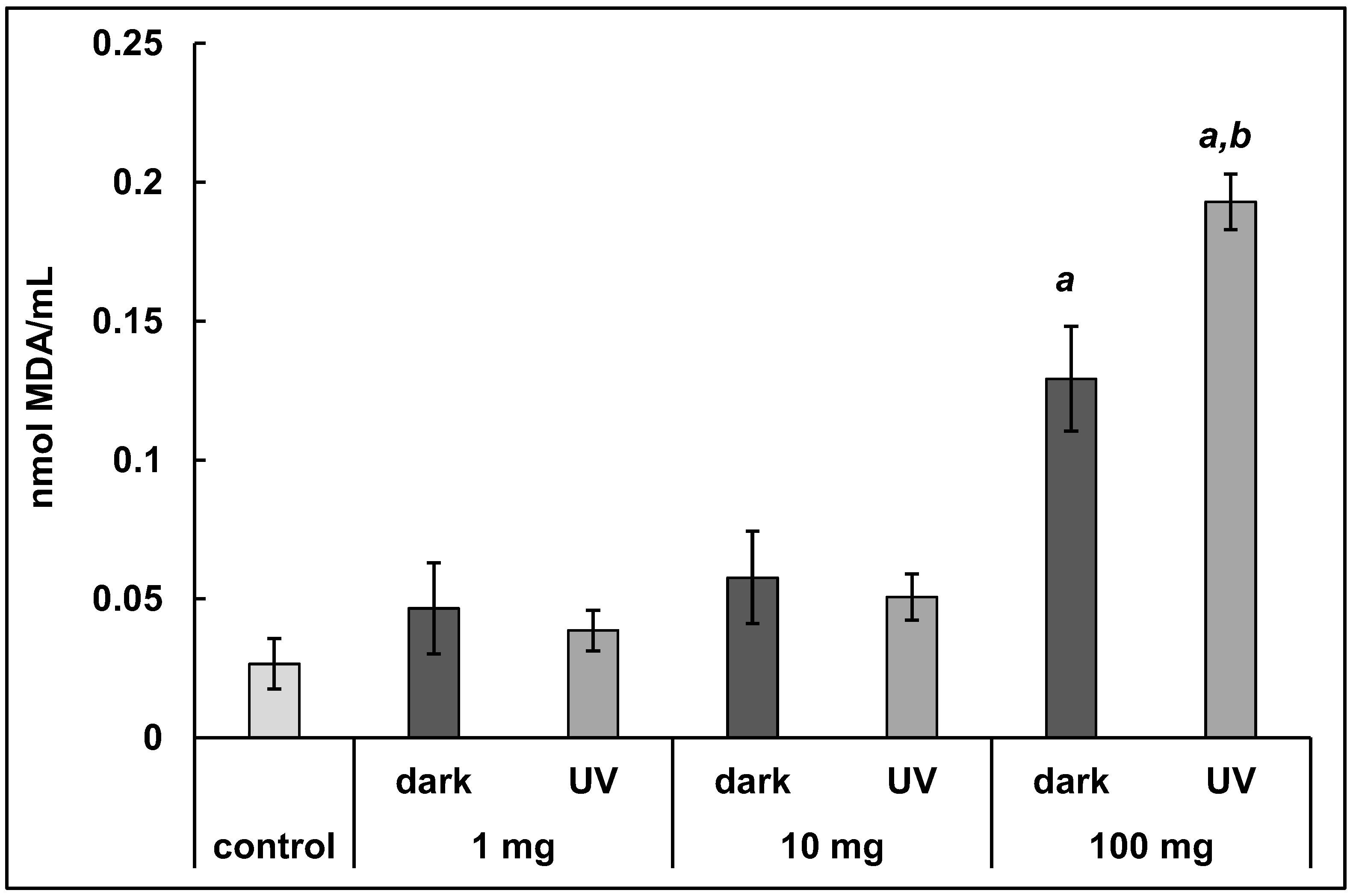
Exposure to both non-irradiated and UV-pre-irradiated TiO2 NPs at concentrations of 1 and 10 mg/L did not lead to significant changes in MDA levels (Figure 2). In contrast, exposure to a concentration of 100 mg/L resulted in a significant increase in MDA content in both experimental groups. Furthermore, the MDA level in sperm exposed to UV-TiO2 NPs was significantly higher than in sperm exposed to non-pre-irradiated NPs.

3.3. DNA Damage

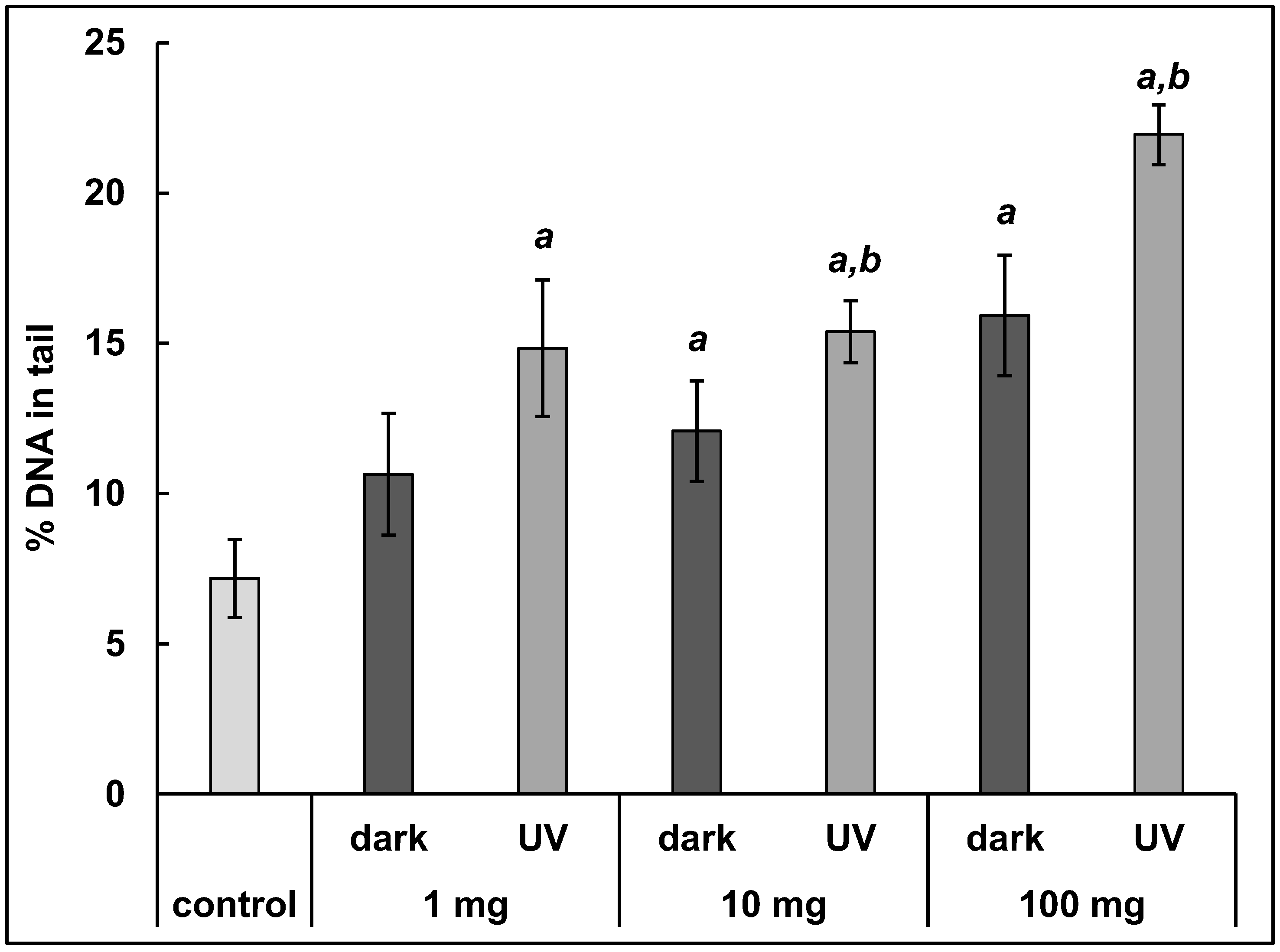
The Comet assay results revealed that exposure to both non-irradiated and UV-pre-irradiated TiO2 NPs at all investigated concentrations caused significant DNA damage in sand dollar sperm (Figure 3). All test groups, except for those exposed to 1 mg/L non-irradiated TiO2 NPs, showed statistically significant differences from the control. Furthermore, it is evident that UV-TiO2 NPs had a more pronounced genotoxic effect compared to exposure to non-irradiated TiO2 NPs. For instance, at the highest tested concentration (100 mg/L), the level of DNA damage in the UV-TiO2 NPs group increased by nearly two-fold, whereas in the group exposed to non-irradiated TiO2 NPs, the increase was approximately 1.3-fold compared to the control. Micrographs of comets formed by cells of the control and experimental groups are shown in Supplementary File Figure S1.

3.4. Fertilization Assay

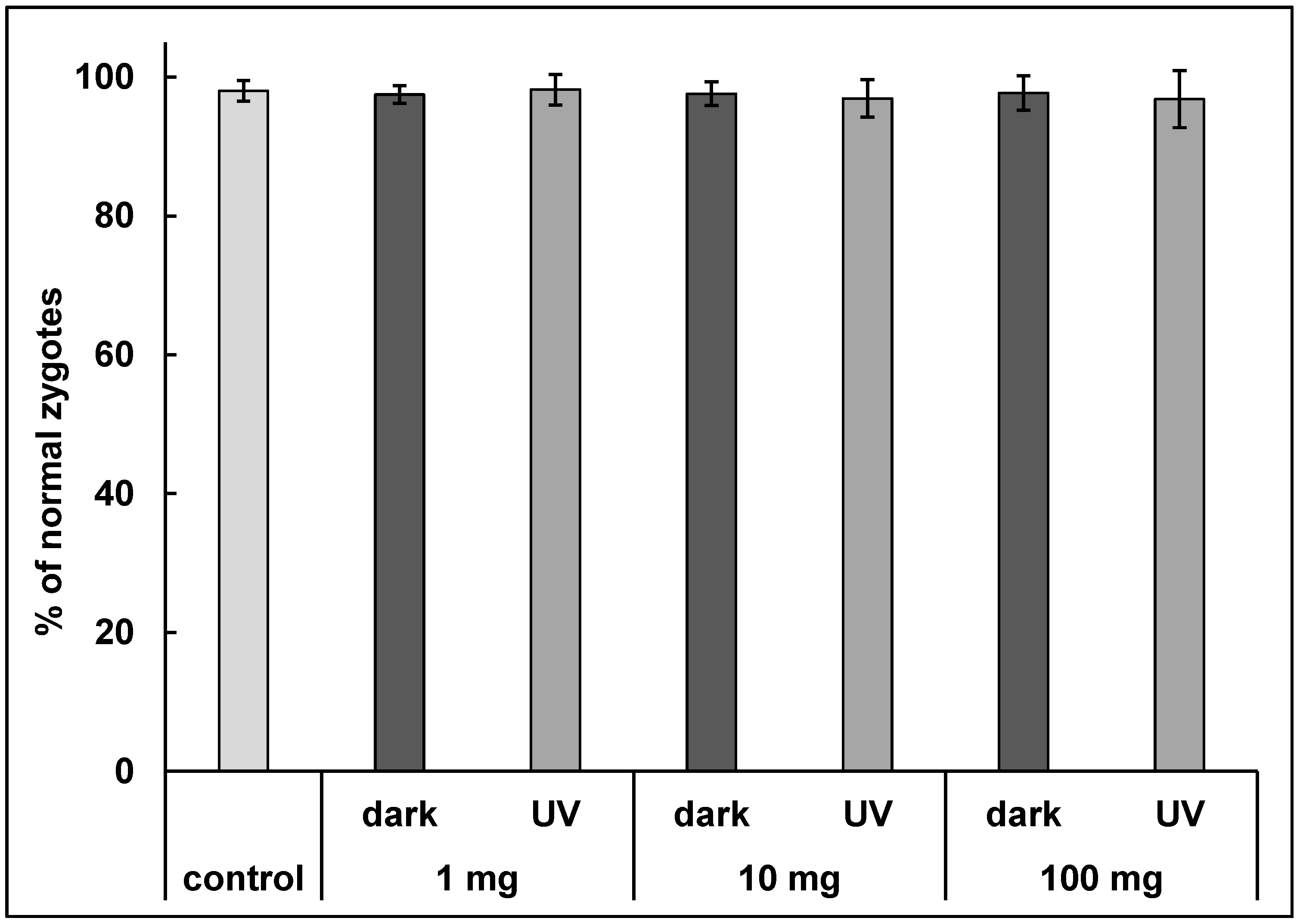
Spermiotoxicity analysis showed that the proportion of normally fertilized eggs did not significantly change across the experimental groups (Figure 4). Therefore, the nanoparticles investigated in our study did not exhibit a pronounced spermiotoxic effect. In all tested groups, the sand dollar sperm retained their fertilizing capacity.

4. Discussion

The results demonstrate that photoactivated NPs exhibit greater biological activity than their non-activated counterparts. The biochemical assay based on the reduction rate of resazurin to resorufin revealed that the overall metabolism of spermatozoa was more strongly inhibited following exposure to high concentrations of UV-pre-irradiated TiO2 NPs than after exposure to non-irradiated NPs. Furthermore, despite a low baseline level of lipid peroxidation in sperm cell membranes, high concentrations of pre-irradiated TiO2 NPs also induced lipid peroxidation processes to a greater extent than non-irradiated NPs. A similar trend was observed in the DNA damage analysis. However, a statistically significant difference between the experimental groups was detected at significantly lower concentrations of TiO2 NPs.
The results of fertilization tests showed that sperm exposed to both types of experimental NPs, despite the identified biochemical shifts and, particularly, the DNA damage, retained their ability to fertilize at a level comparable to that of the control group. The absence of an effect on fertilization efficiency against the background of significant biochemical alterations in sperm exposed to nanoparticles has been reported previously [29,34,35,36]. This may indicate that NPs-induced biochemical damage to sperm does not affect key parameters, such as motility, which are essential for successful fertilization. Conversely, some studies have reported that TiO2 nanoparticles may impair fertilization. Thus, the tropical sea urchin Lytechinus variegatus reported a slight (approximately 10%) decrease in fertilization efficiency following exposure to various TiO2 NP concentrations [37]. It was also demonstrated that exposure to a TiO2-based composite material resulted in reduced sperm motility [38]. However, it has been shown that even with a high success rate of egg fertilization, abnormal subsequent development of embryos and larvae can occur. This is due to the irreversible biochemical changes accumulated due to exposure to NPs [29,30,36,37].
The distinctive feature of our results is the experimental demonstration of the enhanced toxic effect of NPs after their UV pre-irradiation. The photocatalytic properties of metal oxide NPs, particularly TiO2, have attracted the attention of ecotoxicologists. According to some estimates, the toxic effect of photoactivated NPs compared to non-activated ones can increase significantly, varying from 20 to 1000 times [39]. Simultaneously, several researchers found no difference in the toxicity of photoactivated and non-activated TiO2 NPs [40,41]. However, a critical analysis of the available literature reveals that the specific effect of NPs photoactivation cannot be clearly delineated in some studies, as UV irradiation was applied to pre-formed suspensions containing both the NPs and biological organisms [42,43]. In this case, given the biological activity of UV radiation itself [44], the organism’s response to UV may significantly distort or mask the influence of the photoactivated NPs.
In the present study, UV-pre-irradiated the TiO2 NPs separately, immediately before adding them to the sperm suspension, which eliminated the negative direct effect of UV on the sperm. This methodological approach of using pre-illuminated TiO2 NPs allowed Kose and colleagues [45] to demonstrate the increased toxicity of UV-TiO2 NPs compared to non-irradiated NPs in a human lung cell culture. Furthermore, UV-pre-irradiated TiO2 NPs significantly enhanced cytotoxic and genotoxic effects in liver cells (HepG2) [44]. Examples from zoo- and phytoplankton organisms have also demonstrated the increased cytotoxicity of TiO2 NPs after preliminary photoactivation [46,47,48,49,50,51].
It is known that UV radiation (both UV-A and UV-B) initiates physical processes in metal oxide NPs, including TiO2, leading to the formation of electron–hole pairs, which subsequently result in the generation of ROS [51,52]. The literature provides evidence of ROS formation in the marine environment due to NPs photoactivation, which initiates the development of oxidative stress processes in various aquatic organisms [50,52,53,54,55,56]. At the same time, ROS such as OH, 1O2, and O2•− are short-lived, with lifetimes ranging from a few tens of nanoseconds to several minutes [52]. During the photoactivation of TiO2 NPs in the marine environment, H2O2 is formed on their surface, the lifetime of which can reach several days [57]. Therefore, the biochemical changes initiated in experiments with pre-photoactivated TiO2 NPs may be the result of the action of H2O2.
When considering the possible mechanisms for the enhanced toxicity of photoactivated NPs, it should be considered that UV radiation not only promotes the formation of ROS but also affects the physicochemical characteristics of TiO2 NPs. These changes lead to alterations in the surface potential and an increased rate of homo- and heteroaggregate formation [45,51,58]. There is an opinion that heteroaggregation between microalgae and NPs can lead to cell membrane damage [59]. The membrane tropism of NPs could be critical not only for planktonic organisms but also for sperm by disrupting receptor-signaling mechanisms that regulate biochemical processes. Thus, the toxic effects observed in this study may be induced through both direct (physical modification of membranes) and indirect (formation of ROS, such as H2O2) mechanisms.
Nevertheless, according to a number of authors, sperm DNA damage generally has negative consequences for reproduction as a whole [60,61,62]. At any stage of early embryonic development, the damaged portion of the genome could initiate various developmental anomalies or embryo mortality. Given the ability of UV radiation to penetrate the water column, it must be assumed that photoactivated NPs, by affecting the genome stability of germ cells, become an additional source of danger for the reproduction of marine organisms in the coastal zone.

5. Conclusions

For the first time, data on the effect of TiO2 NPs on sand dollar Scaphechinus mirabilis sperm was obtained. The results of this study expand the knowledge about the toxicity of TiO2 NPs and the influence of UV radiation on this process. Depending on the concentration, both experimental exposures led to cytochemical and biochemical changes in S. mirabilis sperm. However, exposure to UV-pre-irradiated TiO2 NPs showed a significantly greater change in the measured parameters. In particular, this was seen in DNA damage, as well as in changes in MDA levels and the results of the resazurin test at high concentrations of TiO2. The results show that further research is needed on the influence of physical factors in the aquatic environment on the toxicity of NPs.

Supplementary Materials

The following supporting information can be downloaded at: https://www.mdpi.com/article/10.3390/jmse14030275/s1. Figure S1. Micrographs of comets formed by sperm of the control and experimental groups.

Author Contributions

Conceptualization, S.P.K., V.P.C. and V.V.S.; methodology, S.P.K., V.V.S. and N.V.D.; software, S.P.K.; validation, A.A.M., V.V.S. and N.V.D.; formal analysis, S.P.K., A.A.M. and N.V.D.; investigation, S.P.K., A.A.M. and V.V.S.; resources, V.P.C.; data curation, V.P.C. and V.V.S.; writing—original draft preparation, S.P.K. and V.P.C.; writing—review and editing, S.P.K., A.A.M. and V.V.S.; visualization, S.P.K.; supervision, V.P.C.; project administration, V.P.C.; and funding acquisition, V.P.C. All authors have read and agreed to the published version of the manuscript.

Funding

This research was supported by the state assignment for research work of V.I. Il’ichev Pacific Oceanological Institute, FEB RAS (No. 124022100077-0).

Institutional Review Board Statement

All procedures in the present work, as well as the sand dollars disposal methods, were approved by the Commission on Bioethics at the V.I. Il’ichev Pacific Oceanological Institute, Far Eastern Branch of Russian Academy of Science (protocol №29 and date of approval 26 June 2024), Vladivostok, Russia.

Data Availability Statement

The original contributions presented in this study are included in the article/Supplementary Material. Further inquiries can be directed to the corresponding author.

Conflicts of Interest

The authors declare no conflicts of interest.

References

  1. Sundaram, T.; Rajendran, S.; Natarajan, S.; Vinayagam, S.; Rajamohan, R.; Lackner, M. Environmental fate and transformation of TiO2 nanoparticles: A comprehensive assessment. Alex. Eng. J. 2025, 115, 264–276. [Google Scholar] [CrossRef]
  2. Kaegi, R.; Ulrich, A.; Sinnet, B. Synthetic TiO2 nanoparticle emission from exterior facades into the aquatic environment. Environ. Pollut. 2008, 156, 233–239. [Google Scholar] [CrossRef]
  3. Gondikas, A.P.; von der Kammer, F.; Reed, R.B.; Wagner, S.; Ranville, J.F.; Hofmann, T. Release of TiO2 nanoparticles from sunscreens into surface waters: A one-year survey at the old Danube recreational Lake. Environ. Sci. Technol. 2014, 48, 5415–5422. [Google Scholar] [CrossRef]
  4. Shi, W.; Han, Y.; Guo, C.; Su, W.; Zhao, X.; Zha, S.; Wang, Y.; Liu, G. Ocean acidification increases the accumulation of titanium dioxide nanoparticles (nTiO2) in edible bivalve mollusks and poses a potential threat to seafood safety. Sci Rep. 2019, 9, 3516. [Google Scholar] [CrossRef]
  5. Casella, C.; Dondi, D.; Vadivel, D. Do microplastics (MPs) and nanoplastics (NPs) directly contribute to human carcinogenesis? Environ. Pollut. 2026, 388, 127343. [Google Scholar] [CrossRef]
  6. Loosli, F.; Wang, J.; Rothenberg, S. Sewage spills are a major source of titanium dioxide engineered (nano)-particles into the environment. Environ. Sci. Nano 2019, 6, 763–777. [Google Scholar] [CrossRef]
  7. Souza, I.C.; Mendes, V.A.S.; Duarte, I.D.; Rocha, L.D.; Azevedo, V.C.; Matsumoto, S.T.; Elliott, M.; Wunderlin, D.A.; Monferrán, M.V.; Fernandes, M.N. Nanoparticle transport and sequestration: Intracellular titanium dioxide nanoparticles in a neotropical fish. Sci. Total Environ. 2019, 658, 798–808. [Google Scholar] [CrossRef]
  8. El-Kalliny, A.S.; Abdel-Wahed, M.S.; El-Zahhar, A.A. Nanomaterials: A review of emerging contaminants with potential health or environmental impact. Discover Nano 2023, 18, 68. [Google Scholar] [CrossRef]
  9. Kumah, E.A.; Fopa, R.D.; Harati, S.; Boadu, P.; Zohoori, F.; Pak, T. Human and environmental impacts of nanoparticles: A scoping review of the current literature. BMC Public Health 2023, 23, 1059. [Google Scholar] [CrossRef]
  10. Rahman, A.; Jamil, N.; Yasir, M.; Kanwal, Q.; Kamran, M.; Aslam, A.; Mehdi, M.; Akhtar, H.; Ahmed, M. Toxicity of nanomaterials in the environment: A critical review of current understanding and future directions. J. Nanopart. Res. 2025, 27, 147. [Google Scholar] [CrossRef]
  11. Zhao, J.; Wang, X.; Hoang, S.A.; Bolan, N.S.; Kirkham, M.B.; Liu, J.; Xia, X.; Li, Y. Silver nanoparticles in aquatic sediments: Occurrence, chemical transformations, toxicity, and analytical methods. J. Hazard. Mater. 2021, 418, 126368. [Google Scholar] [CrossRef] [PubMed]
  12. Marefat, A.; Karbassi, A.; Aghabarari, B. TiO2 nanoparticles in aquatic environments: Impact on heavy metals distribution in sediments and overlying water. Acta Geochim. 2022, 41, 968–981. [Google Scholar] [CrossRef]
  13. Slomberg, D.L.; Catalano, R.; Bartolomei, V.; Labille, J. Release and fate of nanoparticulate TiO2 UV filters from sunscreen: Effects of particle coating and formulation type. Environ. Pollut. 2021, 271, 116263. [Google Scholar] [CrossRef] [PubMed]
  14. Parashar, S.; Raj, S.; Srivastava, P.; Singh, A.K. Comparative toxicity assessment of selected nanoparticles using different experimental model organisms. J. Pharmacol. Toxicol. Methods 2024, 130, 107563. [Google Scholar] [CrossRef]
  15. Yao, Y.; Zhang, T.; Tang, M. Toxicity mechanism of engineered nanomaterials: Focus on mitochondria. Environ. Pollut. 2024, 343, 123231. [Google Scholar] [CrossRef]
  16. Rengifo-Herrera, J.A.; Pulgarin, C. Why five decades of massive research on heterogeneous photocatalysis, especially on TiO2, has not yet driven to water disinfection and detoxification applications? Critical review of drawbacks and challenges. Chem. Eng. J. 2023, 477, 146875. [Google Scholar] [CrossRef]
  17. Behnajady, M.A.; Modirshahla, N.; Shokri, M.; Elham, H.; Zeininezhad, A. The effect of particle size and crystal structure of titanium dioxide nanoparticles on the photocatalytic properties. J. Environ. Sci. Health A 2008, 43, 460–467. [Google Scholar] [CrossRef]
  18. Fu, L.; Hamzeh, M.; Dodard, S.; Zhao, Y.; Sunahara, G. Effects of TiO2 nanoparticles on ROS production and growth inhibition using freshwater green algae pre-exposed to UV irradiation. Environ. Toxicol. Pharmacol. 2015, 39, 1074–1080. [Google Scholar] [CrossRef]
  19. Cupi, D.; Hartmann, N.B.; Baun, A. Influence of pH and media composition on suspension stability of silver, zinc oxide, and titanium dioxide nanoparticles and immobilization of Daphnia magna under guideline testing conditions. Ecotoxicol. Environ. Saf. 2016, 127, 144–152. [Google Scholar] [CrossRef]
  20. Moezzi, S.A.; Khoei, A.J. Interaction of water salinity and titanium dioxide nanoparticle (TiO2) exposure in the Pacific oyster, Crassostrea gigas: Immune and antioxidant system responses. Toxin Rev. 2024, 43, 358–369. [Google Scholar] [CrossRef]
  21. Nthunya, L.N.; Mosai, A.K.; López-Maldonado, E.A.; Bopape, M.; Dhibar, S.; Nuapia, Y.; Ajiboye, T.O.; Buledi, J.A.; Solangi, A.R.; Sherazi, S.T.H.; et al. Unseen threats in aquatic and terrestrial ecosystems: Nanoparticle persistence, transport and toxicity in natural environments. Chemosphere 2025, 382, 144470. [Google Scholar] [CrossRef] [PubMed]
  22. Hou, J.; Wang, L.; Wang, C.; Zhang, S.; Liu, H.; Li, S.; Wang, X. Toxicity and mechanisms of action of titanium dioxide nanoparticles in living organisms. J. Environ. Sci. 2019, 75, 40–53. [Google Scholar] [CrossRef] [PubMed]
  23. Brunet, L.; Lyon, D.Y.; Hotze, E.M.; Alvarez, P.J.J.; Mark, R. Wiesner Comparative Photoactivity and Antibacterial Properties of C60 Fullerenes and Titanium Dioxide Nanoparticles. Environ. Sci. Technol. 2009, 43, 4355–4360. [Google Scholar] [CrossRef] [PubMed]
  24. Haynes, V.N.; Ward, J.E. The interactive effects of titanium dioxide nanoparticles and light on heterotrophic bacteria and microalgae associated with marine aggregates in nearshore waters. Mar. Environ. Res. 2020, 161, 105146. [Google Scholar] [CrossRef]
  25. Gambardella, C.; Marcellini, F.; Falugi, C.; Varrella, S.; Corinaldesi, C. Early-stage anomalies in the sea urchin (Paracentrotus lividus) as bioindicators of multiple stressors in the marine environment: Overview and future perspectives. Environ. Pollut. 2021, 287, 117608. [Google Scholar] [CrossRef]
  26. Burić, P.; Kovačić, I.; Ilić, K.; Šižgorić Winter, D.; Buršić, M. A decade of toxicity research on sea urchins: A review. Toxicon 2025, 264, 108420. [Google Scholar] [CrossRef]
  27. Kobayashi, N. Marine pollution bioassay by sea urcin eggs, an attempt to enhance accuracy. Publ. Seto Mar. Biol. Lab. 1985, 30, 213–226. [Google Scholar] [CrossRef]
  28. Biological Test Method: Fertilization Assay Using Echinoids (Sea Urchins and Sand Dollars); EPS 1/RM/27; Environment Canada: Ottawa, ON, Canada, 2011; Available online: https://publications.gc.ca/collections/collection_2011/ec/En49-7-1-27-eng.pdf (accessed on 22 August 2025).
  29. Pikula, K.; Zakharenko, A.; Chaika, V.; Em, I.; Nikitina, A.; Avtomonov, E.; Tregubenko, A.; Agoshkov, A.; Mishakov, I.; Kuznetsov, V.; et al. Toxicity of carbon, silicon, and metal-based nanoparticles to sea urchin Strongylocentrotus intermedius. Nanomaterials 2020, 10, 1825. [Google Scholar] [CrossRef]
  30. Kukla, S.; Slobodskova, V.; Mazur, A.; Chelomin, V.; Kamenev, Y. Genotoxic Testing of Titanium Dioxide Nanoparticles in Far Eastern Mussels, Mytilus trossulus. Pollution 2021, 7, 129–140. [Google Scholar] [CrossRef]
  31. Czekanska, E.M. Assessment of cell proliferation with resazurin-based fluorescent dye. Methods Mol. Biol. 2011, 740, 27–32. [Google Scholar] [CrossRef]
  32. Buege, J.A.; Aust, S.D. [30]Microsomal lipid peroxidation. Methods Enzymol. 1978, 52, 302–310. [Google Scholar] [CrossRef]
  33. Mitchelmore, C.L.; Birmelin, C.; Livingstone, D.R.; Chipman, J.K. Detection of DNA strand breaks in isolated mussels (Mytilus edulis) digestive gland cells using the “Comet” assay. Ecotoxicol. Environ. Saf. 1998, 41, 51–58. [Google Scholar] [CrossRef] [PubMed]
  34. Manzo, S.; Schiavo, S.; Oliviero, M.; Toscano, A.; Ciaravolo, M.; Cirino, P. Immune and reproductive system impairment in adult sea urchin exposed to nanosized ZnO via food. Sci. Total Environ. 2017, 599–600, 9–13. [Google Scholar] [CrossRef] [PubMed]
  35. Kukla, S.P.; Slobodskova, V.V.; Zhuravel, E.V.; Mazur, A.A.; Chelomin, V.P. Exposure of adult sand dollars (Scaphechinus mirabilis) (Agassiz, 1864) to copper oxide nanoparticles induces gamete DNA damage. Environ. Scien. Pollut. Res. 2022, 29, 39451–39460. [Google Scholar] [CrossRef] [PubMed]
  36. Dose, A.; Kennington, W.J.; Evans, J.P. Effects of rutile titanium dioxide nanoparticles (nTiO2) on reproduction in the broadcast-spawning sea urchin Heliocidaris erythrogramma armigera. Mar. Ecol. Prog. Ser. 2025, 758, 89–102. [Google Scholar] [CrossRef]
  37. Palmeira-Pinto, L.; Emerenciano, A.K.; Bergami, E.; Joviano, W.R.; Rosa, A.R.; Neves, C.L.; Corsi, I.; Marques-Santos, L.F.; Silva, J.R.M.C. Alterations induced by titanium dioxide nanoparticles (nano-TiO2) in fertilization and embryonic and larval development of the tropical sea urchin Lytechinus variegatus. Mar. Environ. Res. 2023, 188, 106016. [Google Scholar] [CrossRef]
  38. Ignoto, S.; Pecoraro, R.; Scalisi, E.M.; Contino, M.; Ferruggia, G.; Indelicato, S.; Brundo, M.V. Spermiotoxicity of nano-TiO2 compounds in the sea urchin Paracentrotus lividus (Lamarck, 1816): Considerations on water remediation. J. Mar. Sci. Eng. 2023, 11, 380. [Google Scholar] [CrossRef]
  39. Jovanovic, B. Review of titanium dioxide nanoparticle phototoxicity: Developing a phototoxicity ratio to correct the endpoint values of toxicity tests. Environ. Toxicol. Chem. 2015, 34, 1070–1077. [Google Scholar] [CrossRef]
  40. Kim, S.W.; An, Y.J. Effect of ZnO and TiO2 nanoparticles preilluminated with UVA and UVB light on Escherichia coli and Bacillus subtilis. Appl. Microbiol. Biotechnol. 2012, 95, 243–253. [Google Scholar] [CrossRef]
  41. Bhuvaneshwari, M.; Sagar, B.; Doshi, S.; Chandrasekaran, N.; Mukherjee, A. Comparative study on toxicity of ZnO and TiO2 nanoparticles on Artemia salina: Effect of pre-UV-A and visible light irradiation. Environ. Sci. Pollut. Res. Int. 2017, 24, 5633–5646. [Google Scholar] [CrossRef]
  42. Machanlou, M.; Ziaei-Nejad, S.; Johari, S.A.; Banaee, M. Study on the hematological toxicity of Cyprinus carpio exposed to water-soluble fraction of crude oil and TiO2 nanoparticles in the dark and ultraviolet. Chemosphere 2023, 343, 140272. [Google Scholar] [CrossRef]
  43. Diniz, R.R.; Paiva, J.P.; Aquino, R.M.; Gonçalves, T.C.W.; Leitão, A.C.; Santos, B.A.M.C.; Pinto, A.V.; Leandro, K.C.; de Pádula, M. Saccharomyces cerevisiae strains as bioindicators for titanium dioxide sunscreen photoprotective and photomutagenic assessment. J. Photochem. Photobiol. B 2019, 198, 111584. [Google Scholar] [CrossRef]
  44. Petković, J.; Küzma, T.; Rade, K.; Novak, S.; Filipič, M. Pre-irradiation of anatase TiO2 particles with UV enhances their cytotoxic and genotoxic potential in human hepatoma HepG2 cells. J. Hazard. Mater. 2011, 196, 145–152. [Google Scholar] [CrossRef]
  45. Kose, O.; Tomatis, M.; Turci, F.; Belblidia, N.B.; Hochepied, J.F.; Pourchez, J.; Forest, V. Forest Short Preirradiation of TiO2 Nanoparticles Increases Cytotoxicity on Human Lung Coculture System. Chem. Res. Toxicol. 2021, 34, 733–742. [Google Scholar] [CrossRef] [PubMed]
  46. Hund-Rinke, K.; Simon, M. Ecotoxic Effect of Photocatalytic Active Nanoparticles (TiO2) on Algae and Daphnids. Environ. Sci. Poll. Res. Int. 2006, 13, 225–232. [Google Scholar] [CrossRef] [PubMed]
  47. Marcone, G.P.; Oliveira, A.C.; Almeida, G.; Umbuzeiro, G.A.; Jardim, W.F. Ecotoxicity of TiO2 to Daphnia similis under irradiation. J. Hazard. Mater. 2012, 211–212, 436–442. [Google Scholar] [CrossRef] [PubMed]
  48. Li, S.; Pan, X.; Wallis, L.K.; Fan, Z.; Chen, Z.; Diamond, S.A. Comparison of TiO2 nanoparticle and graphene–TiO2 nanoparticle composite phototoxicity to Daphnia magna and Oryzias latipes. Chemosphere 2014, 112, 62–69. [Google Scholar] [CrossRef]
  49. Roy, B.; Chandrasekaran, H.; Palamadai Krishnan, S.; Chandrasekaran, N.; Mukherjee, A. UVA pre-irradiation to P25 titanium dioxide nanoparticles enhanced its toxicity towards freshwater algae Scenedesmus obliquus. Environ. Sci. Pollut. Res. 2018, 25, 16729–16742. [Google Scholar] [CrossRef]
  50. Roy, B.; Suresh, P.K.; Chandrasekaran, N.; Mukherjee, A. UVB pre-irradiation of titanium dioxide nanoparticles is more detrimental to freshwater algae than UVA pre-irradiation. J. Environ. Chem. Eng. 2020, 8, 104076. [Google Scholar] [CrossRef]
  51. Rex, C.; Mukherjee, A. The Comparative Effects of Visible Light and UV-A Radiation on the Combined Toxicity of P25 TiO2 Nanoparticles and Polystyrene Microplastics on Chlorella sp. Environ. Sci. Pollut. Res. Int. 2023, 30, 122700–122716. [Google Scholar] [CrossRef]
  52. Yamada, Y.; Kanemitsu, Y. Determination of electron and hole lifetimes of rutile and anatase TiO2 single crystals. Appl. Phys. Lett. 2012, 101, 133907. [Google Scholar] [CrossRef]
  53. Li, F.; Liang, Z.; Zheng, X.; Zhao, W.; Wu, M.; Wang, Z. Toxicity of nano-TiO2 on algae and the site of reactive oxygen species production. Aquat. Toxicol. 2015, 158, 1–13. [Google Scholar] [CrossRef]
  54. Tang, T.; Zhang, Z.; Zhu, X. Toxic Effects of TiO2 NPs on Zebrafish. Int. J. Environ. Res. Public Health 2019, 16, 523. [Google Scholar] [CrossRef]
  55. Smii, H.; Khazri, A.; Ben Ali, M.; Mezni, A.; Hedfi, A.; Albogami, B.; Almalki, M.; Pacioglu, O.; Beyrem, H.; Boufahja, F. Titanium Dioxide Nanoparticles Are Toxic for the Freshwater Mussel Unio ravoisieri: Evidence from a Multimarker Approach. Diversity 2021, 13, 679. [Google Scholar] [CrossRef]
  56. Baltar, B.J.; Vieira, J.T.; Meire, R.O.; Suguihiro, N.M.; Rodrigues, S.P. The currently knowledge on toxicity of TiO2 nanoparticles in microalgae: A systematic review. Aquat. Toxicol. 2025, 287, 107530. [Google Scholar] [CrossRef] [PubMed]
  57. Ellison, R.S.; Huling, S.G. TiO2 nanoparticle photoactivation and oxidation reactions in freshwater and marine systems: The role of radical scavengers. Chemosphere 2024, 361, 142549. [Google Scholar] [CrossRef] [PubMed]
  58. Sun, J.; Guo, L.H.; Zhang, H.; Zhao, L. UV irradiation induced transformation of TiO2 nanoparticles in water: Aggregation and photoreactivity. Environ. Sci. Technol. 2014, 48, 11962–11968. [Google Scholar] [CrossRef]
  59. Liu, Z.; Ghoshal, S.; Moores, A.; George, S. Mechanistic study of the increased phototoxicity of titanium dioxide nanoparticles to Chlorella vulgaris in the presence of NOM eco-corona. Ecotoxicol. Environ. Saf. 2023, 262, 115164. [Google Scholar] [CrossRef]
  60. Devaux, A.; Bony, S.; Plenet, S.; Sagnes, P.; Segura, S.; Suaire, R.; Novak, M.; Gilles, A.; Olivier, J.M. Field evidence of reproduction impairment through sperm DNA damage in the fish nase (Chondrostoma nasus) in anthropized hydrosystems. Aquat. Toxicol. 2015, 169, 113–122. [Google Scholar] [CrossRef]
  61. Gambardella, C.; Morgana, S.; Bari, G.D.; Ramoino, P.; Bramini, M.; Diaspro, A.; Falugi, C.; Faimali, M. Multidisciplinary screening of toxicity induced by silica nanoparticles during sea urchin development. Chemosphere 2015, 139, 486–495. [Google Scholar] [CrossRef]
  62. Reinardy, H.C.; Bodnar, A.G. Profiling DNA damage and repair capacity in sea urchin larvae and coelomocytes exposed to genotoxicants. Mutagenesis 2015, 30, 829–839. [Google Scholar] [CrossRef]
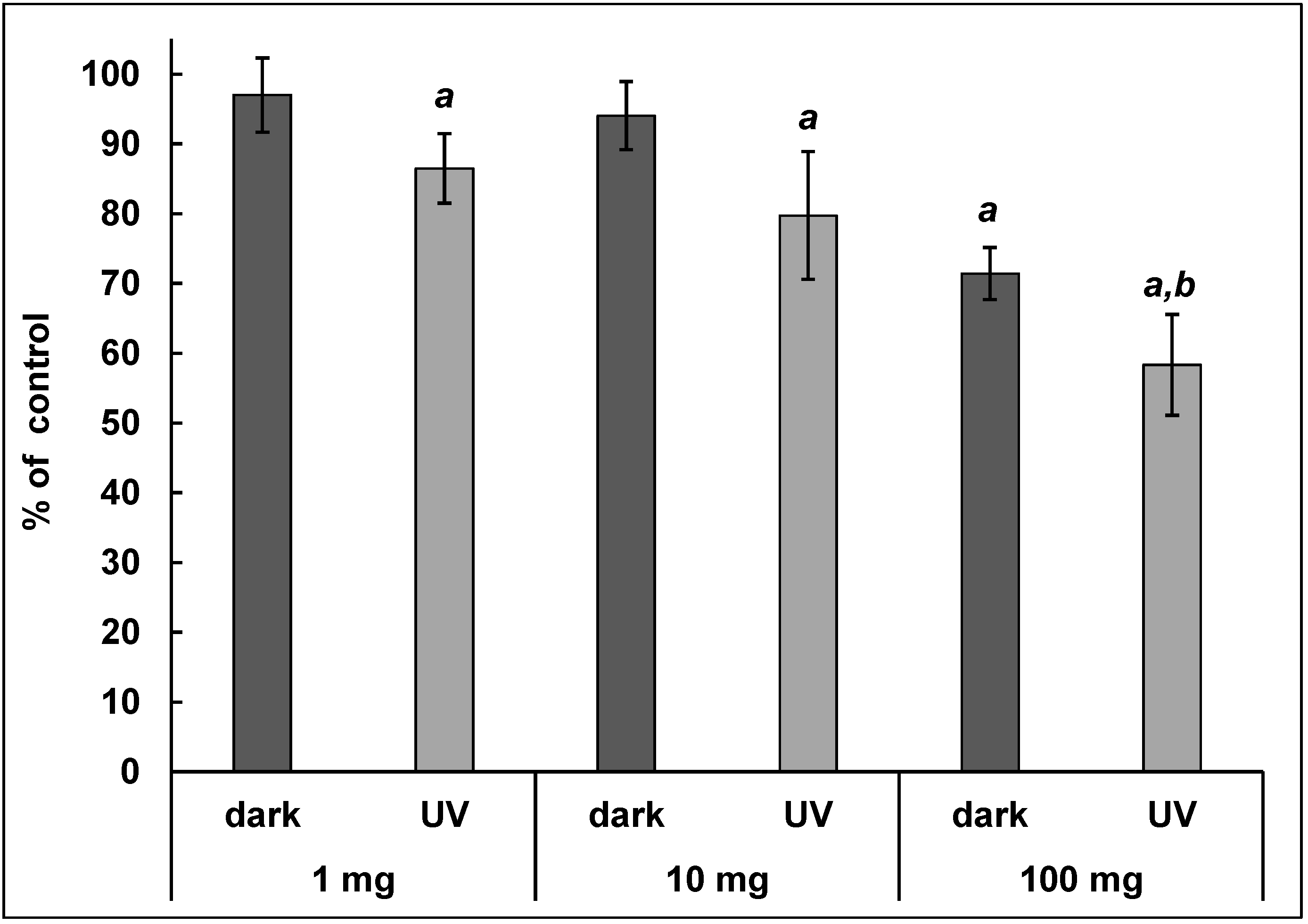
Figure 1. Effect of exposure to various concentrations of TiO2 NPs (dark) and UV-TiO2 NPs (UV) on the reduction in resazurin to resorufin in S. mirabilis sperm. Data are presented as mean ± standard deviation (n = 12); a—difference from control, b—difference between non-irradiated and UV-pre-irradiated TiO2 NPs (p < 0.05).
Jmse 14 00275 g001
Figure 2. MDA levels in S. mirabilis sperm after exposure to various concentrations of TiO2 NPs (dark) and UV-TiO2 NPs (UV). Data are presented as mean ± standard deviation (n = 12); a—difference from control, b—difference between non-irradiated and UV-pre-irradiated TiO2 NPs (p < 0.05).
Jmse 14 00275 g002
Figure 3. DNA damage in S. mirabilis sperm after exposure to various concentrations of TiO2 NPs (dark) and UV-TiO2 NPs (UV). Data are presented as mean ± standard deviation (n = 12); a—difference from control, b—difference between non-irradiated and UV-pre-irradiated TiO2 NPs (p < 0.05).
Jmse 14 00275 g003
Figure 4. Fertilization rate of S. mirabilis eggs by sperm exposed to various concentrations of TiO2 NPs (dark) and UV-TiO2 NPs (UV). Data are presented as mean ± standard deviation (n = 12).
Jmse 14 00275 g004
Disclaimer/Publisher’s Note: The statements, opinions and data contained in all publications are solely those of the individual author(s) and contributor(s) and not of MDPI and/or the editor(s). MDPI and/or the editor(s) disclaim responsibility for any injury to people or property resulting from any ideas, methods, instructions or products referred to in the content.