Development and Field Testing of a Cavitation-Based Robotic Platform for Sustainable In-Water Hull Cleaning

 , ,
, ,  ,
,
Abstract
1. Introduction
2. System Overview
2.1. Closed-Loop Hull Cleaning System
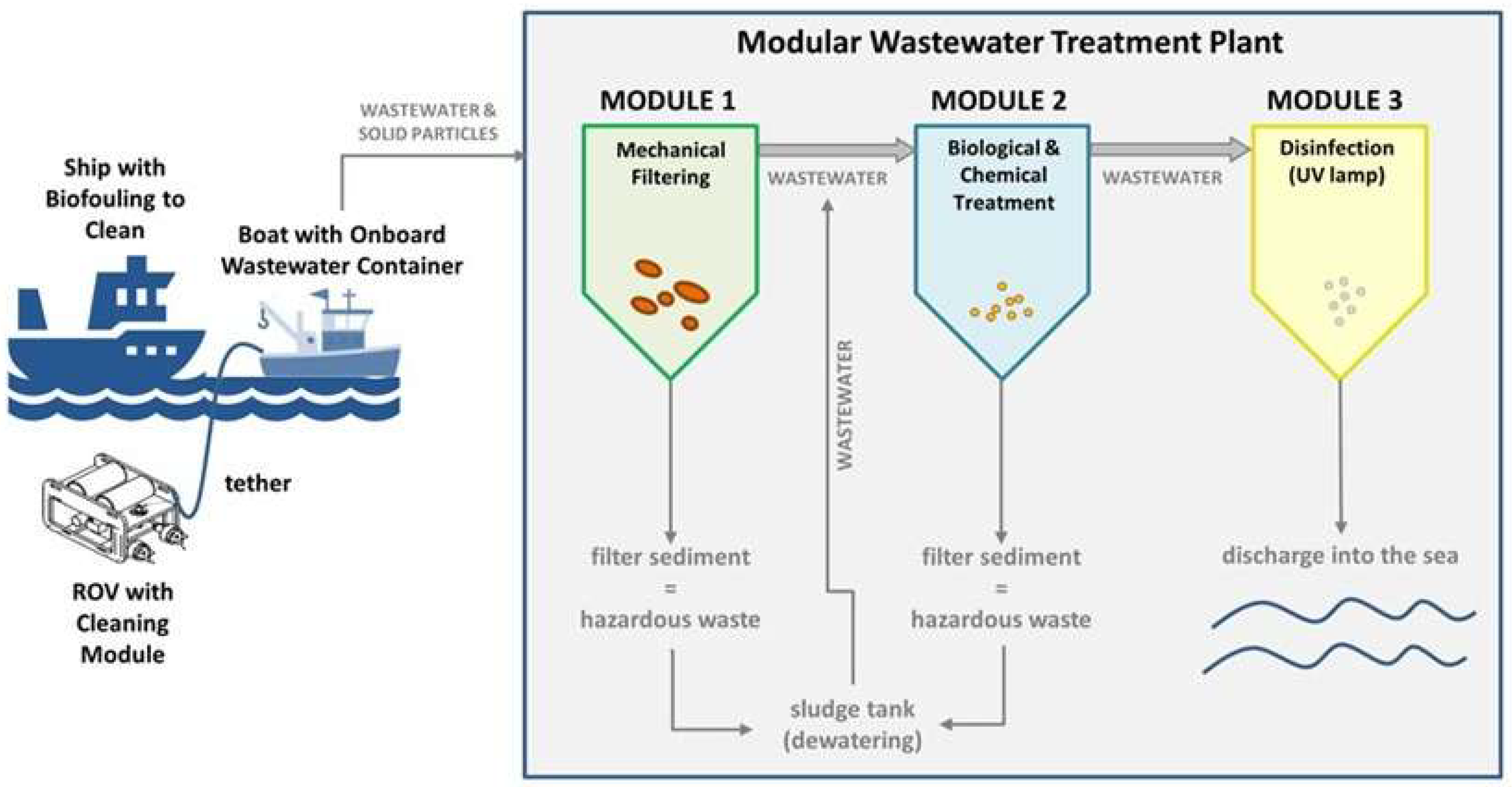
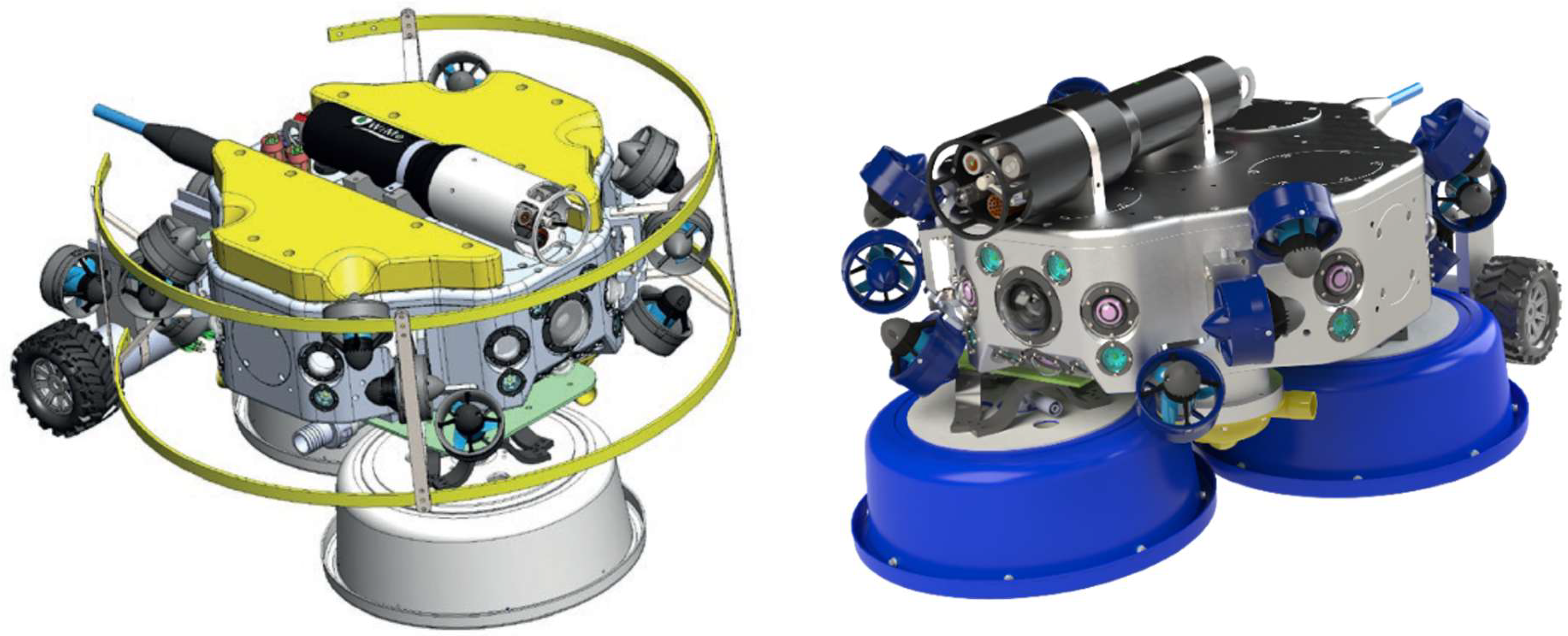
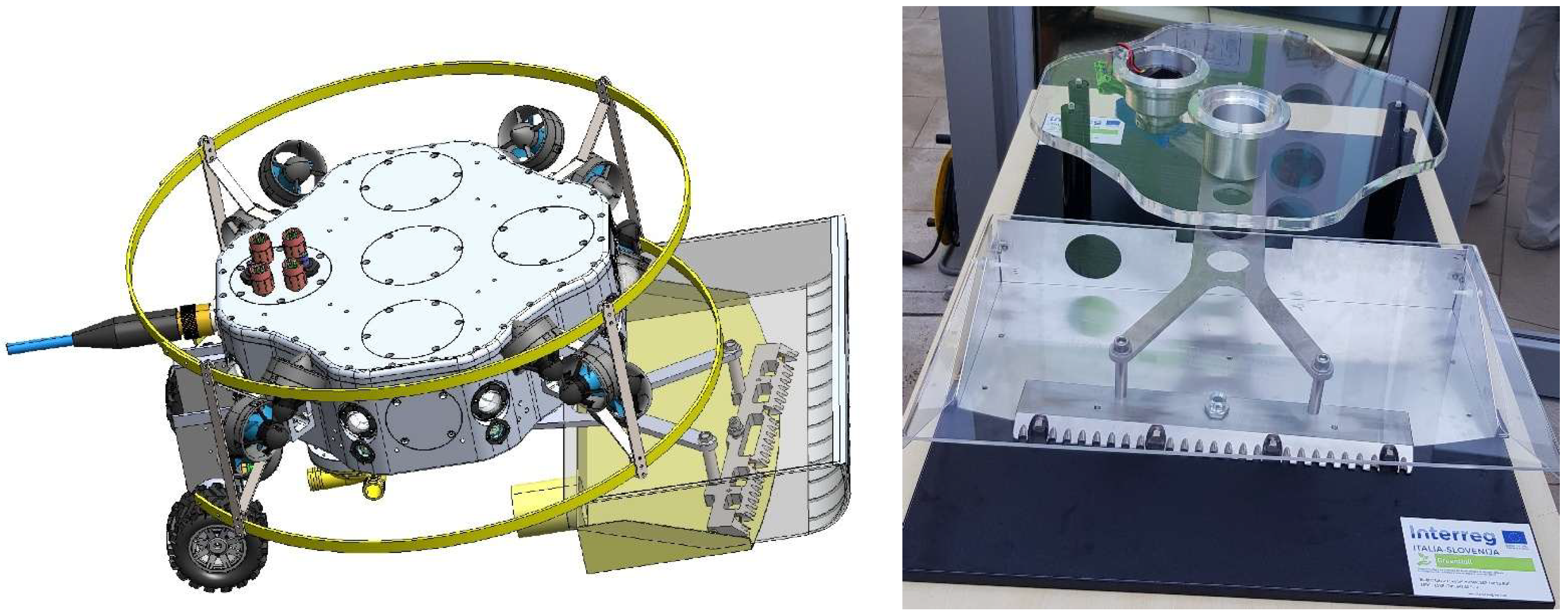
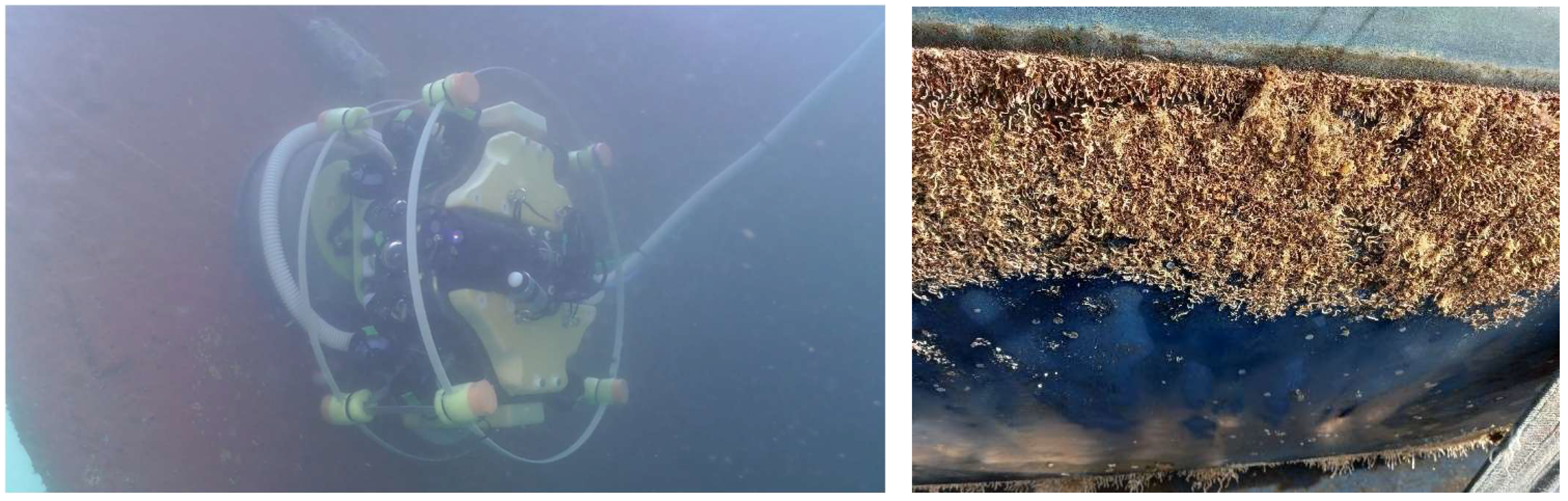
- An ROV equipped with a cavitation-based cleaning module. The core of this system is a series of rotating jet nozzles powered by a high-pressure water pump, installed either on a vessel or onshore. These jet nozzles rotate within a bowl-shaped container mounted on the ROV, which leans against the vessel’s hull. The nozzles are designed to cause a sudden change in water pressure, resulting in the formation and collapse of vapor-filled bubbles in the surrounding seawater. This phenomenon, called cavitation, is the primary mechanism for removing biofouling in the described system.
- A high-voltage, neutrally buoyant tether operating at 800 V, combined with fiber optic communication and an additional high-pressure hose, all mounted on a spool with a slip-ring.
- A flexible suction and transport hose used for conveying wastewater and fouling material.
- A container-based modular wastewater treatment plant located on a nearby shore or vessel, large enough to hold a small container and supply electric power for the entire cleaning system.
- Module 1—Mechanical filtering: Removes large particles and suspended solids; the collected sediment is classified as hazardous waste and directed to a sludge tank for dewatering and disposal.
- Module 2—Biological and chemical treatment: Treats residual organic and chemical contaminants through combined biological and chemical processes.
- Module 3—Disinfection (UV lamp): Final treatment step that inactivates microorganisms, ensuring that purified seawater meets environmental safety standards before being discharged back into the sea.
2.2. Robotic Platform Design
2.2.1. Alignment of System Design with Regulatory Requirements
2.2.2. ROV System Description
2.2.3. Cleaning Module for Underwater Ship Biofouling Removal
2.2.4. Cleaning Module for Submerged Structures
2.3. Sensor Integration for Environmental Monitoring
3. Experimental Setup and Field Tests
4. Results and Discussion
4.1. Results from WiMo Probe Measurements
4.2. Context of Chemical and Biological Analyses
4.3. Implications for Hull Cleaning Practice
5. Conclusions
Author Contributions
Funding
Data Availability Statement
Acknowledgments
Conflicts of Interest
Abbreviations
| ROV | Remotely operated vehicle |
| Chl-a | Chlorophyll-a |
| NIS | Non-indigenous species |
| IMO | International Maritime Organization |
| CTD | Conductivity/salinity/temperature |
| CDOM | Colored dissolved organic matter |
| DO | Dissolved oxygen |
| PAR | Photosynthetically active radiation |
| UV | Ultraviolet |
| NIR | Near infrared |
| NA | Not available |
| STD | Standard deviation |
| LCA | Life cycle assessment |
| PNEC | Predicted No-Effect Concentration |
| ISO | International Organization for Standardization |
| TRL | Technology readiness level |
| AI | Artificial intelligence |
| IMU | Inertial measurement units |
| BLM | Biotic Ligand Model |
References
- Kim, D.-H.; Alayande, A.B.; Lee, J.-M.; Jang, J.-H.; Jo, S.-M.; Jae, M.-R.; Yang, E.; Chae, K.-J. Emerging Marine Environmental Pollution and Ecosystem Disturbance in Ship Hull Cleaning for Biofouling Removal. Sci. Total Environ. 2024, 906, 167459. [Google Scholar] [CrossRef]
- Bakka, H.; Rognebakke, H.; Glad, I.; Haff, I.H.; Vanem, E. Estimating the Effect of Biofouling on Ship Shaft Power Based on Sensor Measurements. Ship Technol. Res. 2023, 70, 209–221. [Google Scholar] [CrossRef]
- Zou, Y.; Zhou, X.; Chen, L.; Xi, X. Impacts of Different Characteristics of Marine Biofouling on Ship Resistance. Ocean. Eng. 2023, 278, 114415. [Google Scholar] [CrossRef]
- Chan, F.T.; Ogilvie, D.; Sylvester, F.; Bailey, S.A. Ship Biofouling as a Vector for Non-Indigenous Aquatic Species to Canadian Arctic Coastal Ecosystems: A Survey and Modeling-Based Assessment. Front. Mar. Sci. 2022, 9, 808055. [Google Scholar] [CrossRef]
- Shevalkar, M.; Mishra, A.; Meenambiga, S.S. A Review on Invasive Species in Marine Biofouling. Res. J. Pharm. Technol. 2020, 13, 4517–4521. [Google Scholar] [CrossRef]
- Pica, D.; Bloecher, N.; Dell’Anno, A.; Bellucci, A.; Pinto, T.; Pola, L.; Puce, S. Dynamics of a Biofouling Community in Finfish Aquaculture: A Case Study from the South Adriatic Sea. Biofouling 2019, 35, 696–709. [Google Scholar] [CrossRef] [PubMed]
- Fortič, A.; Mavrič, B.; Pitacco, V.; Lipej, L. Temporal Changes of a Fouling Community: Colonization Patterns of the Benthic Epifauna in the Shallow Northern Adriatic Sea. Reg. Stud. Mar. Sci. 2021, 45, 101818. [Google Scholar] [CrossRef]
- Luoma, E.; Laurila-Pant, M.; Altarriba, E.; Nevalainen, L.; Helle, I.; Granhag, L.; Lehtiniemi, M.; Srėbalienė, G.; Olenin, S.; Lehikoinen, A. A Multi-Criteria Decision Analysis Model for Ship Biofouling Management in the Baltic Sea. Sci. Total Environ. 2022, 852, 158316. [Google Scholar] [CrossRef] [PubMed]
- Lagerström, M.; Ytreberg, E.; Wiklund, A.-K.E.; Granhag, L. Antifouling Paints Leach Copper in Excess—Study of Metal Release Rates and Efficacy along a Salinity Gradient. Water Res. 2020, 186, 116383. [Google Scholar] [CrossRef] [PubMed]
- Thomas, K.V.; Brooks, S. The Environmental Fate and Effects of Antifouling Paint Biocides. Biofouling 2010, 26, 73–88. [Google Scholar] [CrossRef]
- Lim, Y.K.; Kim, M.; Shin, K.; Kim, T.; Lee, C.H.; Yoon, J.N.; Baek, S.H. Assessing the Potential Regrowth Ability of Microalgae Using Hull Cleaning Wastewater from International Commercial Ships. J. Mar. Sci. Eng. 2023, 11, 1414. [Google Scholar] [CrossRef]
- Oliveira, D.R.; Granhag, L. Ship Hull In-Water Cleaning and Its Effects on Fouling-Control Coatings. Biofouling 2020, 36, 332–350. [Google Scholar] [CrossRef]
- Lee, B.; Lee, C.H.; Jang, M.-C.; Kim, M.; Shin, K.; Kang, J.H.; Kim, Y.; Sudusinghe, K.D.; Baek, S.H. Effects of Hull Cleaning Wastewater on Coastal Plankton Community: A Mesocosm Experiment. J. Hazard. Mater. 2025, 496, 139458. [Google Scholar] [CrossRef]
- Tamburri, M.N.; Davidson, I.C.; First, M.R.; Scianni, C.; Newcomer, K.; Inglis, G.J.; Georgiades, E.T.; Barnes, J.M.; Ruiz, G.M. In-Water Cleaning and Capture to Remove Ship Biofouling: An Initial Evaluation of Efficacy and Environmental Safety. Front. Mar. Sci. 2020, 7, 437. [Google Scholar] [CrossRef]
- Cho, Y.; Kim, S.-J.; Kim, M.-S.; Yang, J.; Choi, J. Development of Capture Efficacy Test Method for In-Water Cleaning System Using Artificial Barnacles. Front. Mar. Sci. 2024, 11, 1404472. [Google Scholar] [CrossRef]
- Silva, E.R.; Ferreira, O.; Ramalho, P.A.; Azevedo, N.F.; Bayón, R.; Igartua, A.; Bordado, J.C.; Calhorda, M.J. Eco-Friendly Non-Biocide-Release Coatings for Marine Biofouling Prevention. Sci. Total Environ. 2019, 650, 2499–2511. [Google Scholar] [CrossRef] [PubMed]
- Vourna, P.; Falara, P.P.; Papadopoulos, N.D. The Investigation of a Biocide-Free Antifouling Coating on Naval Steels Under Both Simulated and Actual Seawater Conditions. Processes 2025, 13, 2448. [Google Scholar] [CrossRef]
- Wu, D.; Hua, J.; Chuang, S.-Y.; Li, J. Preventative Biofouling Monitoring Technique for Sustainable Shipping. Sustainability 2023, 15, 6260. [Google Scholar] [CrossRef]
- Odfjell Becomes Pilot Partner in Promising ROV Technology for Improved Hull Cleaning. Available online: https://www.odfjell.com/about/our-stories/supporting-bergens-maritime-cluster/ (accessed on 20 November 2025).
- In-Water Hull Cleaning Under the Spotlight at PortPIC. Available online: https://www.jotun.com/ww-en/industries/news-and-stories/jotun-insider/in-water-hull-cleaning-under-the-spotlight-at-portpic (accessed on 20 November 2025).
- IMO. 2023 Guidelines for the Control and Management of Ships’ Biofouling to Minimize the Transfer of Invasive Aquatic Species; Guidelines; International Maritime Organization (IMO): London, UK, 2024; ISBN 978-92-801-1778-3. [Google Scholar] [CrossRef]
- ISO 20679:2025; Testing of Ship Biofouling In-Water Cleaning Systems. ISO (International Organization for Standards): Geneva, Switzerland, 2025.
- ISO/PRF 6319; Conducting and Documenting In-Water Cleaning of Biofouling on Ships. ISO (International Organization for Standards): Geneva, Switzerland, 2026.
- Song, C.; Cui, W. Review of Underwater Ship Hull Cleaning Technologies. J. Mar. Sci. Appl. 2020, 19, 415–429. [Google Scholar] [CrossRef]
- Zhu, H.; Pan, S.; Zhang, X.; Zhu, R.; Xie, Z. Cavitation-Induced Cleaning Characteristics of Barnacle Fouling on Hull Surfaces Using High-Speed Water Jets. Ocean Eng. 2025, 340, 122466. [Google Scholar] [CrossRef]
- Ge, M.; Sun, C.; Zhang, G.; Coutier-Delgosha, O.; Fan, D. Combined Suppression Effects on Hydrodynamic Cavitation Performance in Venturi-Type Reactor for Process Intensification. Ultrason. Sonochem. 2022, 86, 106035. [Google Scholar] [CrossRef]
- Queiroz, R.S.; de Souza, D.M.; das Neves, E.C.; Filho, I.J.Q.; da Silva, L.C.; Coelho, R.S.; Lepikson, H.A. An Experimental Study on Determining the Best Operating Condition of an Automated Underwater Biofouling Cleaning Tool. Appl. Ocean Res. 2024, 144, 103882. [Google Scholar] [CrossRef]
- Malačič, V.; Celio, M.; Čermelj, B.; Bussani, A.; Comici, C. Interannual Evolution of Seasonal Thermohaline Properties in the Gulf of Trieste (Northern Adriatic) 1991–2003. J. Geophys. Res. Ocean. 2006, 111, C08009. [Google Scholar] [CrossRef]
- What Is the Difference Between the Turbidity Units NTU, FNU, FTU, and FAU? What Is a JTU? Available online: https://suporte.hexis.com.br/hexis/s/article/KA-en-US-TE407-1000336?language=en_US (accessed on 10 December 2025).
- Lavigne, H.; Dogliotti, A.; Doxaran, D.; Shen, F.; Castagna, A.; Beck, M.; Vanhellemont, Q.; Sun, X.; Gossn, J.I.; Renosh, P.R.; et al. The HYPERMAQ Dataset: Bio-Optical Properties of Moderately to Extremely Turbid Waters. Earth Syst. Sci. Data 2022, 14, 4935–4947. [Google Scholar] [CrossRef]
- nke Instrumentation. Available online: https://nke-instrumentation.com/about/ (accessed on 10 December 2025).
- Dionisio, M. In Vivo Chlorophyll Fluorescence Measurements. Comparing the YSI 6025 Sensor with the Standardized NEN 6520 Analyses; Deltares: Delft, The Netherlands, 2012; p. 19. [Google Scholar]
- Francé, J.; Orlando-Bonaca, M.; Mavrič, B. Final Report on the Monitoring of Biological Quality Elements for the Ecological Status of Marine Waters in 2022; Marine Biology Station Piran, National Institute of Biology: Piran, Slovenia, 2023; p. 19. [Google Scholar]
- Levi, E.E.; Jeppesen, E.; Nejstgaard, J.C.; Davidson, T.A. Chlorophyll-a Determinations in Mesocosms under Varying Nutrient and Temperature Treatments: In-Situ Fluorescence Sensors versus in-Vitro Measurements. Open Res. Eur. 2024, 4, 69. [Google Scholar] [CrossRef] [PubMed]
- Comber, S.D.W.; Merrington, G.; Sturdy, L.; Delbeke, K.; van Assche, F. Copper and Zinc Water Quality Standards under the EU Water Framework Directive: The Use of a Tiered Approach to Estimate the Levels of Failure. Sci. Total Environ. 2008, 403, 12–22. [Google Scholar] [CrossRef]
- Bass, J.A.B.; Blust, R.; Clarke, R.T.; Corbin, T.A.; Davison, W. Environmental Quality Standards for Trace Metals in the Aquatic Environment; Environment Agenc: Bristol, UK, 2008; p. 190. [Google Scholar]
- Comber, S.; Georges, K. Tiered Approach to the Assessment of Metal Compliance in Surface Waters; Environment Agency: Bristol, UK, 2008. [Google Scholar]
- Cvitanič, I.; Gacin, M.; Janeš, L.; Jesenovec, B.; Poje, M.; Sodja, E.; Velikonja Martinčič, M. Kemijsko Stanje Površinskih Voda v Sloveniji, Poročilo za Leto 2022; Ministrstvo za okolje, podnebje in energijo, Agencija RS za okolje: Ljubljana, Slovenia, 2024; p. 143. [Google Scholar]
- Brush, M.J.; Mozetič, P.; Francé, J.; Aubry, F.B.; Djakovac, T.; Faganeli, J.; Harris, L.A.; Niesen, M. Phytoplankton Dynamics in a Changing Environment. In Coastal Ecosystems in Transition; American Geophysical Union (AGU): Washington, DC, USA, 2020; pp. 49–74. ISBN 978-1-119-54362-6. [Google Scholar]
- Giovanardi, F.; Francé, J.; Mozetič, P.; Precali, R. Development of Ecological Classification Criteria for the Biological Quality Element Phytoplankton for Adriatic and Tyrrhenian Coastal Waters by Means of Chlorophyll a (2000/60/EC WFD). Ecol. Indic. 2018, 93, 316–332. [Google Scholar] [CrossRef]
- Pagoropoulos, A.; Kjaer, L.L.; Dong, Y.; Birkved, M.; McAloone, T.C. Economic and Environmental Impact Trade-Offs Related to In-Water Hull Cleanings of Merchant Vessels. J. Ind. Ecol. 2018, 22, 916–929. [Google Scholar] [CrossRef]
- Tziolas, E.; Karapatzak, E.; Kalathas, I.; Lytridis, C.; Mamalis, S.; Koundouras, S.; Pachidis, T.; Kaburlasos, V.G.; Tziolas, E.; Karapatzak, E.; et al. Comparative Assessment of Environmental/Energy Performance under Conventional Labor and Collaborative Robot Scenarios in Greek Viticulture. Sustainability 2023, 15, 2753. [Google Scholar] [CrossRef]
- Dabalà, C.; Dall’Angelo, C.; Rinaldi, E.; Zanelli, R.; Pivetta, M.; De Domenico, G.; Ačko, U. Sviluppo di un Modello del Sistema per la Gestione di Rifiuti Marini Pericolosi Derivanti Dalla Pulizia Subacquea Dell’ISBN (Razvoj Modela Sistema za Upravljanje z Nevarnimi Morskimi Odpadki Nastalimi pri Podvodnem Čiščenju BOTL); Interreg ITA-SLO GreenHull Project Deliverable; CORILA, COMET, Esotech: Italy, Slovenia, 2022; Available online: https://2014-2020.ita-slo.eu/sites/default/files/progetti/Razvoj%20modela%20upravljanja%20z%20nevarnimi%20odpadki.pdf (accessed on 21 December 2025).
- Duca, G.; d’Alberton, P.; Grbec, M. The “Green Hull” Project. Pored. Pomor. Parvo 2022, 61, 177–215. [Google Scholar] [CrossRef]
- Government of Western Australia, Department of Fisheries. In-Water Hull Cleaning System Cost & Cost Benefit Analysis; Government of Western Australia, Department of Fisheries: Perth, Australia, 2013; p. 19. [Google Scholar]




| Parameter | Specification |
|---|---|
| ROV dimensions | 60 cm (W) × 60 cm (L) × 20 cm (H) |
| Complete system with ship-hull cleaning module | 86 cm (W) × 104 cm (L) × 53 cm (H) |
| Cleaning principle | Mechanical + Cavitation |
| Total weight in air (ROV + cleaning module) | ~180 kg |
| Maximum biofouling thickness | 7 cm |
| Electric power | Up to 10 kW, 800 V DC |
| Cleaning rate | 1–7 m2/min (ship hulls)/1–8 m2/min (submerged structures) |
| Power and communication tether length | 300 m |
| Propulsion system | 12 vector thrusters (12 × 700 W/69 N) |
| Imaging system | 10 high-resolution cameras with a 360° view |
| Lighting | 14 LED lights |
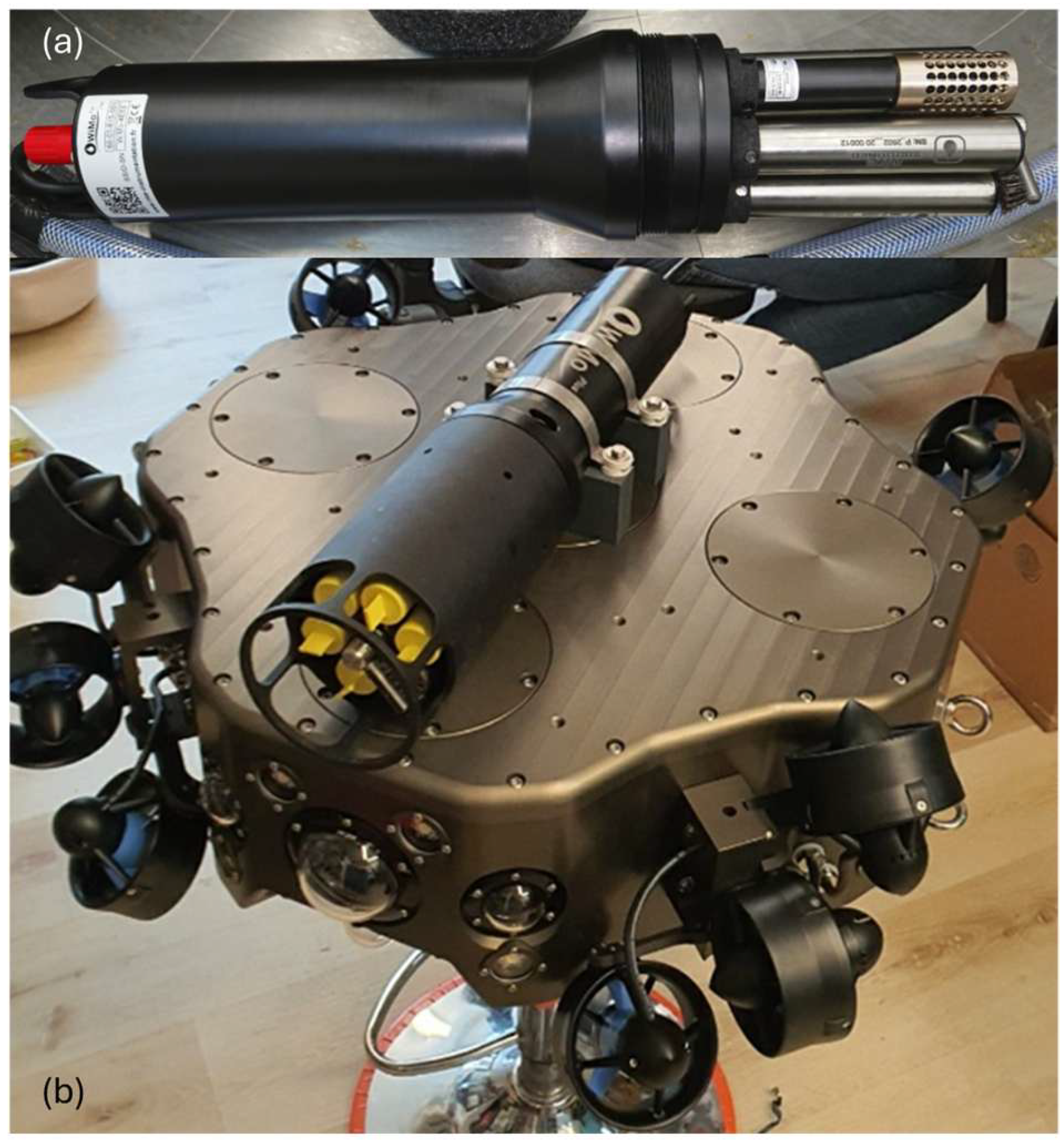
| Environmental monitoring | 7 seawater parameters (WiMo probe) |
| Manufacturer | Probe Model | Weight in Air/Water (kg) | Communication/Connectivity | Basic Set of Required Parameters | Optical Sensors, Except CTD | Easy Calibration |
|---|---|---|---|---|---|---|
| Sea-Bird Sci., Bellevue, WA, USA | SBE 52-MP Moored Profiler CTD & (optional) DO Sensor | 5.3/3.7 | RS232 | CTD, DO | No | No |
| Teledyne Valeport Ltd., Totnes, UK | SWiFT CTD plus turb. | 2.7/1.65 | USB serial, Bluetooth | CTD, Tu | No | No |
| Idronaut S.r.l., Brugherio (MB), Italy | Ocean Seven 308 | 1.1/0.65 | RS232C/RS485; WiFi/Bluetooth | CTD | No | No |
| OTT Hydromet, Kempten, Germany | Hydrolab HL7 | 4.5/NA | USB, SDI-12, RS232/485 Modbus | CTD, Tu, Chl-a, DO | Yes | No |
| AML Oceanographic Ltd., Victoria, BC, Canada | AML-6 RT CTD | 4.0/2.1 | WiFi, USB-C/MCBH, RS232 | CTD, Tu, Chl-a, DO | Yes | No |
| Sea & Sun, Technology, Trappenkamp, Germany | CTD 90M | 6.0/NA | USB; RS 232 | CTD, Tu, Chl-a, DO, PAR | No | No |
| nke Instrumentation, Hennebont, France | WiMo Plus 7 | 3.05/NA | WiFi, ModBus RTU | CTD, Tu, Chl-a, DO | Yes | Yes |
| Parameter | Mean | Median | STD | Num |
|---|---|---|---|---|
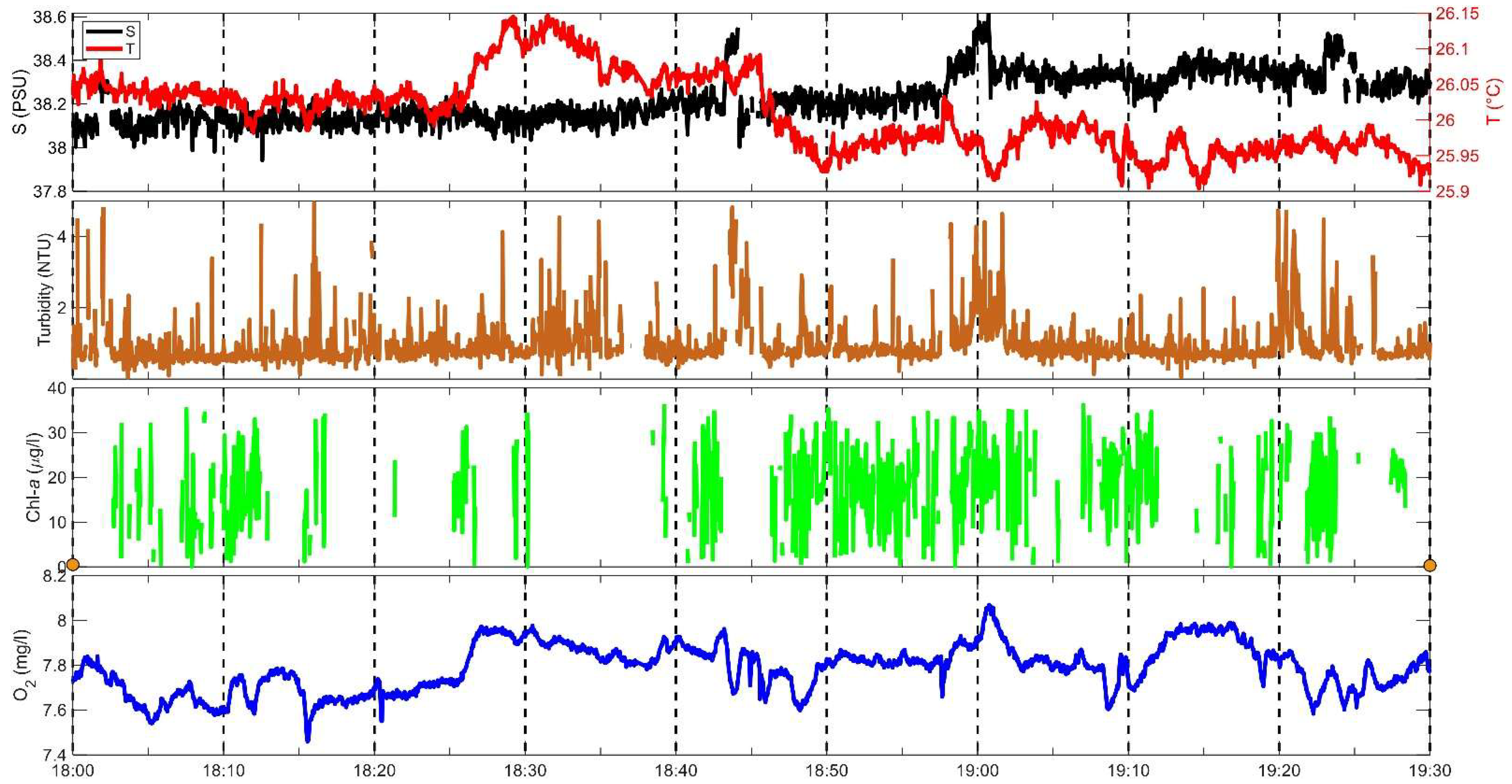
| Temperature (°C) | 26.01 | 26.01 | 0.05 | 2622 |
| Salinity (PSU) | 38.23 | 38.21 | 0.11 | 2572 |
| Oxygen (mg/L) | 7.79 | 7.80 | 0.11 | 2622 |
| Turbidity (NTU) | 0.97 | 0.78 | 0.64 | 2361 |
| CDOM (ppb) | 2.23 | 2.22 | 0.41 | 2286 |
| Phycocyanin (ppb) | 18.81 | 19.20 | 5.25 | 2145 |
| Chl-a (μg/L) | 17.59 | 17.82 | 8.96 | 911 |
| Sample Type/Location | Parameter | Unit | Concentration |
| Reference seawater (before cleaning) | Chl-a | µg/L | 0.49 |
| Seawater during cleaning | Chl-a | µg/L | 0.3 |
| Wastewater (before treatment) | Chl-a | µg/L | 7.08 |
| Reference seawater (before cleaning) | Cu | ng/mL | 2.5 |
| Seawater during cleaning | Cu | ng/mL | 3.5 |
| Wastewater (before treatment) | Cu | ng/mL | 401 |
| Reference seawater (before cleaning) | Zn | ng/mL | 5.8 |
| Seawater during cleaning | Zn | ng/mL | 10.1 |
| Wastewater (before treatment) | Zn | ng/mL | 60.6 |
Disclaimer/Publisher’s Note: The statements, opinions and data contained in all publications are solely those of the individual author(s) and contributor(s) and not of MDPI and/or the editor(s). MDPI and/or the editor(s) disclaim responsibility for any injury to people or property resulting from any ideas, methods, instructions or products referred to in the content. |
© 2026 by the authors. Licensee MDPI, Basel, Switzerland. This article is an open access article distributed under the terms and conditions of the Creative Commons Attribution (CC BY) license.
Share and Cite
Puc, U.; Abina, A.; Salvi, E.; Malačič, V.; Francé, J.; Zanelli, R.; Zidanšek, A. Development and Field Testing of a Cavitation-Based Robotic Platform for Sustainable In-Water Hull Cleaning. J. Mar. Sci. Eng. 2026, 14, 227. https://doi.org/10.3390/jmse14020227
Puc U, Abina A, Salvi E, Malačič V, Francé J, Zanelli R, Zidanšek A. Development and Field Testing of a Cavitation-Based Robotic Platform for Sustainable In-Water Hull Cleaning. Journal of Marine Science and Engineering. 2026; 14(2):227. https://doi.org/10.3390/jmse14020227
Chicago/Turabian StylePuc, Uroš, Andreja Abina, Edvin Salvi, Vlado Malačič, Janja Francé, Riccardo Zanelli, and Aleksander Zidanšek. 2026. "Development and Field Testing of a Cavitation-Based Robotic Platform for Sustainable In-Water Hull Cleaning" Journal of Marine Science and Engineering 14, no. 2: 227. https://doi.org/10.3390/jmse14020227
APA StylePuc, U., Abina, A., Salvi, E., Malačič, V., Francé, J., Zanelli, R., & Zidanšek, A. (2026). Development and Field Testing of a Cavitation-Based Robotic Platform for Sustainable In-Water Hull Cleaning. Journal of Marine Science and Engineering, 14(2), 227. https://doi.org/10.3390/jmse14020227