Article

Marine Heatwaves Enable High-Latitude Maintenance of Super Typhoons: The Role of Deep Ocean Stratification and Cold-Wake Mitigation


1
National Key Laboratory for Climate System Prediction and Response to Changes, Nanjing University of Information Science & Technology, Nanjing 210044, China
2
School of Marine Science, Nanjing University of Information Science & Technology, Nanjing 210044, China
3
International Center for Earth Fluid Research, Nanjing University of Information Science & Technology, Nanjing 210044, China
4
Fujian Provincial Meteorological Observatory, Fuzhou 350007, China
5
Key Open Laboratory for Strait Disasters and Weather, China Meteorological Administration, Fuzhou 350007, China
6
Southern Marine Science and Engineering Guangdong Laboratory (Zhuhai), Zhuhai 519000, China
7
School of Marine Science & Technology, Zhejiang Ocean University, Zhoushan 316022, China
*
Author to whom correspondence should be addressed.
J. Mar. Sci. Eng. 2026, 14(2), 191; https://doi.org/10.3390/jmse14020191
Submission received: 30 December 2025 / Revised: 12 January 2026 / Accepted: 15 January 2026 / Published: 16 January 2026
(This article belongs to the Section Physical Oceanography)

Abstract

Tropical cyclones typically weaken rapidly during poleward propagation due to decreasing sea surface temperatures and increasing vertical wind shear. Super Typhoon Oscar (1995) deviated from this pattern by maintaining Category-5 intensity at an anomalously high latitude. This study investigates the oceanic mechanisms driving this resilience by integrating satellite SST data with atmospheric (ERA5) and oceanic (HYCOM) reanalysis products. Our analysis shows that the storm track intersected a persistent marine heatwave (MHW) characterized by a deep thermal anomaly extending to approximately 150 m. This elevated heat content formed a strong stratification barrier at the base of the mixed layer (~32 m) that prevented the typical entrainment of cold thermocline water. Instead, storm-induced turbulence mixed warm subsurface water upward to effectively mitigate the negative cold-wake feedback. This process sustained extreme upward enthalpy fluxes exceeding 210 W m−2 and generated a regime of thermodynamic compensation that enabled the storm to maintain its structure despite an unfavorable atmospheric environment with moderate-to-strong vertical wind shear (15–20 m s−1). These results indicate that the three-dimensional ocean structure acts as a more reliable predictor of typhoon intensity than SST alone in regions affected by MHWs. As MHWs deepen under climate warming, this cold-wake mitigation mechanism is likely to become a significant factor influencing future high-latitude cyclone hazards.

1. Introduction

Tropical cyclones (TCs) are among the most destructive natural hazards, threatening coastal populations with extreme rainfall, storm surge, and large waves, particularly across the Western North Pacific (WNP) [1,2,3,4,5,6]. TCs function as thermodynamic engines, extracting energy and moisture from the upper ocean via air–sea enthalpy exchange [7,8,9,10,11]. Because of this dependence, a storm’s potential intensity is tightly coupled to the underlying oceanic thermal structure, a relationship consistent with theoretical models of ocean-controlled maximum intensity [2,12,13,14]. Accurate constraints on upper-ocean heat content and stratification are thus fundamental to estimating the theoretical ceiling of storm intensity [15]. However, this energy extraction is self-limiting. Strong winds generate turbulence that deepens the mixed layer, entraining cooler subsurface water to create a “cold wake” along the track [16,17,18,19]. This cooling acts as a negative feedback mechanism, dampening enthalpy fluxes and capping the storm’s ultimate intensity [20]. The magnitude of this effect depends on translation speed, storm intensity, and the pre-existing vertical temperature profile [21,22]. In specific regimes, barrier-layer physics can mitigate this cooling, thereby favoring intensification [23,24,25]. However, this negative feedback is particularly critical during poleward propagation. As TCs move into higher latitudes where ambient SSTs are marginally sufficient for deep convection, the storm-induced entrainment of cold thermocline water typically triggers rapid weakening [13,17]. Thus, mitigating the cold-wake feedback is a prerequisite for maintaining high intensity in these hostile environments [26,27].
Globally, Marine Heatwaves (MHWs), characterized by prolonged periods of anomalously warm sea surface temperature (SST), have grown in both frequency and intensity [28,29,30,31,32,33,34,35]. These events frequently represent the surface expression of elevated upper-ocean heat content (OHC) and deep subsurface warm layers [36,37]. In such environments, sustained surface heat fluxes can increase the probability of rapid intensification (RI) and support the maintenance of extreme strength during poleward migration [38,39]. While rising ocean temperatures are a global phenomenon, their implications are most acute in the Western North Pacific. In this basin, the superposition of global warming trends and regional current systems creates a unique thermodynamic environment favorable for storm intensification. Dynamically, features such as the North Equatorial Current preserve warm upper-ocean structures that facilitate RI [40]. Observations in the WNP and its marginal seas confirm that storms traversing MHWs often exhibit higher peak intensities and precipitation-rich inner cores [38,41,42]. Moreover, ongoing warming in the East China Sea suggests a rising baseline for such extremes [43], strengthening the link between warmer surface waters and heightened typhoon intensity [41,44,45]. Nevertheless, whether a MHW can effectively support intensity maintenance depends on how much storm-driven mixing can cool the surface (i.e., the development and growth of the cold wake), which is controlled by the vertical thermal stratification and the depth/strength of the warm layer.
Although elevated SSTs are a prerequisite for TC development, they do not guarantee intensification, particularly under high-latitude atmospheric constraints like strong vertical wind shear (VWS) [19,46]. The critical determinant for storm survival is the vertical depth of the warming. Unlike surface-confined events, a deep MHW allows storm-induced turbulence to entrain warm subsurface water, effectively mitigating the cold-wake feedback and sustaining enthalpy fluxes [22,24]. Conversely, in shallow regions like the East China Sea, outcomes depend heavily on the specific vertical thermal structure, often resulting in intensification in only a minority of cases [2,36,45]. While recent statistical analyses suggest that MHWs and regional warming generally increase the likelihood of intensification [38,39,43,44], these studies predominantly focus on surface metrics or broad correlations. In contrast, our study investigates the specific three-dimensional mechanism of thermodynamic compensation, demonstrating how deep stratification actively counteracts the cold-wake feedback. Notably, storm-induced upper-ocean cooling can also erode or terminate MHW conditions during passage [47], highlighting the importance of subsurface thermal structure. A key remaining question is what specific combination of subsurface structure and atmospheric conditions enables this resilience [13,16,25].
Super Typhoon Oscar (1995) provides a prototypical case for examining this mechanism. The storm maintained Category 5 intensity unusually far poleward (peak winds of ~140 kt) while traversing a marine heatwave characterized by elevated subsurface heat content. This event offers an opportunity to quantify how a deep thermal structure can weaken or delay cold-wake cooling and help sustain oceanic energy supply under moderate-to-strong vertical wind shear. We investigate the ocean-atmosphere interactions associated with this resilience using atmospheric reanalysis products and HYCOM output [48,49]. Based on these considerations, we hypothesize that the deep, stratified structure of the MHW acts as a thermodynamic buffer. Specifically, we posit that sustained surface enthalpy fluxes supported by the deep warm reservoir can compensate for shear-induced ventilation, thereby enabling the storm to maintain intensity beyond what is typically expected from climatological constraints. The remainder of this paper is organized as follows. Section 2 describes the datasets and methods. Section 3 presents the spatiotemporal evolution of SST anomalies, MHW characteristics, atmospheric forcing, and upper-ocean structure across Oscar’s life cycle. Section 4 synthesizes these results to examine the links among surface and subsurface anomalies, mesoscale features, and intensity change. Section 5 discusses potential implications under continued climate warming, as MHWs are projected to become more frequent and intense.

2. Materials and Methods

2.1. Observation and Reanalysis Dataset

2.1.1. Typhoon Dataset

This study utilizes multiple high-resolution datasets to investigate the intensification mechanisms of Super Typhoon Oscar. Primary storm track and intensity data were obtained from the International Best Track Archive for Climate Stewardship (IBTrACS), which provides six-hourly observations of cyclone position, minimum sea-level pressure, and maximum sustained winds [50]. These best-track parameters serve as the foundation for analyzing Oscar’s intensity evolution and timing of rapid intensification.

2.1.2. Sea Surface Temperature and Marine Heatwave Detection Method

To characterize the oceanic environment during Oscar’s development, we use the NOAA Daily Optimum Interpolation Sea Surface Temperature dataset (OISST v2.1, 1982–2022). This gridded product provides daily SST at 0.25° × 0.25° spatial resolution, blending satellite observations with in situ measurements via optimized interpolation. Marine heatwaves were detected following the methodology of Hobday et al. (2016) [28], which defines an MHW as a discrete, prolonged event during which SST exceeds the local 90th-percentile climatological threshold for at least five consecutive days. The high spatial and temporal resolution of OISST allows detailed mapping of ocean thermal conditions along Oscar’s track. From this dataset, we derived key MHW metrics: event duration (consecutive days above threshold), intensity (peak and mean SST anomaly during the event), cumulative intensity (integrated thermal anomaly over the event’s duration), timing (onset, peak, and decline dates), and spatial extent (area in km2 affected by MHW conditions). These quantitative metrics were later analyzed in relation to Oscar’s developmental stages, providing a framework for assessing how pre-existing MHW conditions may have influenced the storm’s intensity changes.

2.1.3. Atmospheric and Oceanic Parameters

To analyze the atmospheric environment, we extracted key parameters from the ERA5 reanalysis produced by the European Centre for Medium-Range Weather Forecasts. ERA5 offers comprehensive hourly meteorological fields at 0.25° horizontal resolution. We focused on variables relevant to cyclone intensification, specifically vertical wind shear (taken as the magnitude of the 200–850 hPa wind vector difference) and surface heat flux components (sensible heat flux, latent heat flux, net shortwave radiation, and net longwave radiation) for assessing air–sea energy exchange [8]. To capture the three-dimensional ocean structure, we used the HYCOM (Hybrid Coordinate Ocean Model) reanalysis [48,49]. HYCOM provides daily 3D ocean state variables at ~1/12° horizontal resolution, allowing analysis of subsurface conditions such as mixed-layer depth, upper-ocean thermal structure, ocean heat content, and stratification. By integrating the above data sources, we obtained a consistent, holistic depiction of both the atmospheric and oceanic preconditions surrounding Typhoon Oscar’s intensification.
To calculate the ocean heat budget, we rely on the HYCOM reanalysis, which is constrained by satellite altimetry data (e.g., TOPEX/Poseidon) and available in situ XBT profiles. While small-scale vertical features in the reanalysis may contain higher uncertainty due to the limited observational network prior to the Argo era, the large-scale deep warm anomaly (the marine heatwave) is captured with confidence. In the Western North Pacific, sea surface height anomalies derived from altimetry data serve as a strong proxy for thermocline depth and upper-ocean heat content. This consistency between the altimetry-constrained reanalysis and the observed storm intensification pattern supports the robustness of the reconstructed deep thermal structure, even as fine-scale vertical gradients remain more uncertain than modern reanalysis data.

2.2. Analytical Methods

2.2.1. Net Heat Flux

Net heat flux ( Q n e t ) at the air–sea interface was calculated as the sum of four components:
Q n e t = Q S W + Q L W + Q S H + Q L H ,
where Q S W is net shortwave radiation, Q L W is net longwave radiation, Q S H is sensible heat flux, and Q L H is latent heat flux. All flux components were obtained from the European Centre for Medium-Range Weather Forecasts (ECMWF) ERA5 reanalysis dataset. According to the standard oceanographic convention used here, negative flux values indicate heat transfer from the ocean to the atmosphere (i.e., ocean heat loss), which constitutes the primary enthalpy source for the typhoon [22]. Conversely, positive values indicate heat gain by the ocean. This formulation allows us to diagnose how the typhoon’s passage altered the ocean’s surface heat budget via changes in both radiative and turbulent fluxes.

2.2.2. Ocean Mixing Layer Depth

Mixed Layer Depth (MLD) was derived from HYCOM ocean profiles using a density threshold method. For each profile, the reference potential density ( ρ r e f _ 10 m ) was initially established by computing the average density over the upper 10 m. Starting from the surface, the MLD was then defined as the minimum depth ( z M L D ) at which the potential density ( ρ ( z ) ) increased by a fixed threshold of Δ ρ = 0.03 kg/m3 from the surface reference value. This methodology is mathematically expressed as:
M L D = z M L D = m i n { z | ρ ( z ) ρ r e f 10 m + 0.03   kg / m 3 } .
This density-based threshold method is preferred over a fixed temperature threshold approach as it adapts robustly to local oceanographic conditions across seasons and regions, thereby effectively capturing both the seasonal variability and spatial heterogeneity inherent in mixed layer structure [21,51].

2.2.3. Ocean Heat Budget

The upper ocean heat budget was analyzed using HYCOM data, focusing on the mixed layer temperature tendency equation:
T t = ( u T x + v T y + w T z ) + 1 ρ C p h [ Q n e t q ( h ) ] + R
where T is the mixed layer temperature, (u, v, w) are the three-dimensional current velocities, h is the mixed layer depth, ρ is seawater density, C p specific heat capacity, q ( h ) represents the penetrative radiation at the mixed layer base, and R encompasses residual terms including mixing and diffusion. Here, the residual term R primarily represents unresolved vertical mixing and entrainment processes at the base of the mixed layer [16,17]. As advection (analyzed in Section 4) is minimal, a large residual term during the storm’s passage is a direct proxy for intense, wind-driven turbulent entrainment.

3. Results

3.1. Oceanic Preconditions and Synoptic-Scale Forcing

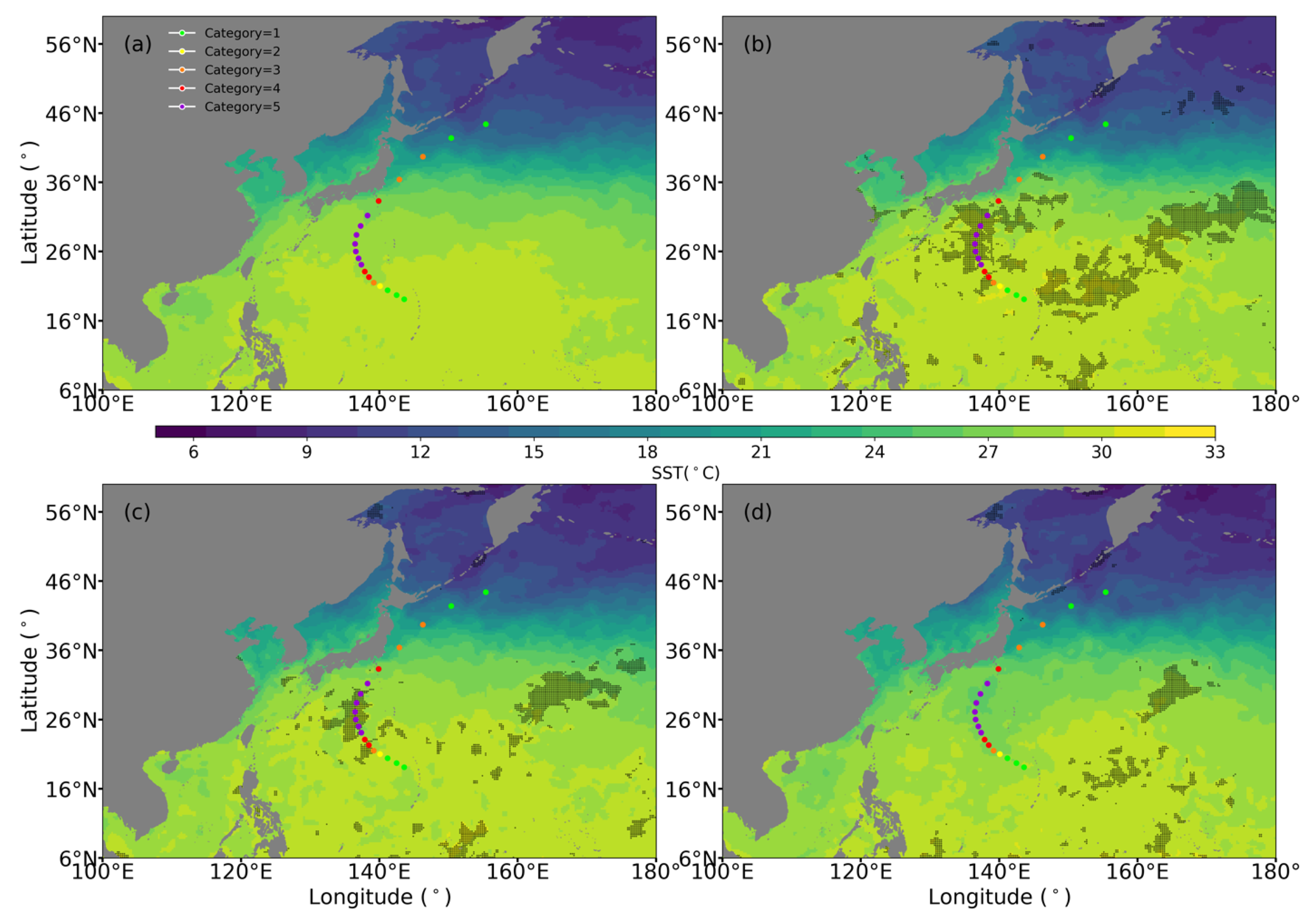
Typhoon Oscar’s intensification and maintenance resulted from the interaction between two distinct oceanic thermal structures: a favorable large-scale climatological baseline and a high-amplitude synoptic warm anomaly. Monthly mean absolute SST for September 1995 (Figure 1) illustrates the broader context, where sea surface temperatures along the track ranged from 27 °C to 30 °C. These values exceeded the theoretical 26.5 °C threshold required for tropical cyclone maintenance [42,52], even as the system propagated poleward toward 35° N. This thermal baseline, typical of the northwest Pacific warm pool, established a high thermodynamic ceiling for potential intensity and fulfilled the necessary conditions for sustaining a major cyclone [12].
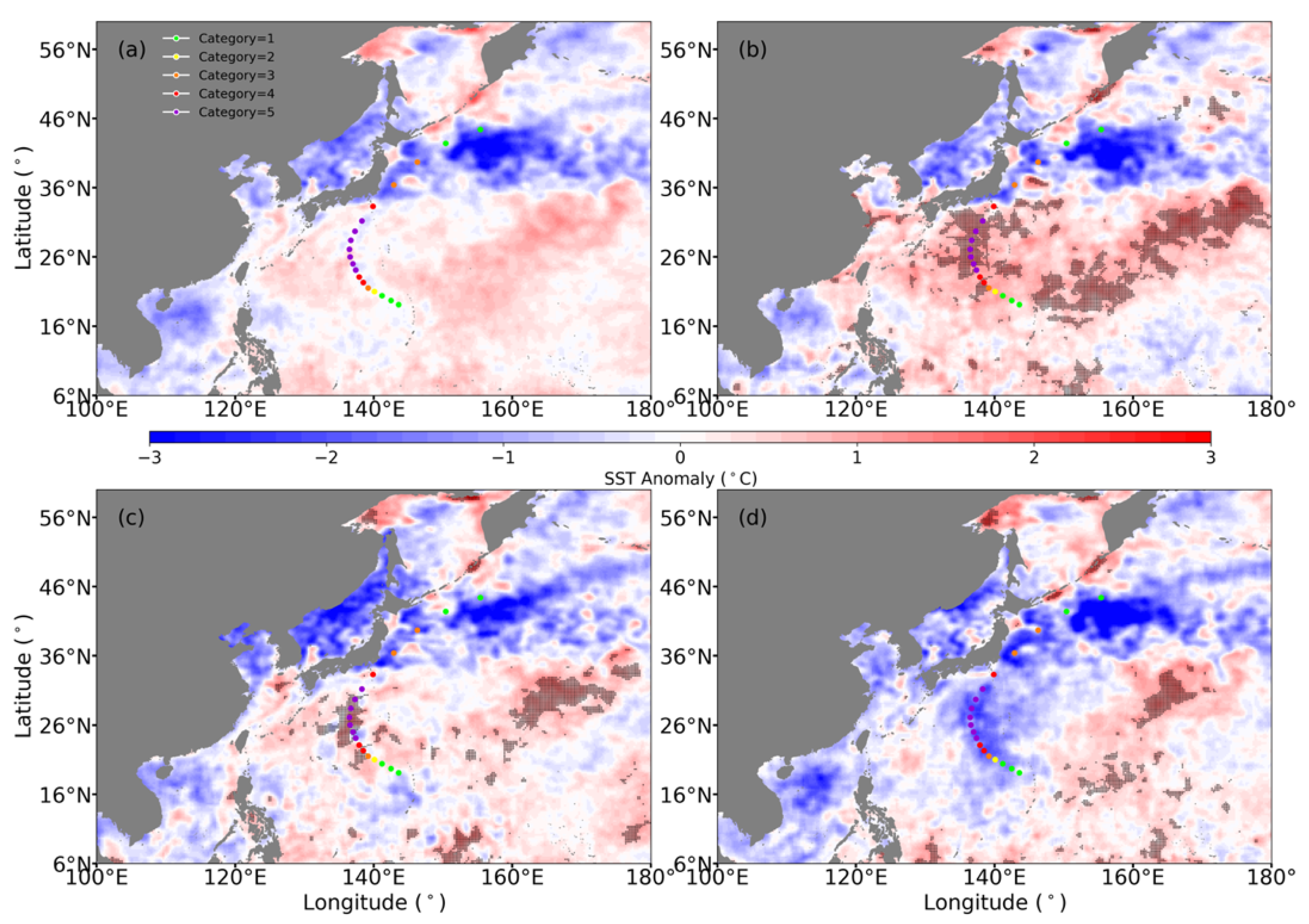
Significant positive SST anomalies (SSTA) overlaid this climatological warmth (Figure 2a), dominating the subtropical belt (15°–35° N) with values +0.5 °C to +2 °C above the 1982–2022 average. During the week immediately preceding intensification (5–11 September; Figure 2b), these anomalies organized into coherent, extensive patches of +2 °C to +3 °C rather than remaining diffuse. These features coincided with identified MHW clusters and constituted a critical, transient energy reservoir characterized by a “warm-on-warm” condition [38,41,45]. The physical impact of these anomalies arose from their non-linear contribution to surface enthalpy flux [22]. According to the Clausius-Clapeyron relation, a 1 °C increase in SST enhances surface saturation specific humidity by approximately 6–7% [53]. Consequently, the +2–3 °C MHW anomaly significantly amplified the air–sea enthalpy disequilibrium, increasing latent heat flux beyond climatological expectations and facilitating the storm’s rapid intensification [2,14].
The temporal evolution depicted in Figure 2c,d confirms a robust thermodynamic coupling between the typhoon and the underlying ocean. As Oscar propagated over the pre-existing MHW field (12–18 September; Figure 2c), the system attained Category 4/5 intensity. This intensification coincided with the rapid fragmentation and dissipation of MHW structures and high-SSTA regions, particularly along the right-hand side of the track. Such spatial alignment suggests substantial enthalpy flux from the ocean to the atmosphere. Post-storm data (19–25 September; Figure 2d) reveals a distinct cold wake, with SSTA dropping by 1–2 °C relative to pre-storm conditions. This cooling stems from intense surface heat extraction and wind-driven vertical mixing that entrained cooler subsurface water, thereby effectively eroding the MHW anomalies [38].
These observations indicate that the synoptic-scale MHW was instrumental in sustaining Oscar’s intensity at high latitudes. Although tropical cyclones typically decay upon encountering cooler poleward waters, the +2–3 °C MHW anomaly superimposed on the marginally favorable climatological background (~27 °C at 35° N) established a transient “warm corridor.” This feature extended the high-enthalpy environment characteristic of the deep tropics into higher latitudes. Consequently, Oscar’s anomalous maintenance resulted from the superposition of two thermal regimes: the climatological baseline established the necessary thermodynamic threshold, while the MHW anomaly supplied the excess energy flux required to sustain the storm’s exceptional intensity.

3.2. Marine Heatwave Characteristics

3.2.1. Area of Marine Heatwaves

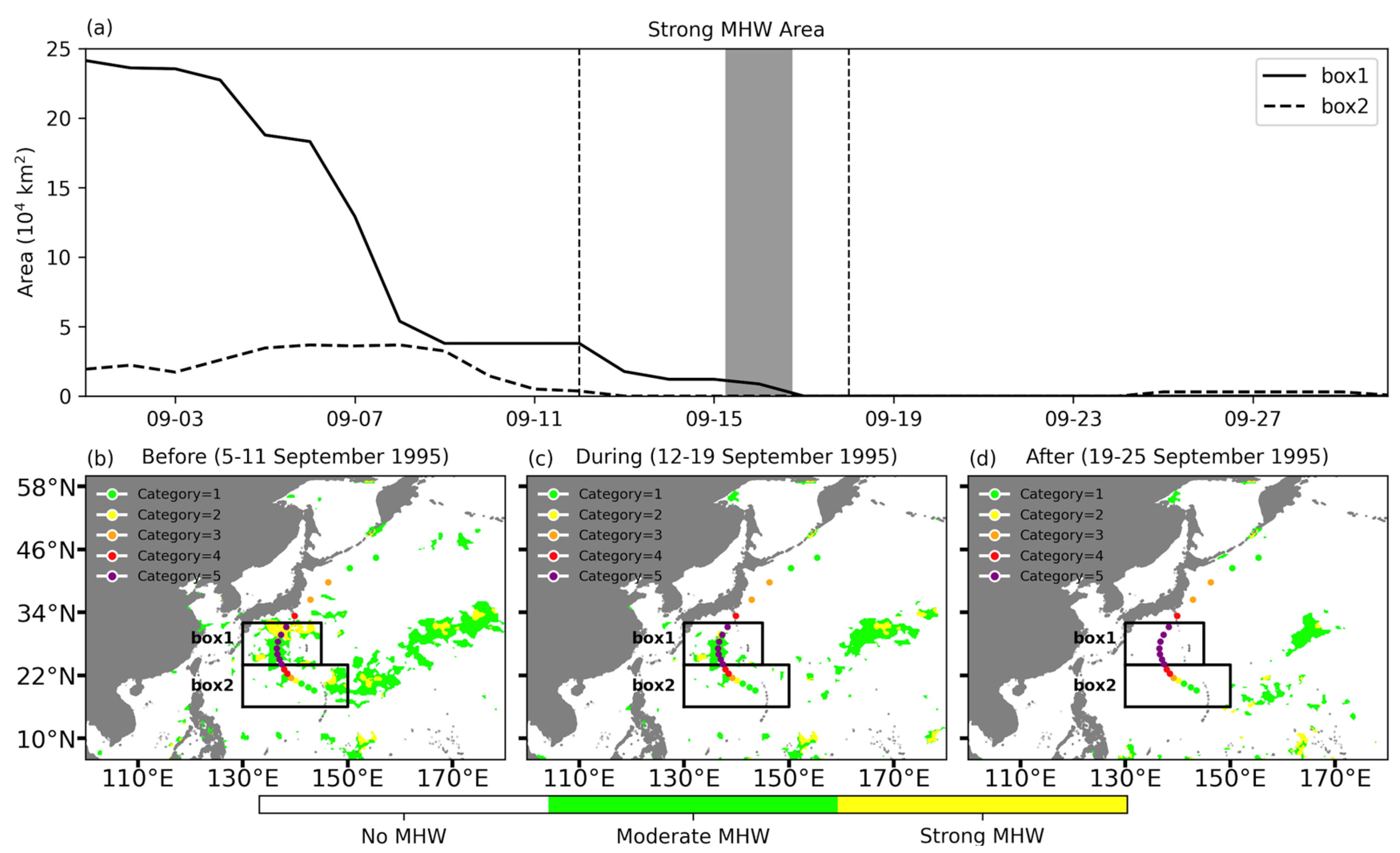
The spatial extent and temporal evolution of the MHWs serve as the primary metrics for characterizing the upper-ocean thermal anomaly. These parameters quantify the magnitude of the thermodynamic perturbation and distinguish the environmental context across different stages of the typhoon’s lifecycle. To decouple the oceanic influence on genesis from that on high-latitude intensification, two representative regions were delimited for analysis. Box 1 (130–145° E, 24–32° N) encapsulates the mid-latitude interaction zone. This region encompasses the track segment where Oscar maintained Category 5 intensity over the peak MHW activity and experienced a direct cyclone overpass. In contrast, Box 2 (130–150° E, 16–24° N) defines the subtropical genesis region. This area covers the storm’s formation phase and serves as a climatological baseline for the thermodynamic environment at the storm’s origin.
The time series of daily MHW area (Figure 3a) reveals the thermal evolution within these domains. In the mid-latitude sector (Box 1), a substantial MHW persisted from the analysis onset, peaking at 2.5 × 10⁵ km2. Upon Typhoon Oscar’s arrival, this area decreased sharply, dropping from ~2.0 × 10⁵ km2 on 11 September to near-zero by 17 September. This rapid dissipation aligns temporally with Oscar’s Category 5 phase (15–16 September), implying significant ocean heat extraction during the storm’s passage. The subtropical sector (Box 2) presented a markedly different profile, with MHW coverage remaining an order of magnitude lower (2–4 × 10⁴ km2) and showing no distinct response to the cyclone. This contrast isolates the specific role of the thermal anomaly. The minimal MHW activity in Box 2 confirms that anomalous warmth was not required for genesis. Conversely, the high-latitude maintenance occurred exclusively within the expansive MHW field of Box 1. Box 2 therefore acts as a control case, demonstrating that the pre-existing mid-latitude MHW was essential for the intensification event.
Figure 3b–d providing the spatial context for the temporal evolution depicted in Figure 3a, highlighting the structural changes of the MHW. During the pre-storm phase (5–11 September; Figure 3b), the MHW within Box 1 exhibited broad, contiguous zonal structures. These high-magnitude anomalies formed a continuous thermal band extending northward, aligning with the subsequent track of the typhoon. As the typhoon intensified to Category 4/5 and traversed Box 1 (12–18 September; Figure 3c), the MHW fragmented significantly. This dissipation was spatially concentrated along the storm track, attributed to intense wind-driven mixing and surface heat fluxes, causing the previously continuous warm bands to disintegrate into scattered remnants. Following the storm’s passage (19–25 September; Figure 3d), the MHW signature in Box 1 was effectively eroded. Only sparse, disconnected anomalies remained, confirming persistent upper-ocean cooling. Collectively, these spatiotemporal variations indicate that the pre-existing mid-latitude MHW served as a thermal reservoir for Typhoon Oscar, a reservoir that was subsequently depleted during the period of rapid intensification.

3.2.2. Duration of Marine Heatwaves

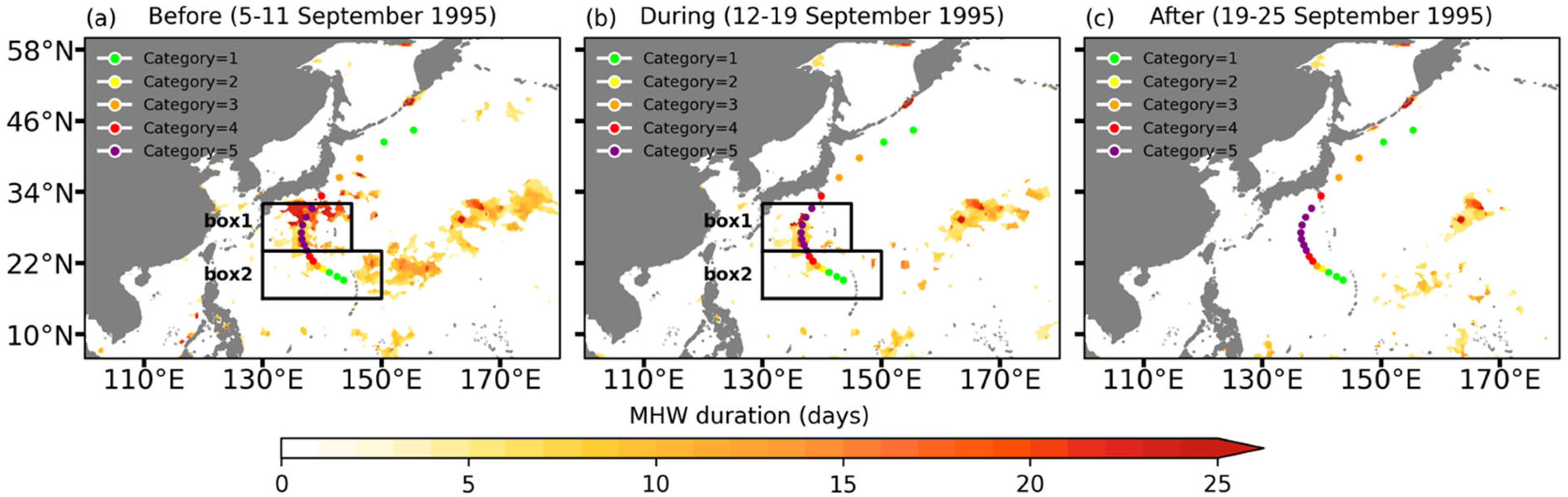
Figure 4a–c maps the spatial evolution of MHW duration throughout the life cycle of Typhoon Oscar. As a proxy for the persistence of warm anomalies, MHW duration reflects the potential for enhanced subsurface heat storage and the stability of the upper ocean thermal layer. During the pre-storm phase (5–11 September; Figure 4a), the study area exhibited a distinct latitudinal contrast in MHW characteristics. The northern mid-latitude region (Box 1) was characterized by a coherent, banded structure of long-duration events, typically persisting for 15–20 days. In contrast, the southern genesis region (Box 2) featured shorter-lived, fragmented anomalies with typical durations of 8–10 days, suggesting that a spatially organized warm anomaly was established in the mid-latitudes well before the typhoon’s arrival.
Physically, short-duration MHWs (approx. 8–10 days) often represent transient, shallow features confined to the upper mixed layer, making them susceptible to erosion by storm-induced turbulent mixing. Conversely, the long-duration events (approx. 15–20 days) observed in Box 1 imply a sustained heating process that penetrated deeper into the water column, resulting in a thicker warm mixed layer and elevated upper ocean heat content. This deep thermal structure plays a key role in mitigating the negative feedback associated with the storm’s cold wake. During the typhoon passage, the entrainment of anomalously warm subsurface water dampens the cooling effect at the sea surface, thereby sustaining the enthalpy flux to the storm.
Therefore, the pre-storm distribution suggests that the long-duration MHWs in Box 1 functioned as a substantial thermal reservoir. This deep reservoir, unlike the transient anomalies in Box 2, likely fueled Typhoon Oscar during its poleward migration and intensification. This mechanism aligns with the rapid reduction in MHW area described in Section 3.2.1, where the area decrease represents the physical manifestation of energy extraction from this pre-existing heat stock. Observations during (Figure 4b) and after the storm (Figure 4c) corroborate this depletion sequence. As Oscar reached peak intensity in Box 1, intense wind-driven mixing effectively eroded the MHW along its track. By the post-storm phase (Figure 4c), the warm signal in Box 1 was largely dissipated, confirming that the thermal reservoir had been expended.

3.2.3. Mean Intensity of Marine Heatwaves

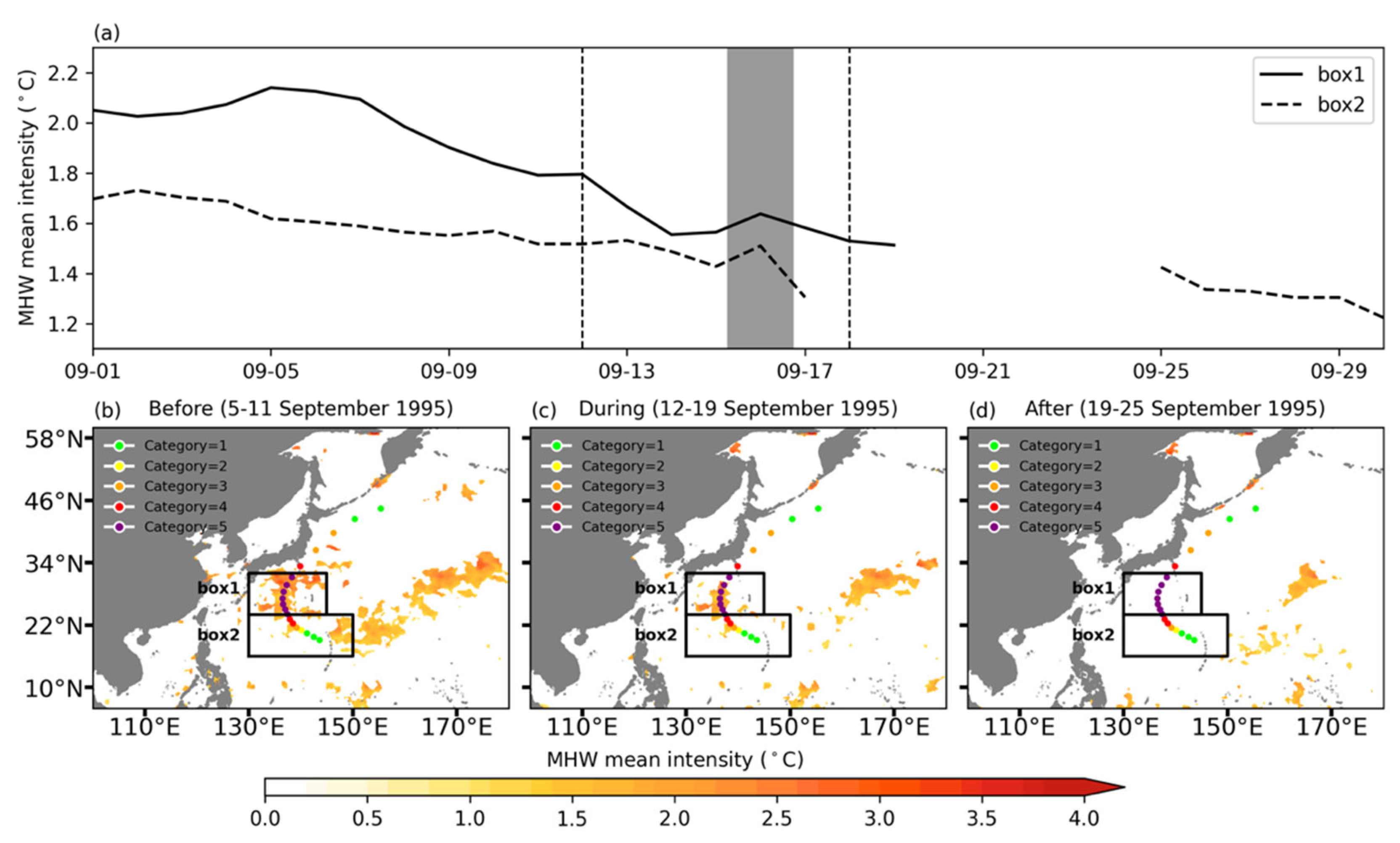
Figure 5 shows the evolution of MHW mean intensity, defined as the anomaly magnitude, and reveals a persistent contrast between the two study regions. As quantified by the area-averaged time series in Figure 5a, the mid-latitude MHW (Box 1) was significantly stronger and more spatially coherent than the subtropical anomaly (Box 2). During the rapid intensification and peak phases of Typhoon Oscar (13–17 September), Box 1 maintained a robust mean anomaly of approximately 2.0 °C, whereas Box 2 exhibited lower magnitude fluctuations ranging from 1.4 °C to 1.7 °C. Although storm-induced mixing reduced the mean intensity in Box 1 to ~1.6 °C following the typhoon’s passage, the anomaly remained significantly elevated relative to the conditions in Box 2.
The spatial distributions present in Figure 5b–d further elucidate these divergent regional responses. Prior to the storm (Figure 5b), an extensive and spatially coherent MHW characterized Box 1, manifesting as a distinct zonal band with high intensities of 2.0–2.5 °C. This organized thermal structure contrasted sharply with the conditions in Box 2, which featured weaker, smaller-scale, and fragmented warm patches. During the storm passage (Figure 5c), the two regions exhibited distinct behaviors. Box 2, situated directly beneath the storm core, was subject to intense wind-driven mixing. This forcing resulted in a pronounced reduction in MHW intensity along the track, reducing the anomalies to 1.5–2.0 °C. Conversely, the location of Box 1 to the north of the core mixing zone allowed it to avoid the most intense mechanical mixing, thereby retaining much of its high-intensity structure. In the post-storm phase (Figure 5d), the disparity became more evident. A distinct cold wake appeared along the typhoon track within Box 2, where anomalies declined further to 1.0–1.5 °C. Box 1, however, demonstrated significant thermal resilience by retaining coherent, high-intensity remnants (~1.6 °C) of the original MHW. When considered alongside the duration diagnostics, the persistence of high mean intensity in Box 1 suggested the presence of a deeper warm layer and elevated ocean heat content. This thermal structure likely amplified the air–sea enthalpy disequilibrium while restricting entrainment induced surface cooling. In effect, this deep warm layer mitigated the negative cold-wake feedback, thereby favoring the maintenance of the storm’s intensity at high latitudes.

3.3. Atmospheric Environmental Conditions

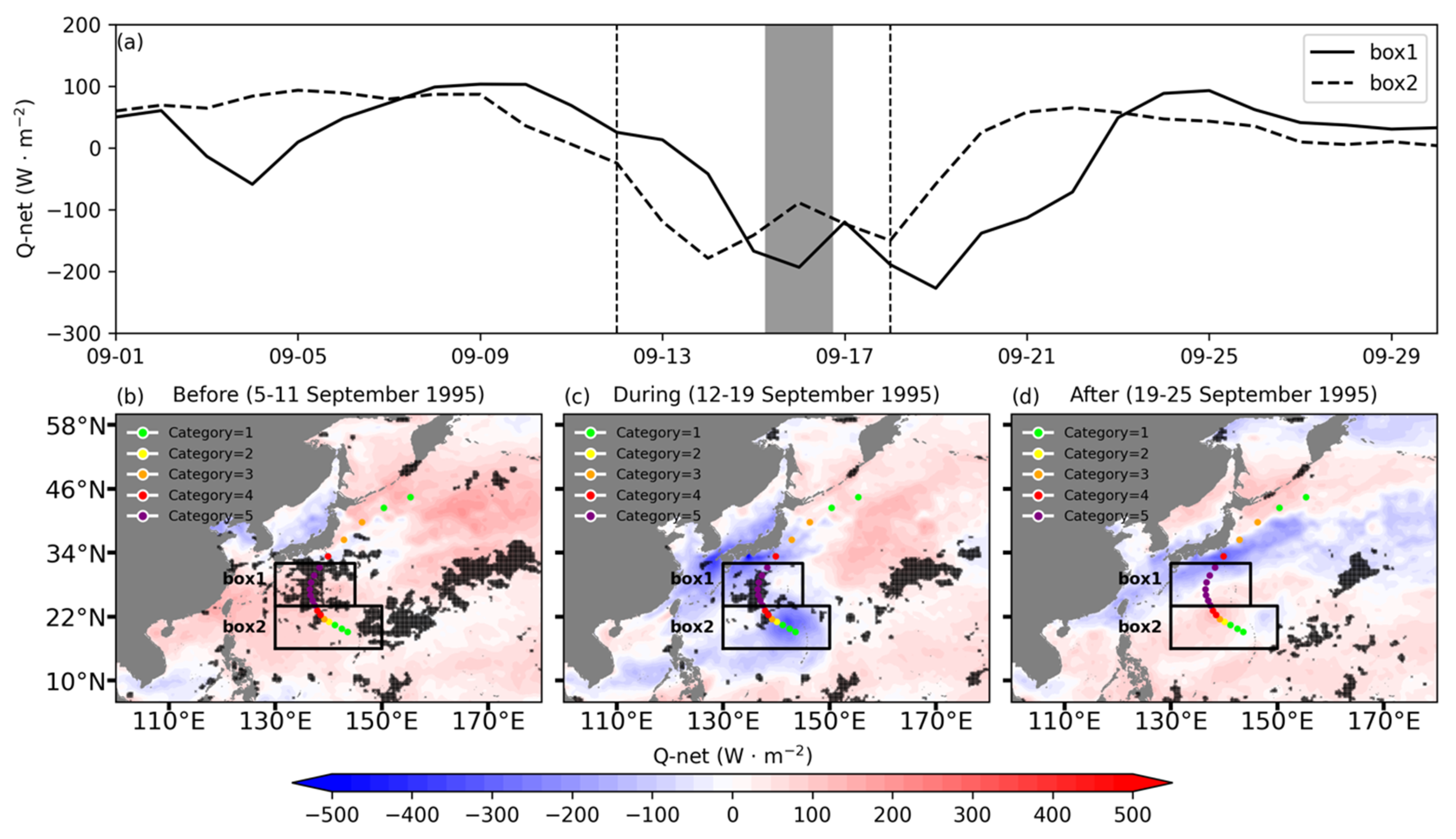
The evolution of the net surface heat flux (Qnet) serves to link oceanic preconditioning to the atmospheric energy supply that fueled the storm. The box-averaged time series (Figure 6a) illustrates the differential response between the two regions. The mid-latitude MHW region (Box 1, solid line) experienced a sharp decrease in Qnet, reaching a box-averaged minimum of approximately −200 W m−2 (indicating upward flux or ocean heat loss) during the storm’s peak intensity (15–17 September; gray shaded region). In contrast, the subtropical genesis region (Box 2, dashed line), which lacked a prominent MHW and supported only a weaker Category 1–3 storm, exhibited a less pronounced Qnet minimum of approximately −150 W m−2.
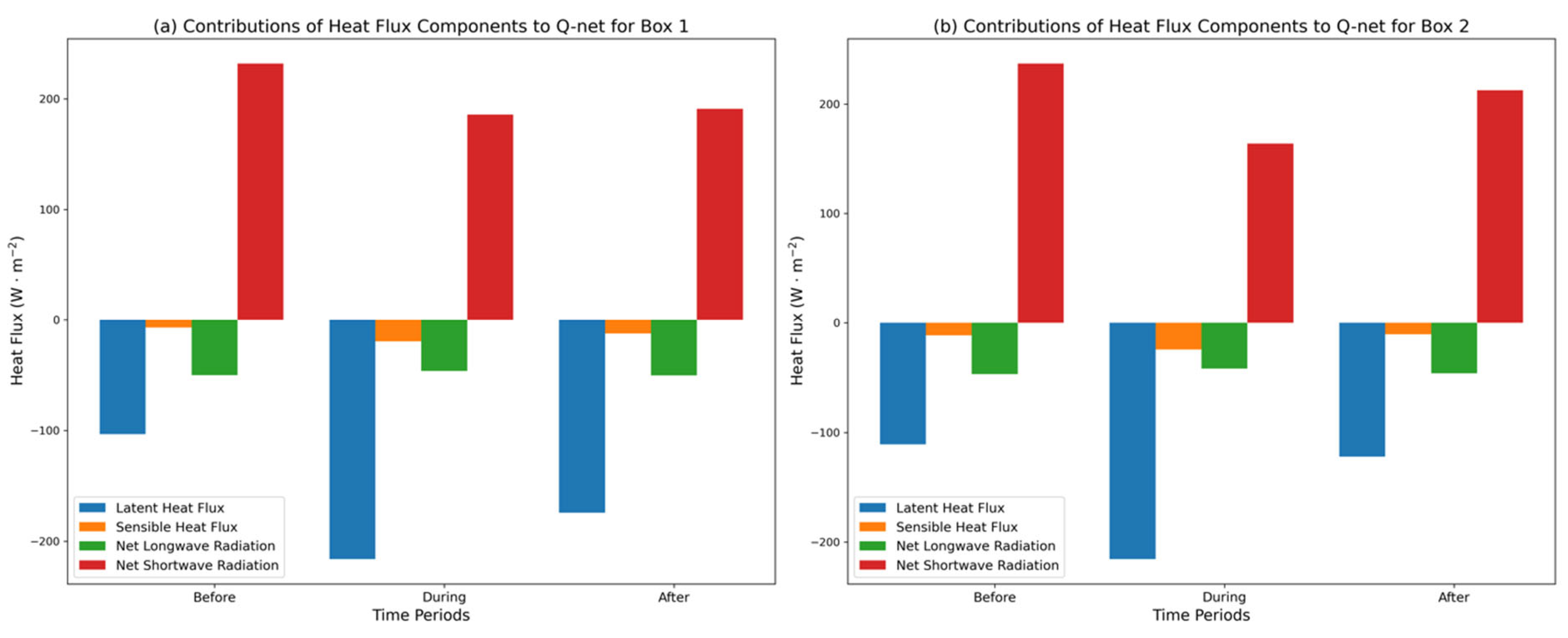
Decomposition of Qnet into its four components (Figure 7) reveals the mechanisms driving this negative excursion: a sharp reduction in incoming shortwave (SW) radiation caused by dense cloud cover, combined with a substantial enhancement of latent heat (LH) flux driven by extreme winds [8,22]. Quantitative comparison between the two domains offers critical insight into the energy budget. In the mid-latitude MHW region (Box 1; Figure 7b), the average upward LH flux intensified to approximately −210 W m−2 during the storm passage. This value was substantially larger than the LH flux in the subtropical region (Box 2; Figure 7a), which averaged −170 W m−2. These observations indicate that the ocean-to-atmosphere enthalpy transfer, representing the primary energy source for the storm [7], was significantly amplified in the mid-latitude region. Despite the reduced SW input under the storm’s cloud canopy, the sustained evaporative flux resulted in the strongly negative net heat flux observed in Figure 6.
These flux analyses provide a direct connection to the oceanic preconditioning described earlier. The MHW in Box 1 constituted not merely a warm surface boundary but a deep reservoir of high ocean heat content that maximized the air–sea enthalpy disequilibrium [2,36]. The Qnet analysis demonstrates that the atmospheric thermodynamic environment was highly favorable for intensity maintenance due to this underlying ocean anomaly. Dominated by large, wind-driven latent heat release (~−210 W m−2) from the MHW, the surface flux regime effectively countered the expected decay. Furthermore, the spatial extent of the MHW played a critical role by providing a broad, continuous region of high enthalpy (Figure 6c). This geometry allowed Oscar to sustain anomalous energy extraction over a prolonged period (15–17 September), thereby preventing typical poleward weakening and facilitating the maintenance of Category-5 intensity [41,44]. In effect, this synoptic-scale oceanic feature generated a transient mid-latitude thermodynamic environment that resembled tropical conditions, providing the necessary enthalpy pathway to support the anomalous persistence of Typhoon Oscar.

4. Discussion

The rapid intensification of Typhoon Oscar to Category 5 intensity presents a challenge to conventional surface-based metrics. While operational intensity prediction has historically relied on sea surface temperature as the primary boundary condition [18], the air–sea interaction governing tropical cyclone maturity is fundamentally a three-dimensional coupled process. Theoretical models of potential intensity posit that the energy supply to a tropical cyclone depends on the disequilibrium between oceanic enthalpy and saturated atmospheric enthalpy. Under typical conditions, the intense wind stress of a developing cyclone induces strong upper-ocean shear instability and upwelling. These processes generate a cold wake that rapidly reduces SST, which diminishes the air–sea enthalpy disequilibrium and creates a self-limiting negative feedback loop [16,19]. In the case of Oscar, however, this negative feedback was absent. This implies that the oceanic energy source extended beyond the surface interface into the subsurface mixing layer, and it challenges the assumption that surface cooling is an inevitable consequence of storm passage. Consequently, the anomalous intensity of the storm appears contingent upon the three-dimensional preconditioning of the upper ocean by a persistent Marine Heatwave, which modified the background stratification and heat content availability.
It is important to acknowledge uncertainties in subsurface ocean reconstructions for the pre-Argo era. In 1995, the limited availability of in situ profiles can reduce confidence in fine-scale vertical gradients below ~50 m, and reanalysis products may smooth extremes or misplace the maximum anomaly depth. Nevertheless, the key feature required for our mechanism is not the precise depth of the peak warming, but the presence of anomalously warm water extending below the storm-mixing depth together with enhanced stratification at the mixed-layer base. These large-scale features are dynamically linked to SSHA and are therefore more robustly constrained than small-scale vertical details.
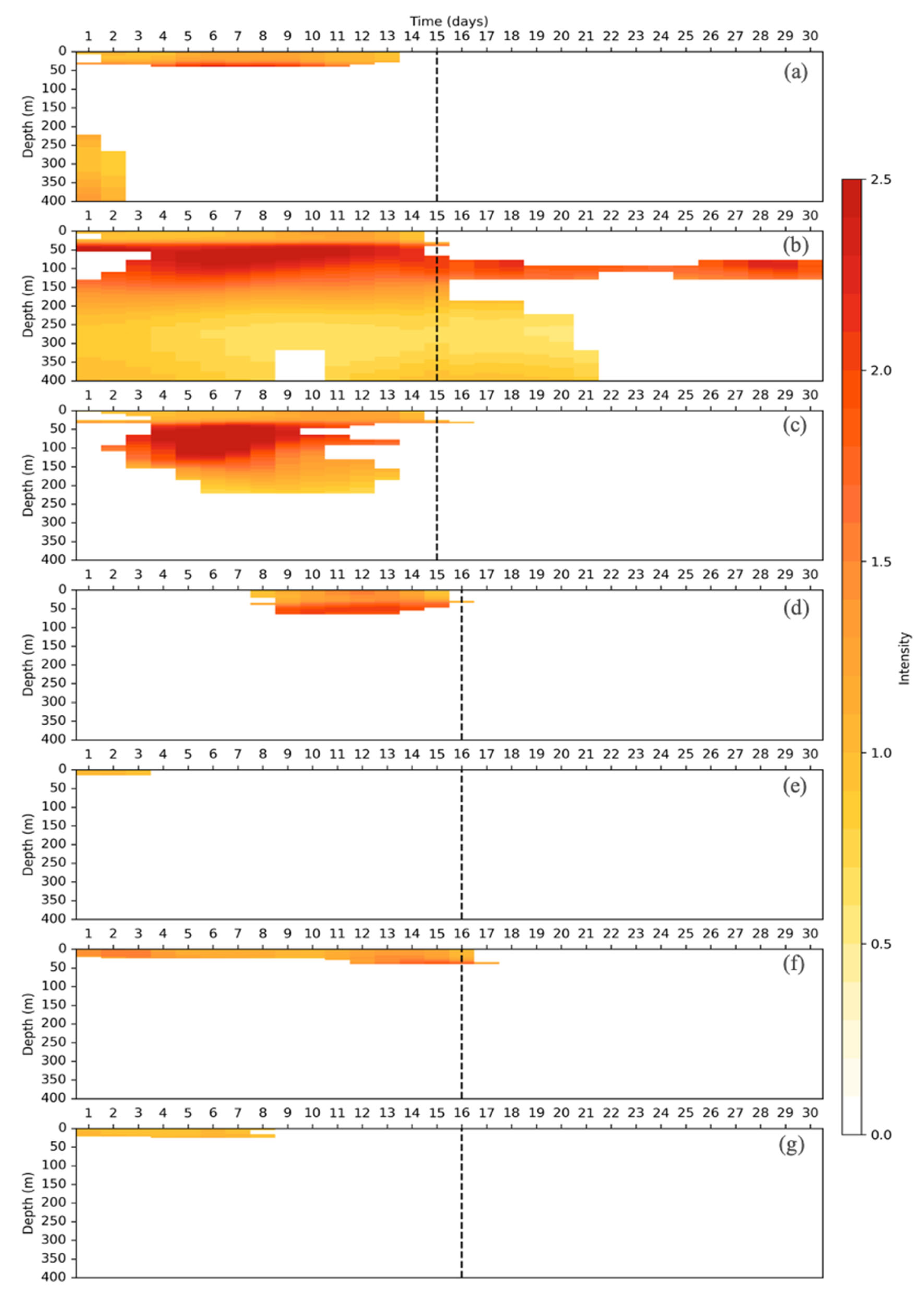
Figure 8 provides reanalysis-based evidence for the three-dimensional structure of the marine heatwave along Oscar’s Category-5 segment. Using the HYCOM reanalysis, it shows vertical–time sections of MHW intensity (°C) at the seven Category-5 locations marked by the purple dots in Figure 1 (panels a–g, arranged in chronological order). A coherent subsurface warm structure was already established in early September and persisted through the storm’s passage. The elevated MHW intensity was not confined to the surface; it extended to approximately 150 m, with peak values exceeding +2.5 °C within the upper ~100 m. The vertical dashed line in each panel marks the timing when Oscar passed the corresponding location during its Category-5 stage (shifting from 15 to 16 September). Blank areas indicate periods when MHW conditions were not met (non-MHW). This specific vertical profile indicates that the ocean contained a substantial reservoir of high enthalpy water rather than merely a warm surface skin. From a thermodynamic perspective, this deep anomaly represents a significant increase in the integrated Ocean Heat Content (OHC) available for extraction [20,54]. Furthermore, the data identify the structural interface of this reservoir: the base of the mixed layer was located at approximately 32 m, where it sat directly atop the deep warm anomaly. This vertical arrangement is physically significant because it determines the temperature of the water entrained into the mixed layer during deepening events, and it connects the static thermal structure to the kinematic evolution shown in Figure 9.
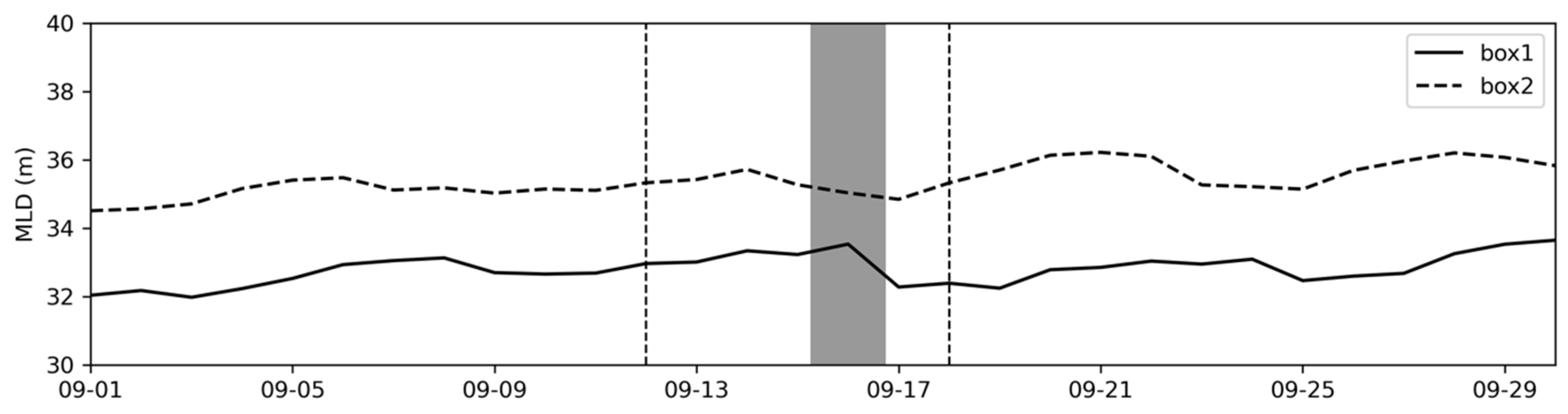
The MLD time series (Figure 9) offers direct kinematic verification of this structural preconditioning and highlights the competition between wind-driven turbulent kinetic energy and the stabilizing buoyancy force. Prior to the storm passage, the MLD in the MHW region (Box 1) was anomalously shallow at approximately 32.2 m, which was significantly shallower than the 35.0 m observed in the control region (Box 2). This difference implies that the concentration of heat in the upper ocean generated an exceptionally strong pycnocline at the mixed-layer base. In physical terms, this sharp density gradient created a high potential energy barrier [24]. For the mixed layer to deepen, the work performed by wind stress must exceed the potential energy required to mix dense deep water upward against gravity. The resilience of this barrier is evident in the response during the passage of Oscar (shaded area in Figure 9). Despite the extreme wind stress associated with Category-5 intensity, which typically drives rapid mixed-layer deepening, the MLD in Box 1 deepened by only about 1.5 m. This limited deepening serves as a dynamic signature of the robust stratification. It suggests that the available turbulent kinetic energy was largely dissipated in working against the strong buoyancy gradient, which physically inhibited the penetration of turbulence into the deeper, colder thermocline [2,25].
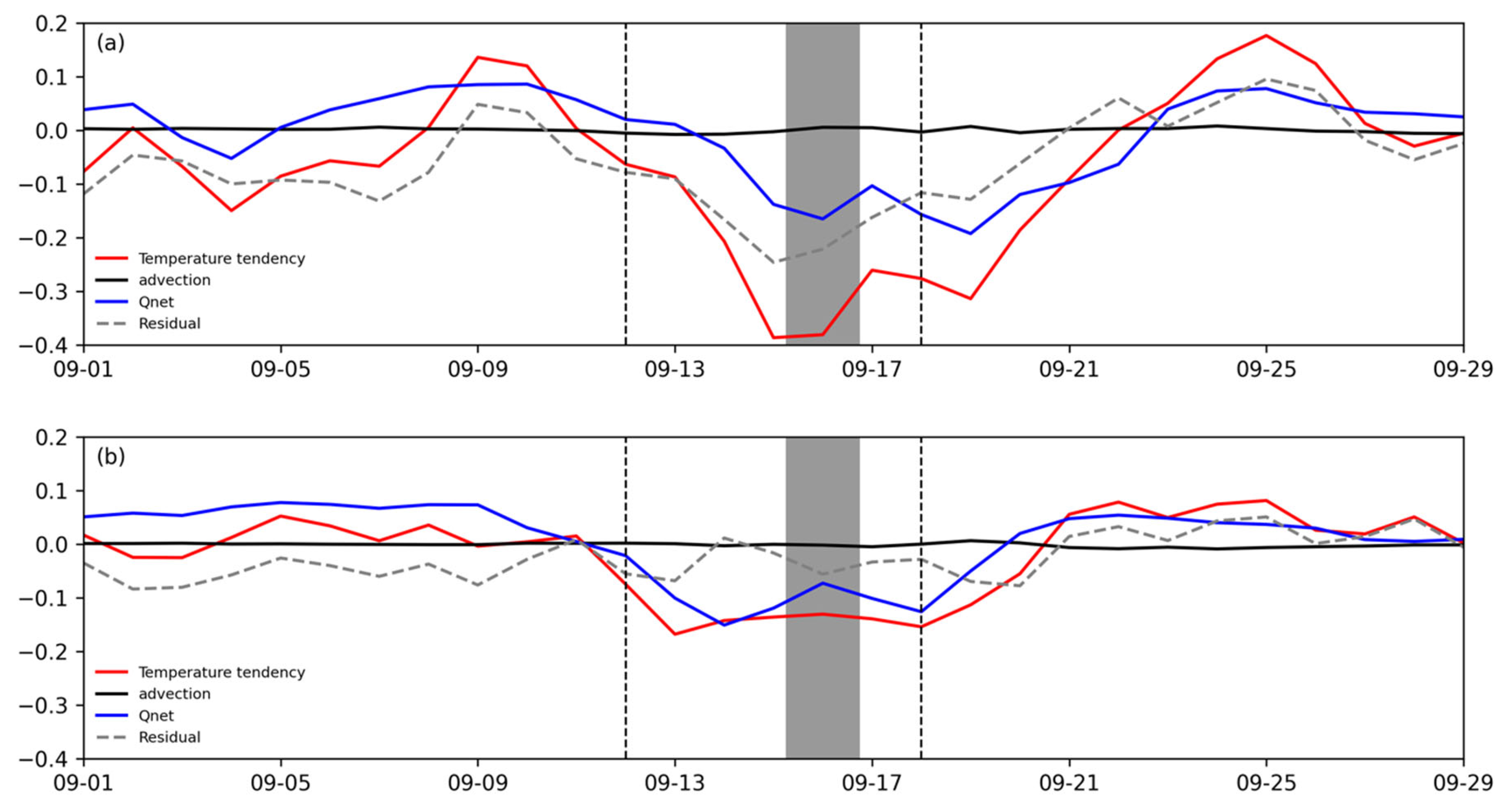
However, kinematic stability does not imply thermodynamic inactivity. The mixed-layer heat budget analysis (Figure 10a) clarifies the underlying thermodynamic drivers by quantifying the processes controlling the mixed-layer temperature tendency (∂T/∂t). During the storm passage, the mixed layer underwent cooling, with a temperature tendency exceeding −0.3 °C · day−1. To determine the source of this cooling, the budget decomposes the temperature tendency into contributions from net surface heat flux (Qnet), horizontal advection, and a residual term representing vertical turbulent entrainment and diffusion. The analysis shows that the Qnet component accounted for only a minor fraction of the total cooling rate despite enhanced latent heat loss. Furthermore, horizontal advection terms remained negligible throughout the period, which rules out the intrusion of remote water masses. Instead, the cooling was driven almost entirely by the residual term. In the context of the MLD evolution, the dominance of the residual term confirms that vertical turbulent mixing occurred across the mixed-layer base despite the limited deepening. The turbulence was sufficient to entrain fluid from immediately below the mixed layer but insufficient to erode the deeper thermocline.
Synthesizing these diagnostics defines a specific regime of “shallow warm-water entrainment.” The substantial mixing energy generated by the typhoon encountered the robust stratification barrier shown in Figure 9 and was consequently dissipated within the MLD and the upper portion of the MHW. As a result, the turbulent processes entrained the anomalously warm subsurface water identified in Figure 8 rather than the colder water typically found at depth. The cooling signal observed in the heat budget (Figure 10a) therefore reflects the entrainment of this warm subsurface water, which was cooler than the surface but significantly warmer than typical thermocline water. Although this process technically cooled the mixed layer relative to the pre-storm state, the entrained water remained sufficiently warm to keep sea surface temperatures well above the threshold required for intense cyclone development. By substituting warm-water entrainment for cold-water entrainment, the three-dimensional MHW structure effectively mitigated the conventional cold-wake negative feedback [2,41]. It is important to note that this mechanism does not imply the total absence of ocean cooling. As shown in Figure 2d, a cold wake eventually formed after the storm’s passage due to the cumulative heat extraction. However, the presence of the deep warm anomaly delayed the entrainment of critically cold thermocline water during the storm’s passage. This “dampening” of the immediate cooling response ensured that the SST remained sufficiently high to support the storm during the crucial interaction window, delaying the negative feedback until after the typhoon had already traversed the region [13,40].
The interaction between the deep MHW and the vertical wind shear offers a compelling explanation for the storm’s resilience, even in the absence of high-resolution inner-core kinematic data. Theoretically, moderate-to-strong VWS (15–20 m s−1) inhibits intensification through “ventilation”, a dynamical process where dry, low-entropy environmental air is sheared into the storm core, diluting the warm core and reducing the efficiency of the heat engine. Under typical oceanic conditions, the surface enthalpy fluxes are insufficient to counteract this continuous thermodynamic depletion, leading to rapid weakening.
In the case of Typhoon Oscar, however, the thermodynamic forcing functioned as a critical energy subsidy. Our heat budget analysis (Figure 7) confirms that the MHW sustained anomalous latent heat fluxes exceeding 210 W m−2 directly within the shear-affected region. We propose that this enhanced energy injection acted as a thermodynamic compensation mechanism. By rapidly replenishing the boundary layer with high-entropy air, the MHW effectively mitigated the drying capability of the shear-induced ventilation. Consequently, the storm could maintain its intensity not because the shear was ineffective, but because the oceanic fuel supply was potent enough to offset the thermodynamic penalty imposed by the hostile atmospheric environment.
While the grid resolution of the ERA5 reanalysis limits our ability to explicitly resolve the fine-scale structural adjustments (such as vortex tilt or inner-core precession), the magnitude of the sustained fluxes provides strong evidence that the maintenance was thermodynamically driven. The deep MHW effectively raised the potential intensity ceiling, allowing the storm to survive an atmospheric regime that would typically dismantle a cyclone cut off from such a deep heat source.

5. Conclusions

This study elucidates the critical role of deep ocean stratification in enabling super typhoons to maintain intensity at high latitudes. Using super typhoon Oscar as a prototype, we demonstrated that a persistent Marine Heatwave can impose a distinct thermodynamic regime that effectively insulates a storm from adverse atmospheric conditions, such as strong vertical wind shear. Our analysis confirms that this maintenance is contingent upon the specific three-dimensional architecture of the MHW, characterized by a thermal anomaly extending to depths of ~150 m. This pre-existing structure actively supported the storm through a coupled surface and subsurface forcing mechanism. At the interface, MHW-elevated Sea Surface Temperatures (SSTs) maximized air–sea enthalpy fluxes. Notably, the deep subsurface structure delayed and weakened the canonical cold-wake feedback. By replacing cold thermocline water with a deepened reservoir of warm water, the MHW transformed the typical mixing process into a regime of shallow warm-water entrainment, permitting continuous energy extraction despite a hostile atmospheric environment.
These results demonstrate that the thermodynamic forcing provided by a deep MHW can be potent enough to compensate for severe atmospheric inhibitors, a mechanism we characterize as ‘Thermodynamic Compensation’. This mechanism is particularly critical at mid-to-high latitudes, where the subsurface thermal structure acts as the dominant arbiter of storm intensity. The findings challenge the traditional hierarchy of environmental controls, indicating that under such extreme conditions, the mitigation of cold-wake cooling by the MHW outweighs the limiting influence of atmospheric shear. Consequently, the MHW serves not merely as a passive thermal background but as a primary driver of the peak potential and duration of the storm.
The identification of the mechanism by which deep ocean stratification enables cold-wake mitigation has significant implications for operational forecasting and climate risk assessment. Operational intensity models relying on climatological baselines are prone to underpredicting the persistence of cyclones interacting with deep MHWs. Existing climate projections indicate a global increase in the frequency and duration of MHWs [29,31]. In this context, the ‘thermodynamic compensation’ mechanism identified in Typhoon Oscar suggests a physical pathway through which deep warm anomalies could theoretically extend the support for intense cyclones into higher latitudes. Rather than a definitive forecast, we propose that deep MHWs may potentially expand the zone of coastal risks by buffering storms against shear-induced decay.
However, we acknowledge that these conclusions are drawn from the analysis of a single extreme event, Super Typhoon Oscar. While this case serves as a prototype to elucidate the physical pathway of cold-wake mitigation via deep stratification, it does not unequivocally confirm the statistical prevalence of this mechanism in the current climate. Furthermore, we recognize the inherent uncertainties in using reanalysis datasets (ERA5) to diagnose fine-scale inner-core processes, which highlights the need for future verification using high-resolution coupled ensemble models. The interaction between TCs and MHWs involves complex multi-scale variability, and the thermodynamic compensation mechanism may depend on specific coincidences of track, translation speed, and MHW depth. Future research should prioritize multi-case statistical analyses and coupled climate modeling to quantify the frequency of such deep-MHW interactions and determine whether these events represent a systematic shift in the climatology of high-latitude cyclones.

Author Contributions

Conceptualization, C.T. and J.J.; methodology, G.L.; software, C.T.; validation, C.T., Y.Y. and J.F.; formal analysis, Y.Y.; investigation, G.L.; resources, C.T.; data curation, J.F.; writing—original draft preparation, C.T.; writing—review and editing, J.J. and C.Z.; visualization, G.L. and C.Z.; supervision, J.F.; project administration, J.J.; funding acquisition, J.J. All authors have read and agreed to the published version of the manuscript.

Funding

This research was funded by National Natural Science Foundation of China (Grant No. 42192562, 42306031), and the NUIST Students’ Platform for Innovation and Entrepreneurship Training Program (Grant No. 202510300095).

Data Availability Statement

All data used in this study are publicly accessible. Typhoon track and intensity data (IBTrACS) were acquired via the National Centers for Environmental Information (https://www.ncei.noaa.gov/products/international-best-track-archive), accessed on 1 June 2023. Sea Surface Temperature (SST) data (OISST v2.1) were obtained from the National Oceanic and Atmospheric Administration (NOAA) (https://www.ncei.noaa.gov/products/optimum-interpolation-sst), accessed on 1 June 2023. Atmospheric parameters, including vertical wind shear and surface heat fluxes, were derived from the ERA5 reanalysis dataset accessible through the Copernicus Climate Change Service (https://cds.climate.copernicus.eu/), accessed on 1 June 2023. Three-dimensional ocean state variables were downloaded from the Hybrid Coordinate Ocean Model (HYCOM) data server (https://www.hycom.org/), accessed on 1 June 2023.

Acknowledgments

We would like to thank the data centers for collecting, computing, and supplying the accessible high-quality data in Section 2.

Conflicts of Interest

The authors declare no conflicts of interest. The funders had no role in the design of the study; in the collection, analyses, or interpretation of data; in the writing of the manuscript; or in the decision to publish the results.

References

  1. Emanuel, K. Increasing destructiveness of tropical cyclones over the past 30 years. Nature 2005, 436, 686–688. [Google Scholar] [CrossRef] [PubMed]
  2. Lin, I.-I.; Wu, C.-C.; Pun, I.-F.; Ko, D.-S. Upper-ocean thermal structure and the western North Pacific Category-5 typhoons. Part I: Ocean features and the Category-5 typhoons’ intensification. Mon. Weather Rev. 2008, 136, 3288–3306. [Google Scholar] [CrossRef]
  3. Needham, H.F.; Keim, B.D.; Sathiaraj, D. A review of tropical cyclone-generated storm surges: Global data sources, observations, and impacts. Rev. Geophys. 2015, 53, 545–591. [Google Scholar] [CrossRef]
  4. Wu, Q.; Hong, J.; Ruan, Z. Diurnal variations in tropical cyclone intensification. Geophys. Res. Lett. 2020, 47, e2020GL090397. [Google Scholar] [CrossRef]
  5. Guo, Y.; Tan, Z.; Chen, X. Multidecadal Variability of Tropical Cyclone Translation Speed over the Western North Pacific. J. Clim. 2023, 36, 5793–5807. [Google Scholar] [CrossRef]
  6. Shi, X.; Liu, Y.; Chen, J.; Chen, H.; Wang, Y.; Lu, Z.; Wang, R.-Q.; Fung, J.C.-H.; Ng, C.W.W. Escalating tropical cyclone precipitation extremes and landslide hazards in South China under global warming. npj Clim. Atmos. Sci. 2024, 7, 107. [Google Scholar] [CrossRef]
  7. Emanuel, K.A. An air–sea interaction theory for tropical cyclones. J. Atmos. Sci. 1986, 43, 585–605. [Google Scholar] [CrossRef]
  8. Fairall, C.W.; Bradley, E.F.; Hare, J.E.; Grachev, A.A.; Edson, J.B. Bulk parameterization of air–sea fluxes: Updates and verification for the COARE algorithm. J. Clim. 2003, 16, 571–591. [Google Scholar] [CrossRef]
  9. Elsner, J.B.; Kossin, J.P.; Jagger, T.H. The increasing intensity of the strongest tropical cyclones. Nature 2008, 455, 92–95. [Google Scholar] [CrossRef]
  10. Bhatia, K.T.; Vecchi, G.A.; Knutson, T.R.; Murakami, H.; Kossin, J.; Dixon, K.W.; Whitlock, C.E. Recent increases in tropical cyclone intensification rates. Nat. Commun. 2019, 10, 635. [Google Scholar] [CrossRef]
  11. Kossin, J.P.; Knapp, K.R.; Olander, T.L.; Velden, C.S. Global increase in major tropical cyclone exceedance probability over the past four decades. Proc. Natl. Acad. Sci. USA 2020, 117, 11975–11980. [Google Scholar] [CrossRef] [PubMed]
  12. Emanuel, K.A. The dependence of hurricane intensity on climate. Nature 1987, 326, 483–485. [Google Scholar] [CrossRef]
  13. Lin, I.-I.; Black, P.; Price, J.F.; Yang, C.-Y.; Chen, S.S.; Lien, C.-C.; Harr, P.; Chi, N.; Wu, C.; D’ASaro, E.A. An ocean coupling potential intensity index for tropical cyclones. Geophys. Res. Lett. 2013, 40, 1878–1882. [Google Scholar] [CrossRef]
  14. Chih, C.H.; Wu, C.-C. Exploratory analysis of upper-ocean heat content and sea surface temperature underlying tropical cyclone rapid intensification in the western North Pacific. J. Clim. 2020, 33, 1031–1050. [Google Scholar] [CrossRef]
  15. Pun, I.F.; Lin, I.I.; Lo, M.H. Recent increase in high tropical cyclone heat potential area in the Western North Pacific Ocean. Geophys. Res. Lett. 2013, 40, 4680–4684. [Google Scholar] [CrossRef]
  16. Price, J.F. Upper ocean response to a hurricane. J. Phys. Oceanogr. 1981, 11, 153–175. [Google Scholar] [CrossRef]
  17. Price, J.F.; Sanford, T.B.; Forristall, G.Z. Forced stage response to a moving hurricane. J. Phys. Oceanogr. 1994, 24, 233–260. [Google Scholar] [CrossRef]
  18. Cione, J.J.; Uhlhorn, E.W. Sea surface temperature variability in hurricanes: Implications with respect to intensity change. Mon. Weather Rev. 2003, 131, 1783–1796. [Google Scholar] [CrossRef]
  19. Dare, R.A.; McBride, J.L. Sea surface temperature response to tropical cyclones. Mon. Weather Rev. 2011, 139, 3798–3808. [Google Scholar] [CrossRef]
  20. Price, J.F. Metrics of hurricane–ocean interaction: Vertically-integrated or vertically-averaged ocean temperature? Ocean. Sci. 2009, 5, 351–368. [Google Scholar] [CrossRef]
  21. de Boyer Montégut, C.; Madec, G.; Fischer, A.S.; Lazar, A.; Iudicone, D. Mixed layer depth over the global ocean: An examination of profile data and a profile-based climatology. J. Geophys. Res. Ocean. 2004, 109, C12003. [Google Scholar] [CrossRef]
  22. Lin, I.-I.; Chen, C.-H.; Pun, I.-F.; Liu, W.T.; Wu, C.-C. Warm ocean anomaly, air–sea fluxes, and the rapid intensification of tropical cyclone Nargis (2008). Geophys. Res. Lett. 2009, 36, L03817. [Google Scholar] [CrossRef]
  23. Sprintall, J.; Tomczak, M. Evidence of the barrier layer in the surface layer of the tropics. J. Geophys. Res. Ocean. 1992, 97, 7305–7316. [Google Scholar] [CrossRef]
  24. Balaguru, K.; Chang, P.; Saravanan, R.; Leung, R.; Xu, Z.; Li, M.; Hsieh, J.-S. Ocean barrier layers’ effect on tropical cyclone intensification. Proc. Natl. Acad. Sci. USA 2012, 109, 14343–14347. [Google Scholar] [CrossRef]
  25. Hlywiak, J.; Nolan, D.S. The influence of oceanic barrier layers on tropical cyclone intensity as determined through idealized, coupled numerical simulations. J. Phys. Oceanogr. 2019, 49, 1723–1745. [Google Scholar] [CrossRef]
  26. Mei, W.; Pasquero, C. Spatial and temporal characterization of sea surface temperature response to tropical cyclones. J. Clim. 2013, 26, 3745–3765. [Google Scholar] [CrossRef]
  27. Zhang, H.; Liu, X.; Wu, R.; Liu, F.; Yu, L.; Shang, X.; Qi, Y.; Wang, Y.; Song, X.; Xie, X.; et al. Ocean response to successive typhoons Sarika and Haima (2016) based on data acquired via multiple satellites and moored array. Remote Sens. 2019, 11, 2360. [Google Scholar] [CrossRef]
  28. Hobday, A.J.; Alexander, L.V.; Perkins, S.E.; Smale, D.A.; Straub, S.C.; Oliver, E.C.J.; Benthuysen, J.A.; Burrows, M.T.; Donat, M.G.; Feng, M.; et al. A hierarchical approach to defining marine heatwaves. Prog. Oceanogr. 2016, 141, 227–238. [Google Scholar] [CrossRef]
  29. Frölicher, T.L.; Fischer, E.M.; Gruber, N. Marine heatwaves under global warming. Nature 2018, 560, 360–364. [Google Scholar] [CrossRef]
  30. Oliver, E.C.J.; Donat, M.G.; Burrows, M.T.; Moore, P.J.; Smale, D.A.; Alexander, L.V.; Benthuysen, J.A.; Feng, M.; Gupta, A.S.; Hobday, A.J.; et al. Longer and more frequent marine heatwaves over the past century. Nat. Commun. 2018, 9, 1324. [Google Scholar] [CrossRef]
  31. Oliver, E.C.J.; Burrows, M.T.; Donat, M.G.; Sen Gupta, A.; Alexander, L.V.; Perkins-Kirkpatrick, S.E.; Benthuysen, J.A.; Hob-day, A.J.; Holbrook, N.J.; Moore, P.J.; et al. Projected marine heatwaves in the 21st century and the potential for ecological impact. Front. Mar. Sci. 2019, 6, 734. [Google Scholar] [CrossRef]
  32. Holbrook, N.J.; Scannell, H.A.; Sen Gupta, A.; Benthuysen, J.A.; Feng, M.; Oliver, E.C.J.; Alexander, L.V.; Burrows, M.T.; Donat, M.G.; Hobday, A.J.; et al. A global assessment of marine heatwaves and their drivers. Nat. Commun. 2019, 10, 2624. [Google Scholar] [CrossRef] [PubMed]
  33. Smale, D.A.; Wernberg, T.; Oliver, E.C.J.; Thomsen, M.; Harvey, B.P.; Straub, S.C.; Burrows, M.T.; Alexander, L.V.; Benthuysen, J.A.; Donat, M.G.; et al. Marine heatwaves threaten global biodiversity and the provision of ecosystem services. Nat. Clim. Change 2019, 9, 306–312. [Google Scholar] [CrossRef]
  34. Sen Gupta, A.; Thomsen, M.; Benthuysen, J.A.; Hobday, A.J.; Oliver, E.; Alexander, L.V.; Burrows, M.T.; Donat, M.G.; Feng, M.; Holbrook, N.J.; et al. Drivers and impacts of the most extreme marine heatwave events. Sci. Rep. 2020, 10, 19359. [Google Scholar] [CrossRef] [PubMed]
  35. Capotondi, A.; Rodrigues, R.R.; Sen Gupta, A.; Benthuysen, J.A.; Deser, C.; Frölicher, T.L.; Lovenduski, N.S.; Amaya, D.J.; Le Grix, N.; Xu, T.; et al. A global overview of marine heatwaves in a changing climate. Commun. Earth Environ. 2024, 5, 701. [Google Scholar] [CrossRef]
  36. Zhang, Y.; Du, Y.; Feng, M.; Hobday, A.J. Vertical structures of marine heatwaves. Nat. Commun. 2023, 14, 6483. [Google Scholar] [CrossRef]
  37. He, Q.; Zhan, W.; Feng, M.; Gong, Y.; Cai, S.; Zhan, H. Common occurrences of subsurface heatwaves and cold spells. Nature 2024, 629, 83–89. [Google Scholar] [CrossRef]
  38. Choi, H.-Y.; Park, M.-S.; Kim, H.-S.; Lee, S. Marine heatwave events strengthen the intensity of tropical cyclones. Commun. Earth Environ. 2024, 5, 69. [Google Scholar] [CrossRef]
  39. Radfar, S.; Moftakhari, H.; Moradkhani, H. Rapid intensification of tropical cyclones in the Gulf of Mexico is more likely during marine heatwaves. Commun. Earth Environ. 2024, 5, 421. [Google Scholar] [CrossRef]
  40. Kang, S.K.; Kim, S.-H.; Lin, I.-I.; Park, Y.-H.; Choi, Y.; Ginis, I.; Cione, J.; Shin, J.Y.; Kim, E.J.; Kim, K.O.; et al. The North Equatorial Current and rapid intensification of super typhoons. Nat. Commun. 2024, 15, 1742. [Google Scholar] [CrossRef]
  41. Pun, I.F.; Hsu, H.H.; Moon, I.J.; Lin, I.I.; Jeong, J.Y. Marine heatwave as a supercharger for the strongest typhoon in the East China Sea. npj Clim. Atmos. Sci. 2023, 6, 128. [Google Scholar] [CrossRef]
  42. Wu, R.; Han, K.; Tong, C. Interaction between Super Typhoon Yagi (2024) and a marine heatwave in the northern South China Sea. Environ. Res. Lett. 2025, 20, 104054. [Google Scholar] [CrossRef]
  43. Ding, W.; Wu, Q.; Chen, Y. Trends of maximum annual sea surface temperature in the Eastern China Seas. Front. Mar. Sci. 2024, 11, 1452125. [Google Scholar] [CrossRef]
  44. Kim, Y.H.; Lee, M.; Min, S.-K.; Park, D.-S.R.; Cha, D.-H.; Byun, Y.-H.; Heo, J. Global warming–induced warmer surface water over the East China Sea can intensify typhoons like Hinnamnor. Bull. Am. Meteorol. Soc. 2024, 105, E1416–E1421. [Google Scholar] [CrossRef]
  45. Nguyen, T.-K.-D.; Hsu, P.-C. Comprehensive analysis of marine heatwaves and ocean thermal structure impact on typhoon intensification in the East China Sea. J. Mar. Syst. 2025, 249, 104065. [Google Scholar] [CrossRef]
  46. McTaggart-Cowan, R.; Davies, E.L.; Fairman, J.G., Jr.; Galarneau, T.J., Jr.; Schultz, D.M. Revisiting the 26.5 °C sea surface temperature threshold for tropical cyclone development. Bull. Am. Meteorol. Soc. 2015, 96, 1929–1943. [Google Scholar] [CrossRef]
  47. Pun, I.F.; Lin, I.I.; Wu, C.C. Suppression of marine heatwave activity by tropical cyclone–induced upper ocean cooling. Sci. Adv. 2025, 11, eadw8070. [Google Scholar] [CrossRef]
  48. Chassignet, E.P.; Hurlburt, H.E.; Smedstad, O.M.; Halliwell, G.R.; Hogan, P.J.; Wallcraft, A.J.; Baraille, R.; Bleck, R. The HYCOM (hybrid coordinate ocean model) data assimilative system. J. Mar. Syst. 2007, 65, 60–83. [Google Scholar] [CrossRef]
  49. Chen, S.S.; Price, J.F.; Zhao, W.; Donelan, M.A.; Walsh, E.J. The CBLAST-Hurricane program and the next-generation fully coupled atmosphere–wave–ocean models for hurricane research and prediction. Bull. Am. Meteorol. Soc. 2007, 88, 311–317. [Google Scholar] [CrossRef]
  50. Knapp, K.R.; Kruk, M.C.; Levinson, D.H.; Diamond, H.J.; Neumann, C.J. The International Best Track Archive for Climate Stewardship (IBTrACS): Unifying tropical cyclone data. Bull. Am. Meteorol. Soc. 2010, 91, 363–376. [Google Scholar] [CrossRef]
  51. de Boyer Montégut, C.; Mignot, J.; Lazar, A.; Cravatte, S. Control of salinity on the mixed layer depth in the world ocean: Part 1: General description. J. Geophys. Res. Ocean. 2007, 112, C06011. [Google Scholar] [CrossRef]
  52. Dare, R.A.; McBride, J.L. The threshold sea surface temperature condition for tropical cyclogenesis. J. Clim. 2011, 24, 4570–4576. [Google Scholar] [CrossRef]
  53. Romps, D.M. Clausius–Clapeyron scaling of CAPE from analytical solutions to RCE. J. Atmos. Sci. 2016, 73, 3719–3737. [Google Scholar] [CrossRef]
  54. Mainelli, M.; DeMaria, M.; Shay, L.K.; Goni, G. Application of oceanic heat content estimation to operational forecasting of recent Atlantic Category-5 hurricanes. Weather Forecast. 2008, 23, 3–16. [Google Scholar] [CrossRef]
Figure 1. Sea Surface Temperature (SST) in the Northwest Pacific: (a) Average SST for September 1995; (b) SST and marine heatwaves (MHWs) during the week before typhoon genesis (5–11 September); (c) SST and MHWs during the typhoon period (12–18 September); (d) SST and MHWs in the week following typhoon dissipation (19–25 September). Shading indicates SST values (°C), with black dots marking MHW areas. The typhoon’s path is shown with color-coded categories, ranging from 1 (green) to 5 (purple).
Jmse 14 00191 g001
Figure 2. Same as Figure 1 but for the SST Anomaly (°C) in the Northwest Pacific during September 1995.
Jmse 14 00191 g002
Figure 3. The Areas of MHWs in the Northwest Pacific: (a) Time series of MHW areas (×104 km2) during September 1995 for Box 1 (solid line) and Box 2 (dashed line). The vertical dashed lines indicate the typhoon lifetime (from genesis to dissipation), and the gray shading denotes the period when the typhoon reached Category 5 intensity. (b) Spatial distribution of MHW area before typhoon genesis (5–11 September); (c) during typhoon passage (12–18 September); (d) after typhoon dissipation (19–25 September). Typhoon tracks are color-coded by intensity, ranging from 1 (green) to 5 (purple).
Jmse 14 00191 g003
Figure 4. Spatial distribution of MHW duration in the Northwest Pacific: (a) before typhoon genesis (5–11 September); (b) during typhoon passage (12–18 September); (c) after typhoon dissipation (19–25 September). Unit: days.
Jmse 14 00191 g004
Figure 5. Same as Figure 3 but for the mean intensity of MHW in the Northwest Pacific. Unit: (°C).
Jmse 14 00191 g005
Figure 6. Same as Figure 3, but for the Qnet in the North Pacific. Negative values (blue) denote heat flux from ocean to atmosphere. Unit: W · m 2 .
Jmse 14 00191 g006
Figure 7. Contributions of heat flux components to Qnet in (a) Box 1 and (b) Box 2 for three phases: before Typhoon (5–11 September), during Typhoon (12–18 September), and after Typhoon (19–25 September). Bars represent latent heat flux (blue, cooling ocean), sensible heat flux (orange), net longwave radiation (green), and net shortwave radiation (red). (Values in W · m 2 ; positive upward bars indicate ocean heat gain; negative downward bars indicate ocean heat loss).
Jmse 14 00191 g007
Figure 8. Vertical–time sections of MHW intensity (°C) at Oscar’s Category-5 locations from 1 to 30 September 1995. The seven panels (ag) correspond to seven locations along the typhoon track (purple dots in Figure 1) and are arranged in chronological order. The vertical dashed line in each panel marks the timing when Oscar passed the corresponding location during its Category-5 stage (shifting from 15 to 16 September). Blank areas indicate periods when MHW conditions were not met (i.e., non-MHW).
Jmse 14 00191 g008
Figure 9. Time series of the mean Mixed Layer Depth (MLD) during September 1995 for Box 1 (solid line) and Box 2 (dashed line). The vertical dashed lines indicate the typhoon lifetime (from genesis to dissipation), and the gray shading denotes the period when the typhoon reached Category 5 intensity. Unit: m.
Jmse 14 00191 g009
Figure 10. Mixed-layer heat budget (°C · day−1) for (a) Box 1 and (b) Box 2 during September 1995. Lines represent temperature tendency (red), Qnet (black), advection (blue), and the residual term (gray dashed). The gray shaded area (15–16 September) indicates the Category-5 intensity period of Typhoon Oscar.
Jmse 14 00191 g010
Disclaimer/Publisher’s Note: The statements, opinions and data contained in all publications are solely those of the individual author(s) and contributor(s) and not of MDPI and/or the editor(s). MDPI and/or the editor(s) disclaim responsibility for any injury to people or property resulting from any ideas, methods, instructions or products referred to in the content.