1. Introduction
There is a significant abundance of untapped marine energy potential in the ocean worldwide. Marine energy technologies convert the energy of ocean waves, tides, and currents, as well as river currents, into electricity and other forms of usable energy. The marine energy resource potential in the United States is significant and geographically diverse, with a study commissioned by the U.S. Department of Energy estimating that the nation’s annual marine energy potential is approximately 2300 TWh/year across the 50 states, or greater than 57 percent of U.S. electricity generation in 2019 [
1]. However, the marine energy industry still faces hurdles to commercialization; high cost of development, manufacturing, reliability, maintenance, grid integration, and technological maturity [
2]. Economically for marine energy technology to become practical many of these hurdles need to be overcome. For ocean waves, one popular device, wave energy converters (WEC), needs significant improvements in power absorption and wave-to-wire efficiency [
3,
4], To supply appropriate power to the utility grid, WECs require energy storage capacity with supporting power electronic conversion. These components are essential for converting the oscillatory energy derived from ocean waves into a consistent reliable supply of generated power.
Research efforts are needed to focus on incorporating complimentary WEC energy storage systems to harmonize in balancing integrated supply and demand. In addition, detailed grid impact studies are required to assess the effects of large-scale wave energy deployment on grid stability. Advancing WEC designs [
3,
5,
6] that deliver more consistent power are critical for efficient grid integration [
7]. Generating electricity from the waves in the ocean requires the use of power-take-off (PTO) devices for each of the WEC buoys [
8]. Large arrays of WEC farms can capture the initial power, however, how to phase and optimize this marine power to the shoreline utility power grid is still a large research topic. Minimizing the amount, size, and type of energy storage is still an open issue. An example, is given in [
9] of a specific energy storage system coupled to the WEC that utilized super capacitors to provide constant power out. In comparison, others reviewed the upgrade of a fly-wheel energy storage system to a hydraulic system [
10]. Energy storage is necessary for proper operation of these WECs but the large installation cost of these systems can negatively impact the LCOE. To maximize the power delivered to the utility grid, losses in the system must be minimized while power absorbed by the WECs must be maximized. In addition to maximizing the WEC power absorbed challenges associated with the irregular wave operating environment need to be overcome.
The wave environment in which a WEC operates can be represented as an irregular wave composed of multiple sinusoidal frequency components. Such irregular waves are often characterized using wave spectra, such as the Bretschneider Spectrum. The Bretschneider Spectrum is generated using the peak frequency and significant wave height of the ocean waves at a given time [
11]. As ocean waves vary with the seasons and time of day, different spectra can be generated to represent different conditions at a given location [
12]. Daily and seasonal variations in the wave spectrum make it challenging to maximize energy absorption by the WEC.
Several control strategies are given in the literature that are designed to maximize energy capture. One popular approach uses linear control to resonate the WEC with dominate frequencies in the wave spectra to increase power capture, see [
6]. Most recently, the shape of the buoy can be altered, to produce inherent energy storage (reactive power) through nonlinear interactions with the wave force, see [
13].
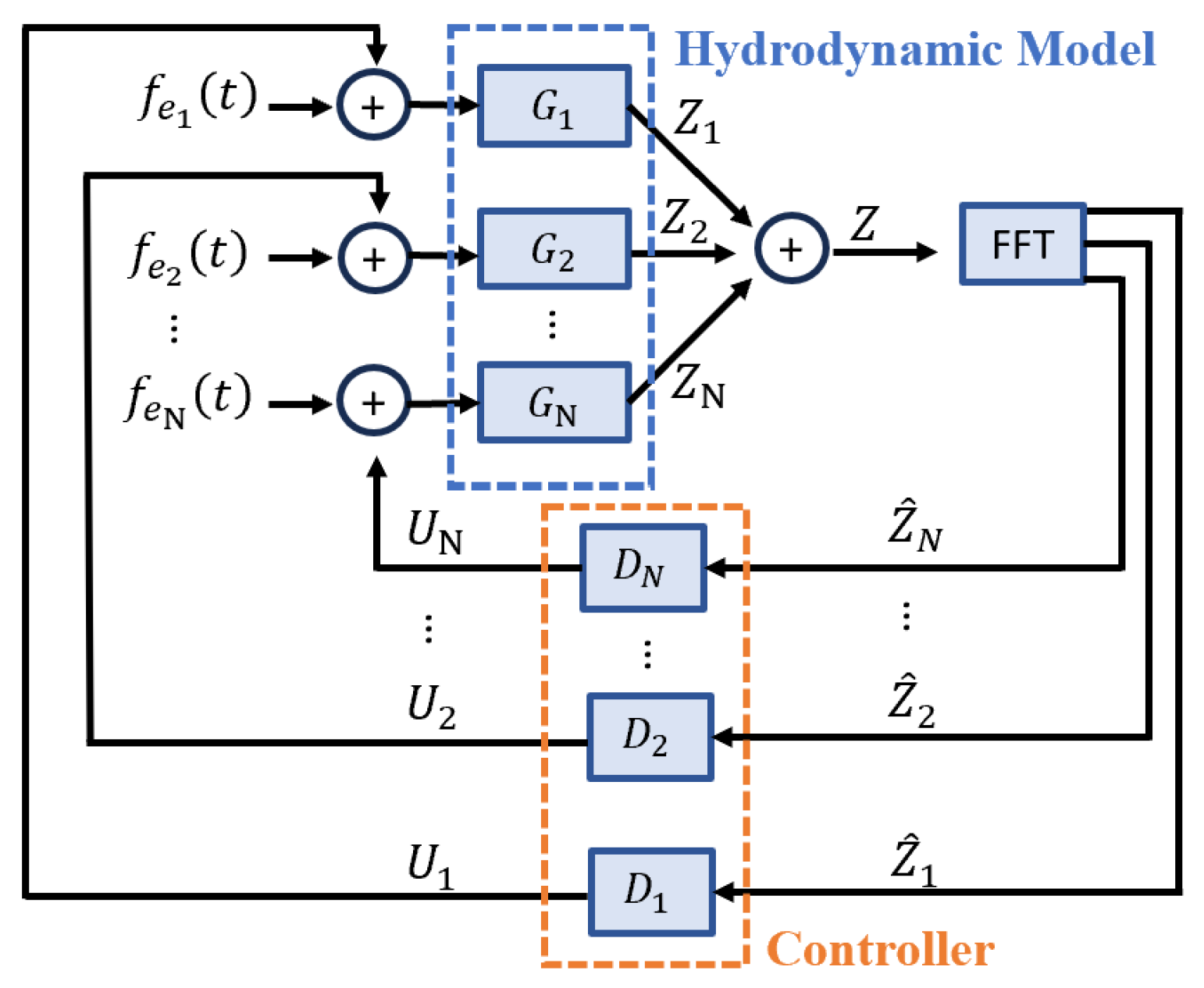
Exploring further, a linear complex conjugate controller can be utilized on a cylindrical buoy to resonate the WEC with the varying wave spectra for a given condition. Two requirements must be met for proper operation: (i) the buoy must resonate with the excitation frequency and (ii) the added damping of the controller and the damping of the WEC system itself must be impedance matched [
14,
15]. In real-time the magnitude and phase of each frequency component in the wave spectra requires an estimator [
7]. This is realized using PD feedback control. The proportional gain of the feedback loop is determined by calculating the magnitudes of the individual frequencies in the wave spectra. To maximize the power absorption, the derivative gain of the feedback controller is set equal to the mechanical impedance of the buoy [
3,
16], also known as Proportional Derivative Complex Conjugate Control (PDC3), see [
3].
The nonlinear buoy has been previously studied in [
3,
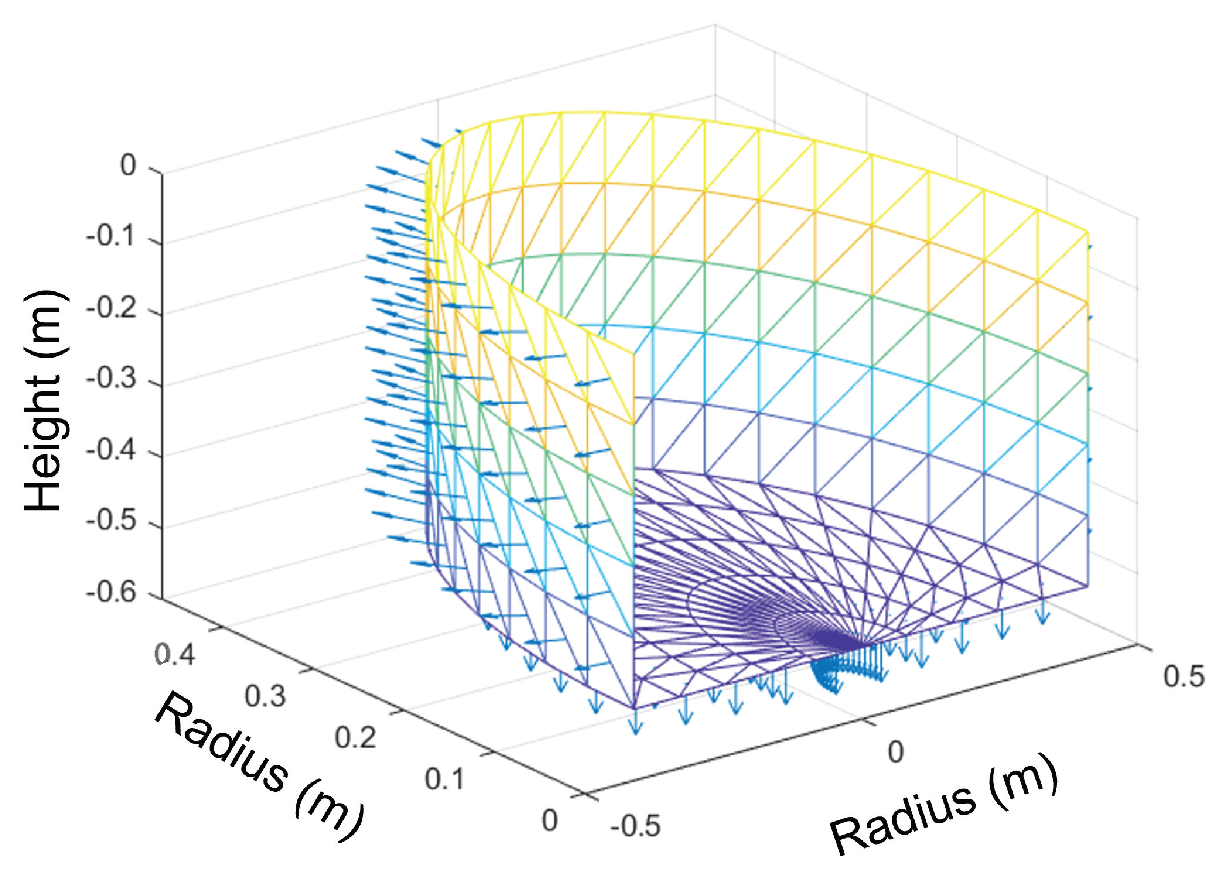
13] where a nonlinear WEC is developed by designing the buoy in the shape of an hourglass. By exploiting the nonlinear hydrodynamic force, increased energy capture and reactive power reduction was achieved [
5]. The reactive power needed to resonate the WEC with the wave spectrum it operates in is uniquely produced by the hourglass shape of the buoy. The need for large conventional energy storage systems (battery, flywheel, capacitor, etc.) to supply the required reactive power is reduced. The real power is extracted through a simplified rate feedback controller.
Power packet networks were first introduced as electricity-power-packets in [
17] to integrate variable energy resources into a larger utility power grids. Arranging multiple linear controlled WECs into power packet network arrays improved system robustness while increasing the power delivered to the grid from each array [
7]. In addition, this helped to reduce the required size of the energy storage system while minimizing power variation and lowering cost/complexity. By coupling these desirable features and new advancements [
7] the wave-to-wire efficiencies were enhanced while also providing a more resilient connection to the onshore utility power grid [
18]. This work builds on [
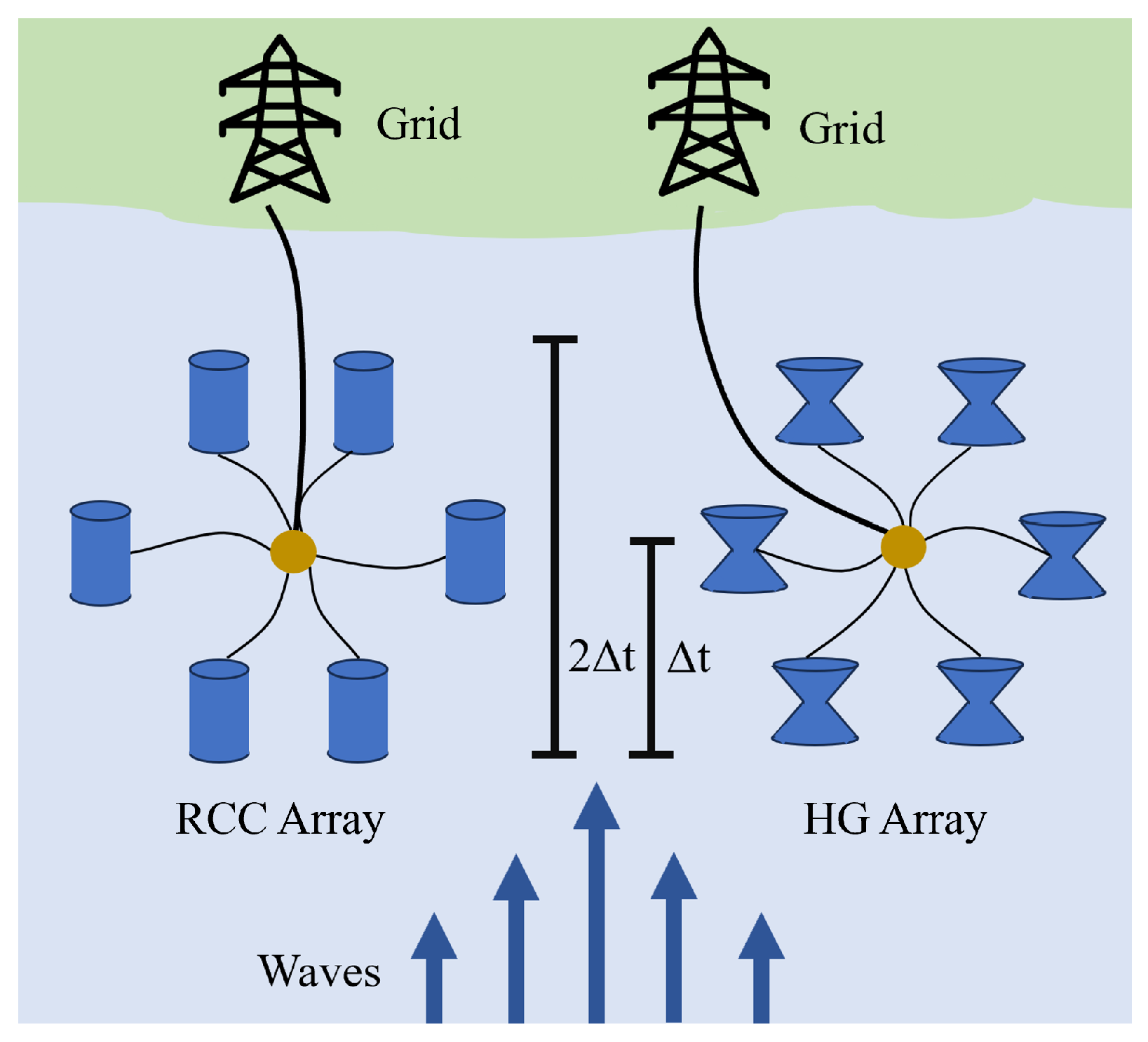
13] to develop two hexagonal WEC arrays as part of a power packet network. The optimal phasing for the linear array was investigated in [
7]. Phasing reduces the required size of the energy storage for each array while maximizing the power delivered to the onshore utility power grid. This work extends [
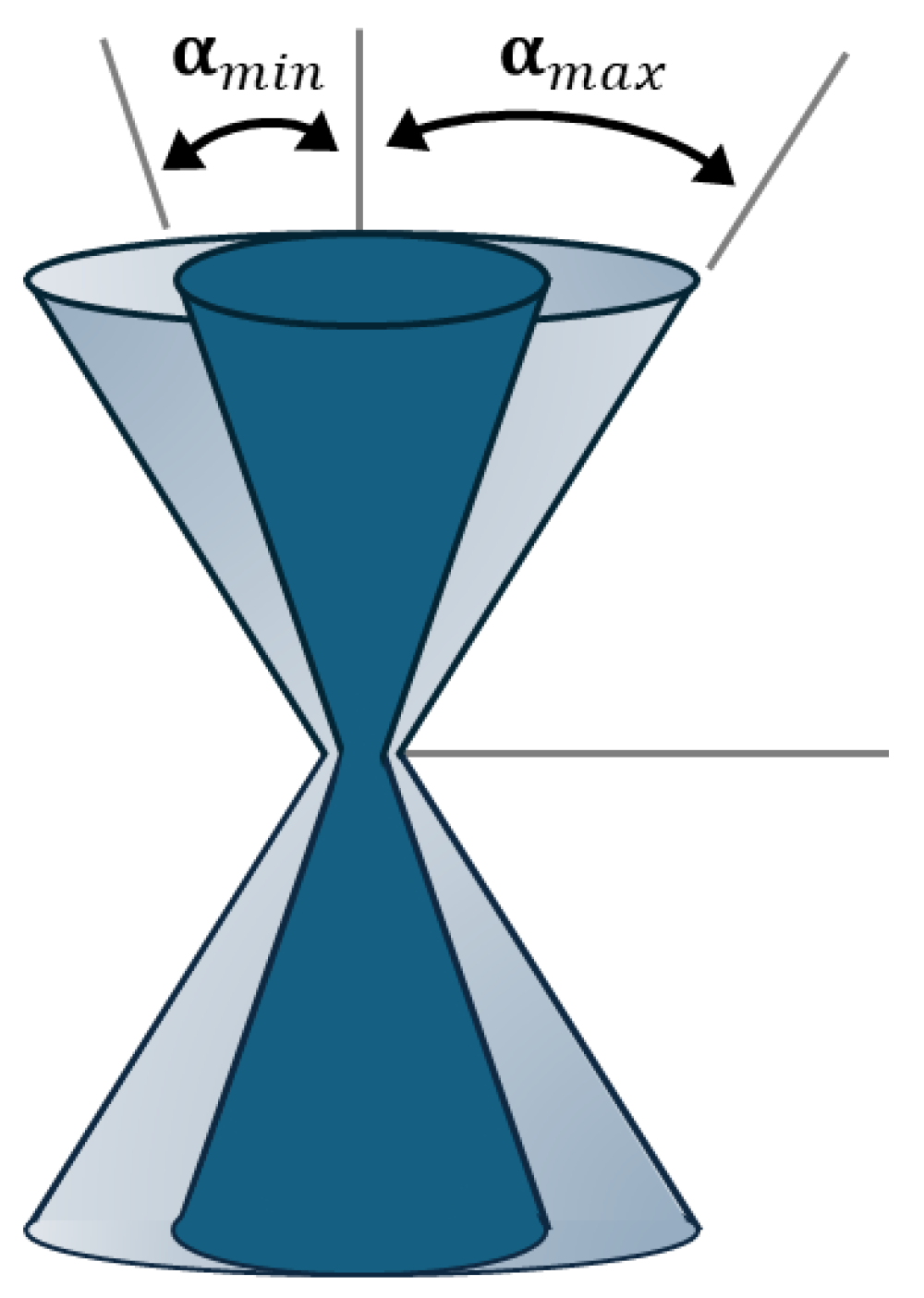
13] to determine the optimal phasing for the new nonlinear hourglass WEC array. To further increase power delivered to the grid, the steepness angle, alpha, for each hourglass buoy was adjusted to increase its power absorption.
Combining this WEC array phase control with the unique hourglass shape WEC improves the quality of power delivered to the grid and reduces peak reactive power which minimizes additional energy storage equipment. In addition, by adjusting the steepness angle, alpha, for the hourglass buoy, per sea state, increases the real power capture. This nonlinear hourglass buoy WEC is compared to the state-of-the-art PDC3 right circular cylinder buoy WEC while maintaining equivalent volumes, with respect to; size, weight, and power (better known as SWaP [
19]). The goal is to minimize size and weight while increasing power or improving power and energy density per each individual and collective set of arrays for any given WEC marine power farm. Evidence of this claim are described below for increased PTO and grid power with minimal required energy storage. This feasibility or proof-of-concept study is the key contribution for this paper and successfully demonstrated the enhanced SWaP characteristics for the hourglass WEC design and unique power packet network array implementation.
This paper focuses on enhancing the performance of WECs from wave capture to onshore grid integration. It addresses both real and reactive powers, with particular emphasis on minimizing energy storage requirements by reducing reactive power demand while simultaneously increasing energy capture through advanced nonlinear control techniques. In this study, the nonlinear WEC array produced 42.96% more PTO power and delivered 79.22% more power to the grid compared to the linear array. The nonlinear buoy also required 52.86% less maximum reactive power than the linear buoy. At the utility scale, such analyses are essential for assessing both feasibility and economic viability. This paper is presented in seven Sections. In
Section 2 models for both the right circular cylinder and nonlinear hourglass buoys are developed. In
Section 3 the control designs are developed for both buoys.
Section 4 describes the mechanical and electrical drive-train models.
Section 5 introduces the wave spectrum inputs utilized for validation.
Section 6 presents the numerical simulation results. The final
Section 7 presents the concluding remarks.
4. Mechanical and Electrical Drive-Train
Generating electricity from the waves in the ocean utilizes a power-take-off (PTO) device for each of the WEC buoys [
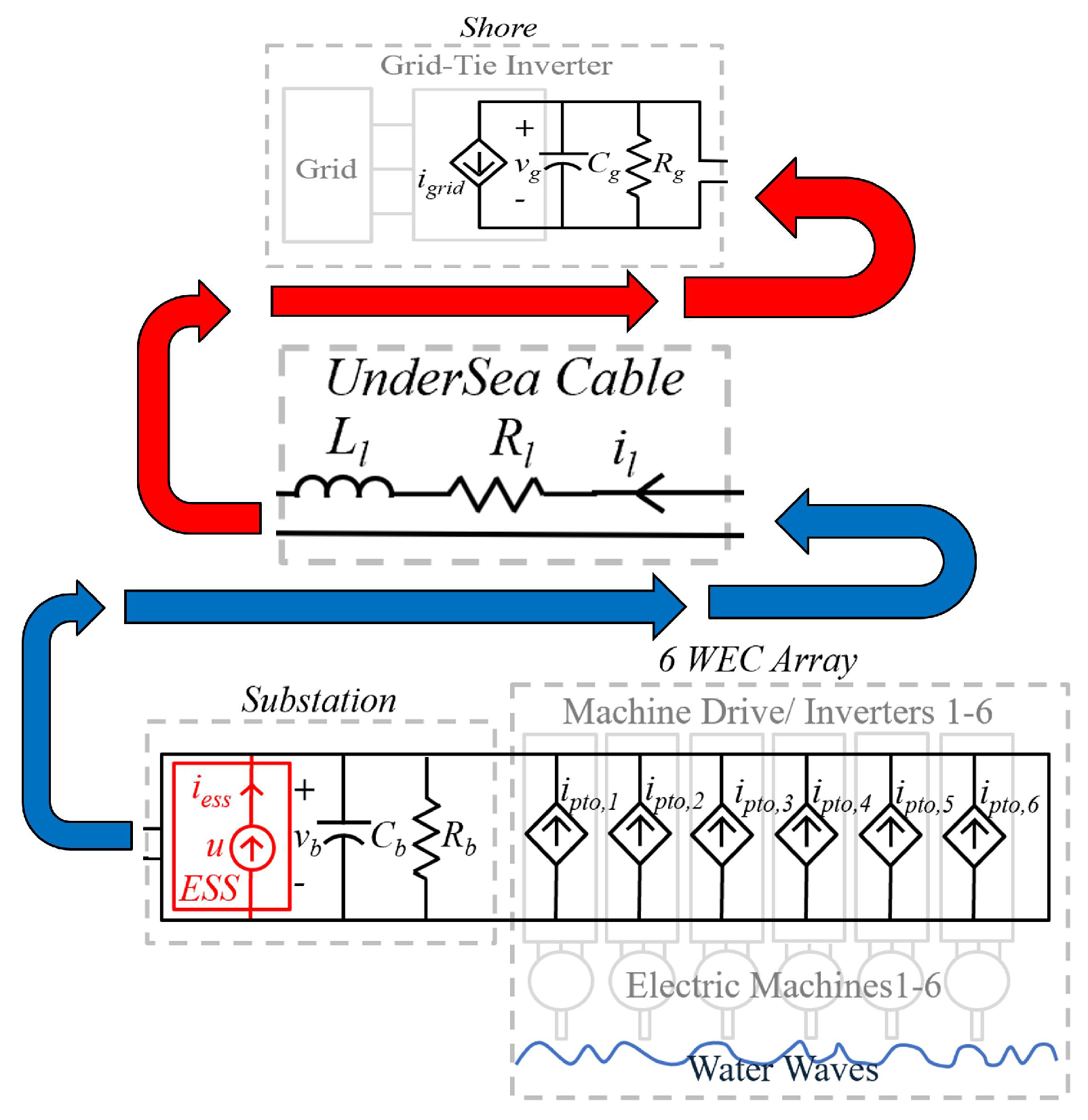
8]. Direct drive PTOs, such as a rack-and pinion, generate a rotational velocity from the heaving vertical motion of the buoy. The power generated by the buoy’s electric machine is converted through power electronics into dc power and sent to the dc bus. The dc bus connects to the onshore utility grid via an undersea cable and inverter, enabling power transfer to the grid [
9].
For this study, a rack-and-pinion PTO is selected to convert the vertical heave velocity of the buoys to rotational velocity. The rotational velocity turns an electric machine for both hourglass and right circular cylinder buoy configurations (see
Figure 6).
The heaving linear motion of each of the buoys is converted to a rotation velocity by the PTO through a gear radius as
where
is the linear velocity of each of the hourglass and right circular cylinder buoys,
is the velocity of each buoy,
r is the machine gear radius of the permanent magnet DC (PMDC) machine, and
is the rotational velocity. The rotational velocity generated by the rack-and-pinion gear system is used to turn the electric machine on each of the right circular cylinder and hourglass buoys and generate power.
The individual arrays of six nonlinear hourglass WECs and six right circular cylinder linear WECs have a PMDC electrical machine on each of the buoys. The six electric machines in each array are then connected to an electrical energy storage bus. The energy from the bus is then transported via the undersea cable to the onshore electrical grid. The PMDC machine on each of the right circular cylinder and hourglass buoys can be modeled as
The power produced by each of the machines in the right circular cylinder and hourglass arrays sends power to the electrical energy storage bus as
The electric machines on the right circular cylinder and hourglass buoys are connected to their individual electrical buses in parallel. The sum of the currents into the separate dc busses from the six buoy arrays can be calculated as
Each of the underwater dc electrical buses is modelled as a parallel combination of a resistor, a capacitor, and an ideal energy storage system. Each of the substations are connected, individually, to the onshore electrical grid via an undersea cable that is 1 km long. The connections to the onshore electrical grid are modeled by a parallel combination of a resistor, a capacitor, and a current source to represent the power being injected into the grid by each of the WEC arrays. Each of the substations can be modeled as
where
u is the ideal current injected into each of the individual substations from the energy storage systems as
The 1 km long undersea cables and grid connections can be modeled as
5. Bretschneider Wave Spectrum
The irregular wave sea states that the right circular cylinder and hourglass WECs are operating in can be described using a wave spectrum, such as a Bretschneider spectrum. The Bretschneider spectrum is calculated as a function of the peak period and the significant wave height of the sea state during a given period in time [
26]. The Bretschneider spectrum is calculated as
where
is the peak frequency of the waves, and
is the significant wave height of a given sea state. The Bretschneider spectrum for this study was developed with the Wave Analysis for Fatigue Oceanography (WAFO) toolbox for MATLAB 2022a [
27]. The
Bretschneider function within the WAFO toolbox creates the desired wave spectrum based on user-entered parameters for the significant wave height, peak period, decay factor, and spectrum width. The values for the significant wave height and peak frequency are shown in
Table 2. The WAFO
Bretschneider function was used to create a frequency spectrum, which was then converted to a time domain spectrum using the WAFO
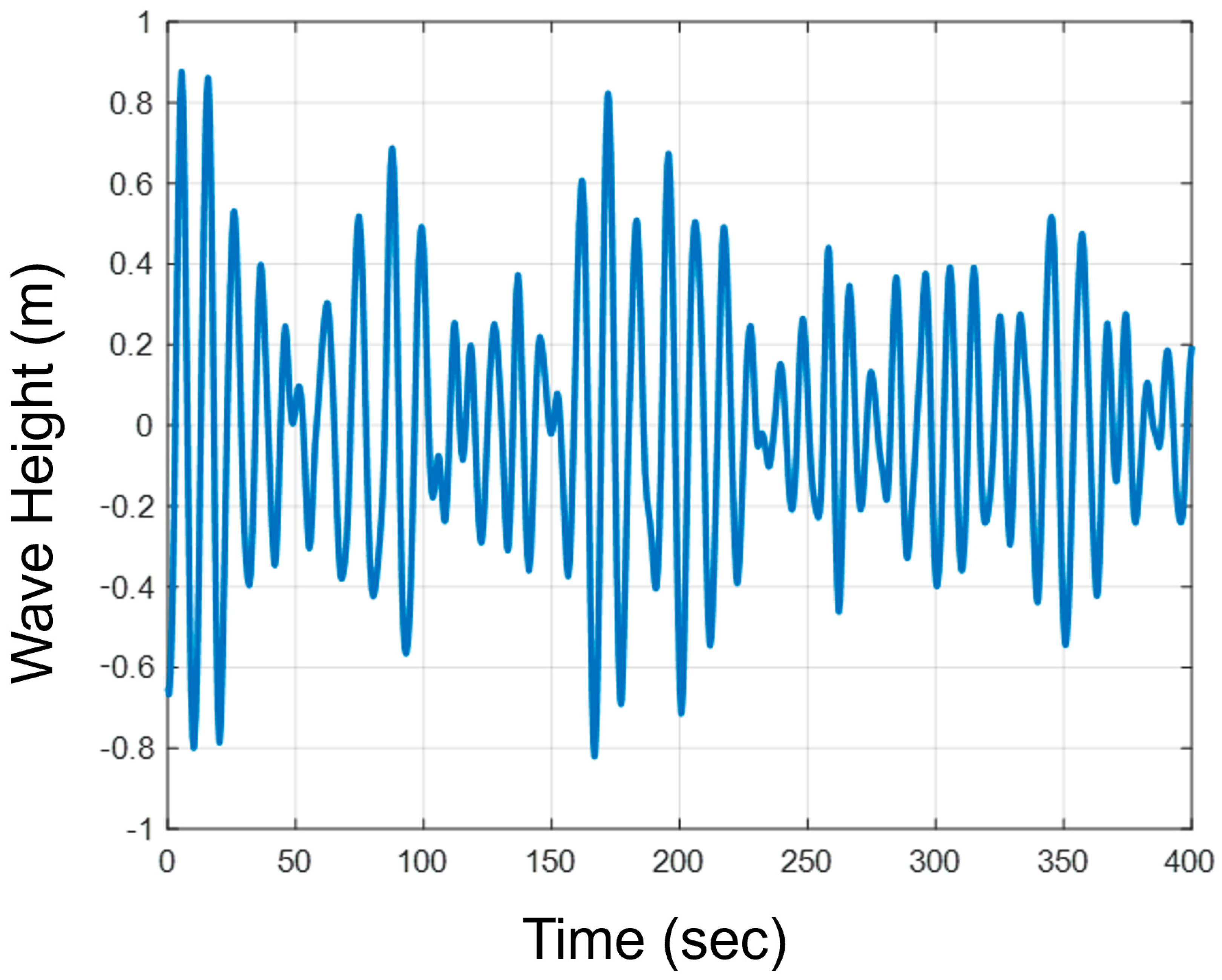
spec2dat function. The time domain wave height is shown in
Figure 7. The time domain wave data was then input into the right circular cylinder and hourglass buoy models and was used to calculate the excitation force acting on each of the buoys in the two arrays. The time domain wave height generated with the
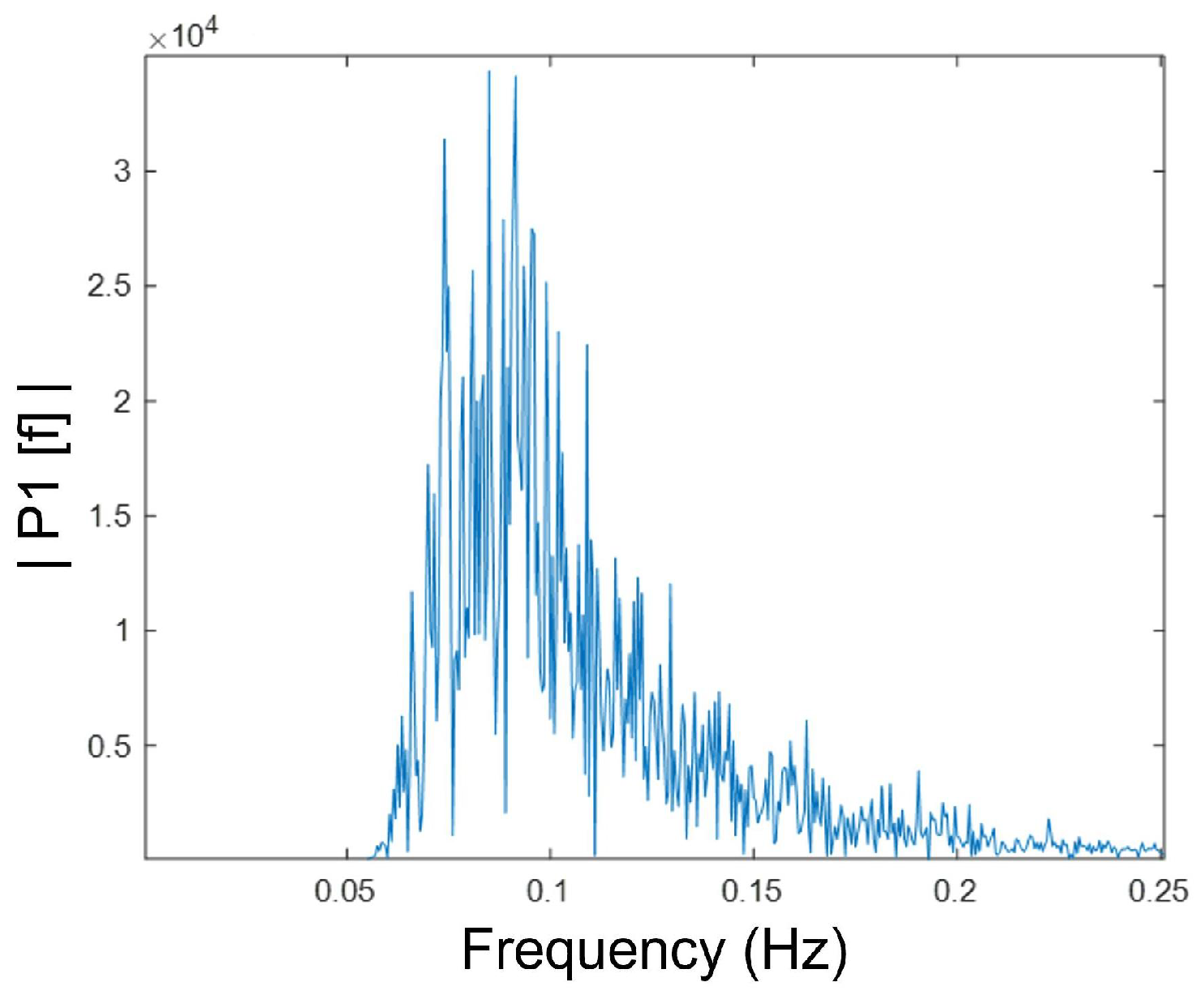
spec2dat function was converted to the frequency domain using MATLAB’s built-in
FFT function. The frequency domain for the wave height is shown in
Figure 8. The four highest amplitude frequencies in the wave height frequency spectrum were then chosen to tune four PDC3 control channels on the right circular cylinder WEC. The four chosen frequencies for the control channels are shown in
Table 3.
6. Results
Minimizing the variation in both real and reactive power is critical for reducing the size of the energy storage in the WEC systems. Large fluctuations in power require the energy storage to absorb or supply energy to maintain a stable grid connection, increasing both the required capacity and cost. By controlling each WEC to resonate with the dominant wave frequencies, the real power output is maximized and nearly sinusoidal, while the reactive power needed to maintain resonance is supplied by the buoy dynamics (as in the hourglass buoy) or through control (as in right circular cylinder). When the fluctuations in real and reactive power are small, the energy storage only needs to compensate for minor deviations, significantly reducing its required capacity. Furthermore, arranging WECs into power packet networks introduces additional smoothing of the aggregate power by phase-shifting the individual WEC outputs, further minimizing instantaneous power variation. Consequently, both the peak and average demands on the energy storage are reduced, lowering cost and improving overall wave-to-wire efficiency.
The right circular cylinder and hourglass buoy models were first simulated using a regular wave. The individual buoys were tested with this wave input to verify proper operation of the controllers and the energy torage systems. They were then tested in arrays of three buoys and six buoys. The regular wave had a height of 0.5 m and a period of 10 s.
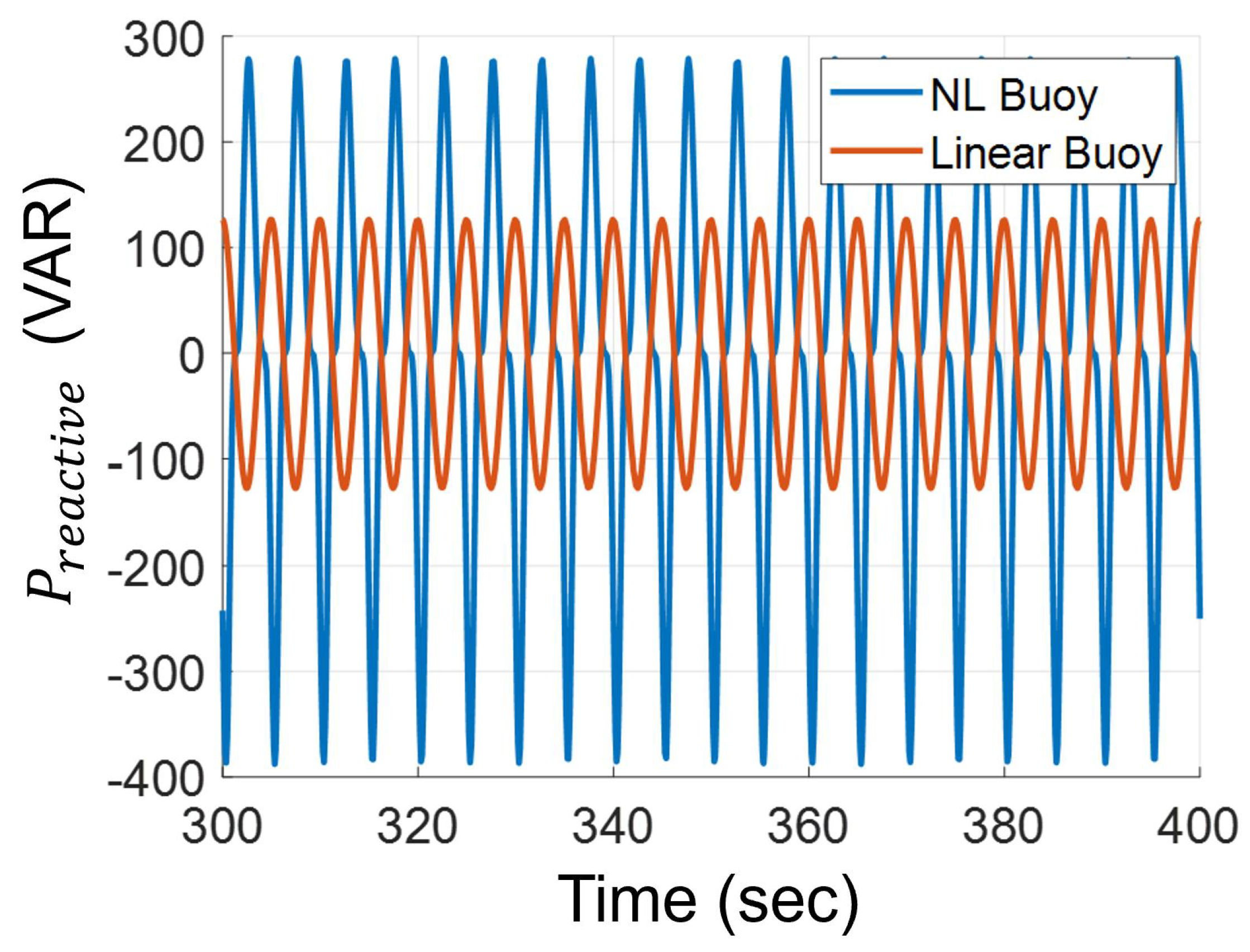
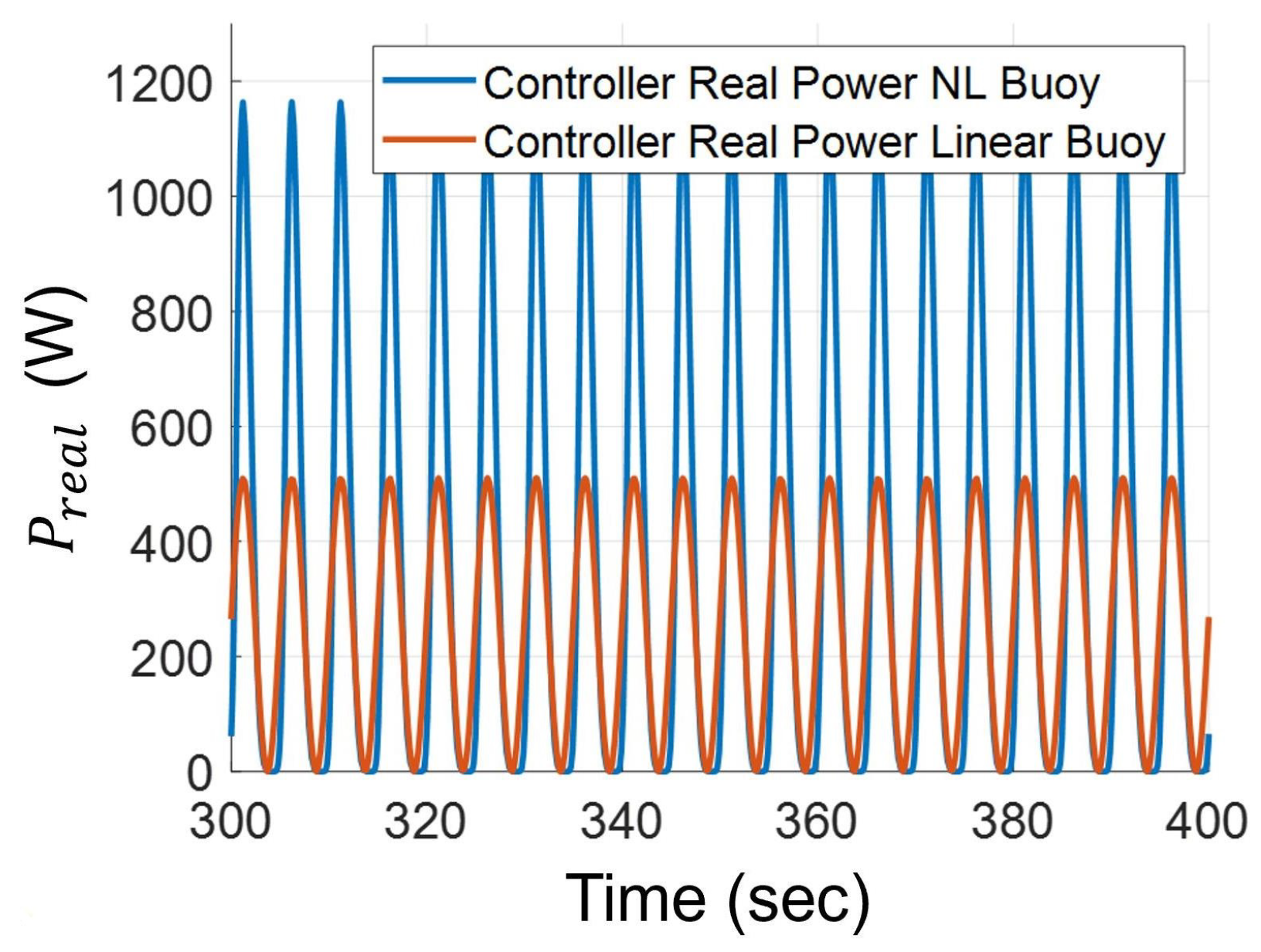
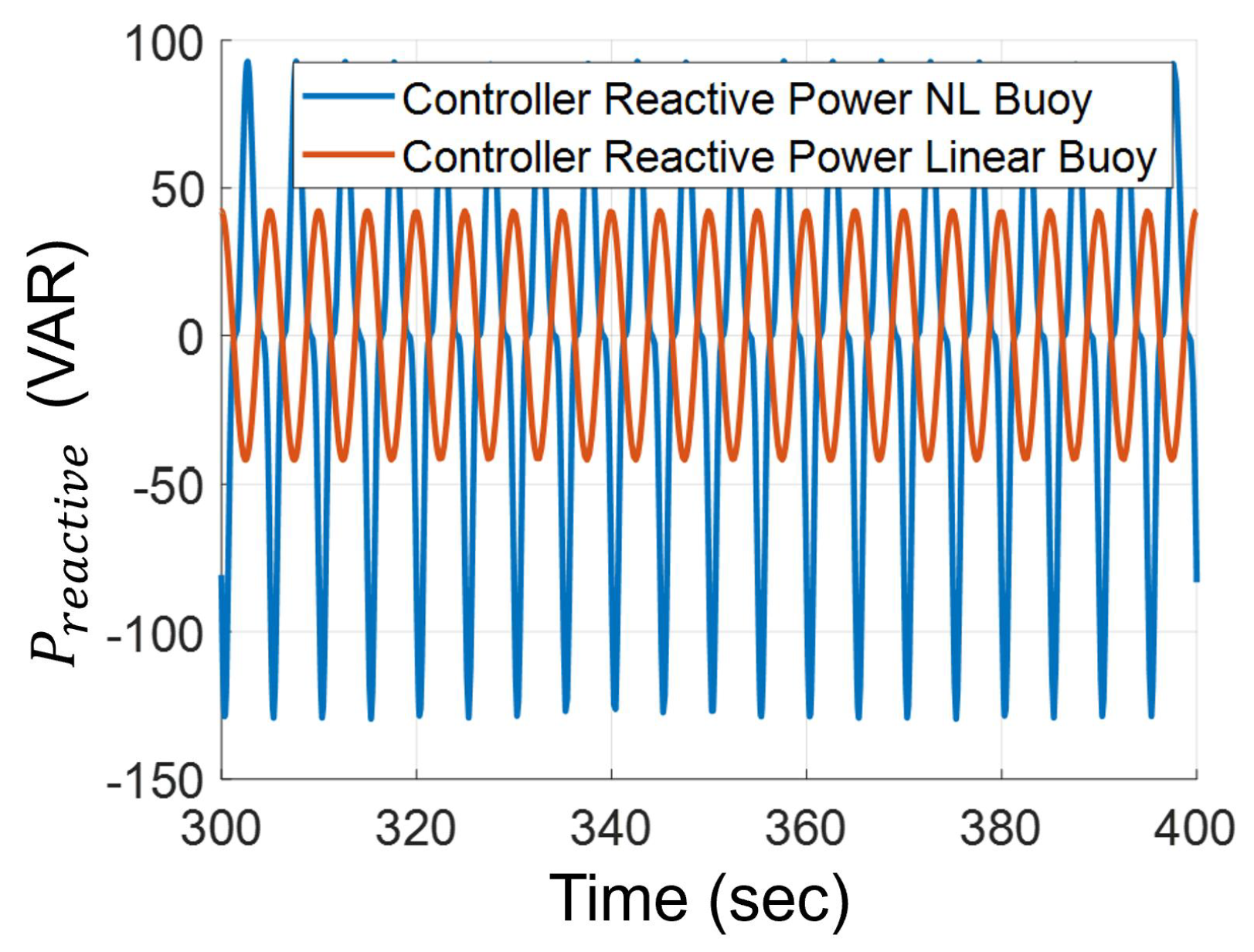
A single right circular cylinder and hourglass buoy, each with equal volumes, was simulated in a regular wave state, and their controllers’ real and reactive power were compared. The real and reactive powers used by the control systems for the linear right circular cylinder buoy and the nonlinear hourglass buoy are shown in
Figure 9 and
Figure 10. The average real power generated by each of these buoys is shown in
Table 4.
Figure 9 and
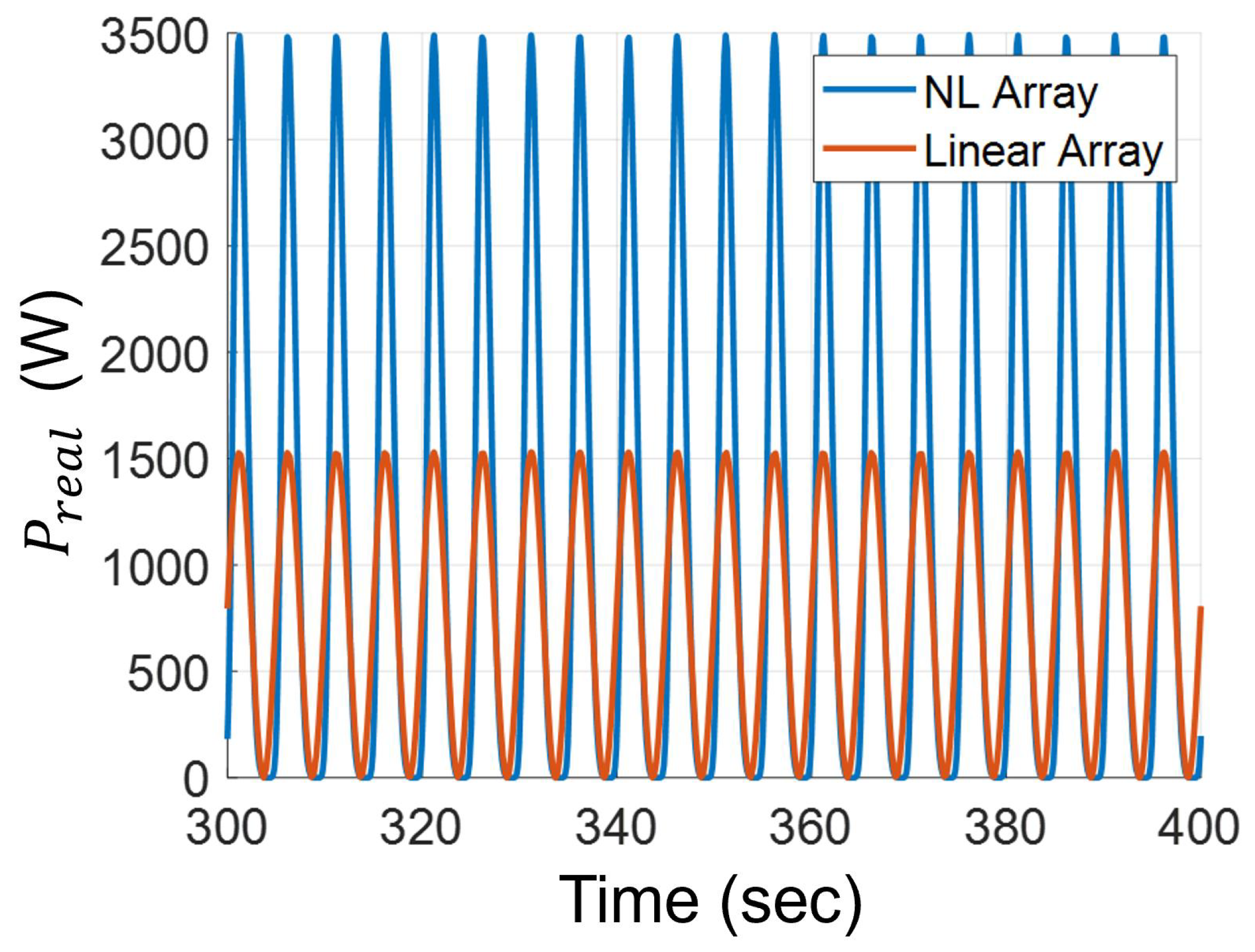
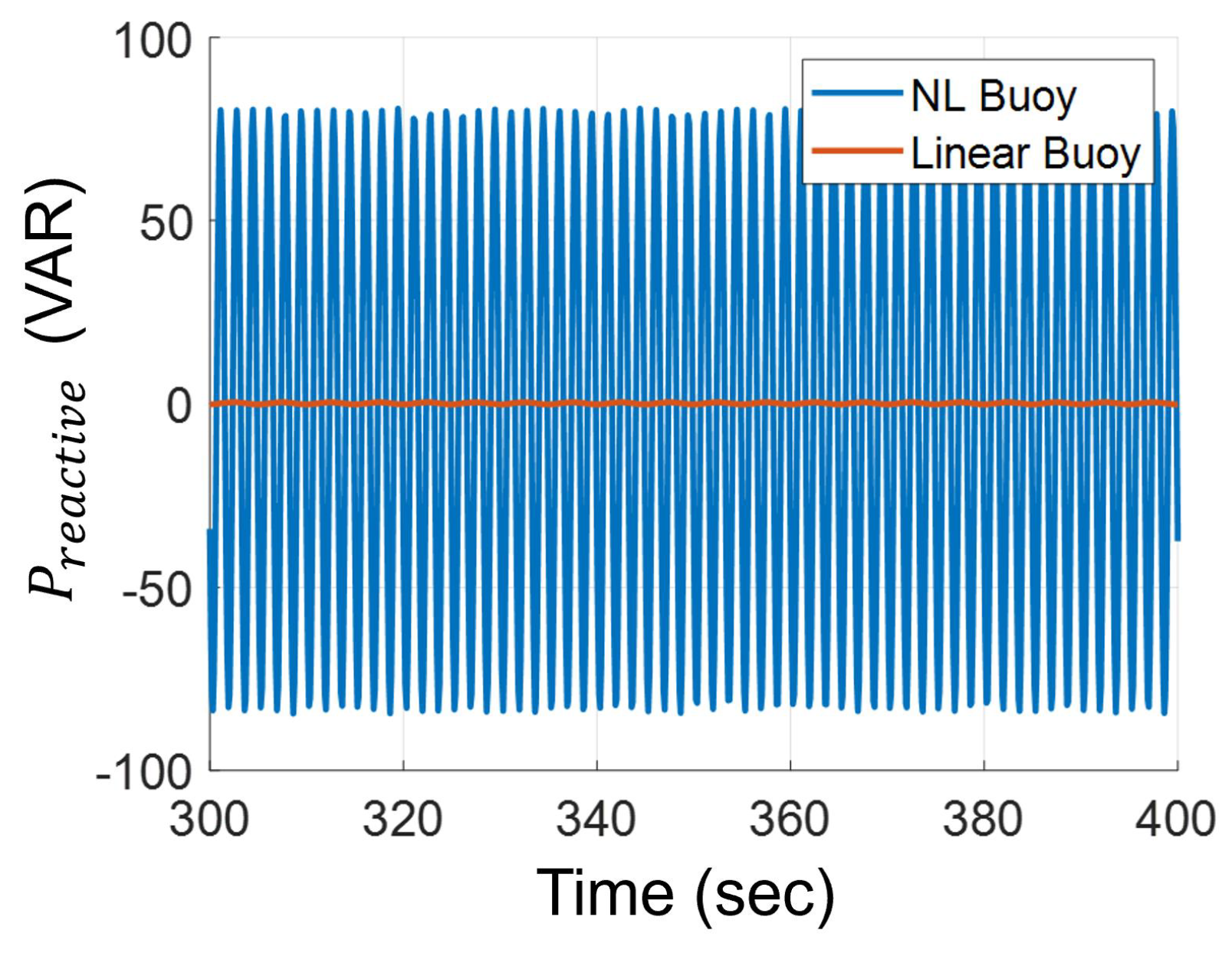
Figure 10 show that for the individual buoys operating in a regular wave environment, the nonlinear hourglass buoy requires a larger energy storage for grid connection than the linear buoy due to the larger variation in the real and reactive powers of the controller. However, the nonlinear hourglass buoy does generate more power than the linear right circular cylinder buoy in the simple sinusoidal wave environment. The study in the regular wave environment was then extended by adding two right circular cylinder and hourglass buoys to create two arrays of WECs. The arrays were first simulated with no time shift between the buoys, such that the incoming wave exerted a force on the buoys at the same time. The buoys were then shifted to a 60° phase shift with respect to the period of the wave height, and the variation in the real and reactive power used by the control systems was recorded.
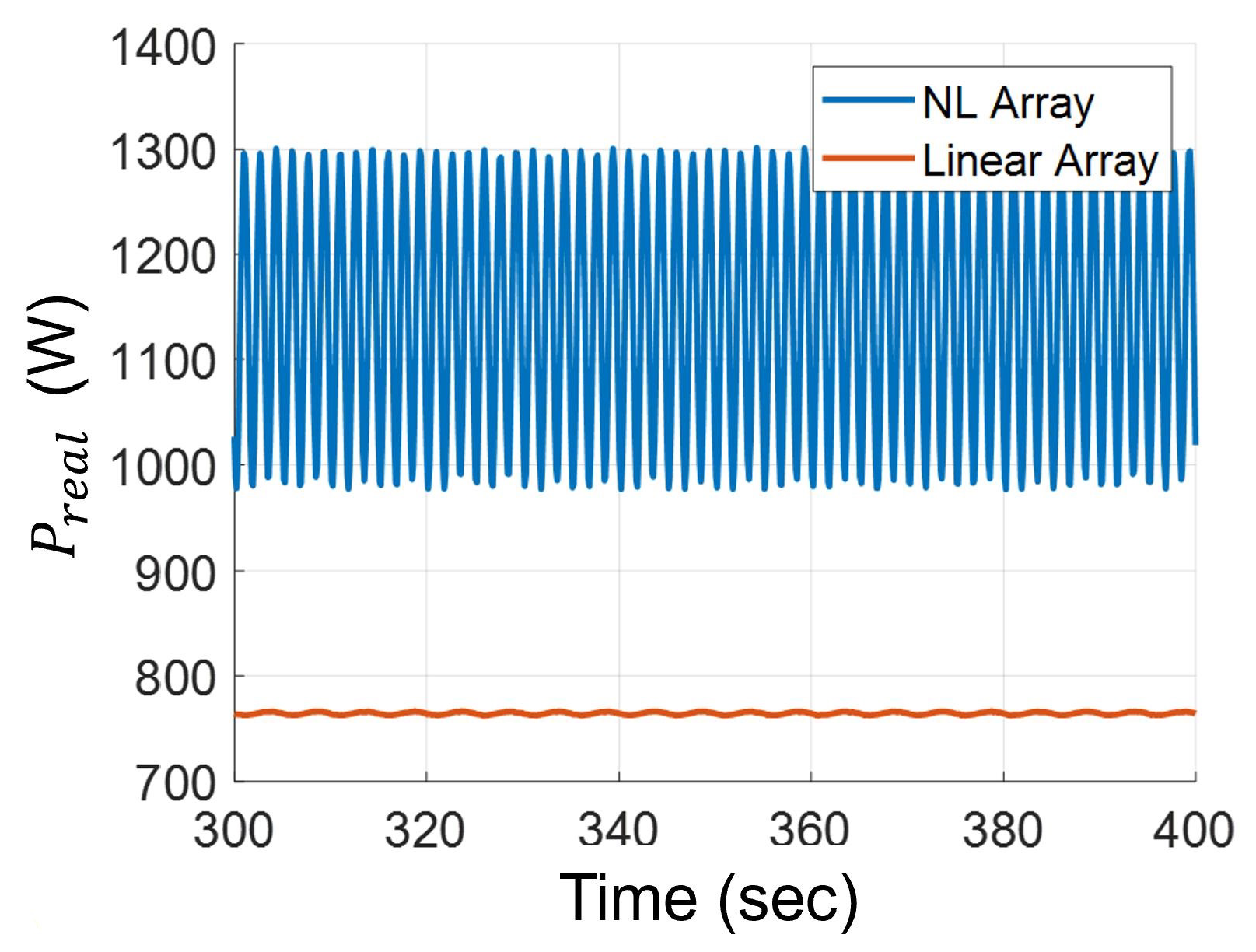
Figure 11 and
Figure 12 show the real and reactive power, respectively, for the three WEC arrays of linear and nonlinear buoys without a phase shift.
Figure 13 and
Figure 14 illustrate the real and reactive power used by the controllers for both linear and nonlinear buoys, with a 60° phase shift between buoys in the arrays. The linear buoy maintains a nearly constant power output, while the nonlinear buoy exhibits reduced power variation.
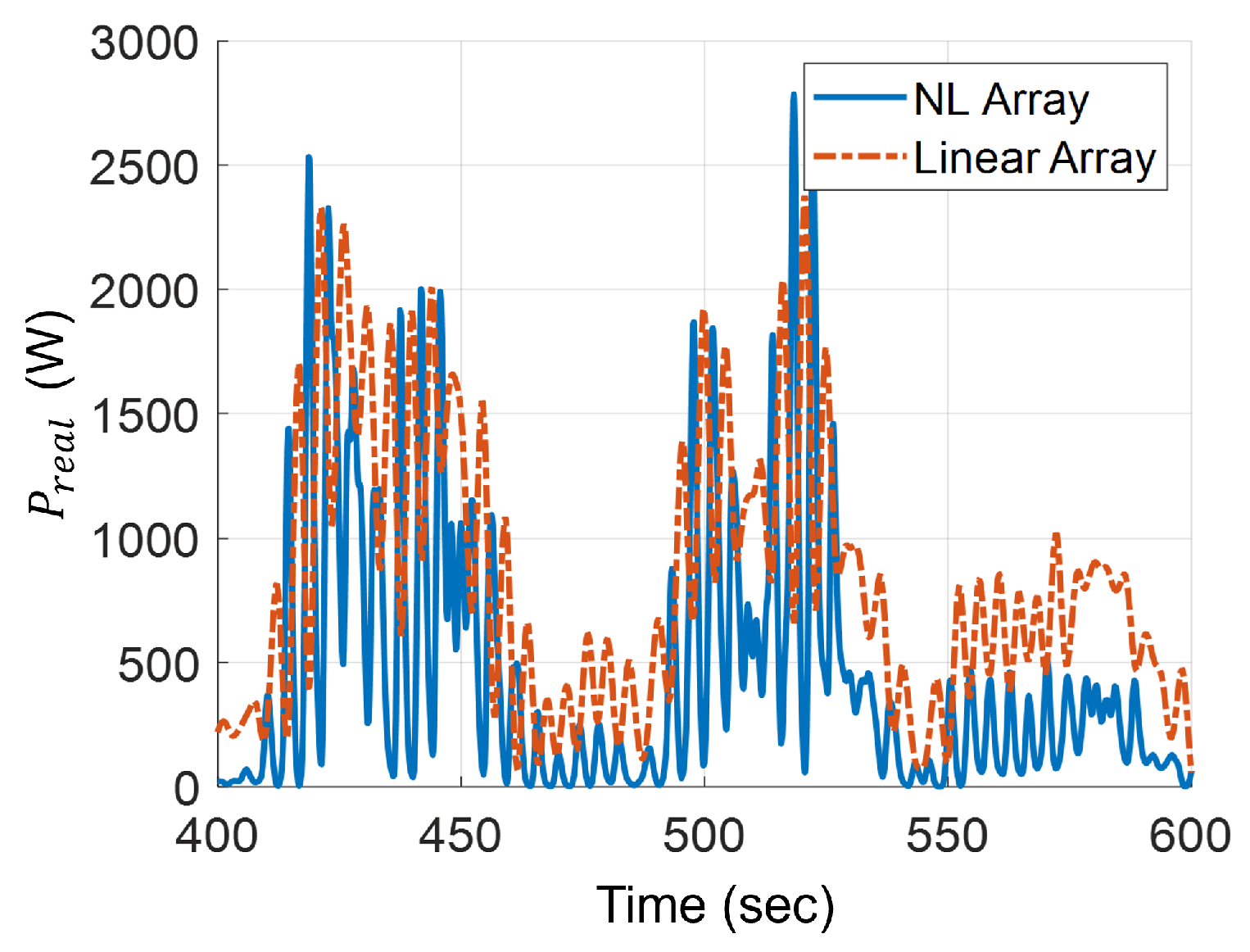
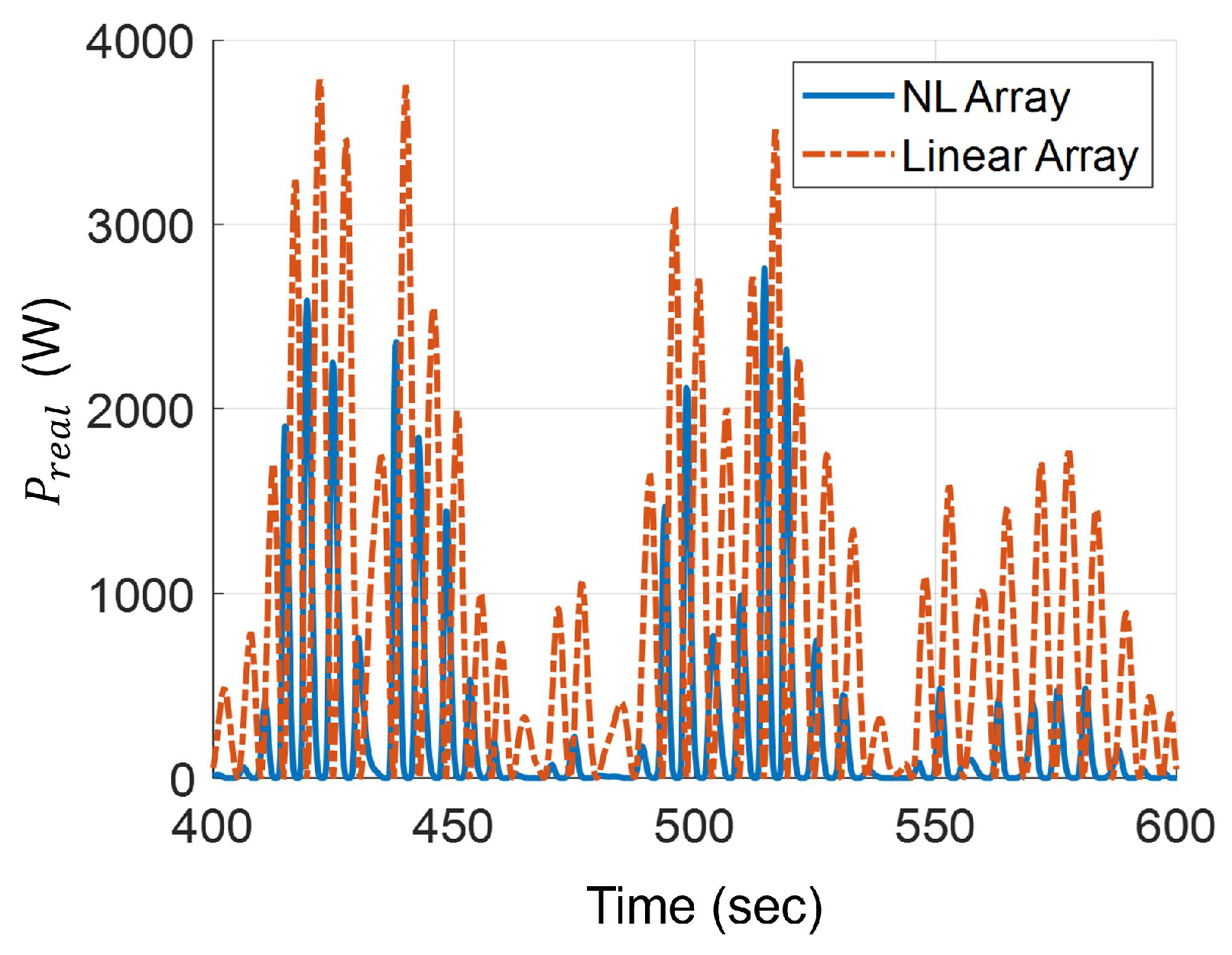
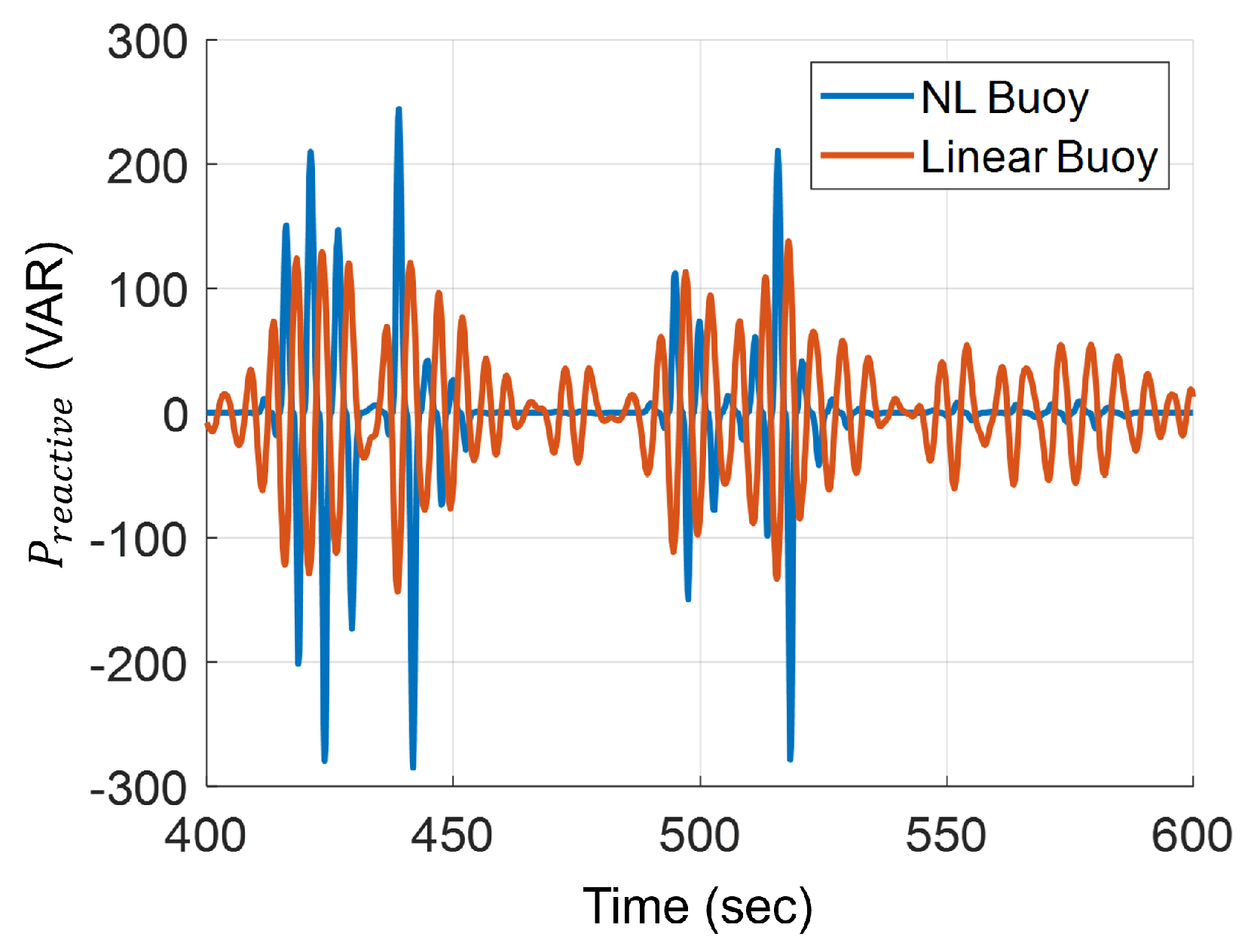
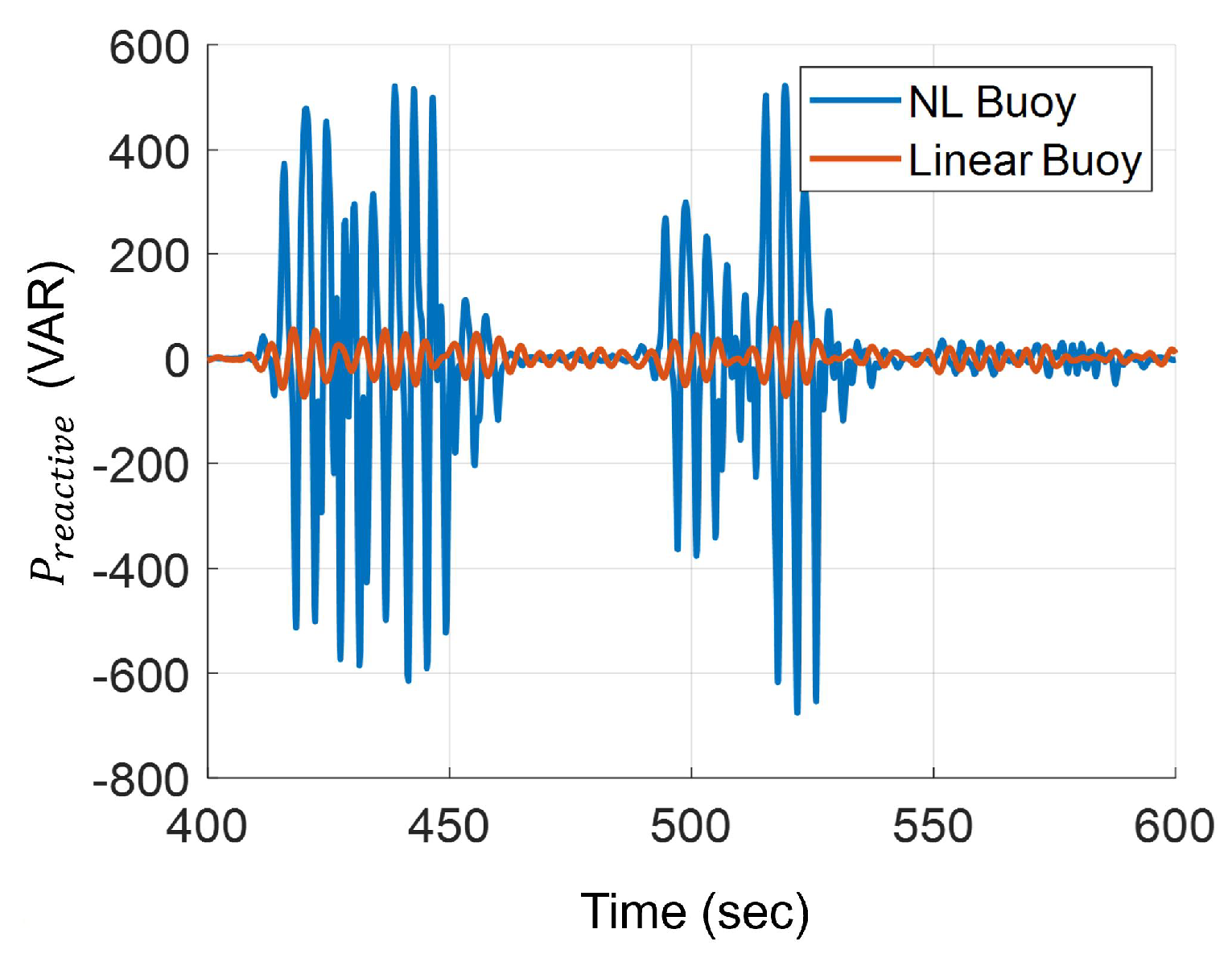
The linear right circular cylinder and nonlinear hourglass buoy arrays were then simulated using excitation force and wave height data generated from the Bretschneider spectrum, as described in
Section 5. The linear right circular cylinder and nonlinear hourglass buoy arrays were first simulated in the Bretschneider sea-state with no time shift between the buoys. The real and reactive powers used by the control systems for the arrays are shown in
Figure 15 and
Figure 16, respectively.
The three WECs in each of the linear and nonlinear arrays were then shifted to a
phase shift with respect to the peak frequency in the Bretschneider spectrum. This corresponded to a shift of
seconds between each of the buoys. The real and reactive powers required by the control systems on the linear right circular cylinder and nonlinear hourglass buoys are shown in
Figure 17 and
Figure 18, respectively.
From
Figure 17 and
Figure 18 it can be observed that while a 60° phase shift reduces real power variations for the linear right circular cylinder buoy, it does not have the same effect on the nonlinear hourglass buoy, which still exhibits large variations in both real and reactive power. The nonlinear buoy was then adjusted to identify the time shift between buoys that minimizes real power variation and peak reactive power, thereby reducing the required size of the energy storage for the nonlinear array. The variations in the real and reactive powers for the nonlinear hourglass buoy control system for varying time shifts are shown in
Table 5. The results were simulated on an array of six hourglass buoys divided into two groups of three, effectively treating each group as a single large buoy. This configuration was simulated eleven times, with one simulation including an additional one-second time offset for the second group. The additional one-second offset was tested to assess whether a slight de-synchronization could further smooth the array’s power output.
The hourglass buoys were divided into two groups of three, with a
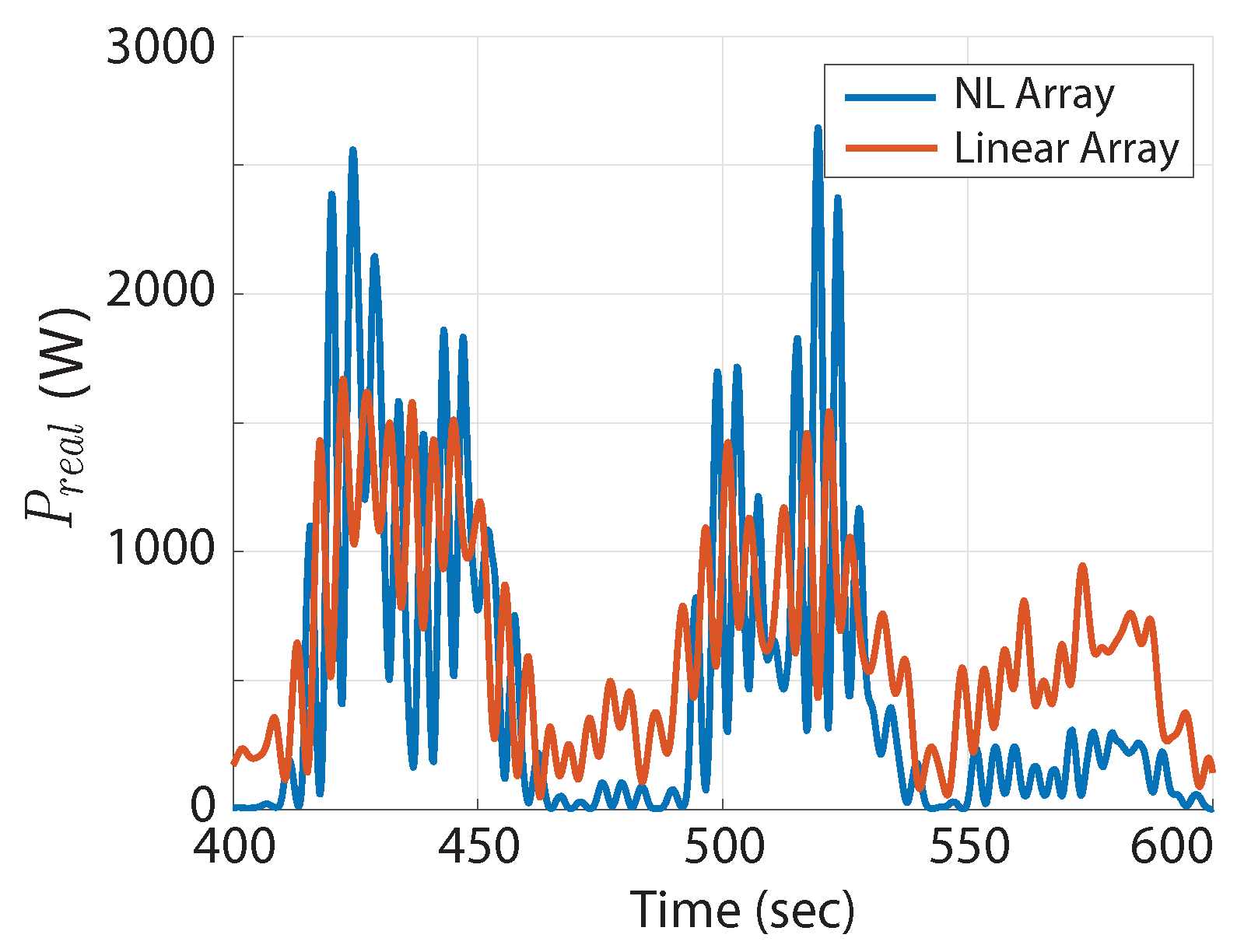
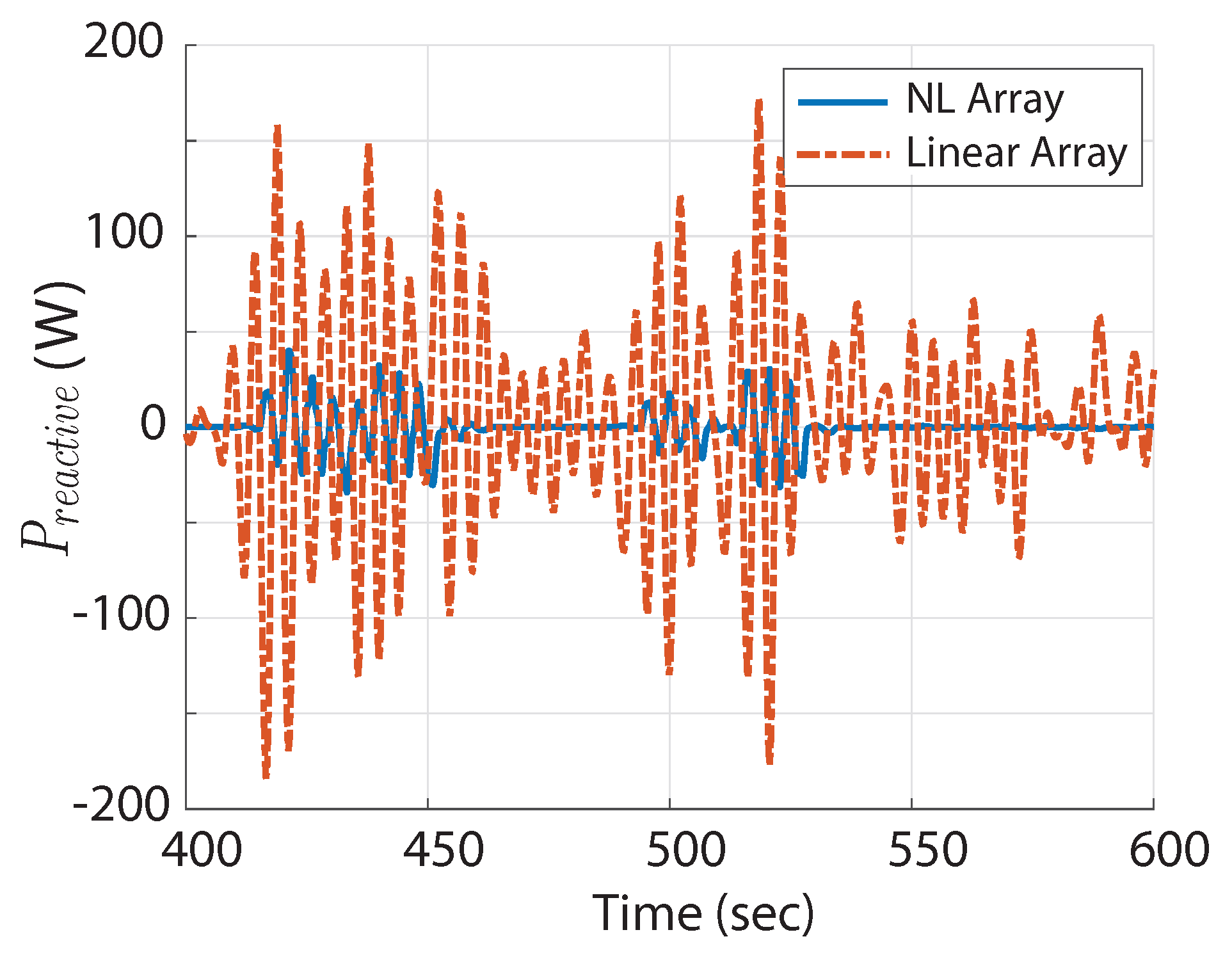
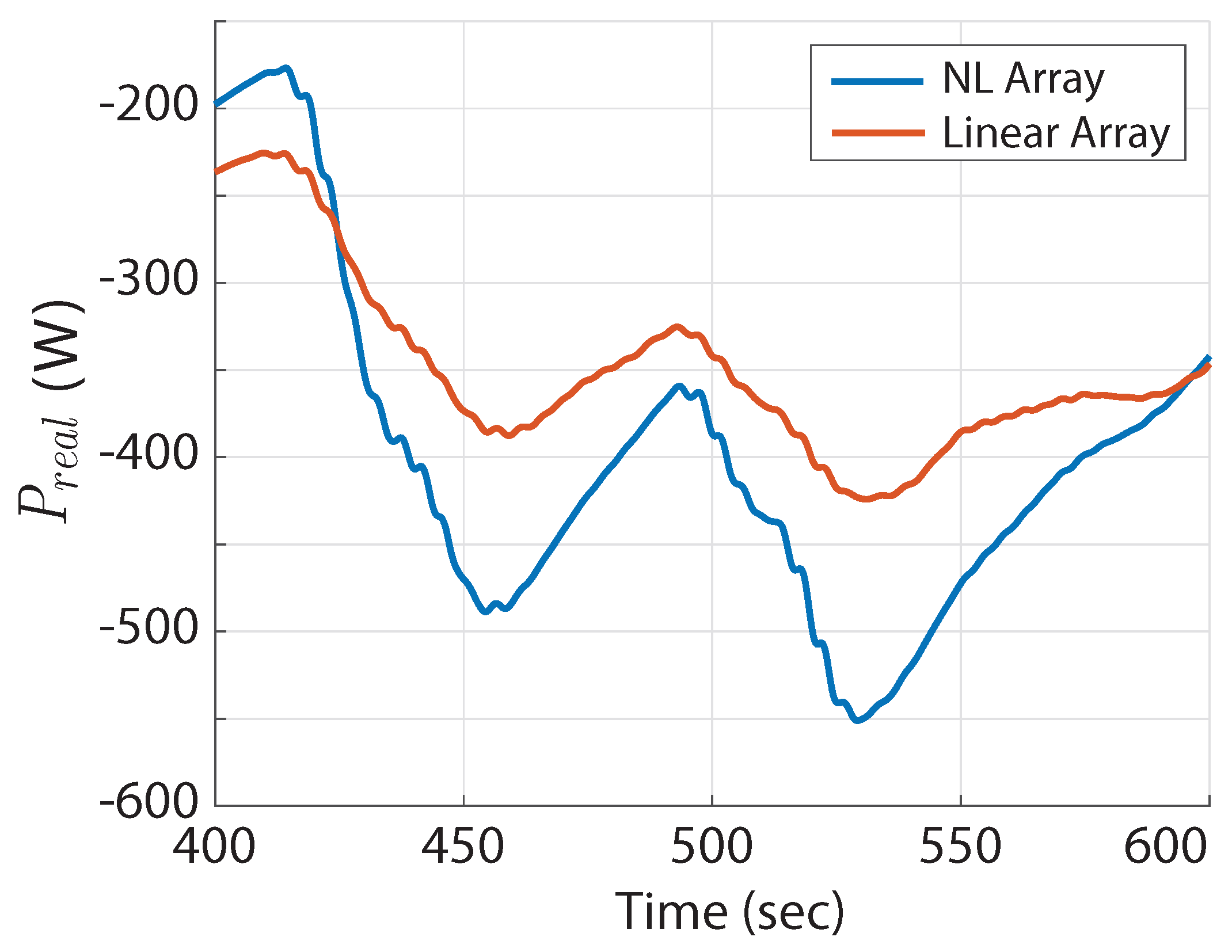
phase shift between the buoys and an additional one-second delay between the groups. This arrangement was selected to reduce peak reactive power generation while increasing real power output. These results were then applied to the linear right circular cylinder and nonlinear hourglass six WEC arrays operating in a Bretschneider wave environment. The real and reactive powers for the linear right circular cylinder and nonlinear hourglass six WEC arrays are shown in
Figure 19 and
Figure 20, respectively.
Figure 19 and
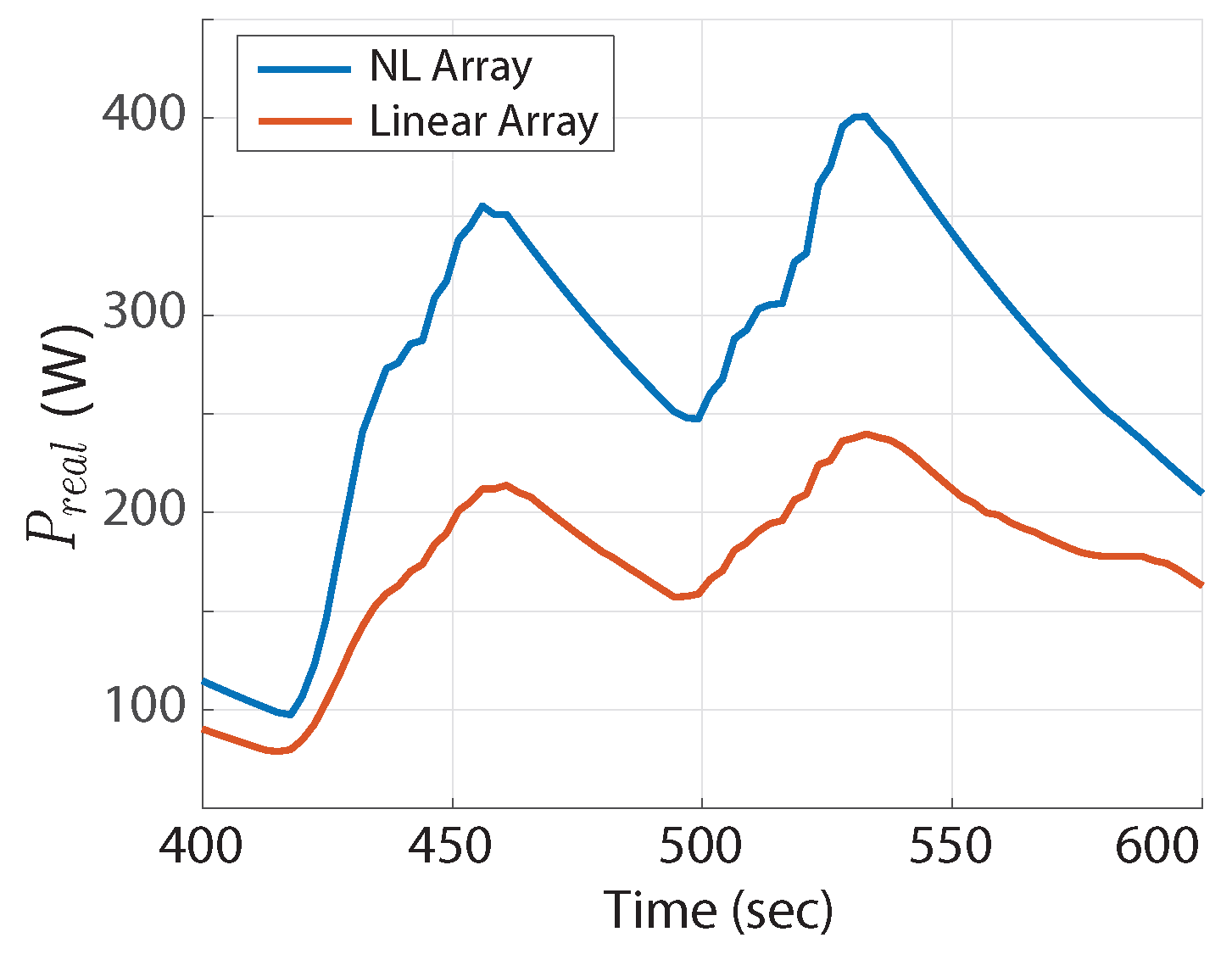
Figure 20 show that the control systems for the right circular cylinder and hourglass arrays use a similar amount of real power, with the hourglass array using less power during some periods. However, the reactive power requirements of the hourglass controller are much lower than those of the right circular cylinder WEC array. Additionally, the power delivered to the onshore grid from the nonlinear hourglass array is more than that of the linear right circular cylinder array. The PTO power generated by both the linear right circular cylinder array and the nonlinear hourglass array, along with the corresponding power delivered to the onshore grid, are shown in
Figure 21 and
Figure 22, respectively. The grid power is computed as the sum of the array’s PTO outputs after accounting for energy storage losses and cable transmission losses. While both arrays generate comparable levels of PTO power, the nonlinear hourglass array delivers noticeably more power to the grid. This improvement is due to the unique hourglass geometry, which supplies part of the reactive power, thereby reducing the burden on the energy storage and minimizing conversion losses.
As shown in
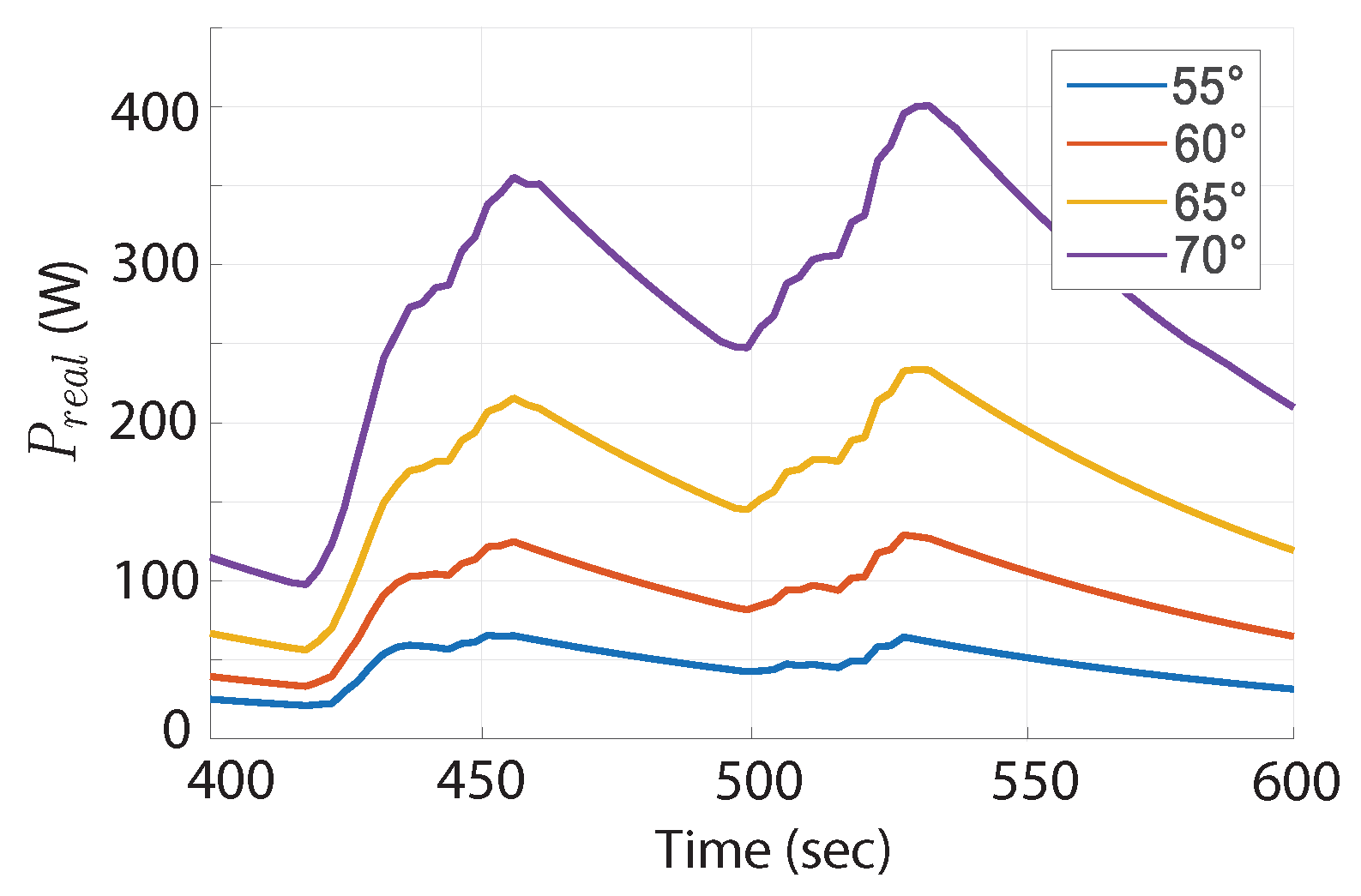
Figure 22 the nonlinear array of hourglass buoys delivers more power to the grid than the linear array of right circular cylinder buoys when operating in the same wave environment. To investigate the effect of the steepness angle,
, on the nonlinear buoy, the angle was varied in
increments from
to
, and the power delivered to the grid by the six-WEC array of nonlinear hourglass buoys was recorded. The variations in grid power for different
values are shown in
Figure 23.
It was determined that the optimal value for
, the hourglass steepness angle, was
. The PTO and grid powers for the arrays were recorded and are shown in
Table 6.
Table 6 shows that the array of nonlinear hourglass WECs produces more power and delivers more power to the grid when operating in the same wave environment as a linear array of right circular cylinder WECs. Beyond the increased average power, the nonlinear hourglass array also exhibits a reduction in the variation of reactive power as shown in
Figure 20. Since the energy storage is primarily needed to absorb or supply energy when the reactive power fluctuates, smaller fluctuations directly reduce the energy that the energy storage must handle.
Arranging the WECs into a power packet network further smooths the total power delivered to the grid. By introducing phase shifts between individual WECs, the peaks and troughs of the power from each device partially cancel, reducing both real and reactive power variability at the array level. As a result, the energy storage only needs to compensate for minor residual deviations rather than large instantaneous surges. Consequently, the required energy capacity of the energy storage can be significantly smaller, lowering system cost and complexity while maintaining stable operation and grid compatibility.
In summary, the combination of nonlinear hourglass WECs and power packet network array organization reduces fluctuations in both real and reactive power, effectively minimizing the burden on the energy storage and improving the overall wave-to-wire efficiency of the system.