1. Introduction
Ocean energy has emerged as an important renewable resource for achieving global carbon neutrality, and increasing attention has been directed toward technologies capable of exploiting its vast potential. Among marine renewables, wave energy is considered particularly promising due to its high energy density and predictable seasonal variability [
1,
2]. According to the International Energy Agency—Ocean Energy Systems (IEA-OES), the global annual wave energy potential is approximately 29,500 TWh, corresponding to more than 10% of worldwide electricity demand [
3]. This potential has driven sustained research and development efforts over recent decades, initially concentrated in Europe and increasingly expanding into the Asia–Pacific region.
Wave energy converters (WECs) are commonly classified into oscillating water column (OWC), oscillating-body, and overtopping devices based on their operating principle [
4]. Among these, the OWC has attracted considerable interest owing to its structural simplicity, durability, and relatively low maintenance requirements. An OWC typically consists of a partially enclosed chamber with an open bottom, in which incident waves induce oscillations of the internal free surface. The associated compression and decompression of the trapped air generates a bidirectional airflow through a turbine–generator system, enabling electricity production.
Since the 1980s, several prototype and commercial-scale OWC systems have been constructed worldwide. In Europe, the LIMPET plant in Scotland and the Mutriku OWC plant in Spain have been widely reported as representative installations [
5,
6,
7]. In Japan, the Sakata Port caisson-integrated OWC was developed as an early example of a breakwater-integrated system [
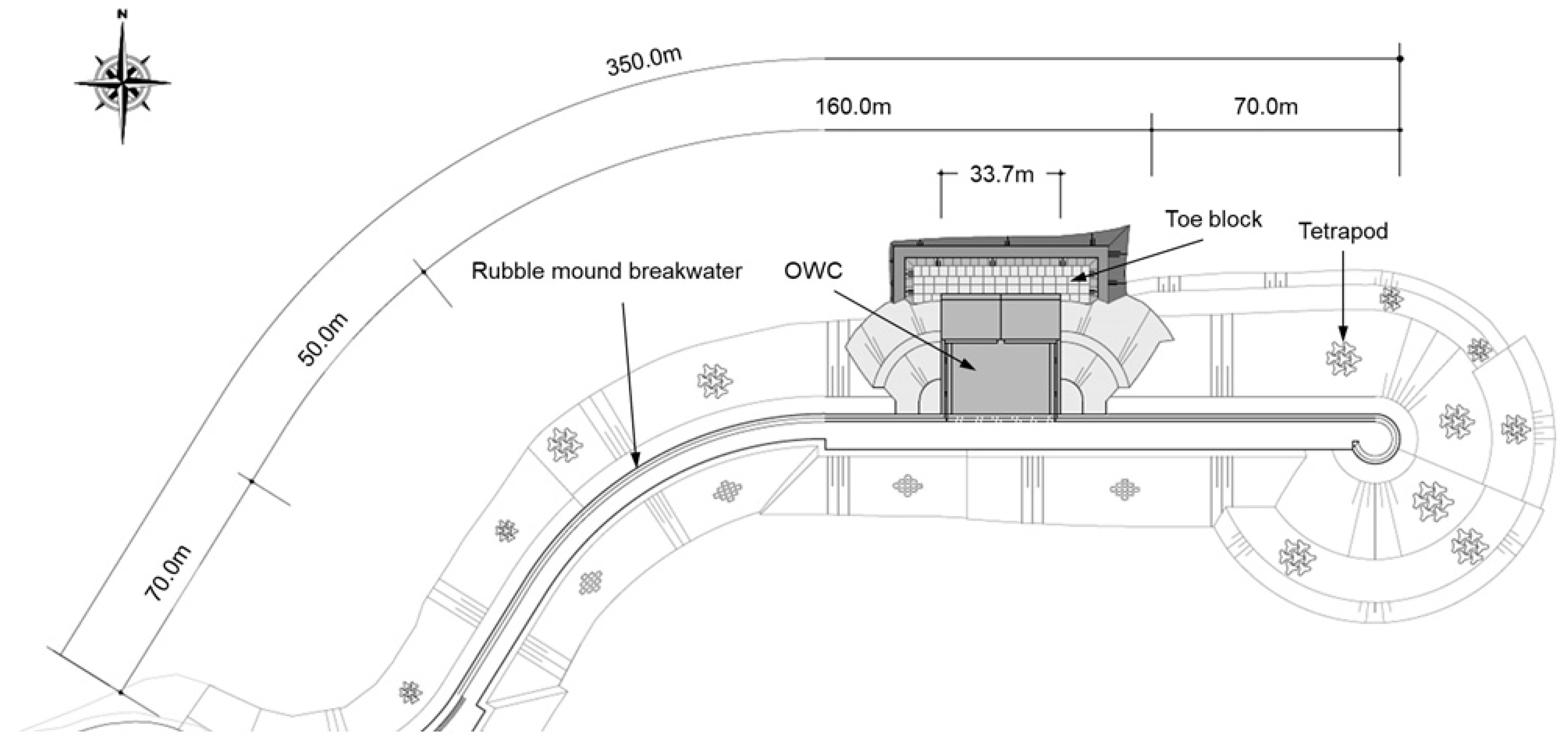
8]. In Korea, OWC research initiated in the early 2000s has led to pilot and demonstration projects and more recently to a large-scale field demonstration at Homigot Port, where multiple OWC modules are integrated into a newly constructed rubble-mound breakwater [
9,
10,
11].
Despite continued progress, a persistent challenge of OWC technology remains economic feasibility, as a substantial portion of total investment costs is associated with civil engineering and construction. In this context, integrating OWC devices with existing or planned breakwaters has been proposed as a cost-effective strategy. Such breakwater-integrated OWCs can provide both wave energy conversion and harbor protection functions, offering potential economic and spatial benefits.
A critical consideration in the design of these hybrid systems is their wave reflection characteristics. In harbor engineering, the reflection coefficient is a key parameter for ensuring adequate tranquility within basins [
12]. For systems combining rubble-mound breakwaters and vertical OWC chambers, differences in reflection behavior can influence harbor layout optimization and numerical tranquility assessments [
13]. Moreover, reflection coefficients are required to prescribe reflective boundary conditions in three-dimensional wave-field simulations, and their accuracy directly affects the reliability of predicted harbor tranquility and wave–structure interaction results.
While many experimental and numerical studies have investigated the hydrodynamic performance of OWC devices under irregular waves [
14,
15,
16,
17,
18], recent works have further advanced the understanding of OWC response and energy conversion through large-scale laboratory experiments and combined experimental–numerical approaches [
19,
20,
21,
22]. For example, the hydrodynamic and energy-harvesting performance of isolated OWC devices under irregular waves has been examined experimentally [
19], and system-level performance under practical turbine operating modes has been evaluated [
20]. In addition, land-based multi-chamber OWC configurations have been studied to broaden the operational bandwidth and enhance hydrodynamic performance [
21], and nonlinear wave–structure interaction processes under extreme wave events have been investigated using experiments and numerical modeling [
22].
However, most of these studies focus on standalone, land-based, or caisson-type OWCs, and comparatively limited attention has been paid to OWCs structurally integrated with rubble-mound breakwaters. In particular, quantitative investigations of the wave reflection characteristics of breakwater-integrated OWC systems under irregular wave conditions remain scarce. To address this gap, the present study conducts hydraulic model experiments under irregular waves to quantify the reflection behavior of a breakwater-integrated vertical-type OWC structure. Based on the experimental dataset, an empirical formulation is further developed to estimate reflection coefficients at the design stage, providing practical input for harbor tranquility assessment and supporting the engineering implementation of breakwater-integrated OWC systems.
The main contributions of this study are threefold. First, a comprehensive hydraulic-model dataset of reflection coefficients was established from 37 irregular-wave test cases generated using the Bretschneider–Mitsuyasu spectrum under three still-water depth conditions representing different skirt submergence levels. Second, the reflection characteristics were quantified by separating incident and reflected components through a multi-gauge, frequency-domain least-squares method, enabling robust wave decomposition under irregular-wave conditions. Finally, a design-oriented empirical formulation was developed to estimate reflection coefficients for breakwater-integrated vertical-type OWC chambers, providing practical input for harbor tranquility assessment and supporting engineering applications.
3. Results of Hydraulic Model Experiments
3.1. Reflection Coefficient
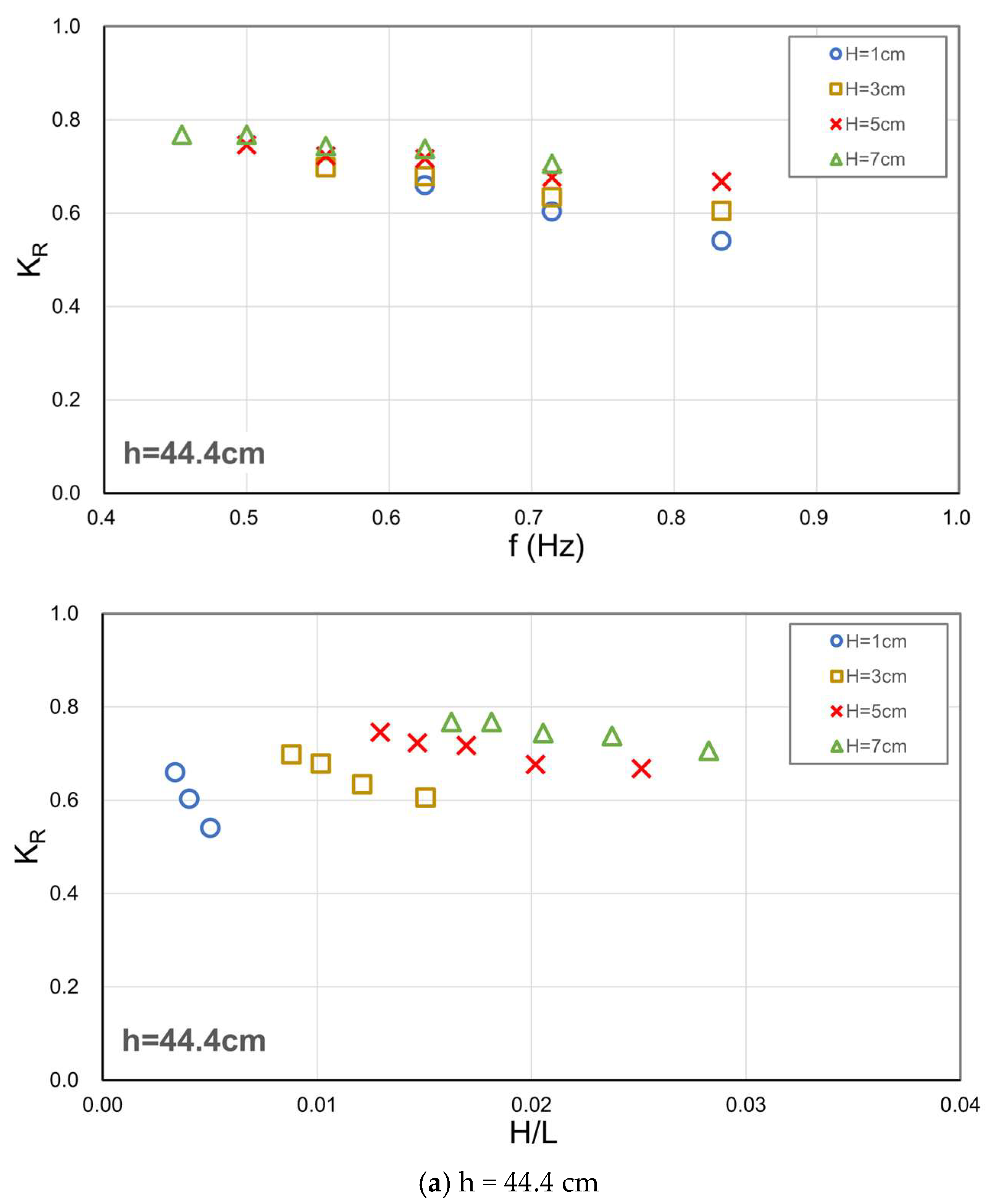
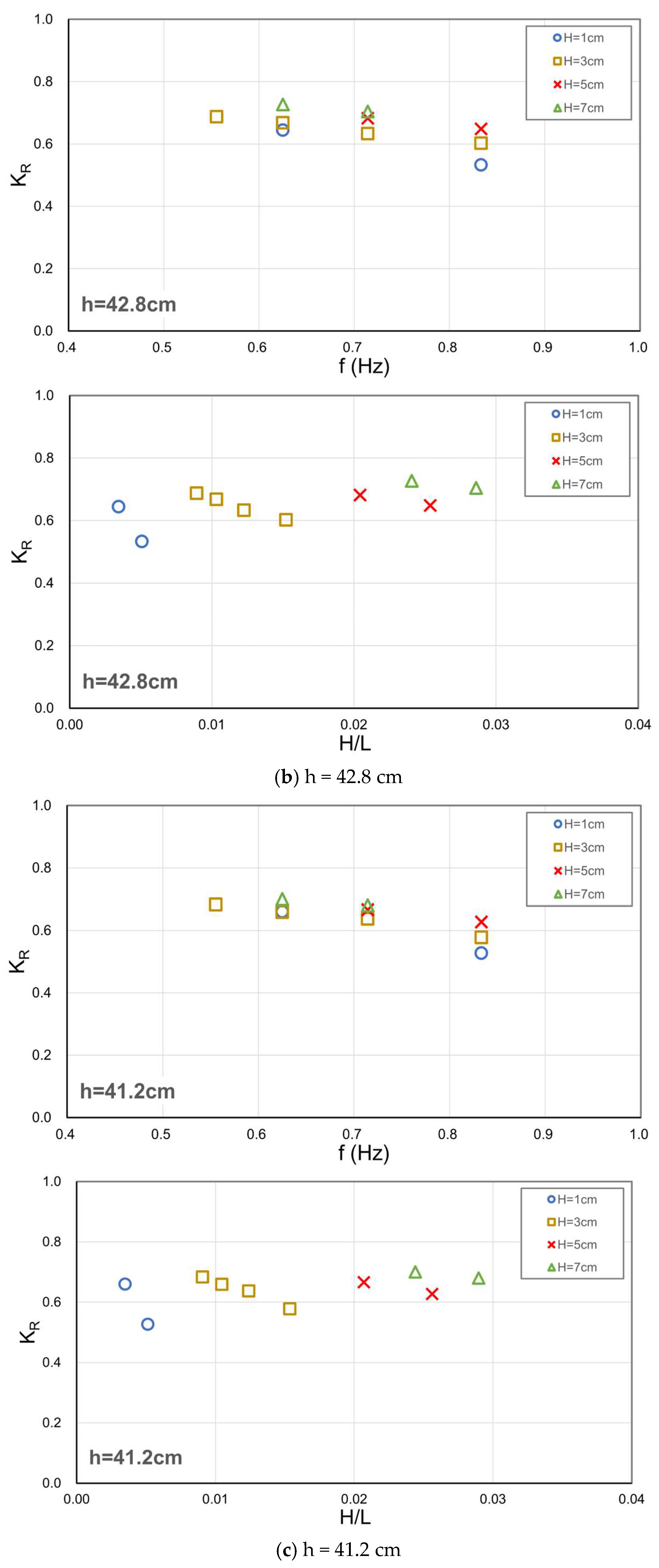
Figure 5 presents the experimentally derived reflection coefficients (
) of the breakwater-integrated OWC structure under irregular wave conditions for three still-water depths (44.4 cm, 42.8 cm, and 41.2 cm), as summarized in
Table 1. Overall,
remained below 0.8 across all tested cases, indicating that the tested OWC structure exhibits comparatively low reflection under irregular-wave excitation. This finding suggests that the structure provides mechanisms for wave-energy absorption and dissipation beyond those of a conventional impermeable vertical wall, thereby reducing the proportion of incident wave energy that is returned offshore as reflected waves.
For comparison, previous studies have reported that reflection coefficients of conventional vertical breakwaters typically range from approximately 0.7 to 0.9 depending on surface condition and the occurrence of overtopping, and values close to 0.9 have been suggested for smooth vertical walls [
30]. In contrast, the lower
levels observed in this study, even under irregular waves, support the potential of breakwater-integrated OWC systems as low-reflection coastal structures that can contribute to harbor tranquility while enabling wave–structure interaction inside the chamber.
In this study, the reflection coefficient was evaluated based on the energy ratio between the reflected and incident components obtained via wave decomposition. Specifically, the incident and reflected wave records were separated in the frequency domain, and the corresponding spectral energy densities were integrated to obtain the incident and reflected wave energies, and , respectively. The reflection coefficient was then computed as .
Accordingly, represents the fraction of incident spectral energy that returns as reflected energy. Therefore, a decrease in directly indicates a reduction in reflected-wave energy relative to the incident-wave energy, implying that a larger portion of the incoming wave energy is dissipated and/or absorbed within the system (e.g., through chamber oscillation, flow interaction near the opening, and associated losses).
The experimental results further show that generally increased with increasing incident wave height under comparable peak-period conditions. Unlike conventional vertical walls, whose reflection characteristics are often governed primarily by relative depth effects (commonly expressed through ) and are less sensitive to wave height, the reflection response of an OWC-integrated structure is influenced by the internal chamber dynamics. In particular, the chamber water-level oscillation and the related dissipation processes can modify the balance between reflected and transmitted/absorbed energy. As a result, changes in the incident wave height can lead to more noticeable variations in the reflected-to-incident energy ratio and, consequently, in the reflection coefficient.
The dependence of on wave steepness () was found to be moderate. For a given incident wave-height group, varied only within a relatively narrow band as changed. This behavior suggests that reflection cannot be explained solely by steepness effects and that chamber-related hydrodynamics contribute to the observed response. Nevertheless, a weak tendency was observed that did not increase markedly with increasing , and in several cases it slightly decreased as waves became steeper (i.e., shorter for comparable ). This tendency is consistent with the interpretation that steeper-wave conditions can enhance flow interaction and associated dissipation around the chamber opening and the front skirt region, thereby reducing the reflected-energy fraction and yielding smaller
Differences in reflection coefficients among the three still-water depths were generally minor under irregular-wave conditions, indicating limited sensitivity to the tested depth range. However, for the largest incident wave-height cases (notably H = 7 cm), a gradual decrease in
was observed as the water depth decreased. This trend corresponds to the reduced submergence of the front skirt lip (
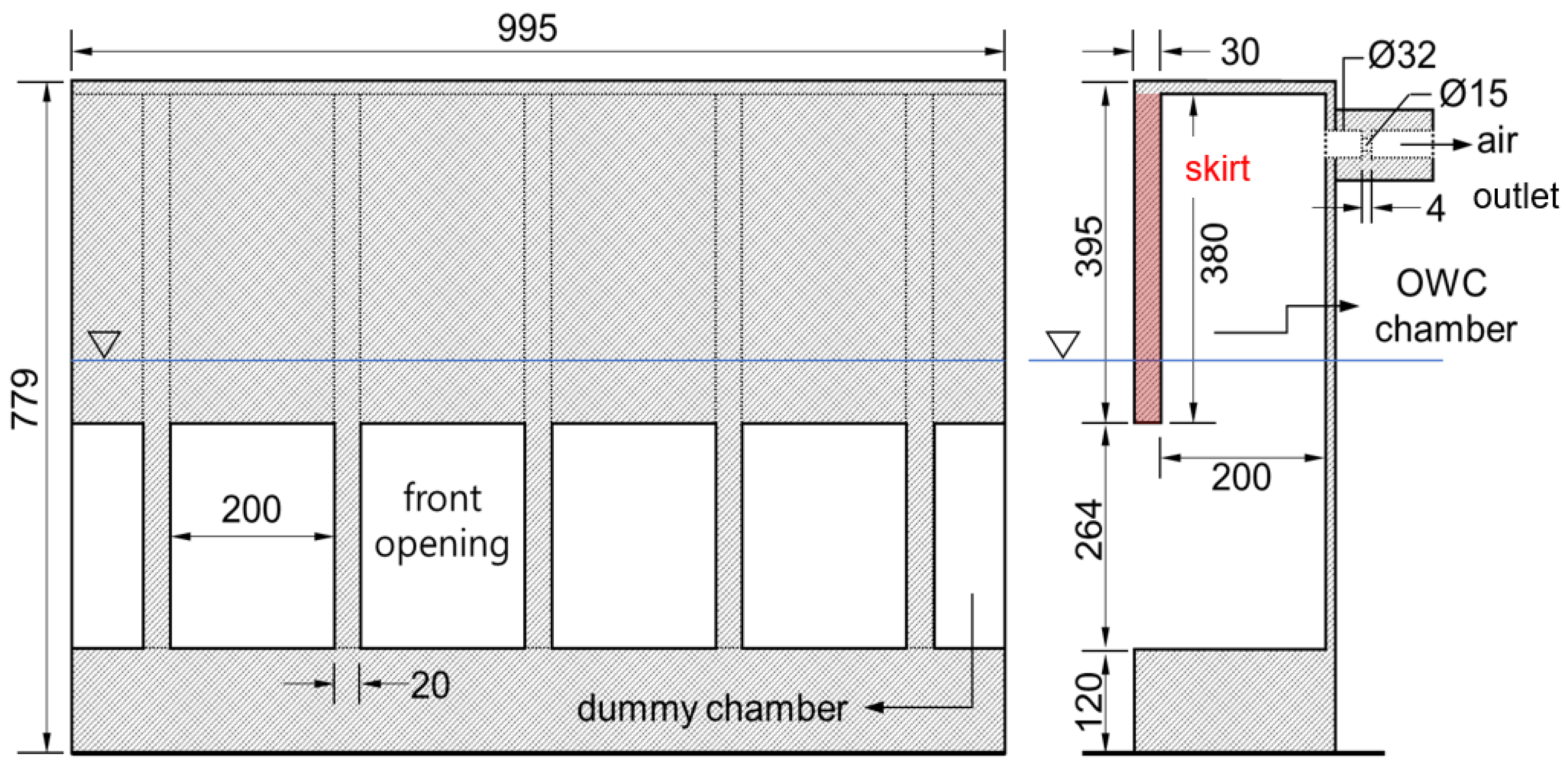
Figure 2), which can strengthen air–water interaction within the chamber and promote wave-energy absorption. The associated increase in dissipation decreases
relative to
, leading to smaller
. This interpretation is consistent with previous findings that reduced skirt submergence can enhance the hydrodynamic performance of OWC-type systems [
14].
3.2. Water Surface Oscillations Inside the Chamber
In the OWC chamber, pressure variations induced by incident irregular waves interact with the internal air pressure, leading to vertical oscillations of the internal free surface.
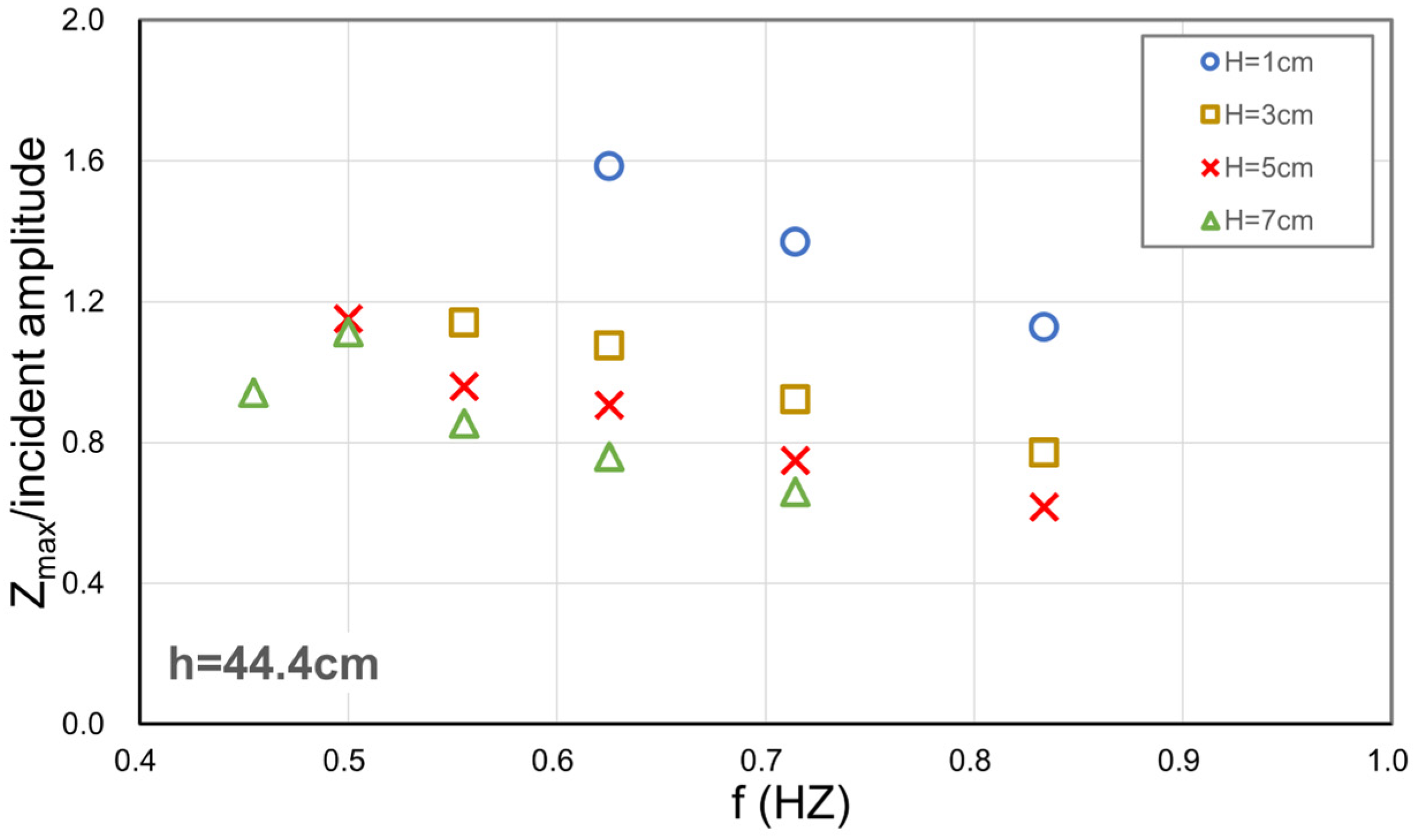
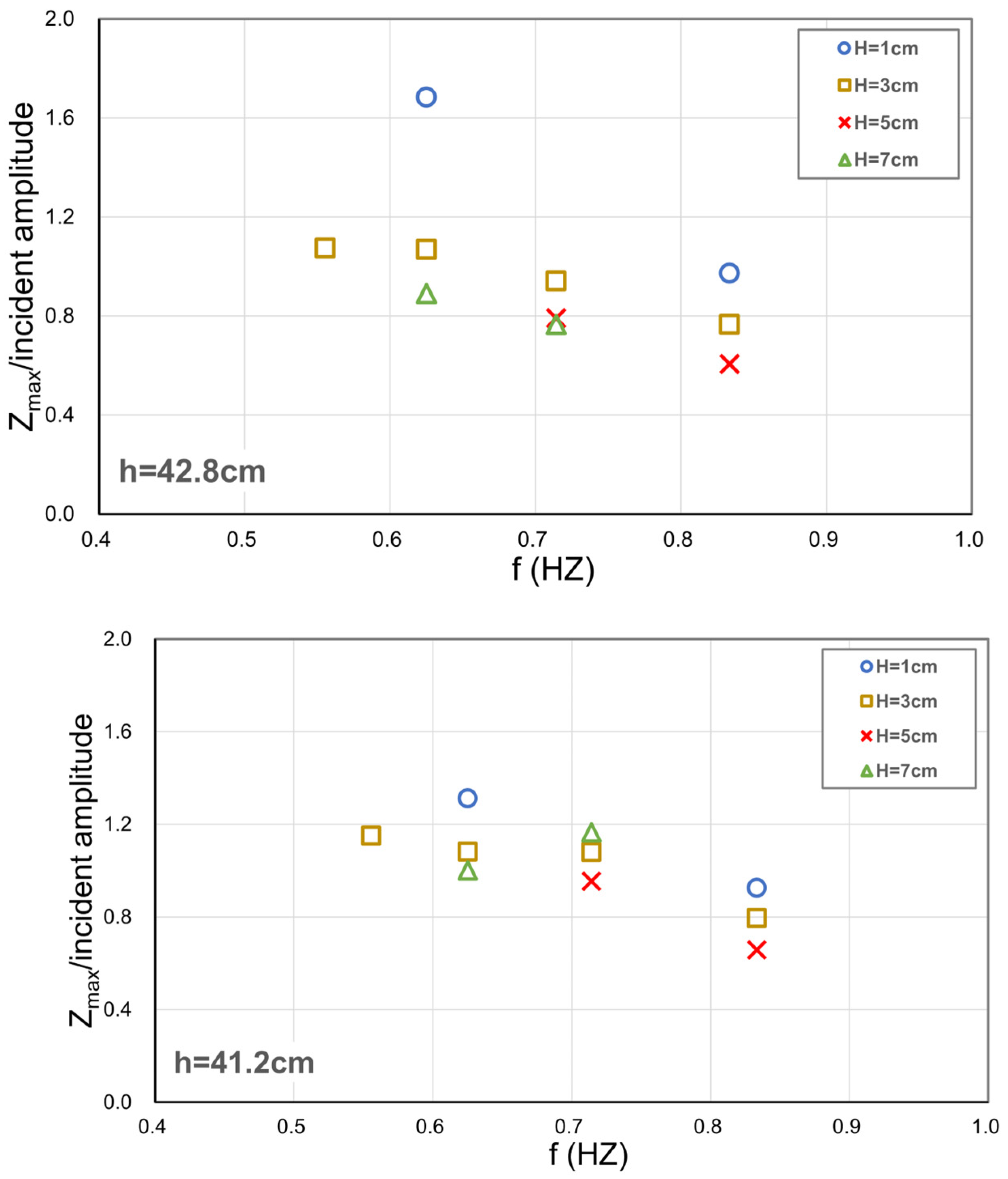
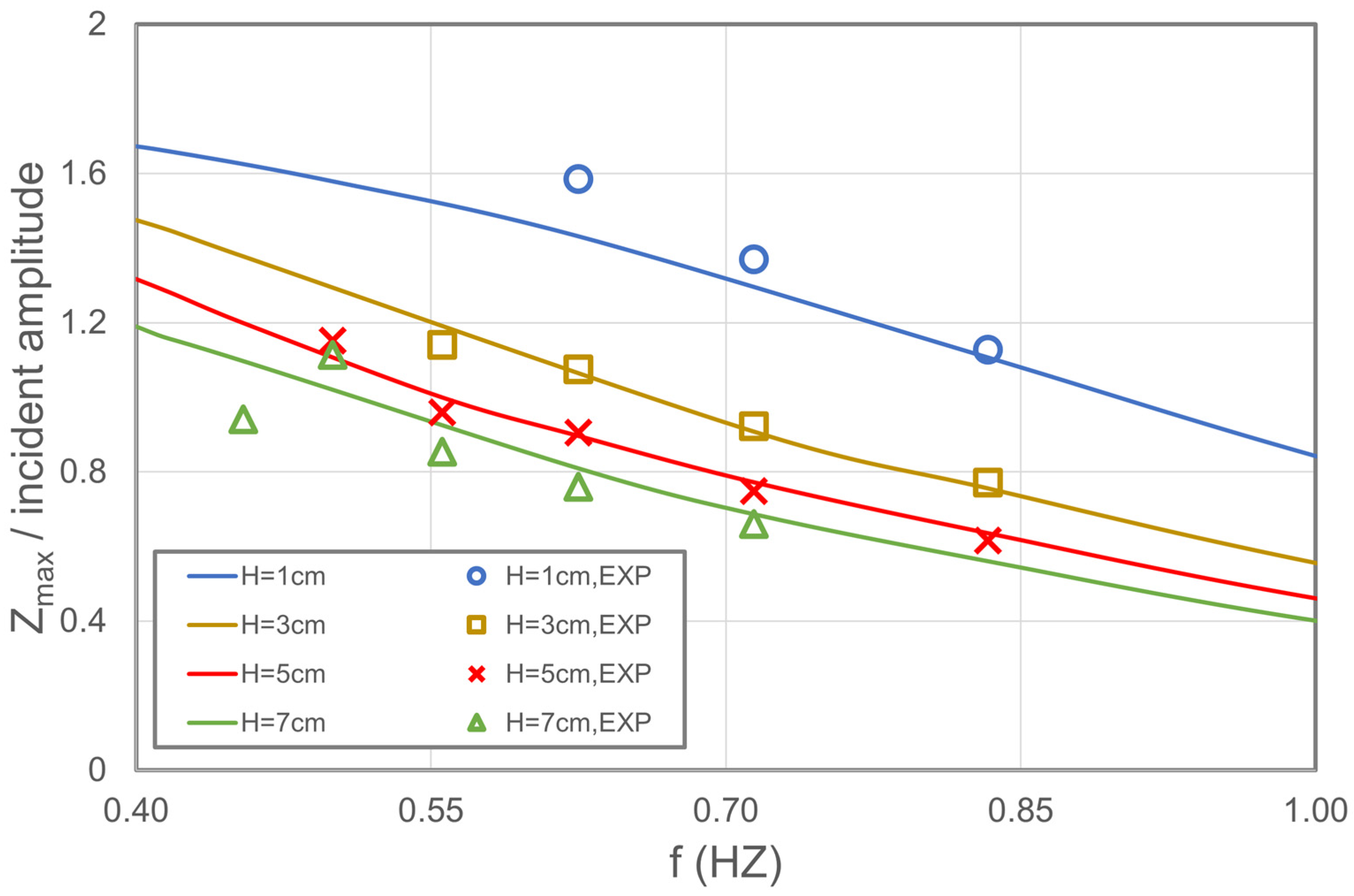
Figure 6 shows the normalized maximum water surface oscillation, defined as the measured chamber response divided by the incident wave amplitude, for different water depths and irregular wave conditions. The resonance period is an important characteristic of OWC structures. For the device considered in this study, the resonance period was approximately 0.4 s at model scale, corresponding to about 2.0 s at prototype scale [
31,
32]. When defining the test wave periods, we did not tune the input waves to the resonance period; instead, the wave periods were selected based on the wave-height distribution observed in the target sea area. The resulting internal free-surface responses are summarized as follows. Overall, the non-dimensional chamber response tended to increase as the wave frequency decreased (i.e., as the wave period increased). This trend is attributable to the resonant behavior of the oscillating water column system, in which the internal free surface oscillates more strongly as the wave frequency approaches the natural (resonant) frequency of the coupled air–water system. Under longer wave-period conditions, the motion of the water column becomes slower, and the combined restoring and damping mechanisms within the chamber (including the air–water coupling and the orifice resistance used to represent pneumatic losses) can lead to an amplified internal free-surface response near resonance.
Within the same frequency range, larger incident wave heights were observed to produce slightly reduced normalized oscillation amplitudes. This reduction can be attributed to enhanced nonlinear losses through the orifice and other dissipative processes under higher wave forcing. In addition, losses associated with flow separation beneath the front skirt may contribute to further energy dissipation, resulting in a reduction in the oscillation amplitude. Differences in oscillation amplitude due to water depth were generally minor under the tested irregular-wave conditions, likely because the tested depth range was relatively narrow and the incident wave energy flux for a given wave condition remained similar. Accordingly, changes in external hydrostatic pressure associated with the tested water-depth variation had a limited influence on the chamber oscillations.
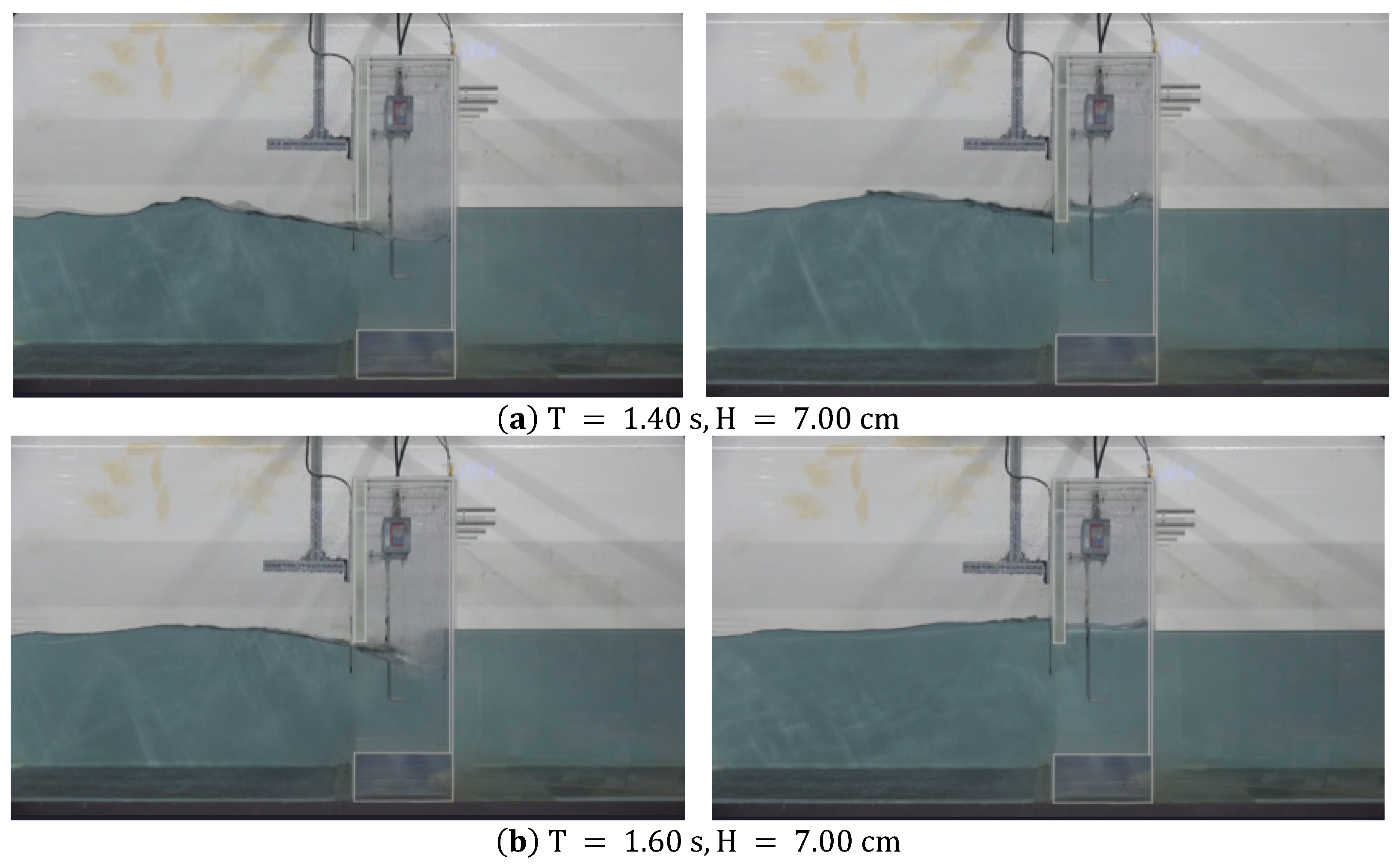
However, under the condition of h = 41.2 cm with an incident wave height of 7 cm, where the bottom of the front skirt was exposed above the still water level, the structural boundary constraining the oscillating water column was weakened. As a result, the internal free surface was more directly driven by the incident irregular waves, and the chamber oscillation amplitude increased significantly compared with other cases (
Figure 7).
4. Prediction of Reflection Coefficient for OWC Structures
4.1. One-Dimensional Model for the OWC Problem
Ref. [
33] proposed a one-dimensional theoretical model for cylindrical OWC structures, in which the dynamic behavior of the internal free surface was represented by combining a hydrodynamic model with a thermodynamic analysis of air pressure variations. In the present study, their model was extended and applied to an OWC device with a rectangular chamber, allowing the internal water surface oscillations to be reproduced. The basic concept of the adopted one-dimensional model is briefly outlined below.
The vertical motion of the free surface inside the chamber can be modeled as a mass–damping–restoring system and is therefore expressed by the equation of motion given in Equation (5).
In this formulation,
is the internal water-surface elevation in the chamber,
represents the mass of the oscillating water column,
is the damping coefficient, which is assumed to correspond to 10% of the critical damping, and
denotes the hydrostatic restoring coefficient, analogous to a spring constant. The values of these coefficients can be approximated using the expressions provided in Equation (6).
In this study, the cross-sectional area of the OWC chamber was A = 0.20 m × 0.29 m = 0.058 m
2, and the still-water depth from the free surface to the chamber bottom was d = 0.20 m under the reference condition (h = 0.444 m). The added mass of the oscillating water column was calculated as
, where the coefficient
was adopted following [
33], who verified that this value provides good agreement between theoretical and experimental OWC response amplitudes for small-scale chambers. This value corresponds to the added mass of a hemispherical fluid domain of equivalent radius, which has been widely used in OWC dynamic response analyses.
The external excitation force induced by the incident waves ), consists of three primary components:
- (1)
The Froude–Krylov force associated with the undisturbed incident pressure field ;
- (2)
The diffraction force , which arises from the scattered wave field when the structure is held fixed;
- (3)
The radiation force generated by the oscillating water column, which includes the added-mass term , and the damping term associated with the velocity of the oscillating motion.
In addition, the force generated by the internal air pressure within the chamber
, acts in the opposite direction of the water surface displacement. Following the approach of [
33], the diffraction term
was neglected in this study to simplify the formulation, although it is recognized that diffraction effects may become significant for OWC chambers with a rear wall. The influence of these external excitation components, particularly the diffraction term, will be further examined through advanced numerical simulations in future work.
The excitation force is evaluated using linear wave theory, as expressed in Equation (7).
Here, denotes the incident wave amplitude, ω is the angular frequency, and represents the pressure difference between the chamber interior and the atmosphere.
Although the governing equations of the one-dimensional model were originally formulated for monochromatic waves, in the present study the model was extended to irregular wave conditions. The total excitation force was evaluated by linearly superposing the contributions from 200 discrete frequency components distributed according to the Bretschneider–Mitsuyasu (BM) spectrum. This linear superposition assumes that the OWC hydrodynamic response remains quasi-linear within the tested amplitude range and allows the model to qualitatively represent the chamber behavior under realistic irregular wave excitation.
When accounting for the pressure drop through the orifice, the governing equation for the chamber pressure can be derived from the ideal gas law and is approximated as given in Equation (9).
Here, is the speed of sound in air, denotes the cross-sectional area of the orifice, is the initial height of the air chamber, and is the discharge coefficient for the mass flow through the orifice, for which a value of 0.5 was applied.
Accordingly, the water surface motion inside the OWC chamber can be numerically solved by coupling Equation (5) with Equation (9). However, it should be noted that the one-dimensional model assumes constant values for the added mass and damping coefficients, independent of wave frequency. In reality, both parameters are frequency-dependent and can significantly influence the dynamic response near resonance. This simplification may partly explain the discrepancies observed between the experimental and model results around the peak response frequencies.
In the original model by [
33], several simplifying assumptions were made to formulate the hydrodynamic response of an oscillating water column (OWC). These assumptions include the neglect of diffraction effects, the adoption of linear wave theory, and the omission of viscous forces. Furthermore, the added mass and damping coefficients were considered frequency-independent, and the added mass was approximated as that of a hemispherical volume of equal radius. While these simplifications enable analytical tractability, they inevitably limit the model’s ability to accurately capture the complex hydrodynamic behavior of an OWC chamber with a rear wall. In this study, the original Gervelas model was therefore adapted for a rectangular chamber configuration, and the above limitations were explicitly acknowledged and discussed in the analysis.
4.2. Comparison of Chamber Water Surface Oscillations
Figure 8 compares the maximum chamber water surface oscillation of the OWC device under irregular wave conditions at a water depth of 44.4 cm between the one-dimensional numerical model and the experimental results. Although the numerical model based on the irregular wave spectrum shows some discrepancies from the measurements in certain frequency ranges, it reasonably reproduces the overall variation in the chamber oscillation with frequency (
Table 2). In particular, the model successfully captures the tendency of the chamber oscillation amplitude to decrease as the significant wave height increases, which is consistent with the experimental observations.
Under irregular wave conditions, the numerical model tended to slightly underestimate the chamber water surface oscillation amplitude for low wave heights of 1 cm and 3 cm. This behavior can be attributed not only to the neglect of viscous losses but also to the assumption of constant added mass and damping coefficients that do not vary with frequency. These simplifications reduce the model’s ability to represent dynamic amplification near resonance, leading to smaller predicted amplitudes at low excitation levels.
In contrast, for relatively higher wave heights of 5 cm and 7 cm, the model was found to overestimate the oscillation amplitude. This overprediction is likely due to the neglect of nonlinear air–water interactions, air compressibility effects, and the increase in effective added mass associated with large free-surface oscillations. Similar tendencies have been reported in previous studies where simplified one-dimensional OWC models were applied under irregular wave conditions [
10,
14,
33]. Overall, the one-dimensional model qualitatively reproduces the frequency and wave height dependence of the chamber oscillations under irregular wave conditions, but with inherent limitations of underestimation at low wave heights and overestimation at high wave heights. Nevertheless, the model provides a simple and computationally efficient tool for predicting the hydrodynamic response inside OWC structures, even under irregular wave excitation.
4.3. Empirical Formula for the Reflection Coefficient of OWC Structures
In this study, an empirical formulation for the reflection coefficient of OWC structures under irregular wave conditions was proposed for application in the design stage. The explanatory variables considered in the formulation were the wave steepness based on the significant wave height (
), the relative depth (
), and the dimensionless maximum chamber water surface oscillation amplitude (
). The proposed empirical model can be expressed as follows:
where
is a scale constant that adjusts the overall magnitude of the reflection coefficient, and
,
, and
are the influence coefficients associated with each explanatory variable. Based on the hydraulic model test data, the coefficients of Equation (9) were optimized using the Levenberg–Marquardt (LM) algorithm [
34], resulting in the empirical formulation presented in Equation (10). The fitted coefficients
and
also provide useful physical insights into the governing parameters. The negative values of
and
indicate that the reflection coefficient decreases with increasing wave steepness and relative depth, reflecting enhanced wave energy dissipation and reduced reflection in deeper or steeper wave conditions. Meanwhile, the relatively small magnitude of
suggests that the effect of the chamber oscillation amplitude on overall reflection is secondary compared to the hydrodynamic parameters.
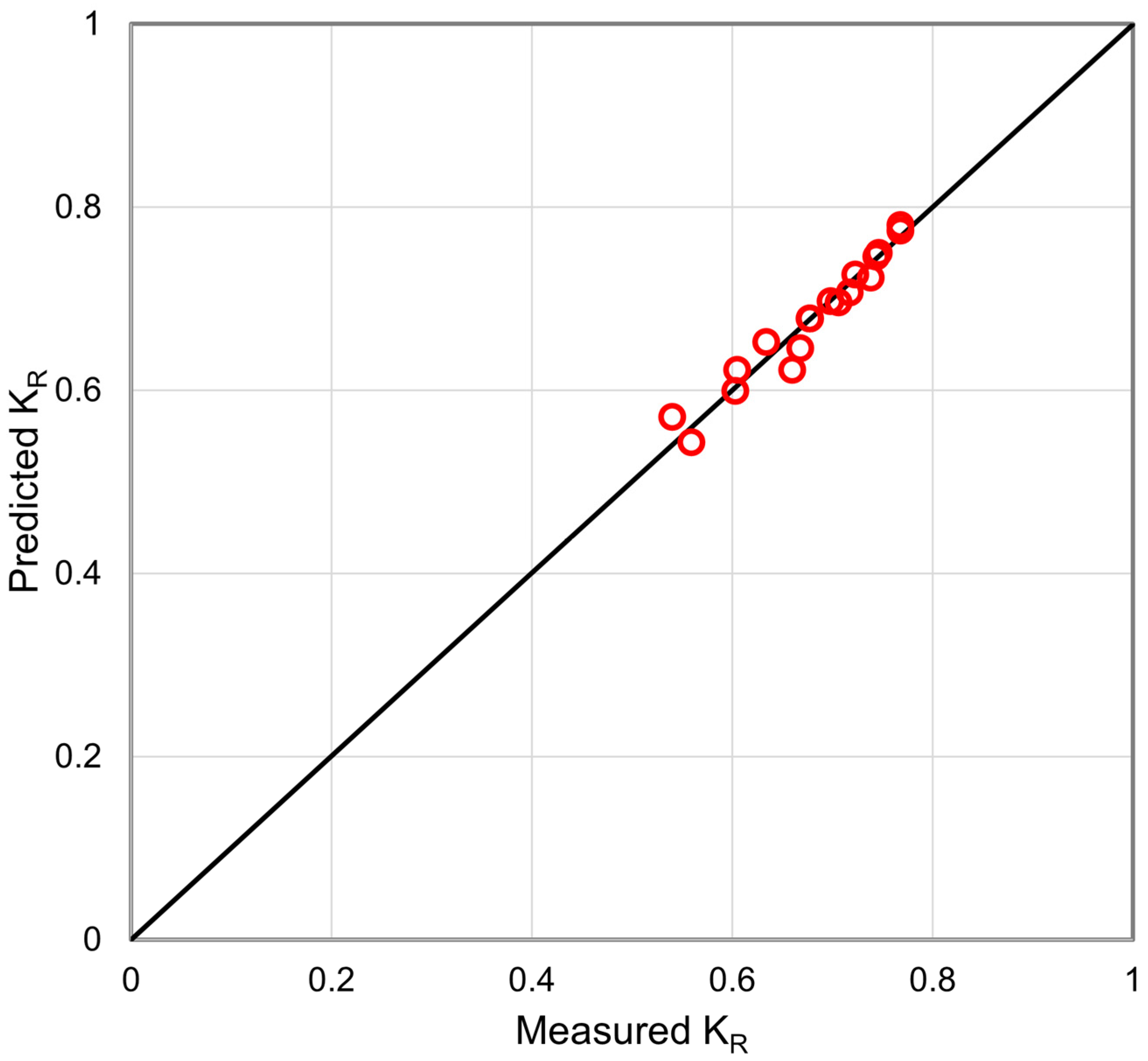
Figure 9 compares the predicted reflection coefficients obtained from the proposed formulation under irregular wave conditions with the experimental data. Overall, the predicted values reproduced the experimental trends well, although some underestimations were observed under certain conditions. The quantitative evaluation showed that the coefficient of determination (
) was 0.936 and the root mean square error (RMSE) was 0.016, indicating that the deviation between predicted and observed values was relatively small.
Furthermore, analysis of the influence coefficients revealed that both B and C were negative, indicating that the reflection coefficient tends to increase with larger wave steepness and shallower relative depth. In contrast, the coefficient D was estimated as 0.064, suggesting that the influence of the dimensionless maximum chamber oscillation amplitude is relatively minor compared with the other explanatory variables.
Therefore, the proposed empirical formulation provides an efficient structure. This way to estimate the OWC structures’ reflection coefficient comprehensively considers both geometric characteristics and wave conditions. It is expected to be effectively applied during the design stage for the evaluation and optimization of reflection characteristics under irregular wave conditions.
5. Conclusions
This study experimentally investigated the reflection characteristics and internal water surface oscillations of a breakwater-integrated oscillating water column (OWC) wave energy converter under irregular wave conditions. Based on the experimental findings, a one-dimensional analytical model and an empirical formulation were evaluated to assess their capability to predict the reflection coefficient of OWC structures. The main conclusions are summarized as follows:
- (1)
The experimental results under irregular wave spectra showed that the reflection coefficient of the OWC structure was generally below 0.8, which is lower than the typical range for conventional vertical breakwaters (0.7–0.9). This confirms that OWC-integrated breakwaters exhibit relatively low-reflection performance due to their partially porous configuration and air–water energy exchange characteristics.
- (2)
The chamber free-surface oscillation increased as the dominant wave period became longer, indicating amplification toward the low-frequency response of the OWC system. Conversely, for higher significant wave heights, the normalized oscillation amplitude decreased due to enhanced nonlinear orifice losses under stronger forcing. While the influence of water depth was limited within the tested range, exposure of the front-skirt tip above the still-water level reduced the chamber confinement and led to a sharp increase in oscillation amplitude.
- (3)
The one-dimensional numerical model showed reasonable agreement with the experimental results in reproducing the frequency-dependent oscillatory behavior of the internal free surface under irregular waves, supporting its applicability for predicting the hydrodynamic response of OWC chambers.
- (4)
A nonlinear regression analysis was performed using wave steepness, relative depth, and the dimensionless maximum chamber water surface oscillation amplitude as explanatory variables. The resulting empirical formulation demonstrated high predictive accuracy (R2 = 0.936, RMSE = 0.016) across all tested irregular wave conditions. The reflection coefficient tended to decrease with increasing relative depth and increase with higher wave steepness, while the effect of chamber oscillation amplitude was relatively small.
The hydraulic model experiments were conducted for a representative range of relative depths (41.2–44.4 cm) and wave steepness (0.01–0.03) but were still limited to selected irregular wave spectra. Future studies should therefore include a broader range of sea states, as well as large-scale and field conditions, to further validate and generalize the proposed empirical formulation.
Overall, the originality of this research lies in its systematic irregular wave experiments specifically targeting OWC-integrated breakwaters and in the development of an empirical reflection coefficient formula that accounts for the coupled hydro-pneumatic behavior of OWC chambers. The proposed formulation not only enhances predictive accuracy but also provides a practical design guideline for coastal engineers, enabling efficient incorporation of wave reflection characteristics into the design of breakwater-integrated OWC systems. This contributes to advancing both coastal protection design and the practical utilization of ocean wave energy in pursuit of sustainable and carbon-neutral marine infrastructure.