5.1. Performance Evaluation of Sail Thrust and Hull Resistance
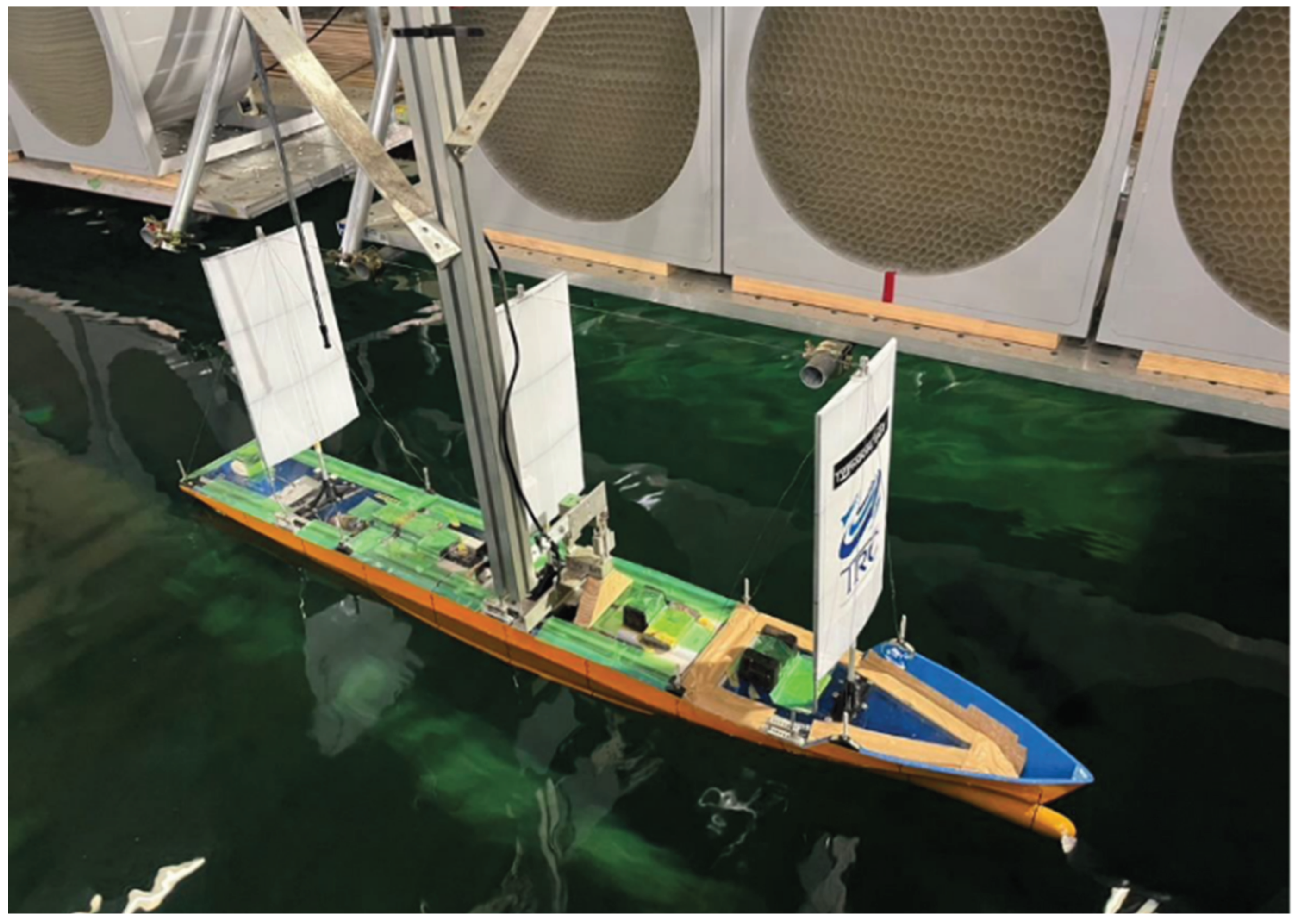
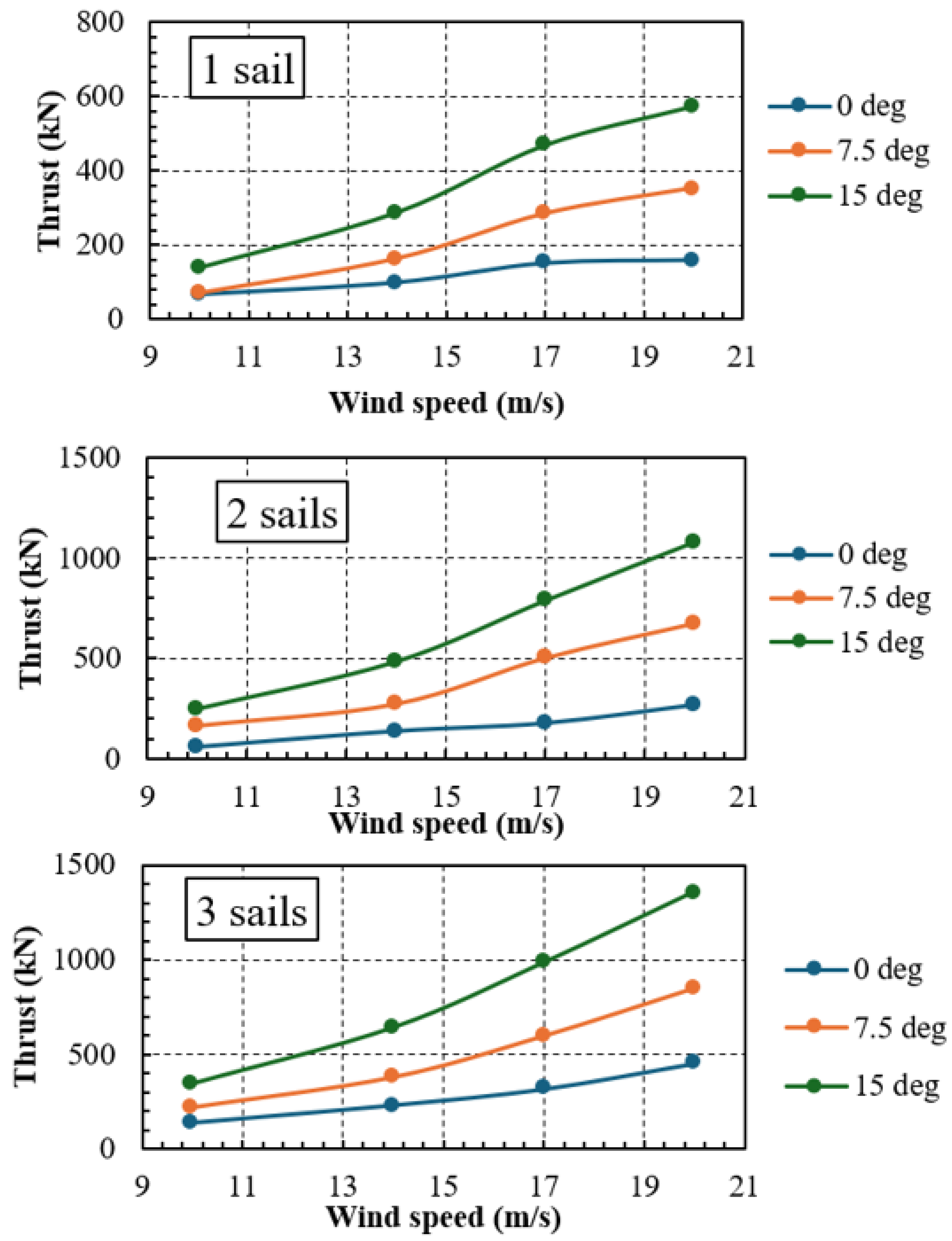
The experimental results for the KCS model under beam reach conditions (wind approaching from the side) reveal clear and consistent trends (
Figure 11). First, the thrust generated by the sails increases significantly as the number of sails is increased from one to three. This outcome is expected, since a larger sail area provides more surface to harness wind energy, thereby amplifying the overall aerodynamic driving force. Second, the angle of attack of the sails also plays a decisive role: at
, the thrust remains relatively low, while increasing the angle of attack to
and
results in a substantial rise in thrust across all wind speeds. This behavior aligns well with aerodynamic theory and with findings from earlier studies [
25,
26], which indicate that sails achieve maximum efficiency when operating at oblique angles to the incoming wind. These results show that increasing both the number of sails and the angle of attack improves propulsive performance, and the
case provides the highest thrust among the tested conditions.
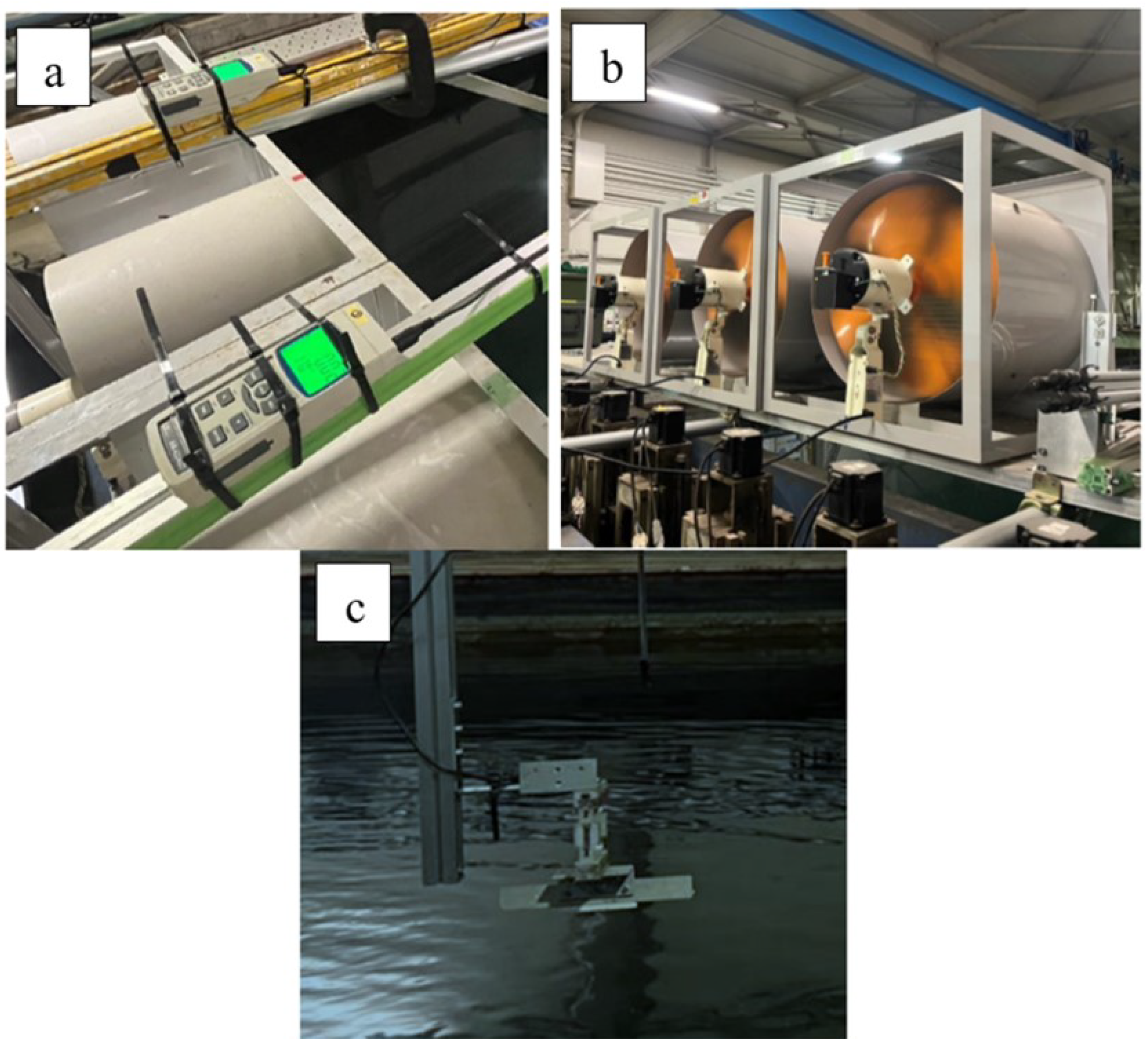
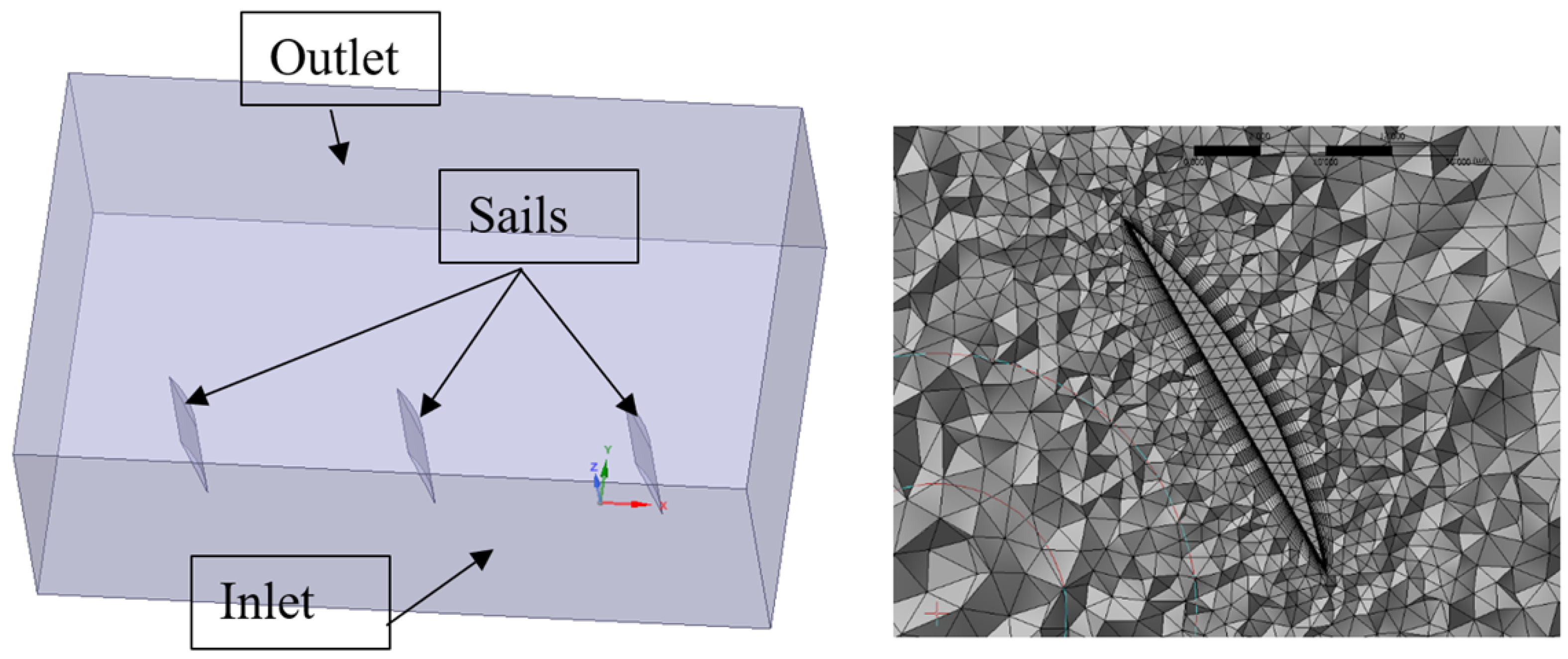
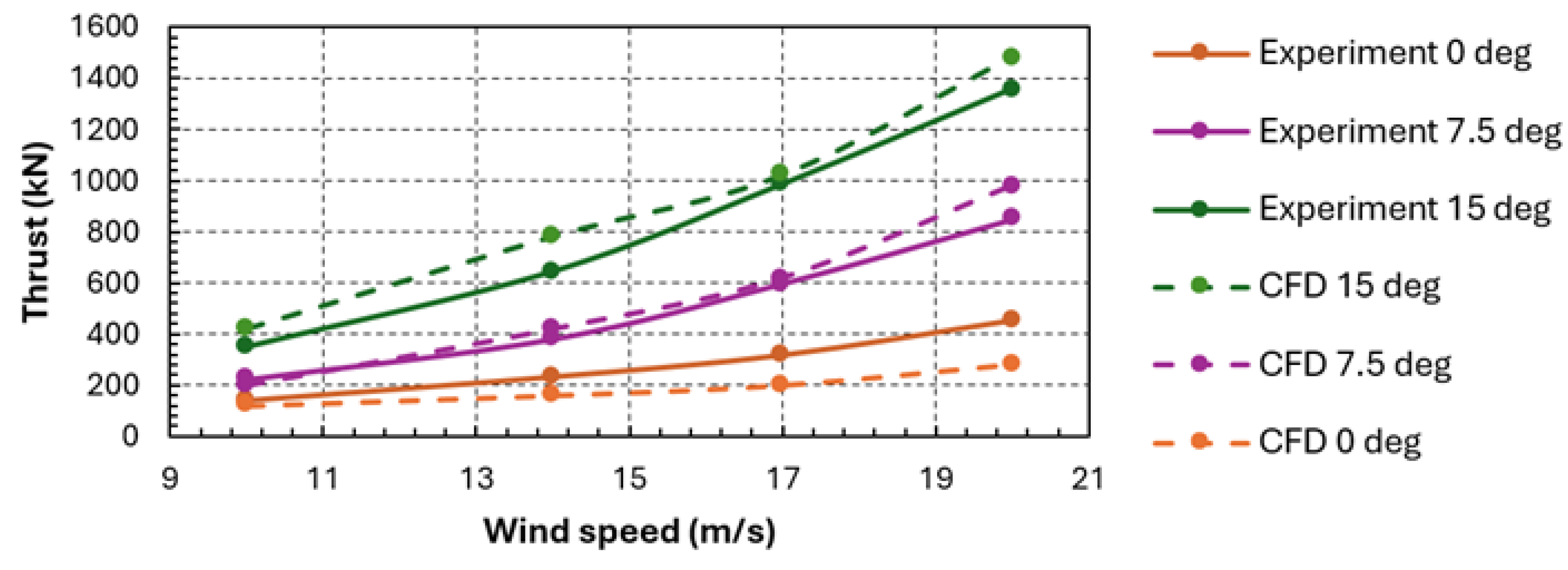
Figure 12 compares the sail thrust obtained from CFD simulations and from the experimental measurements. A consistent trend can be observed for all tested angles of attack, with thrust increasing with wind speed and higher angles of attack producing larger thrust values. For the cases of 7.5° and 15°, the CFD results tend to overestimate the measured thrust, with discrepancies in the range of approximately 3–20%. One important reason for this difference is the Reynolds number mismatch between the numerical simulations and the experiments. The experiments were conducted using a
scale model, resulting in relatively low Reynolds numbers, whereas the CFD simulations were performed at full scale. At low Reynolds numbers, the aerodynamic performance of the sail is more sensitive to viscous effects and flow separation, which can lead to reduced lift and increased drag compared to full-scale conditions. In addition, the CFD simulations assume idealized conditions with a steady inflow and a perfectly rigid sail, while the experimental setup inevitably involves flow non-uniformity and small model motions. These factors further contribute to the observed differences between numerical and experimental results. For the case of 0° angle of attack, the CFD results slightly underpredict the measured thrust. In the numerical model, the sail is perfectly aligned with the incoming flow and produces almost no lift, whereas in the experiment small-scale conditions, unavoidable yaw deviations generate a finite effective angle of attack, resulting in additional thrust. Despite these differences, the agreement in overall trends between CFD and experiments is considered satisfactory. The experimental results, although affected by scale effects, remain valuable for assessing the thrust–resistance relationship and for comparing different sail configurations under consistent conditions.
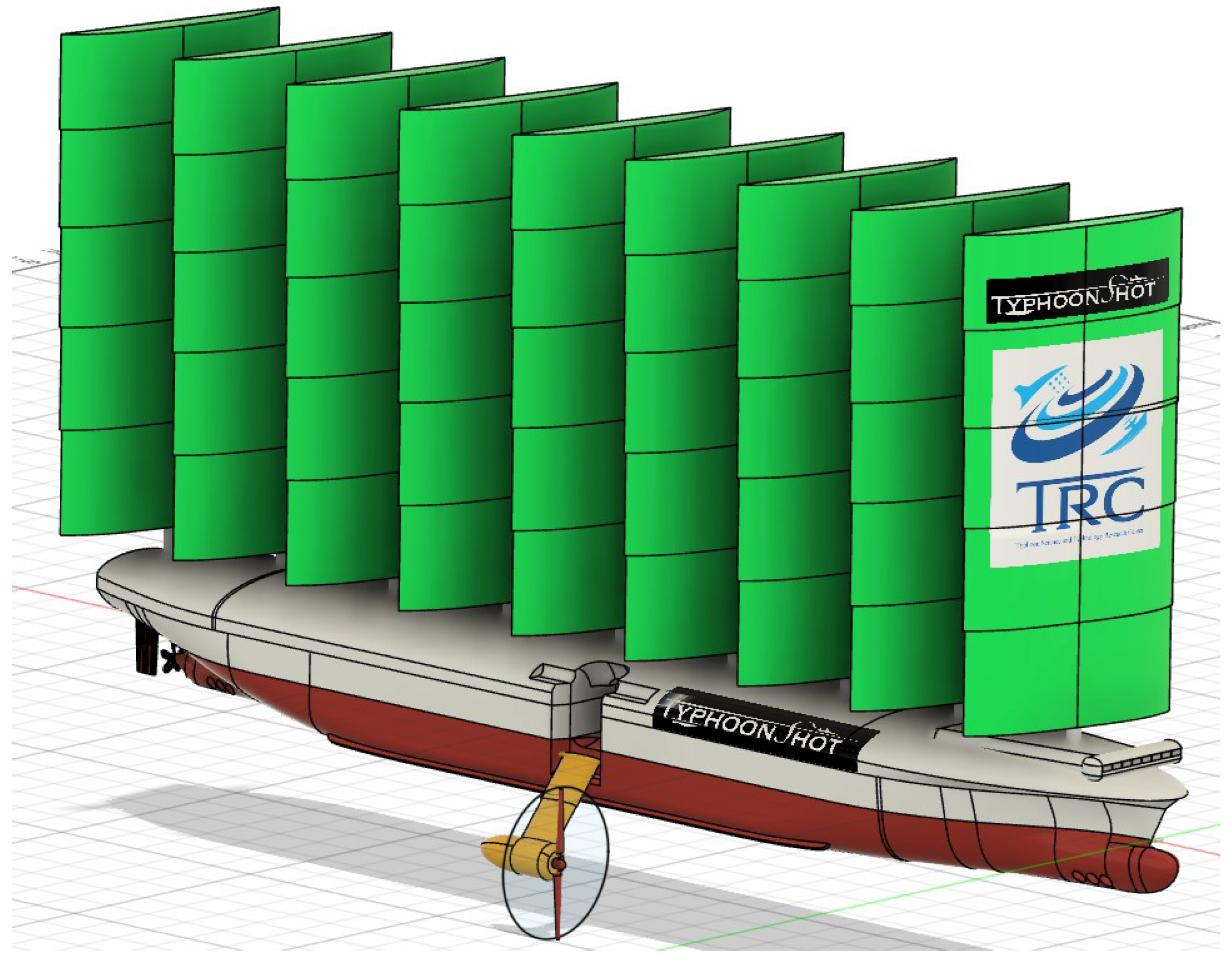
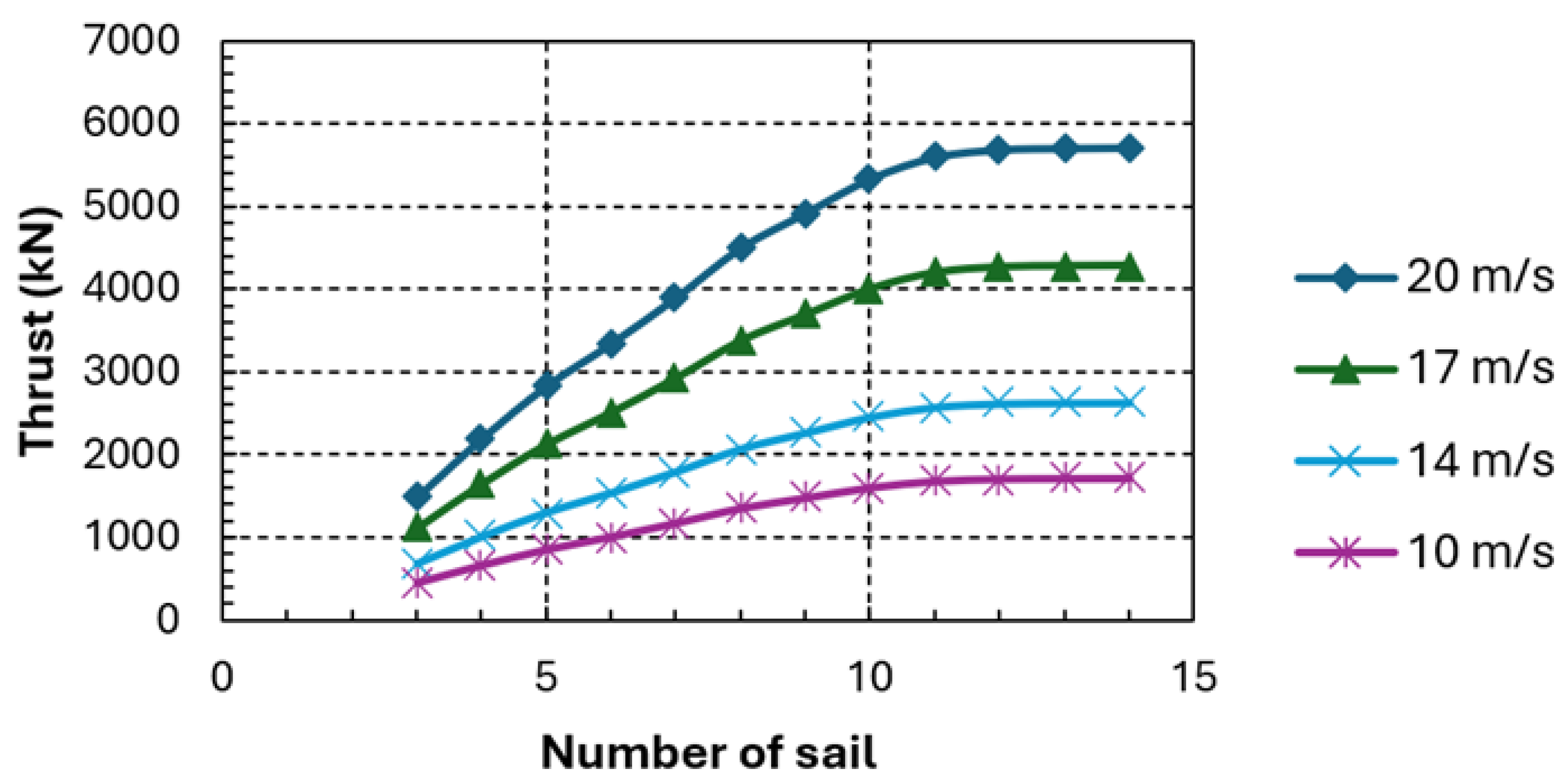
Figure 13 shows how thrust changes with the number of sails at four wind speeds (10–20 m/s). In all wind conditions, thrust increases as more sails are added, but the increase is not linear. From about 1 to 10 sails, the growth is strong, whereas beyond this point the rise becomes very small. At 20 m/s, thrust increases from roughly 900 kN (3 sails) to about 5500 kN (10 sails), but additional sails after the tenth produce only minor gains. The same pattern appears at 17 m/s, where thrust levels off around 4300 kN once the number of sails reaches 10. At 14 m/s and 10 m/s, the curve has the same shape but with lower magnitudes. The results show that aerodynamic interaction between nearby sails reduces the benefit of adding more units. Thrust increases only slightly beyond ten sails, so in this study, ten is selected as a practical number based on performance and installation considerations.
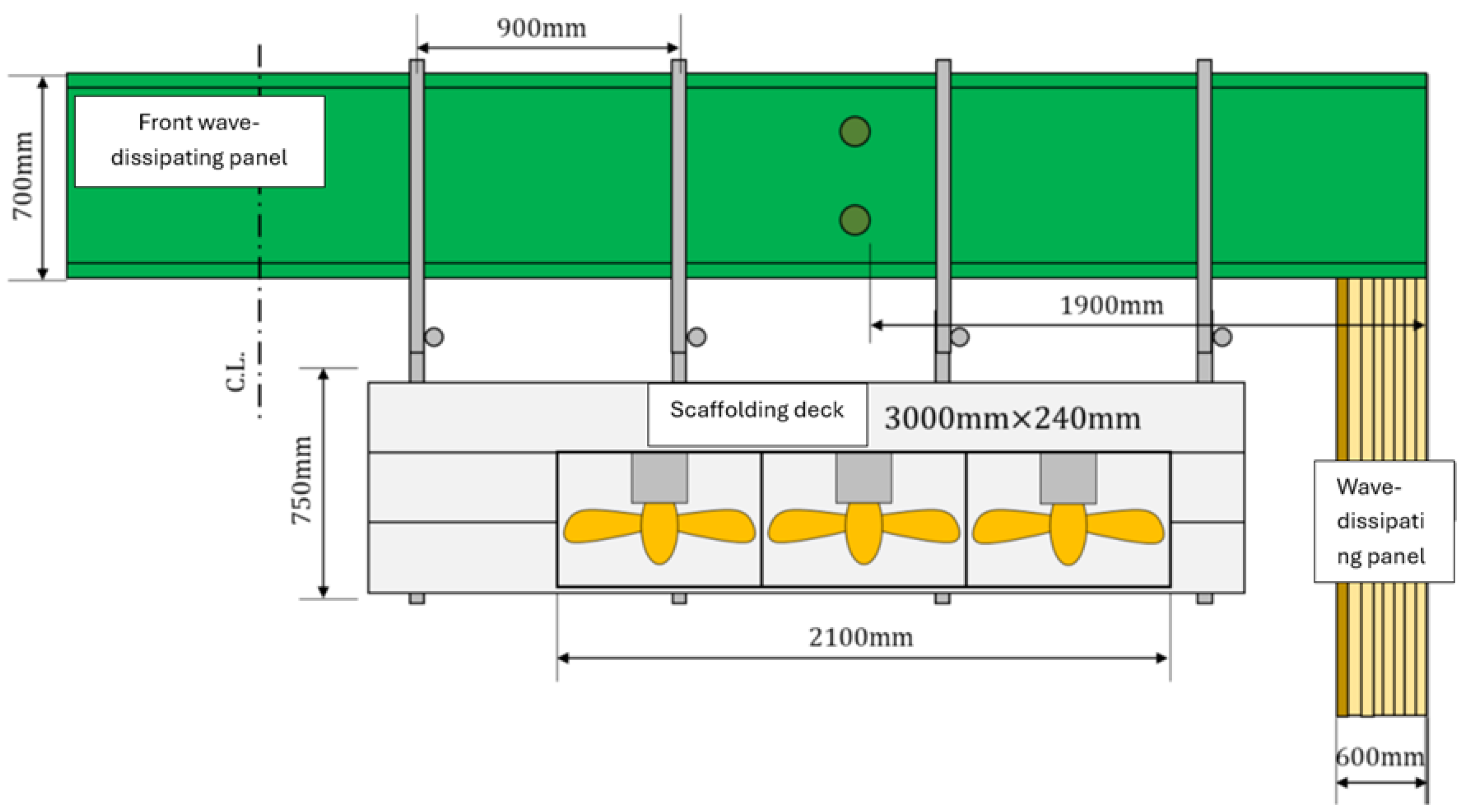
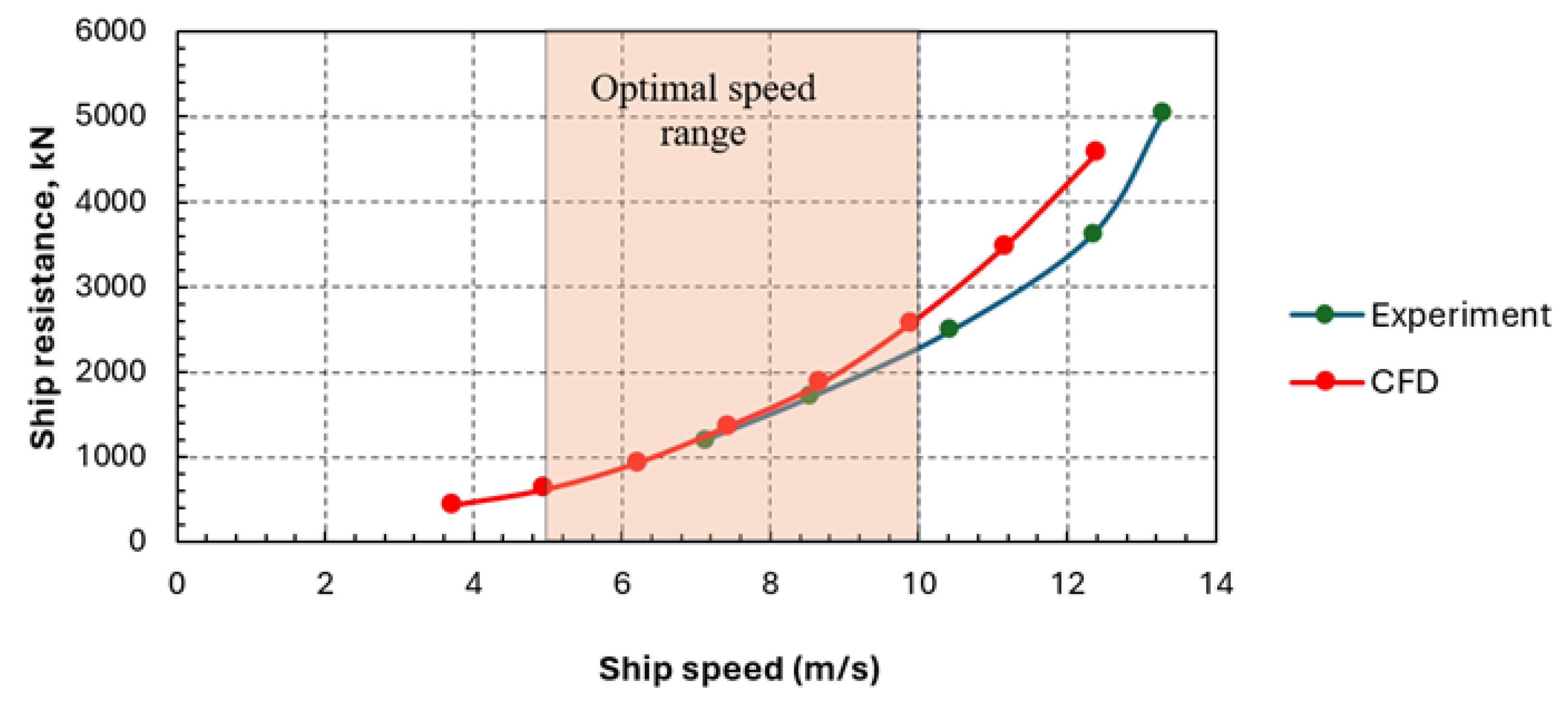
Figure 14 compares the ship resistance obtained from CFD simulations and towing-tank measurements over a speed range of approximately 4–13 m/s. In the medium-speed range, the two results show good agreement, with differences generally within 5%. This behavior can be explained by the fact that, at these speeds, the total resistance of the ship is dominated by wave-making resistance, which is much less sensitive to Reynolds number effects. As a result, despite the difference in scale between the model tests and the full-scale CFD simulations, the resistance trends remain consistent. At higher speeds, however, the CFD results tend to grossly overpredict the resistance, and the discrepancy becomes more pronounced beyond approximately 12 m/s, where the resistance rises rapidly. In this regime, the difference can reach approximately 20%. This behavior is consistent with the Reynolds number mismatch between the model-scale experiments and the full-scale simulations. At the model scale, viscous effects and boundary-layer development are not fully representative of full-scale conditions, which leads to an underestimation of frictional resistance in the experiments. In contrast, the full-scale CFD captures stronger viscous effects, resulting in higher predicted resistance at high speeds.
As a result, although the experiments and simulations are conducted at different scales, the agreement in overall trends remains acceptable, and the combined results are considered suitable for evaluating resistance characteristics and identifying the effective operating range of the ship. Additionally, 7–10 m/s is considered the suitable operating range, since the resistance is not excessive, the prediction remains reliable, and the ship performs most efficiently.
5.2. Turbine Dimensions
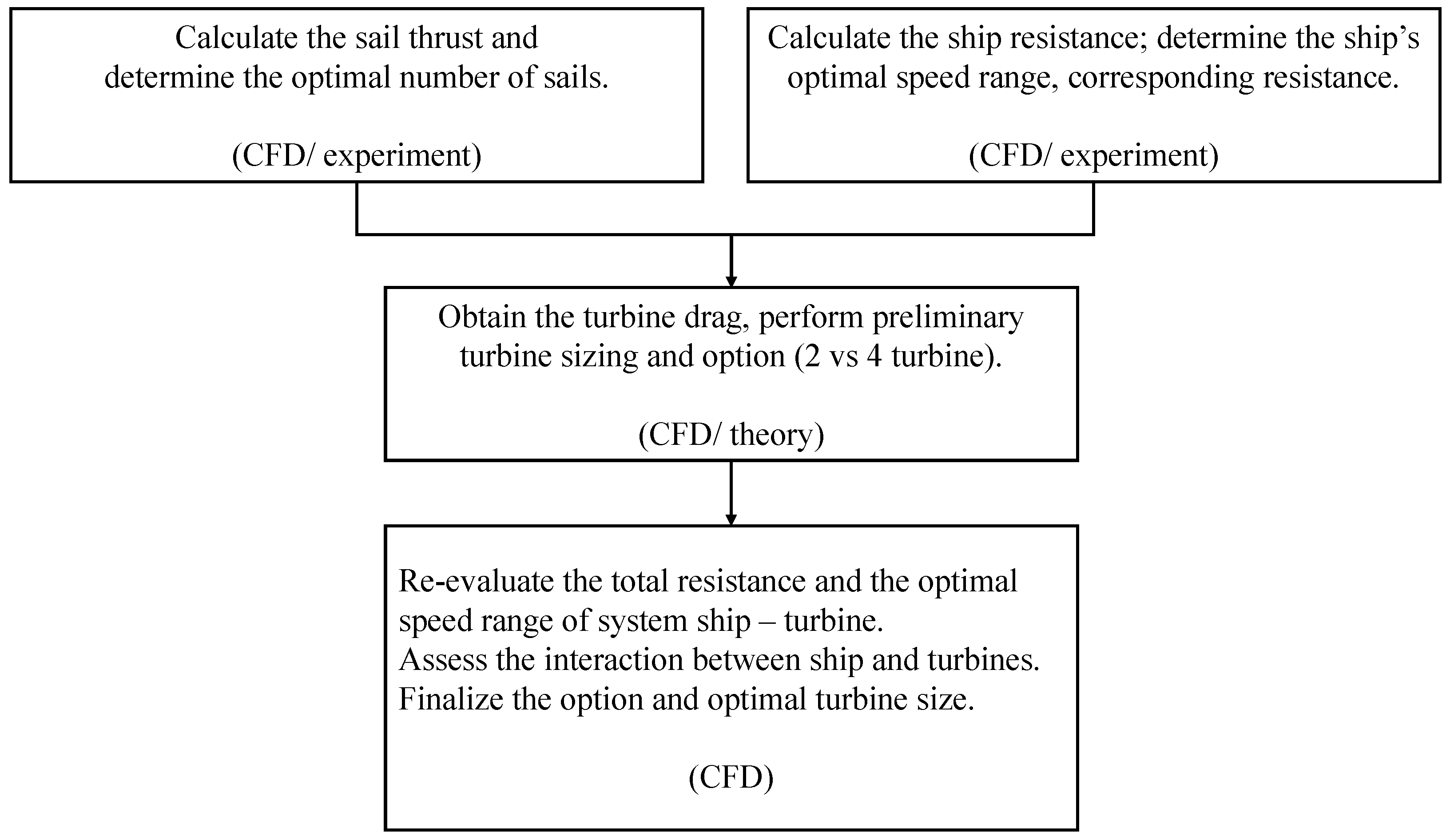
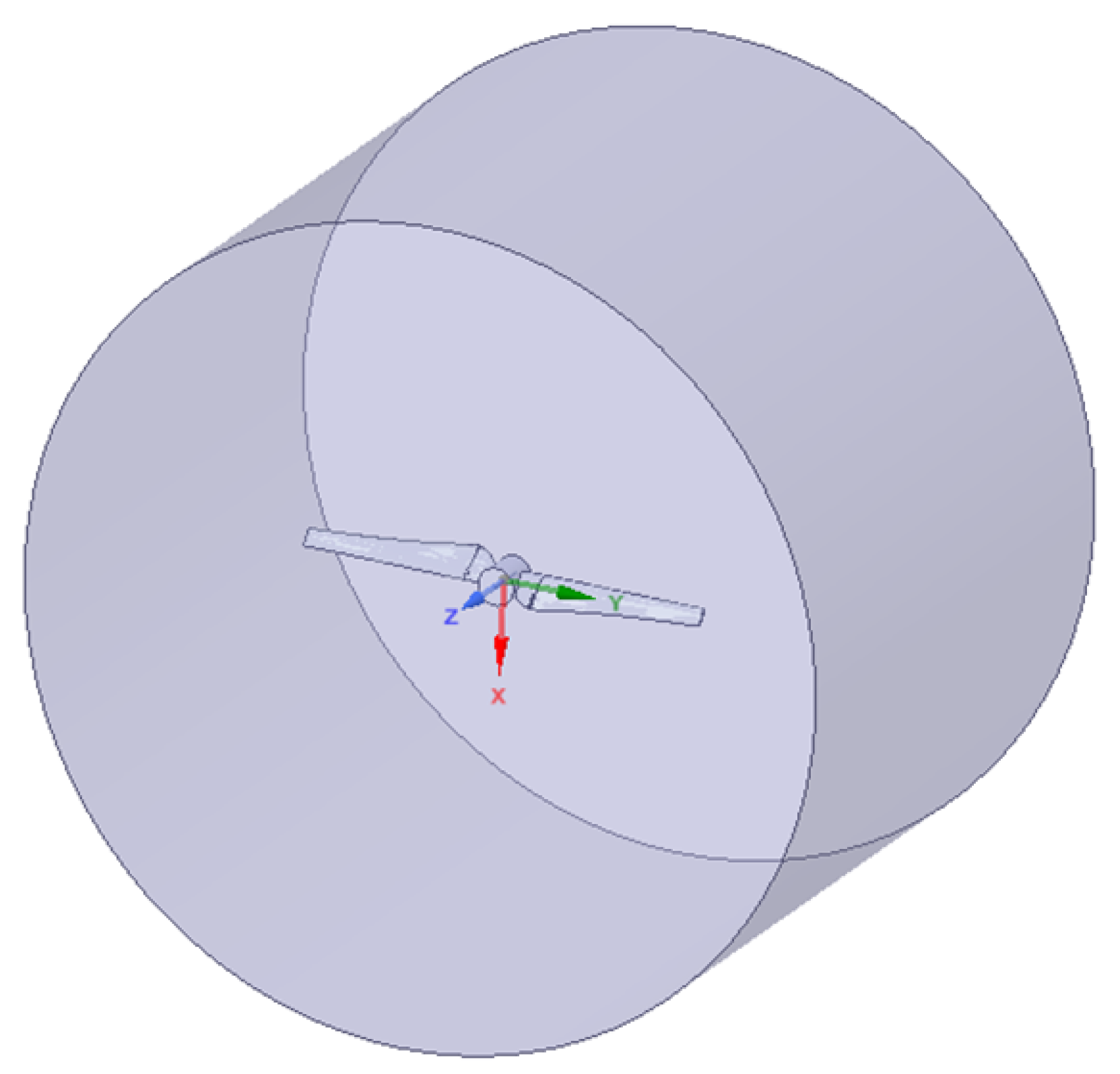
This section presents a preliminary sizing procedure for the underwater turbines based on the selected sail plan, the vessel’s preferred operating-speed window, and the resulting thrust–resistance balance. First, the feasible operating range is identified from the sail thrust and bare-hull resistance. A representative rated operating point is then defined as a reference condition for consistent turbine matching and for comparing different turbine configurations. Finally, the turbine diameter and rotor speed are determined using single-turbine simulations, and the corresponding power output is evaluated.
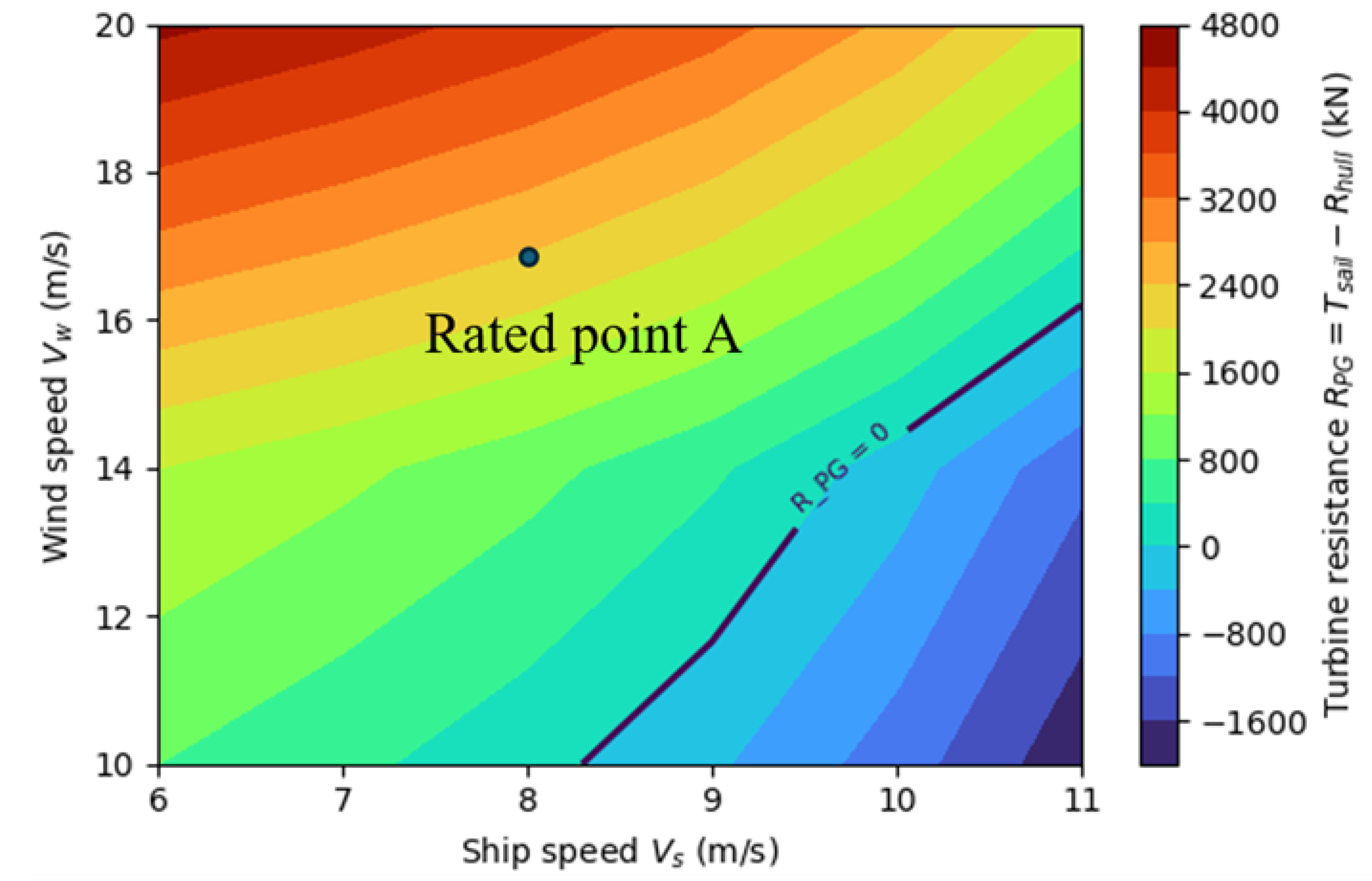
Figure 15 shows the turbine resistance in the wind–ship speed plane, where the contour values represent
. The curve
indicates the boundary where sail thrust balances hull resistance, i.e., the ship can just maintain its speed.
To select a representative operating point for turbine sizing, the vessel’s preferred operating-speed range was considered first. The ship performs most efficiently at 7–10 m/s; therefore, a ship speed of 8 m/s was chosen as a midpoint of this range rather than adopting the lower or upper limits. For the wind condition, Beaufort 6–8 corresponds approximately to 10–20 m/s. Within this range, 17 m/s was selected to represent a strong but realistic wind condition while avoiding the extreme case of 20 m/s, which could overestimate available thrust and lead to oversized turbines.
At the rated point
A,
, the sails generate approximately 4000 kN of thrust, whereas the hull resistance is about 1500 kN, leaving a net surplus of roughly 2500 kN. This surplus represents the thrust margin available to compensate for turbine-induced drag while maintaining forward motion. Therefore, point
A is used as the reference condition for determining turbine diameter and rotor speed, and the corresponding power output is evaluated using Equation (
18).
Turbine resistance coefficient
plays an important role in estimating turbine drag. In practice, the turbine is coupled to a generator, which imposes a significant load. However, within the scope of this study, the generator is not selected or modeled; therefore,
is taken for a loaded-turbine condition with relatively high values and is referenced from prior studies [
21,
22,
27,
28] and from diagrams in
Figure 8. The selected condition reflects the rotor type (two-bladed rotors), and the resulting diameter is checked against tip speed ratio
and cavitation limits [
29].
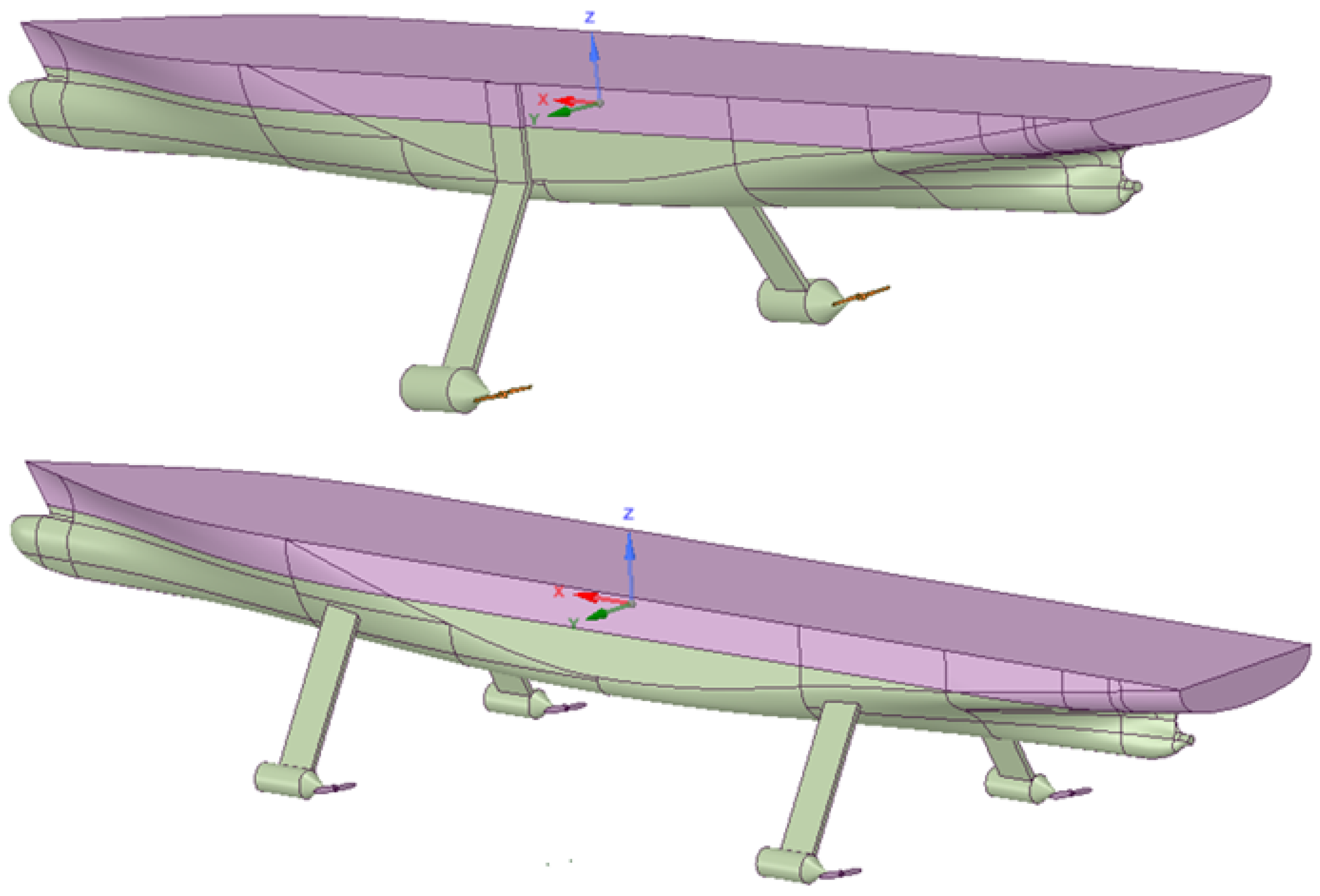
Two configurations were examined. With two turbines (one per side), each unit carries about 1250 kN, which, for
, gives a rotor diameter of 8 m. With four turbines (two per side), the diameter becomes 5 m (
Table 7). Theoretical diameters are rounded to practical sizes to fit manufacturing limits.
5.3. Assessment of Effective Turbine Operating Conditions
In this study, the effective operating range is defined as the ship-speed region where sail thrust, total resistance, and turbine efficiency (power coefficient) simultaneously satisfy the design criteria.
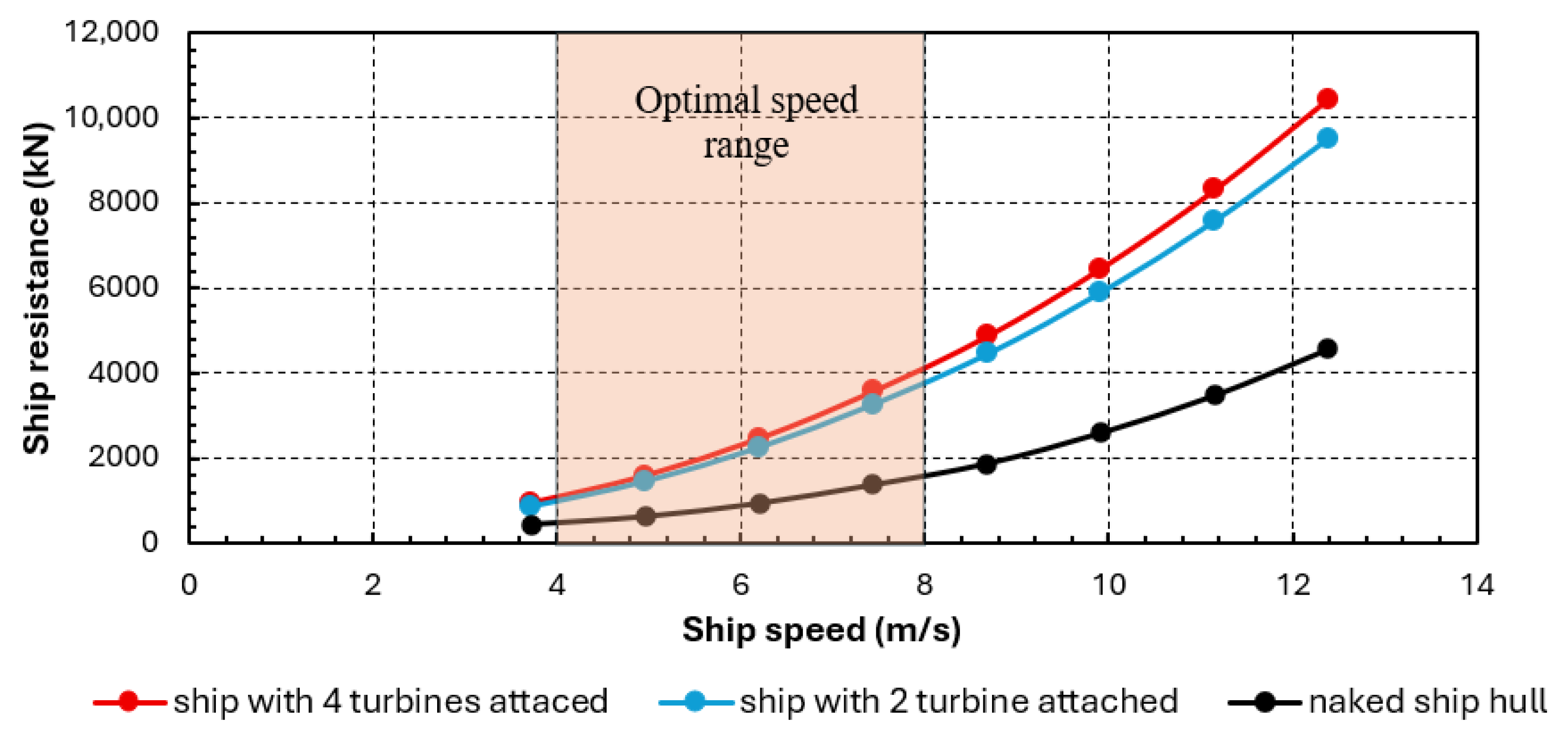
Figure 16 compares ship resistance in three cases: the bare hull, the hull with two turbines, and the hull with four turbines under the same rotor loading,
; two turbines with
; and four turbines with
. In all cases, resistance increases rapidly with ship speed due to the strong nonlinear growth of wave-making and turbine loading. Attaching turbines shifts the resistance curve upward across the entire speed range. For the bare hull, the practical operating speed is roughly 7–10 m/s, where the resistance remains acceptable. When turbines are installed, this window becomes lower and narrower 6–8 m/s, because the added resistance grows rapidly with speed. At lower speeds (4–6 m/s), the increase is still modest since the turbines extract only limited kinetic energy. Above about 8 m/s, the turbine loading dominates, and the resistance rises much faster than in the naked hull case.
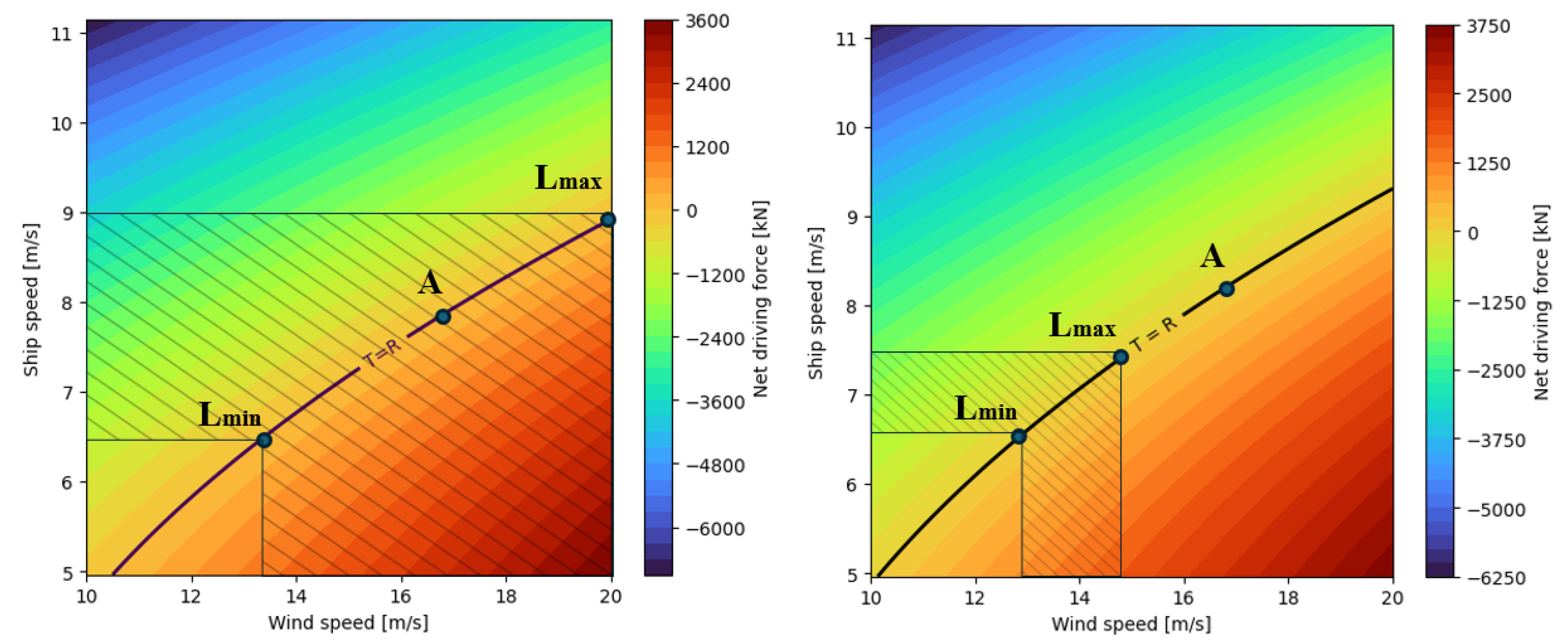
Figure 17 shows the operating range of the ship equipped with turbines, plotted as a function of wind speed and ship speed. The colored field represents the net driving force
. The curve
marks the boundary where thrust equals total resistance:
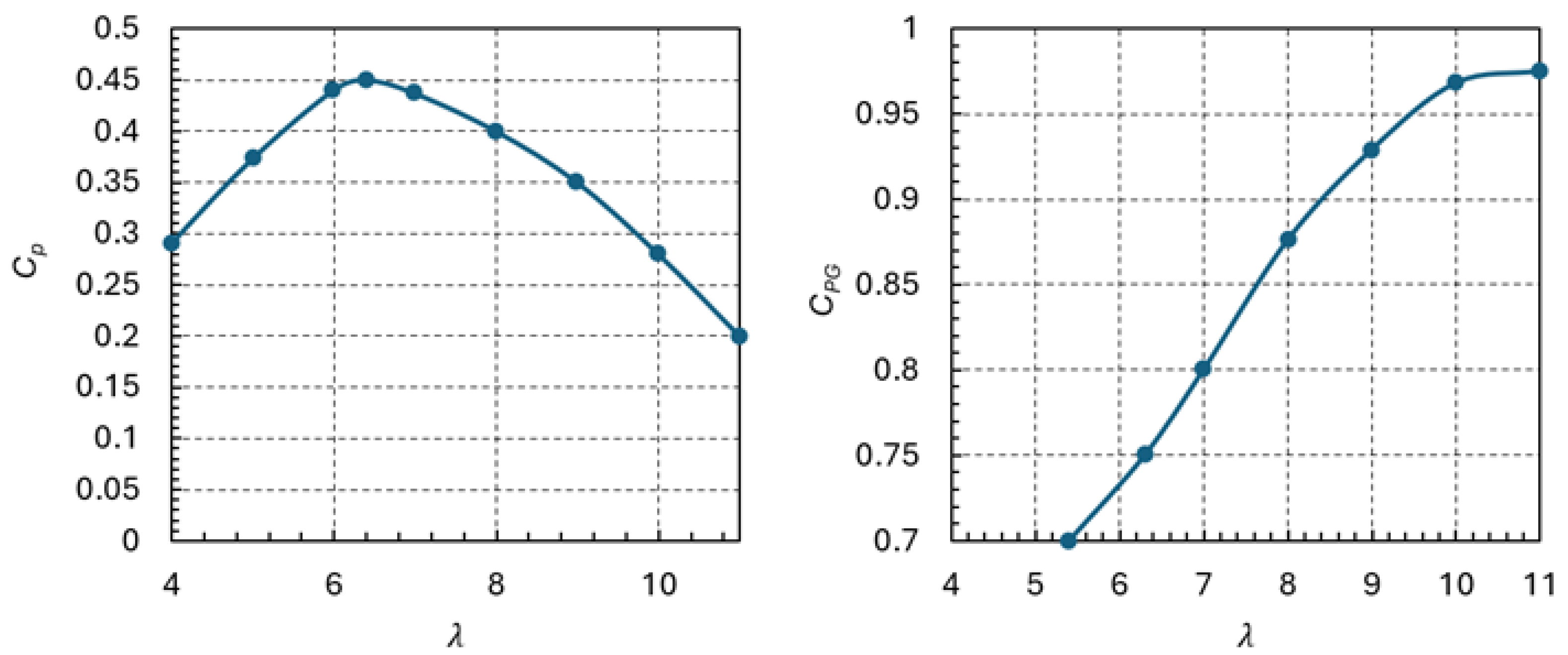
To evaluate the turbine performance under varying operating conditions, the power coefficient
is used as the primary indicator of aerodynamic efficiency, since it represents the fraction of the available kinetic energy that is converted into useful power [
30]:
where
- -
rated flow velocity is also the speed of the ship.
- -
the maximum power coefficient achievable at the optimal tip speed ratio.
- -
the overall system efficiency (mechanical drivetrain, generator, and power electronics): .
A turbine operates efficiently when its remains close to the maximum value on the –TSR curve. In this region, the blade loading is well balanced, avoiding both excessive drag (low TSR) and insufficient energy extraction (high TSR). Conversely, when drops far below the peak value, the turbine becomes aerodynamically inefficient, even if the flow speed and thus the theoretical resource remain high.
For this reason, a practical criterion is adopted: the turbine is considered to operate in its optimal region when the following condition is met:
This defines a region around the peak where the turbine can still be seen as working effectively. In this study, two boundary points,
and
, are selected to represent the upper and lower ends of the speed range where the turbine keeps
to at least
of its maximum value. The hatched region in
Figure 17 corresponds to this effective operating range, where
. Outside this range, the turbine performance drops clearly and is not taken as efficient operation in this study. With this assumption, the rotational speed
is kept constant by generator control and equal to the value at Point
A. The operating parameters for
and
are calculated and listed in
Table 8 and
Table 9 and shown in
Figure 17. For the 2-turbine case, applying the criterion
gives an effective wind range of 13.3–20 m/s, corresponding to ship speeds of 6.58–9.03 m/s. When intersected with the optimal resistance range (≈4–8 m/s), the common effective ship-speed band becomes 6.58–8 m/s, where both sail thrust and turbine power remain effective.
For the 4-turbine case, the acceptable region is narrower (13.1–14.85 m/s wind), with ship speeds of 6.58–7.44 m/s. After combining with resistance results, the final operating band is 6.58–7.44 m/s. The rated point A lies outside this band. The main reason is that the two downstream turbines operate in the wake of the upstream pair, reducing efficiency and significantly shrinking the feasible operating region. In addition to wake interaction, other factors also contribute to the reduced performance, including the increased appendage drag associated with the larger number of turbines and the influence of near-free-surface effects. These effects are particularly relevant for the four-turbine arrangement, where turbines are located closer to the free surface and interact more strongly with the hull flow.
In the present analysis, the turbine resistance coefficient and tip speed ratio were treated as constant in order to allow a transparent system-level comparison between different turbine configurations. This approach represents a simplified, one-way coupling between the sails, hull, and turbines. It is acknowledged that more advanced turbine control strategies, such as variable loading or variable-speed operation, could modify the operating envelope by altering the balance between thrust, resistance, and power extraction. For example, a higher turbine loading would increase hydrodynamic resistance and reduce ship speed, while a lighter loading could allow higher speed but lower power extraction. Such effects may influence the absolute performance level and potentially shift the optimal operating range.
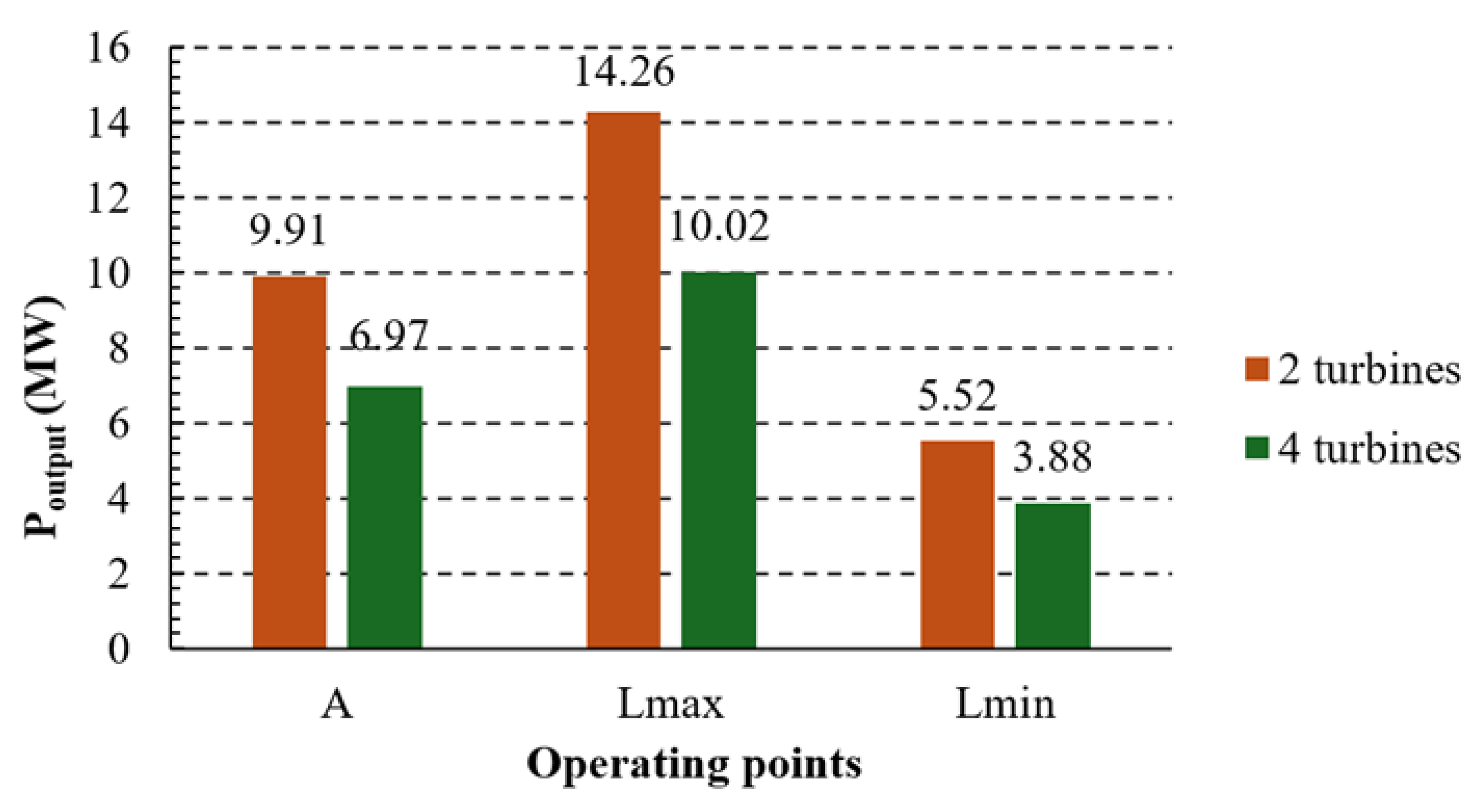
Figure 18 compares the turbine output at the three operating points
,
A, and
for both layouts. For the both turbine configurations, the power at
is higher than at the rated point
A, while the power at
is lower than at
A. This is expected because the ship speed, and hence the inflow velocity
, enters the power relation
; small changes in
around
A produce large changes in
even when
stays close to its peak.
For the four-turbine case (rotor radius 2.5 m), the output is lower at all three points than for the two-turbine layout (radius 4 m). The difference is on the order of 30% at each operating point, reflecting both the smaller swept area, the wake losses, and additional appendage drag acting on the downstream rotors.
In summary, the 4-turbine arrangement has some practical advantages: smaller individual rotors and a more even longitudinal distribution, which may be favorable for ship stability and integration. However, the effective operating range of all four turbines together is much narrower, and the delivered power is clearly lower. A possible improvement would be to tilt or offset the two downstream turbines so that their rotors are placed outside the wakes of the upstream ones. Variable-speed or load-control strategies for the generators should also be considered to maintain an optimal TSR as operating conditions change. Based on the present performance estimates, the 2-turbine configuration offers a more attractive balance between power output, operating range, and installation effort.
It is noted that the wake factor has a significant influence on the rated power of the turbine system, especially for configurations with four turbines. When the wake factor increases, the inflow velocity to the downstream turbine decreases, leading to a reduction in the total power output. Conversely, when the wake factor is lower, the flow loss is reduced and the overall power increases. However, the variation of the wake factor mainly affects the absolute value of the power, while the overall trend in the comparison between different configurations remains unchanged. In particular, the four-turbine configuration is always more sensitive to wake losses than the two-turbine configuration due to the cumulative wake interaction, and this behavior does not change within a reasonable range of wake factor variation. Therefore, although the wake factor can influence the quantitative difference between the two arrangements, the main conclusion regarding the performance difference between the two-turbine and four-turbine configurations remains valid.
The integration of large-diameter turbines (5–8 m) into the ship hull introduces several challenges related to both structural design and operational control. From a structural perspective, large turbines generate considerable hydrodynamic forces and moments, particularly under strong current conditions or at higher vessel speeds. These loads must be safely transmitted to the hull through appropriately reinforced supporting structures. In addition, the installation of large turbines requires substantial internal space, which affects the arrangement of the hull structure, ballast tanks, machinery spaces, and power transmission systems. A more detailed investigation of these structural aspects is therefore required in future studies.
From an operational and control standpoint, the turbines cannot operate efficiently under all conditions. When the vessel travels at higher speeds or encounters moderate wind conditions, keeping the turbines deployed would lead to increased hydrodynamic resistance and reduced overall efficiency. For this reason, as mentioned before, the turbines are designed to be foldable when power generation is not required. This arrangement helps to minimize drag and avoid unnecessary structural loading. The operation of the turbines must also be coordinated with vessel speed, wind and wave conditions, and the power generation mode. This requires an integrated control strategy involving the propulsion system, the turbine generators, and the onboard energy management system.
It should be noted that the present conclusions are derived based on the KCS hull form, which represents a slender container ship with relatively low resistance characteristics. While the quantitative results are specific to this hull geometry, the qualitative trends identified in this study—such as the saturation of sail thrust with increasing sail number and the dominant influence of wake interference in multi-turbine configurations—are governed by fundamental aerodynamic and hydrodynamic interactions and are expected to be transferable to other displacement-type vessels. Accordingly, the configuration of approximately ten sails and two turbines should be interpreted as a rule-of-thumb rather than a universal optimum. For fuller hull forms, such as bulk carriers or tankers, differences in resistance characteristics and deck layout may shift the optimal balance. In addition, sail arrangements on vessels with large block coefficients or on catamarans would differ substantially, which could lead to significantly different optimal outcomes.




 ,
,