1. Introduction
Driven by the rapid growth in energy demand and increasing environmental concerns associated with fossil fuel consumption, renewable energy has become an important component of the global energy transition due to its sustainability, cleanliness, and vast resource potential [
1]. Wind energy is widely recognized as one of the most promising renewable energy sources and is commonly classified into onshore and offshore wind power. The advantages of offshore wind energy, including abundant wind resources and proximity to coastal demand centers, have promoted the rapid deployment of offshore wind turbines (OWTs) worldwide [
2]. According to the report issued by the Global Wind Energy Council, the cumulative installed capacity of grid-connected offshore wind power worldwide has reached 92.3 GW over the past decade, and an additional 129 GW of offshore wind capacity will be installed globally by 2030 [
3].
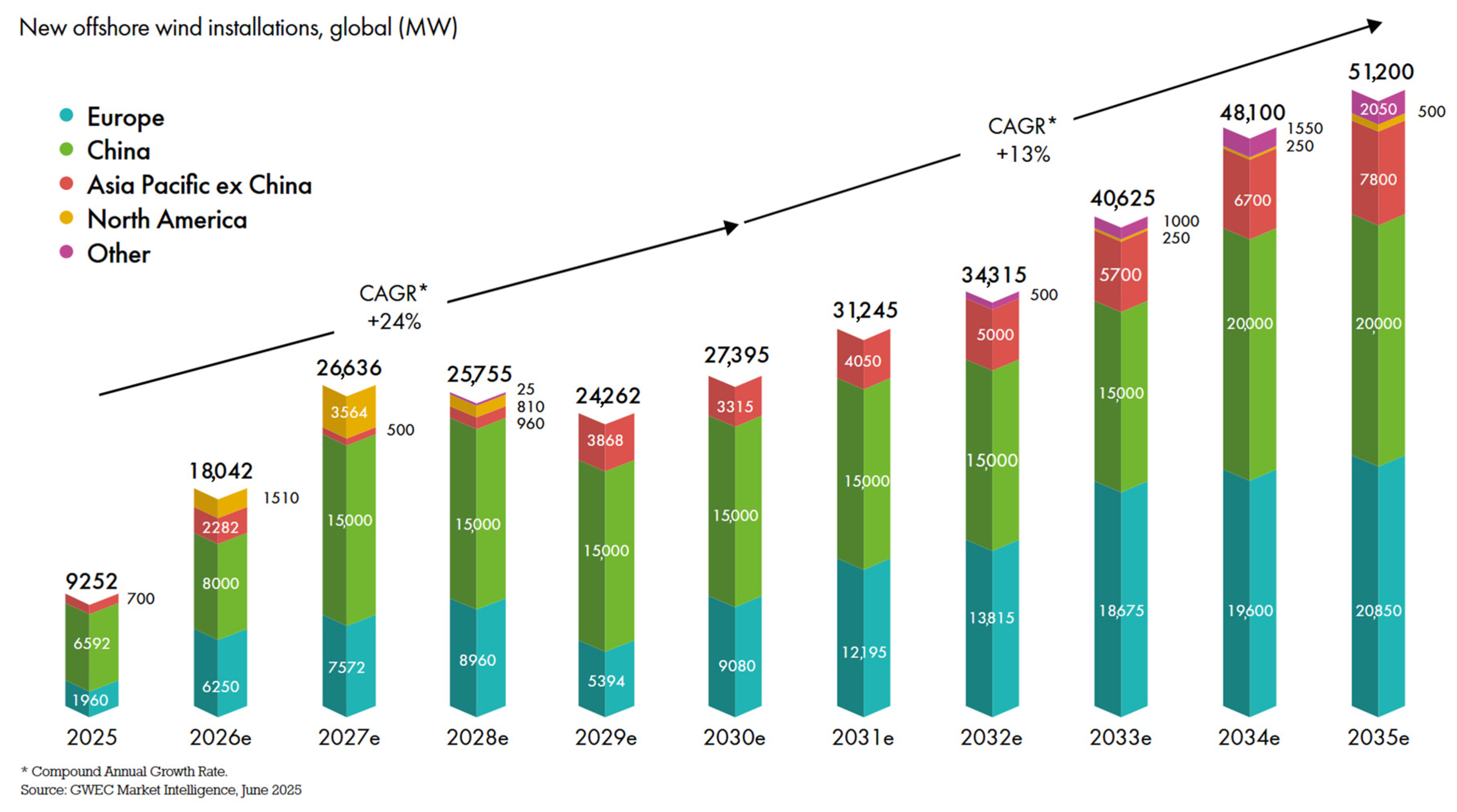
Figure 1 illustrates the projected expansion of global offshore wind installations, with a compound average annual growth rate of 24% until 2030 and 13% up to 2035, highlighting the strong growth potential of the offshore wind industry.
The growing demand for clean energy is driving offshore wind energy development toward deeper waters, farther offshore regions, and larger-capacity turbines [
4,
5]. This trend exposes OWTs to more complex environmental loads, posing greater challenges to their structural safety and reliability. The foundations are critical to the safe operation of OWTs and typically account for 20–30% of the total cost [
6].
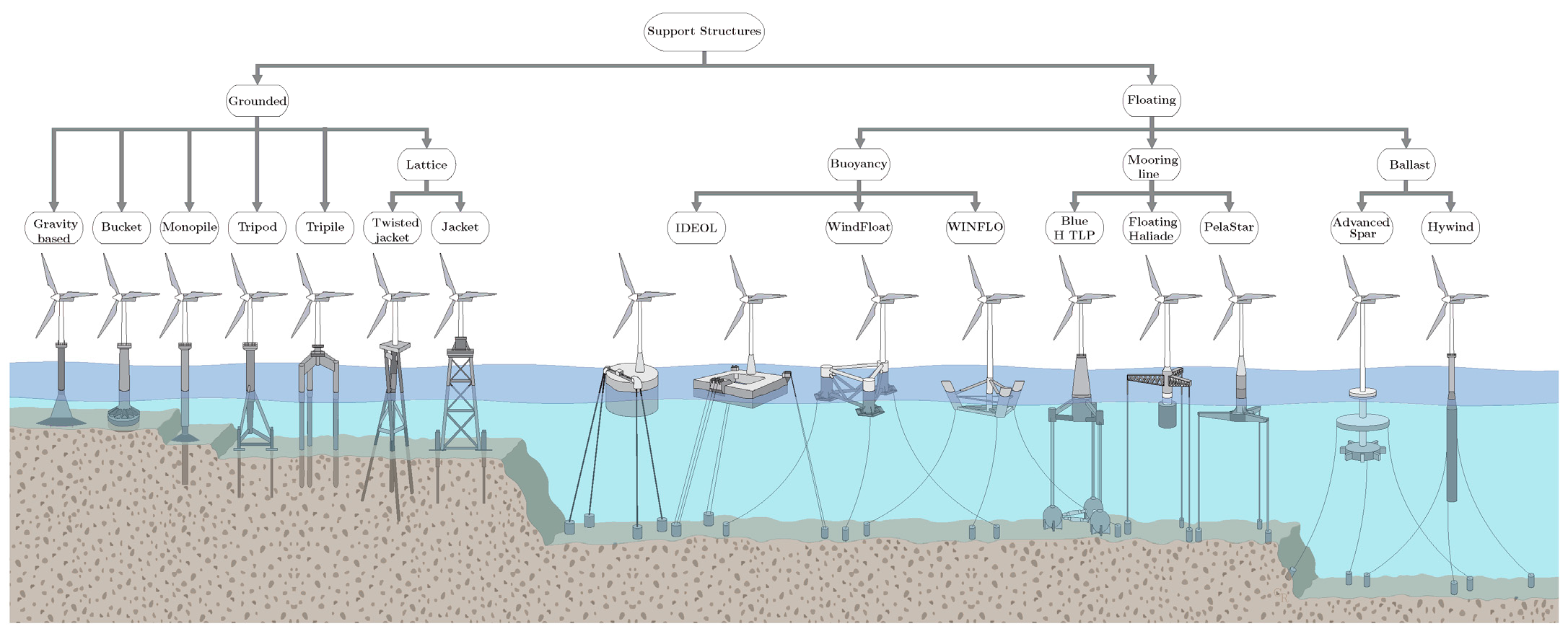
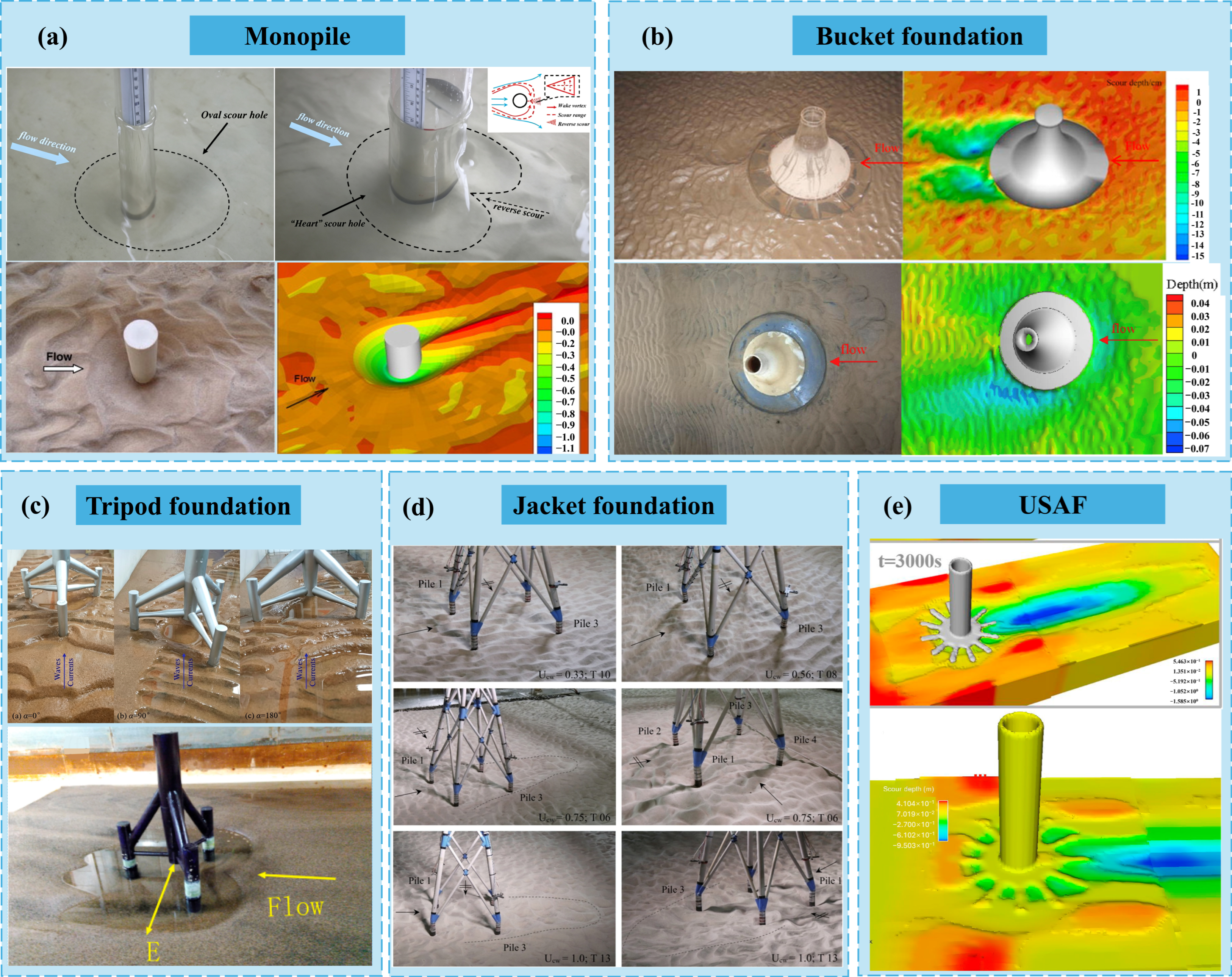
Figure 2 illustrates the main foundation types used for OWTs. These foundations are generally classified into fixed-bottom and floating systems. Among them, monopiles remain the dominant solution, accounting for approximately 70% of all commissioned offshore wind turbine foundations (OWTFs). Jackets, tripods, suction buckets, and other multi-leg or wide-shallow forms are adopted at greater water depths or under specific seabed conditions [
7,
8,
9]. Although floating foundation systems have attracted increasing research interest [
10,
11], their practical deployment remains relatively limited [
12]. Therefore, this review focuses exclusively on fixed-bottom OWTFs.
Scour-induced sediment loss reduces the effective embedment depth and lateral soil support, leading to decreases in both bearing capacity [
14,
15] and structural natural frequency [
16,
17], thereby compromising the safety and serviceability of OWTs. The detrimental effects of scour are exemplified by the Robin Rigg wind farm, where two monopile foundations were decommissioned after only six years of operation due to scour-induced problems [
18]. Ensuring the safe operation of OWTs throughout their service life therefore requires both accurate assessment of scour-induced foundation risks and effective scour-protection design.
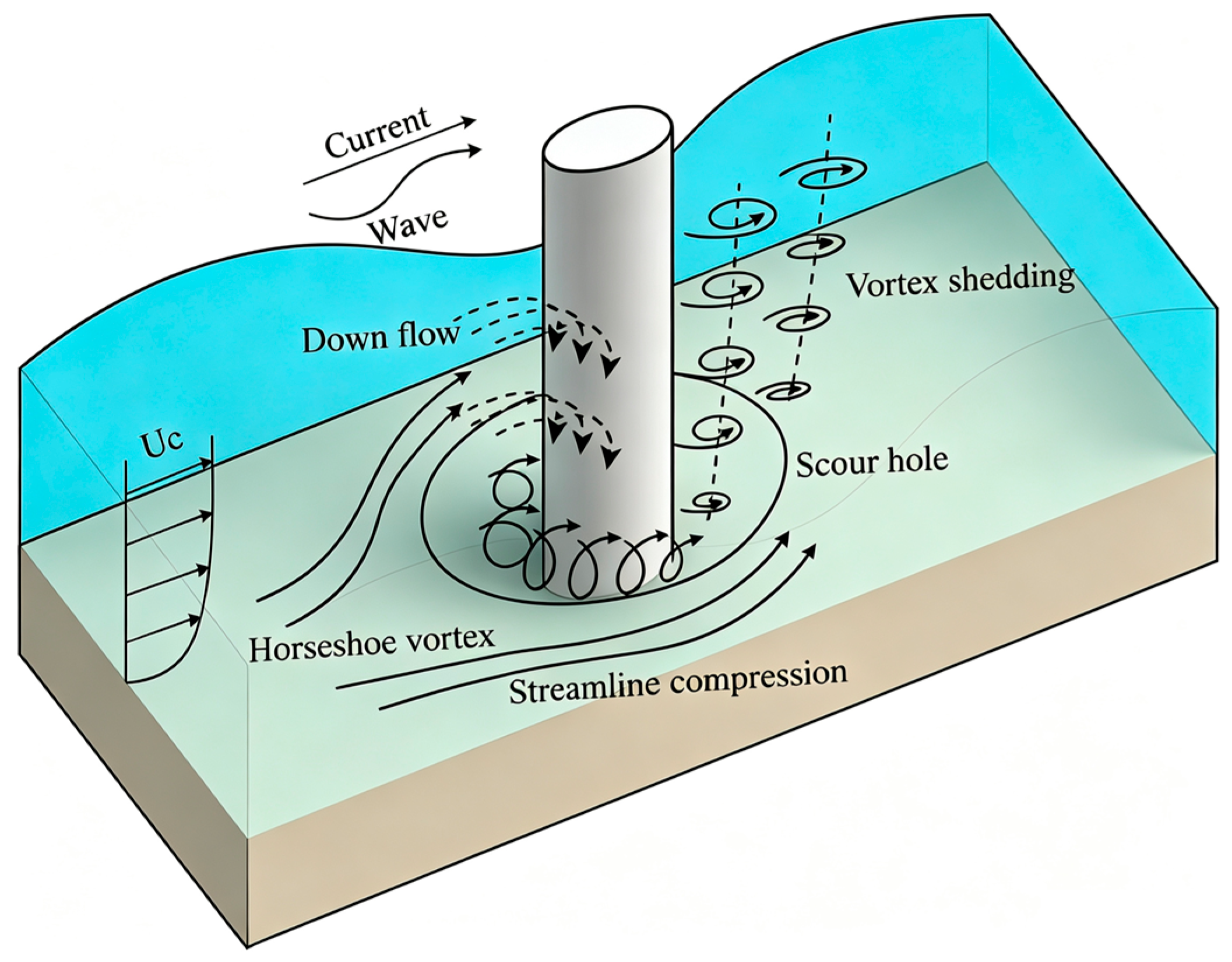
Some existing reviews have focused on scour mechanisms and prediction around marine foundations [
19,
20], while others have assessed the post-scour performance of OWTFs [
21] or summarized scour-protection techniques [
22,
23]. These reviews, however, generally treat scour prediction, foundation performance, and protection as separate topics, and examine bearing capacity, natural frequency, cyclic response, and seismic behavior in isolation. This review instead synthesizes these strands from the single, unifying perspective of structural safety, with novelty in three respects. First, it traces how scour, long-term cyclic loading, and extreme seismic events combine—rather than simply add up—to erode the foundation safety margin, following one thread from scour-induced soil-state changes through bearing capacity, natural frequency, cyclic response, and seismic performance to protection. Second, it shows that the natural-frequency shift commonly used for monitoring may substantially underestimate the true degradation in strength, deformation, and fatigue life, and therefore explicitly decouples structural safety from frequency change: a stable frequency does not guarantee a safe foundation. Third, instead of cataloging protection techniques, it critically assesses whether and how scour protection restores the safety margin, including whether measures optimized for one performance metric may adversely affect another.
This is a narrative review. The relevant literature was identified through searches of the Web of Science and Elsevier databases using combinations of the keywords “offshore wind turbine”, “scour”, “bearing capacity”, “natural frequency”, “cyclic loading”, “seismic response”, and “scour protection”, supplemented by backward and forward citation tracking of key references. Priority was given to peer-reviewed studies published in approximately the past decade, while seminal earlier works on scour mechanisms and foundation designs were retained for context. The emphasis was on studies that address foundation structural performance and safety rather than sediment-transport hydrodynamics alone. Reflecting both engineering practice, where monopiles account for roughly 70% of installed fixed-bottom foundations, and the distribution of the available literature, the evidence reviewed here is weighted toward monopiles. Where sufficient data exist, multi-leg (jacket, tripod), suction-bucket, and composite foundations are discussed comparatively, and the comparatively thinner and less validated evidence base for these types is itself identified as a recurring knowledge gap.
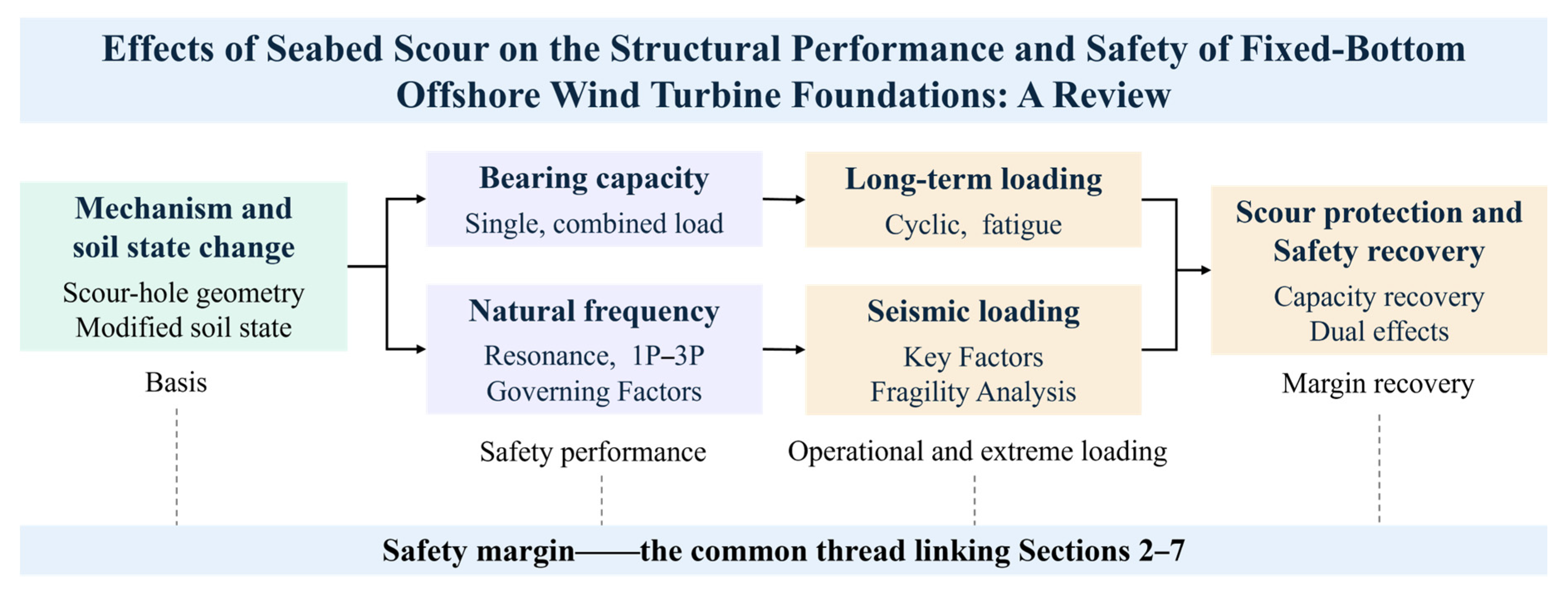
The remainder of this review is organized as follows, as outlined in
Figure 3.
Section 2 introduces the scour process and classification, and outlines the associated changes in scour-hole geometry and soil mechanical state that form the basis for the subsequent analyses.
Section 3 and
Section 4 investigate the effects of scour on foundations’ bearing capacity and dynamic characteristics.
Section 5 and
Section 6 address scour-related safety issues under long-term cyclic and seismic loading.
Section 7 assesses the effectiveness of scour-protection measures in restoring foundation safety. Finally, the key findings and future research directions are highlighted.
3. Effects of Scour on the Bearing Capacity of OWTFs
Throughout this review, the effect sizes reported by a single study are presented as indicative or extreme-case values rather than design-representative ones, whereas effects supported by consistent trends across multiple studies are identified as such. Therefore. throughout the review, individual percentages should be read as indicative of the direction and potential scale of an effect, whereas the general trends corroborated across studies carry the main message. Because these magnitudes depend strongly on the soil type, foundation type, and scour configuration, the reported percentages should be read as indicators of potential severity rather than transferable design factors.
The bearing capacity of OWTFs is the fundamental prerequisite for structural safety. By removing the surrounding soil, scour reduces the effective embedment depth and foundation capacity while increasing load eccentricity, thereby directly eroding the foundation safety margin. Because bearing capacity governs not only the static safety but also the foundation response under cyclic, dynamic, and seismic loading, it provides the basis for the performance assessments presented in the following sections. This section therefore begins with a review of the effects of scour on foundations’ bearing capacities.
3.1. Bearing Capacity Under Individual Loading Conditions
Because lateral loading governs OWTF performance, most studies have focused on unidirectional lateral loading. Under this condition, scour-hole geometry and scour-induced changes in soil state are the primary controls on bearing-capacity degradation.
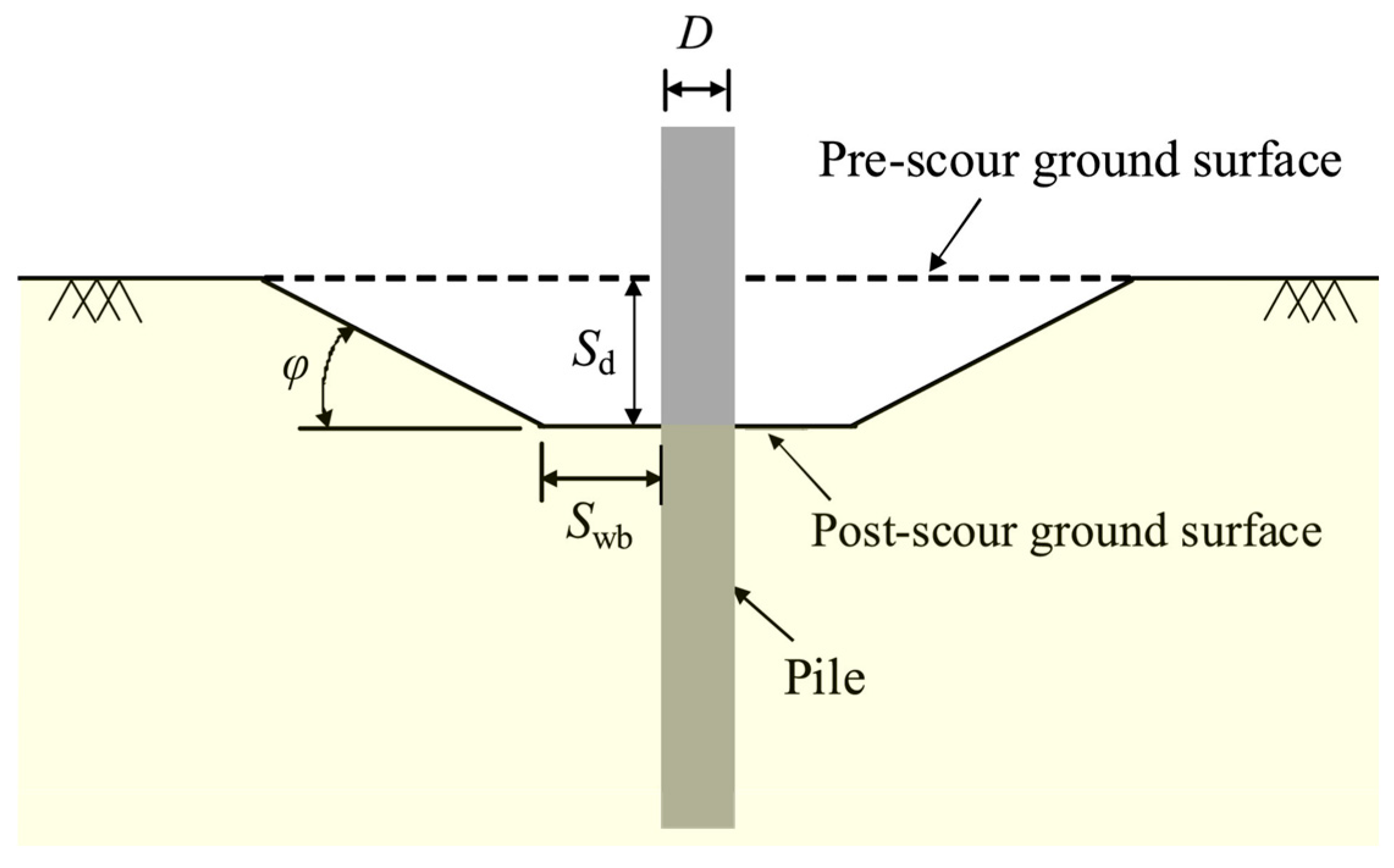
Scour depth is the dominant geometric parameter governing bearing capacity across a wide range of foundation types and soil conditions, whereas the effects of scour width and side-slope angle are generally limited [
57,
58,
59,
60]. Using a simplified method verified against FLAC3D analysis for a laterally loaded pile in soft clay, increasing the scour depth from zero to 8 D increased the pile-head displacement and maximum bending moment by about 300% and 200%, respectively, whereas increasing the scour width from zero to infinity increased them by only about 18% and 6% [
58]. The effect of scour-hole slope angle is also limited. Steeper slopes retain more soil around the pile, slightly increasing lateral resistance and reducing pile displacement and bending moment [
57,
58]. The influence of scour depth is particularly pronounced for small-diameter flexible piles and is strongly direction-dependent. In an analytical p–y solution, a fourfold increase in upstream scour depth increased the maximum pile-head displacement in sand by about 5.2 times, whereas the corresponding increase for downstream scour depth was less than 67% [
61].
The distinction between local and global scour is critical because, at the same scour depth, local scour generally yields a higher bearing capacity due to the additional overburden pressure provided by the remaining side-slope soil. In centrifuge model tests at a fixed scour depth of 2 D, the maximum bending moment increased by 12.5%, 21.7%, and 34.4% under narrow local scour, wide local scour, and global scour, respectively, highlighting the substantial differences among scour configurations [
62]. Consequently, treating local scour as global scour or neglecting the three-dimensional scour-hole geometry can lead to systematic errors in bearing-capacity predictions, the magnitude and direction of which depend on the soil type and modeling simplification adopted (
Table 1). To account for three-dimensional scour effects in engineering analyses, several equivalent parameters have been proposed. Qi et al. [
63] showed through centrifuge tests that local scour provides greater lateral soil stiffness than global scour at the same relative depth, leading to the concept of an effective soil depth. Li et al. [
64] subsequently introduced the equivalent scour depth and developed an empirical expression for the moment-capacity reduction factor.
Recent studies have shown that realistic scour-hole asymmetry can noticeably affect capacity predictions. Compared with a symmetric circular scour hole, a heart-shaped scour hole produces a greater reduction in lateral capacity, with the difference increasing from 0.2% at 1 D scour depth to 7.0% at 5 D [
68]. Depth asymmetry dominates this effect, while width and side-slope-angle asymmetry have negligible influence [
69].
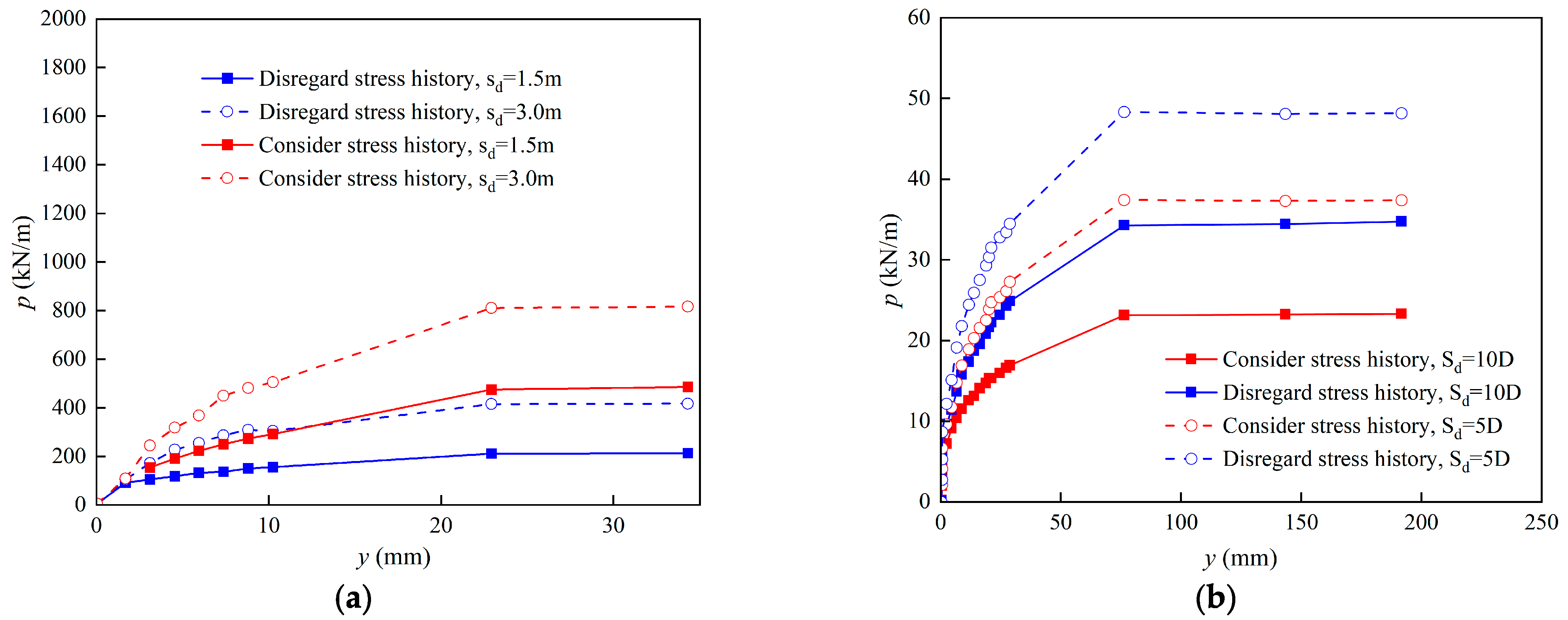
Scour also affects bearing capacity through stress-history effects, as the unloading of the surrounding soil increases the overconsolidation ratio (OCR) of the residual soil—by about 200% at 1.5 m below the post-scour mudline in one numerical and theoretical analysis [
70]. The consequences differ markedly between sand and soft clay. In sand, the increased OCR generally enhances bearing capacity (
Figure 7a), raising the predicted lateral resistance by about 100% at a pile-head displacement of 25 mm [
70], so neglecting this effect is conservative. In soft clay, by contrast, scour-induced unloading reduces bearing capacity (
Figure 7b): p-y analysis based on a modified Matlock formulation predicted a 21.8–32.7% reduction in ultimate soil resistance at scour depths of 5–10 D [
71], so neglecting the stress-history effect here overestimates resistance and may compromise design safety. Subsequent studies refined these scour-modified p–y models by adding correction factors for scour-hole geometry, vertical loading, and pile diameter [
59,
72,
73]; however, He et al. [
74] used three-dimensional finite-element analyses to show that the modified p–y approach of Lin et al. [
71] may overpredict the stress-history effect on ultimate resistance.
3.2. Bearing Capacity Under Combined Loading Conditions
OWTFs are typically subjected to combined vertical (V), horizontal (H), and moment (M) loading from environmental actions. Bearing-capacity assessment must therefore consider combined loading effects rather than individual loading conditions alone.
For monopiles with a length-to-diameter ratio (L/D) of about five, vertical loading increases lateral capacity by only 1–3.5% under no-scour conditions and about 6% under scour conditions [
62,
75,
76]. The increase is attributed to vertical-load-induced soil densification, which is largely confined to the upper 2 D of the soil profile and becomes more concentrated under scour owing to the reduced embedment depth [
76]. A sharply different conclusion is reached by Liang et al. [
72], whose analytical model, based on critical-state soil mechanics, predicted that vertical loading significantly amplifies the adverse impact of scour, growing nonlinearly with scour depth. This contradiction was instructive rather than a mere scatter as it traced to a specific methodological difference, where the studies reporting a negligible or beneficial effect [
62,
75,
76] were centrifuge, laboratory, or numerical studies that captured the shallow soil densification under vertical load but did not represent the stress-history (unloading) changes caused by scour, while Liang et al. [
72] explicitly modeled this effect and reported that whether it was included was what governed the sign and magnitude of the vertical-load response. The disagreement thus reflects a modeling choice rather than experimental uncertainty, and because no physical-model or field study has yet isolated the stress-history contribution, the net effect of vertical loading on scoured piles remains unresolved.
Failure envelopes, which define the capacity boundary in load space, have become a standard tool for assessing foundation performance under combined V–H–M loading. Increasing scour depth alters both the size and shape of the envelope: the normalized V–M and V–H envelopes contract toward the origin, while the H–M envelope expands and becomes increasingly asymmetric, its peak shifting toward negative H [
60,
77]. Scour therefore degrades horizontal and moment capacity far more severely than vertical capacity; in a three-dimensional finite-element analysis of a suction caisson in clay, for example, the horizontal and moment capacities each fell by roughly half while the vertical capacity dropped by only about a fifth [
78]. Vertical loading itself plays a dual role, as below the vertical bearing-capacity limit, moderate vertical loads expand the envelope and increase the combined capacity, while beyond a certain threshold the envelope contracts [
79,
80]. Its effect on combined capacity is thus non-monotonic with an optimal range. The contrast with the limited influence of vertical loading on monopile lateral capacity arises from the fundamentally different load-transfer mechanisms of shallow foundations and slender monopiles.
3.3. Foundation-Type Sensitivity in Bearing Capacity
Scour sensitivity depends strongly on foundation geometry and structural redundancy. Monopiles and pile groups are generally more vulnerable because scour directly removes the soil providing their resistance. In contrast, jackets and other multi-member foundations are more robust owing to their load redistribution among members. Regardless of the foundation type, capacity degradation is governed primarily by scour depth rather than the lateral extent of scour (
Table 2).
Each foundation type also displays certain noteworthy mechanisms. For pile groups, scour truncates the passive soil-failure mechanism and redistributes the internal load, so that the front-row piles carry the greatest load and are the most prone to failure, while increasing the pile length effectively mitigates the loss [
66,
67,
81]. For tripods, scour around the piles has a greater effect than scour beneath the central column, but once the two scour holes merge into a large, deep depression the capacity loss accelerates [
82,
85]. Notably, this tripod analysis is anchored to in situ scour measurements from the Alpha Ventus test site, one of the few field datasets available for multi-leg foundations [
82]. For bucket and suction-caisson foundations, scour reduces the area of the failure envelope nonlinearly without changing its shape, and their capacity is likewise affected by soil stress history [
77,
78,
86]. For monopile–friction-wheel composite foundations, the capacity degradation accelerates markedly once the dimensionless scour depth exceeds the thickness of the friction wheel, reflecting the rapid loss of the wheel’s enhancing effect once it is undermined [
83,
84].
Despite the substantial body of work reviewed above, several limitations are shared across the current literature and define the main knowledge gaps. First, the great majority of post-scour capacity assessments are numerical or analytical; independent experimental validation, particularly at the full scale or in the field, is largely absent. Second, the scour hole is usually idealized as symmetric, of known dimensions, and in equilibrium, whereas real scour is three-dimensional, asymmetric, and time-evolving; the influence of asymmetric and progressively developing scour has received comparatively little attention. Finally, much of the evidence derives from small-diameter or reduced-scale models, so its extrapolation to the very-large-diameter monopiles now entering service remains an open question.
In summary, although the influence of scour on bearing capacity varies with the loading condition and foundation type, it is consistently governed by scour depth and depends strongly on scour morphology and soil type. The distinction between local and general scour, and between sand and soft clay, cannot be neglected in assessment, as overlooking it leads to either overly conservative or unconservative designs. Scour thus progressively erodes the static bearing-capacity margin of the foundation. Beyond this quasi-static reduction, scour also alters the dynamic behavior of the structure, which is examined in the following section through its effect on the natural frequency.
4. Effects of Scour on the Natural Frequency of OWTs
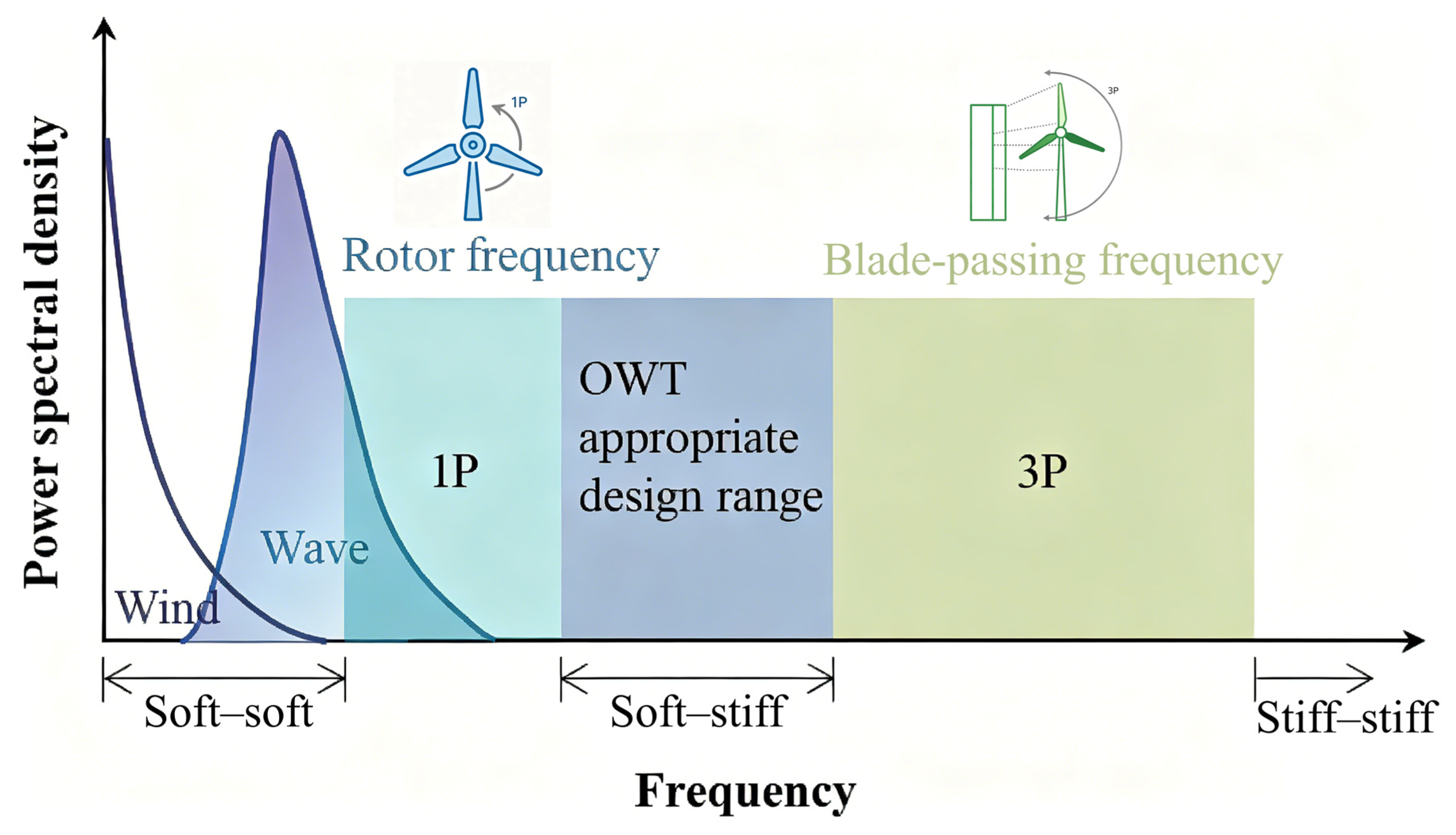
The natural frequency of the support structure is a key parameter governing the dynamic response and safety of OWTs. Accurate prediction of the natural frequency is therefore essential, as resonance must be avoided throughout the service life. Current design codes require the natural frequency to remain between the rotor frequency (1P) and the blade-passing frequency (3P) [
87]. As shown in
Figure 8, this range corresponds to the soft–stiff design region, which is generally considered optimal for OWTs [
88]. Notably, DNV-ST-0126 [
35] (§7.6.5) already requires that the risk of scour be conservatively accounted for when the natural frequency is calculated, recognizing scour as a design-relevant driver of frequency change rather than a purely operational concern.
Seabed scour reduces pile embedment and lateral soil-restraint stiffness, thereby altering the dynamic characteristics of the system and lowering its natural frequency. As a result, the natural frequency moves closer to the 1P range, reducing the available resonance margin. The extent of this reduction depends mainly on scour depth, soil properties, and foundation type.
4.1. Influence of Scour Depth
Among all influencing factors, scour depth is the most direct and significant factor governing the change in natural frequency. Prendergast et al. [
90] were the first to quantify this relationship through scaled and field tests, and subsequent studies have repeatedly confirmed the same trend (
Table 3).
Reporting the range of reduction alone, however, is insufficient for prediction; the functional form of the decay is equally important. Wave–current flume tests show that the natural frequency decreases logarithmically rather than linearly with scour depth [
93], and a power-law sensitivity model has been proposed for tripod suction-bucket foundations [
94]. More notably, the decay rate is not governed by S/D alone but also depends on the turbine size; at the same scour depth, smaller turbines exhibit larger frequency reductions [
95].
These nonlinear, size-dependent decay patterns carry an important engineering implication: estimating the frequency reduction by linear extrapolation or a single scaling factor may substantially underestimate the resonance risk of a particular turbine at a particular scour depth. The assessment of frequency reduction must therefore be based on models that reflect the true decay form rather than on simple proportional scaling.
4.2. Influence of Soil Properties
At the same scour depth, the soil properties strongly affect the magnitude of the natural-frequency reduction. The relative density of sand provides the most typical example. The full-scale analysis of Prendergast et al. [
16] showed that the frequency reduction in loose sand is markedly larger than that in dense sand. Together with the field observations at Robin Rigg [
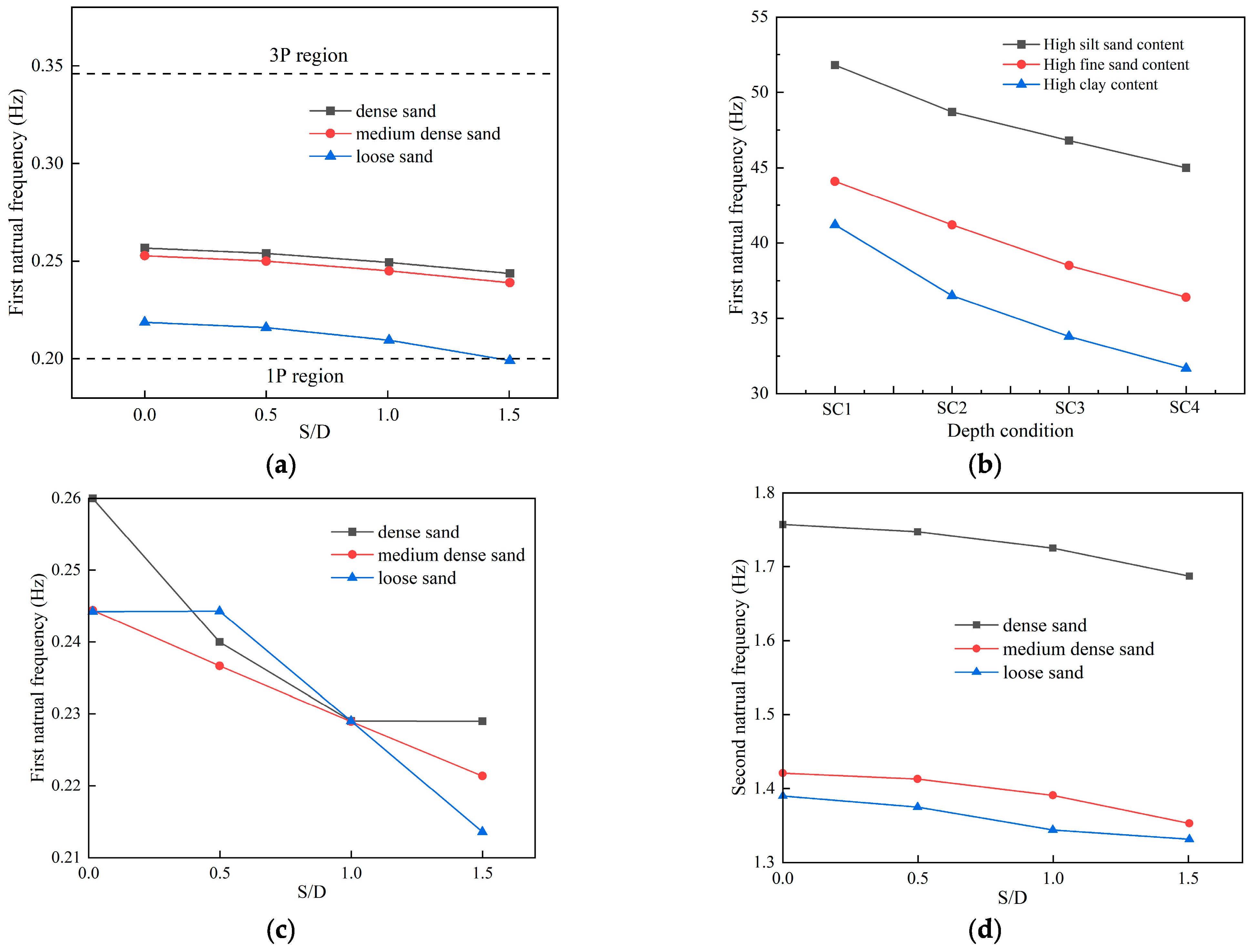
18], these scaled and full-scale studies make the scour–natural-frequency relationship the most extensively field-corroborated aspect of the topics reviewed here. At a scour depth of 1.3 D, the reduction was 8.5% in loose sand but only 6.5% in dense sand. At 1.66 D, the reduction in loose sand reached 12.5%. This difference has a direct safety implication. Abhinav and Saha [
91] found that, in loose sand, a scour depth of 1.5 D drove the first natural frequency into the 1P band and created a resonance risk, whereas in dense sand, the same scour left the system within the safe band (
Figure 9a). Turbines founded in loose sand therefore possess a smaller resonance safety margin and are more vulnerable to scour-induced resonance.
The two vibration modes respond differently to scour. Integrated wind–wave–soil–structure interaction (SSI) simulations for a flexible monopile show that the first natural frequency is more sensitive to scour than the second in terms of frequency reduction (
Figure 9c,d) [
91]. In contrast, the second mode exhibits a larger change in mode shape [
91], indicating that frequency- and mode-shape-based indicators capture different aspects of scour effects.
Seabed stratigraphy and composition exert a comparable influence. In model tests on a typical layered seabed, Niu et al. [
96] found that a high clay content yielded the lowest and most scour-sensitive first frequency, whereas a high silt content gave the highest and most stable one (
Figure 9b), reflecting the differing balance between stiffness and damping in seabed of different compositions. Seabeds rich in clay therefore undergo larger frequency shifts and lose their safety margin more rapidly under scour.
In addition, most of the above studies treat the soil parameters as deterministic values. Prendergast et al. [
98] introduced random-field theory and showed that the frequency uncertainty caused by the spatial variability of the soil is of the same order of magnitude as the frequency change caused by scour itself. This finding has important implications for natural-frequency monitoring.
4.3. Foundation-Type Sensitivity in Natural Frequency
Different foundation types differ markedly in the sensitivity of their natural frequency to scour, owing to differences in overall stiffness and configuration, forming a broad spectrum (
Table 4). Monopiles are the most sensitive. In loose sand, scour can even drive the first natural frequency into the 1P band. Tripod suction-bucket foundations are intermediate, as their multi-leg configuration mitigates stiffness degradation through stress redistribution, giving a frequency reduction roughly half that of a monopile. Multi-leg and composite foundations, such as tripods, composite caisson–pile systems, and jackets, exhibit the smallest reductions, typically a fraction of those for monopiles because their natural frequency is governed by the global truss stiffness rather than by the shallow soil restraint of a single pile.
A small frequency reduction, however, does not equate to overall safety. A single tripod foundation study is a telling example, as although its first natural-frequency reduction is only 0.9–1.4%, far smaller than that of a monopile, the same scour increases the below-mudline pile deflection by about 20%, raises pile stresses, and substantially shortens the fatigue life [
85]. This shows that using natural frequency as the sole indicator of safety under scour can be misleading—for multi-leg foundations with high stiffness redundancy, a “stable” frequency may mask substantial degradation in local stress and fatigue. Frequency assessment must therefore complement, rather than replace, the assessment of bearing capacity and fatigue.
In summary, scour reduces the natural frequency of OWTs by weakening pile–soil stiffness, thereby narrowing the resonance margin between 1P and 3P. The reduction is governed primarily by scour depth, soil conditions, and foundation type, and is most severe for monopiles in loose sand. Natural-frequency changes therefore serve not only as an indicator of structural safety but also as a useful tool for scour monitoring.
Realizing this potential relies on structural health monitoring (SHM). In practice, the natural frequency of an operating turbine is tracked from ambient vibration measurements recorded by tower-mounted accelerometers, using operational modal analysis to extract modal frequencies without interrupting operation [
15]. Two strategies are then used to infer scour depth: relating the measured frequency to scour depth through a pre-established frequency–scour-depth relationship [
100,
101], or treating scour depth as an unknown identified by iteratively updating a finite-element model to minimize natural-frequency residuals [
102]. The appeal of this approach is that it is global and non-intrusive, inferring foundation condition without underwater inspection.
Field deployment nonetheless faces real challenges. The scour-induced frequency shift is small and must be separated from larger variations caused by operational state, damping, tides, temperature, and marine growth [
103,
104], while the harsh offshore environment complicates sensor survivability and data transmission [
105]. Distinguishing scour from other sources of stiffness change, such as grout degradation, is a further difficulty. Frequency tracking is therefore best used as a screening indicator that triggers targeted inspection rather than a stand-alone measurement of scour depth.
Although the scour–natural-frequency relationship is the most extensively validated topic in this review, several gaps remain. The soil is often simplified through uniform stiffness-degradation factors or elastic beam idealizations, leaving soil nonlinearity and spatial variability incompletely captured. Standardized procedures for comparing foundation types are also lacking: because monopiles, tripods, and suction buckets scale differently, a consistent basis such as an effective diameter definition is needed before frequency-based criteria can be transferred across types. Finally, most methods are calibrated for current turbine sizes, and their extrapolation to the 15 MW-and-larger turbines and very soft soils now entering service requires validation.
It should be noted that the results reviewed in this section consider scour alone; the combined effects of scour with long-term cyclic loading and seismic action are discussed in the following sections.
7. Effect of Scour Protection on Structural Safety
Previous sections have shown that scour can progressively impair the bearing capacity, dynamic performance, and seismic safety of OWTFs. To mitigate these adverse effects, a range of scour countermeasures have been developed. These can be broadly grouped into armoring measures that cover the seabed around the foundation to resist erosion, such as rock armor and protective mattresses, and ground-improvement measures that modify the surrounding soil to suppress scour and strengthen the pile–soil interaction, such as grouting and solidified-soil backfilling [
22,
23,
150]. However, existing studies have primarily focused on the effectiveness of these measures in reducing scour, while their ability to restore structural performance and safety margins remains insufficiently understood. This section therefore evaluates the role of scour protection in restoring structural performance and safety margins from the perspective of structural safety.
Among design standards, monopile scour protection is addressed most directly by DNV-RP-0618 [
151], the dedicated recommended practice for rock protection. It provides a systematic framework covering armor-layer external stability (via the Shields parameter), internal stability and filter criteria, falling-apron flexibility, edge-scour prediction, and sinking estimation. Notably, its listed purposes for protection—maintaining lateral soil capacity, keeping the natural frequency above a design threshold, and limiting pile deflection—are structural rather than purely erosion-related, aligning with the structural-safety perspective adopted here.
7.1. Recovery of Bearing Capacity and Reliability Through Scour Protection
The benefit of scour protection is most directly evident in the recovery of static bearing capacity, with a range of measures able to compensate effectively for the performance lost to scour (
Table 7).
The mechanisms differ in emphasis. Rock armor restores lateral capacity by compensating for the scour-induced loss of embedment and enhancing the soil restraint around the pile [
159]. Grouting and solidified soil raise capacity by improving the surrounding soil properties and suppressing scour development; in one study, grouting reduced the ultimate scour depth to roughly one-sixth to one-third of the unprotected value [
160], and notably, even when the downstream scour depth of a grouted pile is similar to that of an ungrouted one, its lateral capacity remains markedly higher, indicating that the benefit of grouting arises not only from the reduced scour but also from the altered pile–soil interaction [
154]. For foundations already damaged by scour, solidified-soil backfilling can restore the embedment and soil resistance, allowing the capacity to recover to or even exceed the pre-scour level [
155].
More importantly, the recovery of bearing capacity translates directly into improved structural reliability and design margin. A 2 m thick rock armor layer has been shown to reduce the failure probability of a monopile from about 7.6% to 0.026%, with a marked increase in the reliability index [
157]; moreover, by exploiting the favorable effect of protection, a shorter pile can be used while maintaining the same bearing performance, with the L/D reduced from five to 4.6, equivalent to gaining a larger safety margin [
152]. Protection also curbs the long-term degradation of bearing performance, as the vertical capacity and stiffness of an unprotected monopile may fall by about 22.2% and 68.7% respectively over a 20-year service period, whereas solidified-soil protection limits the capacity loss to less than 15% and substantially improves stiffness retention [
158]. Scour protection therefore not only restores the instantaneous bearing capacity but also maintains the bearing safety margin of the foundation throughout its service life.
7.2. Mechanisms and Scale Dependence of Scour-Protection Effects
Although scour protection generally improves foundation bearing performance, the magnitude of the improvement varies considerably and is jointly governed by the underlying mechanism, the foundation scale, and the timing of deployment.
Two explanations have been proposed for the benefit of scour protection. One attributes the improvement to the increase in effective stress caused by the additional surcharge, the “stress mechanism”, whereas the other emphasizes the direct resistance provided by contact between the protection material and the pile, the “material mechanism” [
152,
156]. Li et al. [
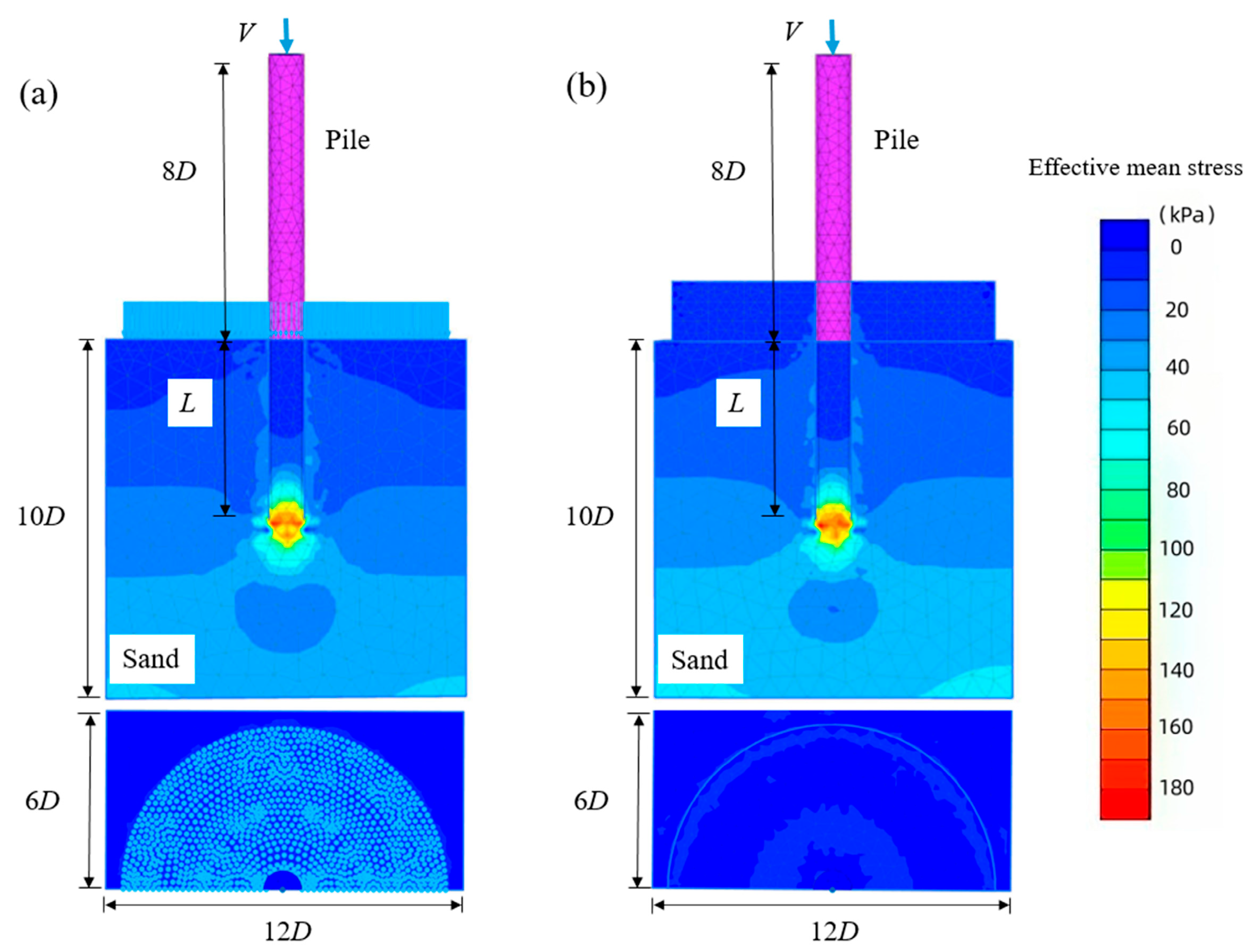
152,
156] established two representative finite-element models, as shown in
Figure 13.
The two lead to noticeably different predictions, as in these representative models, the material mechanism gave an average stiffness increase on the order of 20% greater than the stress mechanism, and the associated reliability analyses indicated higher reliability indices when the protection layer was in close contact with the pile [
152,
157]. Other studies, however, found that the stiffness enhancement arose mainly from the increase in ground stress due to the self-weight of the armor layer rather than from the material stiffness or shear strength, and that this enhancement persisted even after a gap formed between the pile and the layer [
161]. This divergence indicates that the assessment of protection benefits depends strongly on the assumed contact mechanism, since neglecting the material pile contact may underestimate the actual contribution, whereas over-relying on it may overestimate the long-term benefit once a gap develops.
Weighing the evidence on each side, the balance of currently available studies leans toward the stress mechanism, although the question cannot yet be regarded as settled. Flume experiments distinguished the two explicitly: reversing the loss of lateral stiffness requires the protection layer to be stiff and firmly compacted against the pile (a contact-dependent effect), whereas reversing the loss of effective stress requires only the surcharge provided by the protection material [
162]. The stress-based effect has been reproduced consistently across independent studies—centrifuge tests [
153], large parametric numerical analyses [
163], and finite-element models with model-test validation [
161,
164]—all attributing the stiffness gain primarily to the increased confining stress from the weight of the protection layer. Centrifuge evidence further showed that, under cyclic loading in sand, densification prevented a gap from forming at the pile–protection interface [
153], so the contact-dependent contribution is difficult to rely on in the long term. The material–contact mechanism, quantified through a contact coefficient in finite-element models [
152], therefore appears to be an additional condition-dependent contribution rather than the primary source of benefit. Independent field-scale validation nonetheless remains limited [
158] and is a priority before either contribution can be adopted with confidence in design.
The protection parameters also affect the various performance indicators unequally. For solidified-soil remediation, the repair depth primarily governs the ultimate capacity, while shallow remediation mainly improves the initial stiffness, with the two being dominated by the material strength and the elastic modulus, respectively [
165]. Protection should therefore be designed for the target performance rather than by simply enlarging its extent.
A more contentious issue is the scale dependence of the stiffness enhancement. Some studies, drawing on one year of field monitoring across 72 turbines at an operational wind farm combined with finite-element modeling, have argued that the contribution of scour protection to monopile stiffness has long been underestimated, and that it can serve as an effective retrofit for existing foundations [
166]. In contrast, studies on large-diameter monopiles have indicated that a noticeable stiffness gain appears only with heavy rock armor and relatively large protection heights, where the increase is on the order of 10%, and that the primary function of protection remains scour mitigation [
163]. The effectiveness also depends on the timing of deployment. Preventive protection can effectively suppress scour development and preserve structural performance, whereas remedial measures generally offer only limited recovery for already damaged foundations. Remedial rock backfilling often restores only part of the lost stiffness, is highly dependent on the backfill thickness, and, in some cases, proves almost ineffective [
162,
167].
7.3. Dual Effects of Scour Protection on Structural Safety
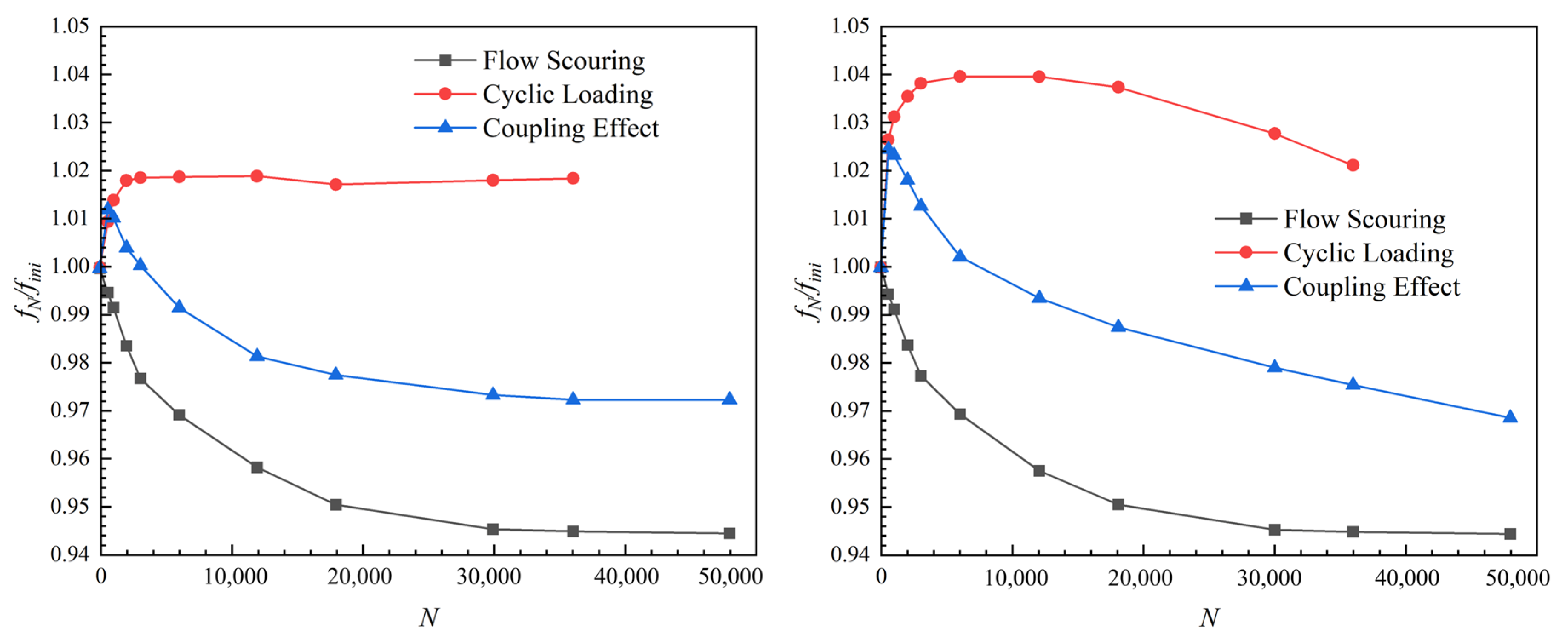
Although scour protection generally enhances structural safety, its effects are not universally beneficial. Some measures alter the dynamic characteristics of the structure and thereby introduce new adverse responses or safety concerns. Scour usually lowers the natural frequency and shifts it toward 1P, whereas pre-installed rock armor continuously stiffens the soil under cyclic loading and can instead raise the frequency—by a few percent in one study—so that it may move toward 3P; solidified-soil grouting appears more favorable for maintaining frequency stability, although its cracking resistance still requires improvement [
17]. Under seismic loading, one study found that rock armor may slightly increase the natural frequency while also raising the peak pile bending moment by roughly 10–20% [
168]. Measures optimized for static performance therefore do not necessarily improve dynamic or seismic performance. This is consistent with the conclusions of
Section 4 and
Section 6 that neither a stable natural frequency nor a frequency change alone is sufficient to evaluate structural safety.
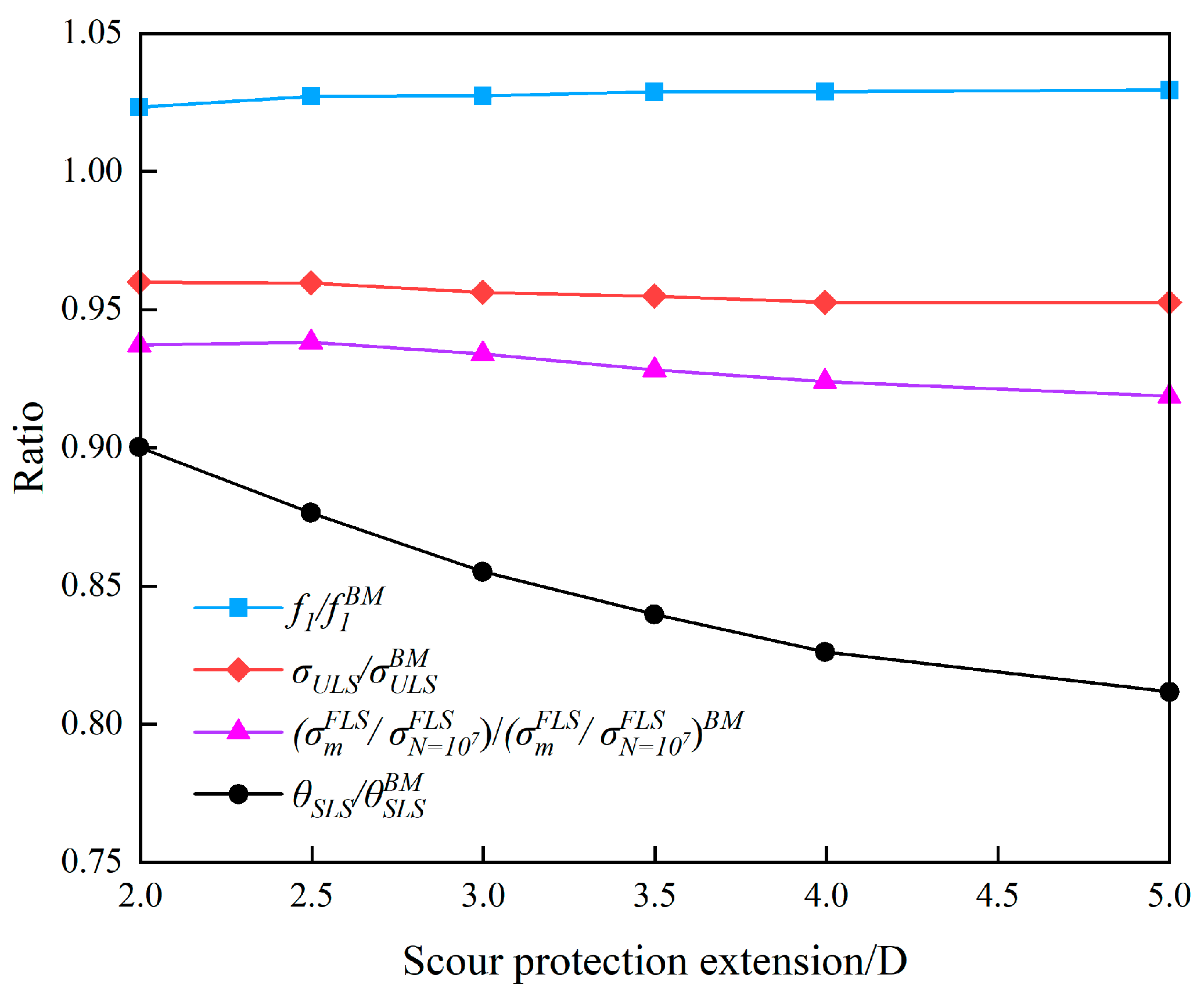
This also prompts a reconsideration of how the benefits of scour protection should be evaluated. Ma et al. [
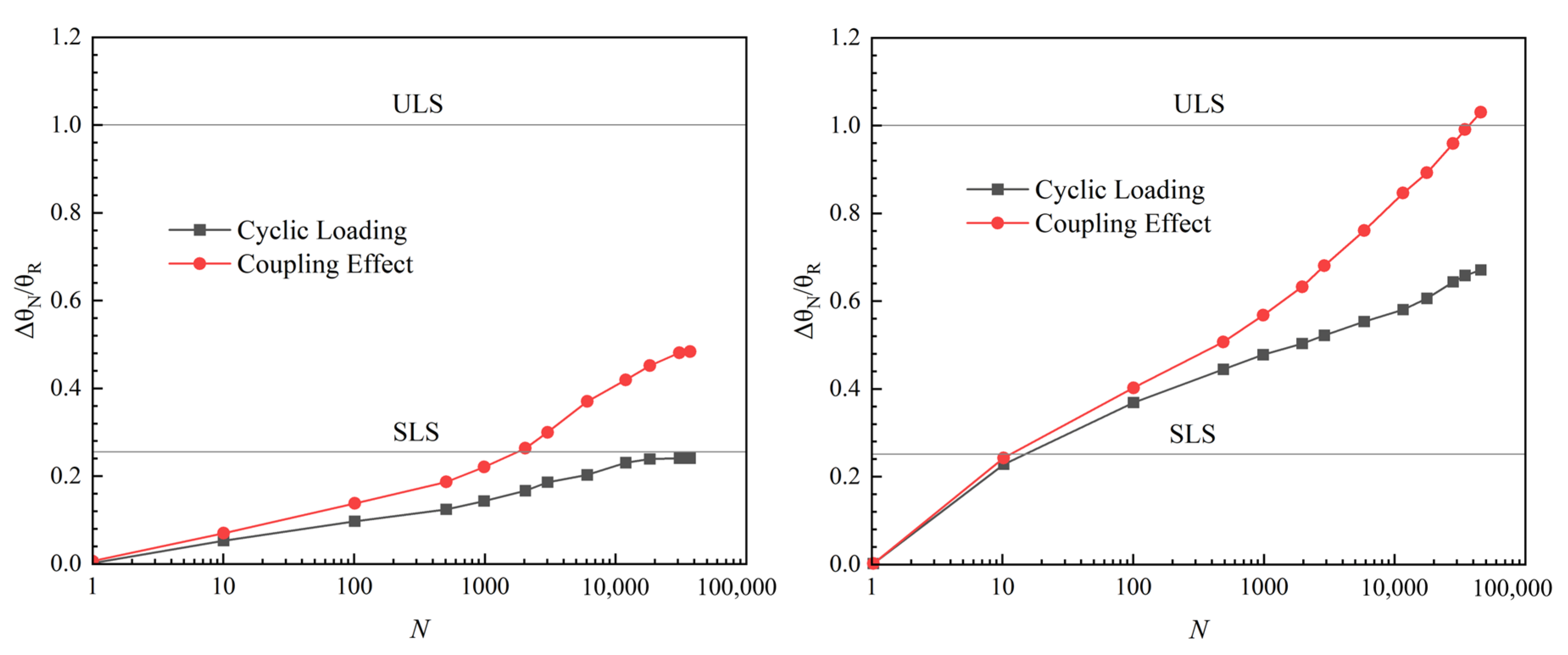
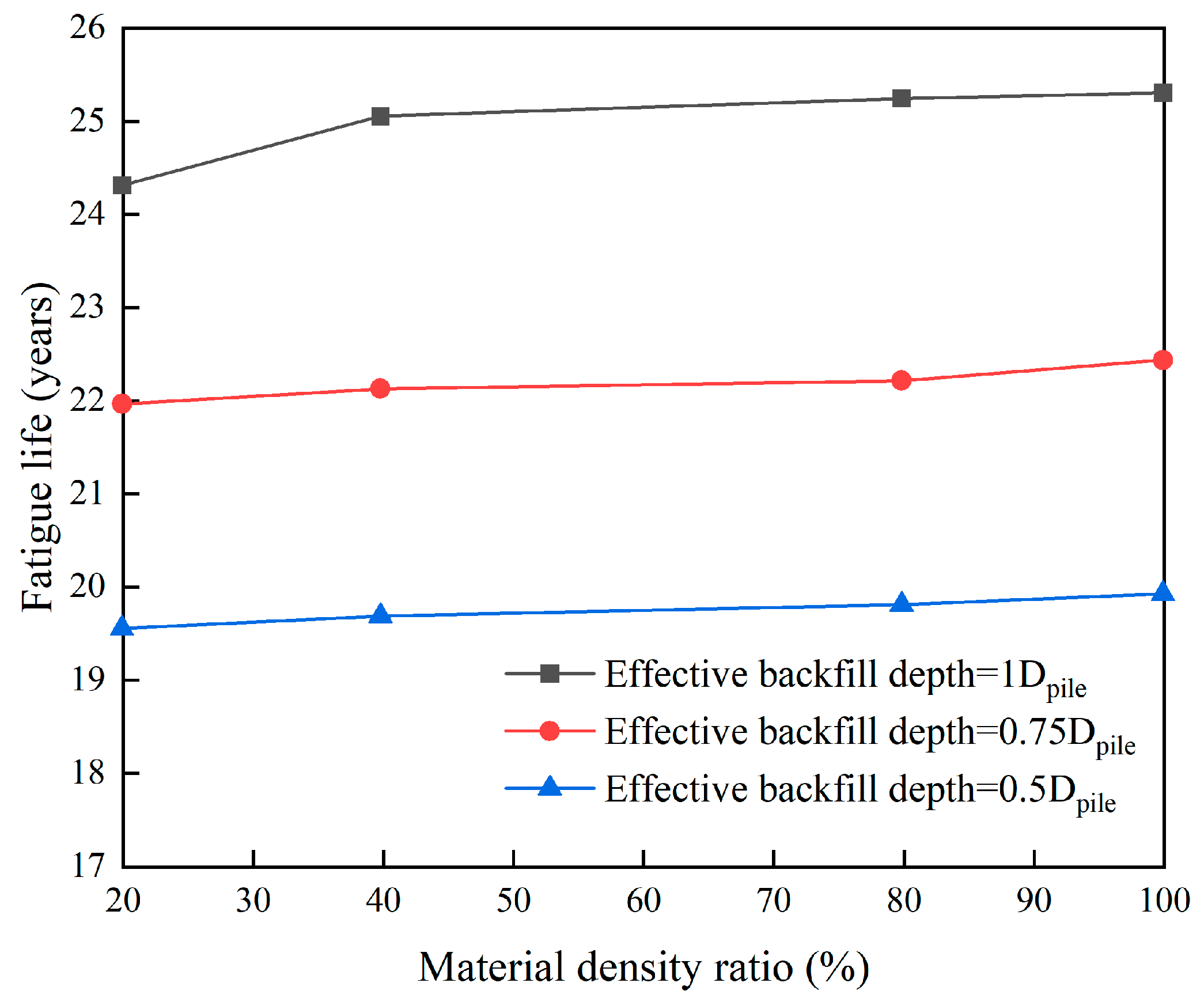
164] reported that scour protection produced only modest improvements in natural frequency, ultimate capacity, and fatigue life, yet reduced the serviceability limit state pile-head rotation by about 12.3%, as shown in
Figure 14. This single result suggests that the primary value of protection may lie not in improving individual performance metrics but in mitigating the critical responses that govern structural safety. As shown in
Section 5 and
Section 6, scour typically erodes the serviceability margin before the ultimate margin; consequently, improving serviceability performance directly protects the most vulnerable part of the structural safety margin.
In summary, scour protection is an effective means of restoring foundation safety margins. It can compensate for scour-induced capacity loss and improve structural reliability, although its effectiveness depends on the protection mechanism, foundation type, and timing of implementation. More importantly, protection is not inherently beneficial, as measures optimized for static performance may compromise dynamic and seismic performance. Its primary value therefore lies not in maximizing individual performance metrics, but in preserving the serviceability margin that is typically lost first. Consequently, scour protection should be designed from a whole-life perspective, with the objective of maximizing the overall structural safety margin rather than simply minimizing scour depth.
Despite this progress, research on scour protection shares two main limitations. First, the protection layer is usually represented in a highly simplified way—as an equivalent surcharge, a solid body, or a Winkler idealization—rather than through the grain-scale contact and spatial coupling that govern its real behavior, which is also the root of the unresolved stress versus material mechanism debate discussed above. Second, protection performance is largely evaluated under monotonic or static loading, whereas the wind and wave actions on OWTFs are cyclic; the behavior of protected foundations under long-term cyclic and coupled vertical–lateral loading, including the possible degradation of the protection layer itself, remains poorly studied. Grain-scale and coupled modeling, together with evaluation under realistic cyclic loading, are therefore key directions for future work. This gap is mirrored in current guidance: DNV-RP-0618 [
151] centers on external and internal stability and sinking, and does not address the protection layer’s feedback on dynamic or seismic response or its degradation under long-term cyclic loading. The dynamic and coupled effects reported above—such as pre-installed armor raising the frequency toward 3P or increasing peak seismic bending moments—thus lie beyond present design provisions, marking a direction in which research is ahead of the standards.