Article

Petroleum Geological Conditions and Exploration Potential Prediction of Deepwater and Deep Formations in the Under-Explored Offshore Indus Basin

1
School of Ocean Sciences, China University of Geosciences (Beijing), Beijing 100083, China
2
Qingdao Institute of Marine Geology, China Geological Survey, Qingdao 266237, China
3
Laboratory for Marine Mineral Resources, Qingdao Marine Science and Technology Center, Qingdao 266237, China
4
South China Sea Institute of Oceanology, Chinese Academy of Sciences, Guangzhou 510301, China
*
Author to whom correspondence should be addressed.
J. Mar. Sci. Eng. 2026, 14(10), 930; https://doi.org/10.3390/jmse14100930 (registering DOI)
Submission received: 17 April 2026 / Revised: 12 May 2026 / Accepted: 14 May 2026 / Published: 18 May 2026

Abstract

The Offshore Indus Basin is located on the western margin of the Indian Plate, adjacent to the onshore Lower Indus Basin in Pakistan and the Kutch Basin along India’s western coast. Deepwater and deep formations in this basin are characterized by low exploration intensity and poor early data quality, which hinder the verification of hydrocarbon potential. Based on newly acquired high-resolution seismic data and onshore–offshore correlation, this study analyzes basin evolution and systematically evaluates petroleum geological conditions and exploration potential of deepwater and deep formations. The results show that the basin has experienced three evolutionary stages: Mesozoic rifting, Cenozoic post-rift thermal subsidence, and passive continental margin development, which collectively control the petroleum geological conditions of deepwater and deep strata. Mesozoic strata (Jurassic and Cretaceous) are widely developed beneath the Deccan volcanic rocks, with a stable distribution. Three sets of potential source rocks are identified: Cretaceous (Type II/III organic matter, high maturity, high quality), Paleo–Eocene (Type III, moderate maturity, high quality), and Lower Miocene (Type II2/III, low maturity, poor–moderate quality). Three sets of high-quality reservoirs are developed: Cretaceous deltaic–shallow marine sandstones, Paleocene reef limestones, and Miocene deltaic and subaqueous fan sandstones. Three hydrocarbon accumulation models are established. Favorable structural belts are mainly distributed in the NW, NE, and SE parts of the basin, dominated by structural and lithological traps. Thin Deccan volcanic rocks in deepwater areas exert a positive effect on the preservation of deep Mesozoic strata and petroleum system development. This study clarifies the key petroleum geological conditions and accumulation rules of deepwater and deep formations, providing a robust basis for hydrocarbon exploration potential evaluation in the Offshore Indus Basin.

1. Introduction

The Offshore Indus Basin, located on the western margin of the Indian Plate, is a crucial hydrocarbon-bearing basin with significant exploration potential, especially in its deepwater and deep formations. It is adjacent to the onshore Lower Indus Basin and India’s western coastal Kutch Basin, with a complex tectono-sedimentary evolutionary history closely related to the Indian Plate’s drift and collision. As a typical under-explored deepwater basin, it has attracted increasing attention from the petroleum exploration industry in recent years. Previous studies on the basin have mainly focused on the nearshore areas or Cenozoic strata, while relevant research on deepwater and deep strata (especially Mesozoic strata) is relatively scarce, which restricts the in-depth evaluation of its hydrocarbon exploration potential. In recent years, with the advancement of deepwater exploration technology and the acquisition of new high-resolution seismic data, it has become possible to conduct in-depth research on the deep petroleum geological conditions of the basin, making it urgent to fill the existing research gap. Clarifying the hydrocarbon geological conditions and accumulation rules of deepwater and deep layers in the basin is of great significance for expanding the new hydrocarbon exploration field in the Indian Ocean region and enriching the theory of hydrocarbon accumulation in passive continental margin basins.
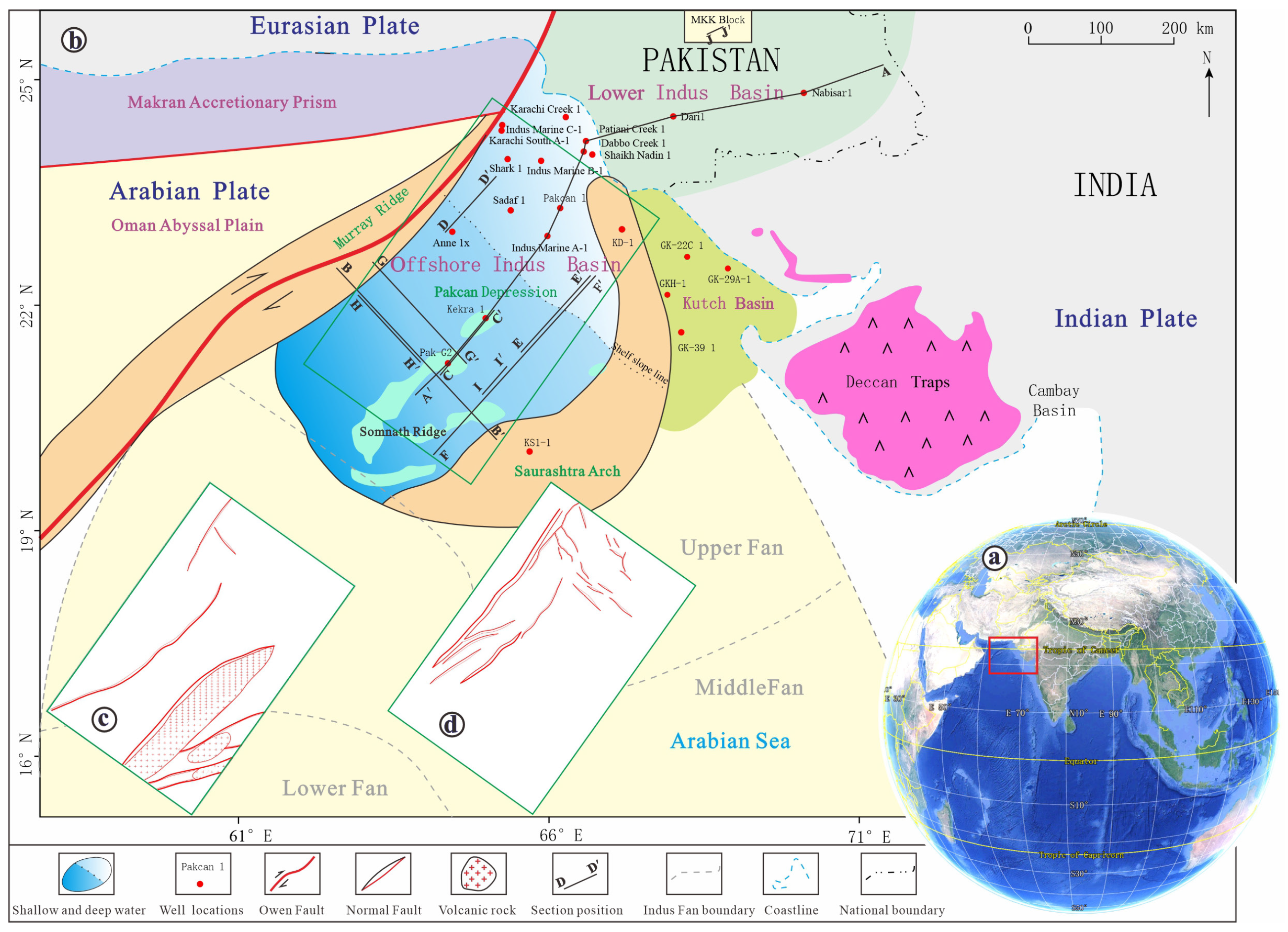
The petroleum exploration in the Offshore Indus Basin commenced in the 1960s, with a total of 14 wells drilled (Figure 1). The hydrocarbon shows were promising: oil shows were found in seven wells, and a small amount of crude oil was obtained from the PakCan-1 well, but no commercial breakthrough has been achieved so far. The extent of Mesozoic strata in the Offshore Indus Basin has not been fully revealed by drilling, as the wells (Dabbo Creek-1, Patiani Creek-1, Korangi Creek-1) that encountered Cretaceous strata are located in nearshore areas [1,2]. Wells (Indus Marine 1A, Indus Marine-1B, PakCan-1, Sadaf-1) have revealed extremely thick Cenozoic deposits in the continental shelf area, in contrast to adjacent regions (the Lower Indus Basin and Kutch Basin) where Cenozoic sedimentary layers are relatively thin. Two wells (Pak G2-1, Shark-1) have revealed Paleo–Eocene reef limestone reservoirs on volcanic platforms in deep-sea areas [3,4], but no Paleocene–Eocene source rocks have been found in the deep water.
The basement of the Cenozoic basin is composed of Deccan basalts, which were formed by effusive eruptions from the Reunion hotspot at the end of the Late Cretaceous [5,6]. Owing to the shielding effect of these volcanic rocks, seismic reflection waves struggle to penetrate deep into Mesozoic strata [7,8]. Additionally, the deep burial depth of Mesozoic strata and the lack of drilling encounters have led early scholars to focus primarily on the stratigraphic development and geological structures of the Cenozoic basin above the Deccan basalts [9,10,11,12], with limited understanding of the Mesozoic basin beneath these basalts. Comprehensive evaluation and prediction of petroleum geological conditions in the Offshore Indus Basin are constrained by the following issues: (1) Excessive attention to favorable hydrocarbon accumulation structures and sedimentary environments in the Cenozoic; (2) Sparse drilling in the deepwater area leads to incomplete disclosure of stratigraphic information, especially for Mesozoic and Paleocene–Eocene strata; (3) Thick Cenozoic sediments and strong shielding of Late Cretaceous Deccan igneous rocks lead to unclear seismic imaging of Mesozoic strata, and doubts about hydrocarbon geological conditions and the impact of volcanic rocks; (4) Key deep hydrocarbon accumulation conditions (source, reservoir, trap, and accumulation process) have not been revealed.
Previous studies on the Offshore Indus Basin mainly focused on the Cenozoic strata above the Deccan basalt, and the research on the Mesozoic strata below the basalt is relatively limited due to the shielding effect of volcanic rocks and the lack of drilling data. The stratigraphic correlation between the Offshore Indus Basin and the Lower Indus Basin was established, and it was proposed that the two basins have similar tectonic evolution histories [3]. The Cenozoic sedimentary characteristics of the basin were analyzed based on seismic data, but the deep Mesozoic strata were not involved [13]. The distribution of Deccan volcanic rocks in the surrounding areas of the basin was studied, but there is a lack of systematic research on the impact of volcanic rocks on deep hydrocarbon accumulation [4,14]. Therefore, it is urgent to carry out in-depth research on the deepwater and deep hydrocarbon geological conditions of the basin.
Based on newly acquired high-quality 2D seismic profiles, this paper overcomes the shielding of igneous rocks, reveals the extensive development of Mesozoic strata in the Offshore Indus Basin through seismic reflection interface analysis, sequence correlation, wave group characteristic comparison, interval velocity analysis and other methods, predicts the lithology, thickness and hydrocarbon geological conditions, and identifies three sets of comparable strata: Jurassic, Lower Cretaceous and Upper Cretaceous [15].
Combined with onshore–offshore drilling, seismic profiles, outcrop observation and seismic inversion prediction data, the thickness curve of volcanic rock distribution in the northeastern Arabian Sea and western India was initially constructed, and the impact of volcanic rocks on hydrocarbon geology was evaluated.
Onshore–offshore correlation reveals that commercial oil has been discovered in the Meso-Cenozoic strata of the onshore Lower Indus Basin [16,17,18] in Pakistan and the Kutch Basin [19,20] along the western coast of India (Figure 1), with the Mesozoic serving as the primary source and producing interval [21,22,23,24,25]. The adjacent Offshore Indus Basin also has favorable Mesozoic hydrocarbon prospects [4,26,27], and it is necessary to compare the hydrocarbon geological conditions with adjacent areas to predict the exploration potential. This paper adopts new seismic exploration technology, compares the seismic wave groups with those of the Lower Indus Basin, studies the tectonic-sedimentary environment, volcanic rock impact and hydrocarbon geological conditions of the Offshore Indus Basin, and evaluates the hydrocarbon exploration potential.
This study aims to fill the knowledge gap of deepwater and deep Mesozoic petroleum systems in the Offshore Indus Basin, clarify the key petroleum geological conditions, and provide a solid scientific basis for hydrocarbon exploration in this area. The main research objectives of this paper are: (1) To identify and clarify the distribution characteristics of Mesozoic strata beneath the Deccan volcanic rocks; (2) To analyze the distribution of Deccan volcanic rocks and their impact on hydrocarbon preservation and accumulation; (3) To systematically study the source rocks, reservoirs and favorable structural belts of deepwater and deep layers in the basin; (4) To establish the hydrocarbon accumulation models and predict the exploration potential; (5) To provide a reference for petroleum exploration in other similar underexplored basins. The specific research contents include: basin evolution analysis, Mesozoic stratum identification, volcanic rock distribution evaluation, hydrocarbon geological condition analysis, and hydrocarbon accumulation model establishment.

2. Geological Setting

The Offshore Indus Basin is situated on the northwestern margin of the Indian Plate, at the junction of the Eurasian, Arabian, and Indian Plates. Geographically, its western part is adjacent to the Oman Abyssal Plain, bounded by the Murray Ridge; the northern part adjoins the onshore Lower Indus Basin in Pakistan; the eastern part is adjacent to the Kutch Basin near the Indian coast, separated by the Saurashtra Arch; and the southern part is close to the Middle Indus Fan, covering an area of approximately 11.4 × 10⁴ km2 [28] (Figure 1).
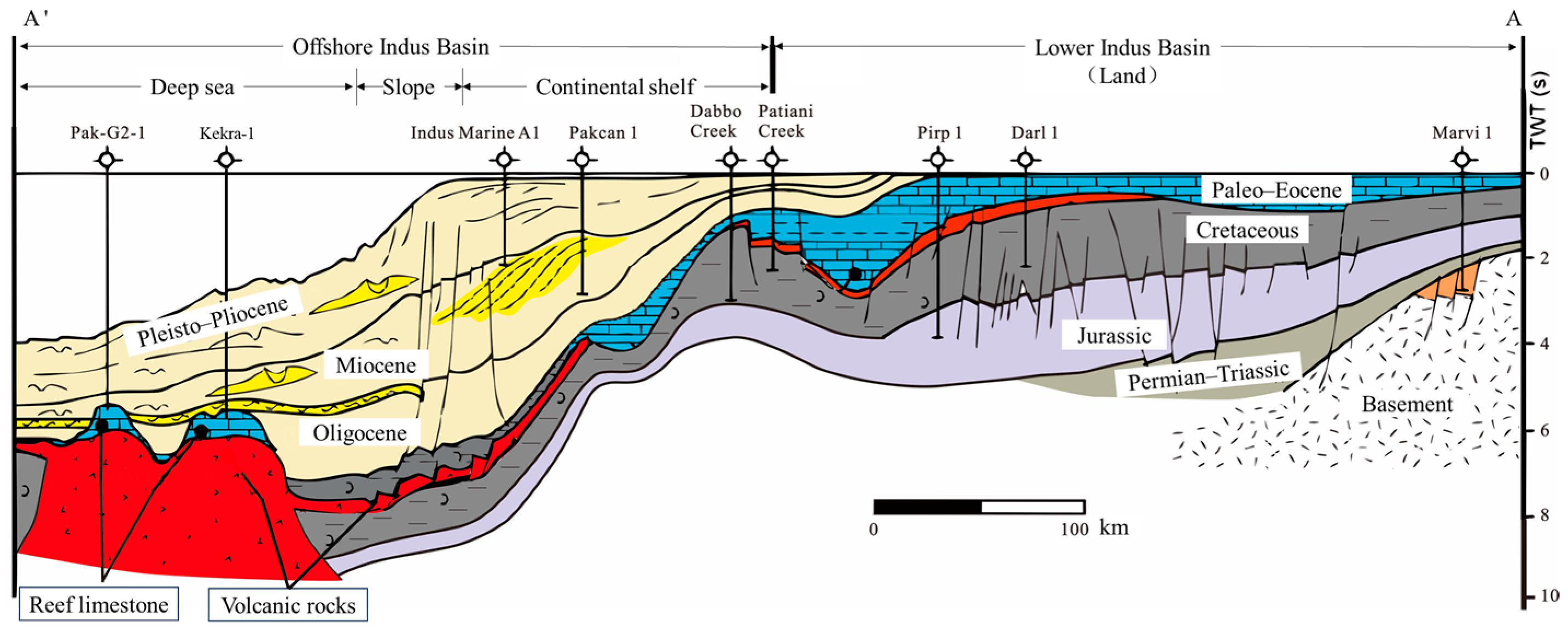
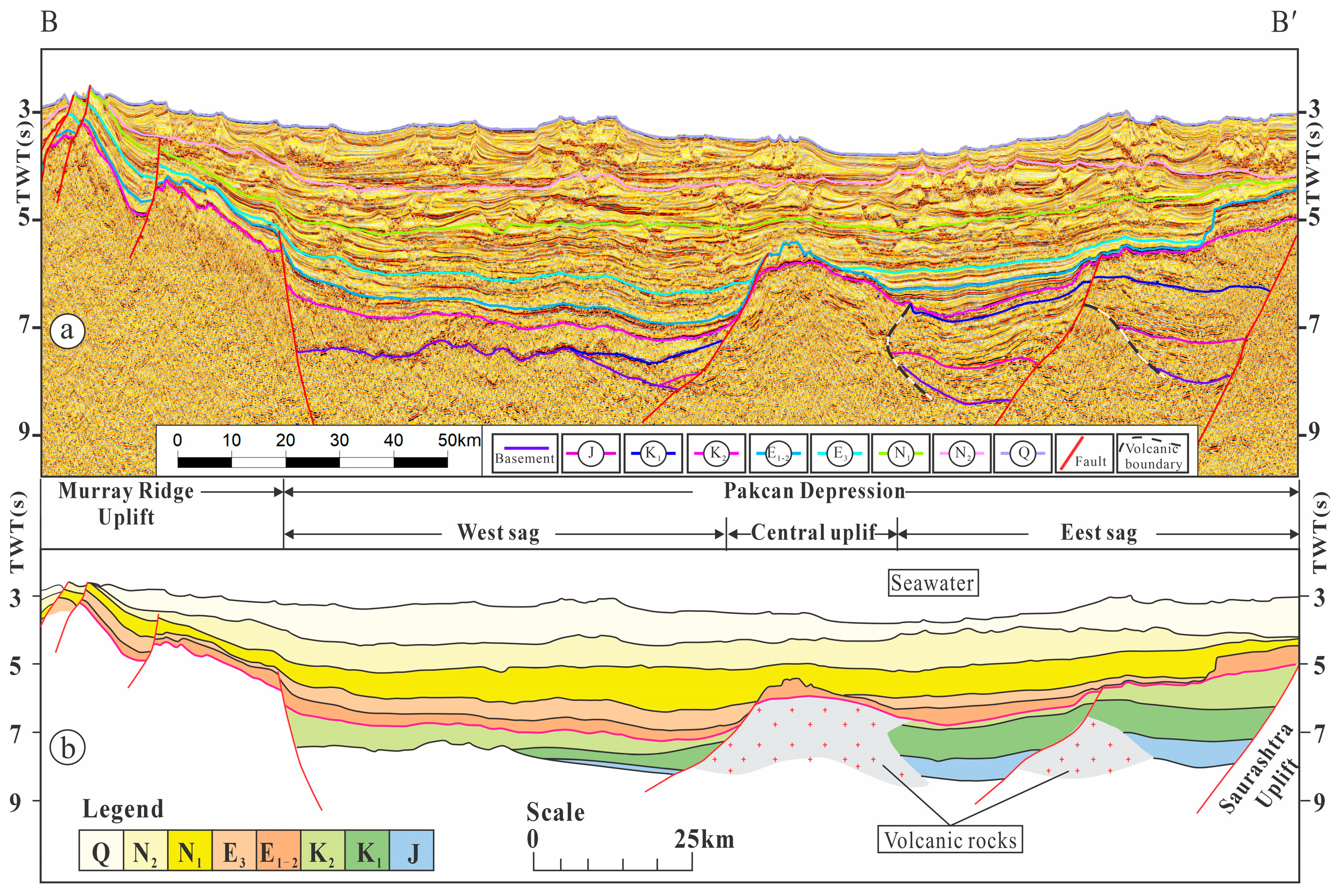
The Offshore Indus Basin represents the marine extension of the Lower Indus Basin and the Kutch Basin. These basins are adjacent and share similar sedimentary-tectonic evolutionary histories. The basement consists of Precambrian metamorphic rocks and intrusive rocks, while the sedimentary strata include Jurassic, Cretaceous, and Cenozoic sequences (Figure 2 and Figure 3) [15]. Tectonically, the basin can be divided into three units from west to east: the Murray Ridge Uplift, the Pakcan Depression, and the Saurashtra Uplift (Figure 4).
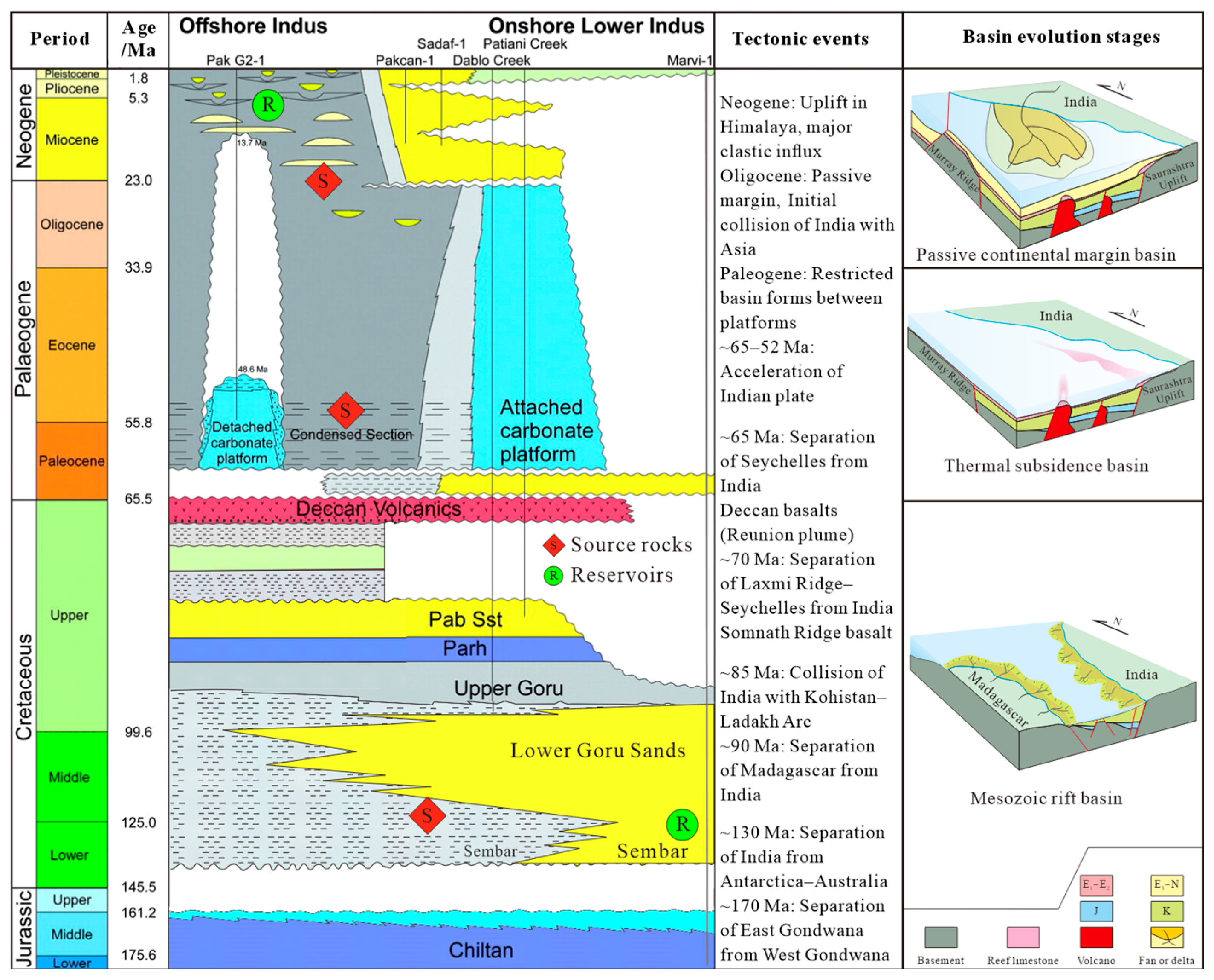
Since the Mesozoic, the Offshore Indus Basin has undergone three evolutionary stages: a Mesozoic rift basin stage, a Cenozoic post-rift thermal subsidence stage, and a subsequent passive continental margin basin stage (Figure 2, Figure 3 and Figure 4). Major tectonic events influencing the basin include the fragmentation of Gondwana, the drift and splitting of the Indian Plate, the collision between the Indian and Eurasian Plates, and the transition between the Indian and Arabian Plates (Figure 2) [9,10,11,12]. The maximum thickness of strata in the basin reaches 11,000 m. The Mesozoic rift basin is characterized by numerous faults, predominantly striking northeast (NE) (Figure 1c and Figure 4). During the Early Mesozoic, the basin exhibited a half-graben structure with eastern rifting and western overlapping, similar to the Lower Indus Basin [4]. The Jurassic sedimentary range in the Offshore Indus Basin is relatively limited, mainly distributed in the eastern part of the basin. The sedimentary center is adjacent to the eastern depression-controlling fault, with strata gradually thinning and pinching out westward. During the Middle Jurassic, thick carbonate platform sediments were deposited across the extensive continental shelf [10].
In the Late Mesozoic, it evolved into an east–west double-faulted graben structure. During the Cretaceous period, the Offshore Indus Basin was situated on a continental margin with active rifting (Figure 2). Some faults were developed, and the sedimentary environment was an open marine setting. Thick layers of nearshore sandstones and semi-deep marine mudstones were deposited, which constitute the main source rocks and reservoirs of the basin. The lower part of the Upper Cretaceous is composed of mudstone, which is widely distributed across the basin and serves as an important cap rock. The upper part consists of thick sandstones of the Pab Formation, which have undergone extensive erosion.
The Cenozoic basin is relatively stable; faults with small displacements are developed in the shallow-water area of the continental shelf, where gravity-sliding faults are the main type (Figure 1d and Figure 3).
During the Paleo–Eocene period, the Offshore Indus Basin underwent continuous depressive subsidence with weakened tectonic activity, initiating depression filling and minimal fault development (Figure 3). The sedimentary environment was semi-deep to deep marine, where a set of deepwater shales and regional cap rocks were deposited with relatively stable thickness; these are inferred to be important source rocks in the basin. The depocenter was located in the northern part of the basin. On the shallow-water continental shelf and the igneous basement of the Saurashtra Arch, platform-facies carbonates and biogenic reefs [3,29] were developed, which serve as high-quality reservoirs.
After the initial collision at 55 ± 5~44 Ma, the Indian Plate completed its collision with the Eurasian Plate at 40 ± 5~20 Ma [13], resulting in the transport of large volumes of clastic sediments to the Indus Fan and the initiation of channel development within the basin. Oligocene deposition was relatively stable across the entire region. During the Miocene, substantial clastic material from the Qinghai–Tibet Plateau was transported via the Indus River, triggering the large-scale development of composite channels and fan bodies in the Offshore Indus Basin and forming a passive continental margin basin (Figure 2). The lithology is dominated by sandstones interbedded with mudstones, with significant variations in stratum thickness. A typical wedge-shaped geometry is present from the continental shelf edge to the deep-sea basin, characterized by gradually decreasing grain size and increasing mud content. Within the passive continental margin basin, marine fans and channels are well-developed and exhibit a gradual eastward migration trend [3].
The eruption of Deccan basalts (66–63 Ma) exerted a significant impact on the basin, whose genesis is closely coupled with the drift of the Indian Plate as it passed over the Reunion hotspot [5,6]. At the end of the Late Cretaceous, the southwestern margin of the Indian Plate drifted above the Reunion Island hotspot, resulting in extensive volcanic rock coverage on the Indian Plate and impairing the quality of basement reflections from the Mesozoic strata.
Since the Cenozoic, the rapid uplift of the Himalayas has led to the transport of large amounts of clastic material via the Indus River, forming the second-largest submarine fan in the world in the eastern Arabian Sea—the Indus Fan. The Indus Fan covers an area of 1.1 × 10⁶ km2 and can be subdivided into the upper fan, middle fan, and lower fan [26]. The Offshore Indus Basin is located on the upper fan, where fan-shaped sediments in the Pakistani continental shelf area reach a thickness of up to 9 km (Figure 1 and Figure 3) [30,31,32].

3. Materials and Methods

3.1. Research Data

3.1.1. Multi-Channel Seismic Profiles

The 2D multi-channel seismic profiles used in this study were acquired via a comprehensive survey employing high-capacity air guns and high-coverage seismic cables. Specifically, the air gun system utilizes the GII-type air gun (Sercel, Nantes, French), with a total discharge volume of 6000 ci and a gun spacing of 37.5 m. The seismic cable is 8100 m in length, equipped with 648 recording channels and a channel spacing of 12.5 m, achieving a coverage fold of 108. This acquisition technology enhances the excitation energy and the penetration capability of seismic waves through formations, thereby improving the seismic imaging quality of deep strata.
Seismic data processing incorporated pre-stack depth migration (PSDM) technology. The processed profiles not only improve the quality of shallow stratigraphic imaging but also enable the acquisition of effective signals from deep strata. This provides a more reliable basis for the clear identification of geological structures, stratigraphic configurations, and geological phenomena within the Meso-Cenozoic basin.

3.1.2. Source and Reservoir Data

Source rock and reservoir data were compiled from drilling test reports and publicly available datasets of different periods. The study areas for comparison include the Lower Indus Basin, Kutch Basin, and Offshore Indus Basin, focusing on key strata such as the Cretaceous, Paleo–Eocene, Miocene, and Oligocene. Source rock parameters include lithology, total organic carbon (TOC), kerogen type, and vitrinite reflectance (Ro). Reservoir parameters encompass lithology, thickness, porosity, and permeability.

3.2. Research Methods

3.2.1. Seismic Interpretation and Stratigraphic Property Prediction

A detailed investigation was conducted on drilling data in the study area using well logging data and completion reports. Through integrated correlation and mutual calibration of well-seismic data, and with reference to previous stratigraphic division schemes [33], the interpretation scheme for the seismic data in this study was determined.
By analyzing the reflection characteristics of seismic wave groups (including shape, internal structure, top-bottom contact relationship, amplitude, frequency, and continuity) (Table 1), geological interfaces were identified, and a geological framework was established.
Four methods—geological evolution characteristics, seismic reflection interfaces, seismic reflection wave groups, and seismic interval velocities [15]—were employed to correlate seismic strata calibrated by existing wells in the Lower Indus Basin. On this basis, the seismic profile structure of Mesozoic strata in the Offshore Indus Basin was predicted, and the stratigraphic sequences and attributes of Jurassic and Cretaceous strata were established.

3.2.2. Onshore–Offshore Correlation

Integrated with cross-well geological profiles of the Lower Indus Basin and the Offshore Indus Basin, a Meso-Cenozoic onshore–offshore cross-well stratigraphic profile was constructed, providing a basis for analyzing the structural and sedimentary characteristics of the study area.
Based on seismic data interpretation, drilling verification, data on volcanic rocks, source rocks, and reservoirs, inferences were made regarding the distribution and thickness of volcanic rocks in the basin, their controlling effect on Mesozoic hydrocarbon accumulation, as well as the distribution and parameters of source rocks and reservoirs in the basin.

3.2.3. Quality Control

In order to ensure the reliability of the research results, strict quality control was carried out in the process of data collection and processing: (1) Compared with the early STM and PSTM processing technologies, this study adopts PSDM seismic processing technology, imaging gather purification technology, and high-precision data-driven grid velocity modeling data with four rounds of iteration, which improves the seismic signal-to-noise ratio and enhances the accuracy of deep seismic imaging; (2) well–seismic calibration was validated by synthesize synthetic seismograms, and the principles of seismic stratigraphy to conduct regional wave group correlation and horizon closure interpretation across the entire area were applied; (3) stratigraphic correlation, source rock and reservoir prediction uncertainty were constrained by spatio-temporal differences and statistical error analysis.

4. Results

4.1. Mesozoic Strata Identification

It is of great significance to find out whether the Mesozoic strata exist in the Offshore Indus Basin. By onshore–offshore correlation, evidence for identifying the Mesozoic strata and stratigraphic attribution was provided based on data such as drilling, seismic reflection, and seismic velocity characteristics.
In coastal areas, Cretaceous strata were discovered beneath Deccan volcanic rocks during the drilling of wells Dabbo Creek-1 and Karachi South A-1. According to drilling data from adjacent areas, the Cretaceous strata are widely distributed and serve as both important source rocks and key reservoirs in the Lower Indus Basin [3] and Kutch Basin [19].
Four wells drilled in the shallow-water area have encountered Deccan volcanic rocks, with thicknesses ranging from 20 to 100 m. These volcanic rocks exhibit one to two seismic events with strong reflection amplitudes and can serve as a marker horizon for distinguishing between Cenozoic and pre-Cenozoic strata.
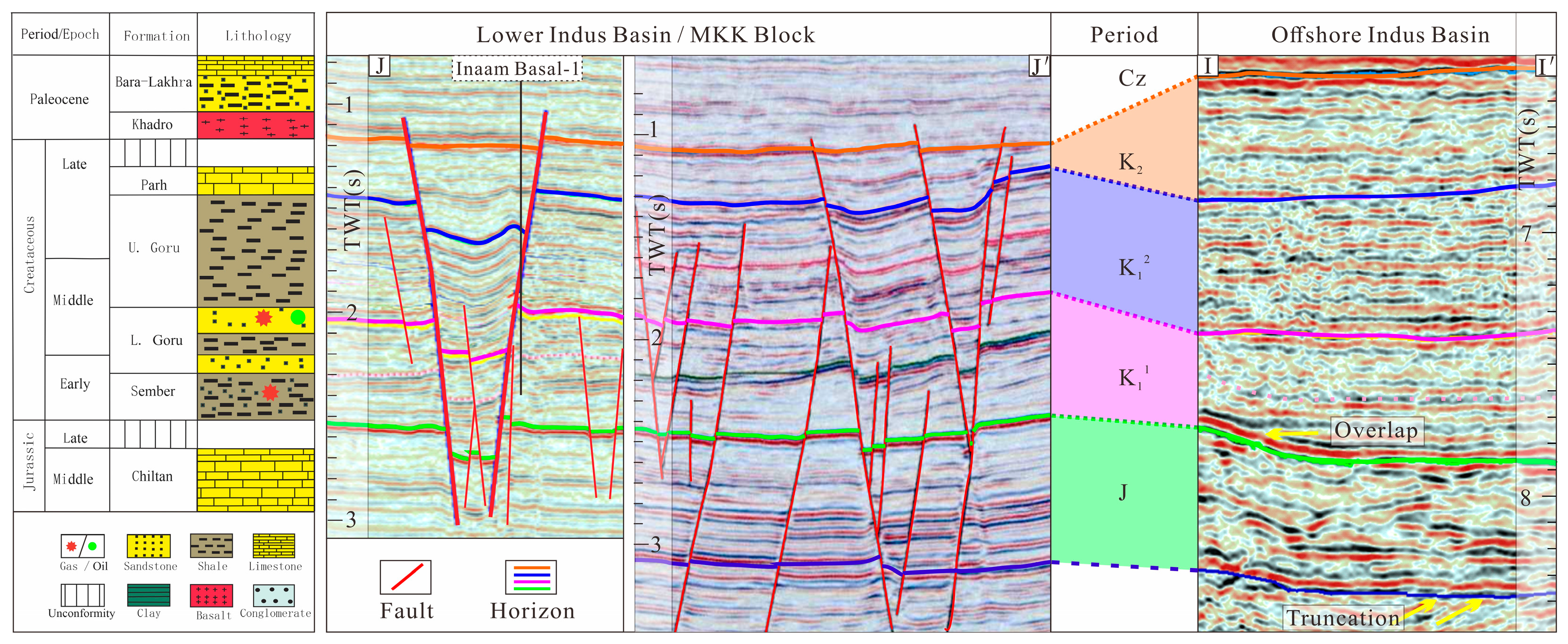
The upper and lower strata of this strong reflection marker horizon show unconformable contact, with significant differences in formation deformation. Below the strong reflection axis, four sets of reflection wave groups that can be continuously traced on multi-channel seismic profiles are identified, which have similar reflection characteristics and strong comparability with the Mesozoic strata in the Lower Indus Basin. From bottom to top, these four sets of reflection wave groups are predicted to correspond to the Jurassic, Lower Cretaceous (lower part and upper part), and Upper Cretaceous in sequence (Figure 5). Among them, the Jurassic seismic wave group is characterized by strong reflection amplitude, good continuity, and medium-to-high frequency; the lower part of the Lower Cretaceous has relatively weak seismic reflection amplitude, moderate continuity, and intermediate frequency; the upper part of the Lower Cretaceous shows strong seismic reflection amplitude, moderate continuity, and medium-to-high frequency; the Upper Cretaceous strata exhibit weak seismic reflection amplitude, moderate continuity, and intermediate frequency [15].
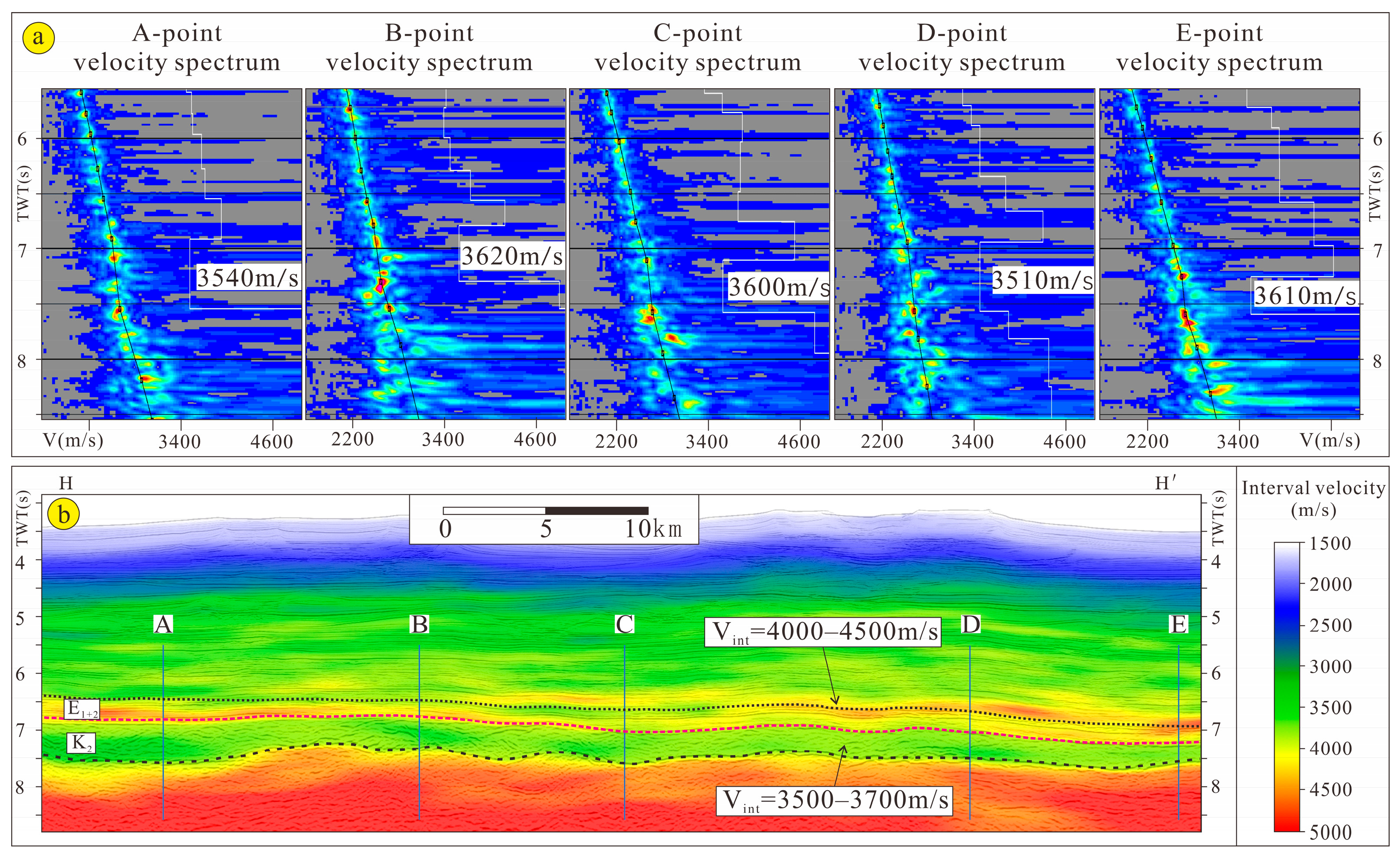
Notably, the weak reflection in the lower part of the Lower Cretaceous corresponds to the development of marine shale in the Sembar Formation, while the weak reflection in the Upper Cretaceous indicates the development of mudstone in the Upper Goru Formation [23,24,25,34,35]. In terms of seismic interval velocity, these intervals are manifested as low-velocity layers with a velocity range of 3500–3700 m/s (Figure 6), which is consistent with the velocity range of the Upper Cretaceous in the VSP of the well Kausar Deep-1 in the MKK Block at the Lower Indus Basin.
The low-velocity zones identified by velocity profiles not only confirm the existence and stable distribution of Mesozoic strata but also indicate the widespread development of Cretaceous source rocks in the Offshore Indus Basin.
Above the low-velocity layers, the Paleo–Eocene (may contain Deccan volcanic rocks) interval velocity ranges from 4000 to 4500 m/s, with relatively higher velocities in the southeastern (SE) direction of the profile; drilling has confirmed the development of shallow-water carbonate platforms and the thin layer of volcanic rock at the bottom in this area. Below the low-velocity layers, the velocity of deep geological strata abruptly increases to 4500–5000 m/s.

4.2. Volcanic Rocks Distribution

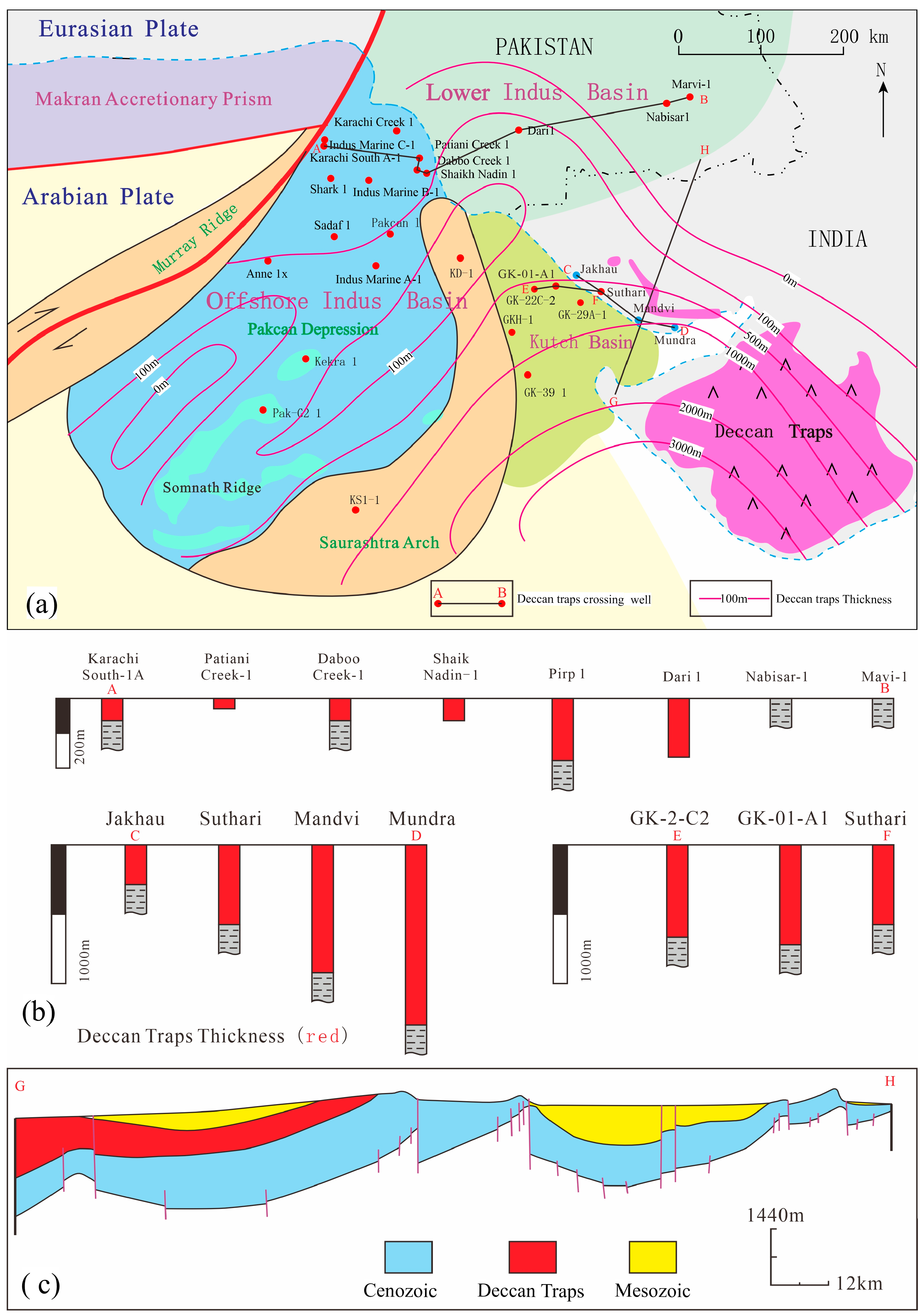
As an important boundary between the Mesozoic and Cenozoic, the Deccan Traps can be correlated with neighboring regions such as the Kutch Basin and the Lower Indus Basin (Figure 7). The large-scale eruption of the Deccan Traps represents the most extensive volcanic event on the Indian Plate, featuring a long eruption duration, wide coverage area, and substantial thickness. The center of its main eruption was located in central-southern India, with an average thickness exceeding 2 km.
In the Offshore Indus Basin, the Deccan basalts are mainly manifested as strong-reflection and high-continuity seismic events, which are relatively easy to identify and trace. Their estimated thickness is approximately 50 m. To date, no drilling has encountered this set of basalts in the deepwater area of the basin; only four wells have encountered them in the nearshore continental shelf area, three of which penetrated the Deccan volcanic rocks with thicknesses ranging from 20 to 100 m (Figure 7b), and the average thickness of the Deccan volcanic rocks is 30 m [29]. This relatively small thickness and the associated seismic reflection characteristics are correlatable with those in the Lower Indus Basin. In the Kutch Basin, the thickness of the Deccan volcanic rocks varies significantly (ranging from 100 to 1500 m), primarily due to its proximity to the Deccan volcanic source area [8,36]. On seismic profiles, there is a clear unconformity between the thick Deccan volcanic rocks and the Cretaceous sedimentary strata, and distinct reflection differences exist between the Deccan volcanic rocks and the Cenozoic sedimentary strata [14].
During the Late Cretaceous, the study area was affected by two igneous events. The Somnath igneous rocks (~70 Ma) are mainly distributed in the deepwater area of the southeastern basin margin [10], while the Deccan Traps (~65 Ma) are more thickly distributed in the Kutch Basin [42] (Figure 7). The Somnath igneous rocks are primarily characterized by intrusion into and disruption of Mesozoic strata, with locally developed effusive facies igneous rocks. These igneous rocks form the basement for the development of Paleocene carbonates and exert a significant controlling effect on the distribution of Paleo–Eocene carbonate platforms.

4.3. Hydrocarbon Geological Conditions

4.3.1. Source Rocks

Comprehensive analysis of onshore–offshore drilling data [4,21,24,25,43,44,45,46] and the latest seismic data indicates that three sets of potential source rocks may exist in the Offshore Indus Basin, namely the Cretaceous, Paleo–Eocene, and Miocene (Table 2). Among these, drilling has confirmed that the Paleo–Eocene and Miocene source rocks are of medium to good quality [4,21]. However, due to the lack of drilling data, the Cretaceous source rocks need to be inferred through onshore–offshore correlation and seismic data interpretation.
Cretaceous Source Rocks
In the Mesozoic strata of the Lower Indus Basin, the Cretaceous serves as an important source rock interval, primarily composed of marine shale. The Sari and Badin oilfields in southern Pakistan have verified that hydrocarbons in these fields are derived from this set of source rocks.
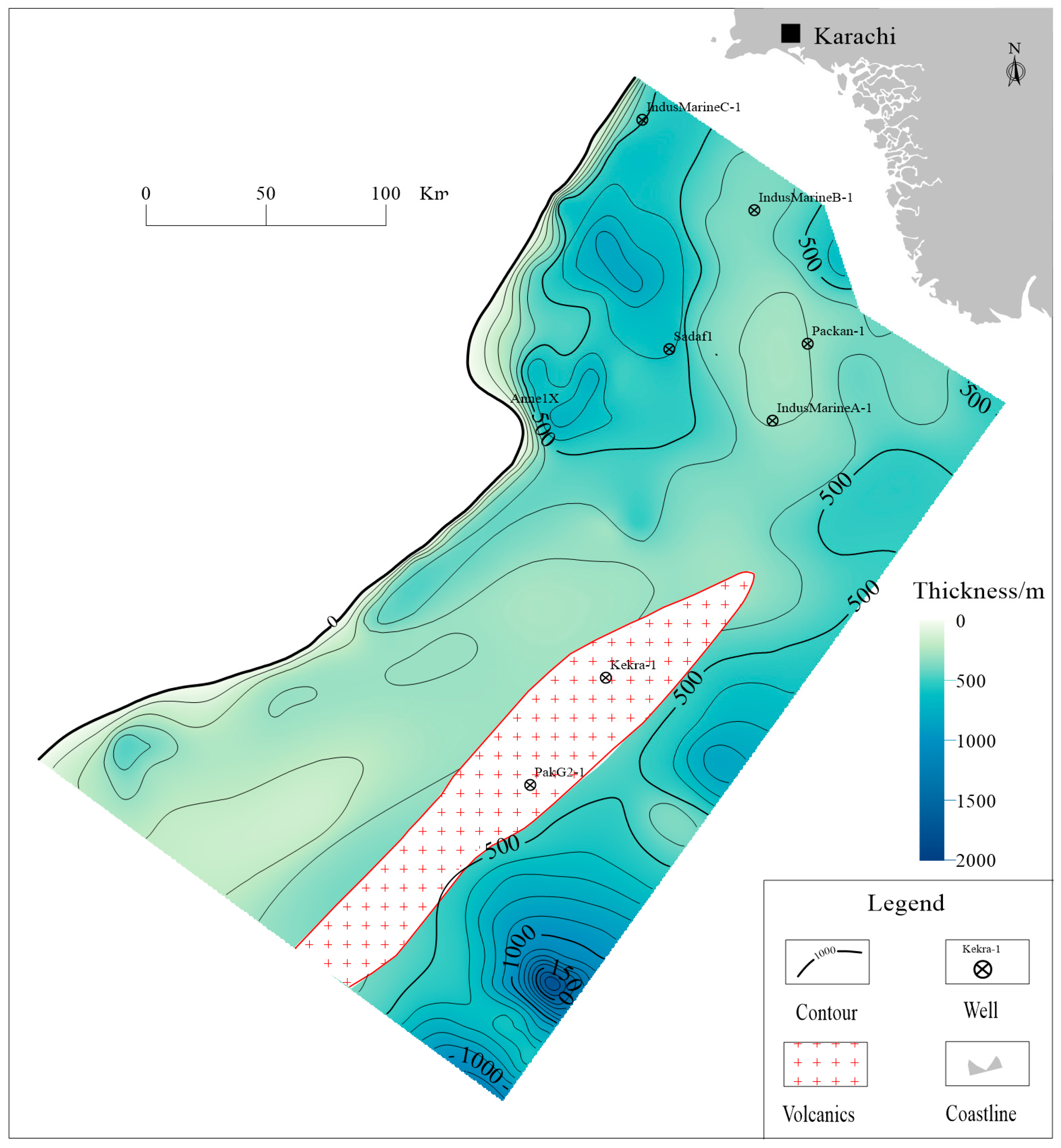
In the Offshore Indus Basin, the Cretaceous source rocks cover an area exceeding 5 × 10⁴ km2, with two main hydrocarbon generation and expulsion centers. One center is located in the southeastern (SE) part of the basin, with a total thickness ranging from 500 to 1700 m (Figure 8); the other is situated in the northwestern (NW) part, adjacent to the continental shelf edge, with a thickness of 400 to 800 m. Thus, the Cretaceous source rocks in the Offshore Indus Basin are characterized by widespread distribution and substantial thickness.
Currently, the Cretaceous represents the primary source rock interval in both the Lower Indus Basin and the Kutch Basin within the Indian Ocean region. The main source rocks are the Sembar Formation in the lower part of the Lower Cretaceous, followed by the Lower Goru Formation in the upper part of the Lower Cretaceous [47]. Meanwhile, the Cretaceous is also a major hydrocarbon-producing strata [17,19,41,48].
Marine shale of the Sembar Formation is distributed throughout the Indus Basin, with an average thickness of 600–800 m (maximum thickness of 1400 m). The total organic carbon (TOC) content of the Sembar Formation ranges from 1.5% to 4.5%, with organic matter types of Type II and III. Vitrinite reflectance (Ro) values fall between 0.6% and 2.0% (Table 2), and the oil generation window spans 2000 to 4500 m.
According to measured data from three wells in the Badin-MKK area of the Lower Indus Basin, the Ro values of the Sembar Formation range from 0.6% to 2.06% [24,25,46,47,49], indicating a mature to high-mature stage of thermal evolution. The average TOC value is 2.9%, reaching up to 4% locally. Some samples exhibit a hydrocarbon generation potential of up to 10 mg/g, suggesting a mixed organic matter type [25]. Additionally, in the upper section of the Lower Cretaceous, the TOC content of two sets of mudstones in the Lower Goru Formation ranges from 1.72% to 2.55%, with kerogen types of Type III-II. Therefore, the Lower Cretaceous in the Indus Basin constitutes a set of high-quality source rocks [50].
In the Kutch Basin of Indian waters, the TOC content of source rocks in the Upper Jurassic and Lower Cretaceous ranges from 0.5% to 3.0%, with organic matter types of Type III and II. The Upper Cretaceous consists of shale interbedded with coal seams, with TOC values ranging from 0.1% to 10.65% and organic matter types of Type III and II.
In summary, the Cretaceous source rocks in the Offshore Indus Basin feature large thicknesses, high organic matter abundance, and predominantly Type III organic matter. Due to their general burial depth of over 3000 m, the thermal evolution of organic matter has reached the high-mature to over-mature stage, making them high-quality source rocks.
Paleo–Eocene Source Rocks
High-quality deepwater facies dark mudstones from the Paleocene to Eocene have long been recognized as an important source rock interval. The sedimentary depocenters are located within extensional depressions on the continental shelf margin, basically inheriting the Mesozoic NW-trending structural pattern while also extending in a NE direction, with a thickness ranging from 200 to 500 m. On seismic profiles, the source rocks of this period are mainly characterized by weak amplitude, low frequency, and medium-low continuity reflections. In most areas of the Offshore Indus Basin, the Paleocene source rocks have entered the early oil generation stage, and even reached the high to over-mature stage in the depocenters.
Drilling data from nearshore areas indicate that the total organic carbon (TOC) content mainly ranges from 0.6% to 2.0%, with a maximum of 6.98%. The organic matter types are Type II-III kerogens, predominantly Type III (Table 3).
Middle Miocene Source Rocks
Drilling data from the nearshore continental shelf (e.g., PakCan-1, Sadaf-1, Indus Marine A-1, Indus Marine B-1) have confirmed that the Miocene contains a thick sequence of mudstone sediments with hydrocarbon generation potential. The maximum thickness of this source rock interval is located at the continental shelf margin in the northern part of the basin. The effective thickness of the source rocks gradually decreases from the NE (up to 400–700 m) to the SW (approximately 100–200 m), with a corresponding gradual decrease in maturity.
The TOC content of the Middle Miocene source rocks is relatively low, generally ranging from 0.5% to 2.0%, with a maximum of 3.28%. A comprehensive evaluation of organic matter abundance classifies these source rocks as poor to medium quality (Table 4). The organic matter is mainly Type III kerogen, with a small amount of Type II2 kerogen, and is primarily gas-prone. Natural gas source correlation studies show that the hydrocarbon gases discovered in Well PakCan-1 are thermogenic gases, which may be derived from oil-cracked gases generated from the Middle Miocene source rocks.
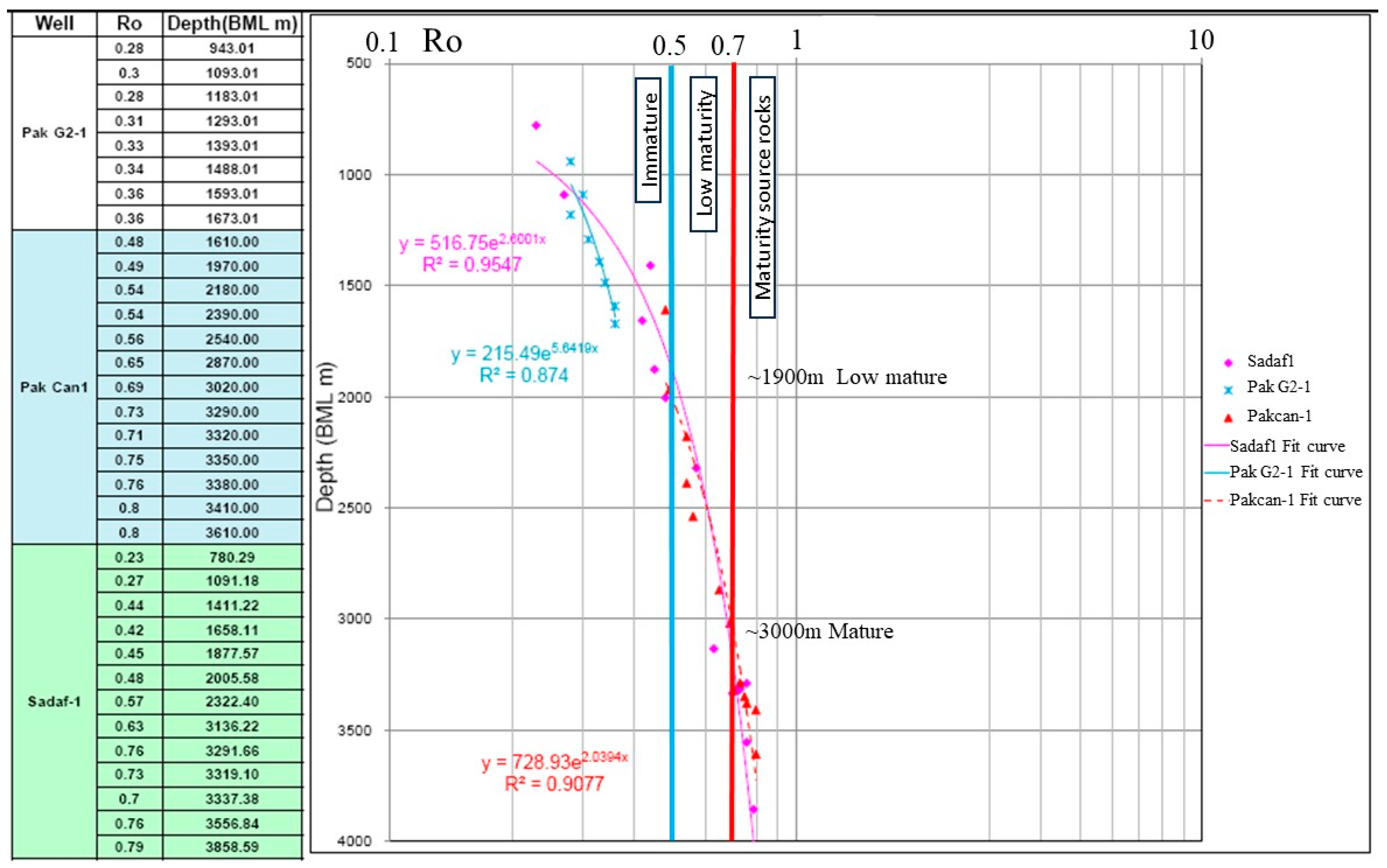
Based on the relationship between source rock maturity (Ro) and depth derived from three wells (PakCan-1, Pak G2-1, Sadaf-1), the source rocks enter the low-maturity stage at a depth of approximately 1900 m, the mature stage at around 3000 m (Figure 9), and the high-maturity stage when the depth exceeds 4000 m. Furthermore, for source rocks of the same maturity, the burial depth in marine strata is greater than that in terrestrial strata. The Middle Miocene source rocks entered the oil generation window during the Late Miocene; most areas are still in the main hydrocarbon generation stage (Ro: 0.7%~1.3%), while the depocenters have entered the gas generation stage.

4.3.2. Reservoirs

Drilling correlation between the Offshore Indus Basin and the Lower Indus Basin reveals that two major types of reservoirs—clastic rocks and carbonates—are developed in the Meso-Cenozoic strata. Vertically, three sets of favorable reservoirs are developed: Lower Cretaceous sandstones, Paleo–Eocene carbonates, and Oligo-Pliocene sandstones and limestones. Specifically, Miocene channel sandstones and Paleocene reef limestones have been confirmed as favorable reservoirs through drilling.
Cretaceous Reservoirs
Basin evolution analysis and seismic data interpretation indicate that the Cretaceous sedimentary characteristics of the Offshore Indus Basin are analogous to those of the Lower Indus Basin. In the Lower Indus Basin, the Lower Cretaceous Lower Goru Formation sandstones serve as important reservoirs, characterized by good sorting and rounding, an average porosity of 20%, and a permeability ranging from 10 to 4000 mD [44]. Additionally, natural gas has been discovered in Cretaceous sandstones by two wells (GK-22C and GK-39-1) in the Kutch Basin; the lithology consists of deltaic to shallow marine sandstones, with porosity primarily ranging from 18% to 25% and permeability from 32.8 to 1000 mD, qualifying them as high-quality reservoirs. The distribution and quality of these reservoirs are mainly controlled by sedimentary facies and compaction diagenesis.
Cretaceous strata are widely distributed in the Offshore Indus Basin, covering an area exceeding 5 × 10⁴ km2 (Figure 10) with a thickness of 1000~2000 m (Figure 4 and Figure 5), and their sedimentary characteristics are similar to those of the onshore Pakistani Indus Basin. Taking the Somnath Ridge as the boundary, the Cretaceous strata thicken toward the northwest (NW) and southeast (SE). The NW part of the basin may have more favorable storage conditions for Cretaceous reservoirs due to its greater distance from volcanic uplifts. However, the burial depth of Cretaceous strata in the Offshore Indus Basin is generally greater than 3000 m, with a maximum depth of up to 8000 m. It is therefore inferred that the overall quality of Cretaceous reservoirs in the Offshore Indus Basin is slightly inferior to that in the Lower Indus Basin.
Paleo–Eocene Reservoirs
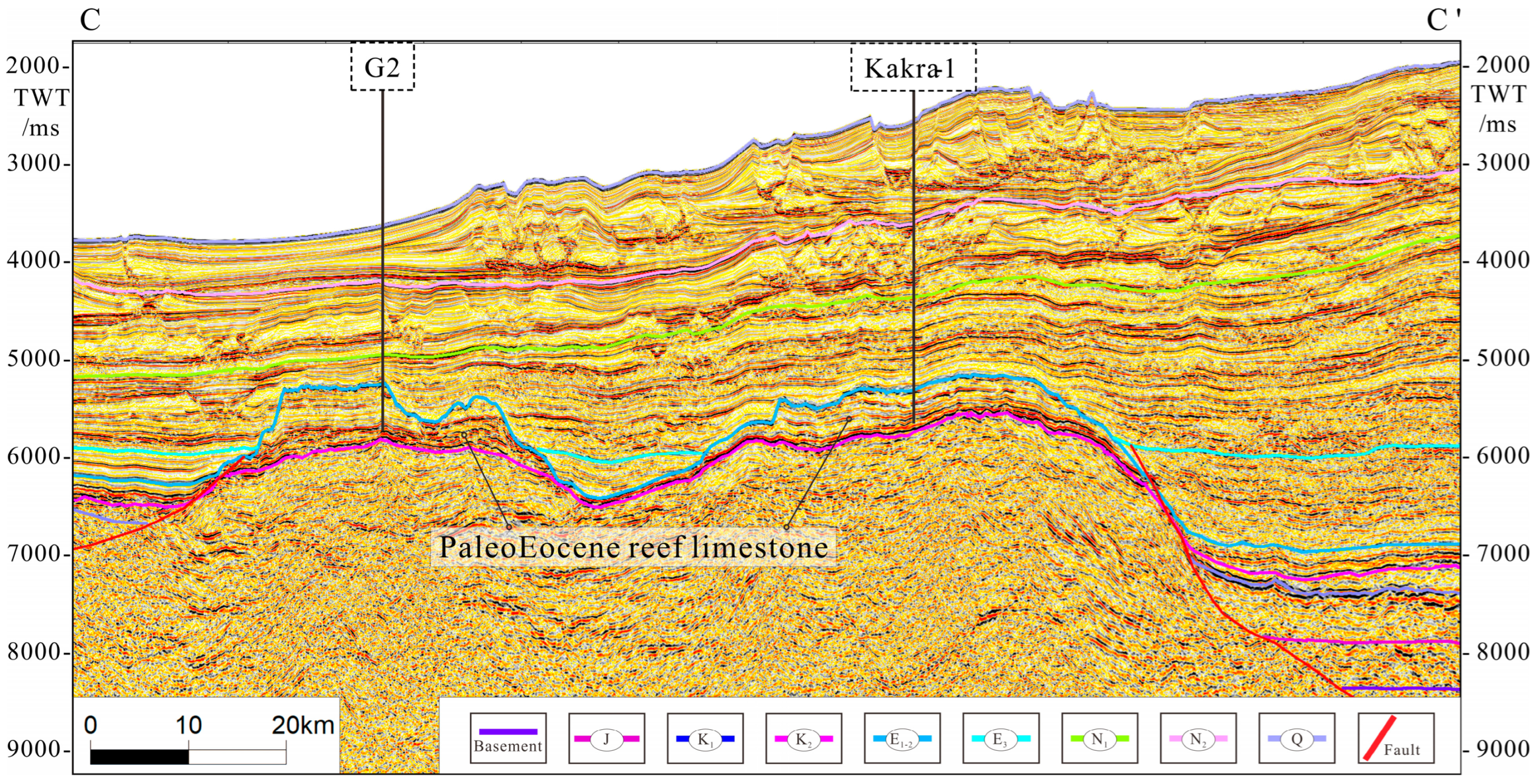
Paleo–Eocene reservoirs are dominated by carbonates, distributed in nine isolated carbonate platforms in the SE part of the basin and the carbonate platform area in the NE part. To date, only Wells Pak G2-1 and Kekra-1 have drilled into these carbonate reservoirs (Figure 10). Data from Well Pak G2-1 show that the lithology is mainly composed of grain marl, granular limestone, and reef limestone, with well-developed biogenic framework pores and intergranular pores. Specifically, the porosity of Paleocene limestone is 27%, and the average porosity of Eocene limestone is 26%. Seismic profile interpretation indicates that the thickness of reef limestone is approximately 350 m (Table 5), classifying these as high-quality reservoirs.
Oligo-Miocene Reservoirs
During the Oligocene to Miocene period, subaqueous distributary channels exhibit horizontal characteristics of migration, multi-stage development, and large scale, as well as vertical characteristics of mutual overlapping and cutting. This type of reservoir has been confirmed by Wells PakCan-1, Indus Marine-1A, and Indus Marine-1B. The lithology of Oligocene clastic reservoirs is mainly medium-to-fine-grained sandstone and siltstone, with minor amounts of coarse-grained sandstone, inequigranular sandstone, and gravelly sandstone, showing interbedded characteristics of sandstone, siltstone, and thin-bedded mudstone. The sandstones are poorly sorted; fine-grained sandstone particles are mainly subrounded, while coarse-grained sandstone particles are predominantly subangular to subrounded.
The sandstones are loose to moderately hard, with a single sand layer thickness ranging from 1 to 50 m (mostly 10 to 20 m). The average porosity is 19.7%, and the average permeability is 514 mD, indicating good reservoir quality. The porosity and permeability of the reservoir decrease with increasing burial depth.

4.3.3. Favorable Structural Belts

The Offshore Indus Basin has undergone three evolutionary stages, which exert a dominant control on the distribution of favorable structural belts. The Mesozoic rift stage is characterized by the predominant development of fault blocks and anticlinal structures in the southeastern part of the basin. The Paleocene–Eocene thermal subsidence stage features the extensive distribution of carbonate platforms and bioherm structural-lithological traps on paleo-highs (e.g., volcanic edifices and continental margins) in the northeastern and southeastern parts of the basin. Since the Oligocene, the basin has entered a passive continental margin stage, with gravity slide structures and anticlinal folds being predominantly developed in the northwestern part of the basin.
Cretaceous
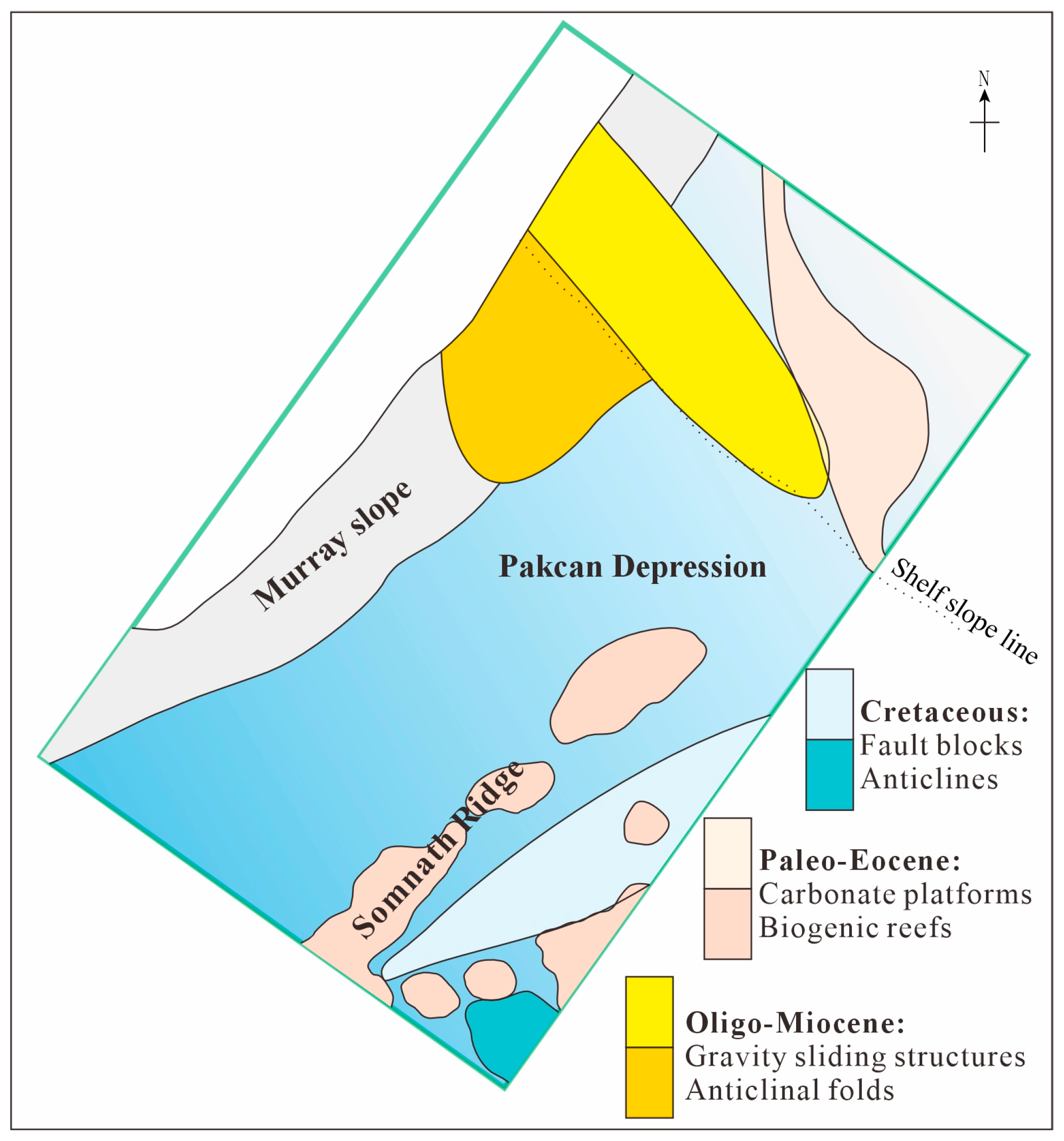
Cretaceous favorable hydrocarbon structures are dominated by anticlinal and fault blocks, mainly distributed in the northern and southeastern parts of the basin (Figure 11). The primary source rock is the Sembar Formation in the lower part of the Lower Cretaceous, while the reservoir is predominantly composed of deltaic to shallow marine sandstones of the Lower Goru Formation.
Paleo–Eocene
Paleo–Eocene favorable hydrocarbon structures are dominated by structural-lithological traps, such as carbonate platforms and biogenic reefs (Figure 11).
Carbonate platforms are mainly developed at the continental shelf margin in the northeastern part of the basin. On seismic profiles, the platform margin exhibits a hilly geometry with chaotic internal reflections and strong-amplitude seismic events; within the platform, lagoon facies are characterized by parallel, strong-amplitude, and relatively continuous reflections, while beach and other facies show weak-amplitude and discontinuous reflections (Figure 10). To date, Well Shakh Nadin-1 in the Offshore Indus Basin has shown gas shows in the Paleocene, and Well KD-1 in the Kutch Basin has exhibited oil shows in Eocene carbonates. The largest onshore gas field in Pakistan, the Sui Gas Field, is a low-amplitude anticlinal trap developed on the Eocene carbonate platform, with hydrocarbons derived primarily from Cretaceous source rocks.
A “V”-shaped volcanic uplift, known as the Somnath Ridge, is located in the southeastern part of the Offshore Indus Basin, on which nine carbonate platforms are distributed [29]. Faults within these platforms are scarce, and biogenic reefs are developed at the platform tops. Currently, Wells Pak G2-1 and Kekra-1 have drilled into Paleo–Eocene platform reefs (Figure 10), but no oil or gas discoveries have been made. The lack of hydrocarbon charge in this area is likely the primary reason for the failure to discover hydrocarbons in these two wells; the high parts of the reefs may lack favorable hydrocarbon migration pathways and effective cap rocks.
Oligo-Miocene
The favorable hydrocarbon structures in the Oligo-Miocene include anticlines, gravity-sliding fault-related anticlines (Figure 11), and lithologic traps (e.g., channel sandstones, fan sandstones, and platform-facies carbonates).
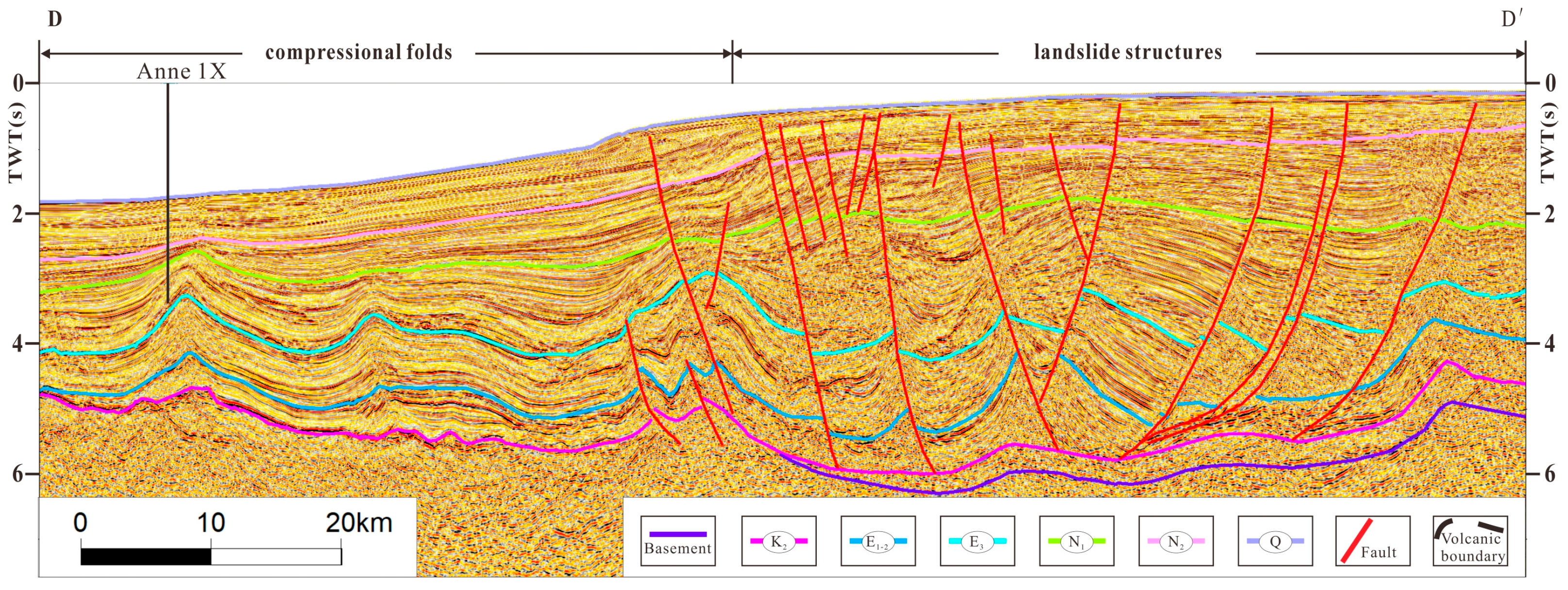
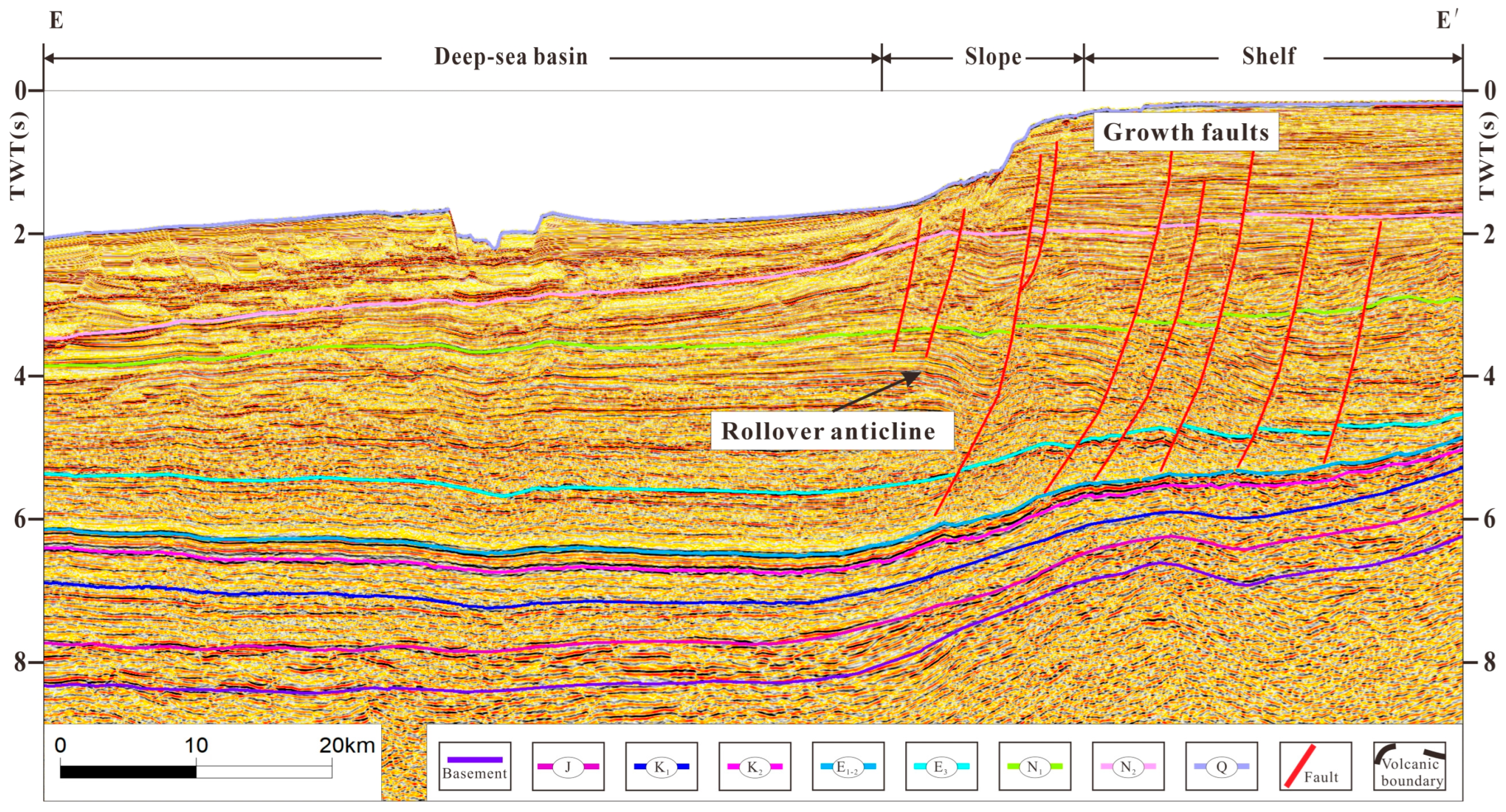
From the Miocene to the present, the strong collision between the Indian Plate and the Eurasian Plate has persisted. The Murray Ridge at the western margin of the basin is characterized by left-lateral strike-slip movement. At the northwestern (NW) shelf margin of the basin, driven by the rapid uplift of the Qinghai–Tibet Plateau, massive clastic sediments have been transported into the Indus Fan, enabling it to undergo continuous deposition toward the deep sea. Under the combined effect of gravity sliding and strike-slip tectonism at the margin, a series of large-scale growth faults has developed at the continental shelf margin (Figure 1d). On the continental slope and apron, multiple NW-SE trending thrust faults, anticlinal folds (Figure 12), and mud diapirs have been formed, which are favorable for hydrocarbon accumulation [51].
A series of gravity-compacted normal faults has developed on the northern margin of the basin’s continental shelf. These faults strike NW-SE, are nearly parallel to the current coastline, and are mainly large-scale growth faults (Figure 1d and Figure 13). They provide migration pathways and trap structures for hydrocarbon accumulation. To date, numerous hydrocarbon discoveries have been made in such gravity-sliding structures on both sides of the Atlantic Ocean and in various basins in East Africa [52].

4.4. Prediction of Hydrocarbon Accumulation

Based on the drilling data of the Offshore Indus Basin and the analysis of its hydrocarbon accumulation geological conditions, it is predicted that there are three main types of hydrocarbon accumulation models in the basin.

4.4.1. Mesozoic Hydrocarbon Accumulation

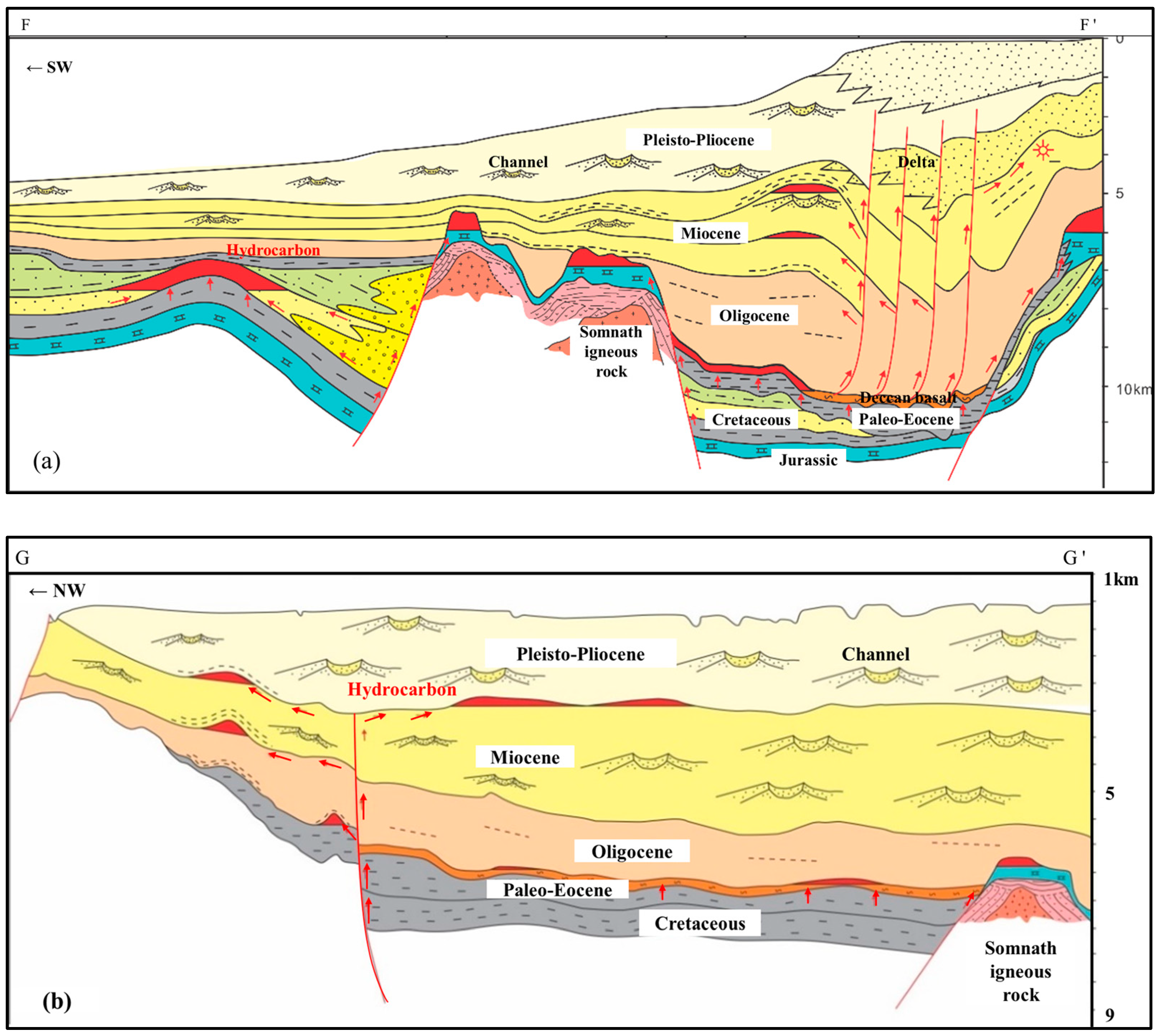
The Cretaceous source rocks in the basin are widely distributed and thicken in the NW and NE parts of the basin (Figure 8). Similarly to the Lower Indus Basin, hydrocarbons here can migrate vertically along faults and form “lower-generation and lower-storage” type hydrocarbon accumulations within the Cretaceous (Figure 14). The source rock for this type is the Sembar Formation in the lower part of the Lower Cretaceous, the reservoir is the Lower Goru Formation in the upper part of the Lower Cretaceous, and the migration system is dominated by faults. Currently, the natural gas in the Cretaceous strata of the GK-22 and GK-39 areas in the Kutch Basin may belong to this type of accumulation.

4.4.2. Paleogene Hydrocarbon Accumulation

Hydrocarbons migrate vertically along faults or laterally along shallow sand bodies, forming “lower-generation and upper-storage” type hydrocarbon accumulations in the Paleo–Eocene or Miocene (Figure 14). The source rocks for this type include Lower Cretaceous, Paleocene, and Lower Miocene mudstones, while the reservoirs are Paleo–Eocene limestones or sandstones, and Miocene deltaic facies mouth bars or front sheet sandstones. The migration system mainly consists of faults cutting through the Mesozoic-Cenozoic strata, as well as thick sandstones or interlayer minor faults. This type is dominated by structural and lithological traps, with hydrocarbon reservoirs mainly distributed in the continental shelf area of the NE Offshore Indus Basin.
The gas-producing interval of Well PakCan-1 is the Middle Miocene delta front facies, with reservoirs composed of mouth bars and delta front sheet sands, and the trap type is a faulted anticline [53]. Natural gas is inferred to be derived from either Cretaceous source rocks or laterally matured Lower Miocene source rocks. Faults connect the Cretaceous source rocks and, together with shallow sandstones, provide favorable conditions for the migration and accumulation of natural gas.

4.4.3. Neogene Hydrocarbon Accumulation

Based on comparative basin analysis [52], it is inferred that the “upper-generation and upper-storage” type of hydrocarbon accumulation may also develop in the Cenozoic of the Offshore Indus Basin (Figure 14). This type of hydrocarbon accumulation is mainly developed in high structural areas with abnormally high-pressure systems. Overpressure layers of the Upper Miocene and Pliocene are likely developed at the continental shelf margin of the Offshore Indus Basin. The source rock for this type is Lower Miocene mudstone, the reservoir is mainly Middle Miocene sandstone, and the migration system consists of intraformational sandstones or interlayer overpressure microfractures.

5. Discussion

5.1. Key Findings and Their Implications

This study systematically clarifies the hydrocarbon geological conditions and exploration potential of deepwater and deep layers in the Offshore Indus Basin by integrating the latest high-resolution seismic data, drilling data, and onshore–offshore comparative analysis, and obtains several key findings with important exploration guiding significance. Firstly, the Offshore Indus Basin has experienced three evolutionary stages (Mesozoic rift, Cenozoic post-rift thermal subsidence, and passive continental margin), which not only control the development of Mesozoic-Cenozoic strata but also determine the distribution pattern of source rocks, reservoirs, and favorable structural belts. The Mesozoic rift stage laid the foundation for the development of thick Cretaceous source rocks and delta-shallow marine sandstone reservoirs, while the Cenozoic passive continental margin stage promoted the formation of Miocene subaqueous fan sandstone reservoirs and gravity slide-related traps, providing favorable conditions for multi-stage hydrocarbon accumulation.
Secondly, the identification of Mesozoic strata (Jurassic, Lower Cretaceous, and Upper Cretaceous) below the Deccan volcanic rocks breaks through the previous understanding that the Mesozoic strata in the basin are underdeveloped due to volcanic rock shielding. The low-velocity zone identified by seismic interval velocity (3500~3700 m/s) not only confirms the stable distribution of Mesozoic strata (area exceeding 5 × 10⁴ km2) but also indicates the extensive development of Cretaceous source rocks. This finding supplements the blank of Mesozoic hydrocarbon geological research in the basin and provides a new direction for deep hydrocarbon exploration.
Thirdly, three sets of potential source rocks and three sets of favorable reservoirs are identified in the basin, and three main hydrocarbon accumulation models are established. The Cretaceous source rocks are high-quality (Type II/III organic matter, high maturity), the Paleocene–Eocene carbonate reservoirs and Miocene clastic reservoirs have good physical properties, and the favorable structural belts are concentrated in the northwest, northeast, and southeast of the basin. These findings clarify the hydrocarbon accumulation rules of the basin and provide a clear target for subsequent exploration deployment.

5.2. Comparison with Adjacent Basins

The Offshore Indus Basin, as the offshore extension of the Lower Indus Basin and the Kutch Basin, has similar tectonic-sedimentary evolution histories, but there are significant differences in hydrocarbon geological conditions, which directly affect the exploration potential of each basin. Compared with the Lower Indus Basin, the Offshore Indus Basin has thicker Cenozoic sediments (up to 9 km in the upper fan area of the Indus Fan), and the Mesozoic strata are more deeply buried (mostly more than 3000 m), which may lead to slightly worse physical properties of Cretaceous reservoirs. However, the Offshore Indus Basin has a wider distribution of Cretaceous source rocks and thinner Deccan volcanic rocks, which is more favorable for the preservation and exploration of deep Mesozoic hydrocarbons. The Lower Indus Basin has achieved commercial oil and gas breakthroughs in Mesozoic-Cenozoic strata, indicating that the Offshore Indus Basin, with similar source-reservoir conditions, has great commercial exploration potential.
In addition, the Kutch Basin has found oil shows in Eocene carbonate rocks, while the Offshore Indus Basin has developed nine Paleocene–Eocene carbonate platforms, which are expected to form high-quality carbonate reservoirs, but the lack of oil and gas discoveries in the Pak G2-1 and Kekra-1 wells may be related to insufficient oil and gas charging and lack of effective migration channels, which needs further in-depth study.

5.3. The Influence of Volcanic Rocks on Hydrocarbon Accumulation

Compared with the Kutch Basin, the most obvious difference is the thickness of Deccan volcanic rocks: the Kutch Basin is close to the Deccan volcanic source area, with volcanic rocks thickness varying greatly (100~1500 m), which seriously shields the deep Mesozoic strata and affects the development of hydrocarbon accumulation conditions. In contrast, the Offshore Indus Basin is far from the volcanic source area. The Deccan volcanic succession across the Offshore Indus Basin is characterized by a generally thin stratigraphic thickness (≤100 m), whereas localized thickening is pronounced on the Somnath Ridge, with the volcanic rock thickness exceeding 500 m there. This thin volcanic rock distribution has a relatively positive impact on hydrocarbon accumulation: on the one hand, it reduces the shielding effect on Mesozoic strata, facilitating the penetration of seismic waves and the identification of deep geological structures; on the other hand, it avoids the destruction of Mesozoic source rocks and reservoirs by thick volcanic rocks, which is conducive to the preservation of hydrocarbon accumulation conditions. This is a key advantage of the Offshore Indus Basin compared with adjacent basins in terms of deep hydrocarbon exploration.
This volcanic-induced uplift further constitutes a favorable paleo-geomorphic setting for the development of Paleo–Eocene reef limestones in this region. Volcanic activity has certain destructive effects on hydrocarbon accumulation, while also bringing extremely high heat flux values. The Deccan volcanic rocks promote the thermal maturity of source rocks and can also act as good cap rocks, providing effective shielding for hydrocarbon accumulation in underlying reservoirs and thus dividing the Mesozoic and Cenozoic into two separate hydrocarbon systems. Most Mesozoic faults terminate at the Deccan volcanic rock layer, and the majority of hydrocarbon reservoirs are located beneath this layer [24]. Therefore, it is inferred that the continental Deccan volcanic rocks have a certain sealing effect on hydrocarbons.

5.4. Limitations of This Study

Despite the important progress made in this study, there are still some limitations due to the low degree of exploration in the Offshore Indus Basin and the lack of drilling data. Firstly, the identification of Mesozoic strata and the evaluation of Cretaceous source rocks are mainly based on seismic data and onshore–offshore comparison, and there is a lack of direct drilling data verification. The specific parameters (such as TOC, Ro, and kerogen type) of Cretaceous source rocks in the Offshore Indus Basin need to be further confirmed by drilling.
Secondly, the distribution of Deccan volcanic rocks in the deepwater area of the basin is only estimated based on seismic reflection characteristics, and no drilling has encountered this set of volcanic rocks so far, so the accurate thickness, lithology, and distribution range of volcanic rocks in the deepwater area need to be supplemented by drilling data. In addition, the impact of the Somnath igneous rocks (~70 Ma) on Mesozoic hydrocarbon accumulation is only preliminarily analyzed, and the specific intrusion mechanism and its control on source-reservoir distribution need further study.
Thirdly, the hydrocarbon accumulation models established in this study are based on the analysis of source, reservoir, and trap conditions, but the specific hydrocarbon migration process, charging time, and preservation conditions are not deeply discussed due to the lack of fluid inclusion and isotope data. The reasons for the lack of commercial oil and gas discoveries in the Pak G2-1 and Kekra-1 wells also need to be further clarified by supplementing drilling and testing data.

6. Conclusions

(1) The deepwater and deep formations in the Offshore Indus Basin exhibit a Mesozoic stratigraphic framework analogous to that of the Lower Indus Basin; the primary Meso-Cenozoic source rock sets and reservoirs exhibit similarities and correlatability. The major source rocks in the basin are characterized by a widespread distribution and substantial thickness, with the Mesozoic source rocks having higher thermal maturity. Meso-Cenozoic reservoirs are extensively developed, but the physical quality of Mesozoic reservoirs may be compromised by deep burial.
(2) Three sets of potential hydrocarbon source rocks are developed in the basin, namely: the Cretaceous sequence, dominated by Type II/III organic matter with high maturity, representing high-quality hydrocarbon-prone kerogen; the Paleocene–Eocene, characterized by Type III organic matter with moderate maturity, also comprising high-quality kerogen; and the Lower Miocene formations, consisting of Type II2/III organic matter with low maturity and organic matter quality ranging from poor to moderate. Three sets of high-quality reservoirs were well-developed, including Cretaceous deltaic to shallow marine sandstones, Paleocene reef limestones, and Miocene deltaic and subaqueous fan sandstones. Three primary hydrocarbon accumulation models were identified in the Offshore Indus Basin: Mesozoic “lower-generation and lower-storage”, Paleogene “lower-generation and upper-storage”, and Neogene “upper-generation and upper-storage”.
(3) Comparative analysis of seismic profiles and drilling data reveals that the Deccan volcanic rocks in the Offshore Indus Basin have relatively small thickness, which exerts a relatively positive influence on Meso-Cenozoic geological conditions and hydrocarbon accumulation processes.
(4) The favorable structural belts are mainly distributed in the NW, NE and SE of the basin, which are the key areas for subsequent hydrocarbon exploration.
(5) Although there are still some limitations in this study due to the lack of drilling data, the research results reasonably infer the key hydrocarbon geological conditions and accumulation rules of the basin, break through the previous understanding of Mesozoic strata and volcanic rock impact, and provide an important basis for the evaluation of deepwater and deep hydrocarbon exploration potential in the Offshore Indus Basin. With the supplement of drilling data and the deepening of follow-up research, the Offshore Indus Basin is expected to achieve commercial oil and gas breakthroughs and become a new important hydrocarbon exploration area in the Indian Ocean region.

Author Contributions

Conceptualization, B.L. and J.G.; methodology, B.L. and J.S.; software, Q.L. and Y.Z.; validation, B.L., J.L. (Jie Liang) and J.G.; formal analysis, B.L. and Q.L.; investigation, J.L. (Jie Liang), J.L. (Jing Liao) and J.G.; resources, J.L. (Jie Liang), J.L. (Jing Liao) and Y.Z.; data curation, J.L. (Jie Liang), J.L. (Jing Liao) and Y.Z.; writing—original draft preparation, B.L. and J.G.; writing—review and editing, B.L. and X.Y.; visualization, B.L., J.L. (Jing Liao) and J.S.; supervision, J.L. (Jie Liang), Q.L.; project administration, J.L. (Jie Liang) and J.L. (Jing Liao); funding acquisition, J.G. and J.L. (Jie Liang). All authors have read and agreed to the published version of the manuscript.

Funding

This work was funded by the National Natural Science Foundation of China (42076069), the Laoshan Laboratory Science and Technology Innovation Project (Nos. LSKJ202203404, LSKJ202203401), and the China Geological Survey Project (Nos. DD20190581, DD20191032, and DD20160155), and the Asia Cooperation Foundation: China-Pakistan Oil and Gas Resource Potential Assessment and Capacity Training.

Data Availability Statement

All data and materials are available on request from the corresponding author. The data are not publicly available due to ongoing studies using a part of the data.

Acknowledgments

We would like to express our sincere gratitude to the editor-in-chief and all reviewers for their assistance in providing valuable suggestions for the manuscript.

Conflicts of Interest

The authors declare no conflicts of interest.

References

  1. Ahmed, T.; Rehman, K.; Hajana, M.I.; Ahmed, S.; Ali, S.H.; Yasin, Q. A reappraisal of Mesozoic-Cenozoic sequence stratigraphy in Offshore Indus Basin, Pakistan. Kuwait J. Sci. 2025, 52, 100338. [Google Scholar] [CrossRef]
  2. Clift, P.D.; Shimizu, N.; Layne, G.D.; Blusztajn, J.S.; Gaedicke, C.; Schlueter, H.U.; Clark, M.K.; Amjad, S. Development of the Indus Fan and its significance for the erosional history of the western Himalaya and Karakoram. Geol. Soc. Am. Bull. 2001, 113, 1039–1051. [Google Scholar] [CrossRef]
  3. Carmichael, S.M.; Akhter, S.; Bennett, J.K.; Fatimi, M.A.; Hosein, K.; Jones, R.W.; Longacre, M.B.; Osborne, M.J.; Tozer, R.S.J. Geology and hydrocarbon potential of the offshore Indus Basin, Pakistan. Pet. Geosci. 2009, 15, 107–116. [Google Scholar] [CrossRef]
  4. Gong, J.M.; Liao, J.; Liang, J.; Lei, B.H.; Chen, J.W.; Khalid, M.; Waseem Haider, S.; Meng, M. Exploration prospects of oil and gas in the Northwestern part of the Offshore Indus Basin, Pakistan. China Geol. 2020, 3, 633–642. [Google Scholar] [CrossRef]
  5. Cande, S.C.; Stegman, D.R. Indian and African plate motions driven by the push force of the Réunion plume head. Nature 2011, 475, 47–52. [Google Scholar] [CrossRef]
  6. Tiwari, V.M.; Grevemeyer, I.; Singh, B.; Phipps Morgan, J. Variation of effective elastic thickness and melt production along the Deccan–Reunion hotspot track. Earth Planet. Sci. Lett. 2007, 264, 9–21. [Google Scholar] [CrossRef]
  7. Droz, L.; Bellaiche, G. Seismic Facies and Geologic Evolution of the Central Portion of the Indus Fan. In Seismic Facies and Sedimentary Processes of Submarine Fans and Turbidite Systems; Weimer, P., Link, M.H., Eds.; Springer: New York, NY, USA, 1991; pp. 383–402. [Google Scholar]
  8. Shuaib, S.M. Geology and hydrocarbon potential of offshore Indus Basin, Pakistan. AAPG Bull. 1982, 66, 940–946. [Google Scholar] [CrossRef]
  9. Bastia, R.; Radhakrishna, M. Chapter 2—Reconstruction of Eastern Gondwanaland Breakup and Evolution of the Passive Continental Margin of India. In Developments in Petroleum Science; Bastia, R., Radhakrishna, M., Eds.; Elsevier: Amsterdam, The Netherlands, 2012; Volume 59, pp. 23–56. [Google Scholar]
  10. Chatterjee, S.; Goswami, A.; Scotese, C.R. The longest voyage: Tectonic, magmatic, and paleoclimatic evolution of the Indian plate during its northward flight from Gondwana to Asia. Gondwana Res. 2013, 23, 238–267. [Google Scholar] [CrossRef]
  11. Mahoney, J.J.; Duncan, R.A.; Khan, W.; Gnos, E.; McCormick, G.R. Cretaceous volcanic rocks of the South Tethyan suture zone, Pakistan: Implications for the Réunion hotspot and Deccan Traps. Earth Planet. Sci. Lett. 2002, 203, 295–310. [Google Scholar] [CrossRef]
  12. Patriat, P.; Achache, J. India–Eurasia collision chronology has implications for crustal shortening and driving mechanism of plates. Nature 1984, 311, 615–621. [Google Scholar] [CrossRef]
  13. Wu, X.Y.; Hu, J.S.; Chen, L.; Liu, L.; Liu, L.J. Paleogene India-Eurasia collision constrained by observed plate rotation. Nat. Commun. 2023, 14, 7272. [Google Scholar] [CrossRef] [PubMed]
  14. Sun, J.; Liang, J.; Gong, J.M.; Liao, J.; Zhao, Q.F.; Zhao, C. The Volcanic Rocks and Hydrocarbon Accumulation in the Offshore Indus Basin, Pakistan. JMSE 2024, 12, 1375. [Google Scholar] [CrossRef]
  15. Liang, J.; Li, S.; Chen, J.W.; Gong, J.M.; Lu, K.; Liu, H.; Zhang, Y.G. Discovery of Mesozoic strata in the eastern region of offshore Pakistan and its oil and gas significance. Mar. Geol. Quat. Geol. 2024, 44, 115–124. [Google Scholar] [CrossRef]
  16. Hussain, W.; Luo, M.; Ali, M.; Hussain, S.M.; Ali, S.; Hussain, S.; Naz, A.F.; Hussain, S. Machine learning—A novel approach to predict the porosity curve using geophysical logs data: An example from the Lower Goru sand reservoir in the Southern Indus Basin, Pakistan. J. Appl. Geophys. 2023, 214, 105067. [Google Scholar] [CrossRef]
  17. Khalid, P.; Ehsan, M.I.; Akram, S.; Din, Z.U.; Ghazi, S. Integrated Reservoir Characterization and Petrophysical Analysis of Cretaceous Sands in Lower Indus Basin, Pakistan. J. Geol. Soc. India 2018, 92, 465–470. [Google Scholar] [CrossRef]
  18. Nawaz, M.; Khan, M.R.; Farooq, M.; Nazir, J.; Bin Nisar, U. Fault seal evaluation of lower sands of lower Goru Formation by using seismic and well data; a case study of Jherruck Block, lower Indus Basin, Pakistan. J. Himal. Earth Sci. 2019, 52, 14–26. [Google Scholar]
  19. Basu, P.; Saikumar, A.; Biswal, S.K.; Vasudevan, K. Hydrocarbon prospectivity of Mesozoic and Tertiary Sequences in Kutch Offshore area, Gulf of Kutch, India. In Proceedings of the SPG 2017, Jaipur, India, 17–19 November 2017. [Google Scholar]
  20. Bhardwaj, P.; Mitra, M.; Saha, P.K. A novel workflow for assessment of basalt reservoirs: A case study from Kutch Basin, Western Offshore, India. Lead. Edge 2021, 40, 619–625. [Google Scholar] [CrossRef]
  21. Jiang, K.X.; Yao, C.H.; Guo, Q.Z.; Hu, Y.T.; Zhao, C.S.; Li, H.R.; Zhu, Z.D.; He, W.X.; Xiao, F.; Peng, C. Characteristics and Depositional Model of Paleocene and Eocene Source Rocks in Deepwater Area of Indus Fan. Acta Sedimentol. Sin. 2016, 34, 785–793. [Google Scholar] [CrossRef]
  22. Li, L.T.; Li, Y.Z.; Zhao, H.X.; Wang, D.L.; Zhu, Y.T.; Xin, S.Y. Hydrocarbon accumulation rules and major controlling factors in Indus Foreland Basin. J. Oil Gas Technol. 2015, 37, 7–13. [Google Scholar]
  23. Lin, W.D. Features of Petroluem System and Patterns of Hydrocarbon Pooling in the In-dus Basin. Nat. Gas Ind. 2008, 28, 19–21. [Google Scholar] [CrossRef]
  24. Qian, K.; Sun, X.H.; Xu, X.Q.; Han, R.H.; Fan, Y.; Wei, X.; Chang, X.L.; Ren, Z.L.; Cui, Y.Y. Petroleum geology, hydrocarbon distribution and accumulation fairway study in the Lower Indus Basin. Nat. Gas Geosci. 2017, 28, 1797–1809. [Google Scholar] [CrossRef]
  25. Wang, W.G. Oil and gas conditions and accumulation regularity of Badin-MKK area in Lower Indus Basin. Petrochem. Ind. Appl. 2014, 33, 77–81. [Google Scholar] [CrossRef]
  26. Kolla, V.; Coumes, F. Morphology, internal structure, seismic stratigraphy, and sedimentation of Indus Fan. AAPG Bull. 1987, 71, 650–677. [Google Scholar] [CrossRef]
  27. Smith, G.L. The Structure, Fluid Distribution and Earthquake Potential of the Makran Subduction Zone, Pakistan. Ph.D. Thesis, University of Southampton, Southampton, UK, 2013. [Google Scholar]
  28. Wang, G.Y.; Liu, J.P.; Jian, X.L.; Yao, H.Q.; Zhang, Z. Sedimentary evolution characteristics of offshore Indus river fan basin. China Offshore Oil Gas 2021, 33, 31–38. [Google Scholar] [CrossRef]
  29. Shahzad, K.; Betzler, C.; Qayyum, F. Controls on the Paleogene carbonate platform growth under greenhouse climate conditions (Offshore Indus Basin). Mar. Pet. Geol. 2019, 101, 519–539. [Google Scholar] [CrossRef]
  30. Collier, J.S.; White, R.S. Mud diapirism within Indus fan sediments: Murray Ridge, Gulf of Oman. Geophys. J. Int. 1990, 101, 345–353. [Google Scholar] [CrossRef]
  31. Minshull, T.A.; White, R.S.; Barton, P.J.; Collier, J.S. Deformation at plate boundaries around the Gulf of Oman. Mar. Geol. 1992, 104, 265–277. [Google Scholar] [CrossRef]
  32. Pandey, D.K.; Nair, N.; Pandey, A.; Sriram, G. Basement tectonics and flexural subsidence along western continental margin of India. Geosci. Front. 2017, 8, 1009–1024. [Google Scholar] [CrossRef]
  33. Khan, M.; Liu, Y.; Din, S.Z.U. Presenting Meso-Cenozoic seismic sequential stratigraphy of the Offshore Indus Basin Pakistan. Phys. Earth Planet. Inter. 2020, 300, 106431. [Google Scholar] [CrossRef]
  34. Ding, Q.T. Research Stratigraphic-lithological Traps of Sembar Fm and Basal Sands of Lower Goru Fm (K1) in MKK Block, Pakistan. Mater’s Thesis, Northeast Petroleum University, Daqing, China, 2016. [Google Scholar]
  35. Huang, Z.X.; Wang, Y.M.; Wang, Y.C. Sequence stratigraphy and tectonics in Middle Indus Basin, Pakistan. Pet. Explor. Dev. 2005, 32, 134–140. [Google Scholar] [CrossRef]
  36. Singh, K.; Singh, M.; Dotiwala, F. Role of Deccan Trap in Hydrocarbon exploration in Kutch Offshore with special reference to thrust in Mesozoic Exploration. In Proceedings of the 12th International Conference & Exposition on Petroleum Geophysics Organized by Society of Petroleum Geophysicists India, Jaipur, India, 17–19 November 2017; SPE: Jaipur, India, 2017; Volume 220494689. [Google Scholar]
  37. Biswas, S.K. Regional tectonic framework, structure and evolution of the western marginal basins of India. Tectonophysics 1987, 135, 307–327. [Google Scholar] [CrossRef]
  38. Harinarayana, T.; Patro, B.P.K.; Veeraswamy, K.; Manoj, C.; Naganjaneyulu, K.; Murthy, D.N.; Virupakshi, G. Regional geoelectric structure beneath Deccan Volcanic Province of the Indian subcontinent using magnetotellurics. Tectonophysics 2007, 445, 66–80. [Google Scholar] [CrossRef]
  39. Mishra, P.; Karthikeyan, G.; Dash, S.; Konar, S.; Bora, A.K.; Kuila, U.; Mukhopadhyay, D.K.; Zoback, M.D. In situ stress state in the petroliferous Barmer Basin, northwestern India: A new geomechanical approach. Bulletin 2023, 107, 1639–1667. [Google Scholar] [CrossRef]
  40. Patel, S.J.; Shah, N.H. Lithostratigraphy of the Paleogene Deccan Intra-, Intertrappeans of the Saurashtra, Western India and their Prevalence in Large Igneous Provinces. J. Geol. Soc. India 2023, 99, 1199–1210. [Google Scholar] [CrossRef]
  41. Singh, R.K.; Agrawalla, R.C.; Verm, D.P.; Goel, A.K.; Gupta, S.K. Hydrocarbon Exploration of Mesozoic in Kutch Offshore Area. In Proceedings of the 6th International Conference & Exposition on Petroleum Geophysics, Kolkata, India, 9–11 January 2006; SPG India: Dehradun, India, 2006; pp. 49–54. [Google Scholar]
  42. Kale, V.S.; Dole, G.; Shandilya, P.; Pande, K. Stratigraphy and correlations in Deccan Volcanic Province, India: Quo vadis? GSA Bull. 2019, 132, 588–607. [Google Scholar] [CrossRef]
  43. Ahsan, S.A.; Khan, R.; Naveed, Y.; Saqab, M.M. Physico-chemical controls on source rock in offshore Indus, comparative study of some major Tertiary deltas of the world. In Proceedings of the PAPG/SPE Annual Technical Conference 2011, Islamabad, Pakistan, 22–23 November 2011. [Google Scholar]
  44. Chen, X.; Wang, H.M.; Xie, R.J.; Yang, J.F.; Liu, C.Q.; Ke, Q. Sedimentary characteristics and hydrocarbon accumulation regularity of the lower Cretaceous marine delta of Indus basin. Geol. Sci. Technol. Inf. 2017, 36, 7. [Google Scholar] [CrossRef]
  45. Gaedicke, C.; Schlueter, H.; Roeser, H.; Prexl, A.; Schreckenberger, B.; Meyer, H.; Reichert, C.; Clift, P.; Amjad, S.; Thybo, H. Origin of the northern Indus Fan and Murray Ridge, northern Arabian Sea; interpretation from seismic and magnetic imaging. Tectonophysics 2002, 355, 127–143. [Google Scholar] [CrossRef]
  46. Yang, J.F.; Jia, X.C.; Wei, X.D.; Tang, Z.C.; Zhang, D.W.; Liu, C.Q. Tectonic characteristics and its hydrocarbon control in the Block A, Indus Basin. Oil Geophys. Prospect. 2019, 54, 417–422. [Google Scholar] [CrossRef]
  47. Kadri, I.B. Petroleum Geology of Pakistan; Pakistan Petroleum Limited: Karachi, Pakistan, 1995; pp. 170–190. [Google Scholar]
  48. Ahmad, W.; Shah, F.Z.; Ali, N.; Latif, K.; Siyar, S.M.; Khan, S. Petrophysical modelling of the Cretaceous Lower Goru Formation, Lower Indus Basin, Pakistan. J. Himal. Earth Sci. 2022, 55, 57–67. [Google Scholar]
  49. Clift, P.; Gaedicke, C.; Edwards, R.; Lee, J.I.; Hildebrand, P.; Amjad, S.; White, R.S.; Schlüter, H. The stratigraphic evolution of the Indus Fan and the history of sedimentation in the Arabian Sea. Mar. Geophys. Res. 2002, 23, 223–245. [Google Scholar] [CrossRef]
  50. Khalid, P.; Qureshi, J.; Din, Z.U.; Ullah, S.; Sami, J. Effect of Kerogen and TOC on Seismic Characterization of Lower Cretaceous Shale Gas Plays in Lower Indus Basin, Pakistan. J. Geol. Soc. India 2019, 94, 319–327. [Google Scholar] [CrossRef]
  51. Liao, J.; Gong, J.M.; Chen, J.W.; Liang, J.; Meng, M. New discovery of gravity gliding structure in offshore Indus basin. Mar. Geol. Front. 2020, 36, 76–79. [Google Scholar] [CrossRef]
  52. Deng, Y.H.; Jia, H.C.; Liu, Q. Formation mechanism and exploration practice of oil and gas reservoirs in deep water areas of passive continental margin basin in Atlantic Ocean. China Offshore Oil Gas 2021, 33, 1–10. [Google Scholar] [CrossRef]
  53. Daley, T.; Alam, Z.; Clift, P.D.; Kroon, D.; Gaedicke, C.; Craig, J. Seismic stratigraphy of the offshore Indus Basin. In The Tectonic and Climatic Evolution of the Arabian Sea Region; Clift, P.D., Kroon, D., Gaedicke, C., Craig, J., Eds.; Geological Society of London: London, UK, 2002; Volume 195, pp. 259–271. [Google Scholar]
Figure 1. Tectonic Characteristics of the Offshore Indus Basin and Its Surrounding Areas. The red rectangle in (a) represents the scope of (b), and the black lines with letters at both ends in (b) indicate the positions and numbers of the profiles. The blue rectangle in (b) represents the scope of (c,d). In (b), text marked with the same color represents the same type of geological units, and backgrounds of different colors indicate the general scope of different geological units. The (c) is the distribution map of Mesozoic main faults and Somnath volcanoes. The (d) is the distribution map of Cenozoic main faults.
Jmse 14 00930 g001
Figure 2. Stratigraphy and tectonic events of the Offshore Indus Basin and Lower Indus Basin, modified [3,13]. The 3D models of basin evolution stages of the Offshore Indus Basin are accorded to the basin structure.
Jmse 14 00930 g002
Figure 3. Geological profile of the Offshore Indus Basin and Lower Indus Basin (For profile positions A–A′, see Figure 1b).
Jmse 14 00930 g003
Figure 4. Meso-Cenozoic stratigraphic seismic interpretation profile (a) and structure profile (b) of the Offshore Indus Basin (For profile positions B–B′, see Figure 1b).
Jmse 14 00930 g004
Figure 5. Comparison of seismic profiles between the lower Indus Basin and the Offshore Indus Basin (For profile positions I–I′ and J–J′, see Figure 1b).
Jmse 14 00930 g005
Figure 6. Velocity spectrum and velocity profile at the western Offshore Indus Basin. (a) is seismic velocity spectrum at the corresponding letter positions in (b); (b) is high-precision data-driven grid velocity profile (For profile H–H′ positions, see Figure 1b).
Jmse 14 00930 g006
Figure 7. (a) is the distribution and thickness of Deccan Traps according to wells, profiles and seismic inversion data (data from [4,14,36,37,38,39,40,41]); (b) is the thickness of Deccan volcanic rocks encountered during drilling in three well-crossing profiles, and the locations of profiles A–B, C–D and E–F are shown in (a); (c) shows a geological section showing the thickness of Deccan volcanic rocks.
Jmse 14 00930 g007
Figure 8. Isopach map of Cretaceous mudstones in the Offshore Indus Basin.
Jmse 14 00930 g008
Figure 9. Relationship between Ro and depth of source rocks in the Offshore Indus Basin.
Jmse 14 00930 g009
Figure 10. Wells Pak G2-1 and Kekra-1 drilled on the Paleo–Eocene platform reefs (For profile C–C′ positions, see Figure 1b).
Jmse 14 00930 g010
Figure 11. Favorable structural belts at the Offshore Indus basin. The blue rectangle in Figure 1b represents the scope of this Figure.
Jmse 14 00930 g011
Figure 12. Thrust faults and anticline structure at the shelf margin (For profile D–D′ positions, see Figure 1b).
Jmse 14 00930 g012
Figure 13. Growth faults and rollover anticline at the shelf margin (For profile E–E′ positions, see Figure 1b).
Jmse 14 00930 g013
Figure 14. Hydrocarbon accumulation models of the Offshore Indus basin (For profiles F–F′ and G–G′ positions, see Figure 1b).
Jmse 14 00930 g014
Table 1. Quantitative criteria for identifying seismic reflection characteristics.
Seismic AttributesHighMediumLow
Amplitude StrengthPeak amplitude > 1.5 times average amplitudePeak amplitude = 0.5–1.5 times average amplitudePeak amplitude < 0.5 times average amplitude
Frequency LevelDominant frequency > 30 HzDominant frequency = 15–30 HzDominant frequency < 15 Hz
Continuity StrengthContinuity probability > 85%Continuity probability = 40–85%Continuity probability < 40%
Table 2. Characteristics of source rocks in the Offshore Indus Basin and its adjacent areas.
Basin/WellFormationLithologyTOC/%Kerogen TypeRo/%
Lower Indus BasinOligoceneshale0.86/0.94
Eoceneshale9.75/1.44
Paleoceneshale0.6–6.89/1.01–1.11
U. Cretaceousshale1.28–1.72/1.07–1.29
L. CretaceousL. Gorushale1.72–2.55II, III1.27–2.06
Sembarshale1.5–4.5II, III0.6–2.06
Kutch BasinL. EoceneShale and lignite0.58–3.7II, III>1.1
PaleoceneCalcareous shale and lignite seams0.35–3II, III/
U. CretaceousShale, interbedded with coal seams0.1–10.65III, II<0.5
U. Jura-L. Cretaceousshale0.5–3III, II0.34–0.49
Offshore Indus BasinL. Miocenemudstones0.5–2III, II0.6–0.9
Paleo–Eocenemudstones0.1–6.98III, II0.35–2
Table 3. Paleo–Eocene geochemical data of drilled source rocks in the Offshore Indus Basin.
WellFormationDepth/mRo/%TOC/%Kerogen Type
Pak-G2-1Eocene4504.9~4735/0.03~0.07III
Indus MarineC-1L. Eocene1926.030.350.05III
Dabbo Creek-1Paleocene/0.45~0.751.48~3.96III
Patiani Creek-1Paleocene/0.55~0.72/III
Korangi Creek-1Paleocene/1.3~2.00.42~6.98III
Karachi South-A-1Paleocene//1.11~2.22III
Table 4. Miocene geochemical data of drilled source rocks in the Offshore Indus Basin.
WellFormationDepth/mRo (%)TOC (%)Kerogen Type
Pakcan-1L. Miocene2960~37000.65~0.870.59~3.28III
Indus MarineA-1M. Miocene/0.45–0.720.61–1.24III
L. Miocene1096.67~1828.80/0.31III
Indus MarineB-1L. Miocene1977.54~1979.07/1.22
Indus MarineC-1L. Miocene1348.130.260.28III
1501.750.550.21
1623.670.410.23
Table 5. Reservoir properties in the Offshore Indus Basin and its adjacent areas.
BasinFormationLithologyThickness/mф/%K/mDWell
Lower Indus BasinL. Eocenelimestone234.74–304/
Paleocenesandstone9010–25 /
L. Cretaceoussandstone100–15015–2210–4000/
Kutch BasinL. EocenelimestoneTotal 50
Net 15
//KD-1
L. Paleocenesandstone/20–25100–1000GK-29A-1
Cretaceous Naliya F.sandstoneNet 3018–25>32.8GK-39-1
GK-22C-1
Offshore Indus BasinMiocenesandstone2~50avg. 19.7avg. 514PakCan-1
EoceneReef limestone/avg. 26/Pak G2-1
Disclaimer/Publisher’s Note: The statements, opinions and data contained in all publications are solely those of the individual author(s) and contributor(s) and not of MDPI and/or the editor(s). MDPI and/or the editor(s) disclaim responsibility for any injury to people or property resulting from any ideas, methods, instructions or products referred to in the content.