Article

Integrated Rock Physics-Based Interpretation of Time-Lapse Seismic Data for Residual Oil Detection in Offshore Waterflooded Reservoirs


1
School of Geosciences and Technology, Southwest Petroleum University, Chengdu 610500, China
2
State Key Laboratory of Oil and Gas Reservoir Geology and Exploitation, Southwest Petroleum University, Chengdu 610500, China
3
Natural Gas Geology Key Laboratory of Sichuan Province, Southwest Petroleum University, Chengdu 610500, China
4
Key Laboratory of Piedmont Zone Oil and Gas Geophysical Exploration Technology for Petroleum and Chemical Industry, Southwest Petroleum University, Chengdu 610500, China
5
Zhanjiang Branch, CNOOC China Company Limited, Zhanjiang 524057, China
*
Author to whom correspondence should be addressed.
J. Mar. Sci. Eng. 2026, 14(1), 91; https://doi.org/10.3390/jmse14010091
Submission received: 26 November 2025 / Revised: 30 December 2025 / Accepted: 31 December 2025 / Published: 2 January 2026
(This article belongs to the Topic Advanced Technology for Oil and Nature Gas Exploration)

Abstract

Accurate characterization of fluid distribution in offshore waterflooded oilfields has been challenging due to complex heterogeneity and the limitations of traditional interpretation tools, which often cannot integrate multi-scale datasets such as core samples, well logs, and seismic surveys. This study addresses these challenges by developing an integrated interpretation workflow based on a calibrated rock physical fluid substitution model. The model, constrained by low-frequency laboratory measurements and elastic parameters from well logs, is used to assess the impact of fluid variations on core elastic properties and to ensure physical consistency across core, log, and seismic data scales. Key findings demonstrate that the calibrated model effectively detects impedance changes caused by water injection and accurately identifies remaining oil deposits. When applied to time-lapse seismic interpretation and reservoir numerical simulation, the model proves valuable for guiding infill well placement and optimizing development strategies in mature offshore reservoirs. Additionally, this approach provides a robust framework for integrating multi-source data, thereby enhancing the reliability of reservoir characterization in waterflooded wells.

1. Introduction

The extraction of increased volumes of oil from offshore reservoirs leads to the saturation of reservoir water, thereby obscuring the presence of residual oil and limiting further recovery [1]. Rock physics equivalent medium models provide a framework to correlate well logging parameters with seismic attributes, facilitating the integration of geophysical datasets through forward modeling and inversion within a multidisciplinary reservoir interpretation platform [2,3]. Recent advancements have established a synthesis interpretation paradigm that integrates geological principles with geophysical responses via equivalent medium theory, thereby enhancing the predictive reliability of coupled rock physics, geological, well log, and seismic data [4,5].
The increasing importance of dynamic reservoir monitoring has underscored the necessity for comprehensive data integration [6]. Huang pioneered an integrated reservoir-geology-geophysics interpretation approach utilizing time-lapse seismic data [7,8]. This approach employs a unified rock physics framework to combine time-lapse seismic, dynamic well logging, and reservoir simulation data to accurately delineate residual oil locations [9]. Incorporation of low-frequency laboratory measurements into rock physics models has further improved the congruence between model predictions and reservoir-scale behavior [10,11]. Calibration of these models with production data enhances the reliability of seismic-based fluid characterization.
Advancements in time-lapse seismic technology enable real-time interpretation of reservoir changes. By integrating time-lapse seismic data with well log and production information through rock physics fluid substitution models, static datasets can be transformed into physically consistent dynamic models [12]. In summary, rock physics models provide a theoretical foundation for the integration of multi-source data. This rigorously studied and calibrated workflow has been applied to the WZ oil field in the Beibu Gulf, effectively linking static and dynamic observations to support the exploitation and development of offshore residual oil resources in the region.

2. Background

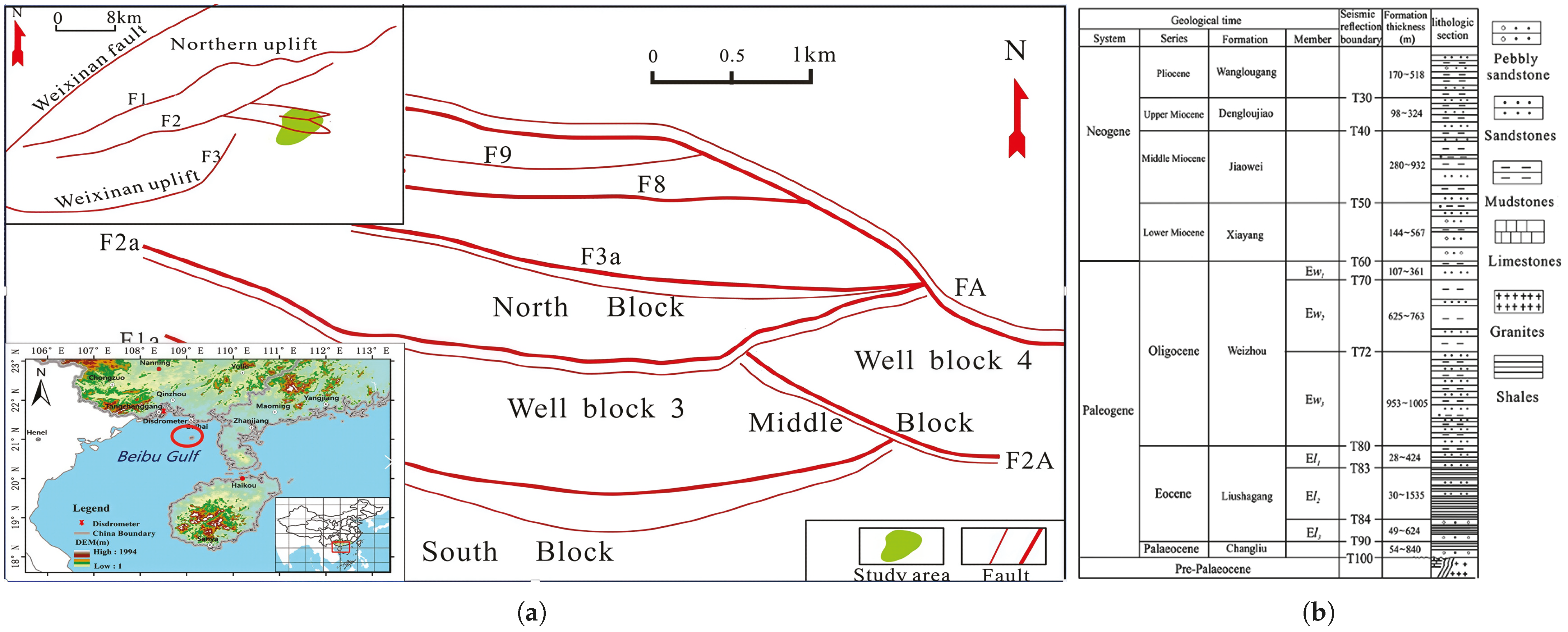
This study focuses on the northern block of the WZ oilfield located within the Beibu Gulf Basin. The oilfield is characterized as a fault-block reservoir, featuring multiple vertically distributed stable shale layers that create several independent upper and lower reservoirs separated by these shale strata. Laterally, the reservoirs are delineated by fault boundaries. The investigation specifically targets the Sand of the Ew2 interval in the northern block to conduct an integrated prediction of the remaining oil reserves (Figure 1b).
Exploration activities commenced in the early 1990s, and the field has been in production for nearly four decades. Water injection development in the northern block began in the early 21st century. At present, the oilfield is in the mid-to-late phase of water injection, with the majority of wells exhibiting high water cut, and some experiencing water flooding or water invasion. To facilitate further deep development of the reservoir, it is essential to delineate the extent of fluid changes, optimize the water injection strategy, and identify the distribution of remaining oil. These efforts are critical for guiding the placement of new development wells and maximizing the oilfield’s recovery potential. However, prolonged water injection has increasingly complicated the reservoir’s internal fluid dynamics, presenting considerable challenges for the exploitation of residual oil.
Conversely, the oilfield benefits from a comprehensive dataset, including seismic surveys, well logging, core samples, and reservoir numerical simulation models. This extensive data repository provides a robust foundation for integrated interpretation utilizing rock physics modeling approaches.
The Beibu Gulf Basin represents the earliest offshore basin developed in China, encompassing an area of approximately 40,000 square kilometers [14]. Structurally, the basin is characterized by three primary depressions and two uplifts, with the three depressions further subdivided into nine Neogene sub-depressions [13]. Among these, the Weixinan Depression, situated within the northern depression, is notable for its prolific hydrocarbon generation and abundant oil and gas reserves [15]. It stands as the most extensively explored depression in the region and contains the greatest number of confirmed oil fields [16]. For more precise locational delineation, the Weixinan Depression is partitioned into three sub-basins, with the WZ oil field located on the slope edge of the southwestern segment of depression sub-basin. The WZ oil field is further subdivided laterally into the North Block, South Block, Well Block 3, and Well Block 4 in accordance with development strategies (Figure 1a).

3. Data and Methods

The oilfield undergoes several distinct phases, including exploration, development implementation, evaluation, iterative refinement, and development modification. Currently, the oilfield is in a stage characterized by integrated management and potential optimization of development. This phase involves the acquisition and handling of extensive and diverse datasets, primarily comprising seismic data and its processed derivatives, core samples, well logging data, as well as numerical simulation models of reservoir development.
In this section, we will elucidate the origins of these datasets and the initial processing methods applied, thereby establishing a foundation for understanding the integrated interpretation and analysis presented subsequently, which employs a rock physics equivalent medium model.
Furthermore, we have developed a rock physics model that incorporates reservoir-specific properties such as pressure and saturation. A comprehensive analysis of existing observational and experimental data from the oilfield has been conducted. This established rock physics model is utilized to interpret seismic data, time-lapse seismic difference signals, and reservoir numerical simulation outputs.

3.1. Seismic Data

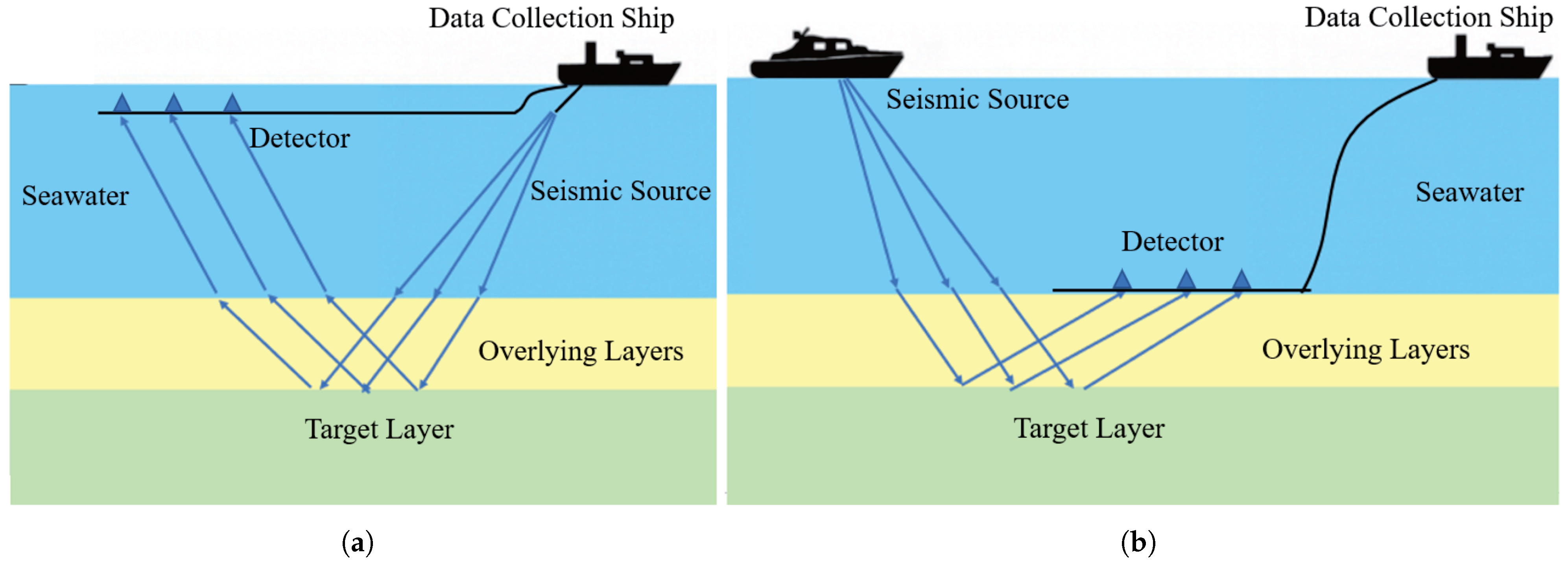
During the initial exploration phase in 2004, seismic data acquisition in the oil field was conducted using the streamer cable (CABLE) method to gather seismic information (Figure 2a). This approach involves deploying hydrophones on the sea surface to detect seismic wave signals. Although the CABLE method is relatively efficient and cost-effective, it is susceptible to environmental factors such as wind, waves, and ocean currents, which can compromise the accuracy of the exploration results. To enhance the reliability of seismic data, the oil field implemented a more advanced Ocean Bottom Cable (OBC) technique during the development adjustment phase in 2021 to re-acquire monitoring seismic data (Figure 2b).

3.2. Time Lapse Seismic Data

As reservoir development progresses, alterations in the rock framework structure are much less significant than those induced by fluid displacement. Consequently, the discrepancies observed between the monitoring seismic data and the baseline seismic response can be primarily attributed to changes in fluid content. Therefore, the analysis and interpretation of these differences between monitoring and baseline seismic data provide an effective means of detecting fluid variations.
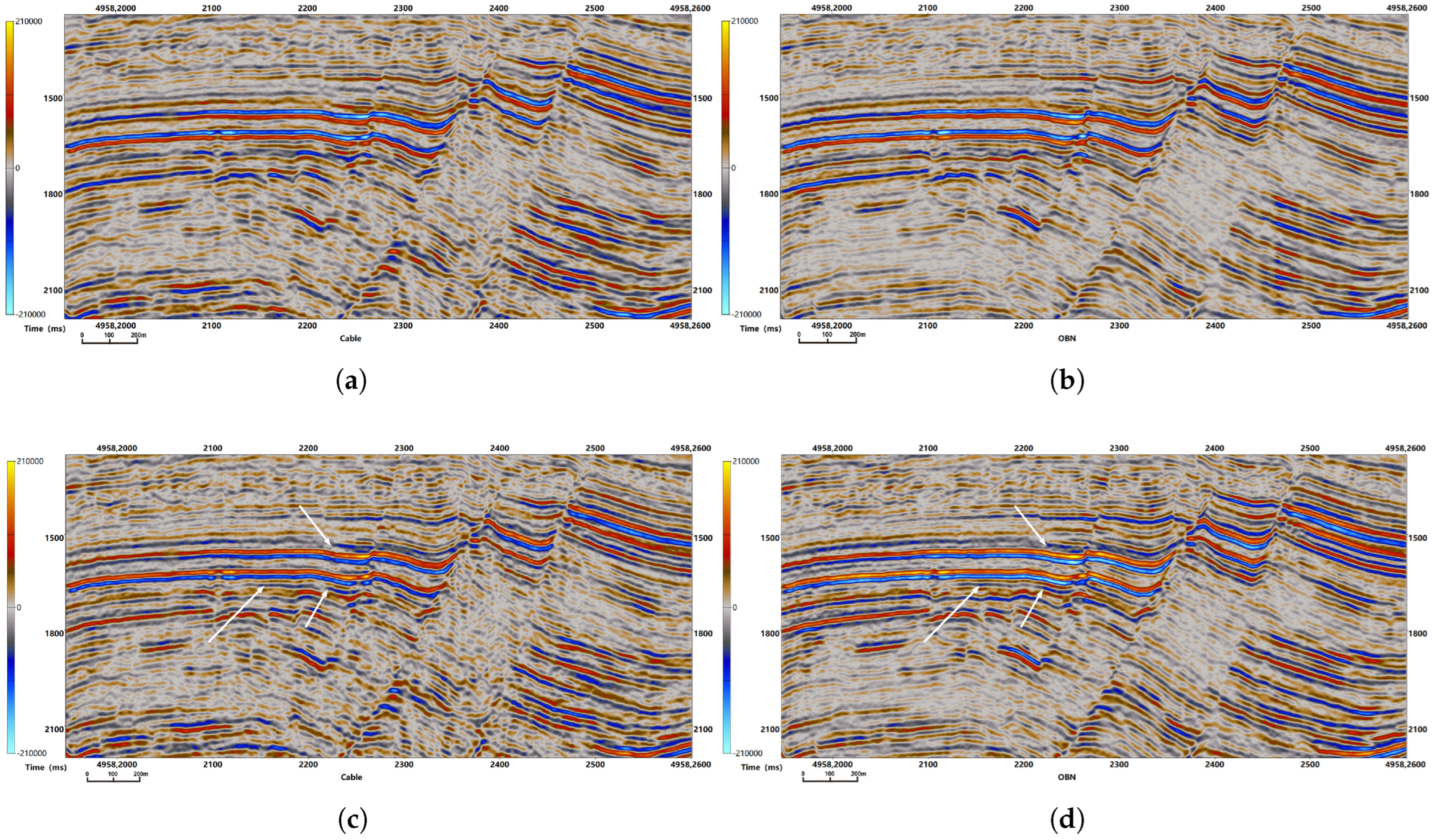
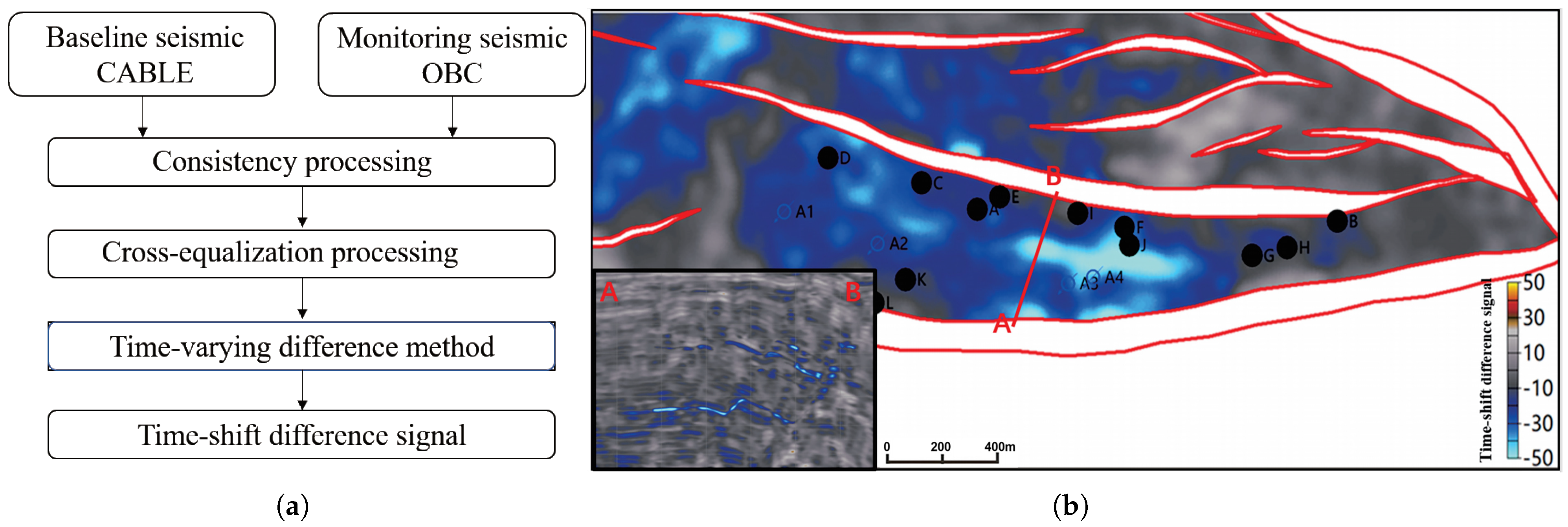
To facilitate the integration of seismic data with reservoir development, non-repeatability consistency processing has been implemented on the CABLE seismic data (Figure 3) [17,18]. Furthermore, time-lapse differences between the two seismic dataset were calculated. The technical process and results of the time-lapse difference signal are shown in Figure 4 [19,20,21,22].

3.3. Sismic Inversion Data

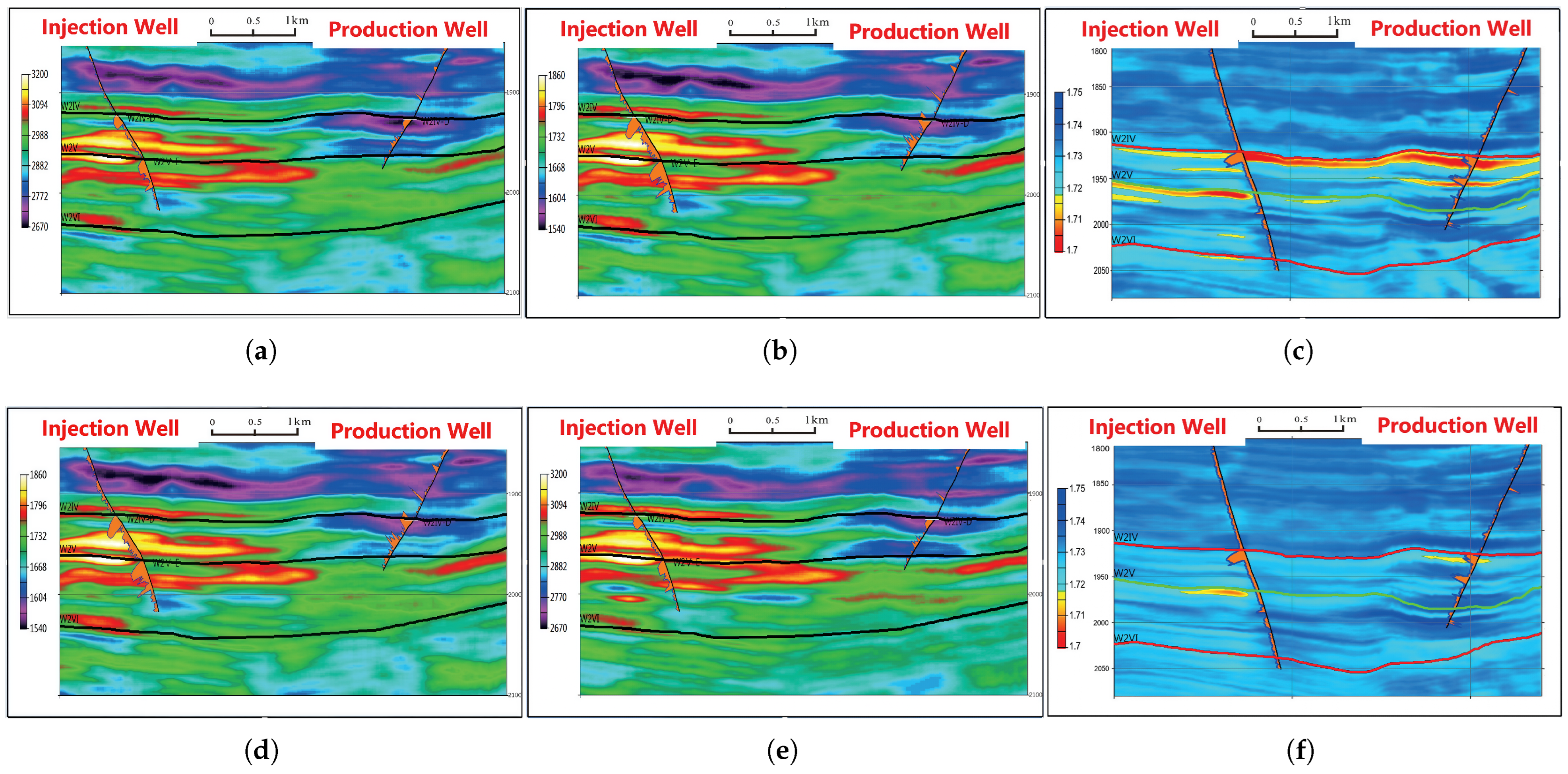
To precisely interpret the seismic data, pre-stack elastic impedance inversion technology was applied to the consistency-processed CABLE and OBC seismic data to obtain P-wave and S-wave velocities [23,24] (Figure 5).

3.4. Low-Frequency Fluid Displacement Measurement Experimental Data

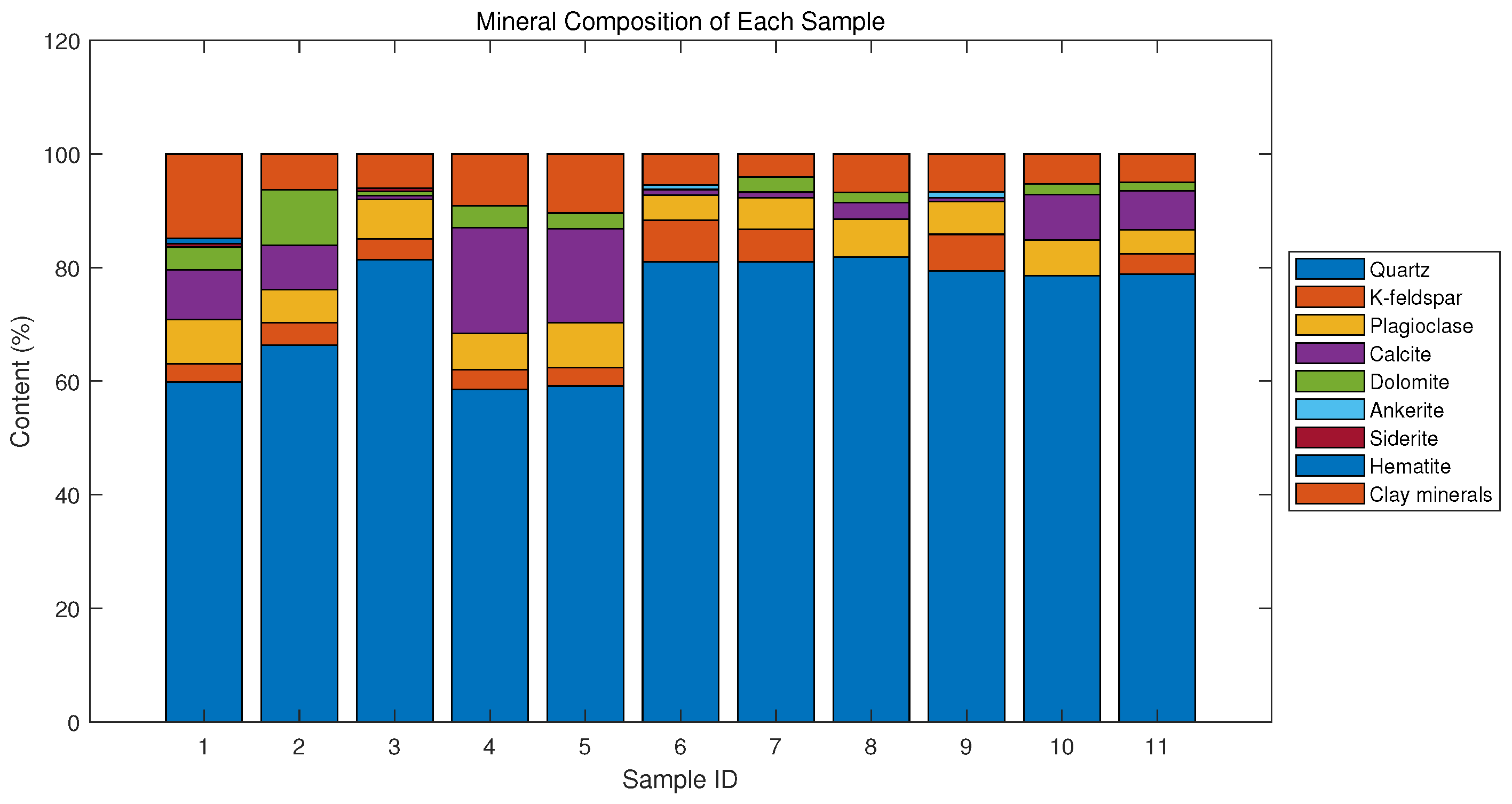
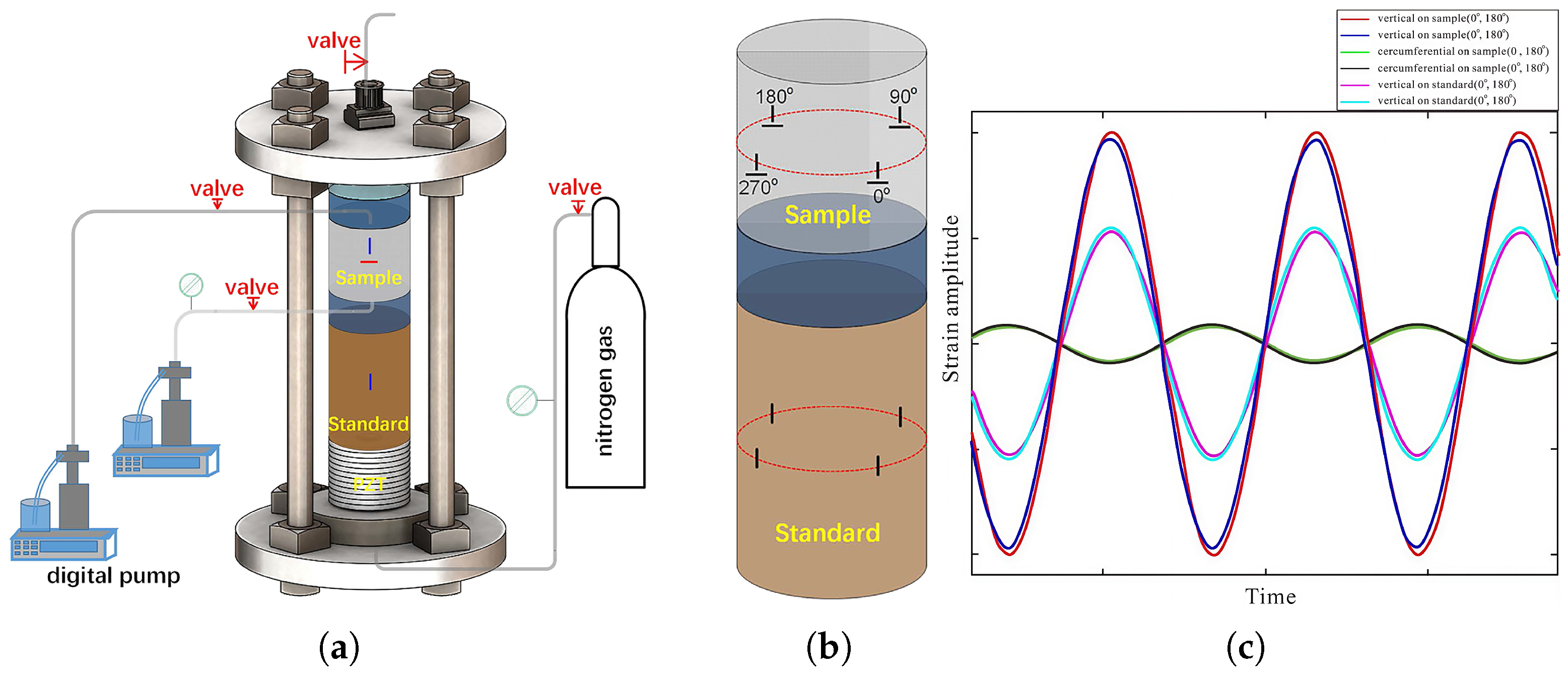
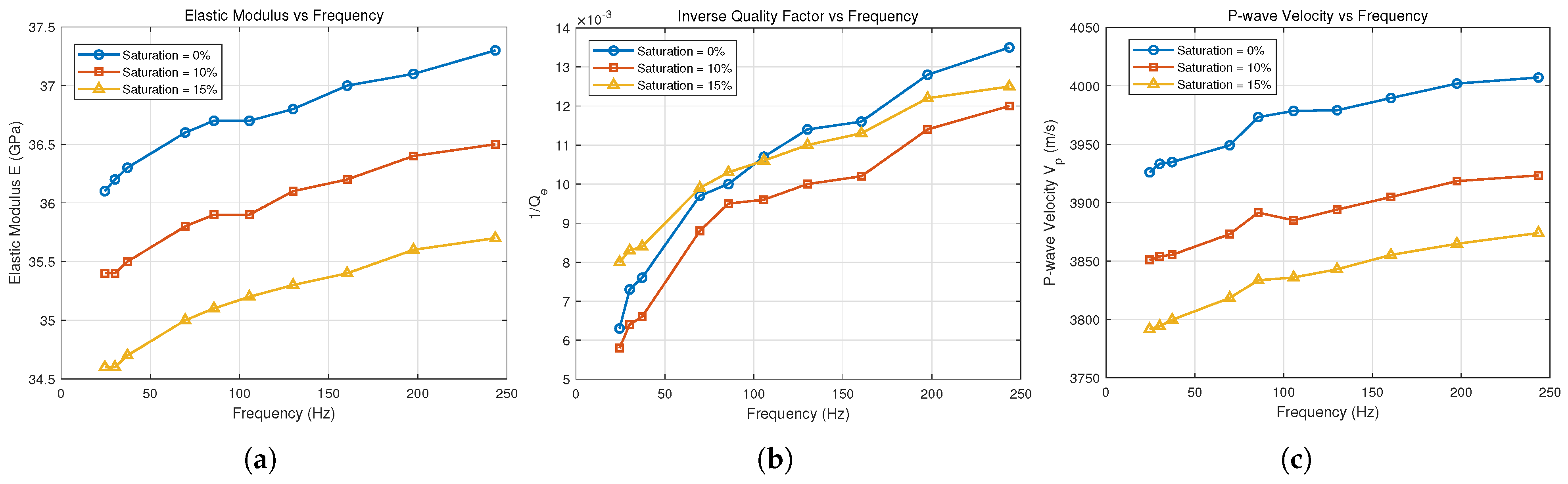
To scientifically characterize the fluid displacement mechanisms associated with reservoir development, X-ray diffraction (XRD) analyses were performed on cored reservoir samples (see Figure 6). Furthermore, low-frequency induced strain experiments were conducted to investigate fluid displacement behavior, as described by Li [25] (Figure 7). These low-frequency experiments yielded velocity measurements of the samples under varying pressure and saturation conditions at frequencies up to 300 Hz (Figure 8).

3.5. Rock Physical Modelling

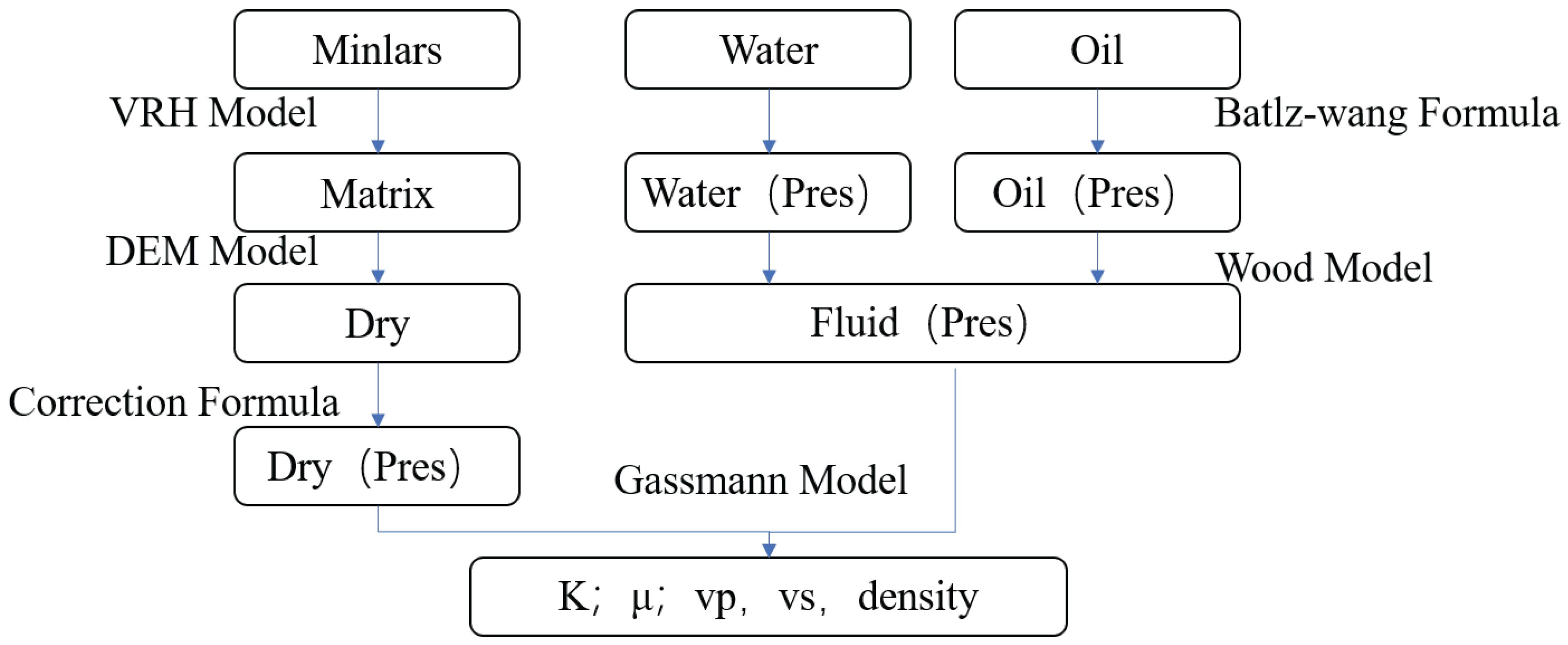
Based on the characteristics of the reservoir, a comprehensive rock physics modeling workflow was established (Figure 9). Specifically, the Voigt-Reuss-Hill model was used to calculate the equivalent bulk and shear moduli of the rock matrix [26,27,28].
M V R H = 1 2 i = 1 N f i M i + i = 1 N f i M i 1
where f i is the volume fraction of the i-th mineral component, and M i is the bulk or shear modulus of that mineral. M V R H represents the matrix bulk modulus K m or the matrix shear modulus μ m . To incorporate the influence of pore structure into the rock matrix model, the differential effective medium (DEM) approach proposed by Berryman was applied [29]. The coupled differential equations for the effective bulk and shear moduli are expressed as follows:
( 1 y ) d d y K * ( y ) = K 2 K * P ( * 2 ) ( y ) ,
( 1 y ) d d y μ * ( y ) = μ 2 μ * Q ( * 2 ) ( y ) ,
K * ( 0 ) = K m , μ * ( 0 ) = μ m
K * ( ϕ ) = K d r y , μ * ( ϕ ) = μ d r y
where K 2 and μ 2 are those of the inclusion phase. K d r y and μ d r y are those of the dry frame. y denotes the volume fraction of the inclusion phase. P and Q are the shape factors, and the superscript 2 indicates the effect of the inclusion phaseon the effective moduli K * and μ * . The dry frame bulk and shear moduli under different pressures were then calculated using an effective pressure equation calibrated with logging-derived effective pressure points and measured dry-frame bulk moduli.
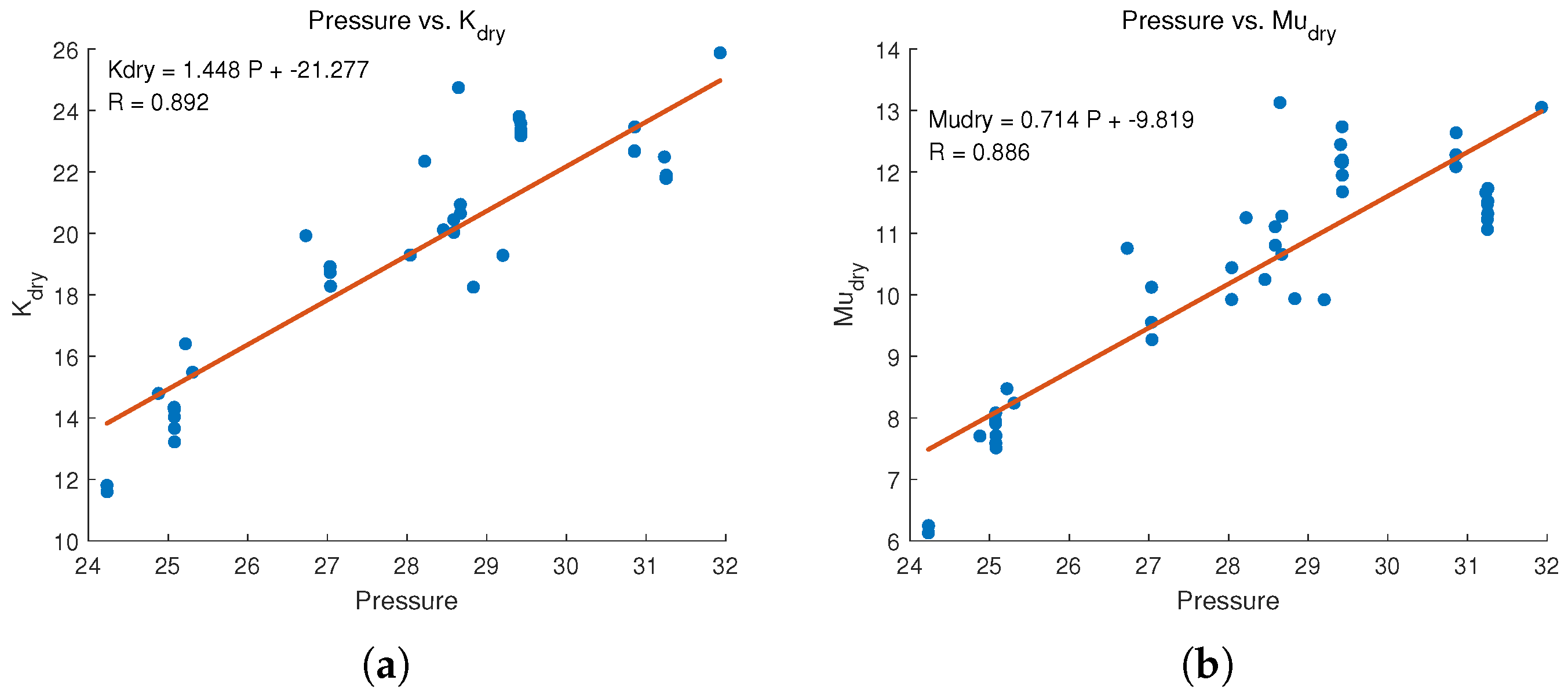
The effective stress measured along the well is cross-plotted with the dry-frame moduli measured along the well, as shown (Figure 10), yielding an empirical formula for the relationship between stress and frame modulus:
K d r y p r e s = K d r y + 1.44846 · Δ P e f f
M u d r y p r e s = M u d r y + 0.714 · Δ P e f f
where K d r y p r e s and M u d r y p r e s are the bulk modulus and the share modulus after stress change, and Δ P eff is the variation in effective stress. On the other hand, the pressure dependence of the fluid was computed using the Baltz–Wang equation, and the saturation effect was determined using the Wood model [3,30]. The adiabatic bulk modulus was evaluated as
K = ρ V p 2 ,
where K is the bulk modulus, ρ is the fluid density, and V p is the compressional-wave velocity. The pore-pressure– and temperature-dependent density of pure water was calculated using their empirical correlation:
ρ w = 1 + 10 6 ( 80 T 3.3 T 2 + 0.00175 T 3 + 489 P 2 T P + 0.016 T 2 P 1.3 × 10 5 T 3 P 0.333 P 2 0.002 T P 2 ) .
where ρ w is the water density, T is the temperature, and P is the pore pressure. The compressional-wave velocity of pure water was computed from their polynomial expansion:
V p , w = i = 0 4 j = 0 3 w i j T i P j ,
where V p , w is the water compressional velocity and w i j are fitting coefficients. Oil bulk modulus was evaluated in the same way using their pressure-dependent density and API-based velocity relations. The fluid saturations satisfy
S w = 1 S o ,
where S w and S o are the brine and oil saturations, respectively. The effective density of the mixed fluid is given by
ρ eff = S w ρ w + S o ρ o .
The effective bulk modulus of the mixed fluid can be approximated using the Wood model. The Wood model, representing homogeneous saturation, is
K fl = S w K w + S o K o 1 ,
Finally, the classical Gassmann equation was applied to introduce fluid effects into the dry rock frame model [31].
K s a t = K d r y p r e s + 1 K d r y p r e s K m 2 ϕ K f l + 1 ϕ K m K d r y p r e s K m 2 ,
M u s a t = M u d r y p r e s ,
where K s a t and M u s a t are the equivalent bulk modulus and share modulus of the rock.

3.6. Cross-Frequency Rock Physics Calibration Method

In this study, the rock-physics model serves as the foundational element of the integrated interpretation framework, acting as the essential interpretative nexus. Accordingly, the accuracy of this model is directly linked to the reliability of the interpretative results. To further assess its robustness, the rock-physics model was validated through cross-bandwidth laboratory measurements in conjunction with well-log sample data. To incorporate frequency-dependent effects, the Gassmann model employed in the initial workflow is supplanted by the Pride model in this section.
Pride’s theoretical approach extends Biot’s dynamic poroelasticity theory to account for heterogeneous or multiphase fluid saturations, providing complex, frequency-dependent undrained, coupling, and fluid moduli [32]. These moduli converge exactly to the Gassmann limit as the frequency approaches zero, thereby preserving theoretical consistency while enabling the model to accurately simulate high-frequency acoustic responses [33].
The substitution is achieved by replacing the Gassmann moduli ( K U , C , M ) with their frequency-dependent counterparts K U ( ω ) , C ( ω ) , and M ( ω ) . The shear modulus of the solid frame is assumed frequency-independent. The frequency-dependent undrained bulk modulus is
K U ( ω ) = K D 1 ( ω ) + B ( ω ) a 12 a 13 a 23 + γ ( ω ) / i ω a 33 γ ( ω ) / i ω 1 .
The coupling modulus is
C ( ω ) = B ( ω ) K U ( ω ) ,
and the fluid-related modulus is
M ( ω ) = B ( ω ) K U ( ω ) α .
The parameters a i j , B ( ω ) , and γ ( ω ) describe the dynamic interaction between the pore fluid and the solid frame [32]. In the low-frequency limit, these expressions satisfy
K U ( 0 ) = K Gassmann , M ( 0 ) = M Gassmann ,
ensuring full consistency with the classical Gassmann formulation. The fast and slow compressional slownesses are obtained from
s 2 = b b 2 ρ ρ ˜ ρ f 2 M ( ω ) H ( ω ) C ( ω ) 2 ,
where
b = ρ M ( ω ) + ρ ˜ H ( ω ) 2 ρ f C ( ω ) 2 M ( ω ) H ( ω ) C ( ω ) 2 .
The P-wave velocity and attenuation are finally evaluated as
v p = 1 / R e { s }
Q p 1 = I m { s 2 } / R e { s 2 }
where R e and I m denote the real and imaginary parts of a complex quantity, respectively.

3.7. Reservoir Numerical Simulation Model Optimization Based on Rock Physics Modeling

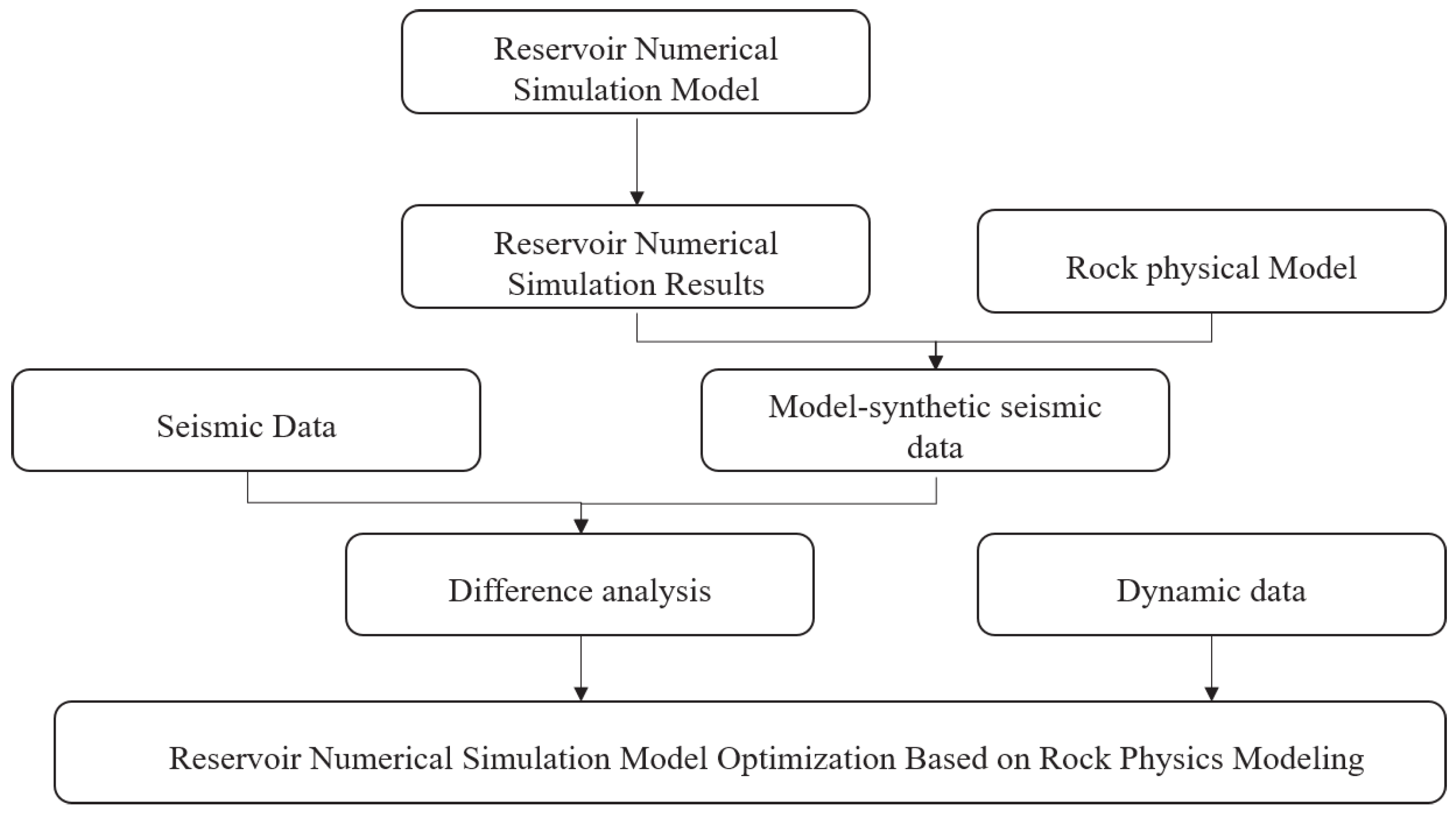
The reservoir model optimization process based on the rock physics model is shown in Figure 11. First, velocity and density are calculated using the rock physics model, and seismic data are synthesized accordingly. Then, the synthetic seismic data are compared and analyzed against the observed seismic data to determine their differences. The porosity is fitted with the difference results to determine the model correction amount, which is then used to update the porosity model parameters. This process is repeated until the features of the synthetic data corresponding to the model parameters are basically consistent with those of the observed data, marking the completion of the model optimization.

4. Results

Drawing upon the previously outlined data and methodologies, this chapter systematically delineates the practical outcomes of applying the integrated rock physics model within the context of time-lapse seismic interpretation. Initially, the validity of the developed rock physics model is established through cross-frequency calibration, employing both low-frequency experimental data and well-log measurements. Following this validation, the calibrated model is utilized to simulate time-lapse difference responses, facilitating an analysis of the seismic signal sensitivity to changes in saturation and pressure. Additionally, by leveraging a fluid-sensitivity factor template, the interpretation of fluid distribution derived from seismic inversion is accomplished. Lastly, the chapter presents an optimized reservoir numerical simulation model, enhanced through rock physics constraints, which offers a comprehensive multi-dimensional framework for predicting residual oil.

4.1. Calibration and Validation of the Rock Physics Model

The model was calibrated using existing experimental results of elastic measurements under different saturation pore pressures at low frequency (30 Hz). The XRD lithology interpretation results of the core samples are shown in Table 1, and the porosity and permeability results along with basic information are presented in Table 2.
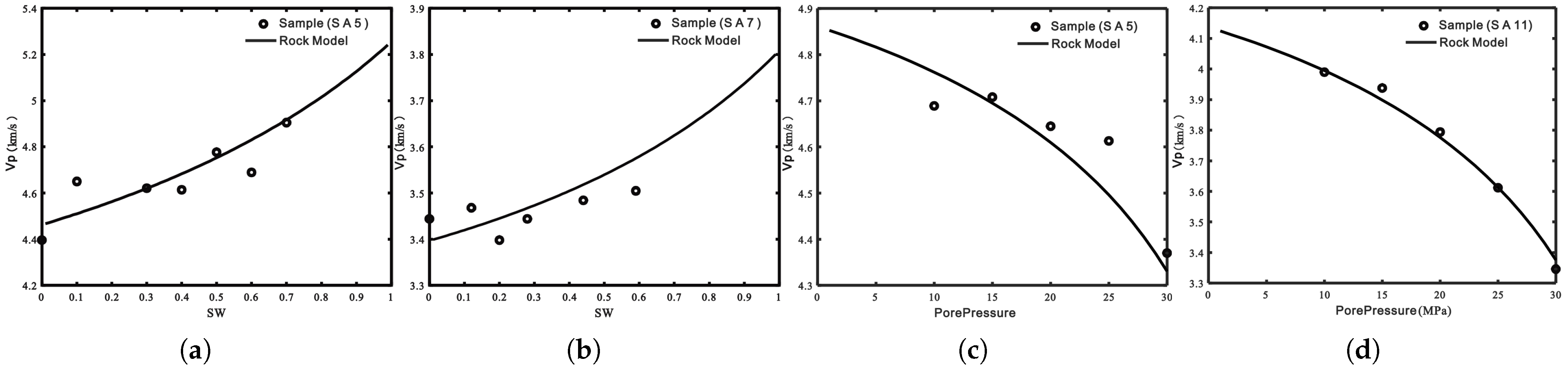
The parameter dataset of the core samples (Table 3) was incorporated into the rock-physics modeling workflow (Figure 9) and compared with, as well as calibrated against, the actual low-frequency experimental fluid-substitution measurements (Figure 12). The results demonstrate that the proposed modeling workflow agrees well with the measurements from low-frequency laboratory experiments.
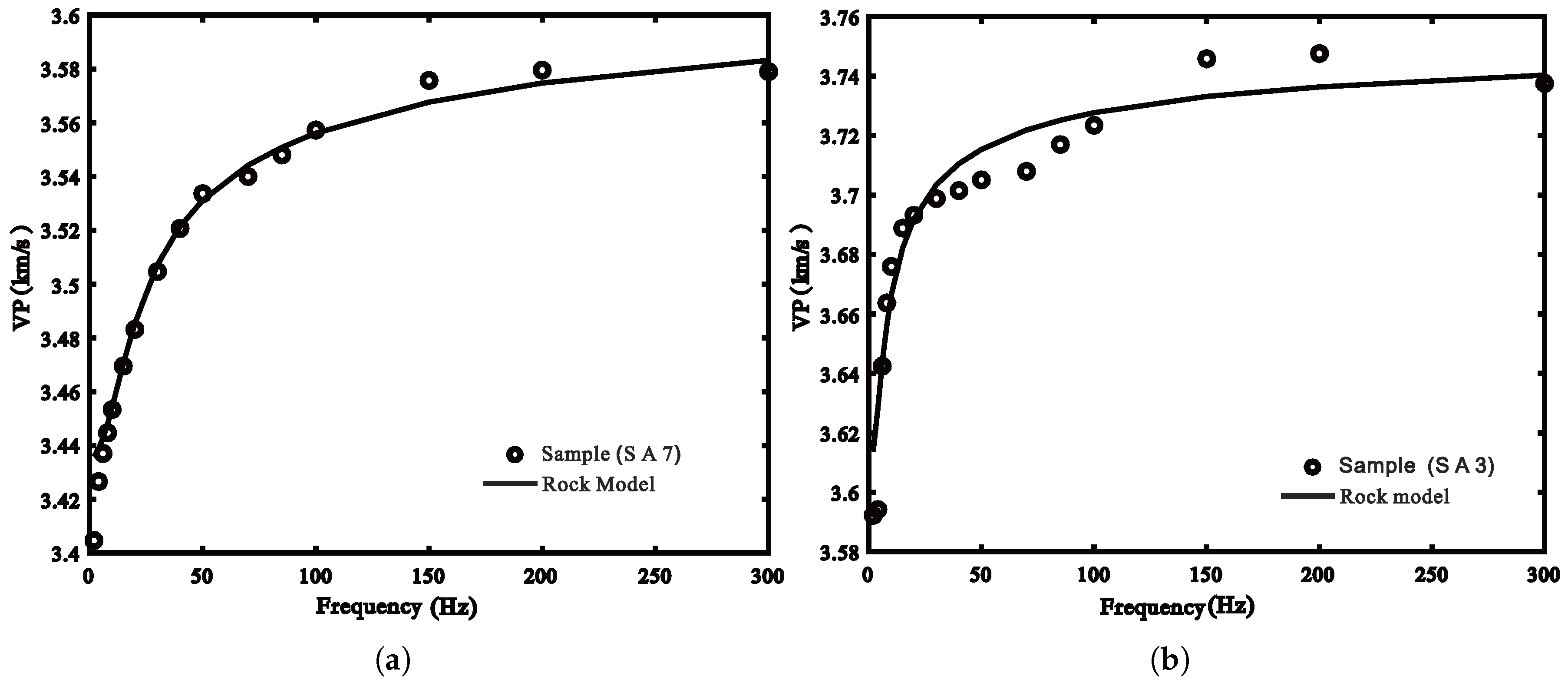
On the other hand, the core measurements at different frequencies were calibrated using the Pride model. The results are shown in Figure 13, where the circles represent the measured data and the black curve denotes the predictions of the Pride frequency-dependent model. The results indicate that within the 300 Hz frequency range, the model agrees well with the laboratory measurements, demonstrating good reliability.
Furthermore, the frequency range was extended to the logging band. Based on the low-frequency rock-physics model parameters (Table 3), additional parameters were incorporated to obtain a complete set of input parameters for the logging-scale calibrated model (the Pride-extended model). The supplemented parameters are shown in Table 4.
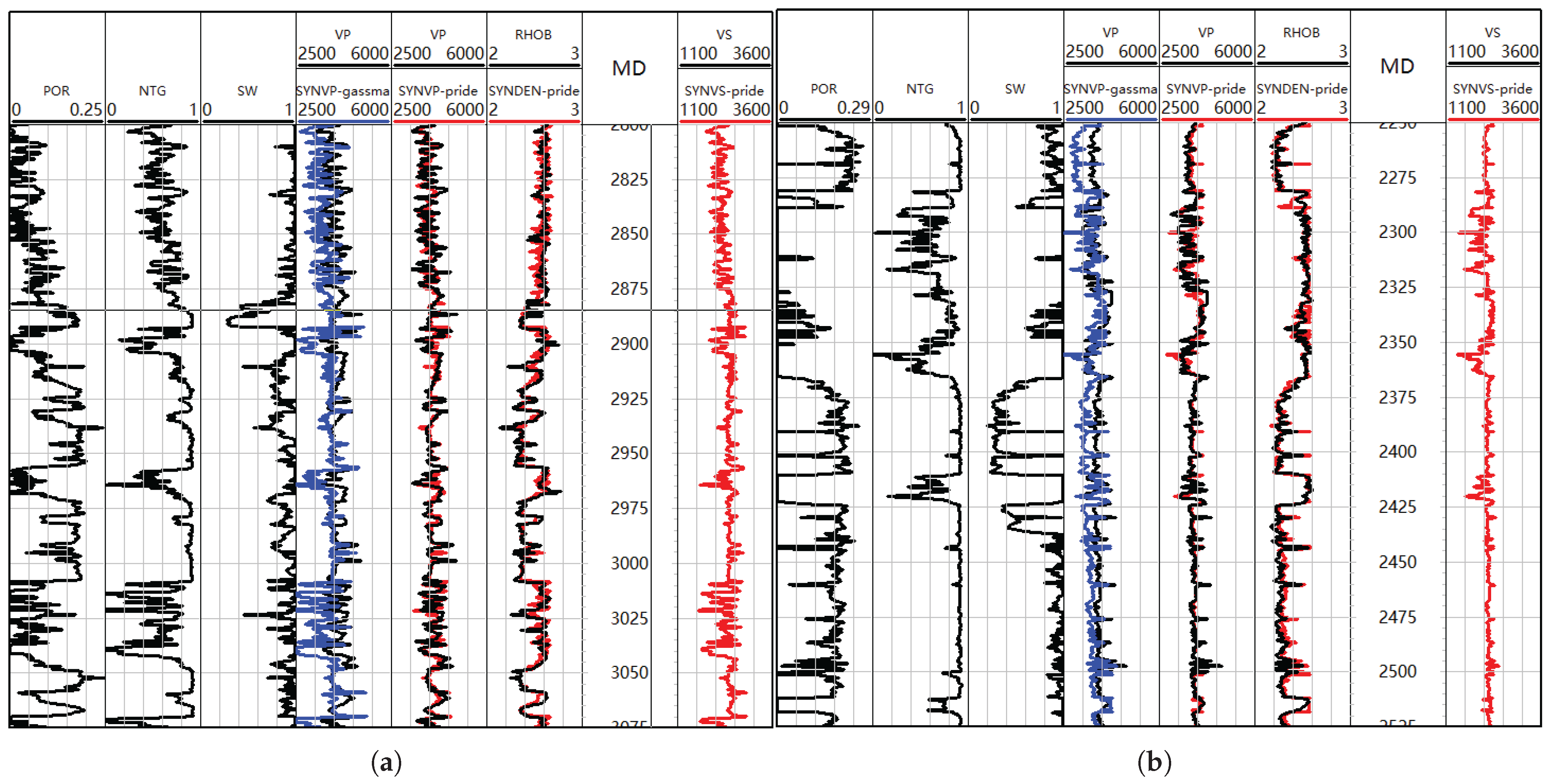
The final results are shown in Figure 14, where the red curve represents the high-frequency model predictions (the Pride-extended results of the dual-frame model), the blue curve shows the low-frequency model predictions, and the black curve denotes the velocities converted from acoustic slowness. It is evident that the velocities predicted by the dual-frame low-frequency model are significantly lower than those of the high-frequency model and the actual measurements; however, this does not imply that the low-frequency dual-frame model is incorrect. Rather, it reflects the distinct elastic responses of fluids at high and low frequencies. The low-frequency dual-frame model is more suitable for characterizing fluid elasticity at seismic frequencies, whereas the modeling approach incorporating the Pride model is more appropriate for ultrasonic experimental and logging frequencies. Using the same set of frame–fluid input parameters, the predictions are consistent with the Gassmann model at low frequencies and with the Pride model at high frequencies. Moreover, the Pride-coupled model aligns well with sample points across different frequencies, further demonstrating that the fluid and frame parameters adopted in this section are reasonable and that the model is capable of effectively capturing reservoir fluid-property variations over a broad frequency range.
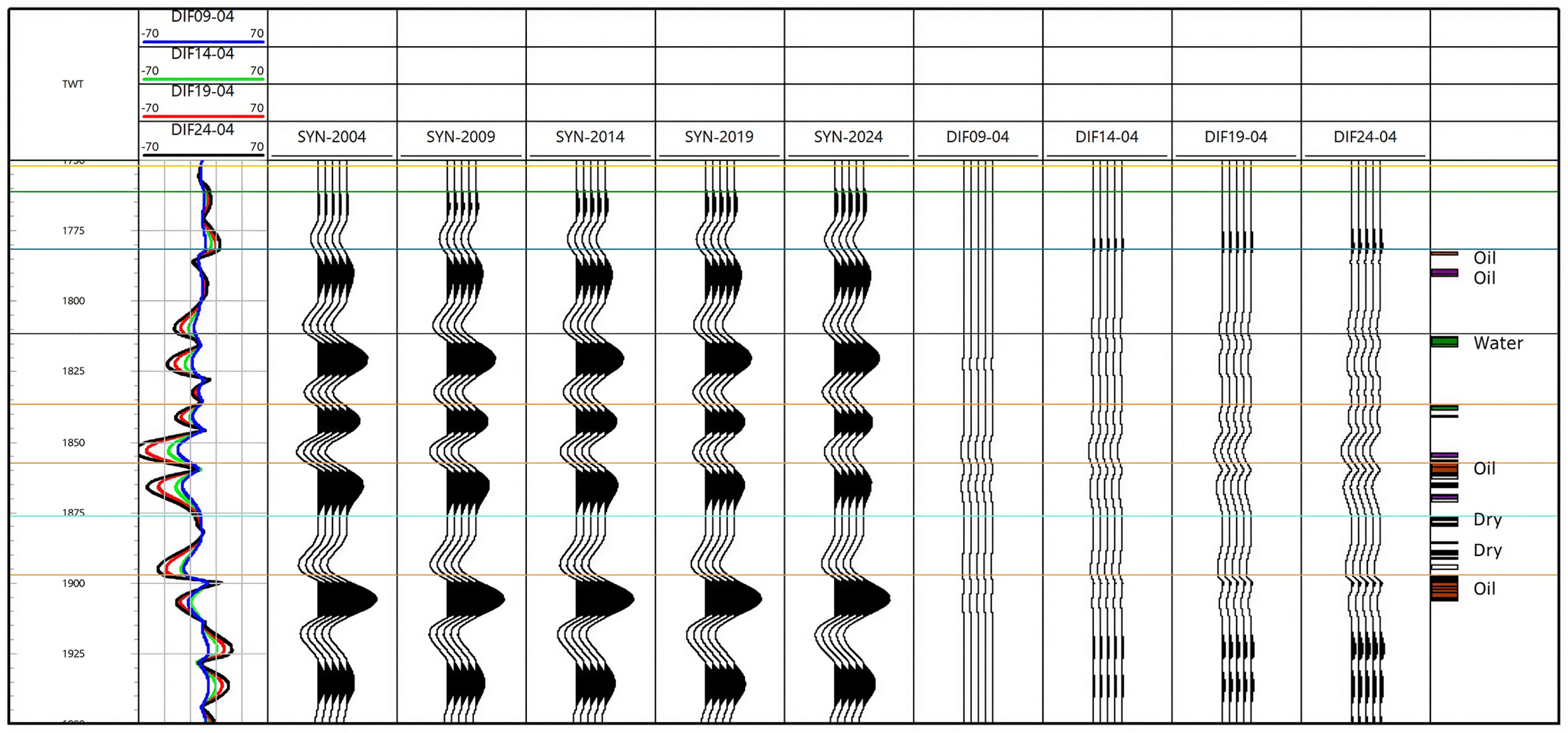
Based on well data, we corrected the saturation and pressure curves at the well using production data, calculated logging velocities and densities at different time points, and further performed forward modeling to simulate seismic responses at various times. This approach allows for a deeper understanding of the time-lapse seismic response characteristics. The time-lapse difference is defined as the response at the current time point minus the initial seismic response, with results shown in Figure 15. It can be seen that the differences along the reservoir interface are predominantly negative.

4.2. Time-Lapse Difference Analysis Based on Rock Physics Modeling

The fundamental reservoir parameters are summarized in Table 5. Adjustments to the pressure and saturation of the intermediate layer were further implemented to simulate fluid displacement, with the resulting parameters incorporated into the low-frequency rock-physics model. Utilizing the derived velocities and densities, reflection coefficients were computed for forward modeling, enabling the characterization of response patterns during fluid variation processes.
Following the completion of model validation and the calibration of fluid and frame parameters, forward modeling based on fluid substitution theory was performed utilizing the reservoir’s physical properties. This approach facilitated the derivation of seismic responses corresponding to various fluid states, as well as their differential responses relative to the initial condition. A Ricker wavelet with a dominant frequency of 33 Hz, consistent with the seismic data, was employed for the seismic forward modeling.
Subsequently, the pressure and saturation parameters of the intermediate layer within the model were modified to simulate the fluid displacement process, thereby capturing the response characteristics associated with fluid variations.
To investigate the effects of saturation and pressure variations on seismic response while maintaining other formation parameters constant, the saturation and pressure coefficients presented in Table 5 were independently modified.
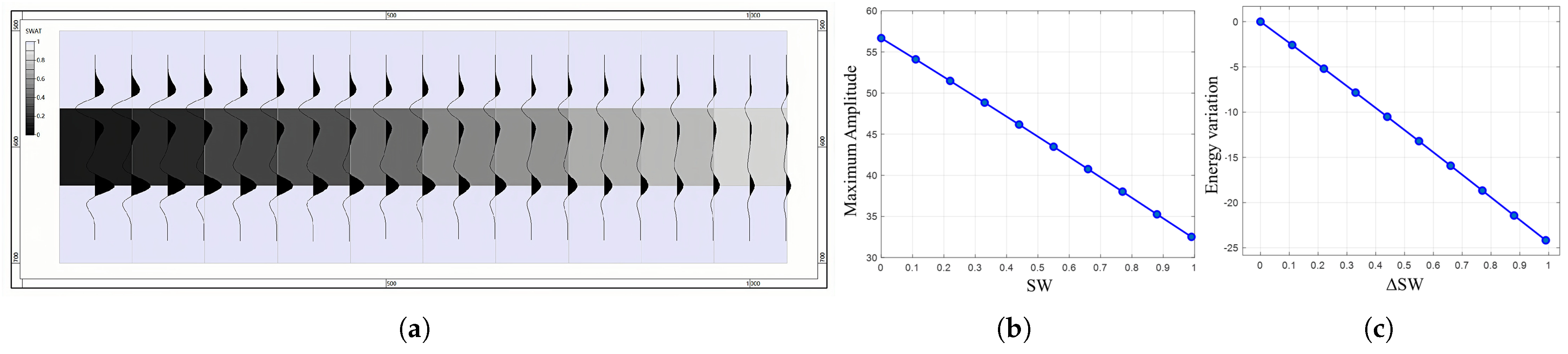
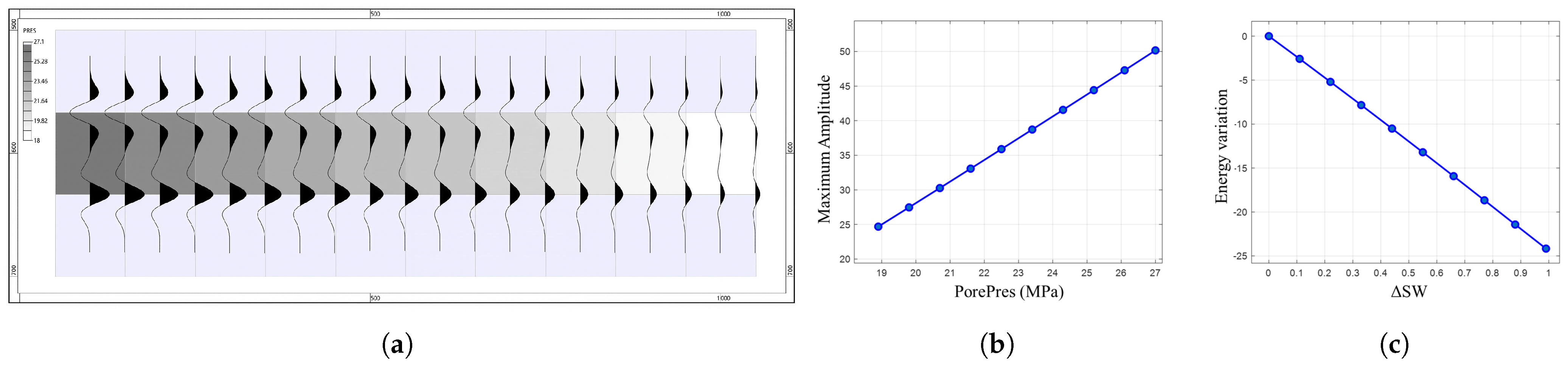
The forward modeling outcomes for the theoretical model, wherein saturation was the sole variable, are illustrated in Figure 16a. These results reveal that during the fluid displacement process, an increase in water flooding and consequent rise in water saturation correspond to a reduction in amplitude energy. Further analysis involving the extraction of the maximum amplitude along the reservoir interface is depicted in Figure 16b. The findings indicate that amplitude energy diminishes as saturation decreases; notably, when oil is entirely replaced by water, the maximum amplitude change reaches −24.5. In practical reservoir development scenarios, with an average saturation reduction of 70%, the associated production-related amplitude change is approximately −18.5, as shown in Figure 16c.
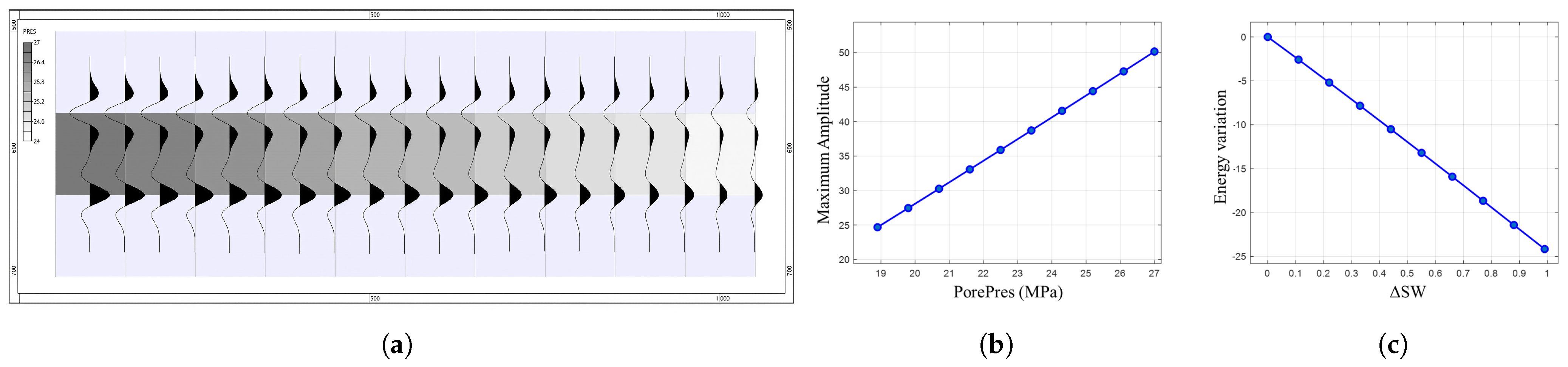
On the other hand, by maintaining a constant saturation level, the pressure coefficient was varied from 1 to 0.1 in order to investigate the seismic response characteristics associated with different formation pressures. The findings are presented in Figure 17a. As the pressure decreases, the seismic response at the interface diminishes correspondingly. Additionally, the maximum amplitude energy attribute was extracted along the reservoir interface, with the results depicted in Figure 17b. These results demonstrate a decline in amplitude energy as the pressure decreases. In scenarios where there is no energy replenishment within the reservoir, the maximum observed change is −25.3; under typical development conditions, an average reduction in the pressure coefficient by 0.1 corresponds to a change of −6.5, as illustrated in Figure 17c.
In the context of water injection development in oil reservoirs, reductions in both oil saturation and reservoir pressure contribute to a diminution of amplitude energy at the formation interface. Moreover, the interactive effects of pressure and saturation during actual reservoir production can be examined in conjunction with production dynamics. Consider the initial conditions where oil saturation is 70% and the pore pressure coefficient is 1.0; following production, oil saturation declines to 10%, and the pore pressure coefficient decreases to 0.9. Assuming a uniform displacement process characterized by linear decreases in both pressure and saturation, the simulated response features are illustrated in Figure 18a.
By extracting the maximum amplitude energy along the reservoir interface, the results presented in Figure 18b are obtained. The amplitude energy exhibits a decreasing trend corresponding to reductions in saturation and pressure. Specifically, the variations in production-related oil saturation and pressure are associated with an energy change of −24.9, as depicted in Figure 18c.
The theoretical framework suggests that reductions in both pressure and oil saturation are associated with a decrease in seismic amplitude energy. In practical applications, when both variables are incorporated into the theoretical model, oil saturation contributes approximately 74% to the observed effect, whereas pressure accounts for about 26%. This indicates that the impact of saturation is more pronounced than that of pressure. Nonetheless, it remains infeasible to inversely determine the relative contributions of these two factors solely from the observed variations in energy response. Consequently, additional investigations integrating fluid displacement experiments are required to elucidate the characteristics of this response.

4.3. Inversion Analysis Based on Rock Physics Modeling

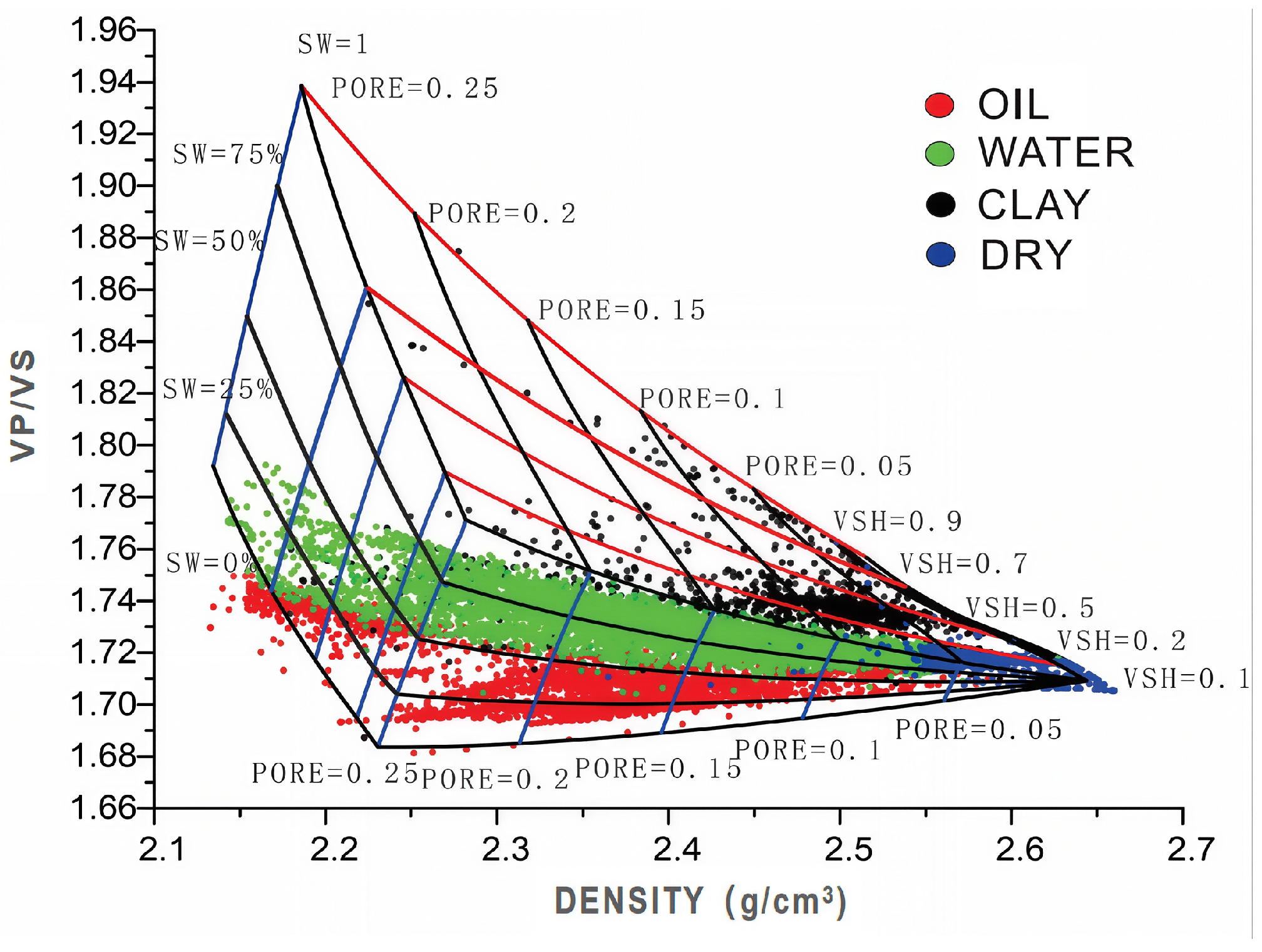
Based on the rock physics model calibrated in the previous section, a Fluid-sensitivity interpretation template was constructed. Sample points from well logging data were mapped onto this crossplot to analyze its reliability. The results are shown in Figure 19). From the figure, it can be observed that: shale layers are characterized by a high P-wave to S-wave velocity ratio (Vp/Vs) and high density; dry layers exhibit a low velocity ratio and high density; water-bearing layers have a wider distribution range; and oil-bearing layers show a distinctly low velocity ratio. The crossplot, using density and velocity ratio, effectively identifies reservoir types. Furthermore, the fluid sensitivity factor crossplot can assist in the analysis and interpretation of seismic inversion results.
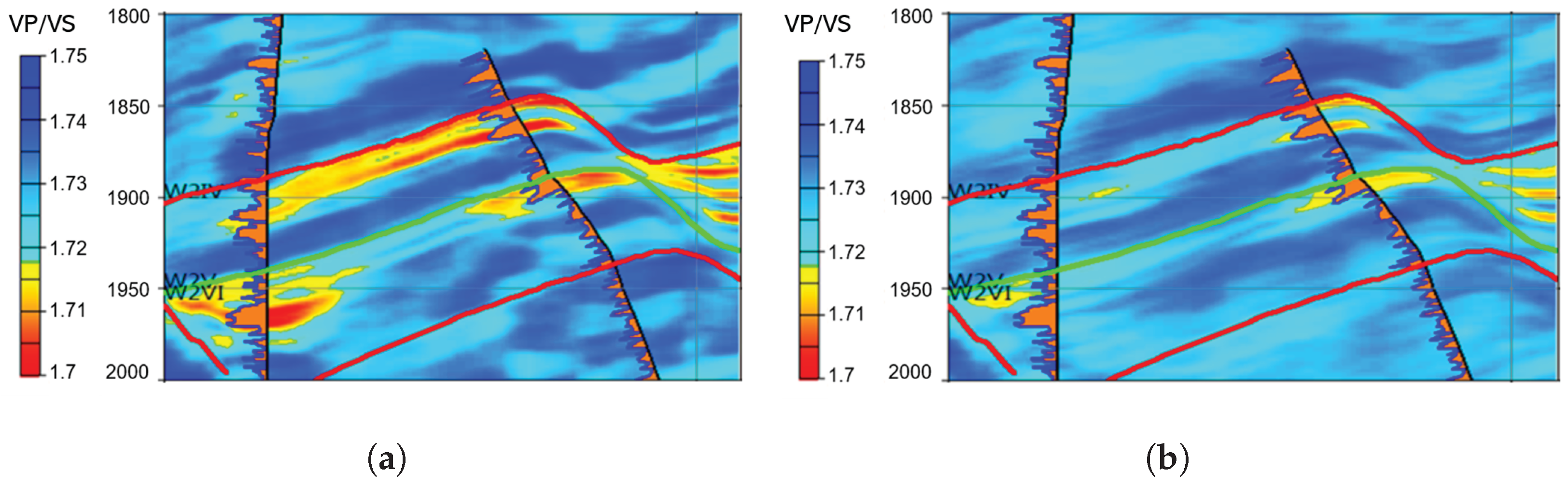
Figure 20 presents the outcomes of converting Vp/Vs ratios derived from two phases of seismic inversion. According to the sensitivity factor interpretation template, values below 1.718 correspond to oil-bearing strata, which are highlighted in red and orange. In the initial phase of reservoir development, a greater number of oil-bearing layers were identified in both wells. At the current stage of development, the lower sections of the reservoir have undergone water flooding, while residual oil persists in the upper sections. Integrating these findings with production data reveals that Well A has been depleted, whereas Well B continues to produce. This observation aligns with the fluid factor distribution obtained from the two-phase seismic inversion, thereby confirming the reliability of the inversion results.
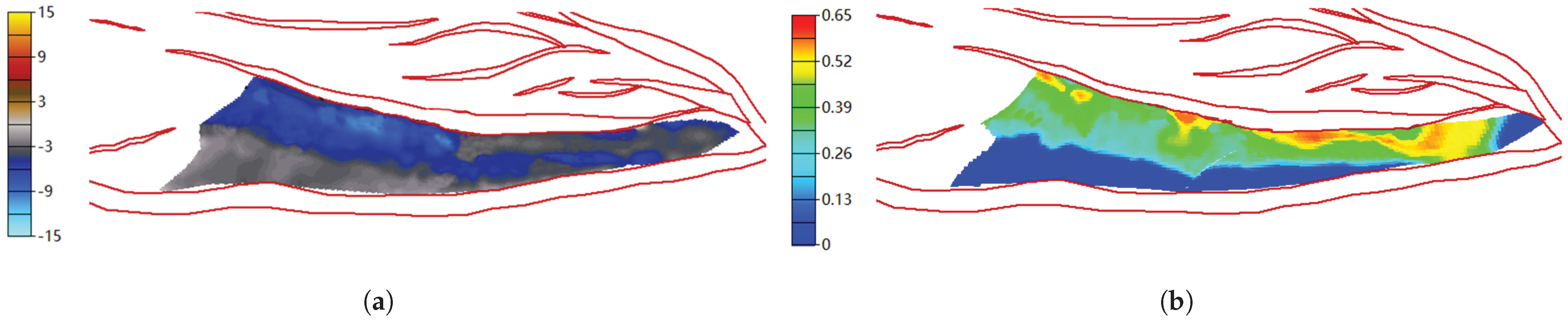
Moreover, for oil-bearing layers exhibiting three-dimensional fluid sensitivity factors below 1.718, the cumulative thickness of the reservoir was determined along the stratigraphic horizons. The findings are presented in Figure 21a,b. The water drive front within the injection-production unit advances toward the right, resulting in a corresponding contraction of the oil phase distribution in that direction, with residual oil predominantly concentrated in the lower right region. Furthermore, by computing the variation in oil layer thickness between the two inversion stages, the outcomes are illustrated in Figure 21c. Notably, the blue fluid displacement zone aligns with the time shift difference results depicted in Figure 4.

4.4. Reservoir Numerical Simulation Model Optimization Results

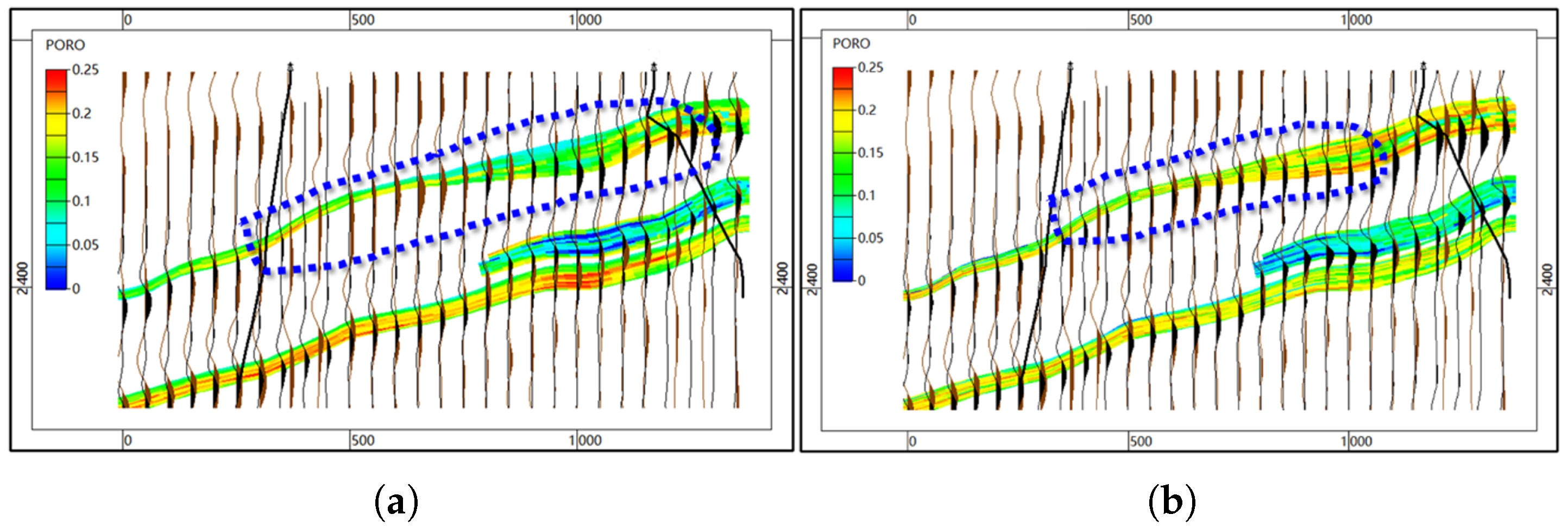
In accordance with the model optimization procedure, numerical simulation outcomes of the reservoir within the specified area—generated through production dynamics—were subjected to forward modeling and subsequently compared with the baseline seismic data. The results are presented in Figure 22a. Notably, localized discrepancies were observed between the simulated data and the seismic observations. Specifically, within the region delineated by the blue box, the synthetic seismic amplitude energy is lower than that of the actual seismic amplitude energy, indicating that these differences stem from inaccuracies in the porosity model. To address and mitigate the porosity-related errors, the structural model employed in the reservoir numerical simulation was refined following the aforementioned methodology.
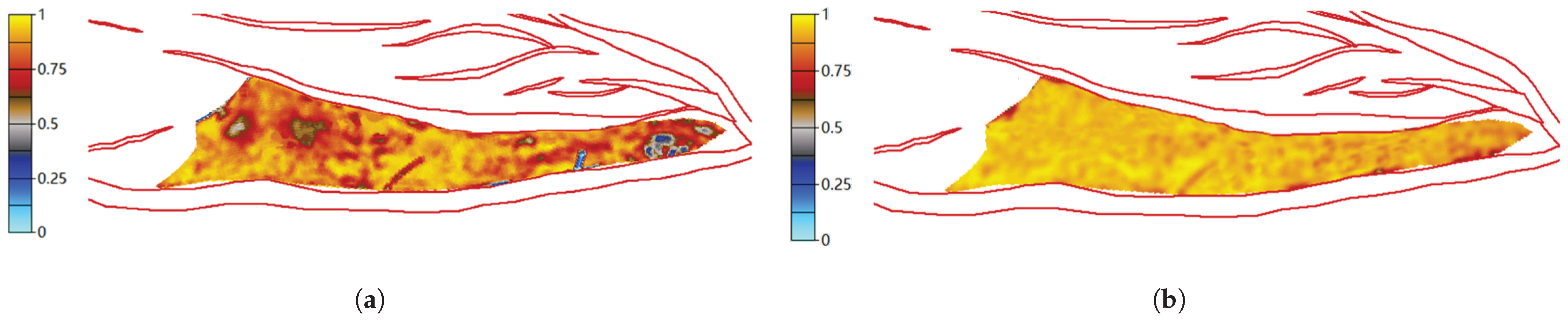
The optimized results are presented in Figure 22b, demonstrating a clear correspondence between the synthetic and real seismic data within the original blue box on the profile. In this figure, modifications have been made to the reservoir model within the blue box, while the lower reservoir remains unchanged. Following the model refinement, the average correlation coefficient between the synthetic seismic data derived from the reservoir model and the measured seismic data increased to 0.96 (Figure 23). These findings indicate that the optimization procedure outlined in Figure 11 substantially improves the accuracy of the reservoir model.
A comparative analysis of the time-lapse differences observed in the two-phase synthetic seismic data (Figure 24a) and the time-lapse seismic differences (Figure 4) reveals a strong correlation in their respective distributions. The residual discrepancies are likely attributable to inherent limitations within the time-lapse seismic difference data, including artifacts arising from consistency processing and noise attenuation, as well as factors related to the accuracy of the reservoir model’s dynamic simulation and the spatial resolution of the grid model.
Subsequent to the enhancement of the reservoir model informed by the time-lapse seismic differences, the reservoir model-based estimation of remaining oil demonstrates a marked improvement compared to the estimation prior to optimization.

5. Discussion

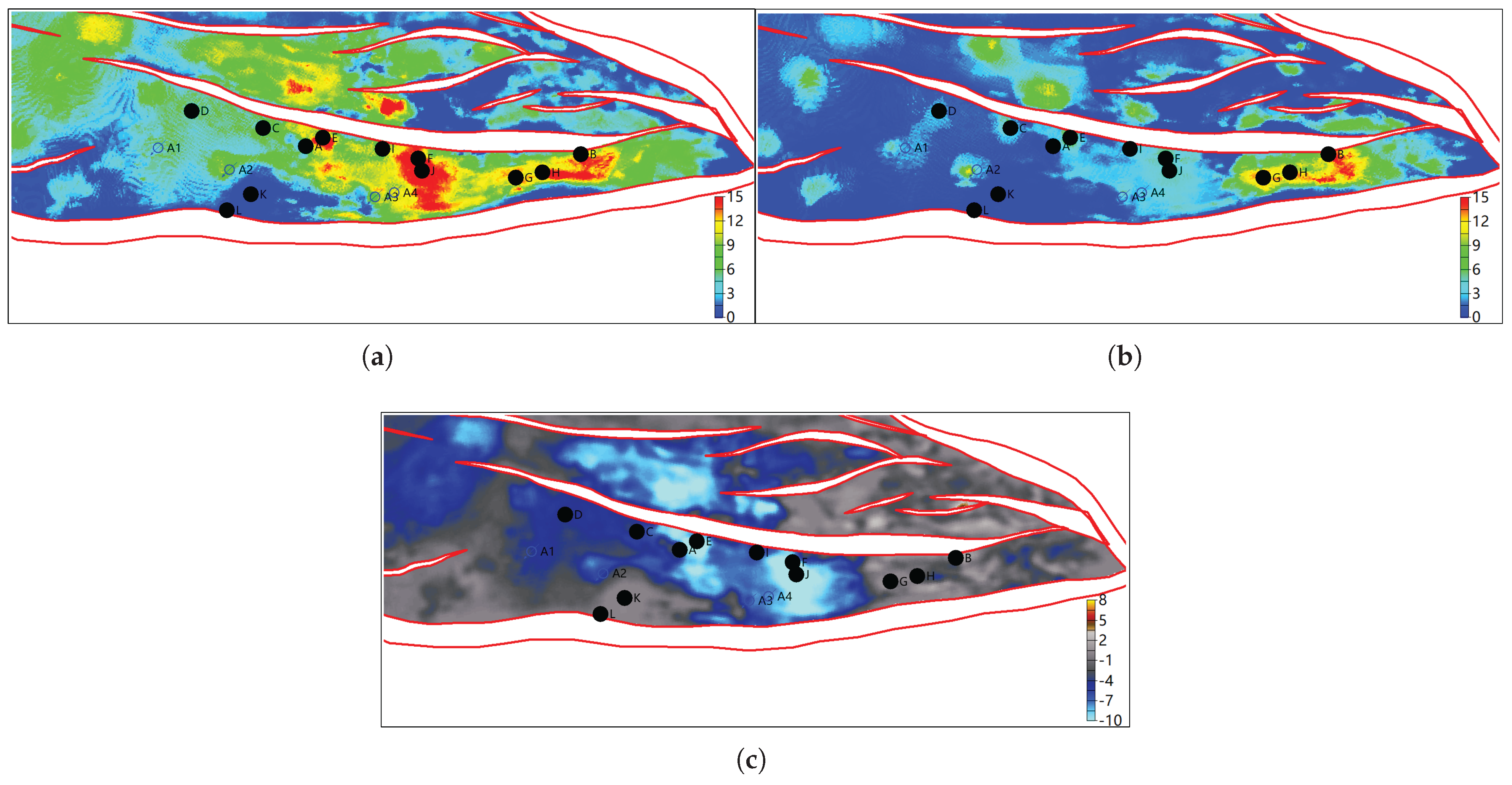
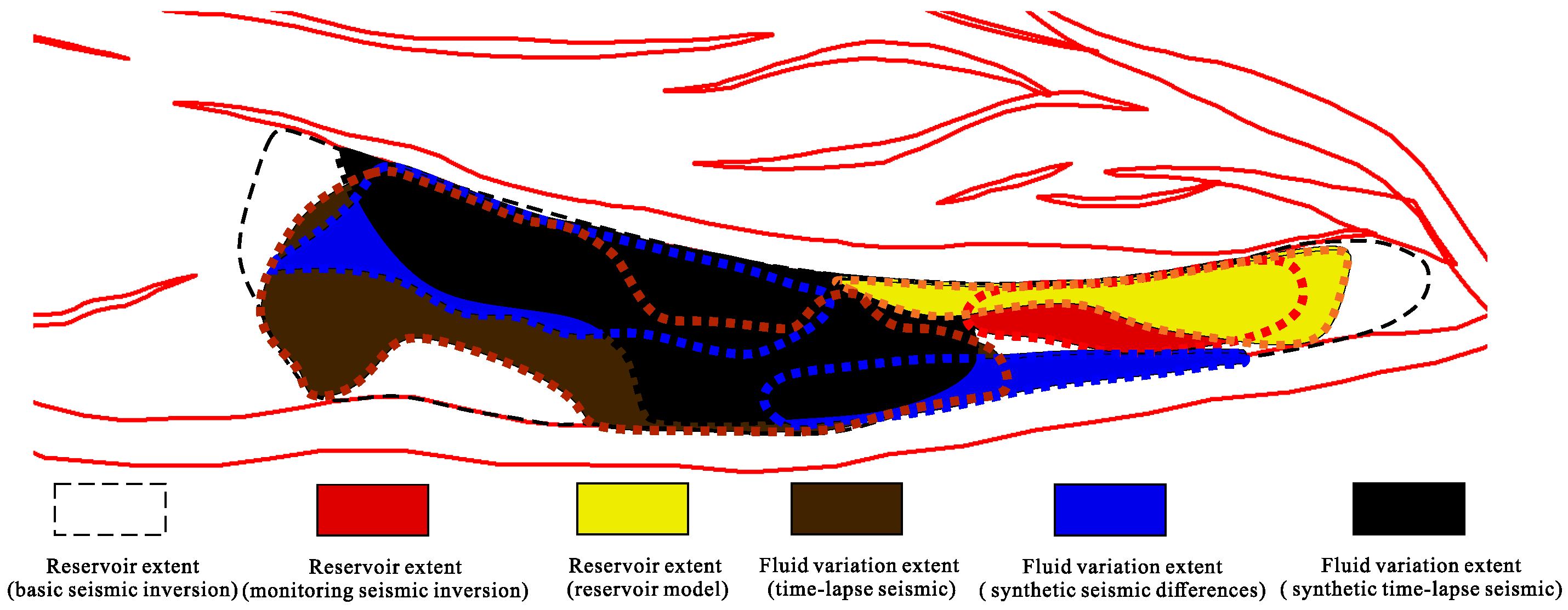
The optimization of reservoir models through the integration of rock physics, time-lapse differences, and inversion data theoretically facilitates the generation of a scientifically robust distribution of residual oil. Nevertheless, as illustrated in Figure 4b, Figure 21c and Figure 24b, the outcomes derived from inversion, time-lapse difference analysis, and numerical simulation do not exhibit complete concordance. This inconsistency likely arises from errors and uncertainties intrinsic to seismic data processing, inversion methodologies, and numerical simulation frameworks. Specifically, seismic data acquisition and processing inherently introduce noise and non-uniqueness, which compromise the stability of time-lapse difference signals. Furthermore, inversion procedures are subject to limitations associated with the initial model selection, imposed constraints, and regularization techniques, potentially inducing biases in the results. Additionally, numerical simulations depend on simplified physical assumptions and parameter calibrations, which contribute further uncertainties to the modeling outcomes. The inversion and numerical simulation results show relatively consistent trends across most wells, particularly in wells C, D, E, F, I, and J, where both methods predict comparable magnitudes of change and correctly capture the relative ranking of development intensity inferred from the increase in water cut. This indicates a reasonable degree of correlation and mutual validation between these two approaches at the well scale. In contrast, the time-lapse seismic difference results display larger variability and less consistent correspondence with the observed well performance, with some wells (e.g., F, J, and K) showing significantly larger predicted changes that deviate from both the production response and the other two prediction methods (Table 6).
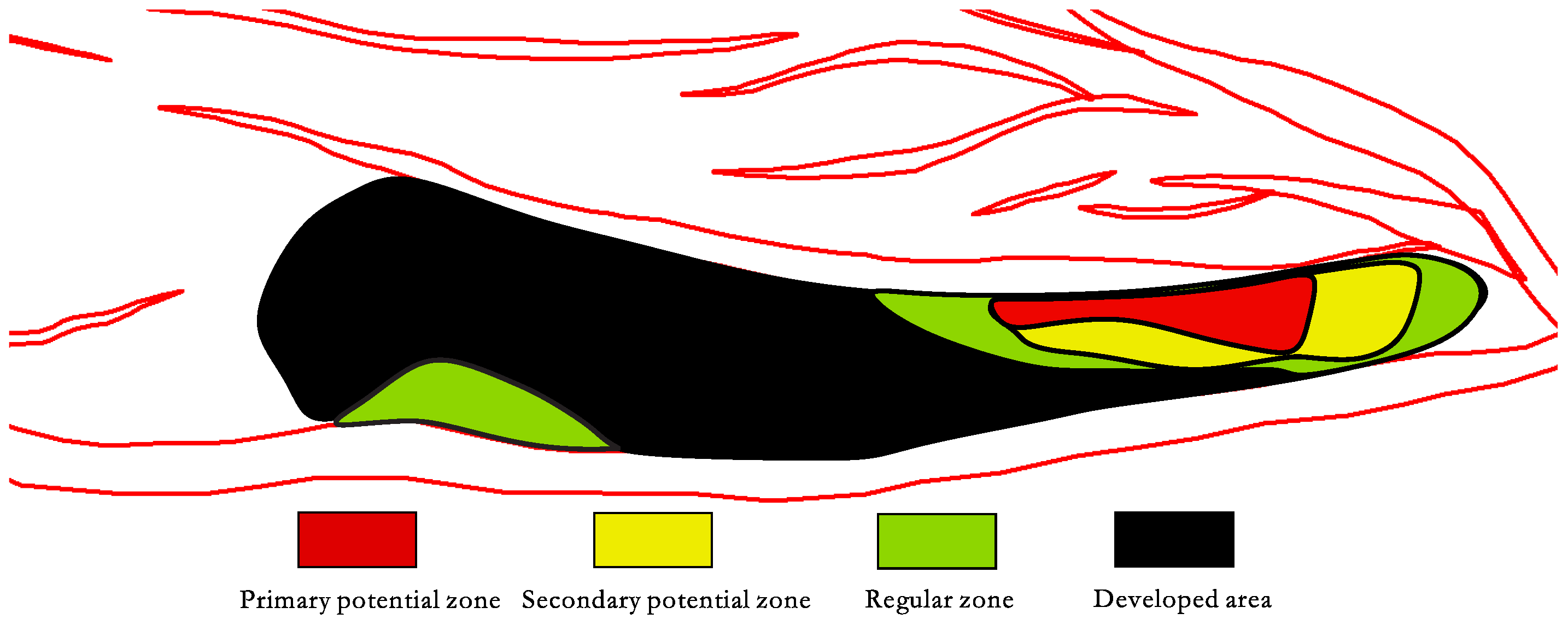
Despite some variations in the spatial distributions derived from the three methodologies, the predominant patterns and locations of residual oil remain consistent. Consequently, this section centers on the optimized reservoir model and elaborates on the oil-bearing potential within the intersecting zones identified by each method (Figure 25). In this investigation, regions where all methods failed to detect fluid substitution yet consistently indicated residual oil presence were designated as red primary potential zones. Areas where two methods did not detect fluid substitution but both suggested residual oil presence were classified as yellow secondary potential zones. Zones where only one method failed to detect fluid substitution were categorized as green normal zones. Regions exhibiting pronounced fluid contrasts were identified as black development zones. The comprehensive results are presented in Figure 26. This integrated interpretation synthesizes multiple analytical approaches to evaluate the development potential of various sectors within the sandstone reservoir. To further substantiate these conclusions, actual production data and structural information will be employed for validation purposes.
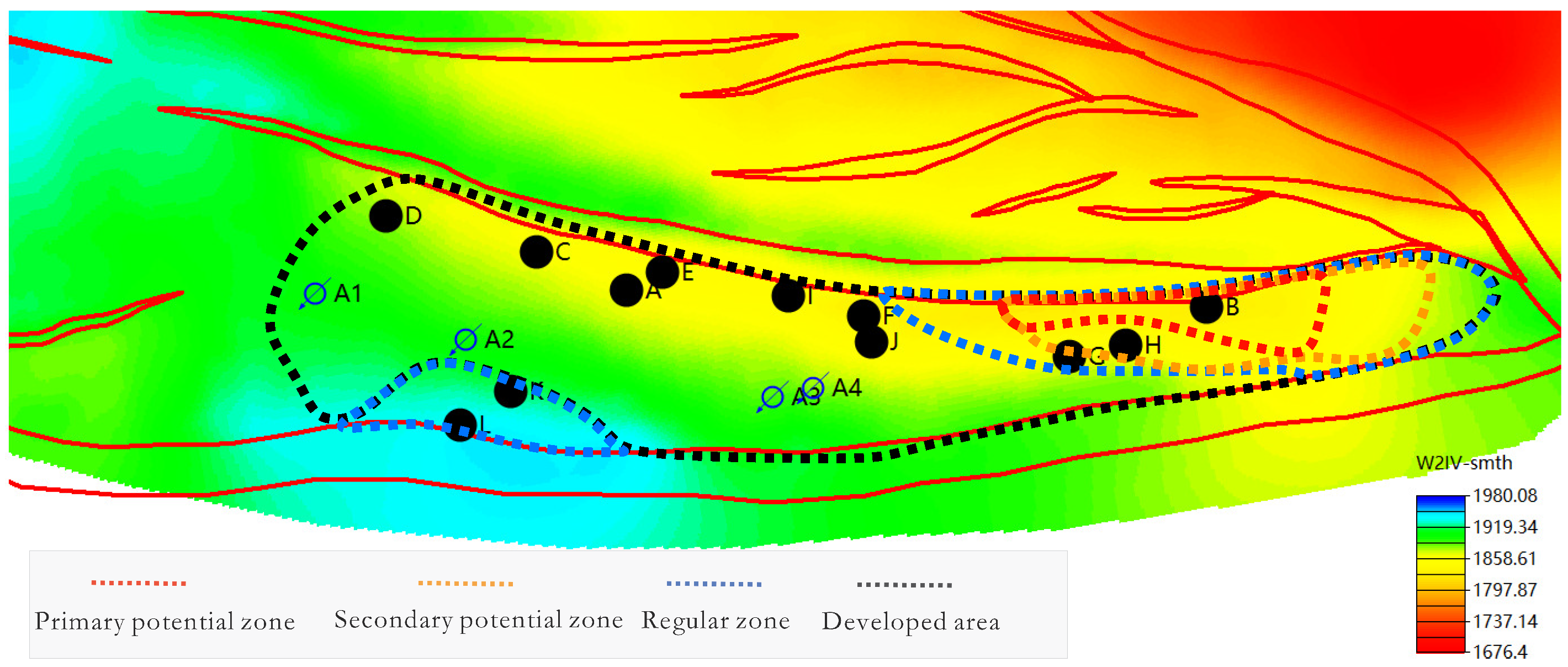
Additional verification results are presented in Figure 27, demonstrating that all operational production wells are situated in medium to high structural positions. This spatial arrangement corresponds with established patterns of hydrocarbon accumulation, thereby suggesting that the initial well placement was strategically and effectively planned. Furthermore, four water injection wells are positioned in low structural areas to supply energy for fluid displacement, as indicated by the red arrows. The spatial distribution of both injection and production wells corresponds closely with the identified potential zones, thereby corroborating the reliability of the integrated interpretative approach.
According to the reservoir numerical simulation outcomes (Figure 24b), regions proximal to wells G and H exhibit development potential. Nevertheless, given the discrepancy between the reservoir model results and the inversion data, the primary potential zone encompassing well B is deemed more favorable than the secondary potential zones near wells G and H. From a structural perspective, the primary potential zone at well B is positioned at a relatively higher elevation compared to the secondary zones at G and H, thereby offering more favorable conditions for the preservation of residual oil. This suggests that the primary potential zone, as identified through comprehensive interpretative analysis, possesses greater prospects for further development.
On the other hand, within the reservoir numerical model, areas adjacent to wells L and K demonstrate minimal development value. However, neither the time-lapse seismic difference analysis nor the inversion of fluid-sensitive factor differences detect the previously noted negative energy anomalies. There is an absence of signals indicative of fluid variation at well L, as evidenced by both inversion results and actual production data. Consequently, it is not possible to definitively assert the presence of remaining oil in this area, nor to confirm its complete depletion. Therefore, this location is regarded as having moderate potential and warrants additional investigation. For subsequent development phases, implementing water injection at well K may be considered as a strategy to enhance production at well L.

6. Conclusions

This paper shows that incorporation of multi-scale datasets into a single rock physics modelling model can contribute significantly to the formation of the fluid distribution of the mature waterflooded reservoirs. Key findings reveal that the calibrated models improve the detection of impedance variations induced by water injection, thereby enabling more precise identification of potential residual oil zones. Furthermore, the proposed methodology proves valuable for optimizing infill well placement and enhancing development strategies in reservoirs exhibiting high water cut. These outcomes underscore the importance of multi-source data integration and maintaining physical consistency in representing complex fluid-rock interactions, providing a robust foundation for advancing reservoir prediction and management. Additionally, the presented framework offers a platform for future research aimed at achieving more effective reservoir characterization through the implementation of enhanced measurement techniques and modeling approaches.

Author Contributions

Conceptualization, H.L. and X.H.; methodology, H.L. and X.H.; software, H.L.; validation, H.L., S.Y. and R.Y.; formal analysis, H.L.; investigation, H.L.; resources, X.C. and Y.L.; data curation, S.Y. and R.Y.; writing—original draft preparation, H.L.; writing—review and editing, H.L. and X.H.; visualization, H.L.; supervision, X.H.; project administration, X.H.; funding acquisition, X.H. All authors have read and agreed to the published version of the manuscript.

Funding

This research was funded by the National Natural Science Foundation of China (grant numbers U24B2022 and U20B2016). The APC was funded by the National Natural Science Foundation of China.

Institutional Review Board Statement

Not applicable.

Informed Consent Statement

Not applicable.

Data Availability Statement

The data that support the findings of this study are not publicly available due to company confidentiality and privacy restrictions.

Acknowledgments

The authors would like to thank CNOOC Zhanjiang Branch and Tianjin Branch for their support and assistance during this research.

Conflicts of Interest

Authors Xiaoqing Cui and Yibin Li were employed by the company CNOOC China Company Limited. The remaining authors declare that the research was conducted in the absence of any commercial or financial relationships that could be construed as a potential conflict of interest.

References

  1. He, Y.; Guo, Y.; Wu, L.; Jiang, L.; Wang, S.; Ning, S.; Kang, Z. Evaluation of development performance and adjustment strategies for high water-cut reservoirs based on flow diagnostics: Application in the QHD oilfield. Energies 2025, 18, 5310. [Google Scholar] [CrossRef]
  2. Mavko, G.; Mukerji, T.; Dvorkin, J. The Rock Physics Handbook; Cambridge University Press: Cambridge, UK, 2020. [Google Scholar]
  3. Mukerji, T.; Mavko, G.; Dvorkin, J. Fluid Substitution in Multiphase Saturated Rocks: A Combined Wood–Gassmann Model. In Proceedings of the Expanded Abstracts of the 65th Annual International Meeting, Houston, TX, USA, 8–13 October 1995; SEG: Houston, TX, USA, 1996; pp. 1687–1690. [Google Scholar]
  4. Creasy, N.; Huang, L.; Gasperikova, E.; Harbert, W.; Bratton, T.; Zhou, Q. CO2 rock physics modeling for reliable monitoring of geologic carbon storage. Commun. Earth Environ. 2024, 5, 333. [Google Scholar] [CrossRef]
  5. Hossain, S.; Rahman, N. An integrated petrophysical and rock physics characterization of the Mangahewa Formation in the Pohokura field, Taranaki Basin. Sci. Rep. 2025, 15, 4983. [Google Scholar] [CrossRef]
  6. van IJsseldijk, J.; Hajibeygi, H.; Wapenaar, K. A framework for subsurface monitoring by integrating reservoir simulation with time-lapse seismic surveys. Sci. Rep. 2023, 13, 13661. [Google Scholar] [CrossRef]
  7. Huang, X.; Meister, L.; Workman, R. Reservoir characterization by integration of time-lapse seismic and production data. In Proceedings of the SPE Annual Technical Conference and Exhibition, San Antonio, TX, USA, 5–8 October 1997; Paper SPE-38695-MS. SPE: Richardson, TX, USA, 1997. [Google Scholar]
  8. Huang, X. Integrating time-lapse seismic with production data: A tool for reservoir engineering. Lead. Edge 2001, 20, 1148–1153. [Google Scholar] [CrossRef]
  9. Luo, X.; Lorentzen, R.J.; Bhakta, T. Accounting for model errors of rock physics models in 4D seismic history matching problems: A perspective of machine learning. J. Pet. Sci. Eng. 2021, 196, 107961. [Google Scholar] [CrossRef]
  10. Wei, Q.; Han, D.H.; Li, H.; Wang, J.; Wang, Y.; Chen, J. Effects of fluid saturation and viscosity on seismic dispersion characteristics in Berea sandstone. Geophysics 2024, 89, MR251–MR263. [Google Scholar] [CrossRef]
  11. Wang, W.; Li, S.; Guo, J.; Zhang, C.; Duan, W.; Su, Y.; Tang, X.M. Frequency-dependent elastic properties of fracture-induced VTI rocks in a fluid-saturated porous and microcracked background. Geophysics 2024, 89, MR137–MR153. [Google Scholar] [CrossRef]
  12. Mu, Y.; Castagna, J.; Bedle, H. Water contact mapping and saturation estimation using simultaneous inversion of time-lapse seismic data constrained by fluid substitution and Leverett J-function analysis. Geophysics 2023, 88, R485–R497. [Google Scholar] [CrossRef]
  13. Chen, G.; Meng, Y.; Huan, J.; Wang, Y.; Zhang, L.; Xiao, L. Distribution and origin of anomalously high permeability zones in Weizhou Formation, Weizhou 12-X oilfield, Weixinan Sag, China. Earth Sci. Inform. 2021, 14, 2003–2015. [Google Scholar] [CrossRef] [PubMed]
  14. Qu, J.; Wei, L.; Li, C.; Hou, D.; Hu, D.; Man, Y. Geochemical signature and origin of natural gas in the Weixinan Depression, Beibu Gulf Basin, South China Sea. Nat. Gas Ind. B 2024, 11, 703–713. [Google Scholar] [CrossRef]
  15. Liu, Y.; Sun, J.; Lai, F.; Dong, X.; Yang, D.; Cheng, J. Physical property characteristics and controlling factors of shale oil reservoirs in the Beibuwan Basin, southern China. Energy Geosci. 2025, 7, 100504. [Google Scholar] [CrossRef]
  16. Yu, H.; Song, S. A successful example of an offshore marginal oil field development—A case history of Wei 11-4 oil field in Beibu Gulf Basin. In Proceedings of the SPE Asia Pacific Oil and Gas Conference and Exhibition, Jakarta, Indonesia, 20–22 April 1999; Paper SPE-54354-MS. SPE: Richardson, TX, USA, 1999. [Google Scholar] [CrossRef]
  17. Liu, W.; Lei, X.; Sui, B.; Li, Y.; Chen, F.; Liu, Z.; Wang, X. Research of non-repetitive time-shift seismic matching processing based on OBC and towed cable data. Prog. Geophys. 2025, 40, 2135–2147. [Google Scholar] [CrossRef]
  18. Chen, F.; Wang, X.; Liu, W.; Li, Y.; Liu, Z. Non-Repetitive Time-Shifted Seismic Monitoring Study Based on Ocean Bottom Cable and Towed Streamer Data. J. Mar. Sci. Eng. 2024, 12, 1615. [Google Scholar] [CrossRef]
  19. Li, Z.; Han, L.; Zhang, F.; Yang, Y. Study on mutual equalization processing method of time-lapse seismic data. J. Jilin Univ. (Earth Sci. Ed.) 2008, 38, 68–71+89. [Google Scholar]
  20. Huang, X. Research status of foreign time-lapse seismic technology. Adv. Explor. Geophys. 2003, 1, 7–12. [Google Scholar]
  21. Xie, Y.; Chen, Z.; Zhou, J. Research and application of time-lapse seismic technology in Dongfang 1-1 gas field. South China Seismol. 2009, 29, 60–68. [Google Scholar]
  22. Zhou, J.; Zhang, L.; Liu, W.; Hu, L.; Wang, Q. Application of time-lapse seismic reservoir monitoring technology in Yacheng 13-1 gas field. Pet. Geophys. Explor. 2020, 59, 637–646. [Google Scholar]
  23. Connolly, P. Elastic impedance. Lead. Edge 1999, 18, 438–452. [Google Scholar] [CrossRef]
  24. Chopra, S.; Marfurt, K.J. Essentials of Seismic Attributes and Impedance Inversion; Society of Exploration Geophysicists: Houston, TX, USA, 2024. [Google Scholar]
  25. Li, H.; Wang, D.; Gao, J.; Zhang, M.; Wang, Y.; Zhao, L.; Yang, Z. Role of saturation on elastic dispersion and attenuation of tight rocks: An experimental study. J. Geophys. Res. Solid Earth 2020, 125, e2019JB018513. [Google Scholar] [CrossRef]
  26. Reuss, A. Berechnung der Fließgrenze von Mischkristallen auf Grund der Plastizitätsbedingung für Einkristalle. Z. Für Angew. Math. Und Mech. 1929, 9, 49–58. [Google Scholar] [CrossRef]
  27. Voigt, W. Bestimmung der Elasticitätsconstanten des brasilianischen Turmalines. Ann. Der Phys. 1890, 277, 712–724. [Google Scholar] [CrossRef]
  28. Hill, R. The Elastic Behaviour of a Crystalline Aggregate. Proc. Phys. Soc. Lond. A 1952, 65, 349–354. [Google Scholar] [CrossRef]
  29. Mukerji, T.; Berryman, J.G.; Mavko, G.; Berge, P.A. Differential Effective Medium Modeling of Rock Elastic Moduli with Critical Porosity Constraints. Geophys. Res. Lett. 1995, 22, 555–558. [Google Scholar] [CrossRef]
  30. Batzle, M.; Wang, Z. Seismic Properties of Pore Fluids. Geophysics 1992, 57, 1396–1408. [Google Scholar] [CrossRef]
  31. Gassmann, F. Über die Elastizität poröser Medien. Vierteljahrsschr. der Naturforschenden Ges. Zürich 1951, 96, 1–23. [Google Scholar]
  32. Pride, S.R.; Berryman, J.G.; Harris, J.M. Seismic attenuation due to wave-induced flow. J. Geophys. Res. Solid Earth 2004, 109, B01201. [Google Scholar] [CrossRef]
  33. Masson, Y.J.; Pride, S.R.; Nihei, K.T. Finite-difference modeling of Biot’s poroelastic equations at seismic frequencies. J. Geophys. Res. Solid Earth 2006, 111, B10305. [Google Scholar] [CrossRef]
Figure 1. Lateral and Longitudinal Background of the Study Area: (a). Location of study area and division of tectonic unit. (b). Stratigraphic column of the Weixinan Sag, illustrating the stratigraphic framework, major formations, and lithological characteristics of the target reservoir intervals [13].
Jmse 14 00091 g001
Figure 2. Illustration of the two data acquisition methods: (a) offshore streamer method. (b) Ocean Bottom Cable method.
Jmse 14 00091 g002
Figure 3. Comparison of two-phase seismic data before and after consistency processing. (a) seismic section before consistency processing for Cable data; (b) seismic section before consistency processing for OBC data; (c) seismic section after consistency processing for Cable data. The signal in the target interval indicated by the white arrows is significantly improved; and (d) seismic section after consistency processing for OBC data. The signal in the target interval indicated by the white arrows is significantly improved [17,18].
Jmse 14 00091 g003
Figure 4. Reservoir time-lapse seismic difference signal extraction and results: (a) Extraction method. (b) Result of reservoir difference signals.
Jmse 14 00091 g004
Figure 5. Pre-stack elastic impedance inversion results: (a) P-wave velocity from CABLE seismic inversion; (b) S-wave velocity from CABLE seismic inversion; (c) Vp/Vs ratio from CABLE seismic inversion; (d) P-wave velocity from OBC seismic inversion; (e) S-wave velocity from OBC seismic inversion; (f) Vp/Vs ratio from OBC seismic inversion.
Jmse 14 00091 g005
Figure 6. XRD-based mineralogical interpretation results.
Jmse 14 00091 g006
Figure 7. Low-frequency fluid-induced strain measurement system [25]: (a) Schematic of the fluid displacement and measurement system. (b) Schematic of the setup for the standard and measurement samples. (c) Results of the measured sample data.
Jmse 14 00091 g007
Figure 8. Low-frequency laboratory measurements: (a) Elastic modulus of the sample at different frequencies. (b) attenuation coefficient of the sample at different frequencies. (c) P-wave velocity of the sample at different frequencies.
Jmse 14 00091 g008
Figure 9. Rock-physics modeling workflow: The process includes three main components—the matrix, the solid framework, and the pore fluids. Here, the minerals refer to the mineral components of the rock matrix shown in Figure 6.
Jmse 14 00091 g009
Figure 10. Calibration of pressure-correction formulas based on the in-situ effective stress and the bulk and shear moduli: (a) Pressure-correction calibration for the bulk modulus. (b) Pressure-correction calibration for the shear modulus.
Jmse 14 00091 g010
Figure 11. Rock-physics–based reservoir model optimization workflow.
Jmse 14 00091 g011
Figure 12. Calibration of low-frequency experimental trends based on the rock-physics model. Dots represent measured data, and solid lines represent rock-physics model predictions: (a) Saturation–velocity calibration for core 5; (b) Saturation–velocity calibration for core 7; (c) Pore-pressure–velocity calibration for core 5; (d) Pore-pressure–velocity calibration for core 7.
Jmse 14 00091 g012
Figure 13. Calibration of low-frequency velocity trends using the Pride model (dots: measured sample data; solid lines: rock physics model predictions): (a) Calibration result for core 7. (b) Calibration result for core 3.
Jmse 14 00091 g013
Figure 14. Comparison of synthetic and sonic velocities at logging frequencies using the Pride model (blue: Gassmann model; red: Pride model; black: sonic log): (a) Comparison for well W5. (b) Comparison for well W13.
Jmse 14 00091 g014
Figure 15. Simulation of time-lapse differences along wells at different water-flooding stages based on the rock physics model.
Jmse 14 00091 g015
Figure 16. Reservoir dynamic response simulation results (saturation): (a) Seismic responses at different saturations; (b) Relationship between maximum amplitude and saturation; (c) Amplitude energy reduction corresponding to saturation changes.
Jmse 14 00091 g016
Figure 17. Reservoir dynamic response simulation results (pore pressure): (a) Seismic responses at different pore pressure; (b) Relationship between maximum amplitude and pore pressure; (c) Amplitude energy reduction corresponding to pore pressure changes.
Jmse 14 00091 g017
Figure 18. Reservoir dynamic response simulation results (saturation and pressure): (a) Seismic responses at different states; (b) Relationship between maximum amplitude and state; (c) Amplitude energy reduction corresponding to states.
Jmse 14 00091 g018
Figure 19. Fluid-sensitivity interpretation template based on the rock-physics model. Dots represent logging sample points: red for oil-bearing intervals, green for water-bearing intervals, black for shale intervals, and blue for dry zones. Solid lines represent rock-physics model results.
Jmse 14 00091 g019
Figure 20. Fluid-distribution interpretation based on the fluid-sensitivity template derived from the rock-physics model (orange indicates oil-bearing zones, blue indicates non-oil zones): (a) Fluid inversion result from CABLE data. (b) Fluid inversion result from OBC data.
Jmse 14 00091 g020
Figure 21. Fluid-distribution inversion results based on rock-physics modeling (orange indicates oil and blue indicates water).Black circles denote production wells, blue arrowed circles represent water-injection wells. (a) Interpretation result from CABLE data. (b) Interpretation result from OBC data. (c) Difference between the two inversion results (OBC minus CABLE).
Jmse 14 00091 g021
Figure 22. Comparison of synthetic and observed seismic sections before and after reservoir model modification based on the rock-physics model (the blue dashed box highlights the main optimization area): (a) Comparison between synthetic and observed seismic sections at the CABLE acquisition time. (b) Comparison between synthetic and observed seismic sections at the OBC acquisition time.
Jmse 14 00091 g022
Figure 23. Plan-view correlation coefficient comparison between synthetic and observed seismic data before and after reservoir model modification based on the rock-physics model (yellow indicates higher correlation): (a) Correlation coefficient before reservoir model correction. (b) Correlation coefficient after reservoir model correction.
Jmse 14 00091 g023
Figure 24. Map results of the optimized reservoir model: (a) Fluid-distribution range predicted by the reservoir model (blue: water-flooded zone). (b) Oil saturation interpreted at the OBC acquisition time.
Jmse 14 00091 g024
Figure 25. Overlapped fluid boundaries from different interpretations based on the rock physics model.
Jmse 14 00091 g025
Figure 26. Map of prospect areas from integrated assessment.
Jmse 14 00091 g026
Figure 27. Integrated map of prospect areas, production, and structural features.Black circles denote production wells, blue arrowed circles represent water-injection wells.
Jmse 14 00091 g027
Table 1. XRD mineralogical interpretation results of experimental cores.
No.Sample IDQuartz (%)K-Feldspar (%)Plagio-Clase (%)Calcite (%)Dolomite (%)Siderite (%)Clay Minerals (%)
1381.393.646.940.700.740.536.06
2559.153.277.8416.562.7810.40
3780.995.715.580.992.714.02
41178.853.564.236.841.554.97
Table 2. Porosity, permeability, and basic parameters of experimental cores.
No.SampleLength (cm)Diameter (cm)Density (g cm−3)Porosity (%)Air Permeability (mD)Sampling Depth (m)
134.0262.4902.2314.2918.882530
254.0282.4702.604.190.012615
374.6302.4902.2713.7512.993044
4114.3202.4802.4312.0015.633267
Table 3. Low-frequency model input parameters [13].
ParameterValueParameterValue
Formation temperature110 °CGas gravity1
Water gravity1Oil-gas dissolution ratio200
Formation API10Formation salinity40,000 ppm
Brine viscosity0.3 mPa·sPorosity ratio0.2
Permeability35 mDClay shear modulus6 GPa
Sand shear modulus19 GPaClay bulk modulus10 GPa
Sand bulk modulus28 GPaClay density2.5 g/cm3
Sand density2.66 g/cm3Pressure factor1.44846
Layer pressure25 MPa
Table 4. Pride model input parameters.
ParameterValueParameterValue
Formation temperature110 °CGas gravity1
Water gravity1Oil-gas dissolution ratio200
Formation API10Formation salinity40,000 ppm
Brine viscosity0.3 mPa·sPorosity ratio0.2
Permeability35 mDClay shear modulus6 GPa
Sand shear modulus19 GPaClay bulk modulus10 GPa
Sand bulk modulus28 GPaClay density2.5 g/cm3
Sand density2.66 g/cm3Pressure factor1.44846
Para m0.3Para nj0.2
Layer pressure25 MPaFrequency20,000 Hz
Table 5. Theoretical Model Settings of Three Reservoirs in Work Area.
FormationPropertyValue (Range)
Background LayerVSH (%)100
PORE (%)0
SWAT (%)100
ReservoirVSH (%)10
PORE (%)0.2
SWAT (%)20 (0–100)
OtherThickness50 m
Pressure27 MPa (factor 0.7–1)
Temperature110 °C
Table 6. Comparison of Water Cut Increase and Prediction Results.
ABCDEFGHIJKL
Water Cut Increase in Production Wells3053842322818223730128
Numerical Model Prediction Change 8 1 9 10 8 7 2 3 9 8 2 1
Inversion Prediction Change 8 1 6 5 10 10 1 1 10 10 1 1
Time-Lapse Seismic Difference Result 20 6 22 32 21 49 3 9 1 53 29 8
Disclaimer/Publisher’s Note: The statements, opinions and data contained in all publications are solely those of the individual author(s) and contributor(s) and not of MDPI and/or the editor(s). MDPI and/or the editor(s) disclaim responsibility for any injury to people or property resulting from any ideas, methods, instructions or products referred to in the content.