Article

Investigating Spatial and Seasonal Differences in Microgastropod Assemblages Within the Little-Studied Camamu Bay, Brazil: A Potential Bioindicator for Remote Tropical Areas?


by
Francisco Kelmo
1,2,
Sol de Maria Cesar Ferreira
1,
Eduardo Henrique Galvão
1 and
Martin J. Attrill
2,*
1
Institute of Biology, Federal University of Bahia, Salvador 40170-115, BA, Brazil
2
School of Biological & Marine Sciences, University of Plymouth, Drake Circus, Plymouth PL4 8AA, UK
*
Author to whom correspondence should be addressed.
J. Mar. Sci. Eng. 2026, 14(1), 24; https://doi.org/10.3390/jmse14010024
Submission received: 30 October 2025 / Revised: 9 December 2025 / Accepted: 19 December 2025 / Published: 23 December 2025
(This article belongs to the Section Marine Environmental Science)

Abstract

This study investigates spatial and seasonal variation in the assemblages of benthic microgastropods (snails < 5–10 mm in length) within a poorly studied tropical bay. As these organisms are abundant, diverse and relatively easy to sample, with well-established taxonomy, they may prove a highly suitable group for ecological studies in such areas. Sediment samples were collected from three river basins in Camamu Bay, Brazil, during the wet and dry seasons. A total of 132 microgastropod species was recorded, demonstrating high diversity. The most abundant species were Eulithidium affine, Bittiolum varium, Cerithium atratum, Vitta virginea and Schwartziella bryerea. The least abundant species were Tenaturris gemma, Turbinella laevigata, Petaloconchus erectus, Parviturboides interruptus and Vitrinella cupidinensis. Statistical analysis revealed significant seasonal and spatial differences in diversity and assemblage composition, which correlated with environmental gradients. The results suggest that microgastropods are a suitable component of the biota for ecological and applied studies in marine sediments, particularly in remote tropical locations where full macrofaunal analysis may be challenging. Whilst further testing across impact gradients is needed, this approach offers a practical solution for ecological investigations in remote regions with limited taxonomic expertise and highlights microgastropods as a useful indicator taxon for impact biomonitoring in tropical marine sediments.

1. Introduction

Coastal ecosystems, particularly those in remote tropical regions, are often understudied despite their exceptionally high biodiversity [1,2]. This disparity reflects broader global research biases, whereby tropical systems—although providing crucial ecological and socio-economic functions—receive disproportionately less scientific attention than temperate counterparts [3,4]. Addressing such geographic and thematic imbalances is essential for accurately assessing the structure and functioning of tropical marine ecosystems, which remain comparatively data-poor and are often underrepresented in ecological analyses [1]. Generally, surveying and monitoring of coastal benthic systems focuses on comparing variability within the whole macroinvertebrate assemblage, tracking changes in diversity and species composition [5,6]. This is problematic in understudied tropical areas due to a lack of taxonomic research and expertise, and a lack of local facilities to sample suitable sizes of subtidal sediment. Focusing on just one taxonomic group may provide suitable data [7], although this approach may have issues with identification and expertise (e.g., nematodes, polychaetes), or it may dramatically reduce the overall number of species available, impacting the potential sensitivity of any ecological or monitoring studies.
Marine gastropods (Mollusca: Gastropoda), however, represent a diverse, ubiquitous and abundant group in marine environments, with approximately 32,000 described species (accepted), playing fundamental roles in food webs and nutrient cycling [8,9]. Within this class, microgastropods (characterised by minute shells 5–10 mm in length) constitute an understudied component of marine fauna despite their ecological significance as detritivores, plankton consumers, and prey for higher trophic levels and comparative ease of identification due to consistent hard features and well-known taxonomy [10,11]. The distribution and composition of microgastropod assemblages are determined by complex interactions between physical factors and ecological processes that regulate populations and communities [12,13]. Understanding these ecological dynamics, and any impact of human activity on these dynamics, is particularly important in biodiversity-rich but poorly documented regions, where research on benthic infauna remains limited [14,15,16,17,18]. Focusing on the microgastropods may therefore provide a suitable tool for use in such remote tropical sediments, but as yet has not been formally tested [19,20,21,22,23,24,25,26,27].
By examining the composition and distribution of intertidal microgastropod assemblages across three river systems in the third largest bay of Brazil, Camamu Bay, during the dry and wet seasons, this study aims to evaluate the effectiveness of microgastropods as bioindicators of ecological variability across spatial and temporal gradients. Specifically, it tests whether assemblage composition differs between seasons and river systems, and whether these differences are related to environmental drivers. This research contributes to filling critical knowledge gaps in tropical marine biodiversity [1,2] and assesses the feasibility of using microgastropods as a practical monitoring tool in data-deficient, biodiversity-rich coastal systems [1,2].

2. Materials and Methods

2.1. Study Area and Sampling

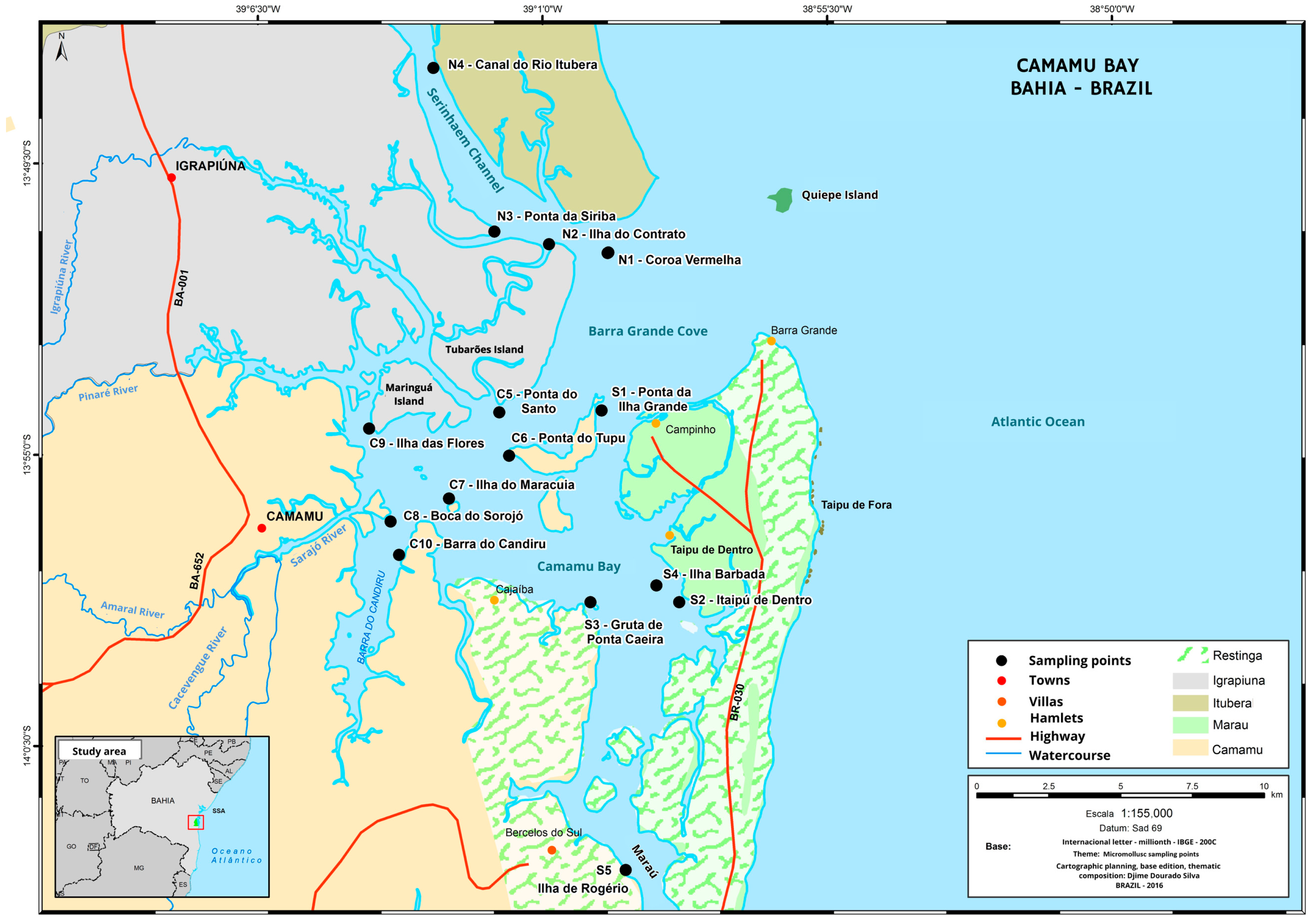
Camamu Bay (Figure 1) is an Environmental Protected Area with a surface area of approximately 384 km2 located 335 km south of Salvador, the capital of Bahia, Brazil, between the coordinates 13°40.2′ S; 38°55.8′ W and 14°12.6′ S; 39°9.6′ W. The shallow estuarine-lagoon area of Camamu Bay is formed by the confluence of the Maraú, Conduru, Acaraí, Pinaré, Igrapiúna and Serinhaém rivers with the Atlantic Ocean.
Camamu, Maraú and Cairu are the principal municipalities that comprise the region of Camamu Bay. Collectively, these municipalities possess a population of only 76,076 inhabitants distributed across a total area of 2137.44 km2, resulting in an average demographic density of 35.6 inhabitants per km2 [28]. This figure is considerably lower than the density observed in the Todos os Santos Bay (BTS), whose territory—including municipalities such as Salvador, Lauro de Freitas and other cities within the Recôncavo Baiano—has a mean density of approximately 113.7 inhabitants per km2 [29]. It is noteworthy that urban areas such as Salvador reach approximately 3486 inhabitants per km2 [28], and the entire surrounding region of BTS is densely populated [29]. Thus, Camamu Bay exhibits a notably lower population density, a condition which renders it less urbanised and relatively more environmentally preserved in comparison with Todos os Santos Bay.
The main consolidated economic activities in Camamu Bay include nautical and ecological tourism, artisanal fishing, and family agroindustry, as well as small-scale extractive practices related to barite (BaSO4) mining, especially on the Grande and Pequena islands located in the centre of the bay [30,31]. Although barite mining has historically represented one of the major sources of environmental impact in this context, regional studies indicate that Camamu Bay has well-preserved habitats, with significant areas of mangroves and high biodiversity [31,32]. On the other hand, basic sanitation coverage in the region remains low, and a substantial proportion of domestic sewage is discharged directly into the environment, potentially contributing to organic pollution and elevated levels of nutrients and coliforms in coastal and mangrove areas. However, evidence indicates that the overall contribution of domestic sewage to the bay is limited, with only localised impacts and low concentrations of faecal markers detected in most areas [33]. Nevertheless, the predominance of traditional activities and low urbanisation contribute to the maintenance of much of the natural environments, reinforcing the strategic importance of the region for conservation [31,32].
The region has a humid tropical climate, characterised by high relative humidity and an average annual temperature of 24 °C. Annual rainfall varies between 2400 mm and 2500 mm, influenced by cold fronts, sea and land breezes, and southeast trade winds [34,35,36]. Circulation in Camamu Bay is supra-inertially forced and tidally driven, influenced by semi-diurnal tides, with a maximum amplitude of 2.7 m and current velocities between 0.6 and 1.2 m/s [25].
Fifteen sampling stations were selected in three regions: Serinhaém River Estuary (SER), Igrapiúna and Sorojó Rivers Estuary (SOR) and Maraú River Estuary (MAR) (Table 1, Figure 1). At each location, ten samples of surface sediment (up to 10 cm deep) were collected with a 20 × 20 cm quadrat in the intertidal zone, exposed during the low tide. Microgastropods in this study were defined as individuals with a shell length of up to 10 mm. The samples were sieved in the field through three sieves (0.5 mm, 0.3 mm and 0.1 mm). The retained content was anaesthetised in a 7.8% MgCl2 solution, then fixed in 70% ethanol. In the laboratory, only live microgastropods (i.e., those with an operculum) were separated under a stereoscopic microscope Olympus SZX7 (SZ2-ILST); Evident Europe GmbH, Hamburg, Germany) and identified to the species level based on the specialised literature [17,18,37].
Abiotic parameters were measured at each sampling station, including temperature, salinity, pH, dissolved oxygen, and total suspended solids, using a HoribaU-22 (U20 series) multiparameter probe (Irvine, CA, USA). Additionally, granulometric analysis was performed by dry sieving in a Logen LSAPE6 sieve shaker (Retsch GmbH, Haan, Germany) for 10 min.
Figure 1. Map of Camamu Bay showing the sampling stations. Adapted from Oliveira, Cruz & Queiroz (2009) [30].
Jmse 14 00024 g001

2.2. Statistical Analysis

Differences in environmental variables and microgastropods assemblage measures between seasons and river basins were analysed using a two-way ANOVA [38]. The diversity metrics that were calculated included the number of species (S), Shannon–Wiener diversity (H’) and Pielou’s evenness (J’). The total abundance of microgastropods was also recorded and investigated. To test spatial and seasonal differences in microgastropod assemblage composition, a permutational multivariate analysis of variance (PERMANOVA) was used on Bray–Curtis distances [39]. Additionally, a non-metric multidimensional scaling (nMDS) analysis was performed to visualise assemblage dissimilarities among seasons and river basins [40].
Generalised additive models (GAMs) were used to assess the relationships between each environmental variable with the Shannon–Wiener diversity index and the number of species [41]. In addition, environmental variables were assessed for multicollinearity using the Variance Inflation Factor (VIF) [42]. The pH variable was removed from subsequent analyses to ensure model stability due to VIF values greater than 7. The relationships between environmental variables and microgastropod assemblage structure were then explored with distance-based redundancy analysis (dbRDA) [43]. To reduce the influence of highly dominant taxa, the species abundance matrix was transformed using a fourth-root transformation. Permutation tests (N = 9999) were performed to test the significance of the dbRDA model, axes, and individual predictors.
Finally, we used the Similarity Percentage analysis (SIMPER) to evaluate the contribution of each species to the observed dissimilarities with 9999 permutations on seasons and river basins [44]. All statistical analyses were conducted in R (version 4.3.3) [45]. Data handling and organisation were performed using the packages dplyr, tidyr and reshape2 [46,47,48]. The car package was applied for multicollinearity assessment (VIF analysis), and plots were generated using ggplot2 and cowplot [49,50]. The package mgcv was used for GAMs [51]. The analyses of dbRDA, nMDS, PERMANOVA, diversity indices and SIMPER analysis were performed using the vegan package [52]. All environmental data and codes are available at https://github.com/GEEMCO-Lab/Microgastropod_assemblages_within_the_little-studied_Camamu_Bay (accessed on 29 October 2025).

3. Results

3.1. Environmental Patterns Across Seasons and River Basins

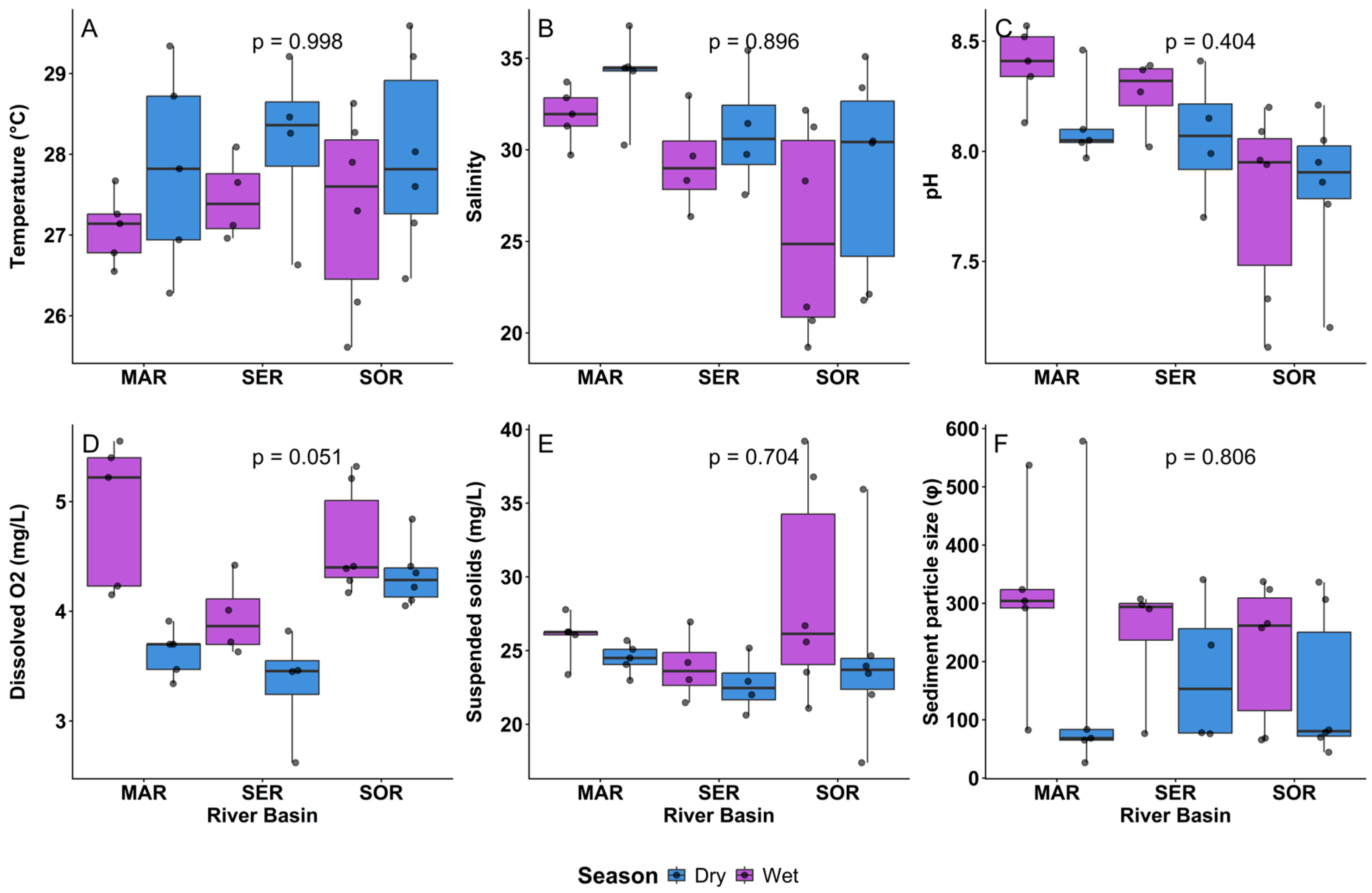
The environmental variables overall showed no significant interaction effects between the season and river basin for any of the environmental variables (Two-way ANOVA, p > 0.05; Figure 2). Temperature, suspended solids, and sediment particle size did not vary significantly across seasons or river basins (p > 0.05). Salinity (p = 0.011) and pH (p = 0.004) differed significantly among river basins, however, while dissolved oxygen showed significant effects of both season (p < 0.001) and river basin (p = 0.001).
Between seasons, higher dissolved oxygen concentrations were observed during the wet season (mean = 4.54 ± 0.63 mg/L) compared to the dry season (mean = 3.82 ± 0.53 mg/L) (Table 2). Among river basins, MAR showed the highest mean salinity (mean = 32.98 ± 2.19) and pH (mean = 8.25 ± 0.82), whereas SOR showed the lowest salinity (mean = 27.19 ± 5.70) and pH (mean = 7.80 ± 0.38). Lastly, SOR also exhibited the highest dissolved oxygen (mean = 4.47 ± 0.42 mg/L) and SER the lowest (mean = 3.64 ± 0.52 mg/L).

3.2. Diversity Patterns Across Seasons and River Basins

A total of 5520 individual microgastropods was recorded (Table S1), distributed among 52 families and 132 species. Of the 5520 individuals collected, only 197 were juveniles (3.6%); among the 132 species recorded, 35 (26%) can reach an adult body size exceeding 10 mm. In the Serinhaém River Estuary, 724 individuals and 73 species were recorded, while in the Igrapiúna and Sorojó Rivers Estuary, 1478 individuals and 74 species were recorded, and in the Maraú River Estuary, 3318 individuals and 81 species were recorded. The most abundant species across the study area as a whole included Eulithidium affine, Bittiolum varium, Cerithium atratum, Schwartziella bryerea, Vitta virginea, Eulithidium bellum, Alaba incerta, Olivella minuta, Turbonilla rushii and Costoanachis sertulariarum. Individuals were predominantly herbivores (60%), followed by carnivores (30%) and omnivores (10%).
MAR had the highest mean abundance (332 ± 763 individuals), followed by SOR (123 ± 131), and it was lowest in SER (90.5 ± 121). Abundance during the wet season (296 ± 617) was higher than in the dry season (72 ± 109), but this difference was not statistically significant.
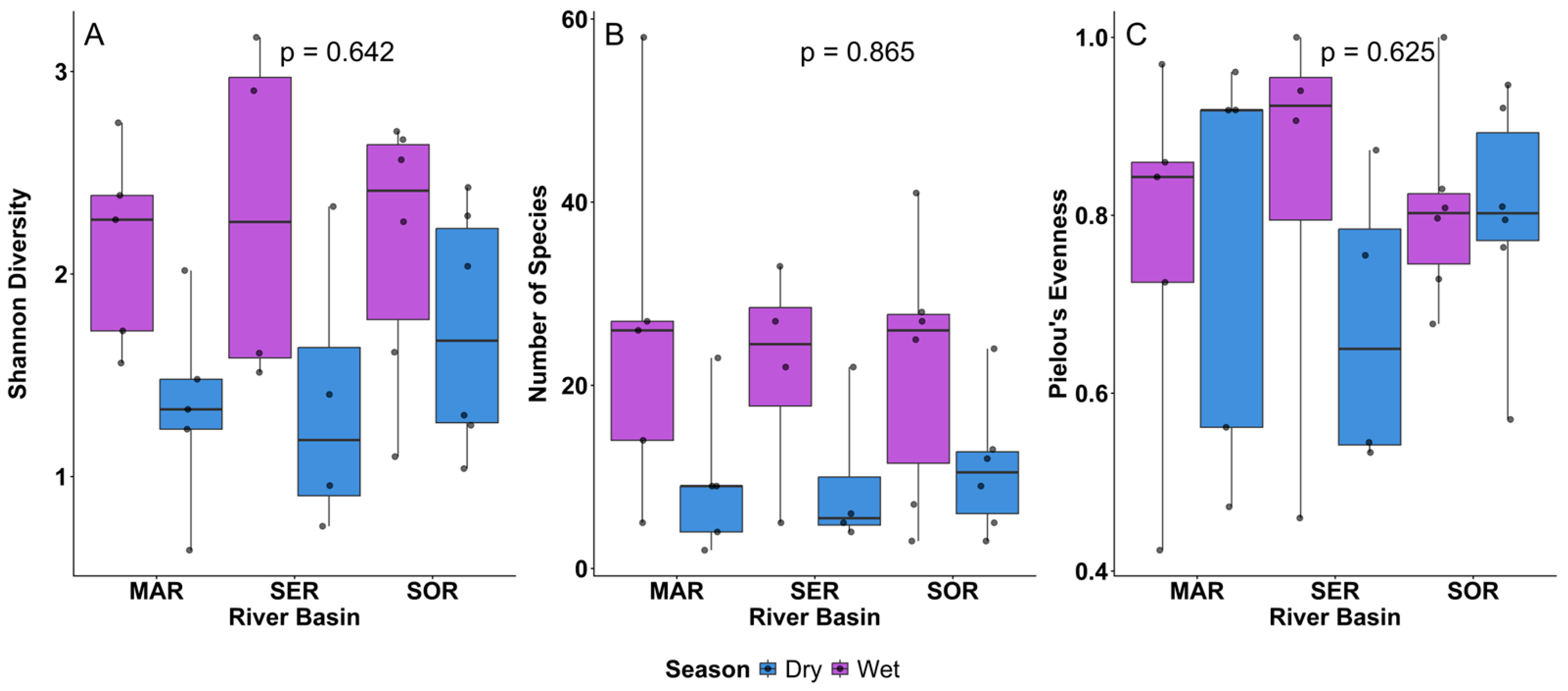
The Shannon–Wiener diversity (p = 0.006) and number of species (p = 0.008) were significantly higher during the wet season compared to the dry season, whereas Pielou’s evenness did not vary significantly between seasons or river basins (p > 0.05). No differences were detected among river basins or in the interaction between factors (Two-way ANOVA, p > 0.05 for all interactions; Figure 3).
Between seasons, the wet period had greater mean values of the Shannon–Wiener index (mean = 2.18 ± 0.62) and number of species (mean = 23.2 ± 14.92) compared to the dry season (Table 3). Evenness remained relatively stable across the dry (mean = 0.75 ± 0.17) and wet seasons (mean = 0.79 ± 0.17). No significant spatial differences were detected among river basins, with similar mean values for the Shannon–Wiener index and number of species. Tables S3–S7 detail full results of micromollusc abundance at each site and within each season.

3.3. Spatial and Seasonal Variation in Community Composition

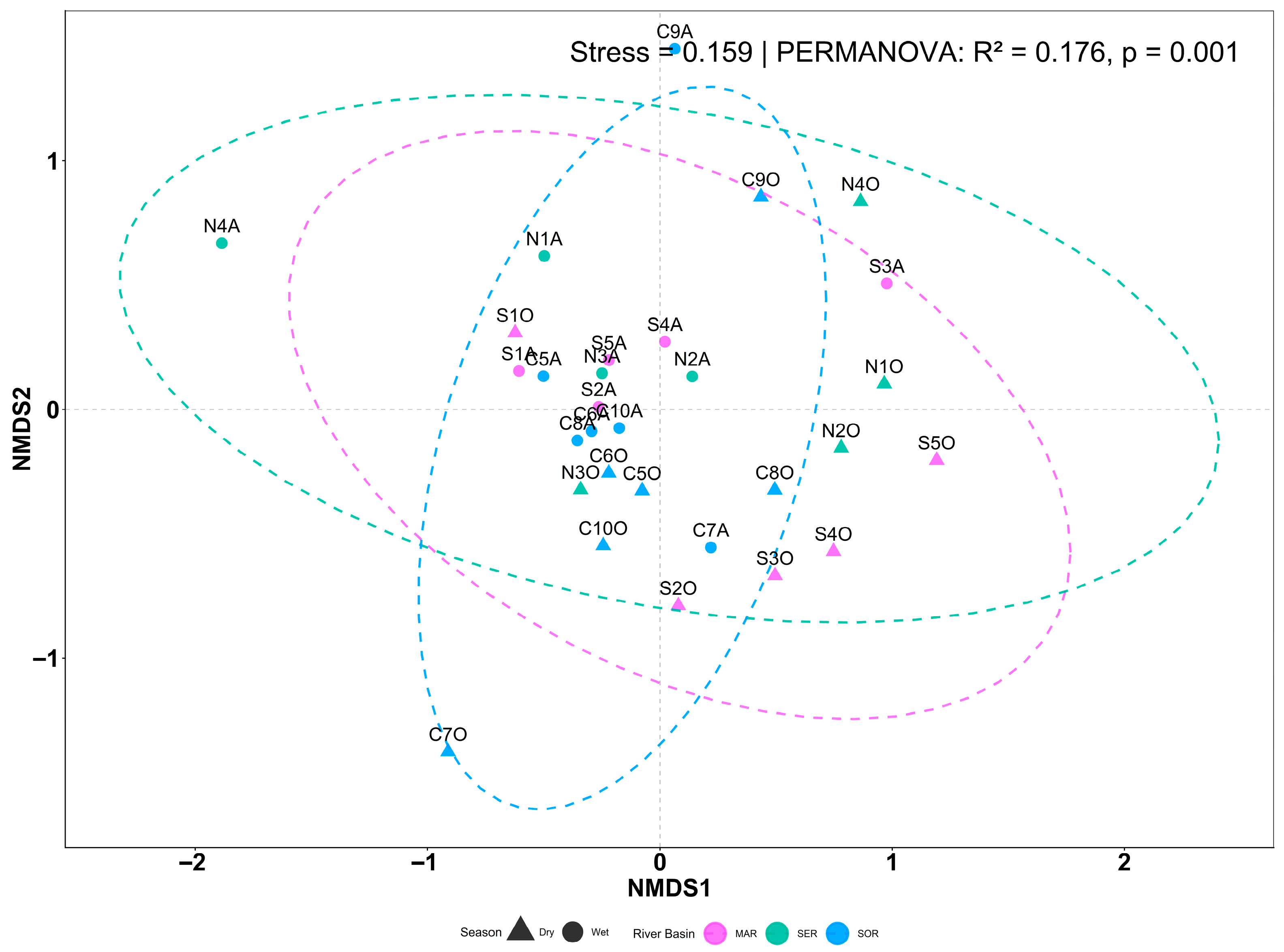
Non-metric multidimensional scaling (NMDS) revealed clear differences in species composition among river basins and between seasons (stress = 0.159; Figure 4). The PERMANOVA results indicated that season and river basin together explained 17.6% of the variation in community composition (PERMANOVA, R2 = 0.176, p = 0.001). Season alone accounted for approximately 7% of the variation (p = 0.003), while river basin explained around 9% (p = 0.037). These findings suggest that temporal variation between wet and dry seasons, as well as spatial differences among basins, both contribute to shaping community structure.

3.4. Environmental Factors as Drivers of Community Composition

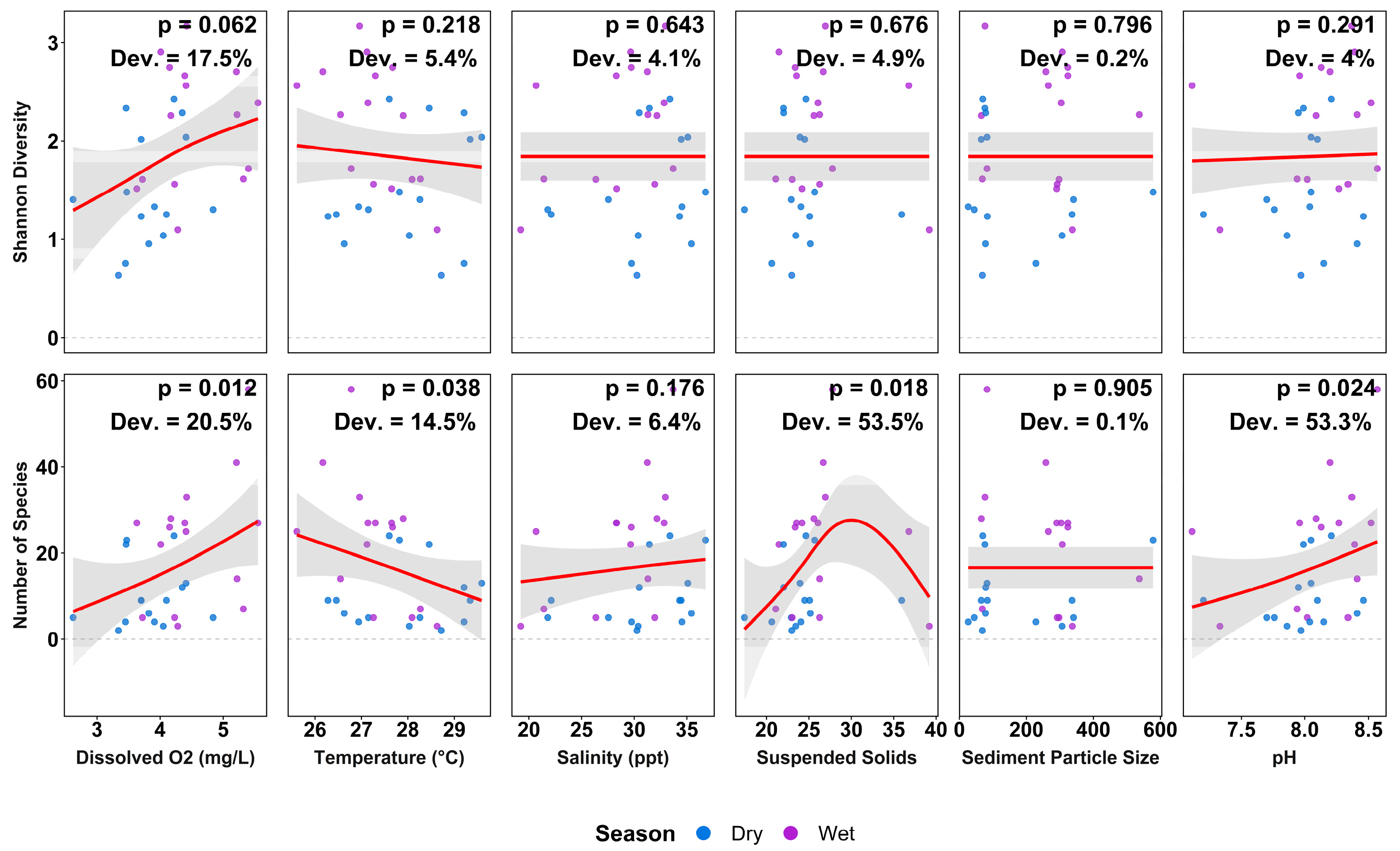
Generalised Additive Models (GAMs) were used to explore relationships between environmental variables and both the Shannon–Wiener diversity and number of species (Figure 5). Among all predictors, dissolved oxygen, temperature, suspended solids, and pH showed significant relationships with the number of species (p < 0.05), explaining between 14.5% and 53.5% of the variance. The number of species increased with dissolved oxygen and pH, decreased with temperature, and exhibited a unimodal response to suspended solids. In contrast, Shannon diversity showed a marginally insignificant relationship with dissolved oxygen (p = 0.062; 17.5% deviance explained), while no other environmental variable significantly influenced diversity (p > 0.05).
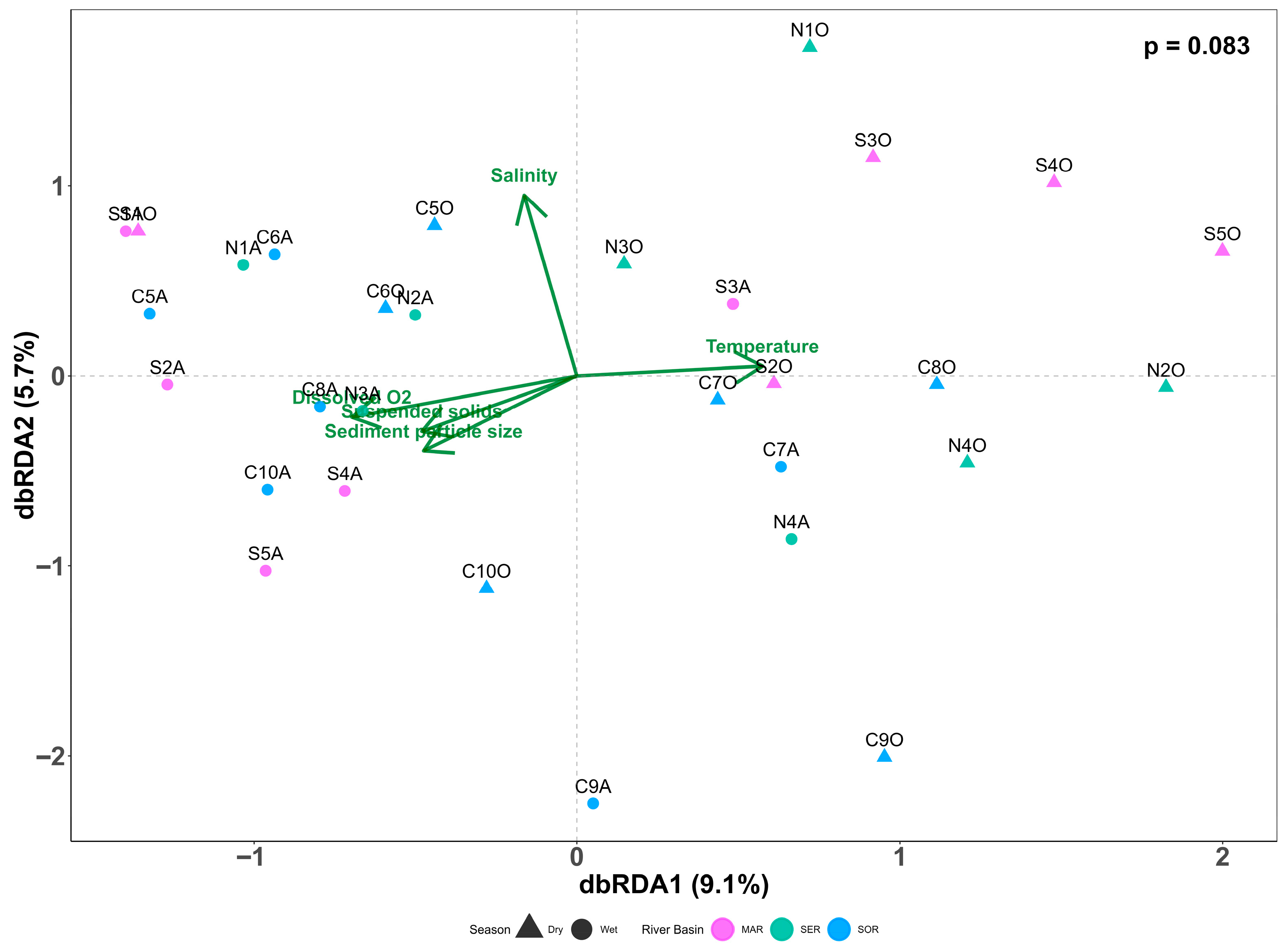
To assess the overall influence of environmental variables on microgastropod assemblage community composition, we performed a distance-based redundancy analysis (dbRDA) with the VIF-filtered variables (Figure 6). The first two dbRDA axes explained 9.1% and 5.7% of the total variation, respectively, although the model was marginally non-significant (p = 0.083). Therefore, while the model did not reach statistical significance, it reveals potential, weak associations between the environmental predictors and assemblage composition. Among the evaluated environmental variables, only salinity showed a significant effect on the model (p = 0.038), while temperature, dissolved oxygen, suspended solids, and sediment did not present significant relationships (p > 0.05).

3.5. Most Important Microgastropod Species Responsible for Spatial and Seasonal Dissimilarities

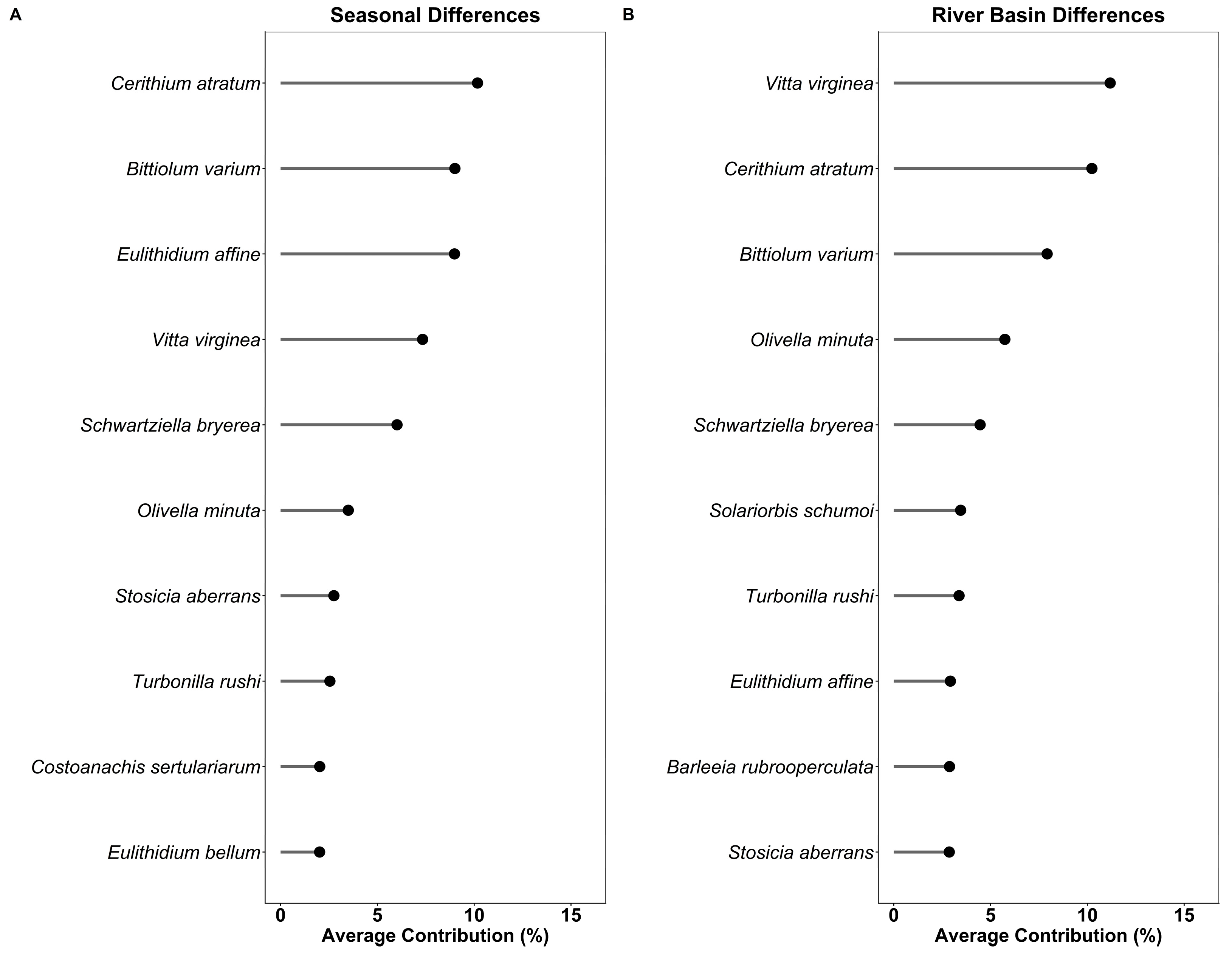
Similarity Percentage (SIMPER) analysis revealed moderate dissimilarities in assemblage composition between seasons and among river basins (Figure 7, Table A1 and Table A2, Table S2). Across seasons, Cerithium atratum, Bittiolum varium, Eulithidium affine, Vitta virginea and Schwartziella bryerea contributed most to the observed seasonal dissimilarities. Across river basins, Vitta virginea, Cerithium atratum, Bittiolum varium, Olivella minuta and Barleeia rubrooperculata had notable contributions to the dissimilarity percentages.

4. Discussion

The microgastropod assemblages studied are abundant enough for good statistical analysis, with more than 5520 individuals and 132 species recorded, providing extensive data suitable for assessing differences and change. This number of species is high when compared to studies conducted in eutrophic environments, such as Guanabara Bay [53], especially considering that Camamu Bay is oligotrophic. Compared to a previous study in the same region [54], which recorded 3183 individuals, 45 families and 82 species, this work substantially enriches the records of Brazilian malacofauna and contributes new occurrences in the study area and the state of Bahia [12,13,14,15,16,17,18,37,38].
In the microgastropod assemblages analysed in this study (Figure 3 and Figure 4), although there were no significant differences in overall abundance between the different basins and sampling periods, significant differences in species composition occurred both between basins and sampling periods, with higher diversity values recorded during the wet season. This variation aligns with a previous study in Camamu Bay, which showed that nutrients are detected in the water column during the wet season, but are largely absent during the dry season, due to the estuarine system’s efficient circulation, which results in the rapid mobilisation and transformation of these elements [55,56]. Nutrients are adsorbed onto fine sediment particles, as the extensive mangroves in the region favour the formation and sedimentation of estuarine bioclasts [57,58]. This process promotes the accumulation of fine, organic-rich sediment [59] and helps to explain the differences in assemblages between the dry and wet seasons. Nutrient levels influence micromollusc abundance mainly by altering food availability, sediment conditions and oxygen dynamics in soft-bottom habitats. Despite the significantly higher diversity and abundance recorded during the wet season, evenness was maintained in both seasons, demonstrating relative homogeneity in microgastropods’ dominance across the evaluated periods (dry and wet).
Exploratory individual analyses of the influences from environmental factors (GAMs, Figure 5) suggested that variation in species number and Shannon diversity values is significantly related to fluctuations in natural environmental factors such as dissolved oxygen, temperature, suspended solids, and pH. However, the joint analysis of environmental variables (Figure 6) indicates that salinity variation is the only factor significantly influencing variation between basins across different seasons (p = 0.038). Nevertheless, the variations recorded are associated with natural fluctuations in the region’s environmental factors, and the richness of the microgastropod data set enabled subtle differences to be determined.
Most of the species indicated by the SIMPER analysis (Figure A1) have a wide geographical distribution; they are grazers and are associated with unconsolidated substrates, thus playing a fundamental role in estuarine functioning [53]. These organisms serve as food for various vertebrate and invertebrate groups and participate in nutrient cycling through the consumption and incorporation of organic matter that is either suspended in the water or deposited in the sediment [60].
Gastropod molluscs are potentially excellent biological indicators of aquatic environmental quality due to their wide geographical distribution, relatively low mobility, and ability to accurately reflect local physico-chemical conditions over time. These species accumulate toxic substances and particulates, such as heavy metals and microplastics, in their tissues and shells, enabling the diagnosis of organic and chemical pollution across different ecological scales [61,62]. Furthermore, their shells exhibit sensitivity to pH variations and acidification, making them useful for monitoring environmental integrity and the effects of eutrophication and acidification in coastal ecosystems [63]. Additionally, some species indicate trophic imbalances and environmental degradation, particularly when associated with low native taxon richness [64]. Consequently, the use of microgastropods, both adults and juveniles, as bioindicators and biomonitors may be an effective tool (without the need for extensive, broad taxonomic expertise) to detect subtle environmental changes and guide water resource management and conservation actions [61,65]. Further work is, however, required to test marine micromolluscs’ response to known impact gradients to validate their potential as a biomonitor.
Although the presence of some metals (Pb, Zn, Cr, Cu, Cd) has been recorded in the study area [66], their concentrations resemble those of areas with little or no anthropogenic impact in the state of Bahia. Another study conducted in Camamu Bay also found no significant correlation between benthic invertebrate assemblages and trace metals [67]. Therefore, it is possible to assert that Camamu Bay is a comparatively pristine area of considerable ecological importance, featuring estuaries, mangroves, remnants of Atlantic Forest, algal meadows, and even coral reefs at its entrance. These habitats enrich the marine environment through the input of detrital or dissolved organic matter. It is a protected area, still little studied, subjected to very limited anthropogenic action and functioning effectively as a refuge, feeding ground and nursery for many species. Considering the pristine characteristics of Camamu Bay, the microgastropods’ assemblage patterns recorded in this study should serve as a benthic environmental indicator and can be used as a baseline for comparison in biomonitoring studies conducted in other areas with similar characteristics.

Supplementary Materials

The following supporting information can be downloaded at: https://www.mdpi.com/article/10.3390/jmse14010024/s1, Table S1: Taxonomic inventory of microgastropods (Mollusca: Gastropoda) recorded in Camamu Bay, Bahia, Brazil; Table S2: SIMPER results showing all species contributing to assemblage composition dissimilarity between seasons and river basins; Table S3: Minimum, maximum, mean and standard deviation values for individual counts of all species for MAR (Maraú) river basin; Table S4: Minimum, maximum, mean and standard deviation values for individual counts of all species for SER (Serinhaém) river basin; Table S5: Minimum, maximum, mean and standard deviation values for individual counts of all species for SOR (Sorojó) river basin; Table S6: Minimum, maximum, mean and standard deviation values for individual counts of all species for Dry season; Table S7: Minimum, maximum, mean and standard deviation values for individual counts of all species for Wet season.

Author Contributions

Conceptualization, methodology and sampling, S.d.M.C.F. and F.K.; taxonomic identification, S.d.M.C.F.; software, F.K. and E.H.G.; formal analysis, E.H.G., F.K. and M.J.A.; data curation, S.d.M.C.F.; writing, S.d.M.C.F., E.H.G., M.J.A. and F.K.; review and editing, F.K. and M.J.A.; project administration, F.K. All authors have read and agreed to the published version of the manuscript.

Funding

This research was partially funded by Bahia State Research Support Foundation—FAPESB (Notice Nº 09/2012, Request Nº 1356/2012). Additional funds were provided by the Postgraduate Program in Ecology: Theory, Applications, and Values, Institute of Biology, Federal University of Bahia.

Data Availability Statement

The raw data used in this study is available at https://github.com/GEEMCO-Lab/Microgastropod_assemblages_within_the_little-studied_Camamu_Bay (accessed on 29 October 2025) and can be provided by emailing FK (kelmo@ufba.br).

Acknowledgments

We thank all F.K. students for their assistance during field work.

Conflicts of Interest

The authors declare no conflicts of interest.

Abbreviations

The following abbreviations are used in this manuscript:
NMDSNon-Metric Multidimensional Scaling
SIMPERSimilarity Percentages
dbRDADistance-Based Redundancy Analysis
PERMANOVAPermutational Multivariate Analysis of Variance
VIFVariance Inflation Factor
GAMGeneralised Additive Model
BTSTodos os Santos Bay
SORSorojó Basin
SERSerinhaém Basin
MARMaraú Basin

Appendix A

Table A1. SIMPER analysis showing average between-group dissimilarities and the species that contributed the most to differences in assemblage composition between seasons and river basins: SER = Serinhaém; MAR = Maraú; SOR = Sorojó.
SpeciesWet × DrySER × MARSOR × MARSOR × SER
Cerithium atratum0.10170.08310.12980.1023
Bittiolum varium0.09000.06050.09280.0792
Eulithidium affine0.08980.14310.12090.0292
Vitta virginea0.07330.09280.03570.1117
Schwartziella bryerea0.06010.04750.06390.0446
Olivella minuta0.03490.06090.01650.0573
Stosicia aberrans0.02750.01560.03360.0286
Turbonilla rushi0.02540.01070.03040.0337
Costoanachis sertularium0.02020.01950.01830.0222
Eulithidium bellum0.02010.01460.02360.0190
Solariorbis schumoi0.02000.03450.01060.0345
Phrontis polygonate0.01900.03070.01540.0255
Barleeia rubrooperculata0.01680.02690.00800.0288
Schwartziella catesbyana0.00990.02160.00000.0210
Turbonilla fasciata0.01620.00190.02470.0229
Boonea jadisi0.01630.01100.01850.0108
Table A2. Minimum and maximum individual counts of dominant species contributing most to assemblage dissimilarities based on SIMPER analysis. SER = Serinhaém; MAR = Maraú; SOR = Sorojó.
SpeciesMARSERSORDRYWET
Cerithium atratum0–580–160–670–520–67
Bittiolum varium0–1420–360–1040–400–142
Eulithidium affine0–15440–90–310–2760–1544
Vitta virginea0–100–2470–330–300–247
Schwartziella bryerea0–1710–40–650–350–171
Olivella minuta0–40–280–150–280–15
Stosicia aberrans0–50–20–110–60–11
Turbonilla rushi0–60–100–380–130–38
Costoanachis sertularium0–170–60–190–70–19
Eulithidium bellum0–1270–40–560–120–127
Solariorbis schumoi0–20–110–120–110–12
Barleeia rubrooperculata0–10–80–250–80–25
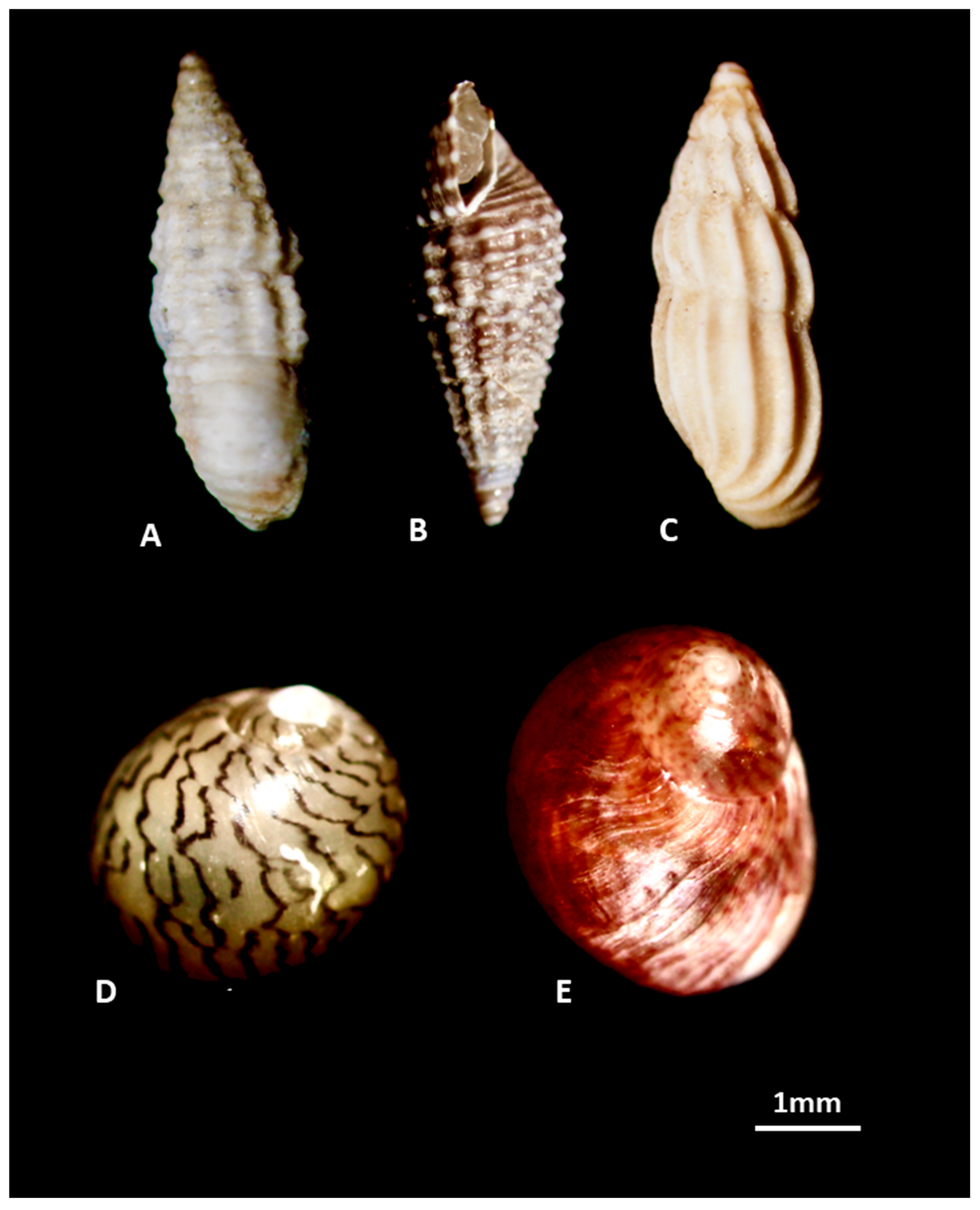
Figure A1. Species of microgastropods contributing most to the observed seasonal dissimilarities in the studied area. (A): Bittiolum varium; (B): Cerithium atratum; (C): Schwartziella bryerea, (D): Vitta virginea and (E): Eulithidium affine.
Jmse 14 00024 g0a1

References

  1. Del Valle, E.; Hayes, P.; Martínez-Candelas, I.; Brown, P.; McClenachan, L. Systematic Review of Global Historical Marine Ecology Reveals Geographical and Taxonomic Research Gaps and Biases. Philos. Trans. B 2025, 380, 20240279. [Google Scholar] [CrossRef]
  2. Spalding, A.K.; Grorud-Colvert, K.; Allison, E.H.; Amon, D.J.; Collin, R.; de Vos, A.; Friedlander, A.M.; Johnson, S.M.; Mayorga, J.; Paris, C.B. Engaging the Tropical Majority to Make Ocean Governance and Science More Equitable and Effective. Npj Ocean Sustain. 2023, 2, 8. [Google Scholar] [CrossRef]
  3. Stelljes, N.; Martinez, G.; Fuchs, G.; Maund, J.; Elkina, E. Ecosystem-Based Adaptation for Coastal Regions Worldwide; TropicalAdapt Background Paper; Ecologic Institute: Berlin, Germany, 2025. [Google Scholar]
  4. Shennan-Farpón, Y.; Visconti, P.; Norris, K. Detecting Ecological Thresholds for Biodiversity in Tropical Forests: Knowledge Gaps and Future Directions. Biotropica 2021, 53, 1276–1289. [Google Scholar] [CrossRef]
  5. Abdullah Al, M.; Akhtar, A.; Kamal, A.H.M.; AftabUddin, S.; Islam, M.S.; Sharifuzzaman, S.M. Assessment of Benthic Macroinvertebrates as Potential Bioindicators of Anthropogenic Disturbance in Southeast Bangladesh Coast. Mar. Pollut. Bull. 2022, 184, 114217. [Google Scholar] [CrossRef]
  6. Jayachandran, P.R.; Bijoy Nandan, S.; Jima, M.; Philomina, J.; Vishnudattan, N.K. Benthic Organisms as an Ecological Tool for Monitoring Coastal and Marine Ecosystem Health. In Ecology and Biodiversity of Benthos; Elsevier: Amsterdam, The Netherlands, 2022; pp. 337–362. [Google Scholar] [CrossRef]
  7. Thomas, J.D. Biological Monitoring and Tropical Biodiversity in Marine Environments: A Critique with Recommendations, and Comments on the Use of Amphipods as Bioindicators. J. Nat. Hist. 1993, 27, 795–806. [Google Scholar] [CrossRef]
  8. Appeltans, W.; Ahyong, S.T.; Anderson, G.; Angel, M.V.; Artois, T.; Bailly, N.; Bamber, R.; Barber, A.; Bartsch, I.; Berta, A.; et al. The magnitude of global marine species diversity. Curr. Biol. 2012, 22, 2189–2202. [Google Scholar] [CrossRef]
  9. Murley, M.; Hovey, R.K.; Prince, J. Temperate Intertidal Ecosystems Are Functionally Richer but More Vulnerable to Loss Than Tropical Ecosystems. Ecol. Evol. 2024, 14, e70657. [Google Scholar] [CrossRef]
  10. Farinati, E. Micromoluscos (Gastropoda y Bivalvia) del Holoceno del área de Bahía Blanca, Argentina. Ameghiniana 1994, 31, 303–315. [Google Scholar]
  11. Pisano, M.F.; Charó, M.P.; Fucks, E.E. Marine Holocene Microgastropods of Northeast Buenos Aires Province, Argentina. Quat. Int. 2013, 317, 64–72. [Google Scholar] [CrossRef]
  12. Underwood, A.J. The Ecology of Intertidal Gastropods. Adv. Mar. Biol. 1979, 16, 111–210. [Google Scholar] [CrossRef]
  13. Rivadeneira, M.M.; Alballay, A.H.; Villafaña, J.A.; Raimondi, P.T.; Blanchette, C.A.; Fenberg, P.B. Geographic Patterns of Diversification and the Latitudinal Gradient of Richness of Rocky Intertidal Gastropods: The ‘Into the Tropical Museum’ Hypothesis. Glob. Ecol. Biogeogr. 2015, 24, 1149–1158. [Google Scholar] [CrossRef]
  14. Watson, R.B. Report on Scaphopoda and Gastropoda Collected by MS Challenger during the Year 1873-1876. Rep. Sci. Rev. Voy. Chall. Zool. 1886, 15, 1–722. [Google Scholar]
  15. Rios, E.C. Brazilian Marine Molluscs Iconography; Museu Oceanográfico da FURG: Rio Grande, Brazil, 1975. [Google Scholar]
  16. Rios, E.C. Seashells of Brazil; Fundação Universidade do Rio Grande: Rio Grande, Brazil, 1985. [Google Scholar]
  17. Rios, E.C. Seashells of Brazil, 2nd ed.; Fundação Universidade do Rio Grande: Rio Grande, Brazil, 1994. [Google Scholar]
  18. Rios, E.C. Compendium of Brazilian Seashells; Evangraf: Rio Grande, Brazil, 2009. [Google Scholar]
  19. Assis, J.E. Gastrópodes Marinhos Da Baía de Todos Os Santos, Bahia; Boletim da Universidade Federal da Bahia: Salvador, Brazil, 1970. [Google Scholar]
  20. Assis, J.E. Notas Sobre a Malacofauna do Recôncavo Baiano; Boletim da Universidade Federal da Bahia: Salvador, Brazil, 1970. [Google Scholar]
  21. Absalão, R.S. Moluscos Gastrópodes Da Baía de Todos Os Santos, Bahia, Brasil. Rev. Bras. Biol. 1982, 42, 1–12. [Google Scholar]
  22. Ourives, T.M.; Rizzo, A.E.; Boehs, G. Composition and Spatial Distribution of the Benthic Macrofauna in the Cachoeira River Estuary, Ilhéus, Bahia, Brazil. Rev. Biol. Mar. Oceanogr. 2011, 46, 17–25. [Google Scholar]
  23. Pimenta, A.D.; Absalao, R.S. Review of the Genera Eulimastoma Bartsch, 1916 and Egila Dall & Bartsch, 1904 (Mollusca, Gastropoda, Pyramidellidae) from Brazil. Zoosystema-Paris- 2004, 26, 157–174. [Google Scholar]
  24. Santos, J.J.B.; Boehs, G. Spatial-temporal distribution and recruitment of Stramonita haemastoma Linnaeus, 1758 (Mollusca) on a sandstone bank in Ilhéus, Bahia, Brazil. Braz. J. Biol. 2011, 71, 799–805. [Google Scholar] [CrossRef]
  25. Rubal, M.; Veiga, P.; Cacabelos, E.; Moreira, J.; Sousa-Pinto, I. Increasing sea surface temperature and range shifts of intertidal gastropods along the Iberian Peninsula. J. Sea Res. 2013, 77, 11–20. [Google Scholar] [CrossRef]
  26. Poloczanska, E.S.; Smith, S.; Fauconnet, L.; Healy, J.; Tibbetts, I.R.; Burrows, M.T.; Richardson, A.J. Little change in the distribution of rocky shore faunal communities on the Australian east coast after 50 years of rapid warming. J. Exp. Mar. Biol. Ecol. 2011, 400, 145–154. [Google Scholar] [CrossRef]
  27. Veiga, M.P.T.; Gutierre, S.M.M.; Castellano, G.C.; Freire, C.A. Tolerance of high and low salinity in the intertidal gastropod Stramonita brasiliensis (Muricidae): Behaviour and maintenance of tissue water content. J. Molluscan Stud. 2016, 82, 154–160. [Google Scholar] [CrossRef]
  28. Instituto Brasileiro de Geografia e Estatística (IBGE). Estimativas Da População Residente No Brasil E Unidades Da Federação Com Data De Referência Em 1o De Julho De 2024; Instituto Brasileiro de Geografia e Estatística: Rio de Janeiro, Brazil, 2024. [Google Scholar]
  29. Secretaria de Planejamento do governo da Bahia—SEPLAN. Dados de Demografia Do Território Baiano; Secretaria de Planejamento do governo da Bahia—SEPLAN: Salvador, Brazil, 2025.
  30. de Oliveira, O.M.C.; Queiroz, A.F.d.S.; Argôlo, J.L.; Roeser, H.M.P.; Rocha, S.R.S. Estudo Mineralógico Do Sedimento de Manguezal Da Baía de Camamu-Ba. Rem Rev. Esc. De Minas 2002, 55, 147–151. [Google Scholar] [CrossRef]
  31. Paixão, J.F.; de Oliveira, O.M.C.; Dominguez, J.M.L.; Coelho, A.C.D.; Garcia, K.S.; Carvalho, G.C.; Magalhães, W.F. Relationship of Metal Content and Bioavailability with Benthic Macrofauna in Camamu Bay (Bahia, Brazil). Mar. Pollut. Bull. 2010, 60, 474–481. [Google Scholar] [CrossRef]
  32. Henrique Leite Borges, C.; Jacobo, S.; Guzmán, M.; Badaró, M.M.; Midlej, C. Fatores Determinantes Da Oferta Turística Na Baía de Camamu—BA Para o Planejamento Do Turismo e Desenvolvimento Local. Rev. Tur. Em Análise 2013, 24, 298–324. [Google Scholar] [CrossRef]
  33. Pedreira, R.M.A.; Barros, F.; Farias, C.d.O.; Wagener, A.L.; Hatje, V. A tropical bay as a reference area defined by multiple lines of evidence. Mar. Pollut. Bull. 2017, 123, 291–303. [Google Scholar] [CrossRef]
  34. Amorim, F.N. de Caracterização Oceanográfica Da Baía de Camamu e Adjacências e Mapeamento Das Áreas de Risco à Derrames de Óleo. Master’s Thesis, Universidade Federal da Bahia (UFBA), Salvador, Brazil, 2005. [Google Scholar]
  35. Martin, L.; Boas, G. da S.V. Mapa Geológico Do Quaternário Costeiro Do Estado Da Bahia: Escala 1: 250 000; Estado da Bahia, Secretaria das Minas e Energia, Coordenação da Produção Mineral: Salvador, Brazil, 1980. [Google Scholar]
  36. Soares, T.D.; Glaser, I.; Bahia, S.J.V.; Almeida, L.F.S.; Leuterman, A.J.J. Projeto Barita Da Ilha Pequena, Baía de Camamu. Relatório Técnico. Dresser Mineração 1980, 1, 106. [Google Scholar]
  37. Thomé, J.W.; Bergonci, P.E.A.; Gil, G.M. As Conchas Das Nossas Praias: Guia Ilustrado; USEB: Osaka, Japan, 2004; ISBN 8589985040. [Google Scholar]
  38. Fisher, R.A. Statistical Methods for Research Workers; Oliver & Boyd: London, UK, 1925; 239p. [Google Scholar]
  39. Bray, J.R.; Curtis, J.T. An Ordination of the Upland Forest Communities of Southern Wisconsin. Ecol. Monogr. 1957, 27, 326–349. [Google Scholar] [CrossRef]
  40. Clarke, K.R.; Warwick, R.M. Change in Marine Communities. Approach Stat. Anal. Interpret. 2001, 2, 1–168. [Google Scholar]
  41. Hastie, T.; Tibshirani, R. Generalized Additive Models. Stat. Sci. 1986, 1, 297–310. [Google Scholar] [CrossRef]
  42. Groß, J. Variance Inflation Factors. R News 2003, 3, 13–15. [Google Scholar]
  43. Legendre, P.; Anderson, M.J. Distance-based Redundancy Analysis: Testing Multispecies Responses in Multifactorial Ecological Experiments. Ecol. Monogr. 1999, 69, 1–24. [Google Scholar] [CrossRef]
  44. Clarke, K.R. Non-parametric Multivariate Analyses of Changes in Community Structure. Aust. J. Ecol. 1993, 18, 117–143. [Google Scholar] [CrossRef]
  45. R Core Team. R: A Language and Environment for Statistical Computing; R Core Team: Vienna, Austria, 2025. [Google Scholar]
  46. Wickham, H.; François, R.; Henry, L.; Müller, K.; Vaughan, D. Dplyr: A Grammar of Data Manipulation; DPLYR: Cairo, Egypt, 2023. [Google Scholar]
  47. Wickham, H.; Vaughan, D.; Girlich, M. Tidyr: Tidy Messy Data; Posit: Atlanta, GA, USA, 2024. [Google Scholar]
  48. Wickham, H. Reshaping Data with the Reshape Package. J. Stat. Softw. 2007, 21, 1–20. [Google Scholar] [CrossRef]
  49. Wickham, H. Ggplot2: Elegant Graphics for Data Analysis; Springer-Verlag: New York, NY, USA, 2016; ISBN 978-3-319-24277-4. [Google Scholar]
  50. Wilke, C.O. Cowplot: Streamlined Plot Theme and Plot Annotations for “Ggplot2”; Wilke Lab: Austin, TX, USA, 2025. [Google Scholar]
  51. Wood, S.N. Fast Stable Restricted Maximum Likelihood and Marginal Likelihood Estimation of Semiparametric Generalized Linear Models. J. R. Stat. Soc. B 2011, 73, 3–36. [Google Scholar] [CrossRef]
  52. Oksanen, J.; Simpson, G.L.; Blanchet, F.G.; Kindt, R.; Legendre, P.; Minchin, P.R.; O’Hara, R.B.; Solymos, P.; Stevens, M.H.H.; Szoecs, E.; et al. Vegan: Community Ecology Package. 2025. Available online: https://cran.r-project.org/web/packages/vegan/index.html (accessed on 29 October 2025).
  53. Neves, R.A.F.; Echeverría, C.A.; Pessoa, L.A.; Paiva, P.C.; Paranhos, R.; Valentin, J.L. Factors Influencing Spatial Patterns of Molluscs in a Eutrophic Tropical Bay. J. Mar. Biol. Assoc. United Kingd. 2013, 93, 577–589. [Google Scholar] [CrossRef]
  54. Ourives, T.M.d.S.; Guerrazzi, M.C.; Simone, L.R.L. Gastropods from Camamu Bay, state of Bahia, Brazil. Check List. 2011, 7, 328–336. [Google Scholar] [CrossRef]
  55. Affe, H.M.d.J.; Conceição, L.P.; Rocha, D.S.B.; Proença, L.A.d.O.; Nunes, J.M.d.C. Phytoplankton Community in a Tropical Estuarine Gradient after an Exceptional Harmful Bloom of Akashiwo Sanguinea (Dinophyceae) in the Todos Os Santos Bay. Ocean. Coast. Res. 2021, 69, e21008. [Google Scholar] [CrossRef]
  56. Amorim, F.N.; Cirano, M.; Soares, I.D.; Lentini, C.A.D. Coastal and shelf circulation in the vicinity of Camamu Bay (14°S), Eastern Brazilian Shelf. Cont. Shelf Res. 2011, 31, 108–119. [Google Scholar] [CrossRef]
  57. Li, B.; Xia, Y.; Chen, X.; Wang, J.; Liu, W.; Wang, Z.; Su, Z.; Ren, H. Enhanced Sediment Microbial Diversity in Mangrove Forests: Indicators of Nutrient Status in Coastal Ecosystems. Mar. Pollut. Bull. 2025, 211, 117421. [Google Scholar] [CrossRef] [PubMed]
  58. Laux, M.; Ciapina, L.P.; de Carvalho, F.M.; Gerber, A.L.; Guimarães, A.P.C.; Apolinário, M.; Paes, J.E.S.; Jonck, C.R.; de Vasconcelos, A.T.R. Living in Mangroves: A Syntrophic Scenario Unveiling a Resourceful Microbiome. BMC Microbiol. 2024, 24, 228. [Google Scholar] [CrossRef] [PubMed]
  59. Santos, D.G. dos Interpretação de Processos Hidrossedimentológicos Nos Estuários Serinhaém, Maraú e Sorojó (Baía de Camamu) a Partir Do Estudo de Bioclastos Recentes. Master’s Thesis, Universidade Federal da Bahia (UFBA), Salvador, Brazil, 2016. [Google Scholar]
  60. Weslawski, J.M.; Snelgrove, P.V.R.; Levin, L.A.; Austen, M.C.; Kneib, R.T.; Iliffe, T.M.; Garey, J.R.; Hawkins, S.J.; Whitlatch, R.B. Marine Sedimentary Biota as Providers of Ecosystem Goods and Services. In Host Publication not Specified in Elements; Island Press: Washington, DC, USA, 2004; pp. 73–98. [Google Scholar]
  61. Samsi, A.N.; Asaf, R.; Santi, A.; Wamnebo, M.I. Review: Gastropods as a Bioindicator and Biomonitoring Metal Pollution. Aquac. Indones. 2017, 18, 1–8. [Google Scholar] [CrossRef]
  62. Buwono, N.R.; Samuel, P.D.; Arifin, N.B.; Lusiana, E.D. Contamination of Microplastics in the Gastropod Sulcospira Sp. from Upstream of the Brantas River in Indonesia. Egypt. J. Aquat. Biol. Fish. 2025, 29, 1559–1575. [Google Scholar] [CrossRef]
  63. Marshall, D.J.; Abdelhady, A.A.; Wah, D.T.T.; Mustapha, N.; Gӧdeke, S.H.; De Silva, L.C.; Hall-Spencer, J.M. Biomonitoring Acidification Using Marine Gastropods. Sci. Total Environ. 2019, 692, 833–843. [Google Scholar] [CrossRef] [PubMed]
  64. Alves, R.S. Indicators of Trophic Imbalance and Degradation in Gastropod Assemblages of Freshwater Ecosystems. Ph.D. Thesis, Federal University of Rio de Janeiro, Rio de Janeiro, Brazil, 2023. [Google Scholar]
  65. Afwanudin, A.; Sarong, M.A.; Efendi, R.; Deli, A.; Irham, M. The community structure of gastropods as bioindicators of water quality in Krueng Aceh, Banda Aceh. IOP Conf. Ser. Earth Environ. Sci. 2019, 348, 012122. [Google Scholar] [CrossRef]
  66. de Oliveira, O.M.C.; Cruz, M.J.M.; Queiroz, A.F.d.S. Comportamento geoquímico de metais em sedimentos de manguezal da Baia de Camamu-Bahia. Braz. J. Aquat. Sci. Technol. 2009, 13, 1–8. [Google Scholar] [CrossRef]
  67. Hatje, V.; Barros, F.; Magalhaes, W.; Riatto, V.B.; Amorim, F.N.; Figueiredo, M.B.; Spanó, S.; Cirano, M. Trace Metals and Benthic Macrofauna Distributions in Camamu Bay, Brazil: Sediment Quality Prior Oil and Gas Exploration. Mar. Pollut. Bull. 2008, 56, 363–370. [Google Scholar] [CrossRef]
Figure 2. Comparisons of environmental variables across seasons and river basins. (A) Temperature; (B) Salinity; (C) pH; (D) Dissolved oxygen; (E) Suspended solids and (F) Sediment particle size. Boxplots show the distribution of each variable, with horizontal lines indicating mean values. p-values correspond to two-way ANOVA tests for the effects of season, river basin, and their interaction. SER = Serinhaém; MAR = Maraú; SOR = Sorojó.
Jmse 14 00024 g002
Figure 3. Comparisons of diversity indices across seasons and river basins. (A) Shannon-Weiner; (B) Number of species and (C) Pielou’s Evenness. Boxplots show the distribution of each variable, with horizontal lines indicating mean values. p-values correspond to two-way ANOVA tests for the effects of season, river basin, and their interaction.
Jmse 14 00024 g003
Figure 4. NMDS ordination of microgastropod assemblage community compositions across seasons and river basins based on a Bray–Curtis dissimilarity matrix. Points represent individual samples, coloured by river basin (MAR, SER and SOR) and shaped by season (Dry and Wet). Dotted lines represent 95% confidence intervals around group centroids. The model stress was 0.159, and PERMANOVA revealed a significant relationship of spatial and seasonal variance (R2 = 0.176, p = 0.001).
Jmse 14 00024 g004
Figure 5. Relationships between environmental variables and diversity indices based on GAMs. Each panel shows the fitted smooth (red line) with 95% confidence intervals (grey shaded area) for both Shannon–Wiener diversity and number of species. Points represent individual samples. p-values and percentages of deviance explained are shown for each model.
Jmse 14 00024 g005
Figure 6. dbRDA biplot showing the relationships between microgastropod community composition and environmental variables. Points represent individual samples, coloured by river basin (MAR, SER, and SOR) and shaped by season (Dry and Wet). Arrows indicate the direction and strength of environmental gradients.
Jmse 14 00024 g006
Figure 7. SIMPER analysis showing the top 10 species contributing to dissimilarities in community composition between (A) seasons and (B) river basins. Horizontal bars indicate the average percentage contribution of each species to the overall dissimilarity.
Jmse 14 00024 g007
Table 1. Location of the fifteen sampling stations.
Serinhaém River Estuary (SER)
- N1: Coroa Vermelha (13°50′607″ S/038°59′295″ W)
- N2: Ilha do Contrato (13°51′045″ S/039°00′900″ W)
- N3: Ponta da Siriba (13°50′021″ S/039°01′635″ W)
- N4: Ponta do Canal Itubera (13°48′190″ S/039°02′928″ W)
Igrapiúna and Sorojó Rivers Estuary (SOR)
- C5: Ponta do Santo (13°54′189″ S/039°01′436″ W)
- C6: Ponta do Tupu (13°55′506″ S/039°01′825″ W)
- C7: Ilha do Maracuia (13°56′571″ S/039°02′449″ W)
- C8: Boca do Sorojó (13°56′333″ S/039°03′913″ W)
- C9: Ilha das Flores (13°56′209″ S/039°04′995″ W)
- C10: Barra do Candiru (13°56′791″ S/039°05′972″ W)
Maraú River Estuary (MAR)
- S1: Ponta da Ilha Grande (13°54′39.0″ S/038°59′22.12.6″ W)
- S2: Taipú de Dentro (13°55′95.9″ S/038°59′67.8″ W)
- S3: Gruta de Ponta Caeira (13°52′76.6″ S/038°59′42.5″ W)
- S4: Ilha Barbada (13°59′28.2″ S/038°59′58.3″ W)
- S5: Ilha do Rogério (14°02′04.2″ S/039°00′23.3″ W)”
Table 2. Environmental variable means and sd values for the river basins and seasons.
Environmental VariableMARSERSORDRYWET
Temperature27.45 ± 0.9627.79 ± 0.8627.66 ± 1.2027.98 ± 1.1127.27 ± 0.80
Salinity32.98 ± 2.1930.18 ± 2.9827.19 ± 5.7031.18 ± 4.5428.65 ± 4.71
pH8.25 ± 0.828.16 ± 0.247.80 ± 0.387.99 ± 0.308.11 ± 0.41
Dissolved
oxygen
4.26 ± 0.823.64 ± 0.524.47 ± 0.423.82 ± 0.534.54 ± 0.63
Suspended
solids
25.20 ± 1.4823.29 ± 2.0626.69 ± 6.8524.02 ± 3.9126.55 ± 5.07
Sediment
particle size
236.12 ± 203.06211.82 ± 115.96186.40 ± 125.96164.21 ± 158.87255.29 ± 130.31
Table 3. Diversity index means and standard deviation values for the river basins and seasons. SER = Serinhaém; MAR = Maraú; SOR = Sorojó.
Diversity IndicesMARSERSORDRYWET
Shannon–Wiener1.73 ± 0.621.83 ± 0.881.93 ± 0.631.50 ± 0.582.18 ± 0.62
Number of Species17.7 ± 16.8915.5 ± 11.7416.41 ± 12.2310 ± 7.4423.2 ± 14.92
Pielou’s Evenness0.76 ± 0.200.75 ± 0.210.80 ± 0.110.75 ± 0.170.79 ± 0.17
Disclaimer/Publisher’s Note: The statements, opinions and data contained in all publications are solely those of the individual author(s) and contributor(s) and not of MDPI and/or the editor(s). MDPI and/or the editor(s) disclaim responsibility for any injury to people or property resulting from any ideas, methods, instructions or products referred to in the content.