Article

Optimal SAR and Oil Spill Recovery Vessel Concept for Baltic Sea Operations

by
Justas Žaglinskis
Lithuanian Maritime Academy, Vilnius Gediminas Technical University, I. Kanto 7, 92123 Klaipeda, Lithuania
J. Mar. Sci. Eng. 2026, 14(1), 12; https://doi.org/10.3390/jmse14010012 (registering DOI)
Submission received: 20 November 2025 / Revised: 14 December 2025 / Accepted: 16 December 2025 / Published: 19 December 2025
(This article belongs to the Special Issue Oil Spills in the Marine Environment)

Abstract

The Baltic Sea region presents challenging environmental and operational conditions for search and rescue (SAR) and oil spill recovery activities, including strong winds, high waves, seasonal ice, and low water temperatures. The current Lithuanian search and rescue and oil pollution response capabilities, particularly the existing vessel “Šakiai”, are insufficient to meet modern operational and safety requirements. This study aims to determine the optimal concept and technical characteristics of a new vessel capable of operating effectively in Lithuanian maritime responsibility area. The research combines hydrometeorological data analysis, review of international regulatory frameworks, evaluation of equipment requirements, and bridge simulator modelling of two reference vessel concepts: patrol-type and supply-type. Additional oil spill dispersion modelling was performed using the simulation tool. Findings show that search and rescue tasks prioritize speed, while spill response operations require stability and maneuverability. Simulations indicate that patrol-type vessels reach search and rescue zones faster, while supply-type vessels provide superior station maintenance and equipment deployment in adverse conditions. The optimal vessel concept should be based on a supply-type hull with dynamic positioning, ≥15 kn speed, ≥113 t bollard pull, ≥6-day endurance and oil recovery arms with ≥40 m sweep width.

1. Analysis of Factors That Limit Search, Rescue, and Pollution Response Operations

In 1992, Lithuania ratified the main international commitments regarding maritime search and rescue (SAR), established in the 1974 International Convention for the Safety of Life at Sea (SOLAS 74) and the 1979 International Convention on Maritime Search and Rescue, the latter of which Lithuania ratified in 2001 [1,2].
Currently, the Lithuanian Naval Forces employ the vessel “Šakiai” (built in 1986) to fulfil international search, rescue, and pollution response obligations [3]. Originally constructed as a fishing trawler, the vessel now requires increasing maintenance and, due to its limited speed, restricts the efficiency of incident response and task execution. The restrictions resulted by age and the following principal characteristics: it is 56.6 m in length, 10.5 m in width, and has a draught of 4.8 m. The vessel has a displacement of 1350 t and can reach a maximum speed of 9.5 knots. It operates with a crew of up to 16 persons. Propulsion is relatively weak and provided by an NVD-type diesel engine with an output of 1320 horsepower.
This study and its results are closely related to the analysis aimed at selecting a new search, rescue and pollution response vessel to ensure the fulfilment of national and international commitments. The requirements are based on clear and scientifically validated criteria that reflect the specific conditions of the Lithuanian area of responsibility.

1.1. Analysis of Hydrometeorological Conditions

Hydrometeorological conditions are among the major factors that influence all maritime operations. These factors include various weather and water conditions that affect not only the effectiveness, safety, and efficiency of sea missions from the perspective of the platform, but also the survival chances of casualties, as well as the spread or containment of pollutants. The main factors are wind, waves, currents, ice, visibility, and icing [4,5,6]. Each of these factors is reviewed separately to determine their impact on search, rescue and oil spill recovery (SAROR) operations.

1.1.1. Analysis of Wind Speed

To maneuver accurately in strong winds, a vessel requires a powerful propulsion system (a propulsion system is the set of mechanisms that generate thrust and enable the vessel to move, consisting of an internal combustion engine, transmission, and other components that produce the driving force), capable of counteracting the effects of crosswinds. In addition, the structure of the vessel must be designed to withstand wind-induced loads and maintain stability according to the criteria approved by the International Maritime Organization [7,8].
Taking into account the area of responsibility of Lithuania and the prevailing winds within it, the speed and direction of the wind vary significantly regardless of the season presented in Figure 1 [9]. However, due to the frequent persistence of high-pressure systems in northern Scandinavia, the southern Baltic Sea—especially in winter and spring—often experiences continuous easterly and northeasterly winds that last for several weeks [10].

1.1.2. Analysis of Wave Height

The impact of wave height on ships can be divided into several key areas: stability, navigation, structural integrity, crew comfort and safety, and operational efficiency. Large waves may cause excessive rolling (side-to-side motion) and pitching (up-and-down motion). Severe rolling can shift cargo or unsecured equipment, potentially leading to capsizing, while pitching—when the bow or stern repeatedly strikes the waves—can damage the structure of the vessel [11]. As the height of the wave increases, the ability of the ship to maintain stability and maneuverability in rough seas decreases, affecting overall buoyancy characteristics. In heavy seas, vessels must reduce speed to minimise hull stress and ensure safe navigation, which may result in delays in reaching the destination. Course alterations may also be necessary to avoid the most severe conditions, extending the route and increasing fuel consumption. In addition, large waves exert an immense force on the hull, which can cause fatigue of the structural metal and, in extreme cases, damage or failure of the hull [12]. Continuous motion caused by high waves not only creates technical challenges, but also contributes to crew fatigue and sea sickness, reducing operational effectiveness and increasing the risk of accidents and injuries [13].
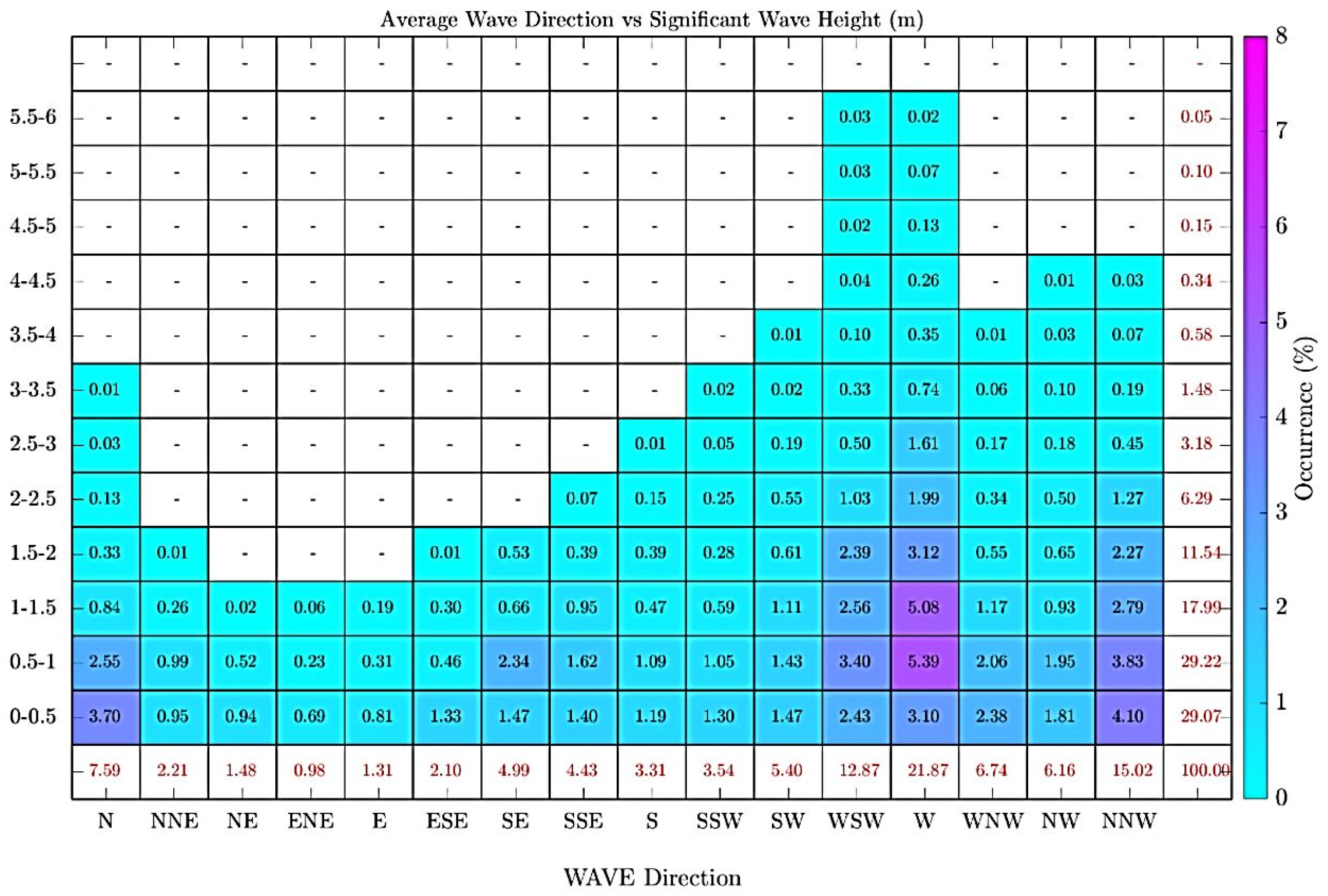
Specific observations of the mean wave direction and significant wave height over a period of one-year are presented in Figure 2 [9]. These measurements were carried out throughout the year to determine the exact hydrometeorological conditions prevailing in the Baltic Sea within the Exclusive Economic Zone (EEZ) of Lithuania. The figure also shows the frequency of occurrence of such waves during the observation period.
In the area of responsibility of Lithuania, waves are generated by locally blowing winds, and their direction changes quite frequently. The strongest waves along the eastern Baltic Sea coast occur during westerly and northwest winds. Significant and very significant wave conditions in the Baltic Sea occur in 12–14% of cases during winter and autumn, and in 1–3% of cases during summer [10].

1.1.3. Analysis of Current Strength

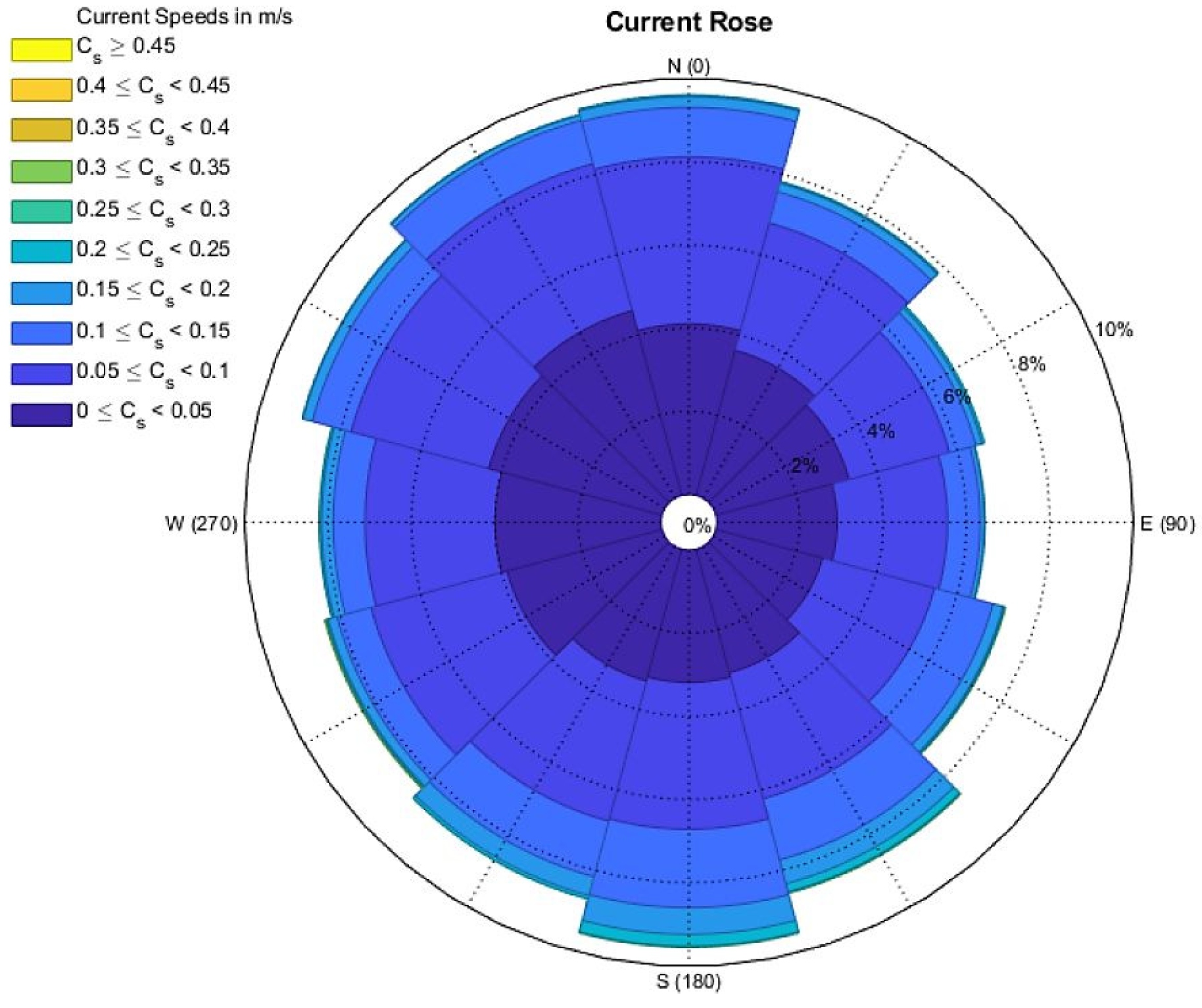
Strong currents affect the maneuverability of rescue vessels, making it more difficult to carry out operations effectively alongside the ship. Currents also influence the course and speed of the vessels, requiring constant adjustments to maintain the intended route. Sailing against strong currents increases fuel consumption, which impacts the efficiency and costs of maritime transport operations [12]. To mitigate the effects of currents on search, rescue, and pollution response operations, advanced computational algorithms are applied to create drift models based on real-time current data, predicting the probable movement of objects and people in the water. By selecting an appropriate search method according to the current direction and speed, adequate coverage of the search area is ensured [14]. In Lithuania’s area of responsibility, currents are not particularly strong, as can be seen from the one-year observation data presented in Figure 3 [9].
In the Baltic Sea, currents are most often generated by rivers that enter from the surrounding countries. As a result, the prevailing current is generally directed southward; however, it rarely exceeds 0.125 m/s (0.25 knots). In rare cases, when winds reach number 8 on the Beaufort scale, wind-driven water movement can increase the current speed up to 1 m/s (2 knots), though it subsides once the wind ceases. Due to minimal tidal fluctuations, tidal currents are absent in the Baltic Sea. Similarly, there are no permanent oceanic currents in the region [10].

1.1.4. Analysis of Ice Thickness and Icing

Ice thickness and icing also have a significant impact on various maritime operations. Thick ice can make traditional sea routes impassable, forcing vessels to take alternative routes that are longer and potentially more hazardous. Ships navigating through thick ice often require icebreaker assistance, which increases operational complexity and costs. Heavy ice also exerts considerable pressure on the hull, which can cause structural damage if the vessel is not designed for such conditions. In addition to reinforced hull construction, such ships must be equipped with more powerful engines and larger fuel reserves, while their cooling systems must be heated to prevent freezing and blockage of the sea chests [15].
Since salt water in the central Baltic Sea accumulates summer heat, it is sufficient to prevent the sea itself from freezing during winter. However, coastal areas, where the water is less salty and exposed to cold air masses from the mainland, frequently freeze over. Table 1 provides data on the coastline of Lithuania [10].
Although the port of Klaipėda south of the Dangė River mouth and the Curonian Lagoon is covered each year—usually for a short period—by thin ice, and in the northern part of the port ice congestion and broken ice occur, Klaipėda is considered an ice-free port [10]. This factor is important for Lithuania, as it enables uninterrupted year-round navigation, unlike other northern ports where operations are halted during the cold season.

1.1.5. Fog Data Analysis

Reduced visibility during fog significantly complicates and increases the risks of search and rescue operations. Fog severely limits visual detection, hindering the identification of objects or people, and further complicated searches at night, as night vision equipment becomes less effective. Under foggy conditions, the risk of collisions increases because the vessels may struggle to determine their position. To ensure safety, ships must reduce speed, which prolongs the duration of rescue operations. Additionally, fog can reduce the effectiveness of radar and other electromagnetic sensors, which are crucial for navigation and search [16].
Table 2 presents long-term statistical observation data for the ports of Klaipėda, Kaliningrad, and Liepaja, indicating the average number of days of fog that typically occur in each month. The long-term observations show that in the Baltic Sea region, fog is more frequent during winter along the coasts. In the open sea, fog reaches its peak in late April and early June due to increased water temperatures [10].

1.2. Analysis of Requirements for Search, Rescue, and Pollution Response Operations

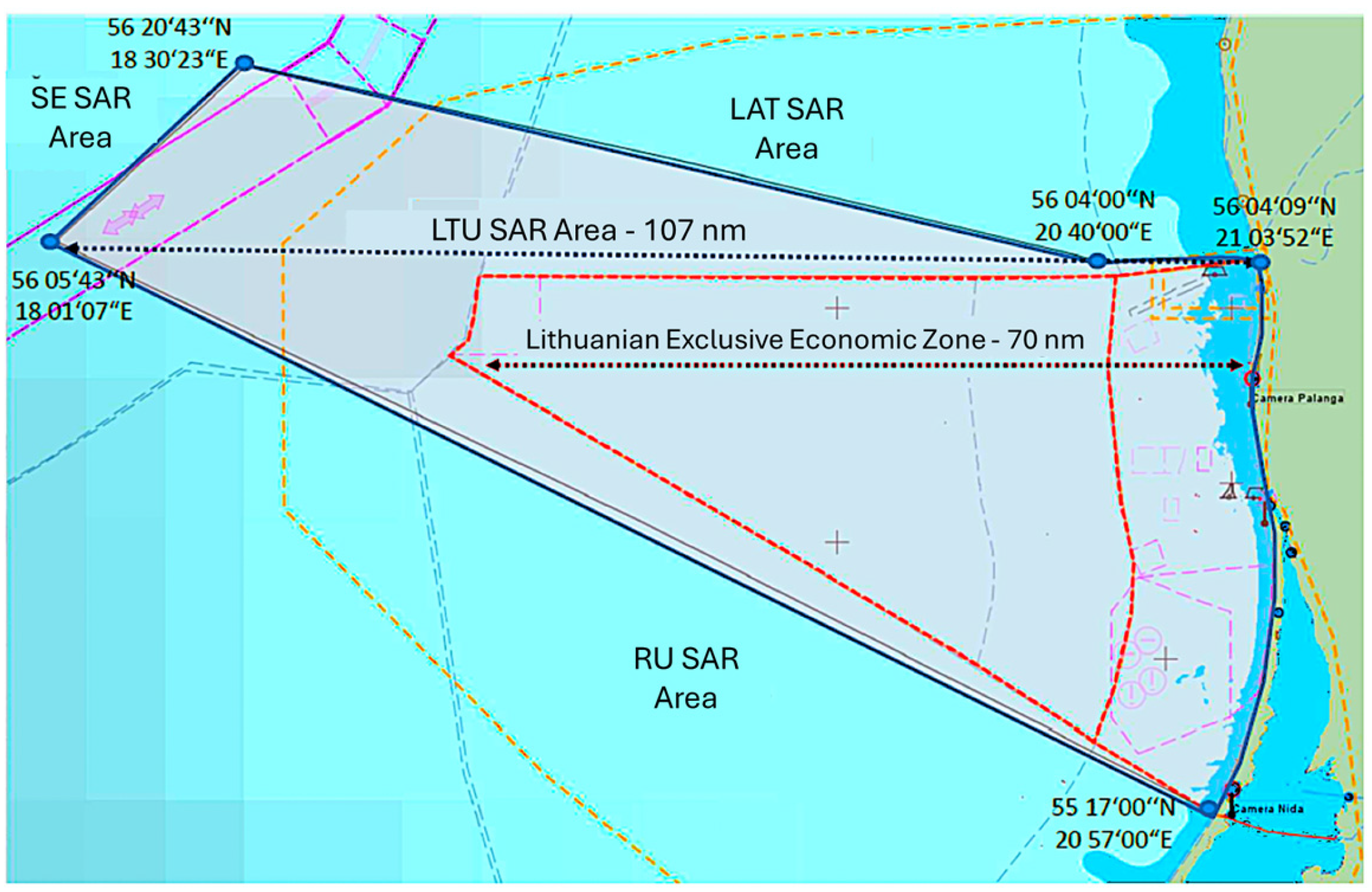
The Naval Forces Maritime Rescue Coordination Centre (MRCC) organizes, coordinates, and manages search and rescue operations according to the SAROR Plan for the SAROR area [17]. The MRCC ensures the availability and readiness of the required resources 24/7 for SAROR operations. Upon receiving distress signals or reports of accidents or other incidents within the SAROR area (Figure 4) that pose a threat to human health or life, the MRCC maintains communication with the people in distress, as well as with the units involved in the operation.
The MRCC performs its functions within the SAROR Area of the Republic of Lithuania, which covers 12,400 km2. According to the International Tanker Owners Pollution Federation (ITOPF), Lithuania has experienced one major oil spill incident in 1981, when 16,493 t of oil were released into the Baltic Sea, as well as several incidents at the Būtingė oil terminal, where the spills ranged from 4 to 8 t [18]. These figures do not include various minor incidents that occurred within the port.

1.2.1. Analysis of Vessel Readiness for SAROR Operations and Relevant Legislation

The 1979 International Convention on Maritime Search and Rescue (entered into force in Lithuania on 22 February 2001) establishes the obligation of Contracting Parties to develop and maintain effective maritime SAR services, either individually or in cooperation with other countries and the International Maritime Organization (IMO). The Convention requires each Party to ensure immediate assistance to any person in distress at sea, irrespective of nationality, status, or circumstances [19].
The 1990 International Convention on Oil Pollution Preparedness, Response and Co-operation entered into force in the Republic of Lithuania on 23 March 2003. According to Article 1, the Parties, individually or jointly, undertake to take all appropriate measures in accordance with the Convention and its Annex to prepare for and respond to oil pollution incidents. Article 6 further requires each Party to establish a national system for prompt and effective response to such incidents [20].
The 1992 Helsinki Convention on the Protection of the Marine Environment of the Baltic Sea Area entered into force in Lithuania on 17 January 2000. Under this Convention, the Helsinki Commission (HELCOM) was established to oversee and coordinate efforts related to pollution prevention and environmental protection in the Baltic Sea region [21]. To achieve this, Parties must establish a legal framework, designate responsible authorities, organize available resources, provide communication facilities, and ensure effective coordination and operational capabilities for SAROR activities [19].
According to the National Risk Analysis, specific response timeframes are established to manage marine pollution incidents. These deadlines are designed to comply with international convention requirements and to ensure an adequate national response to maritime emergencies. For search, rescue and oil spill recovery Vessels (SARORVs), the following operational timeframes are defined:
  • the SARORV must depart for the incident site within 2 h;
  • it must reach any location of pollution incident within the national maritime area within 6 h of departure;
  • national pollution response units must collect spilled pollutants using mechanical means within 48 h.
The same document stipulates preparation times for search and rescue operations at sea: 15 min for the Air Force standby helicopter and 1 h for the Naval Force standby vessel [22].

1.2.2. Traffic Analysis in the Area of Responsibility of the Republic of Lithuania

According to data from the IMO, maritime traffic in the Baltic Sea is among the most intensive in the world. To ensure navigational safety and reduce marine pollution, all vessel movements are closely monitored and controlled. Several regional security and monitoring organizations operate within the Baltic Sea to enable effective response to oil spills and vessel collisions by continuously collecting, processing, and assessing situational data.
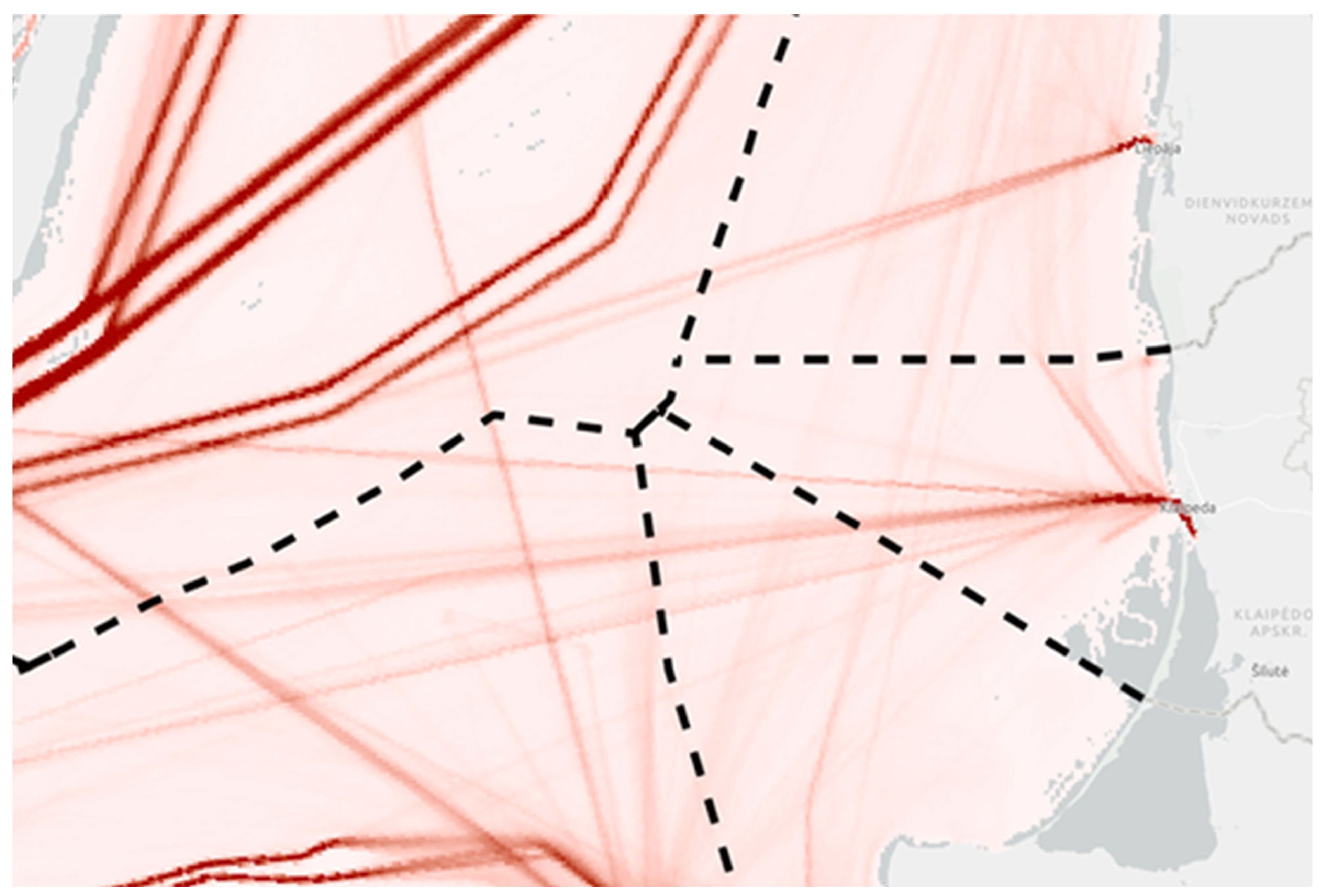
One of the key systems is the SafeSeaNet platform, which facilitates real-time information exchange between countries, ensuring rapid response to incidents [23]. Another organization, HELCOM, compiles and analyzes historical data to identify and monitor the main shipping routes in the Baltic Sea. Figure 5 [24] presents the main maritime traffic routes (red colour) within the area of responsibility (black dashed lines) of the Republic of Lithuania, based on historical data on the movement of 2022 vessels.
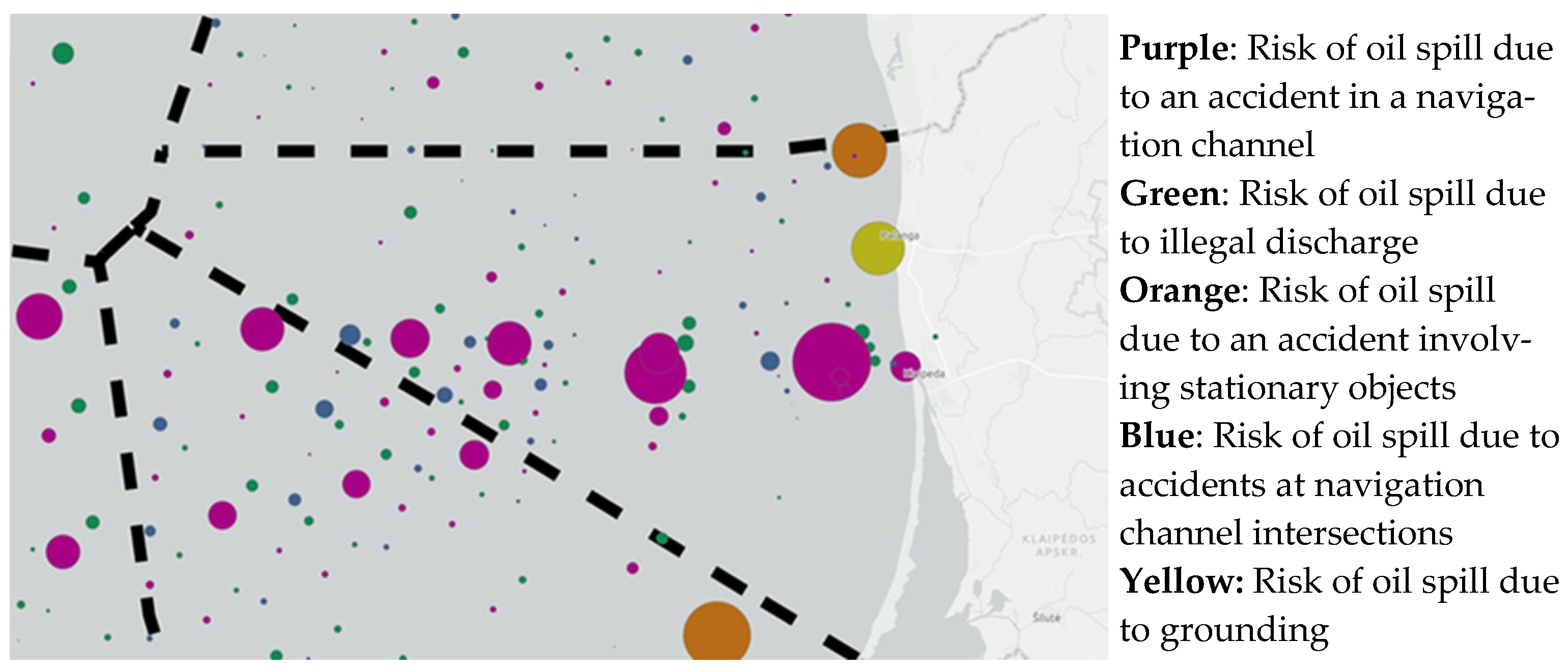
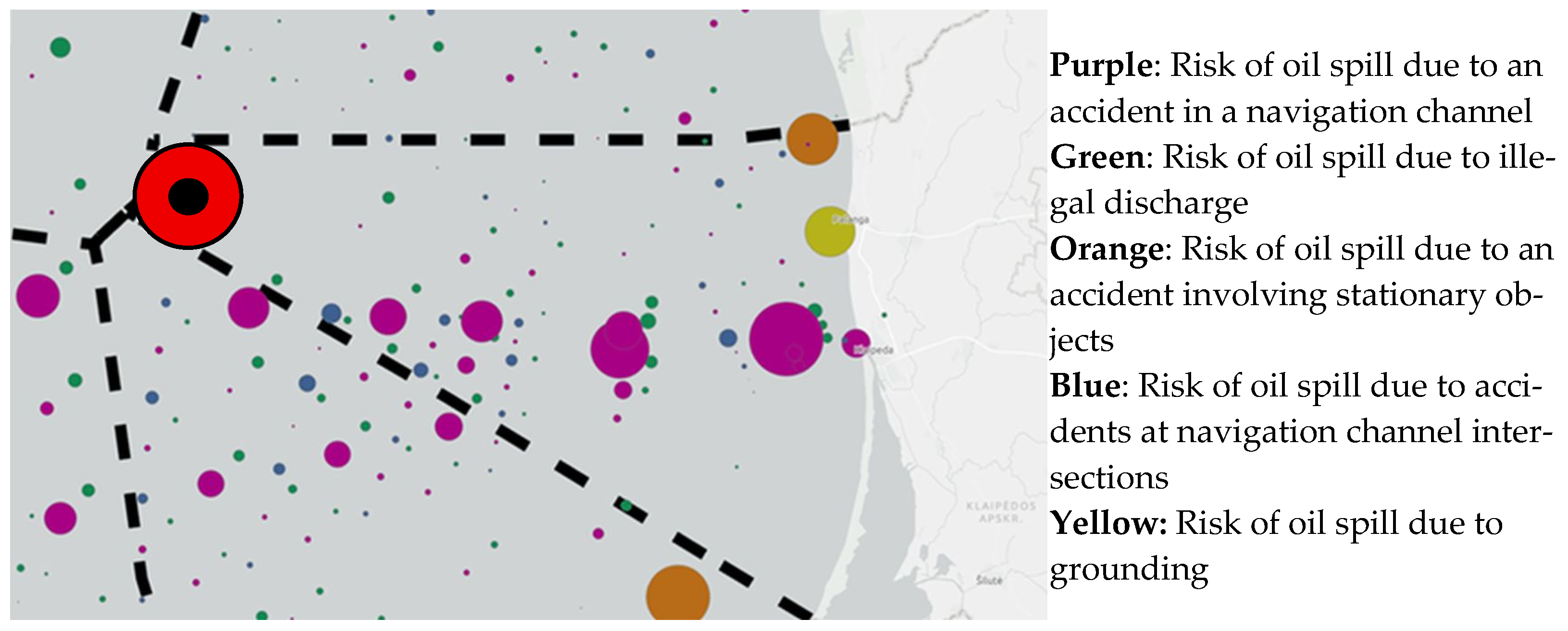
By continuously monitoring, collecting, and reporting data on all incidents occurring in the Baltic Sea, the HELCOM organization has developed a risk map of high-risk areas, presented in Figure 6 and based on 2020 data [24]. This map identifies the locations with the highest probability of pollution incidents according to the applied risk assessment methodology. Different colors indicate pollution types categorized by their probable sources. The risk assessment was conducted under the BRISK project (Sub-regional Risk of Oil and Hazardous Substance Spill in the Baltic Sea), which aimed to evaluate and map regional risks of oil and hazardous substance spills in the Baltic Sea and SAROR area (black dashed lines) of the Republic of Lithuania.

1.2.3. Crew Composition Analysis

The crew requirements for SARORVs are designed to ensure the ability of the vessel to perform assigned operations efficiently and effectively. The exact composition of the crew depends on the size and type of the vessel, operational area, equipment, and both national and international regulations. Typically, the SARORV crew consists of personnel with various maritime and technical skills, as defined by the Minimum Safe Manning Certificate, the Standards of Training, Certification and Watchkeeping Convention (STCW), the STCW Code, SOLAS, and other relevant regulations [25].
In general terms (without specifying onboard equipment), the main positions on a search and rescue vessel may include:
  • Captain—overall command of the vessel and operations; responsible for navigation and decision-making;
  • Chief Officer—assists the captain; manages deck operations and coordinates rescue activities;
  • Second Officer—responsible for navigation, communications, and maintenance of navigation records;
  • Chief Engineer—oversees the engine department and mechanical systems, ensuring propulsion and auxiliary systems function properly;
  • Second Engineer—assists the Chief Engineer in maintaining and operating mechanical systems;
  • Medical Officer/Paramedic—provides medical care to rescued persons and ensures first aid readiness;
  • Rescue Swimmer/Diver—trained to perform water-based rescue tasks under various conditions;
  • Radio Operator—maintains continuous communication with the Rescue Coordination Centre and other vessels or aircraft;
  • Deck Crew—performs deck operations, including launching and retrieving rescue boats and pollution recovery equipment;
  • Rescue Boat Crew—operates smaller rescue craft deployed from the main vessel.
  • Cook—responsible for food preparation and supply management;
Each position plays a vital role in maintaining operational readiness, safety, and efficiency during search, rescue, and pollution response missions.

1.3. Analysis of Principal SARORVs in Baltic Sea Region

To determine the equipment requirements for a newly designed SARORV, the largest SARORVs operated by Baltic Sea countries and their technical capabilities were analyzed. Table 3 [26] presents publicly available data on neighboring countries’ vessels and their operational capacities. These data are collected and published by HELCOM to ensure that all Baltic Sea countries are aware of each other’s response capabilities and can anticipate potential assistance or request specific resources during emergency situations.
The summarized data indicates significant variation among the vessels in terms of technical characteristics and operational capacity. Larger vessels generally possess greater oil recovery storage capacity, while Sweden and Finland operate ships designed for a wider range of operations. Overall, all SARORVs in the region are equipped with multiple technical systems for oil recovery.
Based on the data presented in Table 3, a comparative analysis of the main SAR vessels operated by Baltic Sea countries was conducted, focusing on their technical characteristics and operational capabilities. These vessels are designed to perform SAR operations, as well as oil spill and recovery, and other maritime emergency response tasks. According to publicly [26,27,28,29,30,31] available data, their assessment can be summarized as follows:
  • Size and capabilities: Finland and Sweden possess the largest SAR and oil recovery vessels, designed for a broader range of operations. They are equipped with larger oil recovery storage capacities and additional systems such as decompression chambers and dynamic positioning. Notably, Poland’s SAR vessel has a unique capability not found in other countries’ fleets—a remotely operated vehicle (ROV), which enables underwater operations and allows the vessel to conduct search and rescue missions in three dimensions: in the air, on the surface, and underwater;
  • Speed and maneuverability: Estonia and Sweden operate the fastest SAR vessels (15 and 16 knots, respectively), which is a significant advantage for rapid response. Compared to the current Lithuanian SAR vessel, this represents nearly double the speed;
  • Pollution recovery capacity: Finnish and Swedish vessels have the largest oil collection capacities (1200 m3 and 1050 m3 respectively). This enables them to perform extended recovery operations without external assistance. They are also equipped with a wider range of oil recovery technologies, such as disc and brush skimmers;
  • Ice class: most Baltic Sea regions are ice-classed, which is essential for year-round operation in this region, especially during winter;
  • Specialized equipment: Finland and Sweden’s vessels are the best equipped with specialized systems, including decompression chambers and dynamic positioning, enhancing their effectiveness during complex missions. Additionally, Finland’s SAR vessel has the capability to refuel and support helicopters at sea, significantly improving coordination between maritime and aerial units;
  • Towing power: Swedish and Finnish vessels have the highest towing capacity (100 t), which is critically important for maritime rescue operations;
  • Firefighting systems: nearly all SAR vessels in the Baltic Sea region countries are equipped with Class 1 firefighting systems, enabling them to assist in shipboard fire emergencies at sea—a crucial capability for maritime safety.
The review demonstrates that the optimal design and selection of a SARORV depend on a combination of environmental, operational, and regulatory factors. The most influential include wind, wave height, currents, water temperature, ice conditions, and fog, all of which directly affect vessel maneuverability, safety, and operational efficiency.
Additionally, compliance with international conventions (SOLAS, IAMSAR, Helsinki Convention) and national regulations ensures preparedness, proper equipment, and qualified crew. Technical readiness, effective communication systems, and interagency cooperation—particularly with air and naval units—are essential for timely and coordinated response actions.
Past incident analysis and the operational experience of other Baltic Sea countries provide valuable insights into defining the technical and functional requirements of a new SARORV. Considering these factors through mathematical modeling enables the determination of optimal vessel characteristics suited to Lithuania’s Baltic Sea area of responsibility.

2. Methods

To determine the optimal requirements for a SARORV, mathematical modeling tools are applied based on the factors identified in the literature review. These models are used to define the necessary parameters for vessel speed, size, and other technical characteristics when procuring a new SARORV.
Three main models are employed: the Bridge Simulator, used to assess the influence of hydrometeorological conditions on the vessel; the Oil Spill Dispersion Modeling Program (OSDMP), used to determine the effective operational area for pollutant collection; and the Search and Rescue Region Calculation Method, applied to evaluate the effects of vessel speed and weather conditions.
Additionally, a comparison of SARORVs operated by Baltic Sea countries is conducted to identify required auxiliary equipment, and a matrix of influencing factors is developed to support the assessment of optimal vessel capabilities.

2.1. Mathematical Model of the Bridge Simulator

In the Transas–Wärtsilä Bridge Simulator mathematical model [32], vessel motion is simulated by accounting for various forces and moments acting on the ship. These mathematical models include equations of vessel dynamics, hydrodynamic and aerodynamic forces, rudder, propeller, and thruster forces, engine dynamics, as well as wind and wave models.
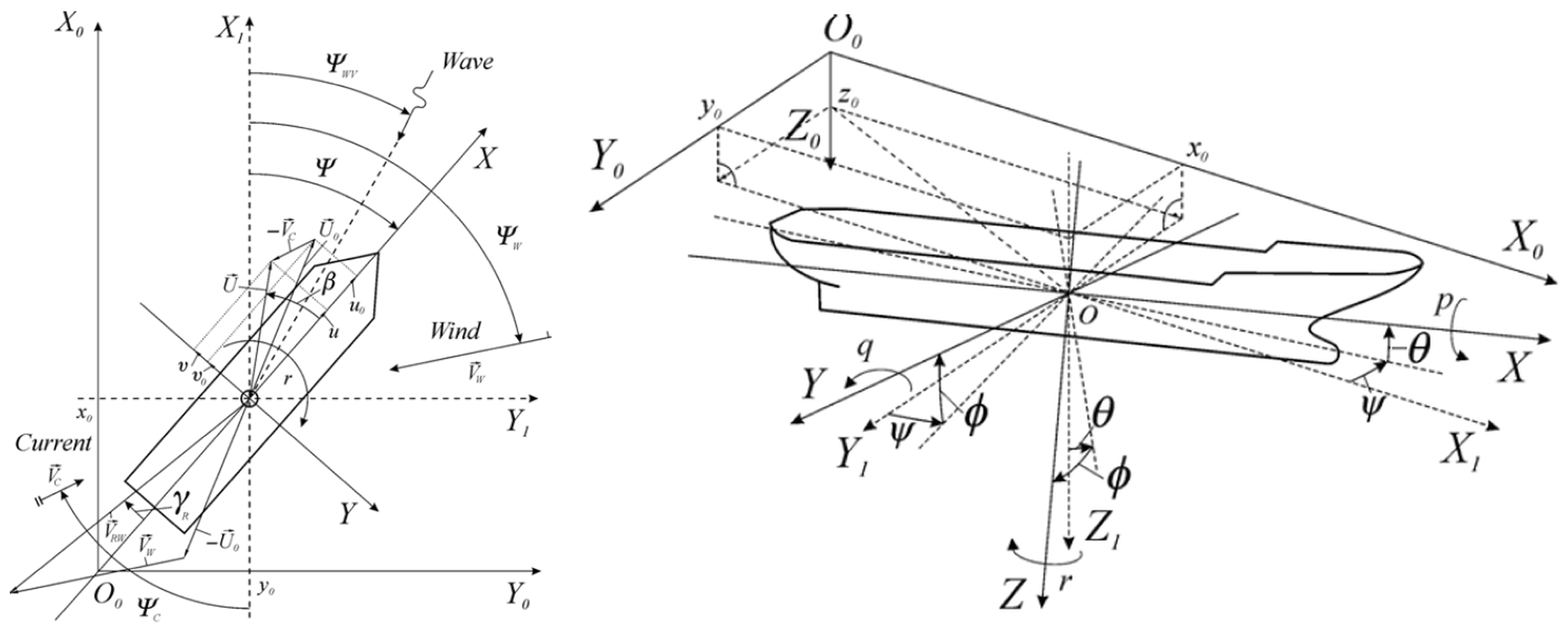
The vessel’s motion is represented using three Descartes (Cartesian) coordinate systems (Figure 7):
  • Earth-fixed reference frame (X0Y0Z0)—X0 directed north, Y0 east, and Z0 downward;
  • Body-fixed frame (XYZ)—the origin is at the vessel’s center of gravity (CG), with X pointing forward, Y to starboard, and Z downward;
  • Local frame (X1Y1Z1)—parallel to the Earth-fixed system and centered at the vessel’s center of gravity.
Wave-induced forces in the Transas–Wärtsilä bridge simulator include first- and second-order wave forces and moments that affect vessel dynamics. The sea surface is modeled using standard wave spectra, such as Pierson–Moskowitz and JONSWAP (Joint North Sea Wave Project) [33,34,35], which account for wave height, length, and period.
The simulator incorporates a wide range of propulsion system models, each replicating the behavior of specific vessel types. The simulation depends on engine type, propulsion configuration, propeller speed, and even telegraph type. When necessary, shallow-water navigation is also modeled, accounting for increased hydrodynamic resistance.
The Transas–Wärtsilä mathematical model comprehensively integrates hydrodynamic, aerodynamic, wave, and control system effects, with its accuracy verified through sea trials. This ensures the simulator’s reliability for analyzing vessel dynamics under various hydrometeorological conditions. Using hydrometeorological data from Lithuania’s area of responsibility, the model enables accurate determination of the required SARORV performance characteristics.

2.2. Oil Spill Dispersion Simulation Program

The HELCOM Seatrack Web system (HELCOM, Helsinki, Finland), described by Liungman and Mattsson [36], is designed to model the drift of substances—particularly oil—in the Baltic Sea and adjacent waters using a Particle Dispersion Model (PADM). This mathematical modeling approach integrates physical and chemical processes to simulate the movement and dispersion of pollutants in the marine environment, with a primary focus on oil spills.
The system consists of three main components: modeling of environmental forcing fields (predicted current and wind fields), an oil particle drift model, and a graphical user interface. Its geographical coverage includes the Baltic Sea, the Danish Straits, the Kattegat and Skagerrak, and extends into the North Sea up to approximately 3° E. Environmental forcing fields are generated using the HIRLAM (Finnish meteorological institute, Helsinki, Finland) weather model and the HIROMB (German Federal Maritime and Hydrographic Agency, Rostock, Germany and the Swedish Meteorological and Hydrological Institute, Norrköping, Sweden) ocean circulation model.
The PADM simulates processes such as hydrodynamic currents, Stokes drift [37], gravity-induced radial spreading, wave-induced dispersion, turbulent mixing, and buoyancy effects. In the primary particle-tracking algorithm, it is assumed that the particles have no volume, inertia, or mutual interaction. The velocity of each particle is determined by the hydrodynamic current field combined with additional stochastic velocity components representing unresolved processes or specific particle properties.
In the model, Stokes drift velocity is an important spreading factor, calculated for each particle based on the wave energy spectrum and adjusted for the influence of sea ice. The horizontal spreading of surface substances—particularly oil—is simulated using gravitational spreading formulas, such as Fay’s formula [38], which accounts for the balance between viscous and gravitational forces. In the case of oil, the model assumes that wave breaking disperses oil droplets into the water column. This process induces turbulent mixing, which is simulated using the Markov chain method [39], accounting for small-scale isotropic fluid turbulence that influences the vertical movement of particles.
The buoyancy velocity of particles that may either sink or rise is calculated based on the physical properties of the particles and the density of the surrounding fluid. The calculation also depends on the diameter of the particles.
Depending on the specific type of released oil, the PADM calculates changes in its physical properties over time using two approaches. The first is the SINTEF (Stiftelsen for industriell og teknisk forskning) model [40], which applies empirical data to estimate time-dependent variations in oil characteristics such as evaporation, emulsification, density, and viscosity. The second is the original Seatrack Web model, a simplified approach that treats oil as a mixture of volatile and non-volatile components, using empirical formulas to simulate evaporation and emulsification processes.

2.3. Methodology for Calculating Search and Rescue Operation Areas

According to the procedures applied on Lithuanian SAR vessels, the first and most important step in initiating a SAR Operation is to determine the initial reference point (Datum). This point usually represents the last known position (LKP) of the missing object when the search is conducted by aircraft, or a partially corrected position (considering wind and current effects) when conducted by vessel.
The Datum can significantly differ from the LKP; therefore, its calculation must include all relevant influencing factors, consider the geographical location and continuously update the position over time. The frequency of recalculation depends on the situation and the combined effects of drift forces, which consist of:
  • Leeway (LW)—drift caused by wind acting on the object;
  • Wind-driven current (WC)—surface current generated by the wind;
  • Sea current (SC)—general oceanic or regional current;
  • Tidal current (TC)—current resulting from tidal movements.
Leeway (LW) refers to the movement of a search object on the water surface caused by the wind acting on its exposed area above the waterline. The extent and direction of this drift depend strongly on the object’s shape, size, and orientation, making precise LW direction estimation difficult. The calculation of this parameter is based on the object, LW, LW course deviation [41].
Wind-driven surface current (WC) is insignificant in lakes, coastal zones, and ports, as it only develops when the wind blows continuously in one direction for 24–48 h. In open sea conditions, this current becomes relevant when the distance from the coast exceeds 20 nautical miles and the depth is greater than 30 m. Since the WC cannot be directly calculated, its velocity must be determined through field measurements in the search area. In the Baltic Sea, the WC generally flows in the wind direction, except near ports where outflows can alter the current pattern.
The sea current (SC) represents a persistent oceanic current, such as the Gulf Stream in the Atlantic Ocean, independent of wind or tidal influences. It is usually relevant only in oceanic waters and is not calculated in areas shallower than 100 m. Tidal current (TC) depends on the local geography and is typically described in hydrometeorological publications.
The total water current (TWC) is the sum of the vector components WC, SC, and TC. Combined with the Leeway vector, it forms the resulting drift vector (RDV), which is plotted from the drift start position (DSP) to establish the Datum point on the nautical chart, corresponding to the expected start time of the search.
If the SAR operation begins within a 1–2-h interval, the search area offset from the Datum point is calculated according to the following equation:
R = X e r r o r + 30 %   R D V   l e n g t h × F s
where Xerror—position uncertainty factor; Fs—reliability factor. These correction factors are applied to adjust for inaccuracies in the calculated position.

2.4. Methodology for the Evaluation of Factors Influencing SARORVs

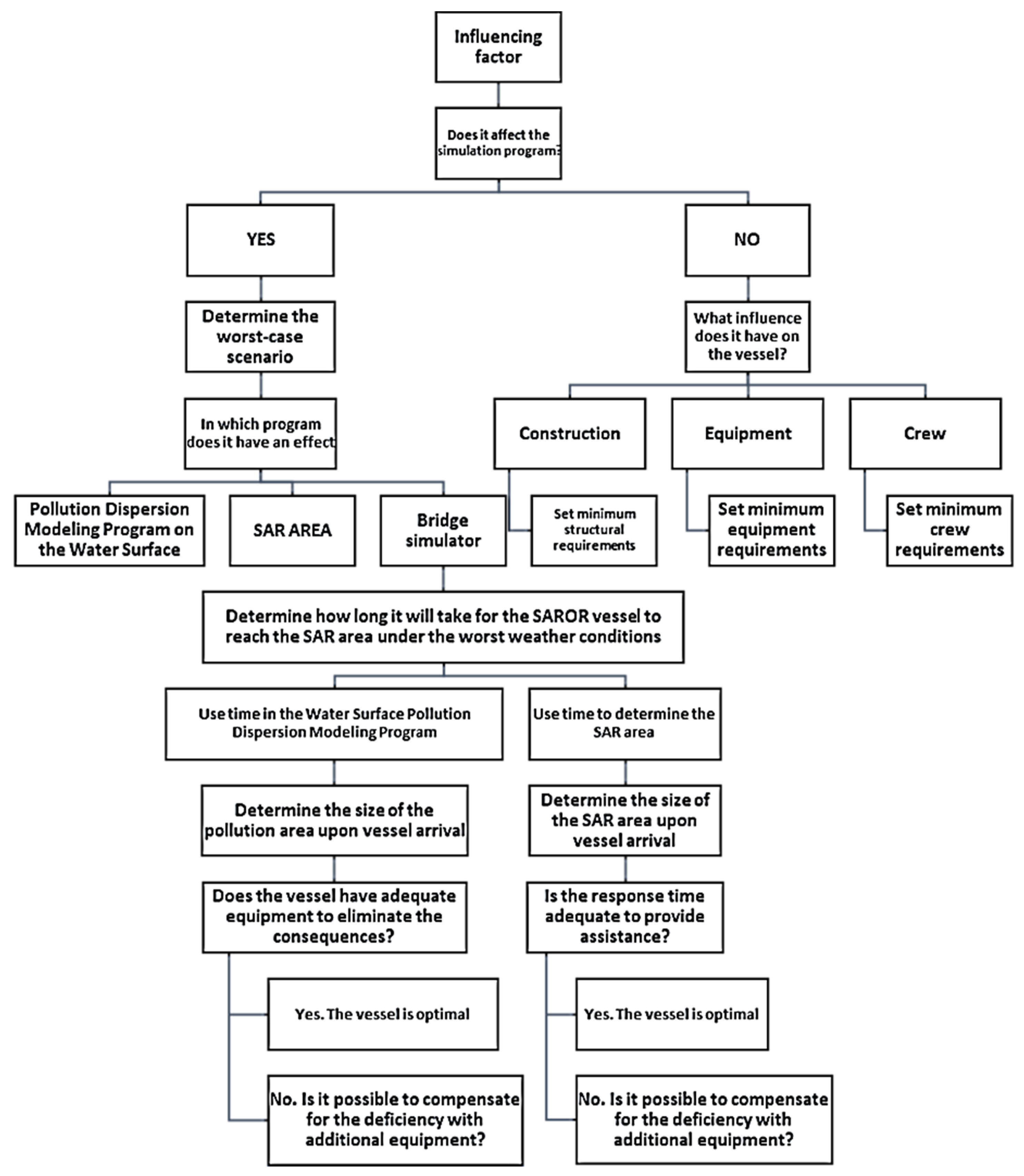
To determine the optimal requirements for the SARORV, the factors identified in the literature review (Section 1.3) will be evaluated using the matrix of influencing factors presented in Figure 8.
The research methodology, including the applied tools, evaluation algorithm, and comparison with the technical characteristics and capabilities of the main SARORVs operated by the Baltic Sea countries, enables an objective determination of the technical requirements for the SARORV concept intended to operate within Lithuania’s area of responsibility.

3. Results and Discussion

3.1. Hydrometeorological Conditions Evaluation

Based on the wind rose presented in Figure 1, it can be observed that within Lithuania’s EEZ, the prevailing winds (the first influencing factor) are from the west and southwest, with maximum speeds reaching 19 m/s (38 knots) and an average speed of 7 m/s (14 knots). Therefore, to determine the criteria for the SARORV under the most challenging weather conditions, modeling programs and related calculations use wind blowing from a 240° direction at 19 m/s. Consequently, a design requirement for the SARORV is its ability to operate under a sustained wind speed of 19 m/s, which corresponds to Force 8 (gale conditions) on the Beaufort scale (Table 4) [42].
The second influencing factor, equally important for modeling the vessel’s transit to the SAROR area, estimating the size and spread of an oil spill, and defining the SAROR area, is wave height. As discussed earlier, wave data indicate that 99% of the time, wave heights in Lithuania’s EEZ do not exceed 3.5 m. However, under extreme weather conditions, waves can reach heights of 5.5–6.0 m, predominantly from the west and southwest, corresponding to the 240° wind direction. Therefore, in the simulation of the most severe meteorological conditions, a 6-m wave height aligned with wind direction 240° will be applied, which, according to the Beaufort scale, also represents Force 8 (gale conditions).
According to the methodological materials, current (the third influencing factor) must also be considered in calculations. In the Baltic Sea within Lithuania’s EEZ, there are no tidal or oceanic currents—only weak river-induced flows reaching up to 0.13 m/s (0.25 kn). However, under 8 Beaufort wind conditions, currents may intensify up to 1 m/s (2 kn). Therefore, the third influencing factor for modeling programs is a 1 m/s (2 kn) current from the 240° direction.
The fourth factor influencing rescue operations is water temperature. Although it does not affect modeling programs directly, it is critical for assessing human survivability. In Lithuania’s EEZ, where water temperatures rarely exceed 15 °C, survival depends heavily on clothing. If a person in the water wears ordinary clothes, only a helicopter can provide timely rescue, as a vessel on one-hour standby would not reach the site within 1.5 h. Under extreme conditions, with temperatures below 5 °C, survival time is under one hour. Consequently, a key requirement for SARORV is the ability to operate with a helicopter, refuel it if necessary, and provide first aid. For modeling purposes, the life raft is considered the smallest viable target object in storm conditions.
The fifth influencing factor is ice thickness and icing. Baltic Sea is generally considered non-freezing [43], with ice formation occurring mainly along shallow coastal areas or temporarily in the Port of Klaipėda. Given that the designated SARORV operates from the Port of Klaipėda, it should comply with the Finnish–Swedish Ice Class Rules TSFS 2011:96, meeting Ice Class 1C requirements—capable of navigating through thin ice layers of 0.15 to 0.30 m in thickness.
The sixth hydrometeorological factor affecting the SARORV is fog. Although it does not directly influence mathematical modeling, it significantly impacts search duration within a given area, often requiring the search width to be reduced to the visibility range. While fog near Klaipėda occurs on average only 24 days per year [44], the vessel must remain capable of performing operations under such conditions. Structural features cannot mitigate fog effects; however, specialized onboard equipment can. An infrared camera is essential for detecting heat-emitting objects on the water surface even in darkness, while oil spill detection requires a thermal camera operating within the 7–14 μm wavelength range [45]. Additionally, in accordance with SOLAS requirements, the vessel should be equipped with modern, precise navigational and situational awareness systems to ensure operational safety under low-visibility conditions.
A summary results (Table 5) of the assessment of hydrometeorological factors influencing the SARORV concept has been compiled.
These data will be used in simulation programs to reproduce natural conditions in Lithuania’s SAROR area. The goal is to determine whether the SARORV can operate under extreme weather conditions and, if not, to define the closest achievable operational requirements.
According to international conventions and national regulations, SARORV must ensure 24-h readiness, with crew accommodation, catering, and rest facilities. It must maintain communication with the MRCC and coordinate other vessels and aircraft, requiring GMDSS A3 coverage and additional HF, MF, VHF, and air communication systems. The vessel must depart within 2 h, reach the incident area within 6 h, and complete pollution recovery within 2 days. Minimum speed and equipment requirements will be defined based on the farthest potential incident location. Two simulation scenarios will be used: search and rescue, and pollution response.

3.2. Assessment of Requirements for SAROR Operations

According to HELCOM and BRISK data [24,46], the highest risk of oil spills is along main shipping routes, near the coast, and close to the Būtingė oil terminal. For worst-case scenario modeling, the farthest (Figure 9, black dot in red circle) possible incident point is set at 55°56.0′ N 019°02.0′ E, and for search and rescue operations, at 56°05.72′ N 018°01.12′ E. As an offshore wind farm will operate in this area (black dashed lines), the SARORV must be highly maneuverable and equipped with a dynamic positioning system to perform operations safely among wind turbines.
To determine the optimal crew size, the vessel should be highly automated, allowing the crew to focus on rescue operations. The SARORV must meet IP (Integrated Power) and IBS (Integrated Bridge System) standards, enabling centralized control and emergency operation from the bridge. Accommodation should be provided for 20 persons—18 crew members and 2 medical staff (Table 6).
Summarizing the factors influencing the SARORV concept, a summary table of vessel requirements (Table 7) can be created. This table identifies two primary parameters necessary for simulation programs and five additional technical requirements essential for defining the vessel concept. Using the obtained positions on the nautical chart, distances to the respective areas will first be determined, followed using simulation algorithms to establish vessel speeds under challenging weather conditions. Furthermore, the time required for selected vessels to reach operational zones will be assessed. The calculated time to these positions will help determine how large the emergency areas may expand and what optimal speed the vessel must achieve to keep these areas within manageable limits.

3.3. Assessment of the Impact of Ship Equipment on SAROR Operations

According to ITOPF technical guidelines on oil spill preparedness and response, the main goal is to minimize environmental and economic impacts through an effective pollution response strategy [47].
Each country should have an Oil spill contingency plan outlining response strategies, responsibilities, and communication procedures. The approach follows a three-tier response system:
  • Tier 1 (up to 7 t): Local response using ship or nearby resources;
  • Tier 2 (7–700 t): Regional resources for medium spills;
  • Tier 3 (over 700 t): International support for large spills;
Since Lithuania has only one seaport, the SARORV should be capable of responding to both Tier 1 and Tier 2 spills. ITOPF does not require a single ship to recover the full 700 t but recommends that essential equipment—booms, skimmers, dispersant sprayers, and storage tanks—be available in key locations.
The ship should be equipped to use various recovery methods, prioritized as follows:
  • Mechanical recovery (booms, skimmers)—preferred for minimal environmental impact;
  • Chemical dispersants—used only when environmentally suitable;
  • In situ burning—as a last resort with proper authorization;
  • Based on ITOPF and HELCOM recommendations, the SARORV should have full recovery capabilities and a 700 m3 storage tank. The vessel must be fitted with:
    1 crane (12-ton lifting capacity);
    600 m of containment booms;
    2 recovery arms;
    2 skimmers (brush type—100 m3/h, disc type—110 m3/h).
These specifications align with average equipment capacities of Baltic Sea region response vessels.
According to the State Data Agency [48], a total of 1410 international vessels exceeding 500 GT entered or departed from Klaipėda Port in 2024. The average gross tonnage of these vessels was 18,646 GT.
To ensure that the SARORV can effectively tow such ships under severe hydrometeorological conditions (equivalent to Beaufort scale 8 or 19 m/s wind speed), calculations based on Hensen’s methodology [49] indicate that the vessel must have a bollard pull of at least 113 t.
According to HELCOM Recommendation 28E/12 [50], to ensure adequate emergency firefighting capability, specialized vessels must be equipped with Fire Fighter Class 1 (FF1) equipment in accordance with the DNV (Det Norske Veritas) classification rules.
FF1-class vessels are designed for professional firefighting operations, including fire suppression, structural cooling, and personnel rescue in industrial or maritime environments. To meet this classification, the vessel must be equipped with:
  • A fire pump with a minimum capacity of 2400 m3/h;
  • At least two fixed water monitors, each delivering 1000 m3/h;
  • Fire monitors capable of projecting water 120 m horizontally and 45 m vertically;
  • A foam system suitable for extinguishing oil and chemical fires.
Therefore, when designing an optimal SARORV capable of performing a wide range of maritime operations, it should be equipped with a towed side-scan sonar (a faster and more efficient alternative to a hull-mounted sonar) and a remotely operated underwater vehicle (ROV) [51]. A SARORV fitted with such equipment would reduce search times and increase the chances of saving lives during various underwater incidents.
Considering the factors of oil recovery, incident analysis, and the experience of other countries, conclusions can be drawn regarding the type and quantity of additional equipment the SARORV should have, as well as the requirements such equipment must meet. Based on this, an equipment evaluation table has been prepared (Table 8).
A complete list of equipment and capabilities required to equip the SARORV for an optimal design has been obtained. In addition, all necessary data for simulation programs have been collected to determine the vessel’s remaining characteristics and develop a comprehensive optimal design specification.

3.4. Evaluation of Data Generated in the Bridge Simulator

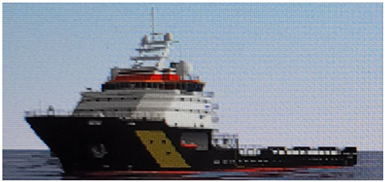
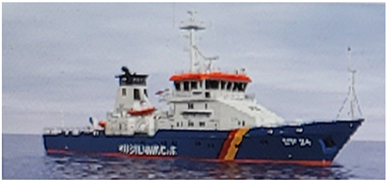
Considering that the number of vessel models available in the simulator is limited, two vessels were selected based on their size, speed, and functionality, most closely resembling those used by neighboring Baltic Sea countries. The different hull and propulsion system concepts of these two vessels made (Table 9) it possible to obtain a broader range of data for analysis and evaluation.
The Offshore Patrol Vessel (OPV) concept is designed for higher speed but has lower displacement, while the Offshore Supply Vessel (OSV) concept is intended for slower but precise maneuvering and cargo operations at sea, featuring significantly higher displacement, allowing it to carry larger loads.
To determine the capabilities of these vessels, four simulation runs were conducted in the bridge simulator. This included modeling transits to the SAR area and to the pollution response area under both severe and average weather conditions, using the hydrometeorological parameters presented in Table 5.
In summary, the OPV demonstrated higher speed due to its smaller size, speed-optimized hull, and propulsion design, allowing it to reach designated areas more quickly. However, a person in the water under the most severe hydrometeorological conditions can survive for no longer than four hours [52]. This confirms that, in the event of a rescue operation, a helicopter must be deployed to reach the SAR area within an acceptable timeframe, while the vessel would be better suited for search operations closer to the port or for locating life rafts and other drifting objects that cannot be lifted by helicopter and where hypothermia is not an immediate threat.
Although no fixed response time is defined for SAR missions, pollution response operations have a strict requirement—the vessel must reach the operation area within six hours (excluding the two-hour preparation period).
Simulation results (Table 10) indicate that the OSV would not reach the pollution area within six hours, while the OPV would be able to cover the distance in the required time. By interpolation, it was determined that the OSV would need to maintain a speed of 10.6 knots over ground under Beaufort scale 8 wind and wave conditions to meet the required response time.
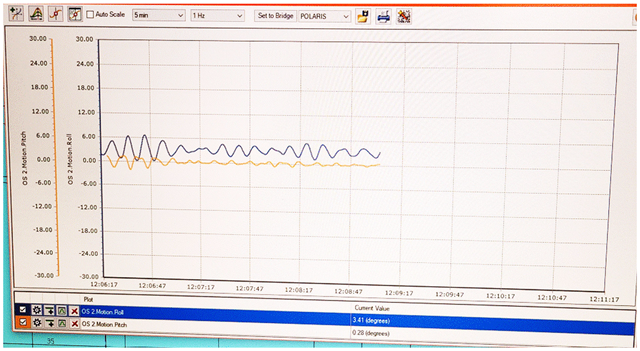
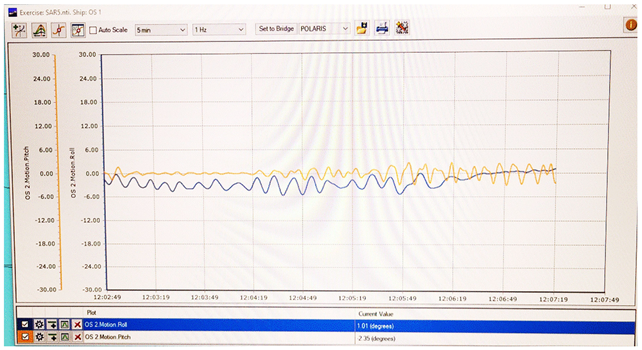
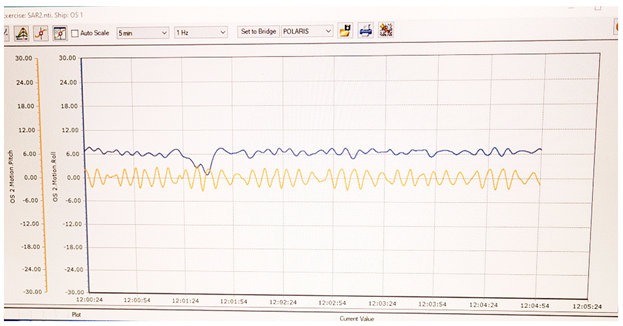
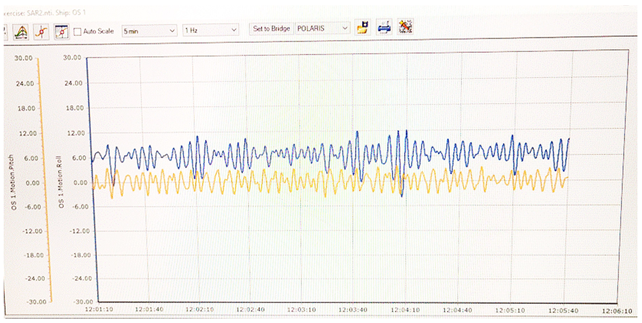
Additional maneuverability and stability tests were performed for both vessels. Maneuverability is essential for maintaining a vessel’s position during overboard operations, inspections of offshore infrastructure, or oil spill recovery activities. Stability, on the other hand, is crucial during lifting operations, as excessive longitudinal or lateral rolling makes such tasks dangerous or even impossible.
Since the NTPRO 5000 simulator (Wärtsilä, Helsinki, Finland) does not include a Dynamic Positioning (DP) function, the test was performed manually by an experienced operator. The results showed that the OSV concept, equipped with azimuth electric thrusters, was able to hold position under the most severe hydrometeorological conditions, with only 0.7 knots of forward or backward drift. The OPV, having only a fixed-pitch propeller, could not maintain position and experienced more than 7.3 knots of forward or backward movement. Vessel stability measurements were performed in three different scenarios and the results of these measurements are presented in Table 11:
  • while drifting (no propulsion),
  • during dynamic positioning,
  • and during transit at maximum speed to the assigned operation area.
Comparing the obtained measurements, the OPV is more affected by waves—especially when stationary or performing dynamic positioning, its lateral roll varies between +18° and −18°, while the OSV remains relatively stable with a roll of up to 4.5°. Roll frequency is also important, as slower oscillations ensure greater stability for crane operations during lifting or rescue tasks.
In summary, the OSV design—due to its width, length, and propulsion system—is better suited for operations under adverse hydrometeorological conditions. With a ground speed of 10.6 knots, this vessel could reach the pollution recovery site within the required timeframe. The OPV, on the other hand, can reach the designated areas much faster if needed, but its ability to perform rescue and cargo operations in such conditions is significantly limited, which would constrain its operational effectiveness under unfavorable weather and sea conditions.

3.5. Determination and Evaluation of the SAR Area Size

As mentioned earlier, the calculations assume that the search and rescue object is a life raft for 4–6 persons, and the last known position corresponds to the farthest corner of the SAR area, located at coordinates 56°05.72′ N 18°01.12′ E. The SAR areas were calculated for both vessels, under worst-case and average hydrometeorological conditions.
The process begins by plotting the current vector from the last known position. From the end of this vector, the wind effect vector is added. In the Baltic Sea, strong winds generate surface currents in the same direction as the wind; therefore, these two vectors are combined to form the resulting drift vector (RDV). The length of this vector represents the initial estimated radius of the SAR area. Two additional radii are then determined by adding and subtracting the leeway course errors from the drift course. Based on these final drift vectors, additional SAR radii are calculated.
All resulting SAR areas are then plotted on a nautical chart, enclosed within a square, and the total search area is measured. Using the corrected sweep width formula, which depends on visibility and weather conditions and remains constant for all four scenarios, the search width is determined.
Dividing the total area by the sweep width provides the number of search passes required for complete area coverage with the desired accuracy. Multiplying the number of passes by the area length gives the total distance the SAR vessel must be capable of covering. Using the simulated vessel speed, the total duration of such a search operation can be calculated. The results of all scenario calculations are summarized and presented in Table 12.
Based on the calculated data, it can be concluded that the sea current has a significant influence on the SAR area, as it greatly expands the search zone. When comparing the areas under worst and average hydrometeorological conditions, a substantial difference in size is observed, even though the arrival times to the area do not differ considerably. Under such unfavorable conditions, it is essential to consider the use of a helicopter for search and rescue operations, since both arrival and search times by vessel are relatively long.
As previously mentioned, the SARORV must therefore be capable of operating in coordination with a helicopter, serving primarily as a support and operations platform rather than a direct rescue unit. Its key tasks in such missions would include firefighting, towing, lifting hazardous objects, or functioning as a mass evacuation platform. Hence, stability and the ability to perform lifting and handling operations are critical characteristics for such a vessel.
It should be noted that under extremely adverse conditions, for example, in the event of helicopter failure or restricted vessel speed, the search area may become exceptionally large, and a full survey could take up to six days. To prepare for such worst-case scenarios, the SARORV should be designed with an autonomy requirement allowing it to operate at sea for at least six days without external support, covering a total range of 1200 nautical miles (1080 nm within the SAR area plus 120 nm transit to the area). Such endurance requirements affect not only the fuel capacity but also the storage of provisions, freshwater, and other supplies needed for long-term operations.
In summary, conducting SAR operations by ship alone under severe hydrometeorological conditions is a time-consuming process. Therefore, in situations involving an immediate threat to human life, helicopter deployment is mandatory, while the vessel should act as a logistical and operational support platform.

3.6. Assessment of Oil Spill Dispersion Modelling on the Water Surface

To determine the dispersion of spilled oil products, the HELCOM-developed Water Surface Pollution Dispersion Modelling Program (PDMP) was used. This specialized software allows for the analysis of oil spill behavior at sea, considering various physical and chemical parameters as well as prevailing environmental conditions. The model requires the geographical coordinates of the spill, the exact quantity of released pollutants, and the average water depth at the incident location. These data inputs are essential for the program to generate a reliable and scientifically based dispersion forecast.
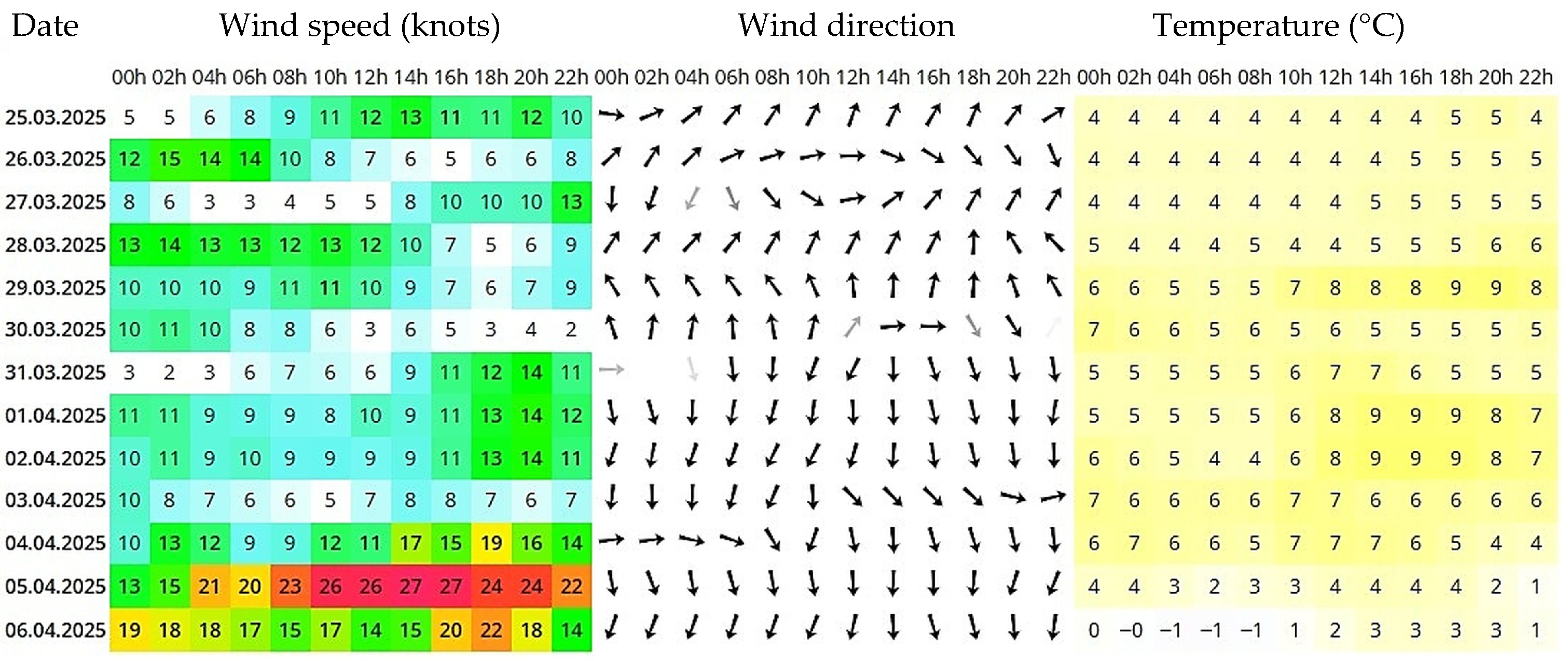
Since the program operates exclusively with real hydrometeorological conditions specific to a given region and period, it is not possible to simulate the theoretical conditions defined in this study. The system contains a database of the most recent 14 days, which includes hydrometeorological data [53] from the Lithuanian territorial responsibility area in the Baltic Sea (Figure 10).
From the data (Figure 10), it can be determined that the conditions most like the average weather conditions established in this study occurred on 28 March 2025, when a southwest wind was blowing at 12–14 knots. The period between 04:00 and 12:00 was used to model oil spill dispersion under average hydrometeorological conditions.
Since there were no hydrometeorological conditions corresponding to the worst-case scenario during that period, for comparison, data from 5 April 2025, were used, when the wind between 10:00 and 18:00 blew at a speed of 24–27 knots. Although the wind direction at that time did not match the desired one and the oil spill spread in a different direction, the goal was to determine the extent of the dispersion, not the direction of the drifting oil slick.
For the modeling process, the coordinates of the incident were entered into the program as 55°56.0′ N, 019°02.0′ E. Based on the electronic nautical chart, the approximate depth at this location was determined to be 80 m. The start time of the incident was set to 28 March 2025, at 04:00 for average hydrometeorological conditions and 5 April 2025, at 10:00 for worst-case hydrometeorological conditions. The end of the incident was defined as the vessel’s arrival time at the site, with these times obtained from Table 10 and rounded to the nearest full hour due to system design constraints. The simulation modeled the dispersion of 700 t of spilled oil, and the summarized results are presented in Table 13.
According to the Bureau of Safety and Environmental Enforcement [54], to assess how quickly a contaminated area can be cleaned, the Area Coverage Operational Period (AOP) formulas are used. These formulas make it possible to calculate the time required to complete cleanup operations for a given polluted area:
AOP = PA ÷ ACR,
ACR = swath × speed.
where:
  • PA—total contaminated area, m2;
  • swath—sweep width of the oil spill recovery equipment, m;
  • speed—maximum towing speed of the response equipment, m/s;
  • ACR—Area Coverage Rate, indicating the rate at which the contaminated area is covered.
Based on the previous information, the requirement is set to collect the spilled pollutants within 48 h (2 days). According to the Bureau of Safety and Environmental Enforcement [54], modern recovery systems can achieve a collection speed of approximately 3 knots (1.5 m/s). By inserting all known parameters into Formulas (2) and (3), the SARORV’s oil recovery boom sweep width required to recover 700 t of oil within the conventionally mandated timeframe can be determined.
Analysis of the modeling data shows that, under the worst-case scenario, the SARORV must be equipped with oil recovery equipment providing a 40-m sweep width. Equipped with such systems and arriving at the spill site faster or under more favorable hydrometeorological conditions, the vessel would ensure a quicker and more efficient recovery operation. As seen in Table 13, the spill area varies significantly under different weather conditions—smaller and more contained areas in favorable conditions allow for faster and more effective recovery.

3.7. Summary of Technical Requirements for SARORV

To ensure an optimal design for the new SARORV, the performance of two reference vessels, the OSV and the OPV were analyzed using simulator-based evaluations. By combining these simulation results with the vessels’ technical specifications, best practices from other Baltic Sea countries, and outcomes from mathematical modeling, a summary table (Table 14) of optimal SARORV technical characteristics was developed. This table can serve as the foundation for the operational requirement document of the new vessel.
Considering that a single vessel is required to perform two fundamentally different functions, the analysis shows that SAR operations primarily require speed, while pollution response operations require stability and maneuverability. Although both factors are relevant to each function, their priorities differ. Therefore, to ensure the effective execution of both roles, speed must be partially sacrificed in favor of stability. However, the analysis also indicates that any reduction in speed can be compensated for using a helicopter, thereby maintaining the overall operational effectiveness of the vessel.

4. Conclusions and Recommendations

The analysis of environmental conditions in the Baltic Sea demonstrates that search, rescue, and oil spill recovery (SAROR) operations are strongly constrained by severe hydrometeorological factors, including high wind speeds, significant wave heights, strong surface currents, low water temperatures for most of the year, and seasonal ice formation in the Port of Klaipėda. The assessment of these conditions, together with applicable regulatory requirements and an evaluation of existing national assets, indicates that the current Lithuanian SAROR vessel does not adequately meet operational demands, thereby limiting mission effectiveness and increasing risks to crew safety, casualty survival, and environmental protection.
Based on numerical modelling, bridge simulator experiments, and worst-case scenario calculations, the study shows that SAROR operation durations may reach up to 137 h when using an offshore support vessel–type concept, while an offshore patrol vessel–type concept can reduce this time to approximately 36 h. Depending on hydrometeorological conditions and response times, the resulting search area may expand to between 620 and 1200 km2, highlighting the critical importance of vessel performance characteristics.
To address these challenges, optimal technical requirements for a new SAROR vessel were identified. These include a minimum transit speed of at least 15 knots, a bollard pull capability of no less than 113 t, operational autonomy of at least six days with a range up to 1200 nautical miles, an oil recovery system sweep width of at least 40 m, and dynamic positioning capability—preferably supported by azimuth propulsion—to ensure stability during complex operations. Together with the specialized equipment outlined in Table 14, these requirements form a technically justified basis for the development of an effective, multi-role SAROR vessel concept suitable for the demanding conditions of the Baltic Sea.

Funding

This research received no external funding.

Data Availability Statement

The original contributions presented in this study are included in the article.

Conflicts of Interest

The author declares no conflicts of interest.

Abbreviations

The following abbreviations are used in this manuscript:
ACRArea Coverage Rate
AOPArea Coverage Operational Period
BRISKSub-regional Risk of Spill of Oil and Hazardous Substances in the Baltic Sea
DPDynamic Positioning
EEZExclusive Economic Zone
FF1Fire Fighting Class 1 (DNV standard)
GMDSSGlobal Maritime Distress and Safety System
HELCOMHelsinki Commission (Baltic Marine Environment Protection Commission)
IAMSARInternational Aeronautical and Maritime Search and Rescue Manual
IBSIntegrated Bridge System
IPIntegrated Power System
ITOPFInternational Tanker Owners Pollution Federation
MRCCMarine Rescue Coordination Center
OPVOffshore Patrol Vessel
OSVOffshore Supply Vessel
ROVRemotely Operated Vehicle
SARSearch and Rescue
SARORSearch and Rescue and Oil Spill Recovery
SARORVSearch and Rescue and Oil Spill Recovery Vessel
SOLASInternational Convention for the Safety of Life at Sea

References

  1. Ministry of Foreign Affairs of the Republic of Lithuania. IMO Conventions. Available online: https://www.urm.lt/en/treaties/conventions/imo-conventions/1324 (accessed on 1 October 2025).
  2. Republic of Lithuania. 1974 m. Tarptautinė Konvencija dėl Žmogaus Gyvybės Apsaugos Jūroje (SOLAS 74). TAR.C4D414572A07. Available online: https://www.e-tar.lt/portal/legalAct.html?documentId=TAR.C4D414572A07 (accessed on 1 October 2025).
  3. International Institute for Strategic Studies (IISS). The Military Balance 2024; Routledge: London, UK, 2024. [Google Scholar]
  4. Pleskacz, K. The Impact of Hydro-Meteorological Conditions on the Safety of Fishing Vessels. Sci. J. Marit. Univ. Szczec. 2015, 41, 81–87. [Google Scholar]
  5. Morales-Márquez, V.; Hernández-Carrasco, I.; Simarro, G.; Rossi, V.; Orfila, A. Regionalizing the Impacts of Wind- and Wave-Induced Currents on Surface Ocean Dynamics: A Long-Term Variability Analysis in the Mediterranean Sea. J. Geophys. Res. Ocean. 2021, 126, e2020JC017104. [Google Scholar] [CrossRef]
  6. Tipton, M.; McCormack, E.; Elliott, G.; Cisternelli, M.; Allen, A.; Turner, A.C. Survival Time and Search Time in Water: Past, Present and Future. J. Therm. Biol. 2022, 110, 103349. [Google Scholar] [CrossRef] [PubMed]
  7. Saydam, A.Z.; Taylan, M. Evaluation of Wind Loads on Ships by CFD Analysis. Ocean Eng. 2018, 158, 54–63. [Google Scholar] [CrossRef]
  8. Zhou, Y.; Daamen, W.; Vellinga, T.; Hoogendoorn, S.P. Impacts of wind and current on ship behavior in ports and waterways: A quantitative analysis based on AIS data. Ocean Eng. 2020, 213, 107774. [Google Scholar] [CrossRef]
  9. Bellanco, M.J. Klaipėdos Projekto Galutinė Duomenų Ataskaita (2022-07-20 00:00–2023-07-19 23:50); Report No. EOL-KLA35. 2023. Available online: https://offshorewind.lt/wp-content/uploads/2025/02/EOL-KLA35-V02-OPS-Final-Data-Report-LT.pdf (accessed on 7 October 2025).
  10. British Hydrographic Office. ADMIRALTY Sailing Directions: Baltic Pilot Volume 2 (NP19), 18th ed.; UK Hydrographic Office: Taunton, UK, 2022; ISBN 978-0-7077-4755-2.
  11. Zhang, X.; Wang, C.; Jiang, L.; An, L.; Yang, R. Collision-Avoidance Navigation Systems for Maritime Autonomous Surface Ships: A State of the Art Survey. Ocean Eng. 2021, 235, 109380. [Google Scholar] [CrossRef]
  12. Zhang, L.; Yan, X.; Yang, Z.; Wall, A.; Wang, J. A Novel Model for the Quantitative Evaluation of the Effect of Environmental Factors on Ship Maneuverability. Ocean Eng. 2015, 110, 196–208. [Google Scholar] [CrossRef]
  13. Lundh, M. A Life on the Ocean Wave: Exploring the Interaction Between the Crew and Their Adaptation to the Development of the Work Situation on Board Swedish Merchant Ships. Ph.D. Thesis, Chalmers University of Technology, Gothenburg, Sweden, 2010. Available online: https://research.chalmers.se/en/publication/121794 (accessed on 10 October 2025).
  14. Tombul, S.; Tukenmez, E.; Oksuz, M.; Altiok, H. Predicting the Trajectories of Drifting Objects in the Eastern Mediterranean Sea. Turk. J. Fish. Aquat. Sci. 2023, 24, 1. [Google Scholar] [CrossRef]
  15. Ghosh, S. Understanding Design of Ice Class Ships. Marine Insight. 1 January 2021. Available online: https://www.marineinsight.com/naval-architecture/design-of-ice-class-ships/ (accessed on 12 October 2025).
  16. Du, P.; Zeng, Z.; Zhang, J.; Liu, L.; Yang, J.; Qu, C.; Jiang, L.; Liu, S. Fog Season Risk Assessment for Maritime Transportation Systems Exploiting Himawari-8 Data: A Case Study in Bohai Sea, China. Remote Sens. 2021, 13, 3530. [Google Scholar] [CrossRef]
  17. Lietuvos Kariuomenė. Dėl Žmonių Paieškos ir Gelbėjimo Darbų Paieškos ir Gelbėjimo Rajone Plano Patvirtinimo (2009, Nov 6, Nr. 119-5115). Available online: https://e-seimas.lrs.lt/portal/legalAct/lt/TAD/TAIS.354144/asr (accessed on 12 October 2025).
  18. ITOPF. The Country & Territory Profiles; ITOPF: London, UK, 2023; Available online: https://www.itopf.org/knowledge-resources/countries-territories-regions/ (accessed on 13 October 2025).
  19. Lietuvos Respublikos Seimas. 1979 Metų Tarptautinė Jūrų Paieškos ir Gelbėjimo Konvencija (2001, January 12, Nr. 4-94). Available online: https://e-seimas.lrs.lt/portal/legalAct/lt/TAD/TAIS.117855 (accessed on 17 October 2025).
  20. Lietuvos Respublikos Seimas. 1990 m. Tarptautinė Konvencija dėl Parengties, Veiksmų ir Bendradarbiavimo Įvykus Taršos Nafta Incidentams (Nr. 115-5135). 4 December 2002. Available online: https://e-seimas.lrs.lt/portal/legalAct/lt/TAD/TAIS.196480 (accessed on 17 October 2025).
  21. Lietuvos Respublikos Seimas. 1992 m. Helsinkio Konvencija dėl Baltijos Jūros Baseino Jūrinės Aplinkos Apsaugos (Nr. 21-499). 12 March 1997. Available online: https://e-seimas.lrs.lt/portal/legalAct/lt/TAD/TAIS.36791 (accessed on 17 October 2025).
  22. Priešgaisrinės Apsaugos ir Gelbėjimo Departamentas prie Vidaus Reikalų Ministerijos. Nacionalinė Rizikos Analizė. 2021. Available online: https://pagd.lrv.lt/lt/veiklos-sritys/civiline-sauga/nacionaline-rizikos-analize (accessed on 17 October 2025).
  23. Aps, R.; Fetissov, M.; Goerlandt, F.; Kujala, P.; Piel, A. Systems-Theoretic Process Analysis of Maritime Traffic Safety Management in the Gulf of Finland (Baltic Sea). Procedia Eng. 2017, 179, 2–12. [Google Scholar] [CrossRef]
  24. HELCOM. Map and Data Service. Available online: https://maps.helcom.fi/website/mapservice/ (accessed on 19 October 2025).
  25. Hannaford, E.; Hassel, E.V. Risks and Benefits of Crew Reduction and/or Removal with Increased Automation on the Ship Operator: A Licensed Deck Officer’s Perspective. Appl. Sci. 2021, 11, 3569. [Google Scholar] [CrossRef]
  26. HELCOM. Response Equipment. Available online: https://helcom.fi/action-areas/response-to-spills/response-equipment/ (accessed on 19 October 2025).
  27. EMSA—European Maritime Safety Agency. EMSA Pollution Response Services: Oil Spill Response Vessels, Equipment and Capacities; EMSA: Lisbon, Portugal, 2022. Available online: https://emsa.europa.eu (accessed on 21 October 2025).
  28. Longhi, R.P.; Ferreira Filho, V.J.M. Strategic location model for oil spill response vessels (OSRVs) considering oil transportation and weather uncertainties. Mar. Pollut. Bull. 2024, 207, 116829. [Google Scholar] [CrossRef] [PubMed]
  29. Finnish Border Guard. Offshore Patrol Vessels and Oil Recovery Capabilities. Finnish Border Guard Official Publications. 2023. Available online: https://raja.fi/en/-/the-construction-of-the-finnish-border-guard-s-new-offshore-patrol-vessels-has-commenced (accessed on 21 October 2025).
  30. Swedish Coast Guard. Multirole Emergency Response Vessels—Capabilities and Technical Specifications; Swedish Coast Guard: Stockholm, Sweden, 2022. Available online: https://www.kustbevakningen.se (accessed on 21 October 2025).
  31. Polish Maritime Search and Rescue Service. SAR Fleet Capabilities and Technical Equipment. Maritime SAR Service of Poland. 2021. Available online: https://www.sar.gov.pl (accessed on 21 October 2025).
  32. Transas Ltd. Description of Transas Mathematical Model (02.08); Transas Ltd.: St. Petersburg, Russia, 2011. [Google Scholar]
  33. Chen, X.; Wang, Z.; Yu, J.; Hu, W.; Zhang, Y.; Li, Q.; Zhang, H. Infrared Ocean Image Simulation Algorithm Based on Himawari-8 Satellite Data. Remote Sens. 2022, 14, 6013. [Google Scholar] [CrossRef]
  34. Matar, R.; Abcha, N.; Abroug, I.; Lecoq, N.; Turki, E.-I. A Multi-Approach Analysis for Monitoring Wave Energy Driven by Coastal Extremes. Water 2024, 16, 1145. [Google Scholar] [CrossRef]
  35. Lee, U.-J.; Jeong, W.-M.; Cho, H.-Y. Estimation and Analysis of JONSWAP Spectrum Parameter Using Observed Data around Korean Coast. J. Mar. Sci. Eng. 2022, 10, 578. [Google Scholar] [CrossRef]
  36. O’Neill, R.A.; Neville, R.A.; Thomson, V. The Arctic Marine Oilspill Program (AMOP) Remote Sensing Study; Environmental Protection Service, Environment Canada: Ottawa, ON, Canada, 1983; 257p. [Google Scholar]
  37. Breivik, Ø.; Janssen, P.A.E.M.; Bidlot, J.-R. Approximate Stokes Drift Profiles in Deep Water. J. Phys. Oceanogr. 2014, 44, 2433–2445. [Google Scholar] [CrossRef]
  38. Fay, J.A. The Spread of Oil Slicks on a Calm Sea. In Oil on the Sea; Hoult, D.P., Ed.; Ocean Technology; Springer: Boston, MA, USA, 1969. [Google Scholar]
  39. Keramea, P.; Spanoudaki, K.; Zodiatis, G.; Gikas, G.; Sylaios, G. Oil Spill Modeling: A Critical Review on Current Trends, Perspectives, and Challenges. J. Mar. Sci. Eng. 2021, 9, 181. [Google Scholar] [CrossRef]
  40. Brandvik, P.J.; Resby, J.L.M.; Daling, P.S.; Leirvik, F.; Fritt-Rasmussen, J. Meso-Scale Weathering of Oil as a Function of Ice Conditions. Oil Properties, Dispersibility and In-Situ Burnability of Weathered Oil as a Function of Time; Report No. 19; SINTEF Materials and Chemistry, Marine Environmental Technology: Trondheim, Norway, 2010; Available online: https://www.sintef.no/globalassets/project/jip_oil_in_ice/dokumenter/publications/jip-rep-no-19-common-meso-scale-final.pdf (accessed on 21 October 2025).
  41. International Maritime Organization (IMO). International Aeronautical and Maritime Search and Rescue Manual, Volume III, 12th ed.; ICAO: Montréal, QC, Canada, 2022. [Google Scholar]
  42. UK Hydrographic Office. NP100 The Mariner’s Handbook, 13th ed.; UK Hydrographic Office: Taunton, UK, 2023.
  43. Singh, S.; Maljutensko, I.; Uiboupin, R. Sea Ice in the Baltic Sea during 1993/94–2020/21 Ice Seasons from Satellite Observations and Model Reanalysis. Cryosphere 2025, 19, 4741–4758. [Google Scholar] [CrossRef]
  44. Dabulevičienė, T.; Nesteckytė, L.; Kelpšaitė-Rimkienė, L. Assessing the Effect of Coastal Upwelling on the Air Temperature at the South-Eastern Coast of the Baltic Sea. Oceanologia 2024, 66, 394–404. [Google Scholar] [CrossRef]
  45. De Kerf, T.; Gladines, J.; Sels, S.; Vanlanduit, S. Oil Spill Detection Using Machine Learning and Infrared Images. Remote Sens. 2020, 12, 4090. [Google Scholar] [CrossRef]
  46. Admiral Danish Fleet HQ; National Operation; Maritime Environment. Project on Sub-Regional Risk of Spill of Oil and Hazardous Substances in the Baltic Sea (BRISK), Model Report: Part 1—Ship Traffic; Admiral Danish Fleet HQ: Copenhagen, Denmark, 2012; Available online: https://knowledgetool.mariner-project.eu/assets/uploads/resources/6f25f8_Model%20report%20(Part%201)_Ship%20traffic.pdf (accessed on 25 October 2025).
  47. O’Brien, M. At-Sea Recovery of Heavy Oils—A Reasonable Response Strategy. In Proceedings of the 3rd R&D Forum on High-Density Oil Spill Response, Brest, France, 11–13 March 2002; International Tanker Owners Pollution Federation Limited: London, UK, 2002. Available online: https://www.itopf.org/fileadmin/uploads/itopf/data/Documents/Papers/heavyoils.PDF (accessed on 27 October 2025).
  48. Valstybės Duomenų Agentūra. Į Klaipėdos Uostą Atplaukiantys Arba iš jo Išplaukiantys Tarptautiniai Laivai; Valstybės Duomenų Agentūra: Vilnius, Lithuania, 2024. Available online: https://data.gov.lt/datasets/2864/ (accessed on 29 October 2025).
  49. Hensen, H. Tug Use in Port: A Practical Guide, 2nd ed.; The Nautical Institute: London, UK, 2003. [Google Scholar]
  50. HELCOM. Recommendation 28E/12: Strengthening of Sub-Regional Co-Operation in Response Field; HELCOM: Helsinki, Finland, 2007; Available online: https://www.helcom.fi/wp-content/uploads/2019/06/Rec-28E-12.pdf (accessed on 30 October 2025).
  51. Grządziel, A. Application of Remote Sensing Techniques to Identification of Underwater Airplane Wreck in Shallow Water Environment: Case Study of the Baltic Sea, Poland. Remote Sens. 2022, 14, 5195. [Google Scholar] [CrossRef]
  52. Lowe, R.; Lee, S.A.; O’Reilly, K.M.; Brady, O.J.; Bastos, L.; Carrasco-Escobar, G.; Catão, R.C.; Colón-González, F.J.; Barcellos, C.; Sá Carvalho, M.; et al. Combined Effects of Hydrometeorological Hazards and Urbanisation on Dengue Risk in Brazil: A Spatiotemporal Modelling Study. Lancet Planet. Health 2021, 5, e209–e219. [Google Scholar] [CrossRef]
  53. Windguru. Windguru: Archive. 2025. Available online: https://www.windguru.cz/archive.php (accessed on 2 November 2025).
  54. Bureau of Safety and Environmental Enforcement (BSEE). ERSP Calculator User Manual; Bureau of Safety and Environmental Enforcement: Washington, DC, USA, 2015. Available online: https://www.bsee.gov/sites/bsee.gov/files/osrr-oil-spill-response-research/ersp-calculator-user-manual-20150222.pdf (accessed on 6 November 2025).
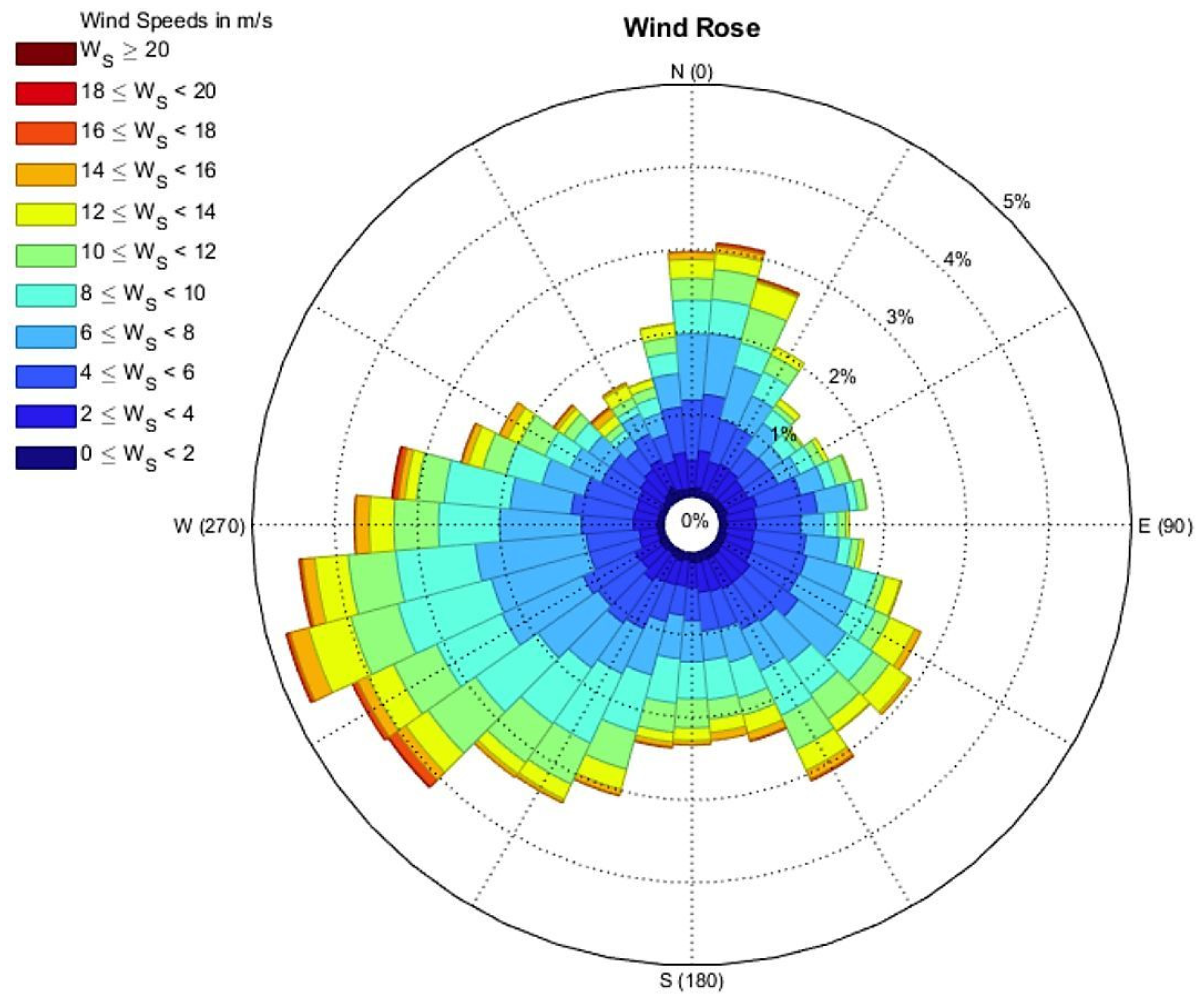
Figure 1. The surface wind rose from 20 July 2022 to 19 July 2023.
Jmse 14 00012 g001
Figure 2. Table of relationships between mean wave direction and significant wave height.
Jmse 14 00012 g002
Figure 3. Surface current rose.
Jmse 14 00012 g003
Figure 4. SAR or SAROR area of the republic of Lithuania.
Jmse 14 00012 g004
Figure 5. Vessel traffic data in and around the Lithuanian Exclusive Economic Zone in 2022.
Jmse 14 00012 g005
Figure 6. Pollution spill risk areas within Lithuania’s area of responsibility in 2020.
Jmse 14 00012 g006
Figure 7. Coordinate systems used in the ship bridge simulator.
Jmse 14 00012 g007
Figure 8. Evaluation matrix of factors influencing the SARORV.
Jmse 14 00012 g008
Figure 9. Selected location of pollution incident.
Jmse 14 00012 g009
Figure 10. Hydrometeorological conditions from 25 March 2025 to 6 April 2025.
Jmse 14 00012 g010
Table 1. Ice observation data (30-year period).
LocationNumber of WintersFirst IceThe Last IceIcing Days
ObservedIce-FreeEarliest DayLatest DayEarliest DayLatest DayMin.Avg.Max.
North29820 November 6 March20 February 15 April 03087
Klaipėda3002 November 16 February 16 February 19 April 356103
South3002 November 19 February 16 February 19 April 153101
Table 2. Statistical number of days of fog on the Baltic coast.
Month/Location123456789101112Total
Klaipėda1.52.94.14.32.22.00.70.50.51.42.51.524
Liepāja2.32.84.67.96.86.66.05.04.34.22.92.656
Kaliningrad1.51.61.81.82.82.53.56.06.84.83.11.838
Table 3. Main SARORVs of the Baltic sea region countries.
CountryLength/Beam/Draft (m)Speed (kn)CraneIce ClassFirefighting Equipment ClassRecovery Tank Capacity (m3)Recovery ArmsDisc Skimmer (m3/h)Brush Skimmer (m3/h)Booms (m)Towing CapacityOther Equipment
Latvia59.5/11.1/3.710.04 tNoNo1702 units10080800No
Estonia63.9/10.2/3.615.010 tYesClass 1100No16010060040 t
Lithuania59.4/10.5/4.79.53 tNoYes228No1004040015 t
Finland95.9/17.4/5.518.015 tYesClass 112002 unitsYesYesYes100 tDecompression chamber, helicopter landing capability, dynamic positioning
Sweden81.2/16.2/6.516.024 tYesClass 110502 units100100500100 tDecompression chamber, dynamic positioning
Denmark56.0/12.3/4.612.028 tYes-3101 unit90Yes60020 t
Germany68.2/15.4/4.513.112.5 tYesClass 14302 unitsYesYes40040 t
Poland53.4/13.6/4.610.012 tYesClass 15122 units10014069073 tROV
Table 4. Dependence of Beaufort Scale on Wind Speed and Wave Height.
BNWind Speed,
m/s
Wave Height, mTerminologyDescription
00.0–0.20.0CalmCalm. Smoke rises vertically.
10.3–1.50.1Light airWind motion visible in smoke.
21.6–3.30.2Light breezeWind felt on exposed skin. Leaves rustle.
33.4–5.40.6Gentle breezeLeaves and smaller twigs in constant motion.
45.5–7.91.0Moderate breezeDust and loose paper is raised. Small branches begin to move.
58.0–10.72.0Fresh breezeSmaller trees sway.
610.8–13.83.0Strong breezeLarge branches in motion. Whistling heard in overhead wires.
713.9–17.14.0Near galeWhole trees in motion. Some difficulty when walking into the wind.
817.2–20.75.5GaleTwigs broken from trees. Cars veer on road.
920.8–24.47.0Severe galeLight structure damage.
1024.5–28.49.0StormTrees uprooted. Considerable structural damage.
1128.5–32.611.5Violent stormWidespread structural damage.
1232.7–40.814+HurricaneConsiderable and widespread damage to structures.
Table 5. Summary of the assessment of hydrometeorological factors.
FactorRelevant for Simulation Program?Maximum and Average ValueRequirement for SARORV Concept
WindYes, for all38 kn from 240°; 14 knAbility to operate at sea in Beaufort scale 8 wind conditions.
Wave HeightYes, for all6 m from 240°; 3.5 mAbility to operate at sea in Beaufort scale 8 wave conditions.
CurrentYes, for all2 kn from 240°; 0.25 knAbility to operate at sea with a current speed of up to 2 knots.
Water TemperatureYes, for SAR area determinationSearch object: life raftAbility to cooperate with a helicopter, refuel it if required, and provide first aid to rescued persons.
Ice Thickness and IcingNo-Comply with ice class 1C requirements.
FogNo-Equipped with a thermal camera for human detection and a 7–14 μm wavelength thermal camera for oil spill detection.
Table 6. Assessment of crew composition and SARORV automation.
TaskPerformed byRequired Crew per ShiftNumber of ShiftsCan Perform Other Functions
CommandHuman11No
Ship ManeuveringHuman12No
NavigationHuman12No
Ship ControlAutomated0--
CommunicationsHuman12No
Rescue Operation CoordinationHuman12No
Vital Systems MonitoringAutomated0--
Propulsion Systems MonitoringAutomated0--
Repair and MaintenanceHuman12No
CookingHuman11No
Firefighting Equipment OperatorHuman21Yes, when not firefighting
Boat LaunchingHuman31Yes, when not launching boats
Boat OperationHuman21Yes, when not operating boats
Rescue SwimmerHuman11Yes, when not swimming
Pollution CollectionHuman31Yes, when not collecting pollution
Medical TreatmentHuman1–21No, requires medical qualification
Table 7. Summary of SARORV requirements.
FactorIs the Factor Required for Modeling Program?Factor’s Maximum and Average ValueDefined Requirement for Vessel Concept
International conventionsYes, PDMP * and bridge simulatorPollution area position-
Yes, SAR area and bridge simulatorSAR area position-
National regulationsNo-Preparation time up to 2 h; for crew efficiency, the vessel must include catering and recreation facilities.
Communication equipmentNo-GMDSS equipment, additionally 1×HF, 1×MF, 2×VHF radios, and AirVHF.
Area of responsibilityNo-The vessel must be equipped with a dynamic positioning system.
Crew compositionNo-The vessel must ensure sanitary and living conditions for 20 crew members. Automation level must comply with IP and IBS standards under Lloyd’s Register requirements.
Cooperation with other unitsNo-Communication equipment must allow coordination with other units and aircraft depending on water temperature conditions.
* Pollution dispersion modeling program on water surface.
Table 8. SARORV equipment evaluation.
FactorIs the Factor Required for Modeling Programs?Maximum and Average Factor ValueDefined Requirement for Vessel Concept
Oil recovery equipmentYes, PDMP *Spilled pollutant amount—700 t12 t crane, 2 recovery arms, 600 m of booms, brush skimmer 100 m3/h, disc skimmer 110 m3/h.
Incident analysisNo-Towing capacity BP 113 t, FF1-class firefighting equipment, towed side-scan sonar (SSS), remotely operated underwater vehicle (ROV).
Experience of other countriesNo--
* Pollution dispersion modeling program on water surface.
Table 9. Technical data of selected vessels.
ImageTechnical Data
Jmse 14 00012 i001OSV (Offshore Supply Vessel)
Length: 93.5 m
Beam: 22 m
Displacement: 8800 t
Speed: 14.4 knots
Engine power: 2 × 2200 kW
Propulsion: Azimuth electric thrusters
Jmse 14 00012 i002OPV (Offshore Patrol Vessel)
Length: 65.9 m
Beam: 10.7 m
Displacement: 835 t
Speed: 21.5 knots
Engine power: 1 × 5500 kW
Propulsion: Fixed-pitch propeller
Table 10. Bridge simulator data.
Vessel TypeSpeed Over GroundSpeed Through WaterTransit TimePreparation Time
Transit to SAR area, under worst hydrometeorological conditions
OSV7.9 kn8.6 kn11 h 45 min2 h
OPV13.9 kn15.4 kn7 h 20 min2 h
Transit to SAR area, under average hydrometeorological conditions
OSV8.5 kn8.1 kn8 h2 h
OPV12.7 kn15.8 kn5 h2 h
Transit to pollution response area, under average hydrometeorological conditions
OSV9.9 kn10.1 kn6 h 45 min2 h
OPV17.3 kn16.8 kn4 h2 h
Table 11. Stability assessment results.
TEST ScenarioOSVOPV
Without propulsionJmse 14 00012 i003Jmse 14 00012 i004
Dynamic positioningJmse 14 00012 i005Jmse 14 00012 i006
Full speedJmse 14 00012 i007Jmse 14 00012 i008
Jmse 14 00012 i009side rollingJmse 14 00012 i010longitudinal pitching
Table 12. Results of SAR area calculation.
Ship TypeArea Size (nm)Ship Speed (kn)Number of TracksDistance in Area (nm)Arrival Time (h)Operation Time (h)
SAR area under worst hydrometeorological conditions
OSV30 × 407.927108013.75137
OPV21 × 2613.9194949.3336
SAR area under average hydrometeorological conditions
OSV9 × 1010.488012.008
OPV5 × 717.55358.002
Table 13. Results of water surface pollution dispersion modelling.
Vessel TypeArea Length, nm (m)Area Width, nm (m)Area Size, m2Oil Recovery Arm Coverage, m
Pollution area under worst hydrometeorological conditions
OSV3.7 (6900)0.8 (1500)10,400,00040
OPV2.5 (4600)0.7 (1300)5,980,00023
Pollution area under average hydrometeorological conditions
OSV2.5 (4600)0.2 (400)1,800,0007
OPV1.5 (2800)0.2 (400)1,100,0004
Table 14. SARORV technical characteristics summary.
ParameterRequired ValuePurpose/Justification
Length≈90 mRequired for equipment capacity, accommodation, and stability.
Beam≥20 mEnsures sufficient stability in heavy seas.
Displacement≥8000 tProvides buoyancy and storage for response systems.
Speed≥15 knots (≥10.6 knots in Beaufort 8)Ensures timely arrival to SAR and spill areas.
Endurance≥6 days and ≥1200 nautical milesEnables long-duration operations without resupply.
Readiness time≤2 hMeets emergency response activation requirements.
Ice class≥1CEnables operations in seasonal ice near Klaipėda.
Propulsion systemAzimuth thrusters + bow thruster (DP capable)Allows precise station-keeping during rescue and spill response.
Main engine power~2 × 2500–3000 kWSupports required speed under adverse conditions.
Bollard pull≥113 tAllows towing large vessels during emergencies.
Oil recovery capacity≥700 t storageRequired for large spill response operations.
SkimmersBrush ≥ 100 m3/h and Disc ≥ 110 m3/hSupports mechanical oil recovery.
Oil recovery arms2 units, ≥40 m swathEnsures efficient spill sweep width.
Oil booms≥600 mRequired for containment operations.
Deck crane≥12 t lifting capacitySupports lifting, rescue, and equipment handling.
Side-scan sonarTowed high-resolutionEnables underwater search and incident assessment.
ROVYes, remote-operated vehicleSupports deep and structural underwater inspections.
Rescue boats2 unitsEnables person-in-water recovery.
IR/Thermal sensors7–14 μm bandAllow detection in darkness and fog.
Firefighting systemFF Class 1Enables marine industrial firefighting.
GMDSS areaA3Ensures global maritime distress communication.
Communication radiosHF, MF, ≥2 × VHF, Air-VHFAllows SAR and inter-agency coordination.
Navigation suiteGPS, AIS, ECDIS, Autopilot, Dual RadarEnsures safe navigation and search planning.
Crew18 + 2 medical staffSupports continuous operations and emergency care.
AccommodationLiving quarters, galley, recreation, medical facilitiesEnsure operational sustainability.
Automation levelIP + IBSIntegrated bridge & power management reduces crew workload.
Helicopter supportHelideck + refuelingEnables joint SAR operations and casualty evacuation.
Disclaimer/Publisher’s Note: The statements, opinions and data contained in all publications are solely those of the individual author(s) and contributor(s) and not of MDPI and/or the editor(s). MDPI and/or the editor(s) disclaim responsibility for any injury to people or property resulting from any ideas, methods, instructions or products referred to in the content.