Article

Spherical Gravity Inversion Reveals Crustal Structure and Microplate Tectonics in the Caribbean Sea


1
National Key Laboratory of Uranium Resources Exploration-Mining and Nuclear Remote Sensing, East China University of Technology, Nanchang 330013, China
2
Hubei Subsurface Multi-Scale Imaging Key Laboratory, School of Geophysics and Geomatics, China University of Geosciences, Wuhan 430074, China
*
Author to whom correspondence should be addressed.
J. Mar. Sci. Eng. 2026, 14(1), 109; https://doi.org/10.3390/jmse14010109
Submission received: 2 December 2025 / Revised: 30 December 2025 / Accepted: 30 December 2025 / Published: 5 January 2026
(This article belongs to the Special Issue Advances in Ocean Plate Motion and Seismic Research)

Abstract

As a convergent zone of multiple plates, the Caribbean Sea and its adjacent areas have experienced a complex tectonic evolution process and are characterized by prominent microplate development. This region provides a natural laboratory for studying the formation mechanism of continental margins, the evolution process of ocean basins, and the tectonics of microplates. However, the crustal structure and microplate tectonics in this region remain unclear due to limitations of conventional planar gravity inversion methods, which neglect the Earth’s curvature in large-scale areas, as well as the uneven coverage of regional seismic networks. To precisely delineate the crustal structure and microplate boundaries in the Caribbean Sea region, this study employs a nonlinear gravity inversion method based on a spherical coordinate system. By utilizing GOCO06s satellite gravity data, ETOPO1 topographic data, and the CRUST1.0 crustal model, we performed inversion calculations for the Moho depth in the Caribbean Sea and its adjacent regions and systematically analyzed the crustal structure and microplate tectonic characteristics of the region. The results indicate that the gravity inversion method in the spherical coordinate system has good applicability in complex tectonic regions. The inversion results show that the Moho depth in the study area generally presents a spatial distribution pattern of “shallow in the central part and deep in the surrounding areas”. Among them, the Moho depth is the largest (>39 km) at the junction of the Northern Andes and the South American Plate, while it is relatively shallow (<6 km) in regions such as the Cayman Trough, the Colombian Basin, and the Venezuelan Basin. Based on the Moho undulation, gravity anomalies, and topographic features, this study divides the Caribbean Sea and its adjacent areas into 22 microplates and identifies three types of microplates, including oceanic, continental, and accretionary. Among them, there are 10 microplates with oceanic crust, 6 with continental crust, and 5 with accretionary crust, while the Northern Andes Microplate exhibits a mixed type. The crustal structure characteristics revealed in this study support the Pacific origin model of the Caribbean Plate, indicating that most of the plate is a component of the ancient Pacific Plate with standard oceanic crust properties. Locally, the Caribbean Large Igneous Province developed due to hotspot activity, and the subsequent eastward drift and tectonic wedging processes collectively shaped the complex modern microplate tectonic framework of this region. This study not only reveals the variation pattern of crustal thickness in the Caribbean Sea region but also provides new geophysical evidence for understanding the lithospheric structure and microplate evolution mechanism in the area.

1. Introduction

The Caribbean Sea (CS) and its adjacent areas represent a convergence zone of five major tectonic plates, the South American Plate, the North American Plate, the Nazca Plate, the Cocos Plate, and the Caribbean Plate, resulting in the formation of complex tectonic features characterized by the coexistence of multiple island arcs, trenches, deep-sea troughs, numerous islands, and small ocean basins [1,2,3,4,5]. Notably, as a small tectonic plate sandwiched between the North American and South American plates, the Caribbean Plate exhibits composite deformation characteristics of compression, strike-slip, and extension, with a complex crustal structure and frequent strong seismic activity. Formed by the accretion of multiple terranes during the Early Cretaceous to the Miocene, the Caribbean Plate is bounded to the east and west by the Central American Subduction Zone and the Lesser Antilles Subduction Zone, respectively, while typical subduction-transform boundaries are developed along its northern and southern margins. Currently, two competing hypotheses dominate the debate on the origin of the Caribbean Plate. The first is the “in situ origin of the American Plate” hypothesis [6,7], which proposes that the Caribbean Plate originated in the Central American region, between the present-day North and South American plates. The second hypothesis is the “Pacific allochthonous migration” hypothesis [3,8,9], which argues that the precursor of the present-day Caribbean Plate was the Caribbean Large Igneous Province (CLIP) formed by hotspot magmatism within the ancient Farallon Plate. Subsequently, it gradually migrated eastward to its current location, ultimately shaping the modern tectonic structure [8,10]. Notably, the “Pacific allochthonous migration” hypothesis has garnered considerable attention as it is broadly consistent with existing geophysical and geological evidence [3,4]. Since the Late Cretaceous, the CS and its adjacent areas have undergone multiple episodes of collision, subduction, and rifting due to the complex interplay of surrounding plate motions, shaping the region’s complex tectonic structure. Thus, this region serves as a natural laboratory for investigating the formation mechanisms of continental margins, the evolutionary processes of ocean basins, and the tectonics of microplates [5,11,12].
In recent years, numerous scholars have employed various methods to investigate the lithospheric structure and microplate tectonic characteristics of the CS and its adjacent areas. Sandwiched between the Pacific subduction system and the Atlantic extensional system, the CS and its adjacent areas have experienced a series of tectonic events, including large-scale oceanic subduction, plate boundary adjustments, slab tearing, and massive magmatism, which has resulted in a complex deep lithospheric structure [13]. González et al. (2007) [14] constructed a 3D S-wave velocity structure model covering the crust and upper mantle of the Caribbean Plate via surface wave group velocity tomography, revealing the undulatory variations in the Moho depth and the lithospheric structure, and delineating the crustal types of different tectonic domains based on these results. Barrera-Lopez et al. (2022) [4] constructed a new crustal thickness model for the region based on seismicity and tomography results, and by incorporating gravity and magnetic data interpretations, delineated the geometric configuration of the subducted oceanic crust at the Caribbean Plate boundaries. Furthermore, Lü et al. (2023) [15] obtained the subduction geometry of the Cocos Plate in the western Caribbean using Pn-wave tomography, identifying multiple material migration channels associated with slab tearing. Additionally, convergent, divergent, and transform plate boundaries coexist in the Caribbean region, with the microplate tectonics characterized by distinct uniqueness [16,17]. Benford et al. (2012) [11] analyzed the microplate kinematic characteristics in the northern Caribbean region using GPS velocity data and identified the Hispaniola Microplate. Liu et al. (2024) [5] identified the microplate tectonic boundaries of the CS based on satellite gravity data, revealing the existence of a triple junction among the Gonâve, Hispaniola, and Septentrional microplates in the Windward Passage. Furthermore, the tectonic evolution of the CS and its adjacent areas involve a series of complex geodynamic and tectonic processes. Long-term plate tectonic movements have led to the migration of the subduction zone from the Pacific margin to the Atlantic margin and triggered massive magmatic activity that formed the Cretaceous CLIP. However, significant debate continues regarding the geodynamic mechanisms driving microplate formation and the models of plate reconstruction in this region [3]. Garcia-Casco et al. (2008) [18] integrated multidisciplinary evidence from petrology, geochemistry, geochronology, geophysics, and stratigraphy and demonstrated that the Caribbean Plate collided with an independent sedimentary terrane named Caribeana during the Late Cretaceous. Numerical modeling results indicate that the collision between the ancient Caribbean Plateau and the Central American margin facilitated the initiation of a new Atlantic subduction zone via a polarity reversal mechanism. Subduction has triggered large-scale mantle flow reorganization, and the resulting subduction-induced mantle plume is consistent with the formation mechanism of the CLIP [19].
While previous studies have advanced our understanding of the morphological and physical characteristics of the lithospheric structure and microplate tectonics in the CS, the current knowledge regarding the crustal structure and microplate tectonic framework in this area remains controversial due to the lack of seismic data covering the entire region and the limitations of data processing methods. Satellite gravity data offers advantages such as comprehensive coverage, independence from surface environmental constraints, high precision, and excellent resolution. Therefore, based on the GOCO06s static gravitational field model and the CRUST1.0 crustal model, this study employs a gravity inversion method in the spherical coordinate system to avoid the effects of traditional planar models’ neglect at large scales and invert the Moho depth in the CS and its adjacent areas. Combining the inversion results with Bouguer gravity anomalies and topographic data through comprehensive profile analysis, this study advances the understanding of the crustal structure and microplate tectonic framework in the region, based on the previous work. These findings provide new geophysical constraints for elucidating the crustal structure and microplate dynamics of the Caribbean Sea.

2. Regional Geological Setting

The Caribbean Plate is situated at the convergence center of multiple tectonic plates, with its marine-terrestrial geomorphic system displaying remarkable diversity [2,4,20,21,22]. Tectonically, the Caribbean Plate is bounded by the Pacific Plate subduction system to the west and the Atlantic Plate extensional tectonic system to the east, with regional tectonic deformation primarily controlled by the subduction zones on the eastern and western sides and the large-scale strike-slip fault systems along the southern and northern boundaries. The northern side of the plate is adjacent to the North American Plate, the southern side borders the South American Plate, and the eastern side borders the Atlantic Ocean (Figure 1). Its western margin is dominated by several ancient continental terranes, namely the Yucatan Microplate, the Chortis Microplate, and the Central American Volcanic Arc [23]. The Cayman Trough, situated along the southern margin of the Yucatan Basin, is a steep-sided oceanic basin controlled jointly by strike-slip faults and normal faults, characterized by an extremely elongated geometry, a width of merely 110–140 km, and a maximum depth of ~7684 m [22]. The Greater Antilles Arc, along the northern margin of the Caribbean Plate, is bounded by the Gulf of Mexico, the North American continent, and the Bahamas Microplate. As the key tectonic component in the northern part of the plate, its collision and accretion with the North American Plate formed the fold-and-thrust belts along the northern margin of Cuba and on Hispaniola [24,25]. The Lesser Antilles tectonic belt along the eastern margin of the plate borders the Atlantic Ocean and is tectonically controlled by the westward subduction of the Atlantic lithosphere [26]. The tectonic units developed along with this subduction system also include the Grenada Basin (the back-arc basin of the Lesser Antilles Arc), the Aves Ridge (an older, currently inactive volcanic arc), the Tobago Basin, and the Barbados accretionary prism [20].
Generally, the combined and superimposed effects of subduction, collision, and strike-slip interactions between major plates and microplates have collectively shaped the complex tectonic architecture of the CS and its adjacent areas, leading to frequent seismicity and intense volcanism in this area [5] (Figure 1). The southeastern margin of the Caribbean Plate converges obliquely with the South American Plate, forming a series of sedimentary basins and complex deformation zones in northern South America, such as the Maracaibo Basin and the Eastern Venezuela Basin [27]. The collision-compression between the plate and surrounding blocks has also triggered a series of deep-seated faults, such as the Septentrional–Oriente Fault Zone, the Enriquillo–Plantain Garden Fault Zone, and the El Pilar Fault [4]. Within the plate interior, the Beata Ridge separates the Colombian Basin from the Venezuelan Basin. The Colombian Basin is bordered to the north by the Nicaragua Rise, while the Aves Ridge separates the Venezuelan Basin from the Grenada Basin.

3. Data and Methods

3.1. Data

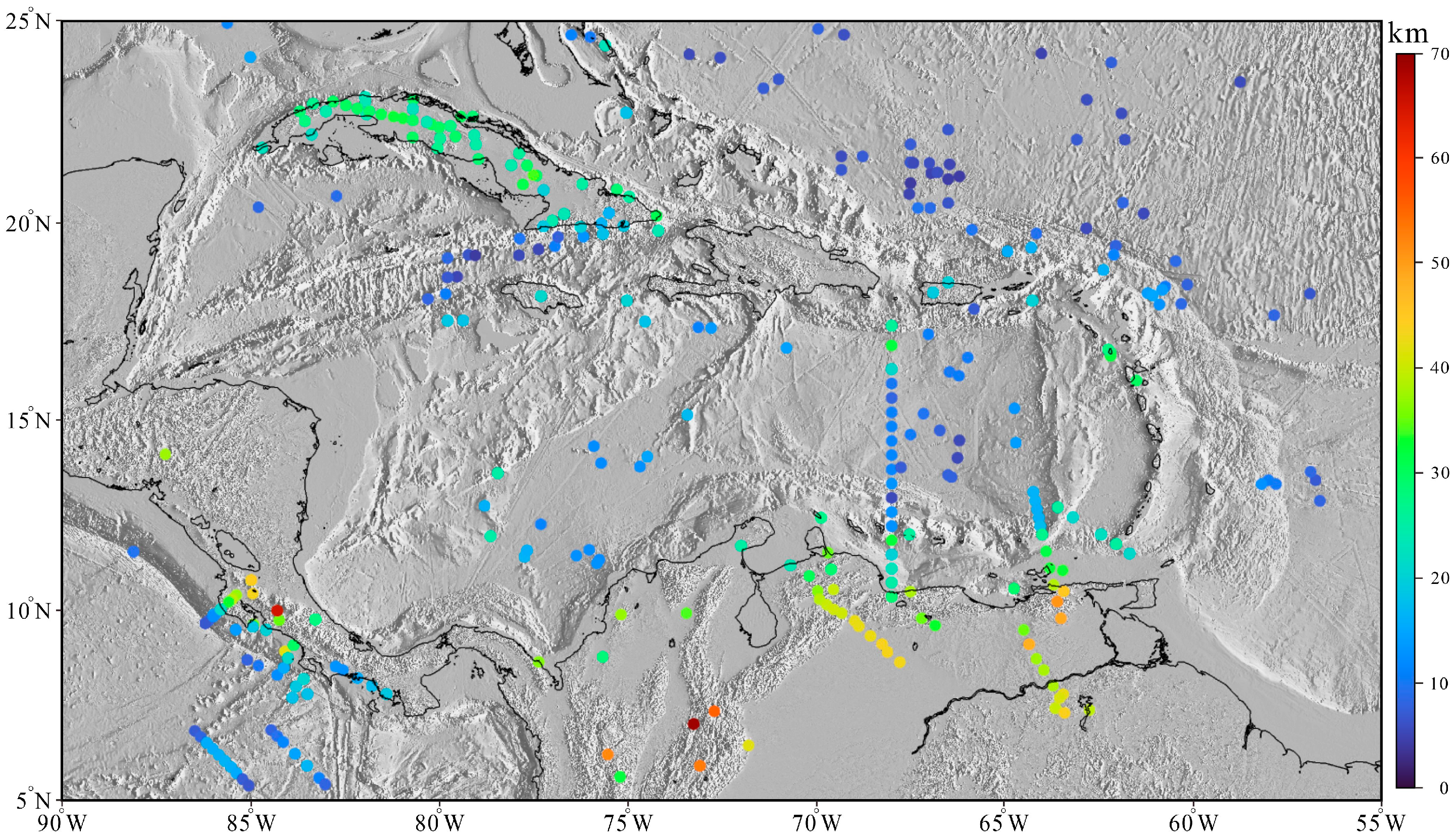
The data used in this study mainly include gravity data, topographic data, and the Crust1.0 global crustal model. The gravity data were derived from the GOCO06s static gravitational field model (https://icgem.gfz-potsdam.de/home) (accessed on 2 September 2025) with a spatial resolution of 0.1° × 0.1°. The topographic data were derived from the ETOPO1 topographic relief model (https://igppweb.ucsd.edu/~gabi/rem.html) (accessed on 2 September 2025), which provides information on the elevation of the Earth’s surface and the depth of the seabed, with a spatial resolution of 0.1° × 0.1°. The crustal thickness data were derived from the CRUST1.0 global crustal structure model (https://igppweb.ucsd.edu/~gabi/rem.html) (accessed on 2 September 2025), with a spatial resolution of 1° × 1°. Additionally, to improve the reliability of inversion, this study uses the Moho depth from Barrera-Lopez et al. (2022) [4] as seismic prior information to constrain the inversion, which comprises 811 discrete points.

3.2. Rapid Nonlinear Inversion Method Based on Spherical Coordinate System

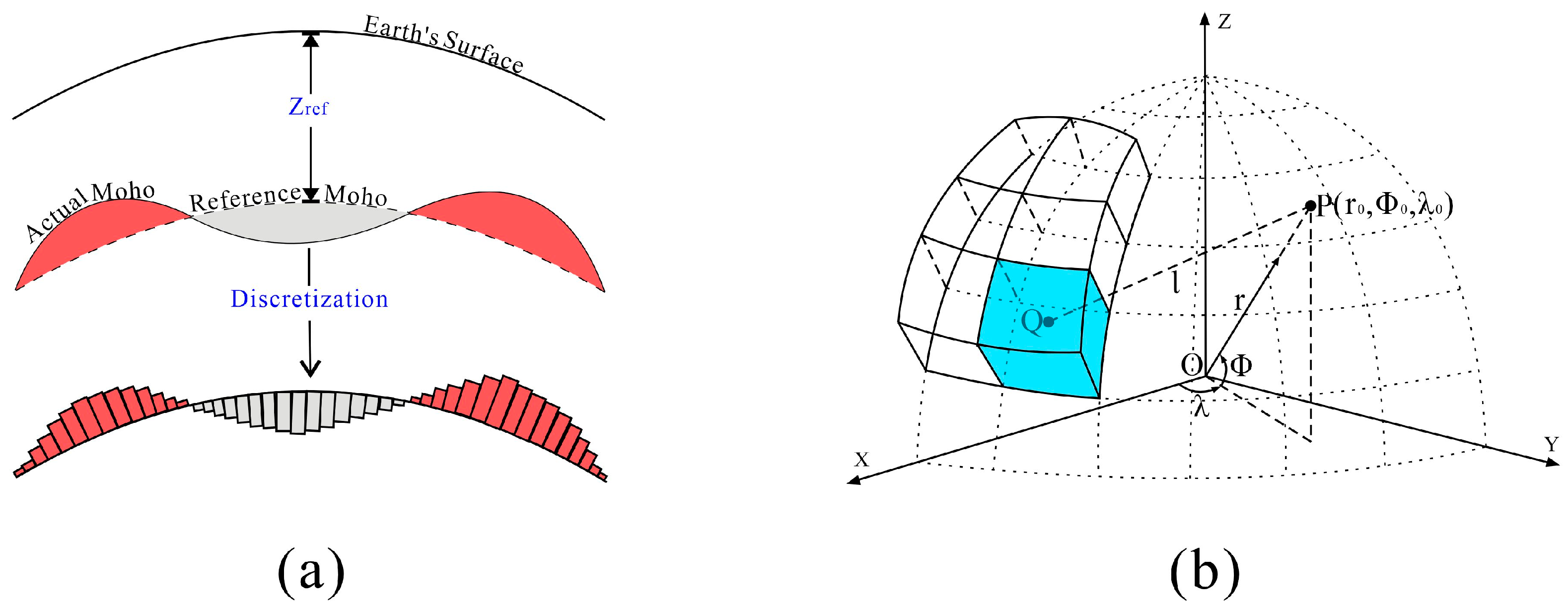
Owing to the large latitude and longitude span of the study area, the influence of the Earth’s curvature is significant. Therefore, this study adopts the rapid nonlinear gravity inversion method based on the spherical coordinate system [28] to calculate the Moho depth in the CS and its adjacent areas. Based on the Gauss–Newton algorithm and combined with the iteration of Bott’s method (1960) [29] in the spherical coordinate system, this method incorporates the first-order Tikhonov regularization [30] to enhance inversion stability. It selects the optimal combination of reference depth and density contrast through comparative verification, ultimately realizing the inversion of the Moho depth in the study area. In the inversion process, the actual Moho is treated as undulations relative to the reference plane, and it is discretized into a series of spherical prism elements under the spherical coordinate system (Figure 2).

3.2.1. Data Preprocessing

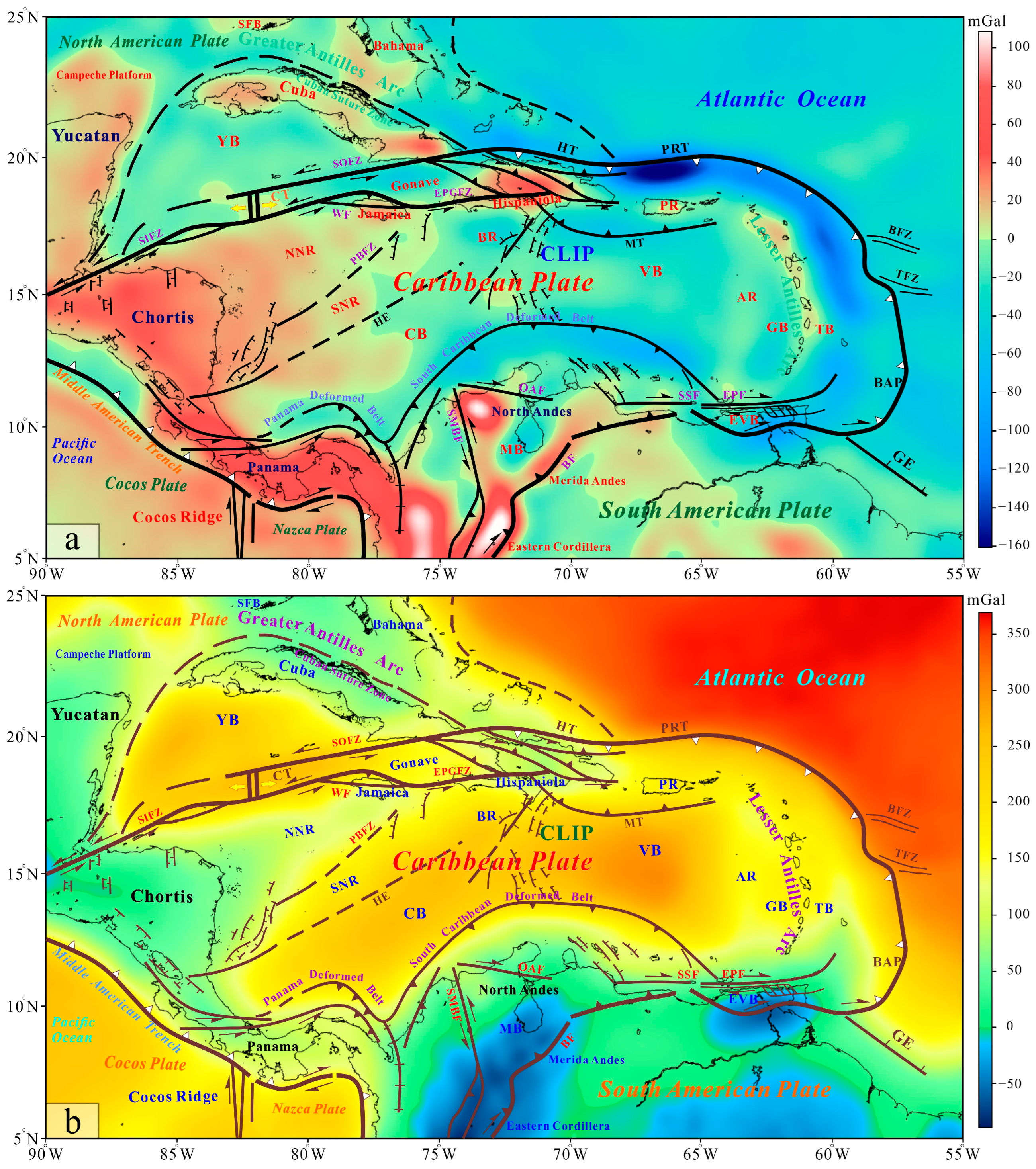
The gravity data required for inversion in this study are the Bouguer gravity anomalies after Bouguer correction and sedimentary layer effect stripping. Firstly, the normal gravity field of the reference Earth model is removed to obtain the original gravity disturbance (Figure 3a). Secondly, based on the Etopo1 global topographic model, the gravitational effects of topography and water layer are removed from the original gravity disturbance to obtain the Bouguer gravity anomalies (Figure 3b).
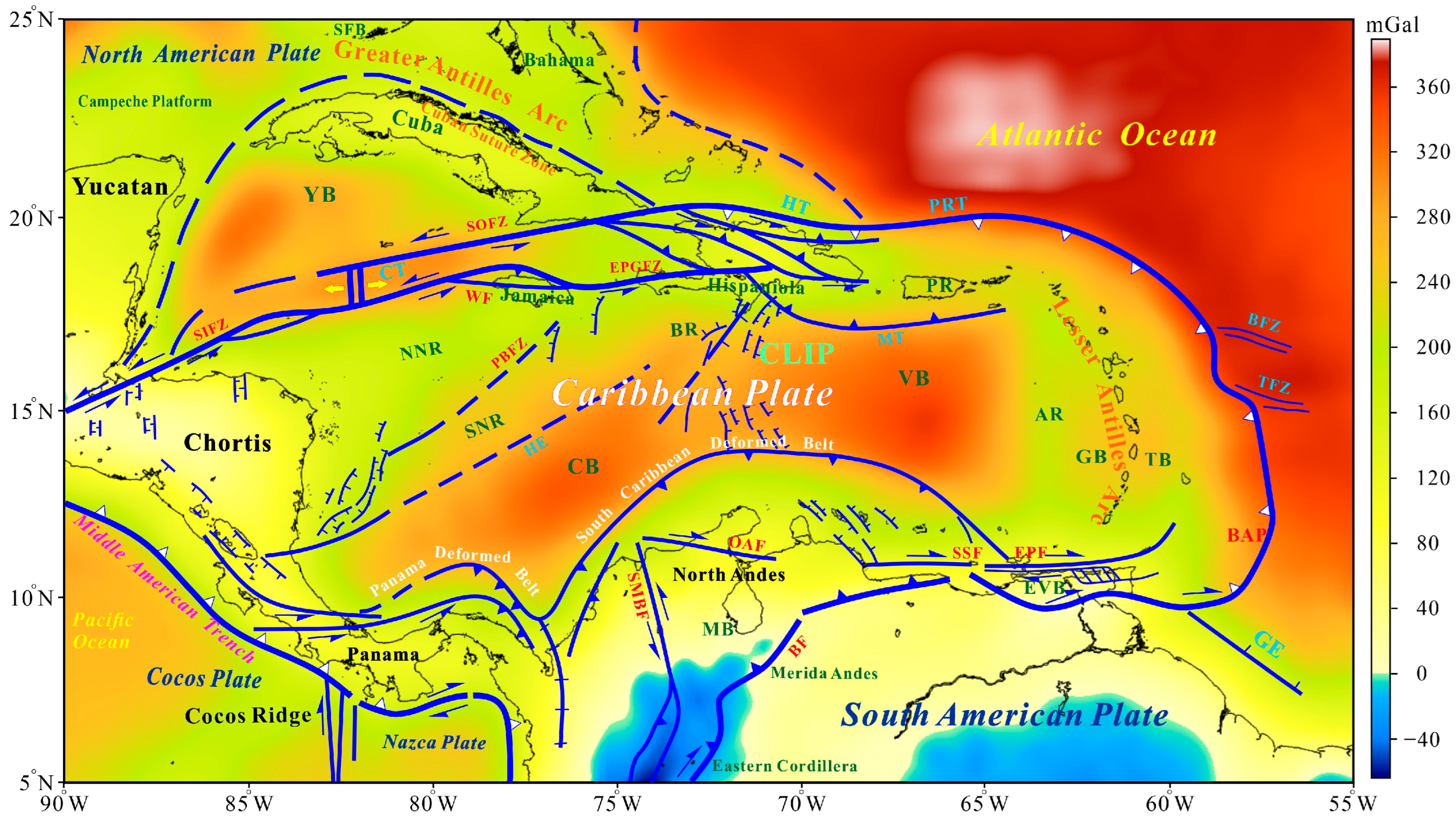
Finally, the gravitational effect of the sedimentary layer is stripped off. Among them, the sedimentary layer thickness is derived from the CRUST1.0 global crustal structure model. For the CS and its adjacent areas, this study calculated the gravitational effects of the upper, middle, and lower sedimentary layers separately and subtracted the sum of the gravitational effects of the three sedimentary layers from the Bouguer gravity anomalies to ultimately obtain the input data required for inversion (Figure 4).

3.2.2. Forward Modeling Construction

In this study, the reference Moho is modeled as a spherical surface and discretized into a series of spherical prism elements (Figure 2a). The reference Moho depth is denoted as Zref. If the actual Moho lies above the reference Moho, the top of the k-th spherical prism corresponds to the Moho depth Zk, with a positive density contrast Δ ρ ; conversely, if the actual Moho lies below the reference Moho, the bottom of the k-th spherical prism corresponds to the Moho depth Zk, with a negative density contrast Δ ρ . At the observation point, the gravitational contribution g ( r , Φ , λ ) of each spherical prism to the observation point can be expressed as Equation (1):
g ( r , Φ , λ ) = G Δ ρ λ 2 λ 1 ϕ 2 ϕ 1 r 2 r 1 r s 2 c o s φ s r 0 r s c o s Ψ ι 3 d r s d φ s d λ s
Herein, Φ1 and Φ2 denote the latitudinal boundaries of the spherical prism; λ1 and λ2 represent its longitudinal boundaries; (rs, Φs, λs) are the spherical coordinates of an arbitrary point P within the spherical prism; (r0, Φ0, λ0) are the spherical coordinates of the observation point Q; G is the gravitational constant; ρ is the density of the spherical prism; l is the straight-line distance from the observation point Q to point P; and Ψ is the angle between r0 and rs at the center of the sphere.

3.2.3. Objective Function Construction

The ultimate goal of this study is to invert the Moho depth of the study area using the preprocessed observed gravity data, i.e., to obtain the Moho depth P that minimizes the objective function Φ :
Φ ( P ) = d ° f ( P ) d ° f ( P ) T
wherein d° denotes the Bouguer gravity disturbance after sedimentary layer stripping, and f ( P ) represents the theoretical gravity anomaly obtained via nonlinear forward modeling based on Equation (1). Its input is the Moho depth parameter vector P = [Z1, Z2, …, Zm]T, which denotes the Moho depth of each grid cell.
In the inversion of the Moho depth P, the Gauss–Newton method iteratively applied by Bott (1960) [29] is used to calculate the Moho depth perturbation vector P k :
P k = d ° d P k 2 π   G   Δ ρ
In this regard, G is the gravitational constant, Δ ρ is the density contrast, and d P k is the gravity anomaly obtained via forward modeling of the Moho depth P k . The iteration is repeated until the objective function (Equation (2)) reaches its minimum value.
To mitigate the ill-posedness of Moho depth inversion, this study employs Tikhonov regularization to impose a smoothness constraint on the objective function, thereby enhancing the accuracy of the inversion results. The regularized objective function is expressed as Equation (4):
Γ ( P ) = [ d ° f ( P ) T ] [ d ° f ( P ) ] + μ P T R T R P
Specifically, R denotes the difference matrix, and µ represents the regularization parameter.

3.2.4. Parameter Selection

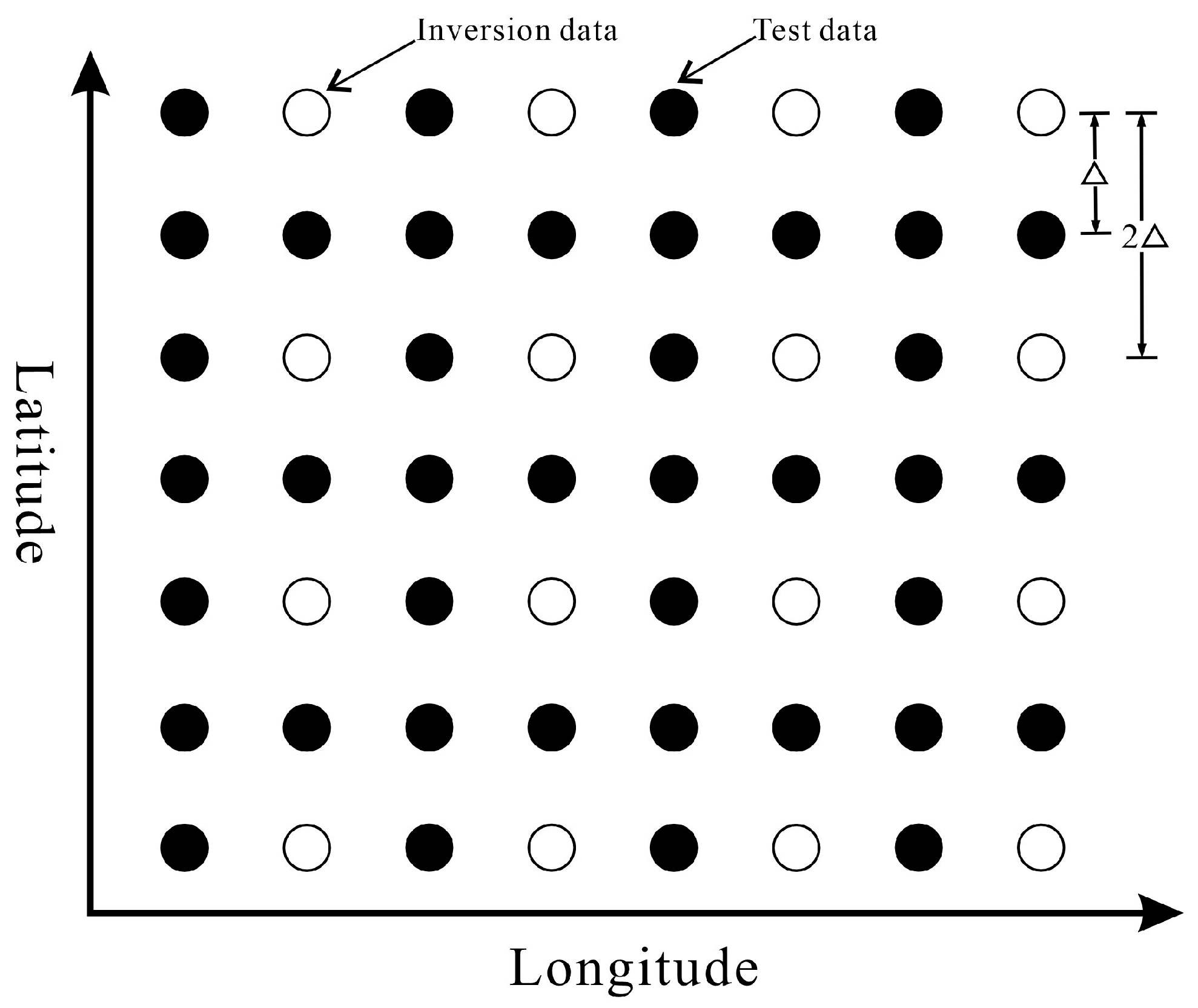
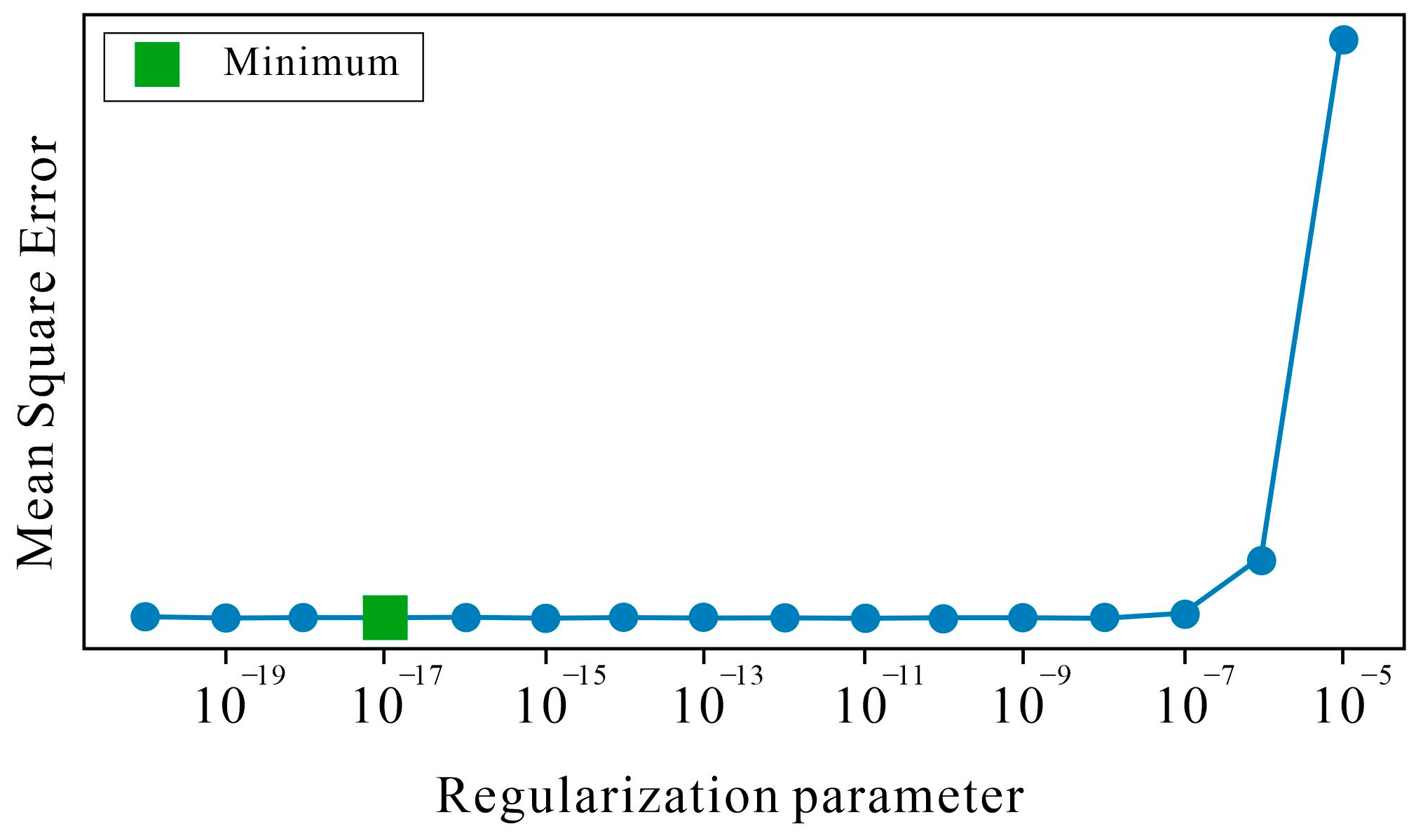
This study involves three key parameters, namely the regularization parameter µ, the reference depth Zref, and the interface density contrast Δ ρ . Among these parameters, the regularization parameter µ is independent of the reference depth employed as well as the interface density contrast used, and its value is estimated via the hold-out cross-validation method [31]. This method samples the original input data at a grid spacing twice the original to obtain the inversion dataset d inv o , with the remaining data serving as the test dataset d test o , as shown in Figure 5. µ is set as 16 terms of a geometric sequence: µn = 10−20, 10−19, …, 10−5. Each µn is combined with the inversion dataset d inv o for inversion to obtain the Moho depth Pn. Subsequently, the predicted gravity anomaly d test n with a distribution consistent with the test dataset is derived via forward modeling and interpolation based on Pn. The mean squared error M S E n between the predicted gravity anomaly d test n and the test dataset d test o is calculated using Equation (5):
M S E n = d t e s t o d t e s t n 2 N t e s t
Specifically, N test denotes the number of data points in the test dataset. When μ takes different values, the mean squared error between predicted gravity anomaly d test n and the observed test gravity anomaly d test o varies as shown in Figure 6. The optimal regularization parameter μ = 10−17 which minimizes M S E n is selected for subsequent Moho depth inversion.

3.2.5. Model Evaluation and Constraint Fusion

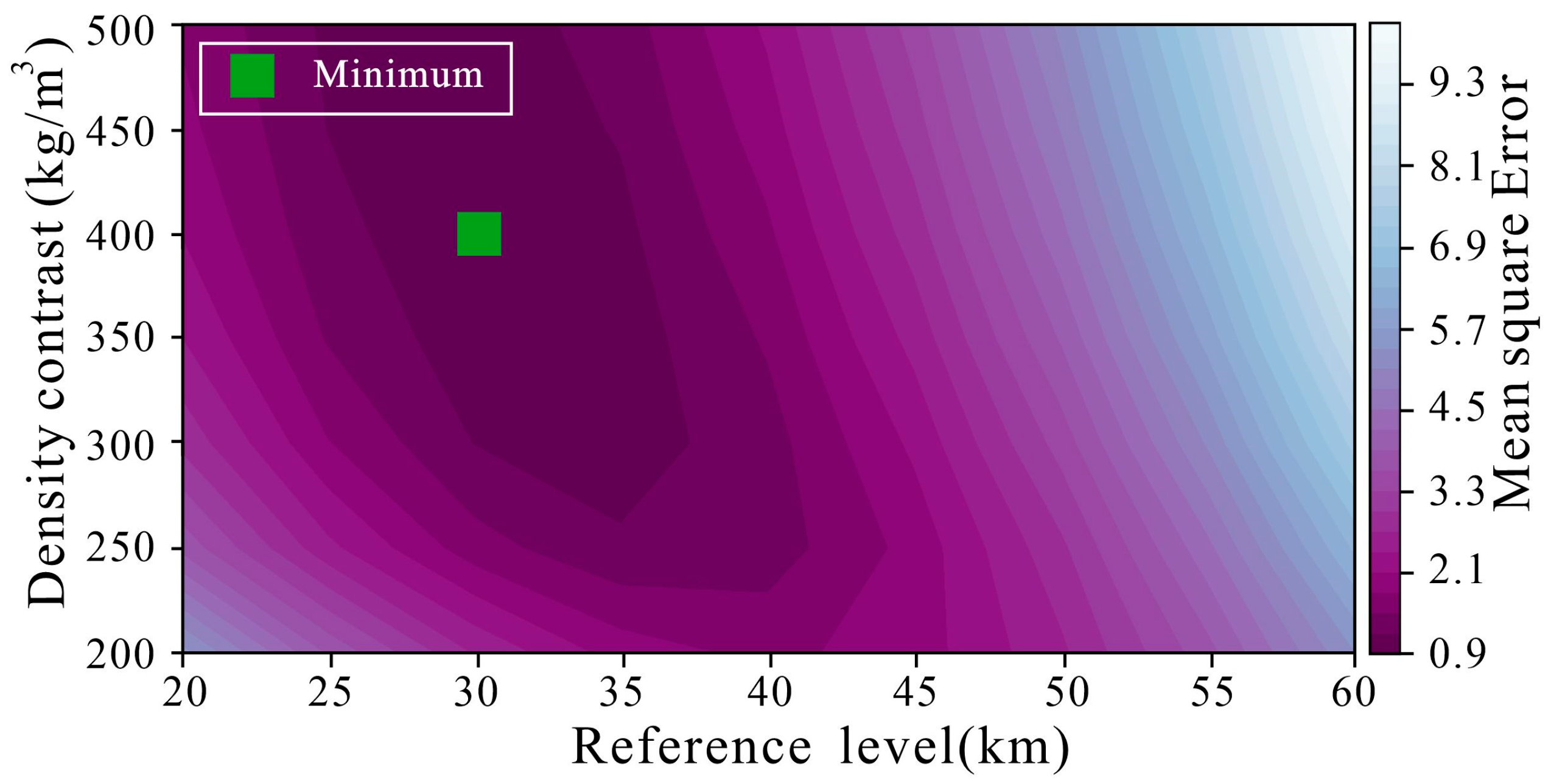
In this study, the Moho depth Z° derived from Barrera-Lopez et al. (2022) [4] is adopted as seismic prior information to constrain the inversion (Figure 7). A sequence of arithmetic reference depths Zref ∈ [20, 60] km with a tolerance of 5 km is set, comprising 9 values in total; a sequence of interface density contrasts Δ ρ ∈ [200, 500] kg/m3 with a tolerance of 50 kg/m3 is configured, including 7 values altogether. The reference depth sequence Zref and the density contrast sequence Δ ρ are paired one-to-one to generate 7 × 9 = 63 parameter combinations. Combined with the previously determined optimal regularization parameter µ = 10−17, inversion is performed to obtain 63 inversion results, which are then interpolated onto the seismic prior information points, and the mean squared errors between the inversion results and the Moho depth from Barrera-Lopez et al., 2022 [4] were calculated (Figure 8). For each inversion result and seismic prior information point, the mean square deviation MSNl,m is calculated using Equation (6):
M S N l , m = i = 1 N s Z i o Z i l , m 2 N s
wherein Ns denotes the total number of seismic observation points; Z i o represents the i-th observed data point; Z i l , m is the i-th predicted Moho depth derived from the inversion combined with the l-th value of Zref and the m-th value of the interface density contrast Δ ρ . When Equation (6) attains its minimum value, the optimal parameter combination of the reference depth Zref and the interface density contrast Δ ρ is determined as Z ref *   = 30 km and Δ ρ * = 400 kg/m3 (Figure 8). Based on this combination, the Moho depth of the study area is derived via inversion. The introduction of the seismic prior constraint set for evaluating and constraining the inversion results has significantly enhanced the reliability of the inversion method.

4. Results and Analysis

4.1. Moho Depth

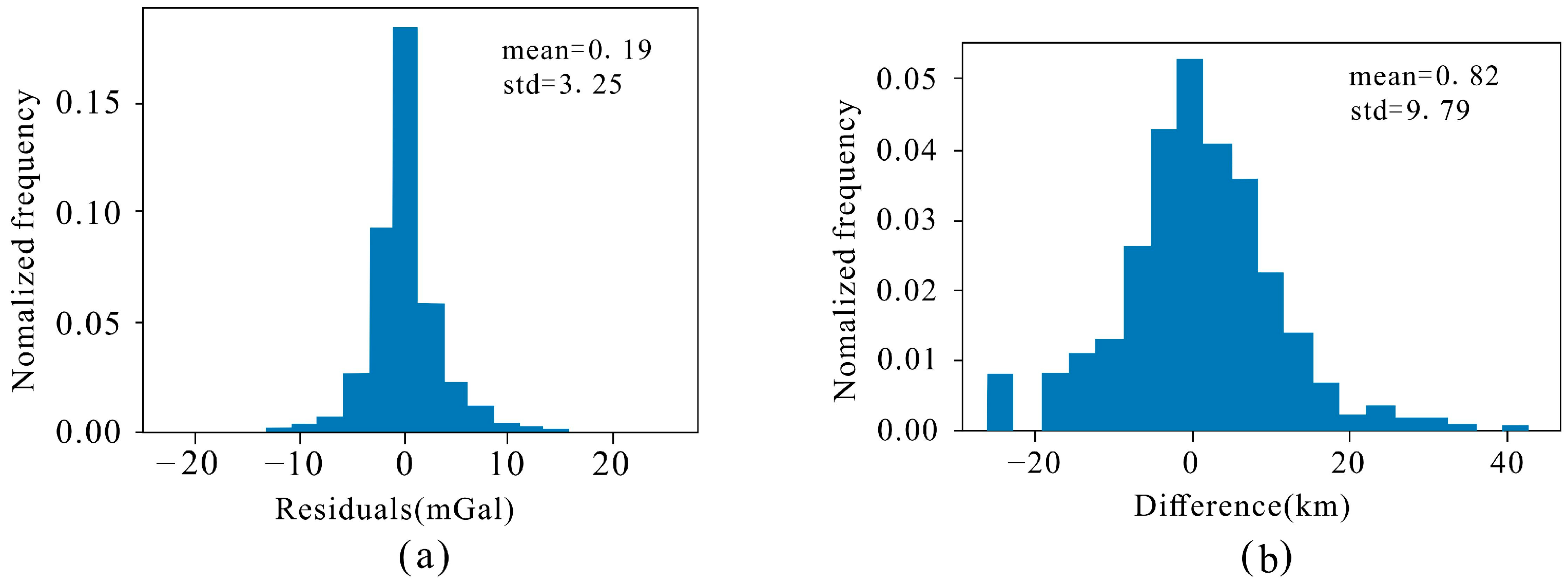
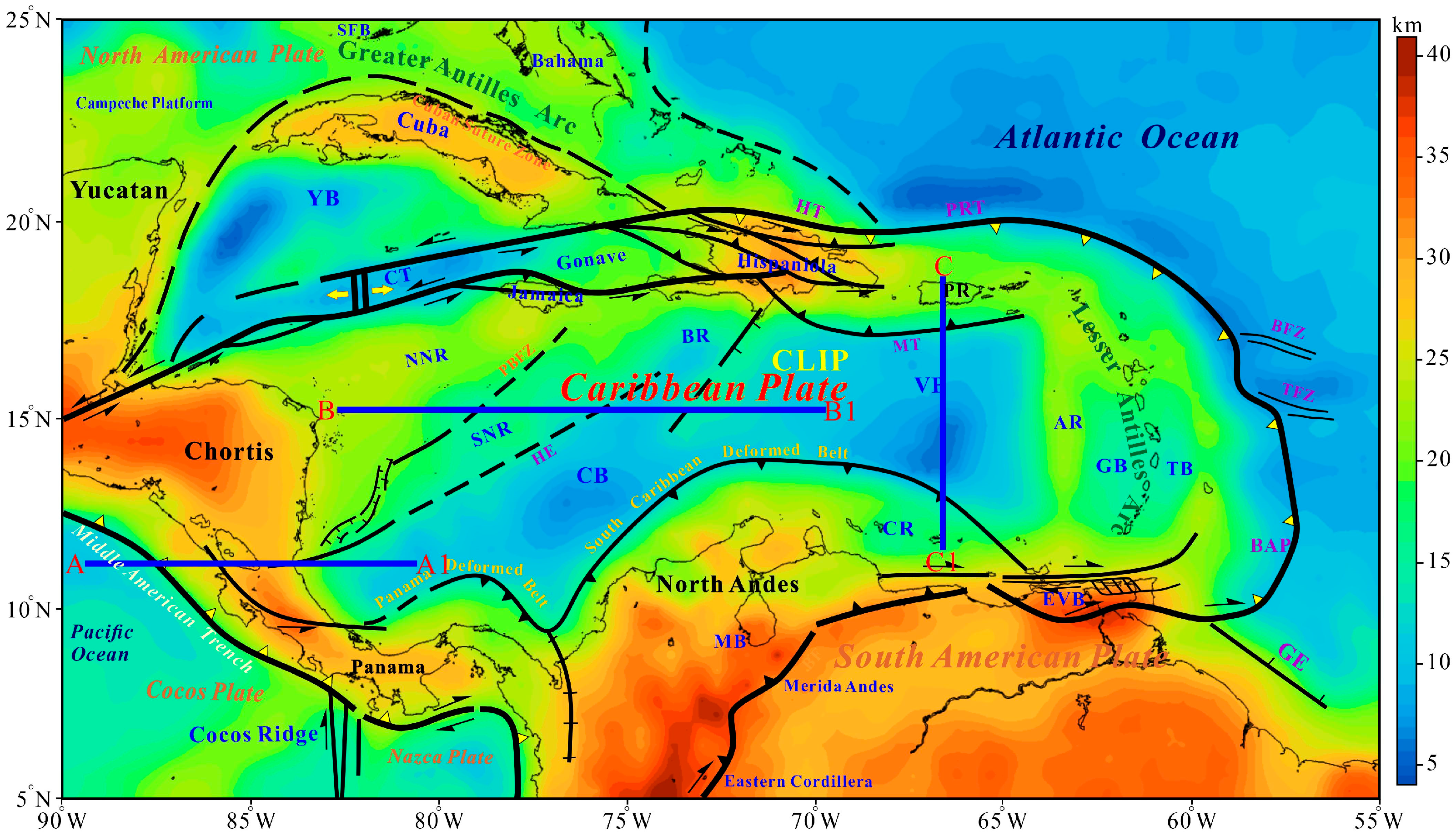
In this study, the differences between the observed and forward-modeled predictable gravity show normal distribution (Figure 9a), with a mean of 0.19 mGal and a standard deviation of 3.25 mGal, indicating small errors. The inversion fit is presented in Figure 9b, exhibiting a moderate standard deviation of 9.79 km, which falls within a reasonable range for gravity inversion. The discrepancies are likely attributable to the sparse seismic data coverage in this oceanic region within the CRUST1.0 global crustal model, resulting in less reliable constraints.
The crustal structure of the CS and its adjacent areas is relatively complex, as it encompasses various crustal types such as continental crust, island arc crust, oceanic plateau crust, and normal oceanic crust [32]. The inversion results of this study reveal a strong correspondence between Moho undulations, regional landforms, and the microplate tectonic framework in the study area. The Moho depth in the CS and its adjacent areas ranges from 5 km to 40 km, generally exhibiting a “central depression and peripheral elevation” morphological feature, and is bounded by large-scale trenches, deformation zones, and fault zones (Figure 10). Thinner oceanic crust corresponds to deep-sea regions such as the Cayman Trough, Colombian Basin, and Venezuelan Basin, whereas thicker continental crust forms topographically elevated areas including northern Central America and the Nicaraguan Rise.
The regions with the deepest Moho depth are located in the Eastern Cordillera and parts of the Eastern Venezuelan Basin, with the maximum depth exceeding 38 km. Based on previous studies demonstrating significant oblique collision between the Caribbean Plate and the South American Plate during the Miocene [27,33,34], we propose that crustal thickening in this region may result from intense lateral compression between these two plates. The crustal thickness within the Hispaniola Microplate is generally greater than 25 km, exhibiting attributes of either island arc or continental crust. The regions with the shallowest Moho depth are mainly distributed in the Puerto Rico Trench, the western Yucatán Basin, and the south-central Venezuelan Basin, with the minimum depth less than 6 km. Furthermore, as the only active mid-ocean spreading center in the study area, the Cayman Trough exhibits unique tectonic characteristics transitioning from typical oceanic crust to intensely extended continental crust (Figure 10).
The Pedro Bank Fault divides the Nicaraguan Rise into northern and southern segments. The Northern Nicaraguan Rise is composed of thinned continental crust, exposes Cretaceous–Paleocene calc-alkaline volcaniclastic rocks, and extends westward to the Chortís Block [35,36,37], indicating a tectonic affinity with the thicker-crusted Chortís Block [2,38]. The Southern Nicaraguan Rise, in contrast, is mainly composed of thick oceanic plateau crust, with a rock assemblage similar to that of the Venezuelan Basin and the Colombian Basin [39,40]. Seismic data reveal that the crustal thickness in this region is significantly greater than that of normal oceanic crust, exhibiting typical oceanic plateau structural characteristics [4], and is inferred to be part of the CLIP. Moreover, the graben structures and isolated volcanoes developed within the rise may reflect that the region experienced slow extensional tectonics during its evolutionary process [39].
The Moho depth in the Colombian Basin and the Venezuelan Basin is relatively shallow, exhibiting typical oceanic crust characteristics. Among them, the oceanic crust within the Colombian Basin is regarded as an inactive spreading ridge since the Early Cretaceous [41,42], whereas the oceanic crust in the easternmost Venezuelan Basin has been thinned by back-arc extension associated with the Aves Ridge [43,44]. The Moho depth in the Yucatán Basin generally exhibits a gradual decrease from northeast to southwest, with the thinnest crust less than 5 km. The Moho depth is relatively great in Cuba and the Hispaniola region, where the crust is characterized by greater thickness and typical continental crust attributes. The Northern Andes region can be divided into two basement tectonic units: the eastern unit is of continental basement type, while the western unit consists of oceanic and continental crustal fragments accreted by thrust tectonics [27,45,46]. This continental basement has been interpreted as the southern passive continental margin of the Proto-Caribbean Ocean, exhibiting a conjugate relationship with the southeastern margin of the Chortís Block. Due to the long-term subduction of the Atlantic oceanic lithosphere beneath the Caribbean Plate, the Moho depth on both sides of the Lesser Antilles Arc exhibits significant variations. Additionally, the subduction of the Cocos Plate beneath the Caribbean Plate has similarly resulted in significant undulations in the Moho depth on both sides of the Middle America Trench.

4.2. Comparison with Previous Inversion Results

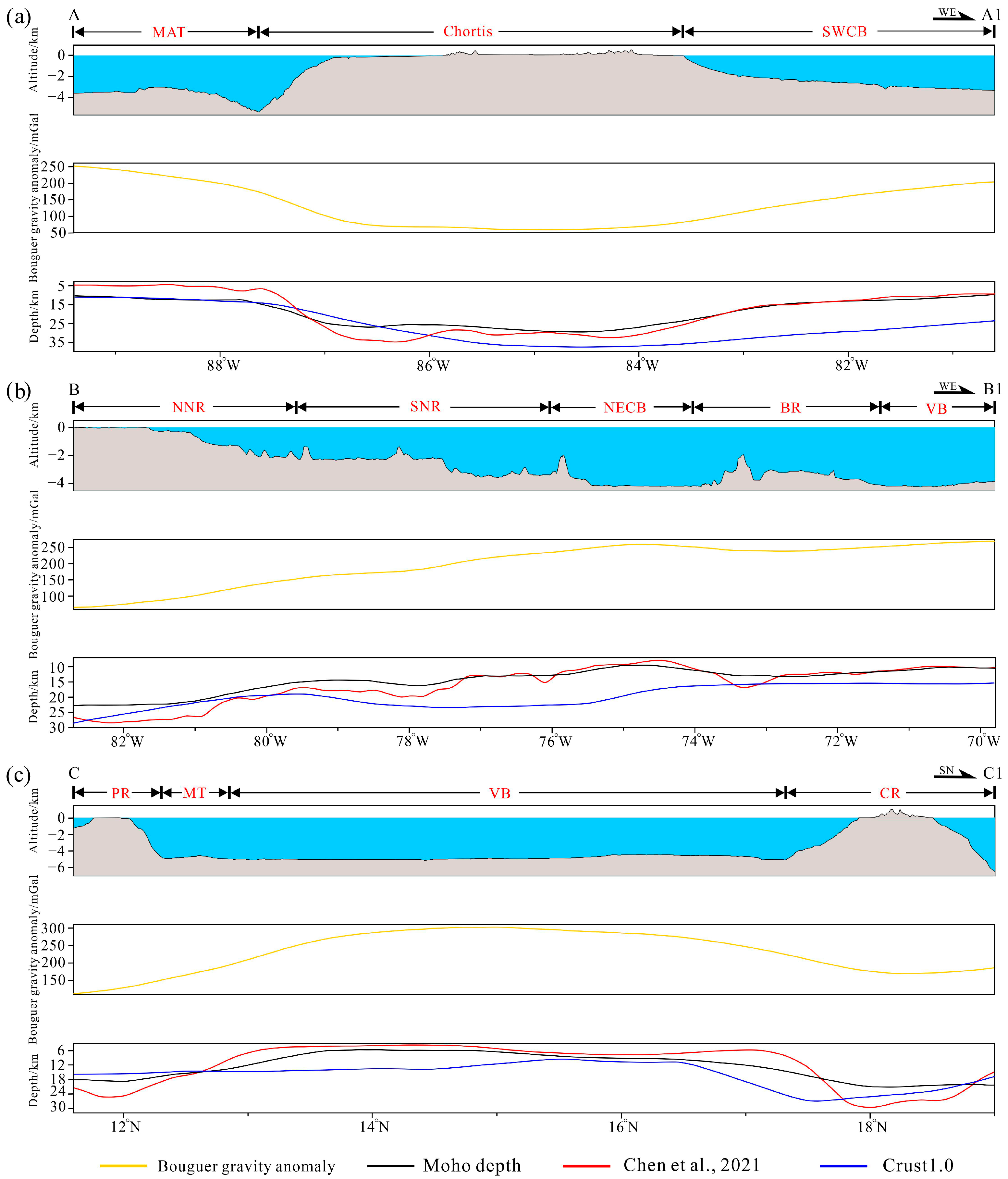
To verify the reliability of the inversion results in this study, three profiles (A-A1, B-B1, and C-C1) are selected for comparison with previous research [47] and the CRUST1.0 global crustal model. Among them, the red, blue, and black lines correspond to the previous results, the CRUST1.0 model results, and the results of this study, respectively.
The A-A1 profile traverses the Middle America Trench, the southern part of the Chortís Microplate, and the southwestern margin of the Colombian Basin. The Moho depth along this profile generally exhibits the characteristic of “shallow at both ends and deep in the middle” (Figure 11a). With the compressional-collisional action of the adjacent plates, the Jotís Microplate exhibits significantly lower Bouguer gravity anomalies compared to the Colombia Basin and the Cocos Plate. Along its extent, the anomalies generally show an opposite “high at both ends and low in the middle” distribution pattern. Overall, the inversion results of this study are basically consistent with the variation trends revealed by Chen et al. (2021) [47] and the CRUST1.0 model. At the Middle America Trench, the inversion results of this study are highly consistent with the CRUST1.0 crustal model (Figure 11a). However, significant differences exist in some regions, which may be attributed to the extensive gaps in the seismic data relied on by the CRUST1.0 model in these areas [14].
The B-B1 profile traverses the Northern Nicaragua Rise, the Southern Nicaragua Rise, the northeastern part of the Colombian Basin, the Beata Ridge, and the western part of the Venezuelan Basin. The Moho depth along this profile generally shows a trend of gradually shoaling from west to east. The Bouguer gravity anomaly shows an overall increasing trend from the lower-density uplifted region toward the higher-density oceanic basin (Figure 11b). The results of this study are relatively consistent with the model proposed by Chen et al. (2021) [47]. However, the CRUST1.0 model shows that the Moho depth is generally deeper in most parts of this region, and there is almost no change in the Moho depth from the Beata Ridge to the western part of the Venezuelan Basin, which is inconsistent with the actual regional tectonic characteristics. Compared with the significant fluctuations shown in the results of Chen et al. (2021) [47], the inversion results of this study are smoother. We argue that the Caribbean Basin and the Venezuelan Basin are composed of the rigid CLIP, and thus the Moho maintains a stable oceanic crust depth characteristic; in contrast, the Beata Ridge has experienced crustal thickening due to tectonic compression.
The C-C1 profile passes through Puerto Rico Island, the Muerto Trough, the central part of the Venezuelan Basin, and the Curaçao Ridge in sequence. This profile shows that the Moho depth generally exhibits the characteristic of “shallow in the middle and deep at both ends”, while the Bouguer gravity anomaly presents the opposite pattern of “high in the middle and low at both ends”, which shows a clear regional tectonic correspondence (Figure 11c). In terms of morphological undulation, the results of this study are relatively consistent with the CRUST1.0 model, but there are significant differences from the results of Chen et al. (2021) [47], which may be related to the insufficient seismic data used in their inversion process.
In summary, based on the gravity inversion method in the spherical coordinate system, this study not only demonstrates good adaptability and inversion accuracy in complex tectonic regions but also yields results that are highly consistent with gravity anomalies, previous studies, and the regional tectonic framework, collectively verifying the effectiveness of the method and the reliability of the results.

4.3. Microplate Tectonic Characteristics

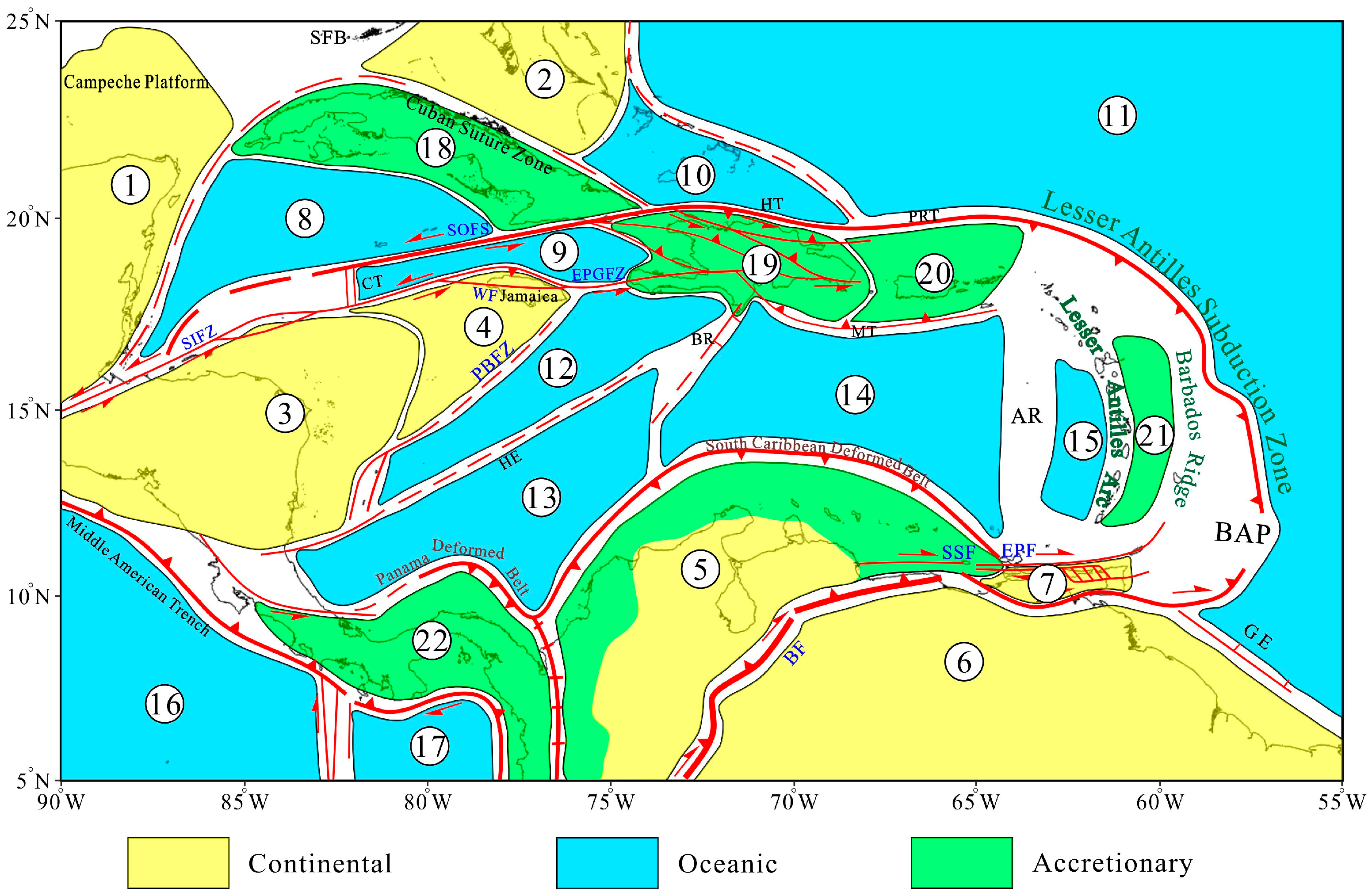
The modern microplate crustal structure of the Caribbean Plate is complex, encompassing not only normal-thickness oceanic crust areas represented by the Venezuelan Basin and the Colombian Basin but also numerous elongated oceanic ridges and plateaus with significantly thickened crust. A series of microplates have developed along the northern boundary of the Caribbean Plate, mainly including the Gonâve, Hispaniola, and Puerto Rico microplates. The Panama Microplate is distributed in its southwestern part. These microplates are separated from each other by large-scale faults. Along the Cocos Plate subduction zone, the Cocos Ridge southwest of Panama is subducting beneath the Panamanian Block or exerting tectonic wedging on it. This process is likely to affect the dynamic characteristics of the overlying Panama Microplate and the northwestward lateral escape of the microplates in the Central American forearc [48]. Based on the inversion results of this study, we classify the crustal types in the CS and its adjacent areas into three categories, including oceanic, continental, and accretionary. The oceanic crust is primarily composed of mafic components, with an age range from pre-Late Jurassic to Holocene. It forms at mid-ocean ridges and hotspots through transform faults and back-arc basin spreading [39]. The continental crust is formed by primitive mantle differentiation, multi-stage magmatic activity, sedimentation, and metamorphic modification. It is mainly composed of Precambrian ancient crystalline rocks and contains Paleozoic metamorphic rocks. The accretionary crust is composed of tectonic rocks of various origins, mainly including igneous rocks, sedimentary rocks, and metamorphic rocks. Its core formation mechanism is plate convergence driven by subduction, a process that facilitates the accumulation and remolding of rocks into accretionary prisms [39]. Combined with the characteristics of geophysical anomalies, we further delineate the study area into 22 microplates (Figure 12).
We further classified the crustal types of the microplates in the CS and its adjacent areas. The results show that 10 microplates, including the Yucatán Basin, Gonâve Microplate, Southern Bahamas Microplate, Atlantic Plate, Southern Nicaragua Microplate, Colombian Basin, Venezuelan Basin, Grenada Basin, Cocos Microplate, and Nazca Microplate, belong to the oceanic crust (Figure 12). The results show that 6 microplates, namely the Maya Microplate, Northern Bahamas Microplate, Chortís Microplate, Northern Nicaragua Microplate, Eastern Venezuela Basin, and South American Plate, exhibit characteristics of continental crust (Figure 12). The Cuban Microplate, Hispaniola Microplate, Puerto Rico Microplate, Panama Microplate, and Trinidad Basin—5 microplates located in a multi-plate convergence zone—exhibit intense tectonic activity, with widespread development of subduction, thrusting, and compression structures. They form a crustal structure characterized by melanges, with a thickness mostly ranging from 15 to 30 km, and are therefore classified as accretionary crust (Figure 12). In addition, the northern part of the Northern Andes Microplate is affected by the subduction of the Caribbean Plate, leading to the formation of the South Caribbean-Northern South American accretionary complex [49]. However, the Moho depth in the southern part of this microplate exhibits typical characteristics of continental crust, and the microplate as a whole presents a mixed type of accretionary and continental crust (Figure 12).
At present, the seafloor spreading structures in the major tectonic regions of the CS and its adjacent areas remain unclear; the structure and evolutionary processes of the oceanic crust regions are still not fully understood; and controversies still exist regarding the final formation age, origin, and intrinsic properties of the crust of each microplate. The Cayman Trough located in the northern CS is a strike-slip pull-apart basin that has continuously formed new oceanic lithosphere since the Eocene Epoch [50,51]. There exist different understandings regarding the genesis of the Grenada Basin. Some studies suggest that it is a product of back-arc or forearc spreading during the Paleogene [52,53], while other viewpoints hold that the basin may be a fragment of residual Paleo-Atlantic lithosphere, meaning its formation did not experience significant extensional tectonics [54]. The formation age of the Yucatán Basin has not yet been determined, and some studies infer that it may have formed between the Cretaceous and the Paleogene [55]. The formation ages of the Colombian Basin and the Venezuelan Basin are no later than the Cretaceous [56]; some studies even suggest that they may date back to as early as the Jurassic [3,57]. However, due to the Late Cretaceous basalts covering the lithosphere of the Caribbean Plate, the crustal ages of other parts of this region remain unclear [58].
Comprehensive analysis indicates that the crustal ages of the major basins in the CS and its adjacent areas generally exhibit a sequence from youngest to oldest, namely the Cayman Trough, Grenada Basin, Yucatán Basin, and the Colombia-Venezuela Basin. Combined with the Moho undulation pattern and previous research results [3,4], we propose that the Yucatán Basin was in a strike-slip extensional tectonic setting for a long time before the Eocene, forming the northwestern passive continental margin of the Caribbean Plate. Subsequently, the collision between the Greater Antilles Arc and the Bahamas Platform induced a transition of the regional stress field from strike-slip extension to an approximately east–west extensional regime, and this tectonic transition ultimately triggered the formation of the Cayman Trough. This study reveals that although the major basins in the CS exhibit characteristics of oceanic crust, their crustal thickness is significantly greater than that of typical oceanic basins. Additionally, an abnormally thick low-velocity layered material has been observed overlying the crust in some regions [56,59,60]. Teleseismic P-wave tomography reveals that material at depths of 700–1200 km beneath South America originates from westward subduction during 90–115 Myr [27]. Therefore, the integrated geophysical evidence summarized above provides strong support for the Pacific origin model of the Caribbean Plate. In conclusion, we propose that the Caribbean Plate was initially part of the Proto-Pacific Plate; its main body retains the characteristics of standard oceanic crust, and only locally developed the CLIP due to hotspot activity. As the plate continued to drift eastward and eventually wedged between the Atlantic Plate and the American Plates, these early-formed crustal thickening zones further influenced the surrounding stress distribution during the plate migration, induced tectonic deformation at the microplate boundaries, and collectively shaped the current complex microplate tectonic framework.

5. Conclusions

Based on the nonlinear gravity inversion method in the spherical coordinate system, this study applies it for the first time to calculate the Moho depth in the CS and its adjacent areas, and draws the following main conclusions:
(1) The nonlinear gravity inversion method in the spherical coordinate system is suitable for tectonically complex regions such as the CS and can accurately characterize the undulation characteristics of the Moho discontinuity. The inversion results are in good agreement with the regional crustal structure and microplate tectonics, verifying the effectiveness and applicability of the method in large-scale complex tectonic regions.
(2) The Moho depth in the Caribbean region exhibits distinct zonal characteristics, generally presenting a tectonic pattern of “shallow in the central part and deep in the peripheral areas”. The Moho depth reaches its maximum at the junction of the Northern Andean Block and the western margin of the South American Plate, exceeding 39 km; the depth within the Caribbean Plate is relatively gentle, with most areas less than 25 km; the Moho depth in regions such as the Middle America Trench, Yucatán Basin, Cayman Trough, Colombian Basin, and Venezuelan Basin is generally less than 10 km, with the shallowest part less than 6 km.
(3) Based on the Moho undulation morphology, Bouguer gravity anomaly, and topographic–tectonic characteristics, this study divides the research area into 22 microplates and identifies three types of microplate crustal structures: oceanic, continental, and accretionary. The crustal structure characteristics support the Pacific origin model of the Caribbean Plate, indicating that the plate was originally part of the Pacific Plate. Its main body retains standard oceanic crust properties, with only local development of the CLIP due to hotspot activity. With the continuous eastward drift of the plate and its eventual wedging between the Atlantic Ocean and the American Plates, the early-formed crustal thickening zones altered the distribution of the surrounding stress field during plate migration, thereby triggering tectonic deformation at the plate boundaries and collectively shaping the current complex microplate tectonic framework.
(4) The nonlinear gravity inversion method in spherical coordinates acquired preferable inversion results for the Moho interface in the Caribbean Sea and adjacent regions, achieving a good balance between smoothness and detail. However, the resolution of the input data was low, leading to a low resolution in the derived Moho depth. Furthermore, as most of the study area is oceanic, the available seismic reference constraints are sparse, which provide limited control on the inversion results. If denser constraints on Moho depth in oceanic regions can be obtained in the future, the Moho depths derived from this inversion method would become more reliable and effective.

Author Contributions

Conceptualization, F.Z. and J.P.; Data curation, C.Z., M.D. and R.X.; Funding acquisition, J.P., F.Z. and M.D.; Investigation, Y.C., M.D., L.H., Z.N. and R.X.; Methodology, F.Z., B.H. and C.Z.; Supervision: J.P.; Visualization, R.X.; Writing—original draft, F.Z. and C.Z.; Writing—review and editing, F.Z., C.Z., Y.C., M.D., L.H. and Z.N. All authors have read and agreed to the published version of the manuscript.

Funding

This research was financially supported by the National Natural Science Foundation of China (Grant Nos. 42430208, 42462024, 42304145) and the Jiangxi Provincial Natural Science Foundation (20242BAB25182). This study was also supported by the Opening Foundation of Hubei Subsurface Multi-scale Imaging Key Laboratory (China University of Geosciences) (SMIL-2024-06).

Data Availability Statement

Data will be made available on request from the corresponding author.

Conflicts of Interest

The authors declare no conflicts of interest.

Abbreviations

The following abbreviations are used in this manuscript:
ARAves RidgeMBMaracaibo Basin
BAPBarbados Accretionary PrismNECBNortheastern Colombian Basin
BFBocono FaultNNRNorth Nicaraguan Rise
BFZBarracuda Fracture ZoneOAFOca-Ancon Fault
BRBeata RidgePBFZPedro Bank Fault Zone
CBColombian BasinPRTPuerto Rico Trench
CLIPCaribbean Large Igneous ProvinceSFBSouth Florida Basin
CRCuraçao RidgeSIFZSwan Islands Fault Zone
CSCaribbean SeaSMBFSanta Maria–Bucaramanga Fault
CTCayman TroughSNRSouth Nicaraguan Rise
EPFEl Pilar FaultSOFZSeptentrional–Oriente Fault Zone
EPGFZEnriquillo–Plantain Garden Fault ZoneSSFSan Sebastian Fault
EVBEastern Venezuela BasinSWCBSouthwestern Colombian Basin
GBGrenada BasinTBTobago Basin
GEGuiana EscarpmentTFZTiburón Fracture Zone
HEHess EscarpmentVBVenezuelan Basin
HTHispaniola TrenchWFWalton Fault
MATMiddle America TrenchYBYucatan Basin

References

  1. Bezada, M.J.; Levander, A.; Schmandt, B. Subduction in the southern Caribbean: Images from finite-frequency P wave tomography. J. Geophys. Res. Solid Earth 2010, 115, B12333. [Google Scholar] [CrossRef]
  2. Boschman, L.M.; van Hinsbergen, D.J.; Torsvik, T.H.; Spakman, W.; Pindell, J.L. Kinematic reconstruction of the Caribbean region since the Early Jurassic. Earth-Sci. Rev. 2014, 138, 102–136. [Google Scholar] [CrossRef]
  3. García-Reyes, A.; Dyment, J. Structure, age, and origin of the Caribbean Plate unraveled. Earth Planet. Sci. Lett. 2021, 571, 117100. [Google Scholar] [CrossRef]
  4. Barrera-Lopez, C.V.; Mooney, W.D.; Kaban, M.K. Regional geophysics of the Caribbean and northern South America: Implications for tectonics. Geochem. Geophys. Geosyst. 2022, 23, e2021GC010112. [Google Scholar] [CrossRef]
  5. Liu, J.; Li, S.; Cao, X.; Suo, Y.; Jiang, S.; Zhu, J. Refinement of microplate boundaries assisted by integrated gravity analysis: Application to the Caribbean Sea. Mar. Geol. 2024, 470, 107251. [Google Scholar] [CrossRef]
  6. Frisch, W.; Meschede, M.; Sick, M. Origin of the Central American ophiolites: Evidence from paleomagnetic results. Geol. Soc. Am. Bull. 1992, 104, 1301–1314. [Google Scholar] [CrossRef]
  7. James, K.H. Arguments for and against the Pacific origin of the Caribbean Plate: Discussion, finding for an inter-American origin. Geol. Acta 2006, 4, 279–302. [Google Scholar] [CrossRef]
  8. Burke, K.; Fox, P.J.; Şengör, A.M.C. Buoyant ocean floor and the evolution of the Caribbean. J. Geophys. Res. Solid Earth 1978, 83, 3949–3954. [Google Scholar] [CrossRef]
  9. Pindell, J.; Dewey, J.F. Permo-Triassic reconstruction of western Pangea and the evolution of the Gulf of Mexico/Caribbean region. Tectonics 1982, 1, 179–211. [Google Scholar] [CrossRef]
  10. Van Benthem, S.; Govers, R.; Spakman, W.; Wortel, R. Tectonic evolution and mantle structure of the Caribbean. J. Geophys. Res. Solid Earth 2013, 118, 3019–3036. [Google Scholar] [CrossRef]
  11. Benford, B.; DeMets, C.; Calais, E. GPS estimates of microplate motions, northern Caribbean: Evidence for a Hispaniola microplate and implications for earthquake hazard. Geophys. J. Int. 2012, 191, 481–490. [Google Scholar] [CrossRef]
  12. Tomassi, A.; de Franco, R.; Trippetta, F. High-resolution synthetic seismic modelling: Elucidating facies heterogeneity in carbonate ramp systems. Pet. Geosci. 2025, 31, petgeo2024-047. [Google Scholar] [CrossRef]
  13. Zhao, L.; Zhu, R.; Shen, H.; Liu, S.; Yang, J.; Wang, H.; Zhang, W.; Sun, B. Deep processes and surface effects of the Meso-Cenozoic Caribbean subduction system. Sci. China Earth Sci. 2025, 55, 2226–2240. [Google Scholar] [CrossRef]
  14. González, O.L.; Alvarez, L.; Guidarelli, M.; Panza, G.F. Crust and upper mantle structure in the Caribbean region by group velocity tomography and regionalization. Pure Appl. Geophys. 2007, 164, 1985–2007. [Google Scholar] [CrossRef]
  15. Lü, Y.; Li, J.; Zhao, L.F.; Zhang, J.; Chen, L.; Zhao, L. New constraints on the complex subduction and tearing model of the Cocos plate using anisotropic Pn tomography. Geochem. Geophys. Geosyst. 2023, 24, e2023GC011124. [Google Scholar] [CrossRef]
  16. Gómez-García, Á.M.; Meeßen, C.; Scheck-Wenderoth, M.; Monsalve, G.; Bott, J.; Bernhardt, A.; Bernal, G. 3-D modeling of vertical gravity gradients and the delimitation of tectonic boundaries: The Caribbean oceanic domain as a case study. Geochem. Geophys. Geosyst. 2019, 20, 5371–5393. [Google Scholar] [CrossRef]
  17. Li, S.; Suo, Y.; Li, X.; Liu, B.; Dai, L.; Wang, G.; Zhang, G. Microplate tectonics: New insights from micro-blocks in the global oceans, continental margins and deep mantle. Earth-Sci. Rev. 2018, 185, 1029–1064. [Google Scholar] [CrossRef]
  18. Garcia-Casco, A.; Iturralde-Vinent, M.A.; Pindell, J. Latest Cretaceous collision/accretion between the Caribbean Plate and Caribeana: Origin of metamorphic terranes in the Greater Antilles. Int. Geol. Rev. 2008, 50, 781–809. [Google Scholar] [CrossRef]
  19. Riel, N.; Duarte, J.C.; Almeida, J.; Kaus, B.J.; Rosas, F.; Rojas-Agramonte, Y.; Popov, A. Subduction initiation triggered the Caribbean large igneous province. Nat. Commun. 2023, 14, 786. [Google Scholar] [CrossRef]
  20. Meschede, M.; Frisch, W. A plate-tectonic model for the Mesozoic and Early Cenozoic history of the Caribbean plate. Tectonophysics 1998, 296, 269–291. [Google Scholar] [CrossRef]
  21. Pindell, J.; Kennan, L.; Stanek, K.P.; Maresch, W.V.; Draper, G. Foundations of Gulf of Mexico and Caribbean evolution: Eight controversies resolved. Geol. Acta 2006, 4, 303–341. [Google Scholar] [CrossRef]
  22. Mann, P. Gulf of Mexico, Central America, and the Caribbean. In Encyclopedia of Geology, 2nd ed.; Alderton, D., Elias, S.A., Eds.; Academic Press: Amsterdam, The Netherlands, 2021; pp. 47–67. [Google Scholar] [CrossRef]
  23. Zhu, H.; Stern, R.J.; Yang, J. Seismic evidence for subduction-induced mantle flows underneath Middle America. Nat. Commun. 2020, 11, 2075. [Google Scholar] [CrossRef]
  24. Malfait, B.T.; Dinkelman, M.G. Circum-Caribbean tectonic and igneous activity and the evolution of the Caribbean plate. Geol. Soc. Am. Bull. 1972, 83, 251–272. [Google Scholar] [CrossRef]
  25. Pindell, J.; Maresch, W.V.; Martens, U.; Stanek, K. The Greater Antillean Arc: Early Cretaceous origin and proposed relationship to Central American subduction mélanges: Implications for models of Caribbean evolution. Int. Geol. Rev. 2012, 54, 131–143. [Google Scholar] [CrossRef]
  26. Harris, C.W.; Miller, M.S.; Porritt, R.W. Tomographic imaging of slab segmentation and deformation in the Greater Antilles. Geochem. Geophys. Geosyst. 2018, 19, 2292–2307. [Google Scholar] [CrossRef]
  27. Braszus, B.; Goes, S.; Allen, R.; Rietbrock, A.; Collier, J.; Harmon, N.; Henstock, T.; Hicks, S.; Rychert, C.A.; Maunder, B.; et al. Subduction history of the Caribbean from upper-mantle seismic imaging and plate reconstruction. Nat. Commun. 2021, 12, 4211. [Google Scholar] [CrossRef] [PubMed]
  28. Uieda, L.; Barbosa, V.C. Fast nonlinear gravity inversion in spherical coordinates with application to the South American Moho. Geophys. J. Int. 2017, 208, 162–176. [Google Scholar] [CrossRef]
  29. Bott, M.H.P. The use of rapid digital computing methods for directgravity interpretation ofsedimentary basins. Geophys. J. Int. 1960, 3, 63–67. [Google Scholar] [CrossRef]
  30. Tikhonov, A.N.; Arsenin, V.Y. Solutions of Ill-Posed Problems, 1st ed.; V. H. Winston & Sons: Washington, DC, USA, 1977. [Google Scholar]
  31. Kim, J.H. Estimating classification error rate: Repeated cross-validation, repeated hold-out and bootstrap. Comput. Stat. Data Anal. 2009, 53, 3735–3745. [Google Scholar] [CrossRef]
  32. Romito, S.; Mann, P. Tectonic terranes underlying the present-day Caribbean plate: Their tectonic origin, sedimentary thickness, subsidence histories and regional controls on hydrocarbon resources. In The Basins, Orogens and Evolution of the Southern Gulf of Mexico and Northern Caribbean, 1st ed.; Davison, I., Hull, J.N.F., Pindell, J., Eds.; Geological Society of London: London, UK, 2021; Volume 504, pp. 29–40. [Google Scholar] [CrossRef]
  33. Casallas, I.F.; Hu, J.-C. Effective Elastic Thickness in Northern South America. Appl. Sci. 2025, 15, 5163. [Google Scholar] [CrossRef]
  34. Andjić, G.; Baumgartner, P.O.; Baumgartner-Mora, C. Collision of the Caribbean Large Igneous Province with the Americas: Earliest evidence from the forearc of Costa Rica. Earth Planet. Sci. Lett. 2019, 131, 1555–1580. [Google Scholar] [CrossRef]
  35. Sanchez, J.; Mann, P.; Emmet, P.A. Late Cretaceous–Cenozoic tectonic transition from collision to transtension, Honduran Borderlands and Nicaraguan Rise, NW Caribbean Plate boundary. In Transform Margins: Development, Controls and Petroleum Systems, 1st ed.; Nemčok, M., Rybár, S., Sinha, S.T., Hermeston, S.A., Ledvényiová, L., Eds.; Geological Society of London: London, UK, 2016; Volume 431, pp. 57–84. [Google Scholar] [CrossRef]
  36. Lewis, J.F.; Kysar Mattietti, G.; Perfit, M.; Kamenov, G. Geochemistry and petrology of three granitoid rock cores from the Nicaraguan Rise, Caribbean Sea: Implications for its composition, structure and tectonic evolution. Geol. Acta 2011, 9, 0467–0469. [Google Scholar] [CrossRef]
  37. Ott, B.; Mann, P.; Mike, S. Crustal provinces of the Nicaraguan Rise as a control on source rock distribution and maturity. AAPG Search Discov. 2013, 90163, 19–22. [Google Scholar]
  38. Donnelly, T.W. The Caribbean Cretaceous basalt association: A vast igneous province that includes the Nicoya Complex of Costa Rica. Pro-Fil 1994, 7, 17–45. [Google Scholar]
  39. Case, J.E.; MacDonald, W.D.; Fox, P.J. Caribbean crustal provinces; seismic and gravity evidence. In The Caribbean Region, 1st ed.; Dengo, G., Case, J.E., Eds.; Geological Society of America: Boulder, CO, USA, 1991; Volume H, pp. 45–55. [Google Scholar] [CrossRef]
  40. Mauffret, A.; Leroy, S. Seismic stratigraphy and structure of the Caribbean igneous province. Tectonophysics 1997, 283, 61–104. [Google Scholar] [CrossRef]
  41. Ghosh, N.; Hall, A.; Casey, J.F. Seafloor spreading magnetic anomalies in the Venezuelan Basin. Mem. Geol. Soc. Am. 1984, 162, 65–80. [Google Scholar] [CrossRef]
  42. Frost, B.R. Reconstructing the early depositional history of a failed ocean basin from a large 3-d dataset acquired in the Colombia Basin, Western Caribbean Sea, Offshore Colombia. In Proceedings of the American Association of Petroleum Geologists Annual Convention & Exhibition, Salt Lake City, UT, USA, 20–23 May 2018. [Google Scholar]
  43. Kroehler, M.E.; Mann, P.; Escalona, A.; Christeson, G.L. Late Cretaceous-Miocene diachronous onset of back thrusting along the South Caribbean deformed belt and its importance for understanding processes of arc collision and crustal growth. Tectonics 2011, 30, TC6003. [Google Scholar] [CrossRef]
  44. Allen, R.W.; Collier, J.S.; Stewart, A.G.; Henstock, T.; Goes, S.; Rietbrock, A. The role of arc migration in the development of the Lesser Antilles: A new tectonic model for the Cenozoic evolution of the eastern Caribbean. Geology 2019, 47, 891–895. [Google Scholar] [CrossRef]
  45. Kerr, A.C.; White, R.V.; Thompson, P.M.; Tarney, J.; Saunders, A.D. No oceanic plateau—No Caribbean plate? The seminal role of an oceanic plateau in Caribbean plate evolution. In The Circum-Gulf of Mexico and the Caribbean: Hydrocarbon Habitats, Basin Formation and Plate Tectonics, 1st ed.; Bartolini, C., Buffler, R.T., Blickwede, J.F., Eds.; American Association of Petroleum Geologists: Tulsa, OK, USA, 2003; Volume 79, pp. 126–168. [Google Scholar] [CrossRef]
  46. Cortés, M.; Angelier, J. Current states of stress in the northern Andes as indicated by focal mechanisms of earthquakes. Tectonophysics 2005, 403, 29–58. [Google Scholar] [CrossRef]
  47. Chen, Y.W.; Colli, L.; Bird, D.E.; Wu, J.; Zhu, H. Caribbean plate tilted and actively dragged eastwards by low-viscosity asthenospheric flow. Nat. Commun. 2021, 12, 1603. [Google Scholar] [CrossRef]
  48. Van Benthem, S.; Govers, R. The Caribbean plate: Pulled, pushed, or dragged? J. Geophys. Res. Solid Earth 2010, 115, B10409. [Google Scholar] [CrossRef]
  49. Ladd, J.W.; Watkins, J.S. Tectonic development of trench-arc complexes on the northern and southern margins of the Venezuela Basin1. In Geological and Geophysical Investigations of Continental Margins, 1st ed.; Watkins, J.S., Montadert, L., Dickerson, P.W., Eds.; American Association of Petroleum Geologists: Tulsa, OK, USA, 1979; Volume 29, pp. 363–371. [Google Scholar] [CrossRef]
  50. Rosencrantz, E.; Ross, M.I.; Sclater, J.G. Age and spreading history of the Cayman Trough as determined from depth, heat flow, and magnetic anomalies. J. Geophys. Res. Solid Earth 1988, 93, 2141–2157. [Google Scholar] [CrossRef]
  51. Rosencrantz, E.; Mann, P. SeaMARC II mapping of transform faults in the Cayman Trough. Geology 1991, 19, 690–693. [Google Scholar] [CrossRef]
  52. Bird, D.E.; Hall, S.A.; Casey, J.F.; Millegan, P.S. Interpretation of magnetic anomalies over the Grenada Basin. Tectonics 1993, 12, 1267–1279. [Google Scholar] [CrossRef]
  53. Aitken, T.; Mann, P.; Escalona, A.; Christeson, G.L. Evolution of the Grenada and Tobago basins and implications for arc migration. Mar. Pet. Geol. 2011, 28, 235–258. [Google Scholar] [CrossRef]
  54. Kearey, P. Gravity and seismic reflection investigations into the crustal structure of the Aves Ridge, eastern Caribbean. Geophys. J. Int. 1974, 38, 435–448. [Google Scholar] [CrossRef]
  55. Dillon, W.P.; Vedder, J.G.; Graf, R.J. Structural profile of the northwestern Caribbean. Earth Planet. Sci. Lett. 1972, 17, 175–180. [Google Scholar] [CrossRef]
  56. Terence Edgar, N.; Ewing, J.I.; Hennion, J. Seismic Refraction and Reflection in Caribbean Sea. AAPG Bull. 1971, 55, 833–870. [Google Scholar] [CrossRef]
  57. Diebold, J.B.; Stoffa, P.L.; Buhl, P.; Truchan, M. Venezuela Basin crustal structure. J. Geophys. Res. 1981, 86, 7901–7923. [Google Scholar] [CrossRef]
  58. Hoernle, K.; Hauff, F.; van den Bogaard, P. 70 my history (139–69 Ma) for the Caribbean large igneous province. Geology 2004, 32, 697–700. [Google Scholar] [CrossRef]
  59. Officer, C.B., Jr.; Ewing, J.I.; Edwards, R.S.; Johnson, H.R. Geophysical investigations in the eastern Caribbean; Venezuelan basin, Antilles island arc, and Puerto Rico trench. Geol. Soc. Am. Bull. 1957, 68, 359–378. [Google Scholar] [CrossRef]
  60. Talwani, M.; Sutton, G.H.; Worzel, J.L. A crustal section across the Puerto Rico Trench. J. Geophys. Res. 1959, 64, 1545–1555. [Google Scholar] [CrossRef]
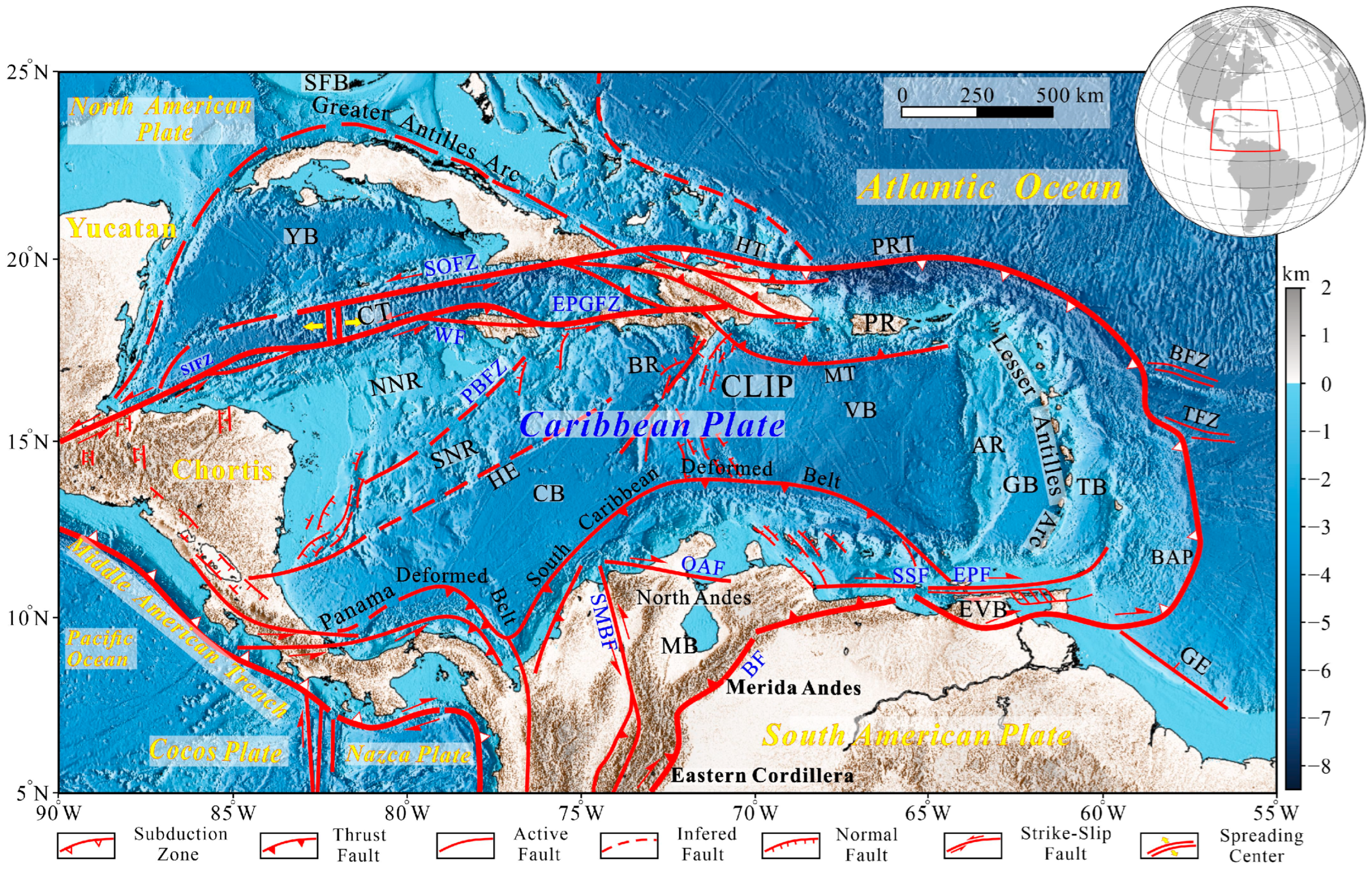
Figure 1. Map of Topography and Major Tectonic Units in the CS and Adjacent Regions. Tectonic Structures: AR = Aves Ridge, BAP = Barbados Accretionary Prism, BR = Beata Ridge, CB = Colombian Basin, CLIP = Caribbean Large Igneous Province, CT = Cayman Trough, EVB = Eastern Venezuela Basin, GB = Grenada Basin, GE = Guiana Escarpment, HE = Hess Escarpment, HT = Hispaniola Trench, MB = Maracaibo Basin, NNR = North Nicaraguan Rise, PRT = Puerto Rico Trench, SFB = South Florida Basin, SNR = South Nicaraguan Rise, TB = Tobago Basin, VB = Venezuelan Basin, YB = Yucatan Basin. Main Faults and Fault Zone: BF = Bocono Fault, EPF = El Pilar Fault, OAF = Oca-Ancon Fault, SMBF = Santa Maria–Bucaramanga Fault, SSF = San Sebastian Fault, WF = Walton Fault, EPGFZ = Enriquillo–Plantain Garden Fault Zone, PBFZ = Pedro Bank Fault Zone, SIFZ = Swan Islands Fault Zone, SOFZ = Septentrional–Oriente Fault Zone. Fracture Zone: BFZ = Barracuda Fracture Zone, TFZ = Tiburón Fracture Zone.
Jmse 14 00109 g001
Figure 2. (a) Spherical Prism Grid of the Moho and (b) Geometric Schematic Diagram of Prism Elements in the Spherical Coordinate System.
Jmse 14 00109 g002
Figure 3. (a) original gravity disturbance and (b) Bouguer gravity disturbance. See Figure 1 for abbreviations. The figure legends are consistent with those shown in Figure 1.
Jmse 14 00109 g003
Figure 4. Bouguer gravity disturbance after sedimentary layer stripping. See Figure 1 for abbreviations and figure legends.
Jmse 14 00109 g004
Figure 5. Schematic diagram of inversion dataset and test dataset partitioning.
Jmse 14 00109 g005
Figure 6. Variation in the mean square error with the regularization parameter μ.
Jmse 14 00109 g006
Figure 7. Seismic Priori Dataset of the CS and Its Adjacent Areas. The data was from (Barrera-Lopez et al. 2022) [4].
Jmse 14 00109 g007
Figure 8. MSE variation with parameter combinations.
Jmse 14 00109 g008
Figure 9. (a) Histogram of residuals between observed and predicted gravity data (observed minus predicted). (b) Histogram of the inversion fit.
Jmse 14 00109 g009
Figure 10. Moho depth distribution in the CS and its adjacent areas. See Figure 1 for abbreviations and figure legends.
Jmse 14 00109 g010
Figure 11. Comparison diagrams of topography, Bouguer gravity anomaly, and Moho depth along profiles A-A1, B-B1, and C-C1. (a) Comparison profiles across the MAT, Chortis, and SWCB; (b) Comparison profiles across the NNR, SNR, NECB, BR and VB; (c) Comparison profiles across the PR, MT, VB and CR [47]. Abbreviations for tectonic structures: SWCB = Southwestern Colombian Basin, NECB = Northeastern Colombian Basin, CR = Curaçao Ridge, MAT = Middle America Trench. See Figure 1 for other abbreviations.
Jmse 14 00109 g011
Figure 12. Map of Microplate Division in the CS and Its Adjacent Areas. See Figure 1 for abbreviations. Microplates: ① = Maya Microplate, ② = Northern Bahamas Microplate, ③ = Chortís Microplate, ④ = Northern Nicaragua Microplate, ⑤ = Northern Andes Microplate, ⑥ = South American Plate, ⑦ = Eastern Venezuela Basin, ⑧ = Yucatán Basin, ⑨ = Gonâve Microplate, ⑩ = Southern Bahamas Microplate, ⑪ = Atlantic Plate, ⑫ = Southern Nicaragua Microplate, ⑬ = Colombian Basin, ⑭ = Venezuelan Basin, ⑮ = Grenada Basin, ⑯ = Cocos Microplate, ⑰ = Nazca Microplate, ⑱ = Cuban Microplate, ⑲ = Hispaniola Microplate, ⑳ = Puerto Rico Microplate, ㉑ = Panama Microplate, ㉒ = Trinidad Basin.
Jmse 14 00109 g012
Disclaimer/Publisher’s Note: The statements, opinions and data contained in all publications are solely those of the individual author(s) and contributor(s) and not of MDPI and/or the editor(s). MDPI and/or the editor(s) disclaim responsibility for any injury to people or property resulting from any ideas, methods, instructions or products referred to in the content.