Article

Detection of Ship-Related Pollution Transported into Klaipeda City


by
Paulius Rapalis
1,*,
Giedrius Šilas
1,
Vygintas Daukšys
1,
Lukas Šaparnis
2,
Karolina Dukanauskaitė
1 and
Austėja Lileikytė
1
1
Waterborne Transport and Air Pollution Laboratory, Marine Research Institute, Klaipeda University, 92294 Klaipeda, Lithuania
2
Faculty of Marine Technologies and Natural Sciences, Klaipeda University, Bijūnų 17, 91225 Klaipeda, Lithuania
*
Author to whom correspondence should be addressed.
J. Mar. Sci. Eng. 2026, 14(1), 10; https://doi.org/10.3390/jmse14010010
Submission received: 26 November 2025 / Revised: 15 December 2025 / Accepted: 16 December 2025 / Published: 19 December 2025
(This article belongs to the Section Marine Pollution)

Abstract

Global shipping generates substantial emissions that can adversely affect air quality in port cities, yet the detectability of ship-related pollution by urban monitoring locations remains insufficiently understood. This study aims to identify the meteorological conditions under which ship exhaust plumes can be detected at a stationary air-quality monitoring station located 1.4 km from the Port of Klaipeda. Night-time particulate matter and NO measurements from an AQMesh station were synchronized with Automatic Identification System (AIS) ship-tracking data, and an artificial neural network was applied to determine the environmental parameters most strongly associated with detectable pollution peaks. Kernel Density Estimation (KDE) was used to map the spatial patterns of ship activity by vessel type. The results indicate that plume detection is most likely to be detected with moderate wind speeds (8–12.5 m/s for PM and 7.5–9.6 m/s for NO), elevated humidity (>84%), and higher-pressure ranges for particulate matter. Warmer night-time conditions further enhance pollutant transport by reducing atmospheric stability. KDE analysis shows that potential pollutant accumulation zones differ by vessel type, with the most intense hotspots forming near anchorage locations rather than along transit routes. Overall, the findings demonstrate that ship-related pollution can be detected at distances exceeding 1 km under specific meteorological conditions and highlight the parameters that most strongly govern plume penetration into the urban environment.

1. Introduction

Globalization is causing an increase in sea transport worldwide. In recent years, shipping has increased significantly and is expected to double by 2030. In total, 80% of world trade is carried by sea, 40% of which is conducted by Europe [1,2,3]. More than half of Europe’s population lives near the sea [4]. Coastal cities suffer from pollution coming from ports. They typically have higher levels of nitrogen oxide and particulate matter, the latter of which is one of the six most common pollutants, according to the Environmental Protection Agency (EPA) [5,6]. The Baltic Sea is among the busiest maritime routes in the world, handling around 15% of global cargo [7]. Marine transport causes emissions of hazardous pollutants, such as different fractions of particulate matter (PM) and nitrogen oxide (NOx), which are known to be harmful to human health [8,9]. It has been determined that pollution can spread over an average radius of more than 200 km [10]. According to Firlag et al.’s study in the North and Baltic Seas, high levels of particulate matter were detected in cities up to a 90 km radius from a port. Still, the possibility of other sources contributing to air pollution within cities cannot be excluded. However, the dispersion of particles is still high, as particles carried from ships to the sea are detected 220 km from their source, and the measurements were conducted in such a way that urban pollution would not have a significant impact on the results [11]. The highest concentrations of pollutants usually occur in ports and then flow into nearby cities. As previously mentioned, port pollution has a wide dispersion range. Aksoyoglu et al. published observations from Europe that show that pollution from ships sailing in the Baltic Sea increases the amount of PM2.5 in the air by 10–15% [12]. The amount of particulate matter emitted depends on the size of the port and its occupancy, with pollution levels ranging from 35 to 55% depending on the location of the study. Ship PM emissions account for 6% of total port pollution, but this percentage is increased by port activities such as bulk cargo handling or transport operating within the port area [13,14]. Due to their different sizes, pieces of particulate matter can penetrate almost all parts of the human body. PM10 can be found in the upper respiratory tract, while PM2.5 is able to reach the lung alveoli or even enter the circulatory system [15]. PM can cause respiratory, cardiovascular, and metabolic issues, premature mortality, lung cancer, and other health problems, because these particles can be easily inhaled, and PM2.5 can even enter the bloodstream [8,16,17,18]. The limits for pollutant concentration are set by MARPOL (International Convention for the Prevention of Pollution from Ships); under this convention, ships are divided into three levels based on their construction and their engine’s rated speed (n). However, it is quite difficult to enforce those limitations when there is a lack of methods to evaluate and separate ship pollution from other sources that can be found in ports or areas nearby [19,20]. To know for sure if ship-sourced pollutants affect coastal cities, it is essential to explore how these pollutants travel far beyond the immediate vicinity of ports. Long-range dispersion of pollutants poses a unique challenge for environmental monitoring and regulation, as it complicates the attribution of pollution sources and broadens the impact zone [21]. There are a lot of advanced methods for pollution evaluation, such as satellite-based instrument usage, various dispersion models, mathematical calculations, and machine learning models [22,23]. There is, however, a lack of experimental measurements of shipping-related air pollutant dispersal within cities. V Smailys et al. attempted to determine if it was possible to analyze ship pollution’s influence on the city of Klaipeda using city air pollution measurement stations. Even though the research showed some correlation with SO2 and NOx pollutants, overall, it was determined that the influence of wind distortion due to the urban environment was too great [24]. Dispersion models are usually the main tool for measuring long-range pollution effects on port cities or port areas. Chevet et al., for example, used WRF-Chem (Weather Research and Forecasting Chemical model) to evaluate air pollution over the city of Marseille and its surroundings. Their study determined that pollution caused by ships is mostly affected by meteorological parameters, such as wind speed [25]. However, as the authors themselves stated, these types of models lack detailed data on emissions, and although in that specific case the authors used official emissions data to define the background emissions levels in the city, ship emissions are a different situation. Most of the time, similarly to this study, authors have to rely on mathematically calculated emissions. Furthermore, several assumptions have been made by authors regarding background concentrations of pollutants. Which indicates that while they are quite accurate, these types of models still require some assumptions to be made, which could lead to additional errors. MendozSa-Lara et al., in their study, concluded that the AERMOD model coupled with WRF can produce accurate results that can help to unveil insights into the identification of pollution sources in port areas and nearby cities [26]. However, their study was limited only to stationary cruise-type ships. Expanding this methodology to cover a bigger diversity of ship types and adding mobility would significantly improve the research value, but would also make it less viable due to time and resource constraints. Many other dispersion models are available nowadays for the evaluation of long-range pollution, and their usage depends on what is needed in specific cases. However, most of the time, these models require complex data to accurately predict results. For example, the AERMOD and CALPUFF models often need to be used with other models. For example, Tseng et al. used the WRF model to measure meteorological data to be used by the CALPUFF model [27]. Other studies have also reported that the CALPUFF model needs meteorological inputs from a micrometeorological model [28]. However, sometimes dispersion modeling is not enough, due to the lack of inclusion of complex geometries, such as urban areas, or complex meteorological conditions, for example, wind flows. CFD models, as an alternative to dispersion models, can adequately simulate air flows in various urban applications [29]. Additionally, various studies have tried to use artificial neural networks and mathematical models based on AIS data as tools for pollution prediction in port areas [30,31,32]. Most of the research suggests that dispersion or even mathematical models reach high enough precision and can be used for identification in problematic areas. However, most mathematical models use various parameters (such as emission factors, engine load factors, etc.) from international studies or existing methodologies such as EMEP [33,34]. It is also worth noting that most of the time, evaluating ships’ airborne pollutants’ impact on the overall environment of the port or near-port area is too difficult, since it requires many parameters, large datasets, and significant computational power, or it is time-consuming [30]. Despite extensive modeling studies, there is still limited experimental evidence on whether ship-related pollution can be detected at urban monitoring stations located farther from a port, and under which meteorological conditions such detection becomes possible. This study aims to analyze the conditions in Klaipeda city that make it possible to evaluate ship-related pollution dispersion into the city by using measuring stations further away from the direct pollutant source. For that purpose, stationary AQMesh and AIS data are used to create an artificial neural network model. The model itself is used to simulate various meteorological conditions’ effects on the dispersion of pollutants into the city and the possibility of detecting them with a stationary measuring unit. The working hypothesis is that plume detection is feasible only under specific combinations of wind speed, humidity, temperature, and atmospheric stability.

2. Materials and Methods

For this study, an Automatic Identification System (AIS) receiver (AISNet v 2.03, Digital Yacht, Flax Bourton, UK) was used to collect vessel data from Klaipeda port. The receiver’s antenna was on top of the Maritime Research Institute (Figure 1), and its signal covered an area with a radius larger than 10 km. AIS data was used to obtain ships’ speeds, courses, coordinates, and MMSI numbers. The MMSI numbers were used to acquire the ships’ technical data and types. This data was obtained from the IHS Fairplay database [35]. Meteorological data were acquired from the online Freemeteo website’s archival data [36]. Data were used spanning from 29 April to 6 June of 2024. The 39-day measurement period was selected based on data availability and provided sufficient pollutant concentration records to train the ANN for scenario generation. For particulate matter measurement, the AQMesh (Environmental Instruments Ltd., Coventry, UK) stationary air quality sensor was used (station sensors and their technical specifications are provided in Table 1). AQMesh measurements (5 min resolution) were linearly interpolated to match AIS timestamps (1 s resolution) to enable temporal alignment between ship activity and pollutant measurements. This interpolation was used only for harmonization and does not imply a reconstruction of high-frequency pollutant dynamics.
The sensor is located on the rooftop of the Marine Research Institute, approximately 14 m above ground level and 1.4 km away from the port area (Figure 1).
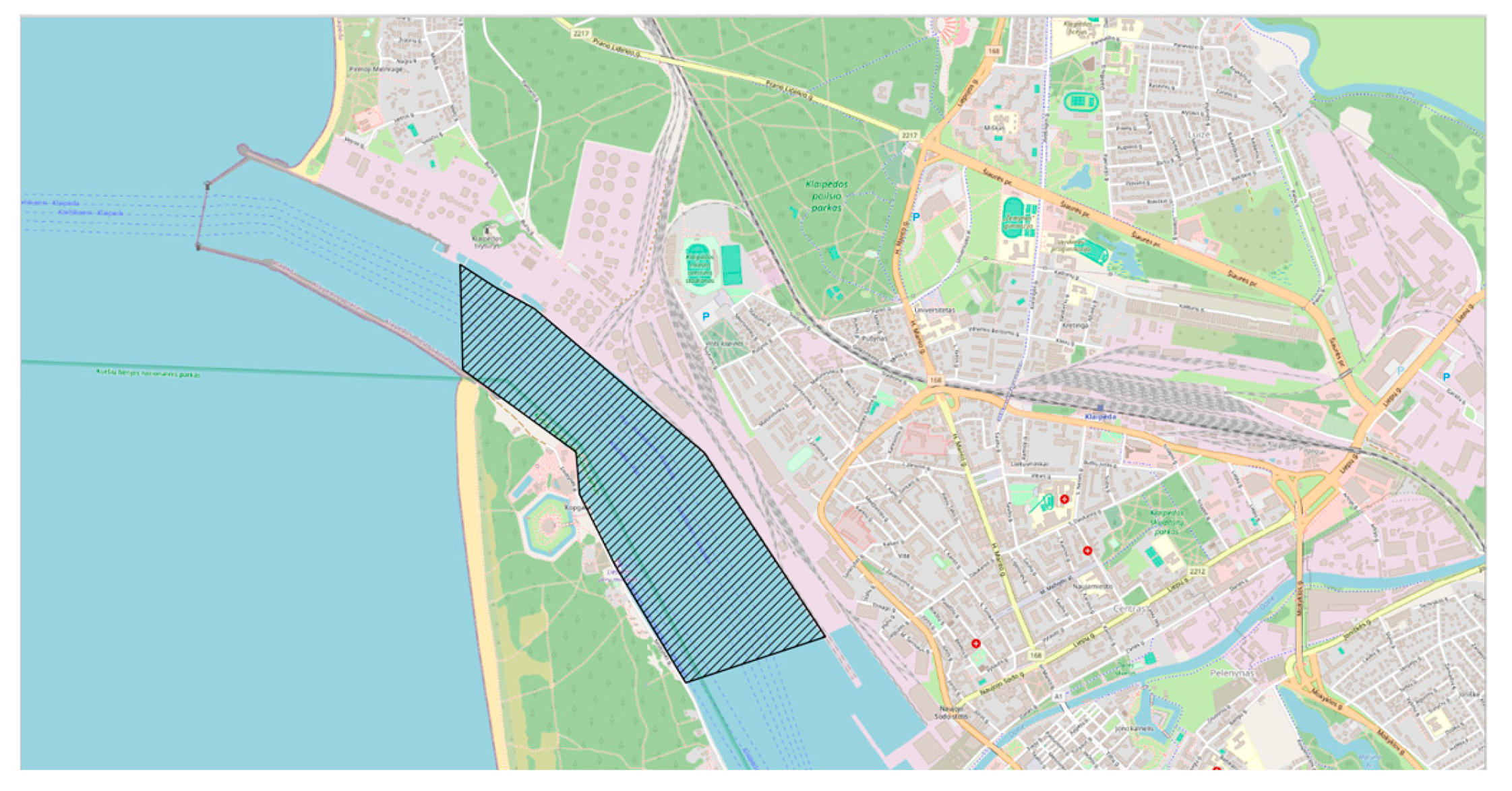
The sensor measured air pollutants in real time. For accurate ship pollution readings in Klaipeda city, only nighttime data was considered viable. This was determined due to the possibility of daytime road traffic interference. To achieve this, all data was filtered so that the final data array would contain only entries from 9 PM to 8 AM. These times were selected according to typical traffic intensity in the study area, using Google Maps with a traffic data layer. Google Maps’ traffic density data was used as a proxy for road traffic intensity because it offers high spatial and temporal resolution. As shown in Rito et al.’s 2021 study, Google Maps’ data deviates by less than 10% from the official traffic count [38]. Although it is not a direct measure of vehicle emissions, it provides a reliable and reproducible picture of traffic patterns. All data were also limited to ships operating within 0.878 km2 of the Klaipeda port area, as shown in Figure 2. Due to the availability of only one measuring station, a small part of the port was selected as the research area. The research area was selected to be at the lowest possible distance from the station, assuming a wind direction towards the station. Additionally, data was filtered by wind direction (≥225° to ≤315°) so only data collected when the wind was blowing towards the measuring station was used. After acquiring all necessary data, it was synchronized based on time, according to AIS data, since its time interval was the smallest—1 s. Data synchronization was achieved using linear interpolation.
To analyze the influence of individual meteorological parameters on pollutant transport, extremely detailed datasets are required. Such datasets cannot be collected under natural conditions, since it is rarely possible to isolate one parameter while keeping others fixed. Artificial neural networks (ANN) provide a solution, as they can be trained on experimental measurement data to capture relationships between their parameters and pollutant dispersion. An ANN model was constructed using NeuralDesigner (version 6.0.8). Its inputs included the ships’ technical and geometric data, ship activity data, and meteorological parameters, while pollutant concentrations served as targets. The dataset was partitioned into three subsets: 60% for training, 20% for selection, and 20% for testing. Separate models were developed for gaseous (NO) and particulate matter (PM) pollutants, with slight differences in their architecture and accuracy. The NO model employed a 4-layer perceptron architecture, while the PM model used a 3-layer perceptron architecture. In both cases, the activation function was set to hyperbolic tangent (tanh), and the bounding layers were defined by the data range. Training strategies were identical across models: normalized squared error was used as the loss function, and L2 regularization with a weight of 0.01 was applied to prevent overfitting. Optimization was performed using the adaptive moment estimation (Adam) algorithm, with parameters including batch size = 100, training loss goal = 0.02, and maximum epochs = 1,000,000. The learning rate was not manually specified, as Adam internally adjusts the effective learning rate for each parameter using momentum and adaptive scaling. Performance metrics were calculated during model training for transparency. For NO, the root mean square error (RMSE) was 0.42, while across pollutants, RMSE values ranged from 0.4 to 4.1. Normalized RMSE (NRMSE) values were considerably lower, ranging from 0.12 to 0.44 (by mean) and 0.14 to 0.39 (by range). These values are reported to document the model’s behavior, but they should not be interpreted as benchmarks against existing pollution prediction models, since the ANN was applied for worst case scenario identification rather than predictive forecasting. After the model architecture was established, input–output correlation (IOC) analysis was performed to determine which inputs had the greatest impact on the outputs. IOC analysis was performed using Neural Designer’s internal tools, which were applied to the dataset of 15,931 data rows. The software internally manages sampling, so the coefficients reflect the available data. Pearson correlation coefficients were calculated for each input–output pair, together with 95% confidence intervals to quantify statistical uncertainty. For graphical representation, z-score normalization was applied to the correlation coefficients to place all parameters on a comparable scale, preventing smaller coefficients from being visually overshadowed by larger ones. By fixing all other variables and modifying only one parameter at a time, the model isolated the effect of individual ship types, ship sizes, and meteorological conditions on pollutant dispersion. In this way, the ANN provided a systematic framework for identifying the strongest influencing factors on pollutant concentrations in the city and for estimating their maximum possible concentrations under varying scenarios.
The same data was used to create pollutant intensity maps. These maps were used to identify areas where each pollutant amassed most, based on ship type. Heatmaps were generated using the Kernel Density Estimation (KDE) algorithm in the QGIS software (QGIS Desktop 3.44.2) to visualize the spatial patterns of ship activity based on their AIS-derived positional data. Rather than representing direct pollutant concentrations, the KDE outputs reflect the relative density of ship presence across the study area. Each raster cell value corresponds to the estimated intensity of ship locations within a defined area, calculated using a quartic kernel function. To ensure consistency and comparability across heatmap layers, the resulting density values were normalized to a scale from 0 to 100 using min–max normalization, where the lowest observed density was mapped to 0 and the highest to 100. The final raster layers were styled with continuous color gradients and standardized color bars, enabling an intuitive visual interpretation of ship distribution patterns by type and activity. Additionally, another set of KDE heatmaps was generated to enhance the environmental relevance of the analysis. This was performed by applying additional weighting to ship positions based on pollutant values, which were recorded approximately 1.4 km away from the vessels. These weights were integrated into the KDE process to modulate density estimates according to nearby pollutant levels, thereby approximating spatial influence on air quality. The resulting raster values were normalized by the same principle as the previously generated heatmaps. A flowchart summarizing the overall workflow is provided in Supplementary Figure S6.

3. Results

The results section is divided into two parts: (1) suitable conditions for ship-related pollution dispersion, as detected in the city, and (2) identification of potential pollutant hotspots using AIS data. The first part presents the influence of meteorological parameters on the predicted pollutant concentrations inside the city and outlines the conditions most conducive to their successful detection. The second part analyzes the areas of potential pollutant accumulation by combining AIS ship position data with concentration measurements recorded by the AQMesh station.

3.1. Suitable Conditions for Ship Pollution Dispersion in City Detection

The artificial neural network (ANN) was used to identify the meteorological conditions under which ship-related pollutant concentrations reached detectable levels at the urban monitoring station. Figure 3, Figure 4, Figure 5, Figure 6, Figure 7, Figure 8 and Figure 9 include vertical dashed lines marking the meteorological thresholds associated with the concentration peaks identified by the model.
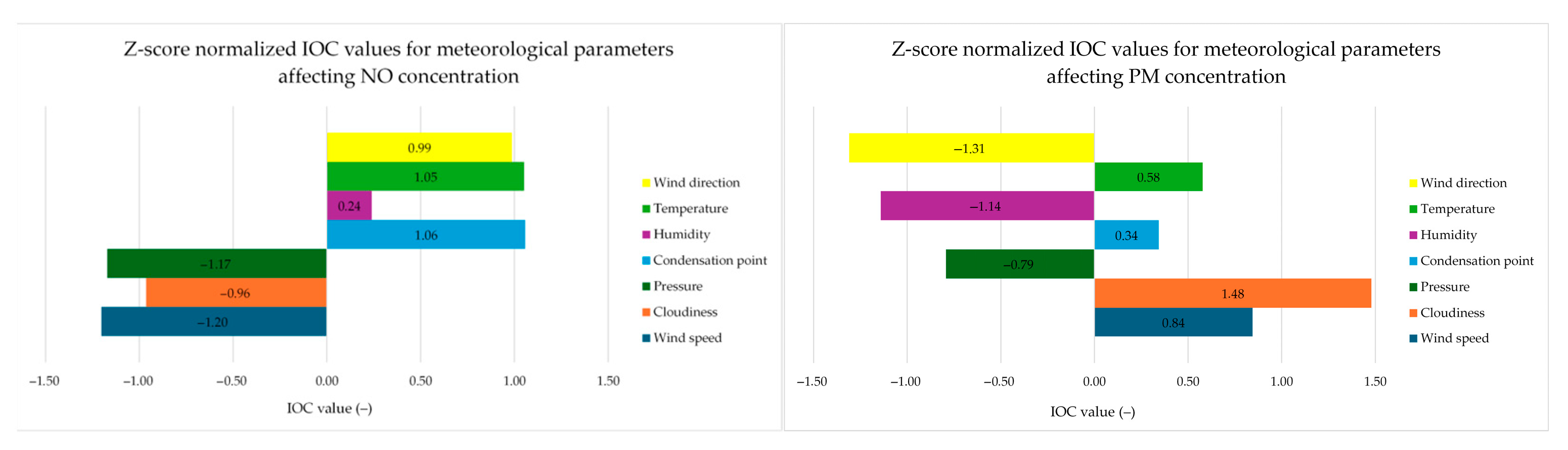
To quantify the relative influence of individual meteorological parameters on pollutant levels, the normalized input–output correlation (IOC) values are presented in Figure 3.
Negative values in the chart indicate an inverse correlation between the meteorological parameter and model output. Z-score values reflect both the direction and magnitude of influence, with larger deviations from zero indicating stronger impacts. In the case of particulate matter, there is a significant difference across most of the parameters; however, in the case of NO, most of the parameters have a similar impact on the output, and only the correlation direction differs. For particulate matter, it was determined that cloudiness has the most significant influence on the model’s predictions about PM concentration, while in the case of NO, the most significant factor was wind speed, closely followed by pressure. The least influential parameter for NO concentration predictions was humidity, and for particulate matter, it was condensation point. After IOC analysis and model training, new data in artificially generated data arrays for each pollutant (NO, PM1, PM2.5, PM4, and PM10) were generated. Within these data arrays, all model inputs except meteorological parameters were kept constant. Each meteorological parameter—wind speed, wind direction, humidity, pressure, condensation point, temperature, and cloudiness—was changed separately to isolate each parameter’s influence on the model’s predictions of pollutant concentration. The parameter ranges, measuring units, and incremental steps are provided in Table 2.
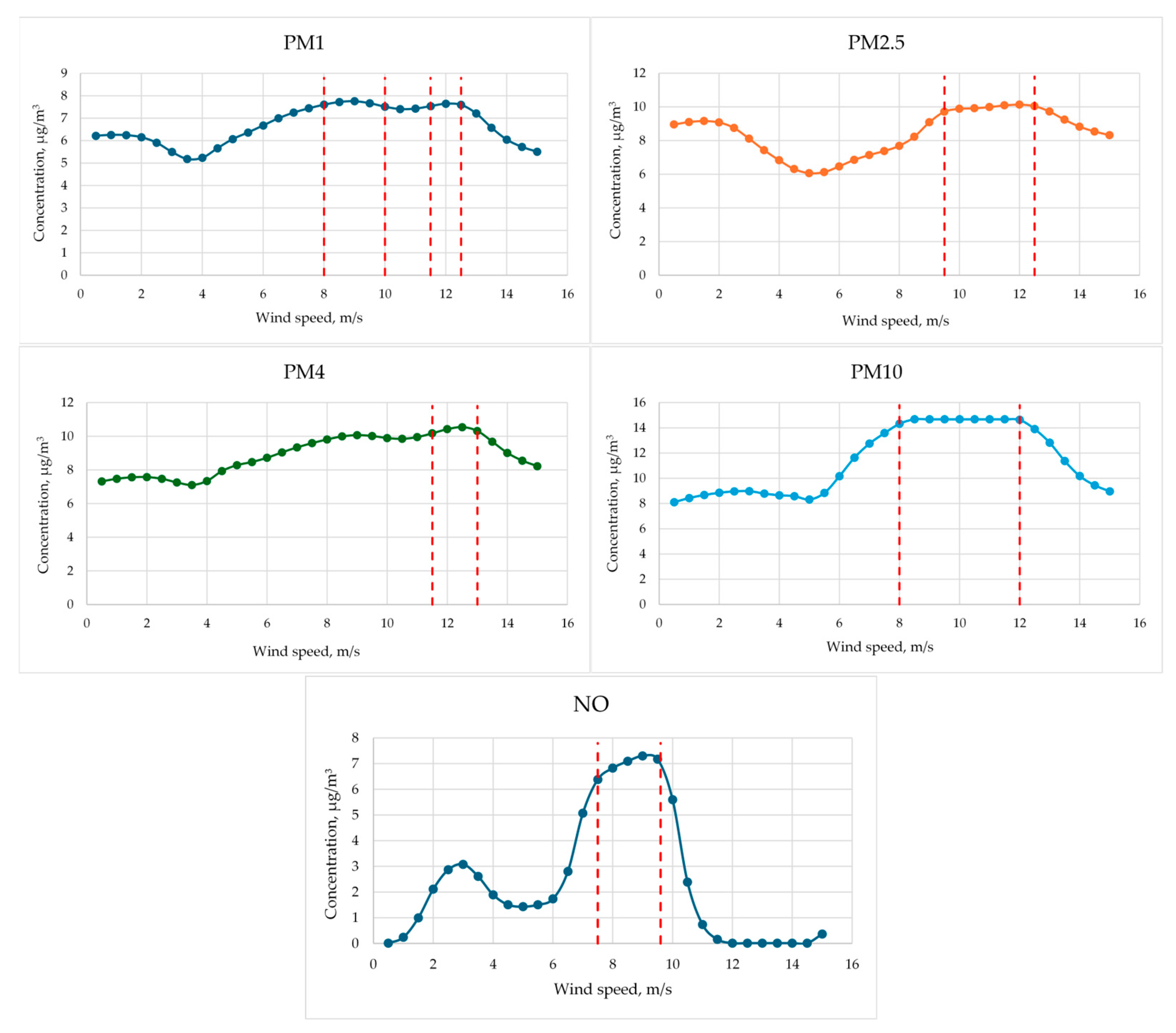
These data arrays were then used to generate pollutant concentration predictions and to identify meteorological conditions when the measuring station measures the maximum possible values. Figure 4 shows the pollutant concentrations’ dependency on wind speed.
It was determined that the most suitable wind speed to determine NO concentration was between 7.5 and 9.6 m/s. As NO is a gaseous pollutant, higher wind speeds increase its dispersion in the atmosphere, and results also show that at higher wind speeds, its concentrations tend to fall to minuscule amounts. Lower wind speeds are not considered to be a factor in the measurement of ship-related pollutants in cities, because the concentrations of NO at these wind speeds are below the minimum level to ensure the sensor’s measuring accuracy.
For particulate matter, the wind speeds for which the model predicts the highest PM concentrations were higher than in the case of NO. For 1 µm particles, the highest concentrations were detected when wind speeds were in the range of 8–10 and 11.5–12.5 m/s, which were the lowest wind speeds and allowed us to measure all the particle concentrations, including the smallest particles (PM1, PM2.5, and PM4). PM10 also has a lower wind speed value (same as PM1), but this is because PM10 includes all smaller particles. For PM2.5 and PM4, the wind speeds required to produce sufficient concentrations for detection were in the range of 9.5–12.5 and 11.5–13 m/s, respectively. Similar results were observed in previous research, where maximum pollution peaks were identified (for particulate matter of 1, 2.5, and 10 µm) at wind speed intervals of 9 to 12 m/s. However, in that study, the distance between the ship and the measuring station was smaller, and the measurements were conducted within the port area, whereas in the current study, the measurements were taken further away from the port. Nevertheless, both studies show a similar pattern in the dependence of pollutant dispersion on wind speed, particularly for particulate matter [39]. Since the article’s research data was taken at nighttime, the atmosphere typically exhibited a stable profile, limiting vertical mixing. Under these conditions, horizontal advection is the dominant transport mechanism, allowing pollutants to travel longer distances towards the city. The identified wind speed ranges correspond to conditions wherein advection and turbulent mixing are sufficient to transport pollutants from ships to the monitoring station without complete dilution. For NO, as a gaseous pollutant, concentrations decrease rapidly at higher wind speeds due to enhanced dispersion. In contrast, particulate matter exhibits peak concentrations at slightly higher wind speeds, reflecting the balance between particle suspension and deposition. These findings are consistent with previous studies conducted closer to port areas.
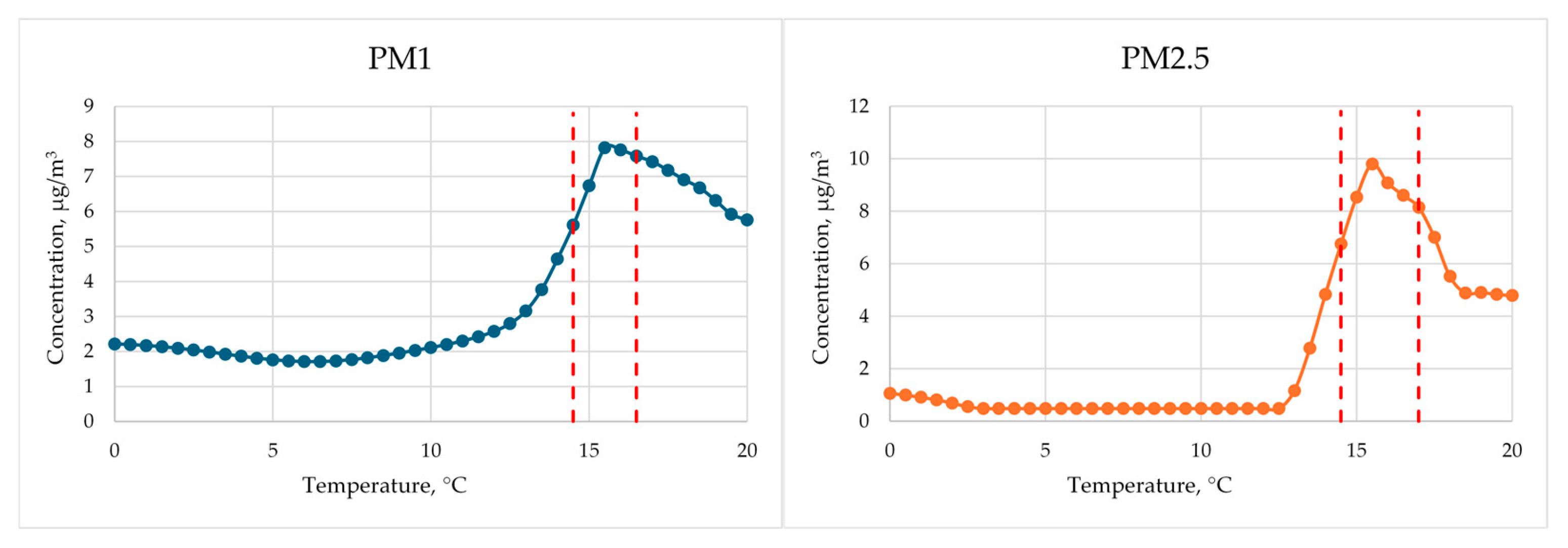
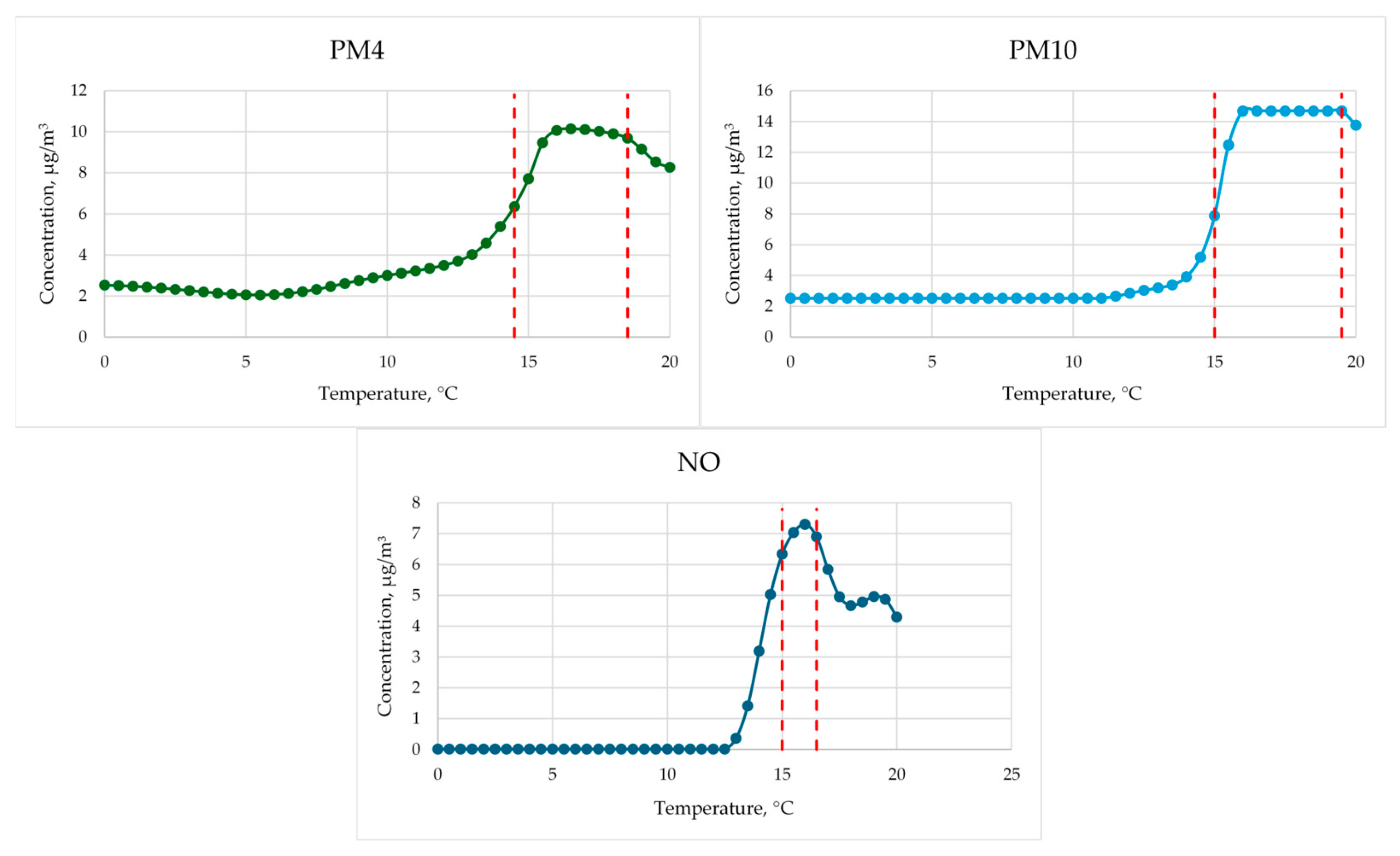
While the influence of wind speed on NO and PM differed quite significantly, the influence of temperature on both pollutant groups was almost the same (Figure 5).
The analysis revealed that, regardless of pollutant type, the dispersion of ship-related pollutants into the urban environment increases with higher temperatures. Since measurements were conducted between late April and early August, temperatures were limited to positive values. Minimum temperatures were similar for both particulate matter (14.5–15 °C) and nitrogen oxide (15 °C). However, the maximum temperature was higher for particulate matter (19.5 °C) compared to nitrogen oxide (16.5 °C). Overall, both pollutant groups showed the same tendency: at lower temperatures, concentrations were low and often fell below sensor accuracy thresholds, whereas higher temperatures enhanced the pollutants’ abilities to travel longer distances. These results are consistent with atmospheric physics, wherein warmer air reduces stability and enhances vertical mixing, allowing pollutants to rise and disperse more effectively, thereby increasing their potential ability to reach the urban environment.
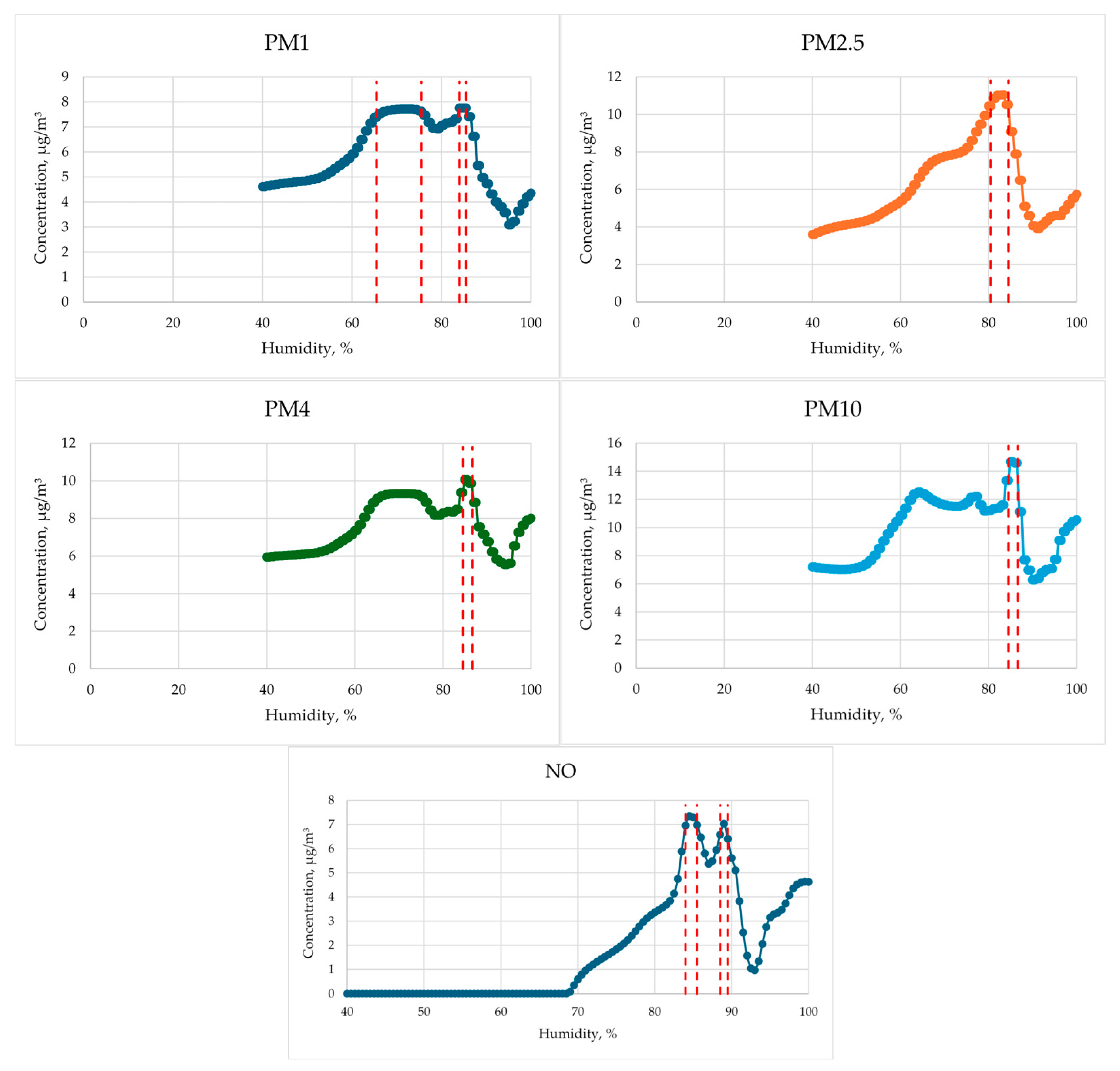
The similarities between pollutant groups in terms of the influence of temperature on the ability to successfully measure their concentrations in ship-related pollution were previously noted, and the same similarities can be seen in the influence of humidity (Figure 6).
For PM2.5, PM4, PM10, and NO, the model’s results show that higher humidity levels—averaging 84.33%—are required to effectively evaluate ship-related pollutant concentrations. Additionally, PM1 and NO exhibit similar profiles, each showing two distinct humidity ranges associated with their peak concentration values. For PM1, humidity varied between 65.5% and 85.5%, while NO concentrations were linked to a narrower and higher range of 84% to 89.5%. Overall, the ANN results indicate that humidity played a comparable role for both gaseous and particulate pollutants, with higher values generally required for effective detection. The observed ranges are consistent with established atmospheric processes: elevated humidity can promote aerosol formation in gaseous pollutants such as NO, while particulate matter is subject to hygroscopic growth and deposition dynamics. These mechanisms provide a plausible explanation for the identified humidity intervals, reinforcing the physical credibility of the ANN-derived scenarios.
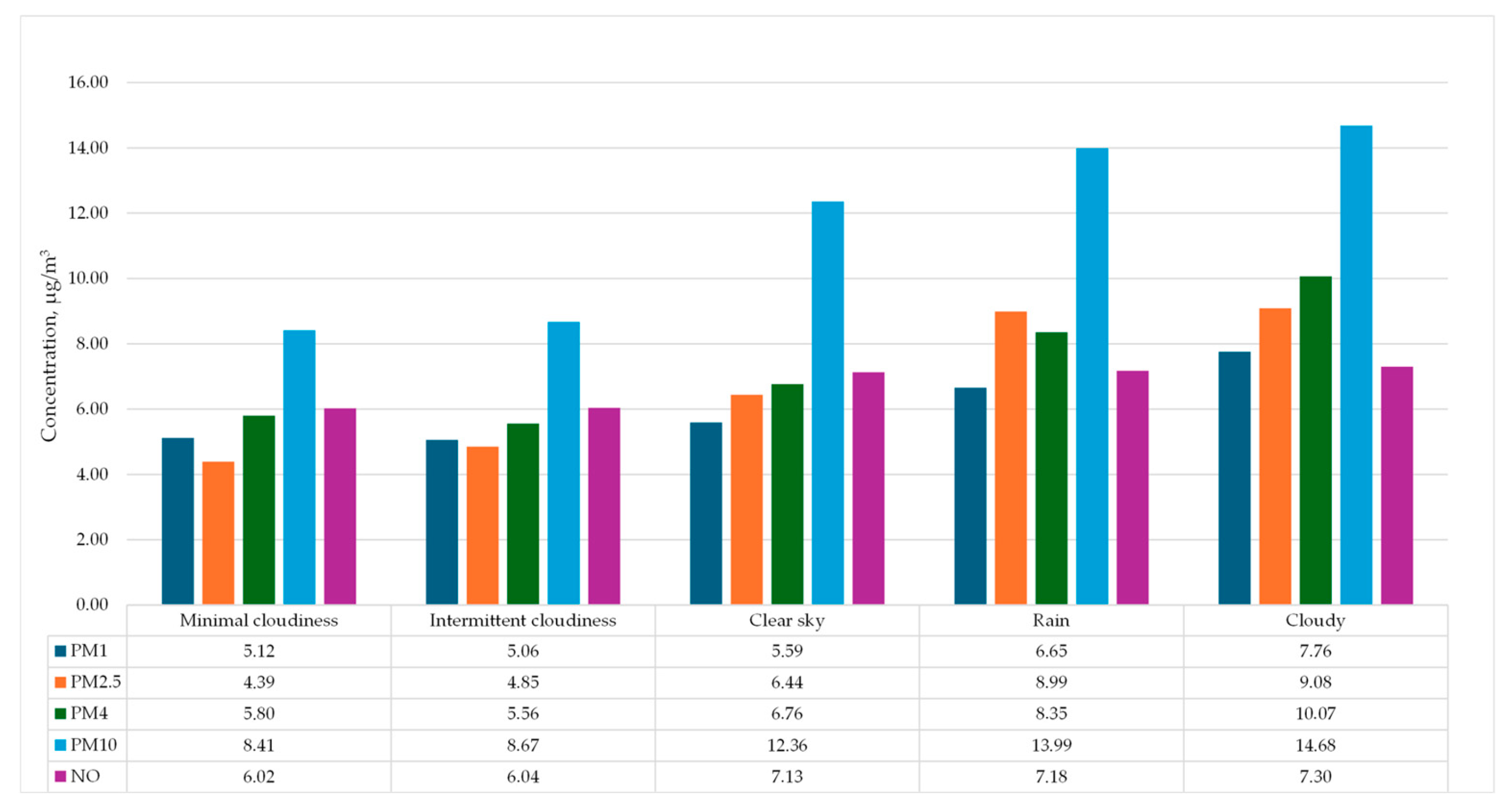
With regard to the influence of cloudiness on the model’s results, it was determined that the absence of clouds can reduce the ability to measure ship pollution, and that cloudy weather is more suitable for this task (Figure 7).
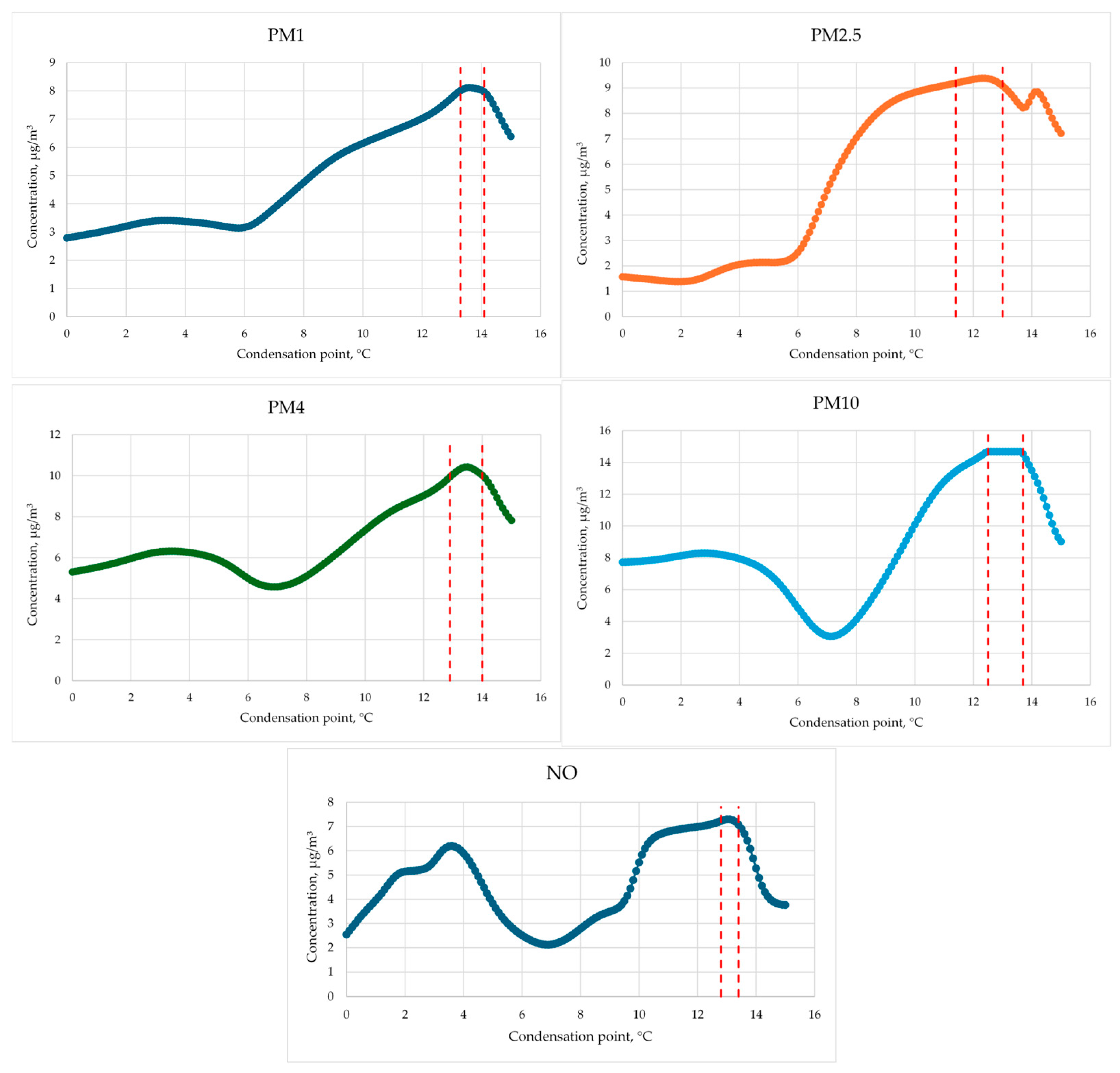
Despite IOC analysis showing that the condensation point’s influence on particulate matter concentrations was not very strong, both particulate matter and NO concentrations showed the same pattern when the model was tested on the data, which contained variable condensation points (Figure 8).
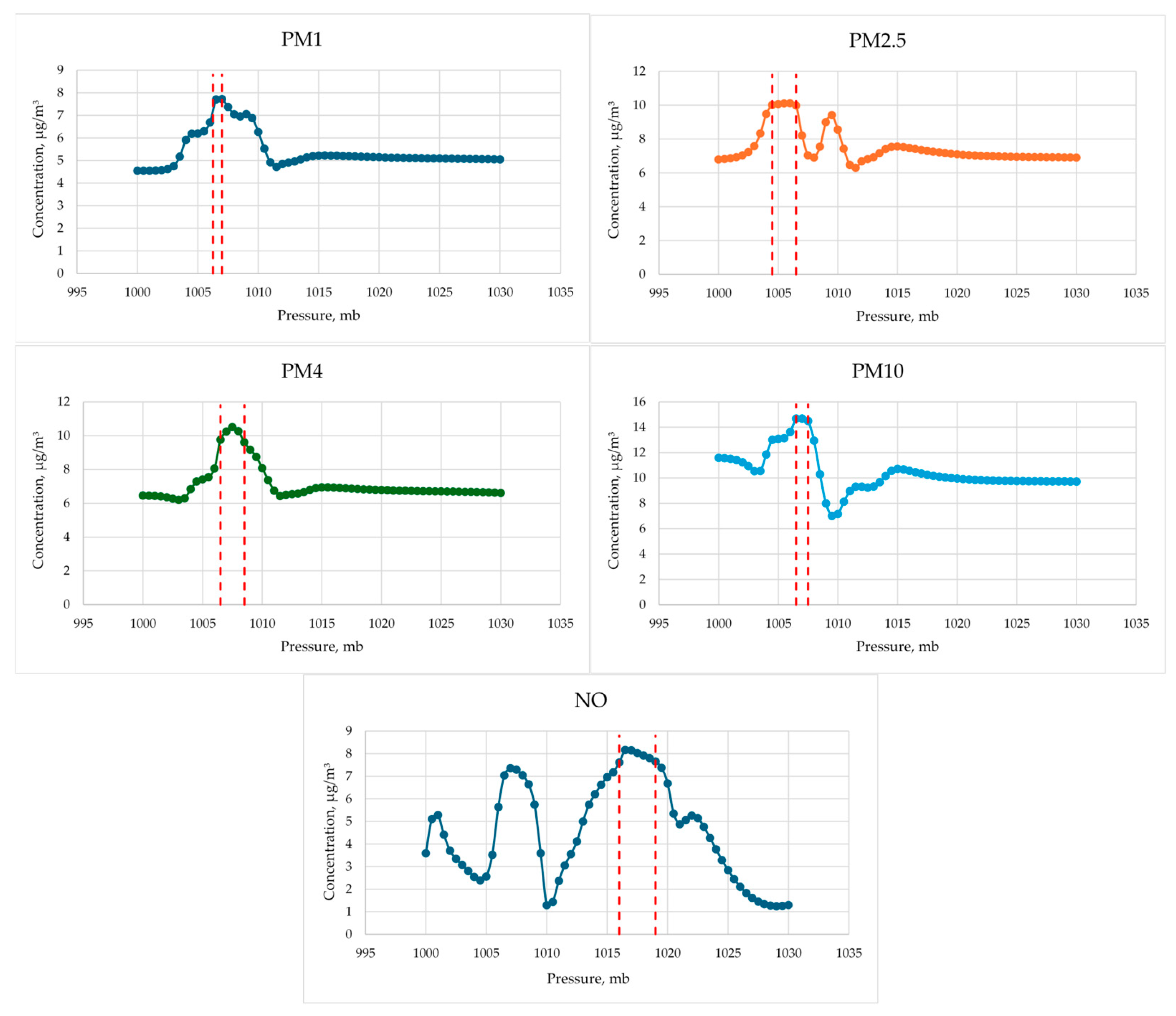
For all pollutants except PM2.5, a noticeable dip in concentration occurred when the condensation point ranged between 4 °C and 8 °C. In the case of PM2.5, this dip was observed at higher temperatures—between 13.5 °C and 14 °C. It is also worth noting that while PM1 concentrations showed a similar dip at lower temperatures, their profile differed from other PM fractions and NO, with the dip being smaller and smoother. The most favorable condensation points for the transportation of ship-related pollutants to the city were identified as follows: for particulate matter, the highest concentrations were recorded when condensation points ranged from 11.4 °C to 14.1 °C; for NO, the corresponding range was 12.8 °C to 13.4 °C. These findings suggest that suitable condensation temperatures for the transport of both PM and NO fall within a similar range and can be evaluated together. Since the condensation point is directly related to humidity, the results indicate that higher condensation point values correspond to increased humidity levels, which, in turn, can enhance pollutant transfer distance. The influence of pressure on the determination of PM and NO concentrations shows a different pattern (Figure 9).
Analysis of pressure’s influence on the transportation of ship-related pollutants to the city revealed that NO does not follow a linear trend and is likely affected by a combination of multiple factors. In contrast, particulate matter (PM) exhibits a clearer pattern, with concentrations increasing within the pressure range of 1004.5 to 1008.5 mb. Unlike NO, PM concentrations peak and then return to a steady pattern after reaching their maximum. For NO, peak concentrations were observed at higher pressure values—between 1016 and 1019 mb. Notably, the NO concentration profile displays numerous peaks and dips throughout the entire pressure range of 1000 to 1030 mb, suggesting that gaseous pollutants like NO may be more sensitive to even slight pressure fluctuations, potentially influenced by multiple interacting factors. Pressure influences pollutant transport indirectly through its role in atmospheric stability and circulation. In both cases, the ANN results show concentration peaks at the higher end of the pressure range, indicating that stable, high-pressure conditions are more favorable for detecting ship-related pollution.
In summary, this section identified the meteorological conditions most conducive to the dispersion of ship-related pollutants into the city based on concentration peaks predicted by an artificial neural network model. The analysis covered seven key parameters—humidity, wind speed, wind direction, pressure, condensation point, cloudiness, and air temperature—each influencing pollutant behavior in distinct ways. These findings provide a valuable foundation for improving detection strategies and refining predictive models in future air quality assessments.

3.2. Hotspot Identification Using AIS Data

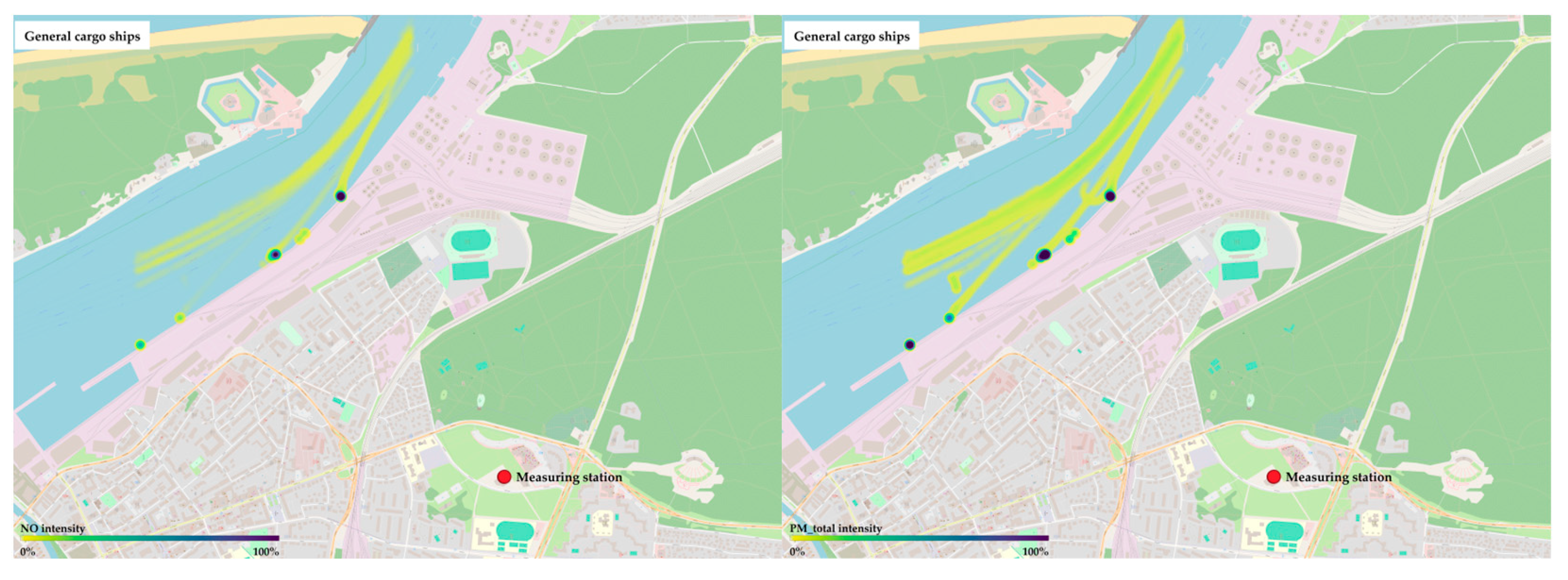
In addition to identifying suitable meteorological conditions for the detection of ship-based pollutant concentrations, this study also examined potential pollutant congestion areas by combining AIS ship position data with measurements from a stationary monitoring station. Using the Kernel Density Estimation (KDE) function in QGIS software, heatmaps were generated to visualize ship activity and possible pollutant accumulation zones. These heatmaps were created by mapping ship locations within the study area and applying pollutant concentration as a weighting factor. It is important to note that these KDE maps do not represent measured pollutant concentrations; rather, they illustrate ship activity intensity weighted by its pollutant contribution within the study area. Because KDE serves as a contextual spatial indicator rather than a concentration modeling tool, uncertainty or smoothing-error estimates are not applicable in this stage of the analysis.
Figure 10 shows examples of possible NO and PM congestion points within the study area caused by general cargo ships. Figures for other ship types, including all particulate matter fractions and NO, are provided in the Supplementary Materials.
As shown in Figure 10, for general cargo ships, the highest potential emission-related activity hotspots appear near berths, reflecting the fact that these vessels spend more time hoteling and loading/unloading in these locations. For particulate matter, the spatial patterns differ slightly by ship type.
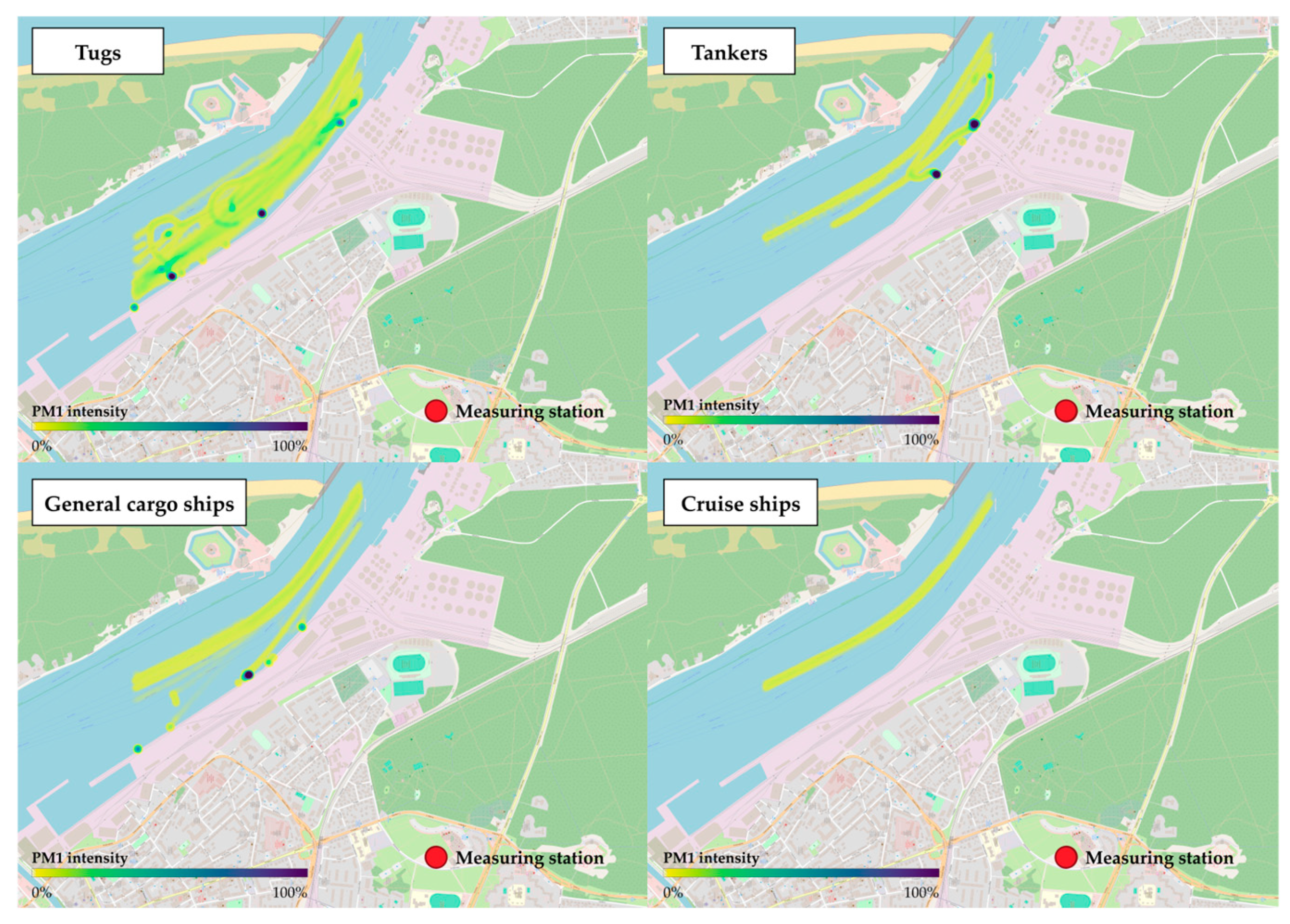
For example, tugs show broader activity-weighted hotspots because they operate throughout the study area while assisting vessel movements, whereas tankers and other large ships display more localized hotspots near their typical berthing locations (Figure 11). These patterns reflect differences in ship movement and operational behavior rather than quantified emission intensity.
Differences in the heatmap profiles of various ship types can be explained by the nature of their operational routes within the study area. For example, the cruise ship terminal is located deeper inside the port, so cruise ships typically only cross the study area. In contrast, tankers, general cargo ships, and container ships not only pass through the area but also anchor at nearby quays. The situation with tugs is even more complex: they are anchored at nearby quays, occasionally pass through the study area, and actively operate within it when assisting larger ships to enter or exit the port. As a result, the area of potential pollutant congestion associated with tugs is larger than that of other ship types. As can be seen from Figure 10 and Figure 11, the most intense congestion areas form during ships’ anchorage and not during their passage through the port. The differences in the most intense congestion areas associated with different ship types can be explained by the fact that different quays are suitable for specific types of cargo.

4. Discussion and Conclusions

The dispersion of ship exhaust into port cities and the evaluation of its impact and penetration distance are important issues for environmental pollution control. To reliably assess ship-related pollution inside a city, it is essential to consider whether atmospheric conditions are suitable for plume transport, as different pollutants respond differently to different meteorological parameters [40]. Measurements indicate that under specific conditions, the influence of a ship plume can be detected up to 1.4 km downwind from the port at levels measurable by urban air quality monitoring equipment. Furthermore, by integrating data from multiple sources—such as AIS, meteorological information, and traffic data—it is possible to qualitatively assess the impact of different shipping operations and vessel types on plume dispersion within the port city.
An ANN model was used to structure and reform the data array to determine the conditions under which the plume penetration in the city was most significant. It was found that a wind speed of 8 to 12.5 m/s is optimal for the transfer of pollutants like PM1, 9.5 to 13 for PM2.5-PM4, and from 8 to 12 m/s for PM10. The wind speed for optimal transfer of NO is from 7.5 to 9.6 m/s. Among the other parameters, a significant influence was shown by cloudiness—cloudy weather creates more suitable conditions for long-distance pollution dispersion. The humidity parameter is most influential when its values vary from 84.33% upwards for both PM and NO. The influence of atmospheric pressure is noticeable in the range of 1004.5 to 1008.5 mb for particulate matter. However, in the case of NO, there is no clear range of values where pressure is most effective for pollutant dispersion into the city, and this varies from 1000 to 1030 mb.
Analysis of the intensity of shipping for different vessel types was performed by combining AIS data with air pollution measurements and applying weight factors based on measured concentrations. The results showed that the impact of NO was more significant during hoteling than during maneuvering through the port. Although maneuvering requires substantially more power, its relatively short duration likely causes NO to disperse more quickly and travel a shorter distance compared to the longer hoteling operations. For PM, the impact varied slightly depending on ship type. Tugs operating within the study area exhibited an increased likelihood of creating congestion points, even when operating farther from berthing locations, while tankers and other larger vessels demonstrated trends like those observed for NO.
This study demonstrates that ship-related pollution can be detected at distances up to 1.4 km from the port under specific meteorological conditions and provides a data-driven framework for identifying those conditions using ANN-based scenario generation. By combining AIS data, meteorological parameters, and urban air-quality measurements, the work offers a reproducible approach for evaluating plume penetration into port cities and for distinguishing the relative influence of different vessel types and operational modes.
This study is subject to several limitations. First, the analysis relies on a single AQMesh monitoring station located 1.4 km from the port, which restricts the spatial resolution of plume detection and may underrepresent localized concentration peaks. Second, the measurement period covered only late spring to early summer, meaning that seasonal variability in atmospheric stability and background pollution was not captured. Third, nighttime filtering was applied to minimize road traffic interference, which limits the generalizability of the results to daytime conditions. Finally, the ANN model was trained on naturally varying meteorological conditions, which prevents a full isolation of individual parameters and may introduce uncertainty when interpreting parameter-specific effects.
Future studies would benefit from a denser network of air-quality monitoring stations positioned at varying distances and orientations relative to the port, enabling more detailed spatial validation of plume dispersion. Extending measurements across different seasons would allow an assessment of how atmospheric stability, background concentrations, and meteorological regimes influence plume transport throughout the year.

Supplementary Materials

The following supporting information can be downloaded at: https://www.mdpi.com/article/10.3390/jmse14010010/s1, Figure S1: Heatmaps of various ship types’ possible NO concentration congestion areas based on ship activity data from AIS; Figure S2: Heatmaps of various ship types’ possible PM1 concentration congestion areas based on ship activity data from AIS; Figure S3: Heatmaps of various ship types’ possible PM2.5 concentration congestion areas based on ship activity data from AIS; Figure S4: Heatmaps of various ship types’ possible PM4 concentration congestion areas based on ship activity data from AIS; Figure S5: Heatmaps of various ship types’ possible PM10 concentration congestion areas based on ship activity data from AIS; Figure S6: A flowchart summarizing the overall workflow.

Author Contributions

Conceptualization, P.R.; methodology, P.R. and G.Š.; software, P.R. and G.Š.; validation, P.R. and G.Š.; formal analysis, P.R.; investigation, P.R.; resources, P.R. and G.Š.; data curation, P.R.; writing—original draft preparation, G.Š.; writing—review and editing, G.Š., L.Š., V.D., K.D. and A.L.; visualization, G.Š.; supervision, P.R. All authors have read and agreed to the published version of the manuscript.

Funding

This research was funded by the Lithuanian Research Council and the Ministry of Education, Science and Sports of the Republic of Lithuania (Project No. S-A-UEI-23-9).

Data Availability Statement

The original contributions presented in this study are included in the article/Supplementary Materials. Further inquiries can be directed to the corresponding author.

Conflicts of Interest

The authors declare no conflicts of interest.

Abbreviations

The following abbreviations are used in this manuscript:
PMParticulate matter
EPAEnvironmental Protection Agency
NOxNitrogen oxides
WRF-ChemWeather Research and Forecasting Chemical model
EMEPThe co-operative programme for monitoring and evaluation of the long-range transmission of air pollutants in Europe
AISAutomatic identification system
MMSIMaritime Mobile Service Identity
ANNArtificial Neural Networks
KDEKernel Density Estimation
NONitrogen oxide
PM11 µm particles
PM2.52.5 µm particles
PM44 µm particles
PM1010 µm particles
IOCInput-output correlation
MARPOLInternational Convention for the Prevention of Pollution from Ships
CFDComputational Fluid Dynamics
RMSERoot Mean Squared Error
NRMSENormalized Root Mean Squared Error

References

  1. Psaraftis, H.N. The Future of Maritime Transport. In International Encyclopedia of Transportation; Elsevier: Amsterdam, The Netherlands, 2021; pp. 535–539. ISBN 978-0-08-102672-4. [Google Scholar]
  2. Fratila, A.; Gavril, I.A.; Nita, S.C.; Hrebenciuc, A. The Importance of Maritime Transport for Economic Growth in the European Union: A Panel Data Analysis. Sustainability 2021, 13, 7961. [Google Scholar] [CrossRef]
  3. Li, G.; Zhang, X.; Jiang, L.; Wang, C.; Huang, R.; Liu, Z. An Approach for Traffic Pattern Recognition Integration of Ship AIS Data and Port Geospatial Features. Geo-Spat. Inf. Sci. 2024, 27, 2048–2075. [Google Scholar] [CrossRef]
  4. European Commission (Ed.) Facts and Figures on the Common Fisheries Policy: Basic Statistical Data: 2022; Publications Office: Luxembourg, 2022; ISBN 978-92-76-42605-9. [Google Scholar]
  5. Mueller, D.; Uibel, S.; Takemura, M.; Klingelhoefer, D.; Groneberg, D.A. Ships, Ports and Particulate Air Pollution—An Analysis of Recent Studies. J. Occup. Med. Toxicol. 2011, 6, 31. [Google Scholar] [CrossRef] [PubMed]
  6. US EPA. NAAQS Table. Available online: https://www.epa.gov/criteria-air-pollutants/naaqs-table (accessed on 9 October 2025).
  7. Aro, E.; Gorm Malý Rytter, N.; Itälinna, T. Maritime Industry Processes in the Baltic Sea Region/Synthesis of Eco-Inefficiencies and the Potential of Digital Technologies for Solving Them; Pan-European Institute, Turku School of Economics, University of Turku: Turku, Finland, 2020; p. 50. [Google Scholar]
  8. Mueller, N.; Westerby, M.; Nieuwenhuijsen, M. Health Impact Assessments of Shipping and Port-Sourced Air Pollution on a Global Scale: A Scoping Literature Review. Environ. Res. 2023, 216, 114460. [Google Scholar] [CrossRef]
  9. Xu, J.; Jiang, H.; Zhao, H.; Stephens, B. Mobile Monitoring of Personal NOx Exposures during Scripted Daily Activities in Chicago, IL. Aerosol Air Qual. Res. 2017, 17, 1999–2009. [Google Scholar] [CrossRef]
  10. Chen, D.; Zhao, N.; Lang, J.; Zhou, Y.; Wang, X.; Li, Y.; Zhao, Y.; Guo, X. Contribution of Ship Emissions to the Concentration of PM2.5: A Comprehensive Study Using AIS Data and WRF/Chem Model in Bohai Rim Region, China. Sci. Total Environ. 2018, 610–611, 1476–1486. [Google Scholar] [CrossRef]
  11. Firląg, S.; Rogulski, M.; Badyda, A. The Influence of Marine Traffic on Particulate Matter (PM) Levels in the Region of Danish Straits, North and Baltic Seas. Sustainability 2018, 10, 4231. [Google Scholar] [CrossRef]
  12. Aksoyoglu, S.; Baltensperger, U.; Prévôt, A.S.H. Contribution of Ship Emissions to the Concentration and Deposition of Air Pollutants in Europe. Atmos. Chem. Phys. 2016, 16, 1895–1906. [Google Scholar] [CrossRef]
  13. Clemente, Á.; Yubero, E.; Galindo, N.; Crespo, J.; Nicolás, J.F.; Santacatalina, M.; Carratala, A. Quantification of the Impact of Port Activities on PM10 Levels at the Port-City Boundary of a Mediterranean City. J. Environ. Manag. 2021, 281, 111842. [Google Scholar] [CrossRef]
  14. Pérez, N.; Pey, J.; Reche, C.; Cortés, J.; Alastuey, A.; Querol, X. Impact of Harbour Emissions on Ambient PM10 and PM2.5 in Barcelona (Spain): Evidences of Secondary Aerosol Formation within the Urban Area. Sci. Total Environ. 2016, 571, 237–250. [Google Scholar] [CrossRef]
  15. Li, D.; Li, Y.; Li, G.; Zhang, Y.; Li, J.; Chen, H. Fluorescent Reconstitution on Deposition of PM2.5 in Lung and Extrapulmonary Organs. Proc. Natl. Acad. Sci. USA 2019, 116, 2488–2493. [Google Scholar] [CrossRef] [PubMed]
  16. Chen, J.; Hoek, G. Long-Term Exposure to PM and All-Cause and Cause-Specific Mortality: A Systematic Review and Meta-Analysis. Environ. Int. 2020, 143, 105974. [Google Scholar] [CrossRef] [PubMed]
  17. Atkinson, R.W.; Fuller, G.W.; Anderson, H.R.; Harrison, R.M.; Armstrong, B. Urban Ambient Particle Metrics and Health: A Time-Series Analysis. Epidemiology 2010, 21, 501–511. [Google Scholar] [CrossRef] [PubMed]
  18. Kim, K.-H.; Kabir, E.; Kabir, S. A Review on the Human Health Impact of Airborne Particulate Matter. Environ. Int. 2015, 74, 136–143. [Google Scholar] [CrossRef]
  19. Sorte, S.; Arunachalam, S.; Naess, B.; Seppanen, C.; Rodrigues, V.; Valencia, A.; Borrego, C.; Monteiro, A. Assessment of Source Contribution to Air Quality in an Urban Area Close to a Harbor: Case-Study in Porto, Portugal. Sci. Total Environ. 2019, 662, 347–360. [Google Scholar] [CrossRef]
  20. Bojić, F.; Gudelj, A.; Bošnjak, R. An Analytical Model for Estimating Ship-Related Emissions in Port Areas. J. Mar. Sci. Eng. 2023, 11, 2377. [Google Scholar] [CrossRef]
  21. Jeong, U.; Kim, J.; Lee, H.; Lee, Y.G. Assessing the Effect of Long-Range Pollutant Transportation on Air Quality in Seoul Using the Conditional Potential Source Contribution Function Method. Atmos. Environ. 2017, 150, 33–44. [Google Scholar] [CrossRef]
  22. De Leeuw, G.; Van Der A, R.J.; Bai, J.; Den Hoed, M.; Ding, J.; Guo, J.; Li, Z.; Zhang, Y.; Fan, C.; Qin, K.; et al. Remote Sensing of Air Pollutants in China to Study the Effects of Emission Reduction Policies on Air Quality. J. Atmos. Sol.-Terr. Phys. 2024, 265, 106392. [Google Scholar] [CrossRef]
  23. Johnson, J.B. An Introduction to Atmospheric Pollutant Dispersion Modelling. Environ. Sci. Proc. 2022, 19, 18. [Google Scholar]
  24. Smailys, V.; Strazdauskiene, R.; Bereisiene, K. Evaluation of a Possibility to Identify Port Pollutants Trace in Klaipeda City Air Pollution Monitoring Stations. Environ. Res. Eng. Manag. 2009, 4, 66–75. [Google Scholar]
  25. Chevet, E.; Boiron, O.; Anselmet, F. Modeling of Air Pollution Due to Marine Traffic in Marseille. Atmos. Environ. 2024, 329, 120542. [Google Scholar] [CrossRef]
  26. Mendoza-Lara, O.O.; Ortega-Montoya, C.Y.; Prieto Hinojosa, A.I.; López-Pérez, A.O.; Baldasano, J.M. An Empirical and Modelling Approach to the Evaluation of Cruise Ships’ Influence on Air Quality: The Case of La Paz, Mexico. Sci. Total Environ. 2023, 886, 163855. [Google Scholar] [CrossRef] [PubMed]
  27. Tseng, Y.-L.; Cheng, W.-H.; Yuan, C.-S.; Lo, K.-C.; Lin, C.; Lee, C.-W.; Bagtasa, G. Impacts of Ship Emissions and Sea-Land Breeze on Urban Air Quality Using Chemical Characterization, Source Contribution and Dispersion Model Simulation of PM2.5 at Asian Seaport. Environ. Pollut. 2024, 347, 123663. [Google Scholar] [CrossRef] [PubMed]
  28. Toscano, D.; Marro, M.; Mele, B.; Murena, F.; Salizzoni, P. Assessment of the Impact of Gaseous Ship Emissions in Ports Using Physical and Numerical Models: The Case of Naples. Build. Environ. 2021, 196, 107812. [Google Scholar] [CrossRef]
  29. Boikos, C.; Siamidis, P.; Oppo, S.; Armengaud, A.; Tsegas, G.; Mellqvist, J.; Conde, V.; Ntziachristos, L. Validating CFD Modelling of Ship Plume Dispersion in an Urban Environment with Pollutant Concentration Measurements. Atmos. Environ. 2024, 319, 120261. [Google Scholar] [CrossRef]
  30. Bojić, F.; Gudelj, A.; Bošnjak, R. A Comprehensive Model for Quantifying, Predicting, and Evaluating Ship Emissions in Port Areas Using Novel Metrics and Machine Learning Methods. J. Mar. Sci. Eng. 2025, 13, 1162. [Google Scholar] [CrossRef]
  31. González Rivera, A.I.; Mugica-Álvarez, V.; Sosa Echeverría, R.; Sánchez Álvarez, P.; Magaña Rueda, V.; Vázquez Cruz, G.; Retama, A. Air Quality and Atmospheric Emissions from the Operation of the Main Mexican Port in the Gulf of Mexico from 2019 to 2020. J. Mar. Sci. Eng. 2023, 11, 265. [Google Scholar] [CrossRef]
  32. Lee, Y.; Park, Y.; Kim, G.; Yoo, J.; Pinzon-Acosta, C.; Gonzalez-Olivardia, F.; Cruz, E.; Lee, H. Ship Air Emission and Their Air Quality Impacts in the Panama Canal Area: An Integrated AIS-Based Estimation During Hotelling Mode in Anchorage Zone. J. Mar. Sci. Eng. 2025, 13, 1888. [Google Scholar] [CrossRef]
  33. Lee, H.; Park, D.; Choo, S.; Pham, H.T. Estimation of the Non-Greenhouse Gas Emissions Inventory from Ships in the Port of Incheon. Sustainability 2020, 12, 8231. [Google Scholar] [CrossRef]
  34. European Environment Agency (Ed.) EMEP/EEA Air Pollutant Emission Inventory Guidebook 2023: Technical Guidance to Prepare National Emission Inventories; EEA Report; Publications Office of the European Union: Luxembourg, 2023; ISBN 978-92-9480-598-0. [Google Scholar]
  35. Maritime & Trade: Shipping Intelligence. Available online: https://www.spglobal.com/market-intelligence/en/solutions/maritime-shipping-intelligence (accessed on 6 November 2025).
  36. Orai Klaipėda—Ankstesnė Orų Informacija, Pateikiama Kiekvieną Dieną|Freemeteo.Lt. Available online: https://freemeteo.lt (accessed on 6 November 2025).
  37. Air Quality Monitoring—Technical Specifications. Available online: https://www.aqmesh.com/products/technical-specification/ (accessed on 21 October 2025).
  38. Rito, J.E.; Lopez, N.S.; Biona, J.B.M. Modeling Traffic Flow, Energy Use, and Emissions Using Google Maps and Google Street View: The Case of EDSA, Philippines. Sustainability 2021, 13, 6682. [Google Scholar] [CrossRef]
  39. Šilas, G.; Rapalis, P.; Lebedevas, S. Particulate Matter (PM1, 2.5, 10) Concentration Prediction in Ship Exhaust Gas Plume through an Artificial Neural Network. J. Mar. Sci. Eng. 2023, 11, 150. [Google Scholar] [CrossRef]
  40. Golbazi, M.; Archer, C. Impacts of Maritime Shipping on Air Pollution along the US East Coast. Atmos. Chem. Phys. 2023, 23, 15057–15075. [Google Scholar] [CrossRef]
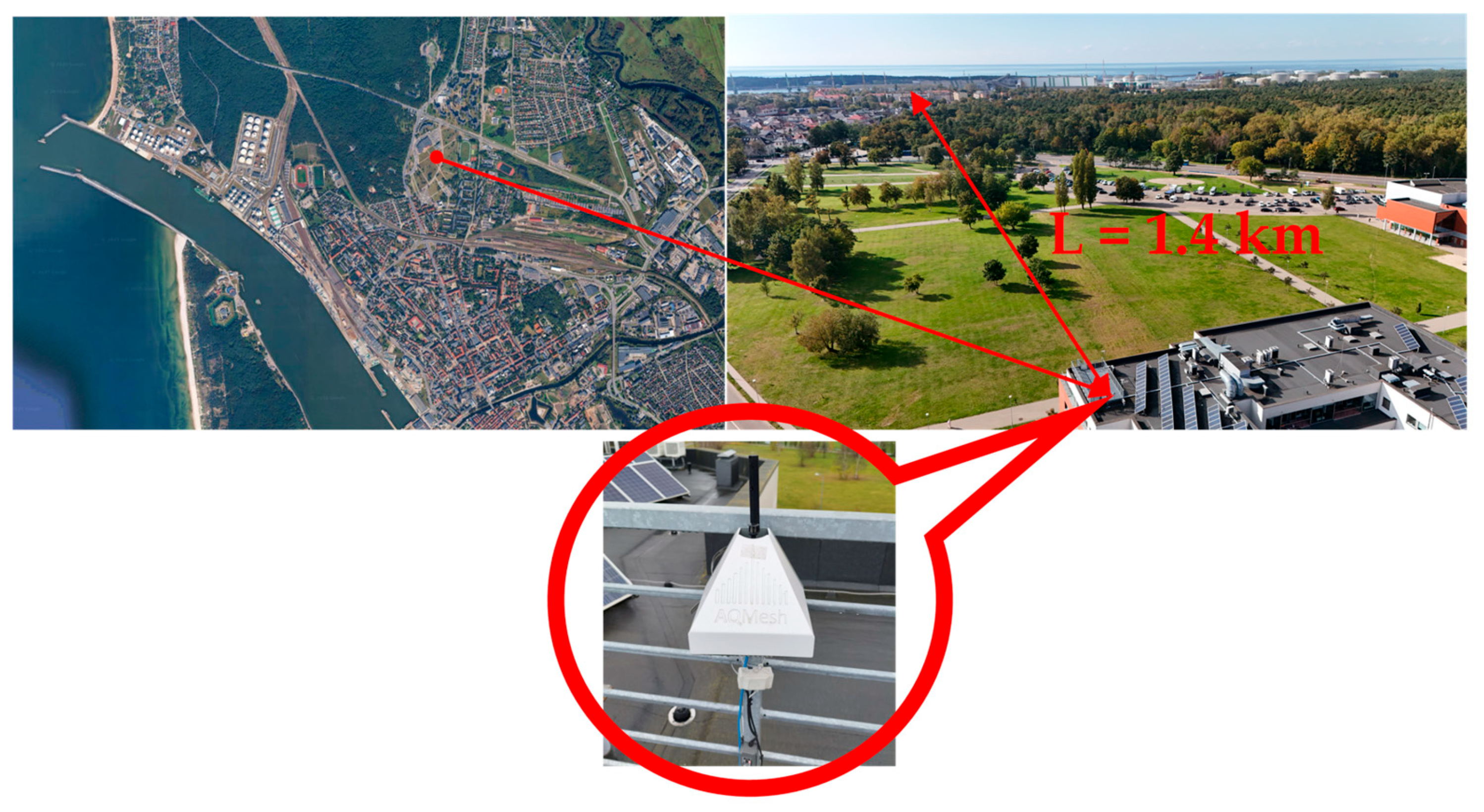
Figure 1. Maritime Research Institute, Klaipeda University (L = 1.4 km represents distance from institute to port).
Jmse 14 00010 g001
Figure 2. Area of port of Klaipeda that was used for ship data collection.
Jmse 14 00010 g002
Figure 3. Z-score standardized input–output correlation (IOC) values for nitrogen oxide and particulate matter.
Jmse 14 00010 g003
Figure 4. NO and particulate matter (PM1, PM2.5, PM4, PM10) concentration prediction’s dependency on wind speed.
Jmse 14 00010 g004
Figure 5. Pollutant (NO, PM1, PM2.5, PM4, PM10) concentration prediction’s dependency on temperature.
Jmse 14 00010 g005aJmse 14 00010 g005b
Figure 6. Pollutant concentration’s dependency on humidity.
Jmse 14 00010 g006
Figure 7. Influence of cloudiness on pollutant concentration evaluation.
Jmse 14 00010 g007
Figure 8. Influence of condensation point on pollutant concentration evaluation.
Jmse 14 00010 g008
Figure 9. Influence of pressure on pollutant transfer.
Jmse 14 00010 g009
Figure 10. General cargo ships’ possible NO and total PM concentration congestion areas based on ship activity data from AIS.
Jmse 14 00010 g010
Figure 11. Possible PM1 congestion areas comparison between different ship types.
Jmse 14 00010 g011
Table 1. AQMesh stationary air quality sensor technical specifications [37].
SensorTypeUnitsRangePrecisionAccuracy
NOElectrochemicalppb or µg/m30–6700 ppb>0.91 ppb
PM1Optical particle counterµg/m30–100,000 µg/m3>0.95 µg/m3
PM2.5Optical particle counterµg/m30–150,000 µg/m3>0.95 µg/m3
PM4Optical particle counterµg/m30–225,000 µg/m3>0.95 µg/m3
PM10Optical particle counterµg/m30–250,000 µg/m3>0.855 µg/m3
HumiditySolid state%0 to 100%>0.95% RH
PressureSolid statemb500 to 1500 mb>0.95 mb
Table 2. Meteorological input parameters: value ranges and measurement units.
ParameterRangeIncremental StepMeasuring Units
Temperature0–200.5°C
Pressure1000–10300.5mb
Humidity40–1000.5%
Wind speed0.5–150.5m/s
Wind direction225–3150.5°
Condensation point0–15 0.1°C
Cloudiness 11–5 1-
1 Cloudiness data are as follows: 1—minimal cloudiness, 2—intermittent cloudiness, 3—clear sky, 4—rain, 5—cloudy.
Disclaimer/Publisher’s Note: The statements, opinions and data contained in all publications are solely those of the individual author(s) and contributor(s) and not of MDPI and/or the editor(s). MDPI and/or the editor(s) disclaim responsibility for any injury to people or property resulting from any ideas, methods, instructions or products referred to in the content.